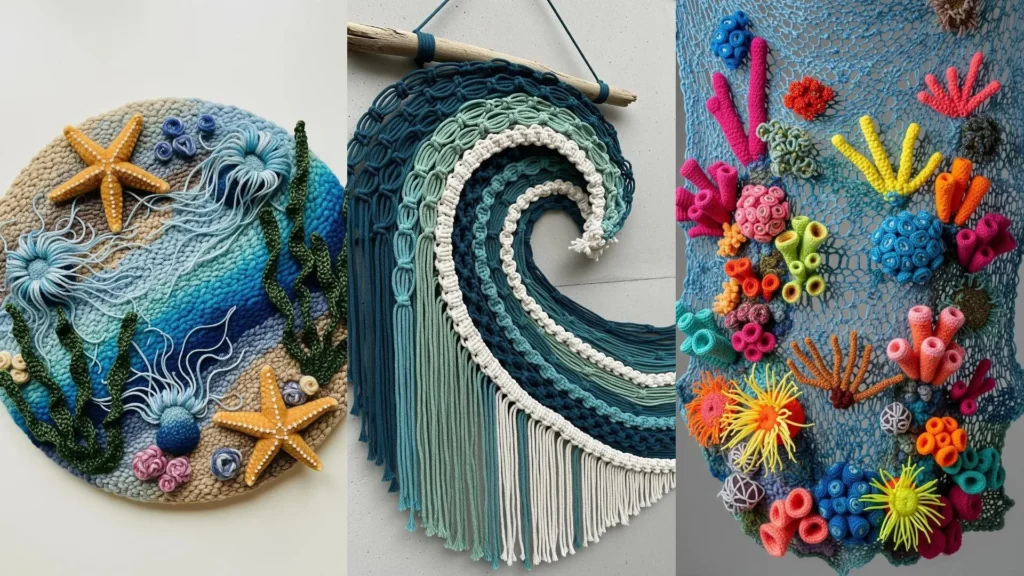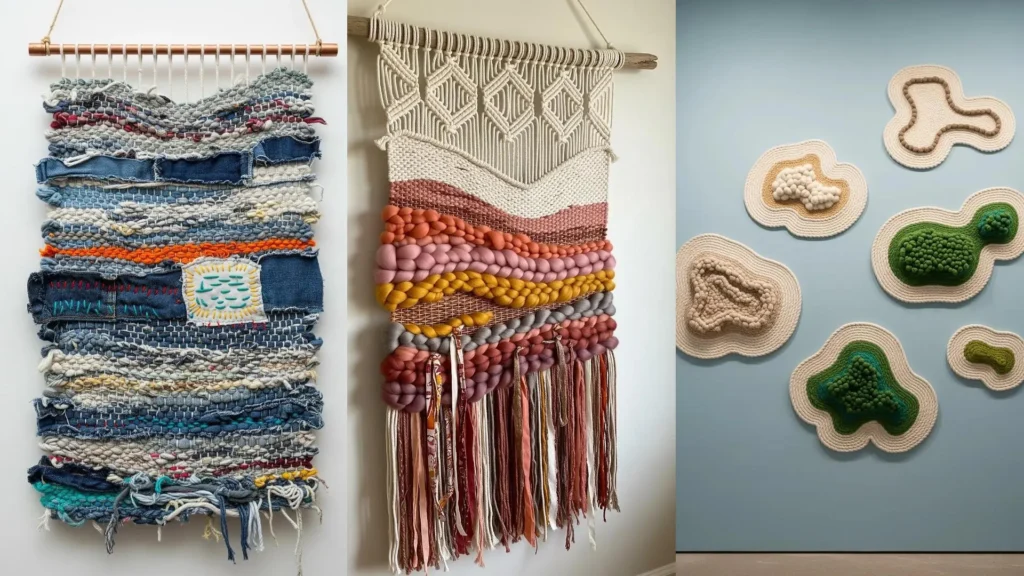
When you look at a blank canvas or an empty hoop, what do you see? Often, we see the familiar path: the same stitches, the same materials, the same results. But what if you could translate the world around you—its textures, its light, its very substance—into fiber?
A wall hanging is more than decoration; it’s a piece of your home’s emotional landscape. It can absorb sound, soften hard lines, and tell a story without a single word. It’s an opportunity to think like a sculptor, a painter, and a storyteller all at once, using yarn, rope, and thread as your medium.
In these examples, I want you to look beyond the finished piece and see the decisions behind it. Notice how a change in fiber thickness alters the mood, how an unexpected material creates tension, or how leaving a thread loose can feel like an act of confidence. This is where your unique artistry begins.
1. Harmonize Structured Knots with Soft Weaving
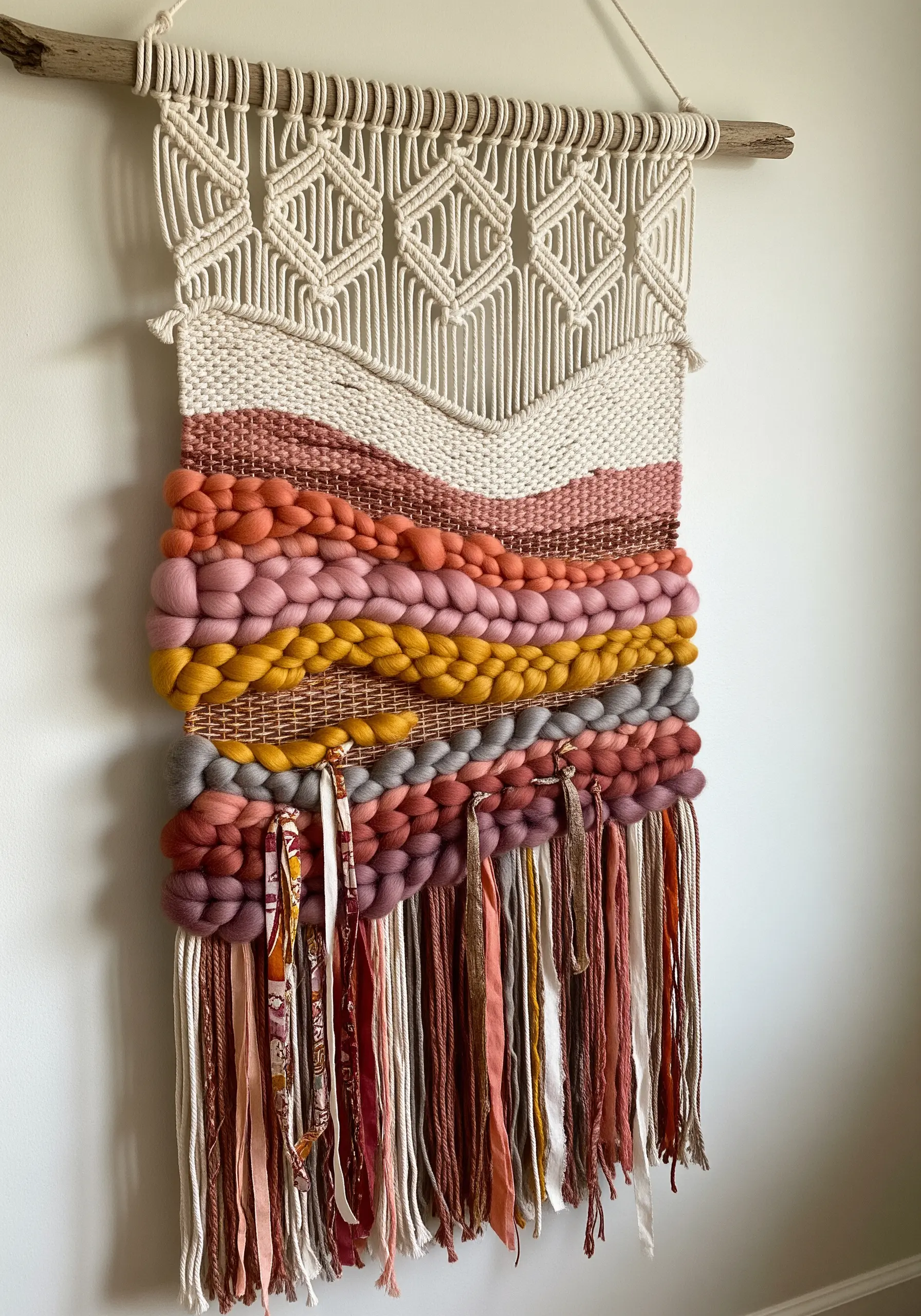
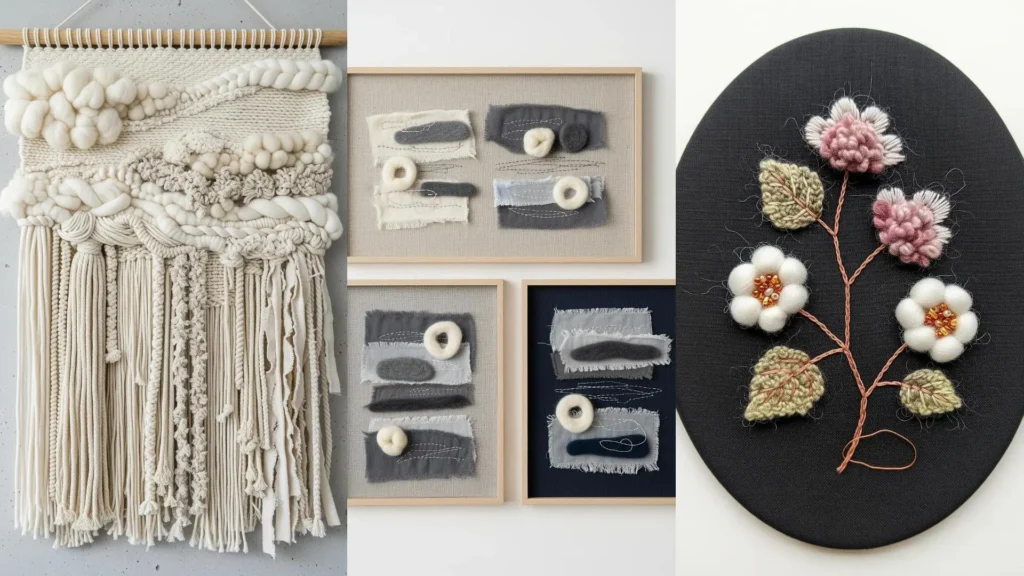
Create a stunning visual transition by pairing the precise geometry of macrame with the organic softness of woven roving wool.
Begin with a section of classic macrame knots, like square knots and double half-hitches, to establish a strong, structured top.
Below this, switch to a simple loom or frame weaving technique, using chunky, unspun wool roving to introduce a contrasting texture.
This juxtaposition of discipline and freedom is what gives the piece its sophisticated, balanced feel.
Mount your work on a piece of natural driftwood to ground the design and enhance its organic appeal.
2. Sculpt Abstract Landscapes with Punch Needle
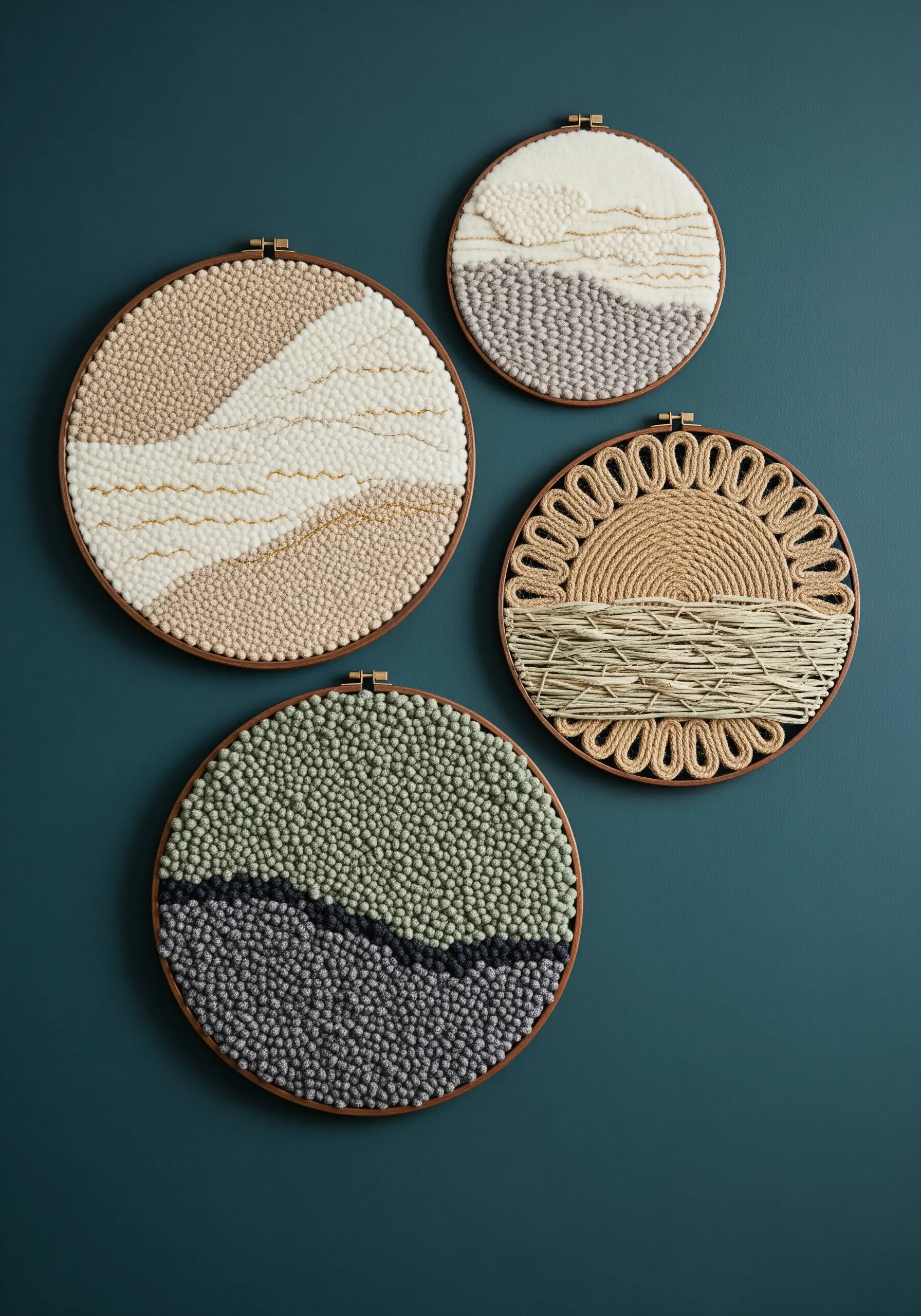
Use punch needle to move beyond flat embroidery and create tactile, contoured art.
Varying your loop height is the key to building dimension—use shorter loops for distant hills and longer, plusher loops for the foreground to create an illusion of depth.
Stick to a calming, neutral palette of three to four shades to let the texture be the main focus.
Consider creating a triptych by arranging hoops of different sizes for a gallery wall, each showcasing a different section of your abstract landscape.
3. Explore a Single Hue Through Varied Textures
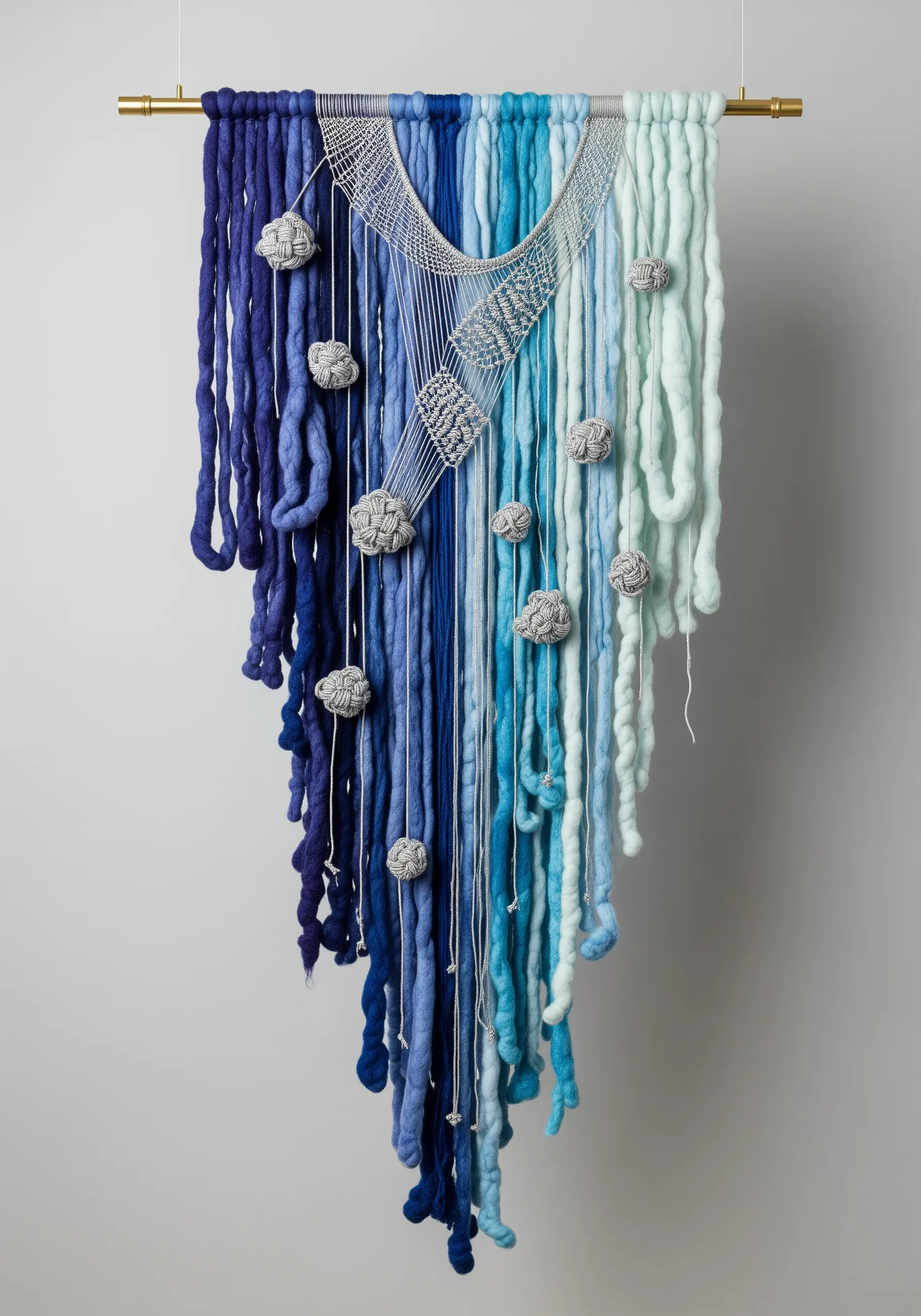
A monochromatic color scheme doesn’t have to be flat; you can create immense depth by focusing entirely on texture.
Gather various fibers in the same color family—chunky merino wool, thin cotton cord, silky ribbon, and felted wool—and arrange them in a cascading waterfall effect.
Introduce subtle macrame or netting details with a finer thread to add a layer of intricacy that draws the eye in.
This technique proves that you can build a rich, complex piece using only the interplay of light and shadow on different surfaces.
4. Add Industrial Contrast with Unexpected Materials
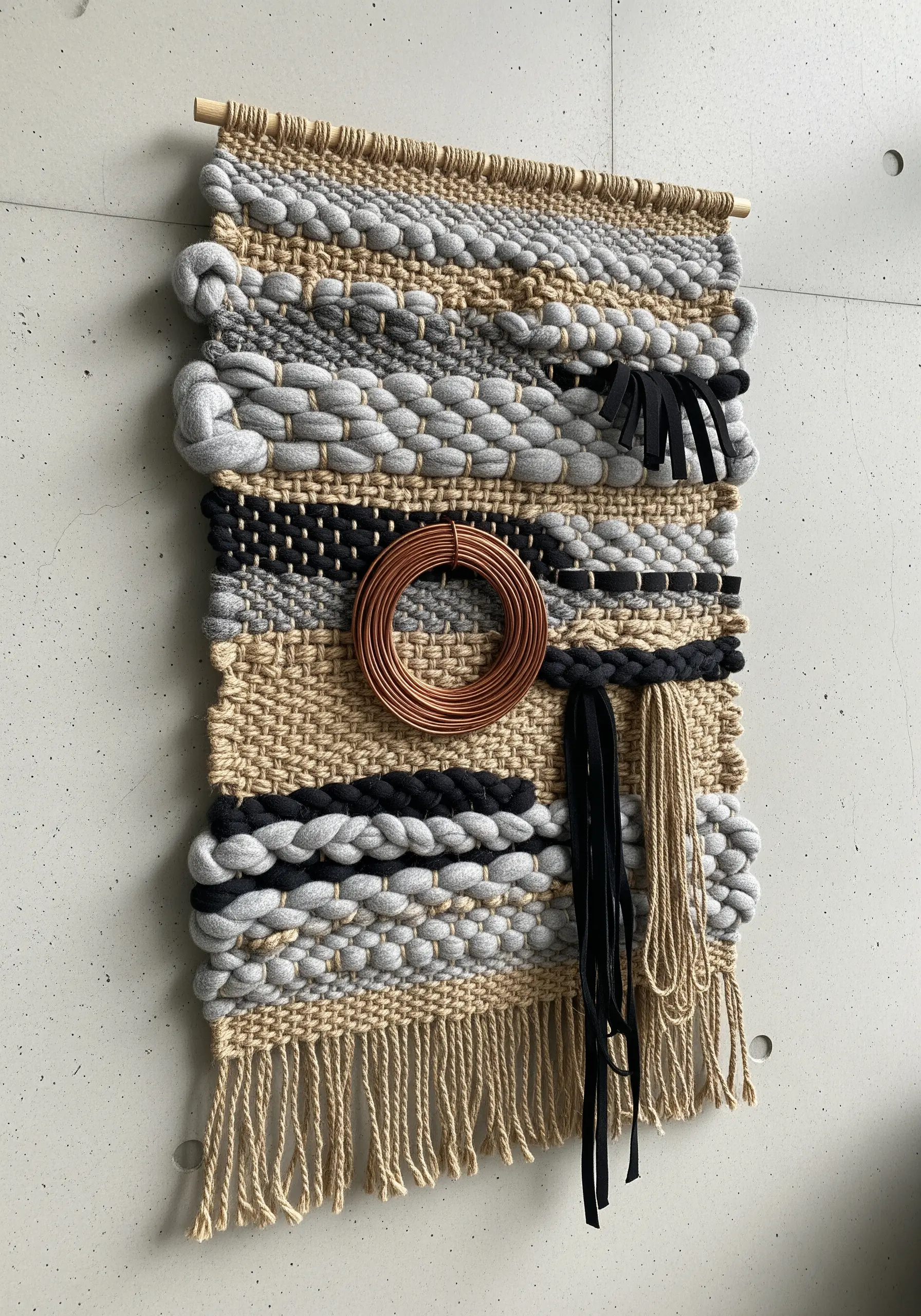
Elevate your weaving by incorporating non-traditional elements that challenge the softness of the yarn.
Introduce a coil of copper wire, strips of raw leather, or even recycled rubber into your design.
To integrate these materials seamlessly, create a space for them in your weave and use a strong soumak stitch around the edges to secure them firmly.
This contrast between hard and soft, matte and metallic, creates a powerful focal point and gives your fiber art a contemporary, sculptural edge.
5. Balance Playful Shapes with Controlled Texture
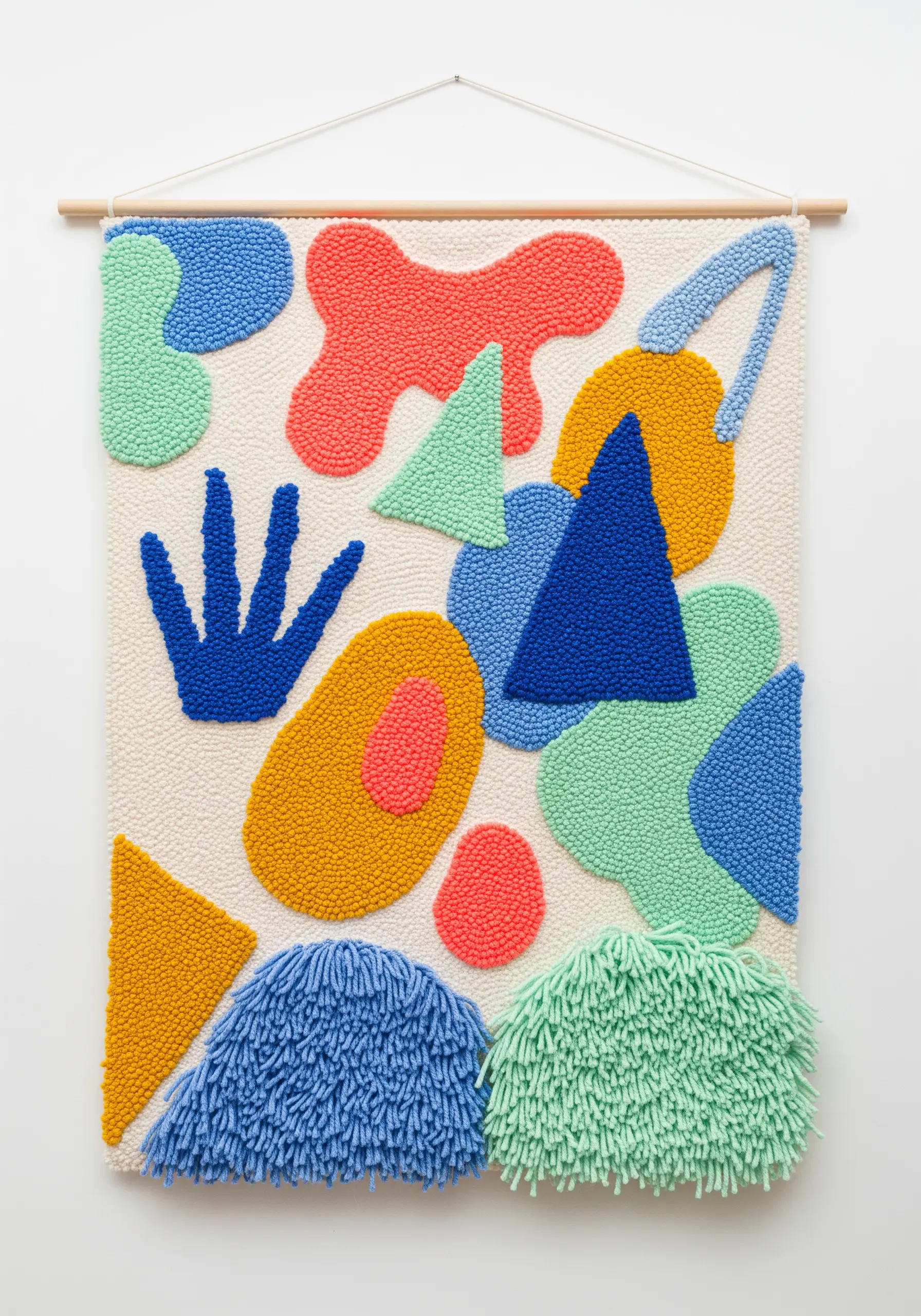
Create a dynamic abstract composition by combining bold, organic shapes with varying punch needle textures.
Outline your shapes first, then decide which areas will have flat, short loops and which will have a longer, shaggier finish.
This textural variation helps to define each shape and adds a wonderful tactile dimension to the piece.
Use a bright, confident color palette to enhance the playful, modern-art feel of the composition.
6. Design with Negative Space in Large-Scale Fiber Art
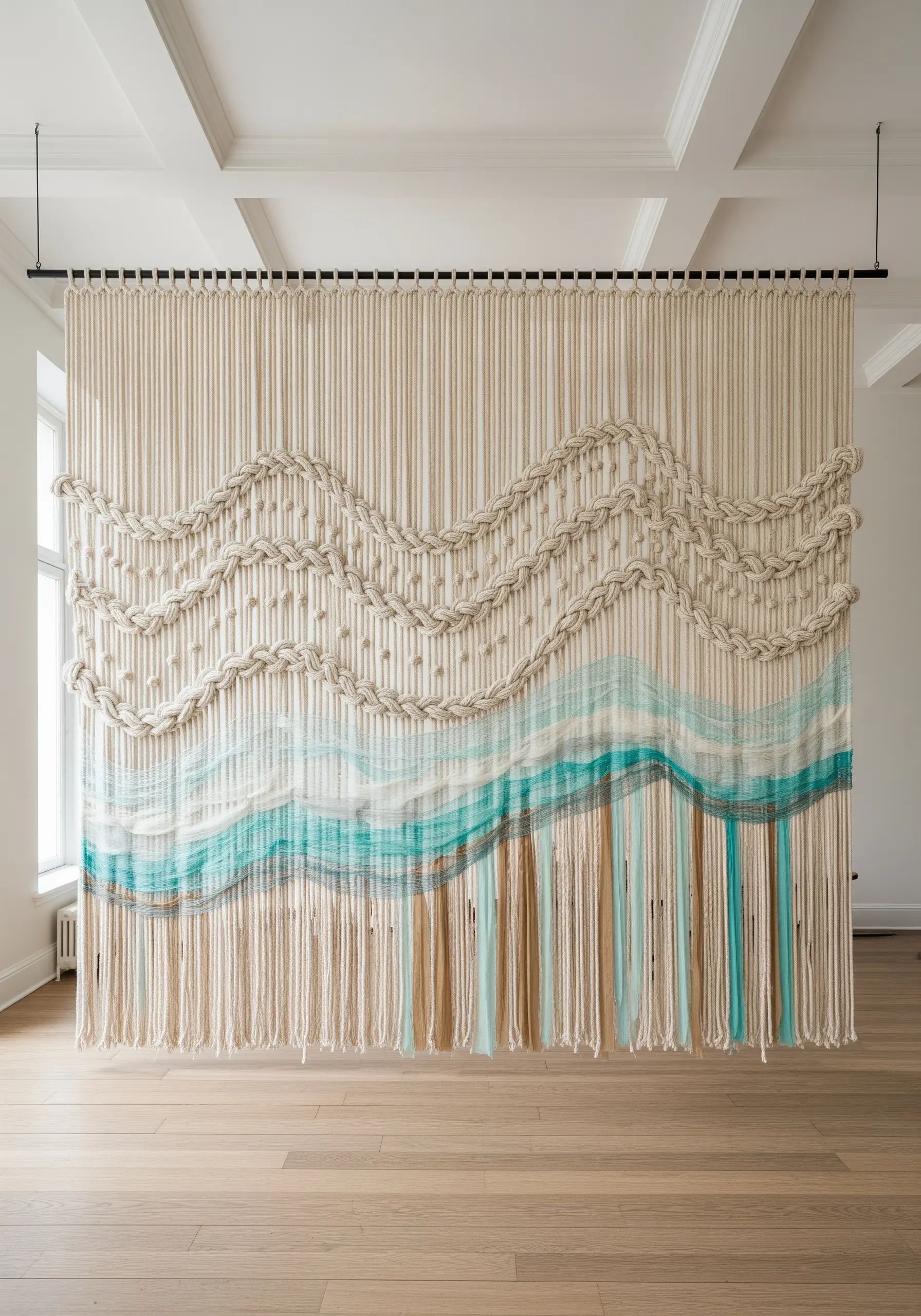
When working on an ambitious scale, the empty spaces in your design are just as critical as the knotted ones.
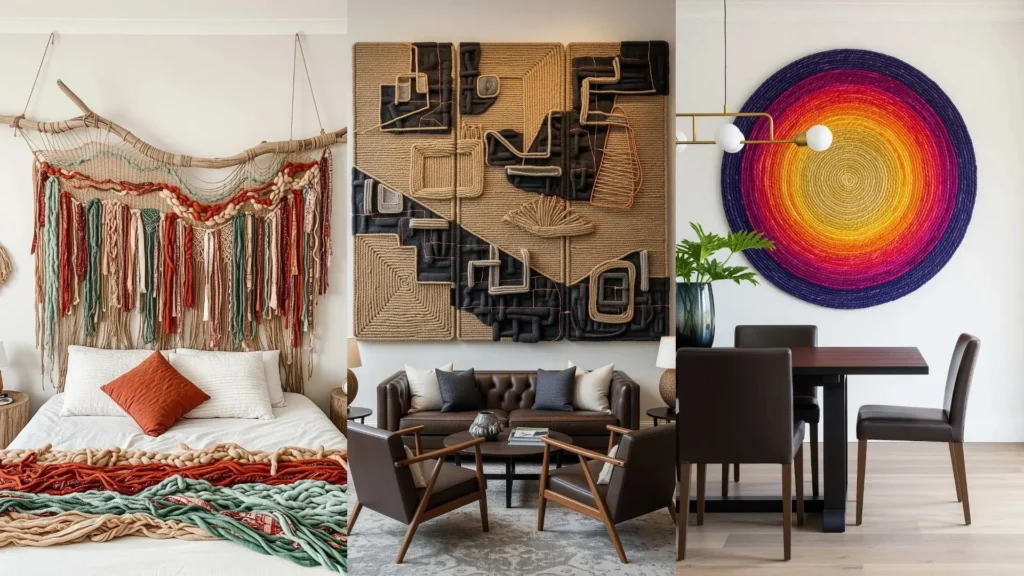
Create visual rhythm with thick, undulating lines of knotted rope, allowing generous gaps of straight-hanging cord between them.
This approach prevents the piece from feeling heavy and creates an elegant, wave-like movement.
To add a subtle touch of color, use fabric dyes to dip-dye the lower fringe, creating a soft, watercolor effect that doesn’t overpower the natural texture of the rope.
This is a perfect project for a large-scale fiber art installation that can define an entire room.
7. Master Tension for Clean, Graphic Weaving
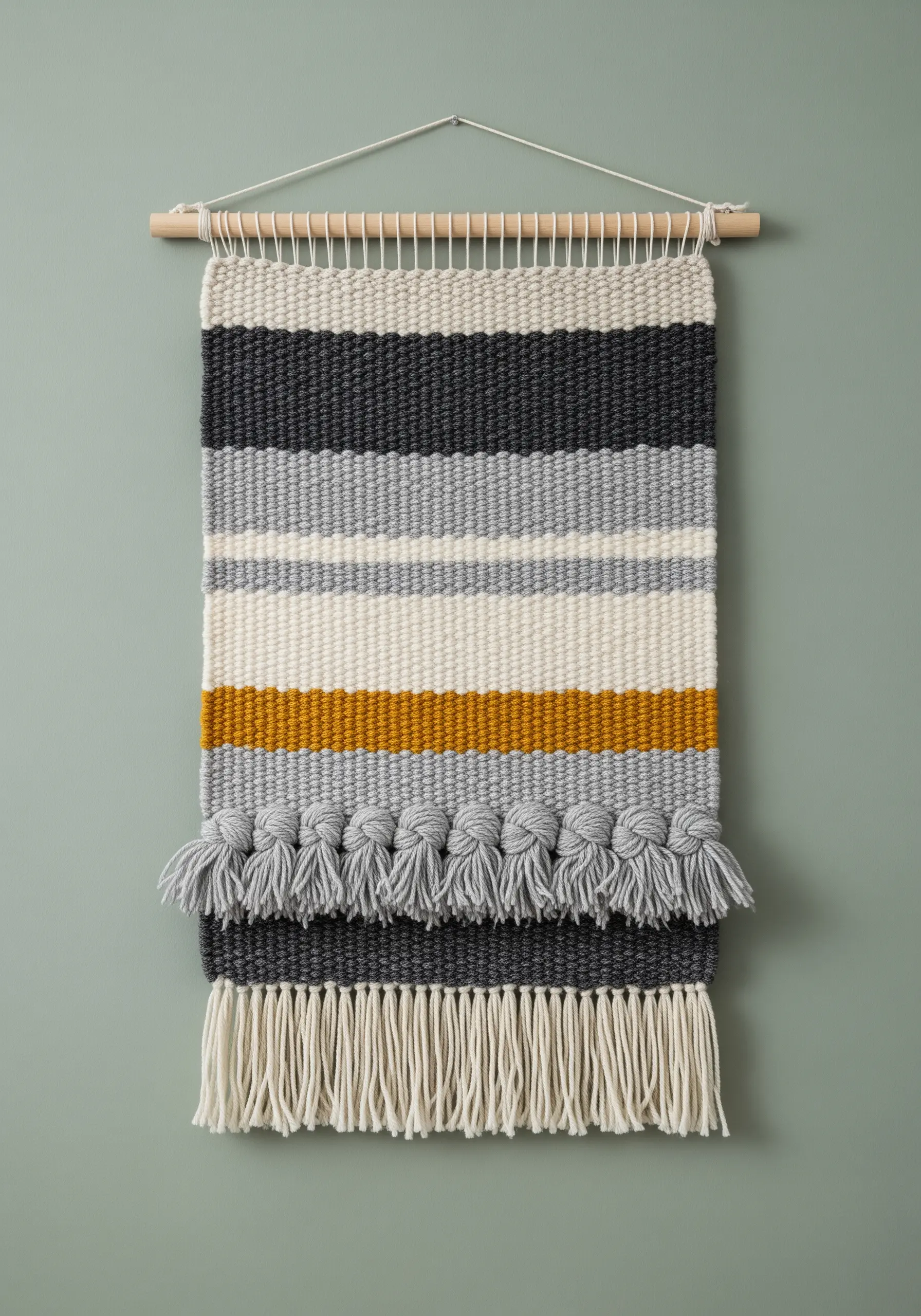
Achieving crisp, horizontal stripes in your weaving is a testament to technical skill, and it all comes down to consistent tension.
Ensure your warp threads are drum-tight before you begin, and pack each row of weft down firmly and evenly with a weaving fork or comb.
Break up simple tabby weave with a row of textured knots, like rya or soumak, to add a subtle band of 3D texture.
A single, bold accent color, like mustard yellow, can electrify a neutral palette of grays and creams.
8. Build Sculptural Landscapes by Layering Fibers
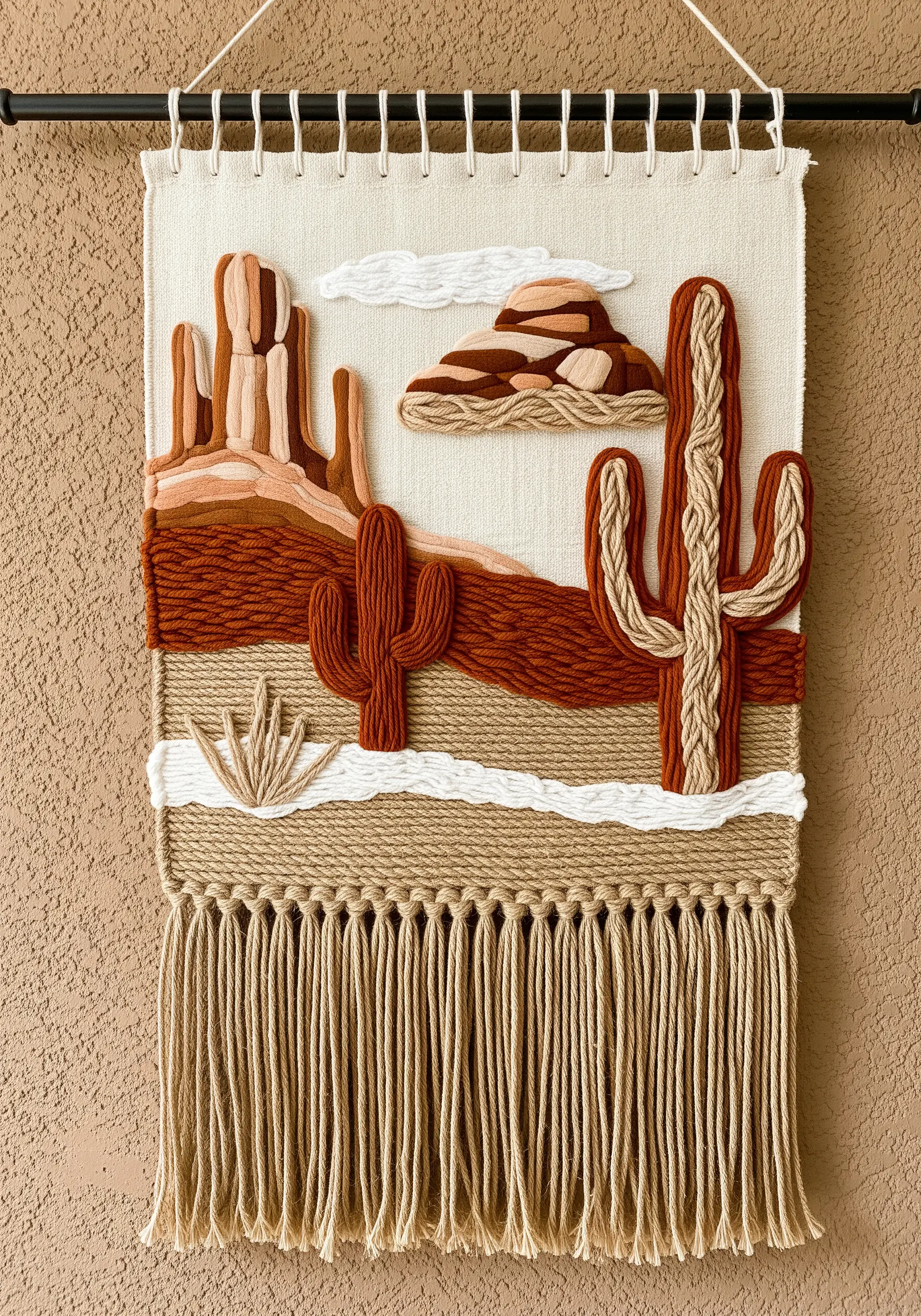
Move your woven scenes from flat to dimensional by building up layers of different fibers.
Use a traditional flat weave for the background sky and hills, then bring elements to the foreground using high-relief techniques.
Outline cacti and rock formations with a thick, couched cord to make them pop.
Fill in areas with chunky soumak stitches or punch needle loops to create dense, plush textures that stand out from the base weave, giving your landscape a tangible sense of place.
9. Create Dreamy Mobiles with Felt, Braids, and Beads
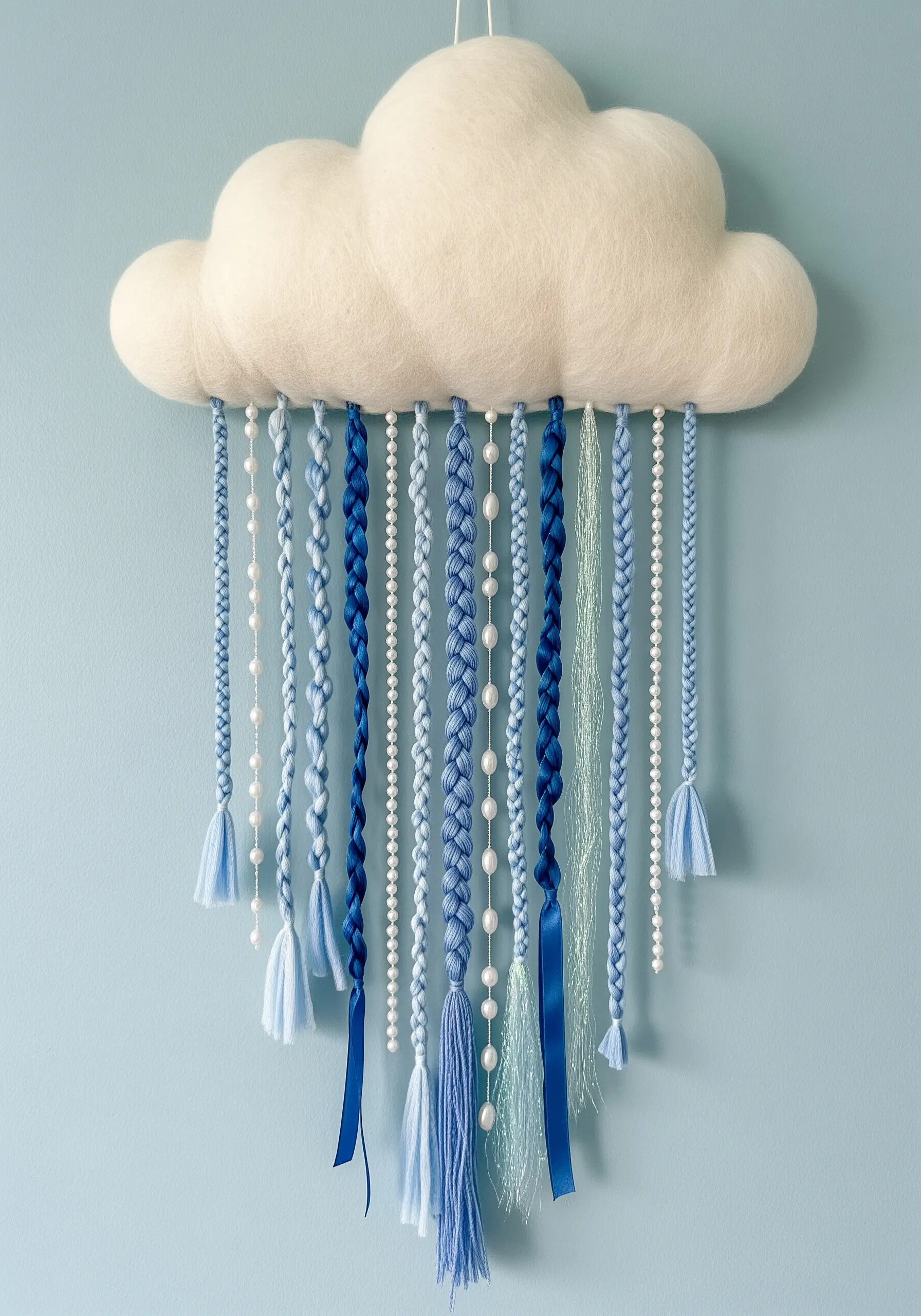
Combine multiple fiber crafts to create a mobile with rich sensory detail.
Use needle felting to sculpt a soft, seamless cloud form, which serves as a gentle anchor for the piece.
For the ‘rain,’ create a variety of strands: some braided from embroidery floss, some twisted from yarn, and others simply strung with pearls or wooden beads.
This mix of matte wool, silky floss, and smooth beads creates a visually and texturally engaging piece perfect for a serene space.
10. Craft a Monochrome Masterpiece with Texture Blocking
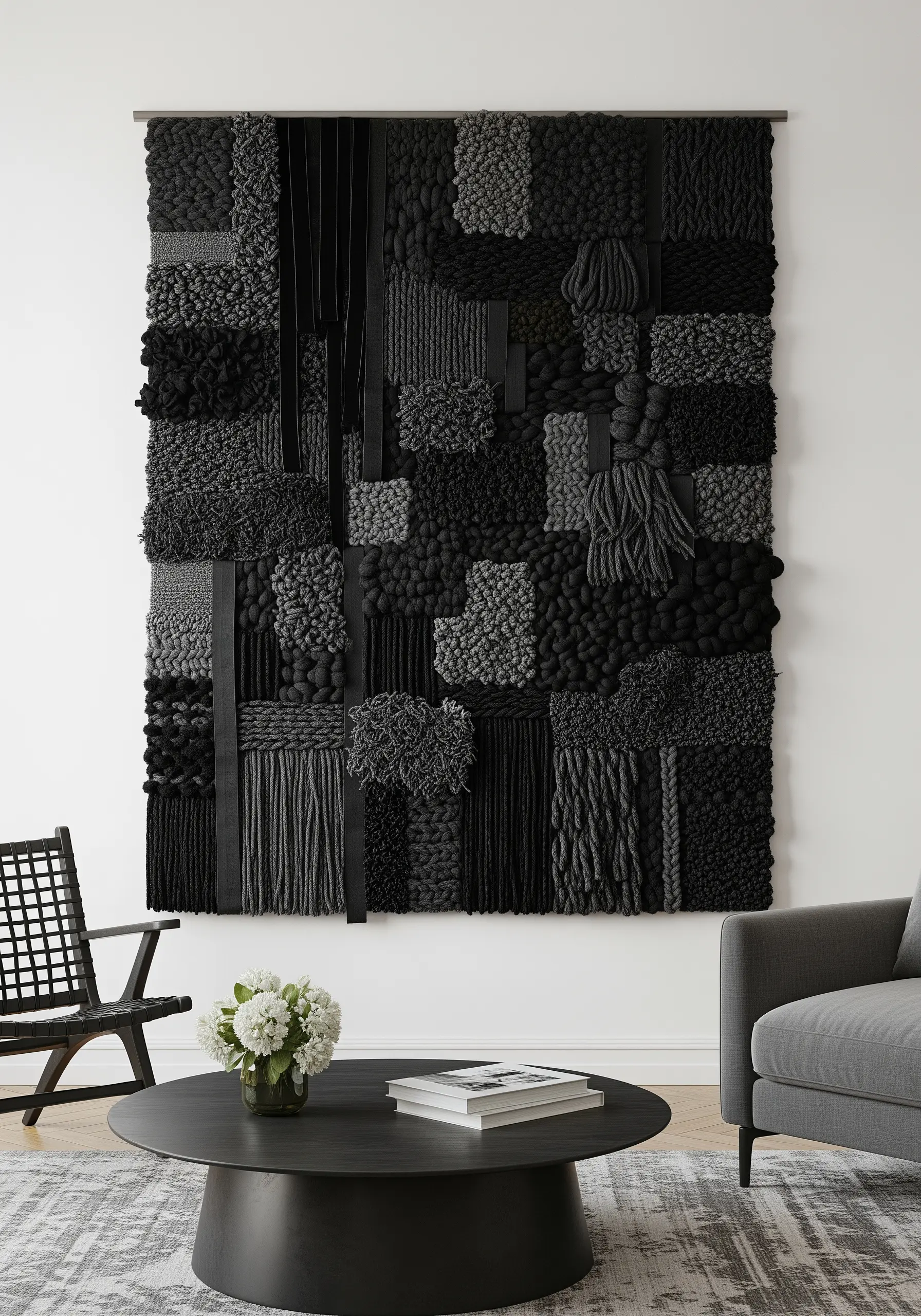
Create a powerful, sophisticated statement piece by exploring texture instead of color.
Divide your canvas into a grid and fill each block with a different weaving or knotting technique, all in shades of black and charcoal.
Alternate between flat tabby weave, plush punch needle loops, chunky roving, and tight knots.
This patchwork of textures creates a dynamic surface that invites closer inspection, proving that a monochrome masterpiece can be incredibly rich and complex.
11. Paint with Yarn by Blending Colors in Punch Needle
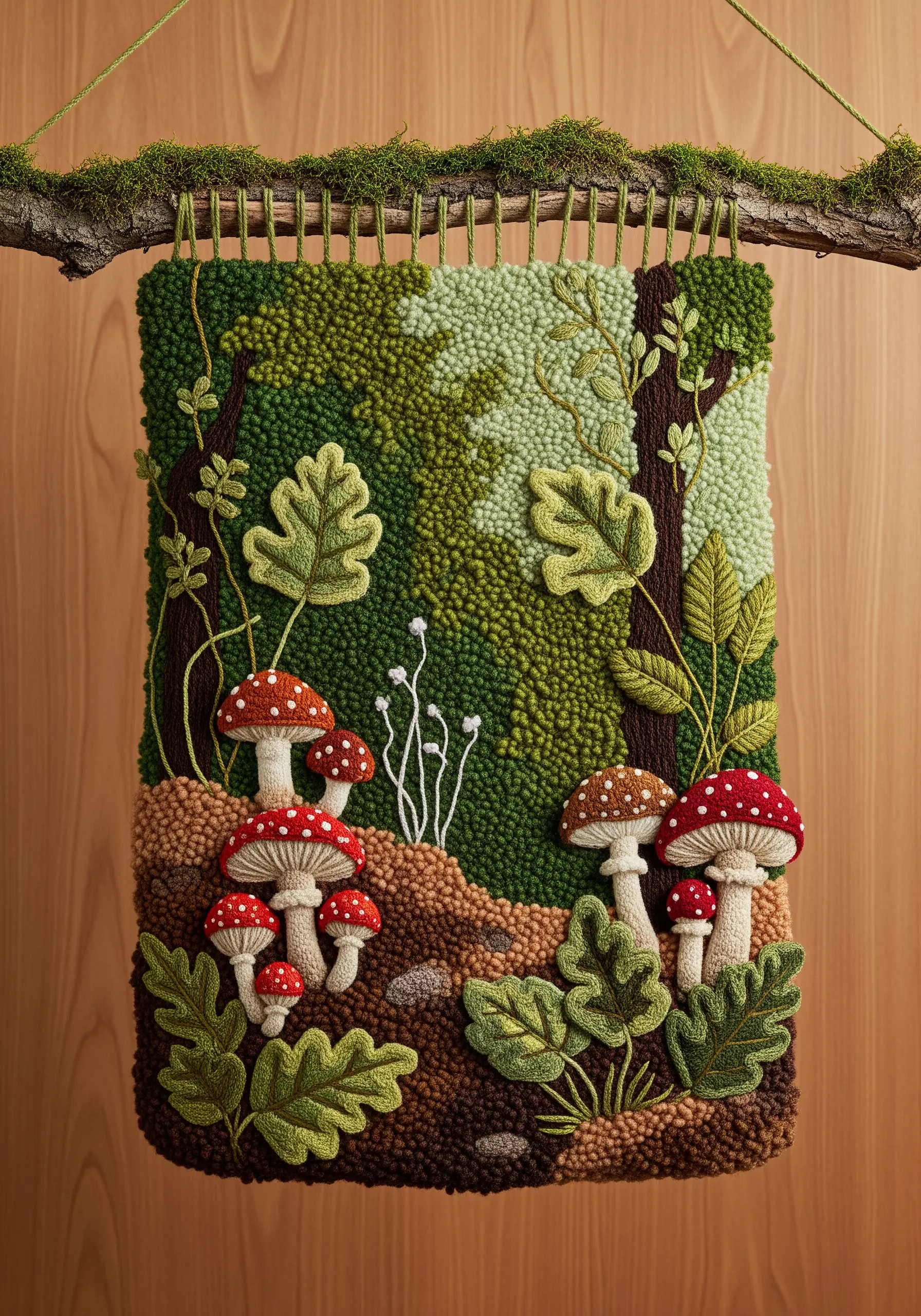
Use your punch needle like a paintbrush to create soft, impressionistic color transitions.
To achieve a gentle gradient, thread your needle with multiple strands of floss in slightly different shades of the same color.
As you punch, the colors will blend randomly, creating a beautiful, painterly effect ideal for organic subjects like forest canopies or sunsets.
For sharp details like leaves or mushroom spots, switch to a single, solid-colored yarn to make them stand out against the soft background.
12. Integrate Vintage Fabrics into Macrame
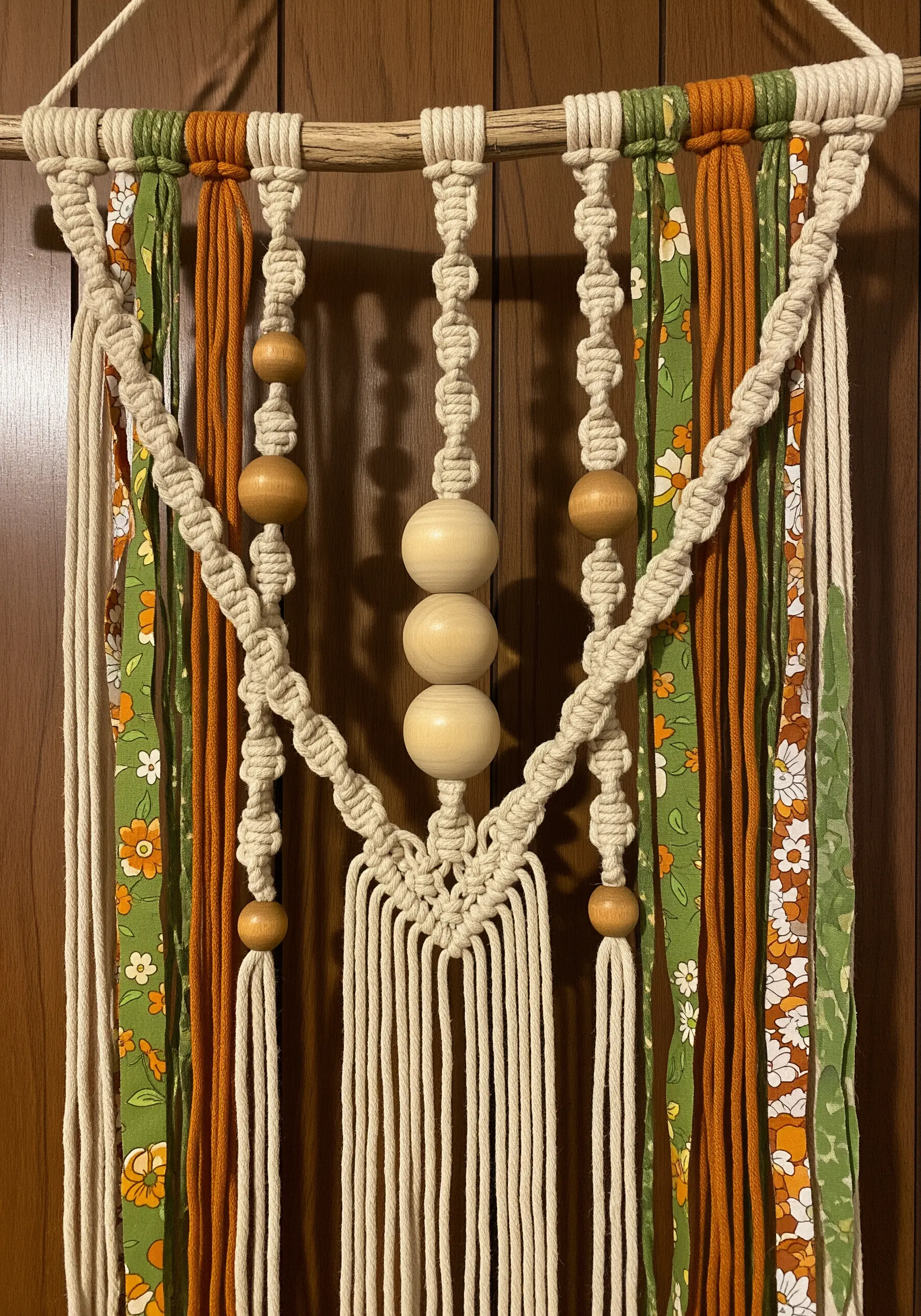
Breathe new life into macrame by incorporating strips of vintage or patterned fabric.
Simply cut your fabric into one- or two-inch strips and use them alongside your macrame cord, attaching them with a lark’s head knot just as you would with rope.
Let them hang straight or weave them into your knotted patterns for pops of color and personality.
Add large wooden beads to serve as a visual bridge between the rustic cord and the softer fabric, unifying the different materials.
13. Weave a Galaxy with Mixed Metallic Threads
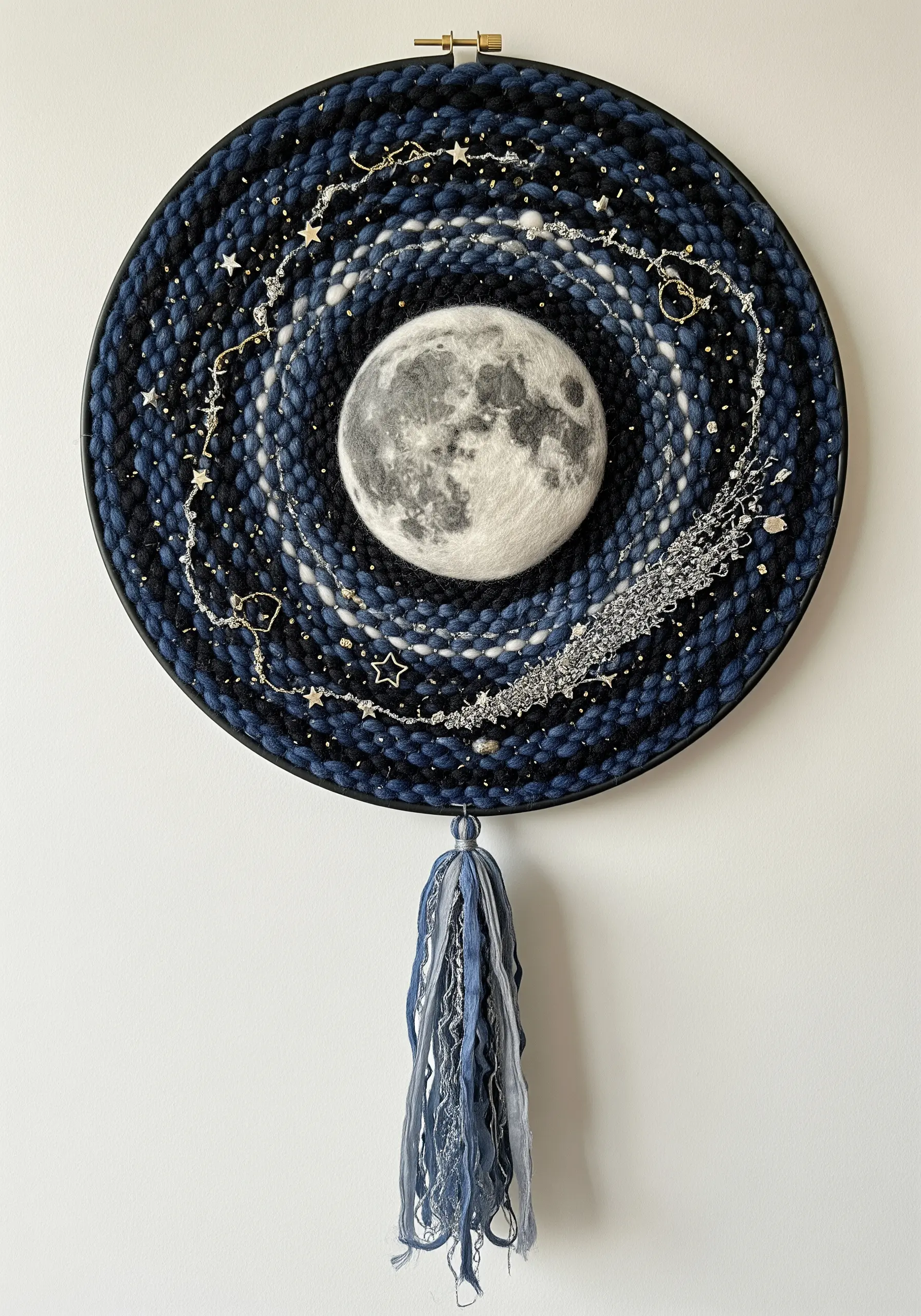
Create a celestial scene by layering different textures and sheens on a dark background.
Start by wrapping a large embroidery hoop tightly with dark blue and black yarn to create your night sky canvas.
Use needle felting to craft a soft, dimensional moon as your focal point.
Then, stitch your galaxy using a mix of materials: couch fine silver wire for constellations, create a shooting star with glittery tulle, and add tiny seed beads or French knots for distant stars.
14. Design Tactile Wall Pods with Coiling and Loops
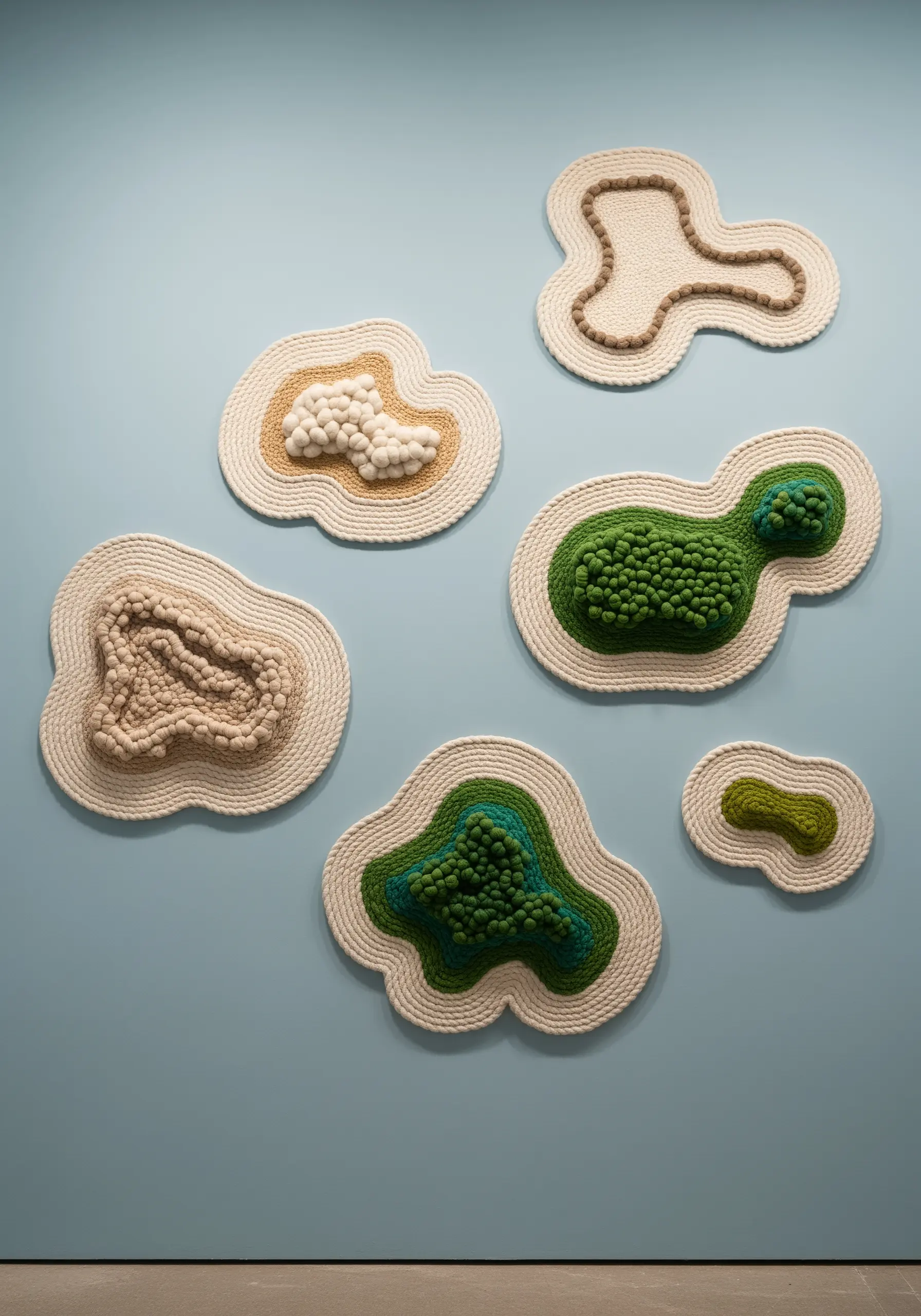
Create a unique gallery wall of small, organic ‘pods’ that explore texture on a micro-level.
Form the border of each abstract shape by coiling and stitching a thick cotton rope onto a sturdy fabric backing.
Fill the interior of each pod with a single, dense texture—plush punch needle loops, tight French knots, or chunky woven wool.
Grouping these individual textural studies together allows you to create a large-scale composition that is both cohesive and endlessly detailed.
15. Weave with Memory by Upcycling Denim
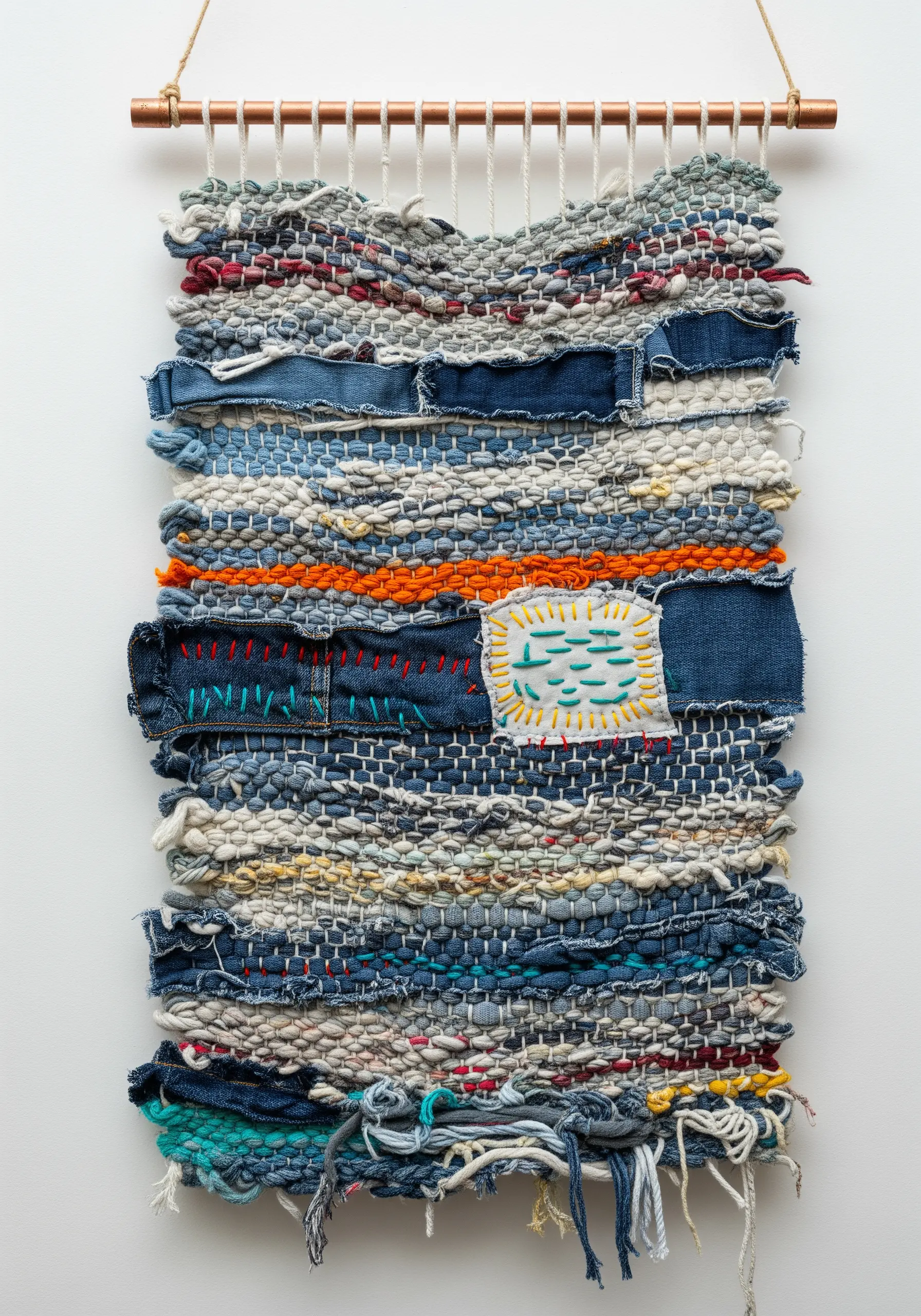
Transform old jeans into a meaningful work of art by cutting them into strips and using them as your weft thread.
Vary the shades of denim to create a subtle striped or patchwork effect.
Incorporate other leftover fabric scraps and even small embroidered patches to add pops of color and personal history.
This approach to weaving is not just sustainable; it’s a way of embedding stories directly into your art and is a beautiful method for reusing old clothes.
16. Construct Ethereal Garlands with Spun Fibers
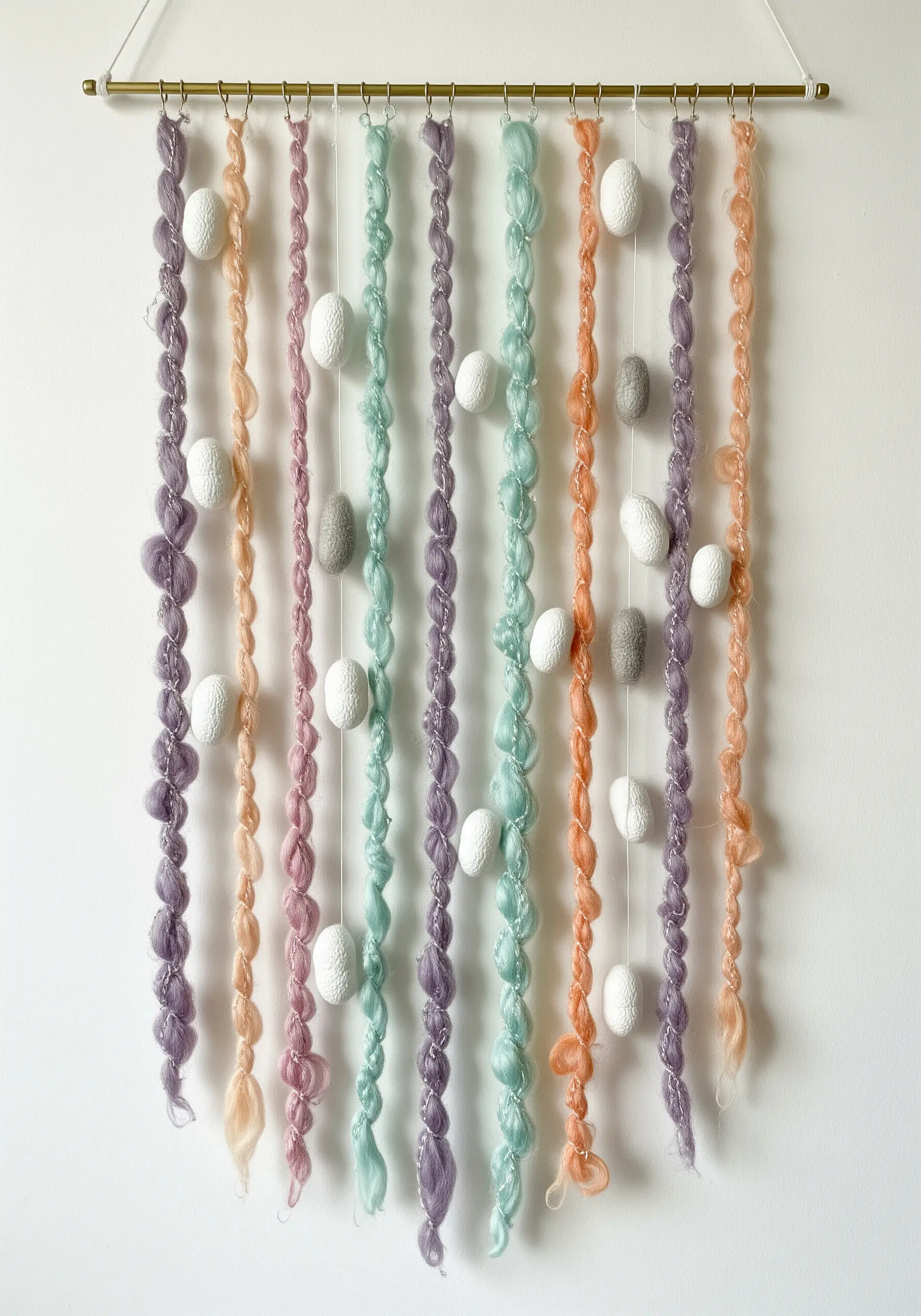
Create a delicate, floating wall hanging by choosing lightweight, airy yarns.
Mohair, silk, and fine merino wool are perfect for this style, as they have a natural halo that catches the light.
Instead of dense knotting, create texture by simply twisting the strands, adding occasional knots, or wrapping sections with a contrasting thread.
Intersperse the yarn with small, handmade felted beads to add points of interest without adding weight, maintaining the piece’s light and ethereal quality.
17. Capture the Coastline with Found Objects
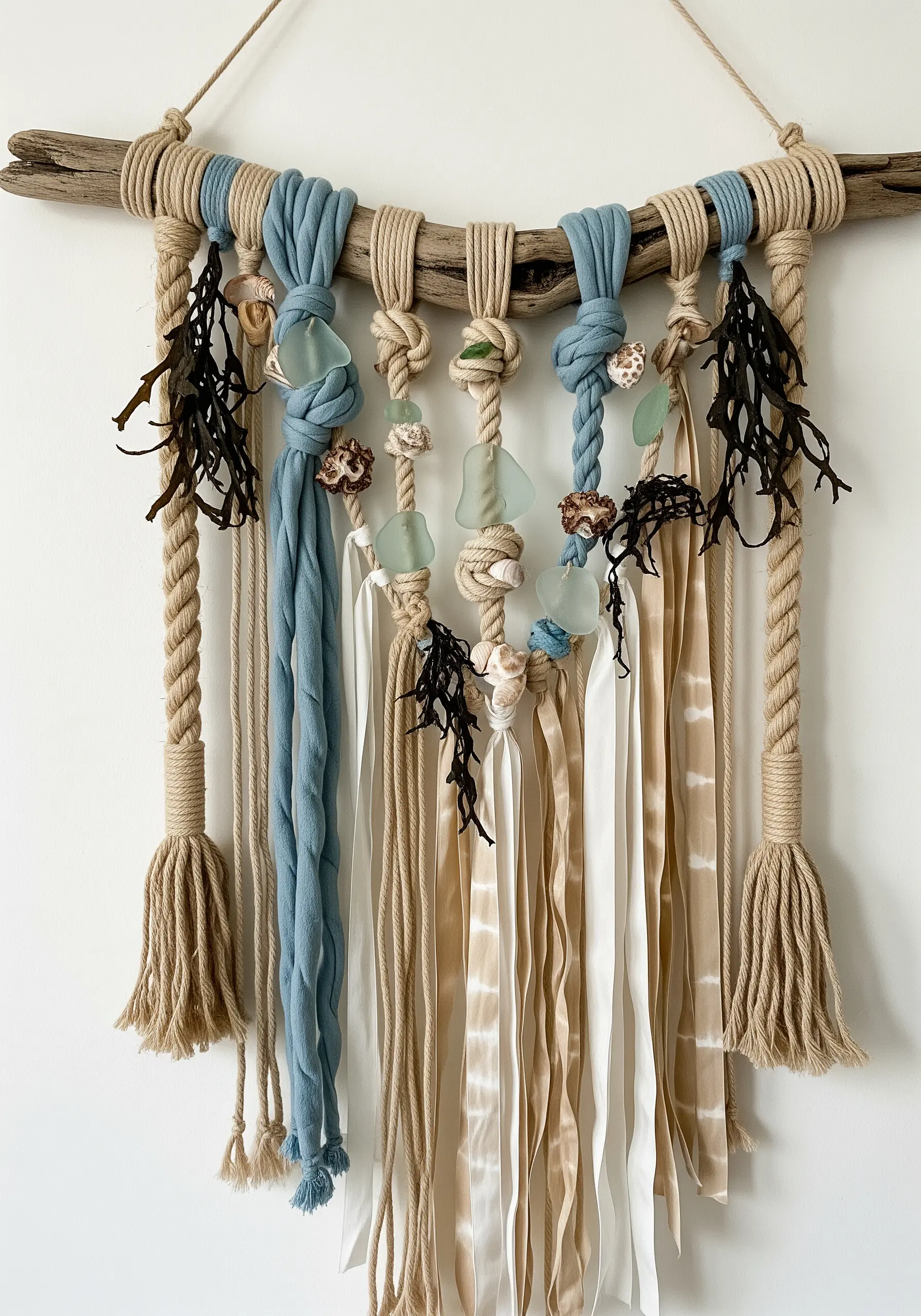
Create a piece that tells the story of a place by incorporating found natural elements.
Use a piece of weathered driftwood as your base, then attach a mix of fibers and objects collected from the shoreline.
Tie on strips of fabric in sandy, oceanic hues, and use strong linen thread to securely attach pieces of sea glass, shells, or dried seaweed.
The result is a tactile souvenir that is deeply connected to a specific landscape.
18. Achieve Sharp Geometrics with High-Contrast Weaving
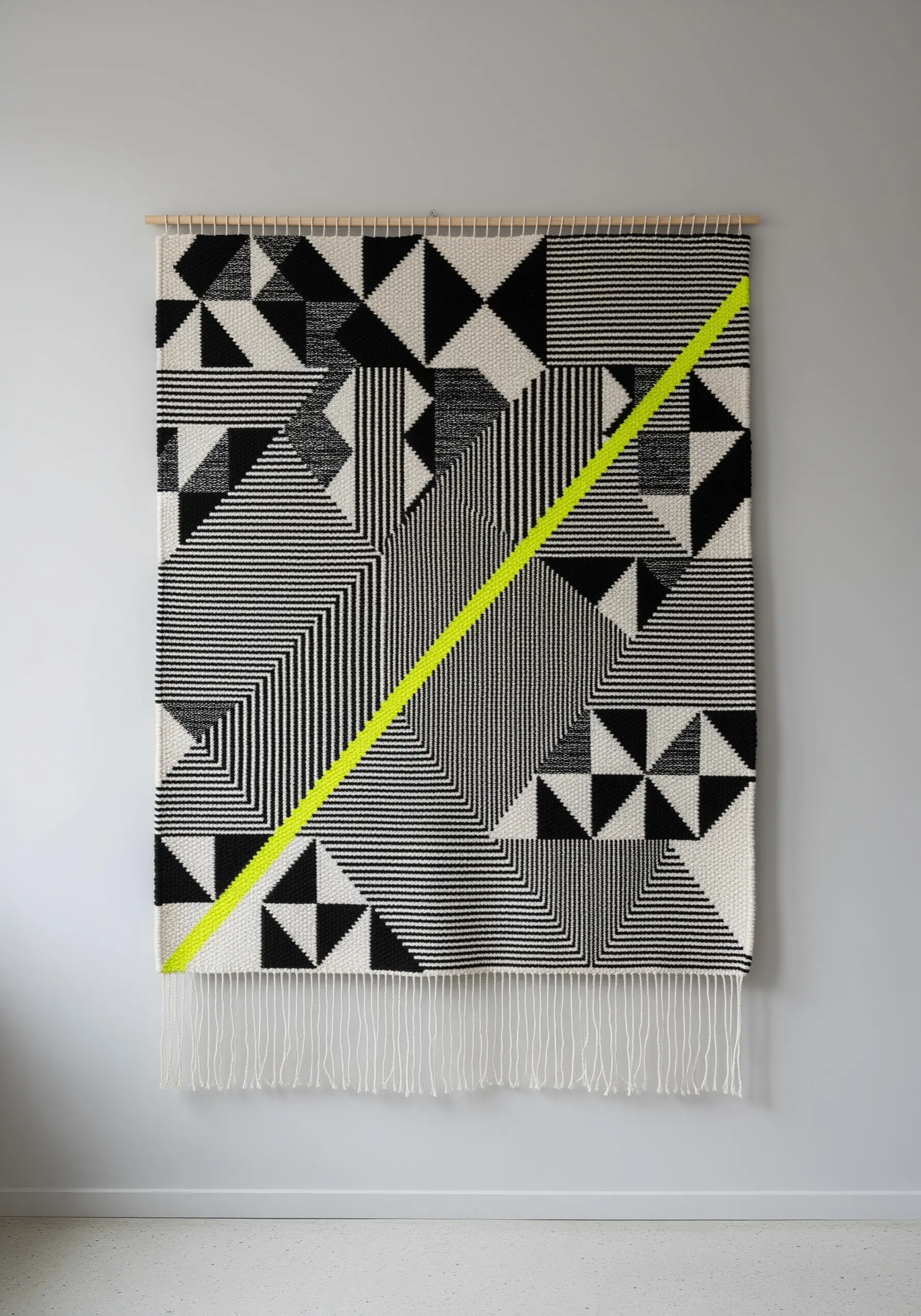
Make a bold statement with a graphic, black-and-white woven tapestry.
The key to crisp geometric shapes is meticulous planning on graph paper and maintaining a very tight, even warp tension.
Use weaving techniques like interlocking or dovetail joins to create clean vertical lines between color blocks.
Introduce a single, unexpected line of vibrant color, like neon yellow, to slice through the composition and create a jolt of energy that makes the entire piece feel modern and alive.
19. Fuse Knotwork and Beadwork for a 3D Mandala
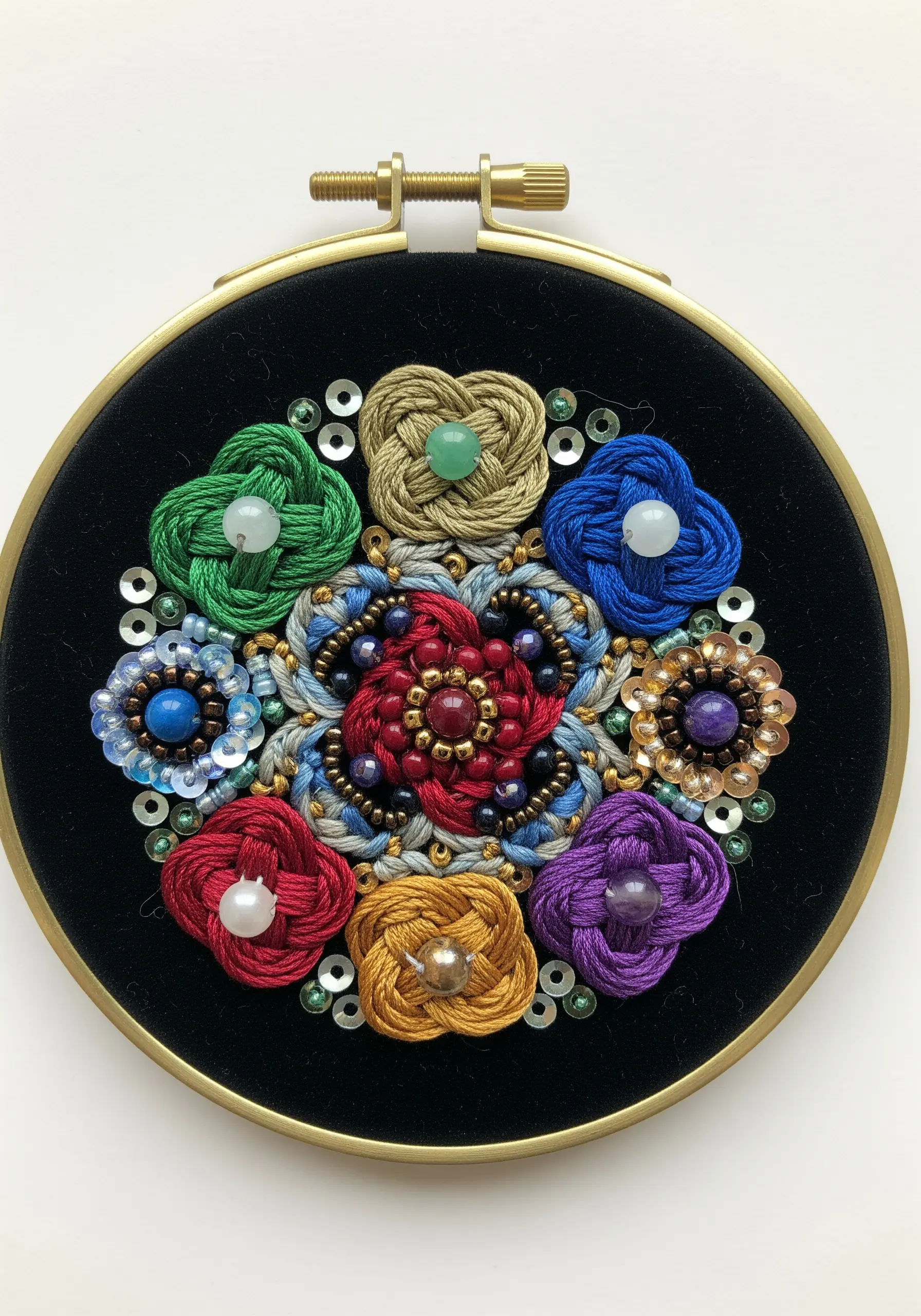
Create a rich, jewel-like mandala by combining sculptural knots with intricate bead embroidery.
On a dark velvet base, use a thick, silky cord to form raised floral or geometric shapes with techniques like the Chinese cloverleaf knot.
Fill the negative spaces and the centers of your knots with dense beadwork, sequins, and metallic threads.
This layering of matte knots, sparkling beads, and plush velvet creates a piece with incredible depth and luxurious appeal.
20. Build a Permanent Bouquet with Felt and Yarn
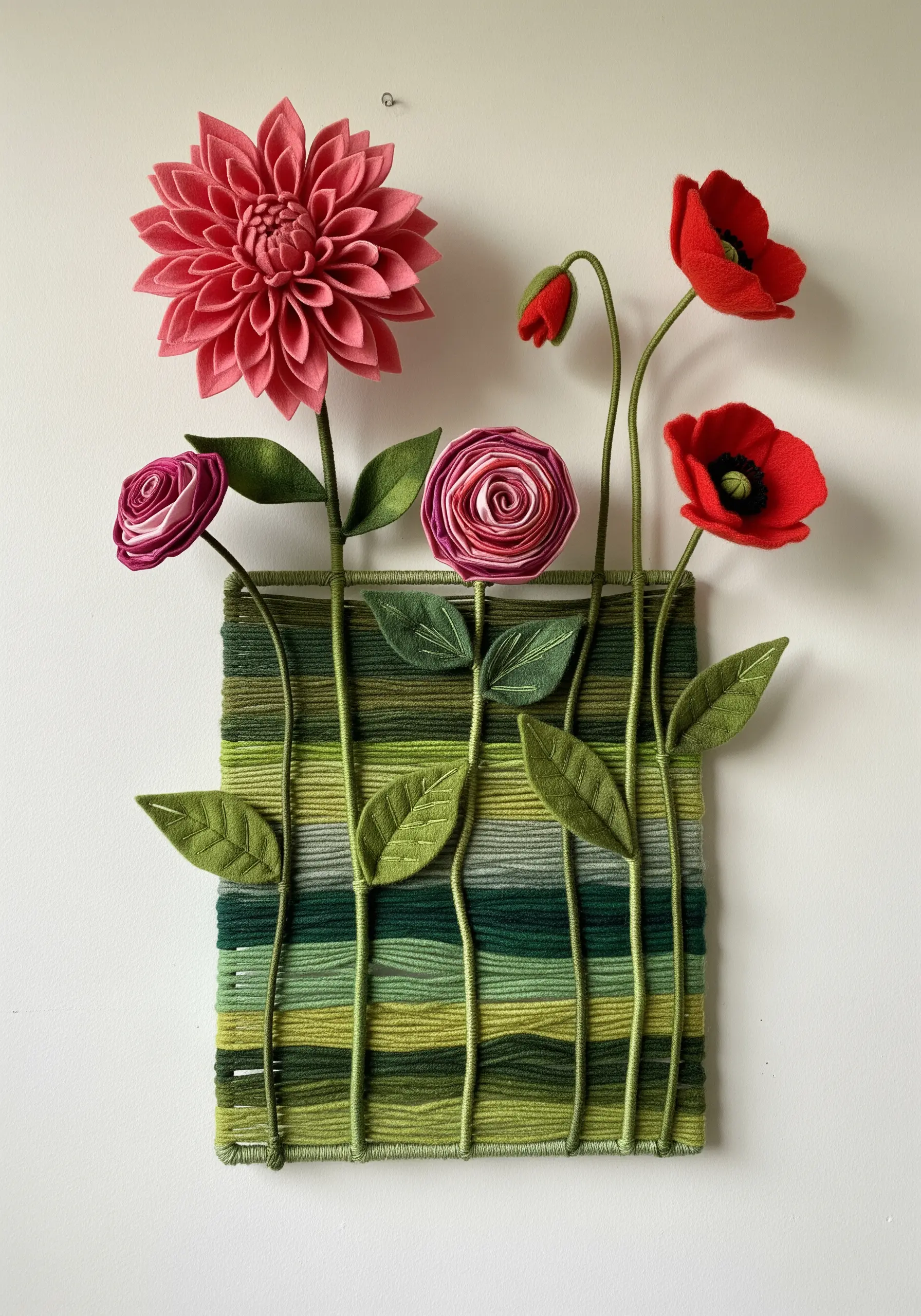
Construct a floral arrangement that never wilts by combining felt craft with fiber wrapping techniques.
Create intricate, multi-petaled flowers from sheets of wool felt, layering the pieces to achieve realistic depth.
For the stems, wrap floral wire tightly with variegated green yarn, which mimics the natural color shifts in a real plant stem.
Mount your finished bouquet on a simple yarn-wrapped board to provide a textural background that complements the blooms.
21. Create a Seamless Ombré with Dip-Dyed Cords
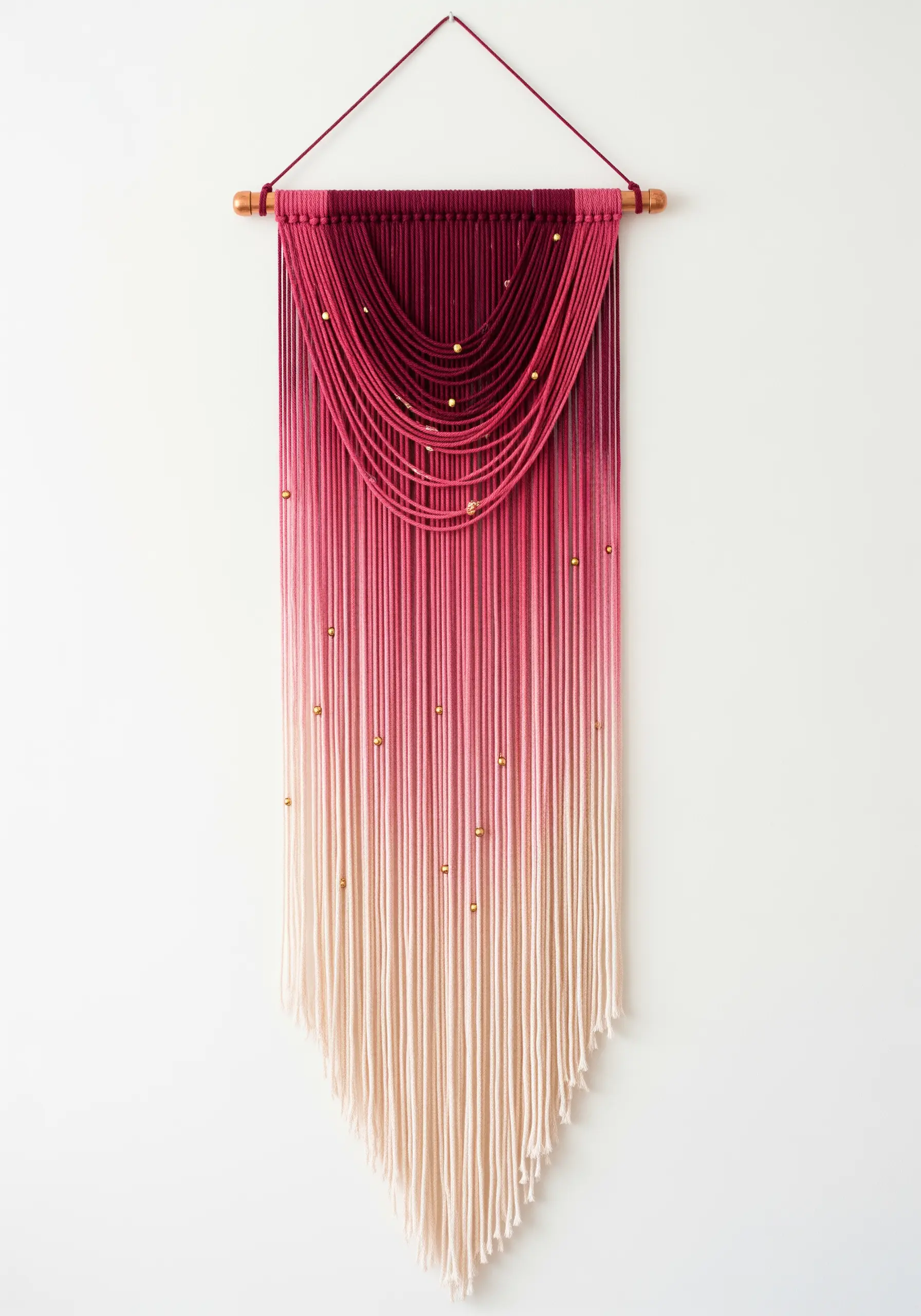
Achieve a professional-looking gradient effect in your macrame by dip-dyeing the finished piece.
Use natural cotton cord for the best dye absorption. Once your design is knotted, submerge the bottom portion into a prepared dye bath.
To create a soft transition, slowly pull the piece out of the dye, allowing the color to wick up the fibers naturally.
Scatter a few small metallic beads throughout the piece to catch the light and add a subtle touch of elegance.
22. Design with Repetition and Shadow for Architectural Fiber Art
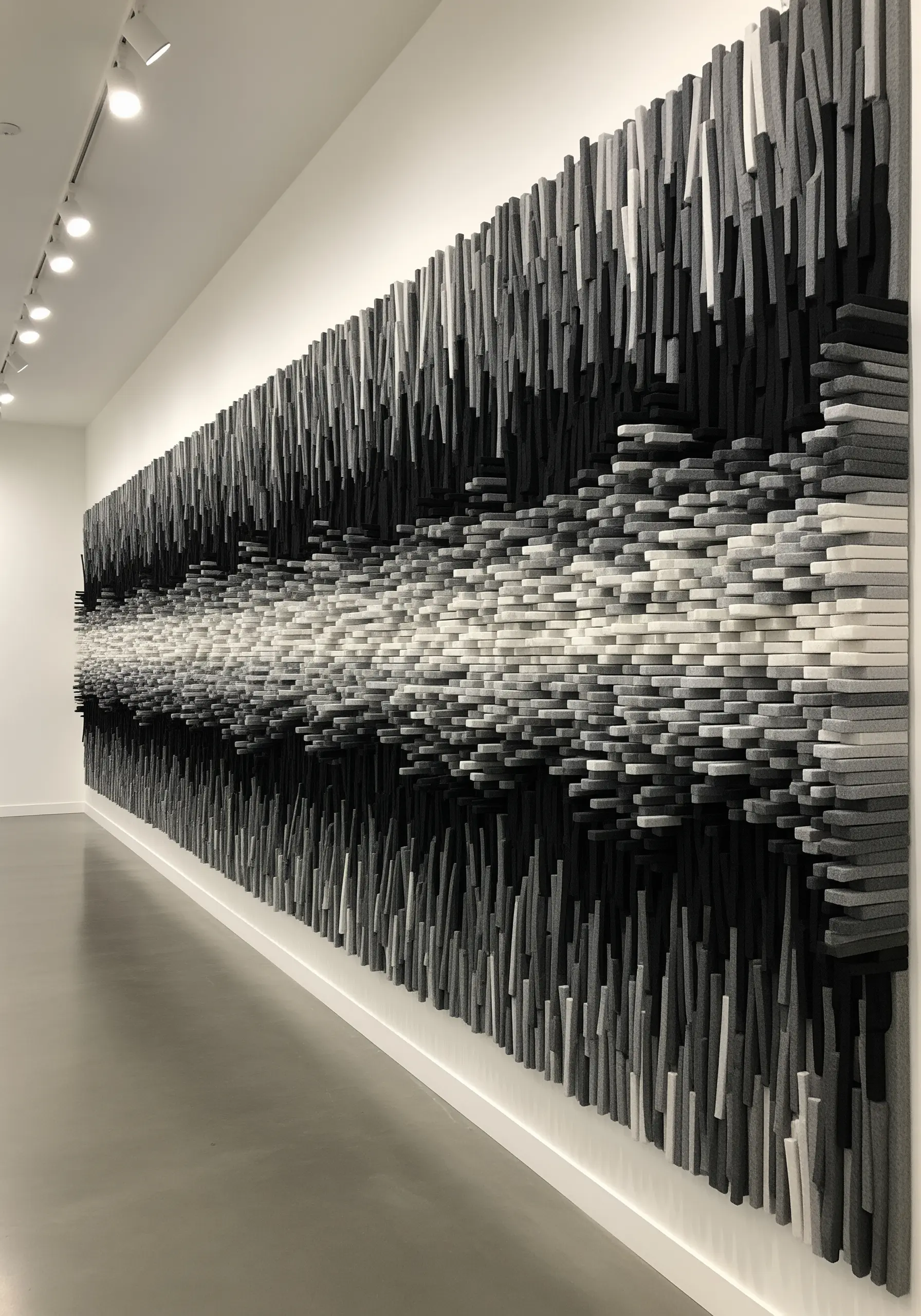
Transform a simple material into a complex, architectural installation through the power of repetition.
This large-scale work is composed of hundreds of individual felt-covered blocks arranged in a precise grid.
You can achieve a similar, smaller-scale effect by arranging felt pieces or yarn-wrapped blocks on a board.
By varying the depth and color of each element, you create a dynamic, undulating surface that interacts with light to produce shifting patterns of shadow, turning the wall into a piece of sculpture.
23. Emulate Art Deco Glamour with Woven Fan Motifs
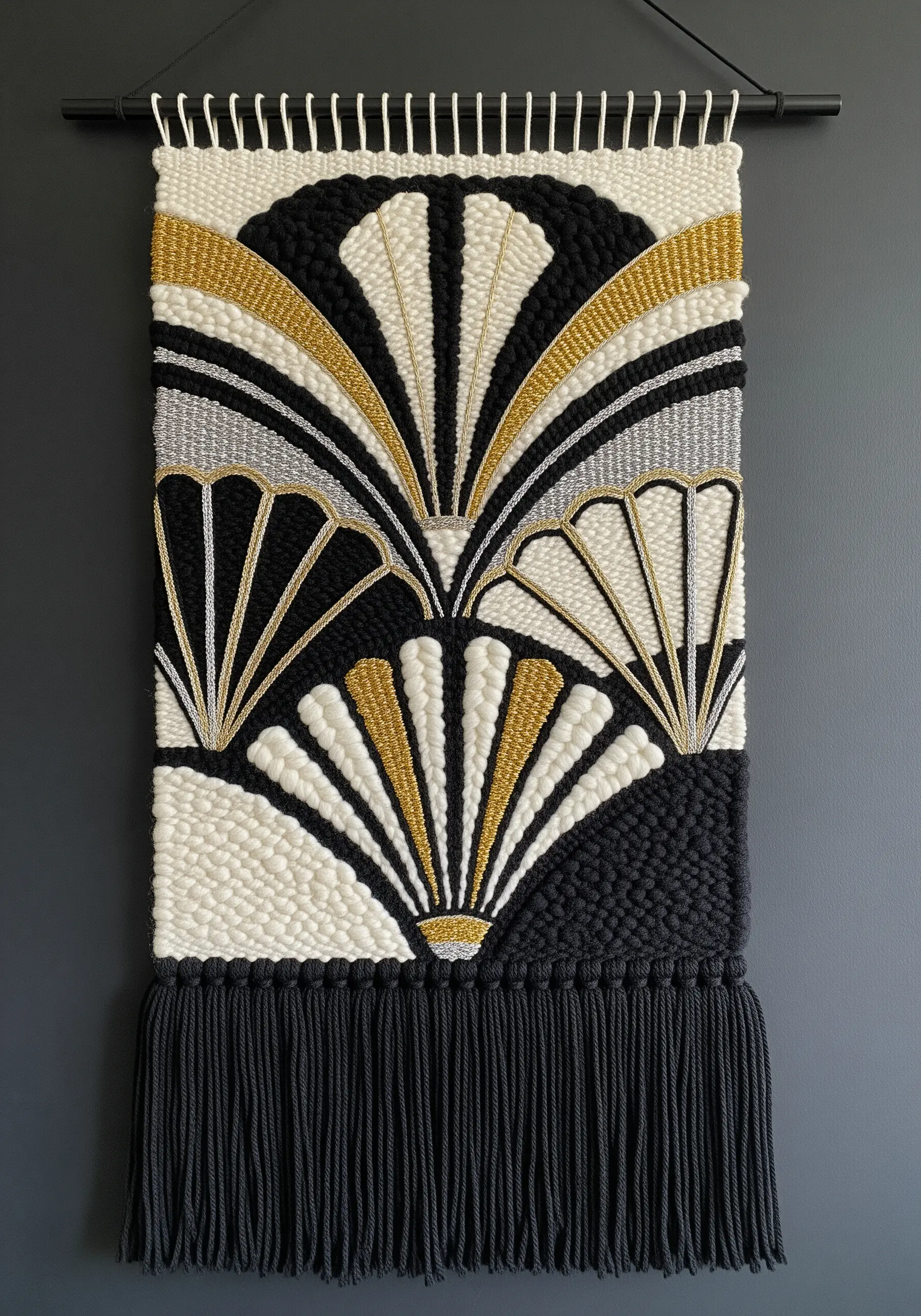
Translate the elegance of the Art Deco era into your weaving by focusing on its signature elements: symmetry, geometric shapes, and a touch of glamour.
Use a high-contrast palette of black, white, and metallics to create bold fan and sunburst motifs.
Incorporate shiny metallic yarns to capture the opulent spirit of the period.
To ensure your shapes are sharp and well-defined, use a soumak or outline stitch to trace the edges of each motif, making them stand out crisply against the background.
24. Embrace Expressive Texture with Deconstructed Weaving
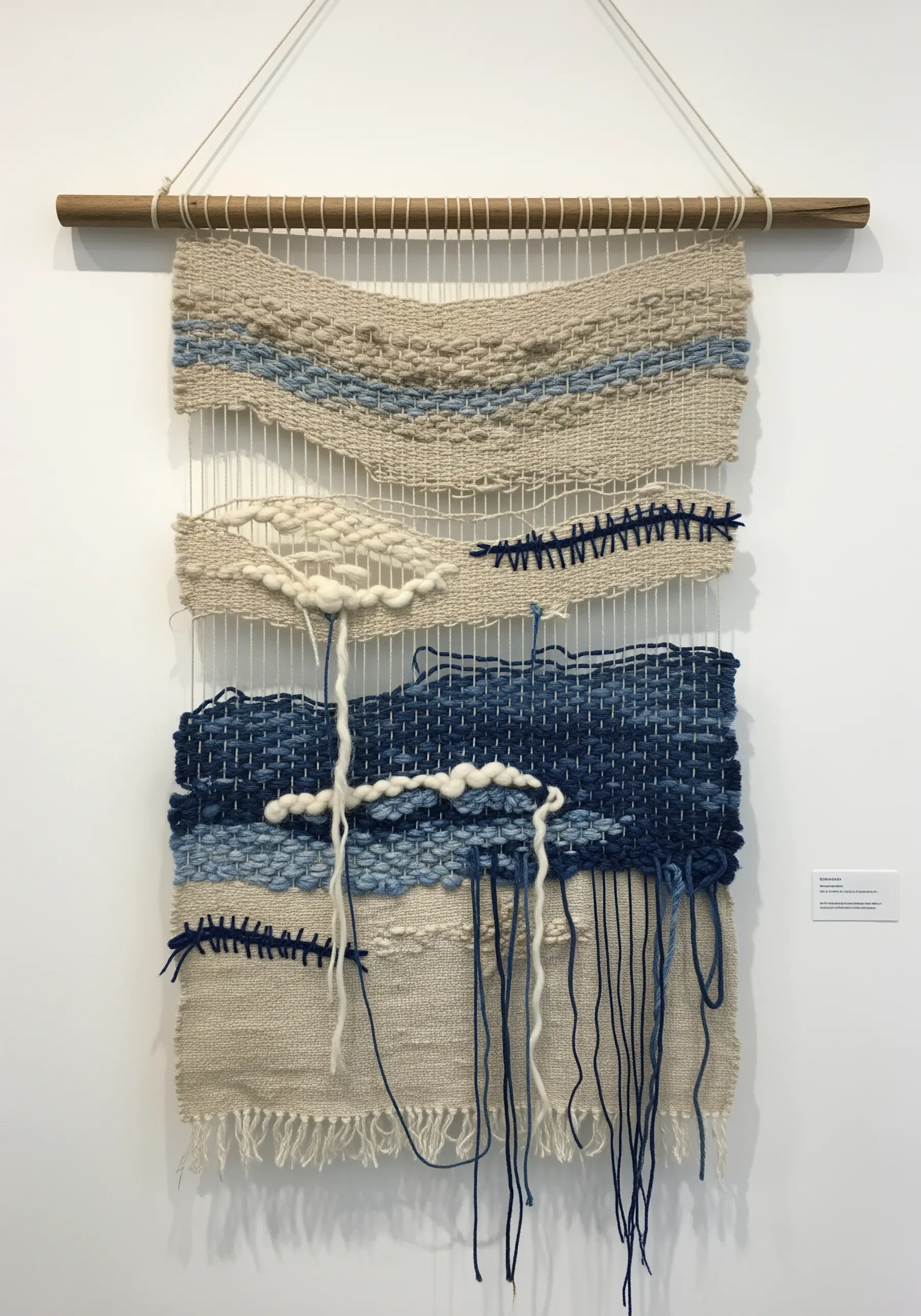
Challenge the idea of a perfect weave by intentionally letting the process show.
In this style, loose warp threads, uneven edges, and varying tension are not mistakes—they are expressive choices.
Allow weft threads to hang loose, create intentional gaps in the weave, and experiment with bundling and knotting the warp threads themselves.
This approach results in a raw, honest, and deeply personal piece that celebrates the beauty of imperfection.
25. Recreate Stained Glass Effects with Thread
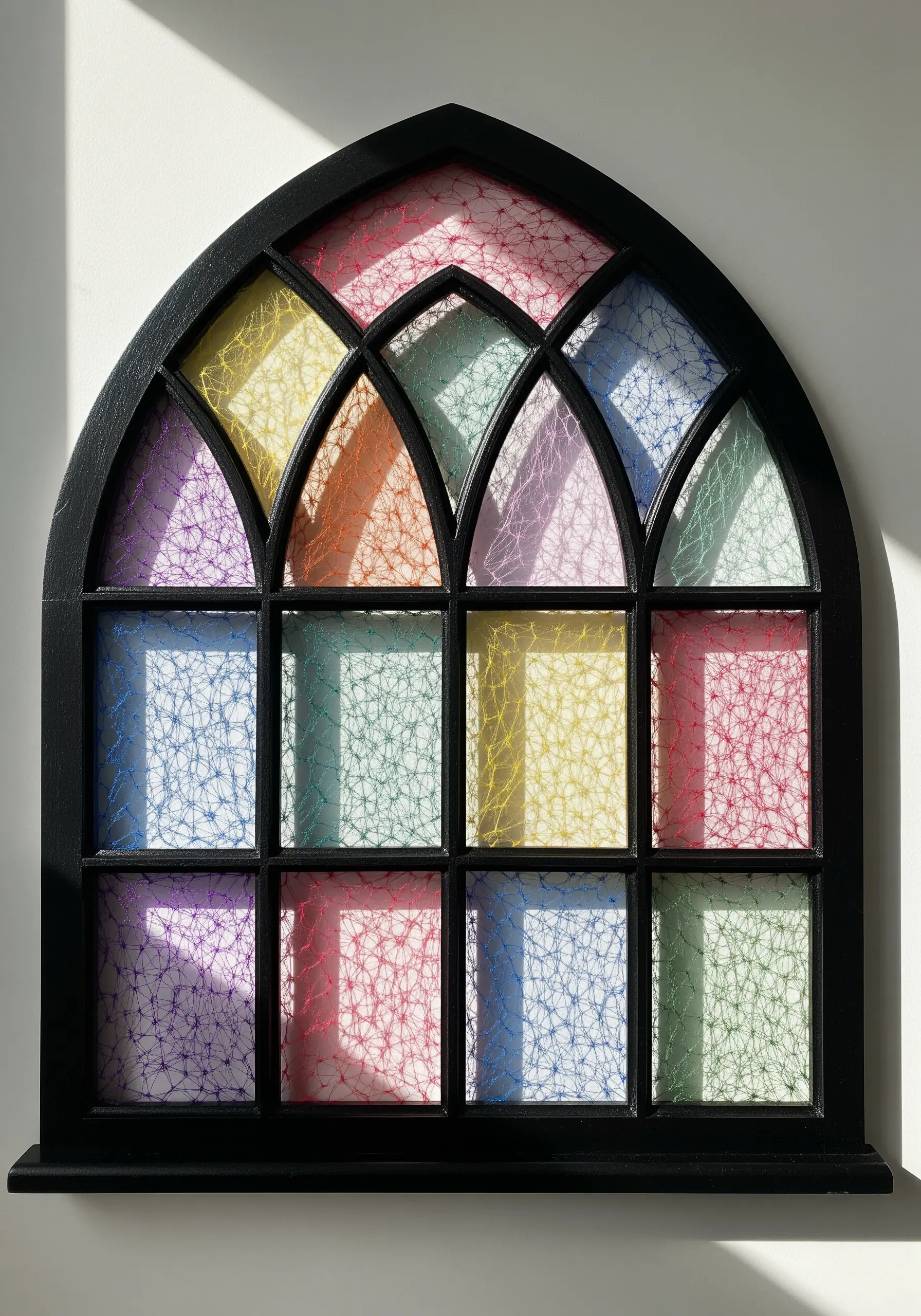
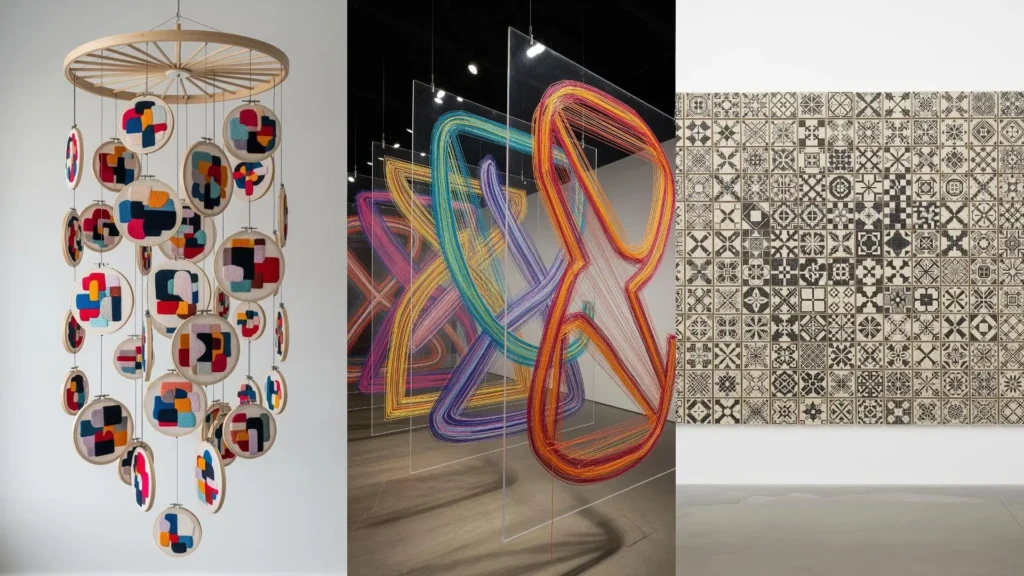
Use an old window or picture frame as an unconventional loom to create a stunning, light-catching artwork.
Instead of weaving, simply wrap colorful threads back and forth across each pane, creating a dense, web-like pattern.
As you layer different colors, they will visually blend, mimicking the look of colored glass.
When placed in front of a window, the light will filter through the threads, casting beautiful, colorful shadows into the room.
26. Tell a Generational Story with a Fiber Family Tree
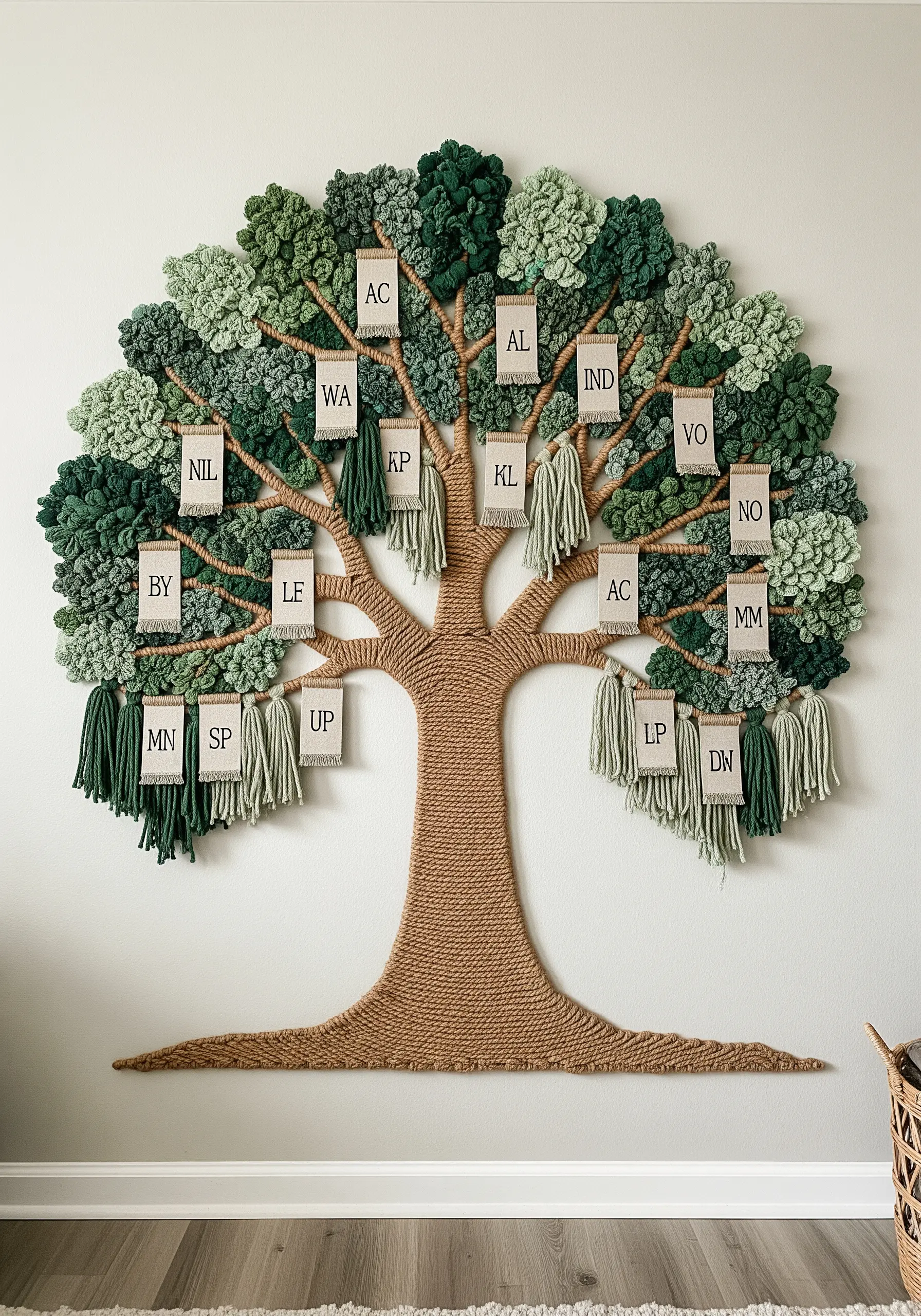
Create a unique and deeply personal piece of art that documents your family’s roots.
Construct the tree’s trunk and branches from thick, wrapped jute rope, securing it directly to the wall.
Use crocheted or knotted yarn to create clusters of leaves in various shades of green, giving the tree a lush, full appearance.
Add small, personalized canvas tags with family members’ initials to complete this beautiful, meaningful heirloom.
27. Explore Form and Shadow with Sculptural Knotting

Turn fiber into sculpture by focusing on a single, complex knot as your subject.
Use a very thick, solid-core rope that can hold its shape and showcase the intricate path of the knot.
Mount the finished piece slightly away from the wall to allow for dramatic lighting.
The shadows cast by the knot become an integral part of the artwork, adding depth and emphasizing its three-dimensional form. This is a powerful example of fiber art as sculpture.
28. Embrace Joyful Maximalism with a Riot of Texture
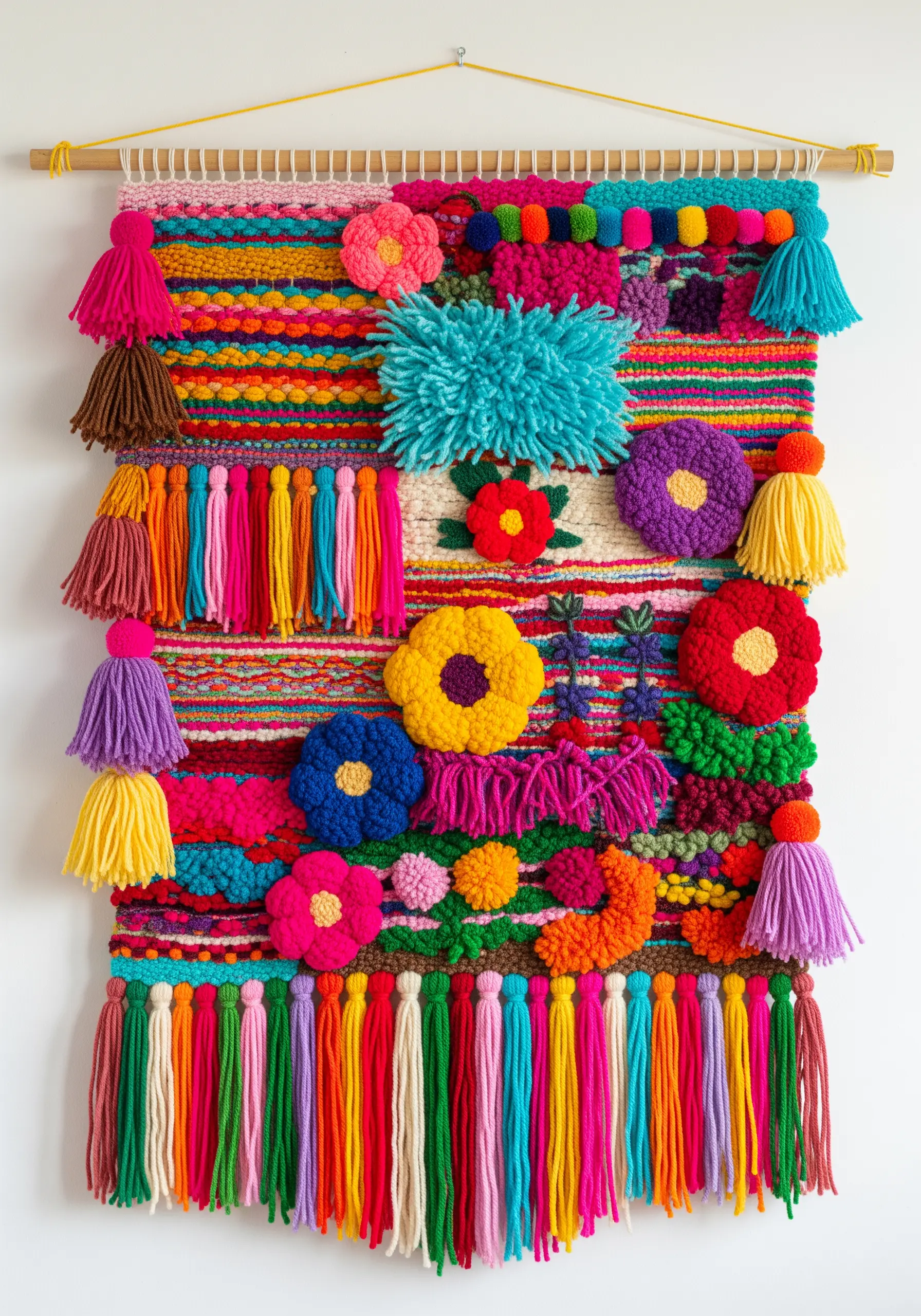
Create a vibrant celebration of color and texture by embracing a ‘more is more’ philosophy.
This is your chance to combine all your favorite techniques in one piece: add chunky woven sections, fluffy pom-poms, shaggy rya knots, and oversized tassels.
Use a bold, unapologetic color palette to enhance the piece’s energy and playful spirit.
The key to making it feel cohesive is to distribute the different textures and colors evenly throughout the composition, creating a balanced explosion of joy.
29. Weave a Seasonal Story on a Wreath Loom
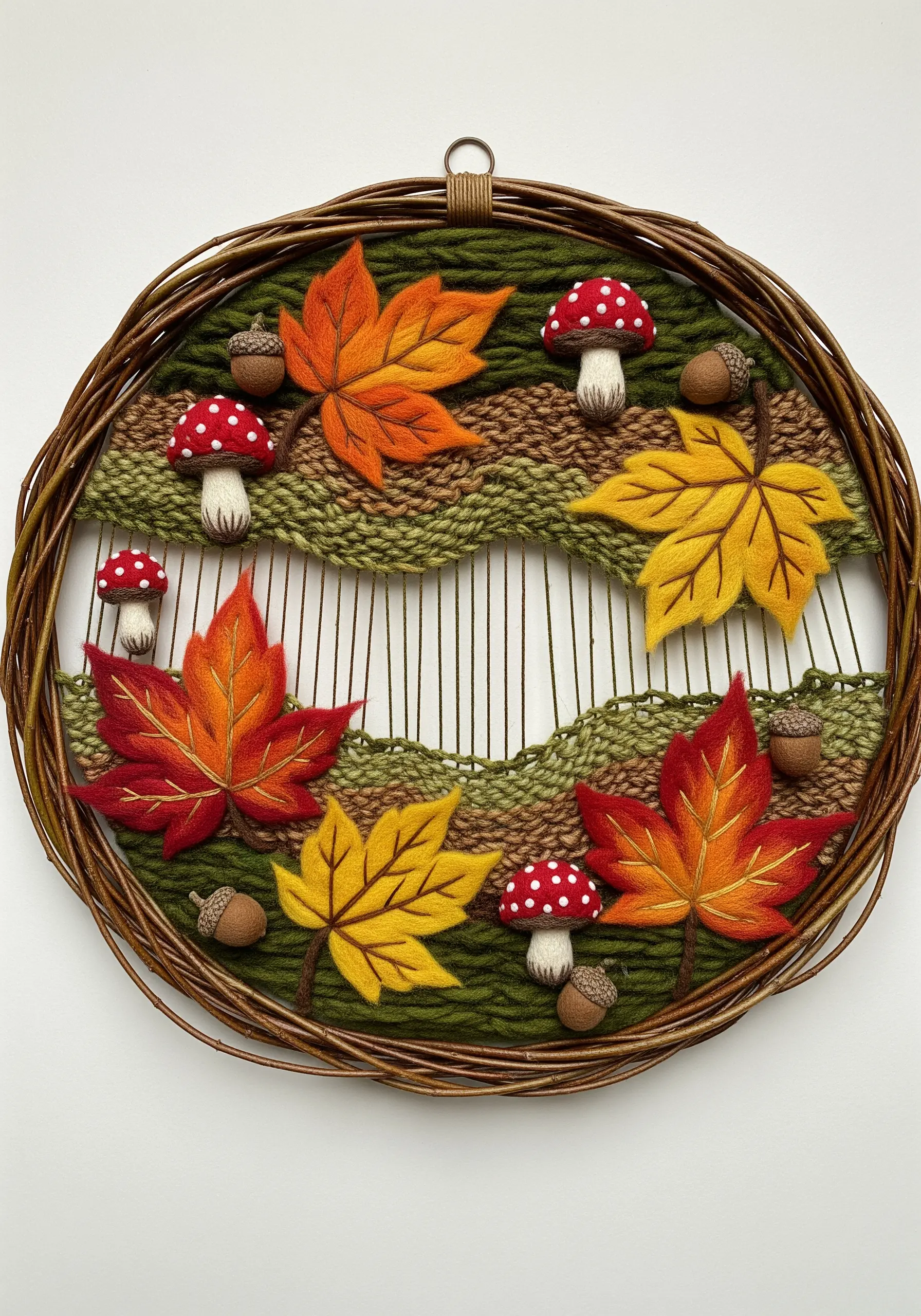
Use a natural grapevine wreath as both the frame and an integral part of your design.
Warp your threads directly across the wreath, leaving some of the natural vine exposed to add rustic texture.
Weave small, illustrative sections that tell a seasonal story, and then embellish with dimensional, felted elements like autumn leaves, mushrooms, or spring blossoms.
This technique transforms a simple wreath into a narrative art piece that can be changed with the seasons.