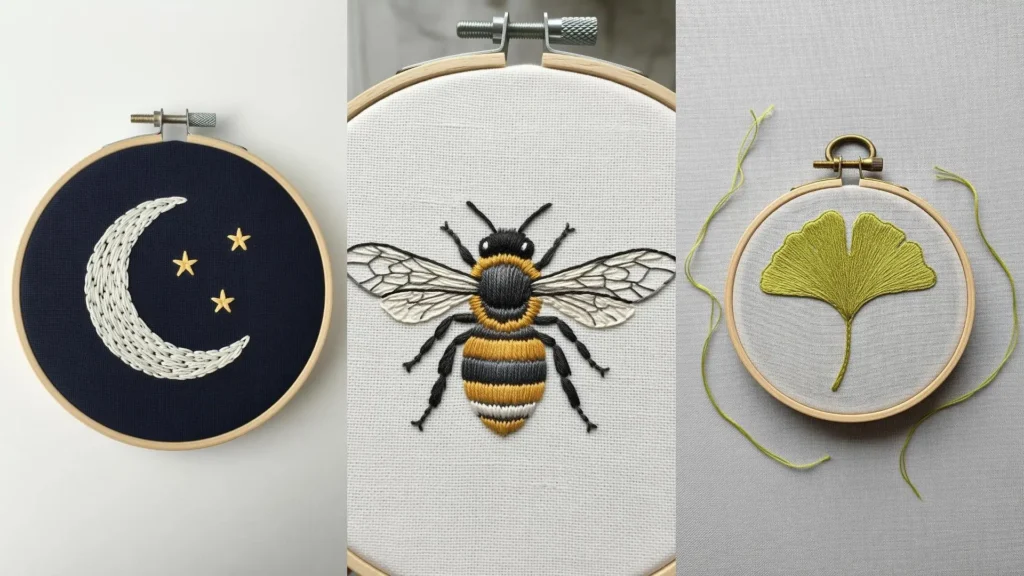
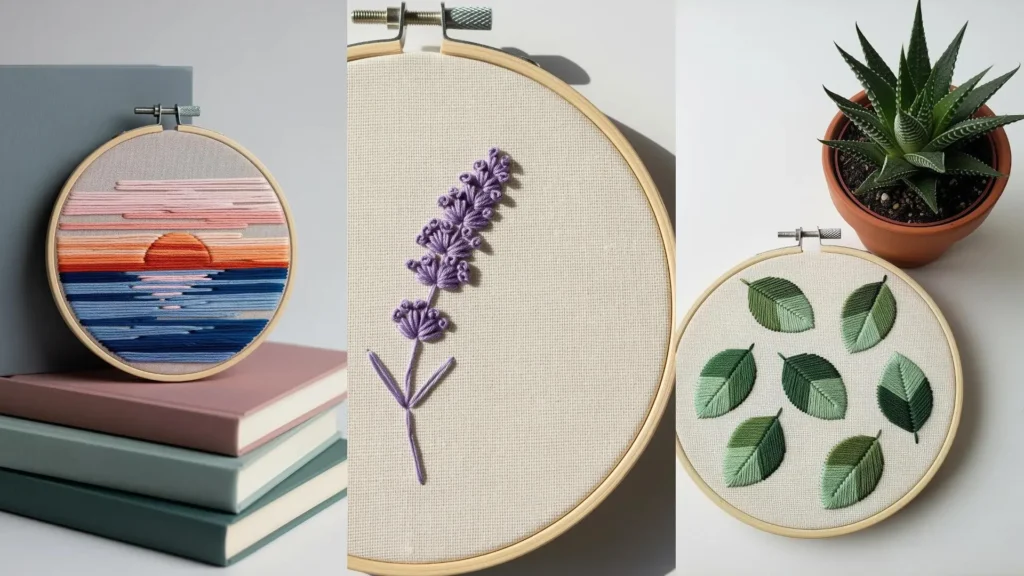
You have the threads, the hoop, and a love for quiet, pastoral scenes. But how do you translate that feeling into stitches that look intentional and feel alive? Let’s move beyond just filling in shapes and start thinking like a textile artist, even in the smallest of hoops.
These small landscape designs are your invitation to focus on the details that matter most: the direction of a single stitch, the subtle shift in color that suggests depth, and the texture that turns a simple field into something you can almost feel. It’s not about complexity; it’s about precision and thoughtful choices.
Consider this your guide to creating tiny worlds with grace. You’ll learn how to make your hills roll, your water shimmer, and your skies feel vast, all within the simple frame of a wooden hoop. Your next project can be more than just a pattern—it can be a small, stitched poem.
1. Sculpt Rolling Hills with Directional Satin Stitch
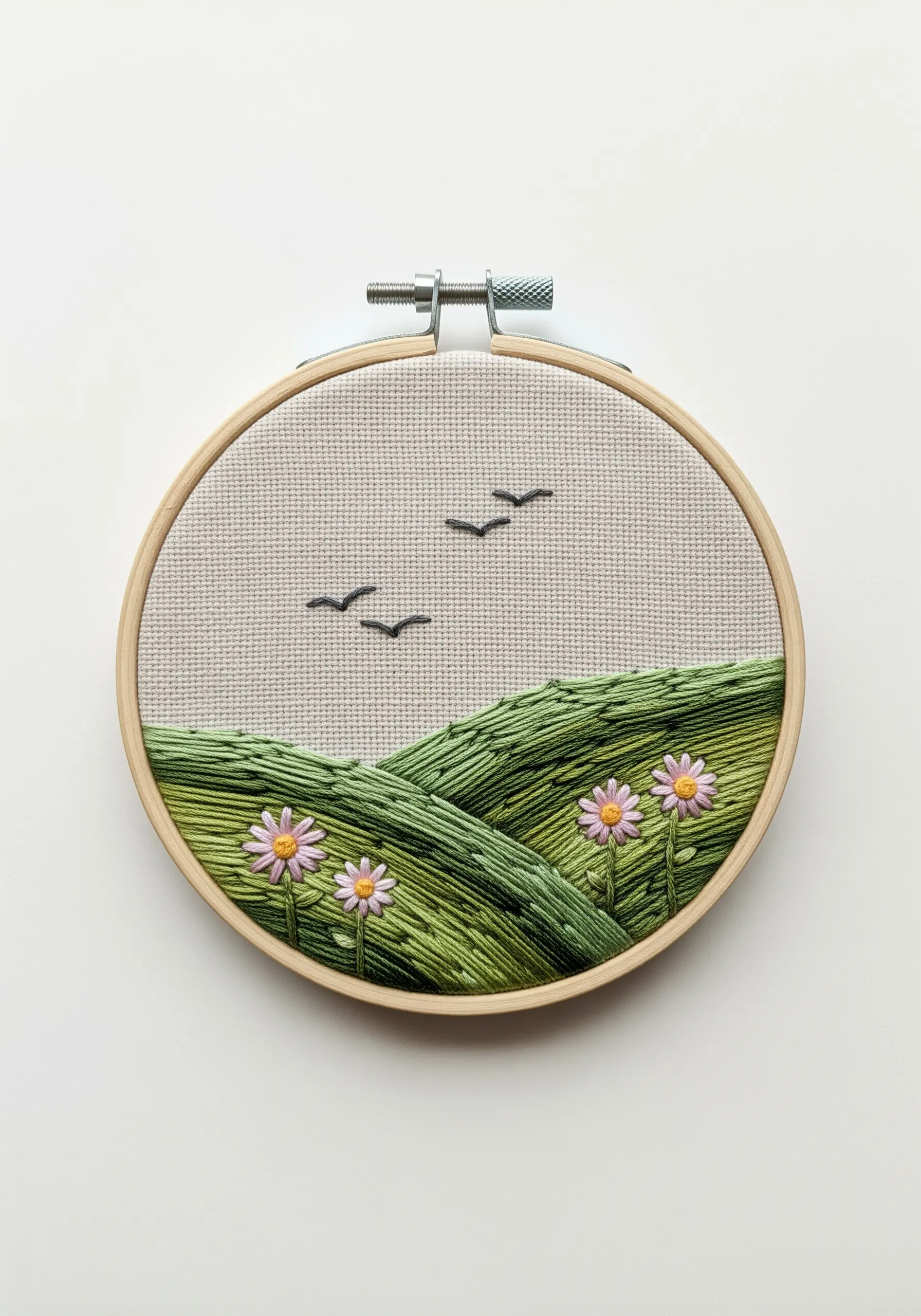
Create the illusion of rolling hills by changing the direction of your satin stitches to follow the natural curve of the land.
This simple adjustment makes the landscape feel dynamic and three-dimensional, guiding the viewer’s eye through the scene.
Use two or three analogous shades of green—a darker one for the foreground and a lighter one for the background—to build depth effortlessly.
For the tiny daisies, a simple lazy daisy stitch with a French knot center is all you need to add a touch of wildflower charm and texture.
2. Build an Organic Tree with Varied Stitches
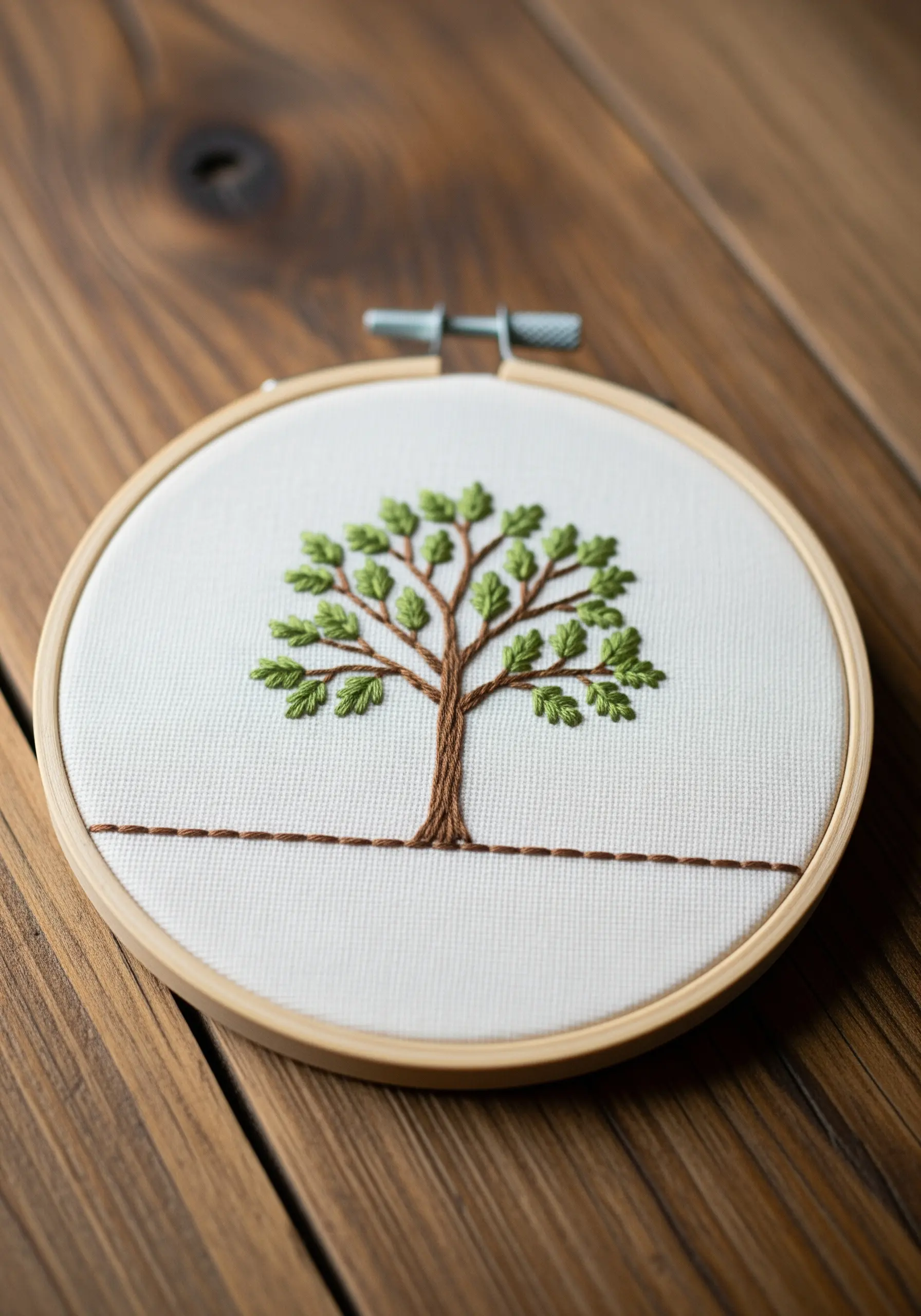
Give your tree a natural, lifelike structure by combining two distinct stitches for the trunk and leaves.
Use a stem stitch or a narrow satin stitch for the trunk and branches, allowing the lines to create a sturdy, woody texture.
For the leaves, switch to a fishbone stitch. This technique creates a central vein and angled sides, perfectly mimicking the way real leaves grow.
Vary the green tones slightly between leaves to add dimension and make the canopy look fuller and more realistic.
3. Create Atmospheric Depth with a Monochromatic Palette
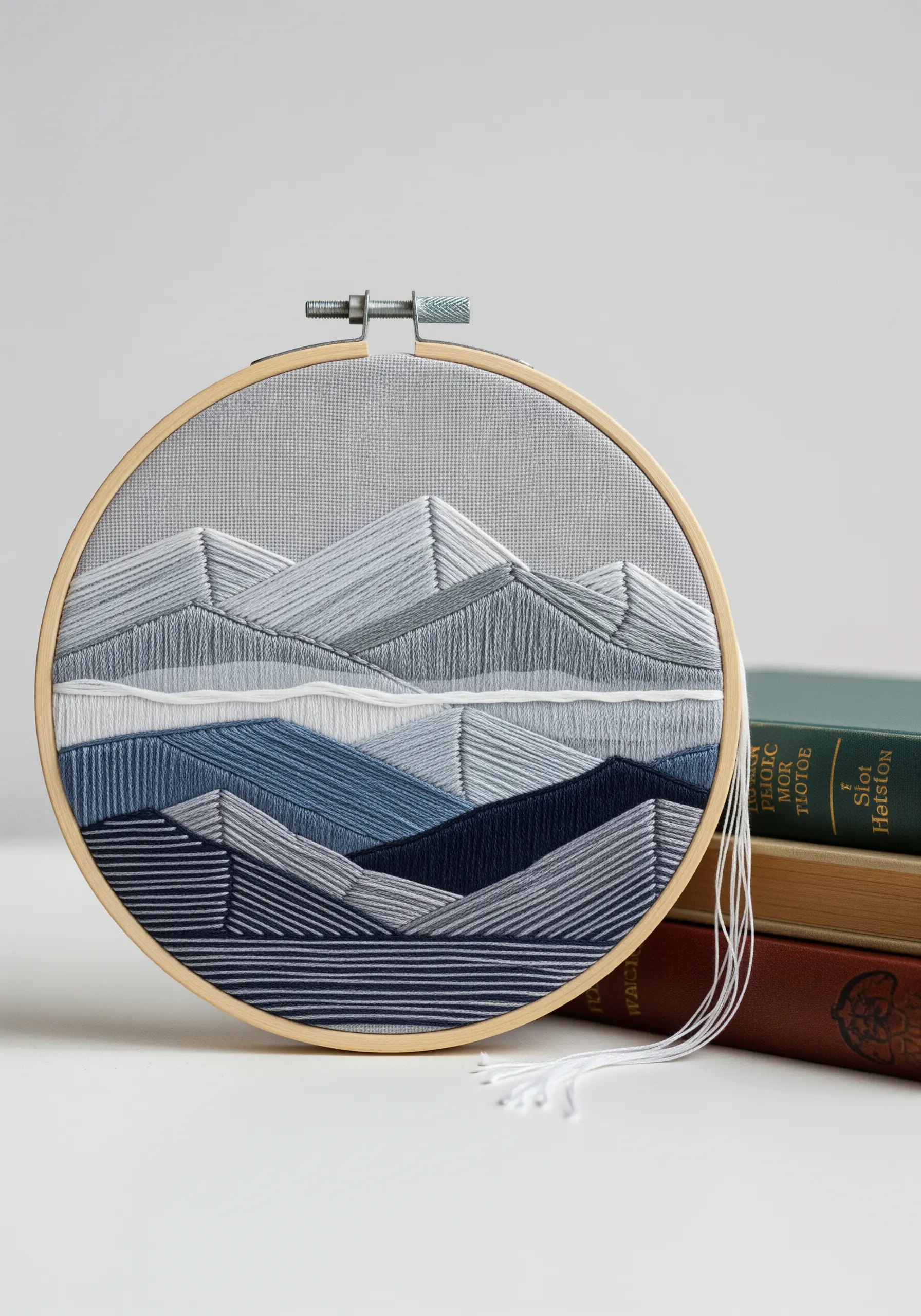
Evoke a sense of misty mountains or a serene lake by working exclusively within a single color family, like blues and grays.
Use blocks of long, straight satin stitches, changing their direction for each mountain peak or water reflection to create visual separation.
The key to success is selecting at least five distinct tones, from very light to very dark, which will define the layers and create perspective.
This technique turns a simple landscape into one of the most compelling minimalist thread art ideas, proving that color harmony is more powerful than complexity.
4. Imply Texture on a Winding Path
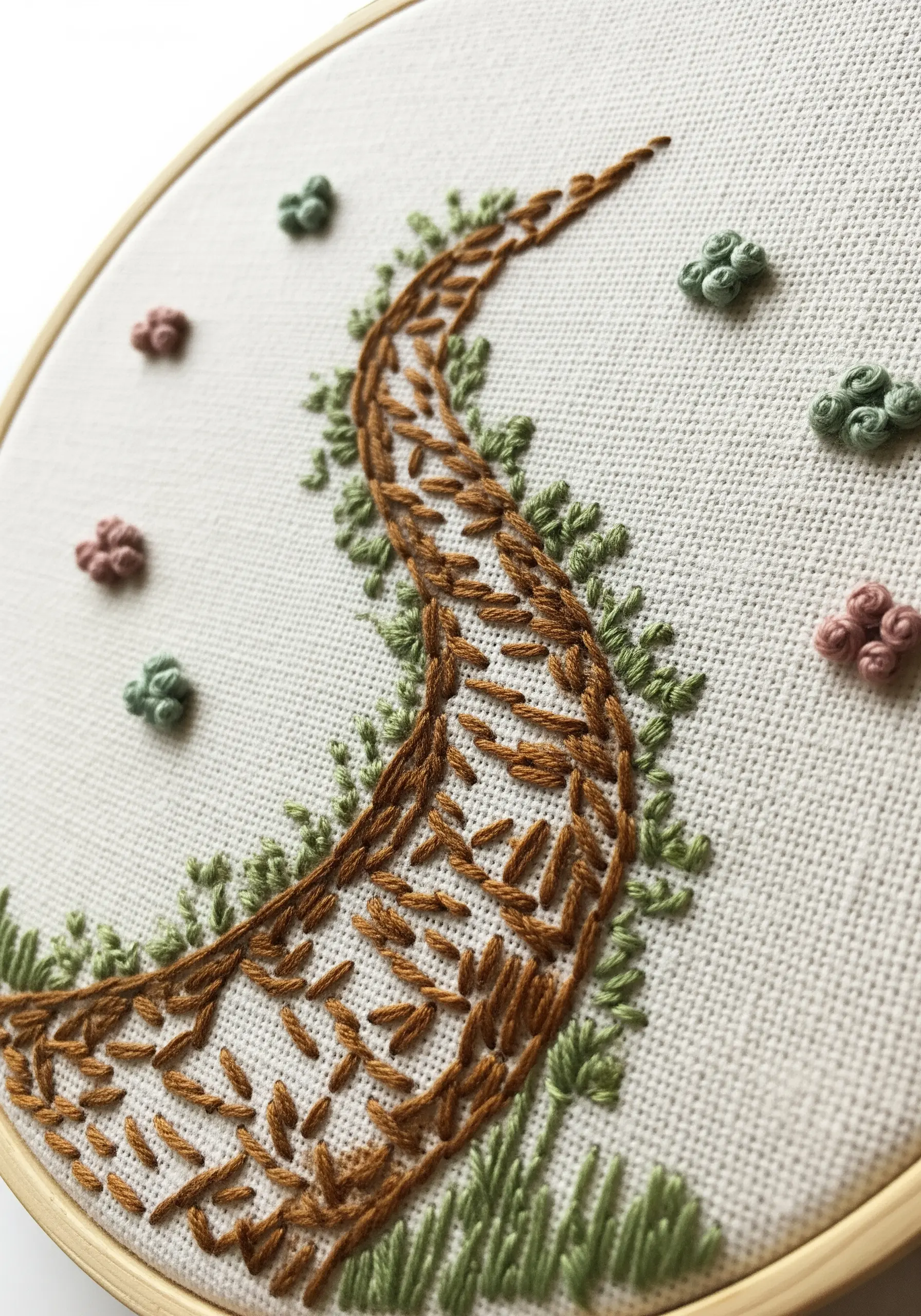
Suggest the texture of a rustic path not with dense filling, but with an open fill stitch like a couched lattice or scattered seed stitches.
This approach allows the background fabric to show through, creating a lighter, more organic feel than a solid satin stitch would.
Frame the path with tiny fly stitches or detached chain stitches for leaves, keeping them loose and irregular to look like natural growth.
A few well-placed French knots in soft pinks and greens will serve as distant blossoms, adding delicate pops of color.
5. Blend Threads for a Gentle Oceanic Gradient
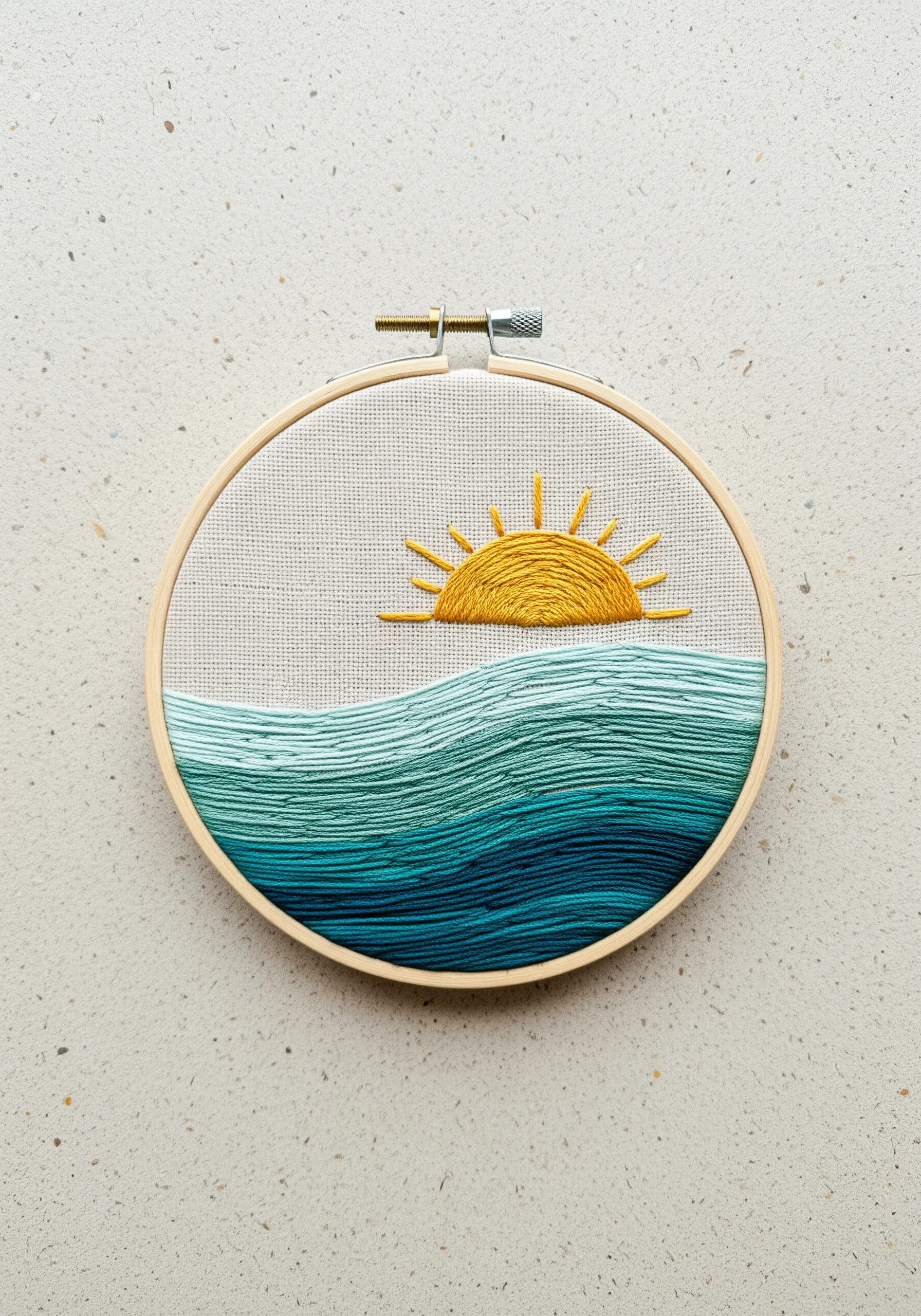
Capture the soft transition of ocean waves by blending your thread colors directly on the needle.
To achieve this, combine one strand of a darker color with one strand of a lighter color in your needle at the same time.
Stitch a few rows with this combination where the two color sections meet. This technique creates a subtle, painterly blend that a sharp line cannot achieve.
Keep your satin stitches long and slightly wavy to mimic the gentle movement of water, enhancing the serene effect.
6. Use Dark Fabric for a Dramatic Sunset Reflection
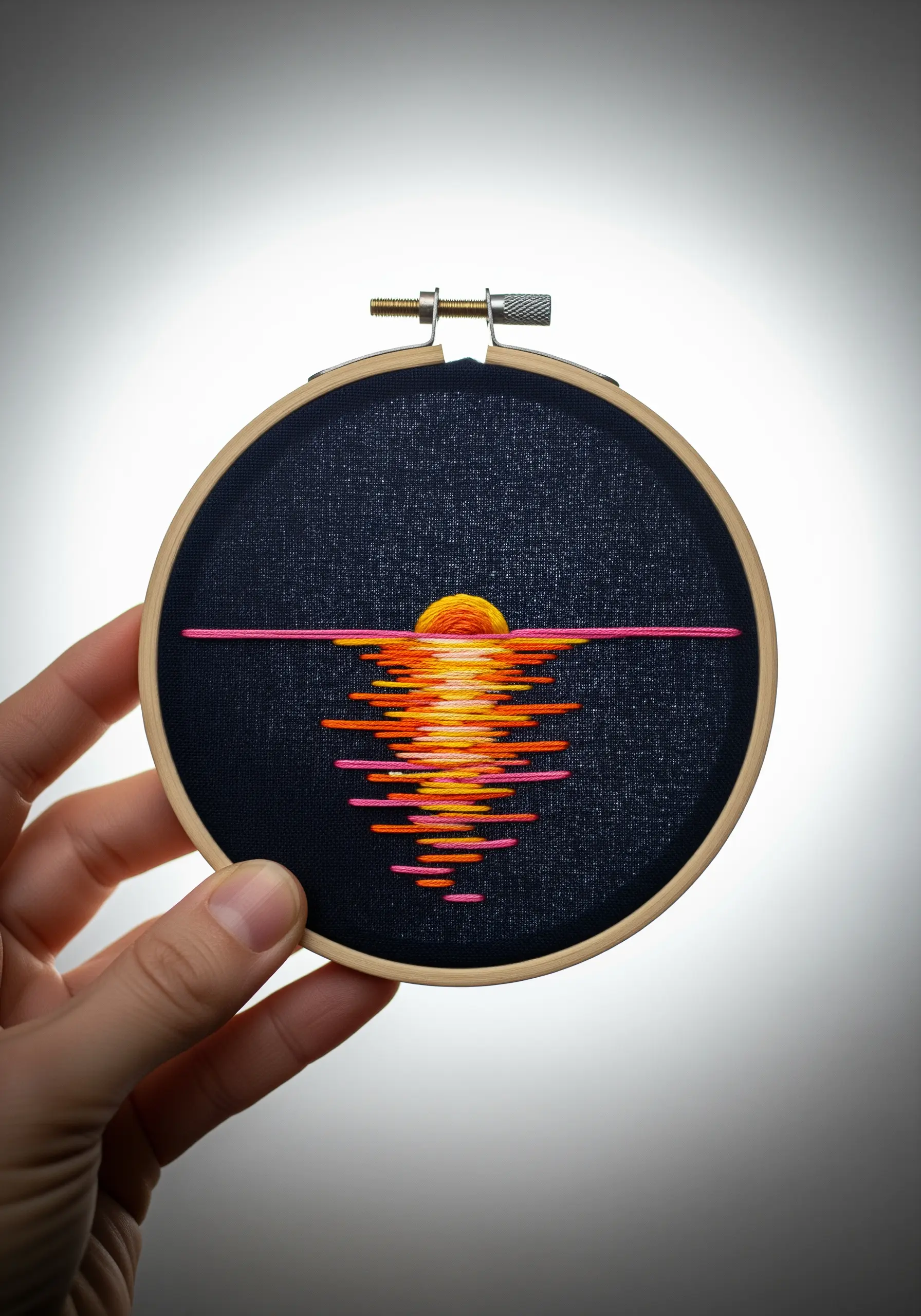
Make your sunset colors truly pop by choosing a dark fabric background, such as black or navy blue linen.
The high contrast allows even the most vibrant threads—like hot pink, orange, and yellow—to shine without being muted by the base color.
When stitching the reflection, keep your satin stitches horizontal but vary their length and spacing to create a shimmering, broken-light effect on the water.
This is one of the most effective night garden embroidery ideas adapted for a landscape, proving that a dark canvas adds instant drama.
7. Simplify a Lavender Field with Repetitive Stitches
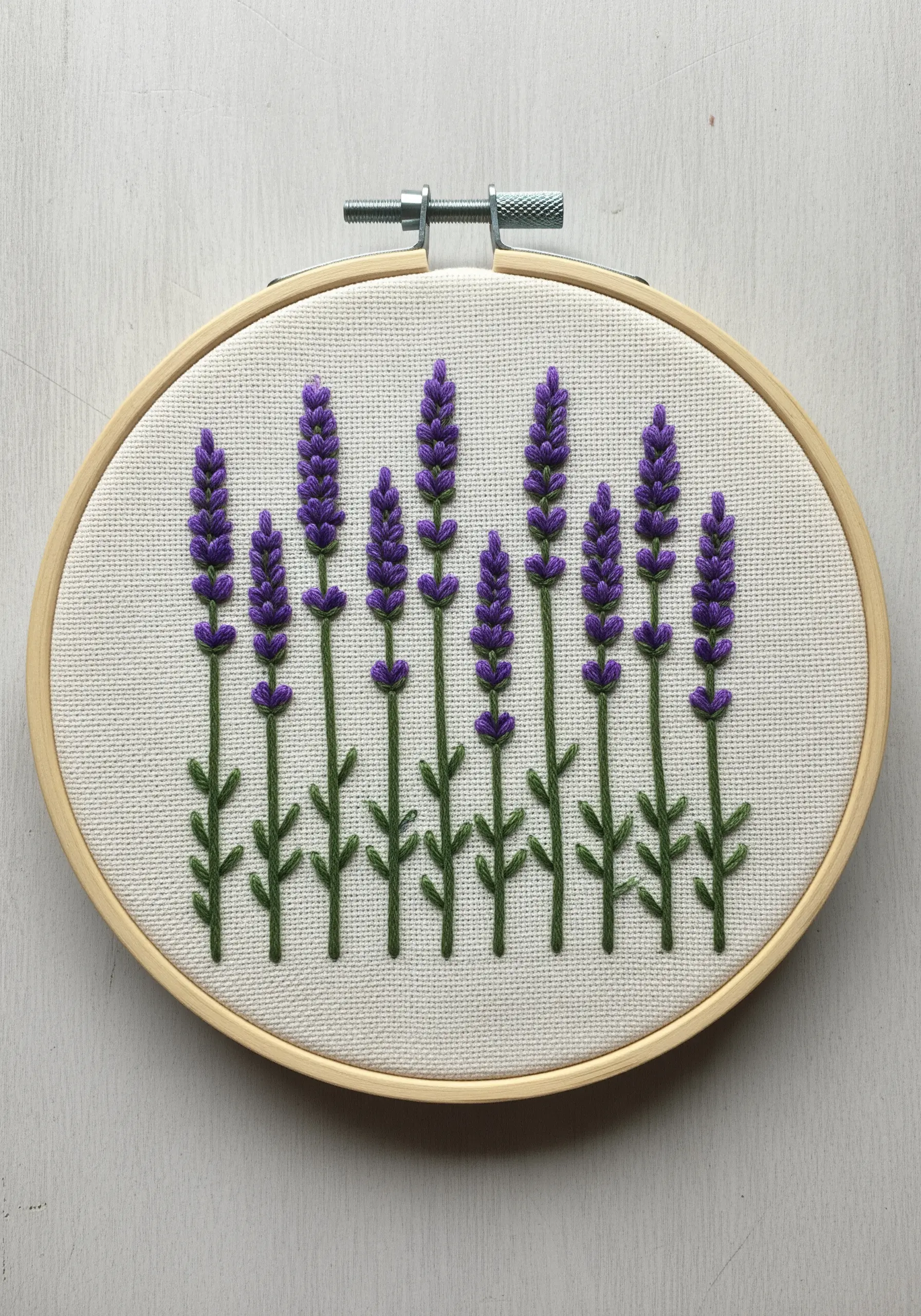
Create the impression of a dense lavender field through the power of simple repetition.
Use a straight stitch for the stems, varying their heights slightly to create a more natural, less uniform appearance.
For the lavender blossoms, cluster French knots or lazy daisy stitches near the top of each stem. Using two shades of purple adds depth.
This entire design relies on basic stitches, proving that a thoughtful composition can turn delicate lavender stitch ideas into a charming and complete scene.
8. Evoke a Minimalist Forest with Wrapped Stitches

Suggest a quiet, sparse forest using only line work. A wrapped backstitch or stem stitch is perfect for creating clean, textured tree trunks.
Vary the number of threads you use—perhaps three strands for foreground trees and one or two for those in the distance—to create a sense of perspective.
Introduce a subtle color palette of grays, browns, and blacks to differentiate the trees without overwhelming the minimalist aesthetic.
This design is an excellent exercise in composition, showing how spacing and thread weight alone can build a complete scene.
9. Craft a Celestial Scene with French Knots and Seed Stitches

Bring a night sky to life by scattering tiny French knots and seed stitches across a dark fabric background.
Vary the size of your French knots by changing how many times you wrap the thread around the needle (once for small stars, twice for larger ones).
For the crescent moon, use a closely worked satin stitch, ensuring your stitches follow the curve to create a smooth, luminous shape.
This combination of textures transforms a simple motif into one of the most enchanting tiny night sky embroidery designs you can make.
10. Capture Harvest Texture with Fishbone Stitch
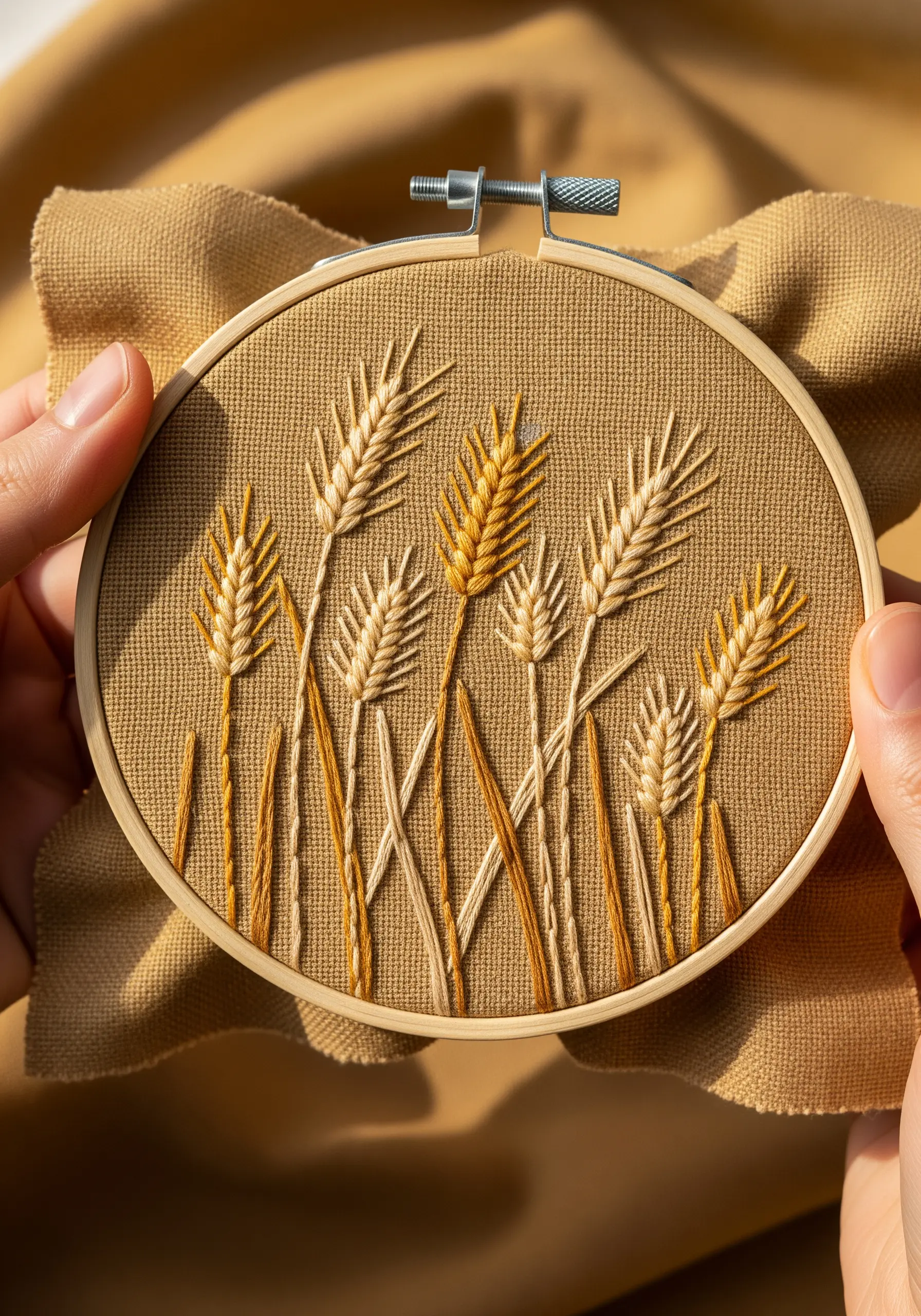
The fishbone stitch is ideal for stitching wheat stalks, as it creates a beautiful braided texture that mimics the real thing.
Stitch each stalk individually, overlapping them slightly to build a sense of a full, dense field of wheat.
Work with a tonal color palette of golds, creams, and light browns to give the scene a warm, sun-baked feeling.
Using a fabric that complements these tones, like a natural tan or ochre linen, enhances the overall harmony of the piece.
11. Stitch a 3D Vegetable Patch with Woven Wheels
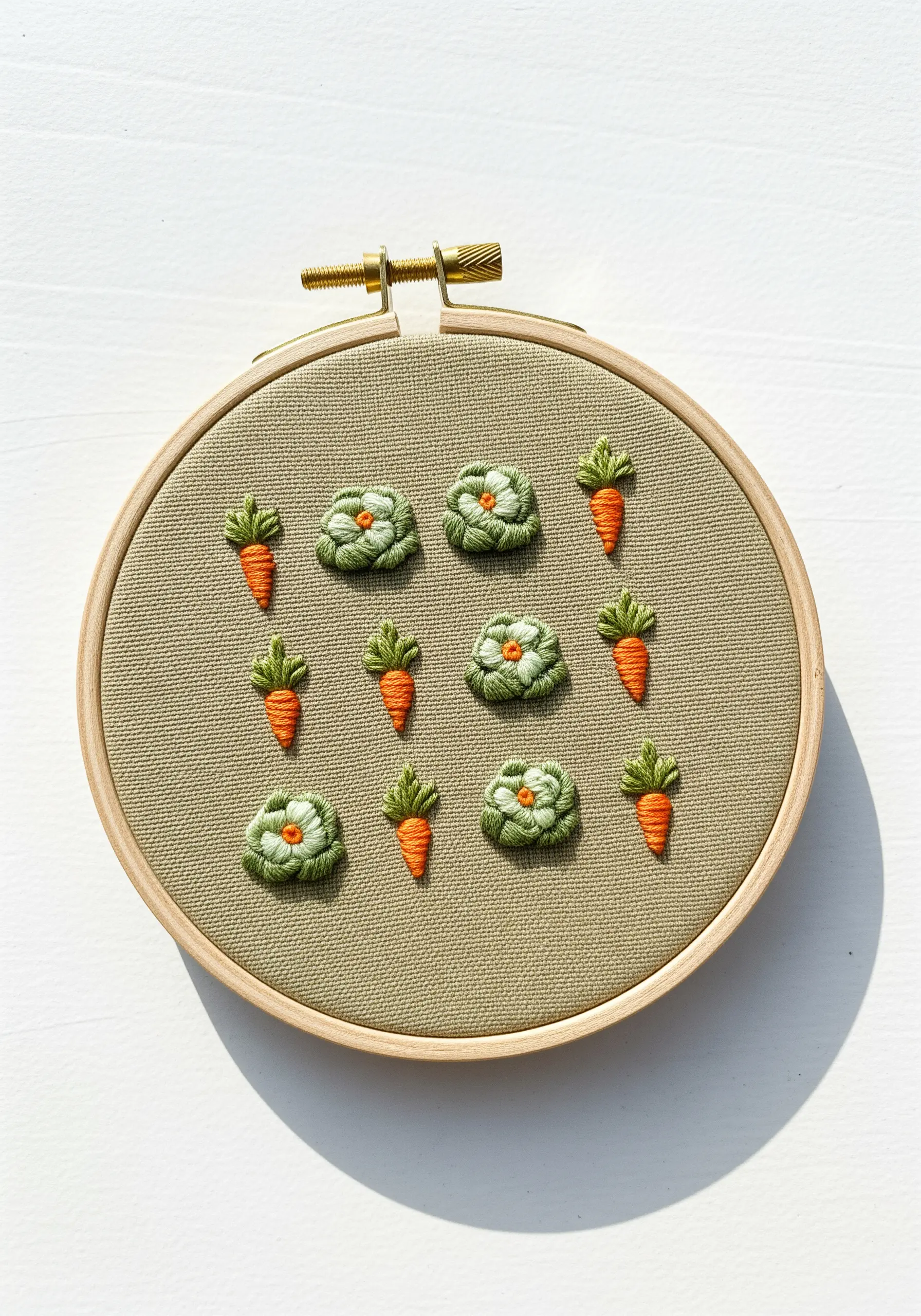
Add delightful dimension to your cottage garden scene by using raised stitches for the vegetables.
Create plush little cabbages with the woven wheel stitch (also known as a wagon wheel rose), using shades of green and a touch of white.
For the carrots, a simple tapered satin stitch in orange with a few green straight stitches for the tops is all you need.
Arranging these textured elements in a grid pattern gives the impression of a neat, well-tended garden plot, making for charming cottage garden embroidery themes.
12. Form River Stones with Padded Satin Stitch

Give your river stones a smooth, rounded, and three-dimensional appearance by using a padded satin stitch.
First, fill the shape of each stone with small underlying straight stitches, then cover this padding with neat, uniform satin stitches.
For the flowing water, use single strands of various blue threads, laying down long, slightly curved straight stitches that weave around the stones.
This technique is one of the best creative ways to stitch natural textures, adding a realistic, touchable quality to your work.
13. Add Whimsy to Mushrooms with French Knots
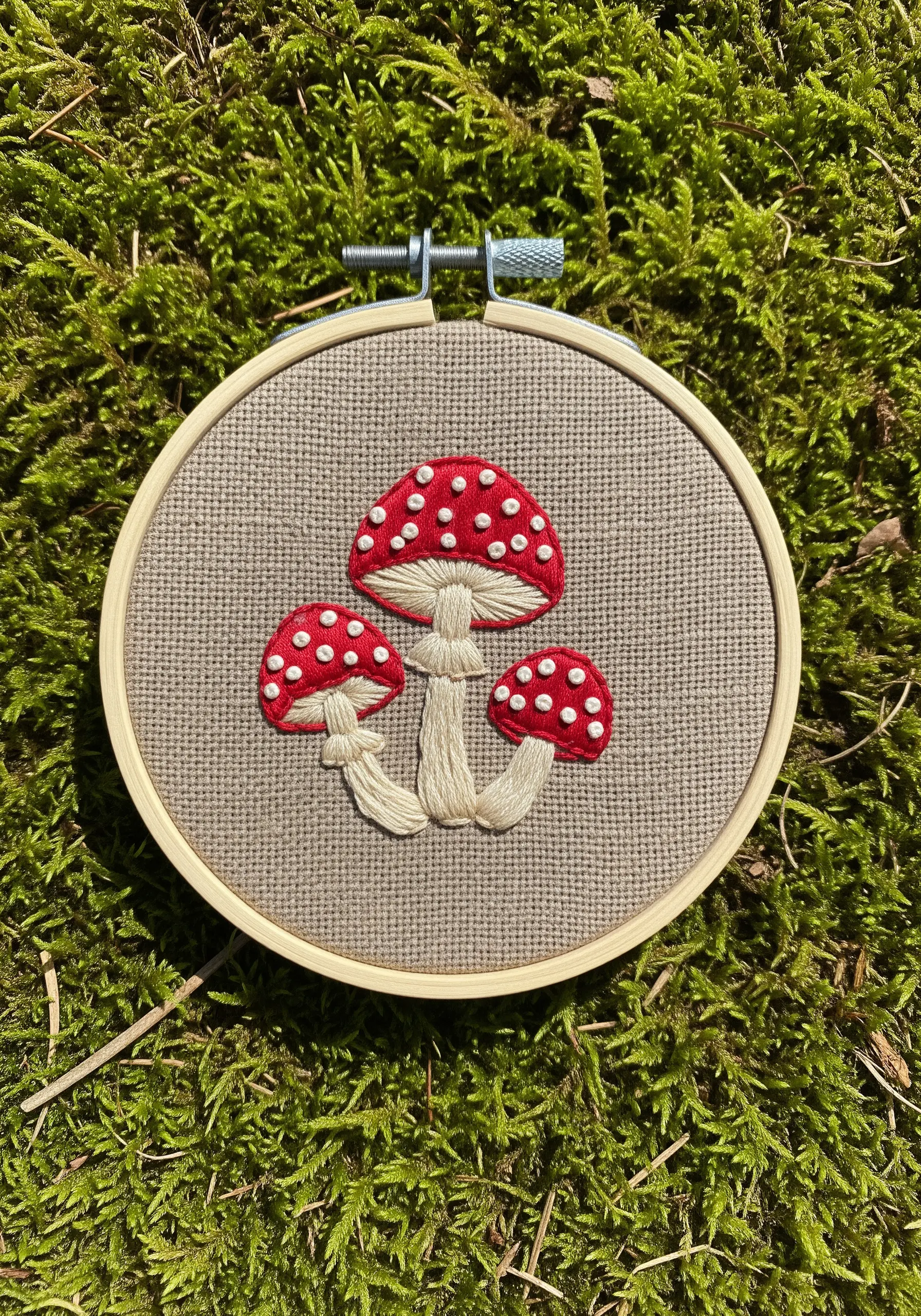
Bring a trio of toadstools to life by focusing on texture and clean shapes.
Use a vibrant red satin stitch for the mushroom caps, keeping your stitches parallel and tightly packed for a smooth finish.
Scatter small white French knots across the caps to create the iconic spots. This adds a raised, playful texture that contrasts beautifully with the flat satin stitch.
For the stems, use an off-white or light gray thread in a vertical satin stitch to distinguish them from the caps.
14. Design a Graphic Pine Tree with Crisp Satin Stitch
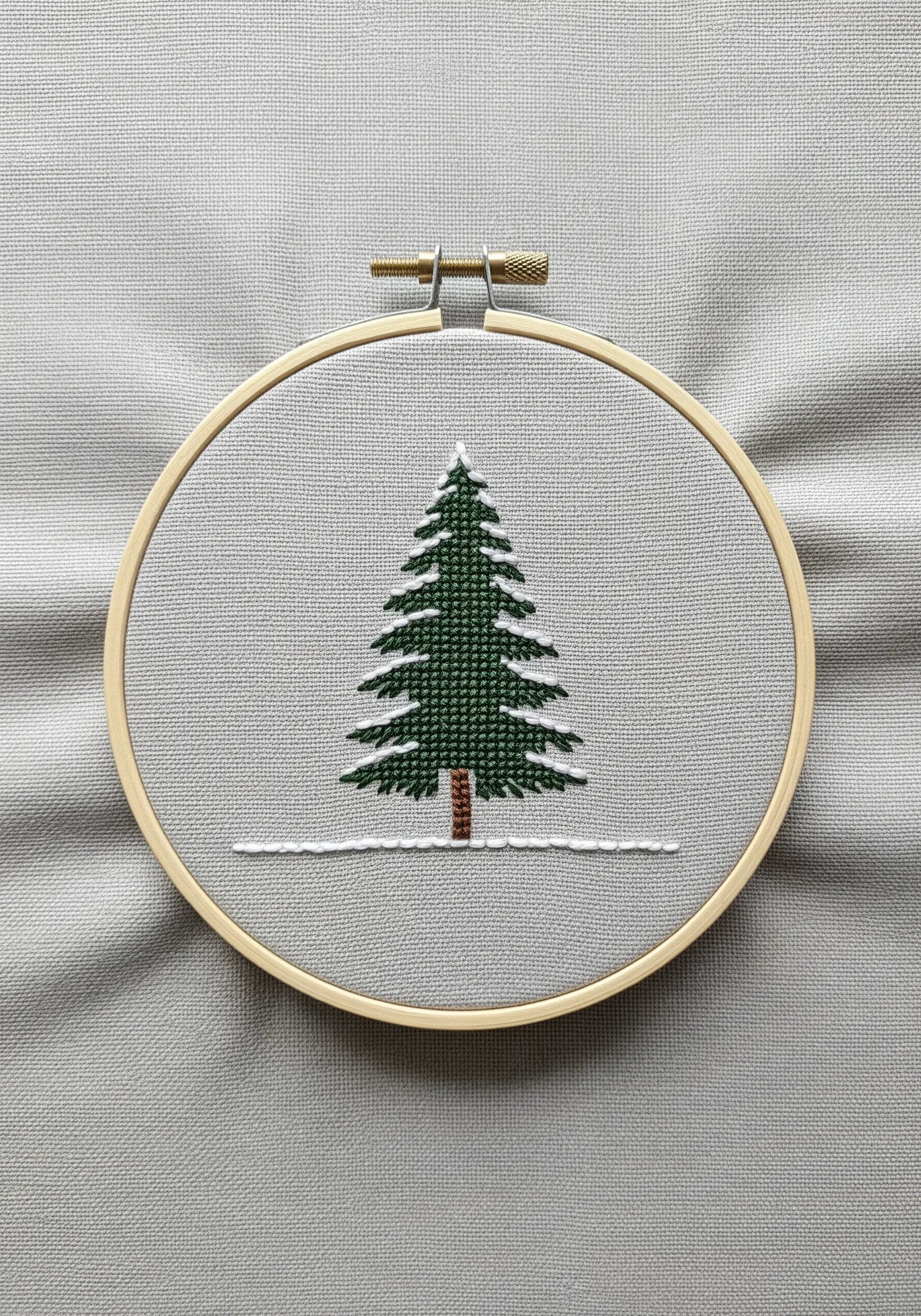
Achieve a clean, modern look for a winter pine by using a dense, precise satin stitch.
Divide the tree into horizontal layers for the branches, stitching each section with dark green thread.
To create the look of snow, add small, horizontal straight stitches in white at the edge of each branch layer.
This graphic approach simplifies the complex shape of a pine tree into a stylish and easily recognizable motif, perfect for minimal embroidery patterns.
15. Cultivate a Joyful Meadow with Lazy Daisy Flowers

Fill a field with colorful wildflowers using one of the simplest stitches: the lazy daisy.
Create each flower by arranging five or six lazy daisy stitches in a circle, then add a contrasting French knot in the center.
Use a bright, cheerful color palette of blues, pinks, and yellows to evoke a sunny spring day.
Vary the height of the green straight-stitch stems to create a natural, overgrown look that makes your meadow feel alive and spontaneous.
16. Blend Autumnal Hues with Long-and-Short Stitch

Capture the fiery gradient of an autumn leaf by using the long-and-short stitch, the key to smooth color blending.
Work in sections, starting with one color and gradually introducing the next by overlapping your stitches like a fine tapestry.
To add a touch of elegance and define the leaf’s veins, outline them with a single strand of gold metallic thread using a simple backstitch.
This thread-painting technique elevates a simple leaf into a detailed botanical study, perfect for leaf embroidery stitches that make a statement.
17. Suggest Calm Water with Horizontal Satin Stitch
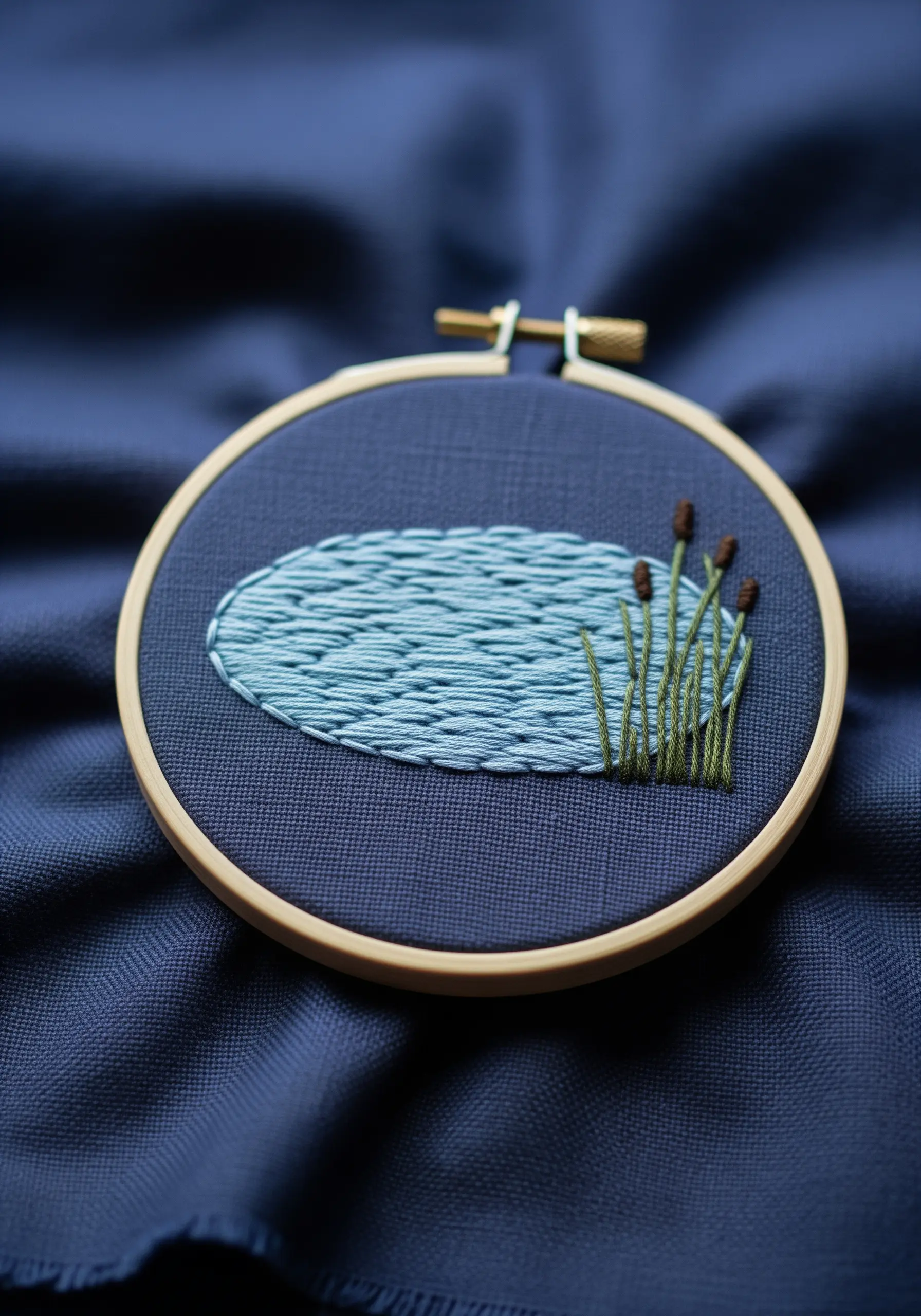
Convey the stillness of a pond or lake by filling the shape with uniform, horizontal satin stitches.
The unbroken, parallel lines create a sense of tranquility and reflection that a more textured stitch would disrupt.
Choose a soft, muted blue or aqua and use a single, slightly lighter shade to add a few stitches on top, suggesting a subtle glint of light on the surface.
A few vertical straight stitches in green and brown are all that’s needed to add reeds at the edge, completing the serene scene.
18. Create a Modern Landscape with Geometric Color Blocking
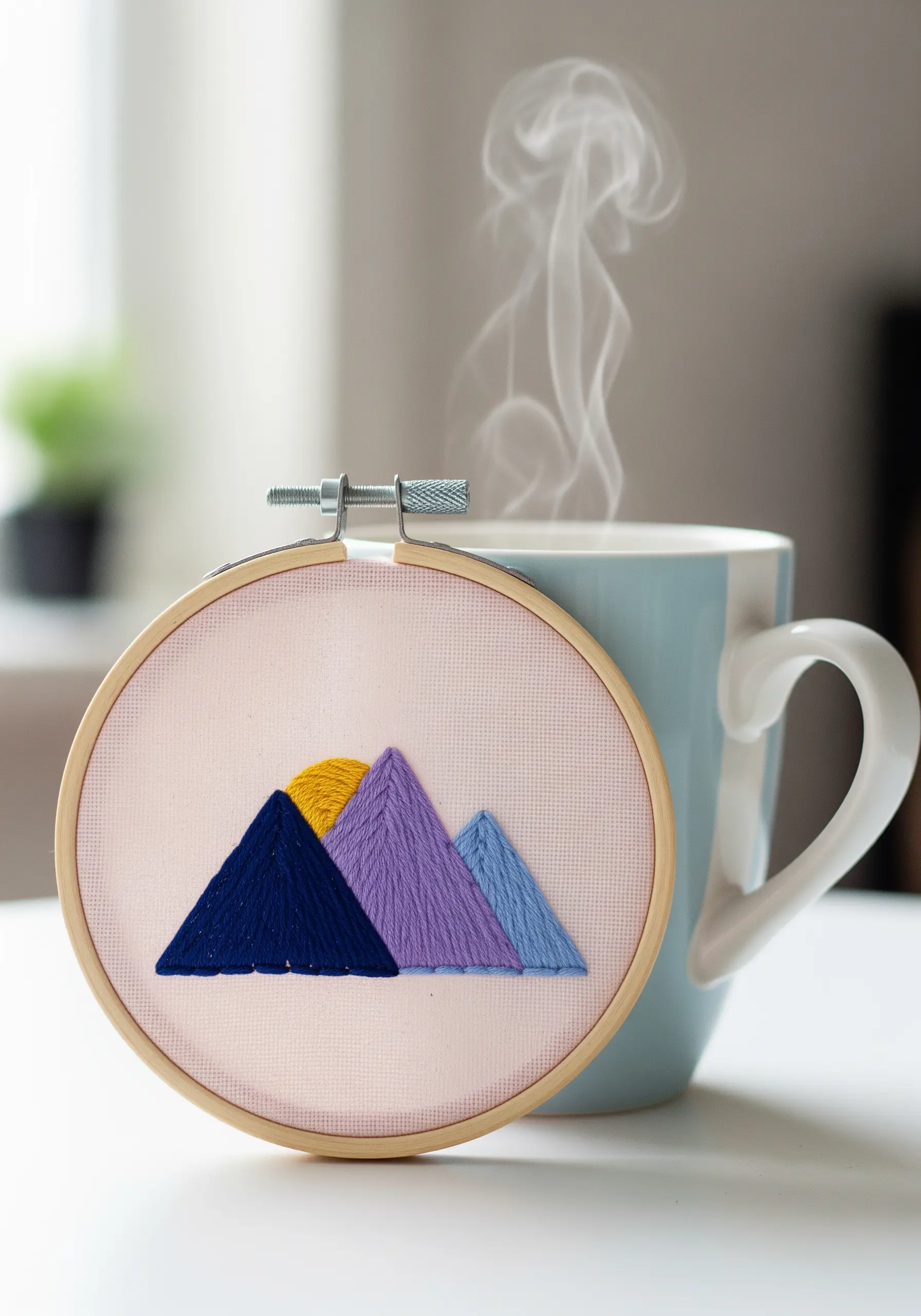
Reimagine a mountain scene with a modern, abstract approach by using geometric shapes and bold color blocking.
Fill each triangular mountain shape with a dense, neat satin stitch, ensuring all stitches lie in the same direction for a clean, graphic look.
Choose an unexpected color palette, like deep blues and purples, to give your landscape a unique, artistic feel.
This style reduces a complex scene to its essential forms, creating striking contemporary stitch designs with maximum impact.
19. Build a Fluffy Cloud with Clustered Knots
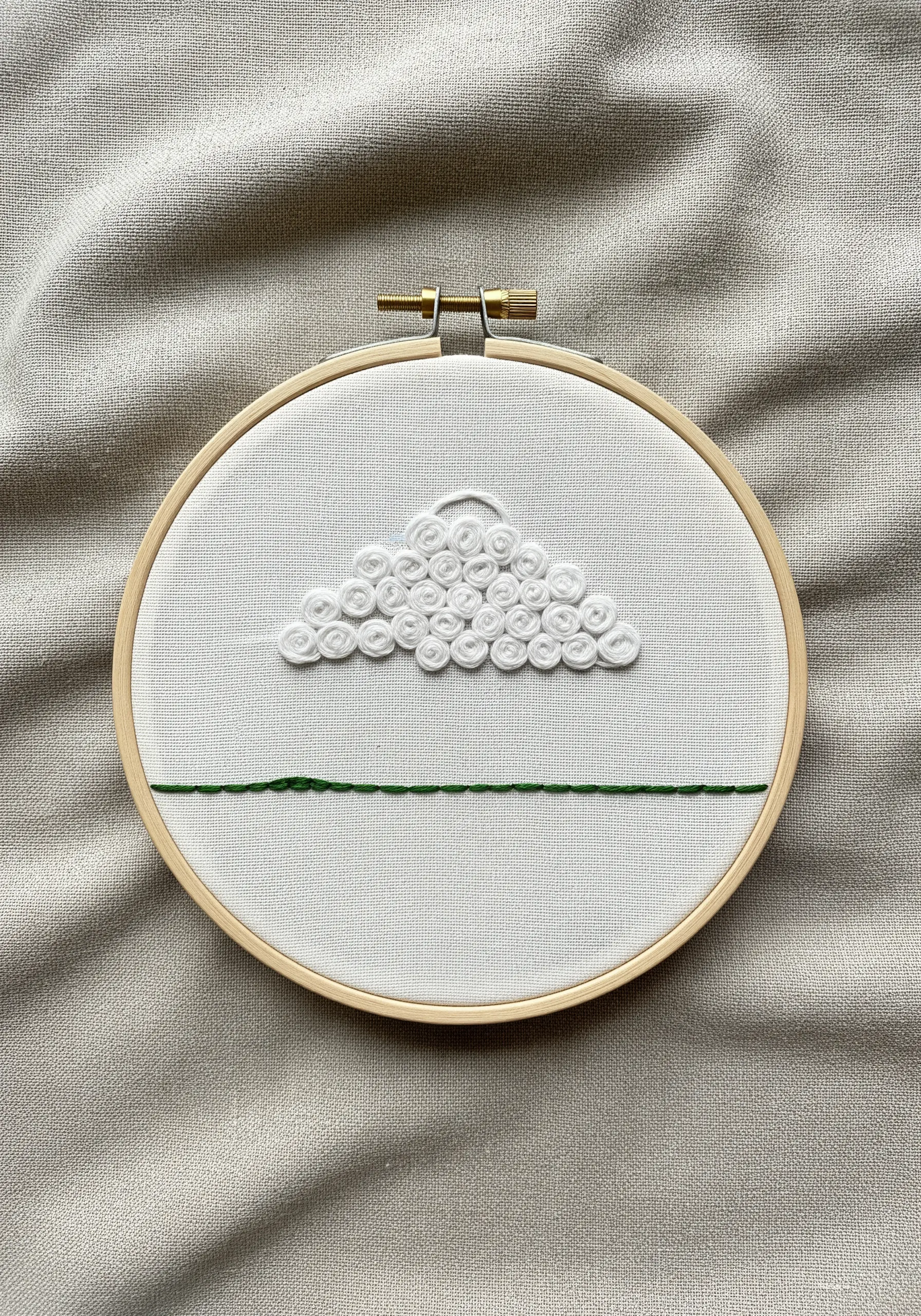
Give your clouds a soft, billowy texture by filling the shape with tightly packed French knots or bullion knots.
Using a white or off-white thread on a light background creates a subtle, tone-on-tone effect that feels gentle and dreamy.
To enhance the three-dimensional feel, you can use a slightly thicker thread or more strands for the knots in the center of the cloud.
A single, clean line of green backstitch for the horizon anchors the cloud, making this a perfect example of ways to create depth in your embroidery using natural textures and contrast.
20. Frame a Cottage Scene with Delicate Florals
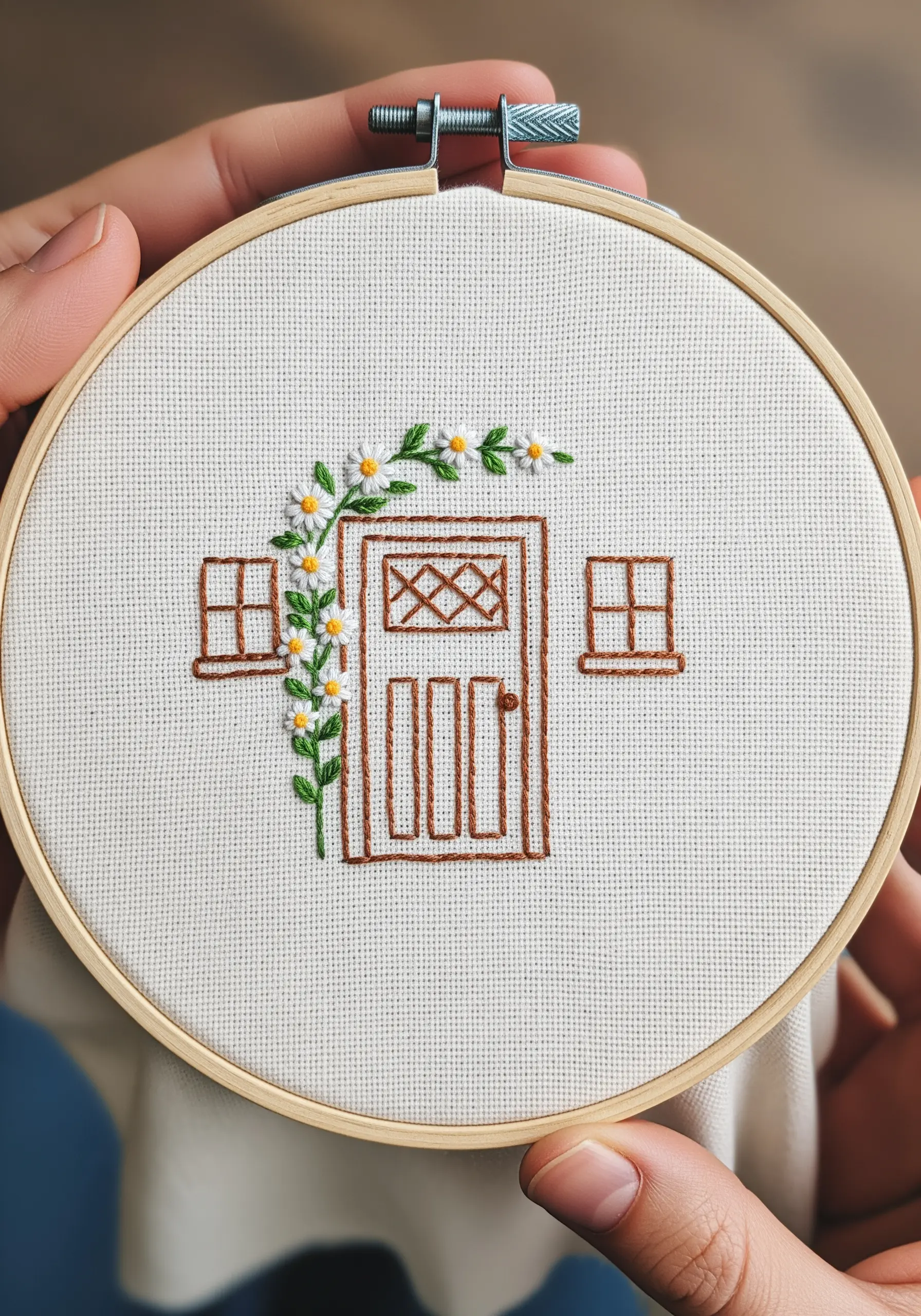
Combine simple line work with delicate floral details to create a charming cottagecore vignette.
Use a basic backstitch in a warm brown to outline the door and windows, keeping the lines clean and simple.
Then, add a climbing vine of daisies using green stem stitch for the stems and white lazy daisy stitches for the petals.
This interplay between the simple structure and the organic flowers is central to creating cottagecore floral embroidery ideas that feel both welcoming and whimsical.
21. Layer Colors for a Flickering Campfire Effect

Create the illusion of a vibrant, moving fire by layering different colors of satin stitch.
Start with a base of bright yellow in the center, then add layers of orange and red around it, using slightly shorter, more pointed stitches as you move outward.
Allow the colors to overlap and interlock slightly. This technique makes the flames look like they are dancing and flickering.
Use a darker brown for the logs with a simple satin stitch, which provides a solid base for the dynamic flames above.
22. Stitch a Dandelion Clock with Radiating Straight Stitches

Capture the delicate structure of a dandelion seed head using nothing more than well-placed straight stitches.
Start by creating a small central point, then stitch long, straight lines radiating outwards from it.
At the end of each long line, add three tiny, fanned-out straight stitches to represent the fluffy parachute of each seed.
Using a single color of thread, like white on a muted green fabric, creates a striking, graphic design that feels both simple and sophisticated.
23. Tell a Story with a Puddle Reflection
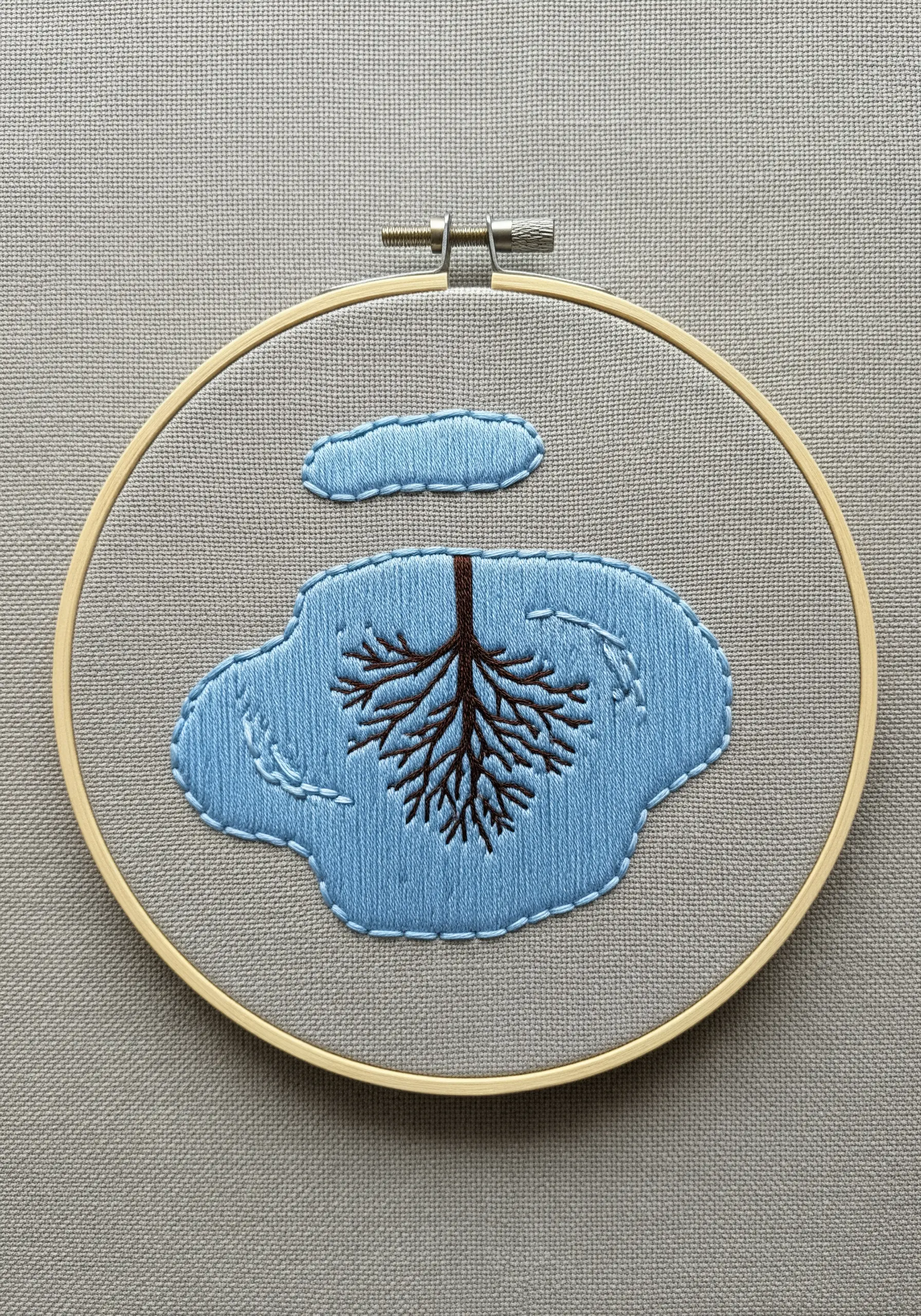
Create a thoughtful, narrative scene by using a puddle to reflect an element that isn’t fully visible.
Outline the puddle with a neat backstitch or split stitch for a clean edge. Fill it with a smooth, horizontal satin stitch in a slightly darker shade than the sky.
Stitch the reflection—in this case, the tree’s roots—within the puddle’s boundary. This technique invites the viewer to imagine the rest of the story.
This conceptual approach turns a simple design into a piece of framed embroidery patterns that look like they belong in a gallery.