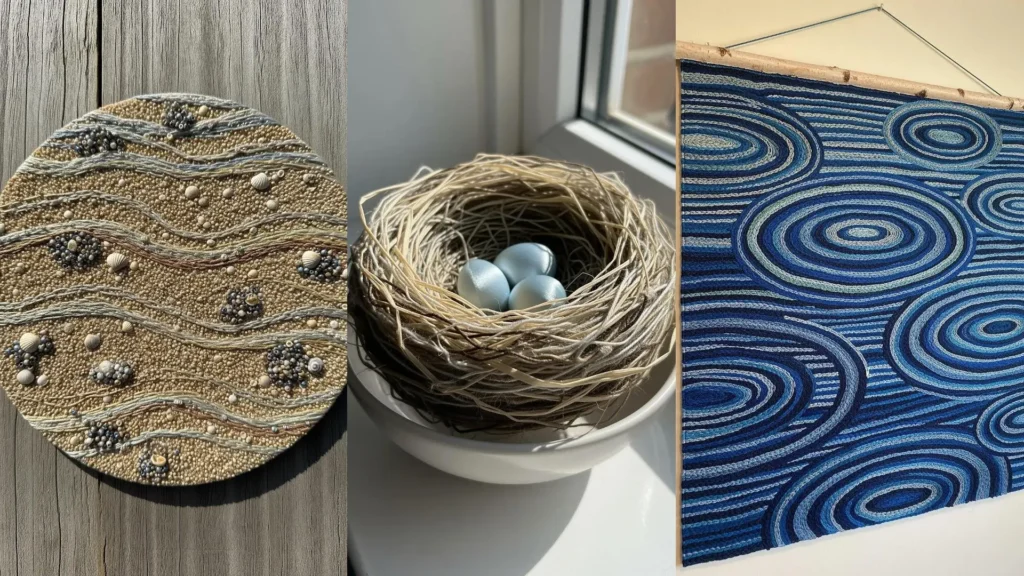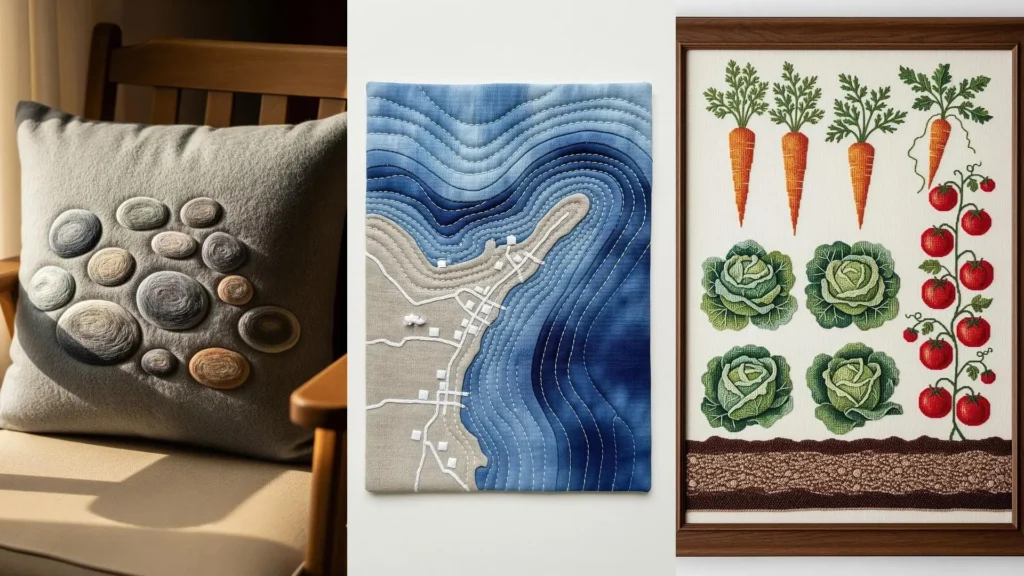
Have you ever finished a piece and felt that something was missing—a certain polish or depth that you admire in the work of others? Often, that final touch of magic isn’t found in greater complexity, but in more intentional choices.
The leap from good to great embroidery is about learning to see with your fingertips. It’s about understanding how the twist of a thread can catch the light, how a single padded stitch can create a shadow, or how layering sheer fabric can evoke a feeling of mist over mountains.
Here, you’ll find techniques designed to sharpen your artistic intuition. These ideas aren’t about mastering dozens of difficult stitches, but about using simple, elegant methods to create pieces with texture, dimension, and a quiet, confident beauty. You can do this right now.
1. Master 3D Texture with Sculptural Stitching
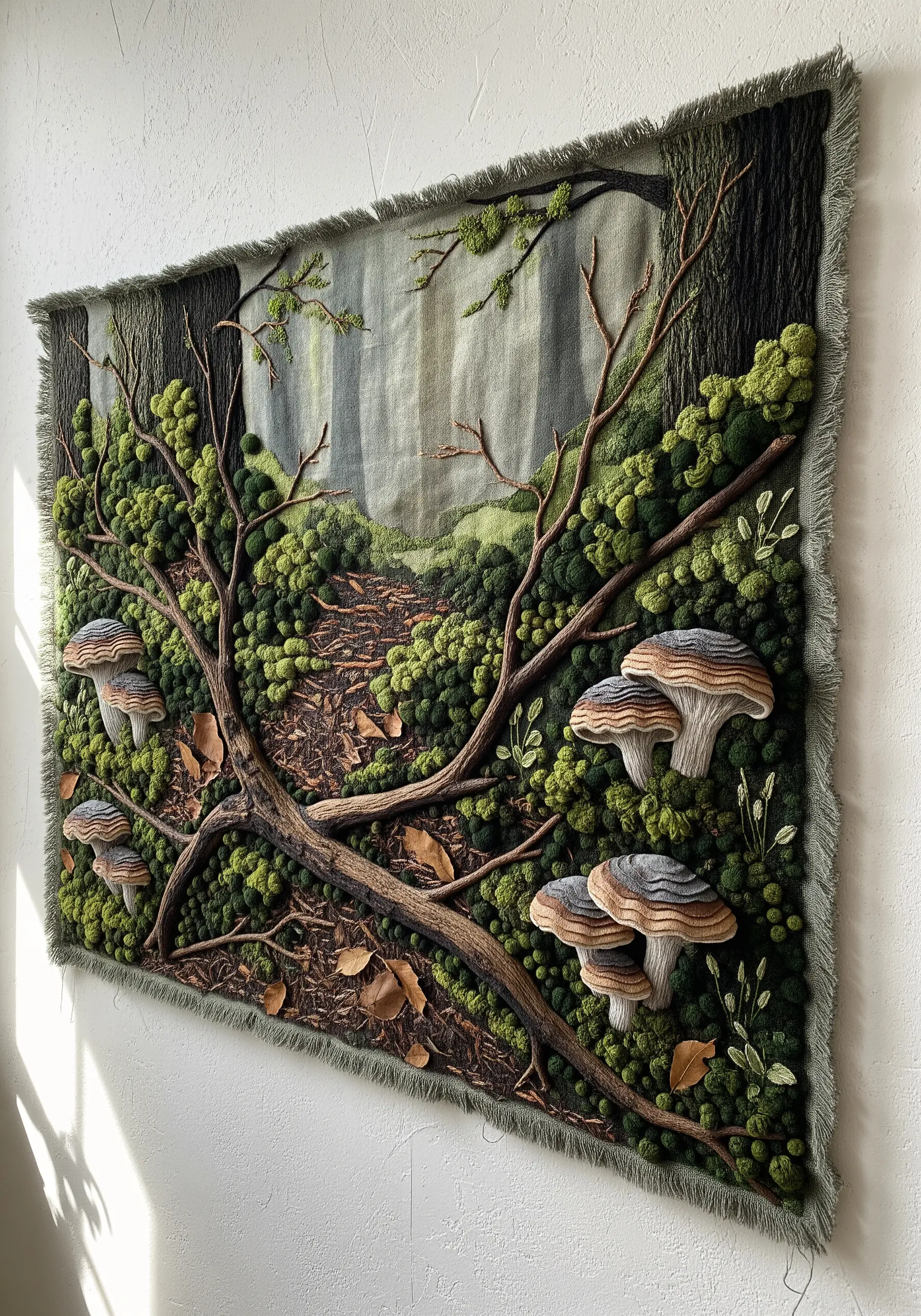
To build a truly immersive landscape, think in layers of texture and material.
Combine traditional stitches with other fiber art techniques like needle felting for mossy ground cover or couching with thick yarn for realistic tree branches.
Use dimensional stitches like French knots and bullion knots in dense clusters to create spongy mushrooms and undergrowth.
This method transforms a flat image into a statement-size wall art piece that invites viewers to experience it through touch as well as sight.
2. Create Serene Texture with Thread-Wrapped Pebbles
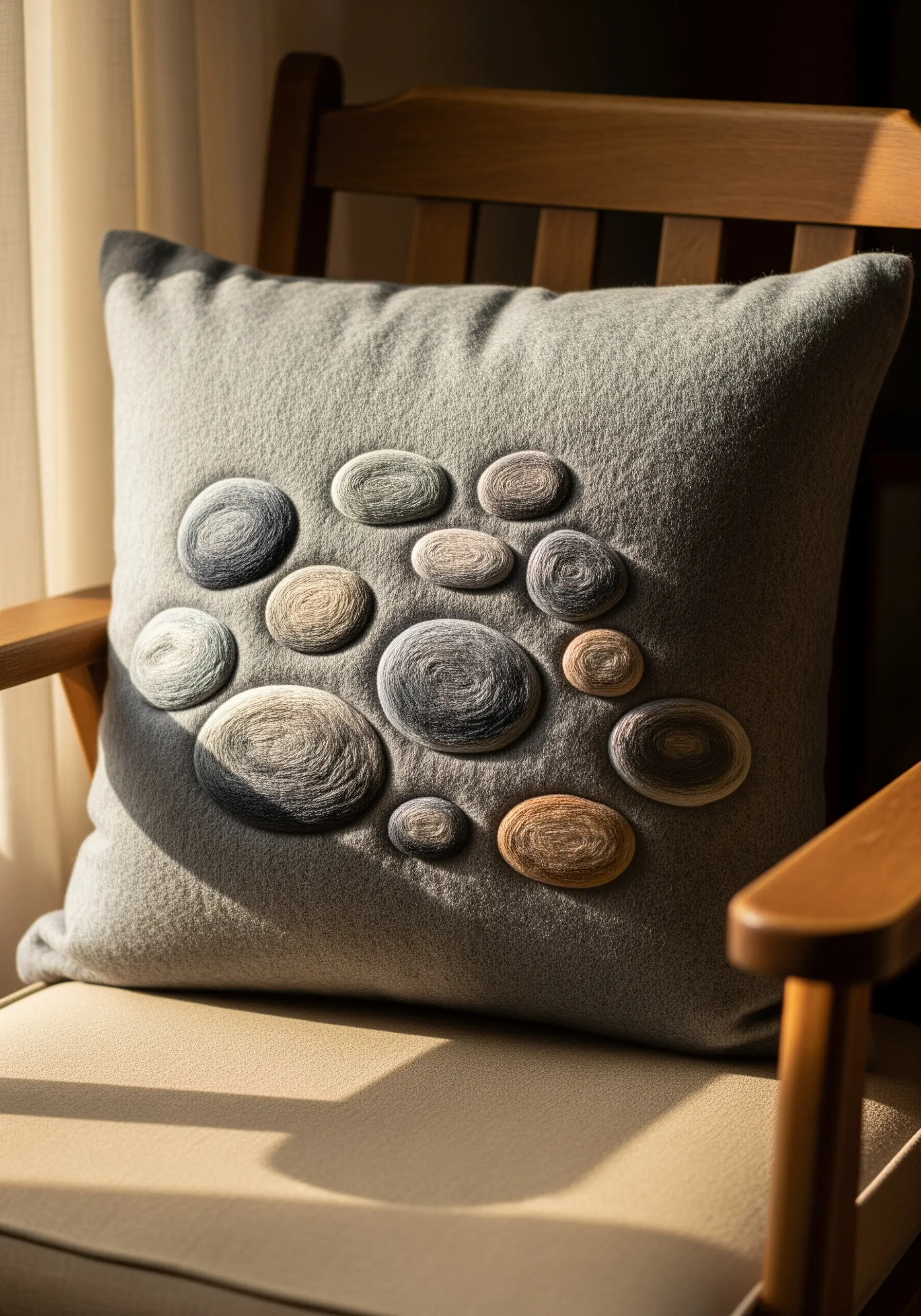
This calming, stone-like effect is achieved by meticulously wrapping thread in concentric circles around a padded appliqué base.
Start with a small felt oval, then use a single strand of thread to fill the shape with directional satin stitch, spiraling from the center outward.
Using several shades of gray, beige, and blue within one pebble creates a subtle gradient that mimics the natural variations found in river stones.
The smooth, dense texture offers a sophisticated way to introduce organic forms into your home décor, especially with neutral thread linen embroidery combos.
3. Balance Delicate Florals with Varied Stitch Heights
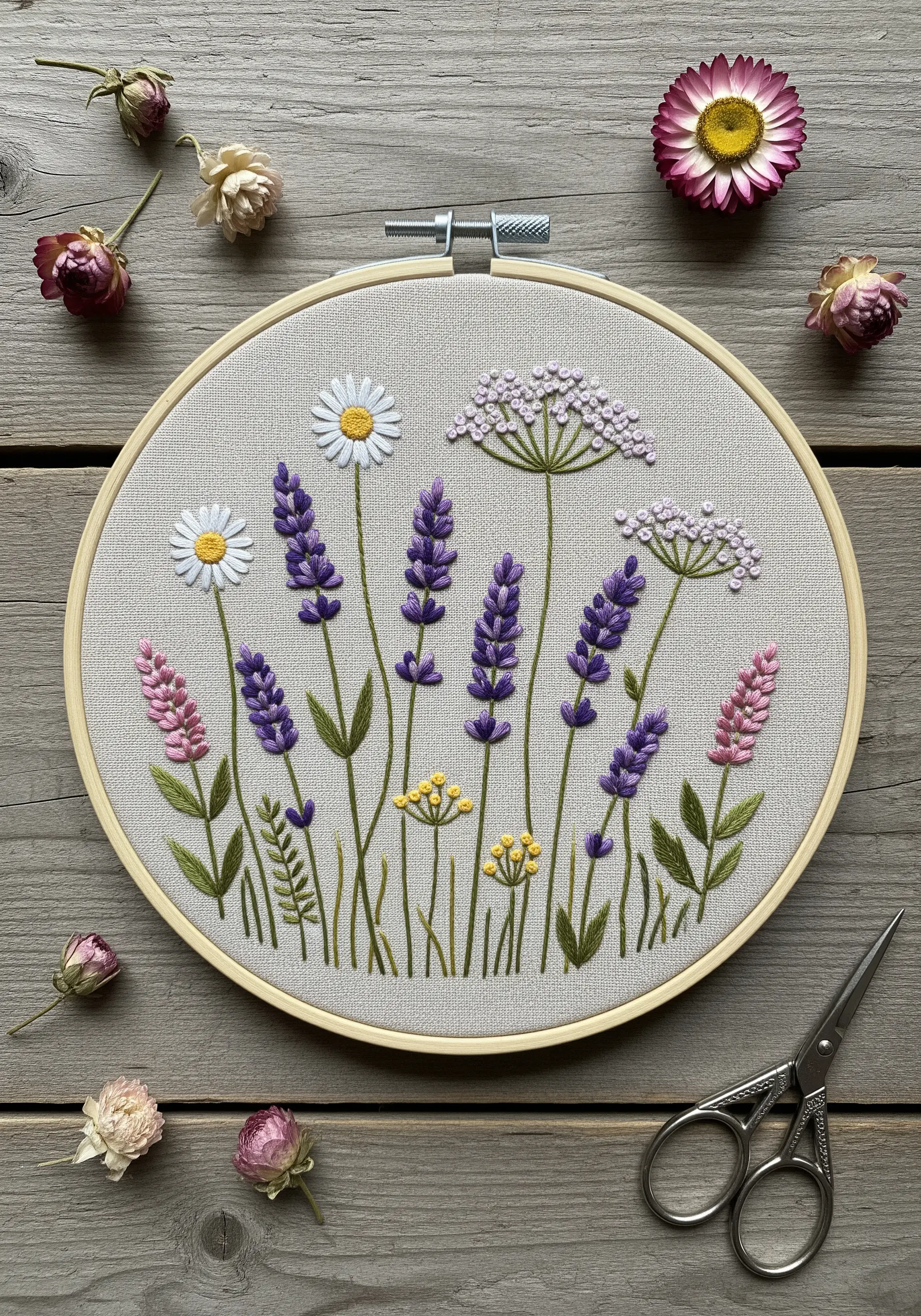
To prevent a floral arrangement from looking flat, assign a different stitch to each flower type to create a hierarchy of texture.
Use raised stitches like woven wheel knots for lavender buds to make them pop, and keep daisies smooth with a classic satin stitch.
For airy flowers like Queen Anne’s lace, use delicate, spaced-out French knots in off-white and pale pink.
This intentional variation in height and density turns a simple composition into a wildflower meadow with lifelike dimension and visual interest.
4. Combine Appliqué and Embroidery for Bold Table Linens
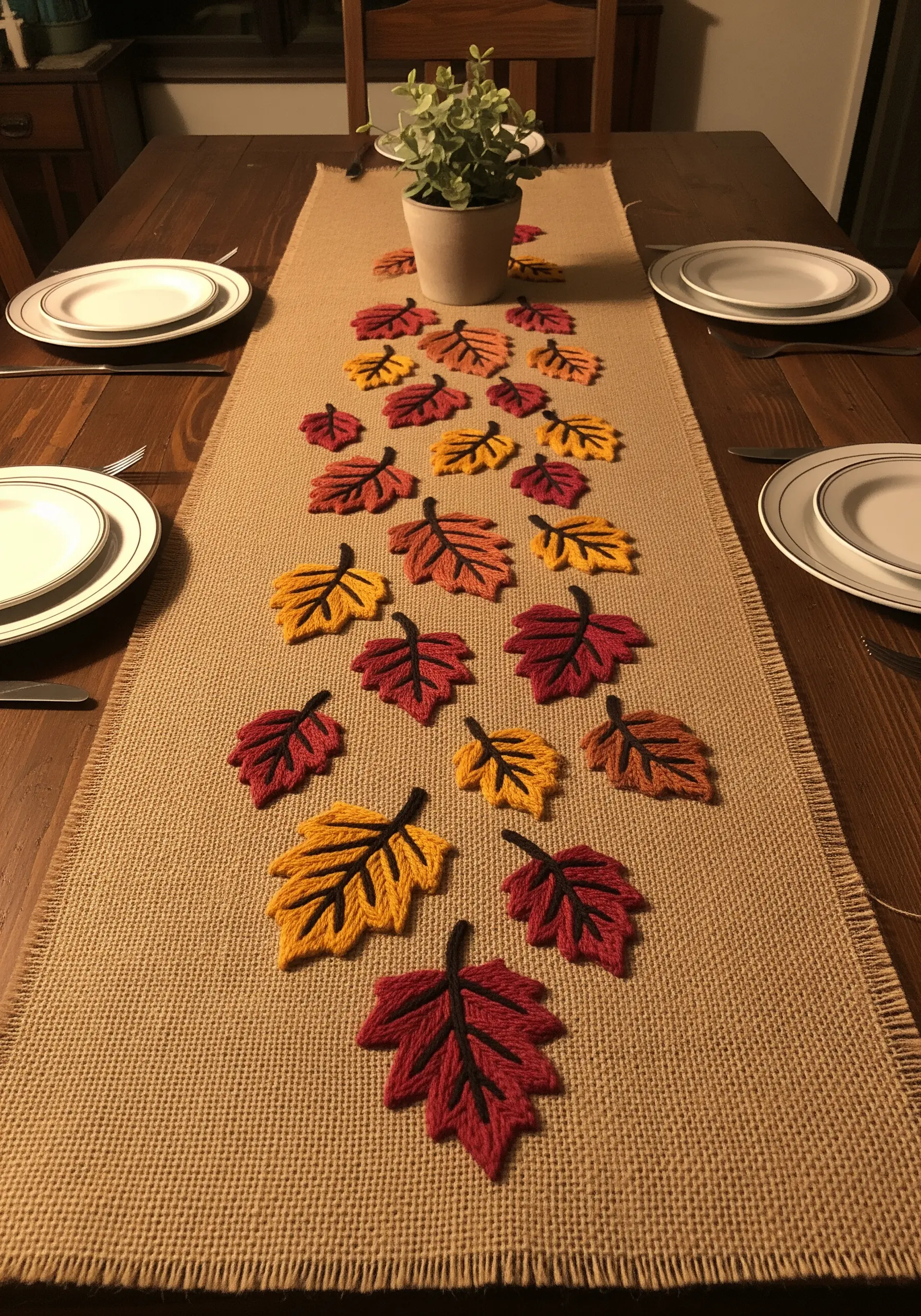
For large, repetitive motifs, appliqué is a brilliant time-saver that delivers a high-impact, graphic result.
Cut your leaf shapes from felt, which won’t fray and provides a sturdy base with a soft, raised profile.
Secure the shapes to a coarse fabric like burlap or linen with a simple running stitch, then add veins with a contrasting backstitch.
This combination of techniques is perfect for creating hand-stitched table runner embroidery designs that are both rustic and refined.
5. Use Metallic Thread to Define Layered Landscapes
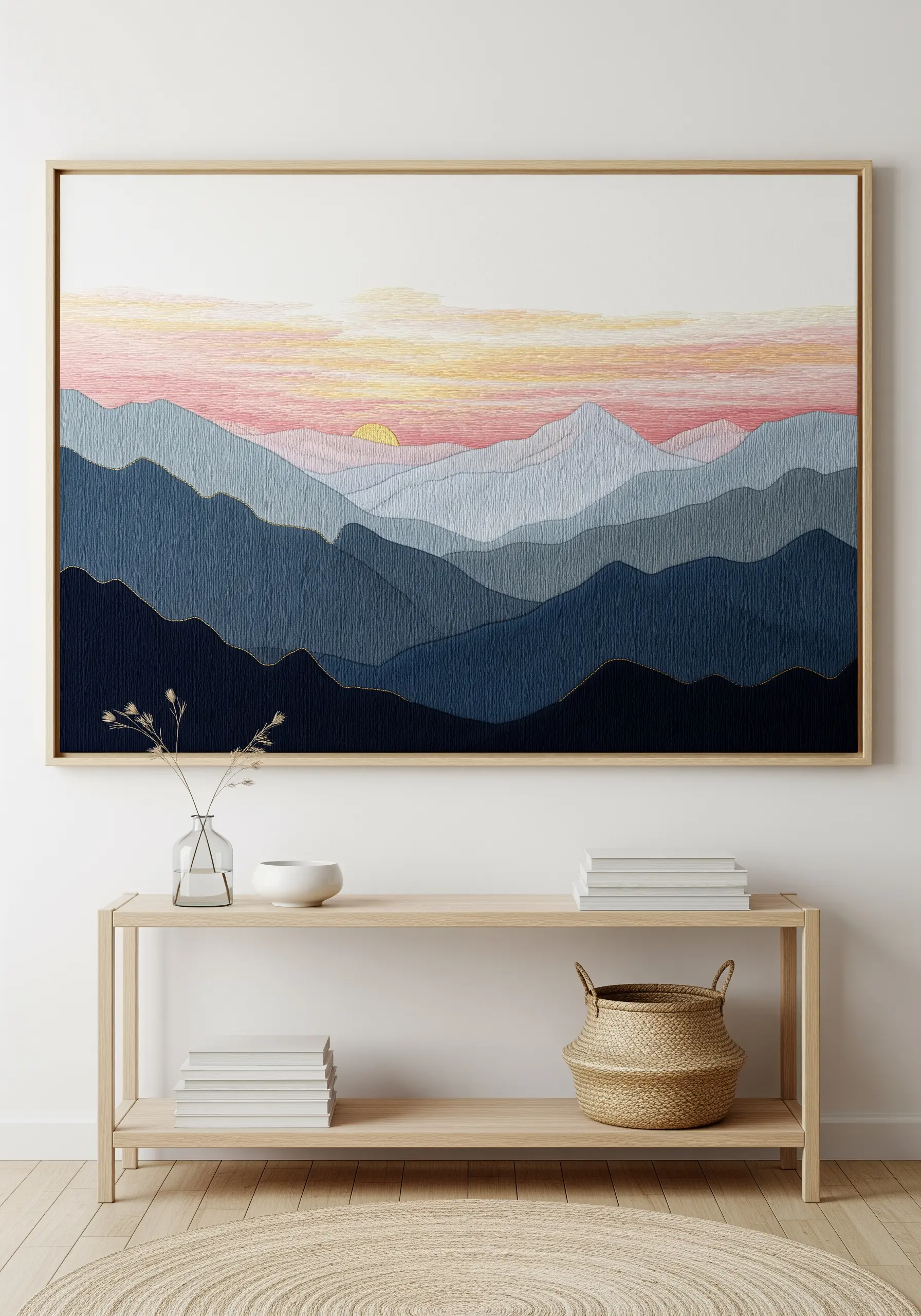
When creating atmospheric depth with layered shapes, a single detail can bring the entire piece into focus.
Stitch each mountain range using a dense seed stitch or long-and-short stitch, choosing progressively lighter shades to suggest distance.
Once complete, trace the ridge of each mountain with a single strand of fine metallic thread.
This subtle line catches the light, defining each layer and transforming your mountain landscape into a sophisticated work of art.
6. Build an Abstract Landscape with Fabric Collage
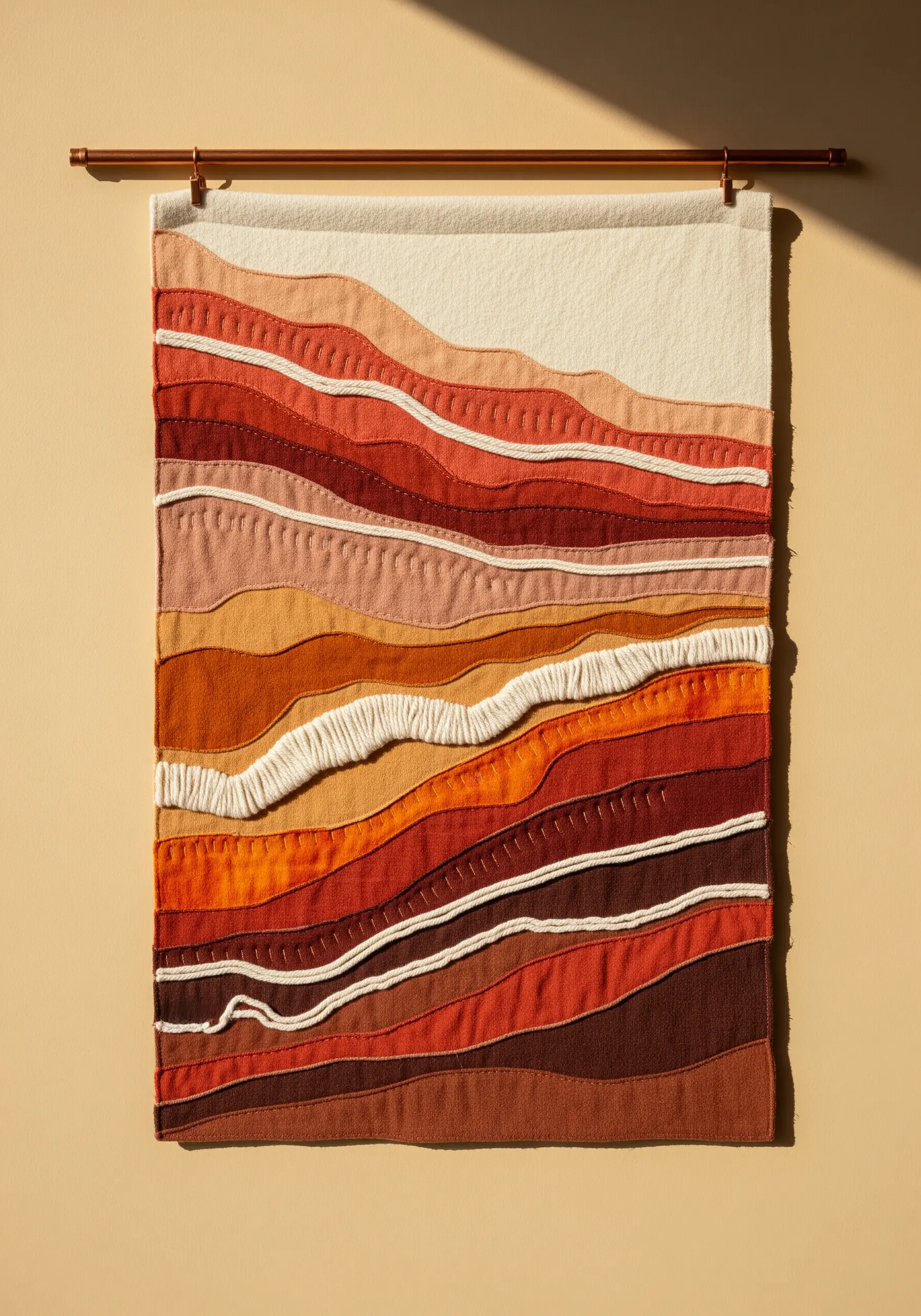
Let your materials guide the composition by layering torn or cut fabric scraps to form an abstract scene.
Choose fabrics with varying textures—like wool, linen, and cotton—in a cohesive color palette to create visual harmony.
Instead of dense stitching, use sparse running stitches, seed stitches, or couched yarn to connect the layers and add subtle linear details.
This process allows you to create expressive abstract fabric collage embroidery ideas that feel both spontaneous and intentional.
7. Replicate Botanical Prints with Thread Painting
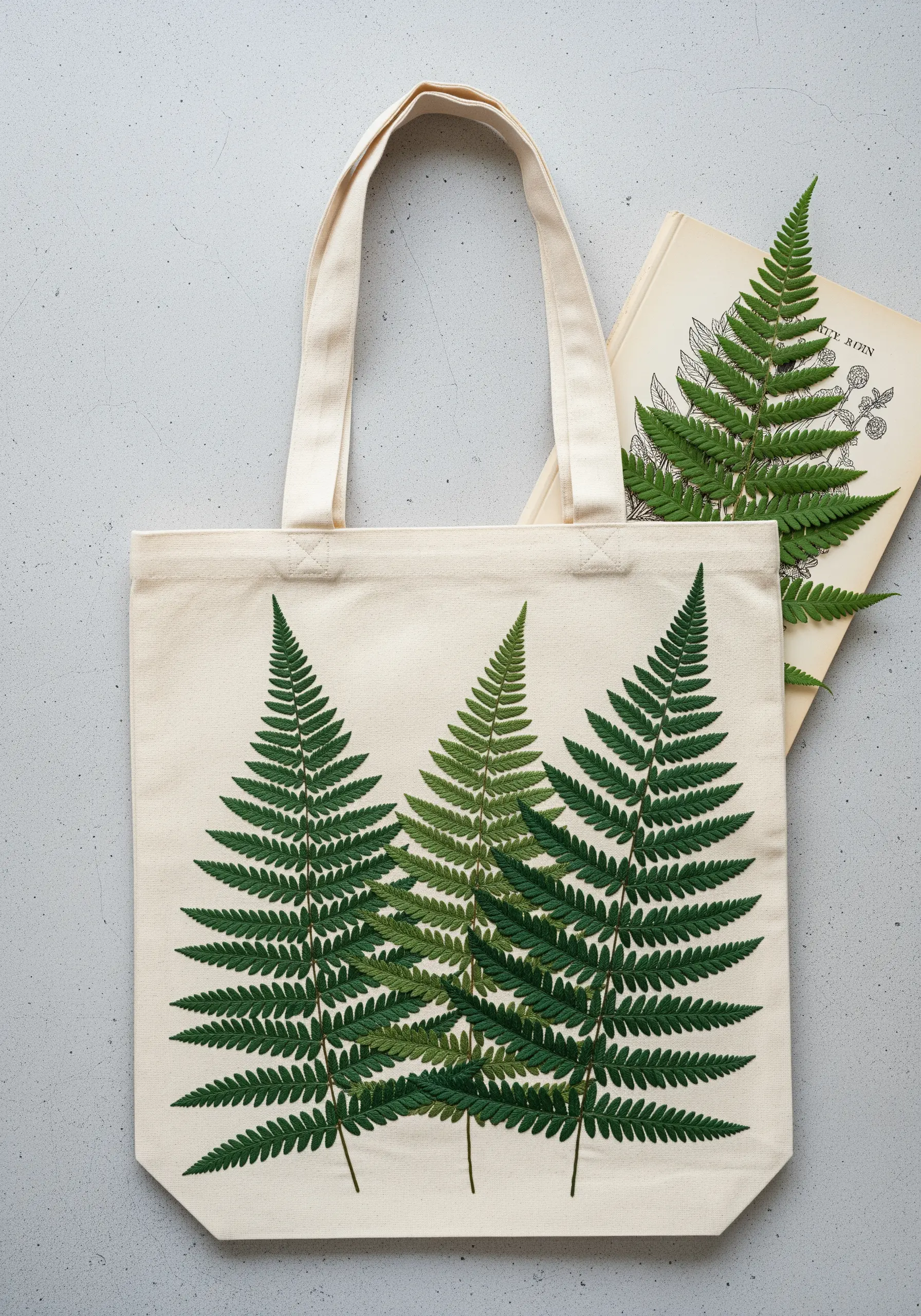
To achieve the hyper-realism of a botanical illustration, you need to think like a painter, blending colors seamlessly.
Work with a single strand of embroidery floss and use the long-and-short stitch, also known as needle painting.
Use at least three or four shades of green to capture the subtle light and shadow on each fern frond.
This meticulous technique allows you to add lush, realistic fern foliage stitch variations to tote bags, jackets, or framed art.
8. Create Optical Depth with Concentric Thread Wrapping
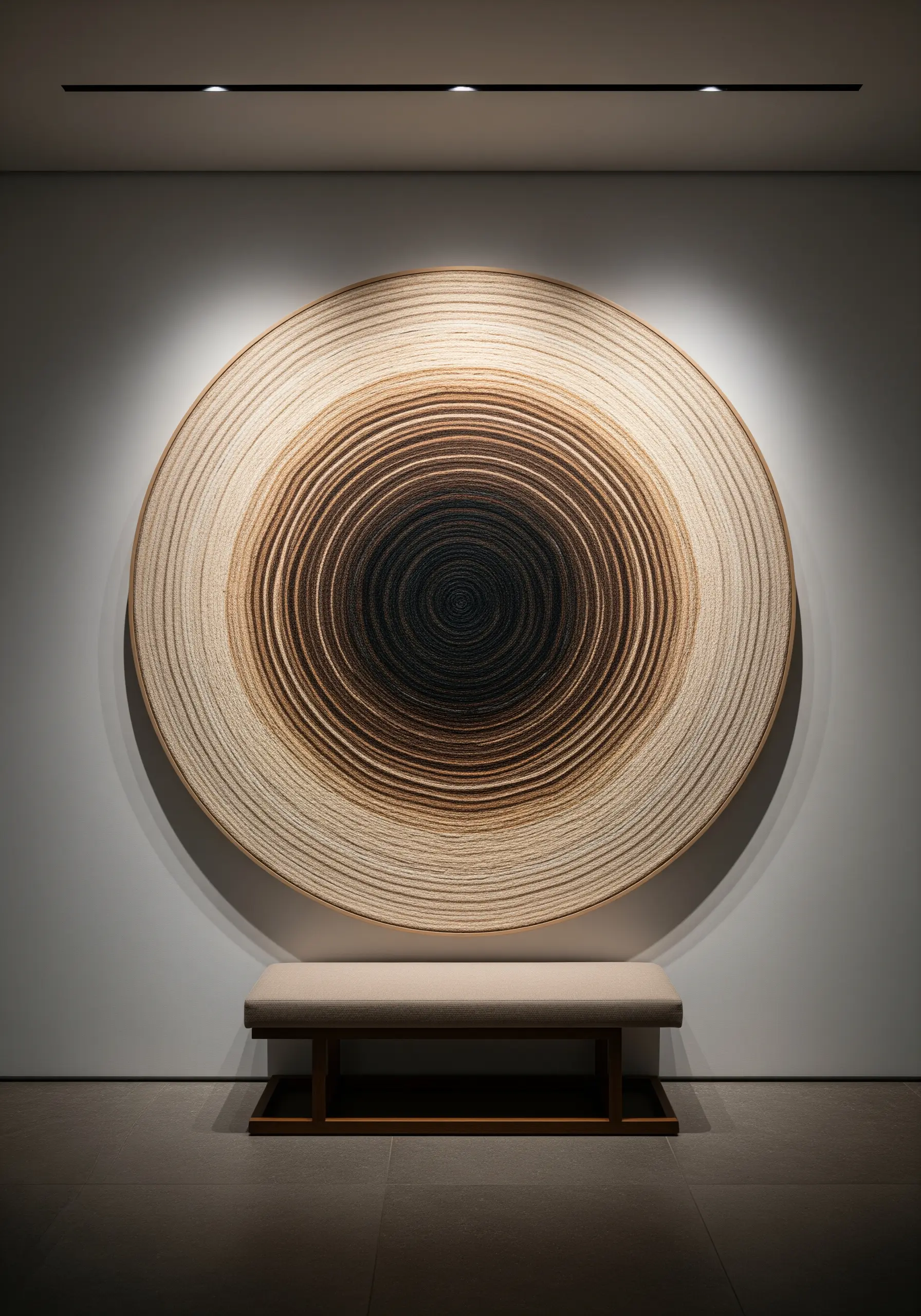
This mesmerizing effect relies on the precise arrangement of color, not on complex stitching.
Create a large-scale piece by wrapping yarn or thick thread around a circular frame, moving from the outer edge toward the center.
The key is to plan a smooth color transition, using dozens of closely related shades to create a flawless gradient.
This technique turns thread into a powerful tool for creating optical illusions and exploring how neutral color gradient embroidery ideas can produce dramatic results.
9. Master Realistic Moss with Clustered French Knots
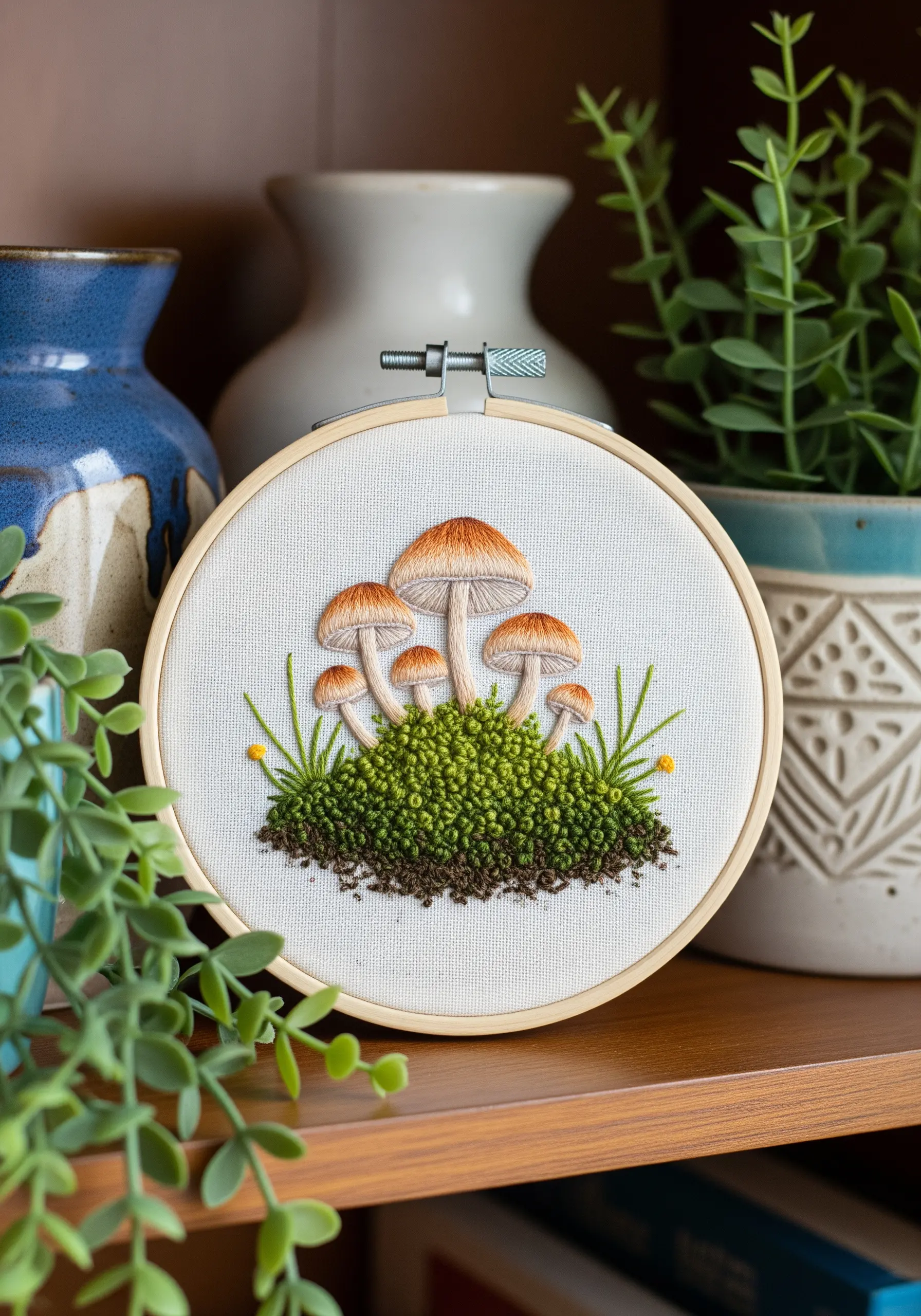
The secret to convincing moss texture lies in variation and density.
Use multiple shades of green, yellow, and brown floss—sometimes combining different colored strands in the same stitch—to achieve natural color depth.
Vary the size of your French knots by changing the number of times you wrap the thread around the needle.
Cluster the knots tightly, even stitching over previous knots to build up a lush, three-dimensional carpet that elevates your moss and fern embroidery textures.
10. Elevate Simple Motifs with Modern Framing
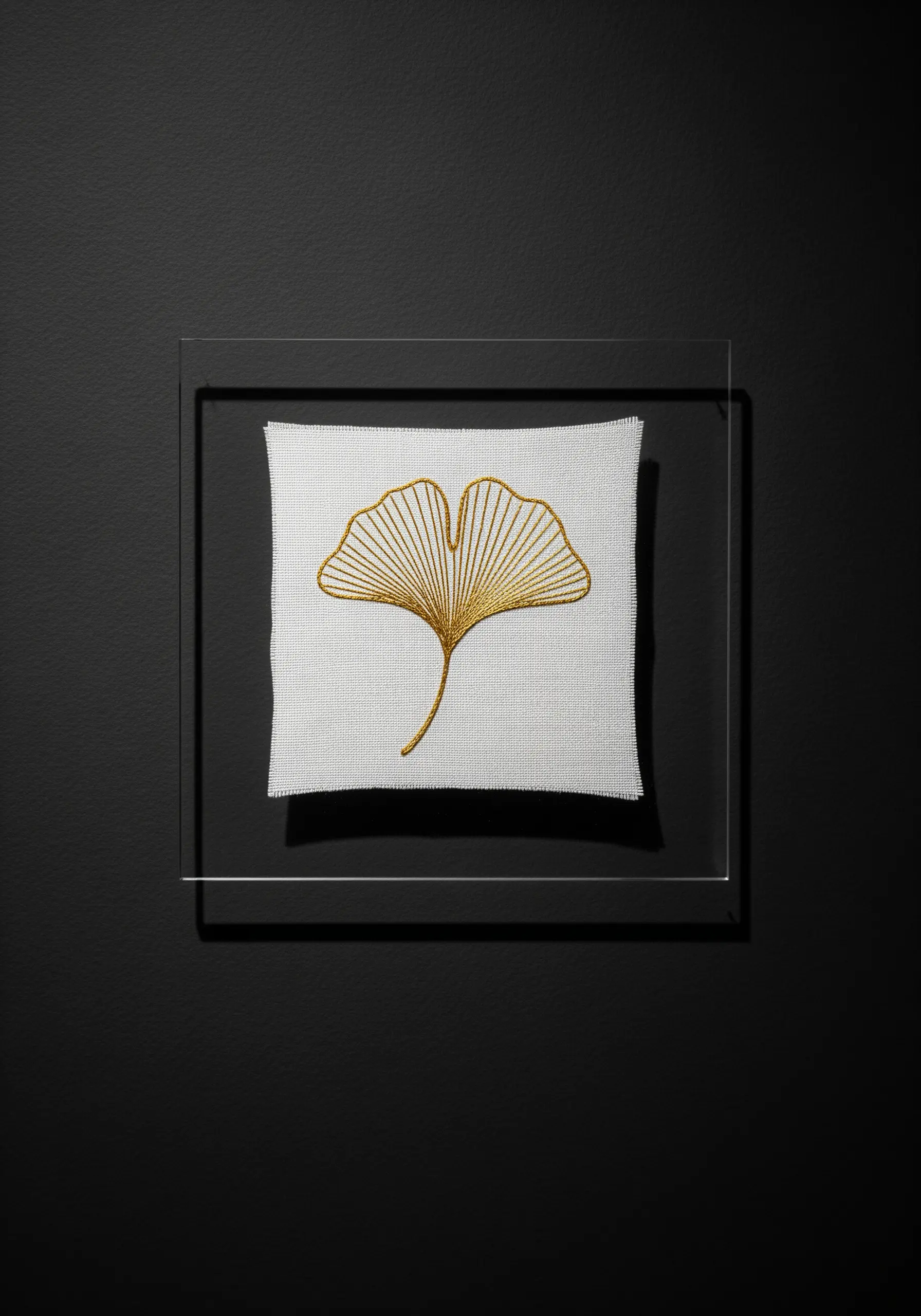
The way you present your work is as crucial as the stitching itself.
For a single, delicate motif, choose a framing style that enhances its simplicity rather than overpowering it.
A floating acrylic frame creates negative space around the embroidery, making the piece feel airy, important, and modern.
This approach is perfect for turning a simple sketch in metallic thread into one of your most elegant framed embroidery artworks.
11. Stitch Topographical Maps for Personalized Art
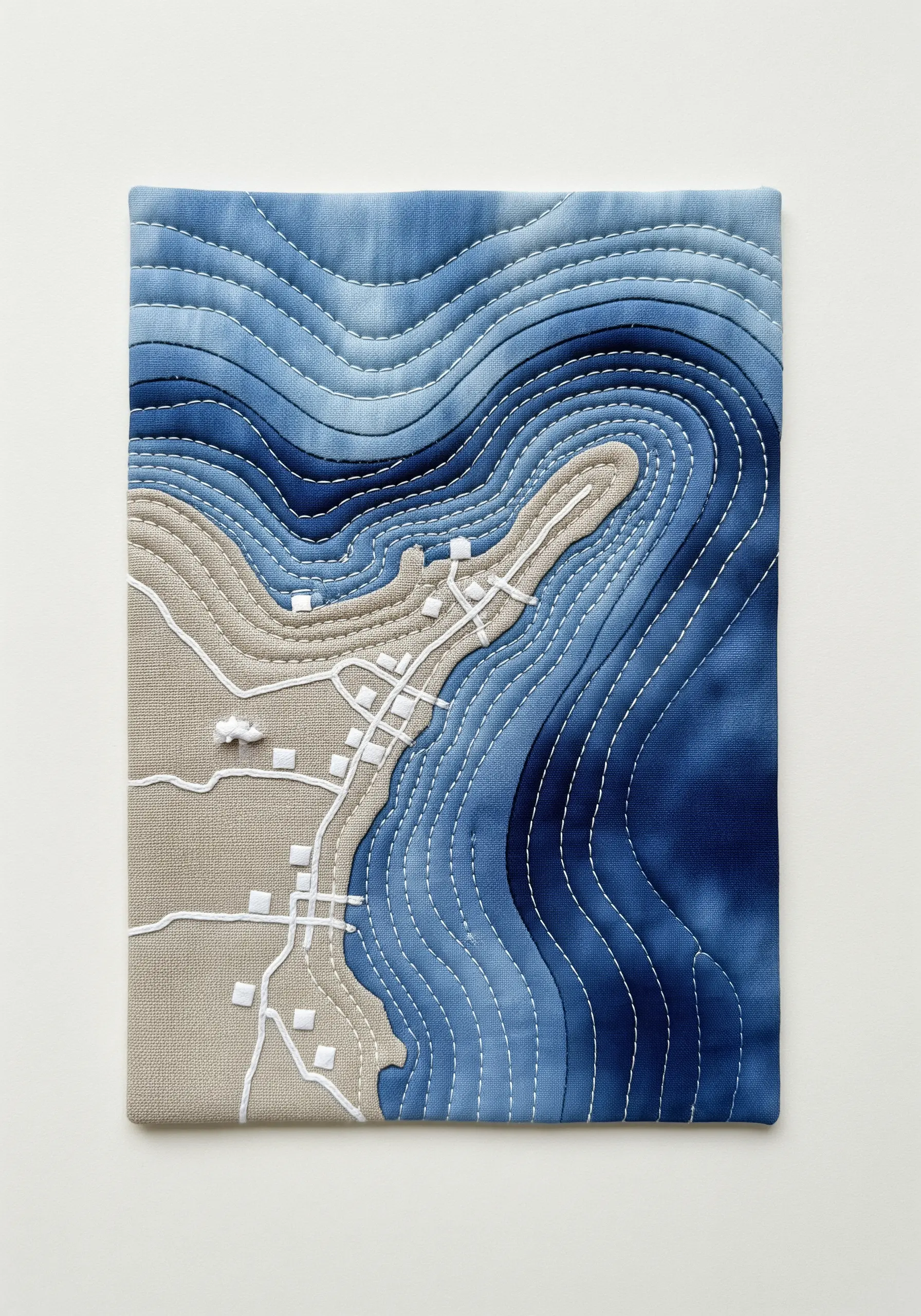
Transform a meaningful location into a piece of abstract art by stitching its contour lines.
Start with a base of layered or hand-dyed fabrics to represent land and sea, then use a simple running stitch or backstitch to trace the topography.
This quilting-inspired technique adds subtle texture and creates a visual record of a place you love.
It’s a sophisticated way to create coastal-inspired fabric collage embroidery scenes with deep personal resonance.
12. Add Dimension with Sheer Fabric Appliqué
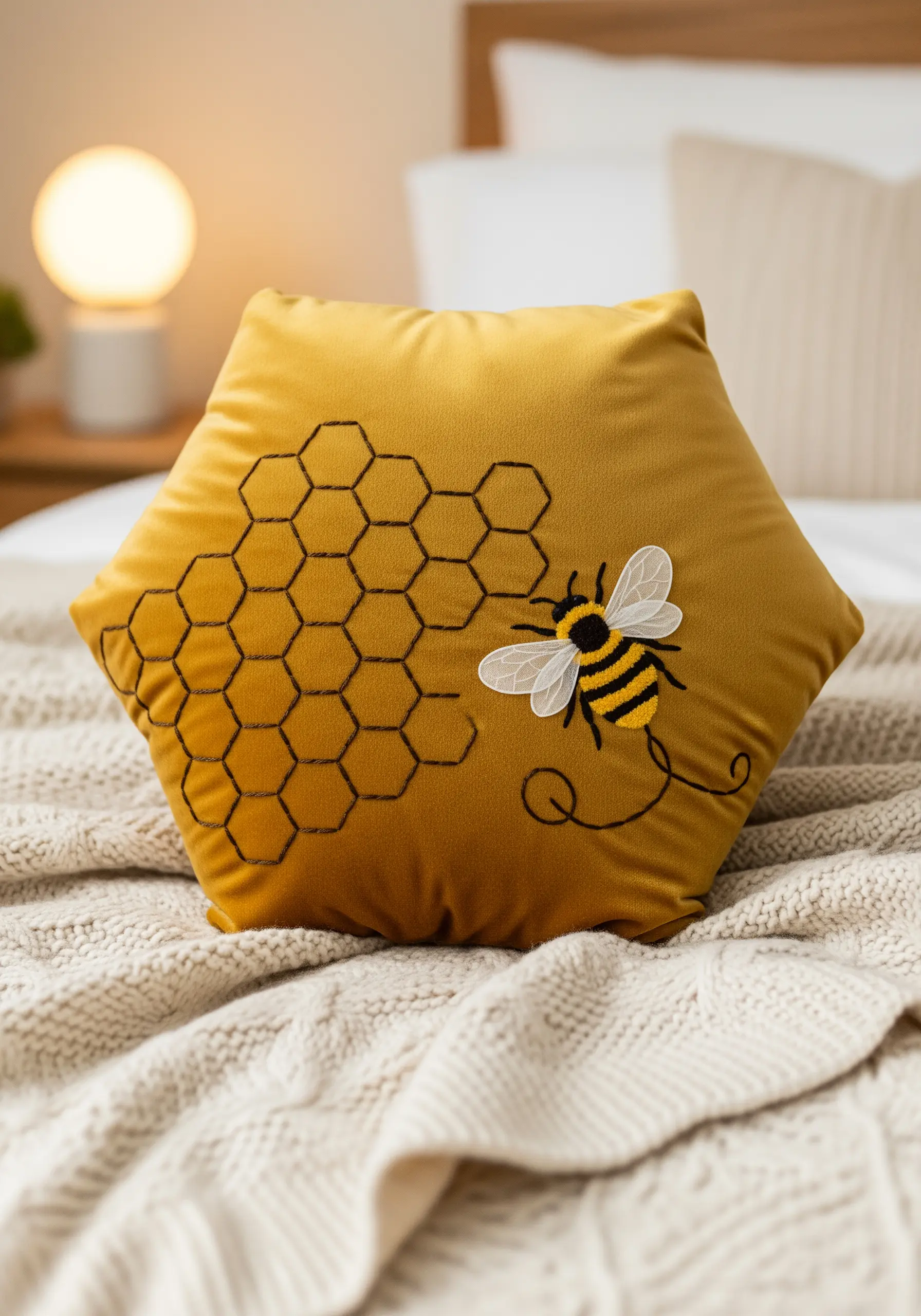
To give elements like insect wings or flower petals a delicate, translucent quality, incorporate sheer fabric appliqué into your design.
Lay a small piece of organza or tulle over your design area and secure it with a fine backstitch outline.
Once the details are stitched, carefully trim the excess sheer fabric close to the stitch line.
This is one of the most unexpected embroidery techniques that adds a layer of realism and delicacy that thread alone can’t replicate.
13. Weave Thread into Functional Art with Coasters
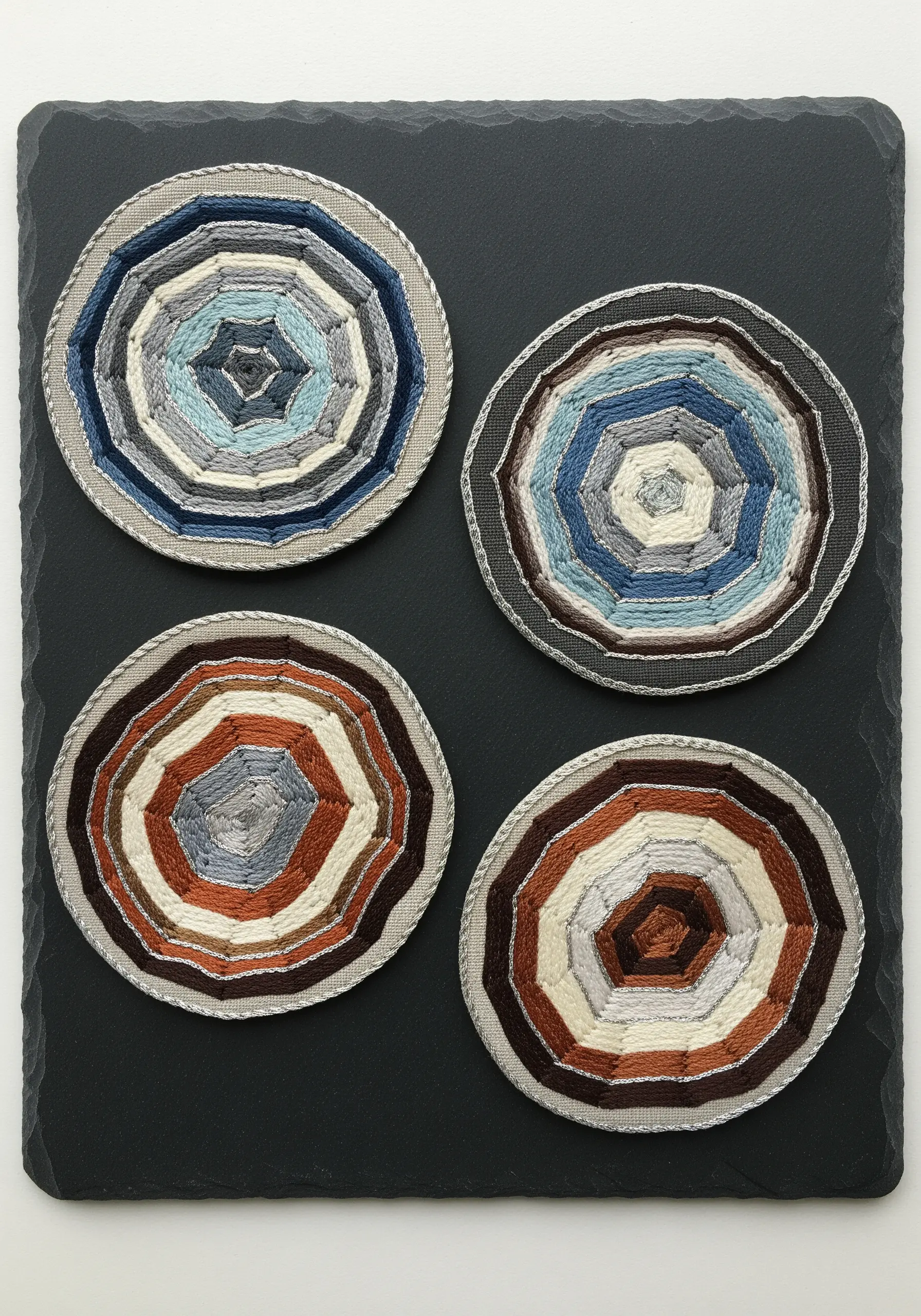
Explore fiber art beyond the needle by wrapping thread or fine yarn to create these dense, textural coasters.
Use a round cork or sturdy cardboard base as your loom, cutting notches around the edge to guide the warp threads.
The abstract patterns emerge from your color choices, allowing you to create beautiful, practical objects from leftover floss.
This project is a perfect way to build a minimal DIY embroidery collection that is both beautiful and functional.
14. Embellish Home Essentials with Botanical Borders
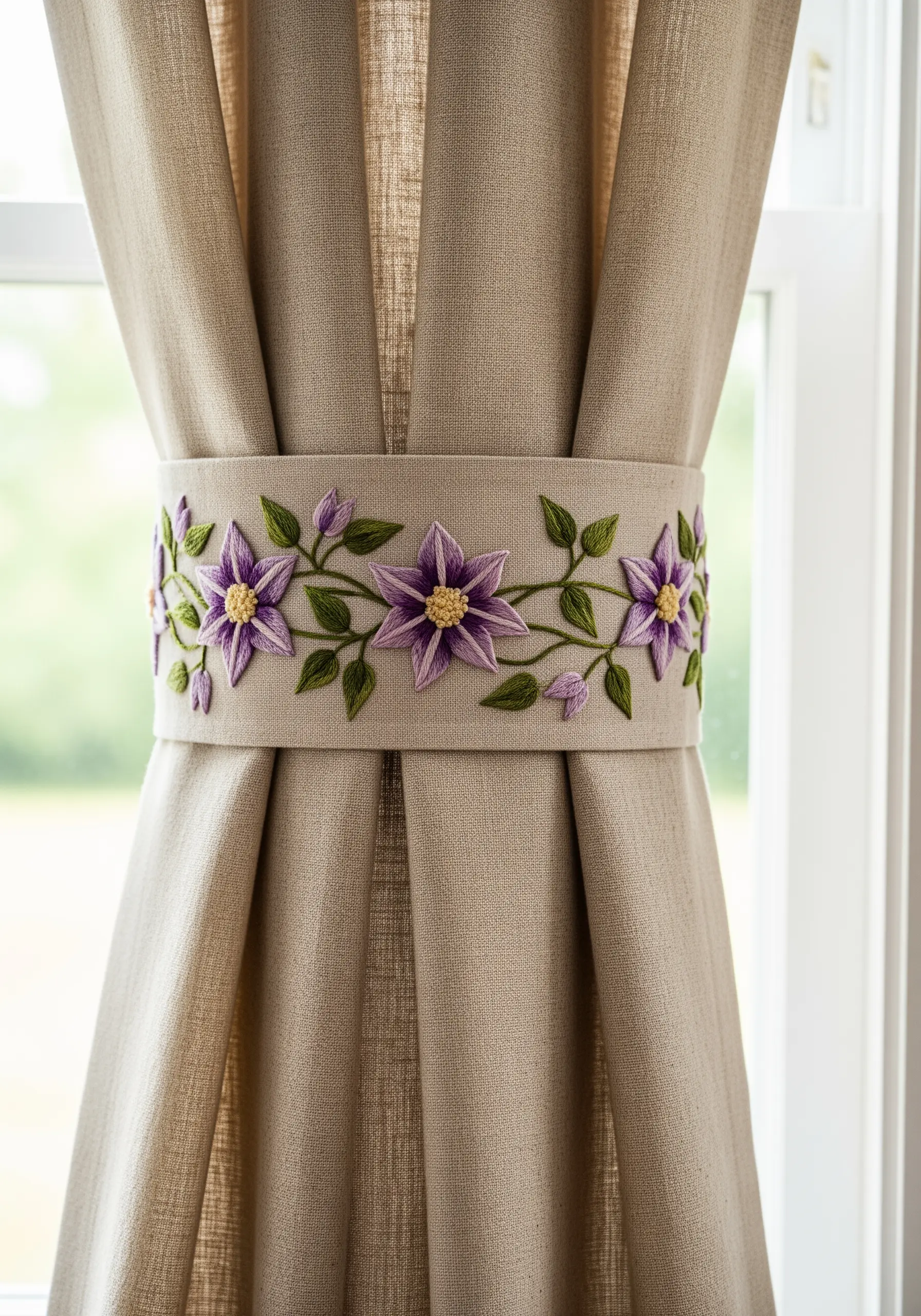
Elevate everyday functional items, like curtain tie-backs or napkins, by treating them as a canvas for detailed embroidery.
Use dimensional stitches—like padded satin stitch for petals and bullion knots for buds—to give your botanicals a sculptural quality.
Working on a high-quality, neutral fabric like linen ensures your vibrant thread colors will stand out beautifully.
This thoughtful detail is an excellent way to frame everyday items with elegant botanical border designs.
15. Personalize Journals with Celestial Padded Appliqué
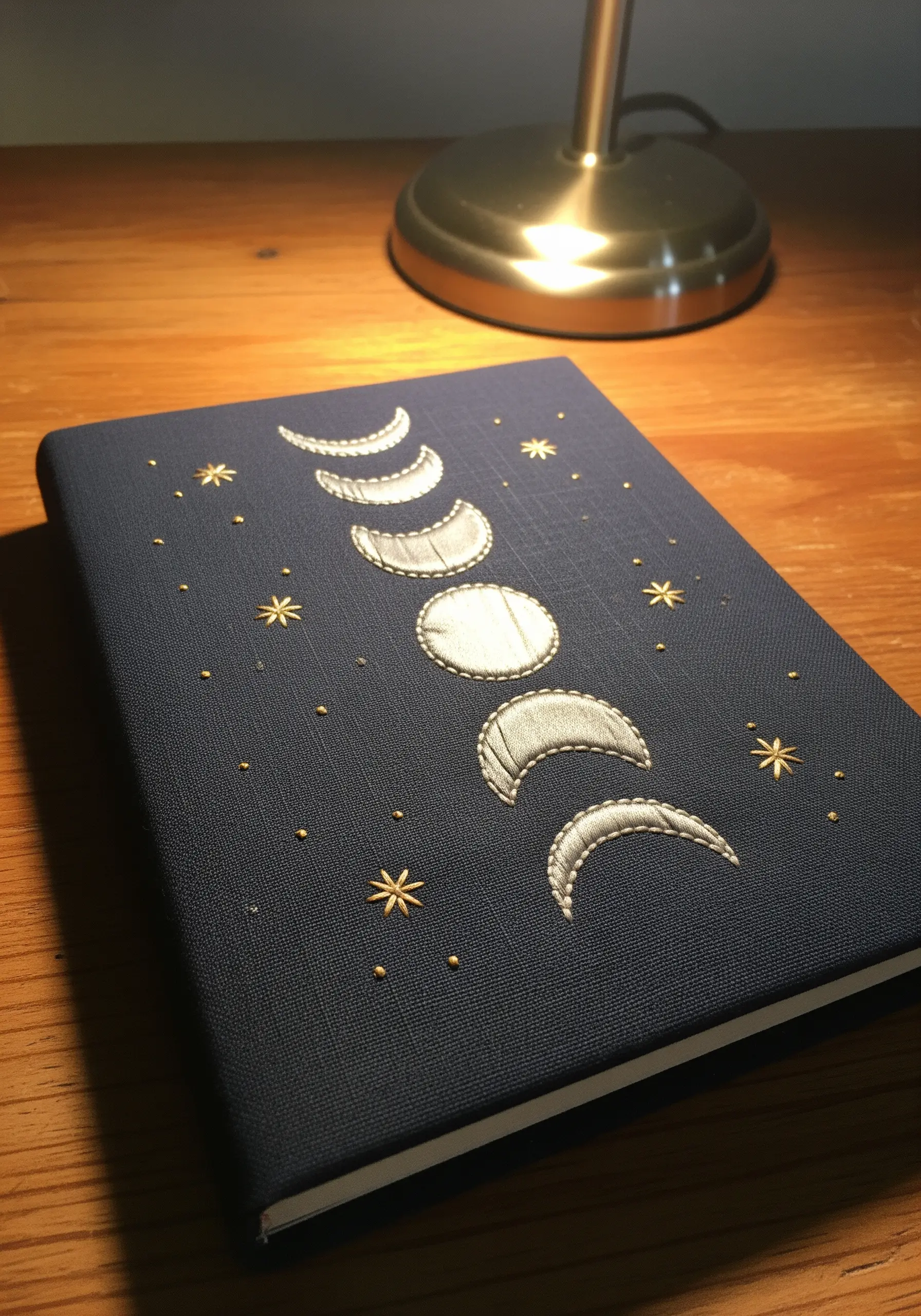
To make elements in your design literally stand out, use a padded appliqué technique.
For each moon phase, place a small piece of felt or cotton batting under your main fabric (like a silver lamé or silk) before stitching it down.
Secure the shape with a tight, clean satin stitch border. This simple step adds a luxurious, three-dimensional quality to your work.
It’s one of my favorite quick stitch inspirations to beautify your notebooks and journals.
16. Create Foreground Depth with Felt Appliqué
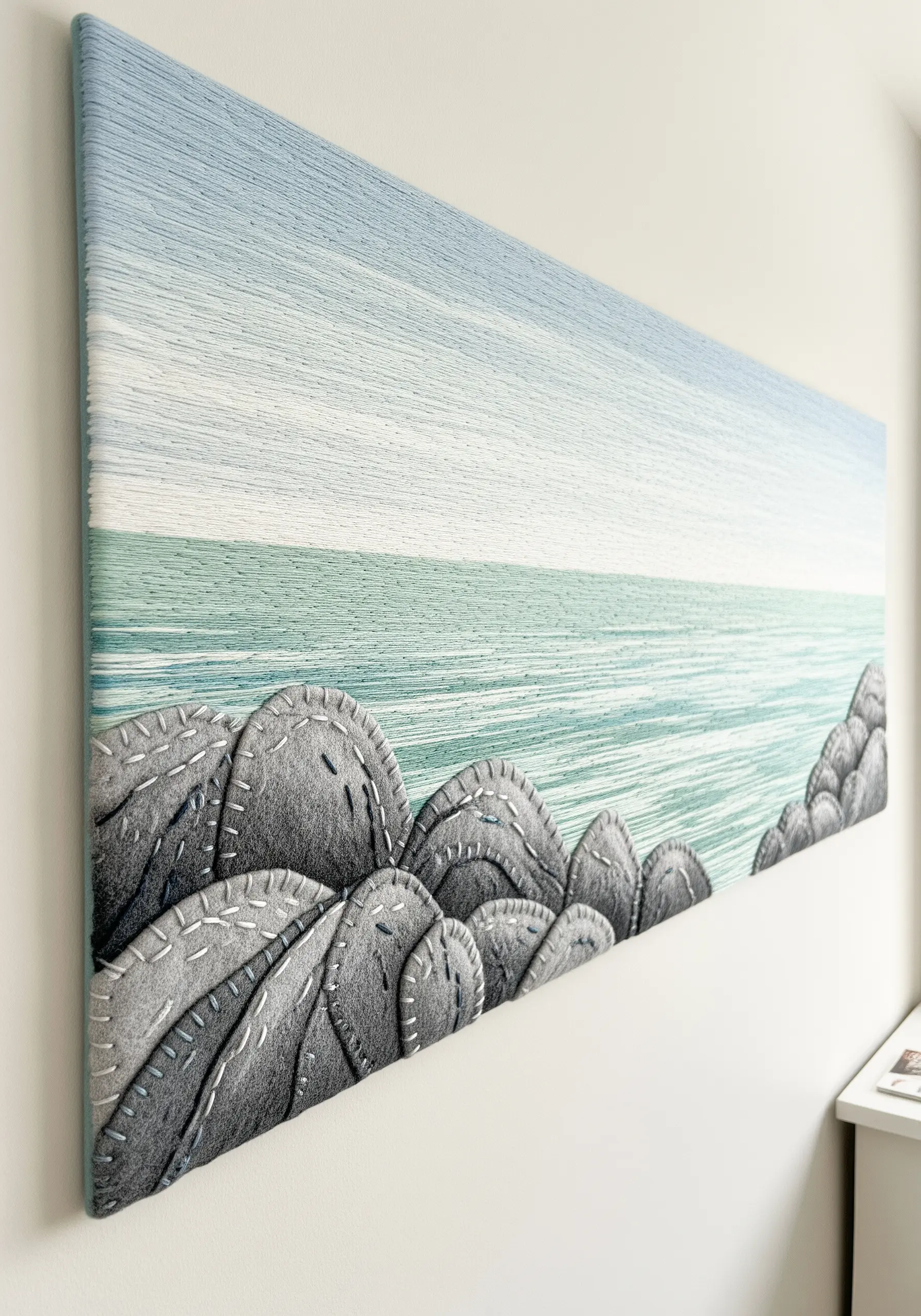
Instantly create a sense of perspective in your landscapes by using different materials for the foreground and background.
Use felt appliqué for elements that are closest to the viewer, such as the rocks in this coastal scene.
Stitch the background sea and sky directly onto the canvas. The raised texture of the felt naturally pushes the foreground forward, creating an effortless illusion of depth.
This is a core technique for bringing coastal-themed pillow stitching ideas to life.
17. Achieve Ethereal Effects on Sheer Fabric
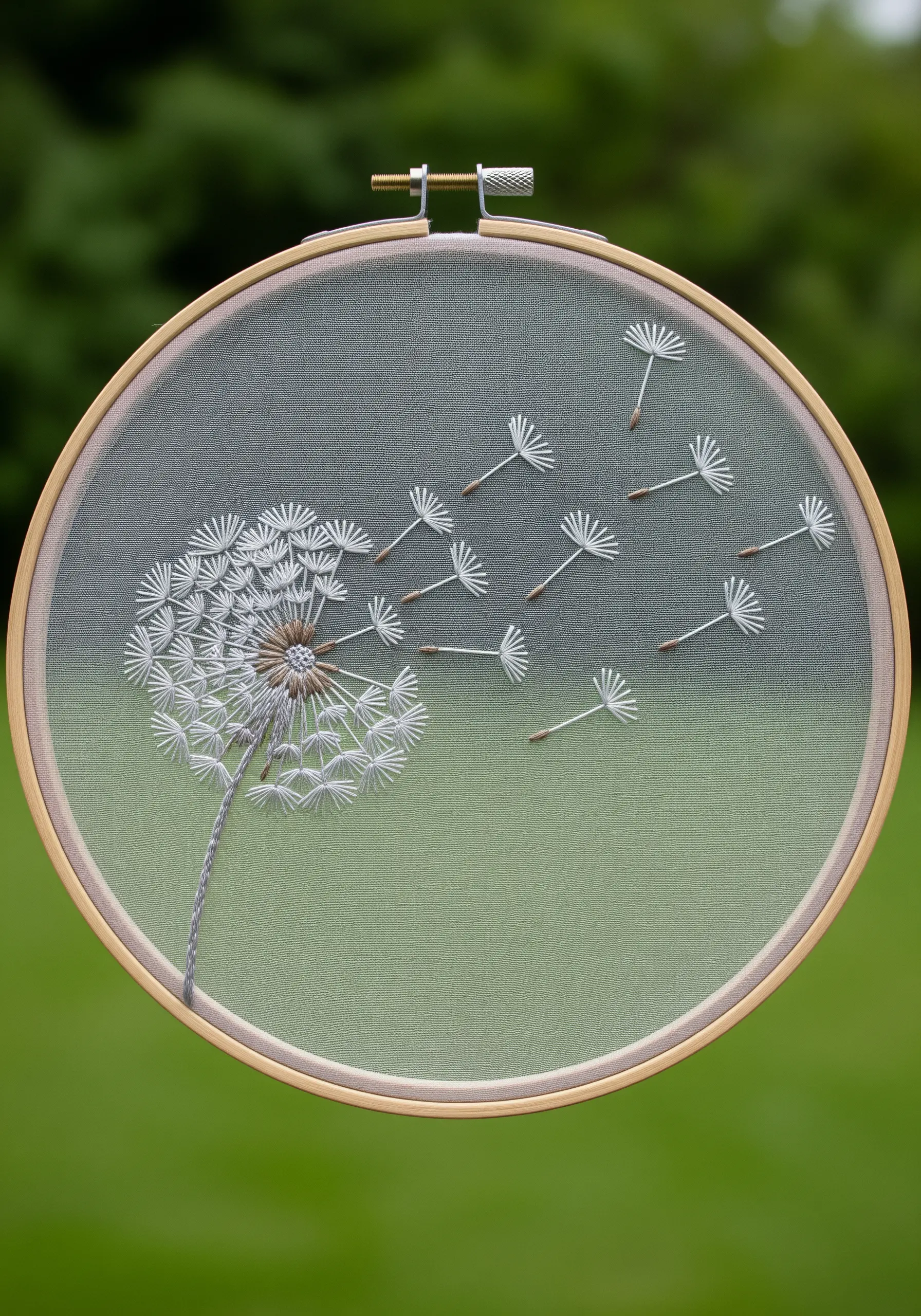
Stitching on a transparent or semi-transparent ground fabric, like organza or tulle, makes your embroidery appear to float in mid-air.
To prevent the delicate fabric from puckering, always use a stabilizer while you stitch; a water-soluble version is perfect as it will wash away completely.
This technique is ideal for airy, delicate subjects like dandelion seeds, feathers, or insect wings.
You can see more examples in these fabric collage embroidery projects using sheer fabrics.
18. Design a Triptych for a Modern Art Statement
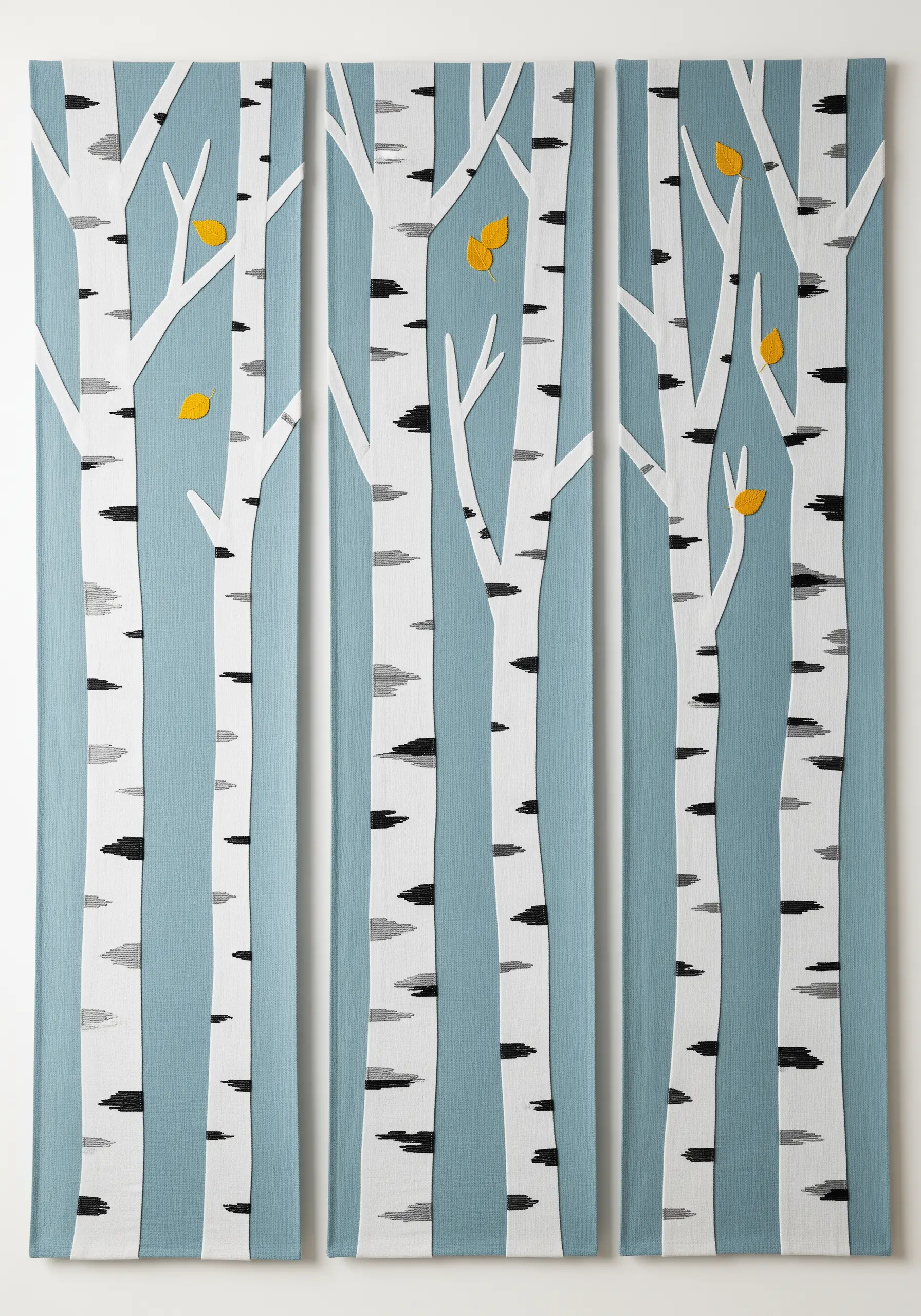
Create a large, impactful piece of art by dividing a single composition across three separate panels, known as a triptych.
This approach gives a simple scene, like these birch trees, a modern, gallery-like feel.
Use fabric appliqué for the bold white trunks and add texture with short, straight stitches in black to mimic the bark.
The negative space between the panels becomes part of the artwork, creating a dynamic rhythm that makes these DIY wall art embroidery projects truly stand out.
19. Sculpt an Underwater World with Dimensional Stitches
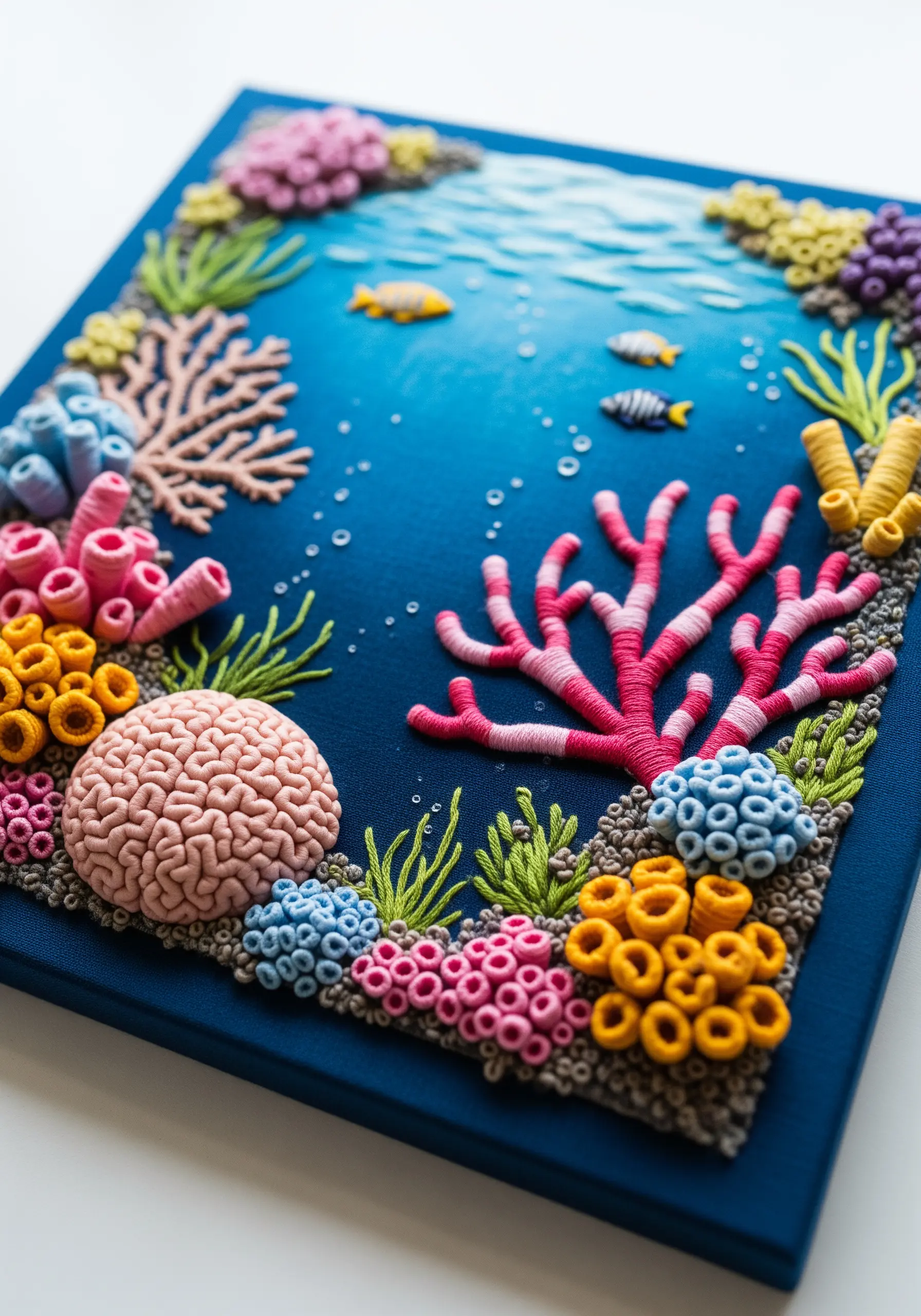
To capture the rich, varied textures of a coral reef, you need a diverse vocabulary of dimensional stitches.
Create branching coral by couching thick yarn, and form brain coral with tightly packed stem stitch spirals.
Use dense clusters of French knots and bullion knots in vibrant colors for smaller, intricate coral forms.
These contemporary texture techniques turn your fabric into a miniature, tactile ecosystem.
20. Add Delicate Botanicals to Elevate Table Linens
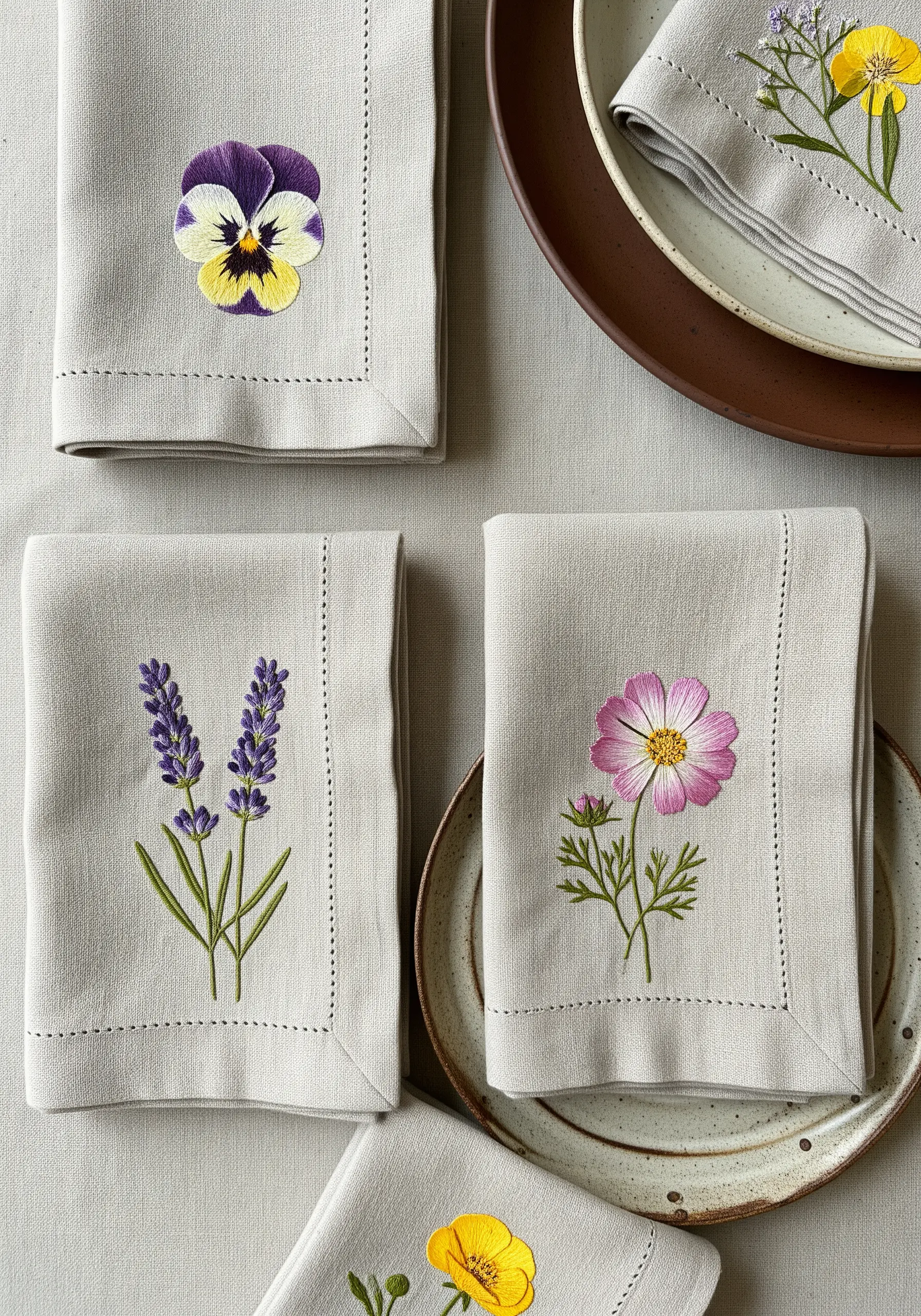
A single, exquisitely stitched flower can transform a simple linen napkin into a piece of heirloom-quality textile art.
Use long-and-short stitch to blend colors realistically, capturing the subtle gradients of each petal.
By creating a set where each napkin features a different flower, you build a collection that is cohesive yet individually special.
These are the kinds of minimal embroidery patterns that look harder than they are, relying on careful color choice rather than complex stitches.
21. Integrate Embroidery into Your Weaving Projects
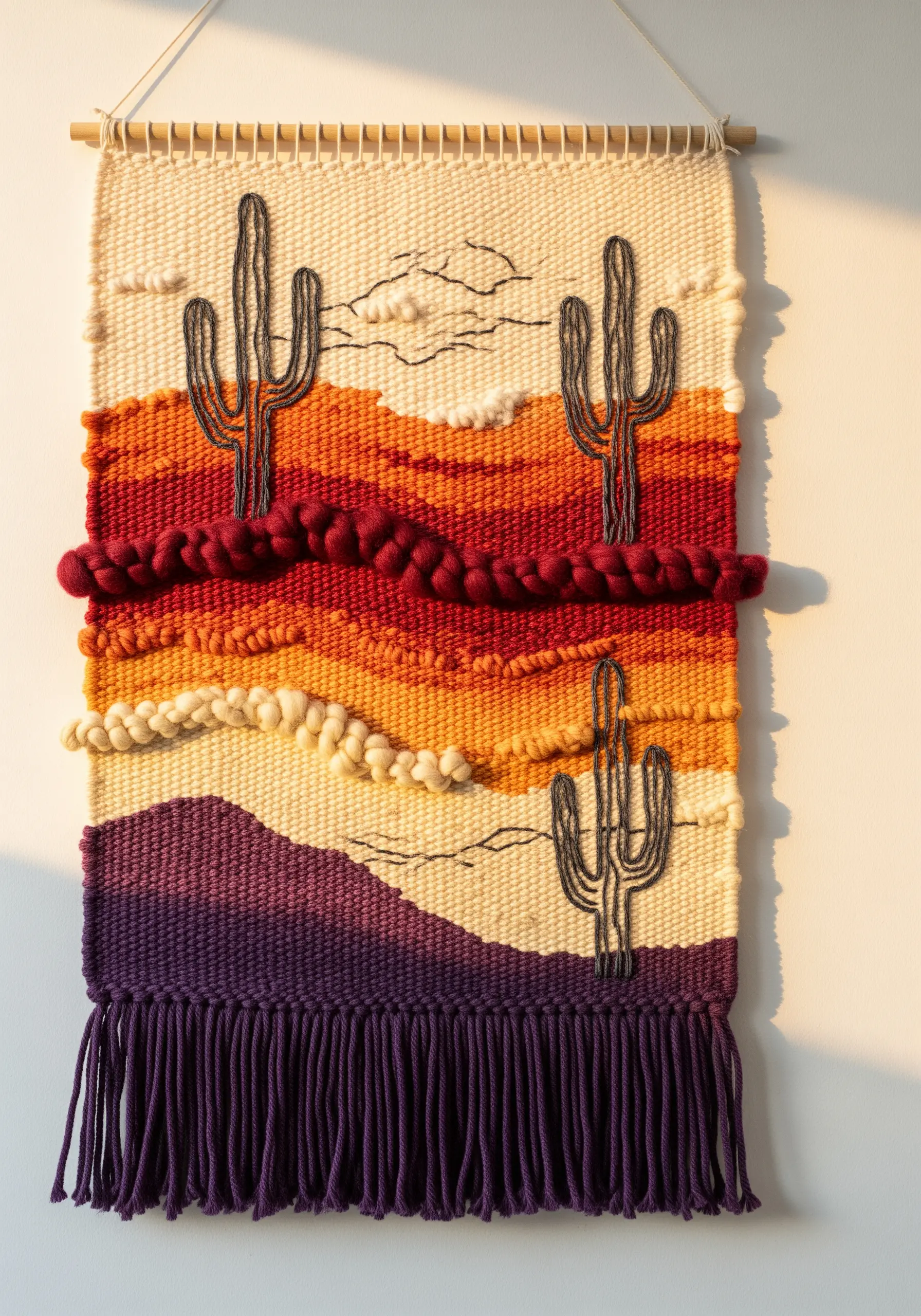
Combine the soft, textural world of weaving with the clean, graphic lines of embroidery for a piece with incredible depth.
First, create your abstract, color-blocked landscape on a loom.
Then, use the finished weaving as your canvas, adding illustrative details like these cacti with a simple backstitch or stem stitch.
This is a fantastic entry point for mixed fiber embroidery ideas that beginners can try, as it blends two beautiful disciplines.
22. Achieve a Vintage Aesthetic with Cross-Stitch Samplers
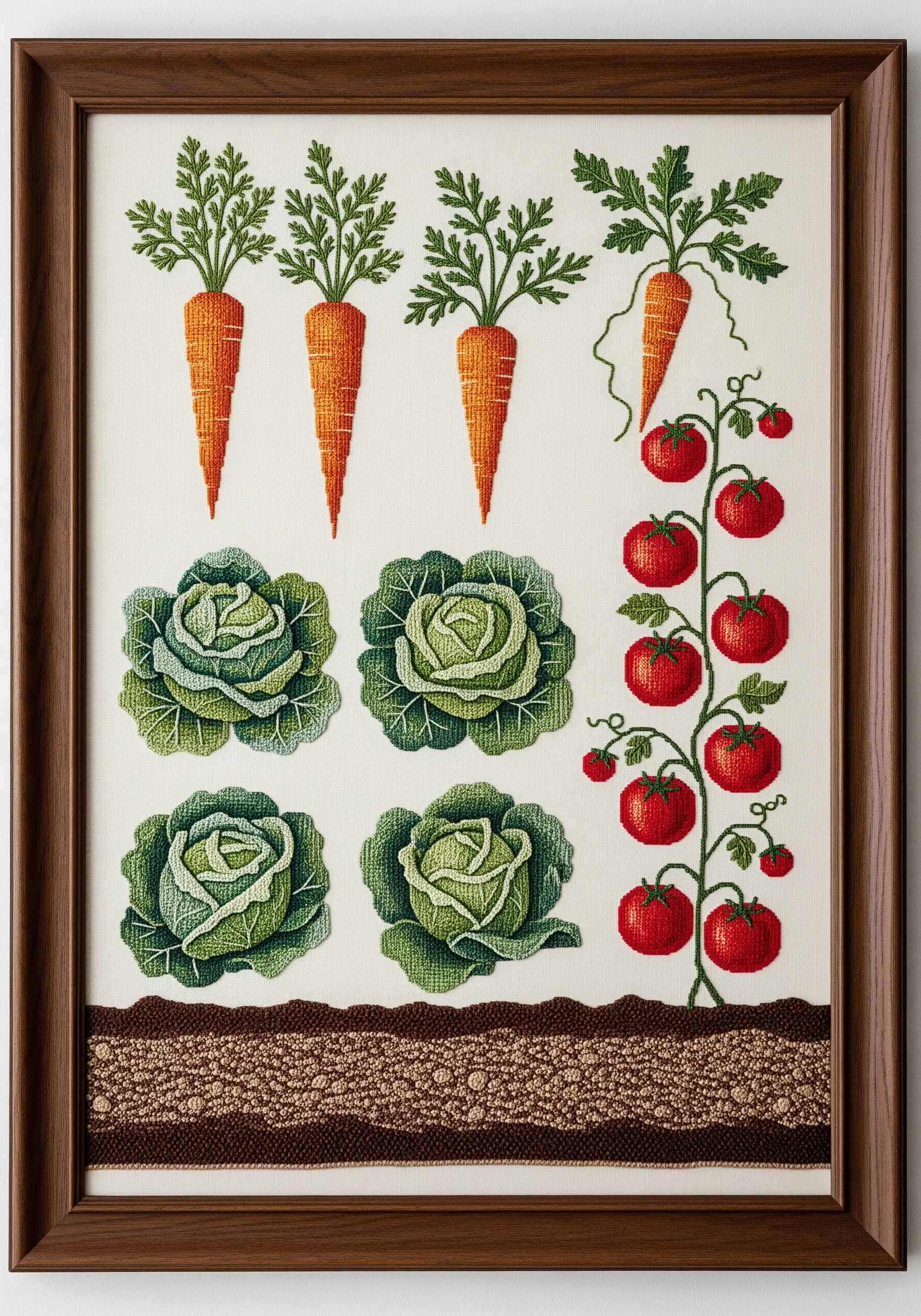
Cross-stitch provides a charming, pixelated quality that is perfect for creating organized, vintage-inspired compositions.
Working on Aida cloth, a gridded fabric, ensures your stitches are uniform and perfectly spaced, giving the final piece a clean, polished look.
This methodical technique is wonderfully meditative and ideal for rendering objects with clear, defined shapes.
It’s a classic way to create minimal fruit botanical embroidery patterns with timeless appeal.
23. Capture Ancient Textures with Directional Stitching
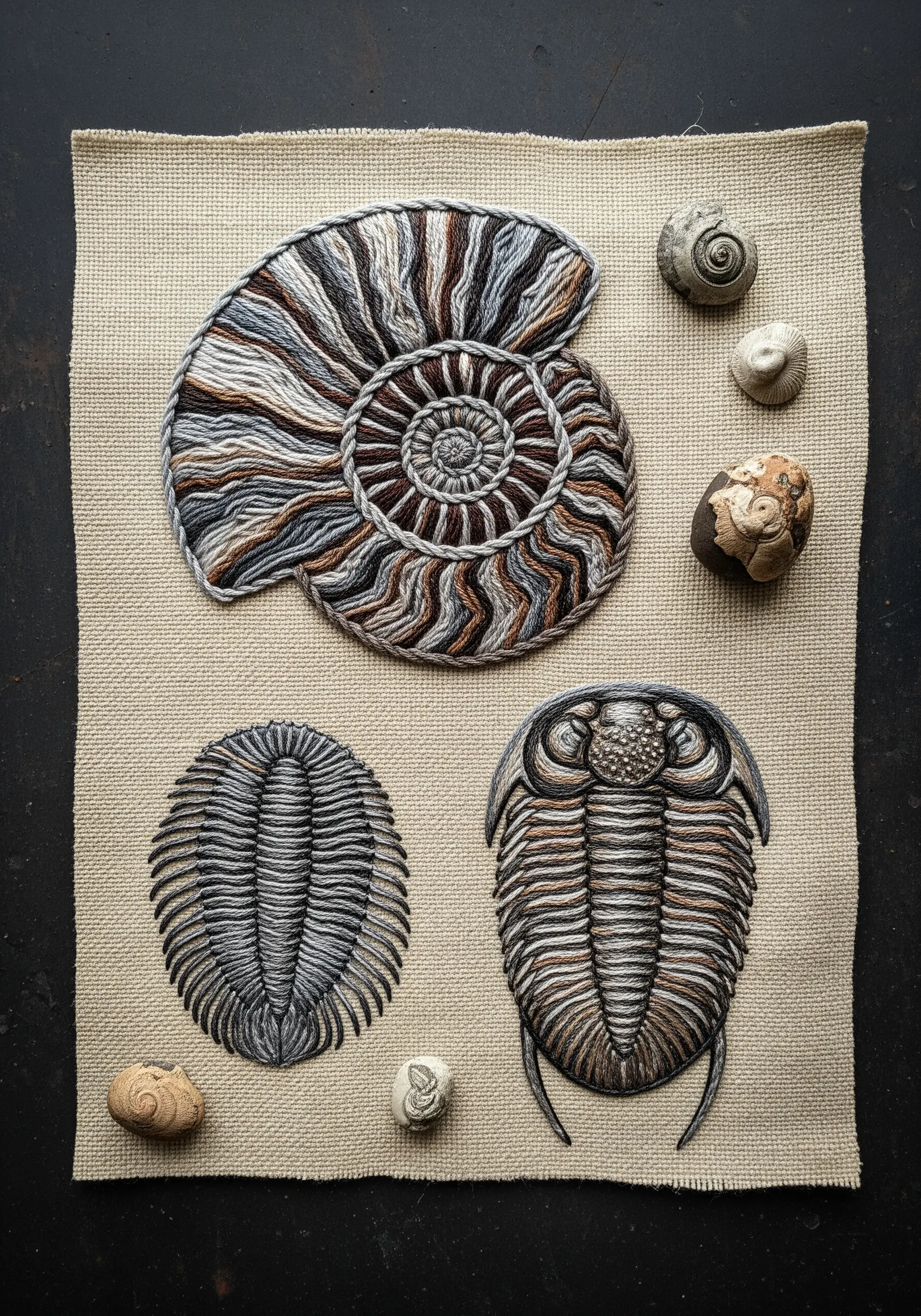
To embroider objects with inherent texture like fossils or woodgrain, your stitch direction is your most powerful tool.
Follow the natural lines and ridges of your subject with a simple split stitch or backstitch.
Use a mix of closely related thread colors—like grays, browns, and creams—to create subtle shading that suggests age and depth.
These embroidery patterns inspired by stones, wood, and leaves feel incredibly lifelike because the stitches echo the object’s form.
24. Combine Natural Elements with Stitched Motifs
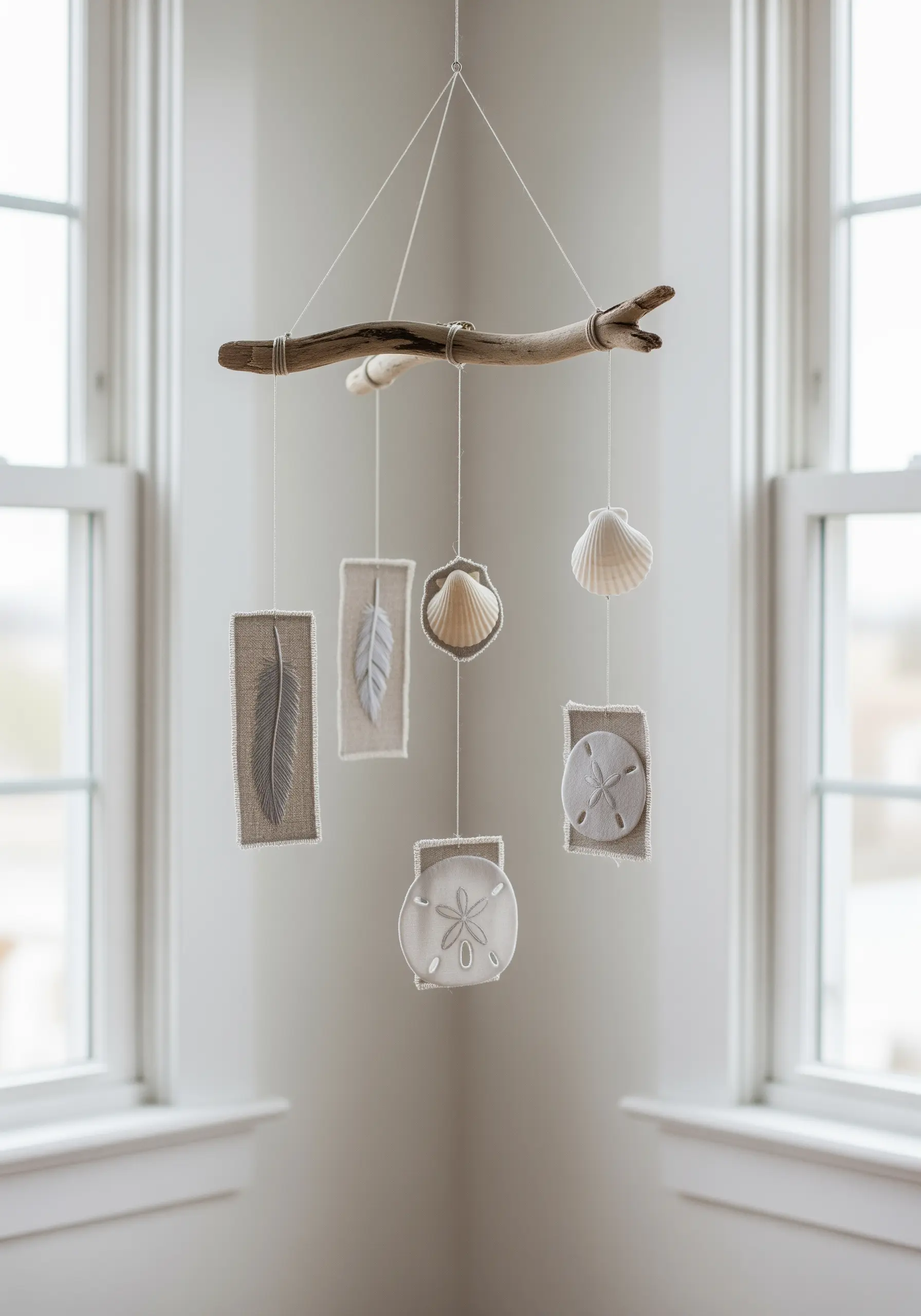
Create a beautifully balanced piece of art by mixing the textures of your embroidery with found objects from nature.
Stitch simple motifs onto small panels of linen or felt—a feather, a sand dollar, a leaf.
Assemble them on a piece of driftwood alongside real shells or stones.
This composition of hard and soft, stitched and natural, results in handmade pieces that bring natural beauty into your home with a serene, coastal feel.
25. Create a Celestial Surprise with Glow-in-the-Dark Thread
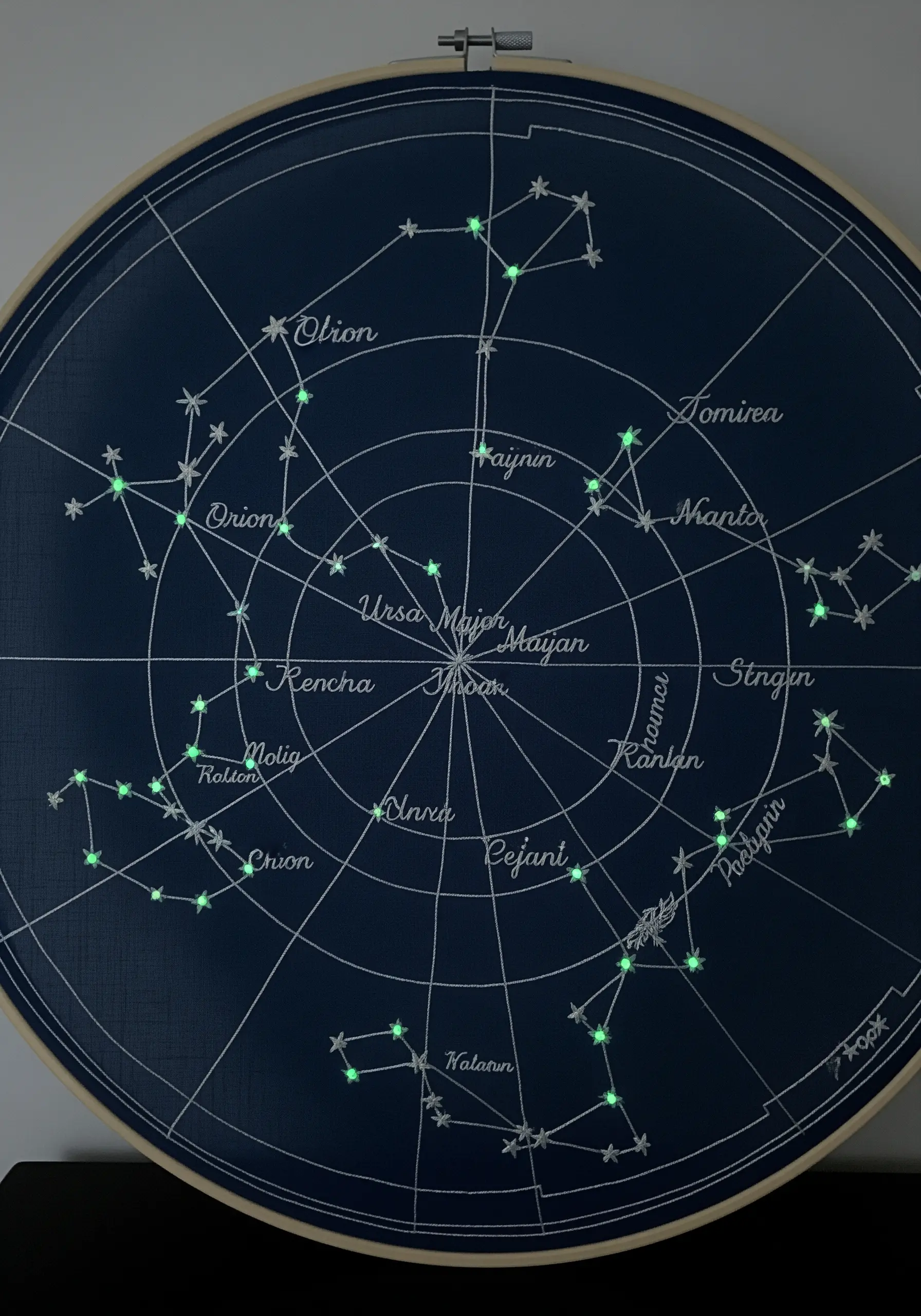
Add an element of magic to your embroidery by incorporating specialty threads.
Stitch the constellation lines and names with standard white or silver floss on a dark fabric background.
Then, use glow-in-the-dark thread to create the stars themselves, using French knots or simple star stitches.
This turns your artwork into a dynamic piece that reveals a secret layer in the dark, perfect for tiny night sky embroidery designs.
26. Mimic Natural Textures with Fabric and Thread
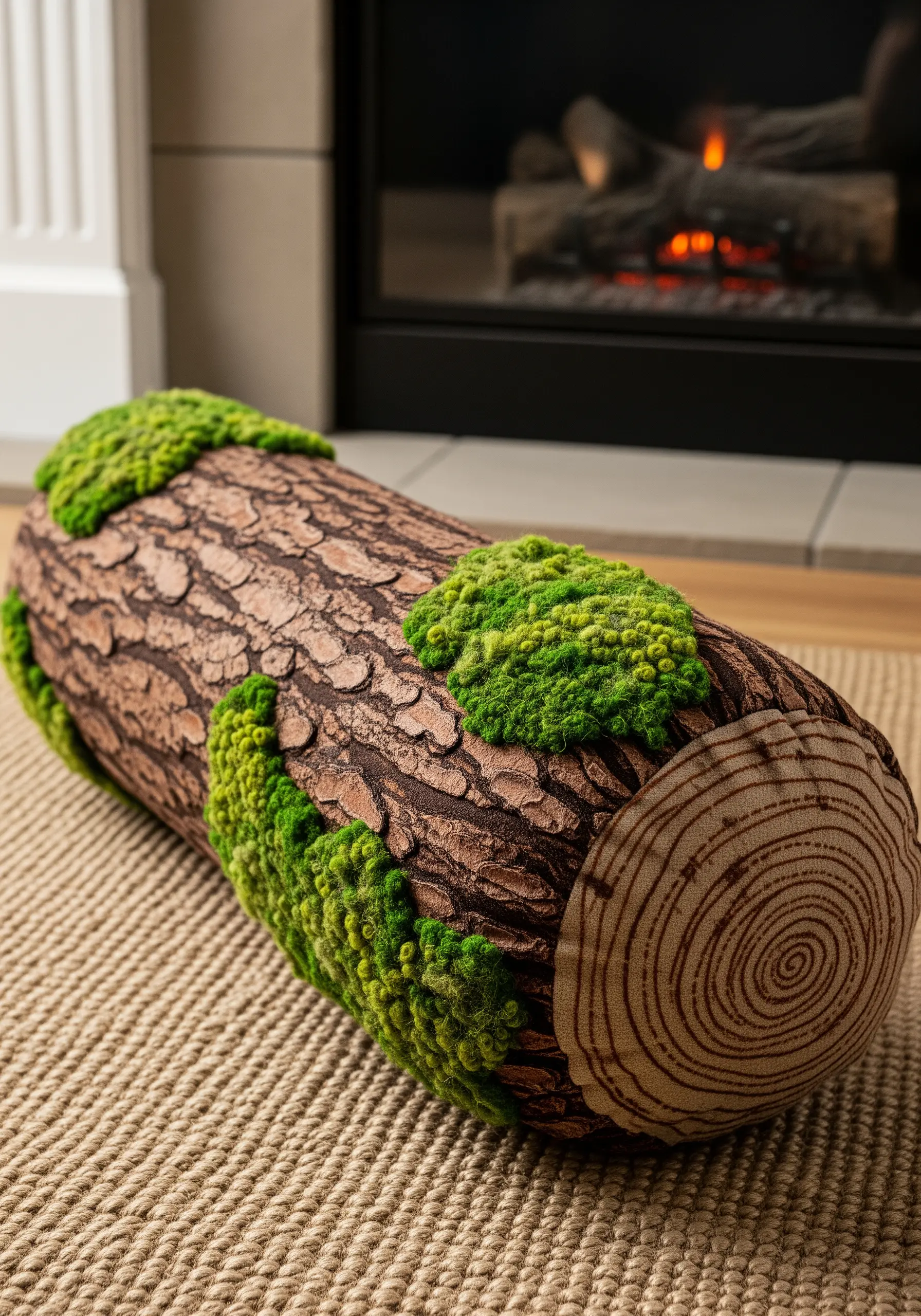
Achieve hyper-realism by cleverly combining printed fabric with dimensional embroidery.
Use a fabric printed with a realistic bark pattern as the base for this log-shaped pillow.
Then, add patches of ‘moss’ using the Turkey work stitch or by creating a dense carpet of French knots in various shades of green.
This mixed-media approach is one of the most effective ways to turn natural textures into stunning embroidery art that is both playful and convincing.
27. Use Bold Appliqué for Graphic Botanical Art
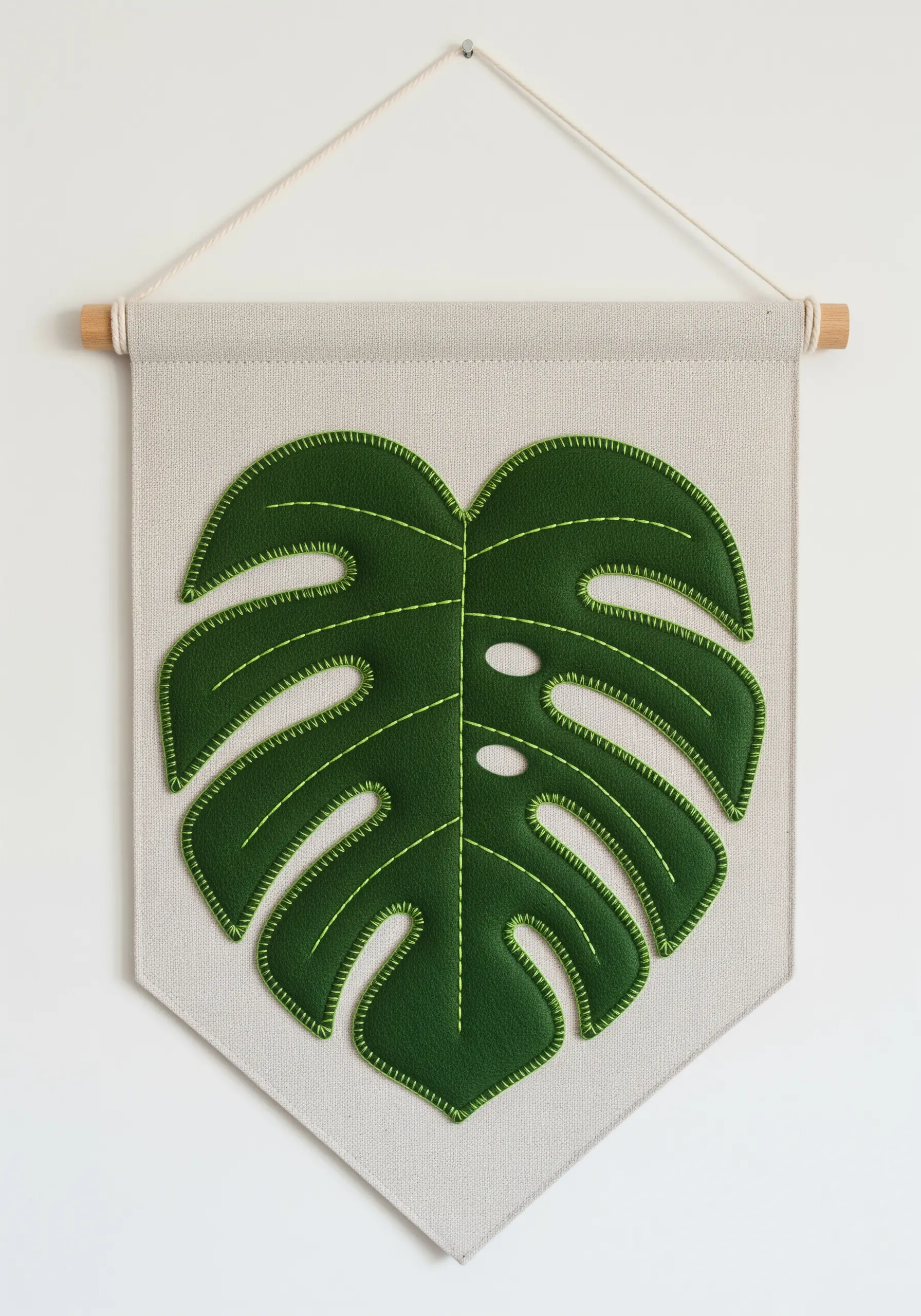
For a clean, modern take on botanicals, focus on the power of shape and line.
Cut a bold leaf shape from a non-fraying material like felt or faux leather.
Instead of trying to hide your stitches, make them a feature. Use a contrasting thread color and a simple, strong stitch like a blanket stitch or a decorative running stitch around the edges.
This technique is perfect for creating striking houseplant embroidery motifs for banners and wall hangings.
28. Capture Delicate Anatomy on Sheer Fabric
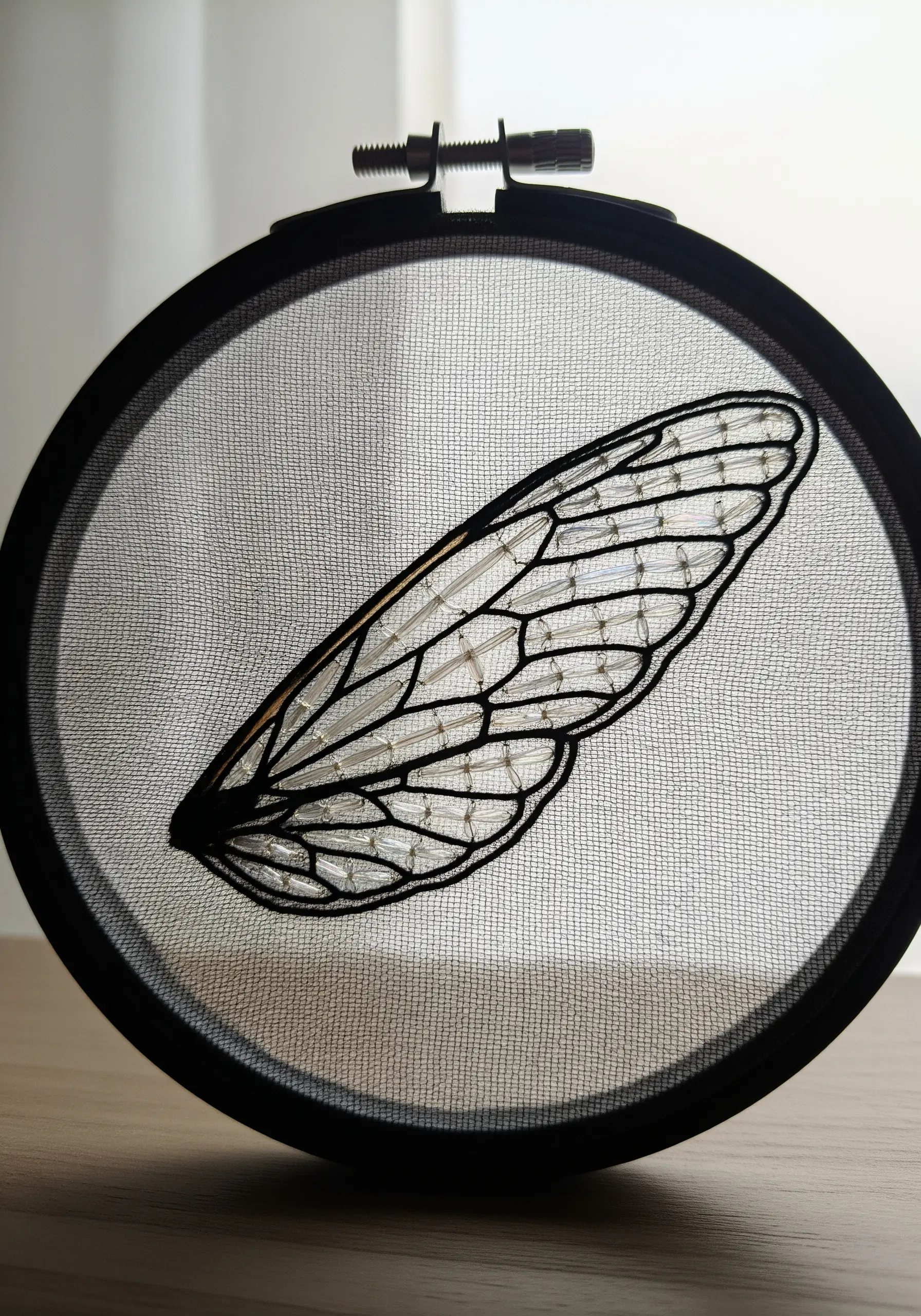
The magic of stitching on sheer fabric is that the material itself becomes part of the art, representing air and light.
Use a fine, sharp needle and a single strand of thread to outline the delicate structures of an insect wing or a skeleton leaf.
A simple backstitch provides the clean, graphic line needed to define the form against the transparent background.
It’s a beautiful way to create butterfly garden embroidery ideas that feel weightless and ethereal.
29. Create Bold Shapes with Couching and Yarn
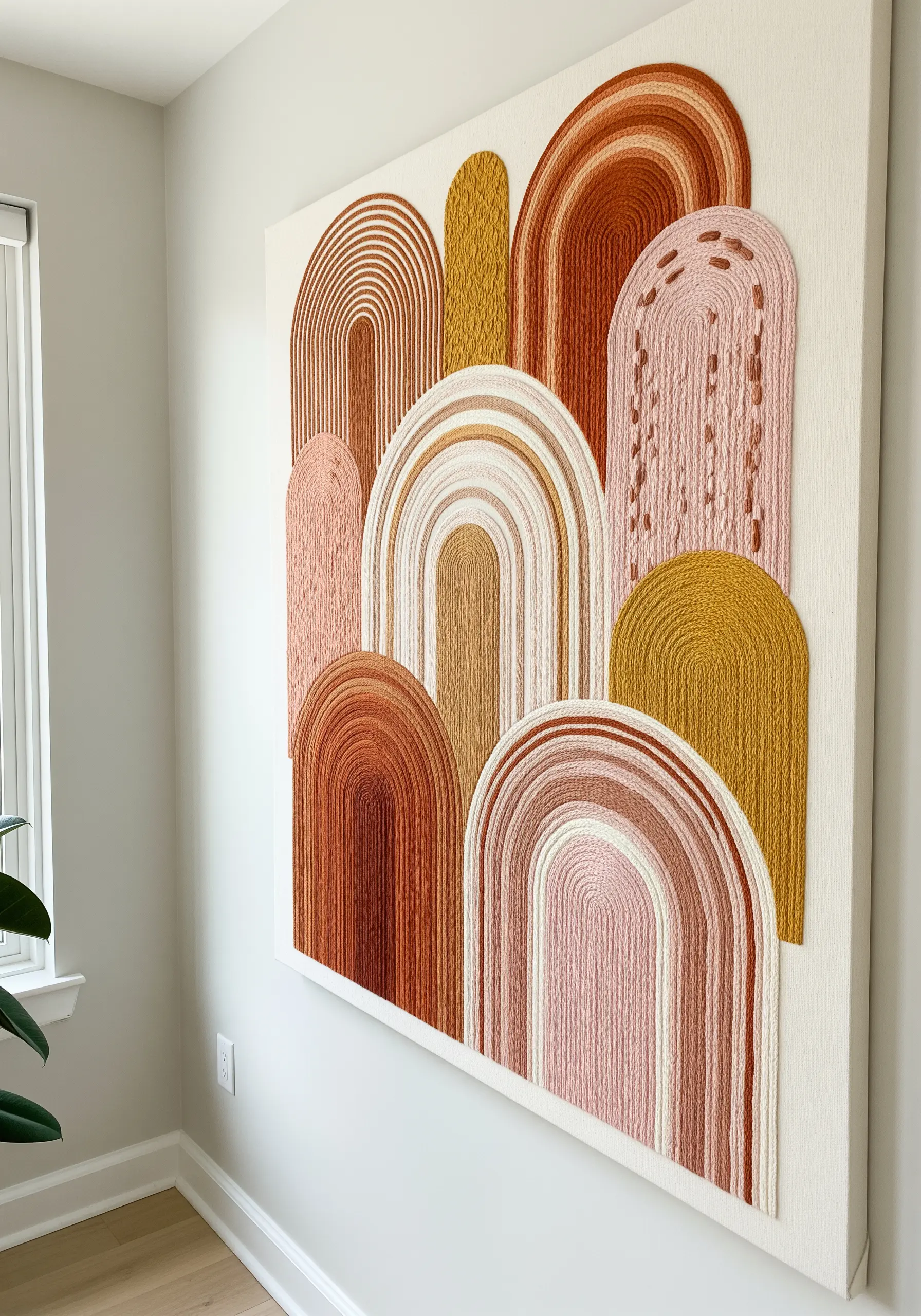
To fill large areas with incredible texture and color, couching is an elegant and efficient solution.
Simply lay down strands of thick yarn in your desired shape and use a thinner, coordinating embroidery floss to tack it down with small, perpendicular stitches.
This allows you to create bold, graphic compositions with a soft, tactile finish that would take hours to fill with traditional stitches.
It’s the core technique behind many abstract yarn wall art ideas.
30. Sculpt with Fiber to Create 3D Objects
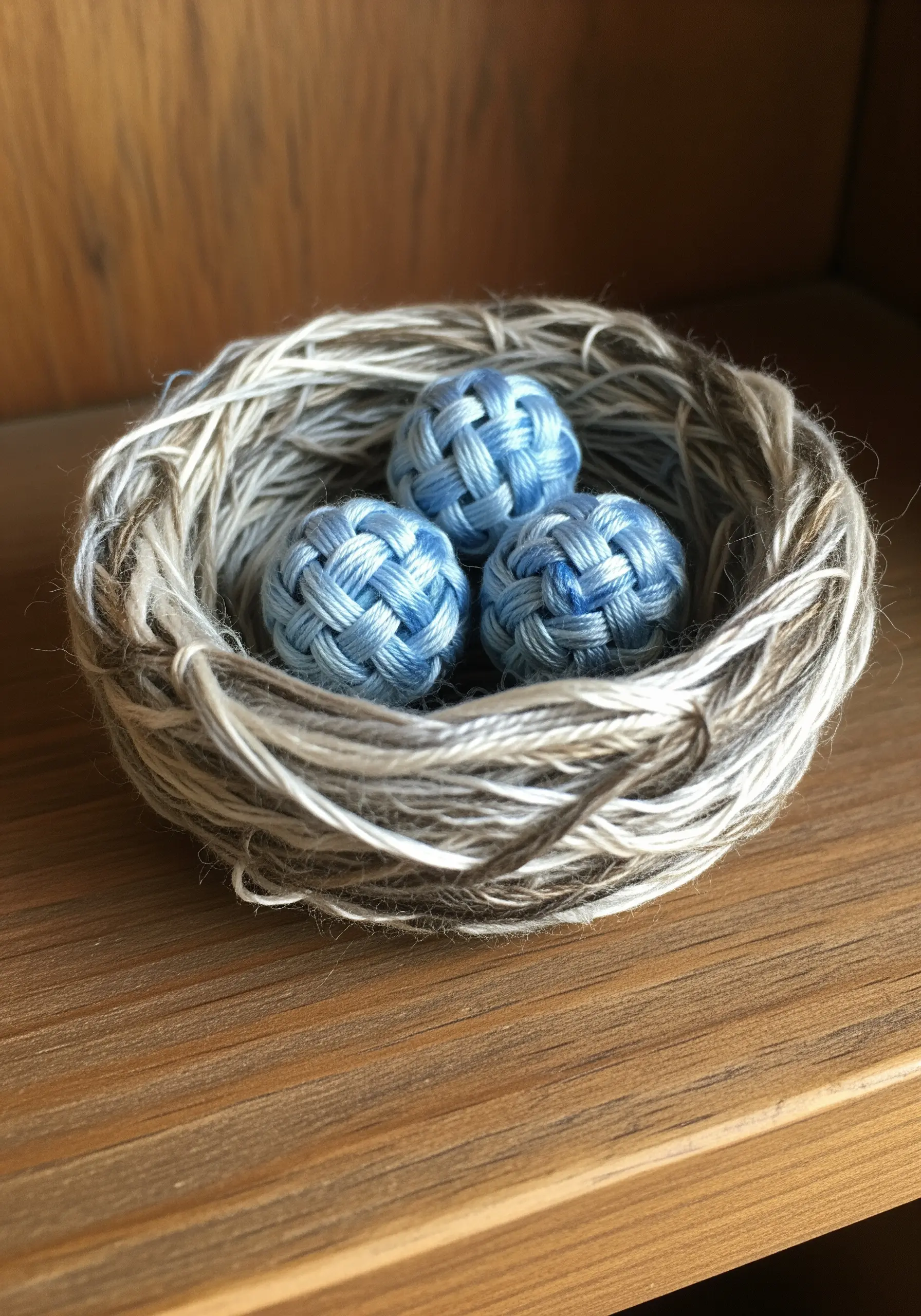
Take your fiber art off the fabric and into the third dimension by thinking like a sculptor.
This bird’s nest is formed by shaping and stiffening twine, while the delicate blue eggs are created by tying Monkey’s Fist knots with embroidery floss.
This approach encourages you to see threads and yarns not just as tools for decorating a surface, but as materials for building form.
It’s a wonderful way to create unique DIY art objects inspired by nature.
31. Create Atmosphere with Layered Translucent Fabrics
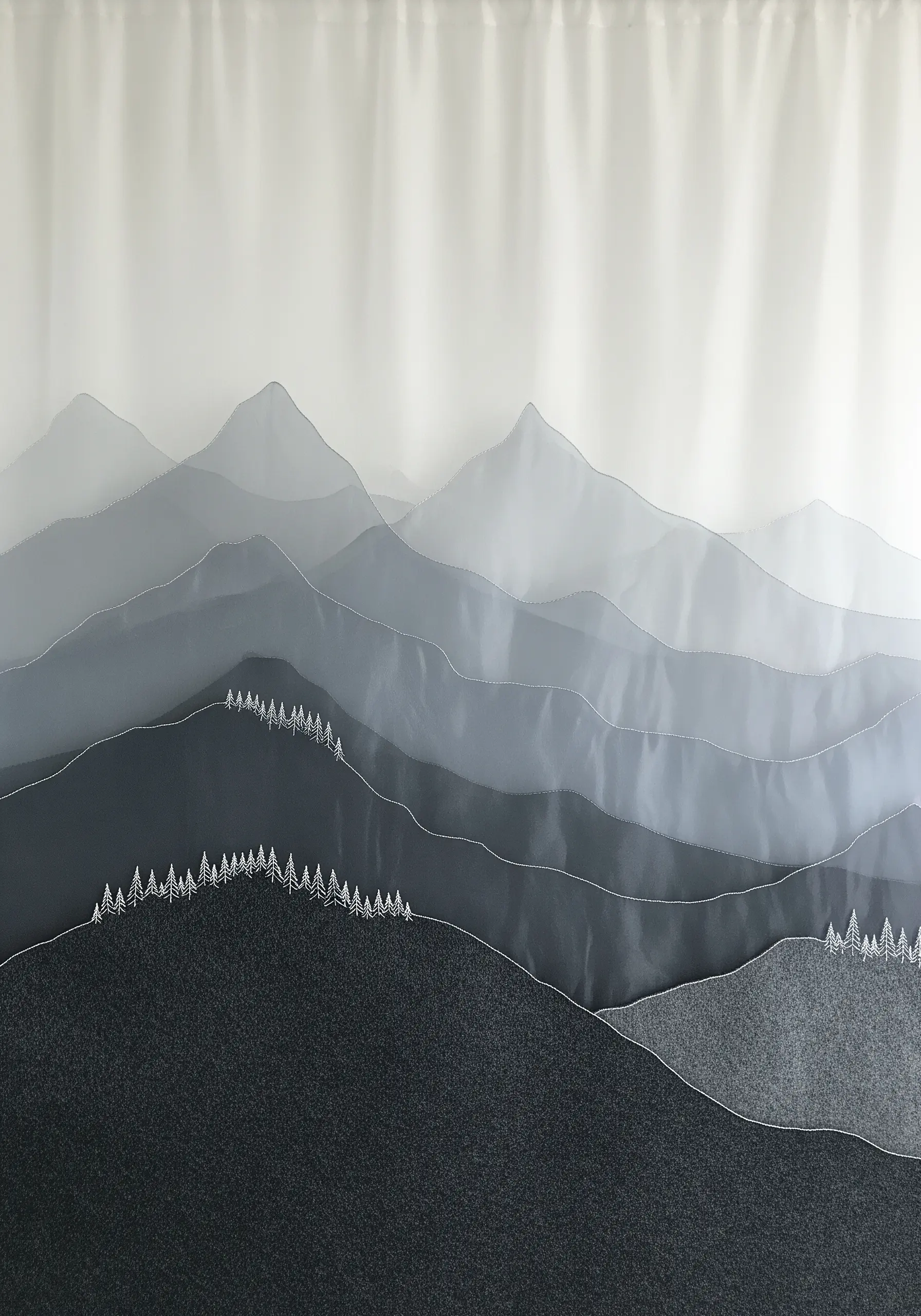
You can ‘paint’ with fabric to achieve a soft, misty effect that is difficult to replicate with thread alone.
Cut layers of semi-translucent organza or chiffon into the shapes of distant mountain ranges.
As you layer them, the colors will blend and soften, creating a beautiful illusion of atmospheric haze.
Use a few simple, minimal running stitches to secure the layers and add a final, delicate detail to your abstract line art silhouettes.