

Sometimes the most profound statement is the quietest one. With ocean-inspired embroidery, you can capture the immense, calming energy of the sea not with complexity, but with intention.
Forget dense, complicated patterns. Instead, I want you to focus on the small decisions that elevate your work from a simple craft to a piece of art. It’s about choosing the right stitch to show water’s movement, or using texture to evoke the feeling of sand between your toes.
These ideas are designed to help you do just that. You’ll learn how a subtle shift in stitch length can create energy, how contrasting textures can define a landscape, and how a single, well-placed line can feel as vast as the horizon. This is your moment to create something minimal, modern, and deeply serene.
1. Capture Crashing Waves with Dynamic Line Work
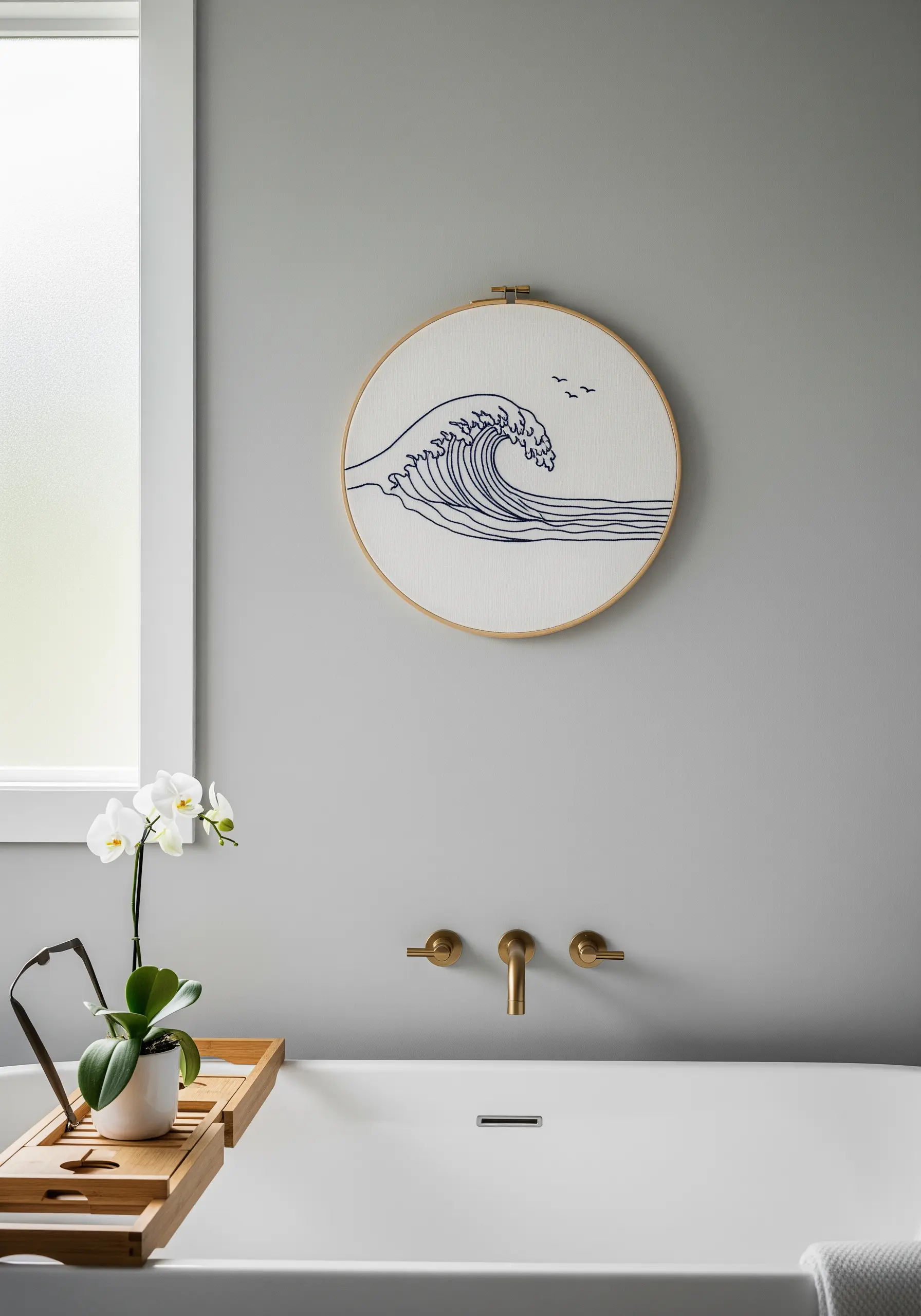
Create the illusion of movement by varying the density of your stitches.
Use a simple backstitch for the entire piece, but shorten your stitch length in the crest of the wave where the water is turbulent, and lengthen it for the calmer lines at the base.
This subtle adjustment directs the eye and adds energy without changing the thread or stitch type.
Stitch on a tight-weave natural linen; its texture will complement the organic feel of the wave while providing a stable ground for your linework.
2. Create a Cohesive Set with Tone-on-Tone Outlines
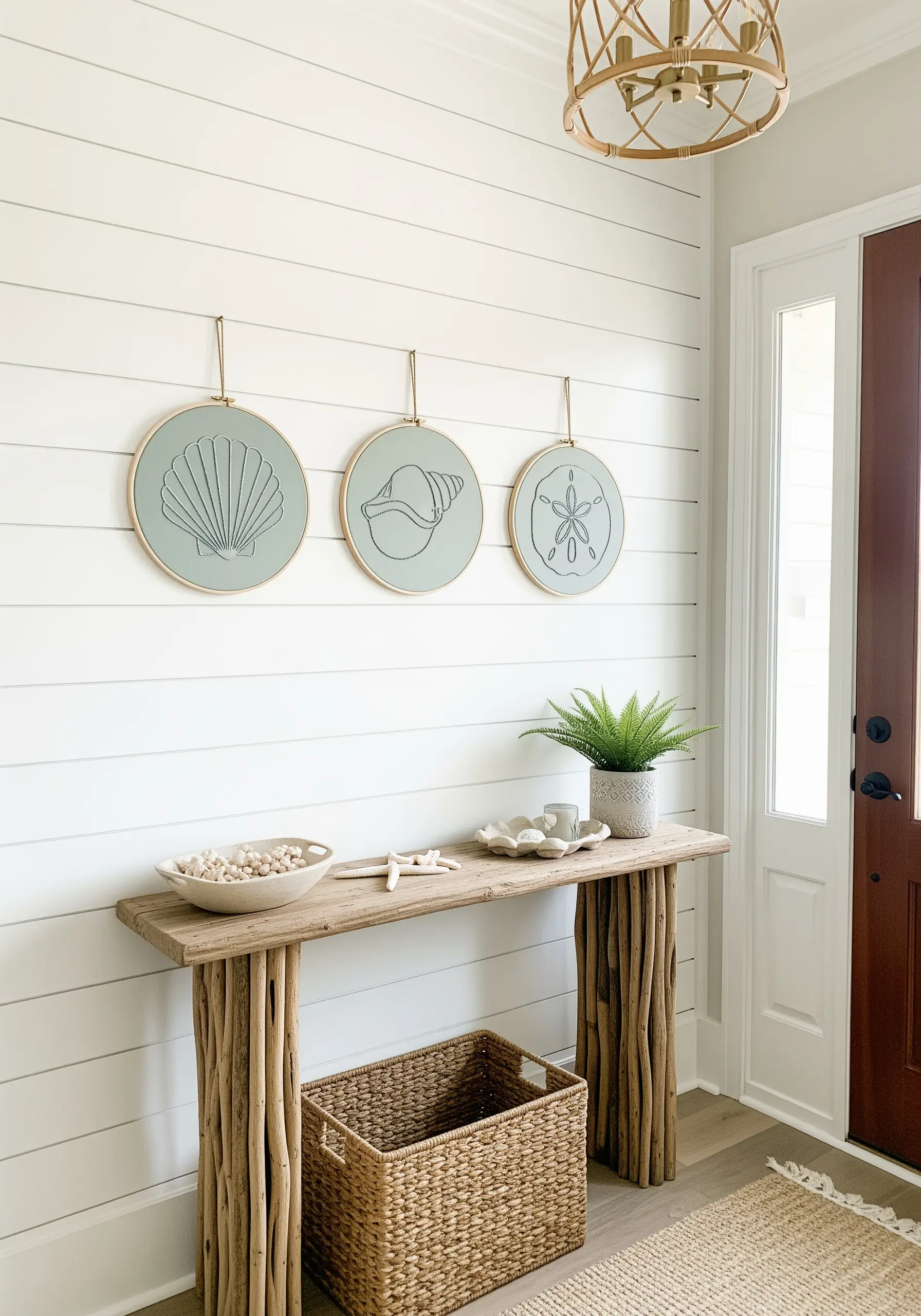
Elevate simple line drawings by stitching them on colored fabric with a thread that is only a few shades lighter or darker.
This tone-on-tone technique creates a soft, sophisticated look that feels integrated and intentional.
For a delicate effect, use a single strand of floss for the finer details and two strands for the main outlines to create a subtle hierarchy.
Displaying them as a triptych on painted wood hoops transforms simple motifs into a complete wall art installation.
3. Paint with Thread for Abstract Ocean Currents
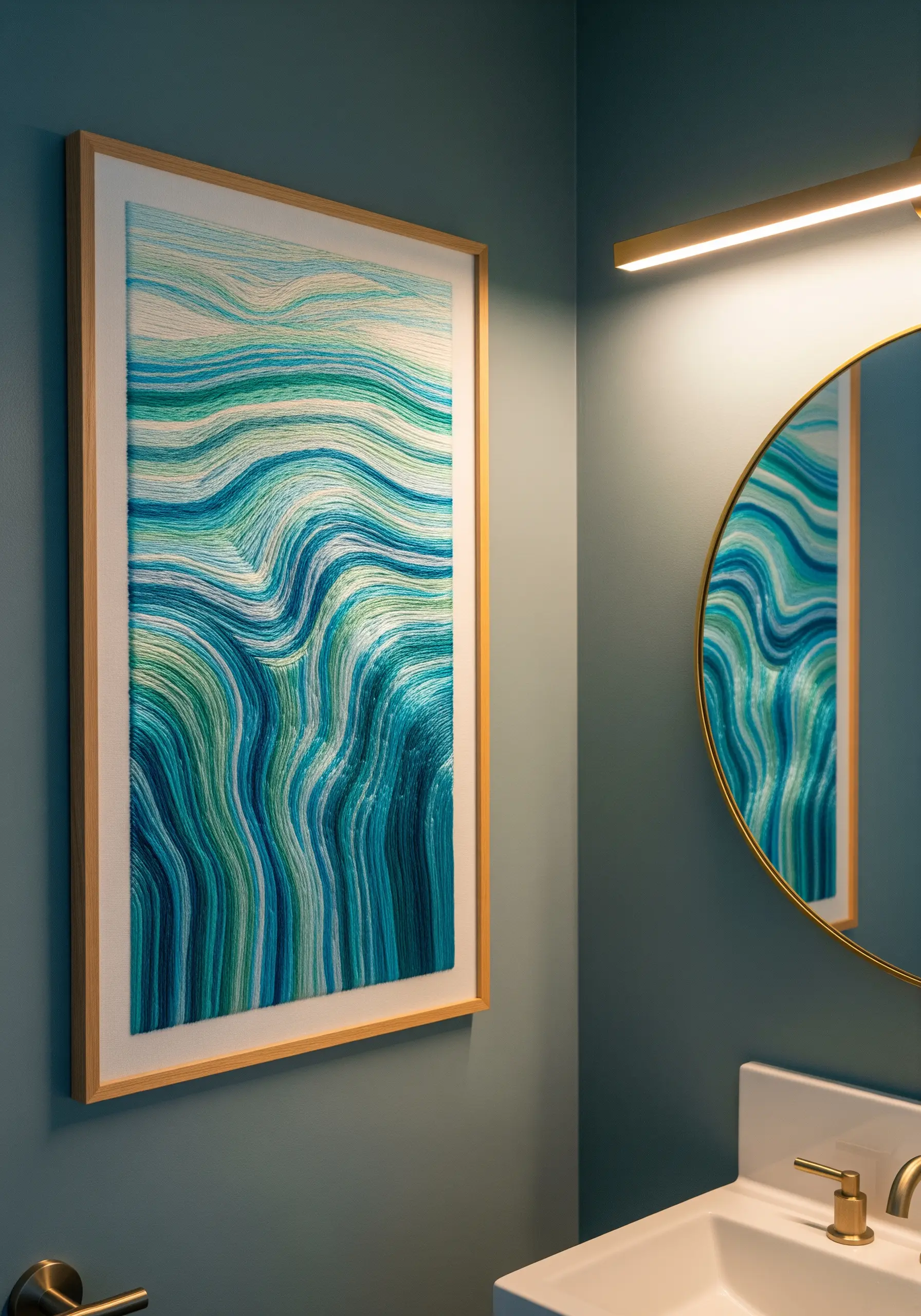
Move beyond outlines and fill your canvas with dense, vertical straight stitches to achieve a fluid, painterly effect.
To create depth, layer multiple shades of blue, turquoise, and green, allowing the colors to blend organically rather than creating hard stripes.
Vary the length of your stitches and slightly alter their angle to mimic the natural flow and refraction of light in water.
This technique works best when you stretch your fabric over a canvas or use a very strong hoop to prevent warping under the tension of so many stitches.
4. Build Tactile Dimension with Clustered French Knots
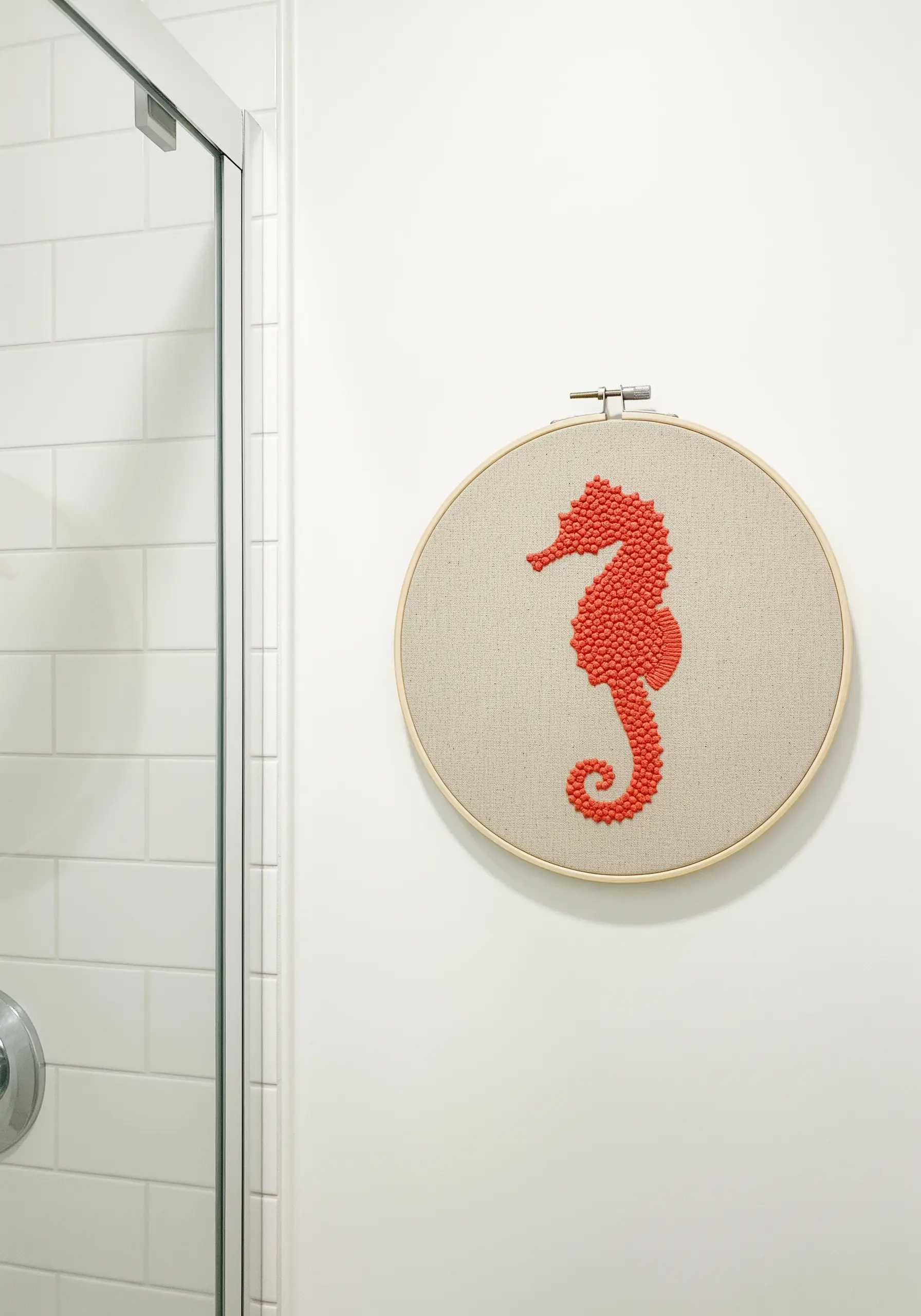
Instead of filling a shape with flat satin stitch, use French knots to build a raised, pebbled texture that invites touch.
For a clean silhouette, first outline your shape with a simple backstitch, then fill it with knots, working from the edge inward.
Maintain consistent tension and wrap the thread the same number of times (once or twice) for each knot to ensure a uniform surface.
A single, bold color like coral on a neutral linen background makes the texture the undeniable focus of the piece.
5. Design a Vertical Gallery for Narrow Wall Spaces
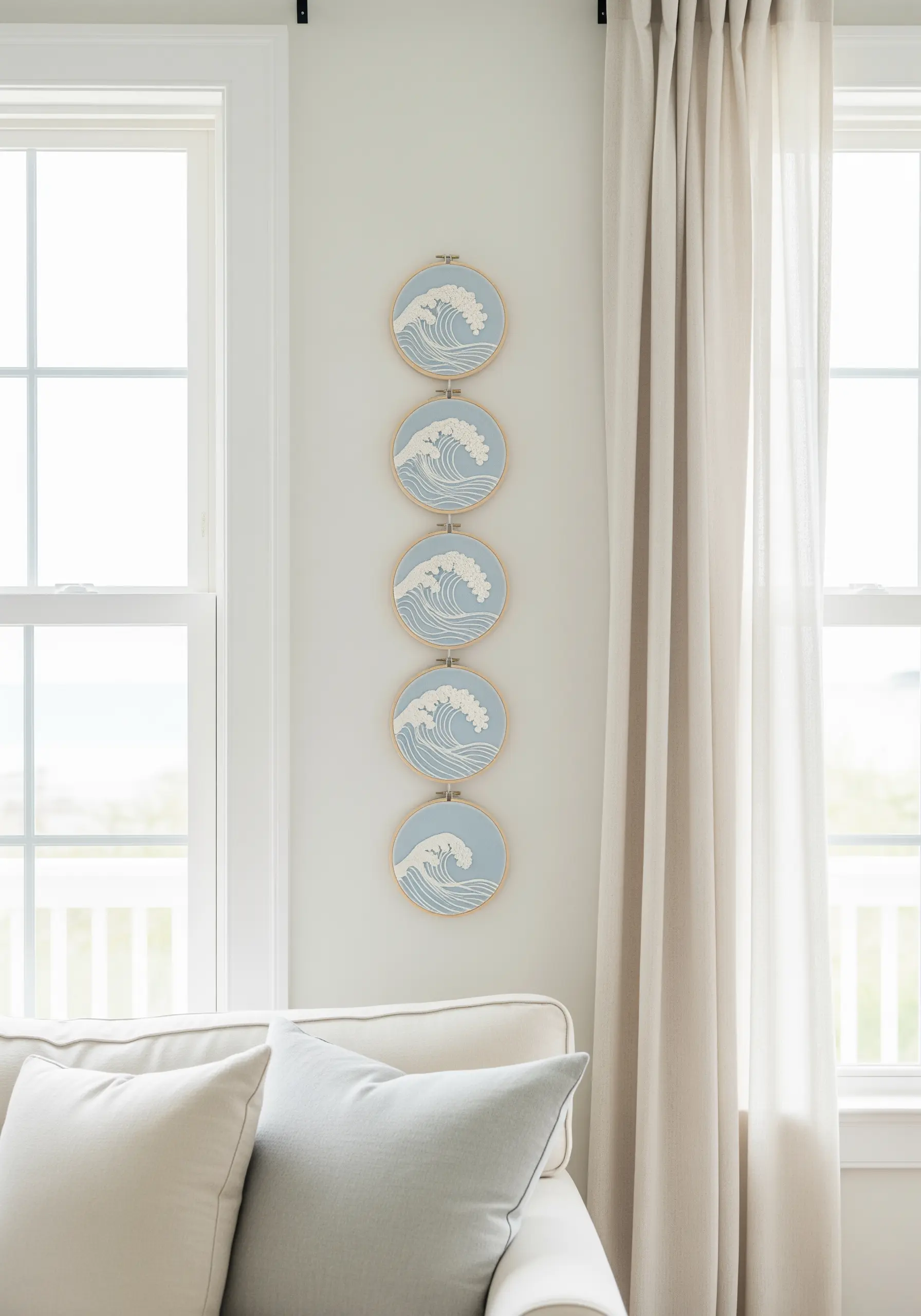
Use repetition to make a powerful design statement in a small or awkward space, like the area between two windows.
Stitching the same motif in a series of hoops creates a rhythm and cohesion that draws the eye upward, making the room feel taller.
Choose a single color palette for the fabric and thread across all hoops to unify the installation.
This approach transforms a simple pattern into a significant piece of cozy embroidered wall art that feels both modern and serene.
6. Balance Linework with Delicate Textural Accents
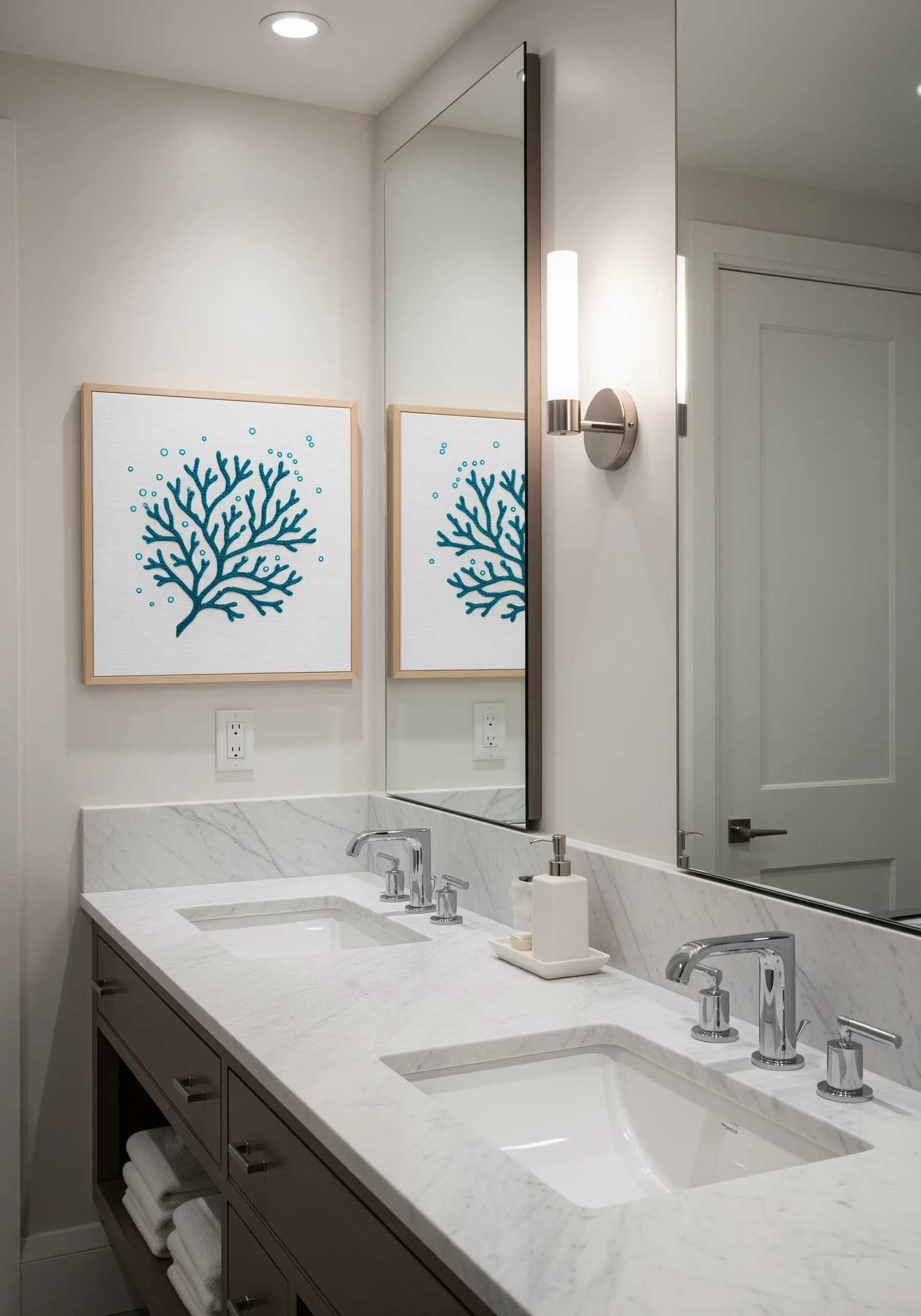
Create visual interest by combining two different stitch textures within one simple motif.
Use a smooth, clean stitch like a stem stitch or split stitch for the branching lines of the coral to keep them elegant and defined.
Then, add a scattering of tiny French knots as ‘bubbles’ to introduce a contrasting texture and a sense of gentle movement.
This pairing of line and point creates a design that is minimal yet dynamic, perfect for a modern bathroom setting.
7. Evoke Sandy Textures with Seed Stitch and Neutrals
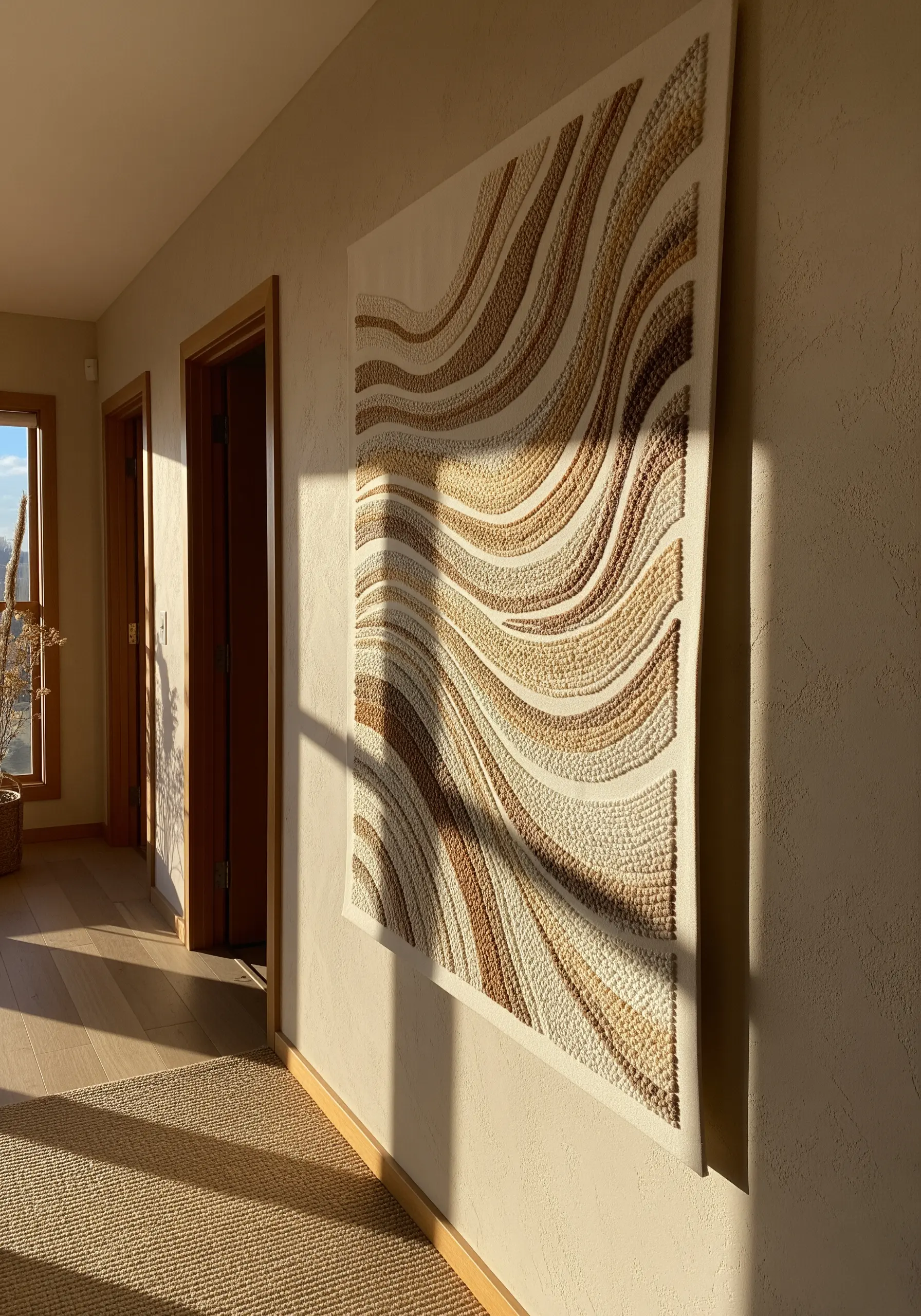
Suggest the feeling of sand and water by using dense clusters of seed stitch instead of solid color blocks.
Work with a palette of sand, ecru, and soft brown threads, placing tiny, random straight stitches closely together to build up a rich, granular texture.
Contrast this with smoother, flowing lines of split stitch to represent water, letting the textural difference define the composition.
This piece of nature texture wall hanging relies on touch and shadow, making it captivating even with a muted color scheme.
8. Maximize Contrast for a Dramatic Focal Point
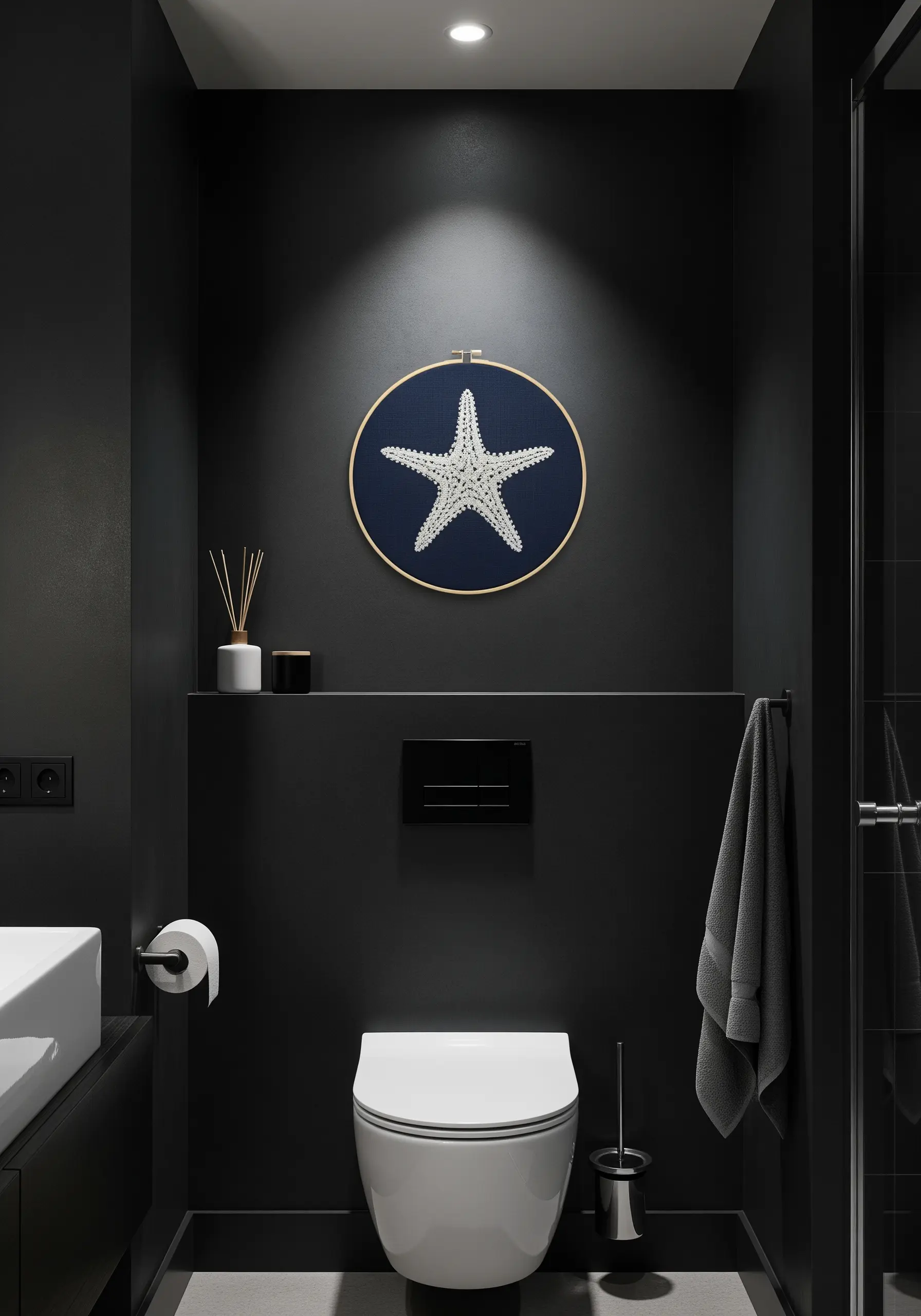
Make a single motif command attention by placing a light, heavily textured object against a dark, smooth background.
Use a thick thread like pearl cotton or all six strands of floss to give the starfish a raised, three-dimensional quality.
Combine stitches like padded satin stitch and French knots to build up its surface, making it appear almost sculptural.
Stitching bright white on a deep navy fabric creates a stark, graphic contrast that is both modern and incredibly striking, especially in a moody, dark-walled room.
9. Define Horizons with Color and Texture Blocking
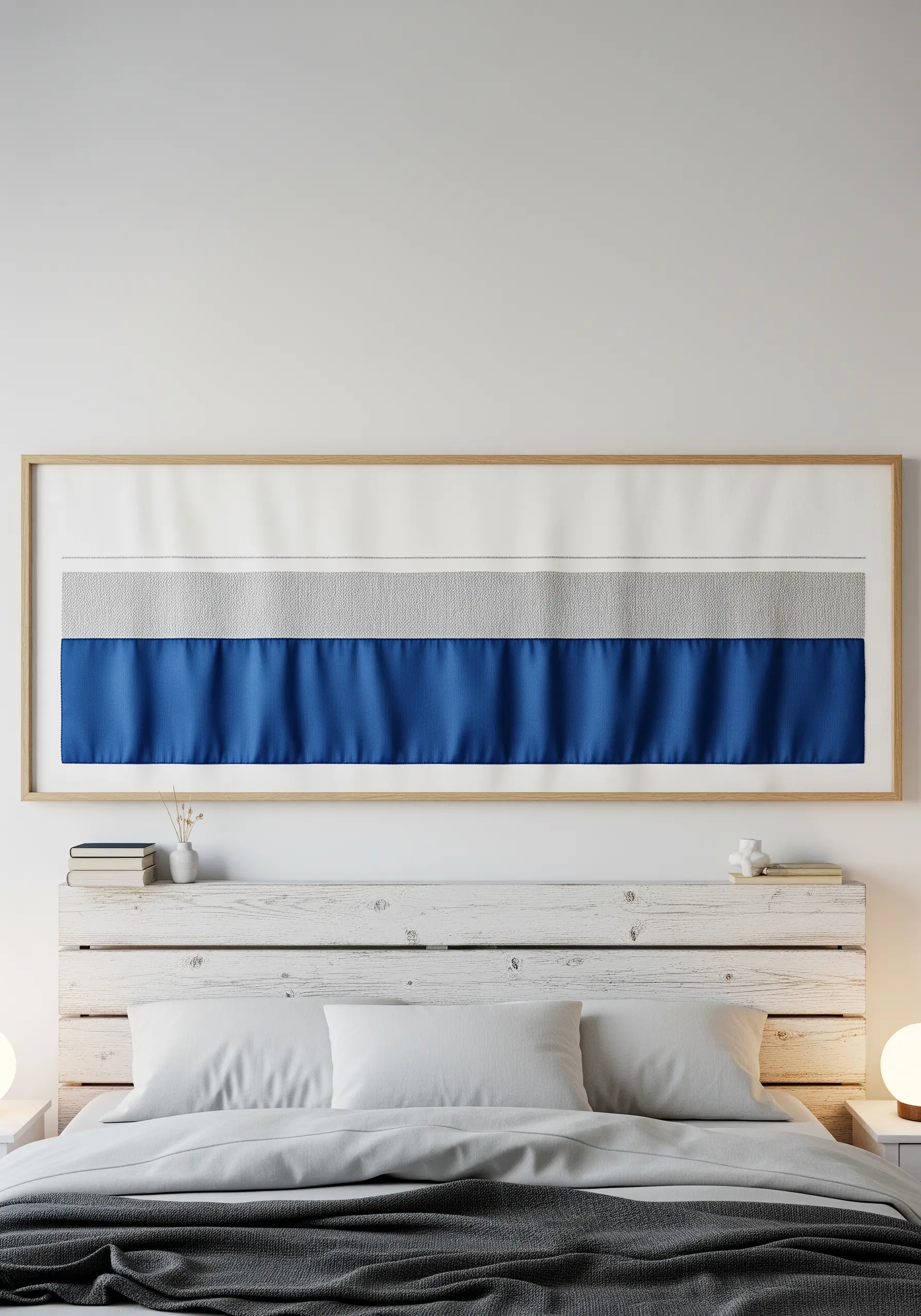
Create a minimal seascape by dividing your composition into distinct horizontal bands of texture.
Use a perfectly smooth satin stitch for the water, ensuring your threads lie flat and even to suggest a calm, reflective surface.
For the band of sky or sand, switch to a more varied texture like a darning stitch or dense seed stitch to create a subtle contrast.
This technique allows you to build a complex landscape with just a few colors, letting the feel of the stitches tell the story.
10. Imply Motion with Scattered, Repeated Motifs
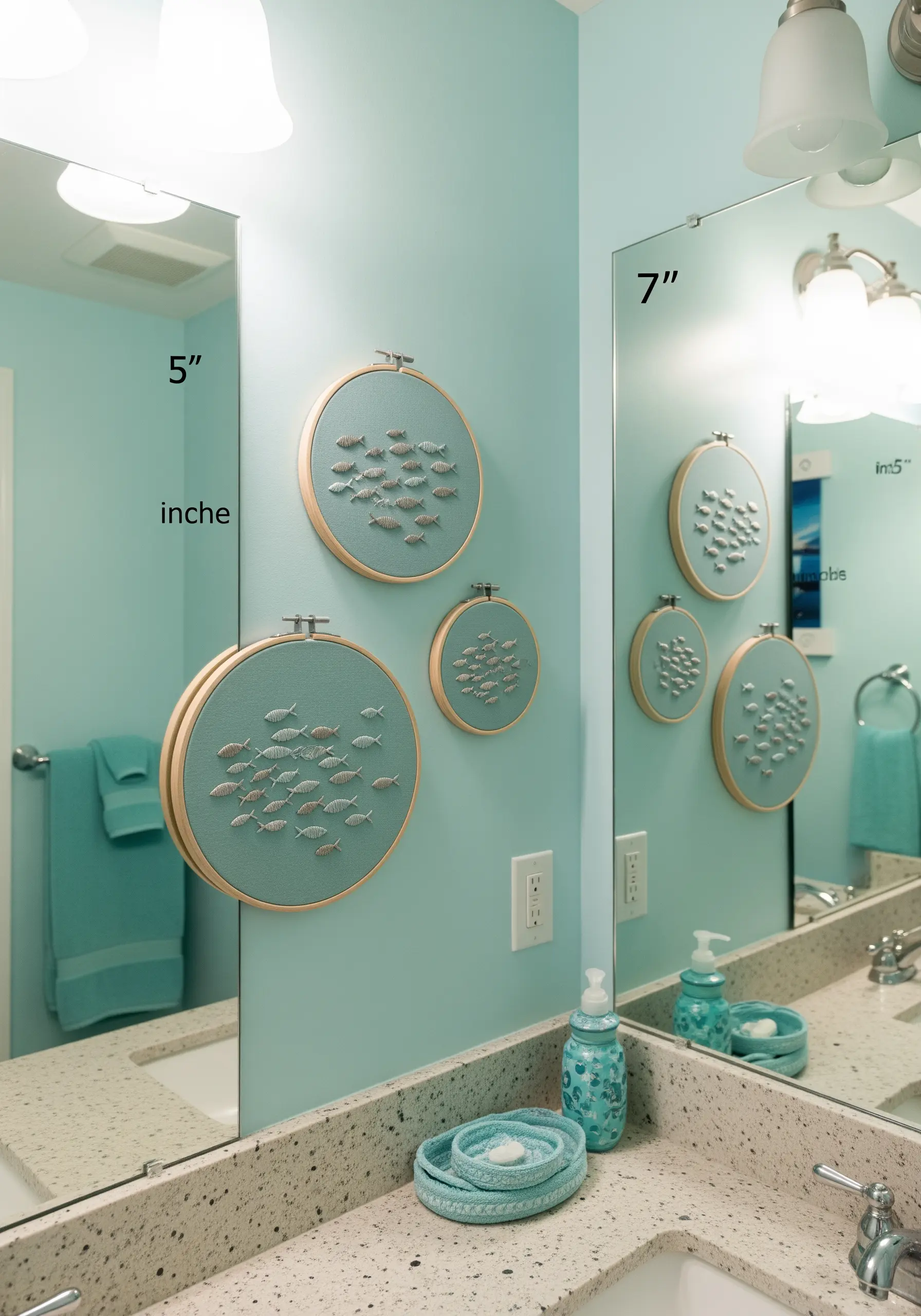
Create the illusion of a swimming school of fish without drawing a single wave.
Stitch tiny, simple fish shapes—a few small straight stitches or a tiny fishbone stitch will suffice—and vary their angles and spacing.
Clustering some fish together while leaving more space around others creates a natural, flowing pattern of movement across the fabric.
Using a single strand of metallic thread will add a subtle shimmer, mimicking the way light catches on fish scales underwater.
11. Radiate Light with Precisely Placed Straight Stitches
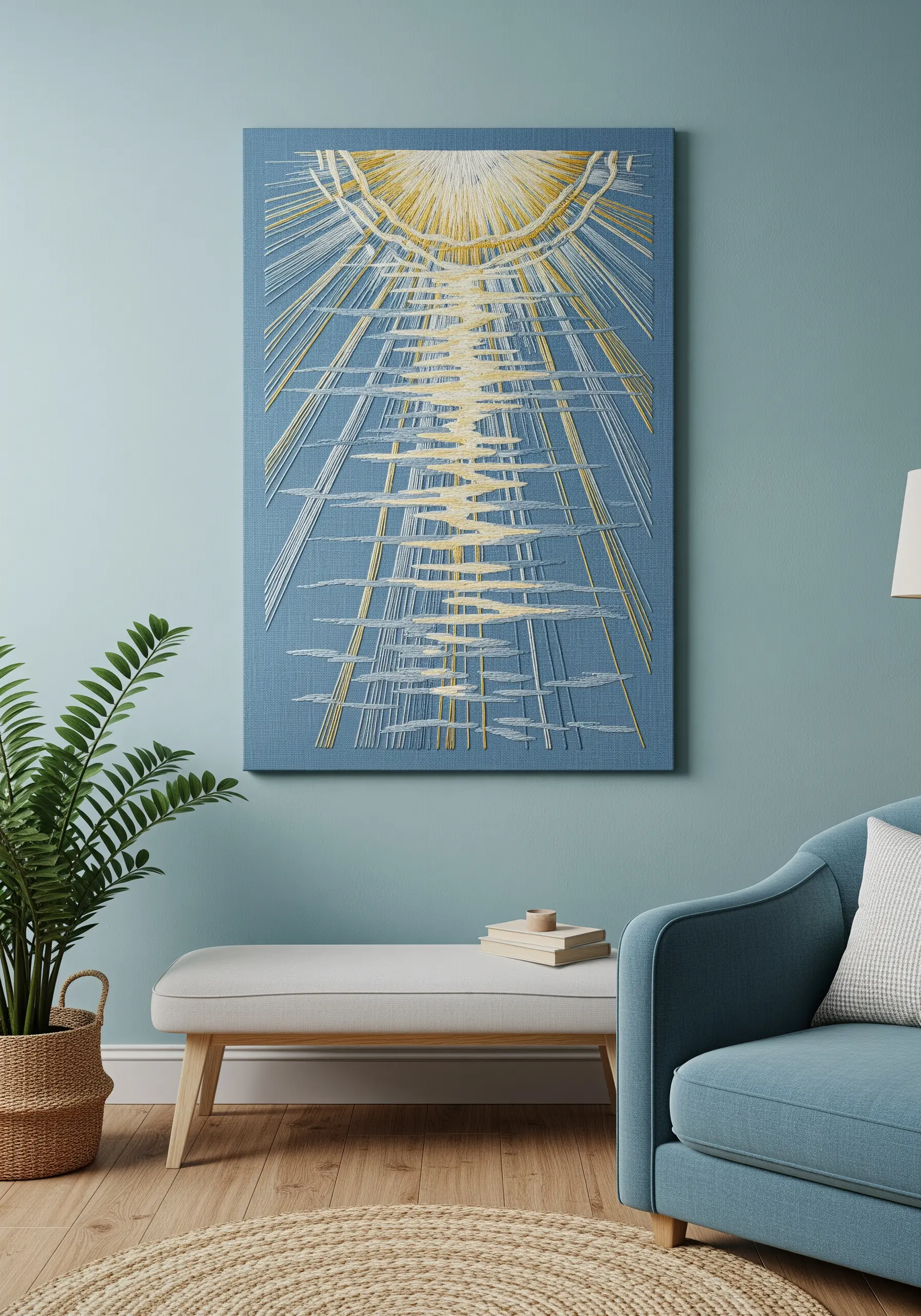
Capture the feeling of sunlight on water using only straight stitches and thoughtful color choices.
Establish a focal point for the sun and stitch radiating lines outward, using a bright yellow or metallic gold thread.
Create the water’s reflection with long, horizontal stitches in white and silver, intentionally leaving small gaps between them to represent shimmering light.
This geometric approach to a natural scene results in a powerful, abstract line art embroidery piece that feels both calm and energizing.
12. Master Organic Shapes with Angled Satin Stitch
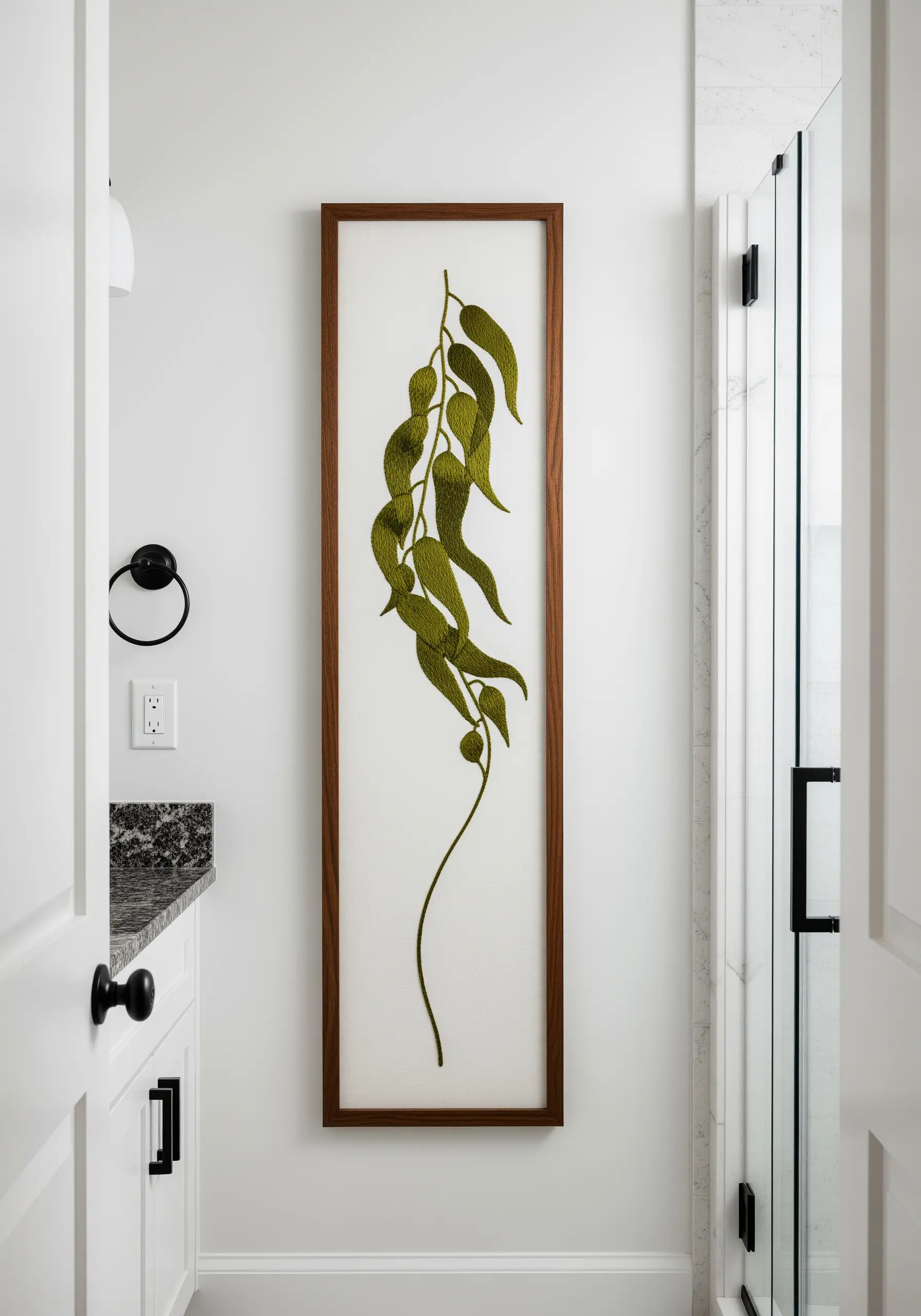
To prevent long, loose threads when filling an organic shape like kelp, break the design down into smaller sections.
Mentally divide each leaf into manageable parts and slightly change the angle of your satin stitch as you move along the curve.
This technique, known as angled fill, ensures your stitches remain tight and uniform, creating a smooth, professional finish that flows with the natural shape of the motif.
Experiment with different shades of green to add highlights and shadows, giving your leaf stitching a realistic, three-dimensional look.
13. Emphasize Detail with Raised Stitches and Negative Space
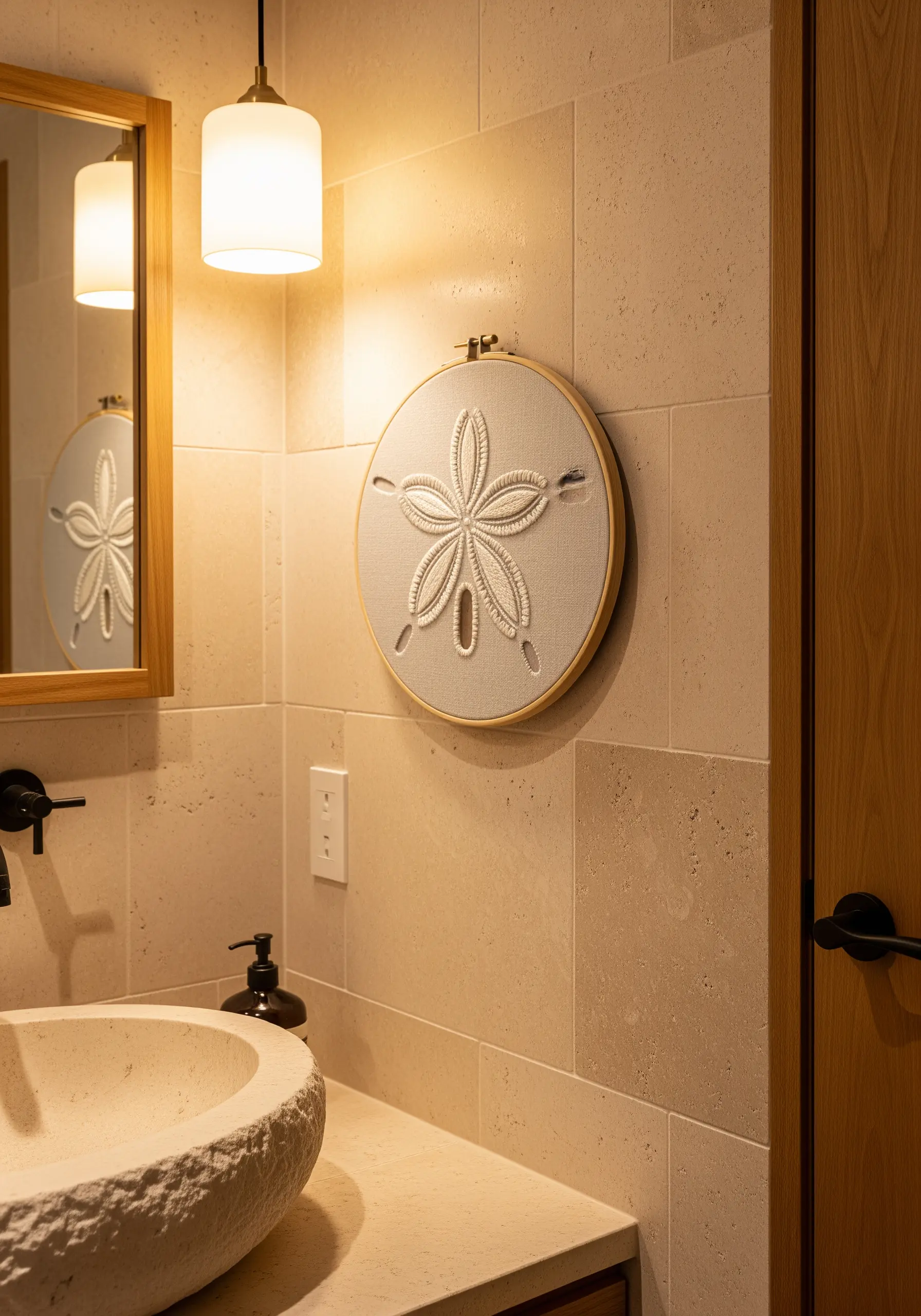
Give a sand dollar design authentic dimension by using a raised stitch for the outlines, such as a padded satin stitch or whipped backstitch.
This lifts the primary pattern off the fabric, creating subtle shadows and a tactile quality.
Incorporate negative space by leaving the signature holes of the sand dollar unstitched, allowing the background fabric to become part of the design.
A simple tone-on-tone color scheme—like ivory thread on natural linen—keeps the focus entirely on the form and texture.
14. Scale Up Simple Linework for a Statement Tapestry
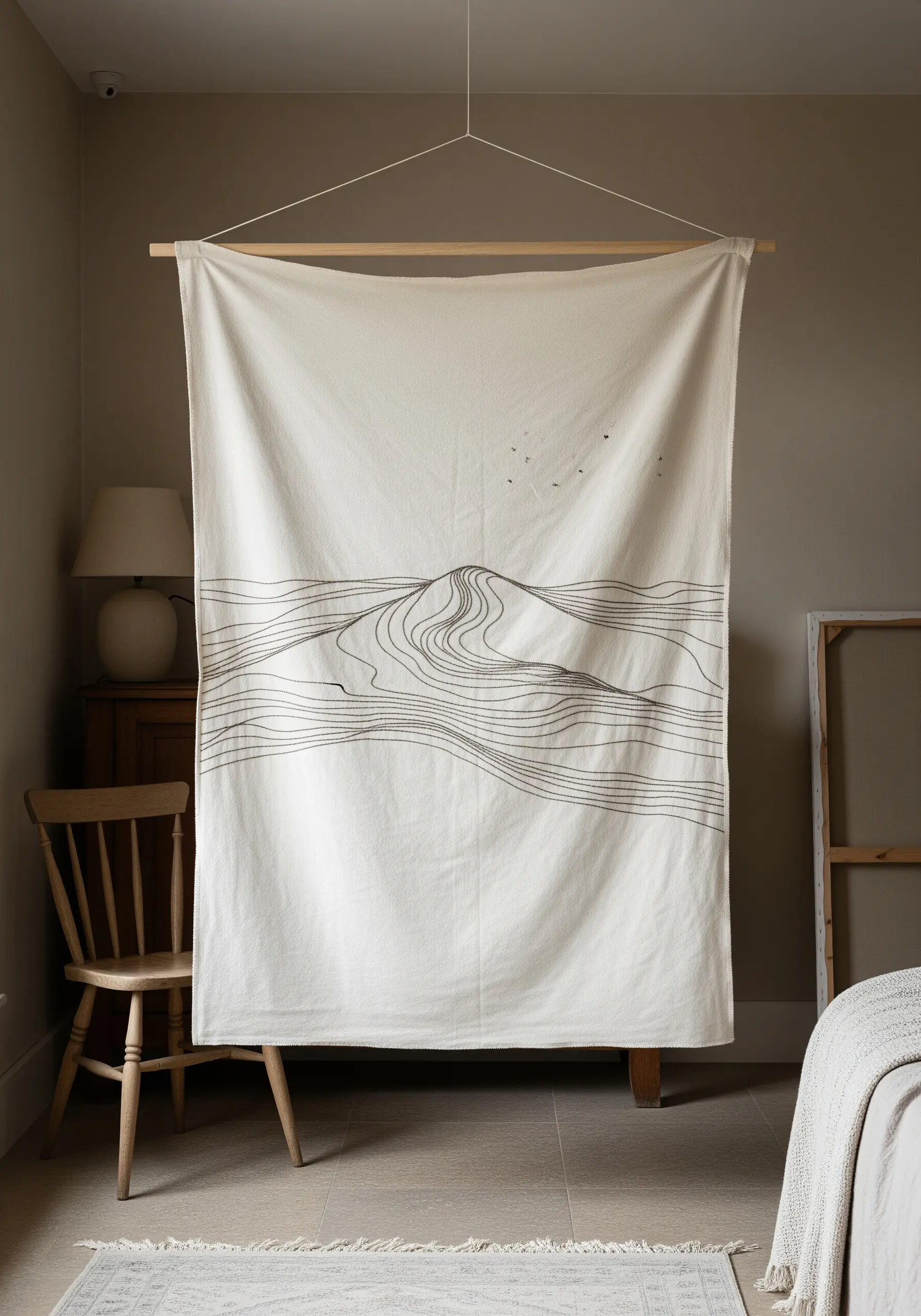
Prove that minimal design can have a major impact by stitching a simple line drawing on a large piece of fabric.
Use a basic backstitch or stem stitch with a thicker thread, like pearl cotton No. 8, to ensure the lines are bold enough to be seen from a distance.
Choose a heavy-weight cotton or canvas that will drape beautifully without creasing, turning a simple sketch into an elegant wall hanging.
This approach is perfect for creating modern embroidered tapestry designs that feel both airy and substantial.
15. Create Harmony with a Minimalist Diptych

Tell a simple story by pairing two complementary motifs, like the sun and moon, in matching hoops.
To maintain a clean, modern aesthetic, use a single color and a crisp stitch like a backstitch or whipped chain stitch for perfectly defined lines.
For the sun’s rays, use a single strand of floss to keep them sharp and delicate. For the moon’s curve, use two or three strands for a slightly bolder presence.
This balanced pairing creates a sense of calm and completion, perfect for a serene space like a bedroom or quiet corner.
16. Achieve Intricate Detail with a Fine Split Stitch
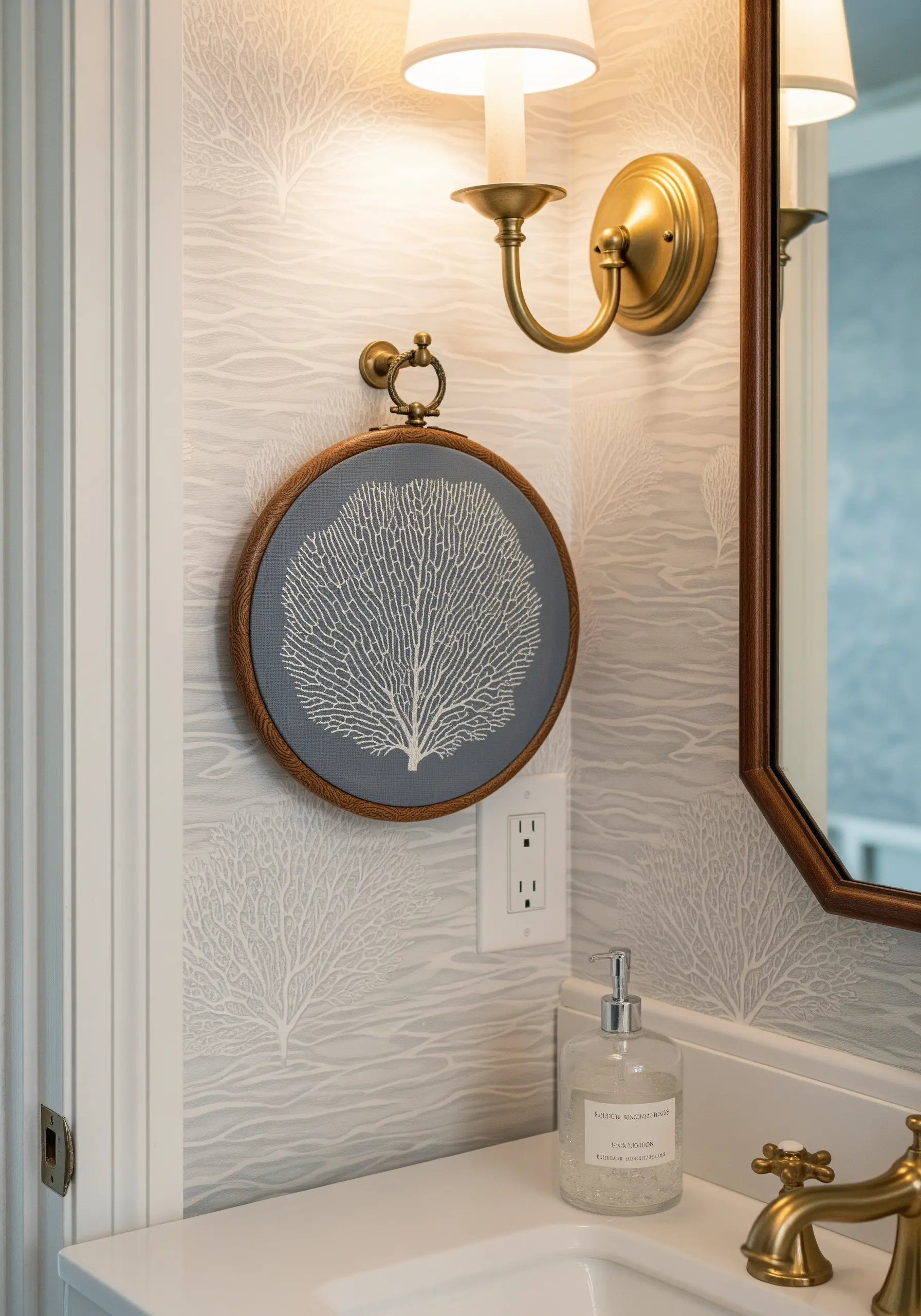
When tackling a complex, branching design like a sea fan, switch from backstitch to split stitch.
By piercing the previous stitch as you work, the split stitch creates a solid, fine line that looks almost drawn, with no visible gaps.
Use a single strand of floss and a small needle to navigate the tight curves and intersections with precision.
Mounting the finished piece on a contrasting fabric and using a stained wood hoop adds warmth and frames the intricate work beautifully.
17. Stitch a Dynamic Splash with Radiating Lines
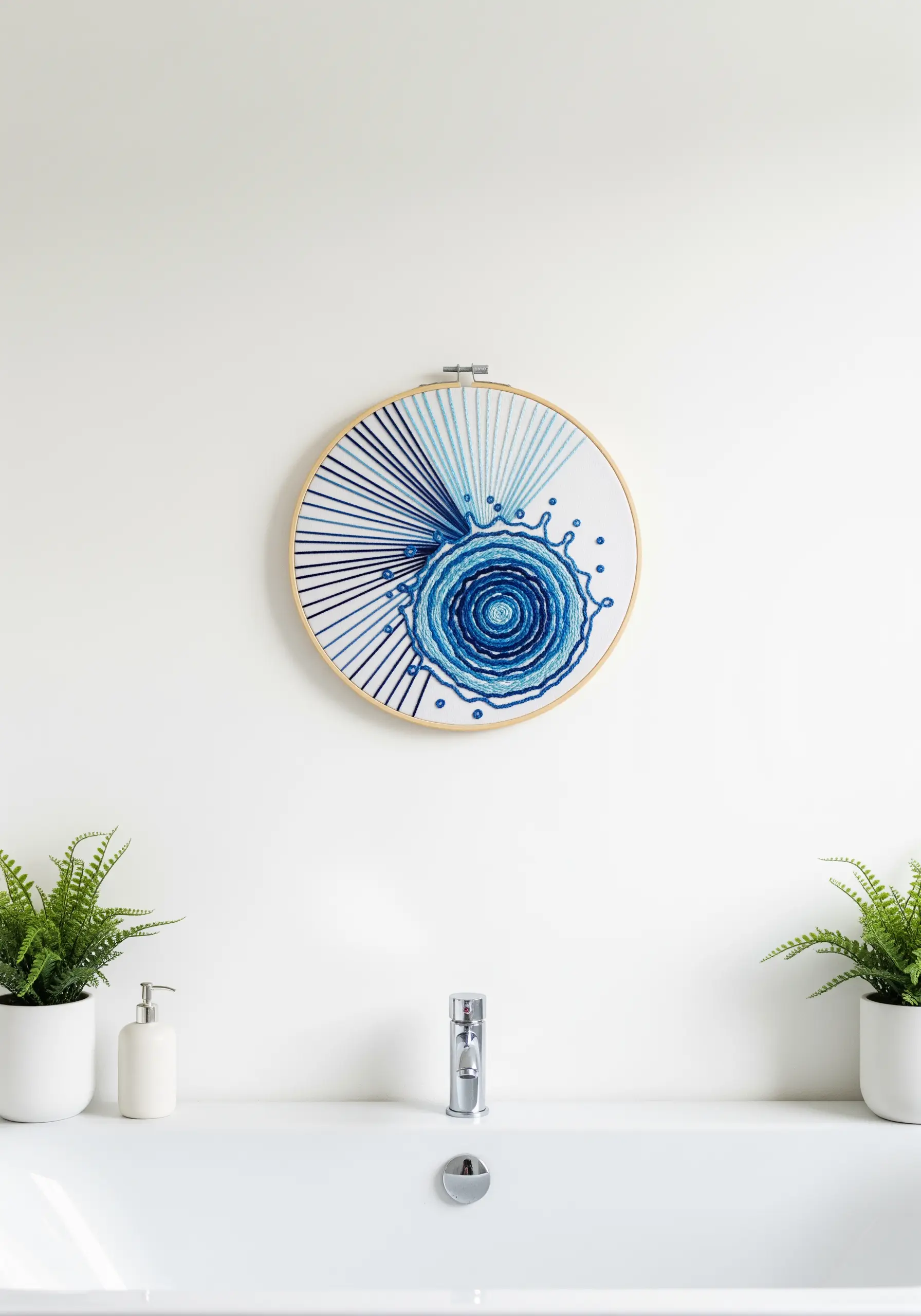
Capture the explosive energy of a water droplet with an abstract composition of straight stitches and knots.
Create concentric circles in the center using a chain stitch or whipped backstitch, then stitch lines radiating outwards in shades of blue.
Vary the length and thickness of these lines to create a sense of chaotic energy, as if the water is flying outward.
Finish with a few scattered French knots to represent the final, tiny droplets, adding a perfect textural detail to your abstract thread embroidery.
18. Delineate Landscapes with Contrasting Textures

Create a clear and compelling coastal scene by assigning a unique stitch texture to each natural element.
Use a sleek, directional satin stitch for the water to give it a liquid sheen. Fill the beach or cliffs with dense French knots or seed stitches for a sandy, rugged feel.
Leave the sky as negative space to give the composition breathing room and draw focus to your handiwork.
This method of textural blocking allows you to build a rich, evocative landscape with a very limited color palette.
19. Modernize a Classic Motif with Clean Stitches
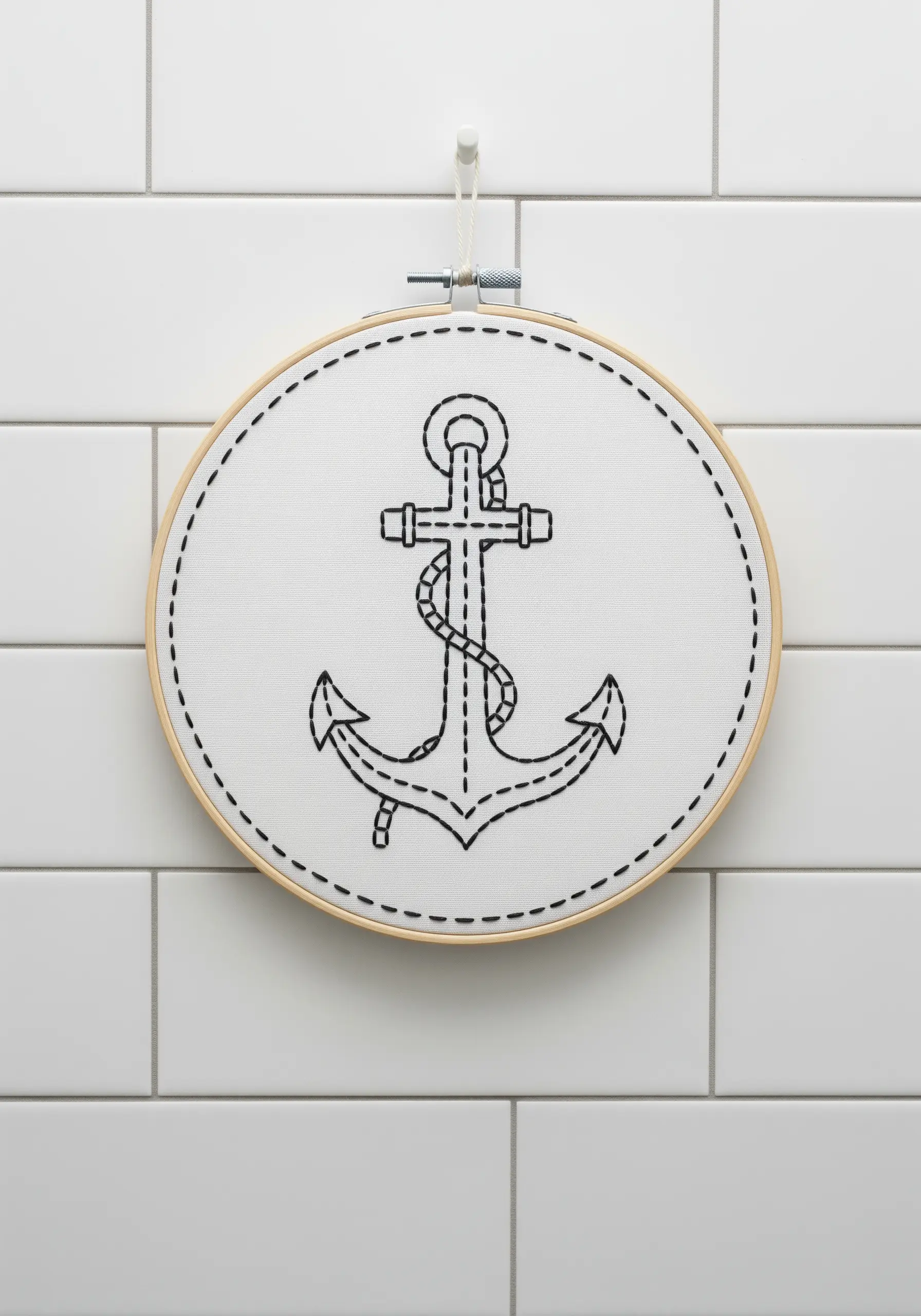
Give a traditional nautical symbol like an anchor a contemporary update by focusing on flawless execution and minimal detail.
Use a bold whipped backstitch or stem stitch for the main outline to create a solid, graphic line.
For the rope detail, a simple chain stitch provides a clear, twisted texture without being overly complex.
Pairing black thread with crisp white fabric keeps the design sharp and timeless, perfectly suited for a clean, tiled bathroom wall.


