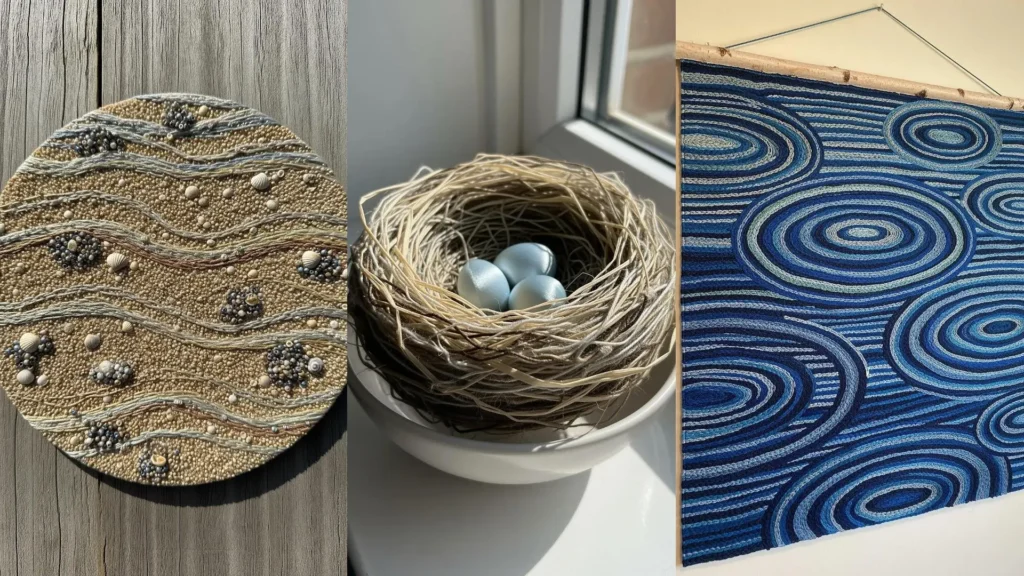
If you’ve ever felt your embroidery was more ‘crafty’ than chic, the solution isn’t necessarily more complex stitches—it’s a more intentional approach to color and texture. Earth tones are your foundation for creating work that feels grounded, sophisticated, and timelessly elegant.
This collection moves beyond simple patterns to show you how to use these calming hues to build depth, create atmosphere, and master composition. Each project is designed to elevate your technique in a visible, satisfying way, whether you’re embellishing a pillow or creating a statement wall hanging.
Forget fleeting trends. Here, you will learn to stitch with quiet confidence, turning simple threads and fabrics into pieces that feel both personal and polished. Let’s begin.
1. Sculptural Landscapes with Layered Textures
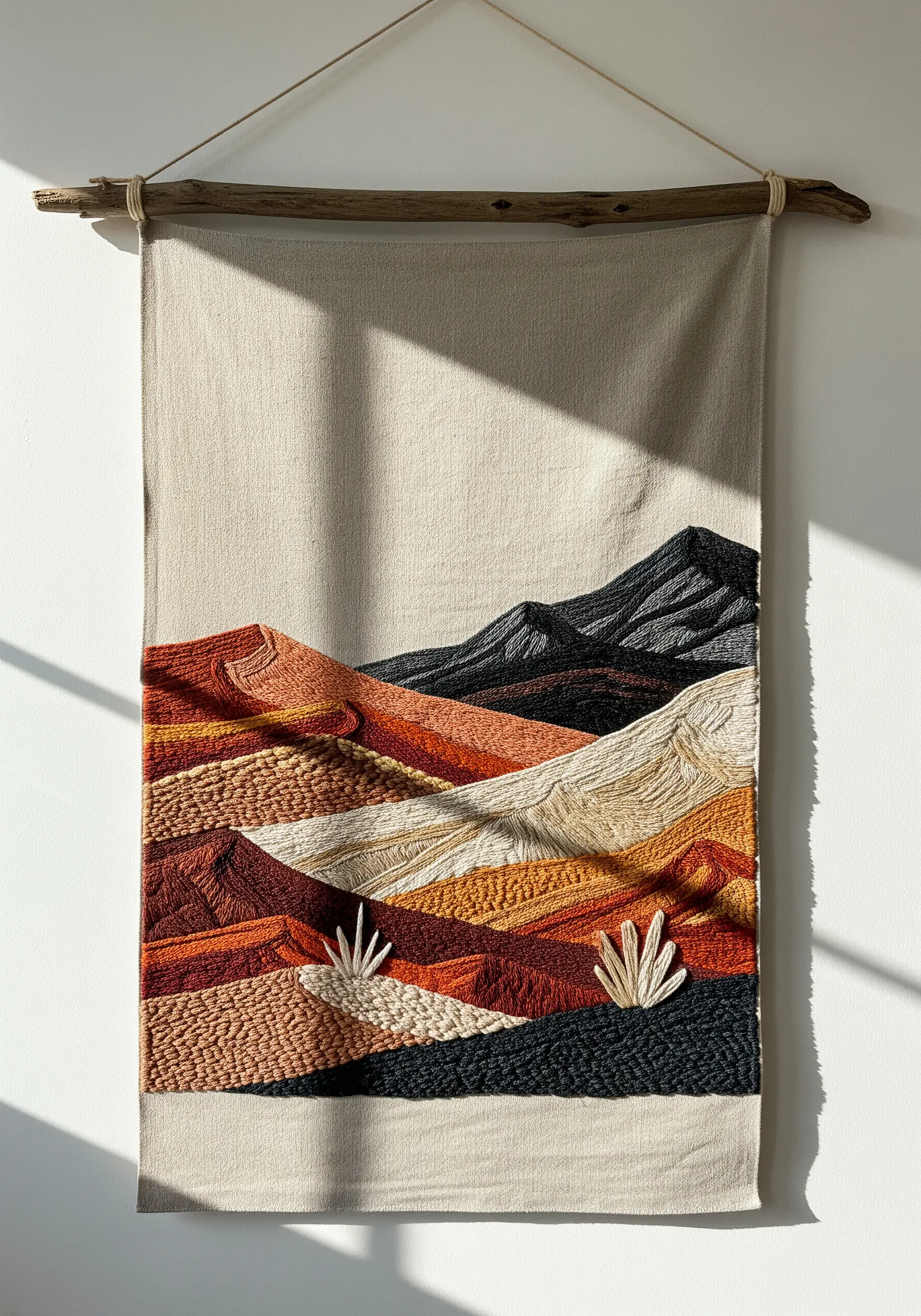
Create topographic depth by combining different textural techniques in a single landscape.
Use a punch needle to create dense, looped sections for rolling hills, then switch to long, flat satin stitches for the sharp, angular planes of distant mountains.
Define the boundaries between colors and textures by couching a thick, contrasting yarn along the edges—this adds a clean, graphic line that makes each element distinct.
This blend of high and low relief turns a simple wall hanging into a tactile map you can feel, making it one of the most compelling nature-inspired texture patterns you can create.
2. Achieve Botanical Elegance with Open Fill Stitches
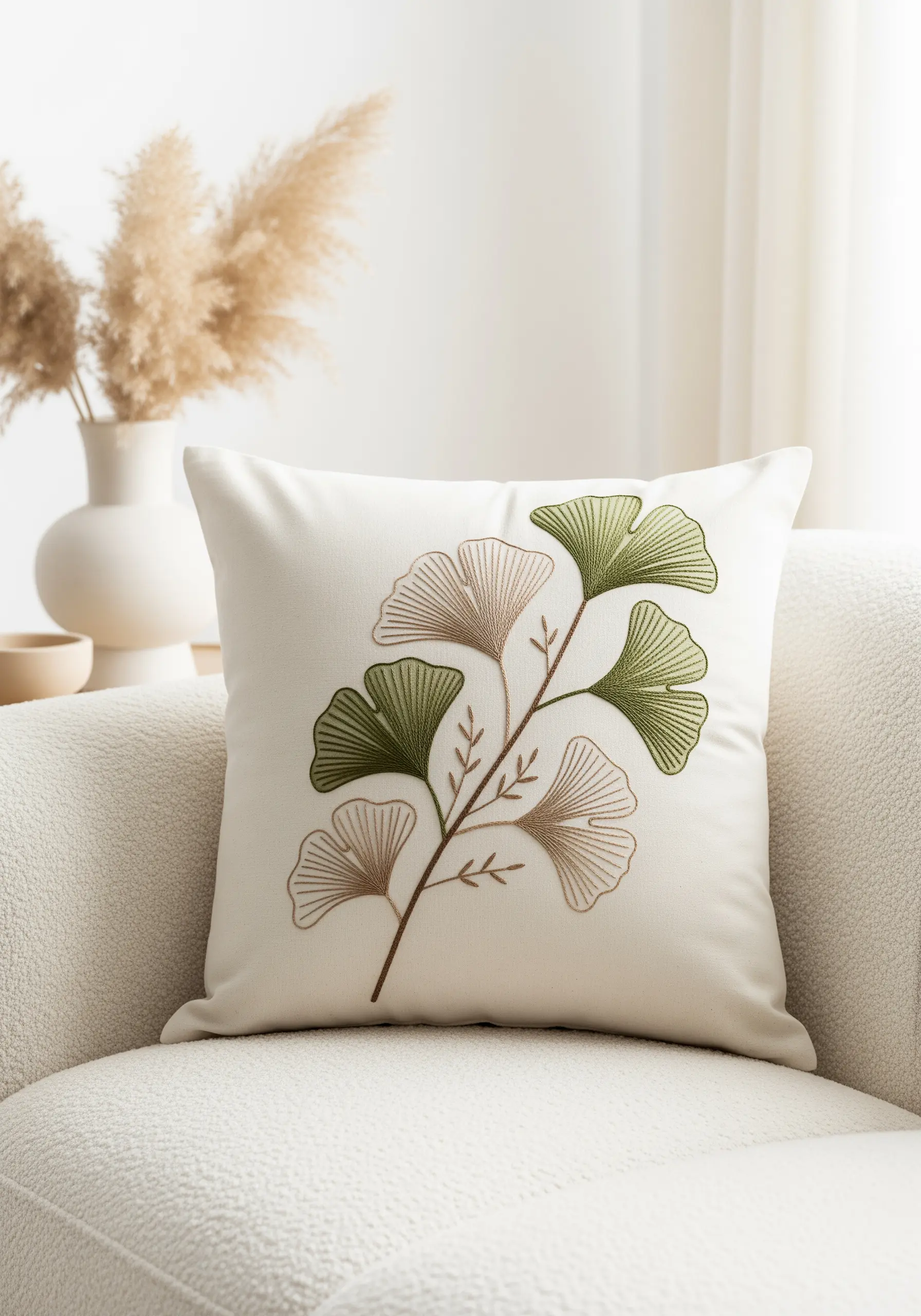
Instead of filling leaf shapes with a solid satin stitch, use negative space to your advantage for a lighter, more modern feel.
Use a simple backstitch or running stitch to create the delicate veins, letting the unstitched fabric complete the shape.
This open-fill technique is not only faster but also gives the design an airy, illustrative quality that prevents it from feeling heavy on soft furnishings.
The key to making it look polished is maintaining consistent stitch length, which you can practice with handmade pillow cushion embroidery patterns.
3. Command Attention with Oversized Fiber Art
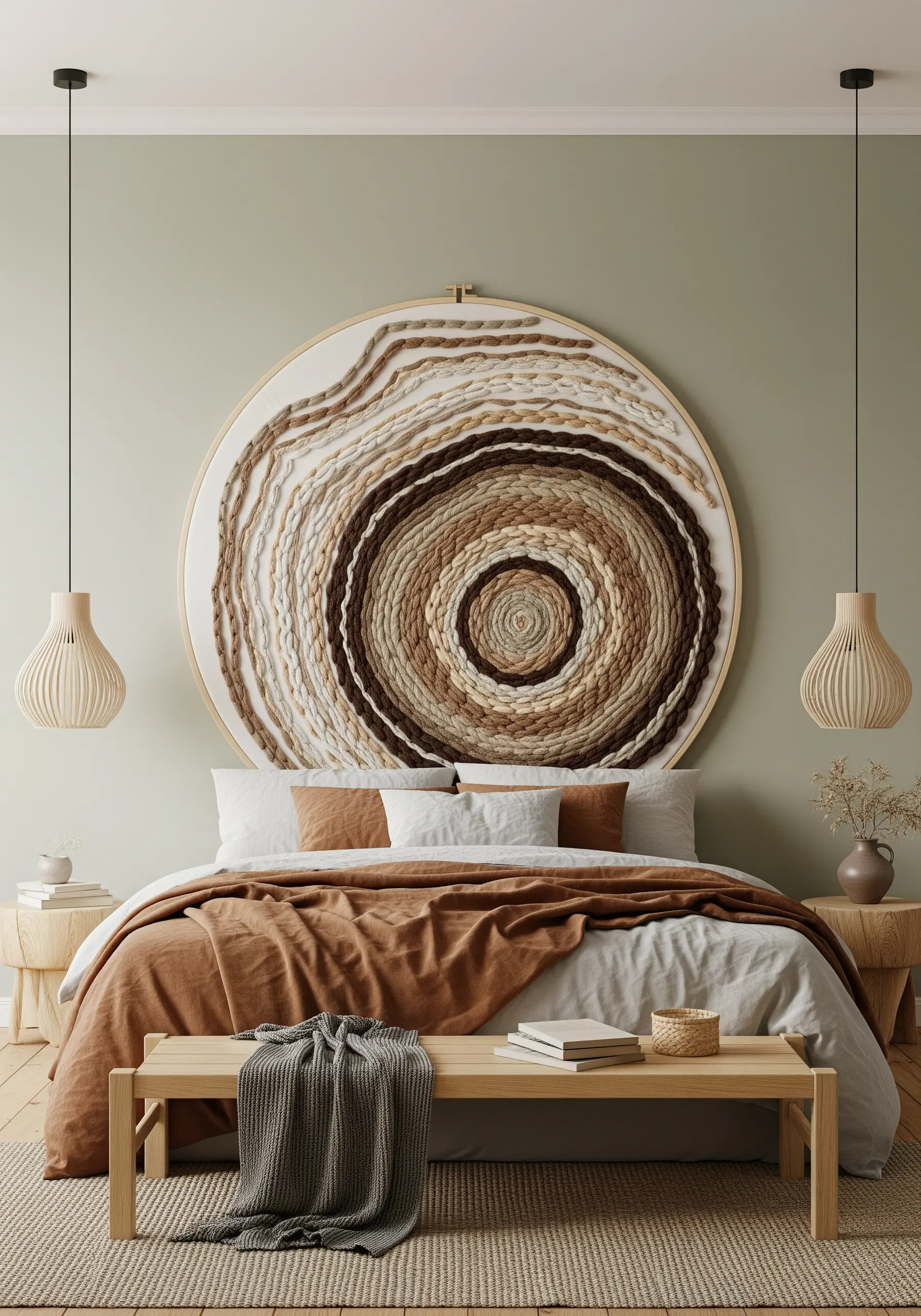
To create a dramatic focal point, scale up your work on an oversized embroidery hoop or a custom frame.
Instead of traditional stitching, couch thick fibers like wool roving, jute rope, and chunky yarn directly onto the fabric surface using a thinner, matching thread.
This method allows you to build incredible texture and volume quickly, transforming your wall into a gallery-worthy display.
Arrange the fibers in organic, concentric rings to mimic natural patterns, creating fiber art installations that use yarn to create optical illusions of depth and movement.
4. Modernize Linens with Geometric Repetition
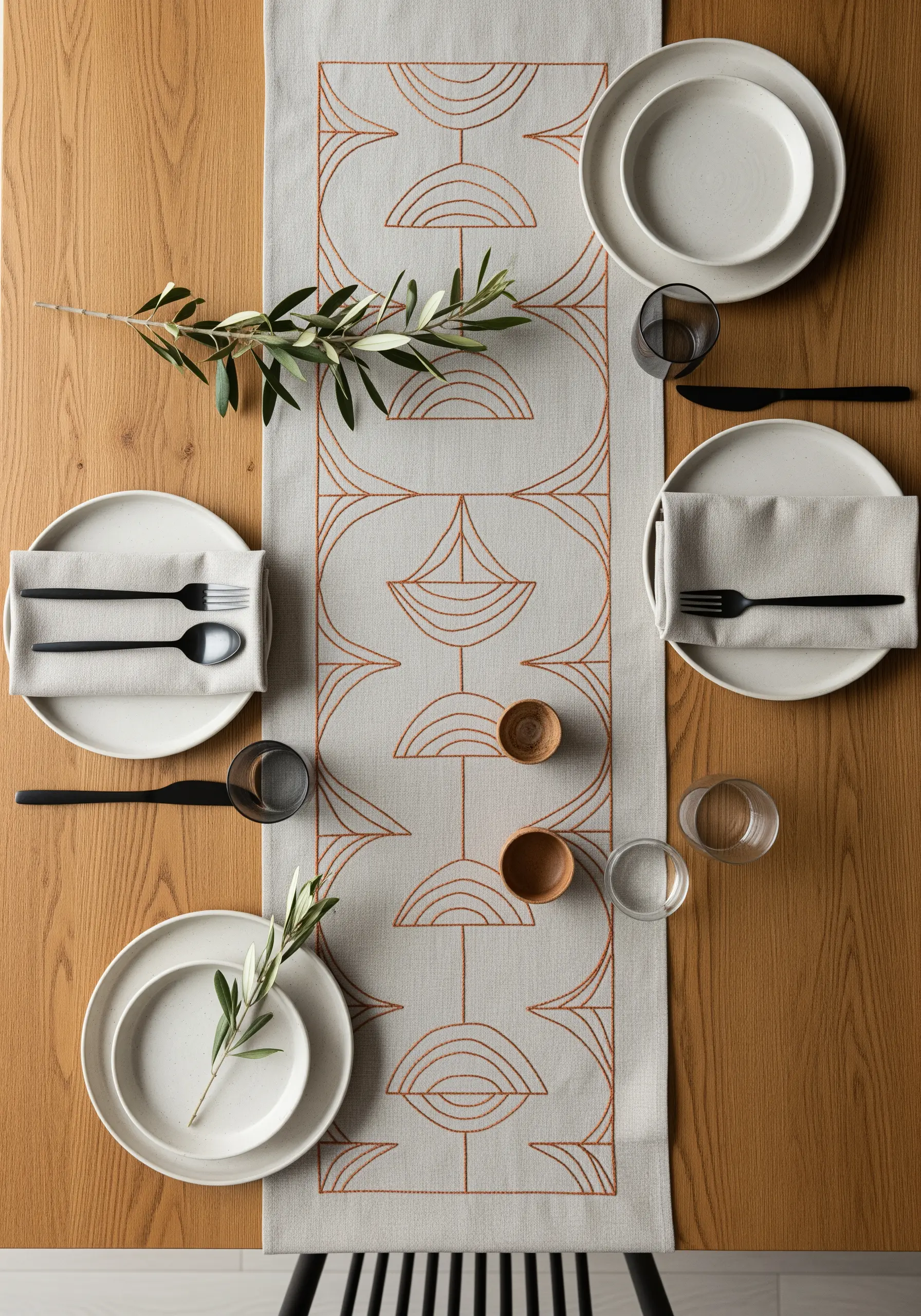
Elevate a simple table runner into a piece of functional art with a clean, repeating geometric pattern.
Choose a single strong motif and use a basic backstitch or stem stitch in a high-contrast earth tone like terracotta or ochre.
The secret to a high-end finish is precision. Use a water-soluble fabric marker and a ruler to meticulously plan your grid, ensuring every line is perfectly symmetrical.
This thoughtful repetition transforms simple table linen embroidery motifs into a cohesive, designer statement.
5. Create Depth with Fabric Appliqué and Linework
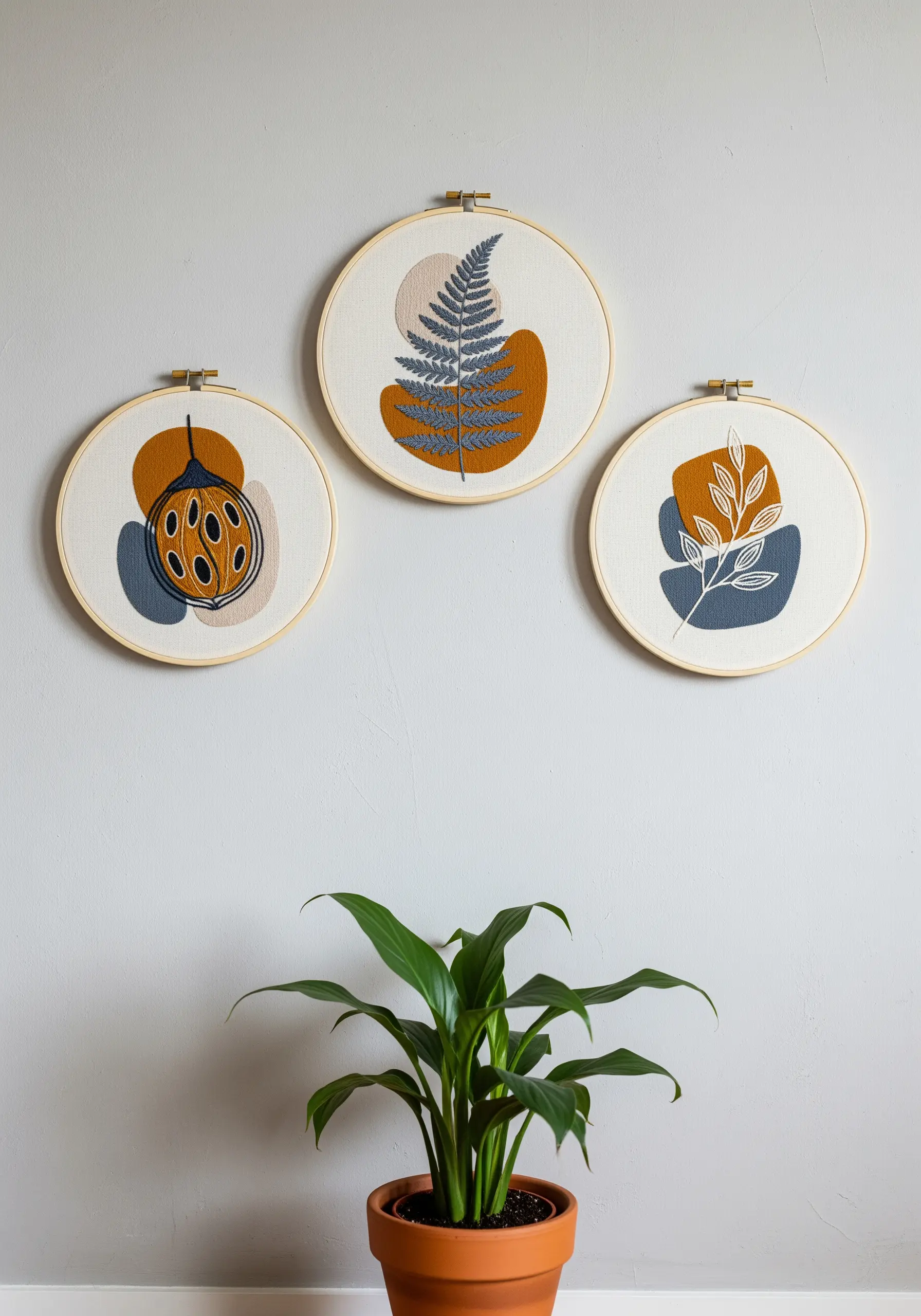
Instead of filling large color blocks with thread, use fabric appliqué to achieve a clean, graphic look with minimal effort.
Cut abstract shapes from felt or contrasting cotton, secure them to your base fabric, and then add fine-lined embroidery details over the top.
This mixed-media approach adds literal dimension and allows you to play with layering colors and textures.
Use a simple whipstitch to secure the appliqué, then add details with a sharp backstitch to create beautiful hooped wall collage layouts.
6. Paint with Thread Using Directional Satin Stitch
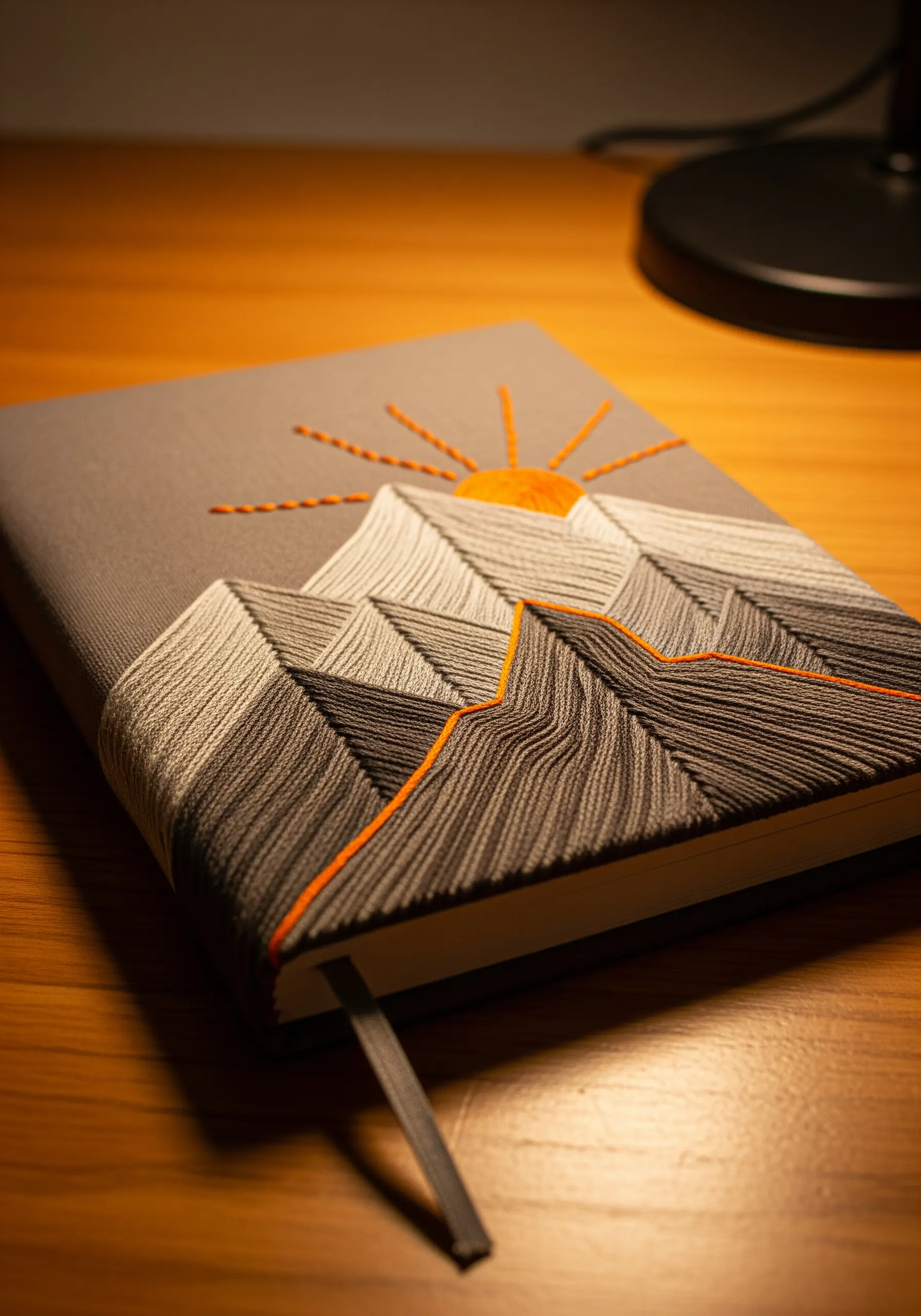
You don’t need dozens of thread colors to create dimension; you just need to control the direction of your stitches.
Use satin stitch to fill in shapes, but intentionally change the angle of your stitches to represent different planes and shadows on the mountain range.
Where two faces of a mountain meet, shift the stitch direction—this simple change tricks the eye and creates a powerful sense of form and light.
It’s one of the core abstract thread painting ideas for turning a flat design into a dynamic landscape.
7. Add a Sculptural Border with Chunky Yarn
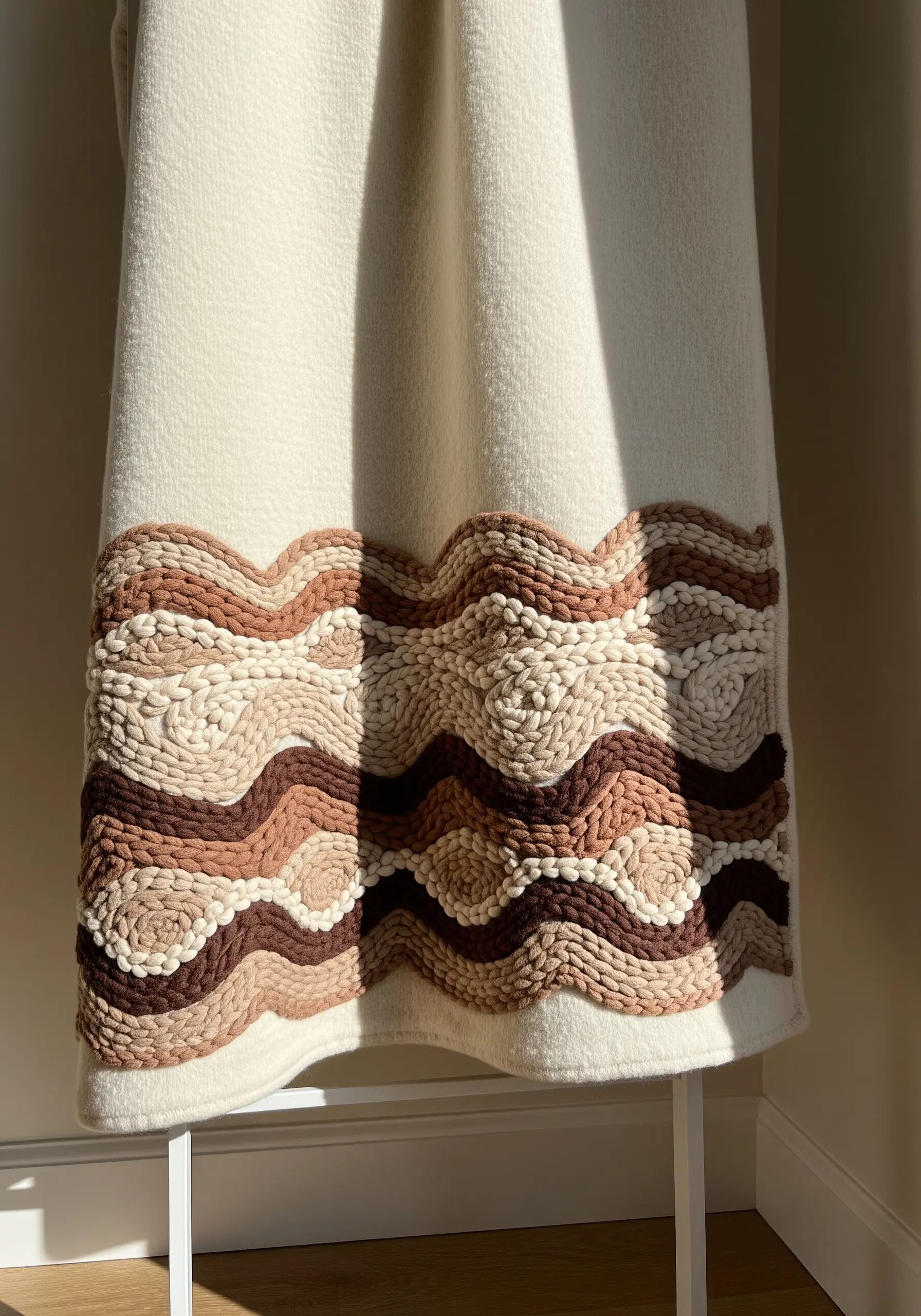
Transform a plain throw blanket or garment with a bold, highly textural embroidered border.
Work with thick, chunky yarn and stitches that build volume, such as oversized French knots, chain stitch bands, or woven wheel stitches.
This technique adds a satisfying weight and a cozy, sculptural quality to the edge of any textile.
The key is to use a sturdy base fabric that can support the heavy stitching, allowing you to create beautiful, organic texture embroidery designs that are both seen and felt.
8. Compose a Tactile Sampler with Abstract Lines
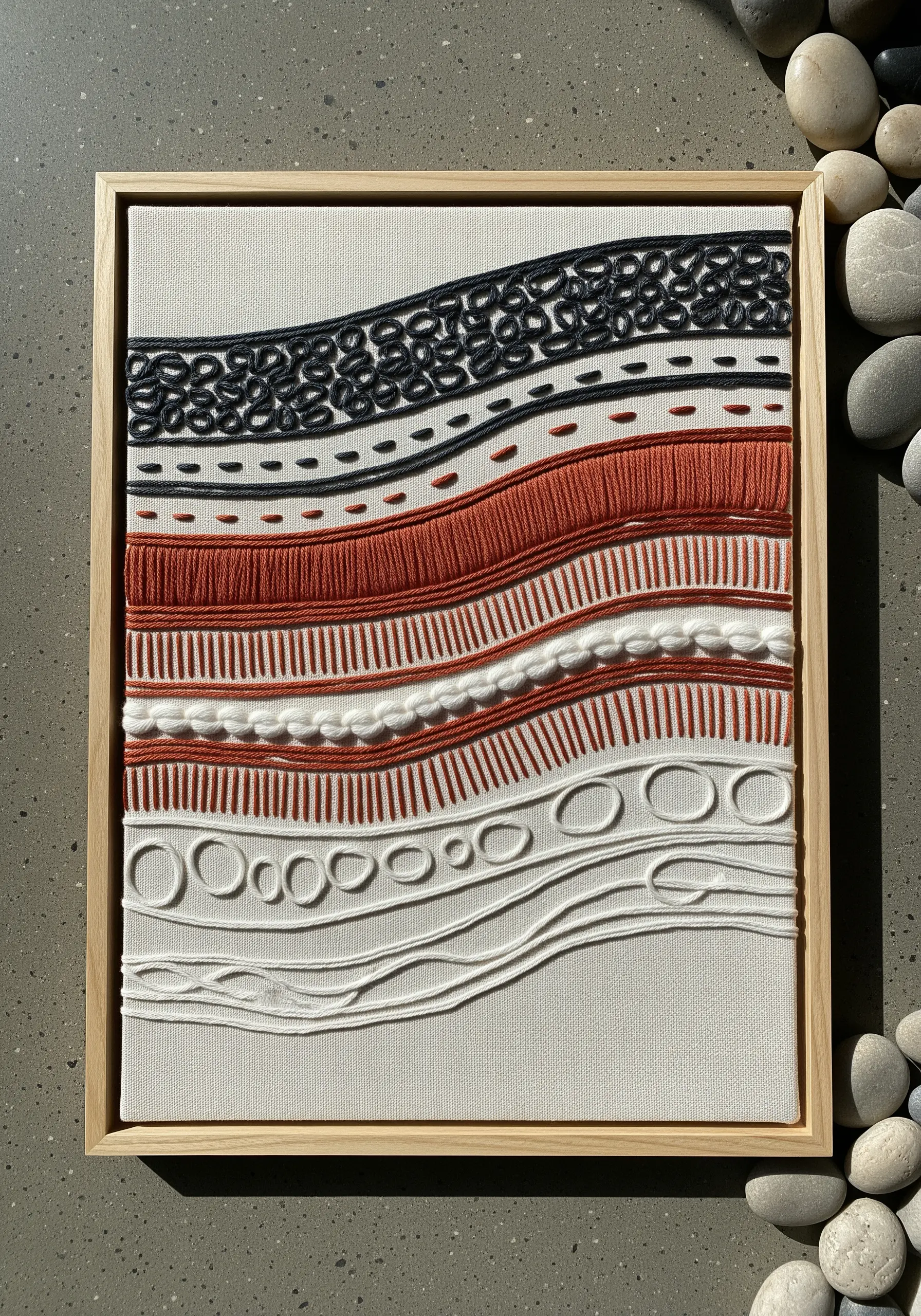
Turn your stitch practice into a modern art piece by creating an abstract composition focused solely on texture.
Assign a different textural stitch to each line or section: French knots, seed stitch, satin stitch, couching, and whipped backstitch.
By keeping the color palette restrained—like rust, black, and cream—the unique character of each stitch becomes the main attraction.
It’s one of the best abstract thread texture hacks for creating a sophisticated piece that showcases your skills.
9. Illuminate Your Stitches on a Lampshade
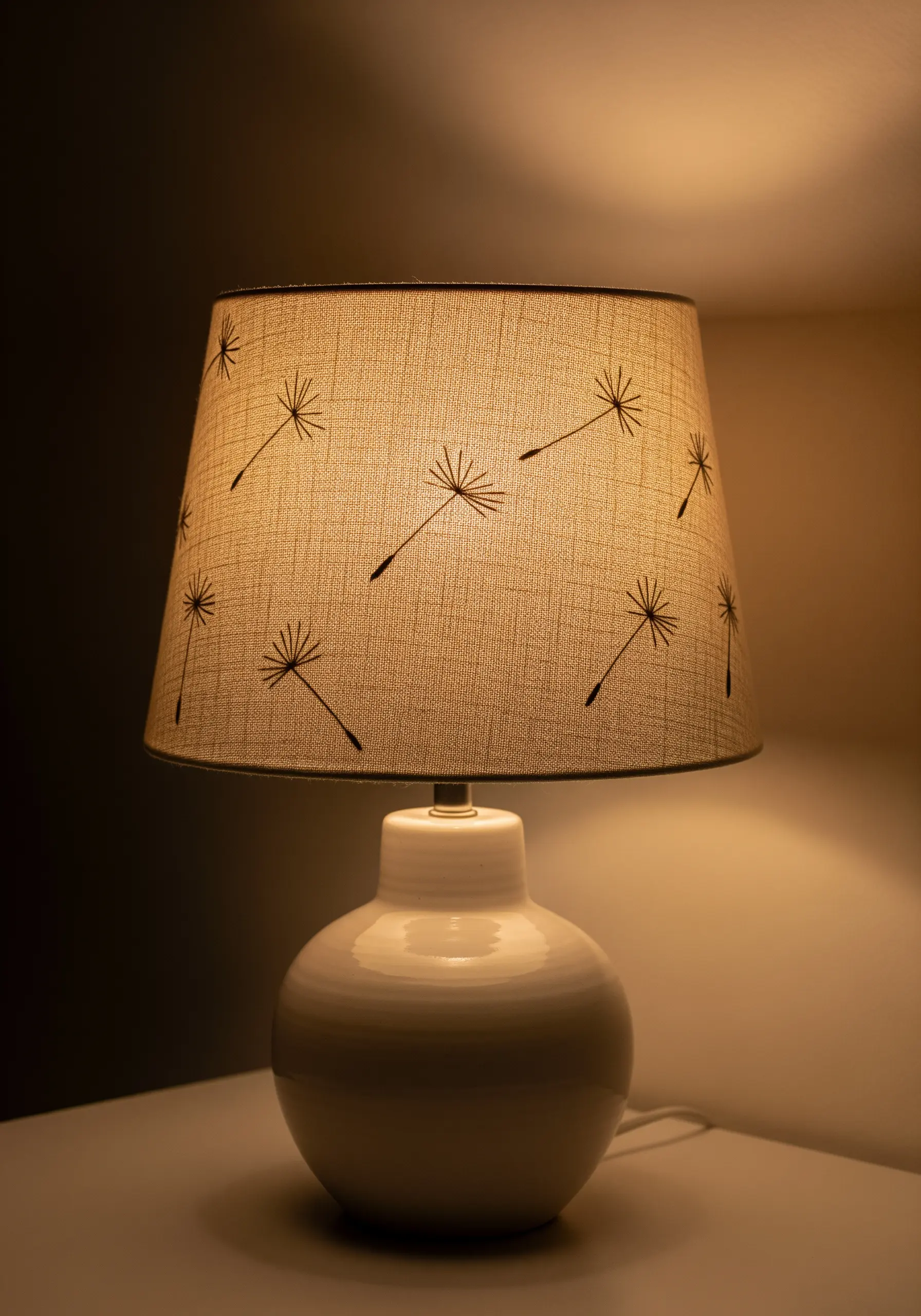
Take your embroidery off the hoop and onto an unexpected surface like a fabric lampshade.
Choose a minimalist, airy design, such as dandelion seeds, and stitch it with a single strand of dark floss for a delicate, graphic look.
The real magic happens when you turn on the lamp, as the light transforms your stitches into a beautiful, glowing silhouette.
This project proves that creative handmade art objects that double as home decor can be both simple and stunning.
10. Master the Minimalist Power of a Single Line

For a continuous line-art portrait, the goal is to create a stitch that looks as fluid and unbroken as an ink drawing.
Use a whipped backstitch or a stem stitch to achieve a smooth, slightly raised line with no visible gaps.
Work slowly and focus on maintaining even tension to prevent the canvas fabric from puckering.
This technique elevates modern thread abstract designs, proving a single, well-executed line is profoundly impactful.
11. Give Celestial Bodies Textured Surfaces
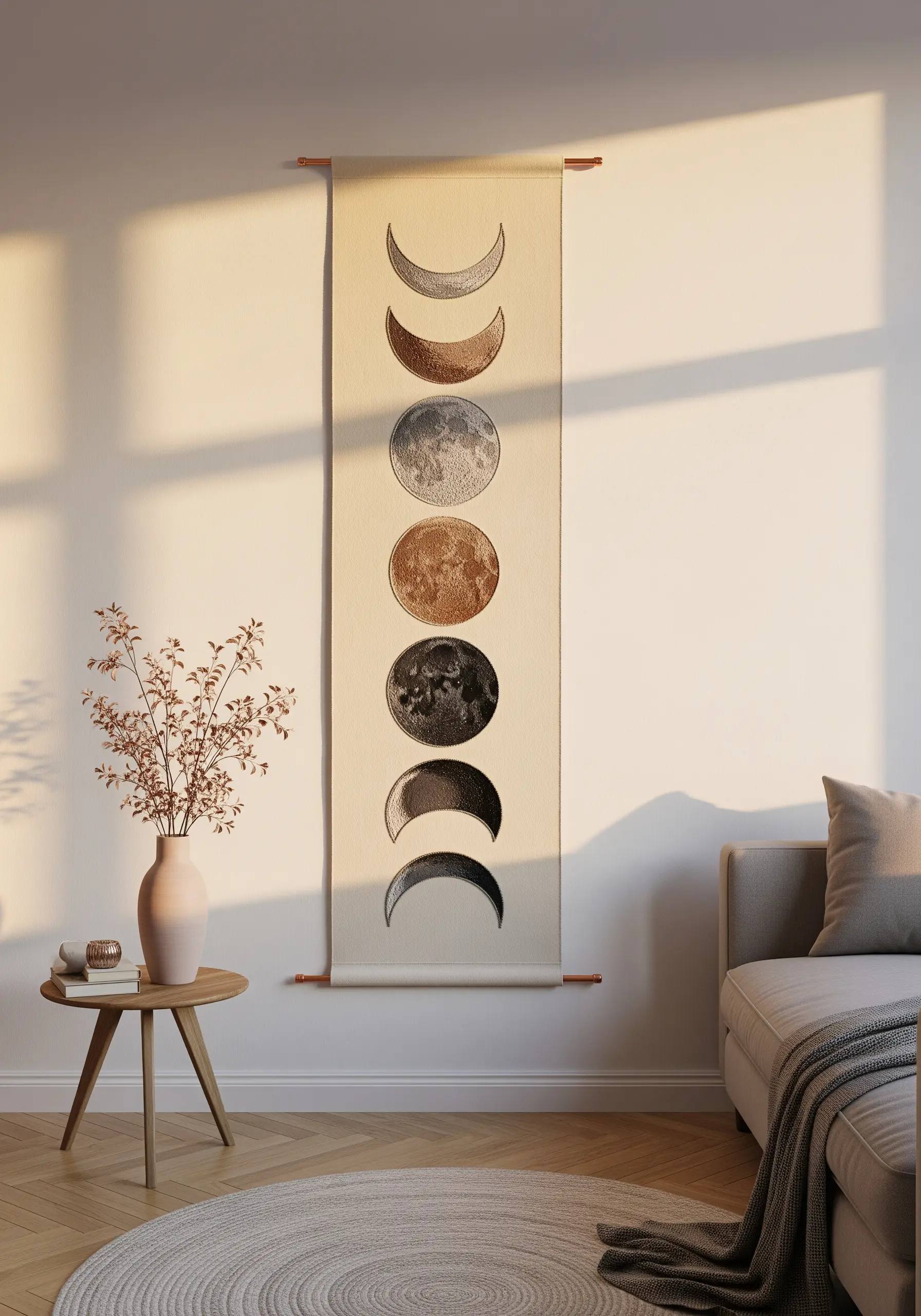
Instead of filling moon phases with flat satin stitch, assign a unique texture to each one to tell a richer visual story.
Use a dense field of French knots to suggest a heavily cratered surface on one, and a smooth long-and-short stitch on another to show reflected light.
Experiment with seed stitch, bullion knots, or even metallic threads to add variation.
This approach turns simple circles into dynamic, tactile embroidery wall hangings that bring calm to any room.
12. Create Functional Art with Textured Coasters
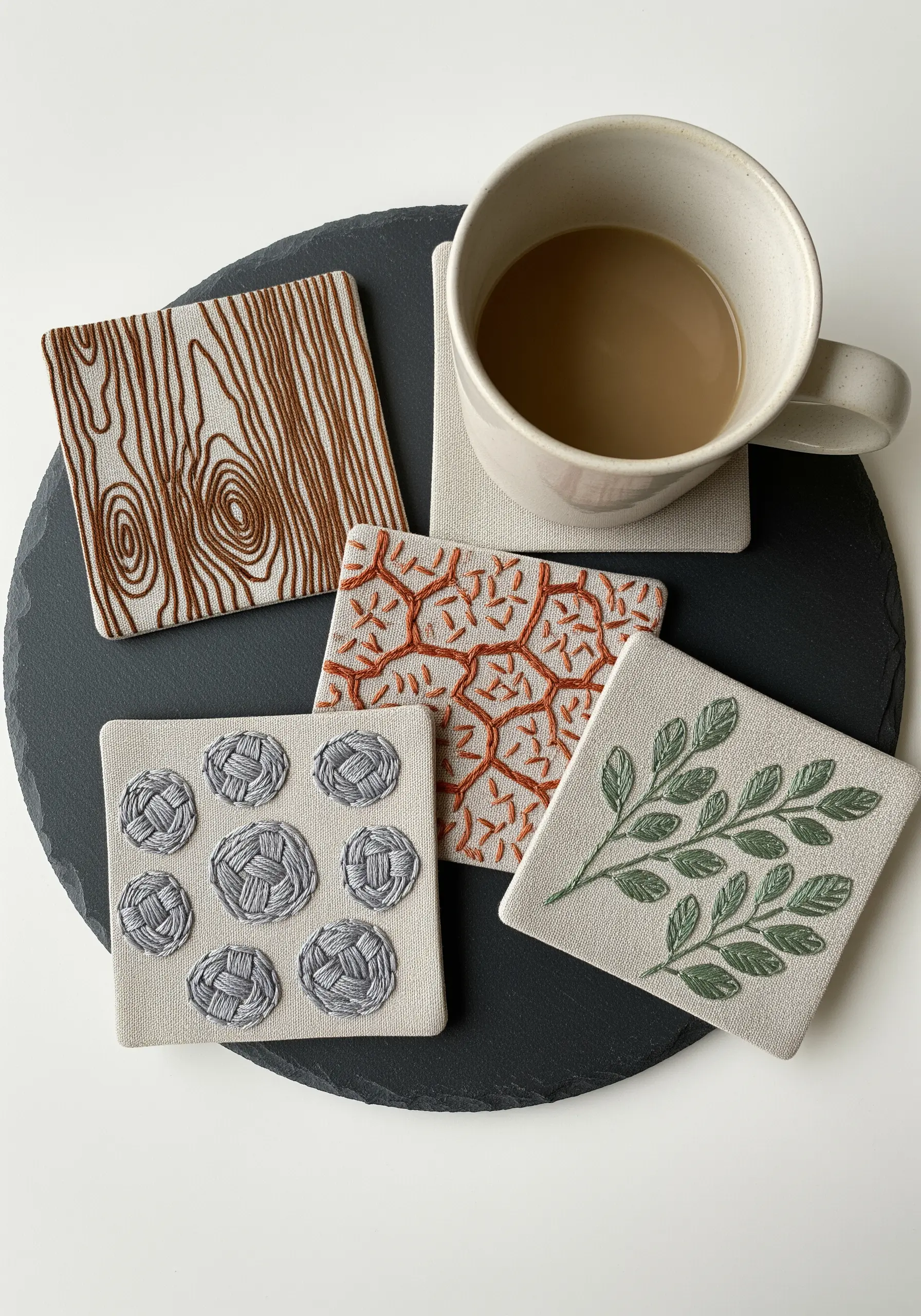
Turn everyday objects like coasters into miniature canvases for stitch exploration.
Select stitches that are durable and relatively flat but offer strong visual texture, such as the woven wheel, chain stitch, or tightly packed seed stitch.
Use a sturdy cotton canvas and mount your finished embroidery onto corkboard squares for a professional and functional result.
These subtle handmade pieces are perfect for practicing new techniques on a small scale.
13. Explore Weaving Techniques in Miniature Frames
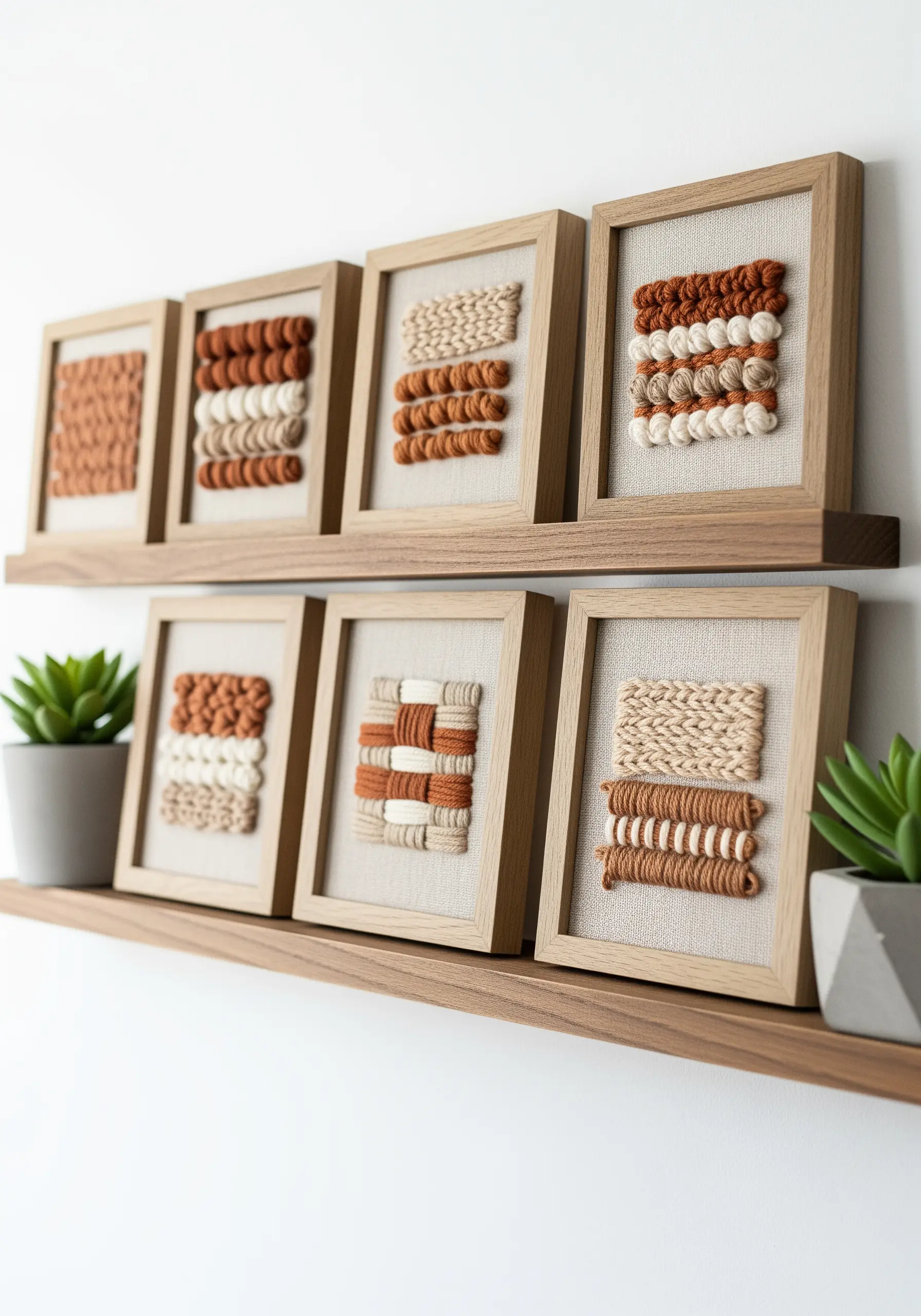
Combine embroidery and weaving by creating small, framed tapestries directly on your fabric.
First, create a foundation of long, parallel stitches to serve as the warp threads.
Then, use a blunt tapestry needle to weave thicker yarn, roving, or ribbon over and under these threads, building up a raised, woven texture.
Grouping several of these miniature studies together creates stunning, modern embroidered tapestry designs with incredible depth.
14. Make a Statement with a Satin Stitch Sunburst
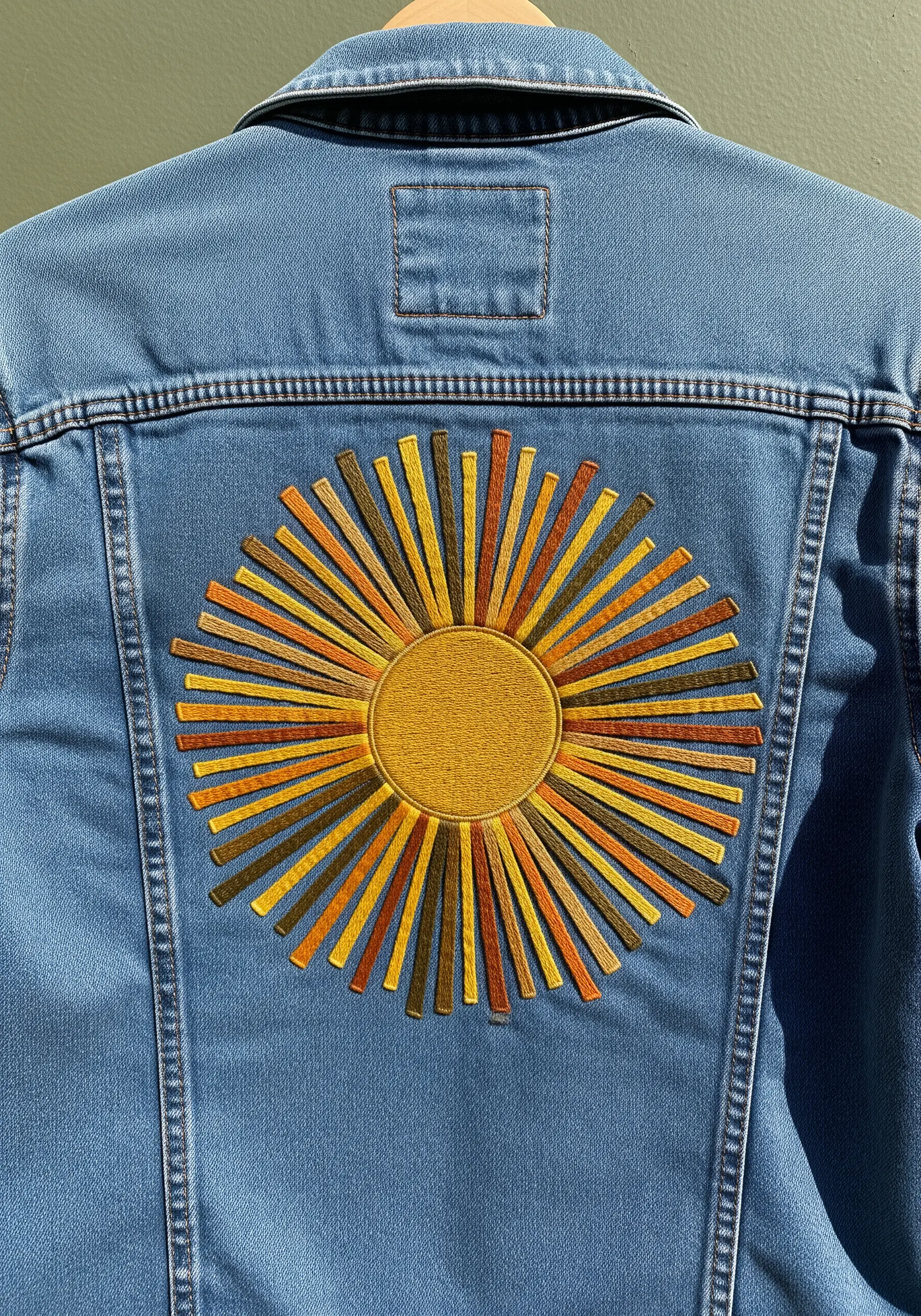
To achieve perfectly crisp, clean edges with satin stitch on a tough fabric like denim, always start with an outline.
Use a split stitch to trace the border of each sun ray. This creates a slightly raised edge that your satin stitches can tuck neatly against, preventing them from looking uneven.
This preparation is the secret behind professional-looking appliqué and one of the most useful easy stitches that bring your plain denim jackets to life.
15. Design a Subtle Border with Silhouette Stitches
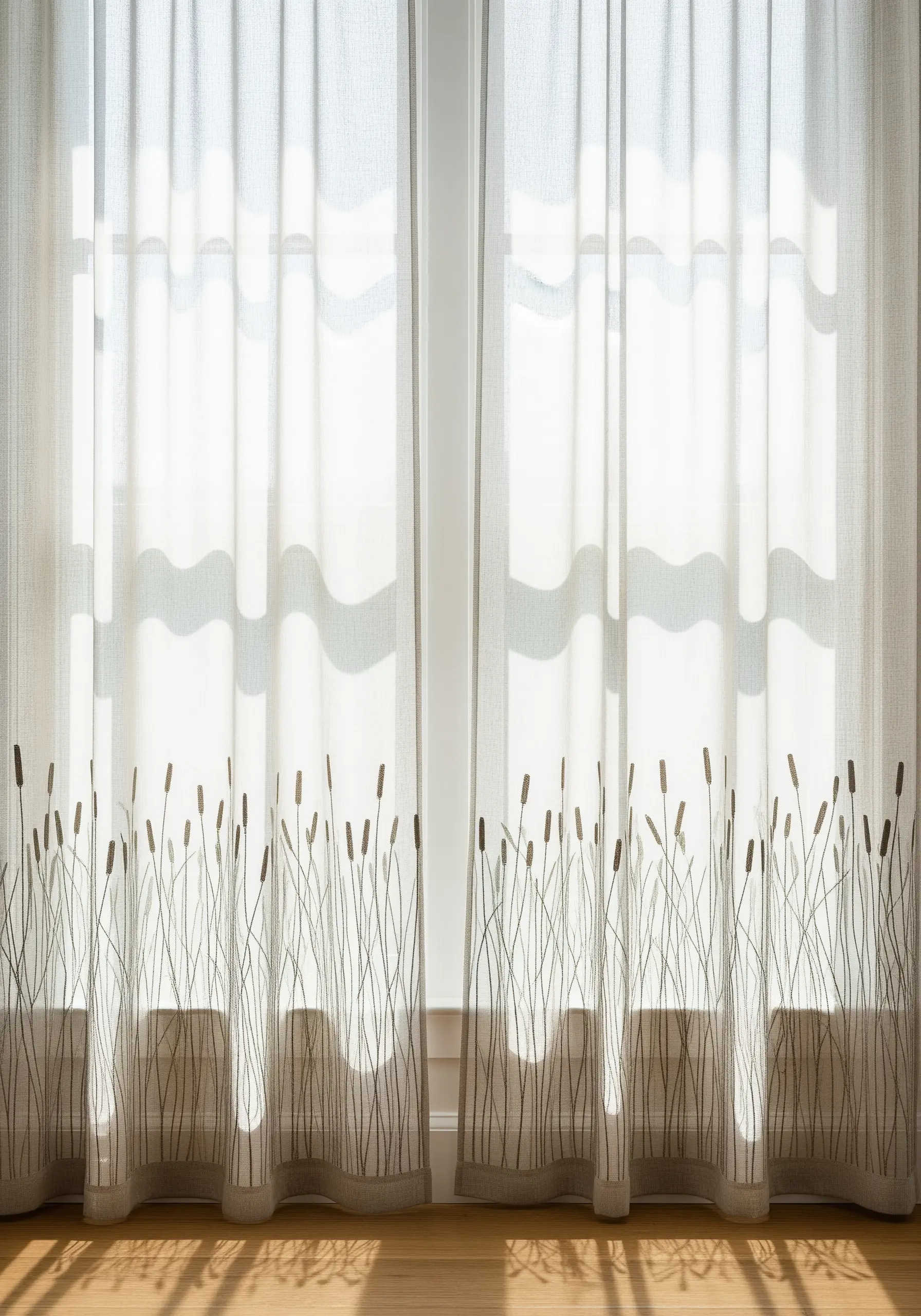
Add a layer of quiet elegance to sheer curtains with a minimalist botanical border.
The key is simplicity: use single straight stitches for the long stems and a dense satin stitch or a few turkey work loops for the cattail heads.
The design should be sparse enough to let light filter through, creating a beautiful silhouette effect.
This is a perfect example of how gentle botanical embroidery stitches can transform a room’s atmosphere without overwhelming it.
16. Cover Surfaces with Textured Leaf Repeats
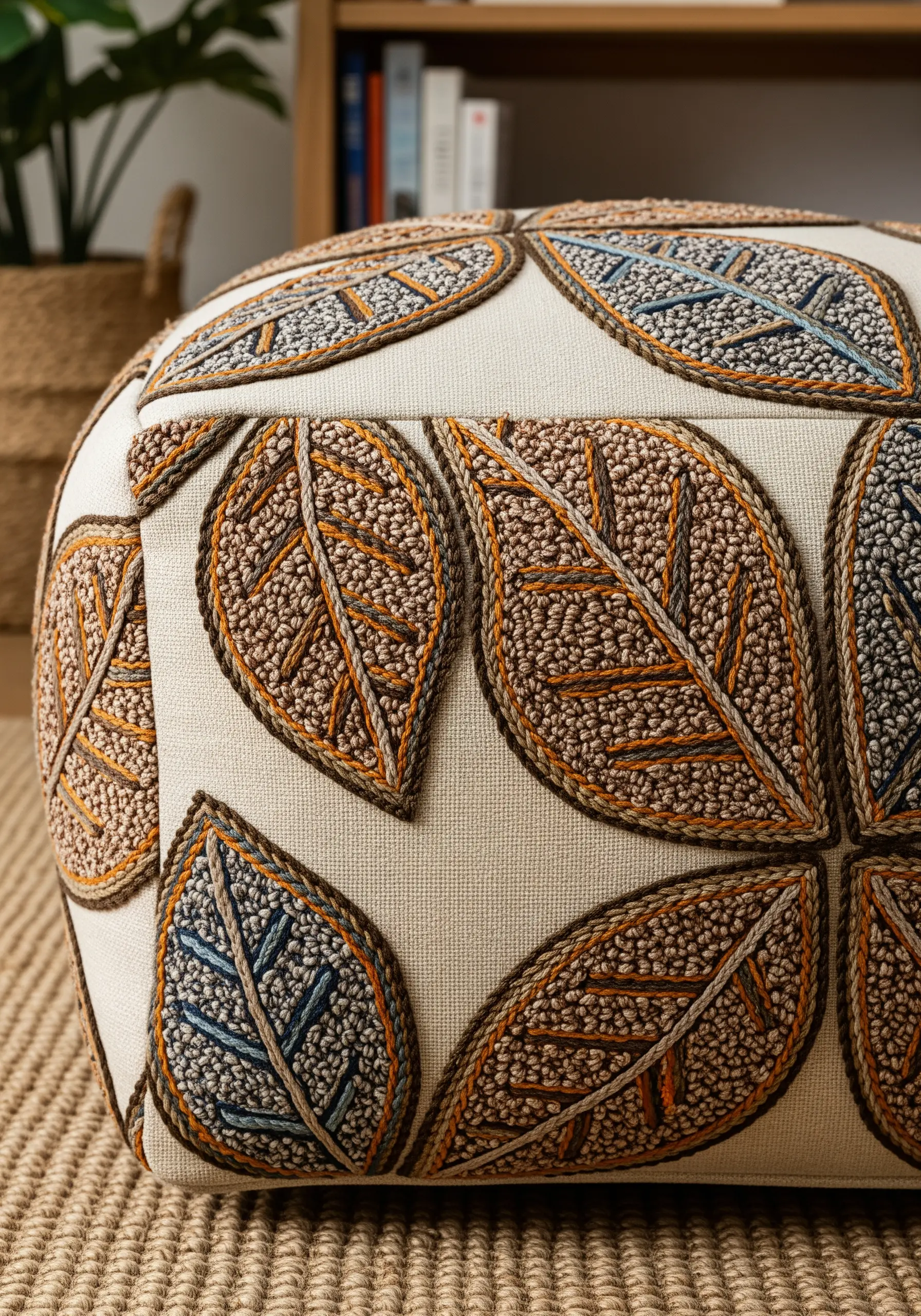
When embroidering a large surface like a pouf or cushion, a repeating motif provides structure and consistency.
To keep the pattern from feeling monotonous, fill each leaf with a different textural stitch—try French knots, long-and-short stitch, seed stitch, or chain stitch.
Unify the design with a bold, consistent outline, like a two-strand chain stitch, around every leaf. This frames each mini-texture while making the overall pattern cohesive.
This approach works for all leaf shape ideas for embroidering.
17. Recreate Natural Details with Thread Painting
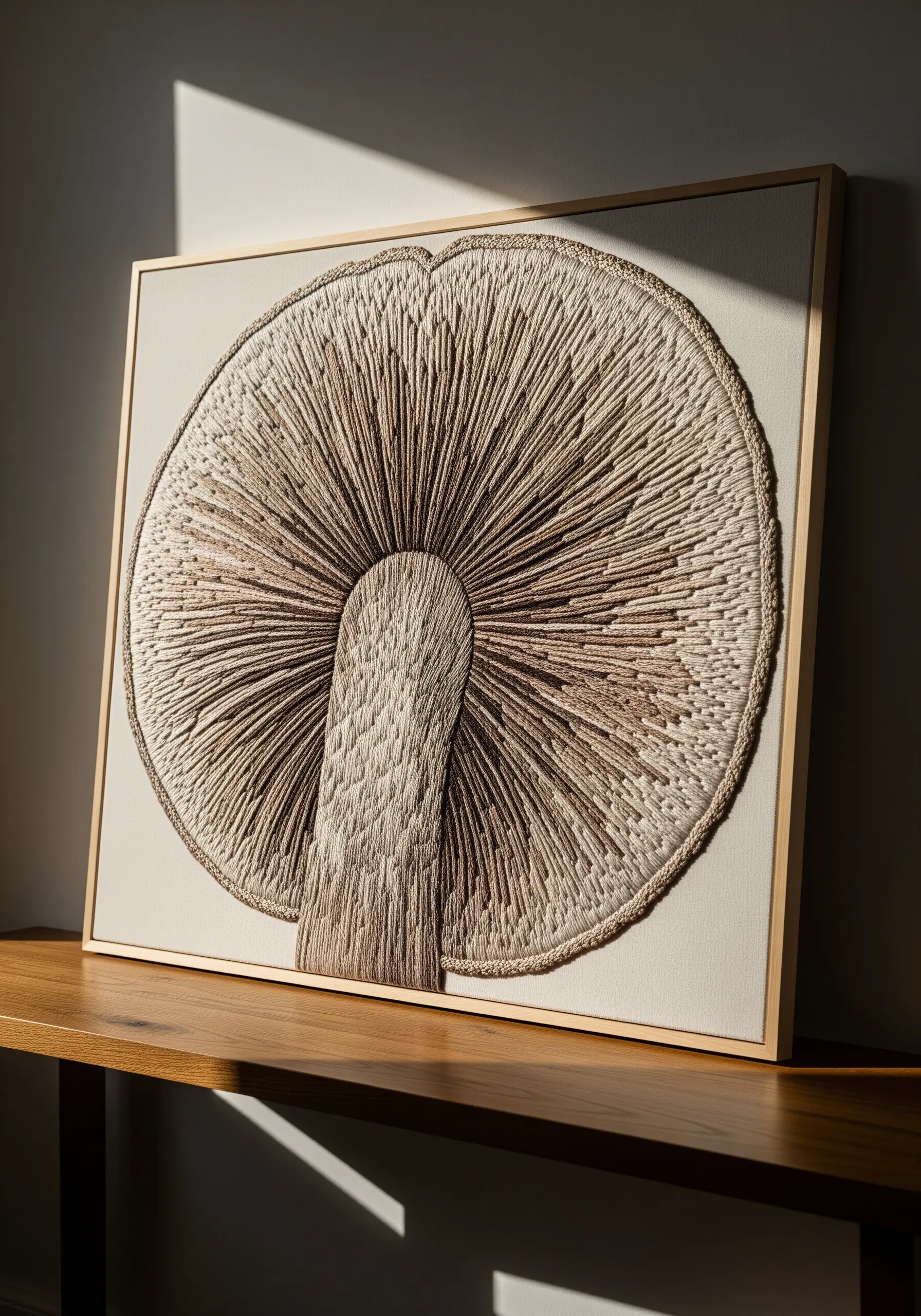
To capture the hyper-realistic texture of mushroom gills, use precise thread painting with a very limited color palette.
Work with a single strand of floss, laying your stitches in the same direction that the gills grow—radiating outward from the stem.
Use several closely related shades of beige, taupe, and brown to create subtle shifts in light and shadow, giving the piece incredible depth.
This method is ideal for all forest floor botanical stitch ideas where realism is key.