You have the threads, the fabric, and the desire to create something truly meaningful. But how do you move from simply stitching a pattern to creating a piece that feels like an heirloom? How do you make your work look as polished and intentional as you imagine it?
This is where technique and intention meet. It’s about choosing the right stitch not just for its look, but for its texture and dimension. It’s understanding how a single strand of thread can create a softer gradient than six, or how a padded satin stitch can turn a flat shape into something you can’t help but touch.
Here, you’ll find ideas that go beyond the pattern. We’ll explore how to add depth to a denim jacket, how to make lettering crisp and professional on a cuff, and how to turn a simple pocket into a tiny work of art. These are the details that transform a piece of clothing into a keepsake—a story told in thread.
1. Create a Thread-Painted Landscape on Denim
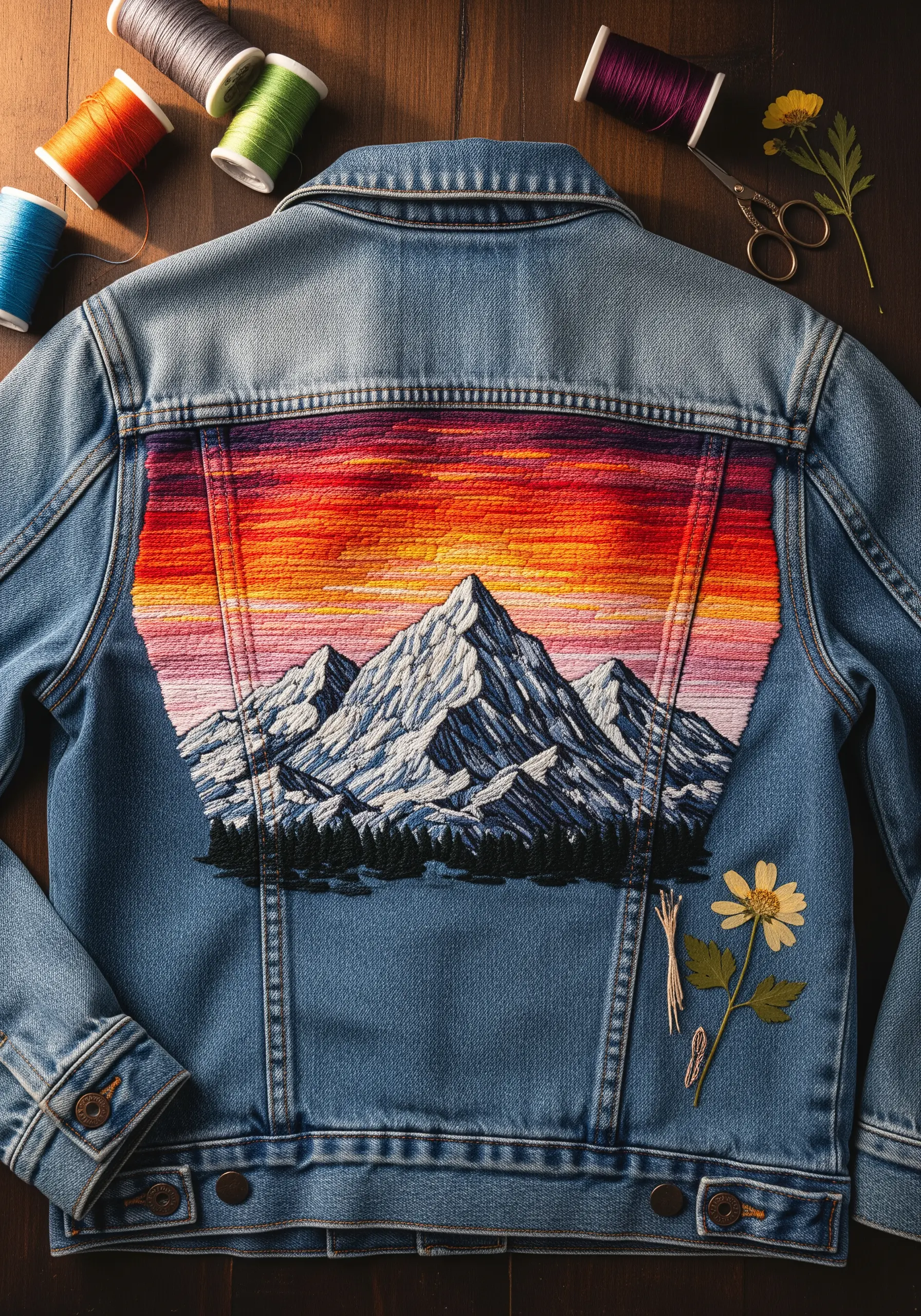
Transform the back of a denim jacket into a wearable canvas by using a thread painting technique.
For the sunset sky, blend multiple shades of red, orange, and yellow using single strands of floss and long-and-short stitches to create a seamless gradient.
Contrast the soft sky with sharp, dimensional mountains by using directional satin stitches in grays, blues, and whites to mimic the texture of rock and snow.
Use a heavy-duty stabilizer on the inside of the jacket to support the weight of the dense stitching and prevent the fabric from puckering.
2. Stitch a Personal Zodiac Chart
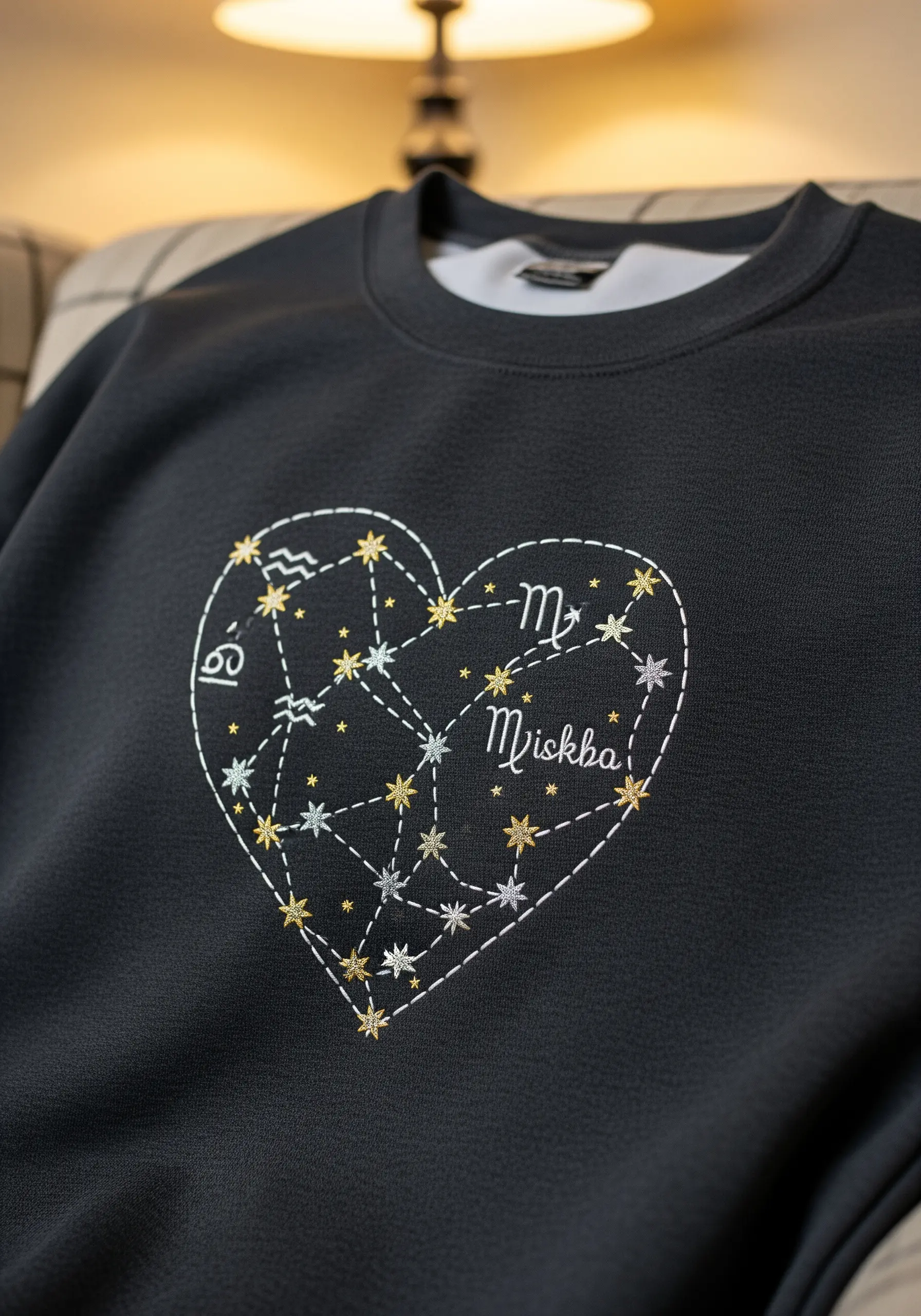
Embroider a custom constellation heart on a dark sweatshirt for a deeply personal gift.
Use a mix of white, silver, and gold metallic threads to differentiate between star types and add a subtle shimmer.
To make metallic threads easier to work with, use shorter lengths and a thread conditioner like beeswax to prevent tangling and fraying.
Use tiny French knots for smaller stars and satin-stitched star shapes for more prominent ones, creating a varied and celestial texture.
3. Add a Minimalist Line-Art Pocket Detail

Elevate a simple t-shirt with a clean, single-line portrait on the pocket.
Use a consistent backstitch or stem stitch to achieve a smooth, unbroken line that mimics an ink drawing.
Choose a thread with a bit of weight—like 3-4 strands of standard floss—to ensure the line is bold enough to stand out against the fabric.
This technique works best with a high-contrast color, like black thread on a white shirt, for a modern, graphic impact.
4. Master the Classic Monogrammed Cuff

Add a touch of timeless elegance to a dress shirt with a crisp, embroidered monogram on the cuff.
To achieve that raised, professional look, first outline the letters with a split stitch; this creates a perfect foundation for your satin stitches to rest against.
Lay your satin stitches closely together at a slight angle, ensuring each stitch is parallel to the last for a smooth, light-catching surface.
Using a high-quality, high-sheen thread will make the monogram pop and give it a luxurious finish.
5. Weave Texture into a Denim Pocket Seascape
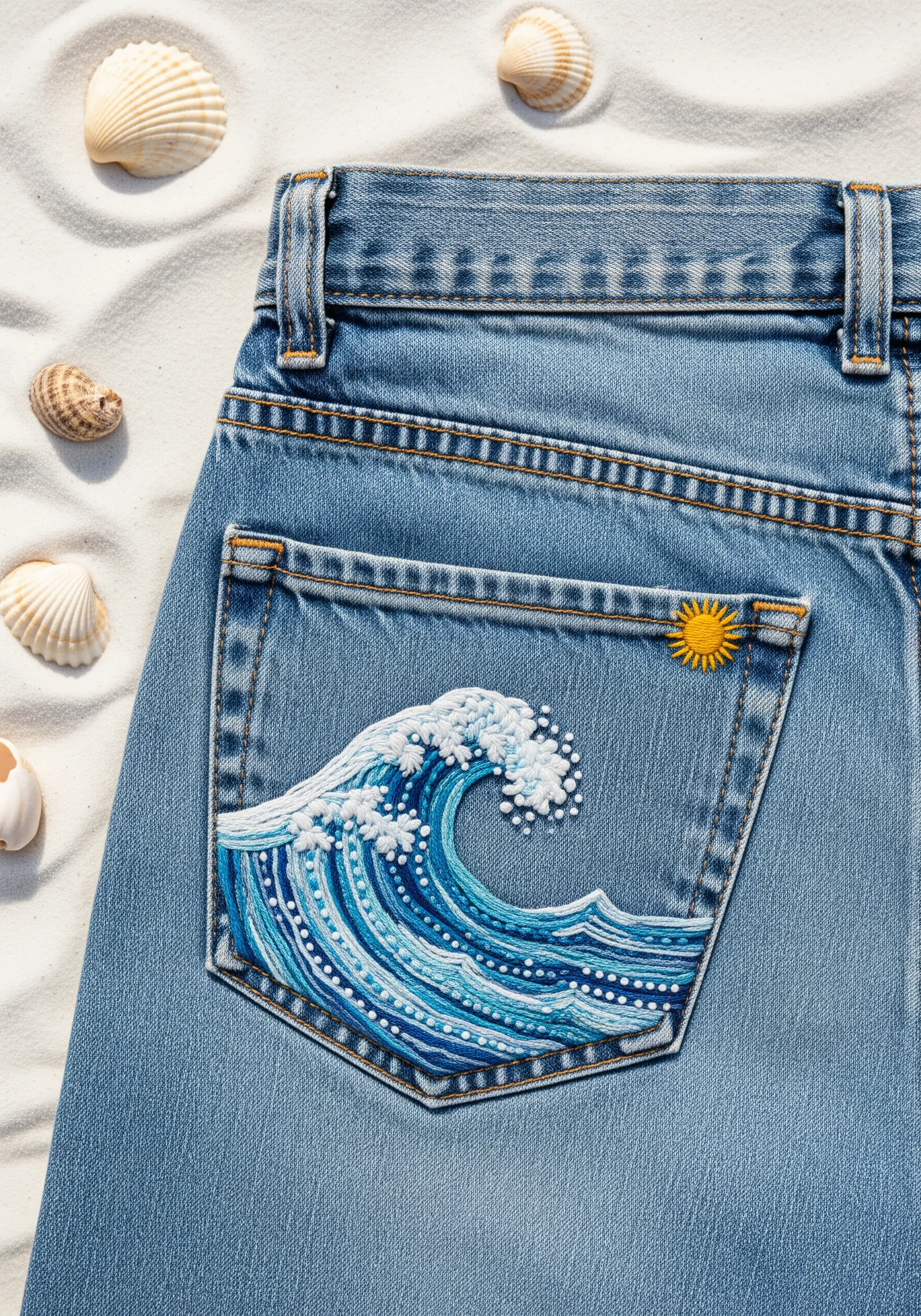
Capture the movement of the ocean by layering different stitches on a denim pocket.
Use directional satin stitches with multiple shades of blue to build the body of the wave, creating depth and flow.
Add clusters of white French knots of varying sizes along the crest of the wave to mimic the texture of sea foam.
Incorporate backstitched lines or chain stitches to define the layers of water, making the entire composition dynamic and visually engaging.
6. Design a Delicate Motif for Baby Apparel
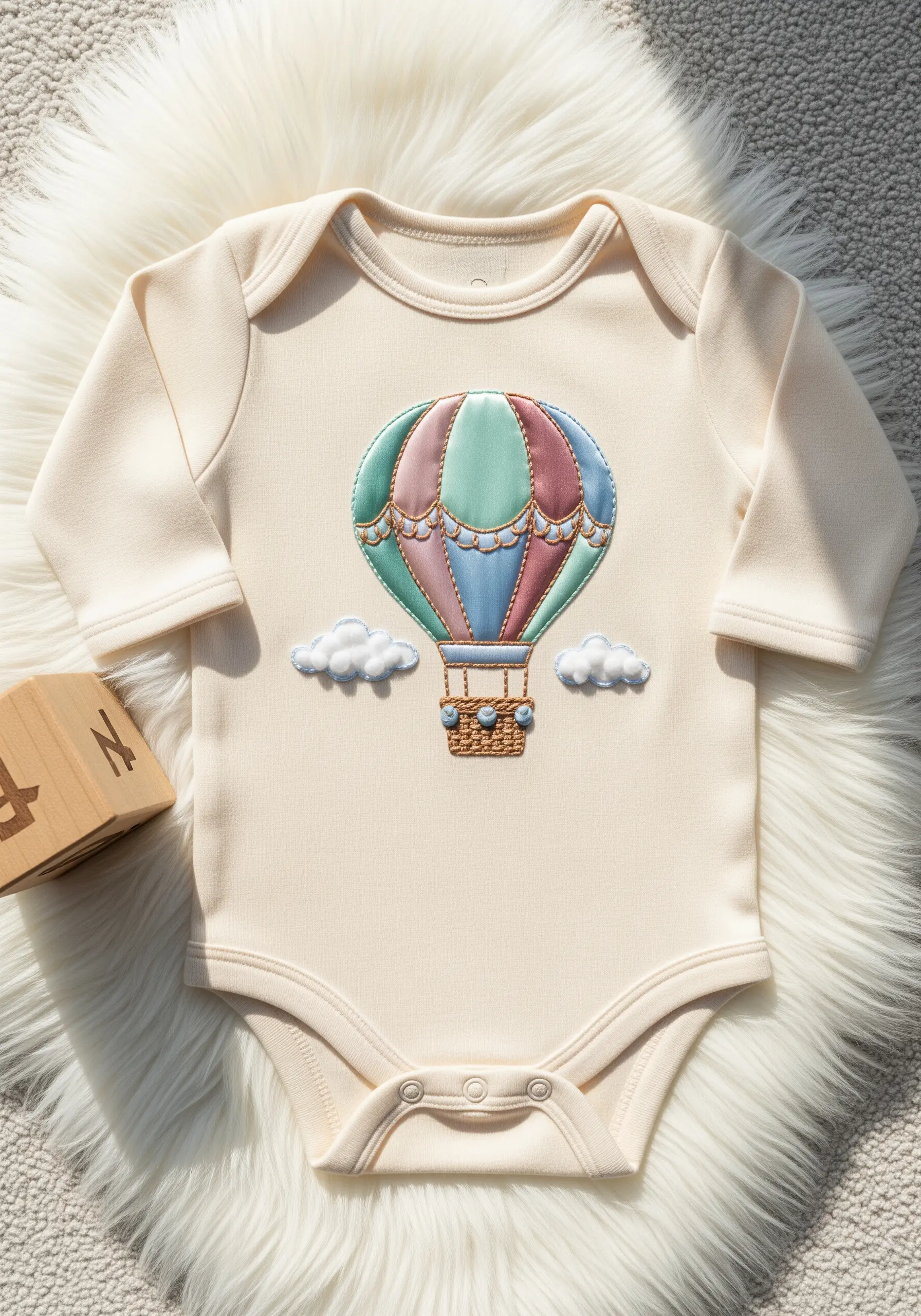
When embroidering on baby clothes, prioritize softness and a delicate touch.
Choose a simple design with smooth satin stitches and minimal texture to ensure it’s comfortable against a baby’s skin.
Always use a soft, iron-on stabilizer on the reverse side of the embroidery to cover the threads and prevent any irritation.
Select a gentle, pastel color palette and use only 2-3 strands of floss to keep the design feeling light and sweet, not heavy or stiff.
7. Add Subtle Botanicals to Cozy Knitwear
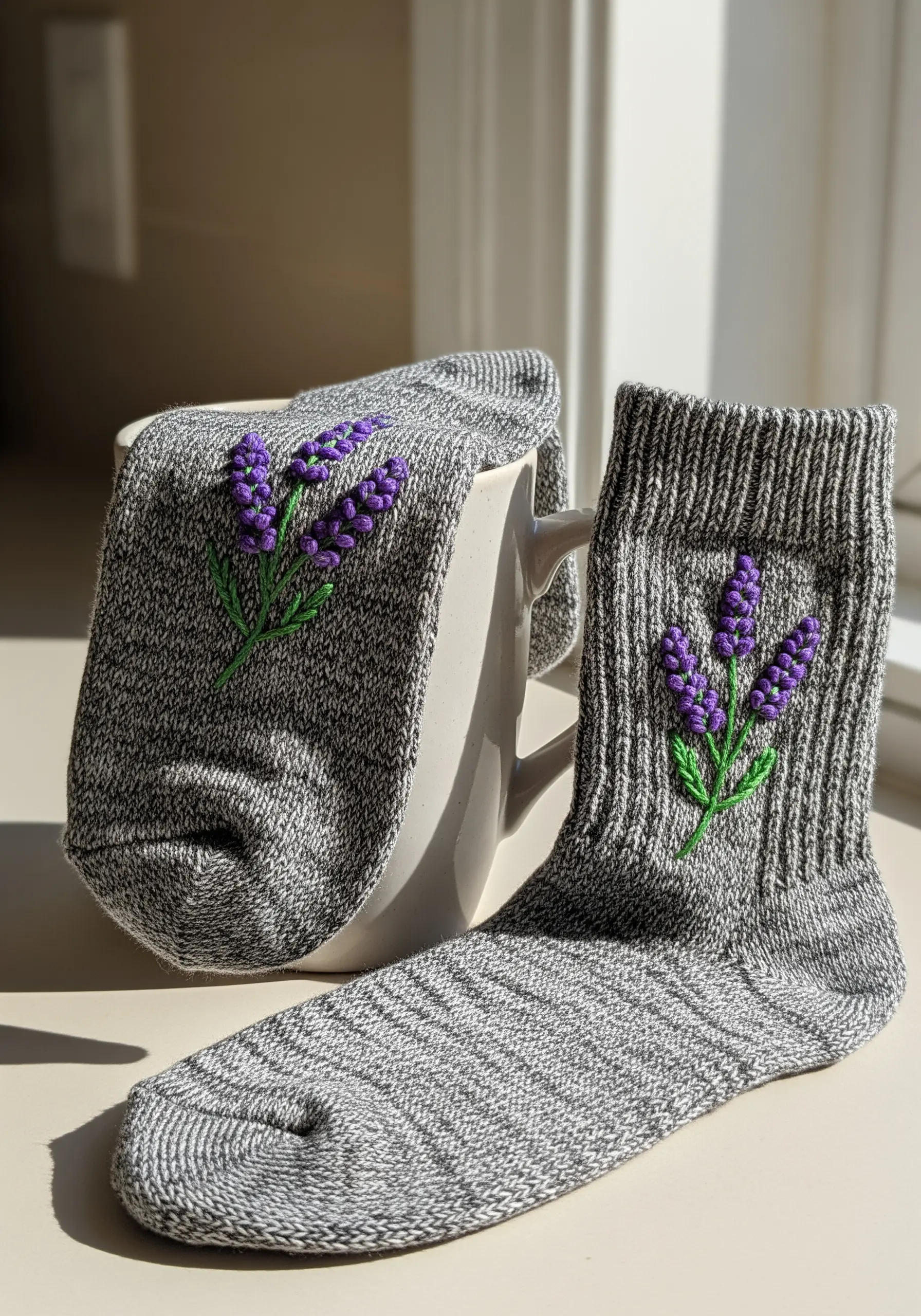
Embroidering on ribbed or knit socks requires a gentle touch to avoid distorting the fabric.
Use a simple design like a lavender sprig, which works well with the fabric’s natural stretch.
Keep your stitches slightly looser than you would on woven fabric to allow for movement, and use a ballpoint needle to avoid snagging the knit fibers.
A few well-placed French knots for the lavender buds and a simple stem stitch for the stalk are all you need for a charming finish.
8. Fill a Large Motif with Color-Blocked Satin Stitch
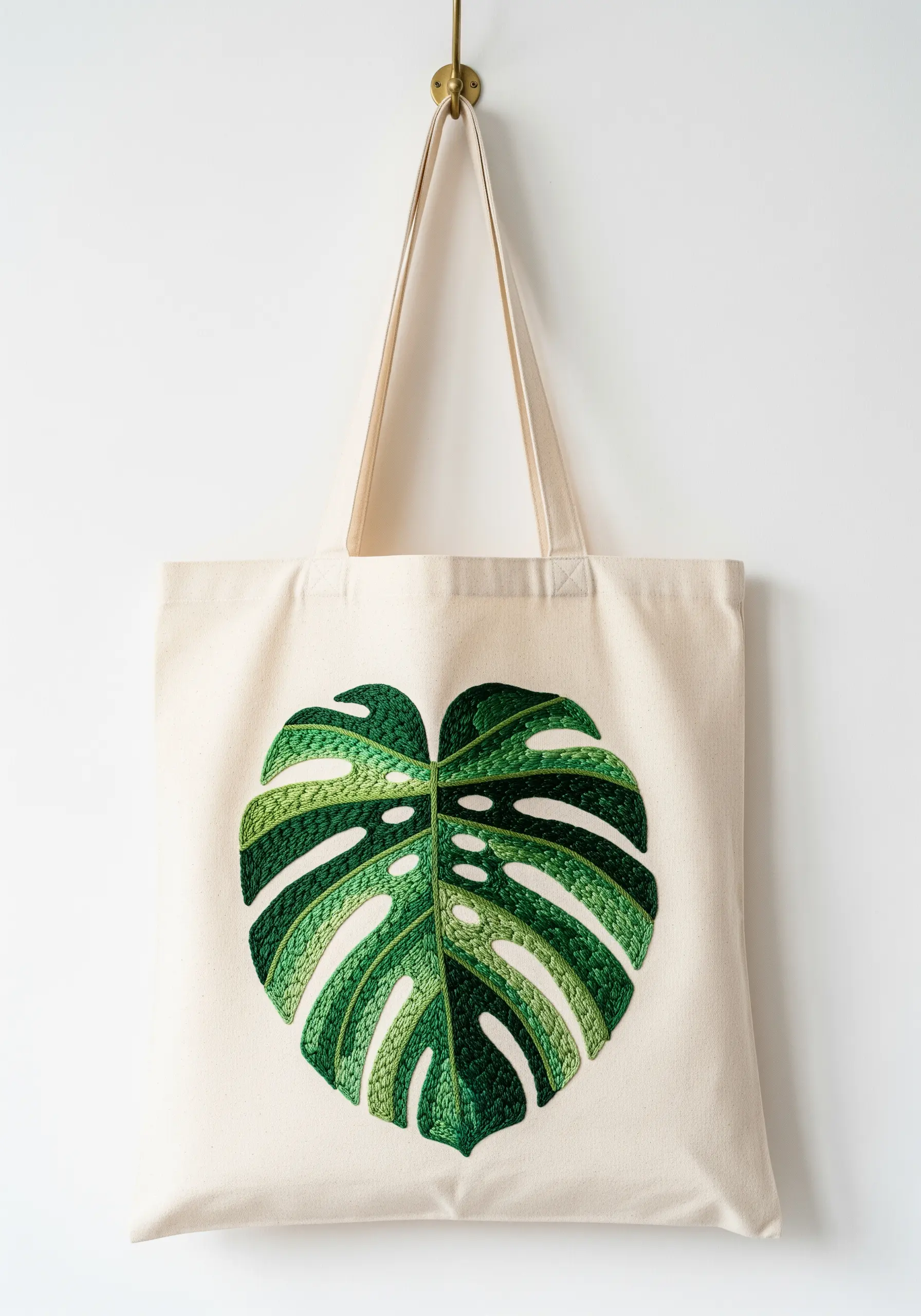
Turn a plain canvas tote into a bold statement piece with a large, color-blocked botanical design.
Break the large leaf shape into smaller, manageable sections, and fill each one with a different shade of green using a satin stitch.
To keep your satin stitches smooth and even across large areas, orient them in different directions within each section. This adds visual interest and also helps prevent gapping.
This is one of those tote bag embroidery patterns that transforms a simple item into something truly artistic.
9. Create a Rustic Herb Sampler on Linen
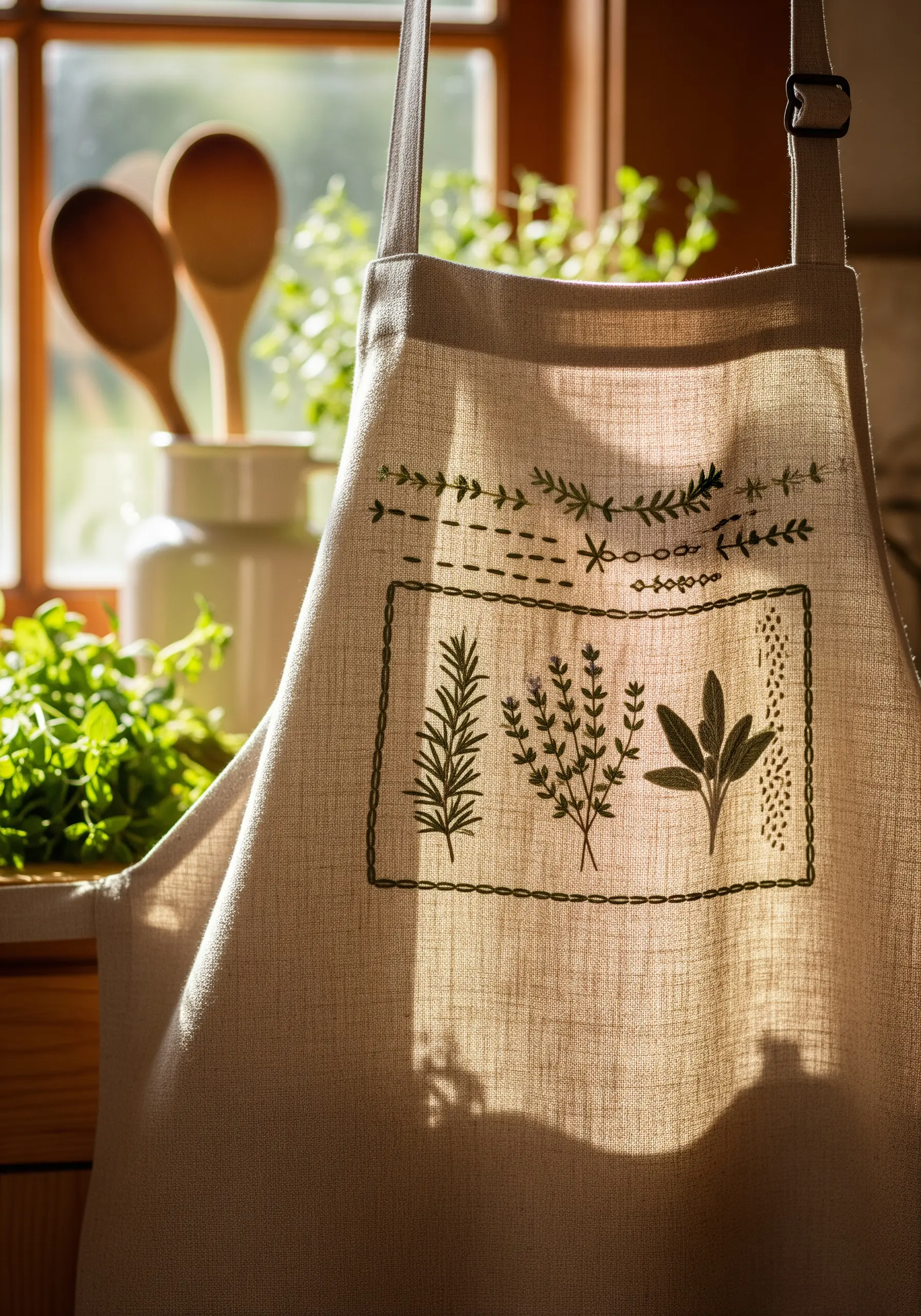
Embellish a linen apron with a delicate sampler of kitchen herbs for a gift that’s both beautiful and functional.
Use simple stitches like stem stitch for stalks, lazy daisy for leaves, and seed stitches for texture to create recognizable herb silhouettes.
Stitching with a single dark green thread on natural linen creates a classic, rustic aesthetic that feels timeless.
Frame your herb motifs with a simple running stitch border to give the design a finished, patch-like appearance.
10. Combine Textures for a Dimensional Motif
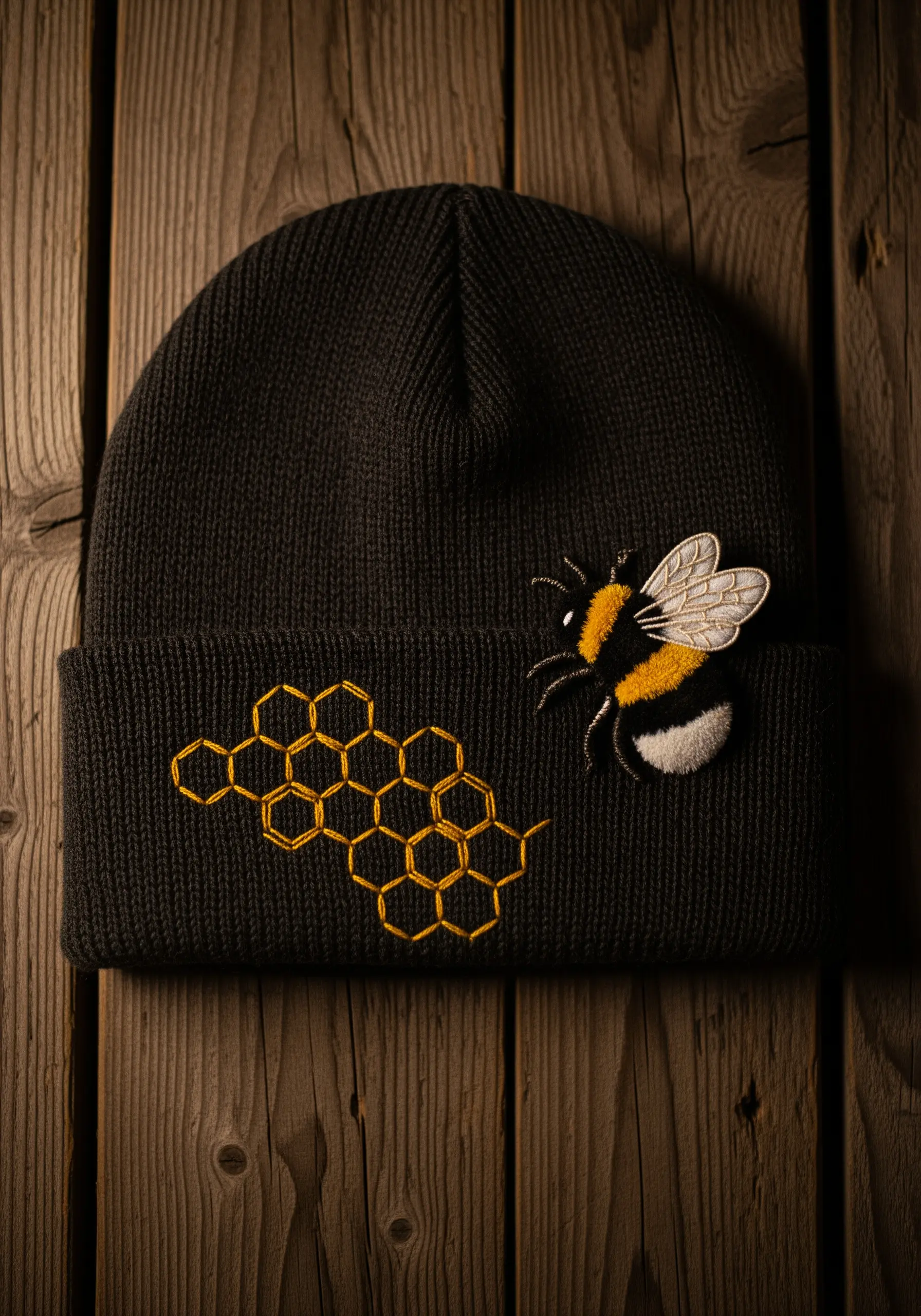
Create a design that pops by combining flat and raised embroidery techniques on a knit beanie.
Use a simple backstitch or split stitch in a contrasting color for the honeycomb outline, keeping the lines clean and geometric.
For the bee, use a padded satin stitch for the body by laying down a foundation of straight stitches first, then stitching over them to create a raised, 3D effect.
This contrast between the flat, graphic honeycomb and the dimensional, fluffy bee makes the entire design more dynamic and tactile.
11. Frame a Collar with Delicate Greenery
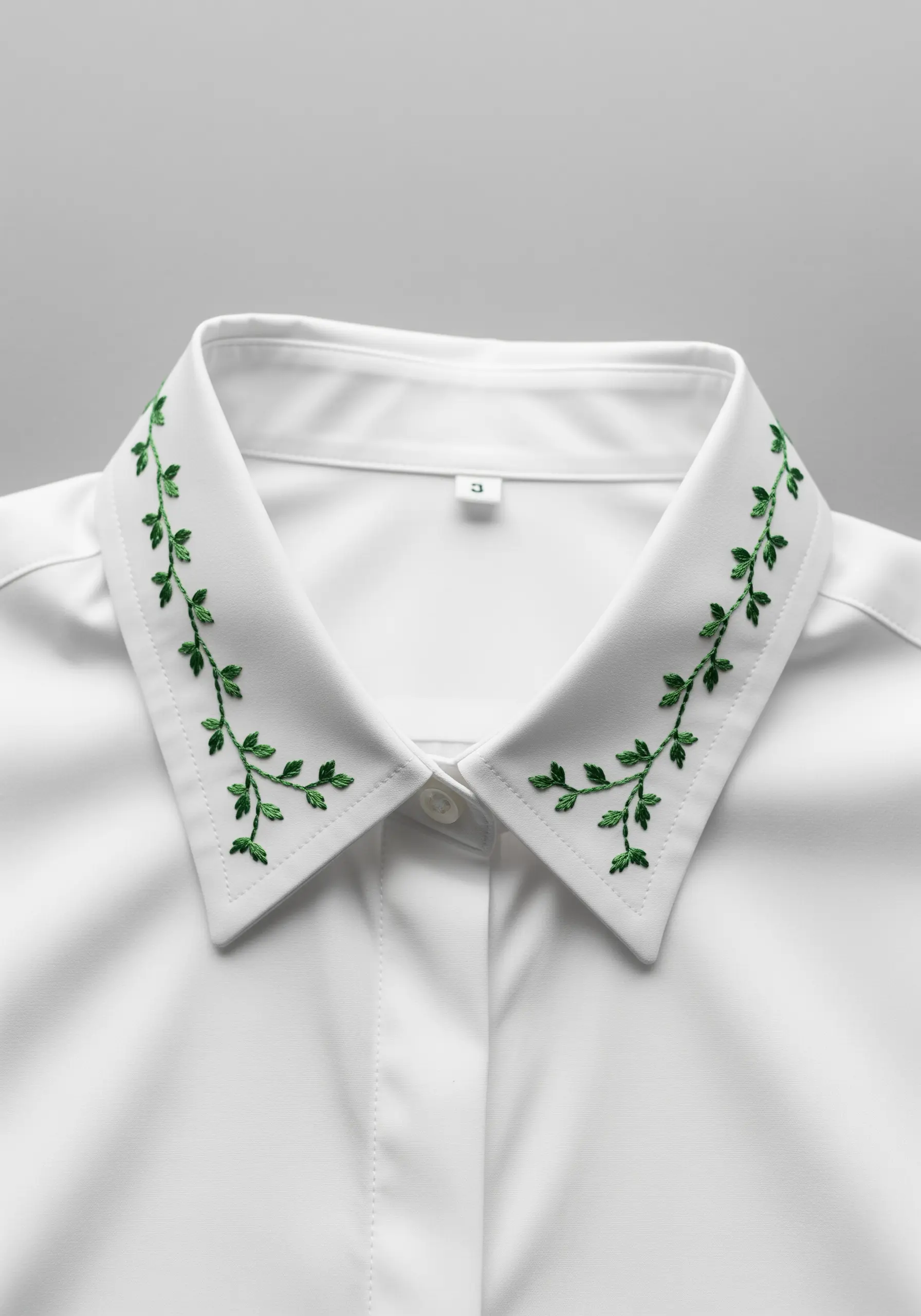
Transform a plain white shirt by adding a delicate, symmetrical vine along the collar points.
Use a fine stem stitch for the main vine to create a smooth, curving line that follows the shape of the collar.
Add tiny detached chain stitches (lazy daisies) for the leaves, ensuring they are evenly spaced for a balanced and elegant look.
Two strands of floss are all you need to keep this design looking refined and subtle, rather than overpowering the crispness of the shirt.
12. Craft a Celestial Moth as a Statement Back Piece
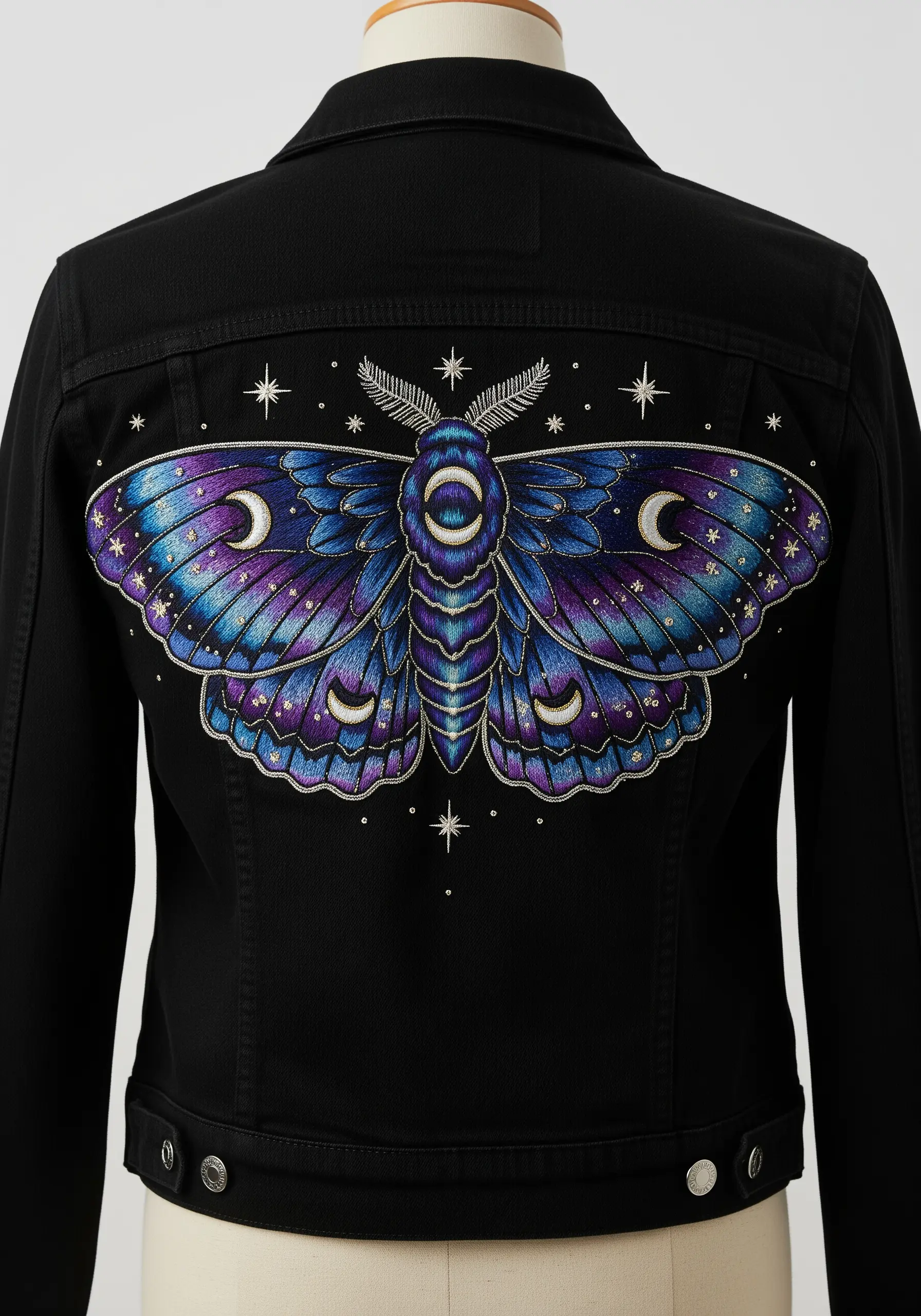
Make a bold statement on a black denim jacket with a large, intricately shaded celestial moth.
Use long-and-short stitch to blend deep blues, purples, and teals in the wings, creating a gradient that resembles a galaxy.
Incorporate silver or iridescent metallic thread for the stars, crescent moons, and antennae to add a magical shimmer that catches the light.
The high contrast of the vibrant colors against the black denim makes this a truly show-stopping piece of wearable art.
13. Personalize a Sleeve with a Meaningful Date
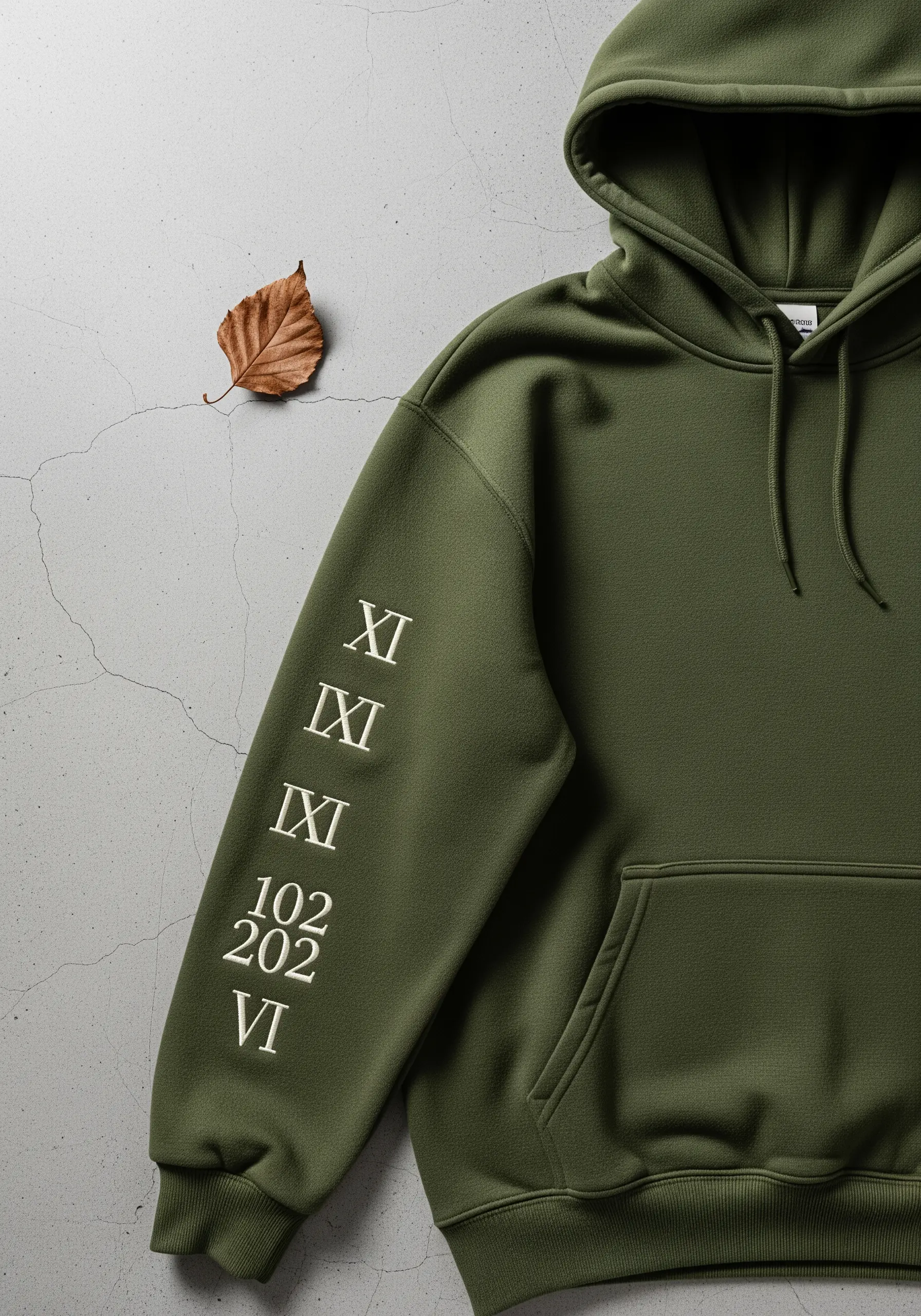
Add a subtle, personal touch to a hoodie by embroidering a significant date in Roman numerals down the sleeve.
Use a crisp, clean satin stitch for each numeral, ensuring the edges are sharp and the fill is smooth.
To achieve this precision on stretchy fleece fabric, use a water-soluble stabilizer on top to draw your pattern and a permanent stabilizer on the inside for support.
The minimalist design and unexpected placement make this a modern and meaningful way to commemorate an important day.
14. Add a Geometric Accent with Sashiko Stitching
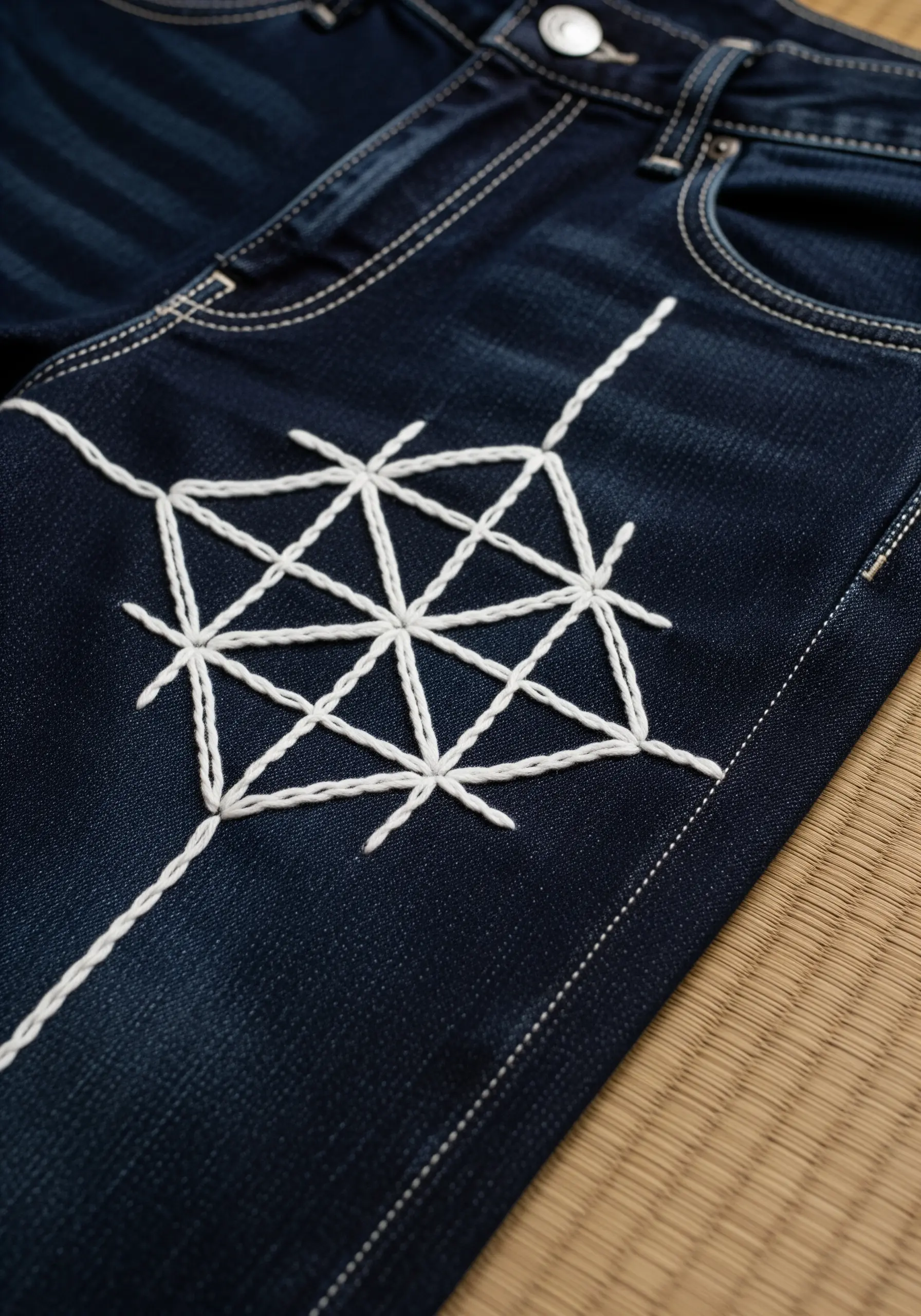
Incorporate the Japanese art of Sashiko for a beautifully minimalist and durable embellishment on dark denim.
This technique uses a simple running stitch in a repeating geometric pattern, traditionally with thick white cotton thread on indigo fabric.
The key is to maintain consistent stitch length and spacing for a rhythmic, clean look. The thread should sit neatly on the surface without pulling the fabric tight.
This method is not only decorative but also reinforces the fabric, making it a perfect way to mend or simply beautify a pair of favorite jeans.
15. Create a Playful Scene on a Shirt Pocket
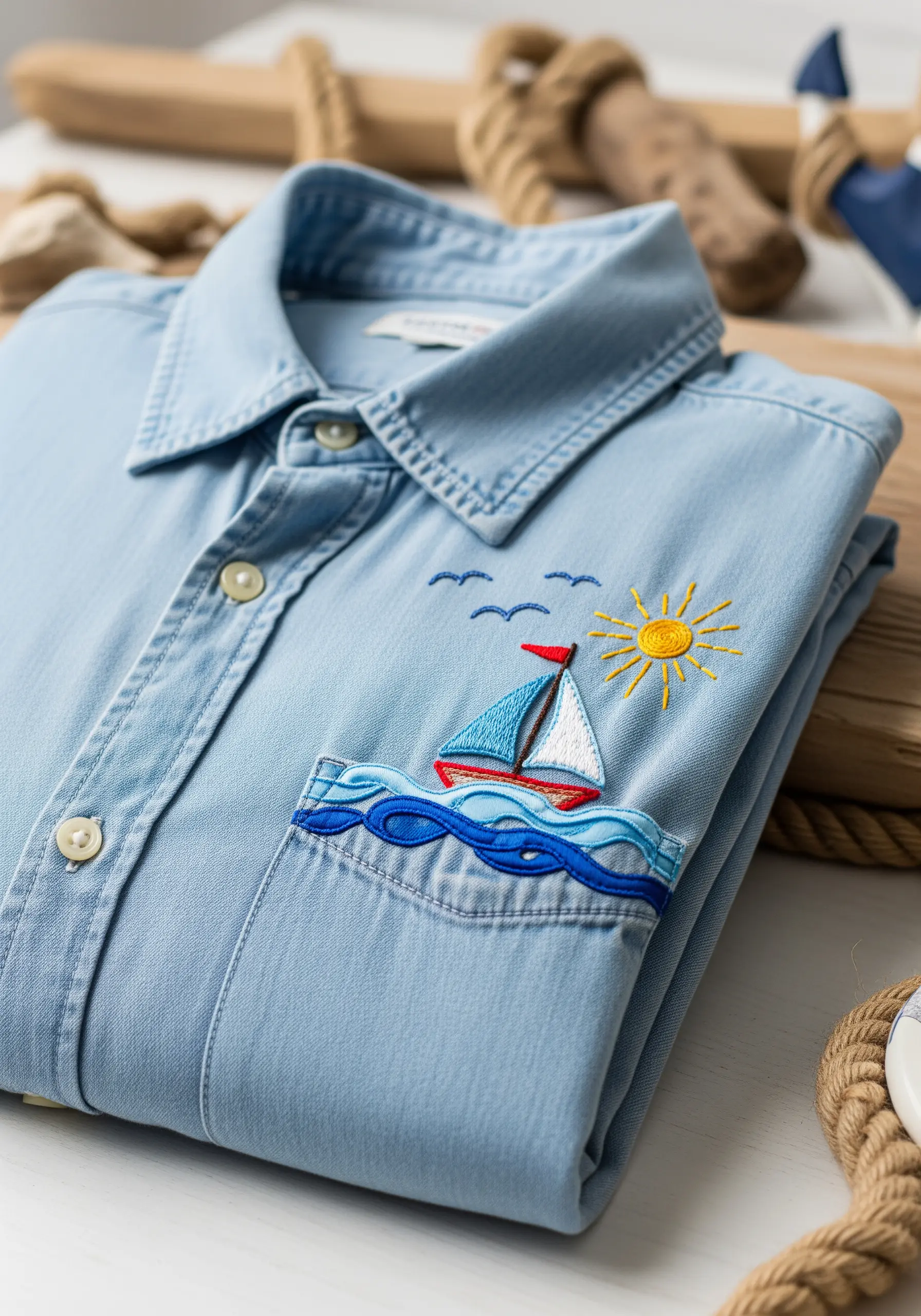
Turn a shirt pocket into a miniature diorama with a playful, narrative design.
Combine simple elements like a sailboat, waves, and a sun to tell a small story.
Use basic stitches: satin stitch for bold color fills on the boat and sun, and a layered backstitch or chain stitch for the texture of the waves.
This approach allows you to turn a small space into a focal point of charm and character, perfect for a chambray or denim shirt.
16. Embroider a Meadow Along a Hemline
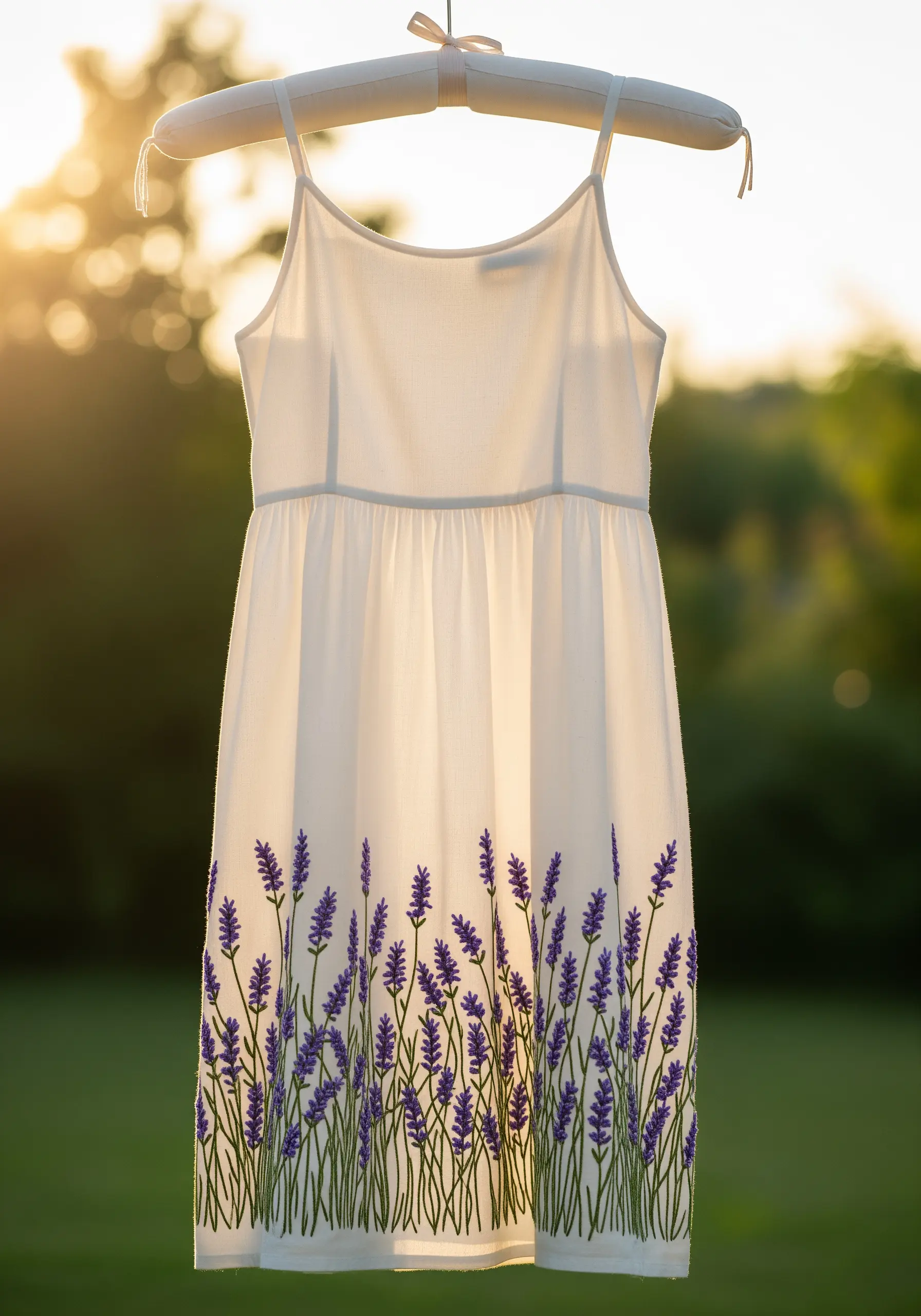
Give a simple summer dress an ethereal, romantic feel by stitching a field of lavender along the entire hem.
Create depth by varying the height of the lavender stems and slightly overlapping them. Use a simple backstitch for the stems in various shades of green.
Use French knots or small straight stitches in purples and blues for the lavender blossoms, clustering them at the top of each stem.
The sheer number of stitches creates a stunning visual impact, transforming the dress into a piece of wearable botanical art.
17. Stitch a Cozy Cabin Motif on Fleece

Add a rustic, cozy touch to a fleece pullover with a small, detailed cabin scene.
When stitching on high-pile fabric like fleece, use a water-soluble stabilizer on top; this prevents your stitches from getting lost in the texture and keeps your outlines crisp.
Use simple backstitches for the log details and satin stitches for the windows and trees. A touch of white thread for smoke from the chimney adds a charming final detail.
This kind of small, contained design is perfect for adding personality to textured outerwear without overwhelming it.
18. Make a Statement with Embroidered Typography
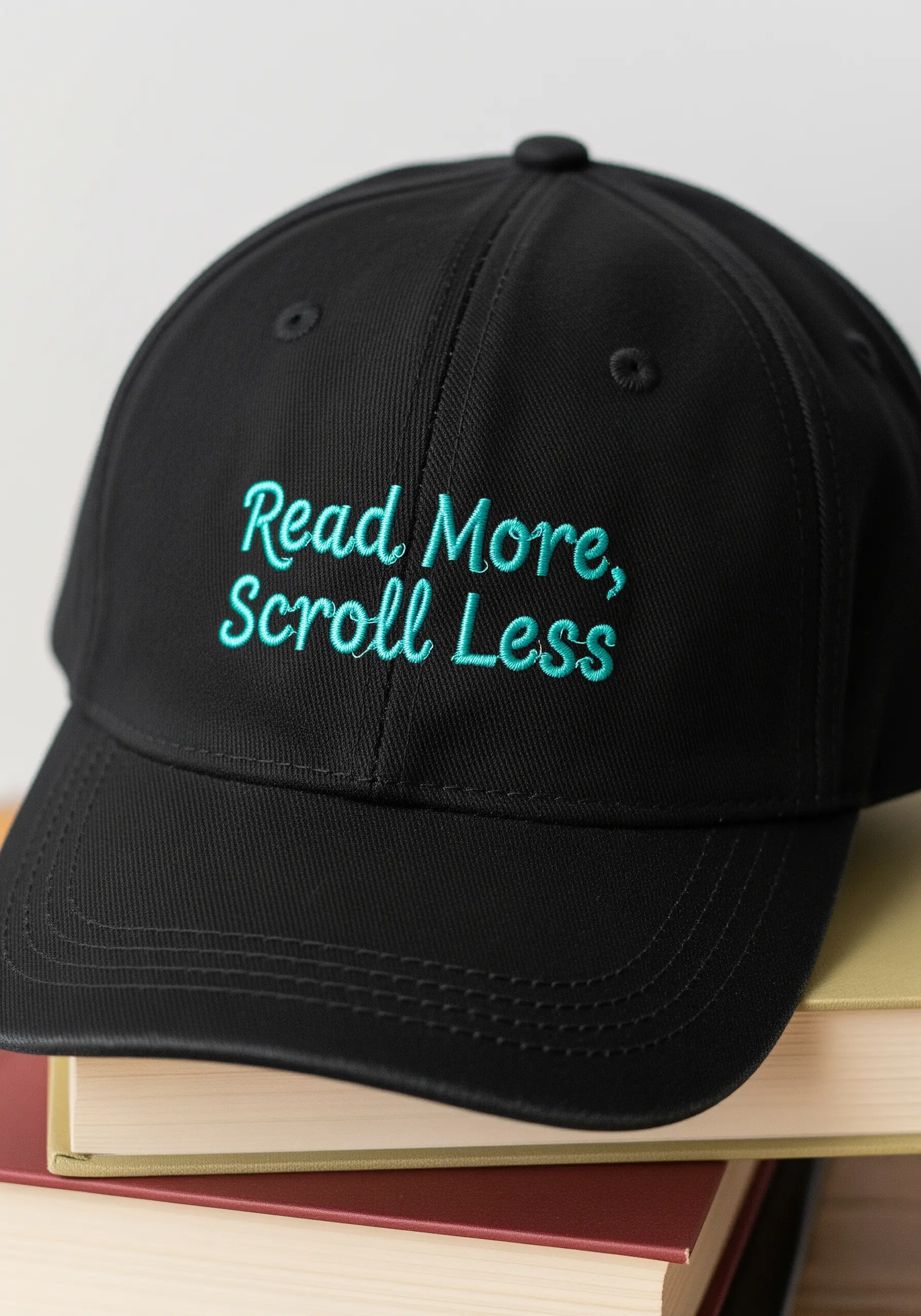
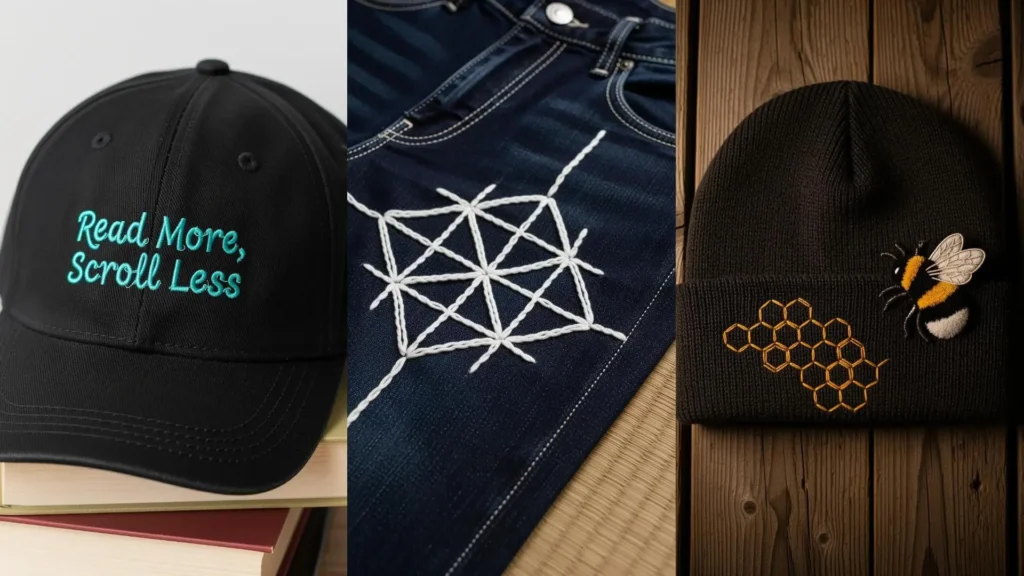
Use embroidery to turn a simple baseball cap into a vehicle for a personal message or a favorite quote.
For crisp, readable text, choose a font that isn’t too intricate. A combination of backstitch for thin lines and satin stitch for thicker strokes works beautifully.
Select a thread color that offers high contrast with the cap’s fabric—like this bright turquoise on black—to make the words pop.
Using a sticky, self-adhesive stabilizer on the inside of the cap will make it easier to stitch on the curved surface and prevent distortion.
19. Fill a Pocket with a Burst of Sunflowers

Cover the entire front pocket of denim overalls with a dense, cheerful field of sunflowers.
Use a woven wheel stitch (or spider web stitch) for the brown centers to create a raised, seed-like texture.
For the petals, use layered straight stitches or a detached chain stitch in bright yellows and golds to create a full, vibrant bloom.
By varying the size of the flowers and tucking a few leaves in between, you create a composition that feels abundant and joyful.
20. Outline a Skyline Around a Collar
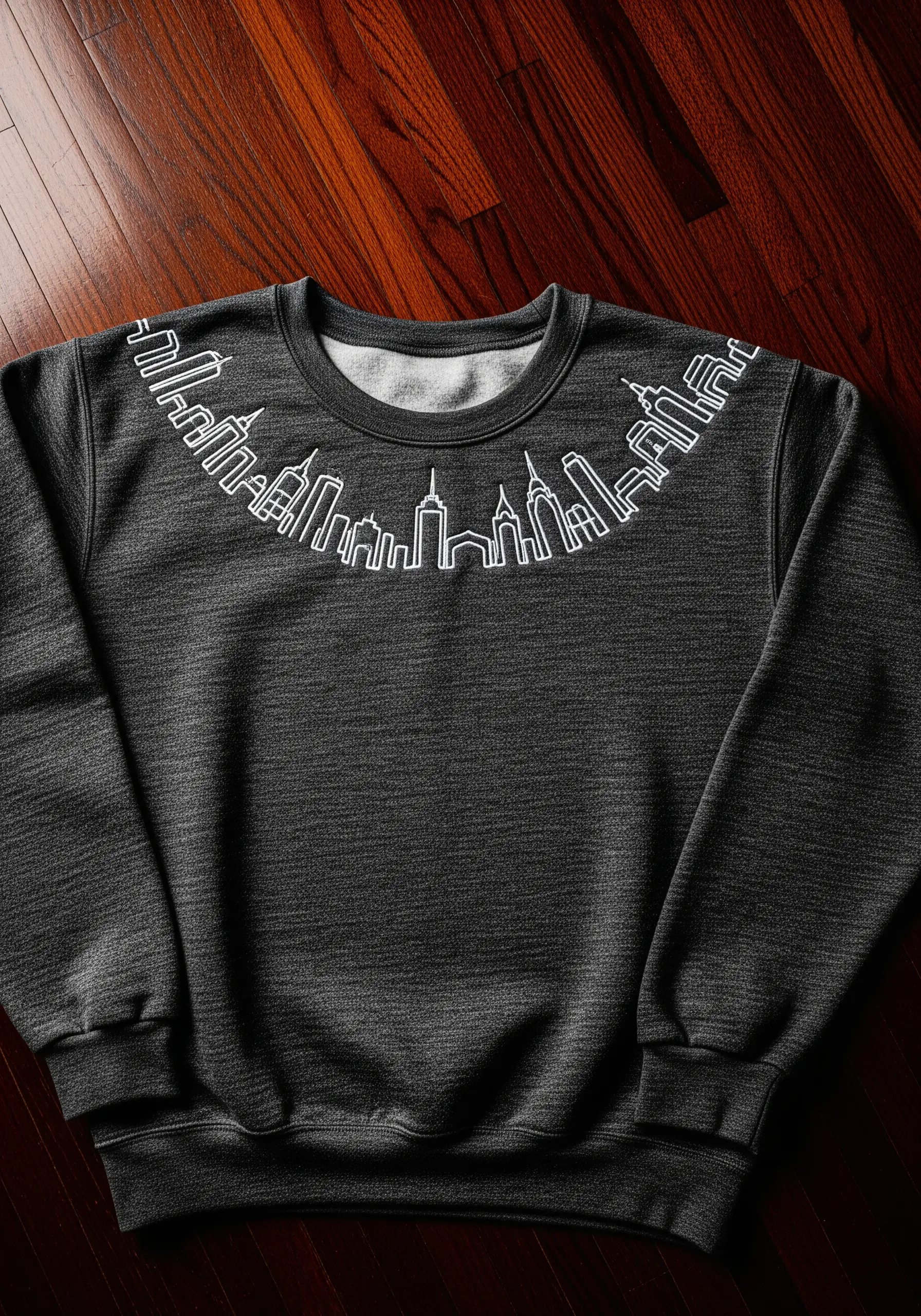
Create a sophisticated, modern design by stitching a minimalist city skyline around the neckline of a sweatshirt.
Use a simple backstitch with 2-3 strands of white floss on a dark, heathered fabric for a clean, architectural look.
The key to success is careful pattern transfer; ensure the design is perfectly centered and symmetrical before you begin stitching.
This understated placement is unexpected and stylish, turning a casual garment into a tribute to a beloved city.
21. Create Geometric Art with Couching Stitch
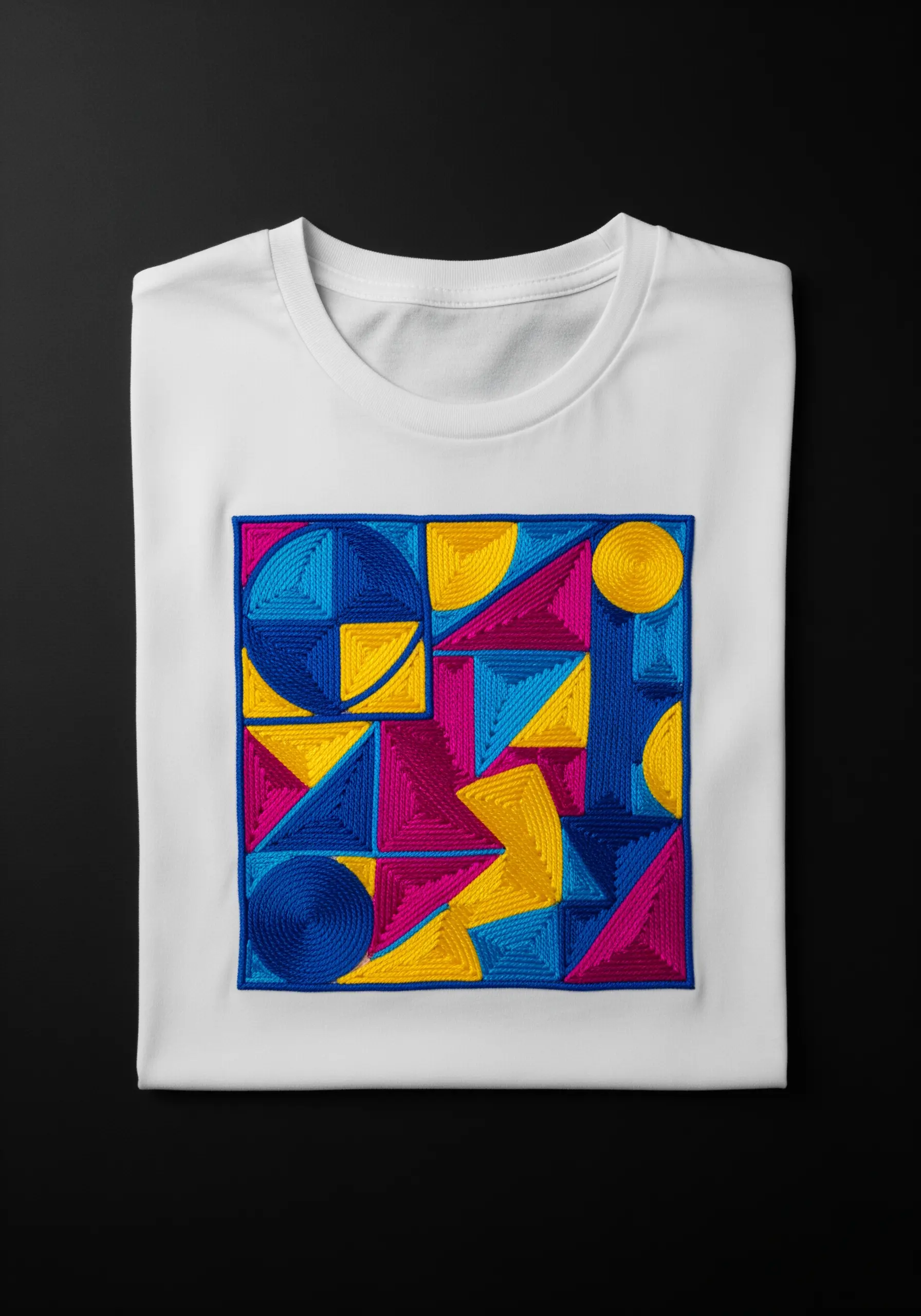
Achieve a bold, graphic look on a t-shirt by combining geometric shapes with a couching technique.
Instead of filling shapes with thousands of tiny stitches, lay down thick yarn or multiple strands of embroidery floss and tack it in place with a second, thinner thread.
This method allows you to create dense, textured color blocks with incredible precision and speed.
The contrast between the thick, couched yarn and the flat fabric surface creates a sculptural effect that is both modern and tactile.
22. Scatter Autumnal Motifs Across a Yoke
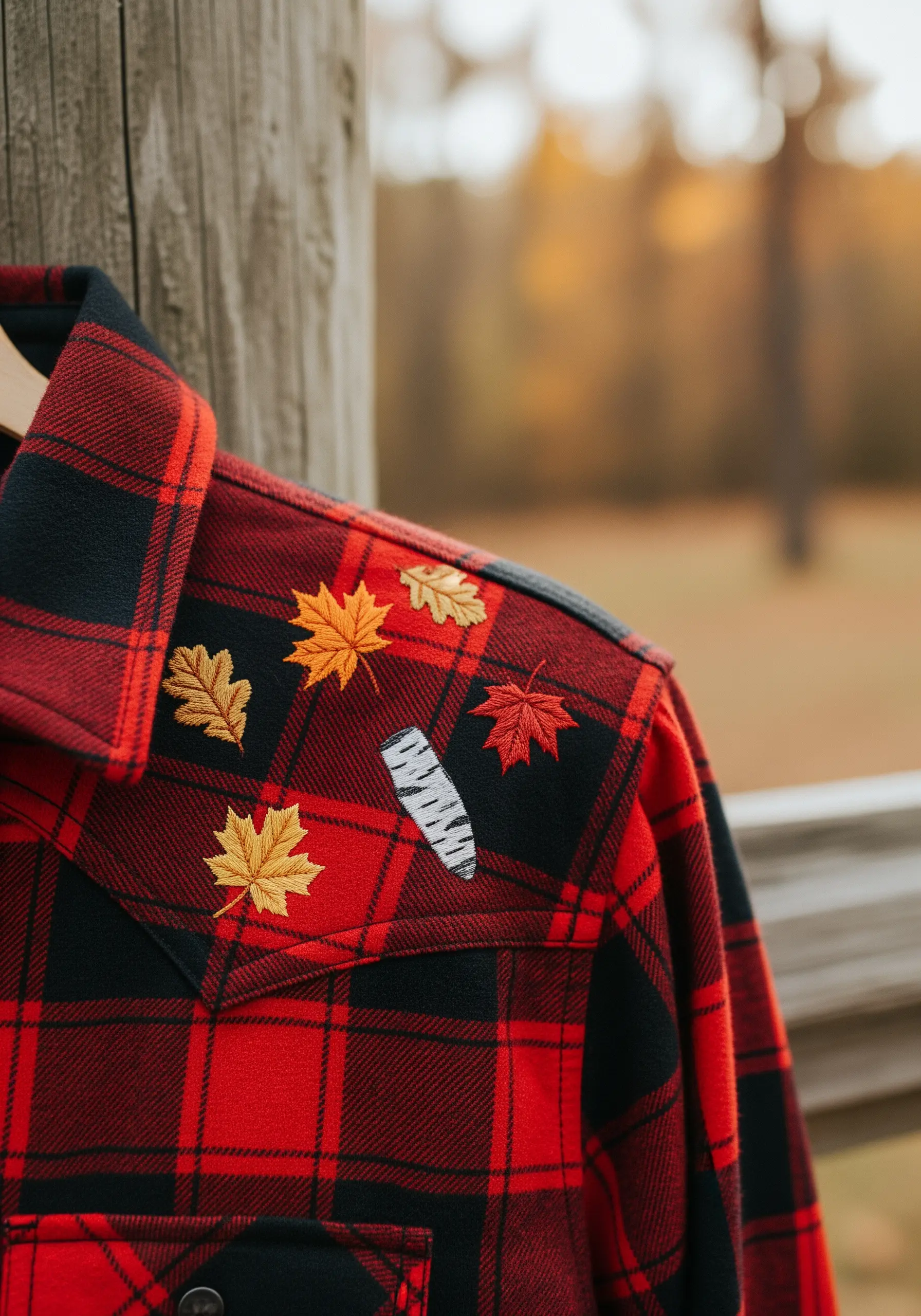
Embellish a plaid flannel shirt with a scattering of small, autumnal motifs for a seasonal touch.
Focus the embroidery on a specific area, like the yoke or shoulders, to create an intentional design feature rather than a random placement.
Use a mix of stitches to create varied textures: satin stitch for the solid maple leaves, long-and-short stitch for the birch bark, and backstitch for delicate leaf veins.
These leaf shape ideas for embroidering integrate beautifully with the pattern of the shirt, enhancing its rustic charm.
23. Add a Delicate Floral Vine to an Ankle Cuff
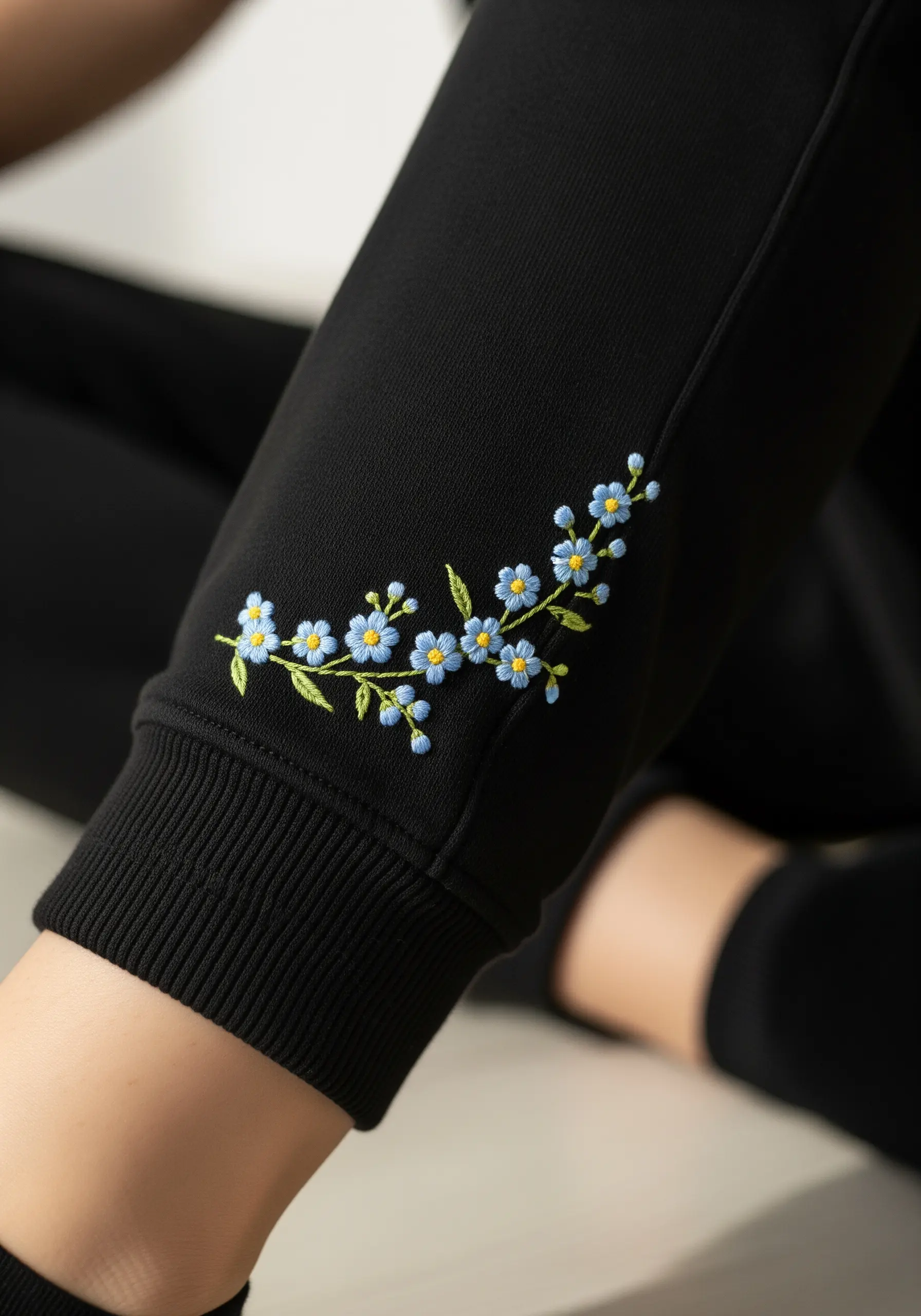
Elevate a pair of simple black joggers with a delicate vine of forget-me-nots wrapping around the ankle cuff.
Use lazy daisy stitches for the tiny blue petals and a single French knot in a contrasting yellow for the center of each flower.
A graceful, curving stem stitch in a light green connects the blossoms and gives the design a natural, organic flow.
This small, unexpected placement adds a touch of feminine detail to comfortable loungewear, making it feel special.
24. Embellish a Lapel with an Iridescent Feather
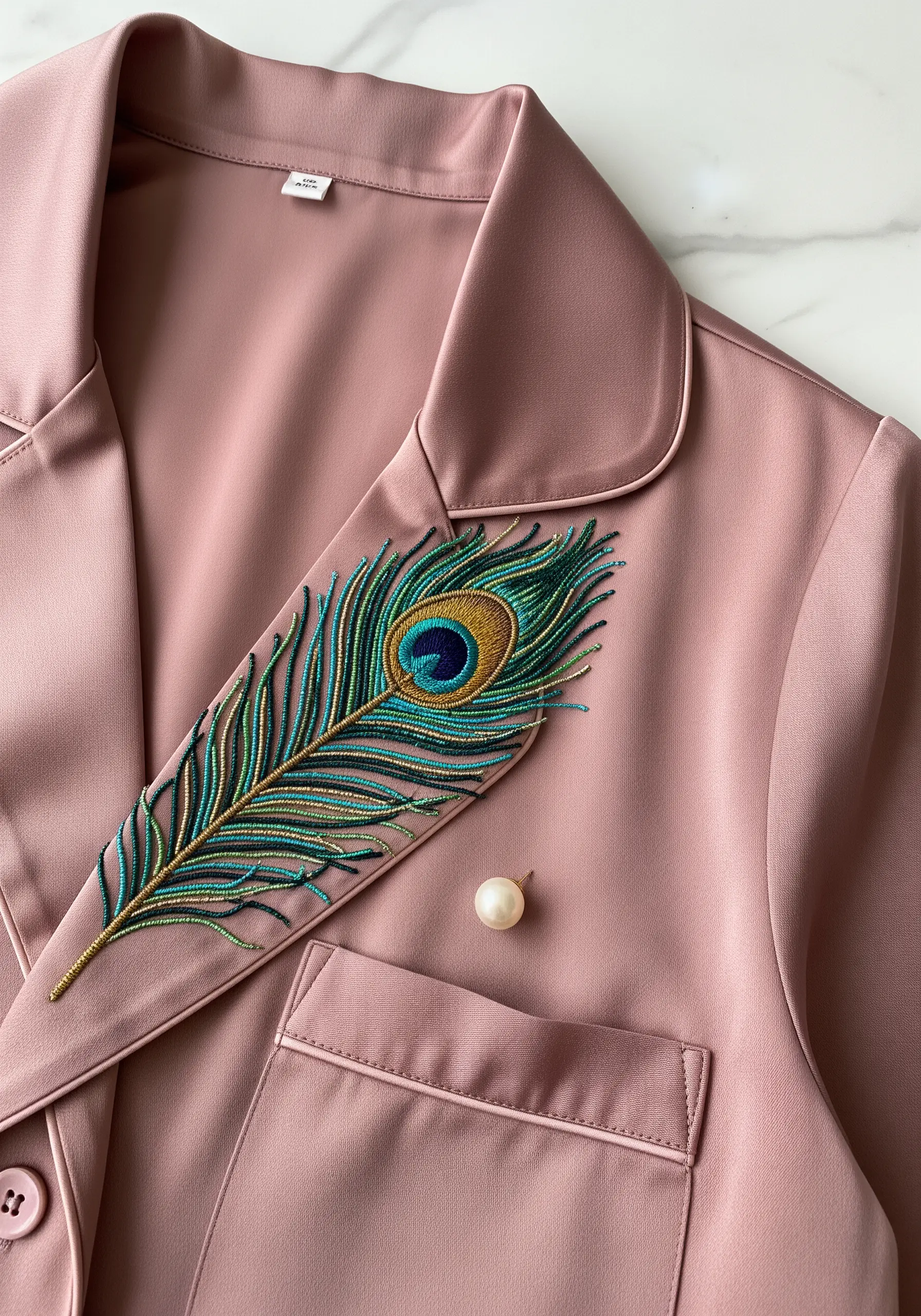
Add a touch of opulent detail to a silk pajama top with an elegantly embroidered peacock feather on the lapel.
To capture the feather’s iridescence, use a palette of jewel-toned threads—blues, greens, teals, and golds—and blend them carefully with long, straight stitches.
Arrange the stitches to radiate outwards from the central eye of the feather, mimicking its natural structure.
The smooth, glossy finish of the silk fabric enhances the sheen of the threads, creating a truly luxurious and eye-catching embellishment.
25. Apply a Bold Appliqué Rainbow
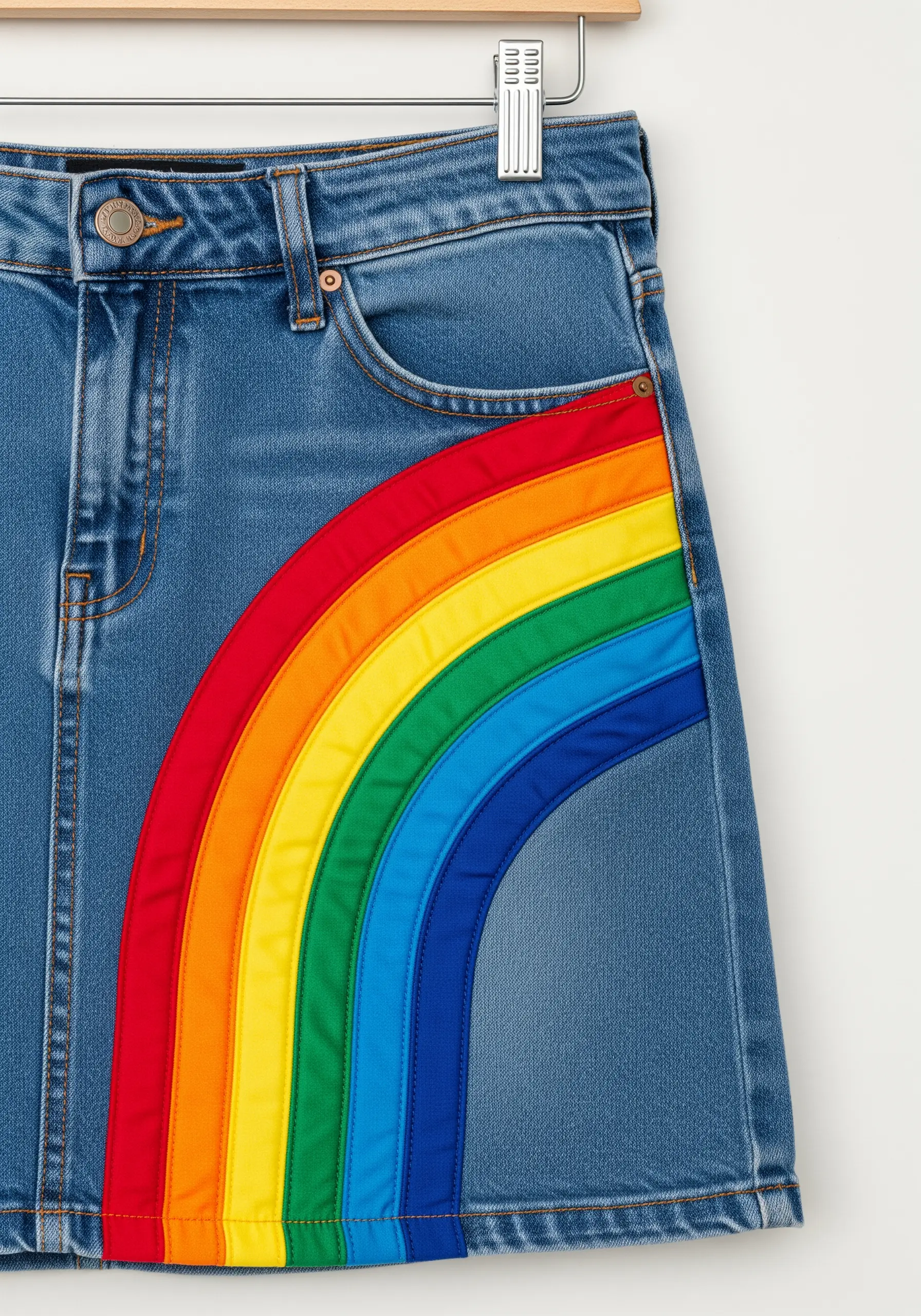
Create a vibrant, graphic statement on a denim skirt using fabric appliqué secured with embroidery.
Cut precise arcs from different colored fabrics and arrange them to form a rainbow. Pin or use a temporary fabric adhesive to hold them in place.
Secure each colored band with a neat, matching satin stitch along the edges. This not only attaches the fabric but also creates a clean, bold outline for each color.
This technique is perfect for adding large blocks of color to clothing without the time commitment of filling the entire area with stitches.
26. Design an Ornate Monogram for Terrycloth
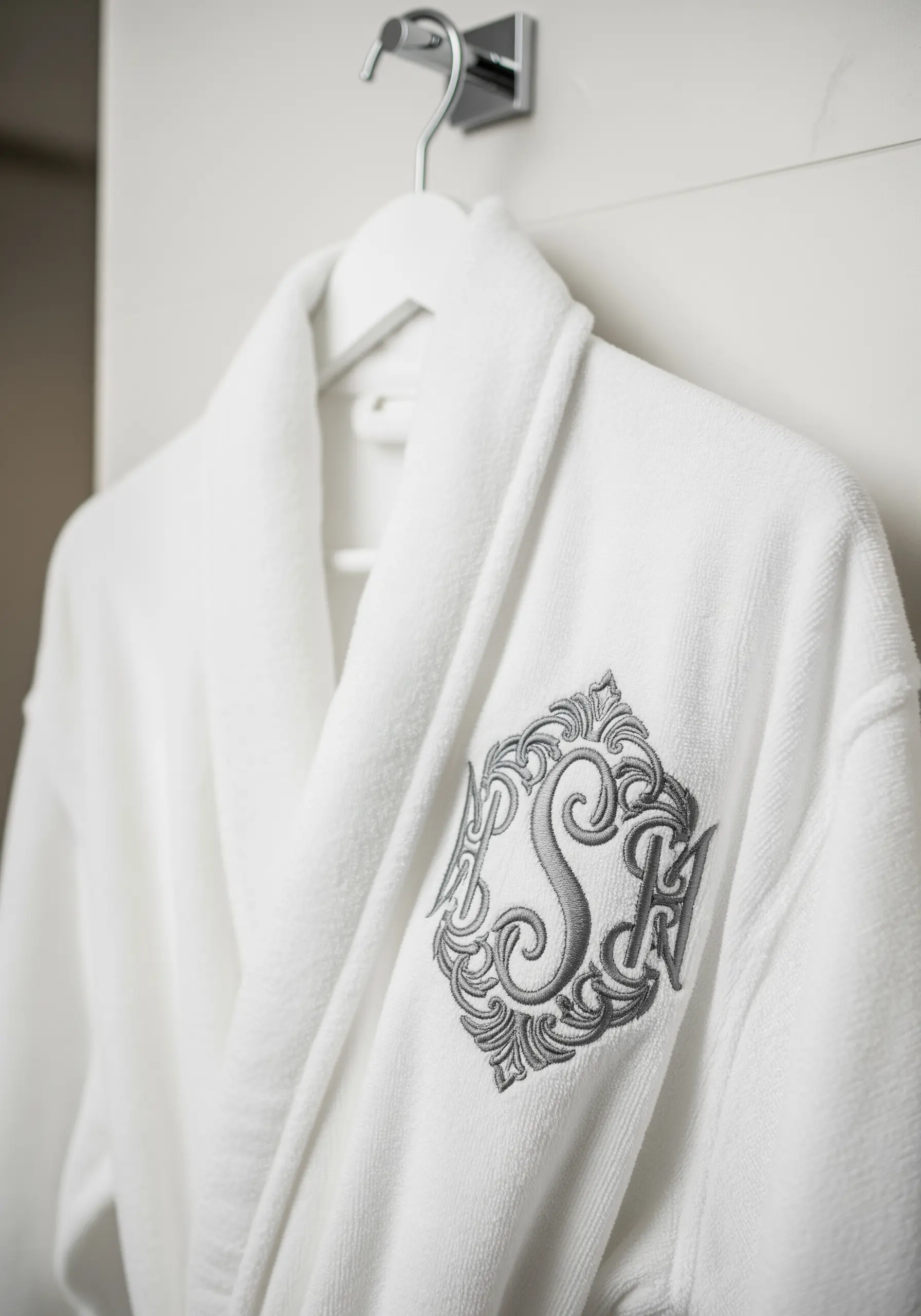
Embroidering on a plush, high-pile fabric like a terrycloth robe requires a specific approach to ensure the design stands out.
Use a water-soluble stabilizer on top of the fabric before stitching. This creates a smooth surface and prevents the threads from sinking into the terry loops.
Choose an intricate, ornate monogram style that has enough substance to hold its own against the thick texture of the robe.
A dense satin stitch or a pattern fill stitch will provide the best coverage and result in a crisp, professional-looking design that feels incredibly luxurious.
27. Create a Padded Appliqué for a 3D Effect
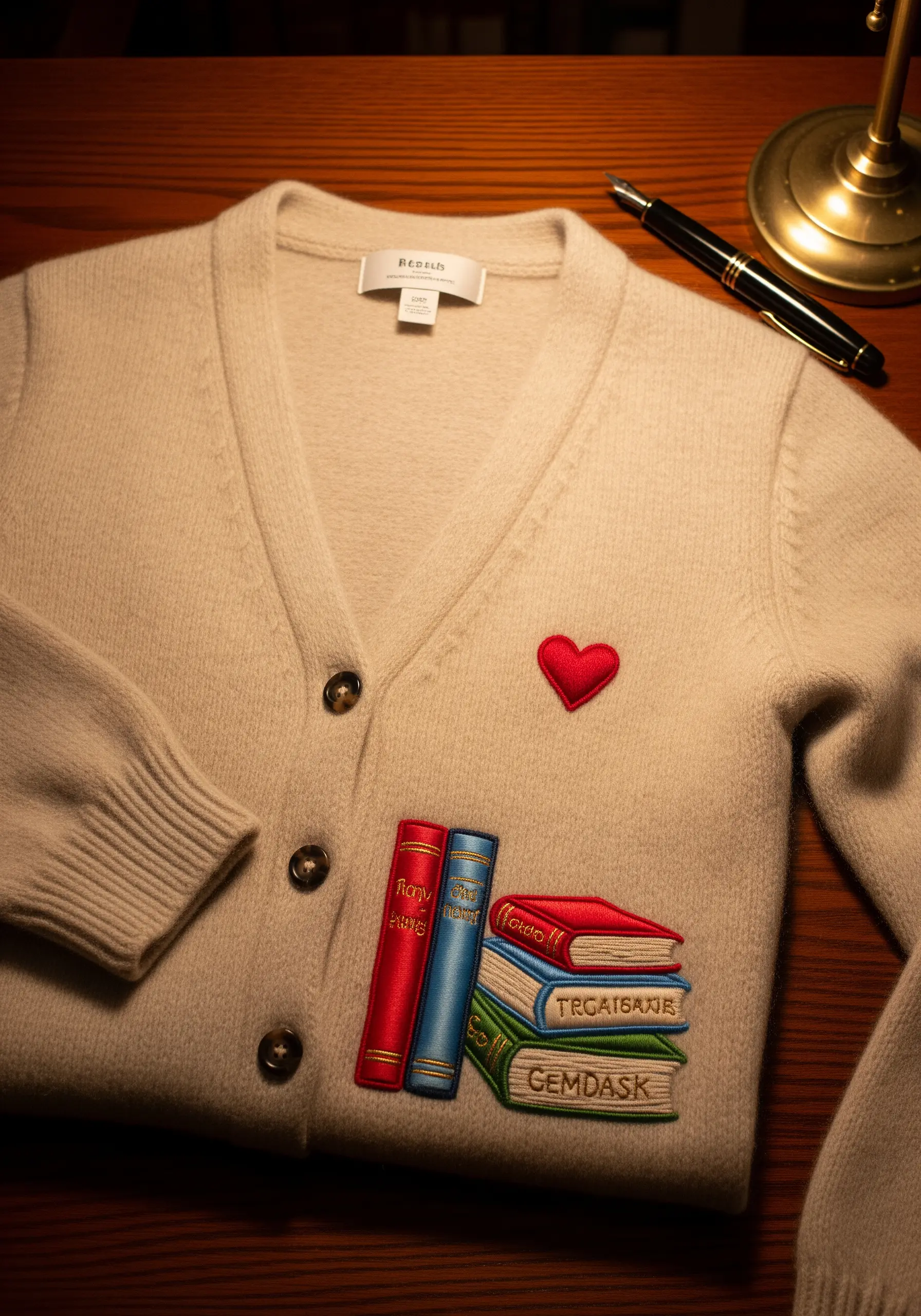
Give your embroidery a soft, three-dimensional quality by using a padded appliqué technique on a soft knit cardigan.
Cut your shape (like the books and heart) from felt, and place a small amount of stuffing or another layer of felt underneath before tacking it to the garment.
Cover the felt shape completely with tight, neat satin stitches, wrapping the thread around the edges to fully enclose the padding.
This creates a raised, sculptural element that adds both visual interest and a delightful tactile quality to your gift.