

Perhaps you’ve mastered the basic stitches, but now you find yourself looking at your finished hoops and feeling that something is missing. You’re ready to move beyond simply following a pattern and start creating pieces that feel truly intentional, polished, and alive.
Think of thread not just as a color, but as a texture. Consider the weight of your fabric not just as a background, but as a silent partner in your design. The ideas that follow are not just projects; they are invitations to refine your eye and your technique.
Here, you will discover how a simple shift—in scale, in composition, in the choice of a single stitch—can transform your work from a pleasant craft into a piece of personal, lasting art. This is your indoor garden, one you cultivate with patience, thread, and a deeper understanding of your craft.
1. Master the Large-Scale Botanical Statement
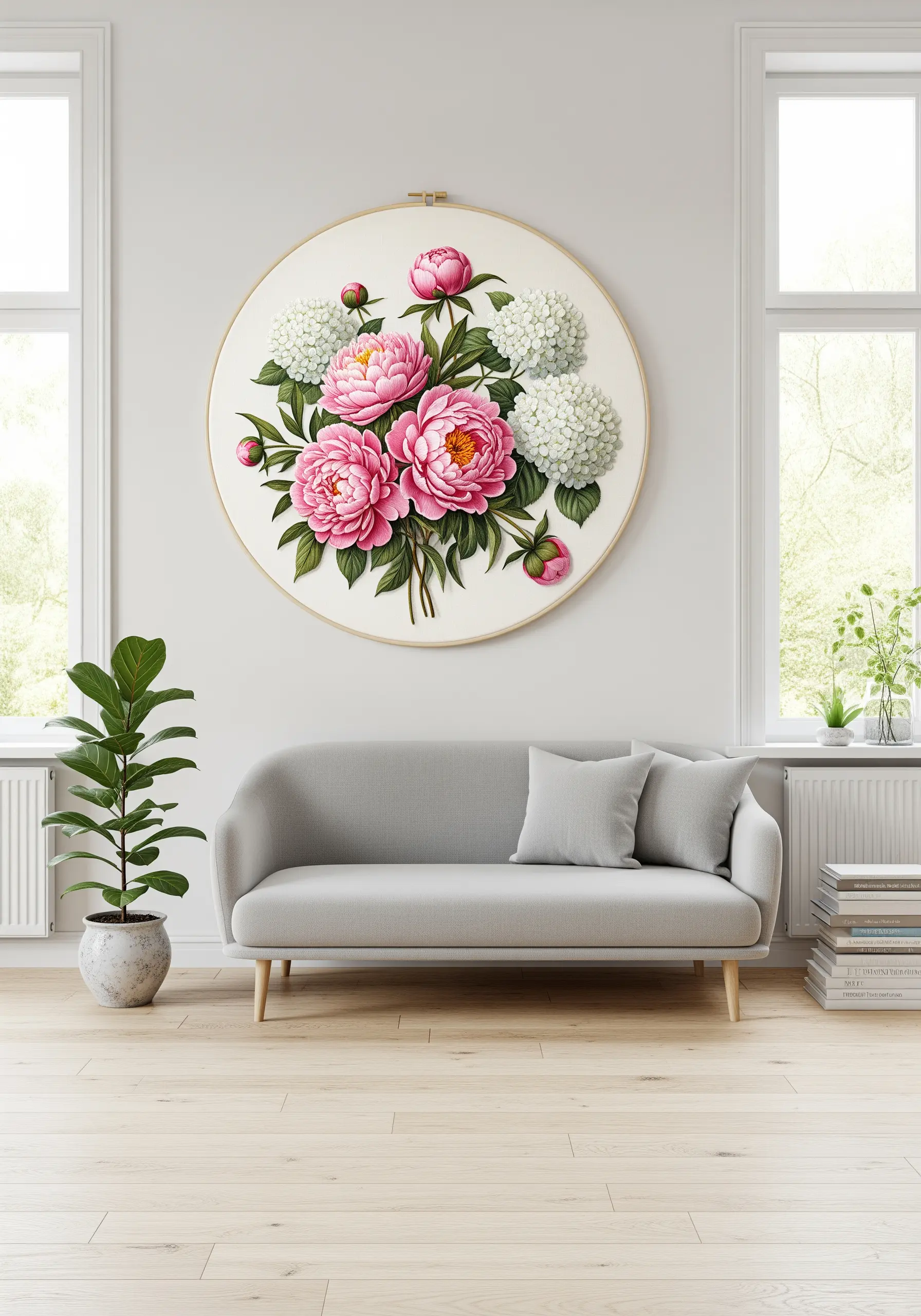
To create a dominant focal point, scale up your design to fill an oversized hoop (18 inches or larger).
Work on a sturdy, high-count linen or cotton canvas that can support the weight of the thread without sagging.
For large fill areas like petals, switch from standard six-strand floss to pearl cotton; its indivisible twist covers ground more quickly and adds a subtle, luminous texture.
Achieve realistic floral gradients in the peonies by using a long-and-short stitch, blending at least three shades of pink from light to dark.
Create the dense, clustered texture of the hydrangeas with hundreds of tightly packed French knots in varying shades of white and cream.
2. Curate a Wildflower Hoop Gallery Wall
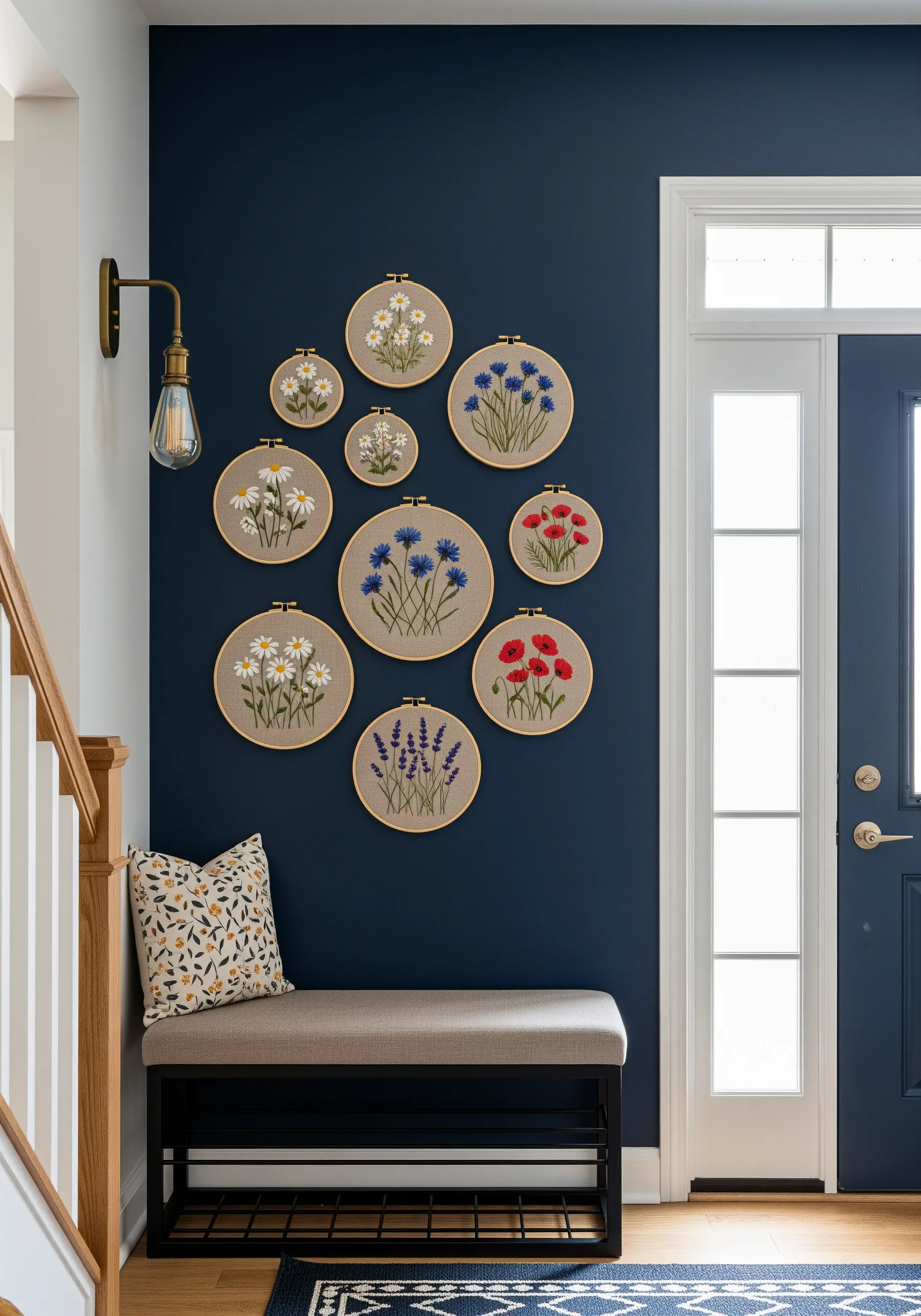
Create a cohesive collection by stitching different wildflower motifs on the same neutral fabric, like an oatmeal Aida or linen blend.
Varying the hoop sizes adds rhythm and visual interest, preventing the arrangement from feeling static.
Stitching on a light fabric and hanging the hoops against a dark, saturated wall color makes the delicate thread work pop with incredible contrast and clarity.
This composition proves that simple stitches—like lazy daisy, stem stitch, and French knots—gain immense power when grouped together thematically.
Plan your layout on the floor first to perfect the spacing and balance before hanging.
3. Achieve Elegance with Minimalist Line Art
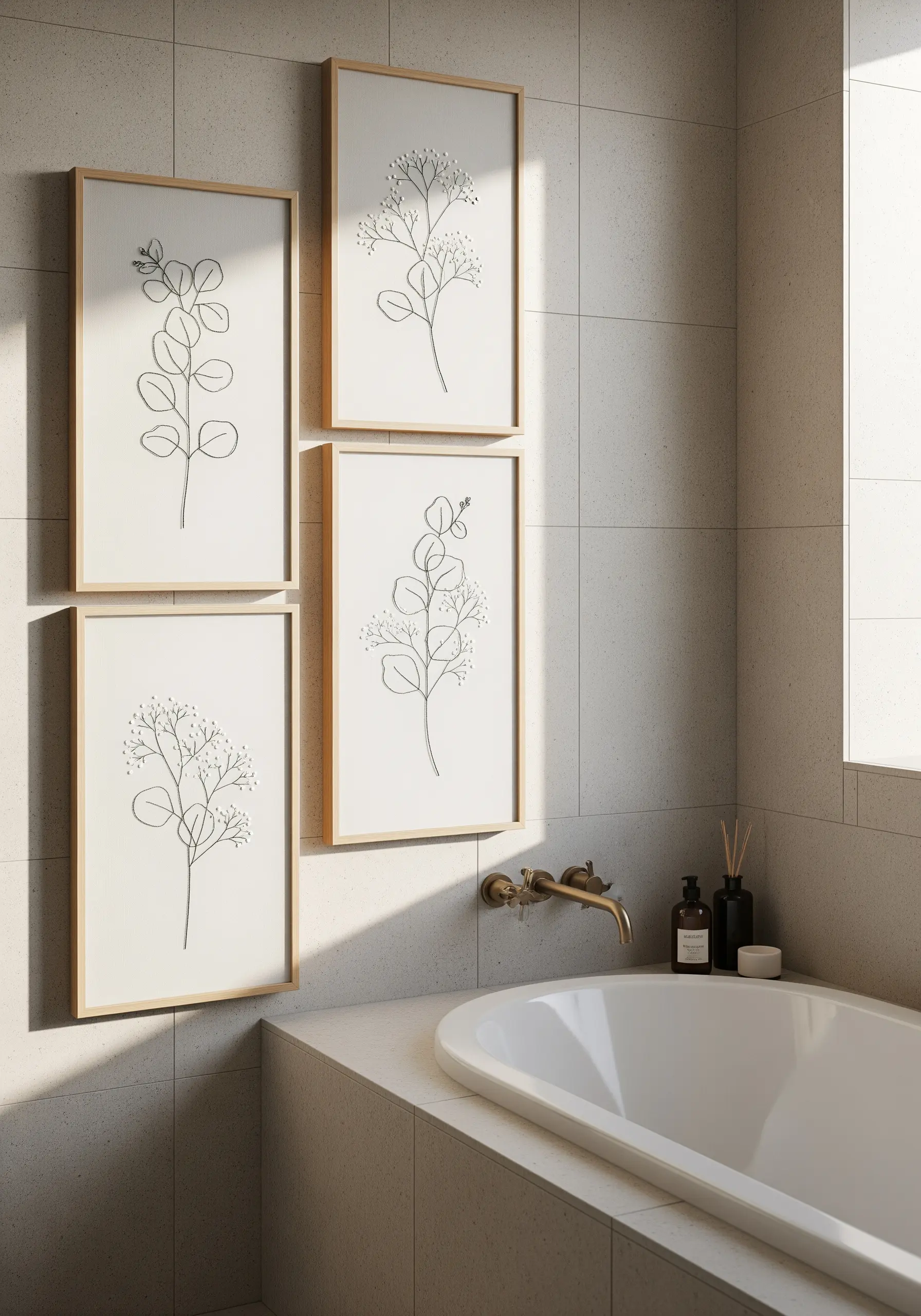
The success of botanical line art depends entirely on the crispness of your stitches and the power of negative space.
Use a single strand of black or charcoal gray floss to achieve a fine, ink-like quality that feels both delicate and graphic.
A tight, drum-like tension on your fabric is non-negotiable here; it prevents any puckering and ensures your lines remain clean and straight.
Rely on a meticulous backstitch or split stitch to render smooth, continuous curves in stems and leaves.
You can introduce tiny French knots for subtle berry or bud details, adding just a whisper of texture to the composition.
4. Create Dramatic Depth with a Dark Background
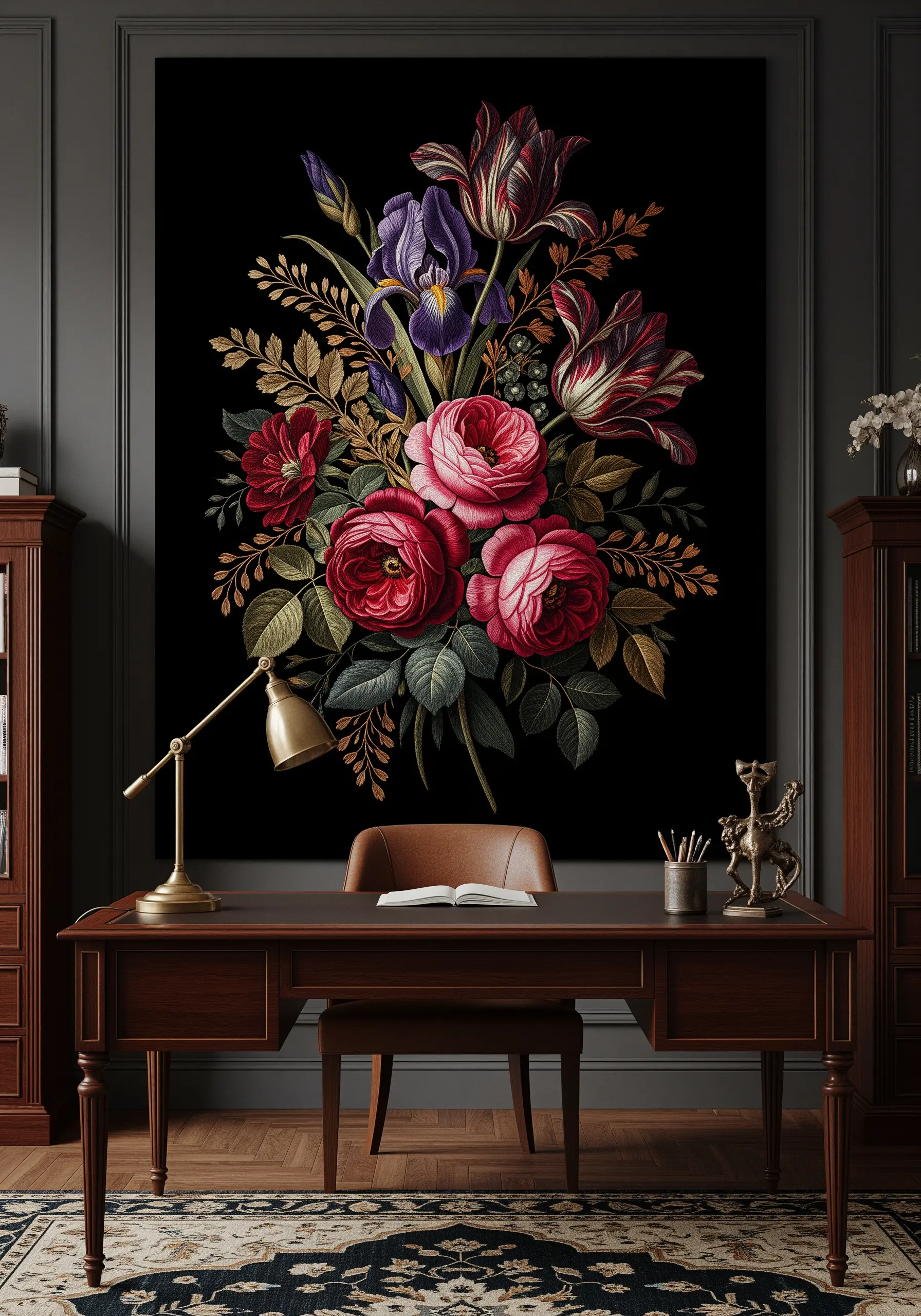
Stitching on black or navy fabric is a game-changer for color vibrancy; it absorbs light and forces the thread’s saturation to the forefront.
Select a palette of rich jewel tones—burgundy, deep violet, emerald green—as they create a luxurious, painterly effect against the dark canvas.
To achieve seamless color blending for realistic petals, use the thread painting technique with single strands of floss, laying your long-and-short stitches close together.
The final piece will look its best when strategically lit, as direct light will catch the subtle sheen of the embroidery thread, bringing the composition to life.
5. Stitch a Narrative with an Embroidered Scene
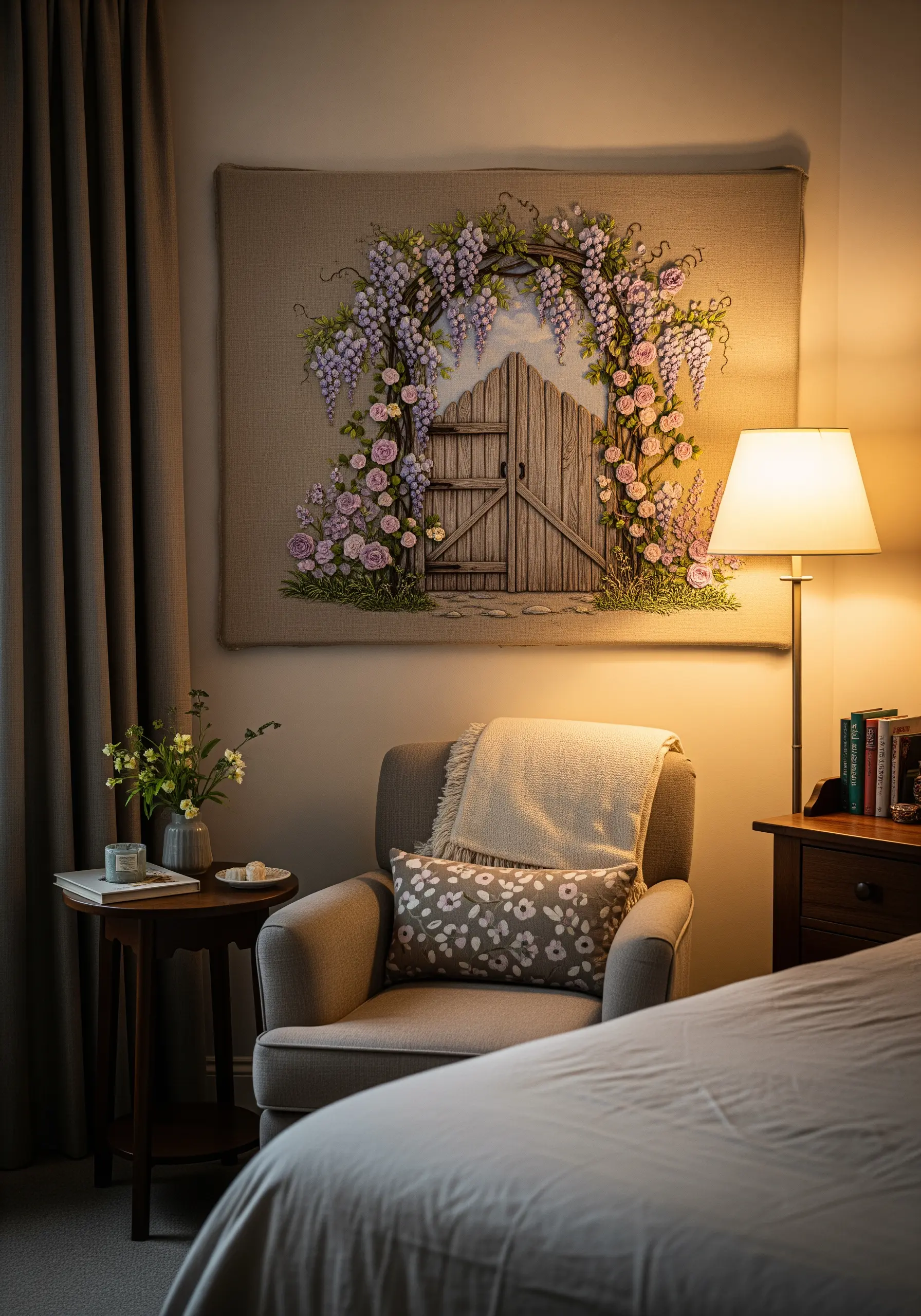
Move beyond single motifs and tell a story by creating a complete scene with foreground and background elements.
Combine a variety of stitches to build convincing textures: use long straight stitches for the wood grain of the door, woven wheel stitches for plush roses, and detached chain stitches for the wisteria.
Choosing a neutral, textured fabric like raw linen for your background ensures the colorful floral arch remains the undisputed star of your piece.
For a large-scale project like this, break the design into smaller, manageable sections to maintain focus and consistent stitch quality.
6. Embrace Bold Energy with a Mandala Tapestry
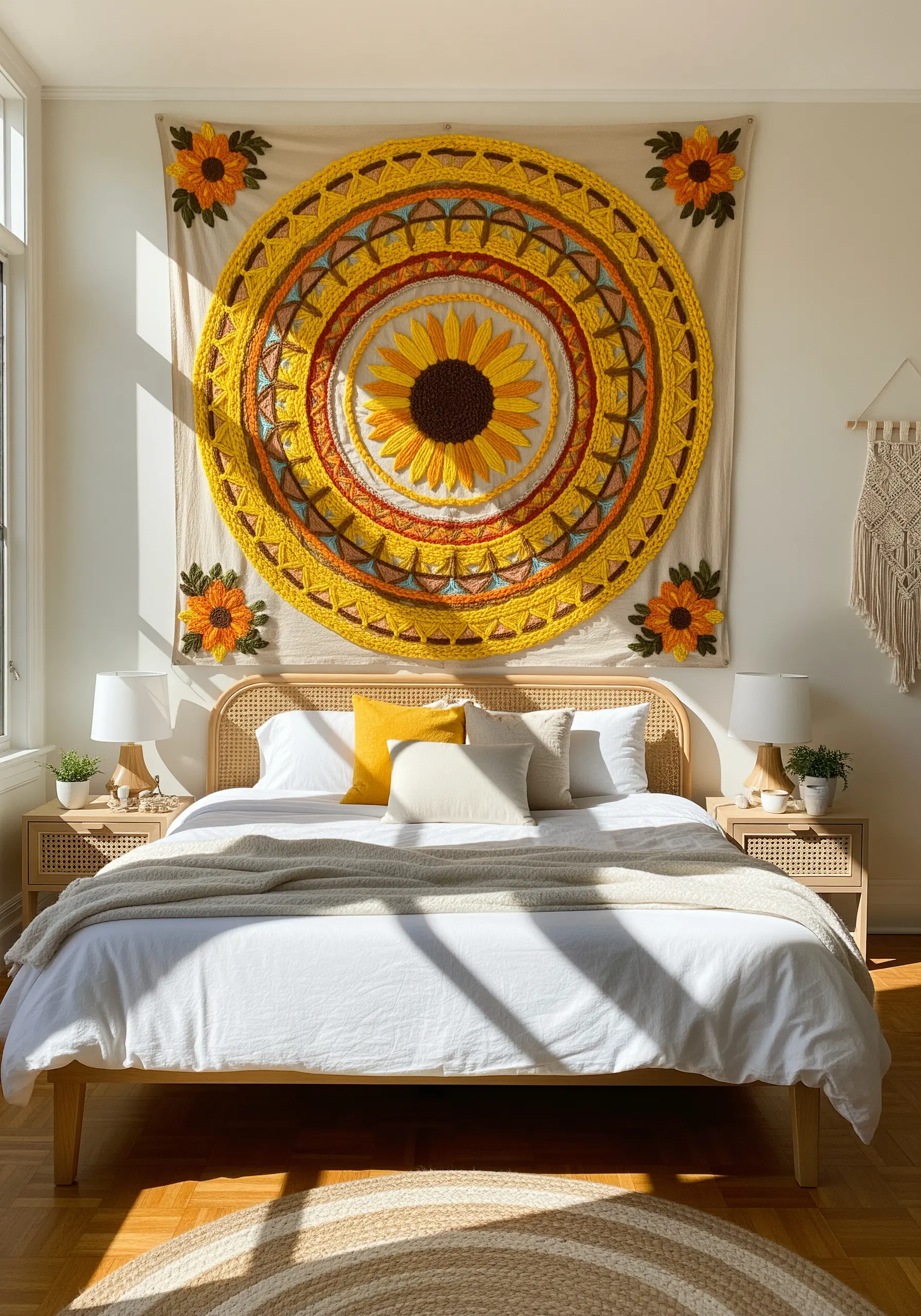
For a high-impact piece, incorporate mixed fibers to add dimension and tactile interest.
Combine standard embroidery floss for fine details with thicker tapestry wool or cotton yarn for the bold, geometric outlines of the modern thread mandala.
Use the couching technique to neatly apply the thick yarn to the fabric surface; this allows you to create perfect curves without pulling a bulky thread through the fabric.
A warm, analogous color scheme of yellows, oranges, and reds creates a harmonious and energetic feeling that radiates from the center.
7. Modernize Florals with Geometric Color Blocking
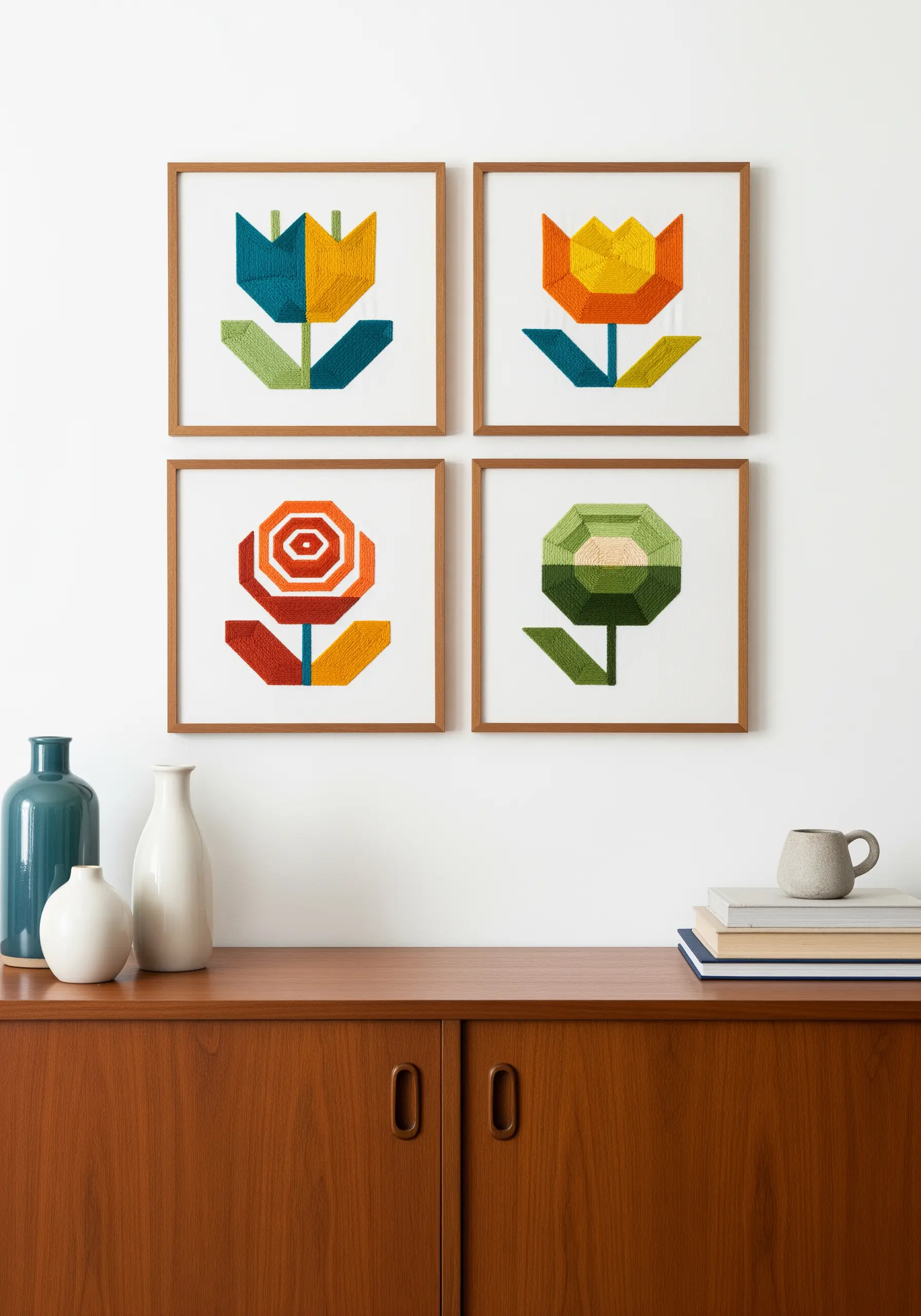
Deconstruct traditional flower shapes into their essential geometric forms for a clean, contemporary aesthetic.
This style relies on flawless, densely packed satin stitch; ensure your stitches lay perfectly flat and parallel to one another for a smooth, uniform finish.
The secret to sharp, defined edges is to first outline each color block with a split stitch before filling it in. This creates a subtle raised border that contains your satin stitches perfectly.
A curated, limited color palette is essential. Choose bold, contrasting hues to emphasize the graphic nature of the design.
8. Add Subtle Greenery to Your Kitchen Decor
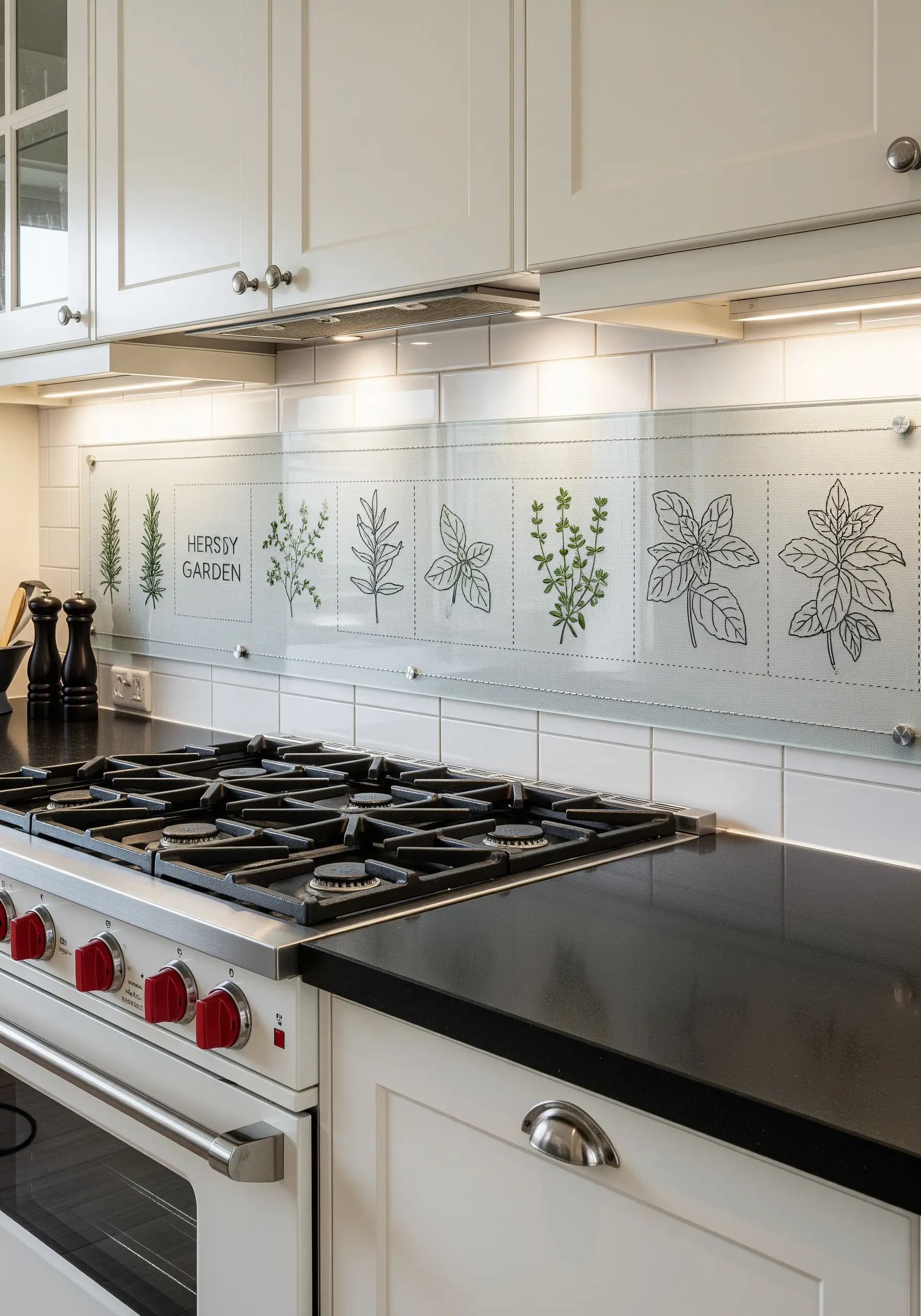
Elevate your kitchen with delicate, hand-stitched herb motifs that feel both classic and clean.
A simple backstitch using two strands of black or dark green thread is all you need to capture the distinct silhouettes of rosemary, basil, and thyme.
The beauty here lies in the accuracy of the forms, so focus on recreating the elegant lines of each herb.
For a practical kitchen application, stitch your designs on fabric and then frame them behind a glass panel to protect them from moisture and splashes while adding a custom, high-end look.
9. Capture Art Deco Glamour with Stylized Lines
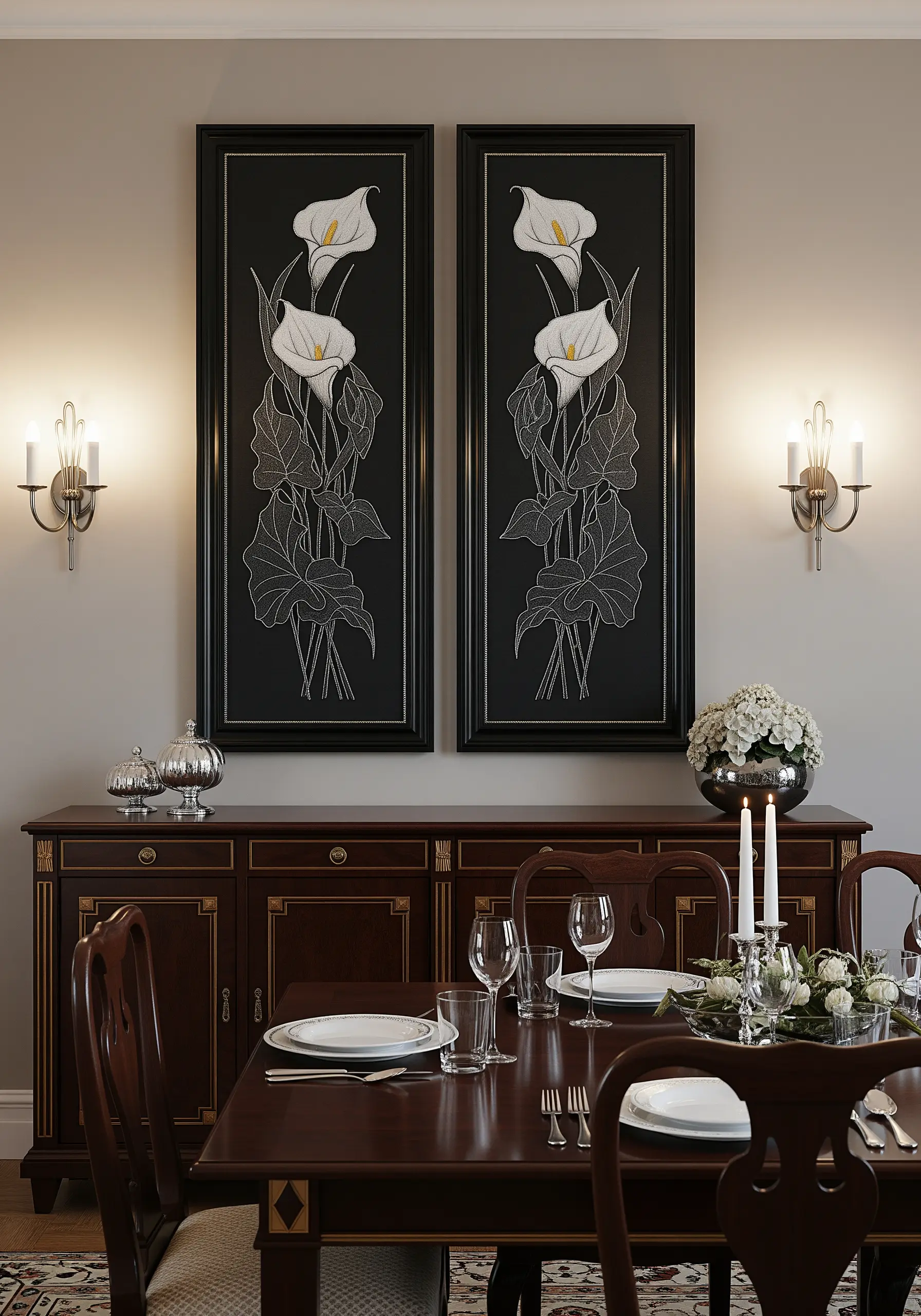
Evoke the elegance of the Art Deco era by focusing on sinuous, stylized floral forms and high-contrast materials.
Use a bright white or metallic silver thread on a deep black fabric to create a dramatic, graphic impact that defines the style.
The long, sweeping curves of the calla lily stems and leaves are best rendered with a smooth, consistent stem stitch or whipped backstitch.
For the flower heads, use a directional satin stitch, angling your threads to follow the natural, sculptural curl of the petal. This simple choice creates a powerful sense of form and movement.
10. Craft a Delicate Hanging Botanical Mobile
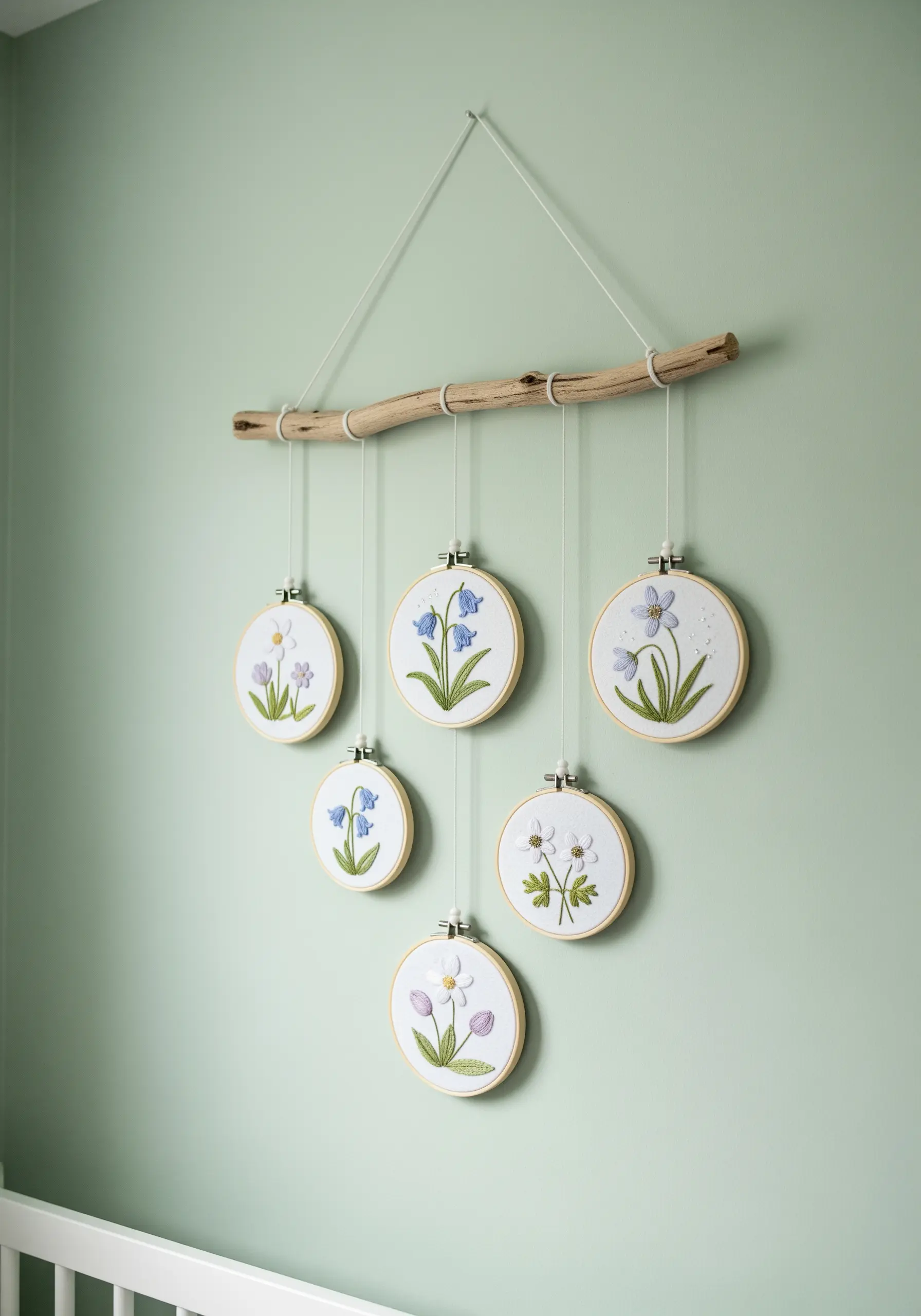
Display your work in a new dimension by creating a floating mobile with small, lightweight hoops (3-4 inches in diameter).
Choose a unified color palette, such as soft pastels or shades of blue, to ensure the individual floral designs feel connected as a single art piece.
Suspend the finished hoops from a piece of natural driftwood or a simple brass ring using clear nylon thread; this makes the hoops appear to float in mid-air.
Finish the back of each hoop neatly with felt, as they will rotate and be seen from all angles.
11. Illuminate Your Stitches on Sheer Fabric
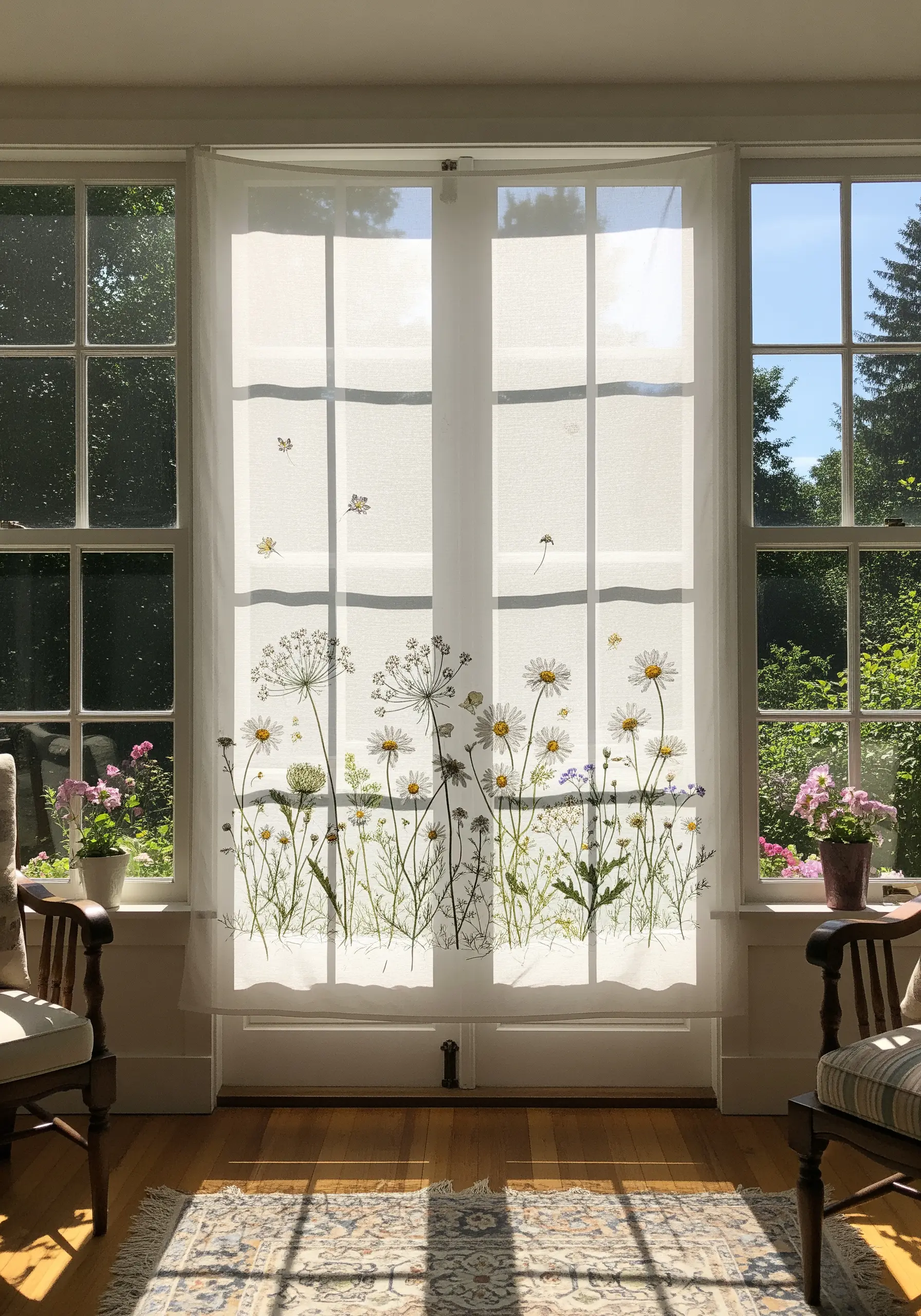
Stitching on sheer organza or voile allows light to pass through your threads, creating a stunning, ethereal effect.
Always use a water-soluble or heat-away stabilizer on top of the fabric. This provides the necessary support for your stitches and prevents the delicate material from puckering.
Remember that the back of your work will be visible, so meticulous, neat finishing is crucial. Plan your stitch paths to minimize messy jumps between areas.
The final piece acts like a stained-glass window, with the colors of your threads glowing as daylight streams through them.
12. Create a Seasonal Story with an Embroidered Quilt
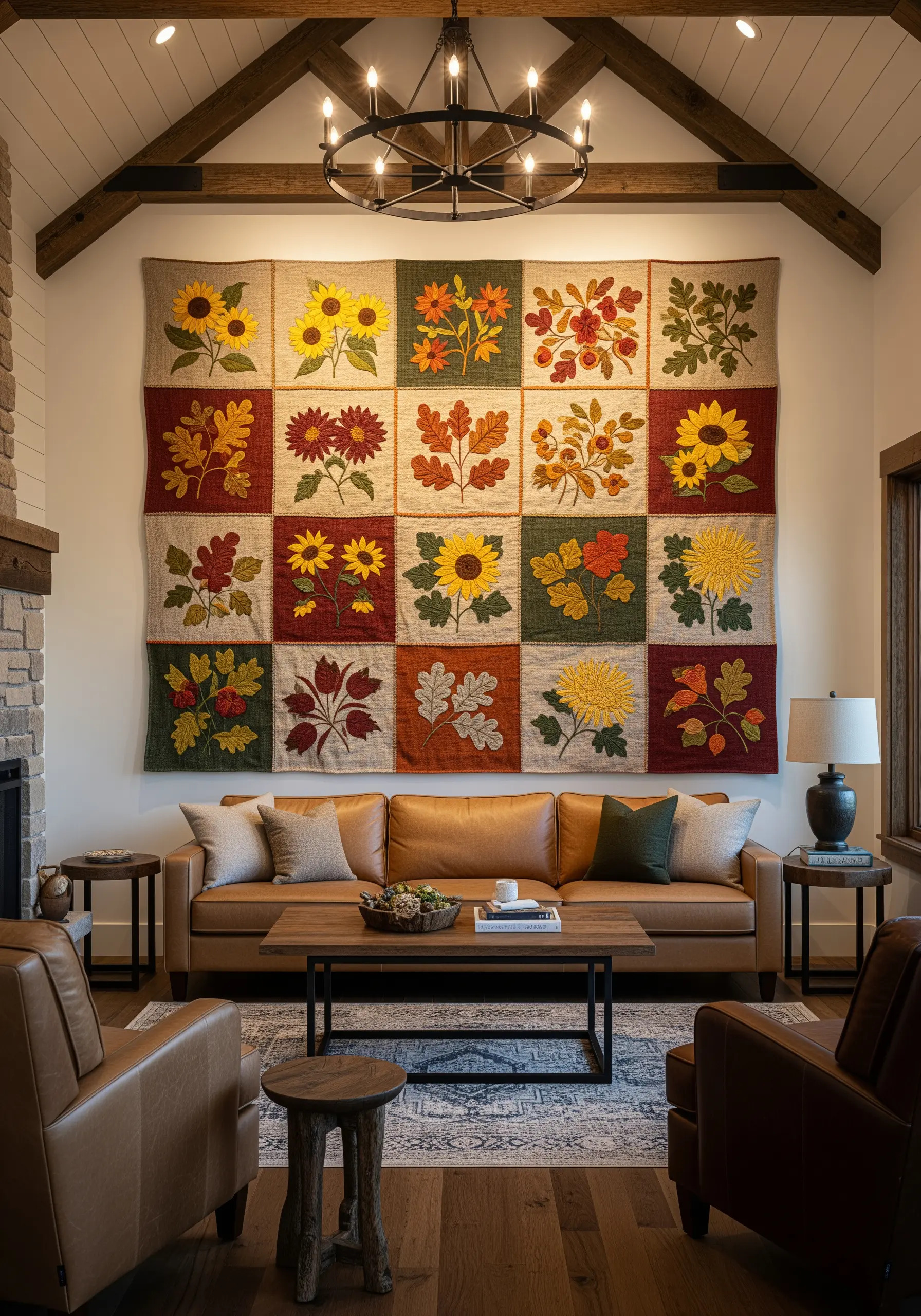
Tackle a large-scale project by adopting a modular approach inspired by quilting.
Stitch individual floral and leaf motifs on separate fabric squares, allowing you to focus on one small composition at a time.
Establish a cohesive autumnal color palette of rust, gold, olive green, and burgundy to unify the different blocks into a harmonious whole.
Once all the squares are complete, simply sew them together to form a stunning, story-rich tapestry that feels both grand and intimately detailed.
13. Isolate a Single Branch for Minimalist Impact
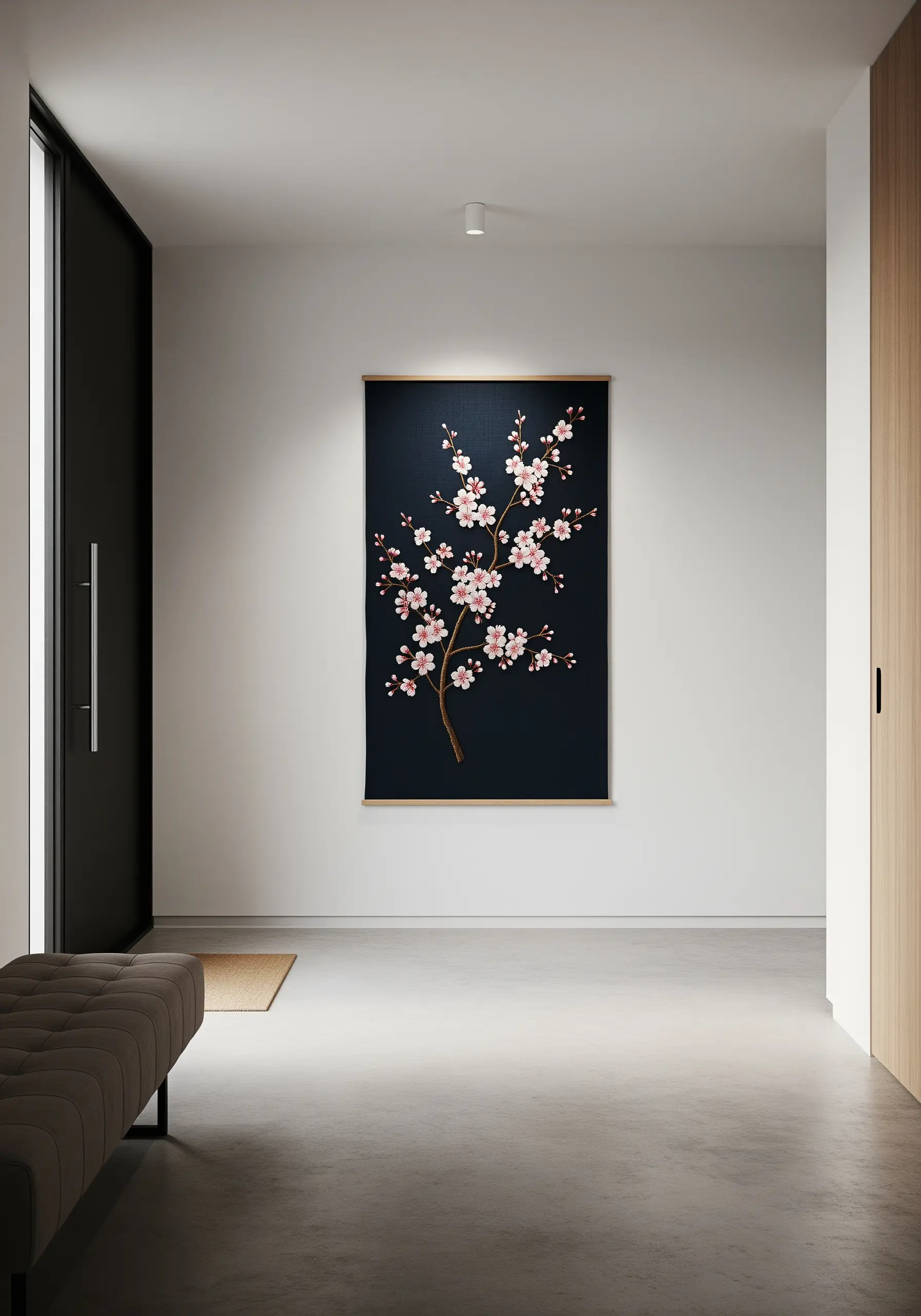
You don’t need a complex composition to make a powerful statement; a single, beautifully rendered branch can command an entire wall.
Focus on creating realistic texture. Use raised stitches like French knots or bullion knots for the cherry blossoms, making them stand off the fabric.
A smooth, dark background fabric in navy or charcoal is the perfect canvas to make the delicate pink and white threads of the blossoms appear luminous.
This approach to minimal embroidery wall pieces celebrates simplicity and the elegance of a carefully chosen detail.
14. Build a Desert Bloom Gallery with Texture
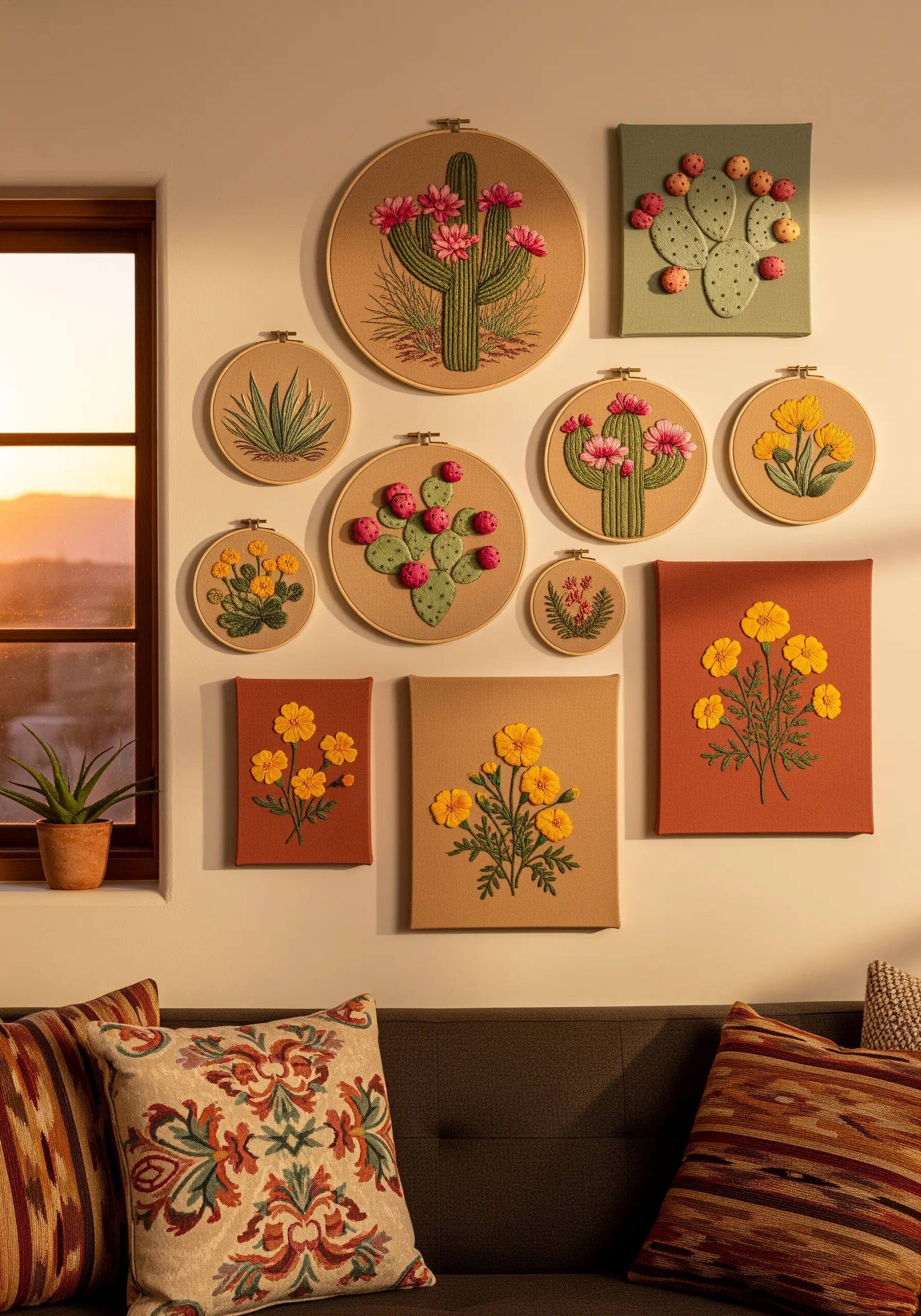
Capture the unique forms of desert flora by experimenting with a wide range of dimensional stitches.
Use turkey work (Ghiordes knot) to create the fuzzy, tactile surface of a prickly pear cactus, or try woven picot stitches to build three-dimensional flower petals.
Unify your collection with an earthy color palette of terracotta, sage green, dusty rose, and sand, reflecting the natural tones of the desert landscape.
Vary your display formats by mixing traditional round hoops with fabric stretched over square canvas frames for a more dynamic gallery wall.
15. Stitch a Fragrant Wreath of Lavender
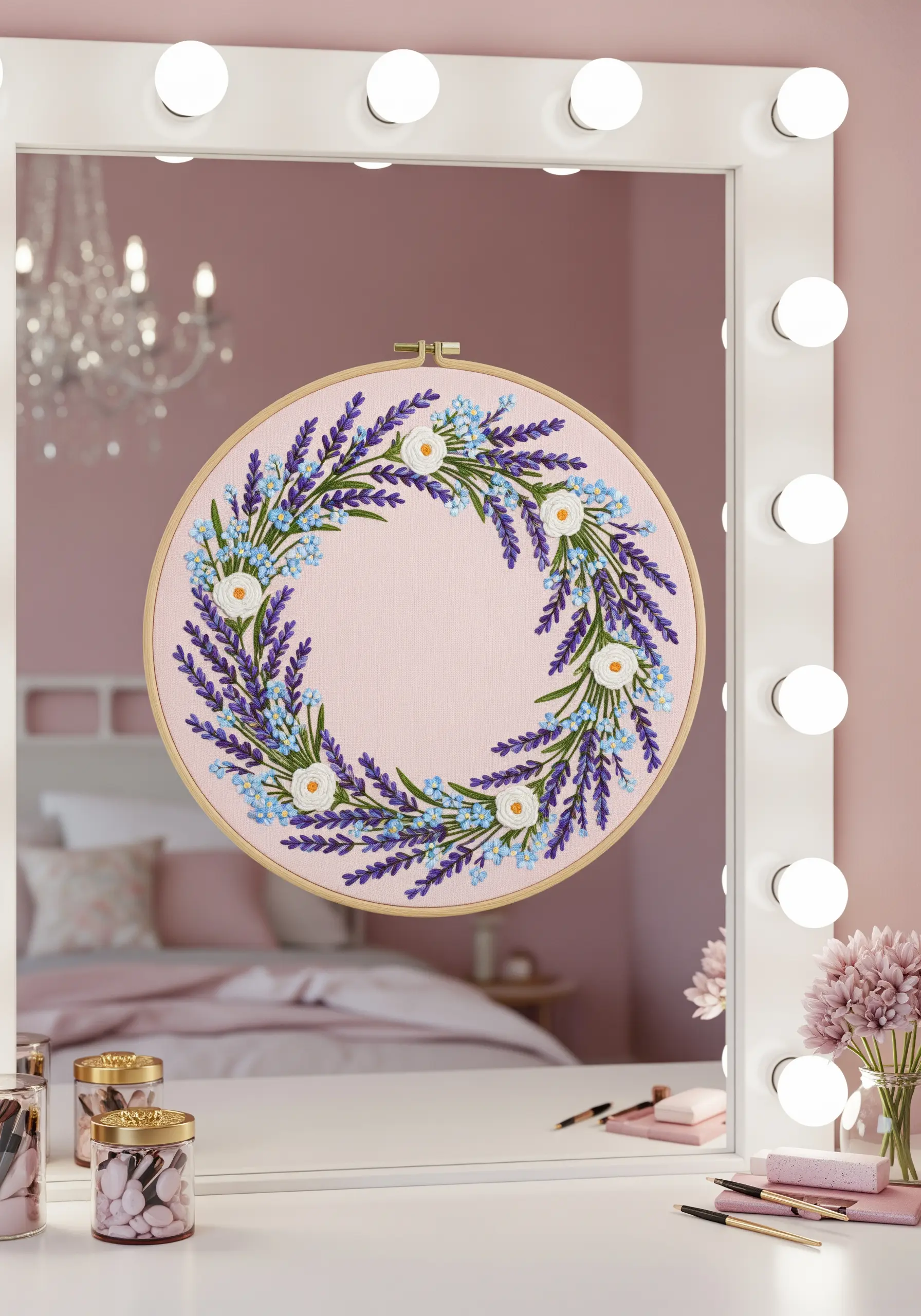
The key to a beautiful lavender stalk is texture and repetition. Use detached chain stitches (lazy daisies) or short straight stitches, packed closely together, to form the individual florets.
Create depth by using three to four different shades of purple and lilac throughout the wreath.
Pairing the cool purples and greens with a soft, warm background fabric like pale pink creates a gentle and pleasing color harmony.
A circular wreath composition is inherently calming and makes a perfect, balanced piece for a bedroom or quiet space.
16. Embrace the Unconventional with Botanical Illustrations
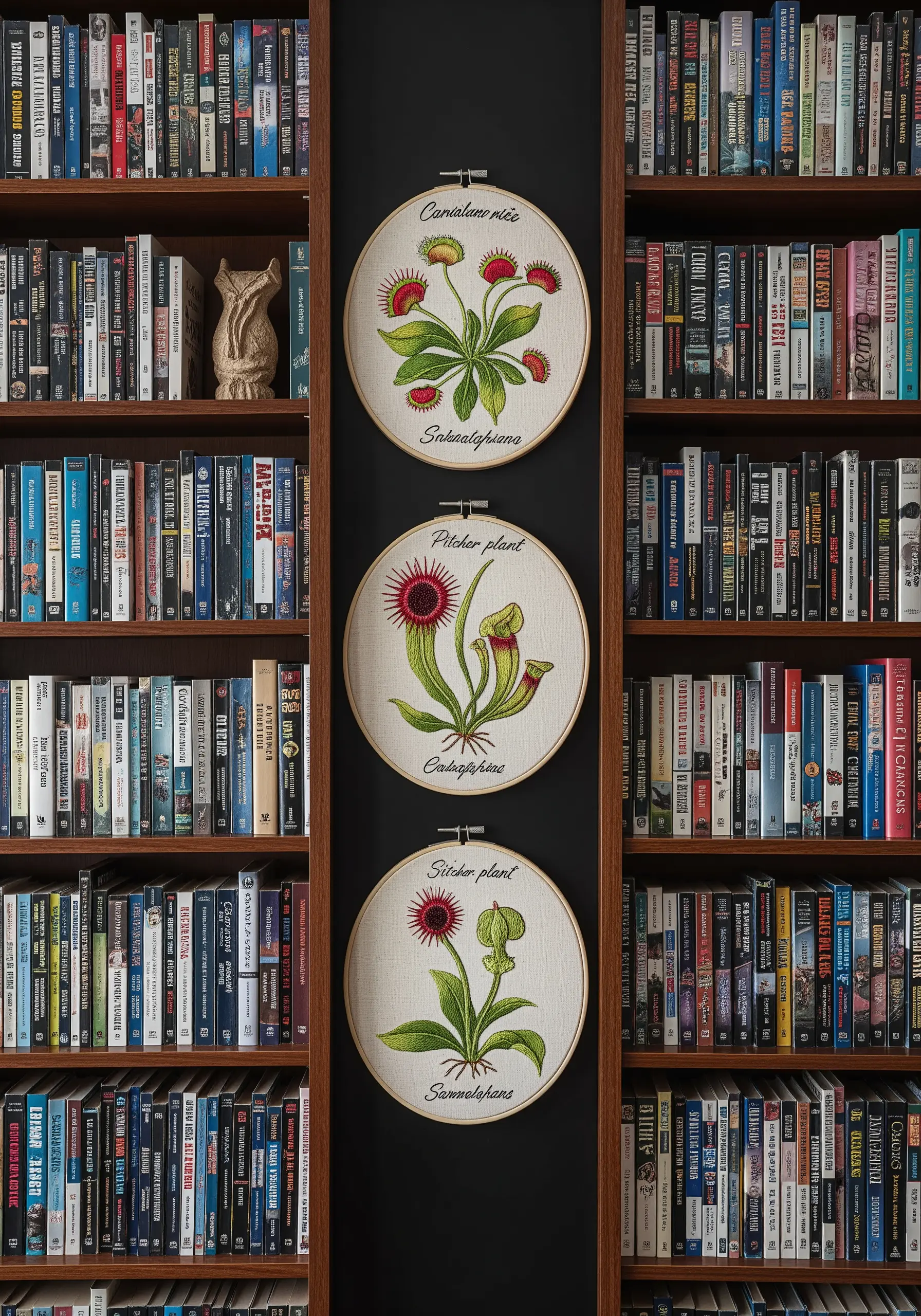
Challenge yourself by moving beyond traditional pretty florals and into the world of scientific botanical illustration.
To mimic the style of a pen-and-ink drawing, use a single strand of dark thread and a precise backstitch for all outlines and details.
Fill in areas of color with a delicate long-and-short stitch, blending shades subtly to replicate the look of a watercolor wash.
Adding the plant’s scientific name in a simple, stitched script completes the classic, naturalist-journal aesthetic.
17. Paint an Impressionistic Landscape with French Knots
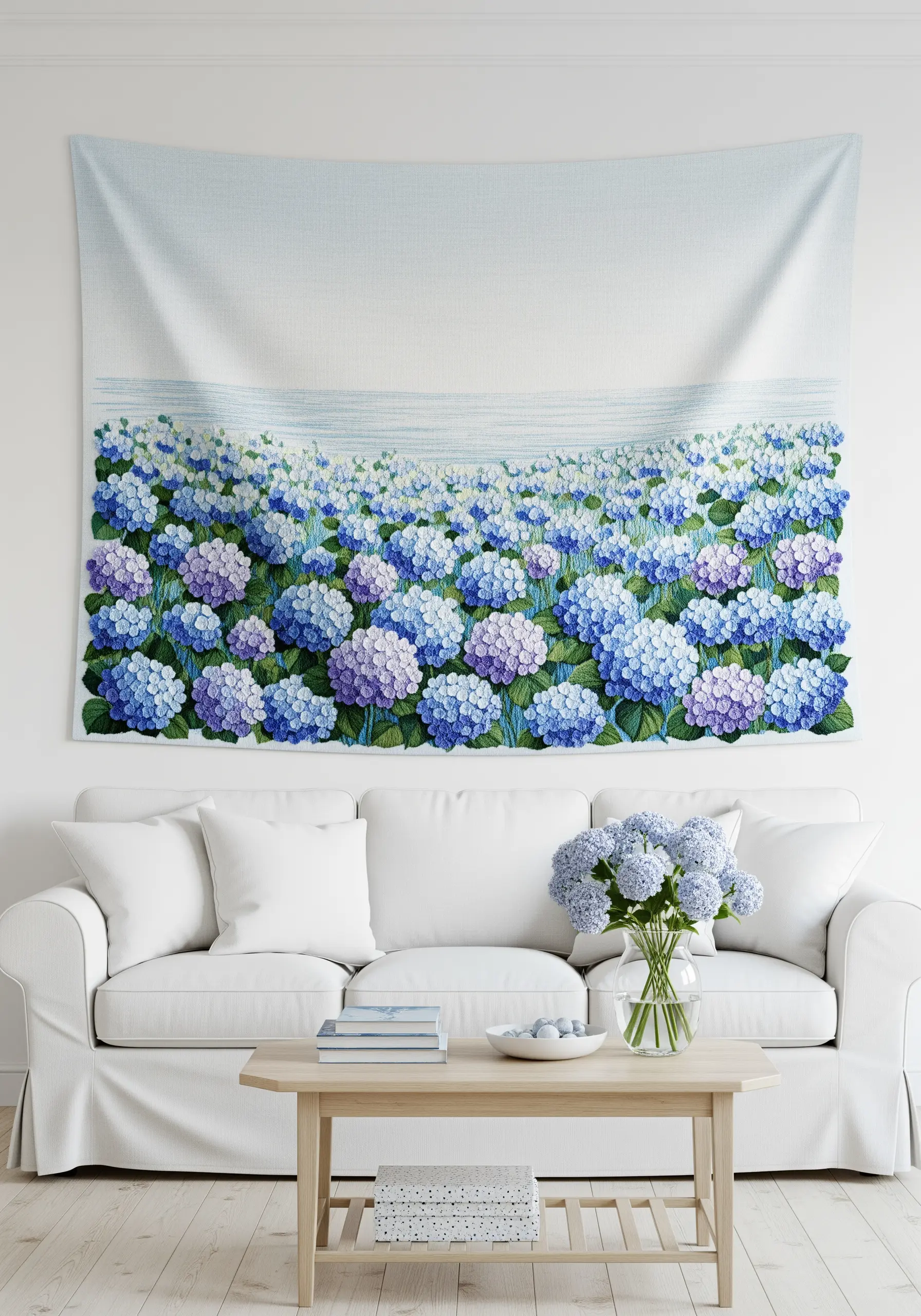
Create a stunning, textured landscape by relying almost exclusively on one stitch: the French knot.
Build up dense clusters of knots in varying shades of blue, purple, and green to represent the hydrangea blooms and foliage.
Vary the size of your knots for a more organic feel by changing the number of times you wrap the thread around the needle—once for small dots, twice or three times for larger, fluffier knots.
This meditative, pointillist approach creates incredible depth and an almost painterly quality that invites viewers to look closer.
18. Create a Collector’s Wall of Floral Specimens
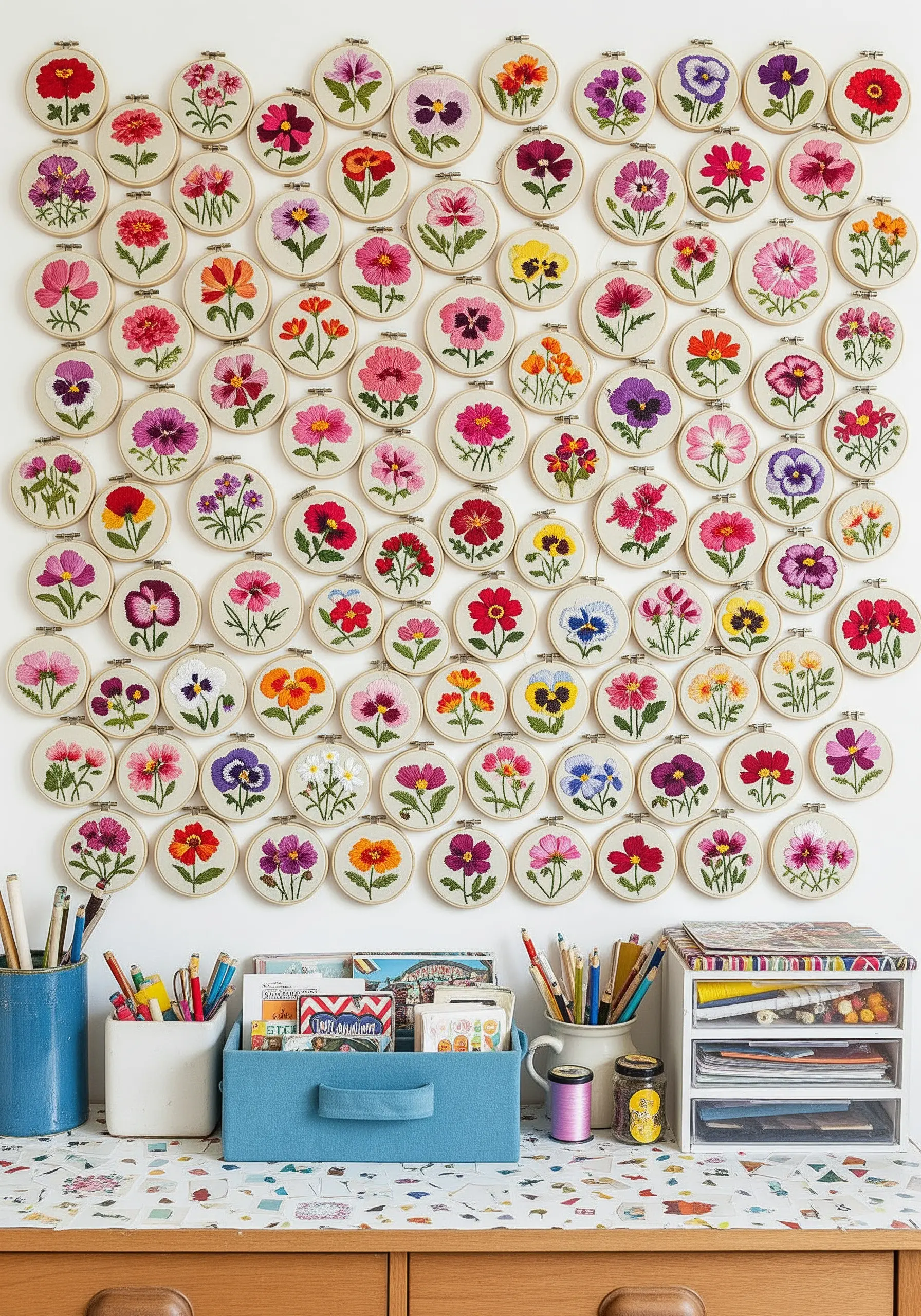
The power of this project lies in repetition and volume. Commit to stitching dozens of different single flowers, each in an identical small hoop.
Hanging them in a dense, orderly grid transforms a collection of simple stitches into an impressive and overwhelming work of art.
This is a wonderful long-term project that allows you to practice new flowers and color combinations over time.
The result is a vibrant, joyful wall that serves as a beautiful sampler of your skills and dedication.
19. Achieve Luminous Petals with Thread Painting
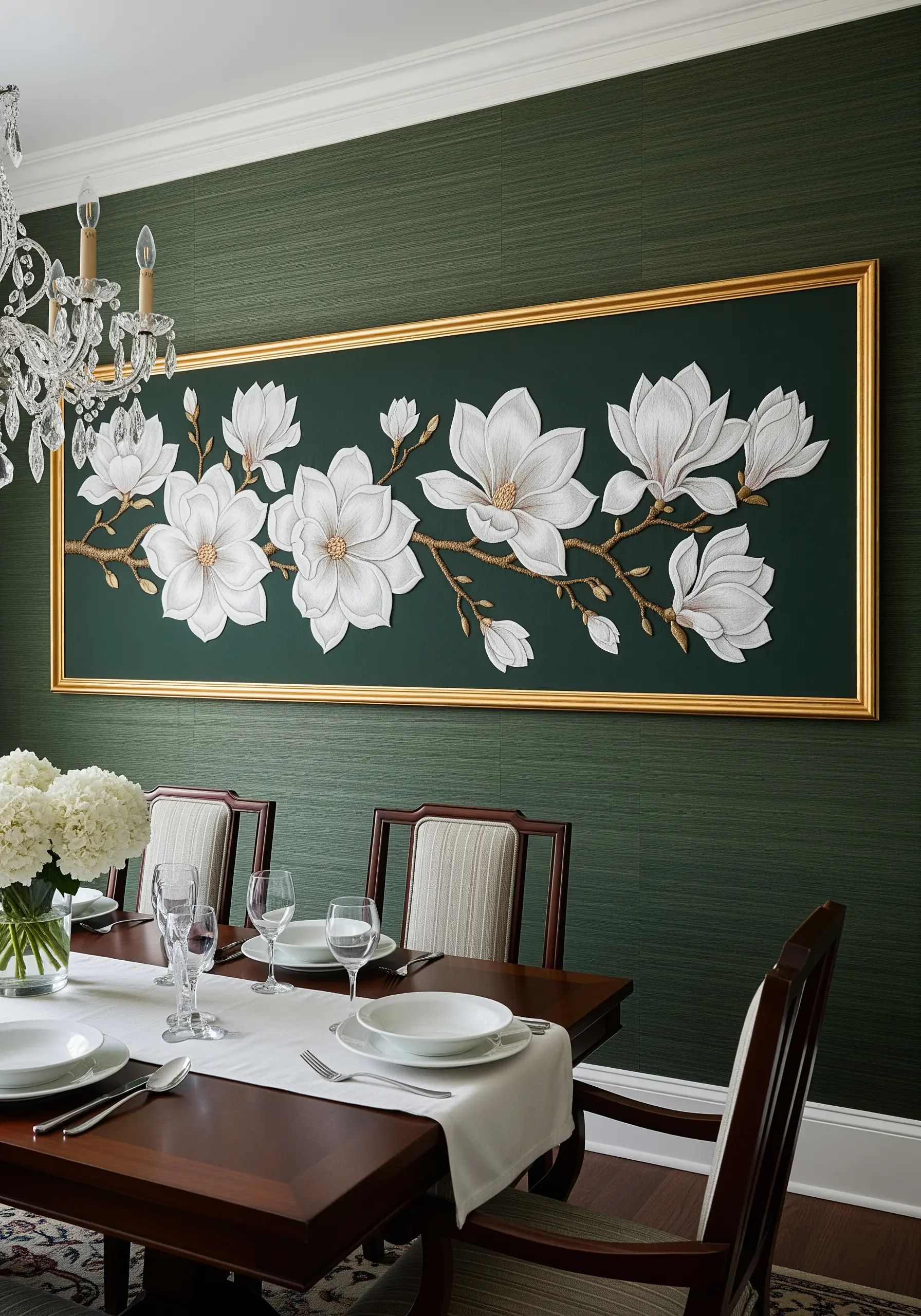
When stitching white flowers, avoid using pure, stark white thread, which can look flat and lack dimension.
Instead, build your petals using shades of off-white, cream, and the palest gray. Use these subtle variations to create highlights and shadows with the long-and-short stitch.
This technique, known as thread painting, gives the magnolia petals a realistic, sculptural quality that makes them feel soft and luminous.
For an added touch of luxury, use a single strand of gold metallic thread for the branches, creating a beautiful contrast with the soft, matte petals.
20. Craft an Interactive Felt Garden for Play
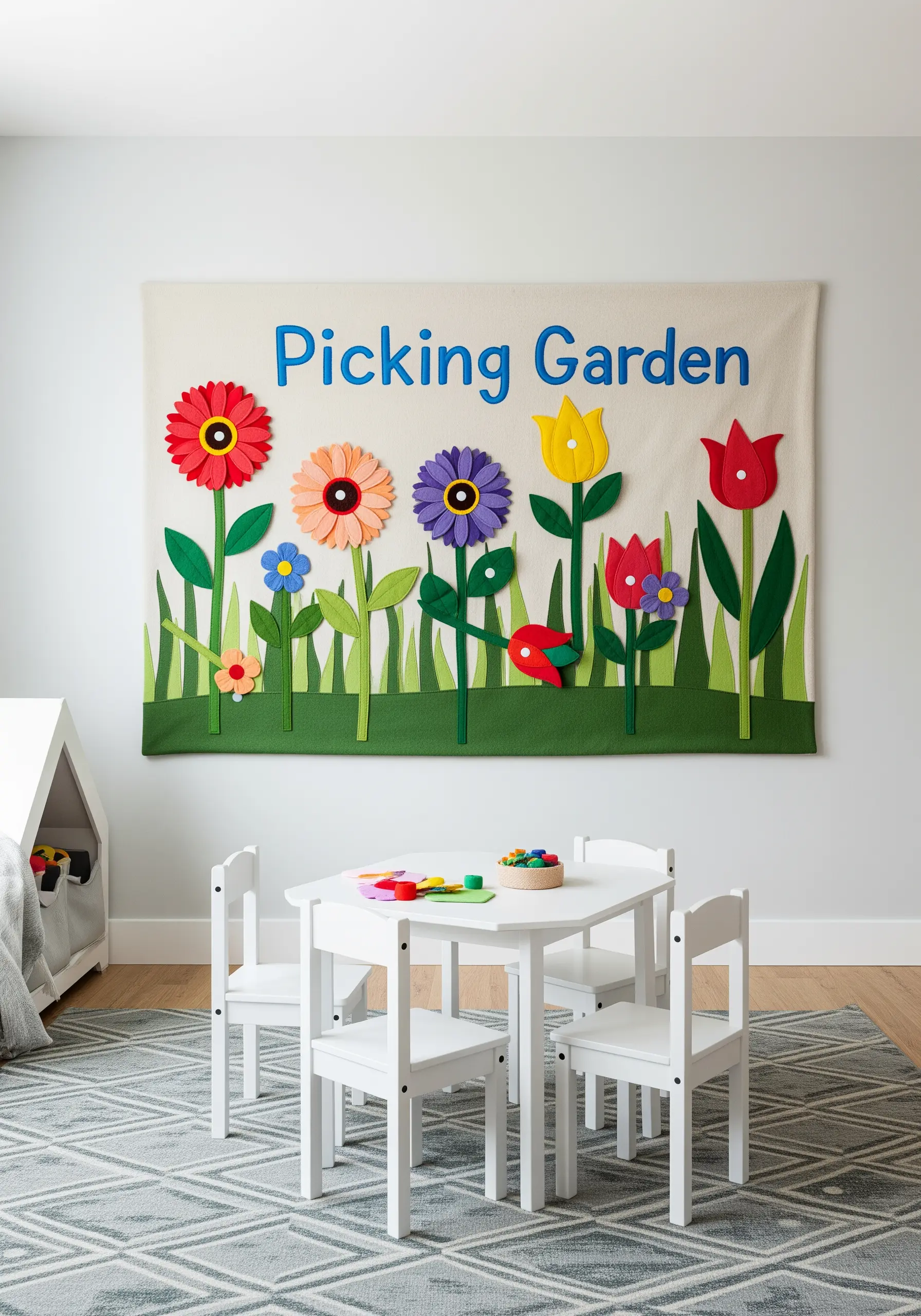
Combine embroidery with felt appliqué to create a playful, tactile piece for a child’s room.
Cut your flower, stem, and leaf shapes from colorful felt sheets and attach them to a large fabric background with simple, visible stitches like a running stitch or blanket stitch.
Make the piece interactive by sewing small pieces of Velcro or snaps onto the back of the flower heads, allowing little hands to “pick” and rearrange the garden.
This project celebrates the fun, textural side of fiber art and creates a piece that is meant to be touched.
21. Create Serenity with a Meditative Lotus

Use your fabric as an active element in the design by incorporating appliqué into your hoop art.
Begin by securing a crisp circle of white cotton onto a coarser, neutral linen base. This immediately creates a defined focal point for your work.
Stitch your clean lotus outline using a simple backstitch, allowing the line to travel across both fabric textures for a subtle but sophisticated effect.
This balanced and centered composition is perfect for creating minimal embroidery wall designs that promote a sense of calm and mindfulness.
22. Add a Hidden Surprise with Glow-in-the-Dark Thread
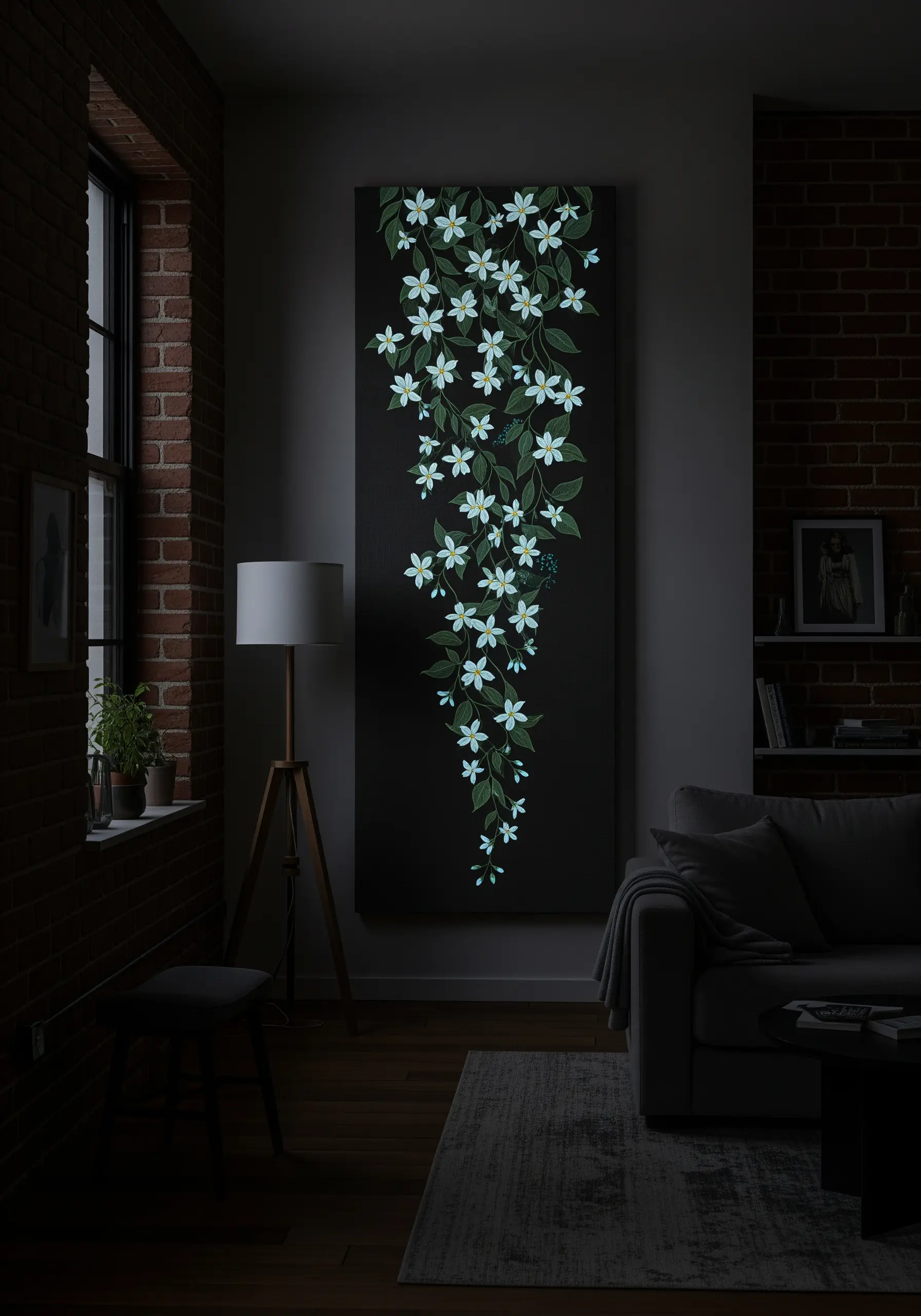
Experiment with specialty threads to give your work a secret life after the sun goes down.
Use glow-in-the-dark embroidery floss for the petals of the flowers, while stitching the leaves and stems in standard green thread.
During the day, it appears as a lovely, classic botanical piece. At night, the flowers emerge with a soft, magical luminescence.
This thread can be slightly stiffer than cotton floss, so using a needle with a slightly larger eye can make stitching easier.
23. Illustrate Your Garden’s Bounty, from Root to Bloom
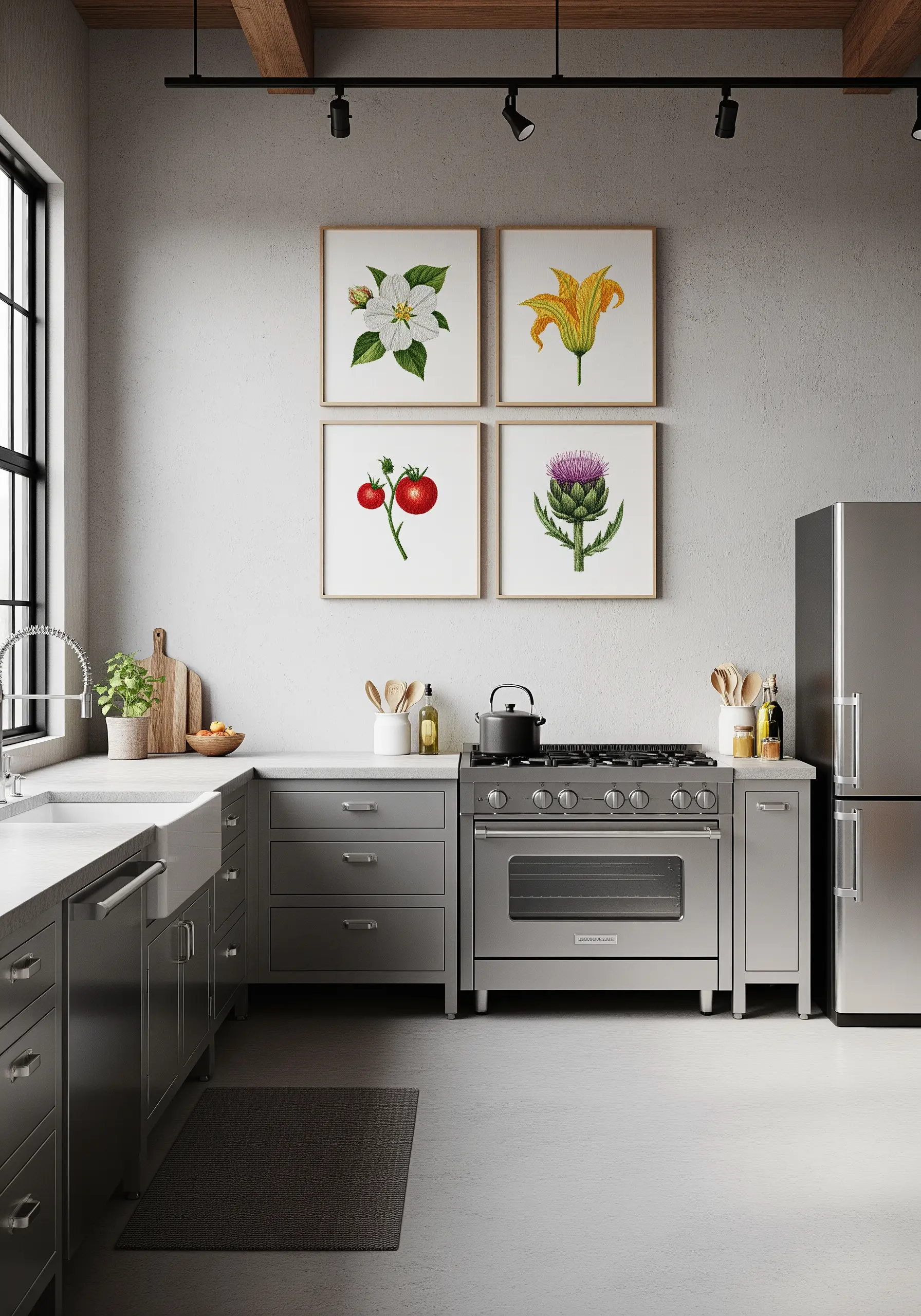
Expand your definition of “floral” embroidery by celebrating the beauty of the entire vegetable garden.
Stitch tomatoes, artichokes, or squash blossoms with the same care and detail you would give a rose, using thread painting to capture their unique colors and textures.
Framing them as a simple, elegant quad gives the collection a classic botanical chart aesthetic.
This approach is perfect for kitchen or dining room art, connecting your craft to the food you enjoy.
24. Extend Your Embroidery Beyond the Hoop

Create a dynamic installation that breaks the boundaries of the embroidery hoop.
Stitch the main dandelion head onto fabric within the hoop as your anchor piece.
For the floating seeds, stitch them individually onto a sheet of water-soluble stabilizer. After stitching, rinse away the stabilizer to leave you with delicate, free-standing thread sculptures.
You can then attach these seeds to the wall with small pins or removable adhesive dots, creating a beautiful sense of movement and whimsy.
25. Capture Tropical Vibrancy with Bold Color Blending
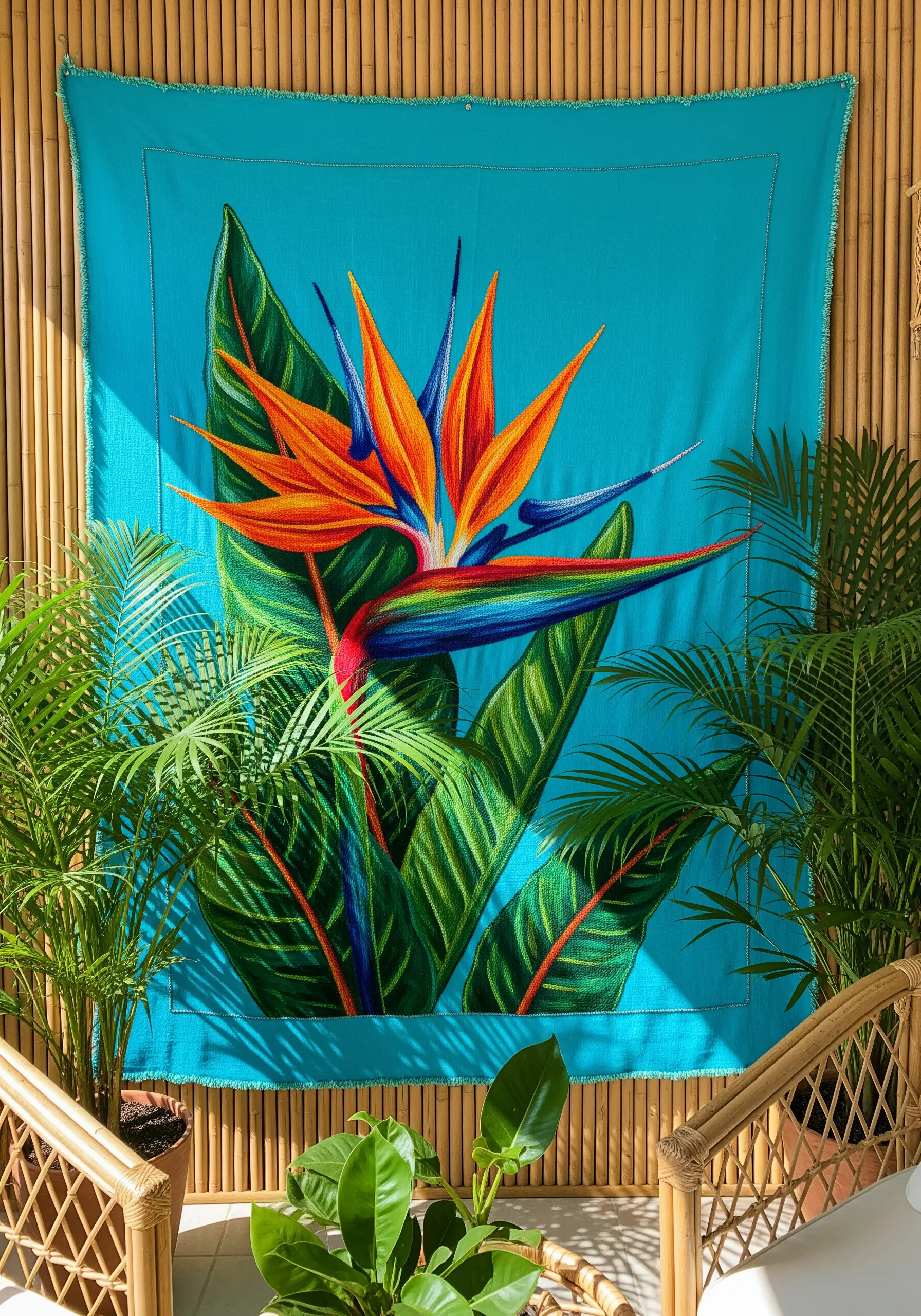
Don’t shy away from a bold, saturated color palette when stitching tropical flowers like the Bird of Paradise.
Use long-and-short stitch to seamlessly blend the intense oranges, royal blues, and vibrant greens, creating a smooth, painterly effect.
Pay close attention to the direction of your stitches. By angling them to follow the natural growth and form of the petals and leaves, you create a sense of realism and dynamic energy.
A bright turquoise or aqua background fabric will make the fiery colors of the flower pop even more intensely.
26. Stitch an Impressionistic Masterpiece
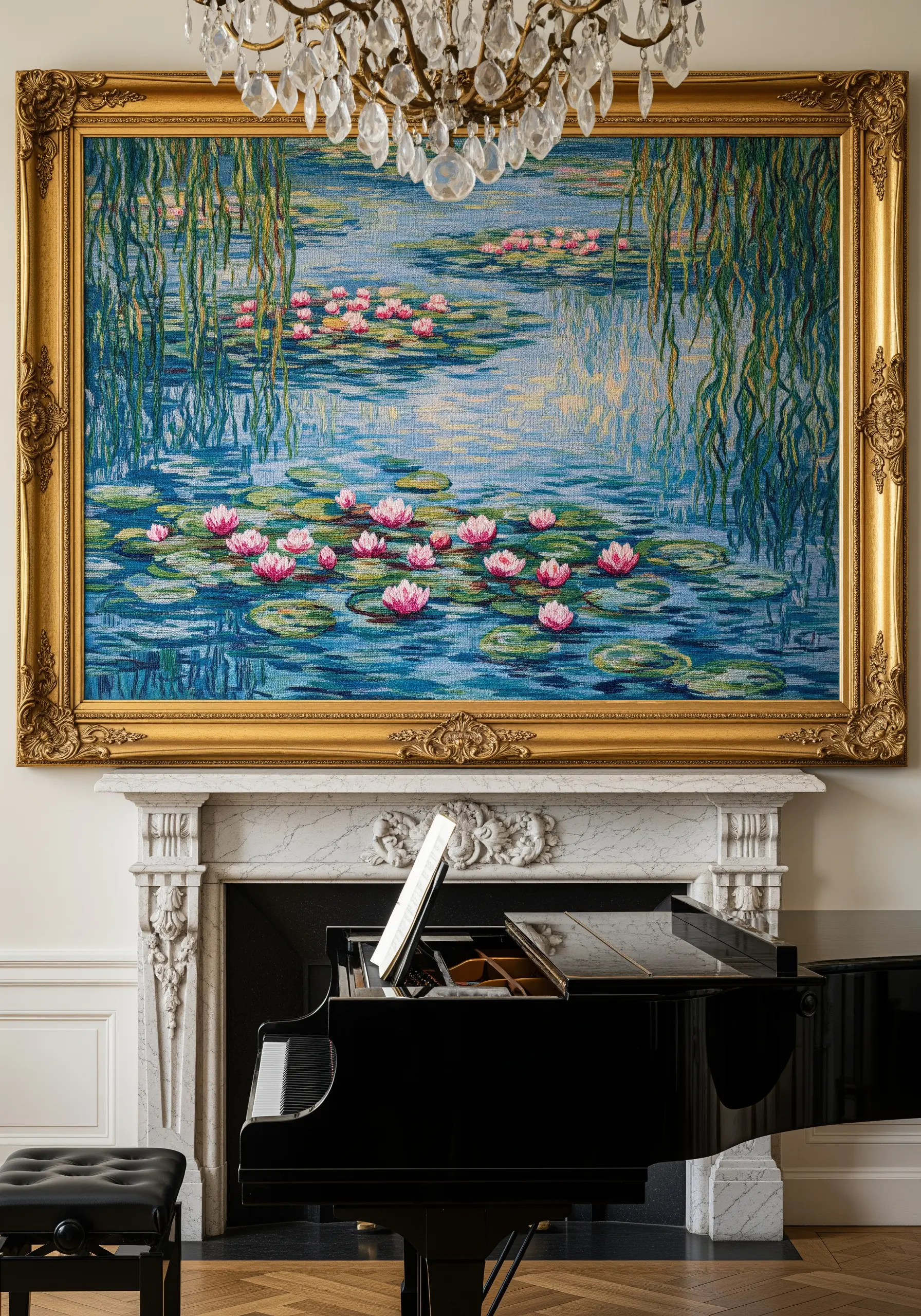
To capture the essence of an Impressionist painting, let go of precision and embrace texture and color layering.
Instead of smooth satin fills, use a combination of short, dab-like straight stitches and clusters of French knots to build up color and form.
Work with multiple shades of thread on your needle at once, or lay different colors next to each other, allowing the viewer’s eye to blend them optically.
The goal is not to create a perfect copy, but to translate the feeling of light, water, and movement into thread.
27. Curate a ‘Dangerous’ Botanical Banner
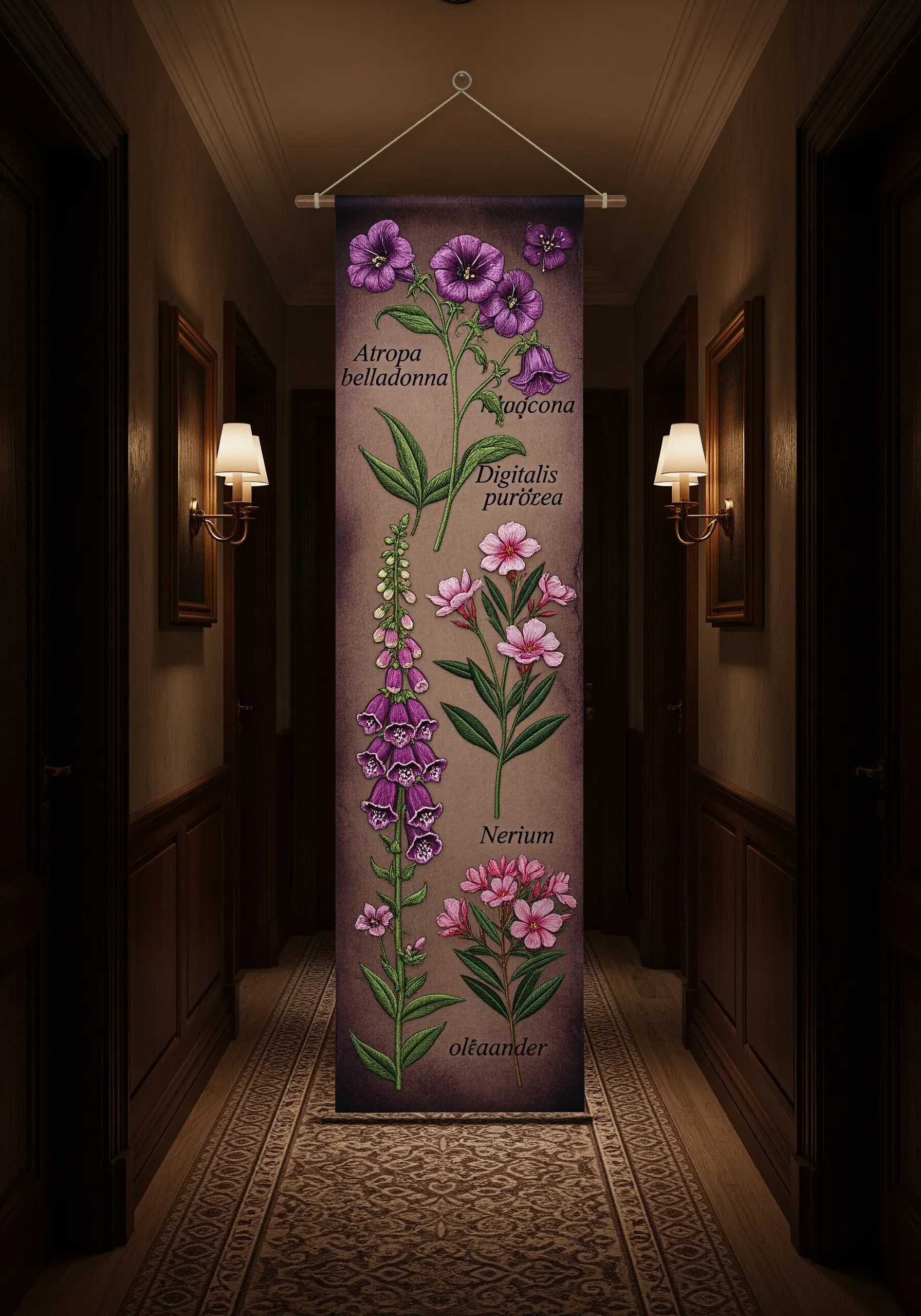
Create a piece with an intriguing narrative by focusing on the darkly beautiful world of poisonous plants.
Stitching a collection of botanicals like Foxglove, Belladonna, and Oleander on a long, vertical banner creates a unique and sophisticated piece of decor.
Adopt a clean, illustrative style with careful backstitch outlines and simple color fills.
Adding the scientific names in a delicate script enhances the vintage, apothecary-chart aesthetic and adds another layer of storytelling to the work.
28. Create a Modern Triptych with a Split Design
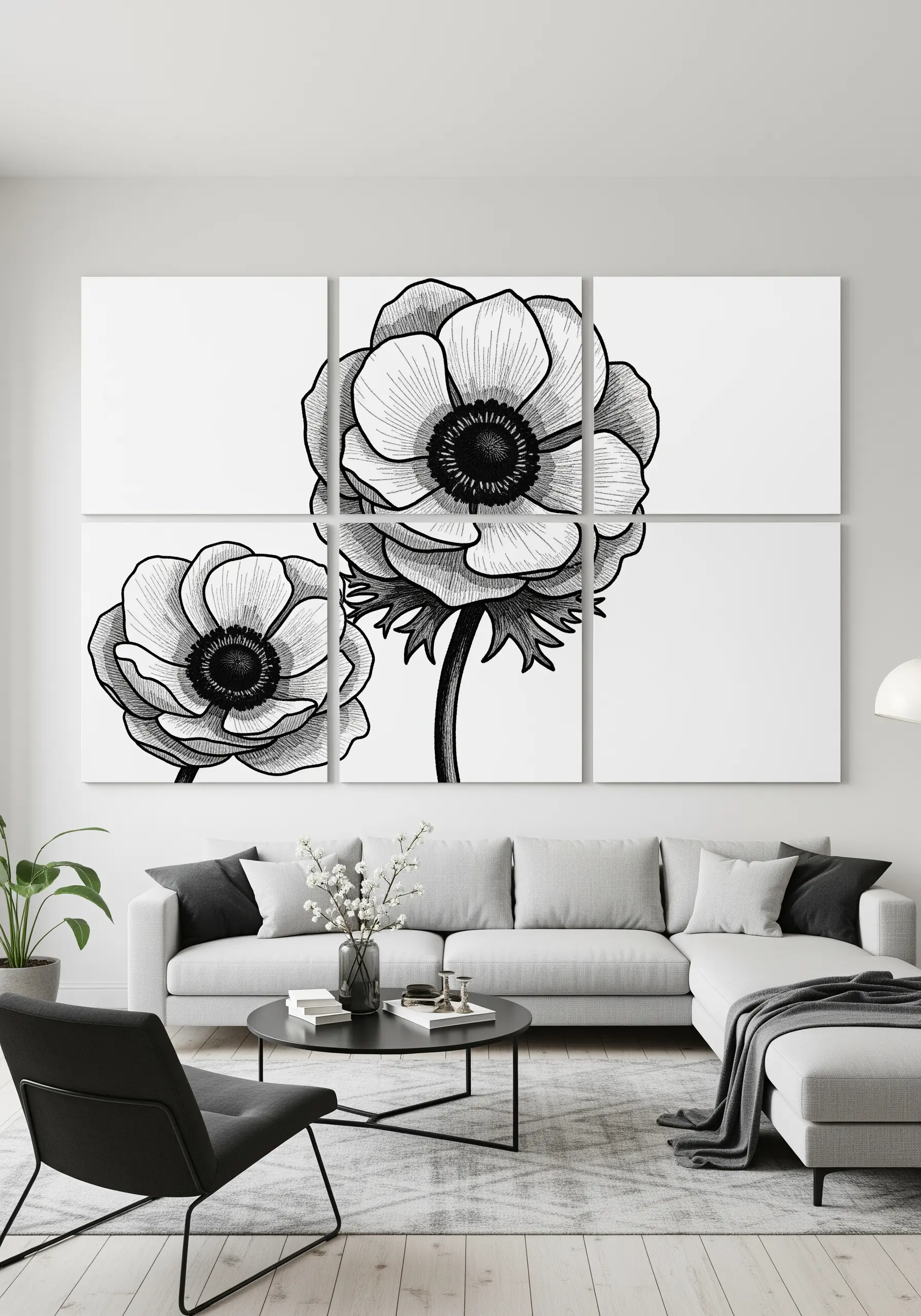
For a high-impact, graphic statement, divide a single, large-scale floral design across multiple stretched canvases.
First, sketch your complete anemone design, then carefully divide it into sections that correspond to your canvases.
Use bold black thread on a crisp white fabric for maximum contrast. Create visual interest and the illusion of depth by varying your line weight—use three or four strands for main outlines and a single strand for delicate interior details.
This technique elevates embroidery into a large-scale, modern art installation that can anchor an entire room.


