If you’ve ever felt that your embroidery, while beautiful, is missing a certain depth or sophistication, I want you to reconsider the role of texture. We often reach for more color to make our work feel alive, but the quiet power of texture is where true artistry begins to emerge.
Think of your needle and thread not just as tools for making marks, but as instruments for building surfaces. Imagine creating fabric that feels like a pebbled shoreline, a piece of carved wood, or a soft, hand-woven blanket. This is entirely possible, not with complex new equipment, but with the stitches you already know, used in more intentional ways.
In the following examples, you’ll see how focusing on a neutral palette allows texture to take center stage. You’ll learn how to combine different yarn weights, play with stitch density, and use direction to manipulate light and shadow. This is how you create work that begs to be touched—work that feels as compelling as it looks.
1. Build Topography with French Knots and Couching
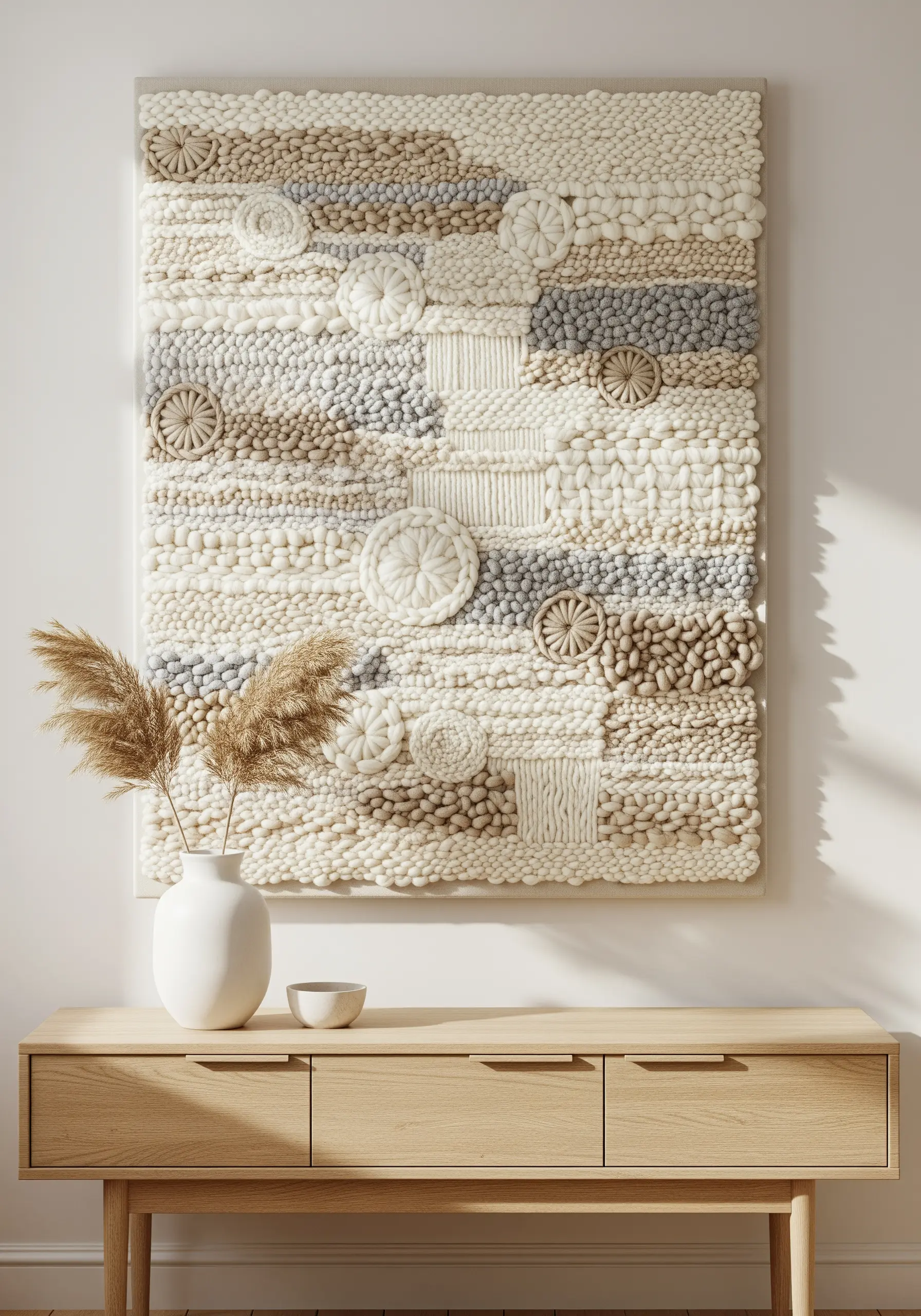
To achieve a hand-woven look, move beyond flat stitches and think in terms of dimension.
Use a thick, soft wool or roving yarn and lay it on your fabric in gentle curves or tight circles, then use a thinner, matching embroidery floss to tack it down—a technique called couching.
Fill the negative space between these couched lines with dense clusters of French knots in varying neutral shades like ecru, sand, and pale grey.
This contrast between the smooth, raised lines of the yarn and the pebbled texture of the knots creates a rich, sculptural surface that invites touch and transforms your hoop into a handmade organic piece.
2. Integrate Macrame Knots within the Hoop
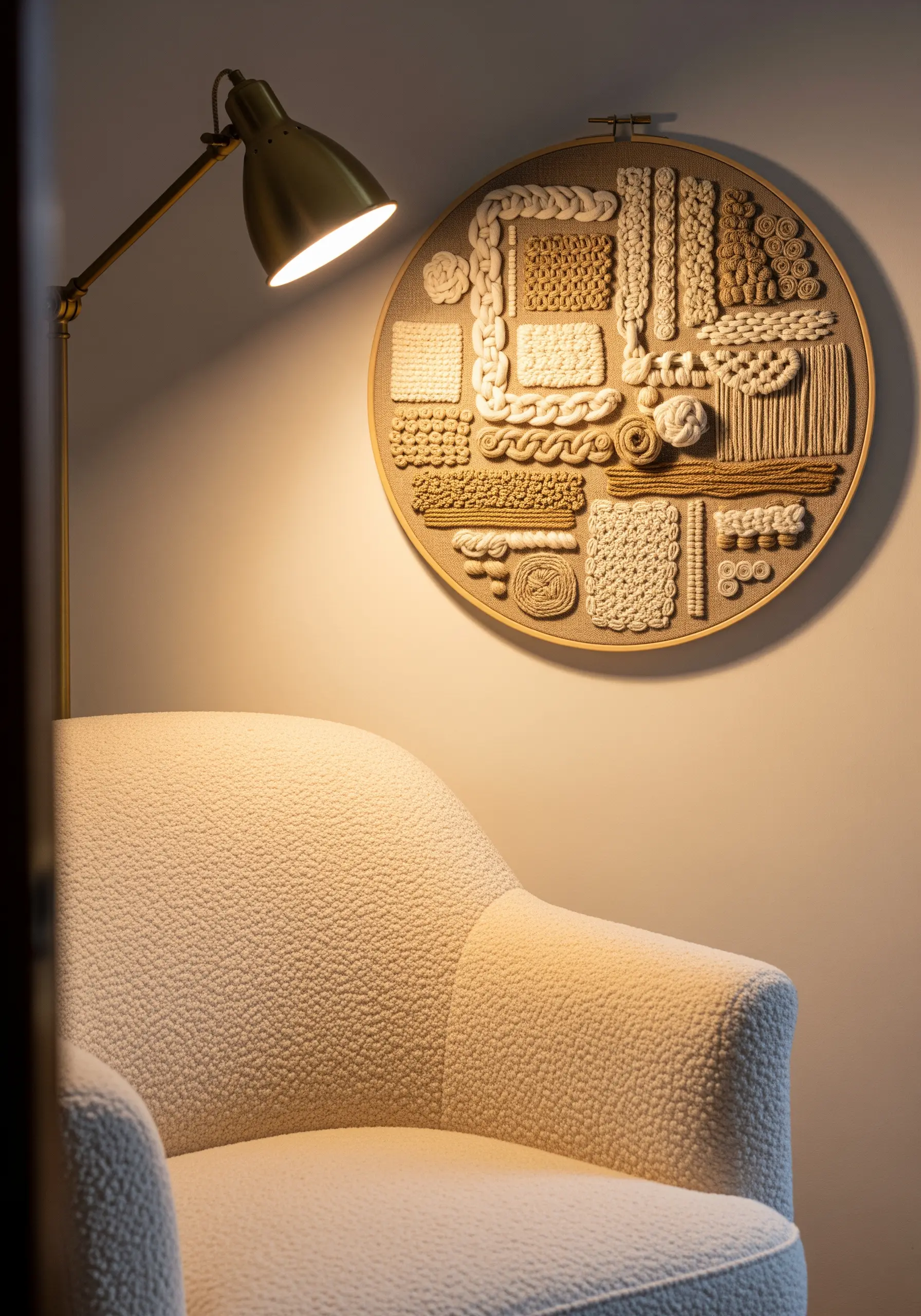
Bring the dimensional art of macrame directly onto your fabric for a concentrated burst of texture.
Instead of working with loose cords, stitch thick, braided rope or yarn onto a tightly hooped piece of linen or canvas.
Form classic knots like the square knot or create small, chunky braids, securing them to the fabric with strong, invisible stitches on the underside.
This method allows you to control the composition with precision, creating a sampler of sculptural knots that feels both rustic and refined, perfect for soft textured embroidery patterns.
3. Create Graphic Rhythm with Geometric Stitches
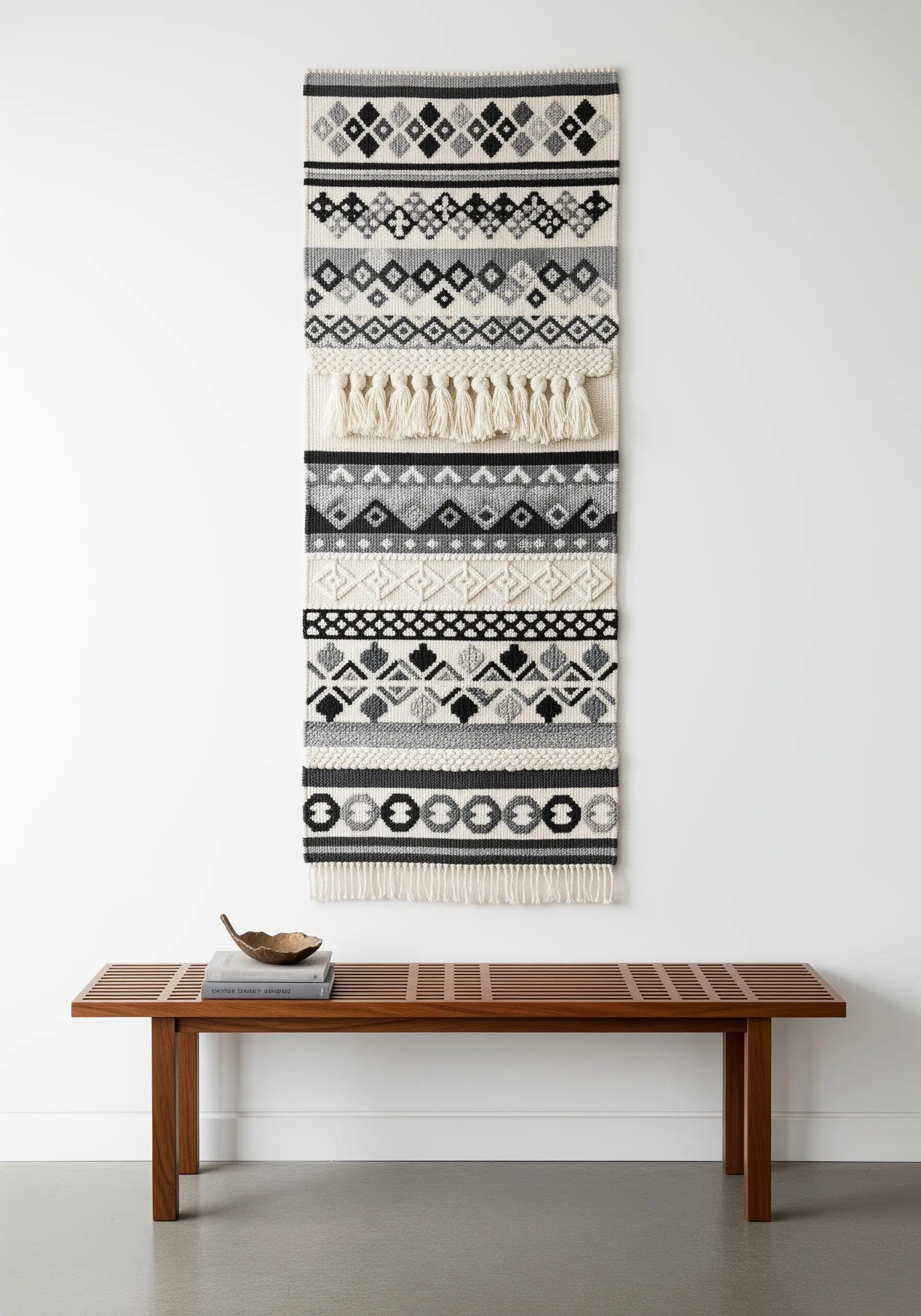
Elevate simple geometric shapes by filling them with disciplined, textural stitches in a high-contrast palette.
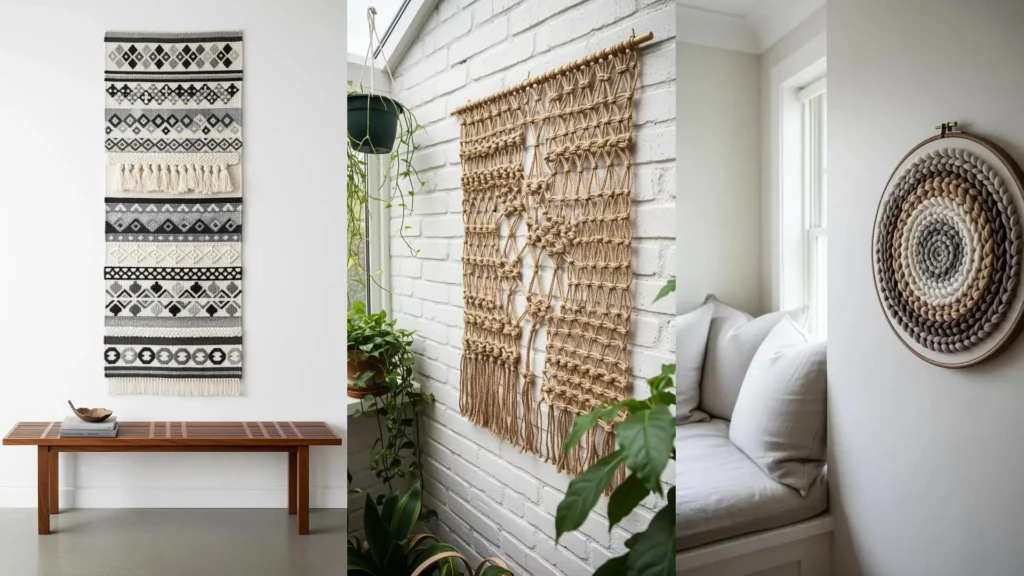
Use black, charcoal, and cream threads to define diamonds, triangles, and chevrons.
Fill these shapes with methodical stitches like the basketweave stitch or straight satin stitches laid in alternating directions.
The key to this look is precision; the sharp, clean lines and organized textures create a bold, modern tapestry that feels more like graphic art than traditional embroidery.
Incorporate sections of raised loop stitches or tassels for a subtle break in the pattern, adding a touch of softness to the structure, resulting in sophisticated geometric framed embroidery patterns.
4. Frame Bold Lines on a Dark Canvas
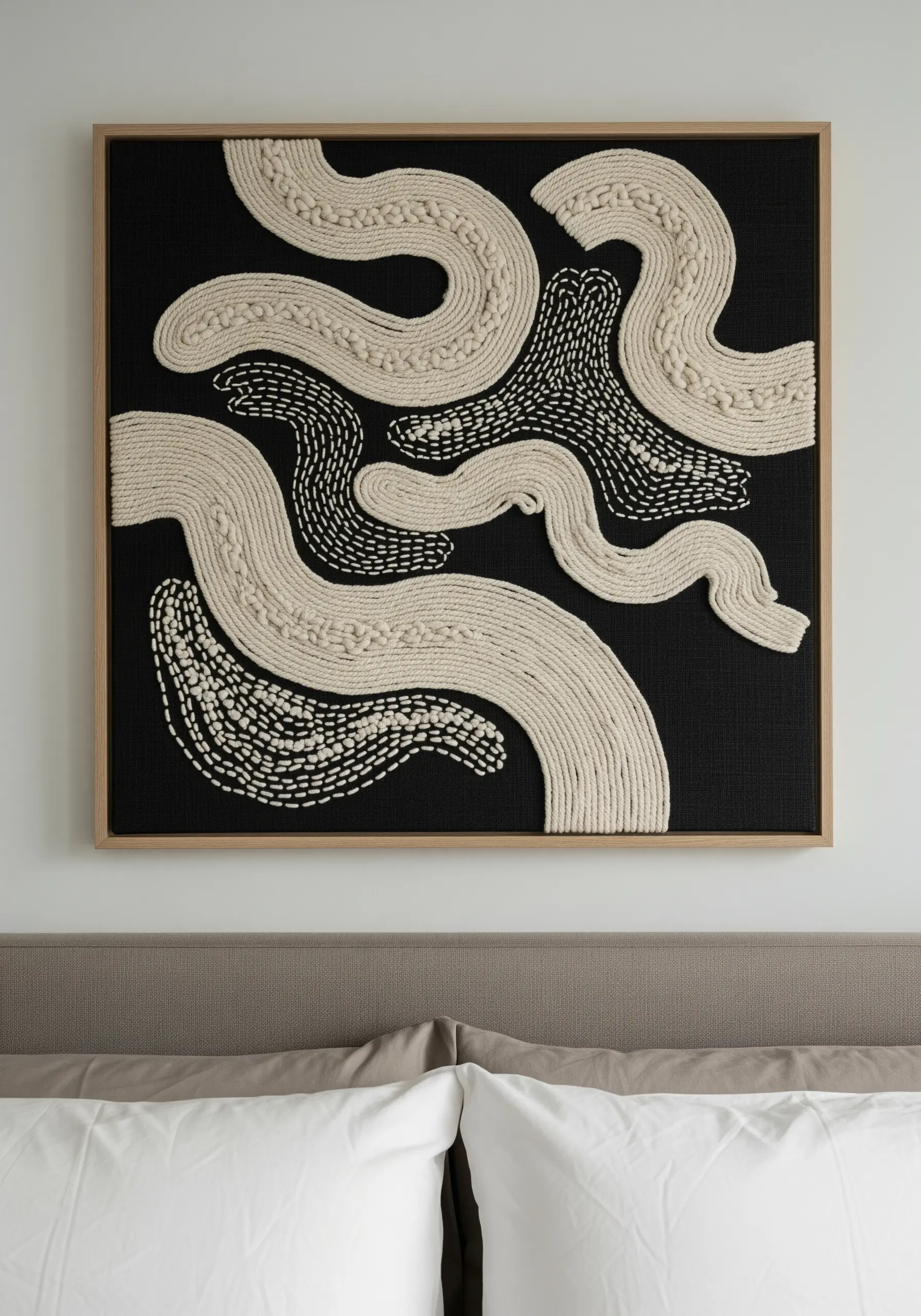
Amplify the impact of your textural work by choosing a dark, solid background like black or charcoal linen.
Couch thick, cream-colored rope or chunky yarn onto the fabric, allowing the lines to swell, curve, and overlap in an organic, free-flowing composition.
The dark fabric recedes, making the neutral, textural lines appear to float above the surface.
For added detail, fill sections of your couched shapes with tiny seed stitches in a contrasting neutral, creating a stippled effect that plays with light and shadow, resulting in powerful abstract thread designs.
5. Design a Framed Grid of Stitch Samplers
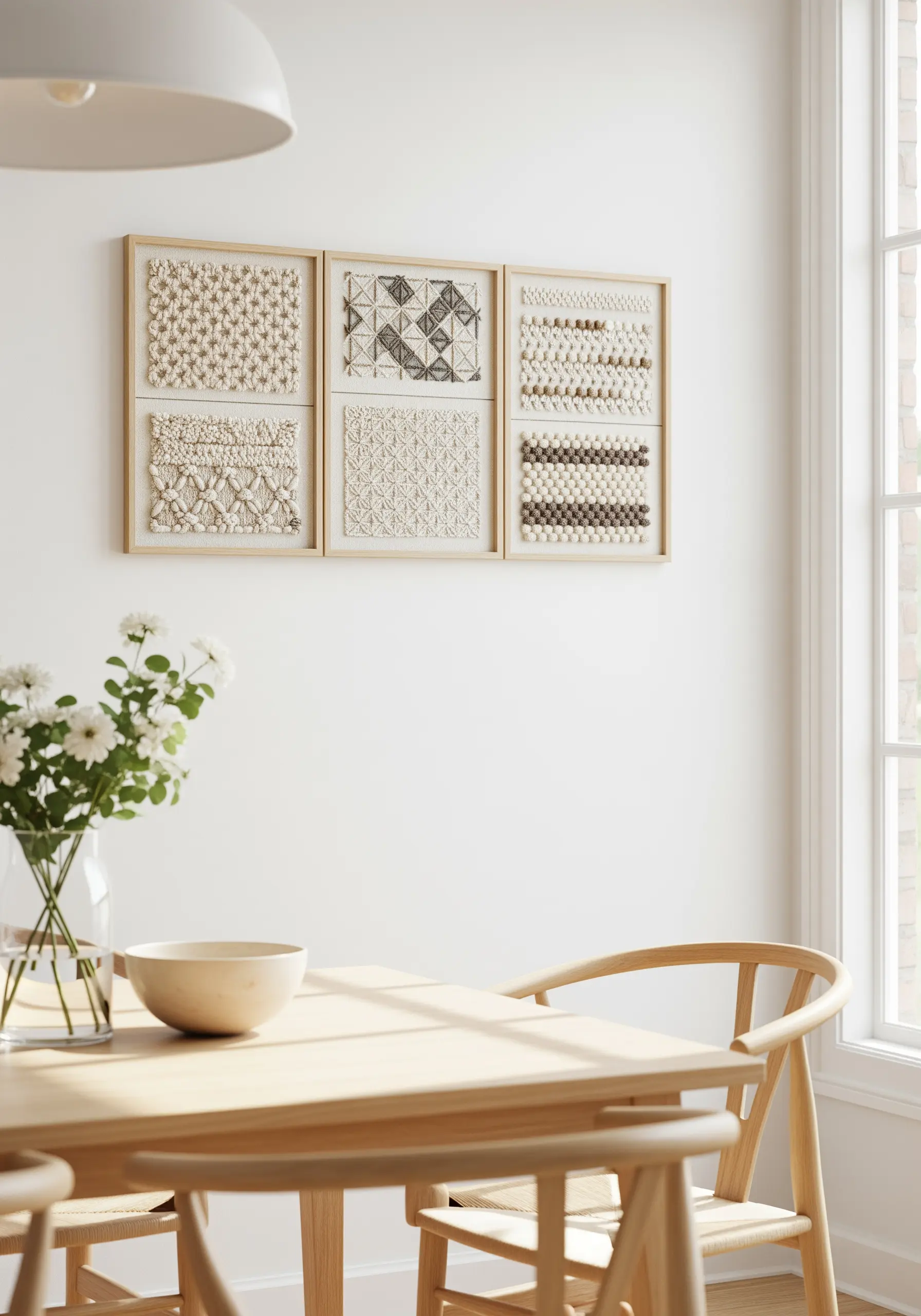
Transform your stitch practice into a finished piece of art by creating a sampler grid.
Divide your canvas into equal squares and dedicate each one to exploring a different textural stitch—think raised stem stitch, bullion knots, woven picot, or Turkey work.
By limiting your palette to a few cohesive neutrals, the focus shifts entirely to the interplay of textures, shadows, and patterns.
Frame the individual squares together as a collection to create a sophisticated piece that serves as both decor and a personal reference library of your skills, turning practice into handmade art pieces.
6. Suspend Your Work from Natural Elements
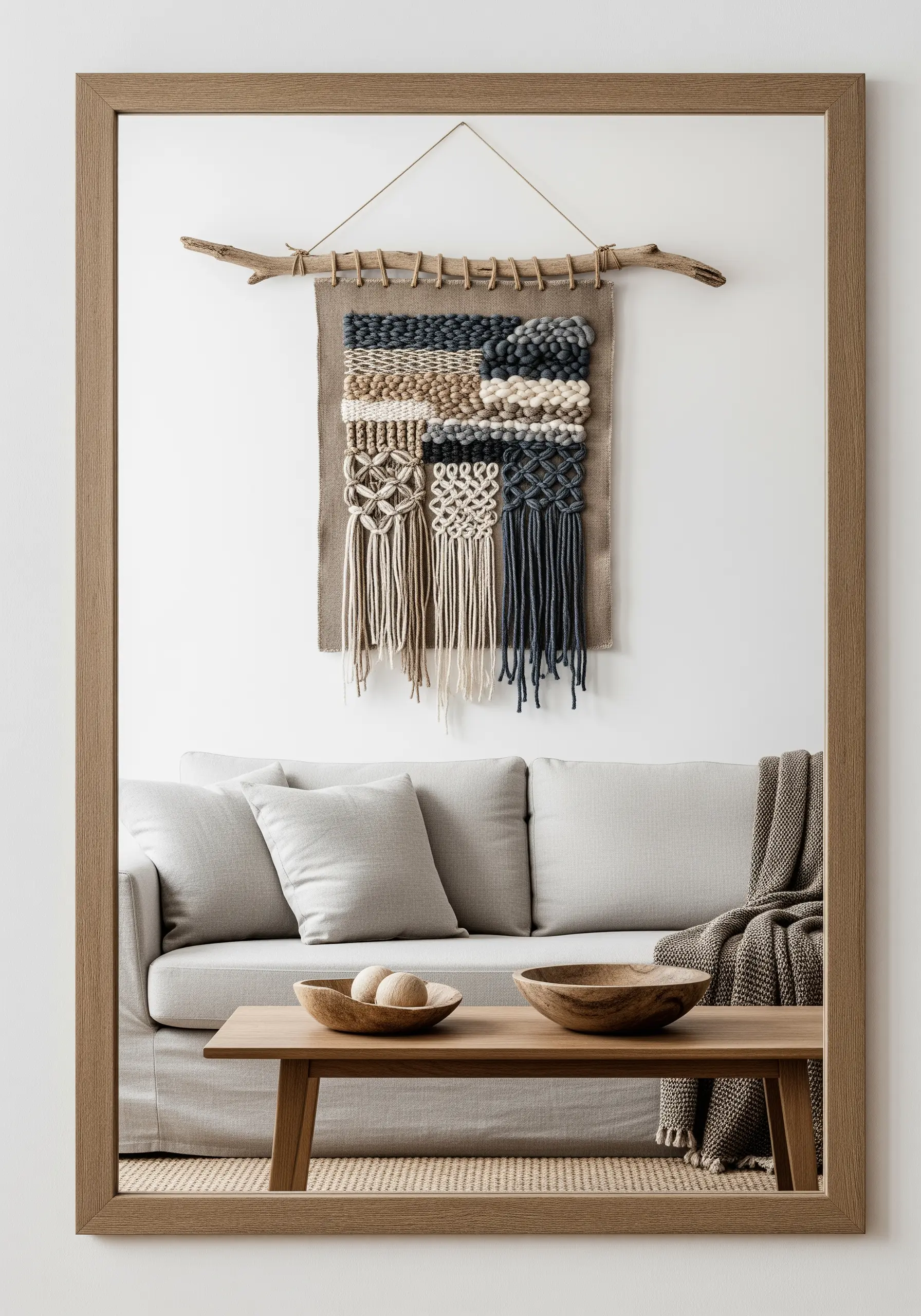
Enhance the organic feel of your textured embroidery by altering how you display it.
Instead of a traditional frame or hoop, stitch your sampler onto a sturdy piece of linen or burlap, leaving the edges raw or loosely hemmed.
Attach the finished piece to a piece of driftwood or a fallen branch using a simple whip stitch or leather cord.
This presentation grounds your work in nature and complements the earthy, woven aesthetic of stitches like macrame knots and thick, roving yarn, making it one of those earthy embroidery projects that feel deeply connected to their materials.
7. Layer Textures for a Bohemian Statement
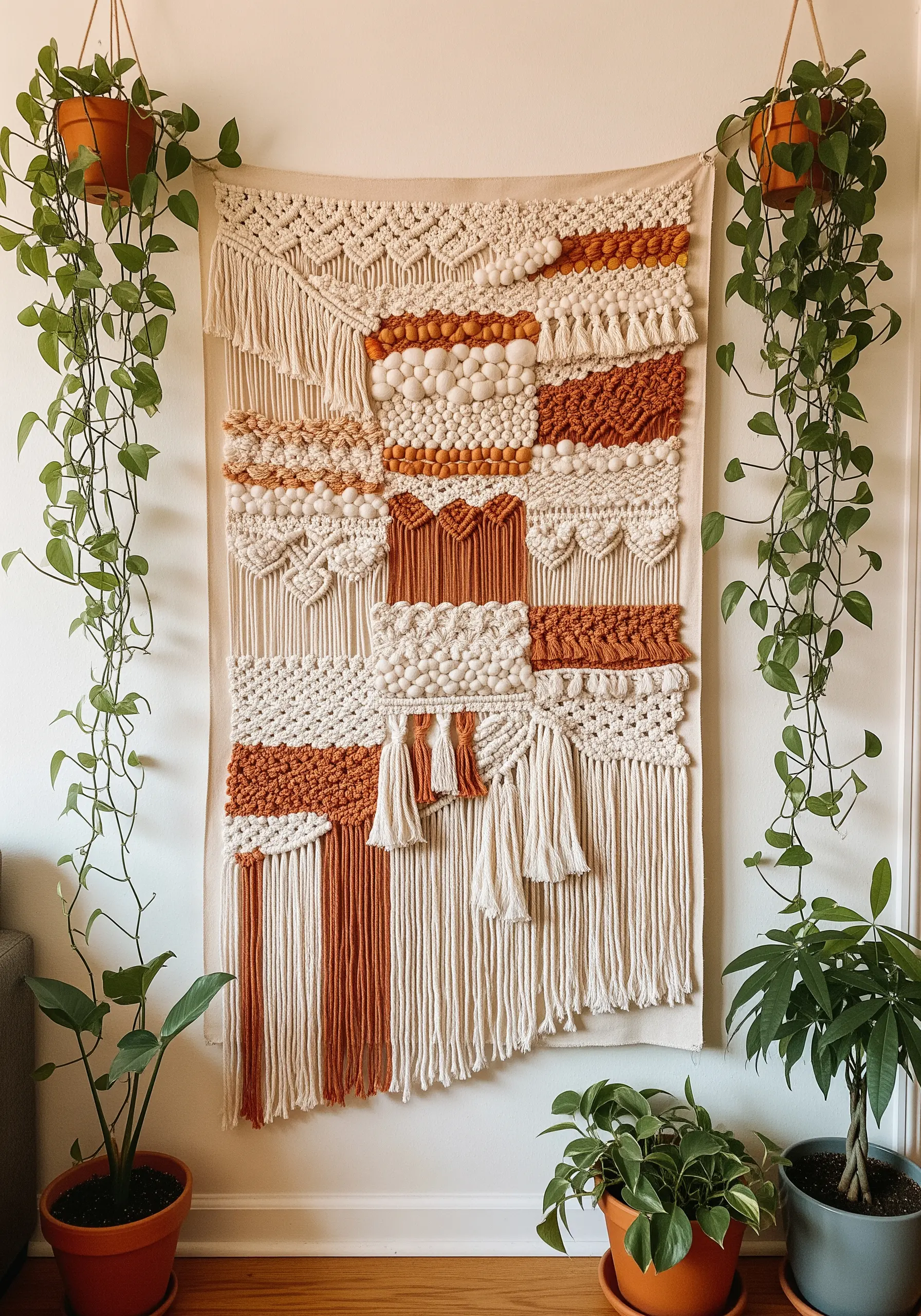
Create a rich, bohemian tapestry by fearlessly layering multiple textures, materials, and techniques.
Work in blocks of color and texture, combining sections of tightly woven stitches with loose, flowing tassels.
Incorporate different materials, like chunky wool roving for large French knots, smooth cotton cord for macrame details, and soft merino wool for wrapped pom-poms.
The key is to vary the density and height of your stitches across the piece, creating a dynamic composition that feels abundant and artfully curated—perfect for boho-inspired textile wall art.
8. Explore Monochrome Texture Variations
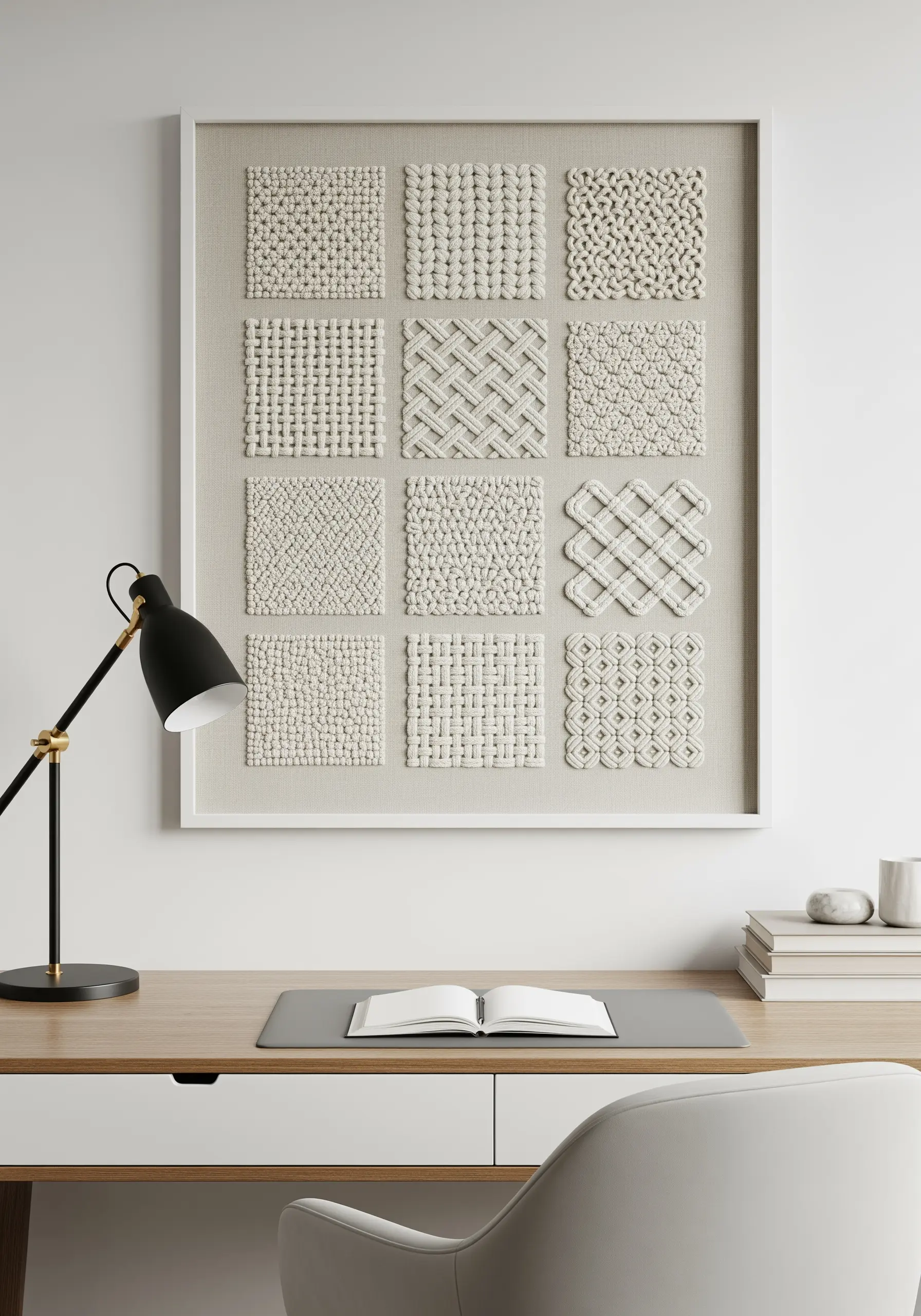
Challenge yourself to create a complex and engaging piece using only one color of thread.
By removing color from the equation, you force the viewer to focus entirely on the nuances of texture, light, and shadow.
Create a grid of squares, each filled with a different stitch: basketweave, French knots, chain stitch, running stitch, and woven wheels.
Even with a single shade of ivory or white, the way light hits the raised surfaces, tight weaves, and open loops will create a surprisingly dynamic and sophisticated piece of abstract monochrome thread designs.
9. Map Out a Color-Blocked Gradient
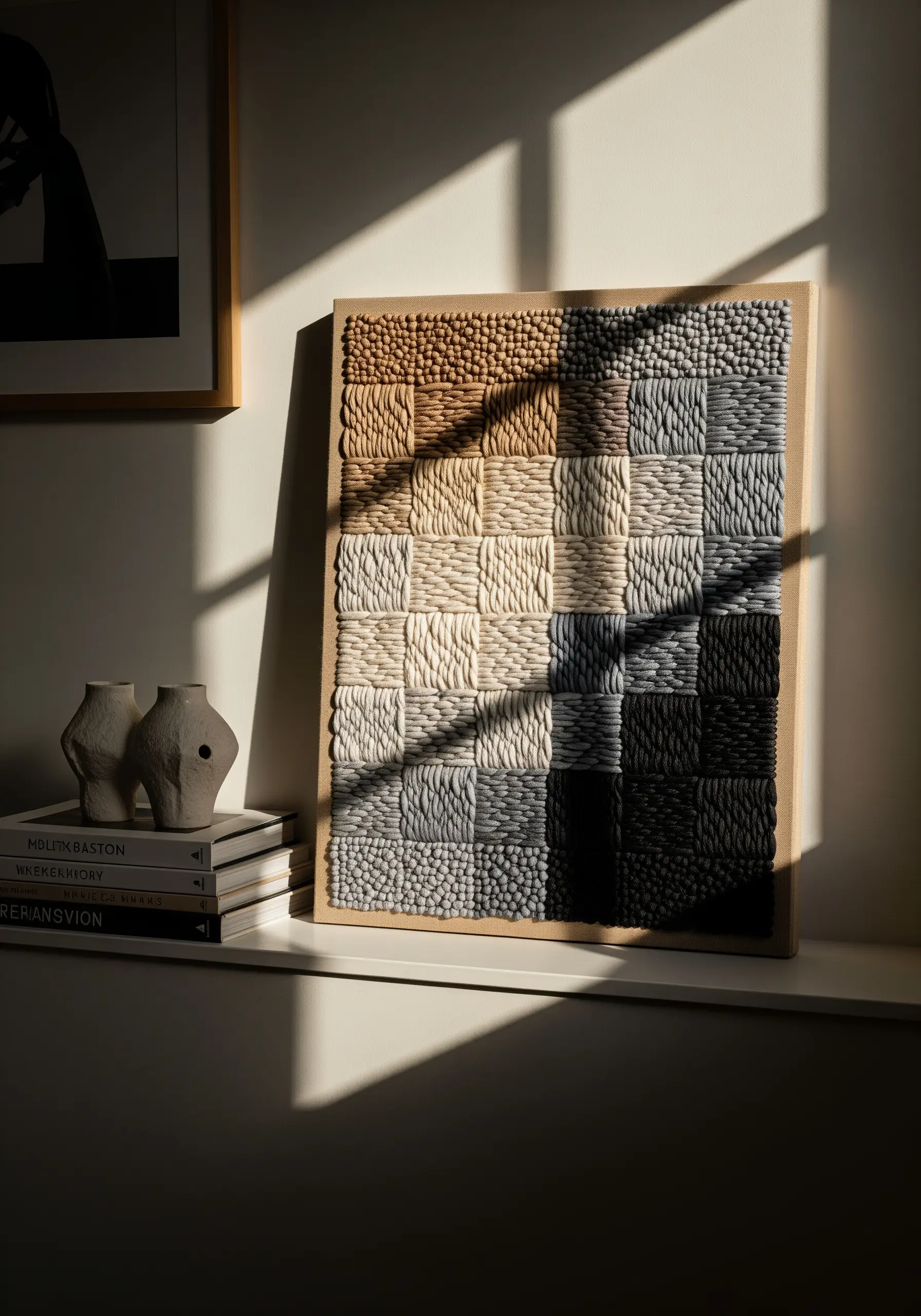
Create the illusion of a soft, painterly gradient using blocks of distinct texture and color.
Divide your canvas into a grid and assign a different neutral tone to each section, arranging them from light to dark to create a subtle ombré effect.
Within each color block, use a single, consistent stitch—like vertical satin stitches or tight seed stitches—but change the stitch direction in adjacent blocks.
This technique creates a piece that feels both structured and fluid, as the light catches each textured square differently, enhancing the gentle shift in color and resulting in beautiful, subtle earthy embroidery designs.
10. Coil Yarn for a Meditative Spiral

Embrace a simple, repetitive technique to create a powerful, sculptural focal point.
Start with a thick, soft yarn or roving and begin coiling it in the center of your hoop, tacking it down to the fabric with a smaller, matching thread as you go.
Continue spiraling outward, occasionally switching the color of your yarn to create concentric rings of neutral tones—like stone, sand, and cream.
The result is a beautifully dense, coiled medallion that has a calm, meditative quality and serves as a stunning piece of minimalist small hoop designs.
11. Compose with Vertical Stitch Bands

For a large-scale piece that feels both grand and harmonious, think like a composer arranging musical phrases.
Create a long, panoramic canvas and divide it into vertical bands of varying widths.
Fill each band with a unique textural stitch pattern, using a cohesive palette of neutrals like oatmeal, taupe, and ivory.
Alternate between dense patterns like French knots and more linear ones like chain stitch or raised stem stitch bands.
This rhythmic repetition of texture creates a calming, sophisticated statement piece that draws the eye across the full length of the work, like one of these statement-size embroidered textile hangings.
12. Master the Art of Tone-on-Tone Subtlety
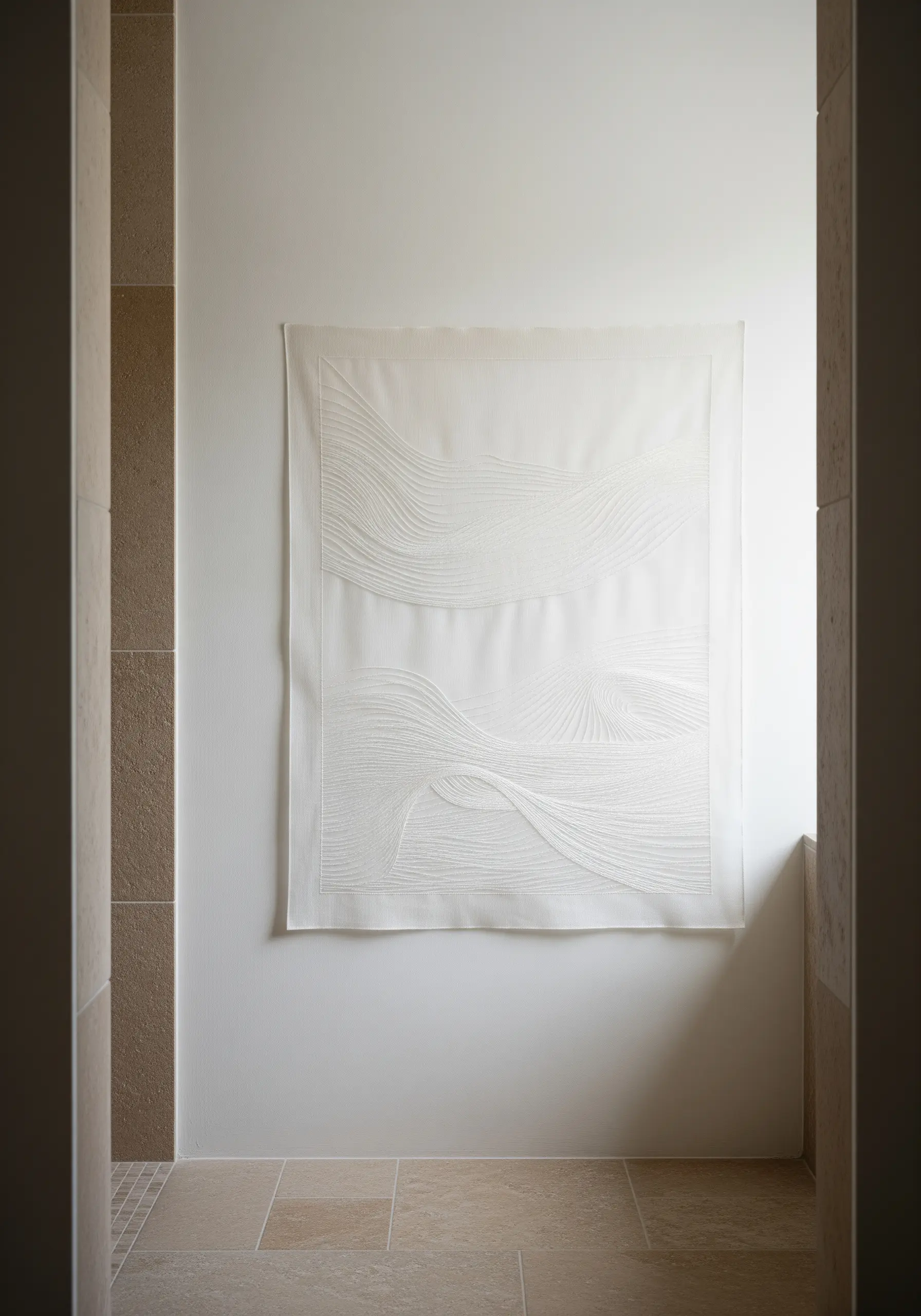
Discover the quiet power of stitching with thread that exactly matches your fabric color.
On a piece of off-white linen or silk, use a matching thread to create sweeping, abstract lines with simple backstitch or stem stitch.
Without color contrast, the design is revealed only by the subtle shadows cast by the raised threads.
This technique, known as white-work, is the essence of understated elegance. The beauty lies in what is felt rather than what is loudly seen, making it a perfect example of tone-on-tone embroidery techniques.
13. Embrace Freeform Composition with Chunky Fibers
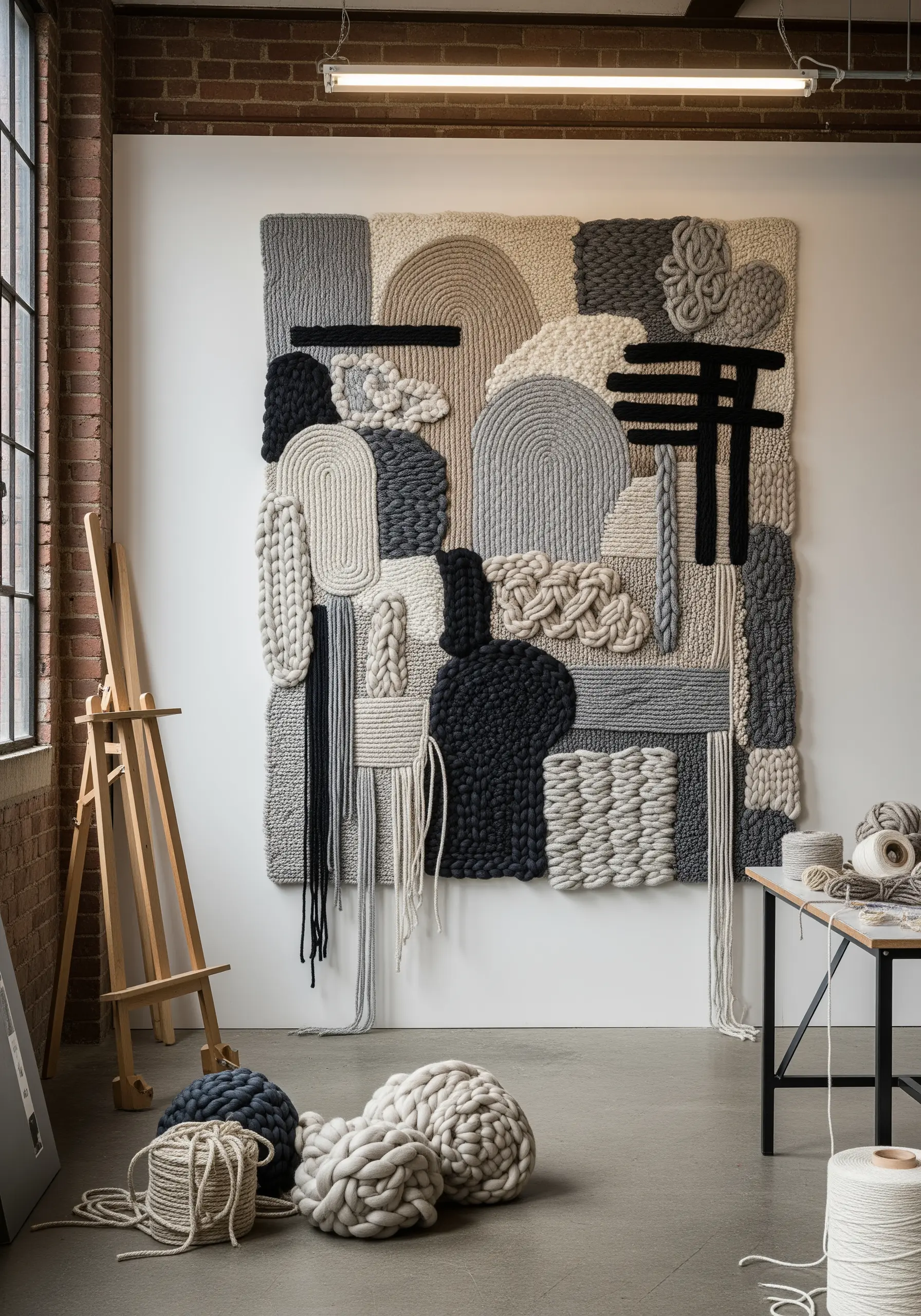
Break free from the grid and allow your materials to guide the design.
On a large canvas, combine extremely different fibers: thick, unspun wool roving, finely twisted cotton cord, and chunky braided yarns.
Instead of planning every stitch, lay down abstract shapes and secure them, letting some ends hang loose and allowing textures to overlap and intersect organically.
This improvisational approach results in a dynamic, sculptural piece that captures the raw energy of the fibers themselves. It’s a wonderful way to explore mixed-fiber wall hangings that feel alive.
14. Define Intricate Patterns with a Single Line
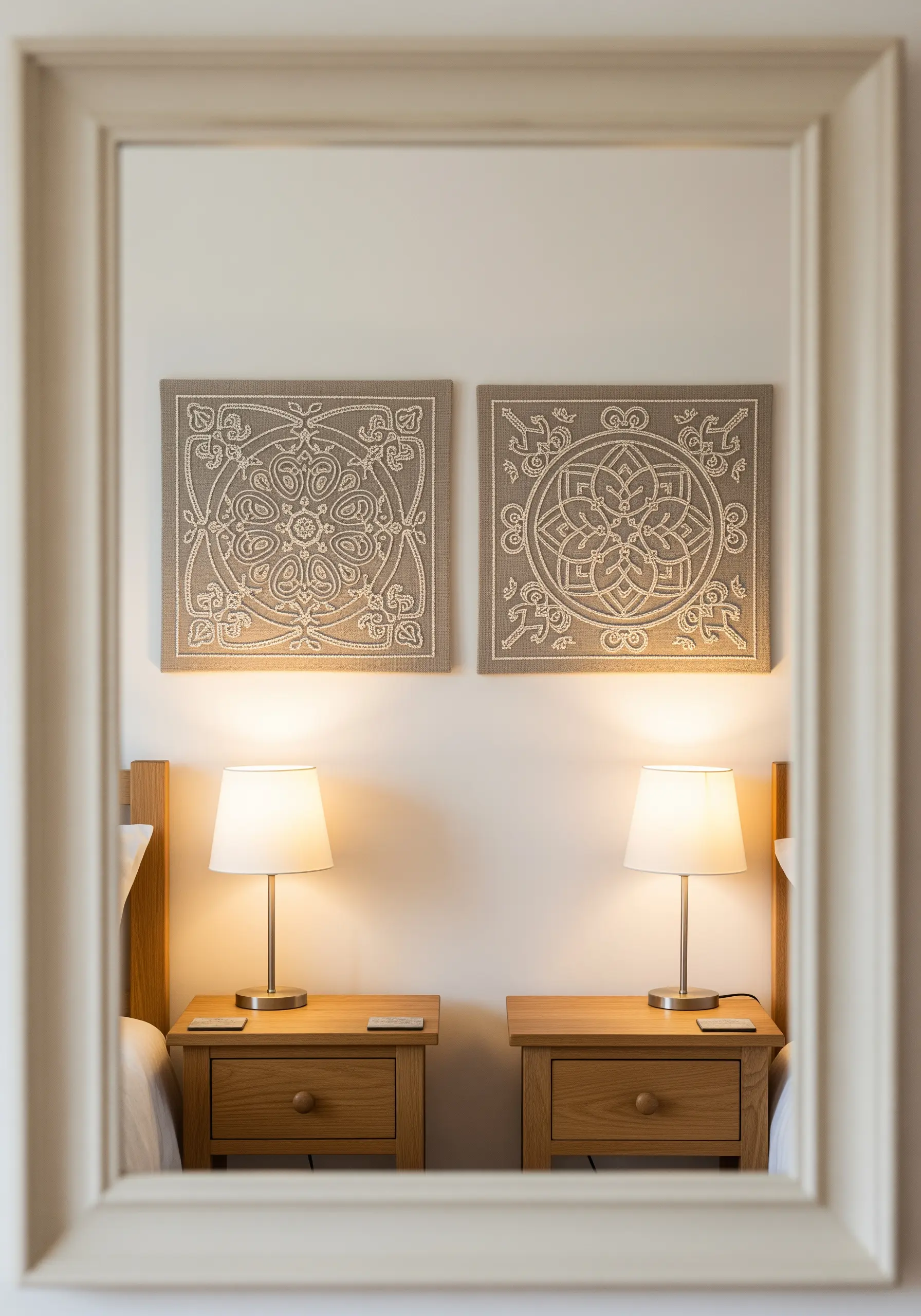
Create the look of complex tilework or block printing using only a simple outline stitch.
On a neutral, textured fabric like linen or burlap, use a contrasting cream or white thread to trace intricate mandala or geometric patterns.
The key is to use a consistent, clean stitch line, like a stem stitch or a whipped backstitch, which gives the thread a rope-like, raised quality.
This technique highlights the beauty of the line itself, creating a sophisticated and calming design that feels both ancient and modern, similar to modern thread mandala ideas.
15. Study Density in a Monochrome Palette
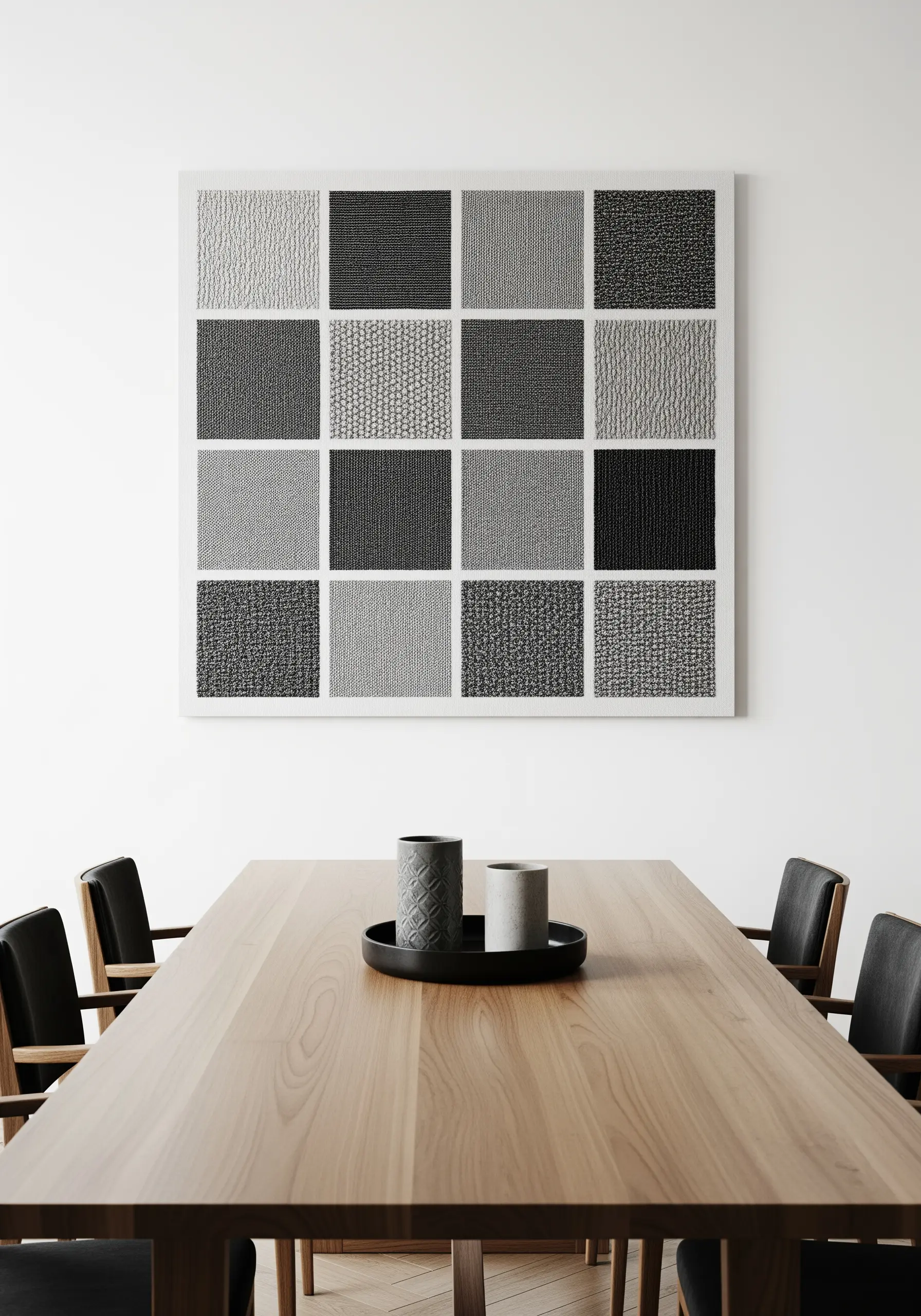
Explore the full spectrum of a single color family—from white to black—to create a graphic masterpiece.
In a grid format, dedicate each square to a different shade of grey, black, or white.
Within each square, experiment with stitch density. Use open, airy stitches like the seed stitch in one, and tightly packed French knots in another.
This exercise demonstrates how texture and density can make the same color appear darker or lighter, adding incredible depth and sophistication to a simple palette, resulting in an impactful monochrome embroidery wall art piece.
16. Go Large-Scale with Arm-Knitting Yarn
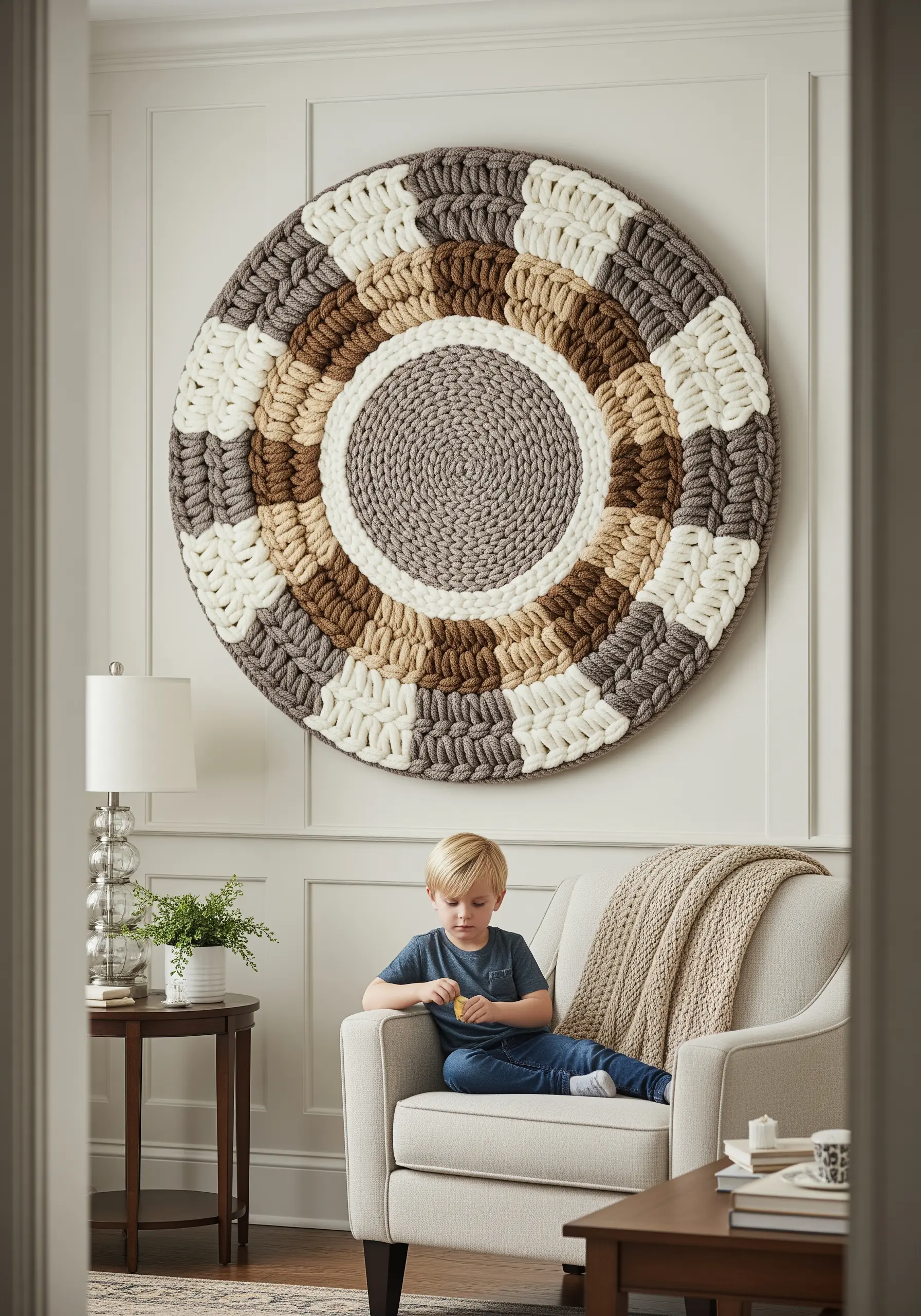
To create a high-impact piece with a woven feel quickly, work with ultra-chunky, felted, or arm-knitting yarn.
Instead of a traditional needle, you can use your fingers or a large tapestry needle to couch these thick fibers onto a heavy-duty canvas base.
Arrange the yarn in concentric circles or checkerboard patterns, stitching it down securely from behind.
The oversized scale of the yarn instantly creates dramatic texture and presence, making it a perfect technique for a large focal wall. These are stunning yarn wall art projects that command attention.
17. Paint with Thread in Vertical Strokes
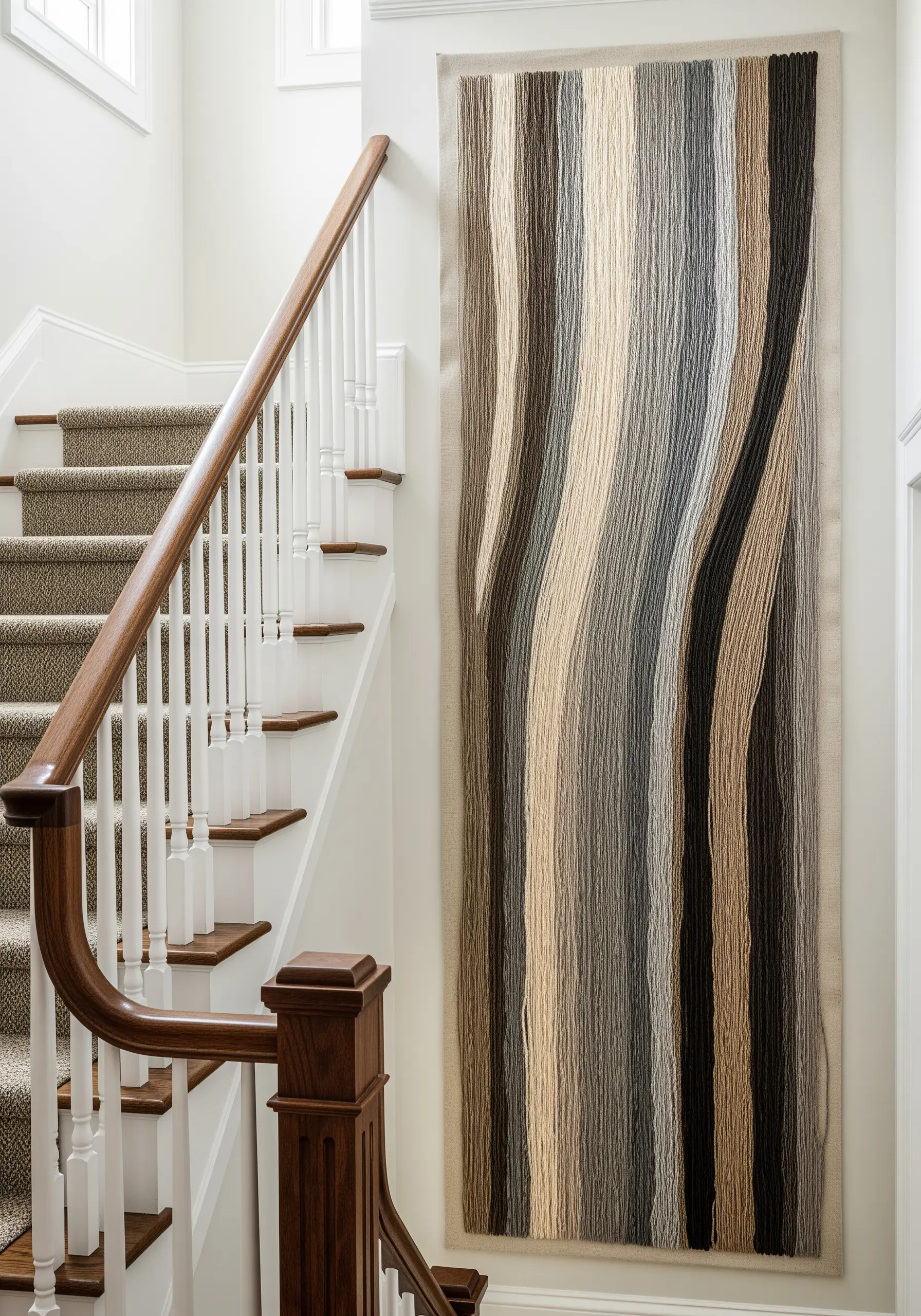
Achieve a serene, painterly effect by filling your canvas with long, vertical satin stitches.
Use multiple needles threaded with different neutral tones—from deep charcoal to pale beige—and lay the stitches side-by-side, allowing the colors to blend and shift organically.
Vary the tension slightly and don’t worry about perfect uniformity; the subtle waves and imperfections are what give the piece its fluid, waterfall-like quality.
This approach transforms simple stitches into a breathtaking abstract thread painting that flows with quiet energy.
18. Find Beauty in Deconstructed Lines
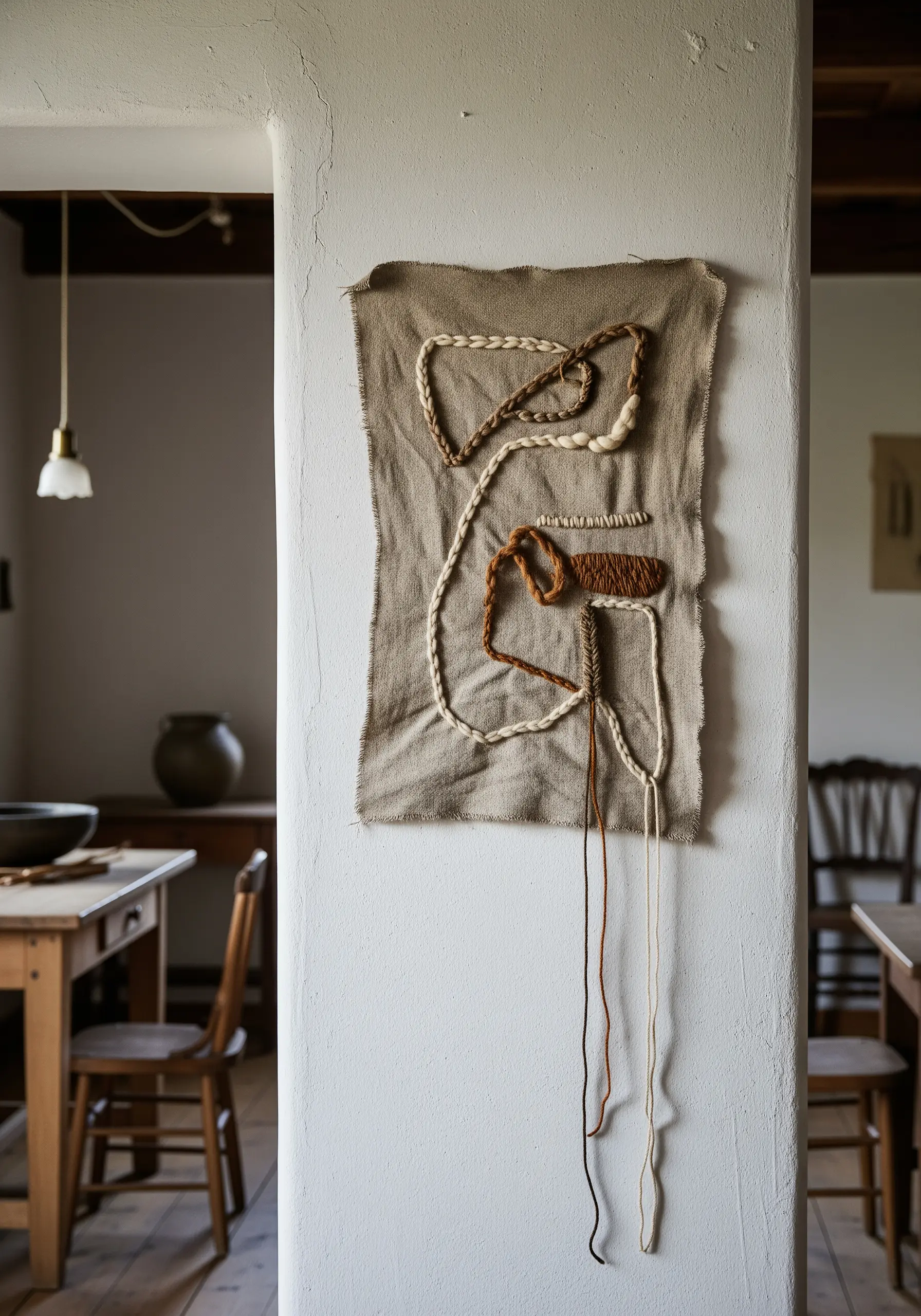
Challenge the idea that every thread must be perfectly controlled and secured.
On a raw, unhemmed piece of linen, couch down different types of cord and yarn—some tightly twisted, others loosely braided.
Allow the lines to wander, and intentionally leave the ends trailing off the fabric.
This technique celebrates the material in its raw state and creates a piece that feels honest, elemental, and effortlessly chic. It’s a perfect project to try on rustic farmhouse embroidery wall projects for an authentic touch.
19. Create an Illusion of Interlocking Layers
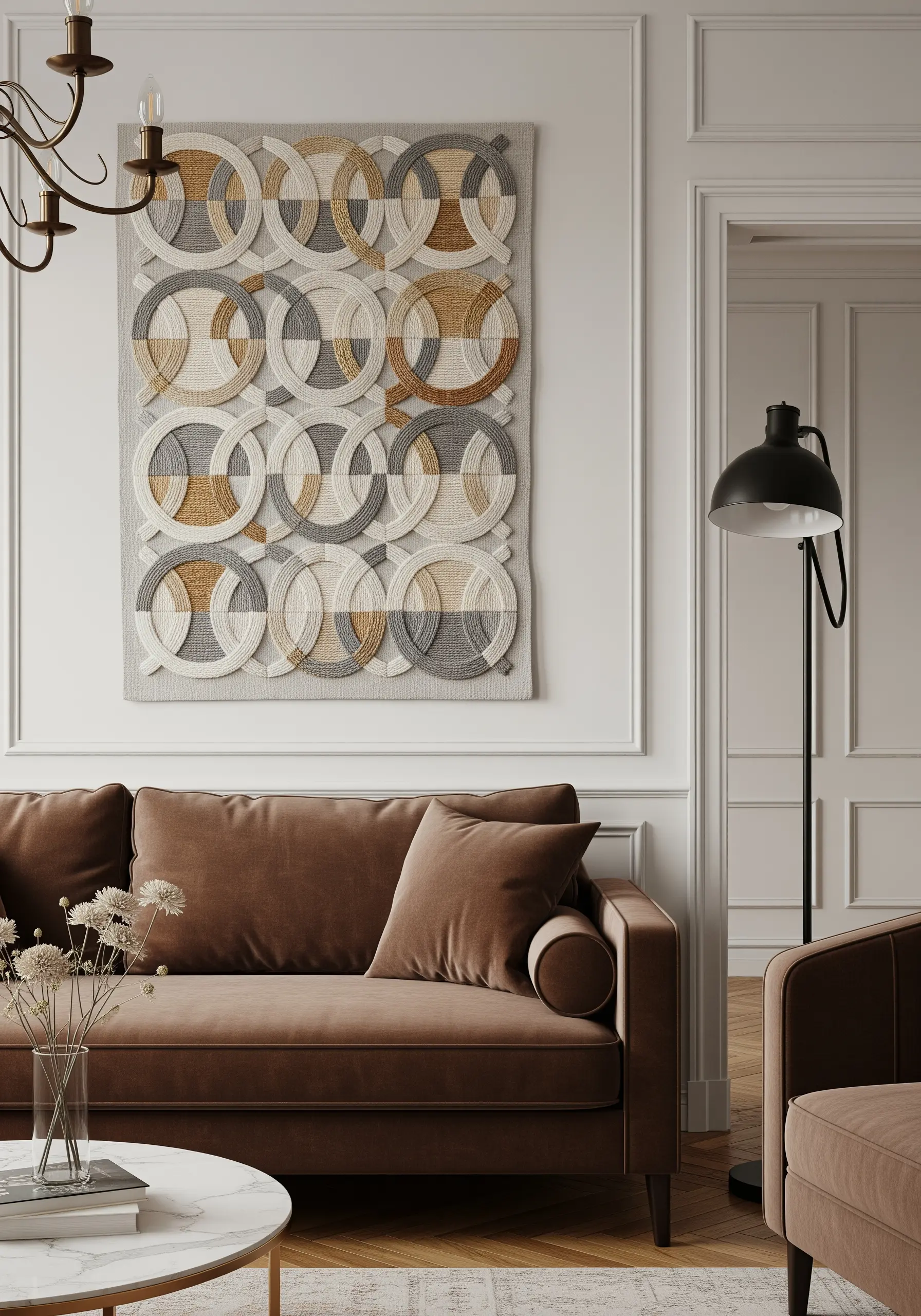
Use stitch direction and color blocking to make flat geometric shapes appear to weave over and under one another.
In a pattern of interlocking circles or links, fill alternating sections with different neutral colors like gold, grey, and cream.
Within each colored section, keep your fill stitches (like satin stitch or long-and-short stitch) oriented in a consistent direction.
Where the shapes overlap, change the stitch direction to create a subtle shift in how the light reflects, enhancing the illusion of depth and movement, a key feature in geometric abstract thread patterns.
20. Adapt Knotting Techniques for an Open Weave
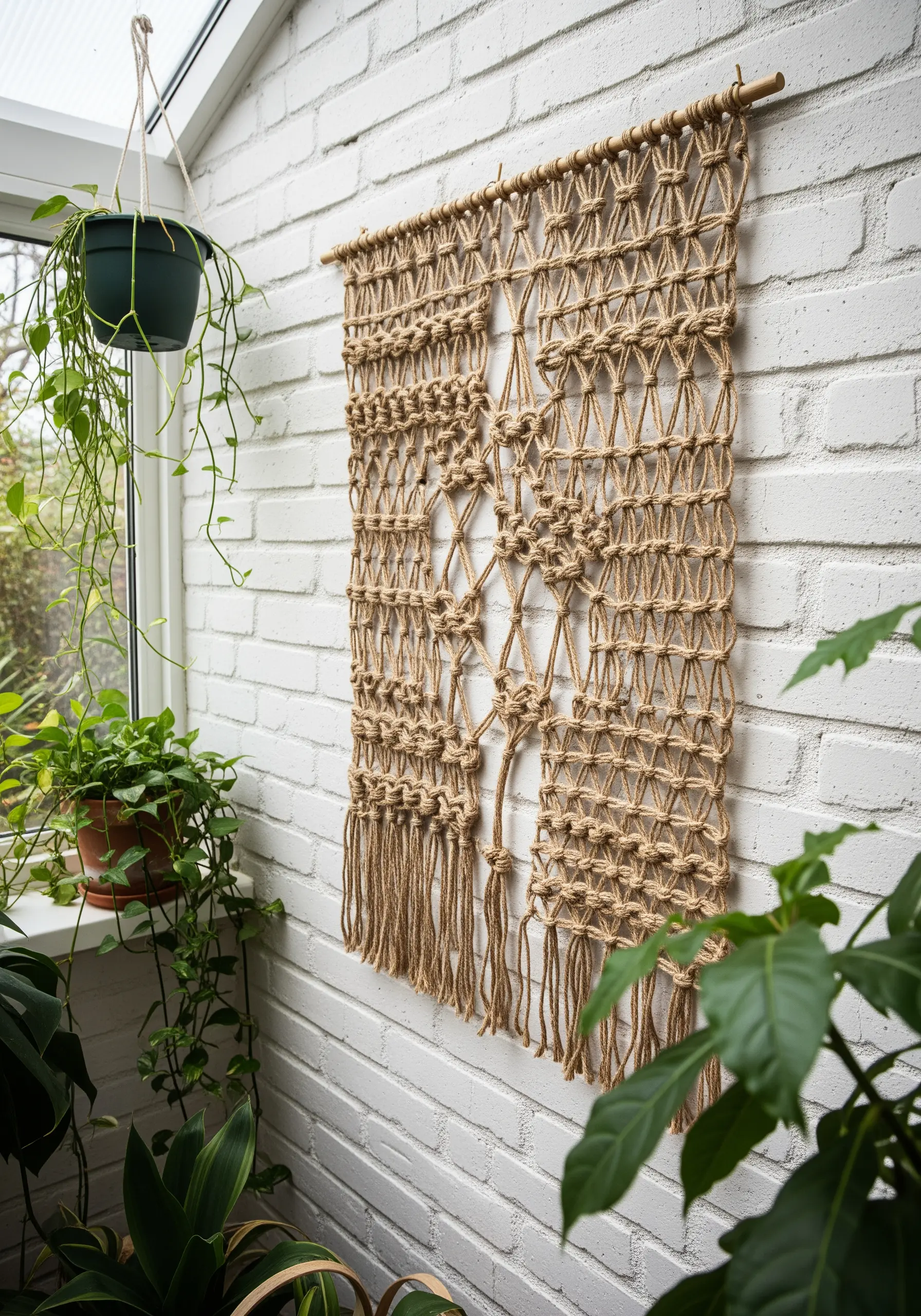
For an airy, lattice-like wall hanging, borrow directly from the world of macrame, but think of it as off-the-canvas embroidery.
Instead of stitching onto fabric, secure lengths of jute or cotton cord to a dowel using a lark’s head knot.
Work simple square knots or alternating half-hitches to create a net-like pattern.
By leaving generous space between the knots, you create a piece that interacts with the wall behind it, playing with light, shadow, and negative space for a result that feels both rustic and modern, like a piece of yarn wall art.
21. Carve Textures with Directional Couching
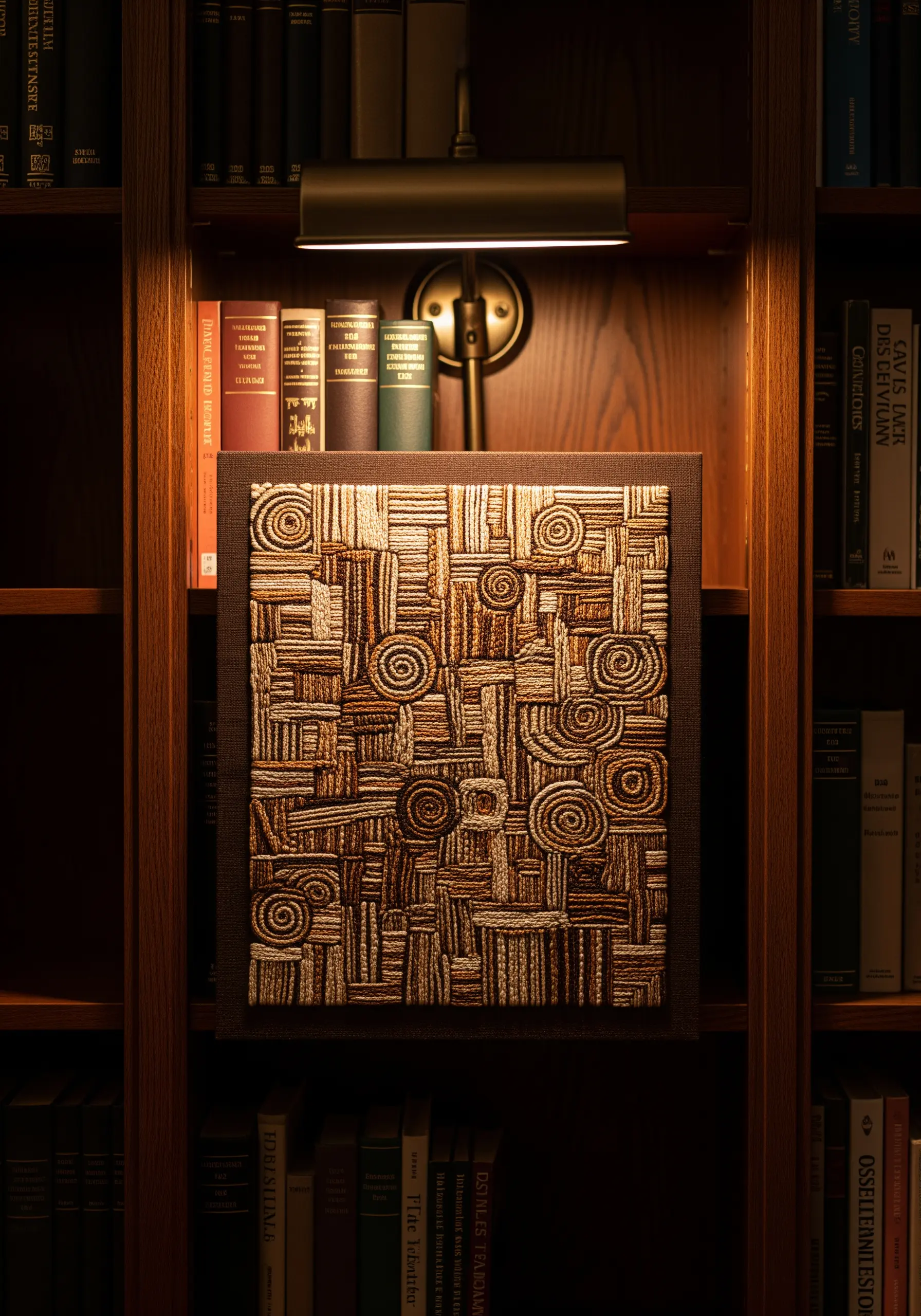
Think of your thread as a tool for carving, not just filling.
On a dark canvas, lay down dense patches of satin stitch in warm neutral tones like bronze, copper, and brown.
Then, couch a contrasting, thick black or dark brown yarn over the top in swirling, organic patterns.
The couched lines will press into the satin stitch base, creating grooves and ridges that give the piece a dynamic, almost woodcut-like appearance. This is a powerful technique for creating organic texture embroidery designs.
22. Refine Simplicity with Textured Stripes
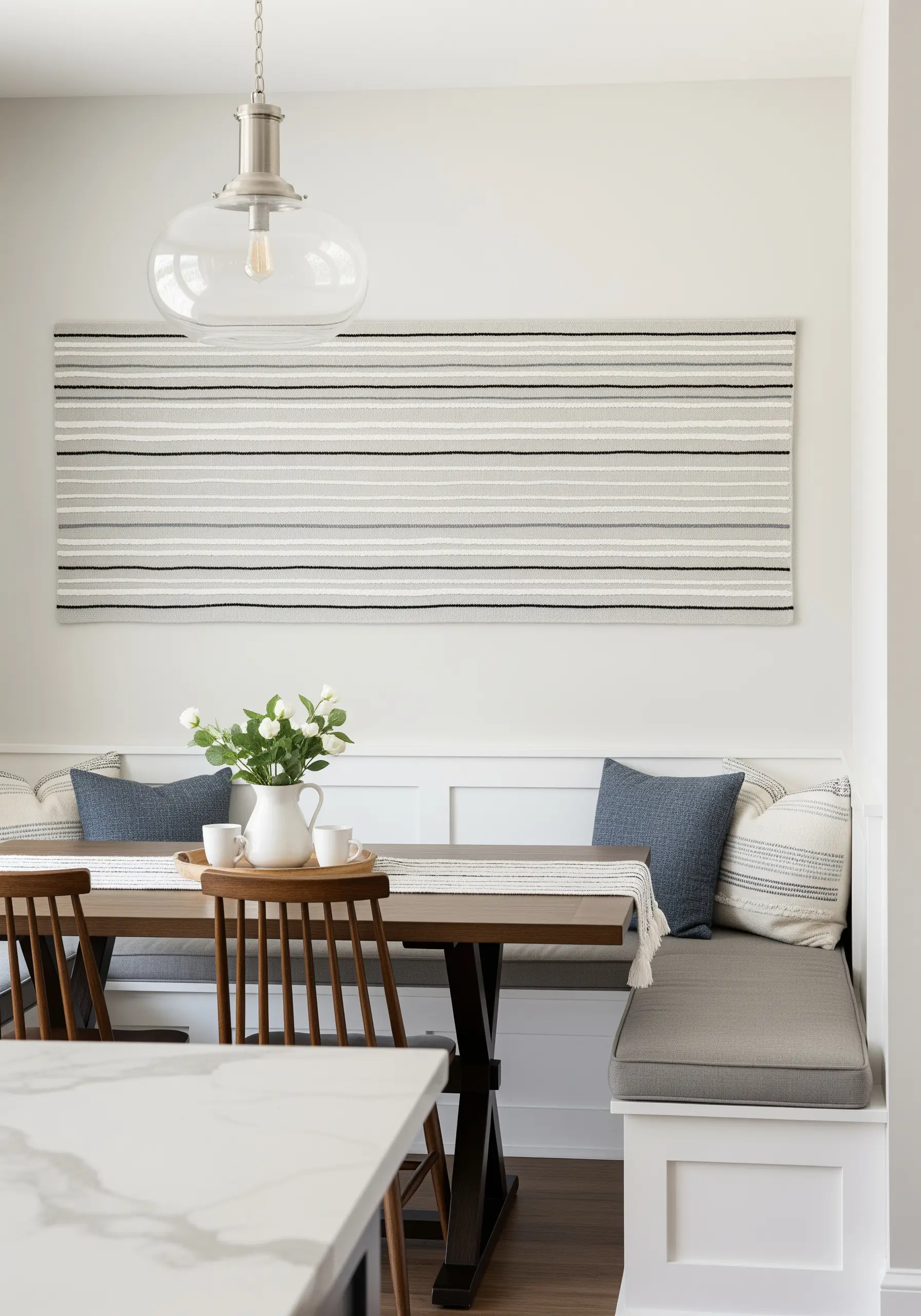
Prove that a simple composition can be incredibly sophisticated by focusing on the quality of your materials.
Create a design of clean, horizontal stripes, but render each stripe in a different material or stitch.
Alternate a line of smooth, flat satin stitch with a nubby row of bullion knots, or a band of fine cotton floss with a thicker, twisted jute cord.
Even within a quiet, neutral palette, this thoughtful variation of texture turns a basic pattern into a refined and elegant statement piece, showing how to achieve a minimal embroidery wall piece with maximum impact.