

There is a quiet moment in embroidery when you realize your stitches can do more than just fill a shape. They can build landscapes, hold light, and create a surface so rich you can’t help but reach out and touch it. This is where your work transforms from a flat image into a living piece of decor.
Moving beyond basic stitches isn’t about complexity; it’s about intention. It’s choosing a knotted stitch not just for color, but for its pebble-like feel, or using a thicker yarn not just to be faster, but to carve bold lines into your fabric canvas. It’s understanding how a shadow falls across a raised petal or how a single metallic thread can change the mood of an entire piece.
Here, we’ll explore techniques that give your work that very dimension. You’ll learn not just what to stitch, but how to think like a textile artist—layering textures, balancing compositions, and turning simple thread and fabric into something with presence and soul. Let’s begin.
1. Sculptural Landscapes with Chunky Yarn
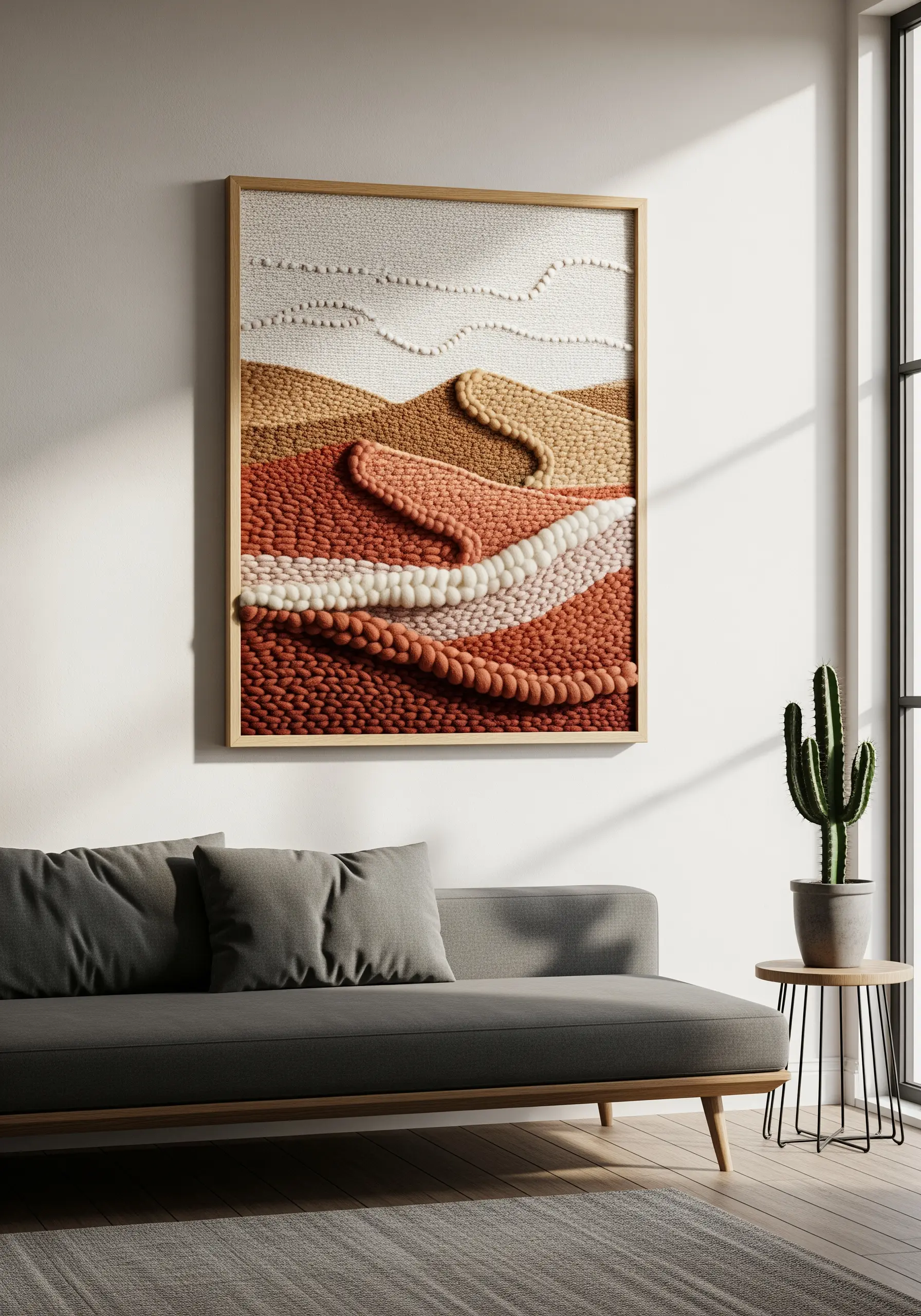
Create dramatic, rolling landscapes by trading floss for chunky yarn and a punch needle.
Use dense clusters of French knots or tufted stitches to form undulating hills and valleys, allowing the yarn’s thickness to build immediate, touchable dimension.
Vary the height and density of your stitches to mimic natural terrain—tighter, lower knots for distant hills and higher, plusher loops for the foreground.
This technique turns a simple landscape into one of the most compelling earth-inspired embroidery textures, inviting both the eyes and hands to explore its surface.
2. Modern Mosaics with Punch Needle
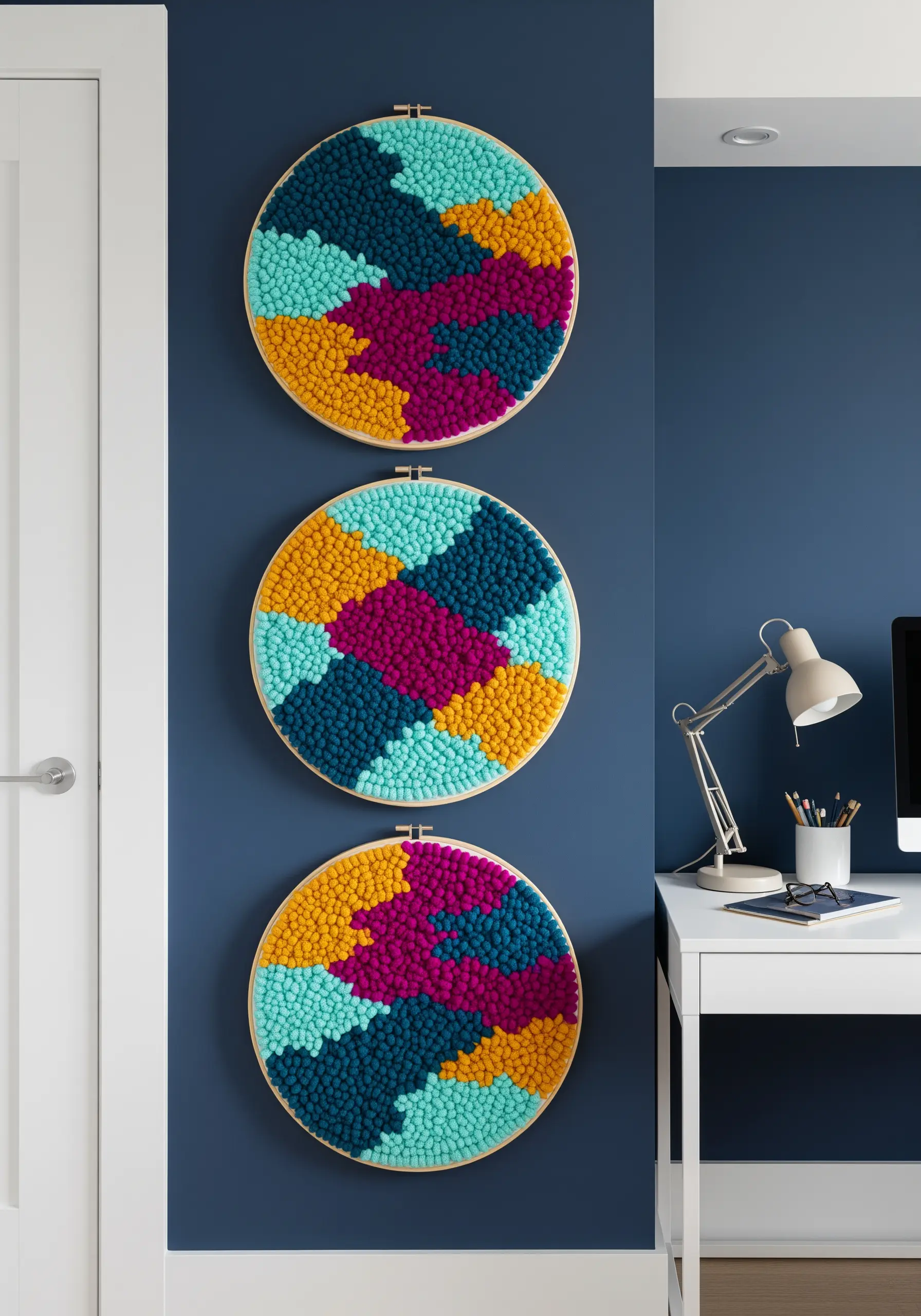
Use a punch needle to create bold, graphic art that feels like a textile mosaic.
By keeping your loop height consistent, you can focus entirely on color blocking, creating clean shapes and dynamic patterns without worrying about complex stitches.
The magic is in the density; tightly packed loops create a solid, plush surface where colors pop against each other.
Arrange several pieces together to create striking hooped wall collage layouts that give any room a modern, gallery-like feel.
3. Lifelike Florals with Stumpwork Techniques
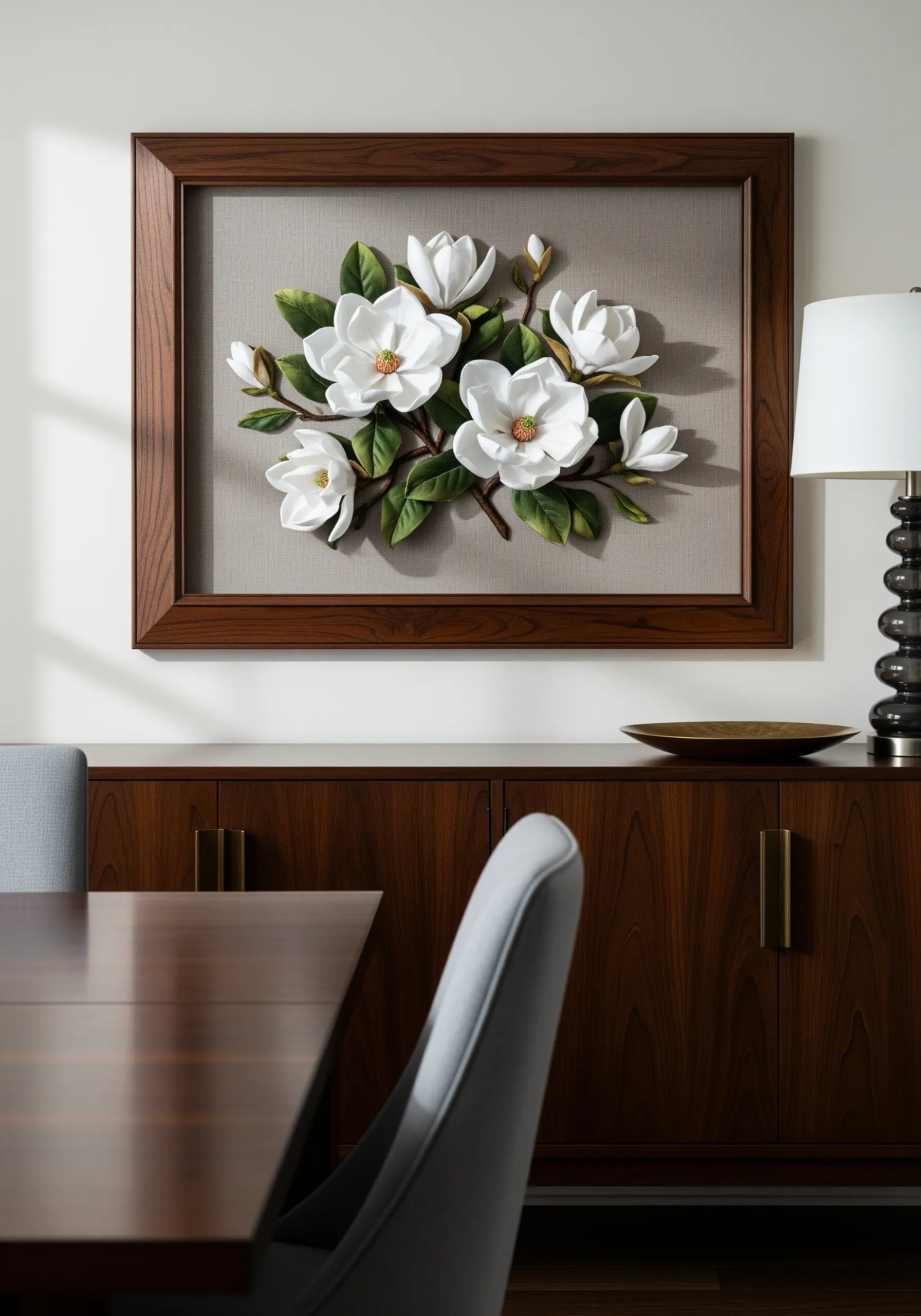
Elevate your botanicals by moving into the third dimension with stumpwork, the art of raised embroidery.
Create individual petals on a separate piece of fabric with a wire stitched along the edge, then cut them out and shape them before attaching them to your main design.
This allows you to sculpt flowers that lift off the background, casting realistic shadows and creating incredible depth.
Use long and short stitch to add subtle color gradients to each petal, making for truly gorgeous floral embroidery ideas that feel almost alive.
4. Vibrant Coral Reefs with Layered Knots
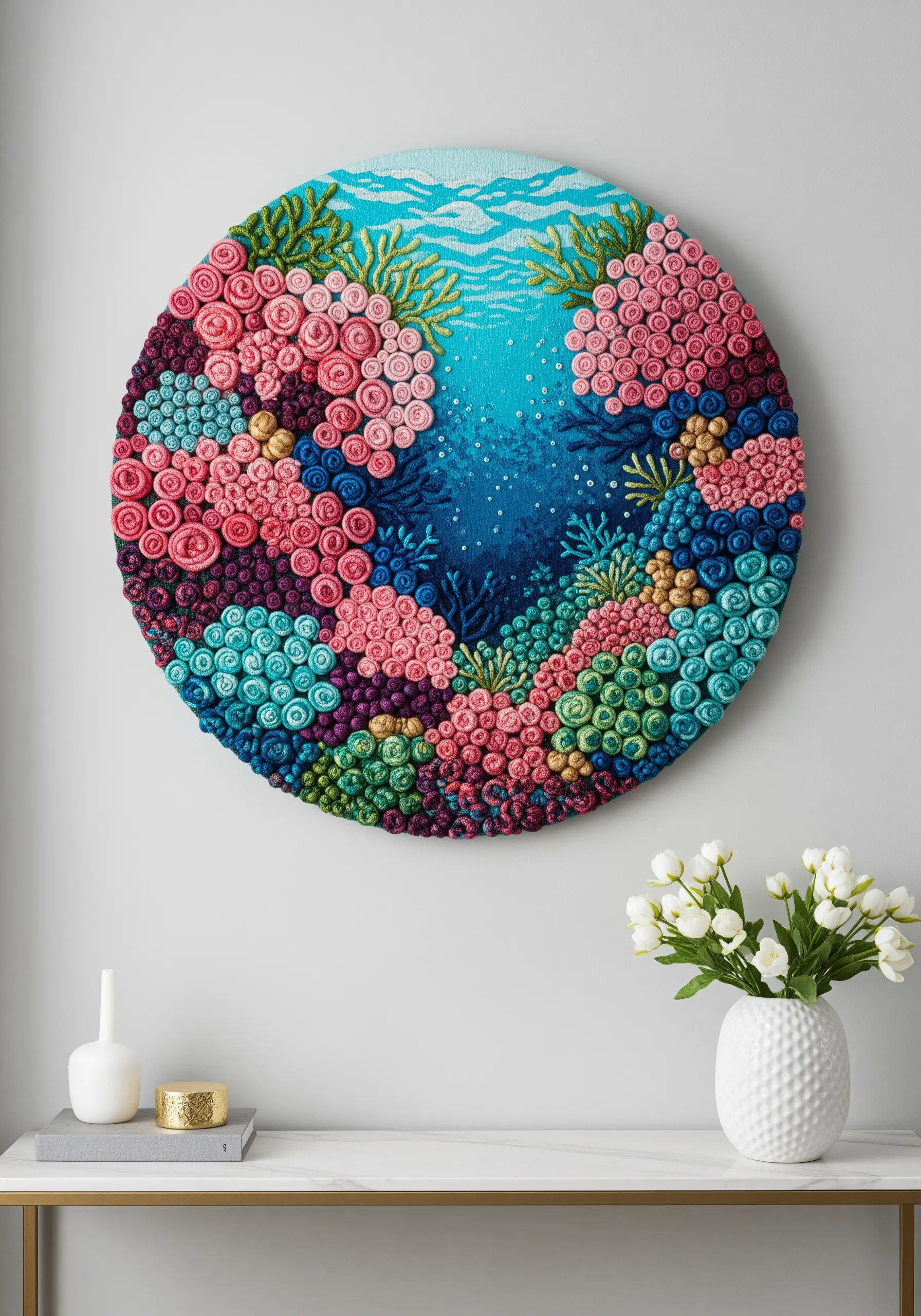
Mimic the organic complexity of a coral reef by layering a dense variety of dimensional stitches.
Combine bullion knots, woven wheel stitches, and French knots in varying sizes and colors to build up rich, coral-like structures.
Start with larger woven wheels as your base, then fill in the gaps with tightly packed knots and coils to create a sense of natural, chaotic growth.
This approach is perfect for ocean-inspired hoop embroidery ideas, turning your hoop into a vibrant underwater world.
5. Meditative Mandalas with Raised Couching
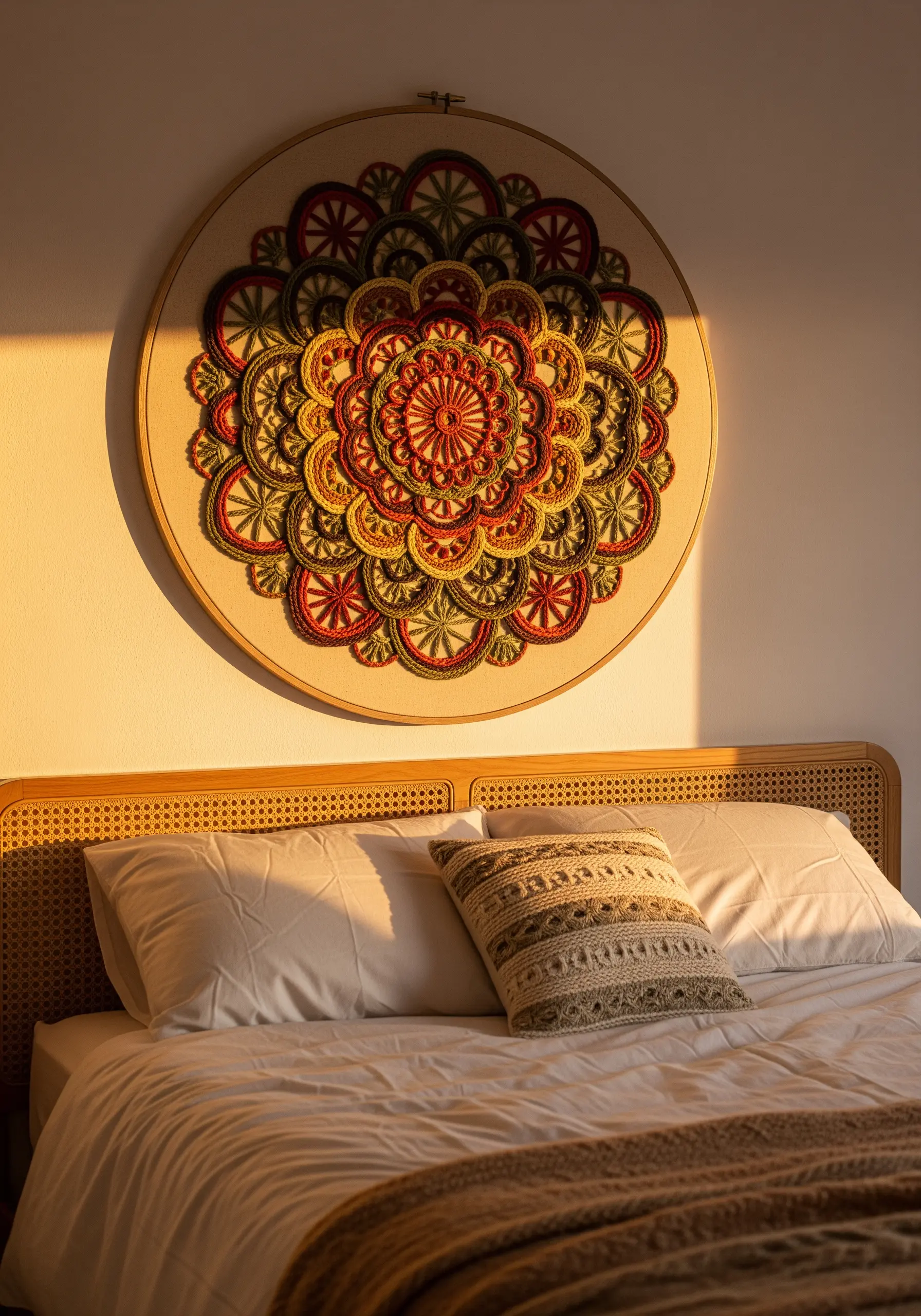
Achieve crisp, graphic lines and satisfying texture by using raised couching to build your mandala.
Lay down bundles of thread or fine cord along your pattern lines, then tack them in place with small, perpendicular stitches using a thinner thread.
This technique allows you to create intricate, layered patterns with a clean, sculptural finish that traditional satin stitch can’t replicate.
The result is one of those modern thread mandala ideas that feels both graphic and deeply textured.
6. Charming Cityscapes with Fabric Appliqué
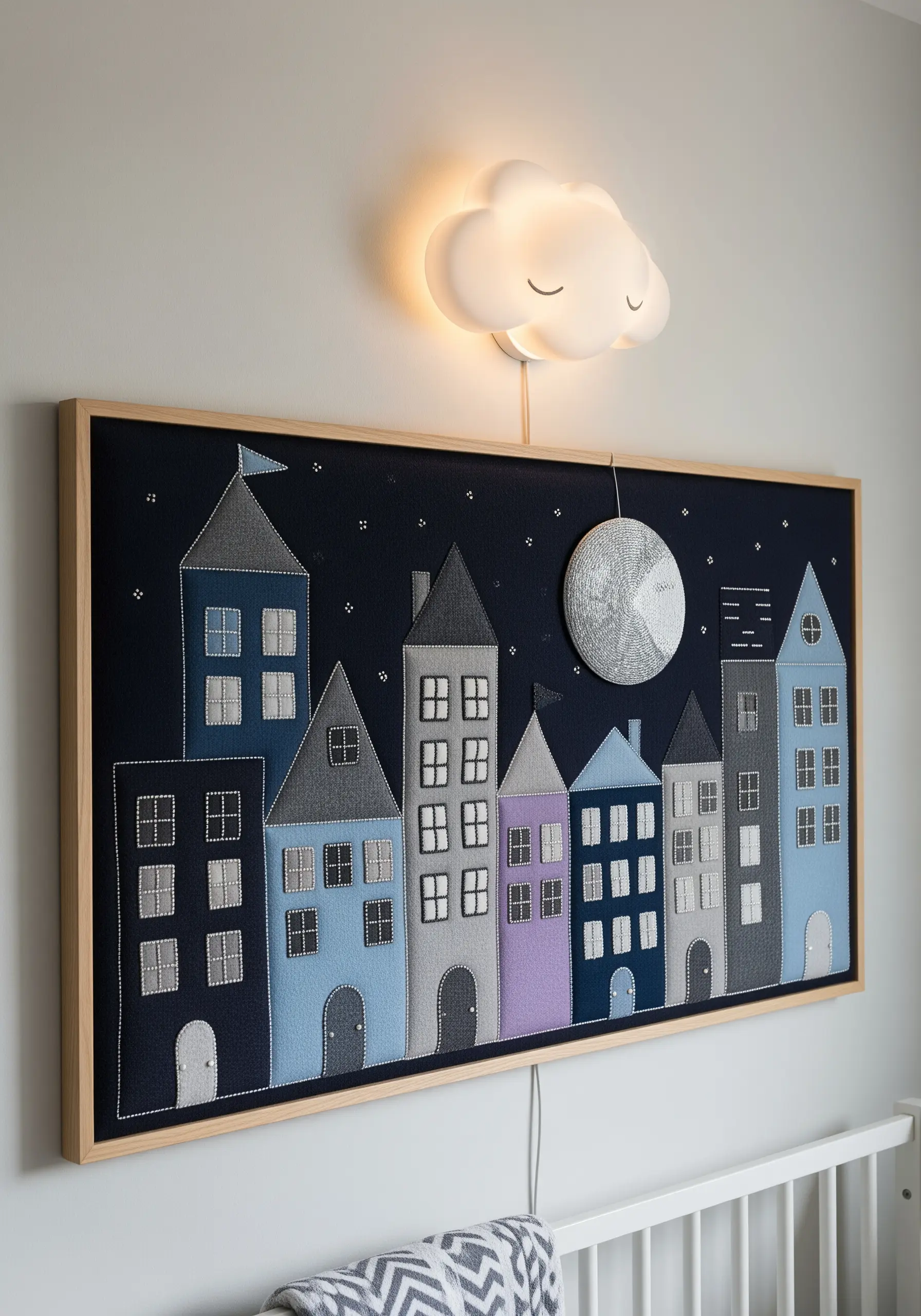
Create a whimsical cityscape by combining simple fabric appliqué with minimal stitch work.
Cut building shapes from various textured fabrics like felt, corduroy, or linen to add instant character and depth.
Secure each piece with a simple running stitch or backstitch around the edges, which adds a charming, hand-drawn quality to the architecture.
This technique is wonderfully forgiving and perfect for creating personalized baby room decor with a storybook feel.
7. Photorealistic Portraits with Thread Pointillism
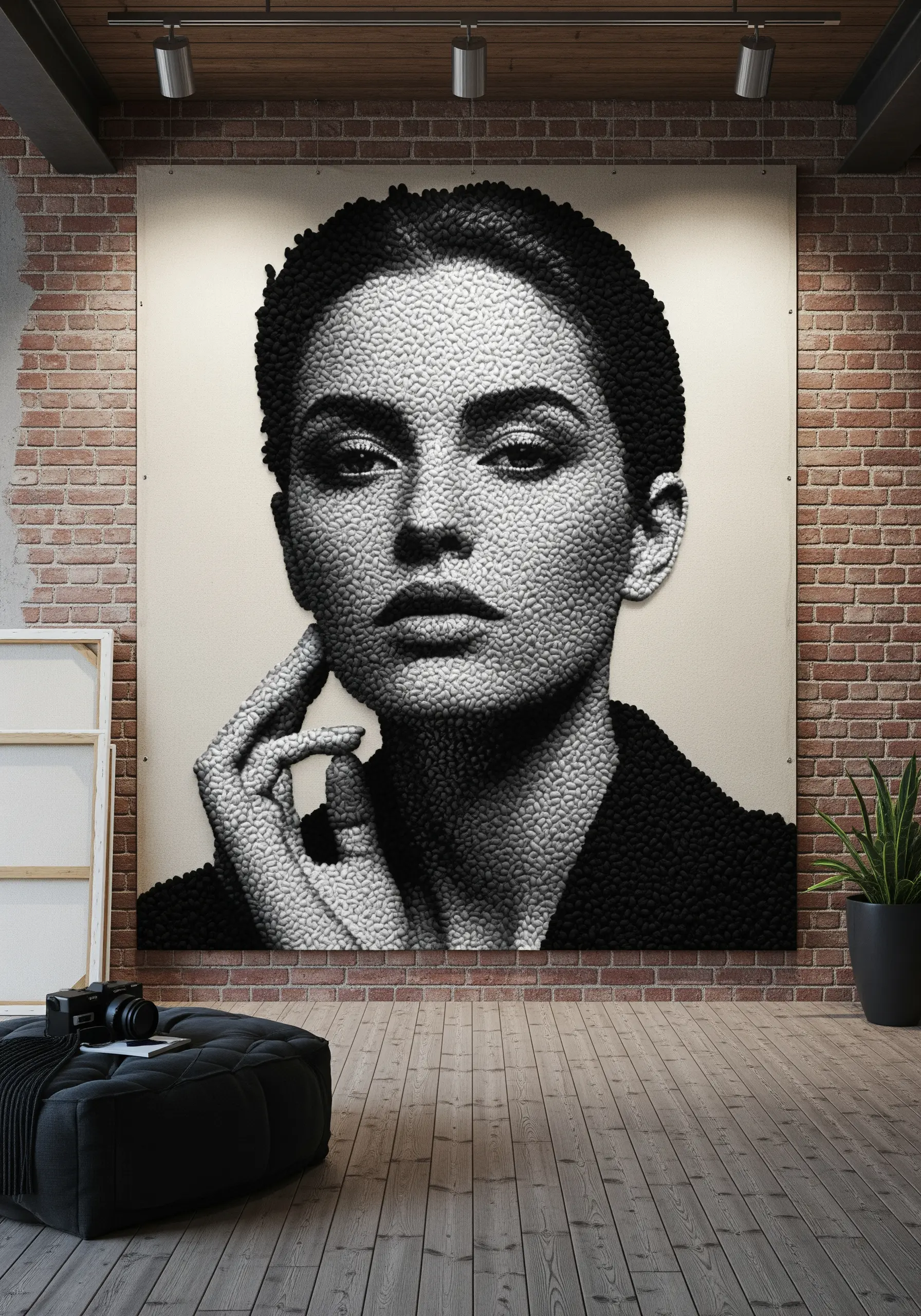
Move beyond line art and create stunningly realistic portraits using a dense field of French knots or tufted stitches.
Think of each knot as a single pixel of color and texture; by varying the shades and density, you can achieve the subtle gradations of light and shadow needed for a realistic face.
Working on a large scale allows for greater detail, turning your needle and thread into a tool for painting.
This challenging but rewarding method results in modern thread portraits that possess a unique, powerful texture.
8. Art Deco Sunbursts with Padded Satin Stitch

Give your work a luxurious, three-dimensional sheen by using padded satin stitch.
Before you begin your satin stitch, lay down a foundation of felt, cardstock, or layers of seed stitches in the shape you want to fill.
Stitching over this padding forces the thread to arch, creating a raised, glossy surface that catches the light beautifully.
It’s the perfect technique for creating decadent, gleaming surfaces in gold thread luxury wall art projects.
9. Ethereal Drapes with Ribbon Embroidery
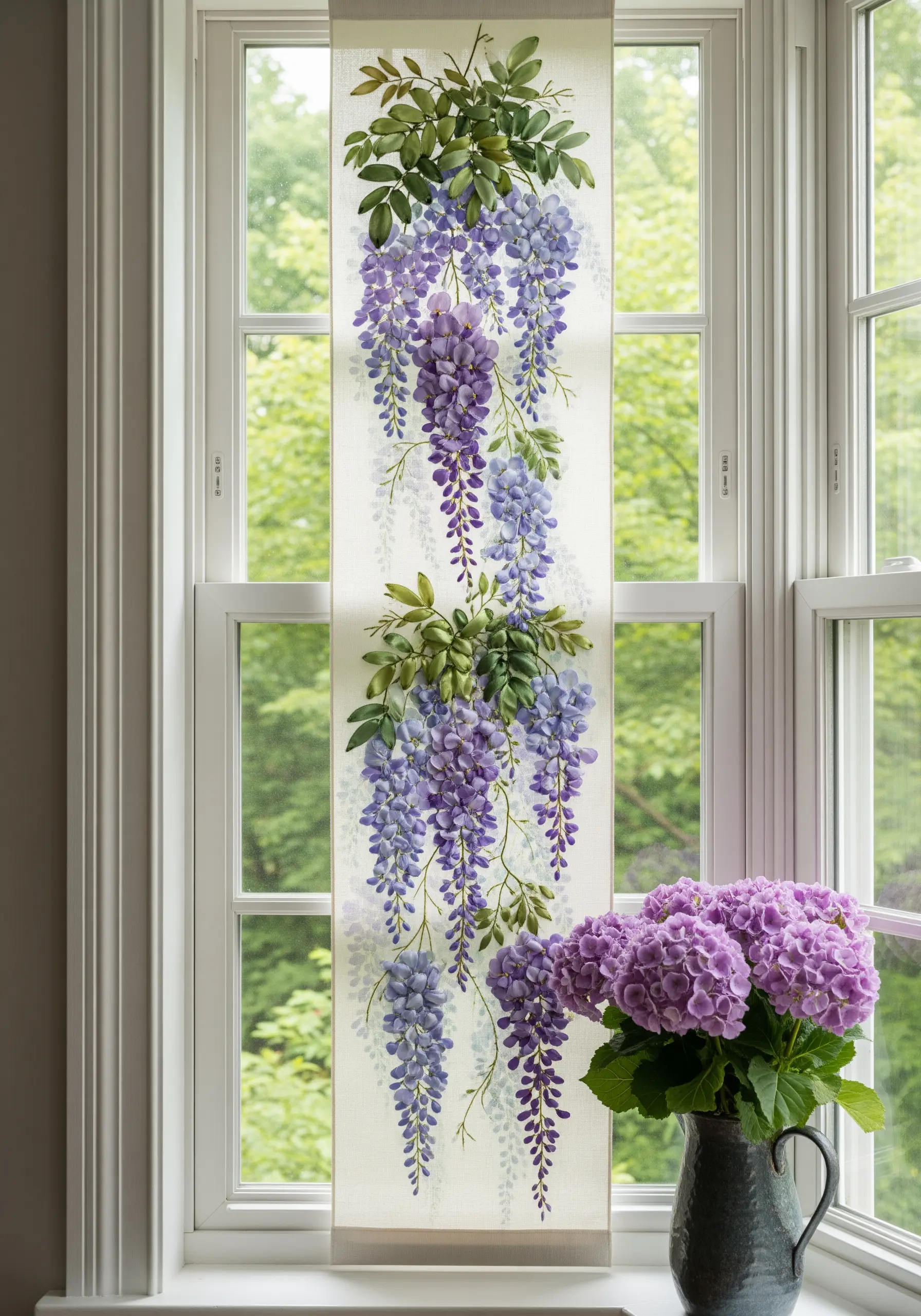
Create soft, painterly florals that seem to float by working with silk ribbon on a sheer fabric like organza or linen.
Use the simple ribbon stitch, twisting the ribbon as you pull it through the fabric to create delicate, realistic petals that hold their own shape.
The ribbon’s width fills space quickly and its natural sheen provides a subtle luminosity that thread can’t match.
This is one of the most effective floral-inspired ribbon embroidery ideas for achieving soft, romantic volume.
10. Abstract Forms with Weaving and Wrapping
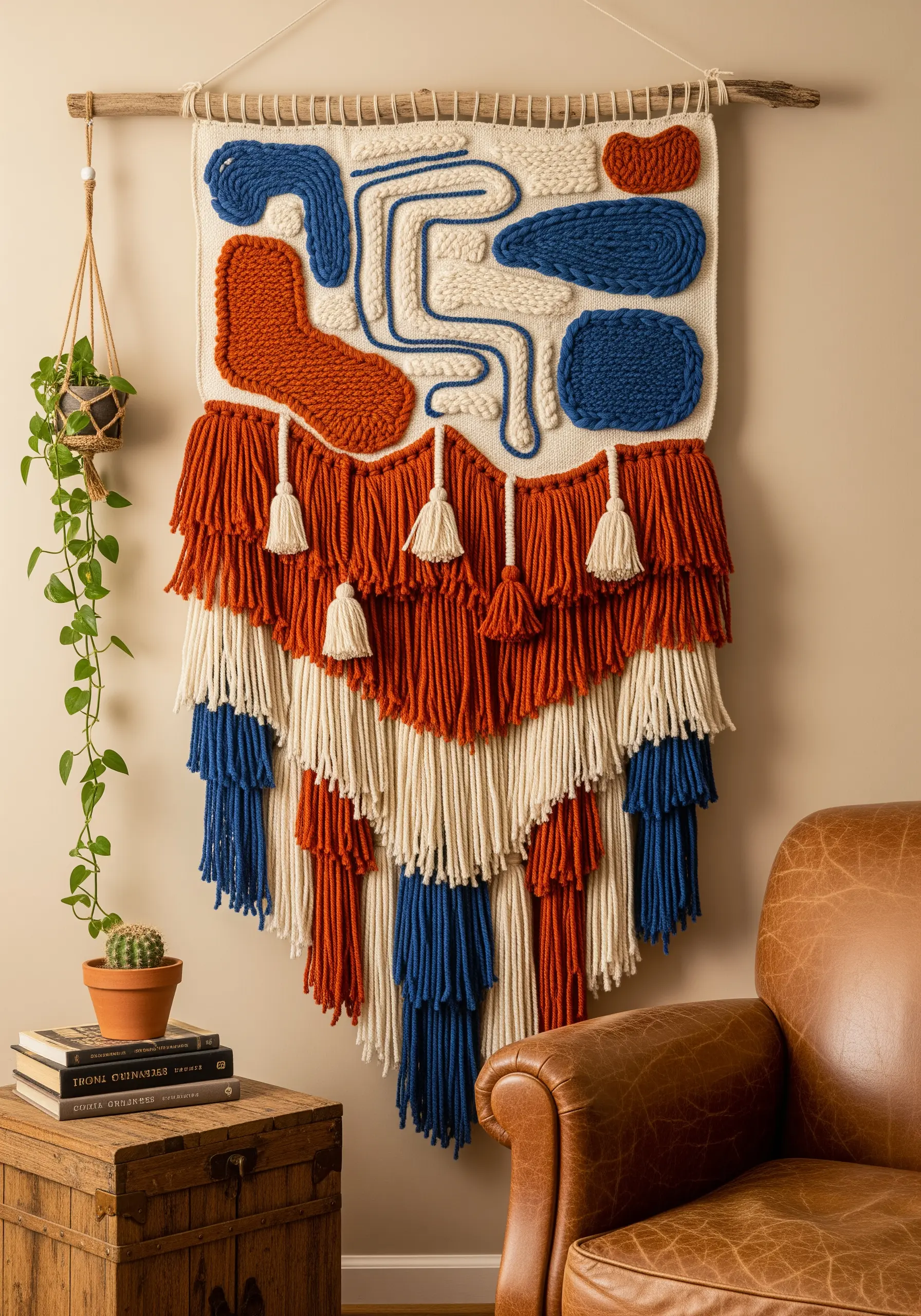
Break free from the hoop by combining embroidery with off-loom weaving and wrapping techniques for a bold, textural statement piece.
Create raised, organic shapes by couching down thick cords, then fill negative spaces with woven sections or wrap thread around dowels integrated into the piece.
Adding tassels and fringe made from the same yarn unifies the composition and adds dramatic length and movement.
This method produces dramatic, mixed-fiber wall hangings that command attention.
11. Underwater Wonders with Bullion Coils

Craft fantastical sea creatures by mastering the bullion knot to create sculptural tentacles and anemones.
To make a bullion knot, you wrap the thread around your needle multiple times before pulling it through the fabric, creating a neat coil.
Vary the number of wraps and the tension to create coils that are straight, curved, or clustered, perfectly mimicking the writhing movement of sea life.
This stitch is the secret behind much coastal ocean-inspired string art, adding playful, 3D character.
12. Minimalist Lines with Sculptural Yarn Couching
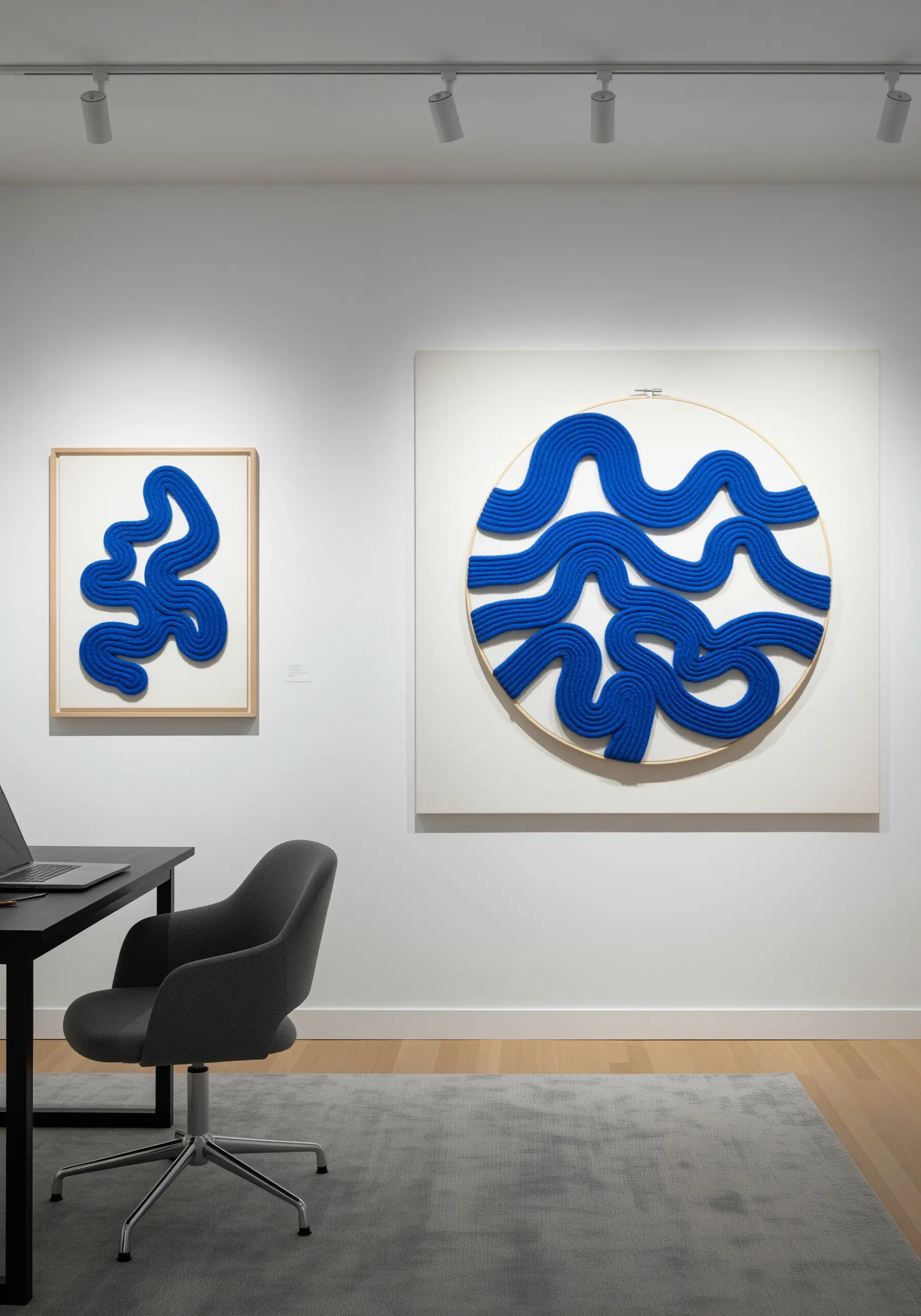
Make a powerful statement with minimalism by using thick, sculptural lines against a stark background.
Instead of filling shapes, trace bold, continuous paths with a thick yarn or rope, tacking it down with a fine, matching thread in a technique called couching.
The visual impact comes from the contrast between the chunky, raised line and the flat, empty space around it.
This is how you combine thread and negative space to create art that is both simple and profound.
13. Celestial Maps with Reflective Threads

Embroider a piece of the night sky using metallic or glow-in-the-dark threads to capture the magic of starlight.
Use simple straight stitches for connecting constellation lines and tiny seed stitches or French knots for individual stars, varying their size and density to create clusters and nebulae.
The texture here is less about height and more about light; the metallic thread catches the ambient light, making the stars twinkle as you move around the room.
This idea can transform your bedroom into a cozy artistic haven with a celestial glow.
14. Woodland Scenes with Padded Appliqué

Create a charming, dimensional woodland scene by using padded appliqué for elements like mushrooms and logs.
Cut your shape from felt, then place a small amount of stuffing or extra felt scraps underneath before stitching it onto your background fabric.
You can then embroider details directly onto the raised shape, such as spots on a mushroom cap using French knots or gills using straight stitches.
This technique is perfect for capturing the soft, rounded shapes of a forest floor botanical stitch ideas.
15. Topographical Maps with Layered Line Work
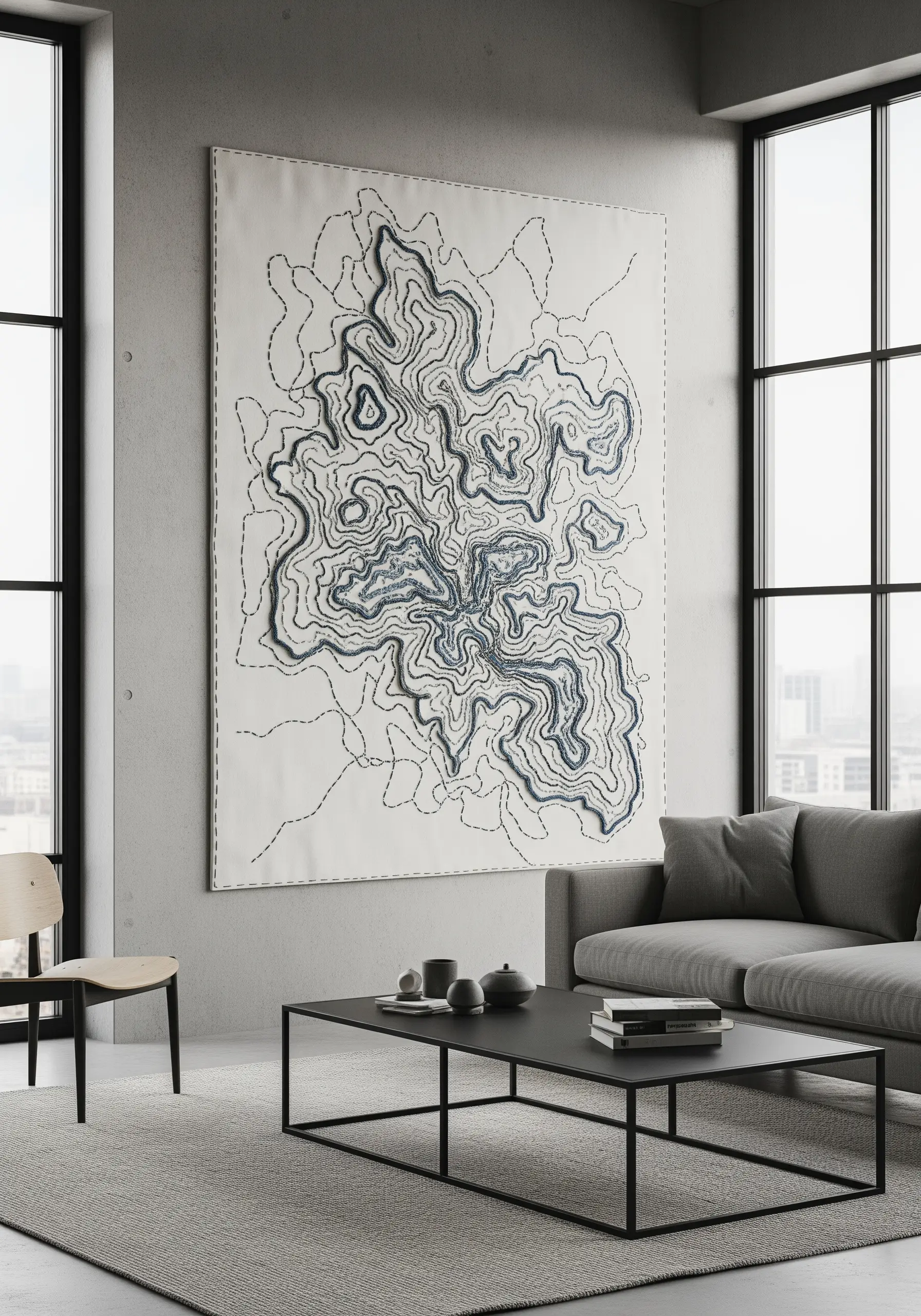
Translate the beauty of a topographical map into thread by focusing on the power of the line.
Using a simple backstitch or stem stitch, trace contour lines with different thread weights or shades of the same color to indicate changes in elevation.
Use a thicker thread for lower elevations and a finer thread for higher peaks to create a subtle visual hierarchy.
This method transforms a flat map into one of the most intricate abstract thread landscapes.
16. Atmospheric Depth with Sheer Fabric Layers
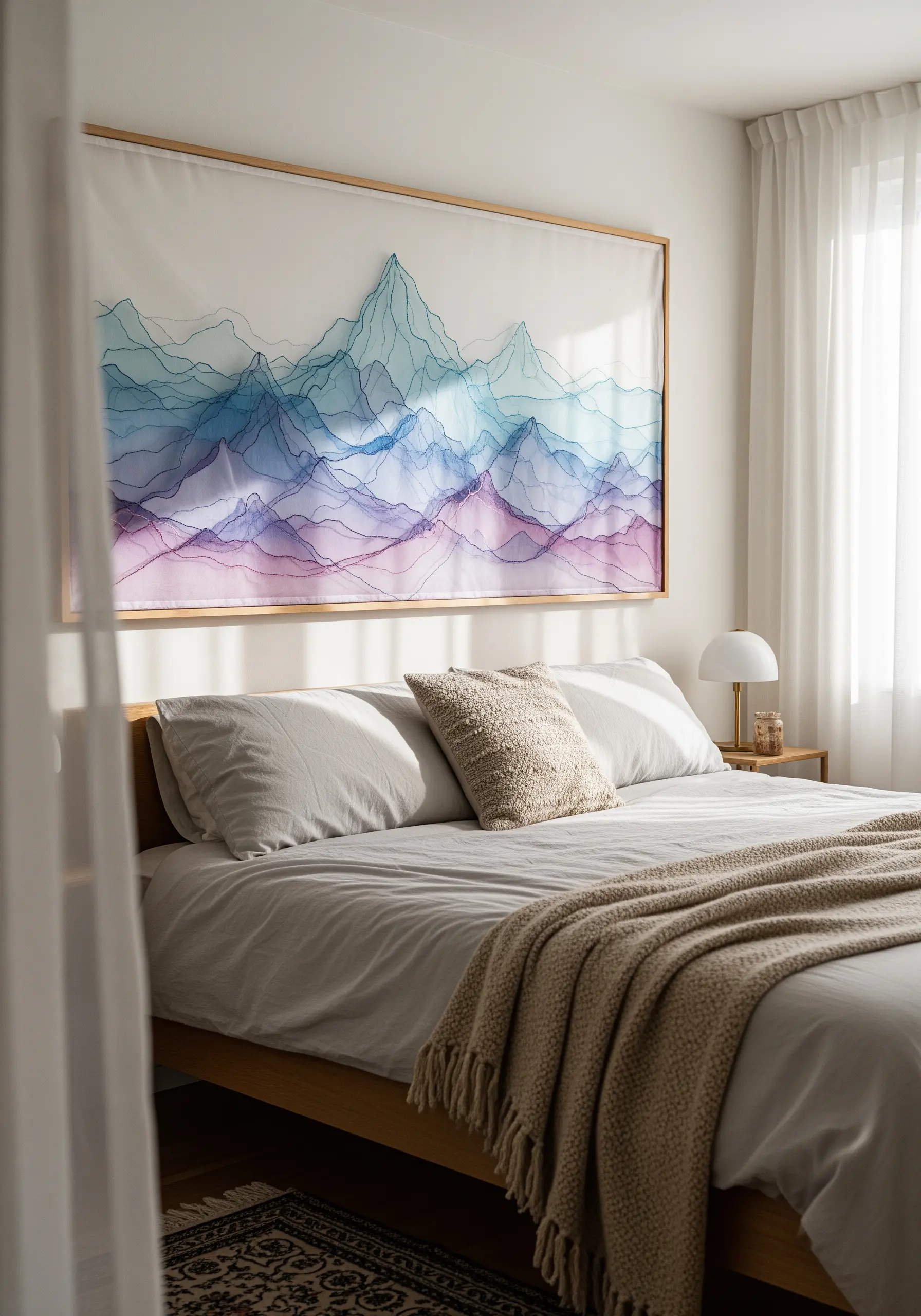
Create a sense of misty, atmospheric depth by embroidering on multiple layers of sheer fabric like tulle or organza.
Stretch several layers in a single hoop or frame, then stitch your design through all of them. Elements stitched on the top layer will appear sharp, while those on lower layers will seem hazy and distant.
This is a brilliant way to approach mountain landscape thread painting techniques, allowing you to build ethereal, overlapping ranges.
The overlapping threads and fabrics create subtle color blends and a dreamy, translucent quality.
17. Bold Typography with Wrapped Forms

Take your embroidered text off the canvas by creating three-dimensional, yarn-wrapped letters.
First, cut your letters from a sturdy base like foam board or thick cardstock.
Then, tightly wrap each letter with yarn, securing the ends with a dab of fabric glue before mounting the finished letters onto your canvas or wall.
These bold, tactile thread-based typography ideas offer a graphic punch that simple stitching cannot match.
18. Plush Textures with Rya Knots and Loops

Introduce a lush, shaggy texture into your work by incorporating Rya knots or Turkey work stitches.
These techniques involve creating loops of yarn that are then either left as is or cut to create a plush, high-pile surface similar to a rug.
Use this for specific sections of your design, like grassy fields or abstract color blocks, to create a dramatic contrast against flatter stitches.
You can create stunning yarn wall art projects by combining this shag texture with simple weaving.
19. Opulent Bouquets with a Maximalist Mix
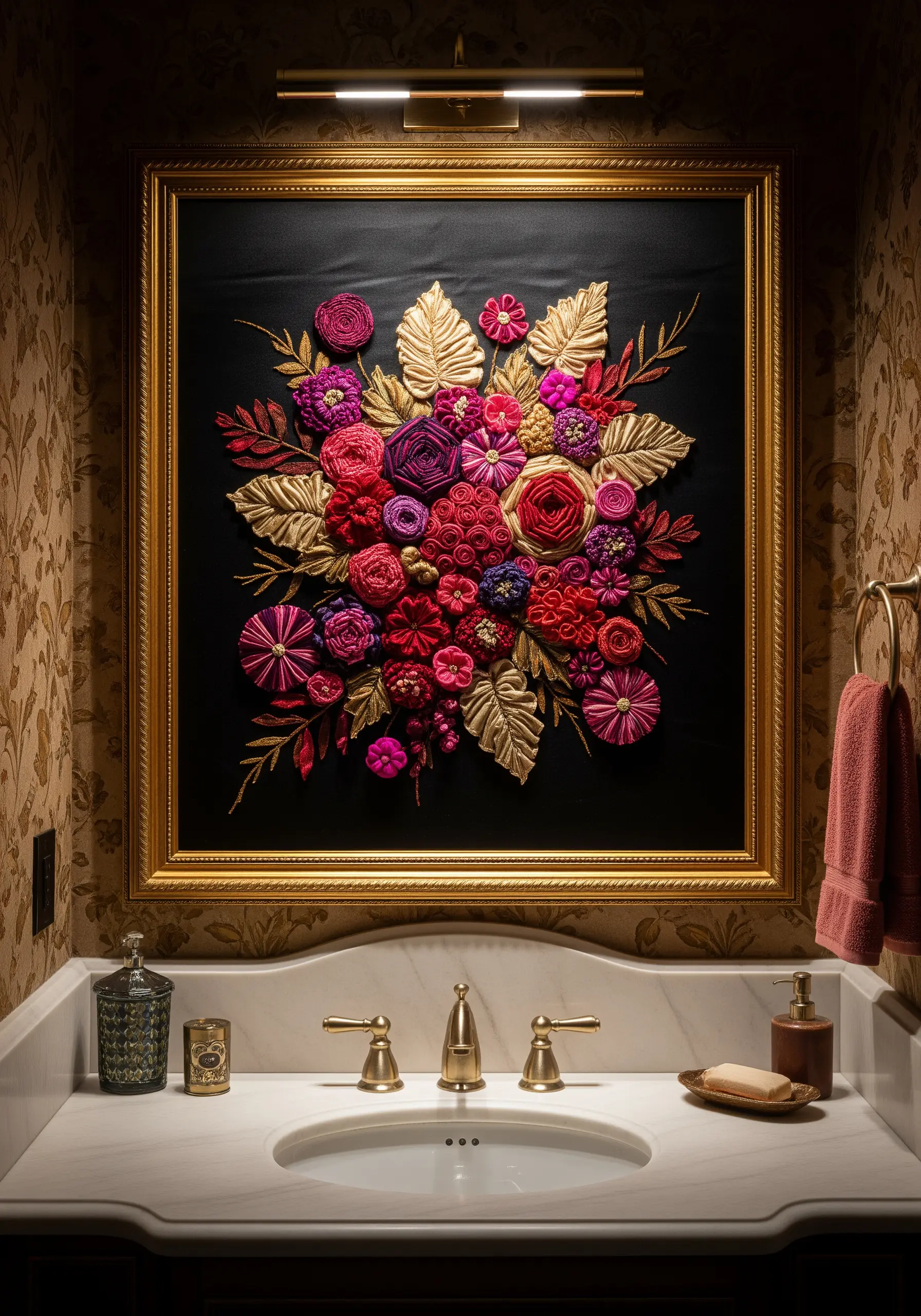
Create a truly show-stopping piece by combining a multitude of 3D embroidery techniques in one opulent design.
Build a foundation with padded satin stitch leaves and woven wheel roses, then add intricate details with bullion knot buds and delicate ribbon stitches.
Don’t be afraid to layer elements on top of each other, allowing flowers and leaves to overlap for a dense, naturalistic effect.
This maximalist approach is perfect for bold bohemian floral embroidery ideas that make a luxurious statement.
20. Shimmering Mosaics with Bead Embroidery
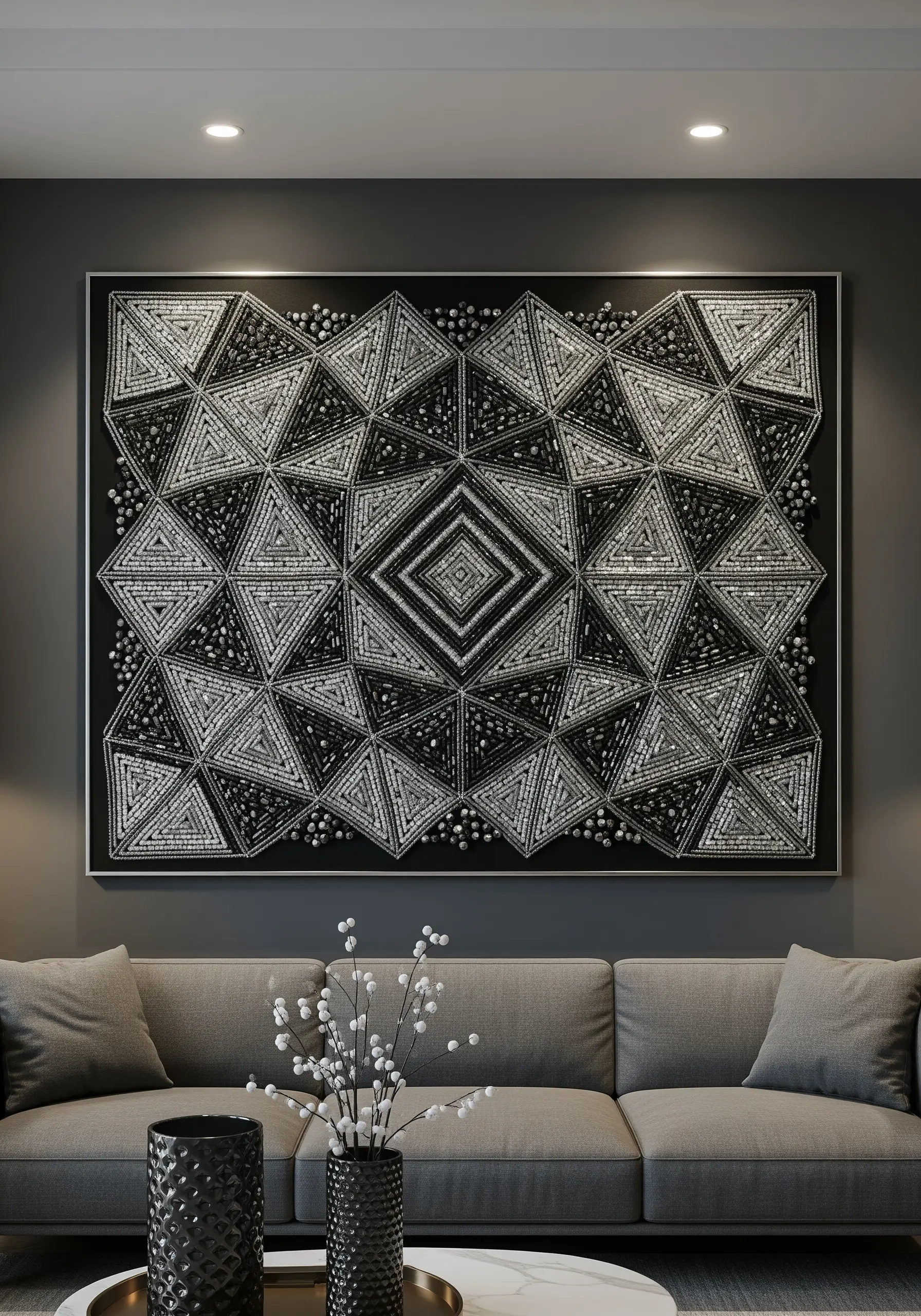
Incorporate beadwork to introduce a unique texture and light-reflecting quality that thread alone cannot achieve.
Instead of filling a shape with satin stitch, fill it with rows of tightly packed seed beads, stitching them down securely two or three at a time.
The result is a hard, glittering surface that contrasts beautifully with the softness of surrounding threads.
This technique is especially powerful for geometric framed embroidery patterns, where the beads add a rich, jewel-like precision.
21. Classic Elegance with Needlepoint
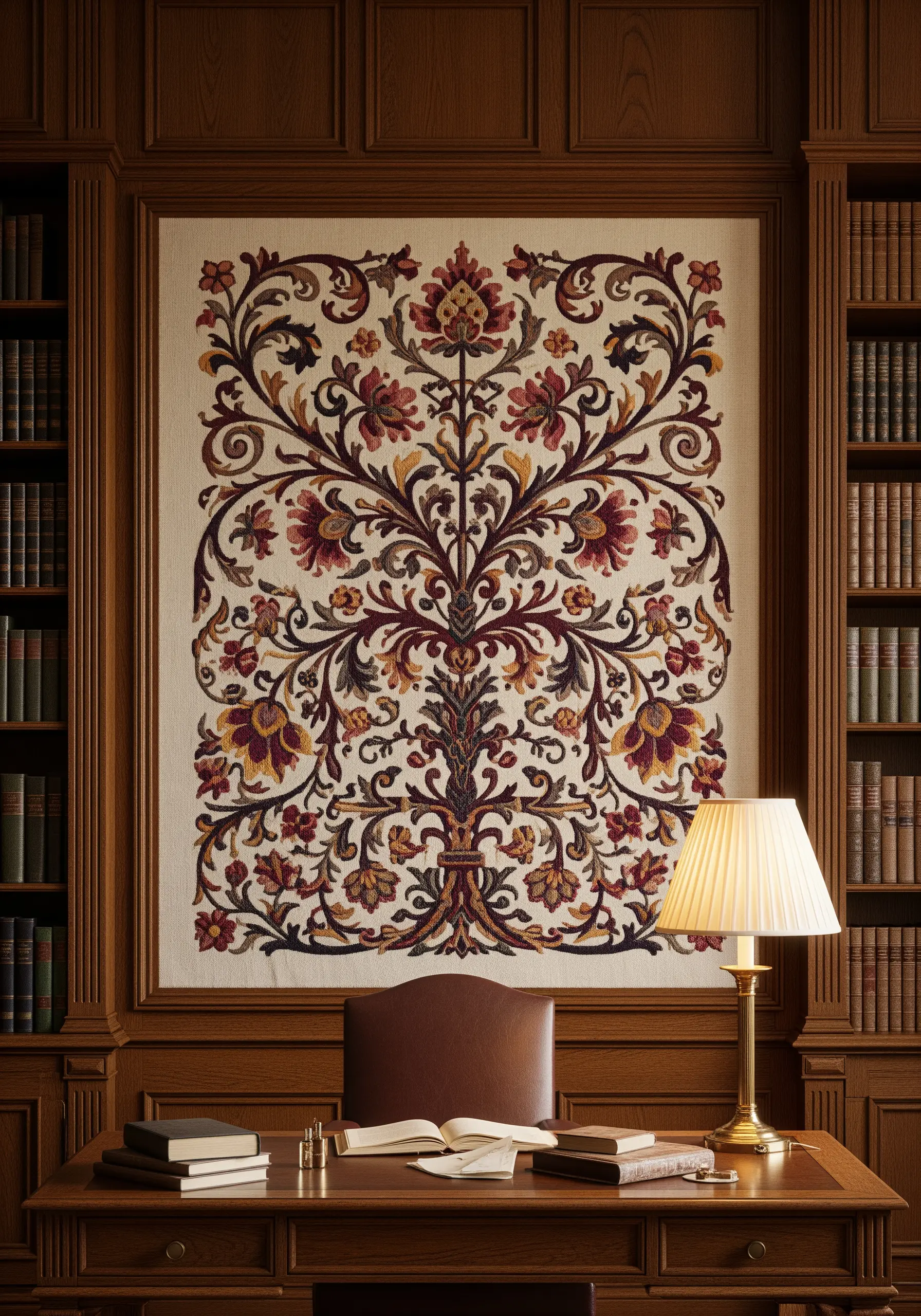
Achieve the timeless, durable texture of a classic tapestry by working in needlepoint on canvas.
Using a simple tent stitch (like half-cross or continental), you can cover the entire surface to create a dense, woven fabric where the focus is on color and pattern rather than varied stitch textures.
For an authentic, heirloom feel, choose traditional wool tapestry yarn, which offers a soft matte finish and excellent coverage.
This technique elevates large-scale pieces into modern embroidered tapestry designs with classical weight.
22. Reflective Details with Shisha Mirror Work
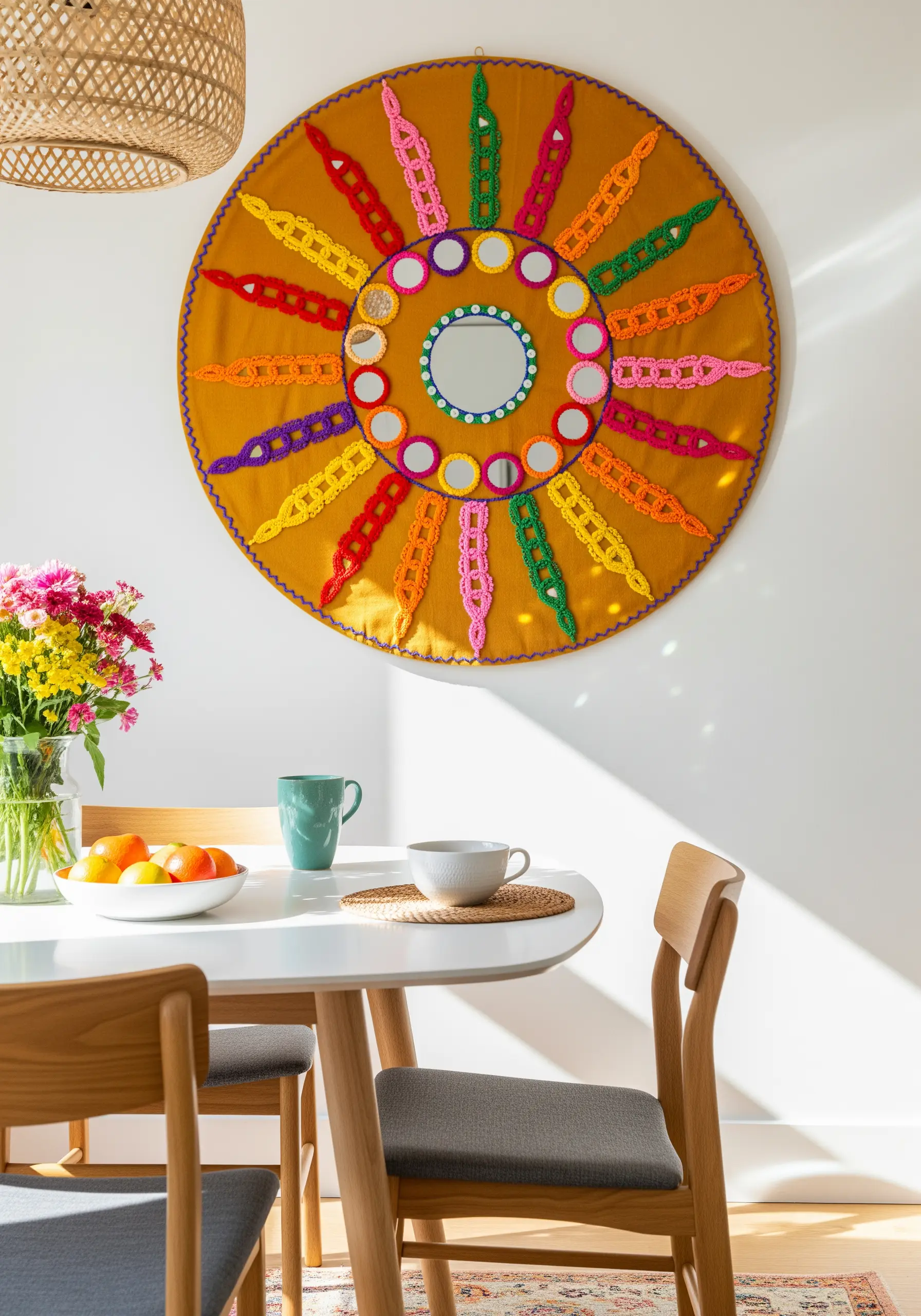
Incorporate points of light and reflection into your work with Shisha, a traditional Indian embroidery technique that attaches small mirrors to fabric.
You create a framework of foundation stitches over the mirror’s edge, then secure it with a series of decorative buttonhole stitches that form a neat, sturdy border.
The interplay between the soft thread and the hard, reflective surface of the mirror adds a unique, eye-catching dimension.
It’s a beautiful way to embellish traditional Indian embroidery wall art and modern pieces alike.
23. Plush Patterns with Turkey Work

Create a dense, velvety pile perfect for geometric patterns by using the Turkey work stitch.
This stitch creates a series of loops that can be trimmed to a uniform height, resulting in a plush, carpet-like texture that is incredibly satisfying to touch.
You can adjust the height of the pile by changing how long you leave the loops before trimming, allowing for controlled, sculptural effects.
Use it to fill in bold chevron or diamond shapes in retro 70s style pillow embroidery designs for an authentic, plush finish.
24. Romantic Roses with Woven Ribbon
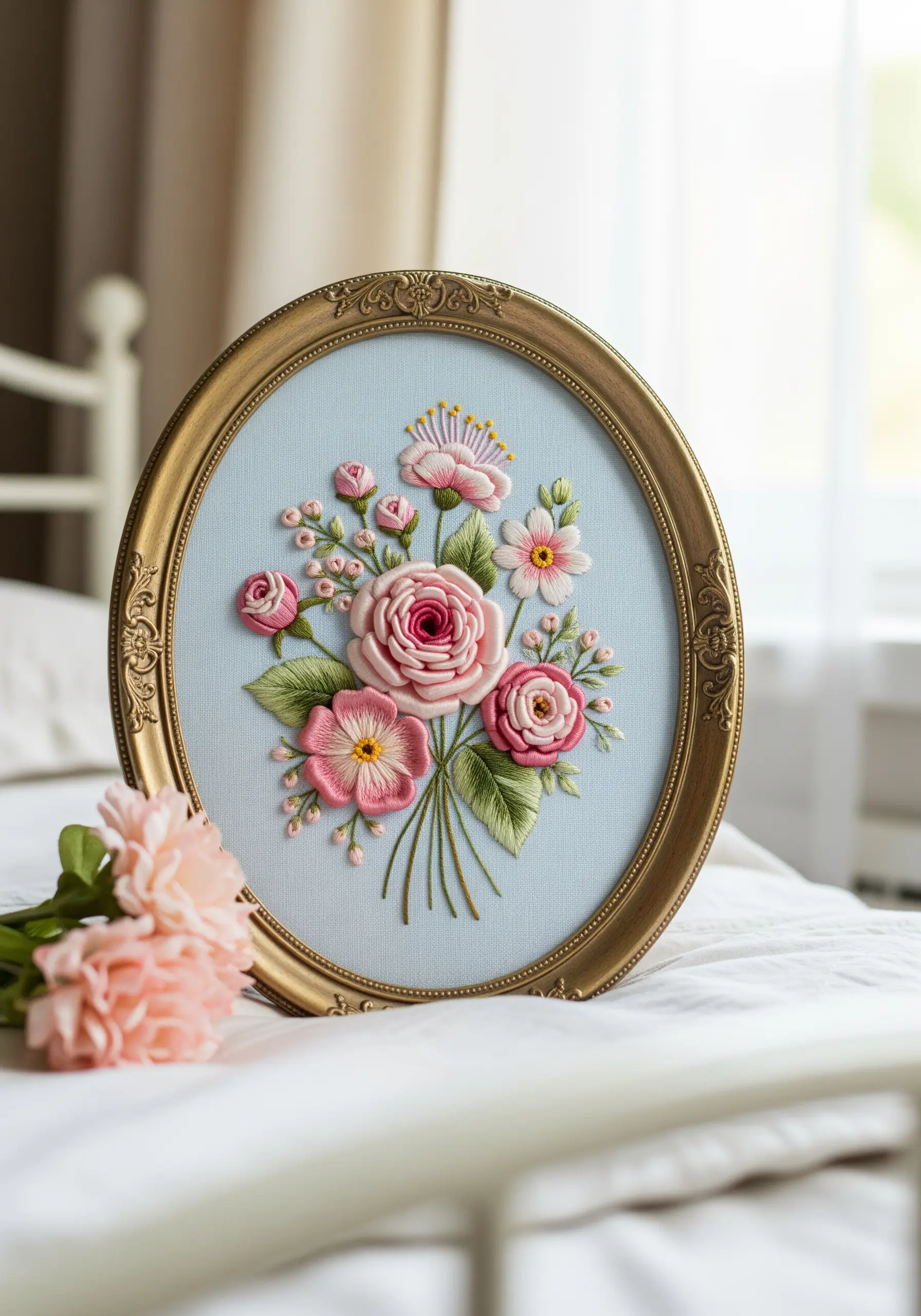
Craft lush, dimensional roses that look incredibly realistic using silk ribbon and the woven wheel stitch.
Create a base of five or seven straight stitches radiating from a central point, like spokes on a wheel.
Then, weave your ribbon over and under these spokes, gently twisting and gathering it as you work your way outwards to form soft, layered petals.
These textured blooms are the foundation of many romantic embroidery wall hangings.


