

Let’s rethink metallic thread. So often, we associate it with heavy, festive sparkle, but its true power lies in something much quieter: its ability to capture and reflect light. When used with intention, it’s not just about adding shine—it’s about adding dimension, focus, and a touch of modern elegance to your work.
The secret to success is contrast. By pairing a shimmering thread with a matte fabric, a complex texture with a simple line, or a dense field of stitches with open space, you create a visual dynamic that feels sophisticated, not showy. It’s about guiding the viewer’s eye and creating moments of quiet discovery.
In these projects, you’ll see how metallic thread can act as a precise line, a sculptural texture, or a subtle highlight. View them not as instructions to be copied, but as invitations to explore how a single, light-catching element can fundamentally change the story your embroidery tells. You have the control to make it whisper or sing.
1. Frame an Art Deco Sunburst
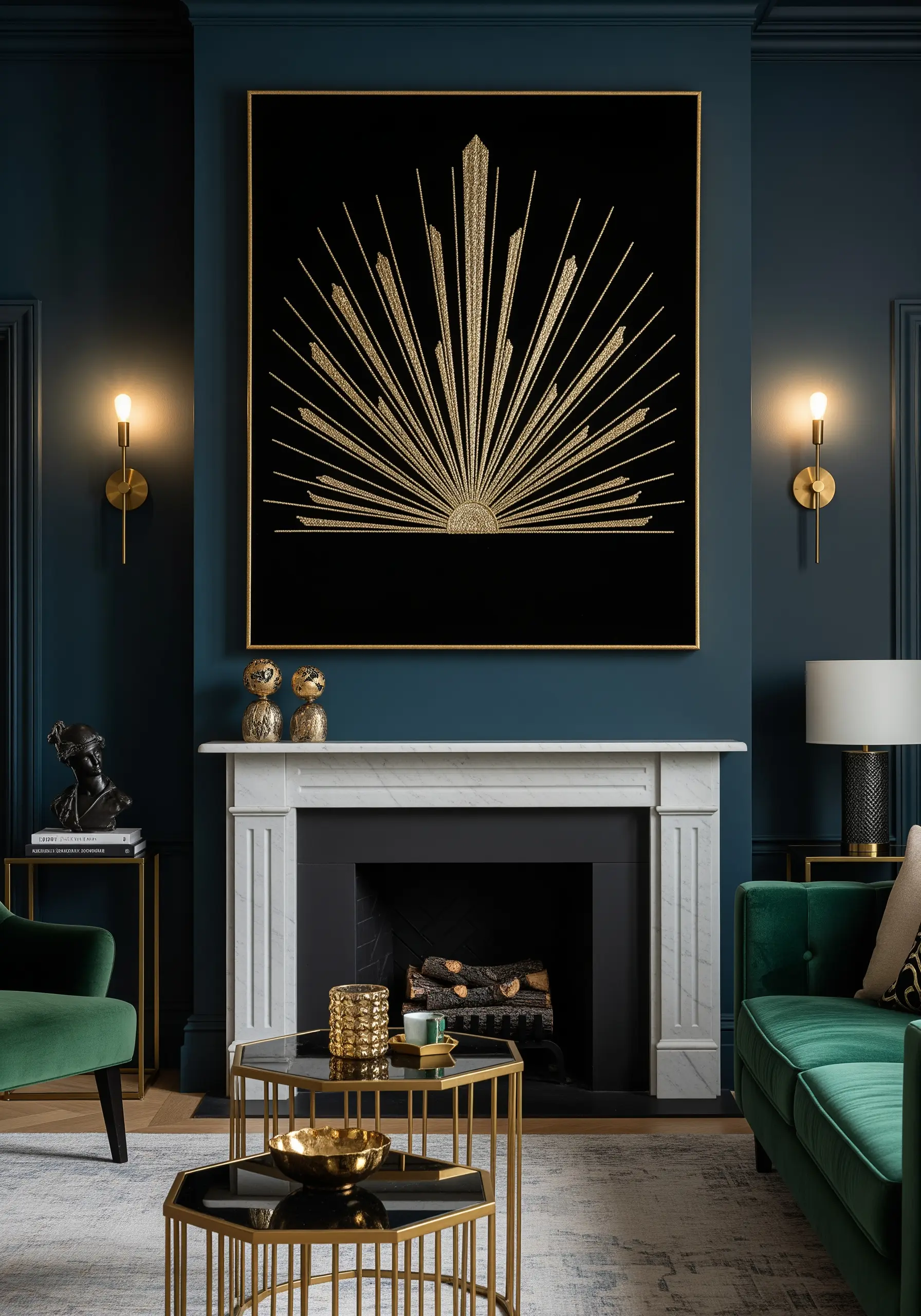
Create a high-impact statement piece by contrasting dense metallic stitches against a black or jewel-toned fabric.
To achieve this textured, light-catching effect, layer different types of gold thread.
Use a thick, couched metallic cord for the primary rays to establish strong lines, then fill the surrounding areas with satin stitches using a finer, glittery thread.
This variation in thread weight and texture is what gives the piece its dynamic, almost sculptural quality.
For a project this large, stretch your fabric on a scroll frame rather than a hoop to maintain even tension and prevent distortion.
2. Isolate Botanicals with a Single Metallic Line
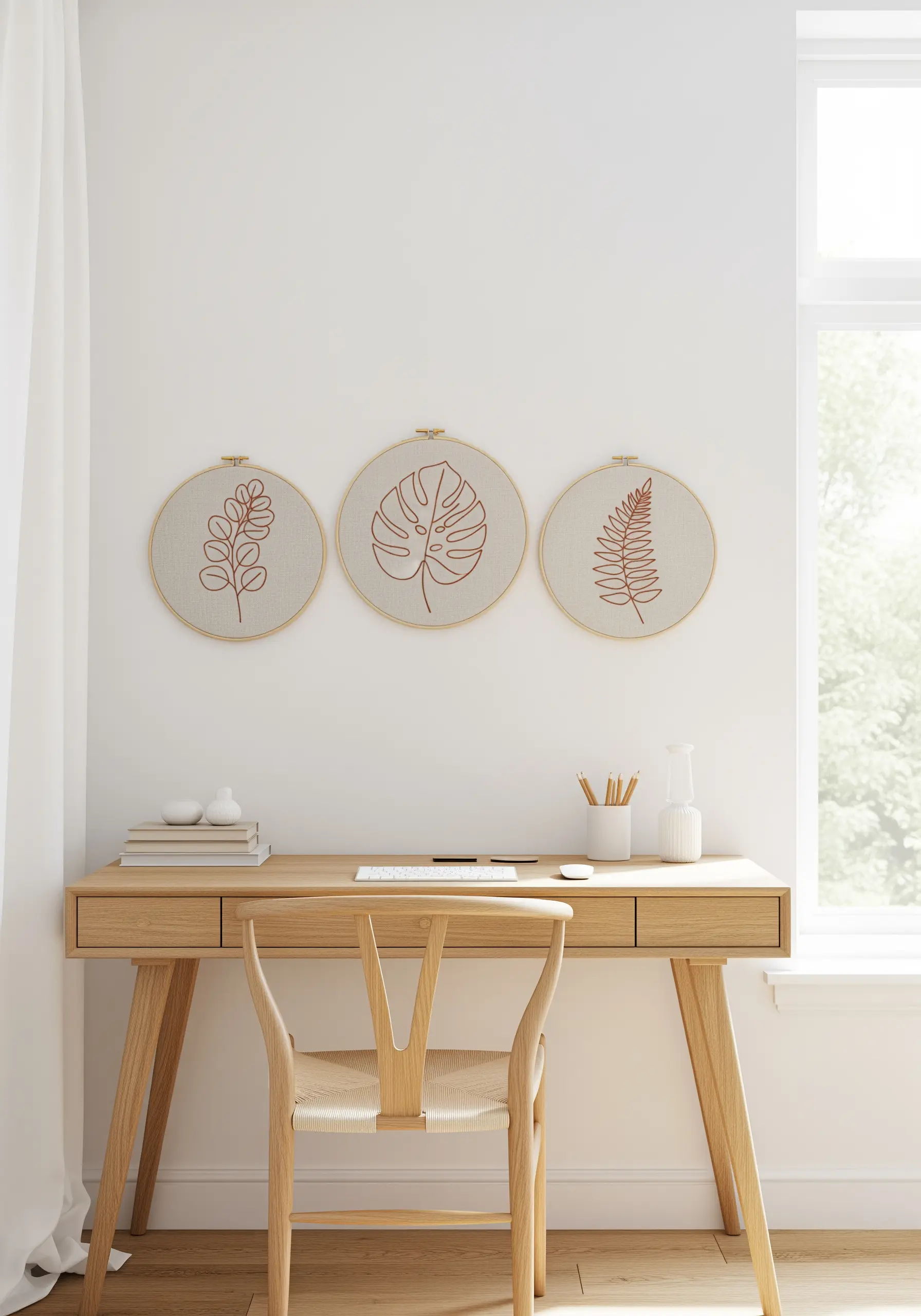
Embrace restraint by reducing botanical forms to their essential outlines.
Using a single strand of copper or bronze metallic thread on a neutral linen fabric makes the artwork feel both earthy and elevated.
A simple backstitch or stem stitch is all you need; the power of this design lies in its negative space and clean execution.
This approach proves that metallic thread doesn’t have to be loud—it can be a quiet, warm highlight in botanical line art embroidery patterns.
Arrange three hoops in a series to create a cohesive and calming visual story.
3. Map the Night Sky with Silver Stitches
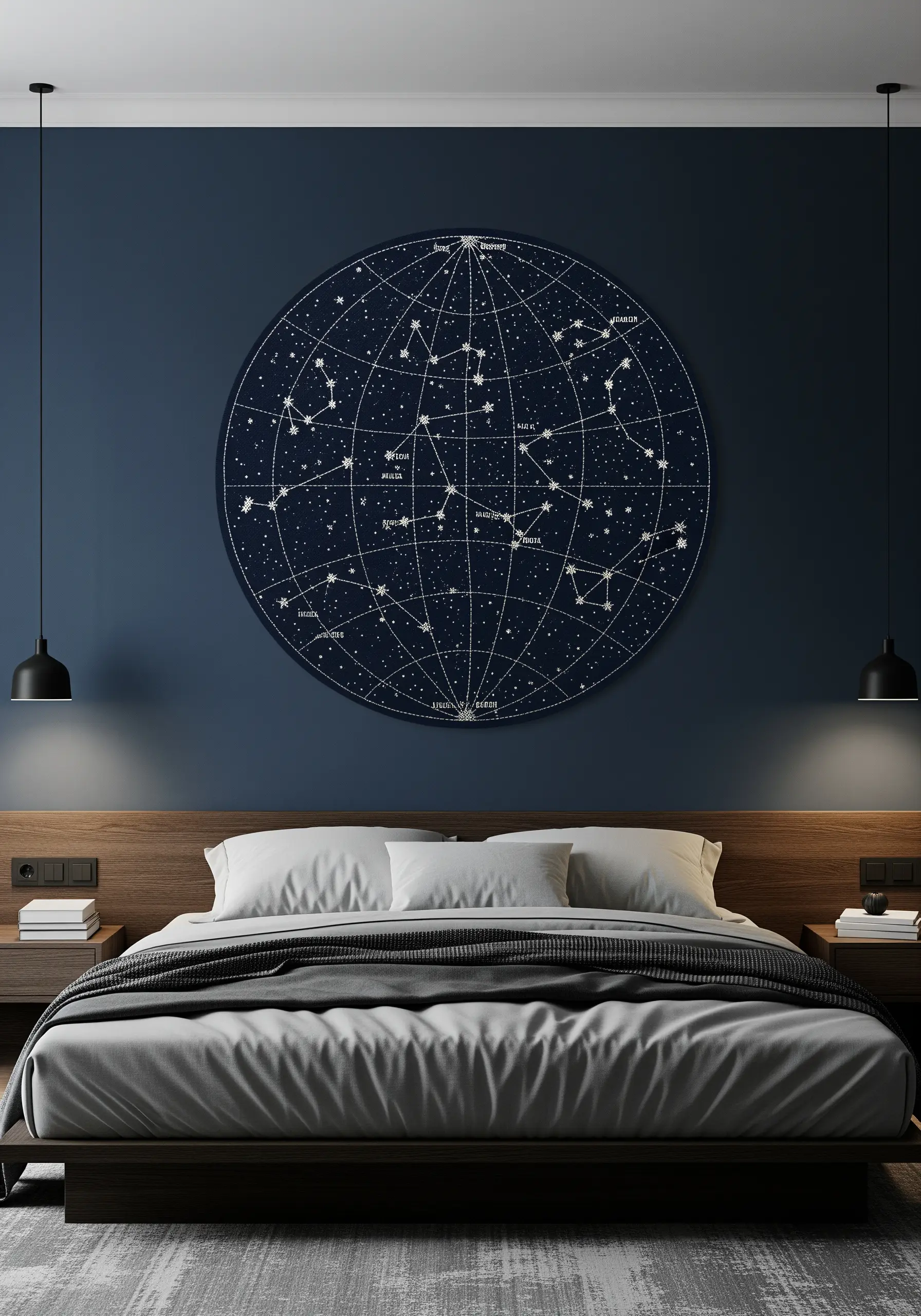
Recreate a celestial map using bright silver metallic thread on a deep navy blue cotton or linen.
The key to a dynamic starfield is varying the size of your stars.
Use French knots with one, two, or three wraps to create stars of different magnitudes, and use tiny seed stitches for distant star clusters.
Connect the main stars with a neat, single-strand backstitch.
Always use a high-quality, smooth metallic thread and a thread conditioner to minimize friction and prevent shredding, ensuring your stars are crisp and bright.
4. Sculpt Mountain Ranges with Directional Stitches
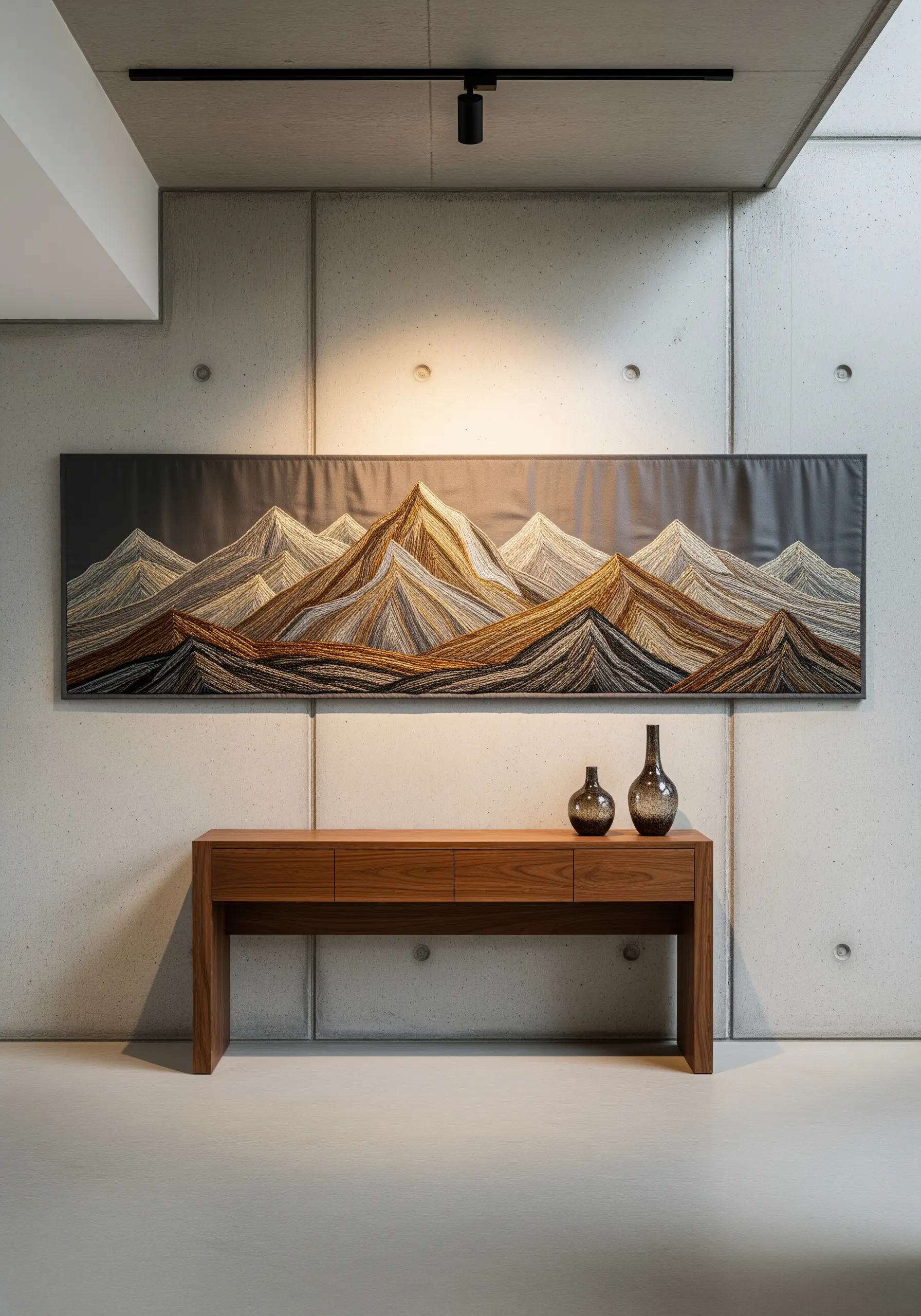
Capture the way light hits a mountain landscape by blending metallic threads with a directional long-and-short stitch.
Select a palette of gold, bronze, pewter, and silver threads to represent highlights and shadows.
Before you begin, lightly sketch directional lines onto your fabric to guide your stitches, ensuring they follow the natural contours of the peaks.
This technique turns the thread into a tool for sculpting with light, creating depth and movement in embroidery projects inspired by textures.
5. Define Art Nouveau Forms with Precise Outlines
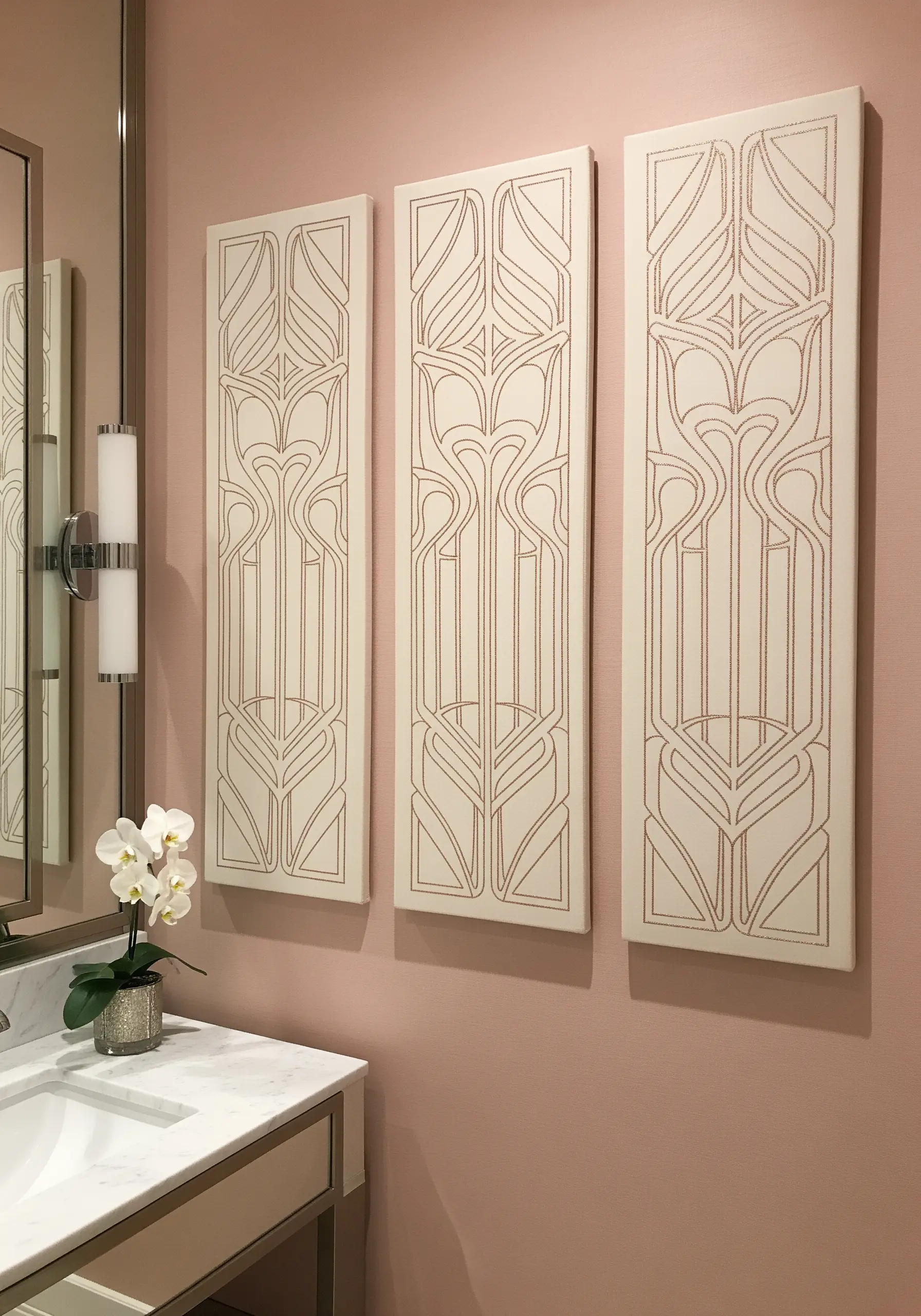
For elegant, continuous linework, choose a whipped backstitch or a stem stitch.
These stitches create a smooth, raised line that looks like a delicate cord, perfect for defining the fluid shapes of Art Nouveau design.
Use a soft rose gold or champagne metallic thread on a cream or off-white canvas for a sophisticated, low-contrast palette.
To ensure your lines remain perfectly straight and prevent fabric puckering, apply a tear-away stabilizer to the back of your fabric before stitching.
6. Create Optical Effects with Iridescent Threads
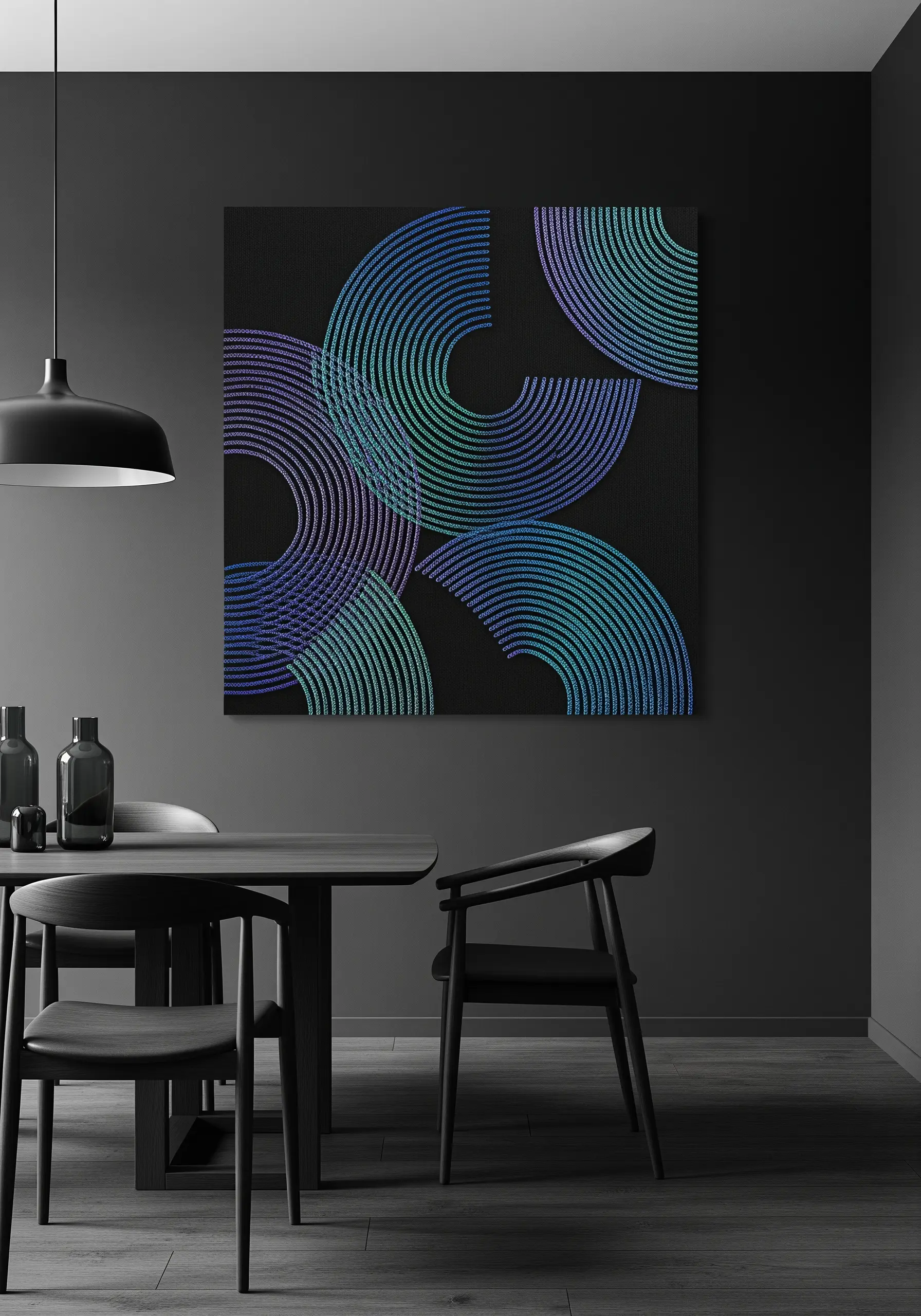
Instead of using multiple colors, choose a single variegated or holographic metallic thread to create a mesmerizing gradient effect.
Stitch concentric arcs using a simple chain stitch or split stitch; the repetition builds a rich texture that shifts in color as the light changes.
A matte black fabric background is essential here, as it absorbs light and makes the iridescent quality of the thread the undisputed focus of the piece.
This is a perfect example of how thread choice can do the complex color work for you.
7. Curate a Gallery Wall of Metallic Textures
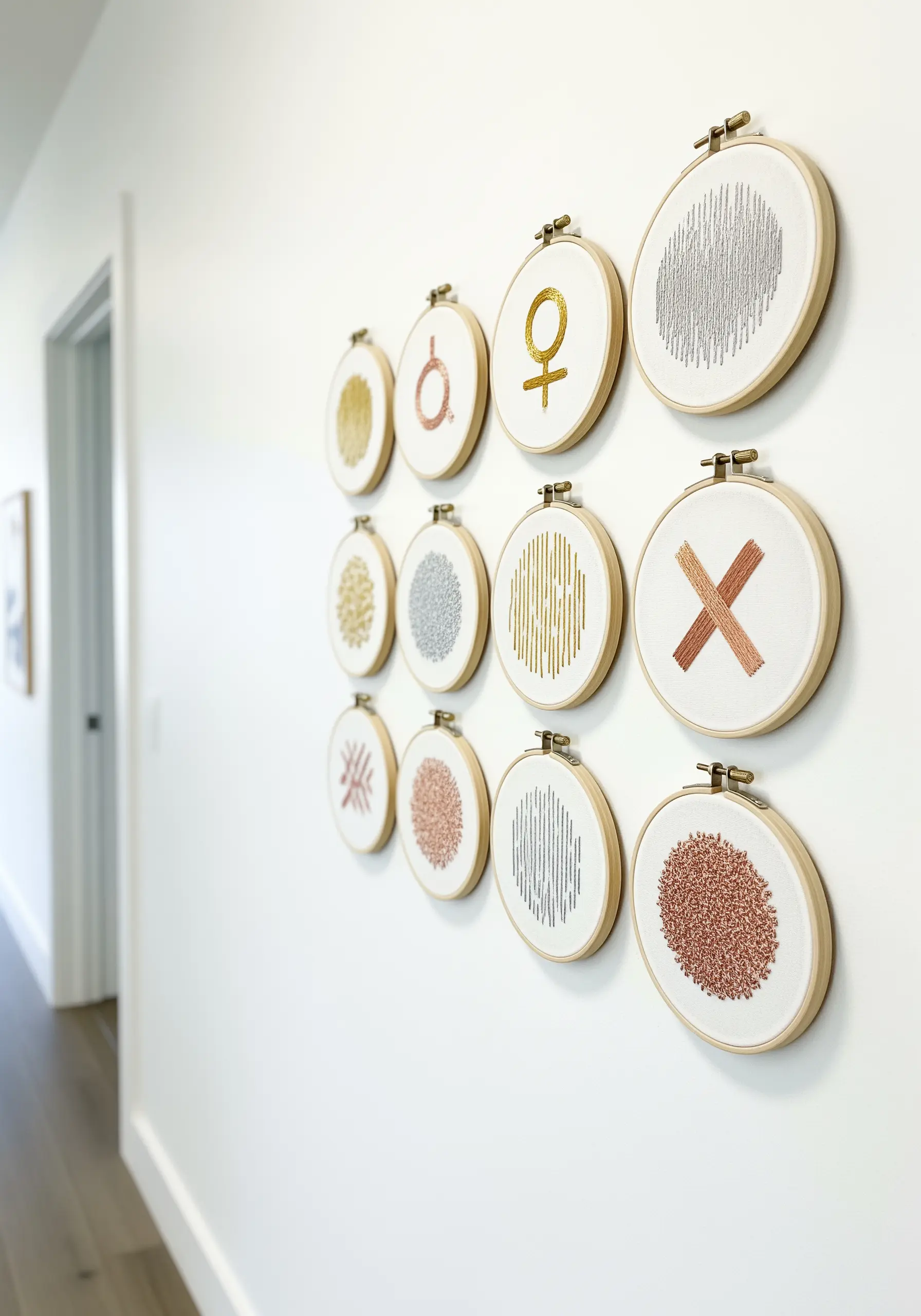
Design a cohesive gallery wall by limiting your palette to three metallic tones—like gold, silver, and copper—and focusing on textural variety.
In each hoop, explore a different fill technique: dense satin stitch in one, spaced-out seed stitch in another, and precise straight-line grids in a third.
This exploration of texture creates a collection that feels unified yet dynamic.
By keeping the fabric and hoop style consistent, you allow the metallic stitches to become the central story, making for compelling minimal DIY embroidery pieces perfect for a gallery wall.
8. Stitch a Cityscape with Glimmer and Grit
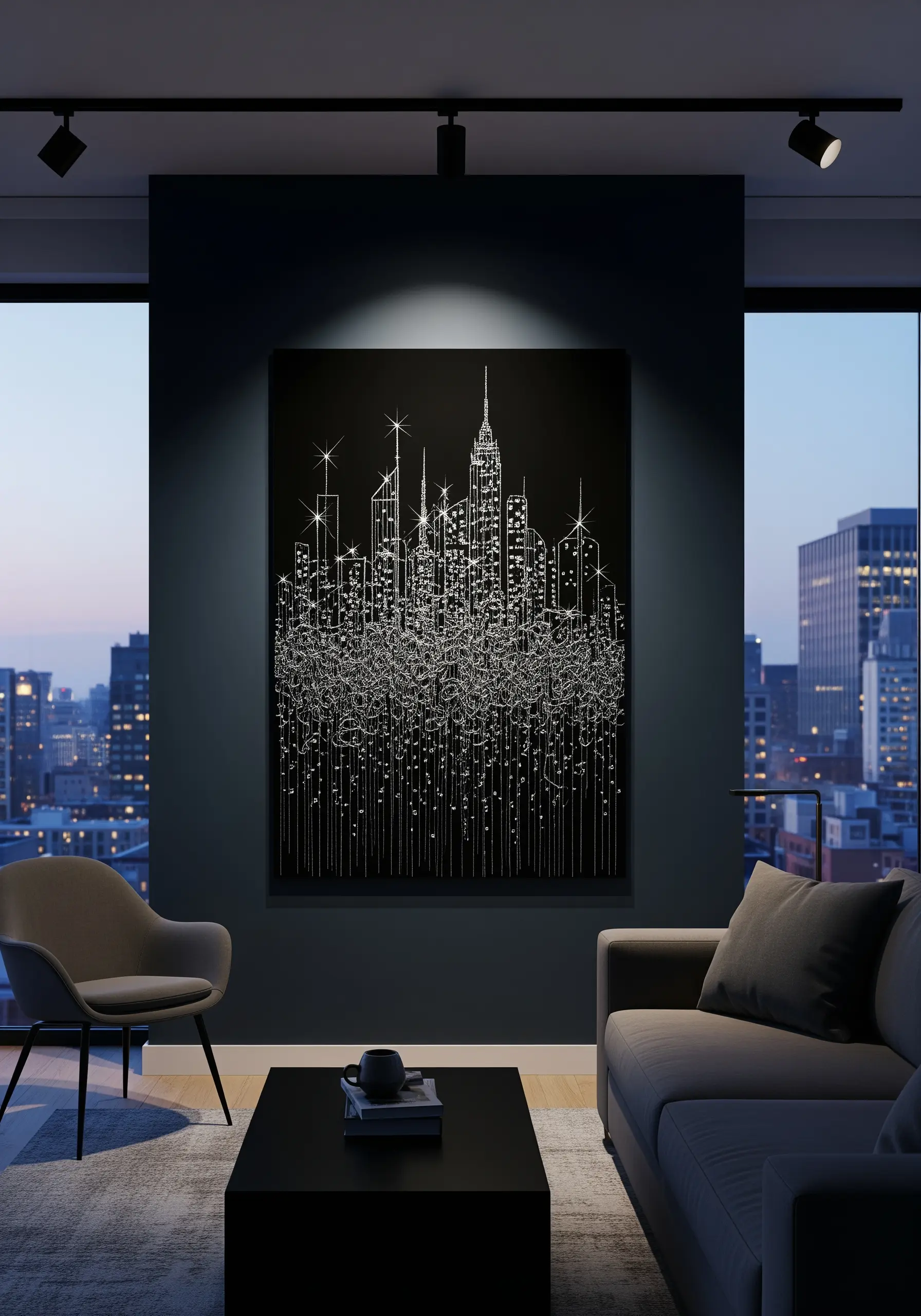
Capture the electric energy of a city at night by using several different silver metallic threads.
Combine a smooth, high-sheen thread for sharp architectural reflections, a glittery thread for a general urban glow, and a braided metallic for bold highlights.
Use disciplined vertical straight stitches for buildings and windows, then contrast that order with a chaotic scattering of French knots and seed stitches for the shimmering lights below.
The spotlight effect is created by concentrating the densest stitches in the center and letting them fade out toward the edges.
9. Embody Kintsugi with Golden Repair Lines
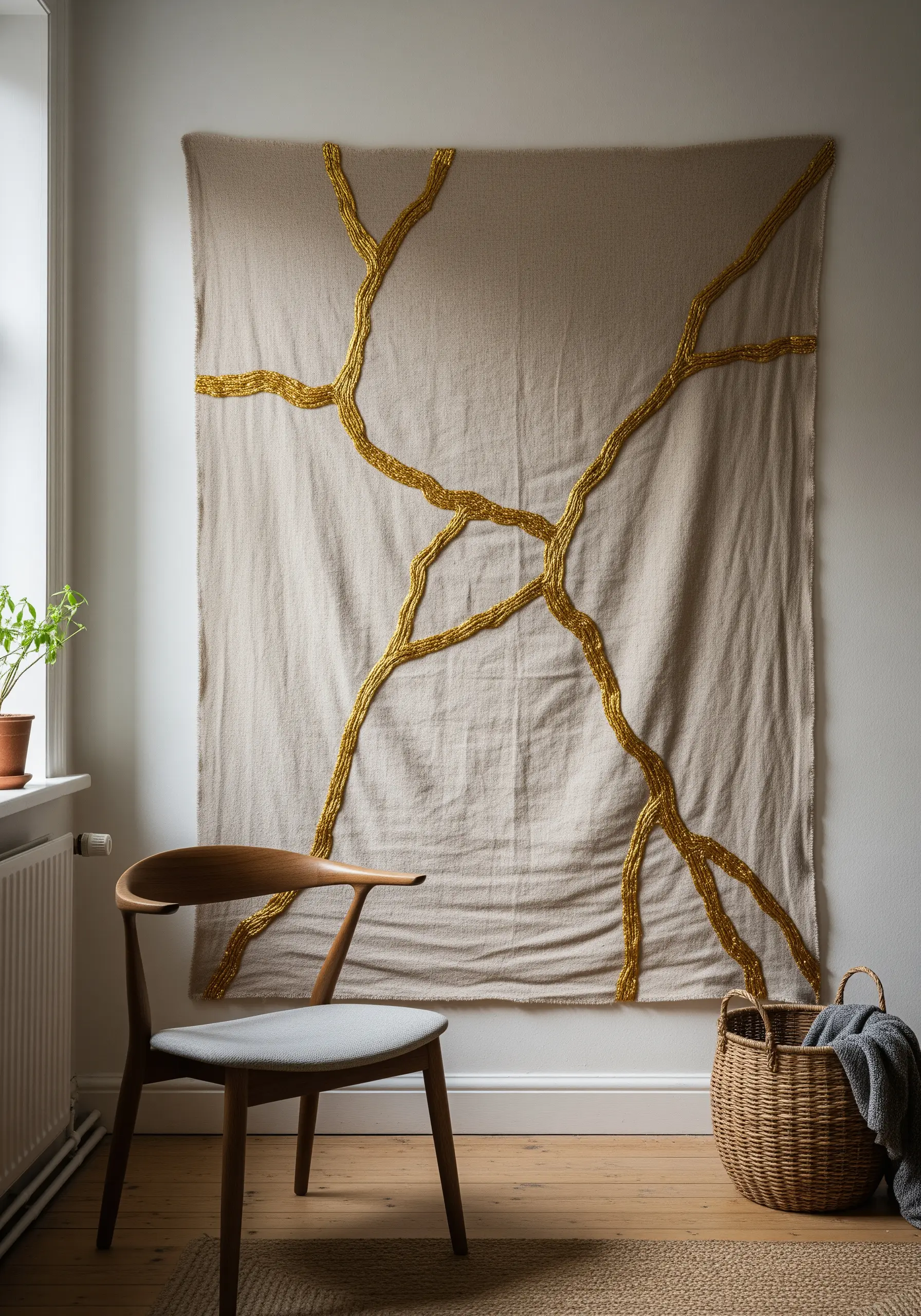
Translate the Japanese art of Kintsugi—mending broken pottery with gold—into a textile piece.
On a simple, raw linen or cotton drop cloth, create organic, crack-like lines using a padded satin stitch with a bold, gold metallic thread.
To create the padding, first lay down several strands of yarn or cotton floss along your design line, then work your satin stitches over them.
This technique gives the golden lines a raised, three-dimensional quality that honors the philosophy of beautiful imperfection.
10. Radiate Energy with a Sunburst Hoop
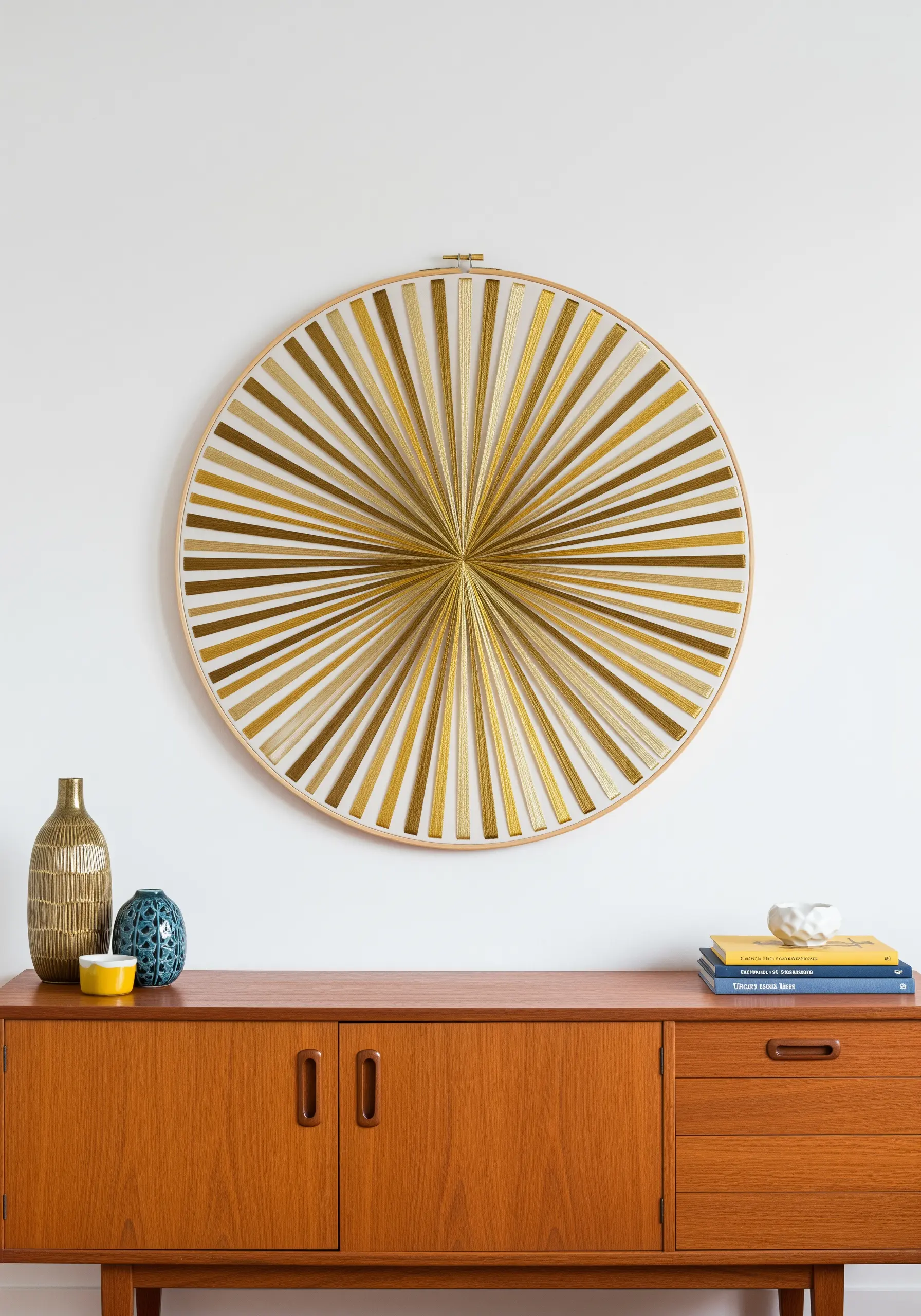
To achieve the perfectly taut, straight lines of a radial design, it’s crucial to work in a high-quality hoop that won’t warp under tension.
Create visual interest by alternating between two or three shades of gold and bronze metallic thread as you stitch from the center outward.
This subtle color variation gives the sunburst a sense of vibration and depth.
Instead of stitching through the fabric at the center for every single line, anchor your threads on the back to avoid creating a bulky, overworked central point.
11. Highlight Water’s Movement with Silver Accents
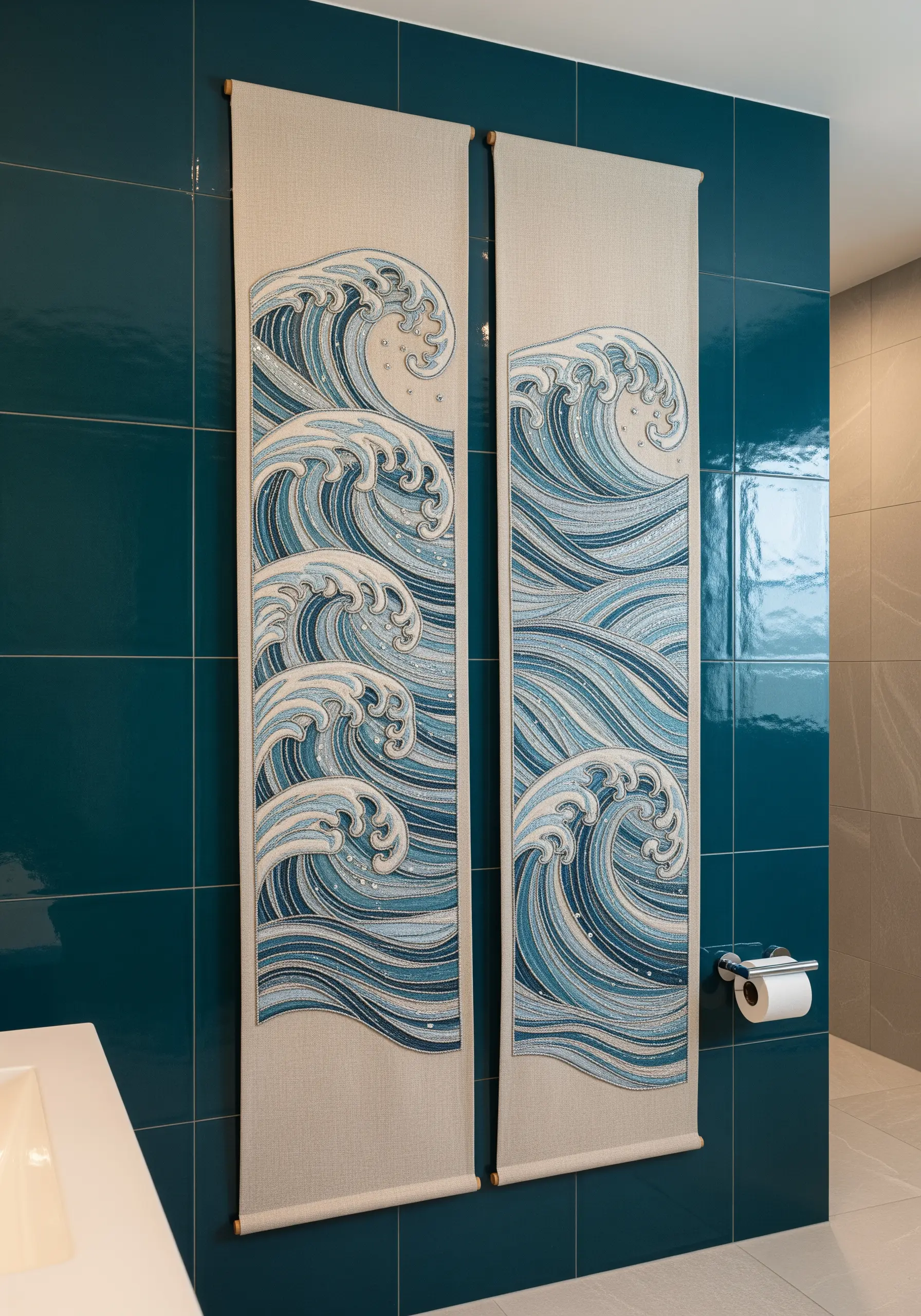
When embroidering water, use metallic thread as a final accent layer, not the main element.
First, establish the waves and shadows with matte cotton floss in various shades of blue.
Then, come back with a single strand of bright silver metallic thread and add spare, carefully placed straight stitches and French knots along the crests of the waves.
This selective application perfectly mimics the glint of sunlight on water, adding life and movement without overwhelming the piece.
12. Create a Pattern with Delicate Ginkgo Leaves
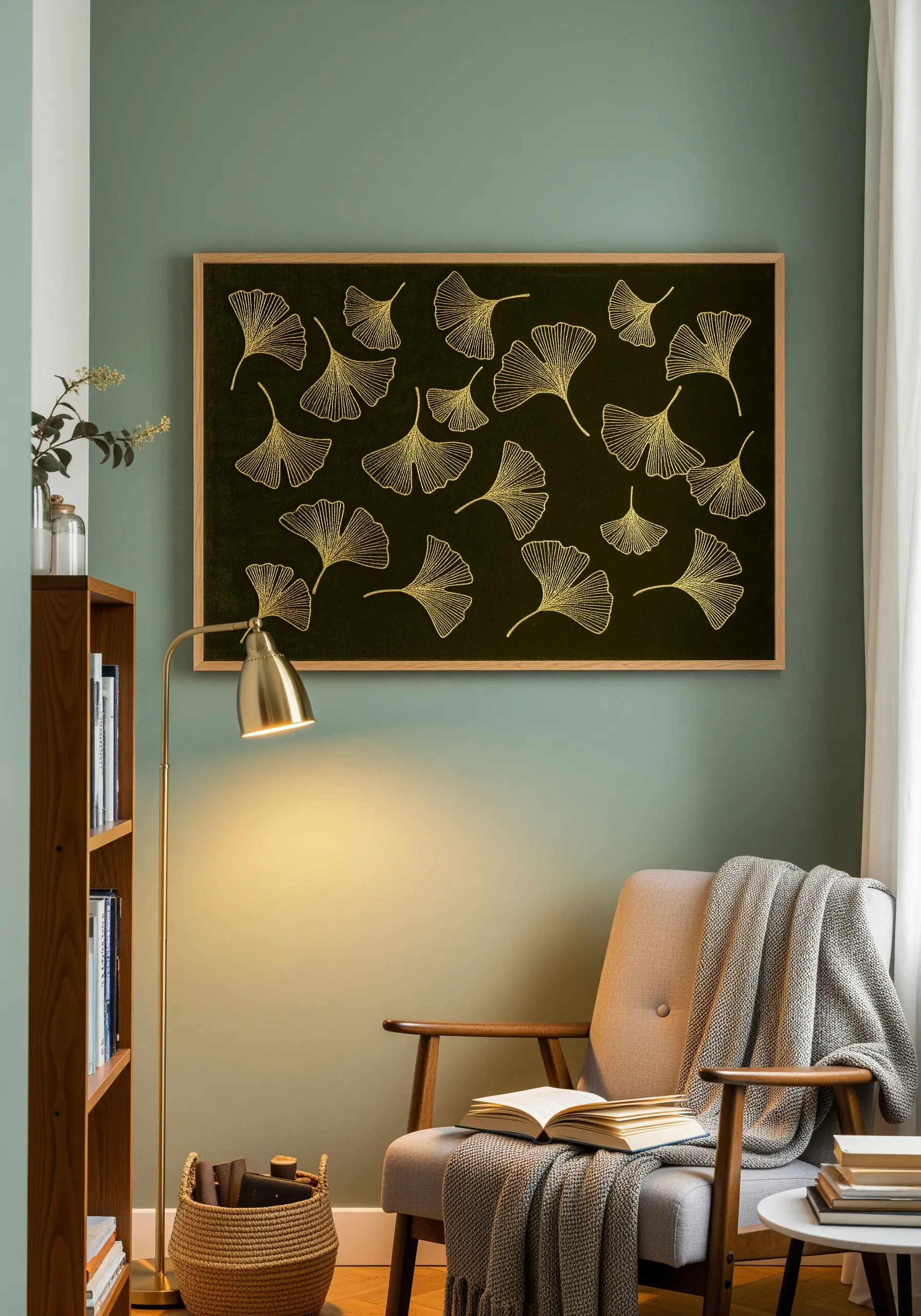
For an intricate, all-over pattern that feels luxurious, not busy, focus on delicate linework.
Use a single strand of fine gold metallic thread to stitch the fan-like veins of ginkgo leaves with a simple backstitch or split stitch.
The magic is in the repetition of this delicate motif.
Stitching on a dark, rich fabric like olive green velvet or black cotton sateen provides a dramatic background that makes the fine golden lines appear to float on the surface.
13. Visualize Sound with a Metallic Soundwave
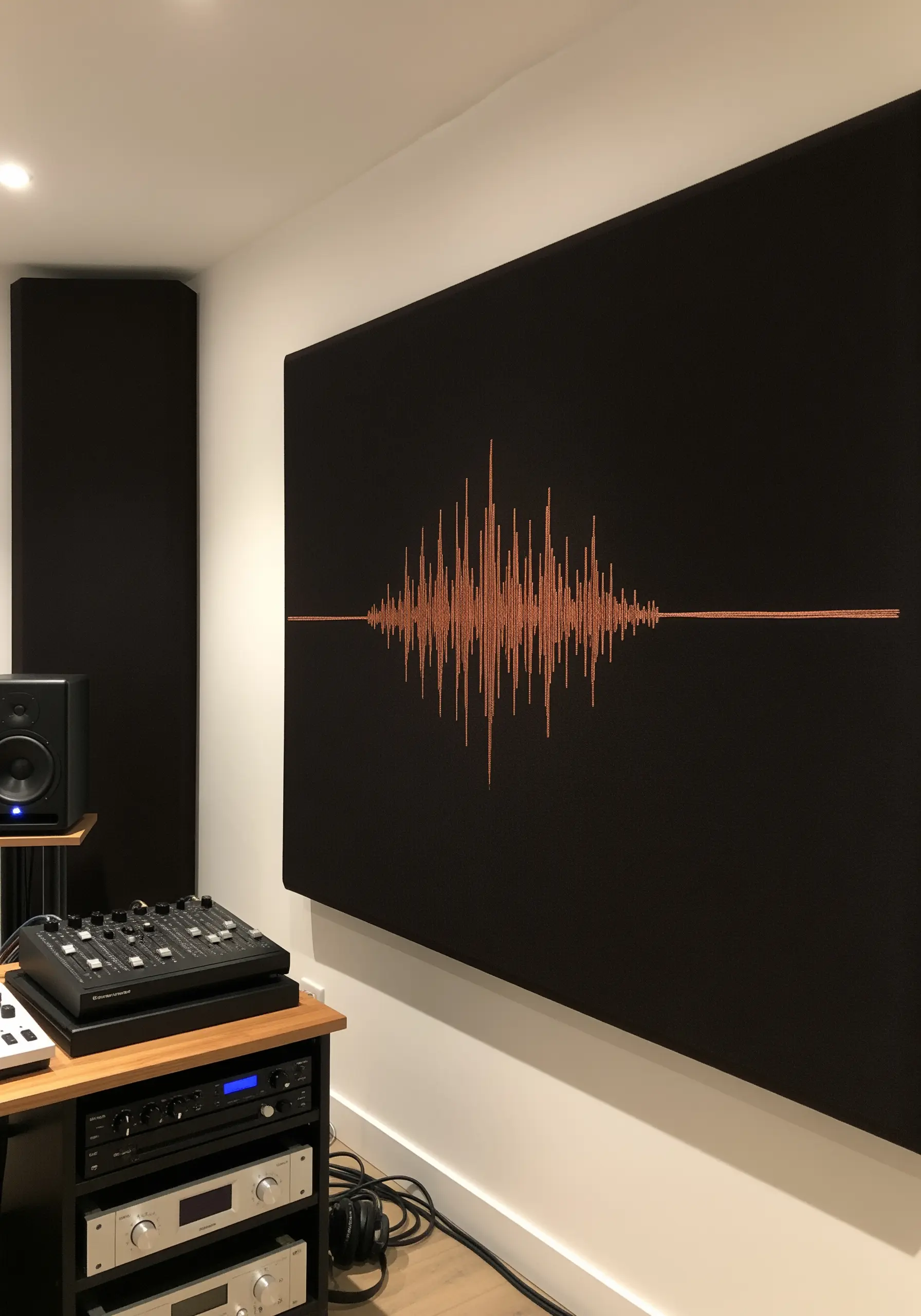
Turn a personal audio clip—a voice, a song, a heartbeat—into a piece of minimalist art.
Once you have the visual of your soundwave, transfer it to a dark fabric and fill the shape with dense, vertical straight stitches.
Using a single color, like a copper or bronze metallic thread, keeps the focus on the unique form of the sound itself.
This project is a powerful example of how to translate data into personal and modern thread art ideas.
14. Illustrate Lunar Phases with Textural Fills
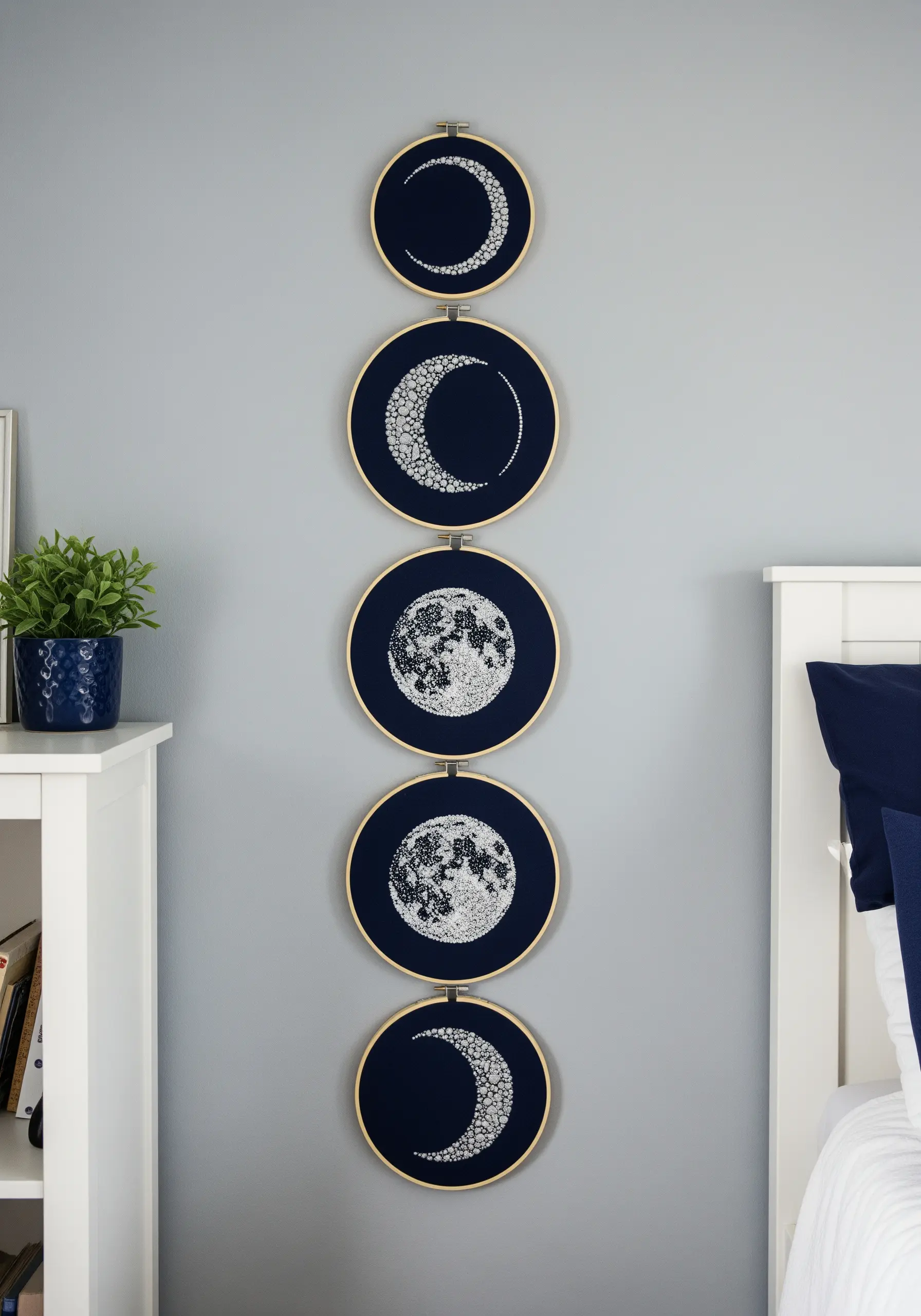
Instead of outlining the moon, build its form using dense, textural fill stitches.
Use a bright silver metallic thread and fill the crescent and full moon shapes with a sea of tightly packed French knots or colonial knots.
To create the illusion of craters and shadows, vary the density of your knots—placing them closer together for bright spots and farther apart for darker areas.
This technique gives the moons a tactile, shimmering surface that stands out beautifully against dark navy fabric.
15. Imply Structure with Architectural Stitches
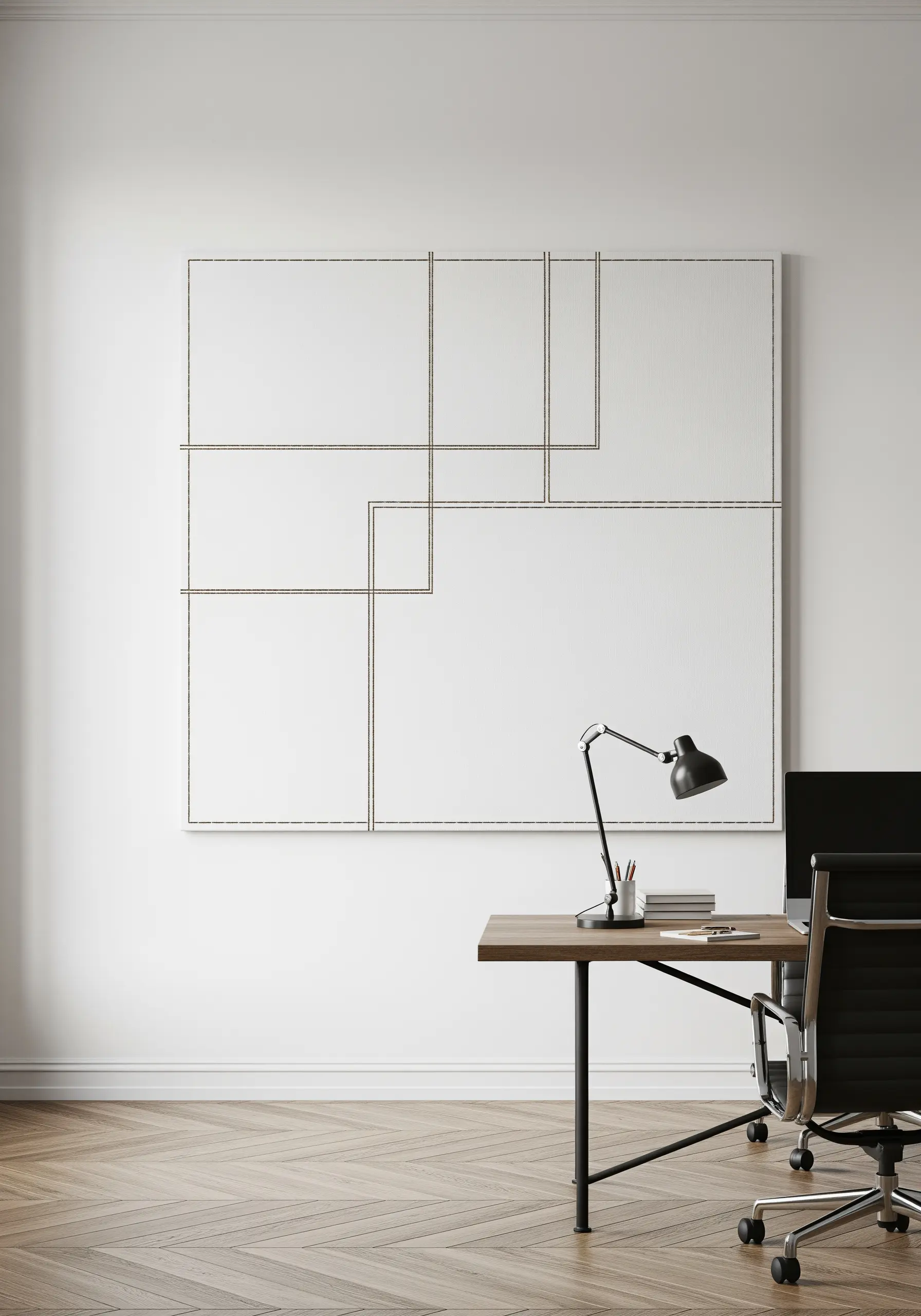
Suggest an architectural floor plan or abstract grid with the most minimal of stitches.
Use a dark, subtle metallic thread like gunmetal grey or deep bronze and a simple running stitch on a large, white, textured canvas.
The key here is precision: measure and mark your lines with a water-soluble pen before you begin.
This stark, graphic approach to embroidery transforms thread into a drafting tool, perfect for creating minimalist embroidery wall art ideas.
16. Capture Light in a Shadowbox Frame
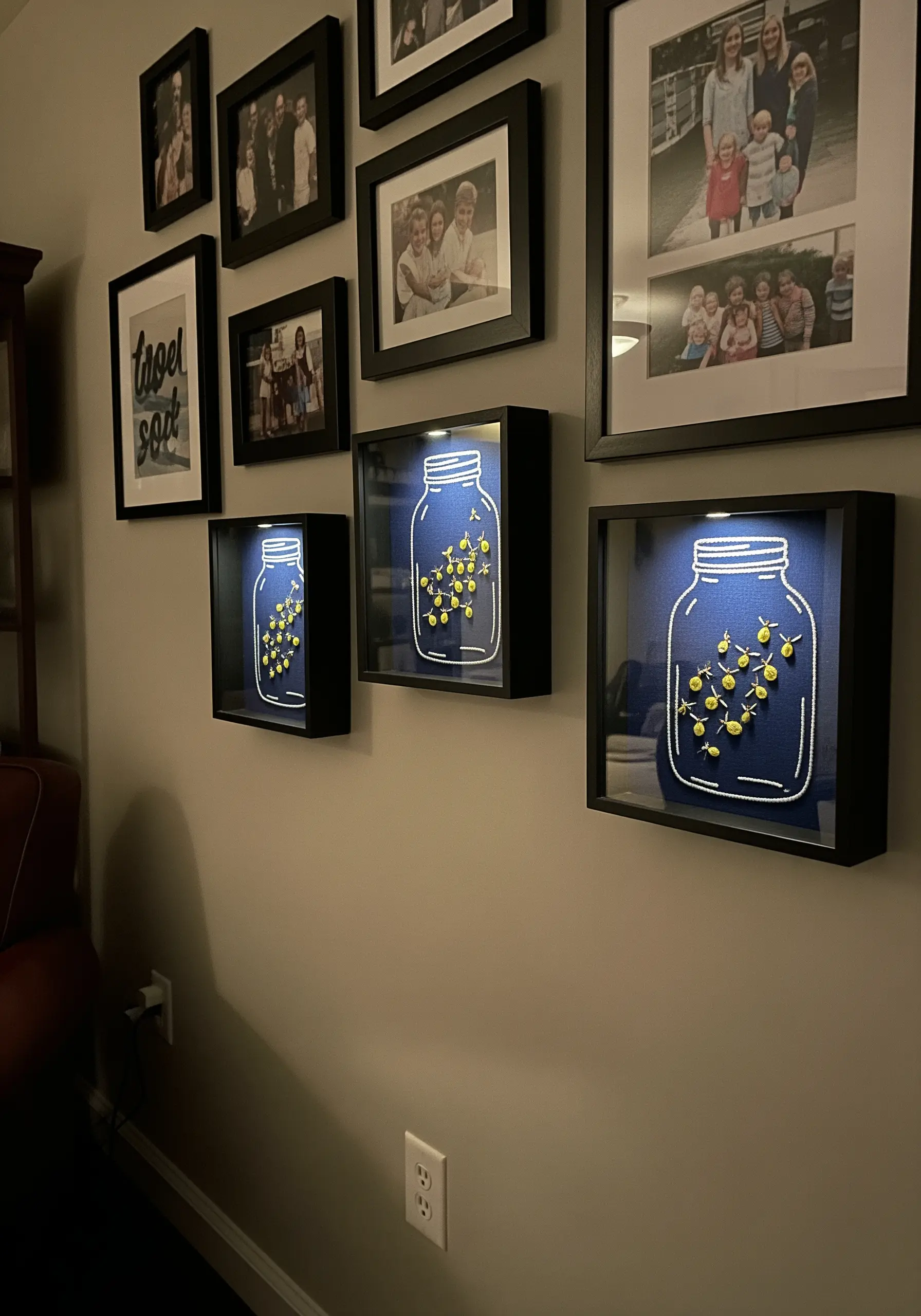
Create a magical, three-dimensional effect by stitching fireflies in a jar and displaying the piece in a shadowbox.
Use a fine silver or white metallic thread for the jar’s outline on a dark blue background fabric.
For the fireflies, stitch small French knots or detached chain stitches with a vibrant yellow-gold metallic thread.
The space between the glass and the artwork inside the shadowbox allows light to interact with the metallic thread, making the fireflies seem to genuinely glow.
17. Trace a Topographic Map with a Single Line
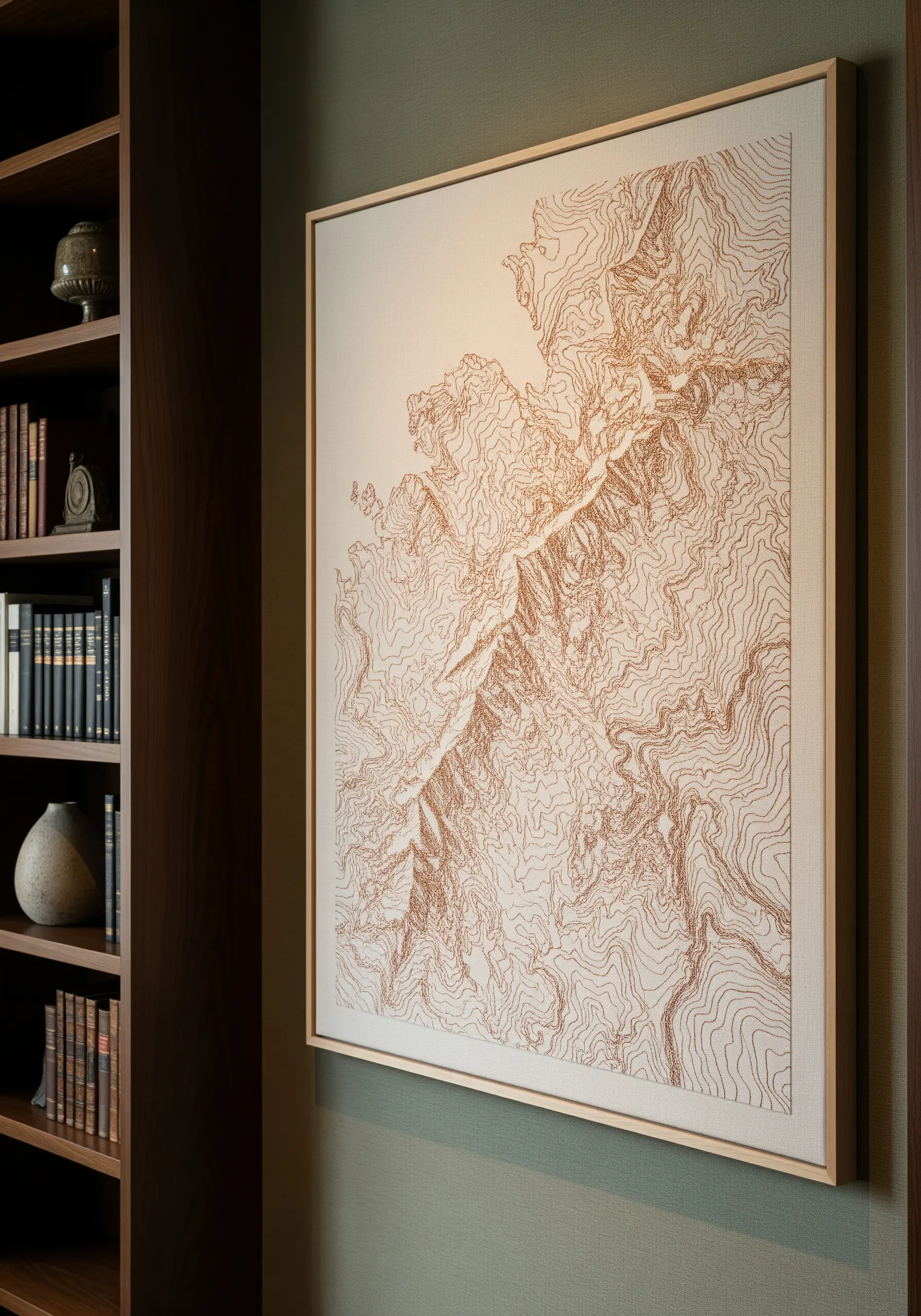
Choose a meaningful location and transform its topographic map into a detailed work of art.
Using a single, continuous line of backstitch or stem stitch, trace the contour lines onto a neutral canvas with a warm copper or bronze metallic thread.
You don’t need to fill any areas; the visual weight and shading are created by the density of the lines alone.
This patient, meditative process results in a complex piece that is both personal and abstract.
18. Form Feather Barbs with Directional Stitches
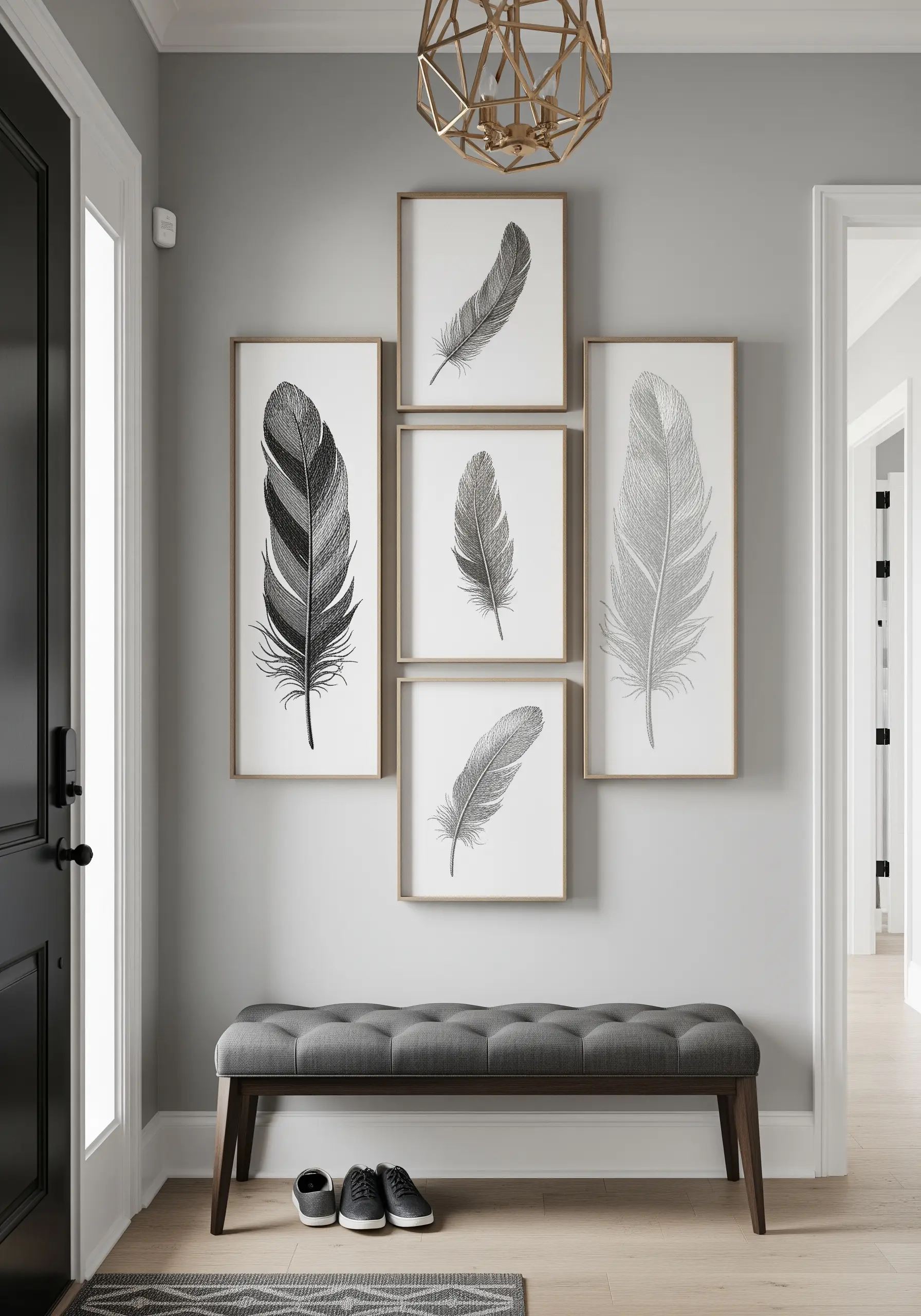
Mimic the delicate structure of a feather by paying close attention to stitch direction.
Use a long-and-short stitch with silver and pewter metallic threads, angling your stitches outward from a central spine to replicate the feather’s barbs.
For the central shaft (rachis), you can use a line of dense satin stitch or couch a heavier metallic cord to give it structure and dimension.
The subtle shift between the lighter and darker metallics creates a photorealistic sense of depth.
19. Weave an Intricate Floral Panorama
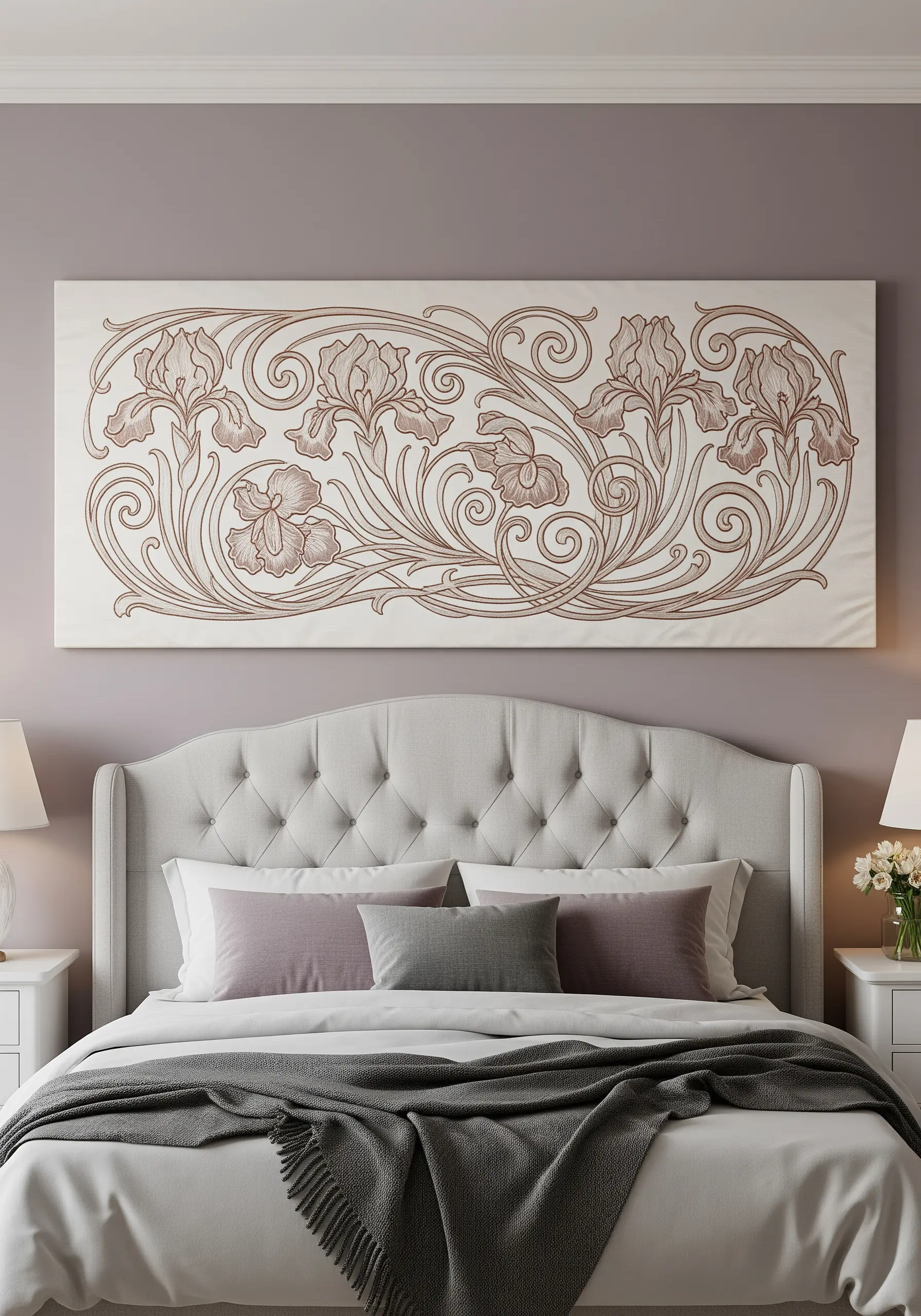
For a large, intricate piece like this, the key is balancing detail with softness.
Use a muted metallic thread, such as a dusty rose gold or soft bronze, to outline the floral and vine motifs with a stem stitch.
Fill in select areas with a light seed stitch in the same color to add texture without overwhelming the delicate linework.
Stitching on a high-quality, off-white linen provides a calm background that allows the elegant, sprawling design to be the focus.
20. Accent a Mandala with Selective Shine
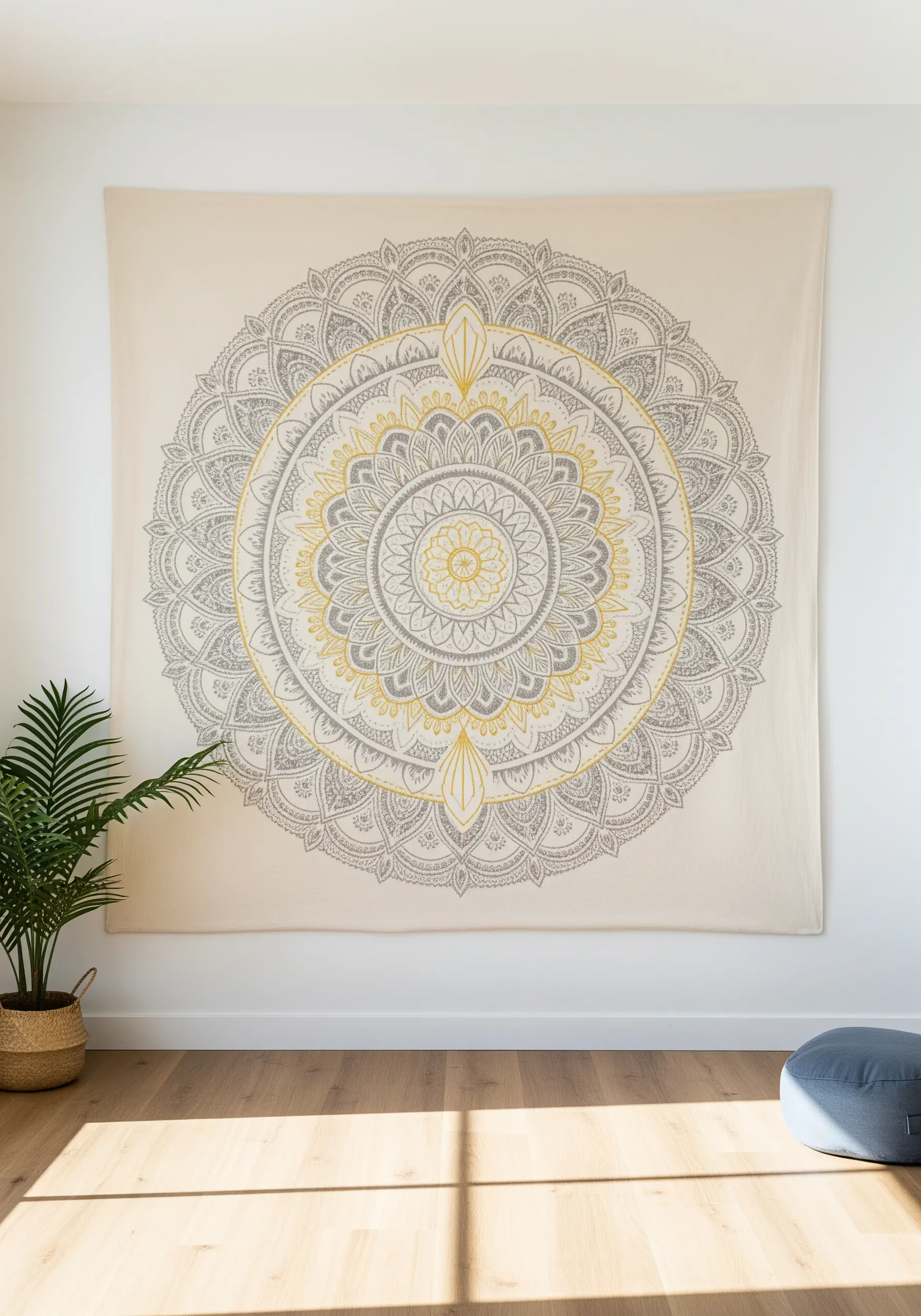
To create a calming, meditative piece, use metallic thread as a thoughtful accent rather than the main feature.
Stitch the intricate, repeating patterns of the mandala primarily in matte cotton floss, such as a soft grey or charcoal.
Then, select specific rings or central motifs to highlight with a soft gold metallic thread.
This selective use of shine creates a quiet rhythm and draws the eye inward, enhancing the serene quality of embroidered mandala wall art designs.
21. Emulate Woven Chains with Padded Stitches
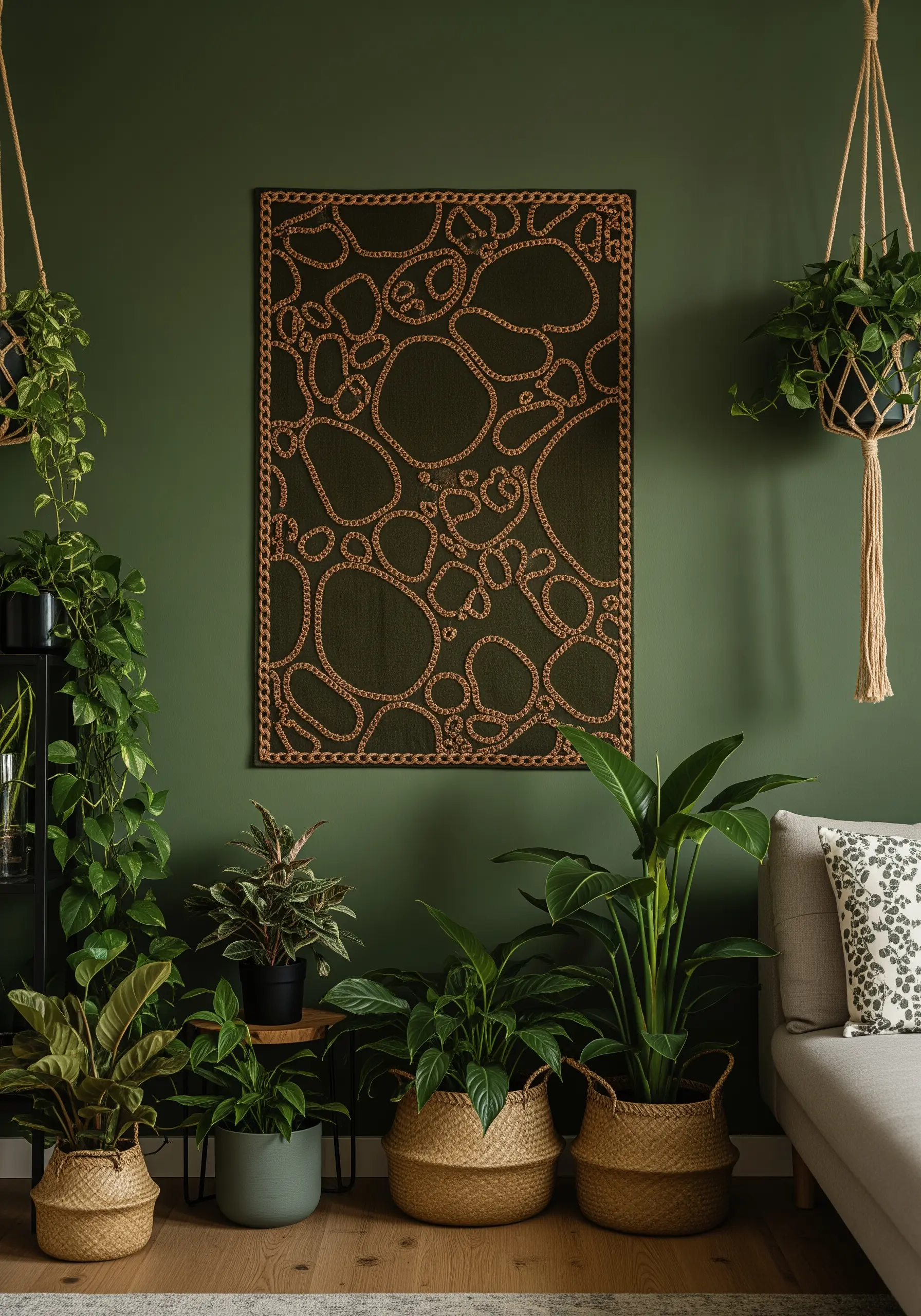
Give your stitched chains a realistic, three-dimensional appearance by using a padded satin stitch.
First, lay down a foundation of straight stitches within the shape of each chain link, then cover this padding with tight, neat satin stitches using a bright gold metallic thread.
This simple technique lifts the stitches off the fabric surface, creating highlights and shadows that mimic real, rounded metal links.
The overlapping composition against a dark, matte green wall enhances the illusion of weight and luxury.
22. Chart Constellations with Star Stitches
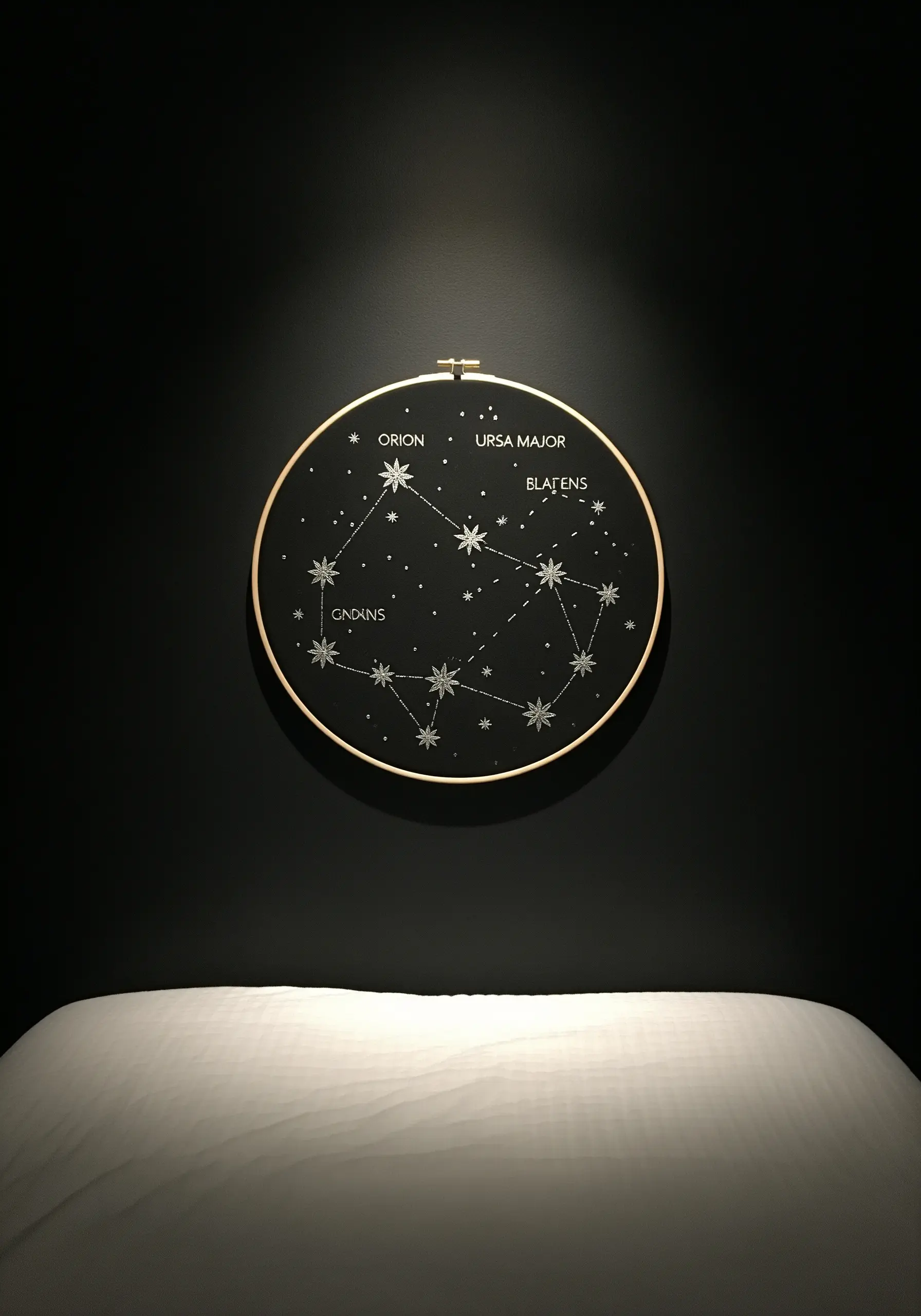
For a clean and graphic representation of the night sky, use a combination of precise, geometric stitches.
Use an Algerian eye stitch or a basic star stitch to create the prominent stars in a constellation, ensuring each stitch is pulled taut for a sharp point.
Connect them with a simple, neat backstitch, and use single French knots for smaller, surrounding stars.
Using a bright silver thread on black fabric is a timeless choice that makes the geometric forms of your minimal sky & moon designs pop.


