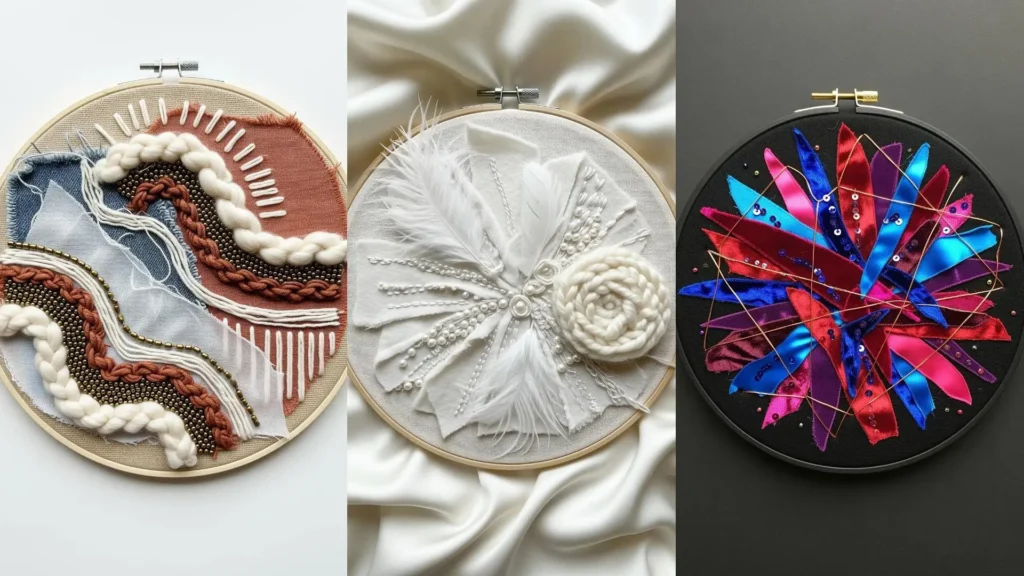
Before you choose a color, I want you to think about a feeling. Is it the quiet calm of a misty morning, the sharp energy of a sudden idea, or the warm joy of a fond memory? Your thread is more than just a color; it’s an emotional tool, and your needle is the way you give that feeling a tangible form.
This is where abstract embroidery becomes so powerful. By moving beyond literal representation, you can focus entirely on the language of color, texture, and line. A dense cluster of French knots can feel like mossy stillness, while a sharp, straight stitch can convey dramatic energy. It’s about translating an internal state into a physical object.
Forget the pressure to stitch perfectly rendered objects. Instead, allow yourself to explore. Use these ideas as starting points to build your own visual vocabulary. You’ll find that the most resonant pieces aren’t the ones that look like something, but the ones that *feel* like something.
1. Express Serenity with Flowing Color Blocks
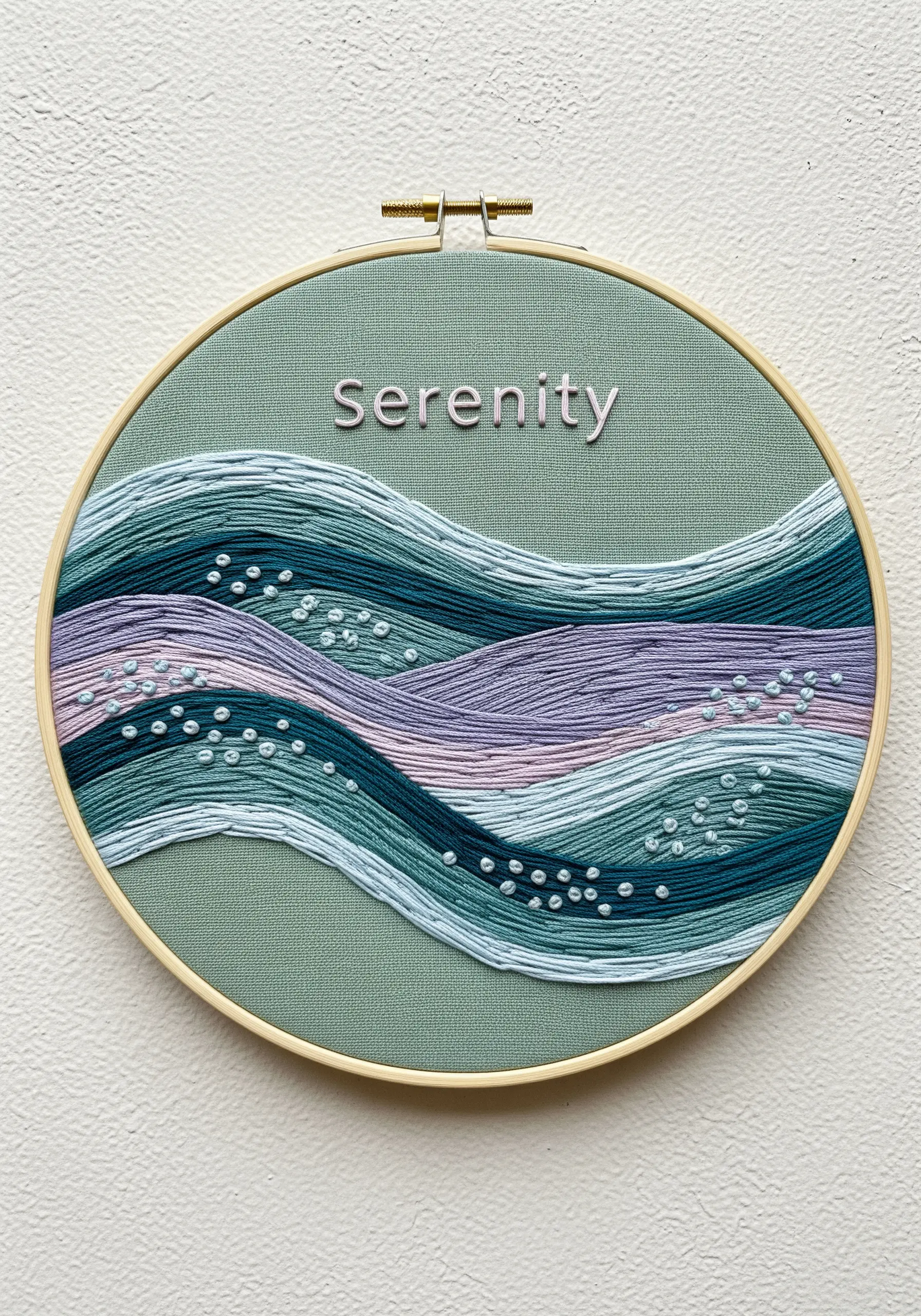
To capture a sense of calm, use long, flowing satin stitches that mimic the movement of water.
Work with an analogous color palette—colors that sit next to each other on the color wheel, like blues, teals, and gentle purples—to create a harmonious, low-contrast design that feels restful to the eye.
Choose a muted fabric, like this sage green, to act as a quiet foundation that enhances the tranquility of your thread colors rather than competing with them.
Scatter small, white French knots to add a touch of light and texture, suggesting sea spray or shimmering reflections without disrupting the peaceful flow.
2. Convey Dramatic Energy with Radiating Lines
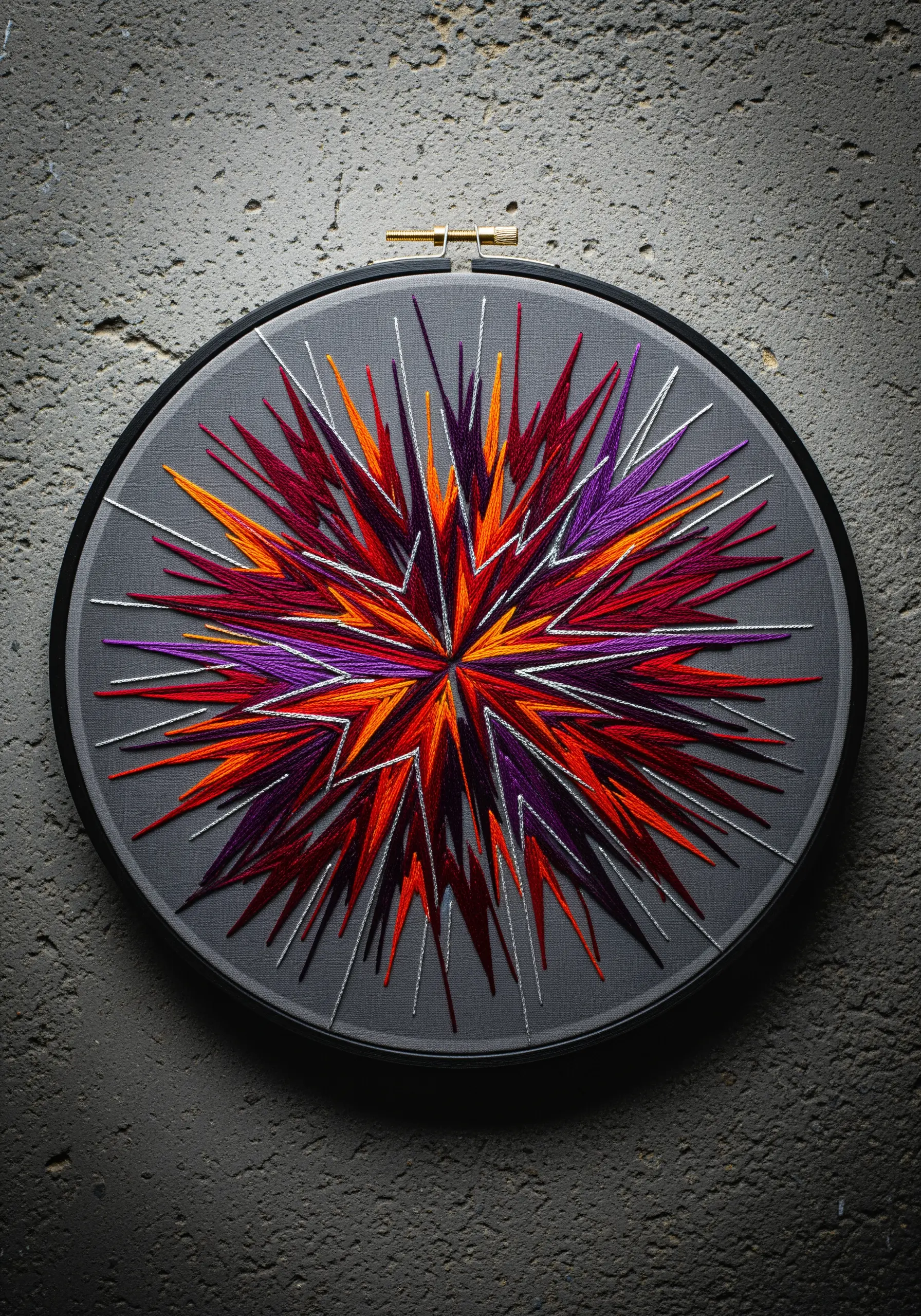
Create a feeling of explosive energy by using sharp, radiating straight stitches that burst from a central point.
A high-contrast palette is key to achieving this drama. Pair intense, warm colors like fiery reds, oranges, and magentas with a dark, neutral background such as charcoal grey or black linen.
Introduce a single strand of silver metallic thread alongside your cotton floss to add a sharp, electric glint that catches the light and intensifies the composition.
Vary the length and density of your stitches to create visual rhythm and prevent the design from feeling static; this makes the ‘burst’ look more organic and powerful.
3. Stitch Pure Joy with Textural Variety
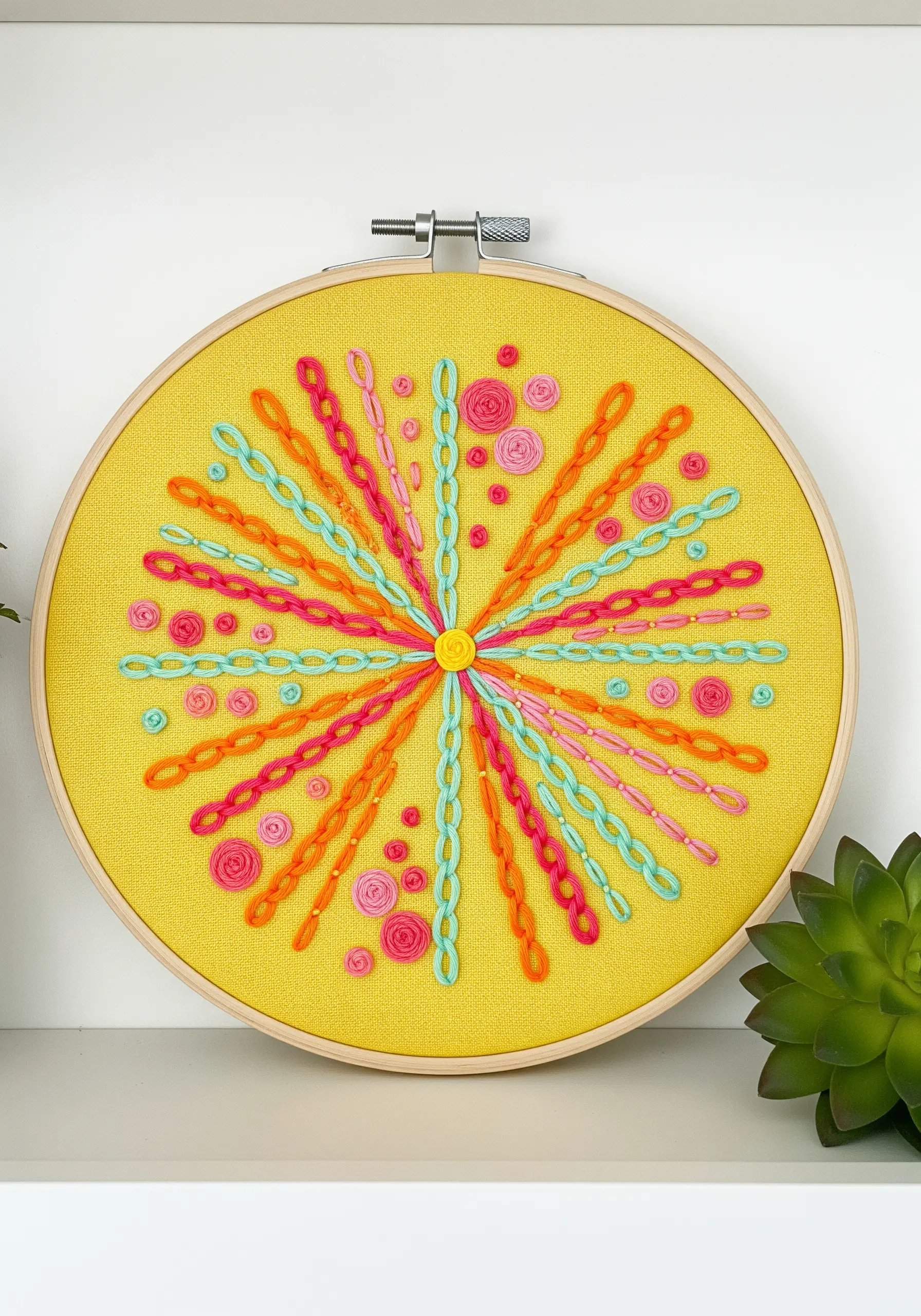
Evoke a sense of happiness and celebration by mixing playful stitches within a single design.
Combine open, airy stitches like the chain stitch with dense, tactile ones like woven wheel roses and French knots to create a feast of textures.
A bright, cheerful color palette on a sunny yellow fabric instantly communicates optimism. Pinks, oranges, and turquoise create a vibrant, high-energy mood that feels light and spontaneous.
By arranging these elements in a radial pattern, you give the playful chaos a sense of structure and balance, making the overall piece feel cohesive and intentional.
4. Cultivate Stillness with Dense, Earthy Textures
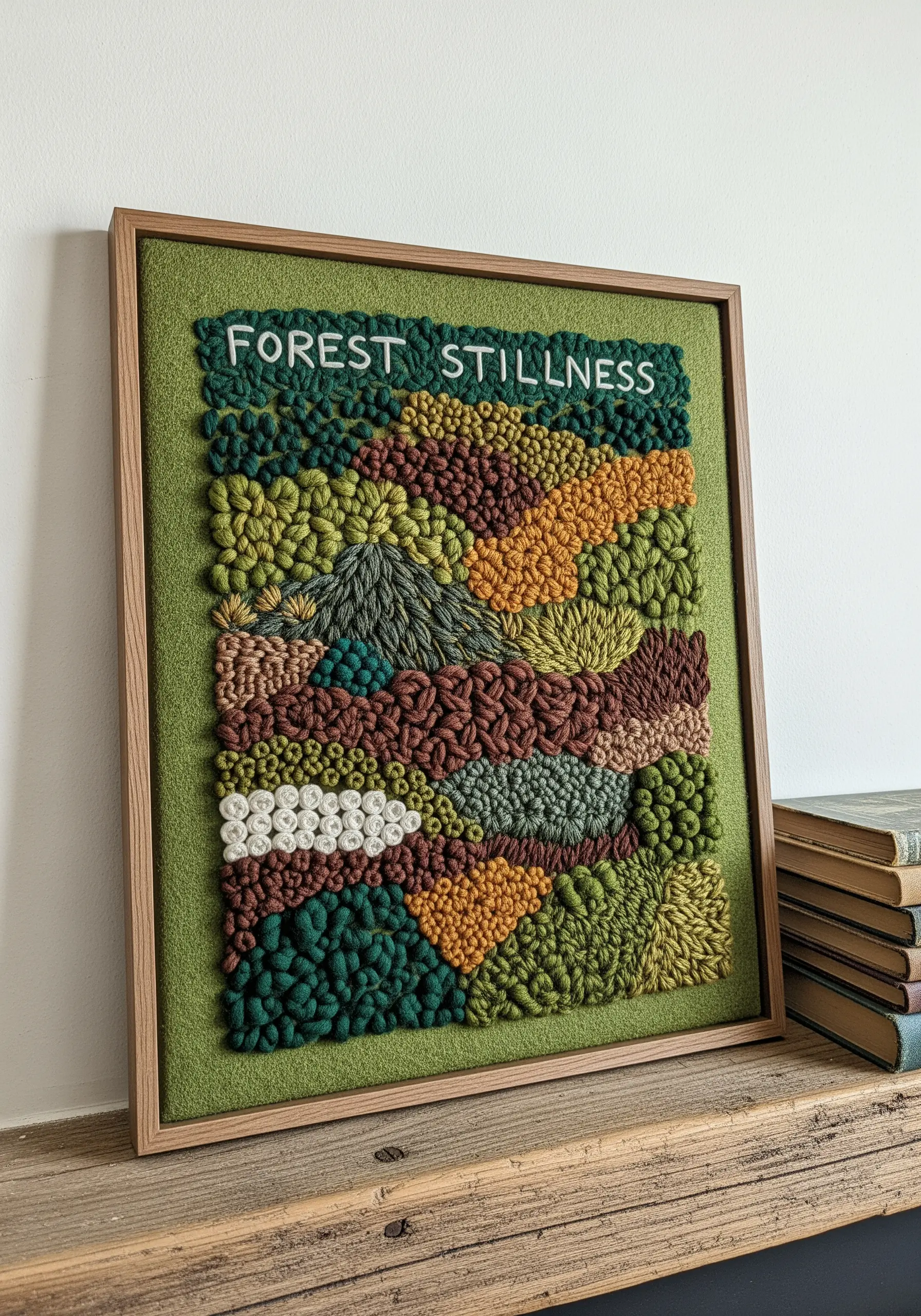
Channel the quiet of a forest floor by filling shapes with dense, highly textural stitches like French knots, bullion knots, and colonial knots.
This technique, often called thread painting with knots, relies on building up color areas knot by knot, creating a tactile surface that invites touch.
Use a rich, earthy palette of deep greens, browns, ochres, and mossy tones to ground the piece in nature. The lack of bright, jarring colors promotes a feeling of peace and stability.
For projects like this, felt or a heavy cotton-linen blend provides the necessary stability to support the weight and density of thousands of knots without puckering. This is one of many embroidery projects inspired by textures you’d find in nature.
5. Spark Energy with Graphic Stitches and Neon Accents
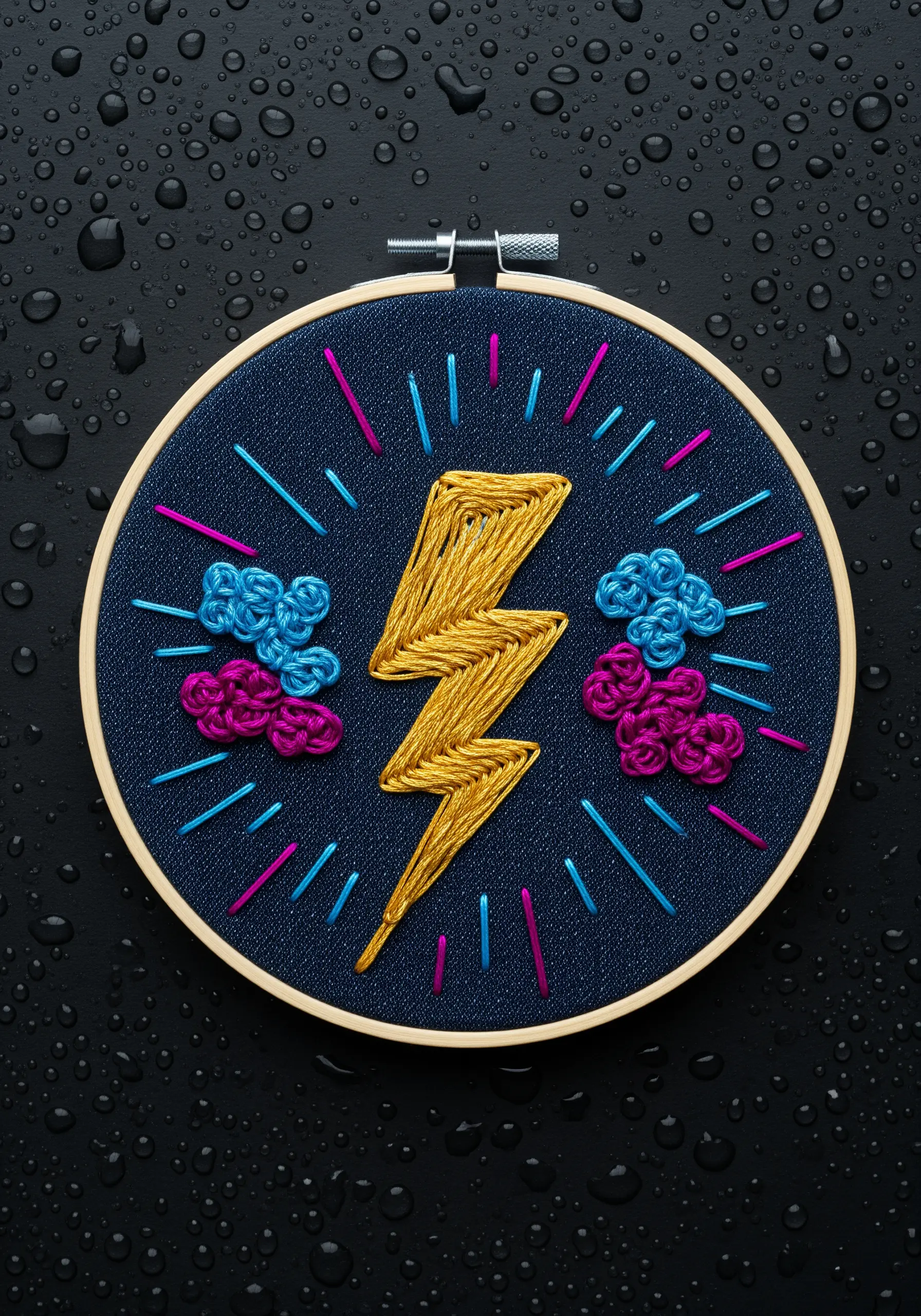
Capture the feeling of a sudden spark or idea with a bold, graphic central motif.
Use a directional satin stitch, keeping all your stitches parallel, to make the lightning bolt look sharp and solid. This creates a clean, powerful shape that stands out.
Place vibrant, almost-neon colors against a deep navy or black background. This high contrast makes the colors appear to glow, enhancing the electric feel of the design.
Add textural counterpoints, like the soft bullion knots forming the clouds, to balance the sharpness of the central image and add another layer of visual interest.
6. Evoke Melancholy with Suspended Threads
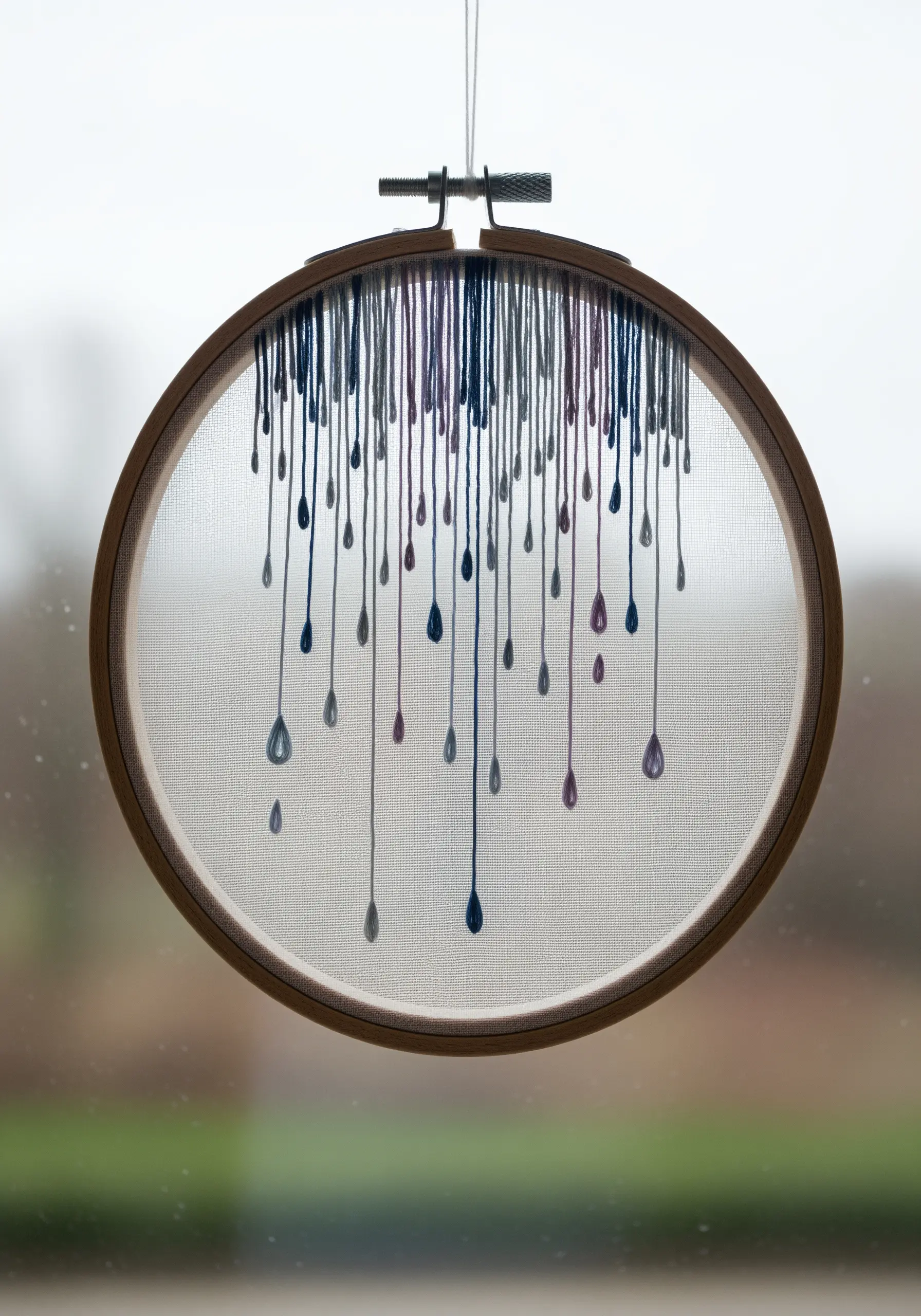
Express a mood of contemplation or gentle sadness by working with negative space and gravity.
Stitch your design on a sheer or semi-sheer fabric like tulle or organza, allowing the background to show through and contribute to the ethereal feeling.
Instead of cutting your threads flush with the fabric, secure them at the top and let them hang freely. Form the teardrop shapes at the bottom by wrapping the thread back on itself and securing with a tiny knot or fabric glue.
A muted, cool-toned palette of blues, greys, and purples reinforces the feeling of a rainy day, making the piece poetic and introspective.
7. Find Balance with Mixed Fibers and Minimal Forms
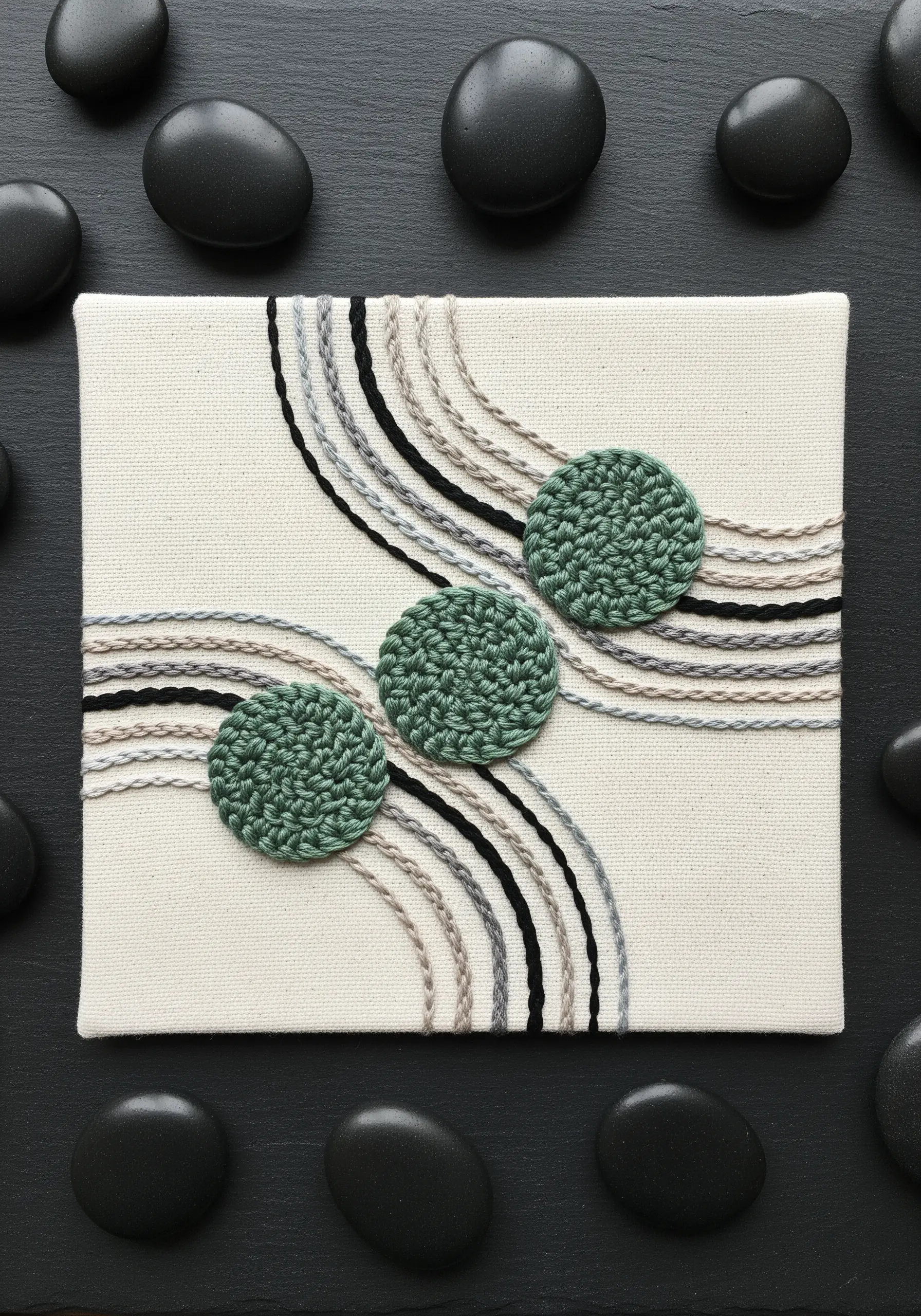
Create a meditative and balanced composition by combining different textile techniques.
Here, crocheted circles are appliquéd onto a canvas, providing a solid, dimensional contrast to the delicate lines of the couched yarn.
Couching—tacking down a thicker yarn with a thinner thread—allows you to create smooth, elegant curves that would be difficult to achieve with standard stitches.
A restrained, neutral color palette of sage green, greys, and black on an unbleached canvas evokes a sense of Zen-like calm and focuses the viewer’s attention on form and texture. It’s a mindful approach similar to stitching embroidered mandala wall art designs.
8. Channel Rebellion with Abstract Graffiti Stitches
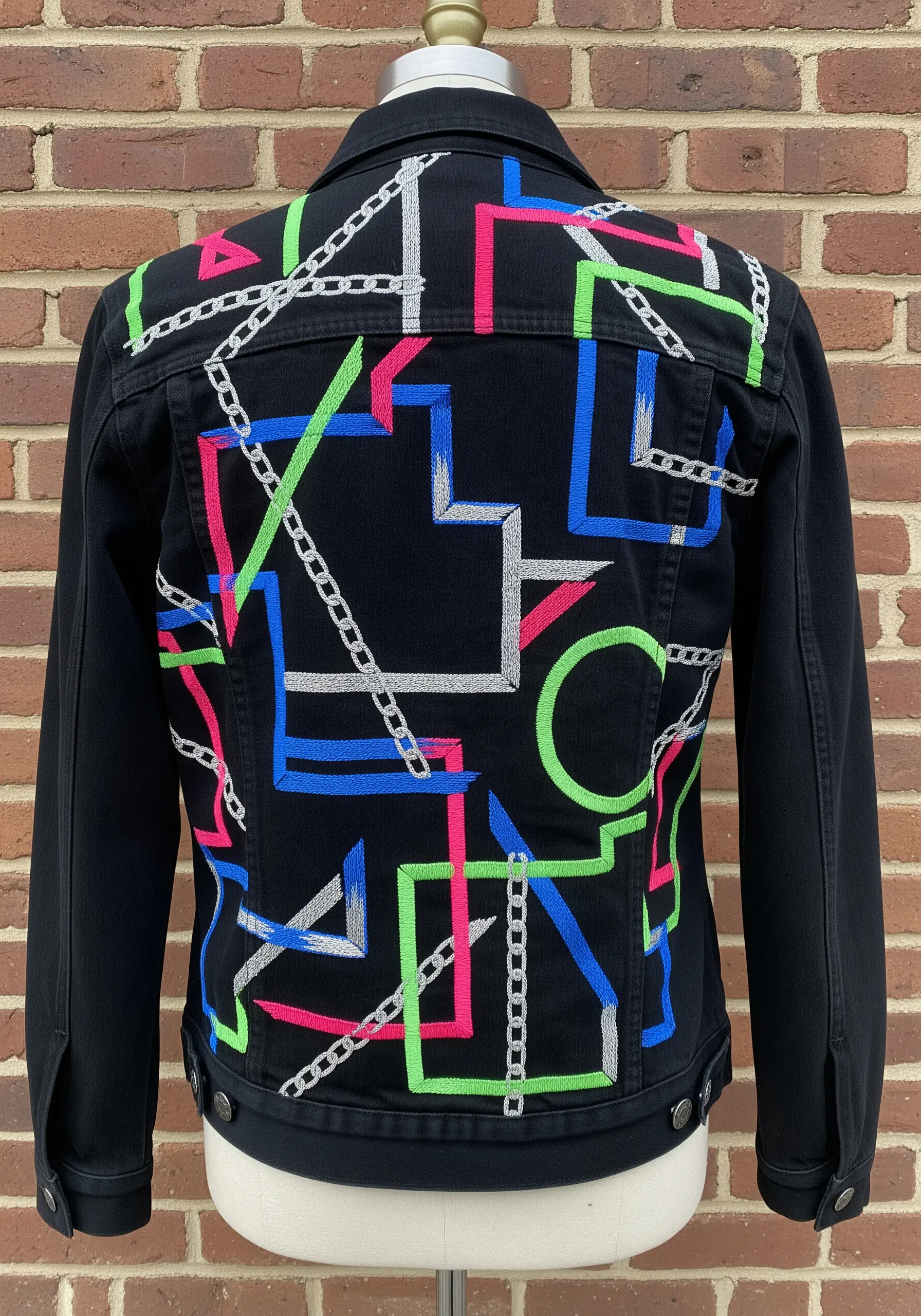
Transform a denim jacket into a statement of rebellious energy with bold, abstract shapes.
Use dense satin stitch to create solid blocks of color that pop against the dark fabric. This gives your design weight and presence.
Choose a clashing, high-energy neon palette—electric blue, hot pink, and lime green—for a classic streetwear or graffiti-inspired look. The unexpected color combinations are key to the disruptive mood.
Incorporate different line styles, like the clean backstitched chains, to add another layer of detail and urban texture. These are great aesthetic embroidery ideas to turn your old clothes into art.
9. Capture Nostalgia with a Watercolor Wash Base
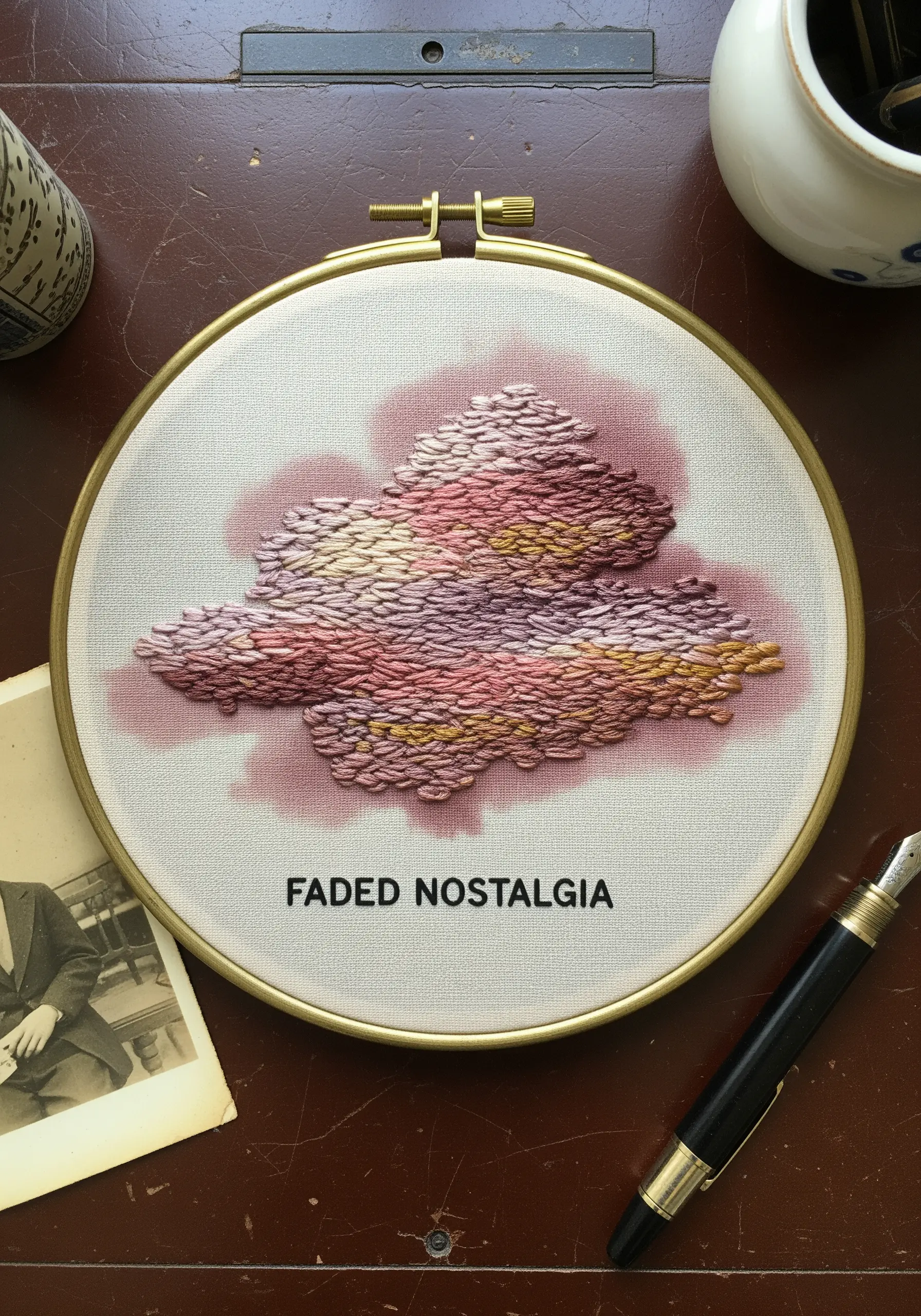
Evoke the hazy, soft-focus feeling of a memory by combining watercolor paint and thread.
Lightly paint a soft-edged cloud of color onto your fabric before you begin stitching. This creates a dreamy, atmospheric background for your embroidery.
Use a simple, textural stitch like the seed stitch (or rice stitch), layering it loosely over the painted area. The varied directions of the stitches will create a soft, cloud-like texture that blends with the paint.
Select a faded, vintage-inspired palette of dusty rose, pale gold, and muted lavender to enhance the feeling of nostalgia and faded photographs.
10. Weave Warmth with Gradated Color Bands
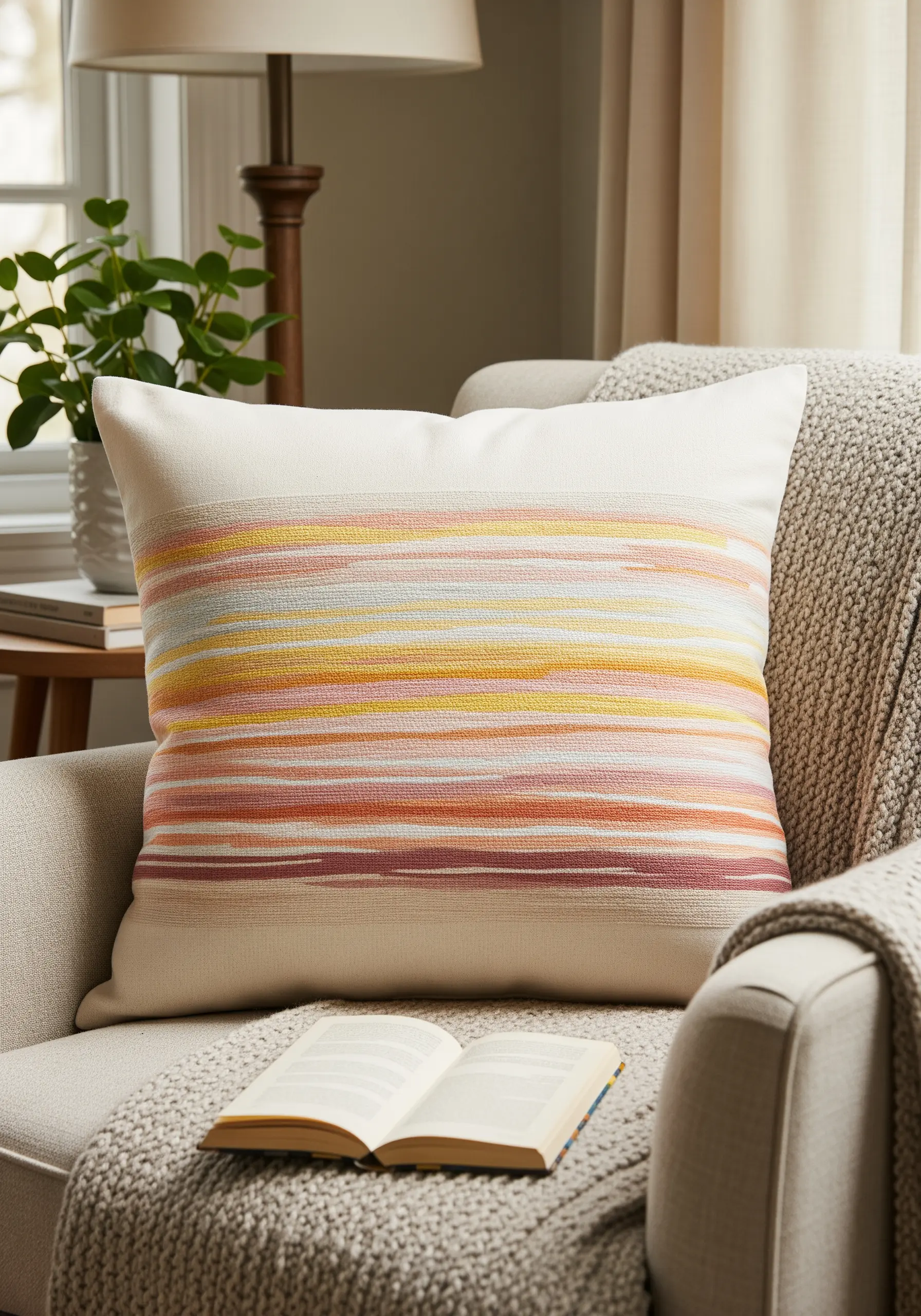
Create a feeling of cozy, ambient warmth by stitching horizontal bands of color.
Use a darning stitch or a tightly packed satin stitch to fill in wide rows. The key is to keep the edges slightly uneven and organic, mimicking the look of a handwoven textile.
A sunset-inspired palette—blending from deep rose through terracotta, gold, and pale yellow—creates a comforting and inviting gradient that feels like a warm glow.
This technique is perfect for functional items like pillows, as it creates a durable and beautiful textile surface. It’s an easy way to customize linen-tone embroidery cushion covers.
11. Embody Intensity with Volcanic Textures
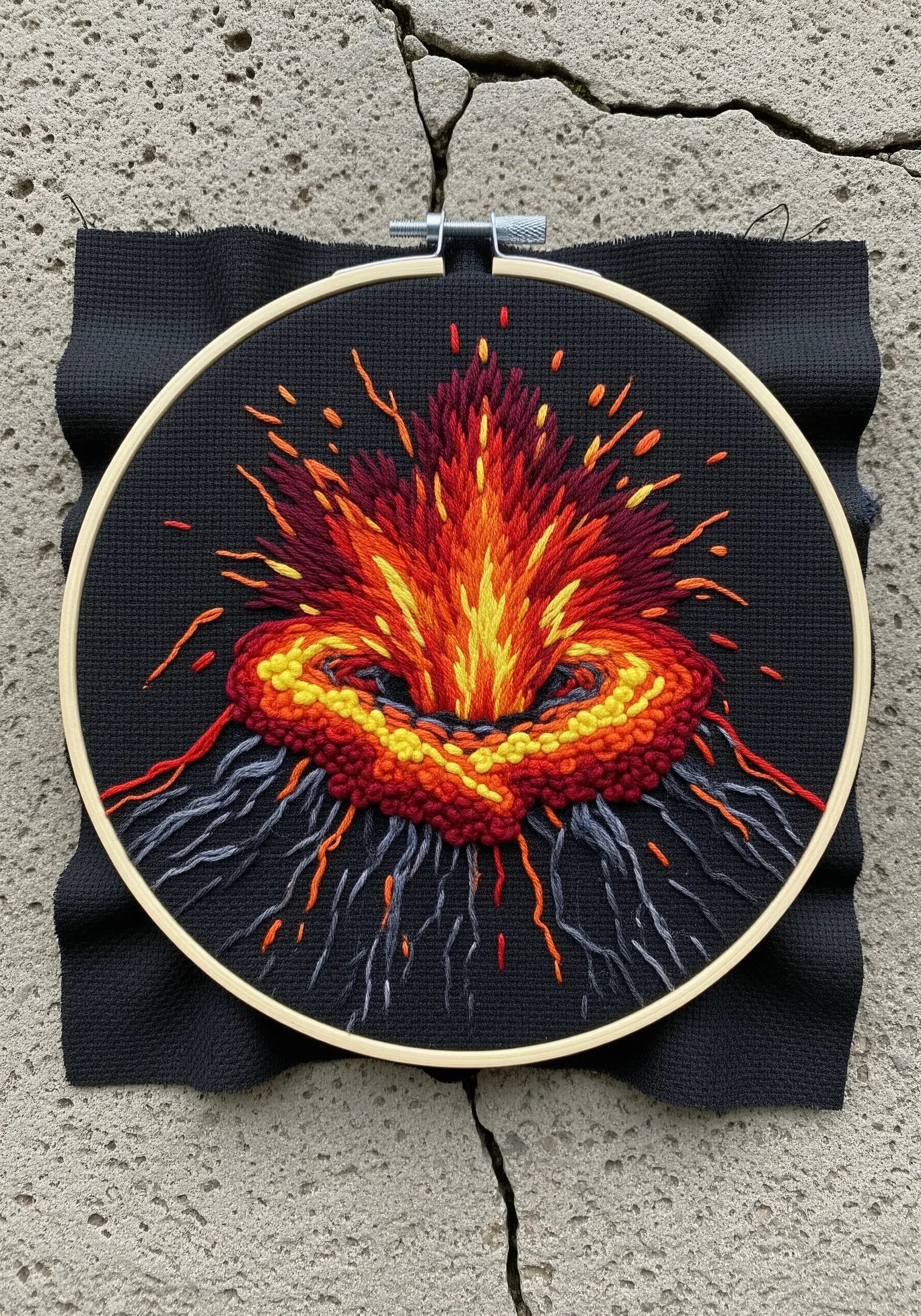
Express raw power and intensity by building up extreme texture in the center of your design.
Use Turkey work or looped stitches to create a dense, three-dimensional core that rises from the fabric. This tactile center becomes the focal point of the piece.
Surround this core with a fiery gradient of French knots, blending from bright yellow to deep red, to simulate molten heat.
Finally, add explosive energy with radiating straight stitches in greys and oranges, representing ash and sparks. The stark black Aida cloth background makes the colors feel even more incandescent.
12. Induce Focus with Symmetrical Mandala Stitching
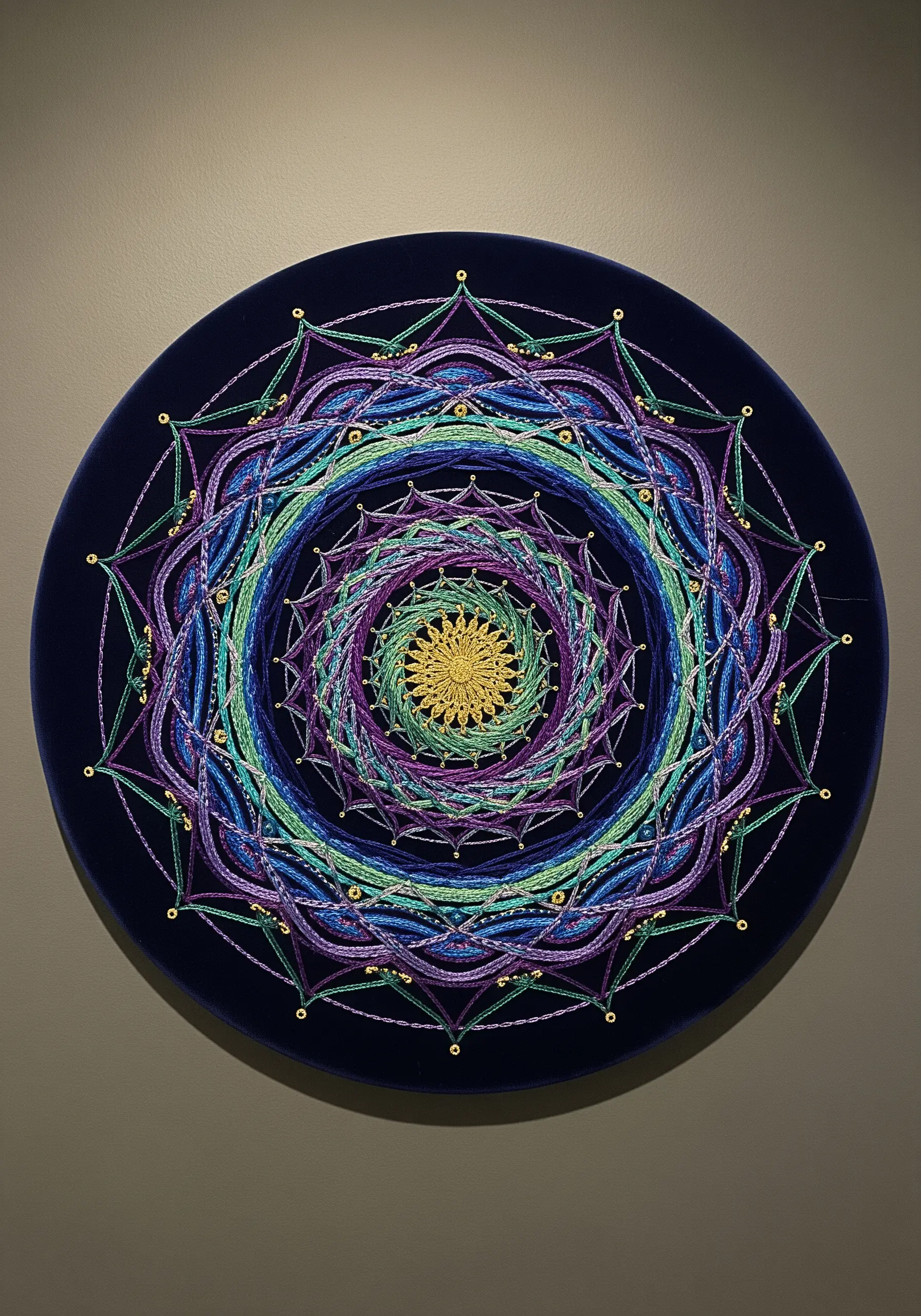
Create a hypnotic, meditative piece by building a symmetrical mandala with layered threads.
Use variegated floss to achieve effortless color shifts within a single line, adding depth and complexity without constantly changing your thread.
Work from the center outward, using the geometric repetition to guide your stitching. This rhythmic process can be incredibly calming and centering.
A cool, cosmic palette of blues, greens, and purples on a dark velvet or velveteen background enhances the spiritual, otherworldly mood of the design. This is one of the most beautiful floral mandala embroidery ideas for calm weekend projects.
13. Portray Delicacy with Ethereal Forms
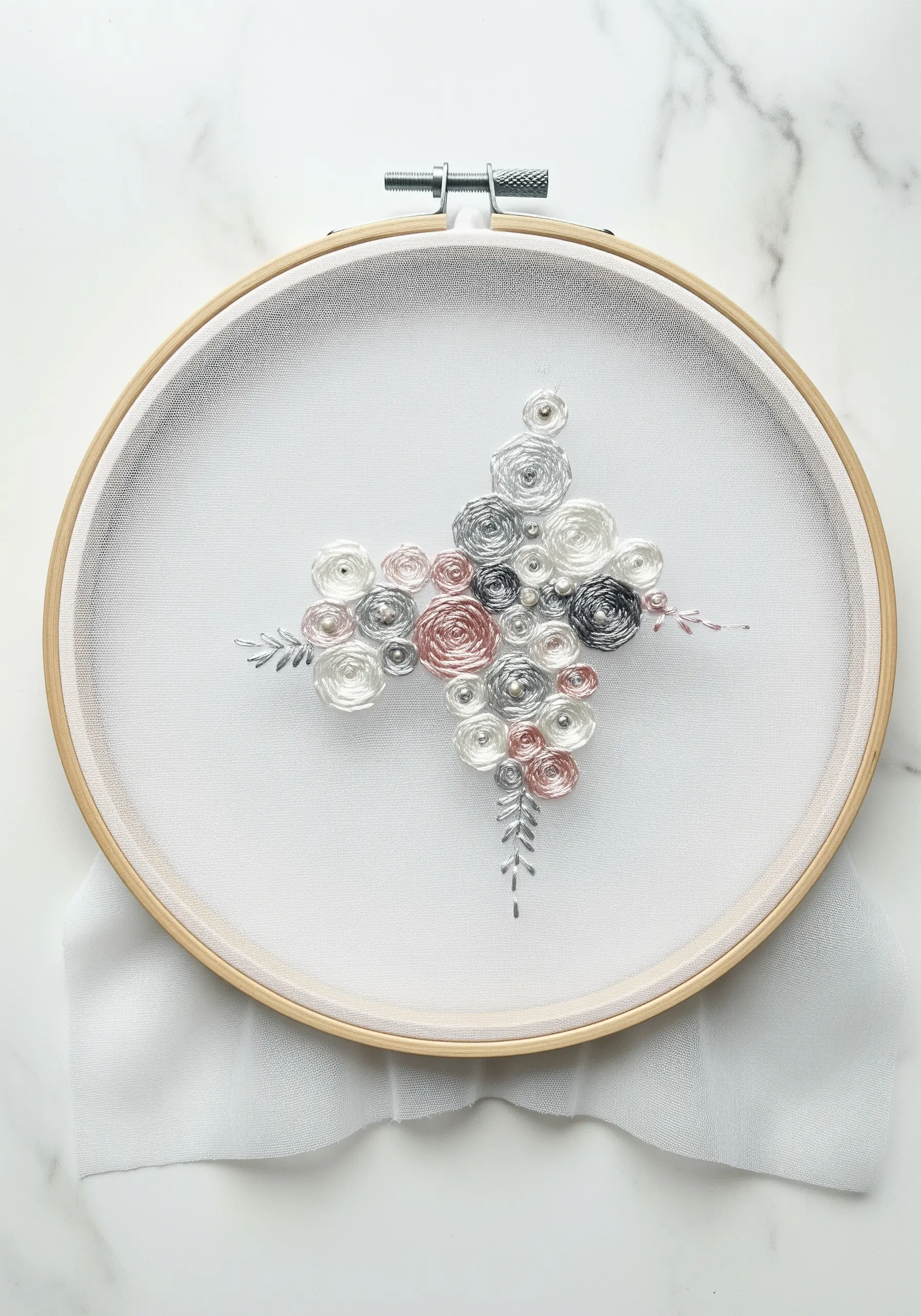
Convey a sense of fragility and elegance by working on a sheer fabric foundation.
Use woven wheel stitches to create soft, dimensional roses. The circular motion of weaving the thread builds the flower shape quickly and effectively.
A sophisticated palette of silver, grey, charcoal, and blush pink feels modern and refined. It avoids sentimentality while still feeling gentle and romantic.
Stitching on organza or tulle allows the negative space to become part of the design, making the cluster of flowers and beads appear to float weightlessly within the hoop.
14. Explore Resilience with Mixed-Media Contrast
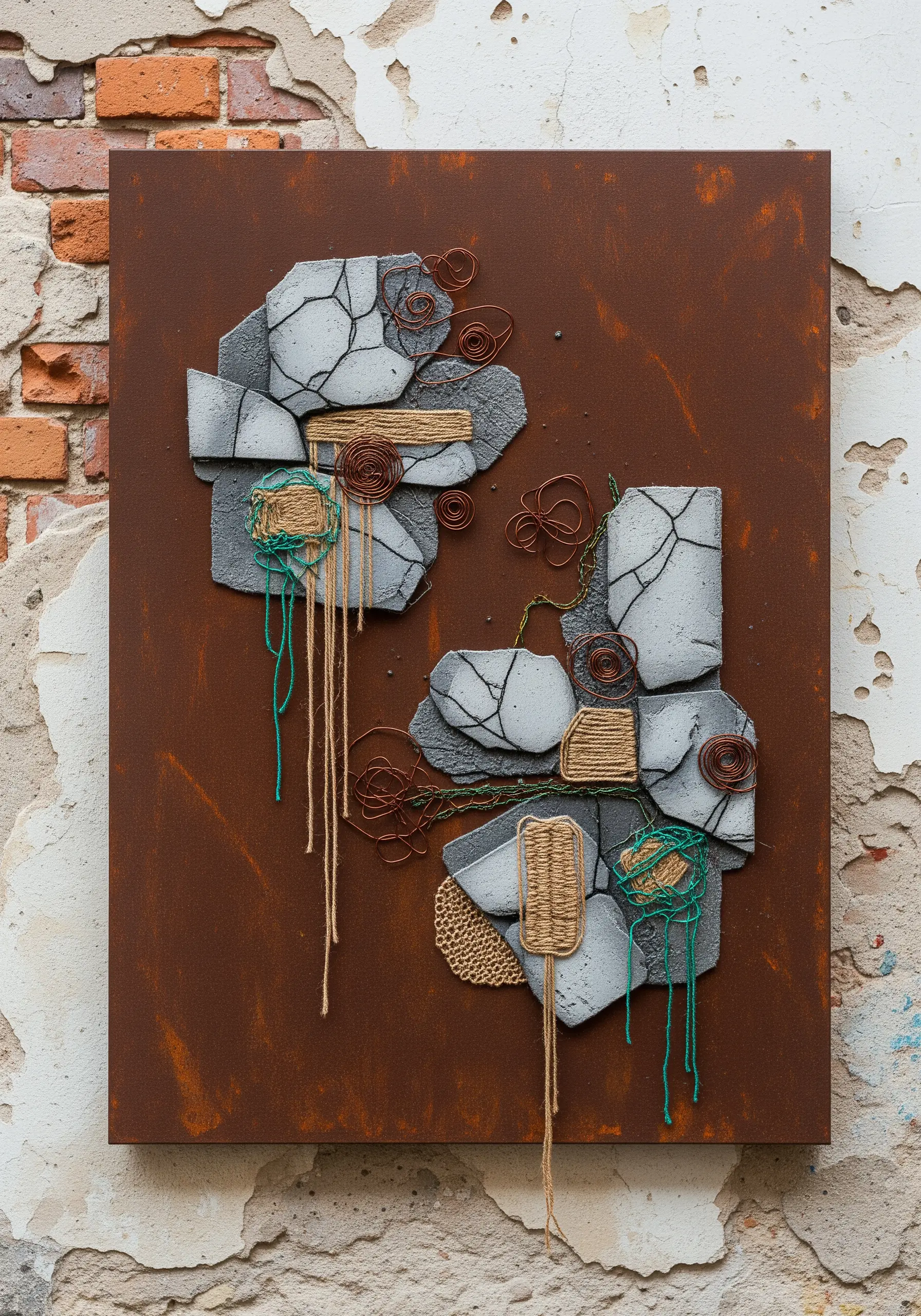
Tell a story of contrast and resilience by combining hard and soft materials.
Create or find sculptural elements, like these cracked concrete-style forms, and use them as your canvas. The hard, industrial surface provides a powerful backdrop for your thread.
Juxtapose the cold, grey forms with warm, organic fibers like jute, raffia, and thick cotton yarn. The contrast in texture—rough vs. soft, manufactured vs. natural—creates immediate tension and interest.
Allow threads to hang loose or wrap them in tight, controlled coils to explore themes of chaos and order. This is one of the most compelling abstract mixed-media embroidery ideas you can try.
15. Spark Spontaneity with 3D Confetti Stitches
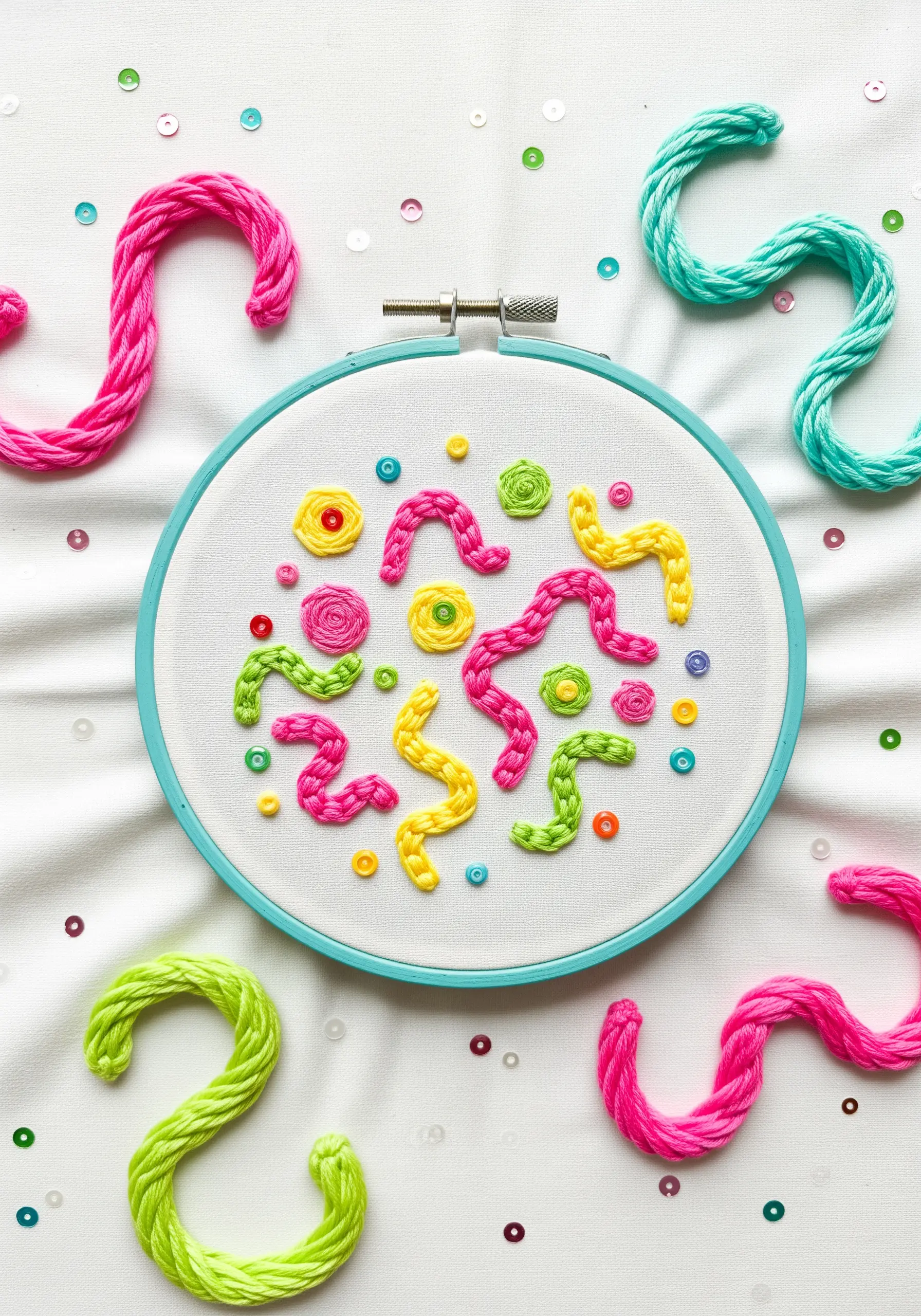
Capture the playful energy of a celebration with stitches that leap off the fabric.
Use a raised stem stitch or a padded satin stitch to create thick, rounded squiggles. This three-dimensional quality gives the abstract shapes a cheerful, tangible presence.
A candy-colored palette of bright pink, yellow, green, and turquoise on a clean white background feels fun, energetic, and optimistic.
Scatter tiny sequins or seed beads between the larger stitched elements to mimic confetti and add a subtle sparkle, completing the festive and spontaneous mood.
16. Communicate Harmony with Woven Borders
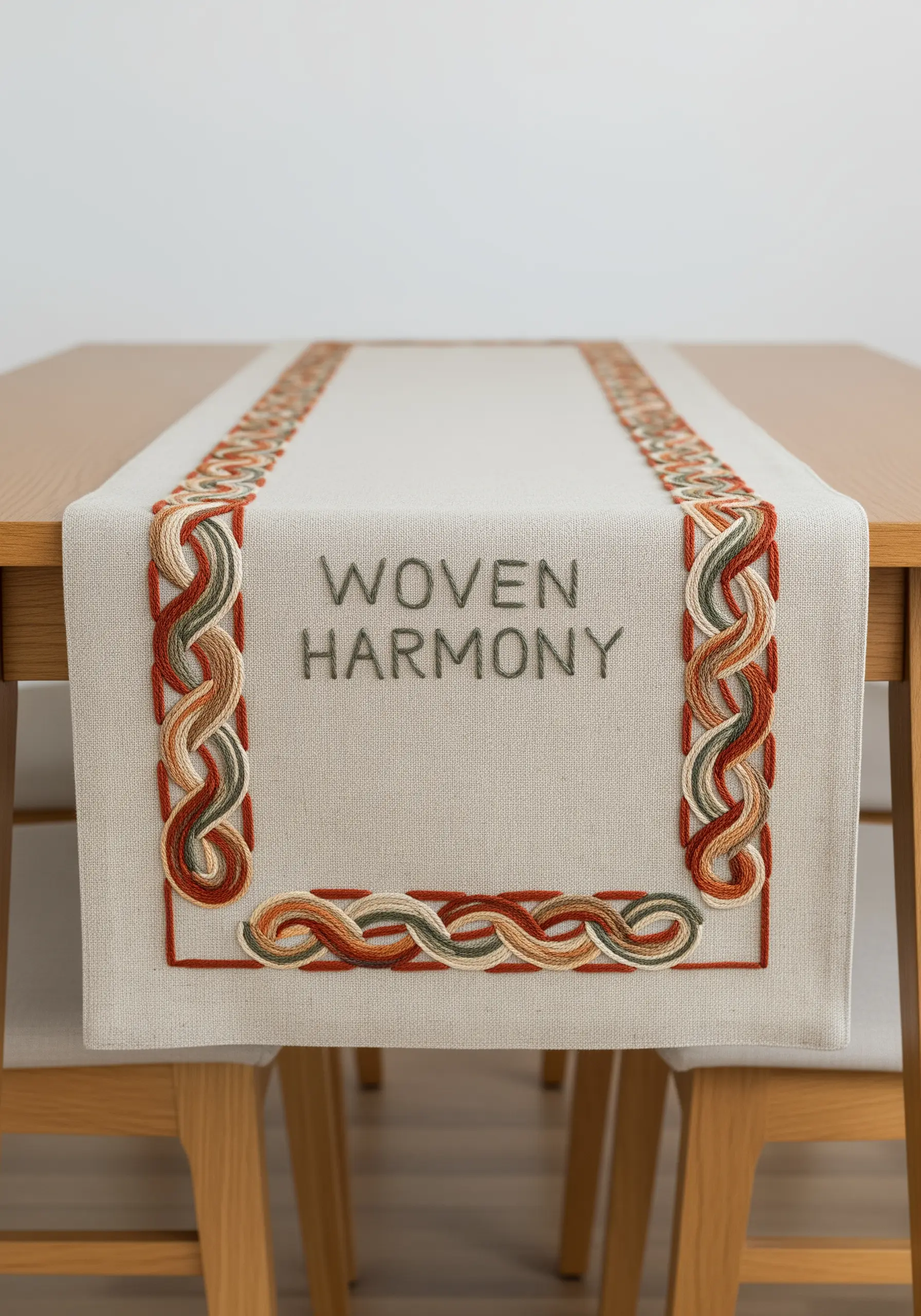
Express a feeling of connection and harmony using a bold, woven stitch border.
This effect is created by couching multiple strands of thick thread or yarn together to form a substantial, rope-like line. The intertwining pattern symbolizes unity.
Use variegated threads or hold several complementary colors together as one to create rich, complex color blending within the braid.
An earthy, autumnal palette of terracotta, olive green, and cream on a natural linen runner feels grounding and welcoming, making it perfect for home decor that signifies togetherness.
17. Achieve Opulence with Raised Metallic Scrollwork
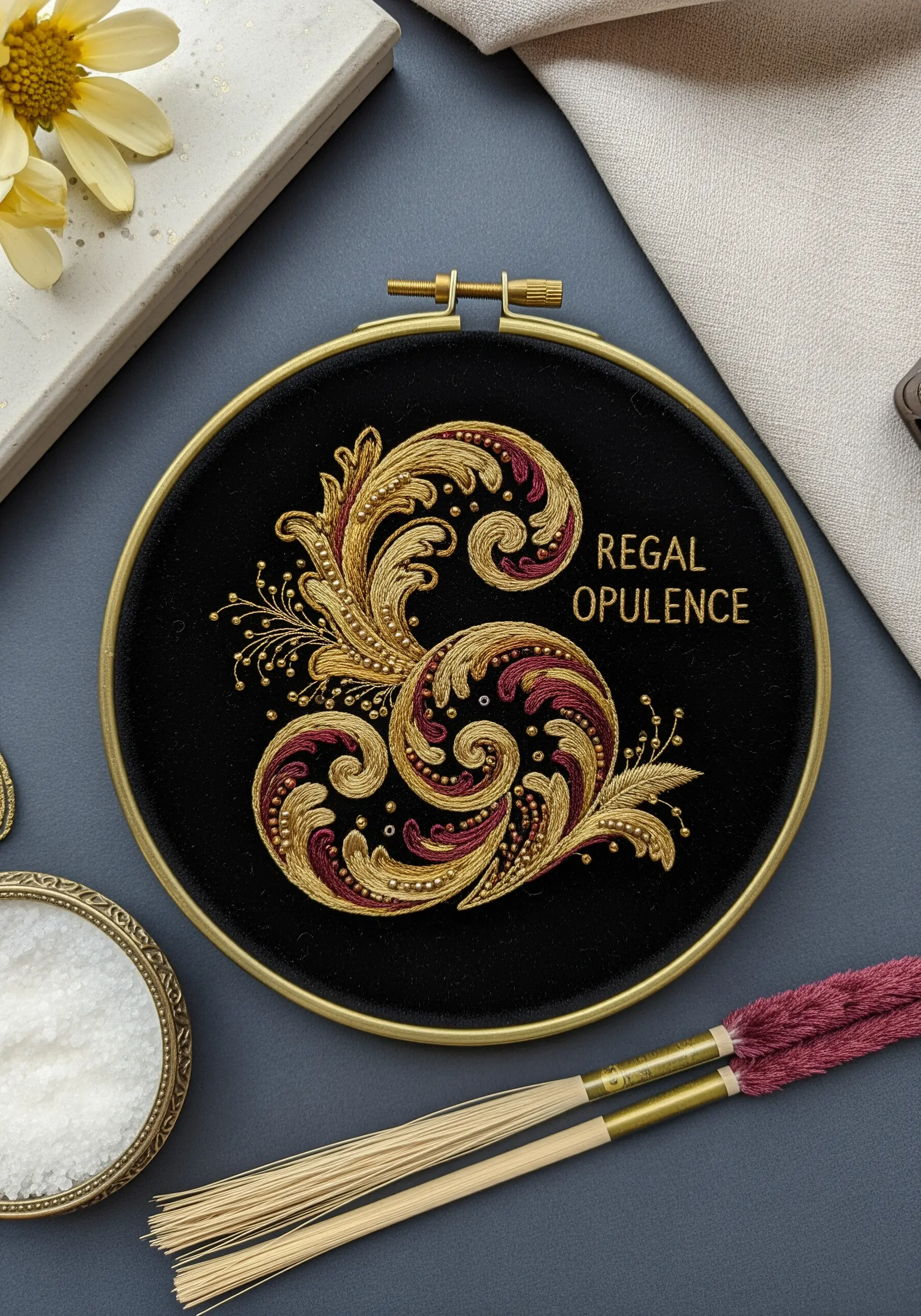
Convey a sense of luxury and opulence by using traditional goldwork techniques on a plush fabric.
Work on a rich, dark velvet background to make metallic threads truly stand out. The texture of the velvet absorbs light, allowing the gold to shine with maximum intensity.
Use a padded satin stitch—stitching over a foundation of felt or preceding stitches—to give your scrollwork a raised, dimensional effect. This technique makes the design look incredibly lush and substantial.
Pair gold metallic thread with a deep jewel tone like magenta or ruby red for a classic, regal color combination that speaks of history and grandeur.
18. Create Focus with Disciplined Geometric Lines
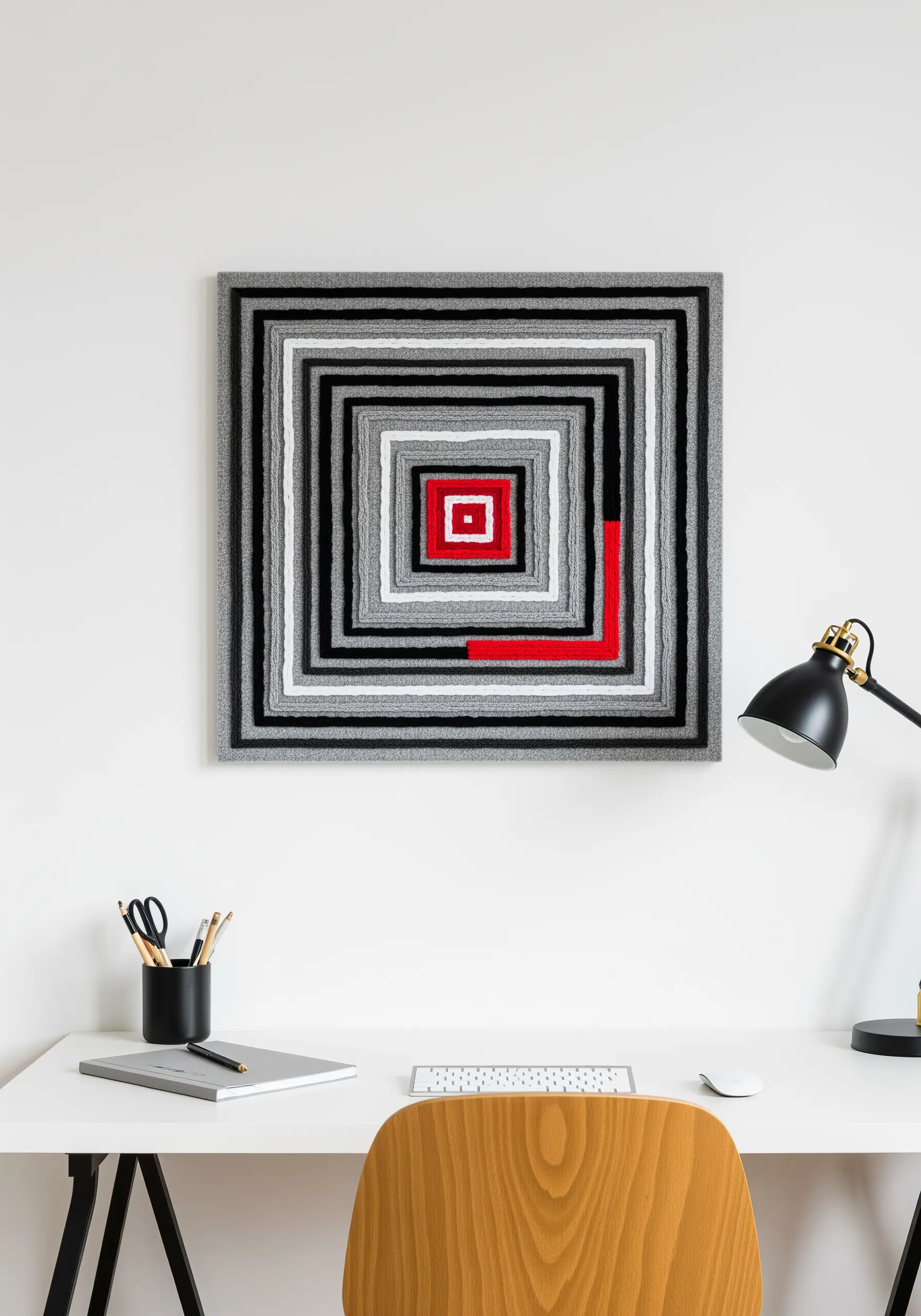
Express a sense of order, focus, and modern discipline with clean, geometric yarn art.
Instead of stitching through fabric, wrap yarn tightly around a canvas or board to create perfectly straight lines and sharp corners. This technique emphasizes structure and precision.
A stark monochrome palette of black, white, and grey creates a powerful graphic statement. The lack of color directs all attention to the interplay of lines and shapes.
Introduce a single, small block of a primary color, like red, to act as a powerful focal point. This deliberate interruption draws the eye and breaks the pattern, adding a layer of intentionality. It’s a striking example of yarn wall art projects inspired by geometric patterns.