When you hold a needle and thread, you’re holding endless possibility. But if you feel like your work has hit a plateau, the answer isn’t always a more complicated stitch—it’s a more expressive material.
Thinking beyond embroidery floss opens up a new world of texture, dimension, and emotion. Imagine the soft, pillowy volume of wool roving, the cool, rigid line of copper wire, or the plush density of a punch needle loop. These aren’t just threads; they are sculptural elements waiting to be shaped.
This collection is your invitation to experiment. See how combining different fibers can turn a simple idea into a tactile masterpiece. It’s time to move beyond the flat surface and start building art you can truly feel.
1. Weave with Architectural Volume
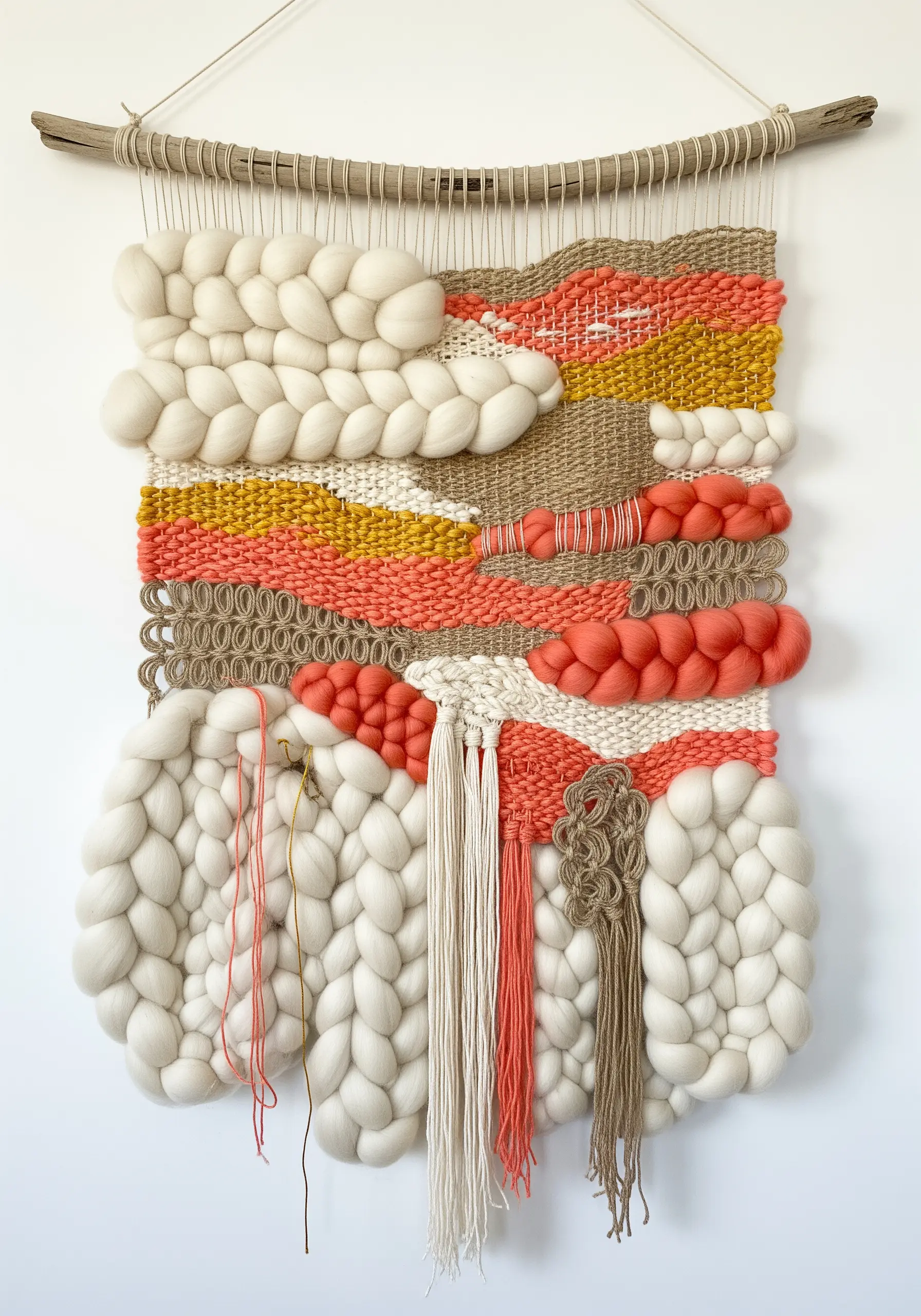
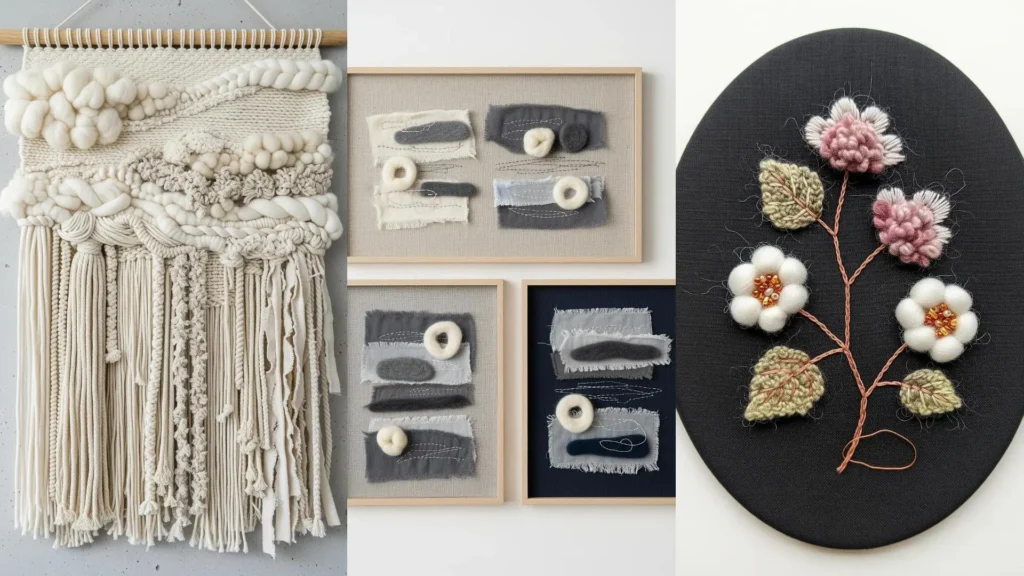
Introduce extreme texture into your weaving by alternating traditional yarns with thick, unspun wool roving.
This contrast in scale—from fine threads to chunky, cloud-like bumps—creates immediate visual drama and a highly tactile surface.
When planning your design, treat the roving as a focal point, allowing its volume to dictate the flow of the piece.
Secure the roving with a few passes of a simple tabby weave above and below it to lock the dramatic texture in place.
This technique allows you to build gorgeous mixed-fiber textures that transform a flat wall hanging into a soft sculpture.
2. Sculpt Planetary Surfaces with Thread and Beads
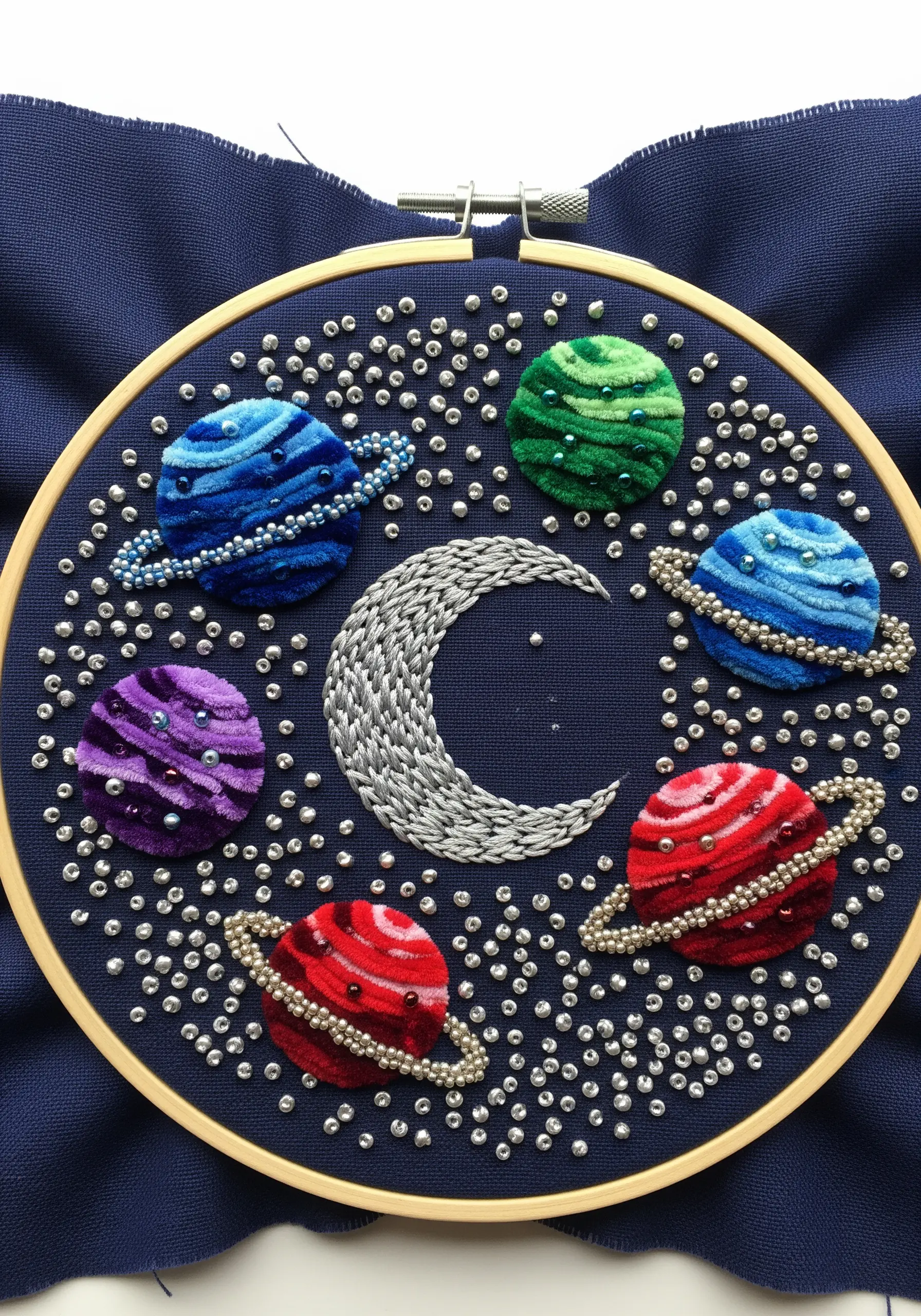
Move beyond flat satin stitch to give celestial bodies true dimension.
Use a high-pile stitch like the turkey stitch (or Ghiordes knot) and trim the loops to create a dense, velvety surface for your planets.
Introduce a gradient of colors within each planet to mimic atmospheric swirls, blending from dark to light for a sense of roundedness.
For the rings and starry background, use couched metallic thread or carefully placed seed beads to add a contrasting, reflective texture that catches the light.
This layering of plush thread and hard beads makes the entire composition feel dynamic and alive.
3. Coil Fabric Scraps into Functional Art
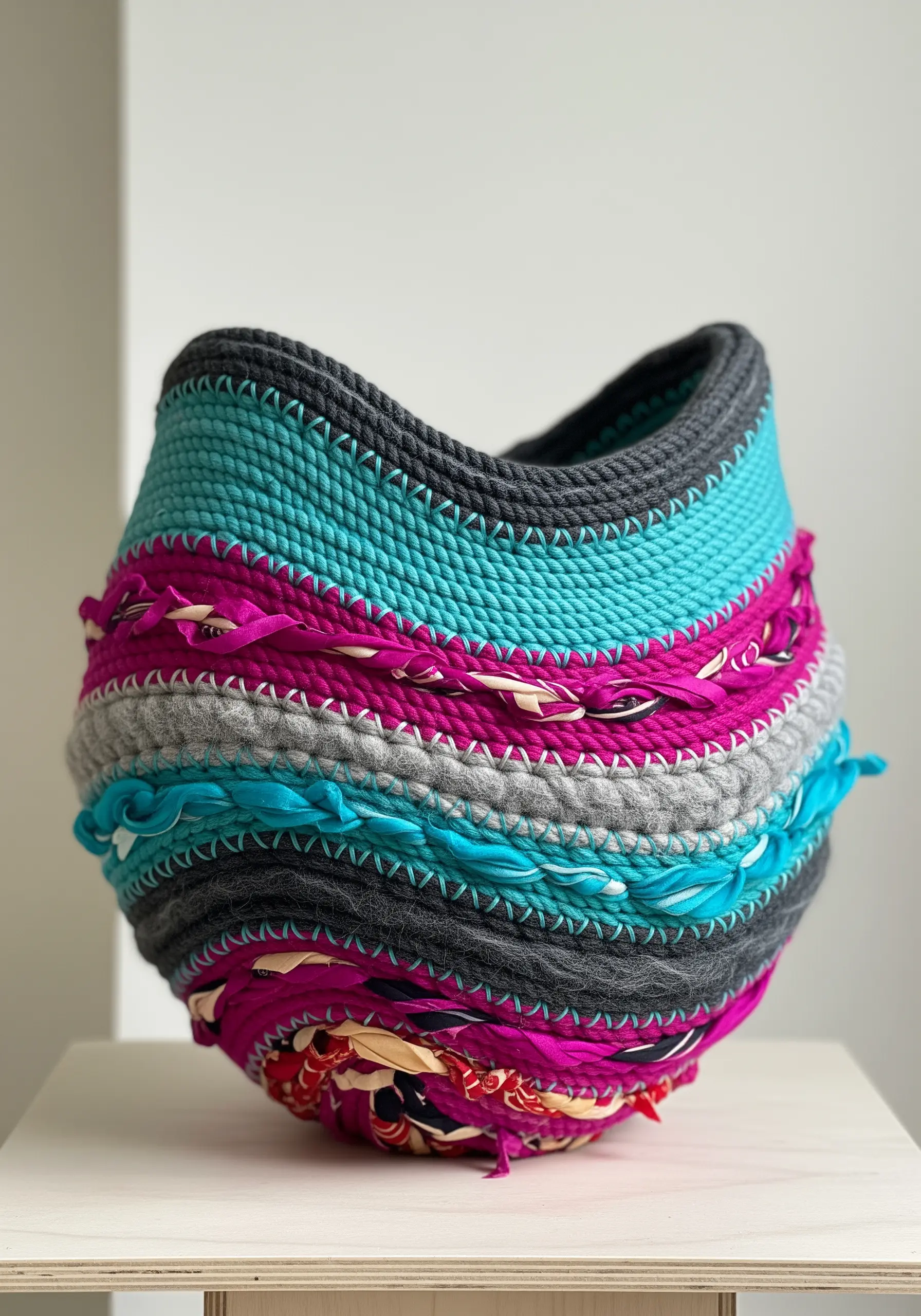
Transform fabric remnants into a sturdy, decorative basket using a simple coiling technique.
Begin by wrapping strips of fabric around a thick cord or rope, ensuring consistent tension for a smooth finish.
As you form the base, coil the wrapped rope and stitch the adjacent rows together with a strong thread, like a waxed linen or embroidery floss, using a blanket or whip stitch.
Incorporate scraps of patterned fabric or ribbons to create intentional color-blocking and textural interruptions, turning simple waste material into a design feature.
4. Construct Immersive Fiber Art Installations
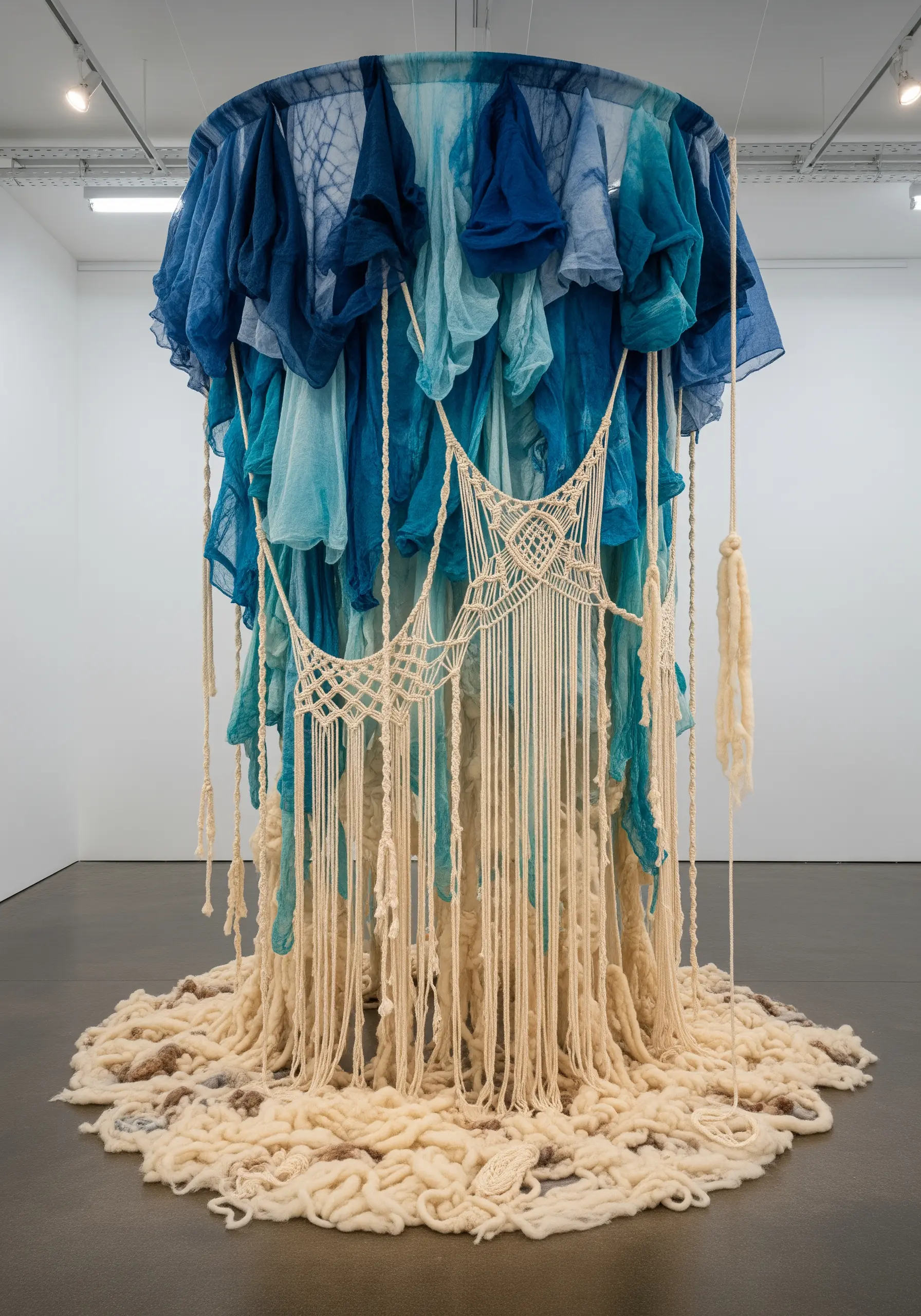
Take your work off the wall and into the room by thinking in three dimensions.
This approach combines macrame, weaving, and raw fiber to create large-scale, immersive fiber art installations.
Drape hand-dyed silks or organza from a central point to create a sense of flowing movement, like water or light.
Integrate a macrame element as a structural ‘net’ to catch the eye and provide a focal point amidst the softer textures.
Anchor the piece with a bed of unspun wool roving on the floor, which grounds the ethereal composition with earthy weight and texture.
5. Integrate Wire for Sculptural Botanicals
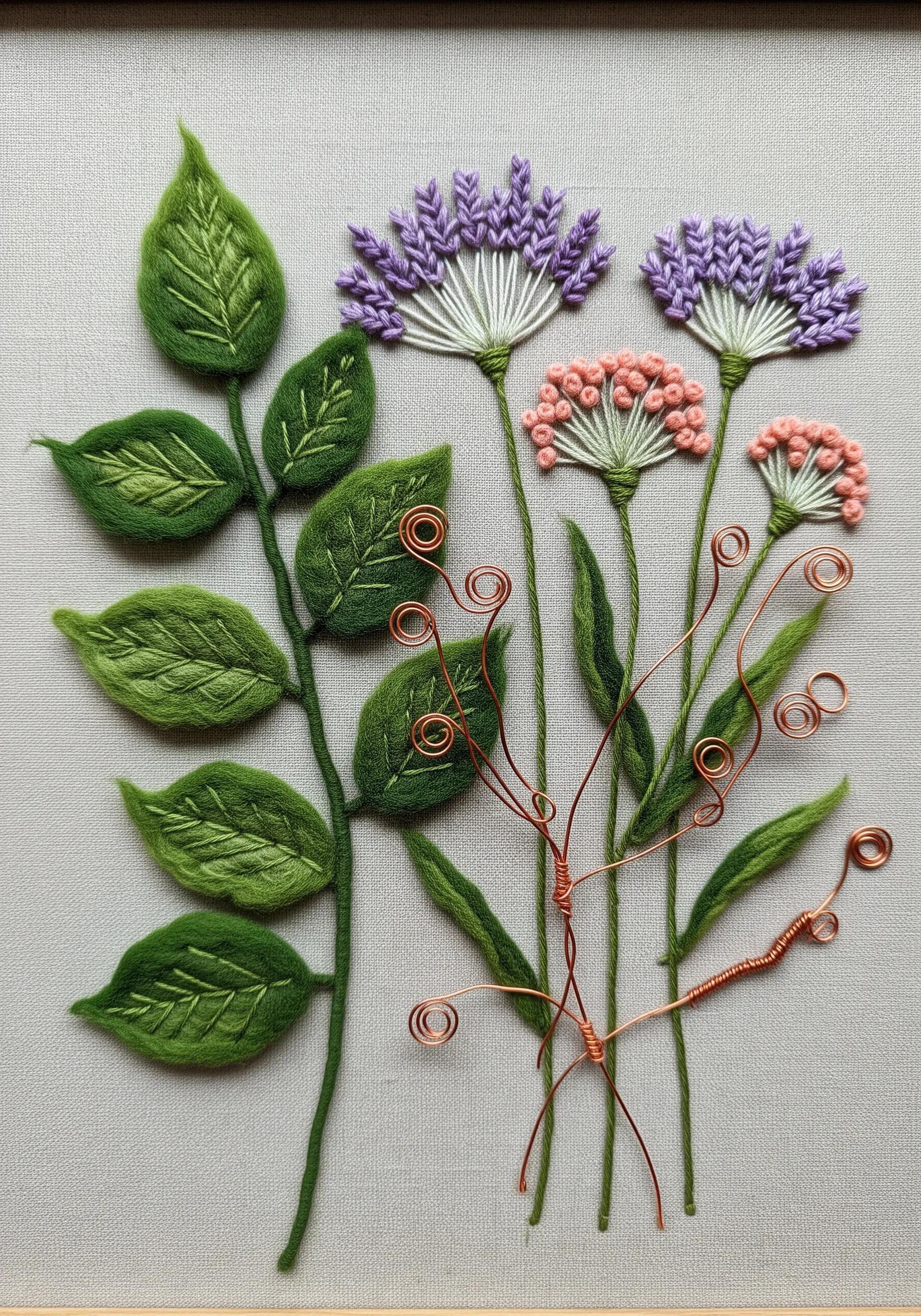
Introduce fine-gauge copper or brass wire to give your embroidered botanicals a delicate, three-dimensional structure that thread alone cannot achieve.
Instead of stitching tendrils, shape them from wire and attach them to the fabric using a couching stitch—laying the wire on the surface and securing it with small, perpendicular stitches.
This technique adds a metallic, linear quality that contrasts beautifully with the soft texture of felt appliqué leaves and satin-stitched petals.
The wire holds its shape, allowing you to create gentle curves and spirals that lift off the fabric, adding realistic form and shadow to your mixed-media contemporary embroidery designs.
6. Weave Modern Art on a Circular Loom
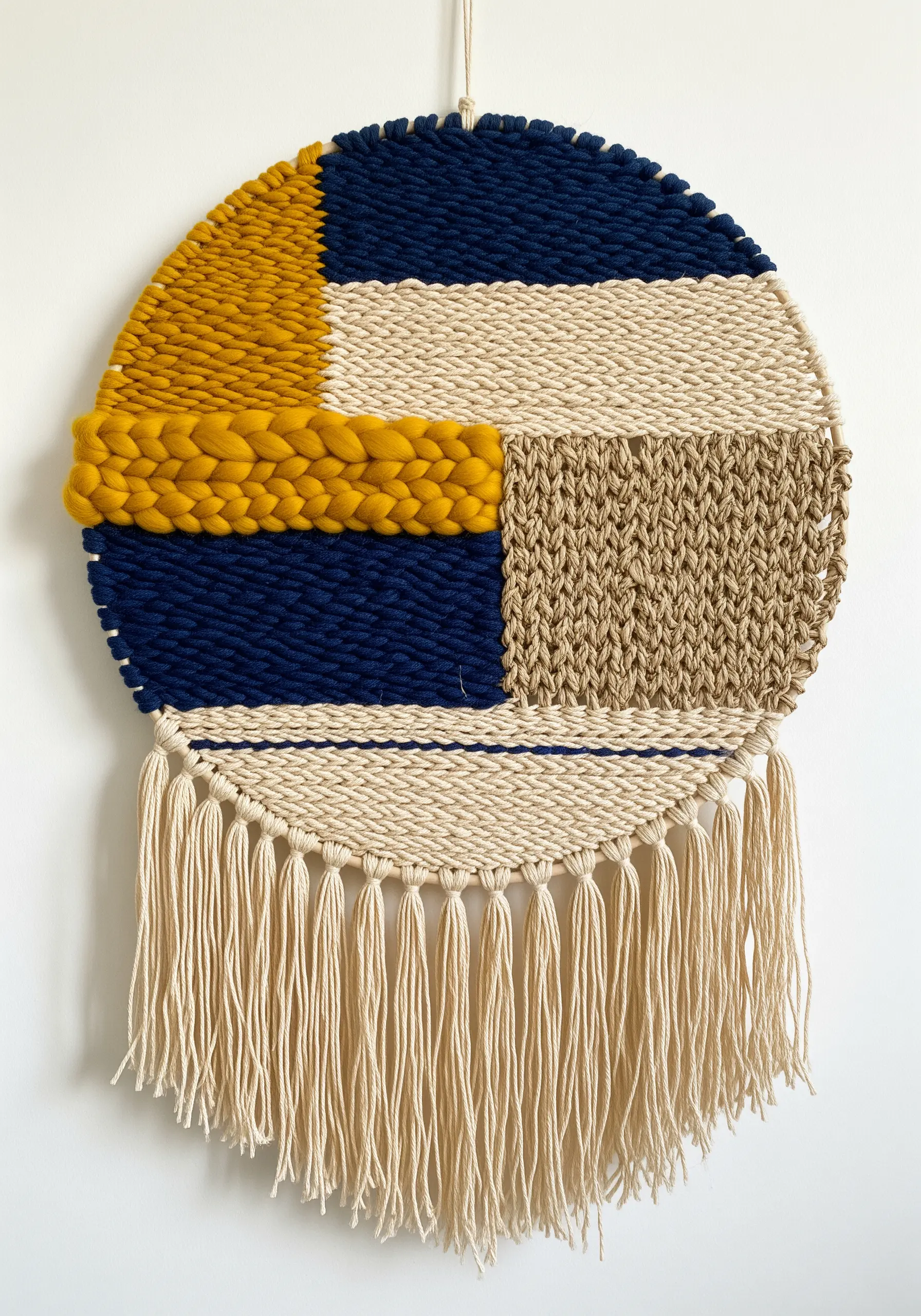
Use a circular loom or even a sturdy embroidery hoop to create woven art with a modern, graphic feel.
Divide your warp threads into geometric sections to explore color blocking with bold, contrasting hues.
Within each block, vary the weaving technique—use a smooth tabby weave for flat areas, a looped soumak stitch for raised lines, or a chunky roving for high-volume texture.
This method of containing different textures within clean geometric shapes results in a balanced, dynamic composition that feels both handmade and highly designed.
7. Paint Landscapes with Punch Needle Loops
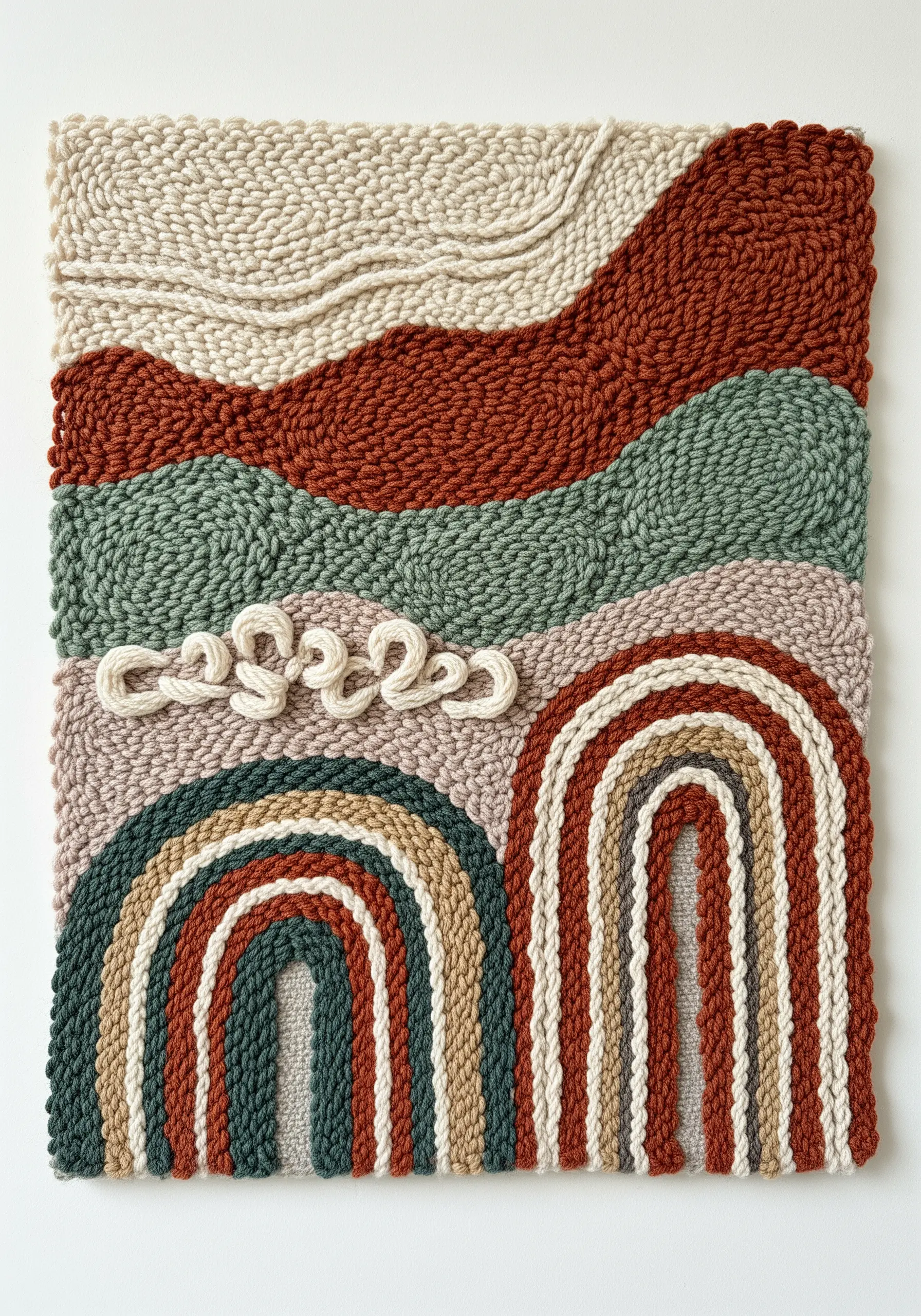
Use a punch needle and various yarn weights to create a tactile landscape with incredible depth and contour.
Varying your loop height is key: use shorter loops for distant hills and longer, denser loops for elements in the foreground to create a natural sense of perspective.
For fine details like the lettering or delicate lines, switch to a thinner yarn or embroidery floss with a smaller needle.
This technique essentially allows you to ‘paint’ with texture, building up layers of colored loops to form abstract hills, skies, and rainbows, creating embroidery projects inspired by textures you’d find on a nature walk.
8. Elevate Denim with Expressive Visible Mending
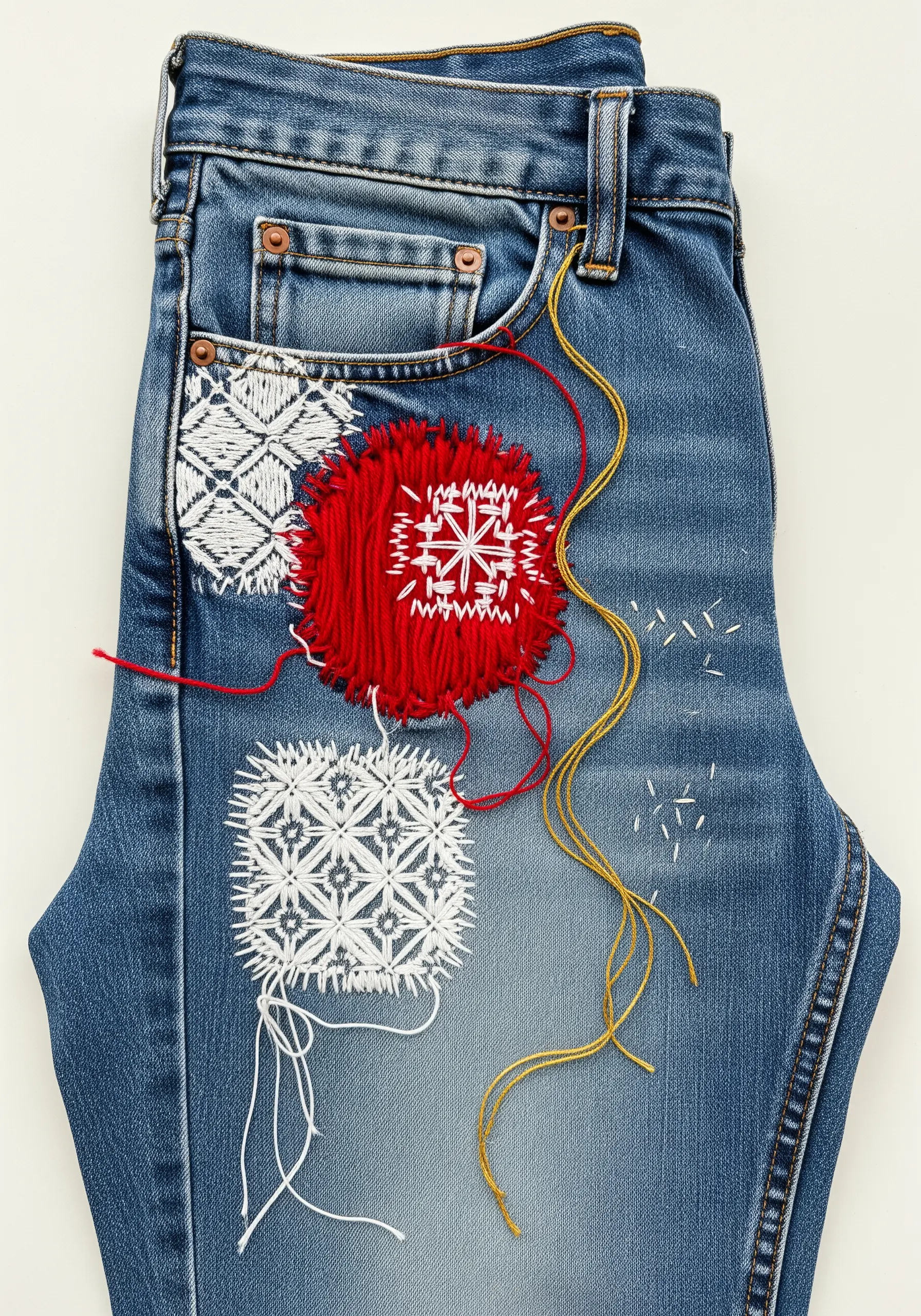
Transform a simple repair into a bold statement piece by embracing visible mending techniques like Sashiko and freestyle darning.
Use a high-contrast thread color—like bright red or stark white against blue denim—to ensure your stitches become a focal point, not an apology.
Layer different darning patterns and patch shapes to create a collage of textures.
Let your threads wander beyond the patch itself with a few stray seed stitches, integrating the repair into the fabric of the jeans for a cohesive, artistic finish.
9. Craft Sculptural Mobiles with Needle Felting
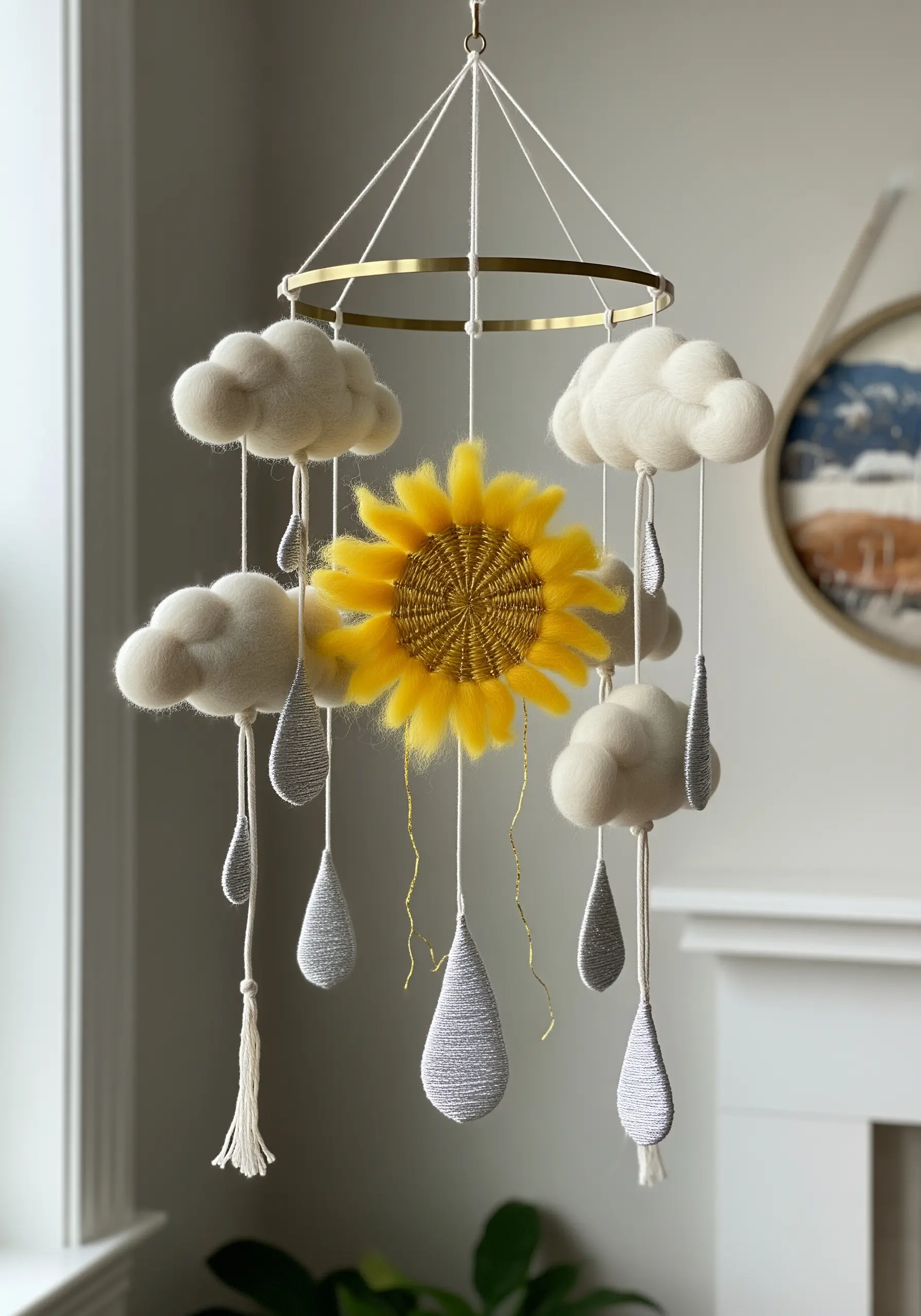
Create soft, seamless 3D shapes for a nursery mobile by needle felting wool roving.
This technique involves repeatedly poking loose wool with a barbed needle, which causes the fibers to lock together and condense into firm, sculptural forms like clouds or raindrops.
For the centerpiece, combine felting with traditional embroidery; the sunflower here uses a woven wheel stitch center and felted petals for textural variety.
Assemble the finished pieces with fine thread on a brass hoop to create gentle, floating embroidered nursery decor ideas that are both soft and sophisticated.
10. Capture an Ocean’s Motion with Fiber Painting
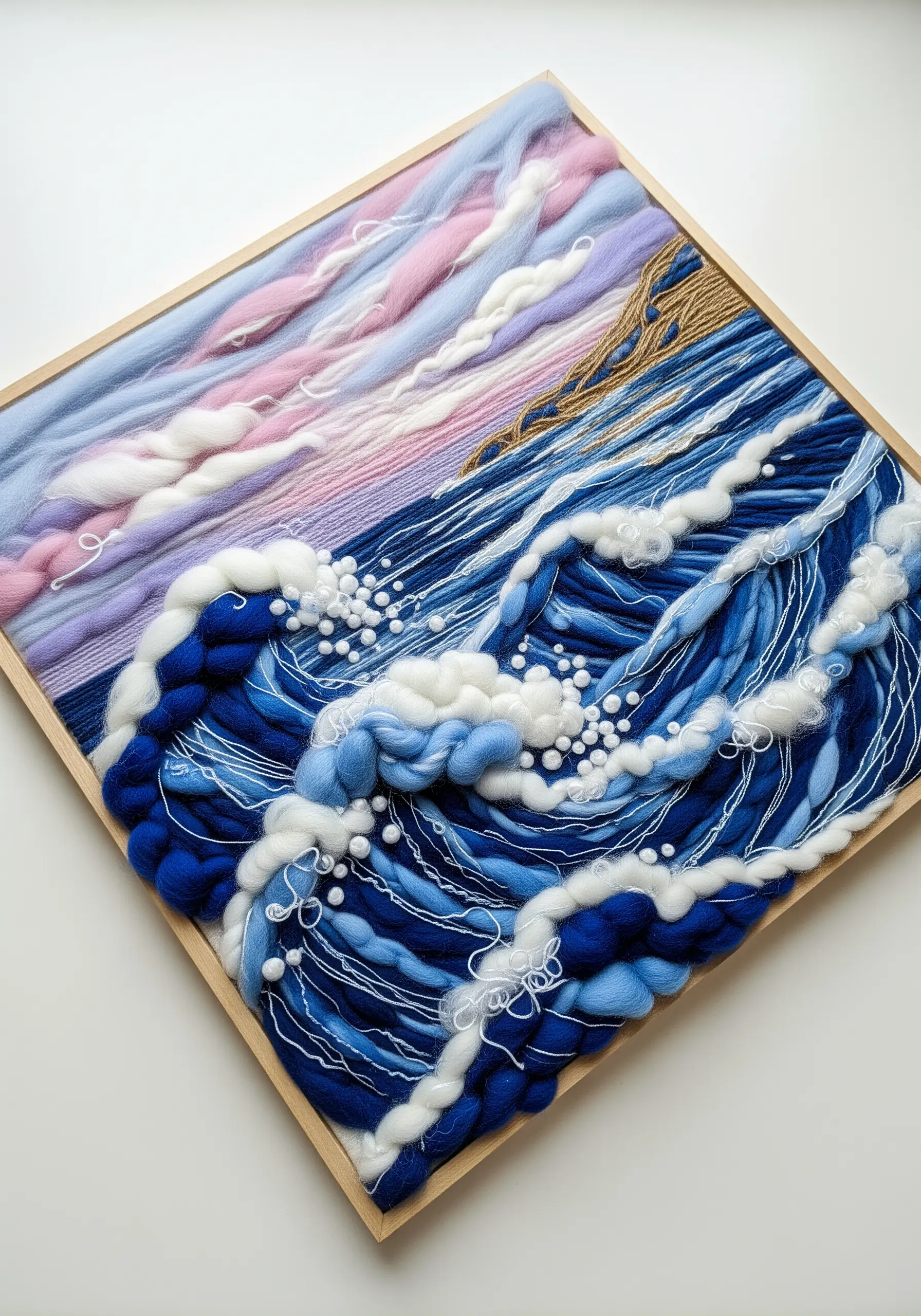
Recreate the dynamic energy of ocean waves by ‘painting’ with a diverse palette of fibers.
Use fine, wispy mohair or silk threads for the misty sky and sea spray, laying them down loosely before couching them with a single strand of embroidery floss.
For the crashing waves, use chunky wool roving and thick, twisted yarns to build up volume and dimension, mimicking the foam and swell.
Incorporate variegated blue yarns to create natural color shifts, adding depth and realism to your abstract thread waves and swirls.
11. Design Wearable Art with Fabric and Knots
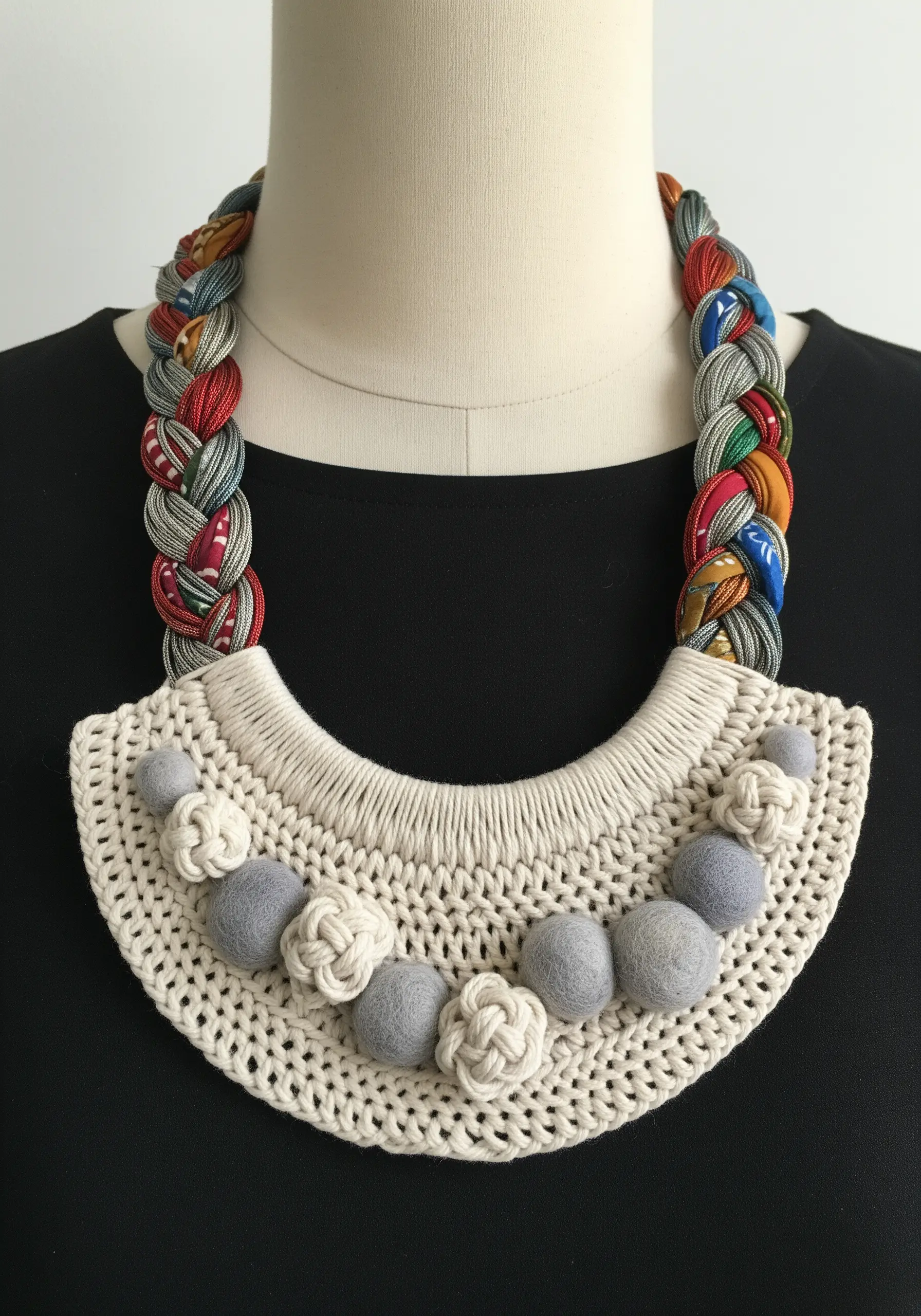
Create a statement necklace by combining textile techniques like braiding, crochet, and knotting.
The collar is formed with a simple crochet stitch using a neutral cotton cord, creating a sturdy yet flexible base.
Embellish this base with soft, needle-felted wool balls and intricately tied knots like the Celtic knot, which add textural and visual interest.
For the neckband, braid cords wrapped in colorful, patterned silk fabric, which provides a comfortable and luxurious finish against the skin.
12. Stitch Memories into a Mixed-Media Journal
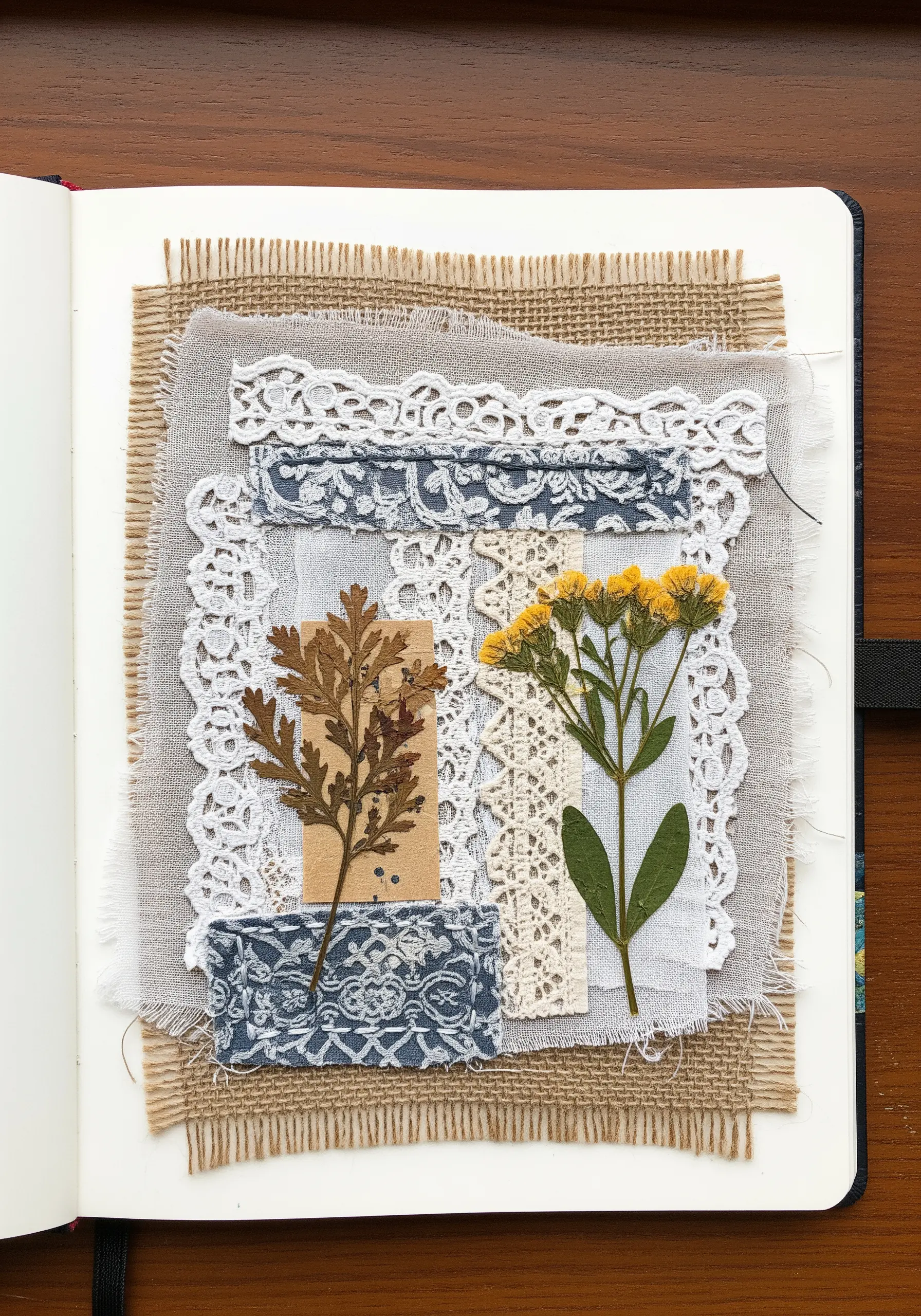
Elevate your journaling by creating tactile pages that combine fabric, paper, lace, and organic elements.
Start by layering textured fabrics like burlap and linen to form a base, securing them with a few simple running stitches.
Carefully place pressed flowers or leaves onto the collage and use a delicate material like lace or tulle over them, stitching around the edges to create a ‘window’ that holds them in place.
These creative collage art ideas transform a flat page into a sensory experience, preserving memories with texture as well as visuals.
13. Make a Statement with Minimalist Fiber
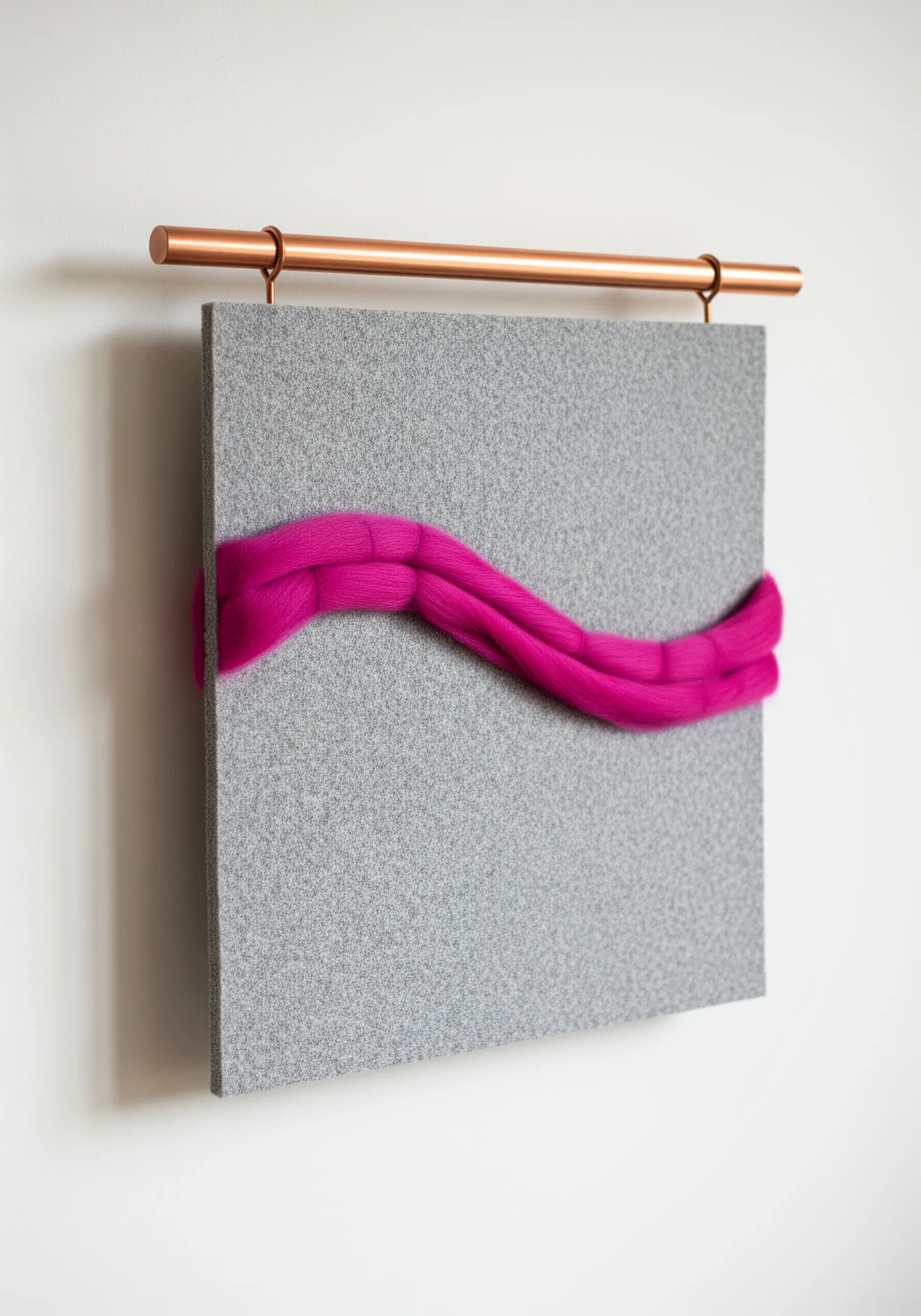
Explore the power of restraint by focusing on a single, bold gesture of fiber.
Mount a piece of neutral, industrial felt or a tightly woven canvas onto a panel to create a clean, modern backdrop.
Drape a thick band of vibrantly dyed, unspun wool roving across the surface, allowing its raw texture and saturated color to be the sole focus.
This minimalist approach highlights the inherent beauty of the material itself, creating a piece of art that feels both simple and profoundly impactful, perfect for minimalist embroidery decor.
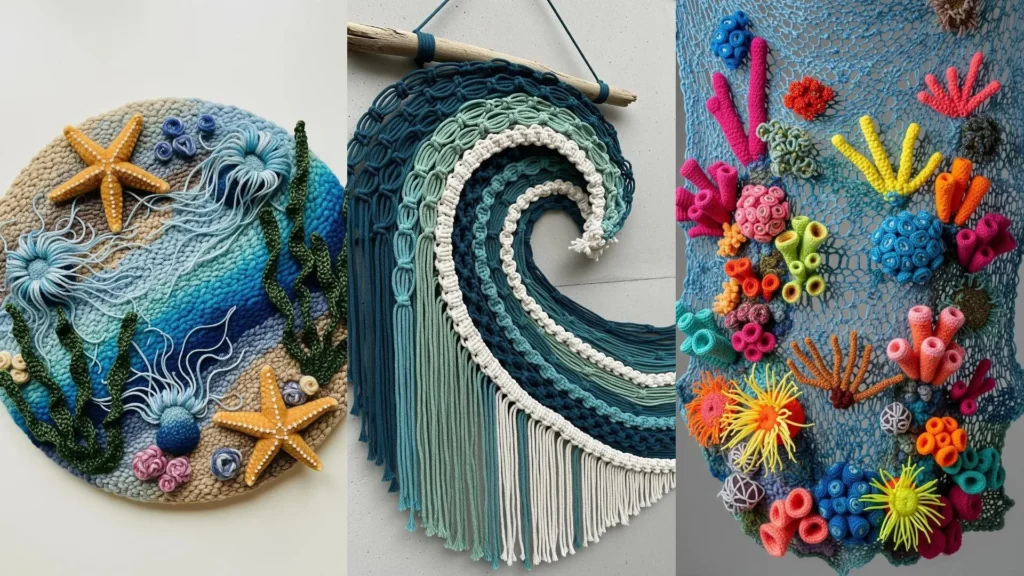
14. Crochet a Hyperbolic Coral Reef
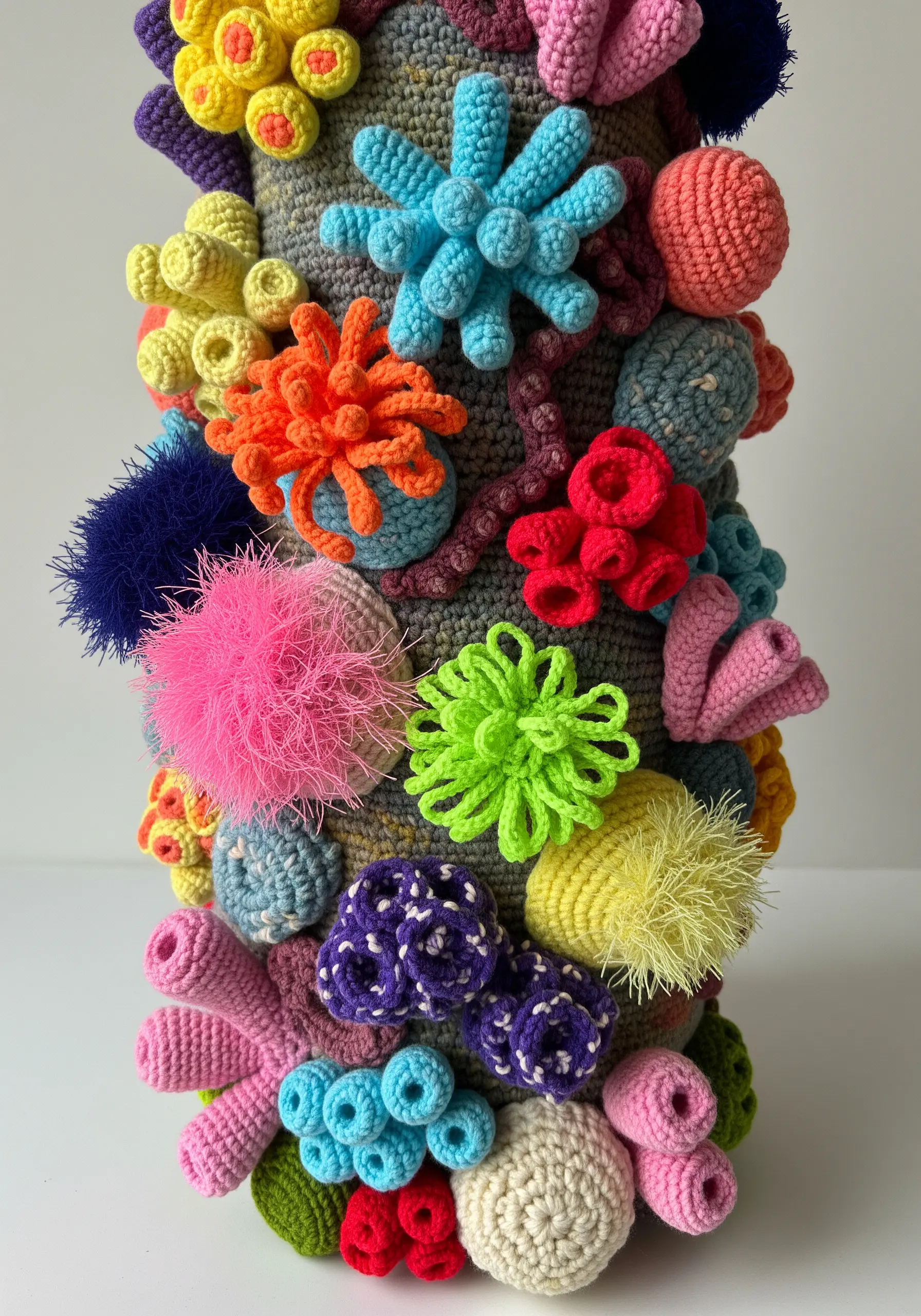
Use crochet to build an organic, sculptural ecosystem inspired by a coral reef.
The key is mastering hyperbolic crochet, a technique that involves increasing stitches in each row to create naturally ruffled, undulating forms that mimic sea life.
Combine these freeform shapes with simpler forms like spheres (for sea urchins) and tubes (for anemones) in a vibrant, almost neon color palette.
Arrange and stitch these individual pieces onto a central column to build a dense, complex structure that celebrates the beauty of marine biology through fiber.
15. Embellish with Topographical Texture
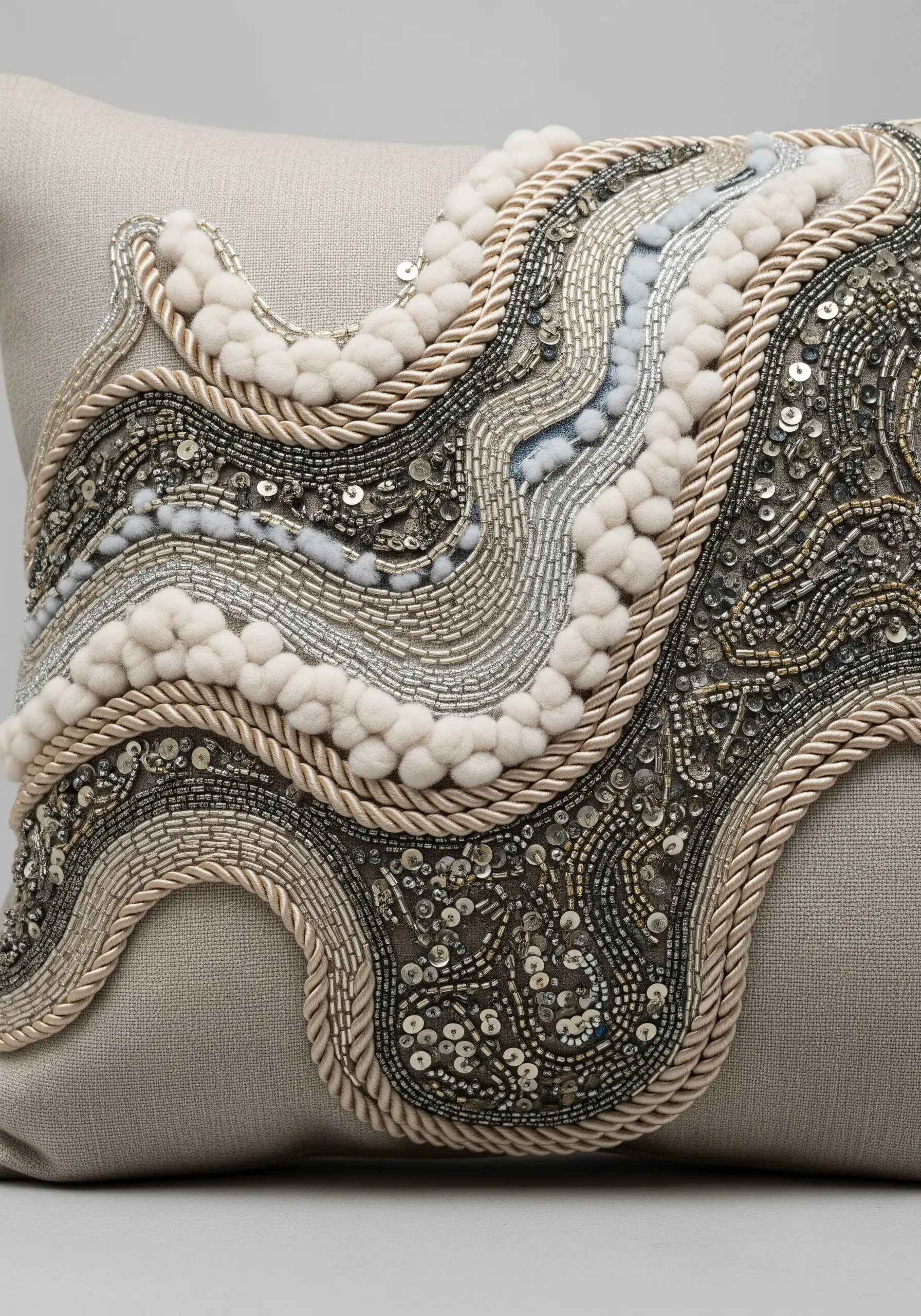
Transform a simple cushion cover into a piece of decorative art by building up layers of texture that mimic a topographical map.
Outline your design with thick, twisted cording, couching it down to create raised borders that define each section.
Fill the sections with a variety of materials: use lines of seed beads for a shimmering effect, tiny wool felt balls for a soft, pebbled feel, and metallic threads for a touch of light.
This meticulous layering on linen-tone embroidery cushion covers creates a rich, sensory landscape you can both see and touch.
16. Weave with Organic, Biophilic Materials

Bring the textures of the forest floor into your home by incorporating natural and preserved elements directly into your weaving.
Use a base of earthy, neutral yarn like jute or linen for your plain weave background.
Integrate preserved moss by gently tucking it between the warp and weft threads, securing it with a few passes of fine, green thread.
Create features like tree roots by braiding thick jute cord and allowing the ends to trail, enhancing the sense of organic growth in your natural texture embroidery patterns.
17. Add Graphic Detail with Yarn Wrapping
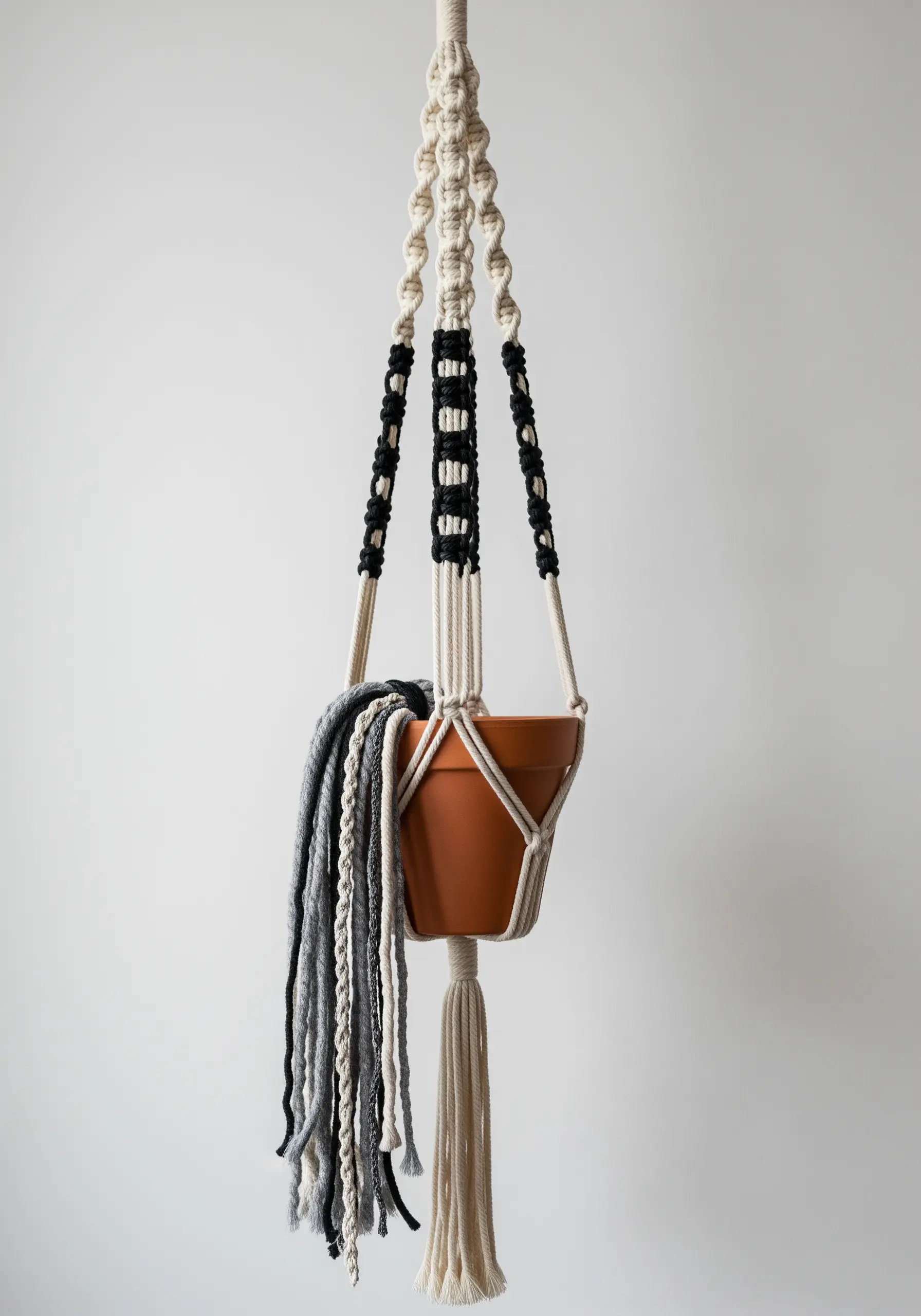
Update a classic macrame plant hanger by introducing blocks of color and texture with yarn wrapping, also known as whipping.
After creating your main knotted structure with a neutral cord, select a contrasting color of yarn or embroidery floss.
Tightly wrap sections of the macrame cord with the colored yarn, ensuring your wraps are dense and even, to create clean, graphic stripes.
This simple technique adds a modern, customized look to a traditional craft, allowing you to match your plant hanger to your decor perfectly.
18. Create Bold Punch Needle Appliqué
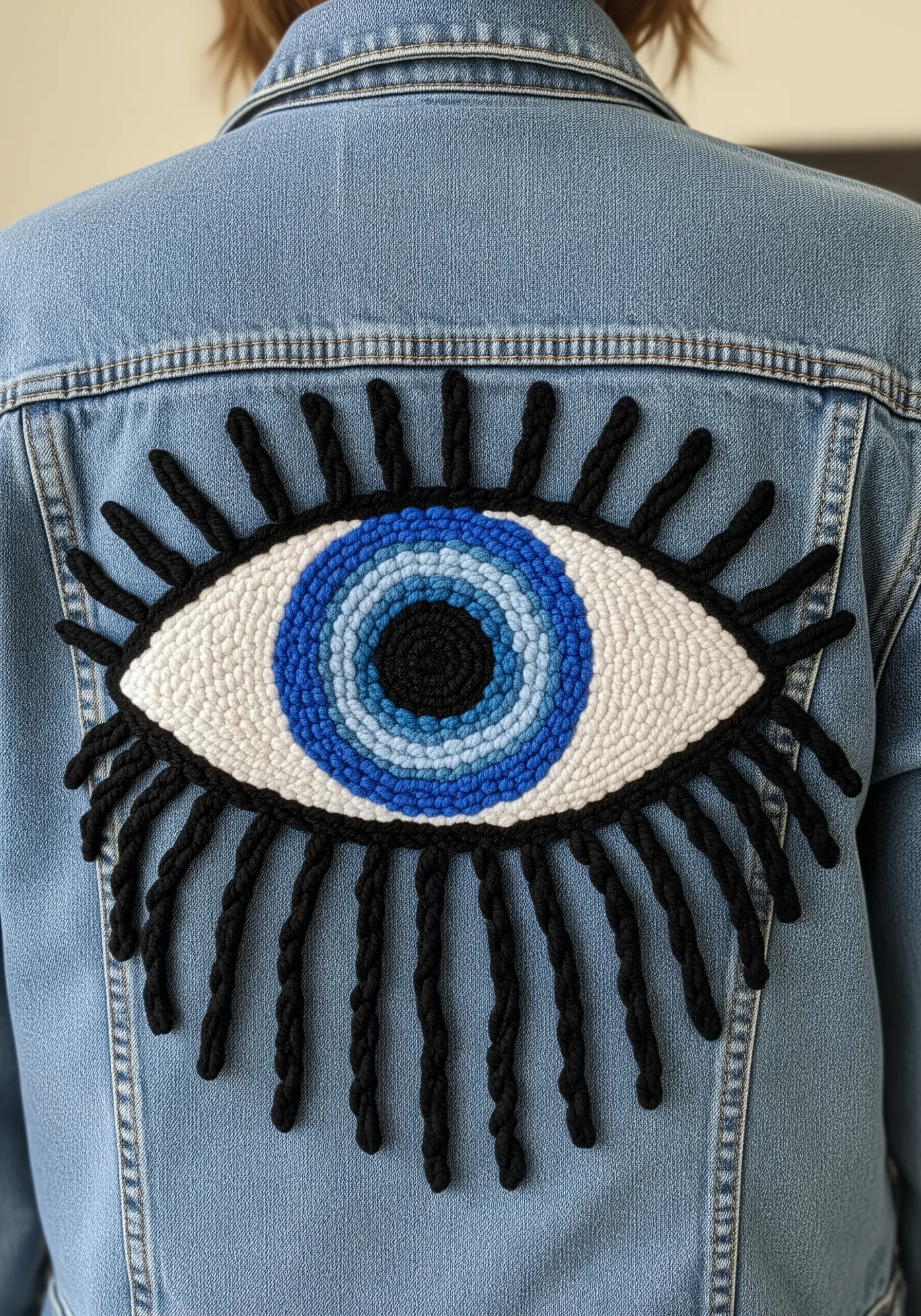
Use punch needle to create a thick, plush patch that adds major personality to a denim jacket or backpack.
Work your design on a piece of monk’s cloth or another suitable punch needle fabric, keeping your loops dense and even for a solid look.
Once finished, secure the back of the loops with fabric glue and trim the excess fabric, leaving a small border to tuck under.
Attach the finished patch to your garment with a strong fabric adhesive or by hand-stitching around the edge for a durable, statement-making piece of wearable art, just like these vintage-inspired denim jacket embroidery motifs.
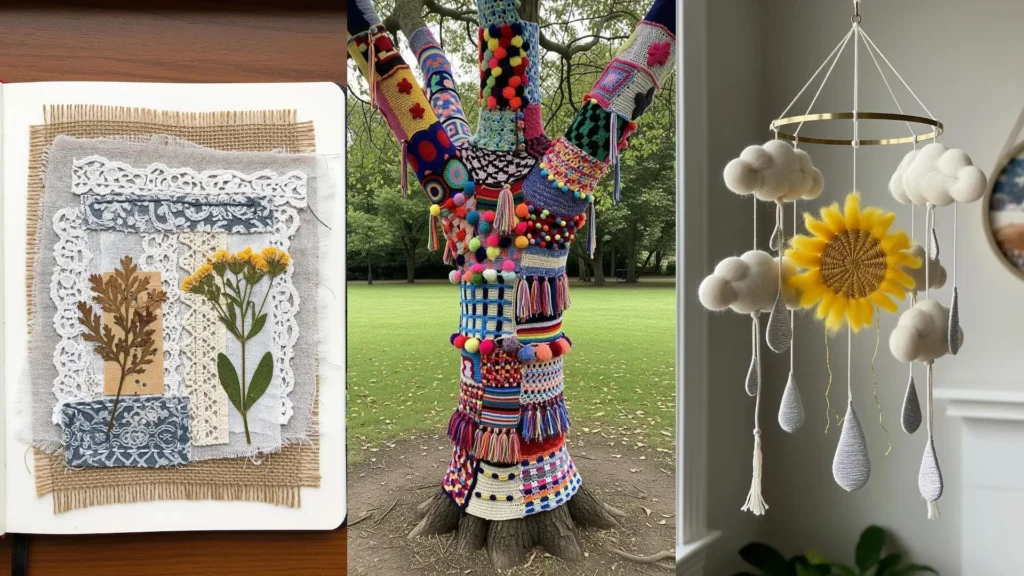
19. Embrace Community Art with Yarn Bombing
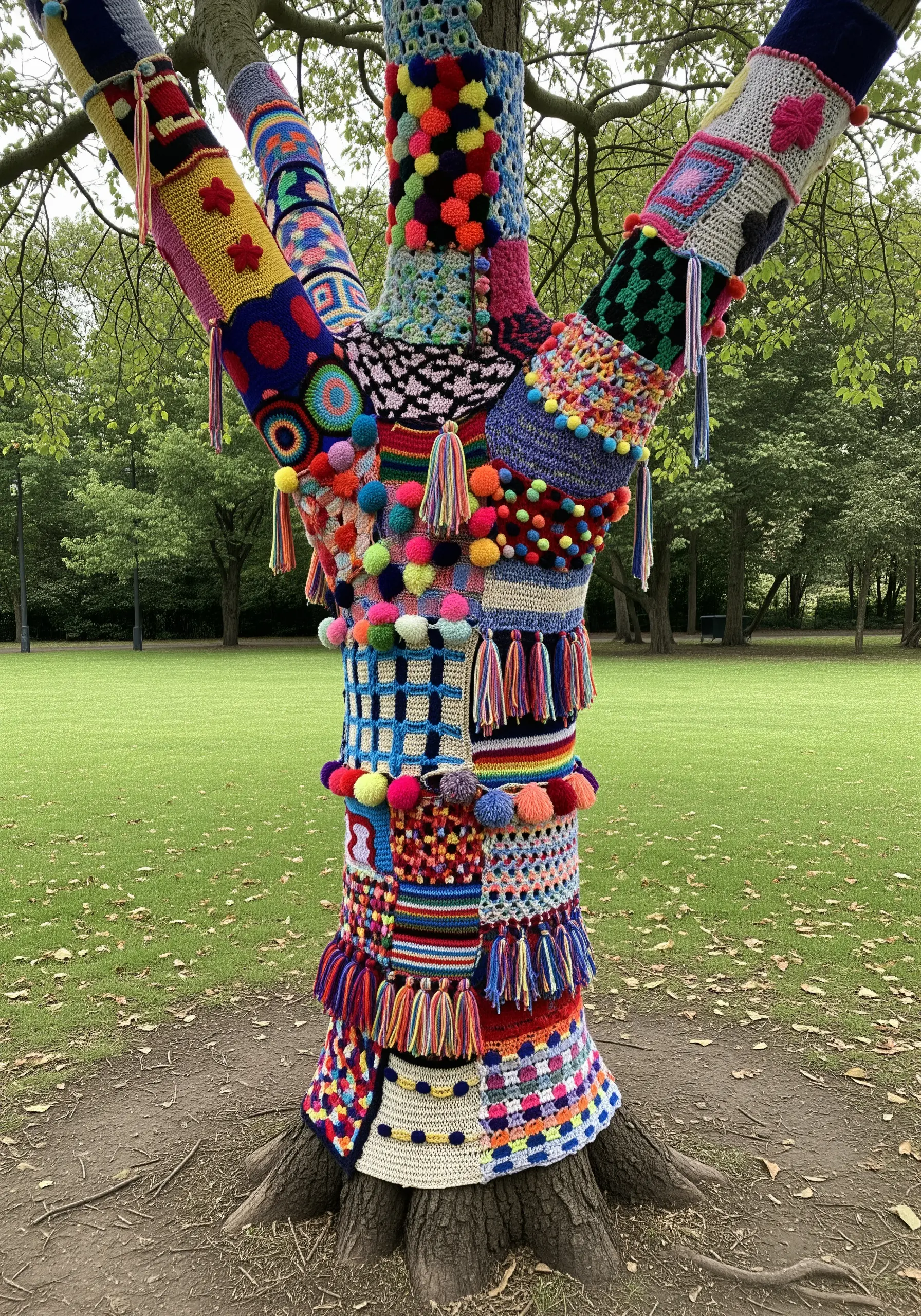
Take fiber art outdoors by creating a ‘yarn bomb,’ a vibrant installation that covers a public object, like a tree or bench, in knitted and crocheted pieces.
This project is perfect for using up yarn scraps and collaborating with others, as it involves stitching together many small, colorful squares, pom-poms, and tassels.
The beauty lies in the joyful chaos of textures and colors, combining granny squares, simple stripes, and fringe into a single, cohesive celebration of craft.
It’s a temporary, eco-friendly way to bring unexpected warmth and color to an urban or natural landscape.