Before you thread your next needle, I want you to think about the feeling you want to create. Not just the image, but the quiet mood that settles in a room when a handmade object is present. Your cushions can be more than just decorative; they can be gentle anchors of calm in your personal space.
The secret isn’t in mastering dozens of complex stitches. It’s in the subtle choices you make: the slight variation in thread weight that gives a line unexpected depth, the decision to use a tonal color that whispers instead of shouts, or the placement of a single motif that perfectly balances a composition.
Here, you’ll find ideas that focus on that quiet intention. We will explore how texture can tell a story, how negative space can feel as powerful as a stitch, and how simple lines can evoke a feeling of peace. Let’s create something that not only looks beautiful but feels deeply, wonderfully calm.
1. The Refined Botanical Wreath
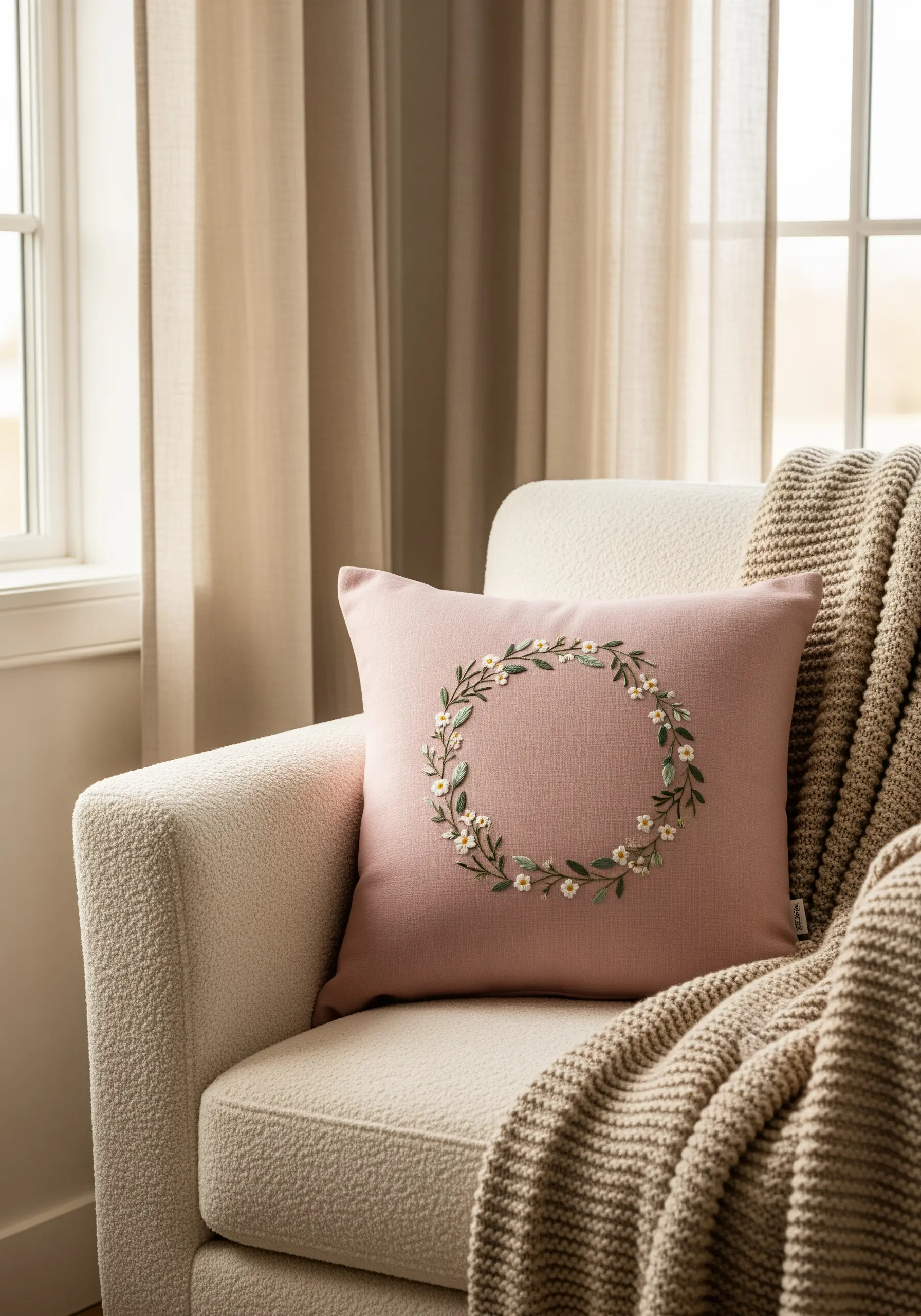
Create a wreath that feels light and organic, not dense or heavy, by focusing on negative space.
Use a combination of detached chain stitches for leaves and tiny French knots for blossoms, scattering them intermittently along a delicate stem stitch vine.
Vary the direction and spacing of your leaves to mimic natural growth; this slight imperfection is what makes the design feel alive and sophisticated.
Choose a soft, matte cotton thread in muted greens and creams to maintain a gentle, calming aesthetic that complements the pastel fabric.
2. The Ephemeral Dandelion Seed
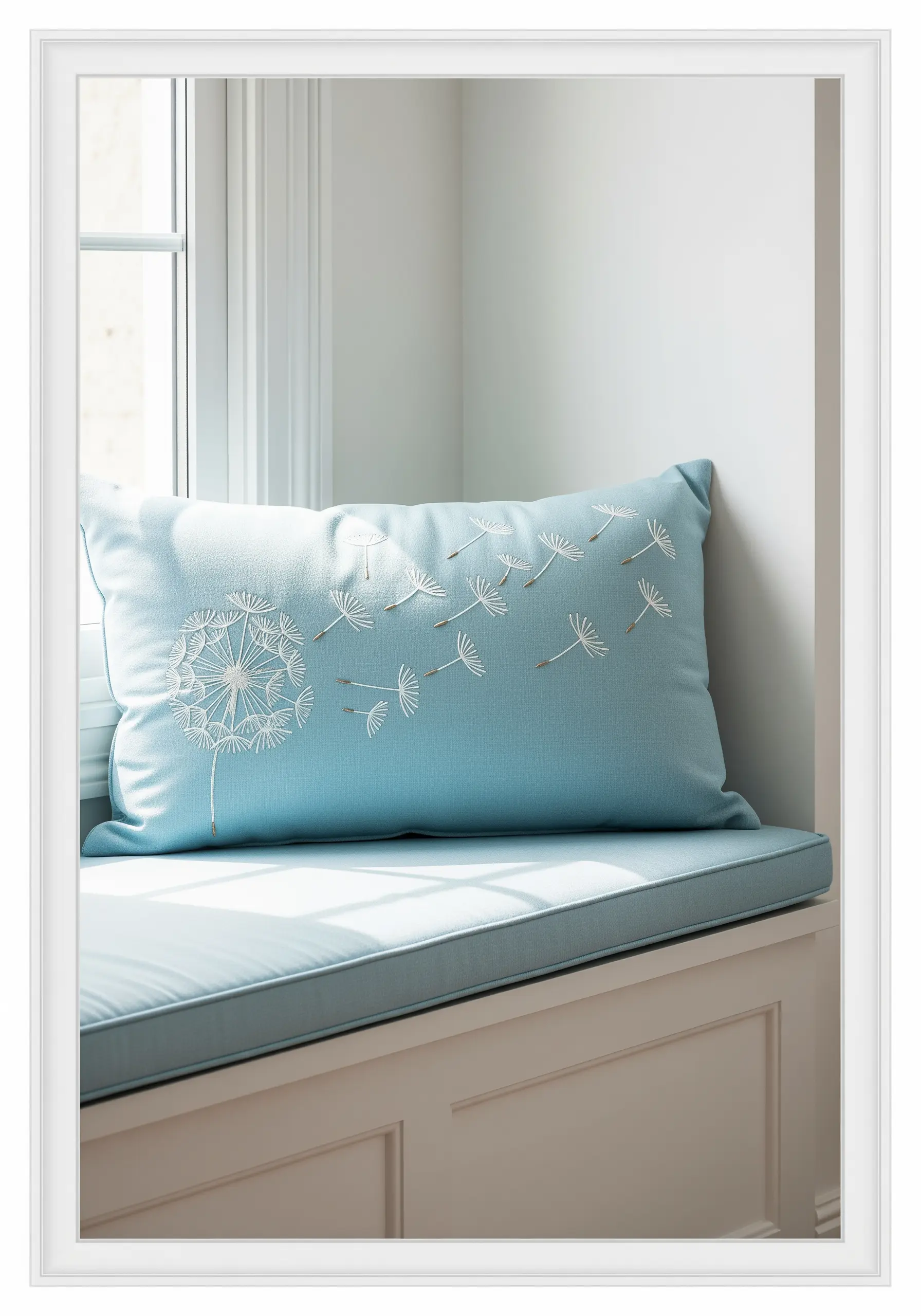
Capture the feeling of movement by using simple straight stitches for the dandelion seeds.
Vary the length and angle of each stitch to create a convincing illusion of seeds being carried by the wind.
For the main dandelion head, use a radiating pattern of straight stitches, keeping the tension consistent for a clean, graphic look.
This design’s power is in its simplicity and narrative quality, turning a plain lumbar pillow into a piece of quiet storytelling.
3. The Modern Geometric with Raised Texture
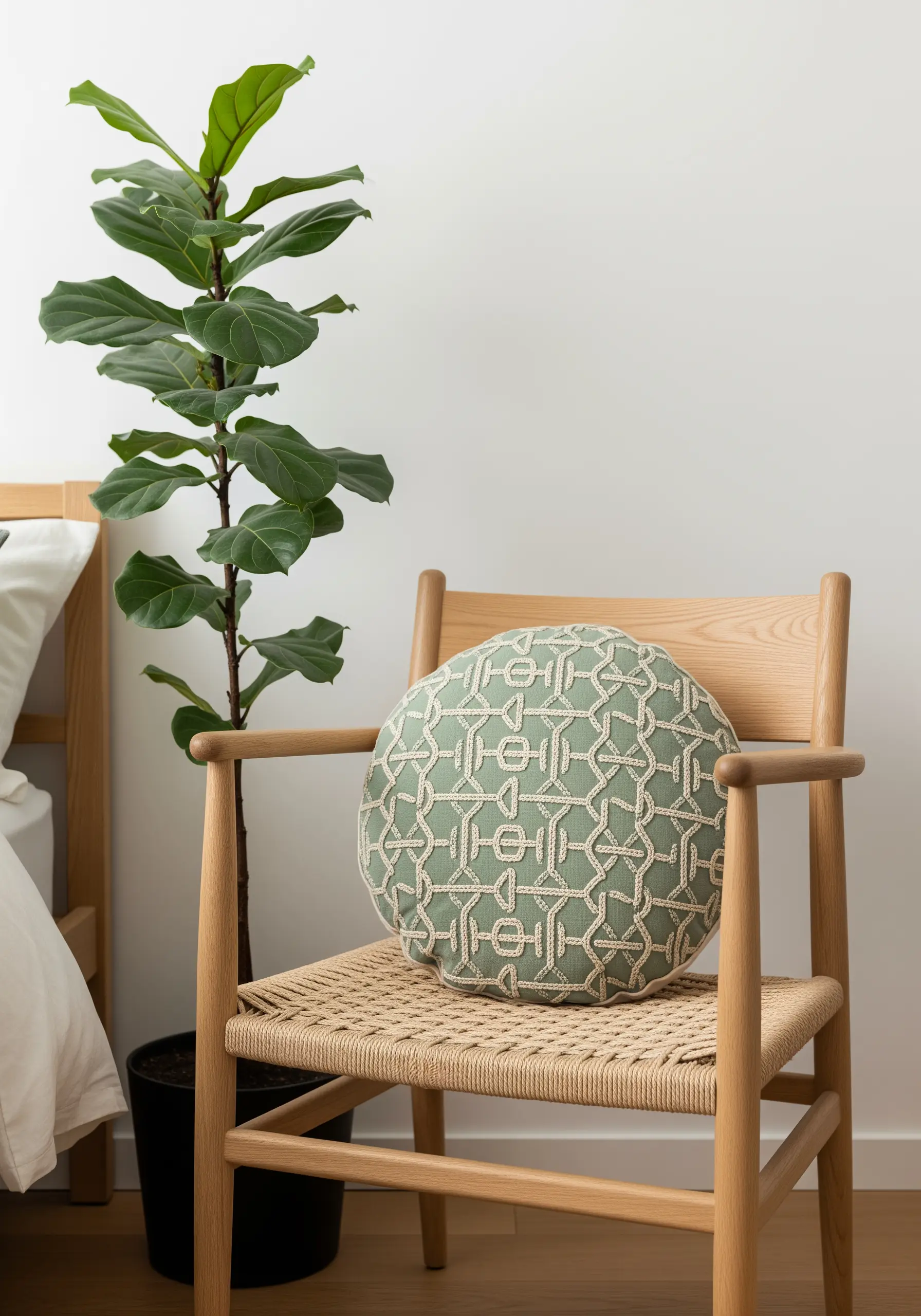
Elevate a simple geometric pattern by giving it a three-dimensional, tactile quality.
Use a thicker thread, like cotton perle or even fine yarn, and stitch the design using a padded satin stitch or couching stitch.
This technique raises the lines off the fabric surface, creating shadows and highlights that make the pattern visually dynamic.
It transforms a basic trellis design into a piece of touchable art, perfect for a modern, minimalist space.
4. The Abstract Botanical Silhouette
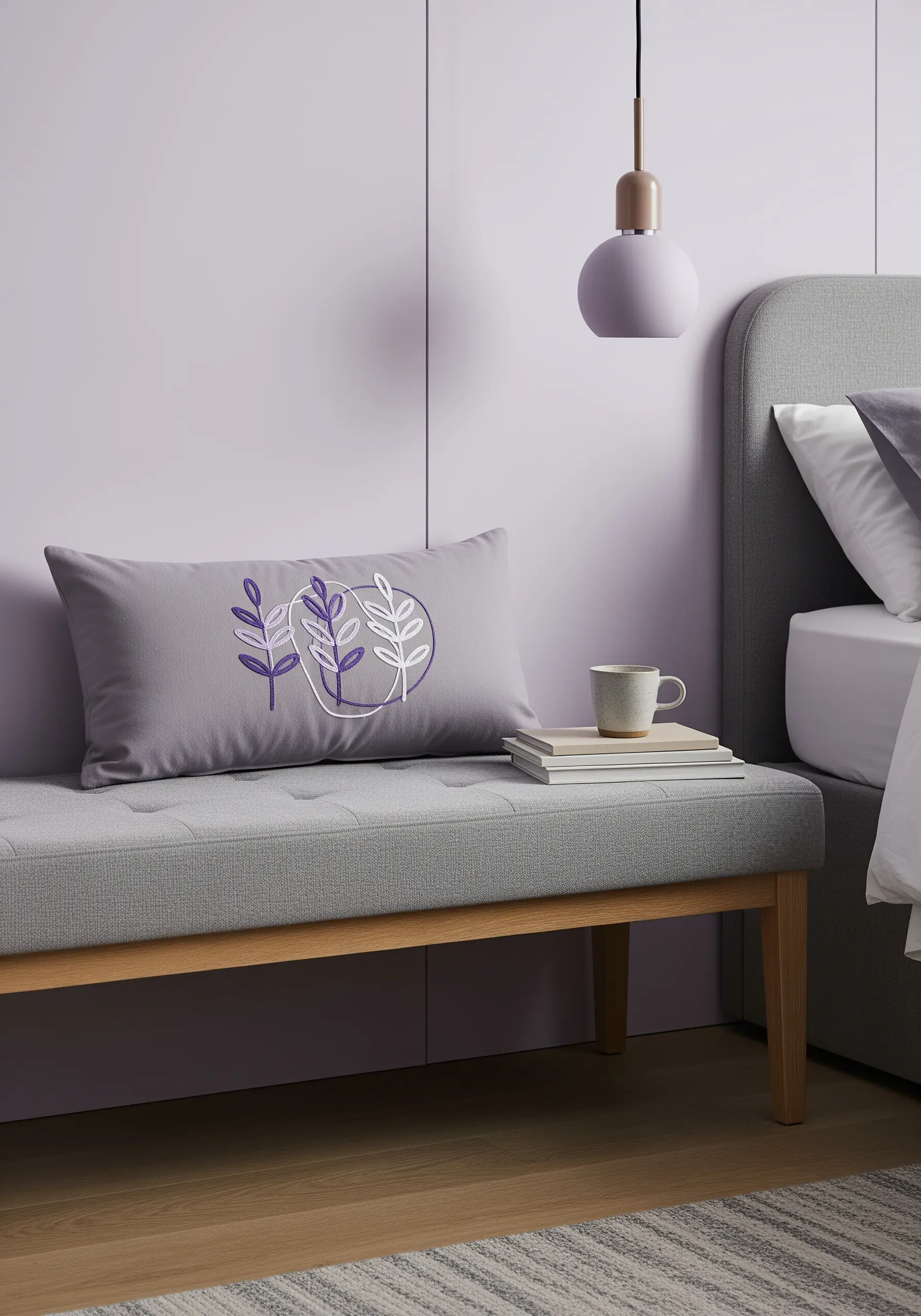
Play with layers and outlines to create a modern, graphic interpretation of foliage.
Stitch a simple shape in a crisp backstitch using white thread, then overlap it with filled-in leaf motifs using a deeper, contrasting color like violet.
The unfilled white outline creates an airy, almost translucent effect, while the solid purple satin stitch grounds the composition.
This interplay between line and form results in abstract botanical silhouettes that feel both artistic and intentional.
5. The Radiant Sunburst Motif
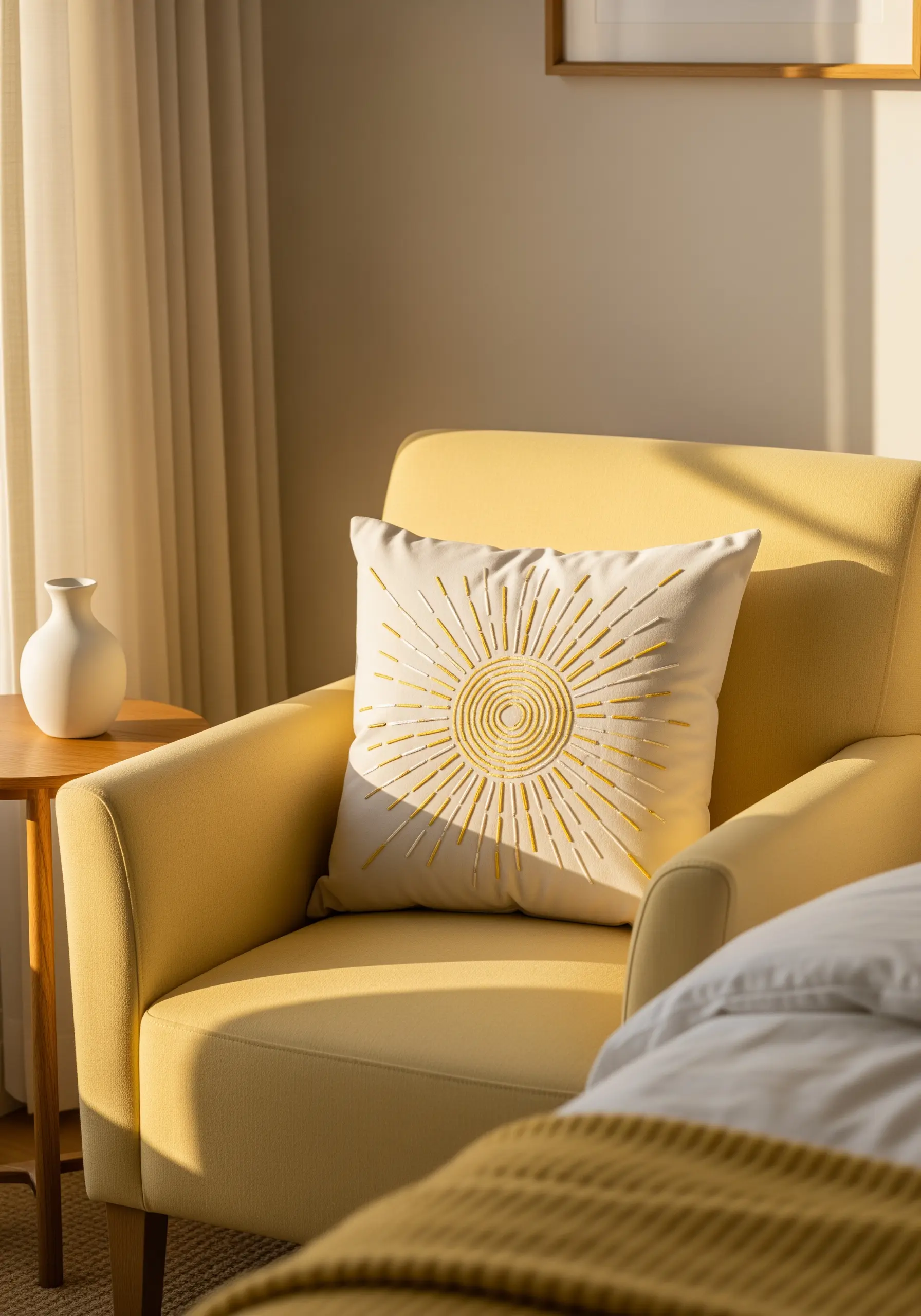
Achieve a flawless sunburst by prioritizing stitch consistency and direction.
For the radiating lines, use a two-ply thread and a sharp needle to ensure each satin stitch lies flat and perfectly parallel to its neighbor.
Work the concentric circles in the center with a stem stitch or whipped backstitch to give them a clean, defined edge that contrasts with the smooth rays.
On a light fabric, a warm goldenrod or marigold thread creates a gentle glow without being overwhelming.
6. The Textured Crescent Moon
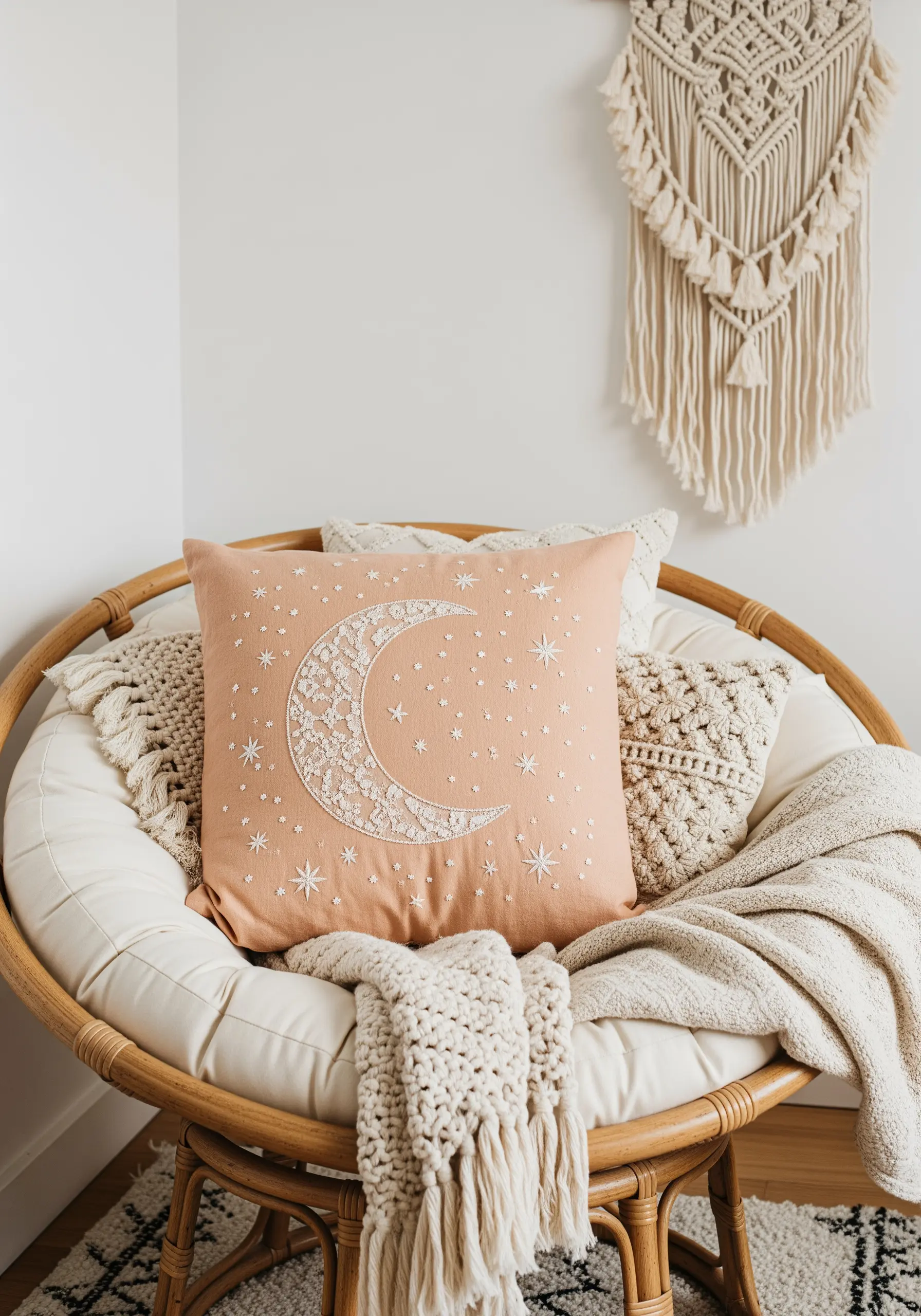
Transform a simple celestial shape into a rich, tactile focal point by filling it with a variety of textural stitches.
Instead of a flat satin stitch, pack the crescent moon with a dense mix of French knots, colonial knots, and seed stitches in creamy, off-white tones.
This creates an intricate, raised surface that beautifully catches the light, adding depth and interest.
Scatter tiny, single-stitch stars around the moon to balance the composition and complete your calming, celestial scene.
7. The Delicate Forget-Me-Not Vine
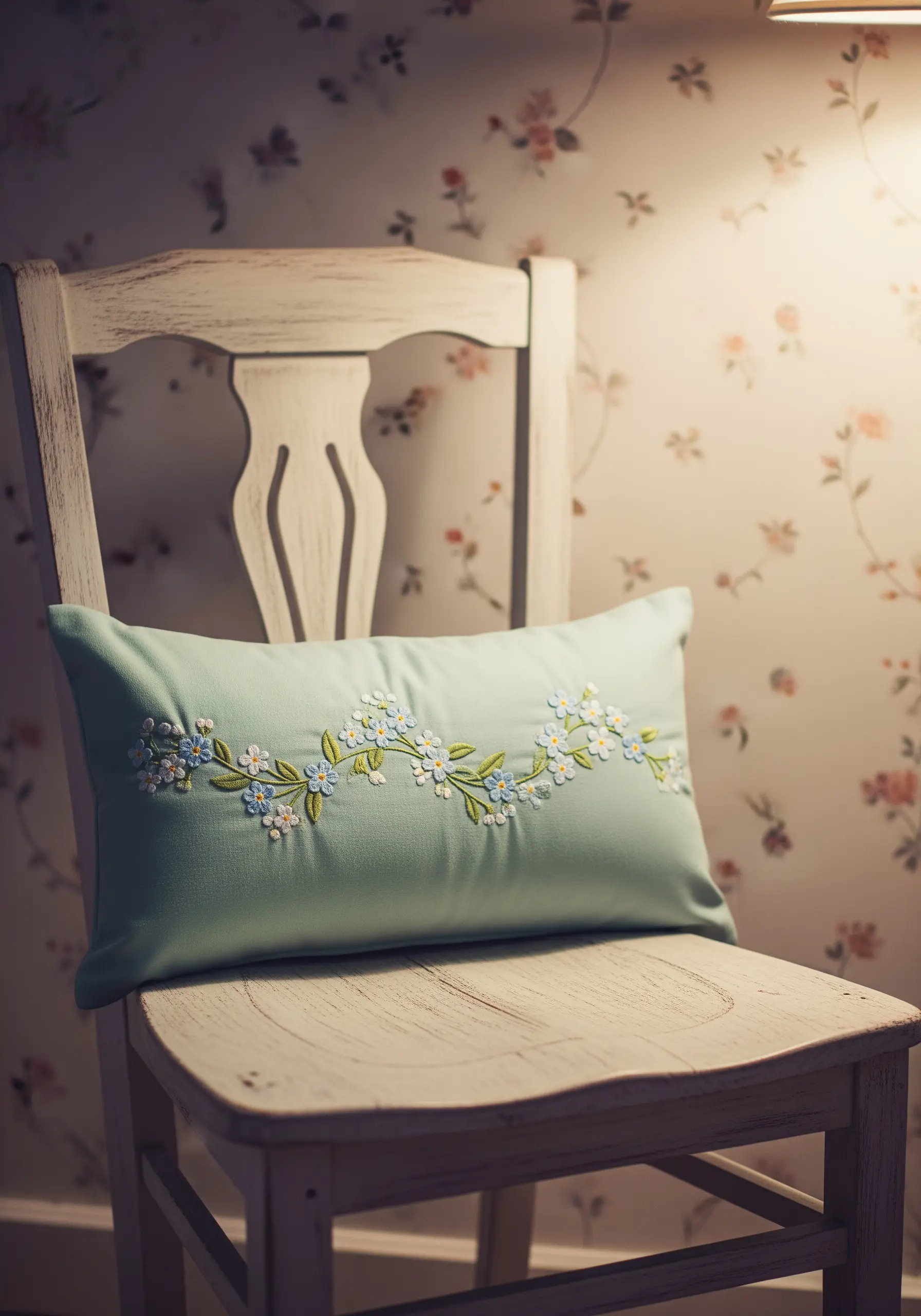
Create a lush, trailing floral design by clustering small, simple stitches.
Use detached chain stitches (lazy daisies) for the tiny blue petals and a single French knot for the yellow center of each forget-me-not.
The key to a natural look is to slightly overlap the blossoms and leaves, avoiding rigid lines or perfect spacing.
This technique is perfect for adding a touch of cottagecore floral embroidery to a lumbar pillow, creating a sense of a wild, gentle garden.
8. The Minimalist Wave Composition
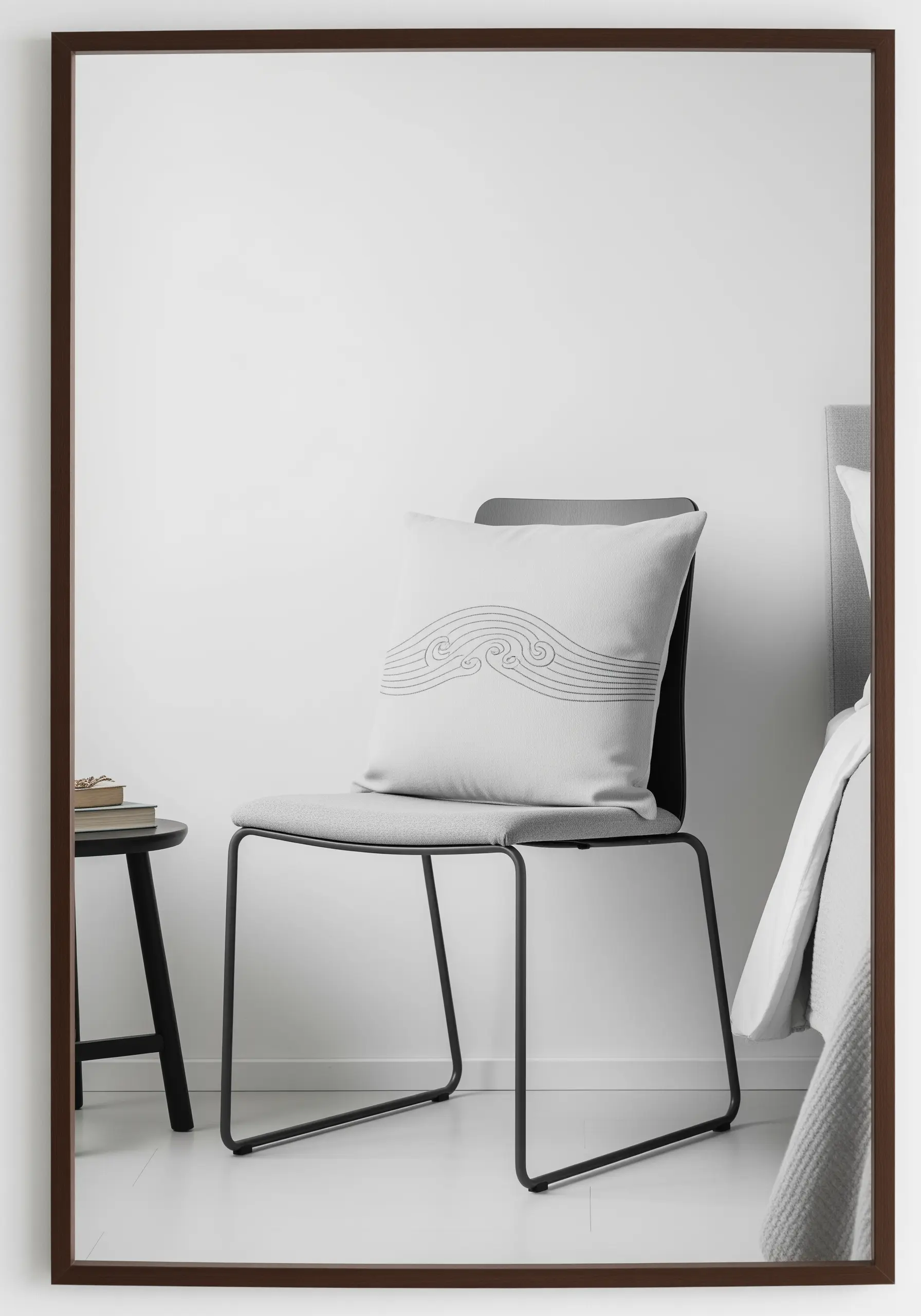
Convey the serene feeling of flowing water using nothing more than precisely placed lines.
Use a single color thread that is just a few shades darker than your fabric for a subtle, tonal effect.
Stitch the parallel waves with a simple backstitch or stem stitch, ensuring your curves are smooth and your lines are evenly spaced.
This exercise in restraint results in a design that is incredibly calming and sophisticated, proving that complex effects can come from the simplest of stitches.
9. The Realistic Single Rose
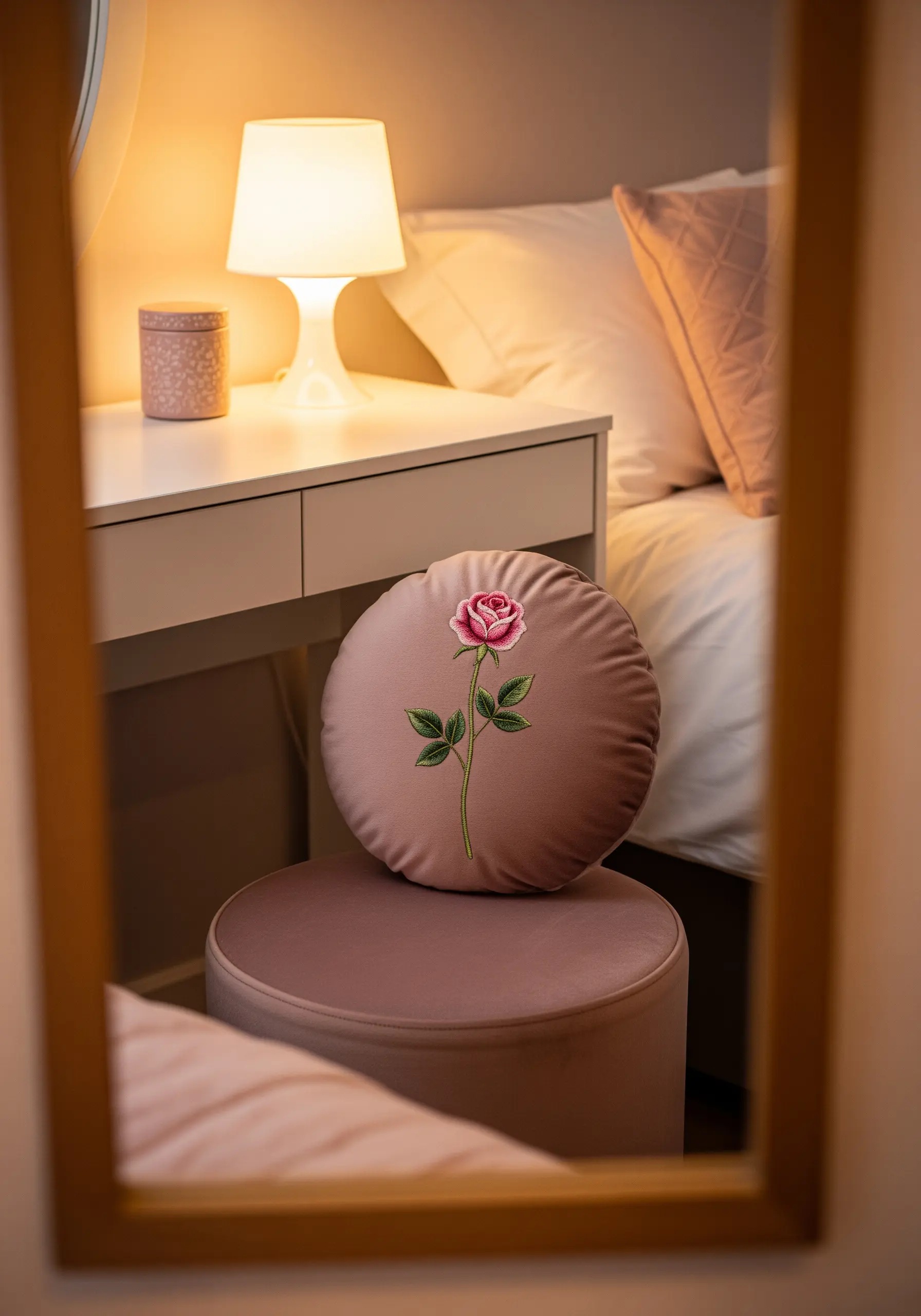
Move beyond outlines and achieve a painterly effect with the long-and-short stitch.
To create the rose’s soft petals, blend three to four shades of a single color, from a deep magenta at the base to a pale pink at the edges.
Direct your stitches to follow the natural curve of each petal; this directional stitching is what creates the illusion of form and realism.
Mastering floral thread painting techniques allows you to turn a simple motif into a stunning, lifelike botanical study.
10. The Elegant Constellation Map
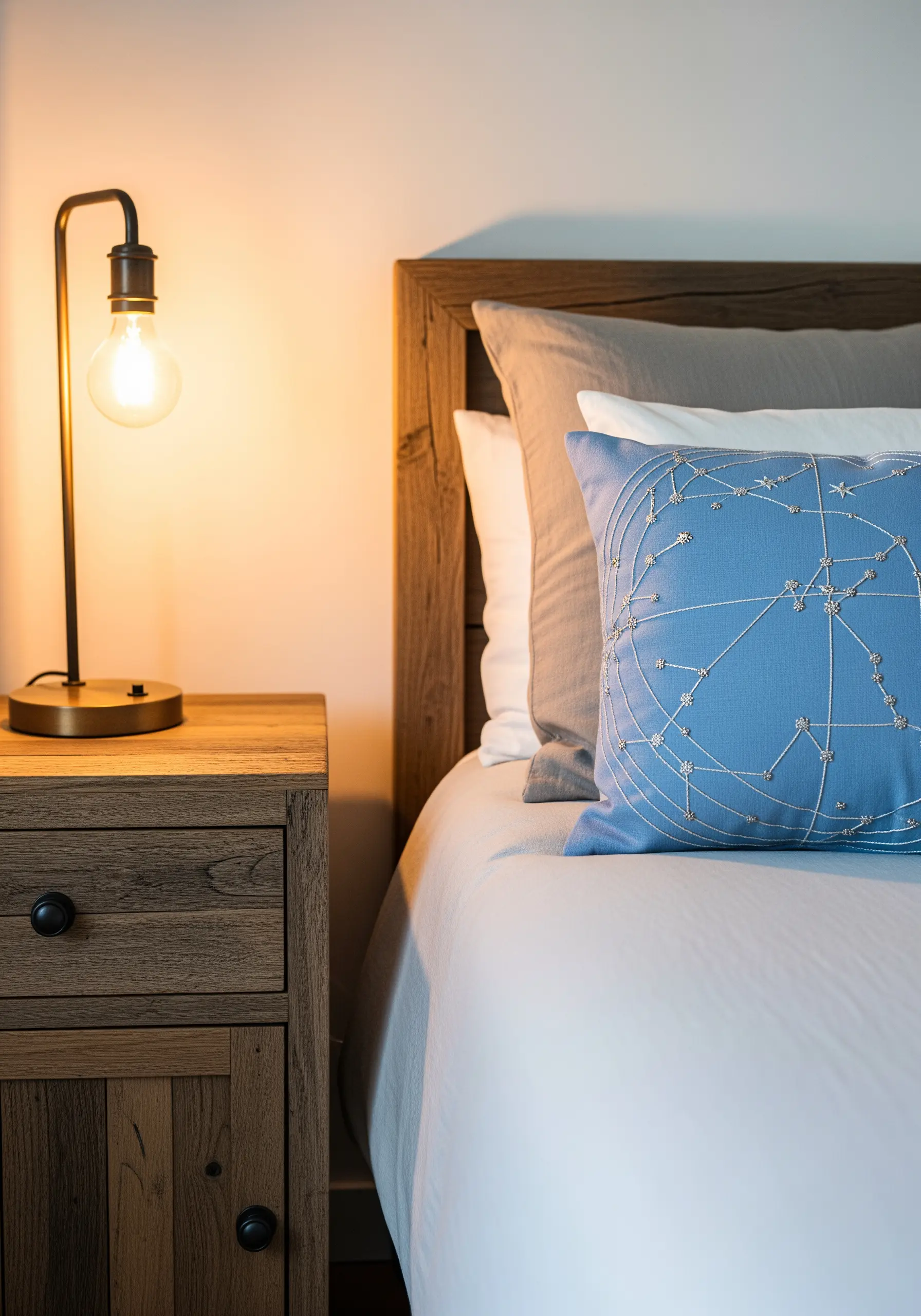
Create a celestial design that feels both scientific and magical by using a high-contrast thread.
Choose a fine metallic or a bright white silk thread to stitch against a deep-colored fabric like this periwinkle blue.
Use a crisp backstitch for the connecting lines and tiny, tight French knots or star stitches for the stars themselves.
The high sheen of the thread against the matte fabric makes the constellation appear to shimmer, adding a touch of quiet glamour to your bedroom decor.
11. The Graphic Concentric Circle Study
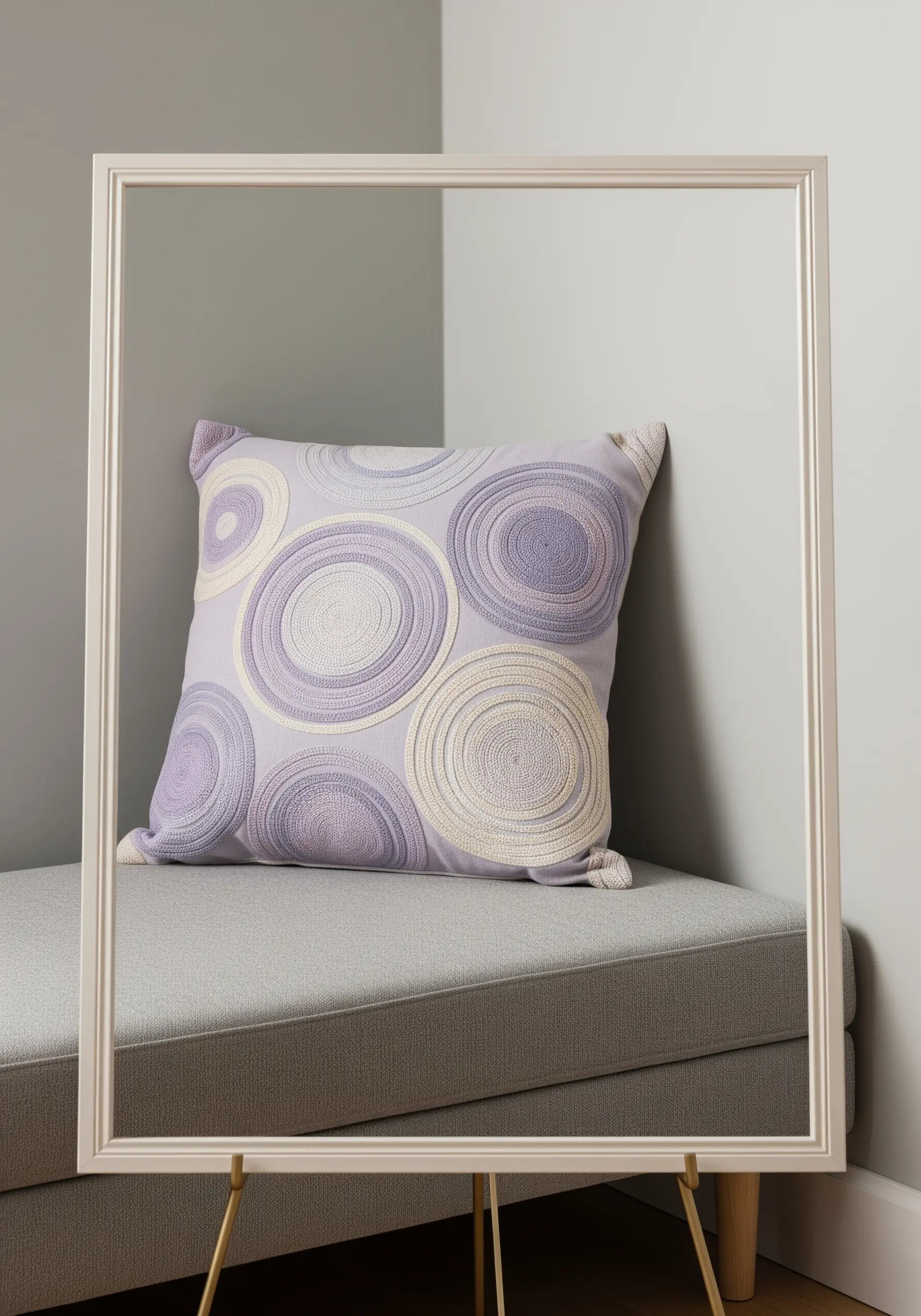
For perfectly crisp and uniform circles, choose a stitch that creates a raised, cord-like line.
A whipped backstitch or a chain stitch is ideal for this, as it provides both definition and a subtle texture.
Alternate between two or three complementary pastel shades, like lavender and cream, to create a soothing, rhythmic pattern.
This design is an excellent way to practice stitch consistency, turning a simple exercise into a sophisticated piece of textile art.
12. The Detailed Fern Frond
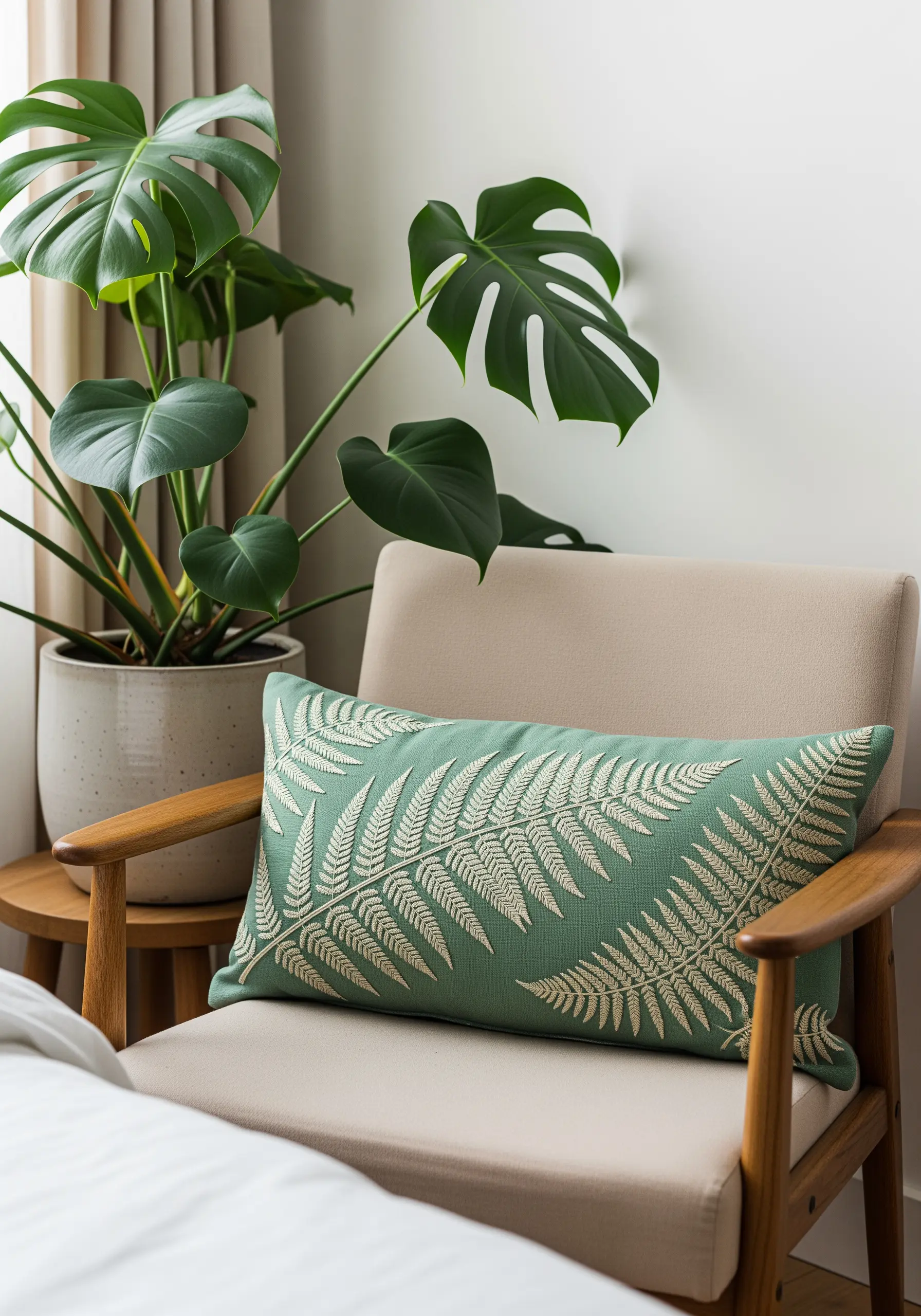
Capture the delicate structure of a fern by using a stitch that mimics its natural form.
The fishbone stitch is perfect for the individual leaflets, as it automatically creates the central vein and angled sides in one motion.
Use a single strand of thread in a light, contrasting color like ecru or pale grey to ensure every detail stands out against the darker green fabric.
This meticulous approach turns a common botanical into an elegant, detailed pattern.
13. The Three-Dimensional Cloudscape
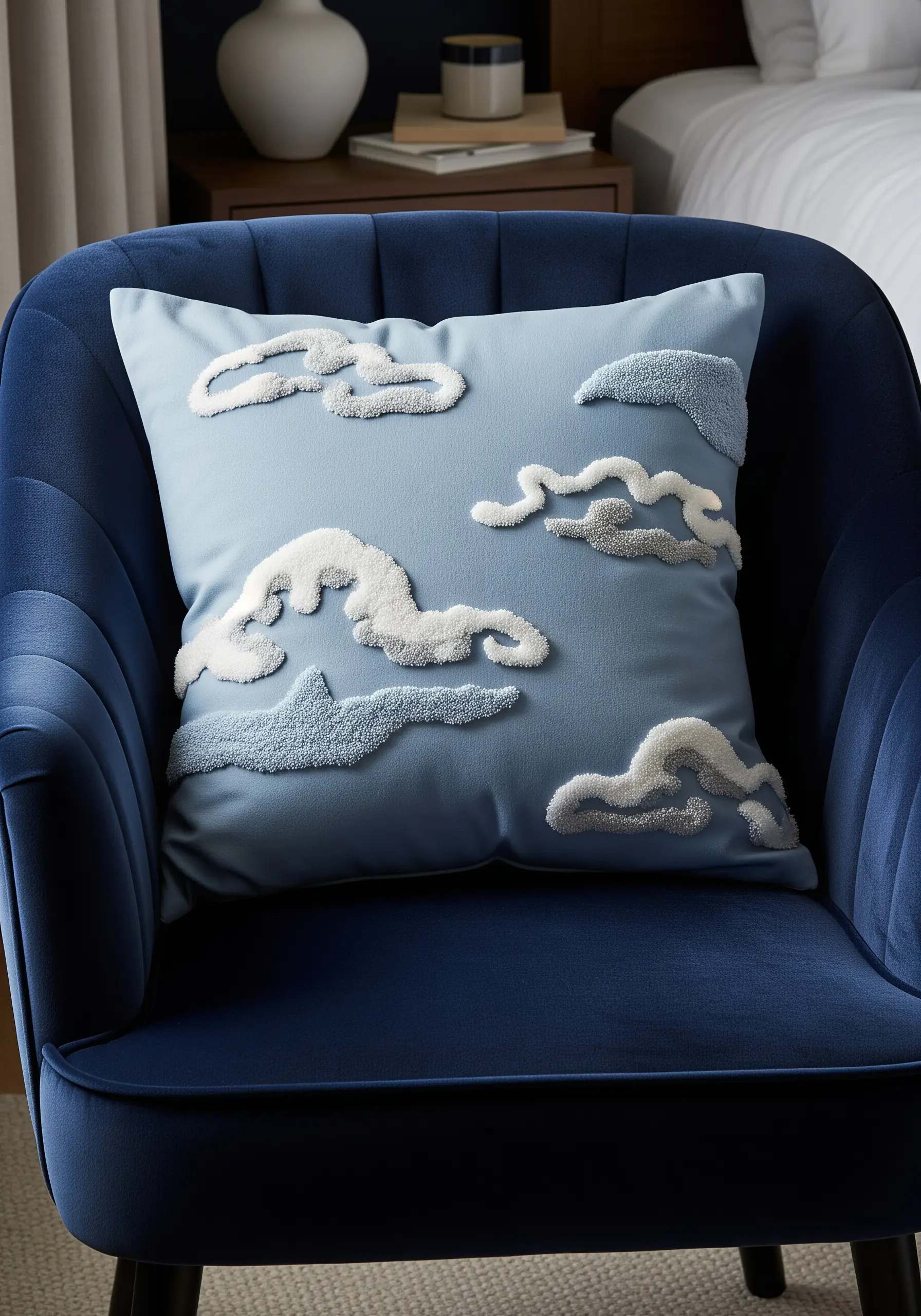
Create a soft, dreamy cloudscape by focusing entirely on texture and dimension.
Use a punch needle or a dense application of French knots with a thick, soft yarn or cotton floss to build up the cloud shapes.
Vary the pile height or knot density, and use multiple shades of white, cream, and pale grey to give the clouds realistic volume and depth.
This turns the pillow’s surface into a piece of soft sculpture, inviting both sight and touch.
14. The Soothing Honeycomb Pattern
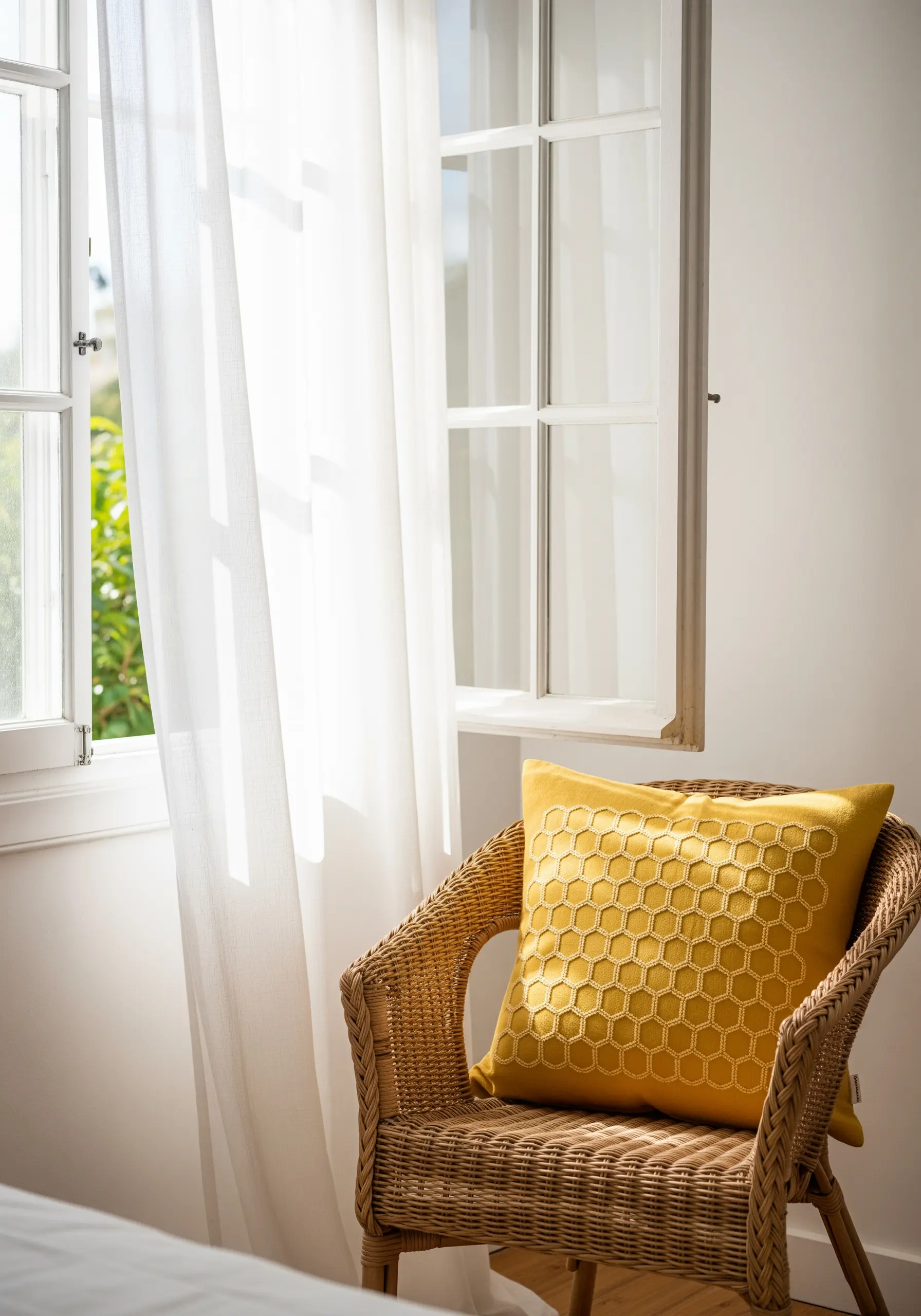
Create a harmonious and calming geometric pattern by ensuring every stitch is uniform.
Use a satin stitch to fill each side of the hexagons, keeping the angle of your stitches consistent throughout the entire design.
A slightly thicker thread, like a cotton perle, will give the pattern a soft, raised quality that feels luxurious.
Choosing a thread color that is a warmer, more saturated version of the fabric color—like marigold on yellow—creates a rich, tonal effect.
15. The Delicate Seashell Scatter
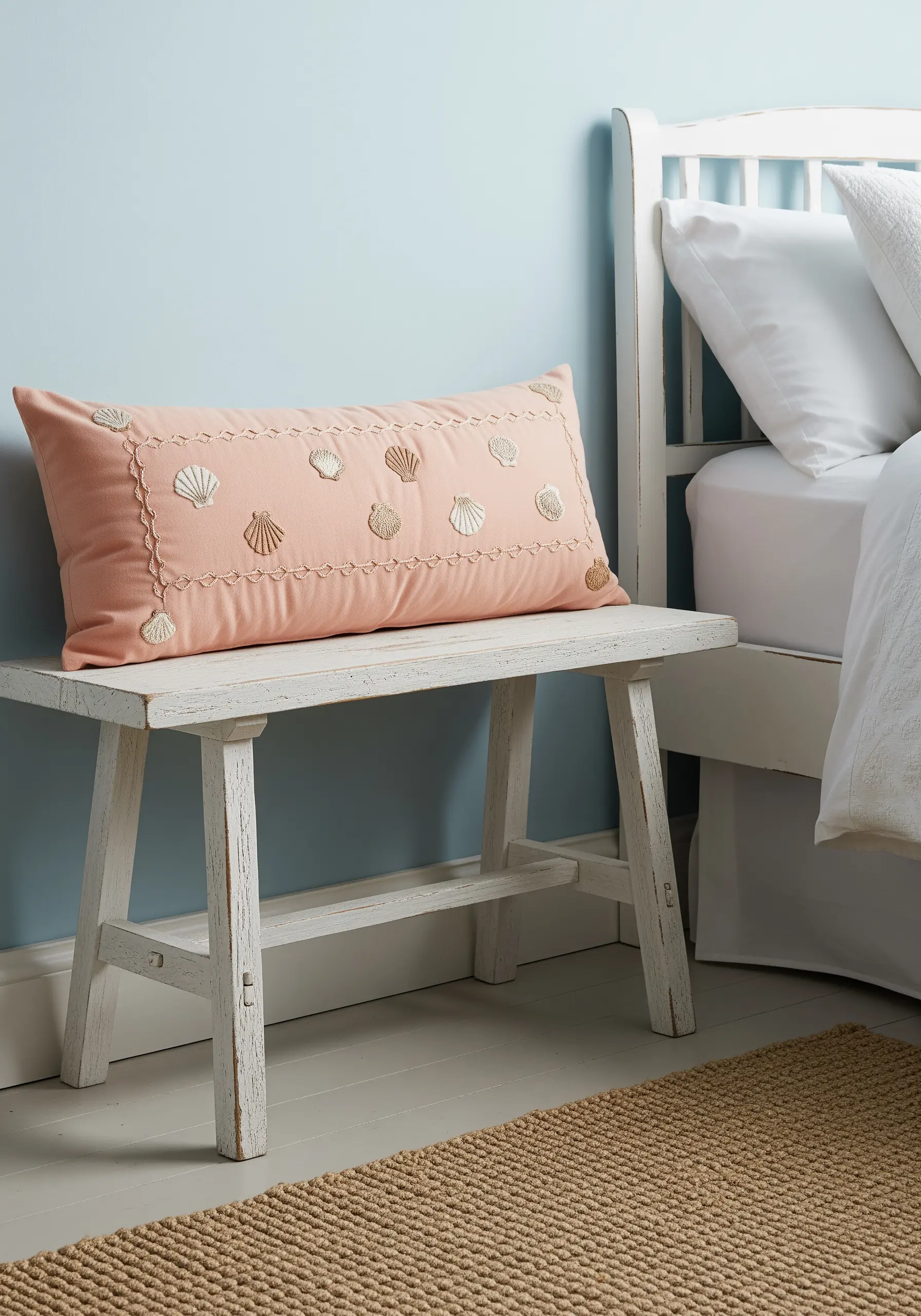
Add a touch of coastal calm with small, exquisitely detailed motifs.
For each seashell, use single-ply thread to work tiny satin stitches that radiate from the base, mimicking the shell’s natural ridges.
Incorporate a strand of pearlescent or metallic thread into your floss to give the shells a subtle, light-catching shimmer.
Arranging them within a decorative border of simple running stitches, as seen here, frames the design and gives the pillow a polished, finished look.
16. The Minimalist Geometric Axis
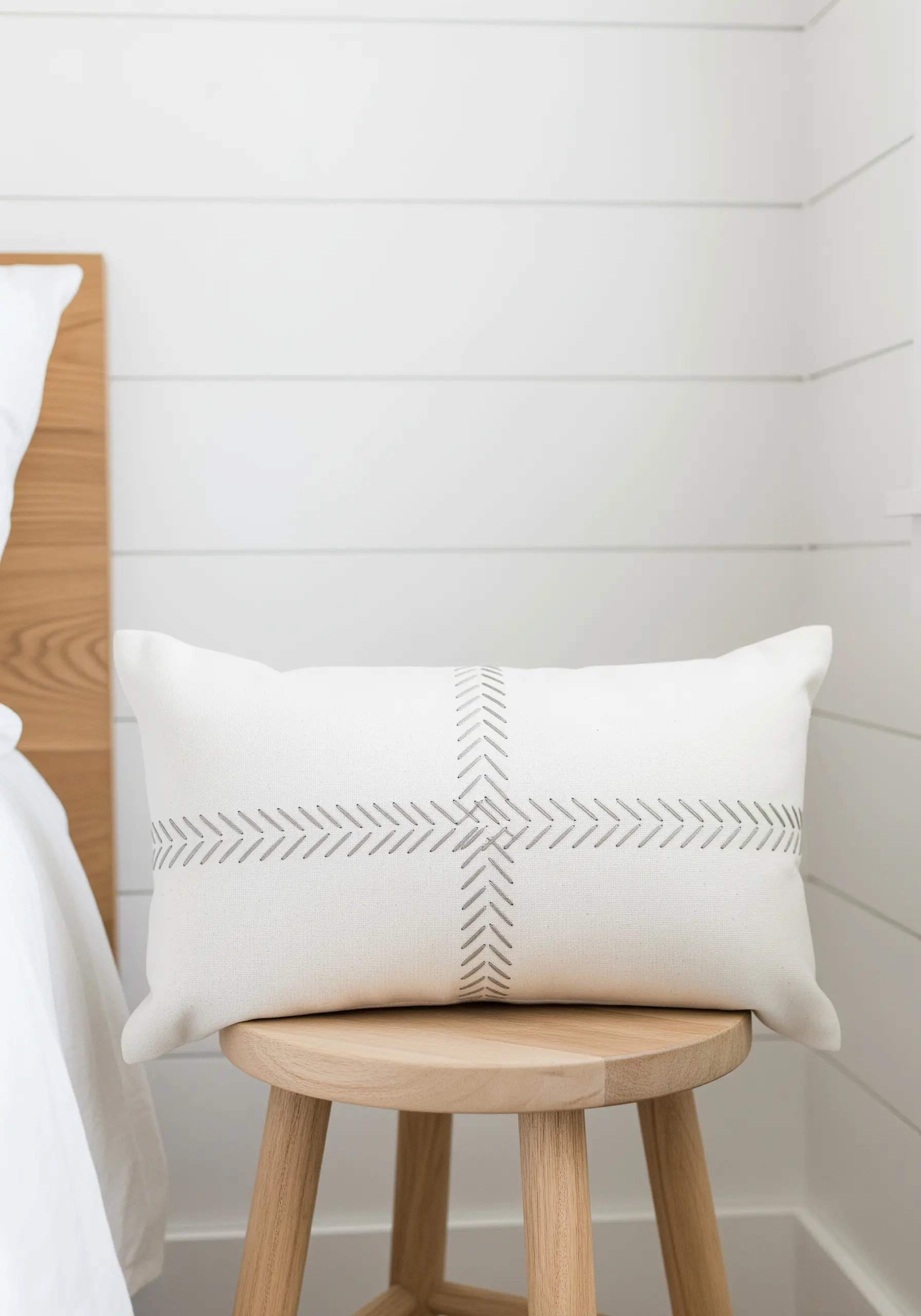
Explore the beauty of simplicity with a design built from a single, repeated stitch.
This pattern uses a basic running stitch or backstitch to form chevrons that meet along a central axis.
The effect is graphic, modern, and incredibly serene, especially when stitched in a neutral grey on a crisp white or off-white linen.
This is a perfect example of how thoughtful placement and repetition can transform the most fundamental of minimal stitch patterns into sophisticated decor.
17. The Iridescent Hummingbird
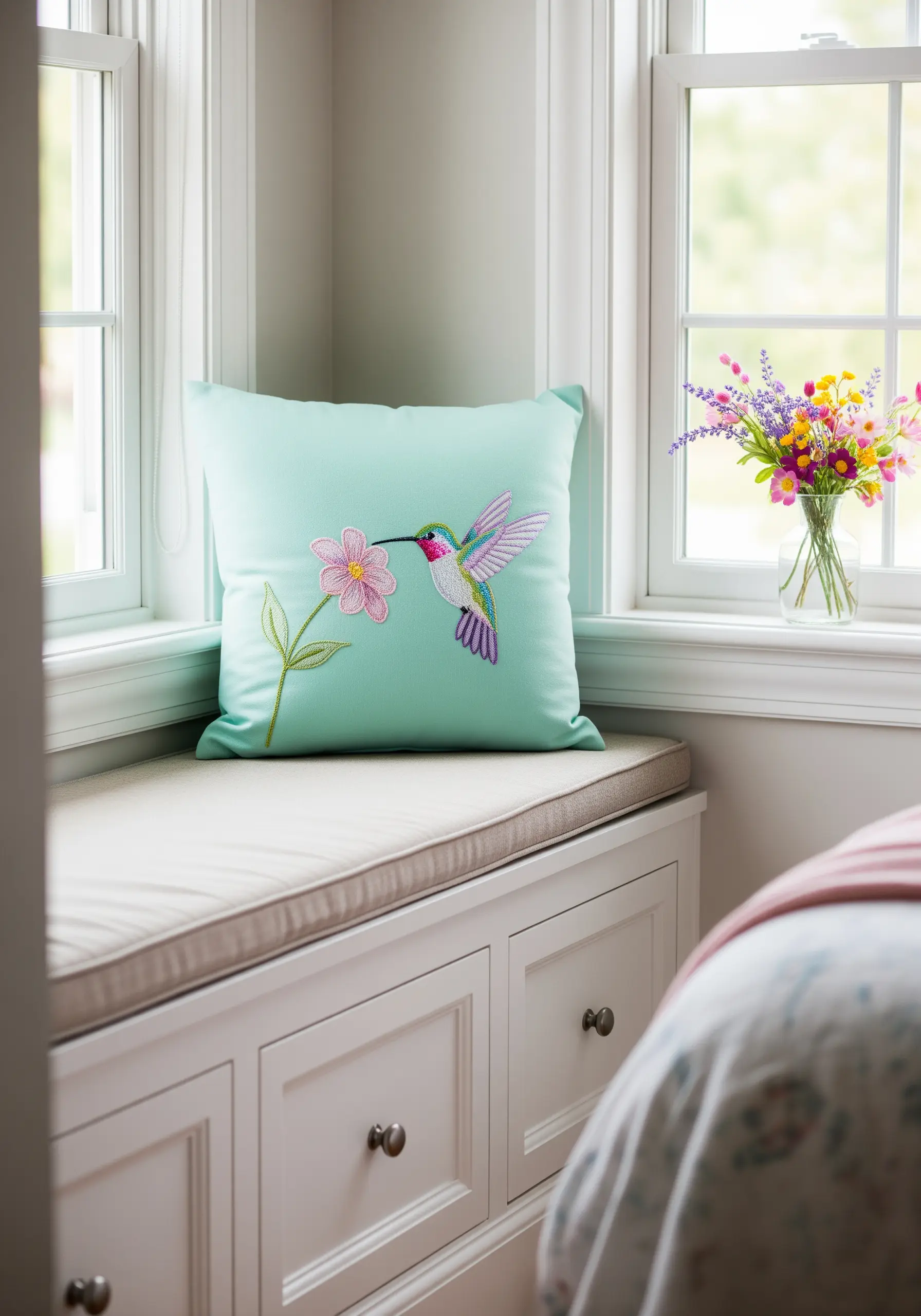
Capture the jewel-toned shimmer of a hummingbird’s feathers through careful color blending.
Use the long-and-short stitch with single strands of thread, placing stitches of turquoise, violet, and emerald side-by-side to create an iridescent effect.
Ensure your stitches follow the direction of the feathers—down the back, along the curve of the wing—to create a sense of realism and movement.
This attention to color and direction elevates the piece from a simple bird motif to a vibrant, lifelike portrait.
18. The Tactile Knotted Grid
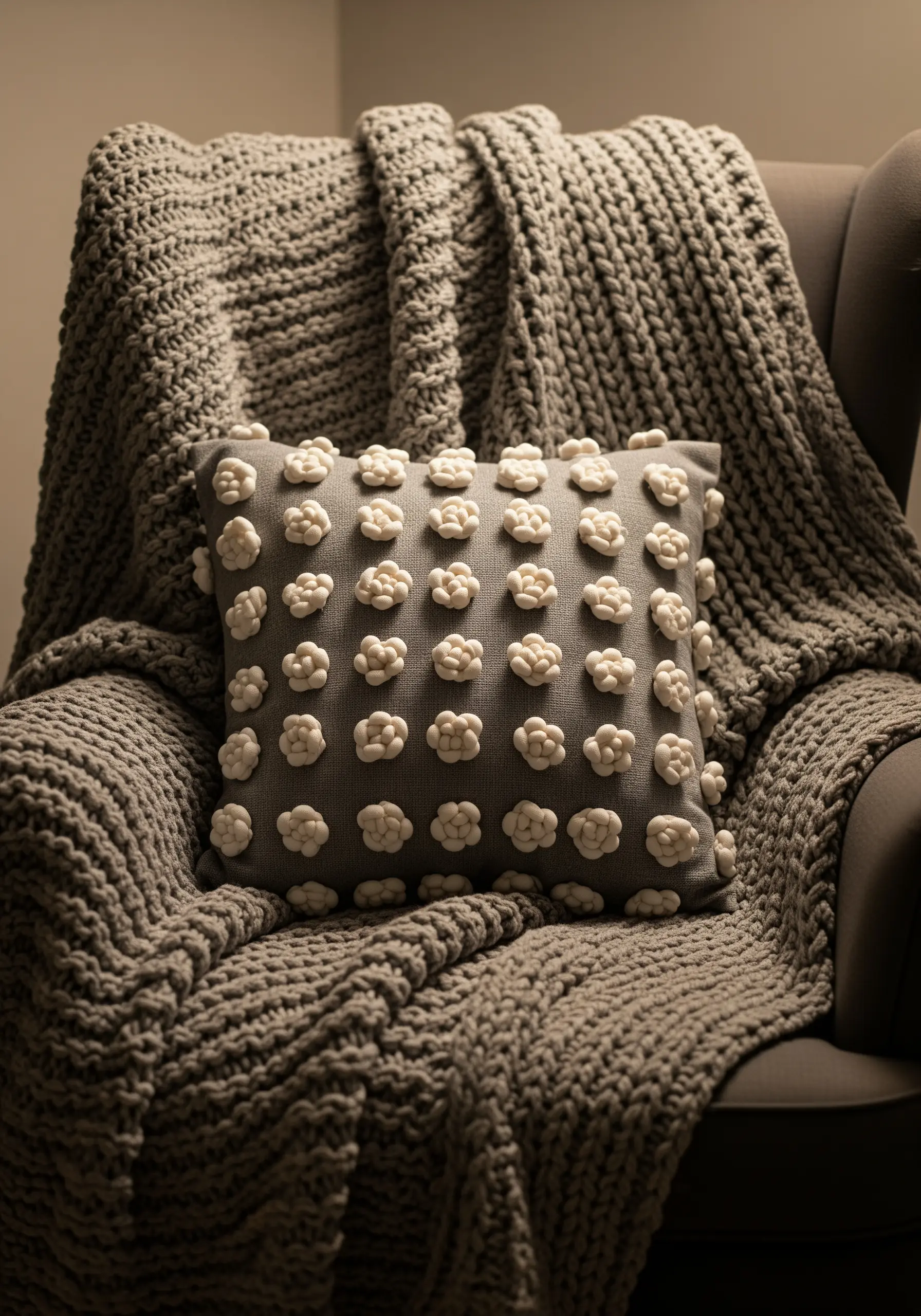
Make texture the sole focus of your design by arranging a grid of highly dimensional stitches.
Create each raised element using a bullion knot or a detached woven picot stitch, pulling each one tight for a uniform, bobble-like effect.
Using a thick, soft thread like a six-strand floss or fine yarn will make the knots plump and satisfyingly tactile.
This method creates an incredibly cozy and visually interesting pillow that relies on form and shadow rather than color.
19. The Art Deco Fan Motif
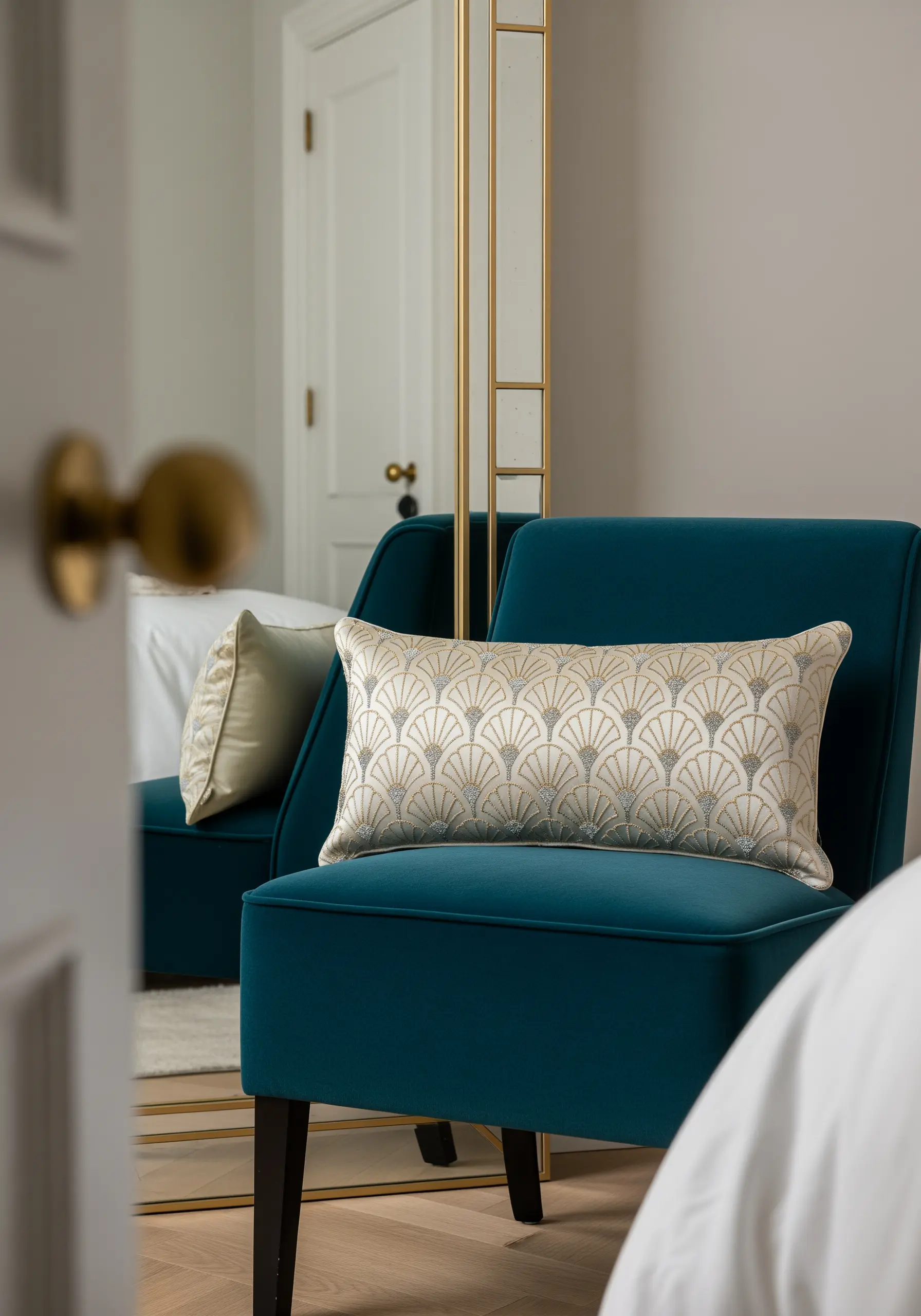
Channel the elegance of the Art Deco era by combining precise linework with shimmering accents.
Use a fine metallic thread to outline the fan shapes with a crisp backstitch, providing structure and a touch of glamour.
Fill the segments with a smooth satin stitch in a soft, neutral color like ivory or champagne, letting the metallic outlines define the pattern.
The contrast between the matte fill and the shimmering outline is the key to achieving that classic, sophisticated Art Deco look.
20. The Asymmetrical Cherry Blossom Branch
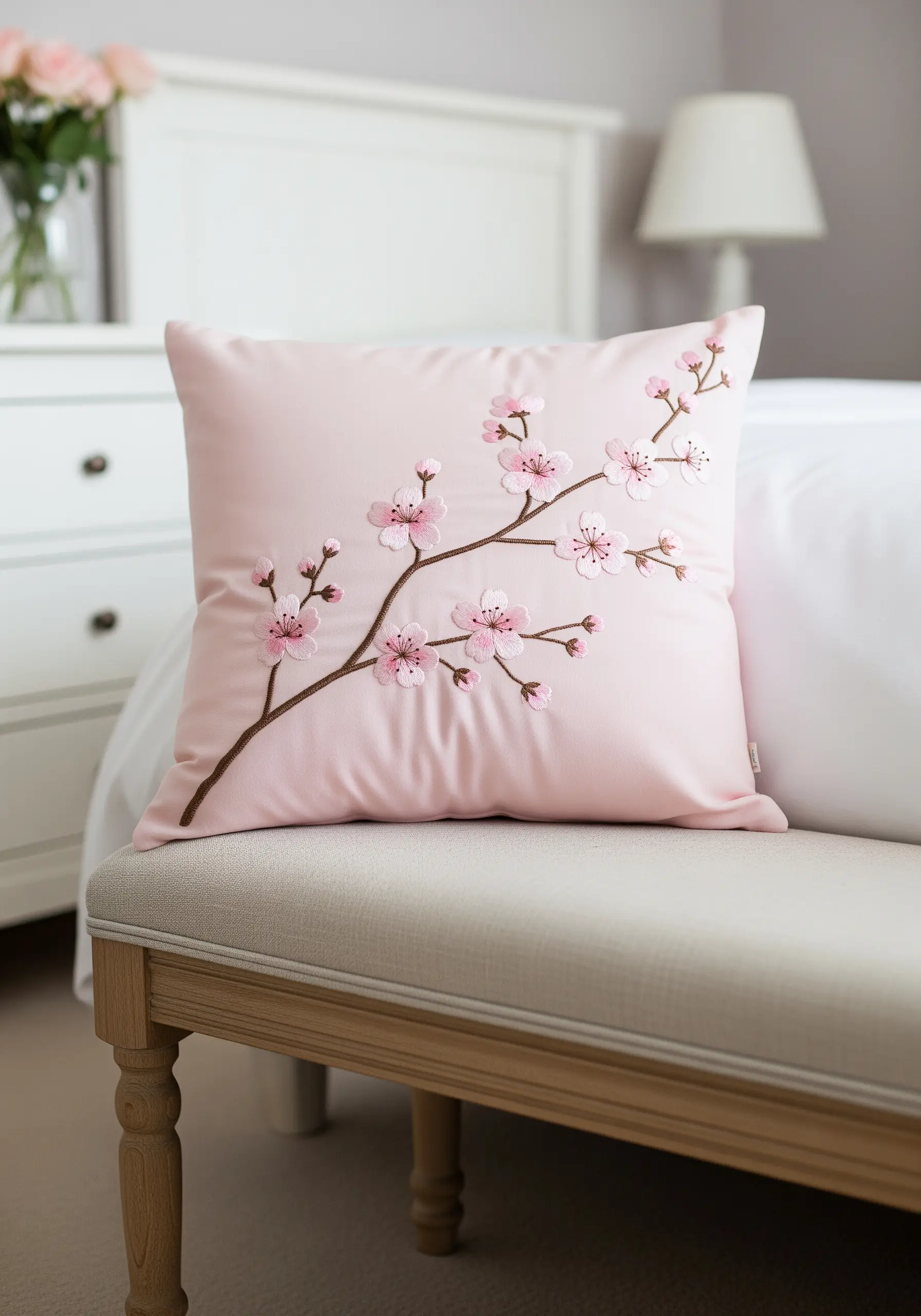
Create a design that feels natural and balanced by embracing asymmetry.
Position the main branch so it flows diagonally across the pillow, drawing the eye and creating a sense of graceful movement.
For the blossoms, use detached chain stitches for petals and French knots for the centers, clustering them in some areas and leaving others sparse.
This thoughtful composition is what makes the design feel like a delicate, fleeting moment captured in thread, making it perfect for small hoop floral motifs and pillows alike.
21. The Intricate Monochromatic Mandala
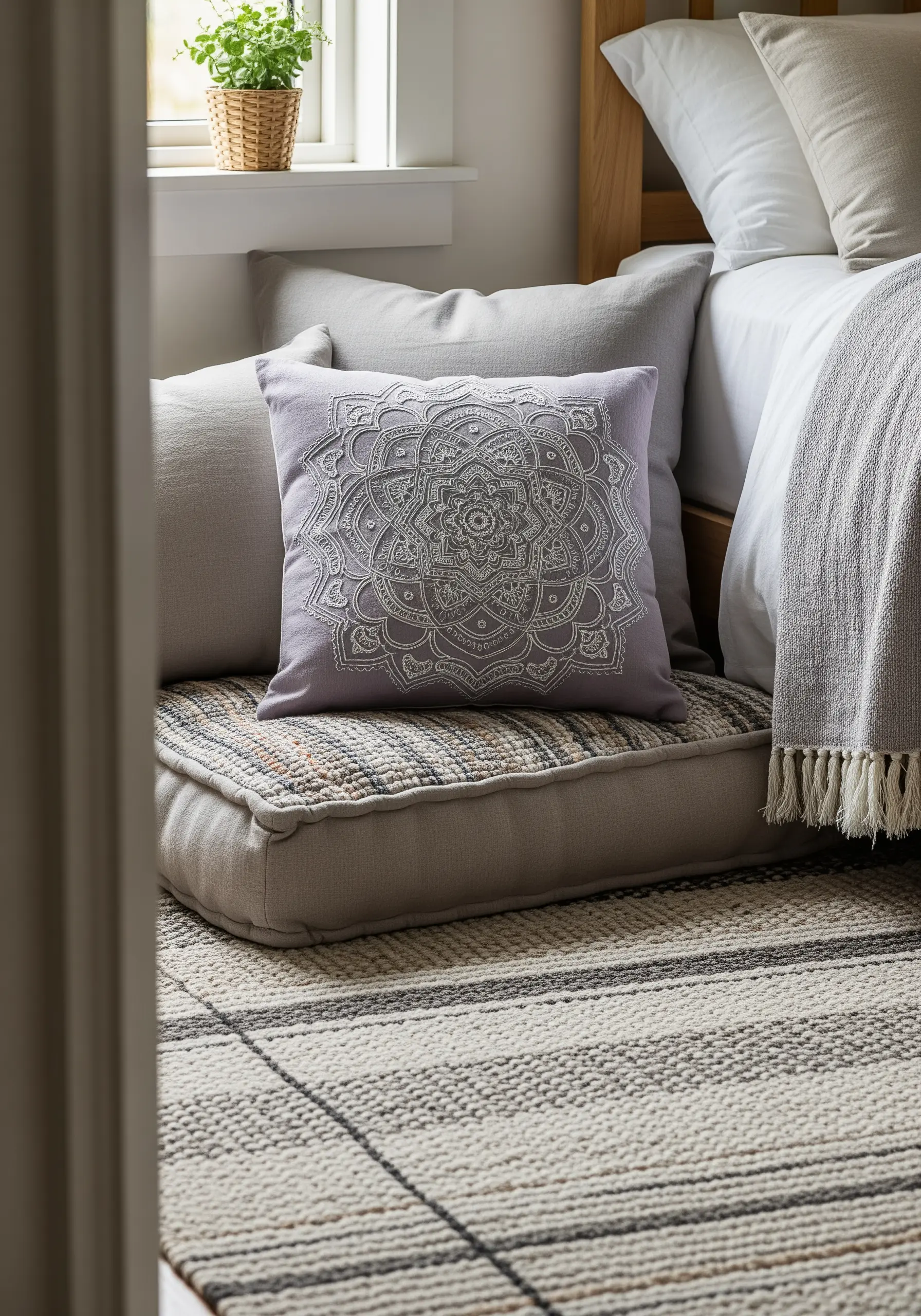
For a complex pattern like a mandala, using a single color allows the intricate details to shine without becoming visually overwhelming.
Stitch the entire design in a light thread on a slightly darker fabric—like silver on lavender—to create a subtle, elegant contrast.
Use a variety of stitches like backstitch for outlines, satin stitch for small fills, and French knots for accents to give the piece texture and depth.
This tonal approach turns intricate embroidered mandala wall art designs into a meditative and soothing focal point for a calm bedroom.
22. The Minimalist Mountain Range Outline
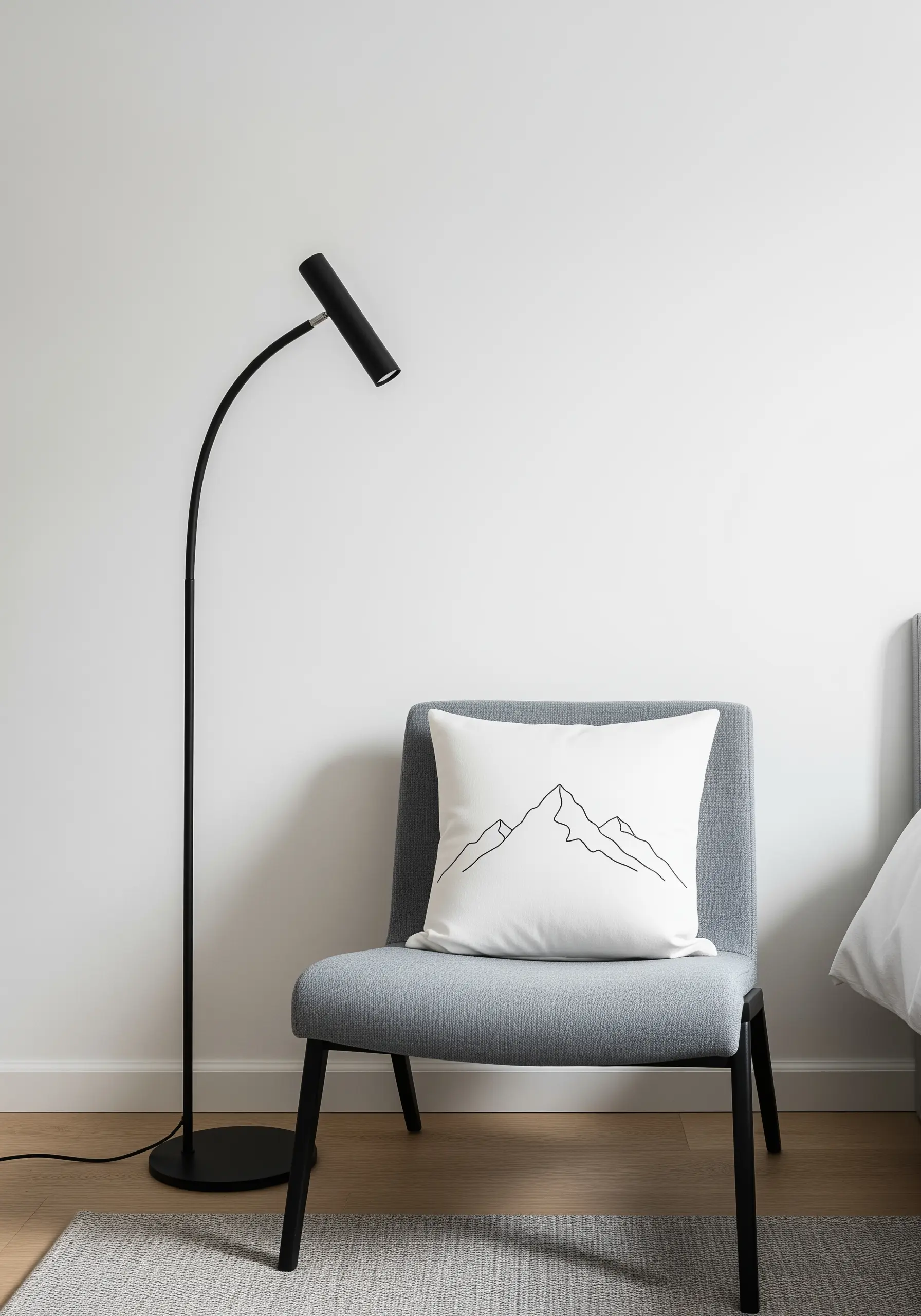
Communicate a grand landscape with the simplest possible execution: a single, clean line.
Use a crisp backstitch or split stitch to trace the mountain peaks, focusing on creating sharp points and smooth, confident lines.
Choosing a high-contrast palette—black thread on a white cushion—gives the design a bold, graphic quality that feels modern and intentional.
This is the ultimate exercise in minimalist embroidery, proving that a powerful statement doesn’t require complex stitches or multiple colors.