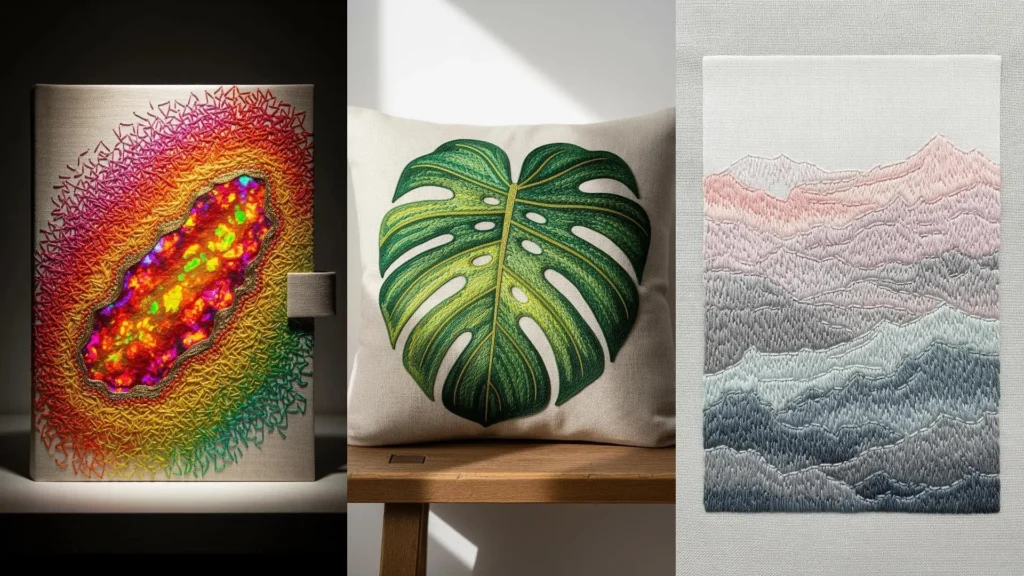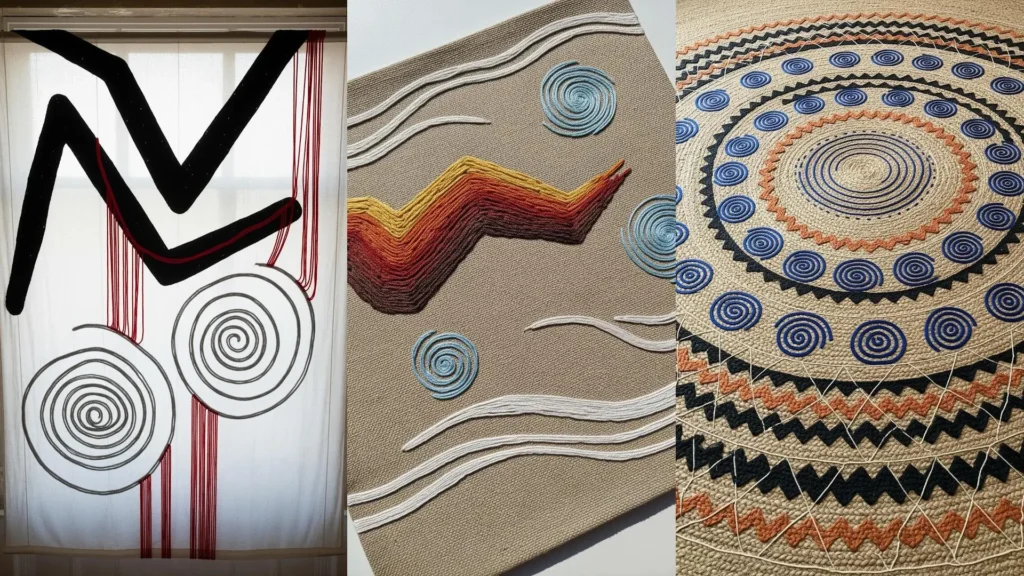
Sometimes, the most expressive art comes not from inventing new shapes, but from reimagining the ones we already know.
You have the fundamental skills. You know the stitches. But perhaps you feel confined by traditional patterns, unsure how to translate your creative impulses into thread. The answer is often simpler and more freeing than you think: it’s in the mashup.
This collection is an invitation to play with the basics—the crisp angle of a zigzag, the endless curve of a spiral, the freedom of a simple line. You will see how combining these elements with intention can transform your work from decorative to deeply expressive. Notice how a shift in thread weight, a clash of color, or a surprising texture can create a piece that feels uniquely, powerfully yours.
Let this be your permission slip to break the rules, to combine, to contrast, and to create abstract art that is both disciplined and beautifully unrestrained.
1. Create Graphic Tension with Layered Textures
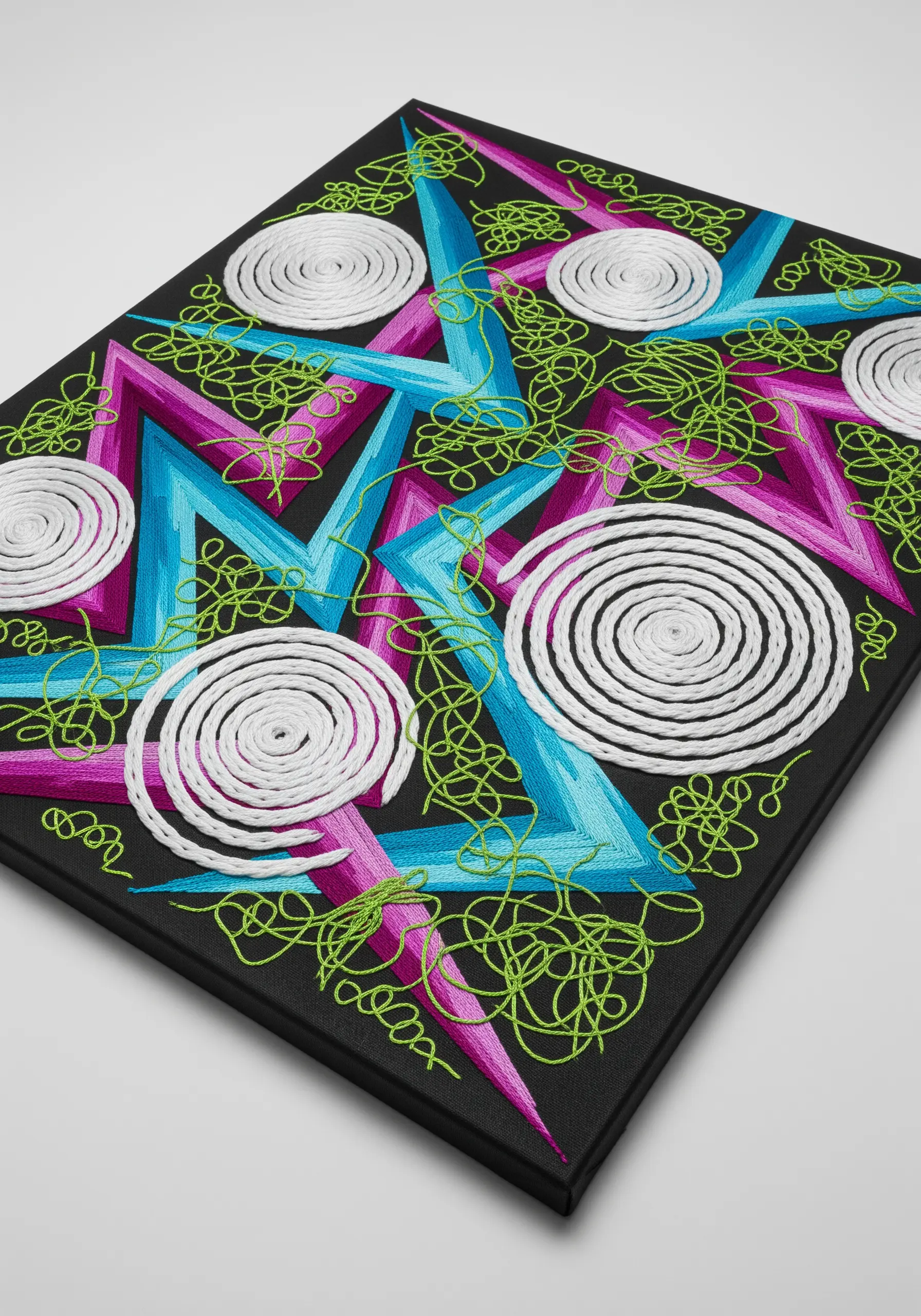
Embroider your main shapes—like these zigzags and spirals—using distinct, contrasting techniques to make each element stand out.
Use a dense satin stitch for the geometric zigzags to create solid, opaque blocks of color.
For the spirals, couch a thick, multi-ply cord to the surface; this adds a three-dimensional quality that catches the light differently.
Finally, overlay everything with a chaotic, free-form stitch in a high-contrast color like this chartreuse green to add energy and break up the rigid forms.
This technique works best on a dark, solid canvas, where the bright colors appear to vibrate.
2. Blend Materials for a Soft, Tactile Composition
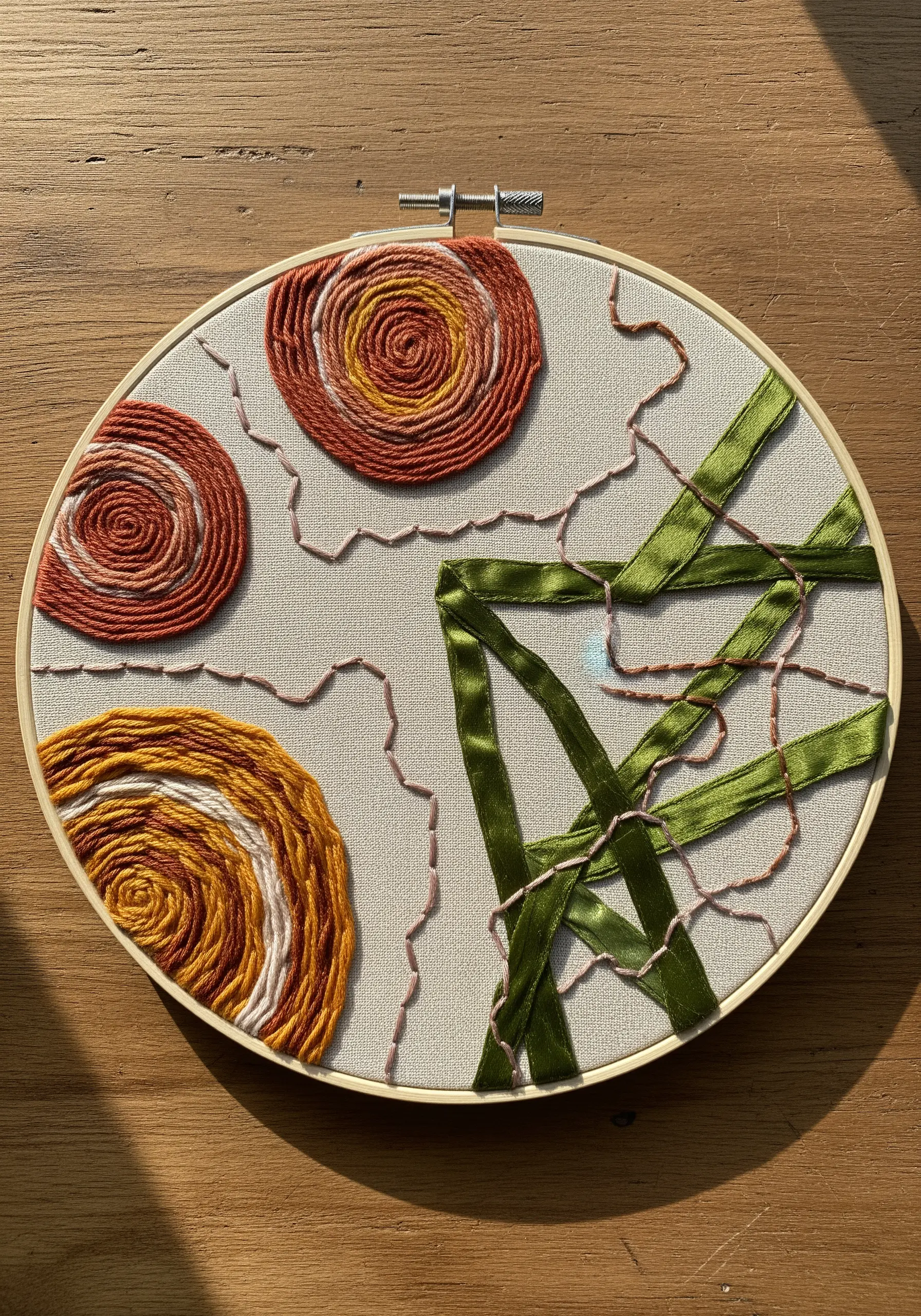
Move beyond standard floss by introducing unexpected materials like yarn and ribbon into your hoop art.
Create your spirals by couching down a variegated wool yarn; its natural thickness and subtle color shifts add warmth and a handcrafted feel.
For the zigzags, weave a wide satin ribbon through the fabric, securing it with tiny tacking stitches on the back. This creates bold, smooth lines that contrast beautifully with the texture of the yarn.
Connect the elements with a delicate, meandering stem stitch using a single strand of floss to add a final layer of fine detail.
3. Anchor Busy Backgrounds with a Dominant Shape

When working with a complex background of fine lines, introduce a single, bold element to create a clear focal point.
Here, a thick yellow form, created with appliqué or a heavily padded satin stitch, commands attention and guides the eye through the piece.
Keep the background delicate by using a single strand of thread for the machine-stitched spirals and chaotic red lines. This contrast in line weight is what gives the composition its power.
This principle of scale and weight prevents abstract art from feeling messy, giving it structure and intent.
4. Weave a Landscape with Dimensional Yarn Stitches
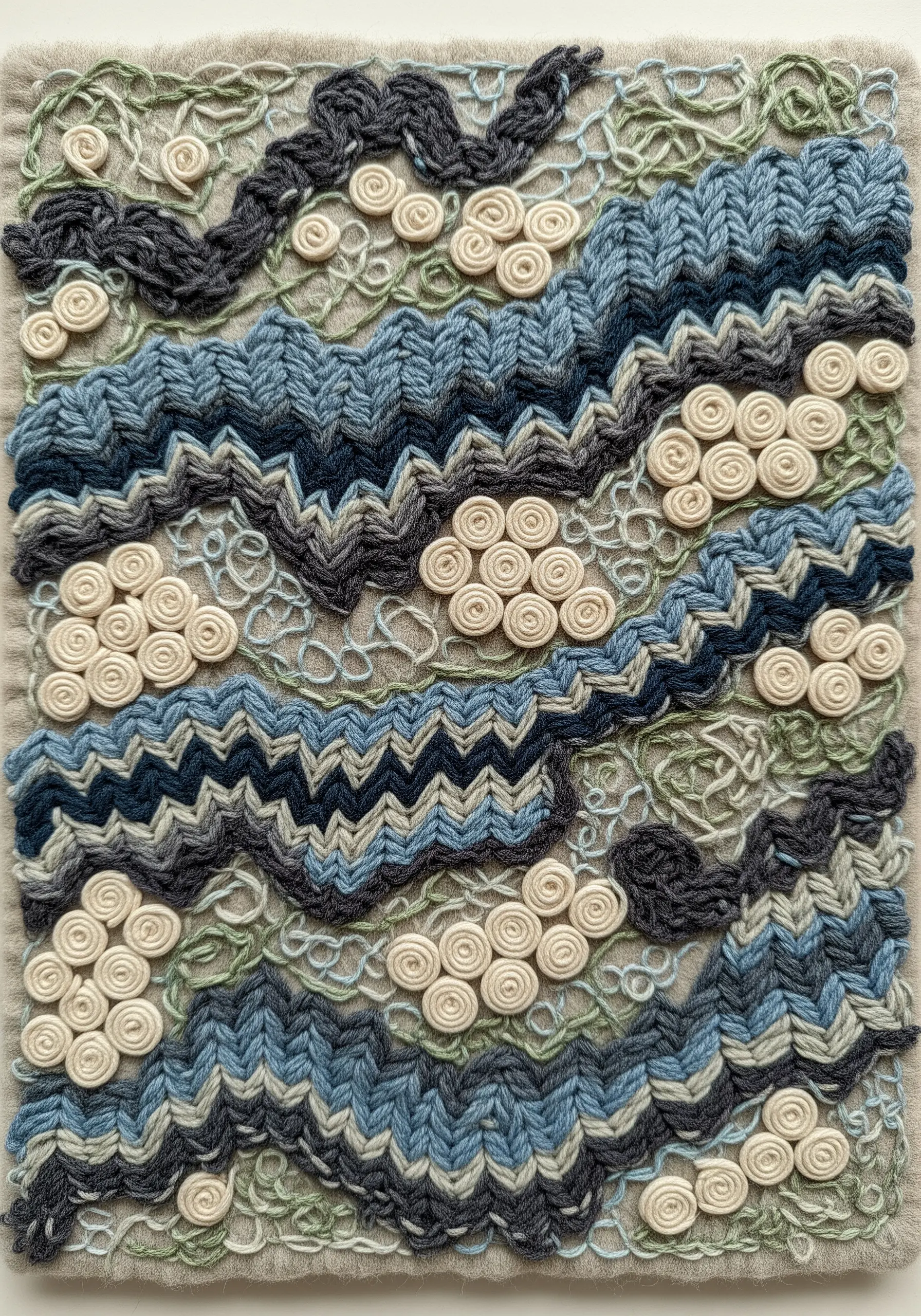
Build an entire surface that feels like a topographic map by varying your stitch direction and density.
Use a thick wool yarn and a large needle to work chunky chevron or Hungarian stitches for the zigzag areas, creating a woven, blanket-like texture.
For the circular motifs, switch to a finer yarn and use couching to create tight, flat spirals that resemble fossilized shells or pebbles.
Fill the negative space with light, airy free-form stitches to add another layer of texture without overwhelming the primary shapes. This results in a high-texture fabric collage that invites touch.
5. Evoke a Technical Feel with Metallic Thread

Channel the look of a circuit board by using metallic thread for sharp, architectural lines on a neutral fabric.
Use long, straight stitches pulled taut to create the intersecting silver lines, ensuring your fabric is tight in the hoop to prevent puckering.
For the spirals, use a metallic floss in a contrasting color like copper and fill them with a satin stitch. The way the light hits the satin stitch gives these flat shapes a rounded, dimensional appearance.
The thin black lines, stitched with a simple backstitch, create a delicate grid that connects the bolder metallic elements.
6. Add Dimension with Raised Chevron Stitches

Create plush, 3D zigzags by using a raised stitch like the velvet stitch or by working over a padded foundation.
To achieve this effect, stitch your chevron pattern over a piece of felt or batting that has been cut to shape. This physically lifts the stitches from the canvas, creating soft shadows.
Contrast the soft, fuzzy texture of the zigzags with tightly couched yarn spirals. The smooth, flat coils of the spirals make the raised texture of the zigzags even more pronounced.
This interplay between high and low relief is what gives the piece its dynamic, touchable quality.
7. Capture Natural Gradients with Variegated Thread

Mimic the subtle color shifts of water or sky by using variegated floss for your structured patterns.
When working the chevron stitches, allow the thread’s color changes to happen naturally. This creates an organic, watercolor-like effect within the geometric pattern.
Introduce a rustic texture by using natural jute or twine for the spirals, couching it down with a matching neutral thread.
Frame these denser elements with delicate, looping stitches like detached chains or bullion knots in a solid white. This adds a frothy, airy quality, like seafoam, completing this nature-themed embroidery sampler.
8. Create Drama with Contrasting Line Weights
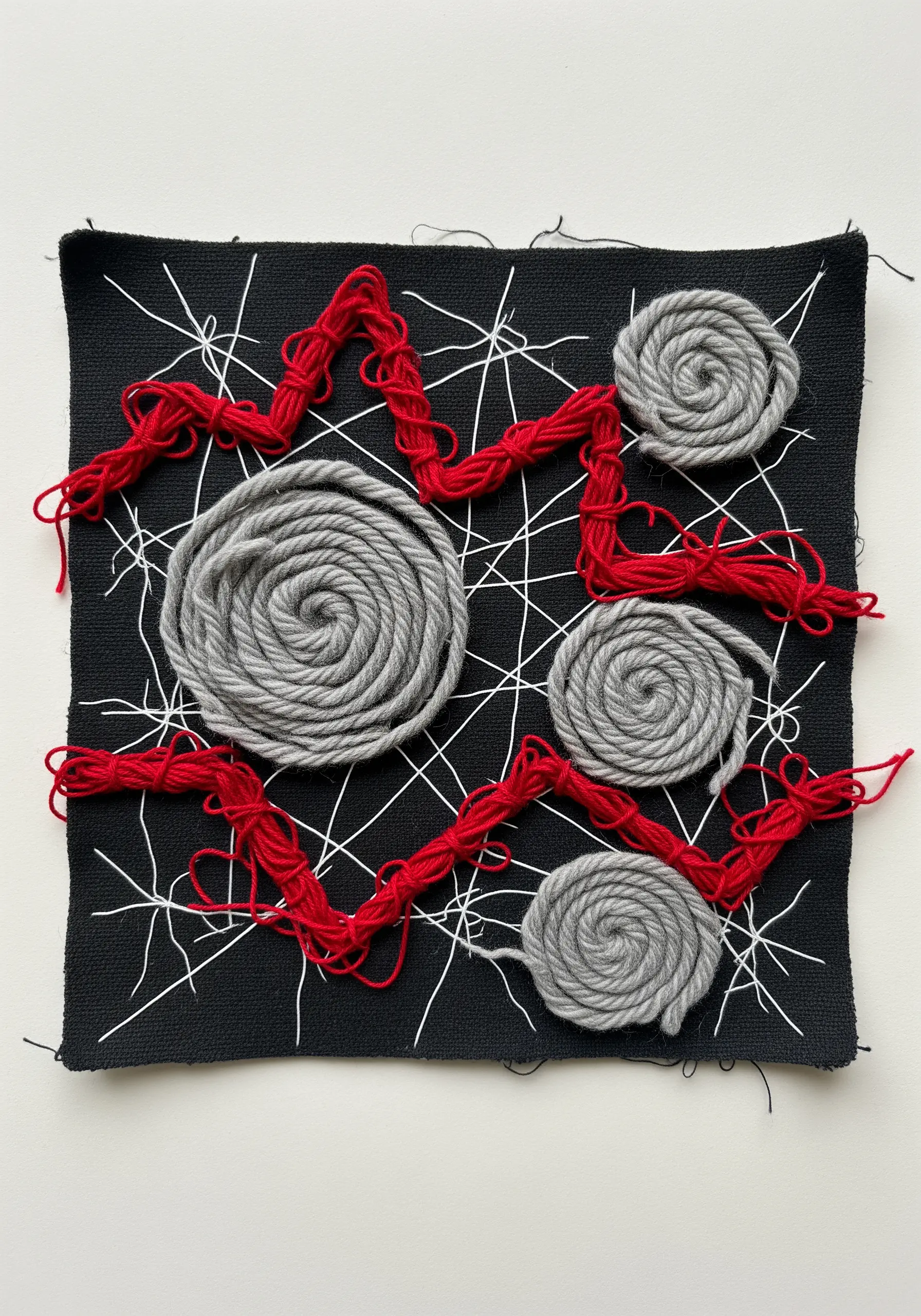
Generate visual excitement by pairing extremely thick yarns with very fine threads in a single composition.
Couch down a chunky wool roving for the spirals, letting its bulk and softness dominate the space.
For the zigzag element, wrap a similar thick yarn loosely, allowing it to remain dimensional and almost unraveled. This gives it a raw, deconstructed energy.
Against these heavy elements, stitch a chaotic web of sharp, straight lines using a single strand of fine white thread. The contrast between the delicate web and the bulky yarn creates a powerful sense of tension.
9. Define Shapes with Precision String Art Techniques

Use machine embroidery or precise hand-stitching to create sharp, geometric forms that resemble intricate string art.
Plot out your anchor points for the starburst shape and use a single, continuous thread to wrap around them, pulling it taut to create perfectly straight lines.
In the background, use a different technique for the spirals, like a machine-stitched satin stitch path in a metallic thread. This creates a shimmering, subtle texture that contrasts with the stark white lines of the star.
The precision required for this style transforms simple thread into a piece of modern, graphic art. It has the feel of an architectural string art design.
10. Explore Softness with Punch Needle and Ribbon

Combine the plush texture of punch needle with the smooth elegance of silk ribbon for a dreamy, multi-sensory piece.
Use a punch needle to create the soft, tufted zigzag sections. The loops create a gentle, cloud-like texture that is visually and physically soft.
Weave a wide, light-colored ribbon through the composition, allowing it to billow and twist. This adds a flowing, graceful element that moves differently than the static thread.
Add tiny couched spirals and loose, thin threads as delicate accents. These soft pastel embroidery ideas are perfect for creating a calm, gentle mood.
11. Focus on Form with a Monochrome Palette

Remove color from the equation to focus entirely on the interplay of shape, line, and texture.
Use a single color family, like these creams and taupes, but vary the thread weight and type. Use thick, multi-ply yarn for some elements and thinner floss for others.
Experiment with different couching techniques—some tight and dense, others looser and more linear. This variation is what creates interest in a monochrome piece.
This approach to monochrome thread embroidery results in a sophisticated, serene artwork where the texture itself becomes the subject.
12. Stitch an Explosion of Radiant Energy

Create a dynamic sense of movement by stitching a starburst of radial lines in fiery, energetic colors.
Start from a central point and work your way out, using long and short stitches to create the pointed rays. Use a gradient of yellows and oranges to give it a glowing effect.
Layer couched spirals on top of the rays, concentrating them toward the center. This creates a dense core of energy from which the rays emanate.
Scatter a few stray stitches and smaller spirals around the edges to suggest sparks and further enhance the feeling of an explosion.
13. Achieve Art Deco Elegance on Velvet

Pair the sheen of metallic thread with the deep pile of velvet for a luxurious, Art Deco-inspired design.
First, stitch a simple grid using a fine, neutral-colored thread to provide structure. This subtle background adds depth without competing with the main elements.
For the dominant zigzag, use a gold metallic thread and a tight satin stitch. The smooth, reflective surface of the satin stitch contrasts beautifully with the light-absorbing quality of the velvet.
Finally, add the spirals using a simple backstitch in a contrasting white thread. Their clean, graphic form reinforces the geometric, elegant feel of the piece.
14. Integrate Natural Elements into Your Stitching
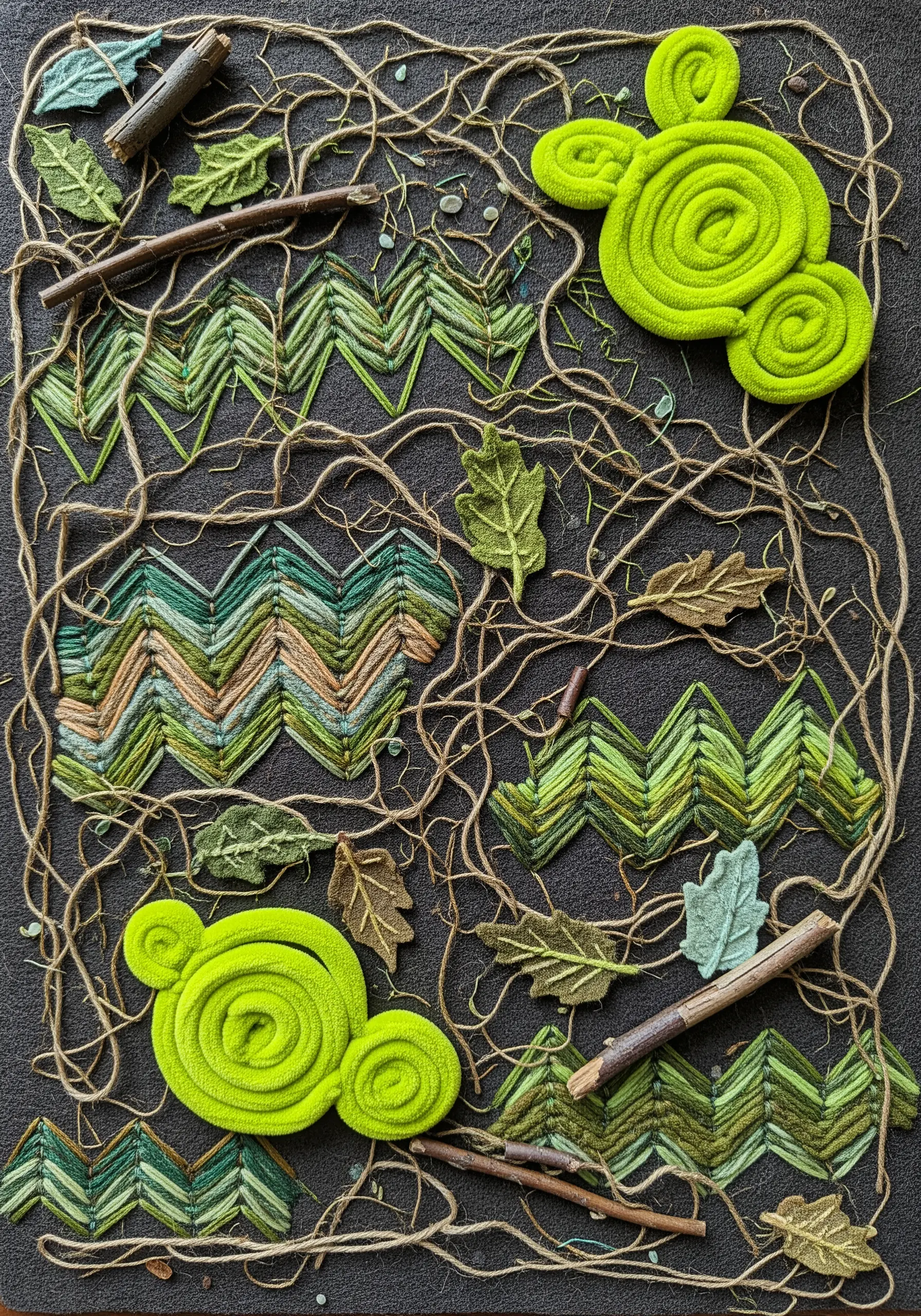
Transform your embroidery into a mixed-media piece by incorporating found natural objects like twigs, twine, and felt leaves.
Stitch your chevron patterns first, using variegated green threads to evoke a sense of foliage and growth.
Arrange your natural elements—twigs, felt leaves, and rustic twine—on the canvas, then use small, discreet stitches to secure them in place.
The combination of embroidered texture and real-world objects creates a rich, forest-floor effect. This is a fantastic way to approach creative collage art, bridging the gap between craft and nature.
15. Guide the Eye with Vertical Composition
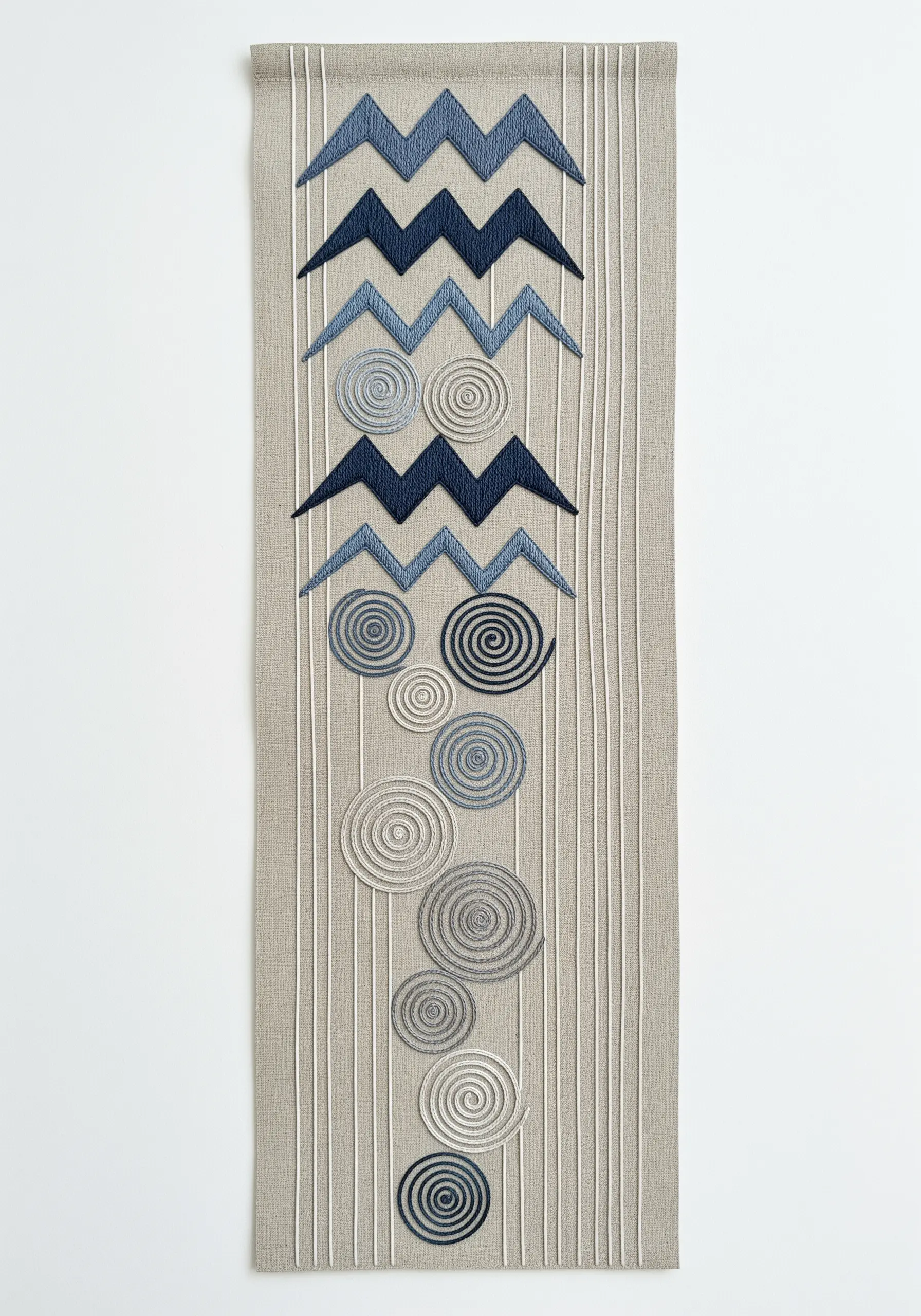
Design your abstract patterns on a long, narrow surface like a table runner to create a strong sense of vertical movement.
Use repeating satin stitch zigzags at the top to draw the eye downward.
Transition from the sharp, angular zigzags to softer, circular spirals. Gradually decrease the size and color intensity of the spirals as you move down the runner to create a feeling of fading or sinking.
Reinforce the vertical flow with long, parallel running stitches along the entire length. This creates a cohesive structure that unites the different abstract elements.
16. Evoke Playfulness with Bold, Candy-Colored Shapes

Use a palette of bright, saturated colors and simple, chunky stitches to create a design that feels joyful and sweet.
Work the zigzags in a thick, solid satin stitch using a full six strands of floss. The raised, defined lines give them a satisfying, graphic quality.
Create the small spirals by wrapping multiple bright colors of thread together before couching them down, mimicking the look of a lollipop.
Scatter short, straight stitches in contrasting colors throughout the background to act as sprinkles, completing the fun, confectionary theme.
17. Harness the Power of Negative Space

Create a powerful, minimalist composition by isolating just a few key elements on a large, empty canvas.
Stitch a single, sharp zigzag using a satin stitch with a slight sheen, like silk or rayon thread, to make it a distinct focal point.
Place a small, delicate spiral in a different quadrant of the canvas. The distance between the elements creates a sense of balance and tension.
Add a few wispy, curved lines to connect the spaces without cluttering them. This intentional use of emptiness gives each stitch more weight and significance.
18. Fuse Paint and Thread for Extreme Texture

Combine the worlds of painting and embroidery by stitching directly onto a heavily textured, painted canvas.
Apply acrylic paint to your canvas using a palette knife, creating thick, physical chevron patterns. Let it dry completely.
Once the surface is hard, use an awl to pre-punch holes for your needle. Stitch your spiral designs directly through the paint and canvas, using a strong, contrasting thread.
The final yellow paint splatters unify the two media. This is a bold approach to abstract fabric collage embroidery where each medium enhances the other.
19. Sculpt a Dense, Tactile Surface
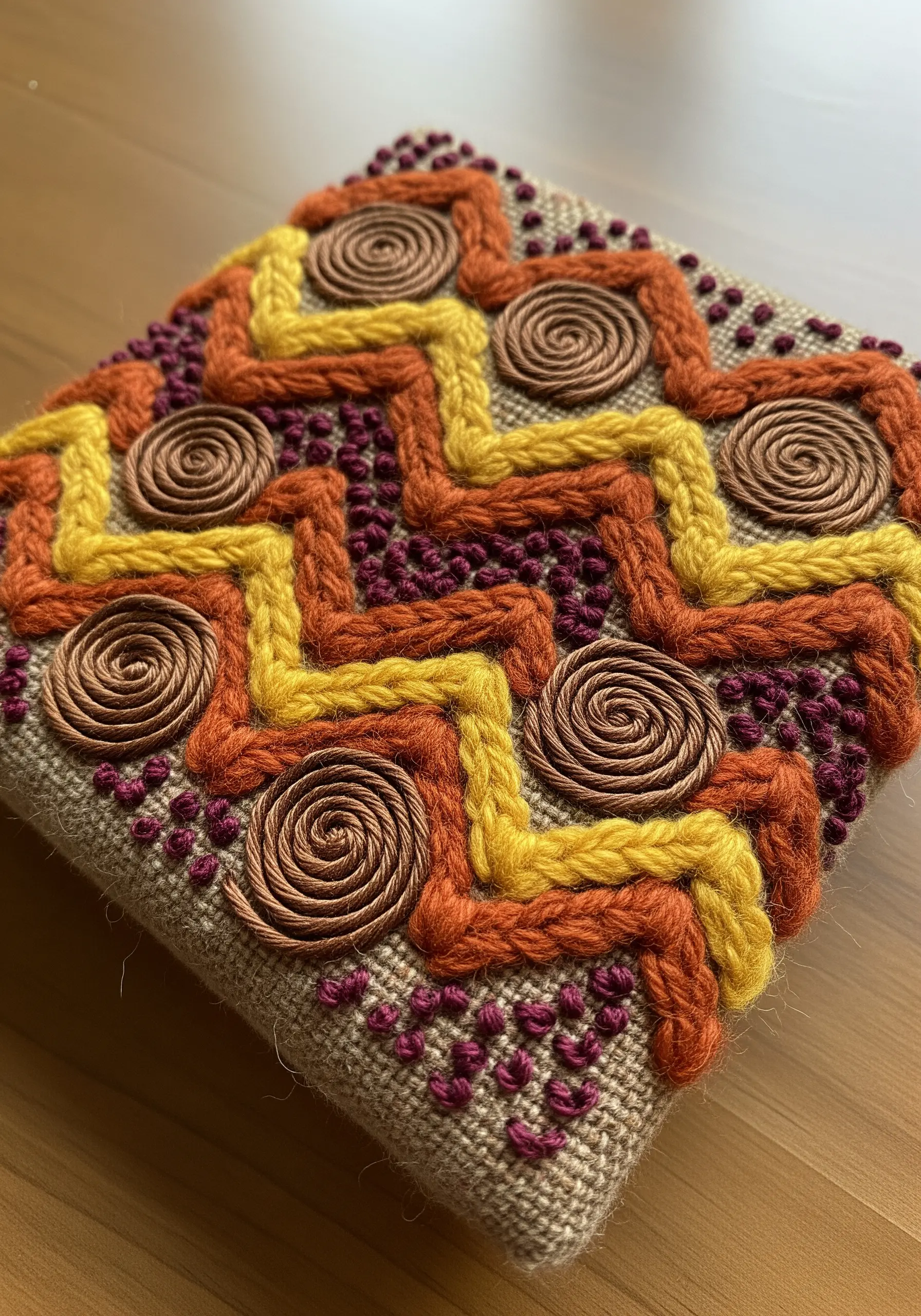
Create a small, sculptural object by covering every inch of its surface with dense, textured embroidery stitches.
Wrap a small box or padded form with a sturdy base fabric like burlap.
Use a thick, braided stitch for the zigzag lines to give them strong definition and height.
Fill the negative space with a dense field of French knots, which provides a nubby, pointillist texture that contrasts with the linear braids and smooth spirals.
The result is less a picture and more a small, touchable art object.
20. Use Hoops as a Canvas for Stitch Studies
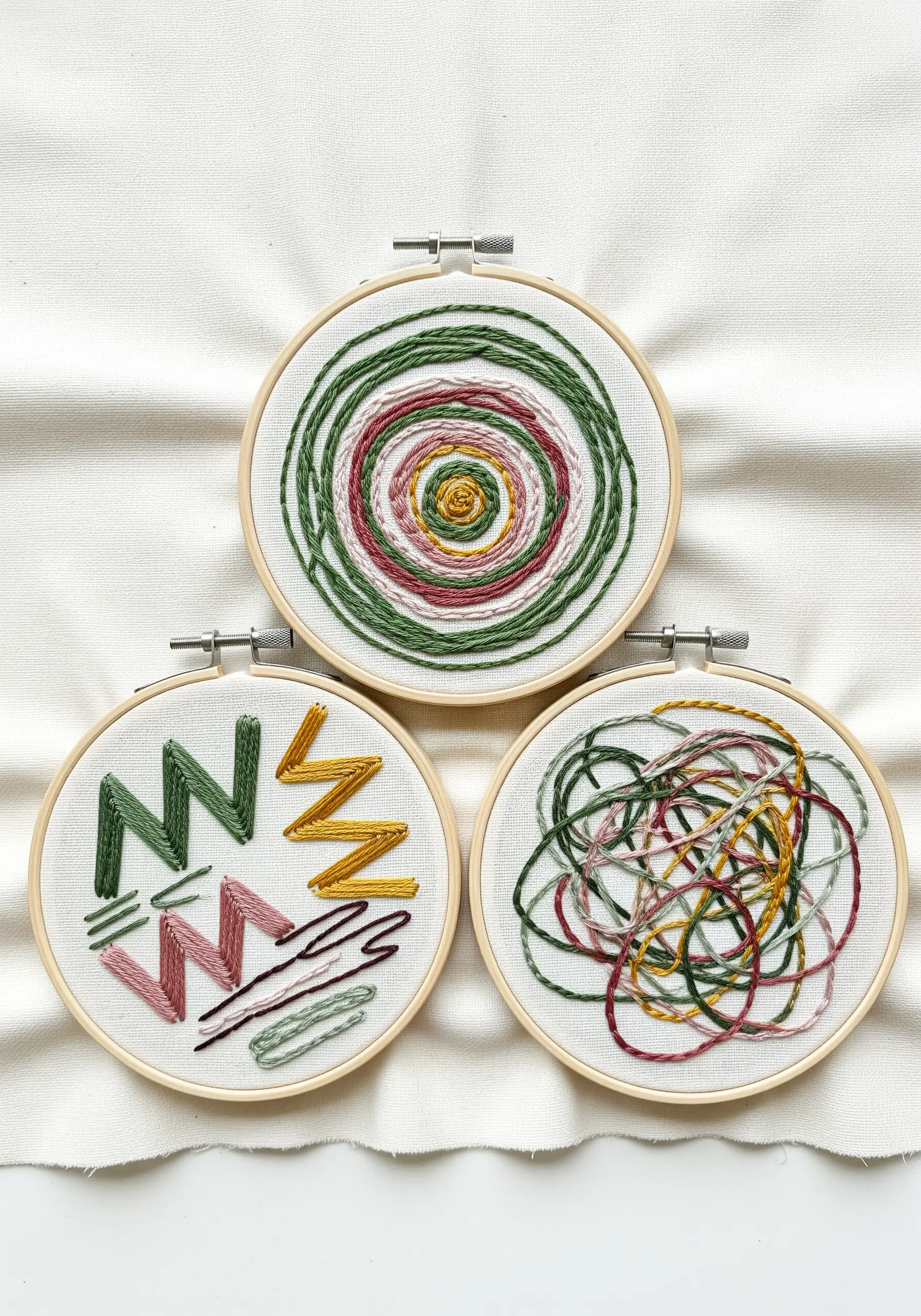
Approach your embroidery like a sketchbook by dedicating individual hoops to exploring different abstract concepts.
In one hoop, focus on concentric shapes and color blending within a single form. In another, explore fragmented lines and asymmetry.
Use a third hoop for pure, chaotic energy, layering colors and threads without a defined pattern.
Displaying these small hoop embroidery ideas together as a triptych showcases your creative process and turns simple studies into a cohesive art installation.
21. Capture a Street Art Vibe with Drips and Outlines

Emulate the bold energy of graffiti art by combining clean outlines with chaotic fills and intentional ‘drips’.
Create your main zigzag and spiral shapes using a solid satin stitch fill. Then, outline them with a couched cord in a contrasting color to give them a sharp, defined edge.
Let the ends of your couching threads hang loose to mimic the look of paint drips.
Fill the entire background with a dense, chaotic layer of free-motion machine stitching. This creates the gritty, energetic texture of a city wall.
22. Elevate a Rustic Base with Graphic Embroidery

Transform a simple jute or burlap surface into a sophisticated piece of decor by adding bold, graphic embroidery.
Use the natural weave of the jute as a grid to guide your stitches, ensuring your zigzags and spirals are evenly spaced.
Choose high-contrast colors like black, blue, and orange to stand out against the neutral, earthy tone of the base material.
Apply the stitches densely using a satin or chain stitch. This creates solid blocks of color that feel intentional and modern, elevating the humble jute to a piece of functional art.
23. Stitch a Digital Glitch Effect

Translate the aesthetic of digital distortion into thread by combining structured, pixelated blocks with chaotic, flowing lines.
Use a satin stitch or cross-stitch to create the fragmented, pixel-like sections. The sharp edges and color blocks mimic a corrupted image file.
Connect these structured areas with a massive tangle of free-motion machine stitching, letting the threads overlap and scribble to represent a data stream.
Incorporate clean, perfect spirals as points of order within the chaos. This contrast between precision and randomness is the key to achieving a convincing ‘glitch’ effect.
24. Build a Stylized, Radiant Sunrise

Use simple geometric shapes and a warm, vibrant color palette to construct a stylized sun motif.
Create the sun’s rays with long, tapered satin stitches, alternating between yellow and orange to create a glowing effect.
Build the core of the sun with layers of couched spirals and concentric circles, using variegated thread in shades of pink, orange, and red for a natural gradient.
Ground the composition with a block of simple horizontal stitches at the bottom, representing the horizon line and making the sun feel like it’s rising.
25. Design with Light and Sheer Fabric

Create a wall hanging that interacts with its environment by using a sheer fabric like organza or voile as your canvas.
Use appliqué with an opaque black fabric for the main zigzag and spiral shapes. The solid forms will appear to float against the transparent background.
Incorporate long, un-stitched threads that hang freely from the design. These elements will move with the air currents and cast subtle shadows, adding a dynamic, ever-changing quality to the piece.
When hung in front of a window, the light will filter through the sheer fabric, making the entire piece glow.
26. Play with Fabric Texture as a Design Element

Choose a fabric with a built-in texture, like this corduroy, and let its natural pattern inform your embroidery design.
Create your raised, chenille-stitched spirals and zigzags to work with or against the fabric’s linear ribs. Here, the vertical spirals contrast with the vertical lines of the corduroy, making them pop.
The green zigzags, however, follow the direction of the ribs, creating a more harmonious, integrated feel.
Add a subtle layer of detail with a simple backstitch in a darker, tonal thread, creating a diamond pattern that works with the fabric’s texture.
27. Create Rhythm with Pattern and Repetition

Establish a strong visual rhythm by repeating a simple pattern of zigzags across your fabric.
Use a single, bold color for the zigzags, stitched with a ribbon or a wide chain stitch to give them weight and presence.
Interrupt this predictable pattern by scattering small, contrasting motifs—like these tightly wound golden spirals—at irregular intervals. These become the focal points that your eye jumps to.
A background of meandering, fine-line stitches in a neutral color adds a subtle texture that prevents the design from feeling too rigid or flat.
28. Add Sparkle and Detail with Seed Beads
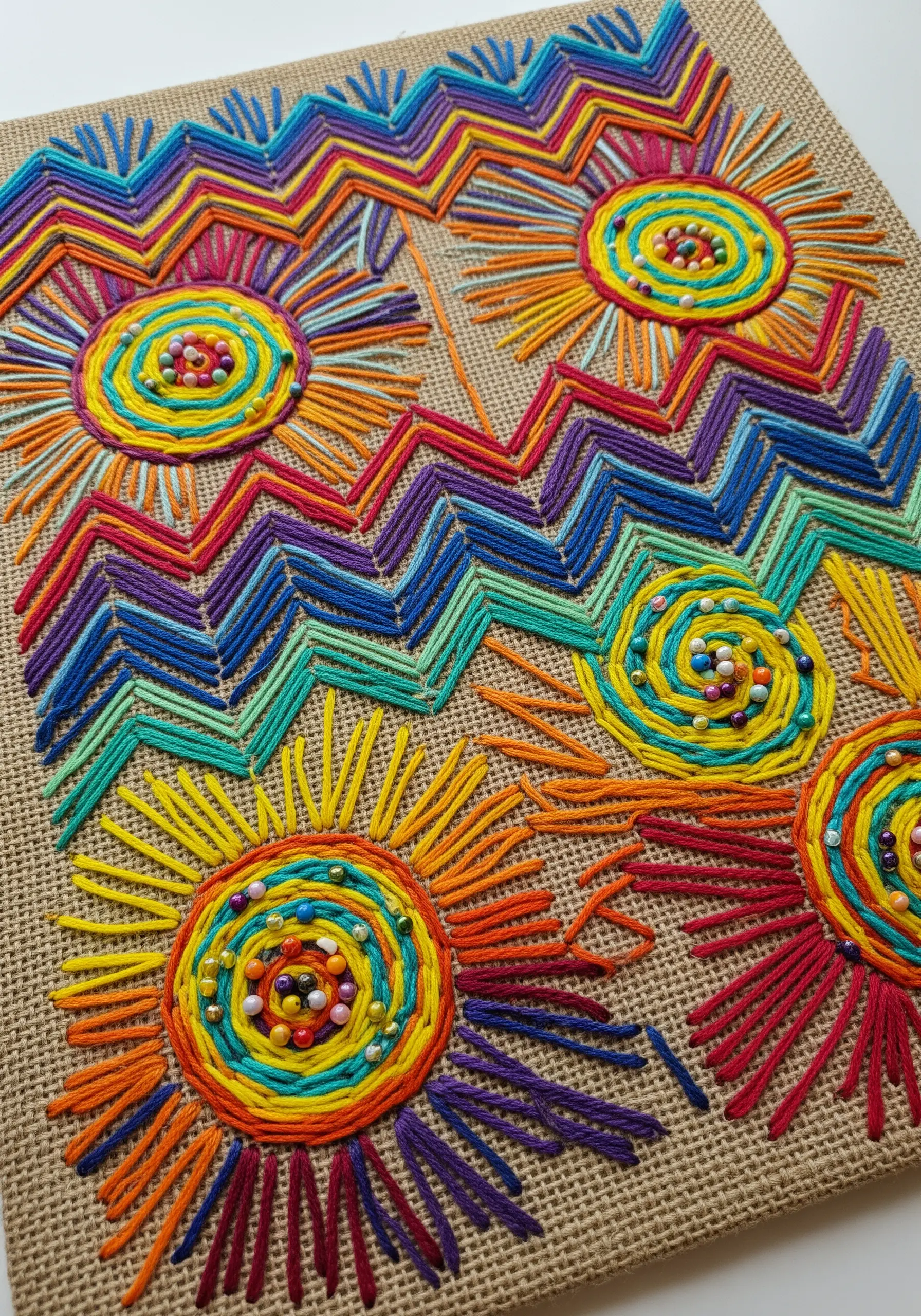
Integrate tiny seed beads into your yarn embroidery to add a surprising element of light and intricate detail.
Work your main shapes on a rustic fabric like burlap, using colorful yarn for the spirals, rays, and zigzags. The chunkiness of the yarn will contrast beautifully with the delicacy of the beads.
In the center of your spiral or sun motifs, fill the area with a dense cluster of multi-colored seed beads. Use a beading needle and a strong thread to secure them.
The beads catch the light and provide a polished, shimmering focal point amidst the soft, matte texture of the yarn.
29. Impose Order with a Structural Grid
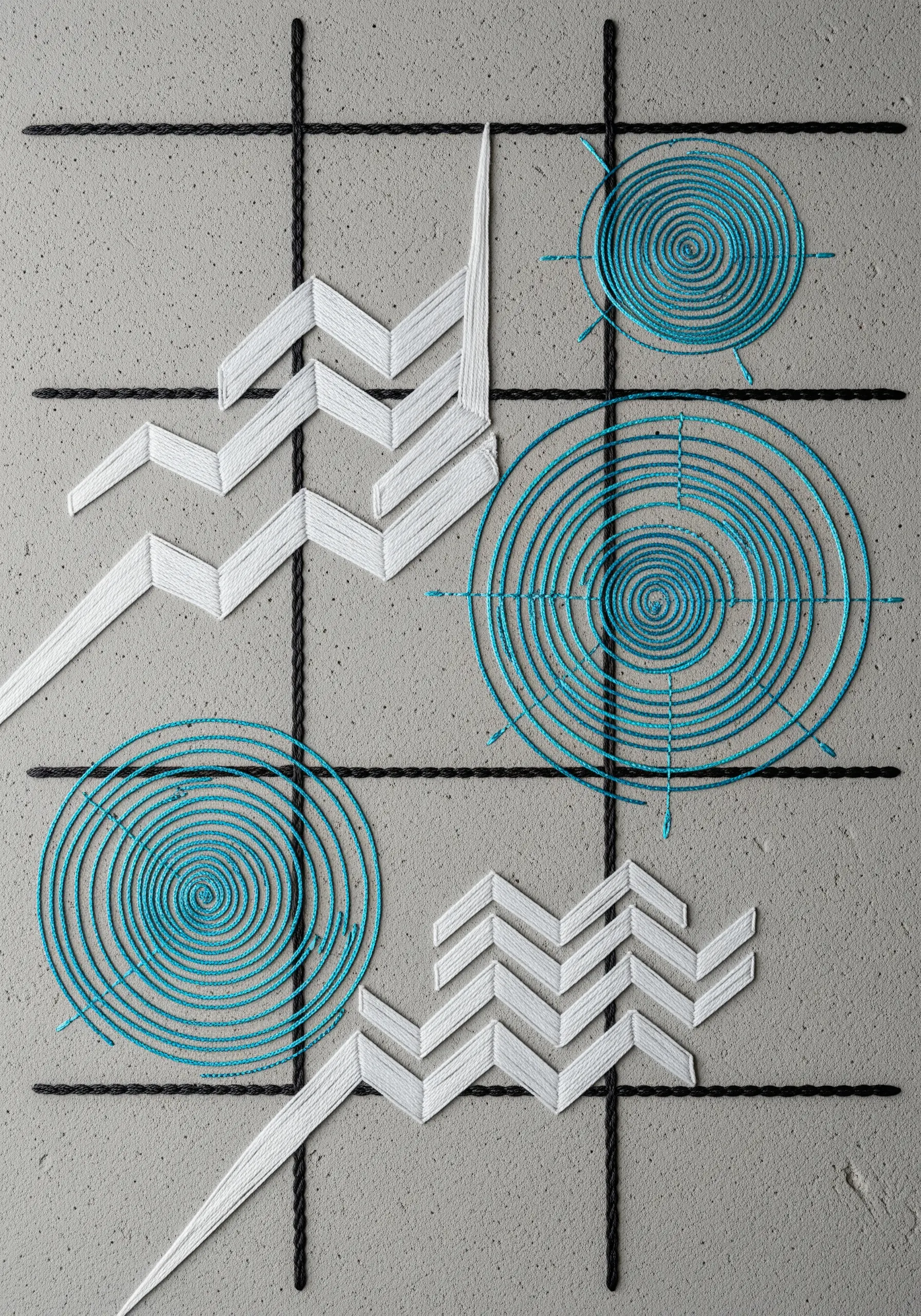
Ground your abstract composition by starting with a clear, simple grid. This underlying structure gives your free-form shapes a sense of purpose and placement.
Use a twisted cord or a thick chain stitch to create the grid lines, making them a tangible part of the design.
Place your spirals and zigzags within the quadrants of the grid. This framework helps balance the composition and prevents it from feeling random.
Using a textured surface like a painted or concrete-effect canvas enhances the architectural feel, making these embroidery on canvas wall pieces look incredibly intentional.
30. Conduct a Study in White-on-White Texture
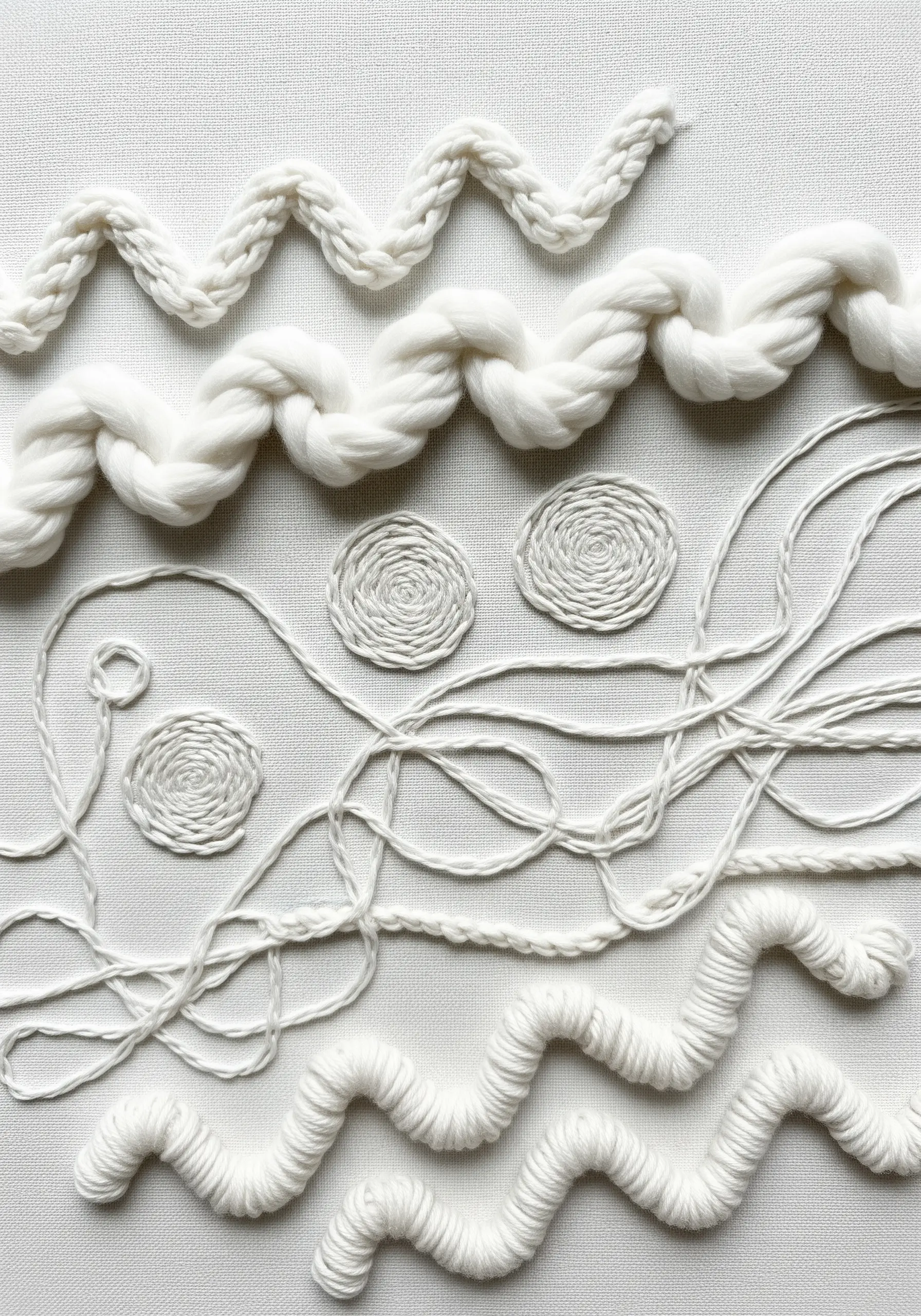
Explore the full potential of texture by creating a composition using only white threads and yarns on a white canvas.
Gather a variety of materials: thick wool roving, braided cord, fine cotton floss, and twisted yarn. Each will reflect light differently.
Create your abstract shapes—braided zigzags, couched spirals, and flowing lines—paying close attention to how their surfaces interact.
This all-white approach is a sophisticated minimalist embroidery decor idea that forces the viewer to appreciate the subtle beauty of shadow, form, and material.
31. Define Flowing Lines with Delicate Beadwork
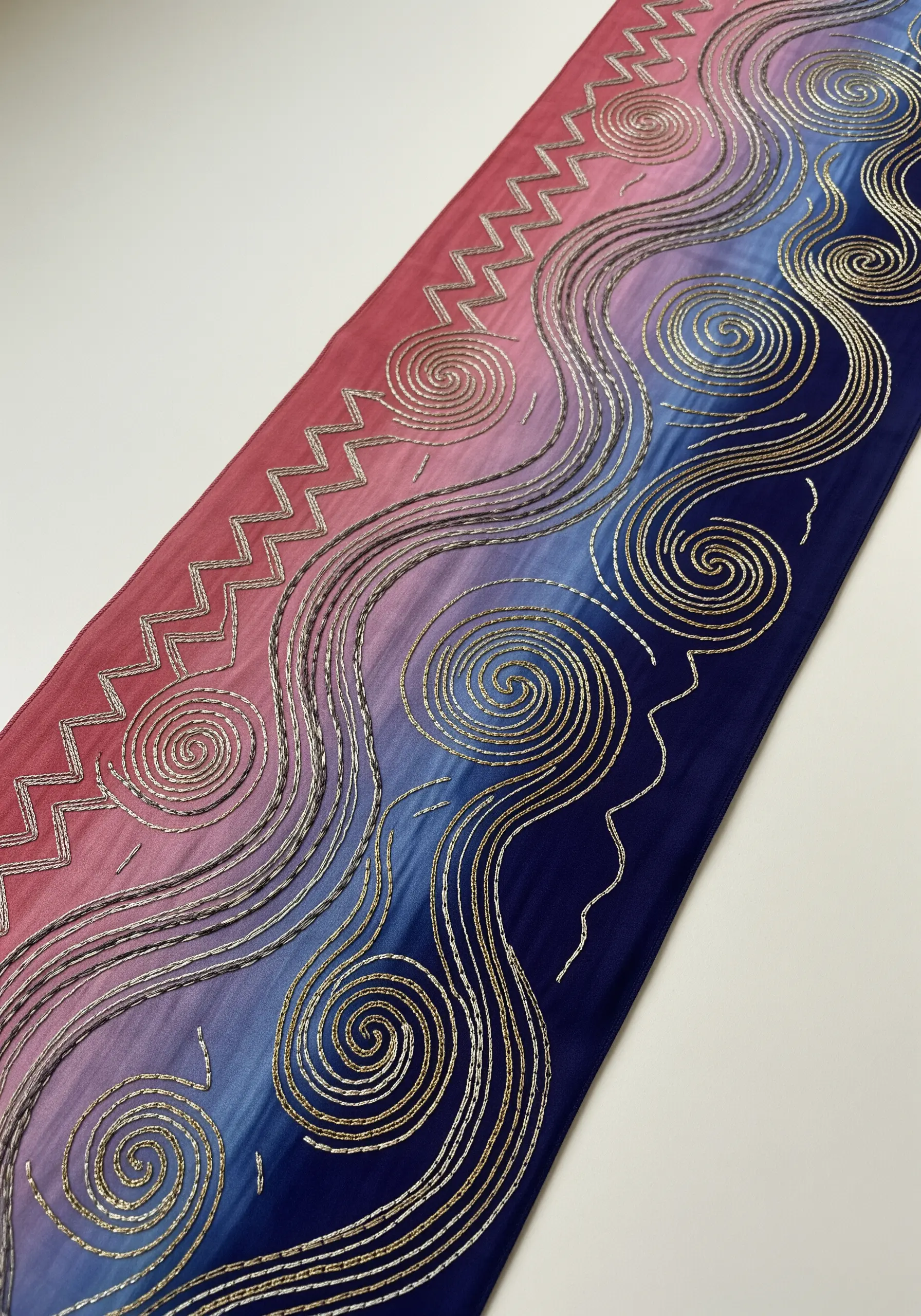
Use metallic seed beads to outline your designs on a sheer or gradient-dyed fabric for a jewelry-like effect.
Choose a lightweight, flowing fabric like chiffon or organza. The color gradient provides a beautiful, painterly background for your linework.
Instead of stitching with floss, couch down a continuous line of beads using a fine, matching thread. This creates a shimmering, delicate line that seems to float on the fabric’s surface.
This technique is perfect for adding an element of refined luxury to table runners, scarves, or wall hangings.
32. Master the Bold Line with Heavy Cord Couching

Create powerful, graphic lines in your embroidery by couching down a single, thick cord or rope.
Select a heavy cord in a contrasting color and lay it on your fabric in the desired shape. Use a matching, standard-weight embroidery floss to tack it down with small, evenly spaced stitches.
The impact of this technique comes from the clean, unbroken line and the high-relief texture it creates.
Contrast the thick, couched cord with finer details, like the delicate gold spirals and thin stitched zigzags, to make its boldness even more apparent.
33. Paint an Abstract Landscape with Thread
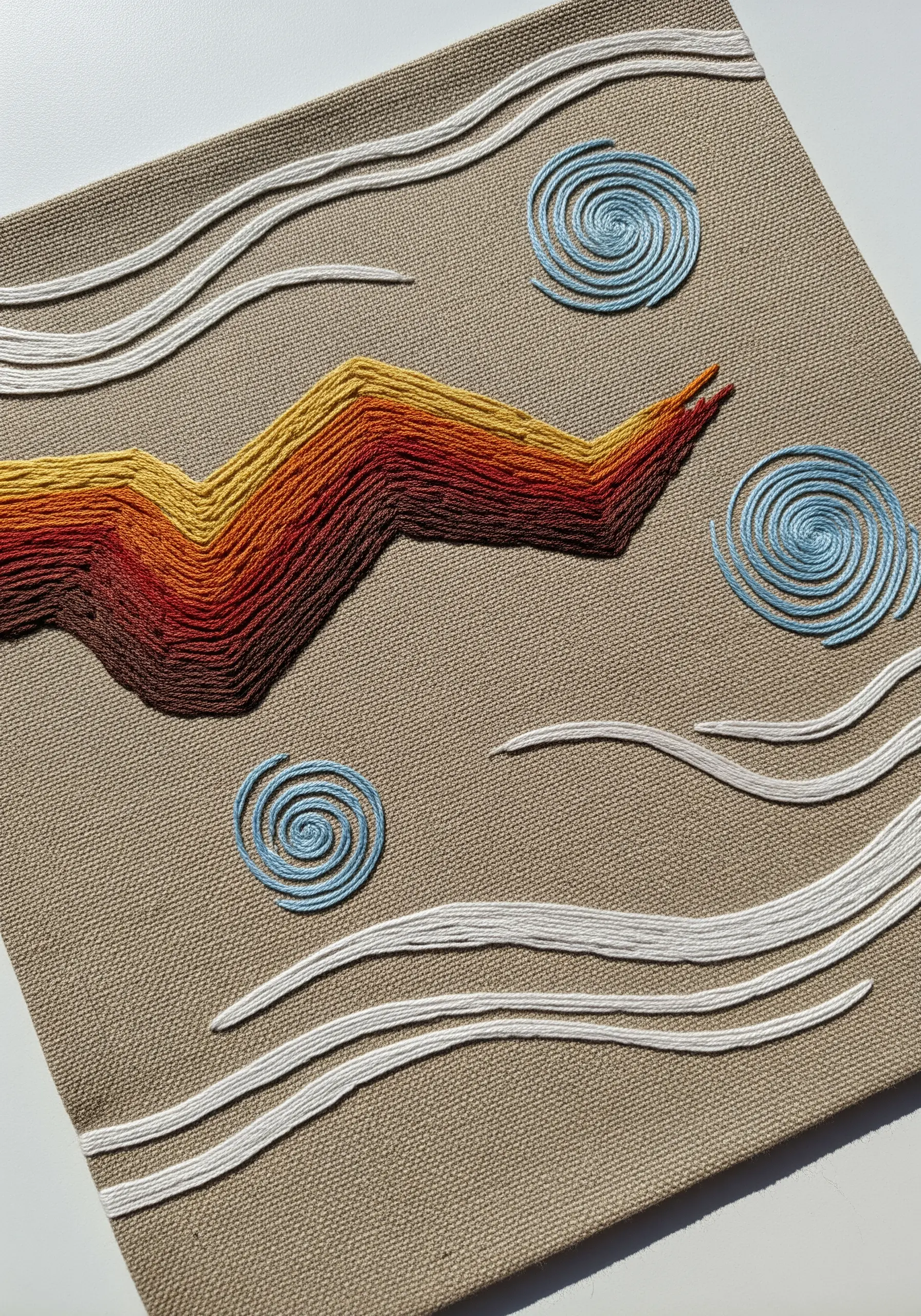
Use directional satin stitch and color gradients to translate the feeling of a landscape into an abstract form.
For the central ‘mountain’ shape, blend shades of brown, red, and yellow floss using a long-and-short stitch. Keep your stitches angled in the same direction to create a unified texture.
Suggest a sky or water with simple couched spirals and wavy lines in cool, airy colors like blue and white.
This approach to abstract thread embroidery captures the essence of a natural scene without literal representation, focusing instead on color, form, and mood.