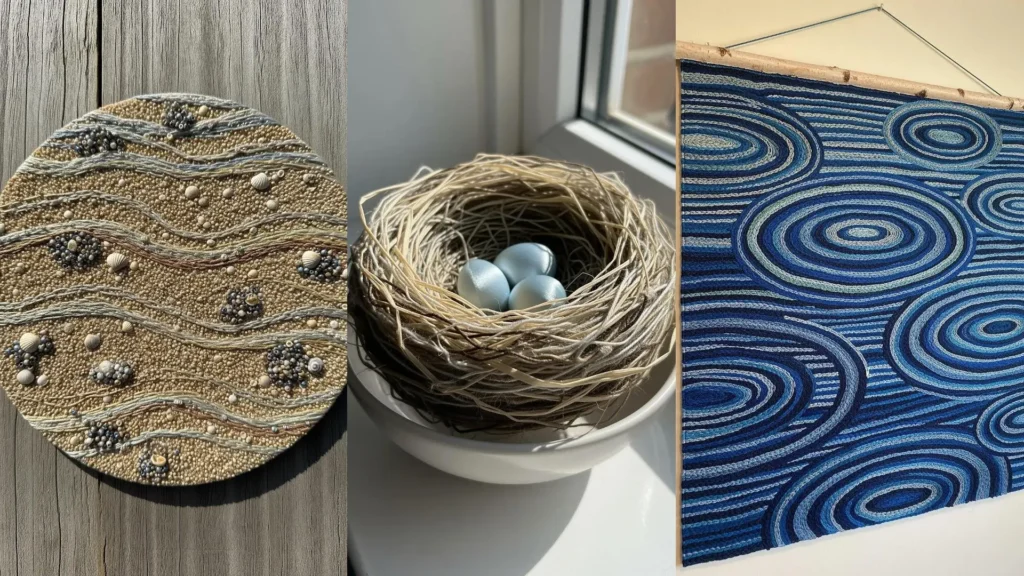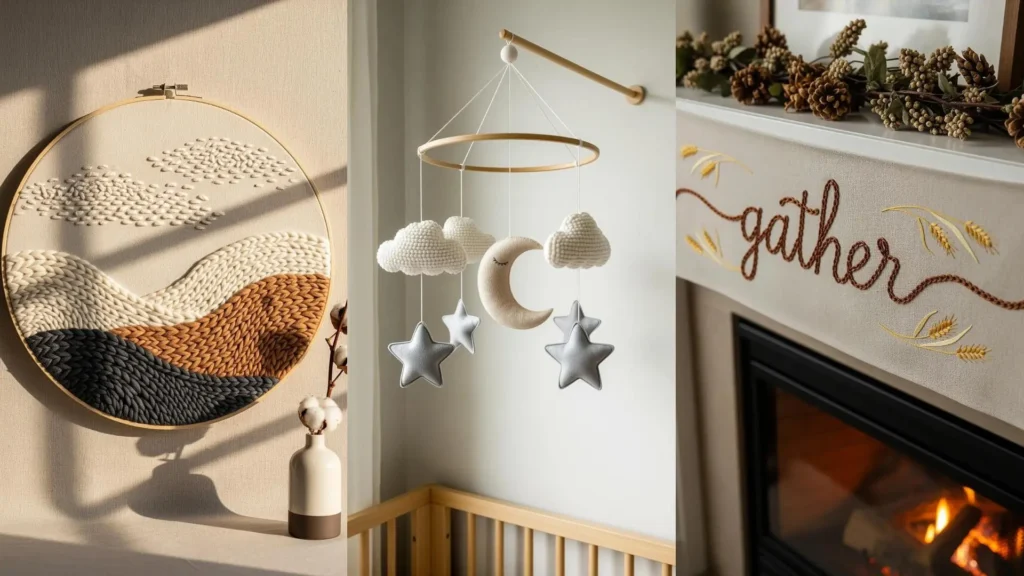
If you’ve ever felt that your embroidery, while lovely, is missing a certain something—a quiet confidence, a sense of cohesion—I want you to reconsider the power of a neutral palette.
It’s not about limiting your creativity; it’s about shifting your focus. When you work with shades of linen, stone, and earth, color steps aside and allows texture, form, and light to take center stage. Suddenly, the direction of a single stitch or the thickness of your thread carries immense expressive weight.
These projects are more than just patterns; they are invitations to explore technique. Ask yourself not ‘what color should this be?’ but ‘what texture does this need?’. Does it call for the high relief of a French knot, the smooth sheen of satin stitch, or the rustic line of a simple backstitch? Mastering these subtleties is what will give your work that warm, inviting, and deeply intentional quality you’ve been searching for.
1. Sculptural Landscapes with Yarn Couching
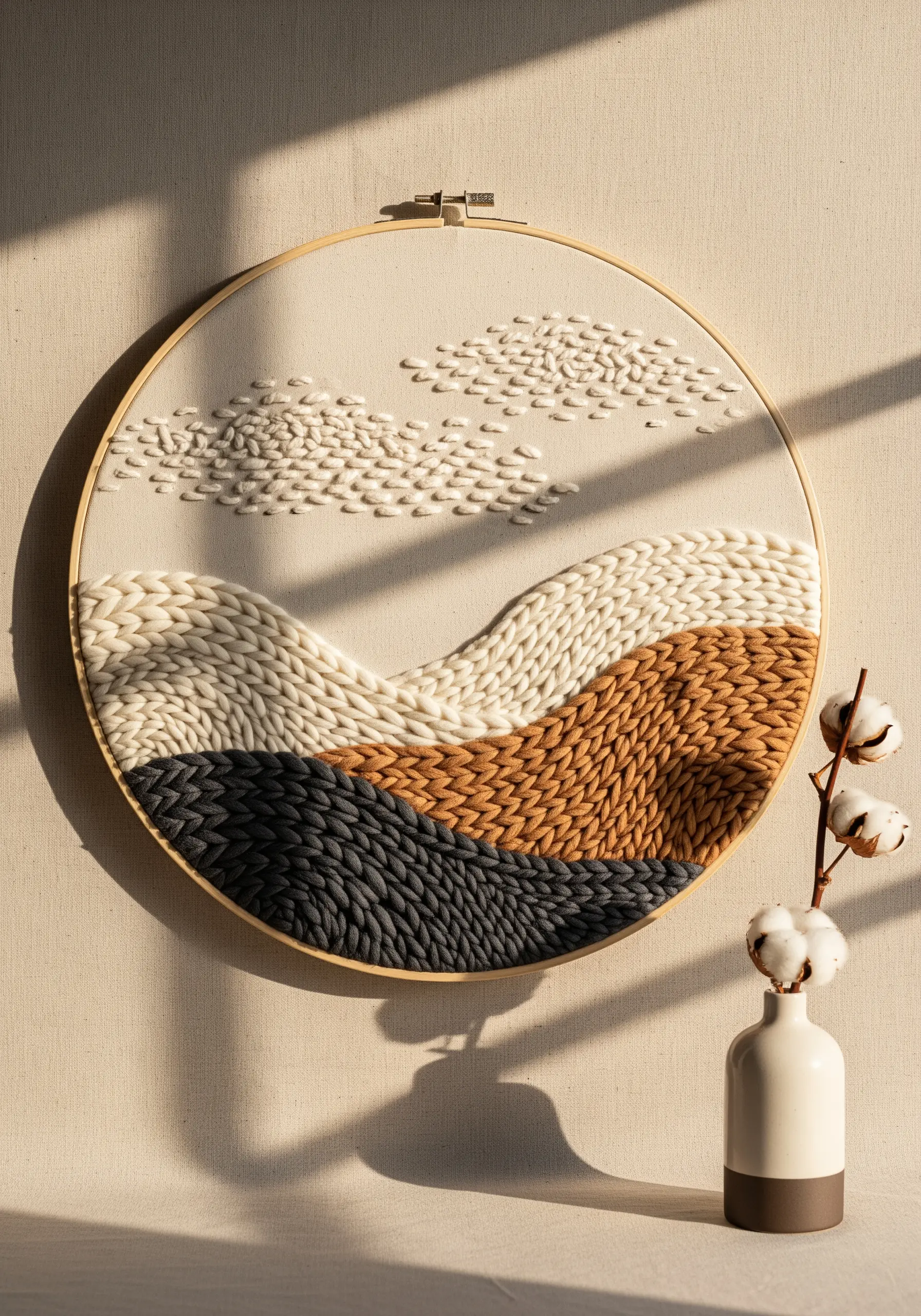
Create extraordinary depth by swapping floss for thick yarn.
Instead of filling shapes with traditional stitches, lay down chunky yarn in rows and secure it with a thinner, matching thread—a technique called couching.
This method builds texture much faster than satin stitch and gives your work a tactile, three-dimensional quality.
For the clouds, use short, disconnected couched stitches to create a soft, diffused texture that contrasts with the dense, flowing hills.
This is one of the best ways to capture nature’s textures in your next embroidery project without complex needlework.
2. Weave Dimension into Linear Designs
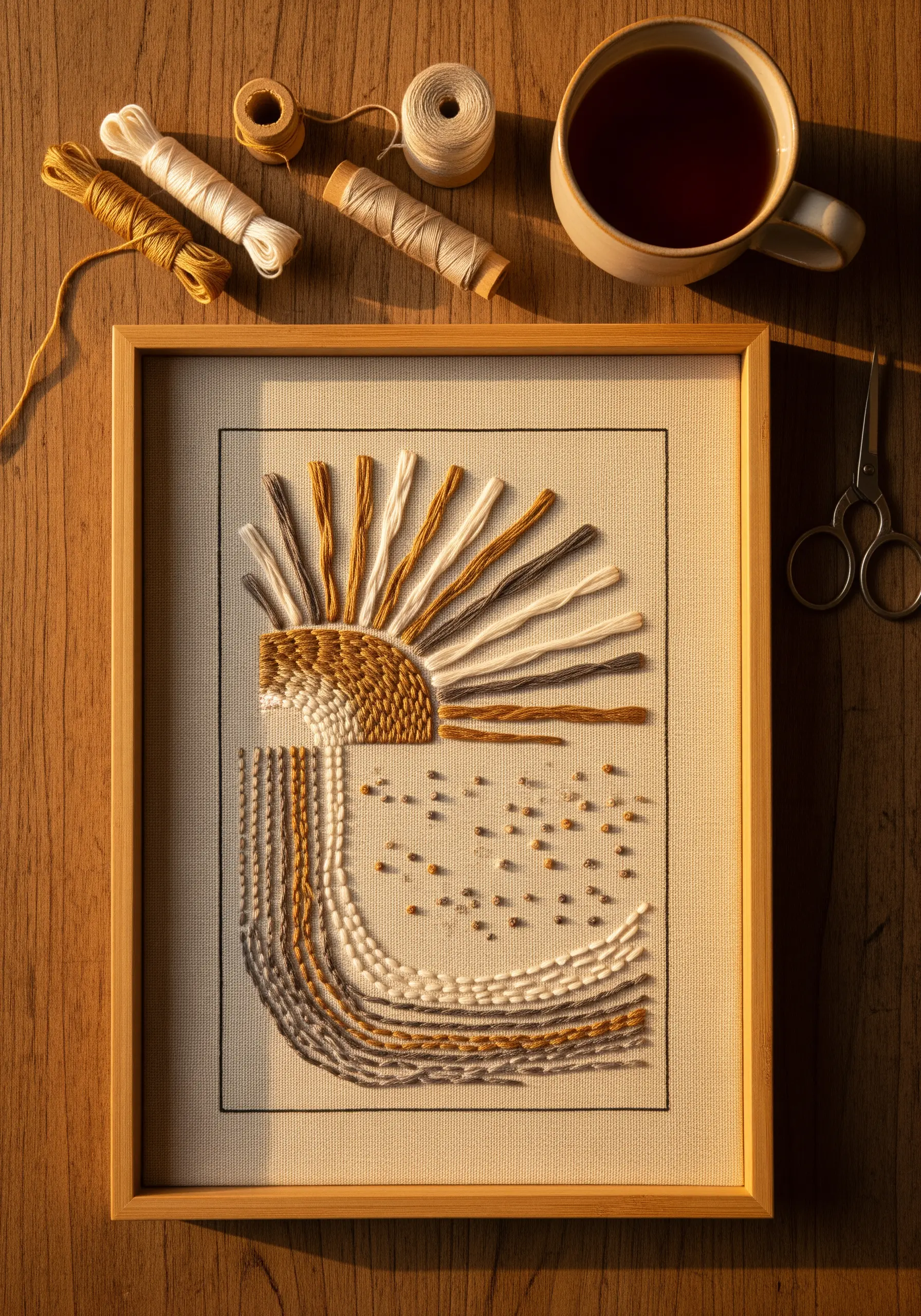
Elevate simple straight stitches by adding a woven element as your focal point.
First, create a foundation of long, radiating stitches (the ‘warp’).
Then, use a blunt tapestry needle to weave another thread over and under these foundation stitches (the ‘weft’), packing it tightly to create a solid, textured shape.
This technique adds a central point of interest and weight, turning a simple sunburst into a dynamic abstract piece.
For the cleanest look, ensure your initial straight stitches are taut but don’t pucker the fabric.
These abstract thread embroidery ideas are perfect for framing.
3. Master Understated Gradients in Botanicals
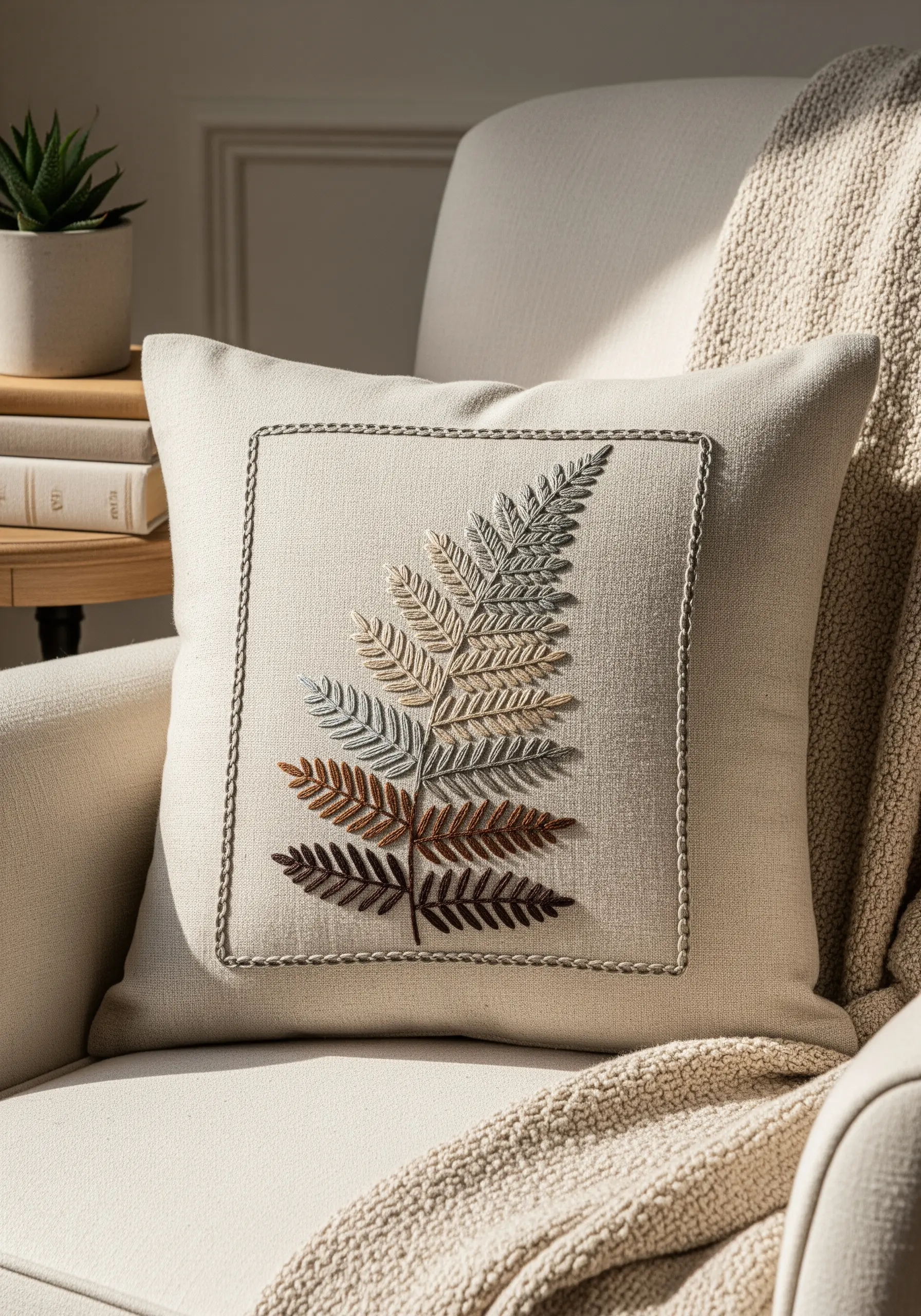
Give foliage a realistic, painterly effect by blending neutral tones with the long-and-short stitch.
Instead of filling each leaflet with a flat color, transition subtly from dark to light by overlapping your stitches.
Work in sections, using two or three closely related shades—like umber, taupe, and sage—to create the illusion of light hitting the fern.
This technique avoids harsh lines and gives organic shapes a soft, sophisticated depth that satin stitch alone cannot achieve.
These fern foliage stitch variations elevate simple cushion decor.
4. Achieve Graphic Precision with Wrapped Stitches
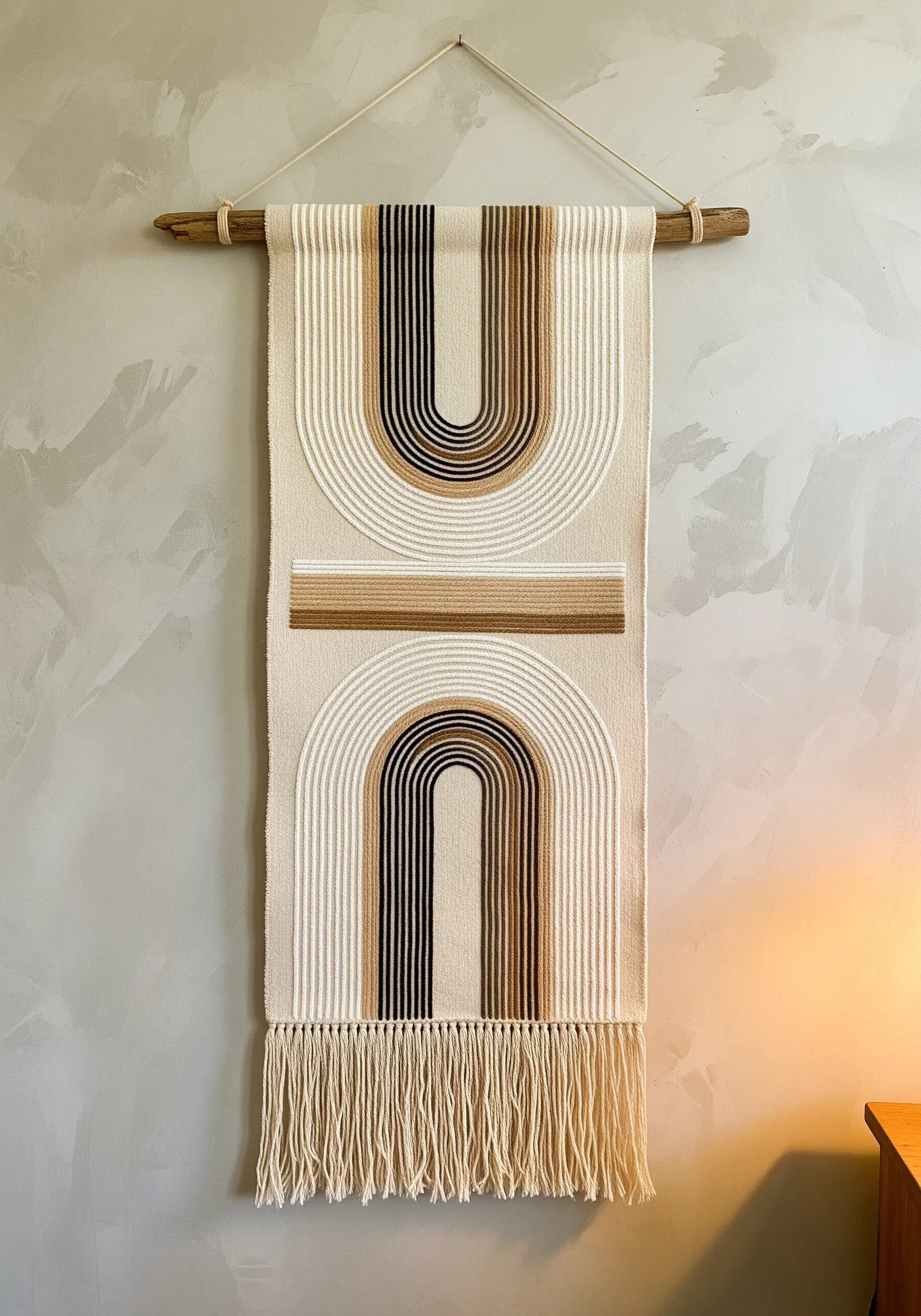
For bold, geometric wall art, focus on perfectly uniform texture and clean lines.
This design uses a technique similar to wrapping or weaving over a thick cord base to create raised, graphic arches.
To replicate this, lay down a foundation of parallel satin stitches, then wrap your working thread around them for a corded effect.
Maintaining consistent tension is critical for ensuring the curves are smooth and the lines are parallel.
This method transforms simple thread into a structured, architectural piece, making it ideal for rent-friendly embroidery wall tapestry ideas.
5. Explore a Trio of Textural Stitches
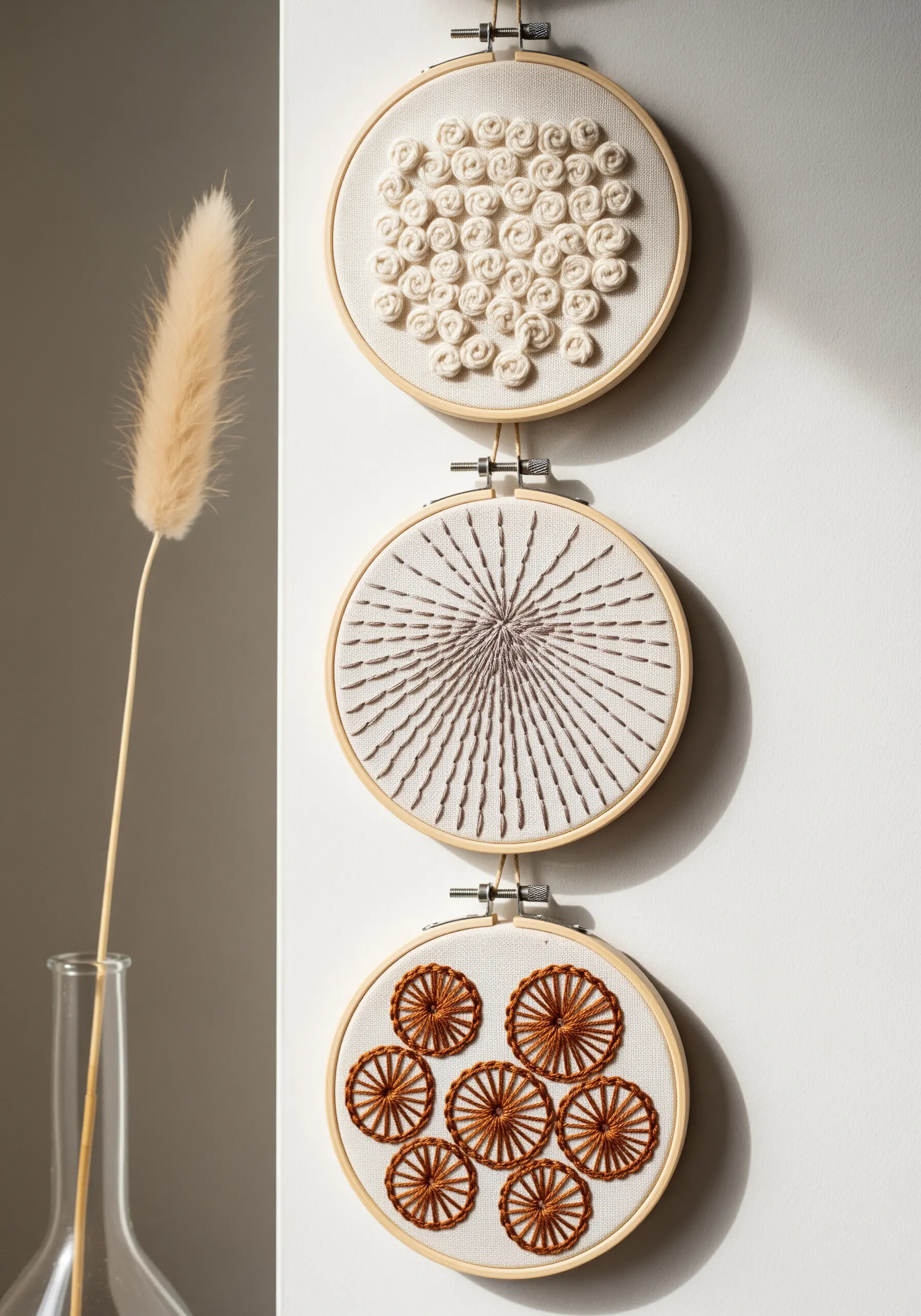
Challenge yourself to create visual interest using texture instead of color.
In a single hoop, you can combine dimensional stitches like bullion knots for clustered florals, radiating straight stitches for a sunburst effect, and woven wheel stitches for solid circles.
Grouped together, these small hoop embroidery ideas become a sampler of textures that feels cohesive because of the limited color palette.
This exercise trains your eye to see the form and shadow each stitch creates.
6. Design Elegant, Breathable Borders
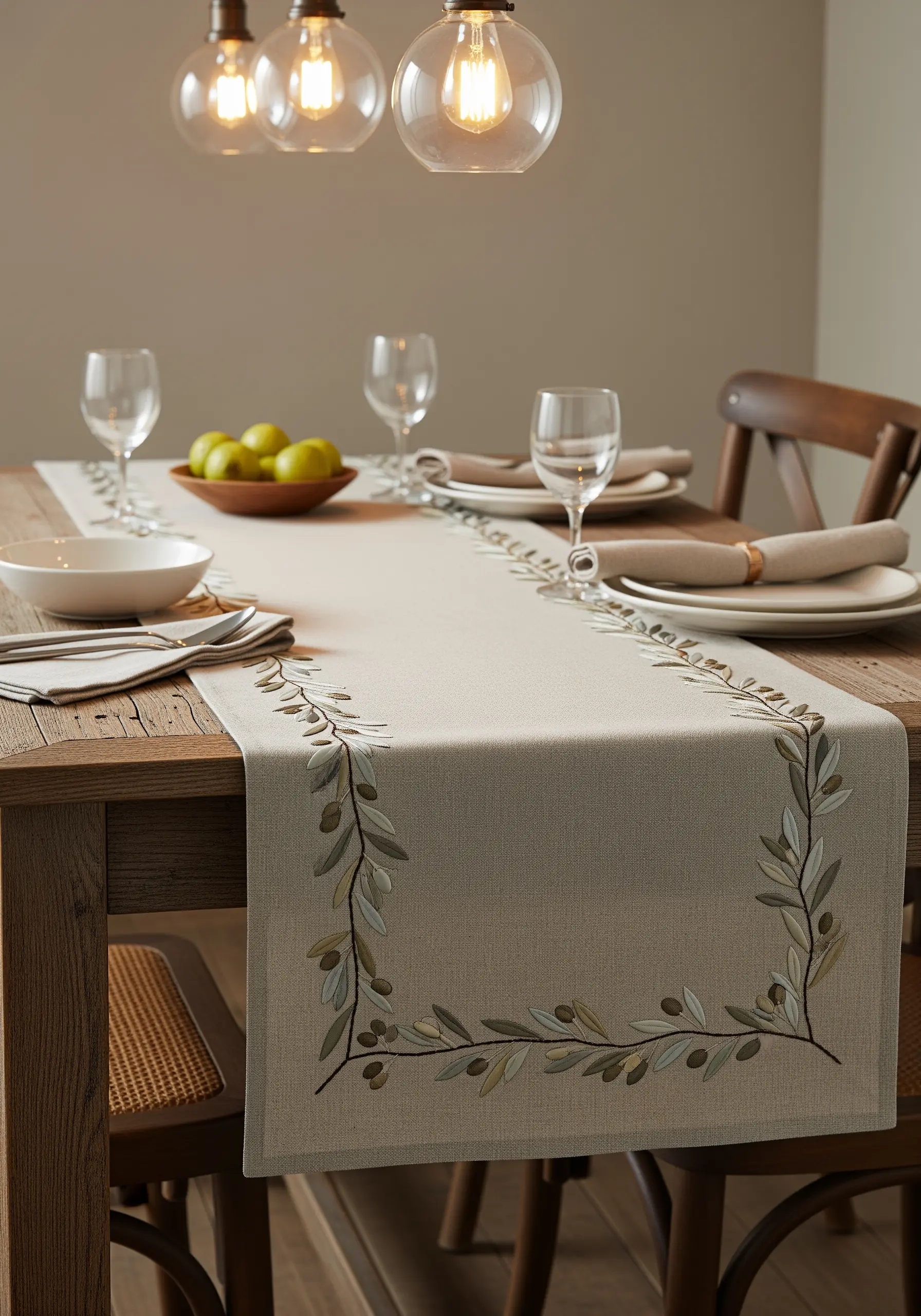
When embroidering functional items like table linens, balance is key.
Instead of a heavy, dense design, create a light, meandering border using stem stitch for the vines and a simple satin stitch or fishbone stitch for the leaves.
The negative space is just as important as the stitching; it allows the design to frame the table setting without overwhelming it.
Choose a thread color that is only a few shades darker than your fabric for a subtle, high-end finish.
These hand-stitched table runner embroidery designs add a touch of timeless grace.
7. Use Dark Fabric for Dramatic Contrast
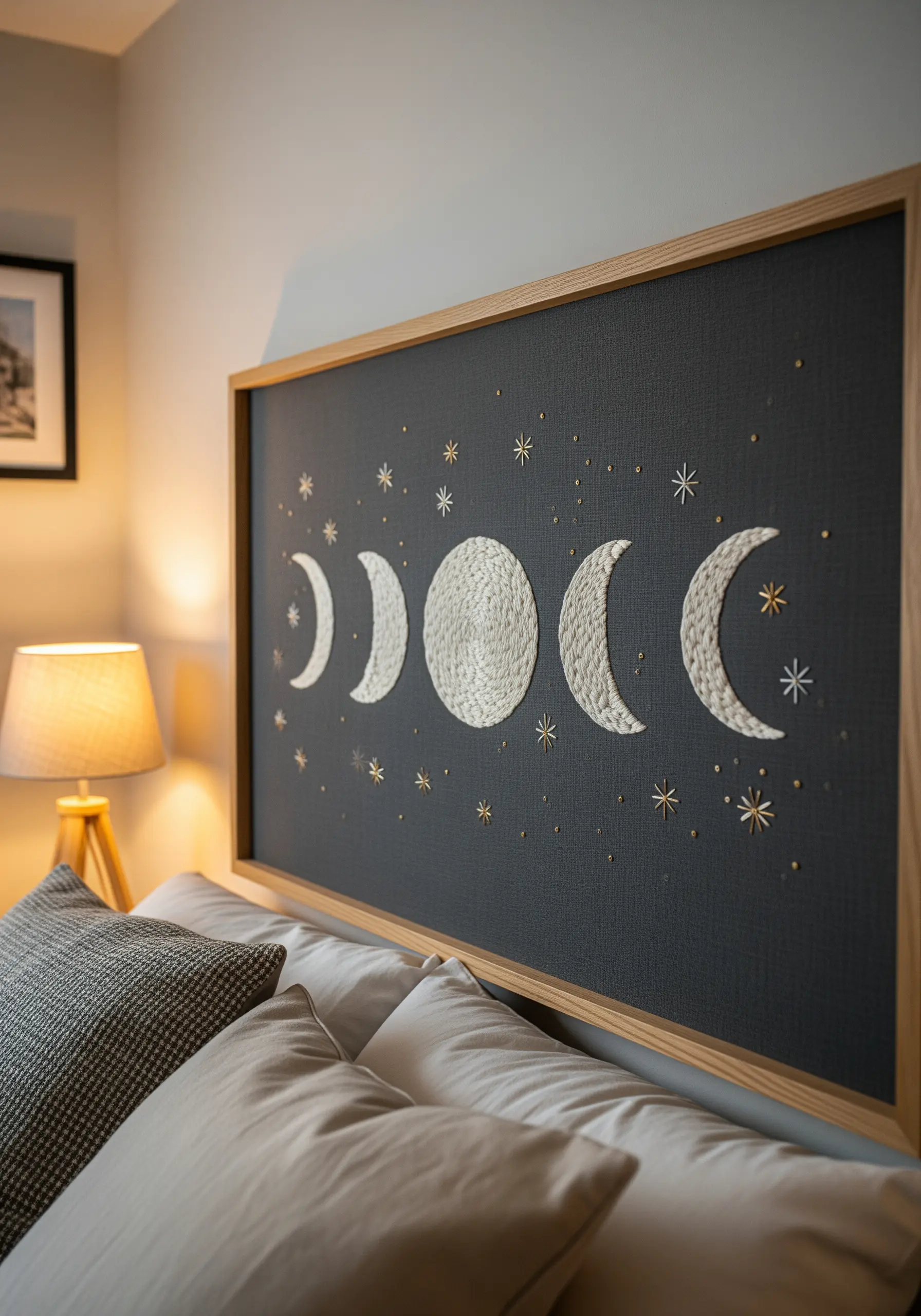
Make your neutral threads command attention by stitching them on a dark background fabric like charcoal linen or black cotton.
The high contrast makes creams, ivories, and grays appear more luminous and defined.
For the moon phases, use a dense spiral of split stitch or a couched cord to create a solid, tactile shape that stands out.
Scatter tiny French knots or seed stitches in metallic gold for stars, adding a touch of warmth and sparkle to the cool palette of these night garden embroidery ideas.
8. Create Depth with Layered Sheer Fabrics
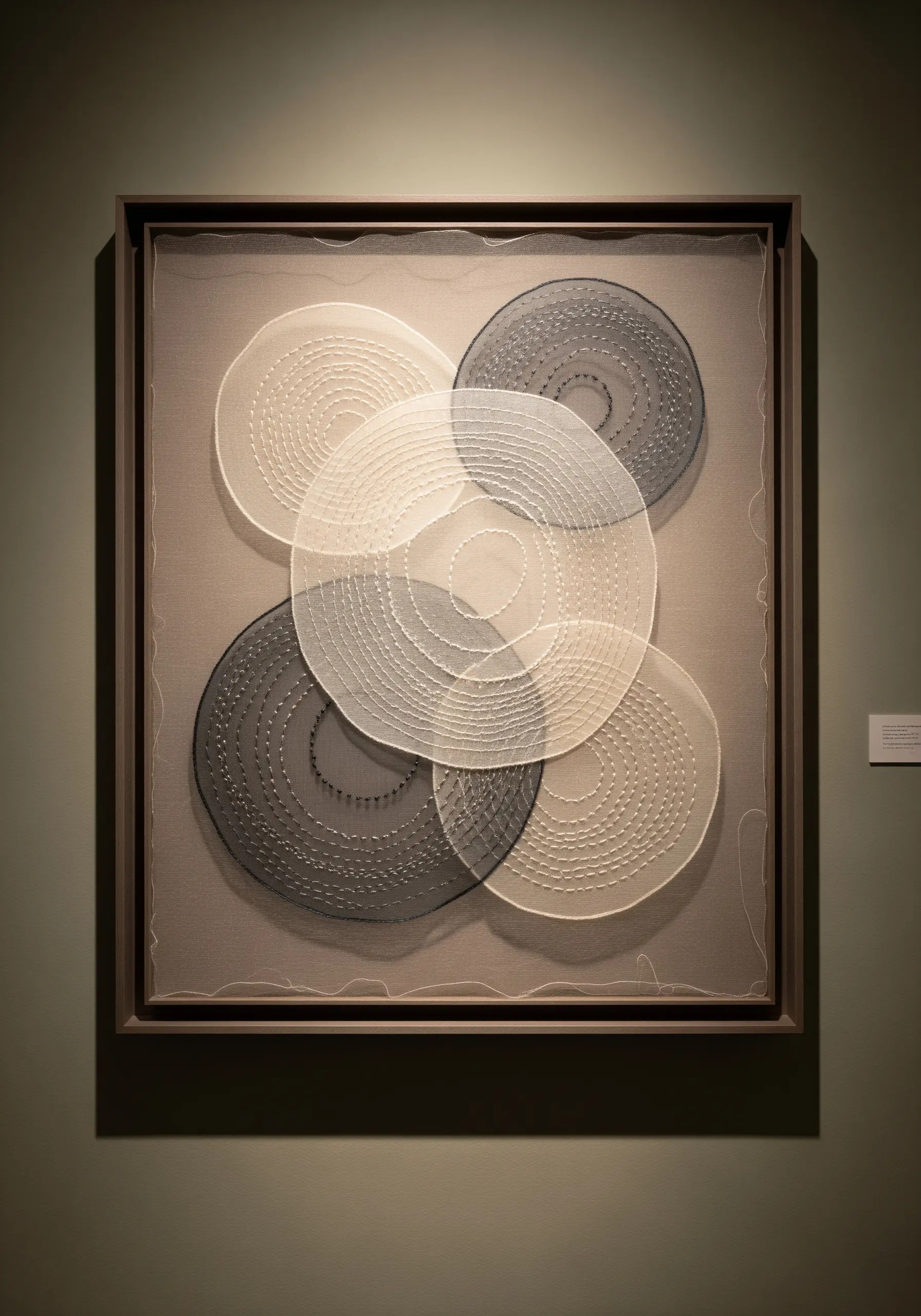
Introduce an element of transparency and abstraction into your work.
This piece uses layers of organza or other sheer fabrics, each embroidered with simple running stitches in concentric circles.
When layered, the overlapping patterns create new shapes and shades, offering an ethereal, ghost-like effect.
To execute this, stitch each layer separately before carefully tacking them together onto a solid backing fabric.
These abstract layered thread collage ideas feel both delicate and complex.
9. Add Realism with Directional Fill Stitching
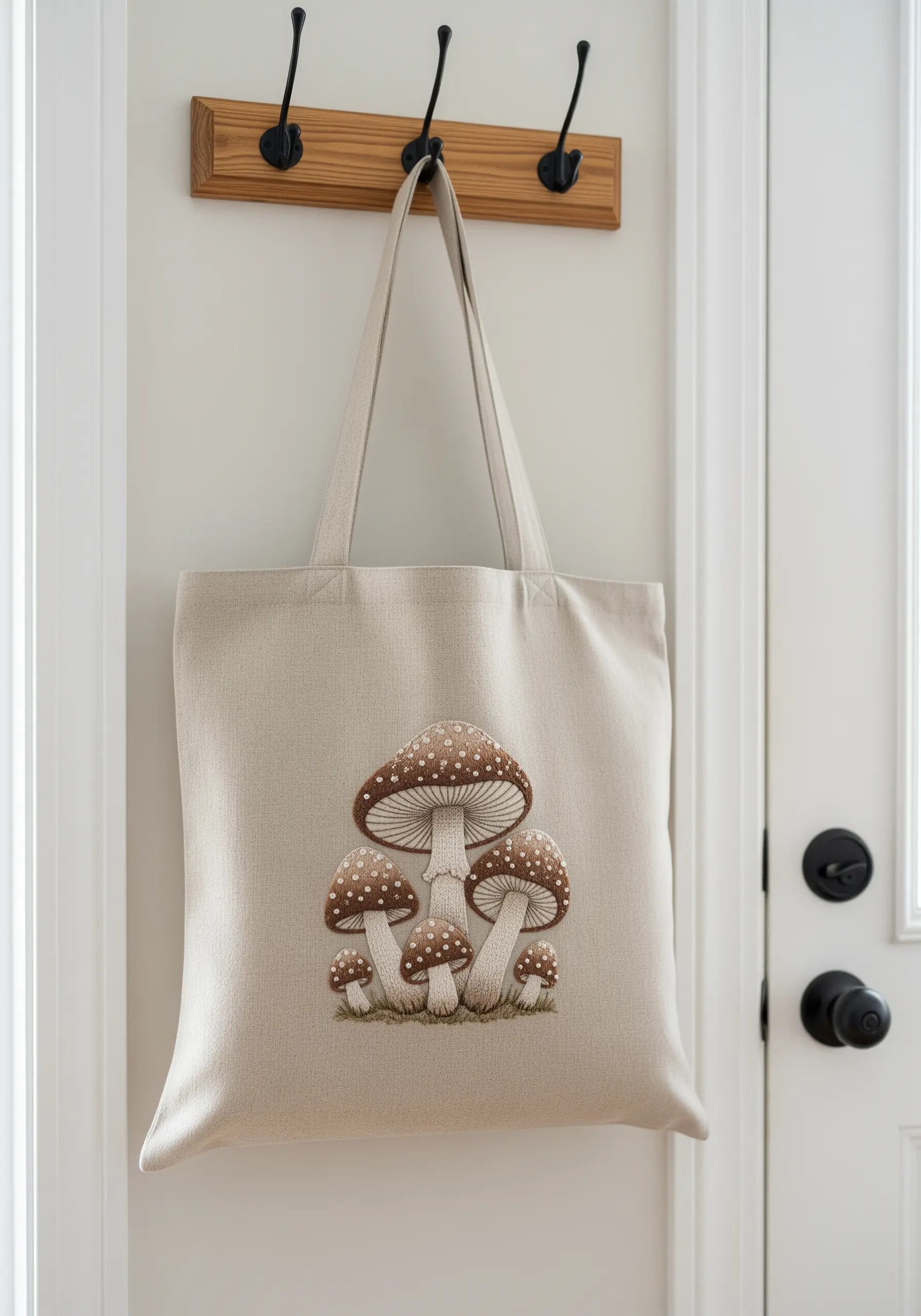
To prevent large filled areas from looking flat, use the direction of your stitches to create contour and shape.
For these mushrooms, the long-and-short stitches on the caps should follow their natural curve, radiating from the center outwards.
Use a slightly lighter shade at the top and a darker one underneath to mimic natural light and shadow.
This thoughtful application of directional stitching is the secret to making your subjects look three-dimensional and lifelike, perfect for realistic mushroom forest floor embroidery projects.
10. Refine Your Lettering and Line Art
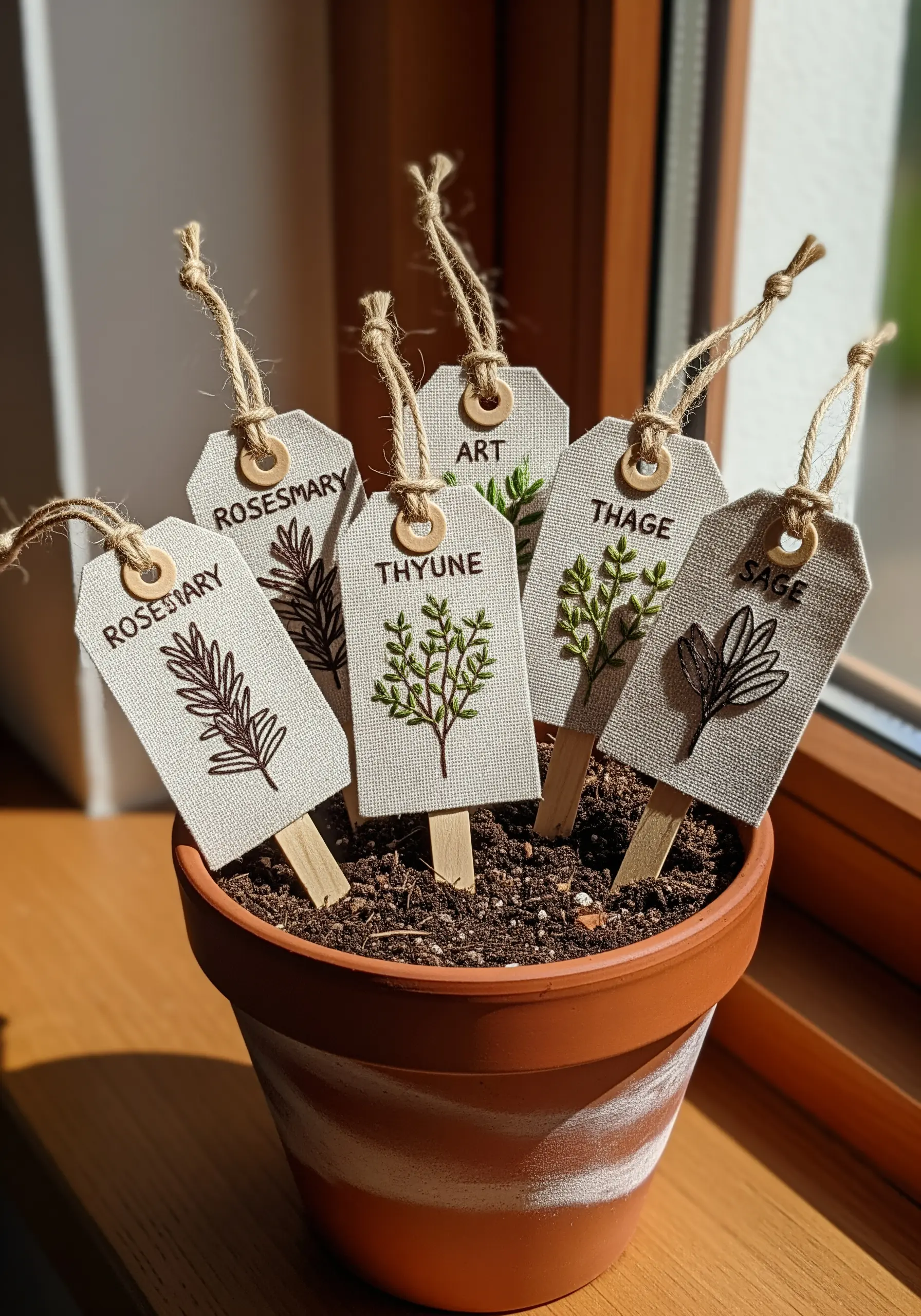
For delicate projects like these herb markers, clarity is paramount.
Use a single strand of six-strand floss for any lettering to keep it crisp and legible; a simple backstitch is perfect for this.
For the botanical illustrations, switch to two strands to give the leaves and stems slightly more weight and presence.
This subtle shift in thread weight creates a clear visual hierarchy between the text and the image, resulting in a polished, professional finish.
Try these leaf embroidery stitches for your own tiny projects.
11. Build Bold, Tactile Appliqué
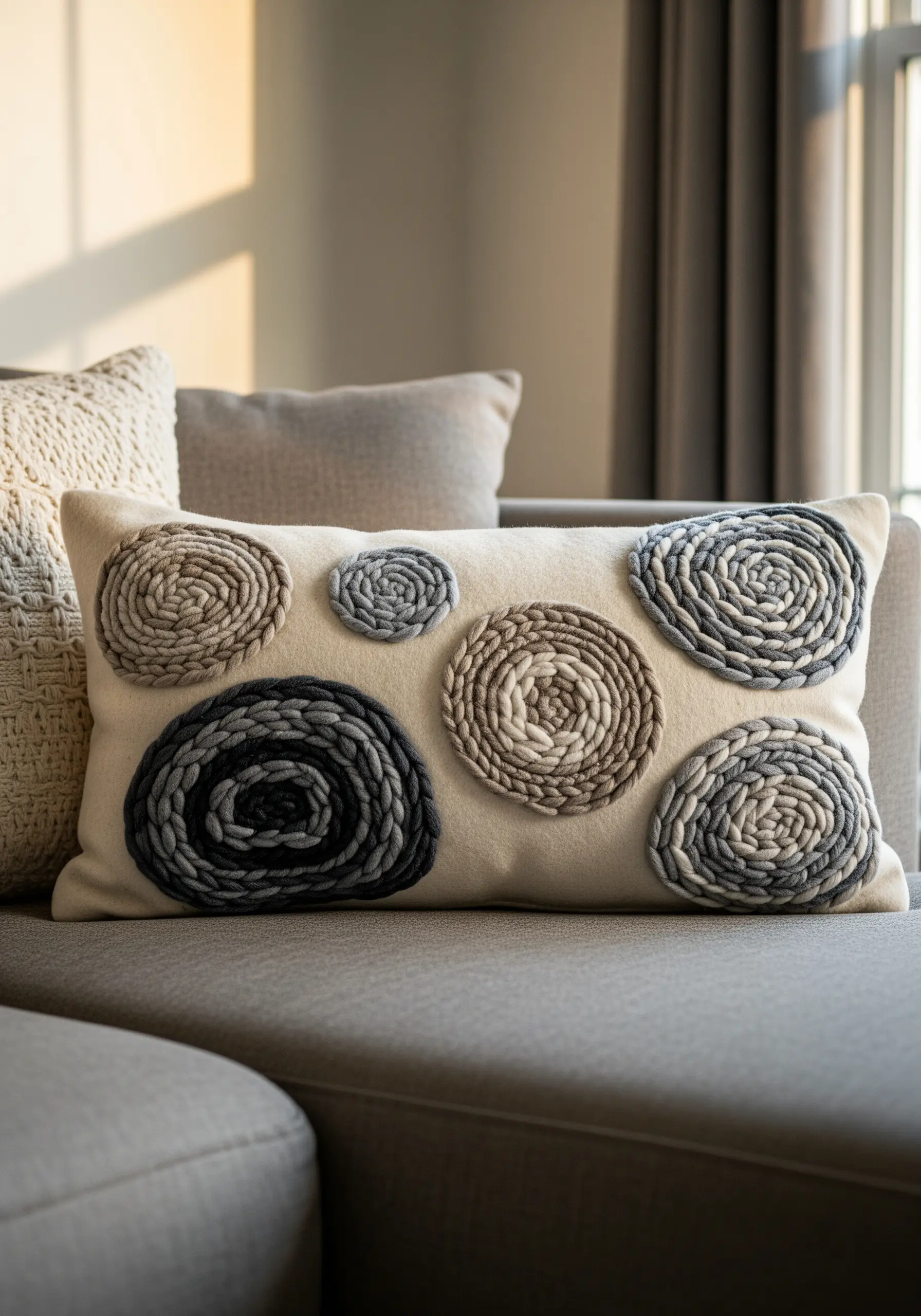
Create powerful, graphic texture by couching thick, braided yarn onto your fabric.
First, braid several strands of chunky yarn together to create a thick cord.
Then, arrange the cord in a spiral or other desired shape on your pillowcase or canvas, using a strong, matching thread to stitch it down every half-inch.
This method allows you to create large, dimensional motifs quickly, adding a sculptural quality that’s impossible to achieve with floss alone.
Explore these high-texture fabric collage embroidery projects for more inspiration.
12. Embroider on Unconventional Surfaces
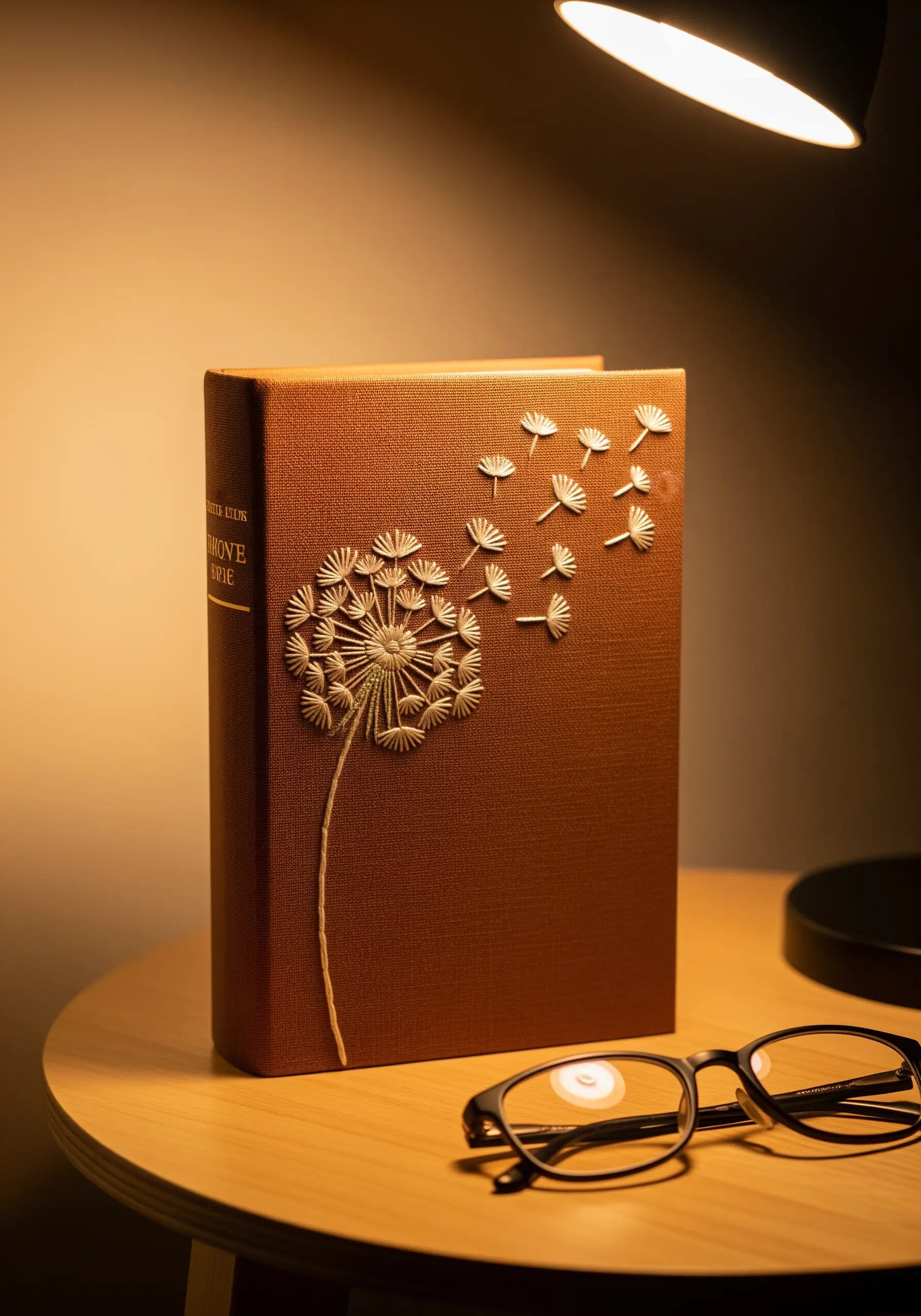
Take your stitching beyond the hoop by embellishing a journal or book cover.
Choose a fabric-covered book and use a sharp, size 9 or 10 needle to pierce the cover with minimal effort.
Simple, elegant stitches like the detached chain stitch (for dandelion seeds) and stem stitch (for the stalk) work best, as they require fewer punctures.
Keep your tension gentle to avoid tearing the cover material, and secure your threads on the inside with a small dab of clear fabric glue.
These paper art projects make for thoughtful, personalized gifts.
13. Construct Soft, 3D Embroidered Objects
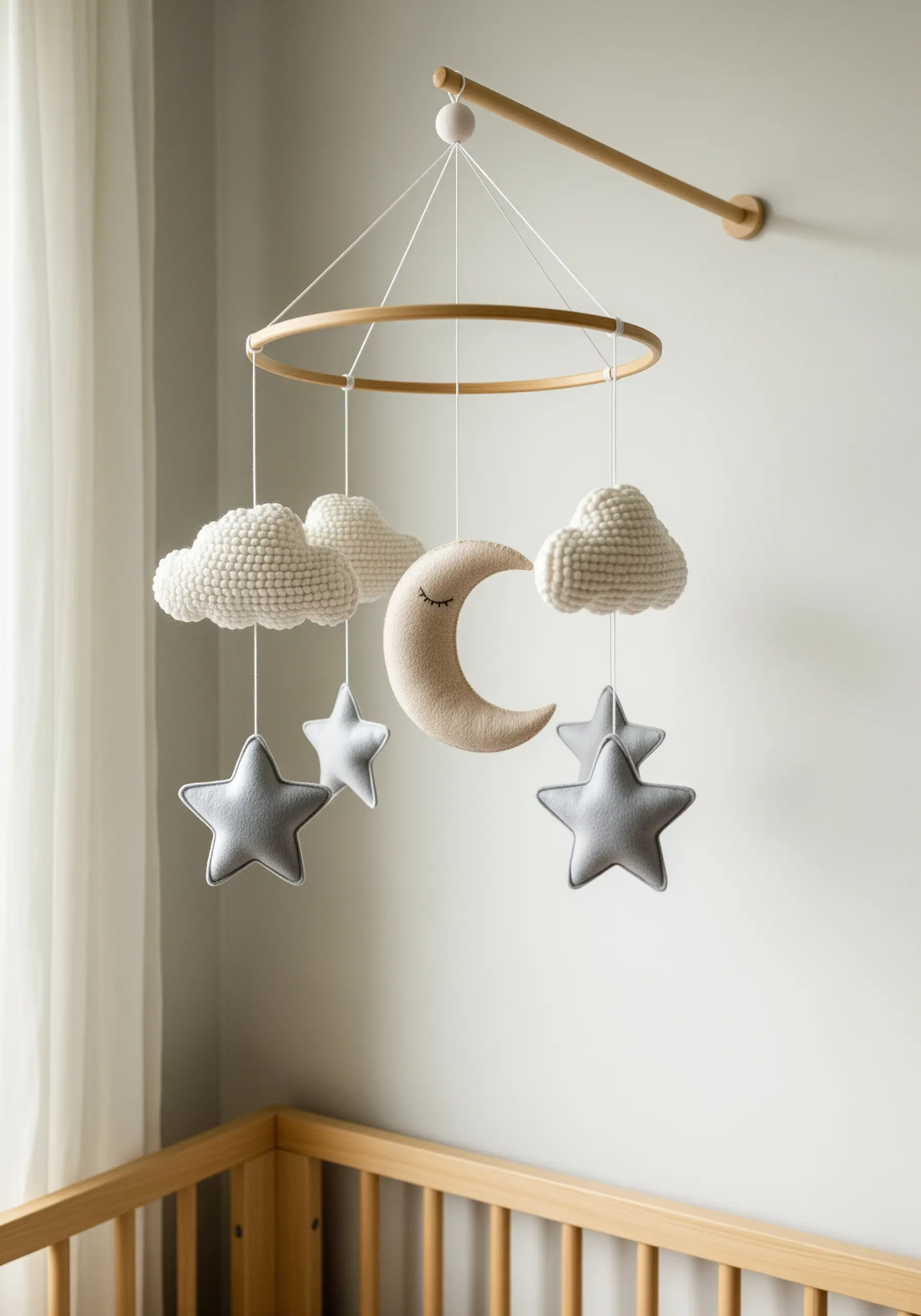
Combine basic sewing and embroidery to create charming, three-dimensional pieces like a nursery mobile.
Cut your shapes from felt or soft cotton fabric, adding minimal embroidered details—like a simple backstitched eye on the moon—before stuffing and closing the seams.
Use a dense stitch like the seed stitch to create a gentle, bumpy texture on the clouds.
The beauty of these embroidered nursery decor ideas lies in their soft forms and subtle, handmade details.
14. Embrace Minimalist Geometric Forms
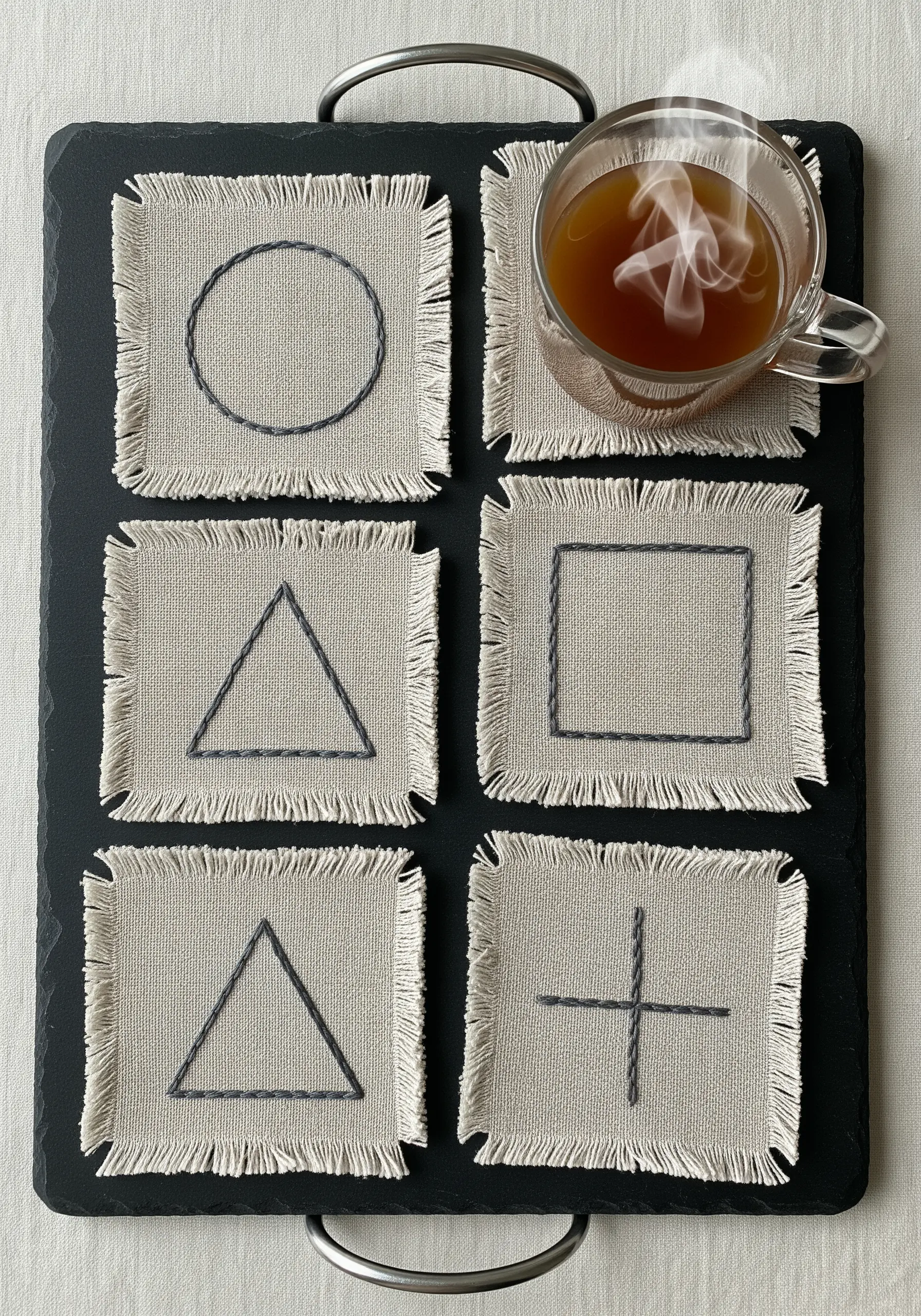
Find elegance in simplicity by focusing on clean lines and basic shapes.
Using aida or evenweave linen as your base makes it easy to create perfect geometric forms by counting the threads.
A simple backstitch in a contrasting neutral color, like charcoal on oatmeal linen, is all you need to create a striking, modern design.
Finish with a frayed edge for a soft, tactile border that complements the sharp lines of the stitching.
These minimalist stitch designs prove that less can be truly more.
15. Give Lettering a Rope-Like Texture
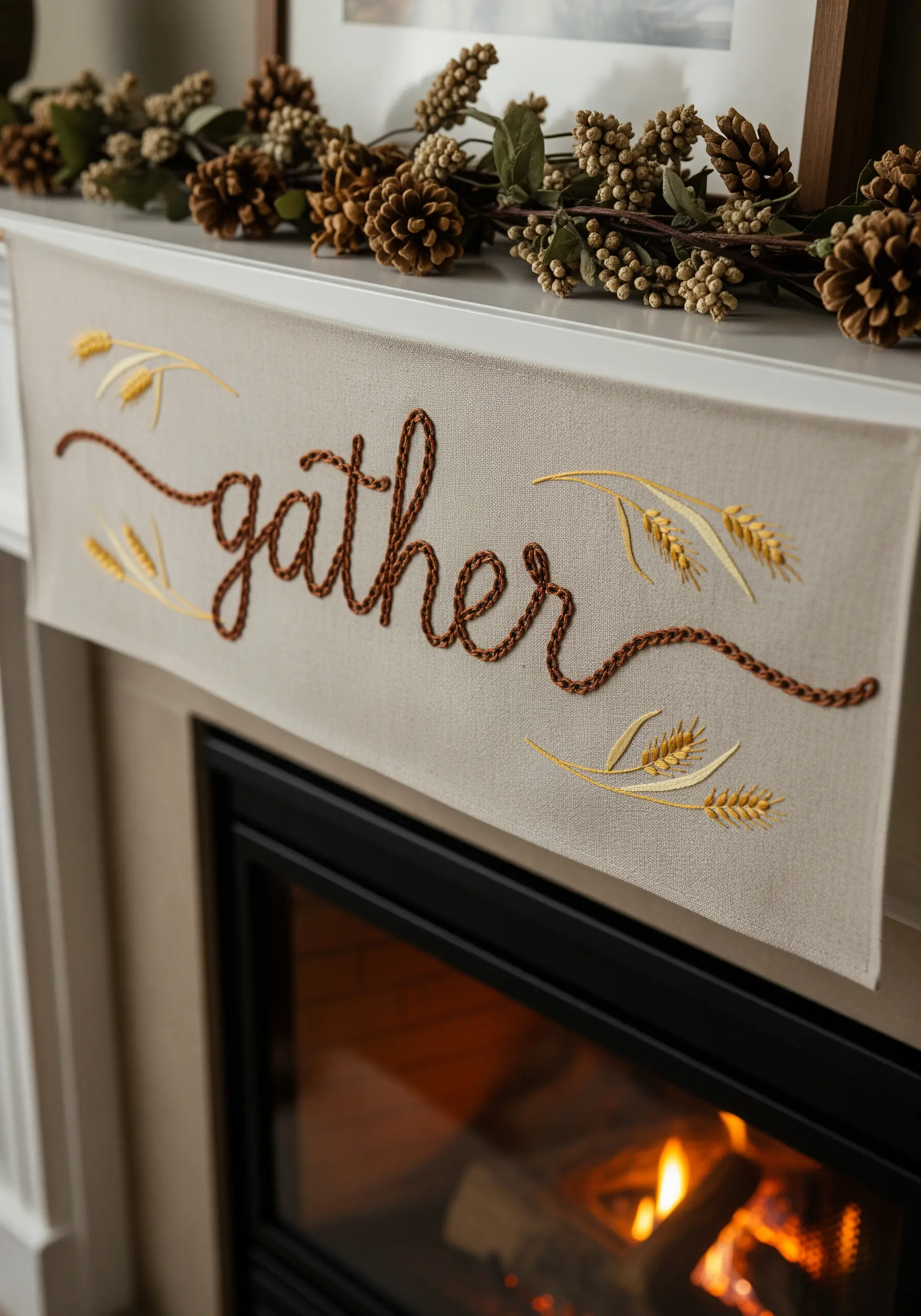
Make your embroidered text stand out by giving it a raised, dimensional quality.
Instead of a simple backstitch, use a heavy chain stitch or couch a piece of thicker cord to the fabric surface.
This technique creates a bold, rope-like effect that gives the lettering physical presence and shadow.
Pair the heavy script with more delicate elements, like finely satin-stitched wheat stalks, to create a balanced composition full of textural contrast.
You can use this for your favorite inspirational quote embroidery hoops.
16. Map Out Intricate Veins with Thread
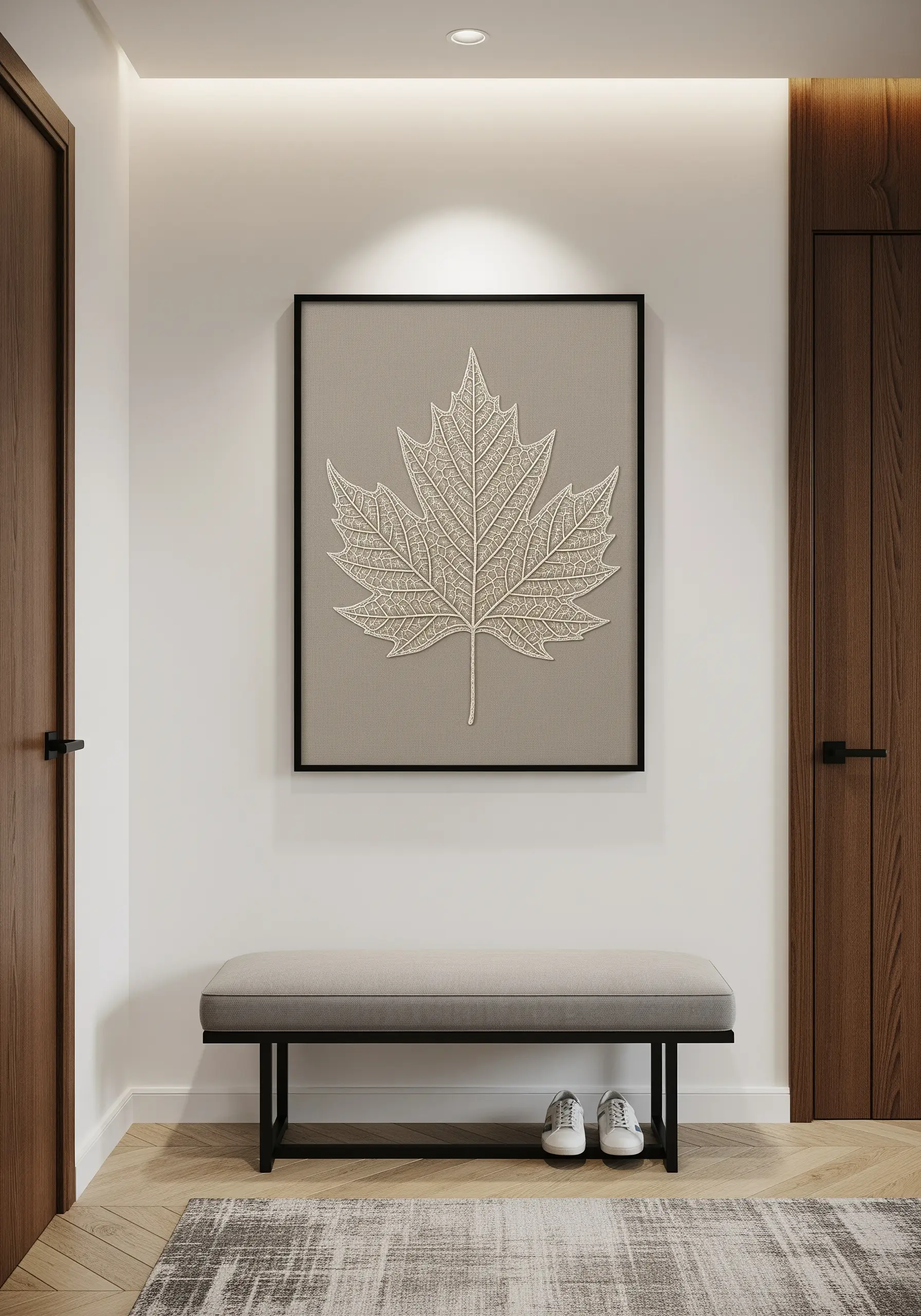
When tackling a large, intricate motif like a leaf, treat it like a map.
Begin by stitching the central veins with a backstitch or stem stitch to establish the structure.
Then, fill in the surrounding sections with dense seed stitches or short straight stitches, ensuring the direction of your stitches flows naturally along the veins.
Using a single color places all the emphasis on this complex texture, turning the piece into a stunning study of pattern and form, perfect for framed embroidery ideas.
17. Apply Clean, Repeating Geometric Patterns
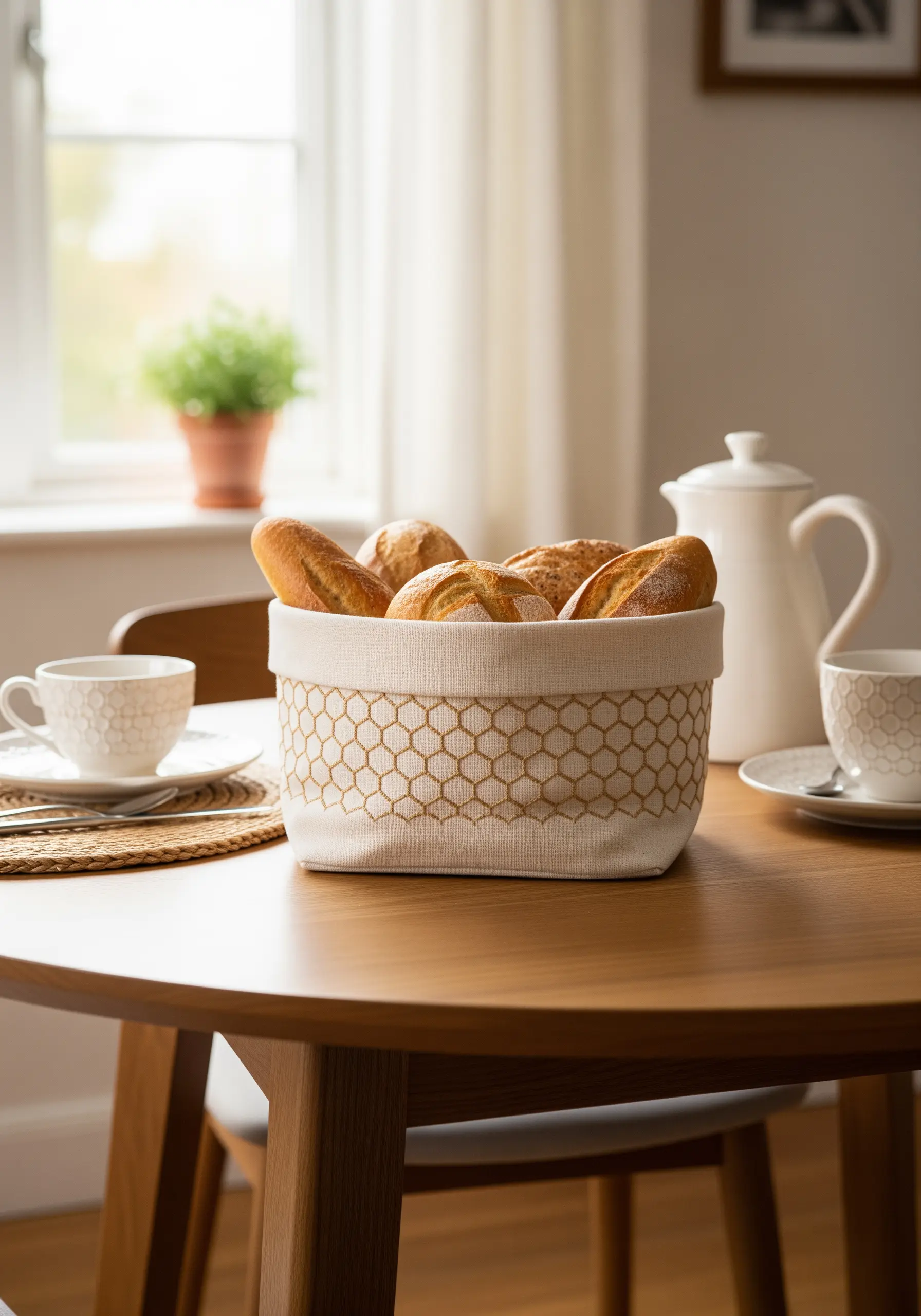
Elevate an everyday object, like a bread basket, with a simple, modern pattern.
A repeating honeycomb or hexagon pattern, stitched in a single warm neutral, adds a touch of bespoke elegance without being distracting.
Use a water-soluble marker and a stencil to ensure your pattern is perfectly uniform before you begin stitching.
A simple running stitch or backstitch is all that’s needed to create a clean, graphic look. Explore more small embroidery patterns to customize your home decor.
18. Create Perspective with Stitch Density
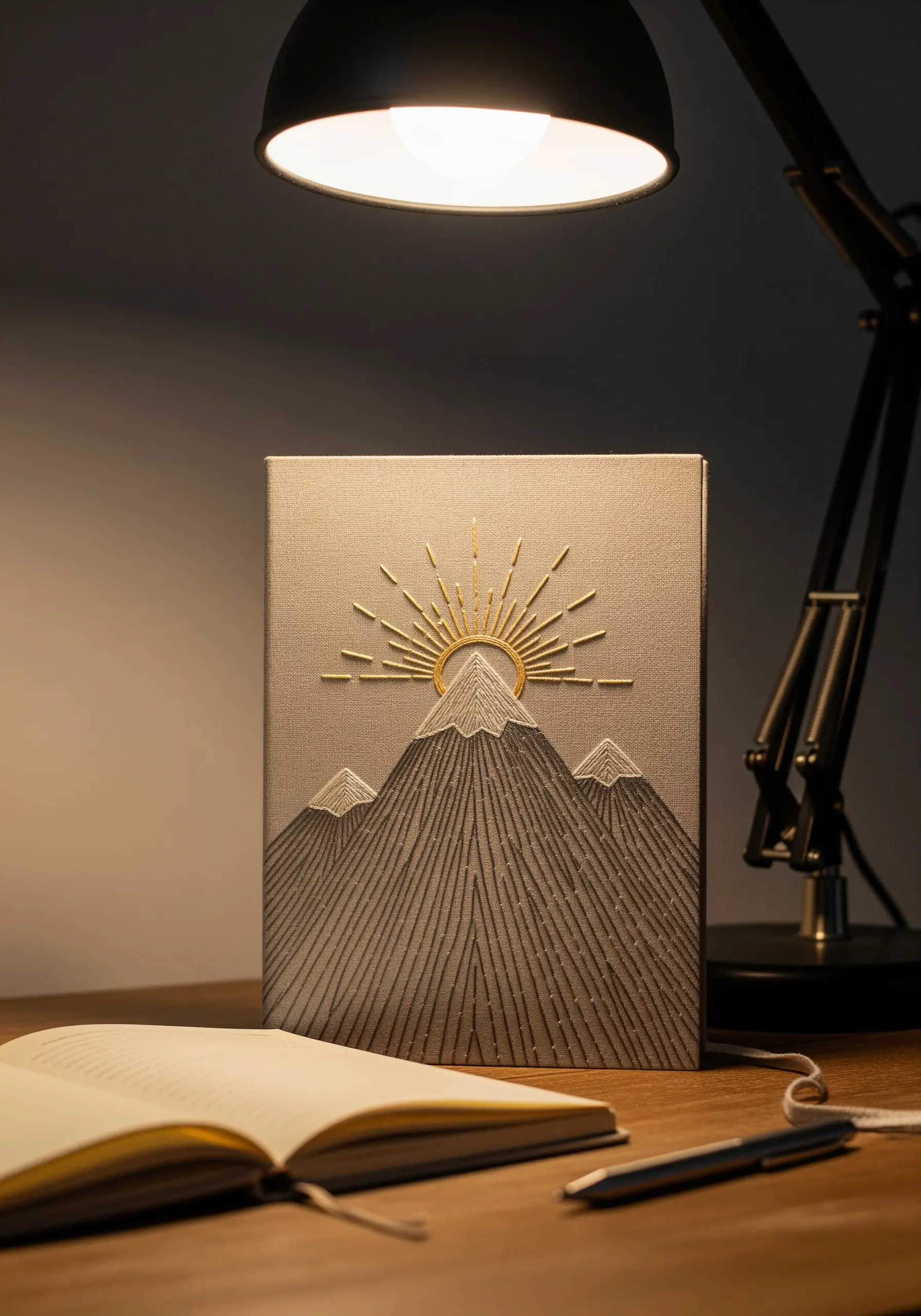
You can create a sense of distance and depth using only straight stitches.
For the mountains in the foreground, pack your vertical straight stitches tightly together to create a solid, dark mass.
For the mountains behind, use fewer stitches and leave more space between them.
This variation in density makes the farther peaks appear lighter and less detailed, mimicking atmospheric perspective.
This is a clever way to add dimension to your embroidery ideas inspired by national parks.
19. Frame Your Linens with Monochrome Botanicals
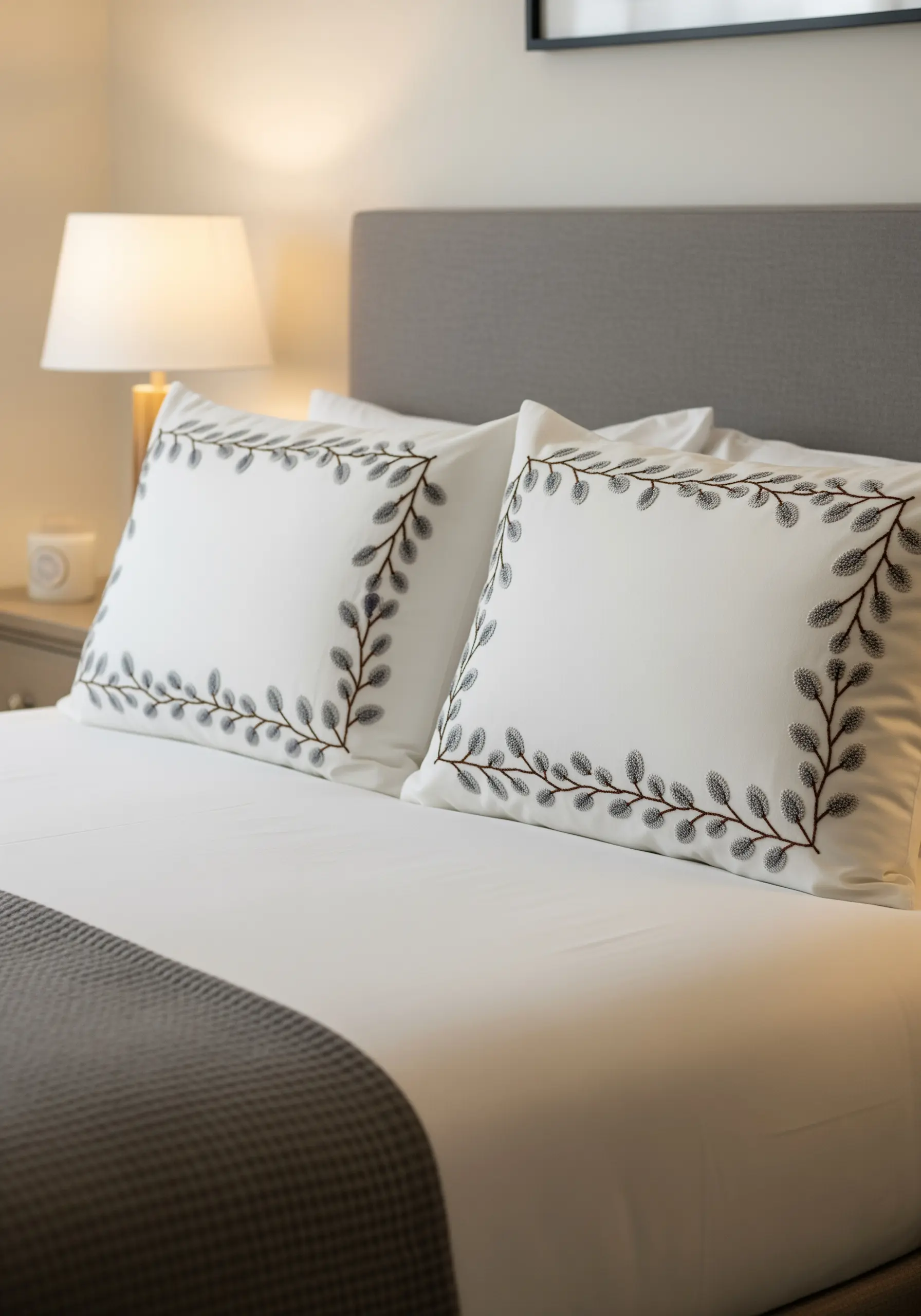
Achieve a high-end, boutique hotel look on your pillowcases with a simple, repeating border.
Choose a single, sophisticated neutral like charcoal or taupe and work a delicate botanical vine around the edge.
Using fishbone stitch for the leaves provides a central ‘vein’ and a gentle, raised texture that looks incredibly polished.
The key is the repetition and precision of the frame, which transforms plain white linens into a coordinated, elegant set.
These monochrome floral embroidery ideas are timeless.
20. Integrate Abstract Art with Function
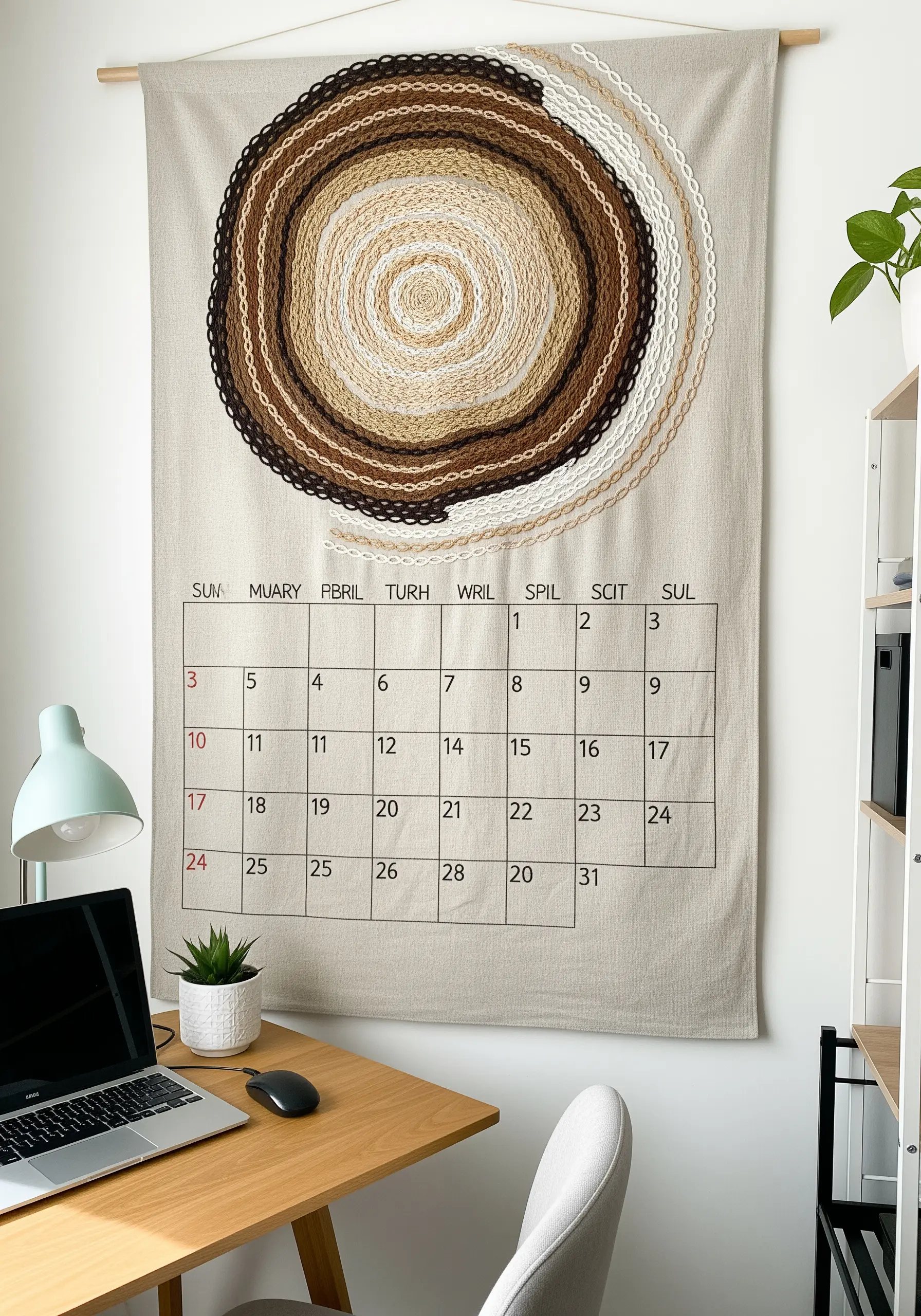
Combine a functional element, like a calendar, with a piece of abstract fiber art.
Create a large, textured centerpiece using spirals of chain stitch or couched yarn in a blend of earthy neutrals.
Then, frame this organic shape with the clean, precise grid of a calendar, stitched with a fine backstitch for legibility.
This juxtaposition of the freeform and the structured turns a simple wall hanging into a unique and engaging piece of functional art.
These embroidered wall art ideas blend beauty with purpose.