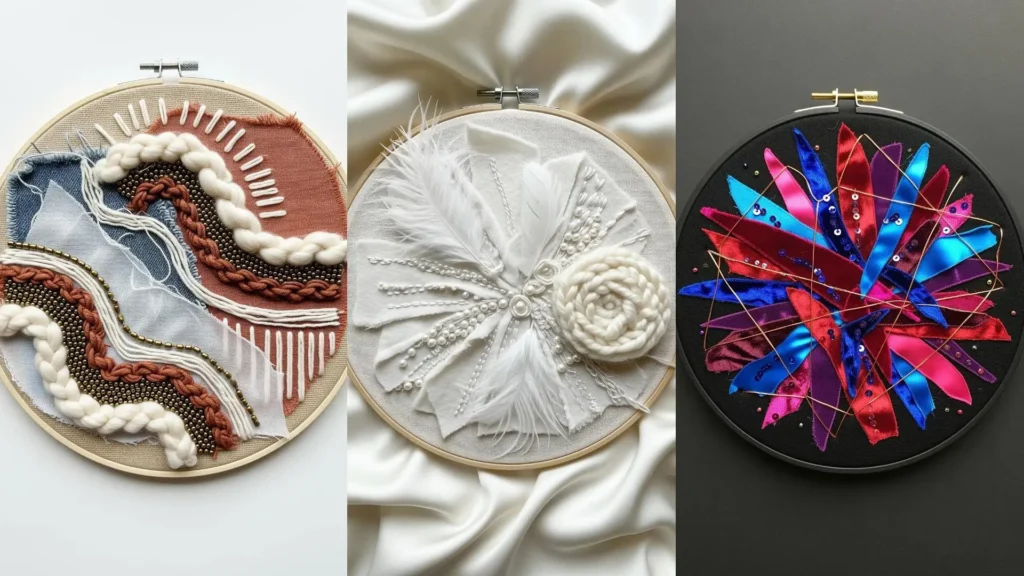
You can translate a feeling, a memory, or even a favorite song into thread. Think of your needle as a tool for capturing rhythm, and your floss as the medium for harmony and tone. This isn’t about stitching a literal instrument; it’s about interpreting the energy of music and giving it a physical, textural form.
Forget the pressure of perfection. Abstract embroidery is an intuitive process. It invites you to explore how a sharp staccato note might feel as a series of tight French knots, or how a flowing melody could become a graceful curve of stem stitch. Each choice—from the weight of your thread to the density of your stitches—becomes a part of the composition.
Let these ideas guide you toward a more personal and expressive style. You have everything you need to begin stitching sound right now. Trust your hands, follow the rhythm you feel, and watch as your unique interpretation comes to life on the fabric.
1. Stitch a Neon Soundwave
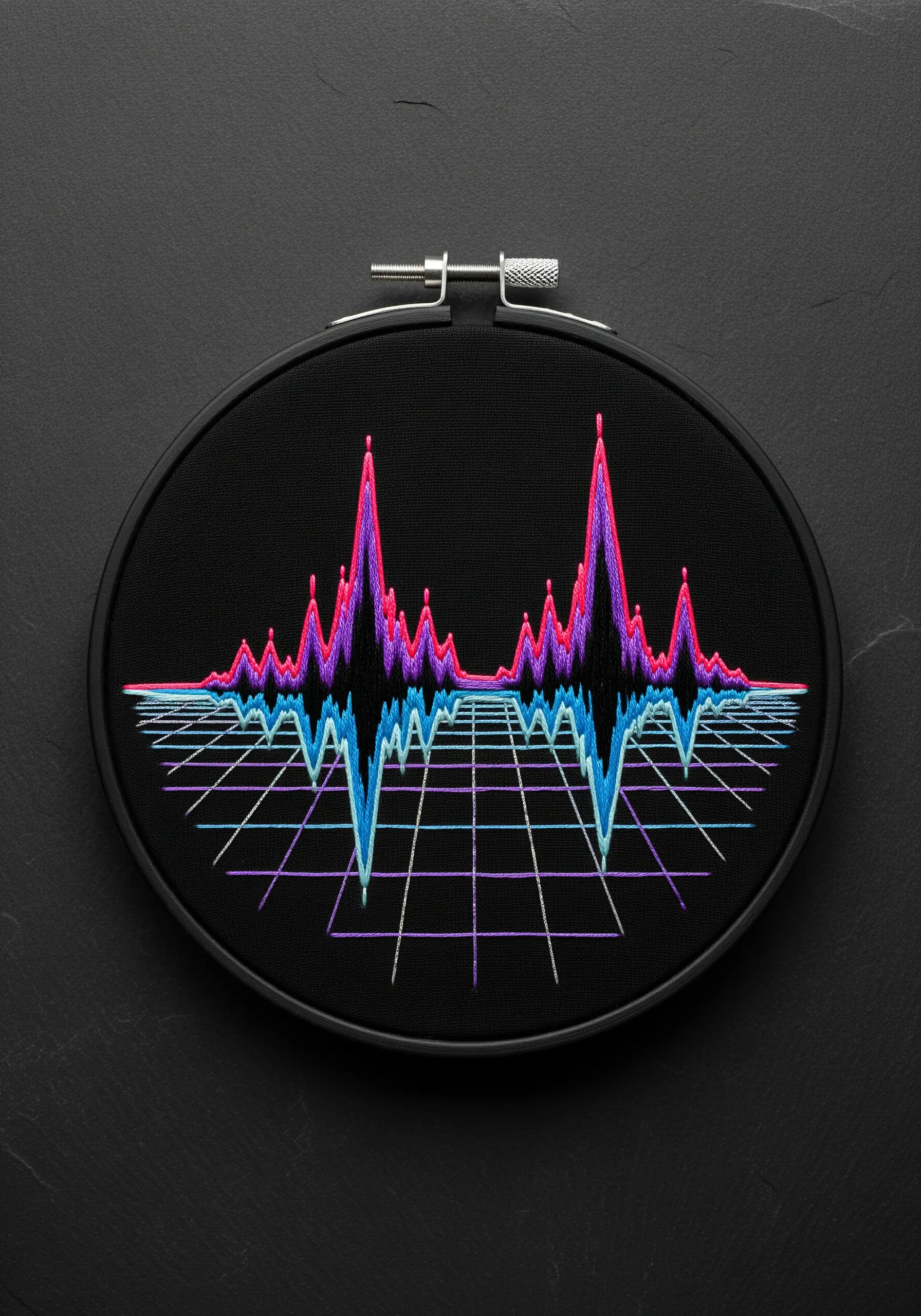
Capture the electric energy of synth-pop or electronic music by stitching a vibrant soundwave against a dark background.
Use a high-contrast fabric like black or navy cotton twill to make your neon threads appear to glow.
Create the vertical peaks with a dense satin stitch, blending two or three shades of a single color—like magenta into pink—to create a gradient that mimics light.
For the grid, use a single strand of metallic or light-colored thread and a simple backstitch. This keeps the focus on the soundwave itself while providing perspective and structure.
This technique turns an audio visualizer into a tactile piece of abstract thread embroidery.
2. Layer Rhythms with Dimensional Stitches
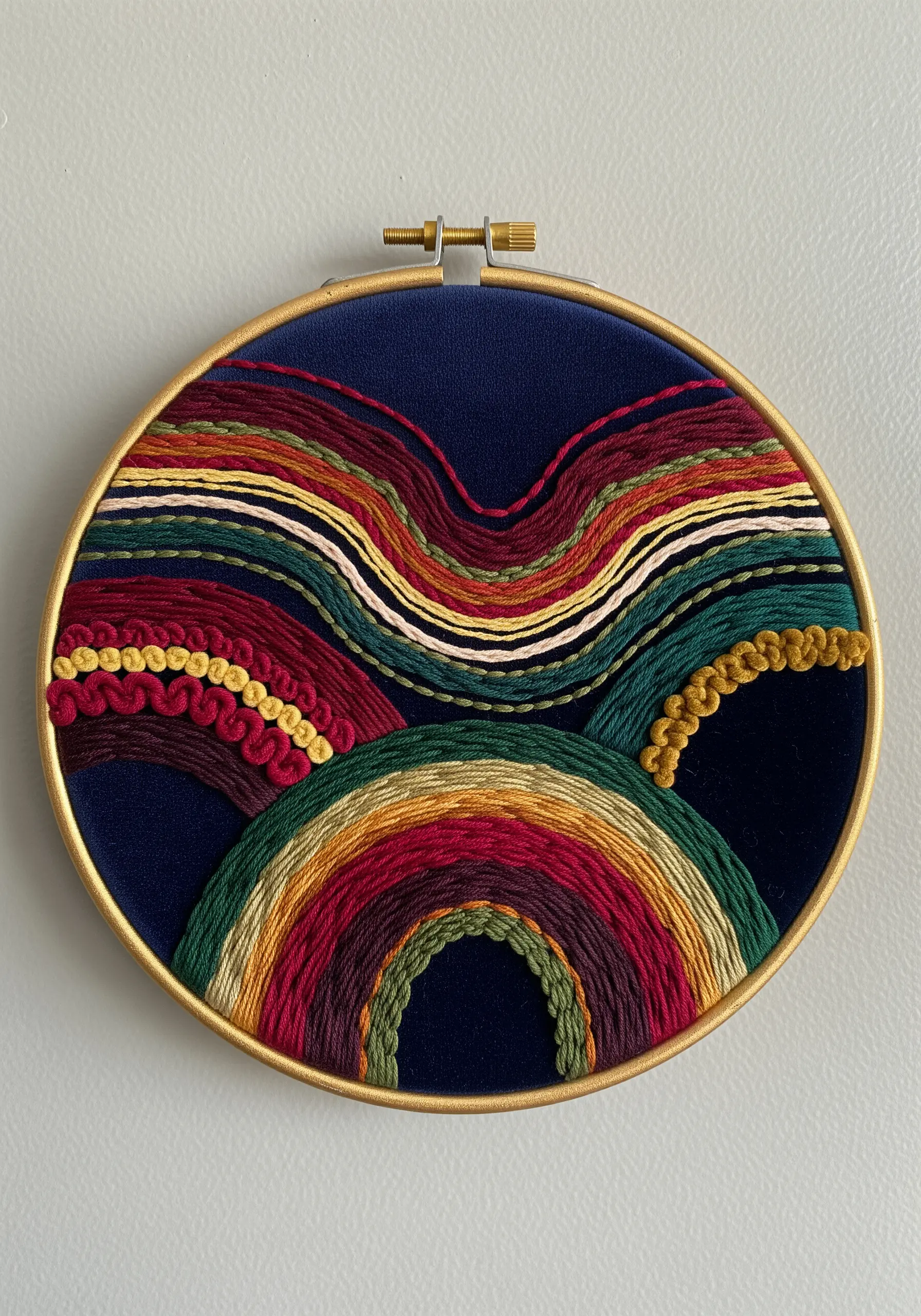
Translate the layered complexity of an orchestral piece or a rich folk song by combining threads of different weights and textures.
Use thick wool or yarn for the dominant melody, couching it onto the fabric to create a bold, raised line that represents the main rhythm.
Incorporate secondary rhythms with rows of French knots or chain stitches, varying their colors to represent different instruments or harmonies.
The contrast between the smooth, couched yarn and the bumpy texture of the knots creates a composition you can both see and feel, turning sound into a tactile experience.
This method allows you to build abstract thread waves and swirls that feel truly multi-layered.
3. Represent Chords with Clustered Knots
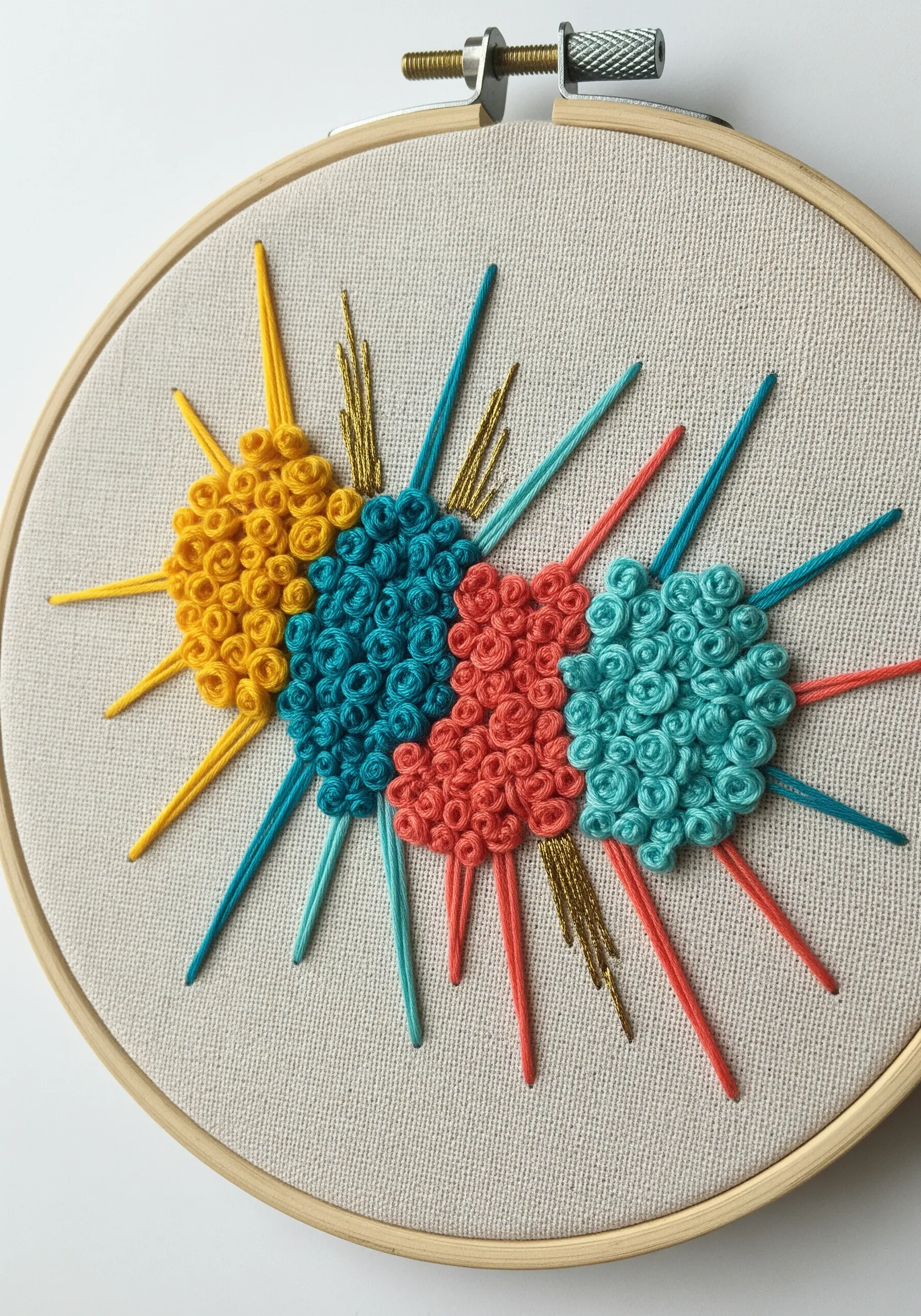
Visualize a bright, resonant chord by grouping textures and sharp lines into a single motif.
Create dense clusters of French knots or bullion knots to represent the core harmony—the tighter the cluster, the more intense the sound.
From these clusters, extend sharp, clean straight stitches to symbolize the sound radiating outwards. Use a contrasting color or a metallic thread for these rays to give them a sense of energy and vibration.
This composition works because it balances soft, dense textures with sharp, linear elements, perfectly capturing the feeling of a single, powerful musical moment.
4. Imply Melody with Directional Satin Stitch
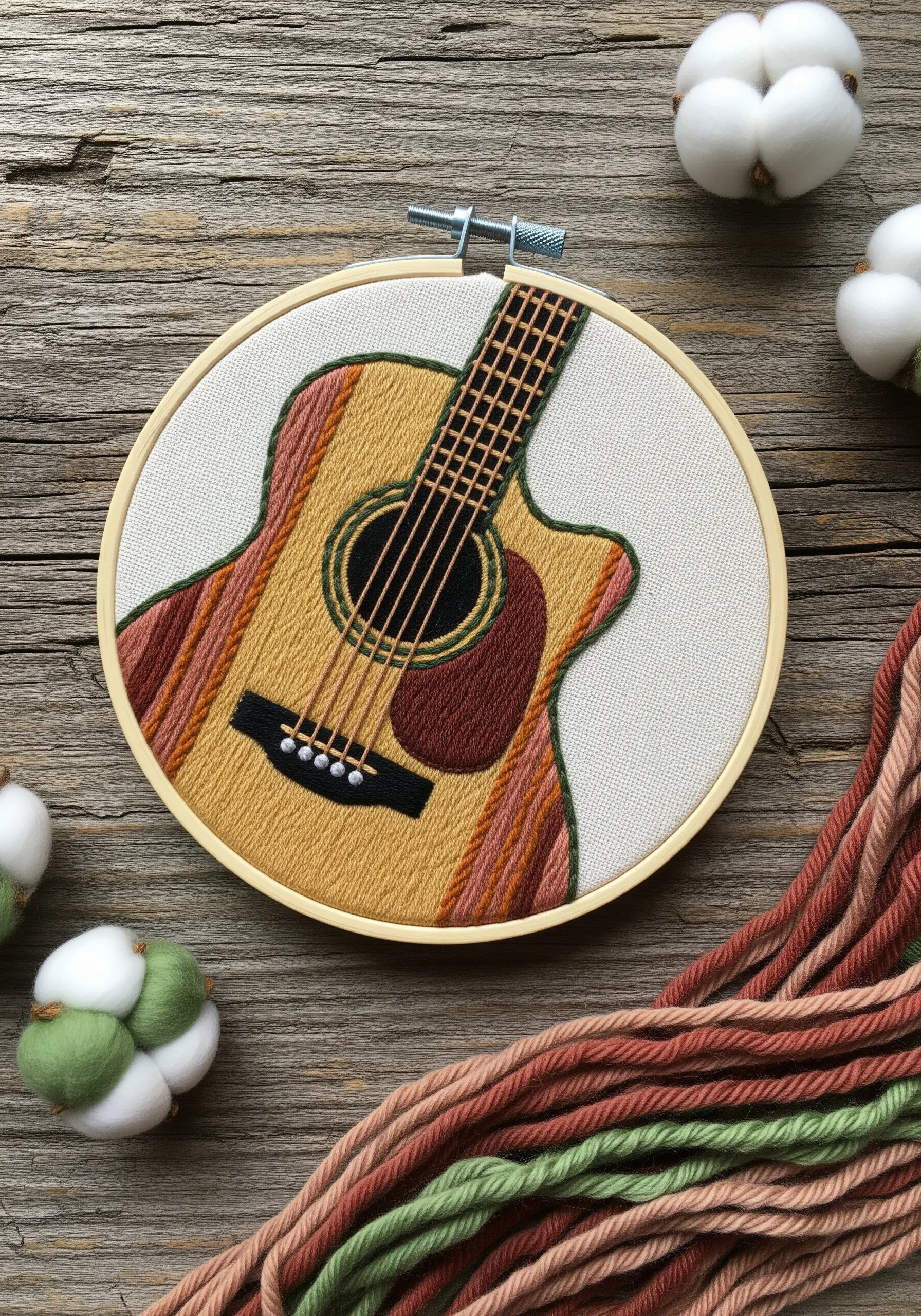
Even a literal subject can convey musicality through texture. Use directional satin stitch to mimic the resonance of an acoustic guitar’s wood grain.
Instead of filling the shape with uniform stitches, angle them to follow the instrument’s curves. This small adjustment adds movement and a sense of vibration.
Vary the shades of your thread subtly within each section to create depth, just as the tone of a guitar shifts with each note.
Use a single, clean backstitch for the strings to ensure they remain crisp and defined against the textured body, representing the clear melody over a warm harmony.
5. Isolate Notes with Padded Satin Stitch
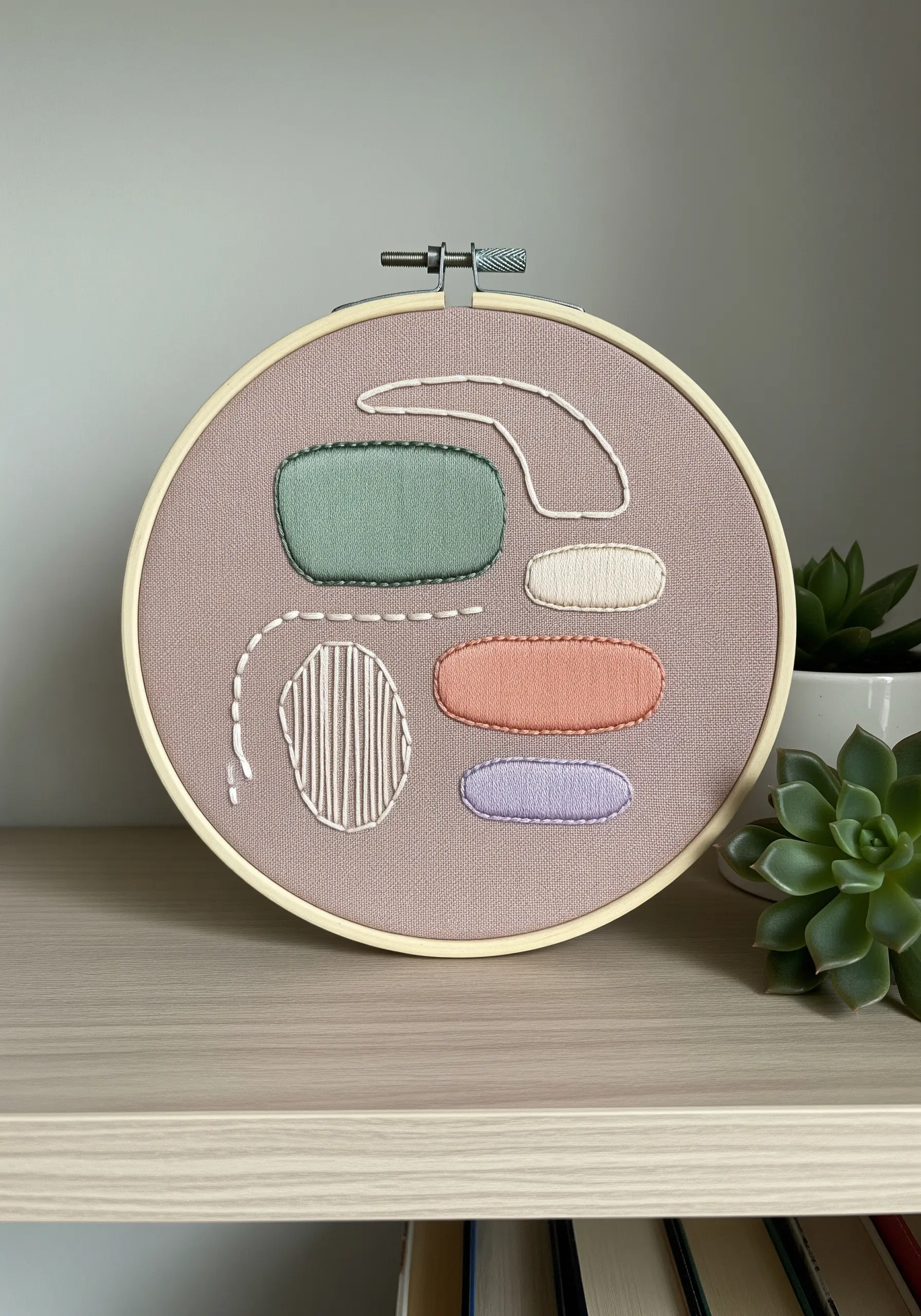
Represent the clean, distinct notes of minimalist music or jazz by stitching isolated, raised shapes.
First, outline each abstract shape with a split stitch. Then, fill the interior with a layer of seed stitches or straight stitches to create padding.
Cover this padding with a smooth, tight satin stitch. The elevation gives each shape a subtle shadow and a pleasing, pillowy dimension, making each “note” feel distinct and deliberate.
Connect these shapes with a delicate running stitch to suggest a subtle, flowing melody that weaves the individual notes together into a cohesive piece.
6. Capture Percussive Energy with Sharp Angles
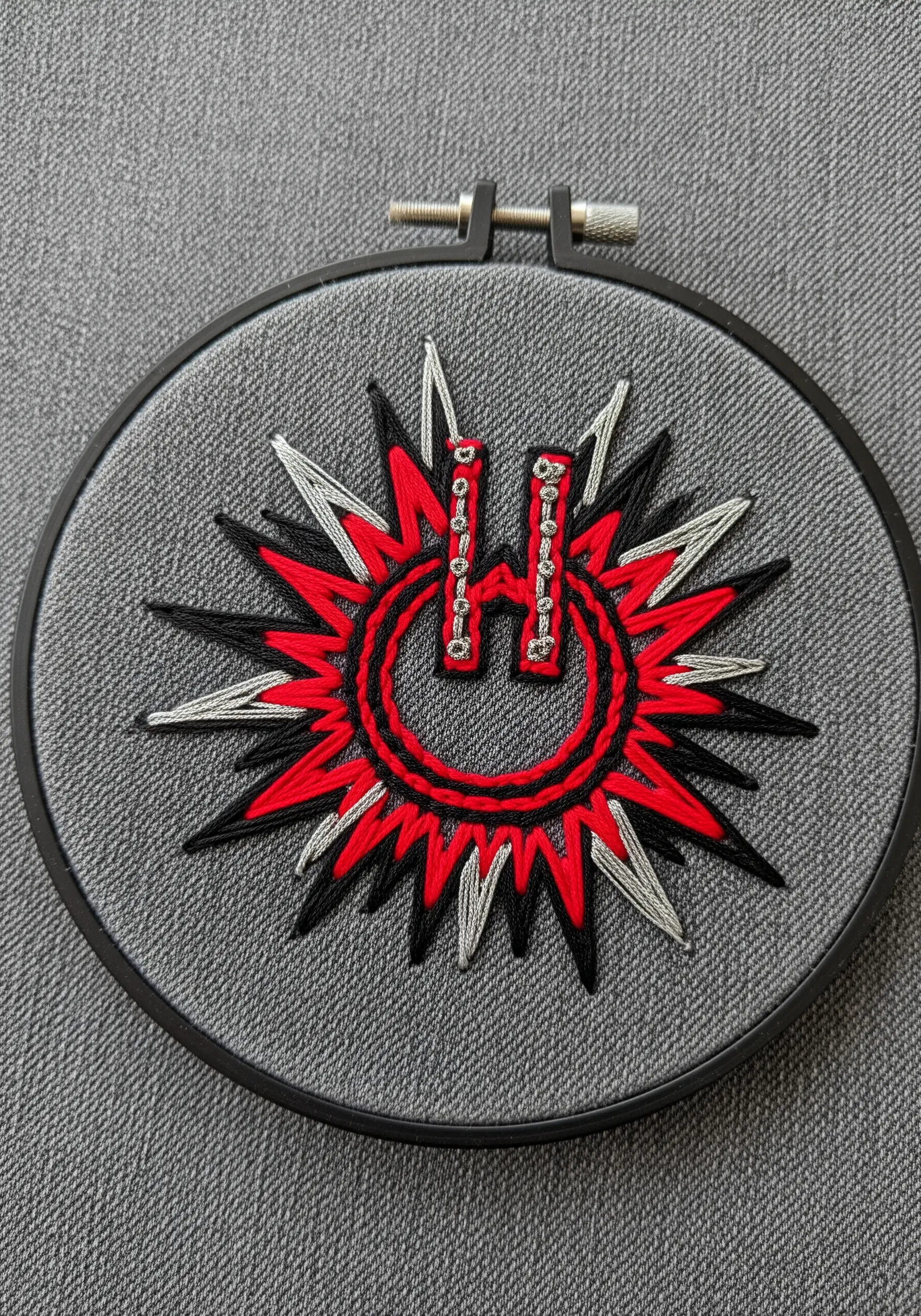
Channel the driving, high-energy beat of rock or industrial music with sharp, graphic shapes and a limited color palette.
Use layered satin stitches to create dagger-like points that radiate from a central motif. By stitching one color over another, you can create crisp, clean edges that feel aggressive and powerful.
Incorporate negative space to give the design room to breathe, preventing the sharp angles from becoming visually cluttered.
A simple, bold color scheme—like red, black, and white—enhances the graphic impact, making the design feel like a sharp, percussive blast of sound.
7. Weave Harmonies with Thread Spanning
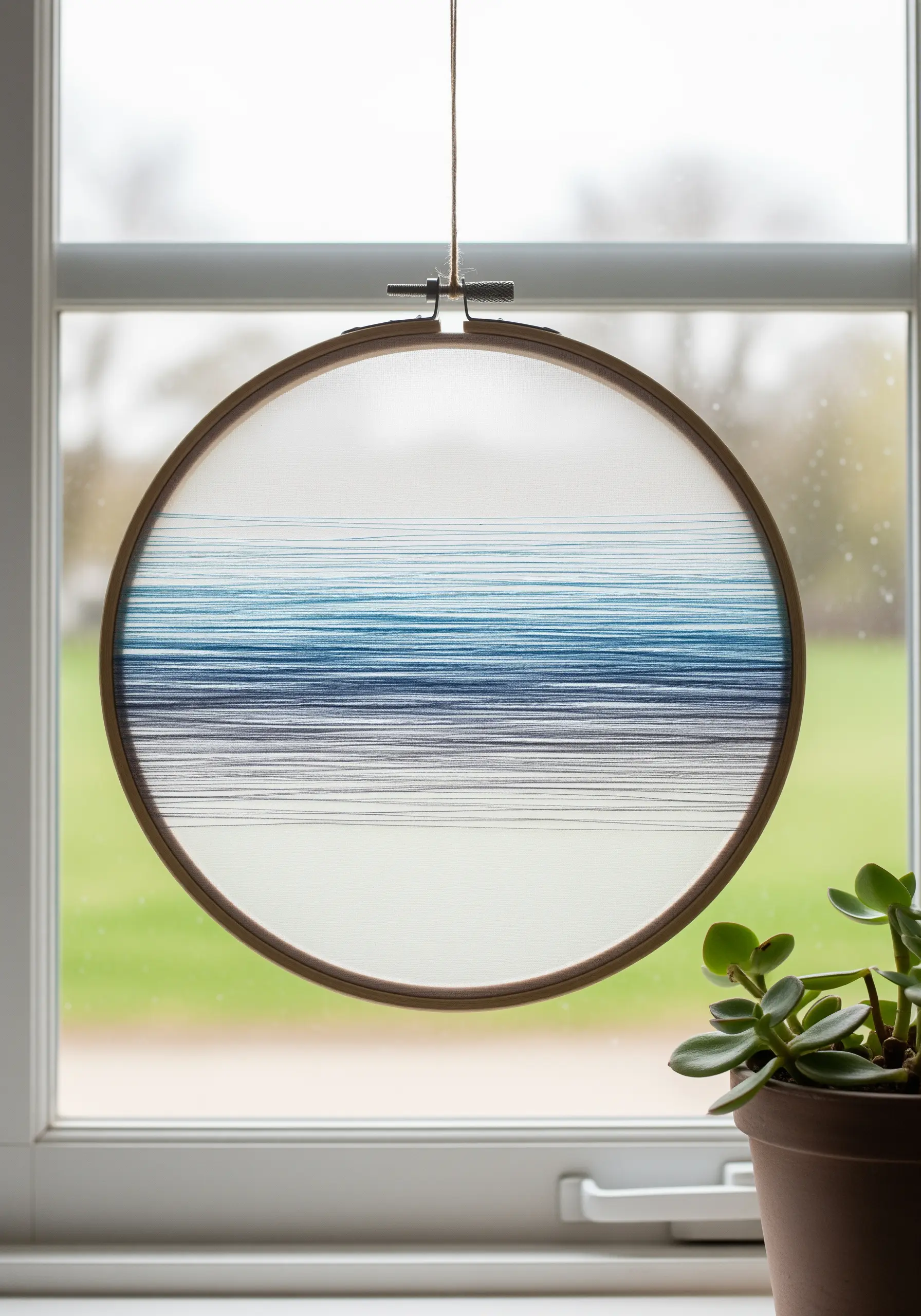
Visualize the layered harmonies of ambient or choral music by using your embroidery hoop as a loom.
Instead of stitching onto fabric, wrap threads horizontally across the hoop, pulling them taut to create clean, straight lines.
Create a gradient effect by gradually shifting colors from top to bottom. Use multiple strands of floss for thicker, more opaque bands of color, and single strands for a more transparent, airy feel.
This technique turns thread into a literal representation of frequency and tone, creating modern thread art that changes with the light behind it.
8. Depict Blended Tones with Brick Stitch
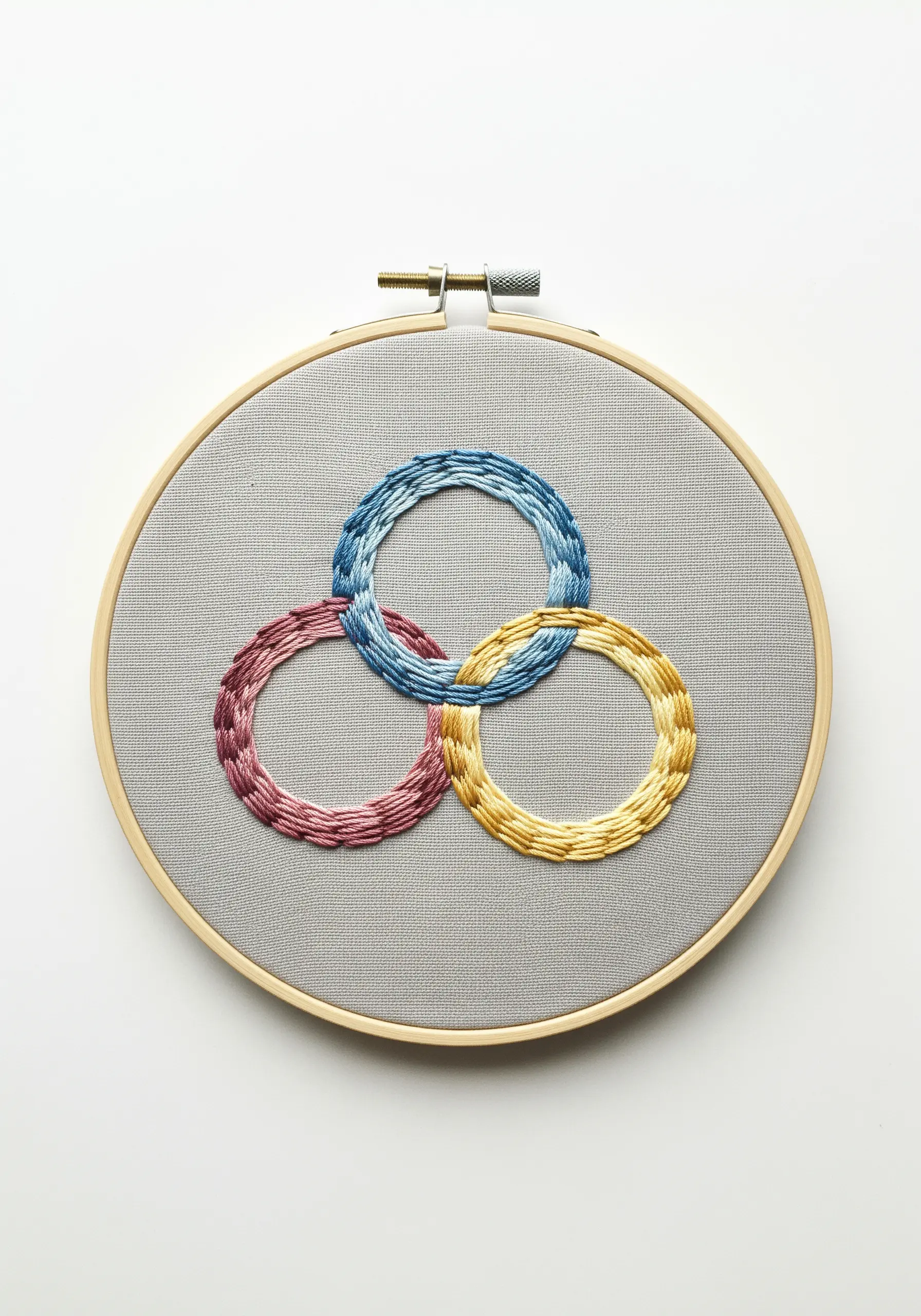
Represent the seamless blend of instruments in a trio or quartet using interlocking rings filled with a woven texture.
Fill each ring with brick stitch, staggering each stitch like bricks in a wall. This technique is perfect for blending colors subtly and creating a smooth, cohesive surface.
Within each ring, use two or three closely related shades to create a gentle, shimmering gradient that suggests tonal variation.
The overlapping of the rings visually represents how different musical voices merge to create a unified harmony, making this a perfect example of simple embroidery patterns that make statement wall art.
9. Embody a Cymbal Crash with Beaded Bursts

Capture the explosive, shimmering sound of a cymbal crash by incorporating mixed-media elements into your work.
First, stitch the main subject, like this drum kit, with clean line art using backstitch or stem stitch.
To represent the burst of sound, stitch radiating lines of straight stitches outward from the cymbals. Then, anchor freshwater pearls or iridescent seed beads along these lines.
The beads catch the light and add a three-dimensional, chaotic energy that thread alone cannot achieve, perfectly translating the sharp, decaying shimmer of percussive sound.
This is a fantastic way to explore mixed media contemporary embroidery designs.
10. Visualize a Melody’s Flow with Distortion
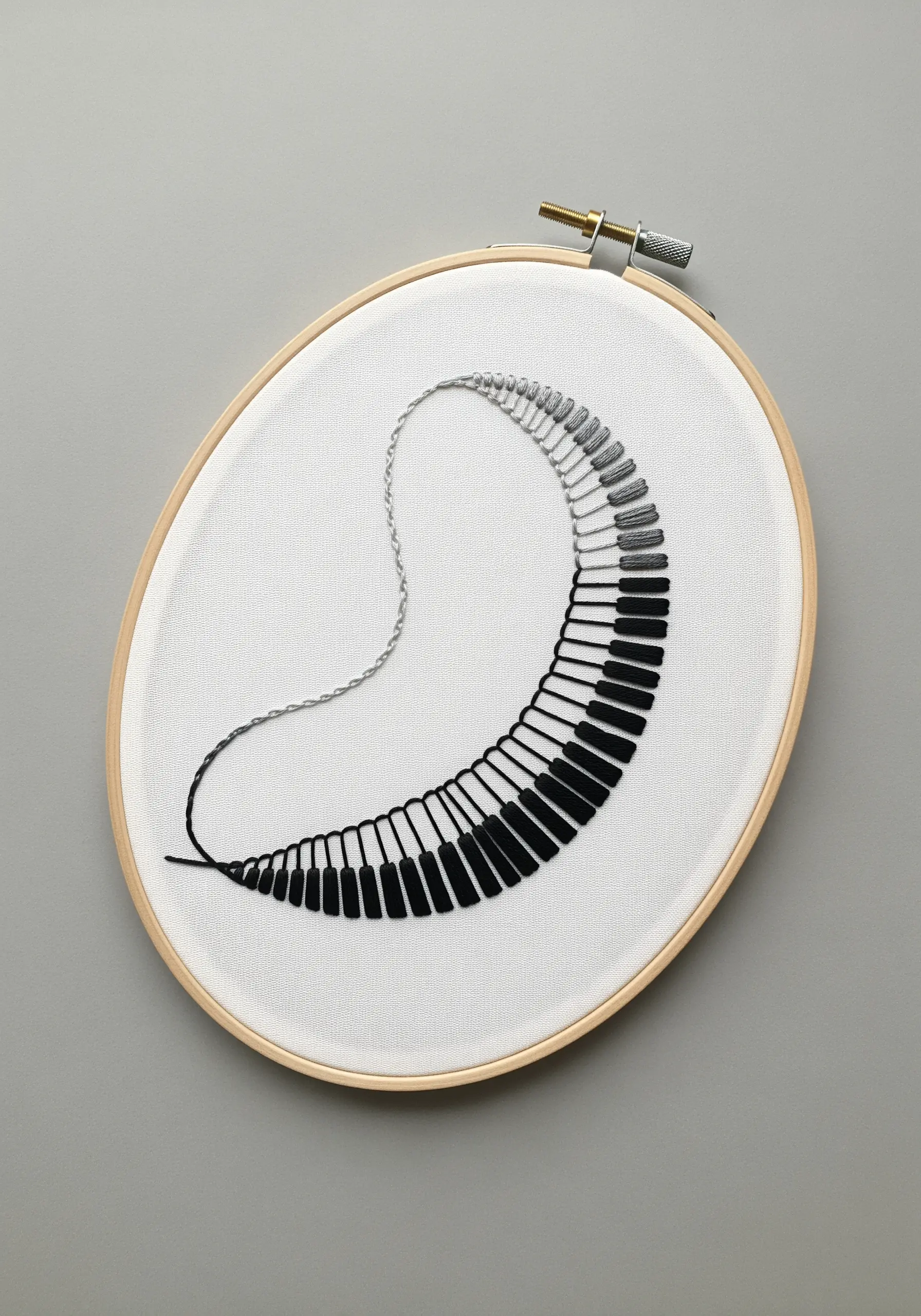
Express the flowing, evolving nature of a piano melody by distorting a familiar pattern into an abstract shape.
Instead of a straight line, arrange the piano keys in a graceful, sweeping curve to represent the music’s dynamic movement through time.
Use precise satin stitches for the keys, ensuring they are tightly packed and uniform. This precision contrasts with the fluid, organic shape of the overall composition.
A delicate chain stitch can connect the motif, representing the fine, continuous thread of the melody that guides the listener from one note to the next.
11. Stitch Electronic Music with Layered Density
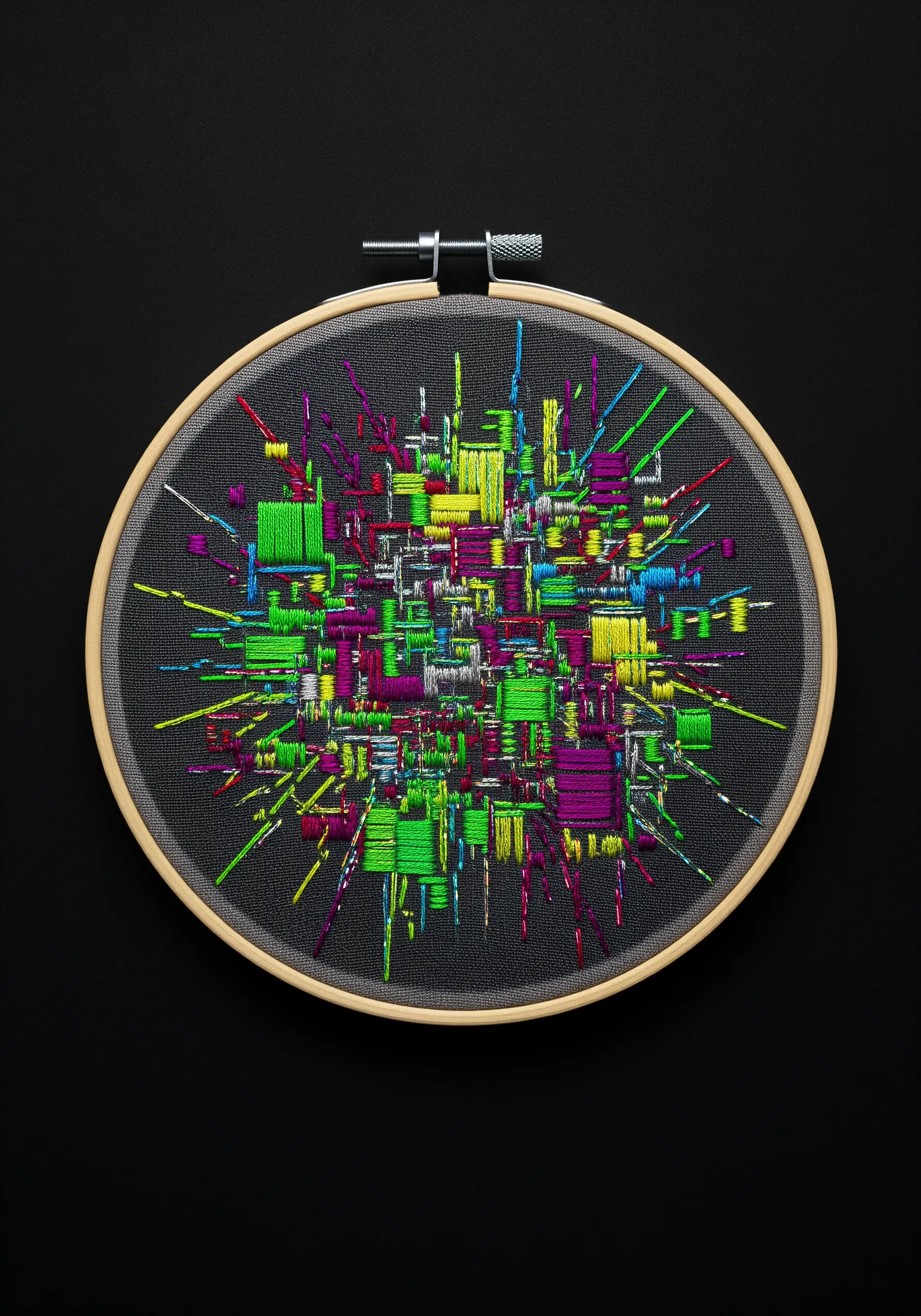
Translate the complex, layered soundscape of electronic music by building up dense blocks of color with straight stitches.
Work without a pattern, intuitively laying down blocks of satin stitch in varying lengths and directions to create a sense of organized chaos.
Overlap different colors and stitch blocks at perpendicular angles to create visual depth and texture, mimicking how different synth tracks are layered in a song.
Extend single, sharp stitches outward from the dense center to represent glitches or high-frequency accents, turning simple lines into mesmerizing wall art.
12. Map a Folk Song with Symmetrical Motifs
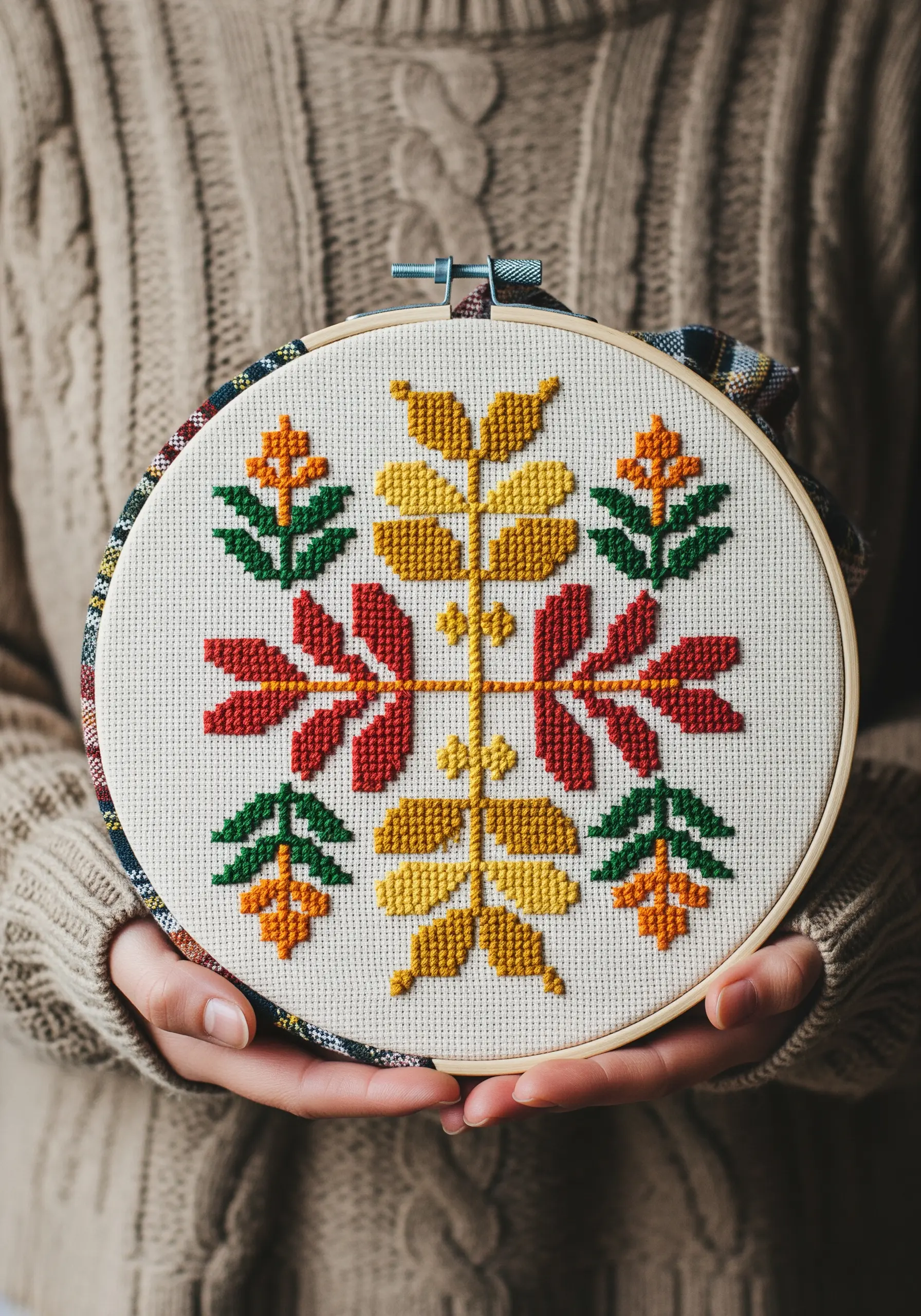
Use the structured nature of cross-stitch to represent the predictable, repeating patterns found in folk music and traditional ballads.
Create a symmetrical design where motifs mirror each other, just as a chorus repeats in a song. Each quadrant can represent a verse or a different instrument.
Choose an earthy, limited color palette to evoke the grounded, organic feel of folk traditions.
The grid-based logic of Aida cloth and cross-stitch provides a natural framework for translating rhythmic structure into a visual pattern, making it one of the most intuitive ways to stitch a song’s architecture.
13. Illustrate Sound Frequencies with Line Weight

Capture the feeling of a sound wave rippling outward by varying the weight and density of simple concentric lines.
Use a heavy, dark thread (like all six strands of floss) for the outer rings to represent a deep, low-frequency sound.
As you move toward the center, switch to a lighter grey thread and use fewer strands. This visual shift from heavy to light mimics the dissipation of sound energy.
Scatter tiny seed stitches in the center to represent the static or ambient noise from which the sound emerges. This composition beautifully visualizes the physics of sound.
14. Create Shimmering Tones with Beading

Represent the shimmering, fluid quality of harp music or gentle synths by filling entire sections with seed beads instead of thread.
Draw flowing, wavy bands across your fabric to act as guides. Fill each band with a different color of bead to represent shifts in tone or harmony.
Stitch the beads on individually with a thread that matches the fabric, making your stitches invisible and allowing the beaded texture to be the focus.
The way beads catch and reflect light creates a dynamic surface that thread cannot replicate, perfectly capturing the bright, ethereal quality of certain sounds.
15. Define a Bassline with Braided Stitches

Give a powerful bassline or a strong, simple melody a bold, physical presence using a dimensional stitch like the braided chain stitch.
This stitch creates a thick, raised line that has significant textural weight, making it ideal for representing the foundational rhythm of a song.
Work with multiple colors within the same braided line to show tonal variation or harmony within that single musical element.
The rhythmic, looping motion of creating the stitch itself feels meditative and connected to the act of following a steady beat, making it a perfect choice for abstract texture play.
16. Stitch Digital Audio with Pixel Art

Represent the sound of 8-bit video games or chiptune music by translating an audio equalizer into a cross-stitch pattern.
Each square on your Aida cloth acts as a pixel, allowing you to build the blocky, graphic shapes characteristic of early digital art.
Use bright, highly saturated colors against a black background for a classic retro-tech aesthetic that feels authentic to the musical genre.
This method directly connects the gridded nature of cross-stitch to the digital building blocks of electronic sound, making each stitch feel like a single bit of audio data.
17. Capture a Pulse with a Single, Perfect Line

Sometimes the most powerful statement is the simplest. Represent a heartbeat or a steady, minimalist rhythm with a single, unbroken line.
To achieve a smooth, consistent line without any pulling or gaps, use a whipped backstitch or a stem stitch.
Choose a bold, high-contrast color like red on white to give the line maximum visual impact. The negative space around it is just as important as the line itself.
This minimalist approach proves that you don’t need complex textures to convey a powerful idea; the clarity of a single, well-executed line can represent the very essence of rhythm.