
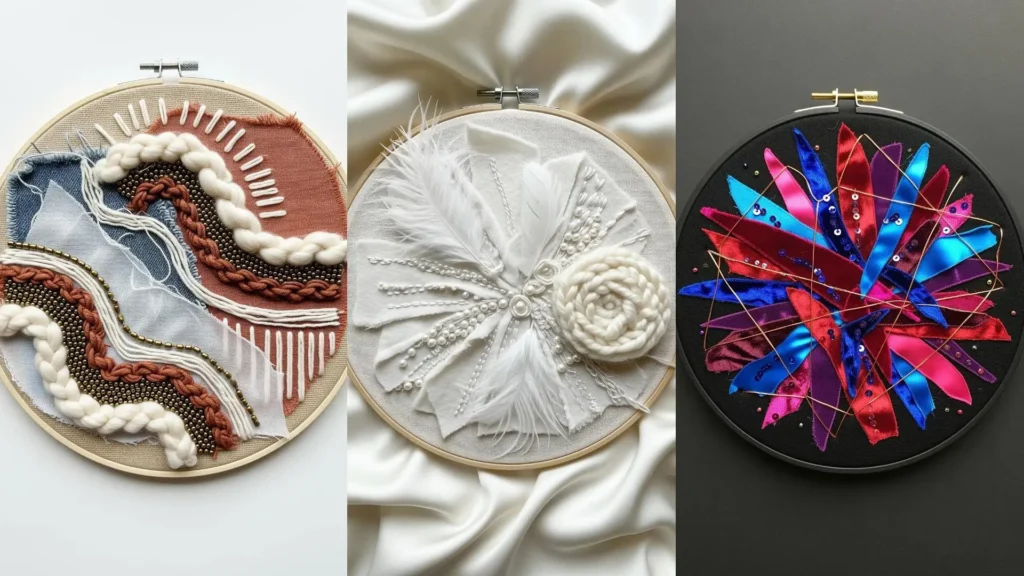
Perhaps you’ve found yourself with a growing collection of beautiful fabric scraps, stray beads, and unique threads, wondering how to bring them together into something that feels like art—not just craft.
The secret isn’t in mastering hundreds of complex stitches. It’s in learning to see the materials themselves as the main event. It’s about understanding how the matte finish of wool can make a silk ribbon shine brighter, or how a simple running stitch can transform into a powerful graphic line.
In these ideas, I want to show you how to think like a textile artist. You’ll learn to layer textures, combine unexpected materials, and use your needle to build compositions with depth, emotion, and intention. This is your permission to experiment, to tear, to mend, and to create work that is uniquely, expressively yours.
1. Weave Movement with Contrasting Textures
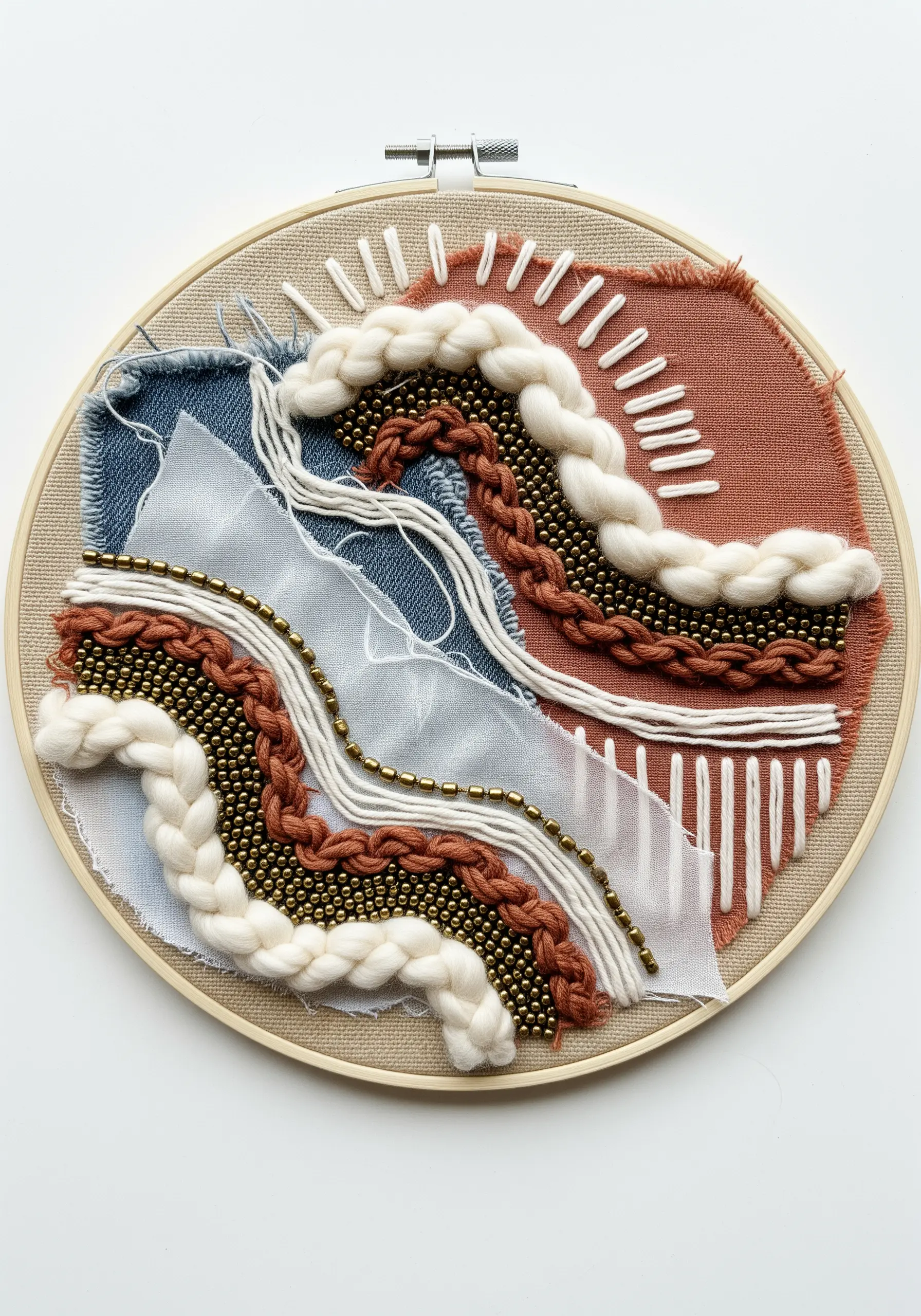
Create a sense of flowing energy by juxtaposing soft and hard materials.
First, layer torn scraps of denim and linen to build a foundational color palette and soft edges.
Then, introduce a high-contrast texture like thick, braided yarn—couch it down with a matching thread to secure its curves.
Fill the negative space with dense rows of seed beads, which add a rigid, light-catching surface that makes the yarn appear even softer.
This method of high-texture fabric collage turns a simple wave motif into a dynamic, tactile landscape.
2. Master Sheen and Shadow with Ribbon Collage
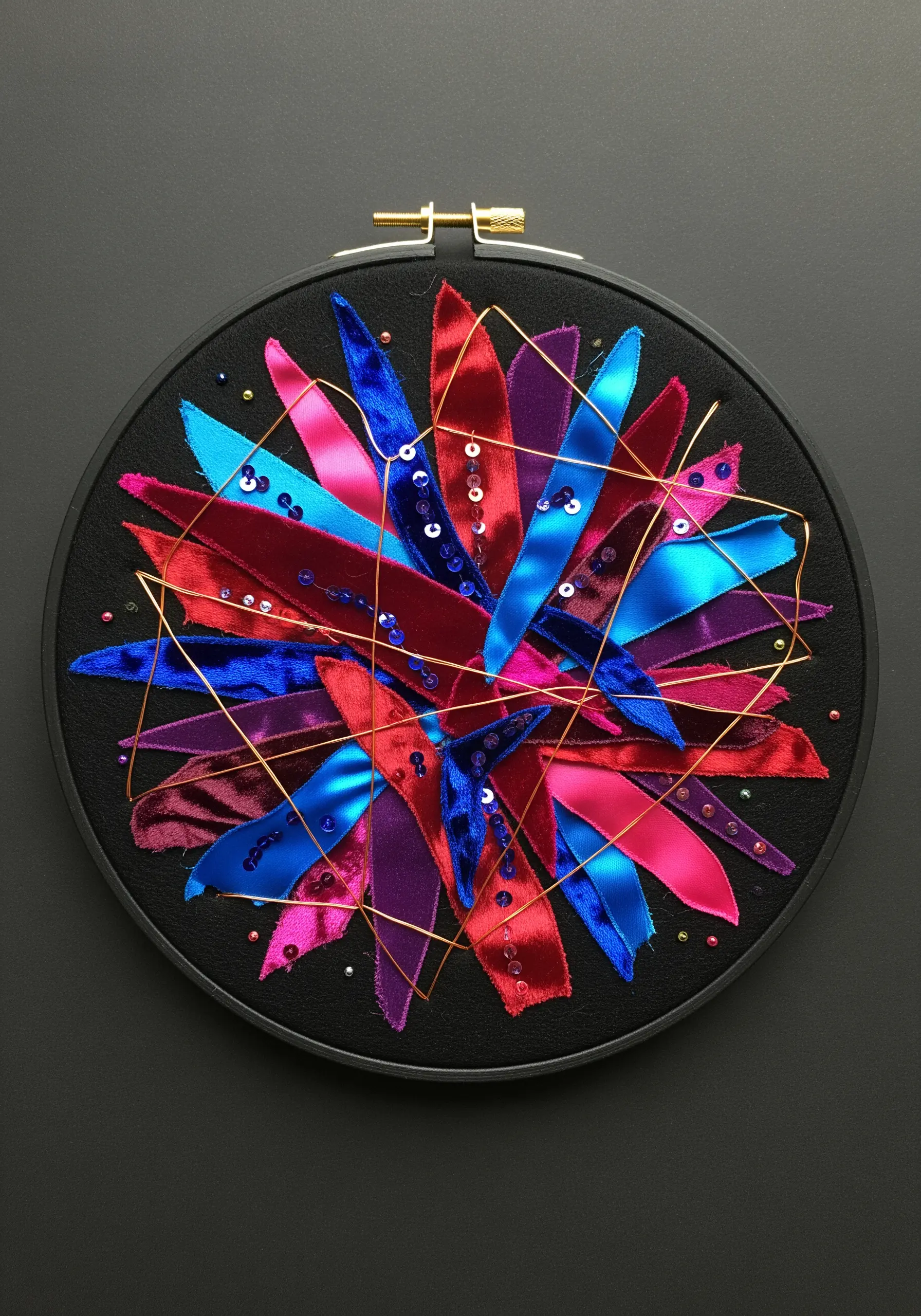
Move beyond thread by using scraps of satin and velvet ribbon to block in color with dramatic effect.
Cut ribbons into petal or shard shapes and arrange them in a radial pattern, overlapping the pieces to build depth.
Secure each piece with a few hidden tacking stitches.
To unify the composition, stitch a loose web of fine metallic thread over the top—this catches the light differently than the fabric and creates a cohesive structure.
Scatter a few sequins to echo the metallic glint, turning a simple collage into a sophisticated study of light.
3. Layer Sheer Fabrics for Ethereal Seascapes
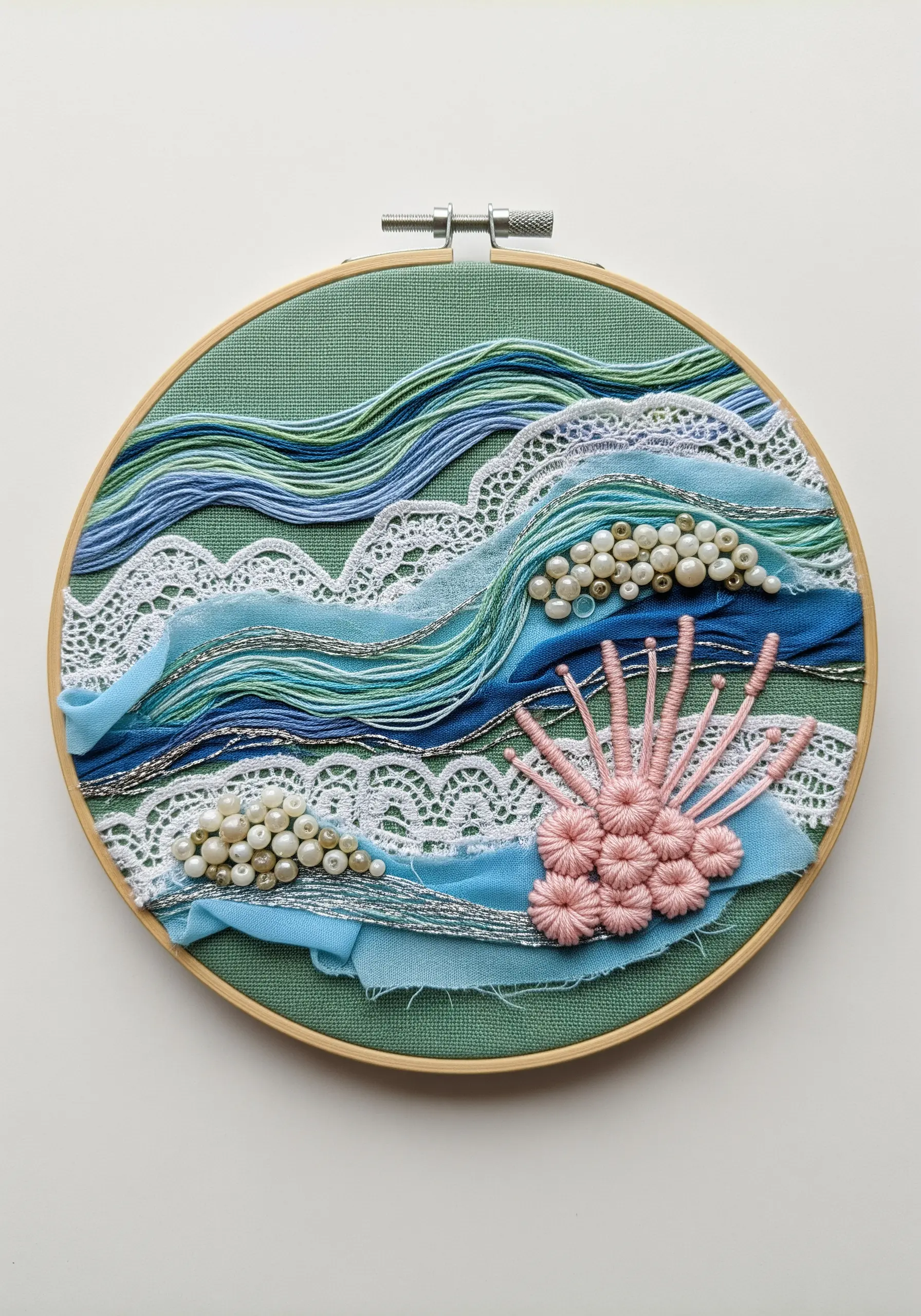
Suggest the translucence of water by layering materials with different opacities.
Start with a base of solid cotton, then add strips of chiffon, organza, or lace, allowing the edges to fray naturally.
Use variegated thread in a simple running stitch to couch down the layers, mimicking the undulating lines of waves.
Incorporate clusters of pearls or iridescent beads to represent seafoam or light on water.
The visible layers create a gentle, dreamlike quality that a single layer of fabric or thread could never achieve.
4. Construct a Geode with Soft and Metallic Layers
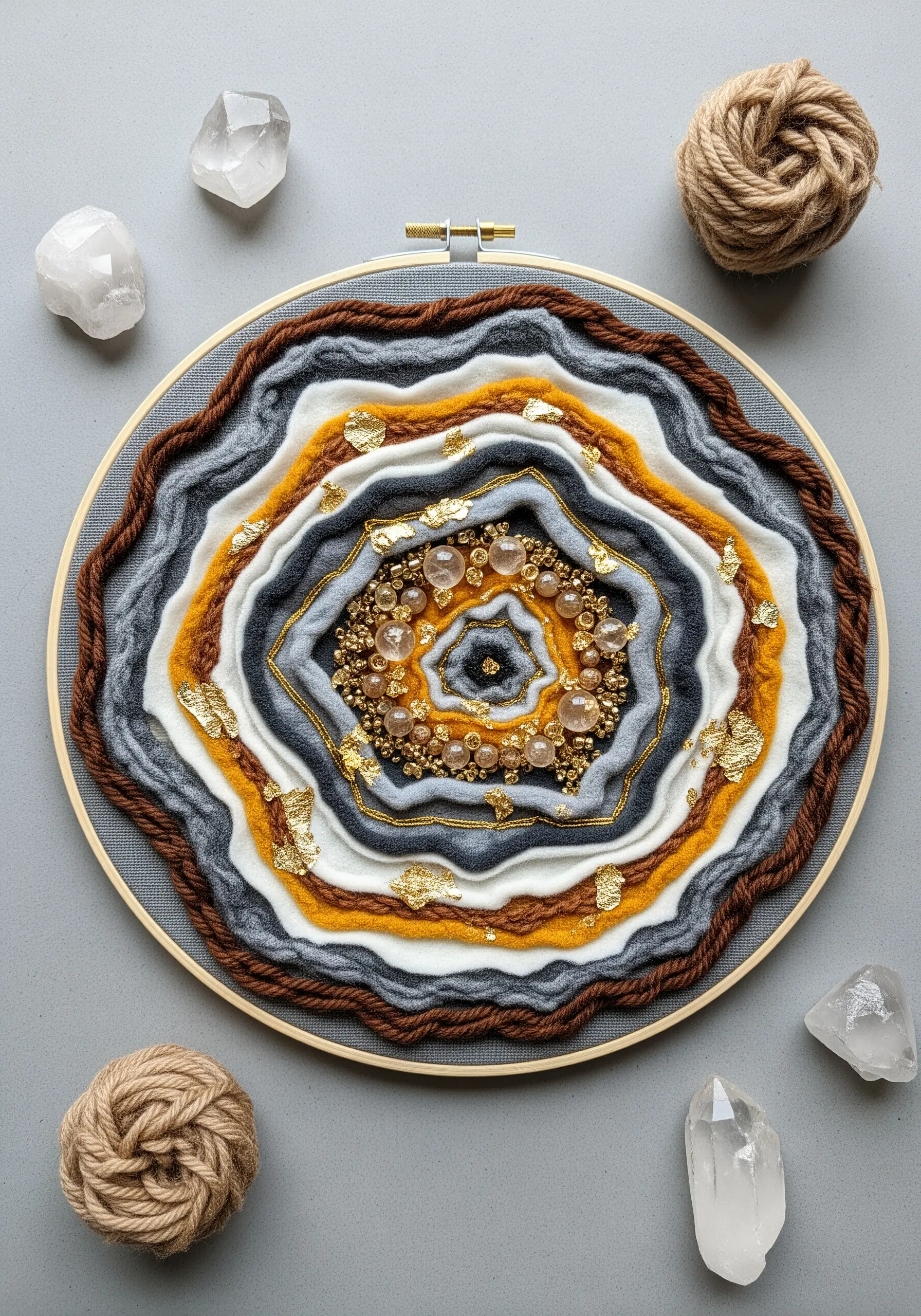
Mimic the concentric growth of a crystal geode by layering felt or wool roving in organic rings.
Cut each ring with a slightly irregular edge and secure it with a simple whipstitch.
Create a focal point at the center with a dense cluster of faceted glass beads and metallic seed beads.
For a final touch of luxury, apply flakes of gold leaf using a fabric adhesive—the metallic shine contrasts beautifully with the matte softness of the wool.
These yarn wall art projects transform simple materials into a stunning natural formation.
5. Juxtapose Geometric Stitches and Industrial Mesh

Create a bold, architectural composition by treating your thread and fabric as graphic elements.
Use a dense satin stitch to create solid blocks of color, ensuring your stitches are tight and even for a clean, flat finish.
Contrast these solid shapes by incorporating unexpected materials like metal or plastic mesh—tack it down with a contrasting thread to emphasize its grid structure.
Use single, taut strands of thread as sharp, intersecting lines that cut across the other elements, guiding the eye and adding tension.
This is one of the most effective ways to create stunning framed embroidery pieces with a modern, graphic impact.
6. Illustrate the Cosmos with Light-Catching Embellishments
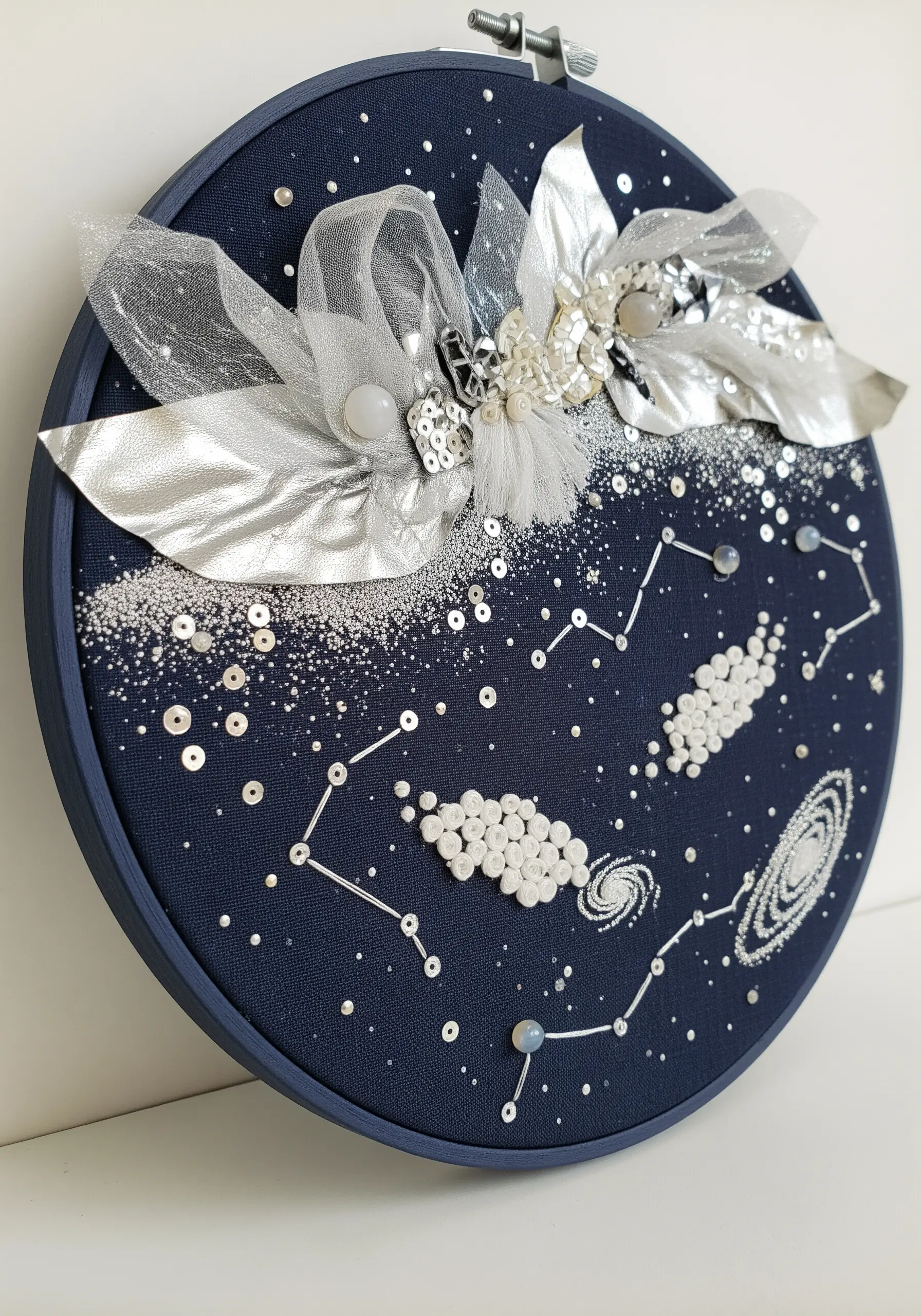
Evoke a celestial scene by focusing on how different materials reflect light against a dark background.
Use a matte navy or black fabric as your canvas to make every bead and sequin pop.
Form constellations and galaxies using clusters of white seed beads and French knots in varying sizes for a sense of distance.
For a focal point, create a dimensional nebula or starburst from folded organza and metallic faux leather, adding pearls and sequins at the center.
Finish by scattering fine silver glitter to represent distant stardust—a fabric glue pen offers precise application.
7. Embrace Wabi-Sabi with Stained Fabric and Mending Stitches

Tell a story of beauty in imperfection by incorporating intentionally ‘damaged’ materials.
Take a small scrap of linen or cotton and stain it with coffee, tea, or ink, allowing it to dry naturally for an organic, unpredictable mark.
Appliqué this piece onto your base fabric and use a contrasting, sturdy thread like sashiko thread to ‘mend’ it with a wide blanket stitch or ladder stitch.
This technique reframes mending as a decorative act, celebrating history and repair rather than concealing it.
These handmade embroidery touches add soul to any minimalist space.
8. Capture Fiery Energy with a Mixed-Media Gradient

Create a powerful sense of movement by transitioning smoothly from one texture to another.
Build a base of ‘flames’ with layered scraps of velvet, silk, and suede in a warm color palette, cutting them into pointed, leaf-like shapes.
Where the fabric ends, begin a dense field of black seed beads to represent cooling rock or earth.
Bridge the two zones with thread painting—use contemporary rainbow blend stitches in yellows and oranges to create flowing ‘lava’ that erupts from the fabric and spills over the beads.
This seamless transition makes the entire piece feel dynamic and alive.
9. Compose a Playful Pattern with Anchored Scraps
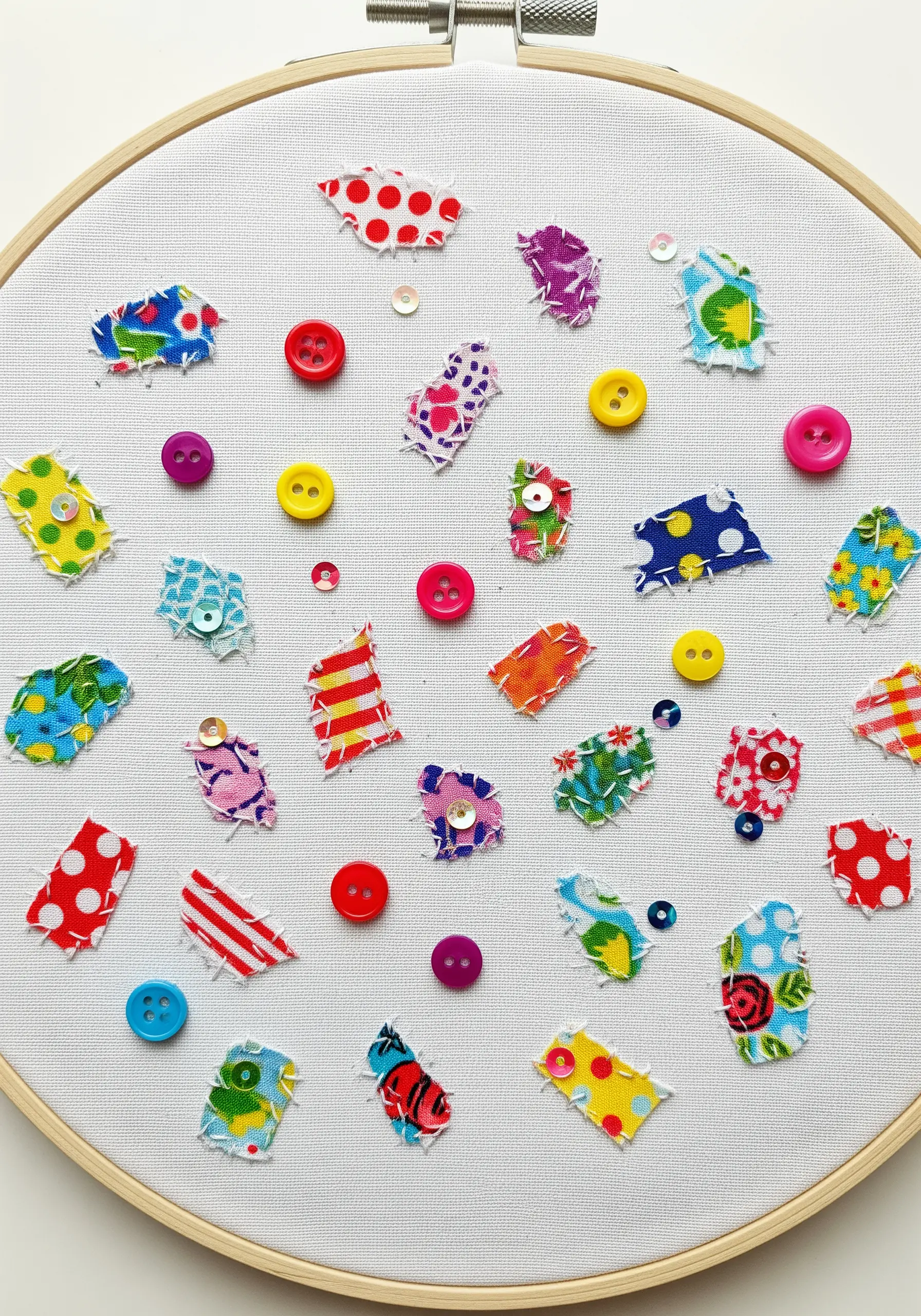
Turn your smallest fabric scraps into a joyful, confetti-like composition that feels intentional, not random.
Cut tiny, irregular shapes from colorful printed fabrics.
Arrange them across your hoop, paying attention to the negative space between them to ensure the design feels balanced and airy.
Secure each scrap with a few simple running stitches or a single French knot in the center.
Finally, add buttons and sequins to the empty spaces—this anchors the scattered design and adds points of textural interest, unifying the playful chaos.
This approach works wonderfully for cartoon-style embroidery ideas.
10. Build a Landscape with Natural Found Objects
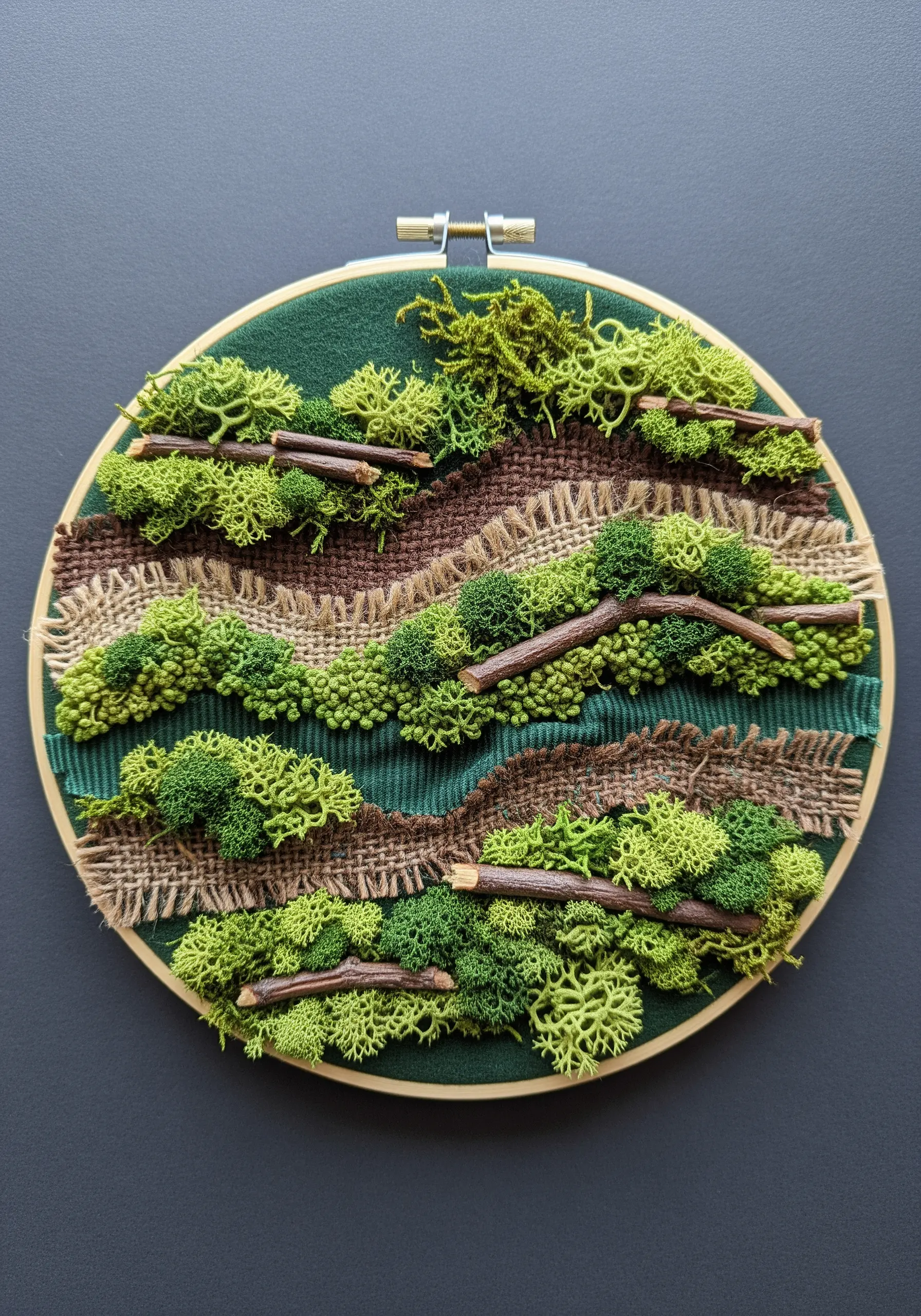
Bring the outside in by incorporating preserved natural elements into your work.
Use strips of burlap and textured green fabric to create rolling hills.
Instead of stitching trees or foliage, use a strong craft glue to attach preserved moss, lichen, and small twigs directly to the fabric.
This creates an incredibly tactile, three-dimensional surface that thread alone cannot replicate.
These embroidery projects inspired by textures you’d find on a nature walk offer a direct connection to the environment.
11. Explore Monochromatic Texture with an All-White Palette
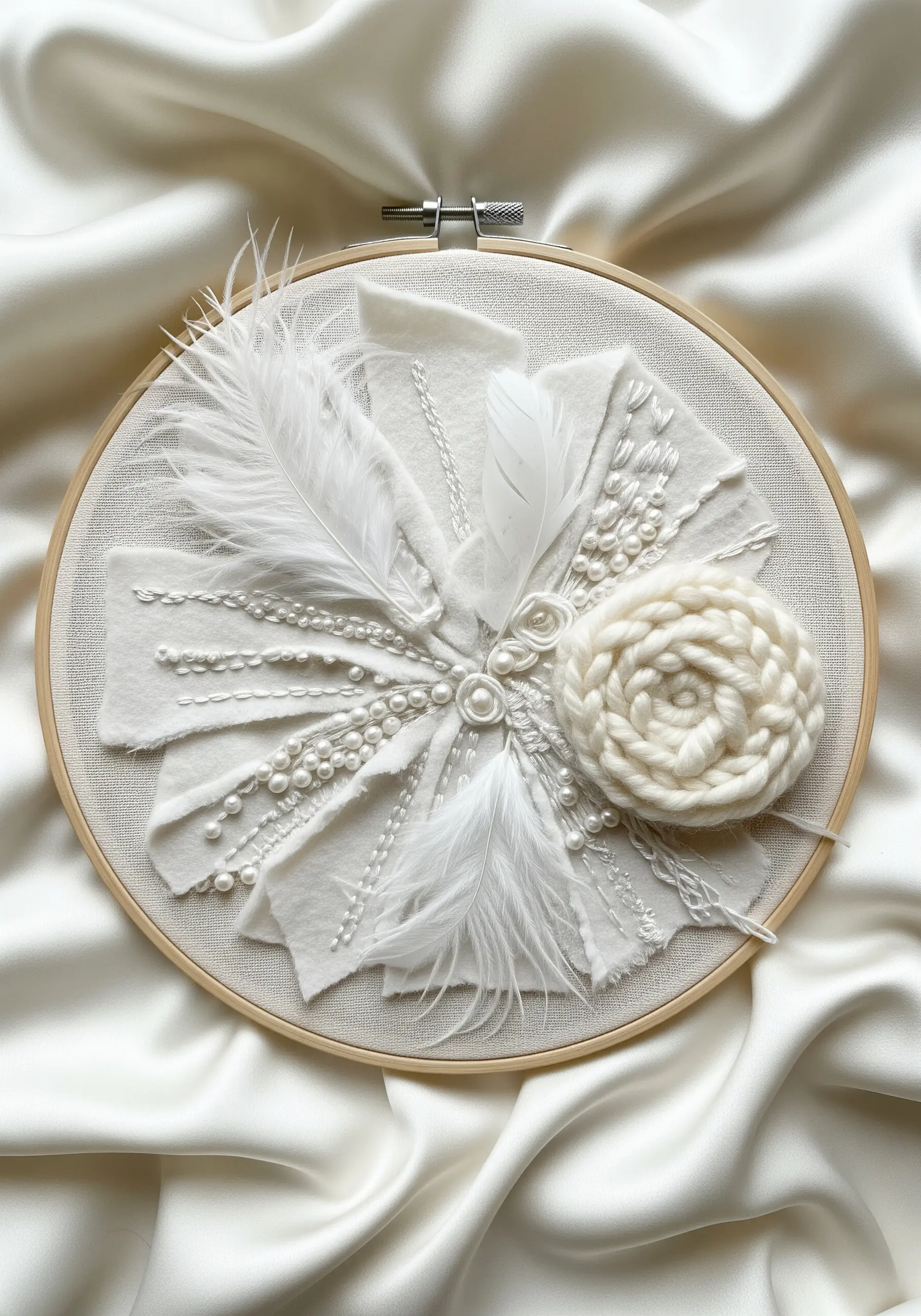
Challenge yourself to create a compelling design without relying on color.
Working on a cream or white background, combine materials of the same hue but with different textures: soft felt, fluffy wool roving, smooth pearls, delicate feathers, and matte cotton floss.
Use simple stitches—chain stitch, seed stitch, French knots—to add subtle patterns that catch the light and create shadows.
The lack of color forces the viewer to focus entirely on form, texture, and the interplay of light, resulting in an incredibly sophisticated and elegant piece for a minimalist sofa.
12. Create Digital Glitch Art with Holographic Tape

Translate a digital aesthetic into a physical object using unconventional materials.
On a black canvas, use sharp scissors to cut holographic or iridescent tape into pixelated shapes and apply them firmly.
Then, use neon embroidery floss to stitch chaotic, intersecting lines that appear to ‘glitch’ across the surface.
Vary the thickness of your lines by using different numbers of strands.
This combination of sleek, reflective tape and textural thread creates a dynamic tension between the digital and the handmade.
13. Sculpt a Topographical Map with Layered Fabric and Stitches
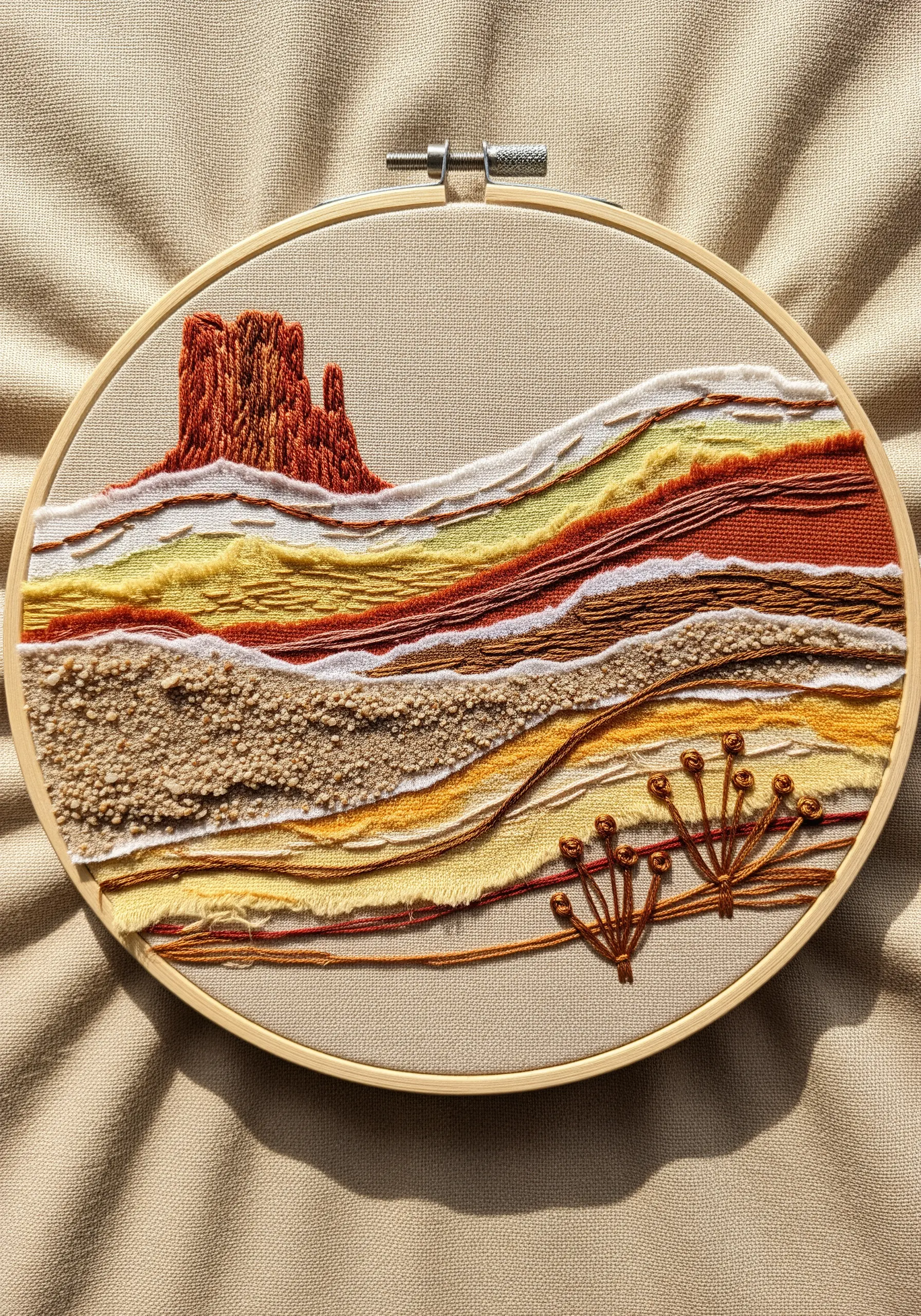
Build a sense of elevation and terrain by layering torn fabric strips in an earthy color palette.
Allow the raw, frayed edges to show, as they create natural, soft lines that mimic geological strata.
Use a variety of textural stitches to define different areas: French knots and bullion knots for scrubland, satin stitch for rock formations, and couched threads for ridges.
This technique turns a flat surface into a contoured, topographical map you can read with your fingertips, perfect for embroidered throws and blankets with a landscape theme.
14. Tell a Story by Juxtaposing Fabric Swatches

Combine two seemingly unrelated fabric scraps—like a vintage floral and a modern stripe—to create a small visual narrative.
Place them side-by-side or slightly overlapping.
Use a bold, contrasting running stitch to frame one piece, treating the stitch as a graphic border.
Connect the two swatches with a functional element, like a single button or a small piece of lace, that physically and thematically bridges the gap between them.
These tiny embroidery patterns transform leftover scraps into thoughtful compositions.
15. Paint a Moody Atmosphere with Fabric and Beads
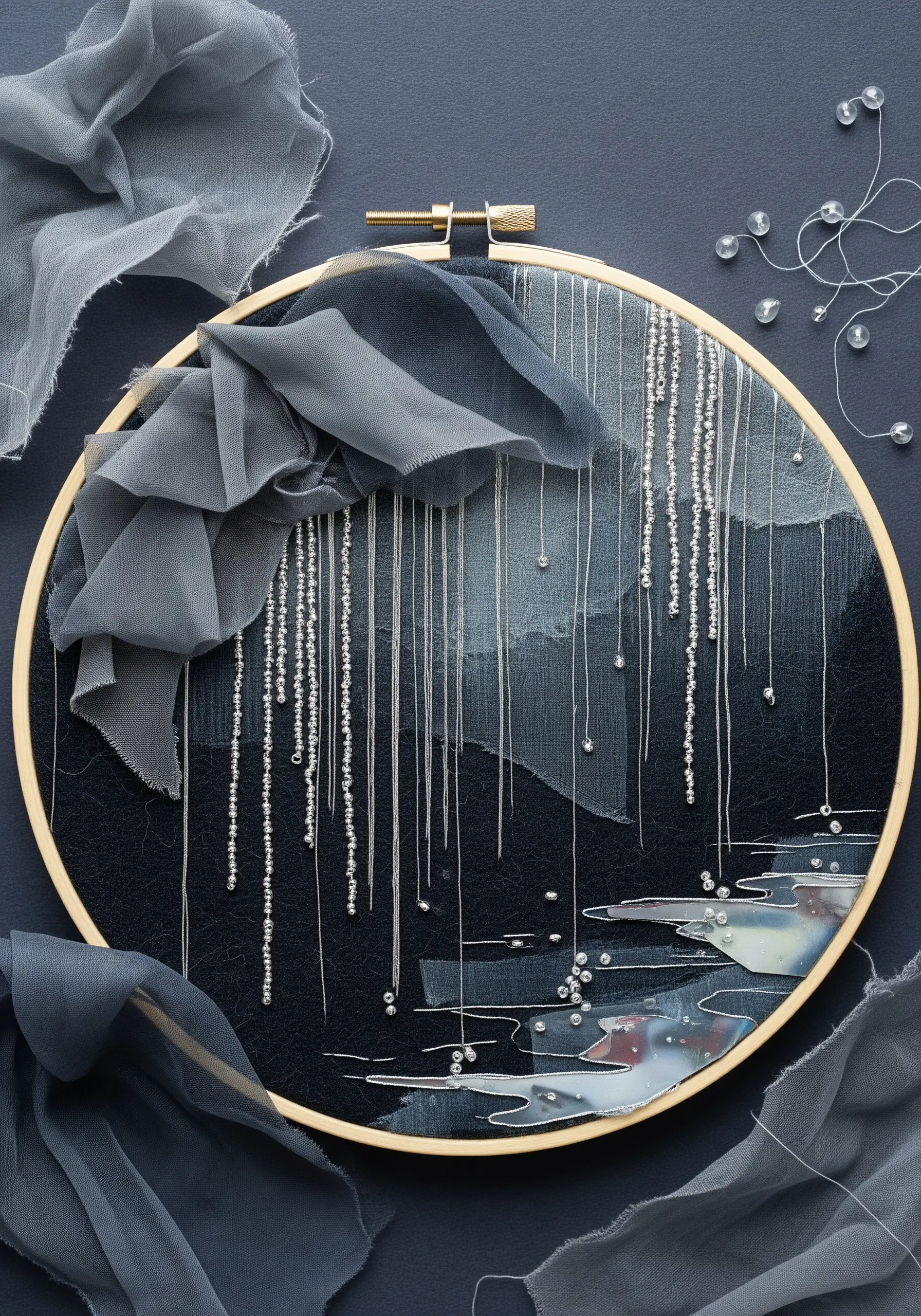
Evoke a feeling or a moment—like a rainy evening—using abstract layers and textures.
Create a dark, stormy sky by layering torn pieces of gray and black chiffon or organza.
Stitch ‘rain’ using long, straight stitches with silver metallic thread, varying the lengths and spacing.
For a touch of realism, couch down rows of tiny silver-lined seed beads to represent heavier downpours.
Finally, scatter a few clear, teardrop-shaped beads to mimic lingering water droplets, adding depth and sparkle to the somber palette.
16. Craft a Dimensional Bouquet with Felt and French Knots

Build a lush, vibrant bouquet that pops off the fabric by using felt for your main shapes.
Cut flower and leaf shapes from various colors of felt and arrange them in a dense, overlapping cluster.
Instead of complex stitching, use simple, high-impact details: a dense cluster of yellow French knots for a flower’s center, a single straight stitch for a leaf’s vein.
Add smaller filler elements with bullion knots or colonial knots for a berry-like texture.
This is a fast, effective way to create bold, dimensional floral mandala embroidery ideas without intricate thread painting.
17. Draw with Thread on a Paper Canvas
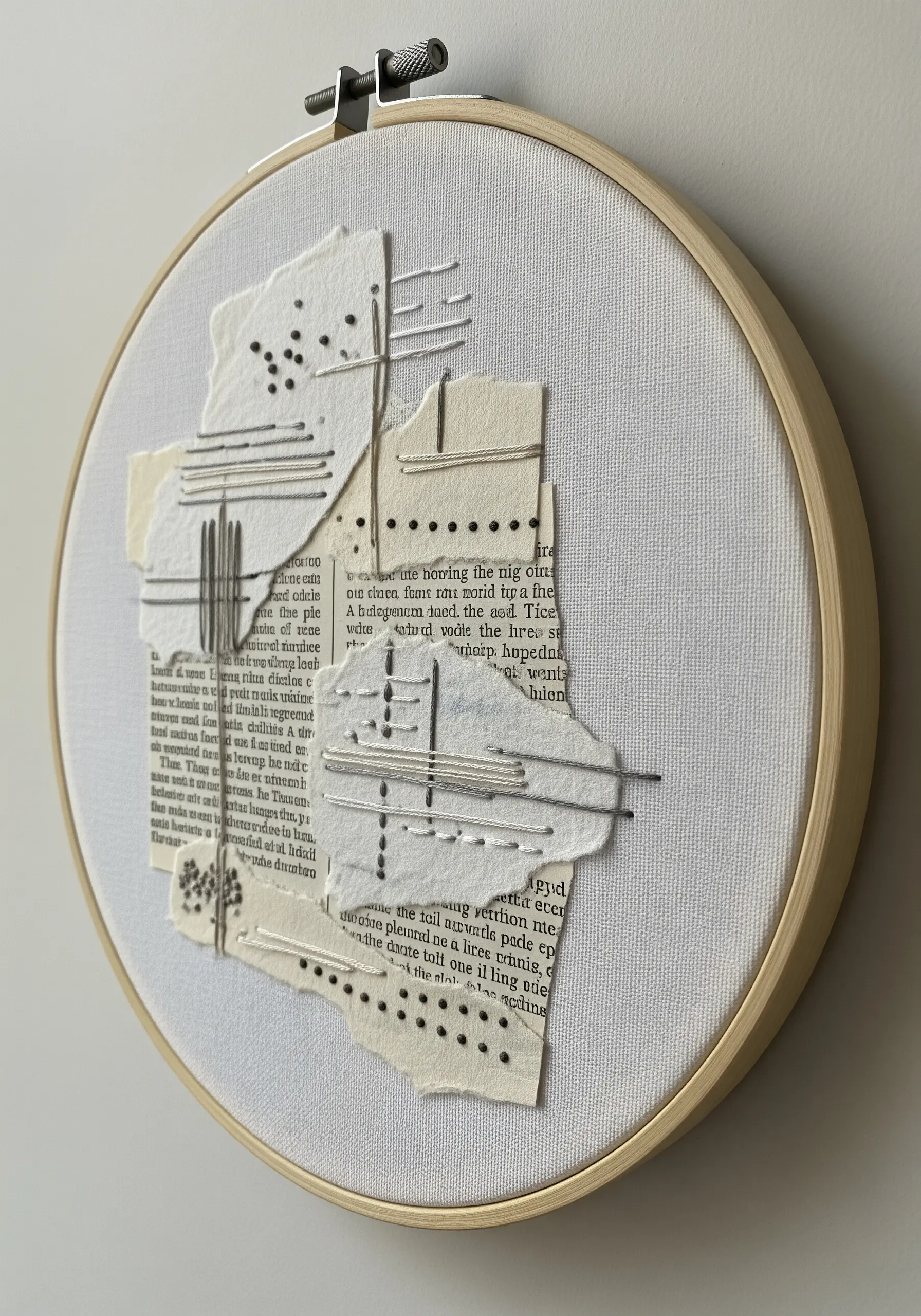
Use paper scraps as your primary medium, treating thread as a drawing tool to add line and texture.
Tear pages from old books or use handmade paper for interesting edges, and arrange them in an abstract collage.
Use a sharp, fine needle to pierce the paper before stitching to prevent tearing.
Create graphic elements with straight stitches, seed stitches for texture, and grids of French knots.
The contrast between the flat, matte paper and the raised, textural thread creates a sophisticated dialogue between materials.
This is a great starting point for combining paper layers with subtle embroidery.
18. Reveal Hidden Layers with Deconstructed Fabric
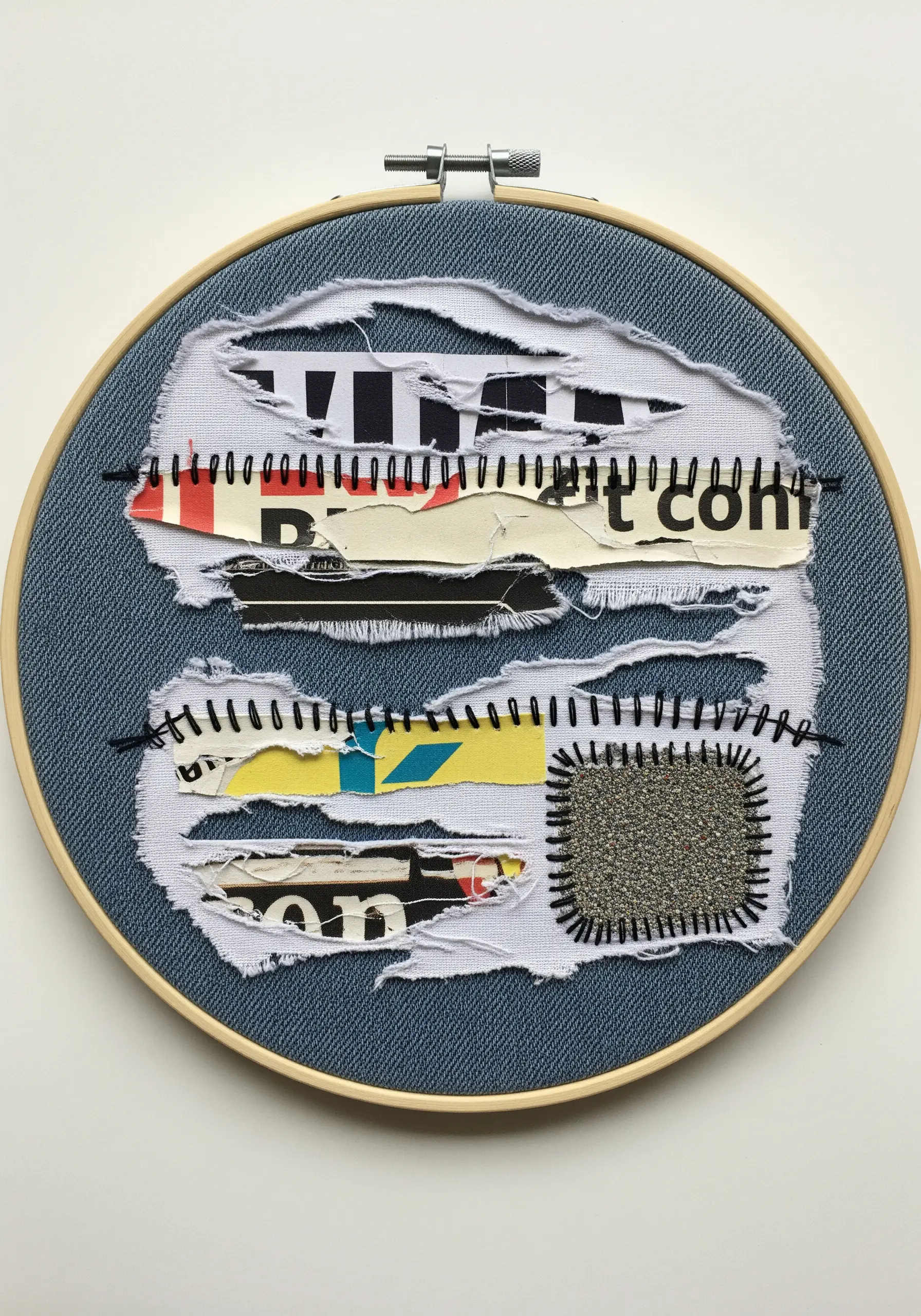
Create intrigue by tearing or cutting away the top layer of fabric to reveal a different texture underneath.
Start with two layers of fabric in your hoop; a solid on top (like denim) and a collage of paper or patterned fabric underneath.
Carefully rip horizontal slits in the top layer, allowing the fabric to fray.
Frame these openings with a bold stitch, like a blanket stitch or whipped running stitch, to define the edges and draw attention to the revealed layers.
This technique adds depth and a sense of history to your work.
19. Define Form with Appliqué and Radiating Stitches
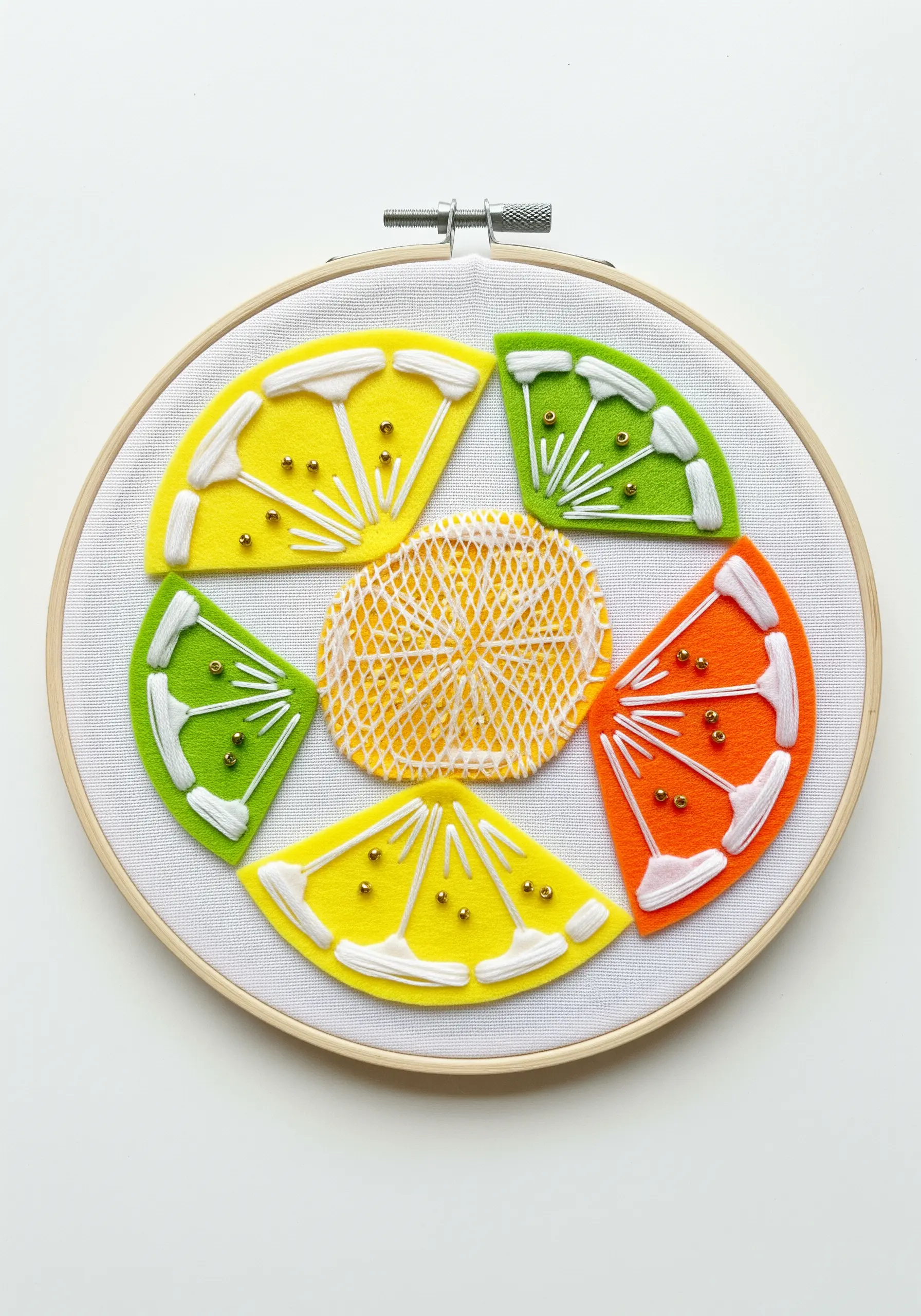
Use felt appliqué to create clean, solid shapes, then bring them to life with simple, descriptive embroidery.
Cut your main forms—like these citrus slices—from felt and secure them to the background fabric with a neat running stitch around the edge.
Use straight stitches radiating from a central point to suggest segments or veins.
A few strategically placed seed beads can represent seeds or add a touch of sparkle.
This combination of flat appliqué and linear stitching is a fast and graphic way to represent objects without needing to fill the entire shape with thread.
20. Build Opulent Texture with Couching and Gold Leaf
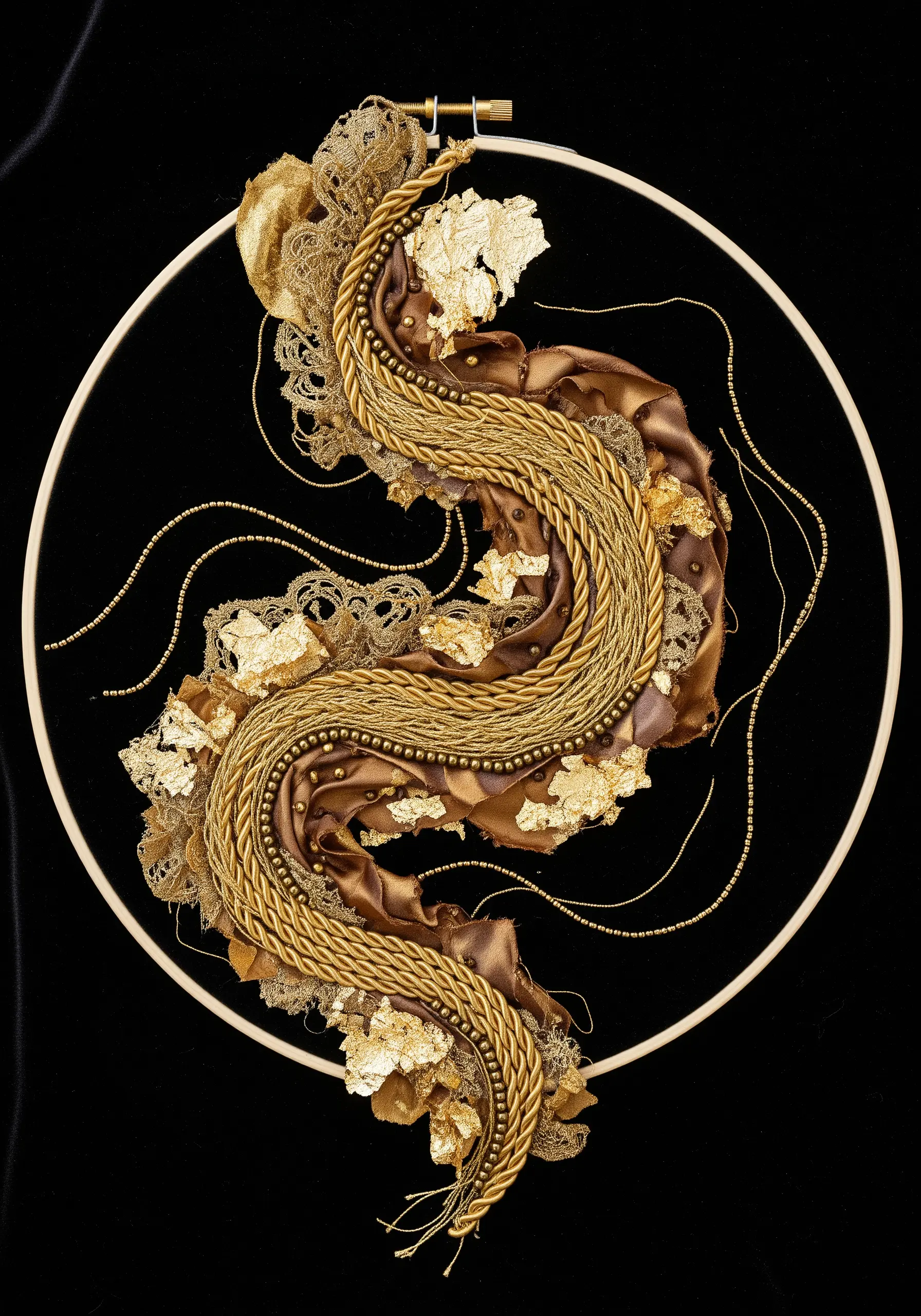
Create a luxurious, sculptural piece by focusing on layering rich, ornate materials.
Form your primary lines with thick, twisted cord, securing it to a dark fabric base using the couching technique—this allows you to create fluid curves with heavy materials.
Tuck ruched satin ribbon and delicate lace underneath the couched cord to add softness and intricate detail.
Scatter metallic beads along the curves and finish by applying gold leaf to the high points.
The result is a composition that feels both ancient and decadent, making for an unforgettable piece of minimal festive motifs.


