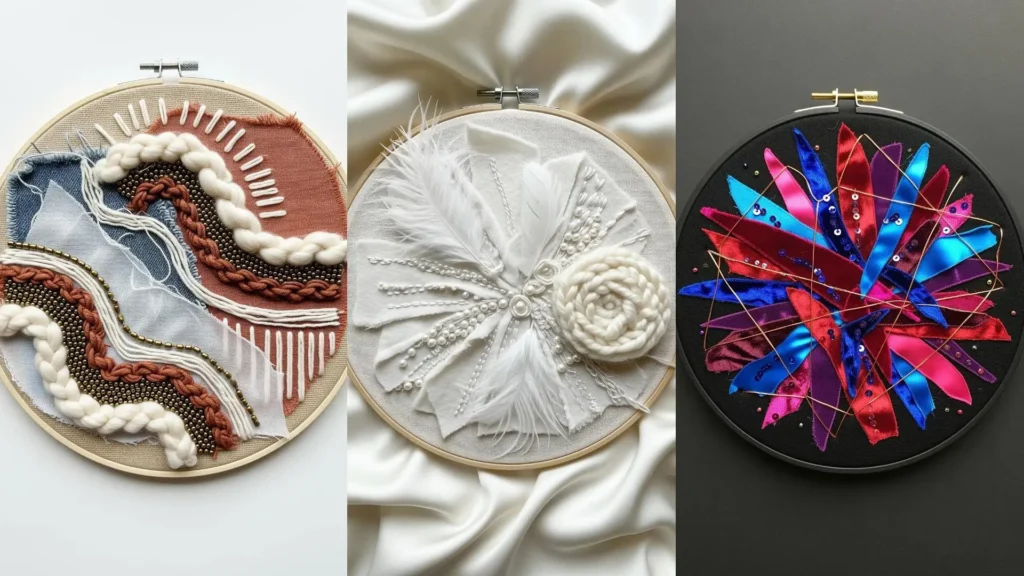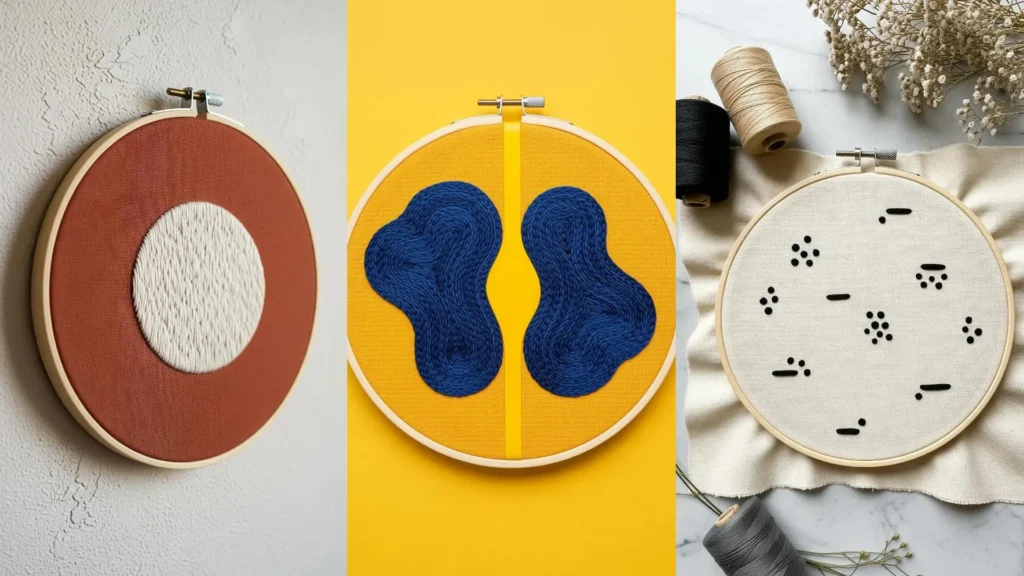
Minimalism in embroidery isn’t about doing less; it’s about making every single stitch matter more. The secret to creating work that feels both simple and dramatic lies in the space you *don’t* stitch—the negative space.
Think of your fabric not as a surface to be filled, but as a silent partner in your design. By using texture, line, and composition with intention, you can make that silence speak. You can guide the eye, create emotion, and build a powerful narrative with just a few well-placed threads.
These techniques will help you move beyond simply coloring in shapes and start designing with space itself. You’ll learn how to make emptiness feel full, how a single line can anchor a vast canvas, and how the contrast between texture and smoothness can create a drama that color alone never could. It’s time to let your embroidery breathe.
1. Define Form with Monochromatic Texture
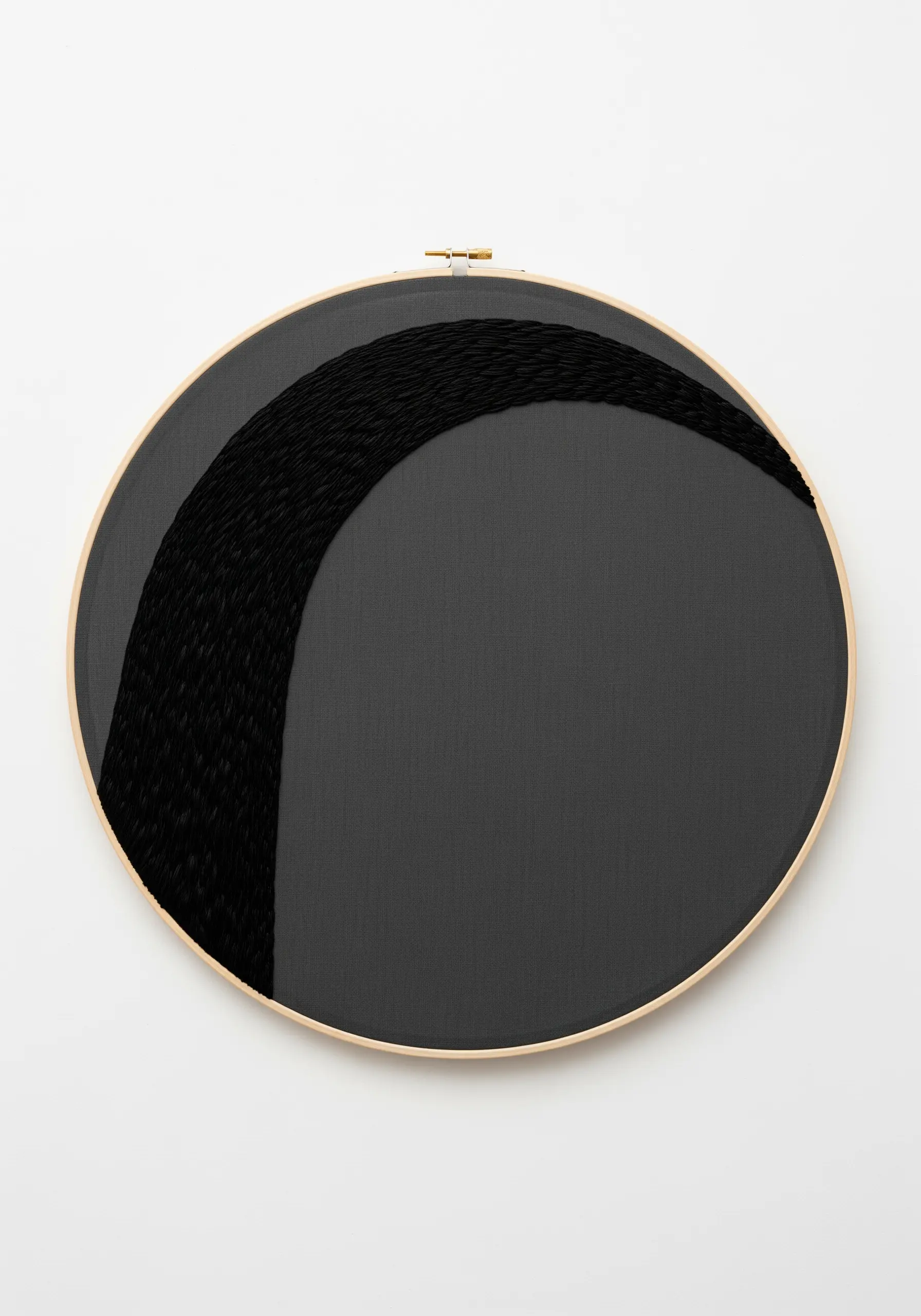
Create drama not with color, but with light and shadow.
Use a thick thread, like a cotton perle or all six strands of floss, in the exact same color as your fabric.
Fill a bold, abstract shape with dense satin stitches or couching, laying the threads tightly side-by-side.
The way the light catches the raised, glossy texture of the thread against the matte weave of the fabric is what makes the negative space feel deep and intentional.
2. Activate Space with Geometric Tension
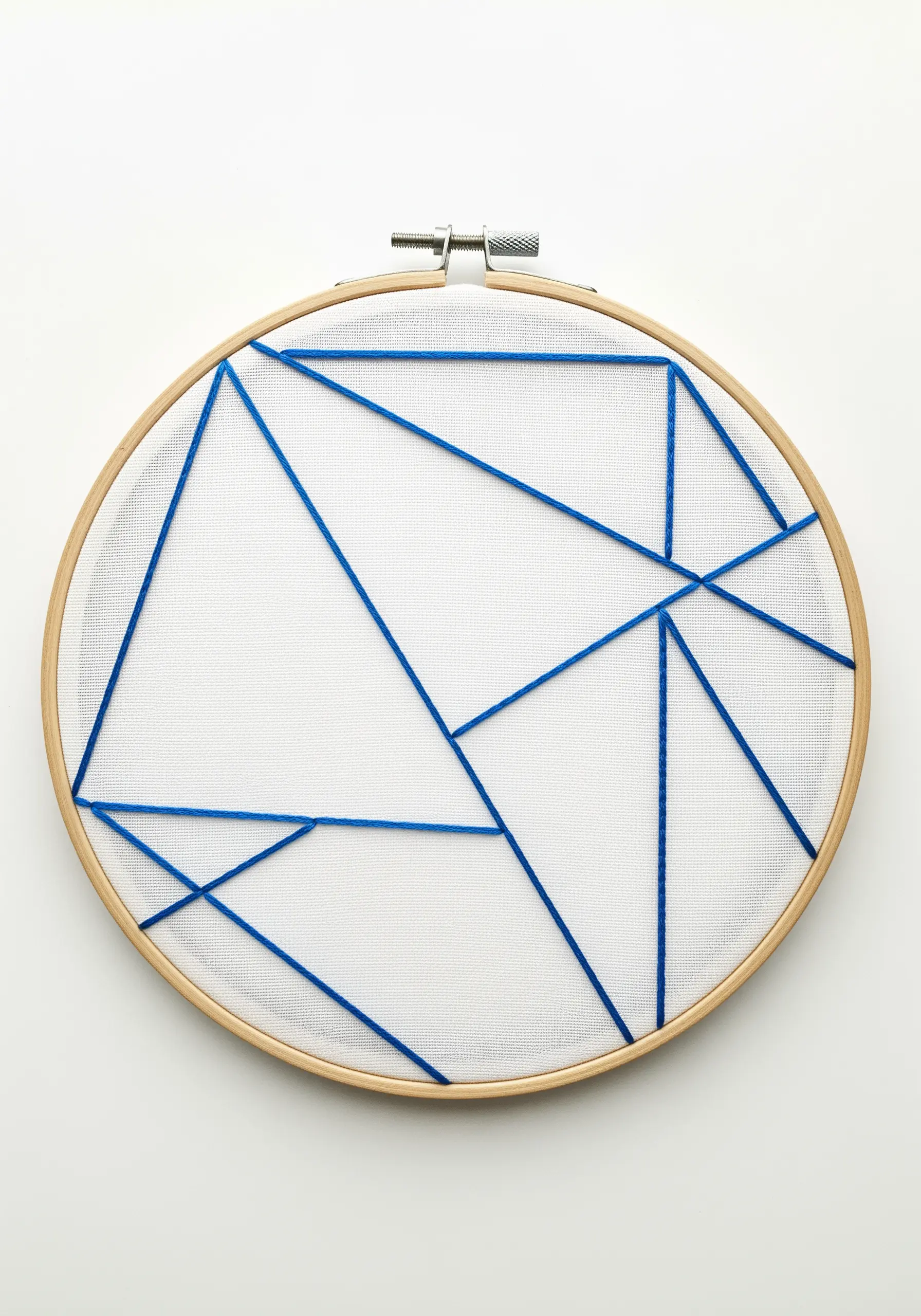
Turn your hoop into a canvas for architectural line work by stitching directly onto a sheer or mesh-like fabric.
Instead of drawing a motif, create intersecting straight lines that travel from one edge of the hoop to another.
This technique isn’t about filling space but dividing it, turning the empty areas into deliberate geometric shapes.
The tension in the taut threads gives the piece a clean, graphic energy that feels both minimalist and complex.
3. Frame the Void with Sculptural Knots
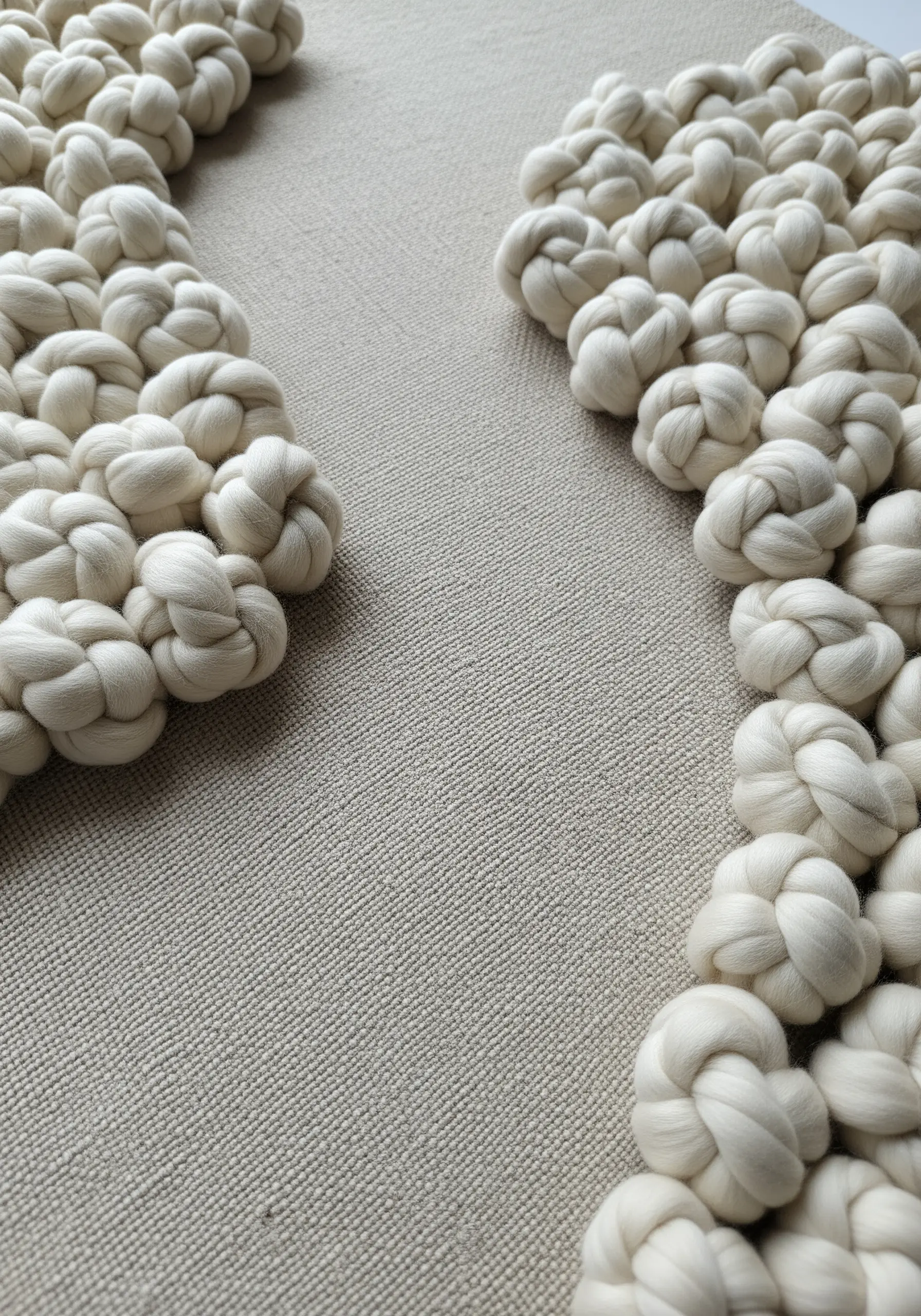
Make the empty space your focal point by outlining its edges with extreme texture.
Use a chunky, soft yarn like merino wool or felted rope to create large, dimensional knots or braids.
Arrange these textural elements along the borders of your composition, leaving the central area completely bare.
The eye is drawn to the stark contrast between the high-relief stitching and the quiet, flat canvas, making the negative space feel powerful.
4. Create Constellations of Texture
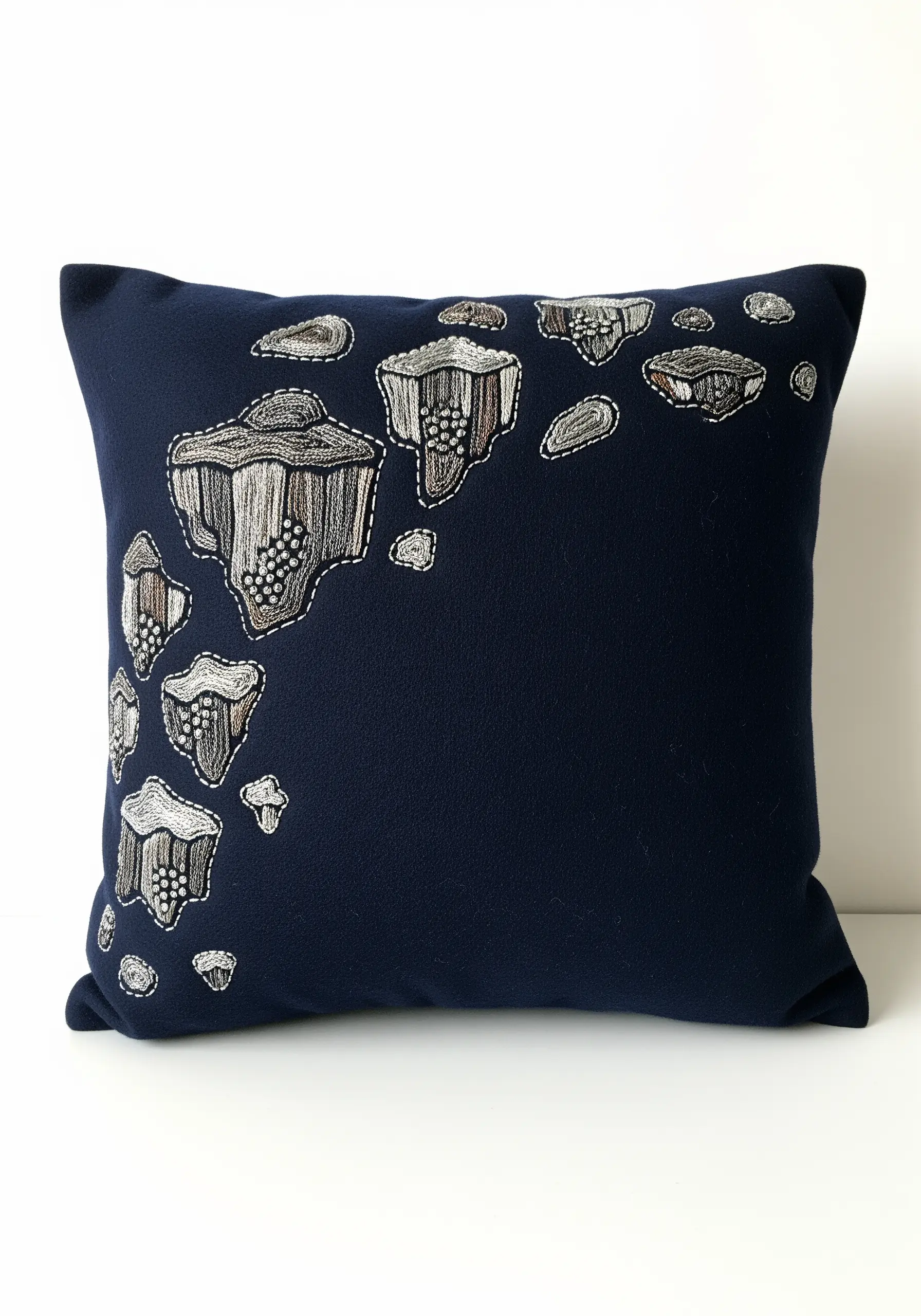
Embellish a surface with small, scattered islands of intricate stitching, like abstract constellations on a dark sky.
Combine French knots, seed stitches, and small beads in contained clusters, varying their density and shape.
The vast, unstitched fabric surrounding these motifs acts as a quiet backdrop that amplifies their detail and texture.
This approach works beautifully on functional items like pillows or jackets, making the embroidery feel like a curated, artistic touch.
5. Imply Motion with Layered Transparencies
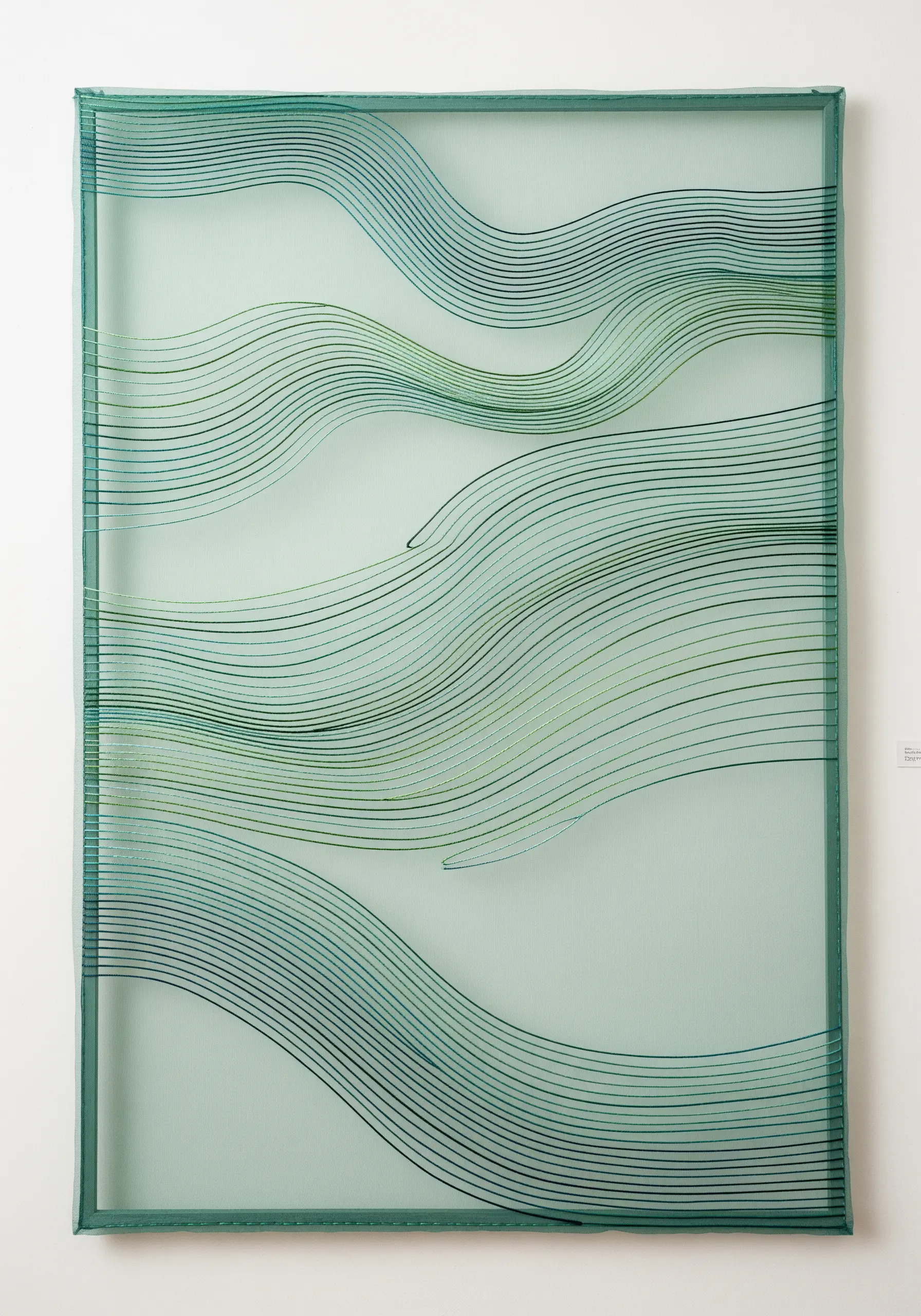
Create an illusion of depth and movement by stitching onto layered sheer fabric, like organza or tulle.
Stretch two or more layers of fabric in your hoop and stitch your design only on the top layer.
The threads will appear to float, casting soft shadows on the layer beneath and creating a beautiful moiré effect as the viewer moves.
The negative space is no longer flat but a transparent volume filled with shifting light and shadow.
6. Design with Controlled Fragmentation
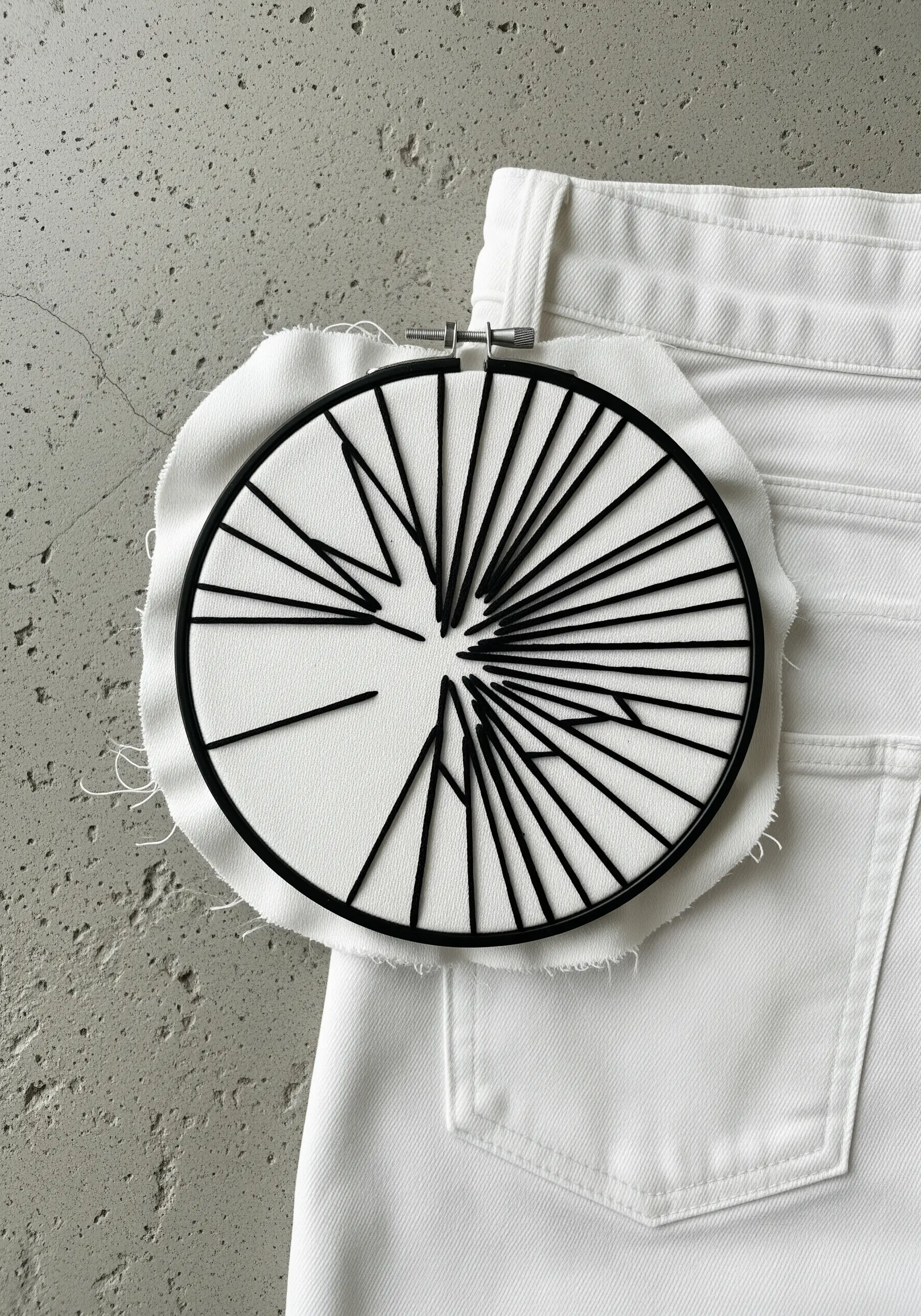
Create a sense of dynamic shatter by using straight stitches that radiate from multiple anchor points.
This technique relies on precise lines and sharp angles to slice through the negative space, transforming it into a mosaic of geometric shards.
Using a high-contrast palette—like black on white—and a matching black hoop enhances the graphic, broken-glass effect.
The composition feels simultaneously chaotic and perfectly controlled.
7. Contain Texture for Quiet Impact
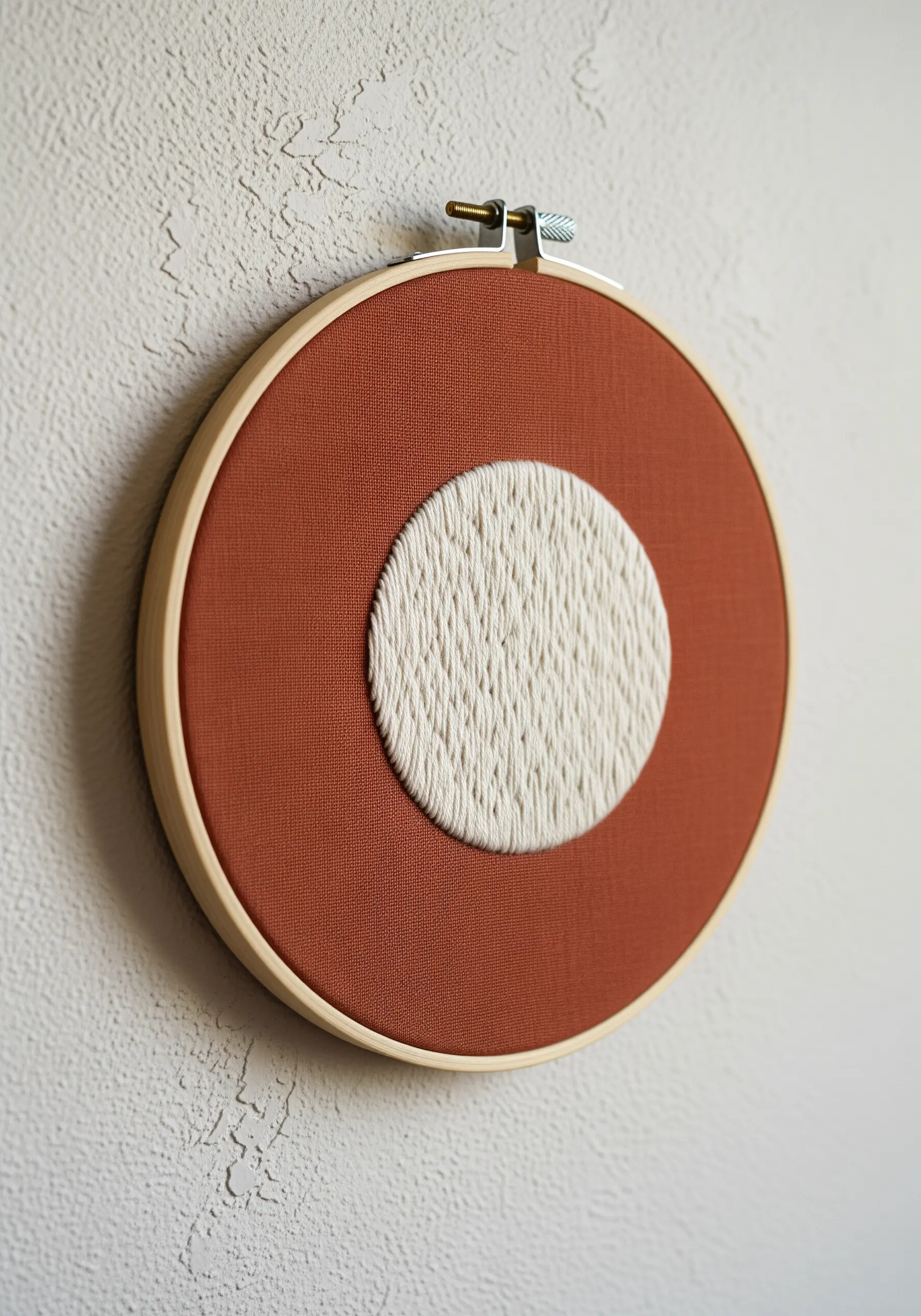
Juxtapose a field of dense, organic texture against a smooth, solid background.
Fill a simple geometric shape, like a circle, with a non-directional stitch like seed stitch or short, overlapping straight stitches.
Use a thick, soft thread to create a plush, tactile surface that invites touch.
The quiet, unadorned negative space acts as a mat frame, making the textured area feel contained, focused, and powerful.
8. Tell a Story with a Deconstructed Grid
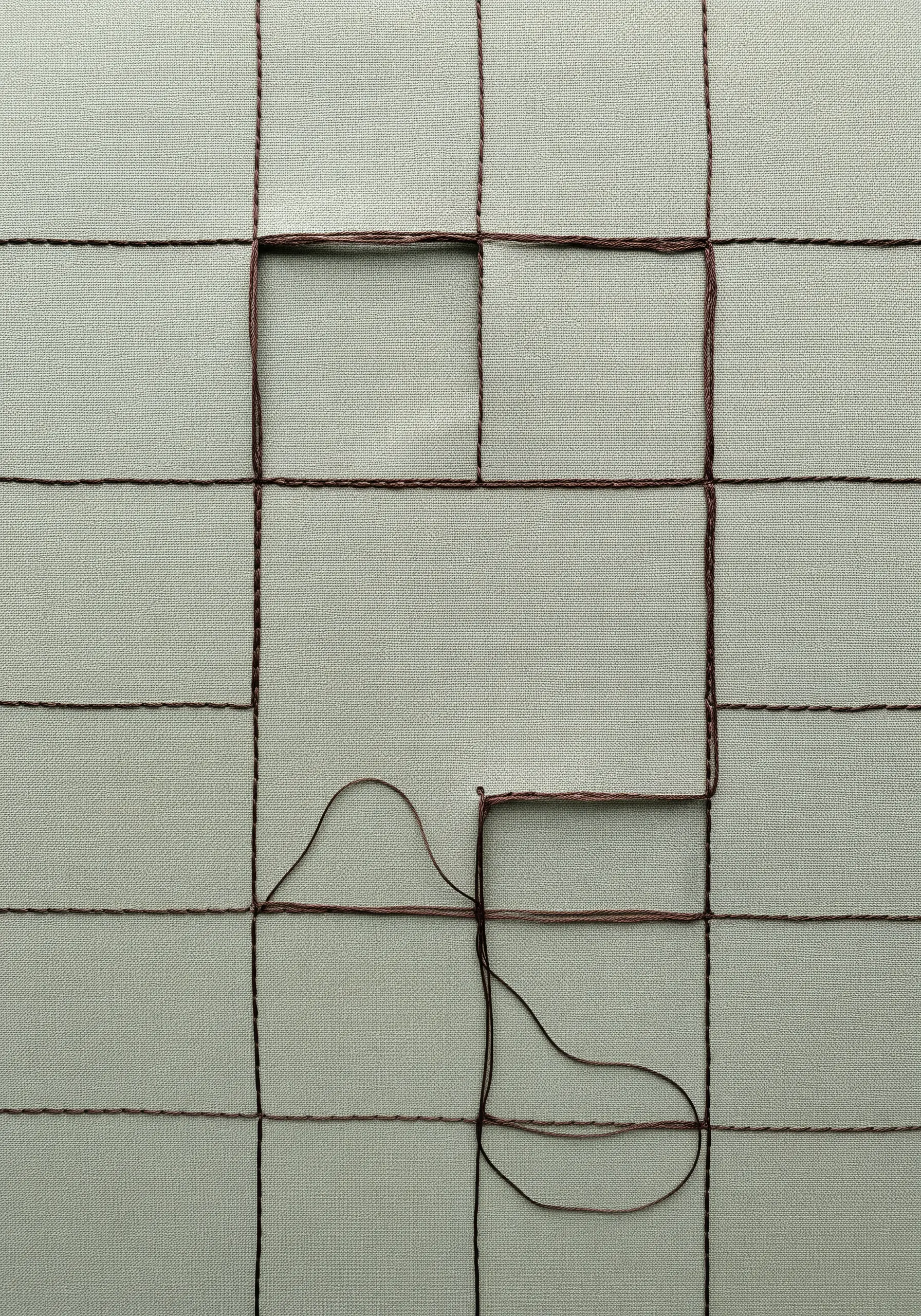
Establish a pattern and then intentionally break it to create a narrative focal point.
Stitch a simple, clean grid using a basic backstitch or running stitch.
In one section, leave the grid incomplete, with a loose thread suggesting the pattern is either being formed or unraveling.
This small imperfection transforms a static design into a dynamic story, making the negative space feel charged with possibility.
9. Isolate Elements in a Minimalist Series
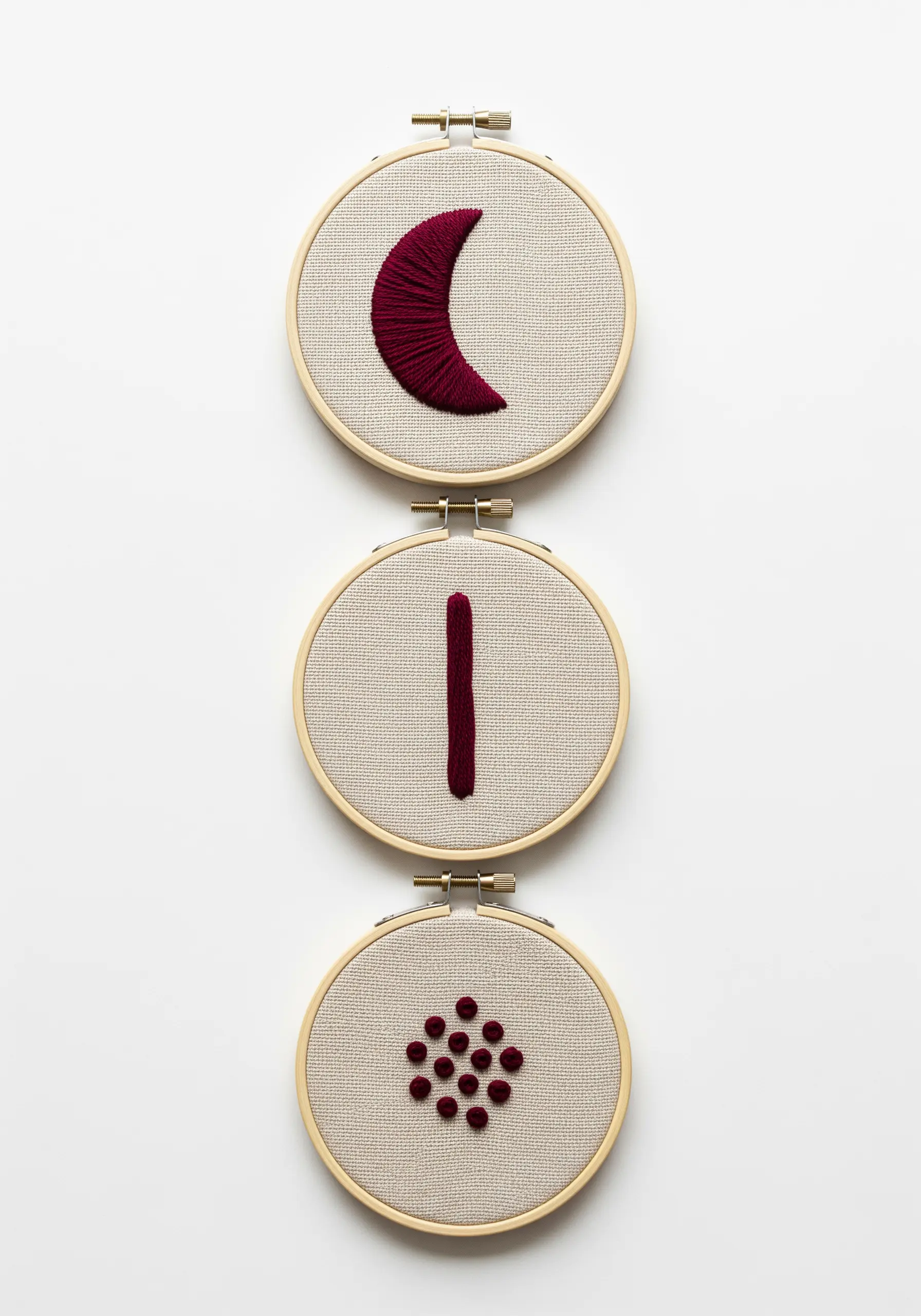
Amplify the impact of simple shapes by separating them into a triptych or series.
Instead of placing multiple motifs in one hoop, give each element its own frame.
This forces the viewer to consider each shape individually while also seeing them as part of a cohesive whole.
The physical space on the wall between the hoops becomes part of the composition, an active negative space that connects the story.
10. Carve a Path with Erupting Texture
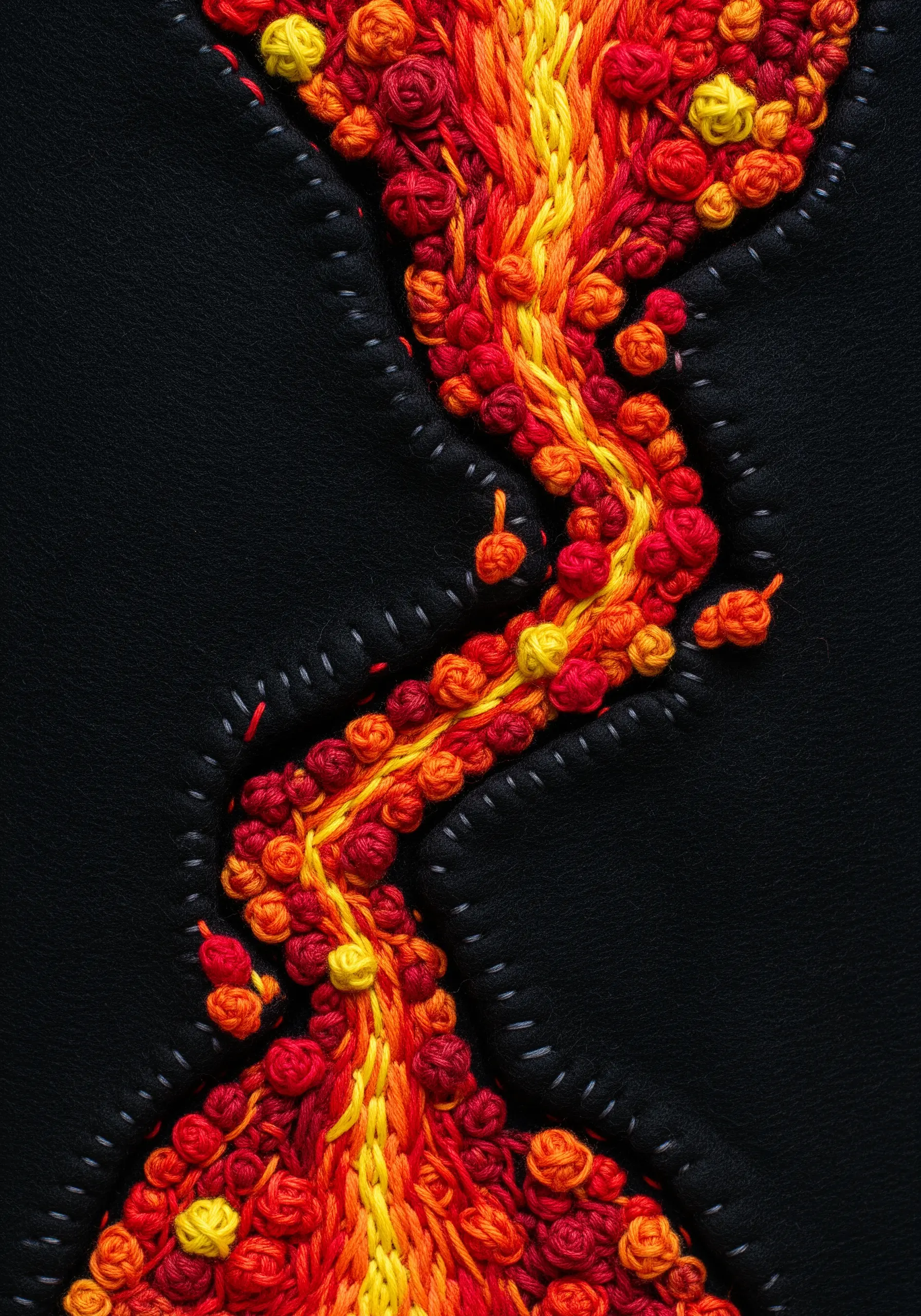
Use a stark contrast in texture and color to make your stitching feel like it’s erupting from the surface.
On a dark, flat fabric like black leather or felt, create a channel of vibrant, chaotic stitches.
Combine French knots, bullion knots, and layered straight stitches in fiery colors to simulate molten energy.
Frame this explosion of texture with a simple running stitch to define its edges, making the calm negative space feel even more dramatic.
11. Anchor Found Objects with Minimal Stitches
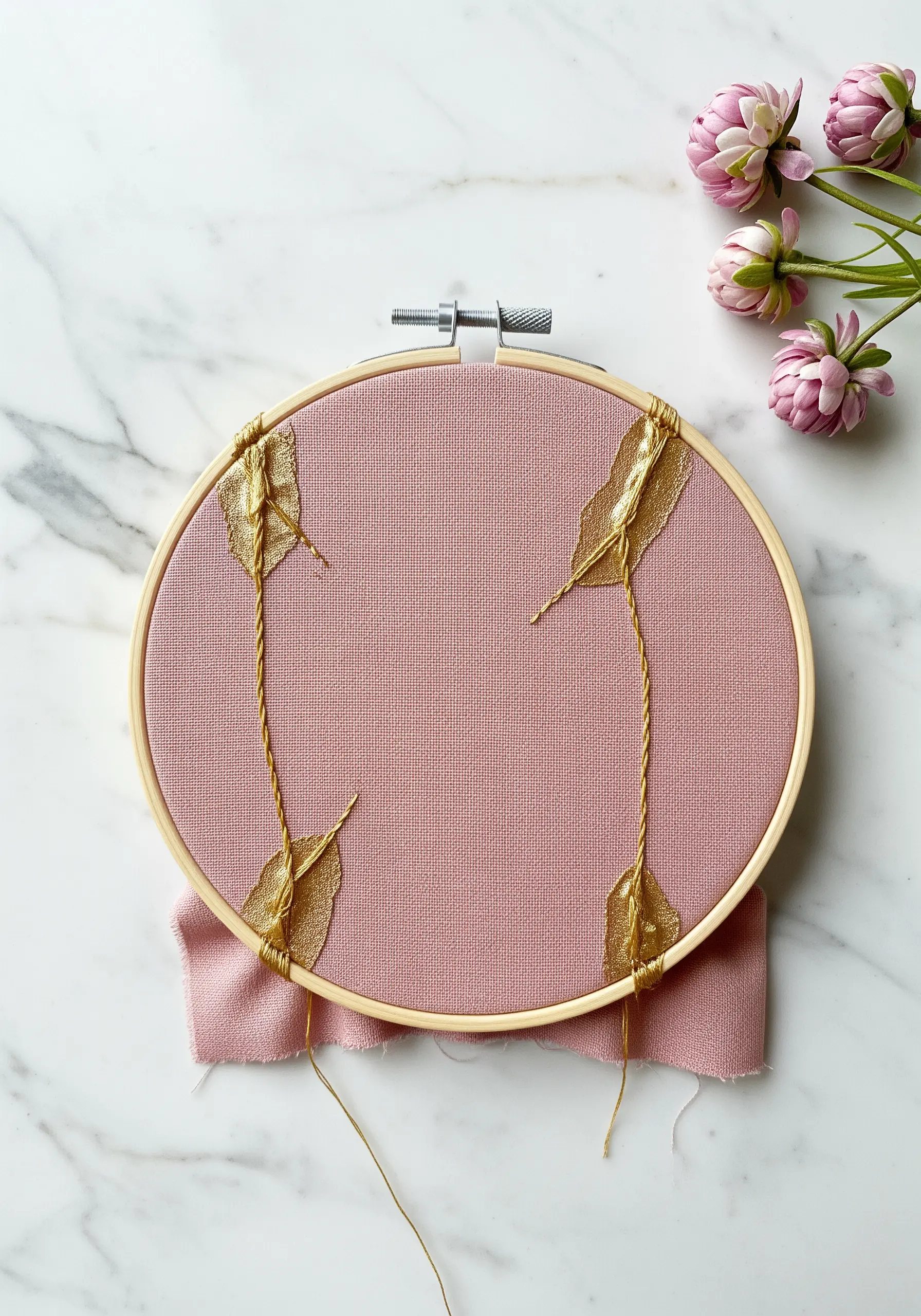
Incorporate delicate, non-traditional materials into your work by securing them with just a few intentional stitches.
Position found objects like skeleton leaves, handmade paper, or pressed flowers on your fabric.
Use a contrasting thread to wrap or tack them in place, making the stitch a visible and beautiful part of the design.
These mixed media embroidery crafts allow the negative space to highlight the unique texture of the anchored object.
12. Outline the Void with Chunky Texture
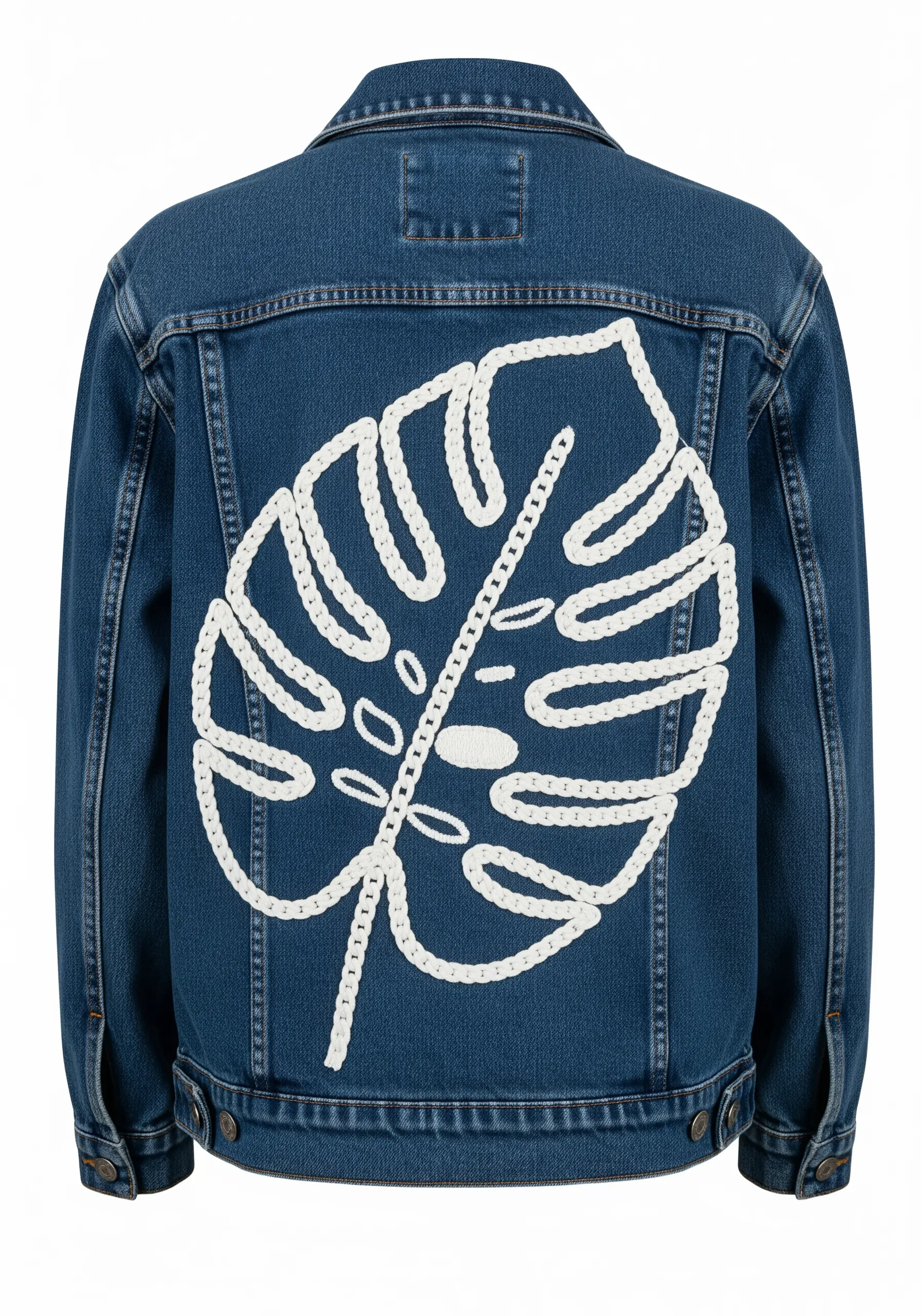
Instead of filling a motif, use a bold outline to make the empty space within it the true subject.
Create a thick, highly textural line using couched cord, a crocheted chain, or a bulky yarn.
Use this line to trace a large, graphic shape, like a monstera leaf, directly onto apparel or a wall hanging.
The interior of the shape remains unstitched, allowing the texture of the base fabric—like denim—to become an integral part of the design.
13. Create Rhythm with Gestural Marks
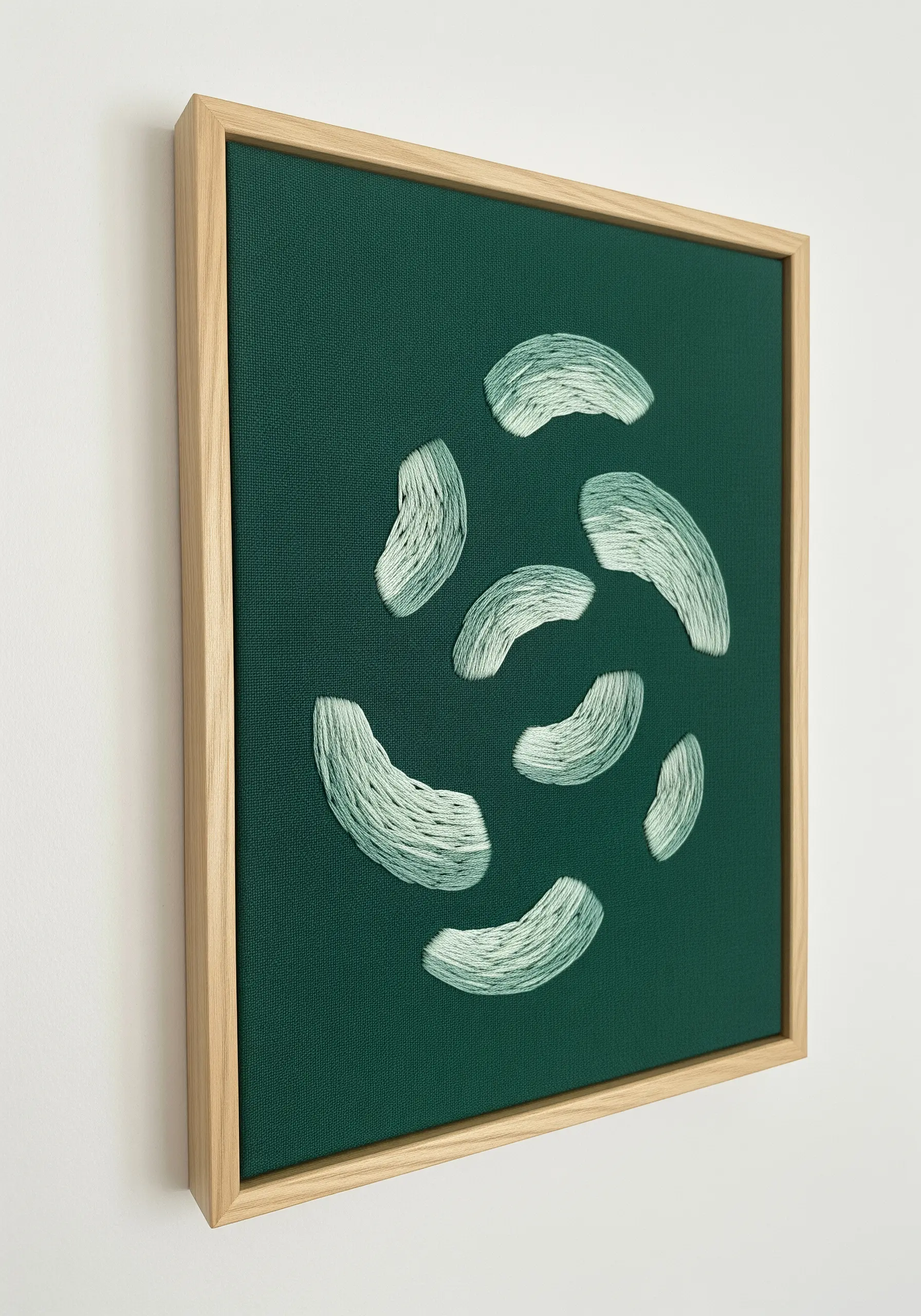
Use thread to make marks that feel like quick, energetic brushstrokes on a canvas.
Work with short, curved satin stitches, varying their angle and placement to create a sense of movement.
Group them in a loose, circular composition to suggest a gentle vortex or scattered petals.
The ample negative space between each stitch is crucial, allowing the composition to breathe and feel light rather than heavy.
14. Ground the Composition with a Textural Horizon
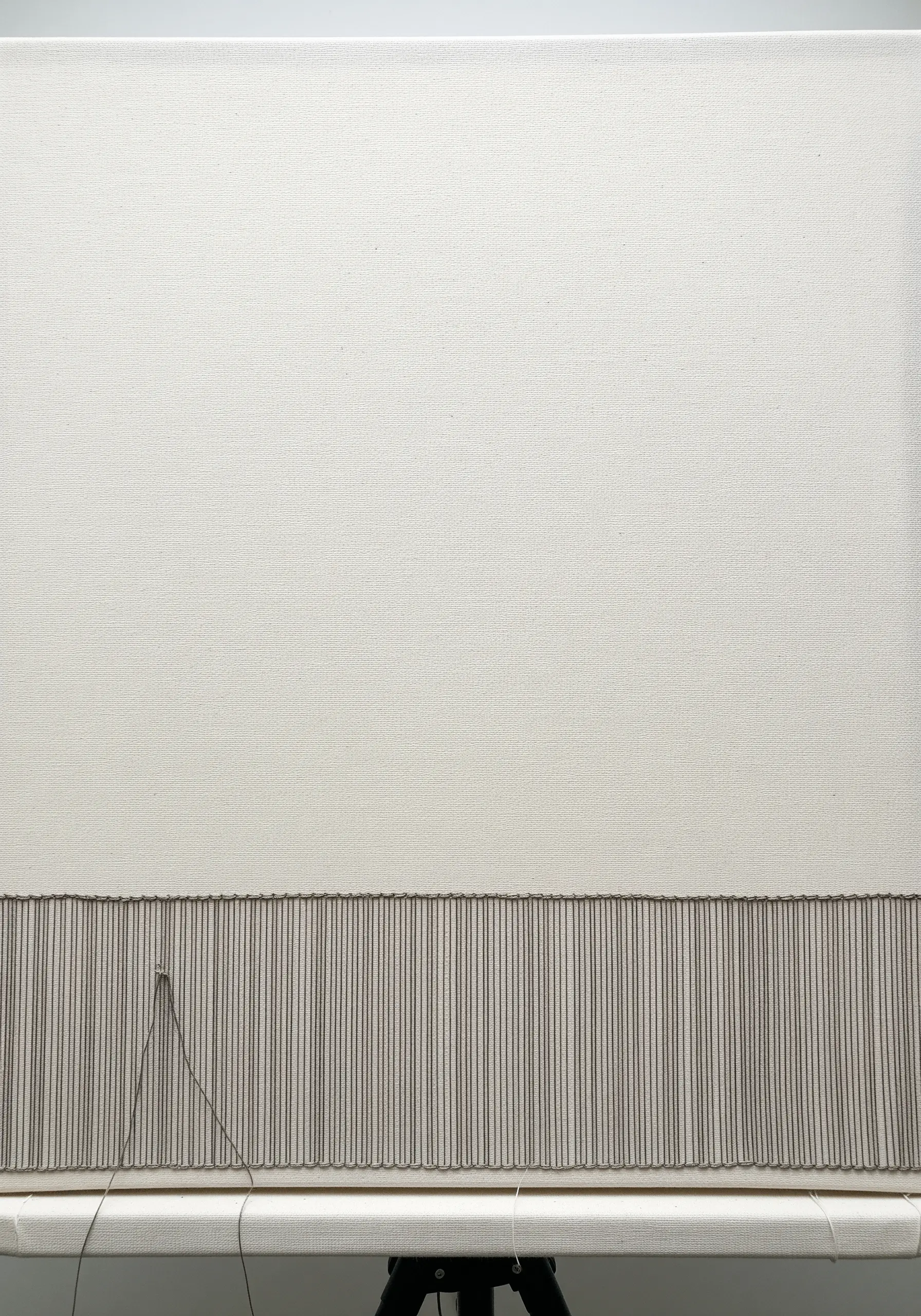
Make a vast expanse of negative space feel intentional by anchoring it with a dense band of stitching.
Fill the bottom portion of a large canvas with perfectly parallel vertical straight stitches.
This creates a strong visual weight at the base of the piece, like a textured horizon line.
The empty fabric above is transformed from a blank space into a quiet sky, given scale and purpose by the stitched ground below.
15. Suggest Motion with Spilling Forms
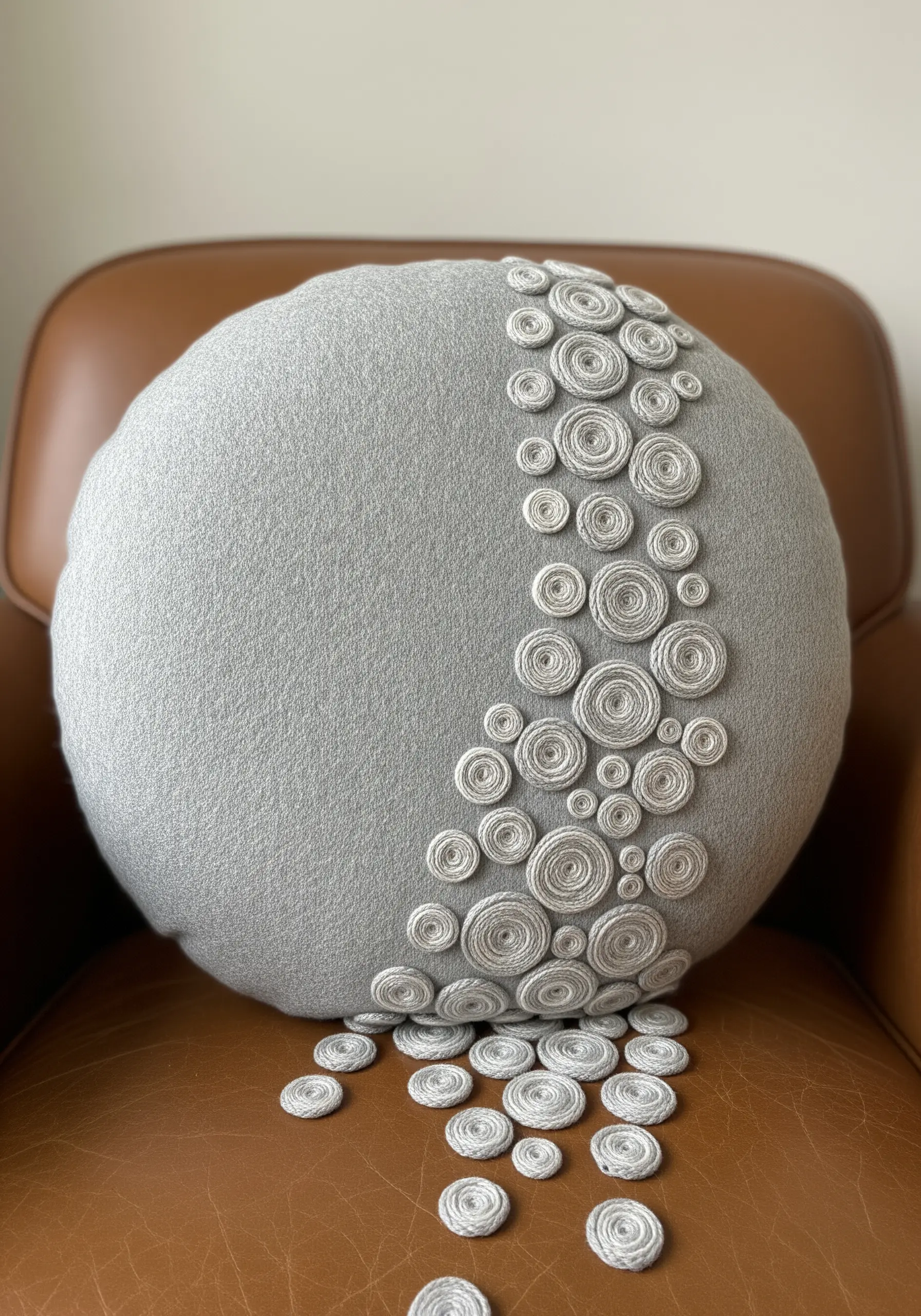
Create a dynamic composition by designing elements that seem to spill out of their expected boundaries.
Craft a series of textured components, like these coiled fabric spirals, and arrange them in a cascading path.
By having some elements attached to the main object (a pillow) and others appearing to have fallen away, you create a sense of narrative and time.
This playful use of space turns a simple decorative object into a piece of installation art.
16. Divide the Canvas to Create a Dialogue
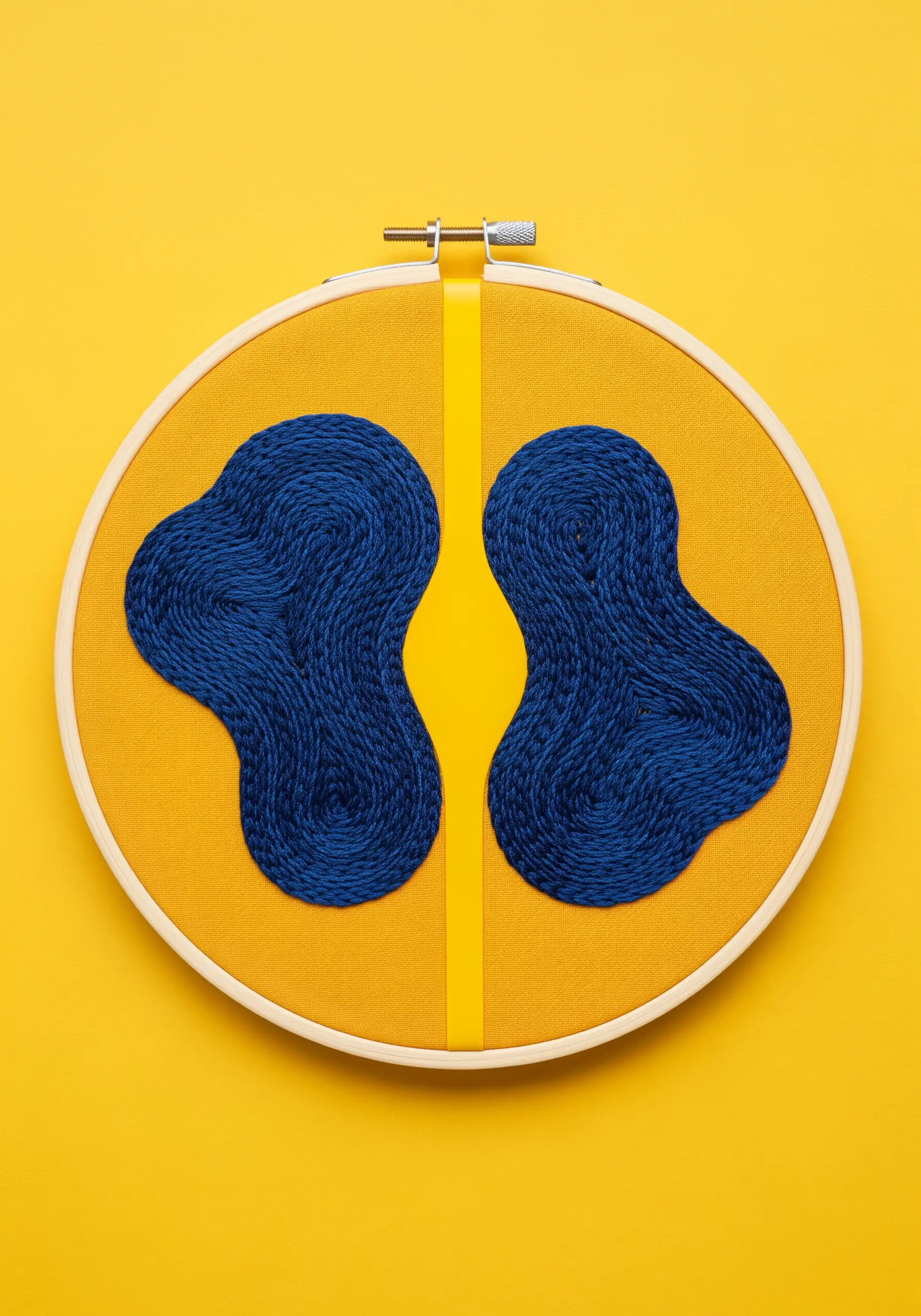
Physically partition your hoop to create a deliberate relationship between two separate fields of stitching.
Use a strip of ribbon or a bold line of stitching to slice the canvas in half.
Embroider mirrored or related shapes on either side of the divide. This forces them into a visual dialogue.
The central dividing line becomes the most energized part of the composition, a sliver of negative space that both separates and connects.
17. Paint with Thread for Dynamic Energy
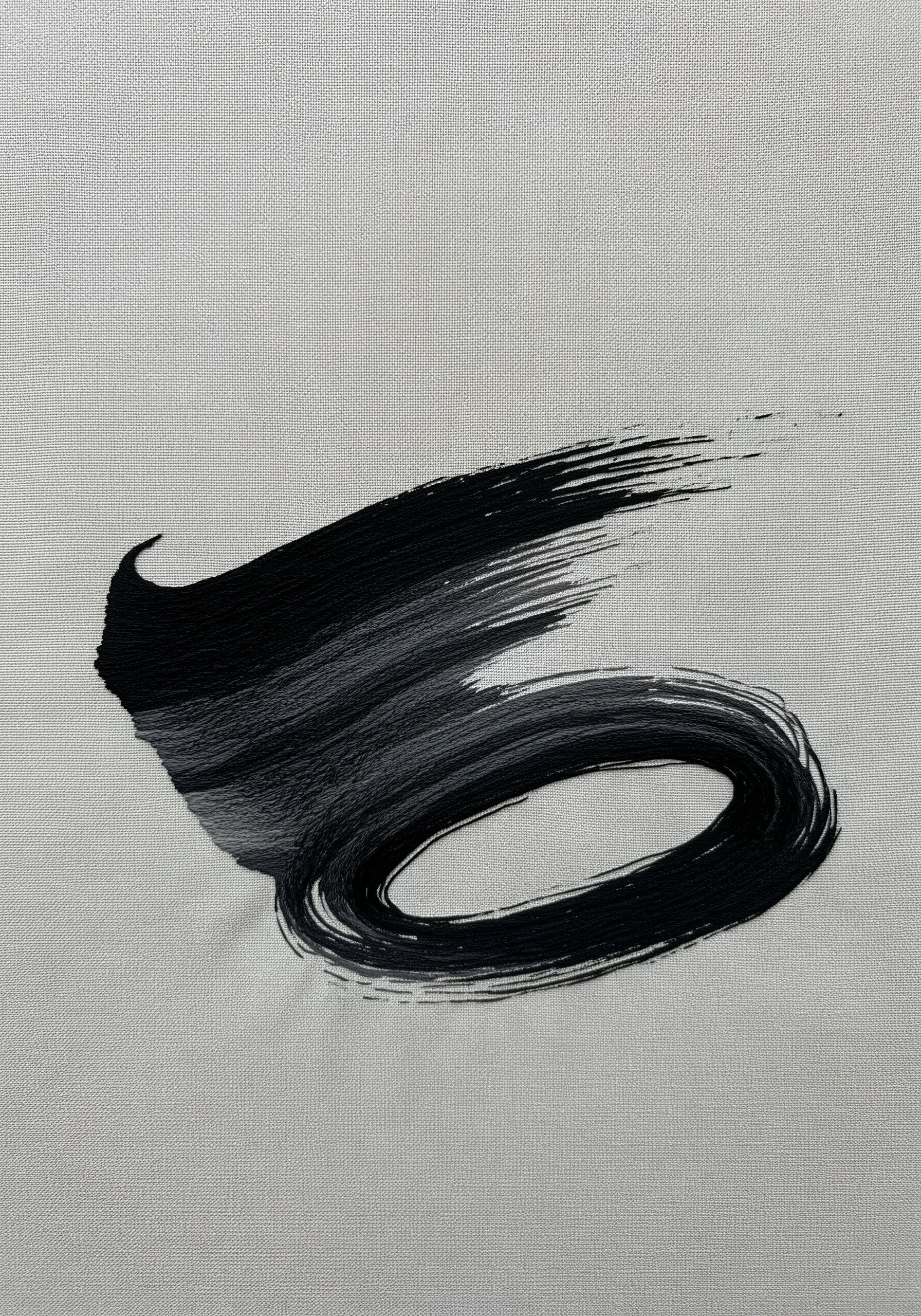
Mimic the fluid, energetic motion of a calligraphy brushstroke using nothing but straight stitches.
Lay down long, layered stitches in varying shades of a single color to create a gradient effect.
Allow the ends of your stitches to be slightly uneven and wispy, suggesting the dry-brush texture of ink on paper.
The clean, untouched negative space of the background canvas makes this single, powerful gesture the undisputed hero of the piece.
18. Construct Art with Hanging Threads
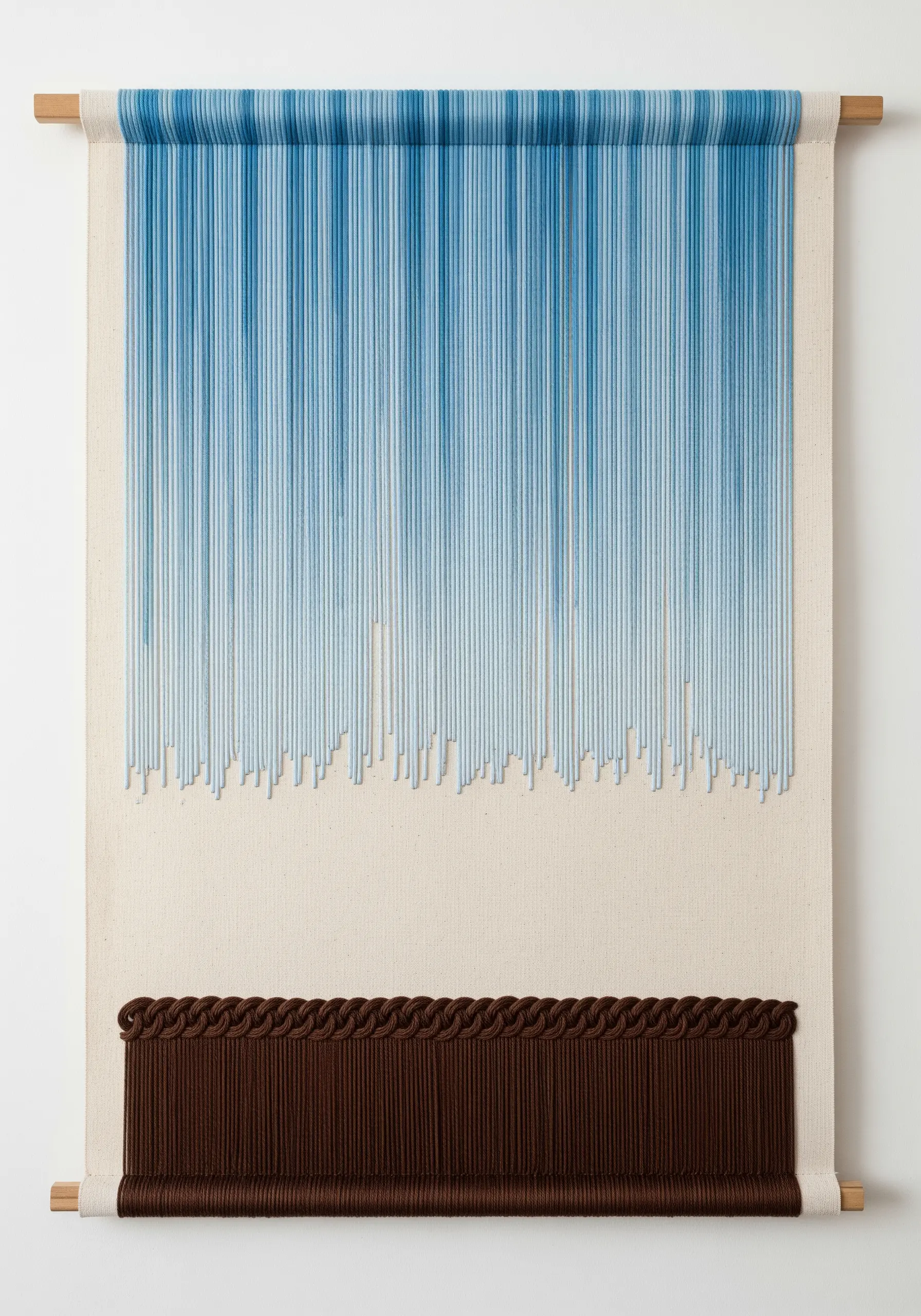
Move beyond the two-dimensional plane by creating compositions from hanging, weighted threads.
Secure threads only at the top of your canvas, allowing them to hang freely and create a curtain of color and texture.
Experiment with color gradients and varied lengths to add depth and interest.
This technique turns thread into a sculptural medium and incorporates the wall behind it as an active layer of negative space.
19. Visualize the Invisible with Line Art
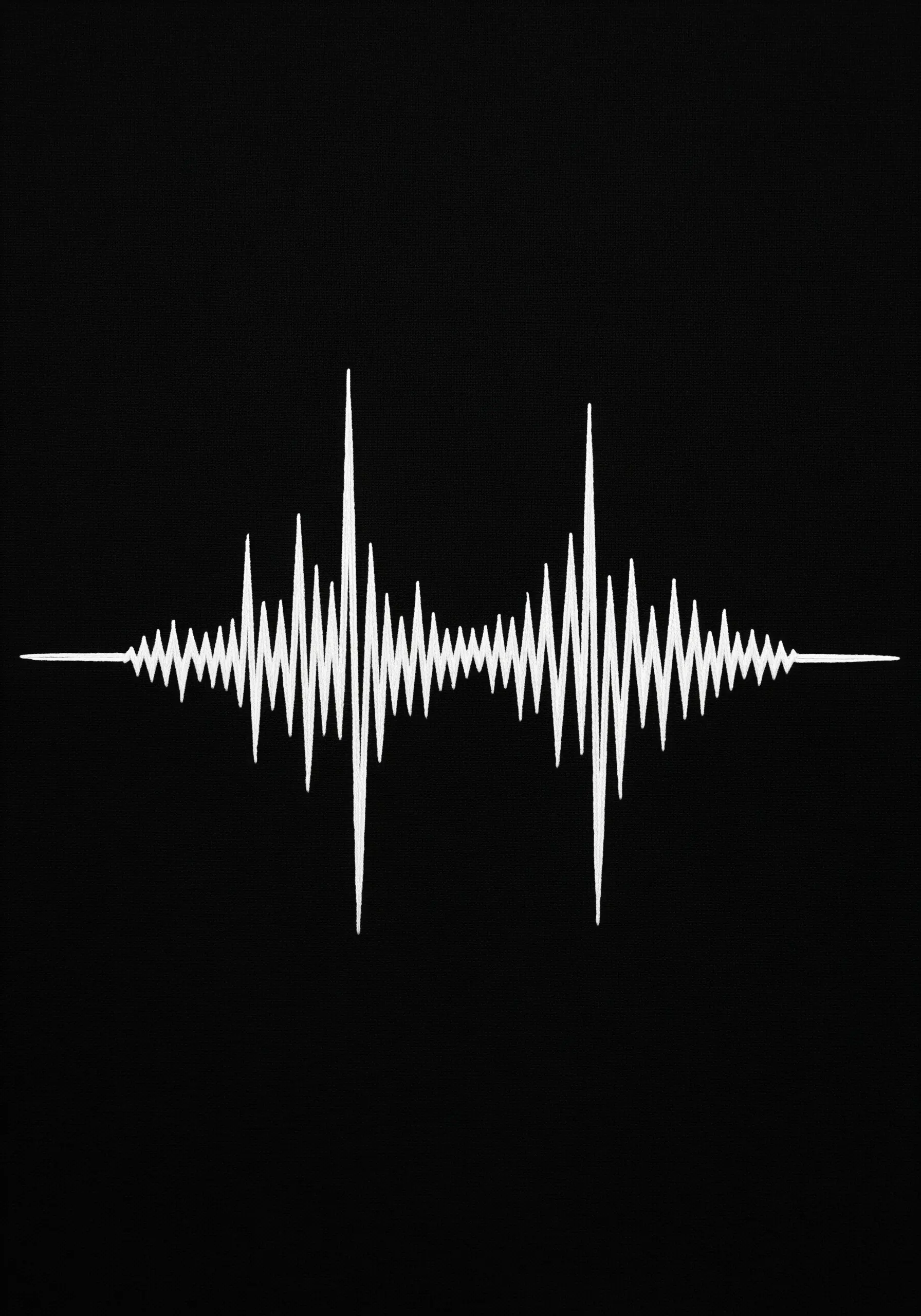
Translate abstract data—like a soundwave, heartbeat, or brainwave—into a clean, graphic line of embroidery.
Use a simple backstitch or stem stitch in a high-contrast color to create a precise, unbroken line.
The surrounding negative space is not empty; it represents the silence or stillness that gives the line its meaning.
This technique transforms personal data into a powerful, minimalist statement piece.
20. Cultivate a Textural Garden Bed
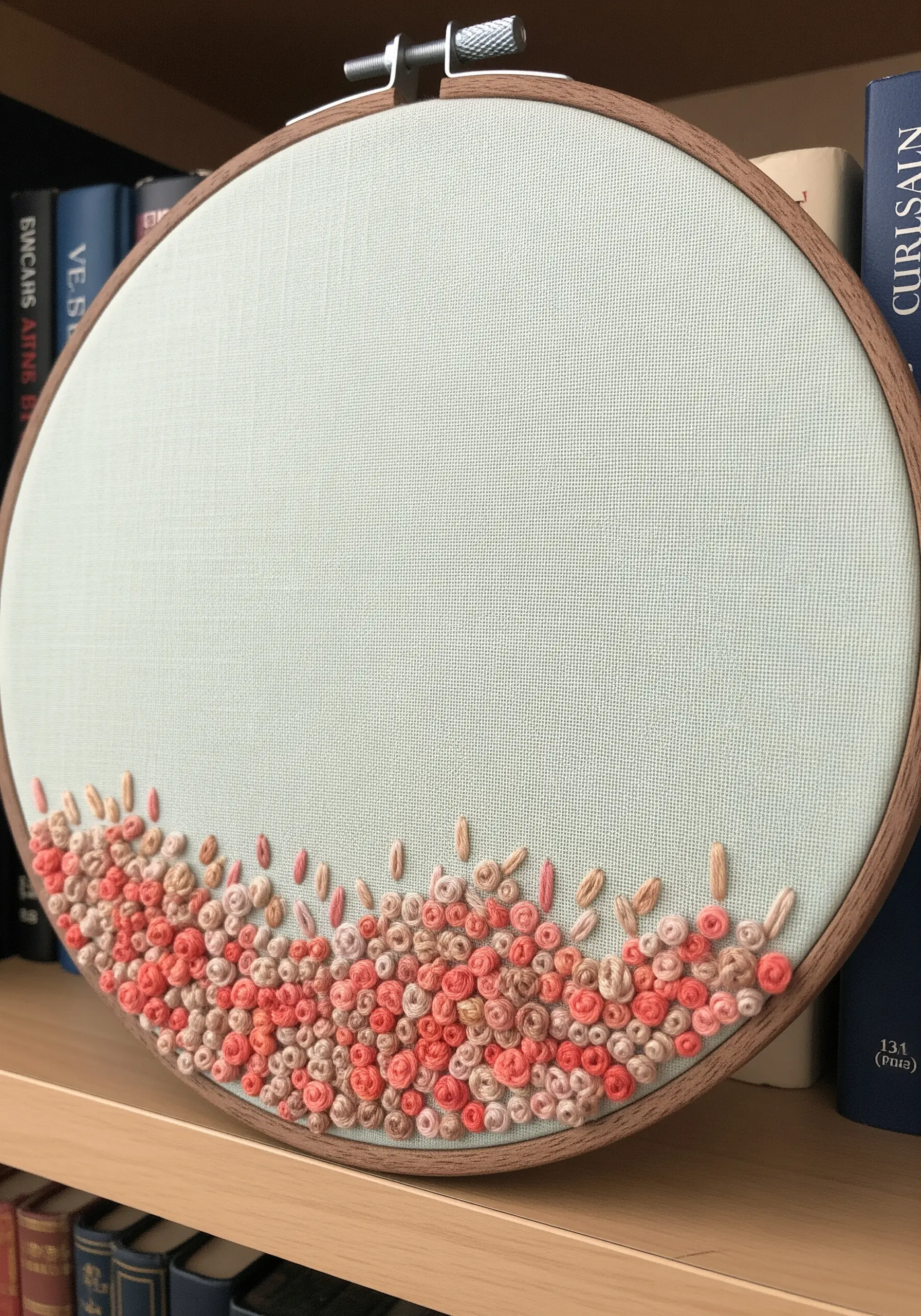
Create an abstract landscape by clustering different textural stitches along the bottom edge of your hoop.
Combine French knots, bullion knots, and straight stitches in an analogous color palette to mimic a dense bed of flowers or moss.
Allow the cluster to have an uneven, organic top edge, as if it’s naturally growing into the empty space above.
The upper expanse of bare fabric acts as a calm sky, balancing the intricate detail below.
21. Carve Space with Architectural Cutwork
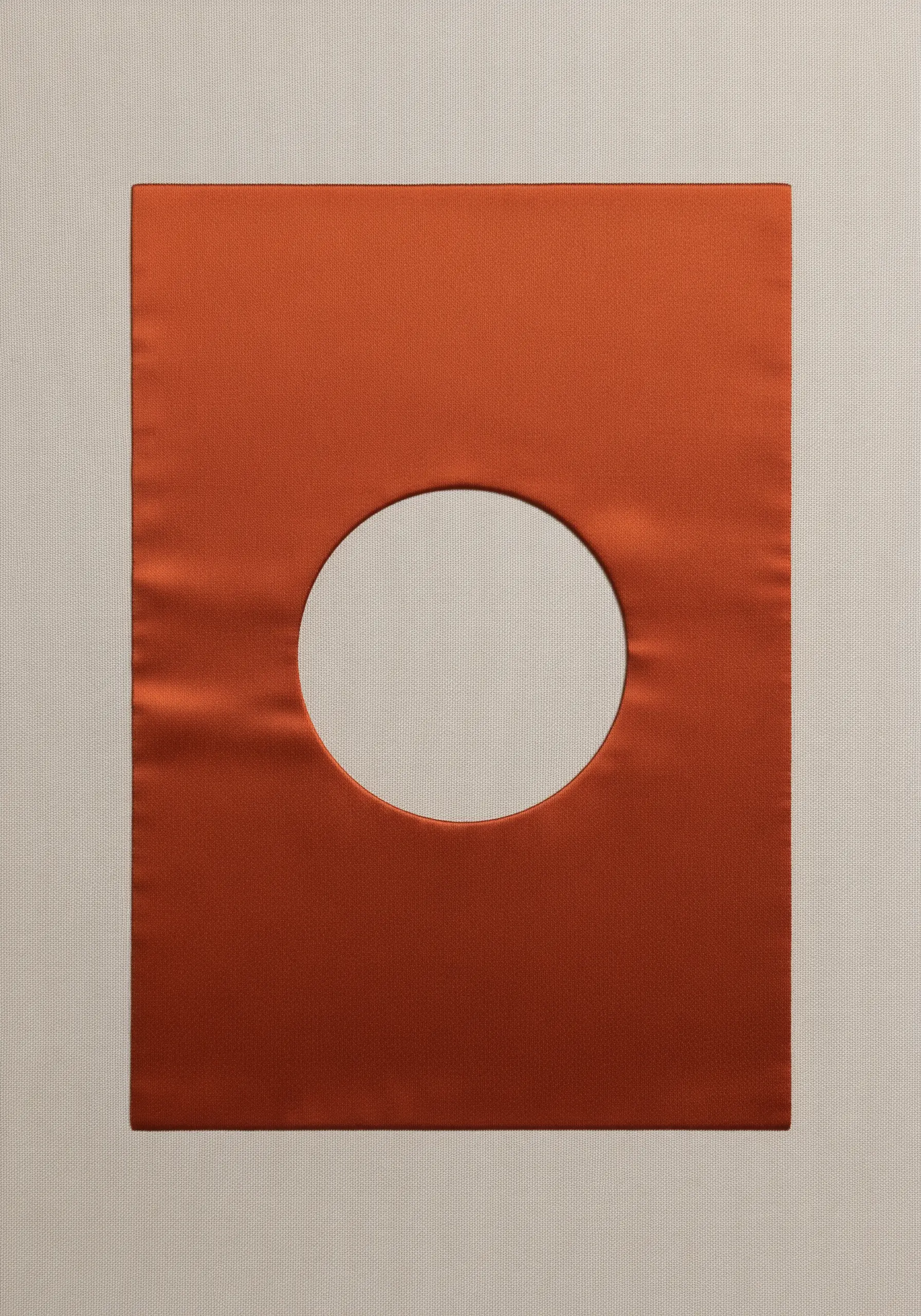
Instead of adding thread to your fabric, create your design by carefully taking fabric away.
Layer a colored fabric over a neutral base and, using sharp appliqué scissors, cut a clean geometric shape out of the top layer.
Secure the edges with a nearly invisible slip stitch for a flawless finish.
This reverse-appliqué technique makes the negative space a literal window, creating a piece with incredible depth and precision.
22. Map the Stars with Minimal Stitches
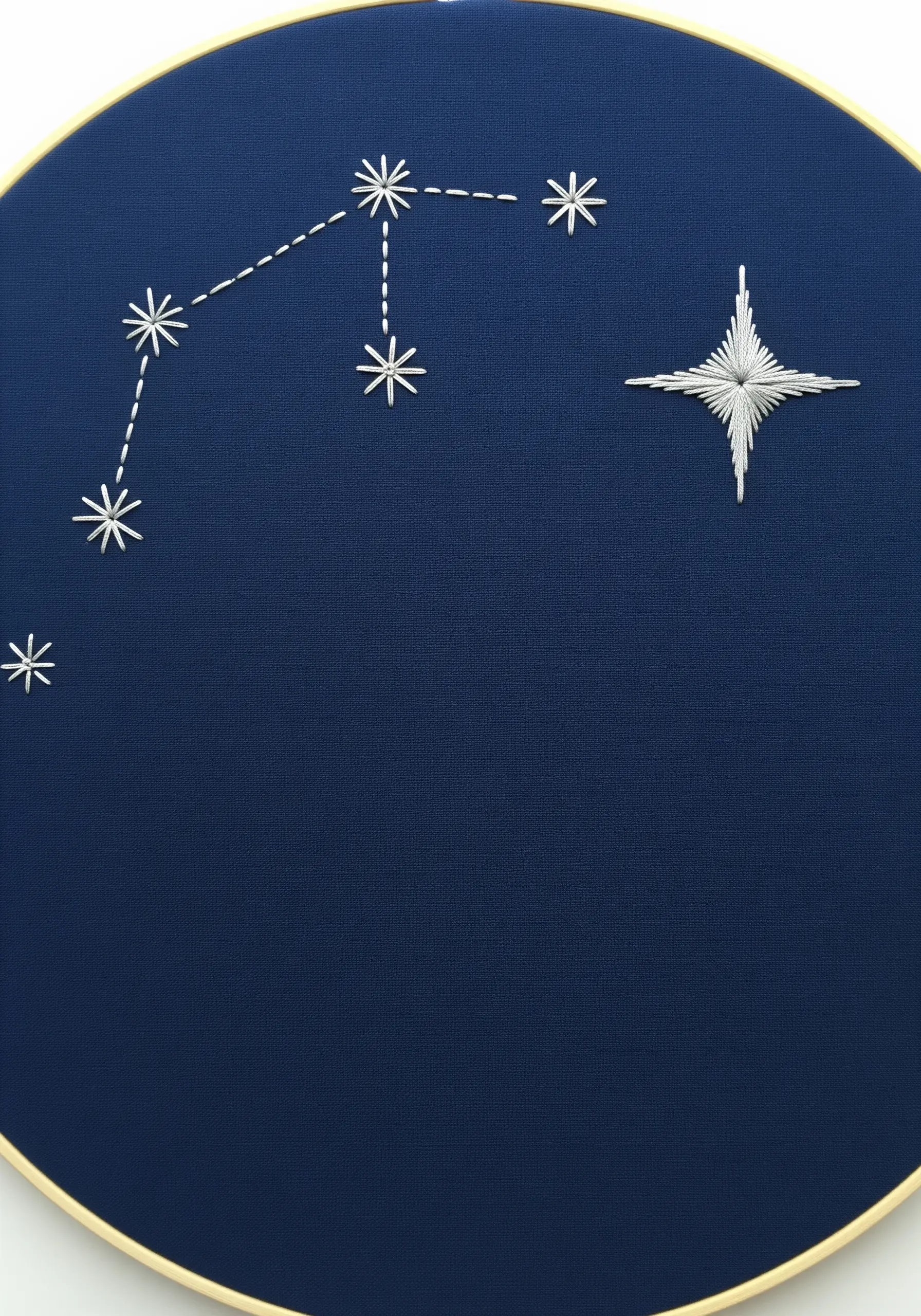
Use the vastness of your fabric to represent the night sky, making even the smallest stitches feel significant.
Choose a deep, dark fabric like navy or black cotton and use a bright metallic or white thread.
Stitch simple star stitches or lazy daisies for stars and connect them with delicate dotted lines of running stitch to form constellations.
The power of this design lies in its restraint; the wide, unstitched negative space is what gives it a sense of cosmic scale.
23. Emphasize the Journey of a Single Line
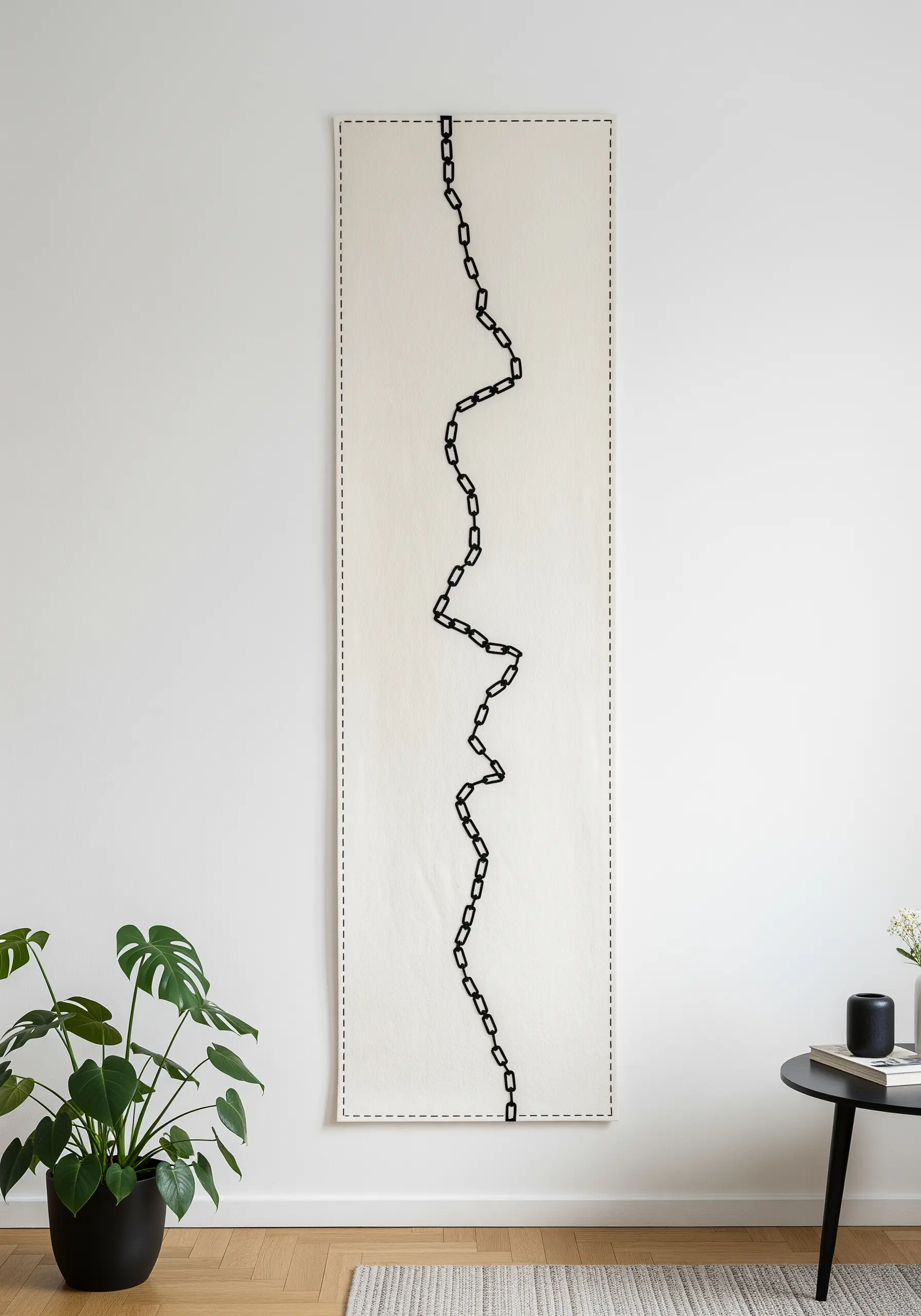
Create a commanding piece of wall art using a single, unbroken line of a textured stitch.
On a long, narrow canvas, use a chain stitch, split stitch, or heavy backstitch to draw a meandering path from top to bottom.
The simplicity of the concept places all the focus on the quality of your stitch and the character of the line itself.
The vast negative space on either side gives the line room to breathe and emphasizes its solitary journey.
24. Build Sculptural Waves with Couching
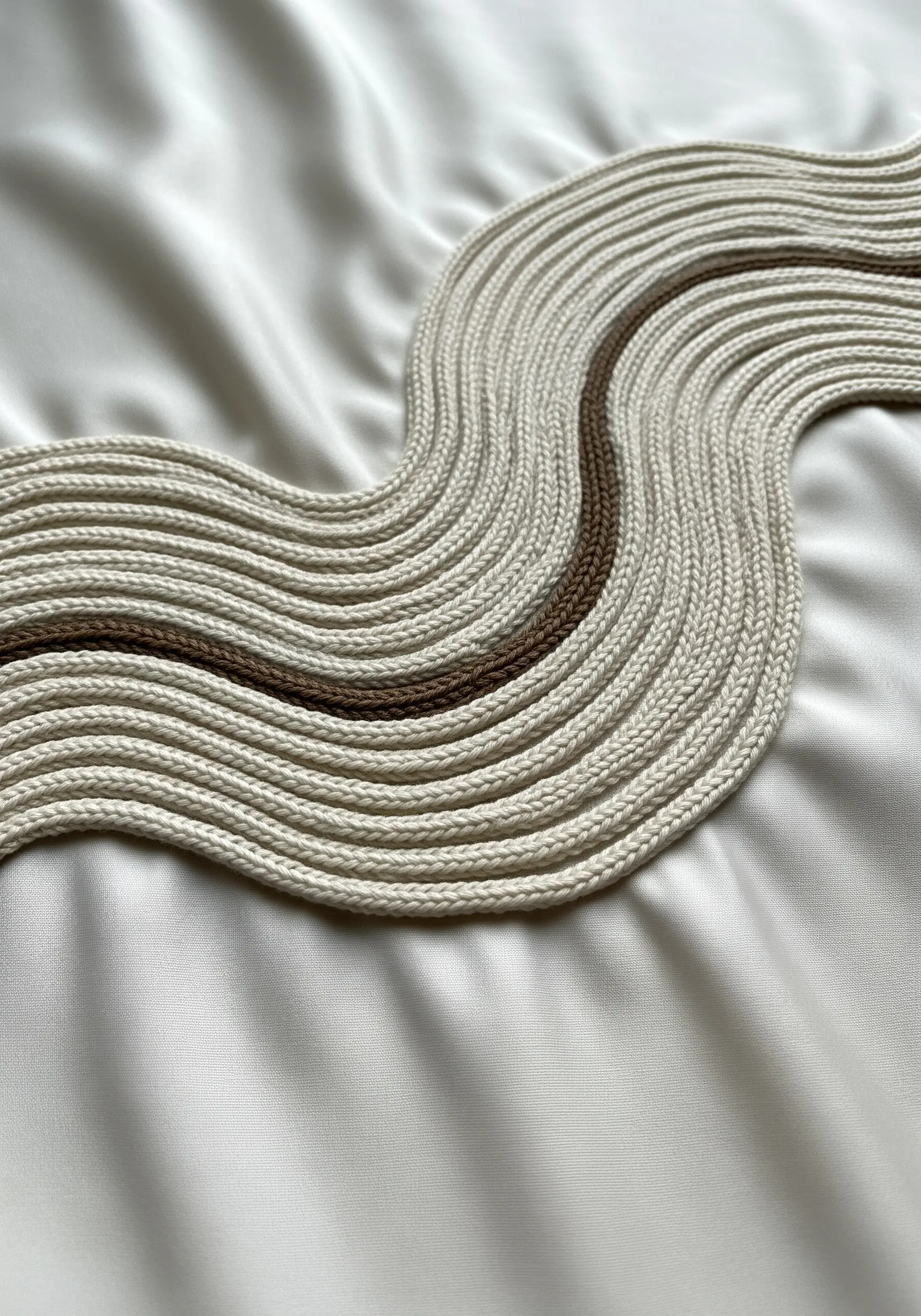
Use couching to attach thick cords or braided threads to your fabric, creating bold, three-dimensional lines that rise from the surface.
Arrange these cords in parallel waves to create a pattern of deep ridges and valleys.
This technique of abstract thread sculpting transforms the flat plane of the fabric into a topographical map of texture.
The smooth negative space of the base fabric serves to highlight the dramatic, raised quality of your stitch work.
25. Suggest Form with Rhythmic Vertical Lines
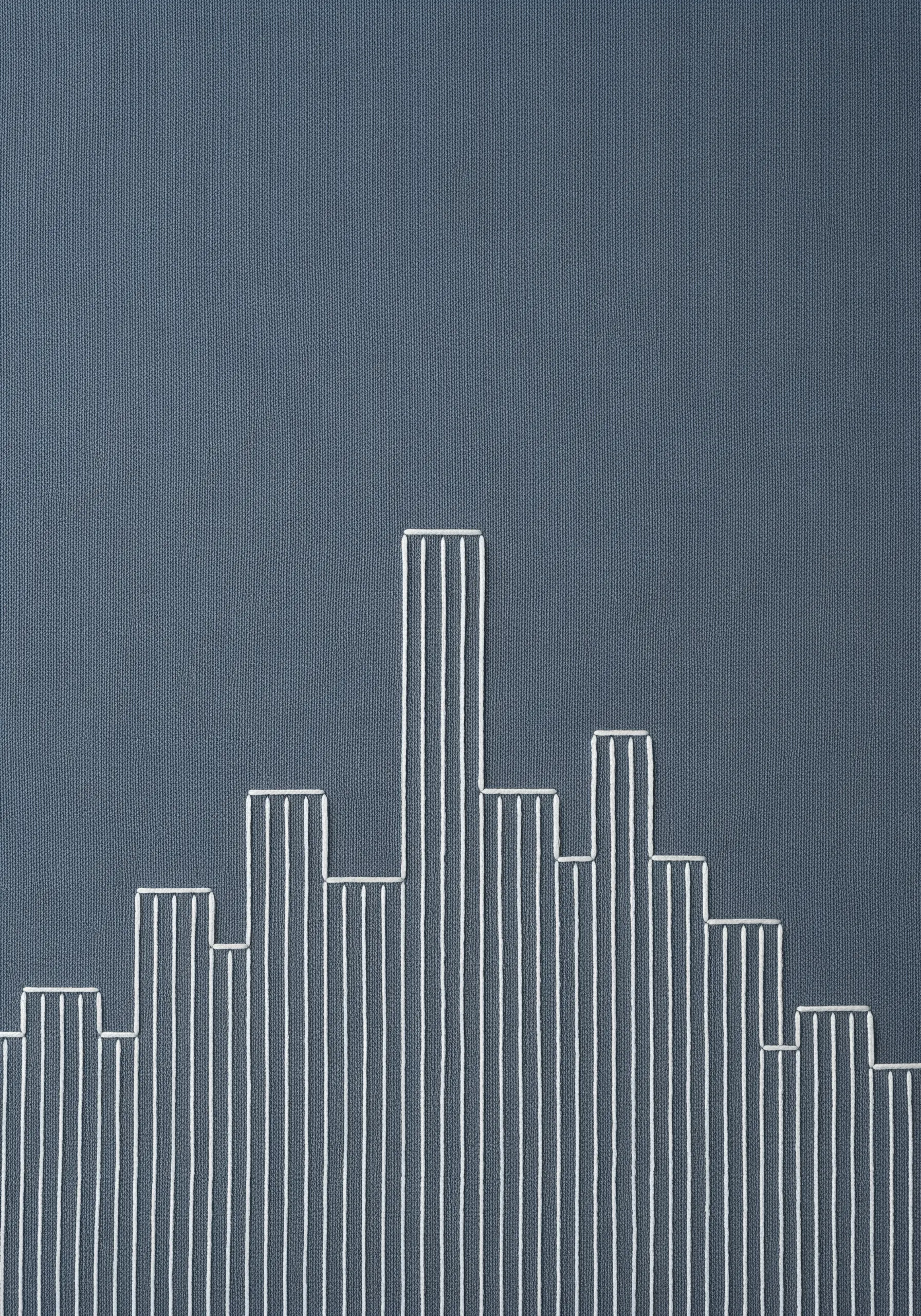
Build a complex shape, like a cityscape, using only simple, repeating vertical stitches.
Vary the height of your parallel straight stitches to create an evocative skyline silhouette.
The negative space above the stitched lines is instantly transformed into the sky, defined and shaped by the top edge of your cityscape.
This technique is a masterclass in implication, where the viewer’s brain fills in the details that the stitches only suggest.
26. Isolate a Single Stitch as a Focal Point
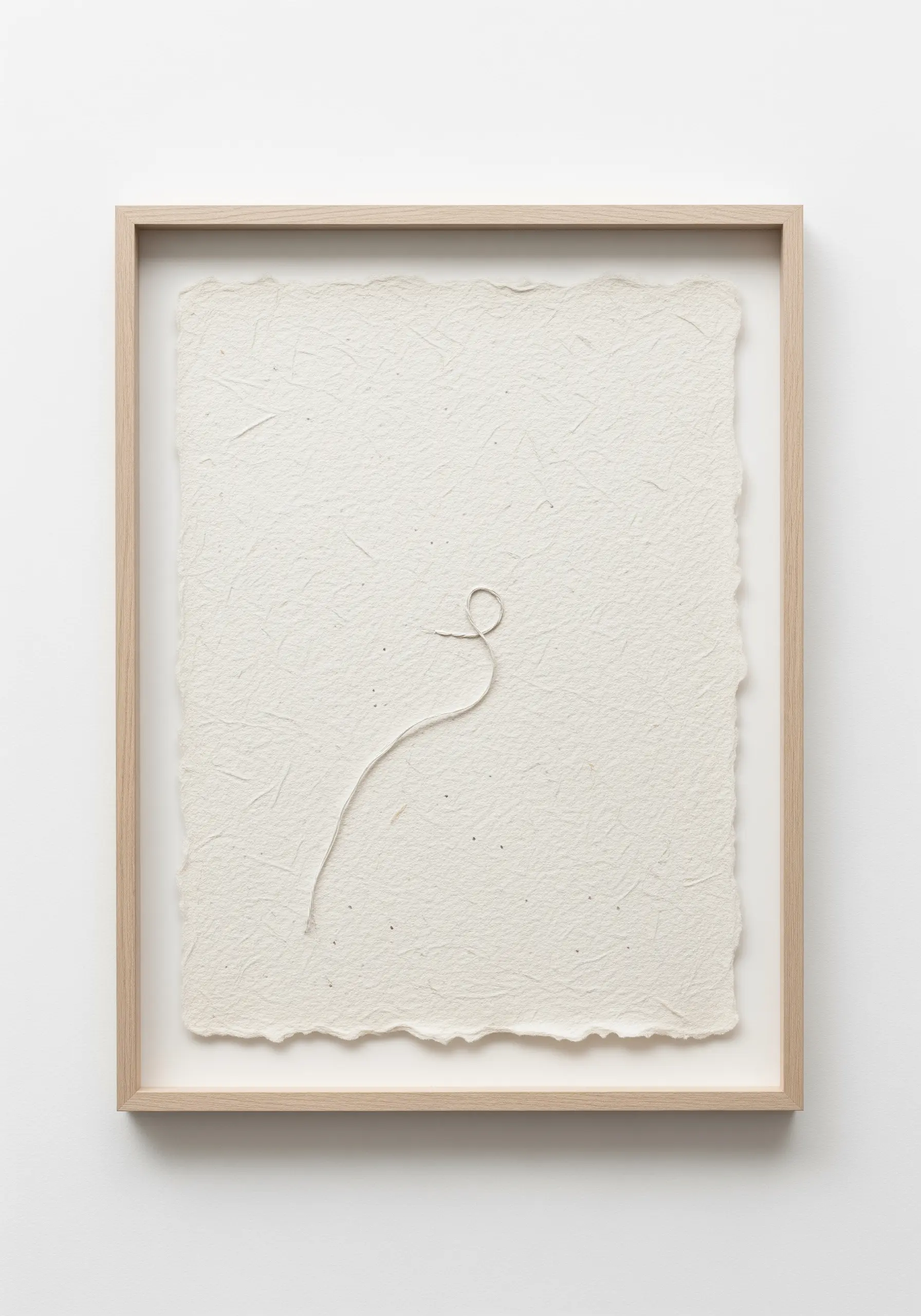
Elevate a single thread to the level of fine art by placing it with intention on a unique surface.
Choose a material with inherent texture, such as handmade paper or raw silk, as your canvas.
Instead of a complex design, secure a single, thoughtfully shaped loop or line of thread to the surface.
These paper art hacks turn the negative space into a pedestal, showcasing the simple beauty of the thread itself.
27. Create a Woven Window of Texture
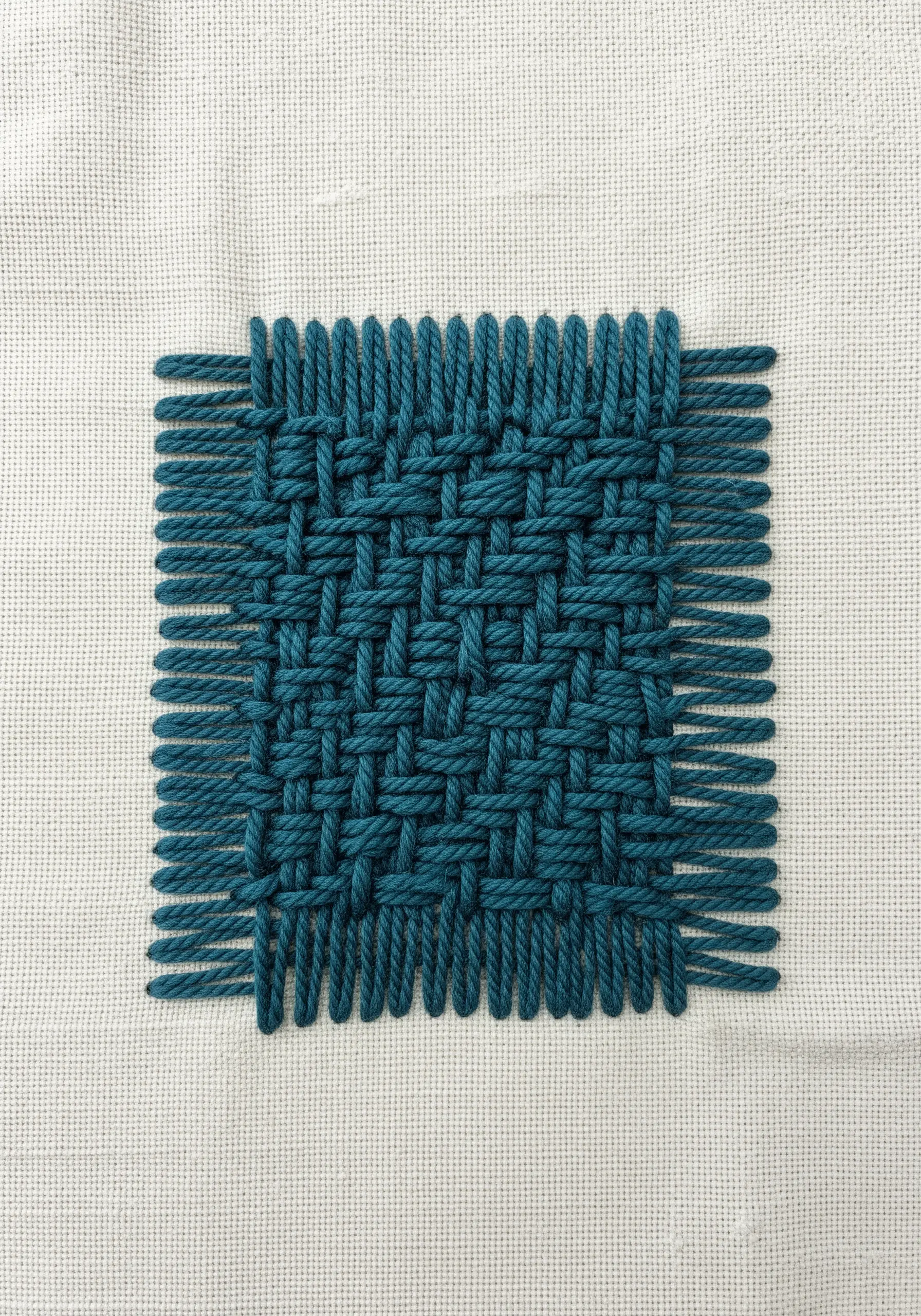
Introduce the logic of weaving into your embroidery for a surprising textural contrast.
Lay down a series of parallel warp threads and then use a tapestry needle to weave a weft thread through them, creating a solid, woven patch directly on your fabric.
The shift from the open weave of the background canvas to the dense, interlocking grid of the woven section creates a powerful focal point.
The negative space serves to frame this intricate, hand-woven detail.
28. Block Out Shapes with Flawless Satin Stitch
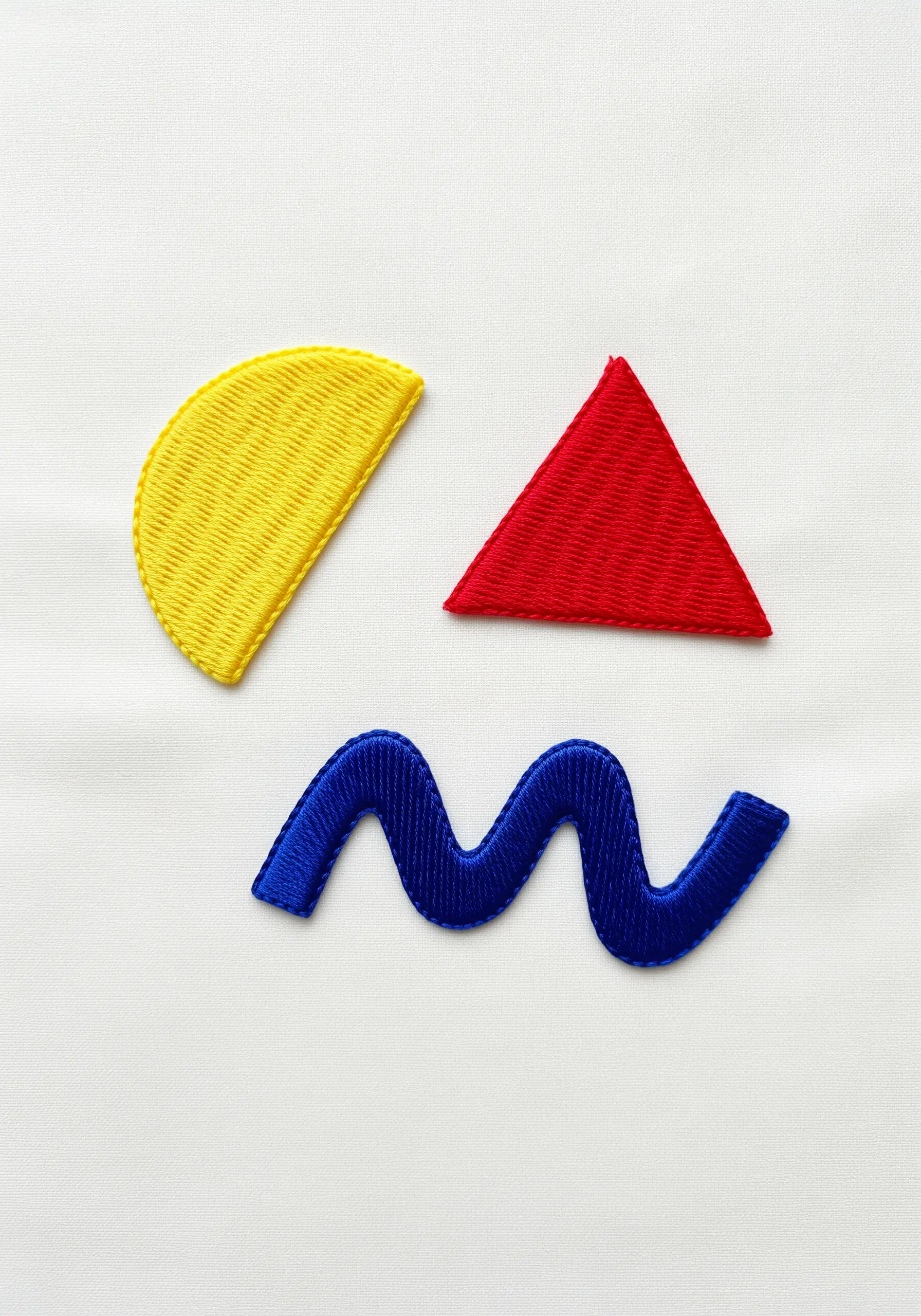
Use bold, primary colors and perfect satin stitch to create graphic, abstract compositions.
The key to this technique is precision: ensure your stitches are perfectly parallel, with clean, sharp edges.
Treat each color block as a separate entity, allowing the clean white negative space to act as a separator and a frame.
This gives the simple shapes a clean, mid-century modern feel that is both playful and sophisticated.
29. Generate Energy with Rhythmic Outlines
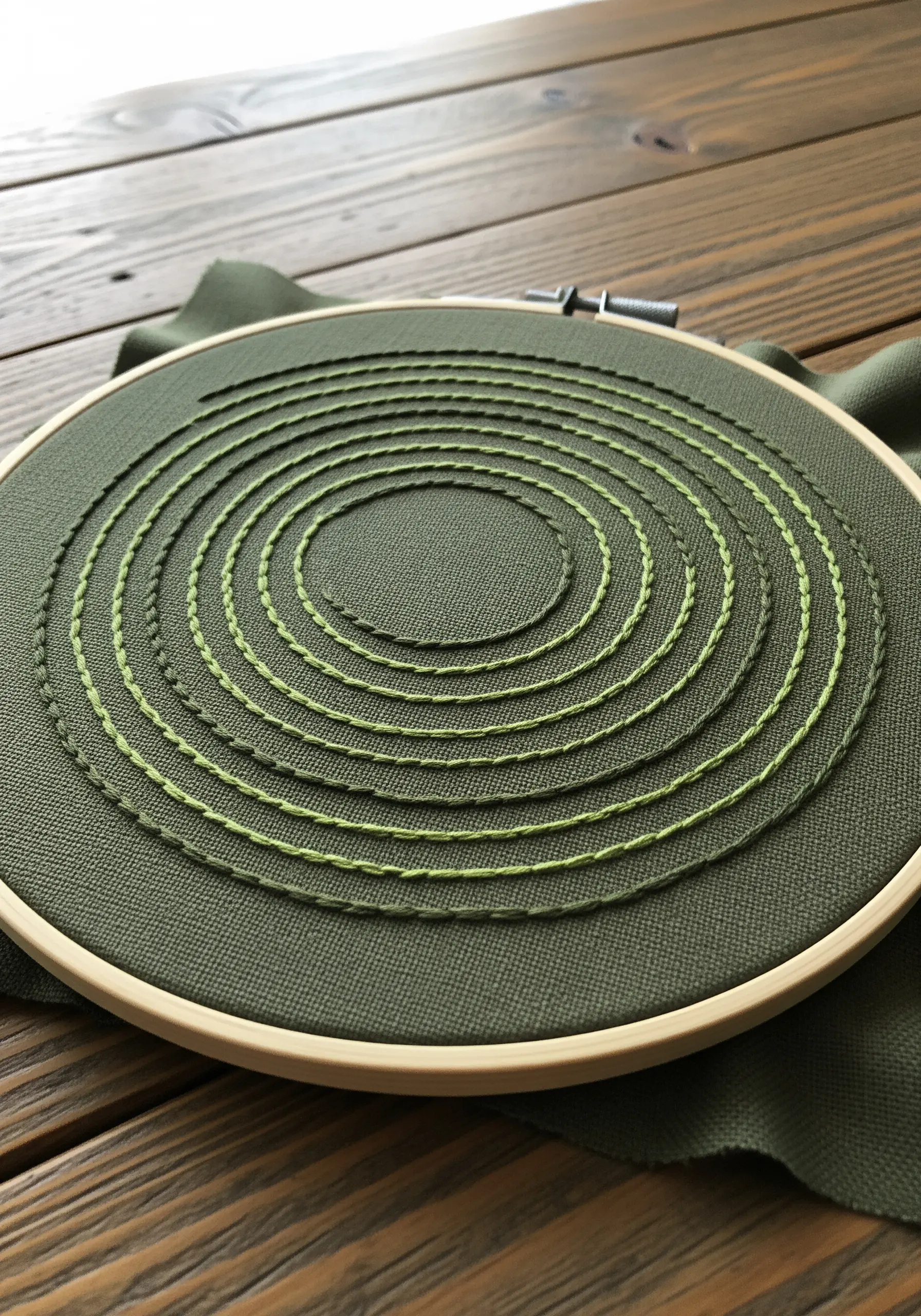
Create a mesmerizing sense of vibration and depth using simple, concentric lines of running stitch.
Use a thread color that subtly contrasts with your fabric to create a gentle, shimmering effect.
The magic is in the negative space between the stitched circles; these empty channels create a visual rhythm that draws the eye inward.
This is an incredibly meditative technique that turns a basic stitch into a captivating optical illusion.
30. Frame a Void with Mixed Materials
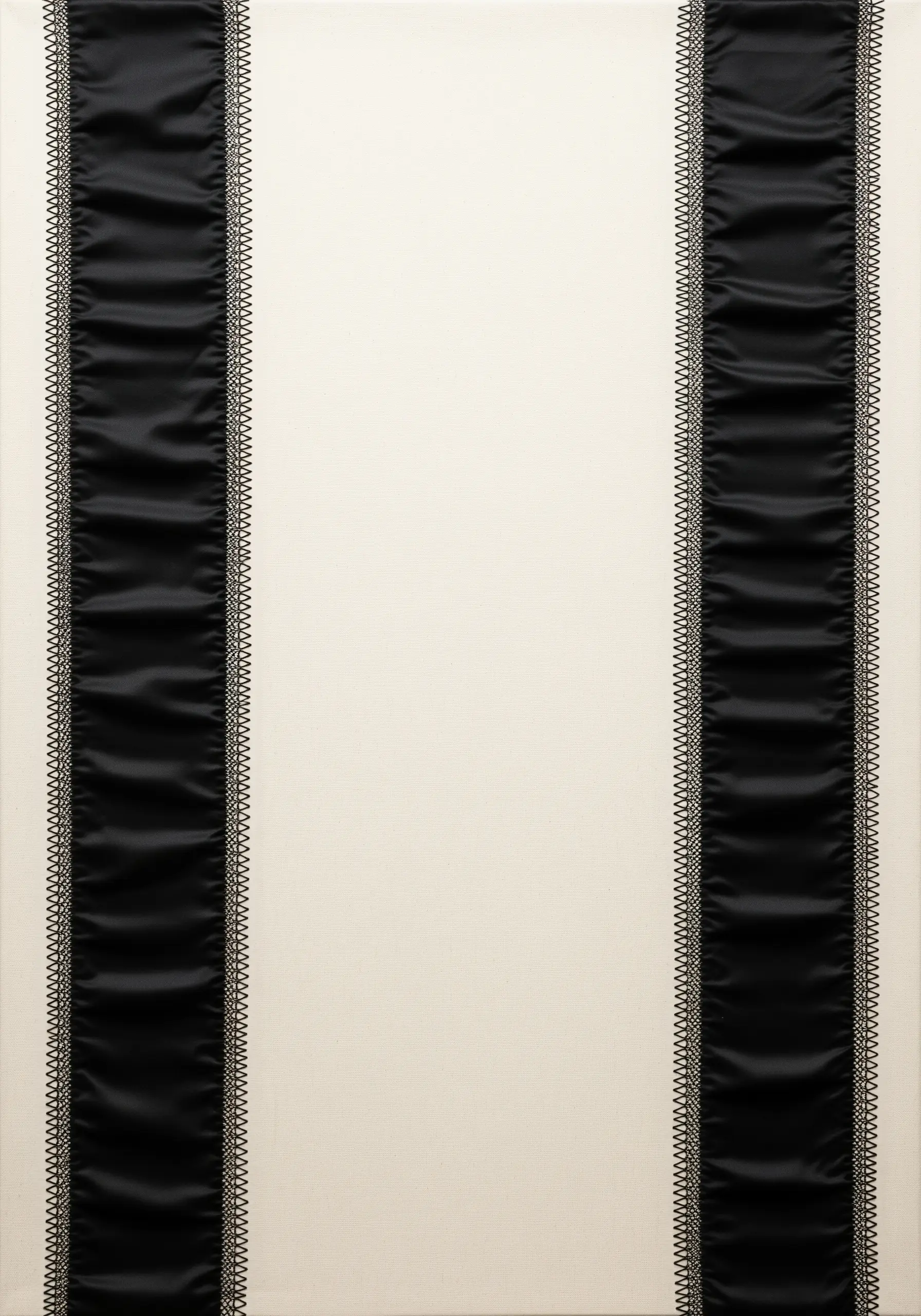
Create dramatic vertical columns by framing a length of luxurious fabric, like satin ribbon, with delicate stitching.
First, appliqué the ribbon onto your base fabric, then stitch a decorative border, like a scalloped edge or tiny seed stitches, along both sides.
The wide, unstitched negative space in the center becomes the focal point, drawing attention to the texture of the main canvas.
This technique creates a formal, elegant composition that feels both classic and modern.
31. Define Space with Asymmetrical Growth
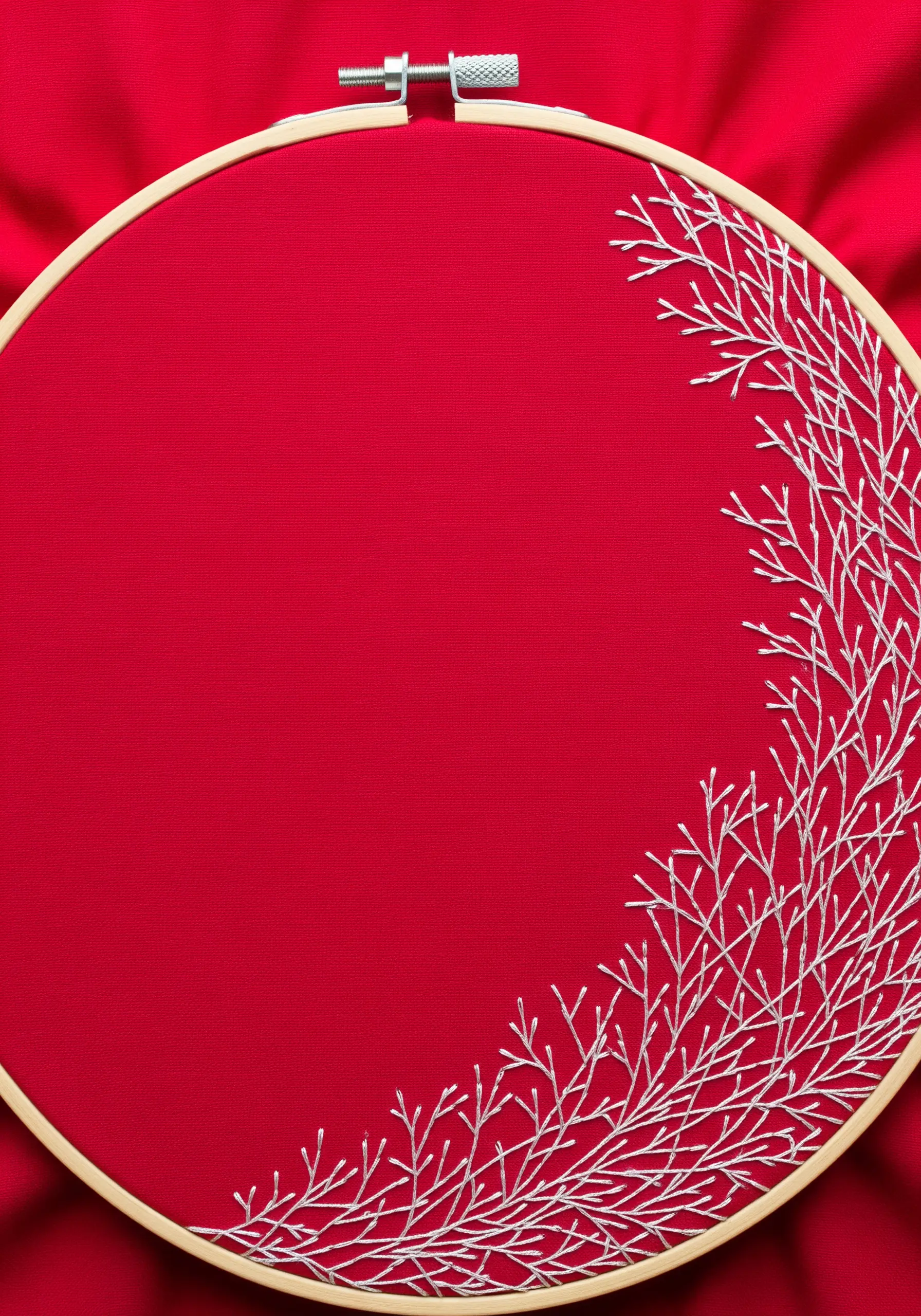
Create a powerful sense of direction and energy by placing your embroidery off-center.
Stitch a complex, organic pattern, like coral or frost, so that it creeps in from one side of the hoop.
This asymmetrical placement makes the empty area feel active and intentional—it’s the space into which your pattern is growing.
The high-contrast colors, like silver on red, make the effect even more dramatic and visually striking.
32. Bind an Object with Minimalist Wrapping
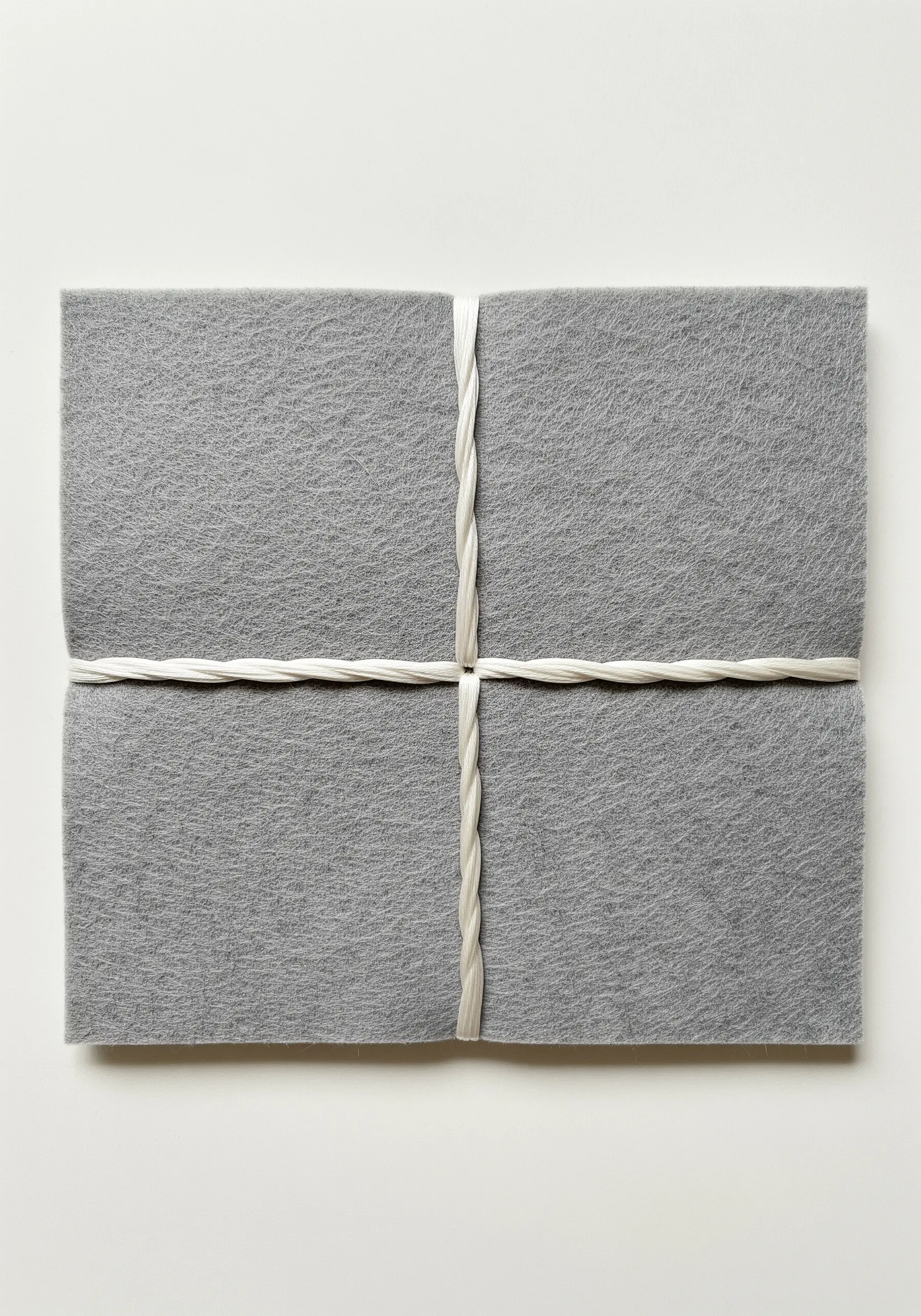
Shift your perspective by treating the fabric itself as a sculptural object to be adorned.
Instead of stitching onto a flat surface, wrap a block of felt or a stack of fabric with a contrasting thread or cord.
The thread acts as both a functional binding and a clean, graphic design element.
This minimalist approach celebrates the inherent texture of the materials, using the thread to create simple, elegant divisions of space.
33. Compose a Language of Abstract Marks
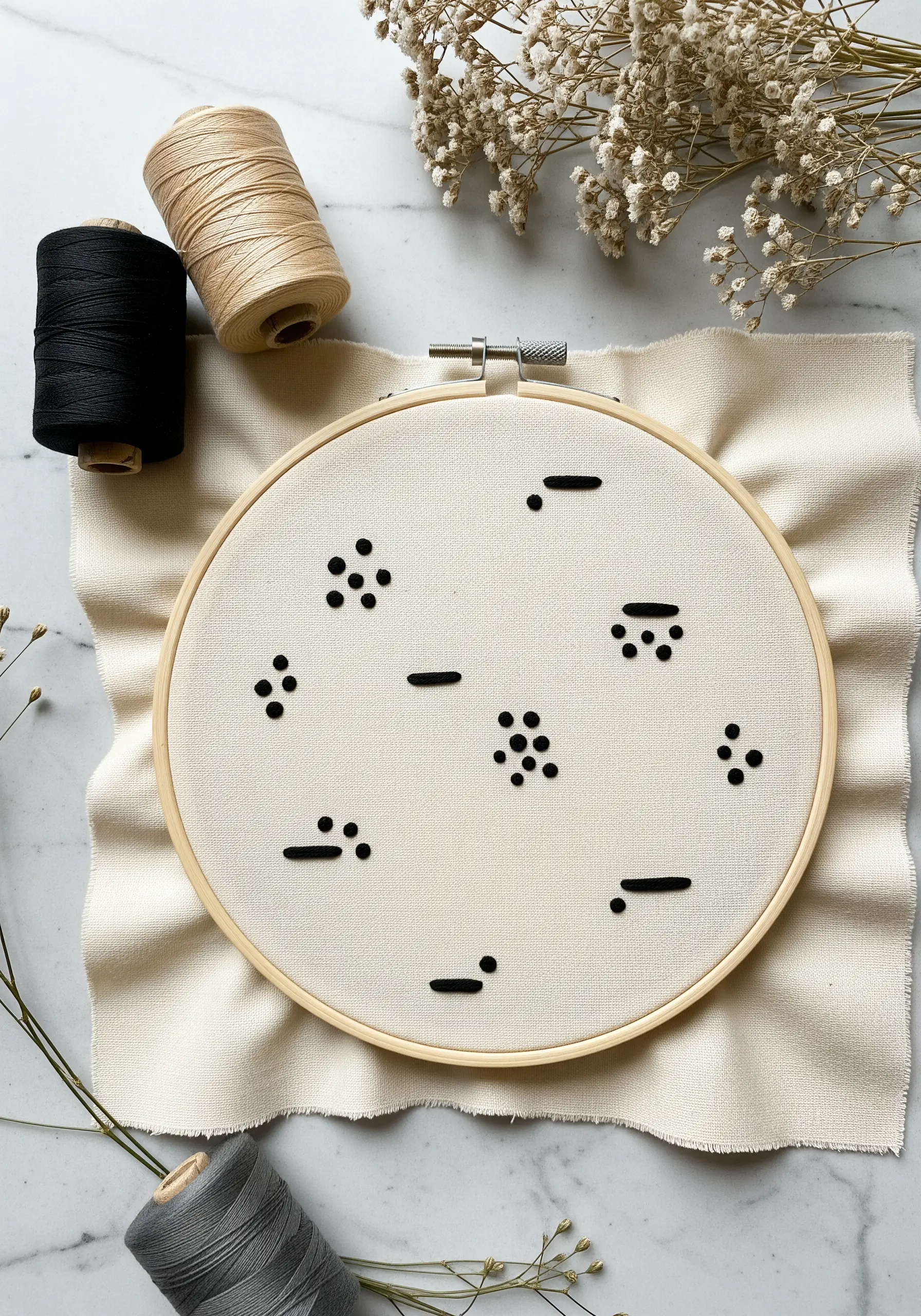
Use the simplest stitches—French knots and straight stitches—as a form of abstract calligraphy.
Arrange these minimal marks in deliberate clusters and lines across your canvas, like a secret alphabet or a minimalist pattern.
The meaning comes not from the stitches themselves, but from their careful placement within the negative space.
This technique transforms your hoop into a quiet, meditative composition that invites closer inspection.