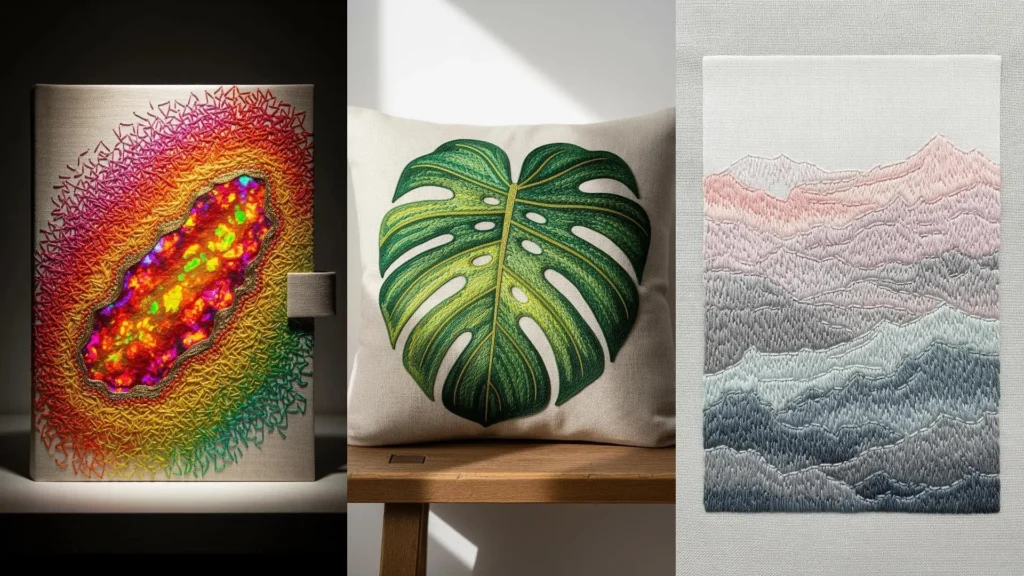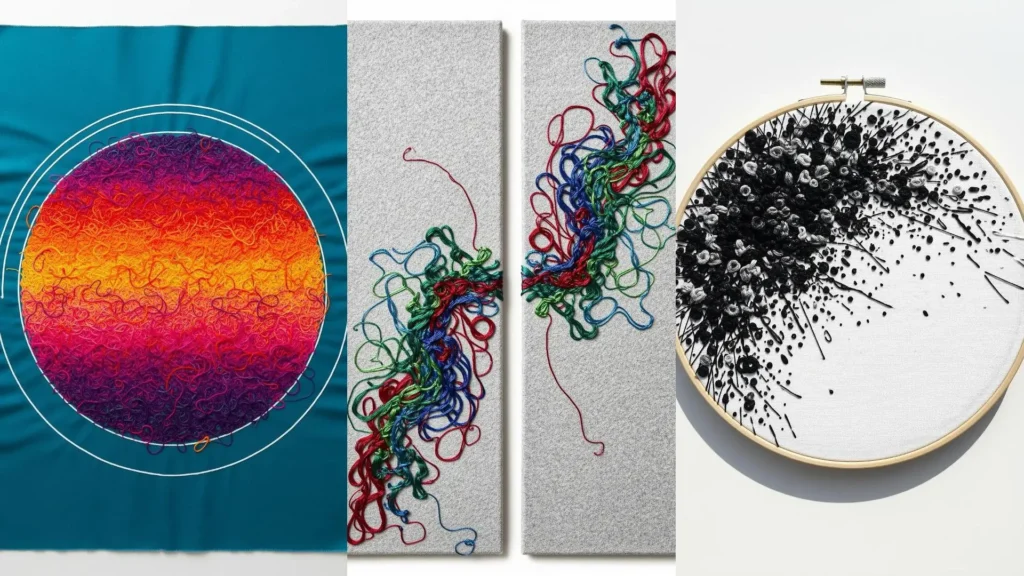
There’s a beautiful tension in creating art that feels both wild and intentional. You might feel it too—the desire to make something expressive and free, but with the polish and control of a finished piece. How do you let go without losing your direction? The answer lies in learning to guide the chaos, not just surrender to it.
Think of your thread not just as a line, but as a splash of wet ink or a flick of paint. The techniques in this collection are designed to help you translate that dynamic, splattered energy into fiber. It’s about more than just random stitches; it’s about understanding how to build texture, direct movement, and use color to create a focal point, even within an abstract design.
Each project is an exercise in trusting your instincts while relying on solid technique. You will learn to cluster knots for density, couch threads for fluid lines, and use negative space to give your compositions room to breathe. This is your moment to transform that chaotic creative energy into something tangible, beautiful, and entirely yours.
1. Radiating Energy with Layered Straight Stitches
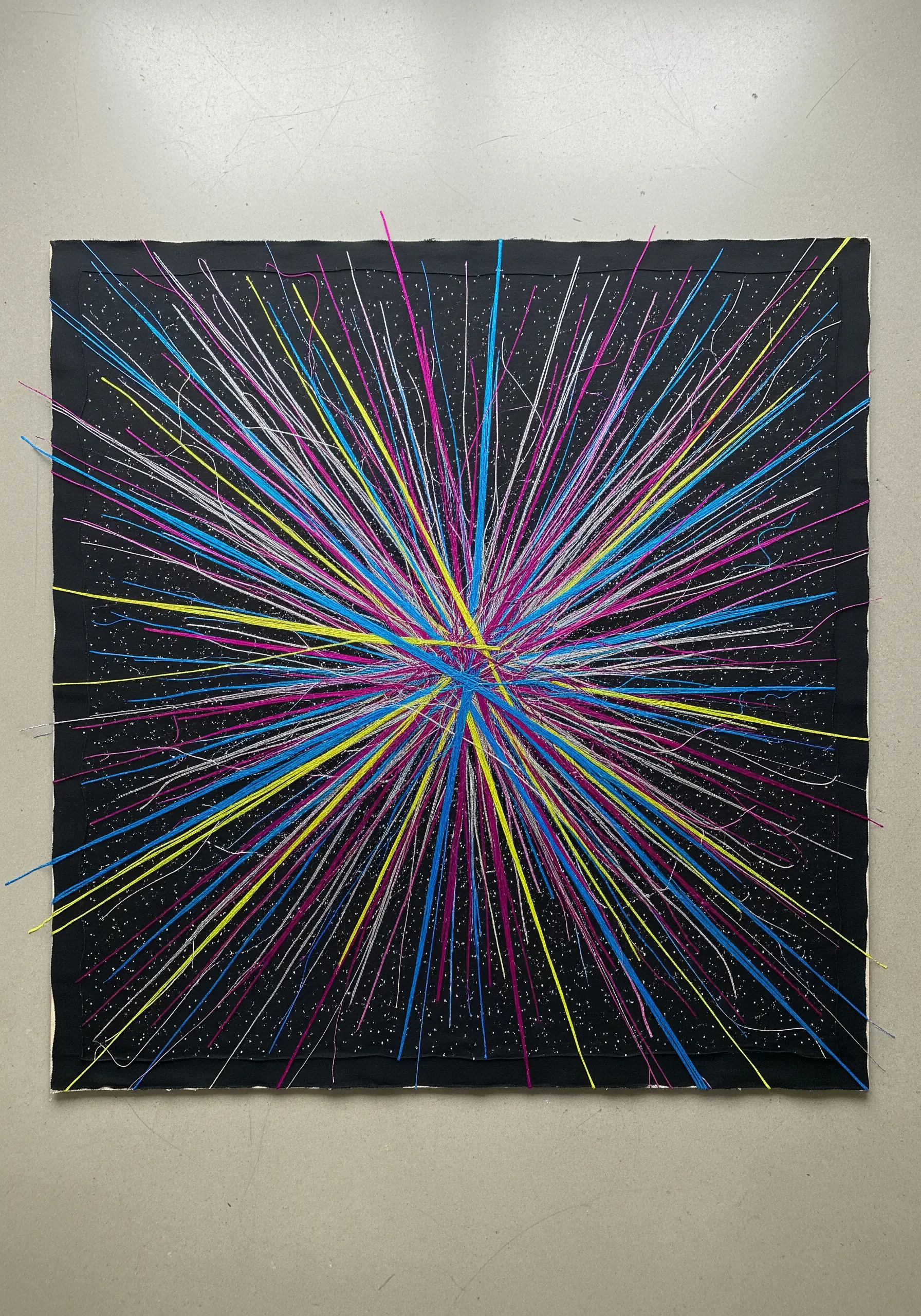
Create a powerful focal point by stitching long, straight lines that radiate from a central point.
Use a water-soluble marker to draw a circle as a guide for your outer endpoints, ensuring a balanced composition.
Layer different colors and vary the weight of your thread (using three strands for some, six for others) to build visual depth and complexity.
For the tiny star-like details, use a single strand of white floss to make delicate French knots, which adds a final layer of texture against the dark fabric.
2. Monochrome Splatter with Textural Knots

Build a dense, organic shape by clustering French knots of varying sizes—wrap your needle once for small dots and two or three times for bolder ones.
To create the sharp, splatter-like lines, couch down longer pieces of thread instead of making individual straight stitches.
This couching technique gives you precise control over the curves and placement of each line, perfecting the illusion of ink thrown onto fabric.
Working in monochrome focuses the eye on the rich interplay of textures, from the smooth lines to the bumpy knots.
3. Capturing Light with Metallic Thread Bursts
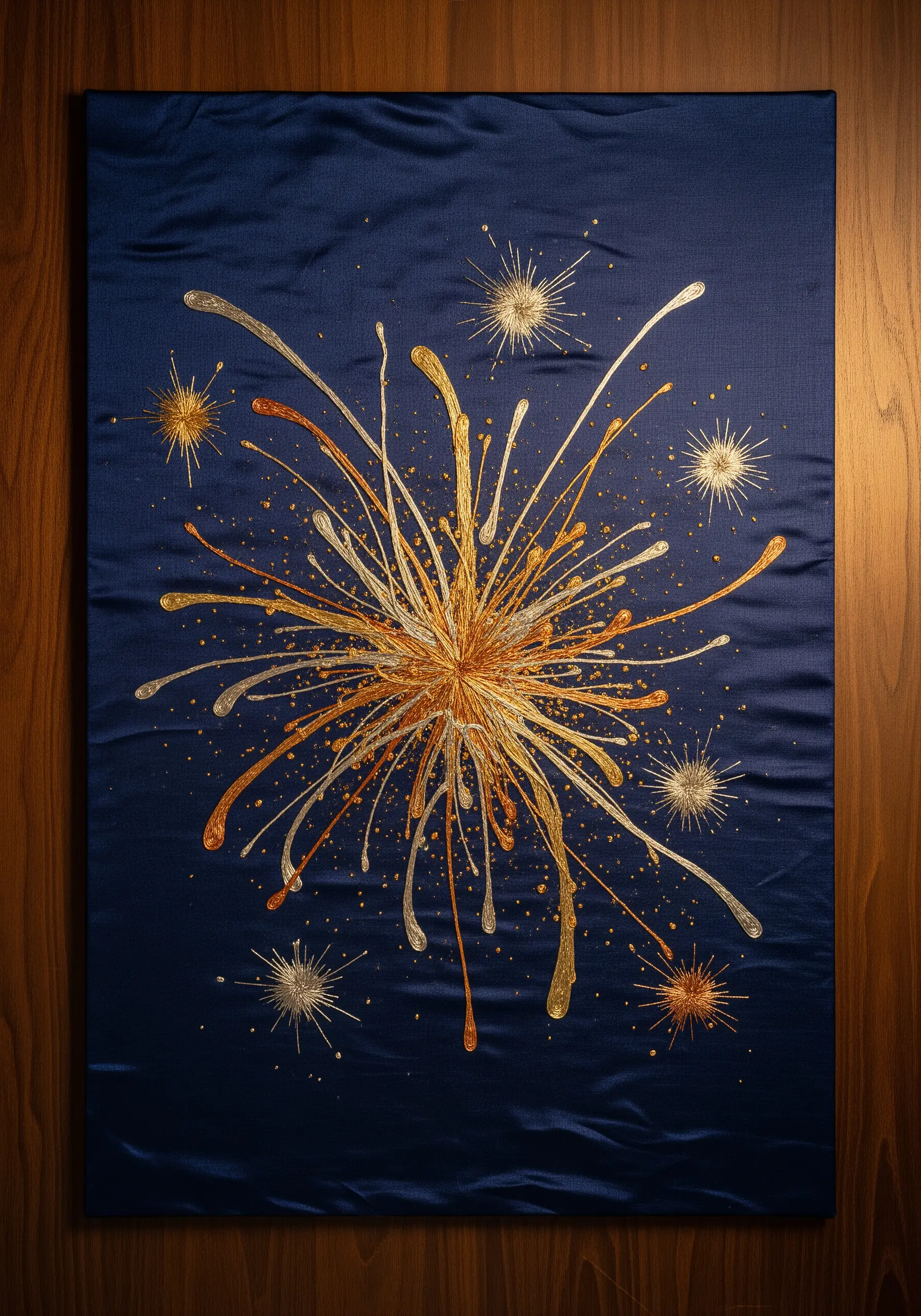
Elevate a simple starburst motif by using high-sheen metallic threads on a dark, luxurious fabric like satin or silk.
Work with shorter lengths of metallic floss (no more than 12 inches) to minimize tangling and fraying, and consider using a thread conditioner for a smoother glide.
Combine long, sharp straight stitches with small, dense satin-stitched centers to create a dynamic firework effect.
The reflective quality of both the thread and the fabric creates a piece that interacts beautifully with light, changing its appearance as the viewer moves.
4. Organic Color Clouds with French Knots
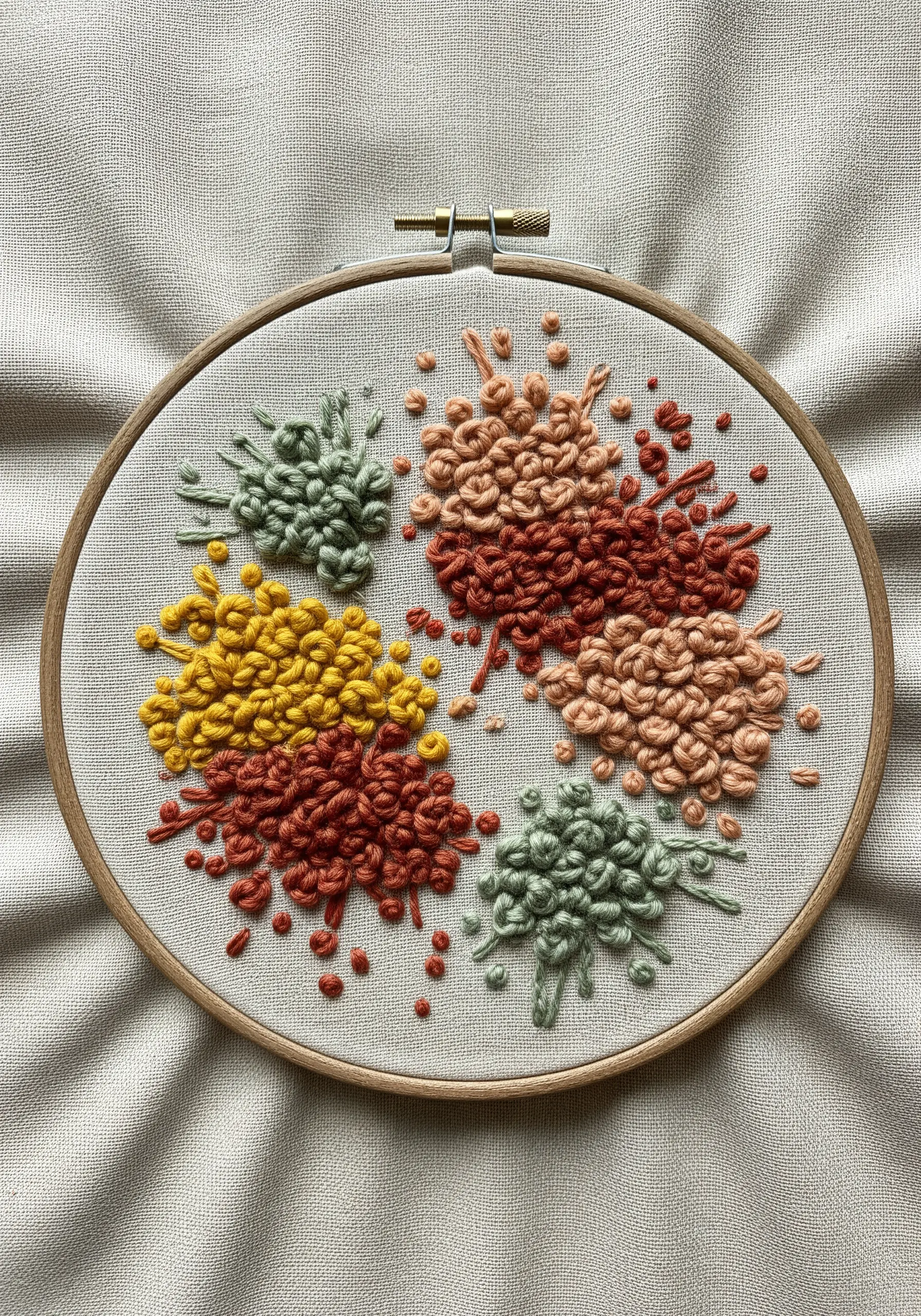
Explore color theory by grouping French knots into distinct but overlapping clusters, creating a composition that feels both abstract and natural.
Use a full six strands of embroidery floss or even a fine perle cotton to give your knots a plush, substantial texture.
To achieve a soft, cloud-like edge for each color block, vary the density of your knots—pack them tightly in the center and scatter them sparsely as you move outward.
This technique turns a simple stitch into a tool for creating painterly fields of color and texture.
5. Contained Chaos with a Gradient of Texture
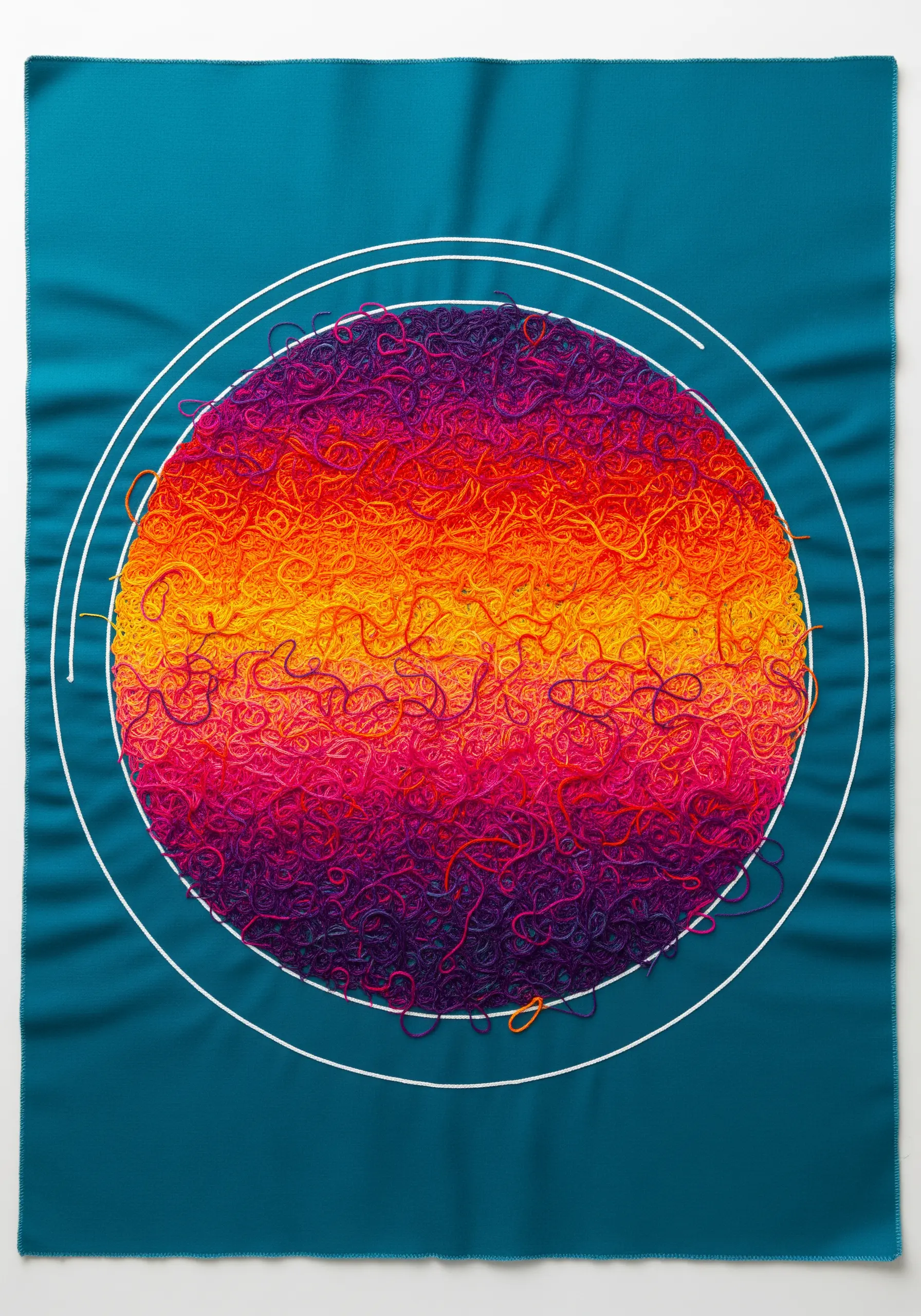
Create a high-texture surface by filling a defined shape with free-form, overlapping stitches rather than uniform ones.
Lay down strands of floss in random loops, swirls, and curves, then use a single, matching strand to couch them down discreetly.
This method preserves the volume and chaotic energy of the threads while keeping them secure.
Arranging your colors in a smooth gradient—from deep violet to fiery orange—adds a layer of order to the chaos, resulting in a balanced yet dynamic piece.
6. Diptych Design with Flowing Couched Threads
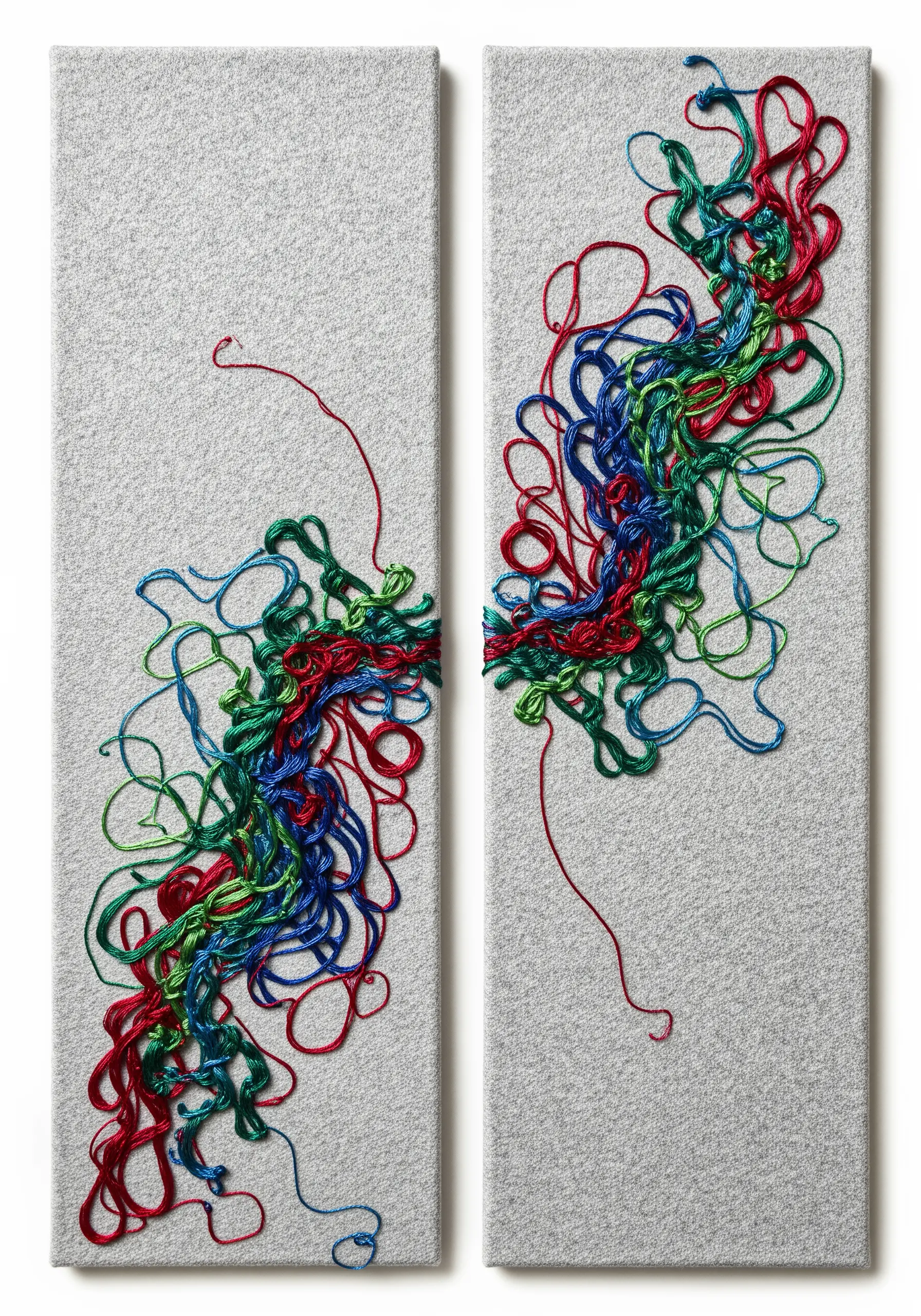
Expand your canvas by creating a diptych—a single piece of art that spans two separate panels.
This composition creates a powerful sense of movement and connection as the threads flow from one surface to the other.
Instead of stitching directly, lay down bundles of loose thread in organic shapes and then tack them into place with small, hidden couching stitches.
This preserves the natural volume and drape of the floss, giving the artwork a sculptural, three-dimensional quality.
7. High-Contrast Neon Starbursts
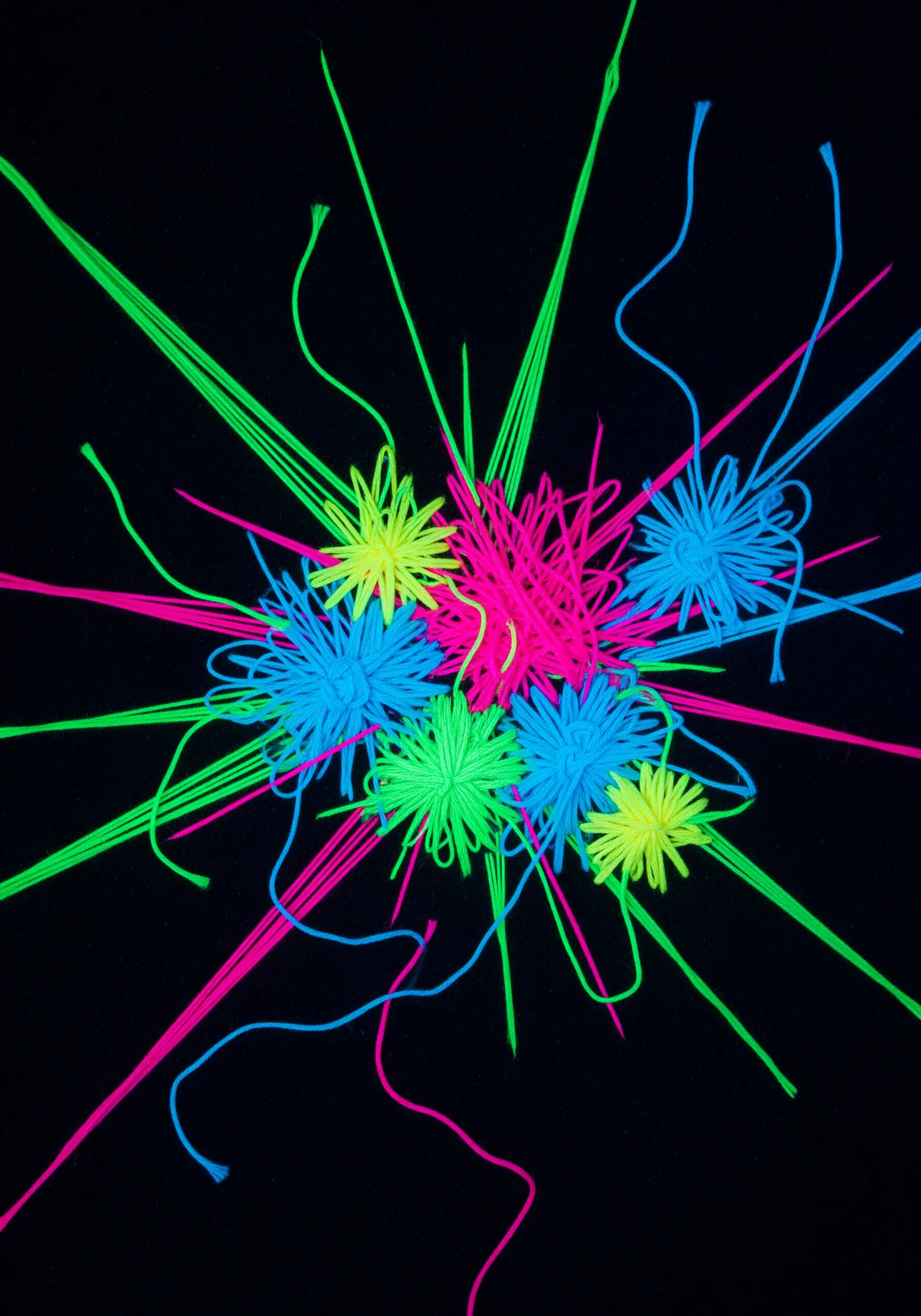
Make your colors vibrate by stitching with fluorescent threads on a stark black cotton background.
The high contrast makes the neon hues appear to glow, creating a bold, graphic impact that’s perfect for modern art.
Layer simple starburst shapes, made with straight stitches, on top of one another to build a complex and energetic composition.
Keep your tension slightly relaxed to allow the threads to sit fully on the fabric’s surface, maximizing their visual punch.
8. Minimalist Motion with a Single Thread
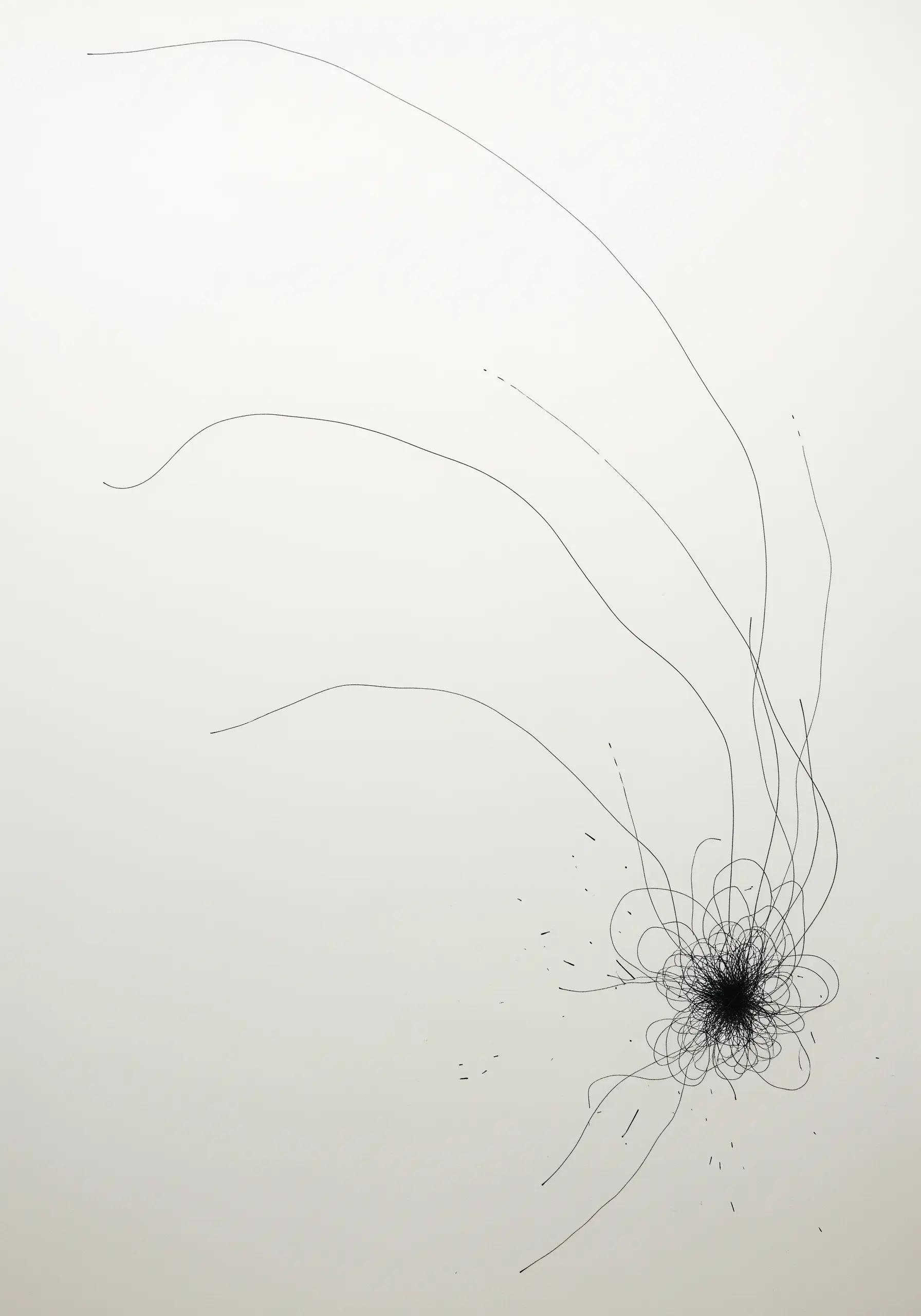
Explore the power of minimalism by creating a composition that balances density and negative space.
In one corner, build a small, intensely tangled knot of thread to serve as a focal point of chaotic energy.
From this knot, extend a few long, sweeping straight stitches that curve gracefully across the empty fabric.
The stark contrast between the tight chaos and the open, elegant lines creates a sophisticated sense of movement and release, proving that simple can be incredibly powerful.
9. Sculptural Neutrals with 3D Stitch Variation
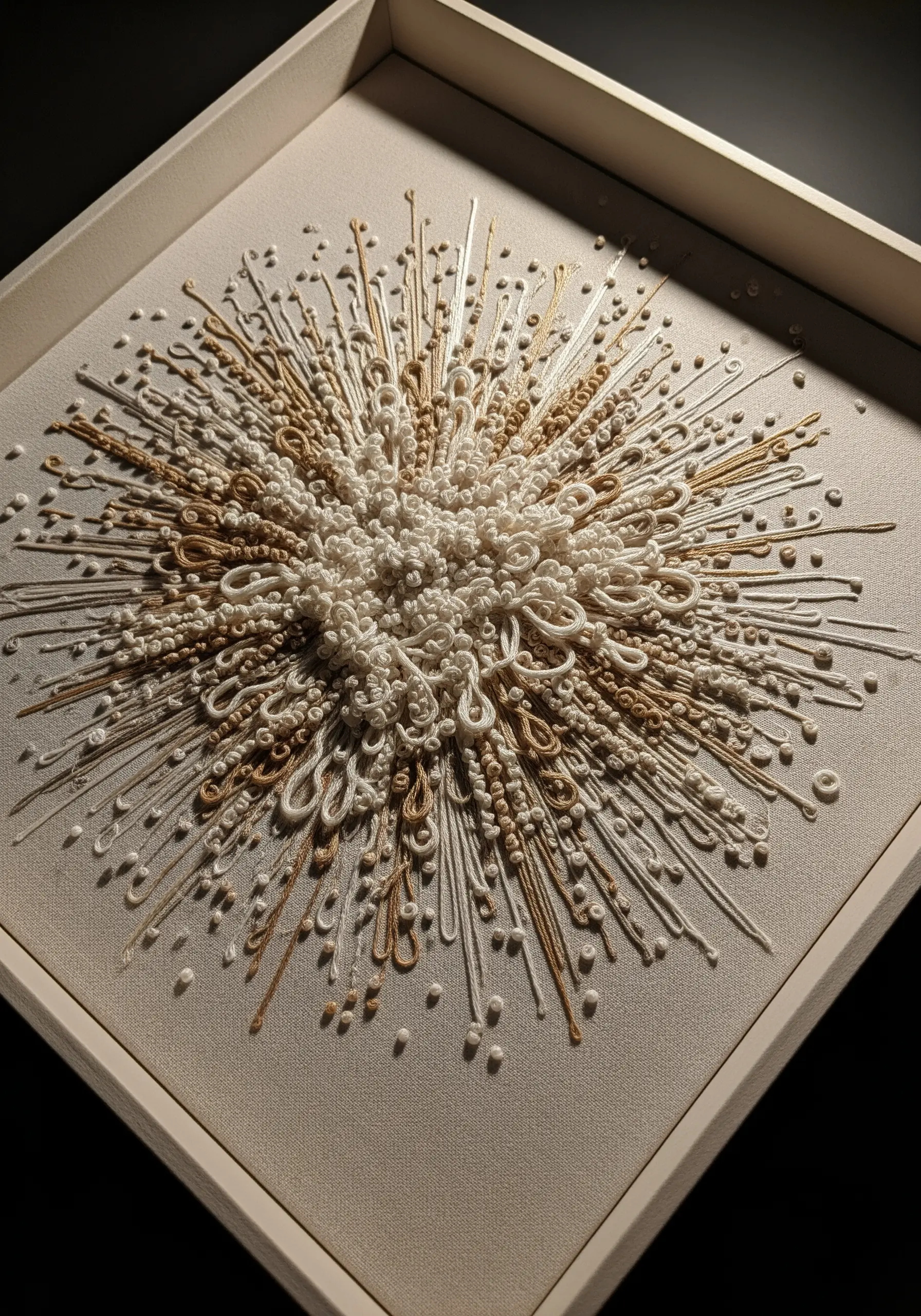
Create a sophisticated, tactile artwork by focusing on texture rather than color.
Work within a simple palette of cream and beige, which allows the intricate stitchwork to become the main attraction.
Build sculptural depth by combining a variety of stitches: padded satin stitch for raised areas, detached chain stitches for airy loops, and French knots for small, dot-like accents.
This combination of high and low relief turns the embroidered surface into a three-dimensional landscape worth exploring by hand and eye.
10. Floating Stitches on Sheer Organza
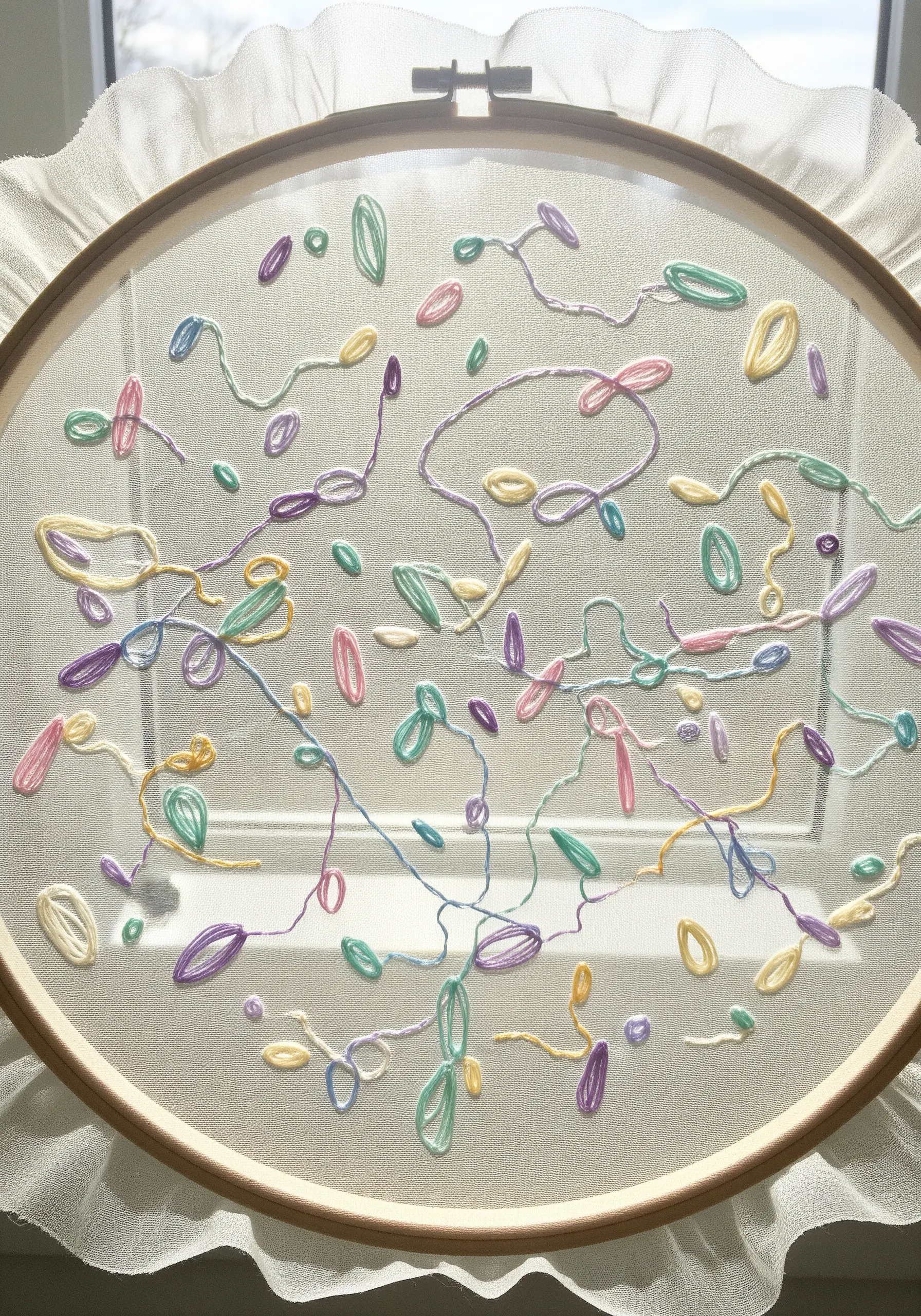
Create an ethereal, delicate effect by embroidering on a sheer fabric like organza or tulle.
To prevent the fine fabric from puckering, always use a stabilizer—either a tear-away or wash-away variety will work perfectly.
The magic of this technique lies in the illusion of floating threads, so keep the back of your work as neat as the front, as it will be partially visible.
Use simple satin-stitched shapes and connecting stem stitches in soft pastel colors to enhance the light, airy feel of the piece.
11. Explosive Gradient with Radiating Stitches
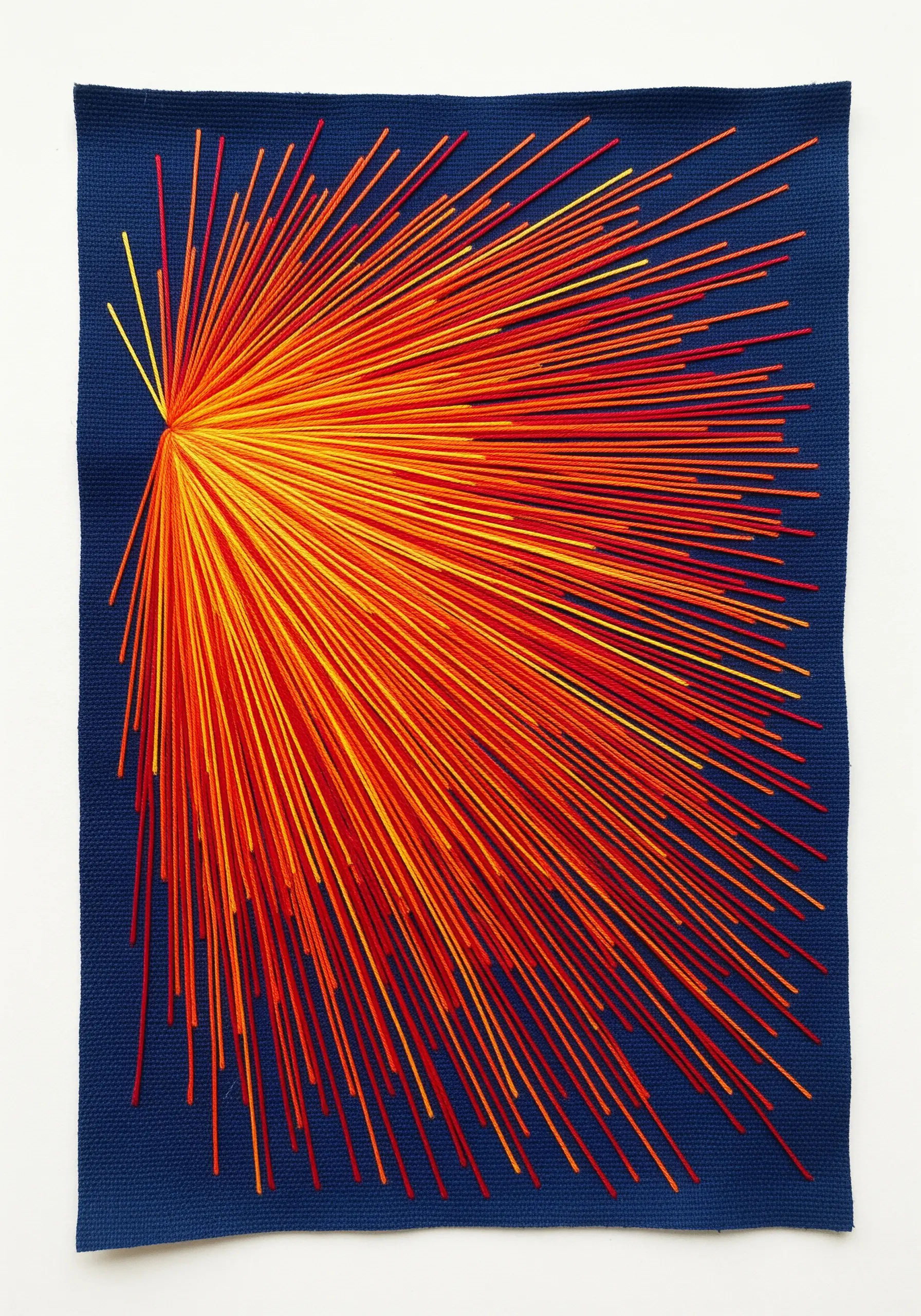
Achieve a seamless color blend using only straight stitches, a technique that creates a sense of vibrant, explosive movement.
Map out your color progression before you begin, moving from reds to oranges to yellows.
To create the smooth transition, use single strands of floss and intersperse stitches of adjacent colors, tricking the eye into seeing a continuous gradient.
Placing this warm, fiery burst against a cool, dark blue background makes the colors feel even more intense and energetic.
12. Bold Dimensionality with Couched Yarn Chains
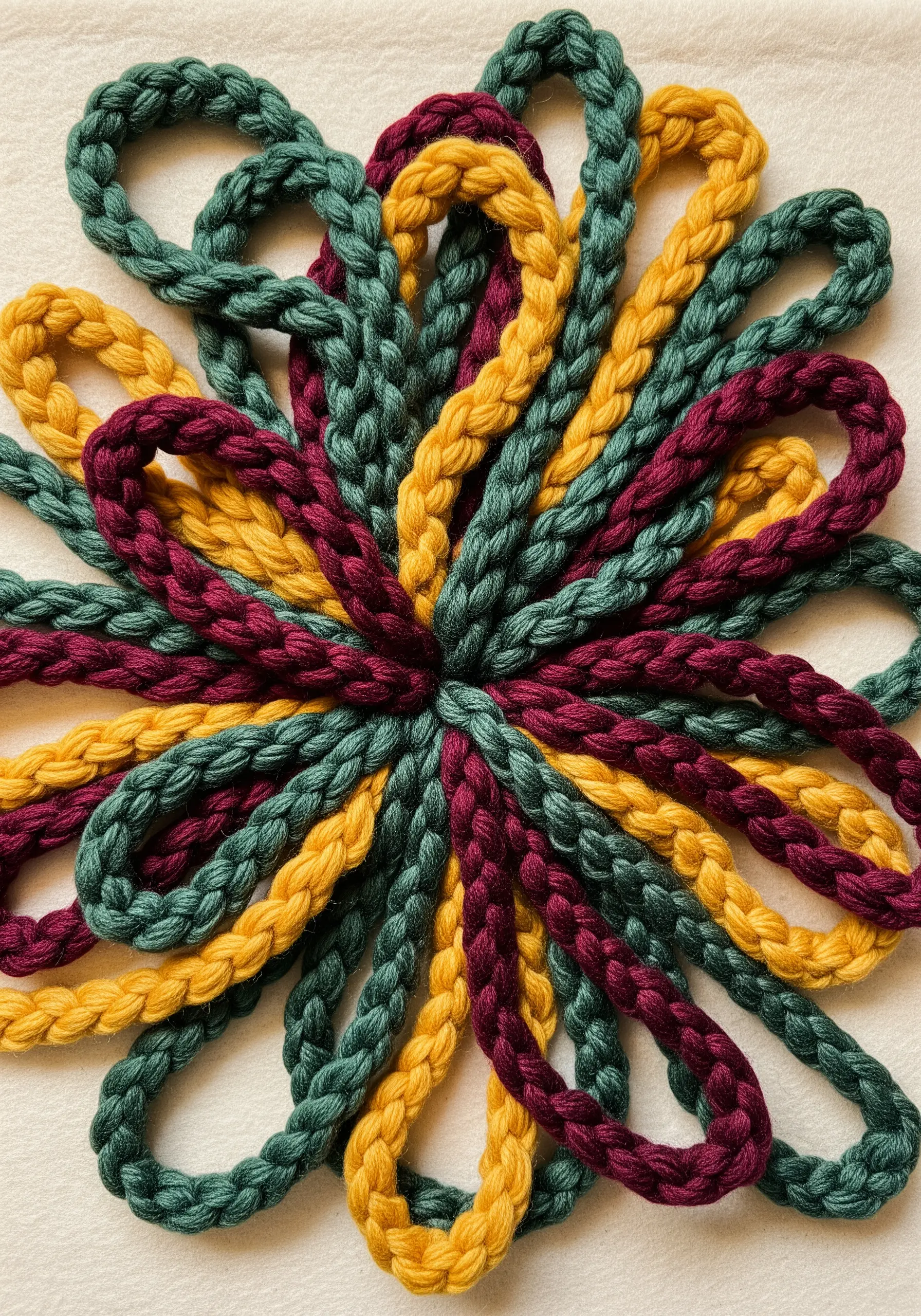
For a piece with dramatic texture and scale, swap your embroidery floss for a chunky yarn.
You can create thick, chain-like cords by finger knitting, crocheting a chain, or using a French knitting doll.
Once your cords are made, arrange them in your desired shape on the fabric and couch them down with a matching, thinner thread.
This method allows you to create bold, graphic designs with incredible dimension that simply isn’t possible with standard floss.
13. Thread Painting a Waterfall Effect
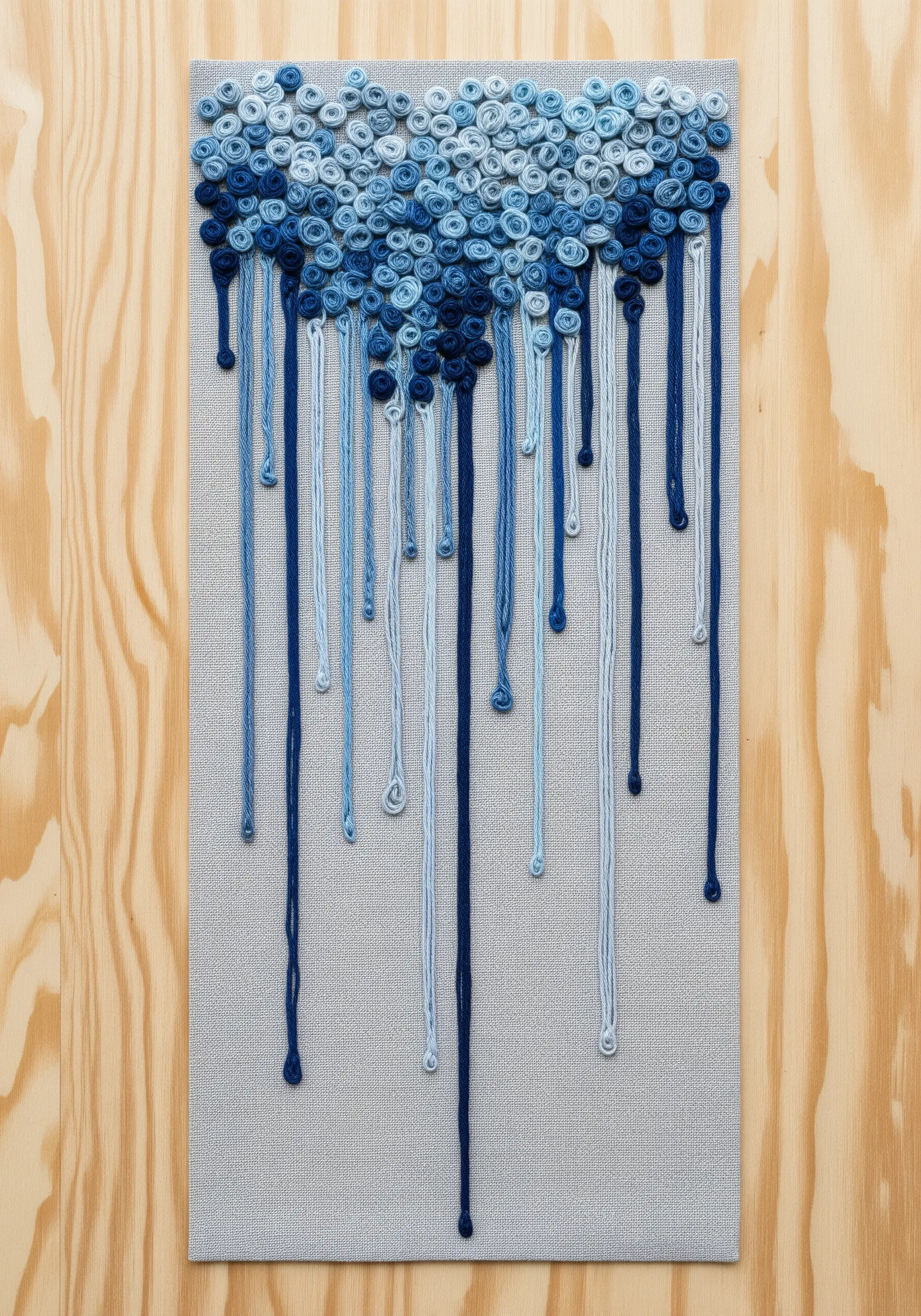
Evoke the feeling of flowing water by combining controlled stitches with freely hanging threads.
Create a dense cloud at the top using coiled rosettes and French knots in various shades of blue.
For the ‘drips’, secure long strands of thread or yarn only at the top, letting gravity pull them downward.
Using an ombré range of a single color family, like these blues, gives the abstract design a cohesive and sophisticated, watercolor-like appearance.
14. Celestial Burst on Black Satin
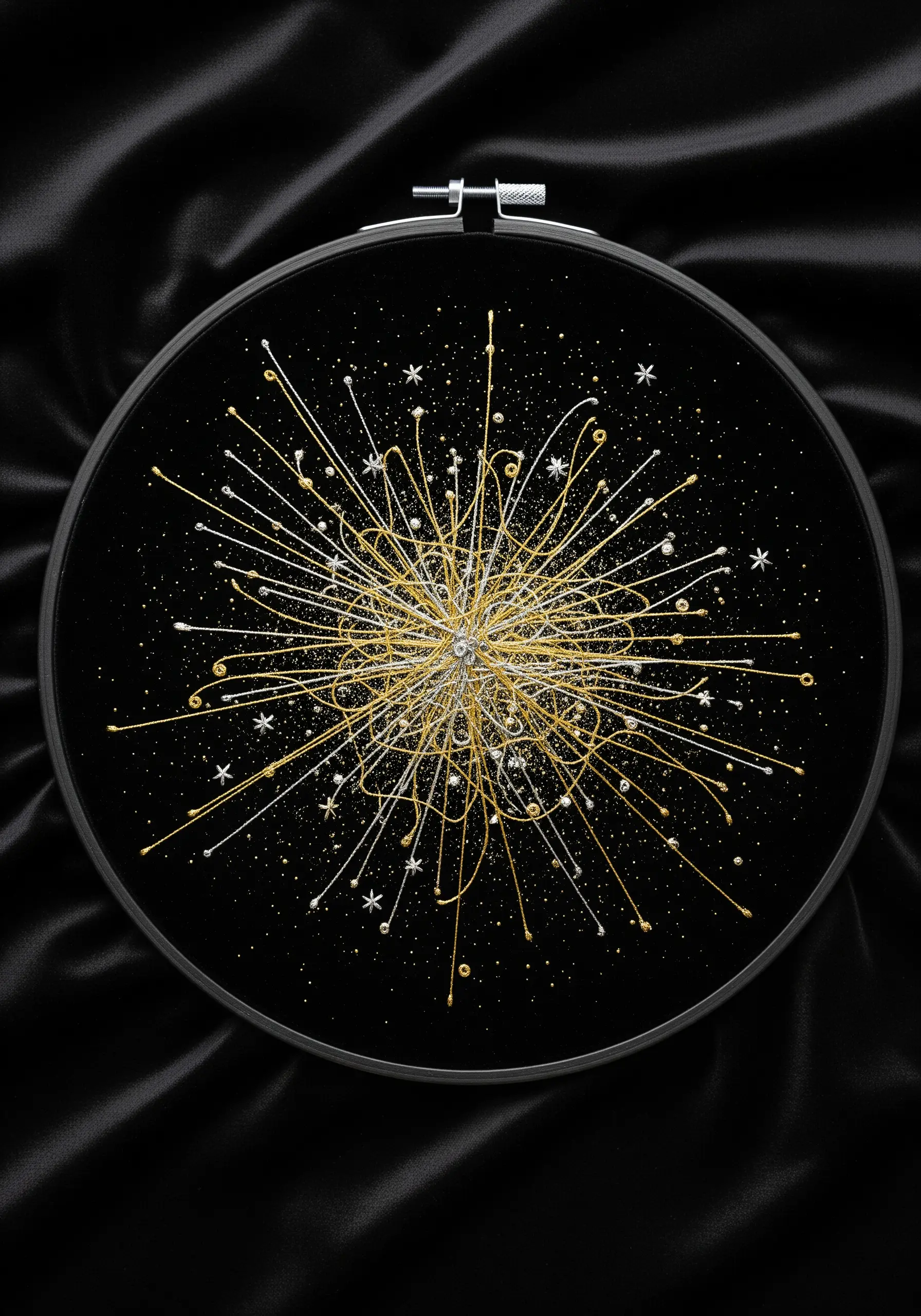
Capture a sense of cosmic celebration by stitching with metallic threads on a deep black satin background.
Create a central burst with tangled, overlapping straight stitches, allowing the gold and silver to mix.
Extend delicate lines outward from the center, finishing some with tiny French knots to represent distant stars or sparks.
The combination of luxurious fabric and shimmering thread makes for a truly stunning piece that feels both chaotic and elegant.
15. Structured Chaos: Weaving Through a Wire Grid

Introduce an unexpected industrial element into your work by layering a wire mesh grid over your fabric.
You can then weave, stitch, and tangle your threads through both the mesh and the fabric, creating a fascinating interplay of textures.
The rigid, geometric structure of the grid provides a perfect contrast to the organic, chaotic freedom of the threads.
This mixed-media approach adds depth and a unique conceptual layer to your embroidery.
16. A Triptych of Flowing Color
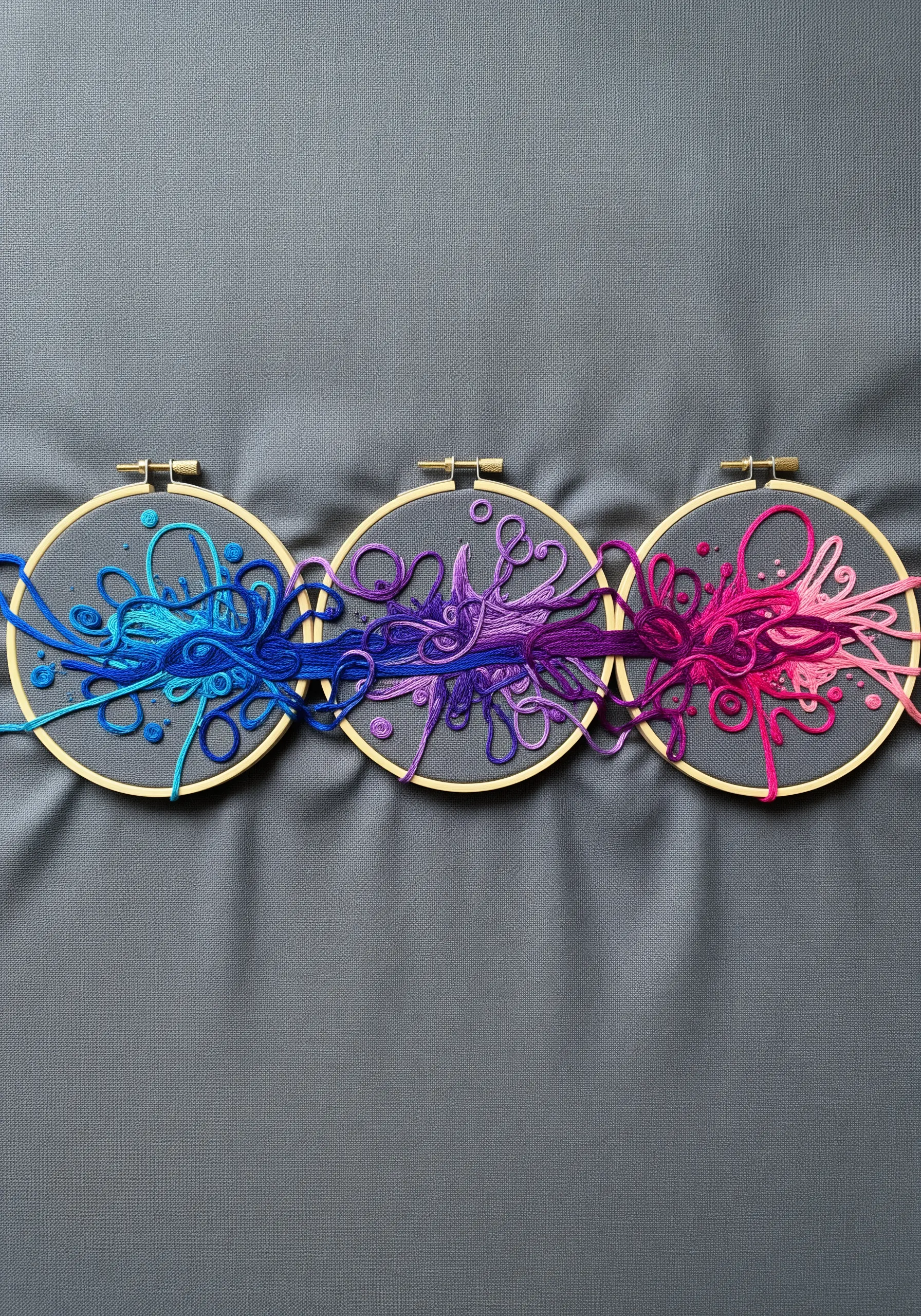
Tell a continuous visual story by creating a triptych—a single artwork presented across three separate hoops.
Plan a color journey that flows logically from one hoop to the next, like this transition from cool blue to vibrant magenta.
Physically connect the hoops with threads that stretch across the gaps, guiding the viewer’s eye and unifying the composition.
Using loose, couched loops and energetic tangles creates a sense of dynamic movement that makes the color transition feel alive.
17. Autumnal Texture with Dense Seed Stitching
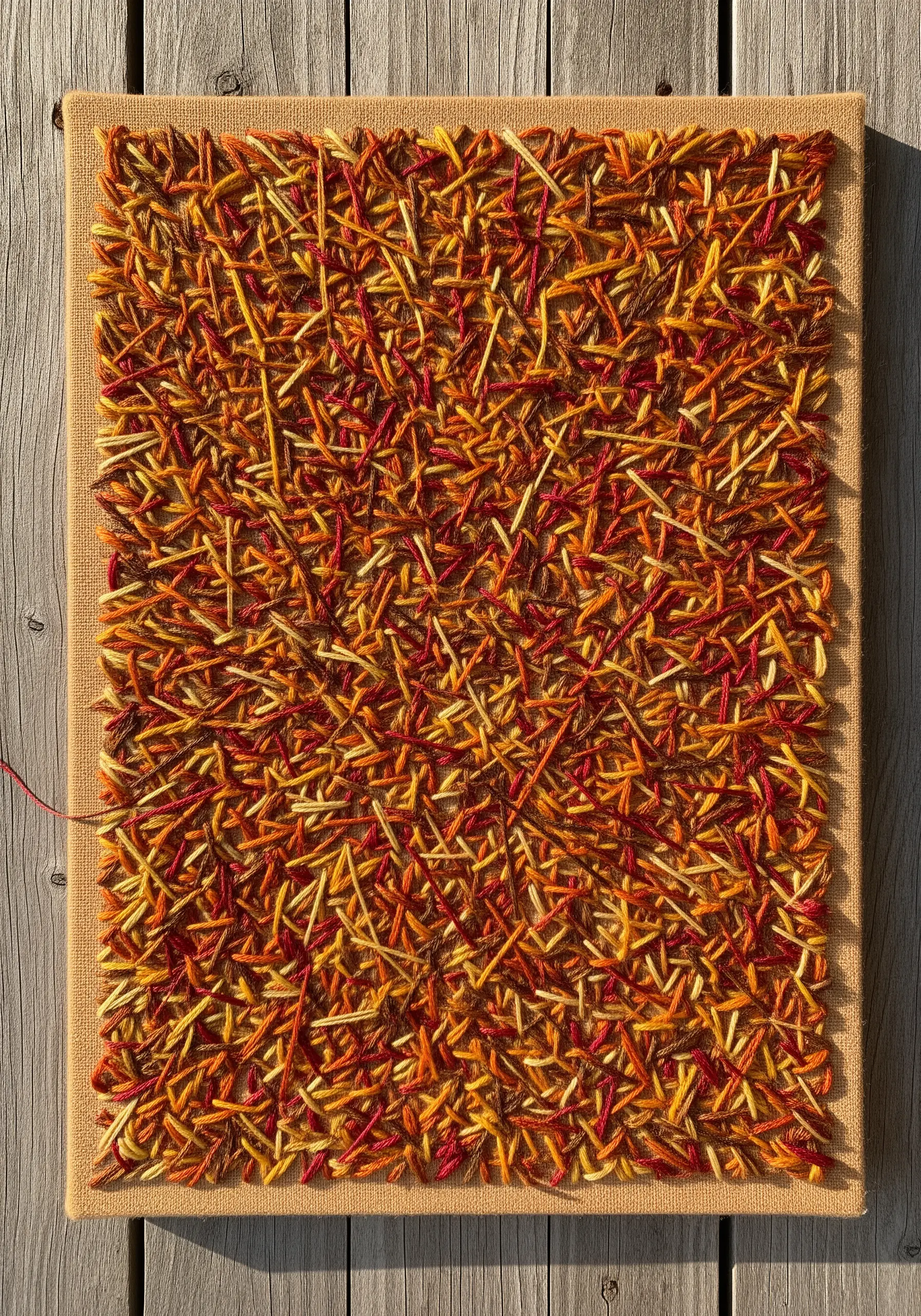
Create a rich, tapestry-like surface by completely covering your fabric with short, randomly oriented straight stitches, also known as seed stitch.
This technique is less about precision and more about building up a dense, tactile field of color.
Working on a rustic base like burlap or raw canvas enhances the piece’s textural, handmade quality.
A warm, autumnal palette of reds, oranges, and browns gives the composition a cozy, organic feel, perfect for capturing nature’s textures.
18. Abstract Seascape with Textural Stitches
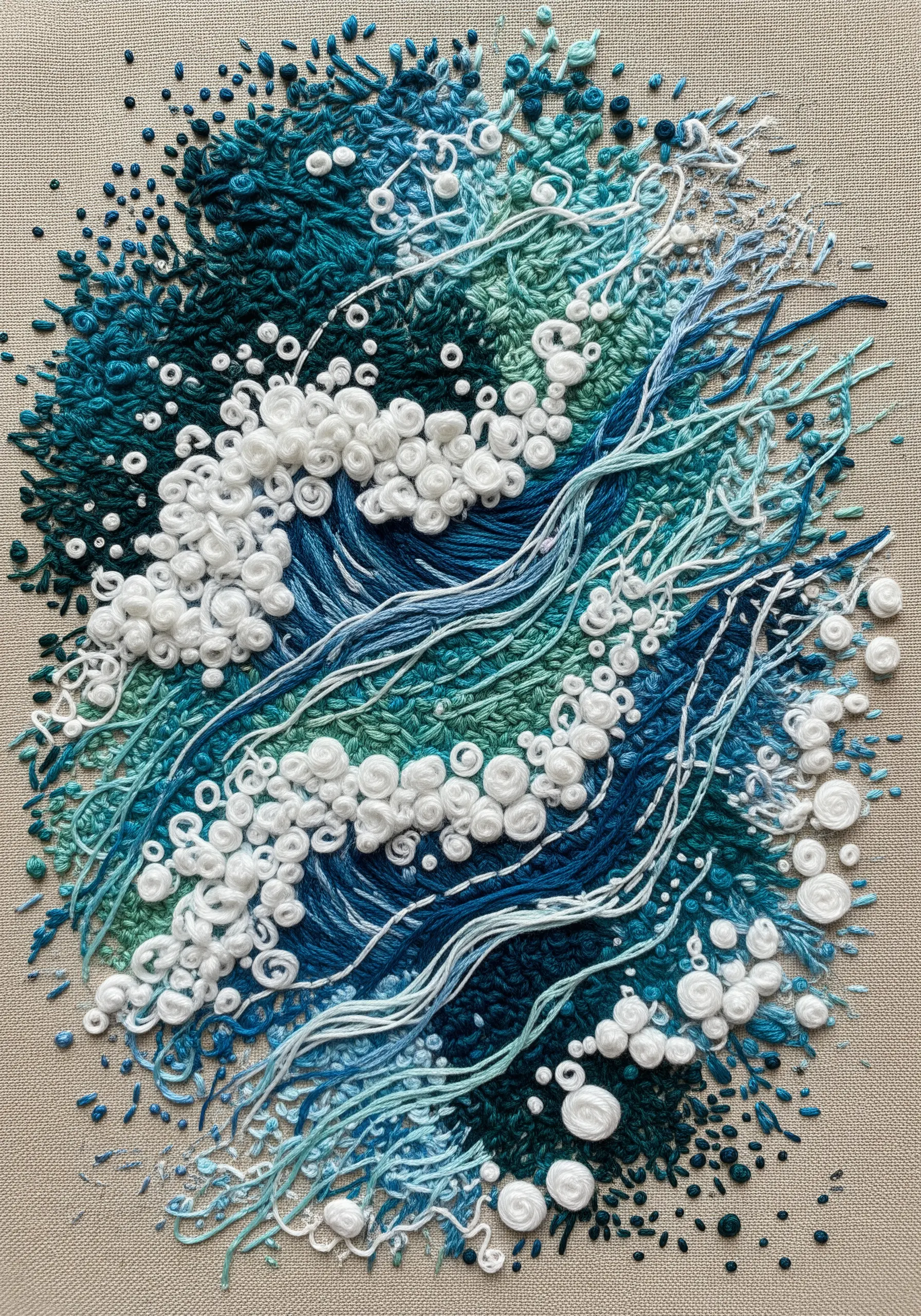
Translate the energy of a natural scene, like crashing ocean waves, into a purely textural abstract piece.
Instead of trying to create a literal image, focus on capturing the feeling and movement of the water.
Use tight, white bullion knots or French knots to represent sea foam, long and flowing straight stitches for the currents, and dense seed stitches for the deeper water.
This approach allows you to capture nature’s textures in a deeply personal and expressive way.
19. Asymmetrical Energy with Sculptural Red Thread
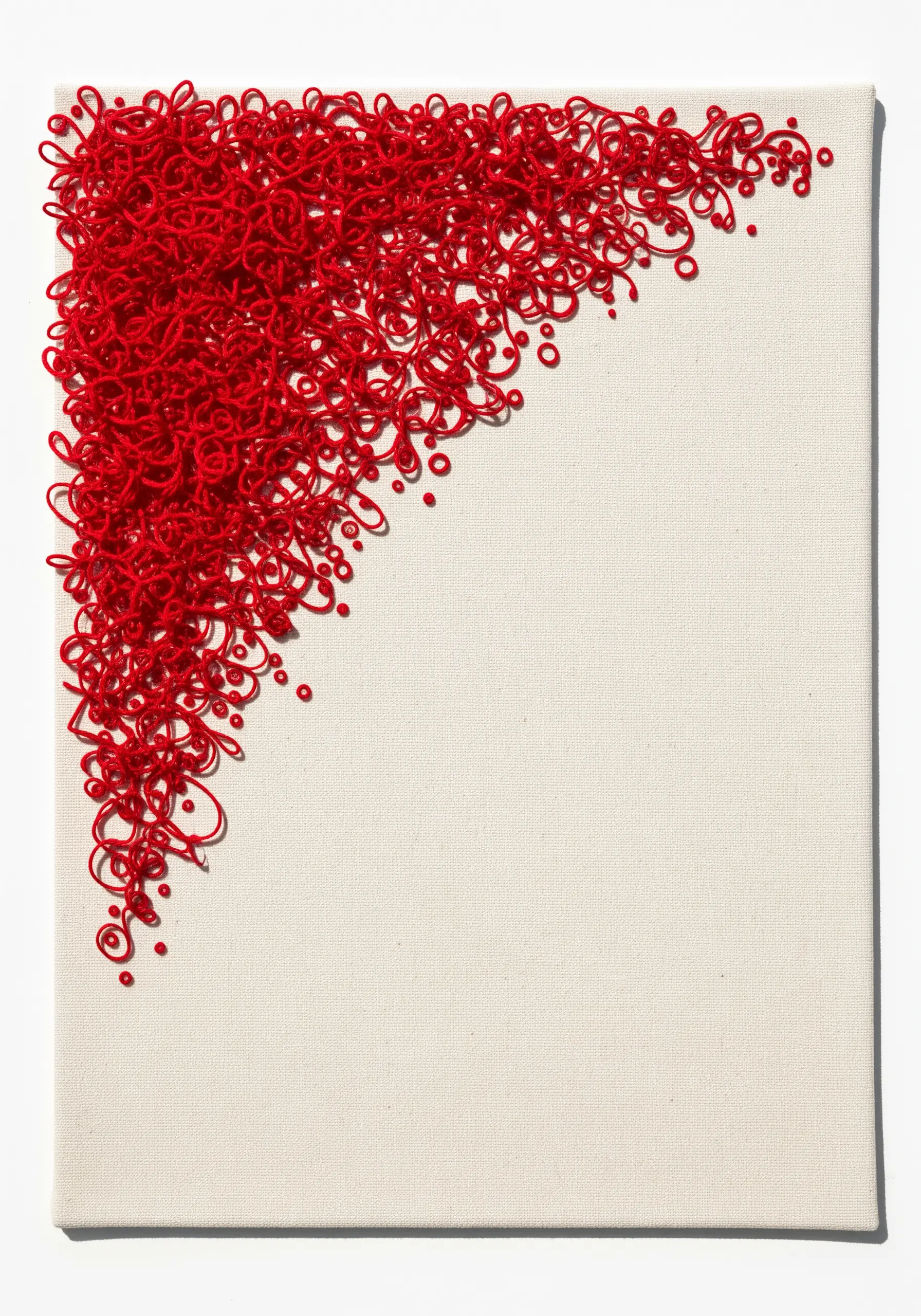
Command attention by using negative space as a key element in your composition.
By concentrating a dense, vibrant texture in a single corner, you create a powerful focal point that makes the empty space feel intentional and active.
Choose a high-impact color, like this brilliant red, to contrast sharply with the neutral canvas.
To give the loops a truly three-dimensional form, consider using a wired thread or applying a fabric stiffener after stitching, allowing them to hold their shape off the canvas.
20. Pointillism with Complementary French Knots
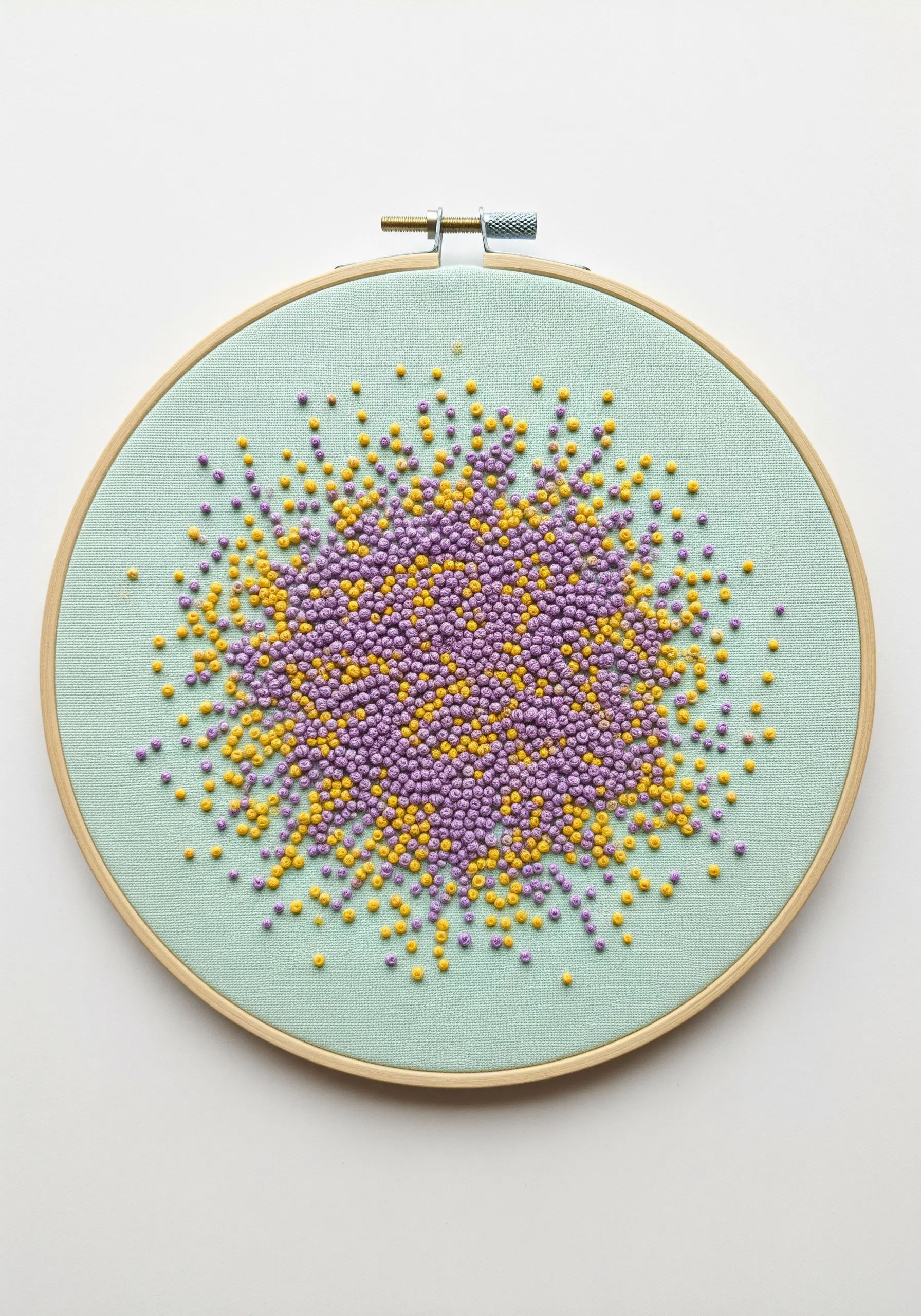
Embrace the style of Pointillism by creating your entire design with tiny French knots, which act like dots of paint.
The success of this technique relies heavily on your color choices. Here, the use of complementary colors—purple and yellow—creates a vibrant, shimmering optical effect.
Placing these high-energy colors on a muted, soft mint green background allows them to pop without overwhelming the eye.
Vary the spacing of your knots to create areas of density and sparseness, adding a subtle sense of movement to the piece.
21. Large-Scale Gravity Painting with Yarn
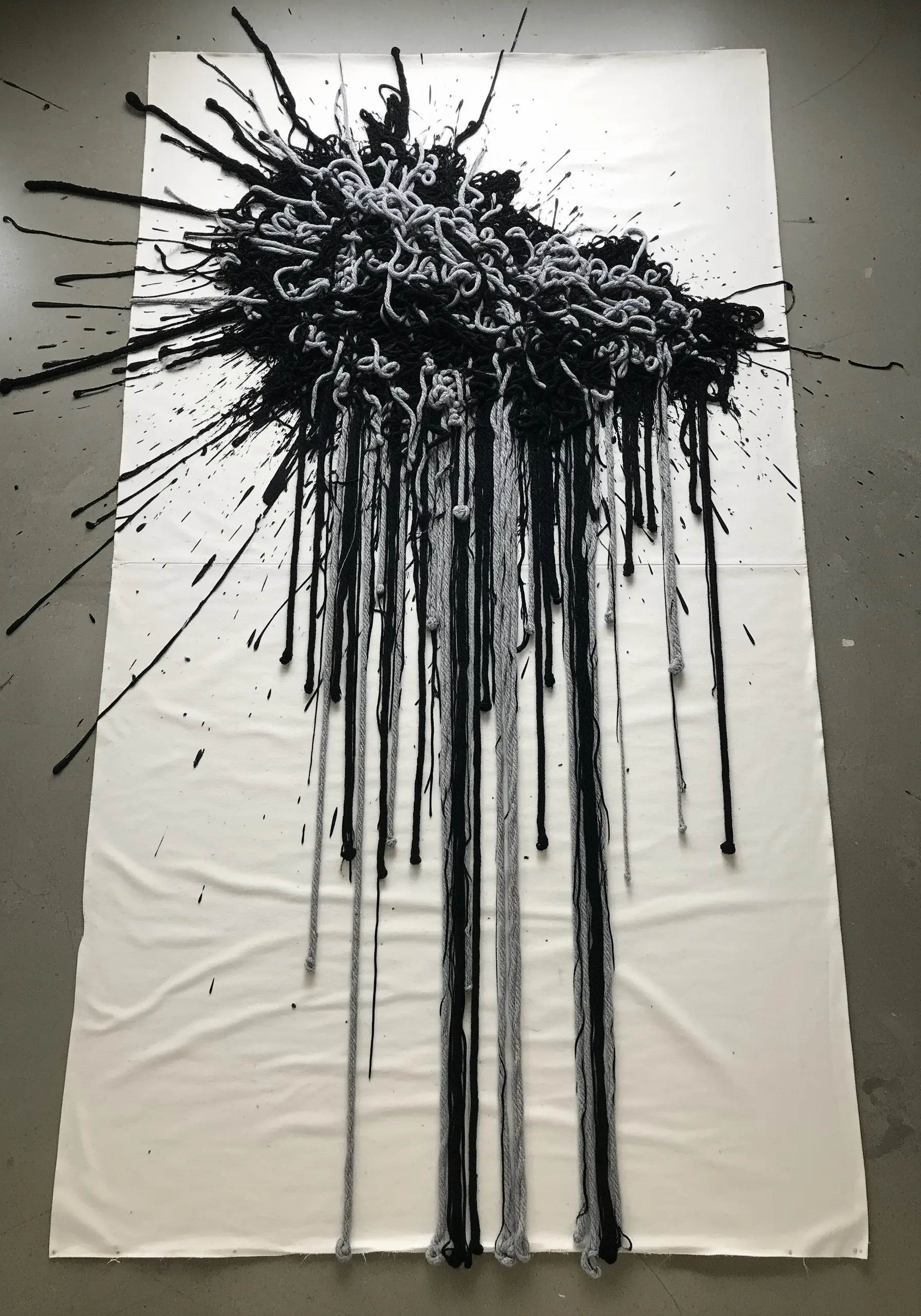
Break free from the hoop and create a dramatic, large-scale piece of fiber art.
Use thick, heavy yarns to create a sense of weight and presence that delicate floss cannot achieve.
Couch down dense, tangled bundles of yarn at the top of your canvas, then allow long strands to hang freely, letting gravity become a part of your compositional process.
This technique creates bold, expressive fiber art installations that feel both painterly and sculptural.