You have likely stared at a blank hoop, wondering how to bridge the gap between the simple stitches you know and the polished, artistic designs you admire. The secret isn’t always in learning complex new knots, but in how you apply the basics—intentional texture, thread weight, and the direction of your needle.
These animal patterns are selected not just for their cuteness, but because each one teaches a fundamental lesson in design. Whether it is using negative space to define a fawn’s spots or mastering the flow of fur on a sleeping fox, these projects allow you to practice technical precision on manageable, rewarding motifs.
Grab your hoop and your favorite linen. We are going to move beyond “crafting” and start creating embroidery that feels curated, modern, and distinctly yours.
1. Minimalist feline silhouette in fluid lines

To achieve this seamless contour, avoid a standard backstitch, which can look choppy on curves.
Instead, use a whipped backstitch or a stem stitch using a single strand of pearl cotton thread; this creates a rope-like consistency that mimics a continuous ink drawing.
Keep your fabric tension tight in the hoop to prevent the linen from puckering where the needle turns for the tail and ears.
2. Sleeping fox with directional fur shading

This motif relies entirely on stitch direction to convey the curvature of the sleeping body.
Use the long-and-short stitch technique, ensuring your needle follows the natural growth pattern of animal fur rather than stitching in straight horizontal blocks.
Blend rust orange with a deeper terracotta thread at the shadows to create volume without needing complex outlines.
3. Textured bumblebee with knot detailing

Elevate a simple insect motif by contrasting flat wing stitches with a highly textured body.
Use dense French knots or Colonial knots in yellow and black to build a 3D, fuzzy abdomen that stands out against the fabric.
For the wings, switch to a single strand of white floss and use a delicate lattice stitch to mimic transparency and fragility.
4. Whimsical whale with geometric spray

This design proves that tiny details can carry the narrative.
Stitch the whale’s body in a solid, dark navy outline using a split stitch for durability, then switch to a lighter blue for the water spray.
Instead of simple dashes, use tiny cross stitches or star stitches for the spray to add a playful, graphic element that feels modern and structured.
5. Layered needle painting for hedgehog spines

The challenge here is creating the illusion of sharp quills without the design becoming a chaotic mess.
Layer straight stitches in varying shades of brown and beige, starting from the bottom layer and working upward to create depth.
If you enjoy these cute animal embroidery hoops for fun quirky wall decor, keep the face smooth with a simple satin stitch to contrast the roughness of the back.
6. Geometric owl with chain stitch contours
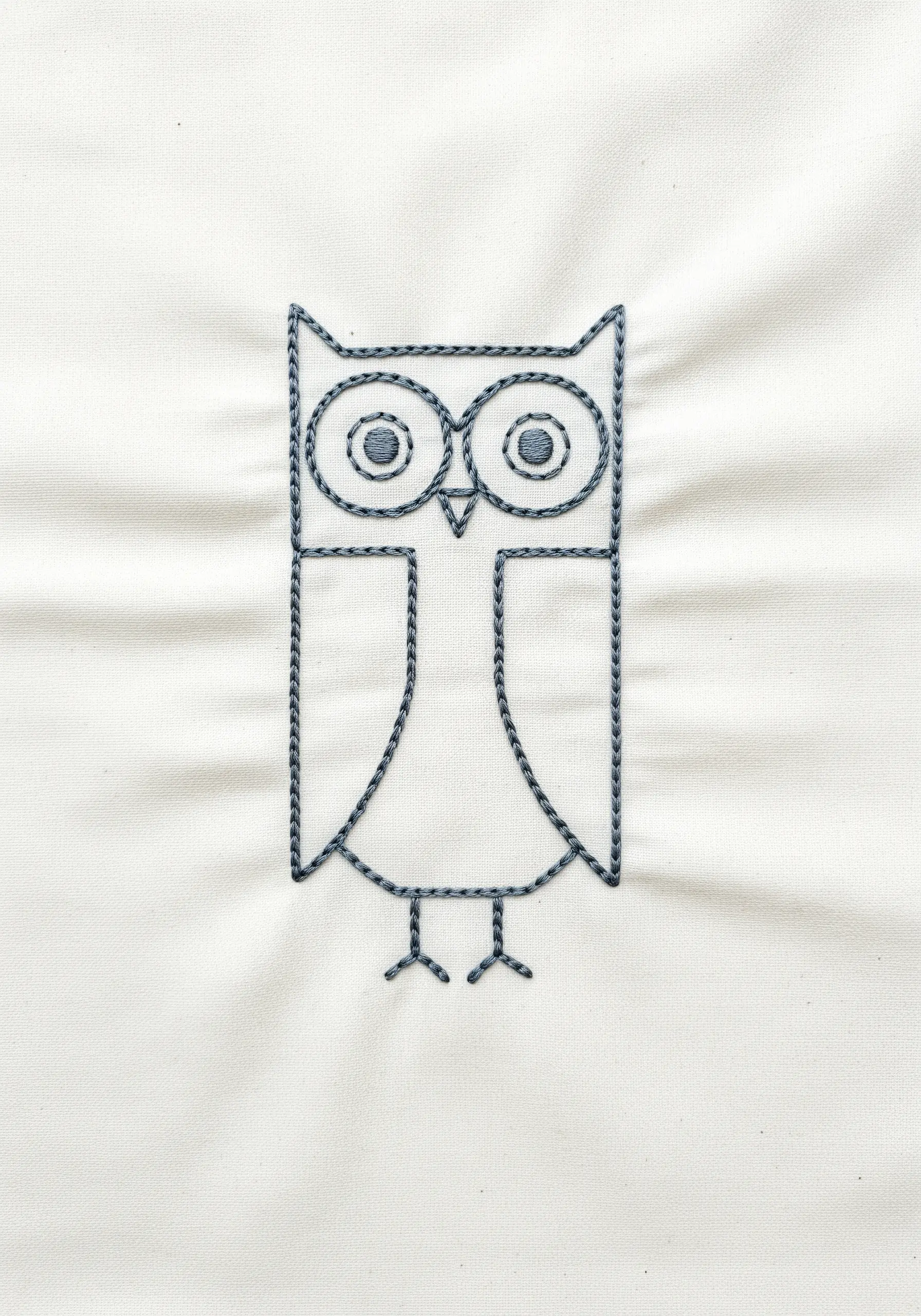
Precision is key for this stylized, architectural bird design.
Use a heavy chain stitch for the primary outlines to give the owl a bold, illustrative quality that pops against the white fabric.
Ensure your corner transitions are sharp by ending the chain line and starting a new one, rather than rounding the curve, to maintain that crisp geometric look.
7. Textured elephant with dense fill stitches
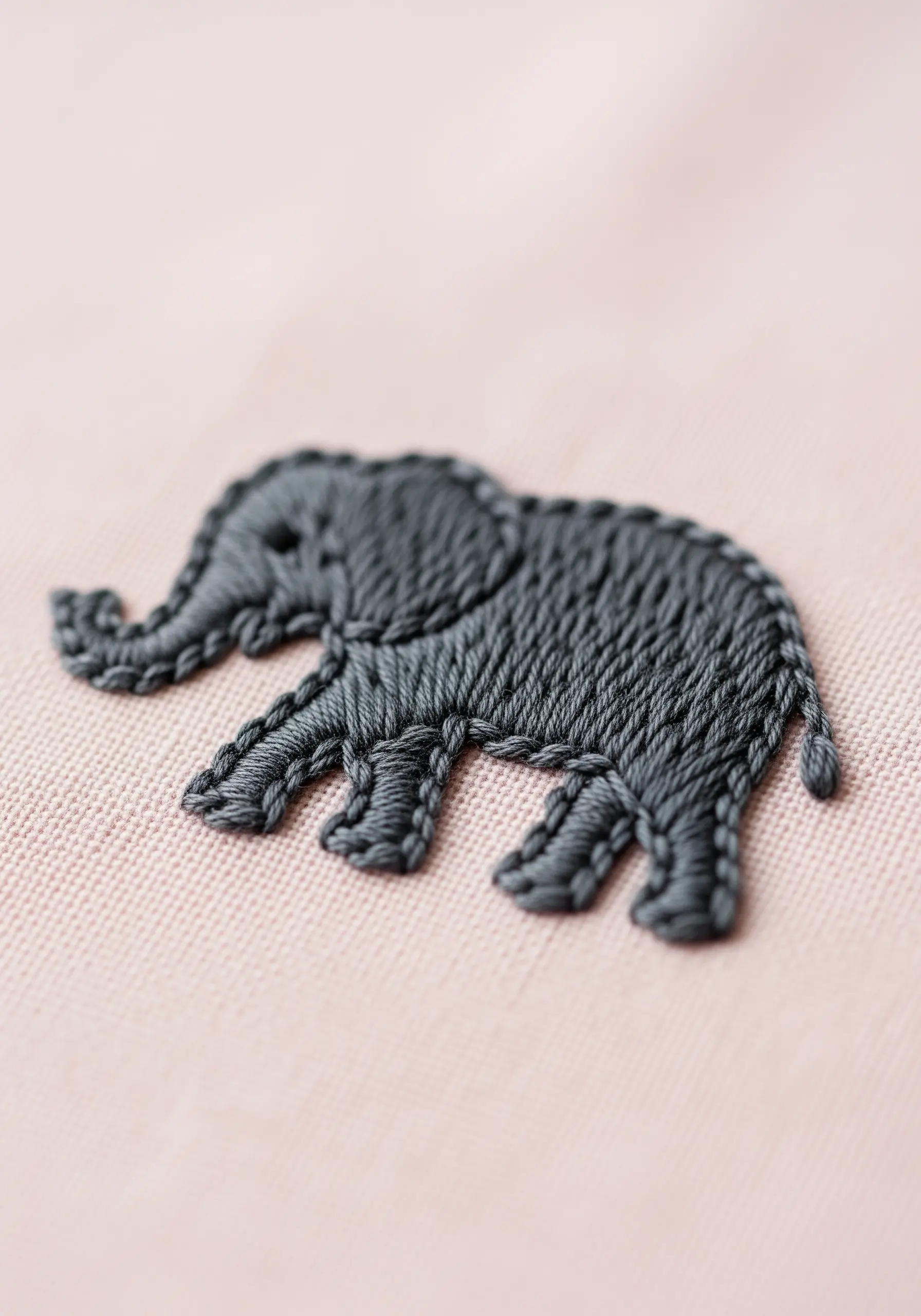
Instead of a flat satin stitch, this design uses a textured fill—likely a brick stitch or a dense stem stitch fill—to mimic the wrinkled skin of an elephant.
Select a charcoal grey thread and increase the strand count to three or four for a chunky, tactile finish.
Leave distinct gaps between the legs and trunk to define the limbs without needing a harsh black outline.
8. Fawn silhouette with negative space spots

This piece utilizes the fabric color itself as a design element.
Outline the fawn with a fine single strand to keep it delicate, then fill the spots with bright white French knots for a pop of dimension.
Keep the surrounding fill stitches directional, following the curve of the flank, to ensure the animal looks organic rather than stiff.
9. Fluffy bunny tail using Turkey work
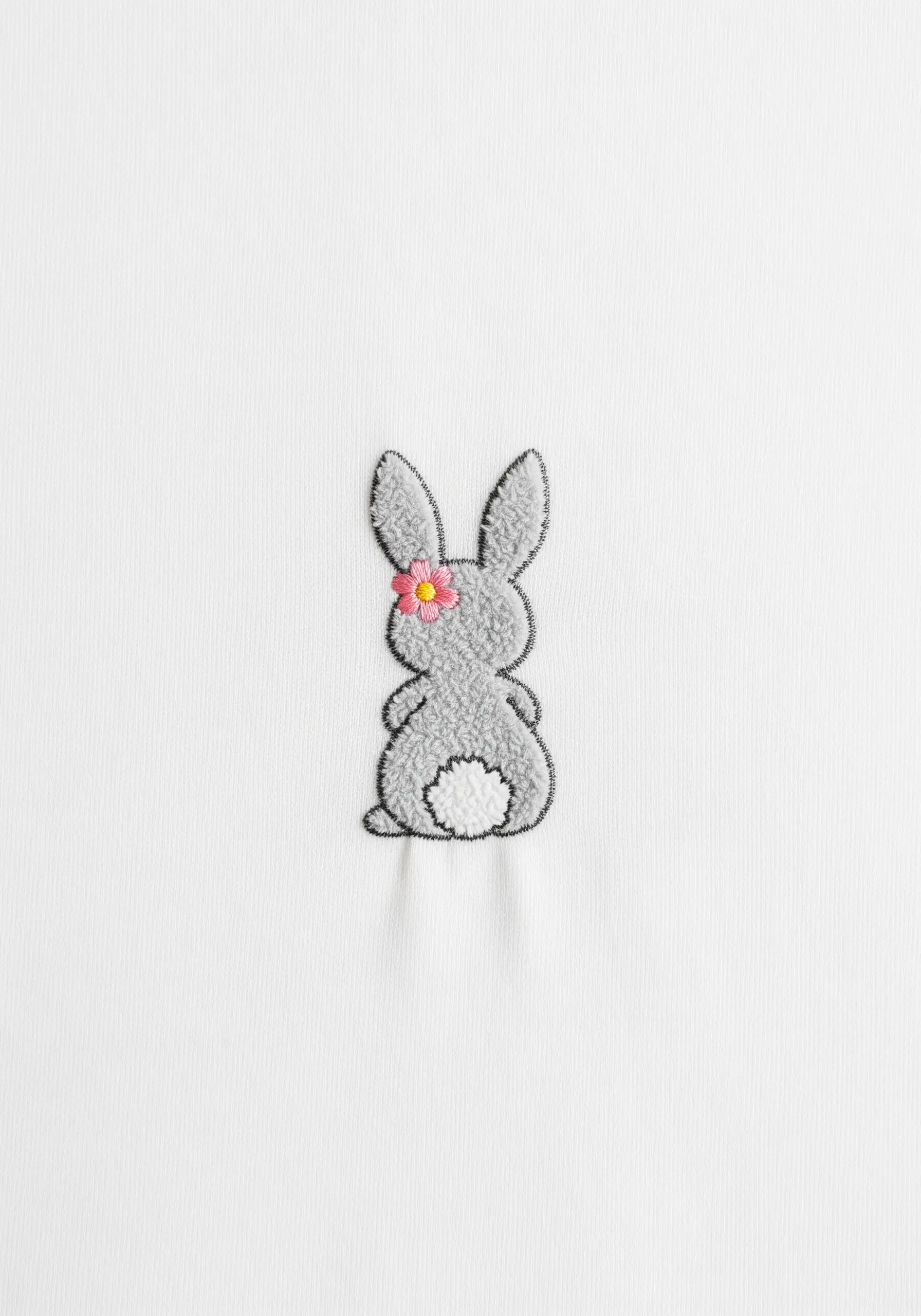
Texture is the focal point of this charming minimalist design.
While the body is stitched in a flat fill, use the Turkey work (or tufting) technique for the tail.
After stitching loops, trim them down with sharp scissors to create a velvet-like pom-pom effect that invites touch and adds immediate charm.
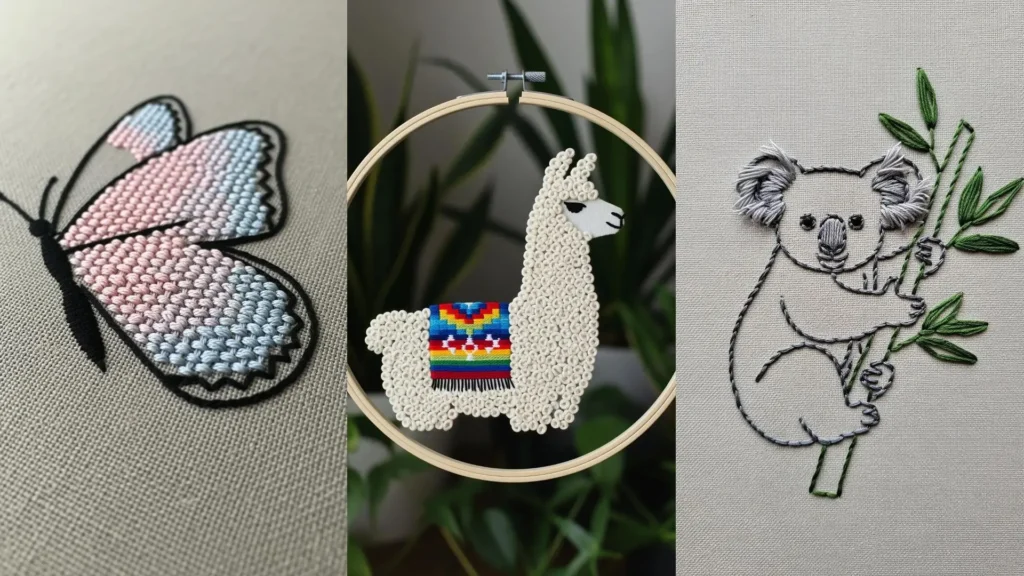
10. Woven gradient butterfly wings
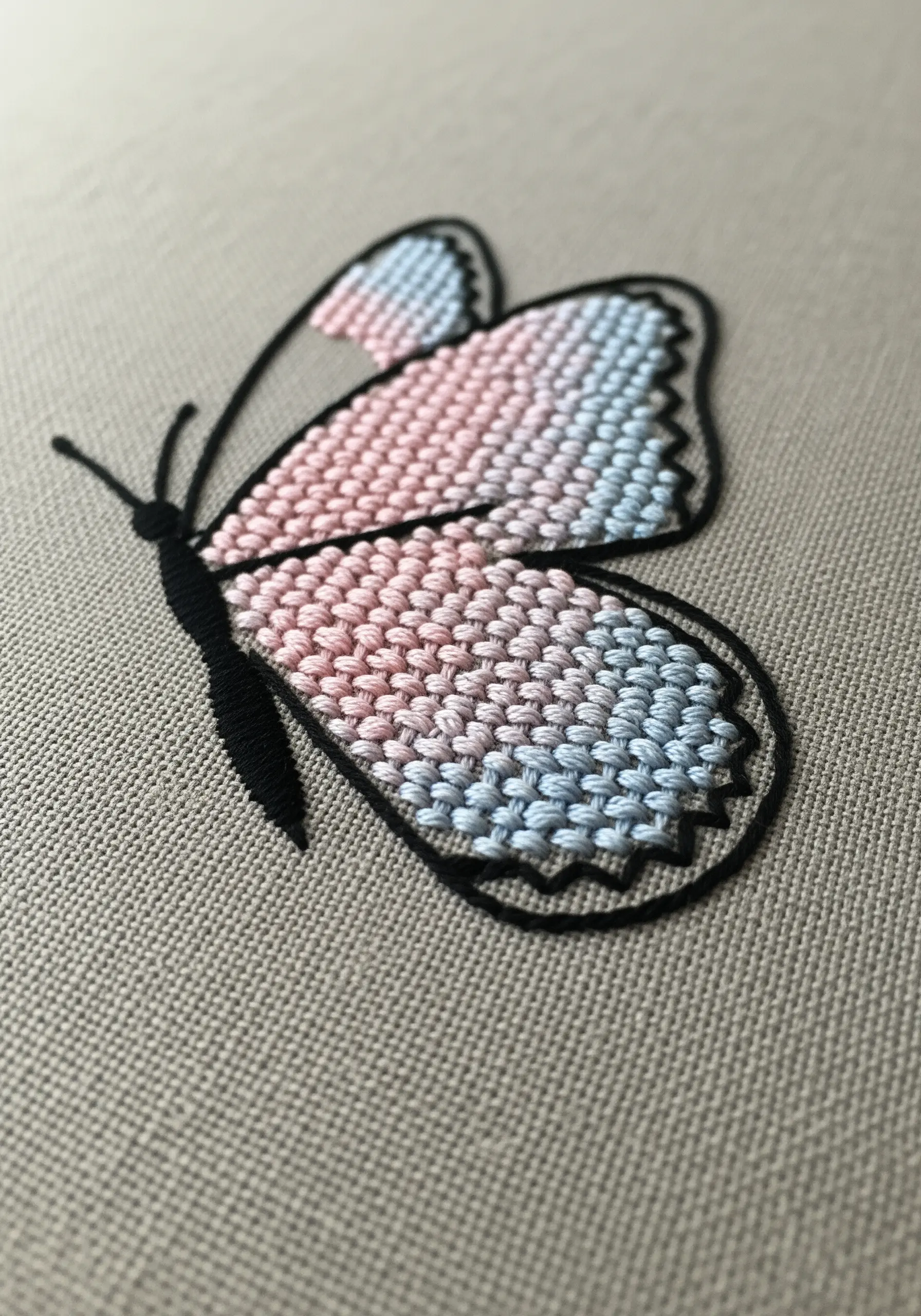
This wing texture mimics the weave of fabric or a basket, creating a stunning visual effect.
Use a brick stitch pattern, shifting thread colors every few rows to create a soft gradient from pink to blue.
A thick, black outline stitch frames the pastel interior, making the colors vibrate and giving the piece a stained-glass appearance.
11. Sloth on a branch with fluid backstitch

Capture the relaxed nature of the sloth with loose, unhurried lines.
Use a whipped backstitch for the body to ensure the curves are smooth and unbroken, particularly around the claws and face.
Incorporate a subtle sage green for the body outline to suggest mossy fur, which adds a layer of biological realism to a simple line drawing.
12. High-contrast penguin with vertical filling
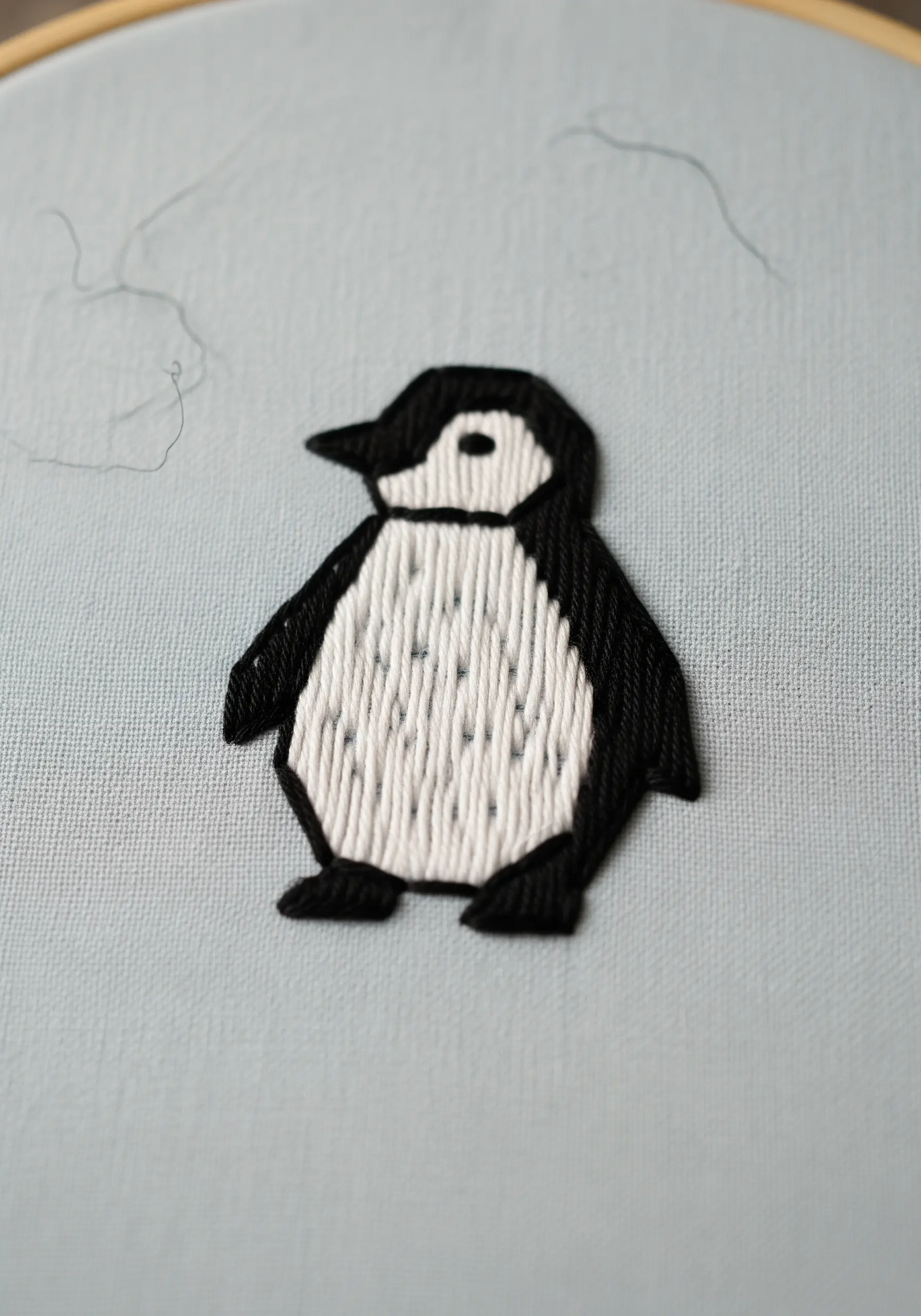
The success of this design lies in the stark contrast between the dense black wings and the white chest.
Use vertical straight stitches for the white belly to simulate the sleekness of feathers lying flat.
Ensure the black thread is a matte cotton, not shiny raymon, to absorb light and make the white breast stand out even more brilliantly.
13. Squirrel with lattice acorn detail

Balance a simple outline with a small area of intricate detail to draw the eye.
Keep the squirrel silhouette in a simple running or backstitch, but treat the acorn cap with a tiny lattice or trellis stitch.
This contrast between the open line work and the dense, woven acorn cap creates a sophisticated visual hierarchy.
14. Geometric turtle shell patterns
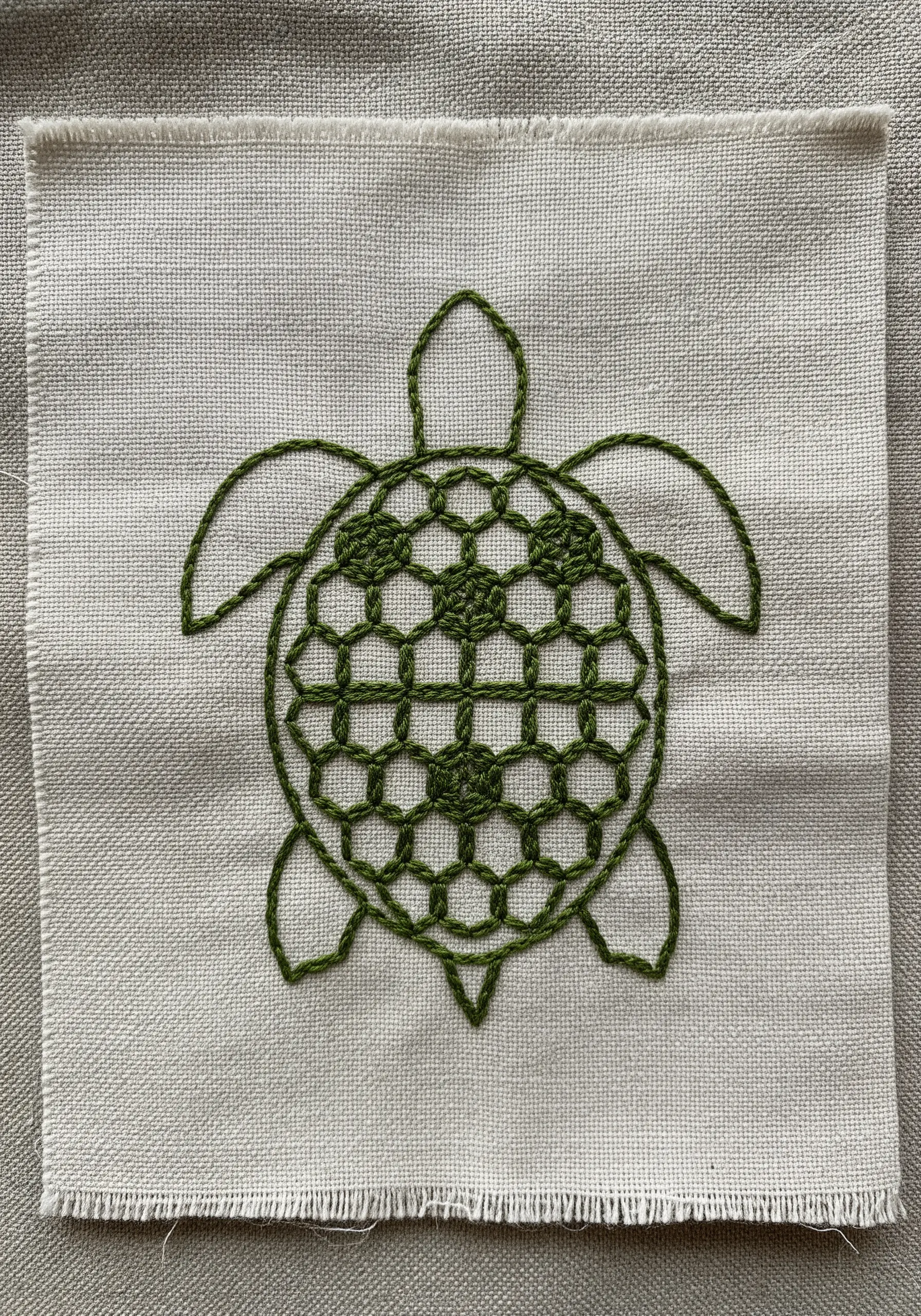
This design is an excellent exercise in symmetry and geometric precision.
Use a Holbein stitch (double running stitch) for the shell pattern to ensure the lines are of equal weight and completely continuous.
Stitching these modern embroidery stitches every beginner needs to make aesthetic apartment decor requires patience; map the hexagons on the fabric with a water-soluble pen before starting to guarantee perfect spacing.
15. Appliqué-style giraffe with block colors

This aesthetic mimics paper cutouts or appliqué, relying on clean shapes rather than outlines.
Use the satin stitch for the spots, ensuring the edges are perfectly straight to maintain that crisp, graphic look.
Do not outline the spots; let the interaction between the colored thread and the white negative space define the giraffe’s pattern.
16. Sheep fleece using dense bullion knots

To replicate the density of wool, you must embrace texture over precision.
Cover the body area entirely with French knots or short bullion knots in off-white thread.
Pack the knots tightly together so no background fabric shows through; this structural density creates a rich, tactile surface that feels premium.
17. Elegant swan with heavy chain stitch

The elegance of a swan requires a line with varying weight and flow.
Use a heavy chain stitch or a braided chain stitch to create a thick, rope-like outline that feels regal.
Pay close attention to the beak area; switch to a finer single strand of black thread there to capture the sharp detail without overwhelming the face.
18. Satin stitch frog with defined limbs

Directionality is crucial when filling a single-color subject like this frog.
Stitch the legs at a different angle than the body to visually separate the limbs without using a dark outline.
Use a split stitch underneath your satin stitch to pad the shape slightly, giving the frog a rounded, slightly elevated profile.
19. Low-poly bear portrait
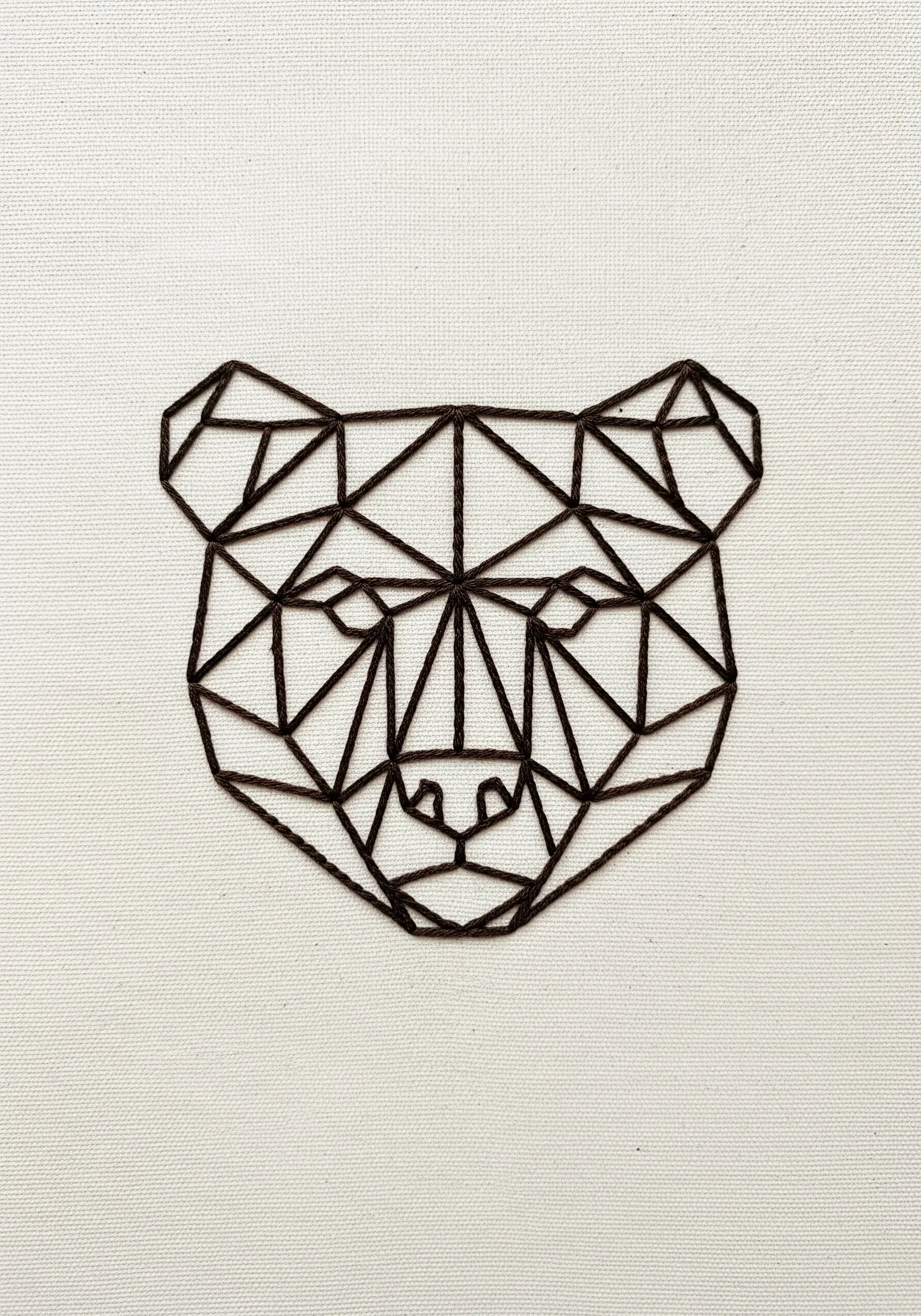
This design translates digital low-poly art into thread.
Use a dark, double-stranded thread and a simple straight stitch to connect the geometric vertices.
The key is keeping the tension high so the lines remain razor-straight; any sagging will ruin the angular illusion of the polygon mesh.
20. Neon pink flamingo with feather detailing

Don’t be afraid to use a bold, synthetic pink color for impact here.
Use a split stitch for the legs to provide a solid, unbroken line that looks sturdy.
For the body, leave some negative space between the feather curves to keep the design airy and suggestive, rather than heavy and solid.
21. Koala with textured fur strokes

Instead of a solid outline, use short, sketchy backstitches to simulate the tufts of koala fur.
Grey thread benefits from being mixed with a single strand of blue-grey or slate to add cool tones.
If you are exploring koala panda embroidery designs perfect for eco friendly upcycling projects, focus on the ears; make the stitches longer and more chaotic there to capture their signature fluffiness.
22. Goldfish with overlapping scale texture

This piece creates movement through the overlapping arrangement of stitches.
Work from the tail toward the head, layering scalloped satin stitches to mimic fish scales.
For these fish mermaid inspired embroidery pieces for ocean lover wall hangings, use a gradient thread or switch shades of gold and orange frequently to capture the shimmering, iridescent quality of the scales.
23. Llama with looped pile texture

This technique creates a heavily textured, rug-like surface.
Use a loop pile stitch or uncut Turkey work to create the curly wool of the llama.
Contrast this chaotic texture with a very neat, flat satin stitch for the colorful saddle blanket to show off your control over different thread finishes.
24. Masked raccoon with distinct sections
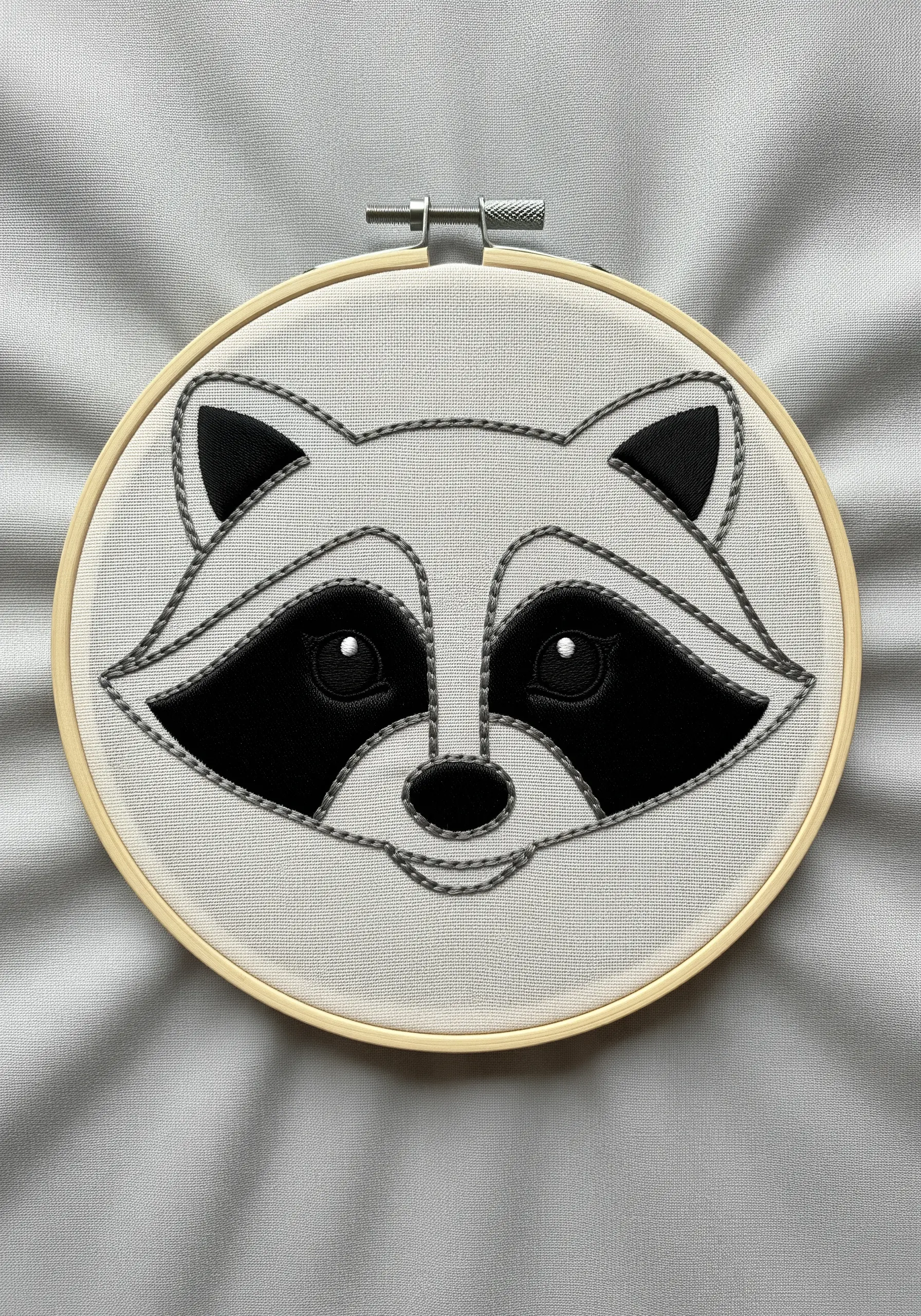
The raccoon’s mask requires sharp definition between black, white, and grey areas.
Outline each color section first with a split stitch, then fill inside those lines.
This ‘coloring book’ approach ensures the black mask doesn’t bleed into the white fur, keeping the bandit-like expression crisp and readable.
25. Sparrow with realistic thread painting

This is a perfect introduction to thread painting (needle painting).
Use a single strand of floss and long-and-short stitches to blend the brown, white, and black feathers seamlessly.
Check these minimalist embroidery projects that double as gifts, focusing on the eye; a single French knot with a tiny white straight stitch highlight brings the bird to life instantly.