Your box of fabric scraps is not a collection of leftovers; it is a palette waiting for your needle. With every snip of thread and carefully placed stitch, you have the power to transform the overlooked and discarded into something with purpose and soul.
These ideas are not about perfection, but about intention. They are designed to fit into the small corners of your life and your apartment, proving that you don’t need vast spaces or expensive materials to create a home that feels deeply personal and thoughtfully decorated.
Let’s move beyond just making things pretty and start creating decor that tells a story—your story. Here, you’ll find techniques that add texture, pattern, and meaning to humble materials, turning them into functional art that is both sustainable and stylish.
1. The Sashiko-Inspired Denim Organizer
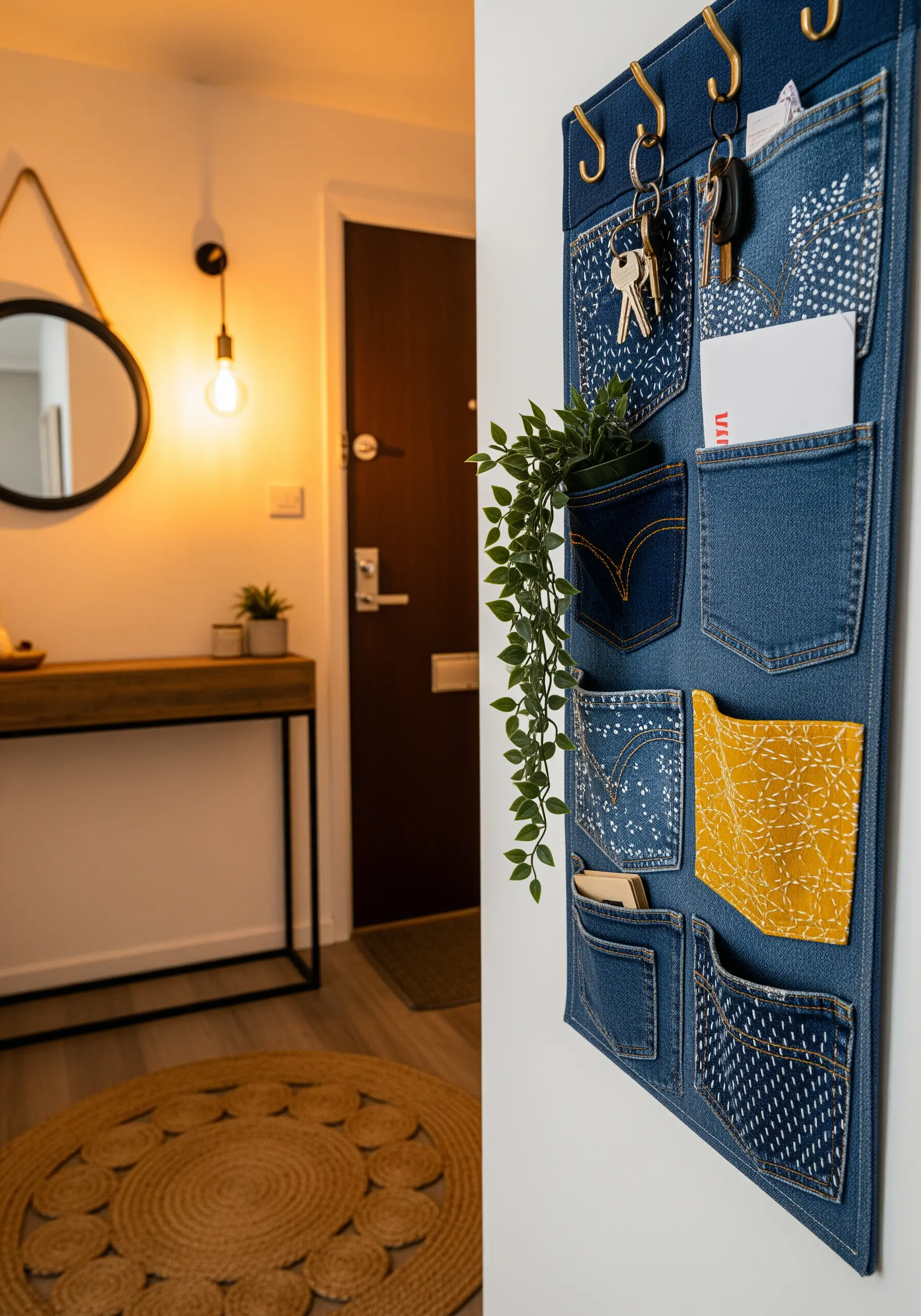
Transform old jeans into a functional entryway piece by constructing a simple wall organizer from a sturdy denim panel and salvaged pockets.
Elevate a few of the pockets by adding traditional Japanese Sashiko-style patterns using a simple running stitch.
This technique not only adds a graphic, handcrafted detail but also reinforces the fabric for daily use.
Use a high-contrast white or off-white cotton floss against the dark denim to make the geometric patterns truly stand out.
Mixing various denim washes from different pairs of jeans adds depth and a subtle patchwork quality to the finished organizer.
2. The Living Herbarium Wall Hanging
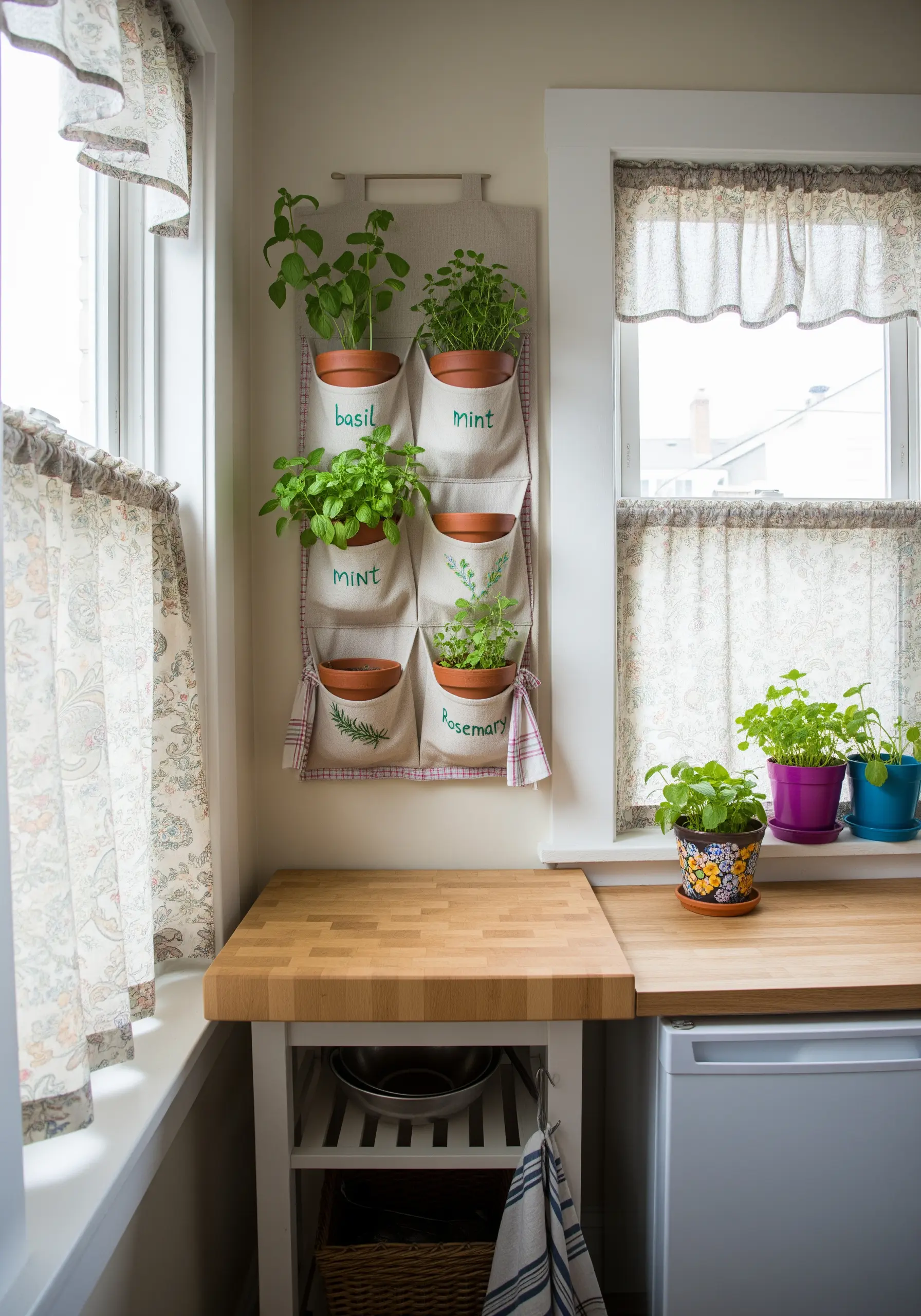
Create a hanging herb garden using a durable scrap of canvas or linen as your base fabric.
For the herb labels, choose a simple, clean stitch like a backstitch or stem stitch to ensure readability.
Using all six strands of embroidery floss for the lettering will give it enough weight and presence to be seen from across your kitchen.
This project is the perfect blend of utility and beauty, adding life and personalized decor to a small kitchen without taking up counter space.
The slightly imperfect nature of hand-stitched text gives it a warm, handmade charm that printed labels lack.
3. The Upcycled Flannel & Yarn Reading Nook
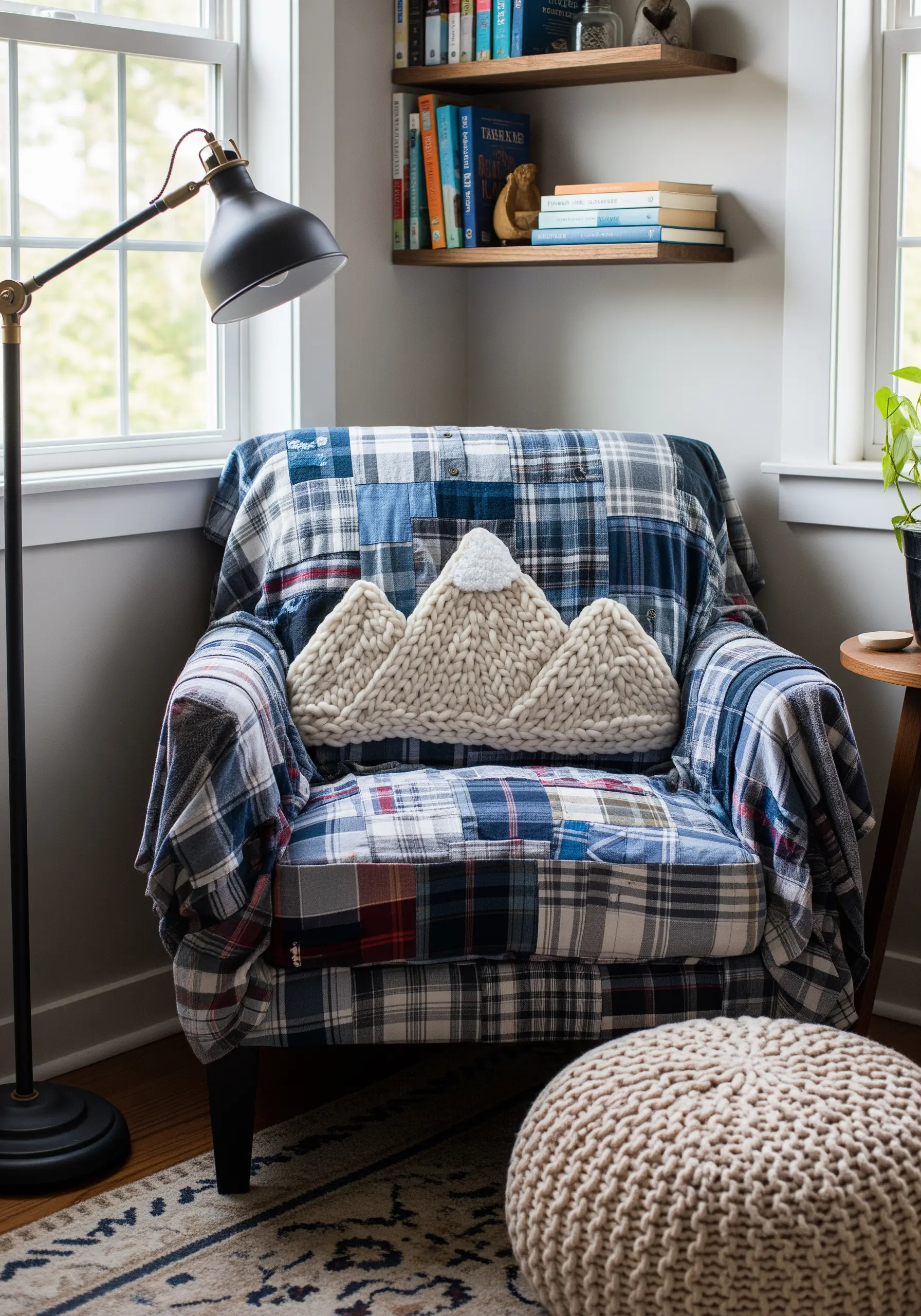
Combine two distinct upcycling techniques to create a cozy, texture-rich corner.
First, stitch together squares from old flannel shirts to create a rustic, comforting armchair throw that adds instant warmth.
Next, craft a statement pillow by using a couching stitch with thick, chunky wool yarn to outline a mountain landscape on a neutral fabric base.
Fill in the mountain sections with dense chain stitches or French knots to build a highly tactile surface that invites touch.
The contrast between the soft, worn flannel and the bold, sculptural yarn embroidery creates a dynamic and inviting focal point.
4. The Modern Botanical Quilt Tapestry
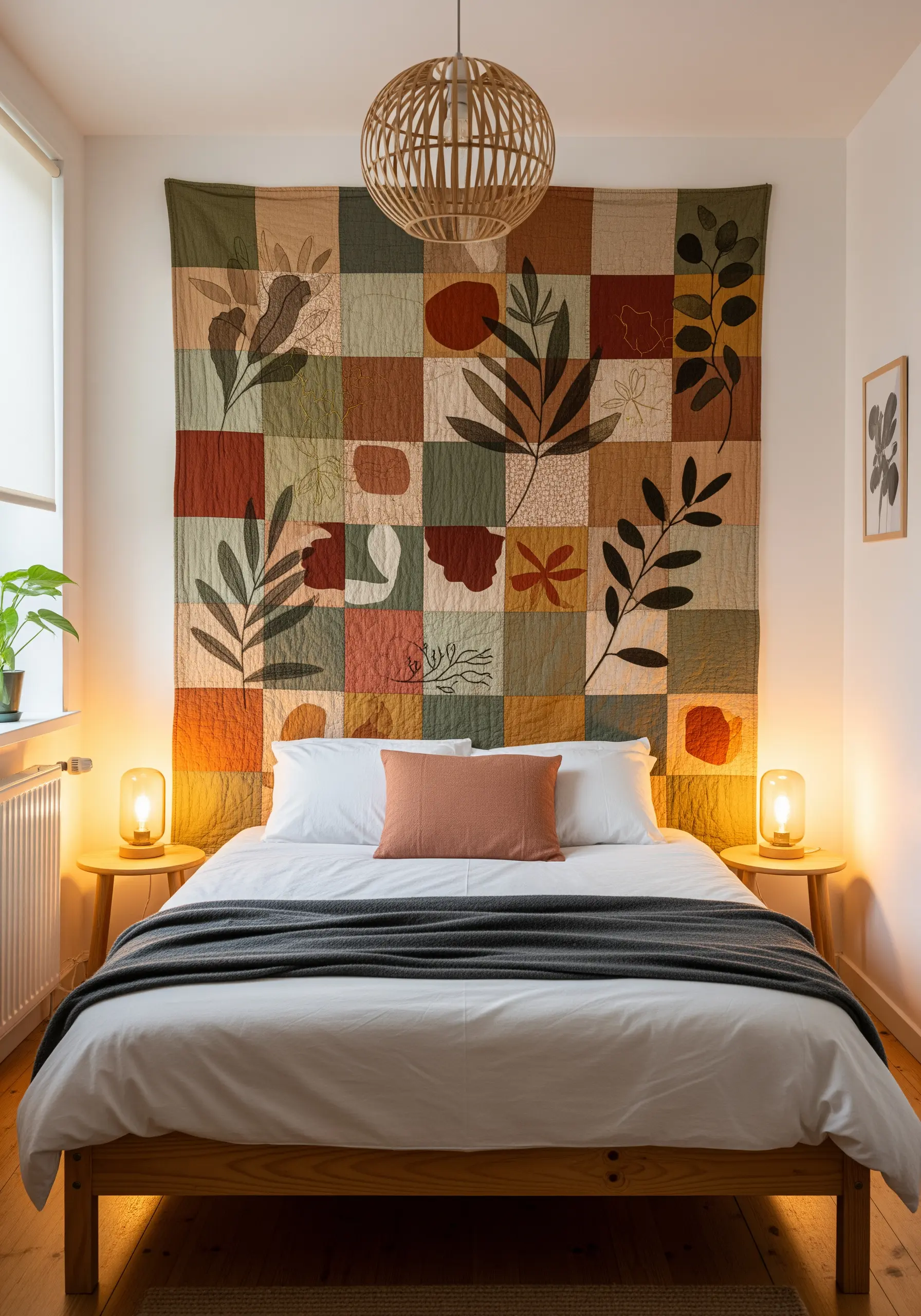
Transform a collection of earth-toned fabric scraps into a large-scale piece of wall art that doubles as a headboard.
After piecing together your patchwork base, use a reverse appliqué technique for the botanical silhouettes by cutting away the top layer to reveal a dark fabric underneath.
This method creates incredibly sharp, graphic shapes that feel more modern than traditional appliqué.
Finally, outline the leaves and stems with a simple running stitch in a contrasting color to add definition and a subtle hand-stitched detail.
5. The Curated Scrap Fabric Gallery Wall
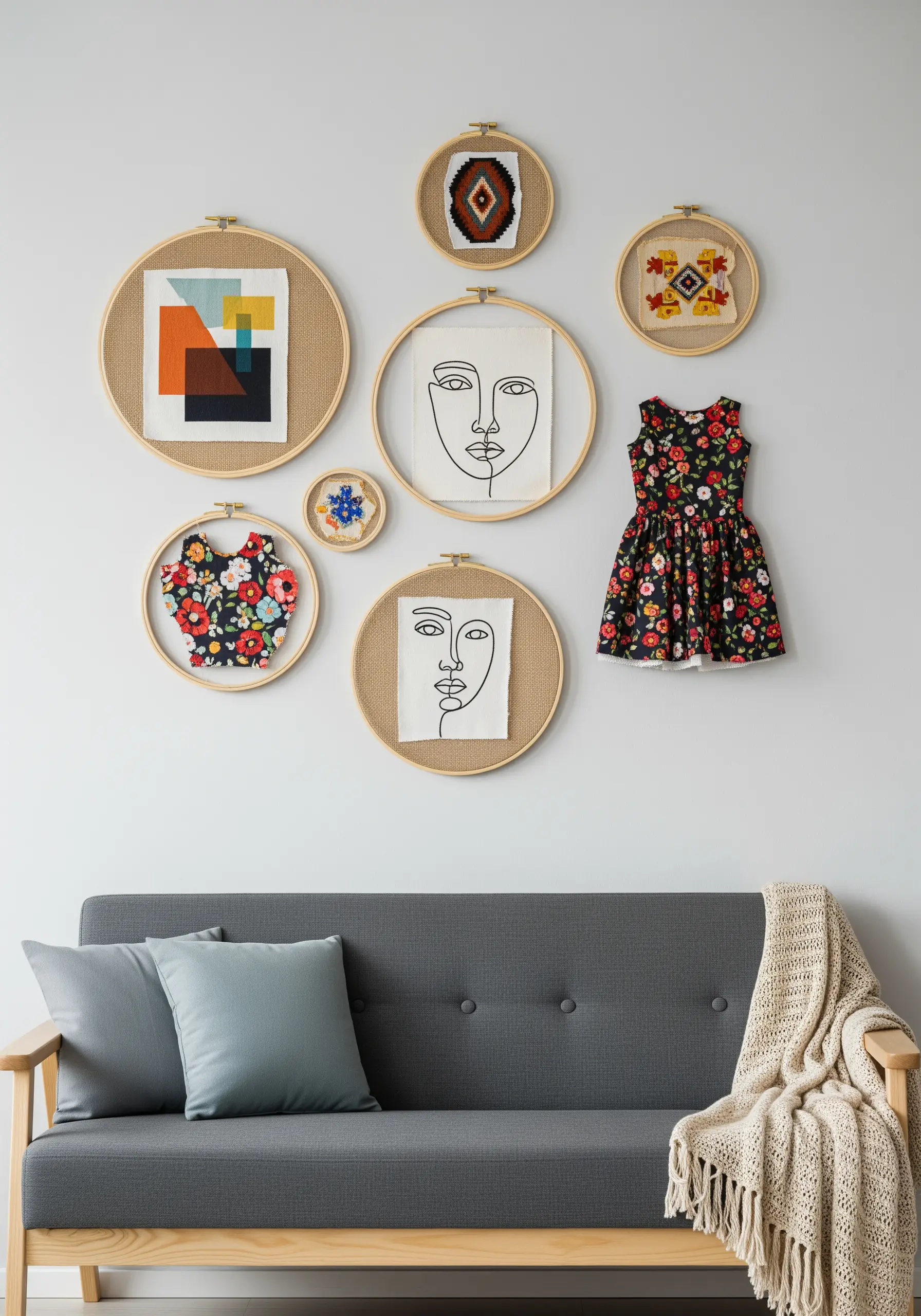
Turn your most cherished fabric scraps into intentional art by framing them in embroidery hoops of varying sizes.
Create a cohesive collection by mixing bold patterns, subtle textures, and even a meaningful piece of old clothing, like a child’s dress.
On the more neutral fabrics, like burlap or linen, add minimalist line drawings using a simple backstitch in a dark thread.
This technique elevates simple materials into a personal narrative, allowing you to build a gallery wall that is deeply connected to your story without costing a thing.
6. The Bold Satin Stitch Placemat
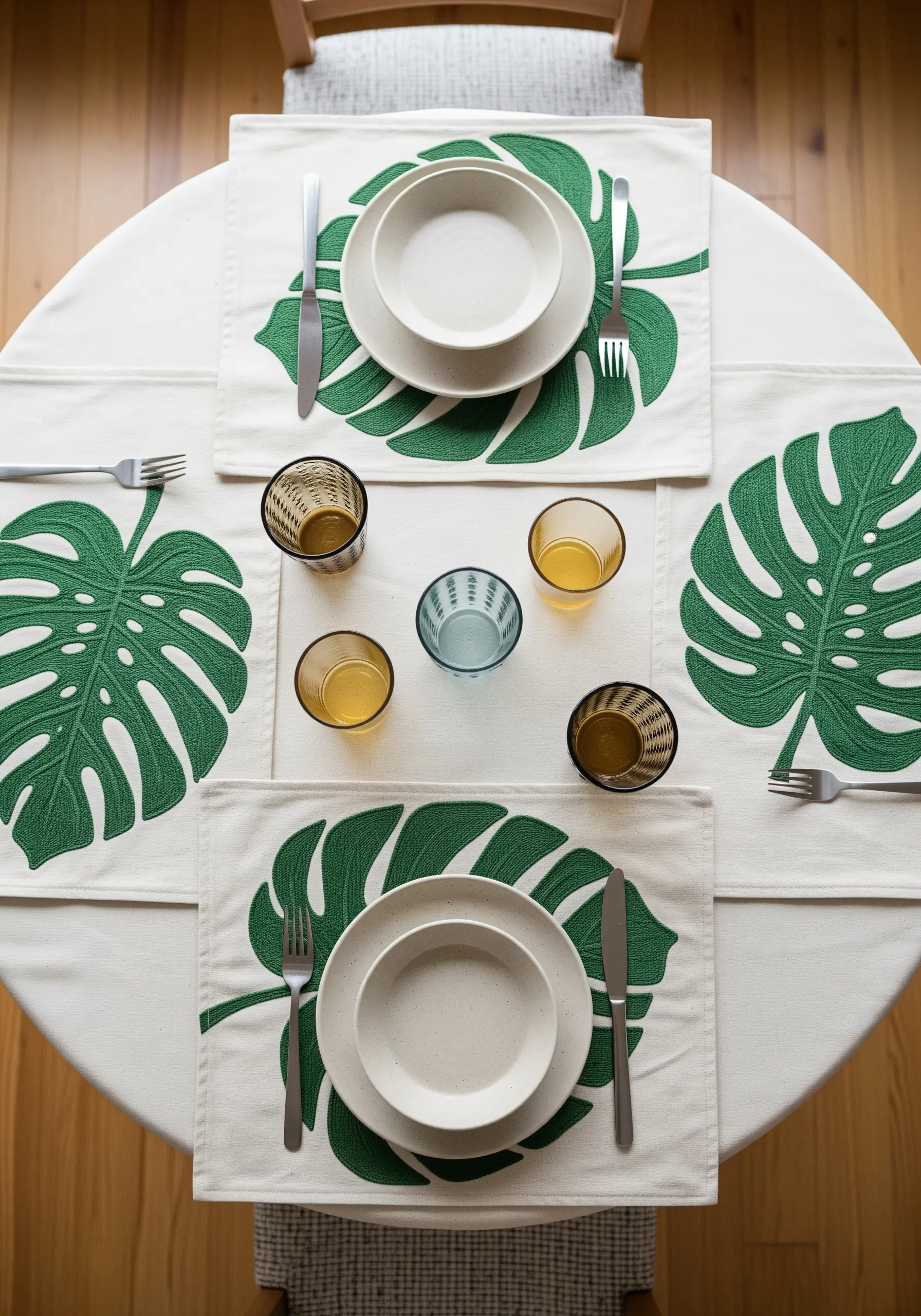
Upgrade plain canvas placemats with a single, dramatic botanical motif like a Monstera leaf shape.
To achieve a perfectly smooth and professional-looking satin stitch finish, first outline the entire shape with a split stitch.
This raised outline acts as a containing wall for your satin stitches, preventing uneven edges and ensuring a clean, defined silhouette.
Use all six strands of cotton floss to get full, lush coverage with a slight sheen that catches the light beautifully on your dining table.
7. Minimalist Geometric Storage Baskets
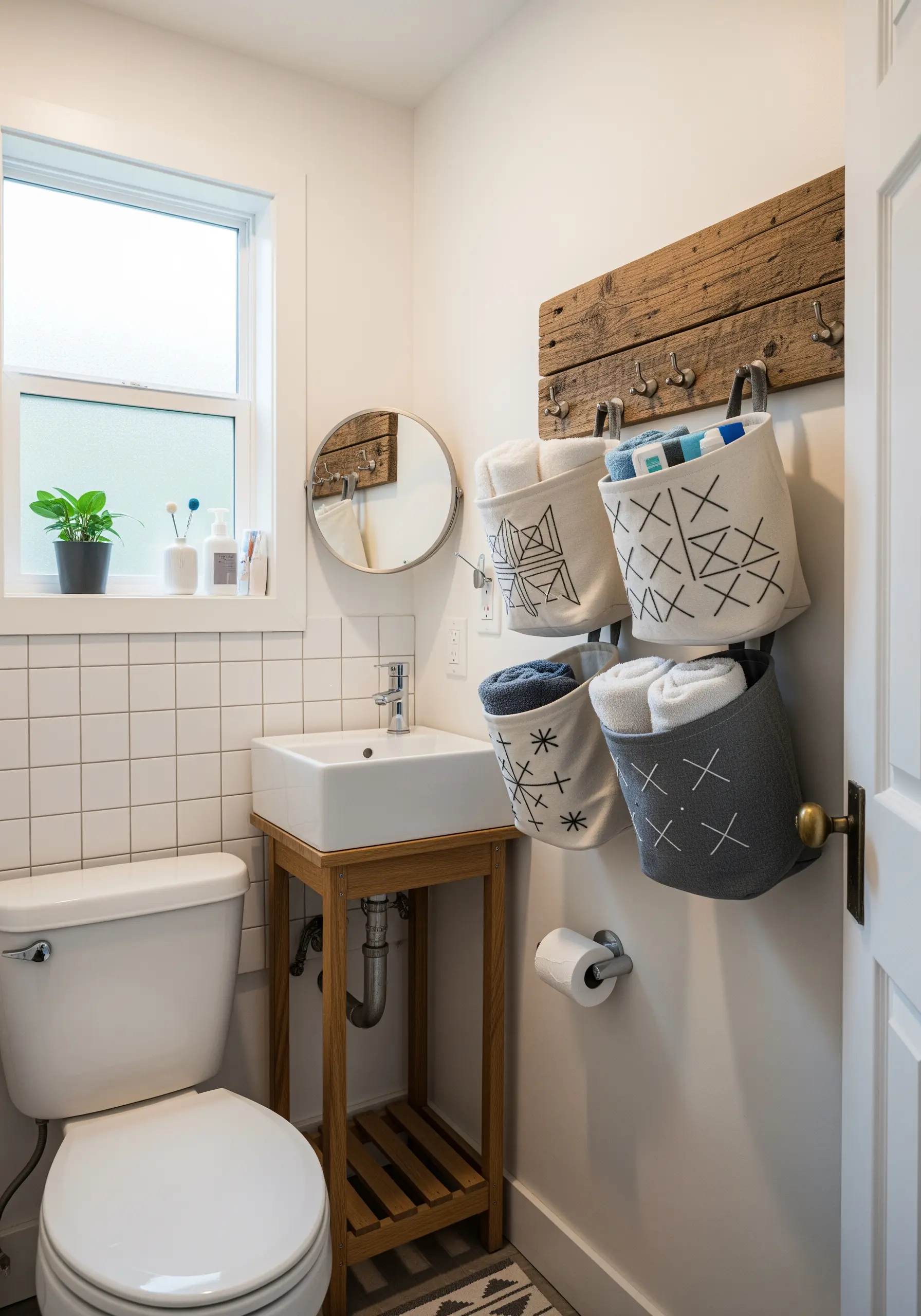
Give plain canvas or fabric storage baskets a modern, graphic update with simple embroidery.
Instead of standard floss, use a thick yarn or tapestry wool with a large darning needle to create bold, impactful lines.
Stick to simple geometric patterns—grids, crosses, or radiating straight stitches—for a look that is quick to execute but visually sophisticated.
The high contrast between the thick, dark thread and the neutral fabric turns a purely functional item into a piece of minimalist decor.
8. The Translucent Ginkgo Room Divider
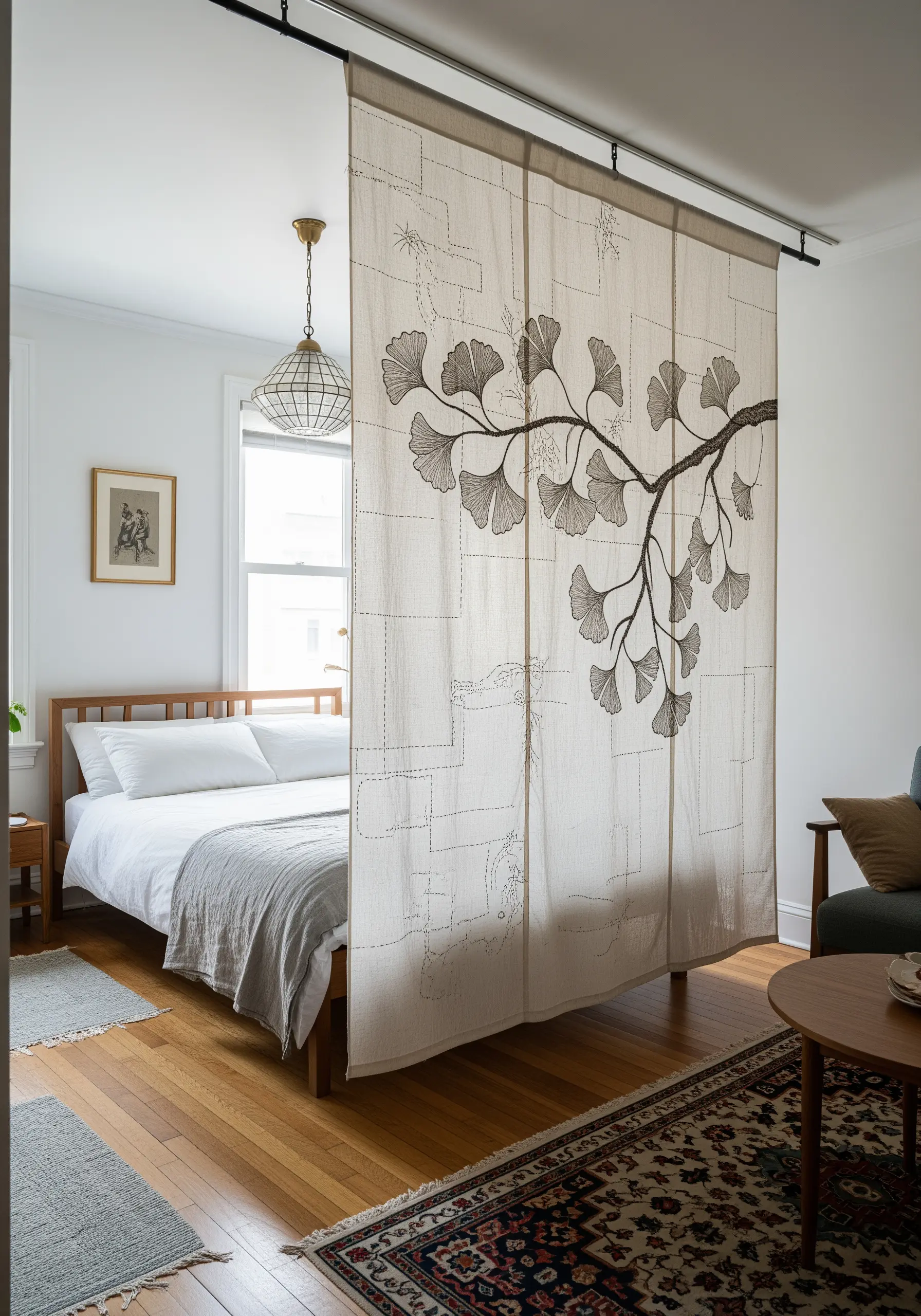
Create visual separation in a small space without blocking light by embroidering on a sheer fabric panel like cotton voile or linen gauze.
A sprawling, delicate design such as a ginkgo branch works perfectly, as it allows for plenty of negative space, maintaining an airy feel.
Use a simple backstitch or stem stitch in a single dark color to create a clean, graphic outline that is visible from both sides of the divider.
This approach turns a functional room divider into an elegant, floating piece of art, ideal for studio apartments.
9. The Upcycled Denim Window Seat Cushion
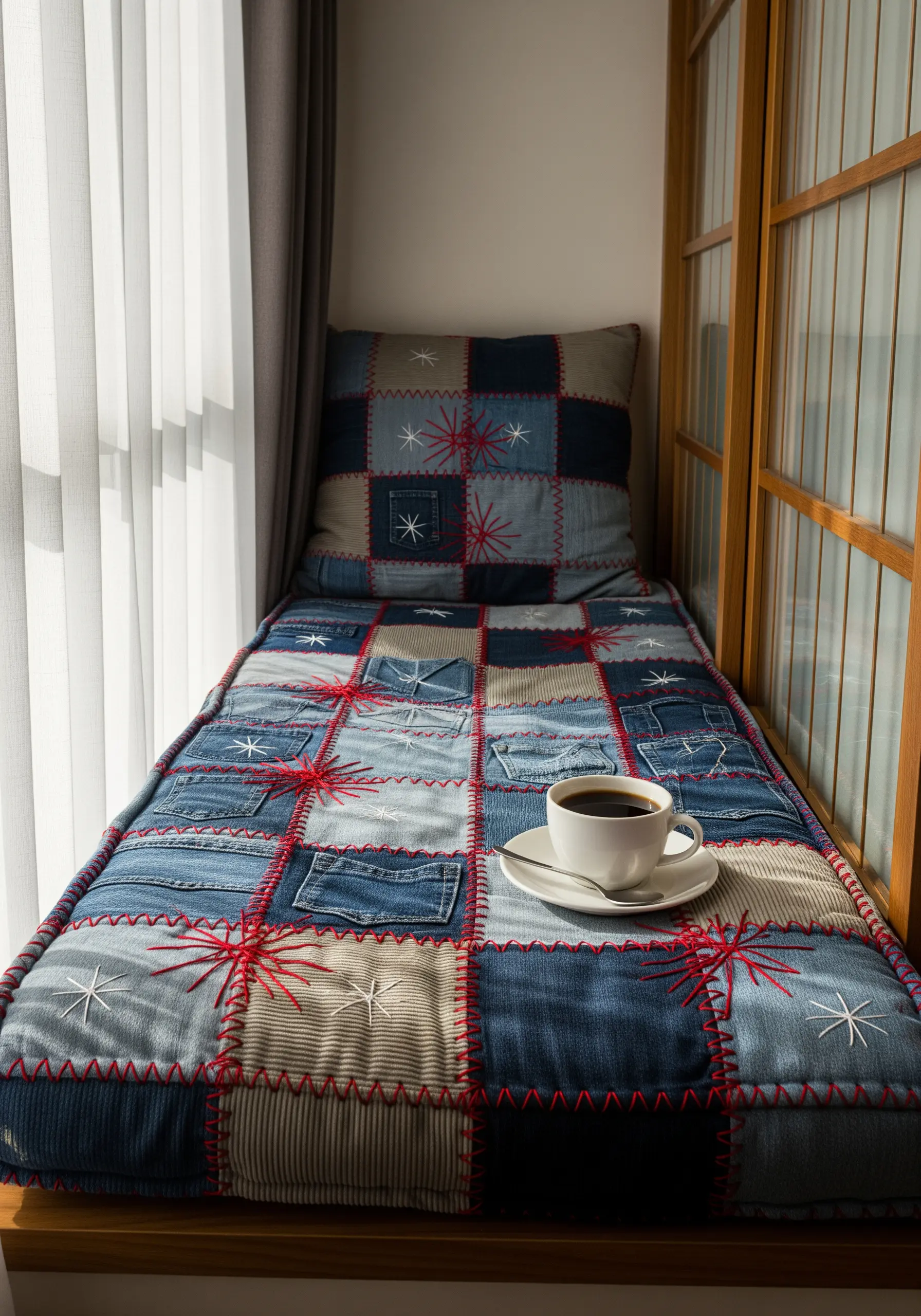
Construct a highly durable and stylish cushion cover by quilting together squares cut from scraps from old jeans.
Arrange the squares to create a pleasing composition of different denim washes, from deep indigo to faded light blue.
Where the corners of four squares meet, add a bold, decorative stitch like a starburst or a cross-hatch using a thick, brightly colored yarn.
This embroidered detail not only adds a vibrant, folk-art accent but also cleverly reinforces the seams at their weakest points.
10. The Understated Linen Organization Board
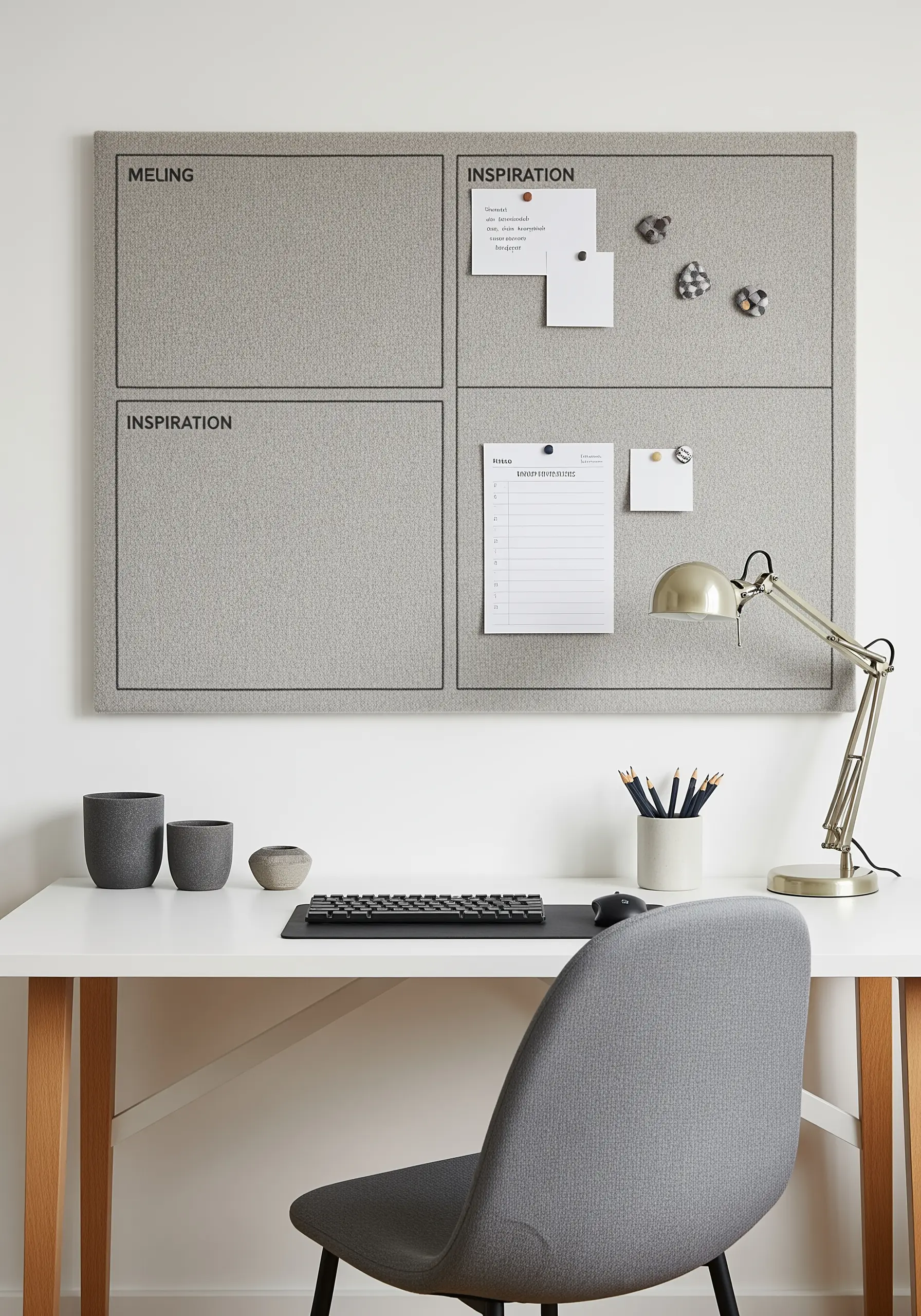
Elevate a standard corkboard by wrapping it in a neutral scrap of linen, felt, or canvas for a softer, more integrated look.
Use embroidery to add both function and minimalist beauty by dividing the board into sections with clean, simple lines.
A single strand of black or charcoal floss stitched in a neat backstitch provides a subtle yet clear framework for your notes and inspiration.
You can also stitch minimalist labels directly onto the fabric, turning an everyday office supply into custom, calm, and cozy decor.
11. The Celestial Woven Tapestry
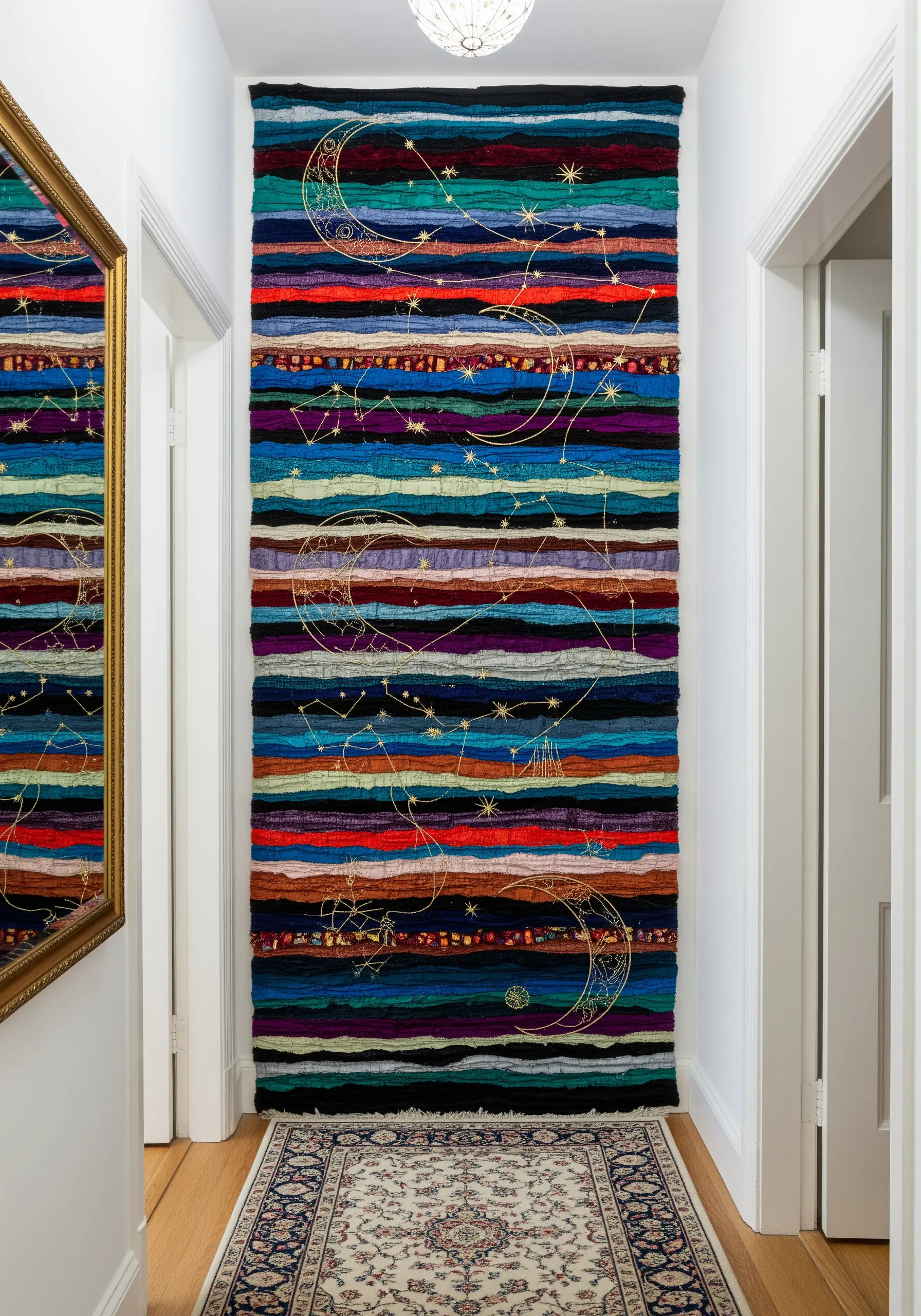
Create a deep, textured base for your embroidery by weaving a panel with chunky yarn scraps and strips of recycled fabric.
Once your weaving is complete, switch to a fine, shimmering metallic thread to stitch directly onto the woven surface.
Embroider delicate constellations, crescent moons, and star clusters, allowing the fine lines to contrast sharply with the rustic texture of the weave.
This combination of weaving and embroidery results in a rich, multi-dimensional piece of art that feels both ancient and modern.
12. Sculptural Yarn-Couched Sofa Accents
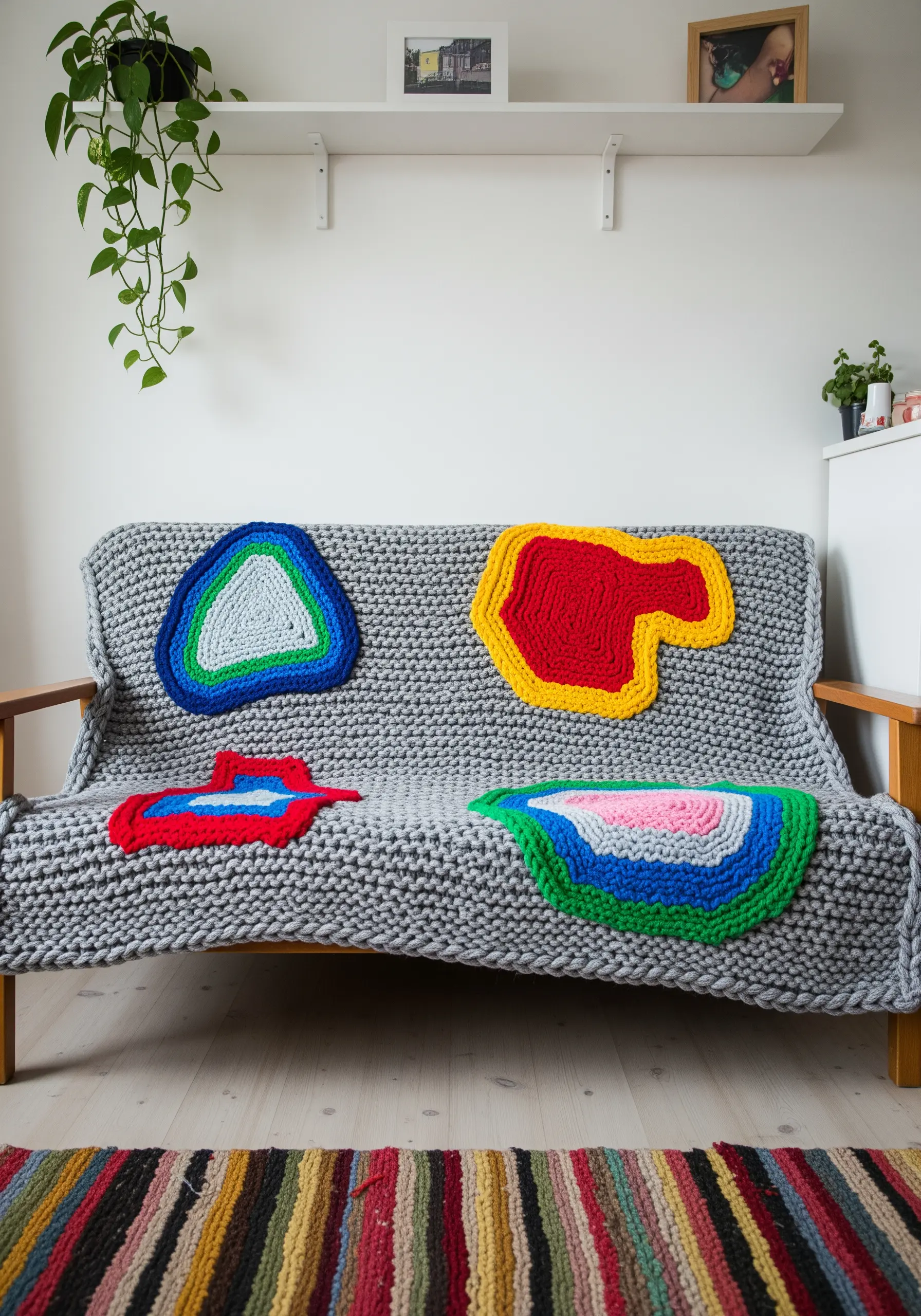
Add a pop of color and texture to a plain sofa with abstract, decorative “patches” made from yarn.
On a felt or heavy canvas base, lay down thick, colorful yarn in organic, free-form shapes.
Instead of pulling the yarn through the fabric, use a couching technique: secure the yarn to the surface with small, discreet stitches in a matching fine thread.
This method allows you to work with very thick fibers, creating a raised, sculptural effect that is playful, modern, and highly tactile.
13. The Graphic World Map Loft Curtain
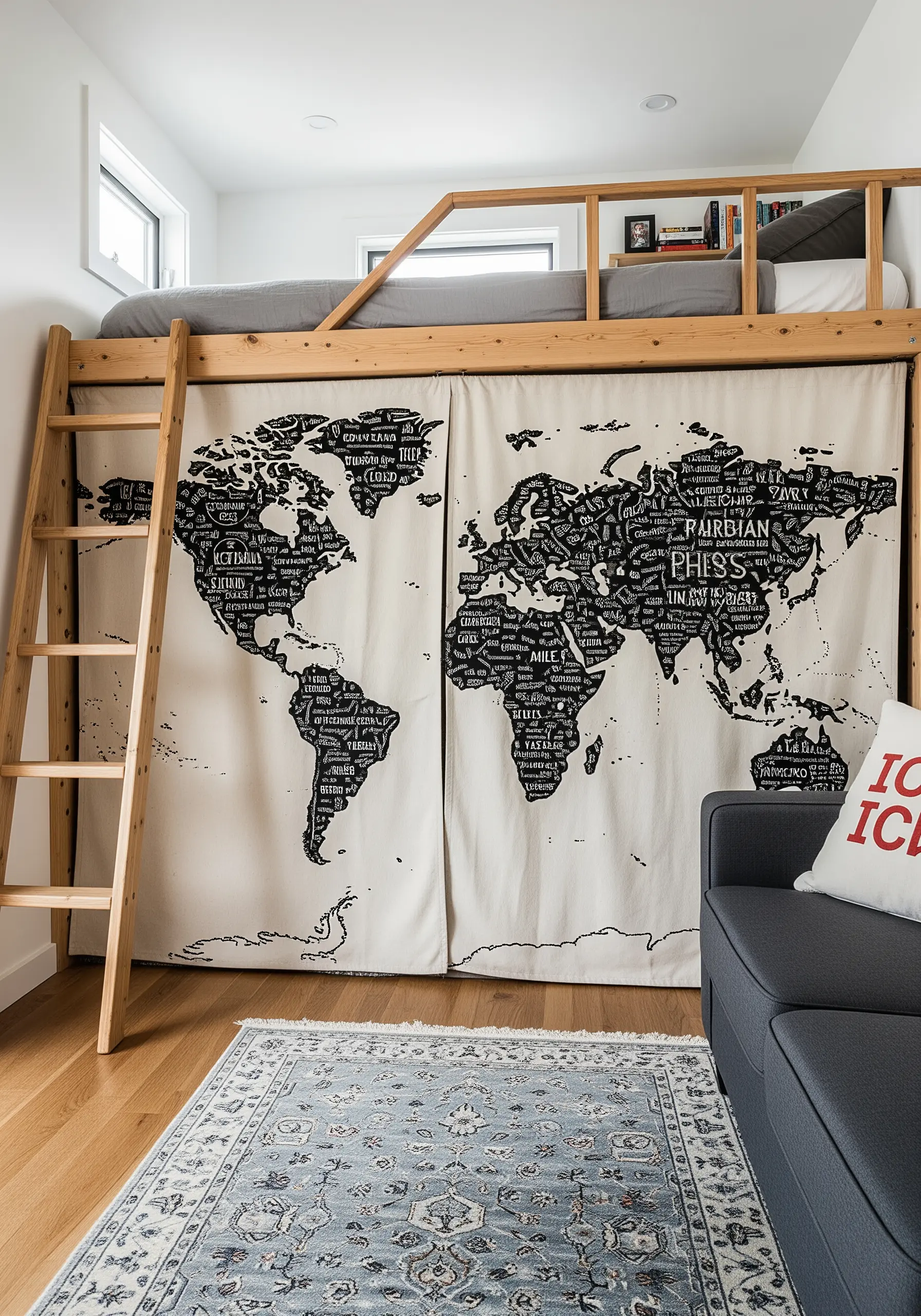
Use a large piece of scrap canvas or a painter’s drop cloth to create a functional privacy curtain with major design impact.
Lightly trace a world map onto the fabric, then fill in the landmasses with black fabric paint for a bold, graphic look.
Instead of painting the city names, embroider them using a thick black yarn and a simple backstitch.
The texture of the embroidery against the flat paint makes the typography stand out, turning the curtain into a personalized statement piece celebrating places you love.
14. The Rustic Burlap Botanical Chair
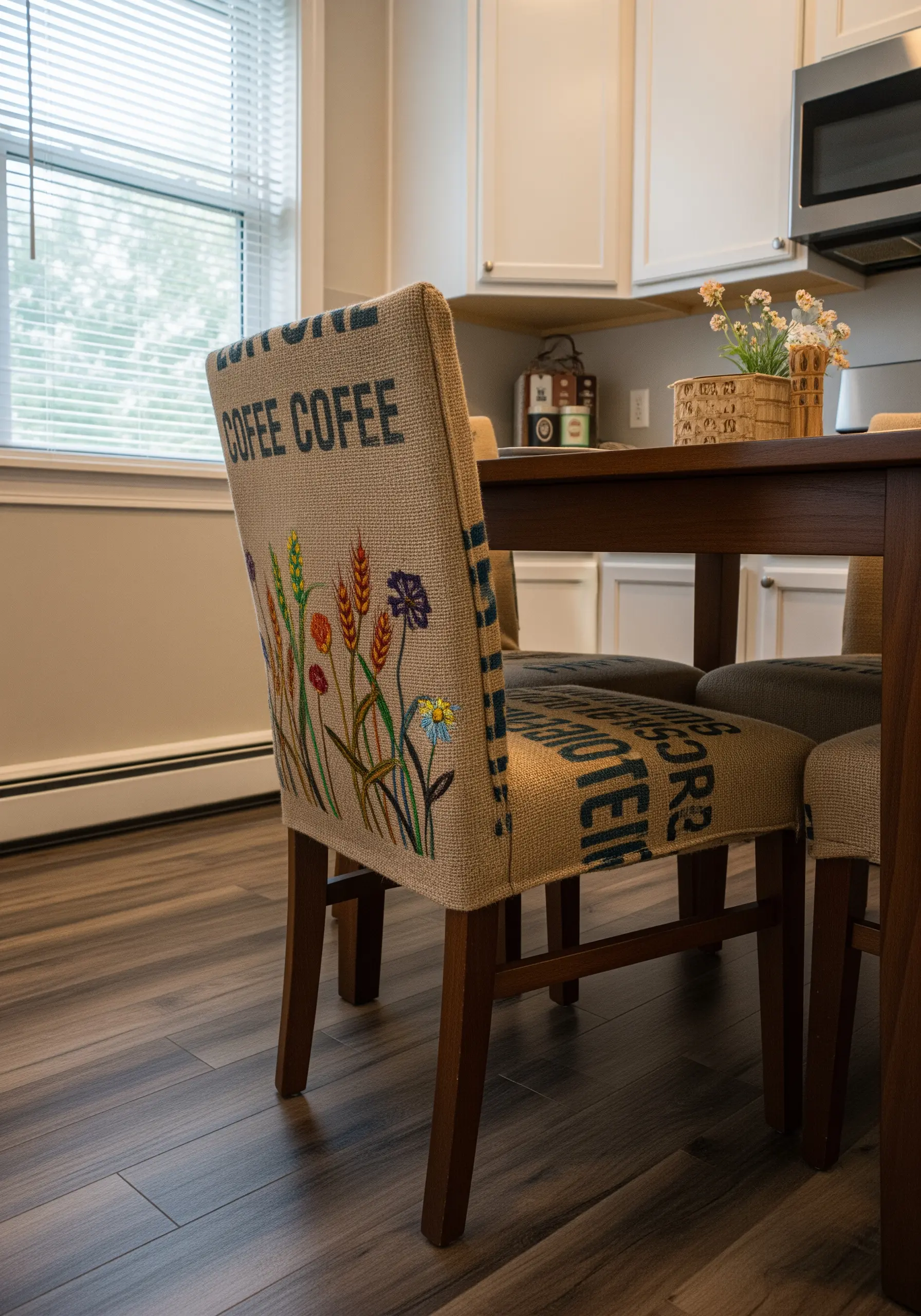
Reupholster a simple dining chair with an upcycled burlap coffee sack to instantly add rustic texture to your space.
The open, grid-like weave of burlap is surprisingly easy to stitch on and is ideal for thicker fibers like tapestry wool or full six-strand floss.
Embroider a spray of colorful wildflower motifs using basic stitches like satin stitch for petals and stem stitch for the stalks.
The contrast between the vibrant, cheerful embroidery and the rough, earthy burlap creates a charming piece that feels both custom and unpretentious.
15. The Illuminated Dragonfly Lampshade
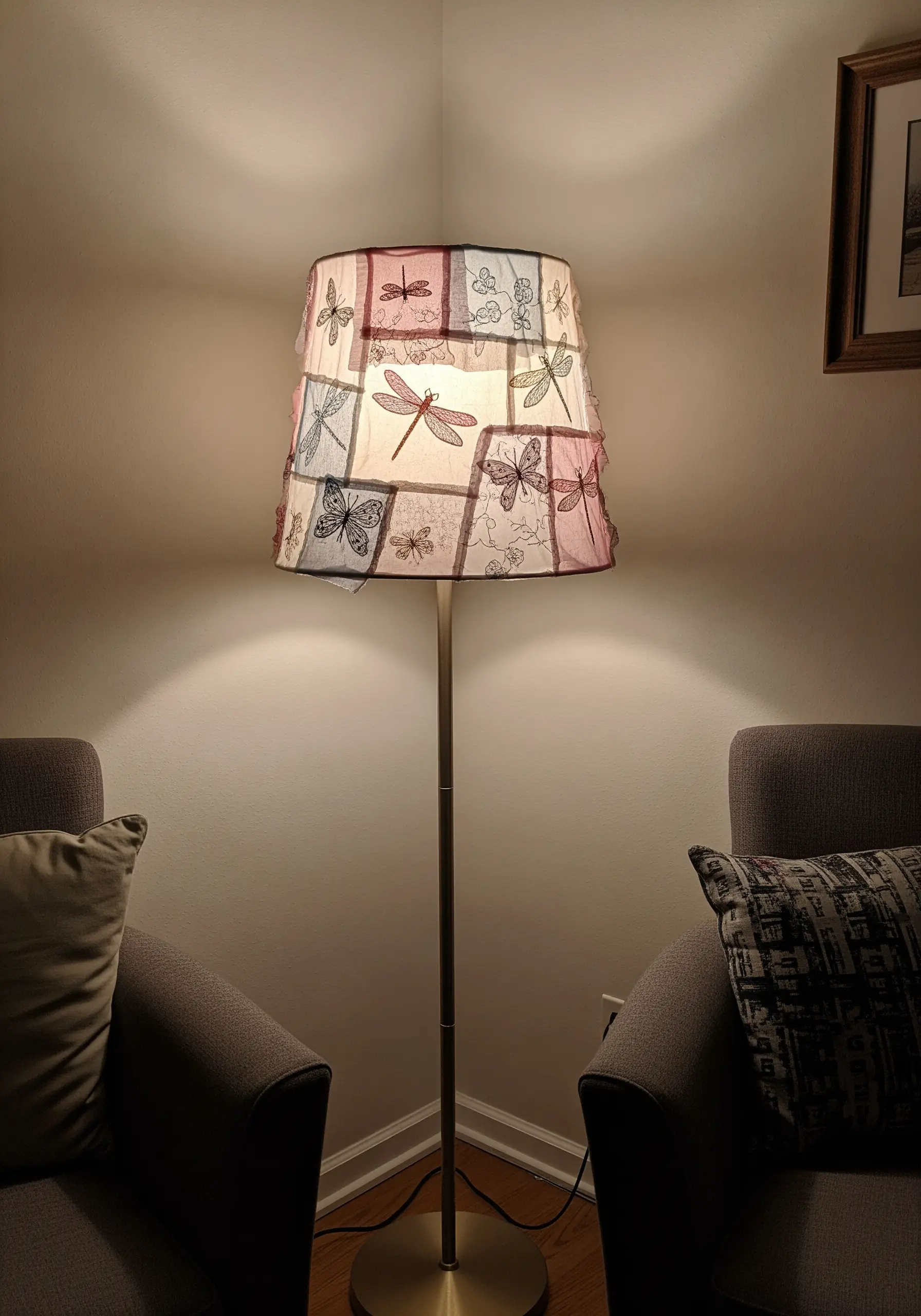
Revive an old lampshade frame by creating a new cover from a patchwork of sheer and semi-sheer fabric scraps.
Before assembling the panels, embroider delicate motifs like dragonflies or leaves onto a few of the pieces using a simple backstitch.
Use a visible whip stitch in a contrasting color to join the fabric panels, embracing the handmade aesthetic.
When lit, the lampshade will glow from within, highlighting the different fabric textures and turning your embroidered designs into beautiful, illuminated silhouettes.
16. The Serene Lavender Border Blind
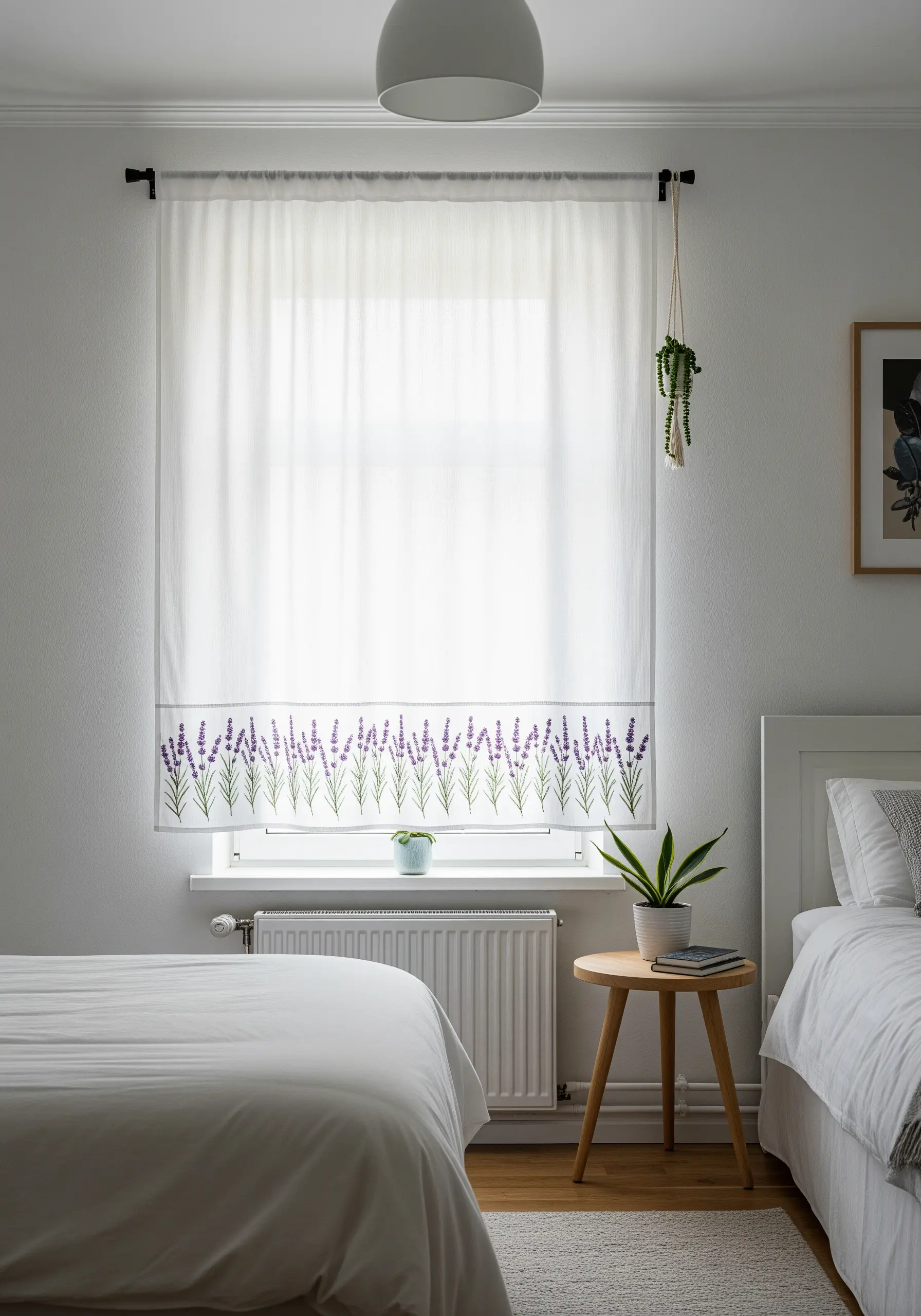
Add a simple, elegant detail to a plain white Roman blind or curtain panel with a delicate embroidered border.
Create a row of lavender stalks along the bottom edge using just two basic stitches: stem stitch for the green stalks and lazy daisy stitches for the purple buds.
Use two or three slightly different shades of purple and green floss, and vary the height of each stalk to create a more natural, organic feel.
This minimalist approach adds a significant amount of custom charm without overwhelming the clean look of the window treatment.
17. Colorful Coiled Fabric Coasters
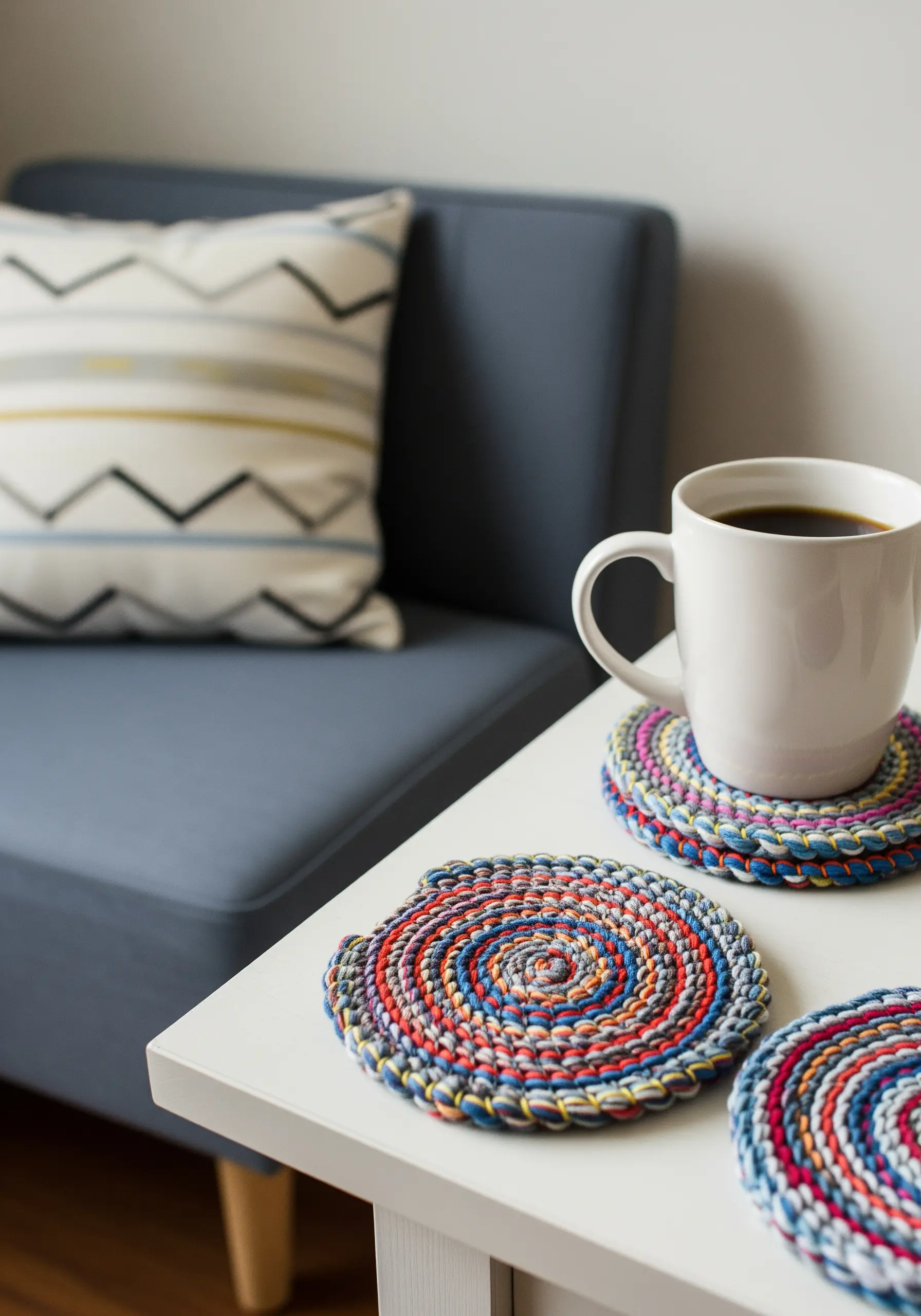
This tactile project uses up fabric scraps, particularly old t-shirts, which are perfect due to their slight stretch.
Cut the fabric into long, uniform strips. Begin by tightly coiling one strip, then continue adding new strips, stitching the coils together with a simple, sturdy whip stitch as you grow the circle.
Alternating between different colored fabrics creates vibrant, spiraling patterns that are unique to your scrap pile.
This meditative hand-sewing technique turns textile waste into functional, beautiful objects for your home.
18. The Gilded Velvet Studio Organizer
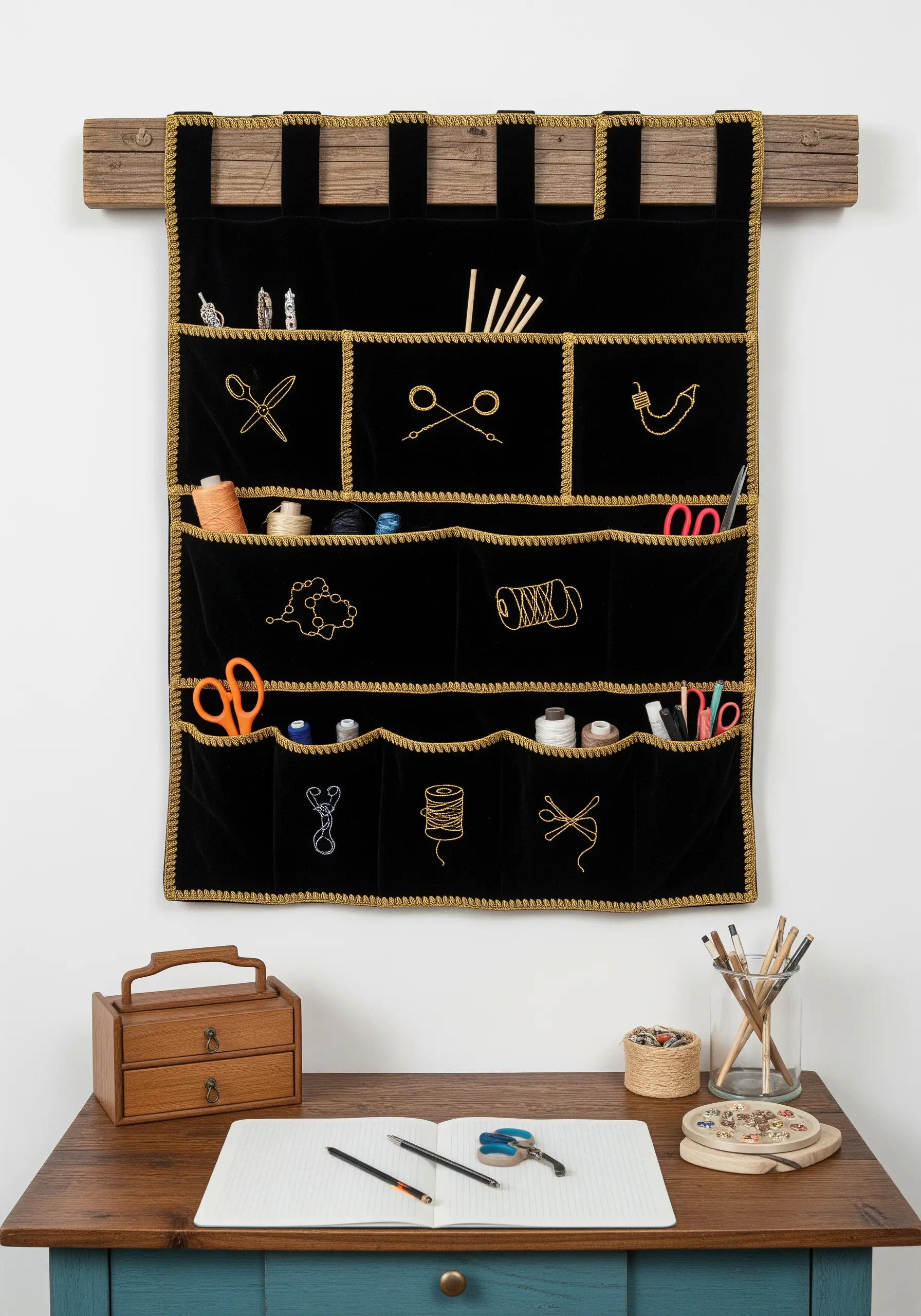
Use a scrap of luxurious black velvet to create a sophisticated wall organizer for your craft supplies.
On each pocket, stitch a simple outline of a creative tool—scissors, a needle, a spool of thread—using a fine metallic thread.
A simple backstitch or chain stitch is all you need; the magic comes from the contrast between the shimmering gold metallic thread and the deep, matte texture of the velvet.
Finish the edges with a decorative gold cord to tie the whole piece together.
19. The Personalized Fabric Book Spine
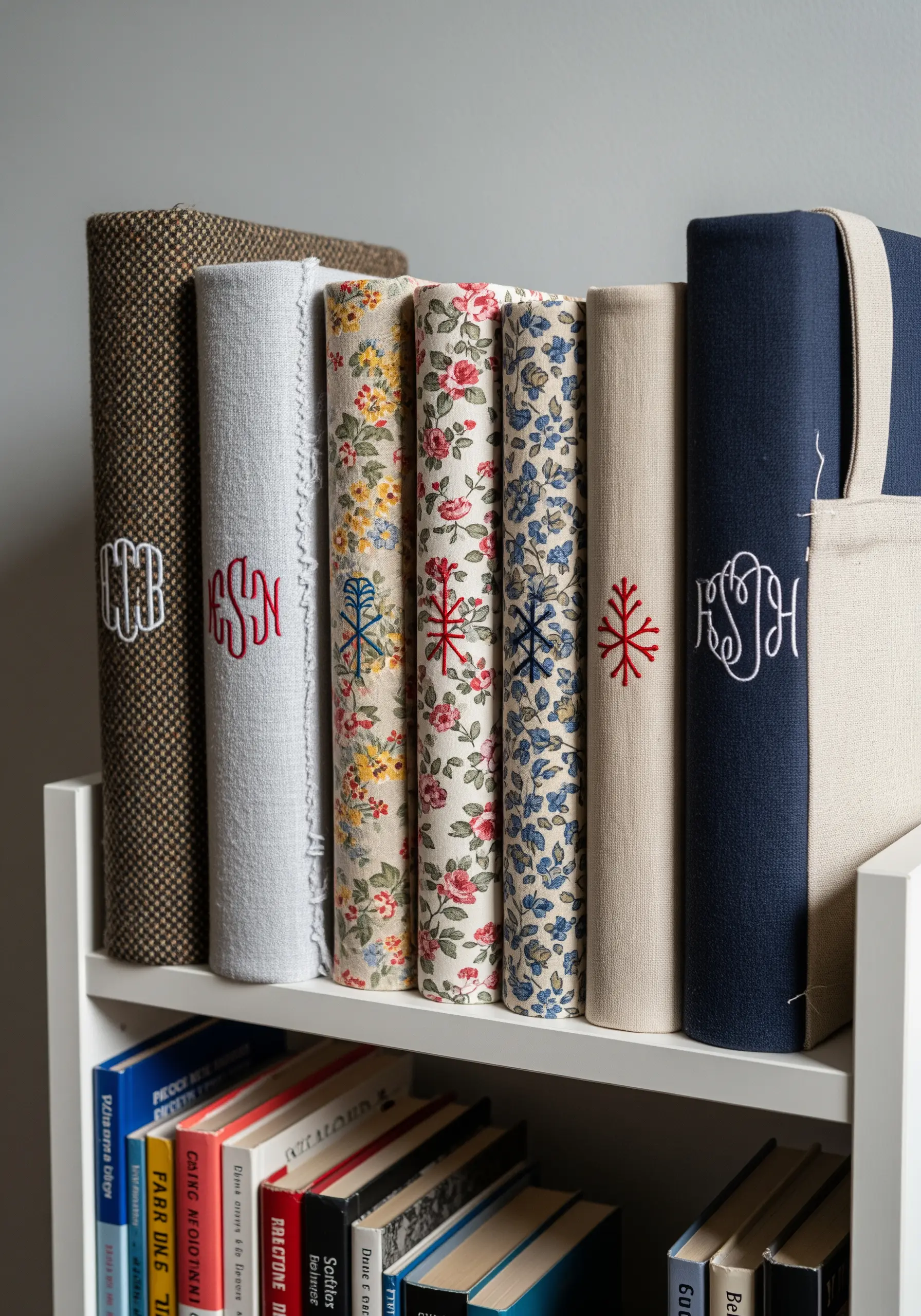
Create custom, removable covers for your journals, binders, and books using fabric scraps from your collection.
This is an excellent way to use smaller pieces of meaningful textiles, like tweed, linen, or vintage floral prints.
Add a final, personal touch with an elegant embroidered monogram on the spine.
A padded satin stitch will give you a classic, raised effect, while a simple split stitch offers a more modern, understated look.
This project creates a beautifully cohesive and personal feel on any bookshelf.
20. The Lush Botanical Balcony Oasis
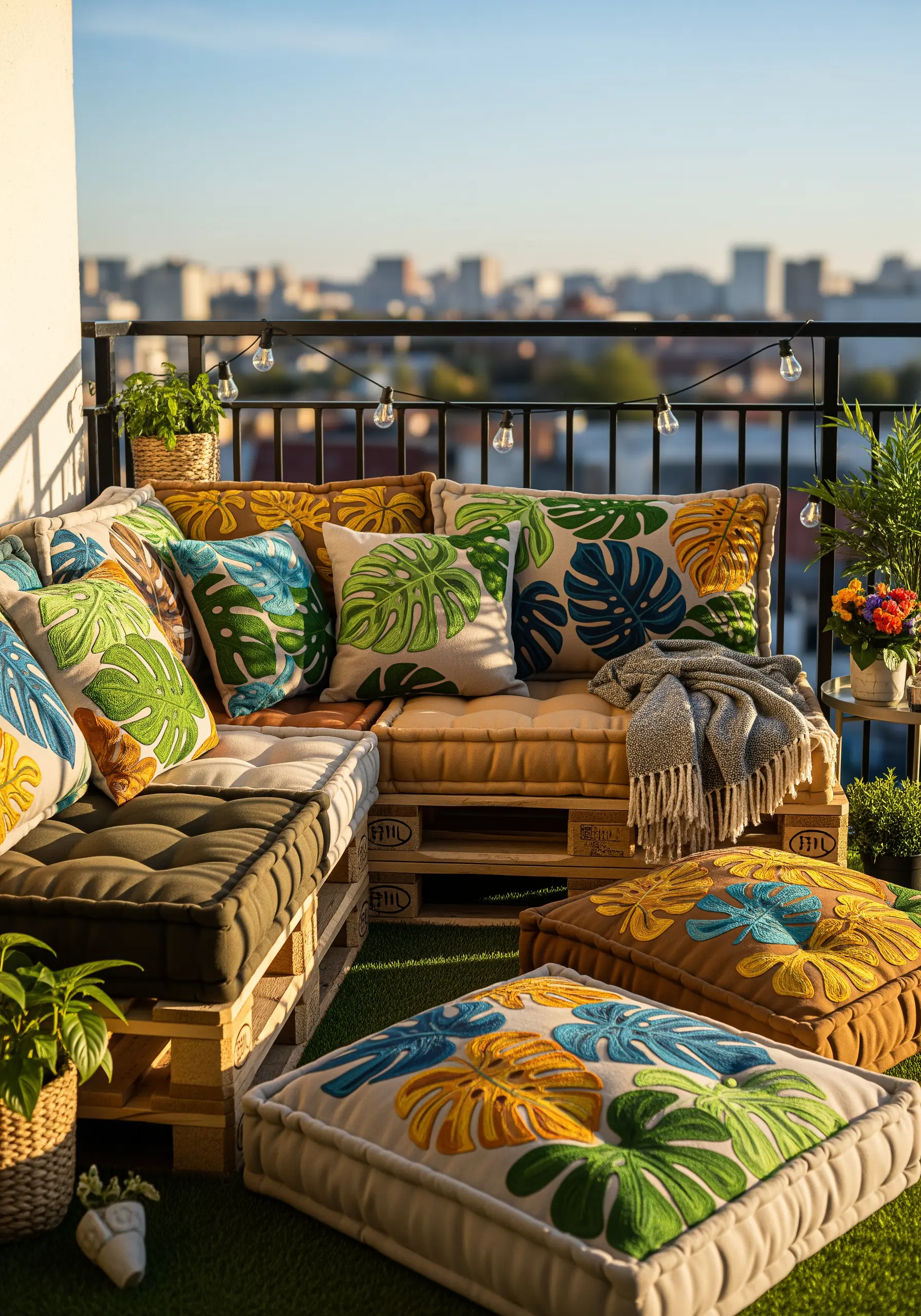
Turn a small balcony into a vibrant retreat by creating custom cushion covers from durable canvas scraps.
For filling in large botanical leaf designs, the long-and-short stitch is your best friend.
Unlike satin stitch, it prevents long, snag-prone stitches and allows you to blend multiple shades of a color seamlessly for a more realistic, painterly effect.
Use a palette of varied greens, teals, and ochres to create a lush, layered look that feels like a permanent tropical escape.
21. The Modern Noren Door Curtain
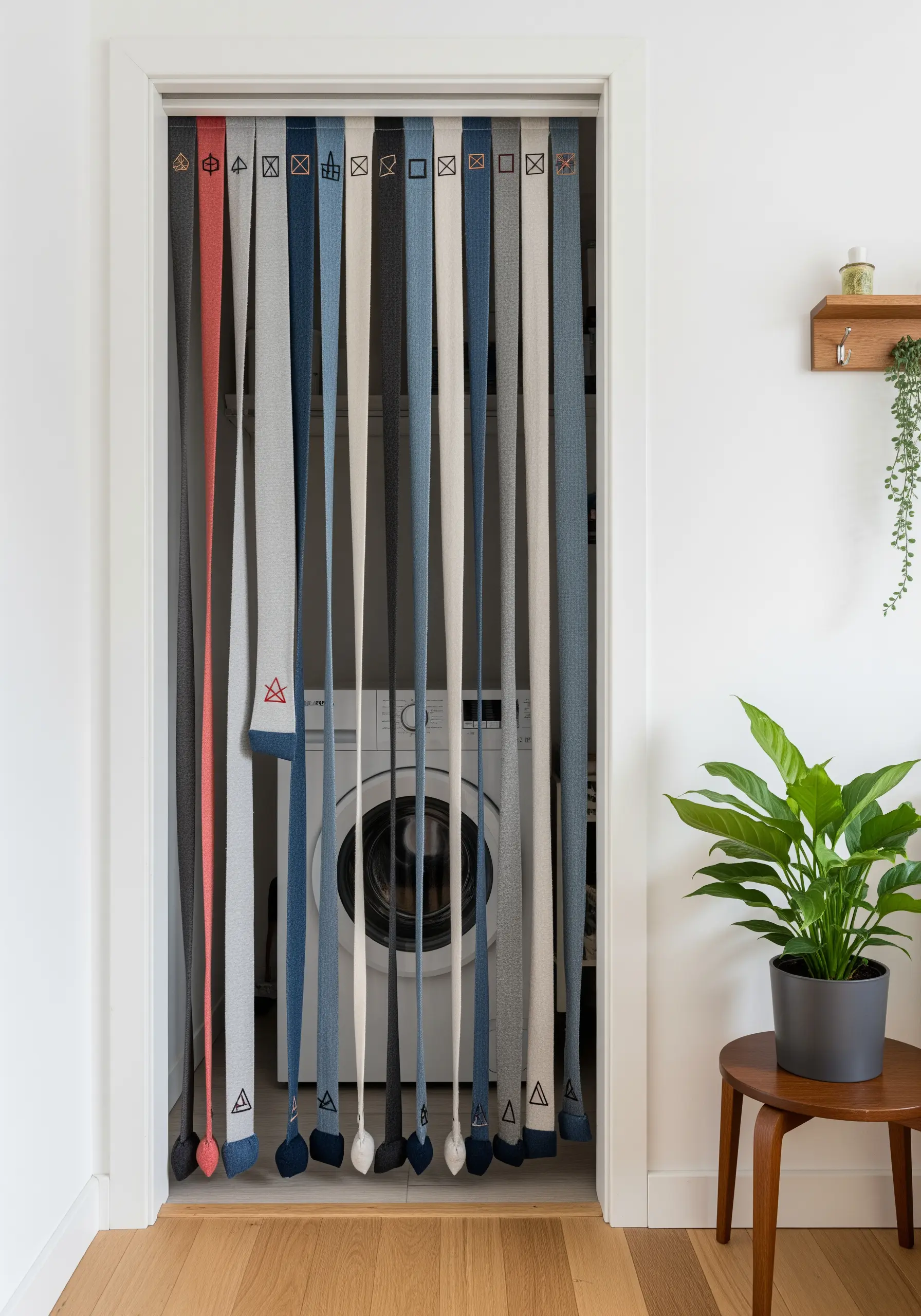
Construct a Japanese-inspired Noren curtain to create soft separation in a doorway or closet opening.
Use long, vertical strips of scrap fabric—old trousers, tablecloths, or curtain remnants all work well.
Stitch them together only at the very top to a single header panel, allowing the strips to hang freely.
For a touch of minimalist detail, embroider a small, clean symbol or monogram at the bottom of each strip using a contrasting thread.
This subtle, intentional detail transforms a simple fabric solution into a piece of modern, functional art.
22. The Woven Plastic Canvas Tray
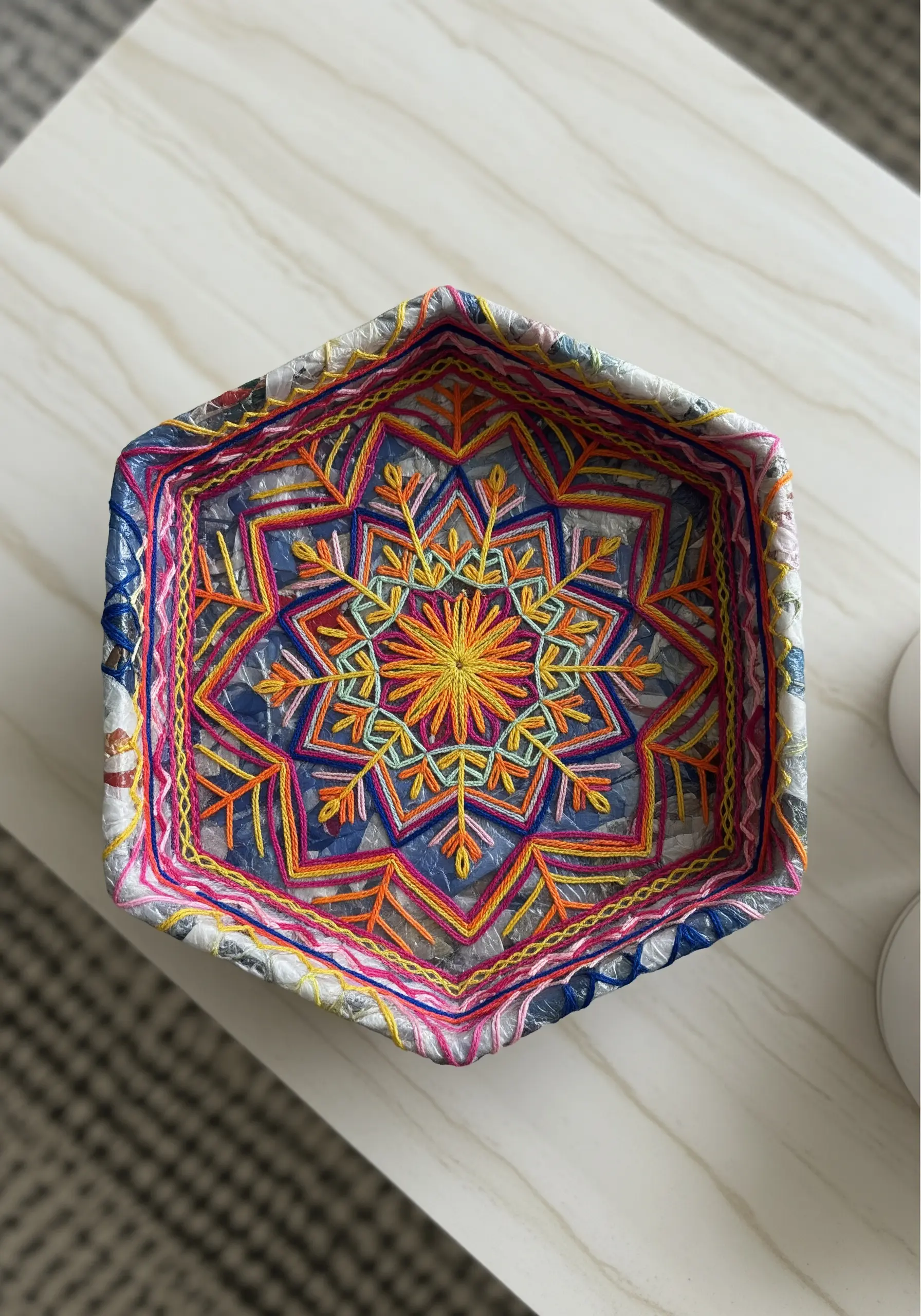
This innovative project transforms single-use plastic into a durable, decorative tray.
Carefully cut a sturdy plastic container into your desired shape and punch a grid of holes across the surface with an awl.
This turns the rigid plastic into a canvas for your embroidery.
Use colorful yarn or cotton floss to weave a vibrant, geometric pattern—like a mandala—through the holes, completely covering the surface.
The result is a sturdy, waterproof tray with a stunning, stained-glass effect.
23. The Upcycled Sweater Desk Set
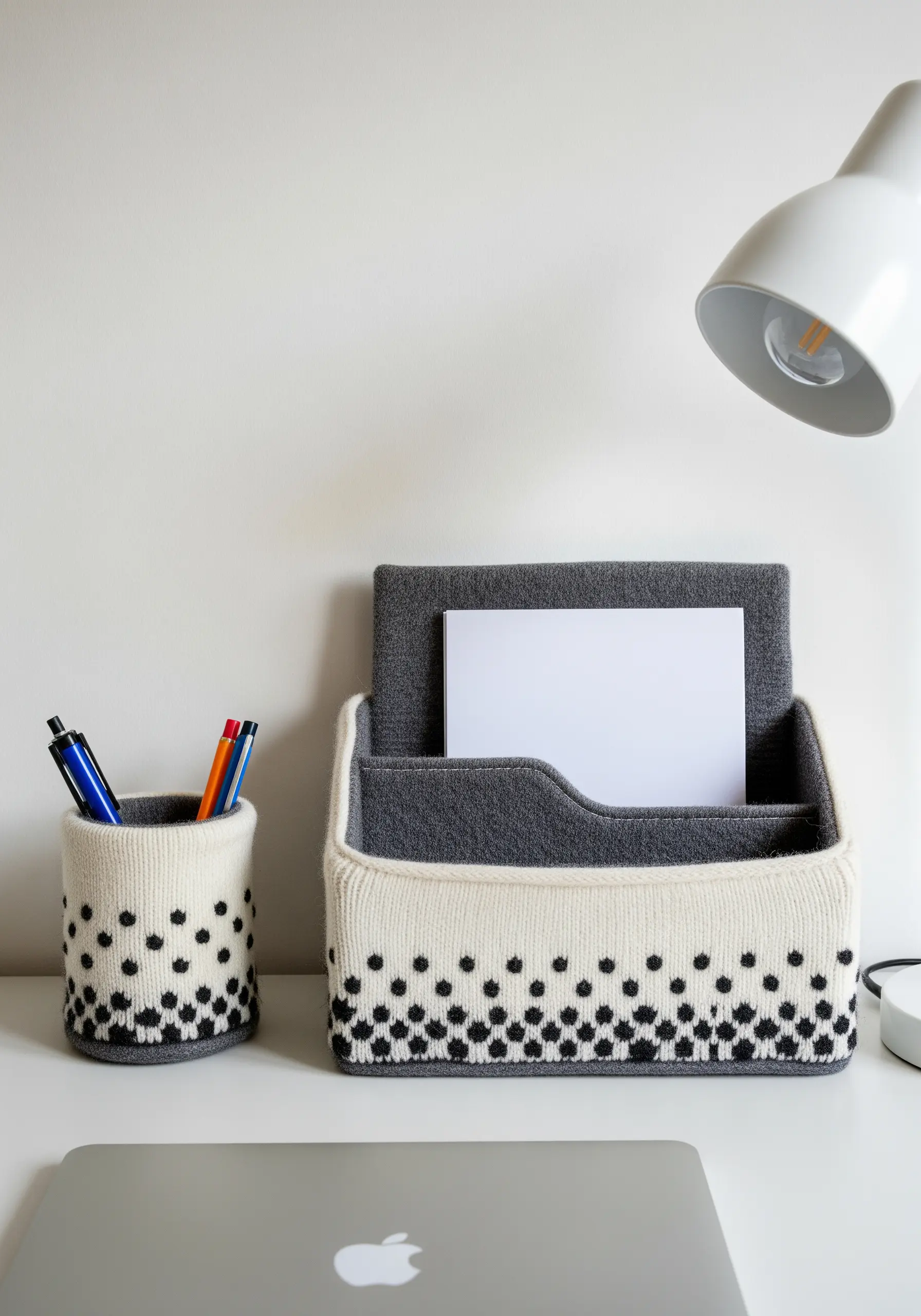
Give a beloved but worn-out wool sweater a second life as a cozy desk accessory set.
Use the felted fabric to cover basic containers like a tin can for pens or a small box for mail.
The knit texture instantly adds softness and warmth to your workspace.
To unify the set, add a simple decorative detail using a contrasting color of yarn. A simple running stitch or a border of cross-stitches is all you need to add a touch of polished, handmade charm.