Have you ever looked at a massive fiber art installation and thought, ‘I could never do that’?
I want you to reconsider. Every monumental tapestry, every sprawling sculpture, begins with a single, familiar gesture: a knot, a stitch, a loop. The artists behind these works aren’t using magic; they are using principles of scale, repetition, and texture—principles you can apply to your own work right now, in your own space.
This collection is your invitation to think bigger. Let these ideas dissolve any intimidation you feel and replace it with curiosity. See how a simple technique, when repeated, becomes powerful. See how a change in material transforms the ordinary into the extraordinary. Your next big project might be closer than you think.
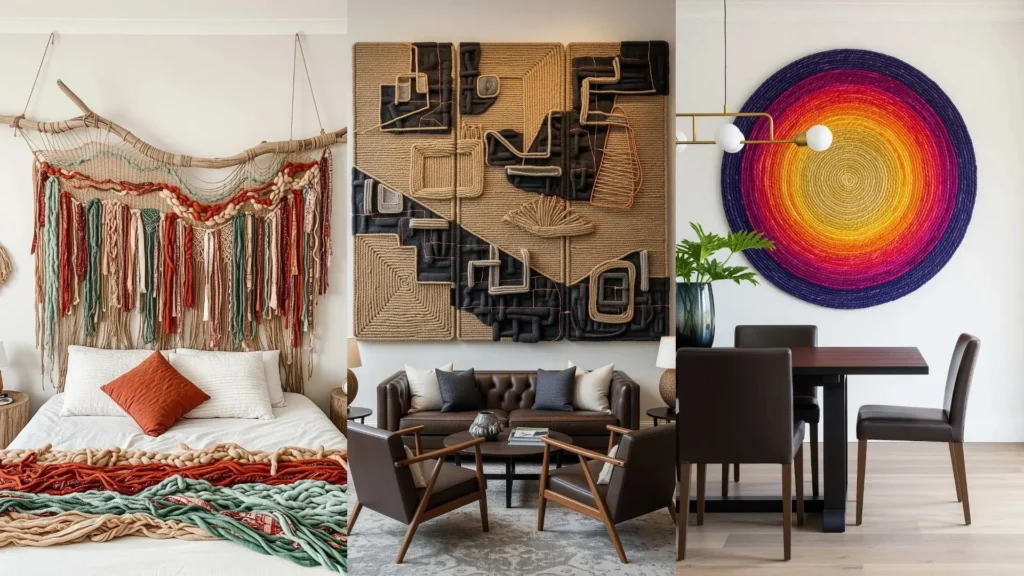
1. Scale Up with Macrame Color Gradients
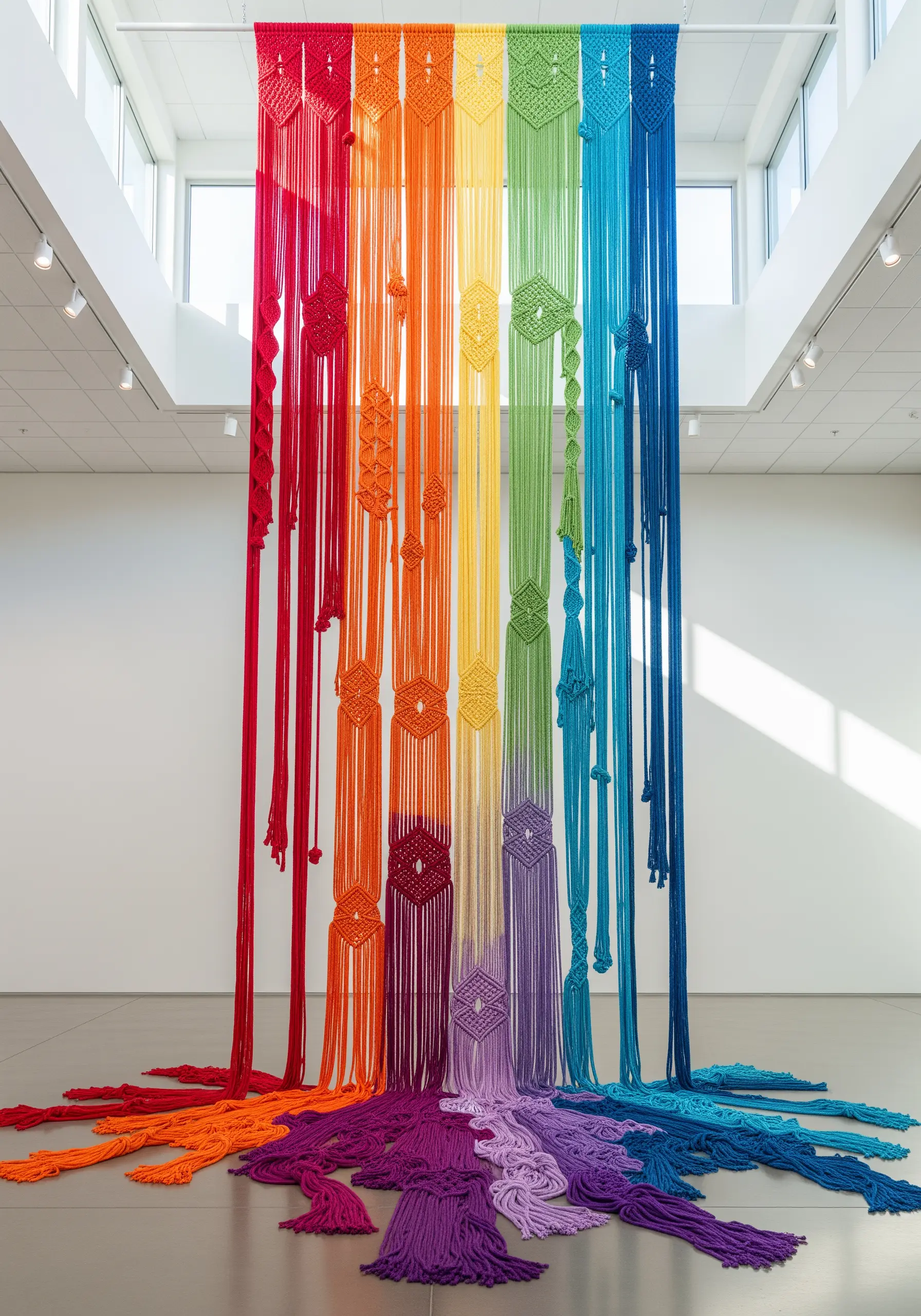
You don’t need a gallery space to create a monumental color statement.
Adapt this idea by creating a smaller wall hanging on a dowel, using simple square knots and half-hitch knots in a repeating pattern.
The visual power comes from the disciplined transition of color, not the complexity of the knots.
Choose a single yarn type in a full spectrum of hues and arrange them in a gradient to create a sense of flow and cohesion.
Even a simple design becomes dramatic when you commit to a bold color story from ceiling to floor.
2. Integrate Natural Textures into Your Weaving
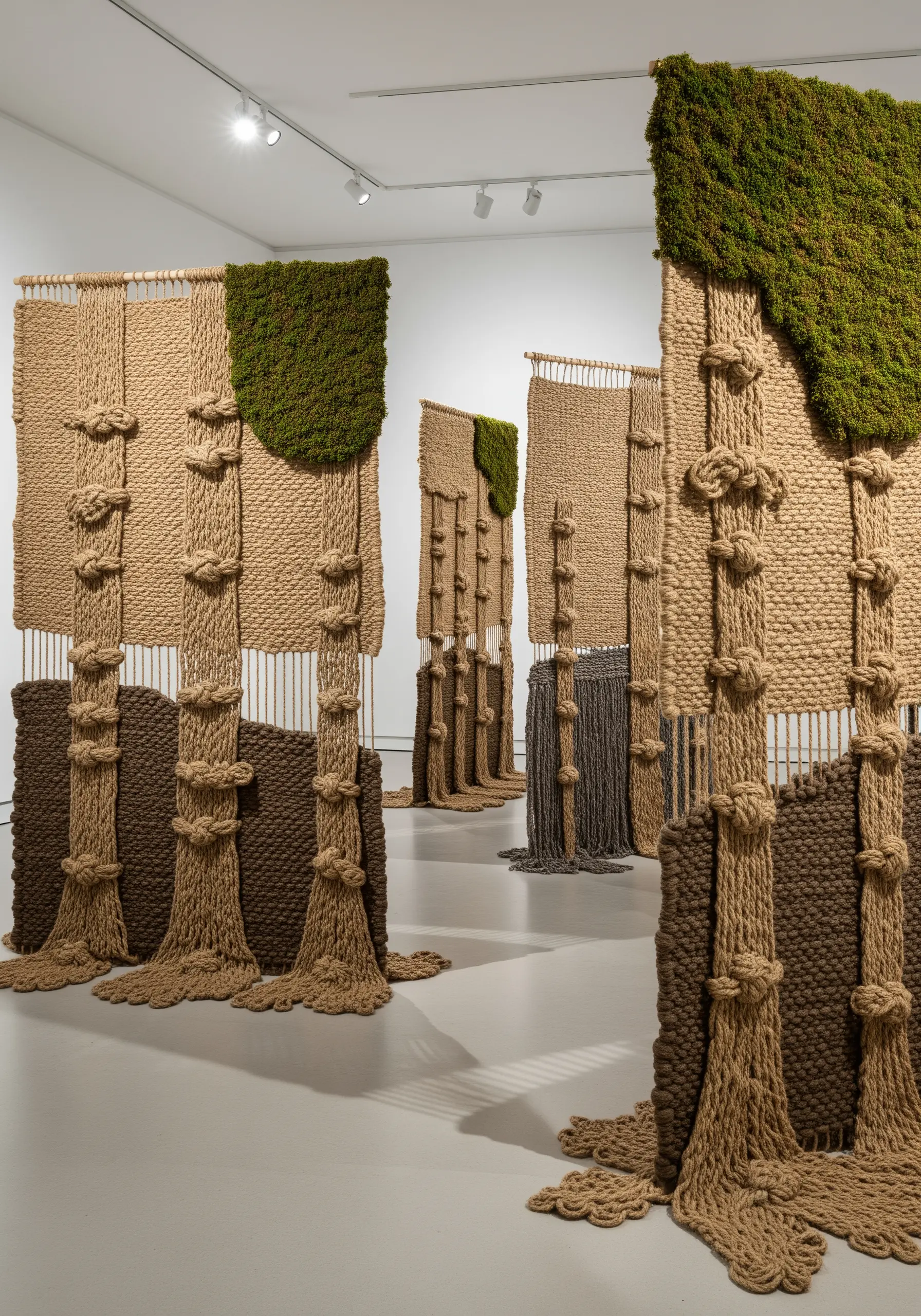
Move beyond yarn to incorporate unexpected, organic materials directly into your work.
On a simple frame loom, try weaving with thick jute rope or chunky wool roving, leaving sections of the warp exposed.
You can then attach preserved moss, dried botanicals, or small pieces of driftwood to the woven panels using a neutral-colored thread.
This technique is all about the tactile contrast between soft, pliable fibers and the raw, earthy textures of nature, creating depth in your embroidery using natural textures.
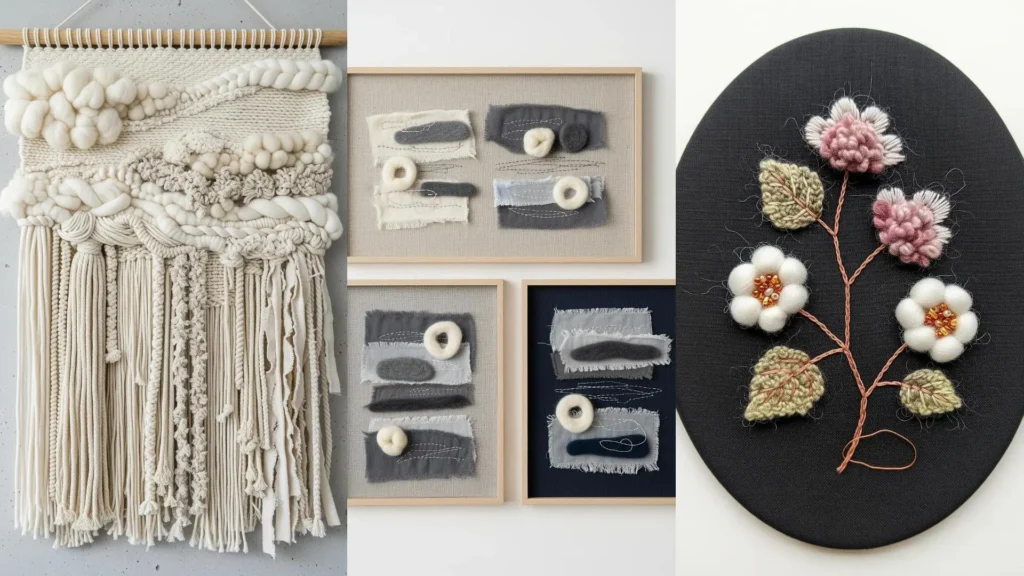
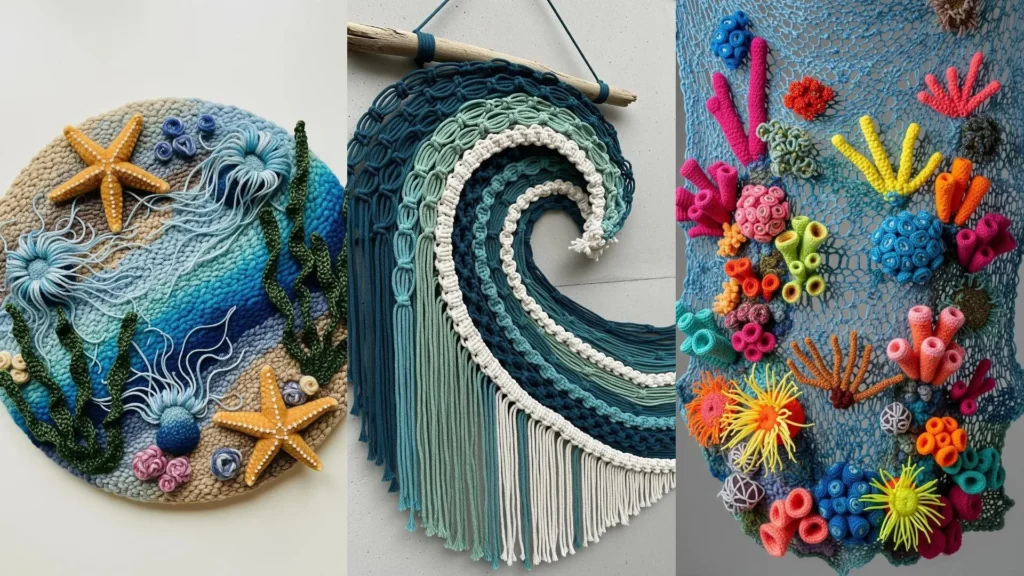
3. Build a World from Small, Crocheted Components
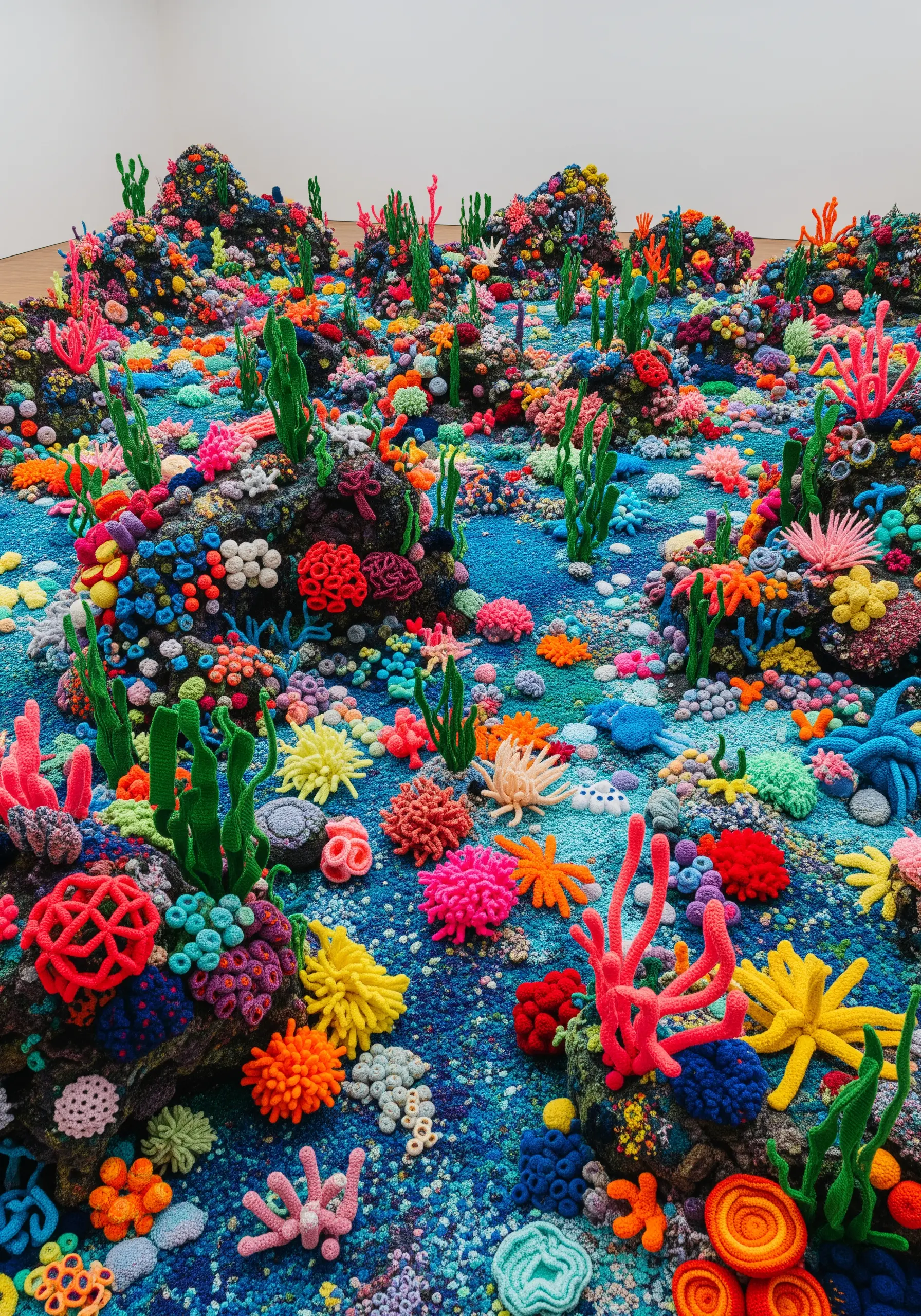
A massive project becomes manageable when you think of it as a collection of tiny, individual successes.
Create your own textile ecosystem by crocheting or embroidering small, individual elements—like coral, flowers, or abstract shapes—without a grand plan at first.
Arrange these components in a shadow box, on a large canvas, or inside a glass terrarium.
This additive approach allows the composition to grow organically, turning a meditative practice into an impressive, sprawling display.
4. Sculpt with Fiber to Create Soft, 3D Forms
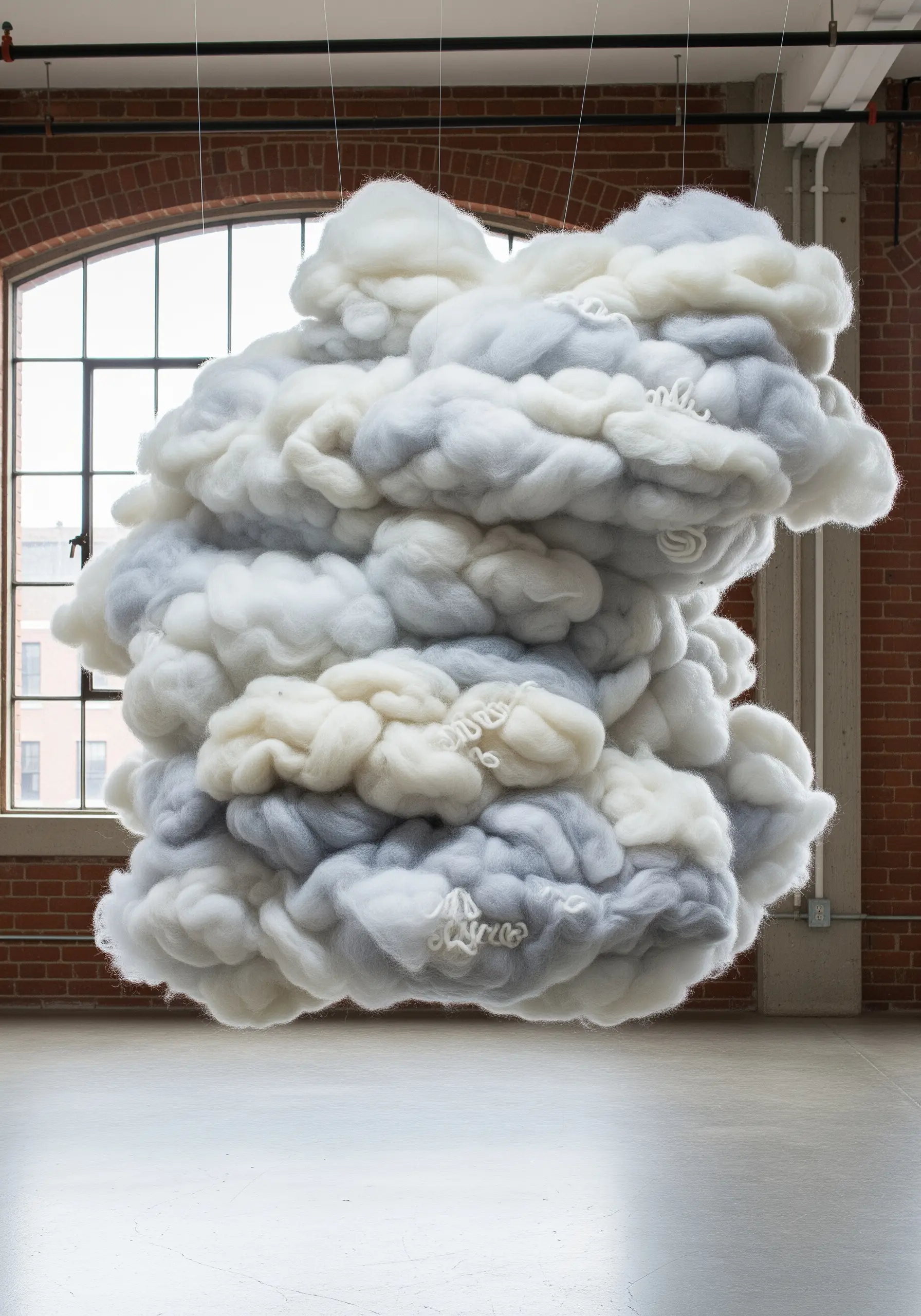
Take your work off the wall by thinking of fiber as a sculptural medium.
Use wool roving and needle-felting techniques to build voluminous, cloud-like shapes without any internal structure.
Start with a core of undyed wool and add layers of gray and white, teasing and shaping the fibers as you go.
You can introduce subtle details by lightly felting thin strands of yarn onto the surface to create delicate swirls or lines.
This method allows you to create lightweight, large-scale sculptures that feel both monumental and ethereal.
5. Use Modular Motifs to Transform a Surface
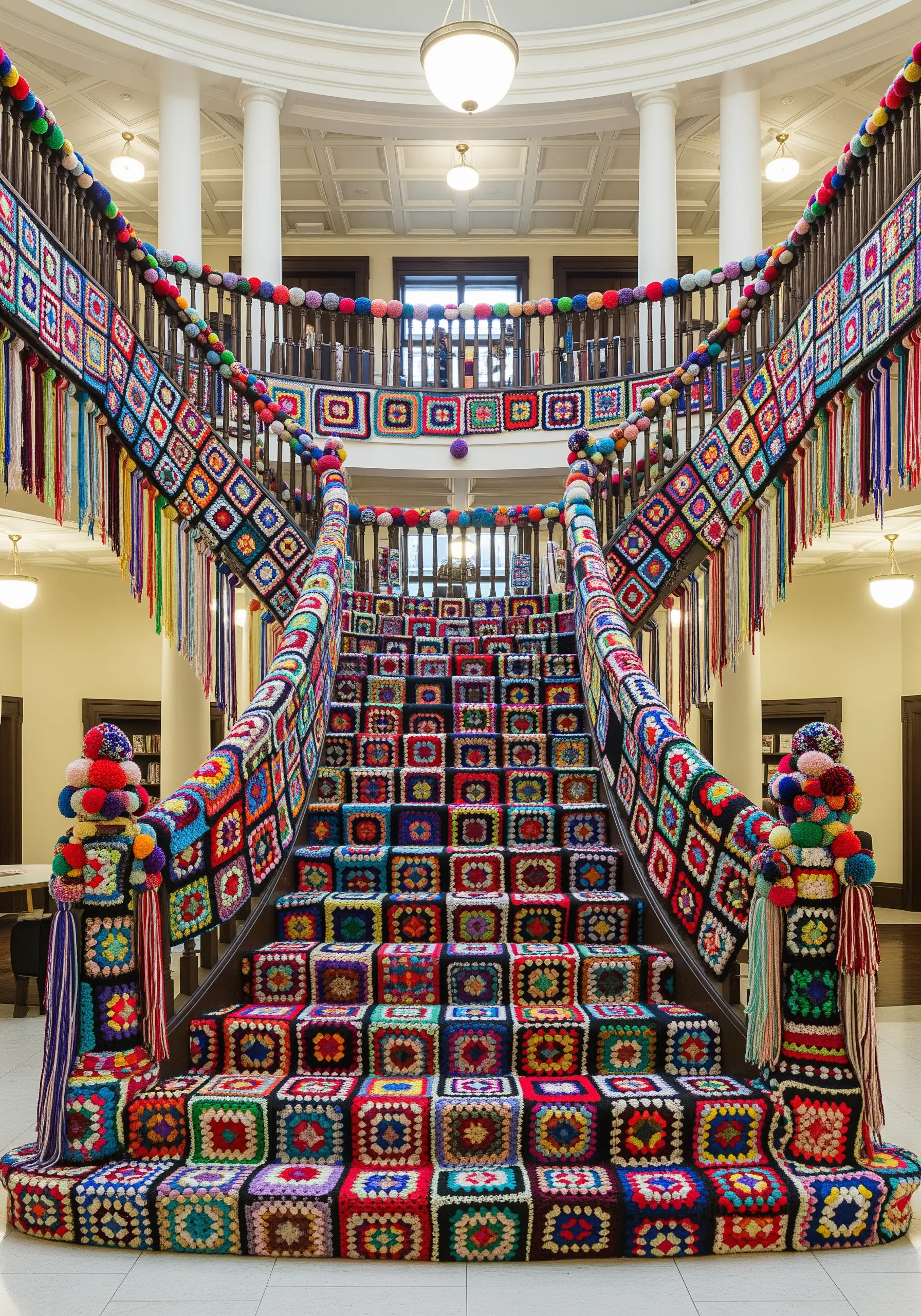
Cover an unconventional surface with a simple, repeating fiber motif to create a stunning visual impact.
Instead of a staircase, choose a piece of furniture like an old chair, a footstool, or a large canvas.
Create dozens of small, embroidered squares or crocheted granny squares using scrap yarn to build a vibrant color palette.
Stitch them together to create a custom ‘fabric’ that can be fitted and attached to your chosen object, turning it into a functional piece of art.
6. Paint with Texture Using Punch Needle
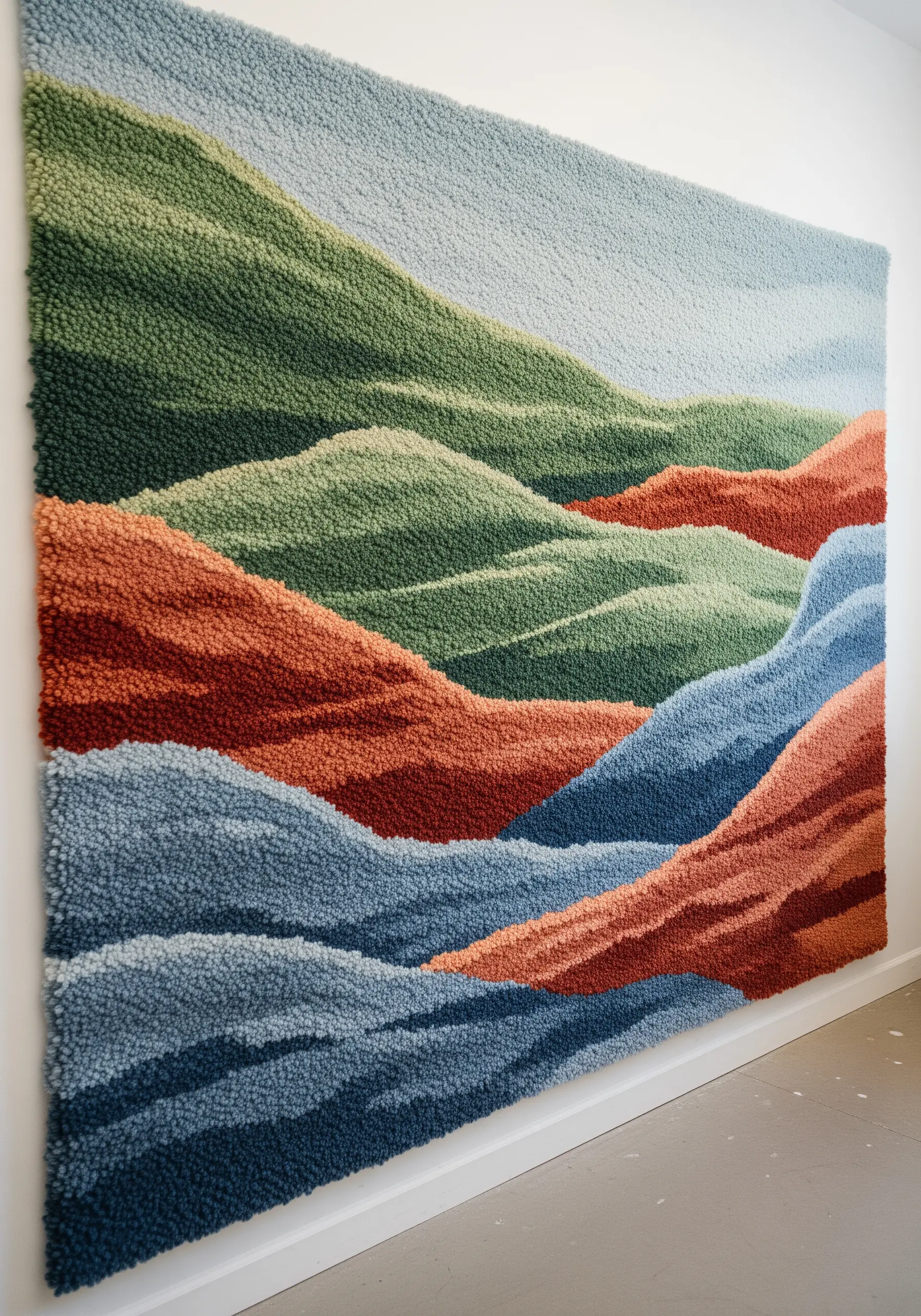
Think of yarn as a thick, textural paint and your monk’s cloth as the canvas.
Use a punch needle and chunky yarn to create a large-scale textile painting.
Map out a simple landscape with rolling hills, using color blocking to define each shape.
The beauty of this technique is in the dense, uniform loops that create a plush, touchable surface.
It transforms a flat image into a topographic, sensory experience that draws the viewer in.
7. Create Architectural Forms with Jumbo Knitting
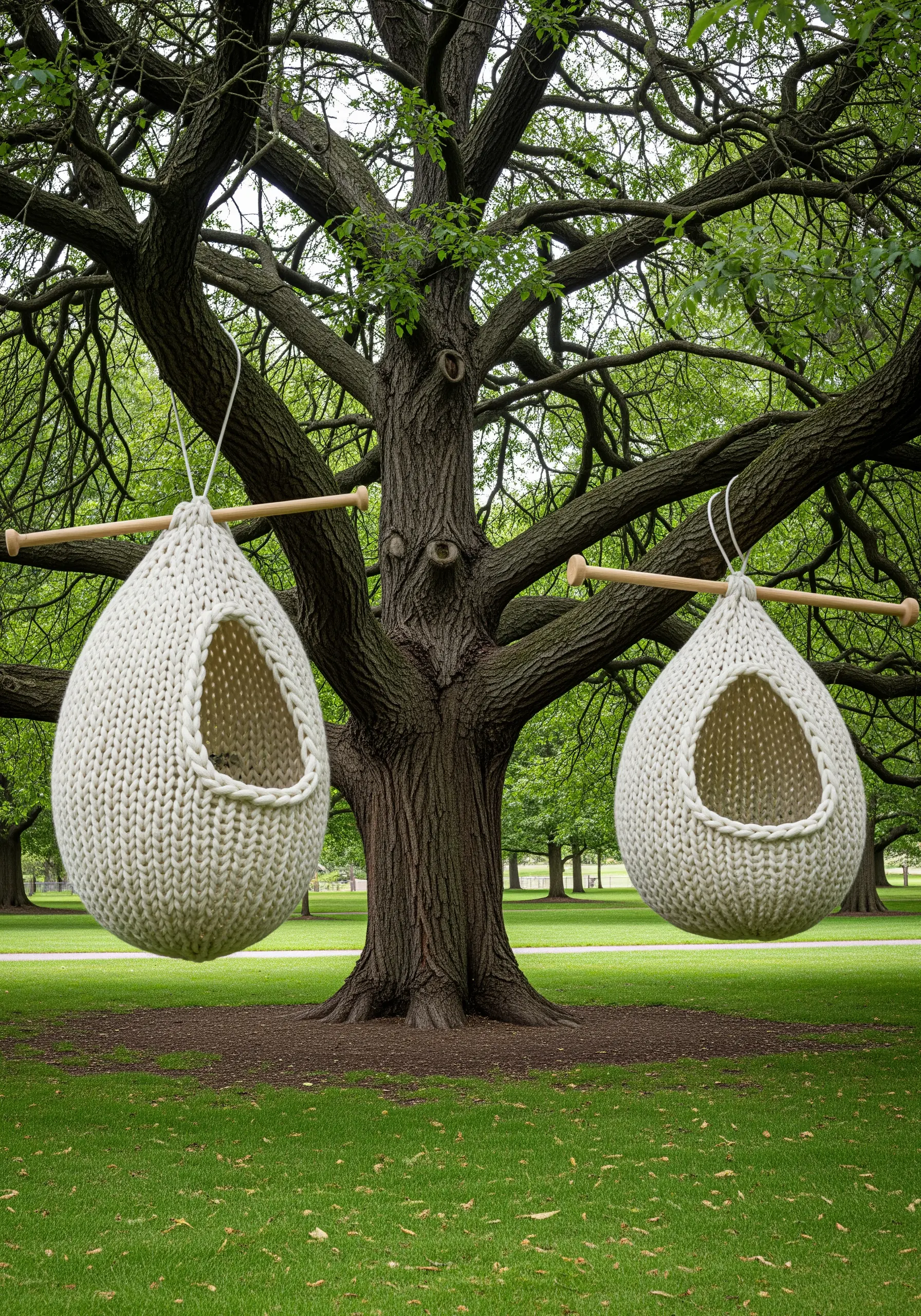
Transform a simple stitch into a sculptural statement by dramatically increasing its scale.
Work with jumbo yarn—or even thick felted roving—and oversized knitting needles (or just your arms) to create large, pod-like structures.
Focus on foundational stitches like the garter or stockinette stitch; the material’s thickness will provide all the necessary structure and visual drama.
These pieces demonstrate that scale alone can elevate a basic technique into architectural art.
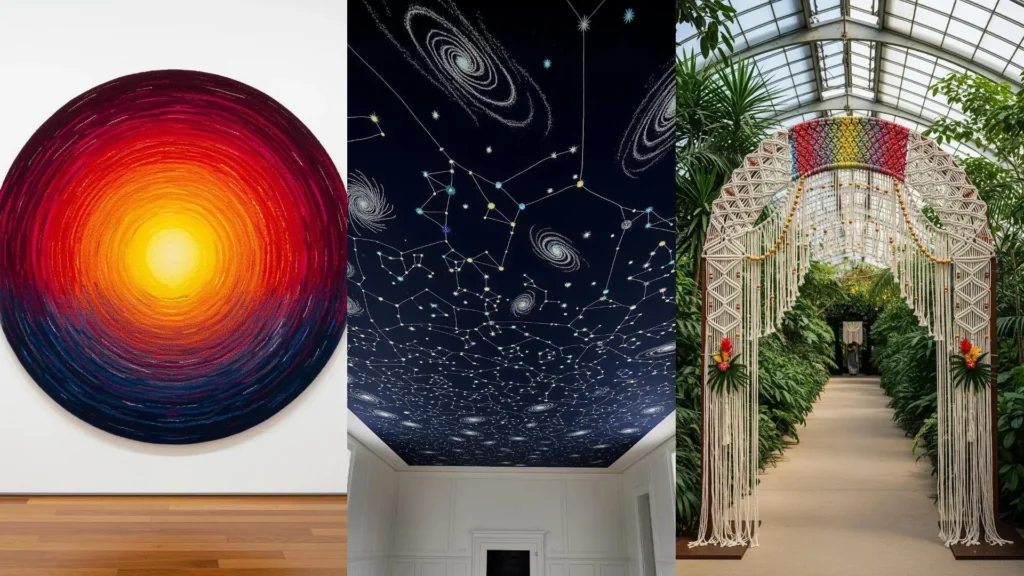
8. Frame an Experience with a Fiber Archway
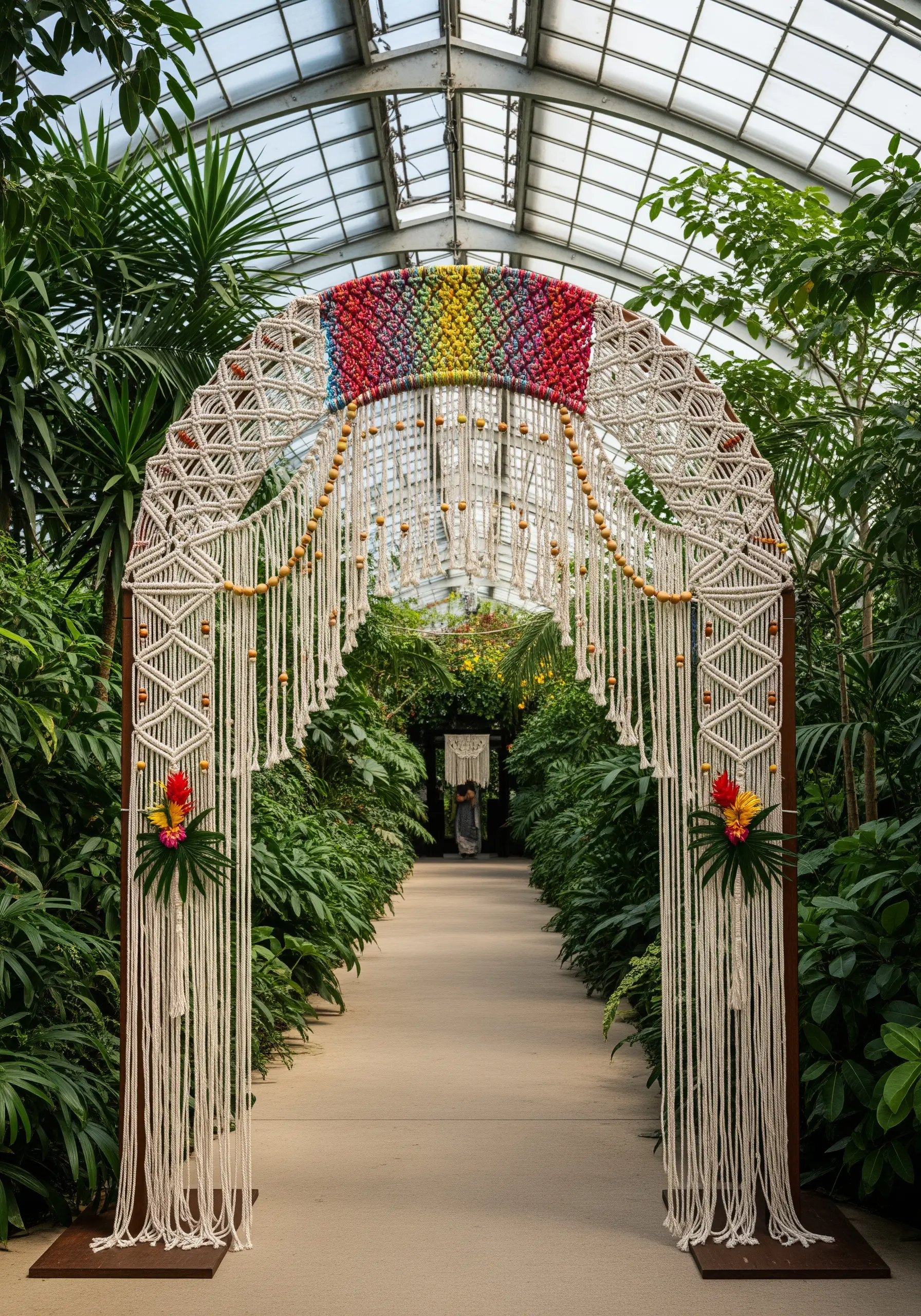
Use fiber techniques to define a space and create a sense of entry or occasion within your own home.
Create a smaller version of this concept by building a macrame valance for a doorway or a wide window.
Use a simple wooden dowel as your base and work repeating diamond patterns with square knots.
You can add a pop of color by wrapping some sections with embroidery floss or weaving in colorful yarn, creating a handmade feature that transforms how you move through a room.
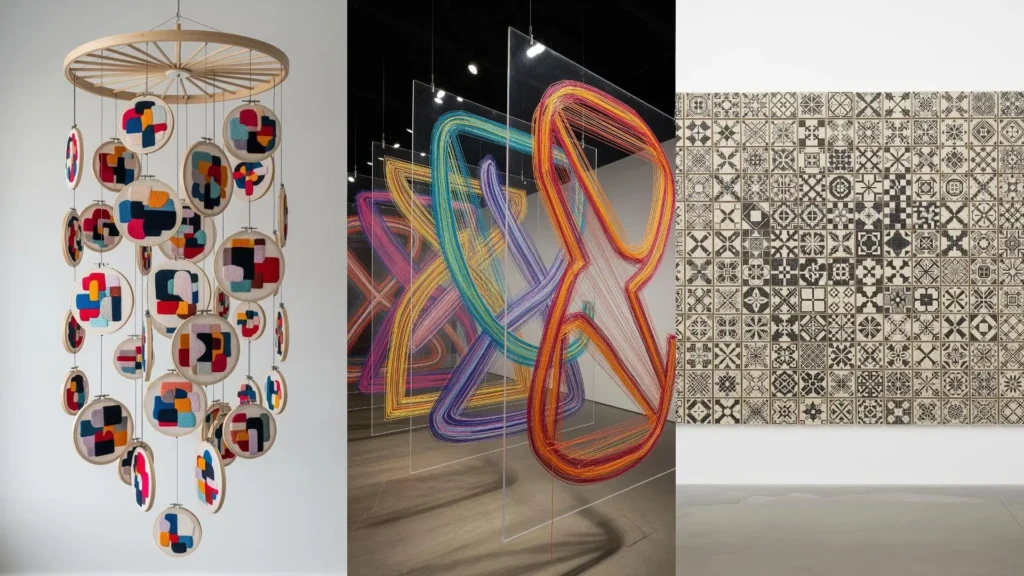
9. Explore Light and Geometry with String Art
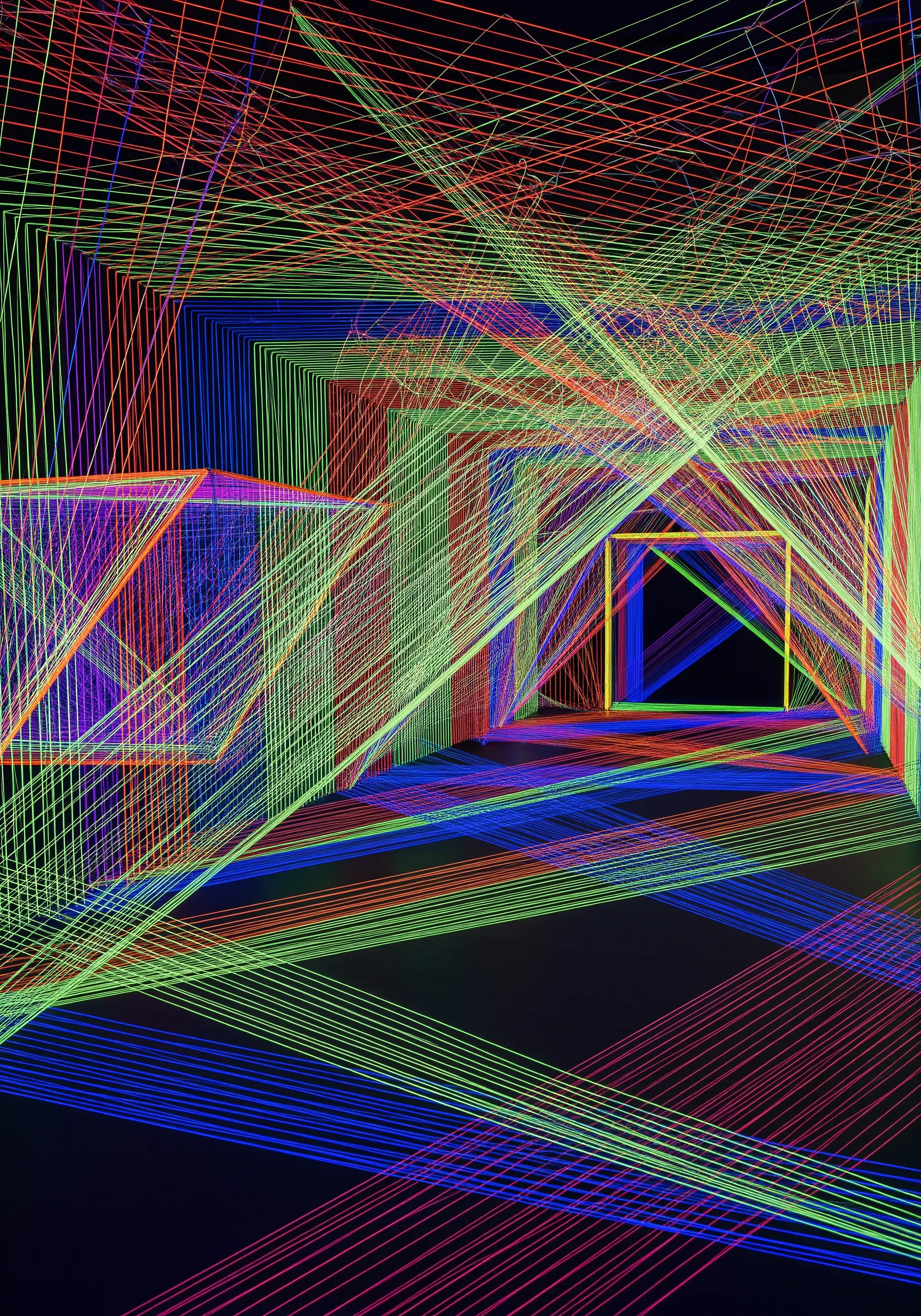
You can achieve this radiant, geometric effect on a smaller scale using a simple wooden frame and fluorescent thread.
Paint a large piece of plywood or a canvas black to create a high-contrast background.
Hammer in small nails along the perimeter and in geometric patterns within the frame.
Then, stretch colorful threads between the nails to create overlapping lines and shapes.
This is a perfect way to explore tension, perspective, and how lines can create the illusion of three-dimensional space in modern geometric thread art.
10. Weave a Meditative, Radial Color Story
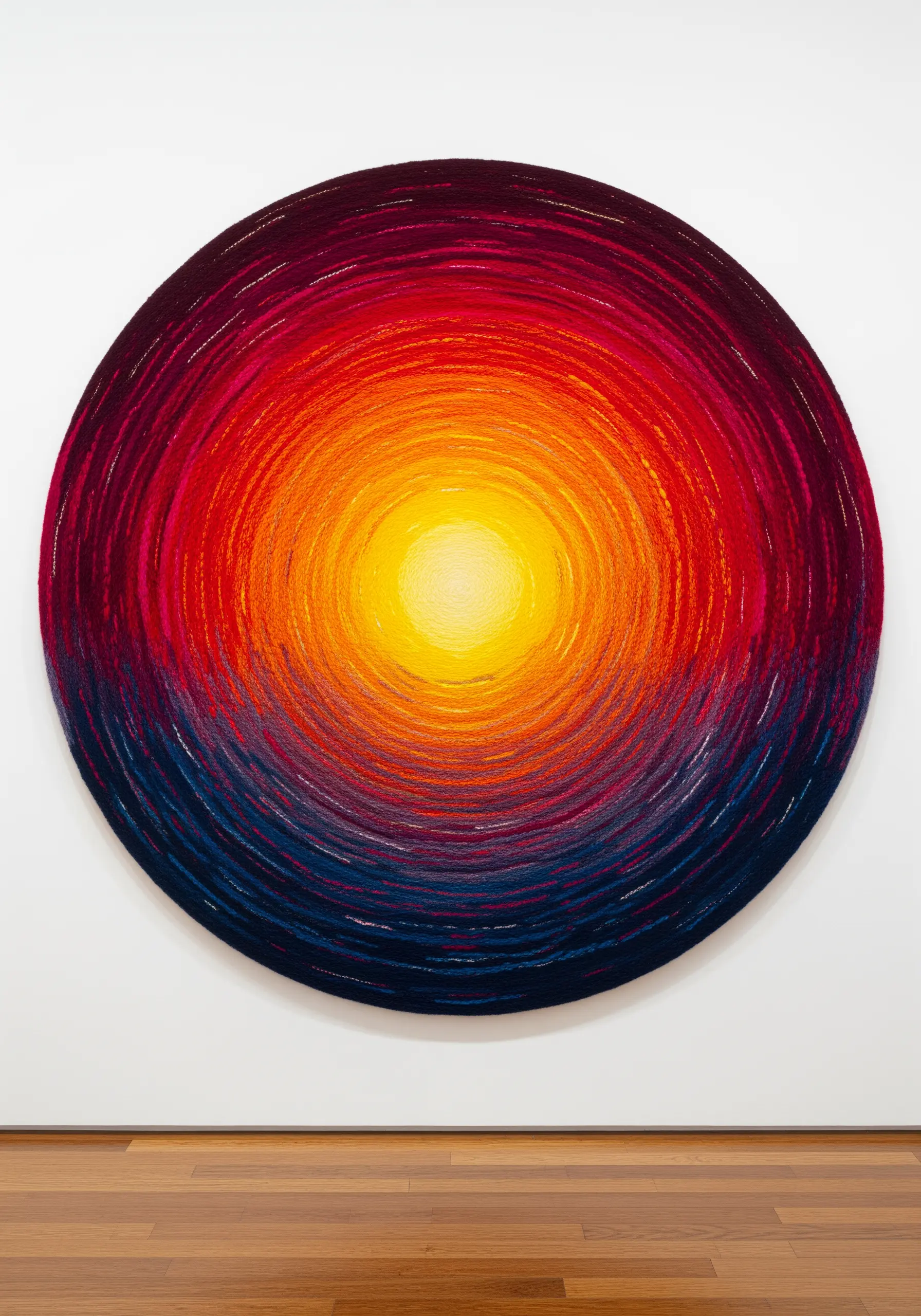
Create a powerful focal point by weaving in a circular, rather than linear, motion.
Use a large embroidery hoop or a dedicated circular loom as your frame.
Warp your loom from the center outwards, like spokes on a wheel.
Begin weaving from the center, transitioning your yarn colors from light to dark to create a radiant gradient.
The swirling, continuous lines draw the eye inward, making the piece feel both energetic and deeply calming.
11. Construct an Upcycled Fabric Chandelier
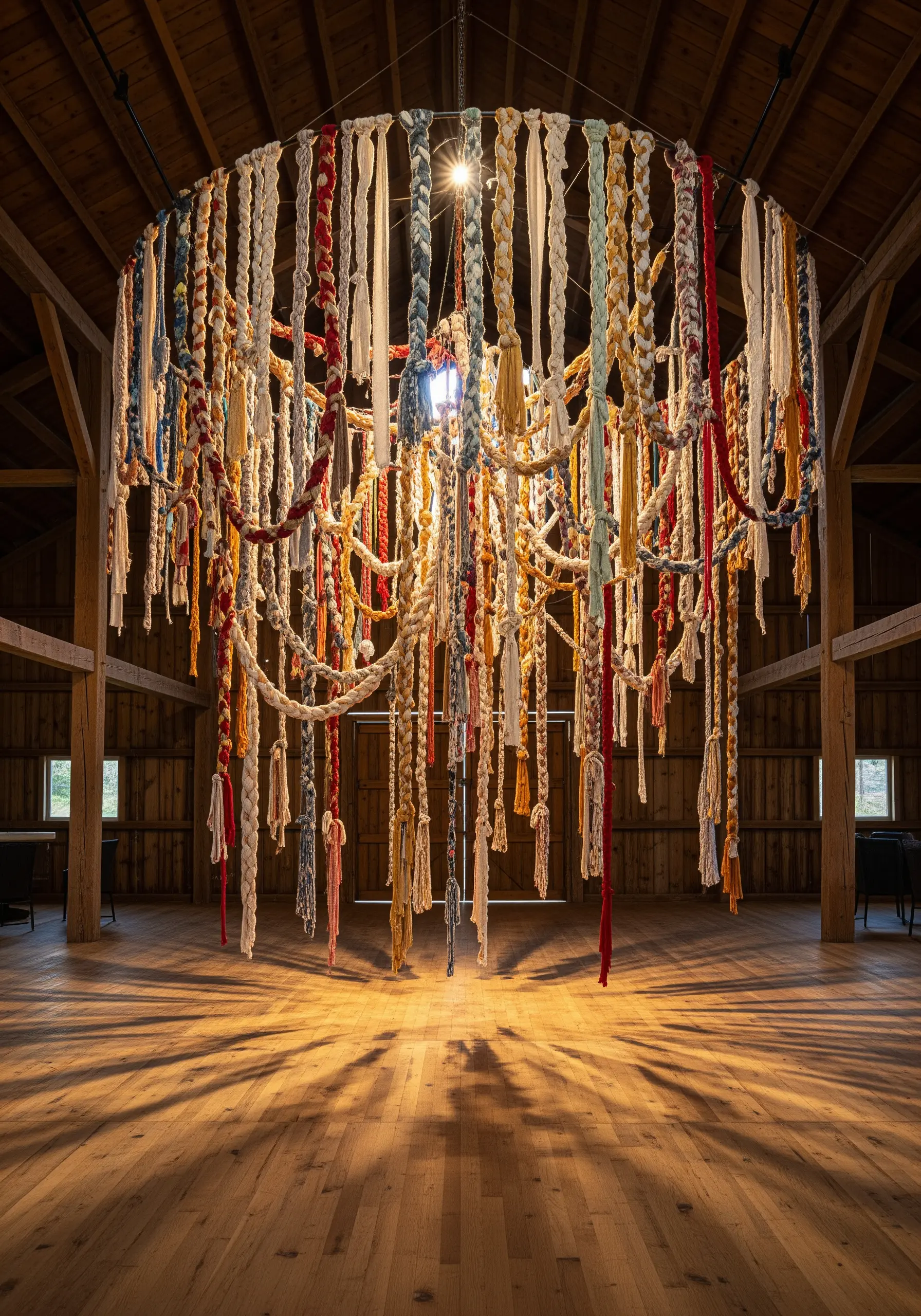
Give new life to old textiles by assembling them into a sculptural light fixture.
Use metal hoops from a craft store to build a tiered frame for a chandelier.
Tear old sheets, clothing, or fabric scraps into long strips, then braid, twist, or knot them.
Attach these textile ropes to the frame at varying lengths to create a cascading effect.
This is a beautiful way to create upcycled fabric wall art projects with personal history woven directly into them.
12. Mimic Nature with Wet-Felted Forms
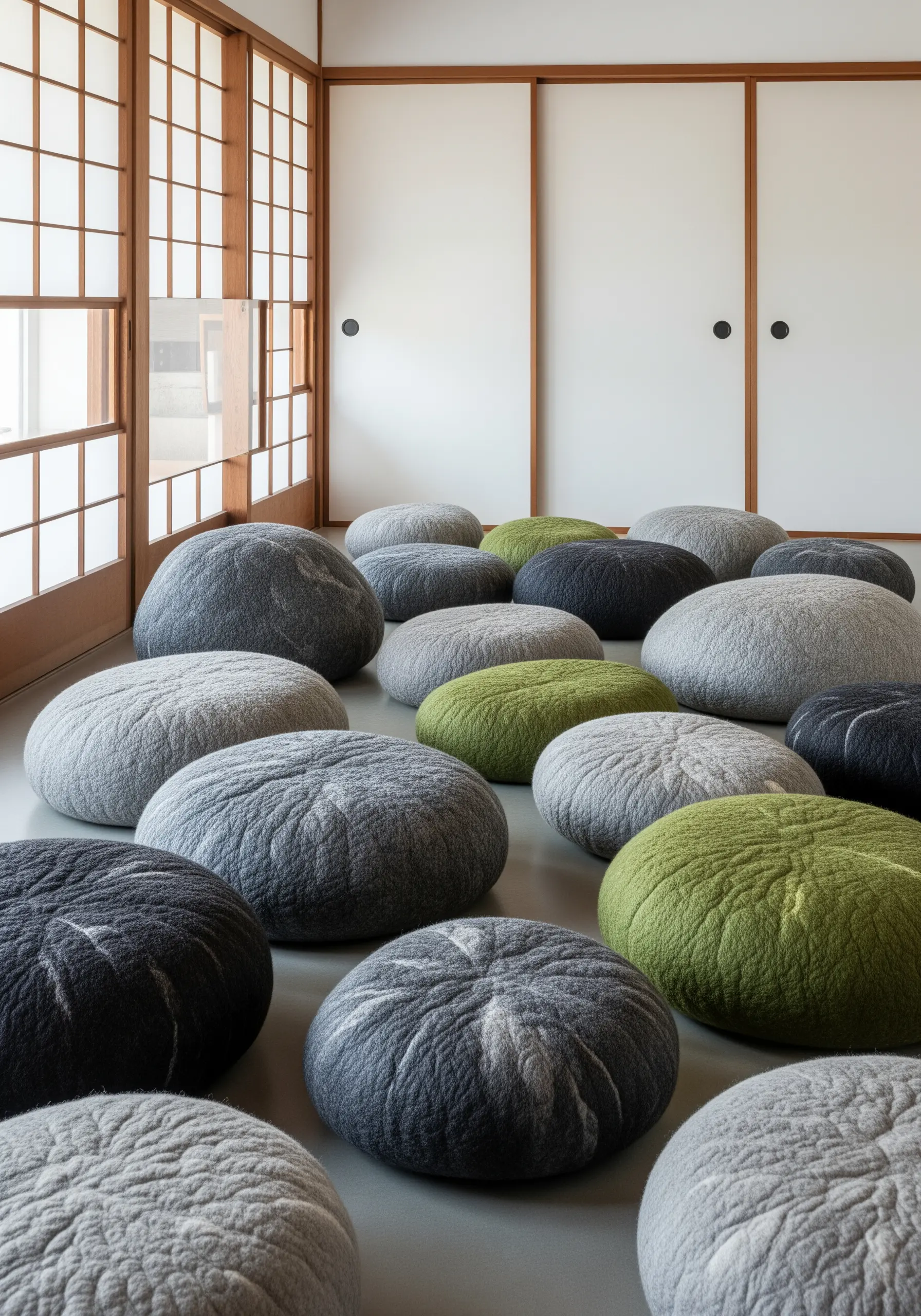
Recreate the smooth, solid forms of river stones using nothing but wool, soap, and water.
Start with a core of tightly packed wool roving, or use a piece of foam for a lighter result.
Wrap thin, wispy layers of colored wool around the core, alternating the direction of the fibers with each layer.
Dunk the wool in hot, soapy water and gently rub and roll it between your hands. The friction will cause the fibers to felt together into a dense, seamless object.
Create a collection of these handmade organic pieces to bring a sense of natural calm into your space.
13. Emphasize Form with Monochrome Knitting
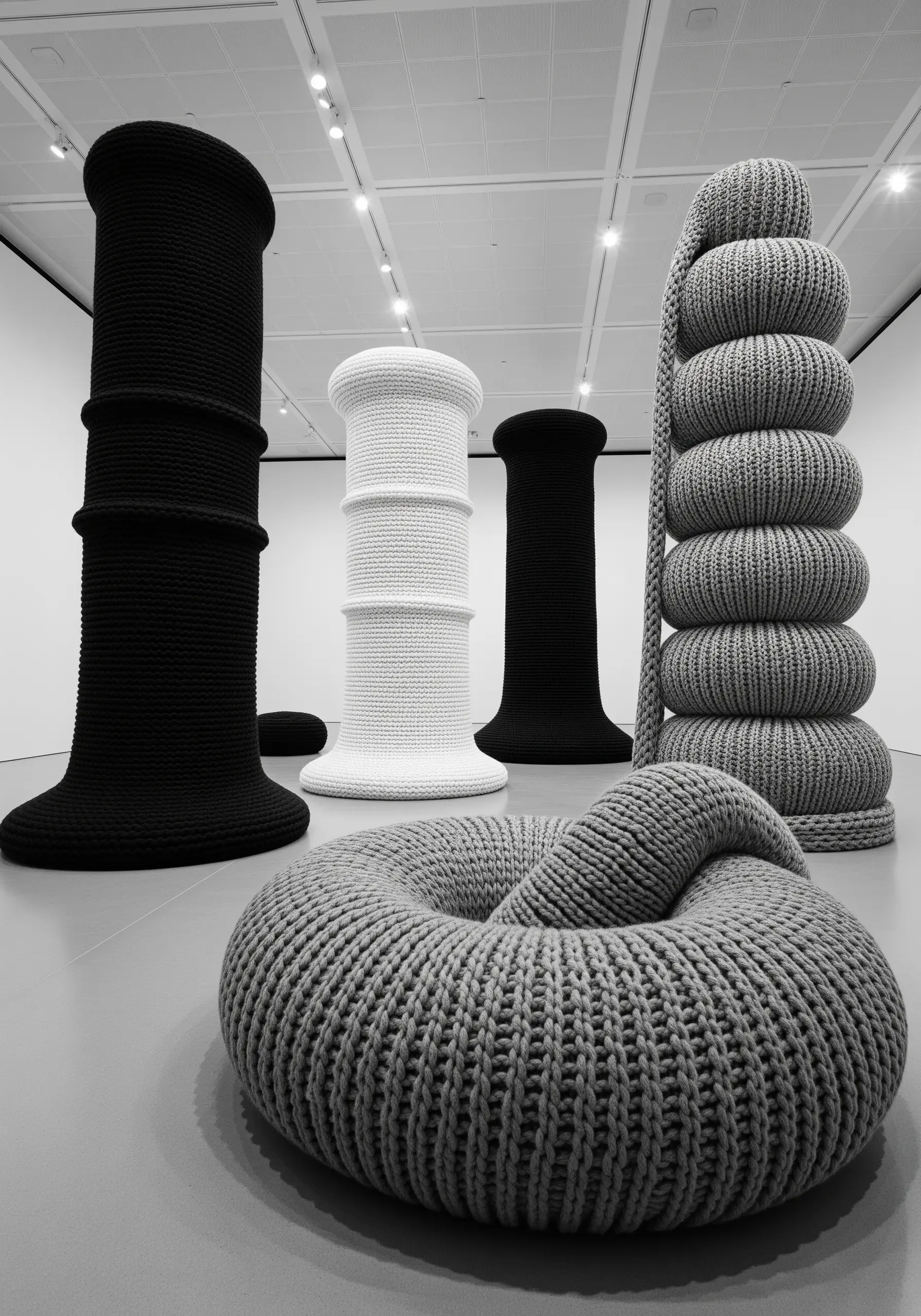
When you remove color, texture and form become the main story.
Challenge yourself to create a sculptural piece using only one color of yarn.
Experiment with different knitting techniques—like ribbing, cables, or seed stitch—to create varied surfaces.
Play with increasing and decreasing stitches to build curves, columns, and organic shapes.
This exercise proves that a limited palette can actually amplify the structural beauty of your stitches.
14. Make a Statement with One Giant Braid
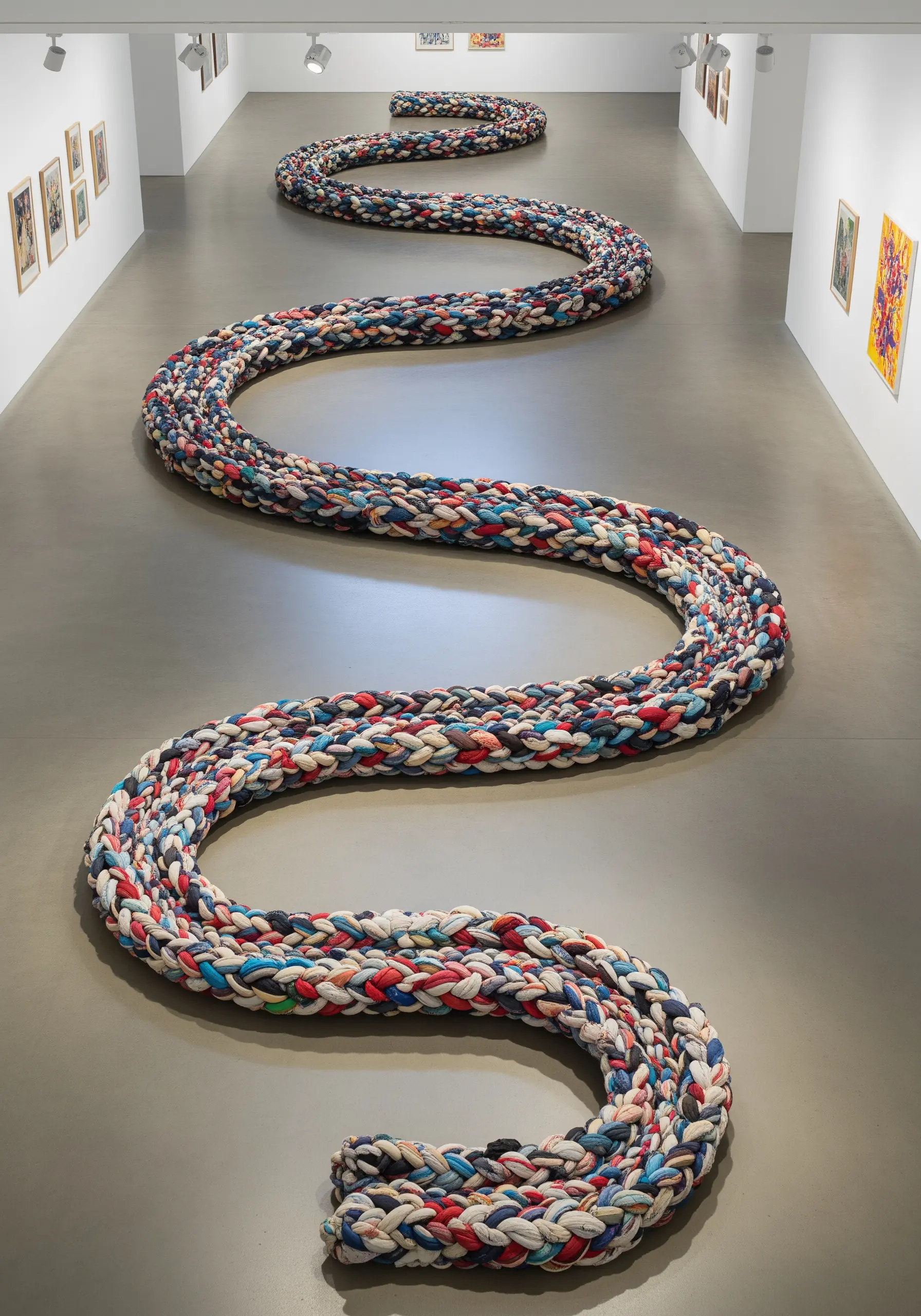
Sometimes, the most impactful project is also the simplest, just executed on a grand scale.
Gather a massive quantity of fabric scraps, old t-shirts, or chunky roving yarn in a cohesive color palette.
Separate them into three thick bundles and create one enormous, loose braid.
This single, oversized textile object can be coiled into a floor cushion, arranged as a soft sculpture, or used as a draft stopper, making a playful and powerful statement with minimal technical skill required.
15. Embroider the Cosmos on a Grand Scale
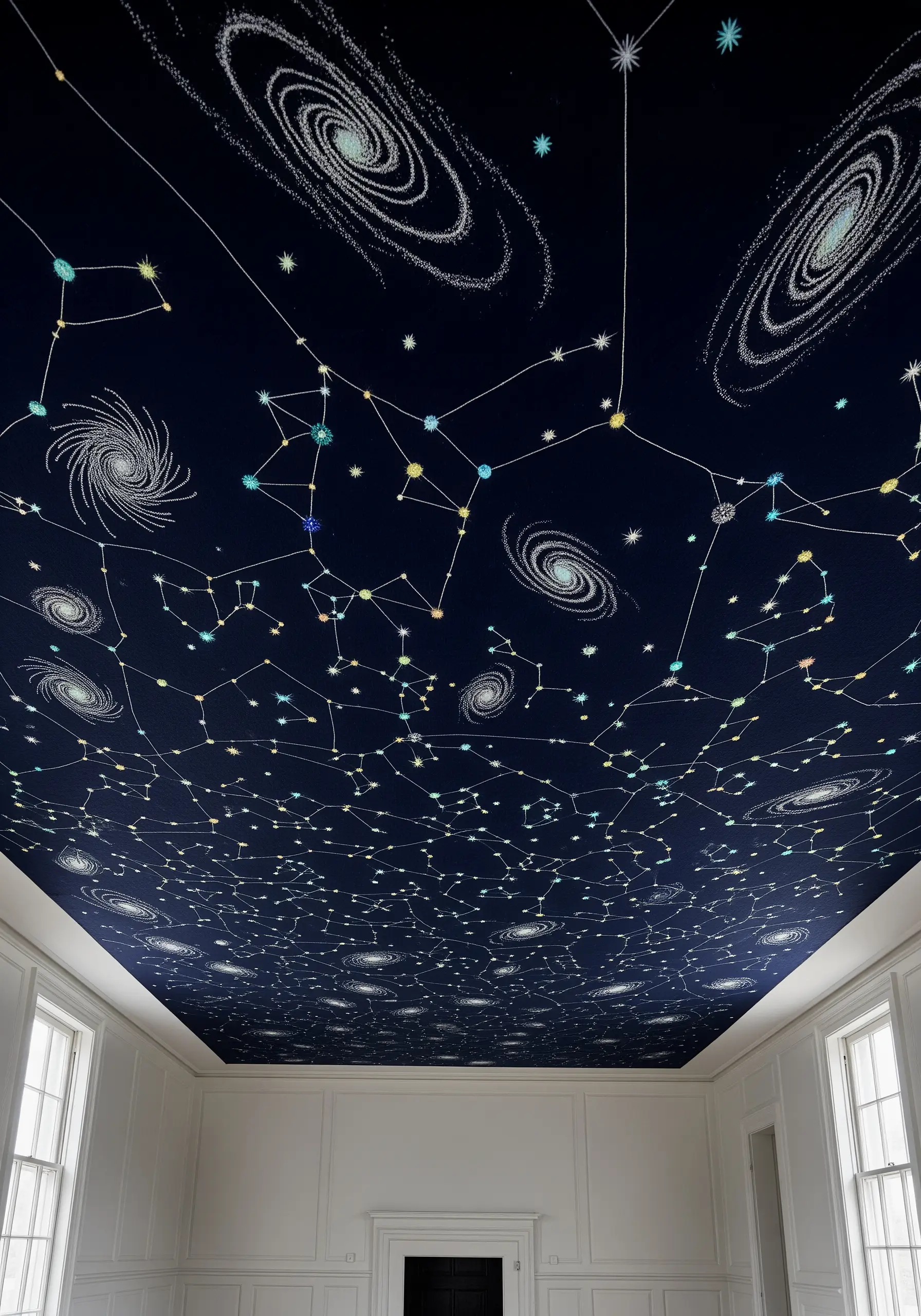
Elevate your embroidery from a small hoop to an architectural feature.
Secure a large piece of dark navy or black linen to a wall or build a simple wooden frame to stretch it on.
Use a projector to trace constellations or draw your own galaxy with chalk.
Stitch the stars and connecting lines using metallic, white, or glow-in-the-dark thread.
This transforms simple straight stitches and French knots into immersive night sky embroidery designs that feel infinite.
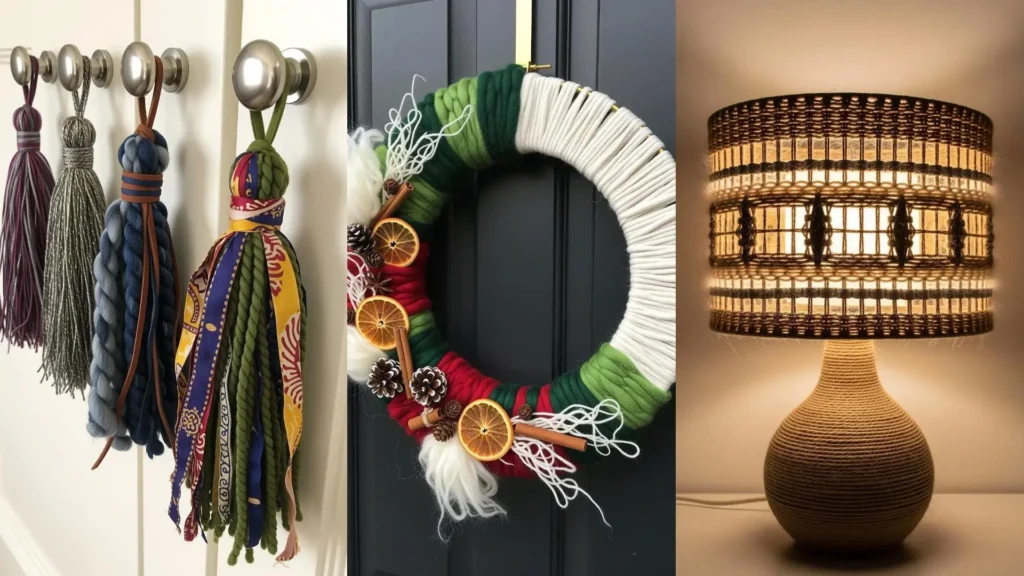
16. Create a Textural Wall with Massed Tassels
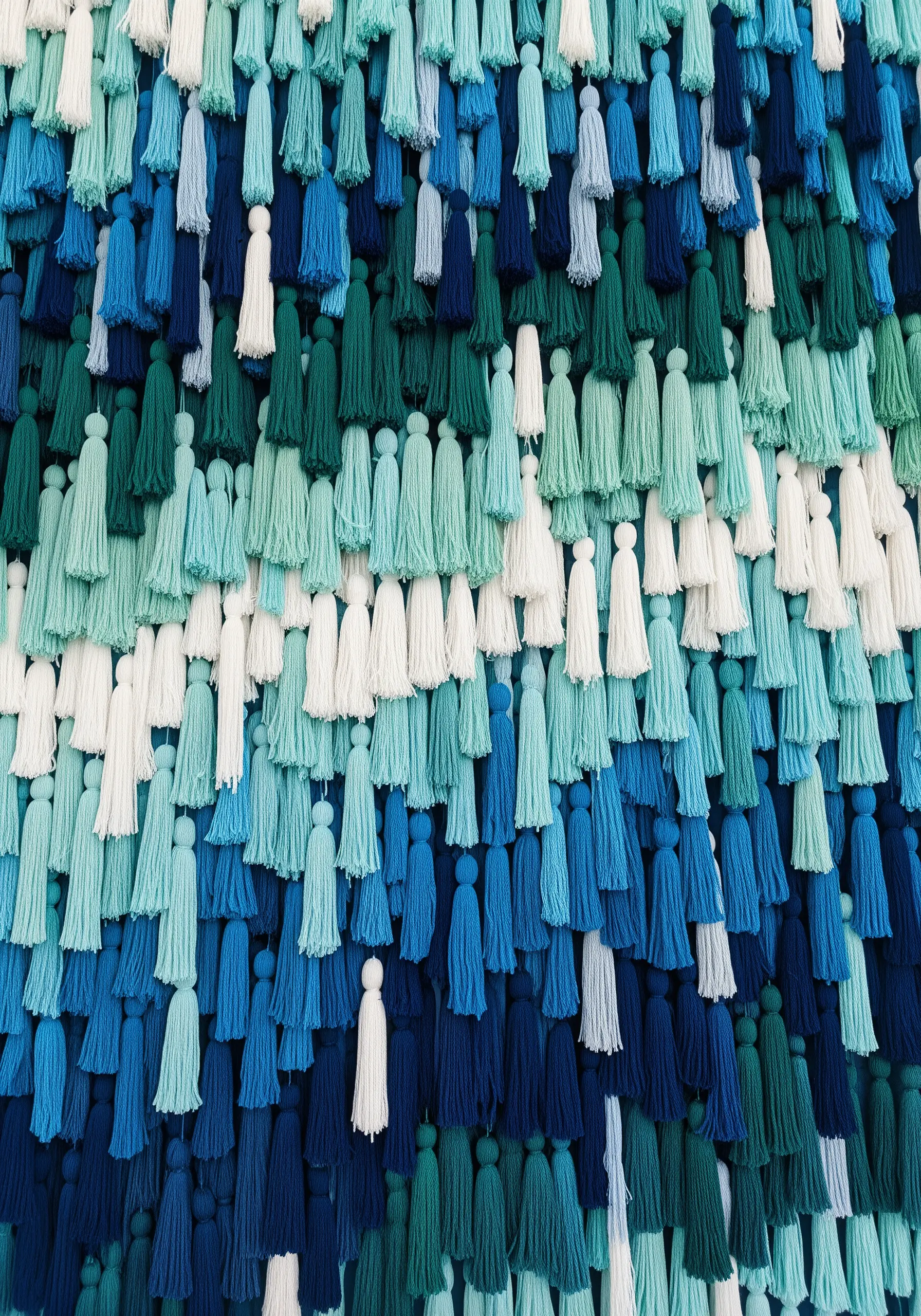
Harness the power of repetition by creating a dense, touchable surface out of a single, simple element.
Choose a color palette of several complementary yarn colors and make dozens, or even hundreds, of tassels.
Attach them in dense rows to a piece of canvas backing or a wooden dowel.
Arrange the tassels to create color-blocked shapes, waves, or a subtle gradient for a high-impact piece that is incredibly simple to construct.
It’s a perfect project for using up leftover yarn.
17. Sculpt a Topographic Map with Yarn
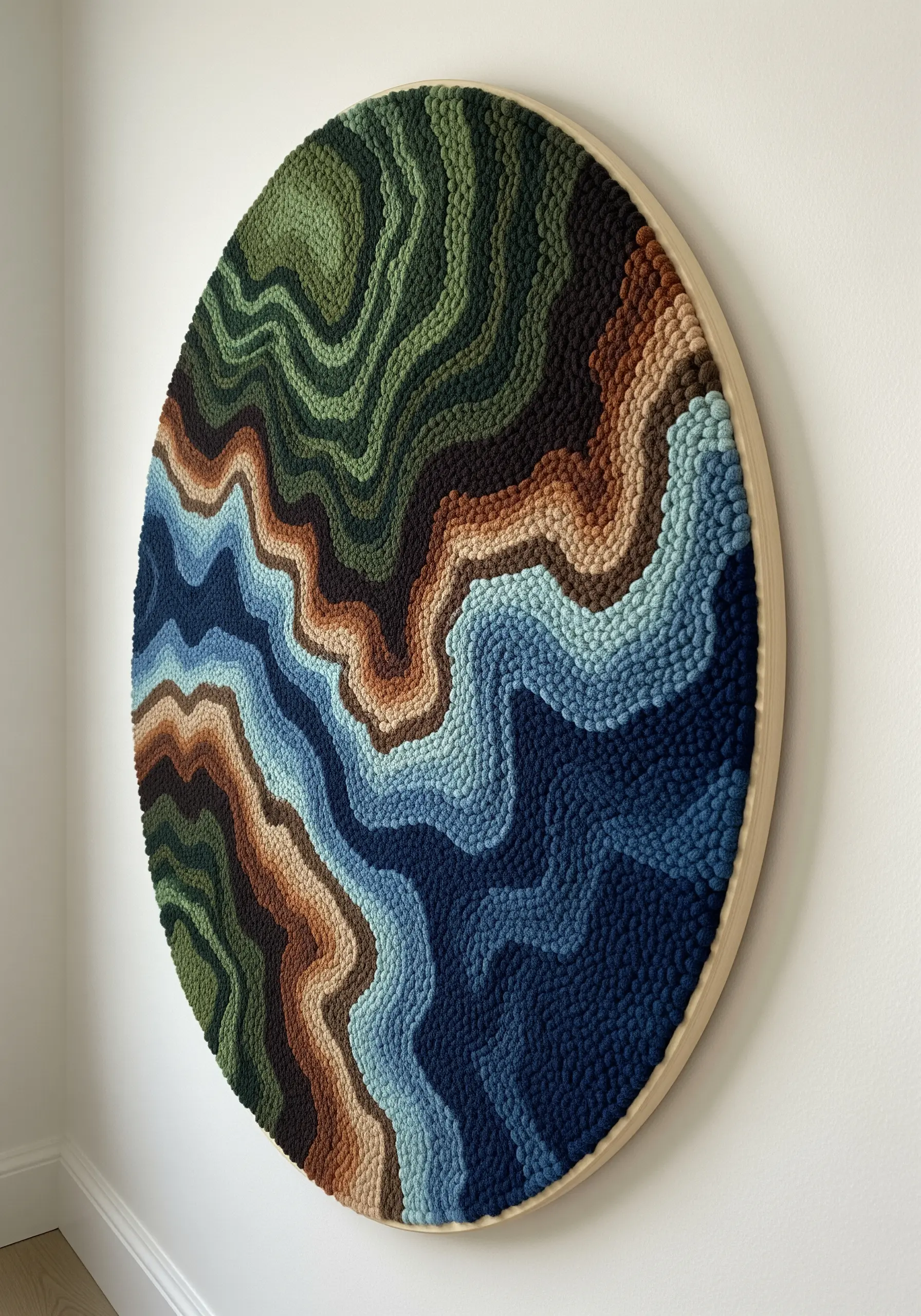
Use the varying loop heights of a punch needle to create a three-dimensional, topographic effect.
Draw an abstract contour map onto your backing fabric.
Using an adjustable punch needle, assign a different loop height to each contour line, moving from the lowest setting for the outer rings to the highest for the center.
This technique creates actual ridges and valleys in your textile art, turning a flat design into a tactile landscape you can physically explore.
18. Weave a Cozy, Human-Scale Nest
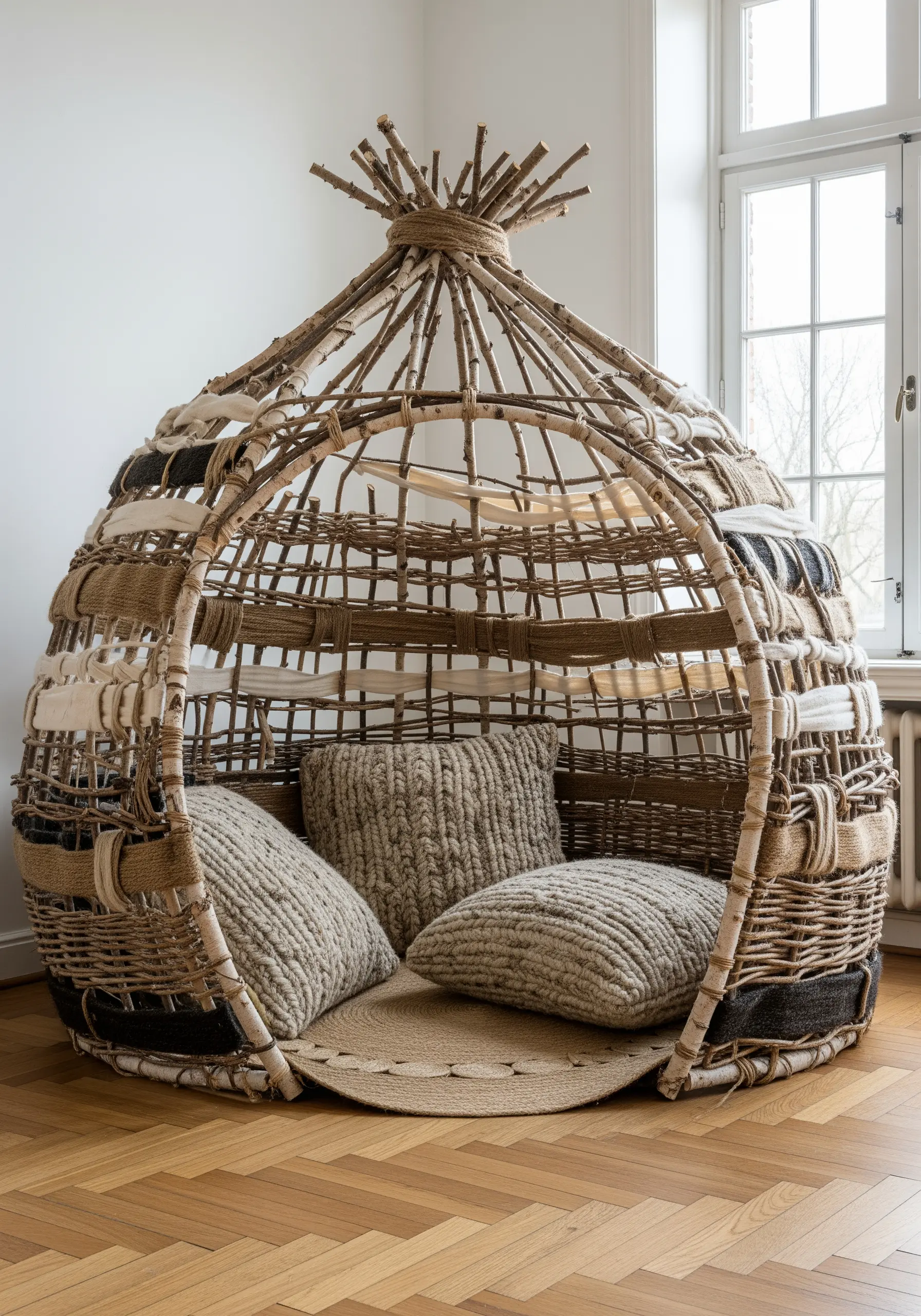
Apply weaving techniques to an architectural frame to create a functional, immersive sculpture.
Create a smaller version by building a frame from flexible birch branches or even PVC pipes bent into a dome shape.
Instead of weaving with fine yarn, use thick wool roving, fabric strips, or seagrass rope.
Weave the materials in and out of the frame’s ‘ribs’ to create a semi-enclosed, cozy space—perfect for a child’s reading nook or a meditative corner.
19. Weave with Light and Negative Space
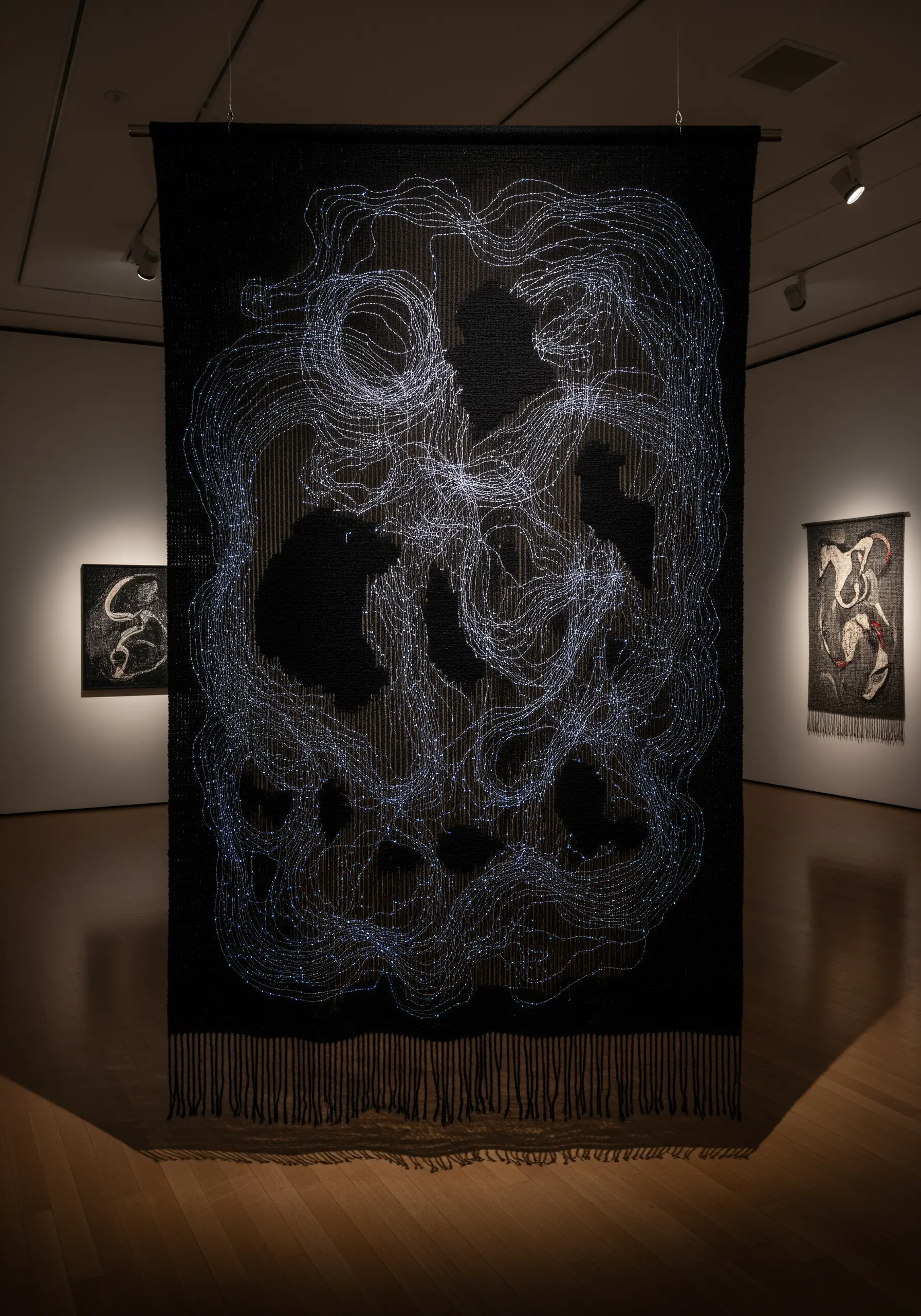
Create a design that feels like it’s floating in mid-air by making the empty space a key component of your piece.
On a simple loom, use a dark thread for your warp—the vertical threads.
For the weft, choose a shimmering, light-reflecting thread like a metallic filament or fine, beaded wire.
Weave your design loosely, allowing large sections of the dark warp to show through.
This technique creates an ethereal effect where the design seems to emerge from the shadows, proving the power of how you combine thread and negative space.
20. Cultivate an Indoor, Everlasting Garden
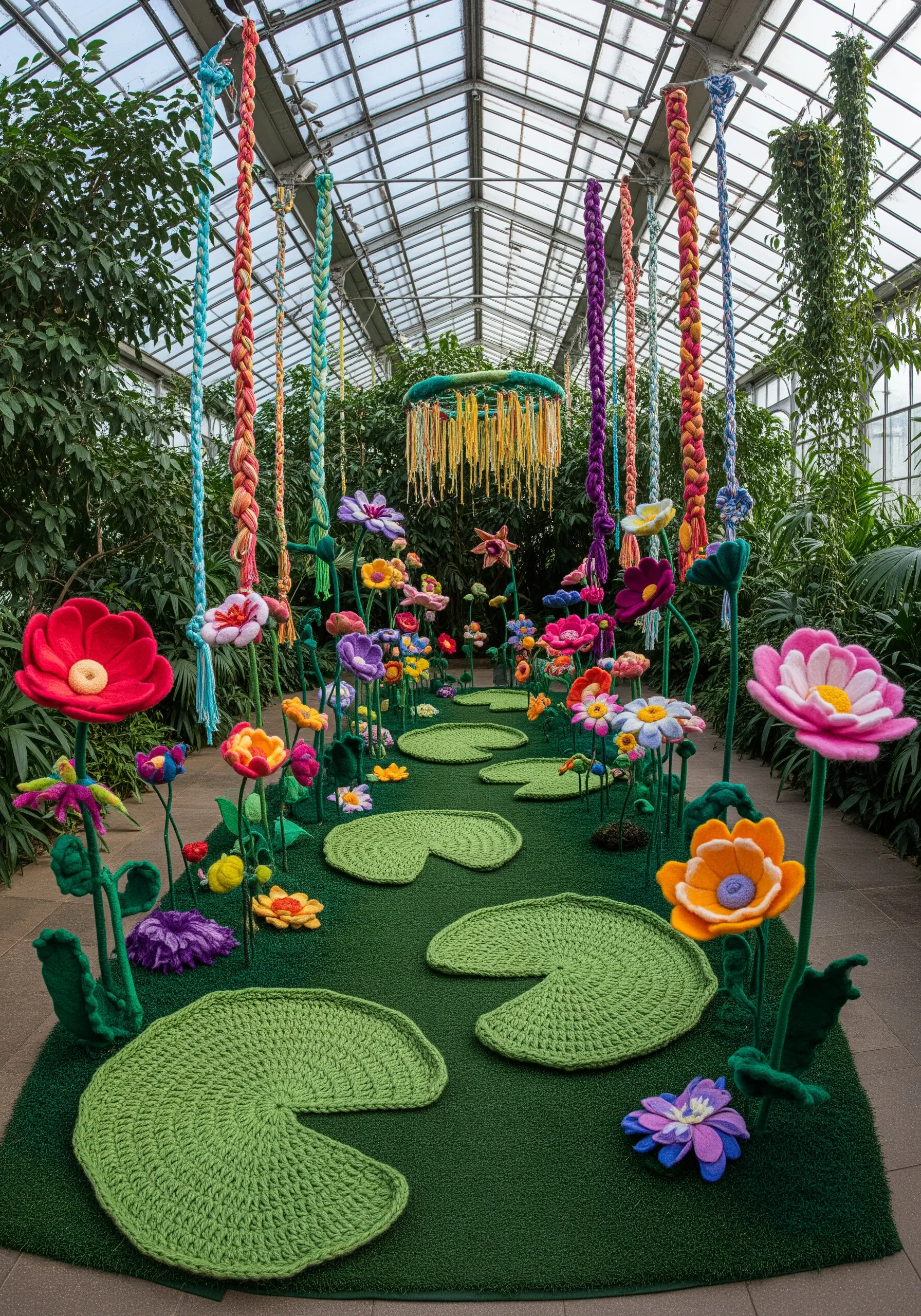
Transform an entire room by creating an immersive environment of oversized, fantastical flora.
Use crochet, knitting, and felting techniques to craft large-scale flowers, lily pads, and vines.
Incorporate wire into the stems and petals to make them poseable, allowing you to arrange them in a corner of a room or even ‘plant’ them in pots.
This is the ultimate expression of fiber art as world-building, where you can create a joyful, whimsical garden that never needs watering.