
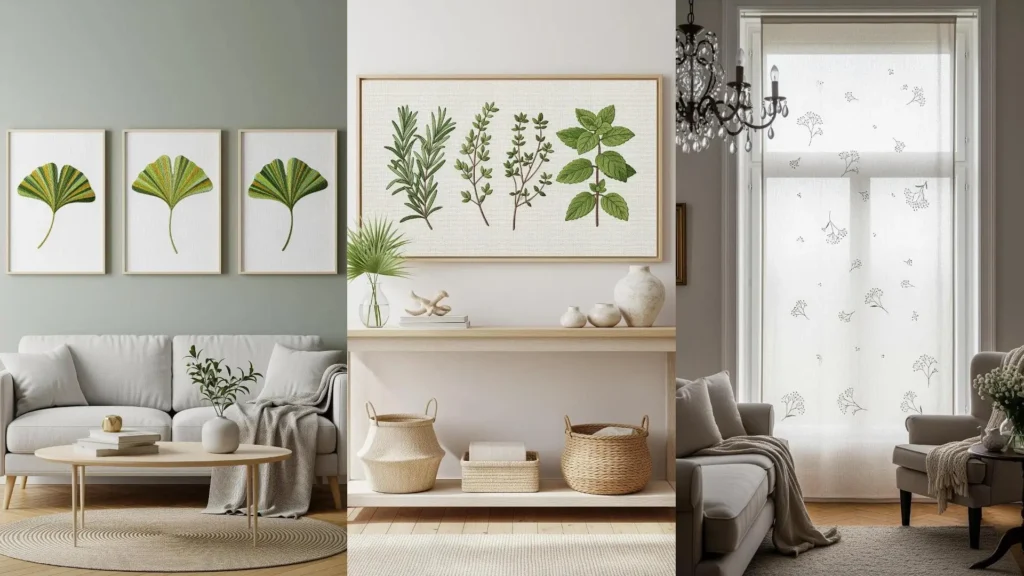
Your embroidery hoop can be more than just a tool for practice; it can be a frame for art that genuinely transforms a room. The secret isn’t in complex patterns or a thousand colors, but in the deliberate, thoughtful choices you make with every stitch.
Instead of just filling in a shape, I want you to think about how your needle can create texture, how a single strand of thread can suggest a shadow, and how the space you leave empty can be just as powerful as the areas you fill.
These floral patterns are invitations to slow down and elevate your technique. You’ll learn to blend colors like a painter, create dimension with sculptural stitches, and arrange simple motifs into compositions that feel calm, modern, and deeply personal. Let’s begin.
1. The Serene Lavender Wreath
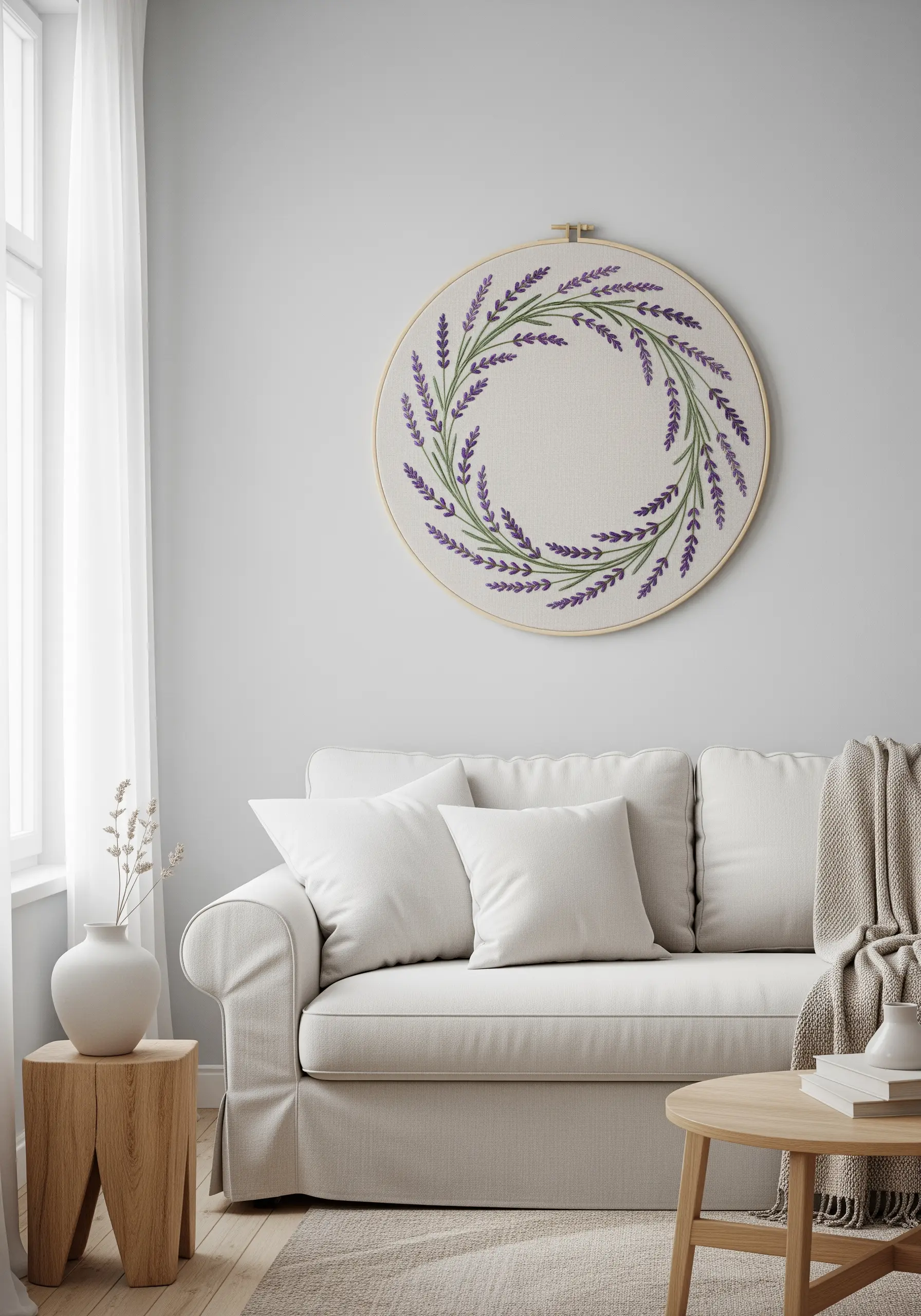
Create a calming focal point by stitching a lavender wreath directly in a large hoop for display.
For the lavender buds, use a cluster of three small, straight stitches or a single French knot, which adds just enough texture without looking bulky.
Use a stem stitch for the curved branches, ensuring your stitches are small and consistent to maintain a smooth, elegant arc.
For the leaves, a simple detached chain stitch (lazy daisy) works beautifully, creating a delicate, airy feel that complements the structured buds.
This design relies on repetition and breathing room between the sprigs, so resist the urge to overfill the space; the quiet background is just as important as the stitches.
2. Cascading Eucalyptus Wall Hanging

Elevate your work from a hoop to a modern wall hanging for a more integrated, sophisticated look.
To capture the dusty, muted tones of eucalyptus, blend your threads. Use one strand of sage green with one strand of pale grey in the same needle to create a soft, heathered effect.
Vary the leaf direction and fill them with a fishbone stitch. This creates a central vein and gives each leaf a natural, dimensional shape.
Work on a narrow panel of linen or cotton canvas, leaving a few inches at the top and bottom to fold over a small wooden dowel for a clean, professional finish.
These long, vertical embroidered textile wall hangings draw the eye upward, making them perfect for narrow walls or empty corners.
3. The Dandelion Seed Triptych
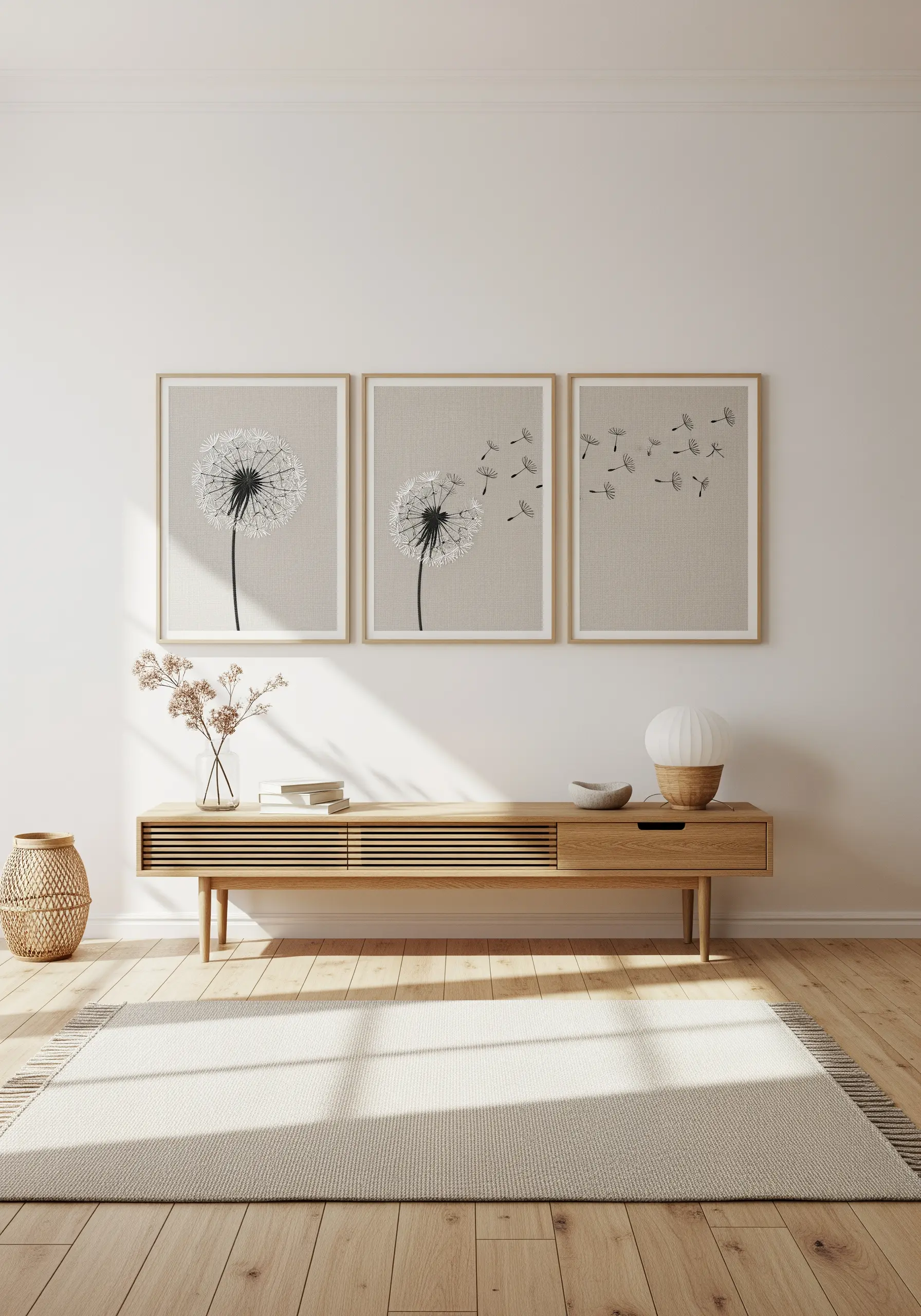
Tell a story across multiple frames to create a sense of movement and serene transition.
For the fluffy dandelion head, use hundreds of tiny, straight seed stitches radiating from a central point, varying their length slightly for realism.
The magic is in the negative space. As the seeds disperse across the panels, increase the distance between them to create a visual whisper of wind and release.
Use a single strand of black or dark grey thread on a light, textured fabric like linen for a high-contrast, graphic effect that feels both modern and delicate.
This is one of those minimal embroidery wall pieces where simplicity makes the strongest statement.
4. Expansive Cherry Blossom Branch
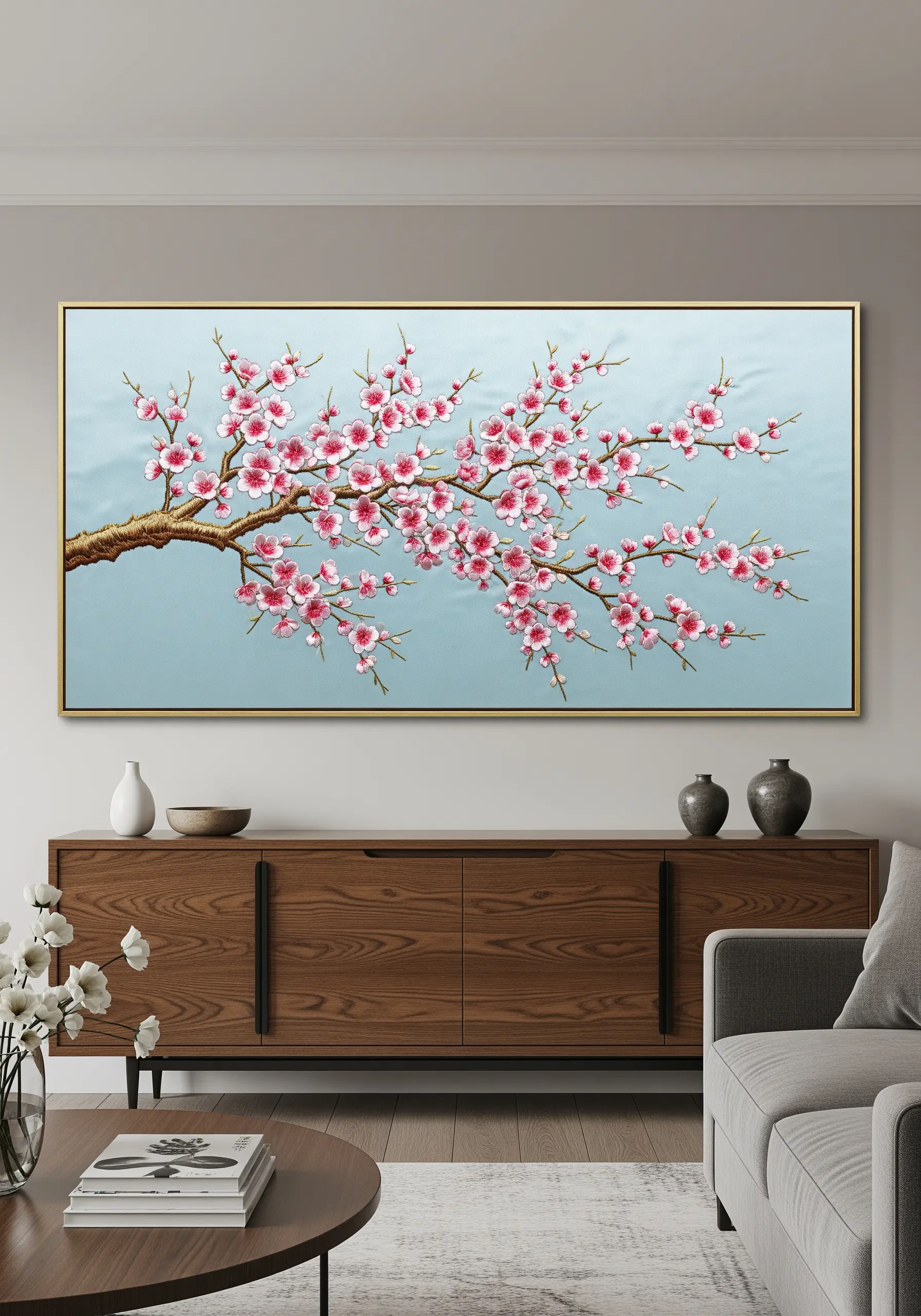
For a statement piece, think beyond the hoop and embrace a large canvas to create an immersive, panoramic effect.
Build texture on the main branch by first laying down long strands of brown thread and then couching them with a thinner, lighter thread. This creates a realistic, gnarled bark texture.
Use detached chain stitches for the petals and bright pink French knots for the centers to give each blossom dimension and a pop of intense color.
The gentle color gradient in the background fabric, from light to medium blue, adds atmospheric depth that makes the blossoms stand out even more.
Large-scale embroidery tapestries can define an entire room’s aesthetic, turning a wall into a window.
5. Variegated Monstera Leaf Study
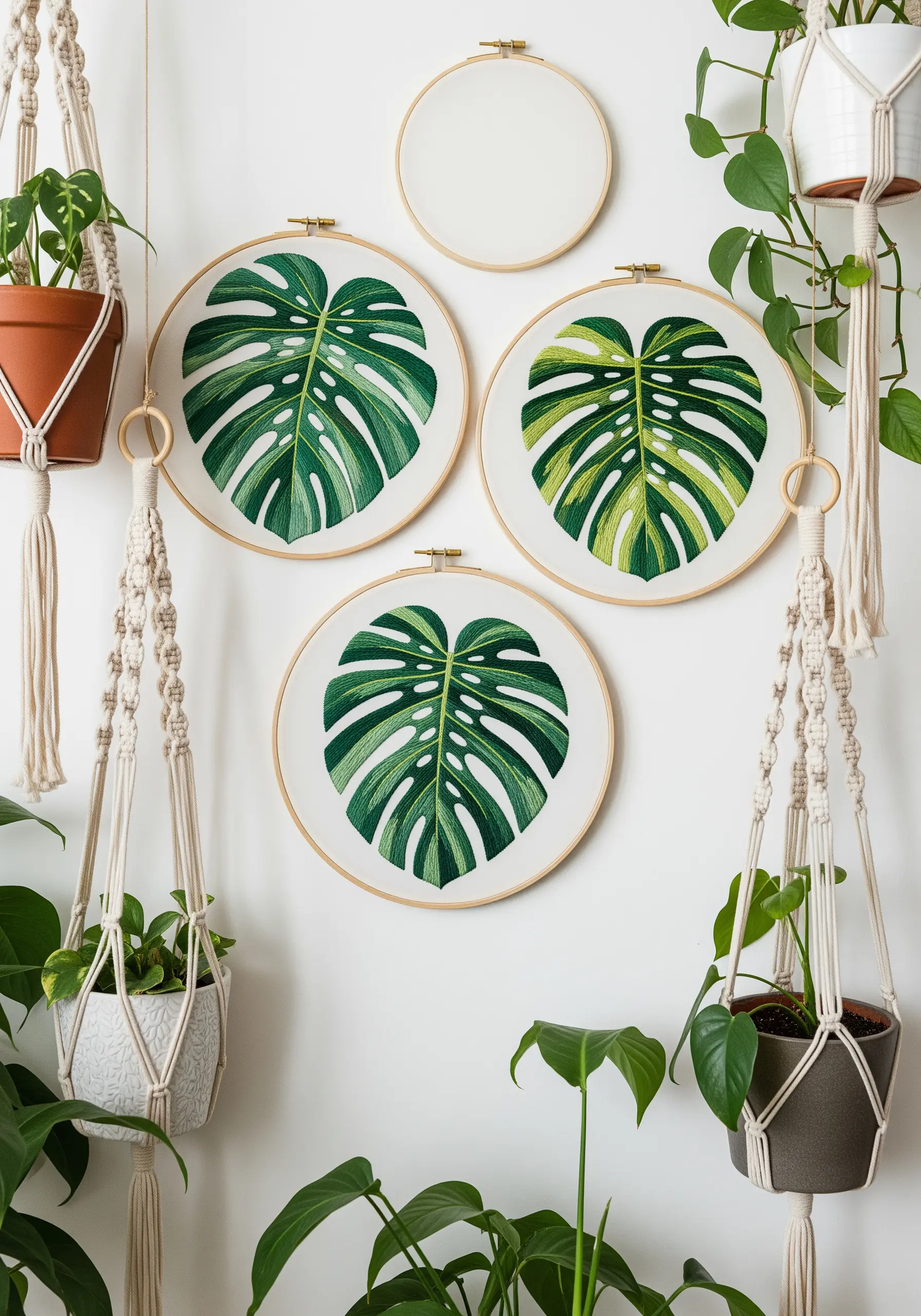
Capture the subtle beauty of a variegated leaf by mastering the long-and-short stitch, which allows for seamless color blending.
Divide each section of the leaf into smaller, manageable shapes and fill them with stitches that follow the natural direction of the leaf’s veins.
To create the variegation, introduce a new color (like pale green or off-white) by bringing your needle up through the existing stitches, effectively splitting the thread and blending the hues organically.
Use at least four shades of green, from deep forest to bright chartreuse, to give your leaf realistic depth and vibrancy.
Group several hoops together to create a stunning gallery wall of these rare leaf patterns.
6. The Wildflower Meadow Tapestry
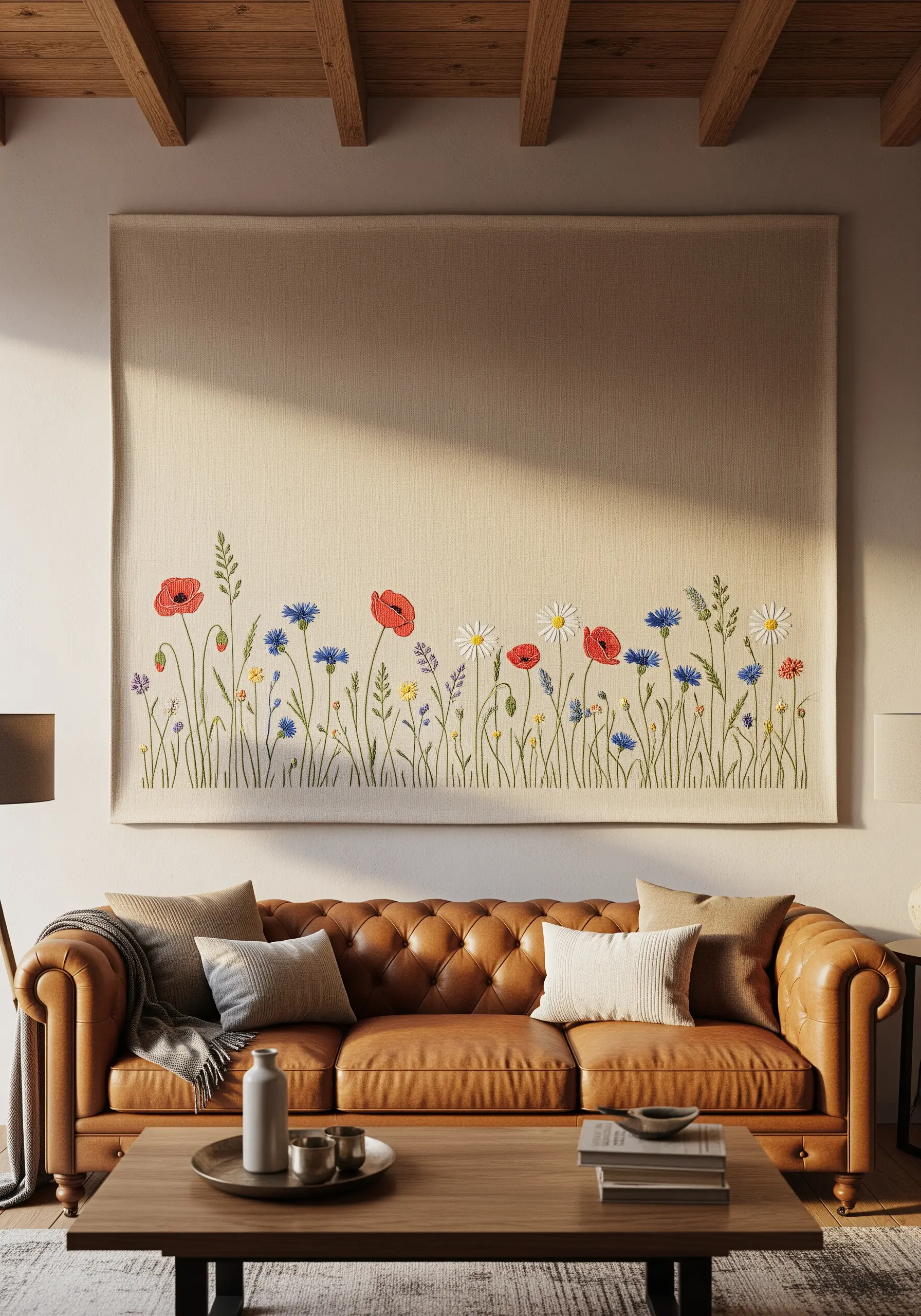
Create the feeling of a sprawling meadow by focusing on variety in height, color, and stitch texture rather than intricate detail.
Use a simple backstitch for the stems, varying the thread count—three strands for thicker stalks like poppies, and one strand for delicate grasses.
Combine different stitches for the blooms: satin stitch for daisies, French knots for cornflowers, and straight stitches for poppy petals.
Placing brighter, more detailed flowers at the front and smaller, simpler ones further back creates an effortless sense of depth.
Cottage garden embroidery themes on a large canvas bring a sense of rustic, untamed beauty indoors.
7. The Magnolia Diptych Portrait
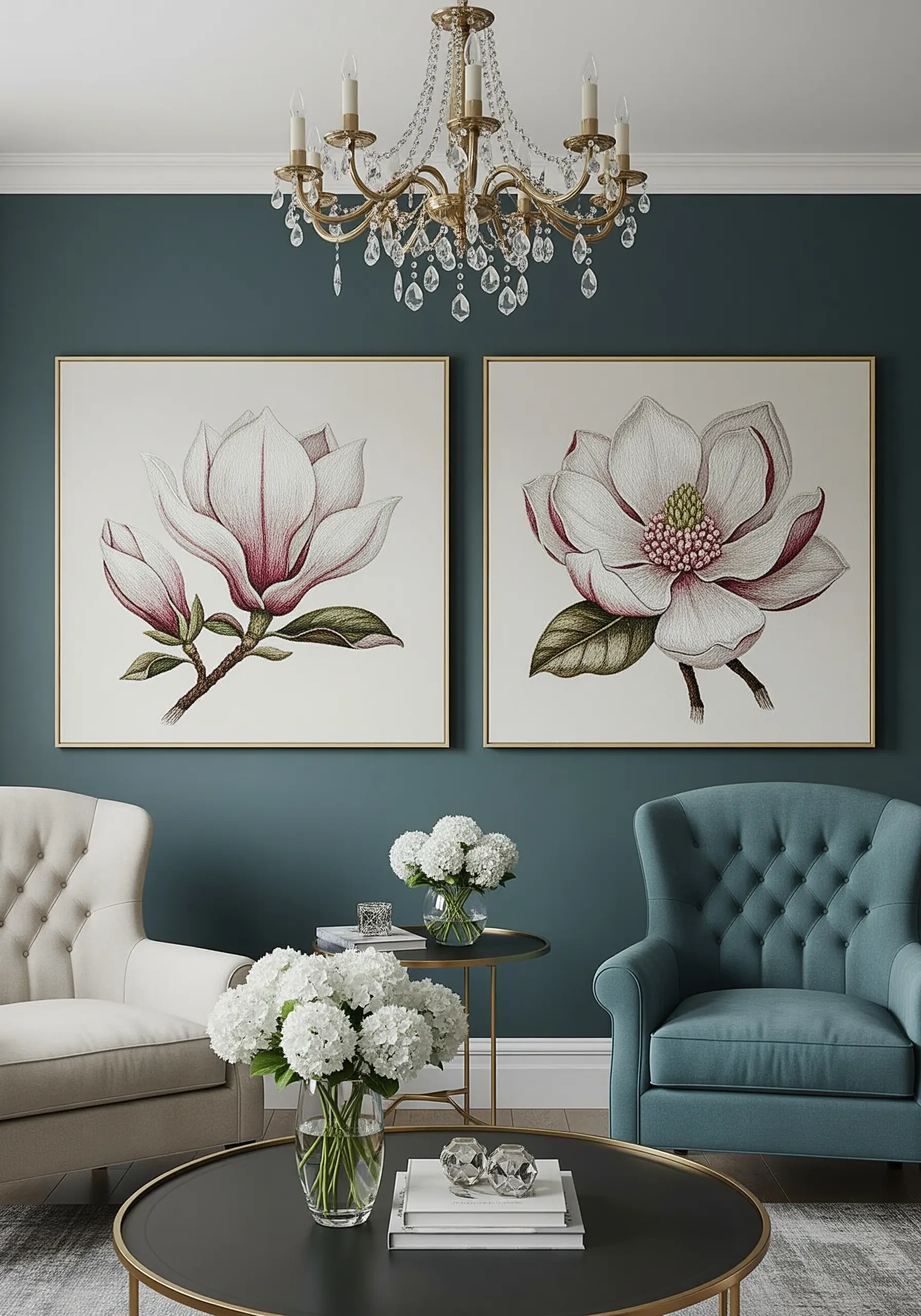
Achieve a soft, illustrative quality by using a single strand of thread for delicate shading, especially at the base of the petals.
Instead of a solid satin stitch, use sparse long-and-short stitches with a dusty rose or mauve thread to suggest shadows and curves on the white petals.
This technique creates a gentle blush of color that feels more like a watercolor wash than solid embroidery, adding sophistication and realism.
The key is restraint; the unstitched white fabric does most of the work, representing the highlight on the petals.
These elegant, watercolor-style embroidery patterns are perfect for creating a serene and refined atmosphere.
8. Zen Lotus Pond in Gold and Teal
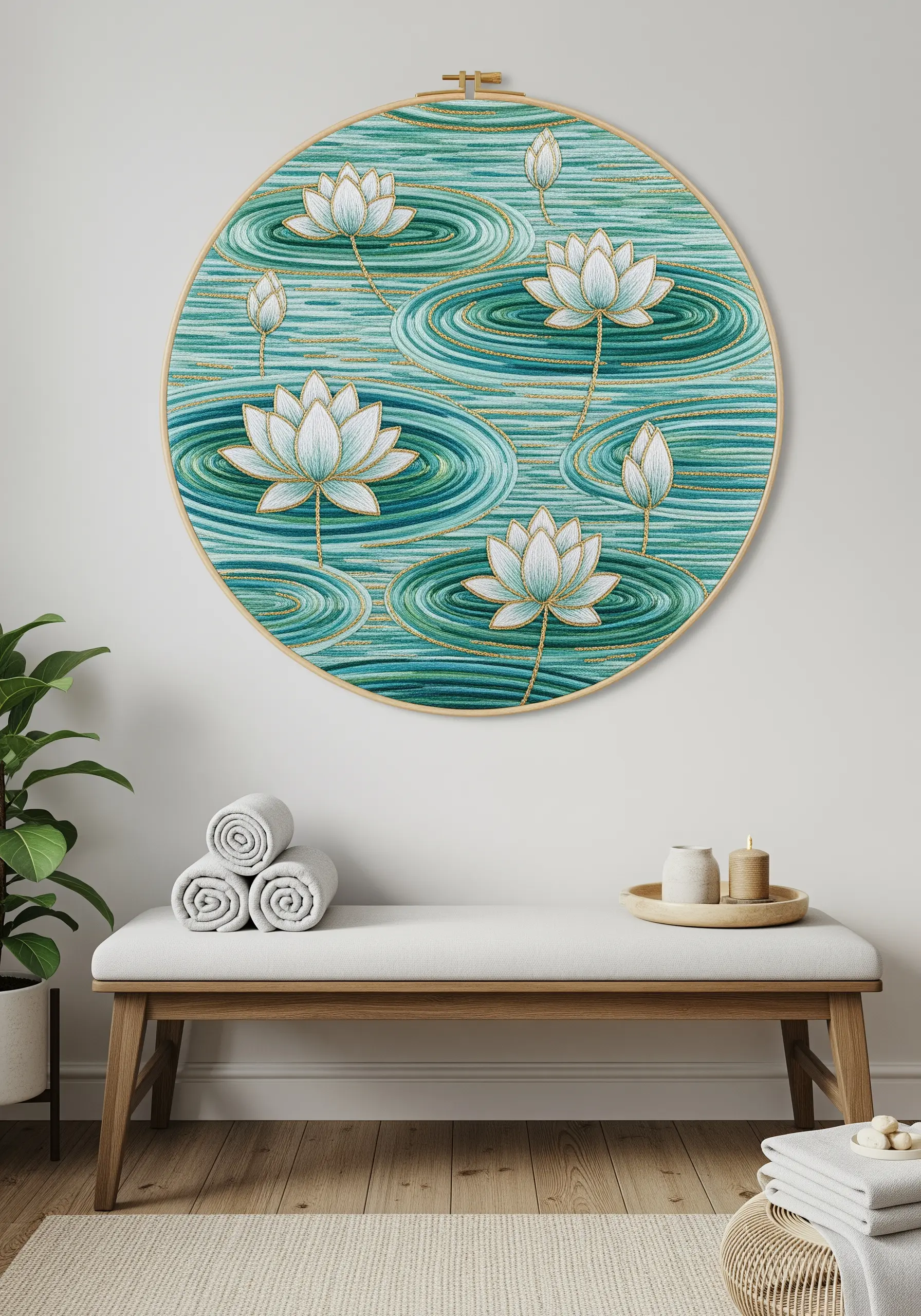
Evoke the tranquility of water by stitching concentric ripples in varying shades of teal, aqua, and green.
Use a simple backstitch or split stitch for the water lines, alternating colors to create depth. The slightly uneven nature of hand stitching will add to the organic feel of moving water.
Introduce a single strand of gold metallic thread alongside your cotton floss every few rows. This catches the light beautifully, suggesting sunlight glinting on the water’s surface.
For the lotus flowers, use a crisp white satin stitch outlined with the same gold thread to make them pop against the cool-toned background.
The combination of color and texture in these abstract thread waves & swirls creates a deeply meditative piece.
9. A Culinary Herb Botanical Chart
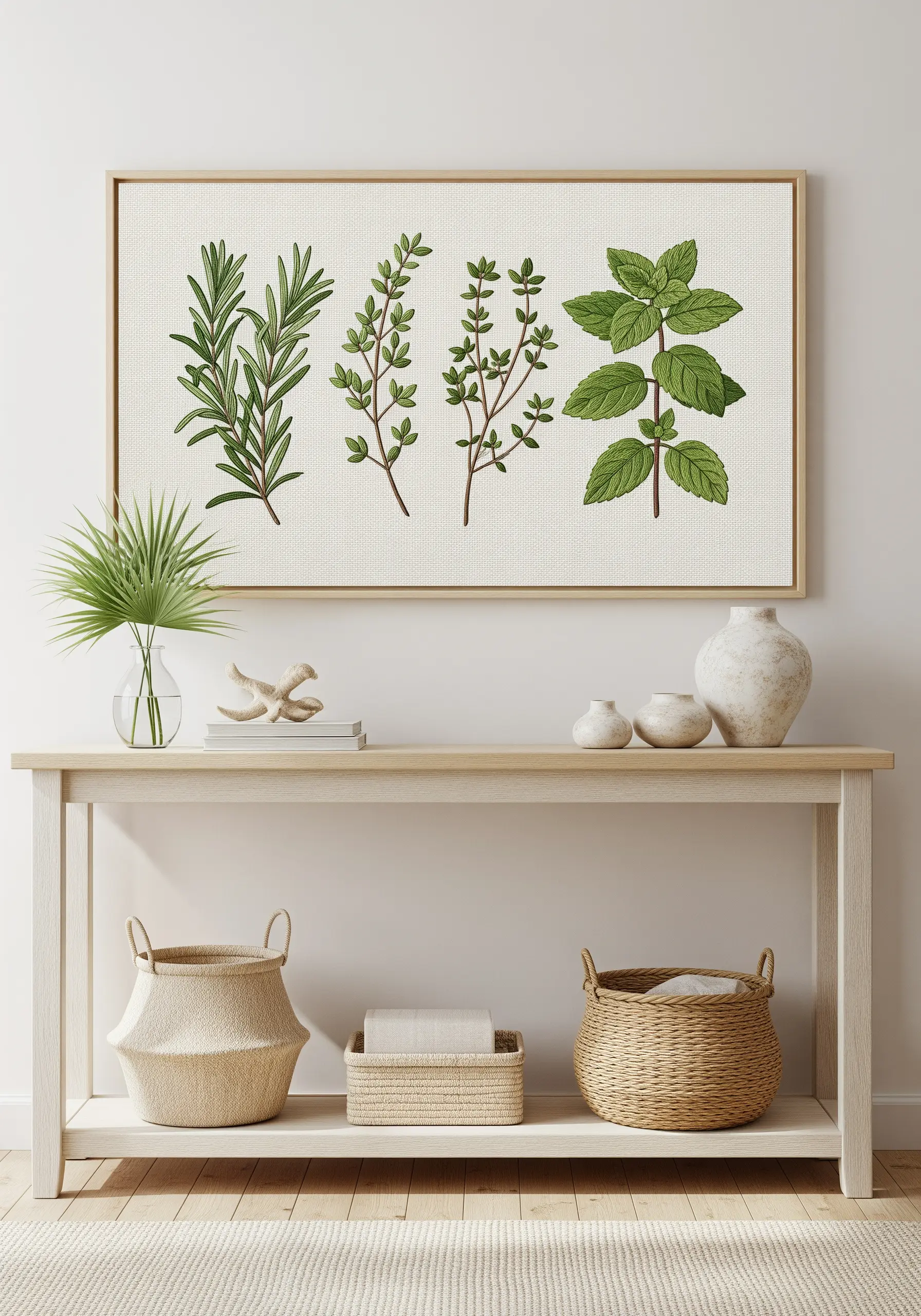
Create a clean, classic botanical illustration by focusing on precise outlines and consistent stitch work.
Use a two-strand split stitch for all the stems and outlines. This creates a solid, slightly raised line that looks more refined than a standard backstitch.
Fill the leaves with a satin stitch, ensuring all your stitches lie in the same direction to reflect the light evenly and create a smooth, polished surface.
Work on a fabric with a visible weave, like an evenweave linen, which helps you keep your stitches uniform and straight.
Grouping herbs together turns simple vintage botanical pillow embroidery patterns into a sophisticated piece of wall art for a kitchen or dining area.
10. Floating Mimosa Sprig Constellation
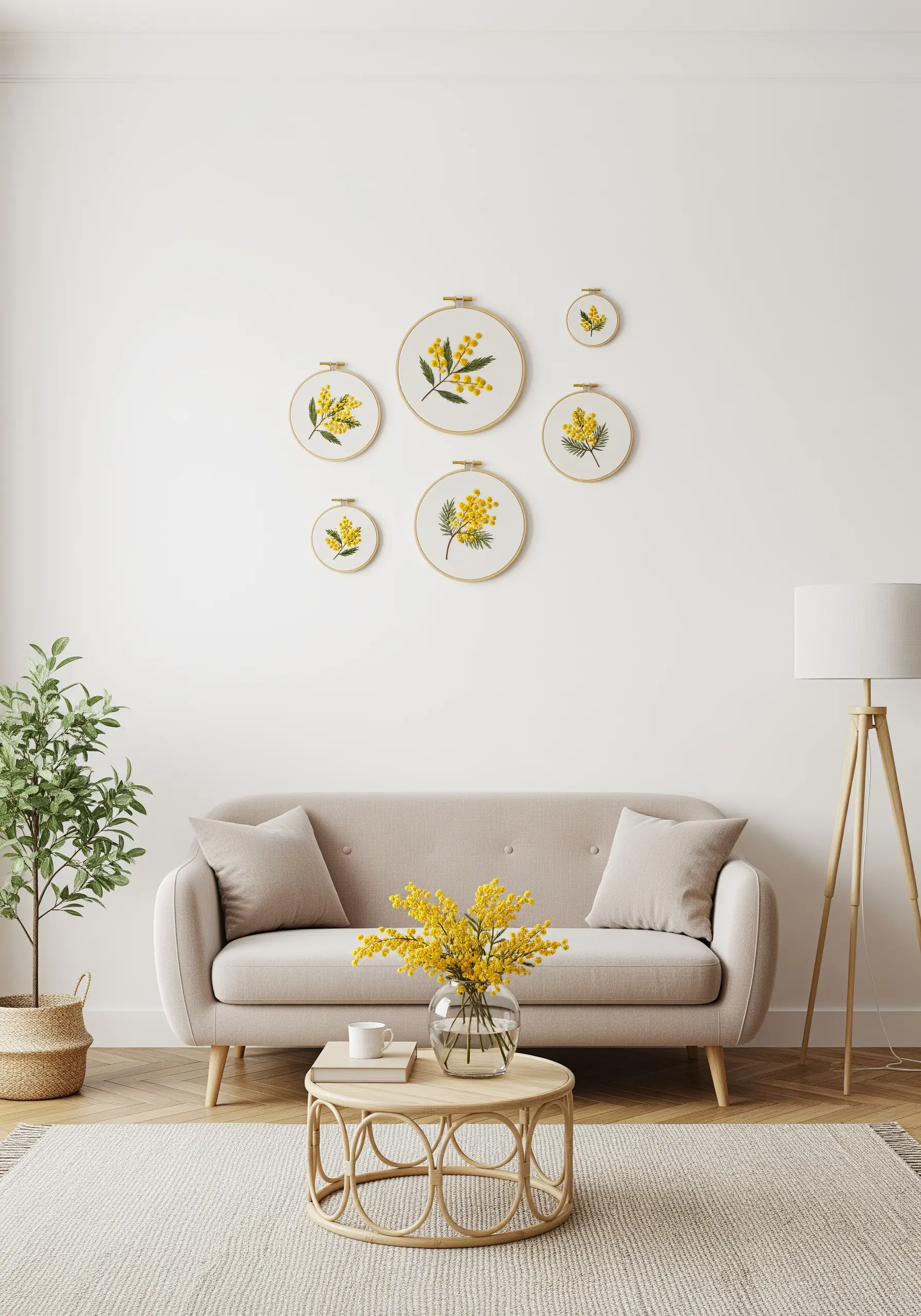
Design a dynamic gallery wall by scattering small, related motifs across several hoops of varying sizes.
The key to fluffy mimosa blooms is the French knot. Vary the number of times you wrap the thread (once or twice) to create knots of different sizes, which adds texture and realism.
Stitch the delicate stems with a single strand of dark green using a whipped backstitch to give them a smooth, rounded appearance.
Arrange the hoops in an organic, flowing pattern on the wall, leading the eye from one to the next. This creates a sense of lightness and movement that a single large piece can’t achieve.
Circle frame minimal embroidery compositions feel modern, playful, and effortlessly chic.
11. The Radiant Ginkgo Leaf Triptych
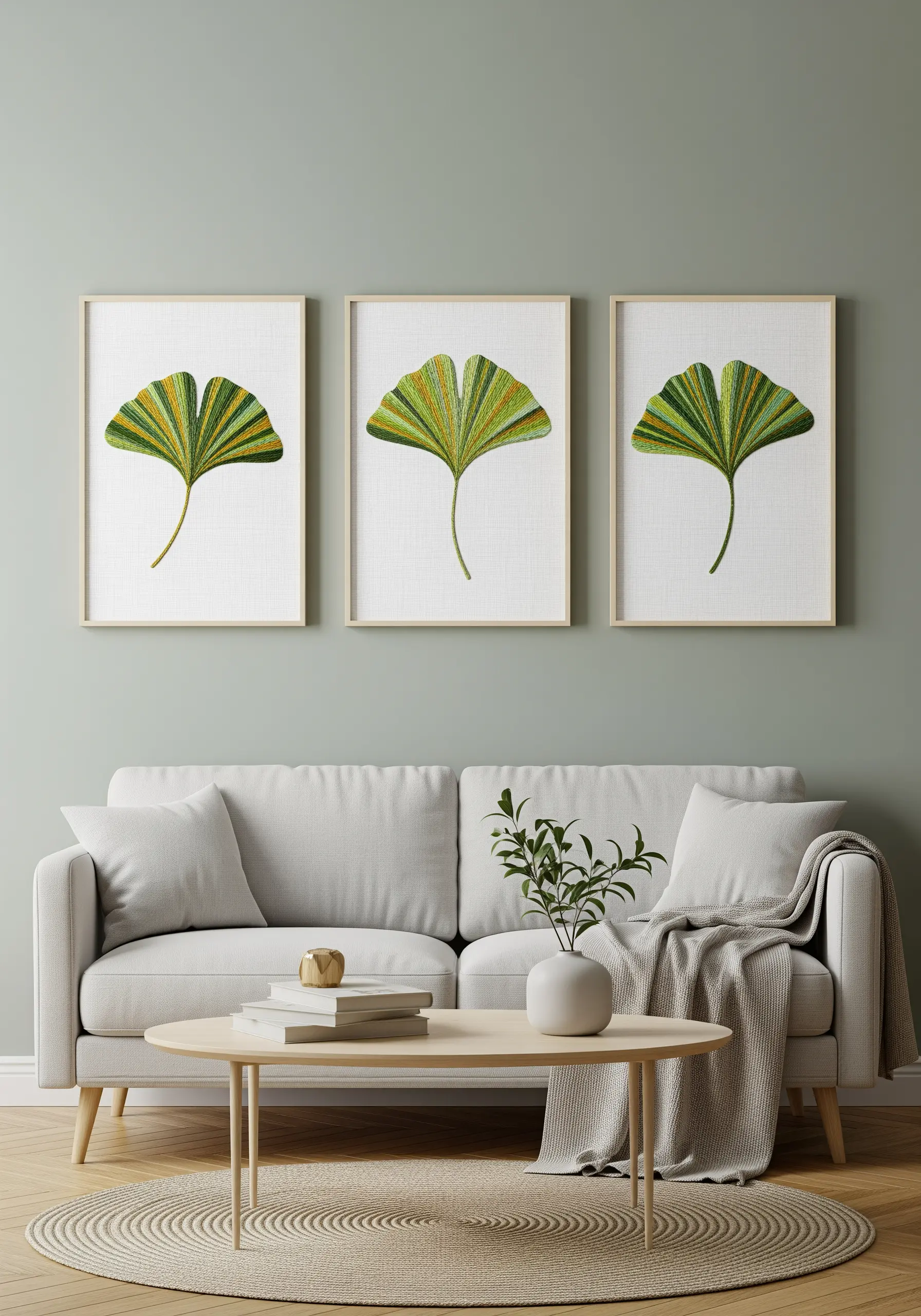
Capture the unique fan shape and color graduation of a ginkgo leaf by using directional satin stitch.
Instead of filling the leaf horizontally, angle your satin stitches so they radiate from the base of the leaf to the outer edge, following its natural growth pattern.
To create the beautiful color blend, switch thread colors every few stitches, moving from dark green at the base to yellow and chartreuse at the tips.
This method, known as thread painting, creates a stunningly smooth gradient that makes each leaf feel vibrant and alive.
Use these refined leaf embroidery stitches to create a sophisticated and cohesive art installation for your living space.
12. Immersive Fern Foliage Tapestry
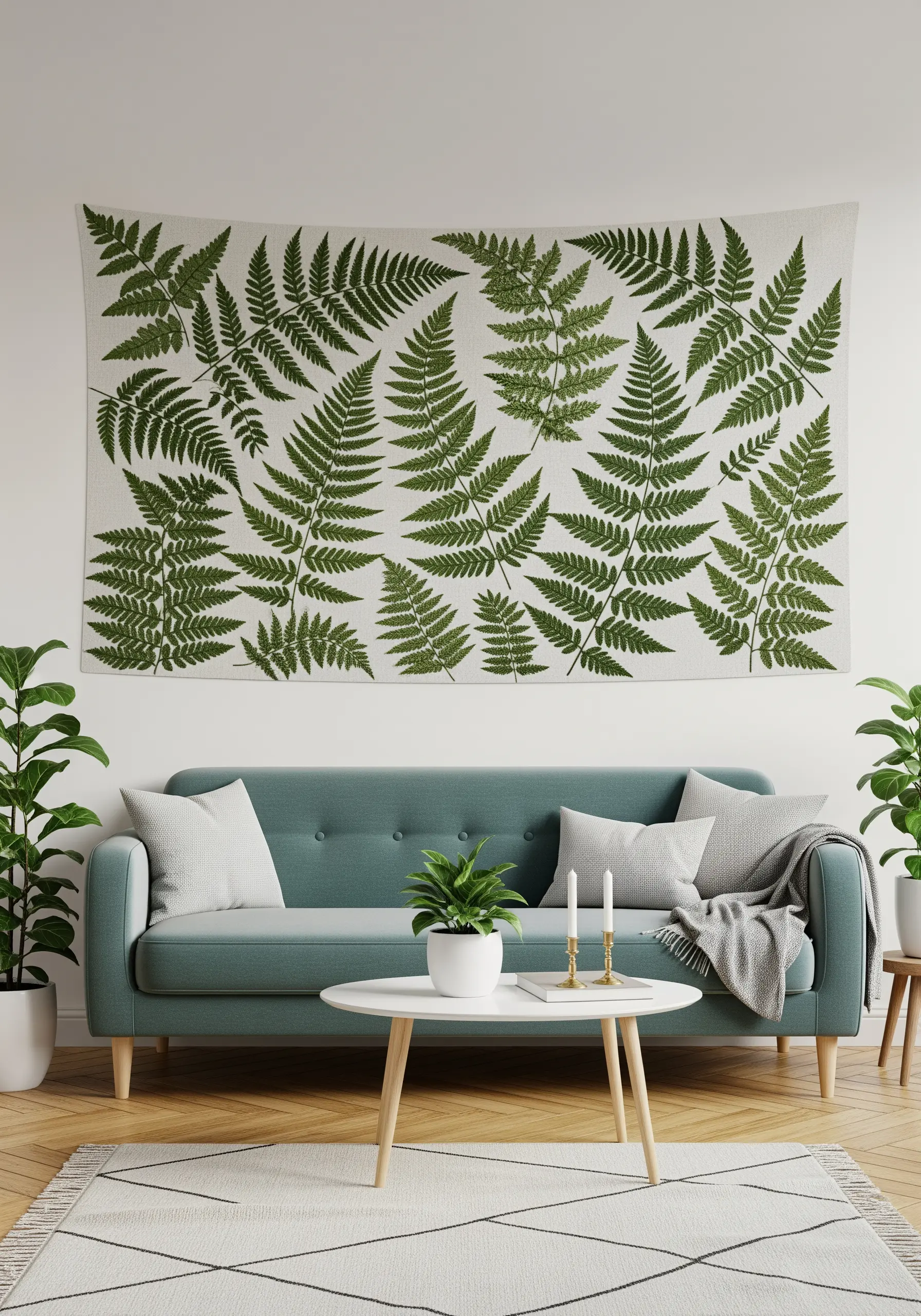
Make a bold, dramatic statement by filling a large-scale tapestry with a single, repeating botanical motif.
For each fern frond, use a fishbone stitch. This stitch creates a central spine and angles the threads outward, perfectly mimicking the structure of a real fern.
The success of this design lies in its repetition and slight variation. Rotate each fern slightly so they tessellate in a natural, organic way, avoiding a rigid, wallpaper-like pattern.
Use a medium-weight cotton or linen blend that can support the density of the stitching without puckering.
Mastering these fern foliage stitch variations on a large scale creates a powerful, immersive piece of art.
13. Voluminous Hydrangea Blooms
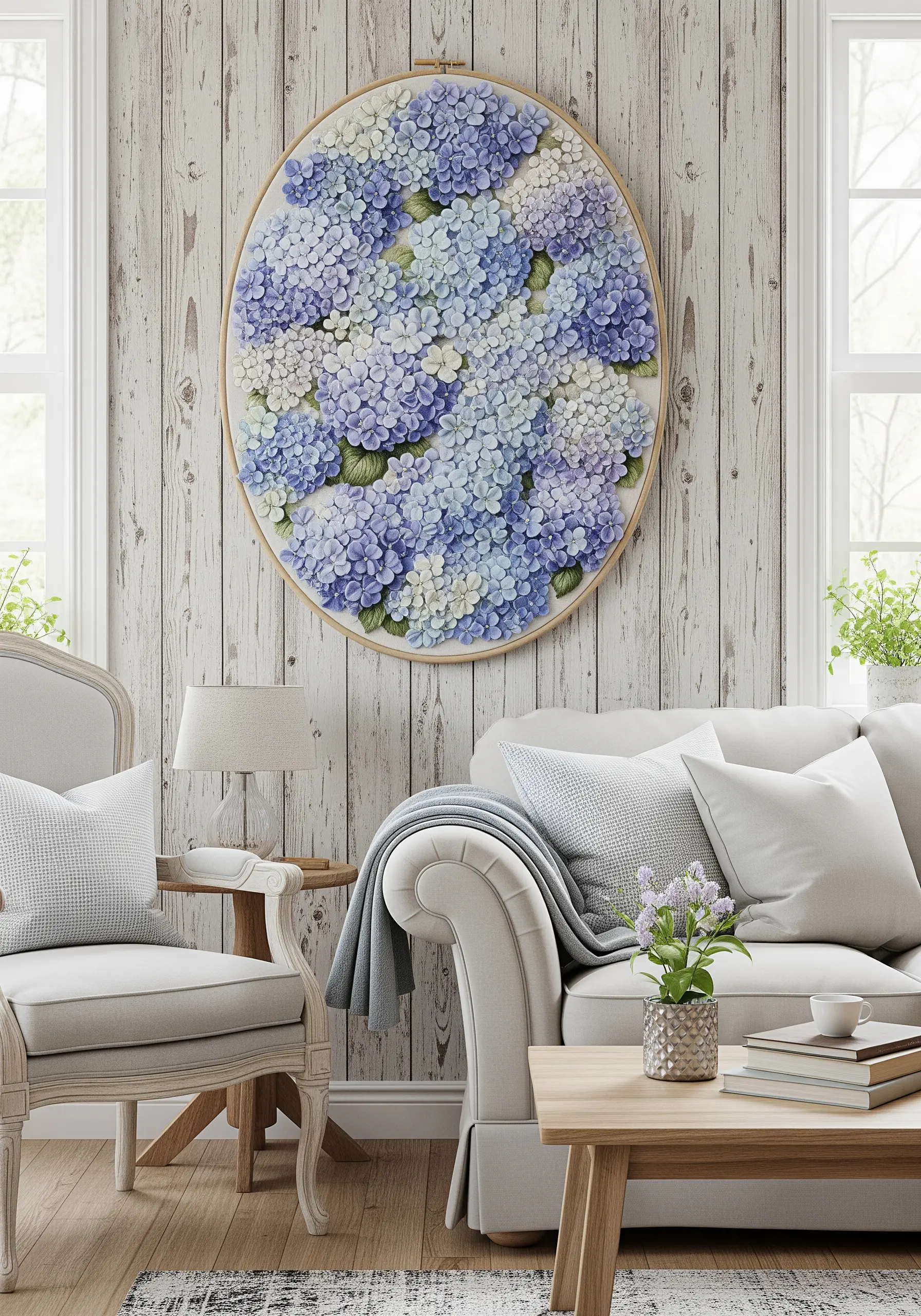
Create the dense, clustered look of hydrangeas by layering simple stitches in a carefully chosen color palette.
Combine small, satin-stitched four-petal flowers with French knots in shades of periwinkle, lavender, cream, and pale blue.
Stitch the flowers in the background first, then layer more on top, allowing them to overlap slightly. This builds incredible depth and a lush, three-dimensional texture.
The key to realism is imperfection; don’t make every tiny floret identical. Vary the size and precise shade to create a natural, cloud-like effect.
With the right hydrangea color blend techniques, you can create a piece that feels breathtakingly full and alive.
14. Minimalist Poppy Field Horizon
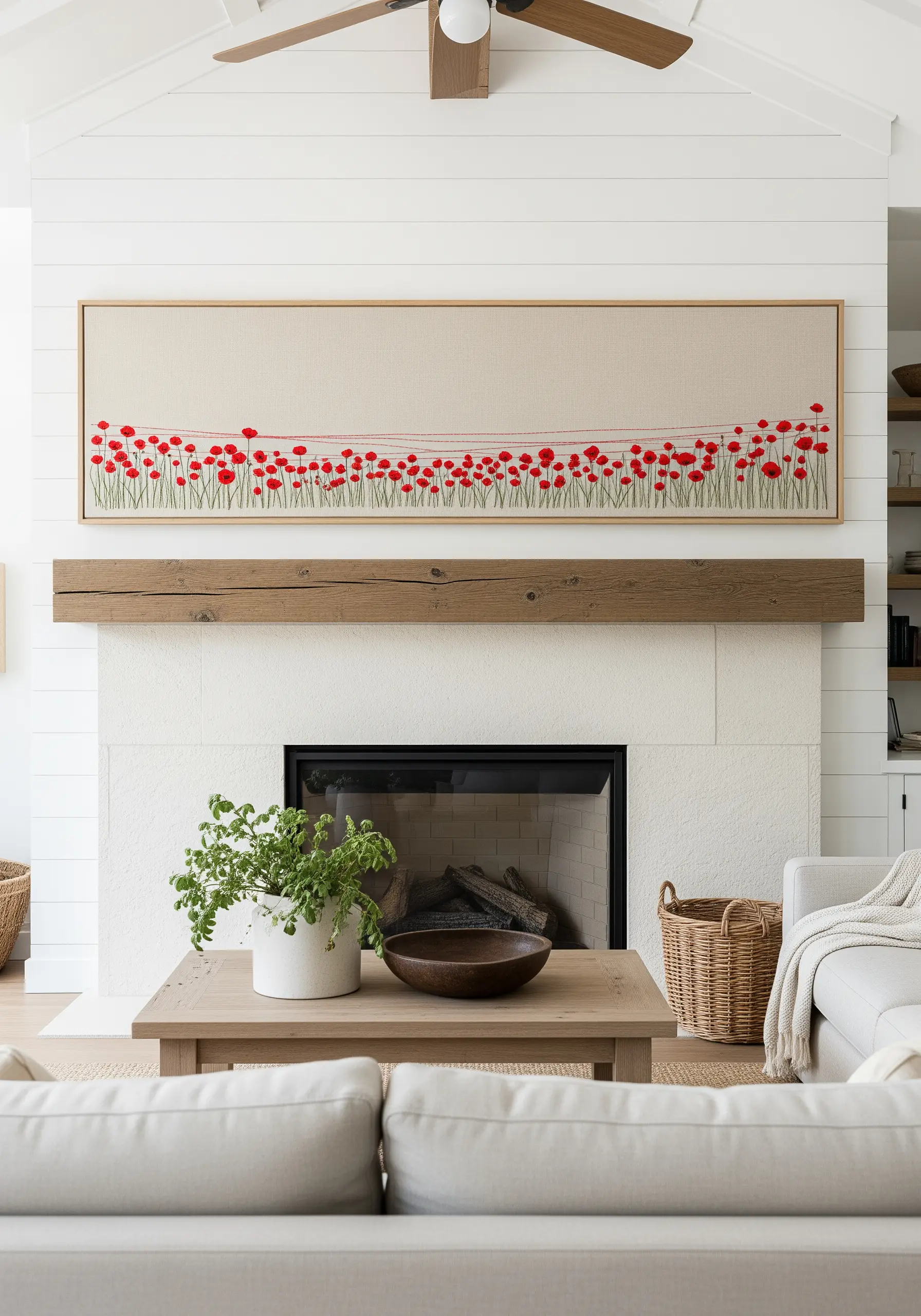
Suggest a vast landscape with a simple, linear composition that leverages negative space for maximum impact.
This design uses repetition to imply a field of poppies. Each flower is simplified to a few red straight stitches for petals and a black French knot for the center.
The delicate red lines connecting the flowers add a graphic, modern element that guides the eye across the canvas and unifies the composition.
Stitch this on a wide, panoramic piece of linen. The unstitched fabric represents the sky and ground, making the band of flowers feel expansive.
This is a perfect example of minimalist line art nature embroidery that feels both calm and emotionally resonant.
15. Sculptural Succulent Terrariums
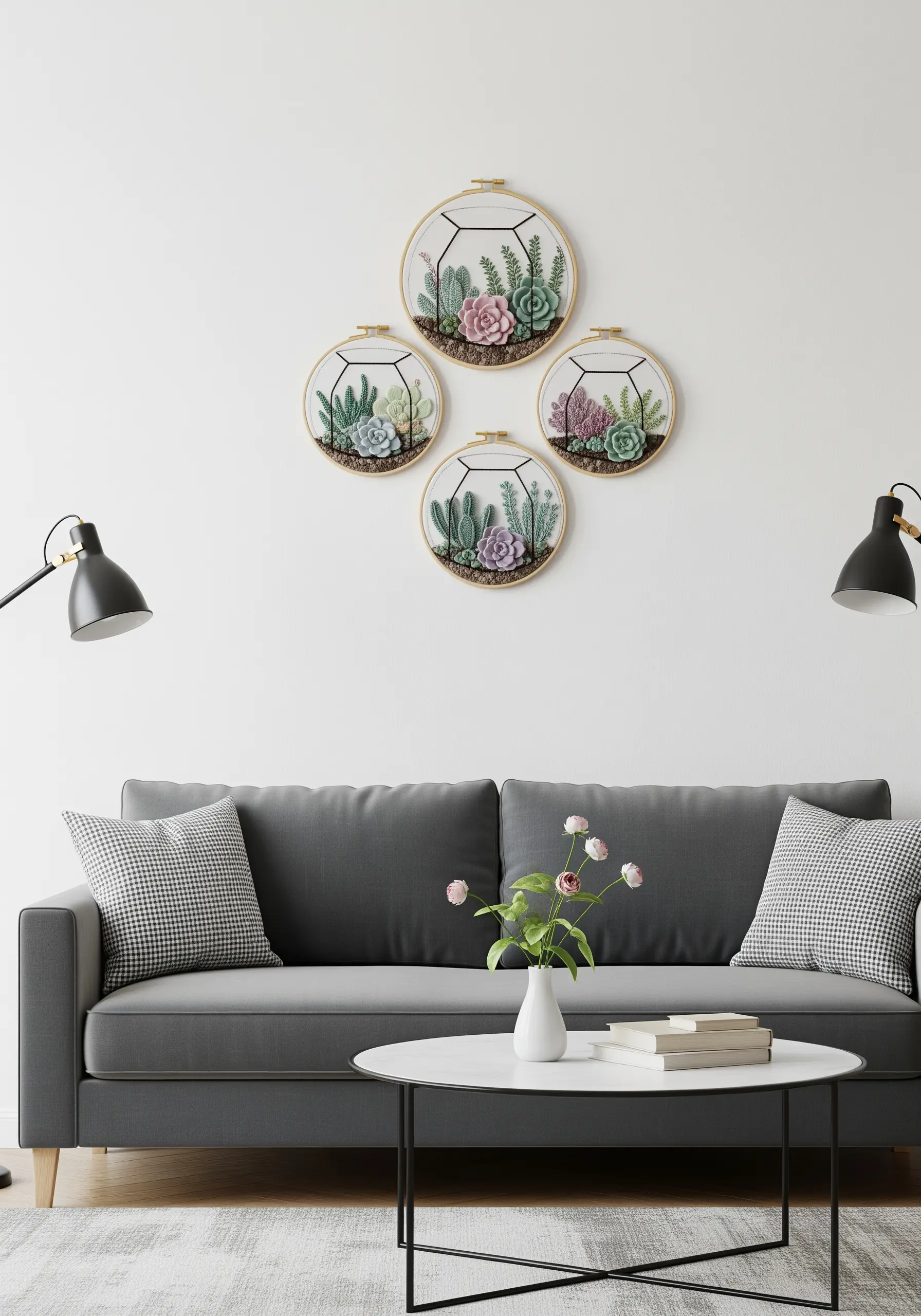
Move beyond flat stitches and explore sculptural techniques to create stunningly realistic, touchable succulents.
Use the cast-on stitch to build dimensional petals for echeverias, layering them in a spiral from the center outwards.
For rounder succulents, a padded satin stitch works wonders. Create a base of small straight stitches and then cover them with smooth satin stitches for a raised, plump effect.
Bullion knots are perfect for creating the texture of plants like burro’s tail. Experiment with different thread thicknesses and colors to add variety and realism.
These 3D floral embroidery techniques transform your hoop into a miniature, everlasting garden.
16. Delicate Sprigs on Sheer Linen
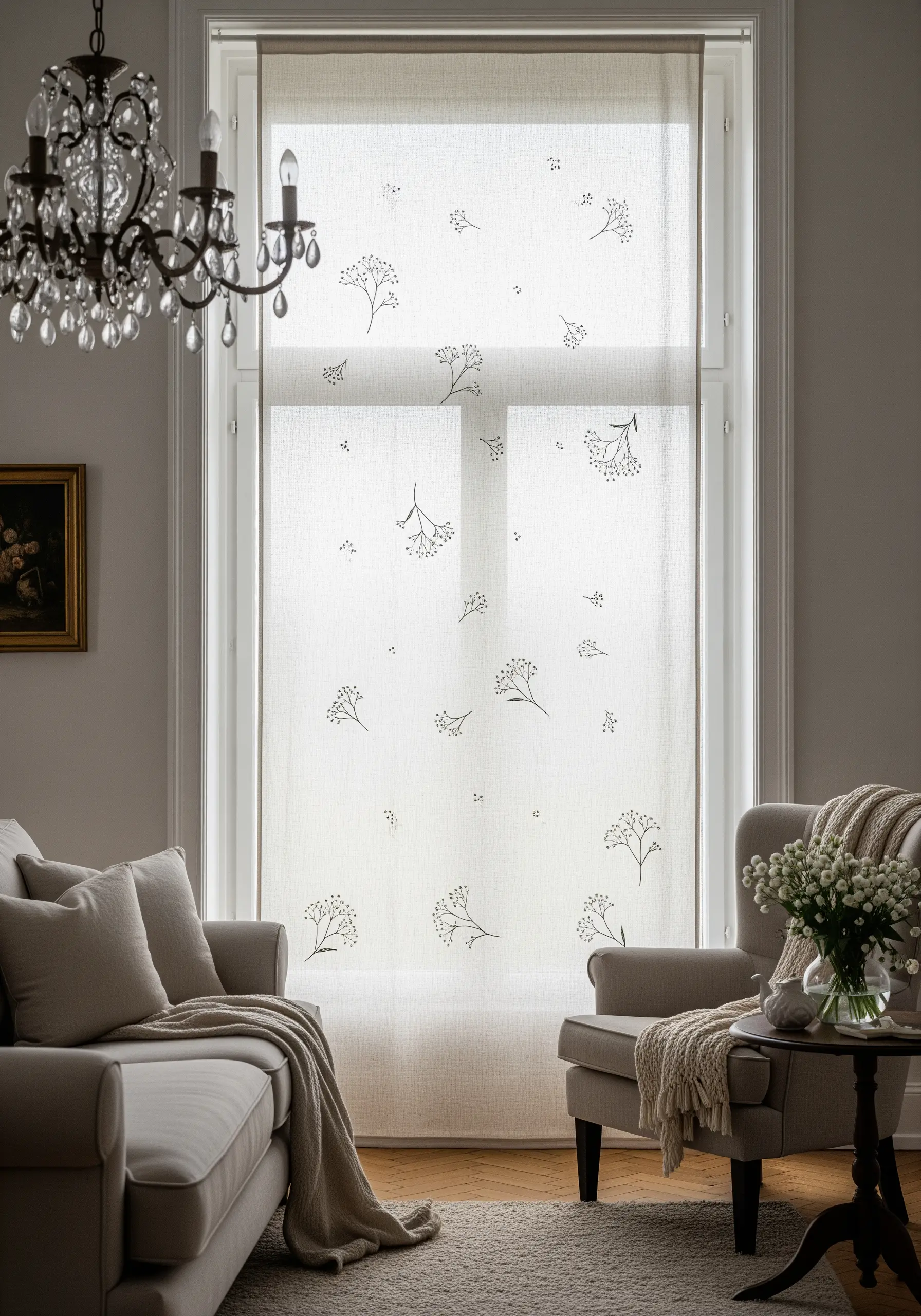
Create an ethereal, floating effect by embroidering minimalist botanicals onto sheer or semi-sheer fabric.
To prevent puckering on lightweight fabric, use a temporary stabilizer on the back while you stitch, then carefully tear or wash it away once you’re finished.
A simple backstitch for the stems and French knots for the buds are all you need. The magic comes from the interplay of the delicate threads with the light passing through the fabric.
This technique is perfect for creating subtle, elegant privacy screens or embroidered curtain borders that feel custom-made and luxurious.
The scattered, ‘falling’ placement of the motifs enhances the feeling of lightness and gentle movement.
17. The Clean and Crisp Daisy Cluster
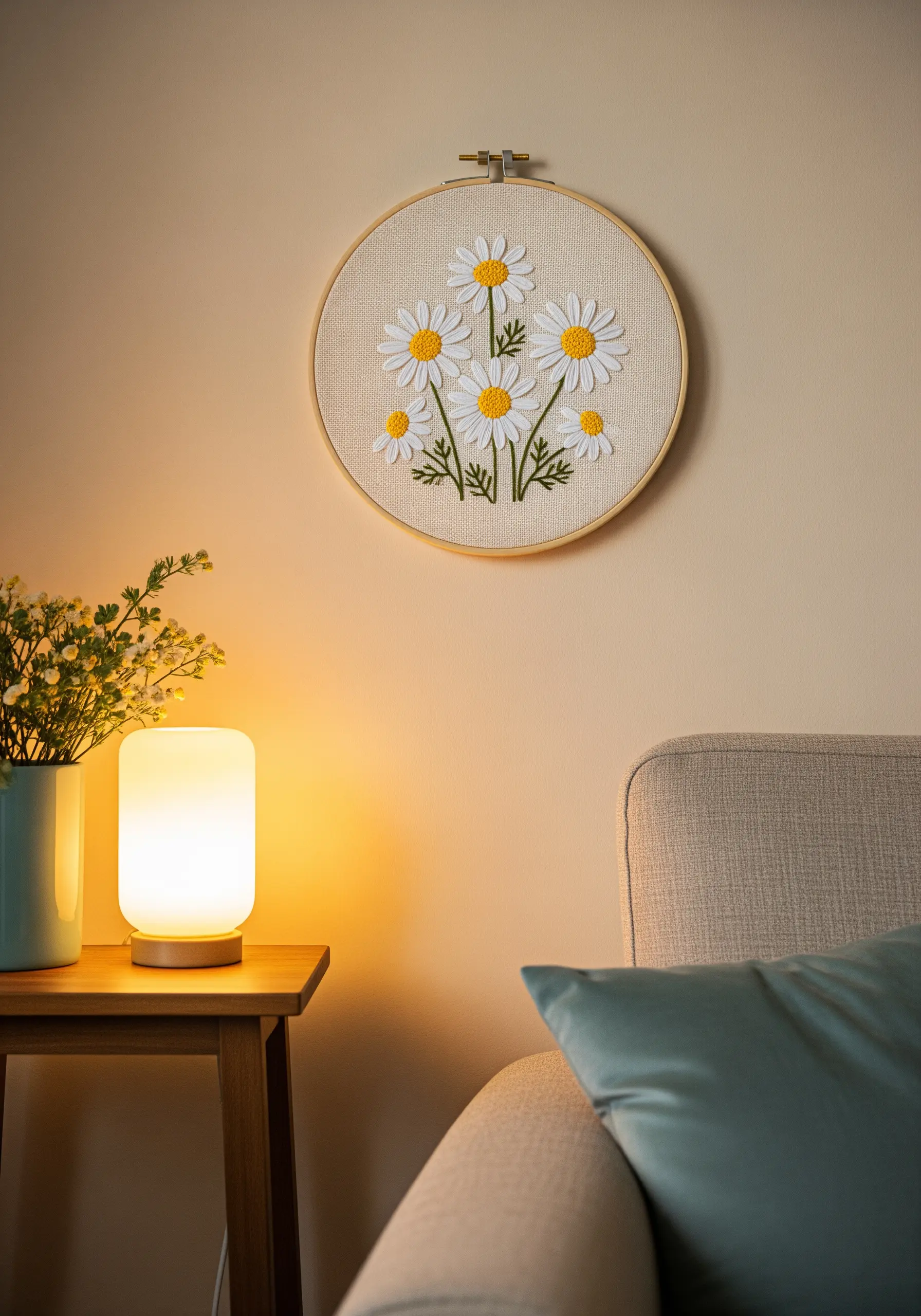
Achieve perfectly smooth, defined petals by mastering your satin stitch and paying close attention to tension.
Before you begin the satin stitch, outline each petal with a single line of split stitch in the same color. This creates a slightly raised edge that your satin stitches can tuck against, resulting in a crisp, clean border.
Use a laying tool or a larger needle to smooth each strand of floss as you stitch, ensuring they lay flat and parallel for a beautiful, uniform sheen.
For the centers, fill the area with tightly packed French knots in a vibrant yellow to create a dense, pollen-like texture.
These clean, modern floral embroidery ideas rely on technical precision to create their calming, graphic appeal.
18. The Painterly Peony Portrait
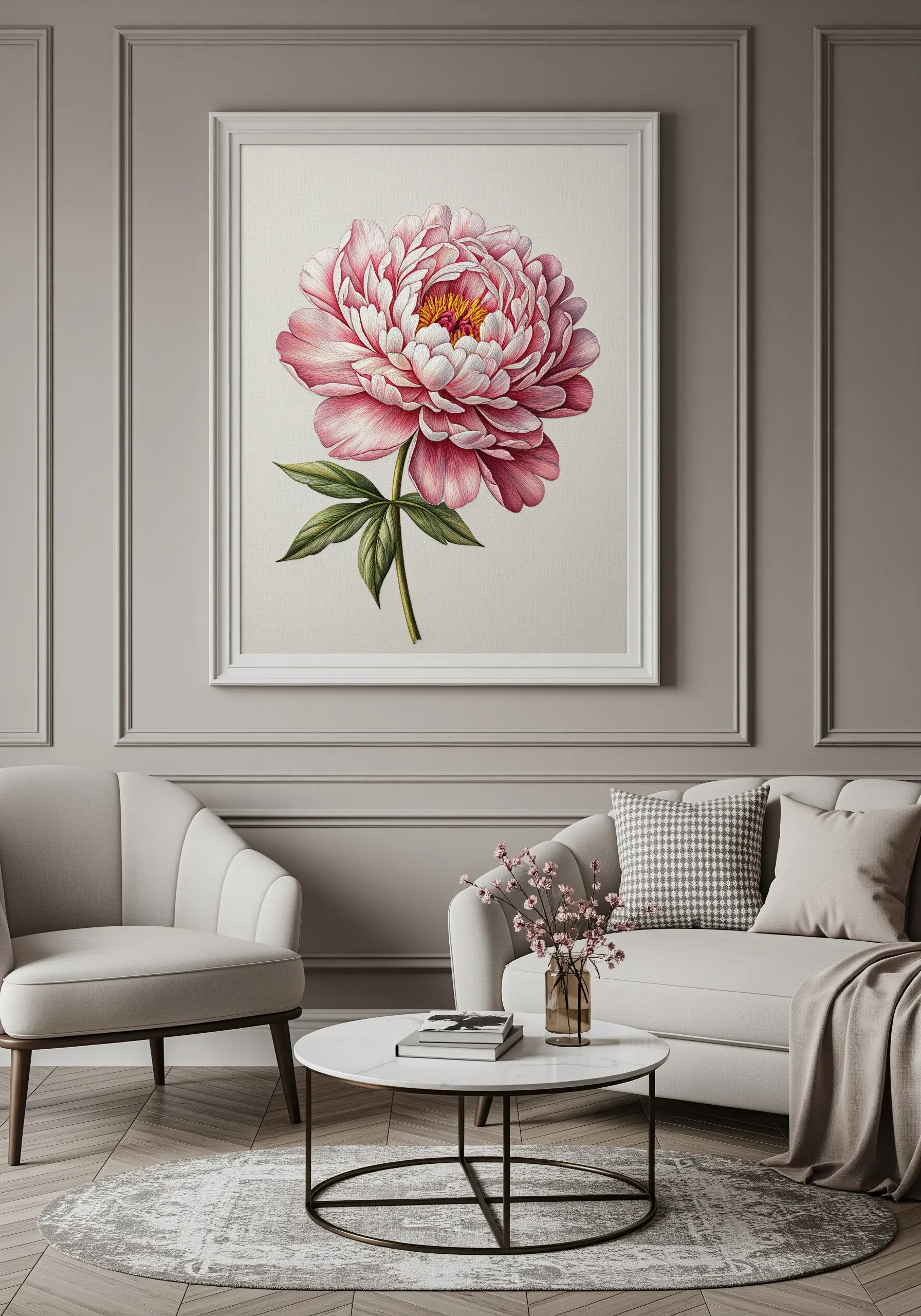
Capture the lush, complex layers of a peony using the long-and-short stitch to create soft, photorealistic gradients.
Break down each petal into smaller sections and fill them with stitches that follow the petal’s natural curve and direction.
Use at least five shades of pink, from a deep magenta for the shadows to a barely-there blush for the highlights on the petal edges.
The key to a painterly effect is to use only one or two strands of floss at a time, allowing for incredibly subtle shifts in color.
Peony embroidery ideas like this are the ultimate practice in thread painting, turning your needle into a brush.
19. The Monochrome Weeping Willow Scroll
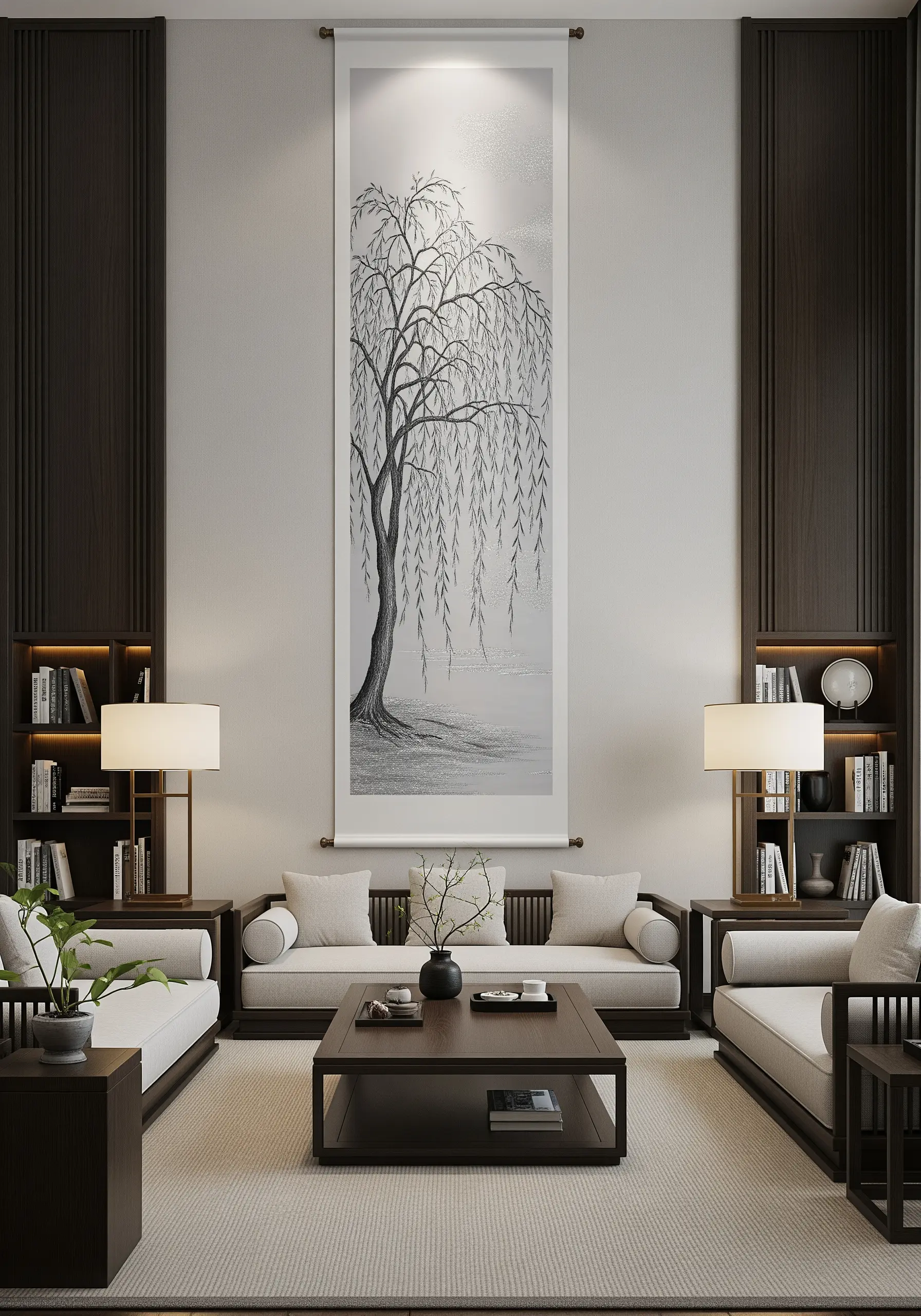
Explore the power of a single color by using stitch density and direction to create texture, shadow, and light.
For the trunk and main branches, use a dense satin stitch or long-and-short stitch to create a solid, dark form.
The delicate, weeping leaves are created with thousands of long, vertical straight stitches. Vary the length and spacing of these stitches—denser in some areas, sparser in others—to suggest depth and movement.
Working on a light grey or off-white fabric provides a softer contrast than stark white, enhancing the serene, illustrative mood.
These dramatic monochrome black thread designs prove that you don’t need color to create a breathtaking piece of art.
20. Dimensional Padded Cotton Stems
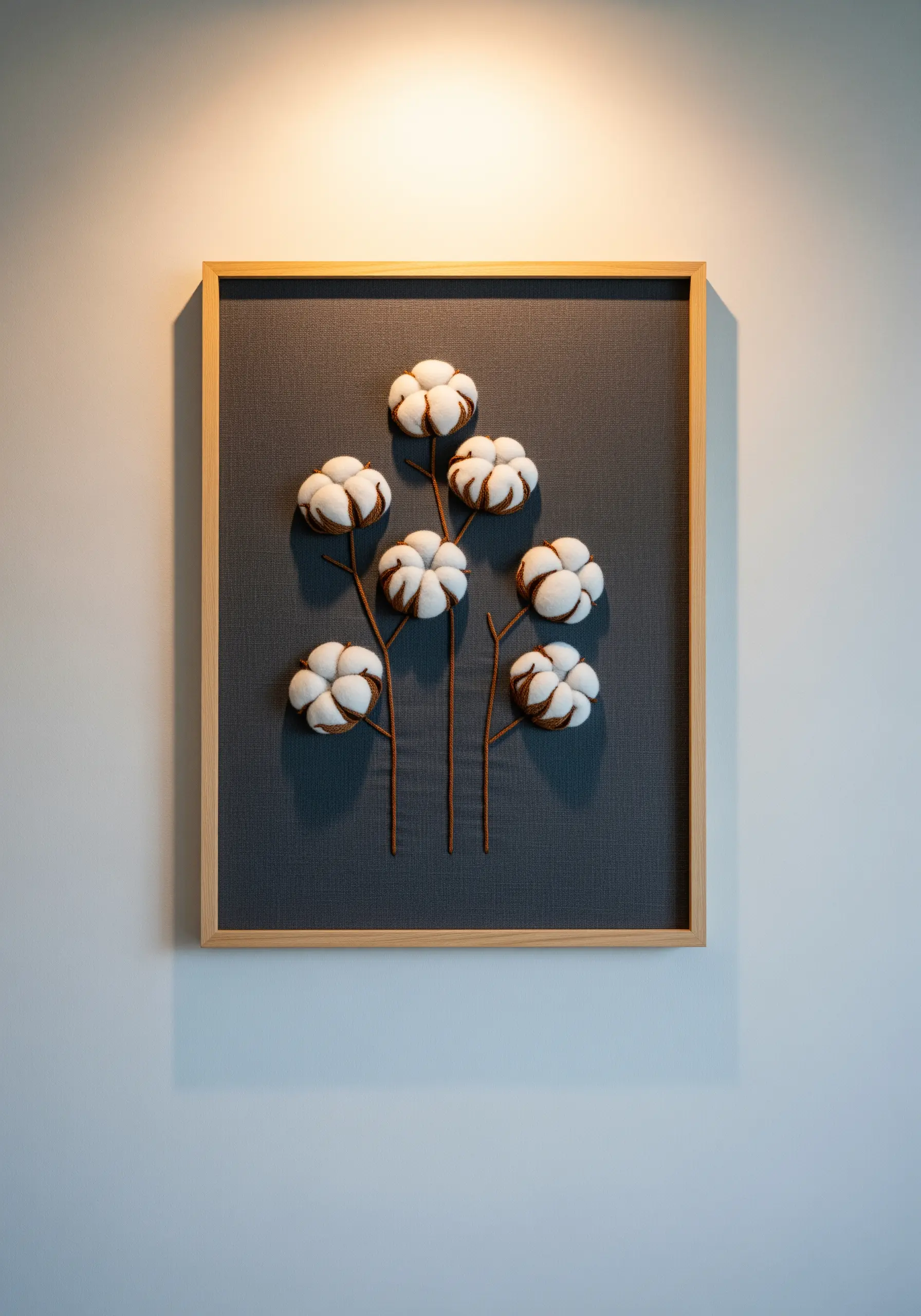
Incorporate mixed-media elements to create a piece with surprising texture and three-dimensional appeal.
For the cotton bolls, create a base of felt cut into a star-like shape and stitch it to your fabric. Then, use a padded satin stitch with soft white cotton floss over the felt to create a plump, rounded form.
Alternatively, you can stitch real, small tufts of cotton wool onto the fabric for an even more realistic and tactile effect.
Wrap the stems with brown thread or use a whipped backstitch for a smooth, twig-like appearance that contrasts beautifully with the soft bolls.
Exploring mixed-media contemporary embroidery designs opens up a new world of creative possibilities beyond thread alone.
21. Abstract Fields of Texture
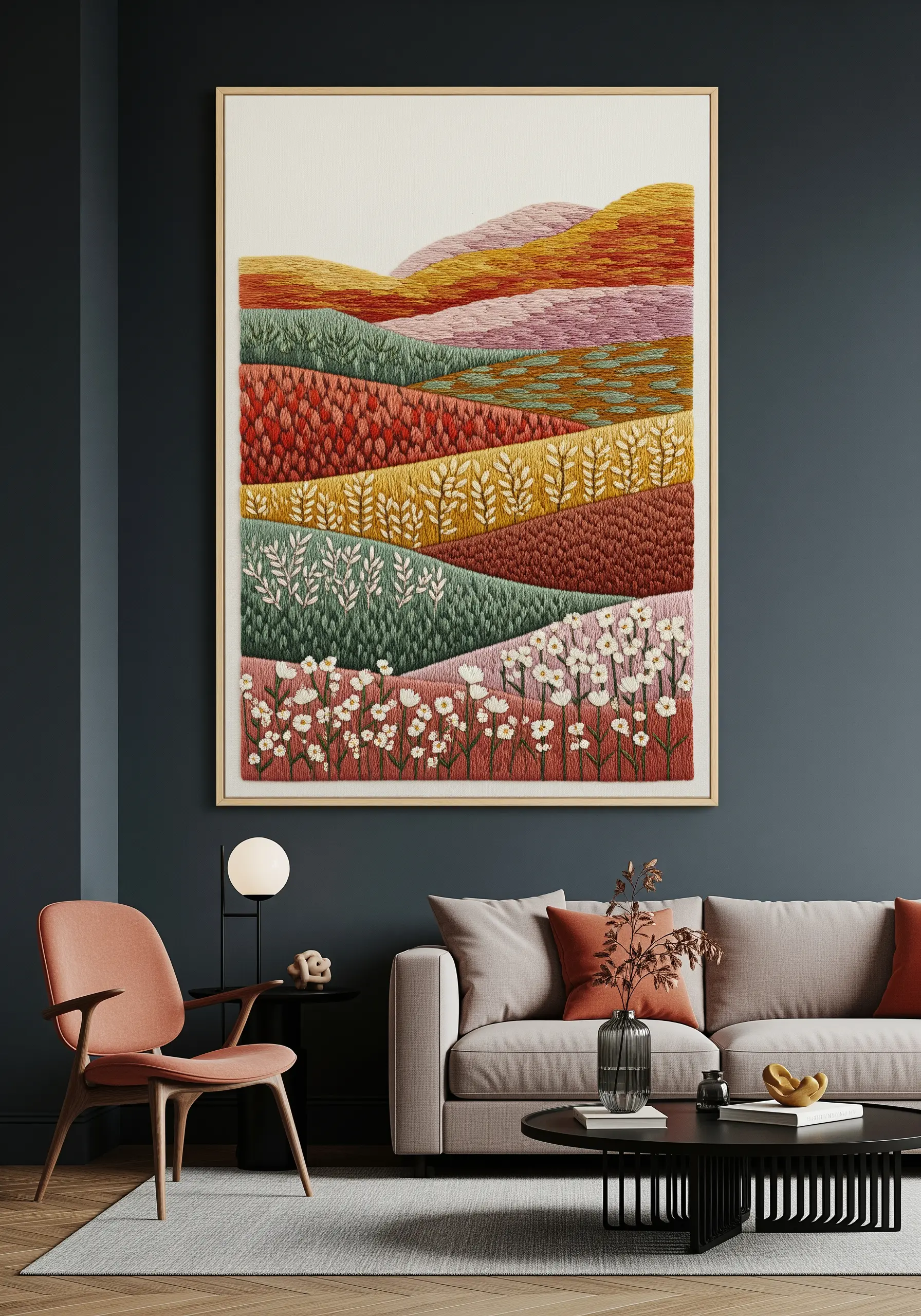
Translate the feeling of a landscape into bands of color and texture for a modern, abstract interpretation of nature.
Assign a different stitch to each colored band to represent different elements: French knots for a field of flowers, straight stitches for rows of crops, satin stitch for rolling hills, or seed stitch for a pebbled shore.
This approach is less about realistic depiction and more about evoking a mood through tactile patterns.
Don’t be afraid to vary the thread weight. Use thicker yarn or perle cotton for some sections to add even more dimension and contrast.
Stitching abstract thread landscapes allows you to focus purely on the joy of color, pattern, and the meditative rhythm of stitching.


