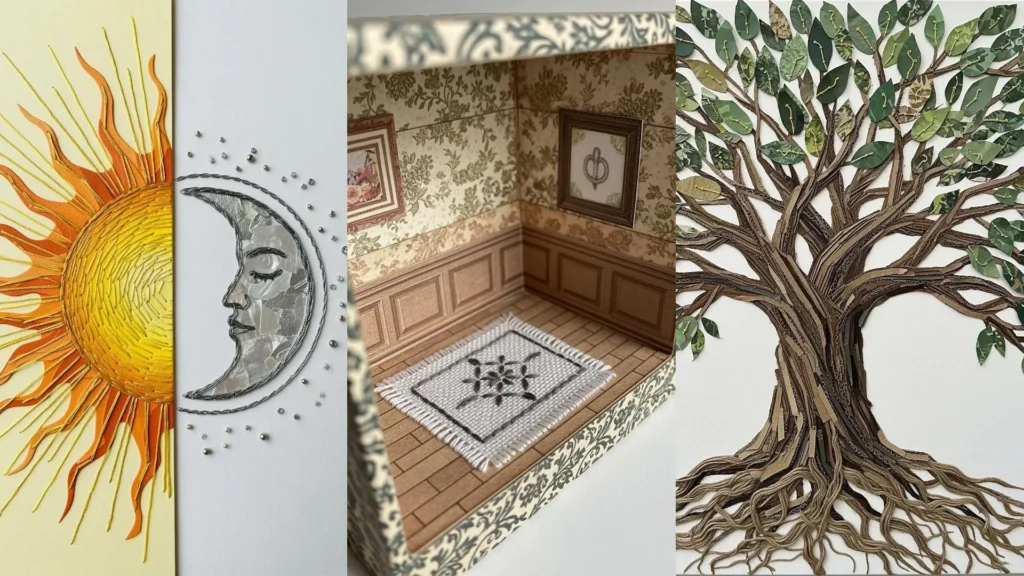
There’s a quiet magic that happens when the soft, yielding nature of thread meets the crisp surface of paper or the fluid grace of paint. It’s a combination that moves your embroidery beyond the hoop and transforms it into something more dimensional, more narrative, and entirely your own.
Forget the idea that you must choose one medium. Instead, I want you to think of your needle as a drawing tool and your floss as a line of ink with texture. This is about learning to see paint not just as color, but as a foundation—a wash of atmosphere that can hold your stitches and give them a place to live.
In these projects, you won’t just find inspiration; you’ll find technique. You’ll discover how to pierce paper without tearing it, how to layer stitches over a painted canvas to create depth, and how to let these materials work together to tell a richer story. Let’s begin.
1. Watercolor Wash as an Embroidery Foundation

Begin by applying a soft watercolor wash to heavy, high-quality paper or sturdy fabric, letting the colors bleed into one another naturally.
Once it’s completely dry, use this painted surface as your canvas.
Allow the subtle shifts in color to guide your thread choices, selecting floss that either complements or gently contrasts with the hues beneath.
Instead of filling entire shapes, focus on stitching outlines and key details with a single strand of thread, which allows the painterly background to provide the color and shading.
This method creates incredible depth and an ethereal quality without the time investment of dense satin stitching.
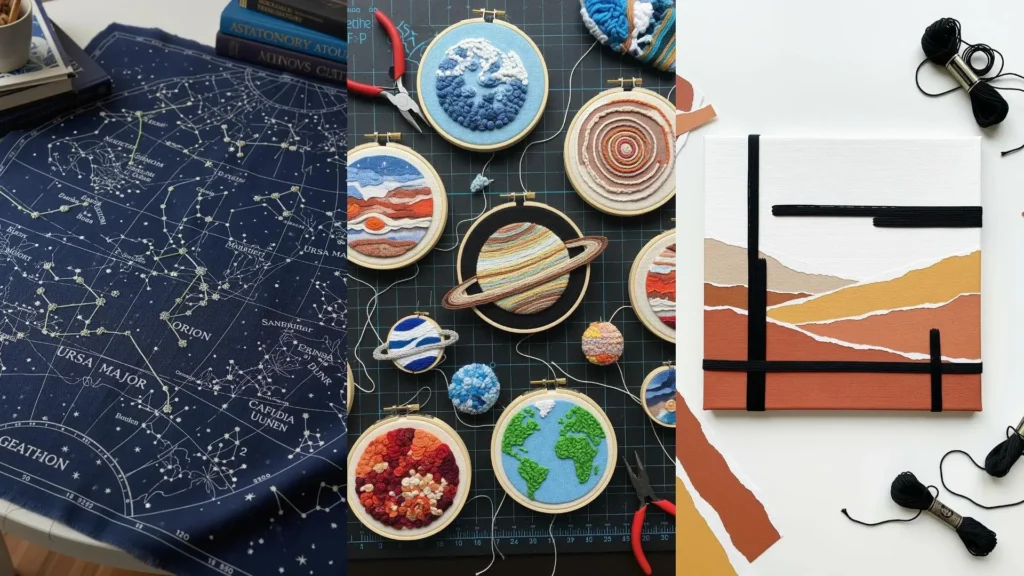
2. Integrate Sculptural Stitches into Abstract Art

Start with a bold, abstract painting on a rigid canvas or board, using acrylics for their quick drying time and texture.
Introduce dramatic tactile elements by couching thick yarn or cord directly onto the painted surface to create strong, graphic lines.
For concentrated texture, create small woven patches using a needle and warp threads poked through the canvas, filling the area with weft stitches.
This contrast between the flat, painted strokes and the raised, sculptural fiber elements makes the final piece feel dynamic and interactive.
Use a heavy-duty needle or an awl to pierce the canvas cleanly, preventing fraying.
3. Stitching on Textured, Handmade Paper

Select a handmade paper with a high cotton content; its fibers are stronger and more forgiving to stitching.
Apply your watercolor wash first and let it cure completely to prevent the colors from smudging.
The most critical step is to pre-punch your stitching holes along the design lines using a fine bookbinding awl or a thick needle held in a pin vise.
This simple preparation ensures your thread pulls through smoothly without tearing the delicate paper surface, resulting in crisp, clean stitches.
Enhance celestial motifs with metallic threads and tiny seed beads, which add a subtle glimmer that paper alone cannot achieve.
4. Use Torn Paper Edges to Frame Stitched Details

Create a cohesive painted landscape across two or more separate panels of heavy watercolor paper.
For a raw, organic division, carefully tear one of the panels vertically instead of cutting it.
This torn edge breaks the visual flow and introduces an unexpected textural element that draws the eye.
Amplify this focal point by adding embroidered details—like soft clouds in seed stitch or rain in simple straight stitches—directly onto the painted surface.
The thread’s texture against the flat paint and rough paper edge creates a compelling, multi-layered effect.
5. Achieve Realism with Thread Painting on Paper

To successfully apply thread painting on paper, your choice of surface is key; use a heavy cardstock or illustration board that resists buckling.
Pre-punching your holes is non-negotiable here, as it protects the paper’s integrity from the repeated passage of the needle.
Use a single strand of embroidery floss and the long-and-short stitch to blend shades seamlessly, mimicking the way light hits fur.
Always work from the lightest color to the darkest, layering your stitches to build realistic depth and dimension.
6. Construct 3D Paper Forms with Decorative Stitching

Elevate your papercraft by using thread as a functional, structural element rather than just a decorative one.
Cut your geometric shapes from a stiff, durable paper like iridescent cardstock, which adds a beautiful play of light to the finished form.
Carefully pre-punch evenly spaced holes along the edges you intend to join.
Assemble the object using a thick, contrasting thread—like perle cotton—and a decorative binding stitch, such as a blanket stitch or cross-stitch.
This approach turns the construction itself into a celebrated design feature, blending sculpture with needlework.
7. Elevate Gift Tags with Minimalist Stitched Accents

Build a layered, painterly background on simple cardstock tags using soft watercolor washes, ink splatters, or small pieces of torn paper.
Once the foundation is dry, introduce a single, intentional embroidered detail.
A sunburst of radiating straight stitches in a high-shine metallic thread adds instant sophistication, while a few scattered French knots can suggest stars or bubbles.
The key is restraint; the goal is to let the thread add a final, luxurious touch that complements the painted elements without overwhelming them.
This is a perfect way to elevate gift tags from simple labels to miniature works of art.
8. Create Tactile Worlds with High-Relief Stitches

To build a truly immersive surface, mix fine sand or art grit into your acrylic paint before applying it to a sturdy panel or canvas.
This gritty, textured base creates an immediate sense of an organic environment, like a seafloor or rocky terrain.
On this foundation, build up coral forms and other dimensional shapes using high-relief stitches.
Dense clusters of French knots, tightly packed bullion knots, and cast-on stitches are perfect for creating these complex, touchable structures.
9. Stitch and Paint Directly onto Photographs

Begin by printing a meaningful photograph onto high-quality matte photo paper, as its non-glossy finish readily accepts both paint and thread.
Gently pierce the paper with a fine needle to pre-punch holes for your design, which prevents buckling.
Use a simple backstitch or stem stitch to add whimsical, illustrative outlines that interact with the subjects in your photo.
To complete the effect, use a fine-tipped brush and opaque acrylic paint to fill in your stitched shapes, creating a beautiful mixed-media piece that blends memory with handmade artistry.
10. Frame Intricate Mandalas with Watercolor Gradients

Before you make a single stitch, create a soft, circular watercolor gradient on your paper or fabric base.
This painted area establishes a beautiful, atmospheric boundary for your design.
Let the background dry completely before drawing or transferring your mandala pattern.
Stitching with a bright white, metallic, or contrasting thread allows the intricate geometric work to stand out crisply against the soft, blended colors.
The watercolor wash adds a layer of depth and prevents the detailed stitching in your intricate mandalas from feeling stark or isolated on the page.
11. Combine Stitched Felt with Painted Paper Elements

For soft, plush forms, cut two identical shapes from felt, place them together, and hand-stitch the edges with a simple running stitch or decorative blanket stitch.
Add a small amount of polyester stuffing just before closing the final seam to give the shapes a gentle, three-dimensional quality.
Introduce a contrasting texture by incorporating elements cut from heavy cardstock that has been painted with a rich metallic acrylic.
The satisfying juxtaposition of soft, stitched felt and the crisp, clean edges of painted paper gives the finished piece a sophisticated, multi-sensory appeal.
12. Personalize Bookmarks with Stitched Monograms

Create a beautiful gradient on heavy cardstock using diluted acrylics or watercolors for a smooth ombré effect.
Once the paint is fully cured, lightly transfer your monogram and wreath design onto the surface.
Carefully pre-punch the stitch holes with a fine needle to protect the paper.
Use a single strand of silky floss and small, precise stitches—like split stitch for lettering and detached chain stitches for leaves—to execute the design.
This technique results in an elegant, embroidered detail that feels both classic and deeply personal.
13. Illuminate Painted Skylines with Stitched Lights

After completing an acrylic painting of a cityscape, you can add a layer of dynamic energy with thread.
Use a vibrant yellow or a shimmery metallic floss to represent the lights in the buildings.
Stitch small French knots or simple single straight stitches for the windows, varying their placement to look natural.
To suggest movement and street life below, connect some of the lower lights with a web of random, intersecting straight stitches.
This simple addition transforms a static painting into a scene that feels alive with glowing energy.
14. Capture Botanical Detail with Precision Stitching on Paper

To realistically render a delicate fern on paper, your technique must be precise.
Use only a single strand of embroidery floss to maintain a fine, illustrative quality.
For the central stem, a whipped backstitch creates a smooth, raised line with no gaps.
Create the individual leaflets using single fly stitches or detached chain stitches, pulling each one taut to create a sharp, tapered point.
This disciplined approach to stitching on clean paper results in a stunning botanical illustration with incredible clarity and texture.
15. Layer Thread Painting over a Painted Fabric Canvas

Prepare your embroidery fabric by painting a soft, out-of-focus background with fabric-safe paints or inks.
This step creates atmospheric depth and context before you even begin stitching.
Once the paint is heat-set and dry, stretch the fabric taut in a hoop and begin your thread painting.
The painted background means you can concentrate all of your detailed, color-blended stitches on the main subject, allowing it to pop dramatically from its environment.
It’s a professional technique to layer thread painting for maximum visual impact.
16. Recreate Quilt Patterns with Paint and Thread

You can translate the cozy, geometric appeal of quilting onto paper or a wood panel.
Start by painting traditional quilt block designs onto your surface; use painter’s tape for crisp, clean lines between the shapes.
After the paint has completely dried, use a contrasting color of perle cotton or six-strand floss to add running stitches or cross-stitches along the ‘seams’ of each painted block.
This simple addition mimics the look of traditional hand-quilting and adds a charming, tactile dimension to the flat, graphic patterns.
17. Frame Stitches with a Cut-Paper Aperture

This technique gives any stitched paper project a highly professional and polished finish.
First, complete your embroidery on a piece of cardstock that is slightly larger than the final card front.
Next, take the front of your folded greeting card and use a craft knife or die-cutting machine to create a clean window or aperture.
Finally, carefully mount your embroidered piece behind this opening, securing it with double-sided tape or acid-free glue.
This method perfectly conceals the back of your stitchwork and turns your embroidery into a beautifully framed focal point.
18. Add Stitched Veins to Watercolor Paper Leaves

Paint loose, beautiful watercolor gradients onto heavy paper, blending autumnal reds, oranges, and yellows.
When the paper is fully dry, cut out simple leaf shapes.
Using a sewing machine fitted with a sturdy needle, stitch a central vein down the middle of each leaf, followed by smaller, angled veins branching off.
You can also do this by hand with a simple backstitch for a more organic feel.
Arrange these delicate stitched leaves into a collage, garland, or table scatter for a sophisticated seasonal decoration.
19. A Modern Sampler: Geometric Stitches on Painted Grids

Draw a precise grid on a sheet of heavy watercolor paper.
Fill each square with a light wash of a different, coordinating color to create a modern, color-blocked canvas.
Use this structured background as a playground for stitch exploration.
In each painted square, practice a different geometric pattern using straight stitches, woven bars, or eyelet stitches.
The interplay between the soft, fluid watercolor and the rigid, mathematical structure of the threadwork results in a sampler that feels both meditative to create and artistically contemporary.
20. Punctuate Fluid Art with Stitched Motifs

Create dynamic, marbled surfaces on wooden discs or ceramic coasters using acrylic paint pouring techniques.
Allow the paint to cure completely, which can take several days depending on the thickness.
Once hardened, carefully drill or punch a pattern of holes through the surface.
Use these holes to add a minimalist embroidered motif—like a sunburst or a spiral—in a high-contrast metallic thread.
The precise geometry of the stitches offers a stunning counterpoint to the organic, flowing patterns of the paint, creating a piece that is balanced and visually exciting.
21. Embellish Rolled Paper Beads with Tiny Stitches

Create your own beads by tightly rolling long, triangular strips of painted or patterned paper around a thin dowel, securing the end with glue.
Before you apply the final coat of varnish or sealant, add a tiny, unexpected embroidered detail.
Use a single strand of floss and a fine needle to add a miniature star stitch or a single cross-stitch to the center of each bead.
This subtle, handcrafted touch elevates simple paper beads into unique, artisanal components for jewelry or decor.
These handmade art objects truly shine with this extra detail.