You sit with your needle and thread, but you feel a gap between the work in your hands and the art you envision. You sense your stitches hold more potential, that they could create something not just pretty, but personal and luxurious—a true reflection of your taste.
That feeling is the start of artistry. The secret isn’t in buying more supplies or learning impossibly complex techniques. It’s in refining your choices: combining textures, understanding how a single line can command a space, and seeing everyday objects as canvases waiting for your story.
Here, we’ll move beyond the familiar hoop to explore how thread can sculpt, paint, and transform your space. You have the skill. Now, let’s give it the direction and intention it deserves, creating small pieces of art that make your home feel entirely your own.
1. Beyond the Hoop: Embroidering on Sculptural Felt
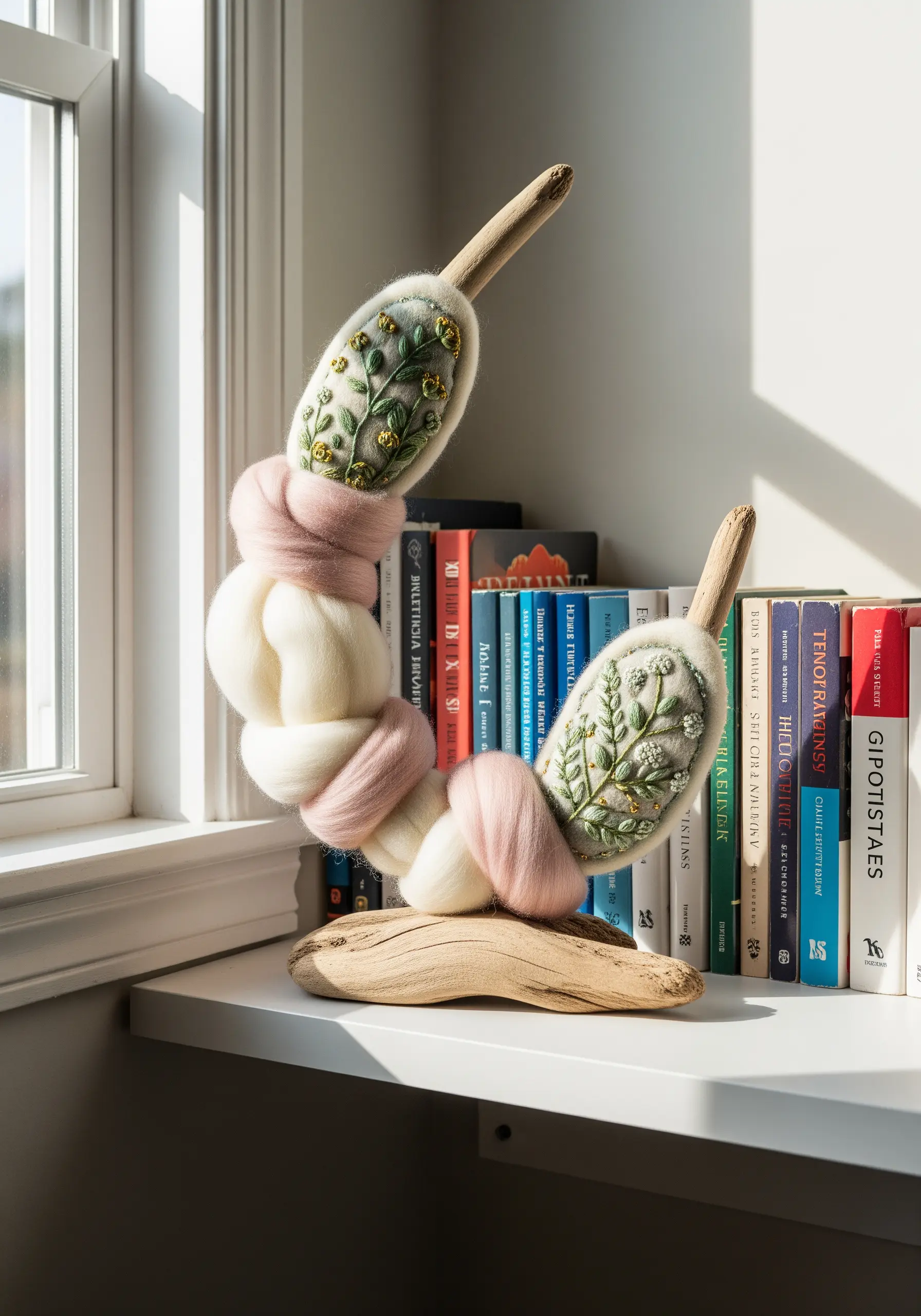
Move your embroidery off the flat surface and onto three-dimensional forms.
Use wool roving or thick felt as your canvas, shaping it before you add a single stitch.
This allows you to create soft sculptures that feel both organic and refined.
Work delicate botanicals using stem stitch for outlines and dense French knots for textural flower heads, turning a simple object into an intimate art piece.
This combination of soft sculpture and fine detail creates a focal point that invites closer inspection and adds a layer of unexpected luxury.
2. Create Cohesion with a Thematic Triptych
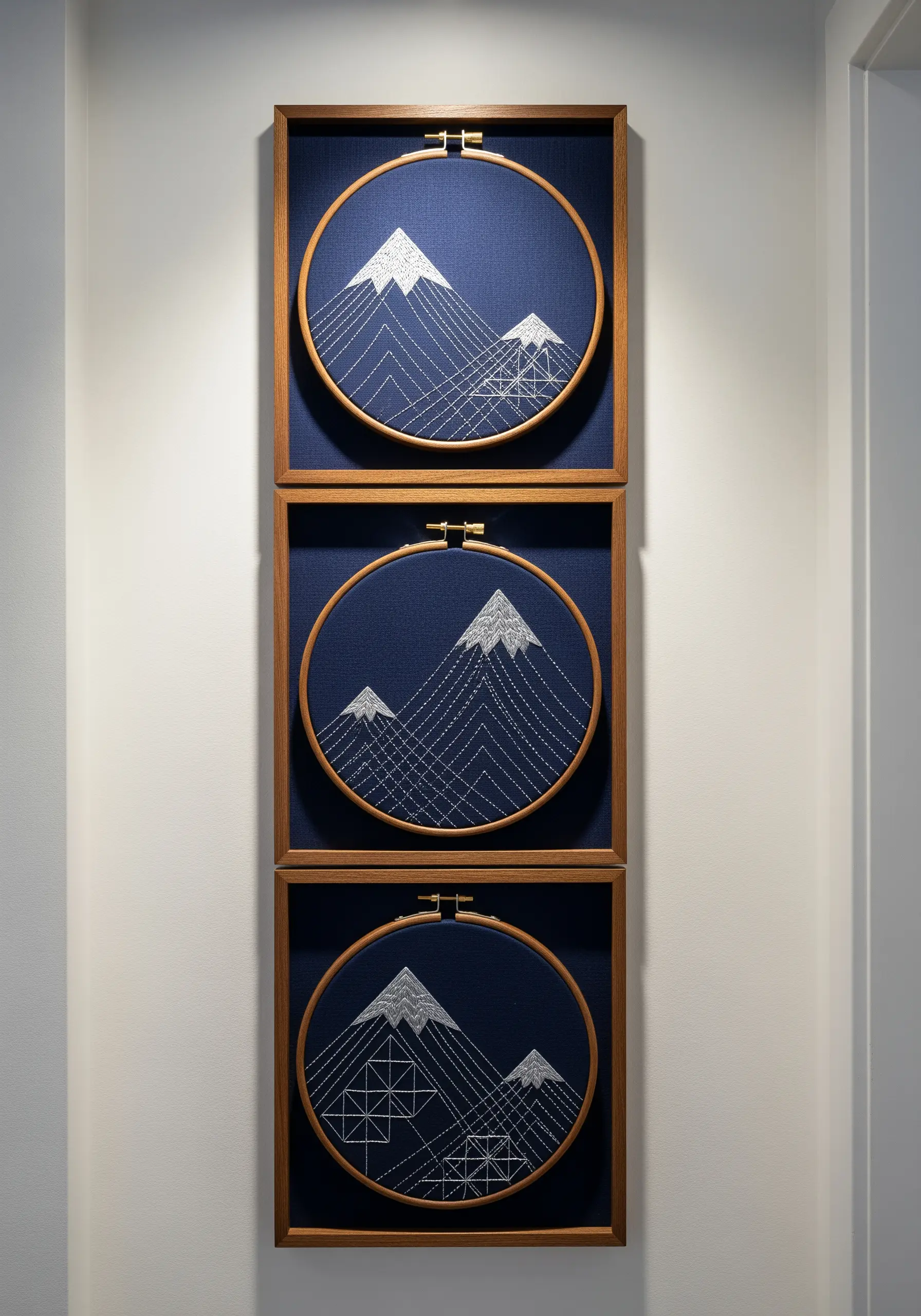
Tell a bigger story by designing a series of embroideries instead of a single piece.
Choose a theme, like these geometric mountains, and explore variations across three hoops.
Maintain a consistent palette—a deep navy fabric with crisp white thread creates a timeless, graphic look that feels intentional.
Use simple running stitches and negative space to achieve a modern aesthetic.
Finally, display them in matching gallery frames to elevate the collection from a craft project to a polished wall installation, perfect for a narrow hallway.
3. Frame a Reflection with Metallic Threadwork
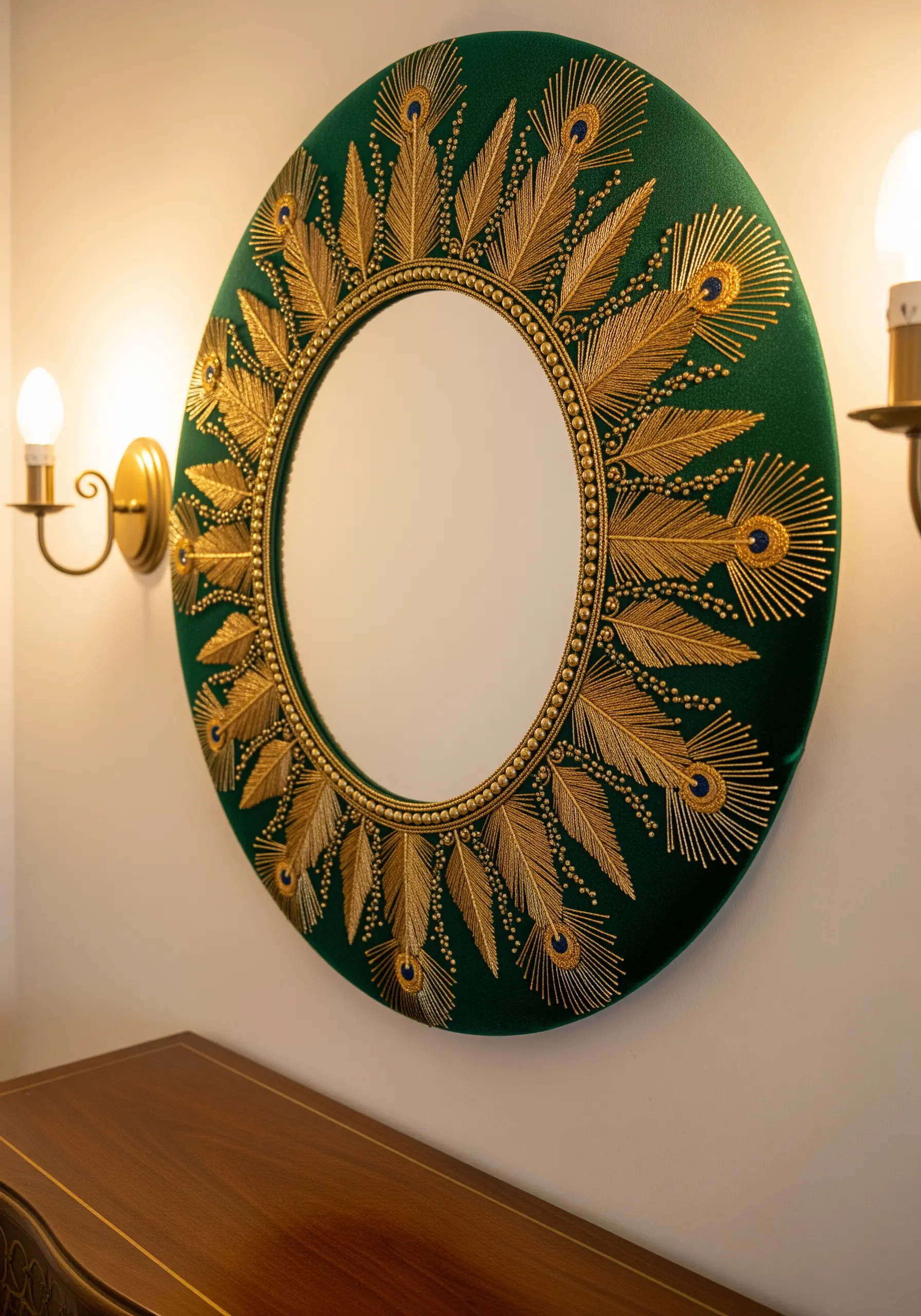
Transform a functional object, like a mirror, into a piece of statement art.
Choose a rich, opulent fabric like velvet to wrap the frame, as its deep pile absorbs light and makes metallic threads appear even more luminous.
Use couching techniques for outlines—this helps you control stiff metallic threads and achieve clean curves.
Fill feather motifs with a directional satin stitch to mimic natural texture and catch the light from every angle.
The result is a piece that adds both glamour and function to an entryway or bedroom.
4. Illuminate Your Stitches with a Constellation Lamp
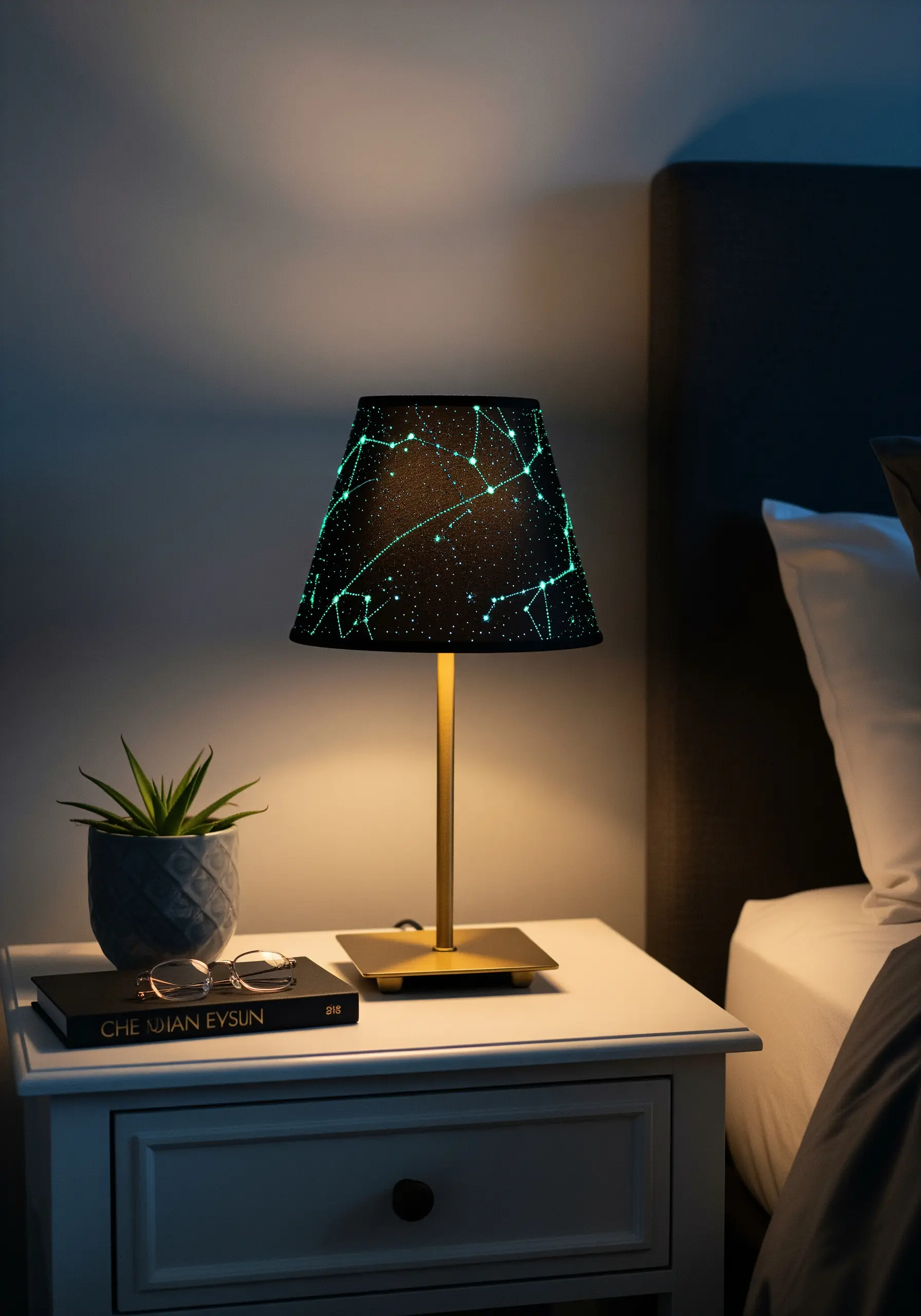
Take your embroidery into a new dimension by making it interactive with light.
You can stitch directly onto a sturdy paper or fabric lampshade, carefully piercing the material with an awl first if needed.
Use glow-in-the-dark thread for a magical effect, or a fine metallic floss to catch the lamp’s light.
Map out a real constellation or create your own cosmic embroidery art that comes alive when you turn on the light, casting a subtle pattern in a dark room.
5. Add a Narrative Edge to Modern Furniture
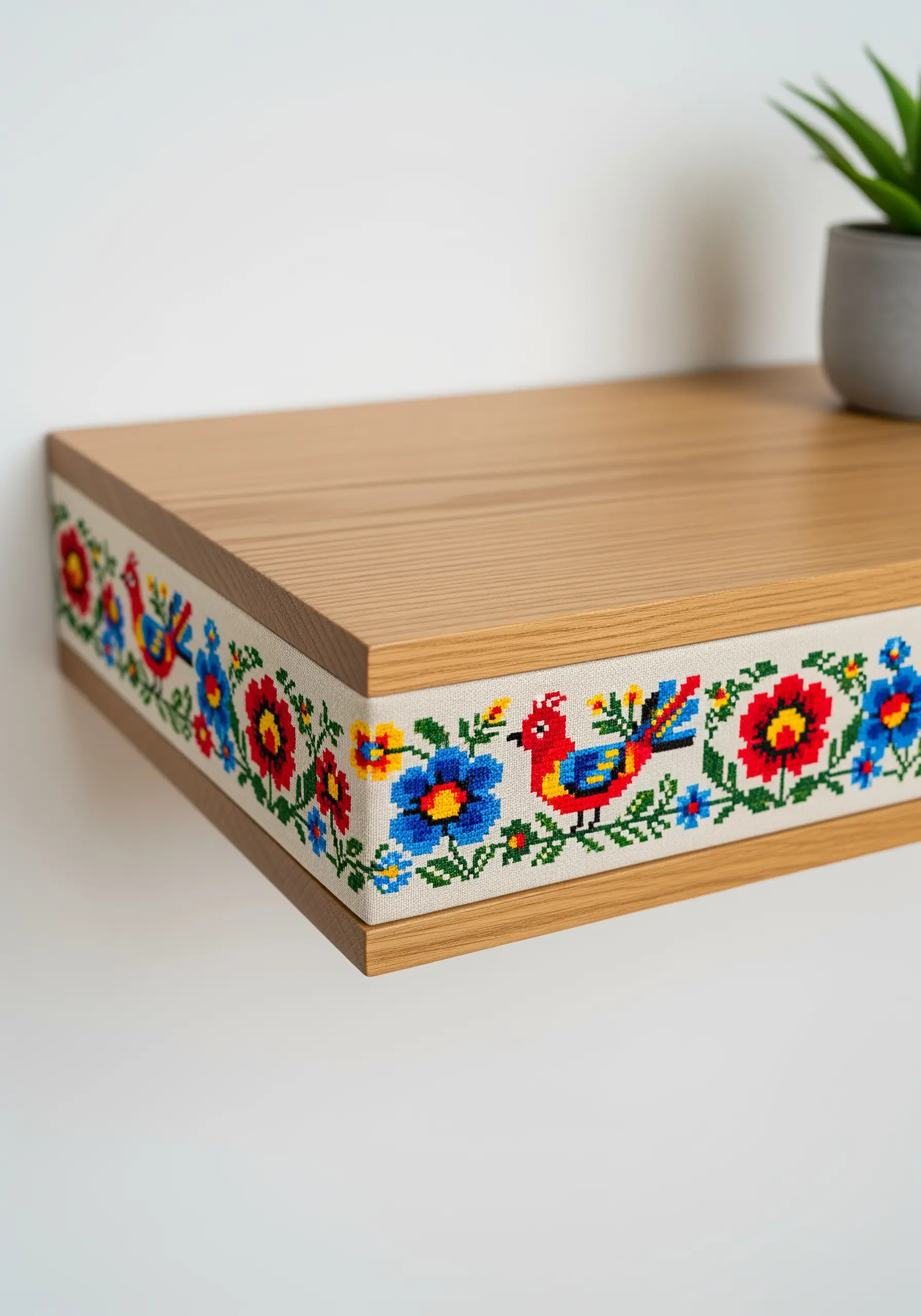
Introduce an element of surprise by wrapping a clean, modern surface with traditional embroidery.
Stitch a folk-art-inspired band on Aida cloth or evenweave fabric, which provides a grid for neat cross-stitches.
The contrast between the minimalist wood grain of a floating shelf and the vibrant, dense pattern of the thread work creates an instant focal point.
Ensure you wrap the corners tightly and secure the fabric neatly on the underside for a truly professional finish.
6. Stitch a Focal Point into Utilitarian Objects
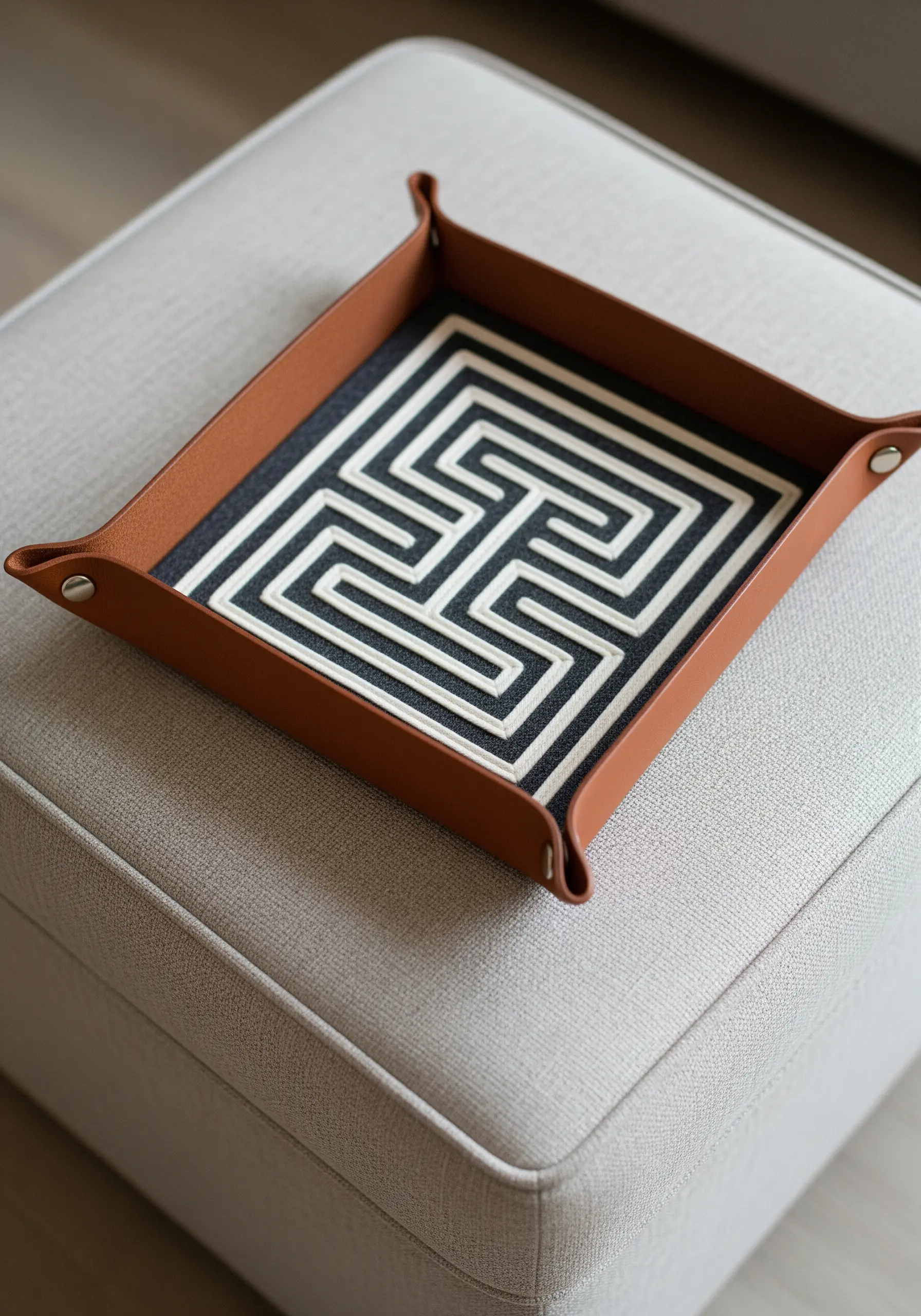
Elevate everyday utility items, like a leather valet tray, by adding a custom embroidered insert.
Stitch your design onto a piece of sturdy linen or felt first, which is far easier than attempting to stitch through leather.
Choose a bold, graphic pattern and a high-contrast palette like black and white for maximum impact.
Use a raised stitch, like a whipped backstitch or chain stitch, to create a texture that begs to be touched, then secure the panel into the base of the tray.
7. Draw with Thread in Quilted Landscapes
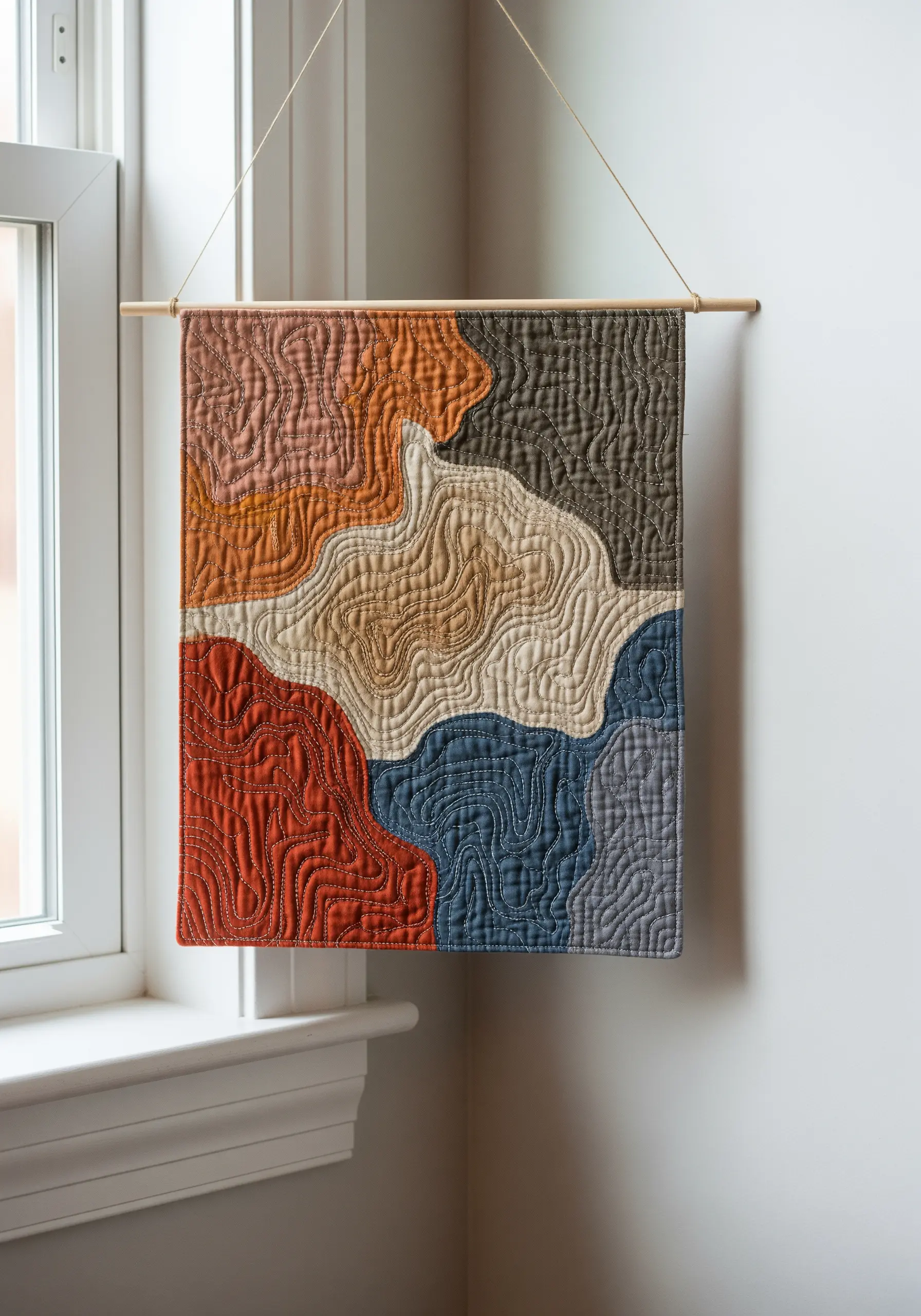
Use thread to add another layer of artistry to fabric collage or patchwork.
After piecing together your abstract shapes, use a simple running stitch—by hand or machine—to create dense, topographic patterns that flow across the color blocks.
This technique, often called free-motion quilting or thread drawing, adds incredible texture and movement.
Using a thread that contrasts slightly with the fabric helps define the stitched lines, turning the entire surface into a tactile, quilted map.
8. Sculpt a Botanical World with 3D Embroidery
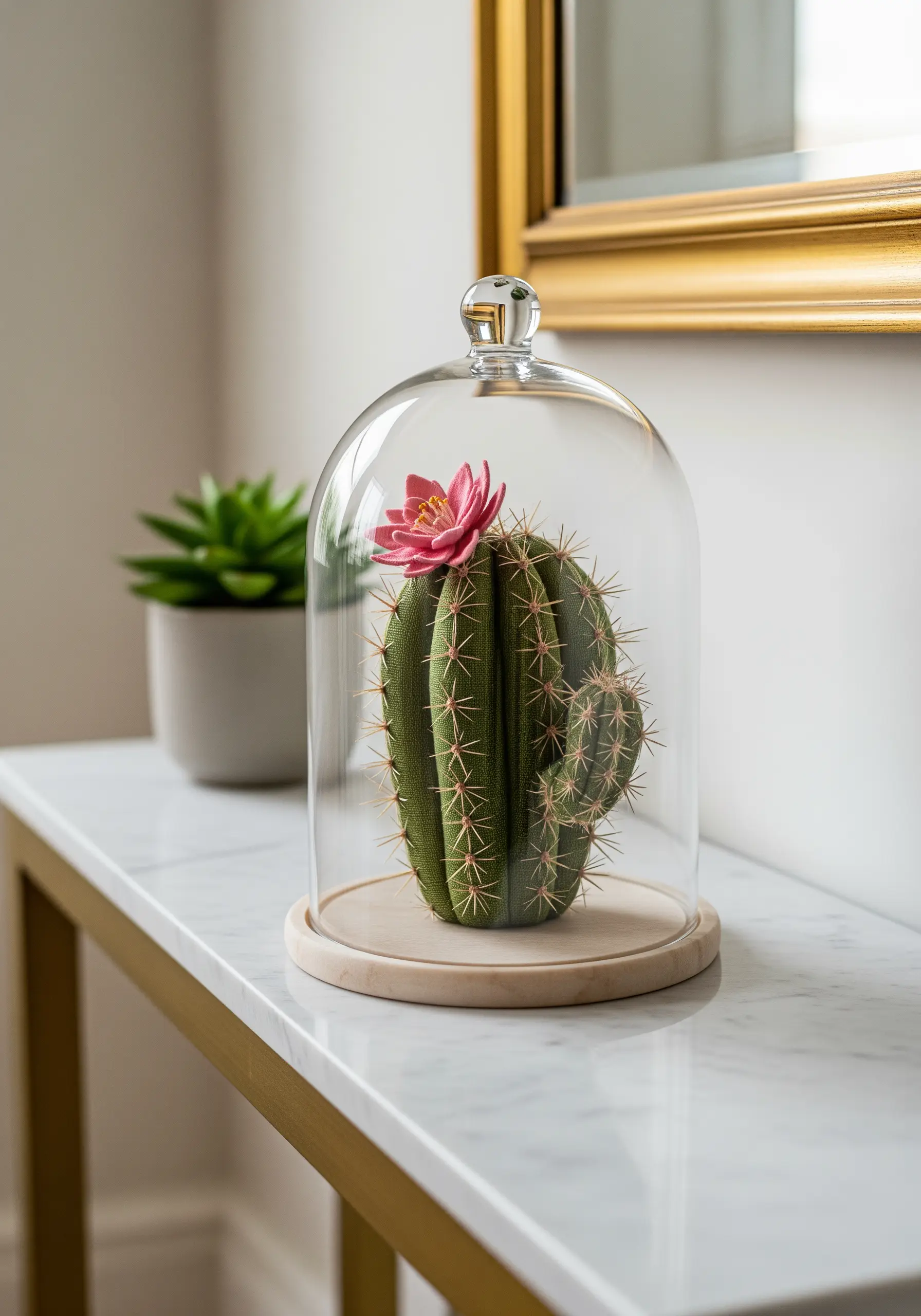
Create a permanent botanical specimen using stumpwork, a technique that raises stitches off the fabric surface.
For the cactus body, use padded satin stitch to create a rounded, plump form.
Craft the flower separately using wire-edged buttonhole stitches, which allow you to shape each petal before attaching it.
Displaying your finished botanical terrarium embroidery under a glass cloche protects the delicate work and transforms it into a piece of curated art.
9. Build an Acoustic Art Piece with Tactile Tufting
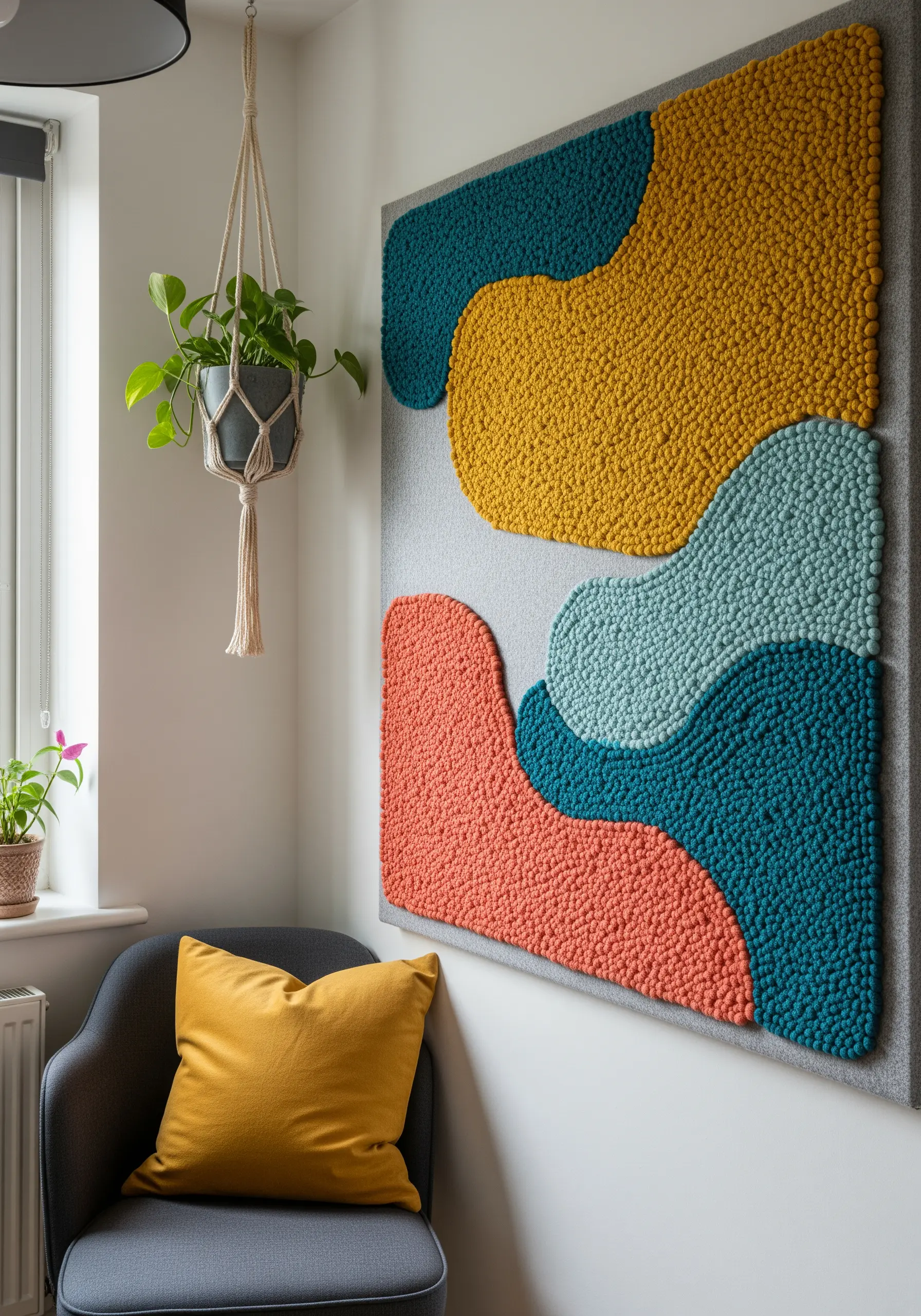
Explore textile techniques beyond traditional embroidery to create large-scale, high-impact art.
Use a punch needle or tufting gun with chunky yarn to fill large abstract shapes with dense, satisfying texture.
The resulting piece is not only visually stunning but also functional—the thick, soft surface helps absorb sound, making it a perfect addition to a minimalist room that needs warmth and acoustic softening.
This method allows you to cover a large area much faster than with standard needle and thread.
10. Turn a Journal into an Heirloom with Raised Embroidery
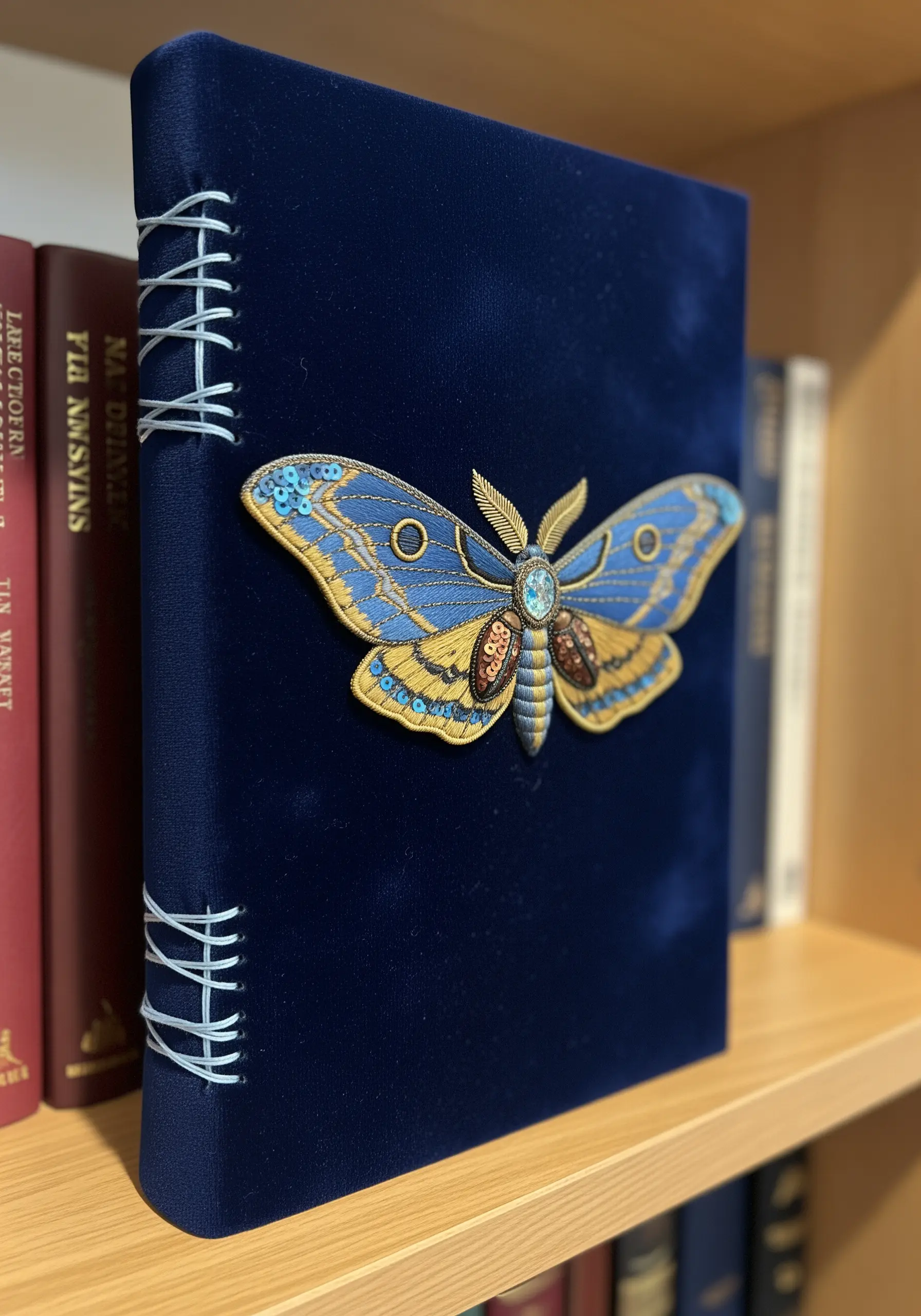
Embellish a velvet journal or album with a dimensional, beaded appliqué for a touch of old-world luxury.
Stitch your motif, like this moth, onto a separate piece of stiff interfacing or felt.
Incorporate raised satin stitch, sequins, and metallic threads to build layers and catch the light.
Once complete, carefully trim the excess fabric away from the motif and stitch it securely to the book cover. This method protects the book and makes the embroidery stand out beautifully.
11. Command Attention with a Vertical Wall Hanging

Utilize the height of your space with a long, narrow embroidered banner.
This format draws the eye upward, making a small room or hallway feel taller and more elegant.
Choose a single, graceful subject, like a Koi fish, and render it with painterly detail using the long-and-short stitch to seamlessly blend colors.
Stitching on a heavyweight, natural linen provides a beautiful drape and a sophisticated, gallery-quality backdrop for your work.
12. Capture Emotion with Minimalist Line Art
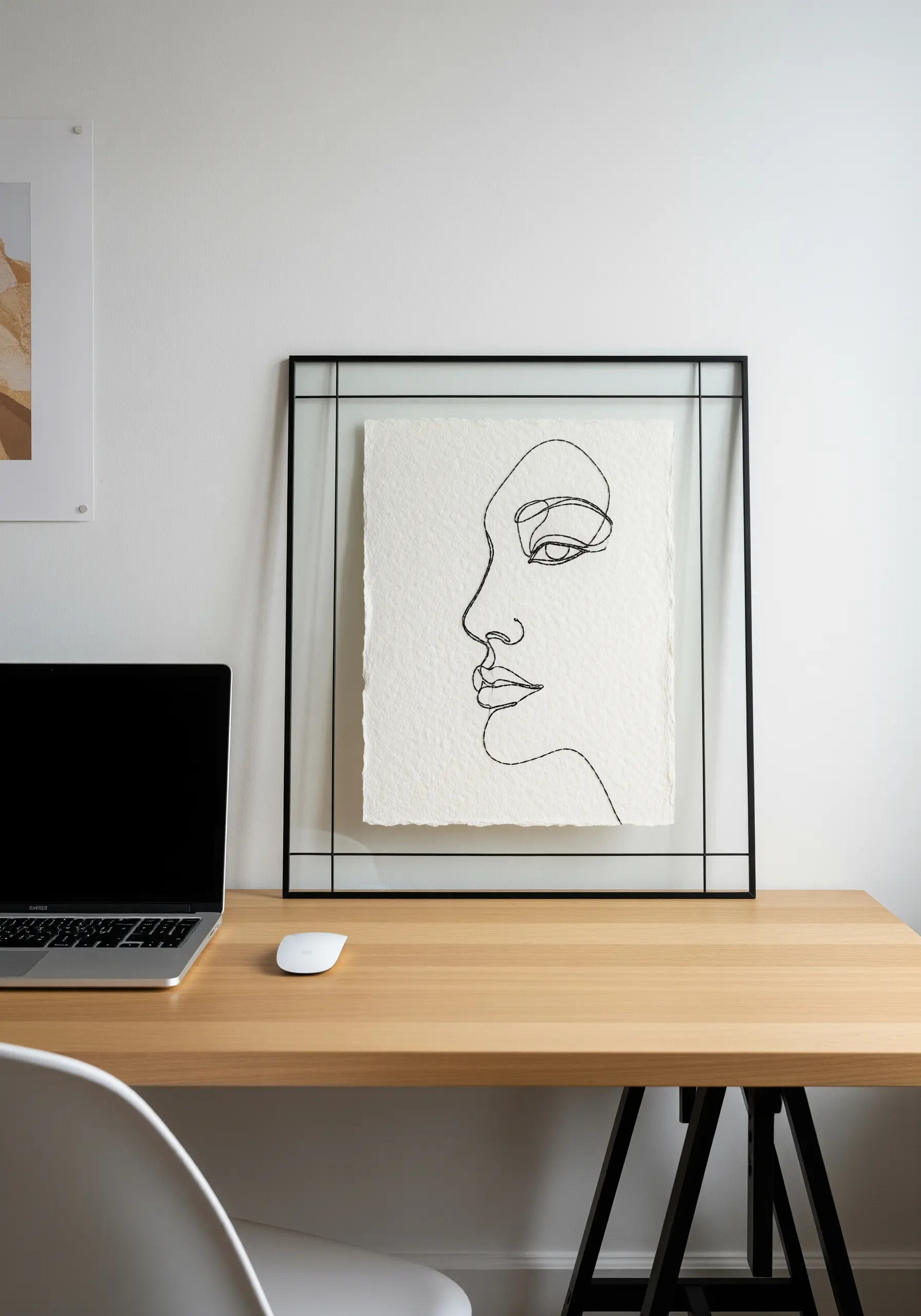
Discover the power of a single, unbroken line to create sophisticated and expressive art.
Instead of dense color, focus on the purity of the line itself. Use a smooth, consistent stitch like a whipped backstitch or stem stitch in a dark thread.
Work on a surface with inherent texture, like handmade cotton rag paper, to add warmth and depth.
Elevate the final piece by float-mounting it in a simple frame, which honors the negative space and transforms it into quiet luxury wall art.
13. Add Delicate Dimension with Tone-on-Tone Stitching
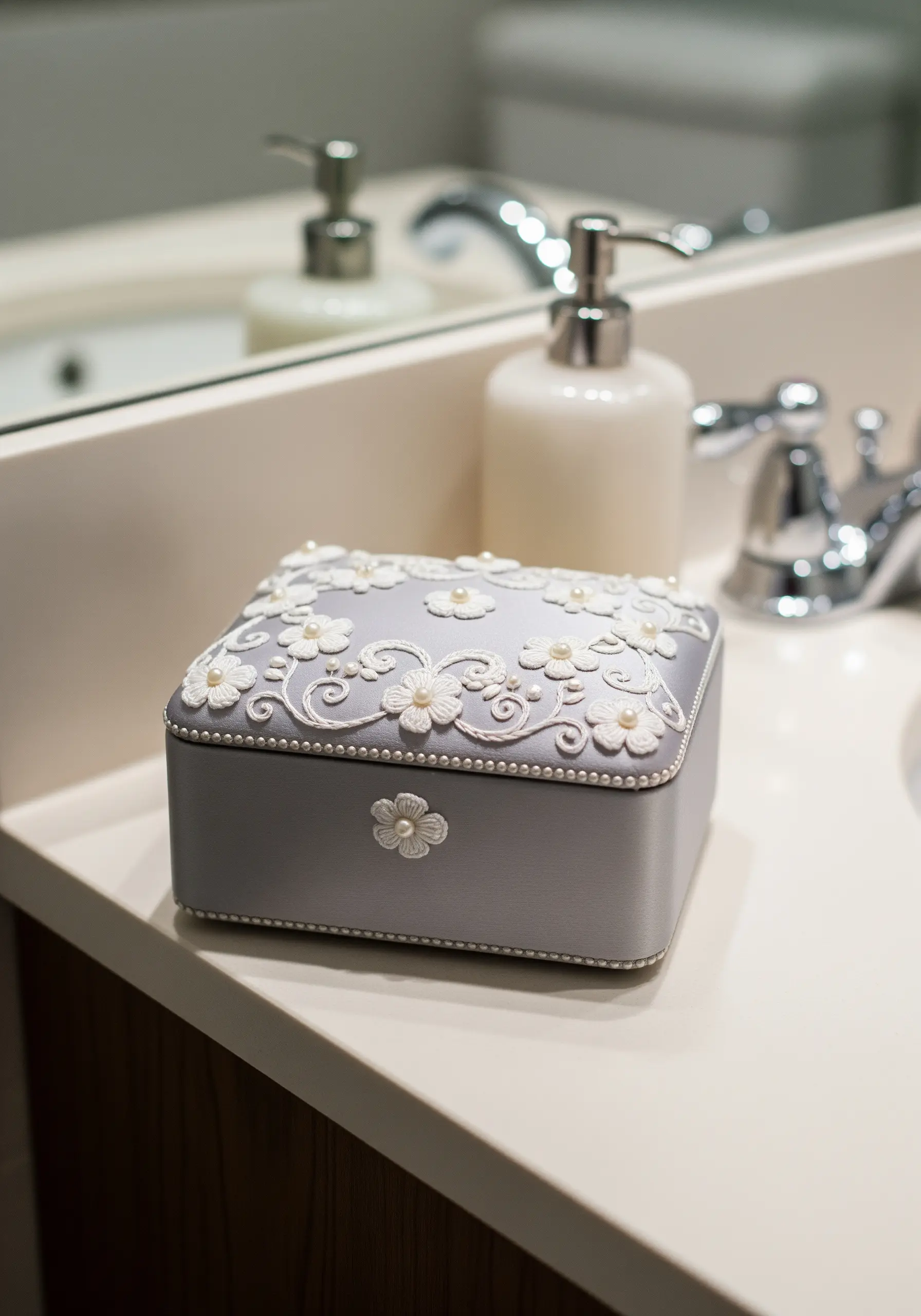
Create an incredibly chic and subtle effect by using a monochromatic color palette.
Stitch with white thread on a light gray surface, or any similar low-contrast combination.
The luxury comes not from color, but from texture.
Vary your stitches—combine smooth satin stitch, delicate seed stitches, and textural French knots—to create a pattern that reveals itself through light and shadow.
Adding a few tiny pearls or beads in the same hue introduces a new texture and a hint of luster.
14. Create a Luminous Cityscape with Thread and Light
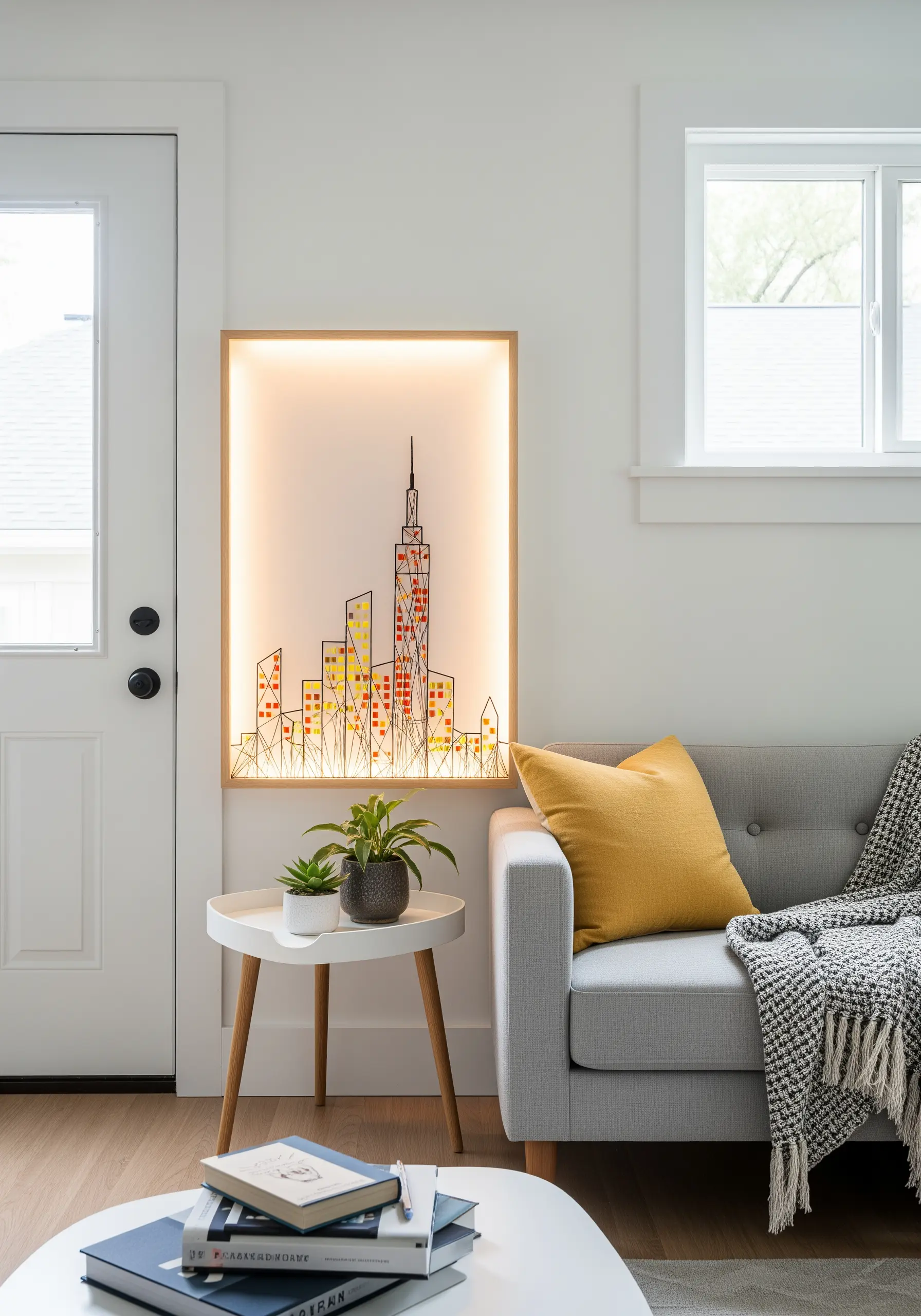
Combine embroidery with backlighting to build a piece that glows from within.
Instead of fabric, stitch your design onto a sheet of vellum or sturdy, translucent paper mounted in a shadowbox frame.
Use a simple backstitch to create a clean, graphic cityscape outline.
Install a strip of LEDs along the inside edge of the frame; when turned on, the light will diffuse through the surface and illuminate your thread work, creating a captivating piece of modern thread art.
15. Weave Natural Elements into a Bejeweled Mandala
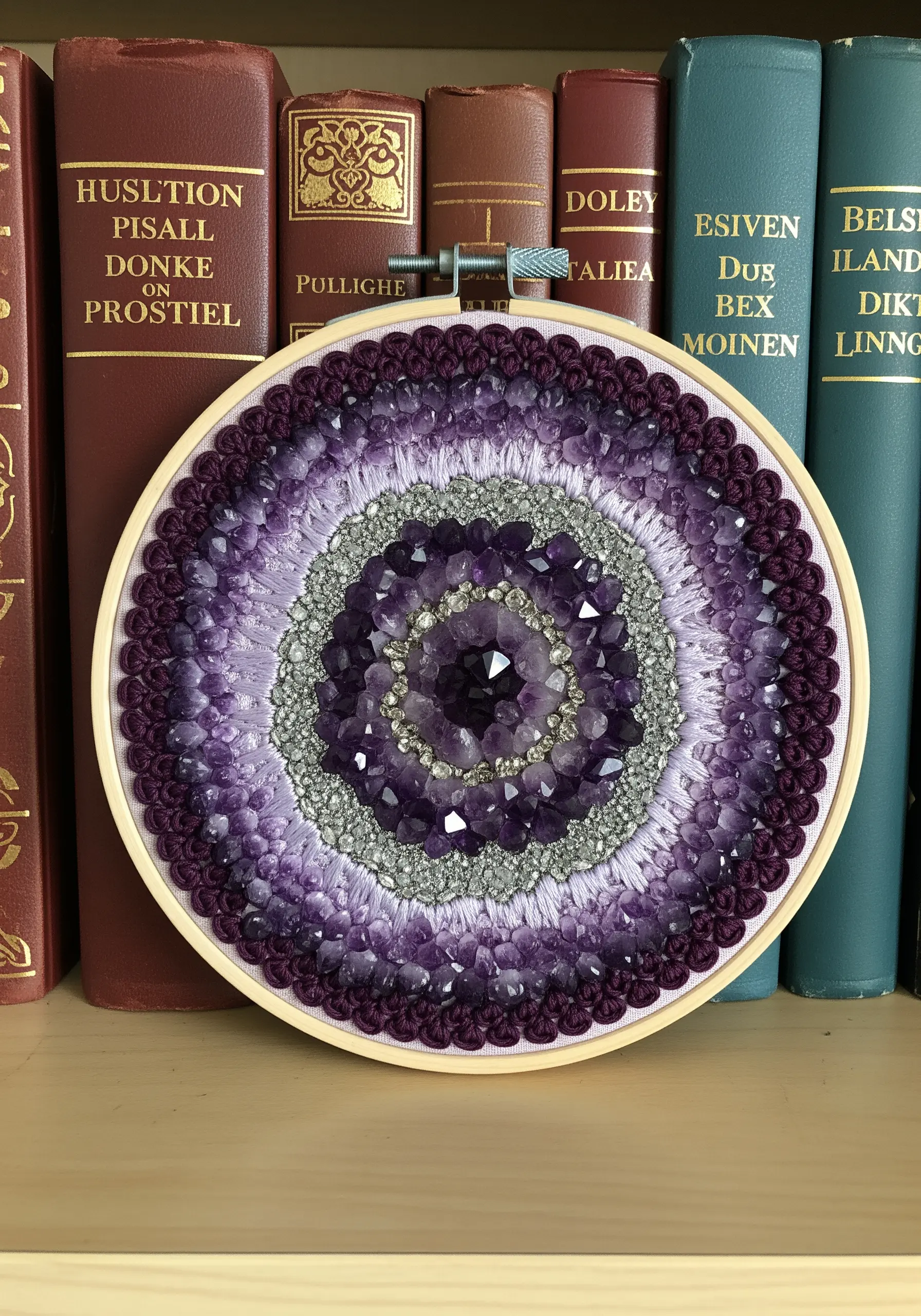
Integrate unexpected materials like crystals and beads to give your embroidery a rich, tactile dimension.
Plan your design as a mandala, with concentric rings of color and texture.
Use an ombré of purple threads in dense satin stitches or French knots for the embroidered sections.
In other sections, use a strong craft glue or couching stitches to secure raw amethyst chips and silver beads, creating a stunning interplay between the soft thread and the hard, reflective crystals.
16. Sculpt a Cascading Wall Piece with 3D Botanicals
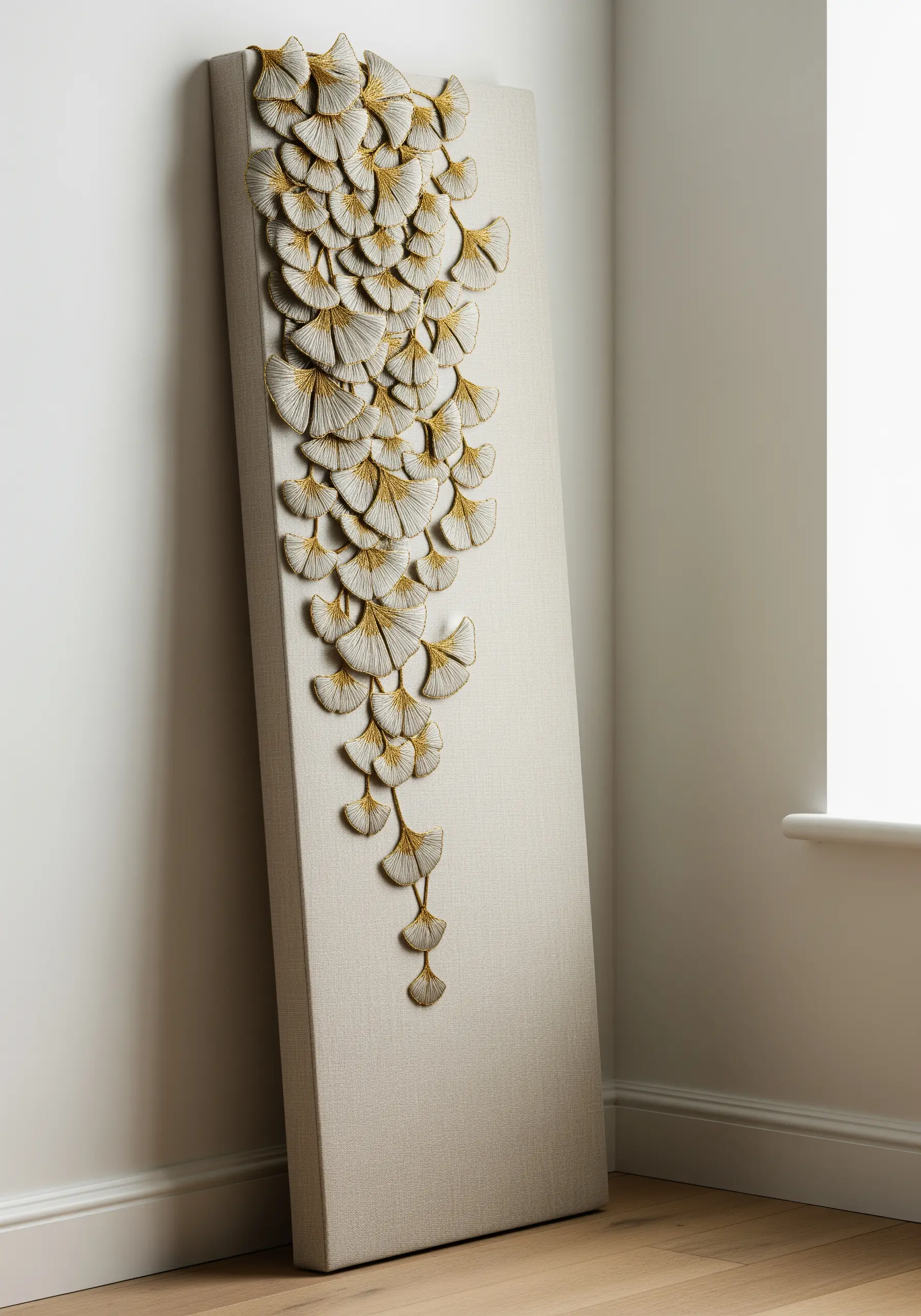
Allow your embroidery to escape the confines of the fabric with dimensional stumpwork.
Create dozens of individual ginkgo leaves by embroidering over a wire frame with buttonhole stitches, using a metallic thread to define the elegant outer edge.
Instead of applying them flat, arrange the finished leaves in an organic, cascading formation down a tall, narrow canvas.
This technique creates breathtaking movement and shadow play, turning a simple wall into a dynamic art installation.
17. Add a Touch of Whimsy to Window Treatments
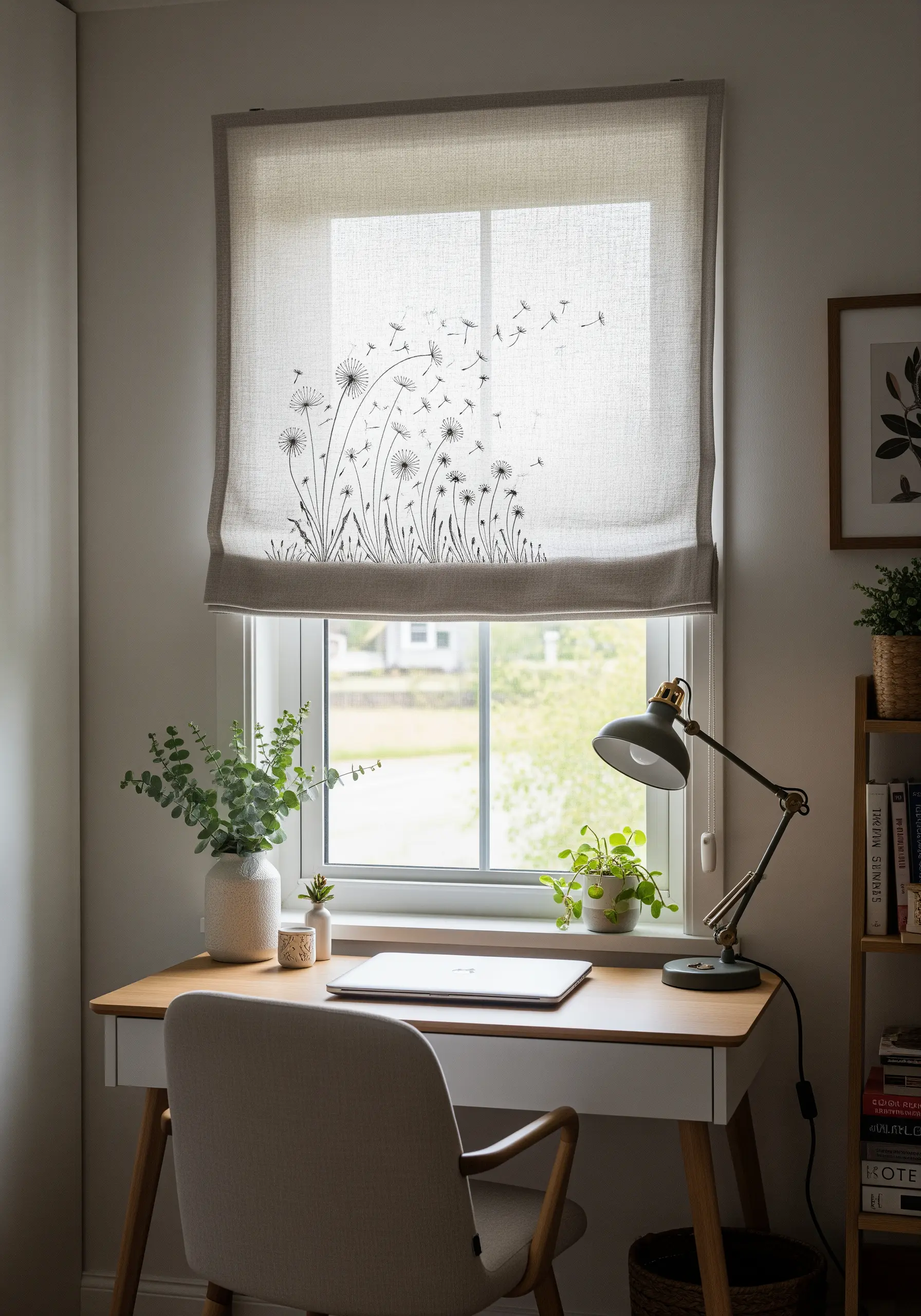
Personalize your home by adding a subtle embroidered detail to functional items like window blinds.
A lightweight, semi-sheer fabric like linen is perfect, as it allows light to filter through.
Choose a simple, airy design that complements the view outside, like these dandelion and wildgrass stitch projects.
Use a single, dark color of thread and a clean backstitch to ensure the motif is clear and graphic, even when backlit by the sun. It’s a small touch that adds immense personality.
18. Paint with Texture Using Punch Needle Art
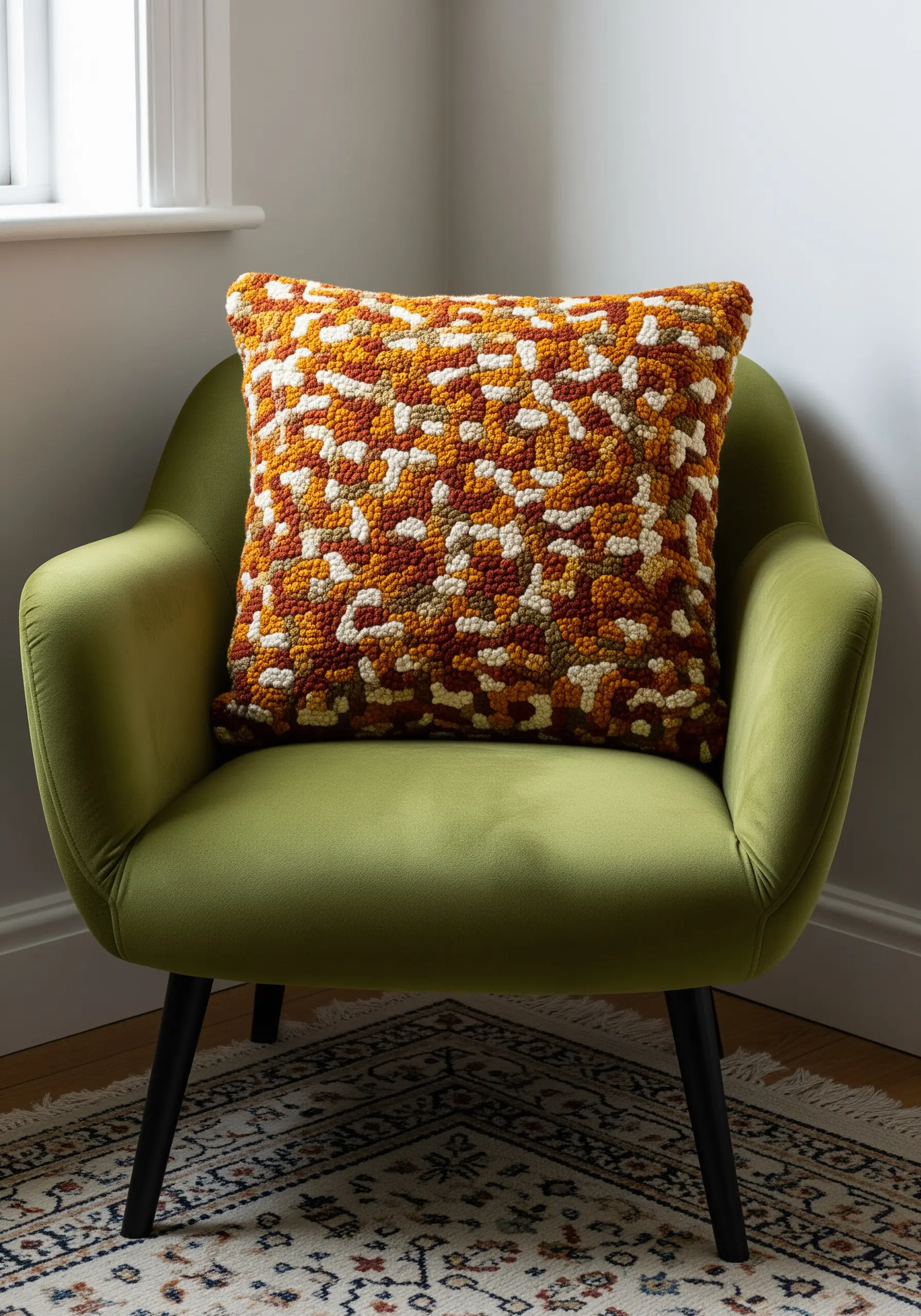
If you love the look of dense texture but want faster results, explore punch needle embroidery.
This technique allows you to ‘paint’ with yarn, quickly filling in abstract color blocks to create a plush, tactile surface.
It’s ideal for making functional art like cushions and rugs.
For a sophisticated look, choose a rich, earthy palette and arrange the colors in organic, flowing shapes. The result is a cozy and luxurious accent piece that invites you to touch it.
19. Contrast Geometric Stitches with Organic Mounting

Give your cross-stitch a modern, rustic update by rethinking how you display it.
Instead of a traditional hoop or square frame, try mounting your finished piece on a natural wood slice.
Carefully trim the Aida cloth to the shape of the wood, leaving a small margin to wrap around the edge.
The sharp precision of a geometric pattern against the organic, imperfect form of the wood creates a beautiful tension that feels both contemporary and grounded.
20. Embellish Everyday Objects with Bold Satin Stitch
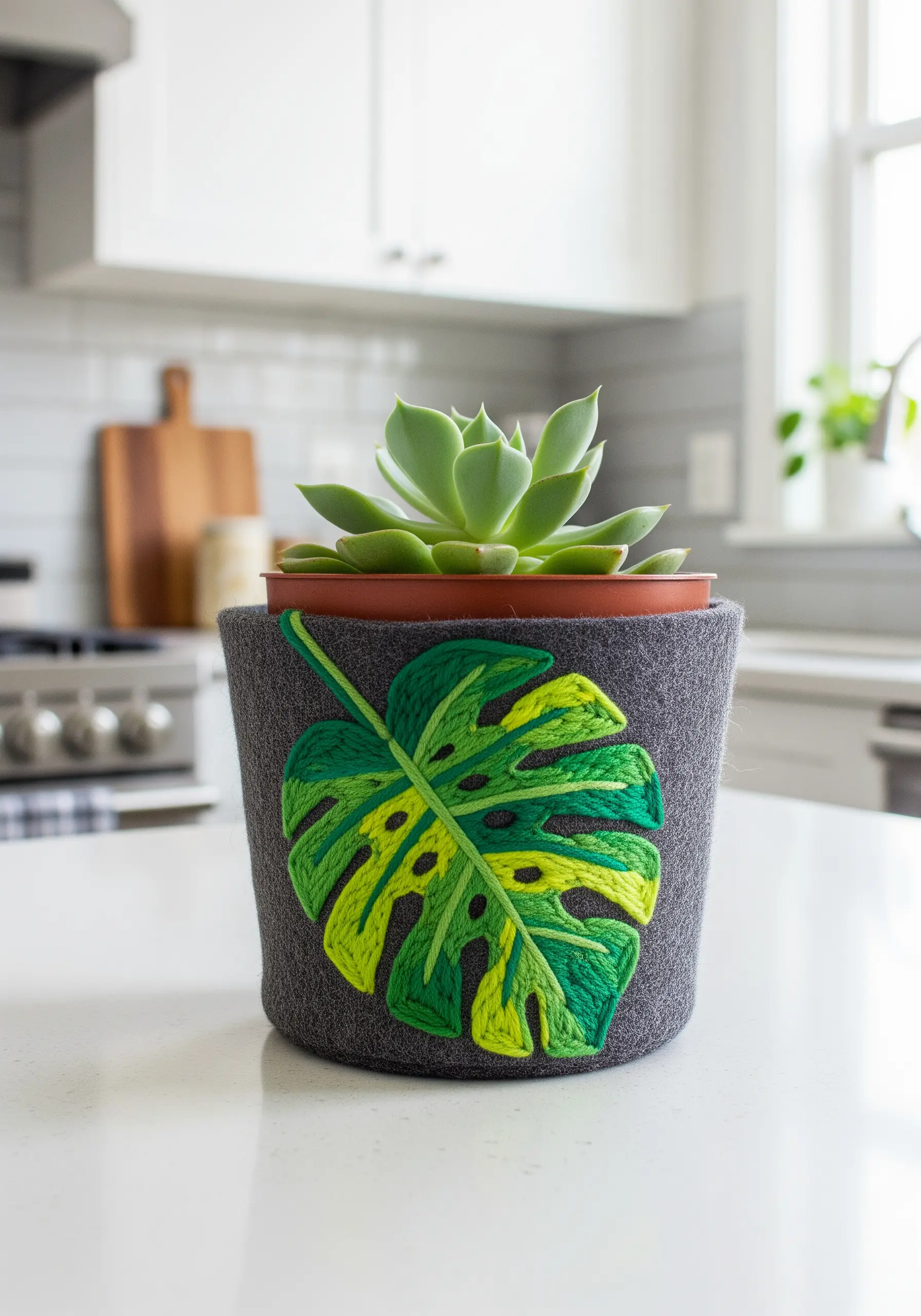
Elevate a simple felt plant cozy or storage bin with a bold, graphic embroidery design.
For a motif like this monstera leaf, use satin stitch to create a smooth, solid fill.
To add subtle dimension and a professional sheen, divide the leaf into sections and change the direction of your stitches in each one.
This simple trick makes the light reflect differently across the surface, giving the flat stitch a dynamic, almost iridescent quality. It’s one of the best plant-inspired hoop art designs to adapt for other objects.
21. Center Your Weaving with a Detailed Motif
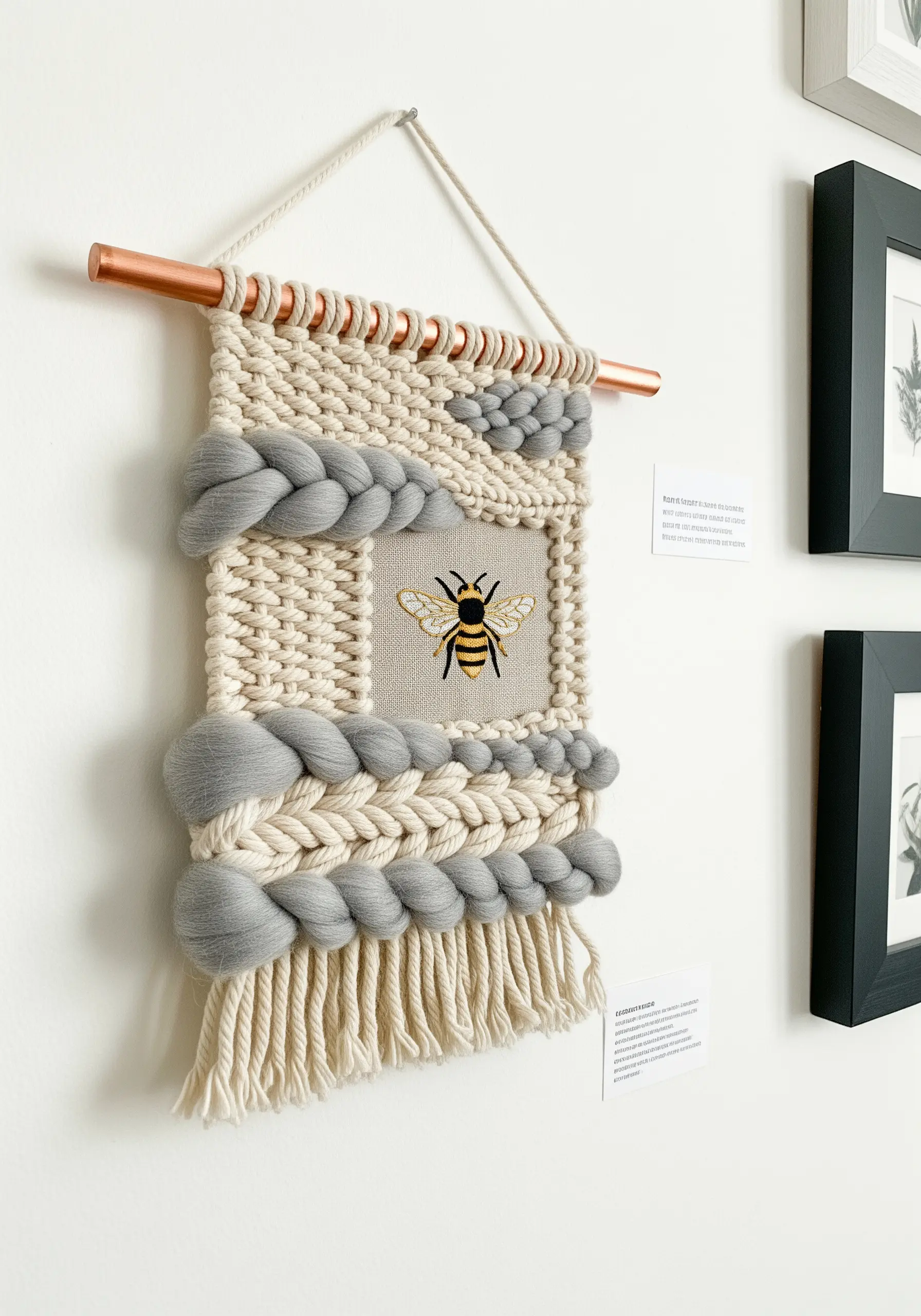
Combine two fiber arts—weaving and embroidery—to create a piece rich in varied texture.
In your weaving, leave a negative space or create a solid, plain-weave section as a canvas.
Separately, stitch a detailed motif like a bee or a botanical element onto a piece of linen.
Then, carefully stitch this embroidered patch into the prepared space in your weaving. This focal point draws the eye, contrasting the fine detail of thread with the chunky softness of yarn.
Explore more mixed-fiber embroidery techniques to push your creative boundaries.
22. Curate a Permanent Bouquet with 3D Embroidery

Construct a delicate, everlasting bouquet with advanced stumpwork and beading techniques.
Create individual flowers and leaves on wire-edged frames, using long-and-short stitch to blend colors for realistic petals.
For the dragonfly, use sheer organza fabric for the wings to capture their translucent quality.
Assembling these individual elements into a composition and displaying it under a glass dome elevates your stitching into a precious, sculptural object of art.
23. Explore Historical Goldwork for Ornate Decor

Add a touch of regal opulence to your decor by exploring goldwork embroidery.
This technique involves couching down metallic threads—like pearl purl or Japanese thread—onto a rich fabric surface like velvet.
Use these threads to create ornate outlines and fill spaces with shimmering textures or seed pearls.
The incredible light-reflecting properties of these materials create a sense of history and luxury, perfect for a small, decorative object that commands attention.
24. Capture a Seascape with Layered Thread Painting
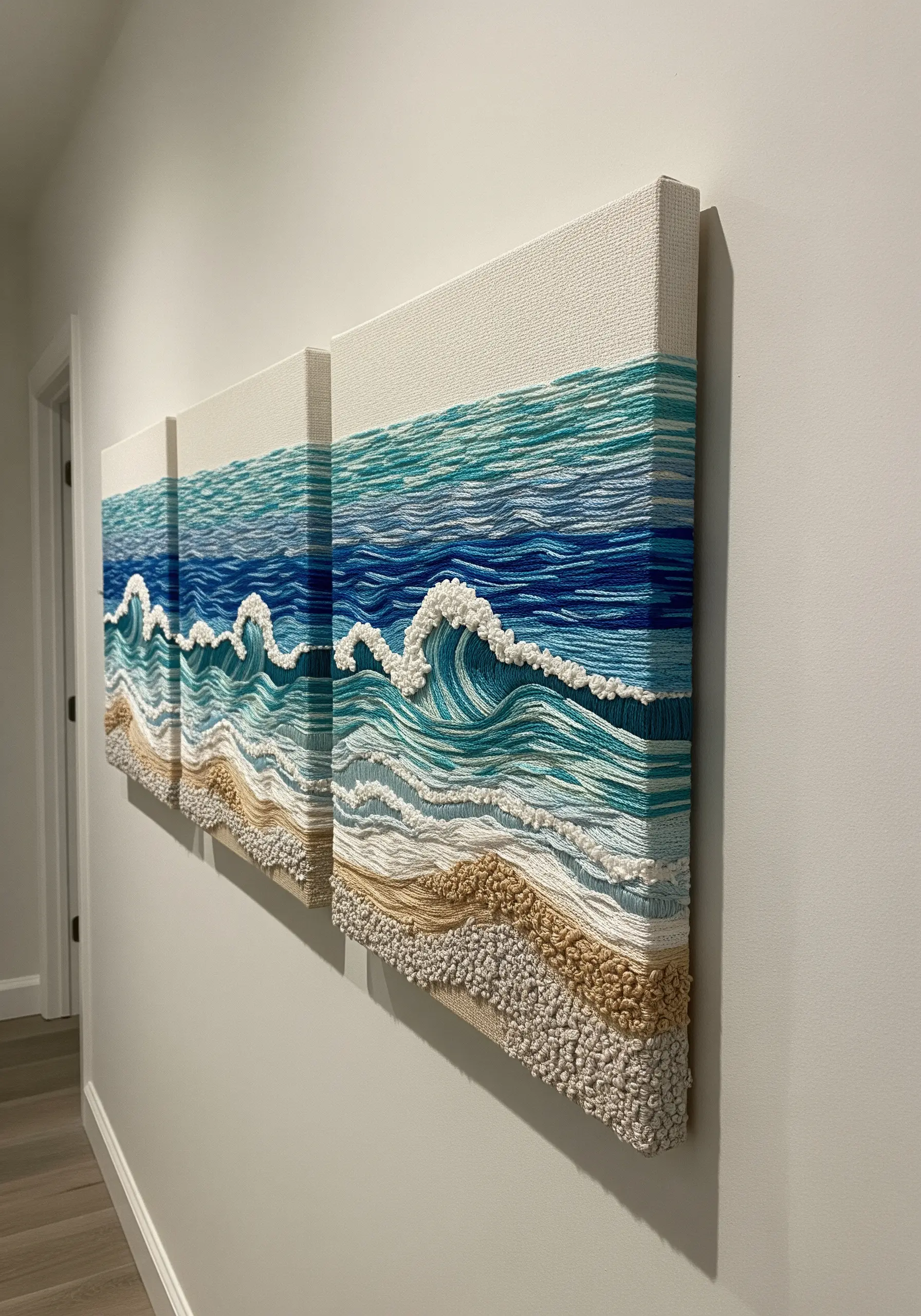
Create an immersive, textural seascape by extending your design across multiple canvases.
Use a variety of thread types and colors—from fine cotton floss to thicker pearl cotton—to build layers.
Lay down long stitches in blues and greens to represent the water, then build up the crashing waves with dense clusters of French knots and bullion stitches in white and cream.
This method of thread painting adds incredible depth, movement, and realism to an abstract concept.
25. Create an Illusion of Movement with Beaded Rain

Use beads to craft a wall hanging that feels fluid and alive.
Begin by embroidering a flowing, abstract wave pattern at the top of your fabric.
From this line, stitch long, individual strands of seed beads, letting them hang freely.
To create a dynamic, shimmering effect, vary the lengths of the strands and mix different bead finishes—matte, iridescent, and metallic. The piece will gently move and catch the light, mimicking the serene beauty of falling rain.
26. Personalize a Memory by Embroidering a Map
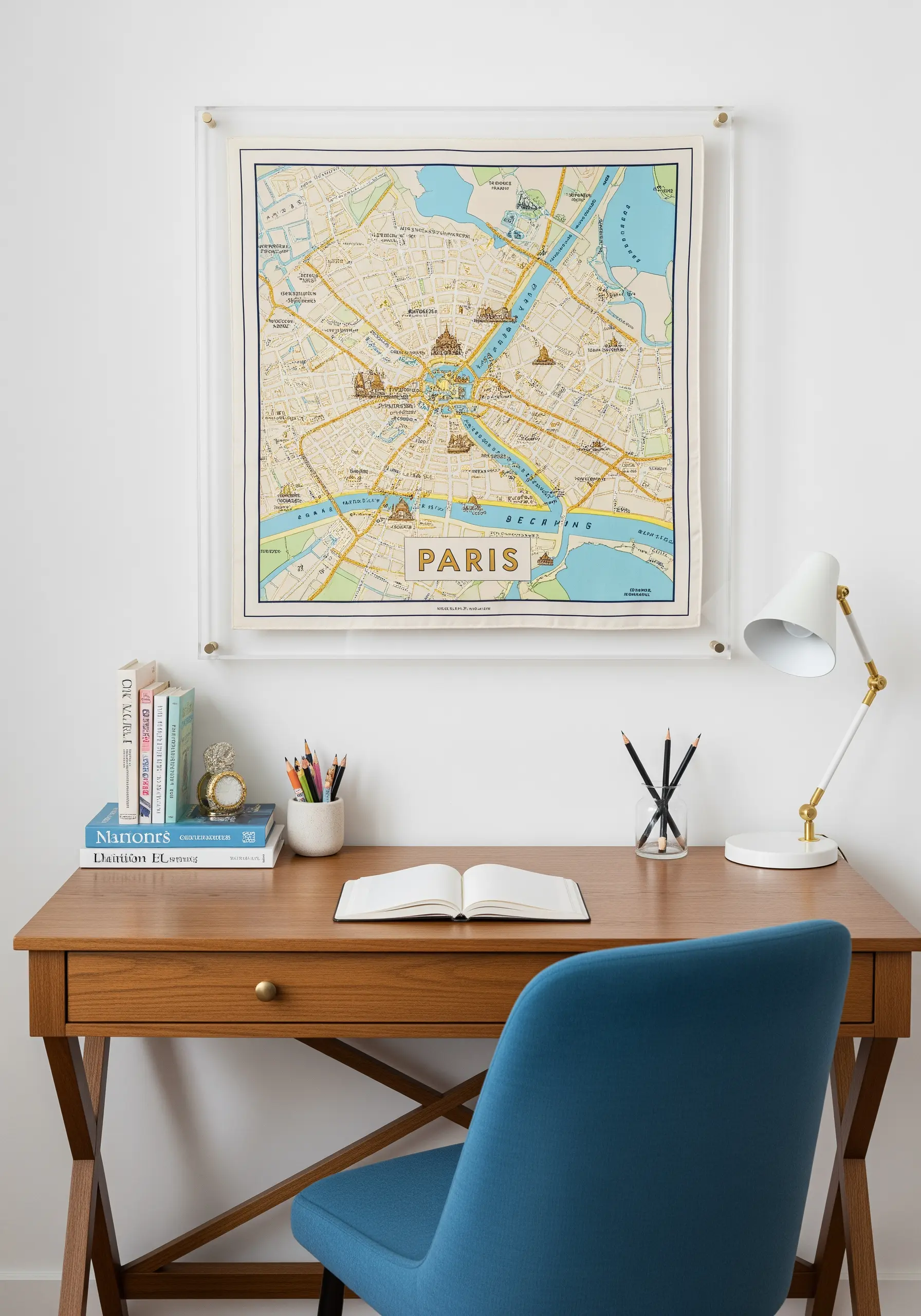
Turn a decorative printed map into a deeply personal piece of art with a few simple stitches.
Source a map printed on fabric, or use a vintage silk scarf.
Use a single strand of contrasting thread and a simple backstitch to trace a meaningful journey, outline a special neighborhood, or mark a cherished spot with a star stitch or French knot.
This subtle act of embellishment transforms a generic item into a unique story of your life, making it a powerful piece of personal decor.
27. Adorn Soft Sculptures with Contrasting Beadwork
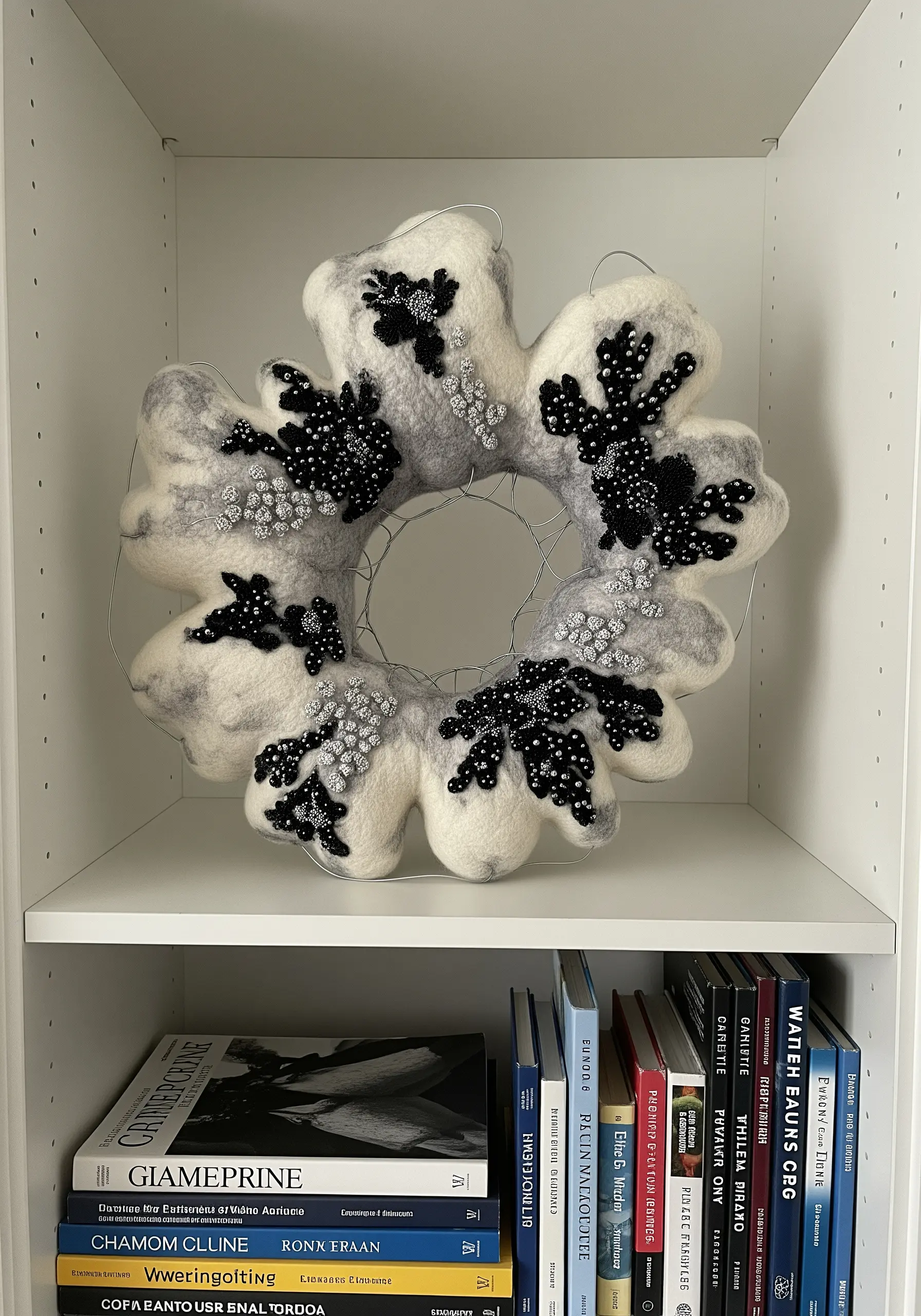
Create a stunning visual and tactile contrast by combining soft, matte felted wool with hard, glittering beads.
After creating your sculptural felt base, use it as a canvas for intricate beadwork.
Apply dense clusters of black and silver seed beads to create patterns that flow over the organic form.
The interplay between the light-absorbing felt and the light-reflecting beads gives the piece a sophisticated, dynamic quality that feels both earthy and elegant.