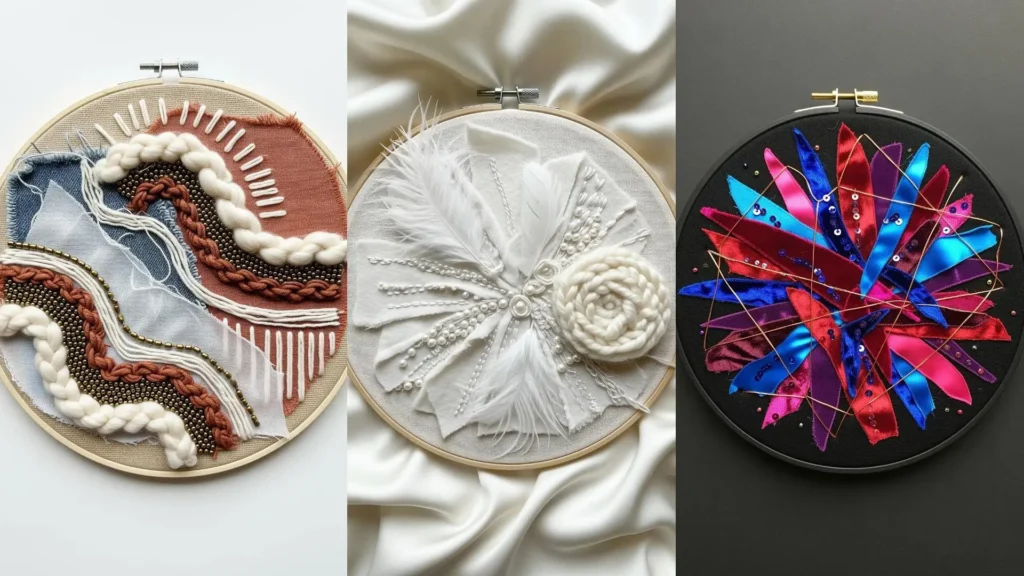
Sometimes, the most profound statement is made with the quietest voice. In embroidery, that voice is a single, intentional line. If you’ve ever felt that your work needed something more—more polish, more emotion, more intention—the answer might not be in adding more, but in taking away.
This is the art of restraint. It’s about trusting that one perfectly placed stitch can carry more weight than a hundred. It’s about understanding how the empty space on the fabric, the negative space, is just as important as the thread itself. It’s about transforming a simple drawing into a piece of quiet-luxury art that feels both modern and timeless.
Here, you won’t find overly complex techniques or a demand for dozens of colors. Instead, you’ll discover how to master the nuance of the line—how to make it smooth, bold, delicate, or textured. You will learn to see your thread not just as a material for filling space, but as a tool for drawing with elegance and confidence. Let’s begin.
1. The Single-Line Contemplative Portrait
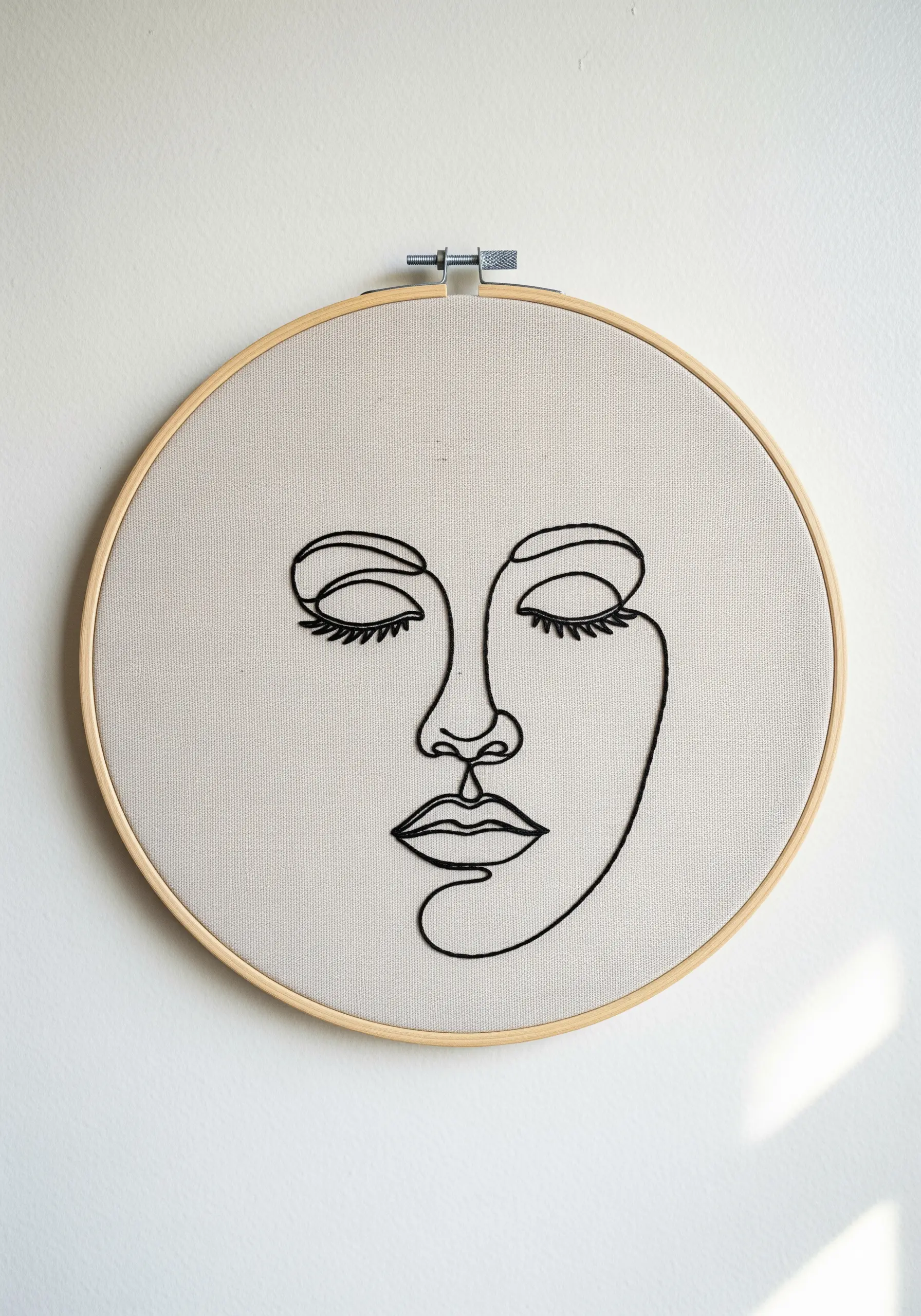
To achieve this fluid, continuous look, use a whipped backstitch or a stem stitch.
These stitches create a smooth, slightly raised line that resembles ink, elevating the drawing beyond a simple backstitch.
Use all six strands of your embroidery floss for a bold, graphic line that stands out, and choose a high-quality linen or cotton canvas for a taut, professional finish.
The key is maintaining consistent tension around the curves to ensure the line flows without any puckering.
2. Interlaced Hands with Narrative Thread
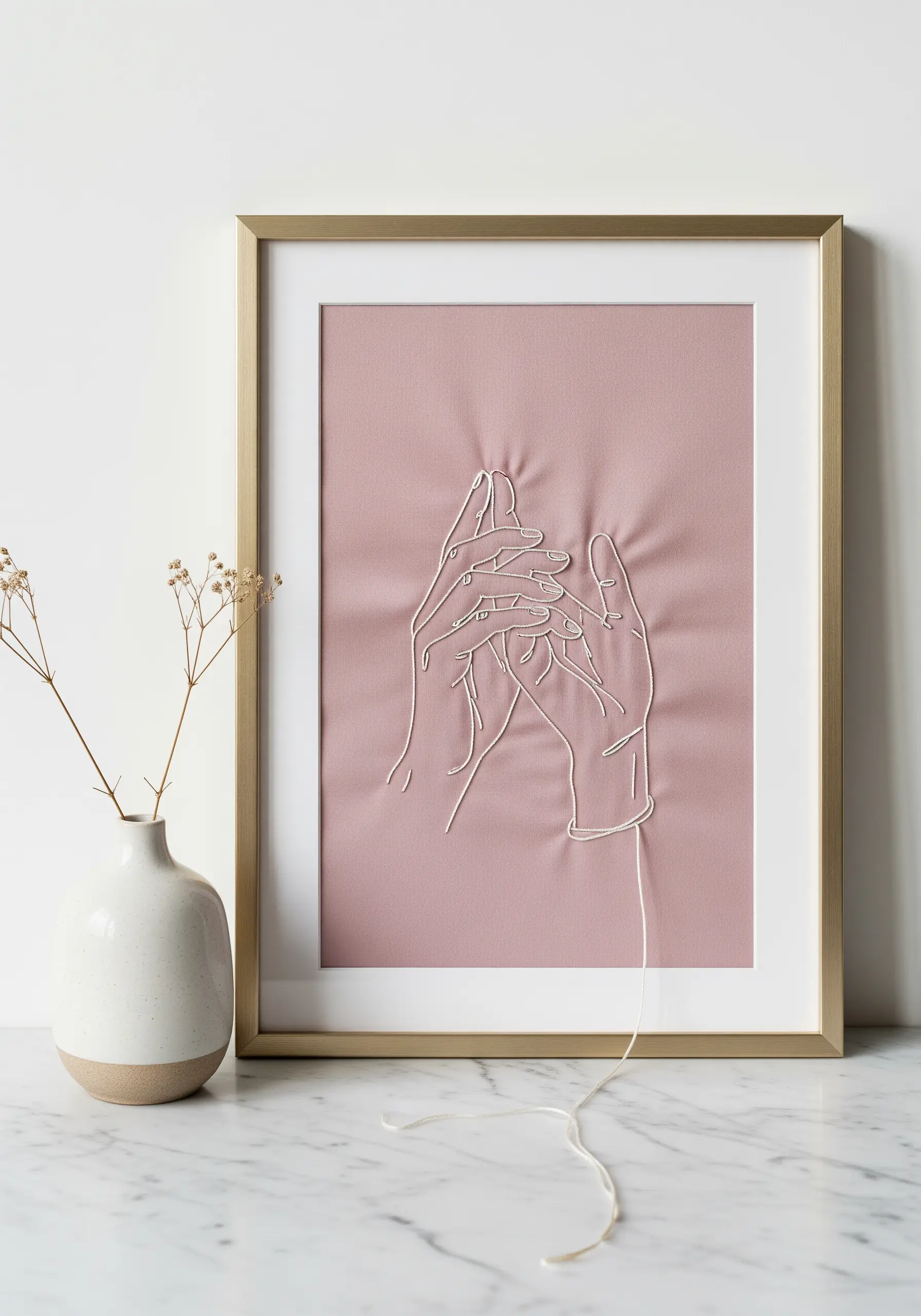
Frame your fabric with intentional slack to introduce soft, sculptural folds that interact with the stitched lines.
This technique adds depth and a sense of movement, turning the flat surface into a three-dimensional story.
Allow one of the threads to hang loose and trail out of the frame—this small detail breaks the boundary of the artwork and invites curiosity.
Use a single strand of white or cream thread on a muted, colored background like this dusty rose to create a high-contrast, ethereal effect.
3. A Botanical Triptych in Monochrome
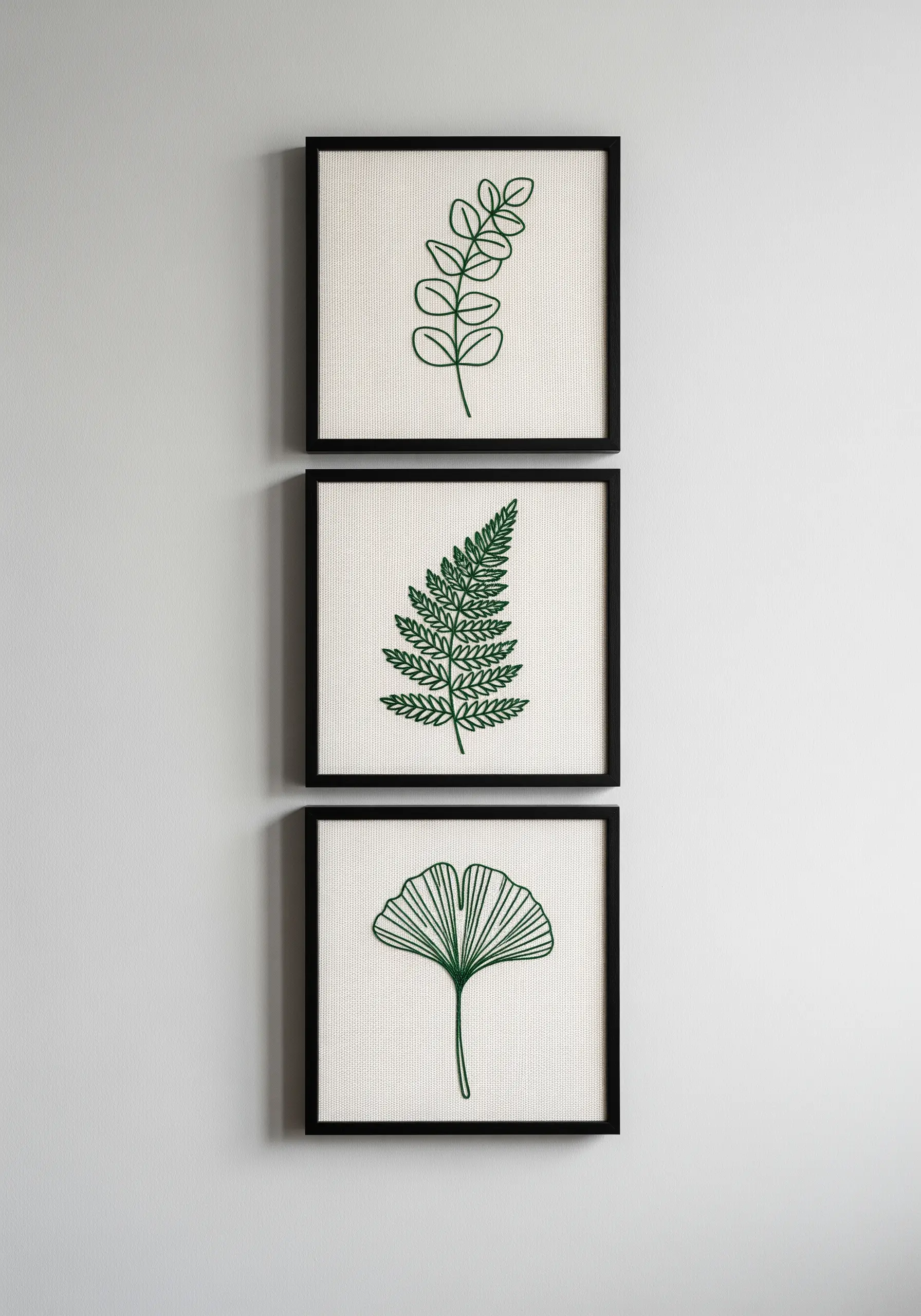
Create a cohesive gallery wall by stitching a series of related motifs, like these botanical specimens, using the same thread color and fabric.
Stitch on Aida or an evenweave fabric; its natural grid helps maintain symmetry and proportion, which is crucial for balanced compositions.
For the fern, use a detached chain stitch or lazy daisy for the individual fronds to add delicate texture.
Frame each piece identically in simple black frames to let the nature-inspired framed embroidery designs become the sole focus.
4. Architectural Elegance on a Midnight Canvas
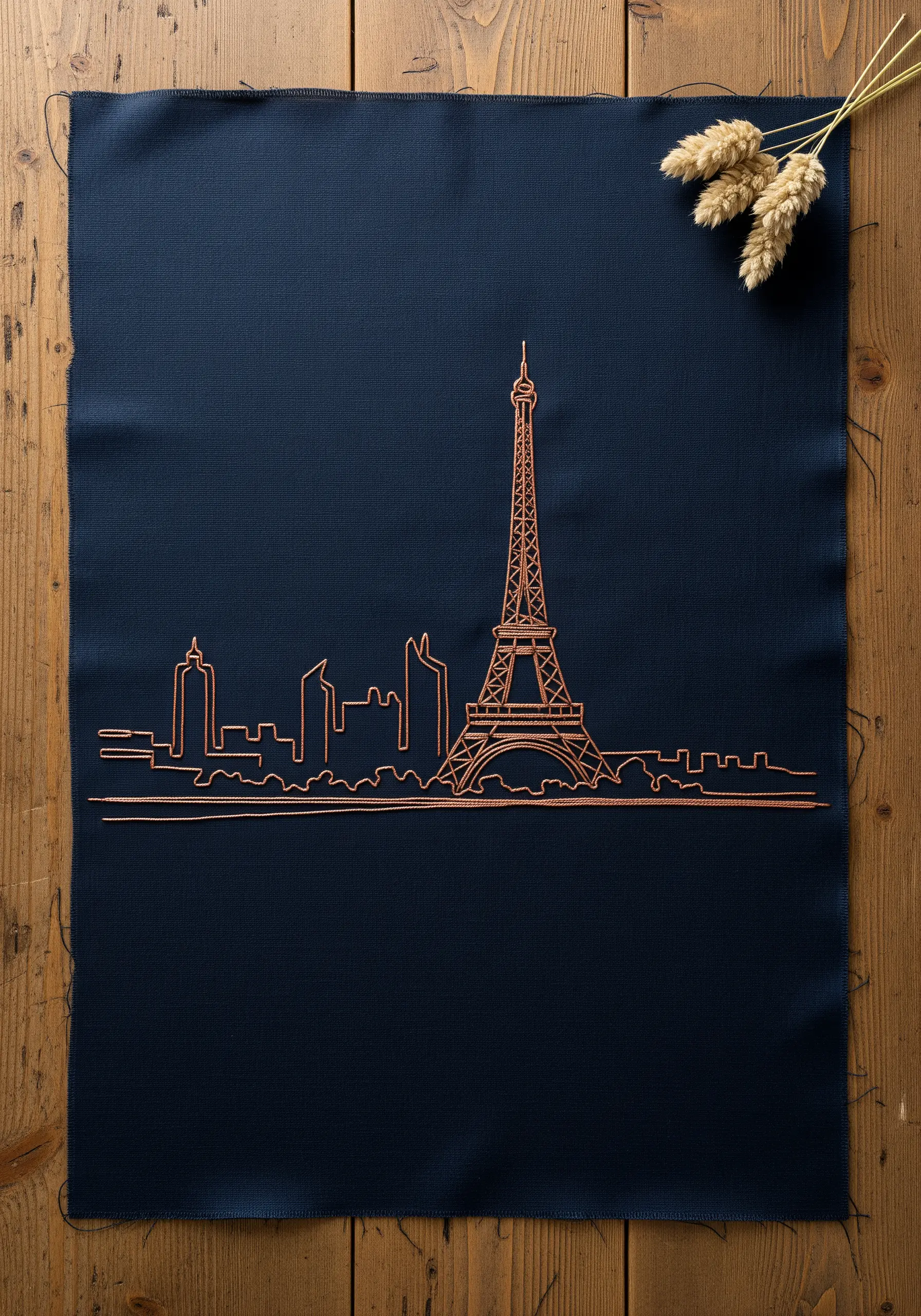
Capture the magic of a city skyline by using a high-sheen or metallic thread against a dark, matte fabric like navy blue linen.
The contrast makes the thread appear to glow, adding a luxurious, sophisticated touch to the design.
Use a stem stitch for the main architectural lines; its rope-like texture adds a subtle dimension perfect for illustrating ironwork and structure.
For the finer city outlines, switch to a simple backstitch using fewer strands to create a sense of atmospheric perspective.
5. Large-Scale Abstract Thread Sculpture
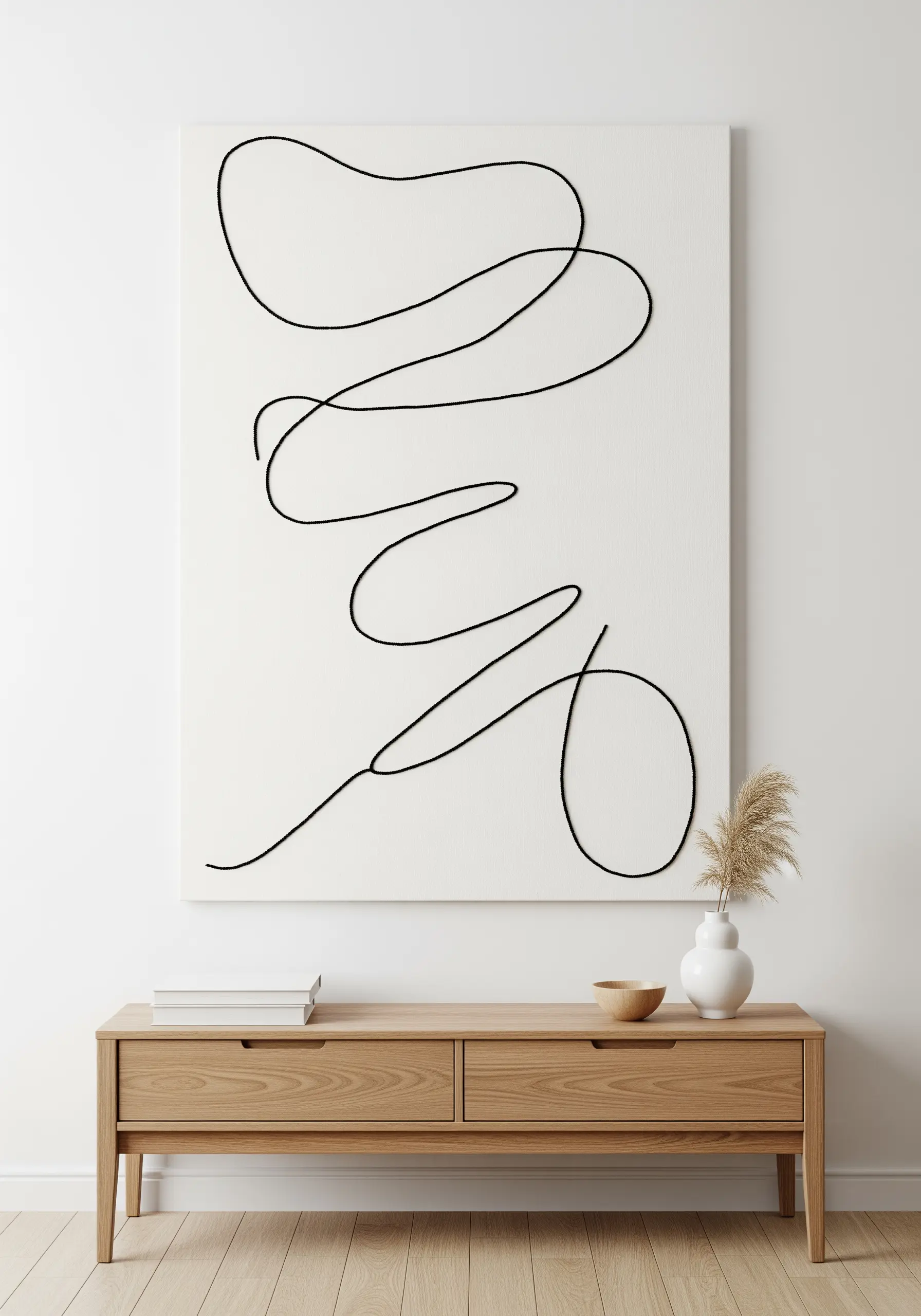
Transform a simple line into a statement art piece by working on a large, stretched canvas instead of a hoop.
Use a thick material like yarn, rope, or cotton piping cord to create a bold, sculptural line with significant physical presence.
Secure the cord to the canvas using the couching technique: lay your main cord along your drawn path and use a thinner, matching thread to tack it down with tiny, invisible stitches from behind.
This method allows you to create fluid, dramatic curves that traditional stitching cannot achieve on this scale.
6. Celestial Mapping with Metallic Thread
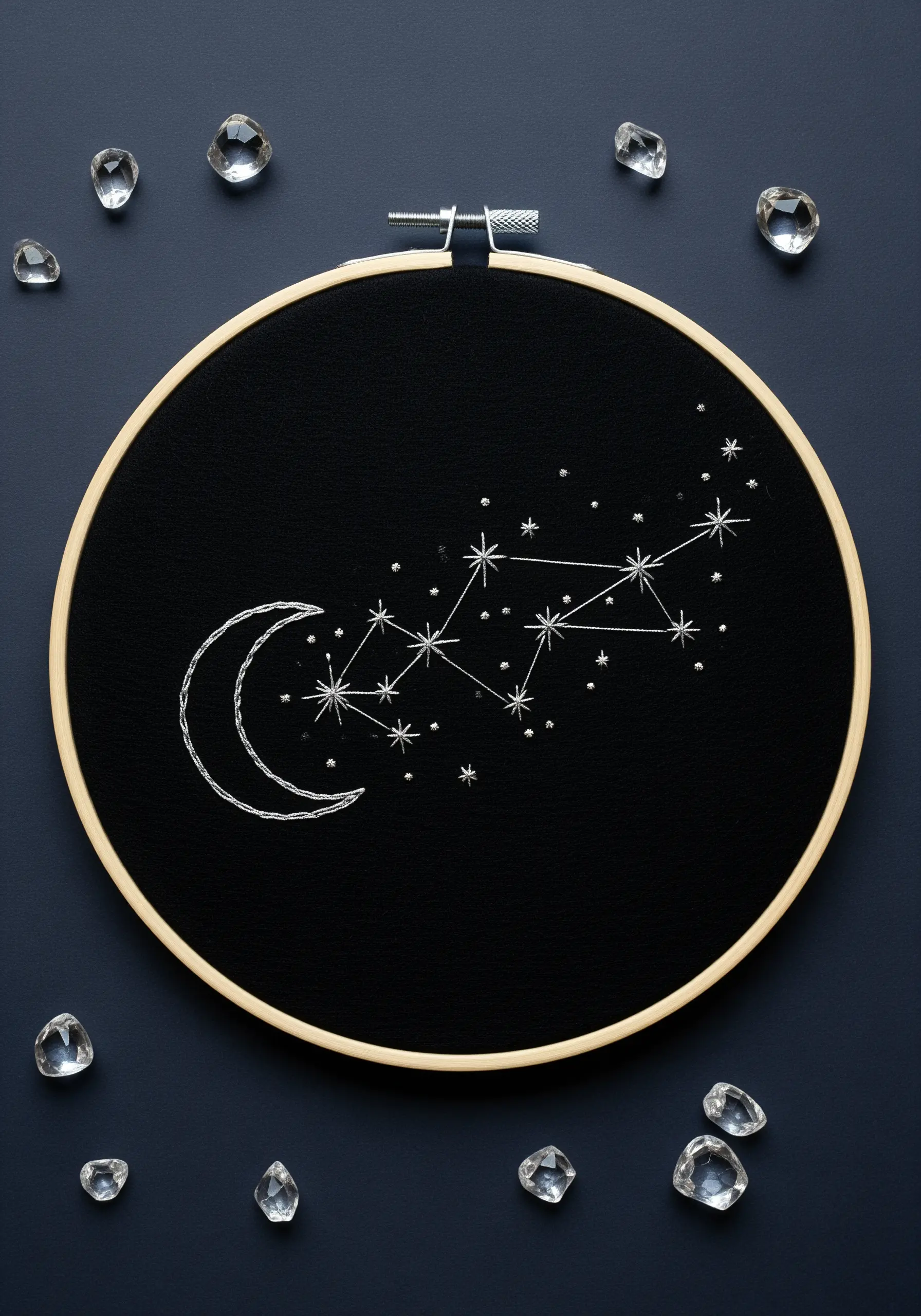
Create a dramatic celestial scene by using a bright white or metallic silver thread on a deep black cotton fabric.
For the stars, use a combination of tiny French knots and straight stitches radiating outwards to suggest twinkling light.
Vary the number of wraps on your French knots (one for small stars, two for larger ones) to create a sense of depth and distance.
Use a fine, single-strand backstitch for the constellation lines to keep them delicate and secondary to the stars themselves.
7. Capturing Movement in a Single Line
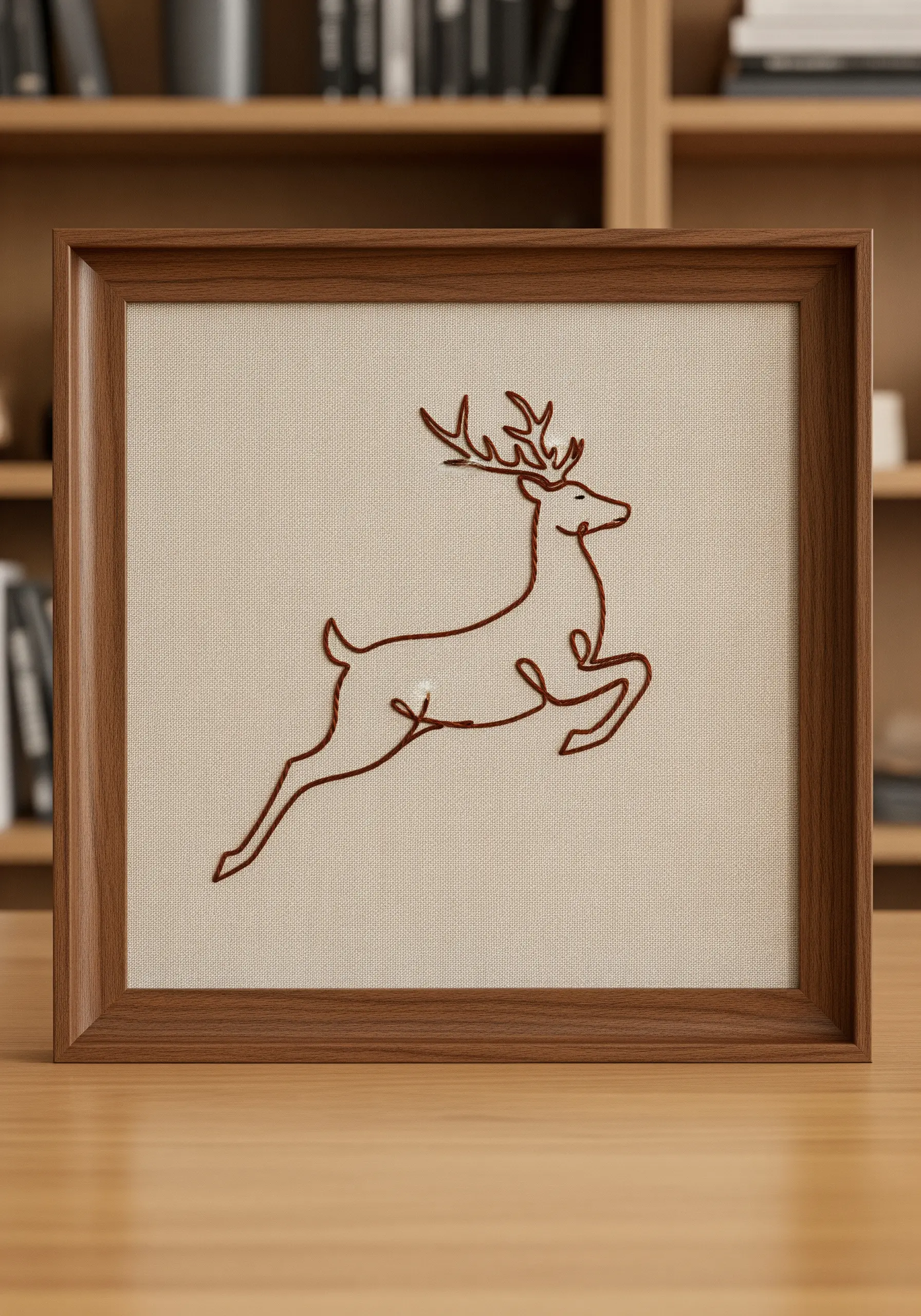
For animal motifs, focus on conveying motion and energy rather than precise anatomical detail.
A single, unbroken line stitched with a stem stitch can create a dynamic, fluid outline that suggests the animal is in mid-leap.
Choose an earthy thread color like terracotta or burnt sienna and stitch it onto unbleached, natural linen.
This pairing of color and texture enhances the organic, rustic feel of the artwork, making it perfect for soft, neutral, nature-inspired stitch patterns.
8. The Meditative Repetition of Geometric Forms

For intricate geometric patterns, a whipped backstitch is your best friend. It creates a perfectly smooth, solid line with no visible gaps, which is essential for clean intersections.
Before you begin, lightly draw your pattern onto the fabric with a water-soluble pen to ensure perfect symmetry.
Work from the center outwards to maintain even fabric tension and prevent distortion of the circles.
The repetitive motion of stitching these forms can be incredibly calming, making the process as beautiful as the final piece.
9. Sculptural Portraiture with Thick Cord

To create this high-impact, three-dimensional effect, you’ll be sculpting with fiber rather than just stitching.
Use a thick cotton cord or rope as your primary medium and attach it to a painted canvas using the couching technique.
For the filled-in section, lay the cords side-by-side in tight rows, securing each one with small, hidden stitches in a matching thread.
This is a powerful way to explore abstract thread sculpting tricks and give your line art a commanding physical presence.
10. Translating Iconic Art into Thread
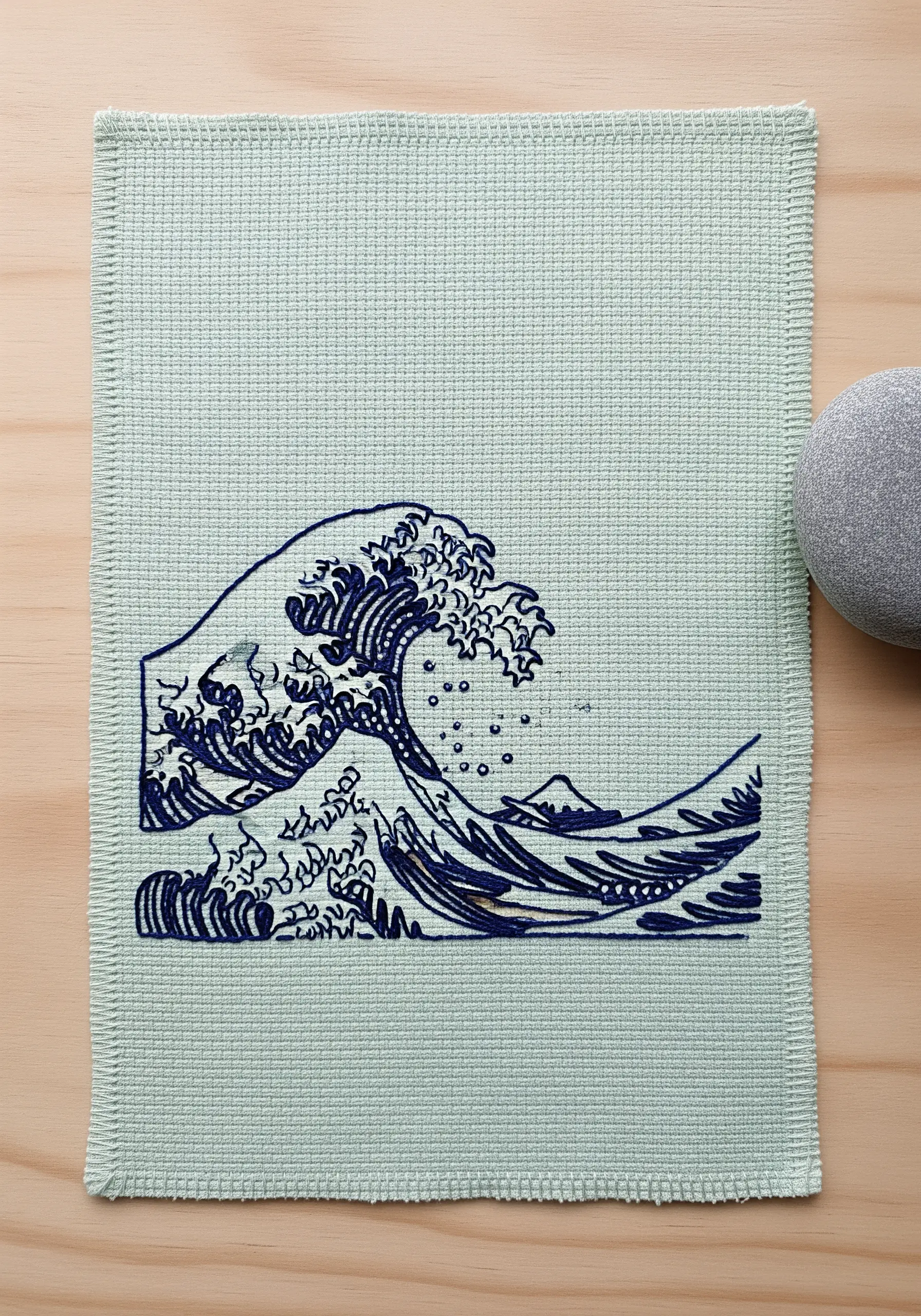
Simplify a complex masterpiece like Hokusai’s ‘The Great Wave’ by focusing on its most essential lines.
Use a dark navy thread on a pale blue-green fabric to honor the original color palette.
Vary your stitch style to convey different textures: use a jagged, uneven backstitch for the turbulent seafoam and a smoother stem stitch for the powerful curve of the main wave.
Tiny seed stitches can represent the sea spray, adding a delicate detail that completes the scene.
11. Minimalist Cityscape with a Single Accent

A simple city skyline doesn’t require complex detail to be effective. Use a clean backstitch with two or three strands of black floss for a crisp, graphic silhouette.
The power of this design lies in its restraint and the strategic use of negative space.
Introduce a single, tiny element of color—like the crescent moon stitched here in yellow satin stitch—to draw the eye and add a point of interest.
This technique turns a simple outline into a complete, atmospheric scene, perfect for minimalist embroidery wall art styles.
12. The Art of Monochromatic Thread Painting

You don’t need a full spectrum of colors to create depth and realism. Explore thread painting using only shades of grey, black, and white.
Use a long-and-short stitch, blending the different shades to create smooth gradients that mimic light and shadow on the feather’s barbs.
Keep the central shaft (the rachis) and the outline crisp with a fine backstitch in black to provide structure and contrast.
This technique transforms a simple line drawing into a piece with incredible dimension and sophistication.
13. Abstract Cartography in Gold Thread
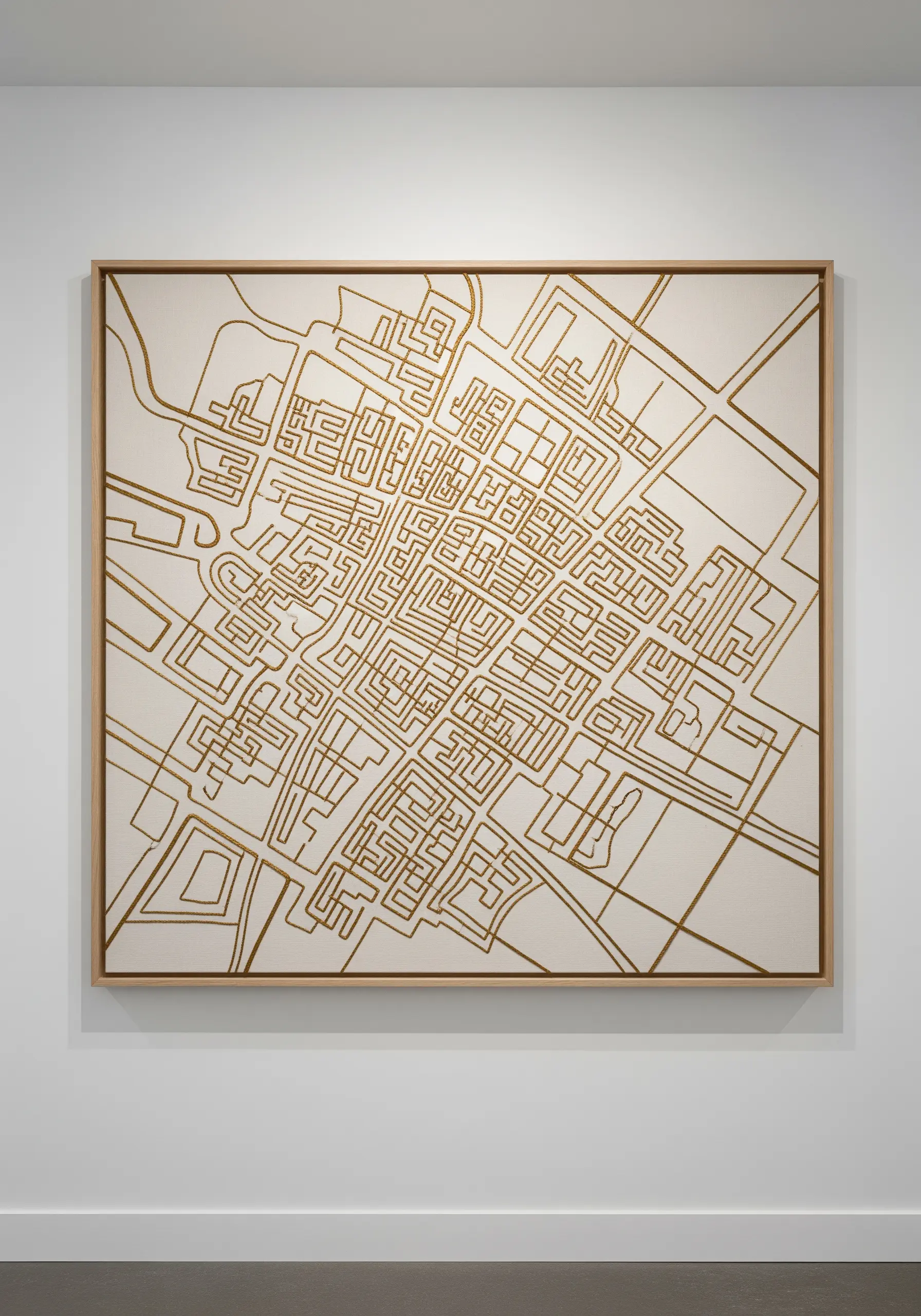
Create a personal and abstract piece of art by embroidering the street map of a meaningful place—a hometown, a favorite city, or a cherished neighborhood.
Trace the map onto your fabric, simplifying the lines to create a maze-like, geometric pattern.
Stitch the design entirely in a single color of metallic gold thread on a neutral, off-white canvas for a luxurious and modern aesthetic.
The result is a piece that is both deeply personal and artistically abstract.
14. Exploring Texture within Geometric Bounds

Combine clean outlines with textured fills to create a dynamic interplay between shapes.
First, stitch your primary geometric forms—the square and circle—using a precise whipped backstitch in a bright white thread for a perfectly smooth line.
Then, fill one of the overlapping areas with a dense pattern of seed stitches or short running stitches.
This contrast between the clean, open lines and the textured, filled space adds a layer of visual interest and sophistication to a simple composition.
15. The Essence of Character in a Fluid Line

The beauty of single-line art is its ability to capture the essence of a subject with incredible efficiency.
When stitching an animal, focus on the curve of the spine and the stretch of the limbs to convey personality and movement.
A simple backstitch using three strands of black floss is all you need; the expression comes from the drawing itself, not the complexity of the stitch.
This style of simple yet emotional embroidery is perfect for creating minimalist art that feels alive.
16. Bold Botanicals with a Chain Stitch Outline

Give your botanical line art a bold, textural quality by using a chain stitch for the outlines.
This stitch creates a beautiful, rope-like line that has more presence and dimension than a standard backstitch.
Choose a high-contrast color combination, like gold thread on a deep emerald green cotton, to make the design pop.
The chain stitch works especially well for the curved, organic shapes of leaves and flowers, enhancing their natural form.
17. A Diptych of Interconnected Portraits
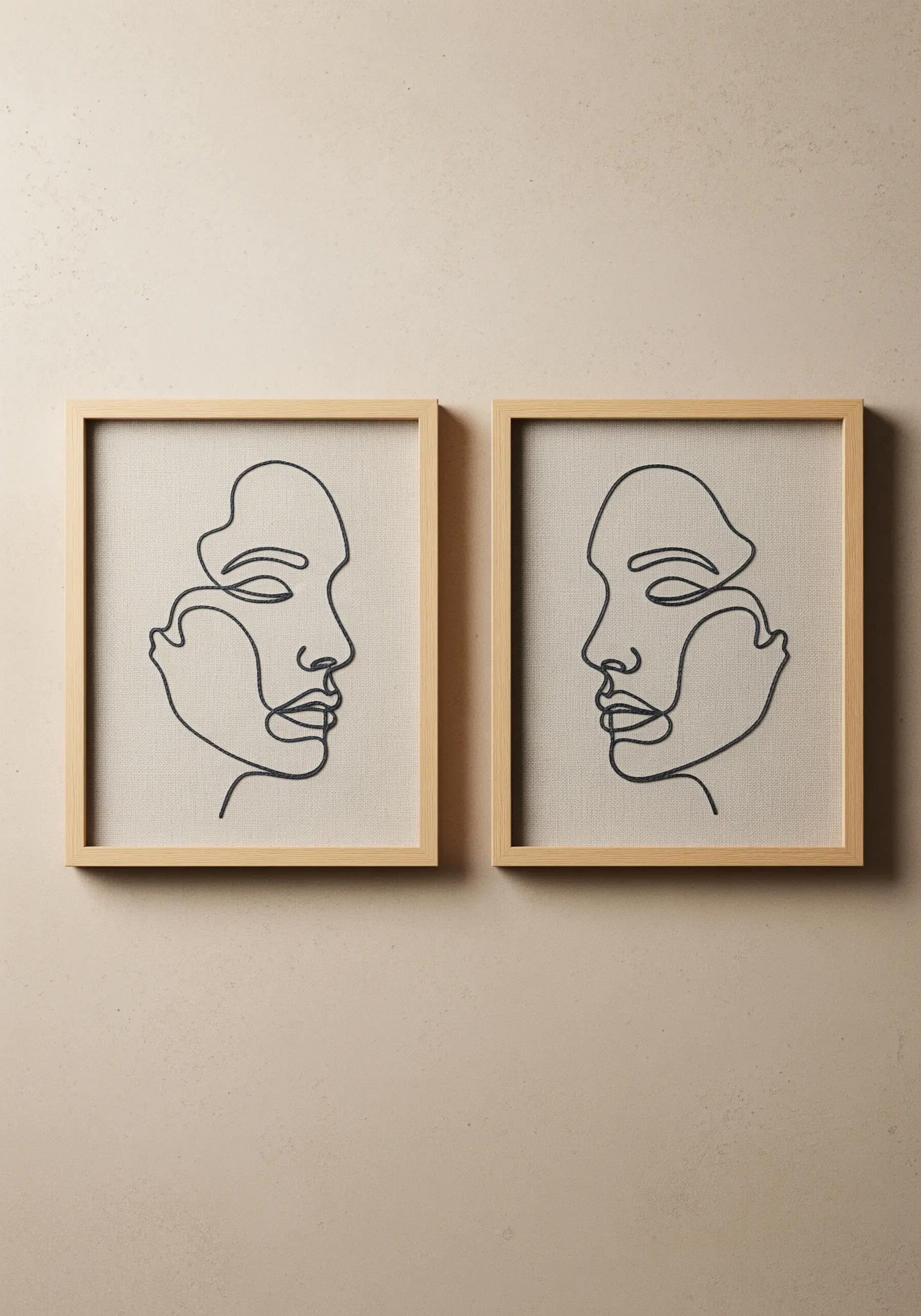
Tell a story of connection or dialogue by creating a diptych—two separate pieces of art designed to be displayed together.
Stitch two complementary single-line portraits, ensuring you use the same fabric, thread weight, and frame style for both to create a unified aesthetic.
Position them facing each other to create a sense of silent conversation and shared space.
This is a sophisticated way to fill a larger wall area while maintaining a minimalist feel.
18. Creating Perspective with Stitched Pages
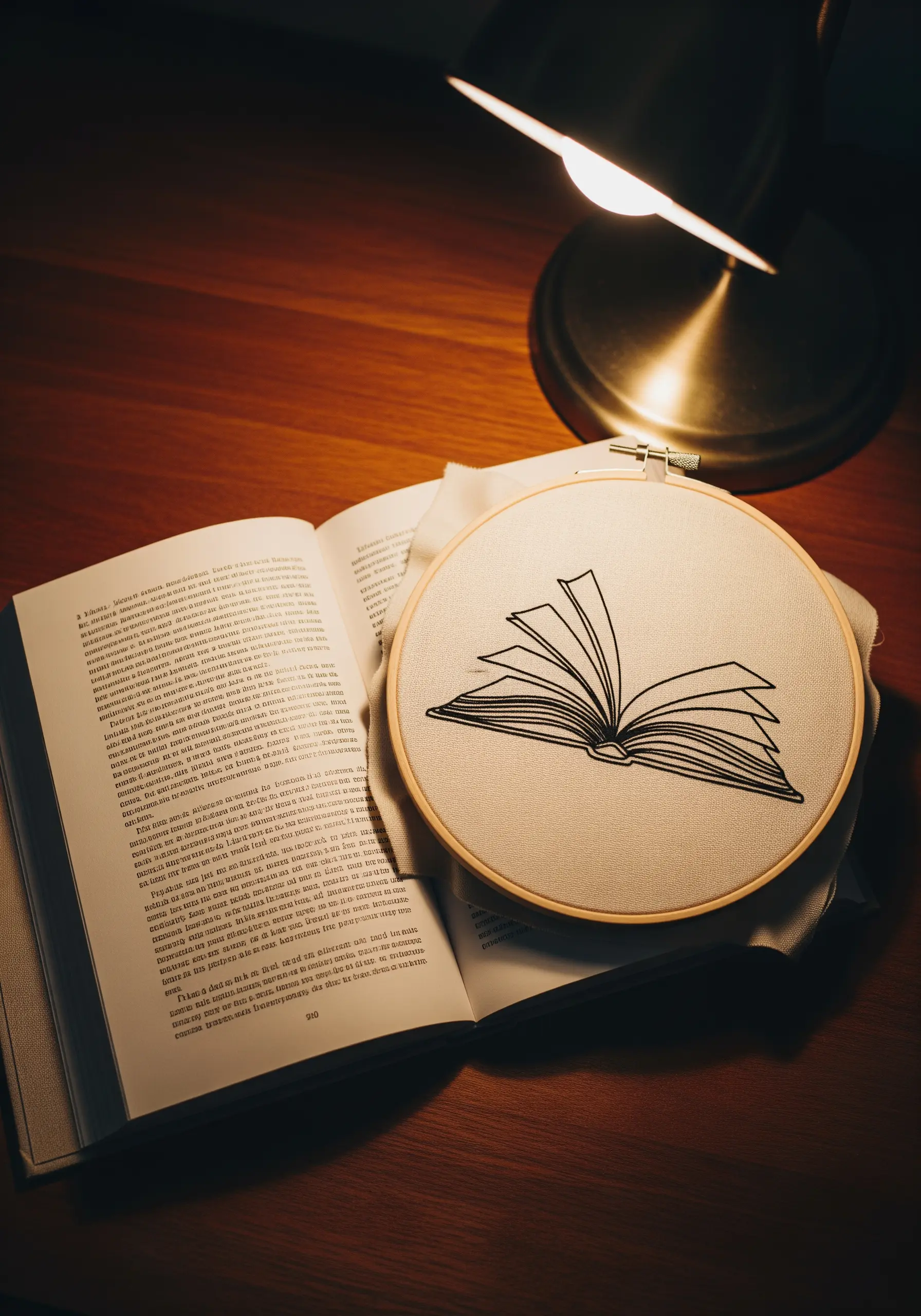
You can create the illusion of three-dimensional form using only straight lines.
For this open book motif, use a simple backstitch for the main outlines of the cover and spine.
To create the turning pages, use single, carefully angled straight stitches. Varying their length and curve slightly will give the impression of fluttering paper.
This design is a beautiful, symbolic piece for any book lover’s reading nook.
19. Soft Sculpture with Natural Wool Roving
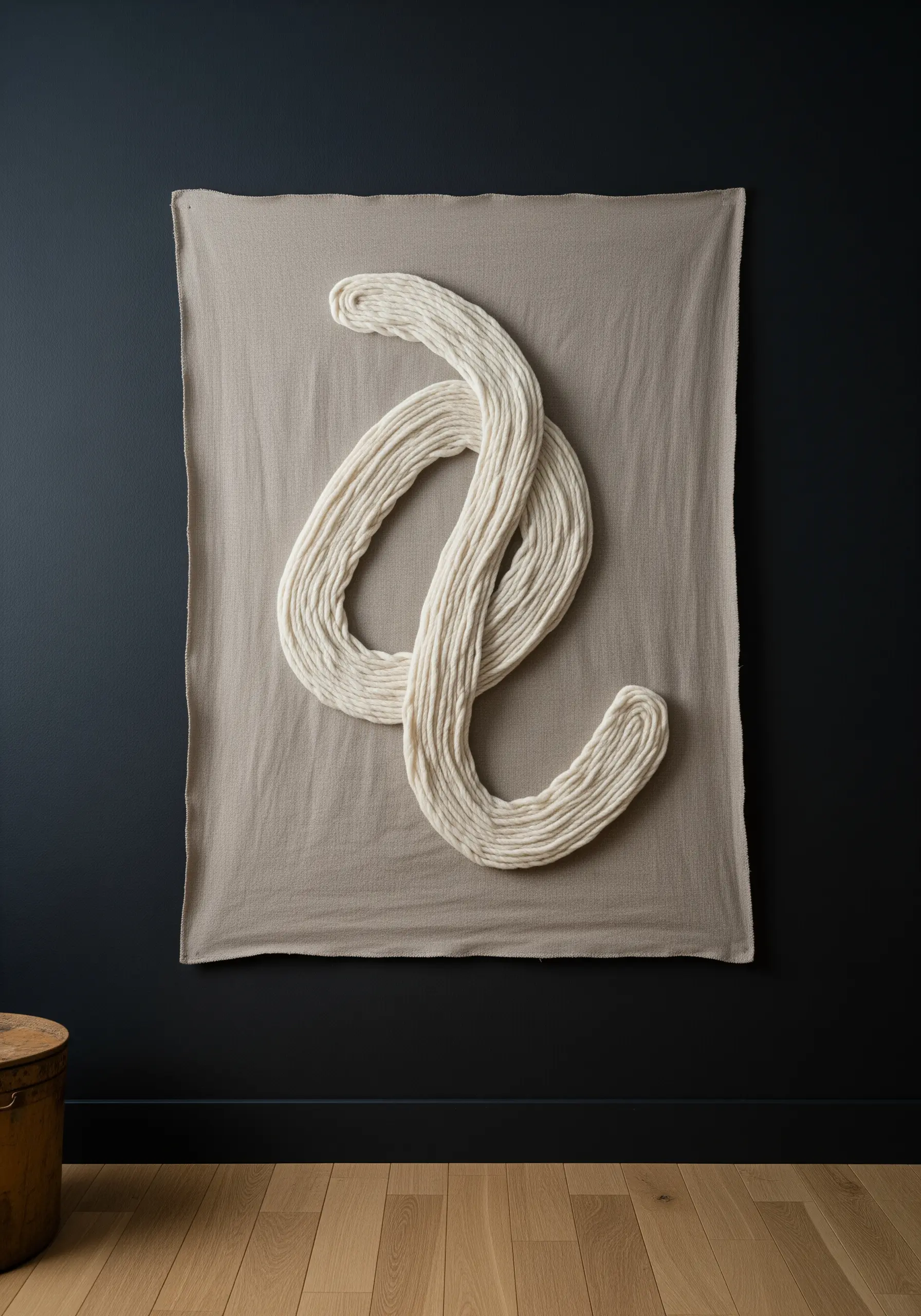
Push the boundaries of embroidery by incorporating un-spun wool roving to create a soft, highly textural sculpture on fabric.
Gently shape the roving into a fluid, abstract knot and lay it on a neutral linen background.
Using the couching method, tack the roving into place with a strong, matching thread, making your stitches on the underside of the fabric whenever possible to keep them hidden.
These statement textured embroidery techniques transform a wall hanging into a tactile experience.
20. A Delicate Desert Botanical Sampler
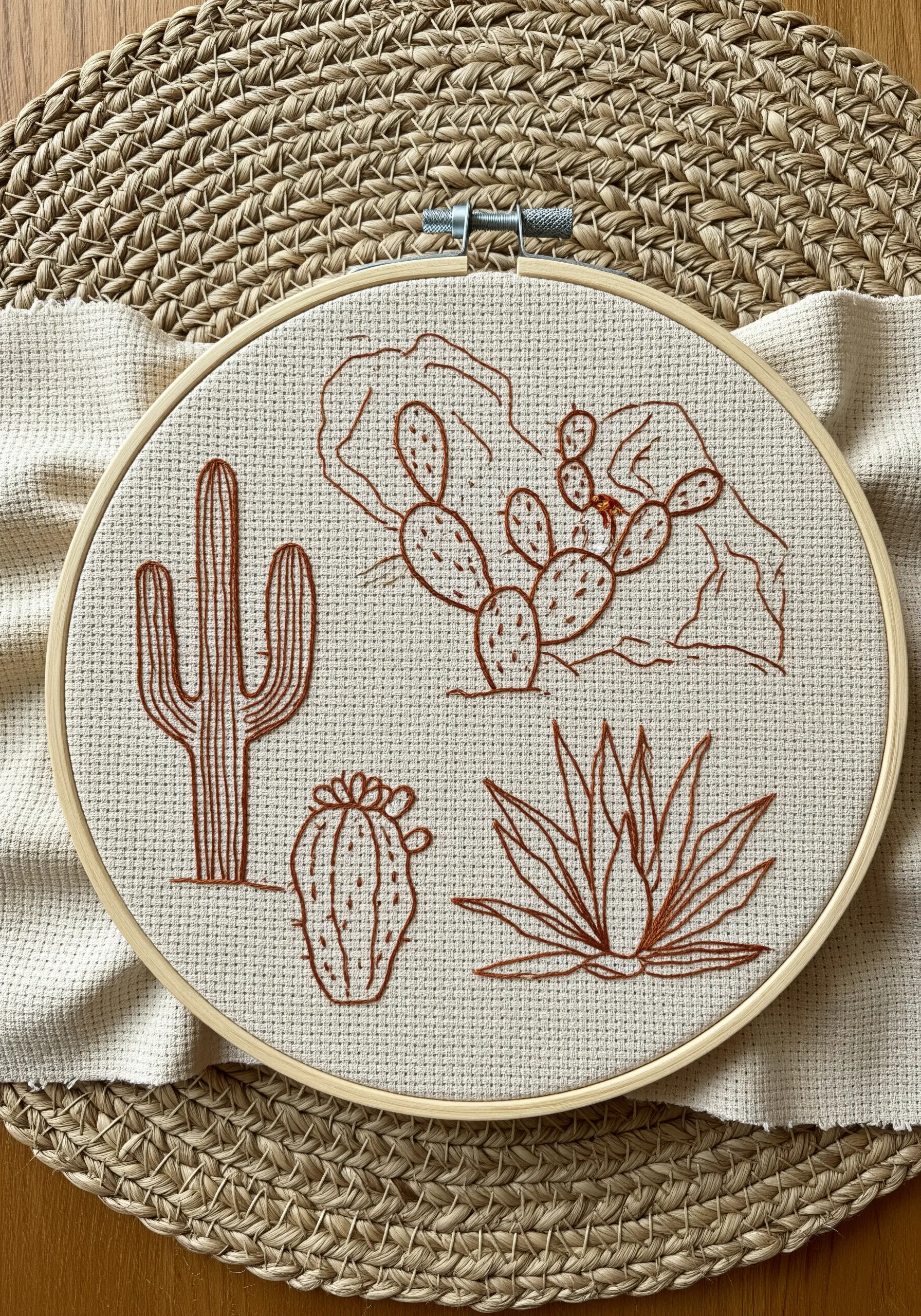
Create a charming collection of motifs by grouping several related line drawings within a single hoop.
Stitch on Aida cloth or another evenweave fabric; the visible grid of the fabric adds a subtle, almost blueprint-like quality to the design.
Use a simple backstitch in a warm, earthy red or brown to evoke a desert landscape.
By varying the shapes and sizes of the cacti, you create a balanced composition that feels like a page from a naturalist’s sketchbook.
21. Gallery-Style Float Mounting for Hoop Art
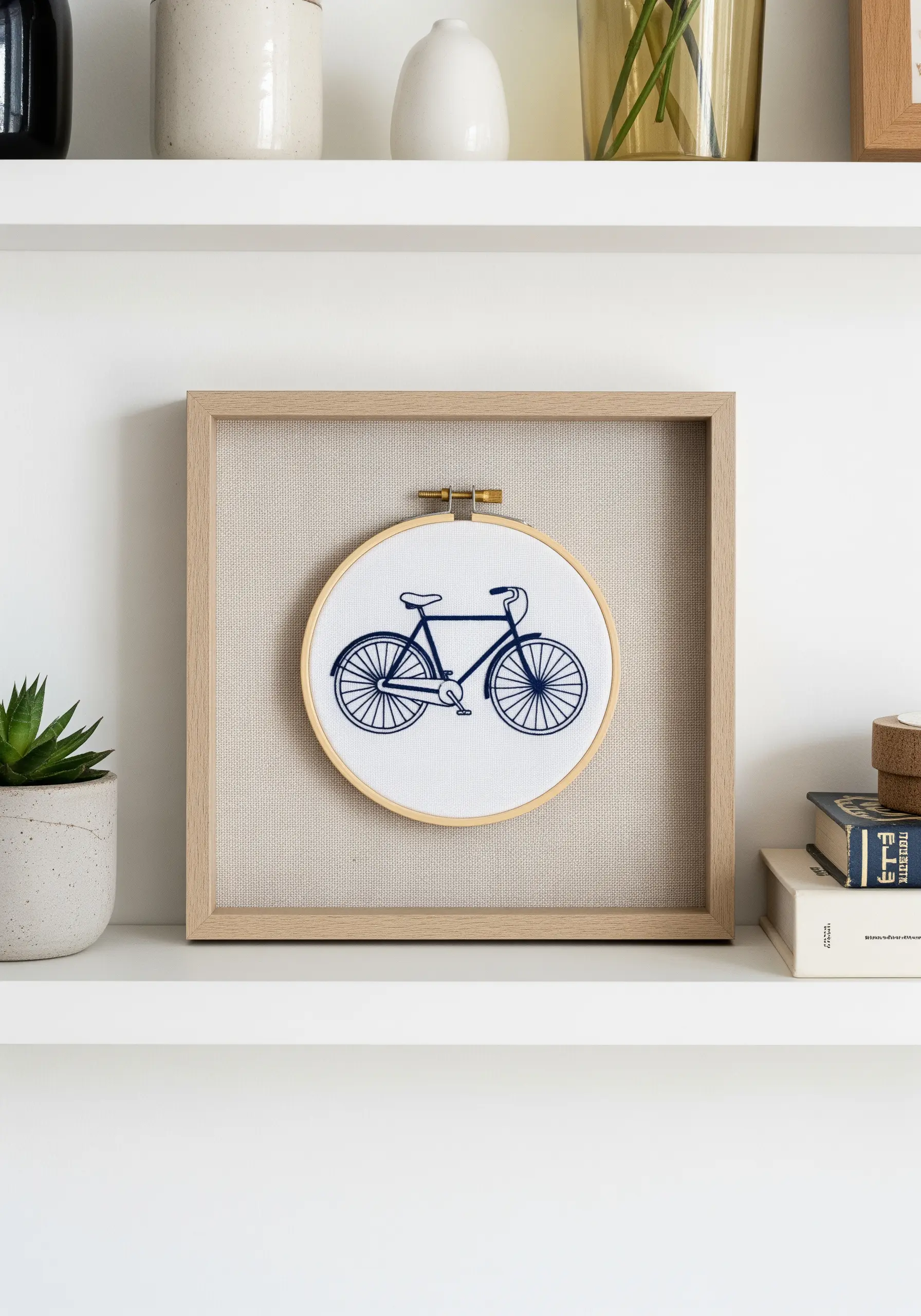
Elevate your finished hoop art with a professional display technique called float mounting.
First, complete your embroidery in a standard hoop. Then, mount the entire piece—hoop and all—onto a fabric-covered backer board inside a deep shadowbox frame.
This method creates a beautiful sense of depth and casts a soft shadow, turning your embroidery into a gallery-quality object.
It’s one of the best framed embroidery projects that blend classic and modern styles for a polished finish.
22. Capturing the Intangible with Wispy Stitches

How do you stitch something as ethereal as steam? By adjusting your technique to be lighter and more fluid.
For the solid lines of the cup, use a standard backstitch in black for definition.
For the swirling steam, switch to a lighter white thread and use a looser, more organic stitch like a curved running stitch or a freeform stem stitch.
Don’t pull these stitches too tight; their slight lift off the fabric will enhance the airy, weightless effect.
23. Stitching the Shape of a Melody

Translate your favorite piece of music into a visual art form by stitching its notation.
Use a precise backstitch for the five parallel lines of the staff to ensure they are perfectly straight and evenly spaced.
For the melody line and musical notes, switch to a stem stitch. Its slightly rounded quality will give the notes a more fluid, organic feel, as if they are flowing across the canvas.
This creates a deeply personal piece of art that visualizes sound.
24. Architectural Rendering in Thread
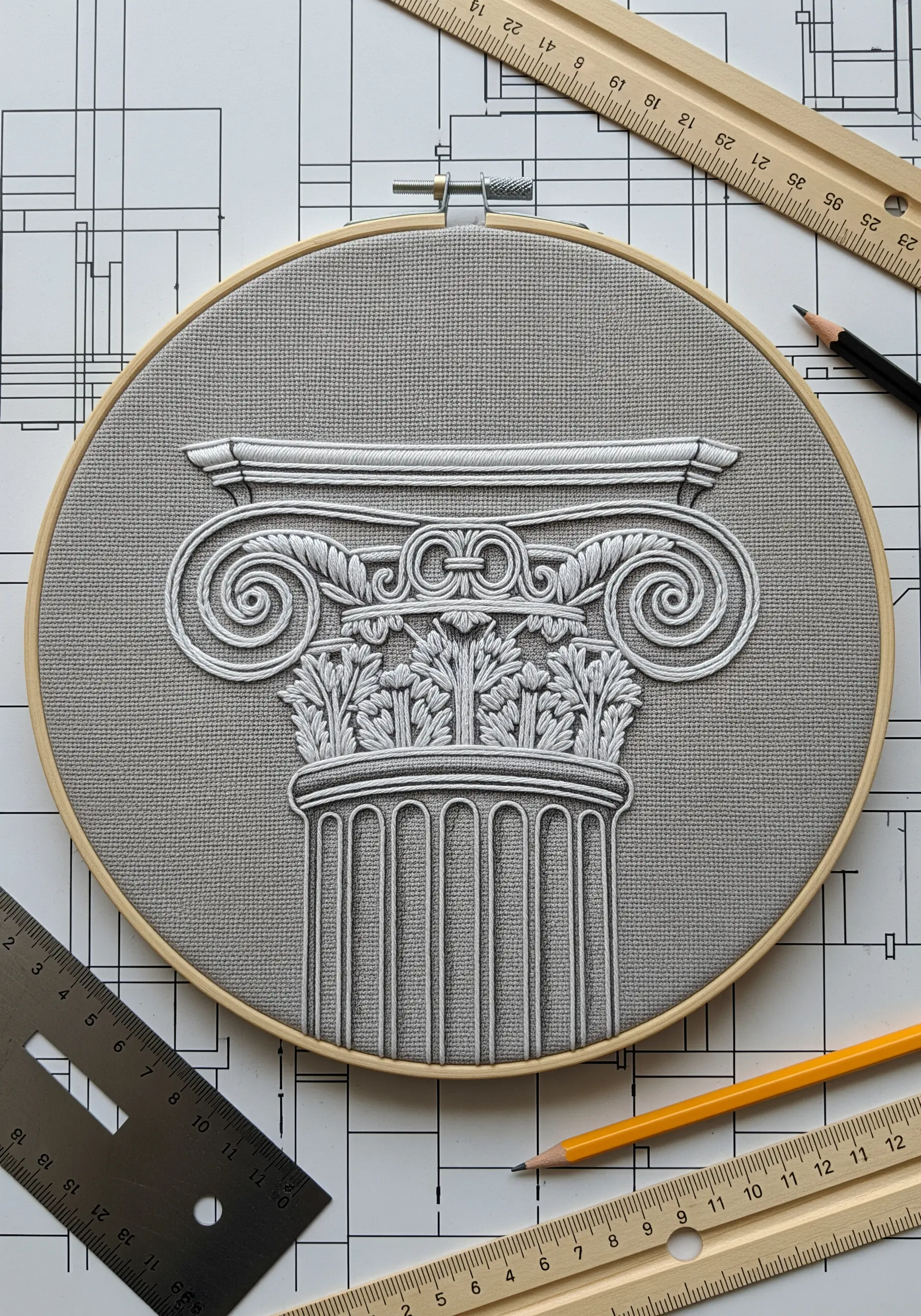
Achieve the detailed look of an architectural sketch by using thread to create light, shadow, and form.
Use a bright white thread on a medium-grey fabric to mimic a chalk drawing on slate.
Employ dense, parallel straight stitches and satin stitches to create areas of highlight, and use the negative space (the grey fabric) to represent the shadows.
Varying the direction of your stitches will define the different planes and curves of the column, creating a stunningly realistic 3D effect.
25. Frameless Finishing on a Round Canvas
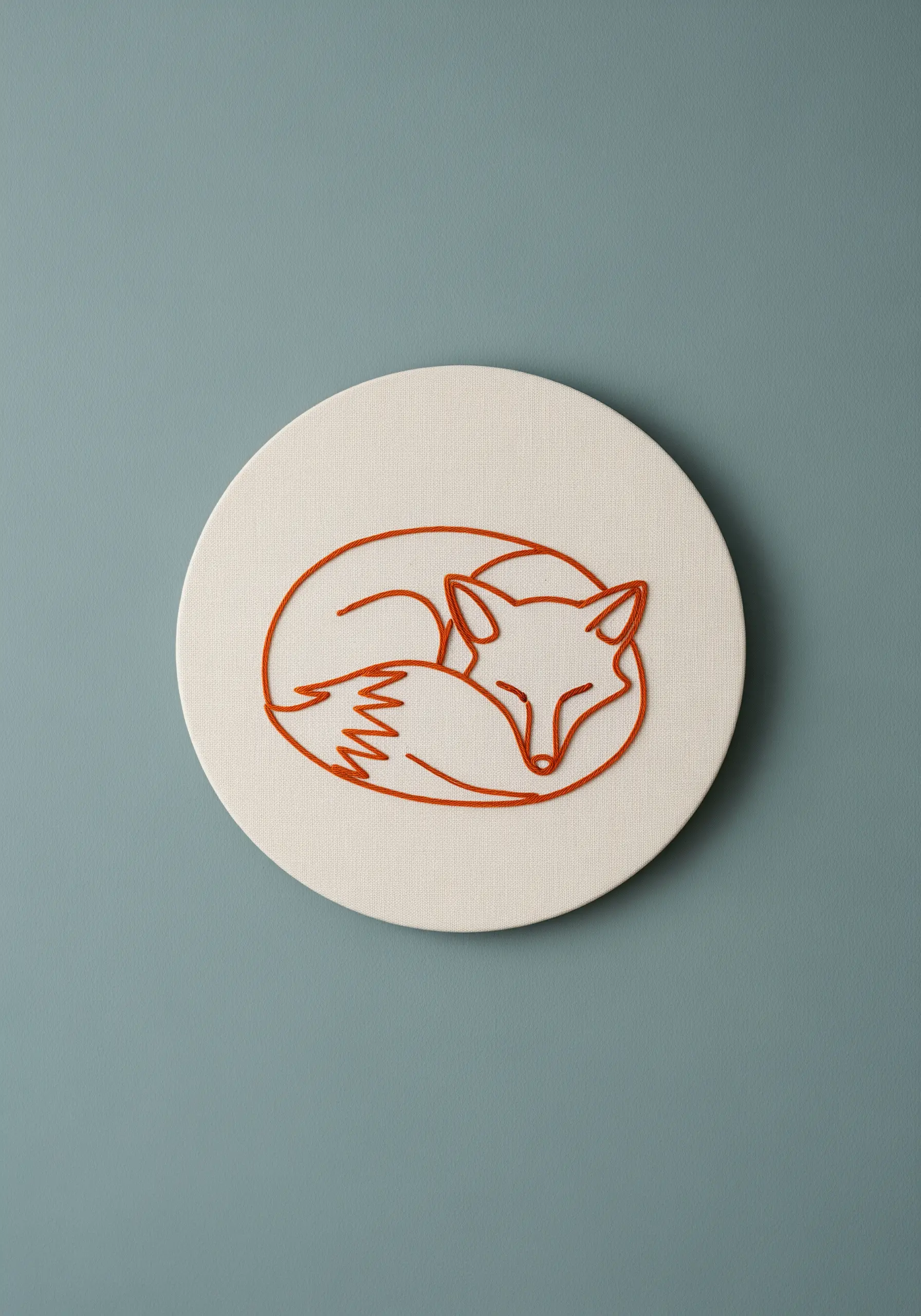
For a clean, modern display that moves beyond the traditional hoop, finish your piece on a round, stretched canvas or a wooden art panel.
After stitching your design, carefully trim the fabric, leaving a 2-inch border. Wrap the fabric tautly around the panel and secure it on the back with archival glue or a staple gun.
This frameless presentation puts the entire focus on the artwork and its circular composition, making the cute animal embroidery feel contemporary and refined.
26. The Illusion of Woven Celtic Knots

The secret to a convincing stitched knot lies in creating the illusion of overlapping threads.
Before you start, trace your pattern and mark which lines should appear ‘on top’ at each intersection.
Stitch the ‘bottom’ lines first using a standard backstitch. Then, for the ‘top’ lines, use a whipped backstitch or a raised stem stitch—their higher profile will make them appear to sit above the others.
Using a braided or twisted floss can further enhance the woven, rope-like texture.
27. The Eloquence of an Unfinished Line
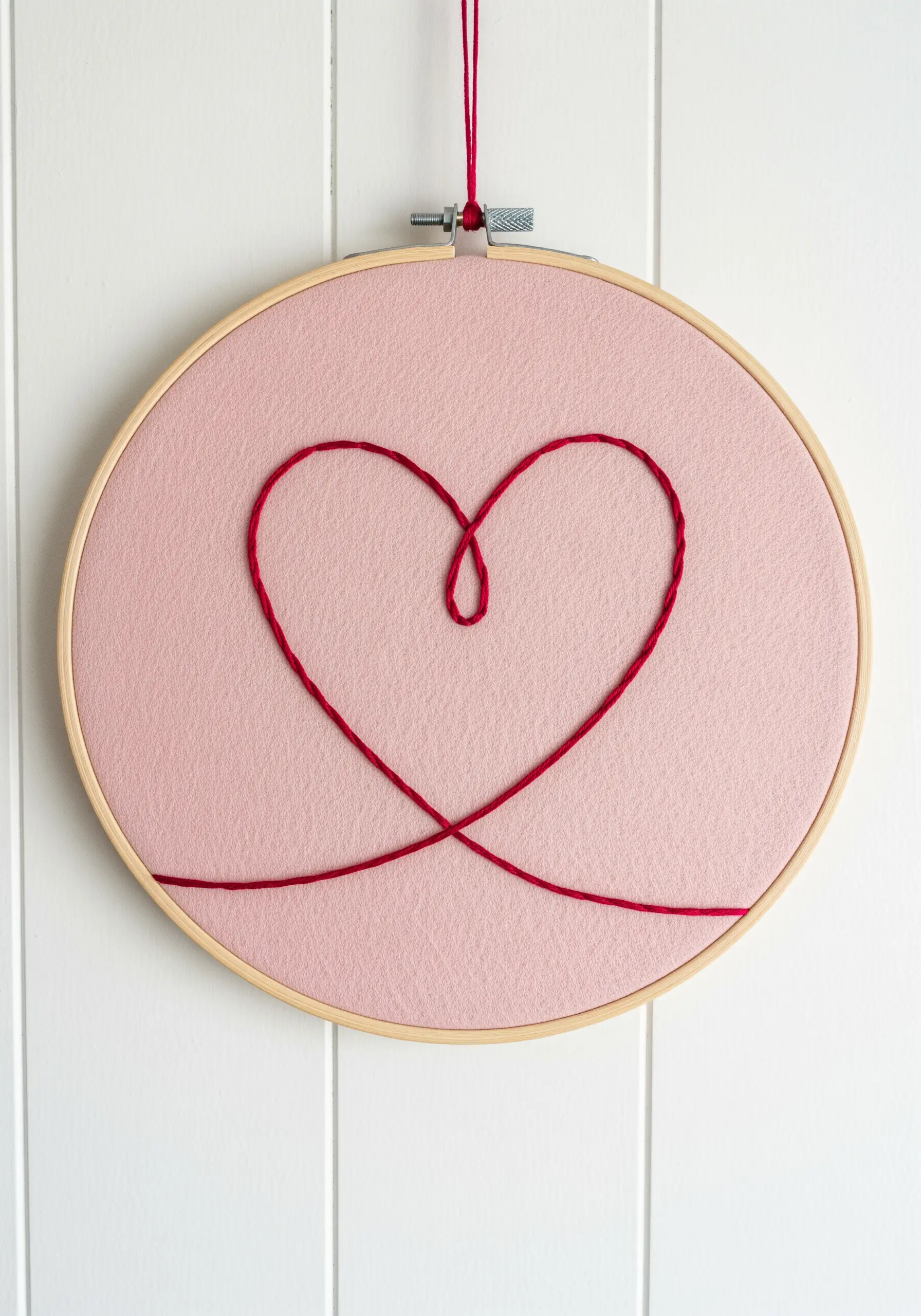
Sometimes the most powerful statements are the most simple. Use a single, continuous line to form a familiar shape, but leave the ends open and unfinished.
This technique creates a sense of effortless, casual grace and invites the viewer to mentally complete the form.
Use a slightly thicker thread, like pearl cotton, in a bold, contrasting color. Its smooth, high-sheen finish will give the line a beautiful, defined presence against a soft felt or cotton background.
28. Topographic Portraits on Luminous Fabric

Combine the precision of portraiture with the organic flow of a topographic map.
Stitch a line-art portrait on a fabric with a natural sheen, like silk or satin. The way light plays across the fabric will add a dynamic quality to the piece.
Use a very fine, single strand of thread to create the delicate contour lines. This technique requires slow, careful stitching and excellent tension control, but the result is a breathtaking piece of art that feels both intimate and abstract.
29. Creating a Vintage Vignette with Thread
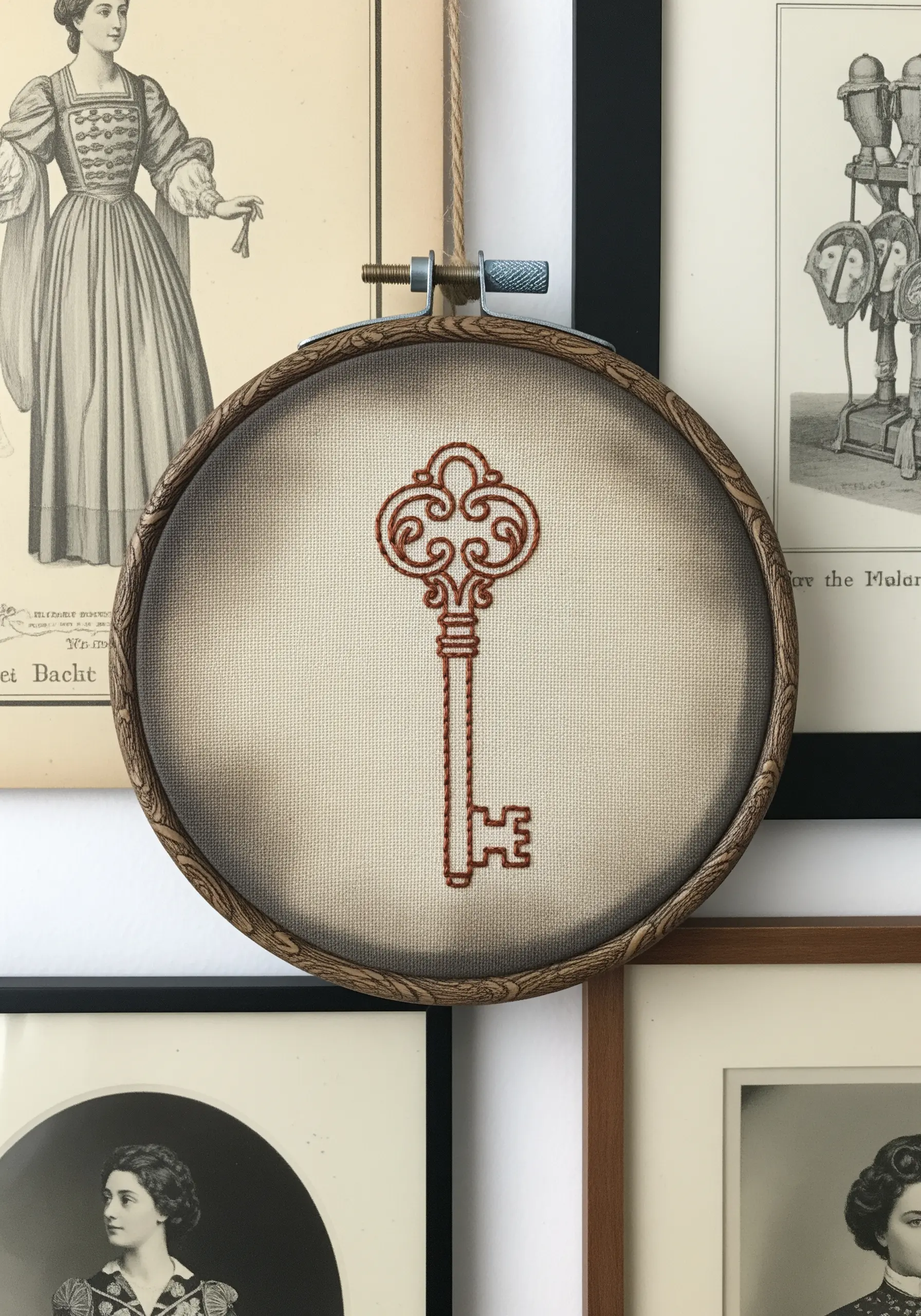
Give your embroidery an instant sense of history by carefully choosing your materials.
Stitch your design on a piece of tea- or coffee-dyed Aida cloth; the subtle staining and uneven color create a beautiful, aged patina.
Use a variegated thread in shades of sepia or rust. The slight color shifts in the thread will mimic the natural fading and discoloration of an authentic antique textile.
Displaying it amongst vintage photos and ephemera completes the narrative.
30. Illustrating Gravity with Hanging Botanicals

Use the direction and style of your lines to convey a sense of weight and life.
For the macrame hanger, use tight, precise backstitches or even tiny chain stitches to give it structure and strength.
For the cascading leaves of the spider plant, switch to a more relaxed, flowing stem stitch. Allow the lines to curve naturally downwards.
This contrast in stitch style and direction creates a convincing illusion of a living plant, full of vitality and subject to gravity.
31. Linear Satin Stitch for Dynamic Wings
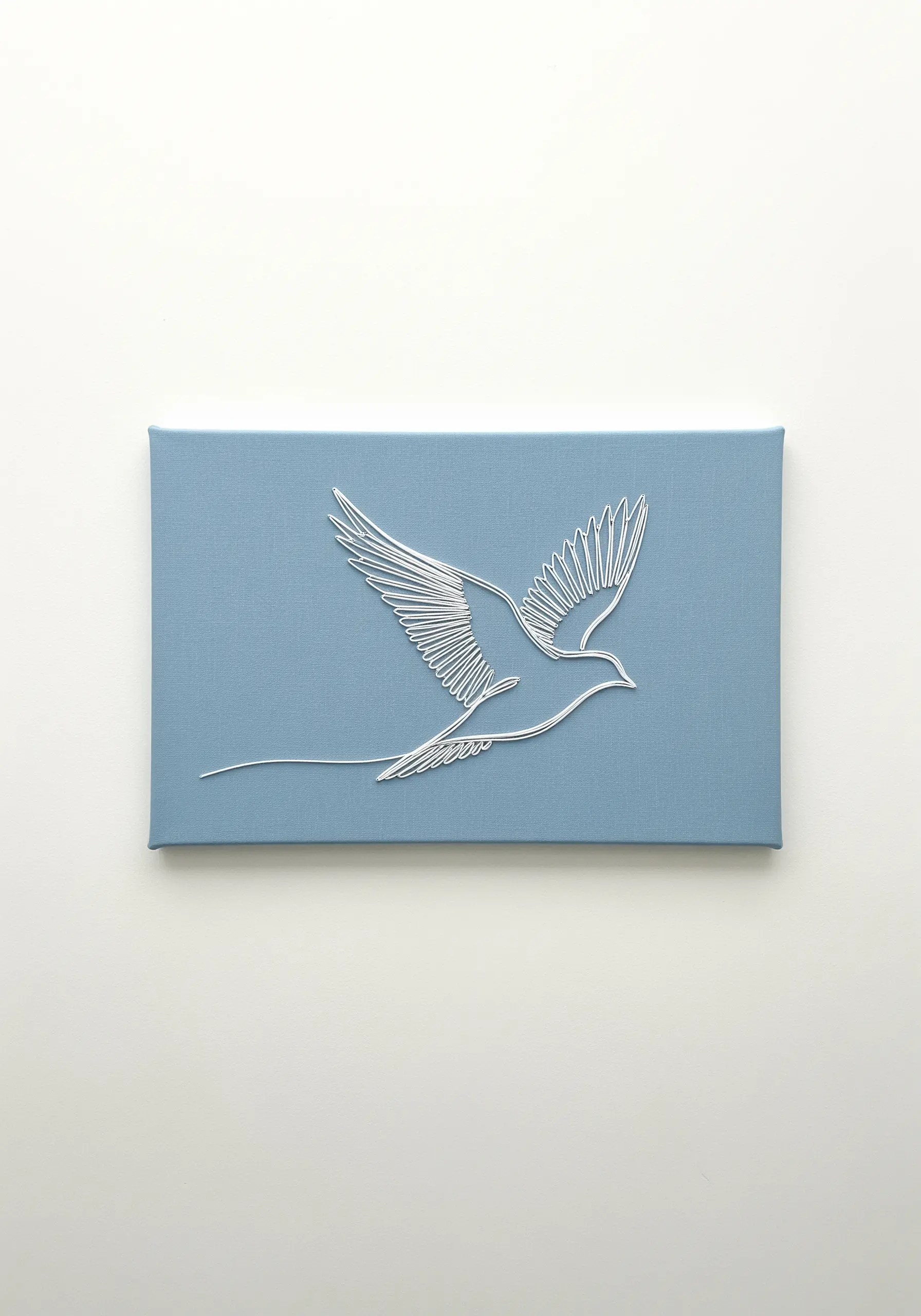
Reimagine the satin stitch not as a fill, but as a dynamic linear element.
Instead of outlining the bird’s wings and filling them in, create the feathers using long, parallel satin stitches.
Angle the stitches to follow the direction of flight, creating a powerful sense of movement, texture, and light reflection.
This technique gives the wings a beautiful, shimmering quality that a simple outline could never achieve, making for striking abstract minimal embroidery pieces.
32. A Subtle Touch of Apparel Embellishment
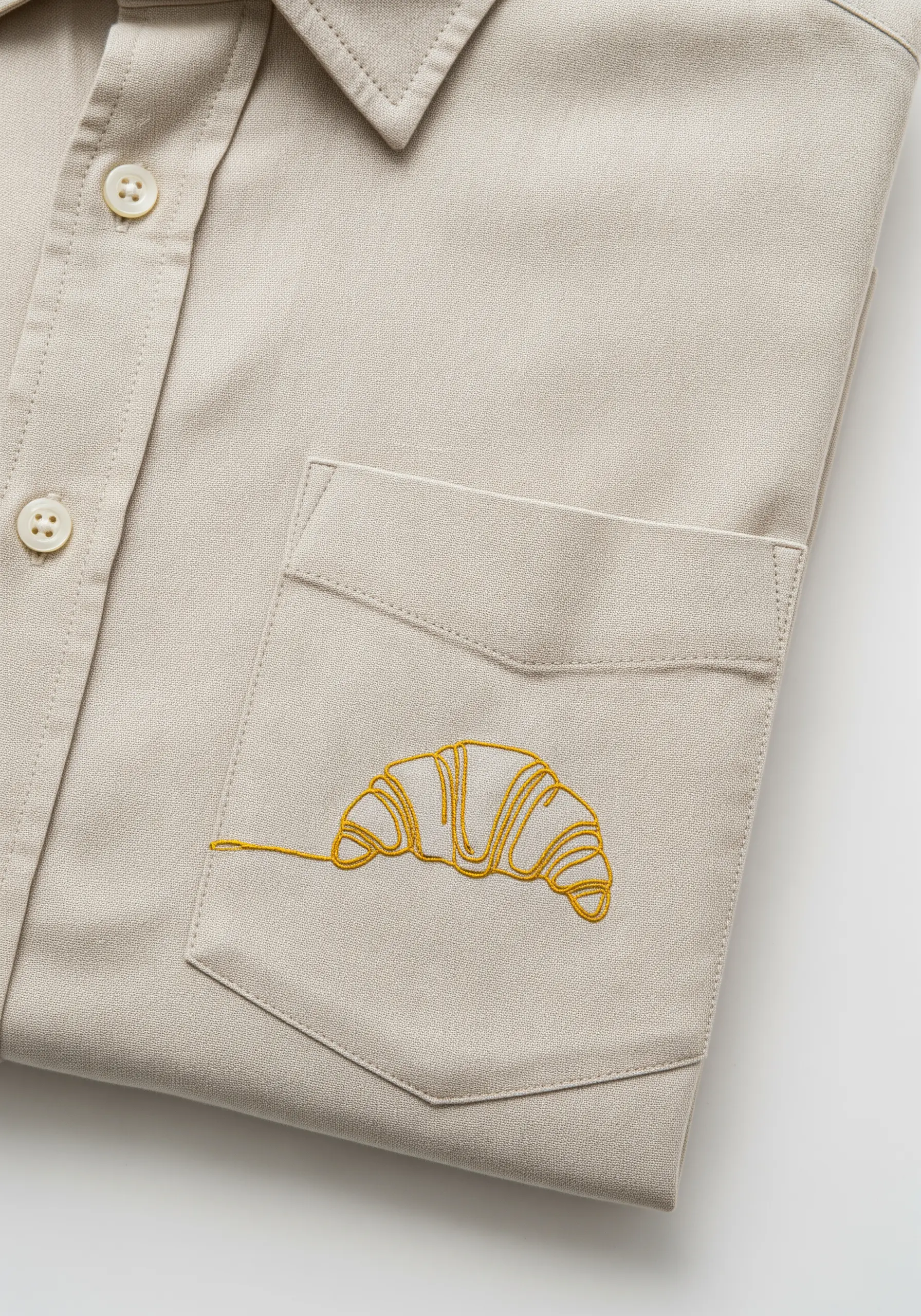
Elevate a simple garment with a small, thoughtfully placed piece of line art embroidery.
A pocket is the perfect canvas for a tiny, whimsical design. To prevent the fabric from puckering, especially on lighter materials, always use a cut-away or tear-away stabilizer on the back of your work area.
Choose a thread color that complements the fabric but still has enough contrast to be visible.
This small detail adds a touch of personality and handmade luxury to your wardrobe.
33. Organic Patterns Inspired by Topography
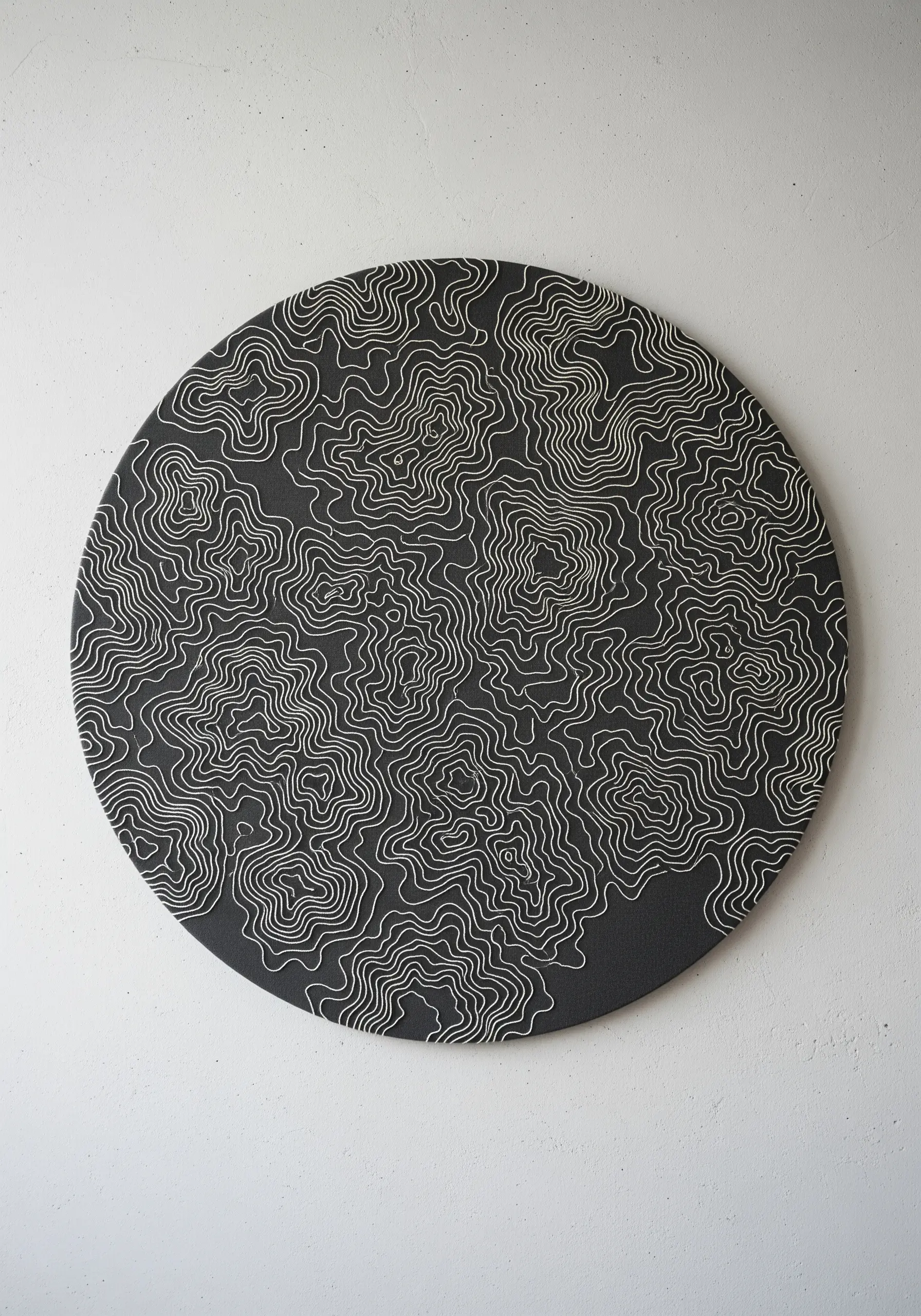
Create a mesmerizing, abstract piece by filling a space with dense, organic lines inspired by topographic maps.
Use a single strand of high-contrast thread—like off-white on a matte black surface—to emphasize the complexity of the pattern.
There’s no need for complex stitches; a simple, slightly irregular running stitch or backstitch will work perfectly.
The beauty of this piece comes from the sheer density and meditative repetition of the flowing, endless lines.
34. A Portrait of Togetherness in One Line
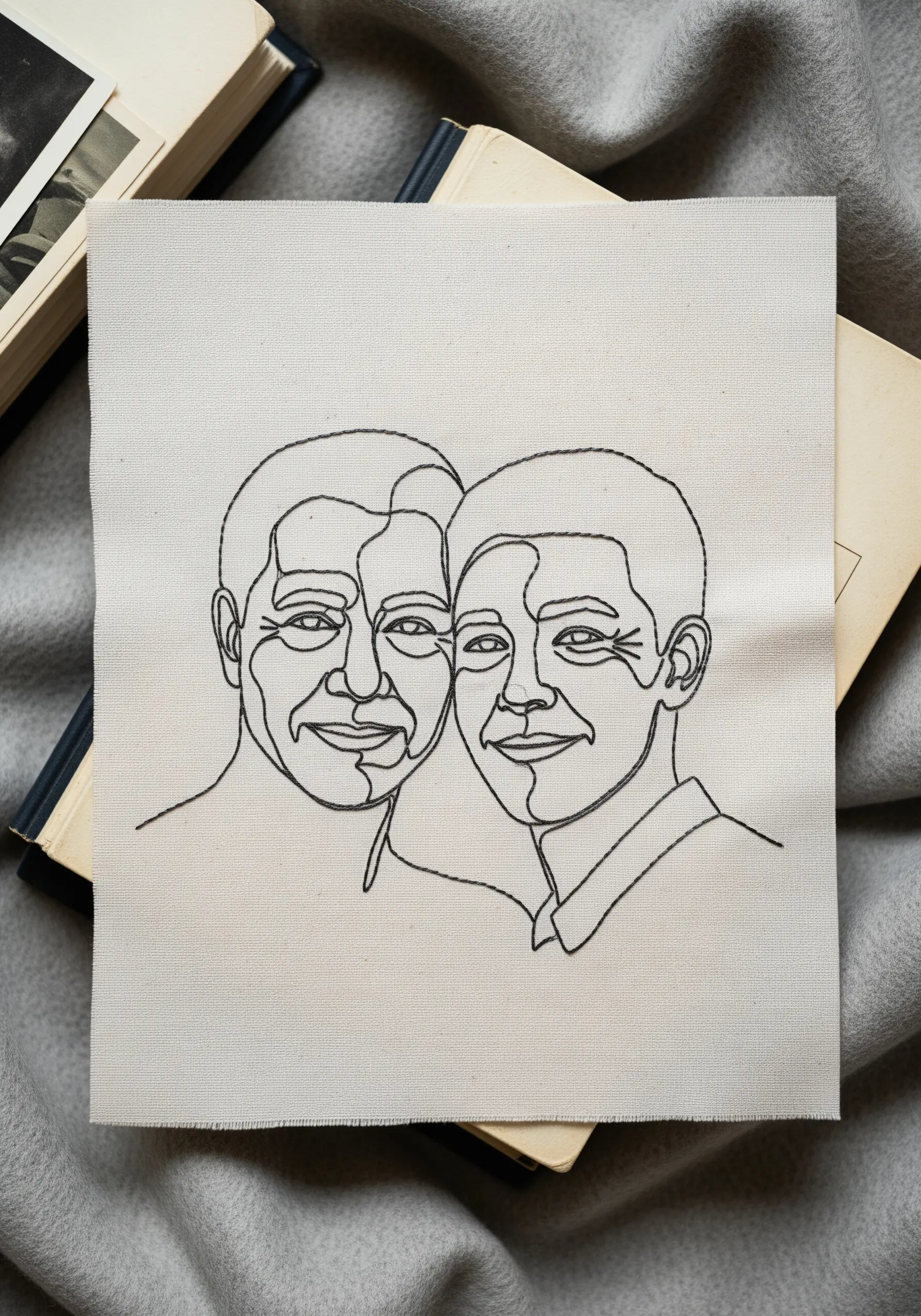
Capture the essence of a relationship by drawing two portraits with a single, unbroken line.
This powerful symbolic technique represents connection, intimacy, and a shared journey.
Trace your design carefully onto the fabric first, as navigating the continuous path without a guide can be challenging.
Use a simple backstitch with three strands of floss for a clean, defined line that carries the emotional weight of the piece. This makes a beautiful, personalized embroidered gift.
35. Textural Fills for Graphic Botanicals
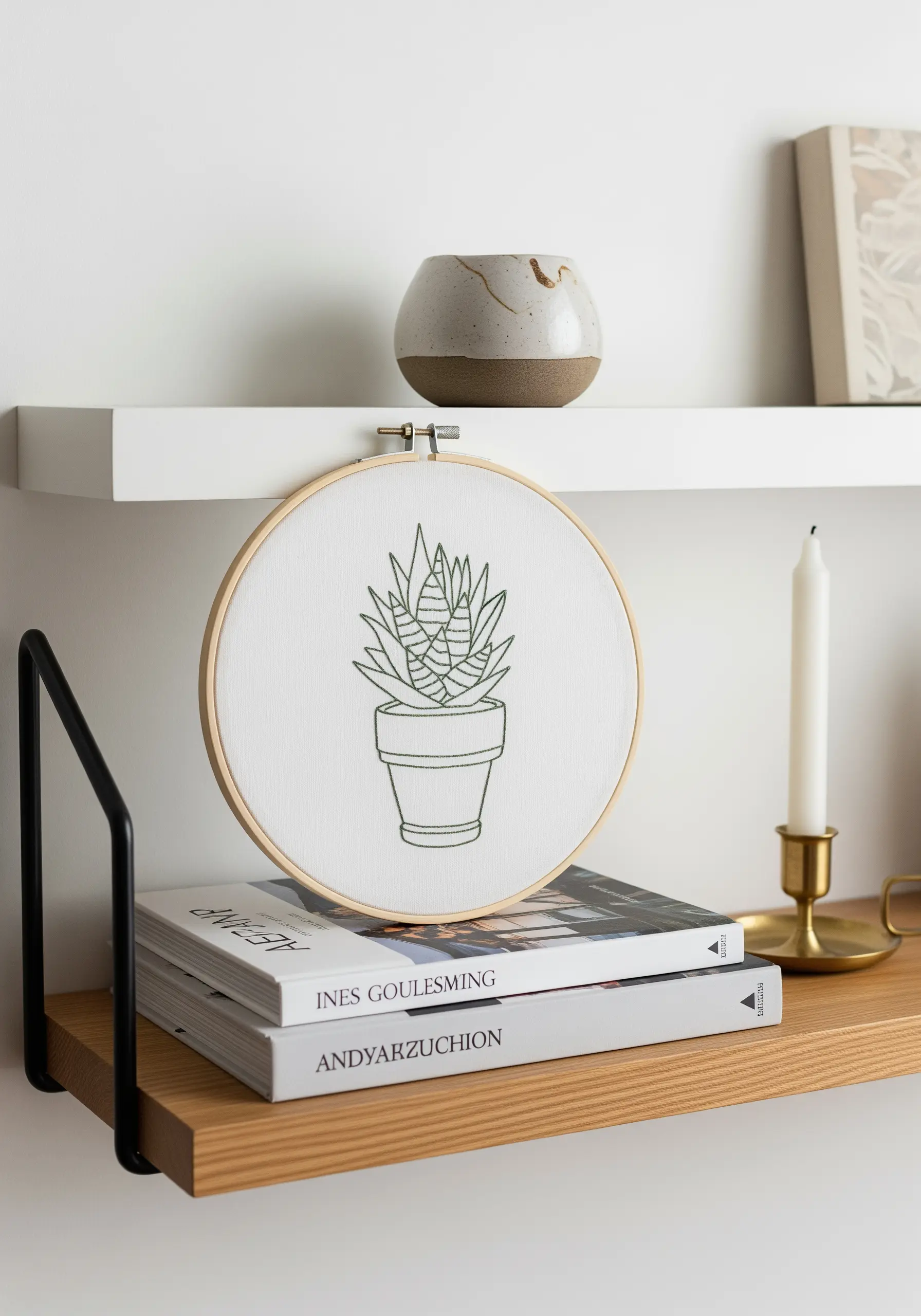
Add a layer of interest to a simple line-art plant by incorporating subtle textural fills.
First, complete the main outlines of the pot and leaves using a clean, consistent backstitch.
Then, instead of leaving the leaves empty, fill them with a pattern of simple straight stitches or seed stitches.
This technique provides a touch of detail and dimension without introducing new colors, maintaining the minimalist aesthetic while making the design more engaging.