You have the threads, the fabric, and the desire to create something beautiful for your walls. But perhaps your finished pieces don’t quite capture the polished, intentional look you envision. You’re ready to move beyond simple patterns and create embroidery that feels less like a craft project and more like art.
The transition from hobbyist to artist isn’t about mastering hundreds of complex stitches. It’s about learning to see differently—understanding how a change in thread weight can add depth, how the direction of a stitch can create movement, or how negative space can make a simple design feel monumental.
Here, you’ll find techniques and thoughtful approaches that offer immediate, visible improvements. These ideas are designed to build your confidence and refine your artistic eye, helping you create minimal, modern embroidery that truly transforms your space with quiet elegance and personal meaning.
1. Create Sculptural Depth with Couching Stitch

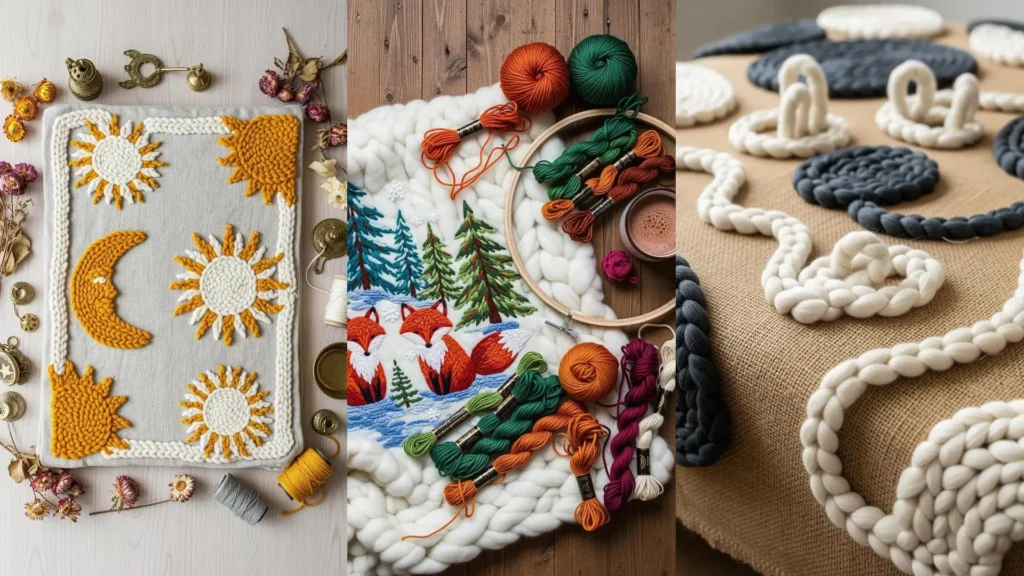
To achieve this bold, raised texture, use a technique called couching.
Lay down a thick yarn or cord in your desired shape, then use a thinner, matching embroidery floss to tack it onto the fabric with small, perpendicular stitches.
This method allows you to create dramatic, sculptural lines that would be impossible with traditional stitches, adding architectural interest to your wall.
The contrast between the thick, smooth yarn and the fine tacking stitches creates a subtle but professional finish, turning a simple arch into a piece of tactile yarn wall art.
2. Design a Cohesive Triptych for Botanical Balance
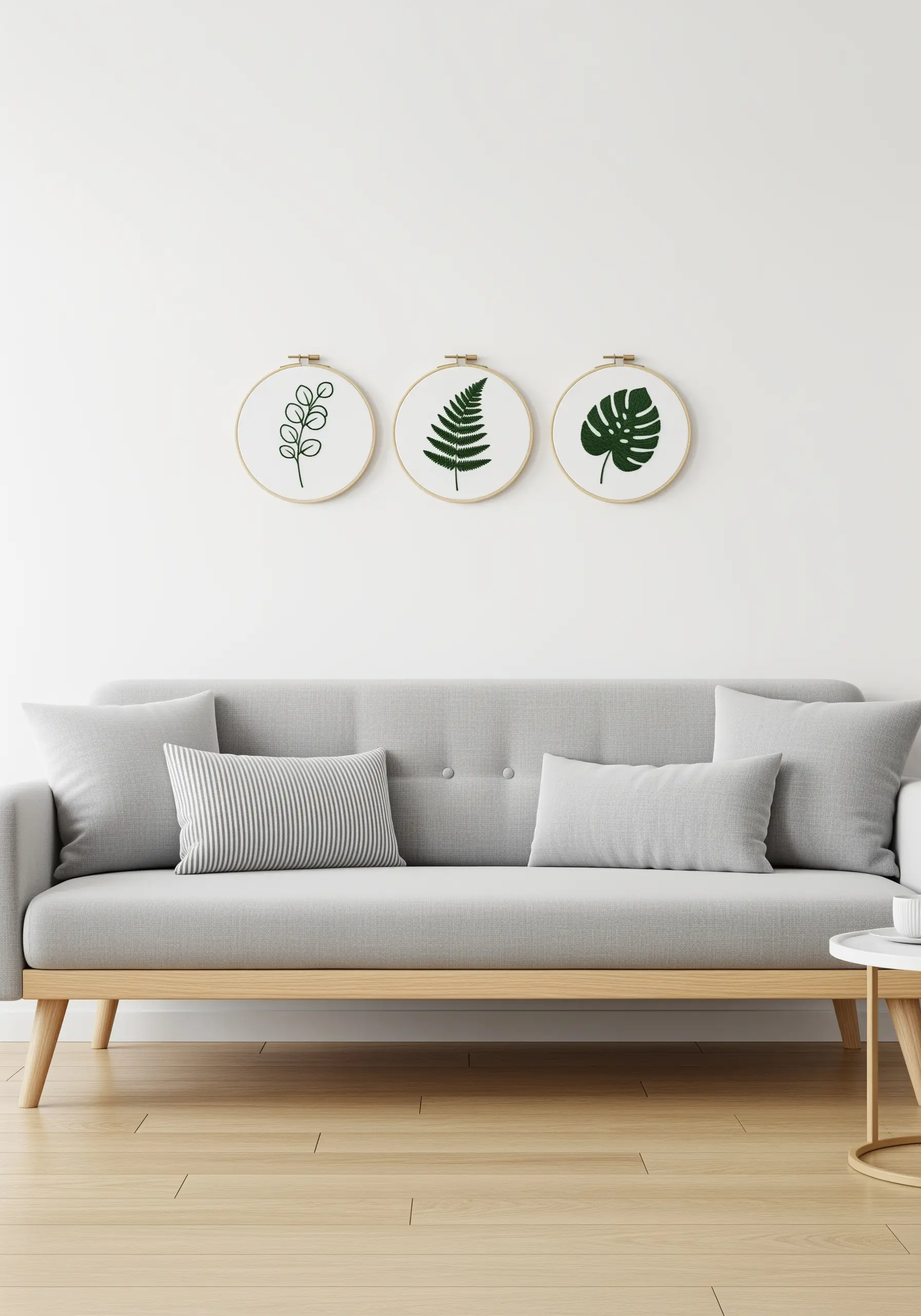
When displaying multiple hoops, the key to a polished look is cohesion, not uniformity.
Choose a single thread color and a consistent stitch style—like a clean backstitch or stem stitch—for all your motifs.
Vary the complexity and scale of each botanical design; for example, pair a simple sprig with a more detailed fern and a bold monstera leaf.
This creates a visual rhythm that feels intentional and curated, transforming simple sketches into a sophisticated gallery wall above your sofa. These minimal embroidery patterns work together to tell a quiet story.
3. Elevate Geometric Lines with Metallic Thread

Stitching on dark, moody fabric creates a dramatic canvas for your work.
To make geometric patterns pop with sophistication, switch from standard cotton floss to a fine metallic thread.
Use a simple backstitch for crisp, clean lines, and work slowly to prevent the metallic fibers from snagging or twisting.
The way the metallic thread catches the light against the matte, dark background adds a layer of quiet luxury, turning a simple pattern into one of your most elegant modern geometric thread art ideas.
4. Use Directional Satin Stitch for Landscape Dimension
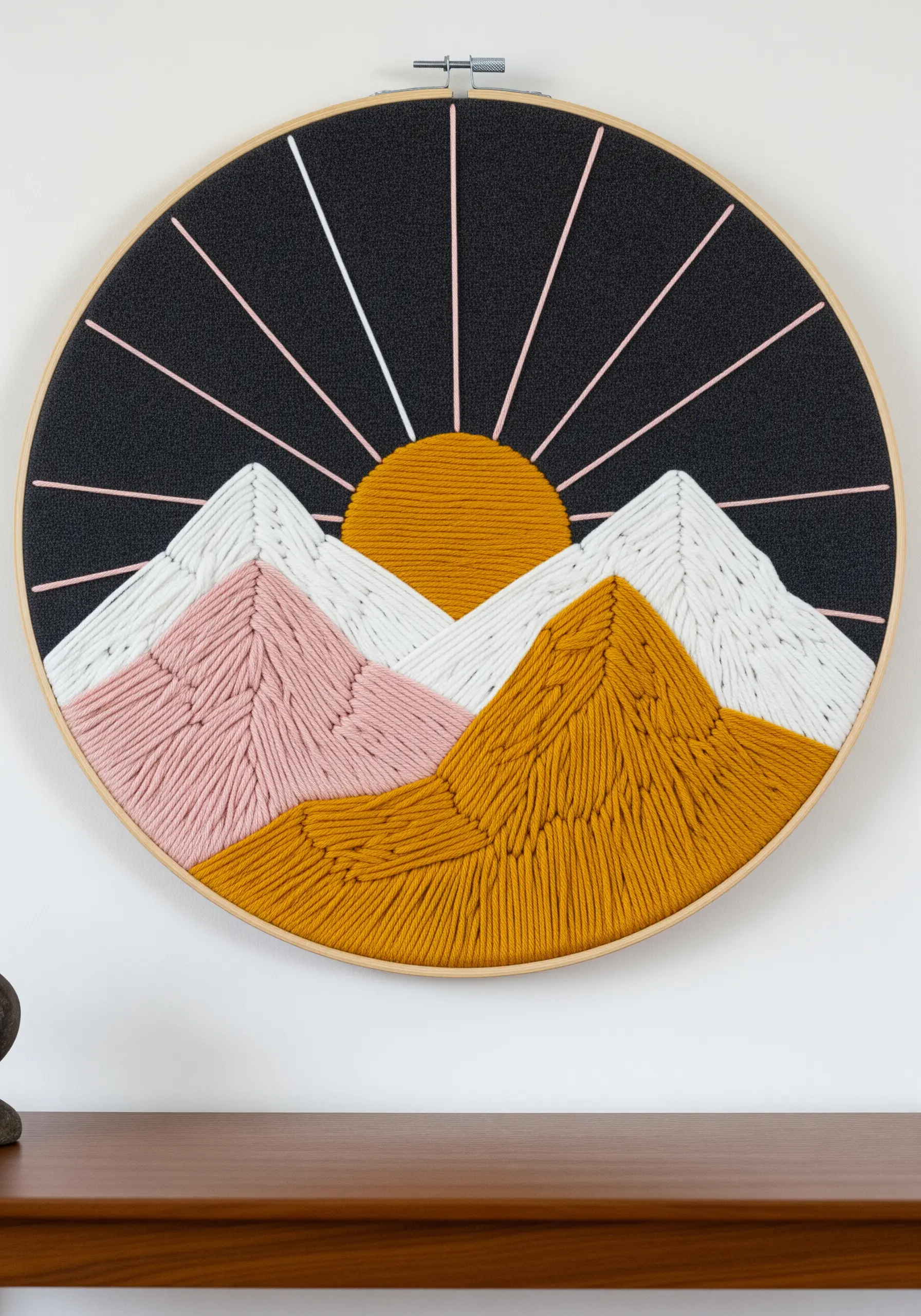
To give your landscapes depth and movement, pay close attention to the direction of your satin stitches.
Instead of filling each shape with uniform horizontal or vertical stitches, angle them to follow the natural slope of the mountains.
This small adjustment tricks the eye into seeing dimension and texture, making the peaks feel more dynamic and realistic.
For these earth-inspired embroidery designs, using a thicker wool or tapestry yarn will enhance the texture and fill the space more quickly, creating a bold, graphic finish.
5. Master Bold Outlines with Couching Cord
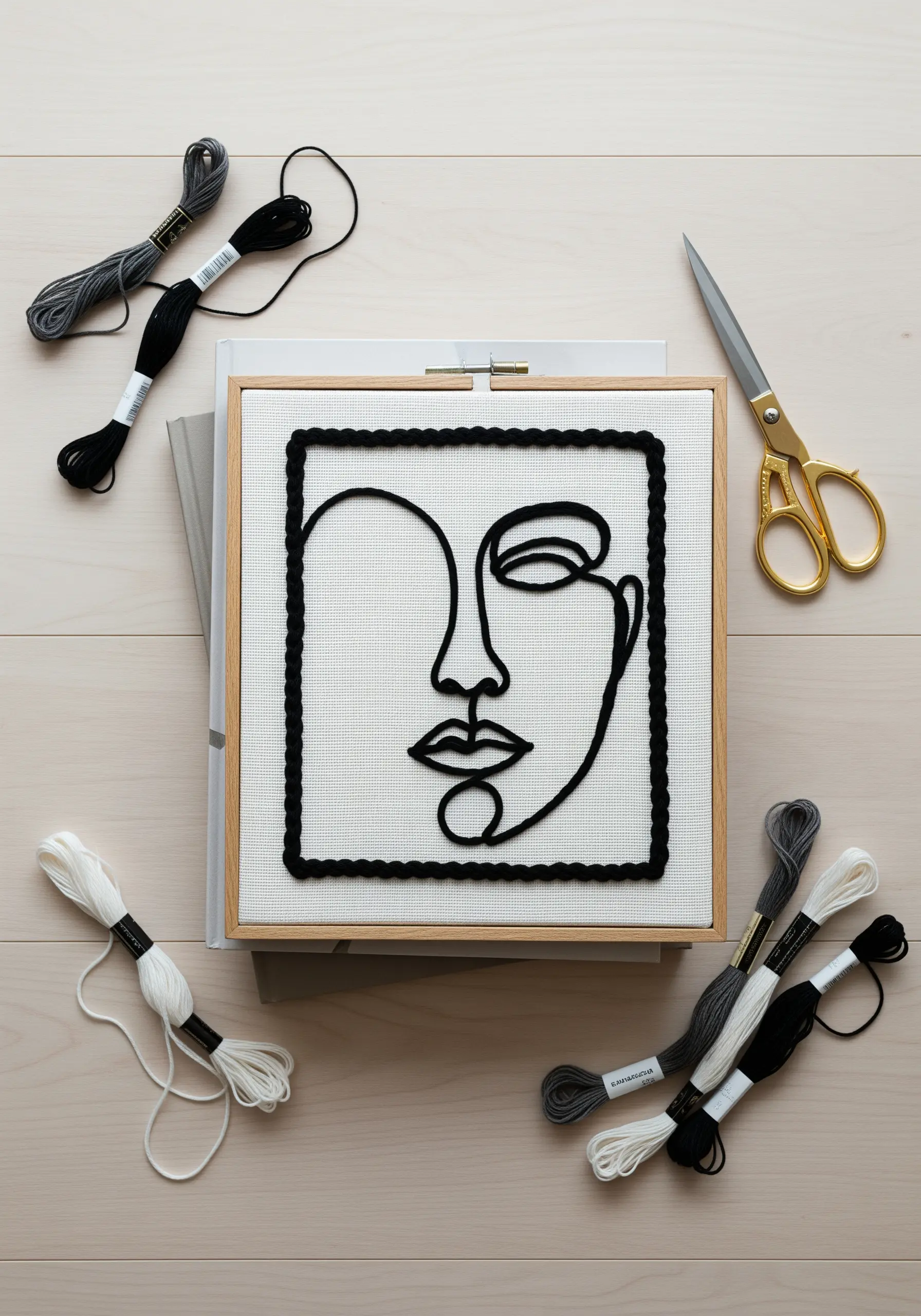
For clean, graphic art, ditch the six-strand floss and use a thick cord or yarn instead.
Lay the cord along your design line and use a single strand of matching floss to anchor it to the canvas with tiny, evenly spaced stitches—a technique called couching.
This approach guarantees a perfectly smooth, bold, and consistent outline that is much cleaner than a chunky satin stitch.
It’s the ideal method for single-line face profiles and abstract art where the quality of the line is the main focus.
6. Blend Colors with a Split Stitch Gradient
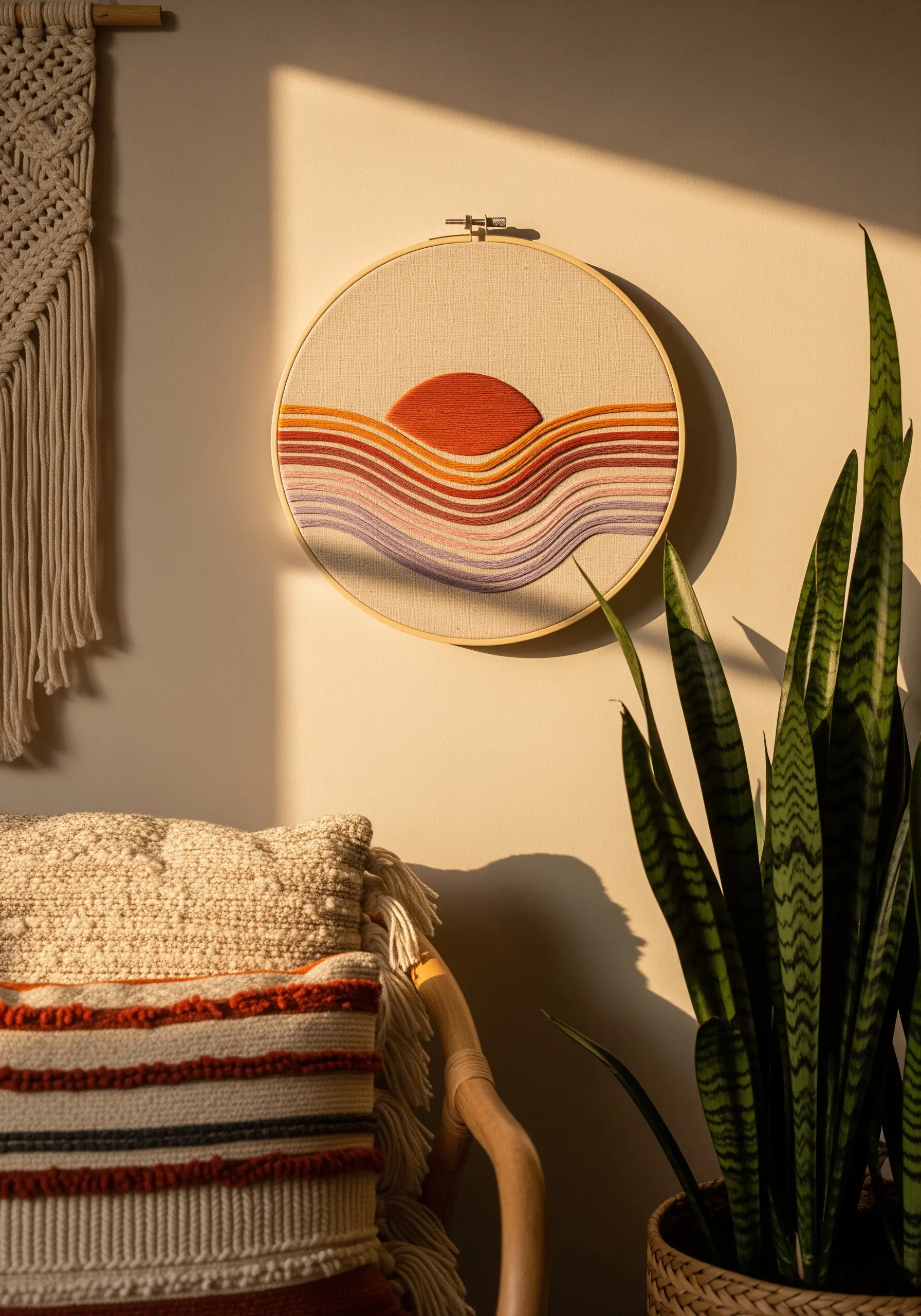
Creating a smooth, painterly gradient doesn’t always require complex thread painting.
For a more accessible approach, use a simple split stitch and plan your color changes in distinct bands.
Work each wavy line of color separately, making sure your stitches are small and tight. The texture of the split stitch itself helps to soften the transition between hues.
This technique is perfect for stylized sunsets or abstract thread landscapes, giving you a clean, graphic effect with a beautiful sense of depth.
7. Embrace Negative Space on a Grand Scale

Minimalism’s greatest power lies in its use of negative space.
Instead of filling a small hoop, stretch a large canvas and stitch a single, simple motif in the center, like this dashed-line house outline.
Use a basic running stitch with a dark, high-contrast thread to ensure the design reads clearly from a distance.
The vast expanse of untouched fabric amplifies the motif’s quiet charm, turning it into a statement piece. This is the secret behind impactful large-scale embroidery tapestries.
8. Create Luminous Texture with Metallic Braids
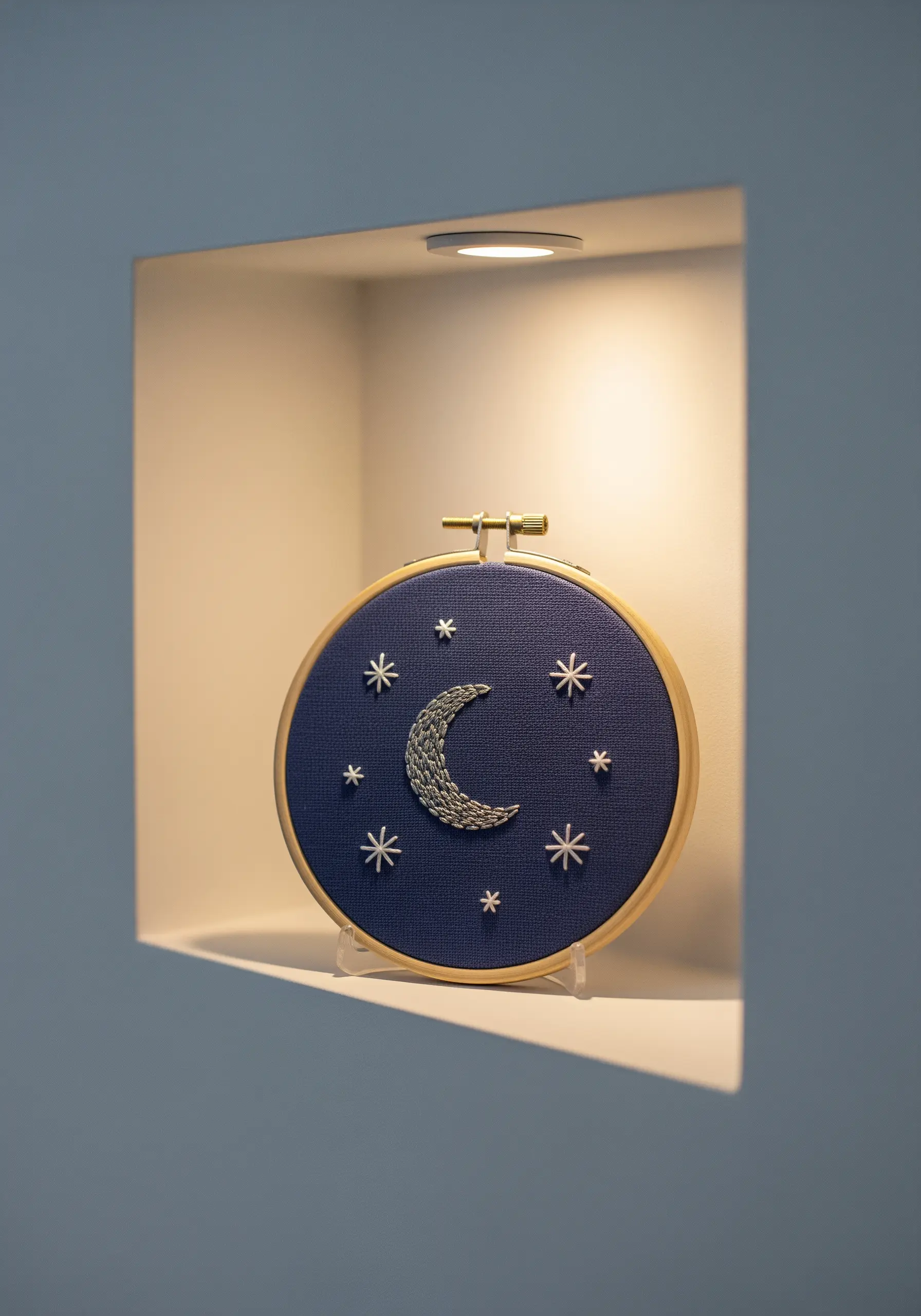
To give celestial elements a truly magical quality, move beyond simple satin stitch.
For the moon, try using a silvery metallic braid or ribbon and attach it with a couching stitch, or fill the crescent shape with overlapping French knots using a metallic thread.
The raised, uneven texture will catch the light beautifully, making the moon feel dimensional and luminous against the flat, dark fabric.
This textural contrast is what elevates simple tiny night sky embroidery designs into captivating works of art.
9. Weave a Tapestry of Stitches for Abstract Texture
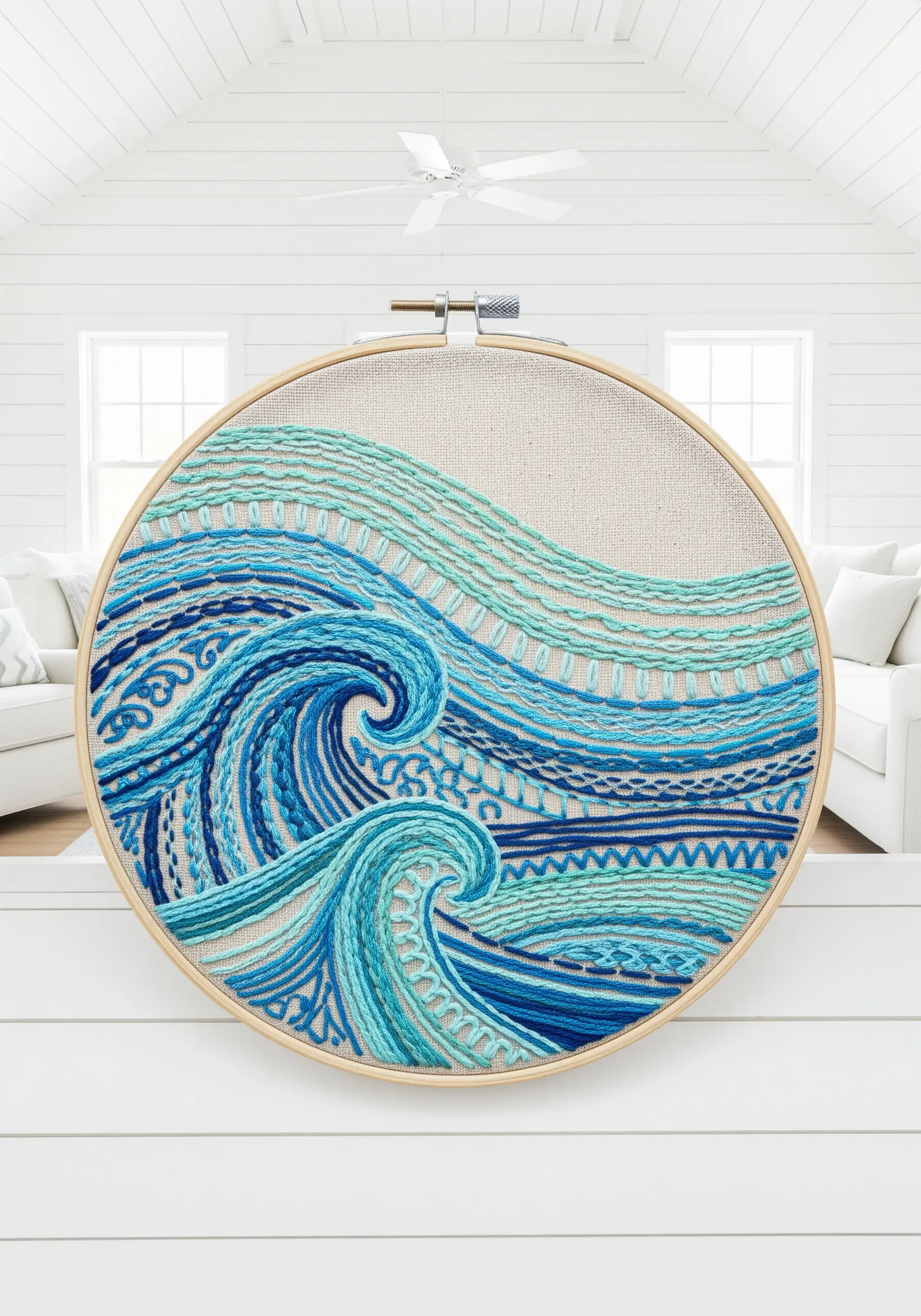
An abstract piece becomes captivating when you build layers of texture.
Instead of relying on one stitch, map out sections of your design and assign a different stitch to each one.
Combine linear stitches like the backstitch and stem stitch with textured fillers like the seed stitch, French knot, or chain stitch.
Even within a limited color palette, this variety creates a rich, tactile surface that invites closer inspection. It’s an ideal approach for dynamic subjects like ocean waves or coastal-themed pillow stitching ideas.
10. Achieve Realism with Directional Thread Painting
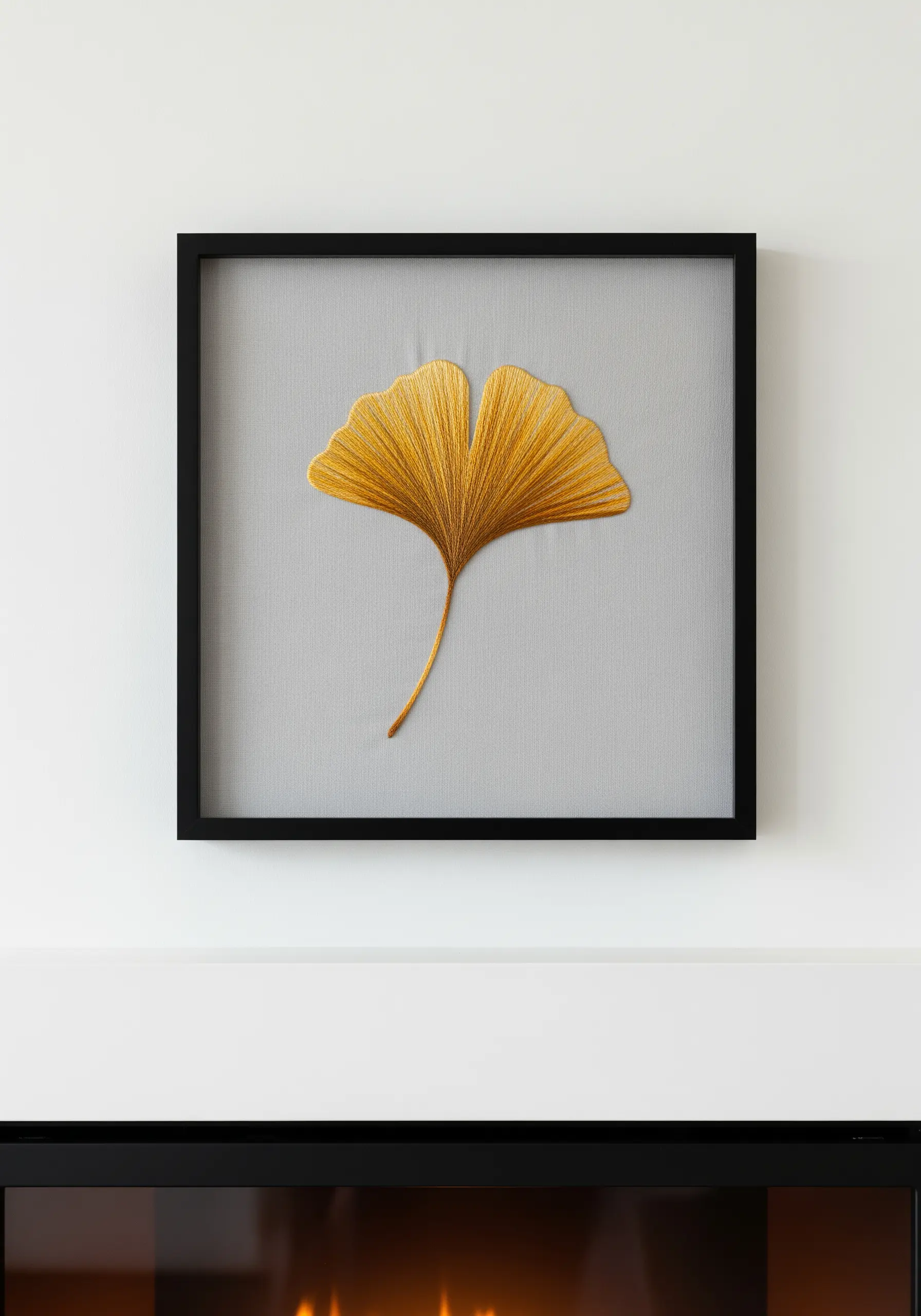
To make a botanical motif look truly lifelike, use the long-and-short stitch to mimic the way light and shadow fall on a real leaf.
Imagine the central vein as your starting point and angle your stitches outward, following the natural direction of the leaf’s growth.
Blend several shades of your main color—from light to dark—to create realistic highlights and shadows. It’s this careful directionality that transforms a flat shape into a three-dimensional object.
Perfecting these leaf embroidery stitches will elevate all your nature-inspired work.
11. Define Graphic Shapes with a Raised Chain Stitch

For a bold, graphic line that has more texture than a backstitch, use a raised chain stitch or a whipped chain stitch.
First, create a foundation of simple chain stitches. Then, weave your thread through the loops without piercing the fabric to build a thick, rope-like line.
This technique creates a clean, dimensional outline that stands out, especially on a felt or wool background.
It’s an excellent choice for abstract thread embroidery projects where you want the line itself to have substance and presence.
12. Guide the Eye with Panoramic Framing
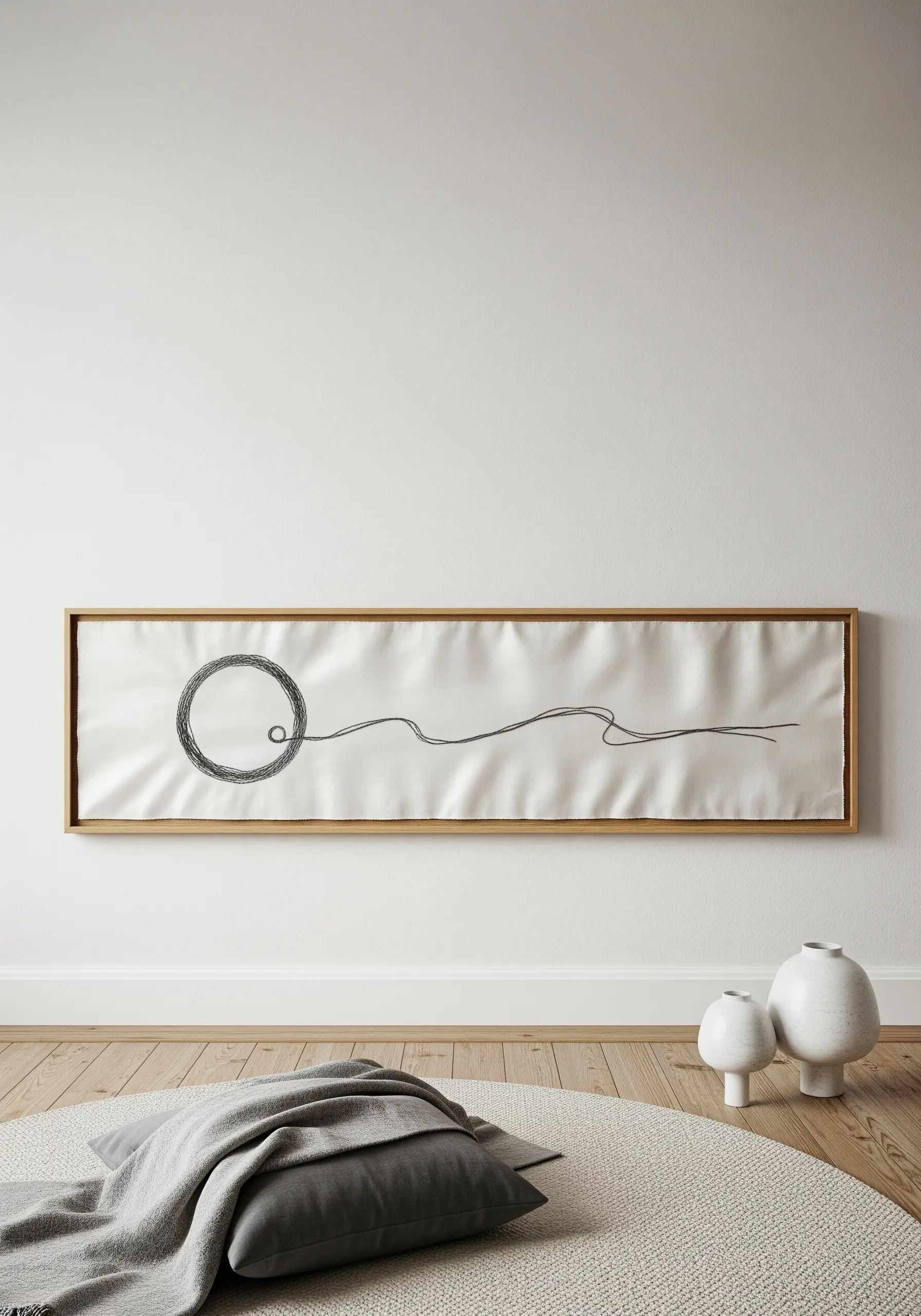
Break free from the traditional hoop by using a long, panoramic frame for your embroidery.
This format is perfect for designs that suggest movement, narrative, or a journey.
Use a simple, continuous backstitch or stem stitch to create a single flowing line that travels from one end of the canvas to the other.
The elongated frame accentuates the sense of motion and transforms a simple stitch into a dynamic, storytelling element. It’s a sophisticated way to display framed embroidery patterns.
13. Tell a Story with a Complementary Diptych
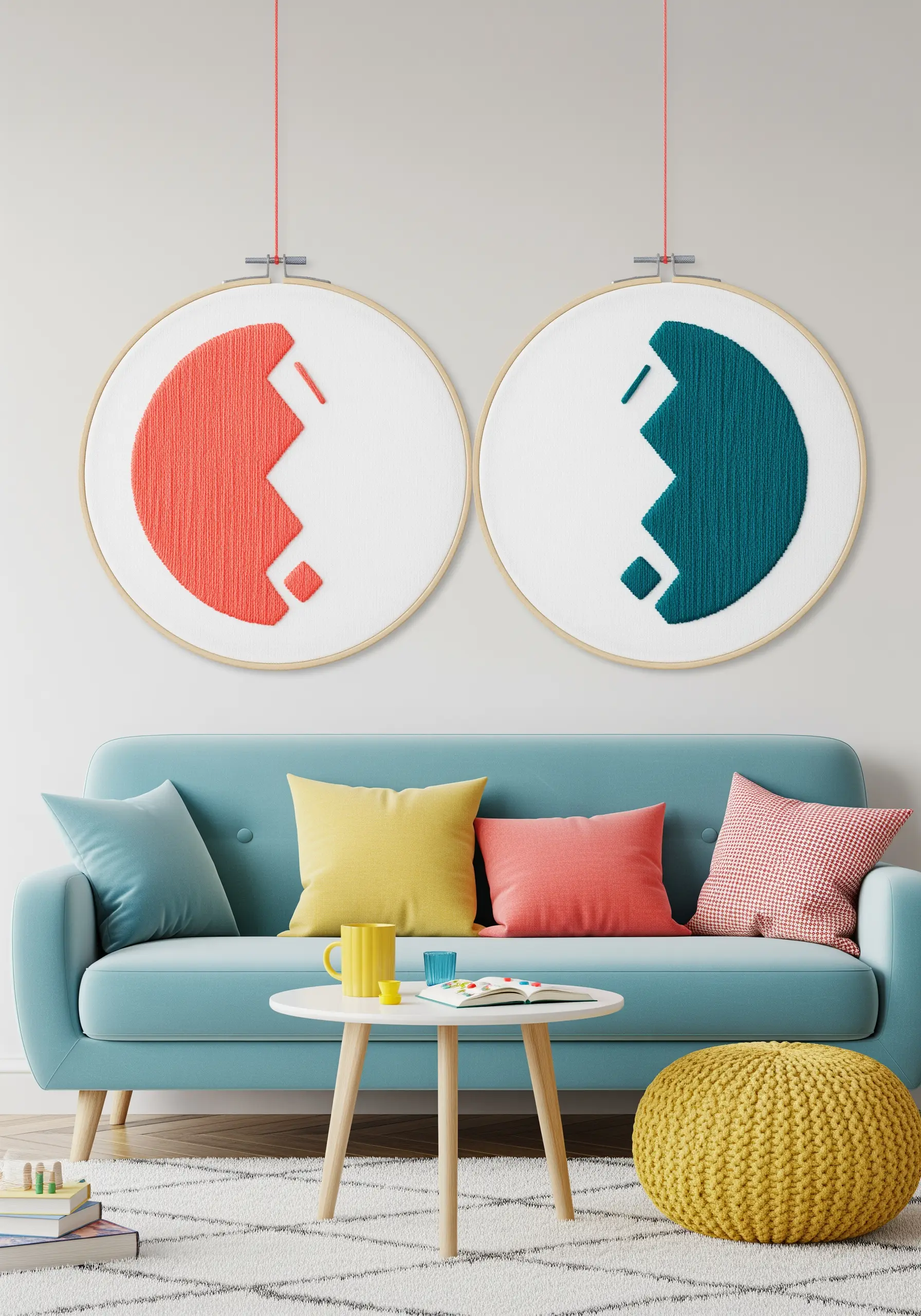
Two hoops can be more powerful than one when they work together.
Create a design that is split across two separate hoops, using negative and positive space to imply a connection.
Choose high-contrast, complementary colors to enhance the sense of opposition and balance.
When hung together, the empty space between the hoops becomes an active part of the composition, inviting the viewer to mentally complete the image. This technique is perfect for abstract color-blend stitch ideas that explore relationships.
14. Illuminate Your Work with Glow-in-the-Dark Thread

Introduce an element of surprise by using glow-in-the-dark embroidery floss for your design.
This specialty thread looks like plain white or off-white floss in daylight but reveals a luminous glow after being exposed to light.
Use it on a dark, high-contrast fabric like black or navy linen for the most dramatic effect.
It’s a magical touch for celestial micro-embroidery ideas, constellations, or any design where you want to hide a secret message that only appears in the dark.
15. Go Minimalist with Architectural Line Art
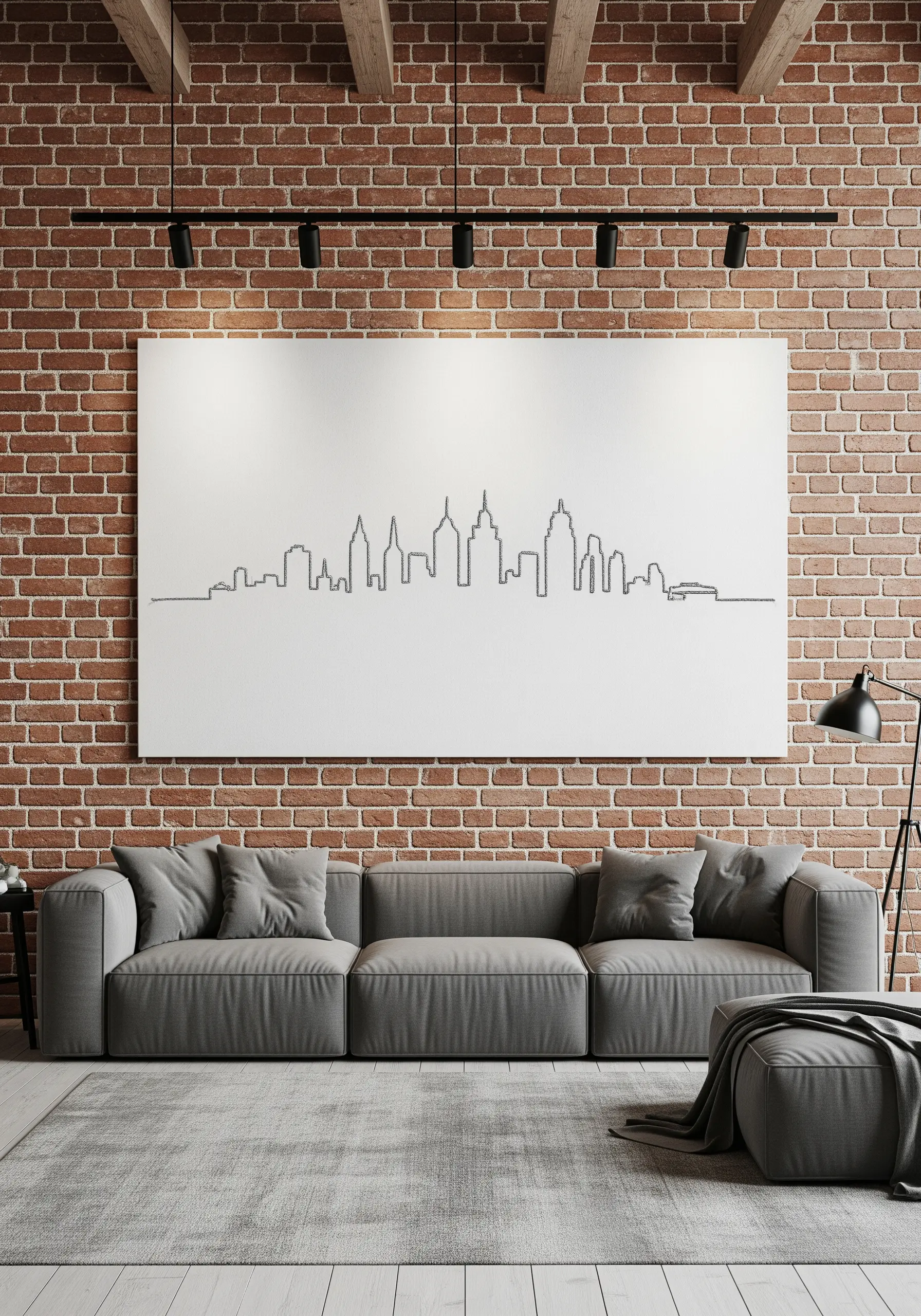
Capture the essence of a cityscape with a clean, continuous line.
A simple backstitch using two or three strands of black floss is all you need to create a sophisticated architectural silhouette.
The key is to focus on the outline and let the negative space define the form.
Stretching your work over a large canvas elevates this simple drawing into a statement piece of modern art, perfect for an industrial or minimalist living room. This approach is ideal for embroided city skyline wall decor.
16. Add Context with a Thoughtful Fabric Choice
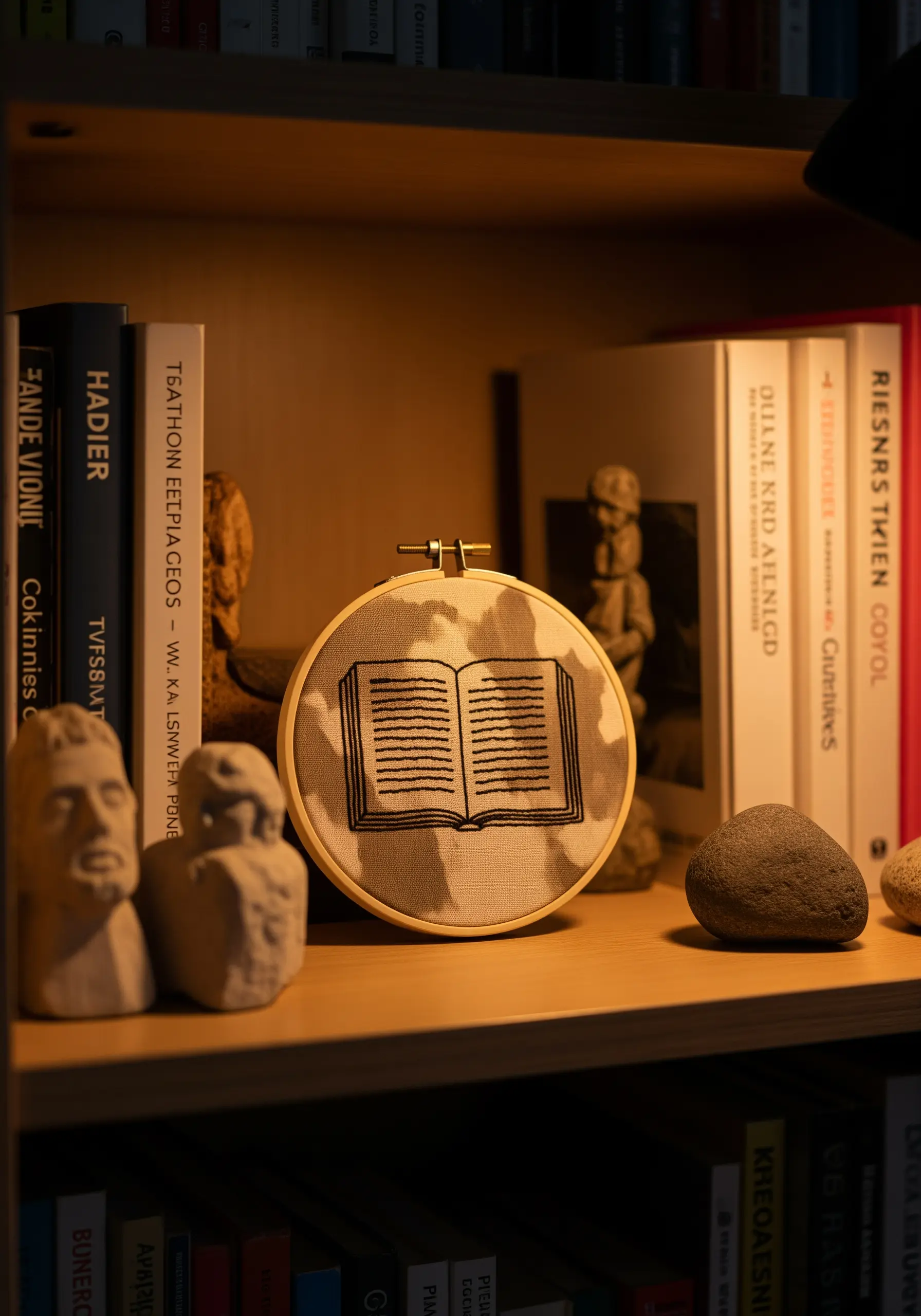
The fabric you choose is just as important as the thread.
Instead of stitching on plain white fabric, select a subtly patterned or textured material that adds a layer of meaning to your design.
Here, a mottled, cloud-like fabric evokes the feeling of thoughts and stories swirling from the pages of the embroidered book.
This thoughtful pairing creates a richer narrative and transforms simple line-art word-symbol embroidery ideas into more evocative pieces.
17. Create Bold Color Fields with Laid Work

To fill large areas with solid, textured color without the time commitment of satin stitch, use laid work.
First, lay long, parallel strands of thick yarn across the entire shape. Then, come back with a finer thread in the same color to tie down these strands with small, evenly spaced couching stitches.
This technique creates a beautiful, graphic texture that is both efficient and visually striking.
It’s a fantastic method for color-blocked yarn wall art projects and abstract compositions.
18. Pair Delicate Stitches with Rustic Fabric
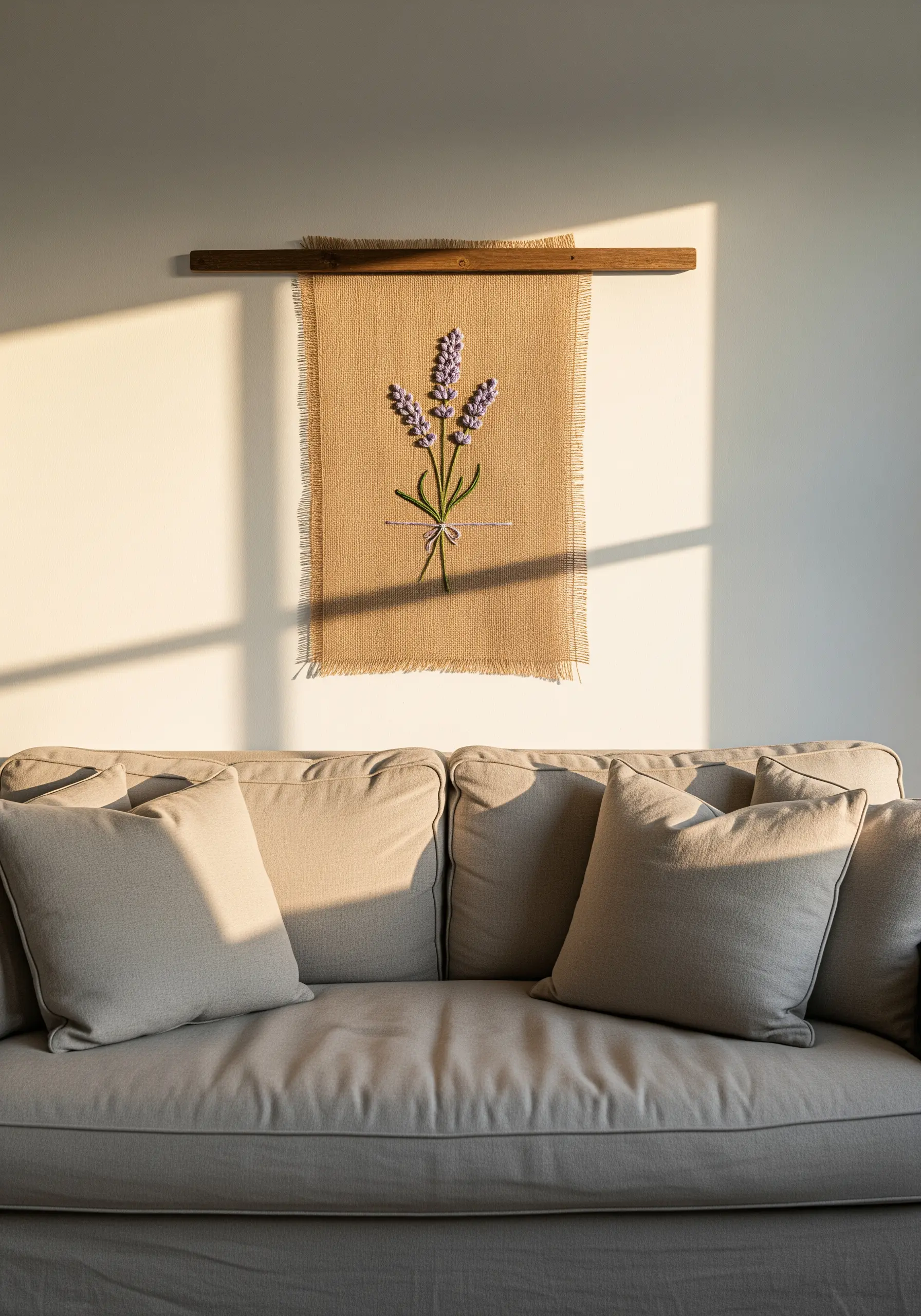
Create a beautiful study in contrasts by stitching a delicate subject onto a coarse, rustic fabric like burlap or raw linen.
Use French knots for the lavender buds and a simple stem stitch for the stalks. The intricate, gentle nature of the embroidery is highlighted and enhanced by the rough, organic texture of the background.
This pairing feels balanced and intentional, giving your floral pieces a sophisticated, farmhouse-modern aesthetic. It is a perfect way to approach delicate lavender stitch ideas.
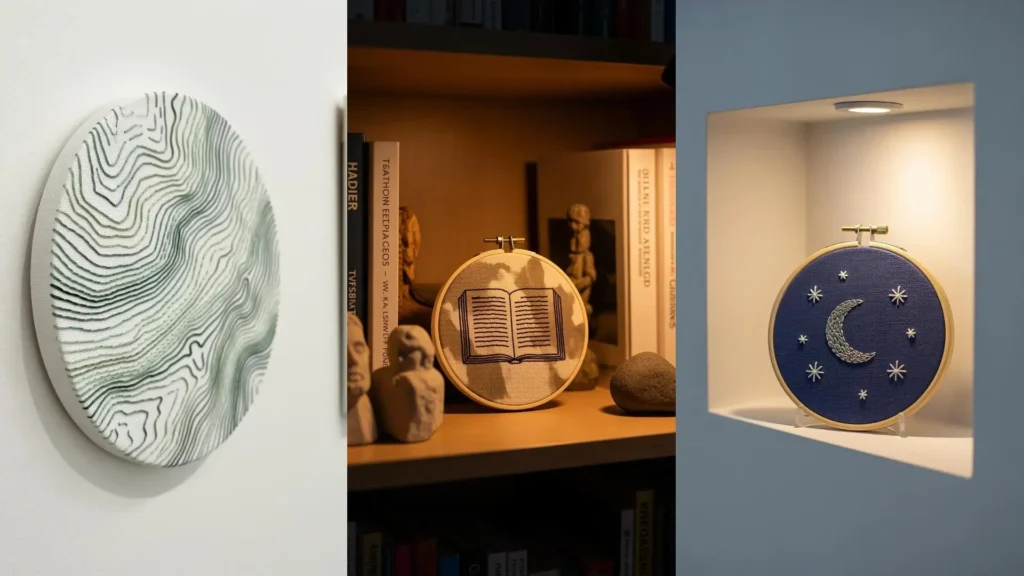
19. Map Organic Textures with a Single Stitch
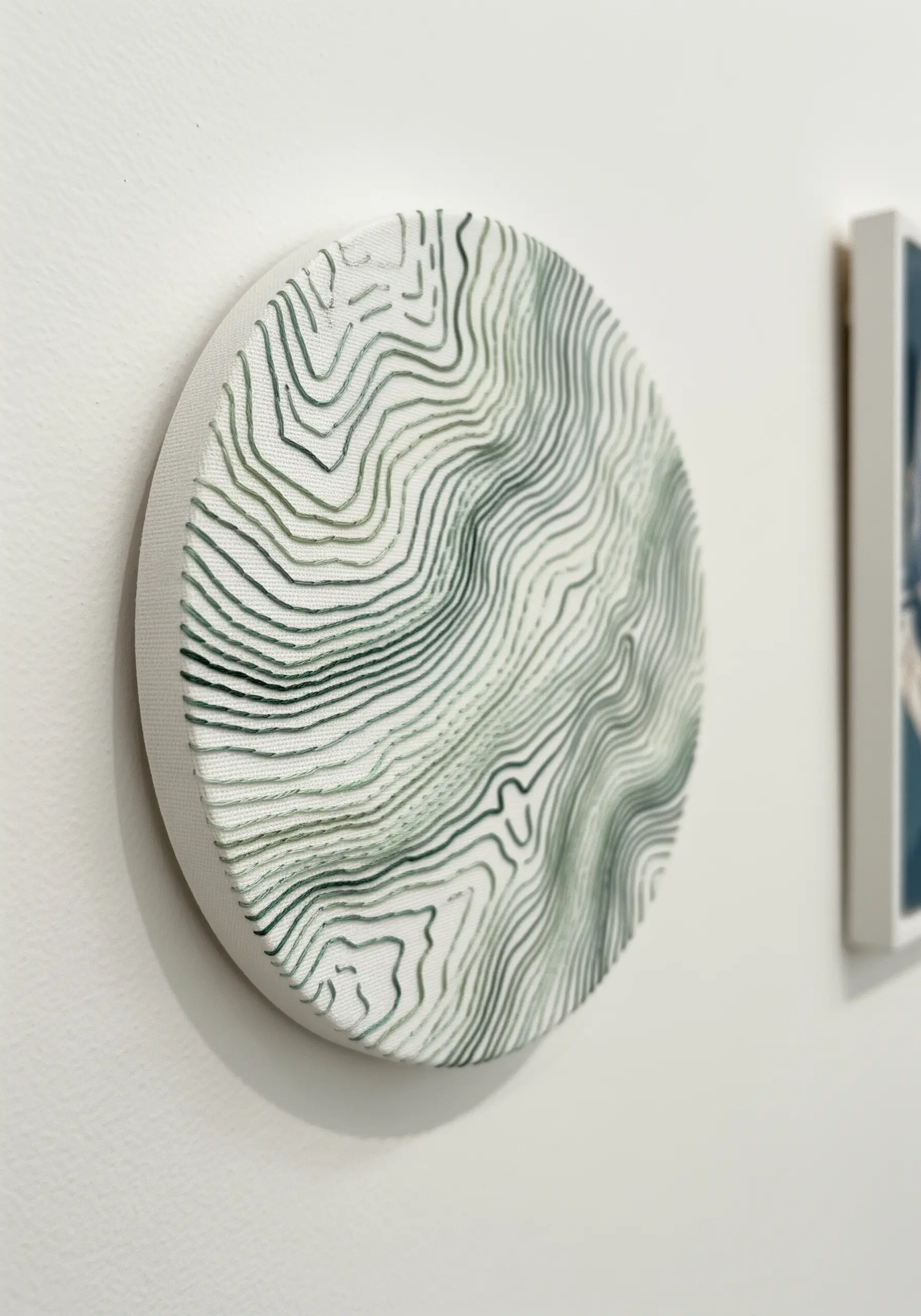
You can capture the complexity of nature with the simplest of stitches.
To create a design that mimics topographic maps or wood grain, use a single, continuous line of backstitch or stem stitch in varying shades of one color.
The magic lies in the spacing and flow of the lines—keep them close together in some areas and let them breathe in others.
This technique demonstrates one of the most powerful ways to capture nature’s textures with nothing more than thread and a needle.
20. Master Lunar Realism with Thread Painting

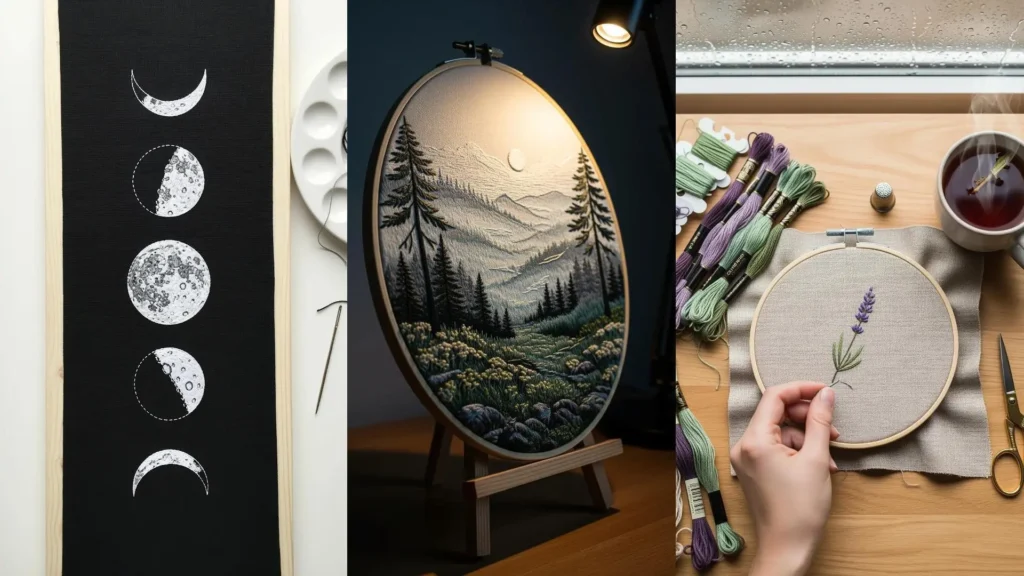
To embroider a realistic moon, you need to think like a painter, using thread to create light and shadow.
Use a short-and-long stitch with several shades of grey, silver, and white floss. Fill in the darker areas (craters) with cool greys first, then build up the lighter, highlighted areas with off-white and bright white stitches on top.
Stitch in swirling, random directions to mimic the moon’s uneven surface. This layering is the key to moving beyond flat monochrome black-thread designs and into realistic texture.
21. Define a Scene with Minimalist Line Work

A single, unbroken line can create a complete and evocative scene.
Using a consistent backstitch or stem stitch in a high-contrast color, you can outline a landscape that feels both simple and whole.
The elegance of this style comes from what you choose to leave out. The brain fills in the missing details, making the viewer a participant in the art.
This is the essence of successful minimalist line-art nature embroidery—suggesting a mood and a place with the utmost economy of stitch.
22. Create Ethereal Art on Sheer Fabric

For a truly breathtaking effect, stitch your design onto a sheer fabric like tulle, organza, or voilé.
This technique makes the embroidery appear as if it’s floating in mid-air.
You must be very neat with the back of your work, as it will be visible. Use tiny knots or weave your thread ends back into your stitches to keep them hidden.
Displaying the finished piece in a floating glass frame or a custom acrylic box enhances the illusion, turning your stitchwork into one of the most compelling modern thread art techniques.