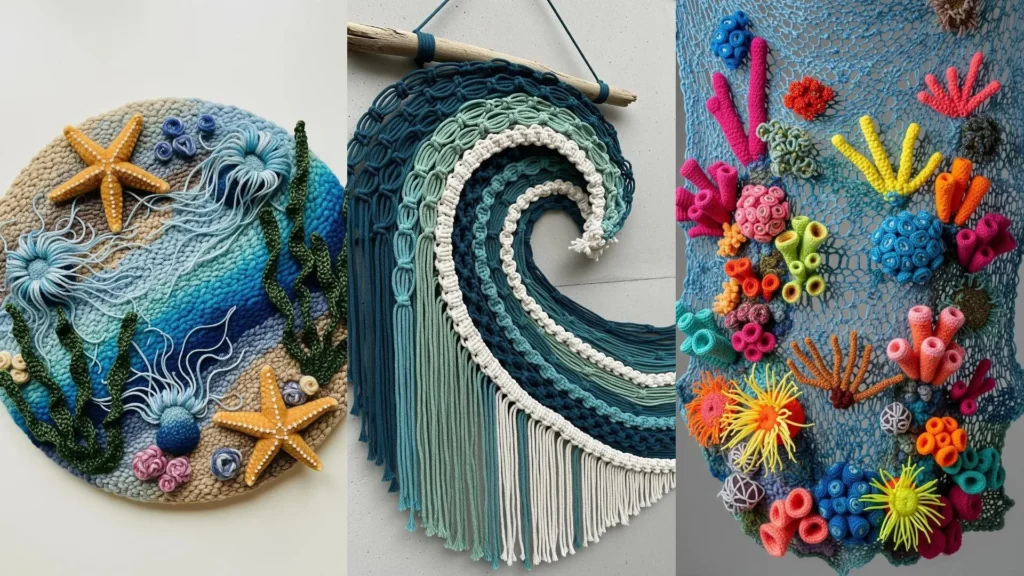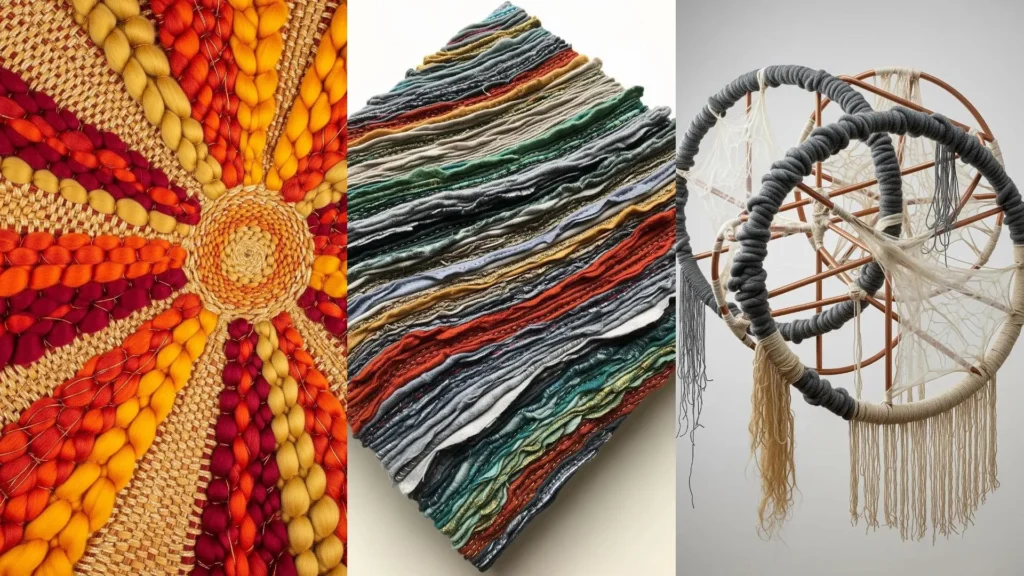
You’ve mastered the basic stitches, but now you find yourself pausing, wondering how to translate those skills into something that feels truly yours—something with depth, texture, and a modern artistic voice.
The answer often lies not in learning more complex stitches, but in changing your materials and your mindset. By embracing mixed fibers—chunky yarns, raw-edged fabric, metallic threads—and allowing abstract patterns to guide you, you unlock a new language of expression.
These ideas are more than just inspiration; they are invitations to experiment. To see your needle and thread not just as tools for decoration, but as instruments for sculpting, painting, and telling stories with texture. Let’s explore how to make your next piece feel intentional, tactile, and deeply resonant.
1. Weave Graphic Shapes with Metallic Accents

Create powerful visual contrast by pairing soft, bulky fibers with sharp, delicate lines.
Use thick wool roving to weave a section with a soft, cloud-like texture, then juxtapose it with a tight, flat weave using standard yarn for a clean, graphic block of color.
Introduce a fine metallic thread to create taut, straight lines that cut across the softer shapes.
This contrast in weight, sheen, and texture creates a sophisticated tension, using the metallic element to define boundaries and draw the eye.
2. Sculpt Organic Forms with Yarn Couching
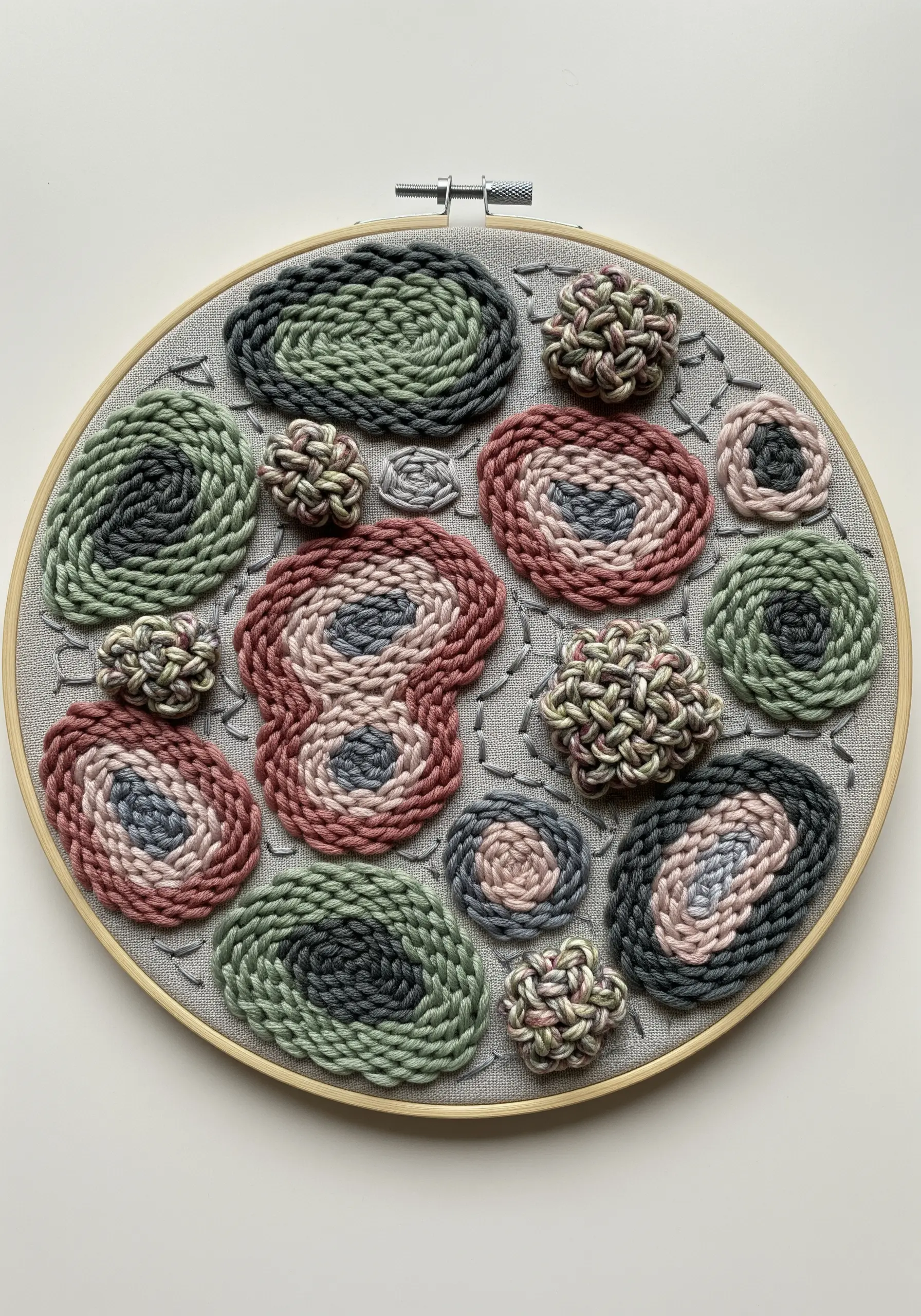
Build raised, dimensional shapes by couching thick yarn bundles or cording directly onto your fabric.
To create a coiled, pebble-like effect, lay down a thick cord in your desired shape and use a thinner, matching thread to tack it down at regular intervals from the back.
For more complex knotted forms, create the knots separately and then stitch them securely onto the surface.
This technique allows you to explore organic shape embroidery patterns and build texture quickly without filling the entire area with dense stitches.
3. Integrate Weaving into Macrame Designs
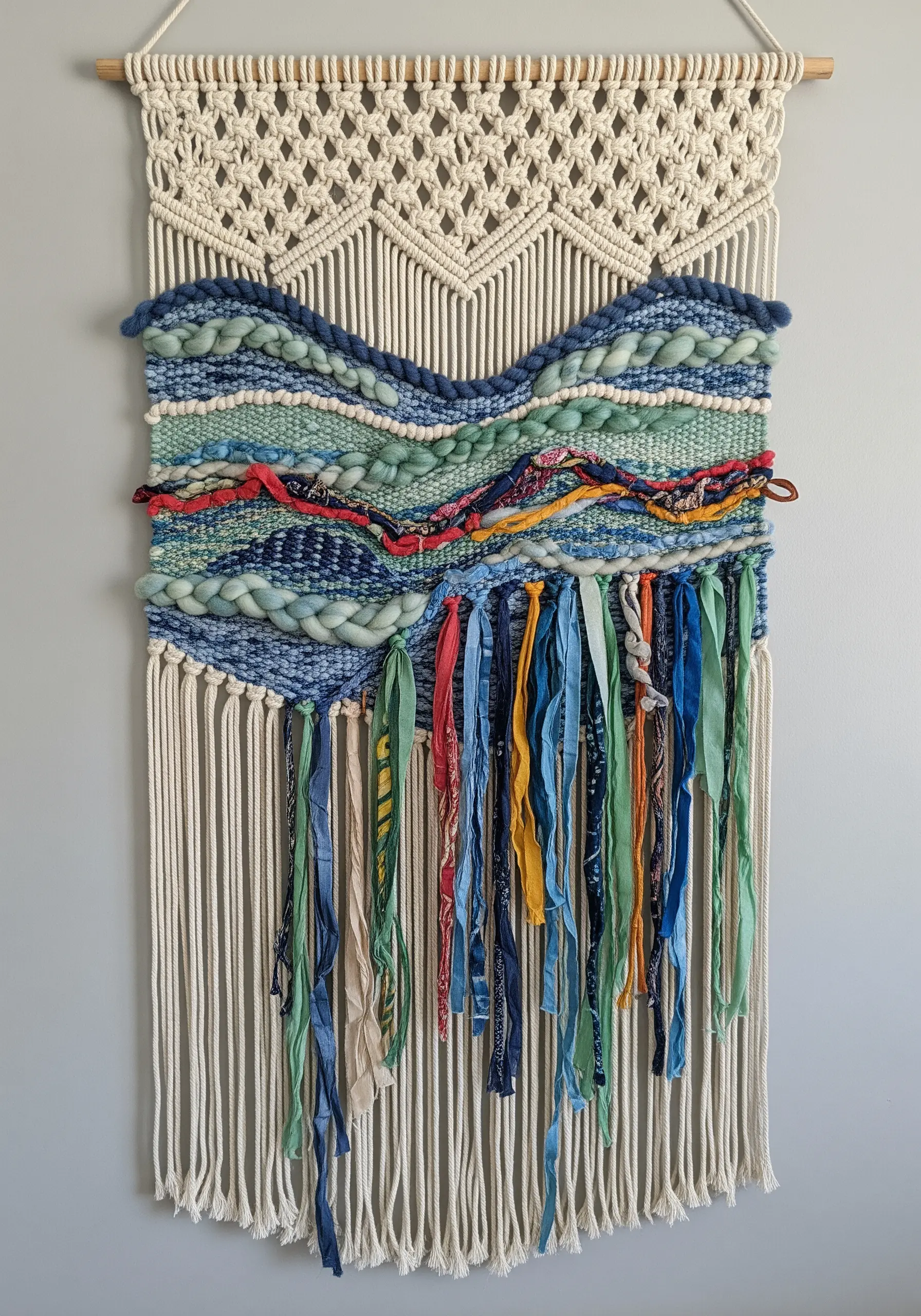
Elevate a traditional macrame piece by incorporating a central woven panel.
After creating your macrame header with square knots, treat the vertical hanging cords as your warp threads.
Weave in various materials like chunky wool, silk ribbons, and torn fabric scraps to build a landscape of color and texture.
Allow the weaving to undulate and curve, creating a sense of organic movement that contrasts beautifully with the structured knots above and below.
4. Build an Abstract Fabric and Stitch Collage

Begin with a painted canvas to establish a color mood before adding any fiber.
Layer fabric scraps with contrasting textures, such as rough burlap against delicate tulle, and anchor them with simple running stitches or beads.
Introduce bold, sculptural elements like thick yarn braids to create focal points and guide the eye through the composition.
This method of fabric collage embroidery turns your surface into a rich, tactile story where raw edges and unexpected pairings are celebrated.
5. Weave Textural Landscapes with Roving and Braids

To create the illusion of a natural landscape, vary your fiber thickness dramatically.
Use fine, blended yarns for the sky to suggest distance and airiness, then build the foreground with bulky wool roving, thick braids, and soumak knots to mimic the textures of earth and foliage.
Let your materials dictate the form—a thick braid can become a winding path, while clusters of knots suggest rocky terrain.
This approach moves beyond flat color and into sculptural storytelling, offering one of the most effective ways to capture nature’s textures in your next embroidery project.
6. Create Gradient Texture with Dense French Knots

Use the French knot not just as an accent, but as a primary tool for filling space and creating a pointillist-style surface.
Create a smooth gradient by gradually shifting your thread color from dark to light within a defined shape.
To amplify the effect, contrast this dense, dotted texture with a clean, linear element, such as a bundle of parallel straight stitches.
This elegant pairing of texture and line produces a sophisticated, modern composition that feels both graphic and soft.
7. Evolve a Geometric Pattern Through Texture
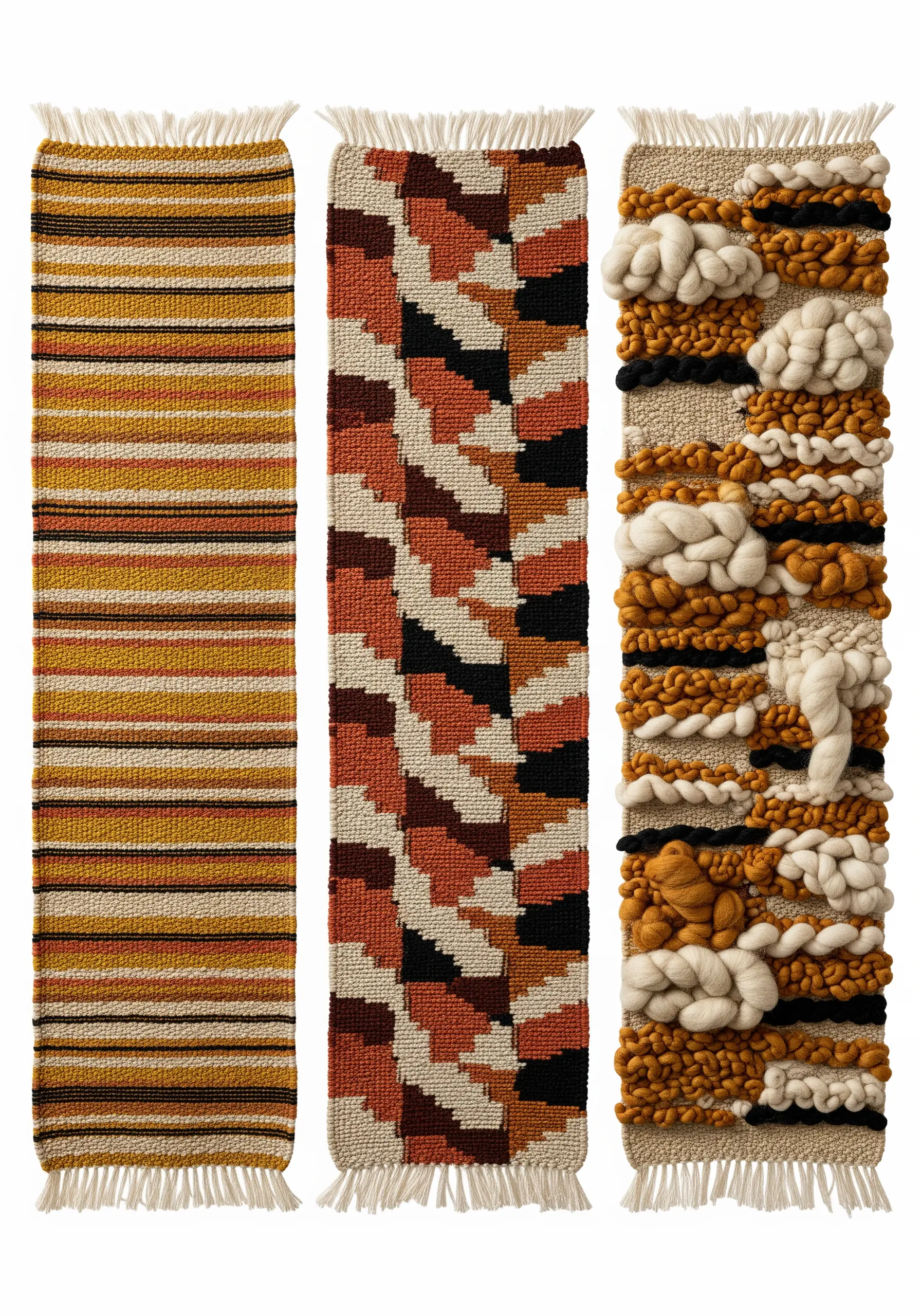
Explore a single color palette across a series of works by progressively increasing textural complexity.
Begin with a flat weave of simple stripes to establish your color story, then translate those into a crisp geometric pattern in a second piece.
Finally, deconstruct the pattern entirely, focusing only on texture. Use the same colors but introduce chunky roving, high-relief knots, and varied weaving densities.
This triptych approach tells a compelling story of design evolution, from graphic simplicity to tactile richness, using simple earth-tone patterns every handmade decor enthusiast needs to try.
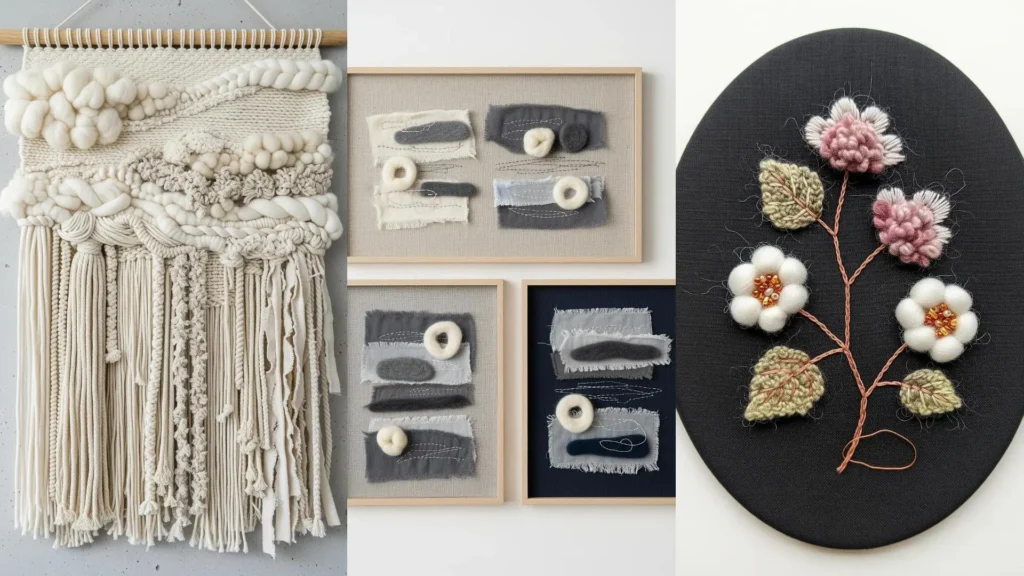
8. Layer Fabric Strips for a Geological Strata Effect
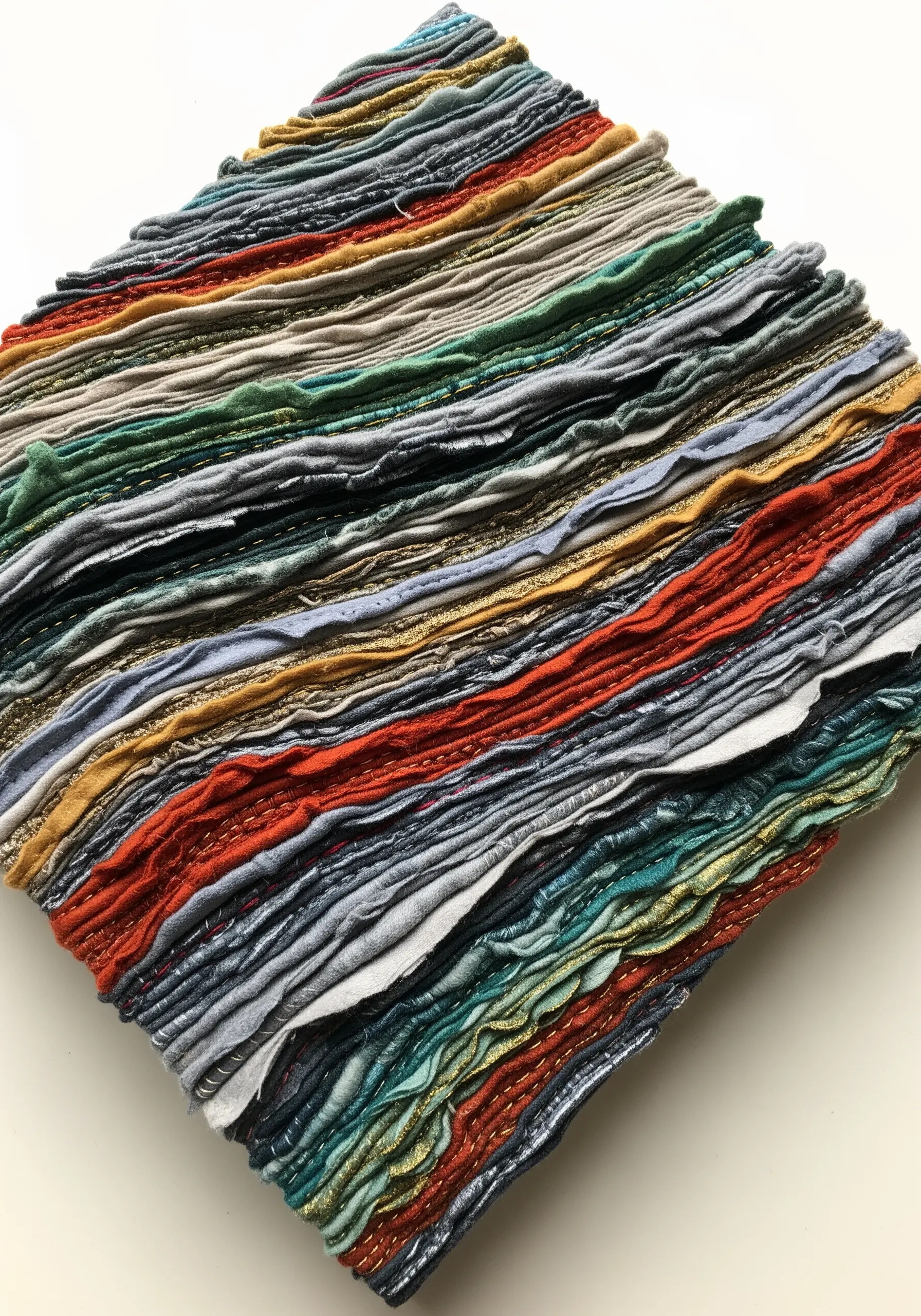
Build a deeply textured surface by layering and stitching down thin strips of fabric with their raw edges exposed.
Choose materials with different weights and sheens—like worn cotton, delicate silk, and sturdy linen—to create subtle variations in light and shadow.
Arrange the strips in a stacked composition and secure them with a simple running stitch.
This technique creates a geological “strata” effect, perfect for fabric collage embroidery artworks that use color in the most beautiful way.
9. Design Soft Color Blocks with Punch Needle
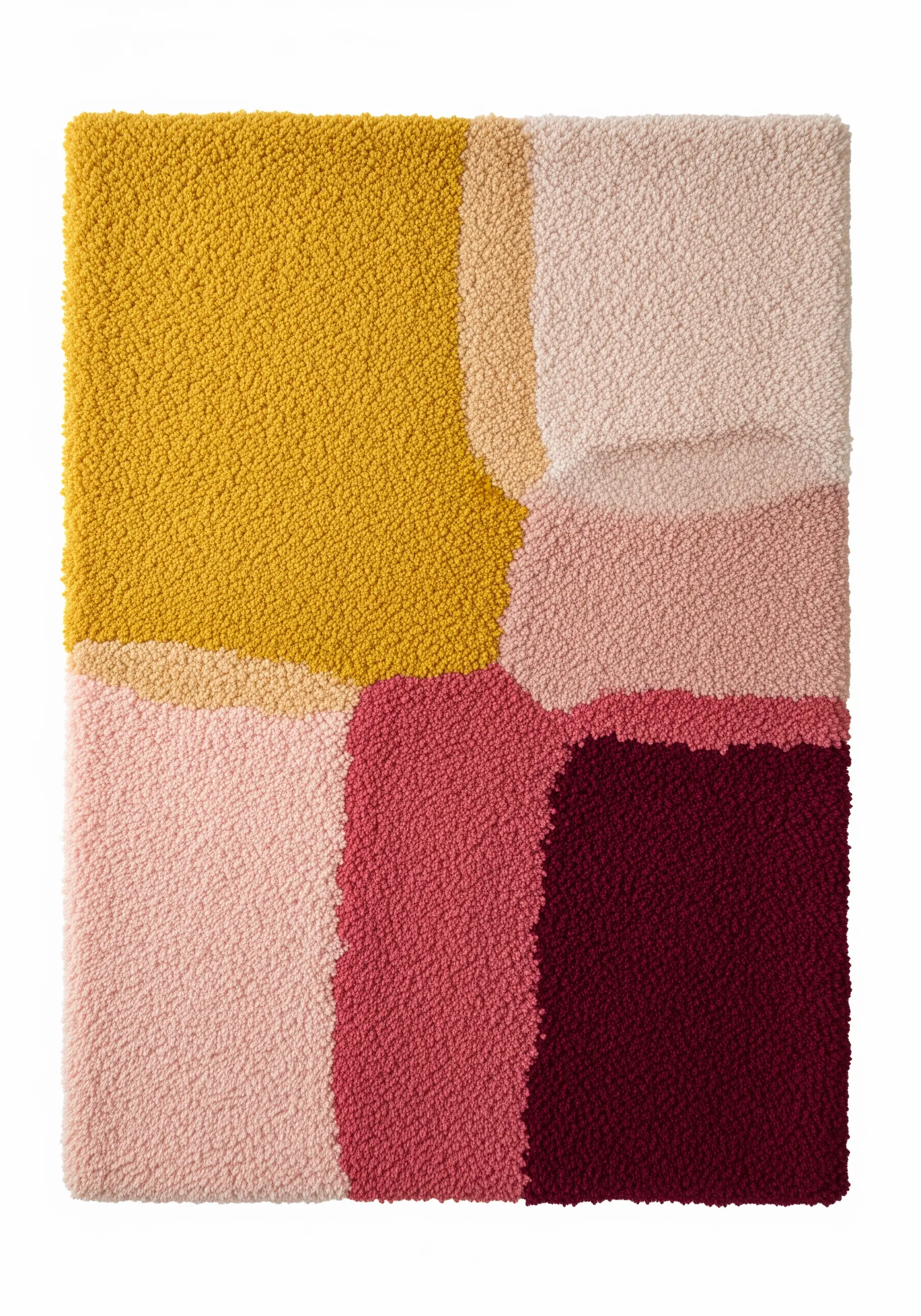
Achieve a plush, velvety surface ideal for abstract color blocking by using a punch needle.
This technique creates dense loops of yarn that sit closely together, producing a uniform texture with soft, painterly edges where colors meet.
The result feels more gentle and integrated than the sharp lines of traditional weaving.
Choose a cohesive palette and let the simple, powerful blocks of color and texture make a modern statement in your fabric art ideas perfect for adding color to your home.
10. Weave with Negative Space for a Deconstructed Look
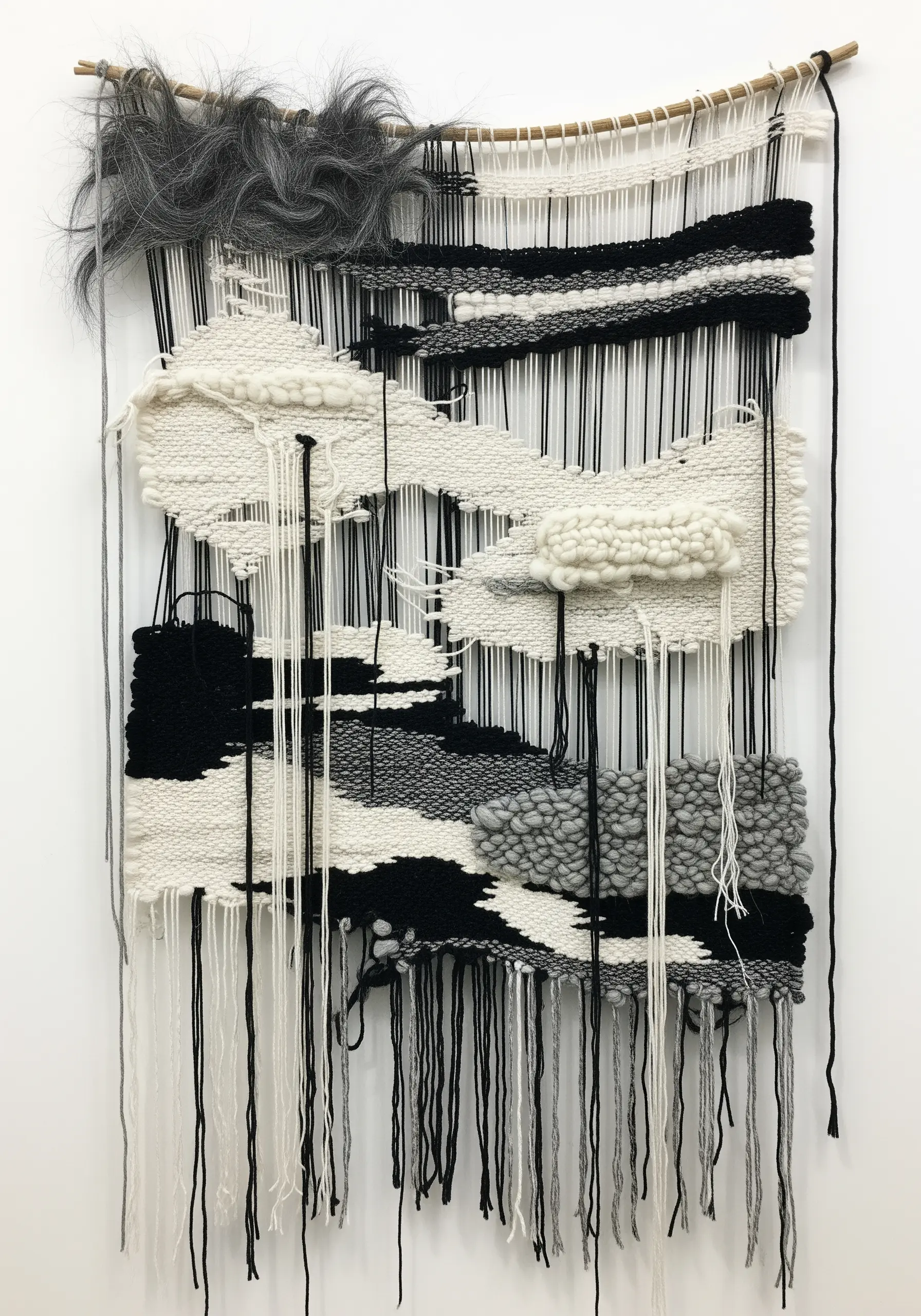
Challenge the traditional grid of weaving by intentionally leaving areas of your warp threads exposed.
This use of negative space brings a light, airy quality to the piece and highlights the underlying structure of the work itself.
Weave abstract shapes that appear to float, and allow threads to hang loose or remain untrimmed.
This deconstructed approach transforms a simple monochrome palette into a dynamic, sculptural composition that feels both raw and intentional.
11. Pair Expressive Stitches with Graphic Lettering
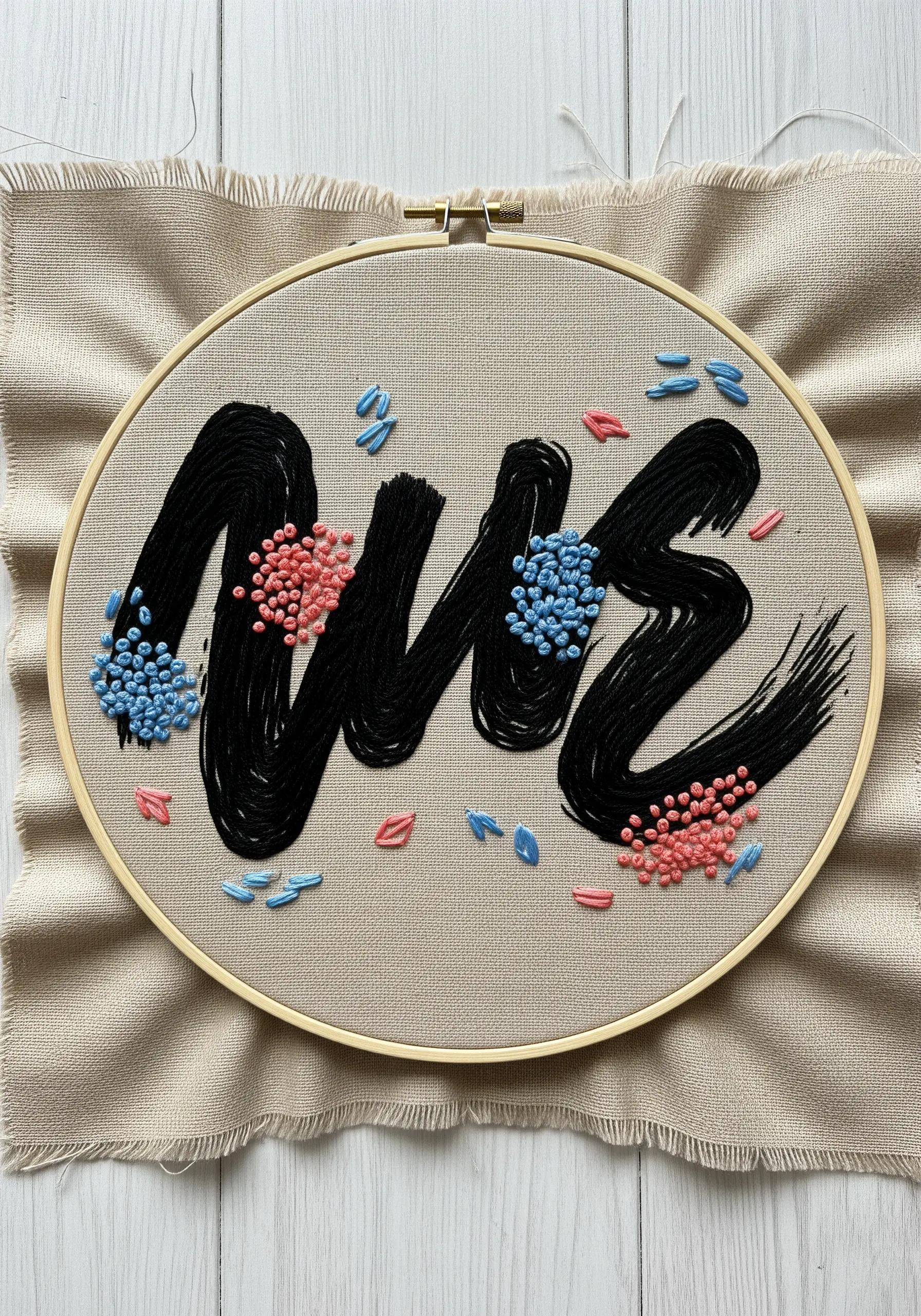
Transform simple text into an expressive statement by combining a bold fill with delicate, textural accents.
Render the letters with a long, directional satin stitch to mimic the energy and flow of a brushstroke.
Then, soften the graphic weight by adding clusters of French knots or seed stitches in contrasting colors.
These small, textural dots create points of interest and add a layer of detail that makes even tiny lettering embroidery ideas feel impactful.
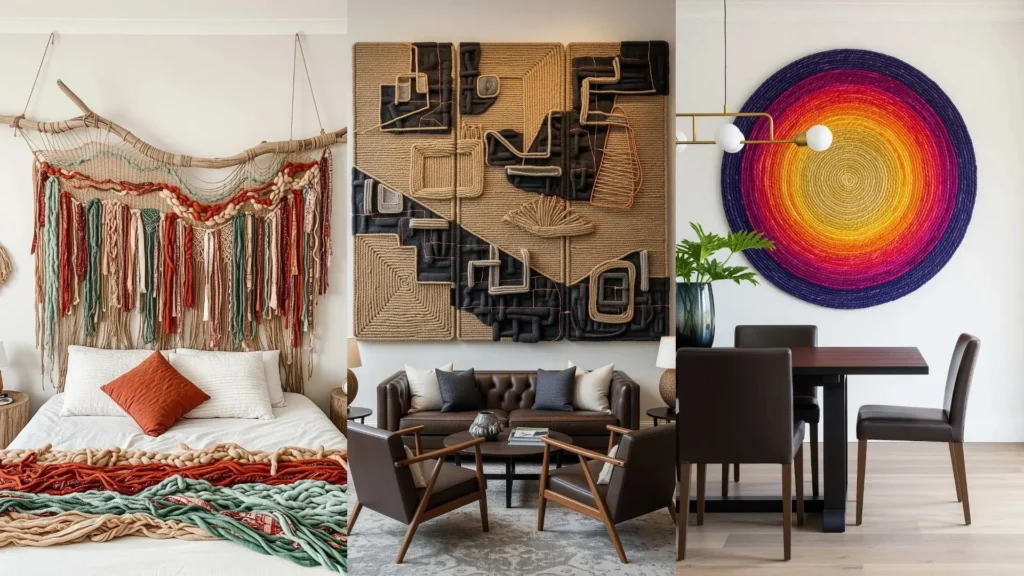
12. Create Sculptural Forms with Wrapped Rope
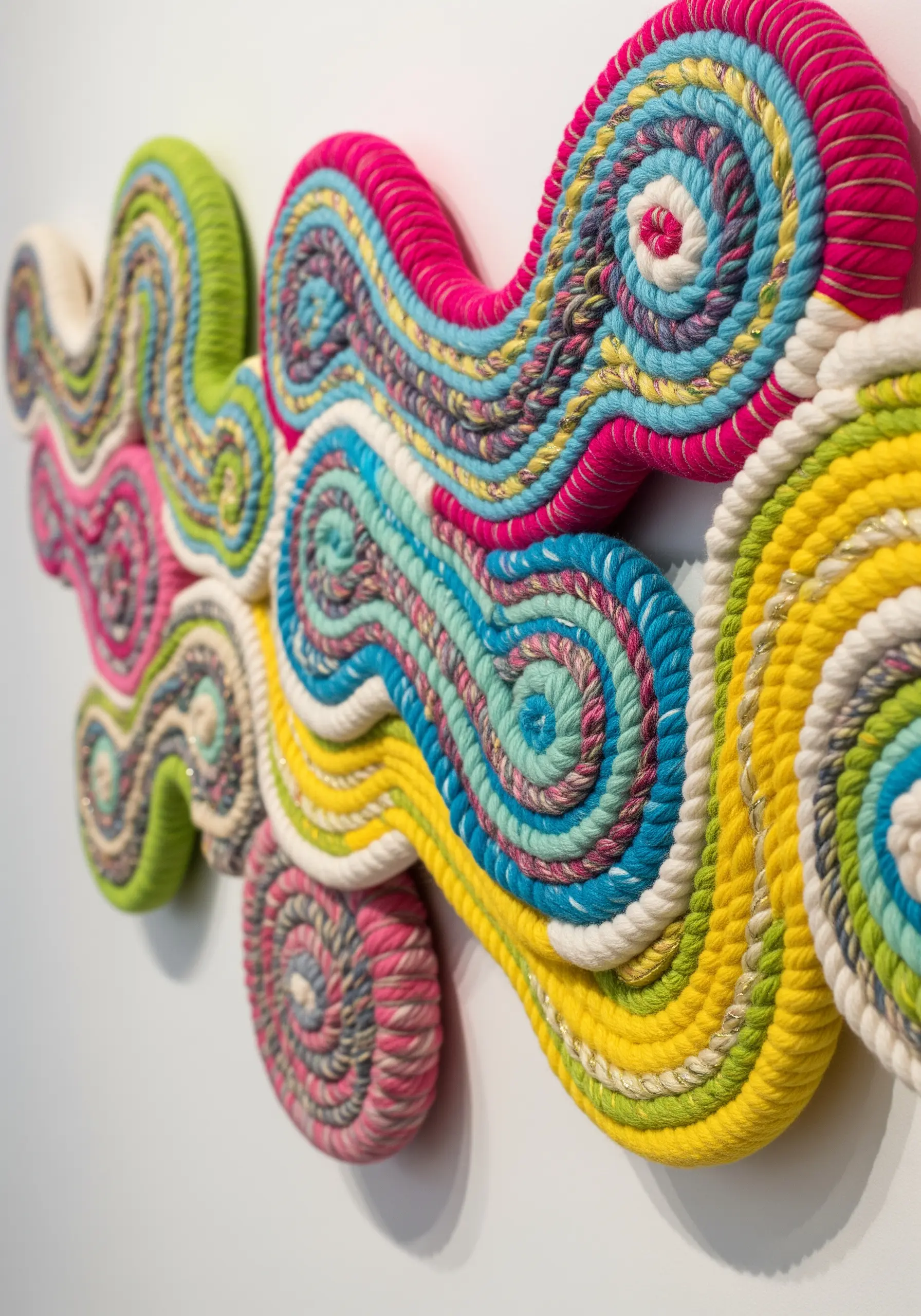
Move your fiber art off the flat surface and into three dimensions by using rope as a structural base.
Shape thick cotton rope into organic, curving forms, then tightly wrap sections with different colored yarns—a technique called coiling that allows you to “paint” with thread.
By varying the colors and arranging the coiled ropes into a dynamic composition, you can create vibrant, high-impact fiber art installations that use color and texture to evoke emotion.
13. Combine Sashiko-Inspired Lines with 3D Knots

Create a design that balances graphic line work with sculptural detail.
Start with a patterned fabric, like shibori or tie-dye, as your canvas.
Use a simple, high-contrast running stitch, inspired by Japanese Sashiko, to outline geometric shapes that complement the fabric’s pattern.
Then, add clusters of dimensional knots, such as Chinese button knots or woven ball knots, to introduce pockets of rich texture.
This juxtaposition of flat line and raised form creates a beautiful interplay of techniques.
14. Design a Radiating Sunburst with Braided Roving

To create a powerful sunburst effect, use pre-braided wool roving as your primary material.
The braids add immediate, significant texture and visual weight that standard yarn cannot match.
Arrange them in a radial pattern emanating from a tightly woven center, creating a gradient effect by shifting from light to dark tones.
Intersperse the braids with finer threads or a flat weave to create contrast and allow the bold, braided sections to become the star of these texture-rich thread art ideas.
15. Weave a Monochrome Study in Texture
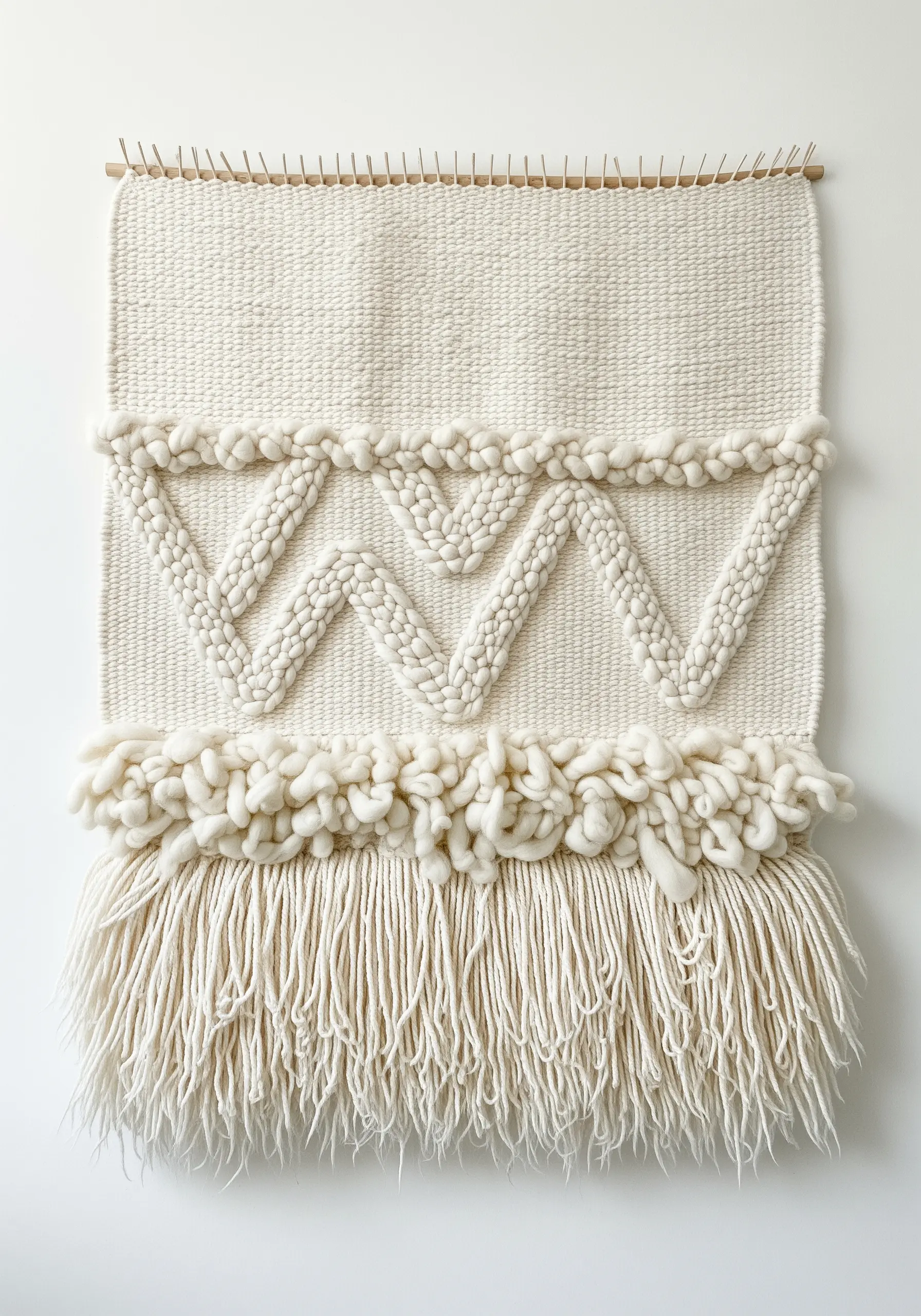
When working with a single color, texture becomes your most powerful tool for creating visual interest.
Establish a base with a simple, flat tabby weave.
Then, build raised sections using soumak stitch or rya knots to create chevron patterns, shaggy piles, or dense loops.
The interplay of light and shadow across these different surfaces brings the piece to life, proving that neutral thread & linen embroidery combos can be incredibly rich and complex.
16. Compose with Abstract Textural “Islands”
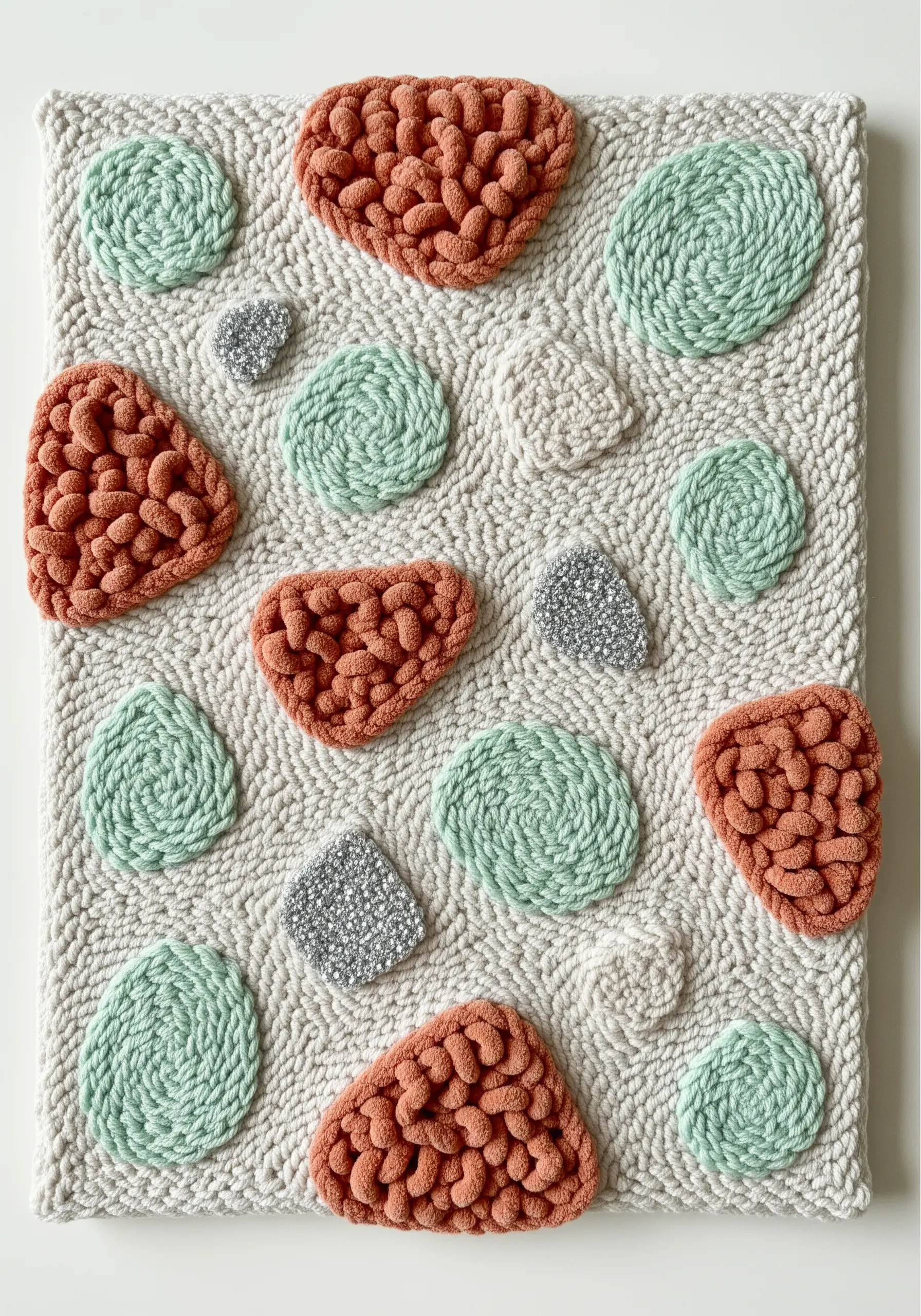
Instead of filling your entire surface, create a sense of calm and balance by arranging textural elements like islands on a calm sea.
Start with a consistently textured background, like a woven grid or a field of seed stitch.
Then, create separate, raised motifs using techniques like couching, French knots, or looped stitches.
Arrange these abstract shapes with plenty of negative space in between to highlight the unique texture of each element and create a sophisticated, modern composition.
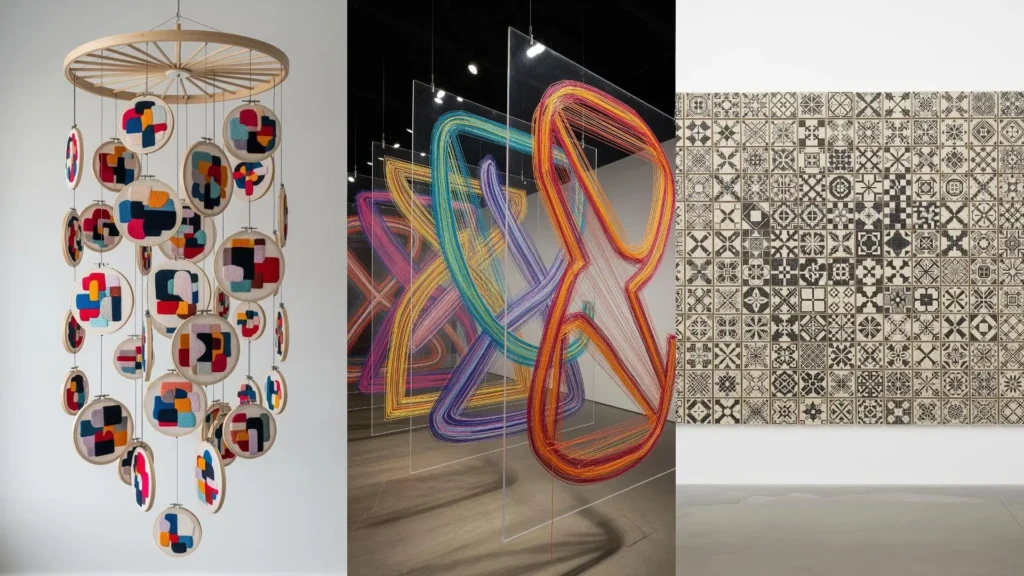
17. Build Sculptural Forms with Hoops and Thread
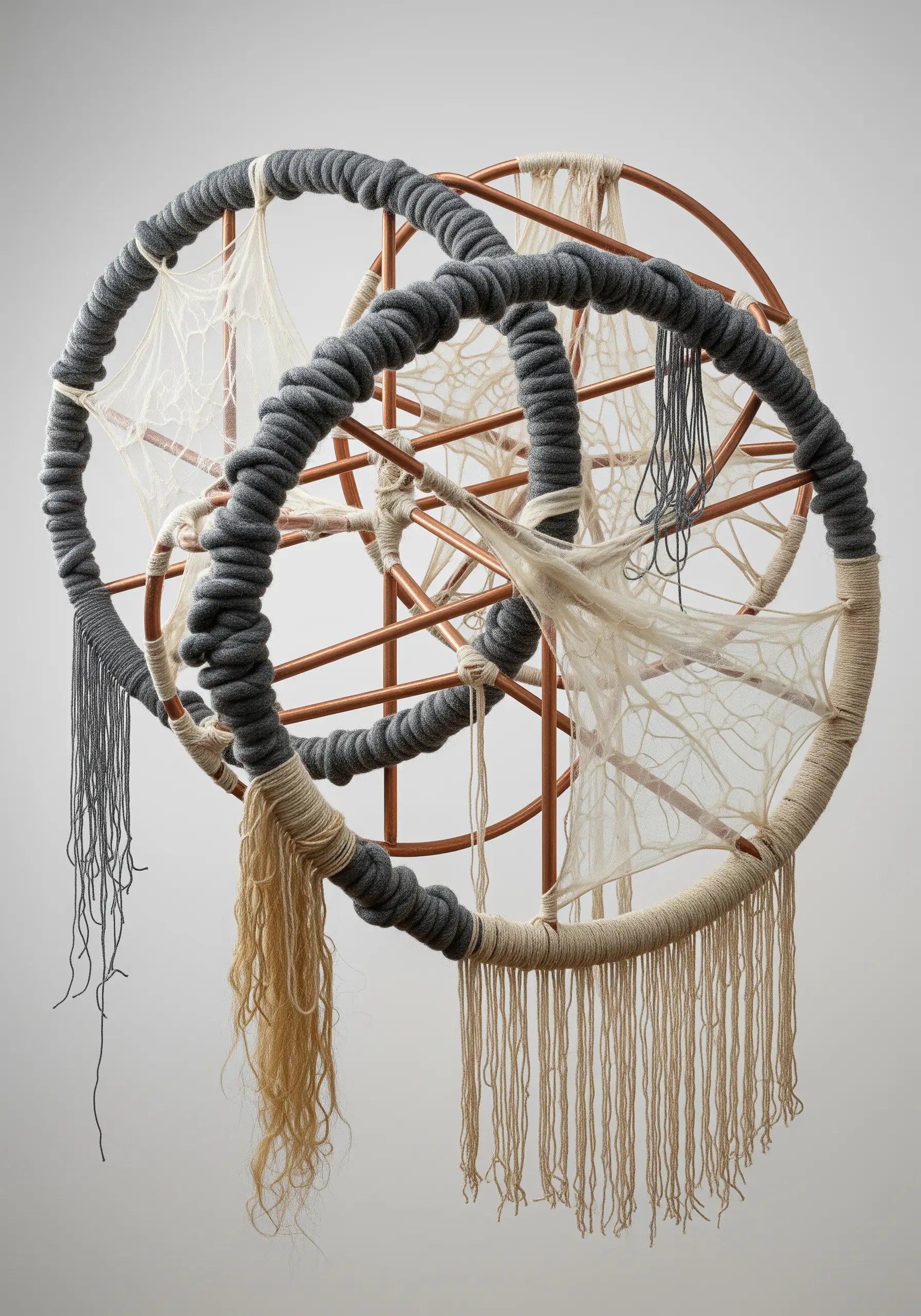
Take your fiber art off the wall entirely by using a rigid frame as a three-dimensional loom.
Interlock metal or wooden hoops to create an armature, such as a sphere or another abstract shape.
Wrap the structural elements tightly with yarn, then stretch threads or delicate fabrics like tulle across the open spaces to create translucent, web-like planes.
This is one of the most innovative modern thread art techniques to create floating wire-suspended designs, combining fiber art with sculptural principles.
18. Cultivate a Miniature “Stitch Garden”
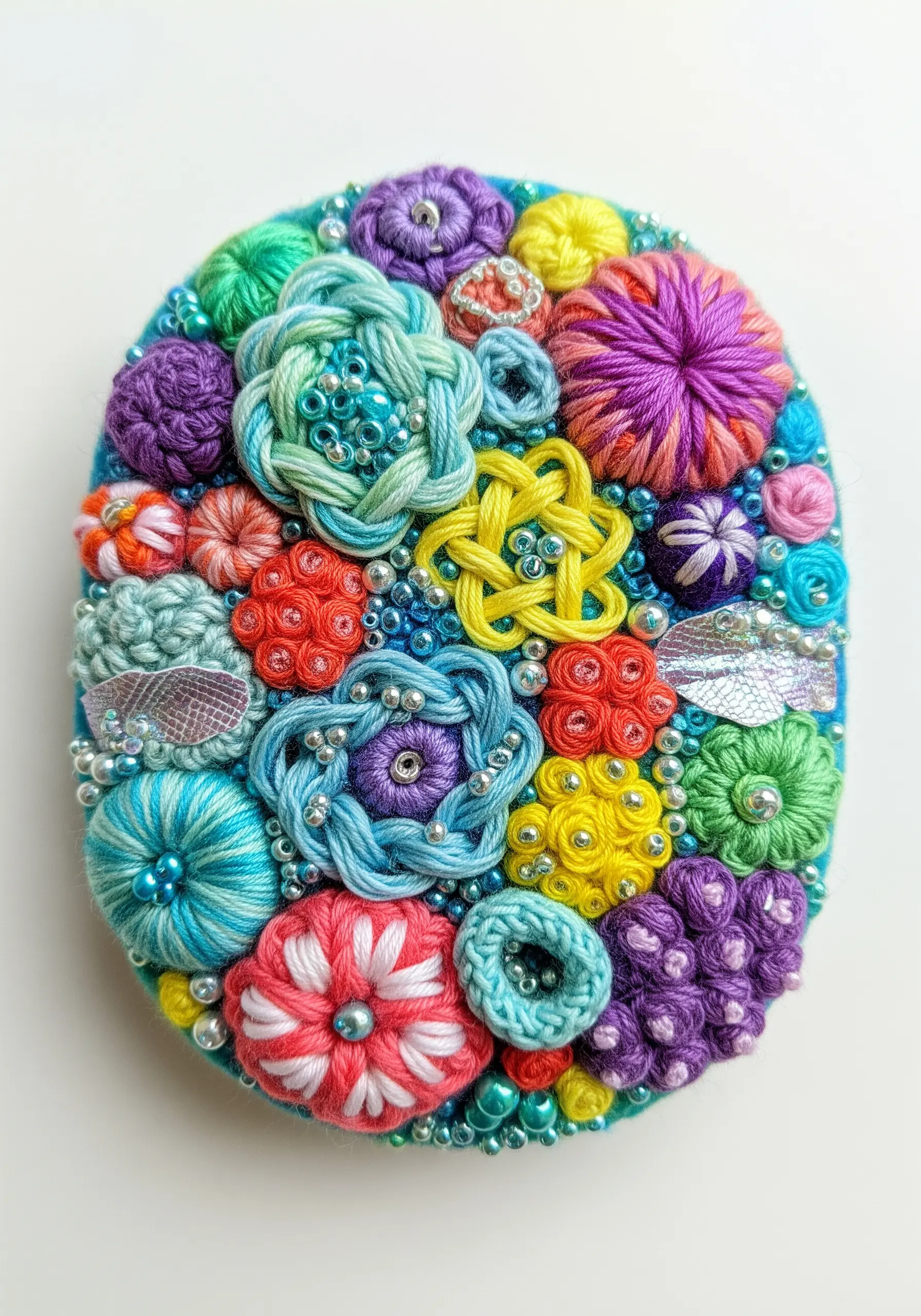
Treat a small surface, like a brooch or patch, as a dense, miniature garden by packing it with a variety of highly dimensional stitches.
Combine woven picot stitches, cast-on stitches, and bullion knots to create lush floral and textural forms.
Fill the tiny gaps between these larger elements with French knots and seed beads.
The key is to work in layers and overlap your stitches slightly to create a rich composition where every millimeter is filled with color and detail, proving that even tiny embroidery ideas can have a massive impact.