When you pick up a needle and thread, you’re doing more than just making something pretty. You are creating a feeling—a sense of quiet, of purpose, of home. But it’s easy to wonder if your work truly captures the calm, intentional feeling you’re aiming for.
The secret to that polished, breezy look you want for your bedroom isn’t hidden in complicated patterns or a vast palette of colors. It lives in the subtle dialogue between thread and fabric. It’s found in the quiet confidence of a well-chosen stitch and the harmony of a simple, neutral combination.
Here, we’ll explore how small, thoughtful adjustments—a shift in thread weight, a specific stitch for creating texture, a carefully chosen tone-on-tone pairing—can transform simple linen into something deeply personal and serene. This is your guide to making your bedroom a true sanctuary, one intentional stitch at a time.
1. Delicate Lavender Sprigs with Stem Stitch
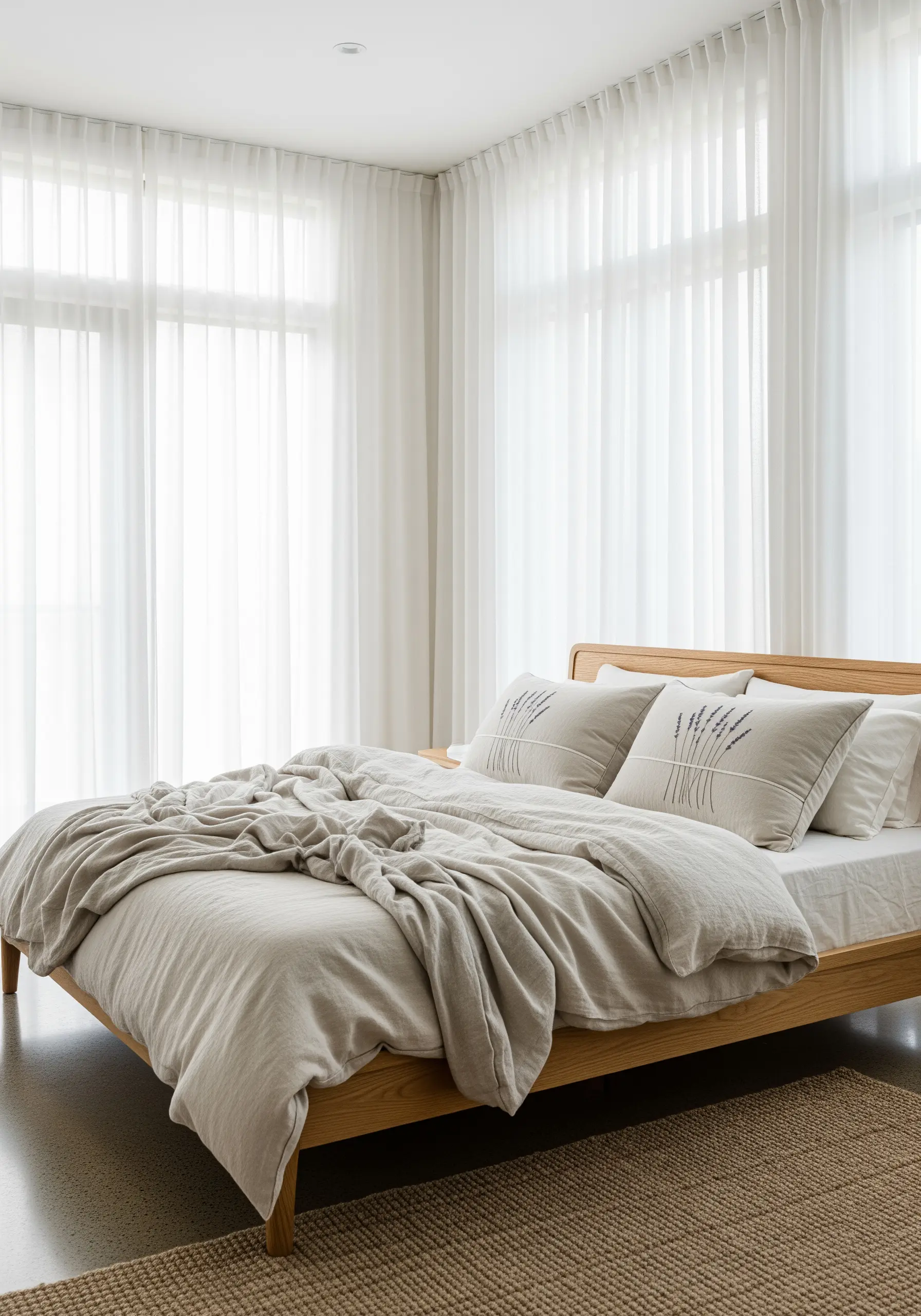
To create these ethereal lavender stalks on your pillows, use a single strand of embroidery floss for the stems.
This fine line prevents the design from feeling heavy against the open weave of the linen.
For the buds, use tiny detached chain stitches, pulling each one just tight enough to form a teardrop shape.
By varying the angle and spacing of the buds, you give the botanicals a more organic, true-to-life feel, as if they were gently swaying.
The contrast between the delicate threadwork and the textural linen is what creates that effortless, breezy look.
2. High-Contrast Geometric Couching
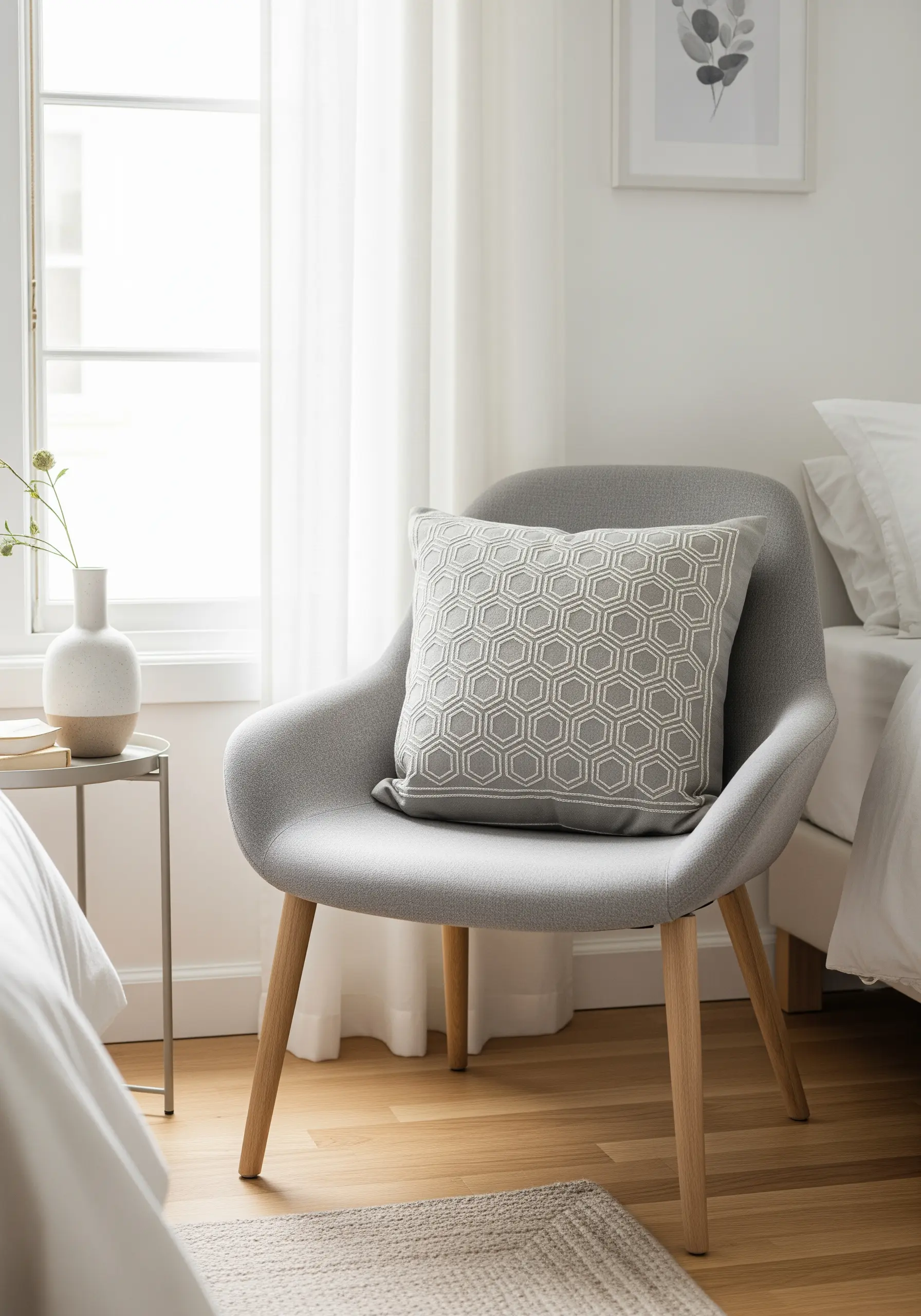
Instead of trying to achieve perfect satin stitches for a geometric pattern, use couching for a cleaner, more defined line.
Lay down a thicker thread, like a pearl cotton, in your desired hexagon shape.
Then, use a thinner, coordinating thread to tack it down with small, evenly spaced stitches.
This technique creates a raised, graphic outline that is not only faster than filling the shape but also uses significantly less thread, making it perfect for large-scale projects like cushions.
3. Tone-on-Tone Wave Gradients
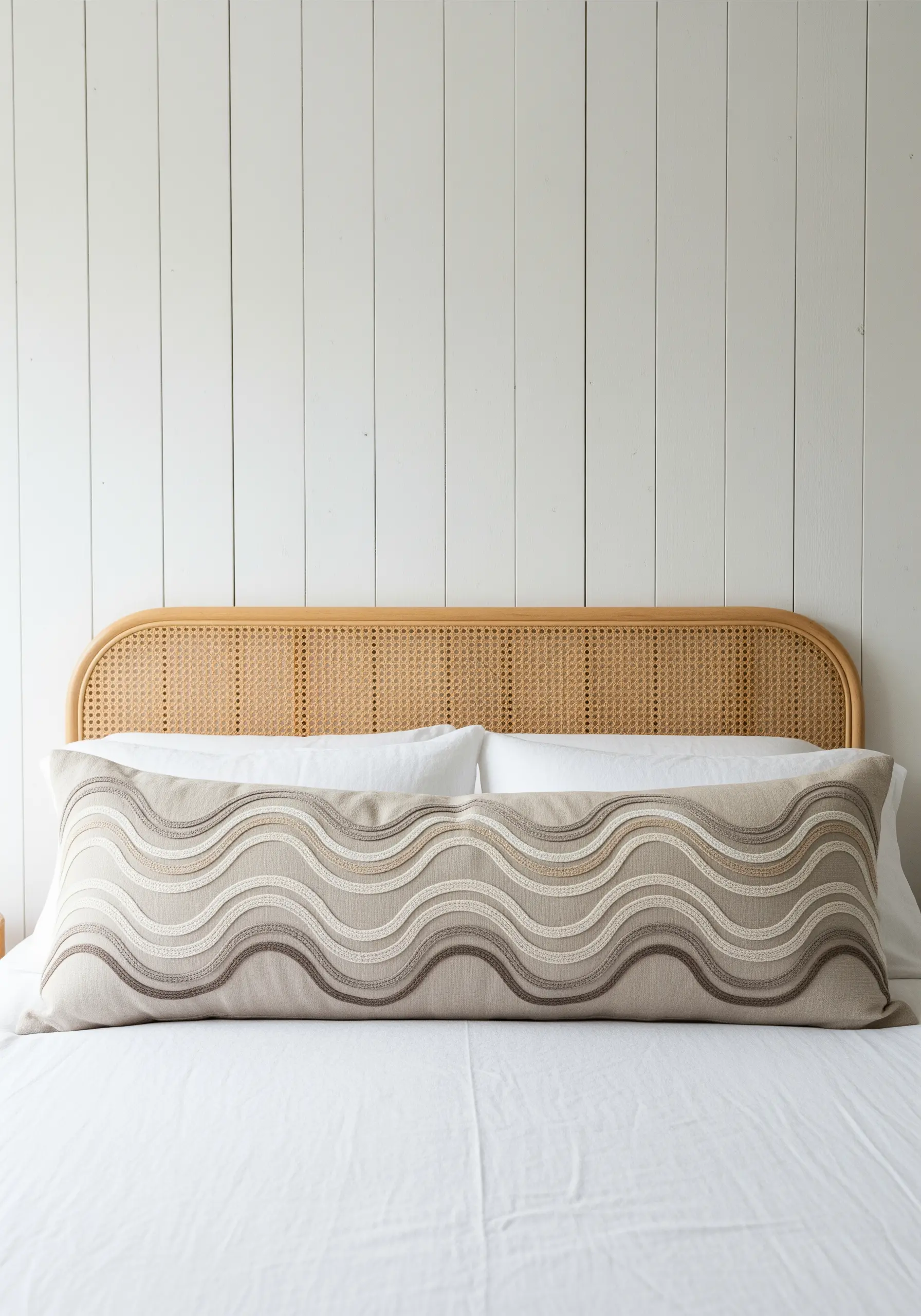
Achieve this flowing, serene effect by selecting three to five shades within the same neutral color family—think ecru, sand, and taupe.
Embroider each wavy line using a consistent chain stitch, which provides a bit more texture and body than a simple backstitch.
The magic is in the subtle transition from one color to the next, which creates a sense of depth and gentle movement across the lumbar pillow.
This color gradient approach makes the design feel sophisticated and intentional.
4. Minimalist Botanical Wreath Outline

To create a timeless botanical wreath, focus entirely on the purity of the line.
Use a simple backstitch or a split stitch with three strands of floss for a clean, uninterrupted outline that feels both modern and classic.
Resist the urge to fill in the leaves; keeping them as simple outlines allows the texture of the linen fabric to become part of the design.
This negative space is crucial for achieving a light, airy aesthetic that doesn’t overpower the simplicity of your bedding.
5. Bold Abstract Lines with Couched Yarn
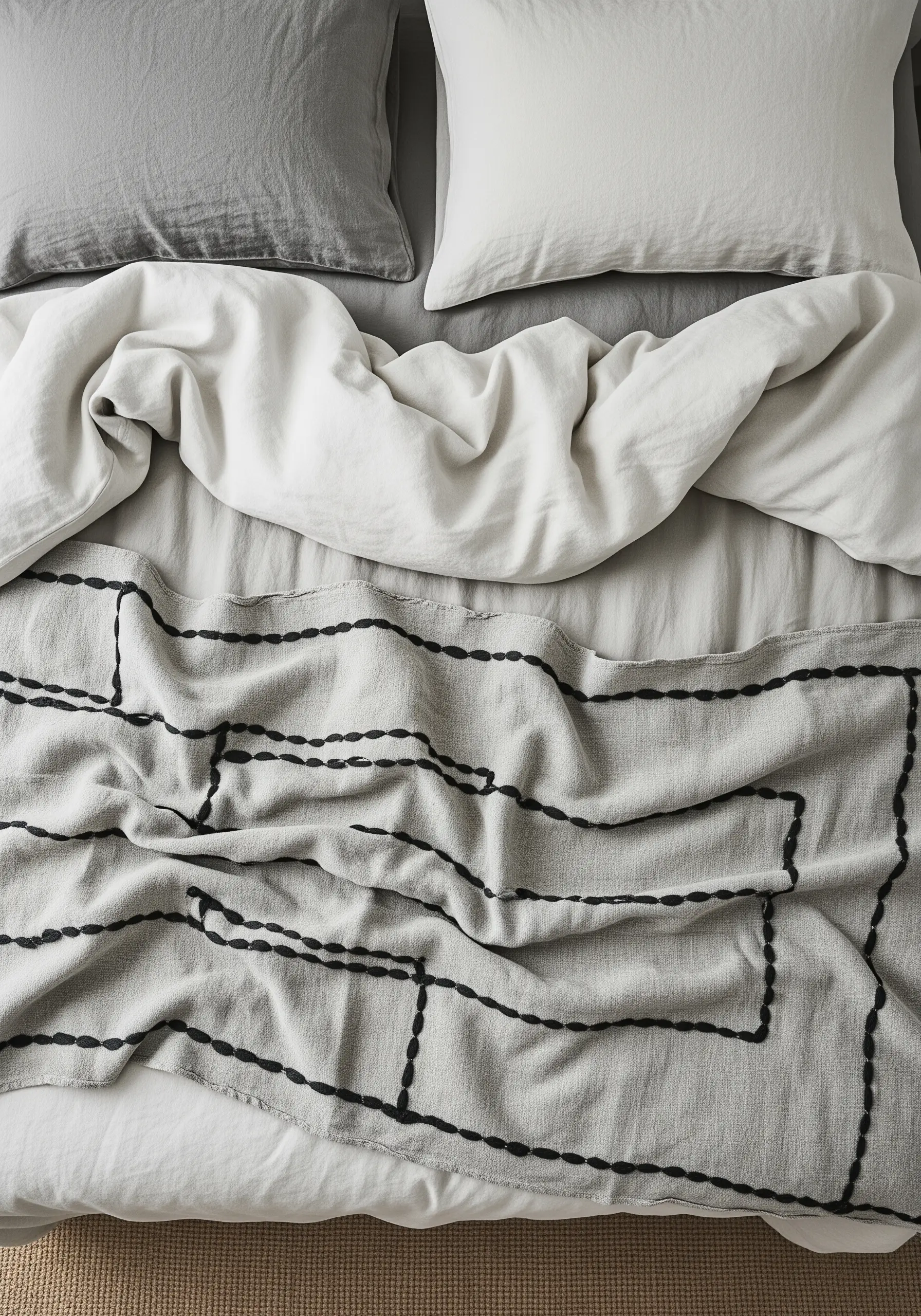
For a high-impact, textural look on a blanket or throw, swap embroidery floss for a chunky yarn.
Lay the yarn in your desired abstract pattern and use a contrasting, thinner thread (like standard six-strand floss) to tack it down at regular intervals.
This couching technique creates a bold, graphic line that adds visual weight and a cozy, tactile quality that invites touch.
It’s a fast way to cover a large surface area with an artistic, modern feel.
6. Architectural Lines with Seed Stitch
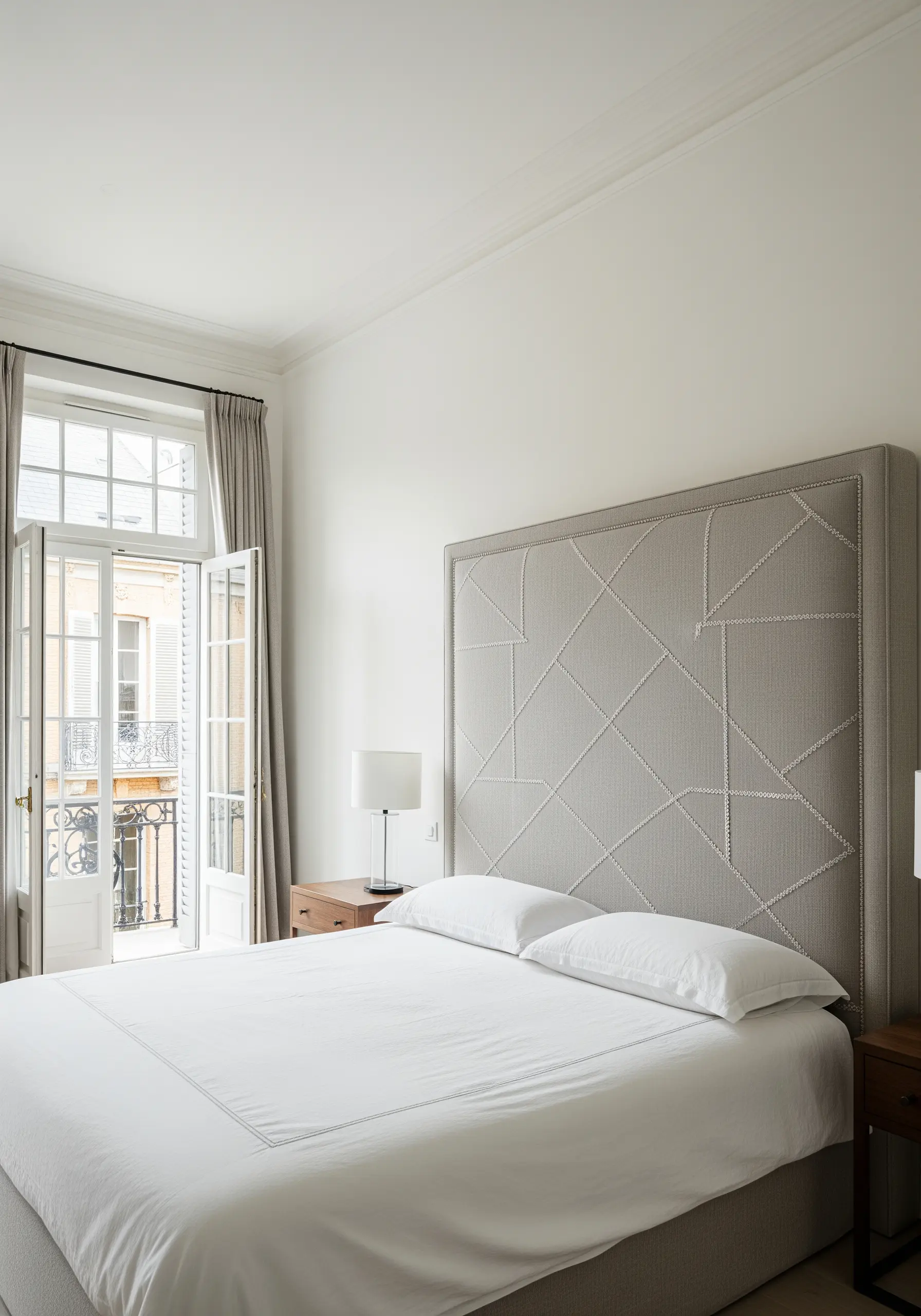
To add subtle architectural detail to an upholstered headboard or cushion, use dense lines of seed stitch.
This technique involves making tiny, straight stitches in a scattered but dense pattern to fill a line or shape.
Use a thread that matches your fabric to create a tone-on-tone effect where texture, not color, is the focus.
The result is a refined, custom detail that adds a layer of quiet luxury and structure to the piece.
7. Floating Dandelion Seed Heads

Capture the ethereal quality of dandelions by combining three distinct stitches.
Use a satin stitch for the solid center of the flower, radiating straight stitches for the main puff, and detached chain stitches for the seeds that are drifting away.
The key to making the design feel alive is to vary the length and angle of the floating seeds, creating a true sense of movement.
Using a bright white thread on neutral linen enhances the lightness of these abstract botanical silhouettes.
8. Modern Sashiko-Inspired Gridwork
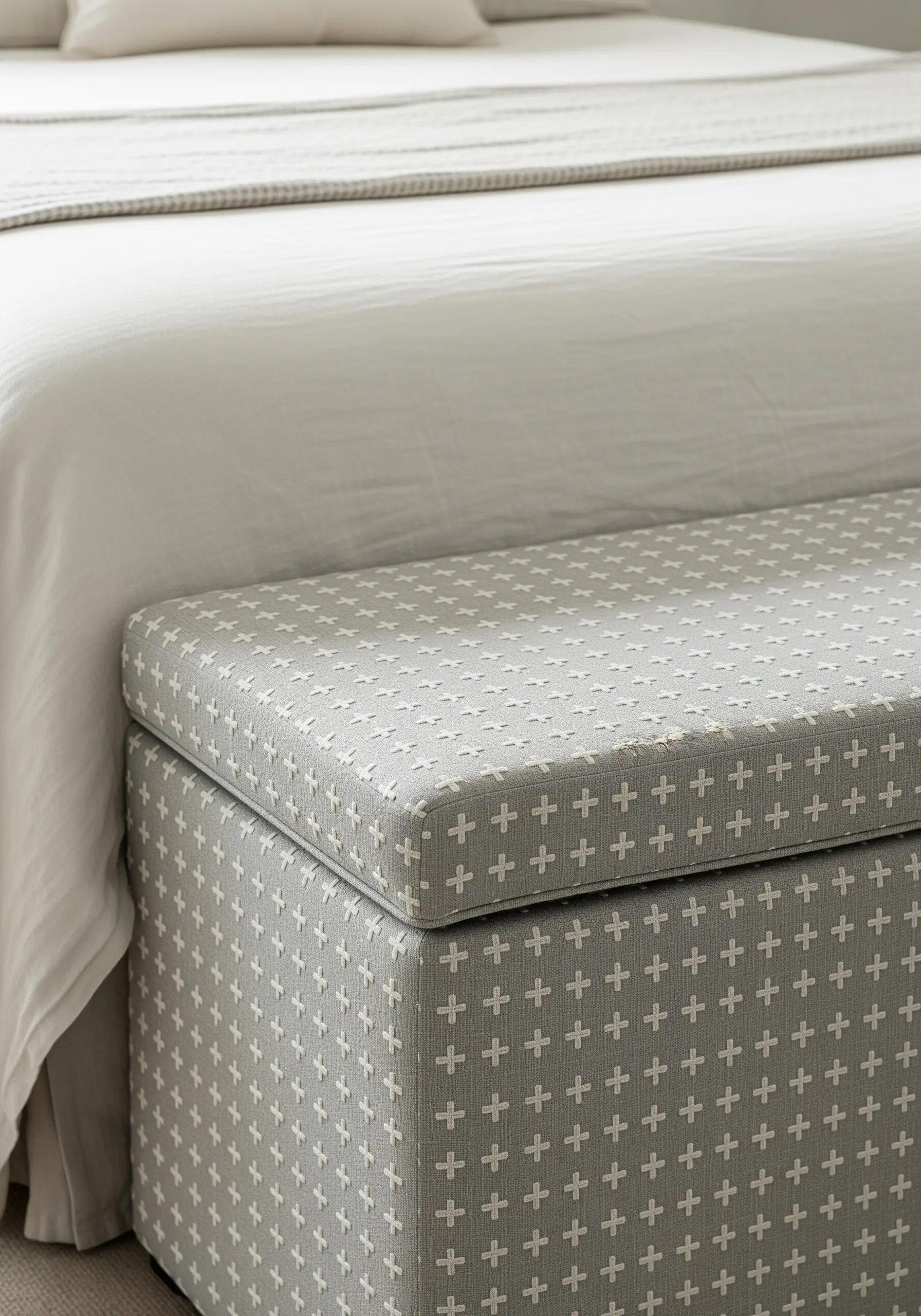
This calming, repetitive pattern is inspired by traditional Japanese Sashiko stitching.
Use a thick thread, like a #8 pearl cotton, in a contrasting color to make each stitch pop against the fabric.
To ensure perfect uniformity, use a water-soluble fabric marker and a ruler to draw your grid before you begin stitching.
The beauty of this design lies in its rhythm and simplicity, turning a basic piece of furniture into a work of minimalist textile art.
9. High-Texture Sunburst with Fabric Strips
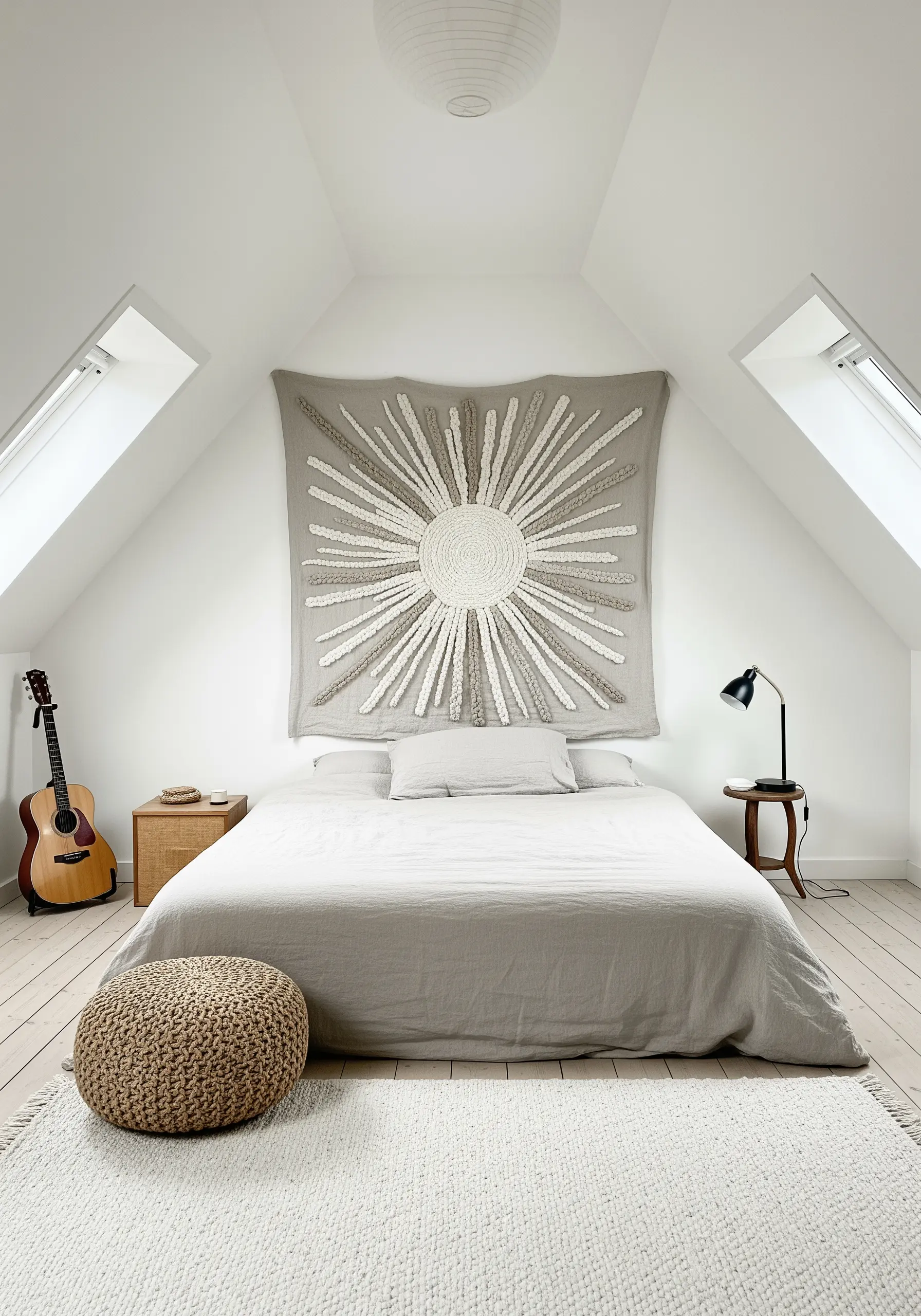
For a statement wall hanging with incredible dimension, move beyond thread alone.
Create the sun’s rays by couching down thick strips of torn fabric or wool roving.
For the central circle, switch back to thread and fill it with dense French knots to create a highly textural, contrasting center point.
This mixed-media approach turns a simple design into a tactile, gallery-worthy piece.
10. Organic Branch Silhouette
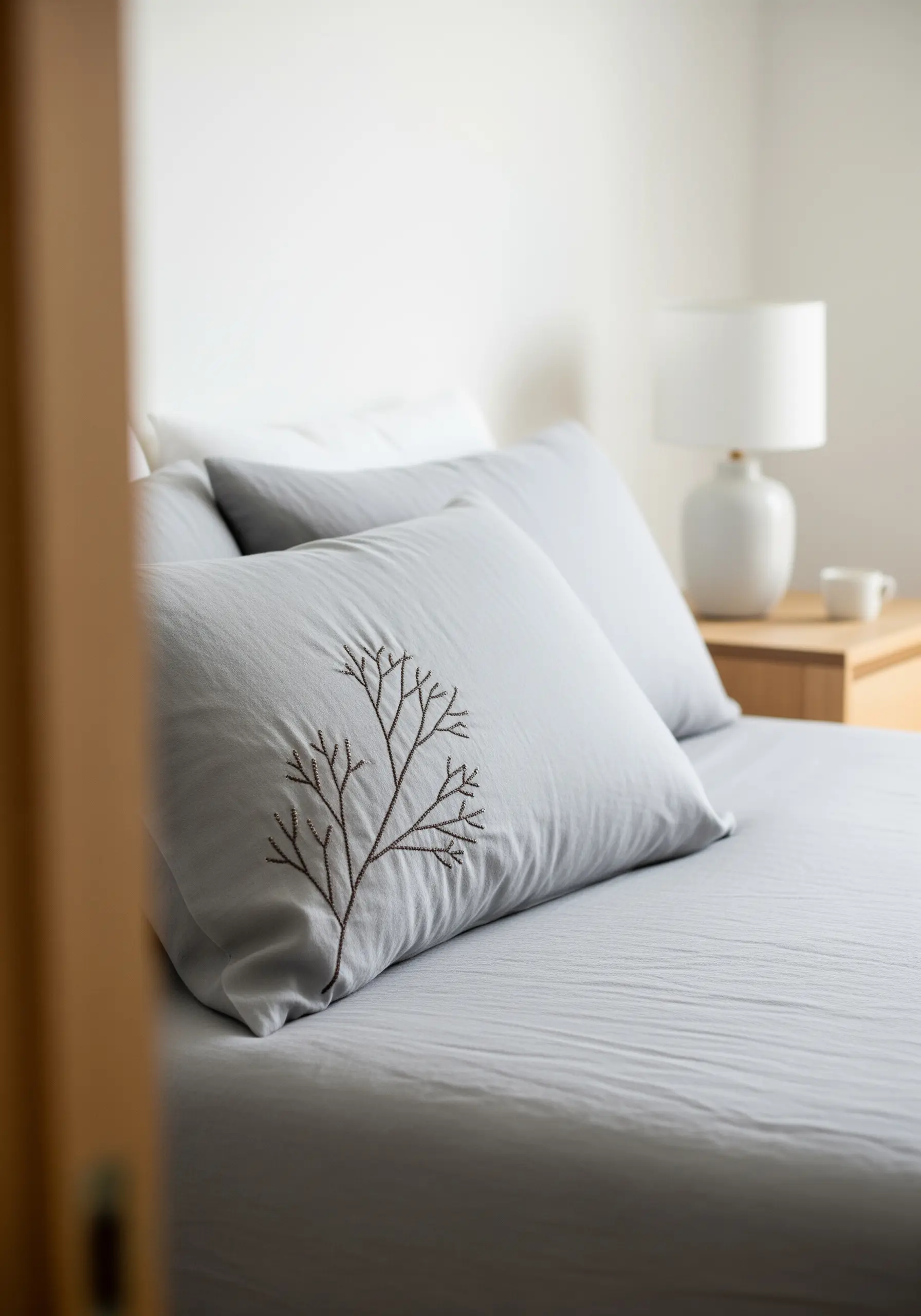
To give an embroidered branch a realistic, rounded appearance, use a whipped backstitch for the main structure.
This involves creating a line of backstitch and then weaving another thread through it without piercing the fabric, which smooths the line and gives it dimension.
For the finer twigs, switch to a simple backstitch using fewer strands of floss.
This subtle variation in line weight is what makes the botanical line art feel delicate and natural.
11. Subtle Pintuck-Style Running Stitch
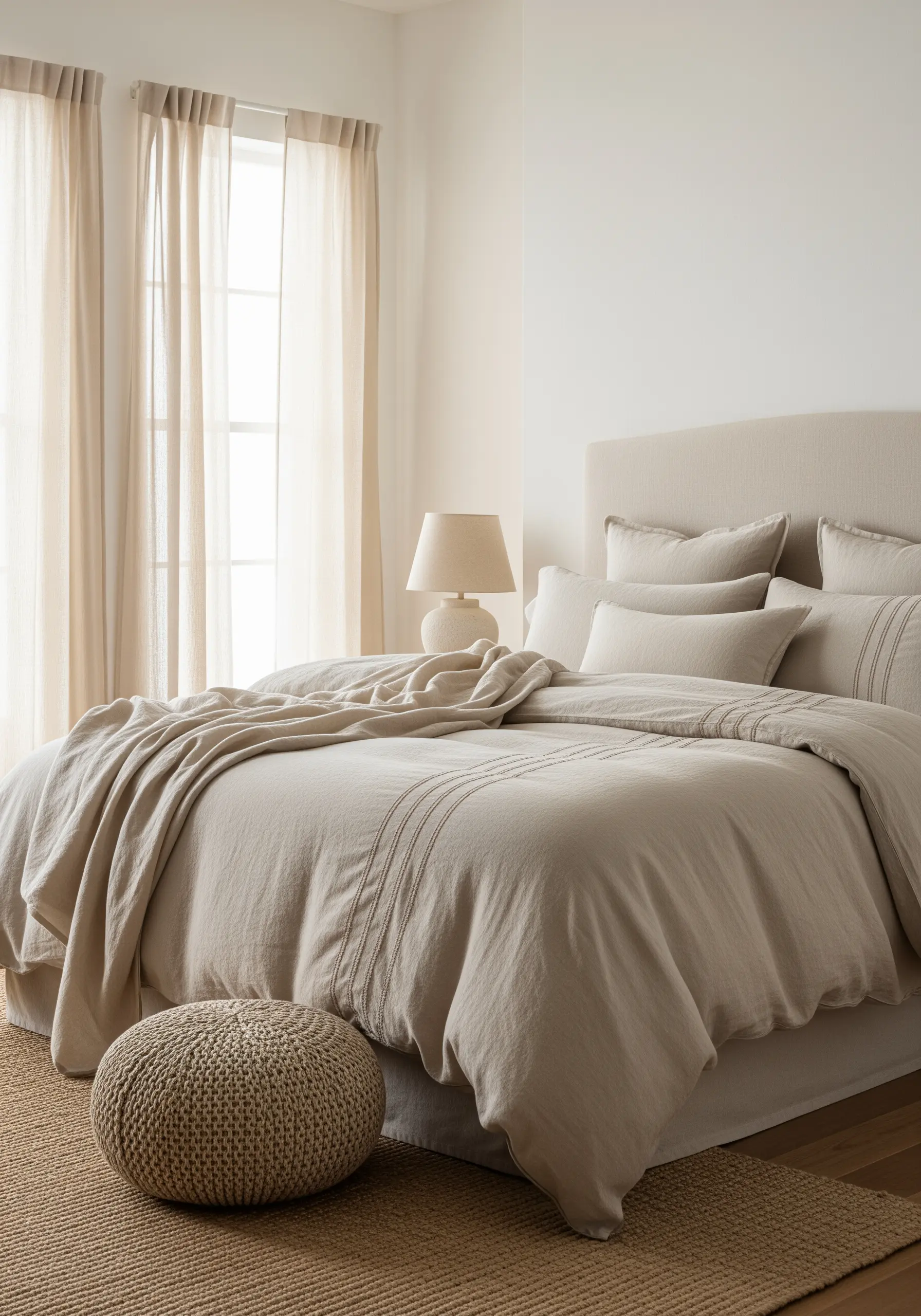
Elevate a simple duvet cover by adding parallel lines of hand-stitched running stitch.
This technique mimics the look of classic pintucks but adds a softer, more textural quality.
For an understated and sophisticated finish, choose a thread color that is only one or two shades different from your linen fabric.
Maintaining a consistent stitch length is key to making this simple design look polished and intentional.
12. Understated Geometric Curtain Border
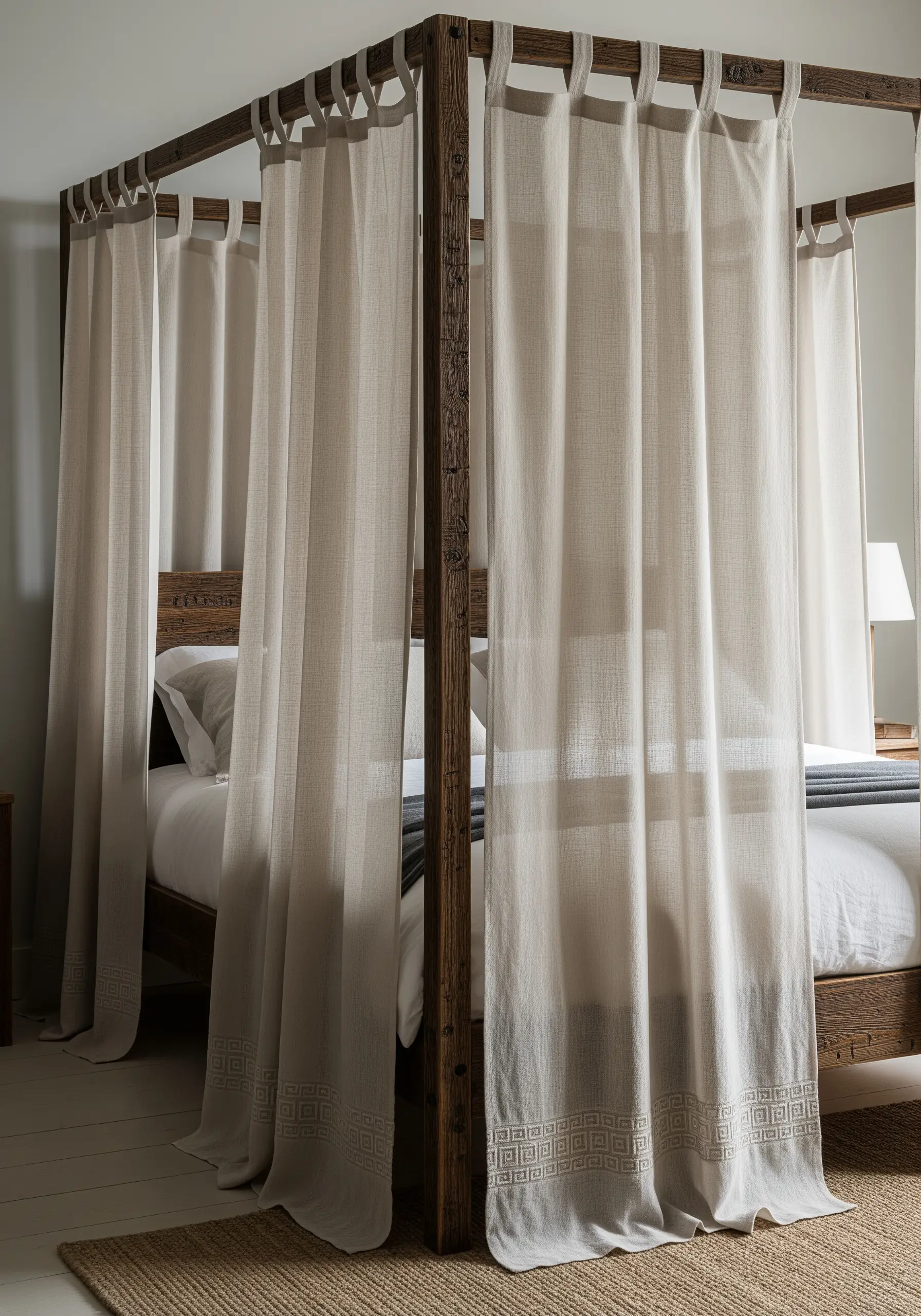
Add a custom, high-end detail to plain curtains with a tone-on-tone geometric border.
Use a simple backstitch to create a clean, sharp line for the Greek key pattern.
The secret to its sophistication is choosing a thread that perfectly matches the fabric color.
This ensures that the design is created by light and shadow on the stitches themselves, rather than by color, resulting in a detail that is felt as much as it is seen.
13. Raised Interlocking Border
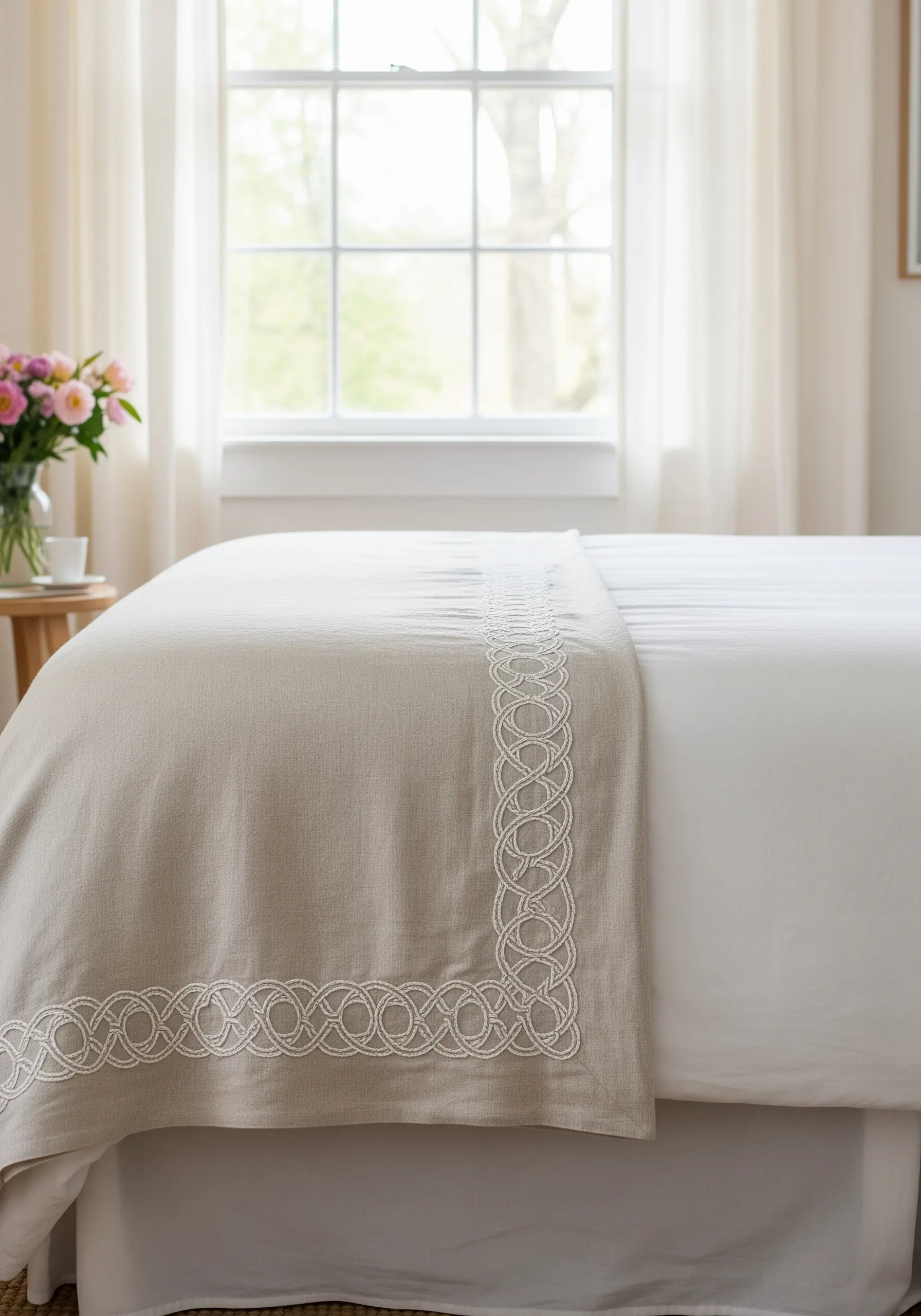
To give a border pattern a bold, rope-like texture, the chain stitch is your best friend.
Use all six strands of embroidery floss or a thicker pearl cotton thread to maximize its natural, raised profile.
As you stitch the interlocking circles, the looped structure of the chain stitch will create a dimensional line that adds both visual and tactile interest to the edge of a bed runner or blanket.
This is a perfect technique for turning a simple graphic into a luxurious accent.
14. Scattered Starburst Seed Stitching
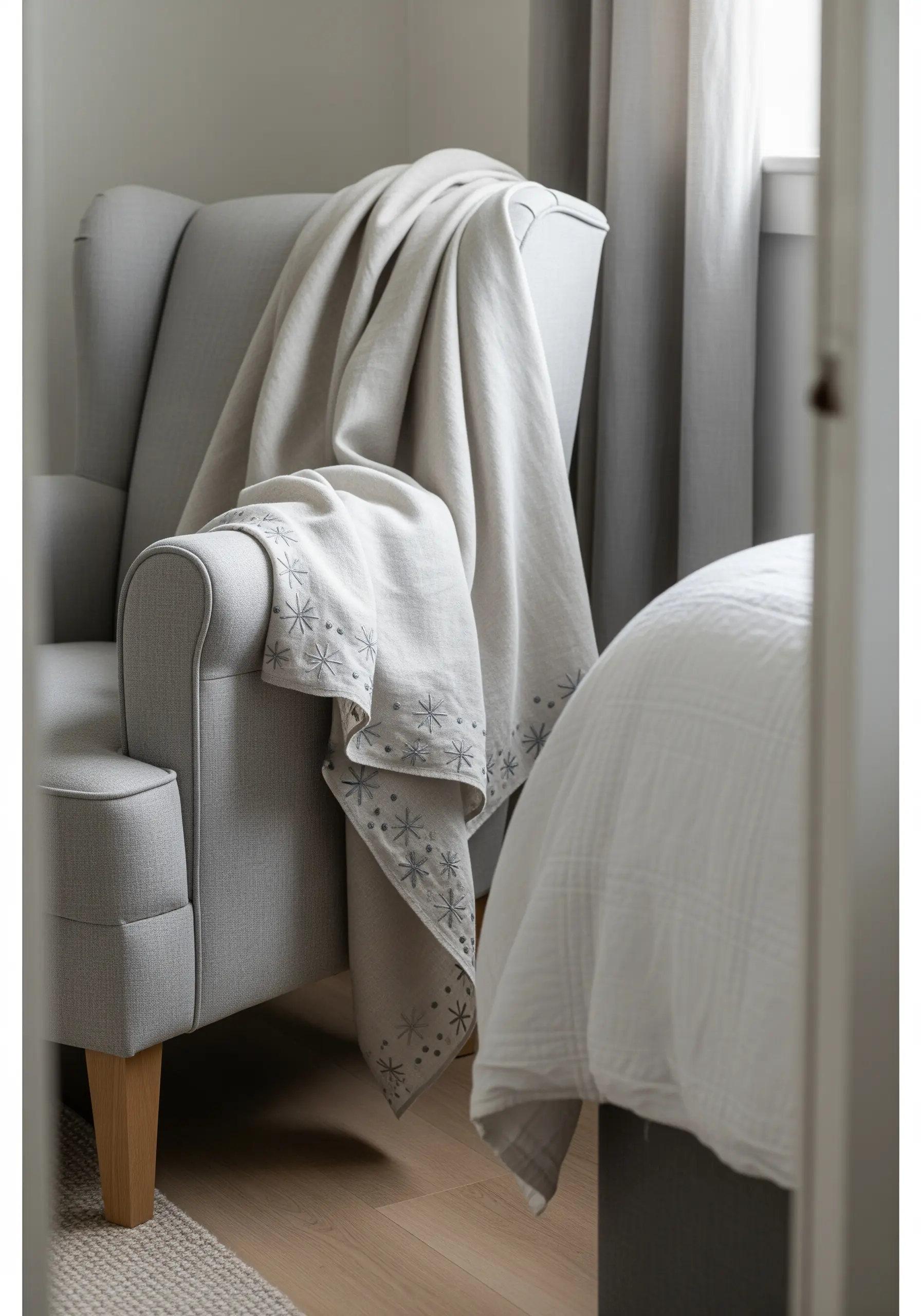
Create a delicate, starry night effect on a throw blanket with small, scattered starbursts.
Form each one with a cluster of tiny straight stitches, like asterisks, and add a single French knot to the center of a few for variation.
To make the pattern feel organic, intentionally vary the size, orientation, and spacing of the starbursts.
This is a beautifully minimal way to add texture and magic to a plain piece of linen.
15. Elegant Padded Satin Stitch Monogram
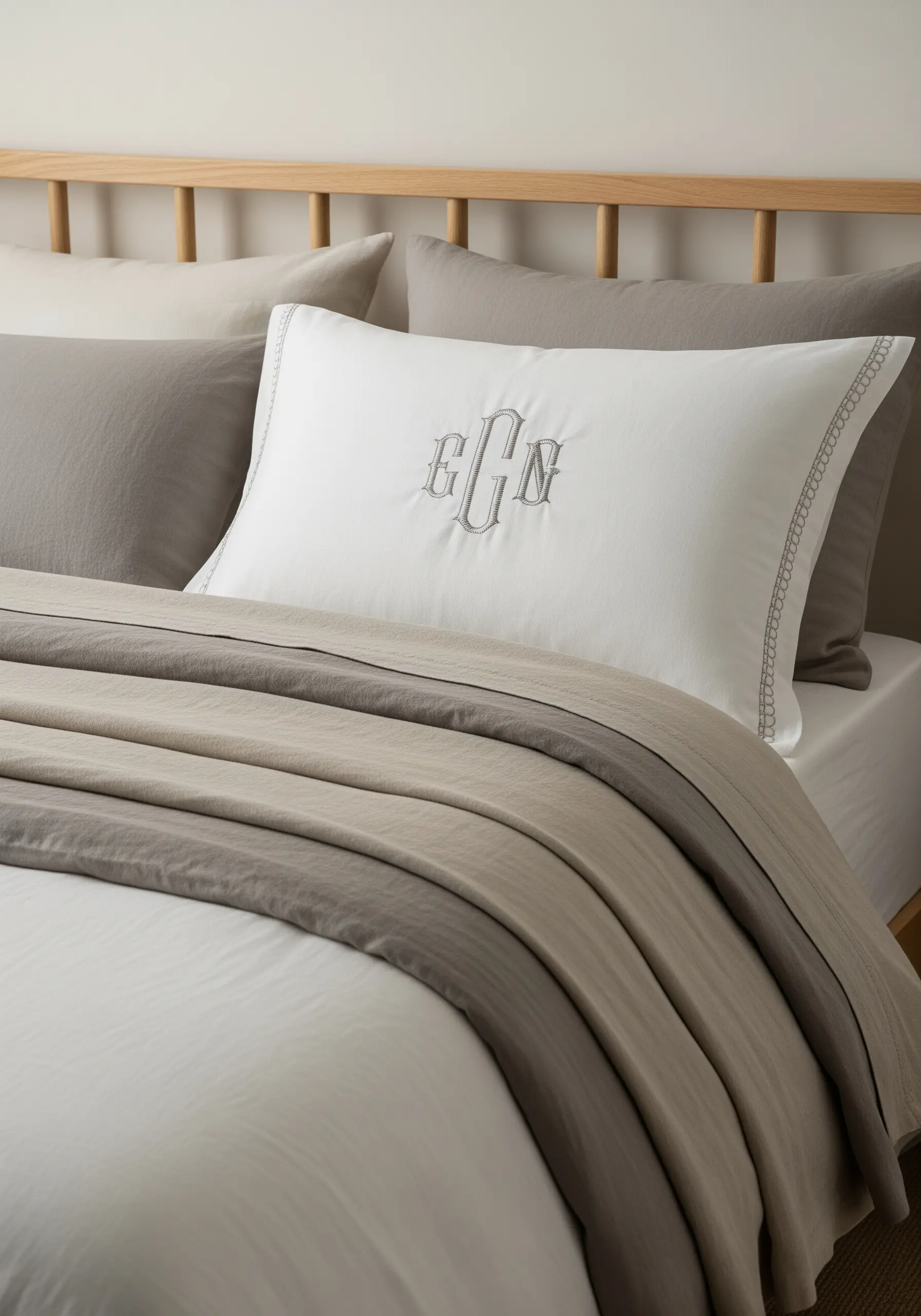
To achieve a professional, three-dimensional monogram, the secret is padding your satin stitch.
First, create an outline of your letters with a split stitch to define the edges.
Next, fill the interior with a layer of small seed stitches—this is the padding.
Finally, stitch your satin stitch smoothly over the top, perpendicular to the padding stitches.
This underlying layer lifts the final stitches, giving your lettering a luxurious, embossed quality.
16. Radial Couching with Heavy Cord
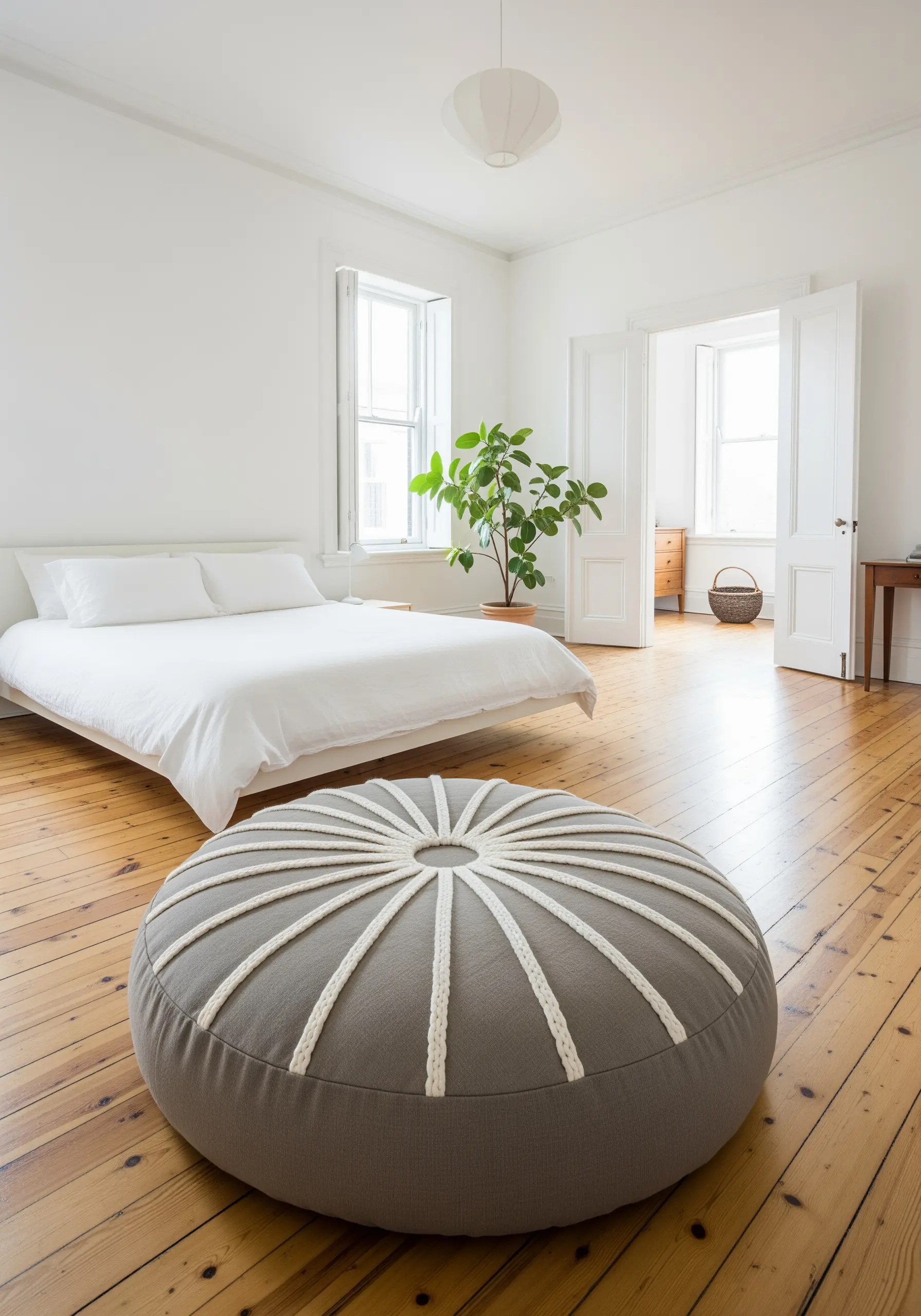
Transform a simple floor cushion into a graphic statement piece with radial couching.
Use a thick, soft cotton cord or rope, arranging it in lines that radiate from the center outwards.
Secure the cord to the fabric using a strong, thinner thread, making the small tacking stitches a visible and rhythmic part of the design.
This technique creates a bold, sunburst pattern that is incredibly textural and visually striking, perfect for adding a touch of handmade modernism to your room.
17. Framed High-Density Thread Painting
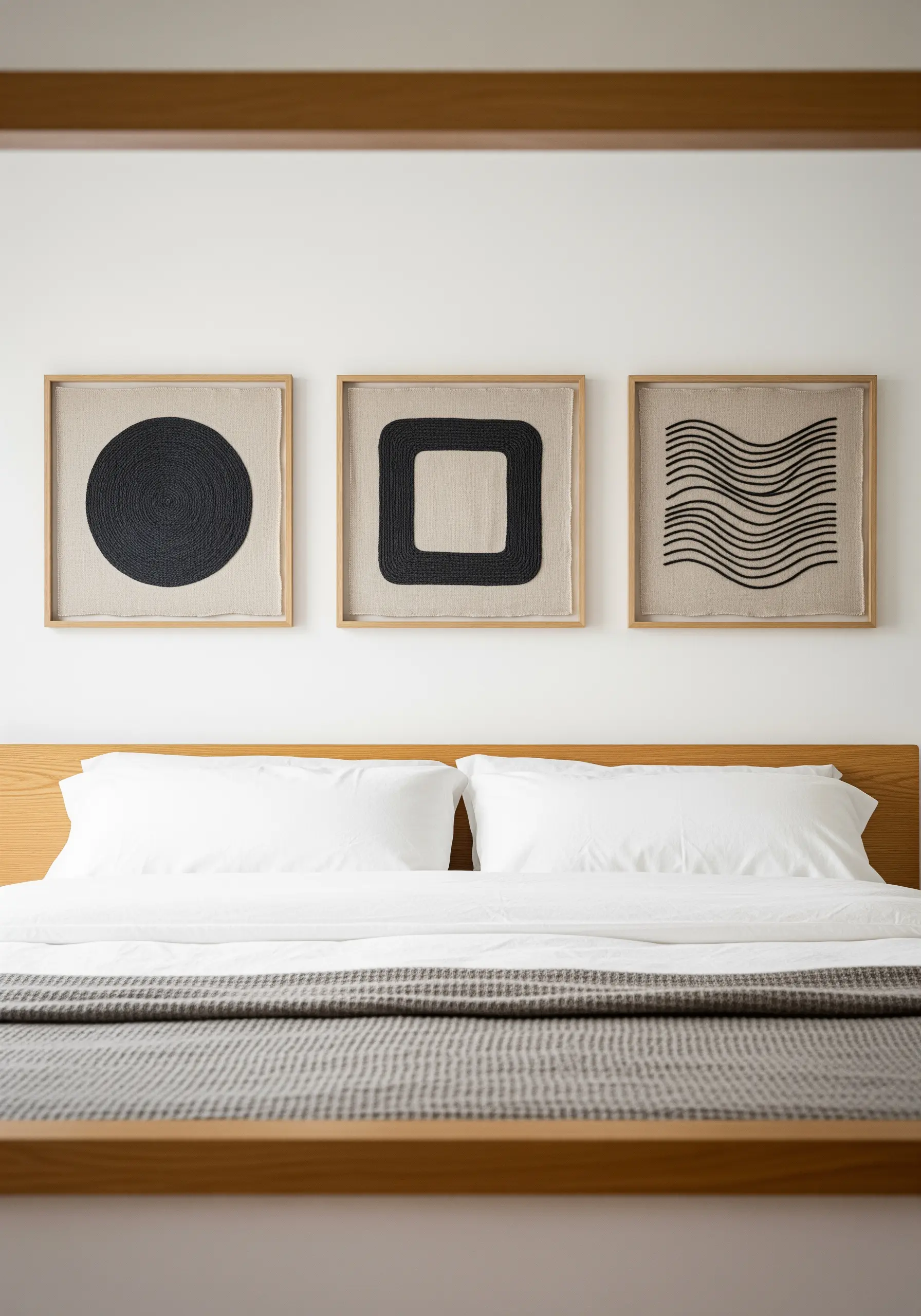
Create powerful abstract art by completely filling simple shapes with dense, directional stitches.
The technique is simple but requires patience: fill the shape with parallel straight stitches packed tightly together.
For the circle, stitch in a spiral from the inside out. For the waves, let your stitches follow the curves.
By using a single dark color on neutral linen, you turn thread into a solid, tactile surface that has the weight and presence of a painting.
18. Rustic Wheat Sheaf Border
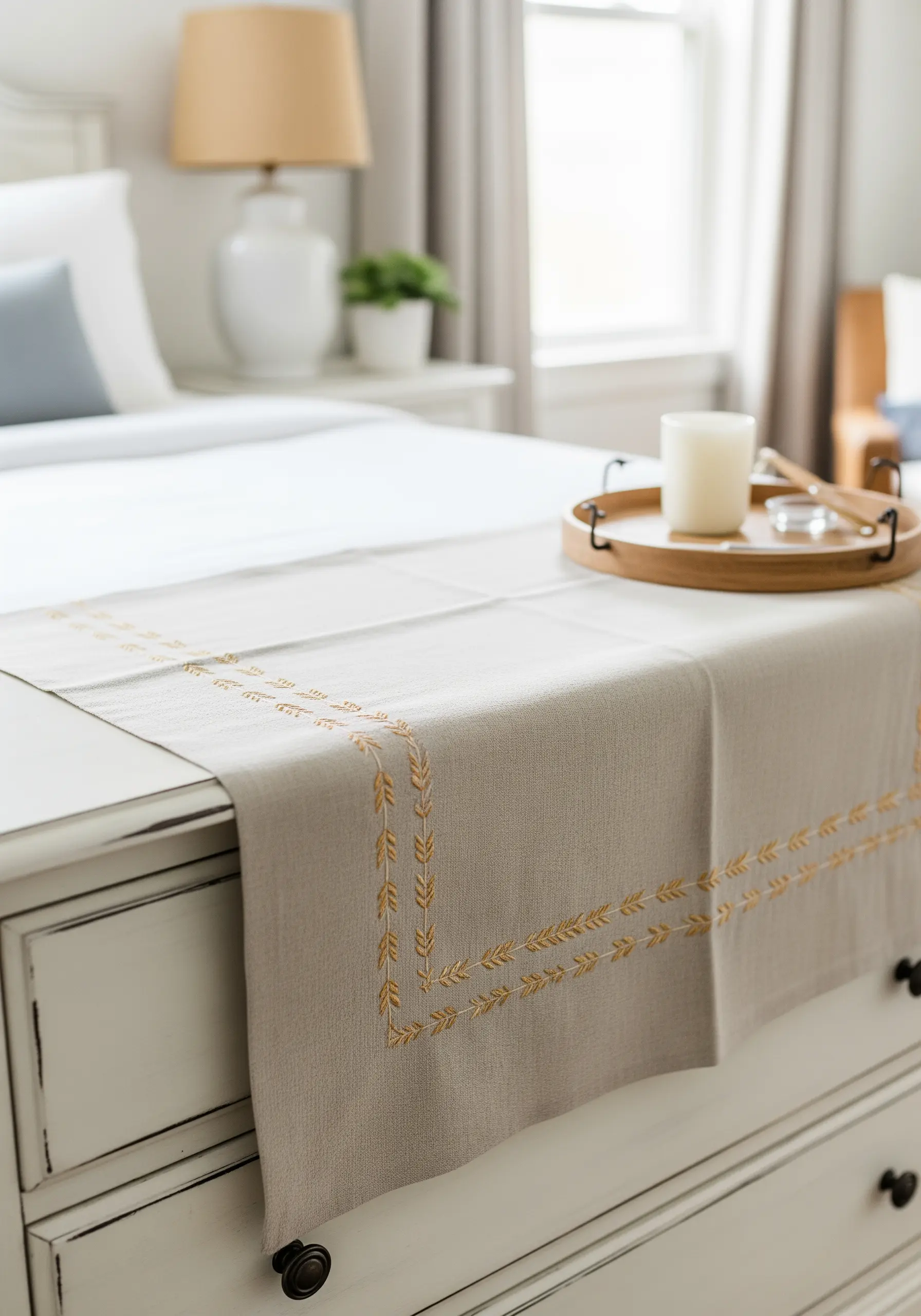
To create the distinct texture of wheat stalks, combine two simple stitches.
Use a fly stitch for the V-shaped grains at the top of the stalk, and a classic stem stitch for the shaft.
For added realism and depth, choose a variegated thread in a golden-brown hue.
The subtle color shifts in the thread will mimic the natural variations of wheat, giving your design a beautiful, sun-kissed look without the complexity of changing colors.
19. Understated Vine Curtain Border

A delicate, trailing vine embroidered along the edge of a curtain panel adds a bespoke touch without overwhelming the space.
The key to this understated elegance is to use a thread that is only one shade darker than the curtain fabric.
Use a simple stem stitch for the main vine and single detached chain (lazy daisy) stitches for the leaves.
This subtle addition brings a touch of nature indoors in the most refined way.
20. Dimensional Crescent with Wrapped Cord
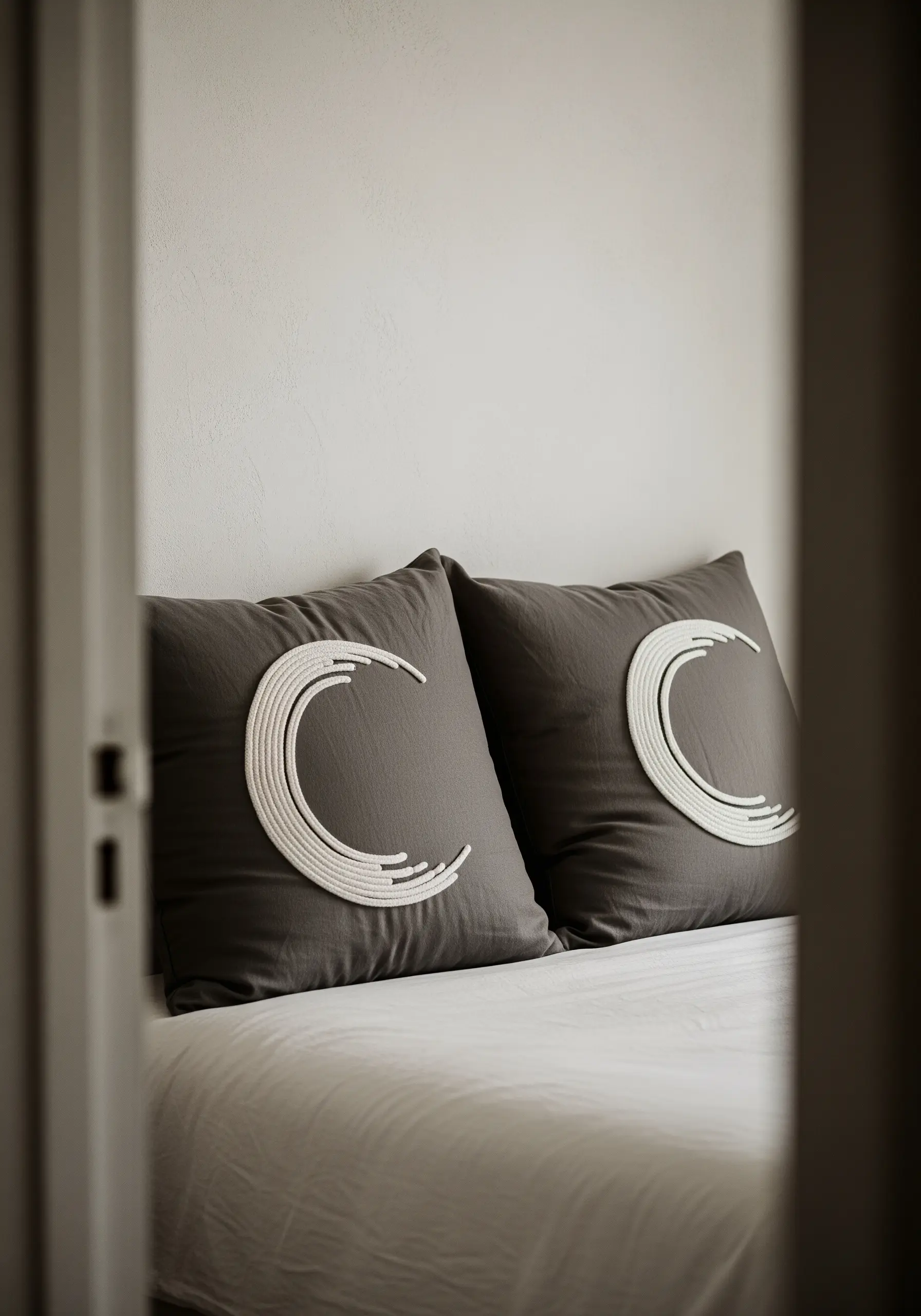
To achieve this striking, sculptural effect, the work begins before you even touch the fabric.
Tightly wrap a thick cotton cord with embroidery floss, then couch the wrapped cord onto your pillow in a crescent shape.
Lay each subsequent row of wrapped cord snugly against the last to build the form.
The dimension comes from the cord itself, while the color and fine texture come from the floss, creating a bold, three-dimensional design that feels both soft and architectural.
21. Fading Dash Pattern with Varied Stitch Length

Create a beautiful gradient effect on your curtains using nothing more than a simple straight stitch.
Make vertical dashes of varying lengths, clustering them densely at the bottom of the fabric.
As you work your way up, gradually increase the space between the stitches and make them sparser.
This technique creates a sense of lightness and movement, as if the stitches are dissolving into the air, drawing the eye upward and making the room feel taller.