

You have the threads, the fabric, and the desire to create something beautiful for your walls. But perhaps your finished pieces don’t feel quite as polished or intentional as you’d hoped. It’s a common feeling—the gap between the vision in your mind and the hoop in your hands.
The secret to elevating your embroidery isn’t necessarily learning dozens of complicated new stitches. Instead, it’s about refining your choices. It’s about understanding how texture, composition, and the subtle interplay of neutral tones can transform a simple design into a sophisticated piece of art.
Here, you’ll find ideas that focus on technique and thoughtful execution. We will explore how to make your lines cleaner, your textures richer, and your compositions more balanced. This is your guide to creating neutral, modern embroidery that not only refreshes your living room but also deepens your confidence as a stitcher.
1. Sculptural Yarn Couching for Bold Texture
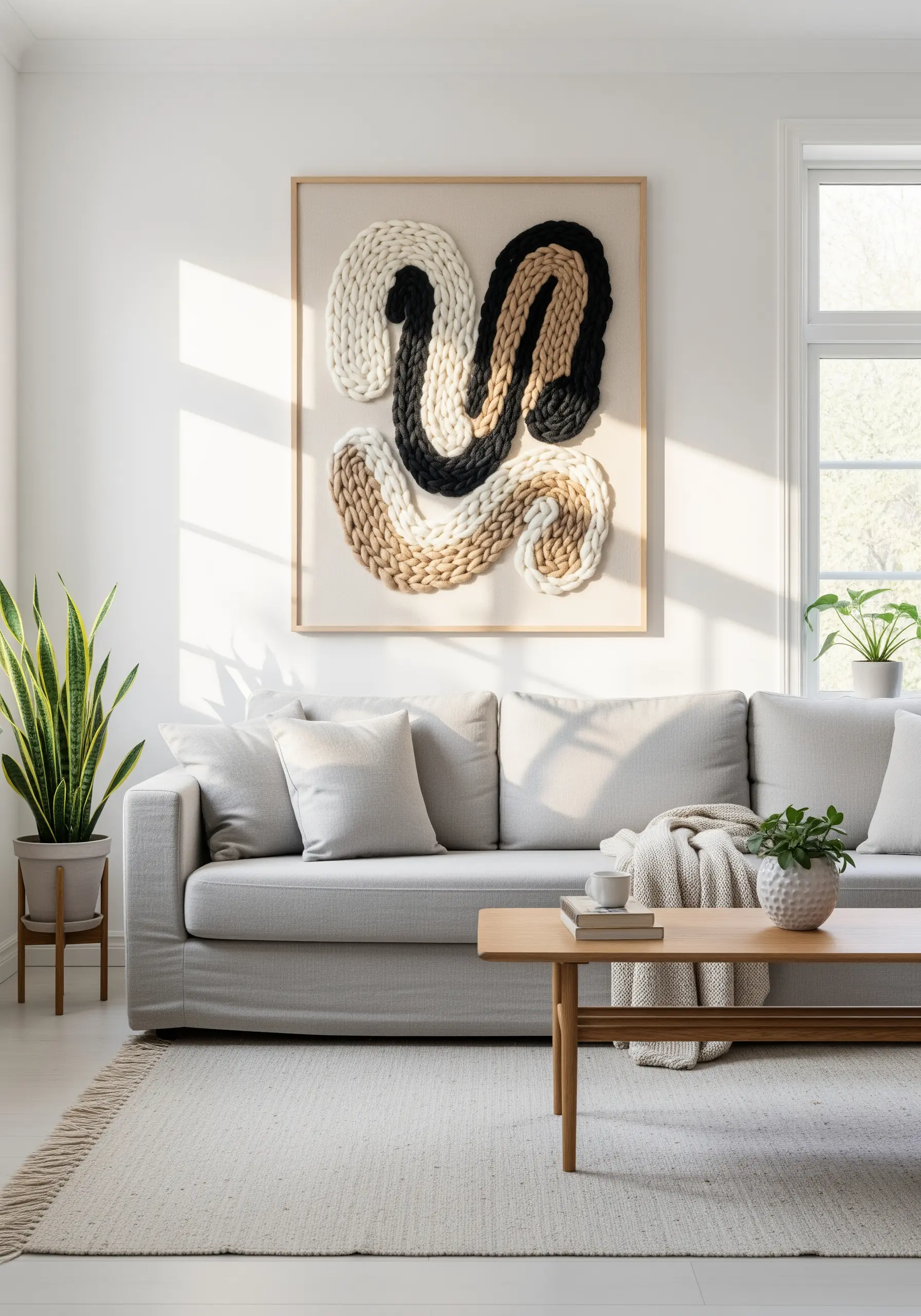
Create a high-impact abstract piece by couching oversized yarn onto a neutral canvas.
Instead of stitching *through* the fabric, you’ll lay chunky merino wool roving or thick yarn on the surface and secure it with smaller, evenly spaced stitches using a matching, finer thread.
This technique preserves the yarn’s loft and volume, creating a dramatic, three-dimensional effect that feels both soft and architectural.
Plan your composition with bold, flowing lines and use color blocking—like deep charcoal against cream and sand—to build a modern, graphic statement that commands attention above a sofa.
For a gallery-quality finish, stretch your completed linen base over a deep canvas frame to give the artwork substance and presence.
2. Delicate Botanical Studies in a Triptych
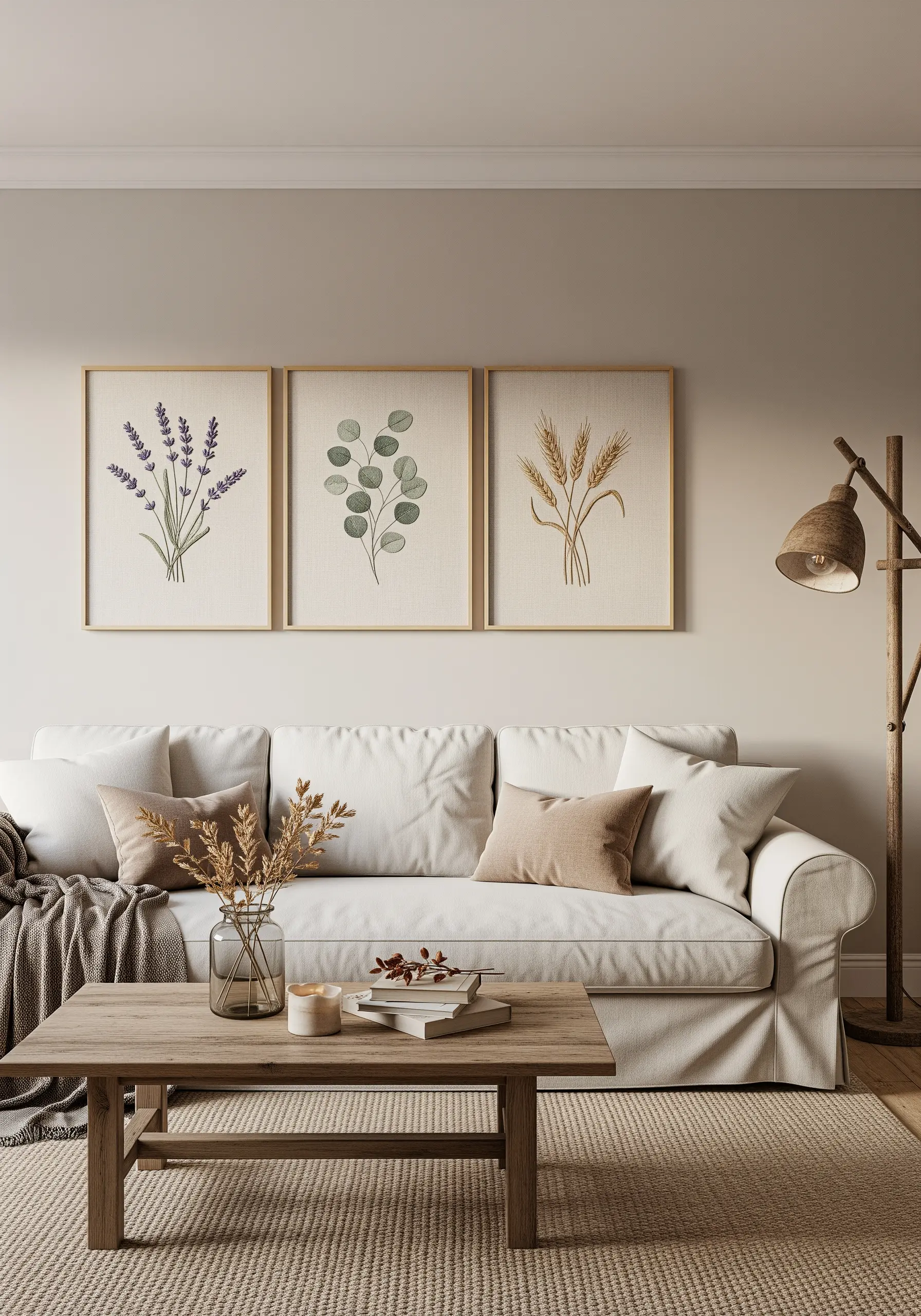
To achieve this light, illustrative quality, work with only one or two strands of six-strand embroidery floss.
This choice prevents the stitches from overpowering the delicate nature of the botanicals, allowing the negative space on the fabric to breathe.
For lavender, combine tiny French knots with detached chain stitches; for eucalyptus, use a smooth stem stitch to define the curving stems; for wheat, rely on narrow satin stitches and scattered seed stitches.
Grouping three distinct but complementary botanicals creates a cohesive, calming narrative that works beautifully in a serene living space.
Using identical frames and maintaining consistent spacing will unify the triptych into a single, intentional art piece.
3. Minimalist Landscape with Expressive Line Art
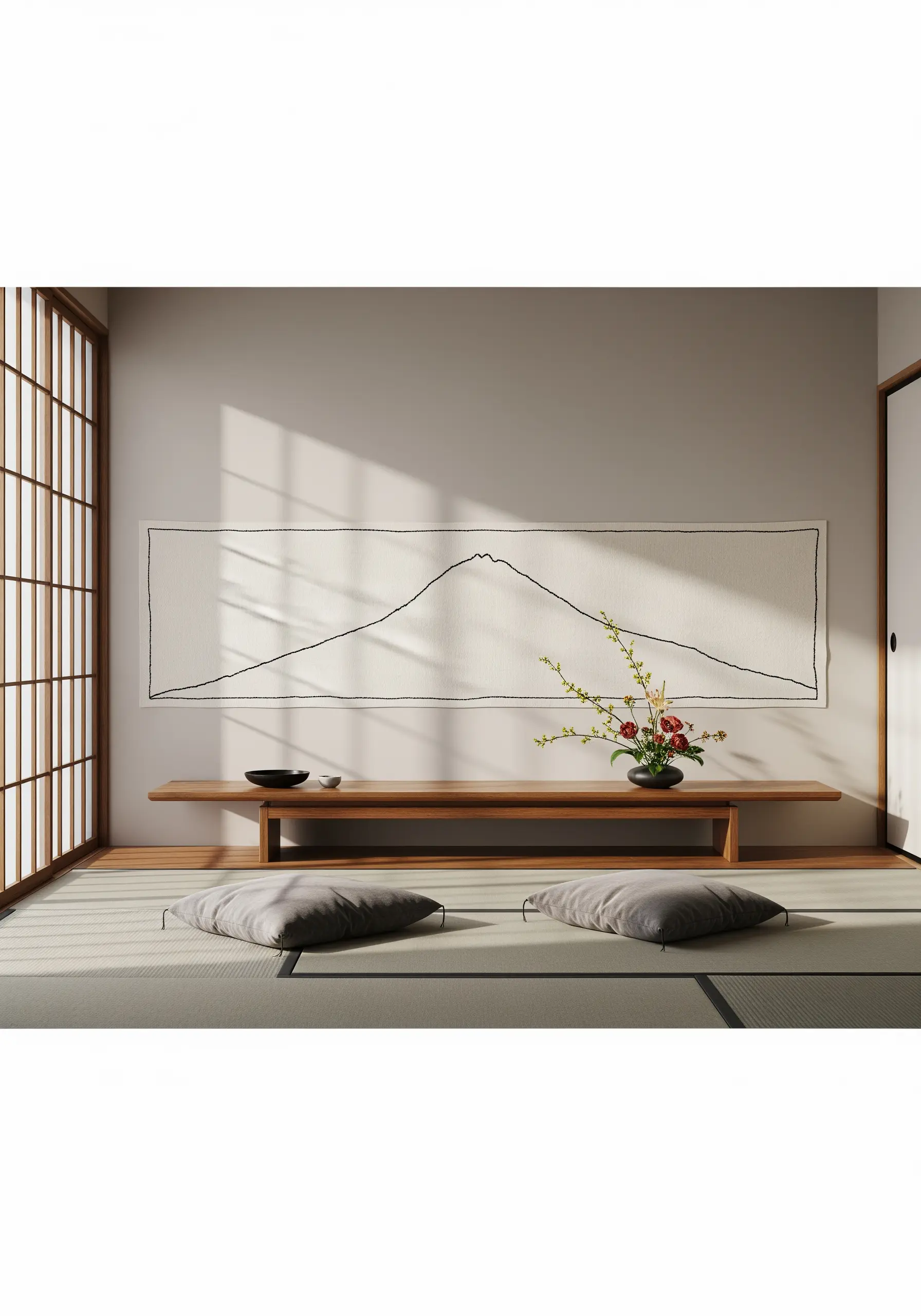
Capture the essence of a powerful landscape not with detail, but with a single, evocative line.
Use a backstitch with a slightly thicker thread, like a #8 perle cotton, to give your outline weight and definition against the clean fabric background.
Don’t strive for mechanical perfection; subtle variations in your stitch tension will add a beautifully handcrafted, organic quality to the line.
The panoramic format is essential to the design’s impact—choose a long, narrow piece of linen and leave ample negative space around the motif.
Finish by creating a simple channel at the top and bottom to slide slim wooden dowels through for a clean, modern hanging solution.
4. Curate a Textured Hoop Gallery Wall
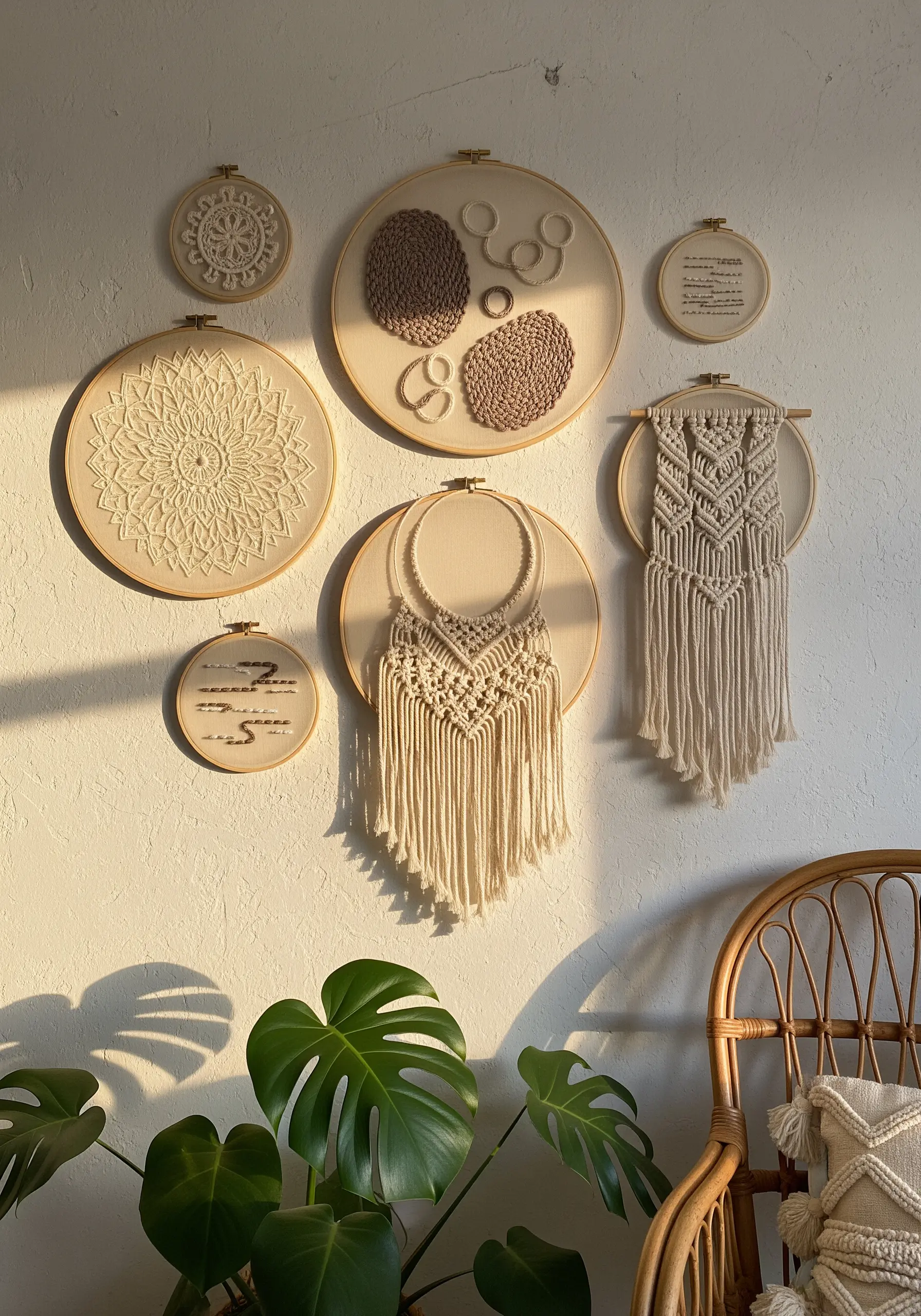
Build a dynamic wall display by focusing on texture rather than color.
Combine different fiber arts within a unified neutral palette to create a collection that feels curated and personal.
Dedicate one hoop to dense seed stitching, another to woven textures using a needle and thick yarn, and incorporate a small macrame hanging for dimensional contrast.
You can even stitch abstract shapes or leave sections of a hoop intentionally blank to play with balance and composition.
Varying the hoop sizes and arranging them in a non-linear cluster will make your wall feel alive and effortlessly bohemian.
5. Coastal Motifs with Refined Appliqué
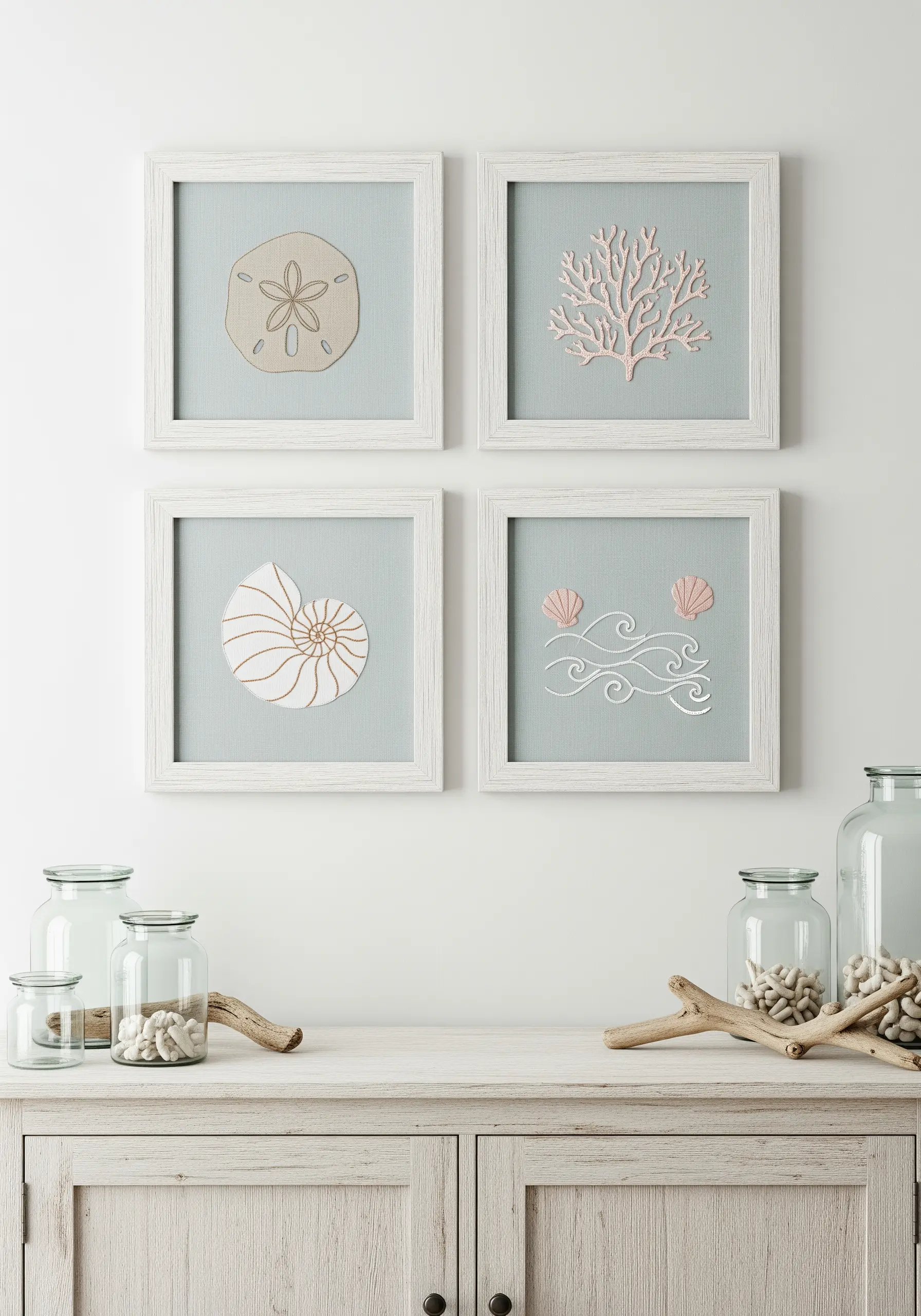
Add instant depth to simple coastal motifs by combining appliqué with embroidery.
Cut your main shapes—the sand dollar, shell, or coral—from a piece of felt or contrasting linen in a soft neutral tone.
Secure the shape to your background fabric with a few hidden stitches, then embroider the fine details on top using a single strand of floss.
This layering technique creates a subtle shadow and dimension that simple line work cannot achieve alone.
Use a whipped backstitch for any outlines to create a smooth, cord-like line that elegantly defines each element.
6. Mid-Century Modern Thread Blocking
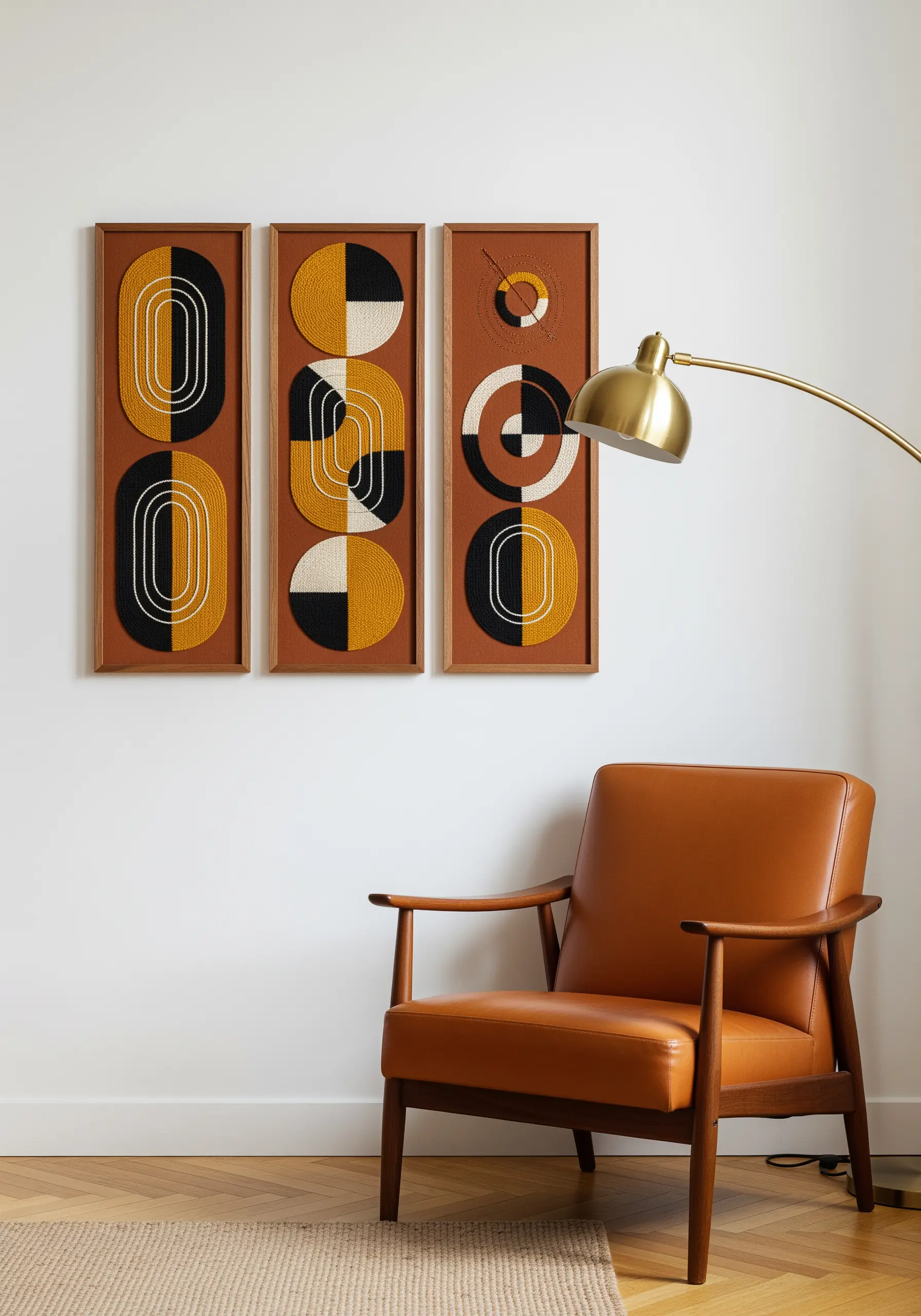
Achieve the bold, graphic look of screen printing by using dense satin stitch as solid blocks of color.
The secret to perfectly crisp edges is to first outline each shape with a tiny split stitch; this creates a raised border that your satin stitches can tuck up against neatly.
To prevent sagging on larger shapes, break them into smaller, more manageable sections with a pencil line and stitch each one separately.
A mid-century palette of ochre, mustard, black, and cream provides a warm, retro feel that is both sophisticated and playful.
This triptych format allows you to explore variations on a single geometric theme for a powerful, cohesive statement.
7. The Wabi-Sabi Sampler Wall Hanging
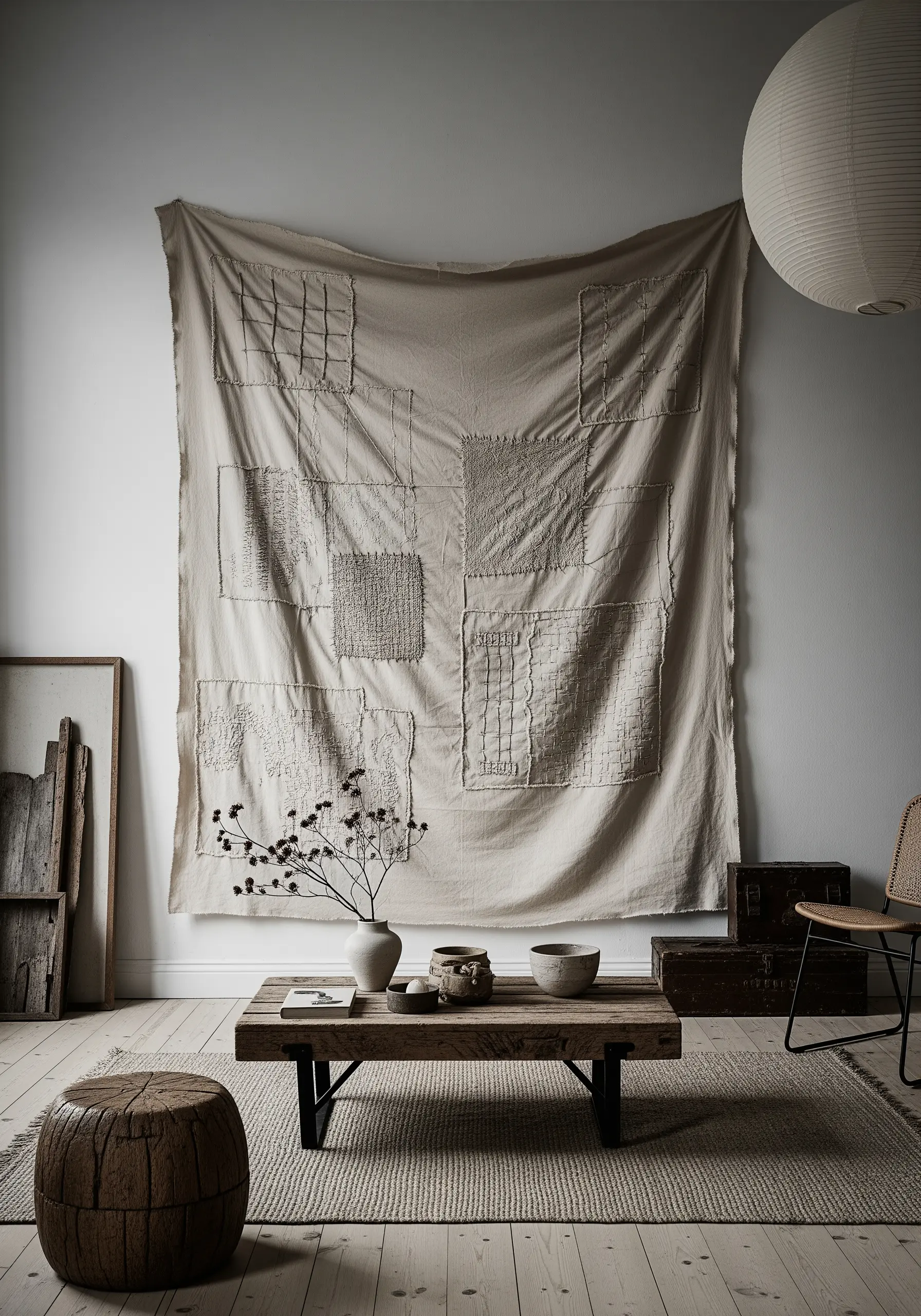
Embrace the beauty of imperfection by creating a textural, tone-on-tone sampler.
Begin with a large linen backing and apply smaller patches of similar neutral fabrics, allowing the raw, frayed edges to show.
Within each patch, explore a different textural stitch using thread that matches the fabric: rows of running stitches, fields of French knots, grids of seed stitches, or even pulled-thread work for a lace-like effect.
By removing color as a variable, you force the viewer to appreciate the subtle variations in light, shadow, and texture, resulting in a piece that is both meditative to create and calming to observe.
8. Architectural Thread Drawing on Dark Fabric
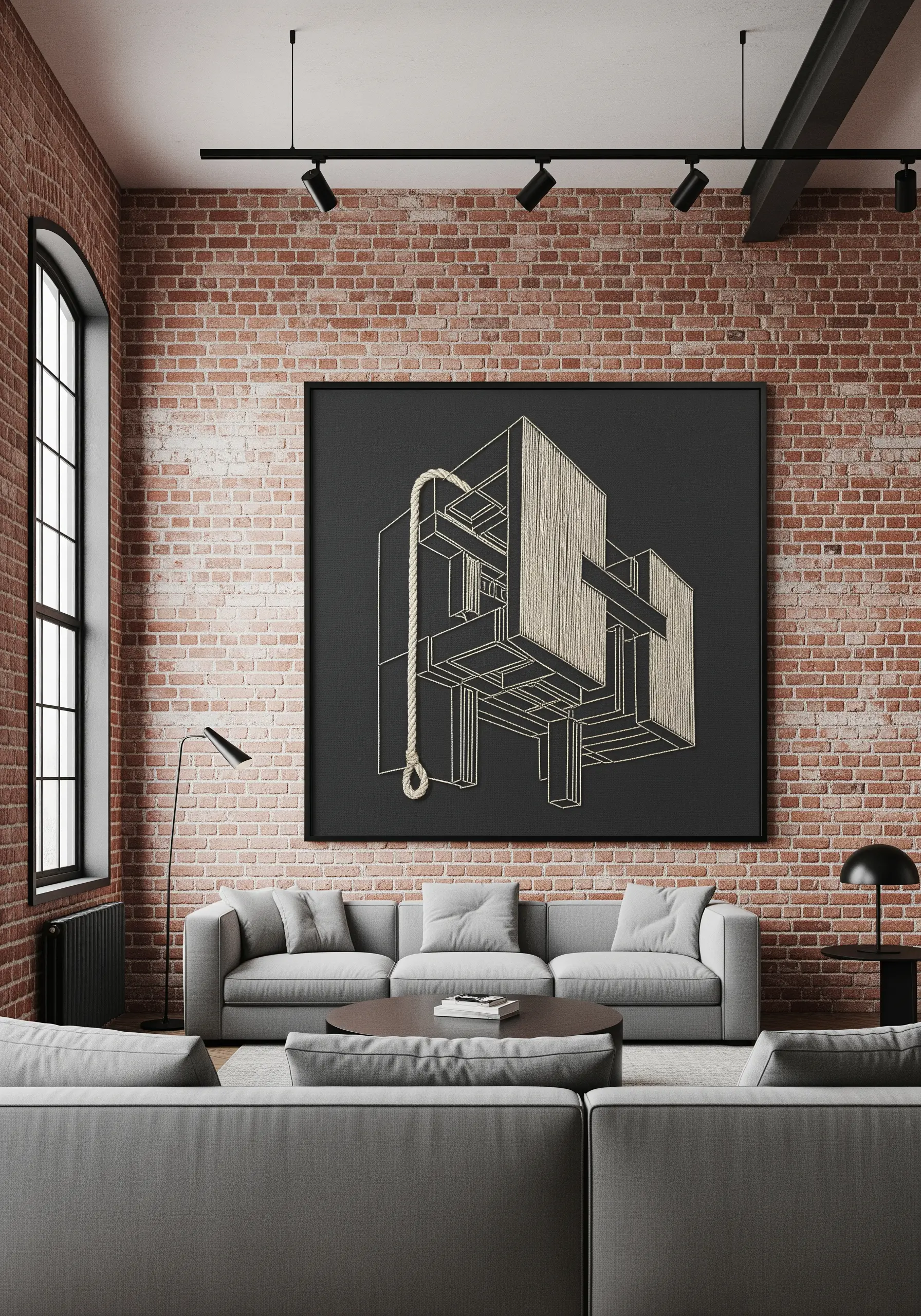
Create dramatic contrast by stitching with light-colored thread on a dark, moody background fabric like charcoal or black linen.
Use a fine backstitch to render the primary architectural lines, keeping them clean and precise like an ink drawing.
Then, select specific planes or surfaces within the design to fill with dense, perfectly parallel straight stitches.
This juxtaposition of delicate, open line work against solid, textured fills creates an incredible sense of depth and structure.
The rope detail adds a surprising organic element, which you can create with a thick, textured chain stitch or by couching a piece of actual miniature rope.
9. Art Deco Glamour with Metallic Threads
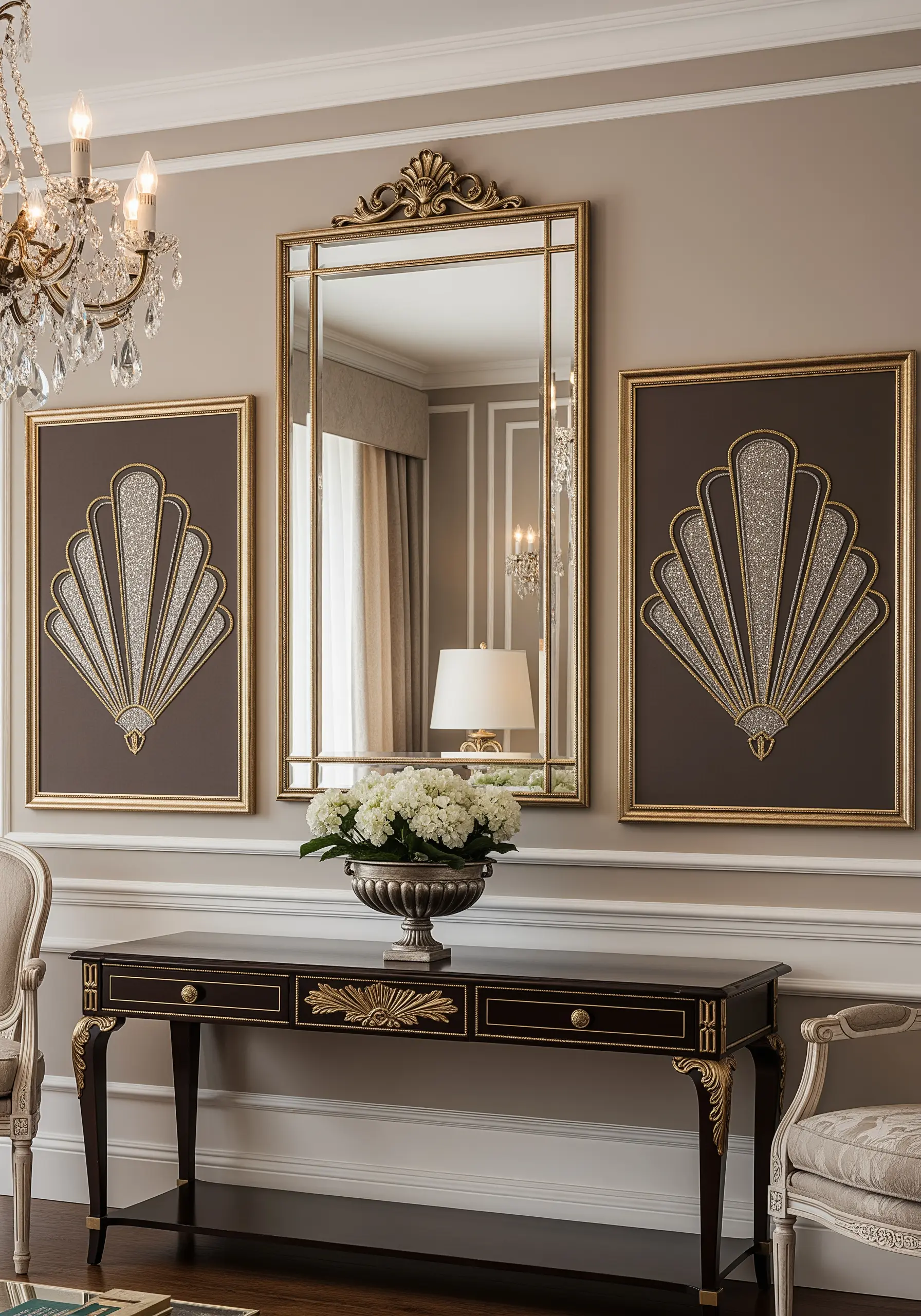
Introduce a touch of luxury into your decor with the timeless elegance of Art Deco design.
To create those sharp, gleaming outlines, use a couching stitch to secure your metallic gold thread. This prevents the delicate thread from untwisting or snagging as you work and allows for perfectly sharp points.
For the radiant fan fill, you can apply fabric glue and micro-beads for a textured shimmer, or appliqué a piece of fine glitter fabric for a smoother finish.
Framing these pieces symmetrically on either side of a mirror or console table enhances their formal, sophisticated appeal.
10. Cascading Botanical Lines on a Runner
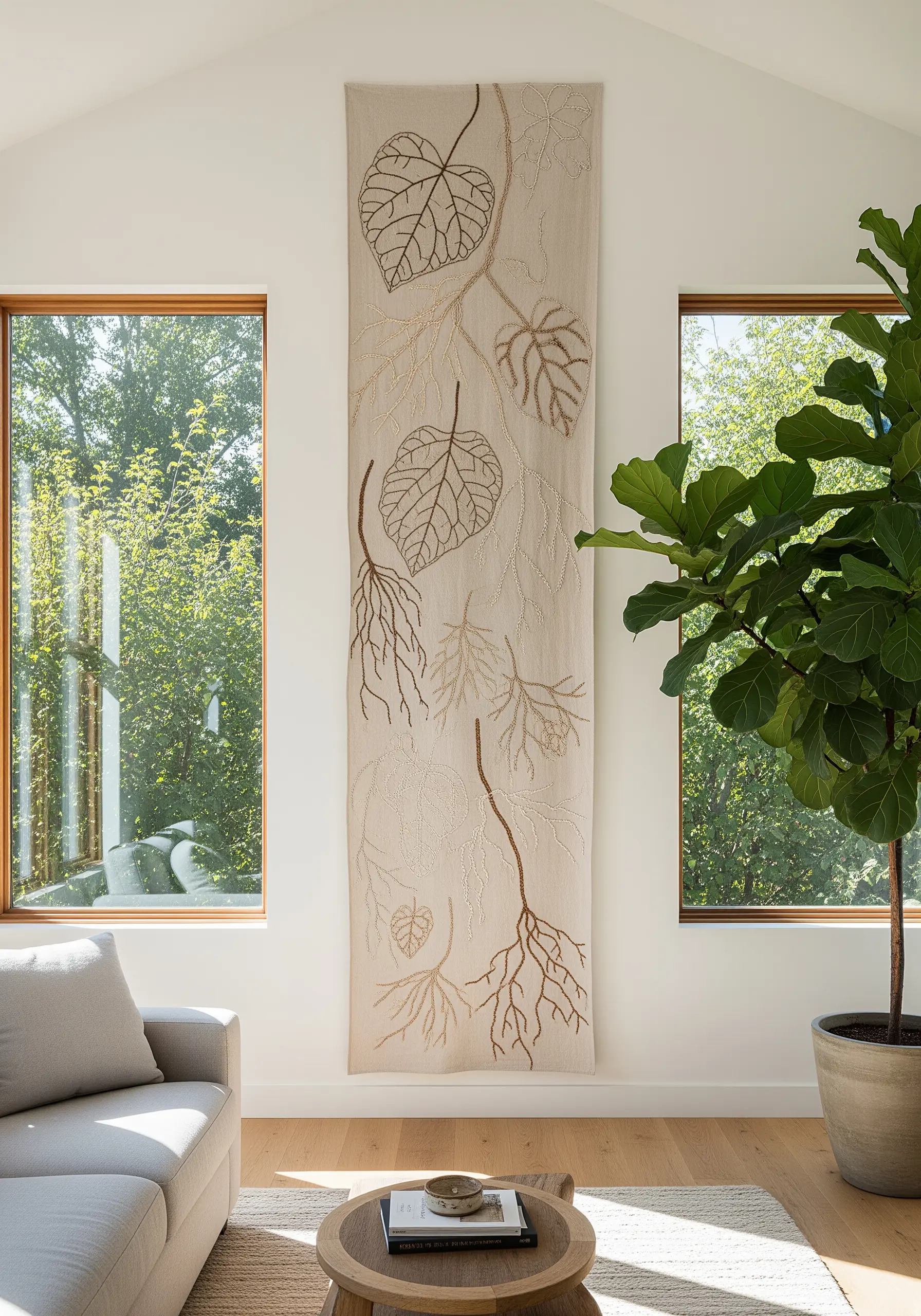
Make the most of a narrow vertical space with a design that flows naturally downward.
On a long linen runner, stitch a composition of leaves and roots that appears to be growing down the wall.
Vary your thread weights and colors subtly—use a darker, thicker thread for the main roots (a chain stitch works well here) and lighter, finer threads for the delicate leaf veins (a single-strand backstitch).
This variation creates a natural sense of depth and perspective.
The organic, meandering composition feels both grounded and graceful, making it one of those nature-inspired embroidery wall decor projects that brings a sense of calm to a room.
11. A Study in White-on-White Textures
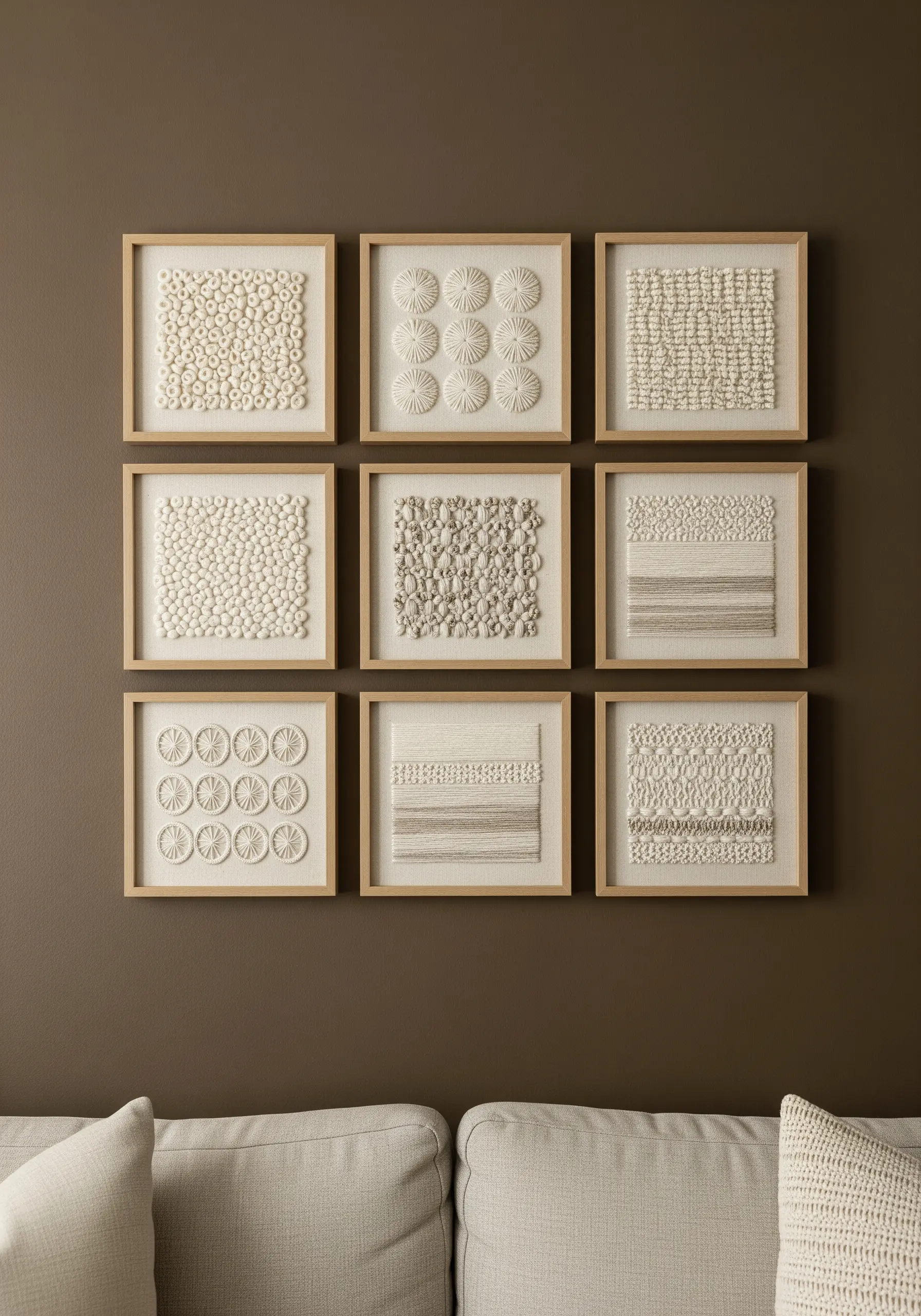
Challenge yourself to create visual interest using only texture and light.
By limiting your palette to a single color family (ivory, cream, and soft white), you shift the focus entirely to the tactile quality of your stitches.
Create a grid of nine small, framed squares. In each, explore a different dimensional stitch: tightly packed French knots, plush turkey work loops, raised padded satin stitch, or intricate bullion knots.
When displayed together, this collection becomes a sophisticated, high-end art piece that draws the viewer in, rewarding them with subtle, intricate details.
This is a perfect example of tone-on-tone embroidery techniques that create quiet luxury.
12. Topographic Contours with Thread
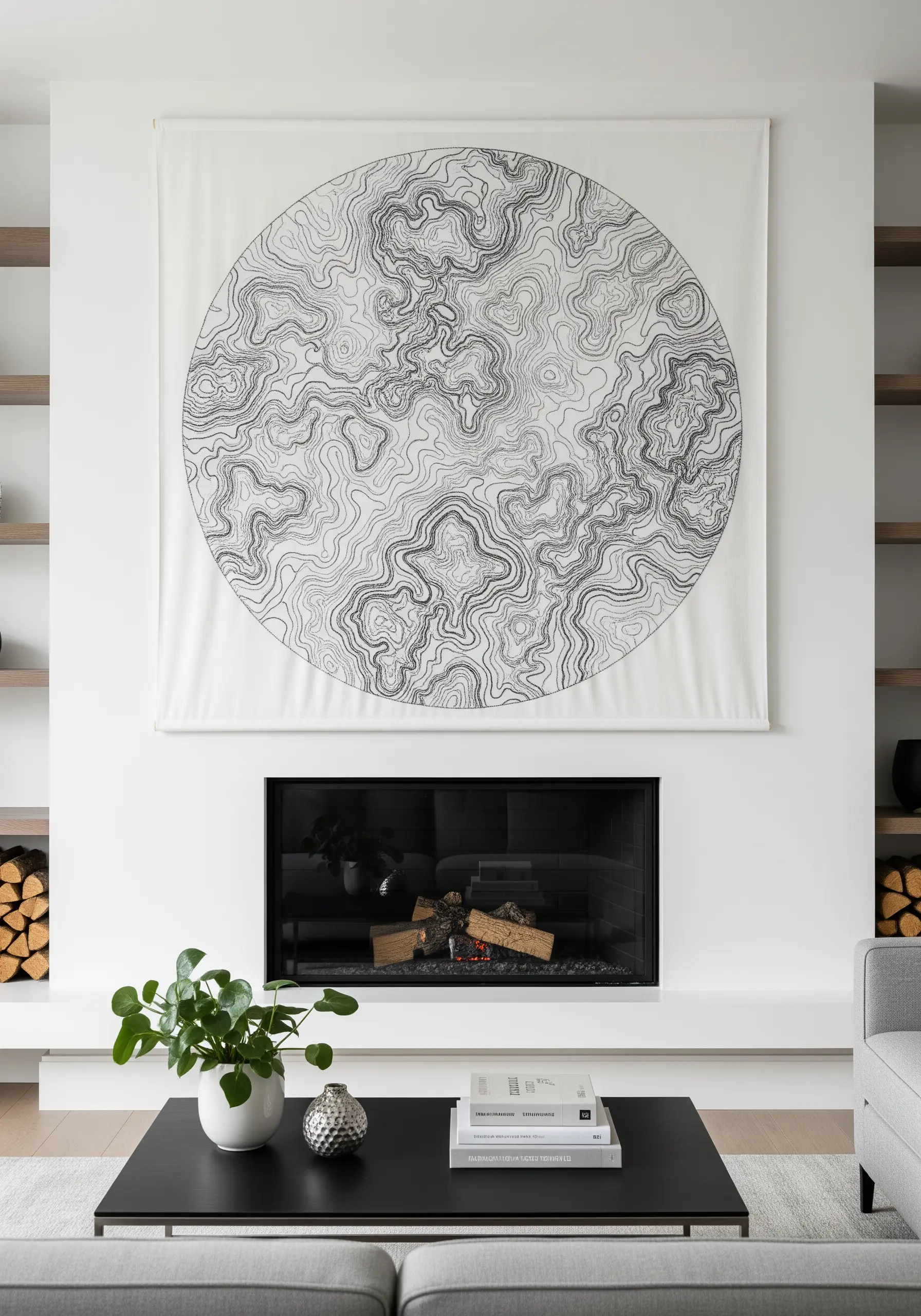
Transform scientific data into a deeply personal and abstract work of art.
Choose a topographic map of a meaningful place—a favorite mountain, a hometown, a memorable coastline—and transfer the contour lines to your fabric.
Using a single color of thread, trace the lines with a simple running stitch or backstitch.
The design’s complexity emerges naturally from the density of the lines, creating areas of shadow and light without any complex shading techniques.
It’s a meditative process that results in one of those minimalist stitched art pieces you’ll actually want to hang.
13. Lunar Phases in a Vertical Display
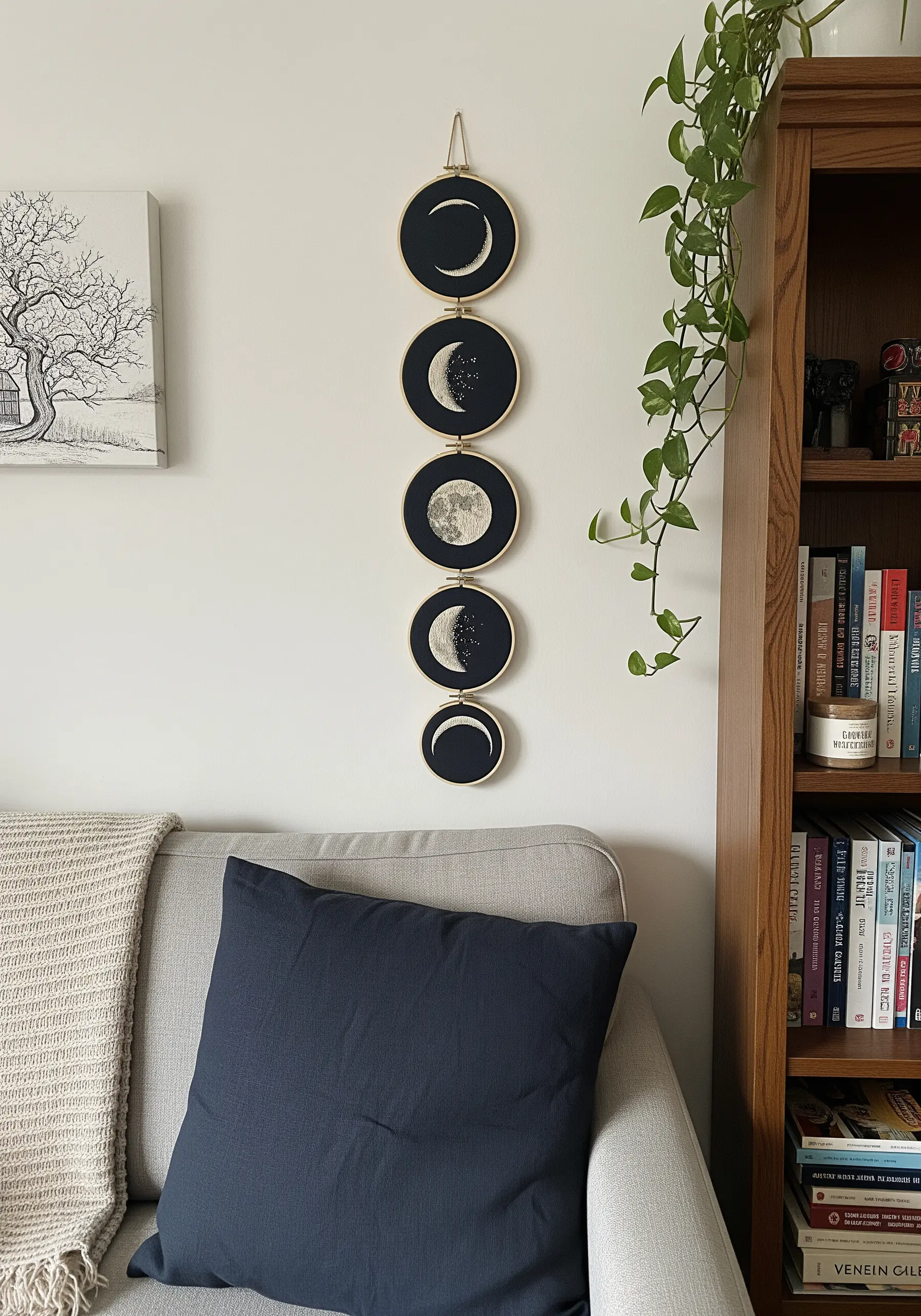
Tell a celestial story by stitching the moon’s cycle across a series of hoops.
Work on a dark navy or black cotton fabric to make your white and silver threads pop.
For the full moon, avoid a flat satin stitch. Instead, use a dense, slightly chaotic mix of seed stitches and French knots with white, ivory, and light gray threads to build up a cratered, realistic texture.
In contrast, stitch the crescent moons with a perfectly smooth satin stitch for a clean, graphic look.
Connecting the hoops vertically with a fine chain or neutral cord creates an elegant hanging that draws the eye upward.
14. Single-Line Word Art for Mindful Decor
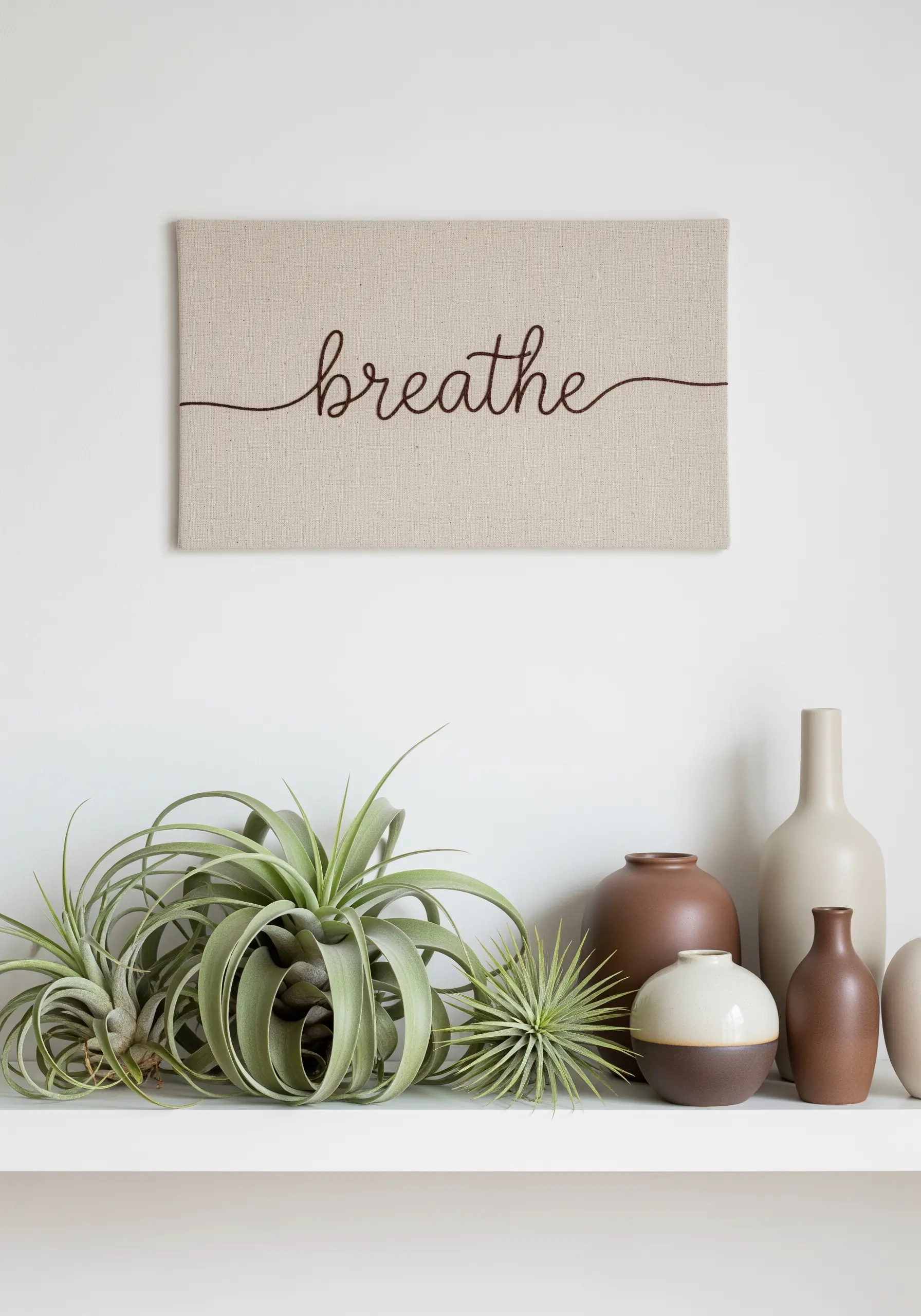
The power of this piece lies in its fluid, uninterrupted line.
To achieve this seamless, calligraphic look, use a whipped backstitch or a stem stitch, which conceals the individual stitches and creates a smooth, raised cord.
Choose a single, meaningful word and a thread color that provides gentle contrast against your linen canvas—a warm brown on oatmeal fabric feels grounded and serene.
Stretching the final piece over a rectangular canvas frame, rather than leaving it in a hoop, elevates it from a craft project to a polished piece of modern art.
15. Architectural Sketching with Thread
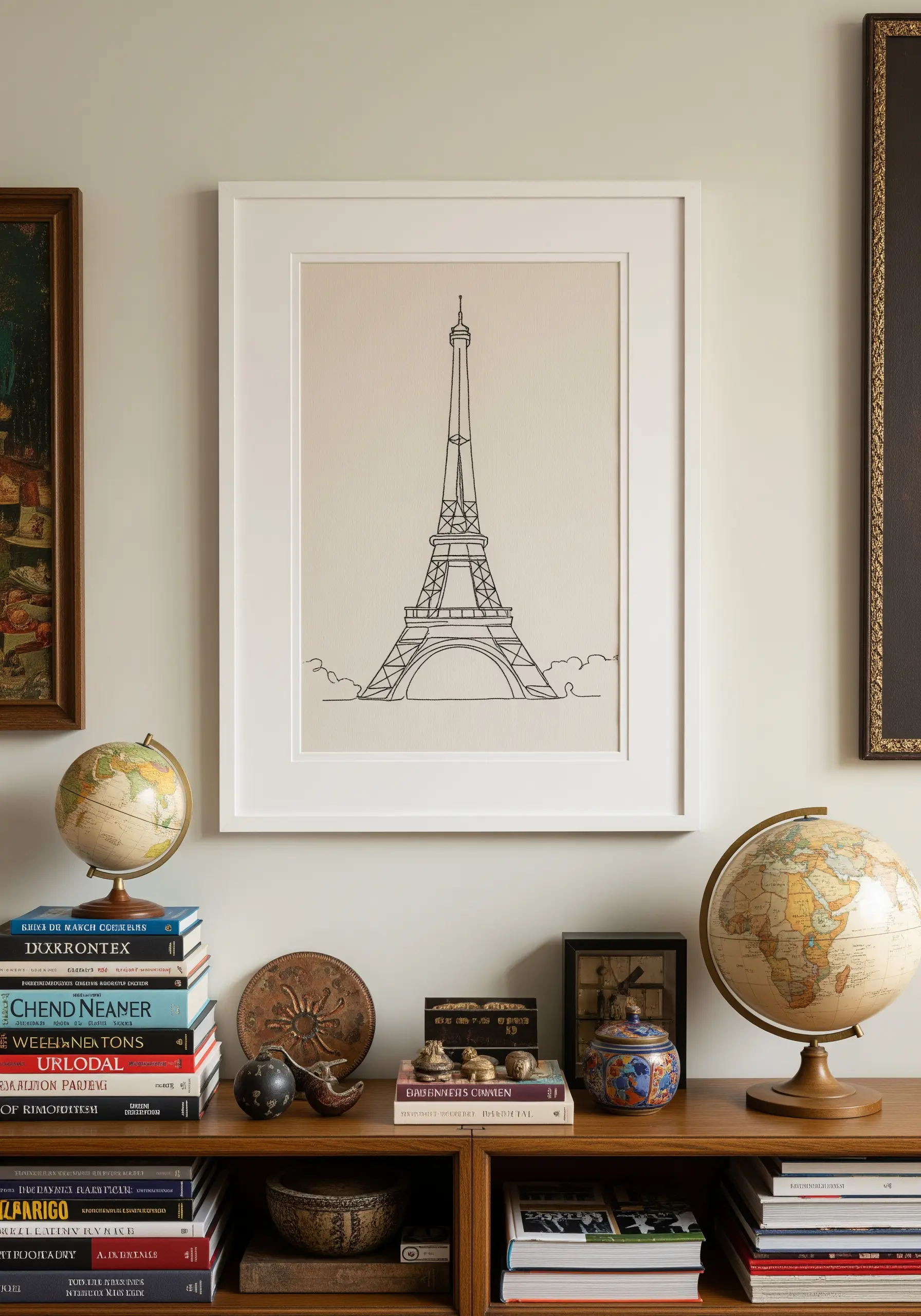
Replicate the delicate, precise feel of an architectural ink drawing by using a single strand of black floss on a light, neutral fabric.
Rely on a simple backstitch for clean, consistent lines.
The key to success is knowing what to leave out; focus on capturing the iconic structural lines and essential details, allowing the negative space to define the form.
This minimalist approach celebrates the beauty of the structure itself without overwhelming the viewer.
A simple, clean-lined frame completes the look, reinforcing the artwork’s connection to drawing and illustration.
16. Layered Landscapes with Thread Painting
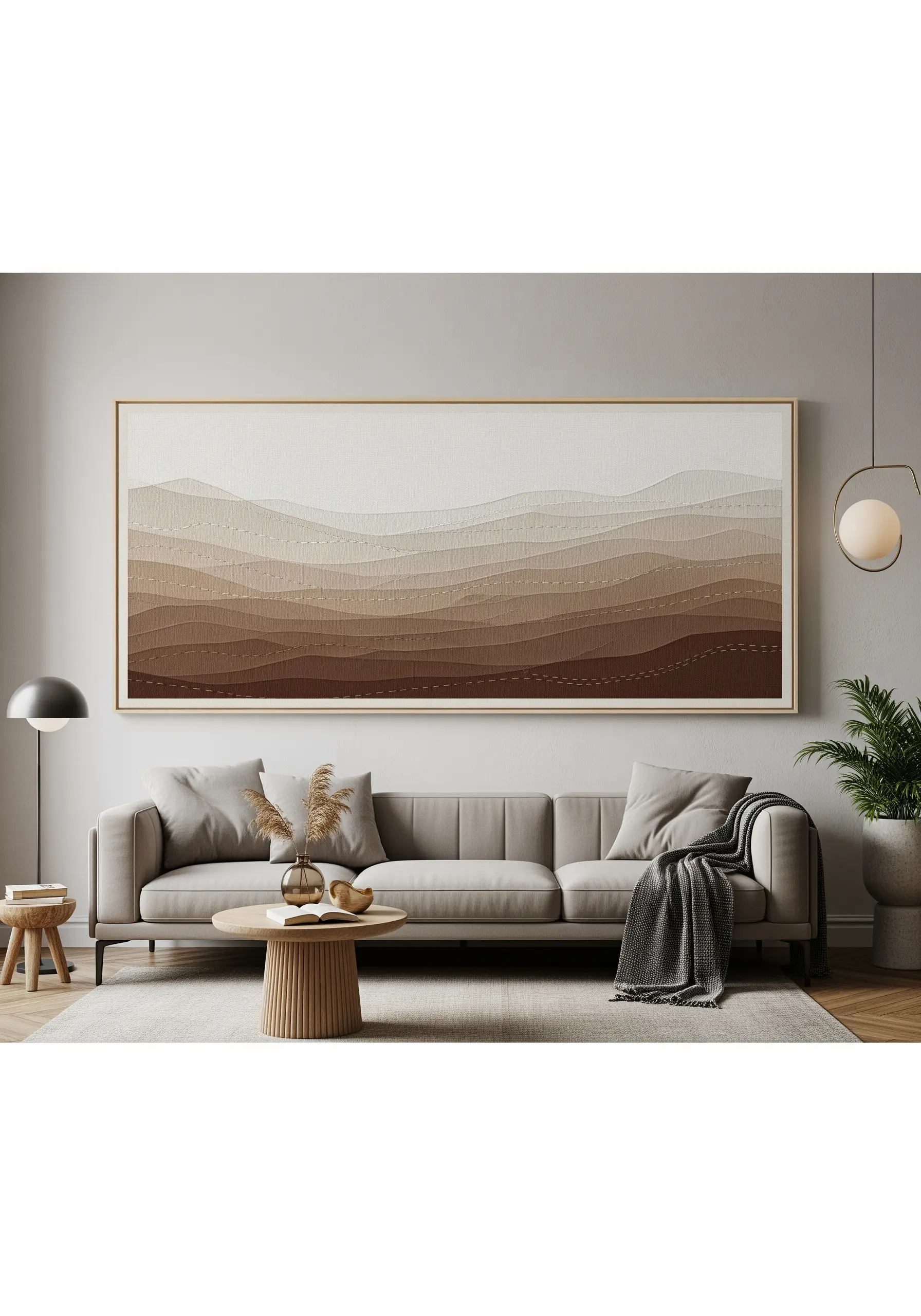
Create a painterly, atmospheric landscape using a gradient of neutral tones.
Divide your design into horizontal bands of color, moving from light to dark to create a sense of atmospheric perspective.
Fill each band using the long-and-short stitch, working with a single strand of floss to ensure your stitches blend seamlessly.
Where two color bands meet, allow the stitches to overlap slightly, softly blurring the transition.
Adding a few tiny, horizontal seed stitches in a contrasting dark thread can suggest texture and movement, giving the serene composition a final touch of detail.
17. Floating Abstract Lines in Acrylic
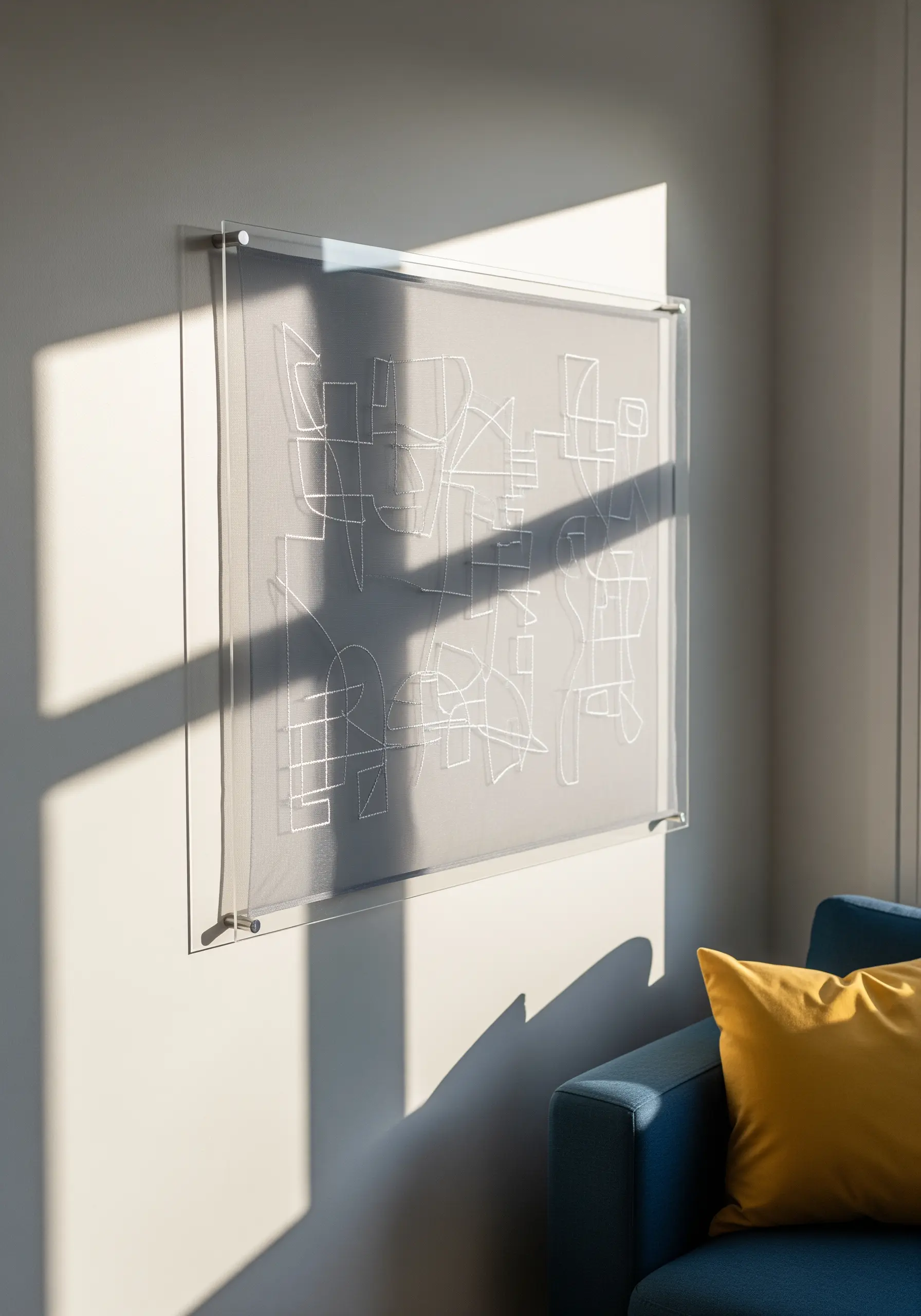
Let your embroidery float off the wall by pairing it with modern framing.
Stitch a simple, geometric, or abstract line design on a semi-translucent fabric like gray linen or organza; a basic running stitch will create a lovely, dotted texture.
Instead of a traditional frame, mount the fabric between two sheets of clear acrylic. This contemporary presentation makes the stitched lines appear suspended in mid-air, casting subtle shadows on the wall behind them.
It’s a sophisticated way to display abstract thread embroidery ideas that turn simple lines into mesmerizing wall art.
18. Layered Fabric Collage with Hand Stitching
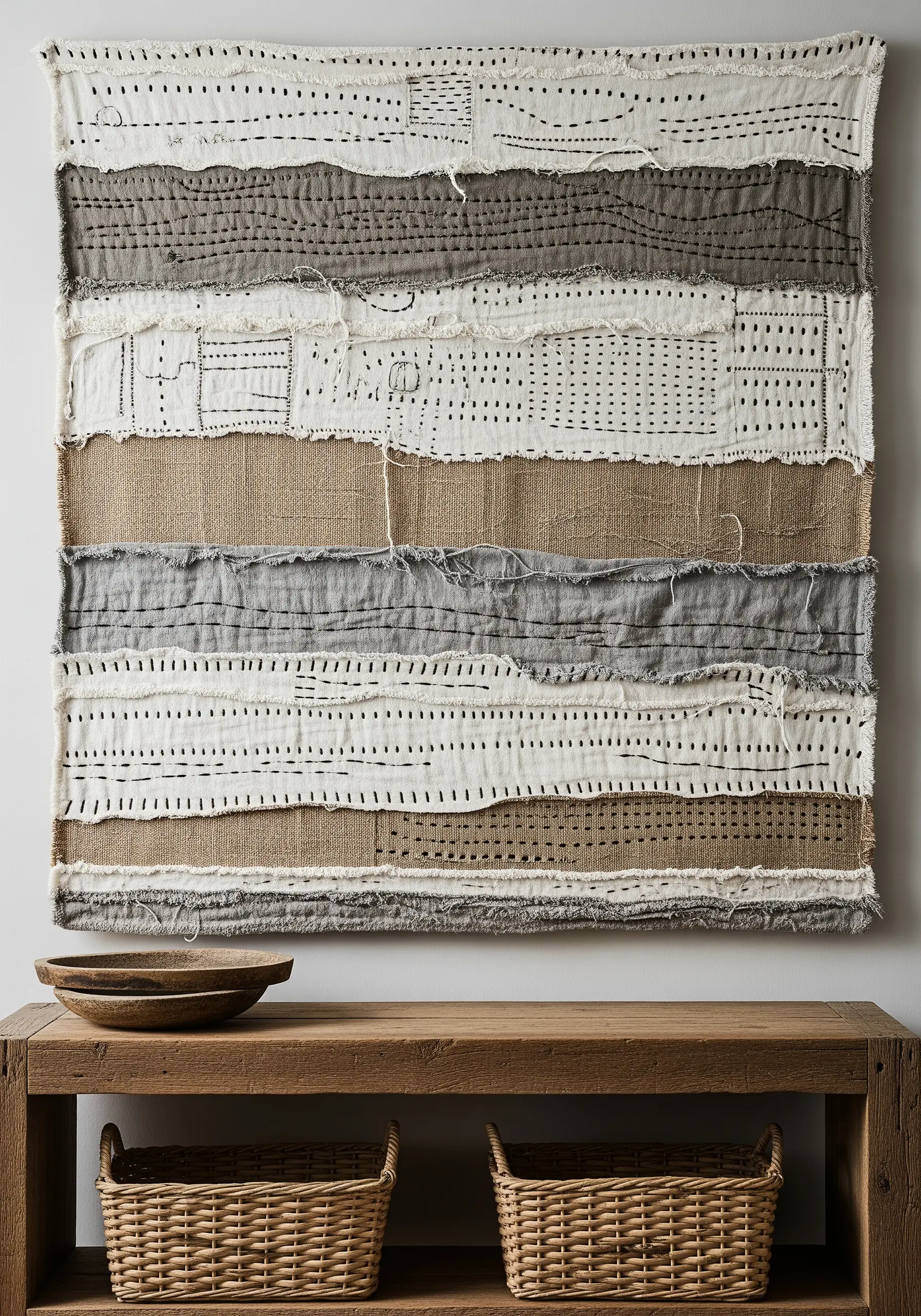
This technique transforms humble fabric scraps into a richly textured wall hanging reminiscent of Japanese Boro textiles.
Layer strips of neutral-toned linen, cotton, and canvas onto a sturdy backing fabric, overlapping them and allowing the raw, frayed edges to become part of the design.
Then, using a contrasting thread like dark gray or black perle cotton, work simple running stitches across the piece to quilt all the layers together.
These visible stitches are both functional and aesthetic, creating patterns and rhythms that unify the disparate fabrics into a cohesive, tactile whole.


