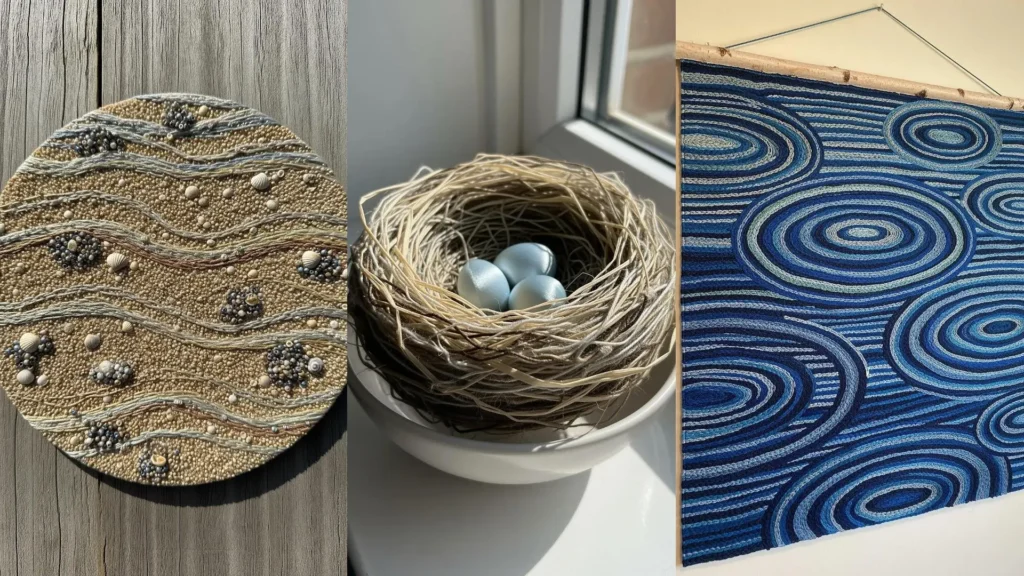
Before you pick up your next needle and thread, I want you to pause. Think about the surfaces in your home—the quiet corners, the plain cushions, the bare walls. These are not just empty spaces; they are canvases waiting for a touch of intention, for a texture that tells a story.
Embroidery is more than a craft; it’s a way to slow down and infuse your surroundings with a warmth that mass-produced items simply cannot offer. It’s about the subtle satisfaction of a perfectly smooth satin stitch, the rhythmic calm of building a textured surface, and the quiet power of a single, well-placed line.
Here, you won’t find fleeting trends. Instead, you’ll discover techniques and ideas that honor the materials you work with and the space you live in. Let’s move beyond just decorating and begin creating pieces that feel personal, organic, and deeply connected to your minimalist home.
1. Sculptural Landscapes with Textured Yarn

Build a dimensional wall hanging by using French knots and punch needle techniques with chunky wool yarn instead of standard floss.
This method creates a dense, plush surface that mimics the rolling textures of hills and mountains.
Vary the height of your loops and the density of your knots to create visual depth between the layers of your landscape.
For a clean finish, mount the completed textile on a simple wooden dowel—it complements the organic feel and keeps the focus on your stitch work.
2. The Duality of Outline and Fill

Explore a single botanical motif in two distinct ways to understand the power of positive and negative space.
First, stitch a fern using only a simple backstitch or stem stitch for an airy, delicate outline that feels light and graphic.
Then, create its counterpart by filling the entire shape with a smooth satin stitch, resulting in a bold, solid form that commands attention.
This exercise proves that you don’t need a new design for every project; simply altering your stitch choice can completely transform the mood and impact of your work.
3. Directional Stitching for Celestial Sheen
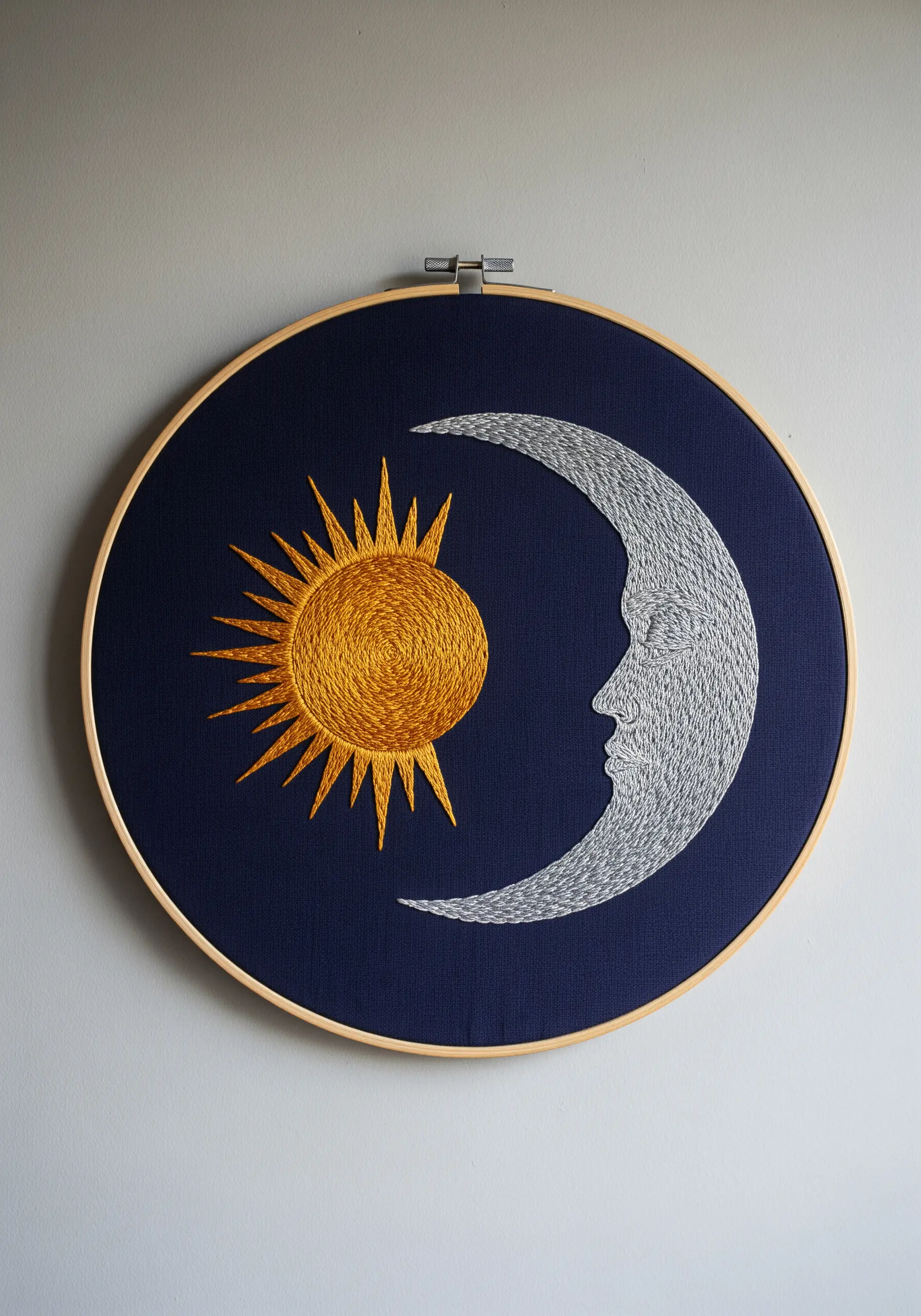
Bring celestial motifs to life by using directional satin stitch to control how light reflects off the thread.
For the sun, angle your stitches to radiate outward from a central point, creating a dynamic, shimmering effect.
For the moon, lay your stitches horizontally, following the curve of the crescent to give it a calm, rounded, and solid appearance.
Using a metallic or silk floss on a dark, matte fabric like navy cotton or linen will maximize the contrast and enhance the luminous quality of your work.
4. Paint with Yarn Using Couching Techniques
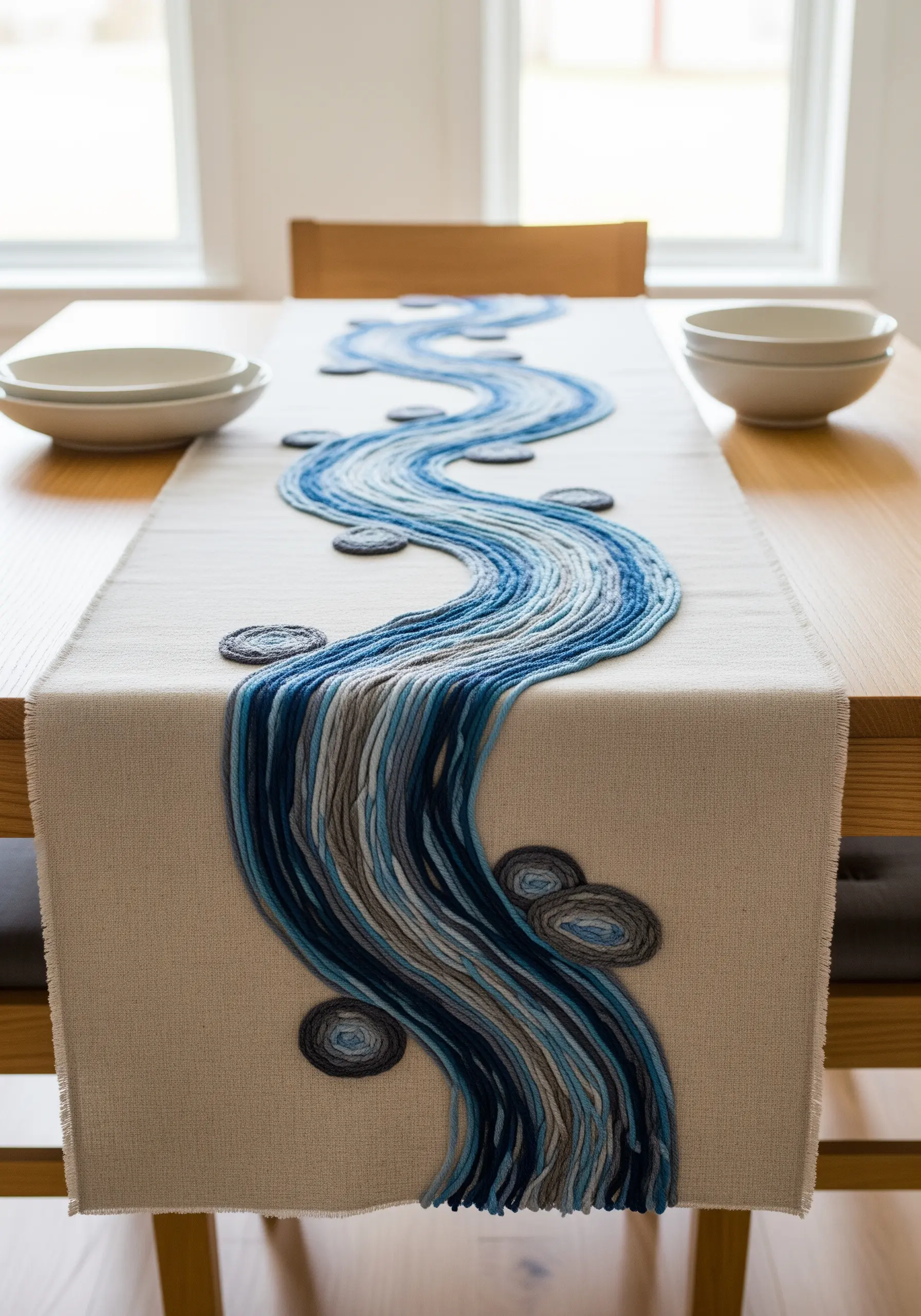
Create a flowing, river-like table runner by laying down bundles of yarn and securing them with a fine, discreet thread—a technique called couching.
This allows you to work with thick, textural fibers that would be impossible to pull through fabric with a needle.
Blend different shades of blue, gray, and white yarn within your bundles to achieve a natural, gradient effect that mimics moving water.
Form small, tight coils of yarn for the ‘stones,’ tacking them down to add points of interest and anchor the composition.
5. Mastering Clean Lines in Punch Needle Art
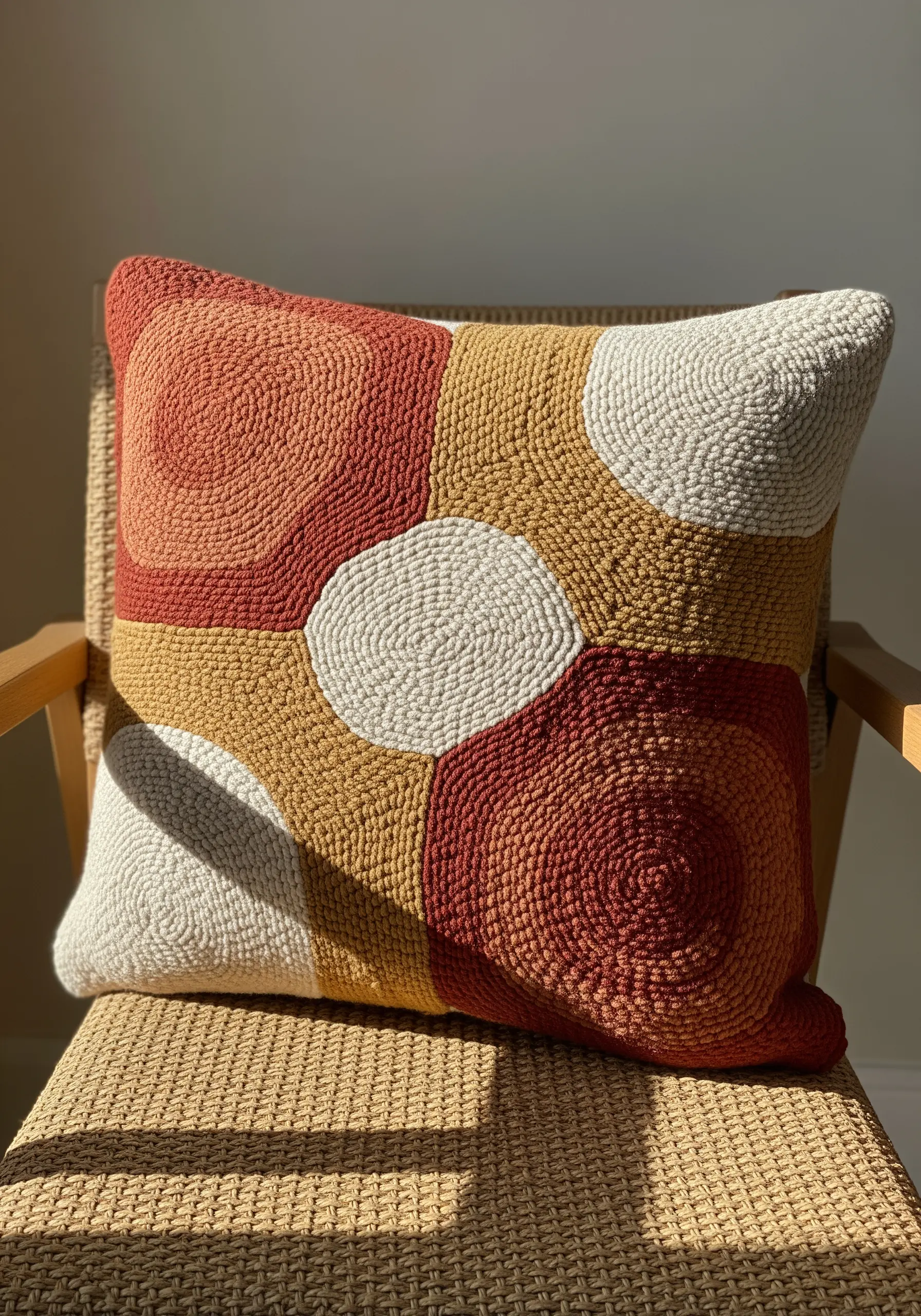
Achieve a bold, graphic look on pillows and textiles with punch needle color blocking.
The key to a professional finish is creating crisp, clean divisions between your colors.
Work one color section at a time, outlining the shape first and then filling it in, ensuring your loops are packed tightly together to prevent the background fabric from showing through.
Using a sturdy backing fabric like monk’s cloth will hold the tension and allow for dense, even loops that give your piece a plush, uniform texture.
6. Abstracting Nature with Layered Textures

Emulate the complexity of tree bark by layering different threads, fabrics, and stitches to build a rich, tactile surface.
Start with a base fabric and add pieces of appliqué in varying neutral tones, then work over them with a mix of French knots, seed stitches, and couched threads.
Allow threads to hang loose and overlap your shapes to create an organic, untamed feeling.
This approach moves beyond simple representation, focusing instead on capturing the essence of natural textures in an abstract and expressive way.
7. Refined Linework on Utilitarian Objects

Elevate simple felt coasters with a clean, single-line botanical design.
When stitching on a soft material like felt, use a tear-away stabilizer on the back to prevent the fabric from stretching or puckering as you stitch.
Choose a thicker thread, such as a size 8 pearl cotton, and a simple backstitch to create a bold, graphic line that stands out.
The contrast between the soft, matte felt and the crisp, slightly raised stitch work creates a sophisticated and modern functional art piece.
8. Capturing Seascapes with Negative Space
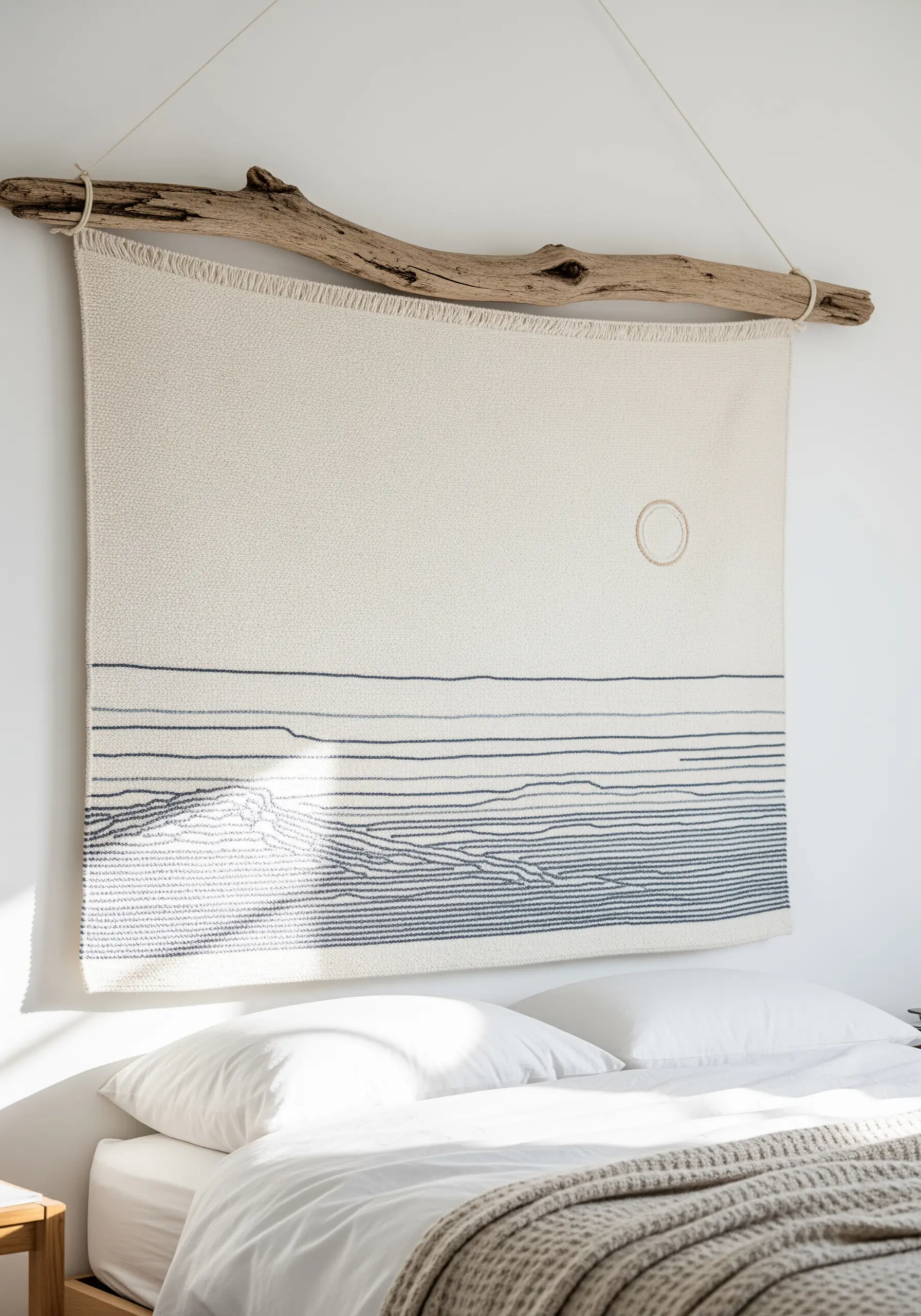
Create the feeling of a calm ocean horizon by focusing on simplicity and negative space.
Use fine, dark thread on a light, woven fabric to suggest water with rows of simple running stitches.
Vary the length and density of your stitches—placing them closer together near the bottom—to create a subtle sense of perspective and depth.
Mounting the finished piece on a piece of weathered driftwood completes the coastal narrative and adds a beautiful, organic element to the minimal design.
9. Geometric Precision with Raised Stitches
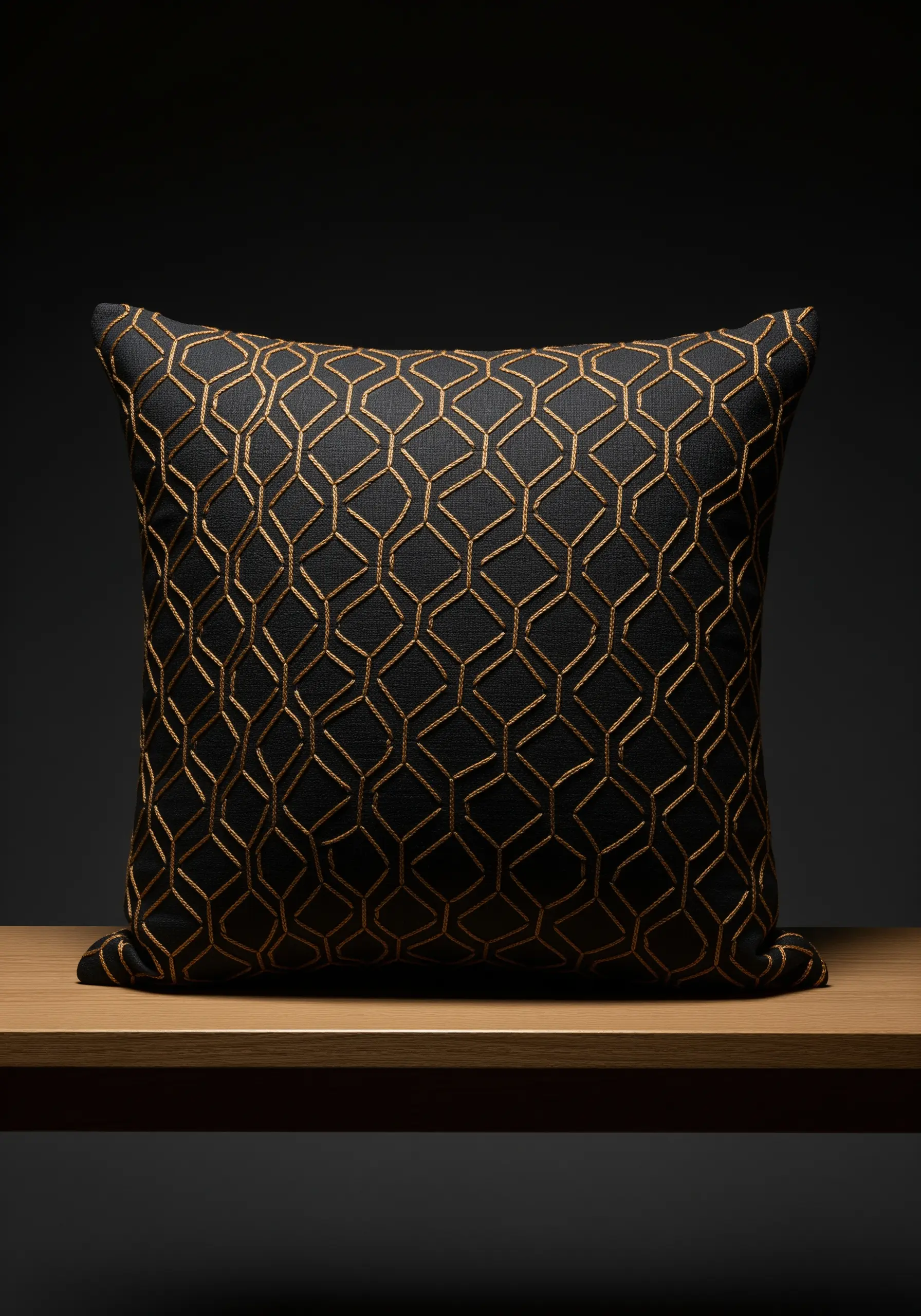
Achieve a sharp, luxurious geometric pattern on a dark pillowcase by using a stitch that creates a raised, cord-like line.
A whipped backstitch or a heavy chain stitch in a lustrous metallic thread will provide the definition and texture needed to make the design pop.
To ensure perfect symmetry and sharp angles, meticulously draw your grid onto the fabric with a chalk pencil or a heat-erasable pen before you begin stitching.
This careful preparation is the secret to a pattern that looks flawlessly executed and intentionally designed.
10. The Art of Delicate Tension

Convey the weightlessness of dandelion seeds by mastering delicate stitch work on a fine fabric.
Use a single strand of white or off-white silk thread on a fabric with a subtle sheen, like a silk-cotton blend, to enhance the ethereal quality.
The dandelion head is created with straight stitches and French knots, while the floating seeds are tiny detached chain stitches.
Allow the fabric to pucker slightly around the main flower head; this controlled tension adds a gentle three-dimensional effect, as if the threads are pulling the fabric into the form.
11. Creating Depth with Layered Appliqué
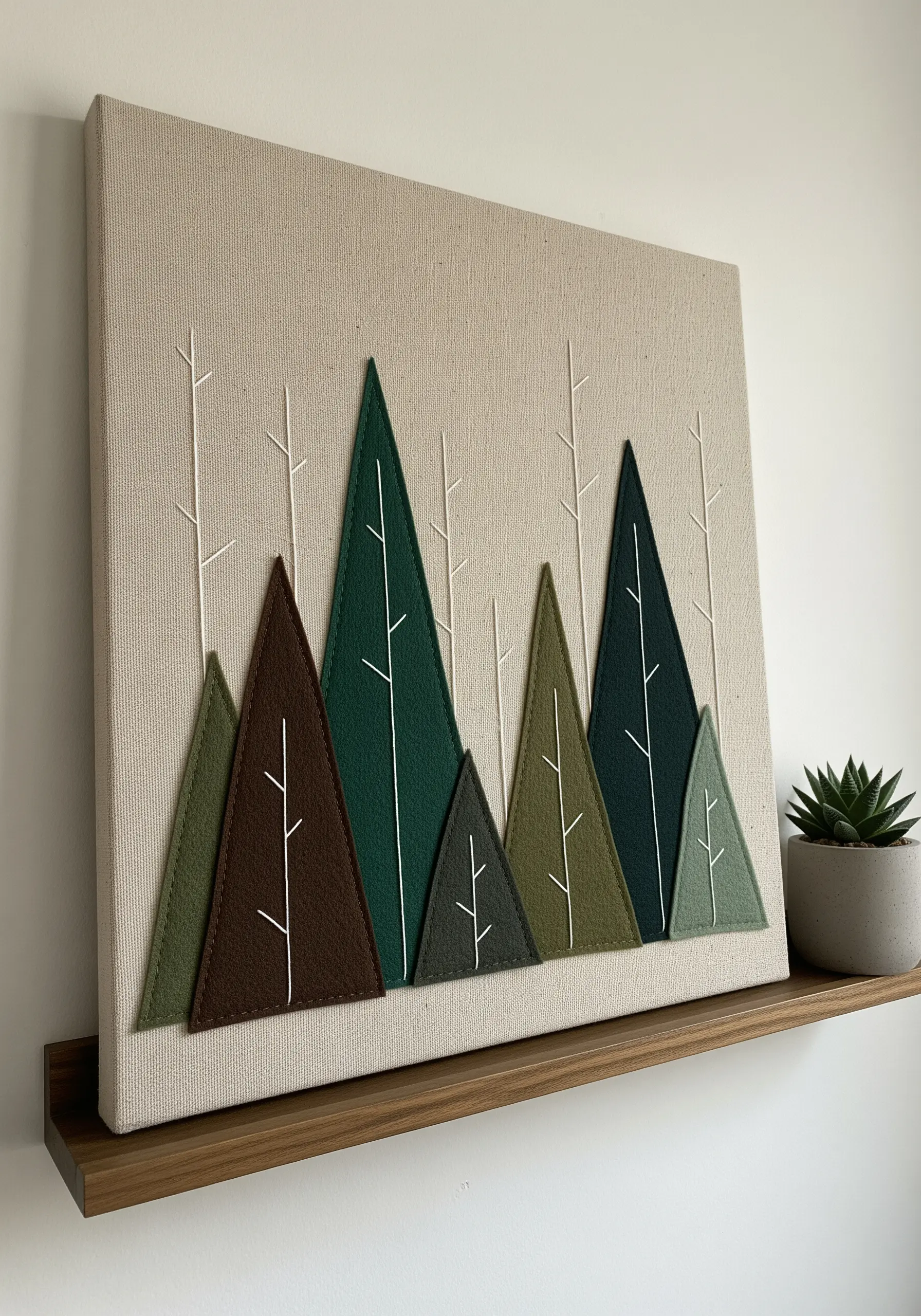
Construct a minimalist forest scene by combining simple felt appliqué with clean stitch work on a stretched canvas.
Cut sharp, geometric tree shapes from felt in various shades of green and brown for an autumnal, modern palette.
Arrange and overlap the felt pieces to create a sense of depth and perspective within your composition.
Add fine, contrasting details, like the tree trunks and branches, with a simple backstitch worked directly through the felt and canvas.
12. Sculptural Stitching on Sheer Fabric

Create a striking spiderweb by stitching with a thick cord onto a sheer, taut fabric like tulle or organza.
Because you can’t draw a pattern on tulle, secure your radial threads first, working from the center out and anchoring them to the hoop’s edge to create the main spokes.
Then, couch the spiraling threads on top of this framework, using a fine, invisible thread to tack the cord down at each intersection.
This technique creates a dramatic, almost floating effect that plays with light and shadow.
13. Thread Painting for Botanical Realism
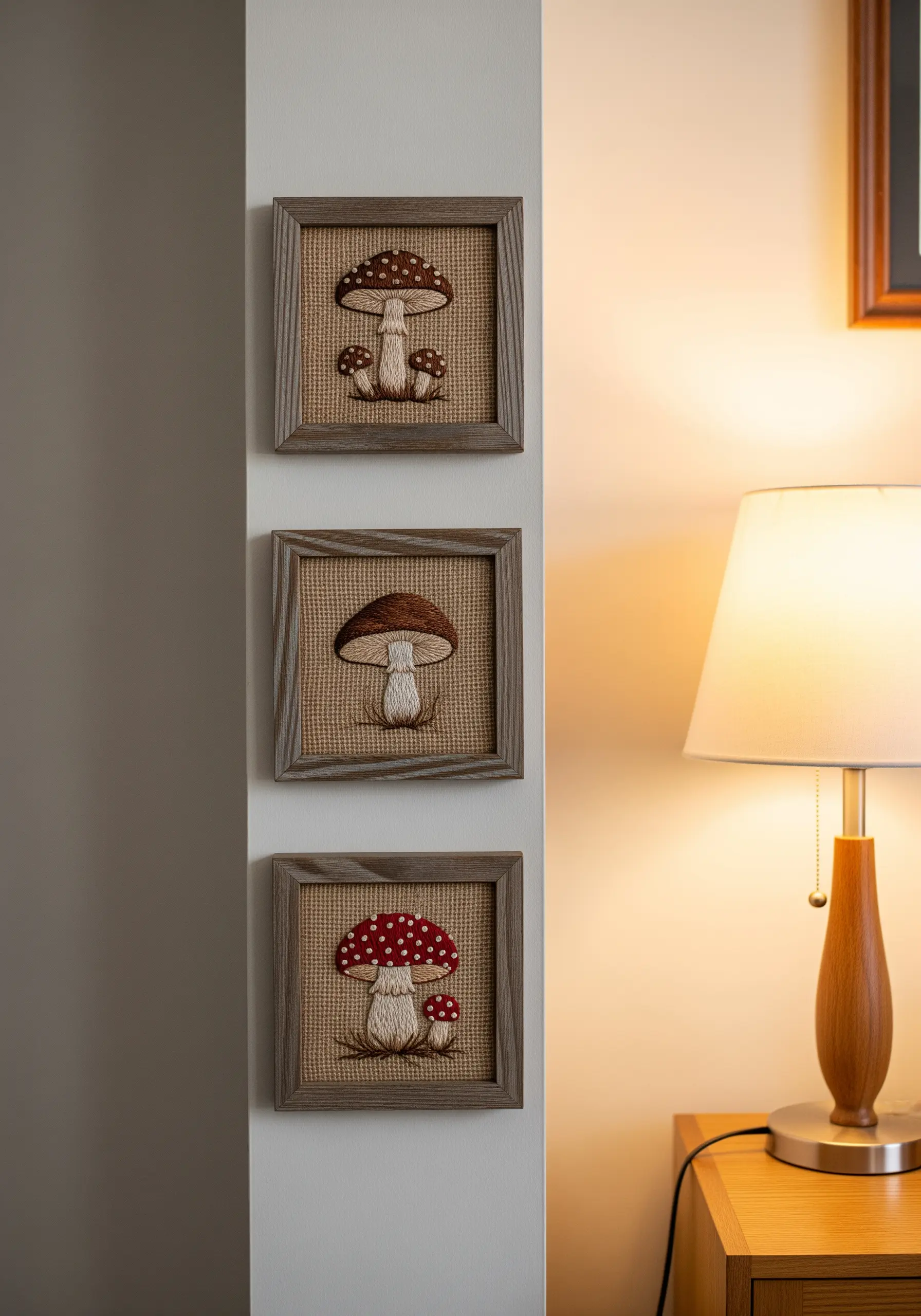
Render realistic mushrooms by using the long-and-short stitch to blend colors and create smooth gradients.
To give the mushroom caps a rounded, three-dimensional look, direct your stitches to follow the natural contours of the shape, curving them slightly as you work.
Choose a rustic, textured fabric like linen or burlap as your canvas; its natural weave enhances the earthy, woodland feel of the subjects.
Grouping several small, framed pieces together as a triptych creates a cohesive and compelling visual story on your wall.
14. Abstract Rhythm with Simple Stitches

Capture the feeling of falling rain with a simple yet dynamic pattern of vertical stitches.
Use a combination of basic running stitches and open chain stitches to create variation and texture in your lines.
Work with a palette of analogous blues and grays, and allow the spacing and length of your stitches to be slightly irregular.
This intentional imperfection is what gives the piece its organic rhythm and movement, transforming a simple concept into an engaging abstract textile.
15. The Power of a Single, Bold Motif

Make a strong design statement by isolating a single, elegant botanical form against a solid, dark background.
The ginkgo leaf’s beauty is in its radiating veins, which you can replicate perfectly with directional satin stitch.
Lightly draw angled guidelines on your fabric before you start, ensuring every stitch flows from the stem outward to create that distinct, fan-like effect.
Using a high-contrast color combination—like marigold yellow on charcoal gray—turns a simple cushion into a piece of modern art.
16. Surface Design with Sculptural Form
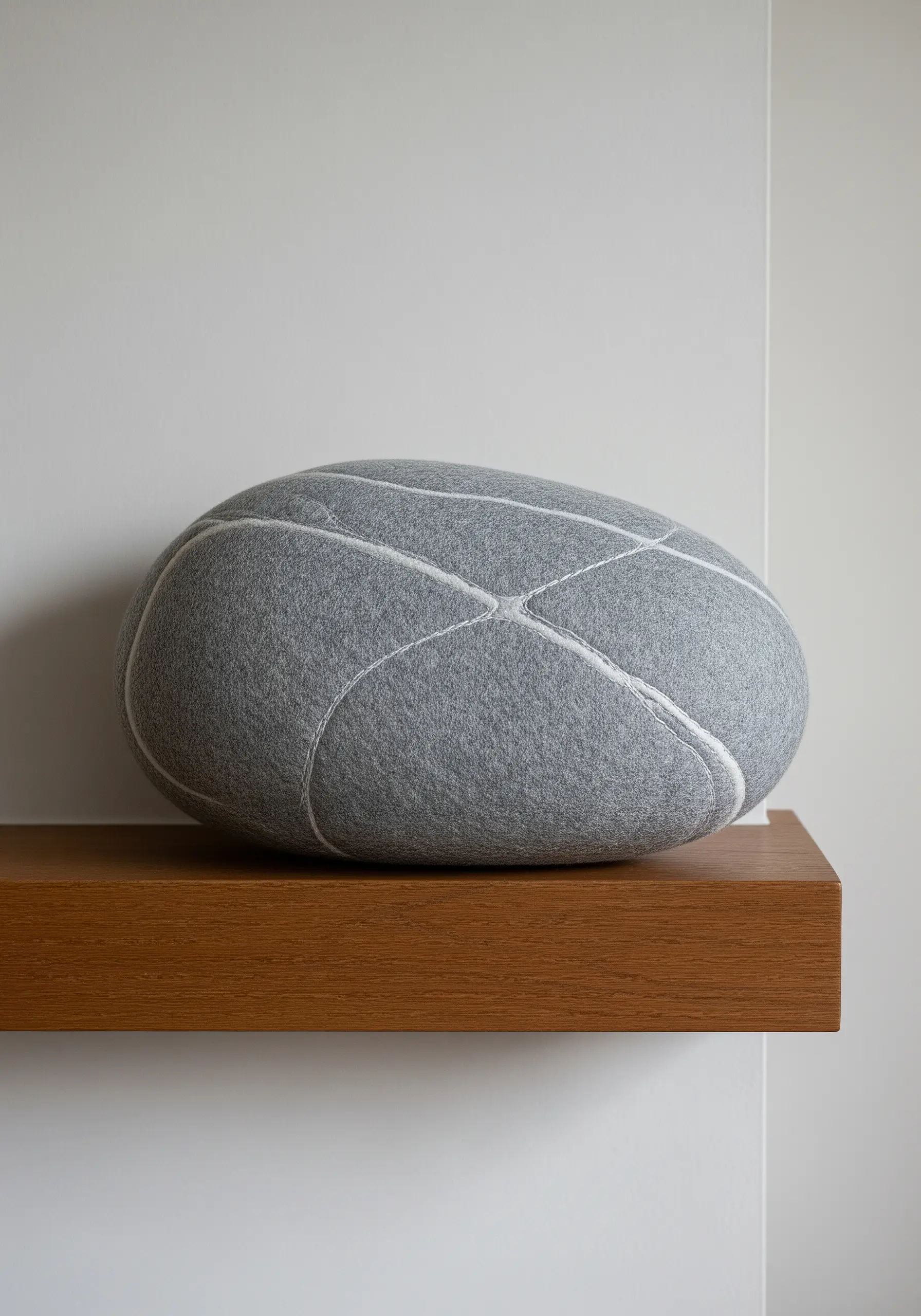
Transform a simple cushion into a sculptural object that mimics a natural stone.
After creating the rounded, pebble-like form through sewing, use embroidery to add the final layer of detail.
With a thick, contrasting yarn or wool roving, add intersecting lines using a simple running stitch or couching stitch.
This approach uses thread not to create an image, but as a graphic element to define and enhance a three-dimensional shape, blending textile art with soft sculpture.
17. Integrating Function with Stitched Details
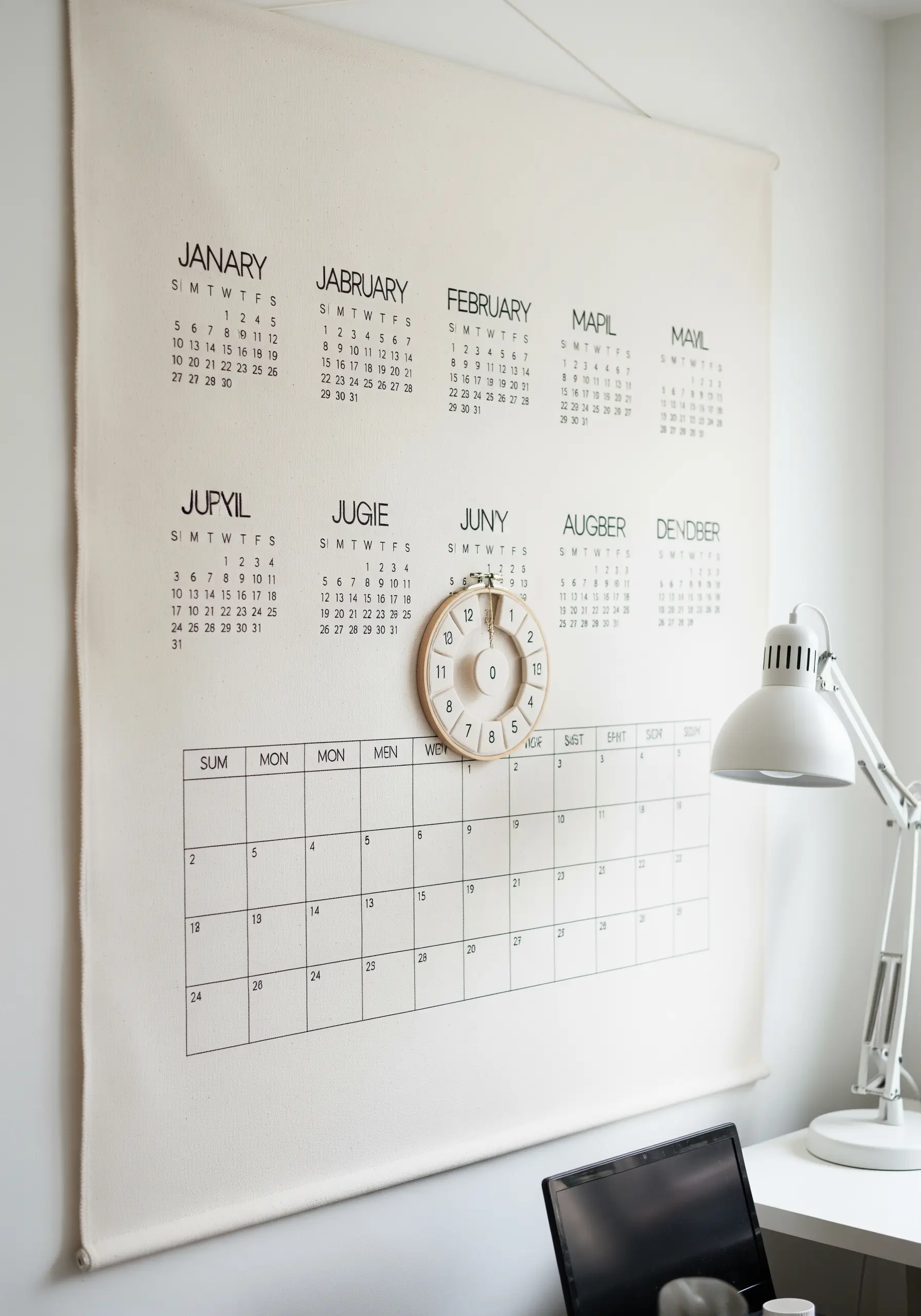
Combine utility and craft by adding a small, hand-stitched element to a functional piece like a wall calendar.
Transform a simple embroidery hoop into a clock face by stitching numbers and hands directly onto the fabric.
Use a clear, simple backstitch for legibility. The contrast between the printed calendar and the tactile, handmade clock creates a charming focal point.
This project demonstrates how a small touch of embroidery can personalize an everyday object and integrate art into your daily routines.
18. Mimicking Woven Textures with Couching
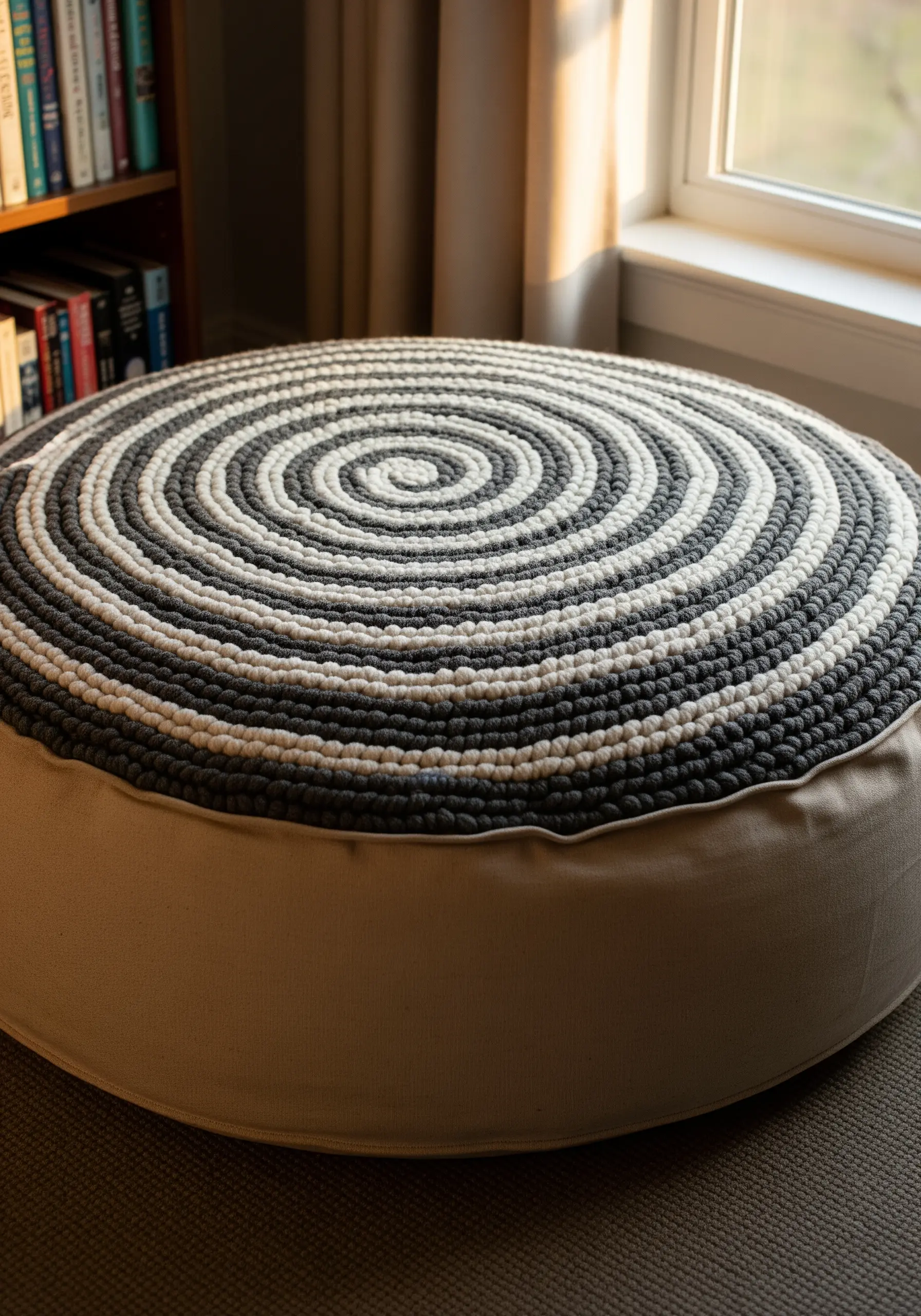
Achieve the look of a woven or crocheted spiral on a floor cushion using an embroidery technique.
Instead of weaving, lay down a very thick cord or rope of yarn in a tight spiral on your fabric base.
Use a strong, matching thread to couch the cord down, hiding your tacking stitches on the side of the cord to keep them invisible from the top.
This method allows you to create a bold, highly textured surface that is both visually striking and durable enough for everyday use.
19. Vertical Botanicals for Sheer Fabrics
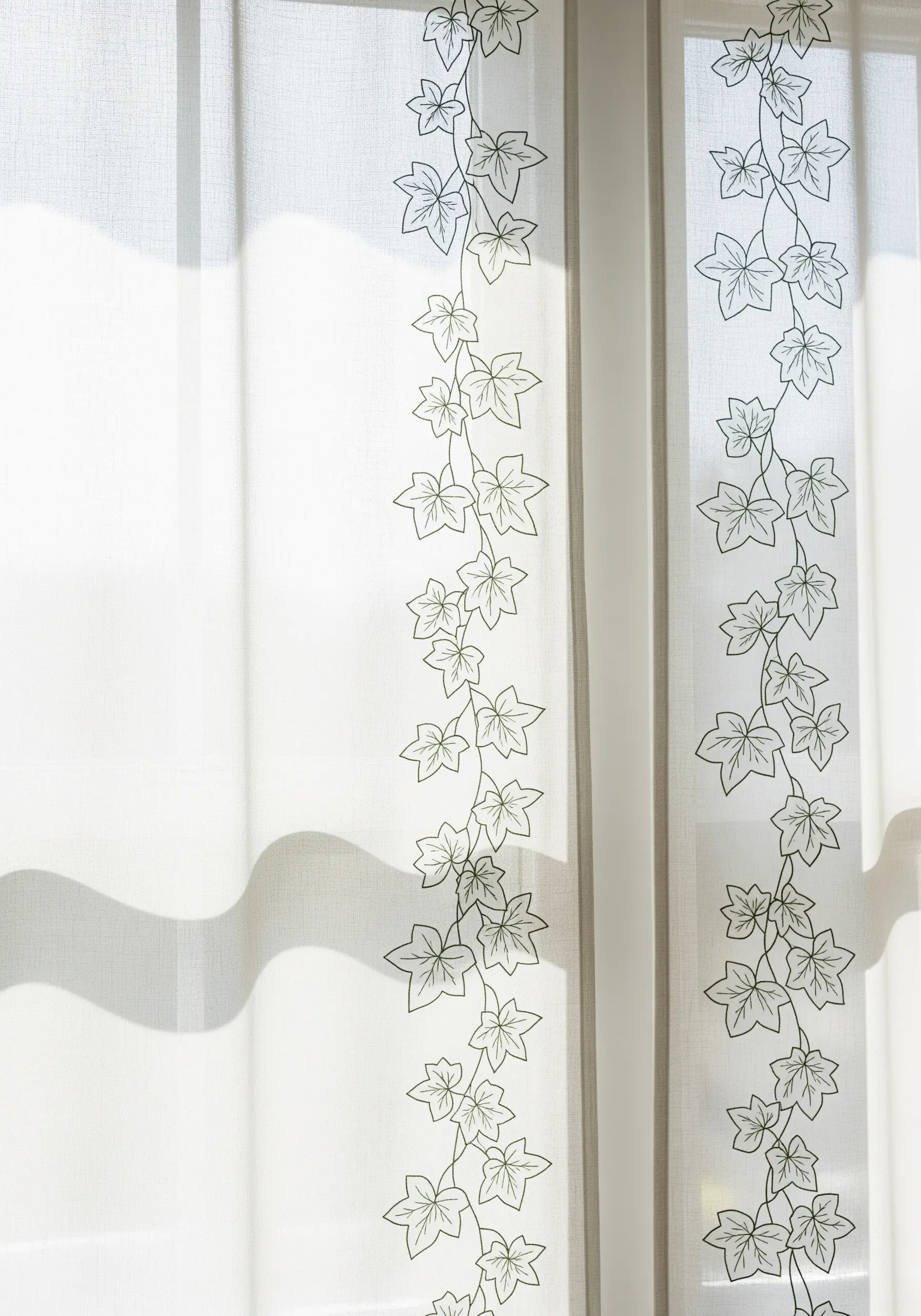
Adorn sheer curtains with delicate, climbing plant stitch designs without weighing them down.
Use a lightweight thread—no more than two or three strands of cotton floss—and a simple outline stitch like a backstitch or stem stitch.
This creates a design that feels drawn on the fabric, allowing light to pass through and cast beautiful shadows.
A repeating vertical motif draws the eye upward, making windows feel taller and adding a touch of botanical elegance to the room.
20. Creating Lunar Texture with Knot Stitches
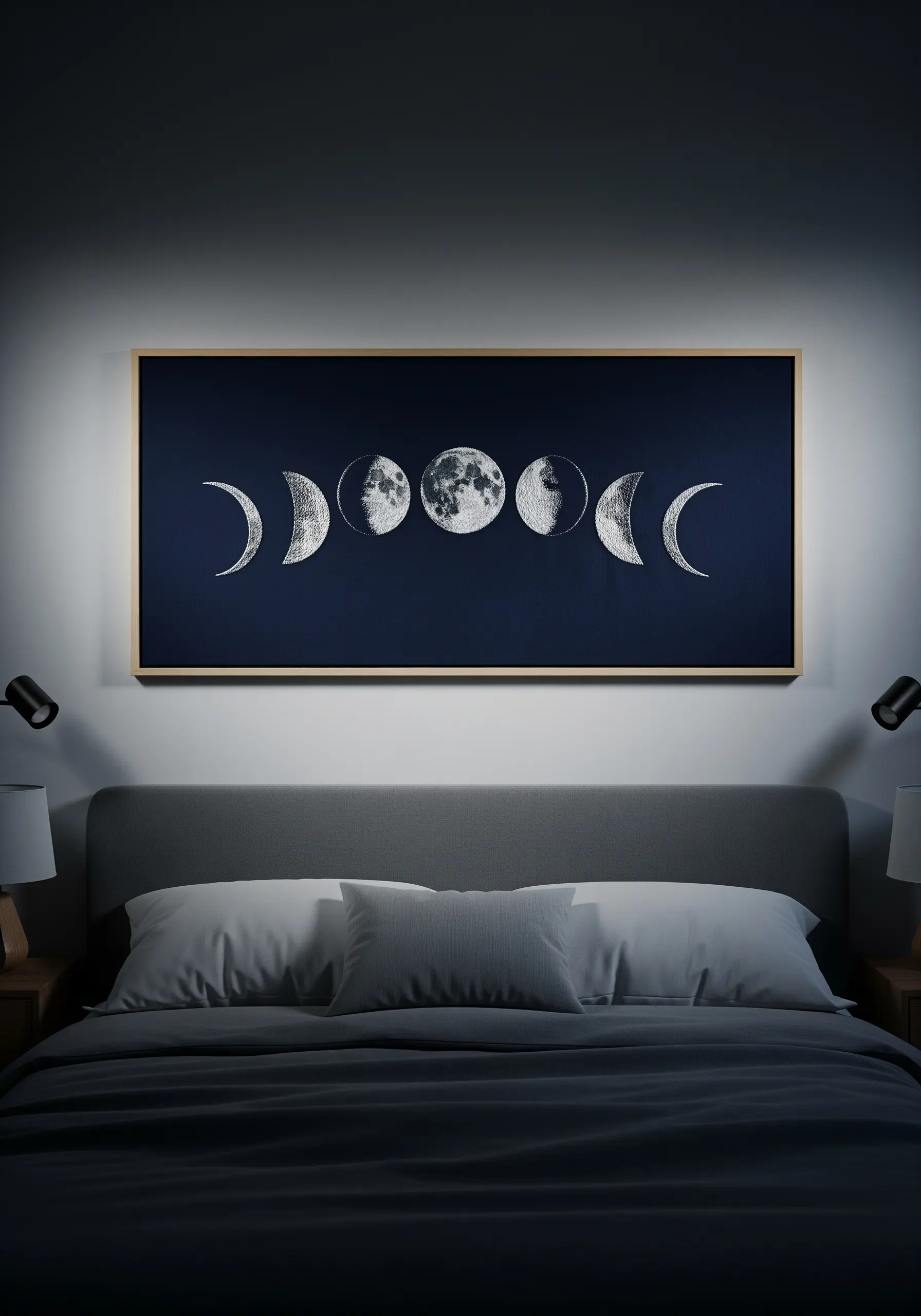
Replicate the cratered surface of the moon using a dense application of French knots and seed stitches.
Use a silvery gray or off-white thread on a dark navy or black background for maximum celestial contrast.
To create the lights and shadows of the different phases, vary the density of your stitches: pack French knots tightly for the brightest areas and use sparse seed stitches for the darker, shadowed parts.
This textural approach gives the lunar surfaces a tangible, three-dimensional quality that satin stitch alone cannot achieve.
21. Designing for Light with Varied Fills

Turn a plain lampshade into a dynamic piece by using different fill stitches to create translucent patterns.
Within a simple wave design, alternate between dense satin stitches, open darning stitches, and scattered seed stitches.
When the lamp is turned on, the light will filter through each texture differently, revealing the intricate details of your work.
This technique transforms your embroidery into an interactive piece that changes depending on the light, adding a layer of subtle complexity to your decor.
22. The Elegance of Miniature Botanical Studies
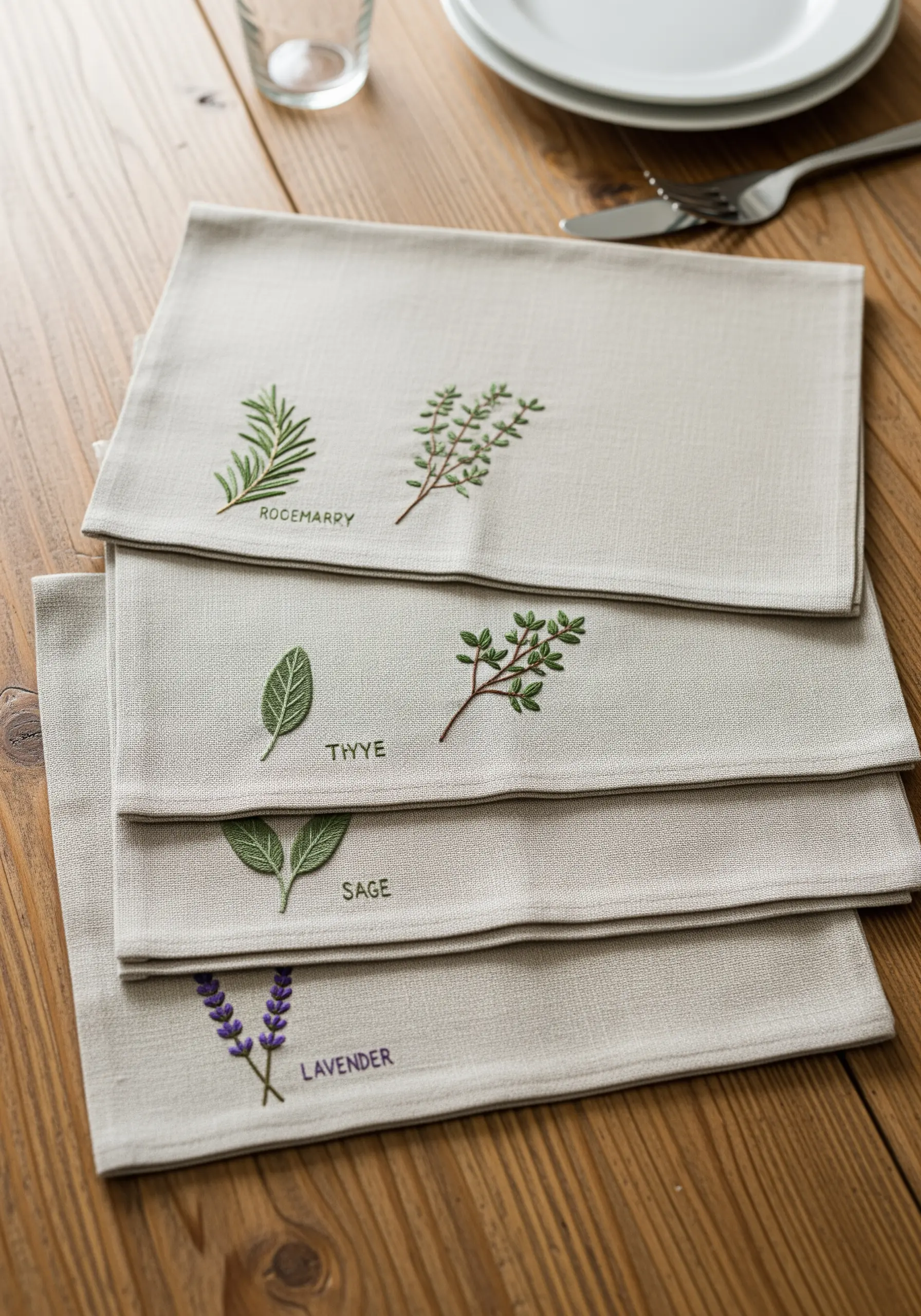
Add a touch of refined, natural detail to your table linens with small, realistic herb embroideries.
For such fine work, use only a single strand of embroidery floss to ensure your stitches are precise and delicate.
Use a split stitch for the stems to create a smooth, continuous line, and tiny, carefully placed satin stitches for the individual leaves.
These minimal fruit & botanical embroidery patterns show that even the smallest stitched details can bring a sense of handmade luxury to everyday items.
23. Large-Scale Impact with Monochromatic Linework

Create a powerful statement piece using only black thread on a large-scale white canvas.
This mountain range design relies on the density and direction of simple lines to create form, shadow, and texture, much like an ink drawing.
To replicate this by hand, use a consistent backstitch and focus on the flow and rhythm of the lines rather than on perfect uniformity.
The sheer scale of the piece, combined with the minimal color palette, gives it a modern, architectural feel that commands a room.
24. Applying Stitched Embellishments to Knitwear

Add a bold, graphic border to a knit blanket using a couched appliqué technique.
Choose a thick, contrasting yarn or fabric cord for your design. When stitching onto a stretchy knit, it’s crucial to work with a gentle tension to avoid puckering or distorting the blanket.
Use a loose, flexible stitch like a catch stitch to tack down the cord, allowing the blanket to retain its natural drape and stretch.
Applying a temporary, water-soluble stabilizer to the back of your work area can also help maintain the fabric’s shape as you stitch.
25. Simple Motifs for Functional Organization
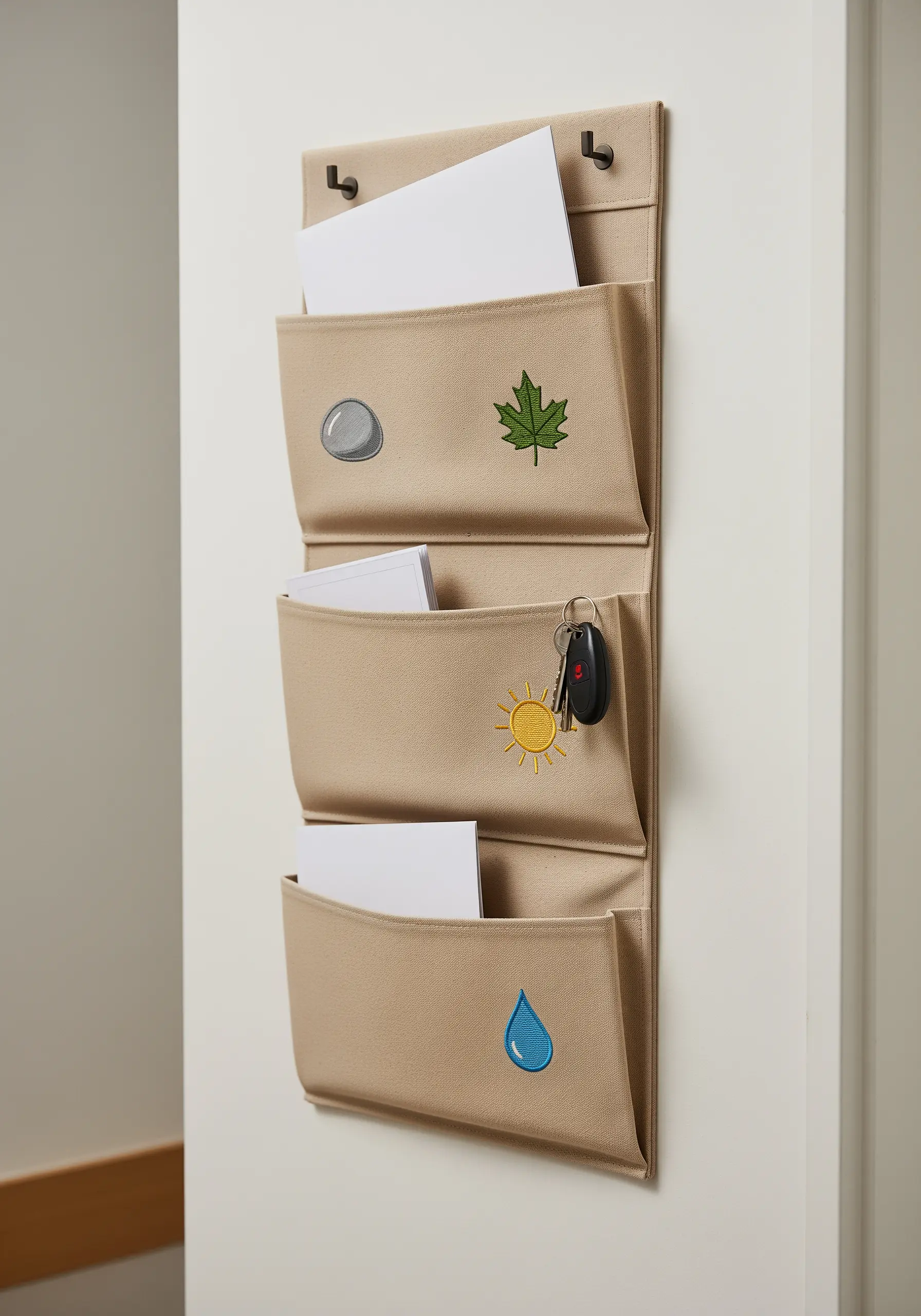
Personalize a simple fabric wall organizer with small, charming embroidered icons.
Choose easily recognizable shapes—a leaf, a sun, a water droplet—and render them with basic satin stitch fills and backstitch outlines.
This is an excellent project for using up small scraps of leftover thread from other projects.
These minimal additions add a touch of warmth and personality to a purely functional item, making everyday organization a little more beautiful.
26. Thread Painting Abstract Geological Forms

Capture the layered beauty of an agate slice with meticulous abstract thread painting.
Work in concentric, organic rows using a split stitch or a tight chain stitch, changing colors frequently to create the distinct bands.
Incorporate metallic and variegated threads to mimic the crystalline structures and subtle color shifts found in natural stone.
Creating a triptych of canvases allows you to explore variations in color and form, turning your wall into a stunning geological display.
27. The Tactile Appeal of a Uniform Surface

Create a minimalist piece with maximum tactile appeal by focusing on the perfection of your punch needle loops.
For this clean, color-blocked style, the goal is a uniform, carpet-like surface where no individual loop stands out.
Ensure your punch needle is set to a consistent loop height and pack your stitches tightly together within each color section.
The satisfying texture, combined with a simple composition and a warm, earthy palette, results in a piece that is both calming and deeply engaging.
28. Building a Living Texture with Mixed Fibers

Create a sculptural wall piece that looks like living moss by combining a wide array of green and neutral fibers.
Use a base of French knots and turkey work to build up a dense, textured ground.
Then, layer on top with couched chenille yarns, delicate velvets, and wispy threads that are left to hang loose, mimicking different types of organic growth.
These mixed-fiber creations are less about precise stitching and more about intuitive, expressive layering to create a piece that feels truly alive.