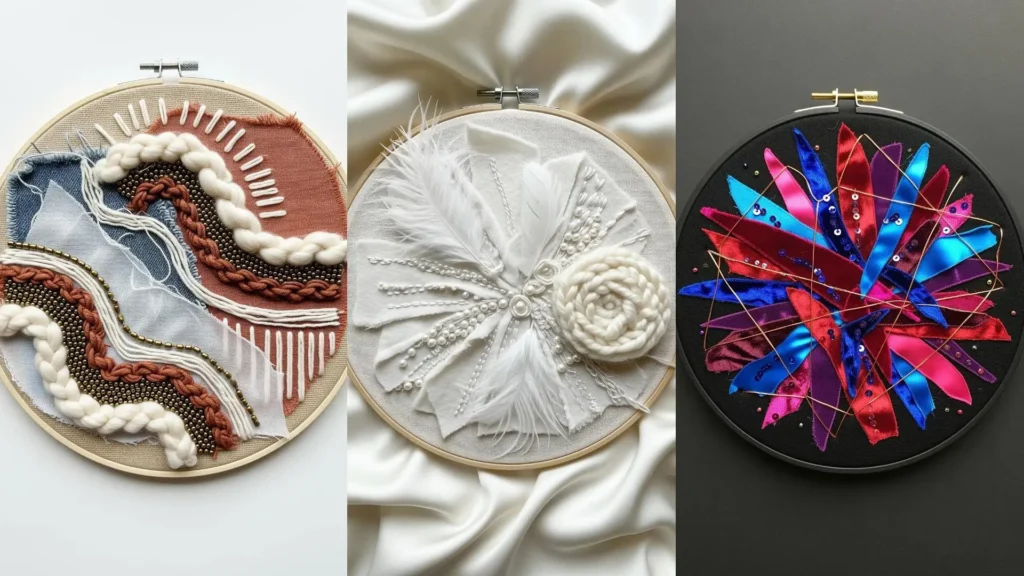
A denim jacket is more than just a piece of clothing; it’s a canvas waiting for your story. When you pick up a needle and thread, you’re not just decorating fabric—you’re infusing it with personality, transforming a simple garment into a piece of wearable art that is uniquely yours.
Forget the idea that embroidery must be complex to be beautiful. The modern aesthetic thrives on clarity and intention. With line-art portraits, every single stitch matters. It’s about capturing an expression, a mood, or a silhouette with the pure, expressive power of a single line. This is where your skill as a stitcher truly shines.
In this guide, we’ll move beyond basic patterns. You will learn how to choose the right stitch for fluid curves, how to use thread weight to create emphasis, and how to combine minimalist embroidery designs with unexpected textures. Prepare to see your jacket not just as something you wear, but as a gallery of one.
1. The Essential Single-Line Statement
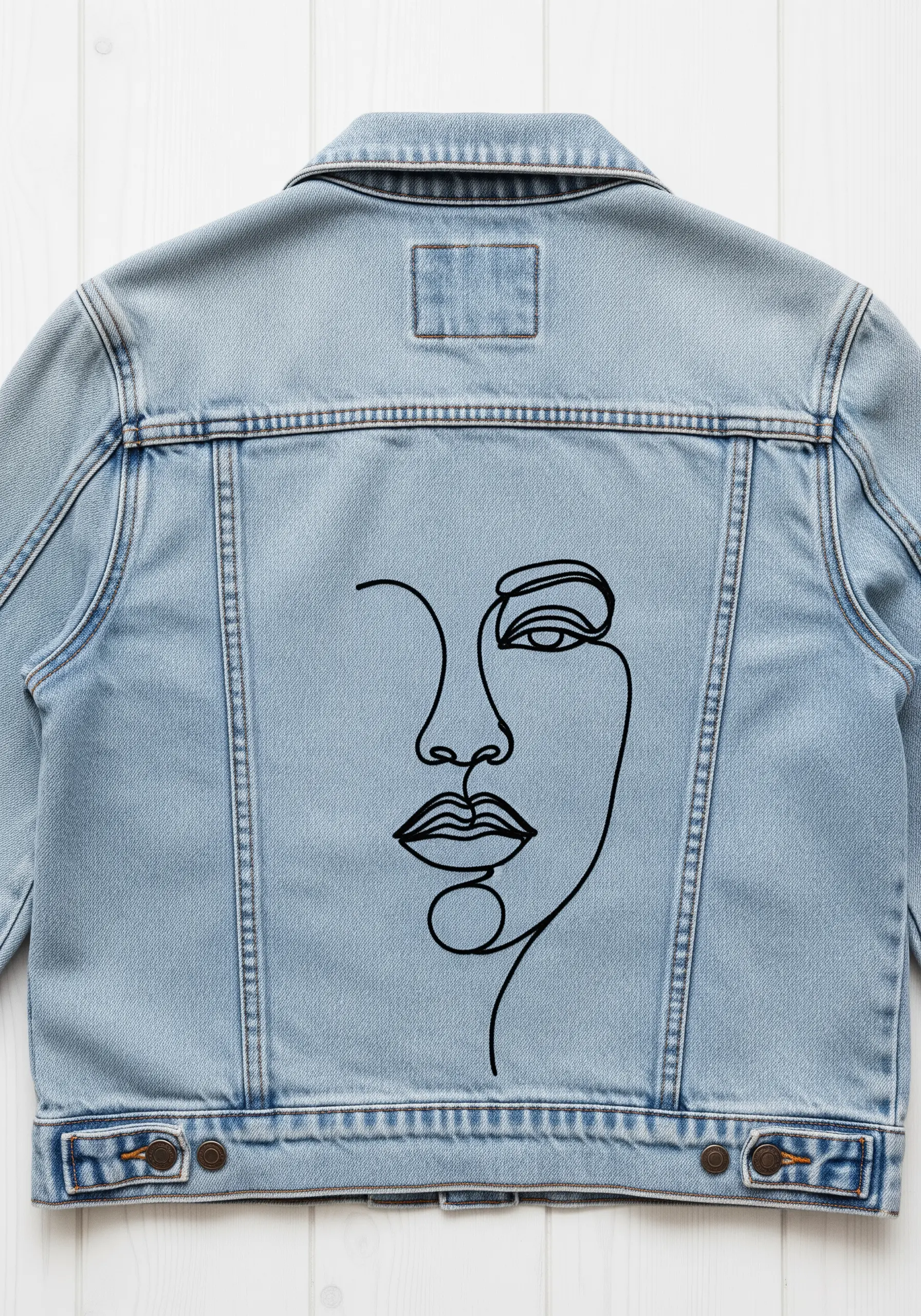
To achieve this level of minimalist elegance, the consistency of your stitch is paramount.
Opt for a whipped backstitch; first, you create a standard backstitch, then you whip the thread around each stitch without piercing the fabric.
This technique encases the initial stitches, creating a smooth, uninterrupted line that resembles a single, perfect cord drawn across the denim.
Use all six strands of standard embroidery floss for a bold line that has presence and won’t get lost on the textured fabric.
2. Contrast Line Art with Soft Floral Fills
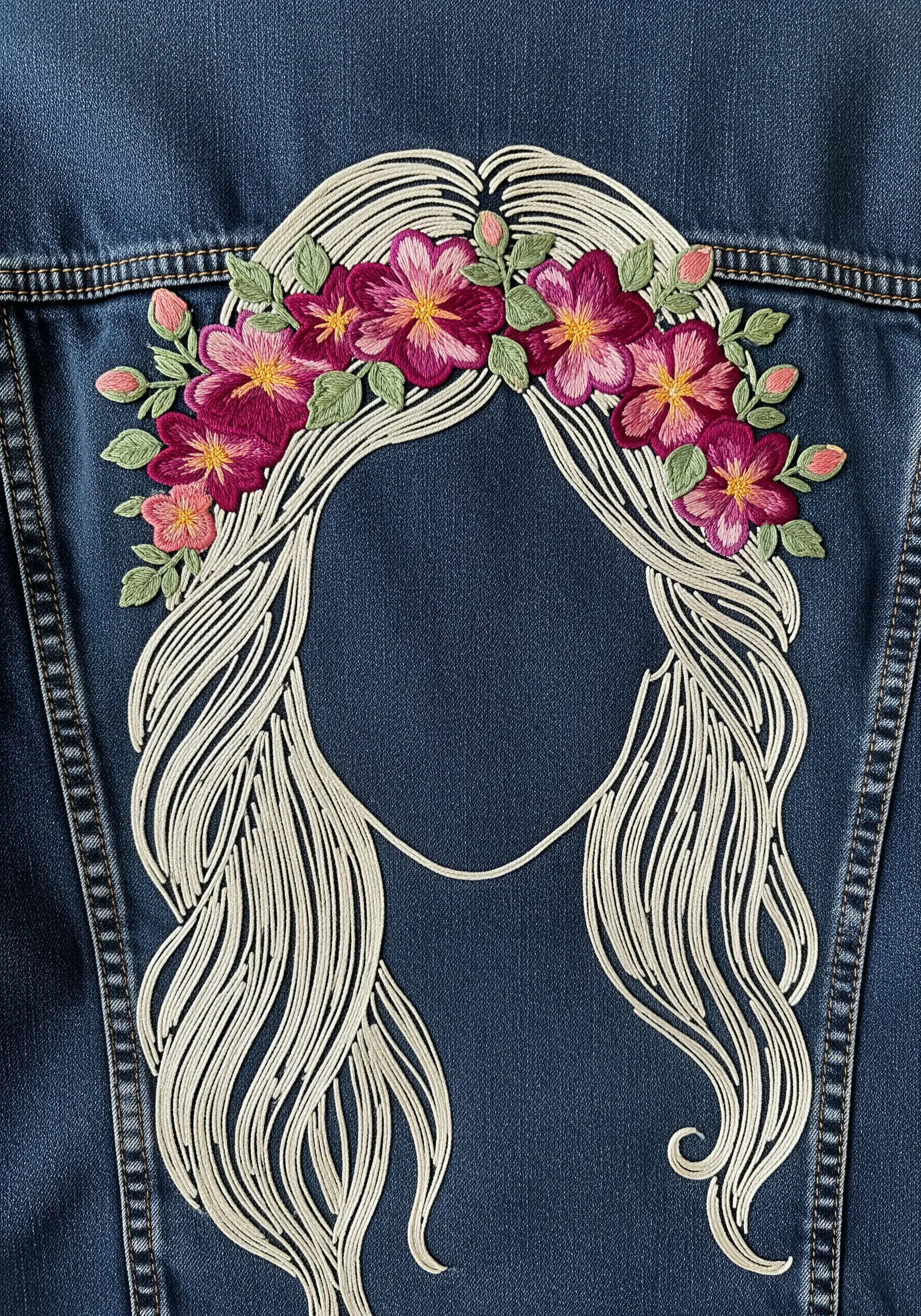
Combine the simplicity of line work with the richness of filled stitches for a design that balances delicacy and strength.
Render the hair using a crisp backstitch with a light, neutral thread to create the illusion of flowing strands without overwhelming the composition.
For the floral crown, use a long-and-short stitch to blend shades of pink and magenta, giving the petals a soft, painted quality.
This contrast in techniques—sharp lines next to soft fills—is what gives the piece its professional, polished feel.
3. Build Portraits with Geometric Color Blocking
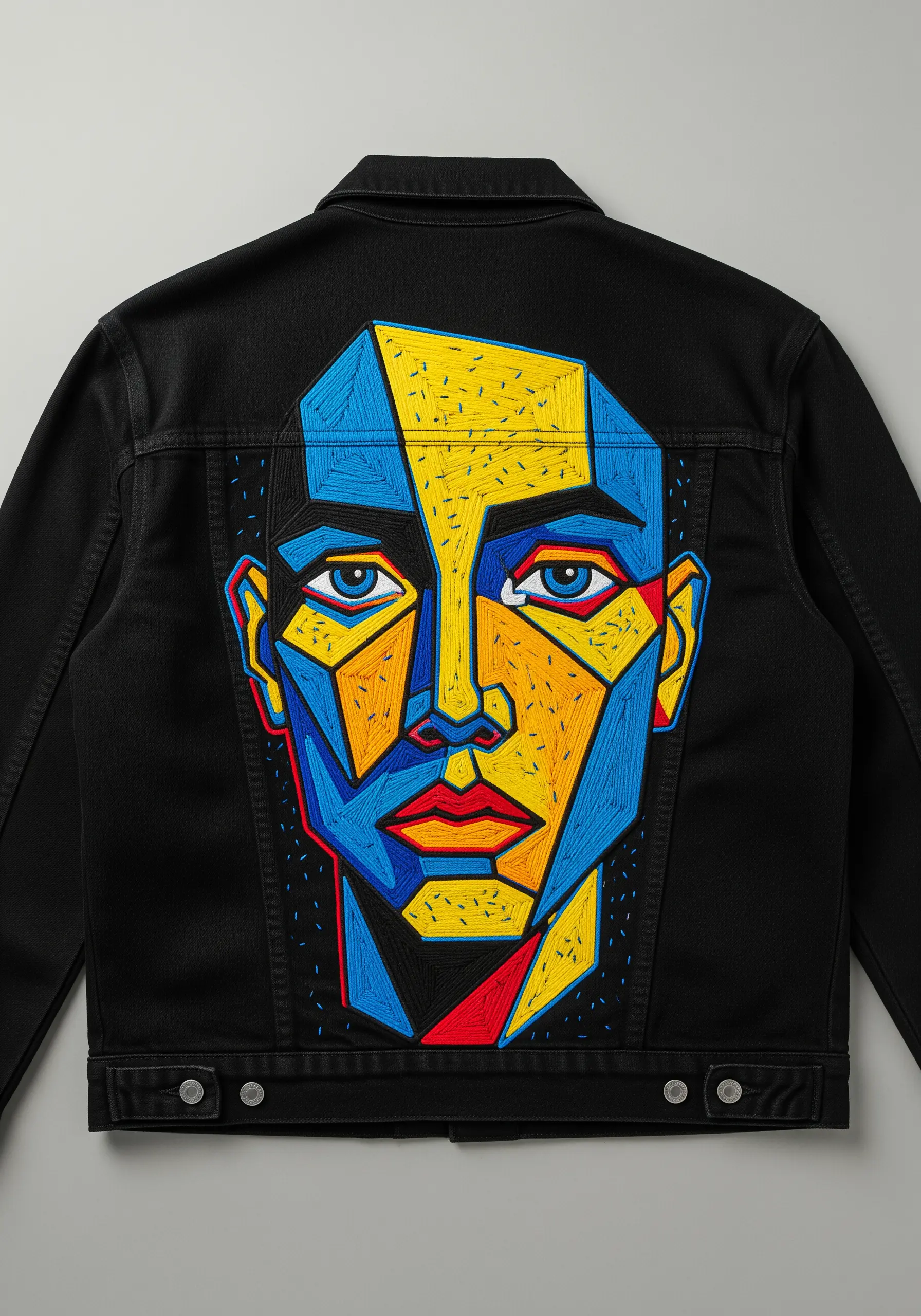
Transform a portrait into an abstract piece by mapping out facial planes with bold, geometric shapes.
Use a single, directional fill stitch, like a dense seed stitch or short satin stitches, within each colored section.
By varying the direction of your stitches in adjacent blocks (e.g., vertical in one, horizontal in the next), you create a subtle textural shift that enhances the cubist effect.
This method turns the face into a canvas of color and texture, proving portraits don’t always have to be realistic to be compelling.
4. Elevate Collars with Metallic Thread Accents
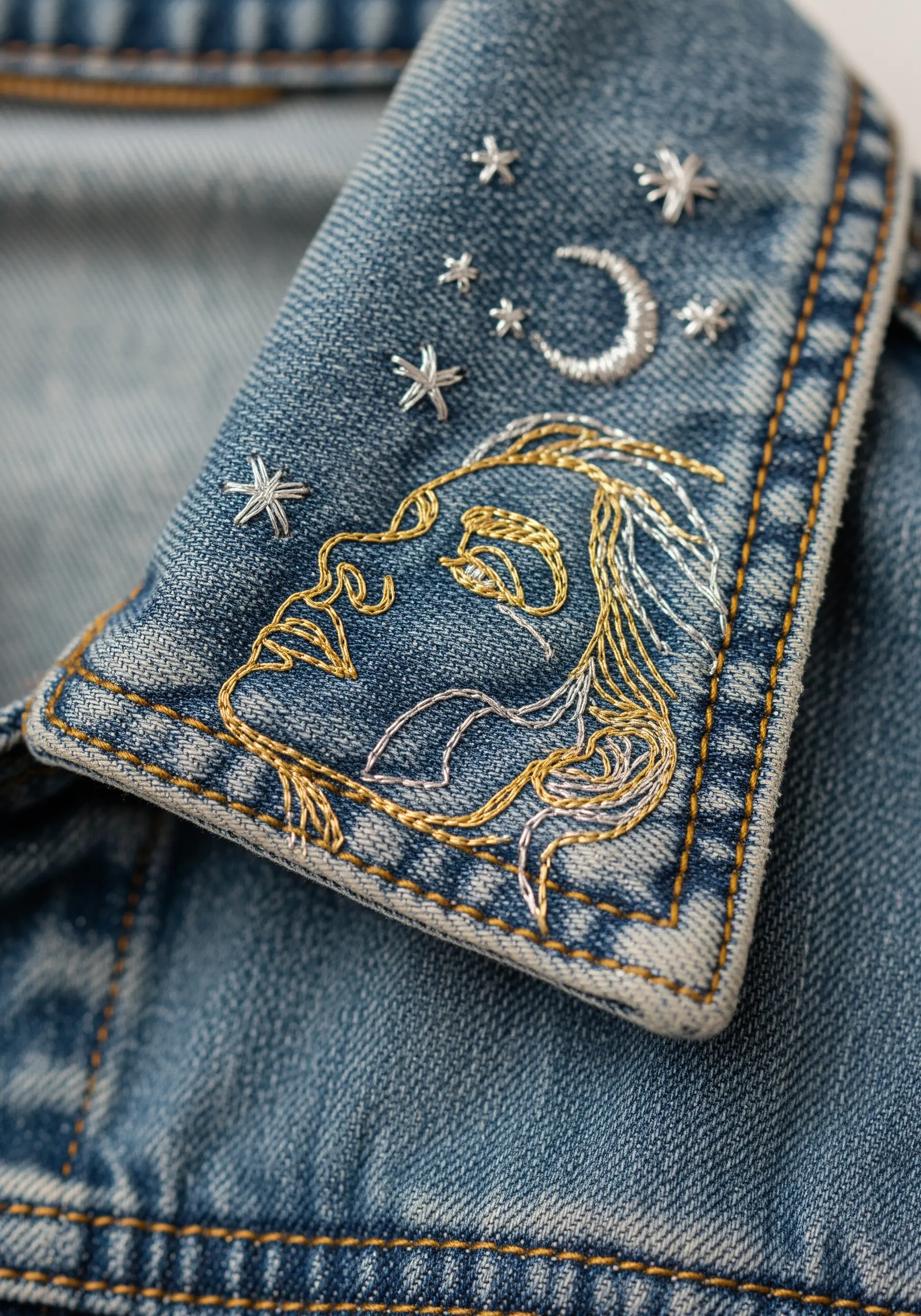
Transform an often-overlooked area like the collar into a focal point with the quiet luxury of metallic threads.
When working with metallics, use shorter lengths of thread (no more than 12 inches) to minimize tangling and fraying, which these threads are prone to.
A simple stem stitch in gold and silver creates a liquid-like line that catches the light beautifully.
Combine the portrait with tiny, scattered star stitches using a single strand of metallic floss to create a celestial narrative in a small space.
5. Master the Continuous Line Embrace
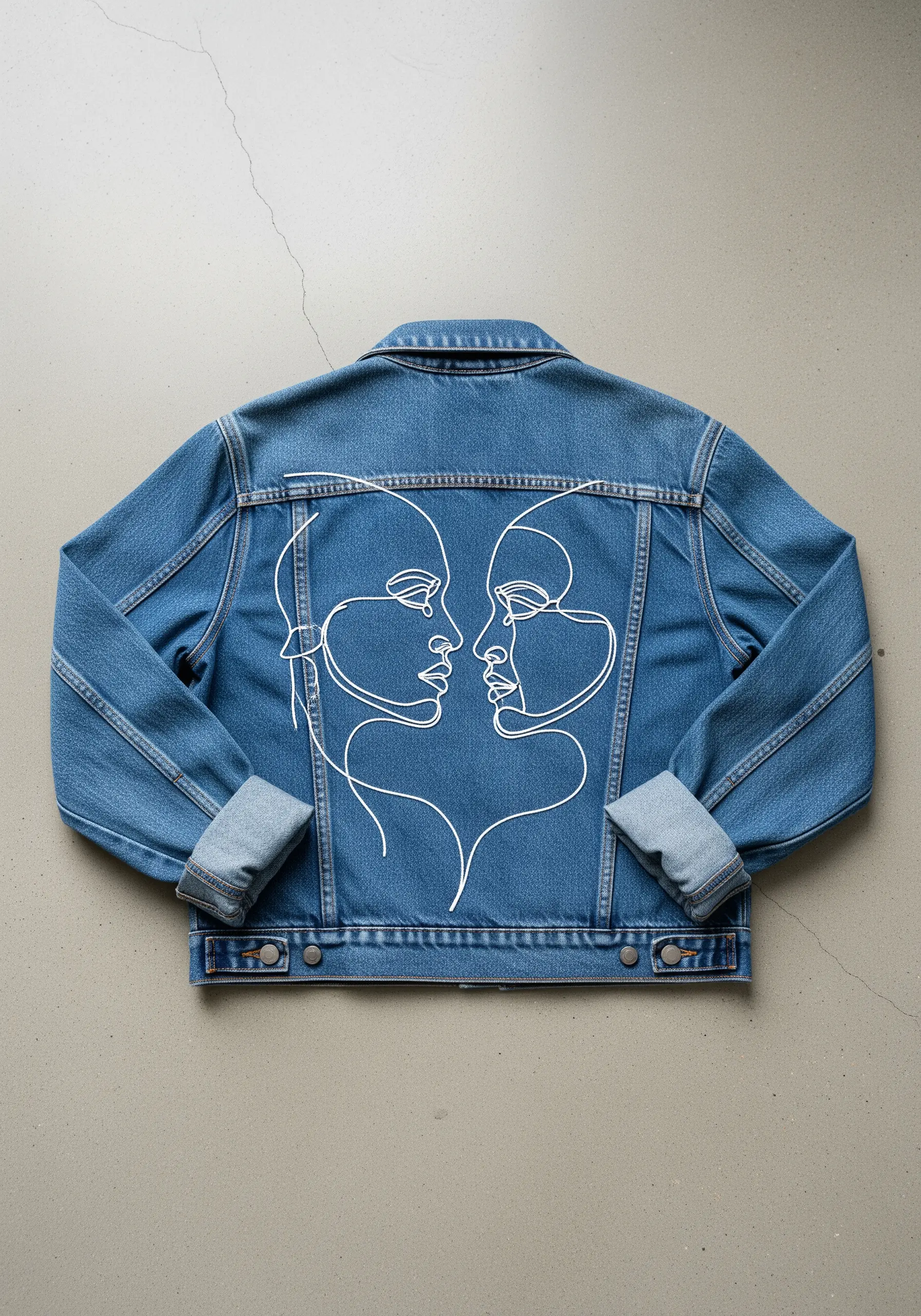
For a design that flows uninterrupted across a large surface, maintaining even thread tension is your primary goal.
Use a high-quality, tear-away stabilizer on the inside of the jacket to prevent the denim from puckering as you stitch.
Choose a simple backstitch or stem stitch for its reliability and clean appearance.
Using a bright white thread on mid-wash denim ensures the abstract line art silhouettes are crisp, clear, and immediately impactful.
6. Integrate Fabric Appliqué for Bold Impact
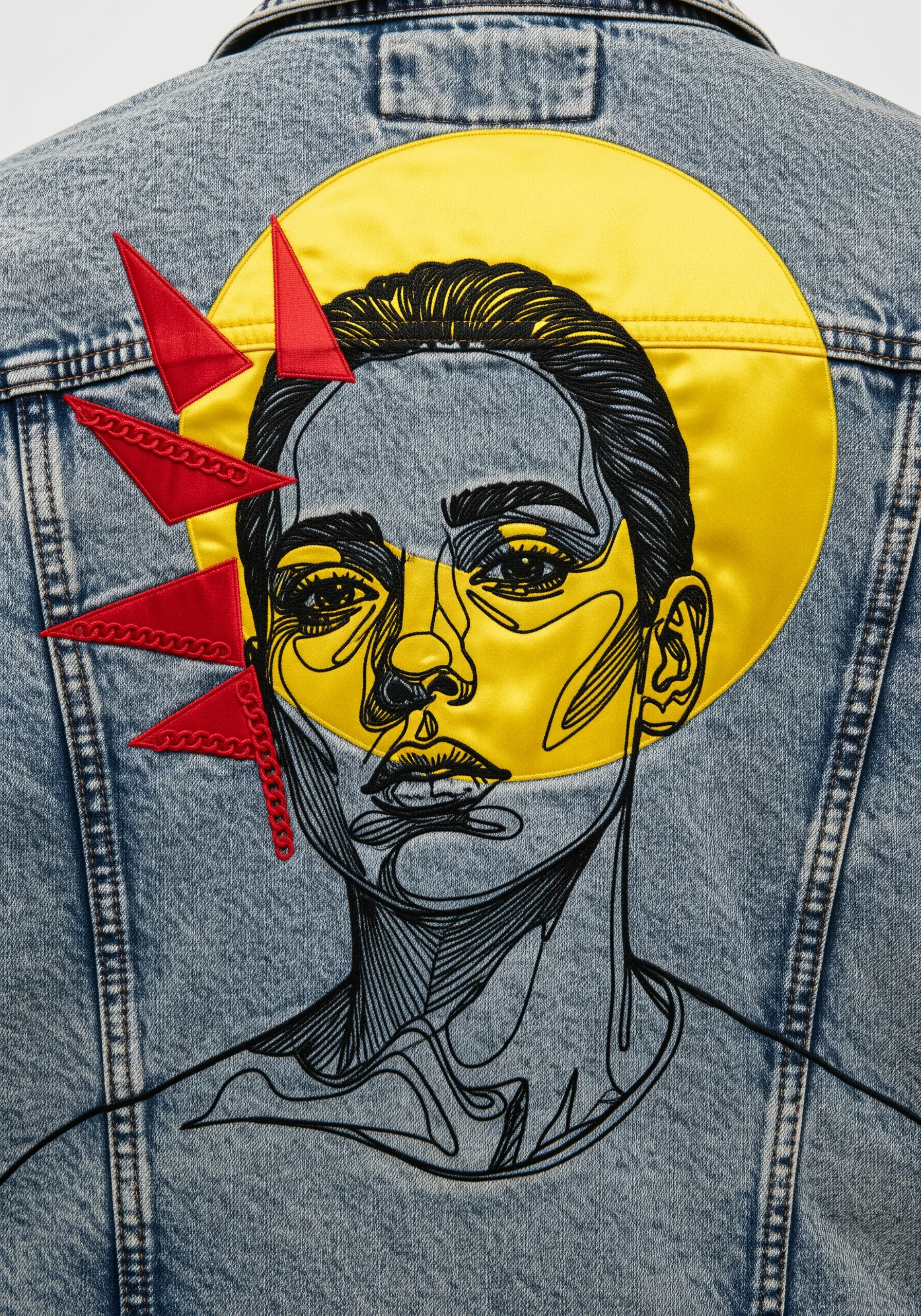
Combine thread with fabric to introduce solid blocks of color and shape that would be time-consuming to fill with stitches alone.
Select a fabric with a tight weave, like satin or cotton poplin, for the appliqué elements to prevent fraying.
Tack down your fabric shapes with a fusible bonding web before securing the edges with a neat blanket stitch or a tight satin stitch border.
The embroidery then interacts with the appliqué, creating a layered, mixed-media embroidery piece with incredible visual depth.
7. Amplify Small Spaces with Neon Thread
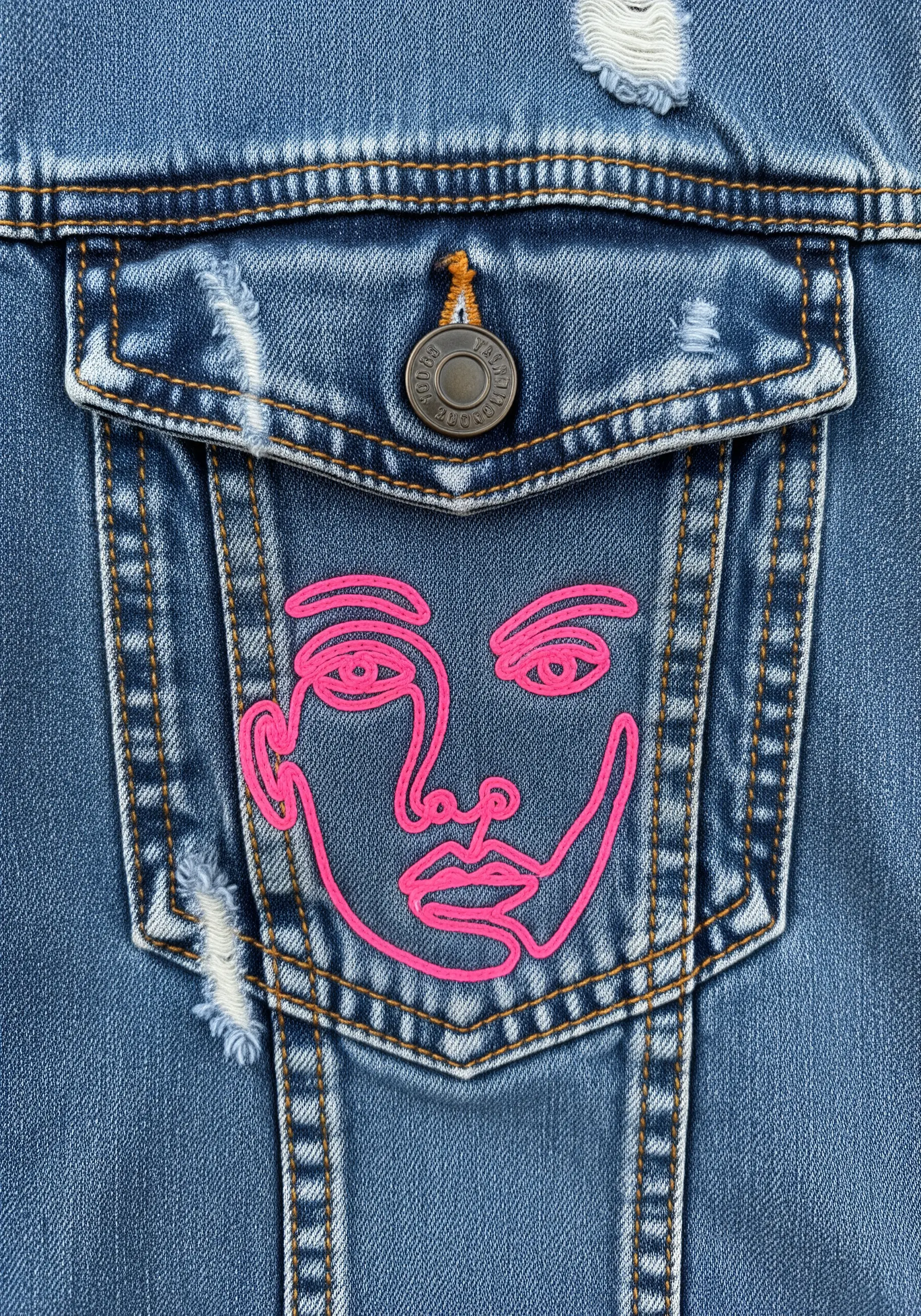
Make a small area like a pocket command attention by using a single, electrifying color.
Choose a neon thread, which pops dramatically against any shade of denim, from light wash to indigo.
To make the line even bolder, use a heavier thread like #5 pearl cotton, or couch down multiple strands of standard floss with a matching, finer thread.
This technique ensures your small design has the visual weight to stand out, proving that impact isn’t about size, but about confident color choices.
8. Frame Your Portrait with a Textured Border
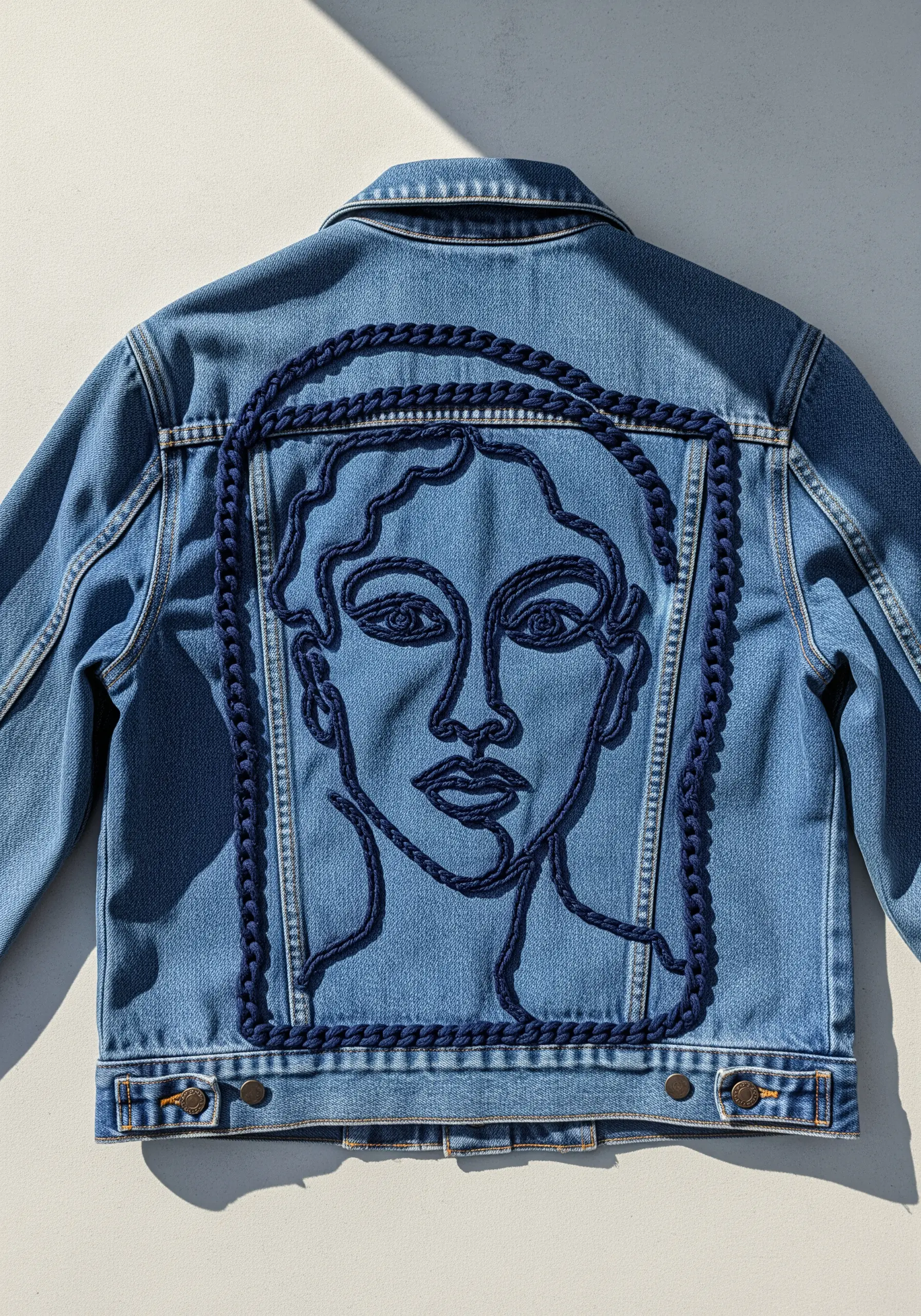
Define your design and give it a finished, gallery-like quality by adding a robust, textural frame.
Create this thick, corded border using a heavy chain stitch worked with multiple strands of floss or a soft cotton yarn.
Alternatively, you can couch a decorative cord or thick braid onto the jacket, tacking it down with small, invisible stitches.
This framing technique contains the energy of the line-art portrait, making the entire back panel feel like a cohesive piece of art.
9. Create Abstract Emotion with Stitch Splatters
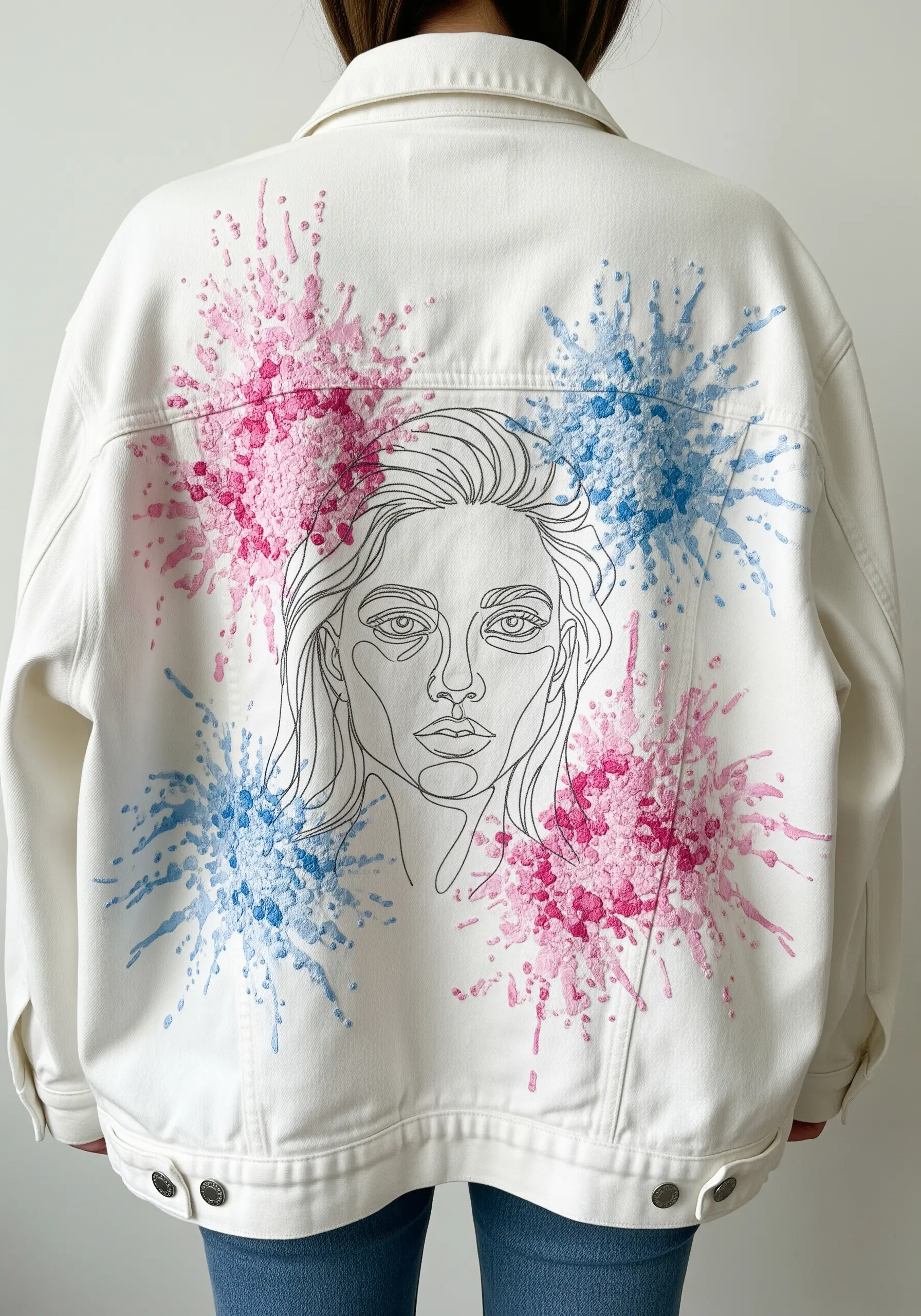
Add a layer of expressive energy to a clean line-art portrait by incorporating abstract color splatters.
Achieve this effect by clustering French knots of varying sizes and tensions in explosive patterns around the central figure.
Intersperse the knots with erratically placed seed stitches and straight stitches to mimic the chaotic beauty of flung paint.
This method allows you to combine the precision of line work with the spontaneity of abstract thread painting, creating a piece that feels both controlled and free.
10. Capture Character in a Pet Portrait
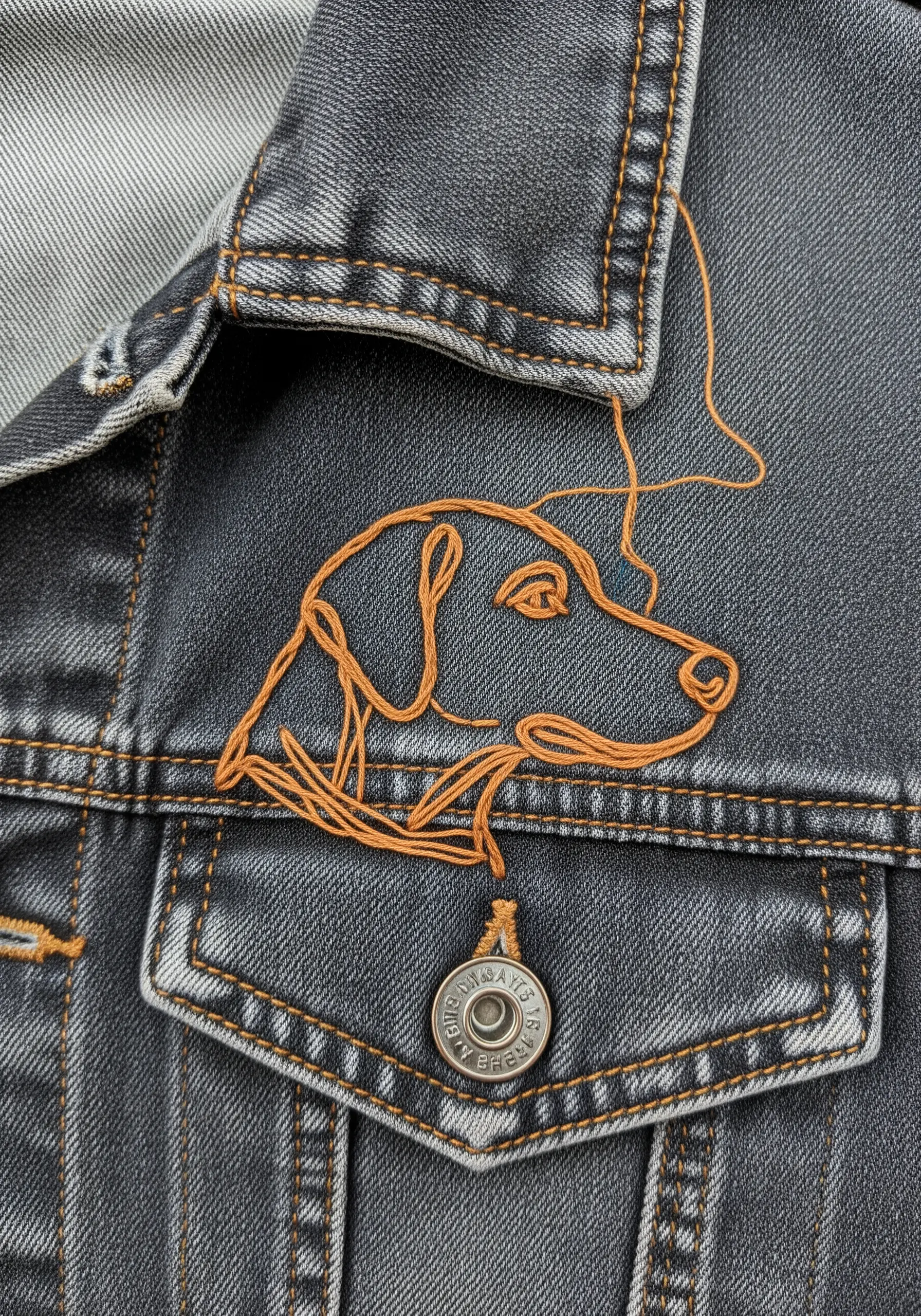
When stitching a beloved pet, focus on the few essential lines that define their personality—the droop of an ear, the curve of the snout.
Use a simple backstitch with three strands of floss; it’s delicate enough for detail but strong enough to be clear.
Consider a playful touch, like extending a single thread down to wrap around a button, connecting the art to the garment itself.
This creates one of those delicate pet line-art embroidery ideas that feels personal and thoughtfully designed.
11. Define a Portrait with Negative Space
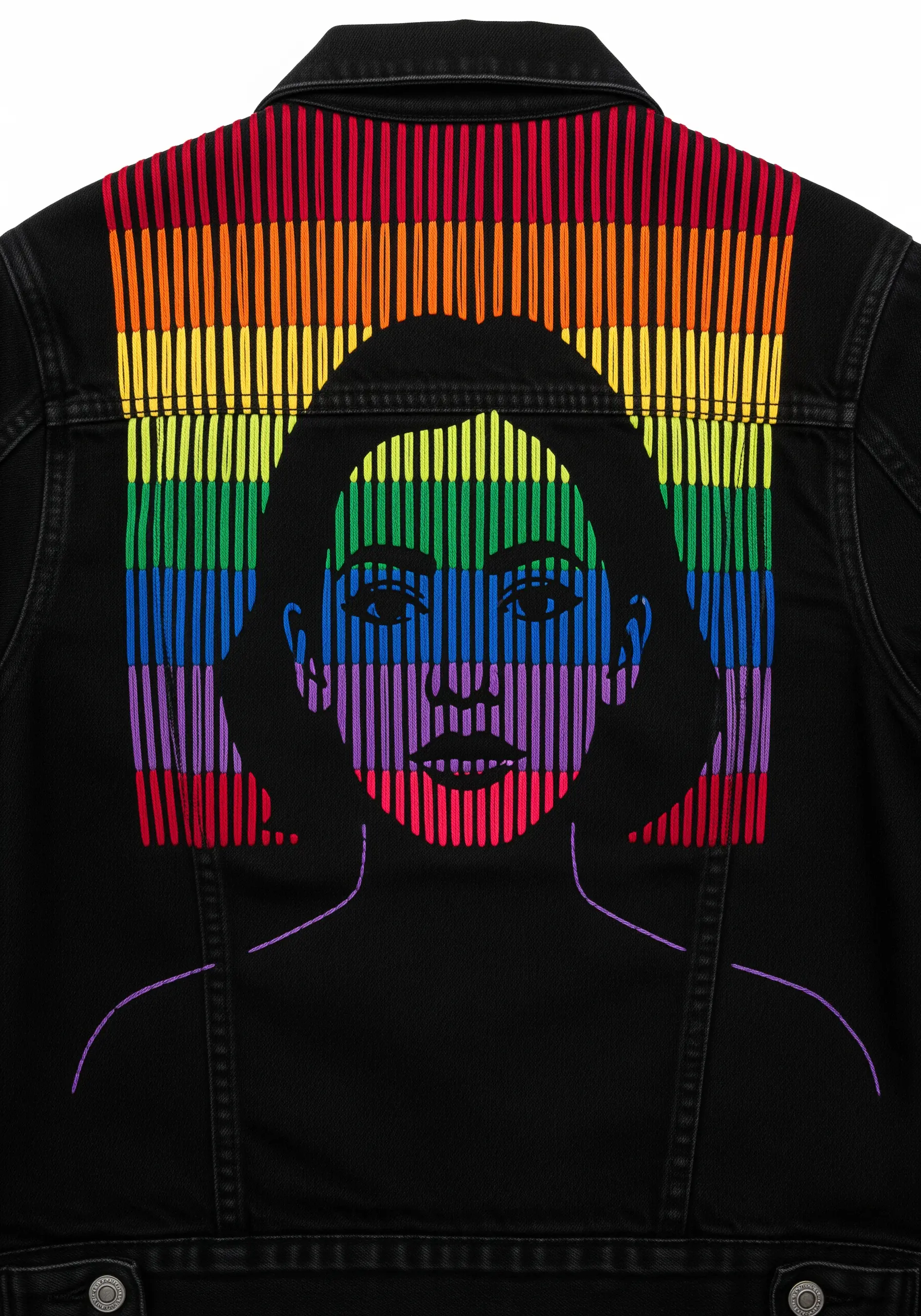
Instead of stitching the portrait itself, stitch the background and let the empty space create the image.
Map out your design and fill the background with uniform, vertical satin stitches, changing colors to create a rainbow gradient.
The key to success here is precision: use a ruler and a fabric marker to draw guidelines for your satin stitch bars, ensuring they are perfectly parallel and evenly spaced.
The result is a visually stunning piece where the unstitched denim becomes the true subject.
12. Add Dimension with a Textured Fill
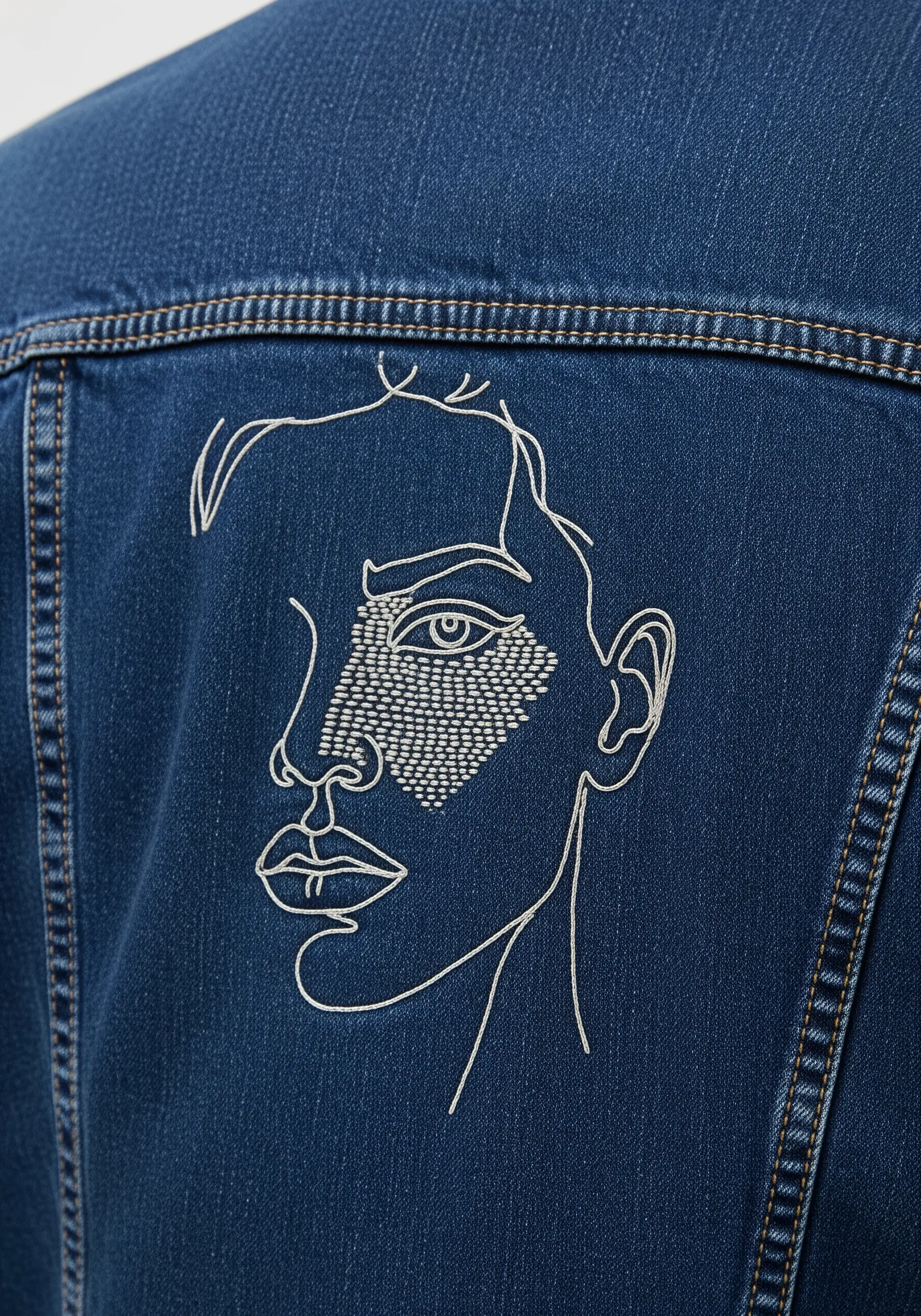
Draw the viewer’s eye and add an unexpected tactile element by filling just one portion of a line-art portrait.
Outline your portrait with a clean, two-strand backstitch in a light, contrasting thread.
Then, select one area—like a cheek or a section of shadow—and fill it densely with tiny seed stitches or French knots.
This technique creates a focal point and introduces a sophisticated play between smooth lines and rough texture.
13. Weave a Celestial Narrative
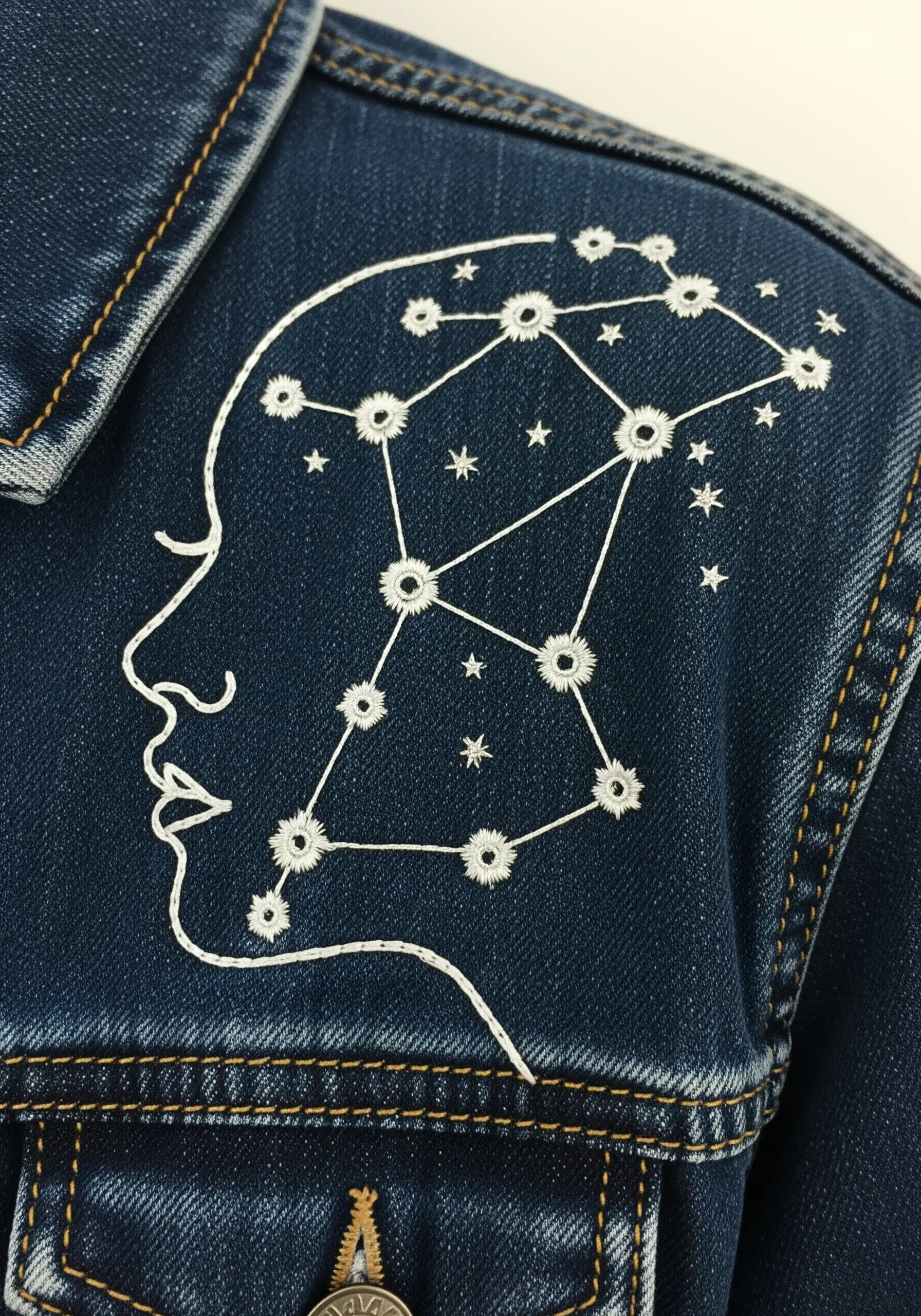
Merge the human form with the cosmos by embedding a constellation within a simple profile silhouette.
Use a crisp stem stitch for the outline of the head to give it a smooth, defined edge.
For the stars, use small, tightly packed satin stitches to form the dots of the constellation, connecting them with a fine, single-strand backstitch.
Scatter a few isolated French knots or tiny star stitches around the main constellation to create a sense of deep space.
14. Crown a Silhouette with Lush Botanicals
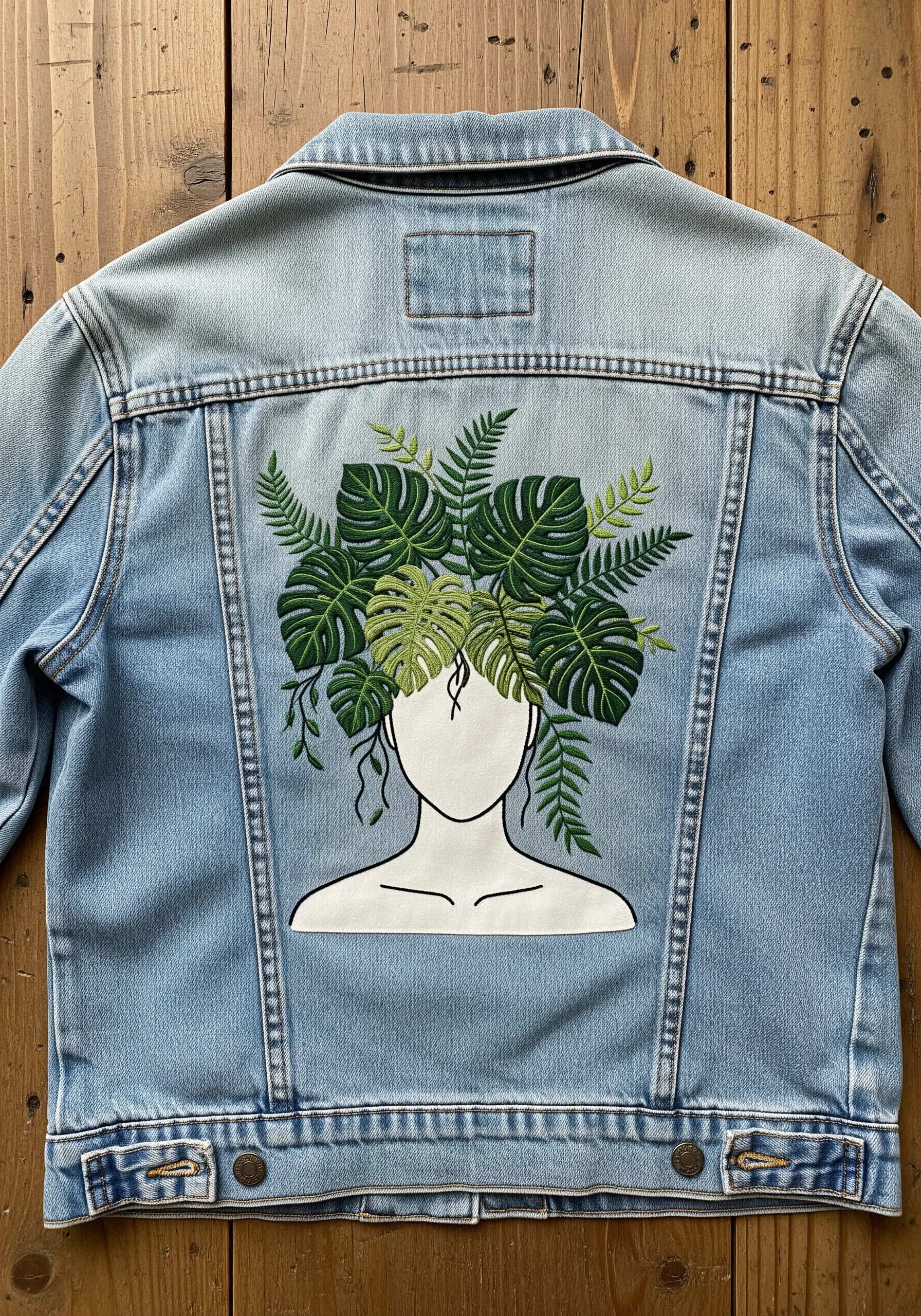
Create a stunning surrealist portrait by replacing hair with an explosion of embroidered foliage.
For a perfectly clean edge on the silhouette, cut the shape from a piece of fabric, iron it on with fusible web, and secure it with a neat outline stitch.
Build up the leaves using various stitches: satin stitch for broad monstera leaves, fishbone stitch for ferns, and detached chain stitches for smaller sprigs.
These detailed leaf stitching techniques will create a vibrant, textural jungle that contrasts beautifully with the flat silhouette.
15. Frame a Geometric Design with Modern Hardware
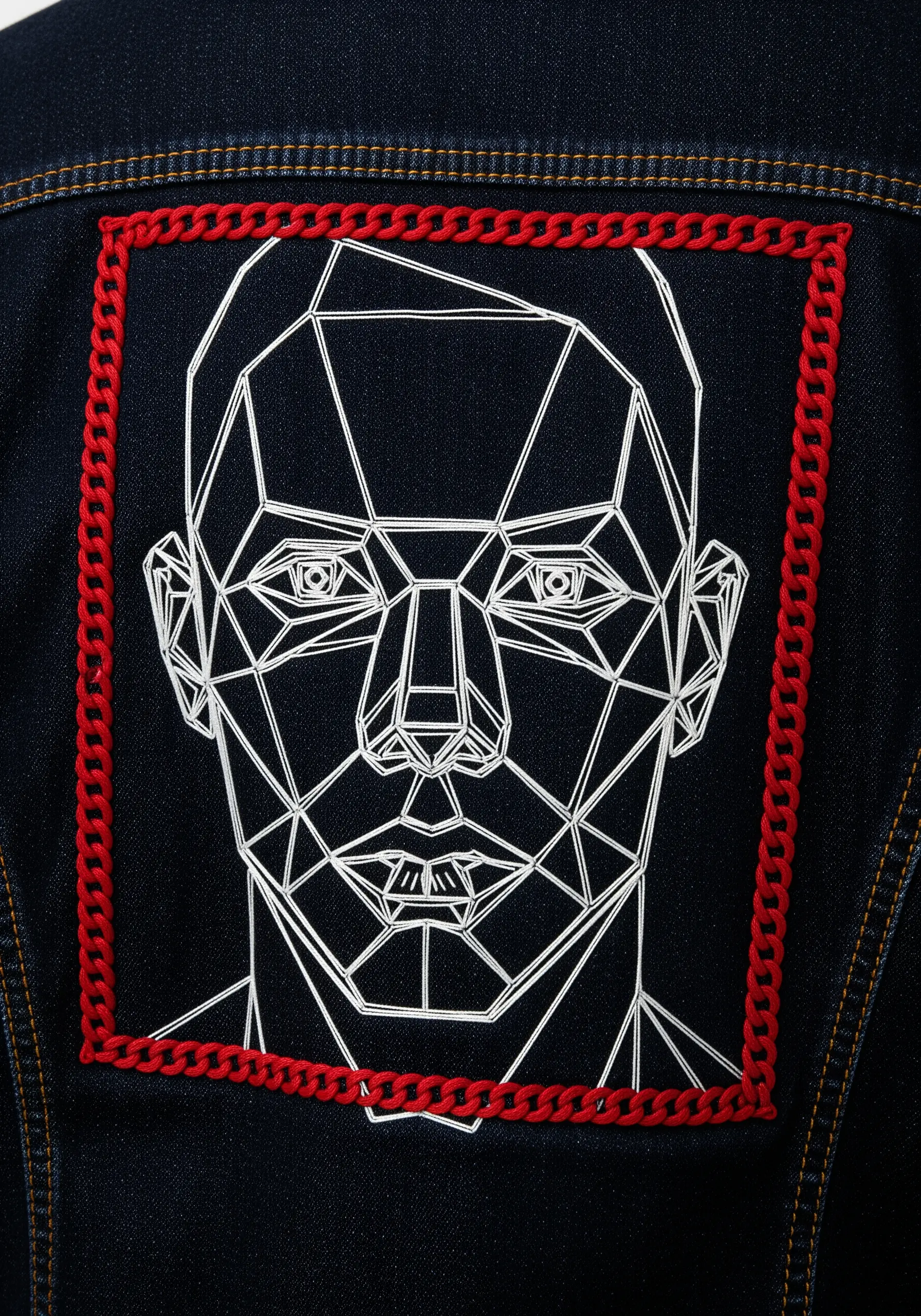
Complement the sharp, angular lines of a geometric portrait by framing it with an industrial-inspired element.
After stitching the portrait in a high-contrast thread, source a small curb chain from a craft or hardware store.
Carefully tack the chain down along the border of your design using a matching thread and small, evenly spaced couching stitches.
This addition of hardware introduces a completely different texture and transforms the embroidery into a bold, mixed-media piece.
16. Depict Connection with Intertwined Lines
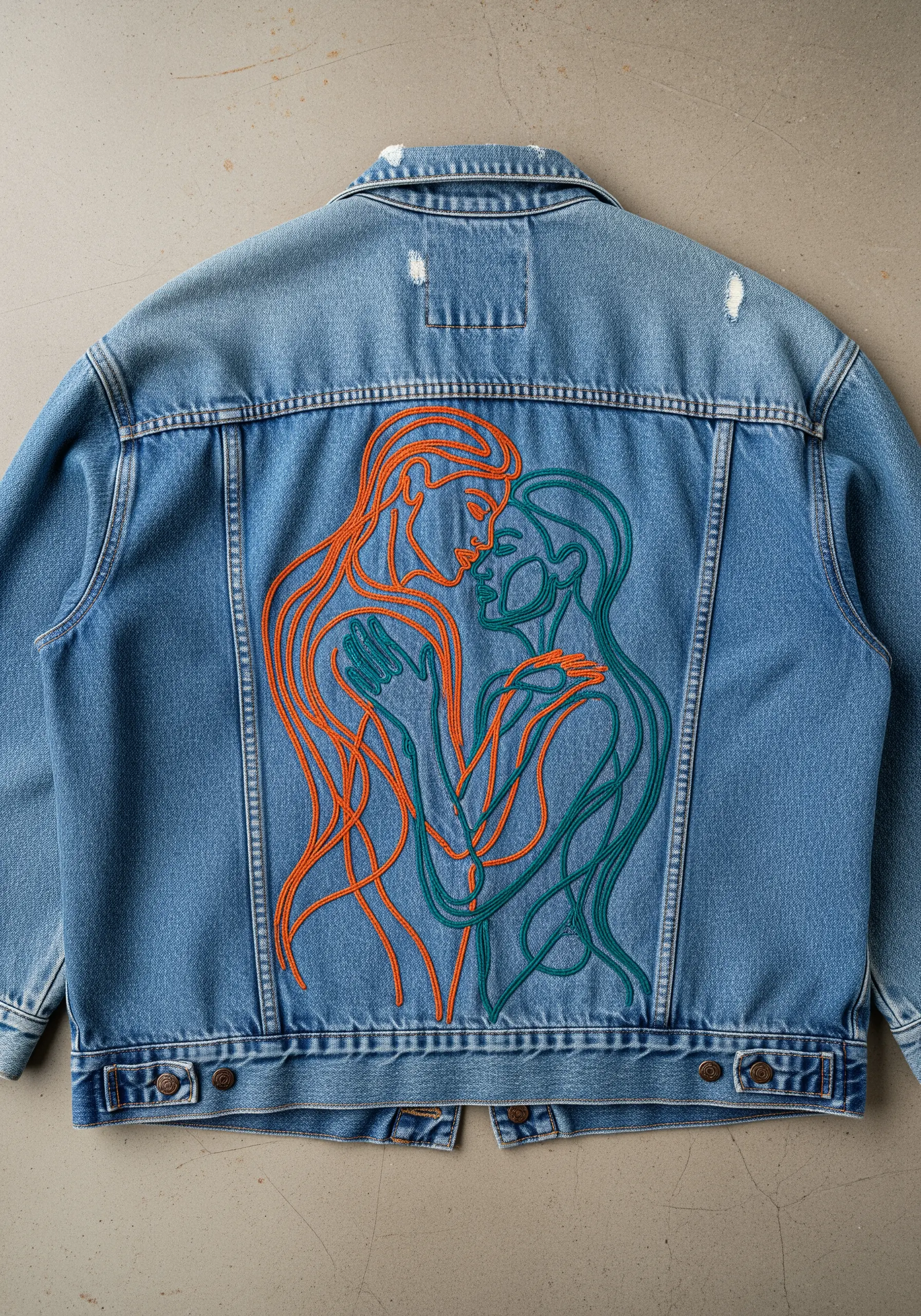
Use two distinct colors to represent two figures, weaving the lines together to symbolize intimacy and connection.
Choose colors with similar tonal values but different hues, like this orange and teal, so they harmonize rather than compete.
To maintain clarity where the lines overlap, ensure one color consistently stitches *over* the other.
A whipped backstitch is ideal here, as its smooth, cord-like finish prevents the individual stitches from looking messy where the lines cross.
17. Sculpt Hair with Three-Dimensional Fibers
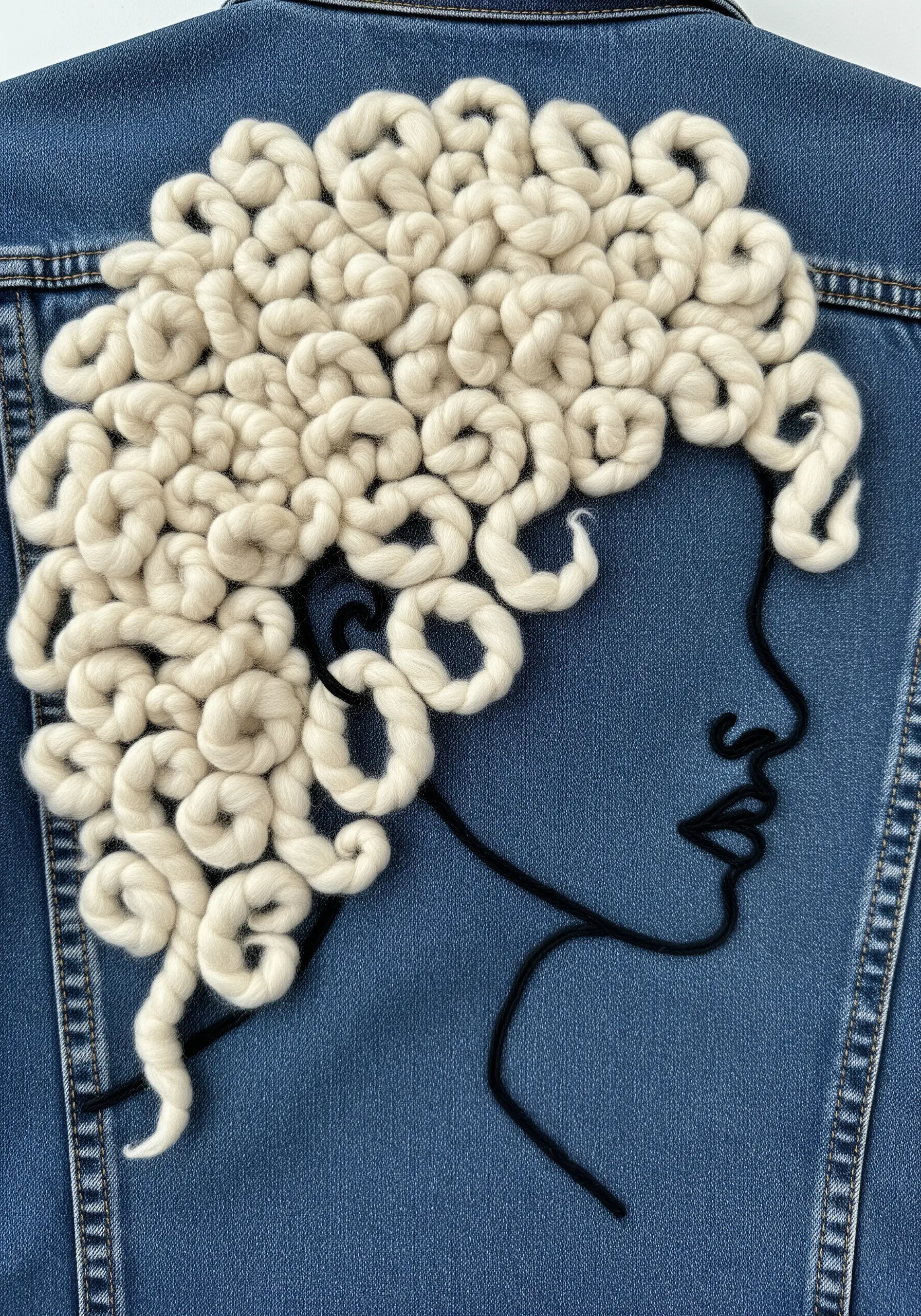
Move your embroidery off the surface of the fabric by using thick yarn or wool roving to create sculptural hair.
First, stitch the simple line-art profile using a traditional backstitch.
Then, shape your thick fiber into curls and coils, tacking them down securely with a matching, thinner thread using the couching technique.
These modern texture layering embroidery techniques create a stunning 3D effect that invites touch and makes the portrait leap off the jacket.
18. Embrace Deconstruction with Raw-Edge Appliqué
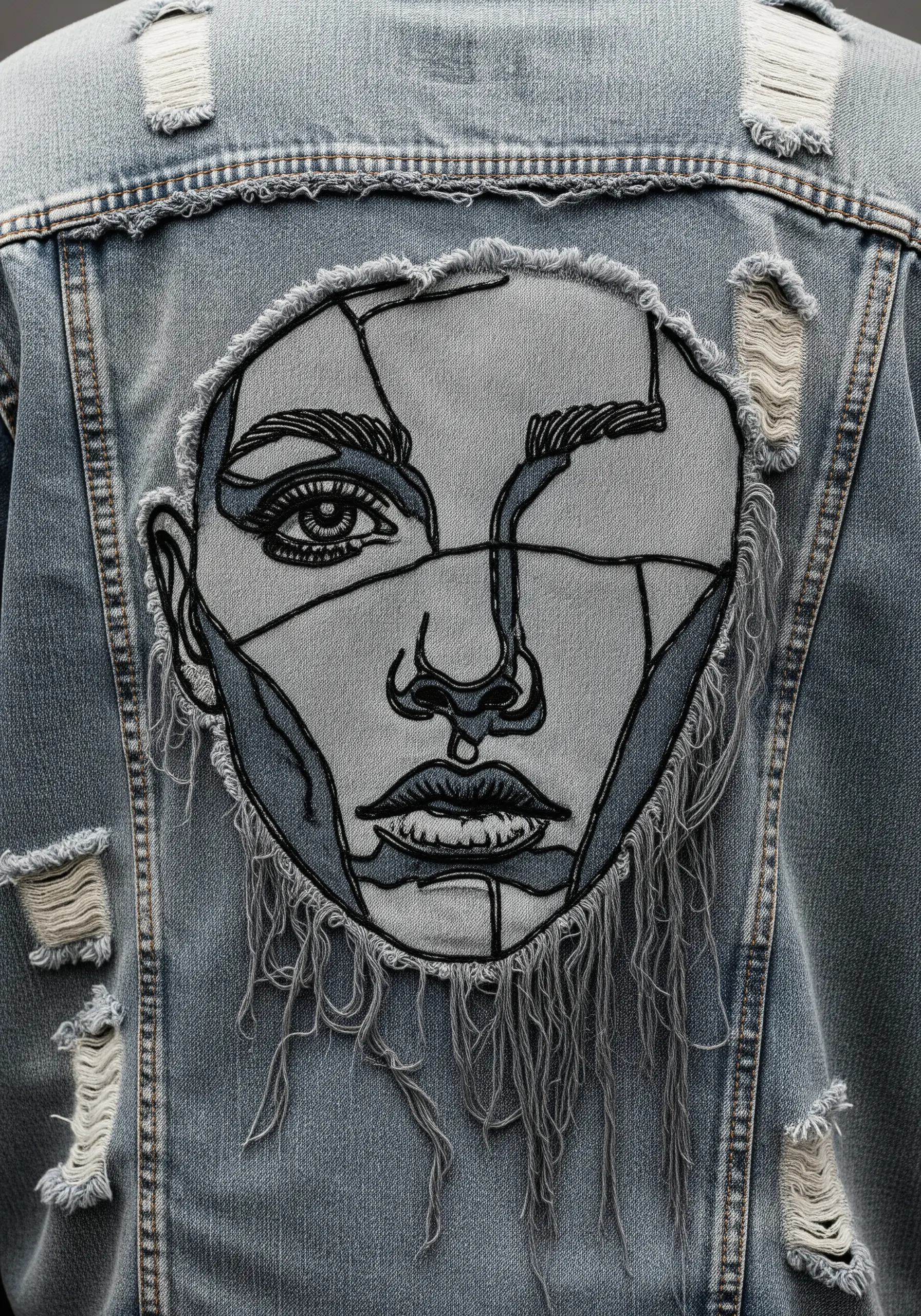
Create a fragmented, archaeological feel by combining embroidery with distressed, raw-edge fabric patches.
Cut your portrait’s facial planes from a contrasting fabric (like a lighter-wash denim or canvas) and appliqué them loosely, leaving the edges to fray.
Stitch your line-art details over these patches, allowing the stitches to cross the raw edges and connect the fragments.
Leave long, loose threads hanging from the bottom to enhance the beautifully unfinished, deconstructed aesthetic.
19. Channel Pop Art with Bold Color and Line
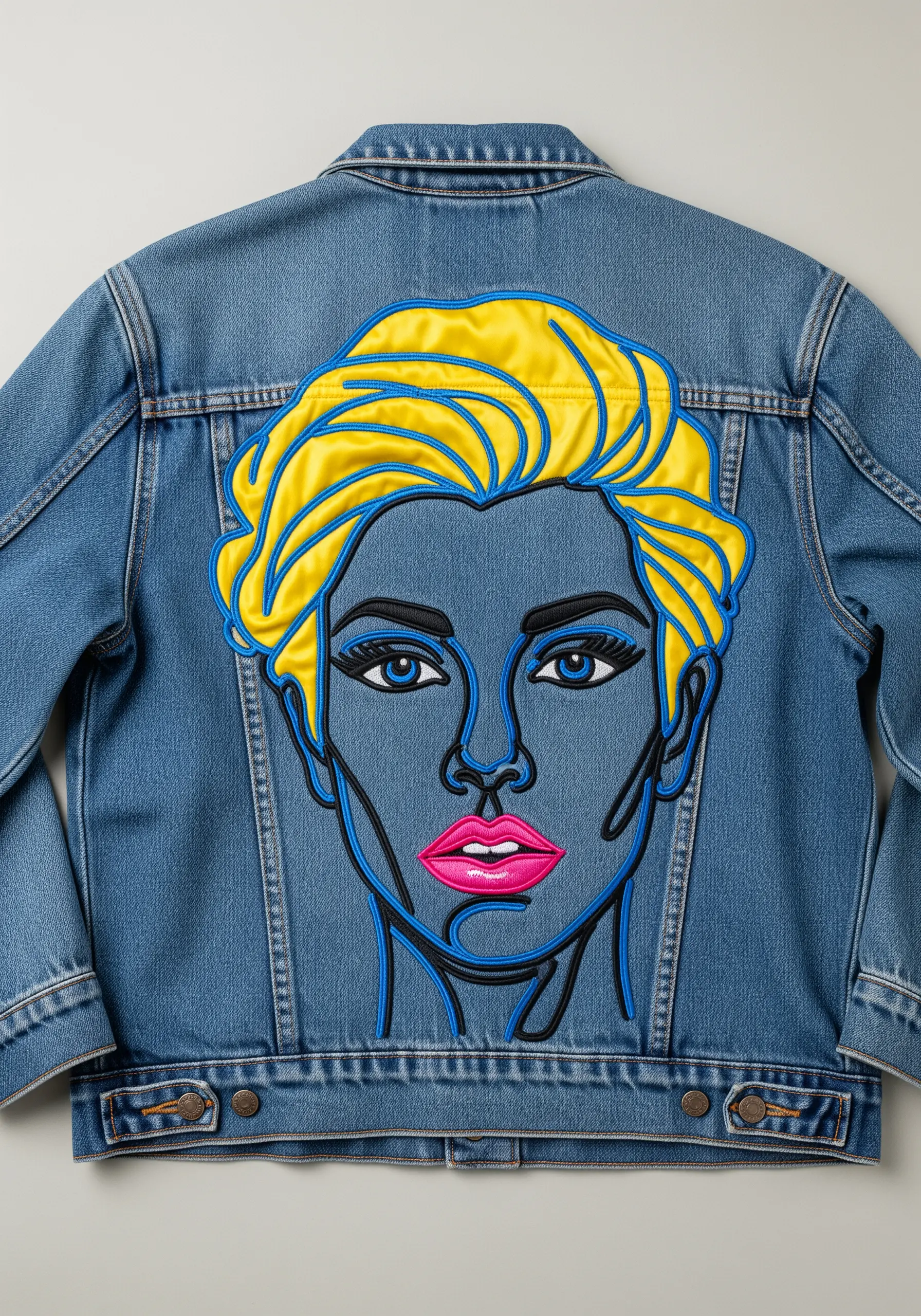
Capture the high-energy spirit of pop art with a palette of vibrant, saturated colors and strong, defining outlines.
Use a smooth satin stitch to fill in the areas of solid color, ensuring your stitches are laid closely together for a seamless finish.
Once the color blocks are complete, go back in with a bold black thread and outline every shape with a crisp backstitch or stem stitch.
This technique mimics the graphic, print-like quality of pop art and creates a design that is impossible to ignore.
20. Master Intricacy with Two-Tone Linework
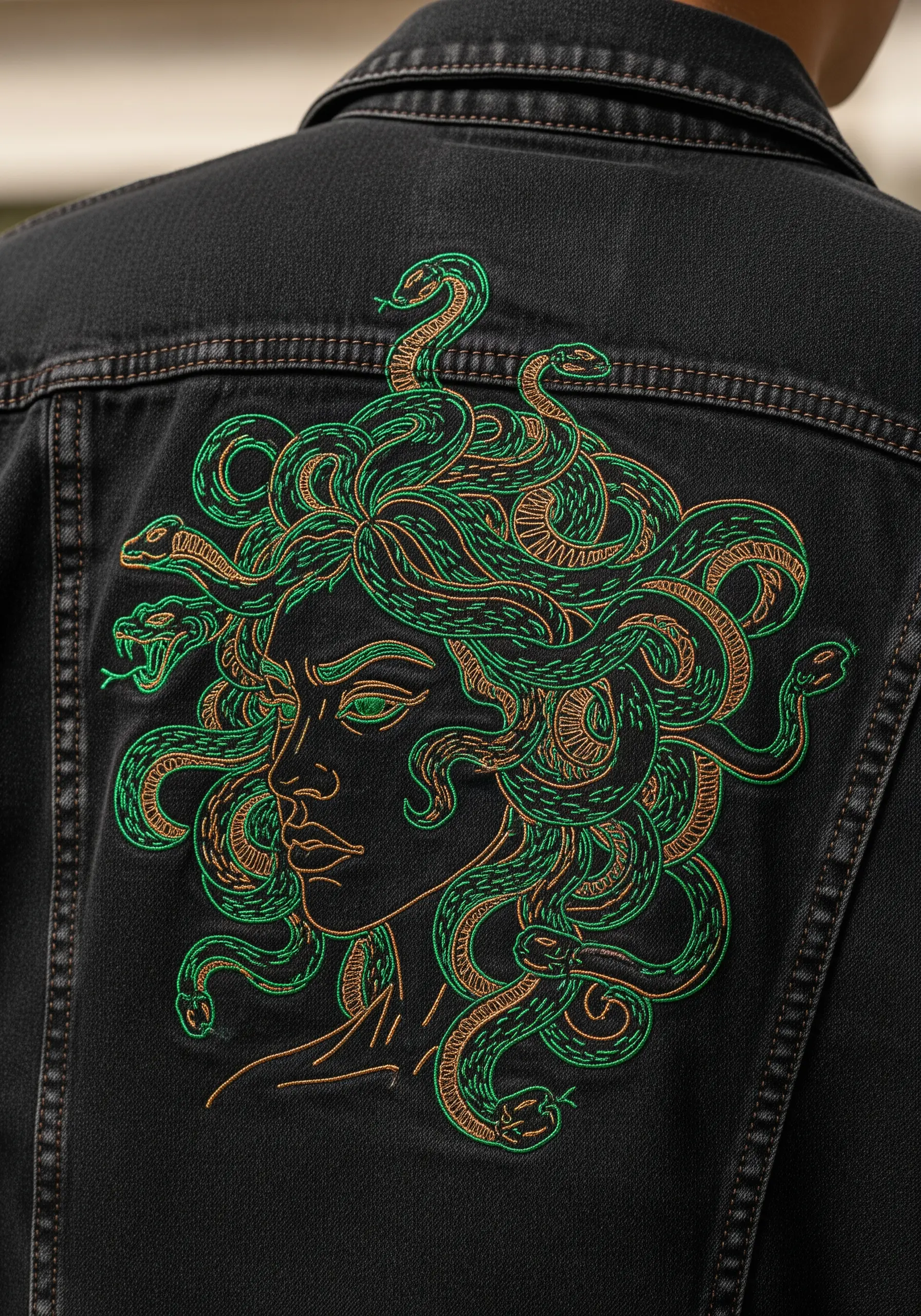
For a complex design like this Medusa portrait, use two colors to create depth and organize the visual information.
Assign one color (green) to the primary forms—the snakes’ bodies and the hair’s main flow—and the second color (copper) to the secondary, textural details like scales and shadows.
This strategic use of color prevents the intricate lines from becoming a tangled mess and guides the viewer’s eye through the composition.
Use a fine, two-strand backstitch to keep the details sharp and legible on the dark fabric.
21. Stitch the Essence of Sound
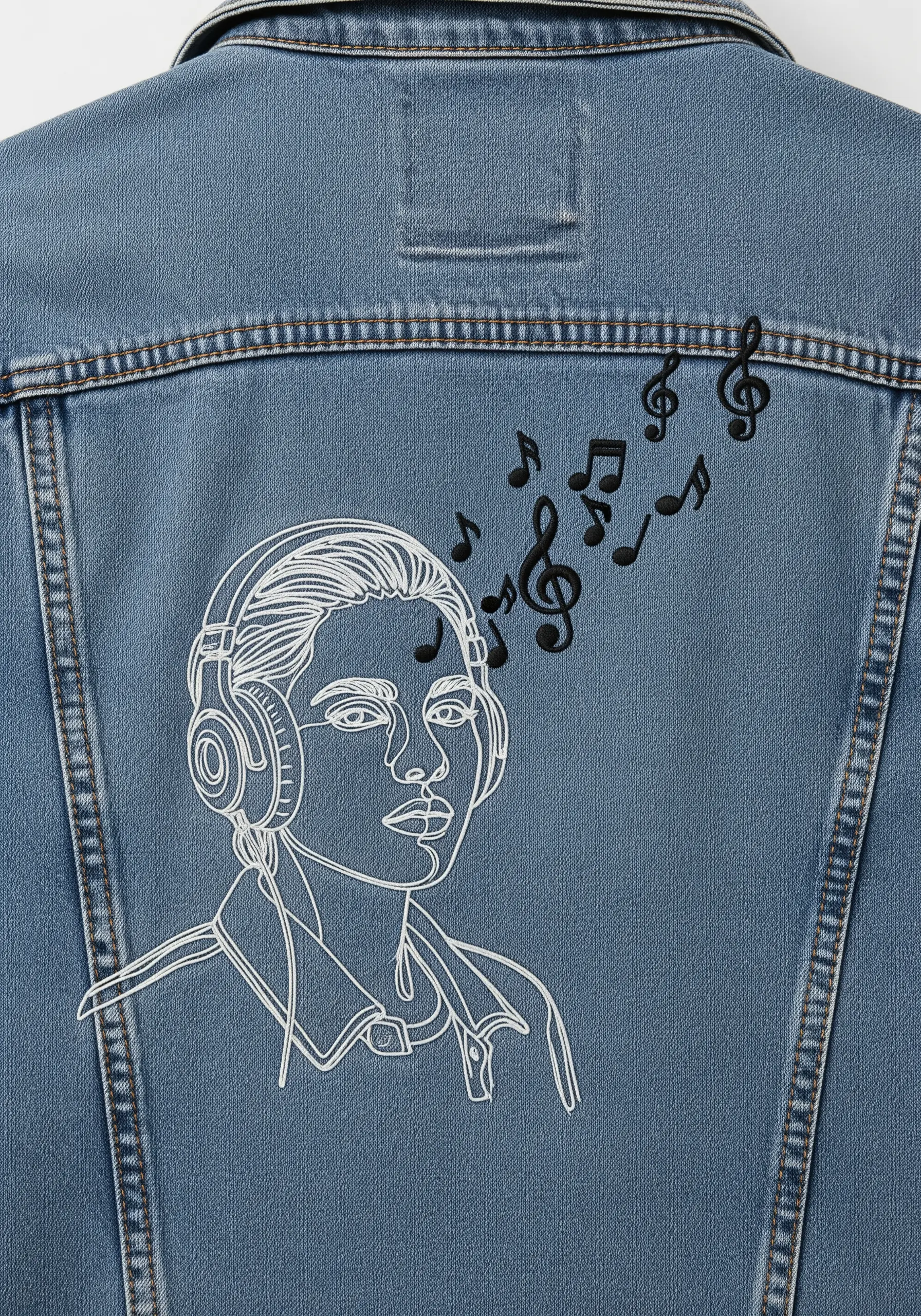
Bring a portrait to life by stitching not just the person, but the passion that drives them—in this case, music.
Render the figure and headphones in a clean, white backstitch to establish a clear focal point.
For the musical notes, switch to a contrasting black thread and use tiny satin stitches to fill them in, giving them a solid, graphic quality.
By placing the notes as if they are emanating from the headphones, you create a dynamic composition that tells a story.
22. Play with Perception and Symmetry
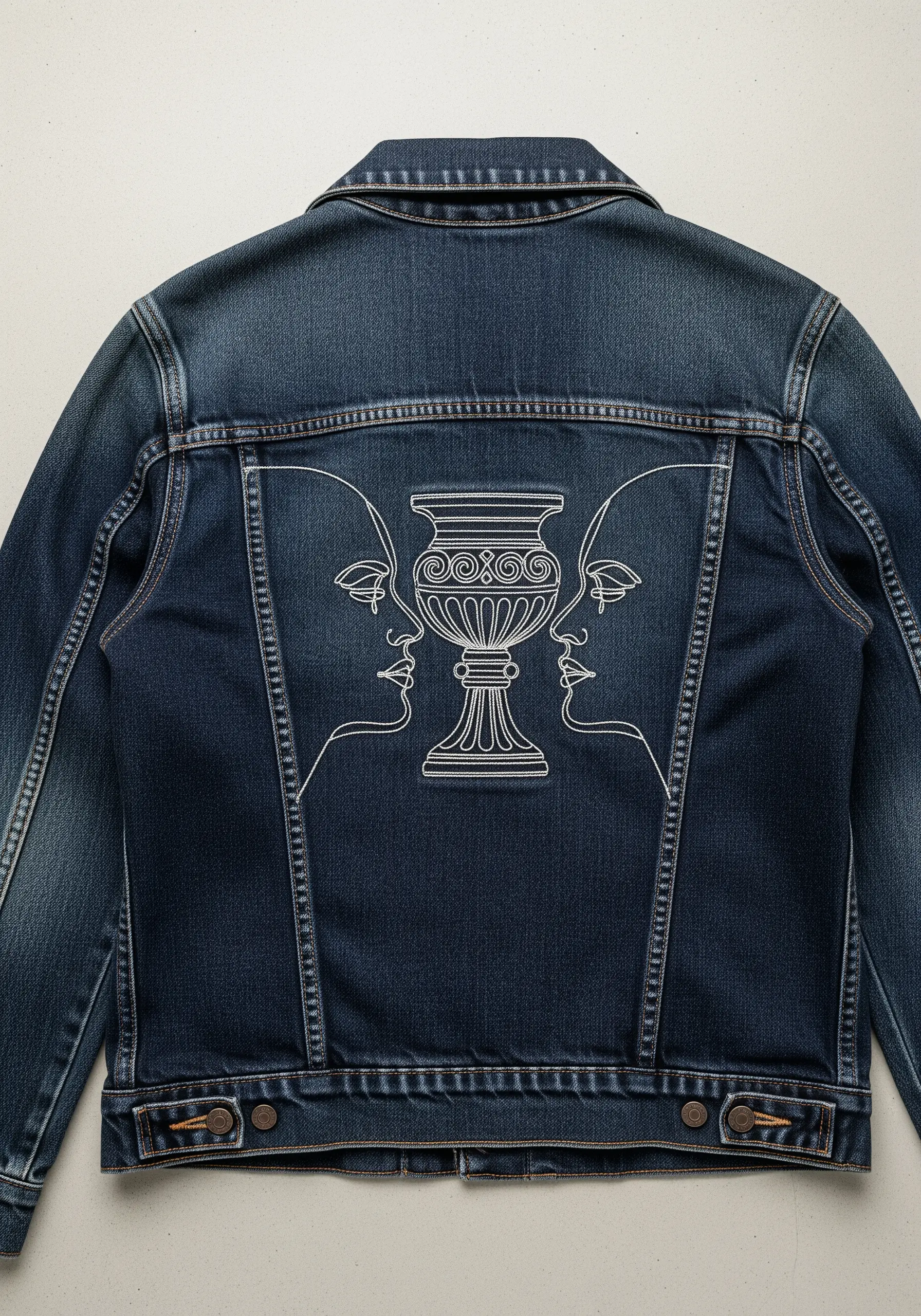
Create a design that engages the mind by using the classic Rubin’s vase optical illusion, where two profiles form a central object.
To achieve the necessary precision, print your design and use the tissue paper transfer method, stitching directly through the paper before tearing it away.
Use a consistent whipped backstitch for all the lines to ensure a uniform weight and smoothness, which is crucial for the illusion to work.
The result is an intelligent, conversation-starting piece of wearable art.
23. Add a Pop of Joy with a Graphic Patch
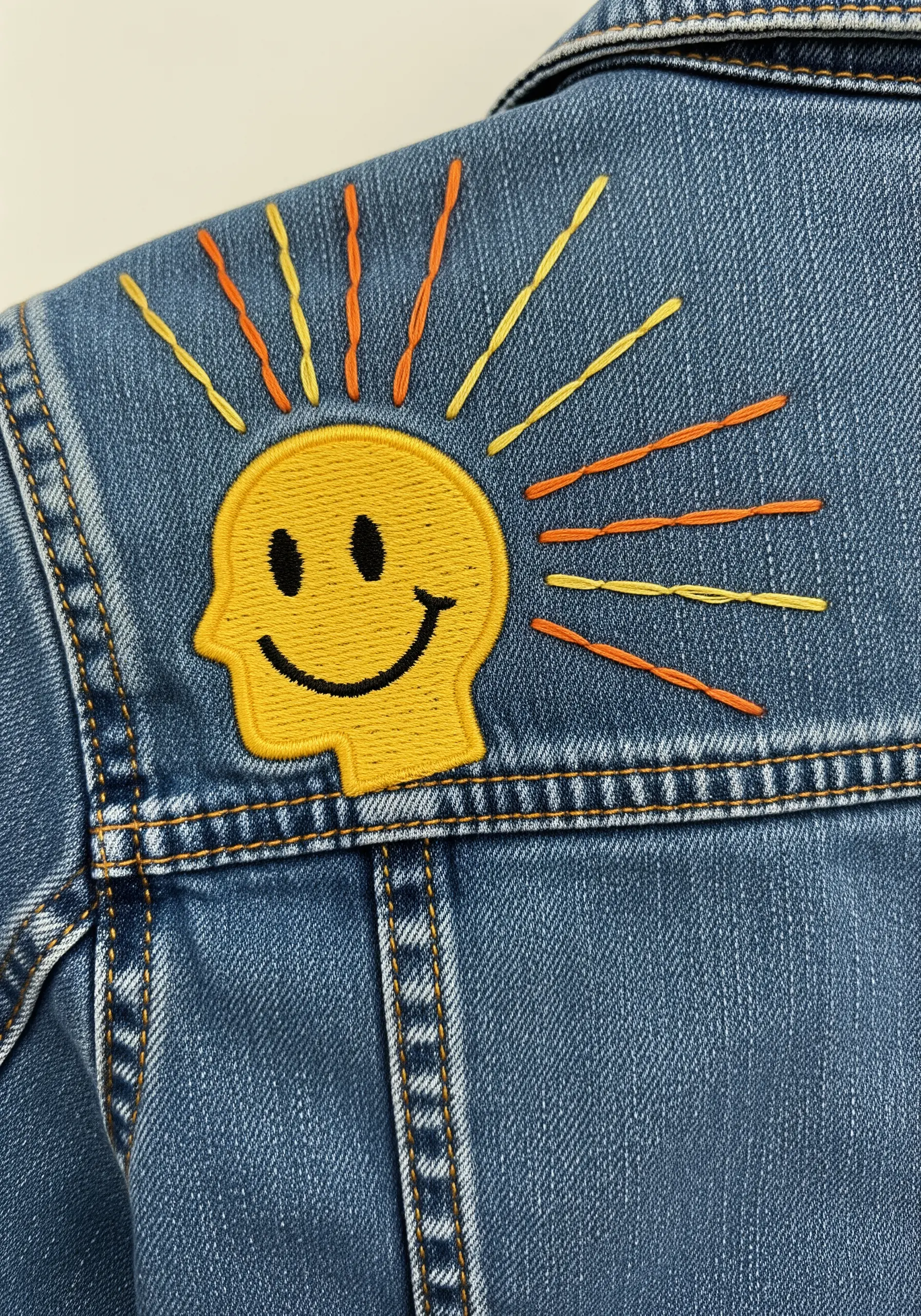
Sometimes the most effective statement is a simple, joyful one. Create a clean, graphic patch for a touch of retro charm.
To make the patch, embroider your design on a separate piece of felt or canvas, which is much easier to work with than a finished jacket.
Use a dense satin stitch for the fill and a crisp backstitch for the details.
Once complete, cut out the shape, leaving a small border, and either stitch it onto the jacket with a running stitch or use a permanent fabric adhesive for a no-sew option.
24. Paint with Thread for a Softer Portrait
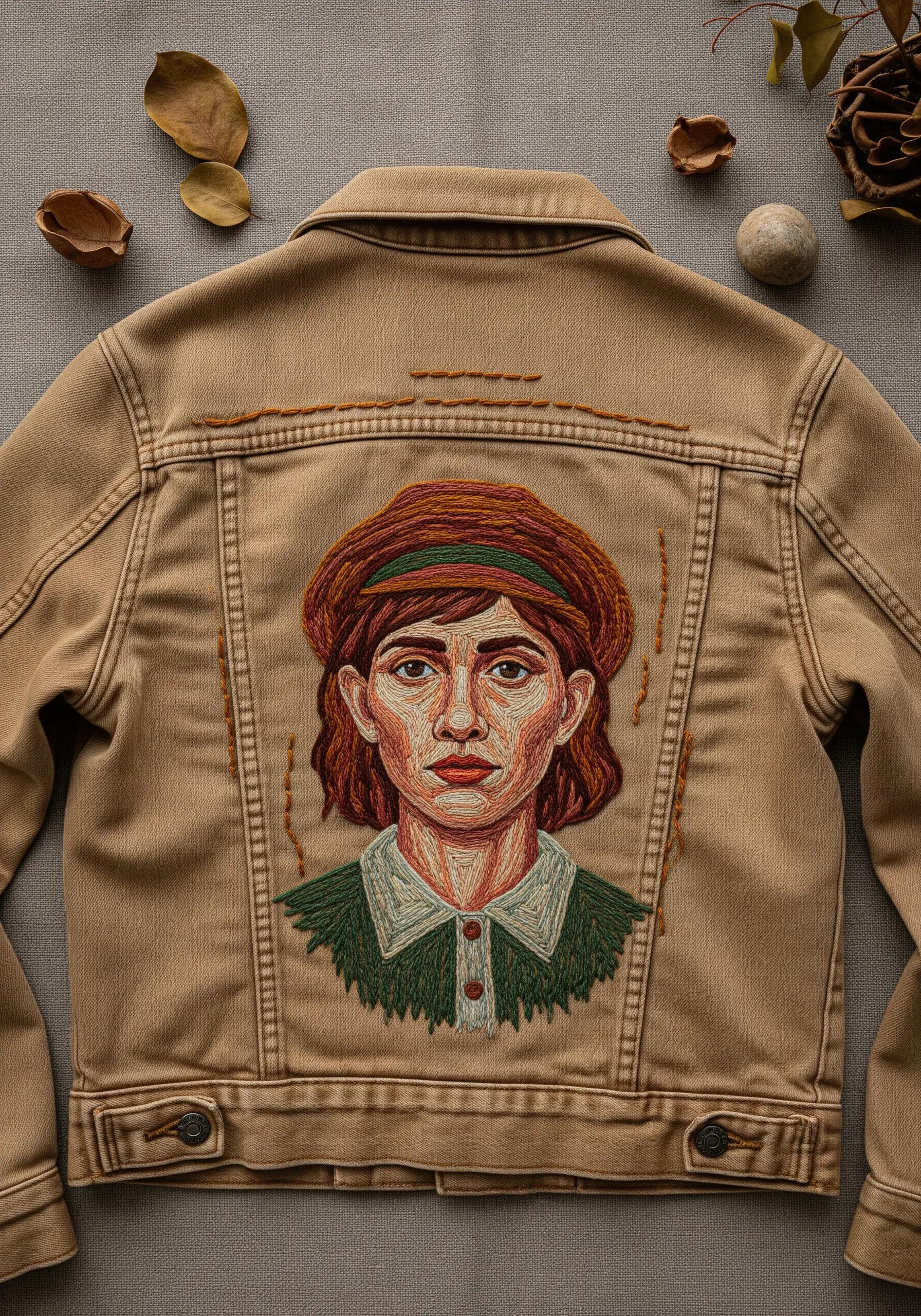
Move beyond simple lines and explore the painterly art of needlepainting to create a portrait with soft depth and realism.
Use a long-and-short stitch as your foundation, blending shades of floss just as you would blend paint on a canvas.
Work with a single strand of thread to achieve the most subtle color transitions, especially for skin tones and delicate facial features.
This technique requires patience, but it transforms your thread into paint, resulting in a timeless, heirloom-quality piece.
25. Tell a Story with Silhouette and Symbol
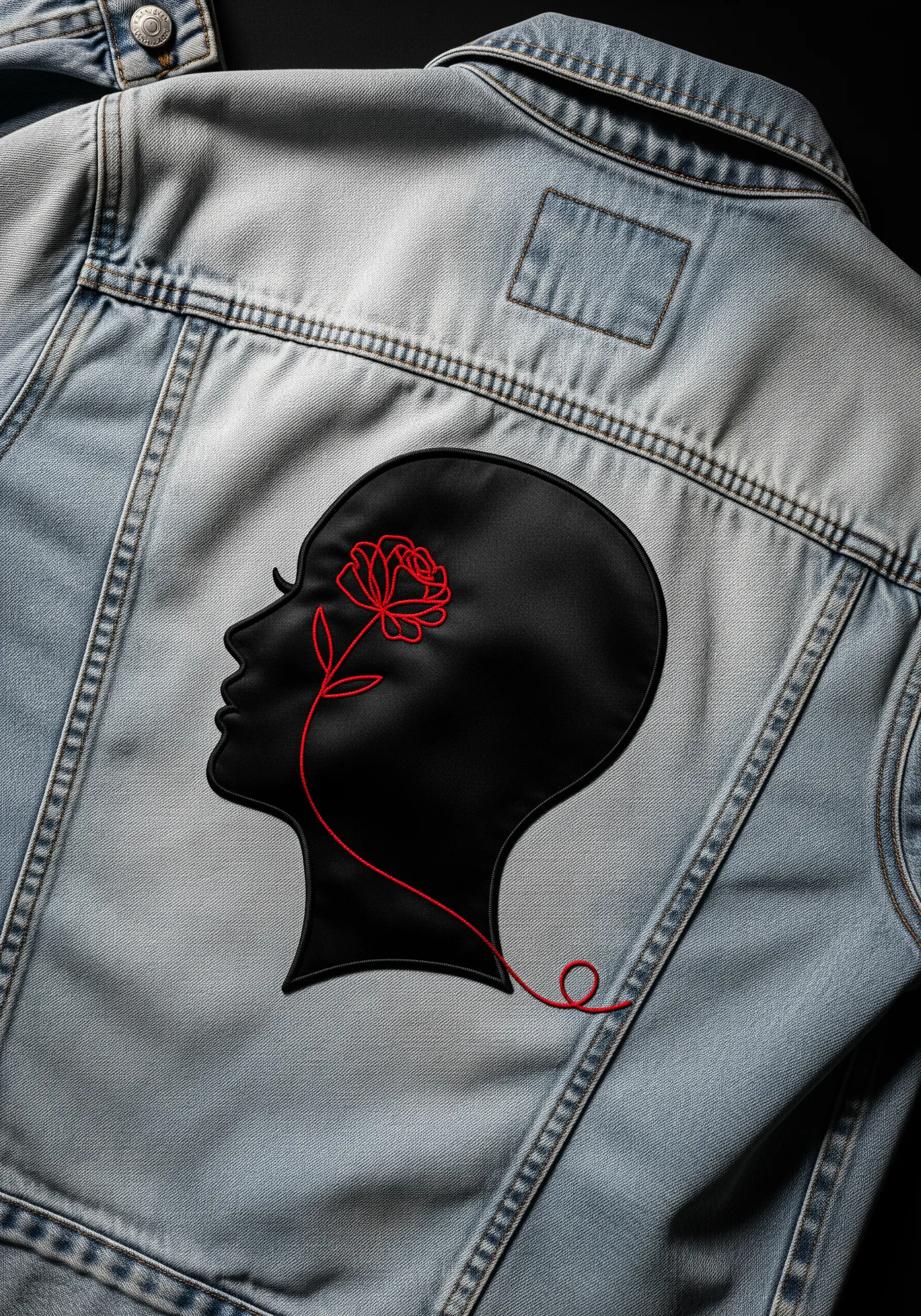
Combine a solid silhouette with a single, symbolic line drawing to create a powerful and poetic visual narrative.
Create the head silhouette using a black fabric appliqué for a perfectly smooth, solid shape.
Then, stitch the delicate rose and its continuous stem over the top using a fine, two-strand backstitch in a contrasting red.
The interplay between the solid black void and the fragile red line creates a design rich with emotion and meaning.
26. Focus on the Detail of a Single Eye
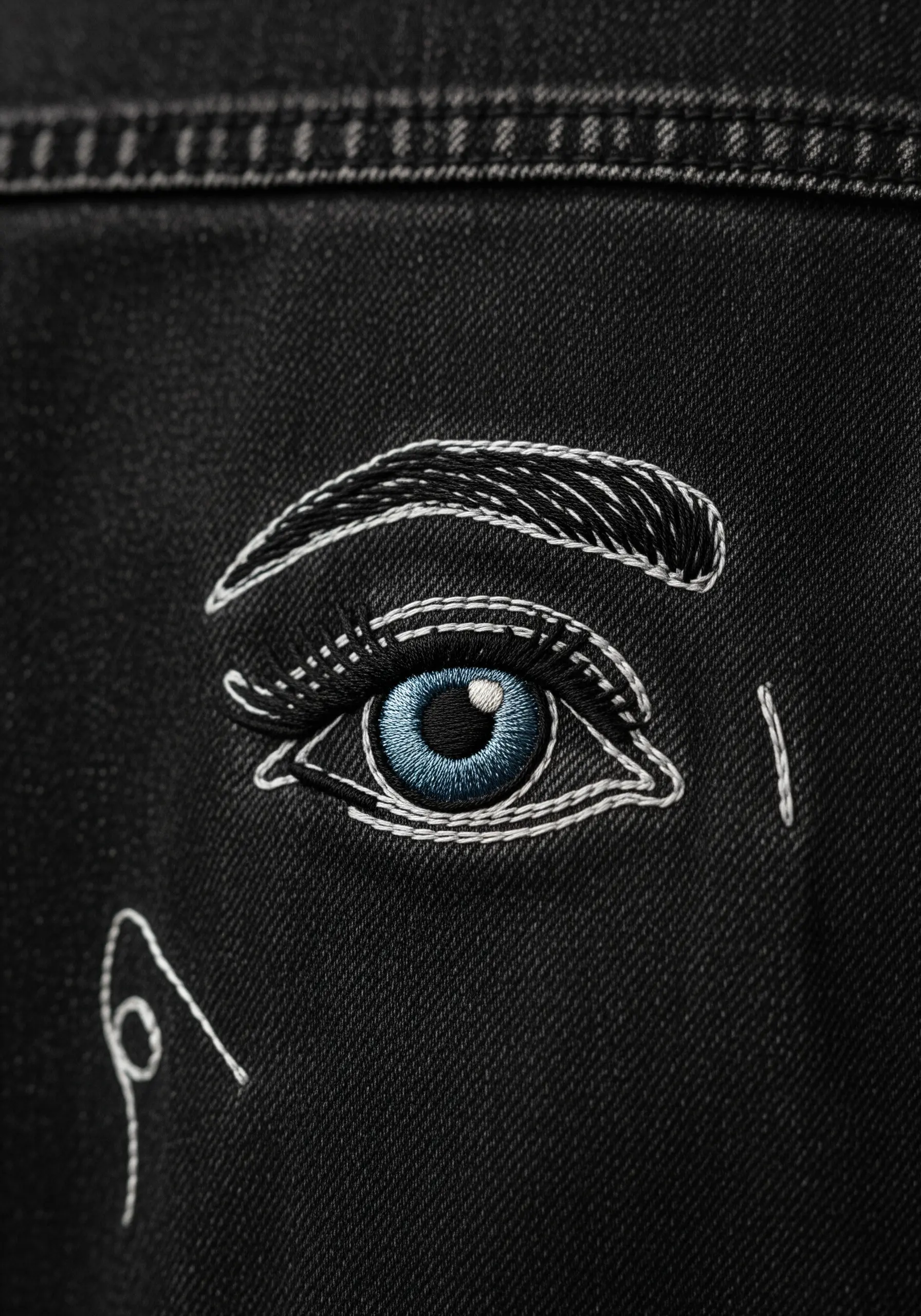
Create a captivating and intimate piece by focusing your embroidery on a single, expressive feature: the eye.
Use a gradient of blue threads in a circular satin stitch to give the iris depth and realism.
A single, perfectly placed French knot in white floss will act as the catchlight, instantly bringing the eye to life.
Outline the eye and brow with a whipped backstitch to give them a clean, defined edge against the dark denim.
27. Embrace a Futuristic, Glitched Aesthetic
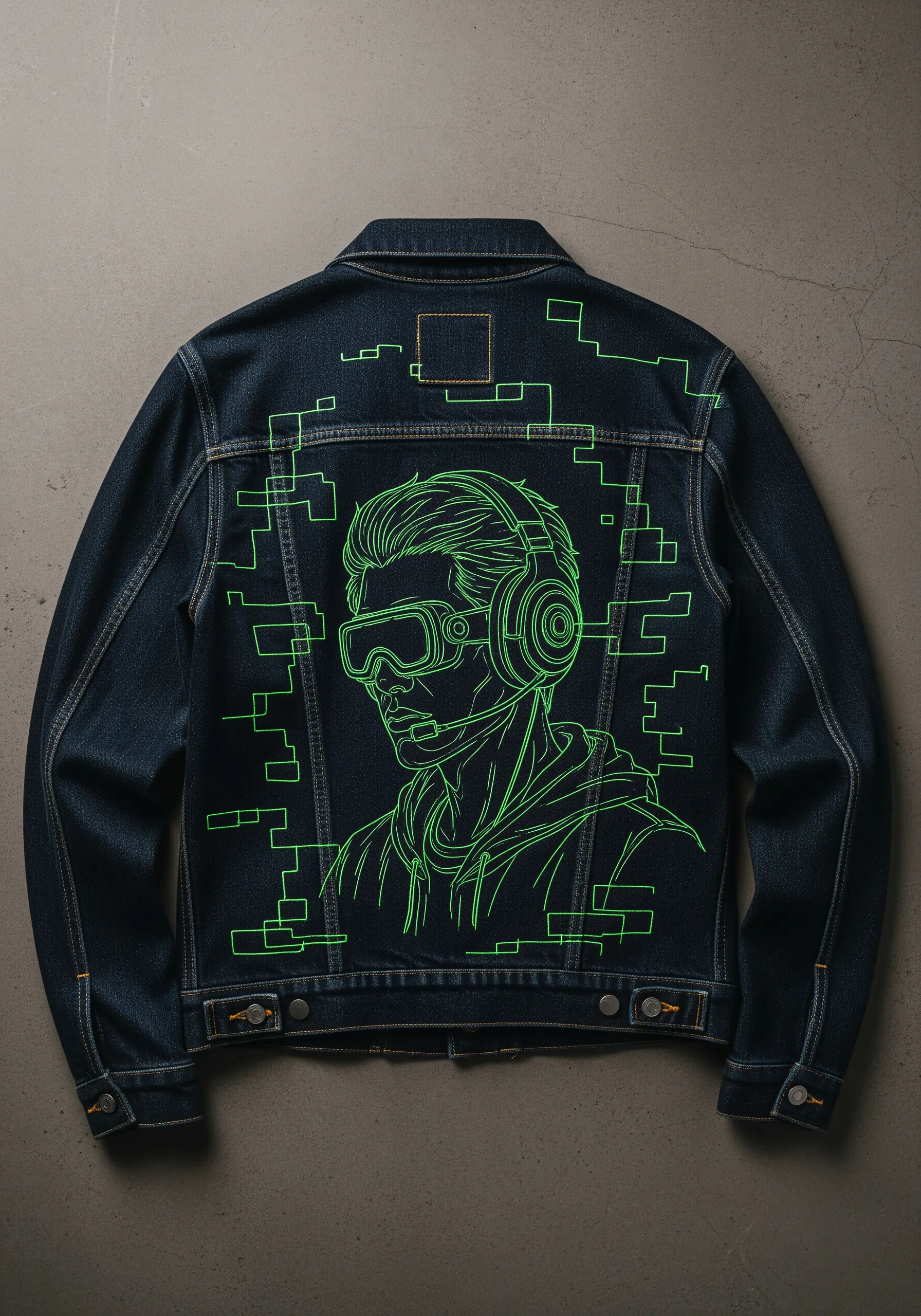
Use high-contrast thread and digital-inspired motifs to give your jacket a futuristic, cyberpunk edge.
Choose a fluorescent green thread, which creates a stunning glow effect against dark indigo or black denim.
Incorporate abstract geometric shapes and fragmented lines around the portrait to mimic the look of a computer glitch or a digital scan.
This style is perfect for those who love a modern, tech-inspired aesthetic that feels bold and unconventional.
28. Incorporate Ribbon for Ethereal Texture
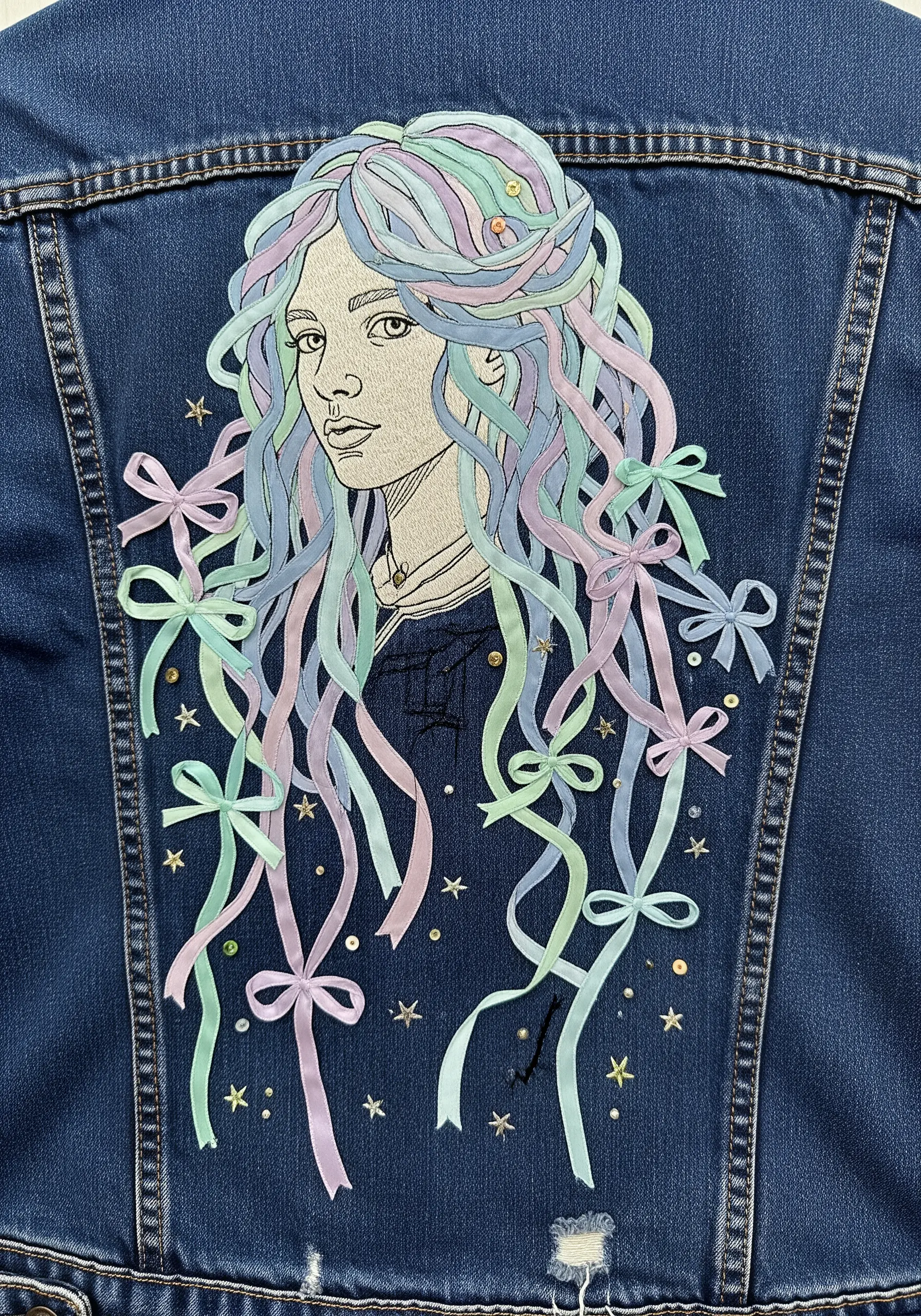
Add a dreamy, three-dimensional quality to your portraits by using silk or satin ribbons for the hair.
After embroidering the face with a simple backstitch, attach lengths of ribbon at the hairline with a few secure stitches.
Let the ribbons flow freely, then tack them down in gentle curves with tiny, color-matched stitches to create a sense of movement.
Embellish with scattered beads or star-shaped sequins to complete the magical, ethereal effect.
29. Make a Statement with Miniature Art
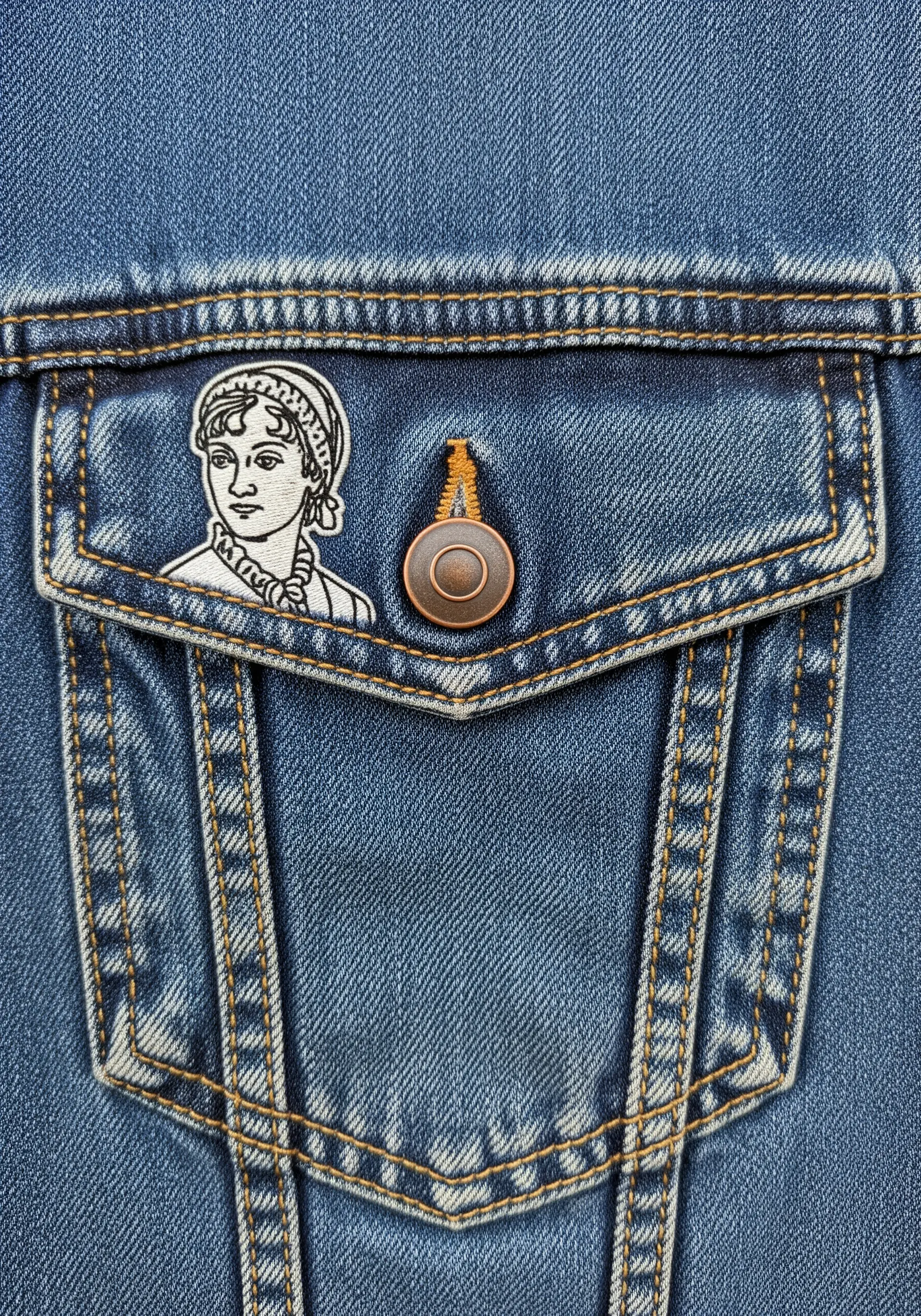
Prove that powerful portraits don’t need to be large by creating a tiny, detailed piece in an unexpected place.
Working on a small scale requires simplifying your design to its most essential lines.
Use a single strand of embroidery floss and a very fine needle (like a size 10) to maintain control and keep your stitches from looking bulky.
Placing a miniature portrait near a button or seam creates a subtle, delightful discovery for anyone who looks closely.
30. Create Rhythm with Scattered Shapes
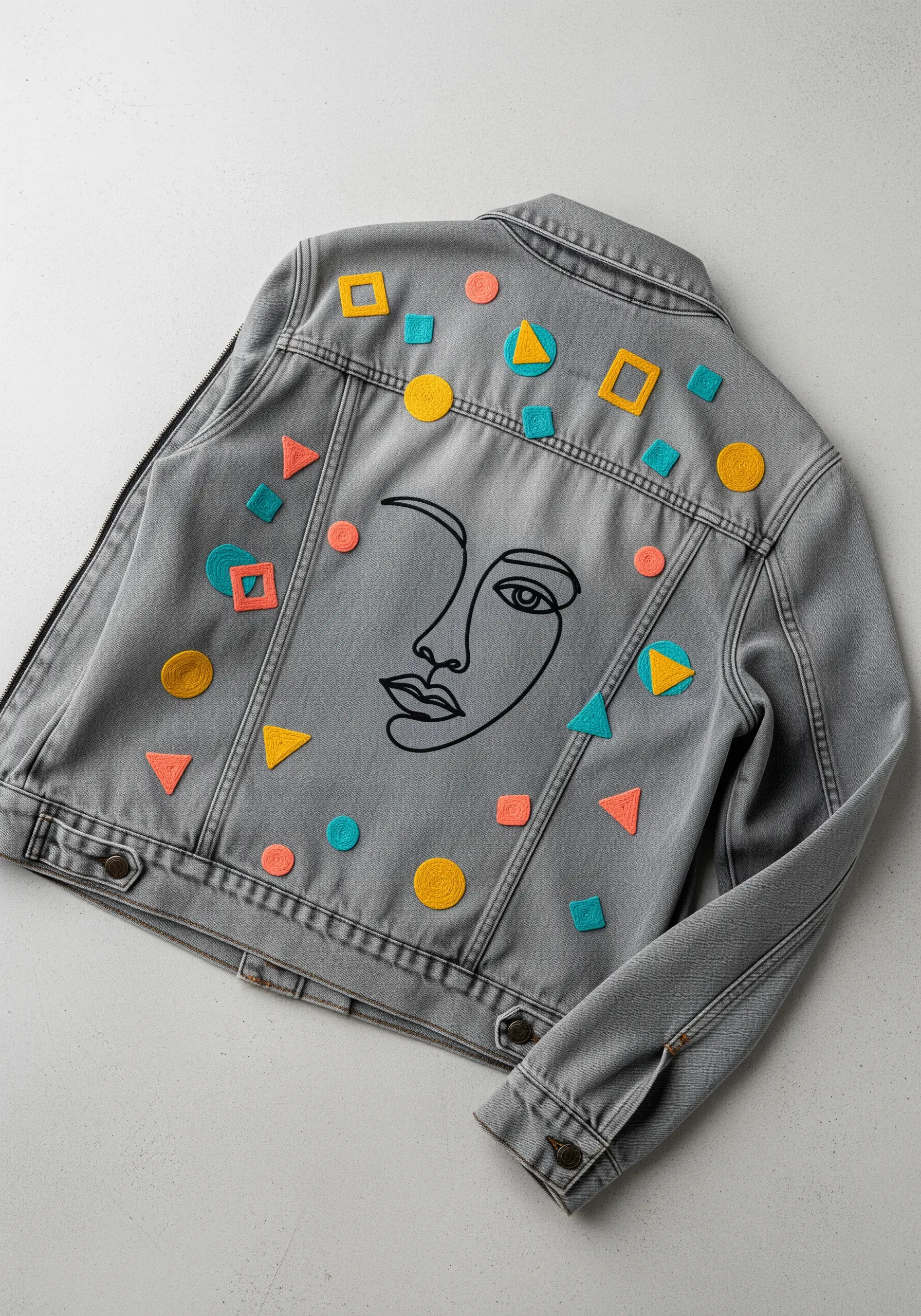
Add a playful, dynamic energy to a simple line-art portrait by surrounding it with a constellation of colorful, geometric shapes.
Stitch the central face in a neutral black to keep it as the calm anchor of the composition.
For the surrounding shapes, use bright, joyful colors and fill them with a dense satin stitch or a textural seed stitch.
This combination of a fluid portrait and structured, scattered elements creates a balanced design that feels both artistic and fun.
31. Maximize Impact on a Full Back Panel
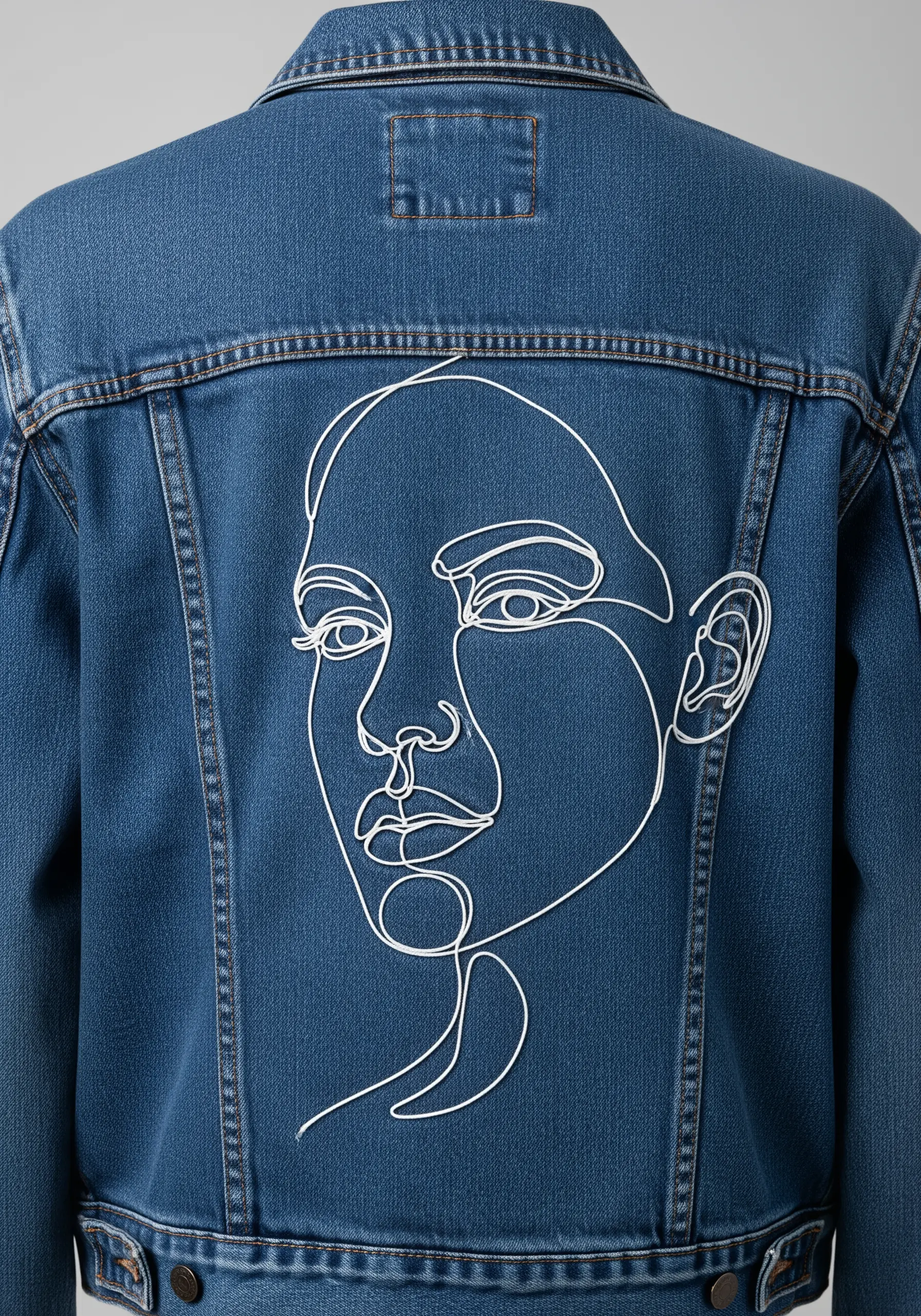
When your canvas is the entire back of a jacket, scale up your design and thread choice for maximum impact.
A simple line drawing can look sparse if it’s too thin, so use at least four to six strands of floss for your backstitch or stem stitch.
High contrast is your friend here: a crisp white thread on dark or mid-wash denim ensures your artwork is visible and striking from a distance.
This approach transforms the jacket into a true statement piece of wearable art.
32. Harness the Power of Monochromatic Intensity
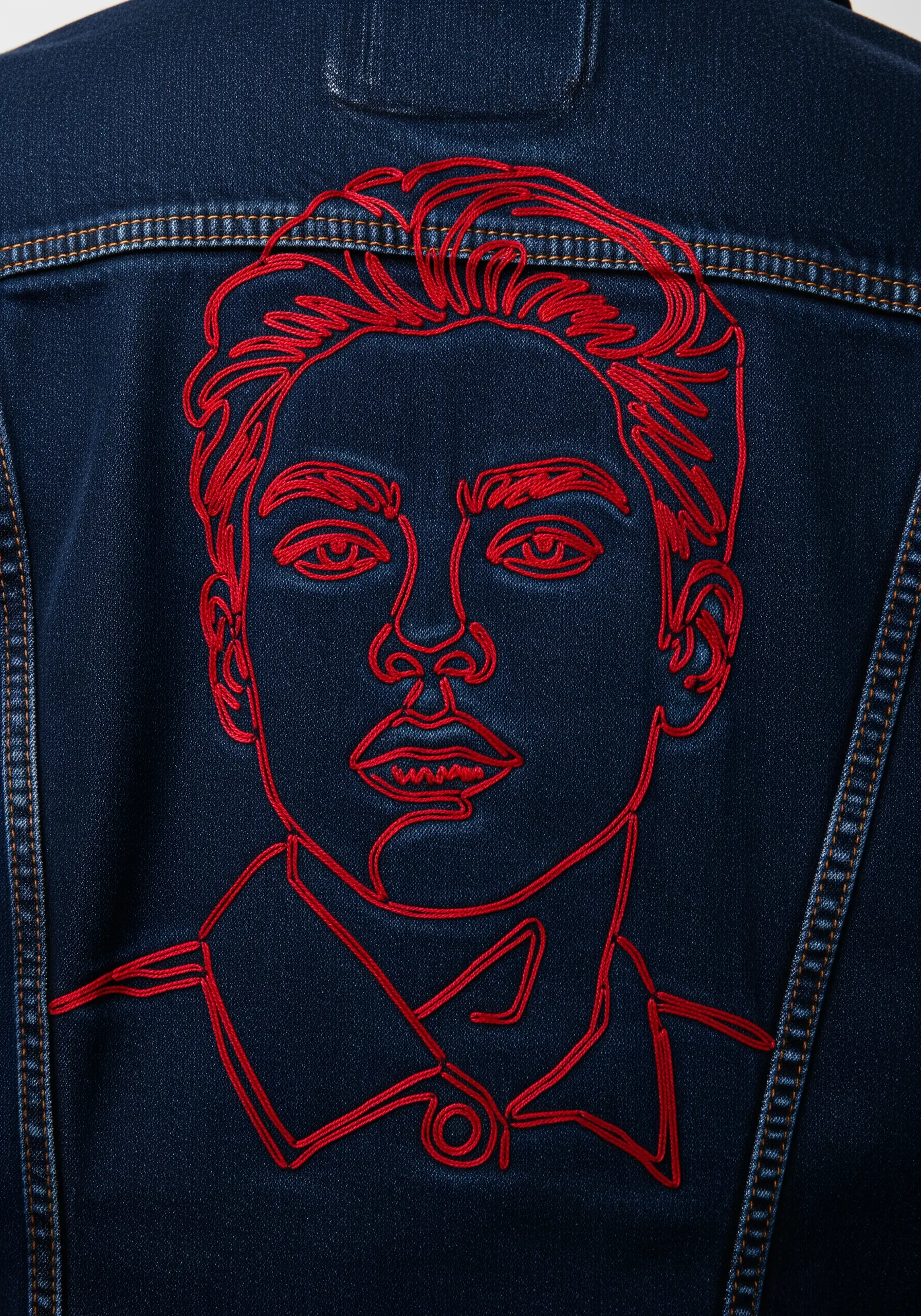
Create a visually arresting design by committing to a single, powerful color against a dark background.
A vibrant red thread on deep indigo or black denim creates a dramatic contrast that feels both classic and edgy.
To give the lines a raised, almost sculptural quality, use a padded satin stitch or go over your backstitch lines a second time.
This technique proves that you don’t need a complex color palette to create a design that is deeply memorable and emotionally charged.
33. Frame a Portrait with Organic Growth
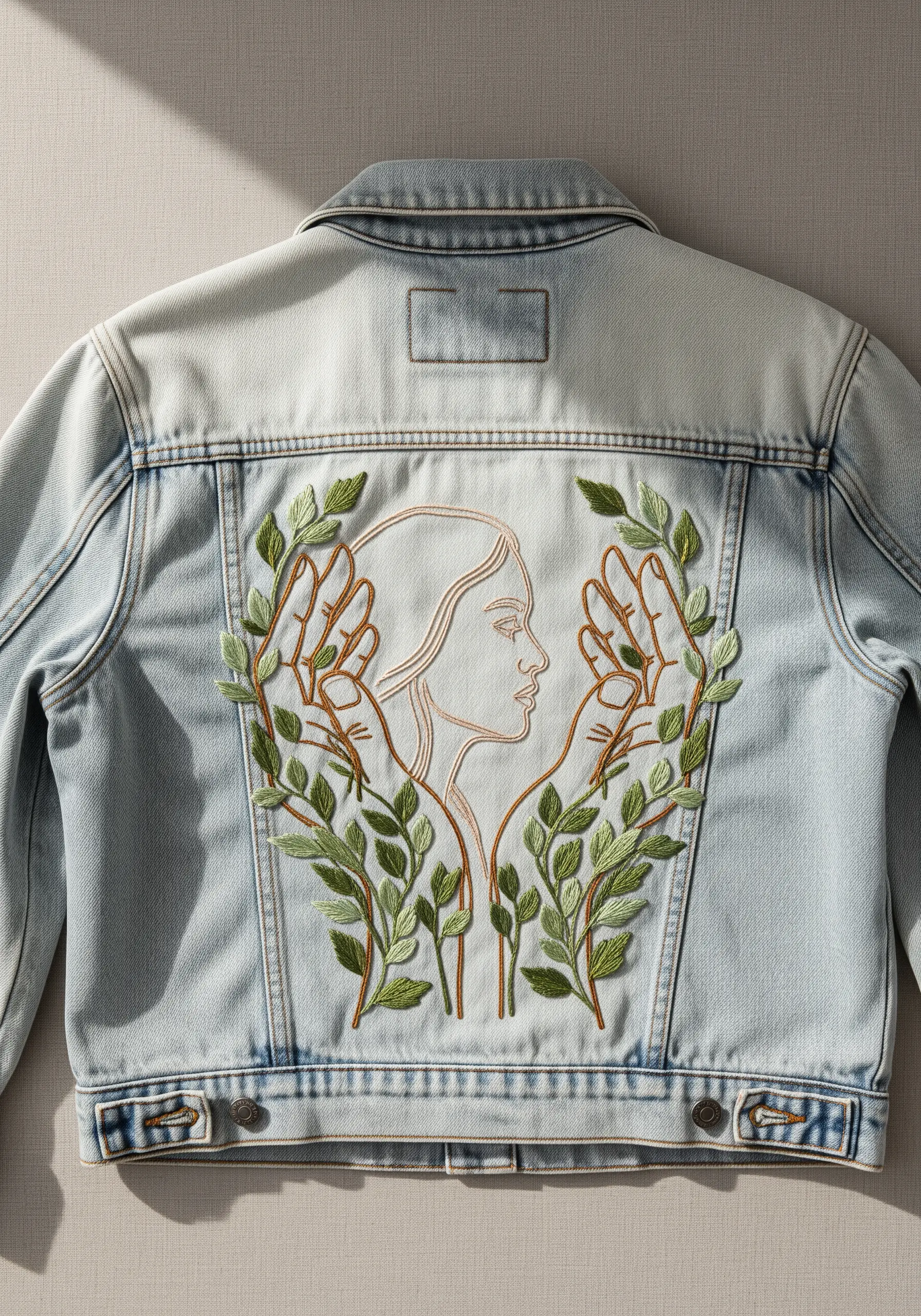
Soften the lines of a portrait by encircling it with delicate, hand-stitched botanicals.
Use a fine, single-strand backstitch for the portrait to keep it subtle and ethereal.
For the foliage, vary your stitches to create natural texture: stem stitch for the main branches and fishbone or satin stitch for the individual leaves.
Discover new ways to layer leaf stitching for three-dimensional botanical texture to give your design a lush, lifelike quality.
34. Radiate Warmth with a Gradient Aura
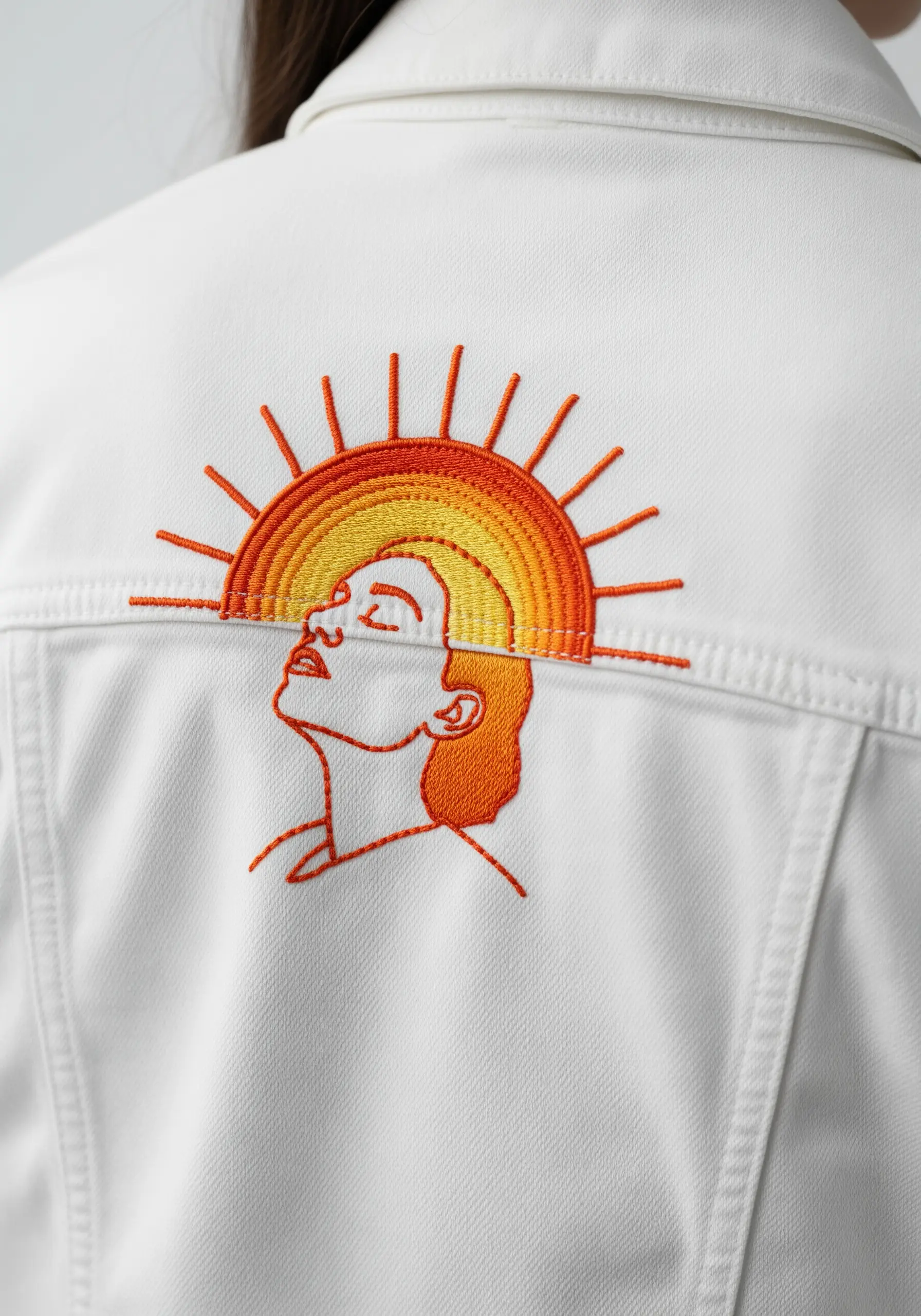
Evoke a feeling of warmth and energy by framing your portrait with a radiating sun or rainbow motif.
Create this effect with concentric arcs of satin stitch, transitioning from a deep red to a bright yellow.
To keep the gradient smooth, blend your colors by using two strands of the first color and one of the next, then one and two, before fully switching.
This careful color blending creates a seamless, glowing effect that perfectly captures the feeling of basking in the sun.