You have the threads, the fabric, and the desire to create something beautiful. But perhaps you feel a gentle pull for… more. More texture, more depth, more of your own unique voice translated into fiber.
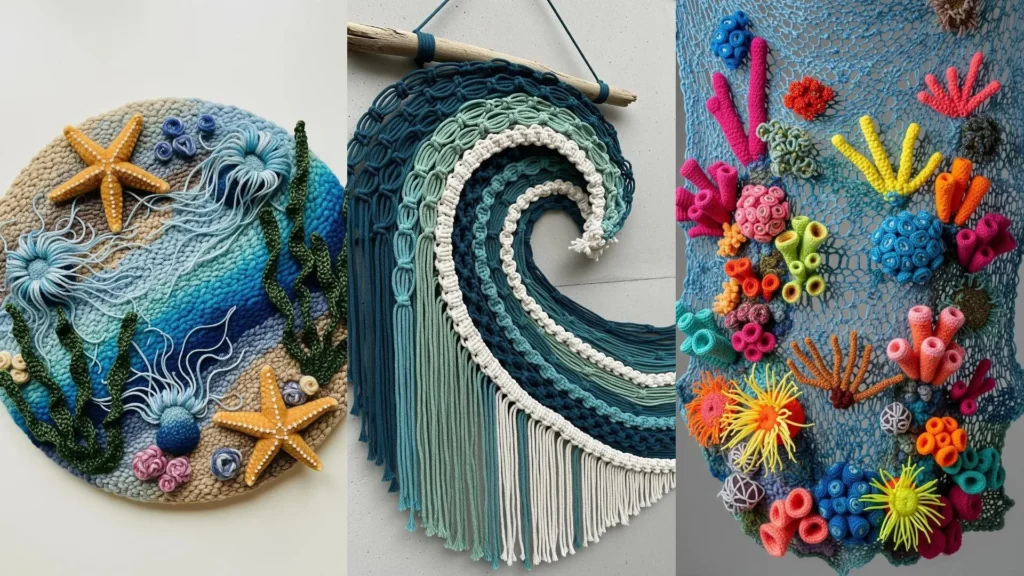
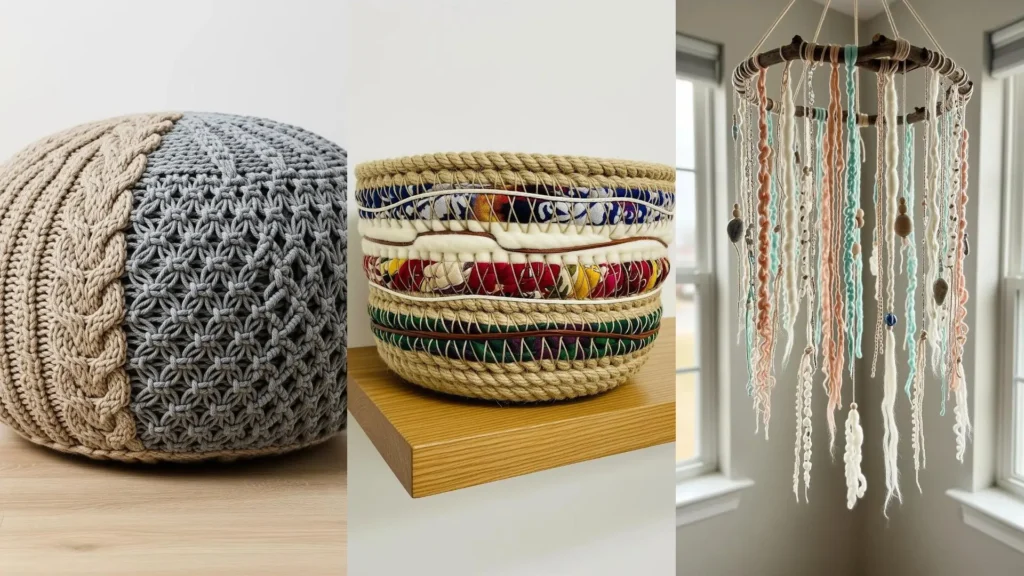
This is where the magic of mixing materials begins. It’s not about mastering dozens of complicated new stitches. Instead, it’s about learning to see the potential in combining what you already know in new ways—pairing chunky, soft roving with smooth, delicate cord, or laying graphic punch needle loops next to intricate embroidery.
Think of it as composing with texture. Each fiber has its own personality, and your role is to become the conductor, bringing them together to create a piece that feels not just made, but truly alive. Let’s explore how you can create that warmth and artistry in your own home, one thoughtful combination at a time.
1. Layer Multiple Textures for a Rich, Tactile Wall Hanging

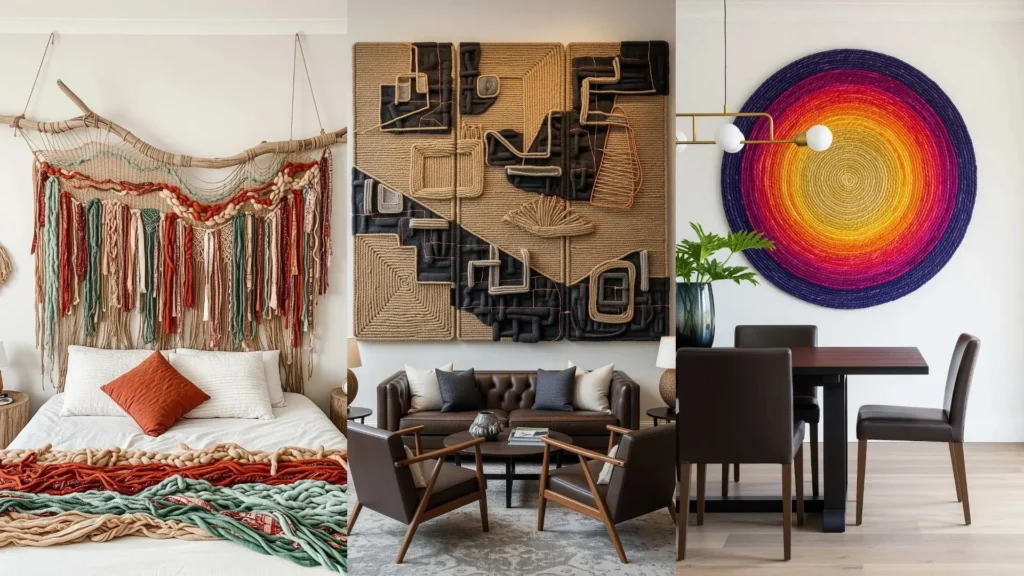
Move beyond standard macrame cord by integrating a variety of fiber thicknesses and textures into your work.
Incorporate chunky wool roving for soft, cloud-like volume, and contrast it with the smooth sheen of satin ribbons for a touch of elegance.
Create intricate details with traditional macrame knots at the top, then allow thicker, loosely twisted yarns to drape organically through the center.
This technique of contrasting textures—plush against smooth, tight against loose—is what gives the final piece its compelling depth and professional finish.
Finish by attaching your work to a piece of natural driftwood to enhance the handmade, organic feel.
2. Create a Sculptural Rug with Punch Needle Loops

Transform a simple rug into a piece of floor art by using a punch needle and thick, plush yarn to create dense, sculptural loops.
Instead of rigid geometric patterns, sketch out large, organic waves of color that flow across the canvas for a modern, fluid aesthetic.
Work in distinct color blocks, filling each section completely to create clean, defined lines between the undulating shapes.
The high pile of the loops not only feels incredibly soft but also catches the light, giving the colors a rich, velvety appearance.
3. Elevate Pillows with High-Relief Fiber Appliqué
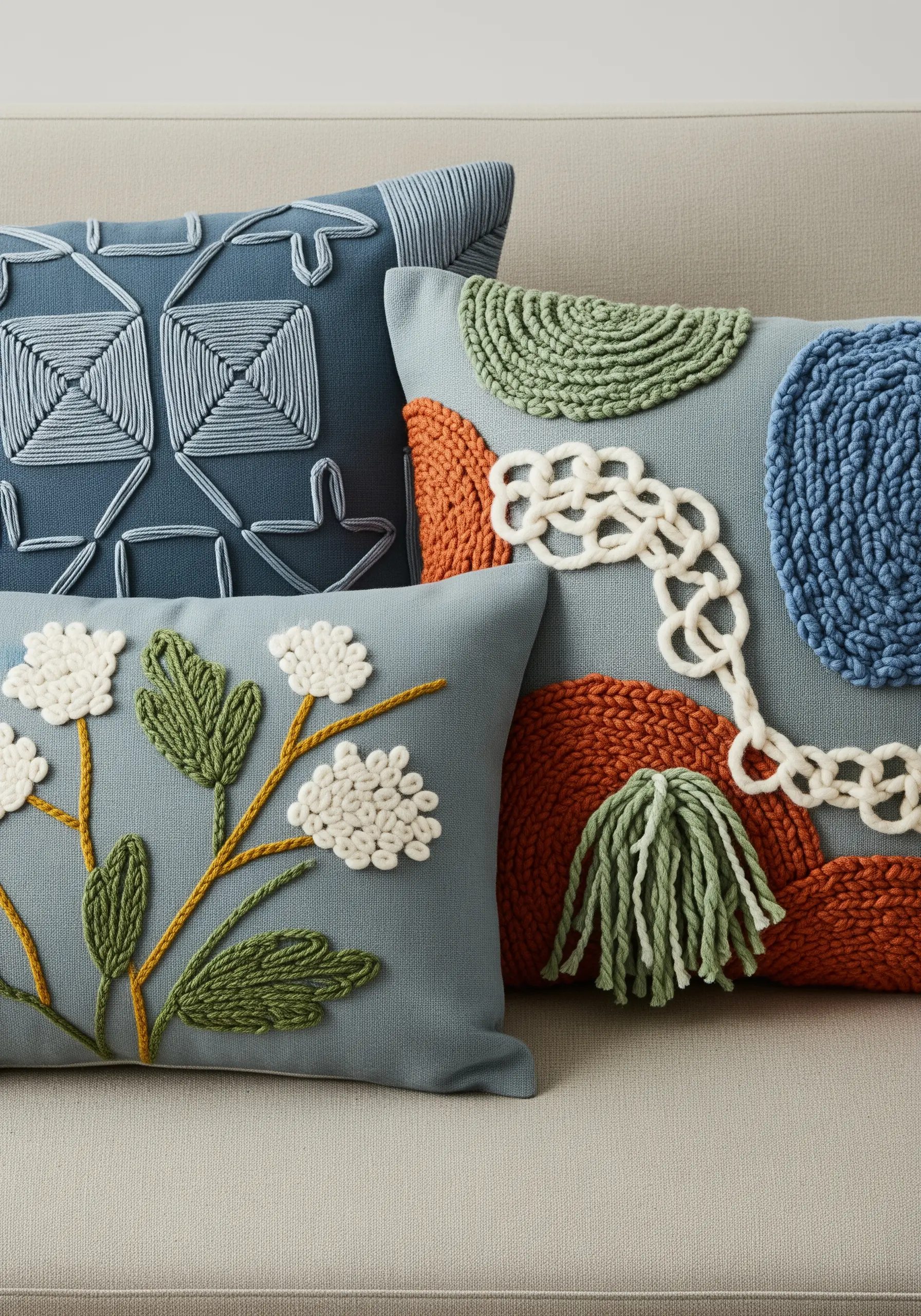
Add dimensional, sculptural elements to your pillow covers by combining different fiber techniques on a single surface.
Use couching to attach thick, braided cord in abstract shapes, creating bold, raised lines that stand out from the base fabric.
Incorporate sections of punch needle or latch hook for dense, textural fills, and contrast them with simple stem stitches for delicate details like stems or outlines.
This layering of high- and low-relief textures turns a functional object into a tactile piece of art that invites touch.
4. Coil Rope and Fabric Scraps into a Decorative Basket

Construct a sturdy and stylish basket by coiling thick rope and wrapping it with colorful strips of scrap fabric.
Start with a thick cotton or jute rope base, coiling it tightly and stitching it together as you go.
Introduce color and pattern by wrapping sections of the rope with thin fabric strips before coiling them into place.
Add a final decorative touch by lacing a thinner cord or leather strip through the coils, which also helps reinforce the basket’s structure.
This method is a beautiful way to upcycle fabric remnants into handmade art objects.
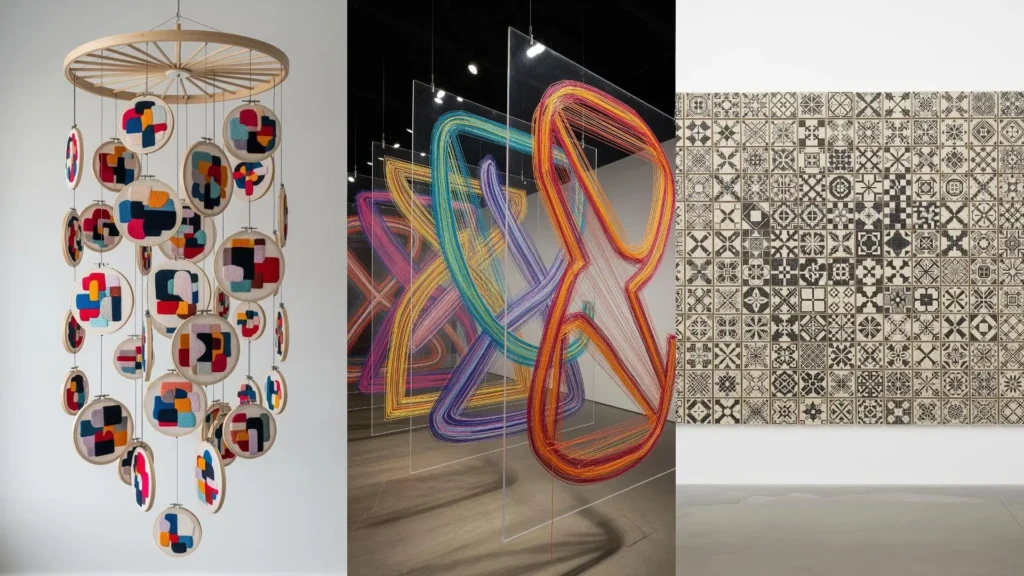
5. Weave Organic Landscapes on a Circular Loom
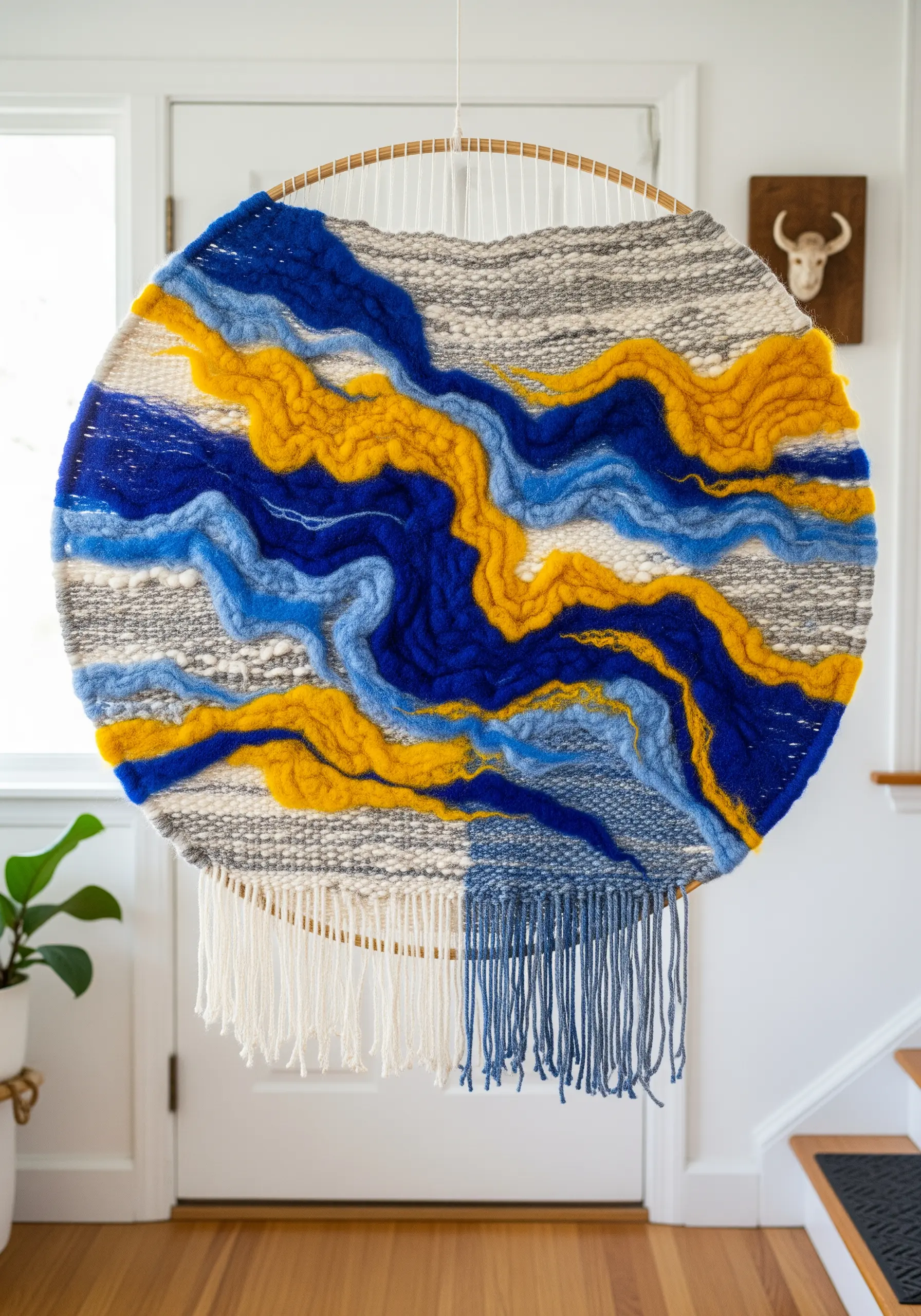
Break free from the traditional rectangular frame by using a large embroidery hoop or a specialized circular loom to create your woven art.
This format encourages organic, flowing shapes that mimic natural landscapes like rivers or geological strata.
Use wool roving to build up soft, undulating forms, allowing the texture to rise and fall to create a sense of movement.
Blend different shades of yarn within each section to achieve a painterly effect, and leave a long, asymmetrical fringe to complete the dynamic composition.
6. Construct an Airy Room Divider with Open-Weave Techniques

Define a space without blocking light by creating a woven screen with an intentionally open and airy structure.
Use a simple frame and wrap your warp threads with generous spacing to ensure the finished piece remains translucent.
Weave with thick, chunky yarns or strips of fabric, focusing on creating a subtle color gradient from top to bottom.
This large-scale project transforms simple weaving into functional, architectural art, perfect for modern living spaces.
7. Achieve Dramatic Texture with Chunky Arm Knitting
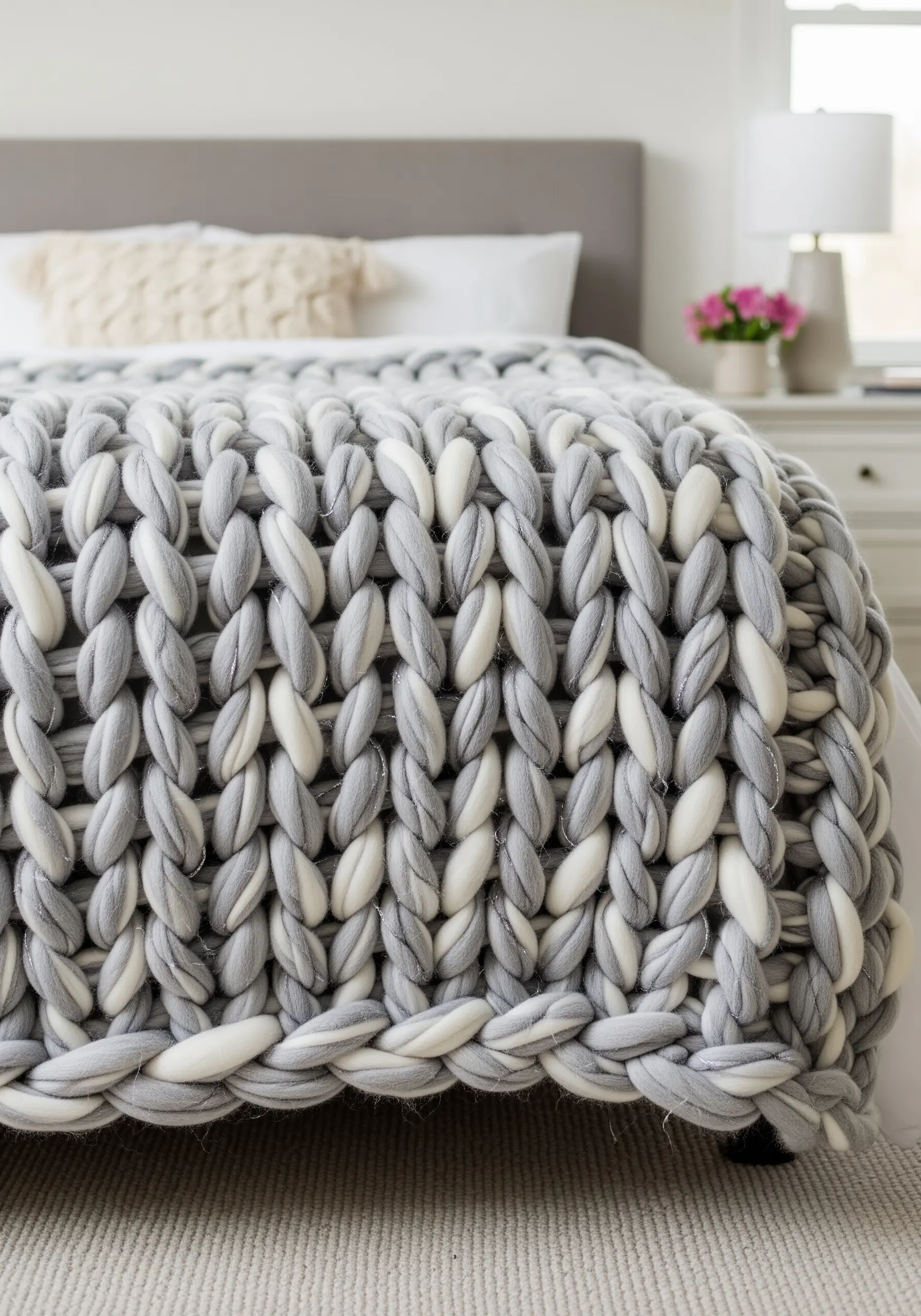
Create a blanket with incredible visual and physical weight by using arm knitting or oversized needles with jumbo-weight yarn.
The massively scaled stitches are the main design element, turning a simple stockinette stitch into a bold, sculptural pattern.
For added visual interest, use a two-toned yarn or hold two different colored strands together as you knit.
This technique is surprisingly fast and results in a luxurious, cozy throw that makes a powerful decorative statement.
8. Design a Cohesive Gallery Wall with Punch Needle Art
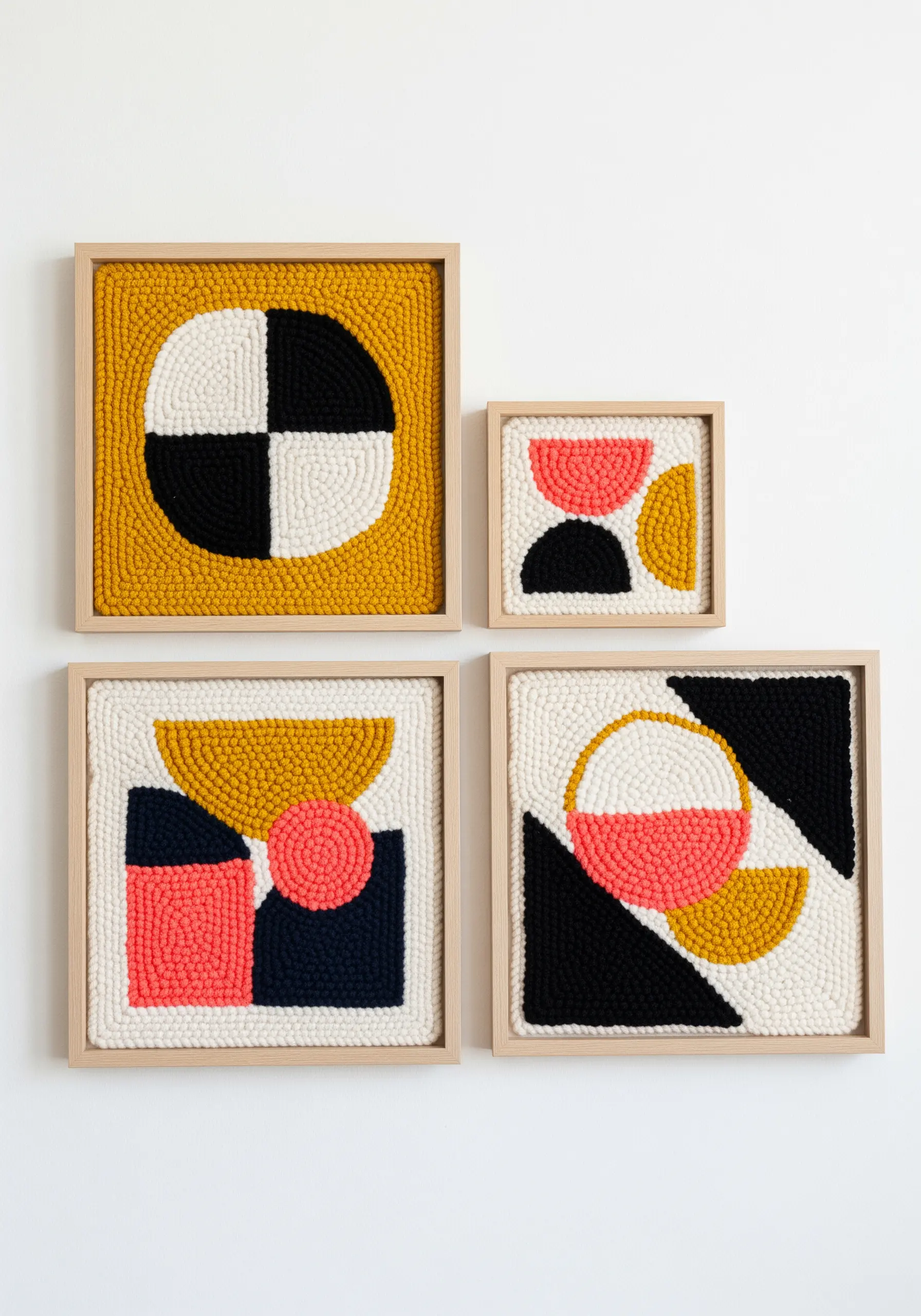
Create a sophisticated, unified art display by making a series of punch needle pieces that share a consistent theme and color palette.
Work with simple geometric shapes—circles, triangles, and semi-circles—to explore different compositions within each frame.
Adhering to a strict color palette of three to four complementary shades ensures the collection feels intentional and cohesive, even with varied designs.
This approach allows you to create geometric framed embroidery patterns that look curated and professionally styled.
9. Craft a Bohemian Mobile with Mixed Fibers and Natural Elements
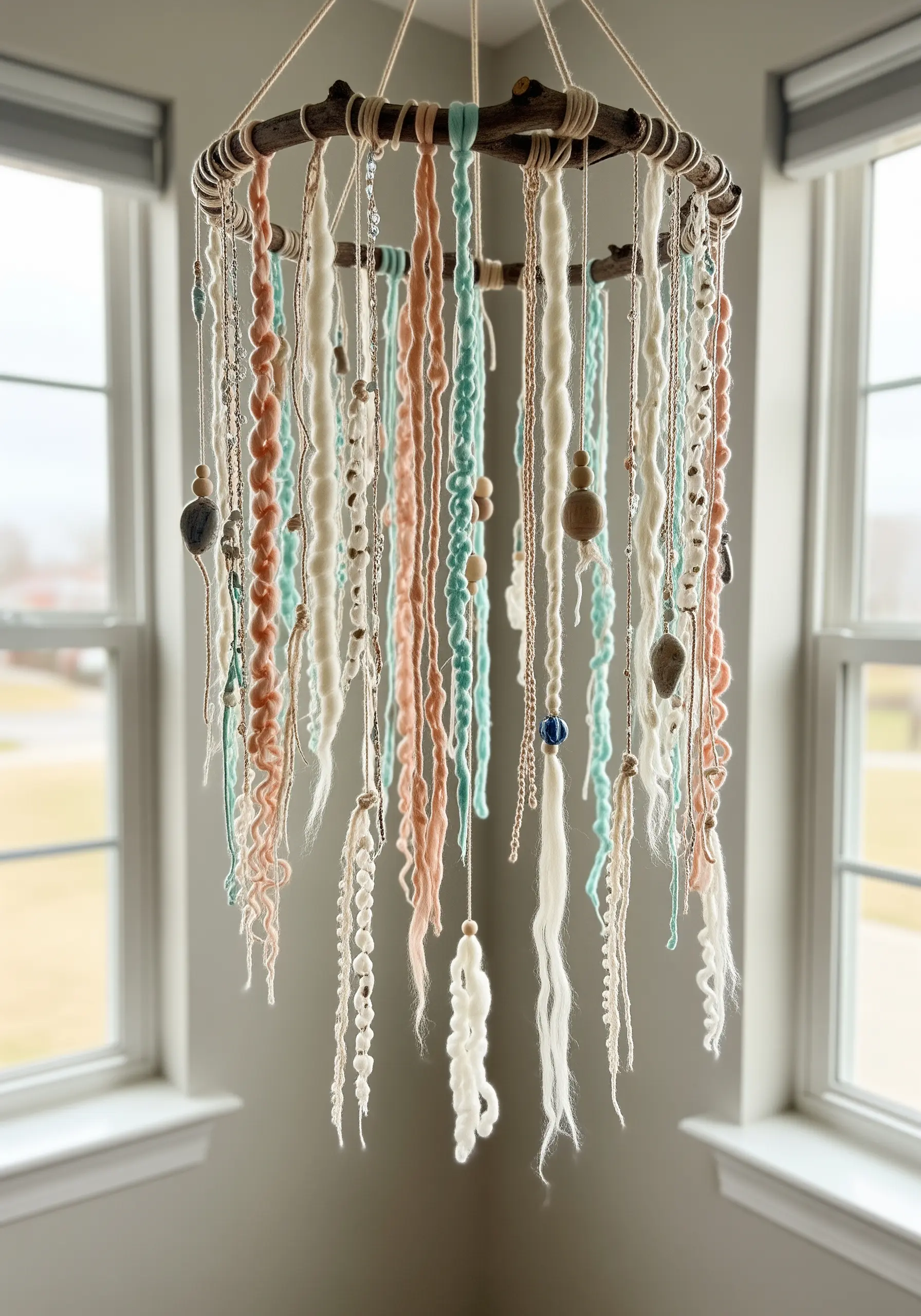
Assemble a delicate and artistic mobile by combining various yarns with beads, stones, and other found objects.
Use a circular frame, like a bent branch or a metal hoop, as the base for your creation.
Dangle strands of different fibers—thick felted wool, thin cotton thread, and twisted art yarn—at varying lengths for a dynamic, cascading effect.
Intersperse the yarn with wooden beads, smooth river stones, or small metallic charms to add weight, sound, and a touch of earthy elegance.
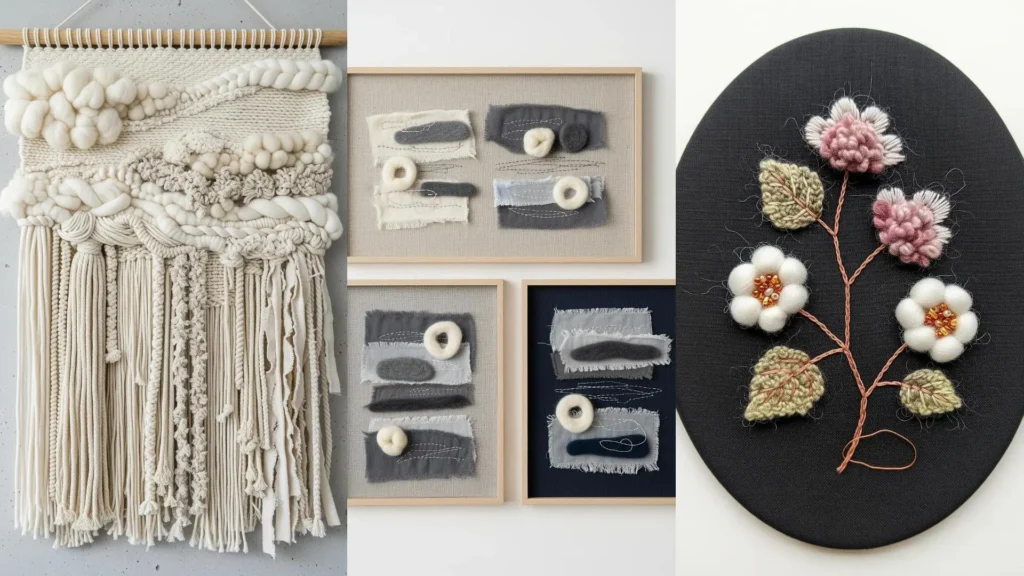
10. Explore Tactile Contrasts with Mixed-Pile Tufting
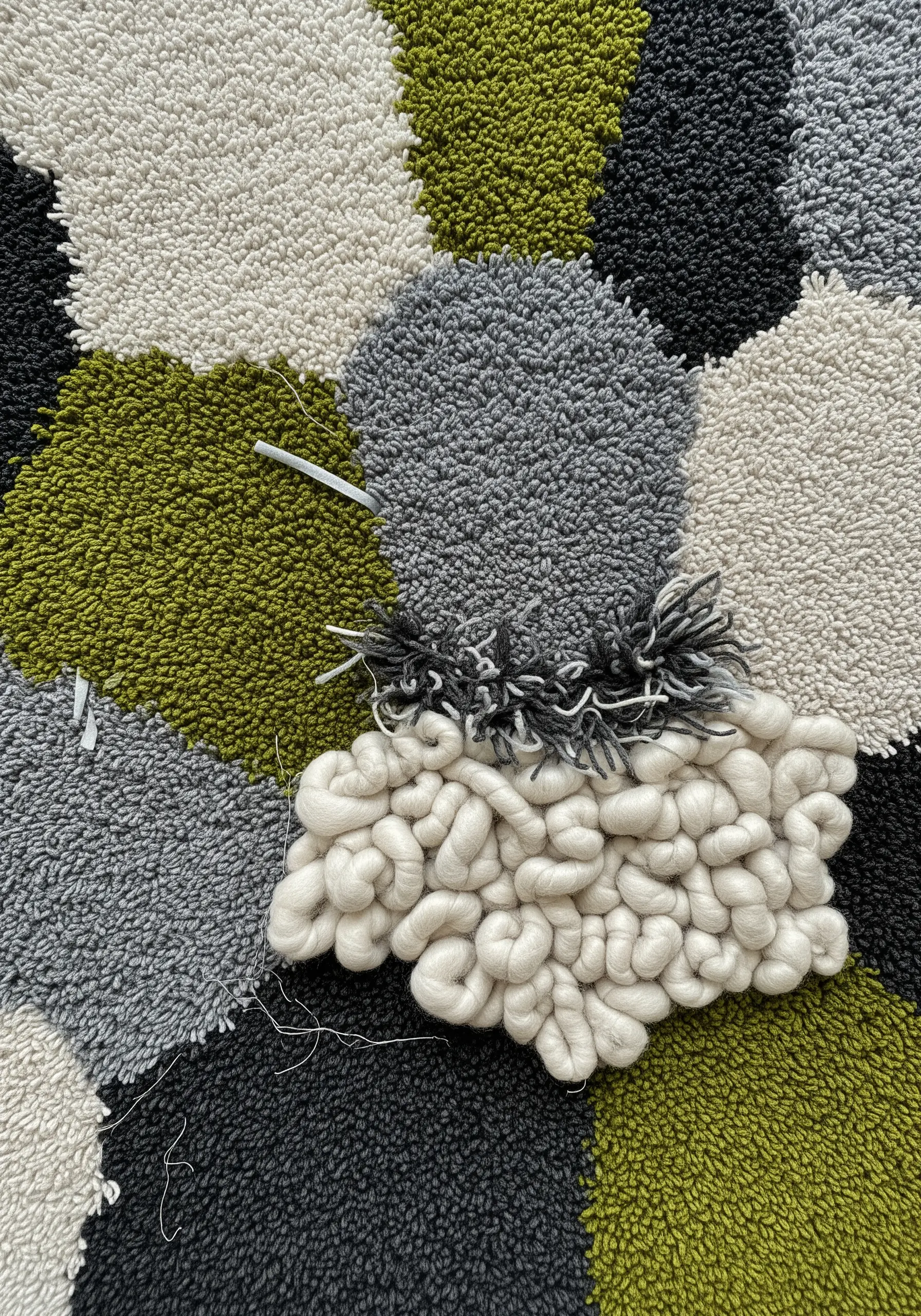
Design a textile piece that is as interesting to touch as it is to see by combining different punch needle and tufting techniques.
Fill sections with standard, uniform loops for a smooth, consistent surface.
Introduce areas of shaggy, uncut loops or even tassels for a wilder, more organic texture.
In another section, use ultra-plush, thick wool roving to create a cloud-like, sculptural form that rises above the rest.
This exploration of varied pile heights and materials results in a highly tactile and visually complex artwork.
11. Translate a Sunset into a Woven Tapestry Headboard
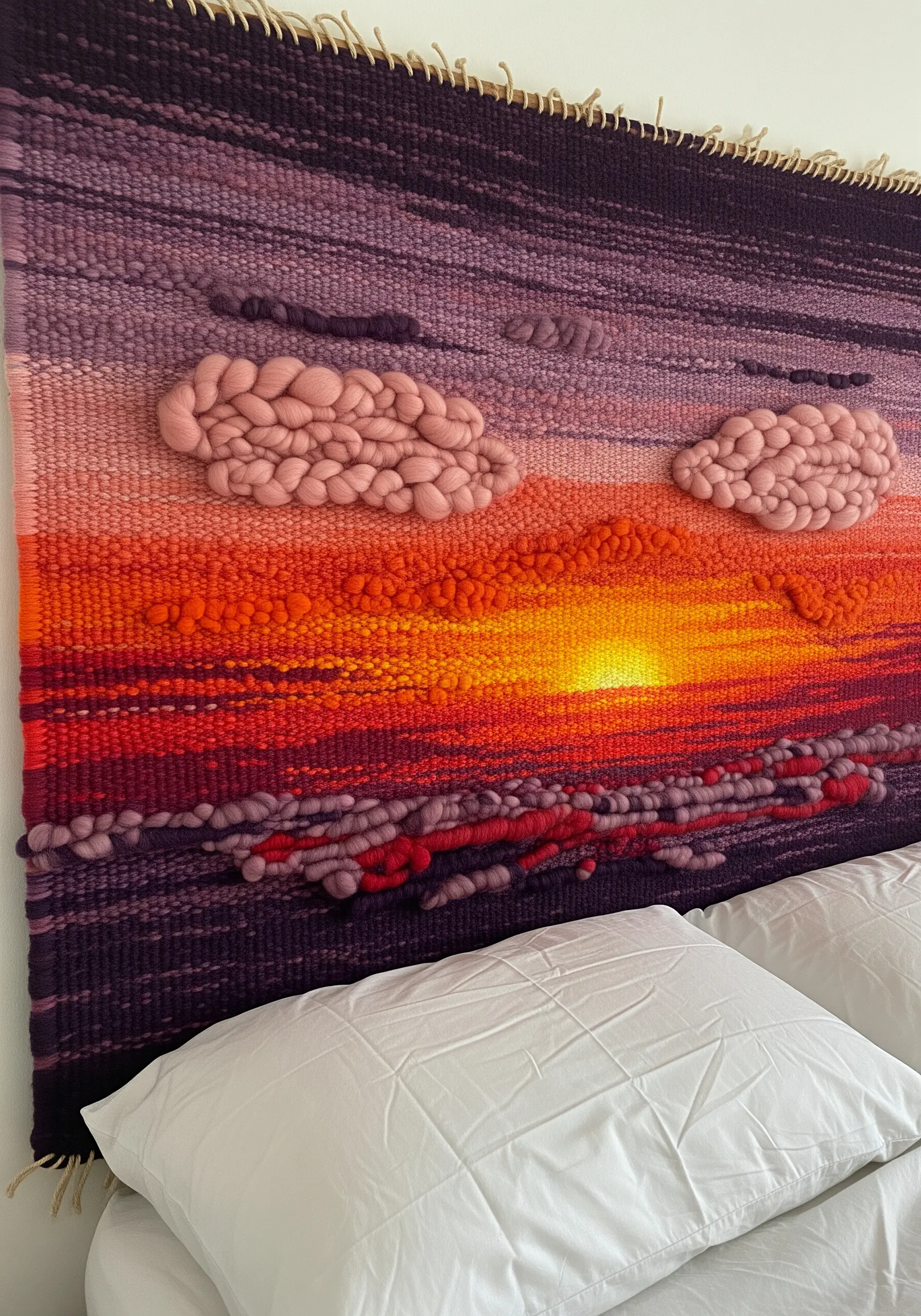
Use weaving as a form of painting to capture the gradient colors of a sunset for a stunning piece of wall art or a headboard.
Select a rich palette of yarns, blending reds, oranges, purples, and pinks to create a smooth transition from light to dark.
Use a plain weave for the majority of the piece to let the colors shine, but add raised, Soumak-woven clouds with chunky pink roving for a three-dimensional effect.
This technique transforms a familiar natural scene into a dreamy, nature-inspired embroidery that adds warmth and color to a bedroom.
12. Crochet a Low-Maintenance Indoor Garden
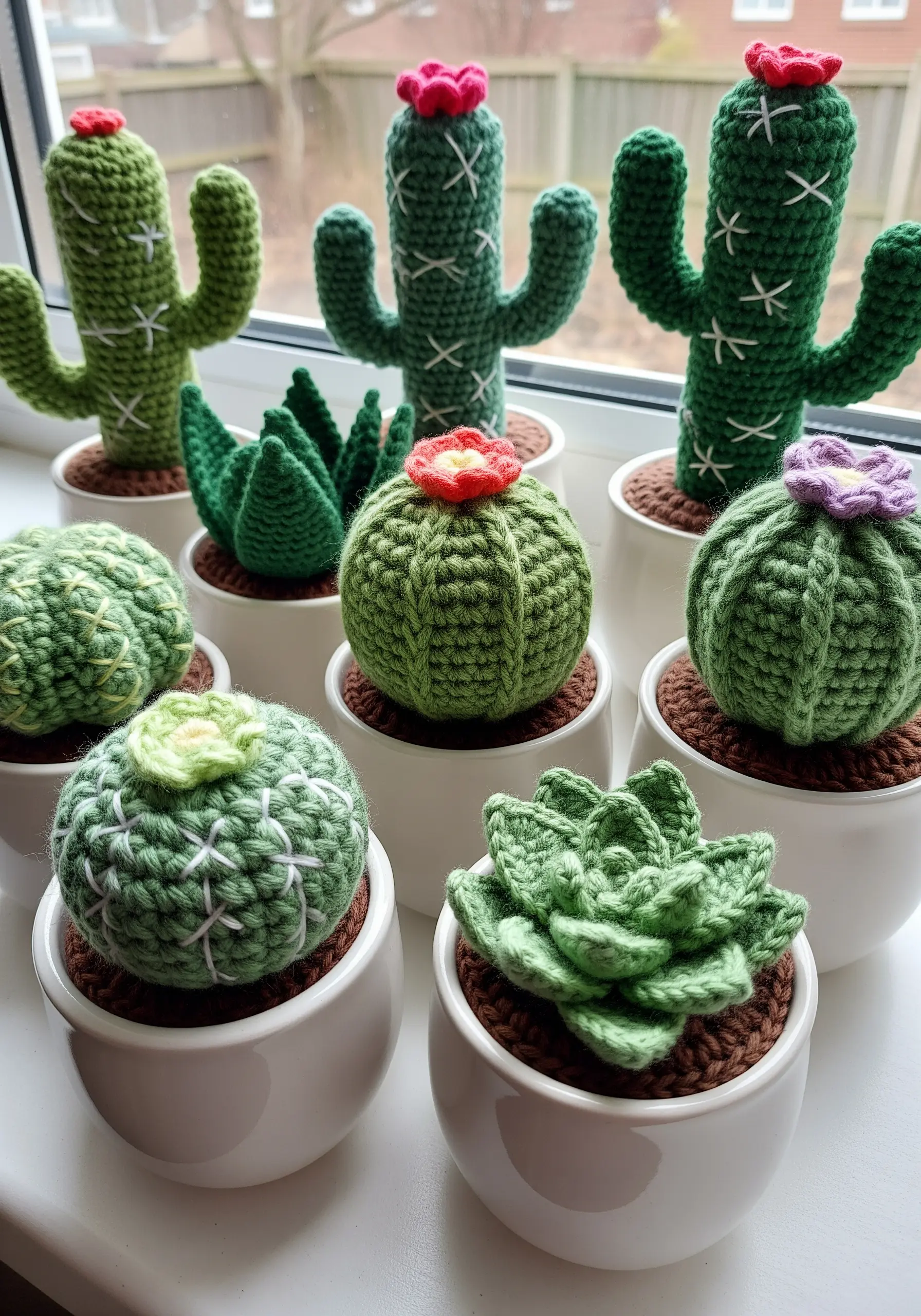
Create charming, everlasting succulents and cacti using basic amigurumi crochet techniques.
Work with green yarn in a spiral to form the base shapes of different plants, from spherical barrel cacti to paddle-shaped succulents.
Use simple stuffing to give them form and stability, then add character with minimal embroidery details like white cross-stitches for spines.
Arrange your crocheted creations in small ceramic pots with a base of brown yarn for ‘soil’ to complete your whimsical, no-watering-needed collection.
13. Compose a Textile Collage with Layered Fabrics and Sashiko Stitching

Create a large-scale piece of art by layering and patching together various fabric scraps in a style reminiscent of Japanese Boro.
Choose fabrics with different textures and patterns, such as indigo-dyed cotton, printed linen, and nubby weaves, to build a rich visual history.
Arrange the pieces in horizontal bands, allowing the raw edges to show for an organic, deconstructed look.
Secure the layers with decorative running stitches, like Sashiko, using a contrasting thread color (such as cream or gold) to add a final layer of linear detail.
14. Make a Statement with a Floor-to-Ceiling Fiber Installation
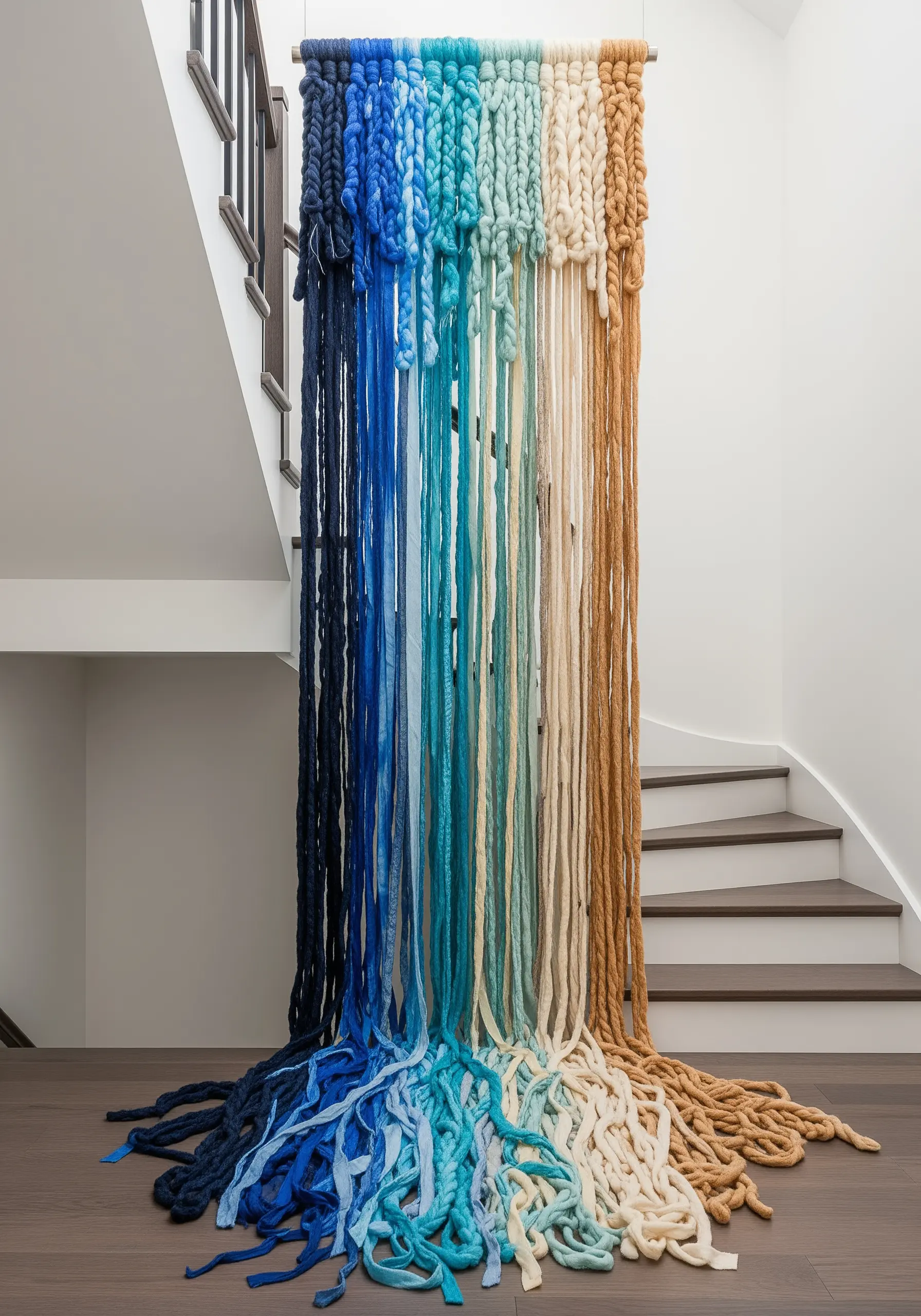
Command attention in a large space, like a stairwell or entryway, by creating a dramatic, oversized fiber art installation.
Instead of a woven piece, focus on the simple beauty of draped fibers hanging from a single rod.
Use a variety of materials in a gradient color scheme—from thick, unspun wool roving and chunky yarn to wide strips of dyed fabric.
Let the materials hang freely, pooling on the floor to create a sense of weight and abundance. This technique makes fiber art installations accessible without a loom.
15. Weave a Durable Surface with Jute and Upcycled Fabric

Craft a functional and eco-friendly textile for an ottoman or floor cushion by weaving with rugged jute and colorful fabric strips.
Use sturdy jute twine as your warp thread to ensure the piece is durable enough for everyday use.
For the weft, alternate rows of natural jute with brightly colored strips of upcycled t-shirts or other scrap fabrics.
The combination of earthy, neutral jute and pops of random color creates a vibrant yet grounded design that is both resilient and stylish.
16. Revitalize a Lampshade with Wrapped Yarns and Braids
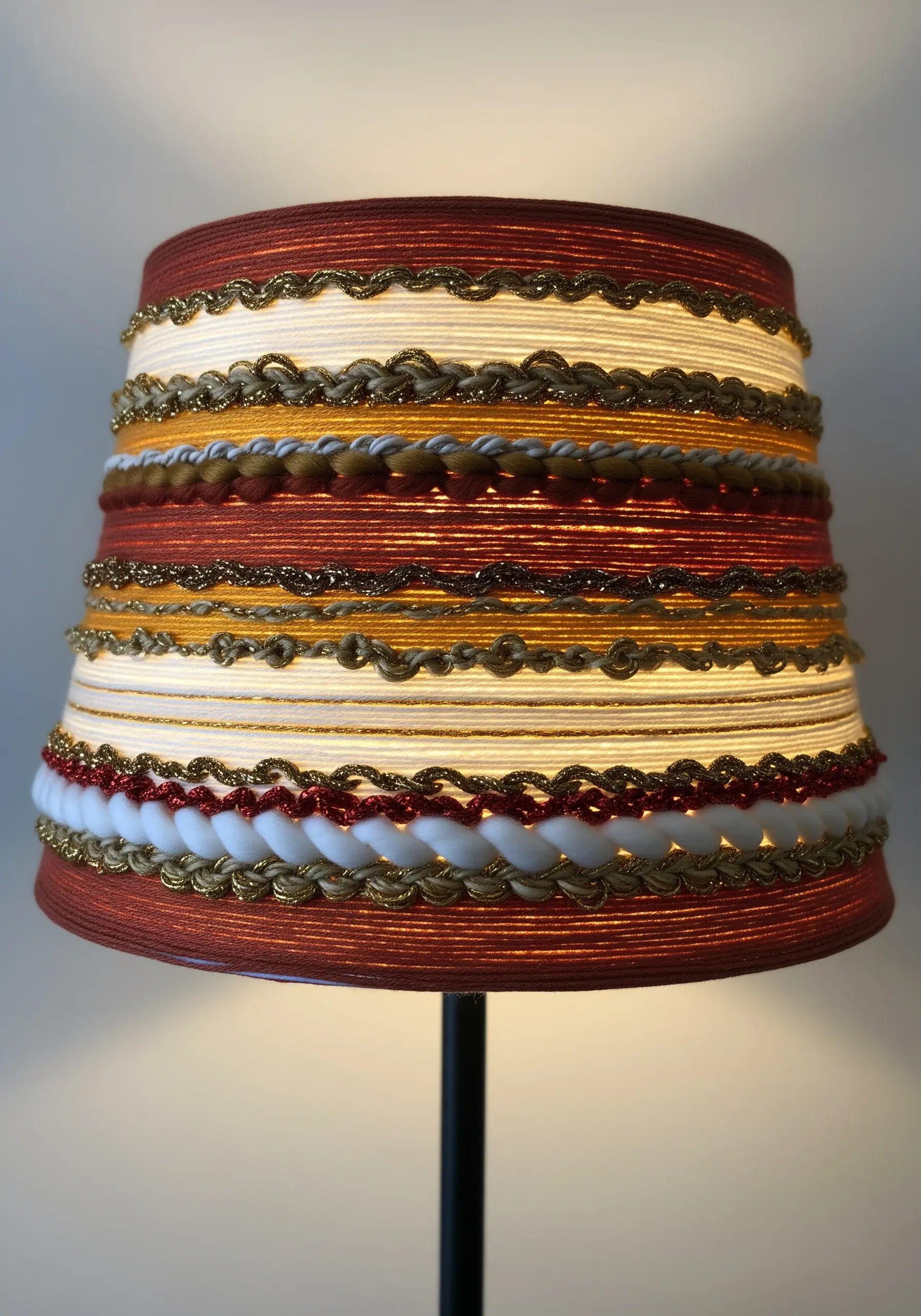
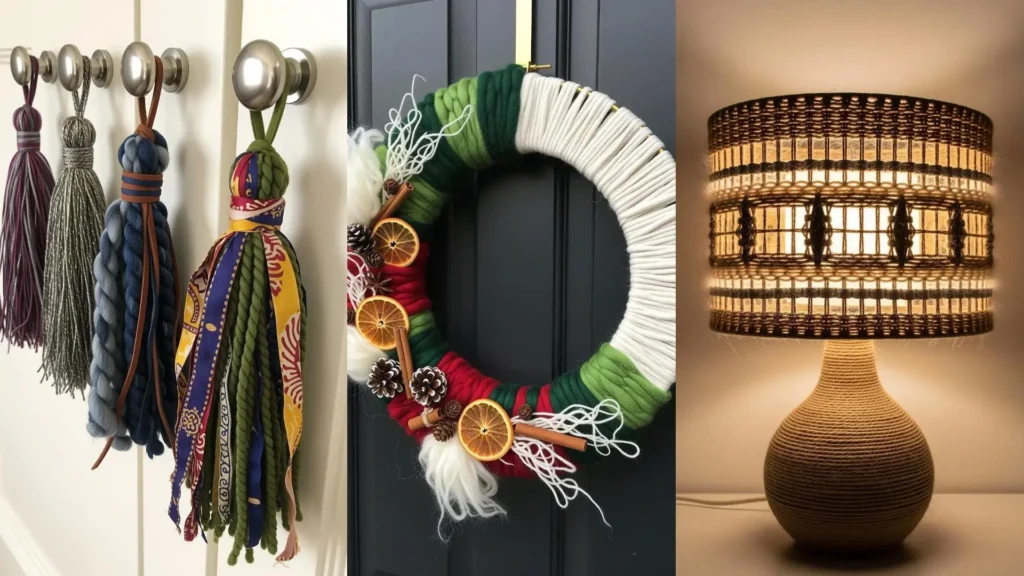
Give a plain lampshade a custom, bohemian makeover by wrapping it with a curated collection of threads, yarns, and decorative trims.
Start by wrapping the entire shade with a base color of fine thread to create an even surface.
Layer on top with bands of different materials: thick yarn, metallic cording, and pre-made braids or rickrack.
Playing with the tension and spacing of the wraps creates different light effects, turning a simple lamp into a source of warm, textured ambiance.
17. Transform a Functional Object with Decorative Yarn Wrapping
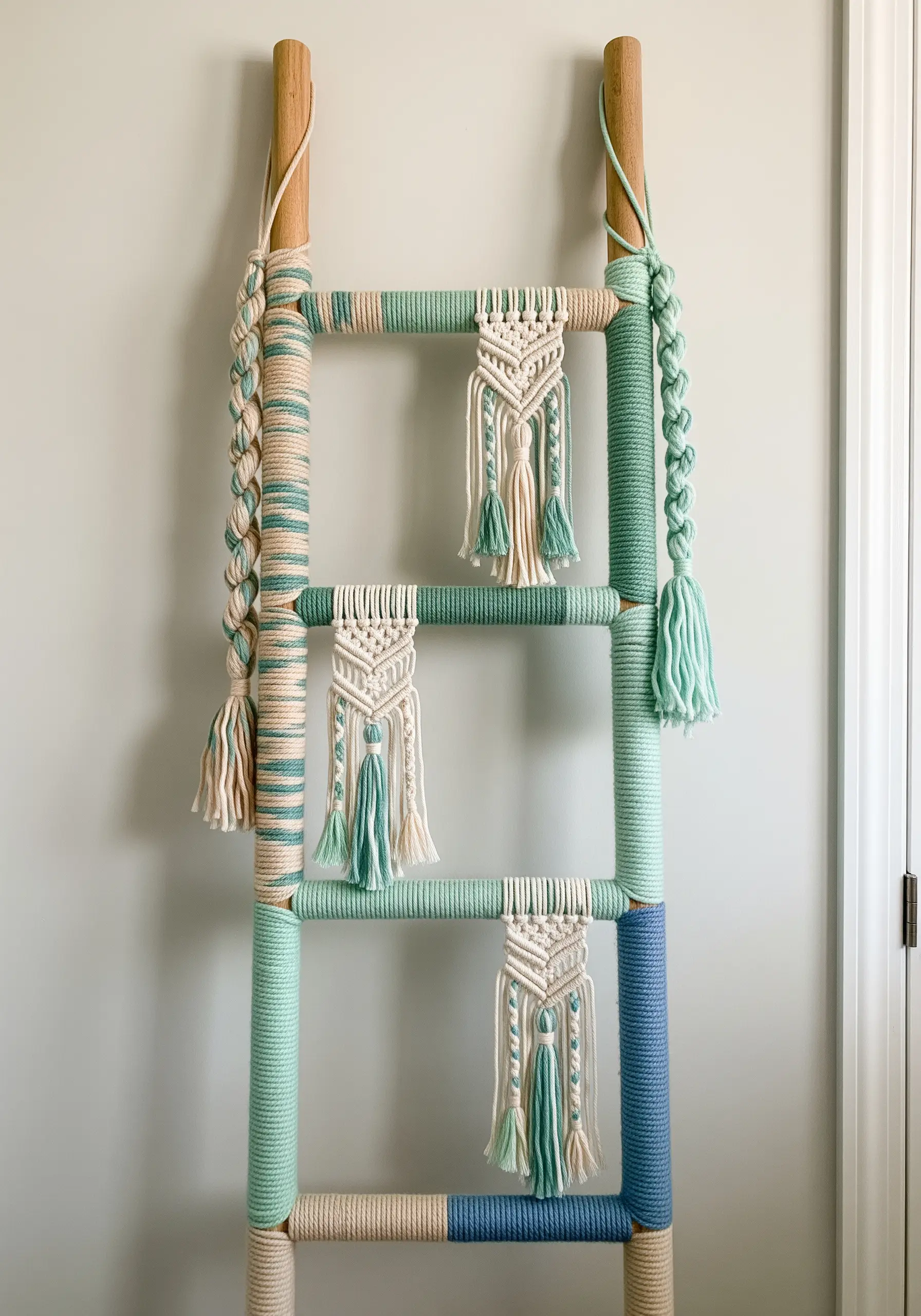
Elevate a simple wooden ladder or piece of furniture into a decorative object using the technique of yarn bombing or wrapping.
Cover the rungs and sides with tightly wrapped yarn, alternating colors to create a color-blocked effect.
Introduce more complex textures by adding sections of braided yarn or incorporating small, pre-made macrame panels.
This playful approach adds a soft, handmade touch to a hard, utilitarian object, turning it into a unique display piece.
18. Frame a View with a Macrame Window Hanging
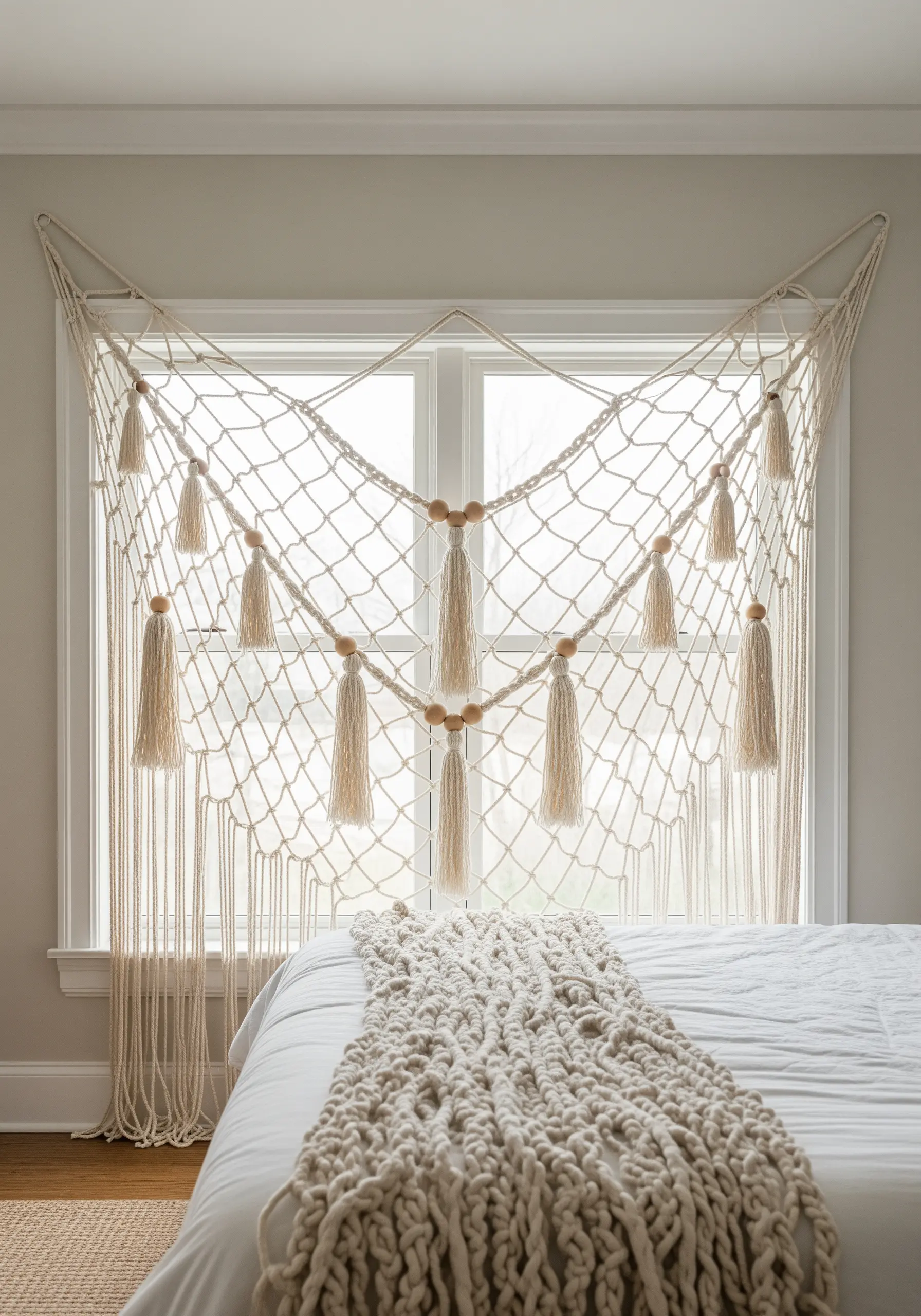
Soften the light and add a touch of bohemian elegance to your bedroom by creating a macrame valance or curtain.
Use a simple netting pattern, like a series of square knots, to create an open structure that filters light without blocking the view.
Incorporate wooden beads at knot intersections to add weight and decorative detail, ensuring the piece hangs evenly.
Finish with long, elegant tassels that draw the eye downward and add a sense of graceful movement to the composition.
19. Weave a Modern Table Runner with Graphic Color Blocking
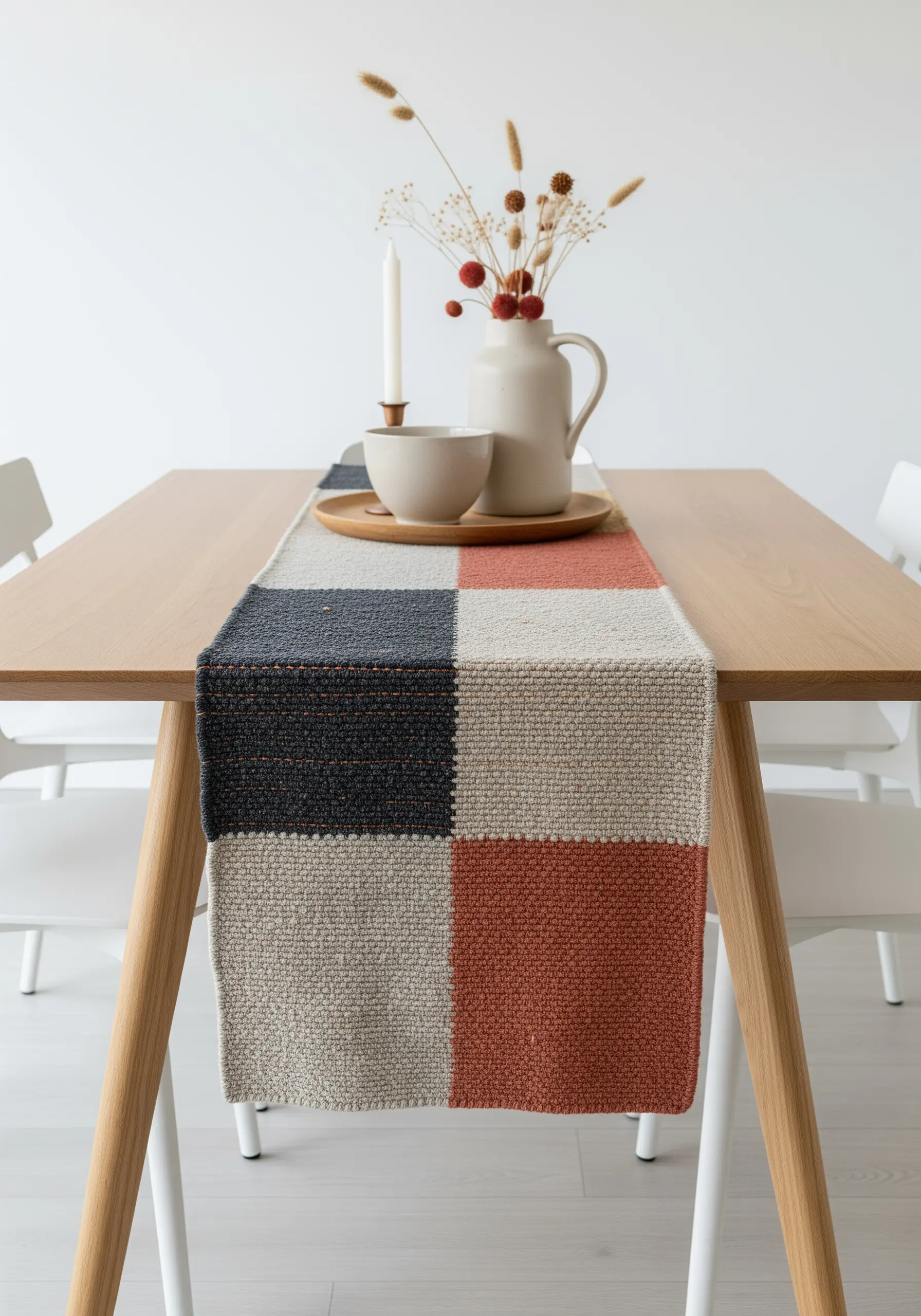
Design a sophisticated table runner by weaving or crocheting simple squares of solid color into a clean, graphic pattern.
Using a limited palette of three or four colors—like charcoal, cream, and rust—gives the piece a modern, minimalist feel.
The texture of the weave itself becomes a key design element, adding subtle depth to the flat blocks of color.
This project demonstrates how simple shapes and a well-chosen color palette can create an impactful piece for your dining space.
20. Explore Organic Forms with Soft Sculptural Embroidery

Create three-dimensional art by building a fabric form over a simple wire armature and embellishing its surface with textural embroidery.
Shape wire mesh into an organic, abstract form, then cover it with stretched wool or felt fabric.
Use needle felting to add patches of contrasting texture and color, seamlessly blending them into the base fabric.
Finally, add delicate, free-form embroidery with a contrasting thread to create fine linear details that look like hand-drawn sketches on the sculptural surface.
21. Combine Knitting and Macrame for Ultimate Textural Contrast
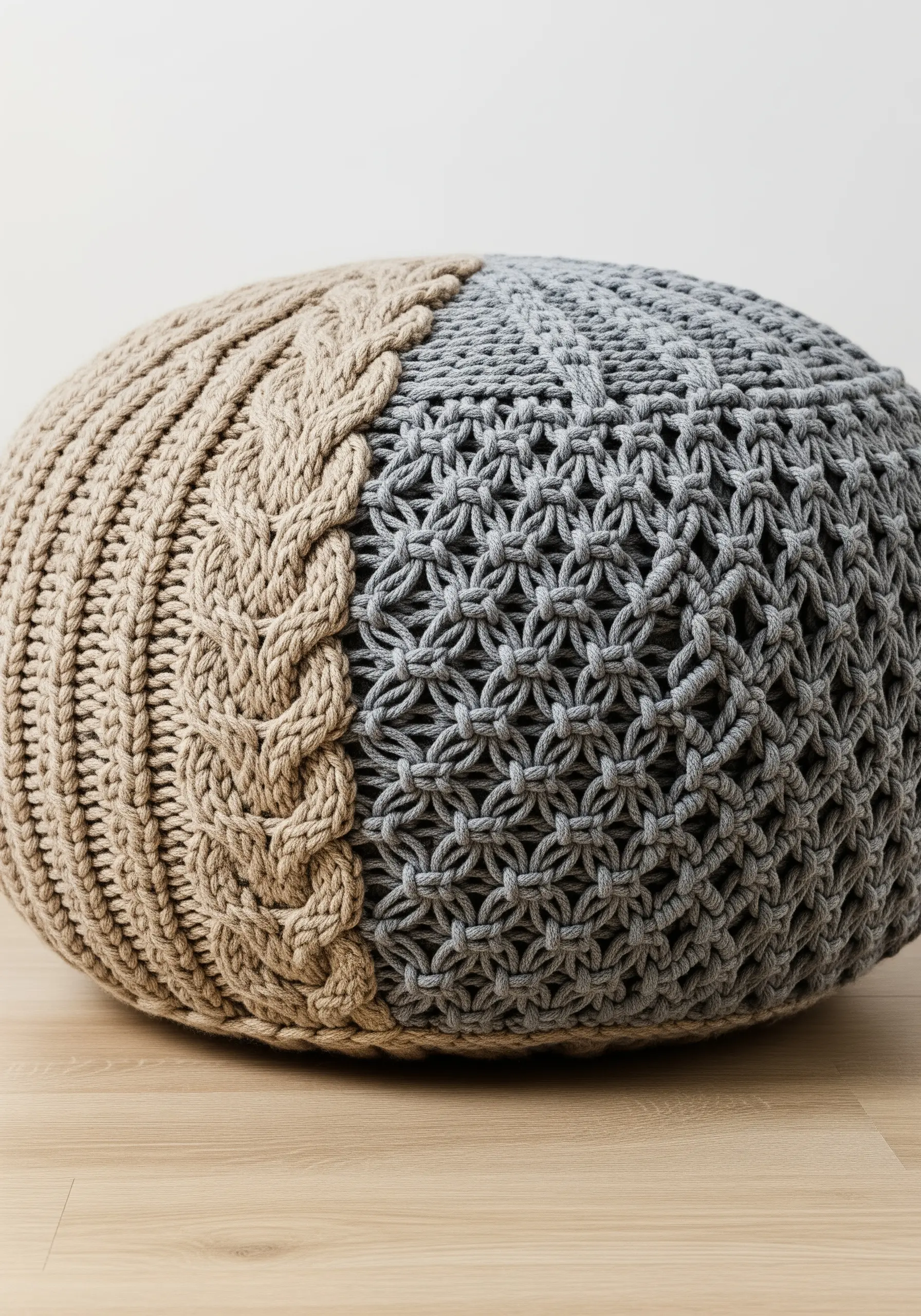
Design a piece, like this floor pouf, that showcases the unique beauty of different fiber techniques by placing them side-by-side.
One section can feature a classic cable knit, which creates a soft, plush, and linear pattern.
The adjacent section can be made with intricate macrame knots, resulting in a firmer, more open, and geometric texture.
This direct comparison highlights the distinct qualities of each craft, creating a dynamic and visually engaging object that celebrates fiber artistry.
22. Create an Interactive Wall Organizer with Felt and Knits

Design a playful and functional wall hanging for a child’s room that doubles as storage and interactive art.
Use a large, sturdy felt panel as the base for your creation, which allows for easy pinning and arranging.
Craft dimensional elements like braided yarn vines and knitted pockets, then attach them to the board to create a whimsical scene.
The pockets are perfect for holding small toys, turning a decorative piece into a fun, ever-changing part of the room’s decor.