You don’t need hours of free time or a complex pattern to bring more joy and intention to your stitching. Sometimes, the most meaningful transformations come from the smallest, most thoughtful details—a line of stitches along a collar, a tiny motif tucked into a pocket, or a single, elegant sprig on a napkin.
Elevating your work isn’t about mastering dozens of difficult stitches. It’s about learning to see the potential in your everyday items and choosing the right technique for the right place. It’s about understanding how a simple change in thread thickness, stitch direction, or color placement can turn something ordinary into a piece that feels uniquely yours.
Consider these ideas not as rules, but as starting points. Let them give you the confidence to embellish your world, one stitch at a time. Pick up a needle, choose a thread that makes you happy, and add a little bit of beauty to something you use every day. You’ll be surprised at how much joy it brings.
1. The Understated Elegance of a Single Sprig

To capture the natural form of a rosemary sprig, use a fishbone stitch for the individual leaves.
This technique creates a central vein and allows the stitches to taper, perfectly mimicking the way real leaves grow.
For subtle depth on a linen napkin, choose two closely related shades of olive green—one for the stem (using a stem stitch) and a slightly lighter one for the leaves.
This tone-on-tone approach feels refined and integrated with the fabric, rather than sitting on top of it.
2. Add Dimension with Padded Satin Stitch

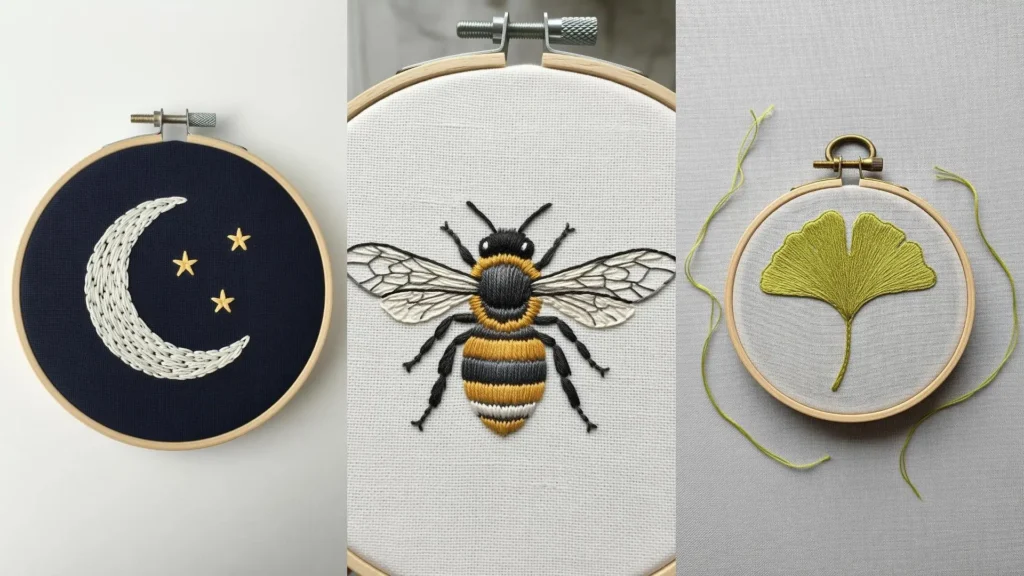
Give your motifs a professional, three-dimensional lift using padded satin stitch.
Before you begin your top layer, create a foundation of small seed stitches or chain stitches within the shape of the bee’s body.
When you stitch your yellow and black satin stitches over this base, the thread will be raised from the surface, creating a plush, tactile effect that catches the light.
Use a single strand of off-white thread for the wings to keep them delicate and translucent against the dense body.
3. Frame the Face with a Delicate Collar Vine

Transform a simple sweatshirt by adding a delicate garland of forget-me-nots around the collar.
Use lazy daisy stitches for the five blue petals and a single French knot in yellow for the center—this combination is quick yet remarkably effective.
To prevent the stretchy knit fabric from puckering, always use a cut-away or iron-on stabilizer on the inside of the garment before you begin stitching.
Allow the vine to curve organically, as if it were growing naturally along the neckline.
4. The Radiance of a Split-Stitch Sunburst

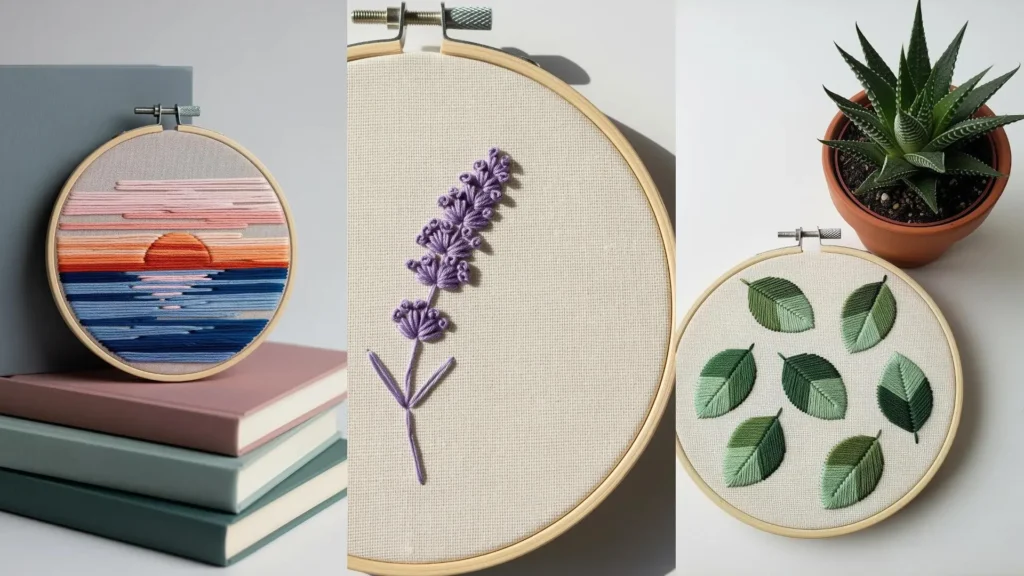
Create this clean, graphic sun by first filling the semi-circle with a smooth satin stitch.
For the rays, use a simple straight stitch, varying the lengths to create a dynamic sense of movement.
The key to this design’s warmth is a subtle color gradient—use threads ranging from a deep orange to a pale yellow to mimic a real sunrise.
This motif is especially striking on a sturdy canvas tote bag, where the clean lines can truly shine.
5. Stitching on Knits with Precision

When embroidering on a stretchy, ribbed beanie, your greatest tool is a water-soluble stabilizer placed on top of your design area.
This film prevents your stitches from sinking into the fabric’s texture, ensuring your outlines remain crisp and visible.
Use a simple backstitch or stem stitch for the trees, and be mindful not to pull the thread too tightly.
This allows the embroidery to stretch naturally with the knit, preventing distortion and puckering.
6. Create Movement with a Simple Dotted Line

Turn a static design into a small story by adding a line of motion.
Use a crisp backstitch for the geometric folds of the paper airplane to keep the lines sharp and defined.
The flight path is a simple running stitch, but the artistry lies in the spacing—gradually increase the length of the stitches and the gaps between them to create the illusion of movement and speed.
A bright white thread provides a clean, graphic contrast against classic blue denim.
7. Modernize Cross-Stitch with Negative Space

Instead of filling the entire strawberry with traditional cross-stitches, intentionally leave some squares unstitched.
This technique creates a modern, pixelated texture and adds visual interest without adding complexity.
To ensure the shape remains defined, trace the entire strawberry with a sharp backstitch outline in a matching red thread.
This frames the work and makes the negative space feel purposeful and polished.
8. Achieve a Luminous Satin Stitch Gradient

To give the crescent moon a soft, ethereal glow, avoid using a single block of color.
Instead, choose two or three adjacent shades of silver or light grey floss and blend them using a long-and-short stitch.
This technique creates a seamless gradient that mimics the gentle shadows on the lunar surface.
For the stars, a simple star stitch in a bright, metallic silver thread adds a perfect, shimmering contrast to the moon’s soft finish.
9. Master Texture on Textured Fabric

A waffle-weave kitchen towel has a deep grid that can easily overpower delicate stitches.
Combat this by using a bolder thread, such as all six strands of embroidery floss or even a fine pearl cotton.
Outline the entire lemon slice with a thick backstitch to create a strong visual boundary.
Then, fill the segments with open, directional straight stitches that work with the fabric’s grid, not against it, for a clean and vibrant result.
10. Whispers of Detail on a Shirt Cuff

The magic of this dandelion design lies in its delicate, airy quality.
Use just a single strand of white floss for the floating seeds to ensure they look light enough to be carried by the wind.
The central seed head is a starburst of simple straight stitches, while the stem is defined with a thin whipped backstitch.
Placing this motif on a cuff is an unexpected, elegant detail that elevates an entire garment.
11. The Power of a Bold, Minimalist Outline

On a structured item like a baseball cap, a clean, graphic outline often makes a stronger statement than a fully filled design.
Use a stem stitch or split stitch with three to four strands of floss to create a line with enough weight and presence to be clearly visible.
Sticking to a single, high-contrast color—like this electric blue on khaki—keeps the design feeling modern, sharp, and incredibly versatile.
12. A Tiny Motif to Personalize Your Pages

Create a durable and beautiful bookmark by stitching your design on a piece of linen or canvas, then backing it with a coordinating piece of felt.
This encloses the back of your stitches and gives the bookmark a satisfying weight.
For the motif, a simple backstitch outline for the book and a single detached chain stitch for the heart is all that is needed to create a charming and thoughtful gift for a reader.
13. The Charm of a Single Contour Line

Single-line illustrations translate beautifully into embroidery, offering a minimalist yet expressive result.
Use a smooth, consistent stem stitch or whipped backstitch to maintain the integrity of the continuous line.
The key to a polished finish is ensuring your stitch length is uniform, especially around curves.
Choosing a thread color that offers a gentle contrast to the fabric, like this warm brown on grey, creates an understated and sophisticated look.
14. Layering Stitches for Botanical Texture

To give these wheat stalks a realistic, plump texture, build them with layers of directional stitches.
Use a stem stitch for the main stalk, then work the individual grains with fishbone stitches that slightly overlap.
For the delicate awns (the bristles), use a single strand of a slightly lighter gold thread and work them as long, wispy straight stitches.
This subtle color shift and layering creates incredible depth and a sun-kissed appearance.
15. A Pop of Joy on Stretchy Fabrics

Embroidering on ribbed socks requires a light touch and the right preparation.
Use a small hoop and be careful not to overstretch the fabric, as this will distort the design once the hoop is removed.
Place a small piece of stabilizer on the inside to support your stitches.
A classic daisy, formed with five lazy daisy stitches for petals and a trio of French knots for the center, is durable enough for wear and adds a delightful, unexpected detail.
16. Clean Line Art for Thematic Embellishment

Elevate a simple linen apron by adding a crisp, clean line drawing to the pocket.
Using a backstitch with three strands of floss gives you a defined line that is substantial without appearing bulky.
Placing the design on the pocket corner creates a thoughtful focal point and transforms a purely functional item into a personalized piece of kitchen wear.
This is a perfect way to add a professional, bespoke touch.
17. Directional Satin Stitch for Organic Shapes

The beauty of a ginkgo leaf lies in its graceful, fan-like shape. Capture this by angling your satin stitches to follow the natural direction of the leaf’s veins.
Start your stitches at the base and radiate them outward toward the curved edge.
This simple technical adjustment ensures the finished leaf feels dynamic and alive, not static.
A single, bold marigold thread against a neutral fabric creates a striking and modern botanical statement.
18. A Playful Column of Fly Stitches

Instantly customize a plain button-down shirt by adding a decorative stitch along the placket.
When worked in a vertical line, the fly stitch creates a charming pattern that resembles tiny bows or flying birds.
Use a variegated thread to achieve a soft rainbow effect with minimal effort, or choose a single contrasting color for a more graphic look.
This unexpected detail feels completely bespoke.
19. High-Contrast Stitching on Felt

Felt is an ideal surface for beginner and expert stitchers alike because it is stable, doesn’t fray, and requires no hoop.
For a crisp, illustrative look on a coffee sleeve, use a simple backstitch in a high-contrast color like bright white on dark brown.
Use at least three strands of floss to ensure your lines are bold and don’t get lost in the slightly fibrous texture of the felt.
20. The Power of Graphic & Functional Art

Add a touch of wit and personality to an everyday object by stitching a motif that reflects its purpose.
On this glasses case, a simple outline of a pair of spectacles is both charming and clever.
Use a stem stitch in a dark, contrasting thread to create a smooth, continuous line that defines the shape clearly.
The tiny accent stitch on the lens adds a perfect hint of character.
21. Tucking Sunshine into a Tiny Pocket

Use the often-overlooked coin pocket of your jeans as a miniature canvas for a quick and impactful stitch.
A simple sun motif, created with a satin-stitched center and radiating straight stitches, is the perfect fit for this small space.
Choosing a single, intensely saturated color like this bright yellow ensures the tiny design makes a big, joyful statement against the blue denim.
22. Create Dimension with Split Satin Stitch

To give a simple shape like this four-leaf clover a sense of dimension, modify your satin stitch technique.
Visually divide each heart-shaped leaflet down the middle, creating a central axis.
Angle your satin stitches outward from this center line on both sides.
This creates a subtle ridge that catches the light and mimics the central vein of a real leaf, instantly making the design feel more dynamic and realistic.
23. Textural Contrast on Cozy Fabrics

The plush, soft pile of fleece provides a beautiful backdrop for structured, traditional stitches.
When embellishing the hem of a fleece blanket or jacket, choose a thicker thread like pearl cotton or tapestry wool.
These threads have the necessary weight and presence to stand out against the fluffy texture, creating a delightful contrast.
A simple cross-stitch or blanket stitch adds a handcrafted, heritage feel to a modern material.
24. Embroidering a Narrative on Footwear

When stitching on heavy canvas shoes, a few key tools make all the difference: use a strong, sharp needle and a thimble to protect your fingers.
Create this iconic wave by using satin stitch in graduating shades of blue, from deep navy to light sky.
Always place a piece of stabilizer on the inside of the shoe to support the stitches and ensure the area remains comfortable against your foot.
25. The Tactile Beauty of Clustered Knots

To recreate the rich, bumpy texture of lavender blossoms, rely on clusters of French knots.
The secret to a realistic look is to use three slightly different shades of purple floss—a medium, a dark, and a light lilac—and mix them throughout the clusters.
This subtle variation gives the blossoms depth and dimension.
Pair them with a simple stem stitch for the stalks and detached chain stitches for the leaves to complete the calming design.
26. Geometric Fill for a Modern Aesthetic

For perfectly neat, satin-filled geometric shapes like this honeycomb pattern, preparation is key.
Before you begin filling each circle, outline it with a precise split stitch in the same color.
This creates a slightly raised, defined edge that acts as a boundary for your satin stitches.
You can tuck the ends of your satin stitch under this border, resulting in exceptionally clean, crisp circles.
27. Metallic Threads for an Elegant Accent

You can create stunning, jewelry-like embellishments by stitching with metallic thread.
To tame this notoriously tricky thread, use shorter lengths than you normally would and work with a needle with a larger eye to reduce friction.
For the intricate filigree of this key, consider couching: lay the metallic thread on the surface and tack it down with a finer, coordinating sewing thread.
This gives you ultimate control for perfect curves.
28. A Continuous Vine for Refined Table Settings

Elevate simple napkin rings into a cohesive, elegant set with a simple botanical motif.
Use a stem stitch in a medium green to create the gracefully winding vine.
For the leaves, place single, detached chain stitches (also known as lazy daisies) at intervals along the stem.
Using a slightly darker green for the leaves adds just enough dimension to make the design feel sophisticated and complete.
29. The Playful Charm of an Embroidered Appliqué

Instead of stitching directly onto your final item, create a dimensional patch.
Embroider your smiling pear motif onto a separate piece of felt or stiff canvas.
Once complete, carefully cut it out, leaving a tiny fabric border.
Then, attach the patch to your placemat or bag using a neat whipstitch around the edge.
This technique adds a fun, raised texture and is perfect for personalizing items you don’t want to put in a hoop.
30. Crisp Color-Blocking with Satin Stitch

This bold pencil design is a perfect exercise in achieving clean, graphic sections of satin stitch.
The secret to perfectly sharp edges between colors is to outline each individual color block with a split stitch before you begin filling it in.
This raised edge gives you a precise line to tuck your satin stitches against, preventing colors from bleeding into one another and resulting in a professional, polished finish.
31. Minimalist Magic with Knots and Lines

Stitch a favorite constellation onto a dark t-shirt for a deeply personal and beautifully understated embellishment.
Use a simple backstitch for the connecting lines to keep them fine and crisp.
For the stars themselves, use small star stitches or tiny, tight French knots.
Working in a bright white or a shimmering silver metallic thread against a black or navy fabric creates a stunning and realistic celestial effect.
32. Labeling with a Purposeful Motif

Add both charm and function to reusable mesh produce bags with an embroidered label.
Because mesh is difficult to stitch on directly, first embroider your carrot onto a small patch of sturdy canvas.
Then, simply sew the finished patch onto the bag.
This provides a stable surface for your stitching and ensures the design is bold and clear, making organization beautiful.
33. The Subtle Impact of a Variegated Thread

A blanket stitch is a classic choice for finishing a fabric edge, as it’s both decorative and prevents fraying.
To create a stunning rainbow effect with almost no effort, simply use a variegated thread.
The thread changes color on its own as you stitch, giving you a beautiful, seamless gradient.
This technique is a fast and joyful way to add a pop of color to any plain garment or tea towel.
34. The Classic Elegance of a Padded Monogram

To ensure your monogram stands out on a plush, high-pile fabric like a terrycloth towel, you must give it some height.
Create a padded base by first working a layer of chain stitches or several rows of running stitches within the outline of the letter.
Then, cover this foundation with your final satin stitch, working in the opposite direction.
This raises the monogram beautifully, giving it a luxurious, sculpted look.
35. A Pocket of Stitched Affection on a Journal

This charming design cleverly combines appliqué with embroidery to create an interactive element.
First, cut a small envelope shape from a piece of felt or sturdy canvas.
Attach it to your journal cover using a decorative running stitch, making sure to leave the top flap open to form a tiny pocket.
An embroidered heart, attached only at the bottom, serves as a delightful and functional closure.
36. Bold Lettering with Whipped Backstitch

If you want your embroidered text to be smooth, bold, and free of gaps, a whipped backstitch is the perfect technique.
First, lay down your letters using a standard backstitch.
Then, using the same or a different colored thread, pass your needle under each backstitch without piercing the fabric.
This action wraps, or “whips,” the stitches, creating a solid, rope-like line that is perfect for impactful lettering.