The peacock is more than just a beautiful bird; it’s a canvas for your most ambitious stitching. Its iridescent feathers invite you to explore color, texture, and light in ways few other motifs can. But capturing its majesty isn’t about replicating every feather—it’s about translating its essence into thread.
Forget thinking of it as a single image. Instead, see it as an opportunity to master specific techniques. Think of the smooth, shimmering body as a study in thread painting, the tail as an experiment in beading and metallic work, and the silhouette as a lesson in graphic composition.
Whether you’re embellishing a silk saree, a velvet jacket, or a simple shawl, these ideas are designed to help you move beyond the pattern. You’ll learn to choose the right stitch for the right effect, to balance intricate detail with elegant simplicity, and to turn a classic symbol into a personal statement of your skill and artistry.
1. Master Contrast with Jewel Tones and Metallics
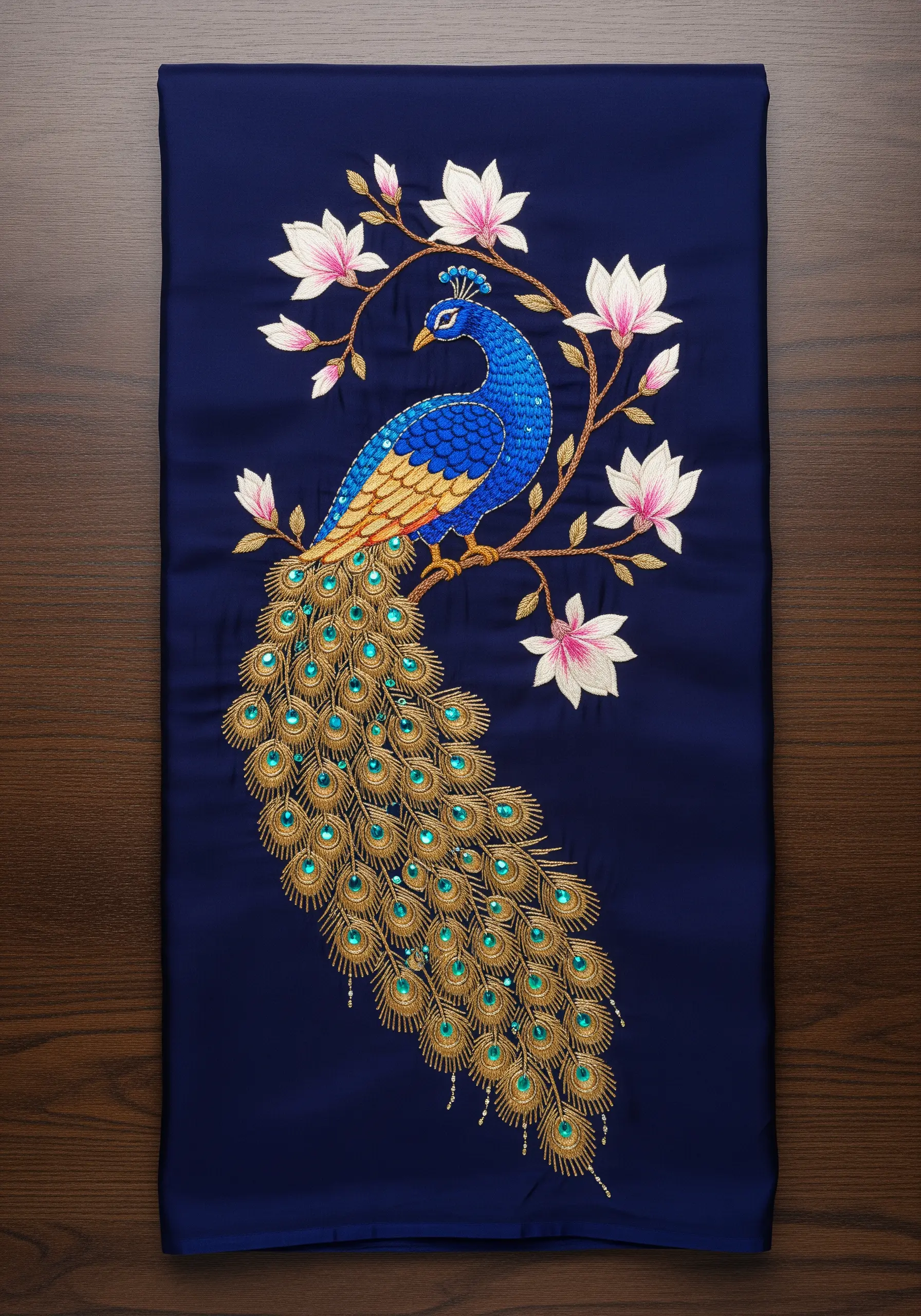
To make your peacock motif truly command attention, choose a deep, saturated background fabric like navy, black, or emerald green.
This high-contrast base makes metallic gold threads and vibrant silk floss appear more luminous and rich.
Incorporate small, high-quality sequins or beads into the center of each tail feather ‘eye’—not just for sparkle, but to create focal points that catch the light with every movement.
This technique transforms a flat design into a dynamic, textured masterpiece, especially on the flowing drape of a saree or shawl.
2. Achieve painterly realism with thread painting
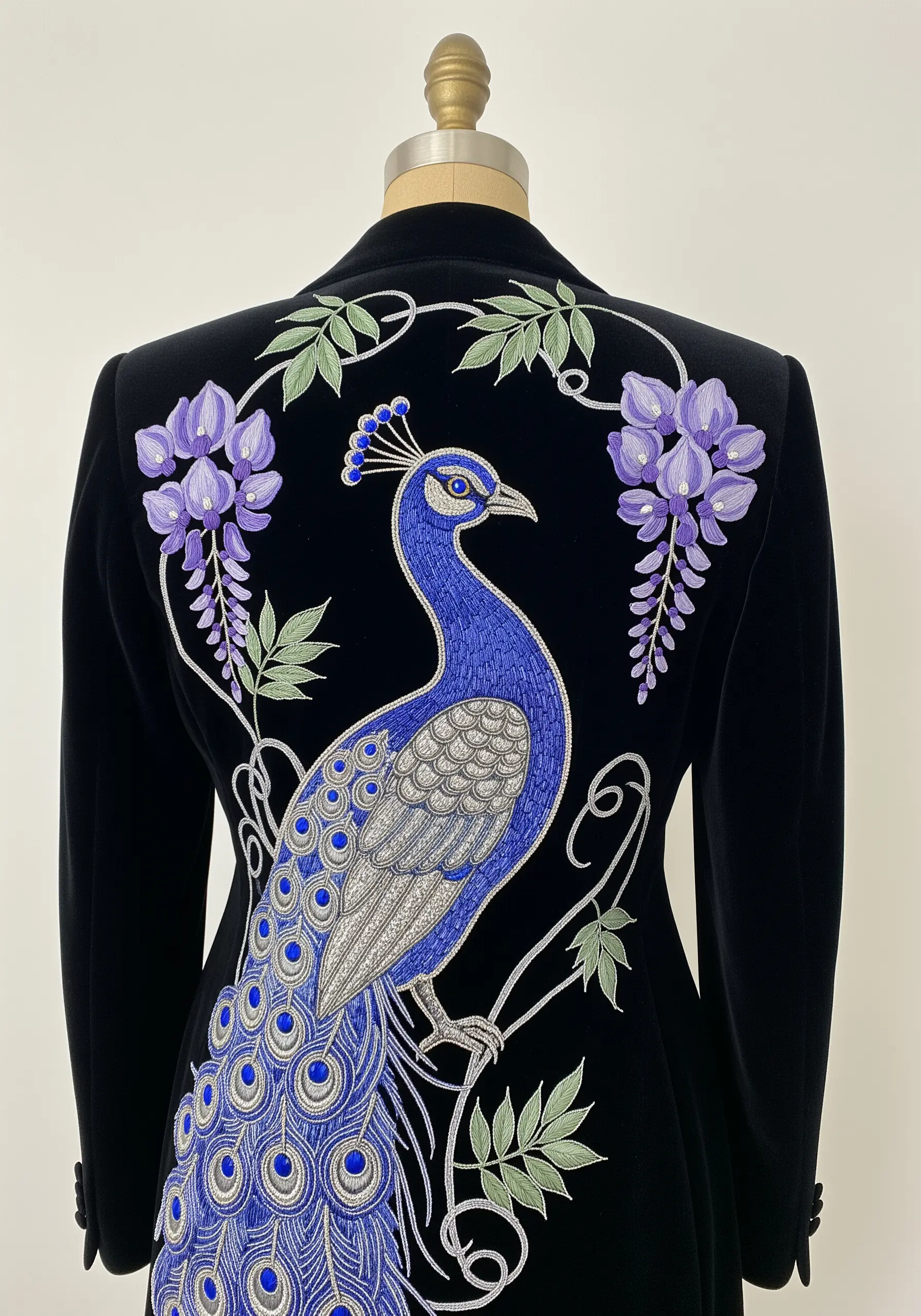
For a lifelike peacock on a textured surface like velvet, thread painting is your most powerful tool.
Use a single strand of floss and the long-and-short stitch to blend shades of blue, turquoise, and silver seamlessly across the bird’s body and wings.
Always stitch in the direction of feather growth to create natural contours and a sense of movement.
Working on velvet requires a lightweight, tear-away stabilizer on the back to prevent the fabric’s pile from swallowing your stitches, ensuring every detail remains crisp and defined.
3. Create Rhythm with a Stylized Border
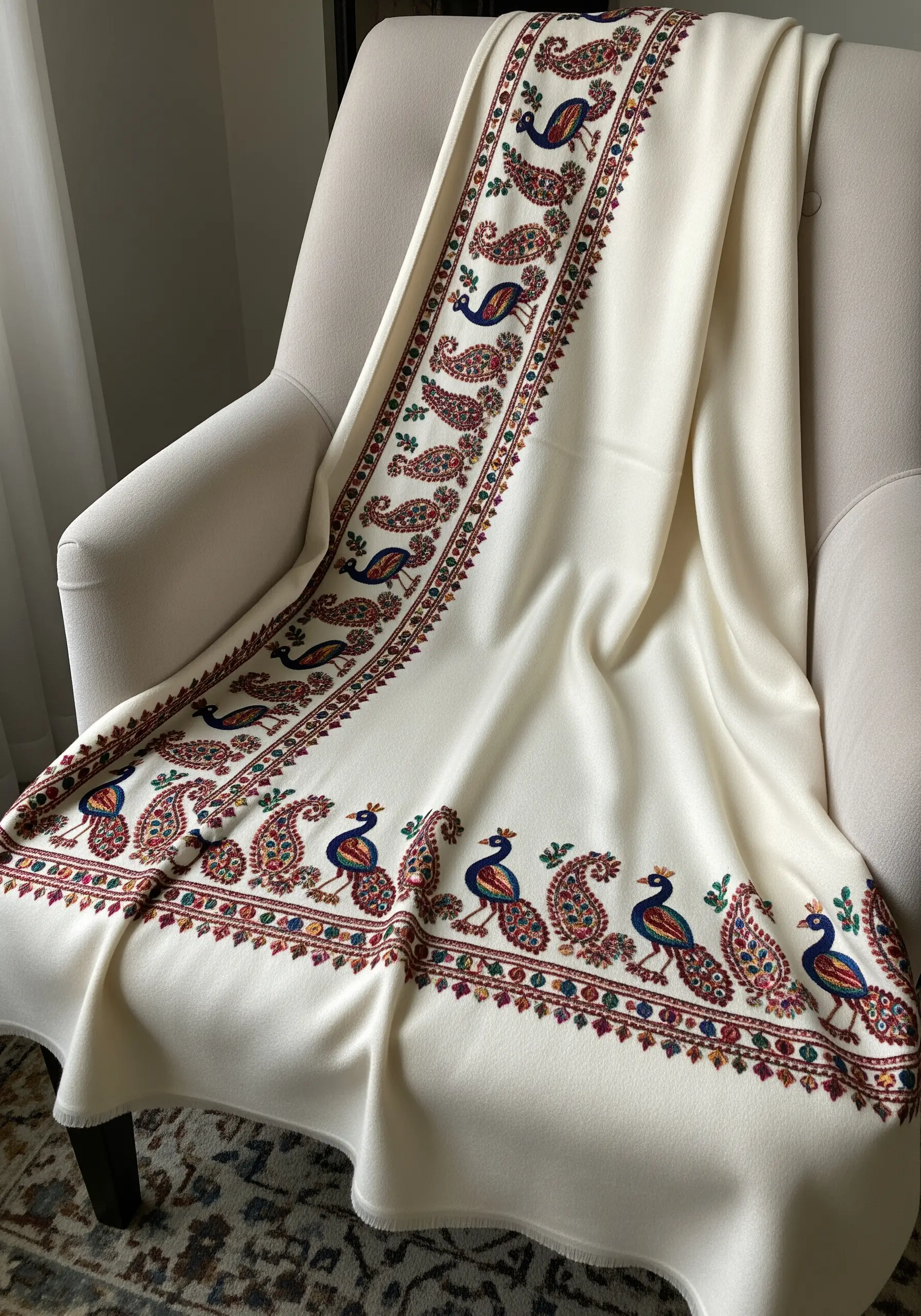
When embellishing a shawl or saree border, transform the peacock into a repeating decorative motif rather than a single pictorial scene.
Simplify the bird’s form and integrate it with classic elements like paisley or teardrop shapes to create a harmonious, flowing pattern.
This repetition guides the eye along the length of the fabric, adding elegance and structure without overwhelming the entire piece.
Maintain a consistent color palette across all motifs to ensure the border feels cohesive and intentional, turning the entire garment into a frame for your artistry.
4. Embrace Regal Symmetry with Goldwork
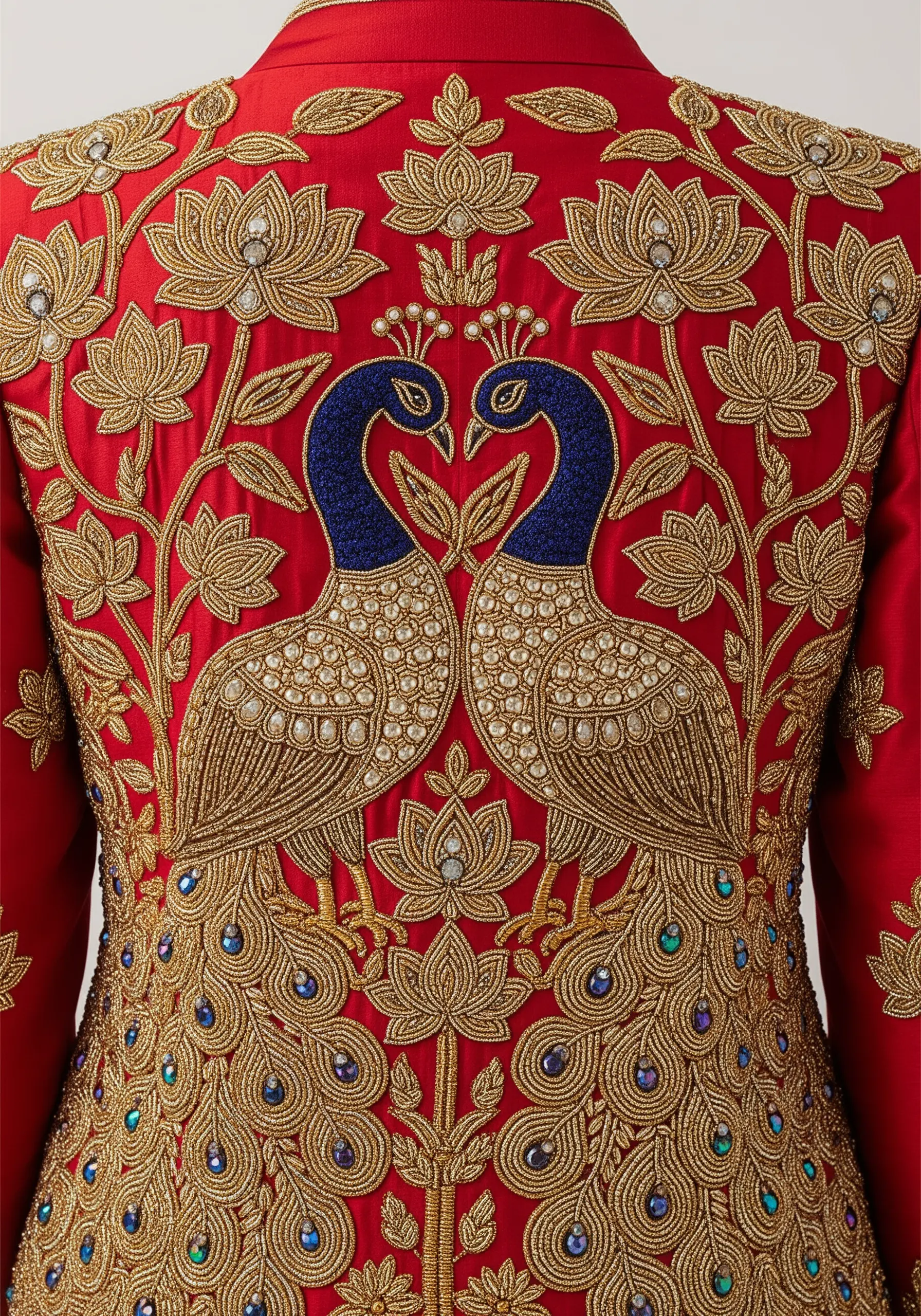
Create a powerful statement on the back of a jacket by designing a perfectly symmetrical composition with two peacocks facing each other.
This mirrored layout evokes a sense of balance, royalty, and heritage craftsmanship.
Use the couching technique to lay down heavy metallic threads, which are too thick to pull through fabric, securing them with small, nearly invisible stitches.
Intersperse the goldwork with flat-back crystals and pearls to add dimension and a luxurious weight, ensuring your piece looks and feels like couture.
5. Explore the Power of Minimalist Silhouettes
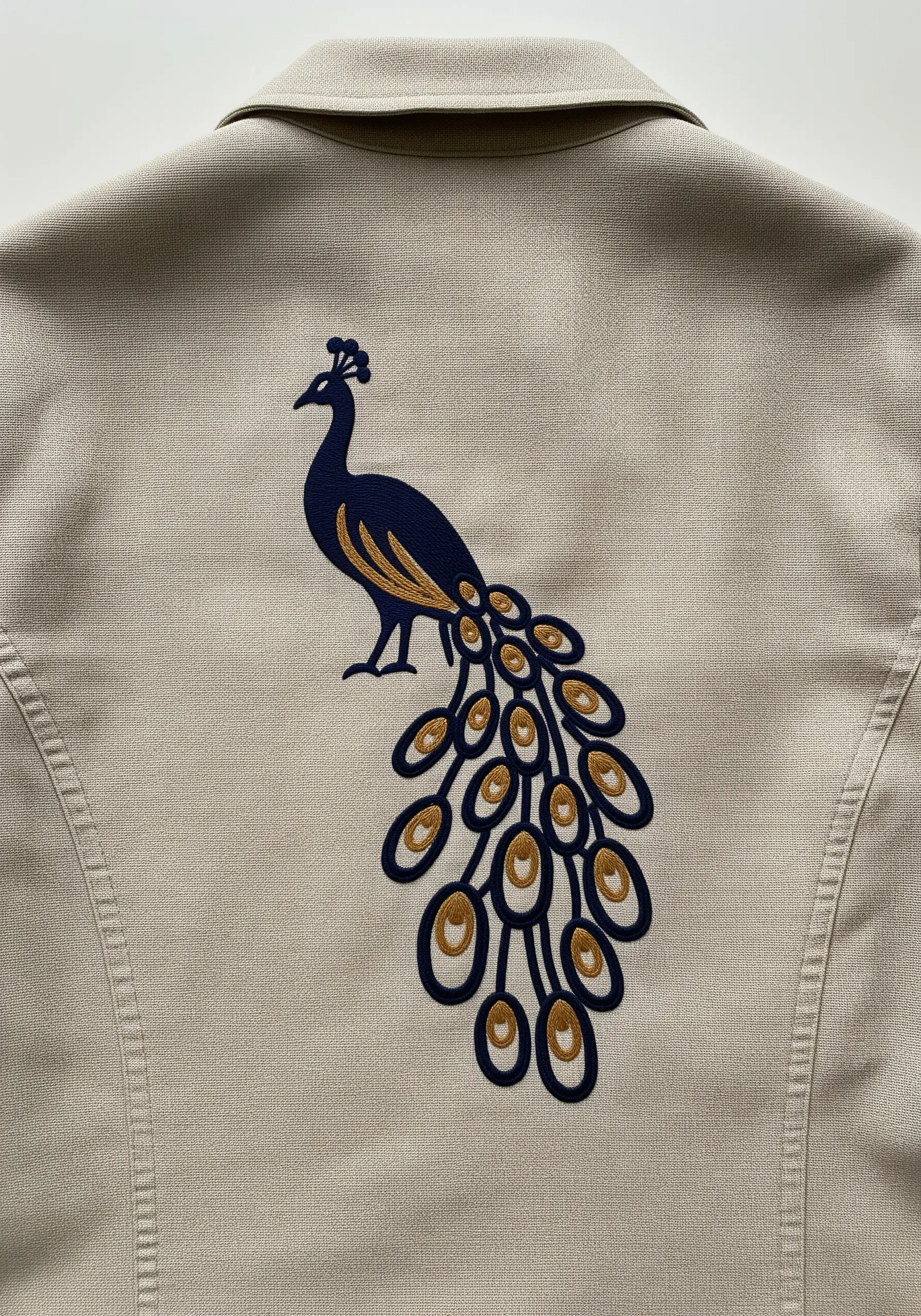
You don’t need intricate detail to make an impact; a clean, graphic silhouette can be incredibly modern and chic.
Use a dense, smooth satin stitch to fill the peacock’s body in a single dark color, then outline the tail feathers with a contrasting metallic thread.
This approach allows you to combine thread and negative space to define the form, creating a sophisticated design that feels both understated and bold.
It’s a perfect way to add a touch of personality to a tailored jacket without sacrificing its clean lines.
6. Frame Your Subject with Vibrant Botanicals
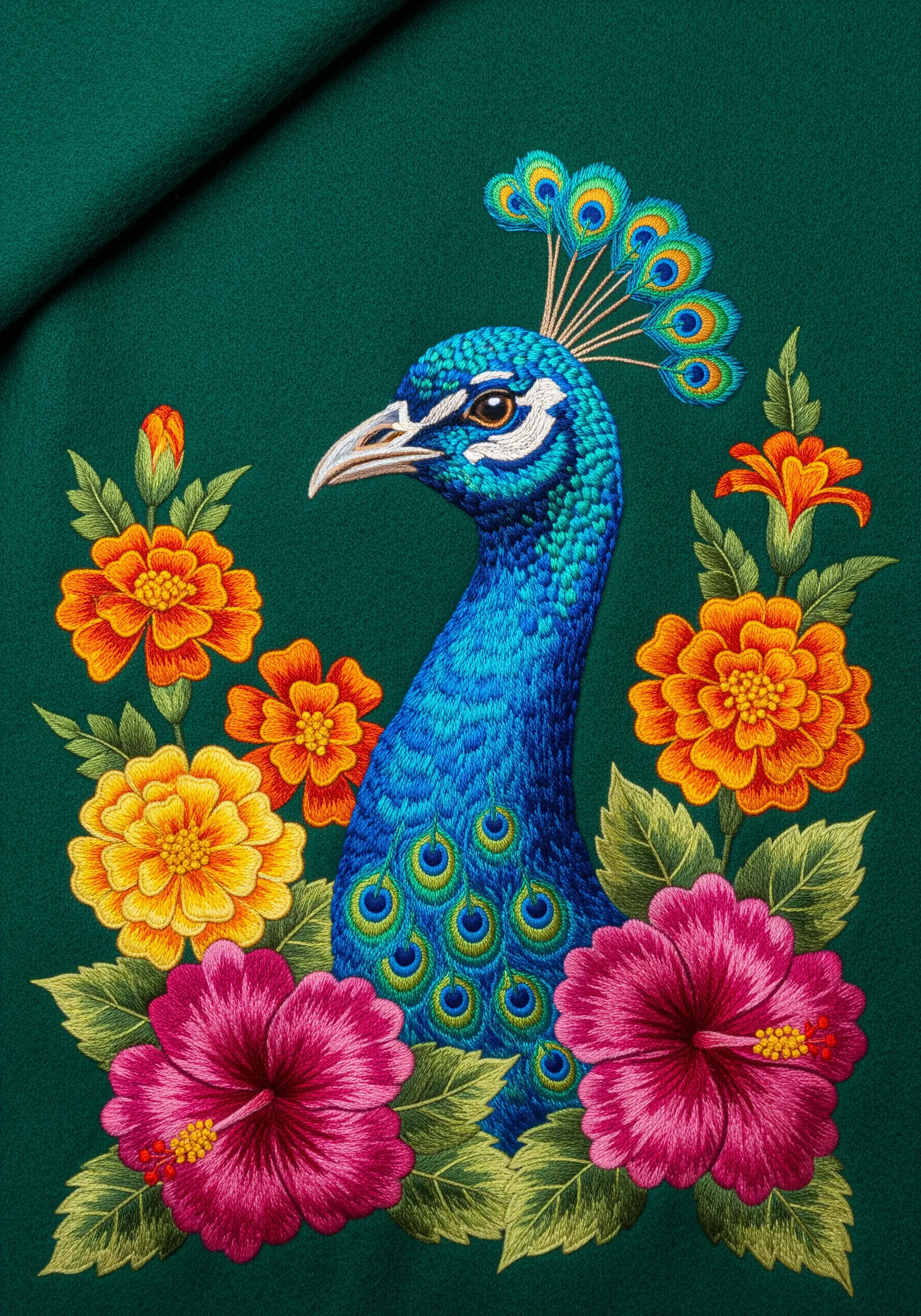
Elevate a peacock portrait by surrounding it with lush, vibrant flowers that complement its jewel-toned plumage.
Choose botanicals like marigolds, hibiscus, or fuchsia, which offer warm oranges and deep pinks to contrast beautifully with the cool blues and greens of the peacock.
Use layered satin stitches for the petals and French knots for the flower centers to build stunning natural texture.
This composition technique not only adds color and energy but also creates a complete, balanced scene that feels rich and alive.
7. Design an Elegant All-Over Feather Pattern
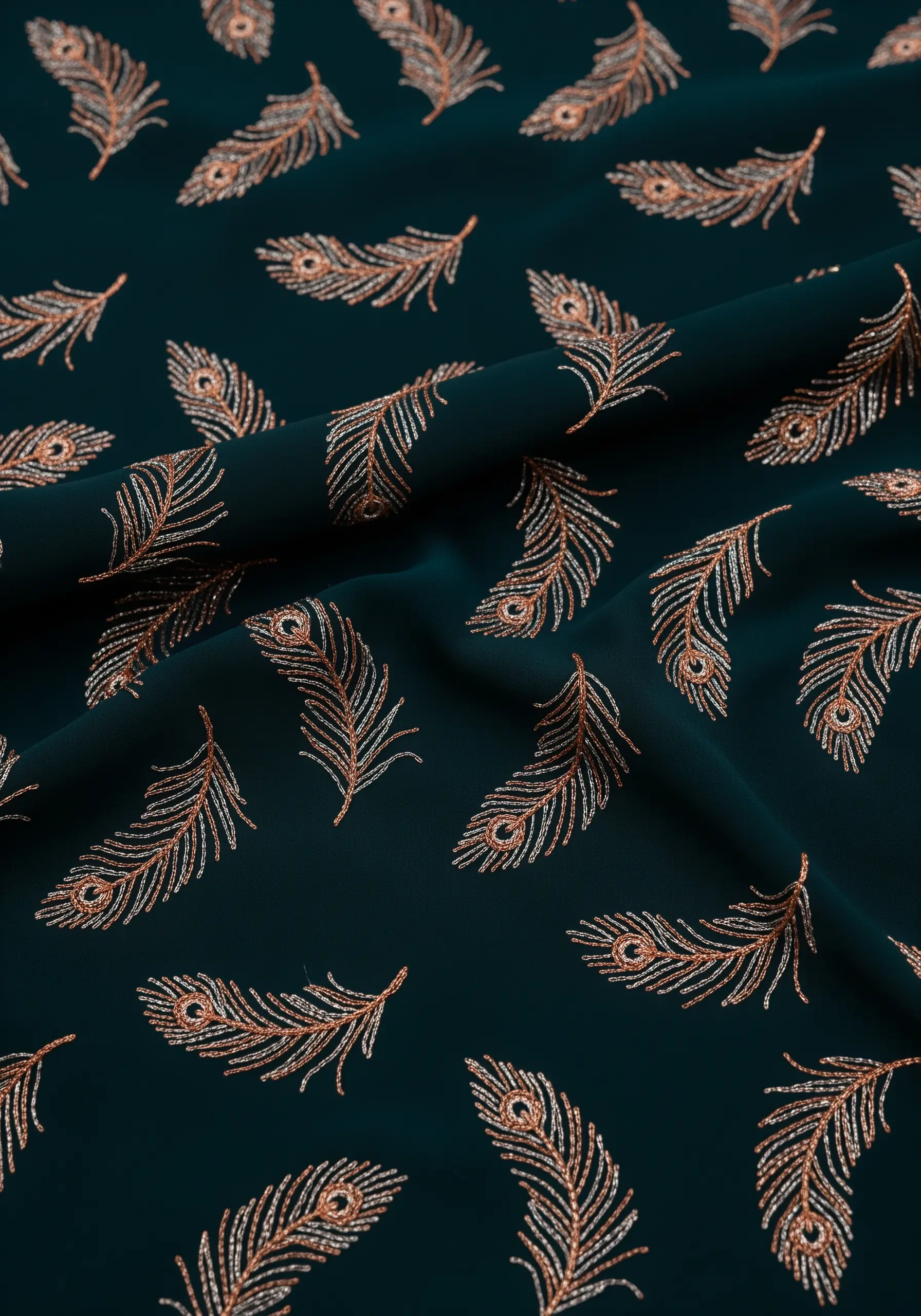
For a subtle yet luxurious effect, create a fabric pattern using just the peacock’s iconic tail feather.
Stitch the feathers in a scattered, repeating layout across a dark, flowing fabric like chiffon or georgette.
Use a fine metallic thread, like a gold or copper, combined with a matte thread in a similar tone to create a gentle shimmer rather than an intense sparkle.
This approach gives the entire garment an expensive, custom-printed feel, perfect for creating a bespoke blouse or shawl.
8. Abstract the Motif for Modern Symbolism
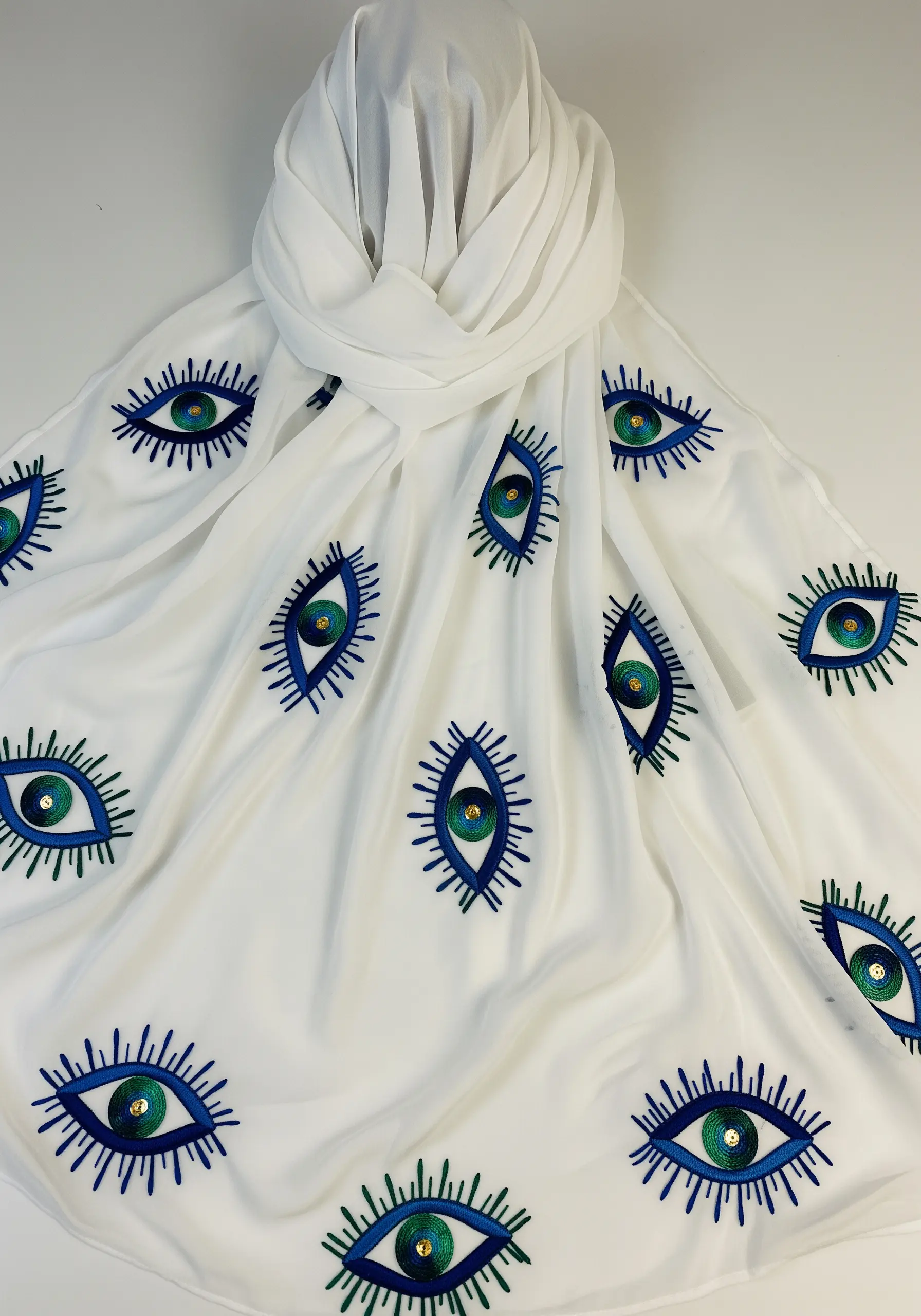
Deconstruct the peacock feather down to its most iconic element: the ‘eye’.
By isolating this shape and reimagining it as an evil eye or a modern graphic symbol, you can create a design that feels both protective and contemporary.
Use concentric circles of satin stitch in blues and greens to build the center, and frame it with radiating straight stitches for the lashes.
This clever abstraction works beautifully as a scattered pattern on a scarf or blouse, offering a nod to the peacock’s beauty in a fresh, unexpected way.
9. Weave Texture with Monochromatic Fill Stitches
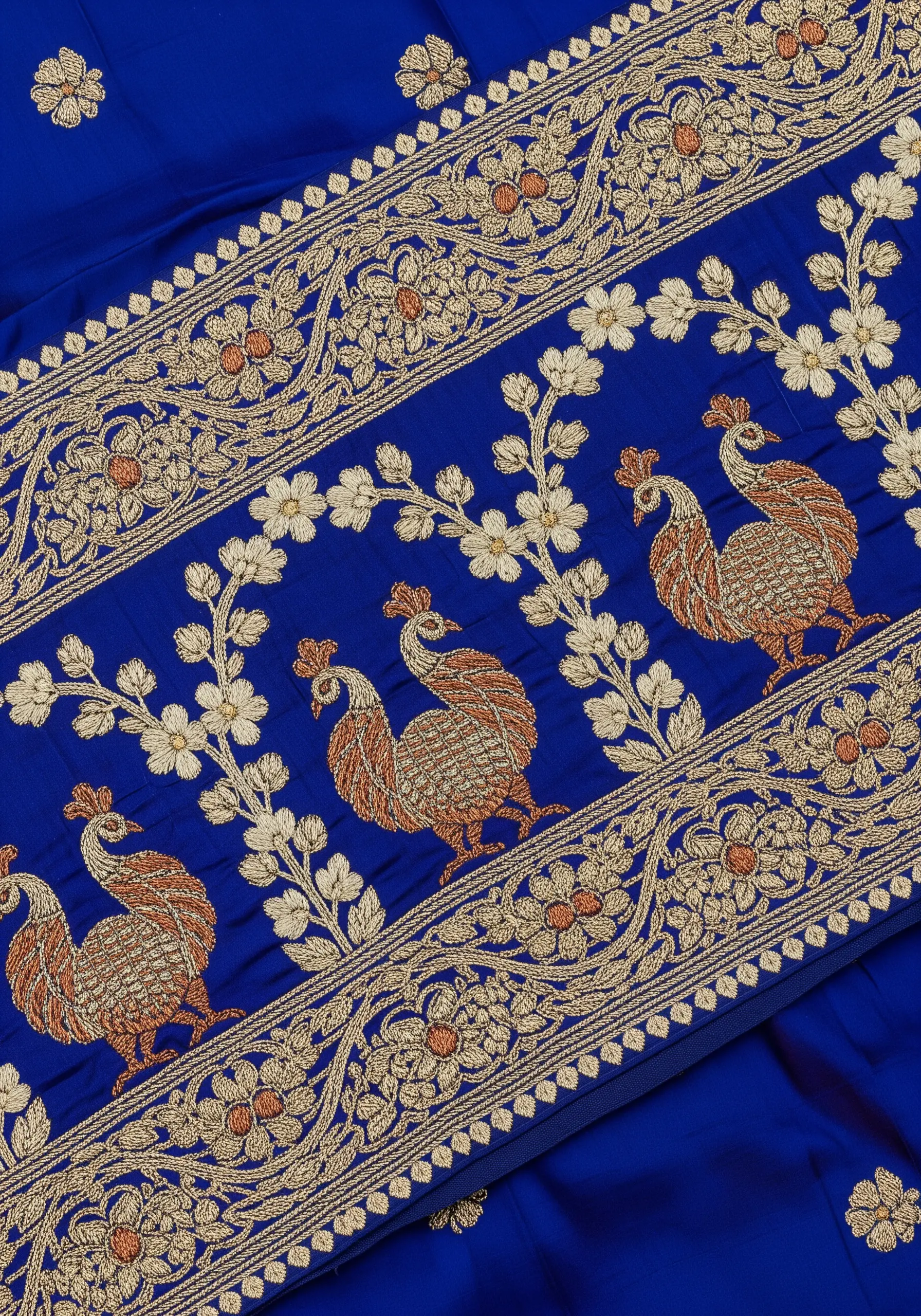
To create a look reminiscent of traditional woven textiles, fill your peacock motifs entirely with a single type of textured stitch.
A closely worked seed stitch or even a simple running stitch, laid down in dense, parallel rows, can give the impression of a brocade or jacquard fabric.
Using just one or two colors, such as gold and copper, keeps the focus purely on the texture you’ve built.
This technique adds incredible richness and depth to a saree border, giving it a timeless, heirloom quality.
10. Electrify Your Palette with Neon Accents
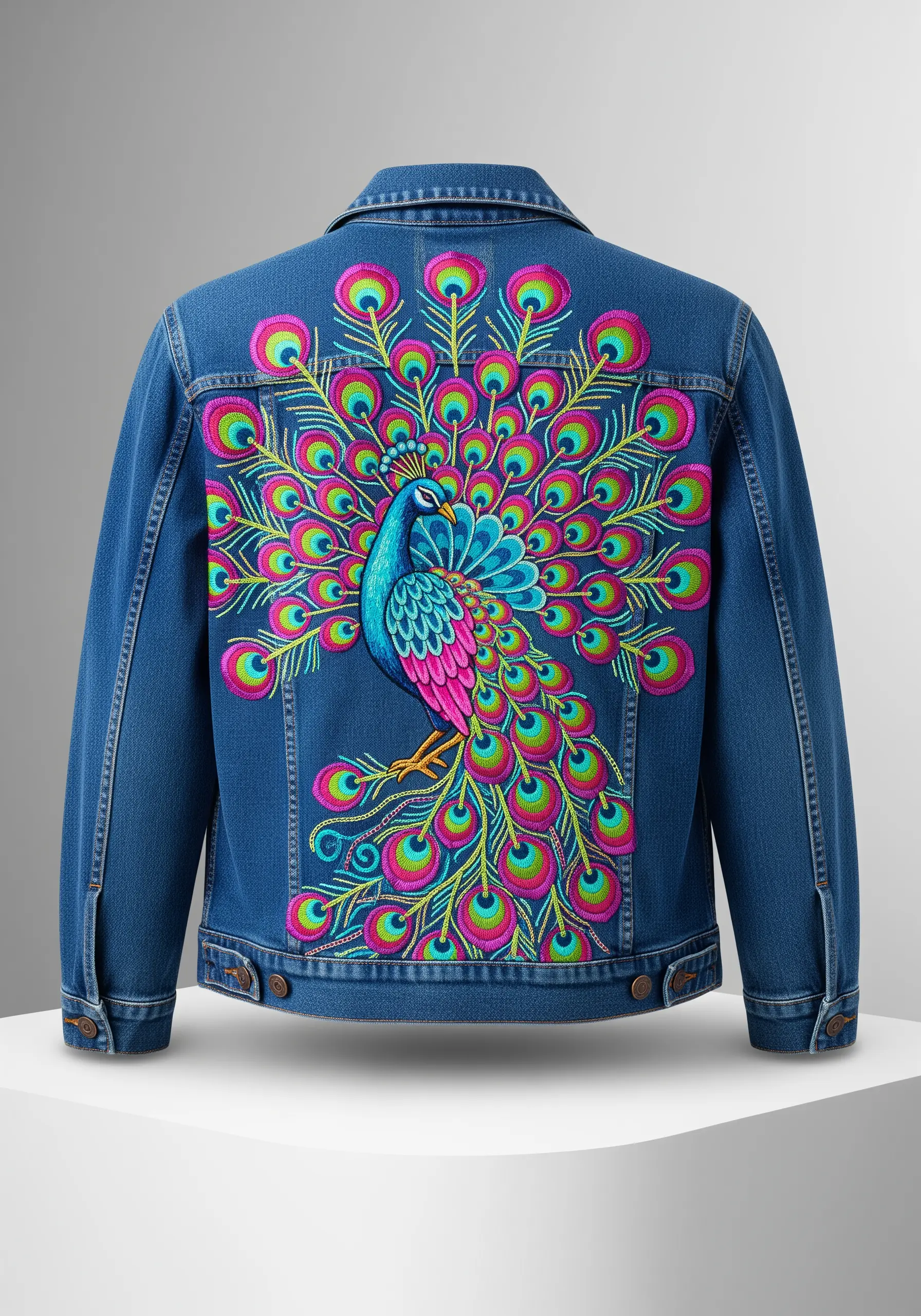
Break away from traditional jewel tones and inject a modern, playful energy into your peacock design with unexpected pops of neon.
On a sturdy fabric like denim, pair classic turquoise and royal blue with vibrant fuchsia, electric lime, and bright yellow.
Use these bold colors in the feather eyes and crest to create electrifying focal points that draw the eye instantly.
This fearless color strategy transforms a classic motif into a contemporary piece of wearable art, perfect for a statement jacket.
11. Define Form with Stitch Direction in Monochrome
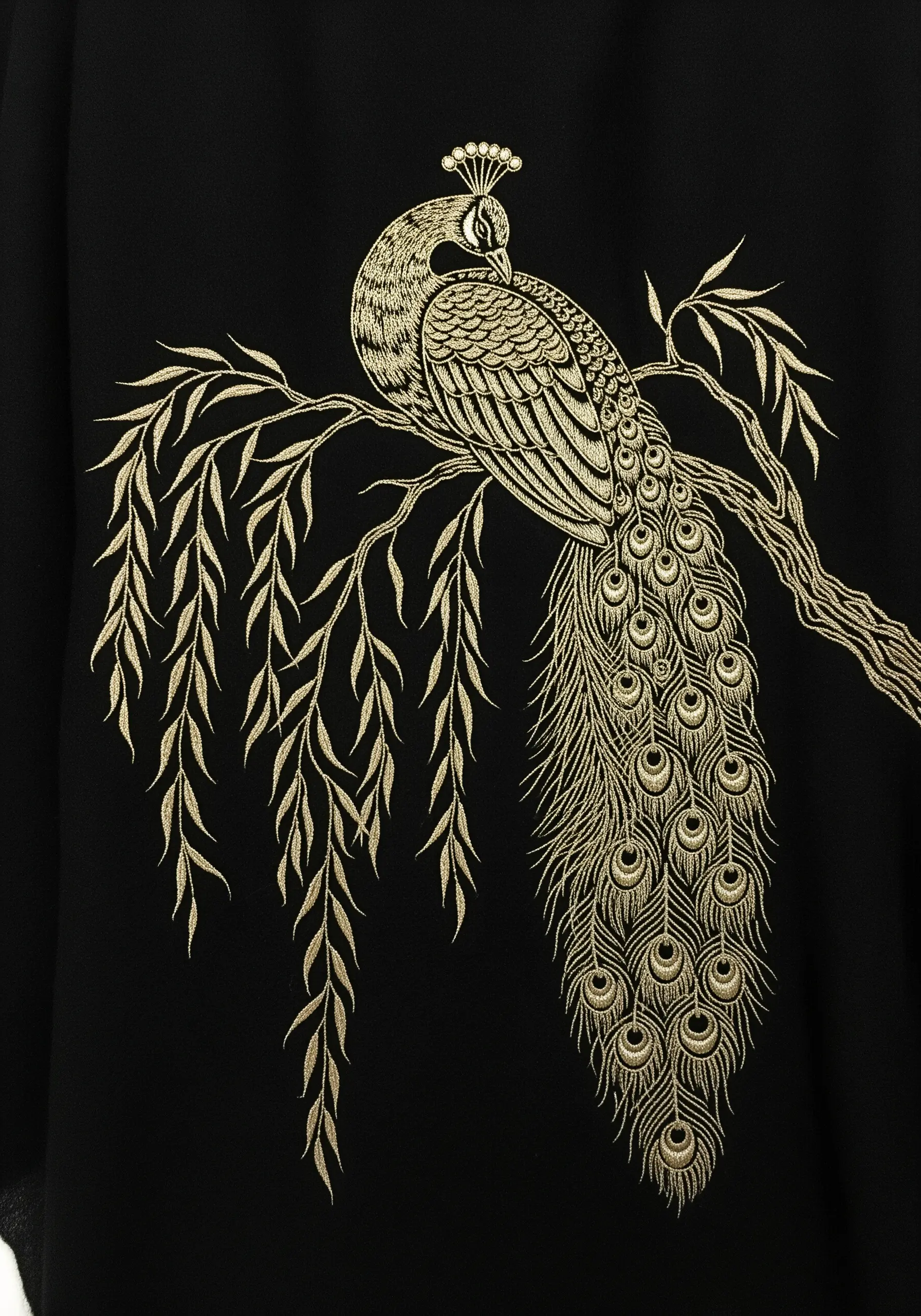
When working with a single color, such as gold thread on a black background, stitch direction becomes your primary tool for creating definition and detail.
Vary the angle of your satin stitches on the body, wings, and tail to catch the light differently, creating the illusion of shadow and highlight.
For the delicate barbs of the feathers, switch to a finer thread and use radiating straight stitches.
This mastery of texture allows you to sculpt a complex, dynamic image using only one hue, resulting in an exceptionally elegant and sophisticated finish.
12. Capture Movement with Folk-Art Fluidity
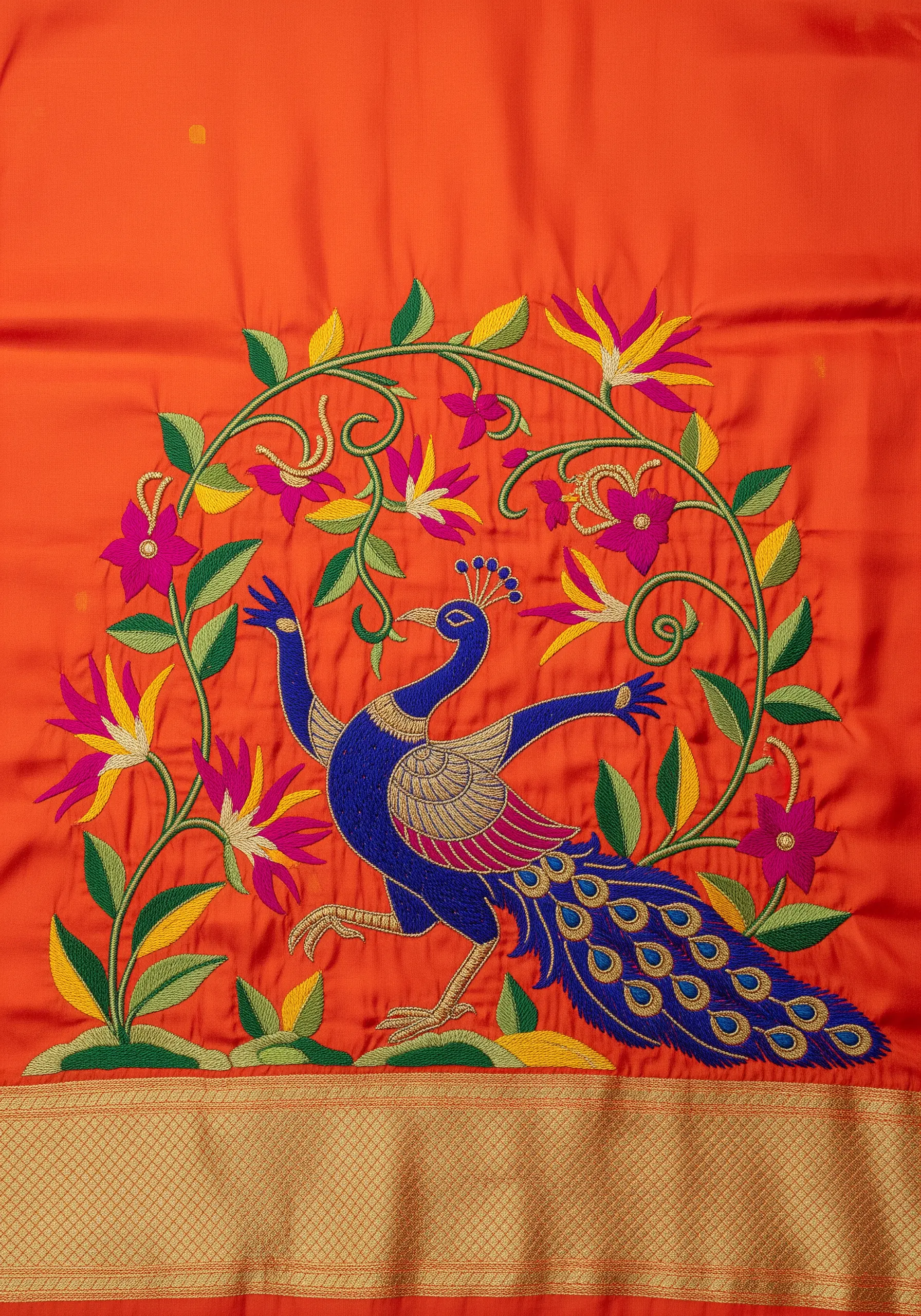
Instead of aiming for perfect realism, focus on conveying the spirit and energy of a dancing peacock through fluid, expressive lines.
Embrace a stylized, folk-art aesthetic with bold outlines and simplified shapes filled with flat, vibrant color.
Use a heavy chain stitch or stem stitch for the outlines to give them prominence and a handmade feel.
This approach is less about technical perfection and more about capturing a sense of joy and celebration, making it ideal for festive garments like a brightly colored saree.
13. Bead on Sheer Fabric for an Ethereal Effect
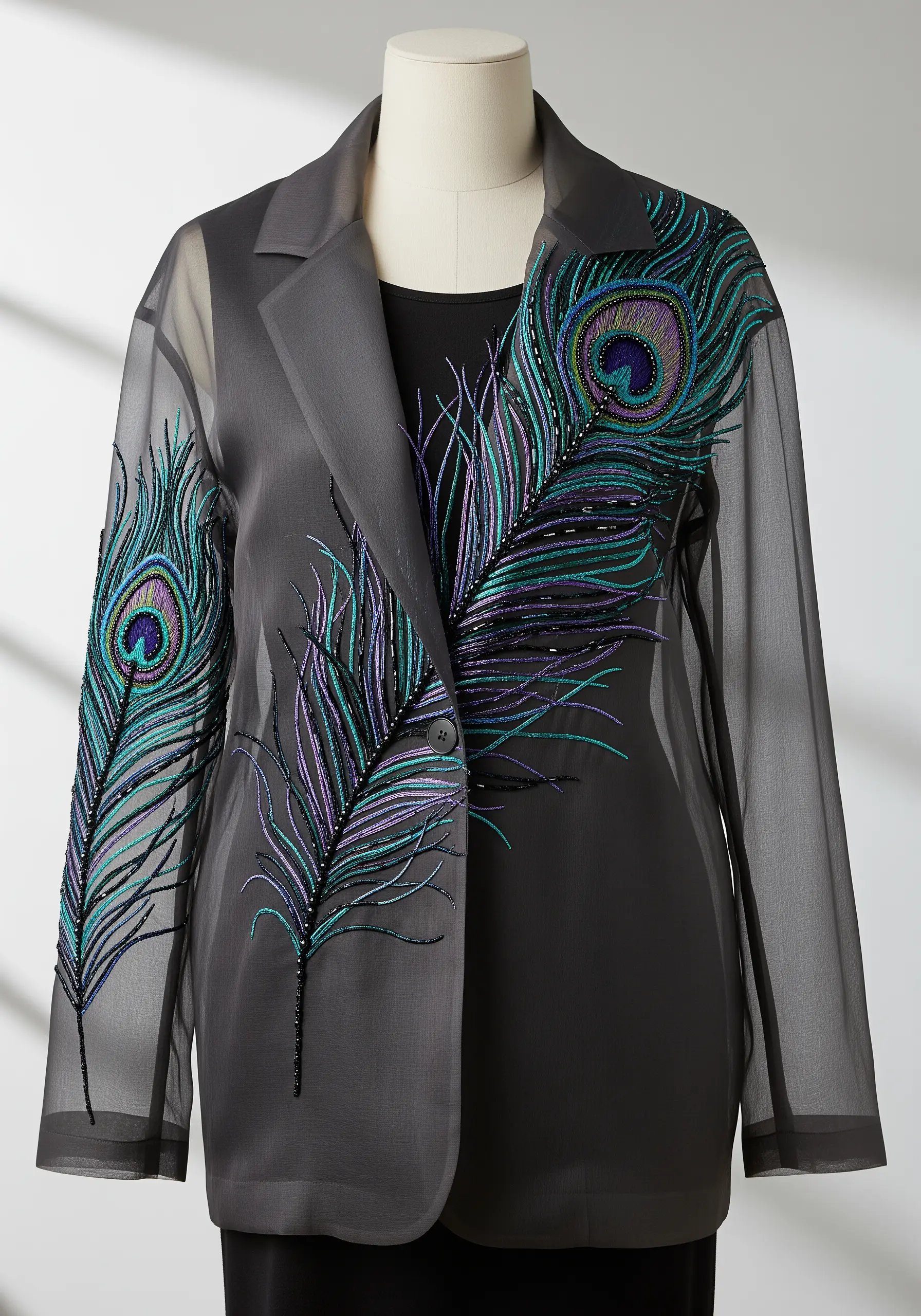
Stitching on a sheer fabric like organza or chiffon creates a magical, floating effect, as if the design is suspended in air.
Use lightweight seed beads and bugle beads instead of dense thread fills to maintain the fabric’s transparency.
Map out the feather’s shaft with a line of bugle beads, then use radiating lines of seed beads for the barbs.
Always use a strong but fine thread that matches the fabric, and secure your stitches with tiny knots to ensure they are discreet yet durable.
14. Create a Contained Masterpiece with a Circular Frame
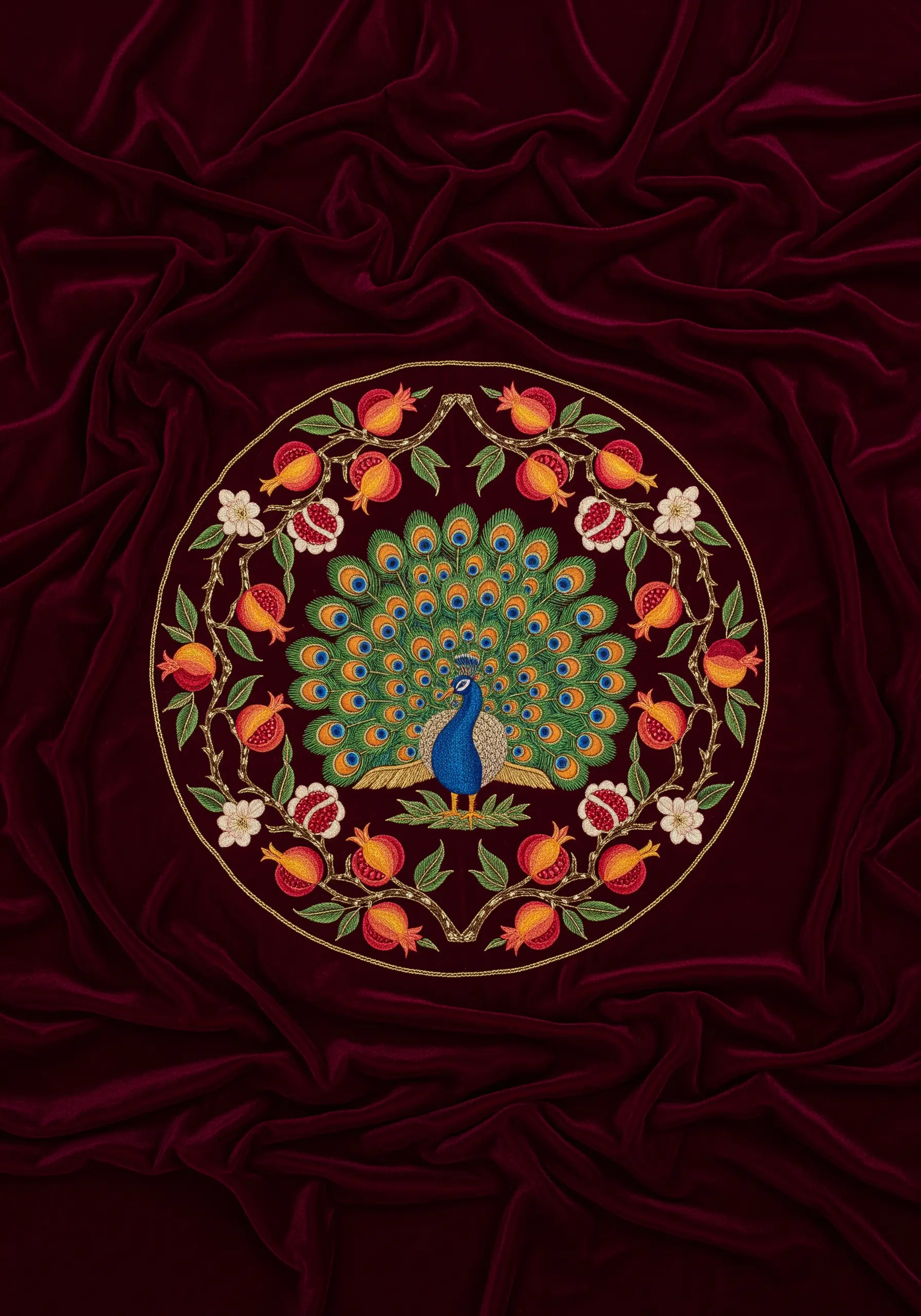
Give your peacock design the presence of a classical medallion by enclosing it within a decorative circular border.
A wreath of stitched pomegranates, leaves, or flowers not only frames the central subject but also adds another layer of symbolism and visual interest.
This contained composition works exceptionally well on luxurious fabrics like velvet, where it can serve as a focal point on a cushion, throw, or the back of a ceremonial garment.
It transforms the embroidery from a simple motif into a complete, self-contained work of art.
15. Merge Motifs for a Rich, Layered Design
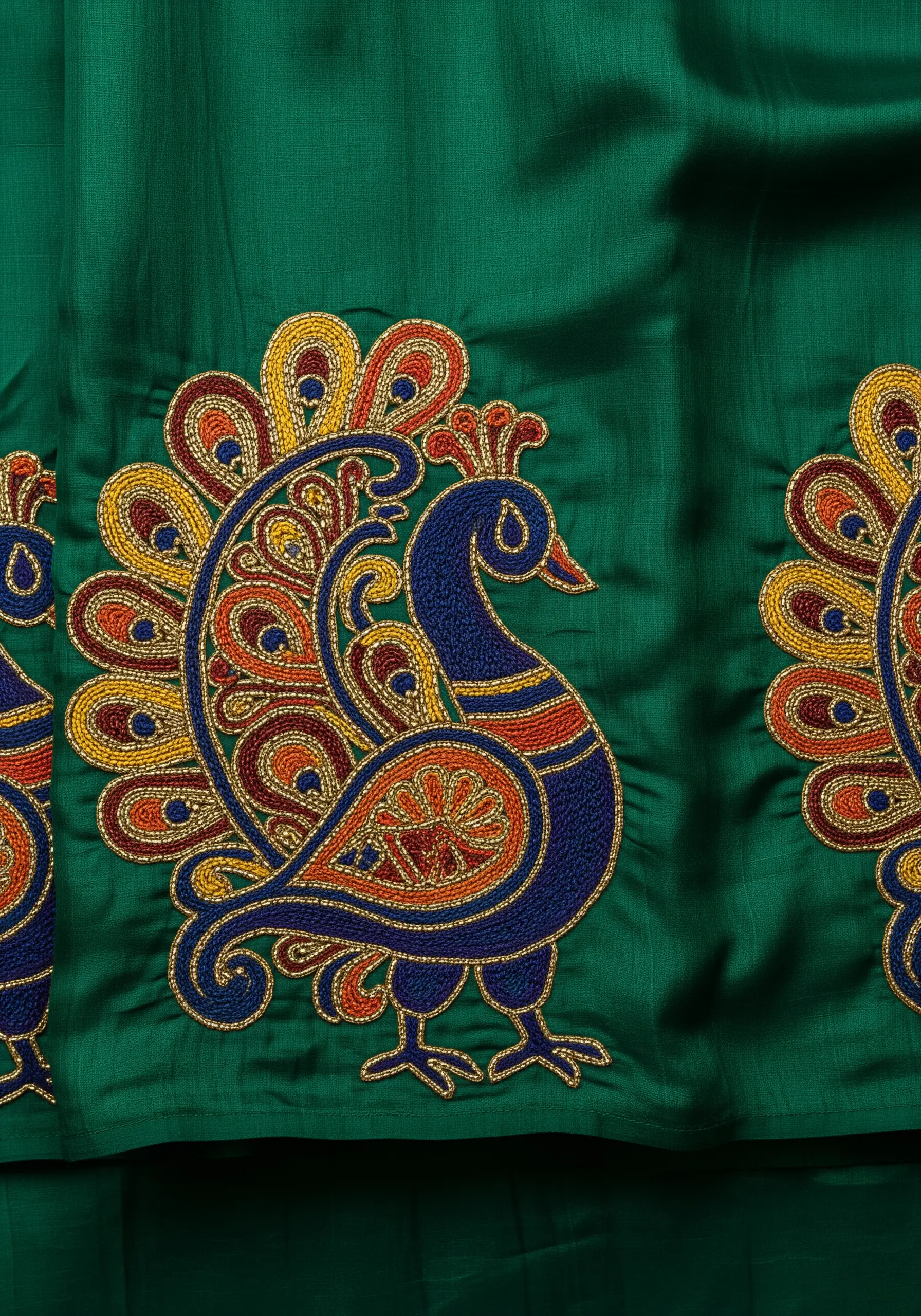
Elevate a simple border by cleverly merging the peacock’s form with another classic pattern, like the paisley.
Allow the sweeping curve of the peacock’s fanned tail to mimic the iconic teardrop shape, creating a hybrid motif that is both familiar and unique.
Use a bold, thick outline—like a whipped backstitch or heavy chain stitch—to unify the different elements and define the new shape clearly.
This technique adds complexity and a strong graphic quality to your design, perfect for the hem of a skirt or the edge of a shawl.
16. Use Strategic Placement to Accentuate Garment Lines
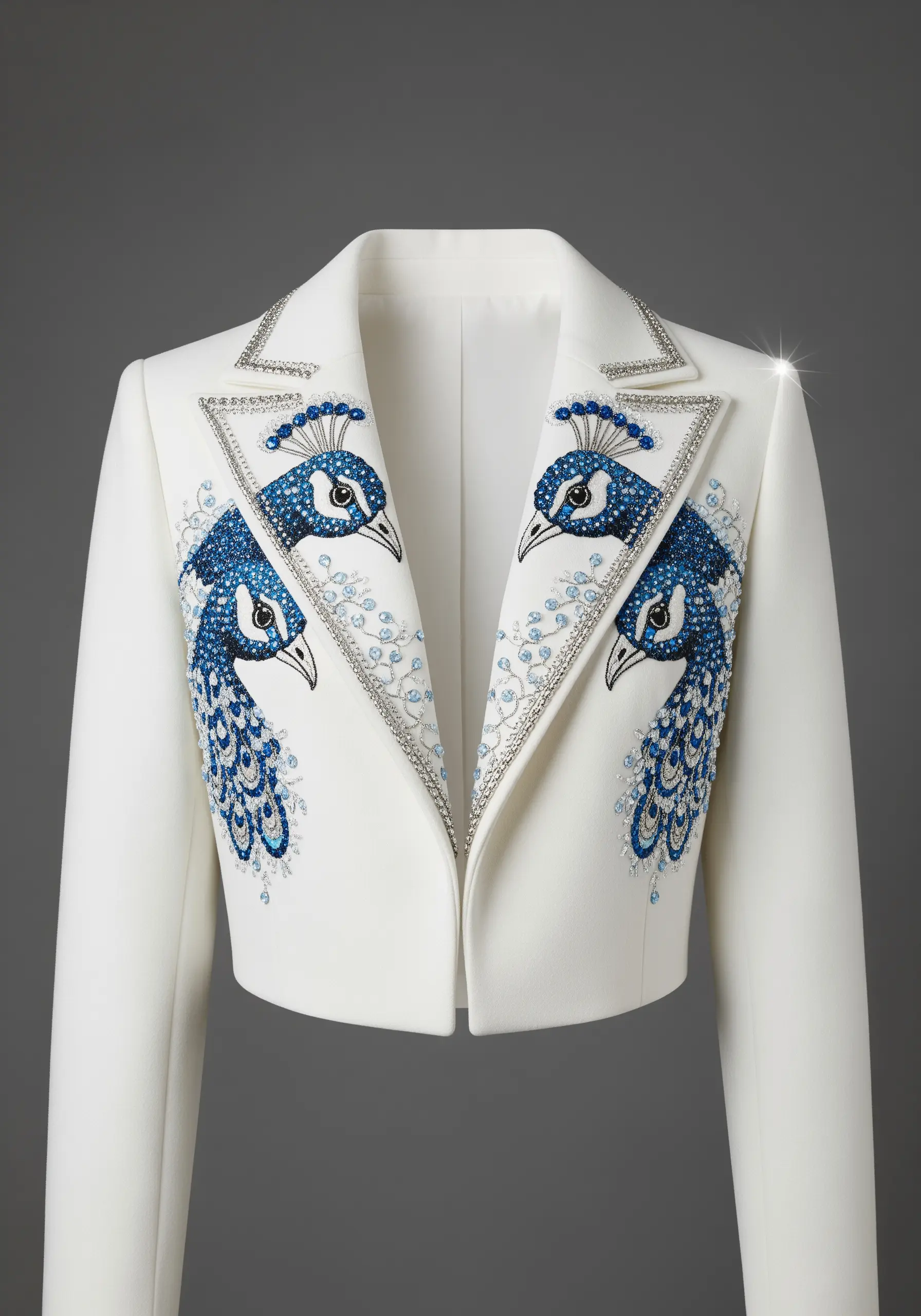
Instead of a single large design, use smaller, mirrored peacock motifs to highlight the specific architecture of a garment.
Placing them on the lapels of a jacket, the cuffs of a sleeve, or on either side of a collar draws attention to the tailoring and creates a bespoke, high-fashion look.
Embellish these smaller motifs with tiny, high-quality crystals or beads that will catch the light and add a touch of glamour without being overwhelming.
This thoughtful placement feels intentional and integrated, making the embroidery part of the garment’s structure, not just an addition to it.
17. Convey Luxury with Delicate Outline and Pearls
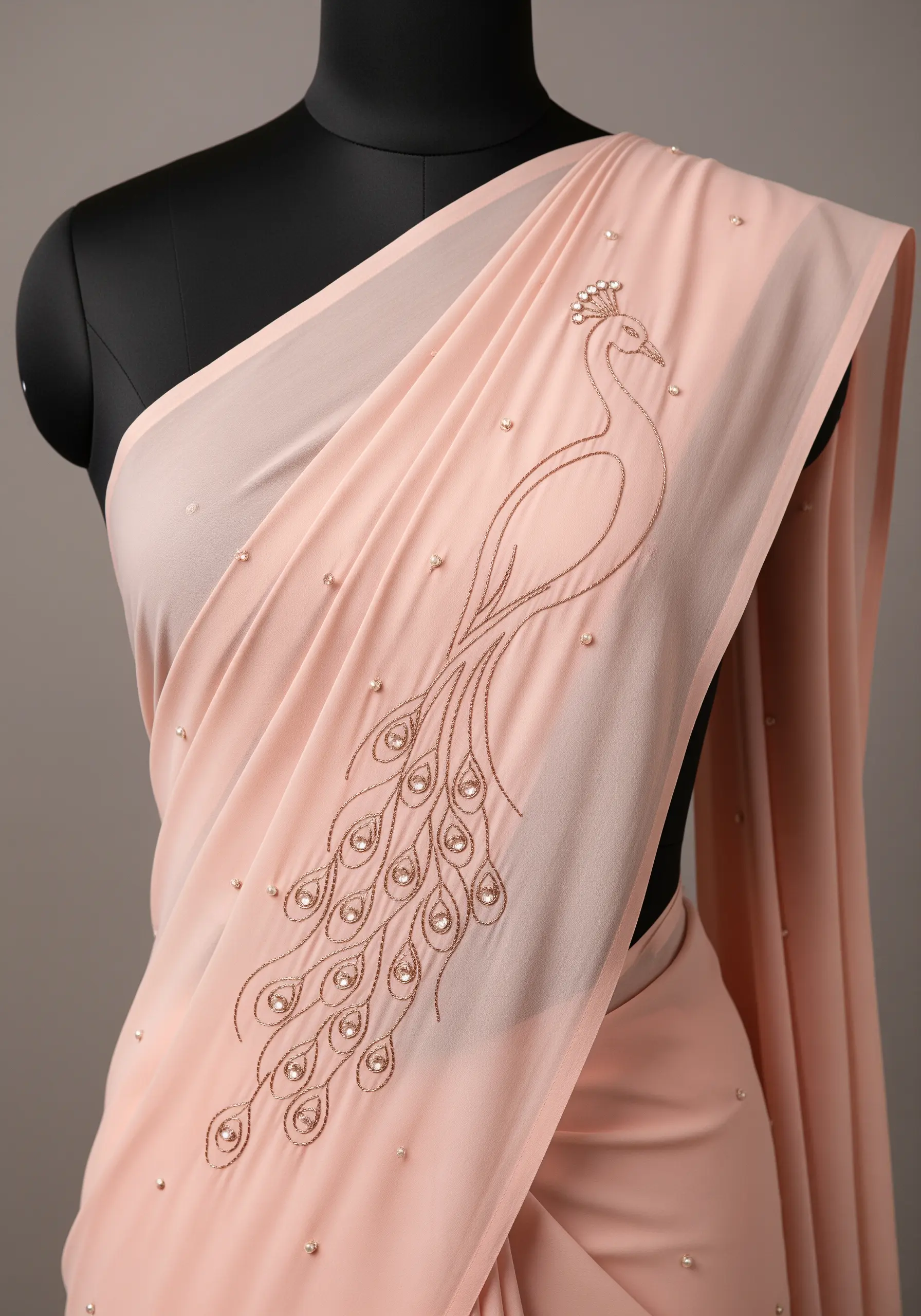
On a fine, lightweight fabric like chiffon, less is often more. Achieve a look of supreme elegance with a simple outline of a peacock.
Use a single strand of fine metallic thread and a delicate backstitch or stem stitch to trace the form.
Instead of filling the design, strategically place tiny seed pearls or Swarovski crystals at key points—the crest, the eye, and the center of the tail feathers.
This minimalist approach emphasizes the beauty of the fabric itself and creates a subtle, sophisticated sparkle that whispers luxury.
18. Weave a Narrative with Symbolic Pairings
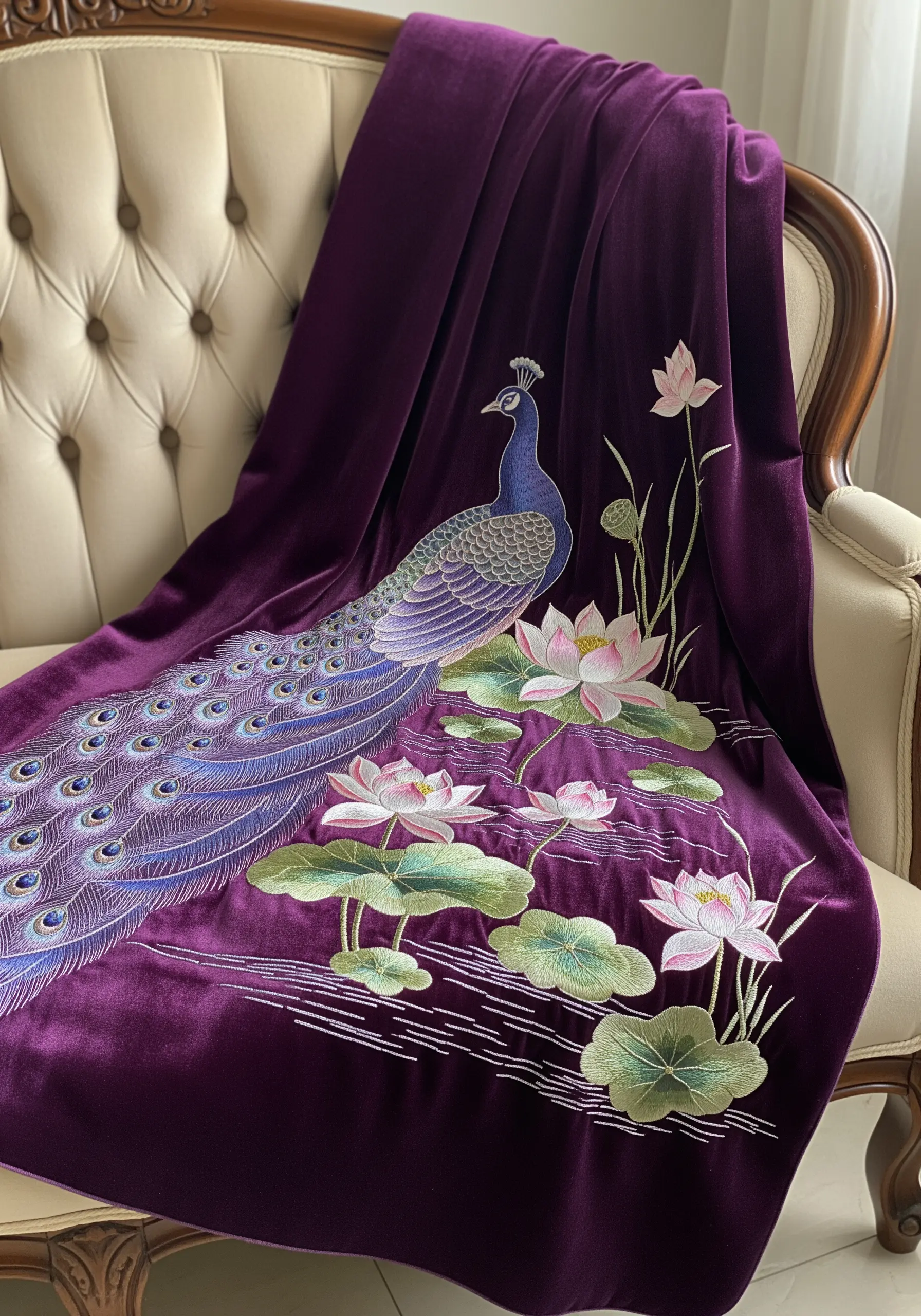
Create a richer, more meaningful design by placing your peacock within a scene that tells a story.
Pairing the peacock with water lilies or lotus flowers, for example, combines the symbolism of beauty and royalty with that of purity and enlightenment.
Use horizontal satin stitches to suggest the water’s surface and delicate leaf embroidery stitches to add depth to the foliage.
This compositional choice transforms a decorative motif into a piece of textile art with layers of meaning, perfect for an heirloom throw or wall hanging.
19. Integrate Shisha Mirrors for Authentic Sparkle
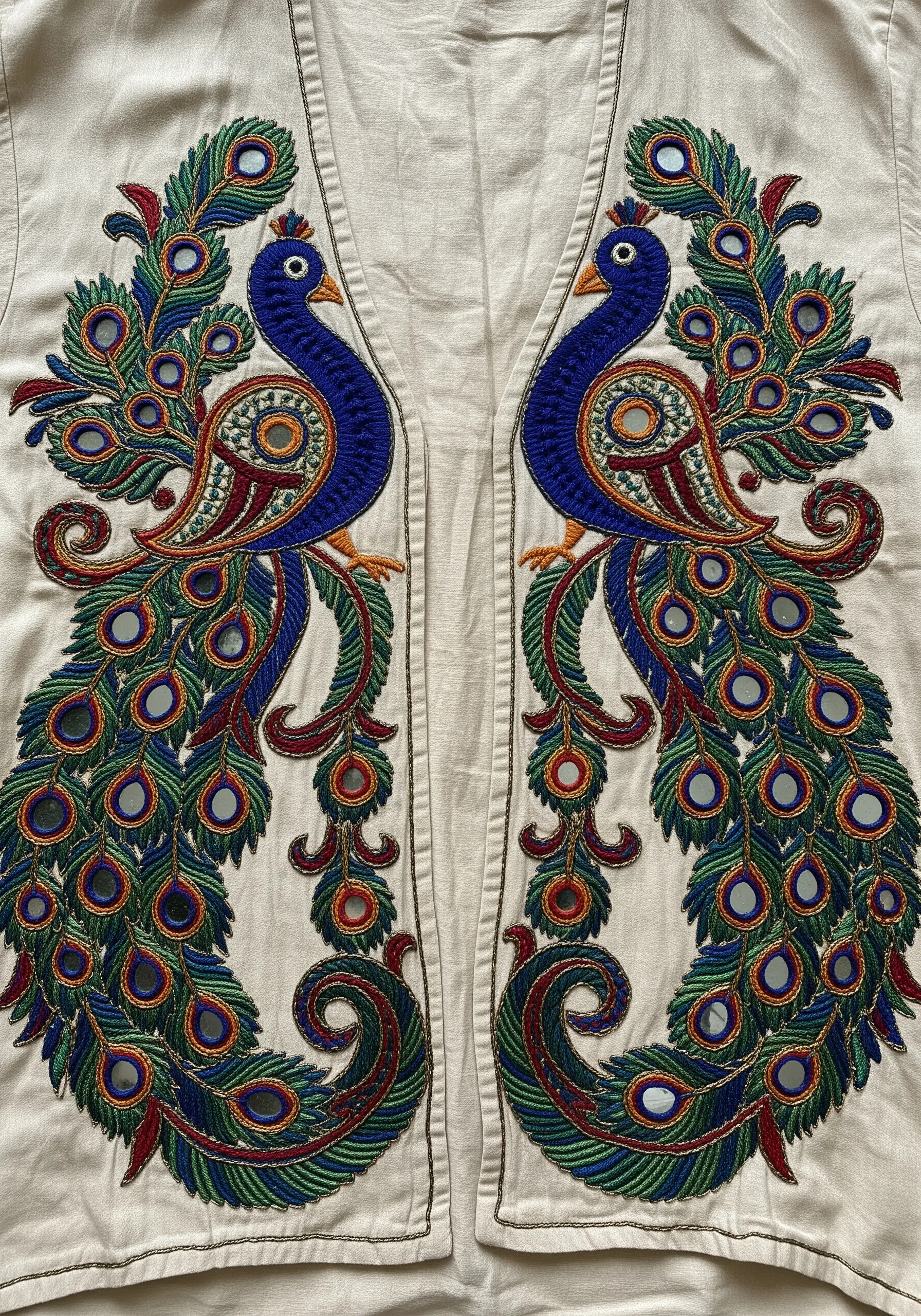
Add a touch of traditional Indian craftsmanship to your design by incorporating Shisha mirror work.
Place small, circular mirrors in the center of the peacock’s tail feathers to catch and reflect light, creating a dazzling, kinetic effect.
Secure each mirror by creating a framework of foundation stitches and then locking it in place with a decorative frame stitch, like a buttonhole or Cretan stitch.
This technique not only adds authentic sparkle but also introduces a wonderful textural contrast between the smooth, reflective glass and the soft, surrounding thread.