Your home can be more than just a place to live—it can be a sanctuary you shape with your own hands, one stitch at a time. This isn’t about creating flawless masterpieces; it’s about the quiet rhythm of the needle, the soft pull of the thread, and the joy of seeing something beautiful emerge from your efforts.
Think of these projects as invitations to slow down and reconnect with your creativity. Each one is an opportunity to explore a new texture, play with color, or transform an everyday object into something deeply personal. You’ll find that the process of making is just as rewarding as the finished piece itself.
Allow yourself to be present in each step. Whether you’re embroidering a simple linen napkin or knitting a cozy blanket, you’re not just decorating your home—you’re infusing it with your own unique energy and care. Let’s begin.
1. Create Aromatic Lavender Sachets with 3D Stitches

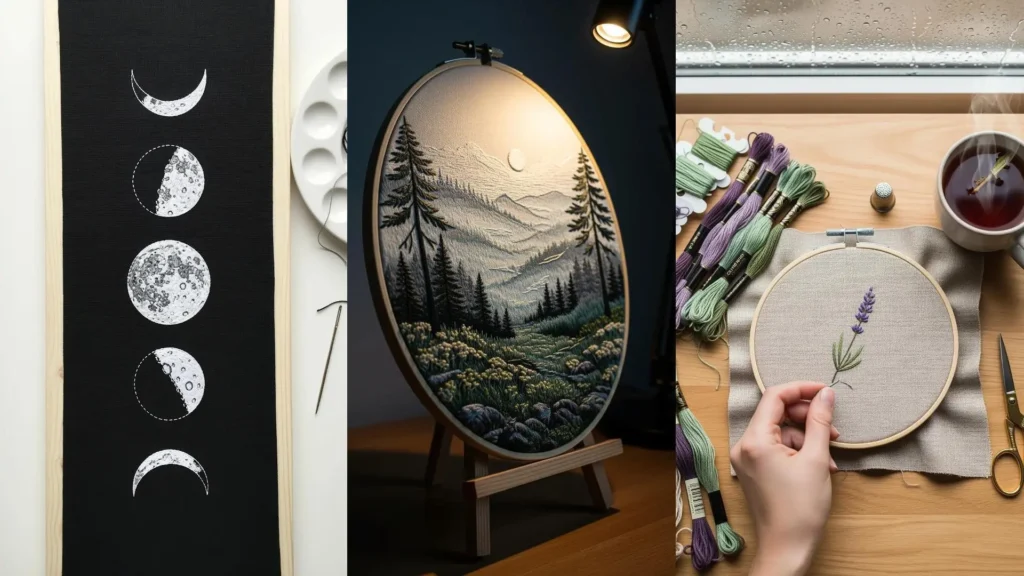
Give your lavender sprigs a plump, realistic texture by using bullion knots instead of a simple satin stitch.
Vary the number of wraps around your needle to create buds of different sizes, mimicking a natural lavender stalk.
For the stems and leaves, use a delicate split stitch with two strands of floss, which keeps the lines fine and allows the textured buds to be the main focus.
Stitching on a linen-blend fabric provides a beautiful, rustic base that complements the organic feel of the lavender.
2. Explore Monumental Texture with Chunky Arm Knitting

Arm knitting a chunky blanket is a deeply sensory project that connects you with fiber on a grand scale.
The oversized merino wool loops create an incredibly soft and weighty textile that invites touch.
Think of this as a study in texture that you can translate back to embroidery—consider couching with thick yarn or roving to replicate this plush, satisfying effect on a smaller scale.
This project requires no needles, just your arms, making it an accessible and meditative way to create a statement piece for your sofa.
3. Paint with Yarn Using a Punch Needle

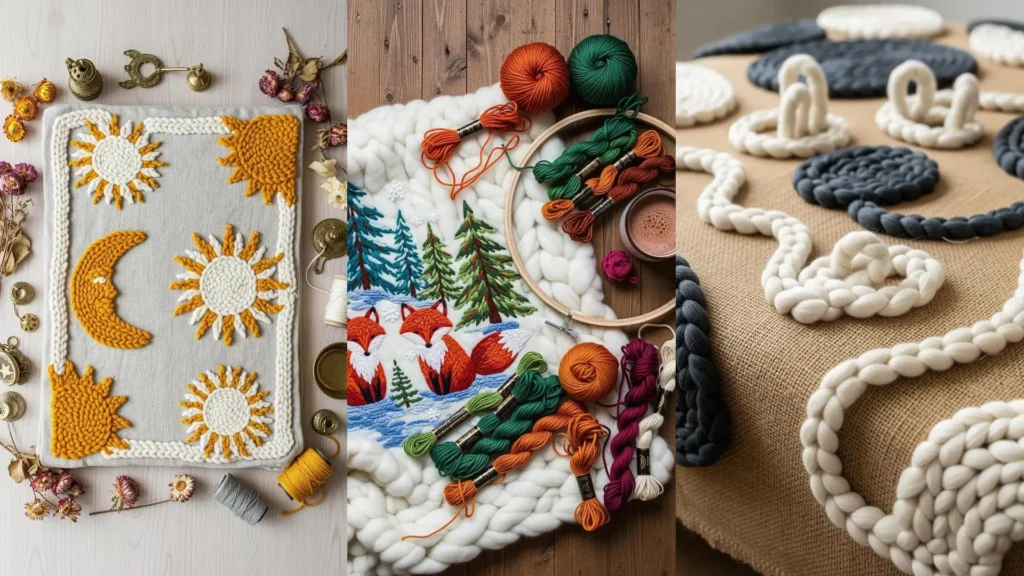
Punch needle allows you to create dense, plush textures that are perfect for graphic, color-blocked designs.
To achieve clean divisions between colors, work your outline stitches first before filling in each section.
Maintain consistent pressure and angle with your tool to ensure all your loops are the same height, resulting in a smooth, rug-like finish.
Framing the finished piece in a simple wooden frame turns your textured art into modern home decor.
4. Weave a Story with Mixed-Fiber Wall Hangings

Weaving allows you to blend textures and colors in a way that feels both organic and structured.
Incorporate a variety of materials beyond yarn—try strips of fabric, silk ribbons, and thick wool roving to create dramatic textural shifts.
Experiment with different weaving techniques in a single piece, such as alternating rows of plain weave with sections of soumak stitch to create raised, braid-like lines.
These mixed-fiber wall hangings are an incredible way to add warmth and artistic depth to any room.
5. Master Decorative Knots with a Macrame Plant Hanger

Macrame is a beautiful way to create functional art using little more than rope and your hands.
Practice the foundational square knot and half-hitch knot, as these two form the basis of most macrame patterns.
Incorporate wooden beads into your design by simply threading them onto the cords between knots, adding a natural, bohemian element.
The principles of tension and knot-tying in macrame can also inspire decorative borders or 3D elements in your embroidery work.
6. Practice Mindful Mending with Sashiko Stitching

Transform a tear in your jeans into a statement of beauty with the Japanese art of sashiko.
Use a high-contrast, heavy-duty thread, like perle cotton or dedicated sashiko thread, to make your stitches a prominent design element.
The key is to maintain even, consistent running stitches—focus on the rhythm of the needle moving through the fabric rather than perfect precision.
This technique not only repairs but also reinforces the fabric, adding character and life to a beloved garment.
7. Embellish a Journal with a Botanical Cover

Take your embroidery off the hoop and onto a functional object like a cloth-bound journal.
To ensure your stitches are secure, use a lightweight iron-on stabilizer on the inside of the cover before you begin.
A simple combination of satin stitch, French knots, and stem stitch is all you need to create a lush, miniature garden.
This transforms a simple notebook into a personal keepsake or a deeply thoughtful gift.
8. Illuminate a Room with a Glow-in-the-Dark Lampshade

Create a celestial masterpiece by stitching constellations onto a dark lampshade using glow-in-the-dark thread.
Choose a loosely woven fabric like linen or burlap for your lampshade, as it’s easier for the needle to pass through.
Use simple backstitches for the constellation lines and French knots for the stars to create varied points of light.
When the light is off, the thread absorbs energy, and in the dark, your personal night sky will magically appear.
9. Stitch a Functional Reading Nook Pillow

Combine embroidery and sewing to create a pillow that’s both beautiful and practical.
Embroider your design on the pocket piece before sewing it onto the main pillow cover for easier handling.
Cross-stitch is an excellent choice for this project, as its gridded nature is perfect for both graphic images and clear lettering.
Choose a durable, medium-weight cotton or canvas fabric that can withstand use and hold its shape well.
10. Capture Nature’s Detail with Cross-Stitch Botanicals

Recreate the delicate complexity of a fern by using a tonal gradient of green threads in your cross-stitch.
Using several shades—from deep forest green to a pale, mossy hue—will give the fronds depth and realism.
Stitching on an evenweave fabric like linen allows for more precise fractional stitches, which help soften the edges and create more organic shapes.
These delicate leaf stitch techniques for realistic botanical embroidery shading elevate a simple pattern into a work of art.
11. Elevate Table Linens with a Single, Elegant Motif

You don’t need a complex design to make a statement; a single, thoughtfully placed olive branch can transform a plain napkin.
Use a stem stitch for the branches and detached chain stitches (lazy daisies) for the leaves for a clean, classic look.
Opt for a slightly thicker thread, like a #8 perle cotton, to give your minimal design a subtle texture and presence on the linen.
These minimal line-art embroidery patterns to elevate linen table napkins into luxury-style decor instantly.
12. Create Soft Landscapes with Latch Hooking

Latch hooking is a wonderful way to create a large-scale, plush piece of art with a modern aesthetic.
Sketch your landscape design directly onto the rug canvas to create clear guides for your color blocking.
Keep your yarn pieces a consistent length to achieve a uniform, professional-looking pile across the entire piece.
The final result is a wonderfully tactile wall hanging that brings softness and serene color to your bedroom or living space.
13. Sculpt with Fabric to Create Felt Succulents

Explore three-dimensional form by crafting these charming, no-sew felt succulents.
Use sharp scissors for clean, precise cuts, as the crisp edges of each petal are key to a realistic look.
Layer the petals from largest to smallest, securing them with a dab of hot glue at the base, to create a natural-looking rosette.
You can even combine embroidery and mixed media by stitching vein details onto the leaves before assembling them.
14. Add Playful Dimension with Handmade Pom-Poms

Handmade pom-poms are a joyful and easy way to introduce vibrant color and texture into your home.
Use a pom-pom maker for perfectly dense and uniform results every time.
Once made, these fluffy spheres can be strung into a garland, attached to the corners of a pillow, or used as a fun, three-dimensional element in a mixed-media art piece.
Don’t be afraid to mix yarn colors within a single pom-pom for a confetti-like effect.
15. Personalize Storage with an Embroidered Label

Elevate a simple, sewn fabric basket by adding a beautifully embroidered label.
To get crisp, clean lettering, use a simple backstitch or stem stitch with three strands of floss.
Stitch the label on a separate piece of felt or canvas, then applique it onto the basket for a clean, raised effect.
This small detail transforms a utilitarian object into a charming piece of custom decor.
16. Design a Dramatic Ombre Tassel Wall Hanging

Create a stunning piece of fiber art by combining simple tassel-making with a dip-dyeing technique.
Make all your tassels first using a natural fiber like cotton yarn, which will absorb the dye evenly.
To create the gradient, submerge sections of the tassels into the dye bath for different lengths of time—less time for lighter shades, more time for deeper hues.
Arranging the finished tassels on a dowel in a V-shape creates a dynamic and sophisticated wall hanging.
17. Stitch Delicate Bookmarks on Paper or Felt

Create a beautiful and functional piece of art by embroidering directly onto sturdy cardstock or stiffened felt.
If using cardstock, gently pre-pierce your stitching holes with a needle to prevent the paper from tearing as you pull the thread through.
Use only one or two strands of floss to keep the design delicate and avoid overwhelming the material.
These DIY cozy embroidery bookmarks that make reading magical are a perfect small project for a quiet afternoon.
18. Paint with Thread on a Canvas Tote Bag

Turn a plain tote bag into a wearable piece of art with bold, vibrant thread painting.
Use the long-and-short stitch to blend colors seamlessly within the flower petals, creating a smooth, painterly gradient.
Always use a stabilizer on the inside of the bag to prevent the fabric from puckering and to support the weight of the dense stitching.
With bold bohemian floral embroidery ideas that scream color, confidence, creativity, your tote becomes a statement piece.
19. Craft a Modern Rainbow with Wrapped Cord

This modern fiber rainbow is created by tightly wrapping thick cotton rope with colorful yarn.
The key to a clean finish is maintaining consistent, tight tension as you wrap the yarn, ensuring none of the white cord shows through.
Secure the ends of the yarn with a dab of fabric glue before shaping the arcs and sewing them together from the back.
Leave the ends of the rope un-wrapped and frayed to create a soft, cloud-like fringe.
20. Create a Cheerful Cross-Stitched Tea Cozy

Brighten up your tea time by incorporating a cross-stitch panel into a quilted tea cozy.
Stitch your design on a piece of Aida cloth, leaving a generous margin of extra fabric around the edges.
This margin will be tucked into the seams when you sew the panel onto the main body of the cozy, ensuring a neat and secure finish.
A simple, charming motif like bees and daisies adds a touch of cottage-core warmth to your kitchen.
21. Add Dimension with Advanced Punch Needle Techniques

Elevate your punch needle art by incorporating varied textures and loop heights within a single design.
Use the adjustable settings on your punch needle to create shorter, tighter loops for the leaves and longer, plusher loops for the berries.
For the golden leaves, try using a metallic or silk-blend yarn to add a subtle sheen that catches the light differently from the matte wool.
This textural variation makes the design feel more dynamic and alive.
22. Stitch Your Own Botanical Herb Markers

Create charming and practical markers for your indoor herb garden with a few simple stitches.
To perfectly center your design in a tiny hoop or on a wooden tag, use a water-soluble stabilizer printed with your pattern.
A simple backstitch is all you need for the lettering to ensure it remains clear and legible.
This project is a perfect way to use up small scraps of fabric and short lengths of leftover floss.
23. Weave Abstract Textures within an Embroidery Hoop

Use an embroidery hoop as a loom to create a small, freeform woven wall hanging.
Create your warp threads by stringing yarn vertically across the hoop, then weave your weft threads through them.
Don’t be afraid to mix materials: combine chunky yarn, thin cotton floss, and soft roving to create dramatic shifts in texture.
Letting some of the threads hang loose at the bottom creates a beautiful, deconstructed feel, embracing abstract thread designs using negative space.
24. Craft a Classic Monogrammed Pincushion

Create a beautiful and functional sewing accessory with a perfectly stitched monogram.
For a raised, professional-looking monogram, use a padded satin stitch. First, create a base of small running stitches within the letter’s shape, then cover it with satin stitches going in the opposite direction.
Outlining the letters with a single line of split stitch before filling provides a crisp edge for your satin stitches to meet.
This project combines simple sewing with classic embroidery for a timeless result.
25. Embellish Canvas Shoes with Floral Embroidery

Transform a pair of plain canvas sneakers into a unique fashion statement with a touch of embroidery.
Use a small, 4-inch hoop to isolate and tighten a section of the shoe’s canvas, making it much easier to stitch on.
A strong, sharp needle and a thimble are essential for comfortably pushing through the thick material.
These small floral embroidery patterns for everyday outfits add a delicate, custom touch to your footwear.
26. Make a Statement with a Large-Scale Wall Banner

Take your stitching to a larger scale by creating a personalized banner for your creative space.
For the lettering, use a whipped backstitch or a heavy chain stitch to create a bold, solid line that is easy to read from a distance.
To transfer a large design accurately onto the fabric, try using a simple projector to trace the outlines with a water-soluble pen.
Finishing the banner with a simple wooden dowel and cord makes it easy to hang and display.
27. Frame a Mirror with Punch Needle Waves

Turn a simple mirror into a piece of functional art by creating a textured punch needle frame.
Work your design on a piece of monk’s cloth stretched in a hoop or frame, leaving the center empty where the mirror will go.
Use a gradient of colors to create the feeling of oceanic waves, which adds a sense of calm and movement.
Once finished, carefully trim the fabric and glue it securely to the back of a round craft mirror for a professional result.