If you’ve ever felt that your embroidery could say more, this is where you begin. String art, with its clean lines and bold textures, offers a new language for expressing the landscapes you love. It’s not just about wrapping thread around nails; it’s about sculpting with tension, painting with color, and drawing with shadow.
Think of the thread as your brushstroke and the board as your canvas. Each design here is a lesson in composition and technique. You will learn to create depth with simple layering, evoke movement with the direction of a line, and build emotion through your choice of color and texture.
This is your invitation to step away from the hoop and explore a more architectural, dimensional form of fiber art. Let these nature trails guide you toward creating pieces that are not only beautiful to look at but deeply satisfying to make—a true reflection of your adventurous, creative soul.
1. Radiating Sunbursts and Stratified Earth

Create powerful depth by layering horizontal bands of color to represent geological strata.
Vary the shades within each band—from dark brown to gold, for instance—to give the earth a rich, textured history.
For the sun, establish a central semi-circle of nails and radiate your threads outward to the top edge of your board.
This technique creates an undeniable focal point, and alternating two or three bold colors like magenta and orange adds dramatic energy to the entire composition.
You can create dramatic star-shaped centerpieces using this same radiating principle for other motifs.
2. Meandering River Flow Through Layered Forests
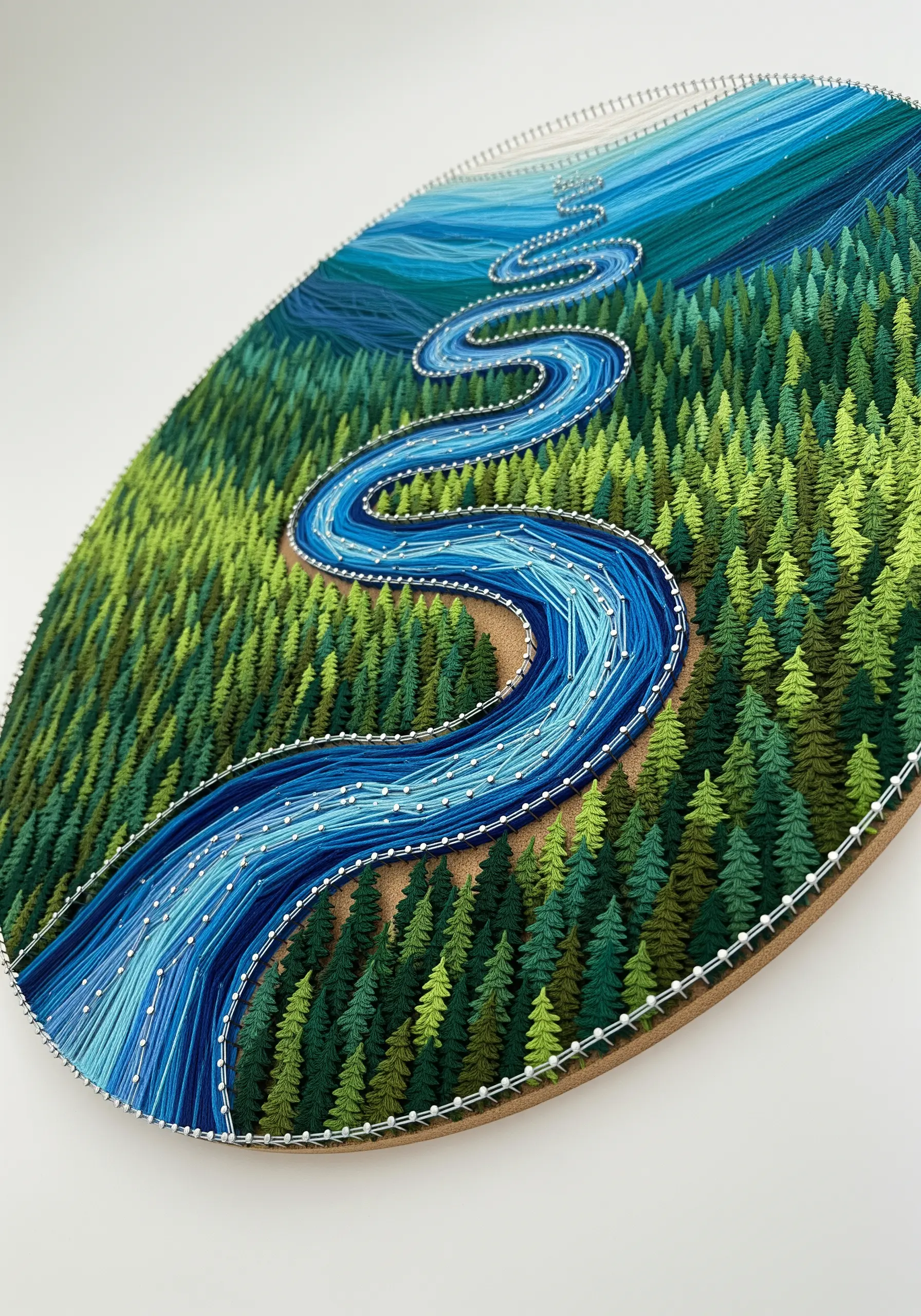
Capture the illusion of a flowing river by using at least three or four shades of the same color, moving from light to dark.
Wind the threads along the curve of the river, allowing the different tones to overlap slightly, which mimics the way light hits moving water.
To build a dense forest, stagger the heights and thread density of your trees.
Place darker greens in the background and brighter greens forward to create a natural sense of perspective and fullness.
An oval board focuses the viewer’s eye, acting like a vignette that draws you directly into the scene.
3. Crafting Lunar Light and Water Reflections

Use thread density to control luminosity; a tightly wound, multi-layered moon in white thread will appear solid and bright against a dark background.
For the water’s reflection, alternate horizontal strands of white, dark blue, and black thread.
This simple pattern breaks up the light, perfectly mimicking the shimmer of moonlight on a calm lake.
The negative space of the dark board is essential here—it does the work of creating the night, allowing your stitched elements to truly shine.
You can apply similar principles to create other minimal sky moon designs.
4. Capturing Autumnal Glow in a Forest Path

To achieve a believable autumn canopy, blend your colors directly on the board.
Start with reds at the top of the trees, then transition to orange, and finish with yellow at the tips, letting the threads overlap to create a soft, natural gradient.
Define a clear path by winding a single color, like brown, tightly between two rows of nails.
This creates a solid visual line that guides the eye through the composition and adds a pleasing textural contrast to the looser threads of the foliage.
5. High-Contrast Rivers on Rustic Wood
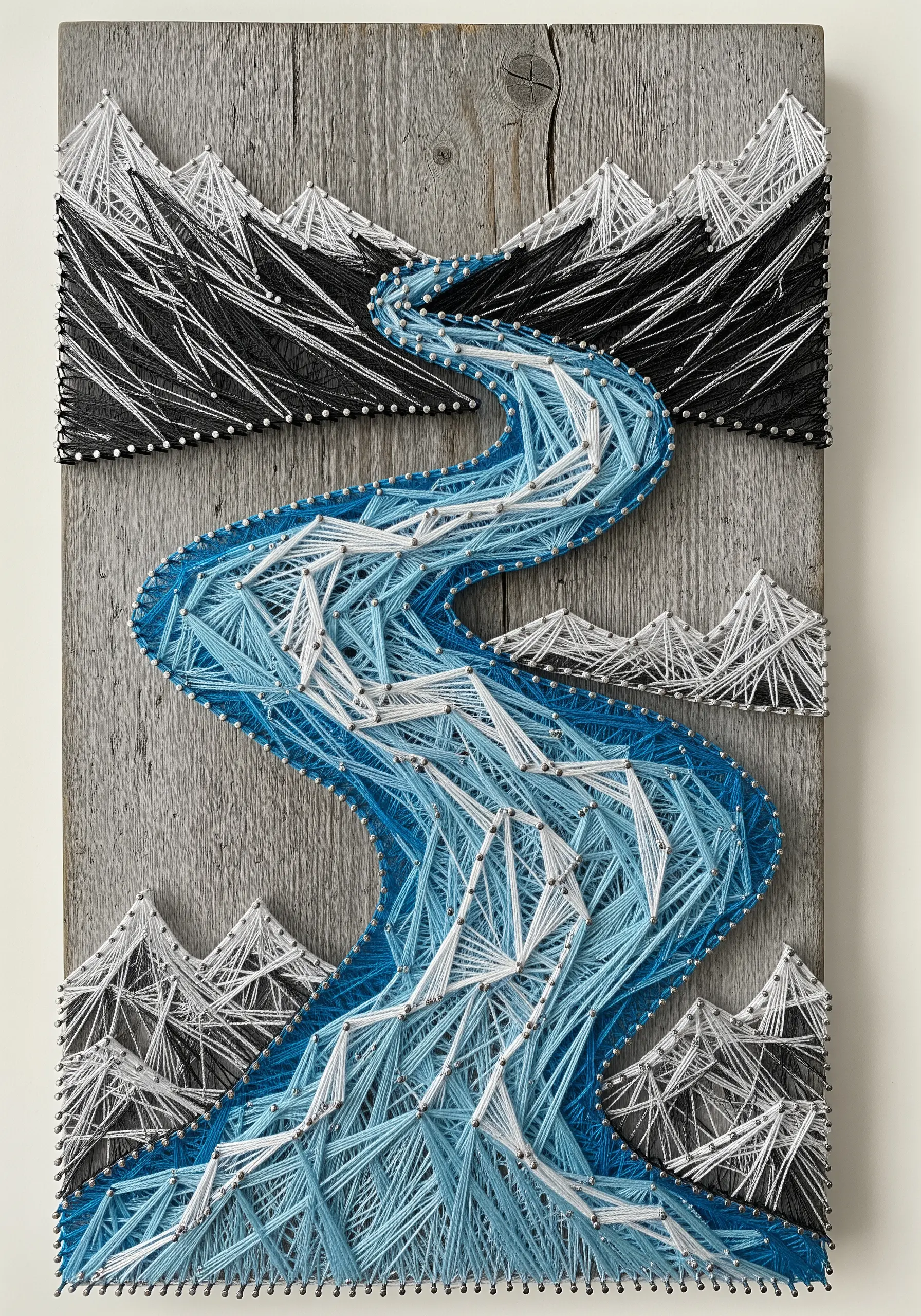
Elevate your design by choosing a unique base, like a piece of reclaimed wood.
The natural grain and imperfections of the wood add instant character and texture that you can’t achieve on a plain board.
Create a powerful visual impact by pairing stark, graphic mountains in black and white with a brilliantly saturated river.
To add the feeling of rapids or movement in the water, crisscross a lighter thread (like white or pale blue) over the main river color.
These are great rustic string art farmhouse embroidery pieces for a cozy interior.
6. Sculpting Canyons with Angled Threads

Mimic the sharp, eroded faces of a canyon by layering your threads at conflicting angles.
Instead of filling a shape with parallel lines, crisscross threads to build up texture and suggest rocky, uneven surfaces.
Use a palette of earthy reds, oranges, and beiges, varying the shades to define different rock formations and create shadows.
A thin, vibrant river acts as a powerful line of contrast, emphasizing the scale and ruggedness of the canyon walls.
These are embroidery projects inspired by textures you’d find on a nature walk.
7. Weaving a Gradient Sunset Sky

Create a smooth, painterly sunset by stretching long, horizontal threads across the entire width of your sky.
Start with the darkest color at the top and gradually introduce lighter shades, allowing them to overlap significantly to ensure a seamless blend.
The key is to avoid hard lines between colors.
To make the scene magical, use brass or gold nails that catch the light, suggesting fireflies or the last sparkles of daylight on the water.
This approach is perfect for creating watercolor-style embroidery patterns.
8. Monochromatic Texture on Fabric
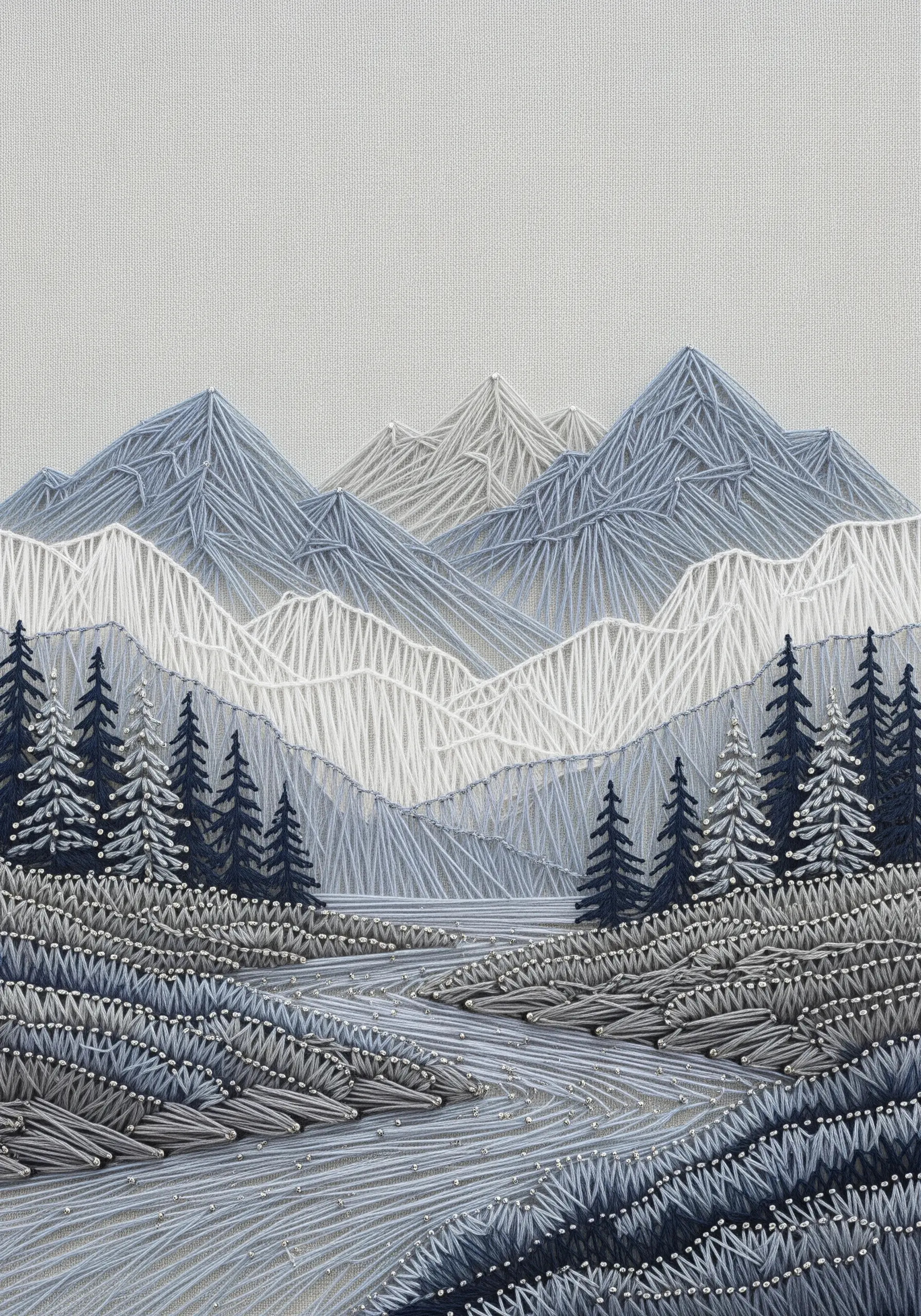
Translate the graphic quality of string art to fabric by using straight stitches as your ‘threads’.
Instead of nails, use the start and end points of your stitches to define the shapes of the mountains.
Create depth and atmosphere with a limited palette, relying on stitch direction and density to differentiate the mountain ranges.
Place denser, longer stitches in the foreground and sparser, shorter stitches for distant peaks to achieve a sense of perspective.
Try these monochrome thread embroidery ideas for a calm, cohesive look.
9. Combining Geometric Florals with Landscapes

Inject a sense of joy and modern style into your landscape by adding stylized, geometric flowers.
To create these radial blooms, place a nail in the center and a circle of nails around it.
Wrap your thread from the outer nails to the center, creating a vibrant, sunburst effect that contrasts beautifully with the linear mountains.
This combination of organic scenery and abstract shapes results in a playful, contemporary piece.
Explore more abstract floral embroidery hoops that look like fine art.
10. Stitching a Luminous Milky Way
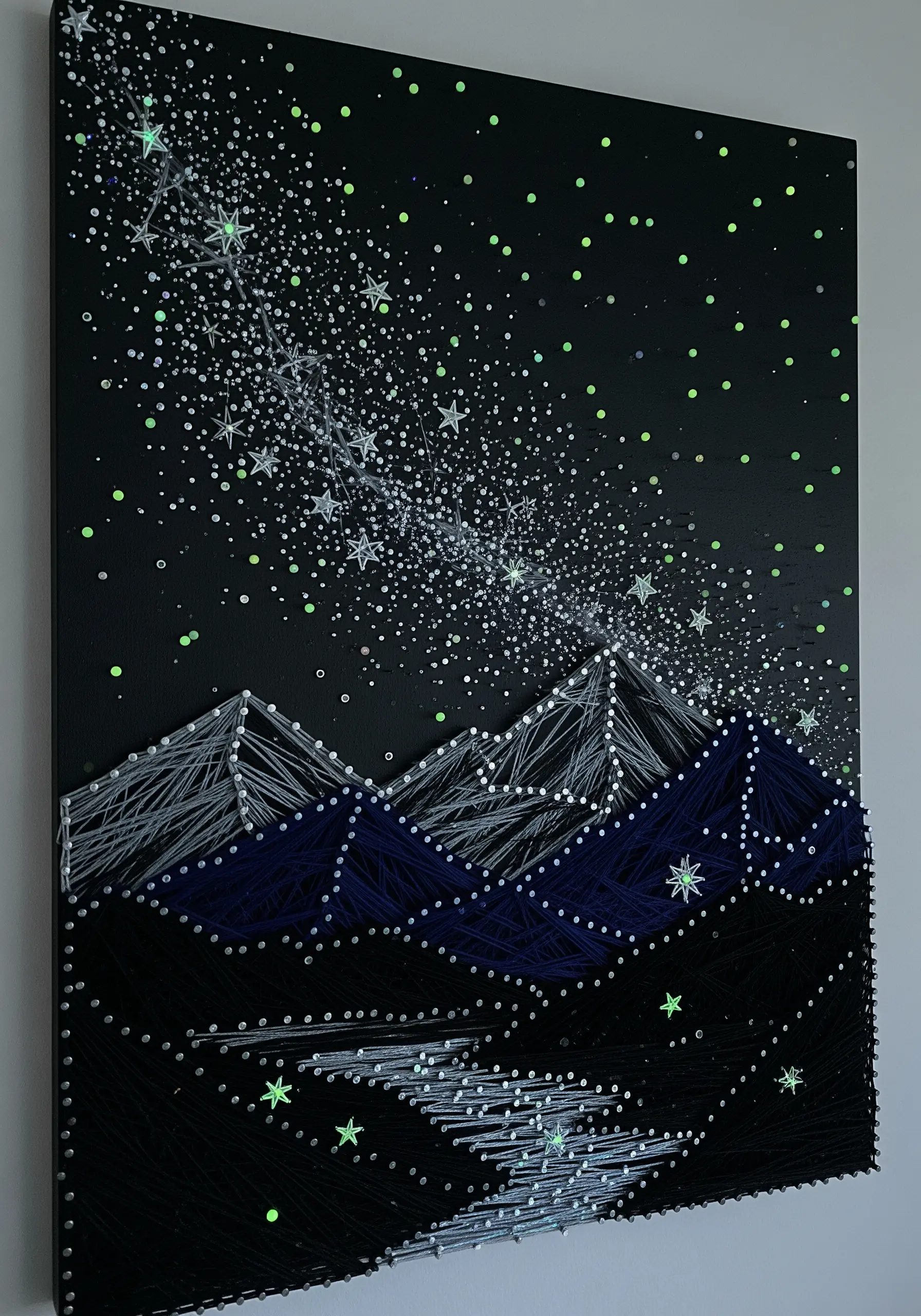
To create a truly magical night sky, work with glow-in-the-dark or fluorescent thread on a black-painted board.
Map out the dense cloud of the Milky Way with a large cluster of nails, wrapping the thread multiple times to build up its brightness.
For the surrounding stars, use fewer nails and single strands of thread to represent distant, twinkling lights.
This variation in thread density is what makes the celestial scene feel vast and authentic.
Discover more celestial micro-embroidery ideas for your next project.
11. Deconstructing Landscapes into a Triptych
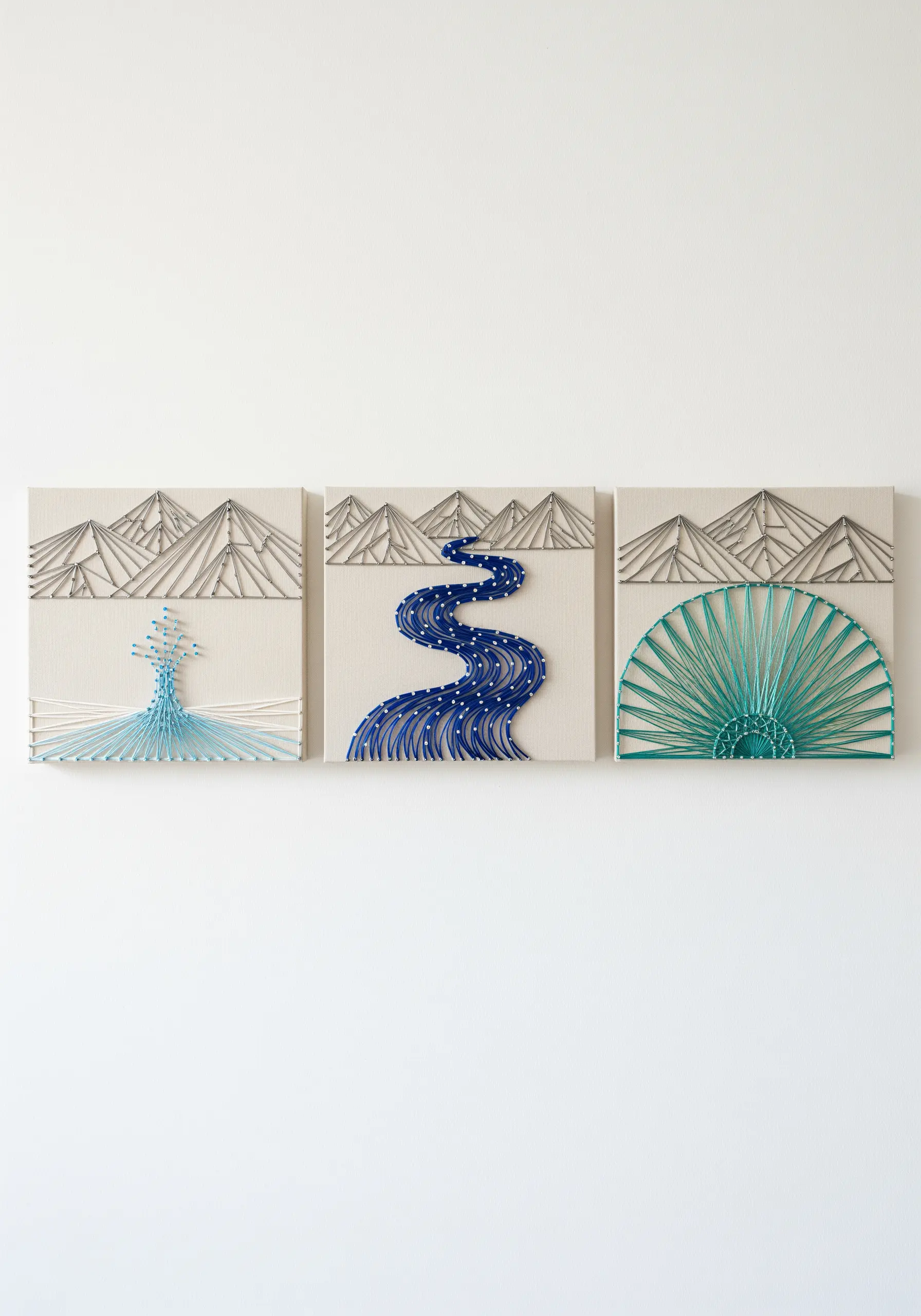
Elevate a simple landscape into a modern art piece by splitting it across three separate panels.
This triptych format encourages you to simplify your design and focus on the core elements: the sharp peaks of the mountains, the gentle curve of a river, or an abstract sunburst.
Maintaining a consistent horizon line across the panels will unify the pieces, while the physical separation adds a sophisticated, gallery-like feel to your wall.
This is a perfect technique for minimalist embroidery projects.
12. Capturing Molten Flow with Color Blending
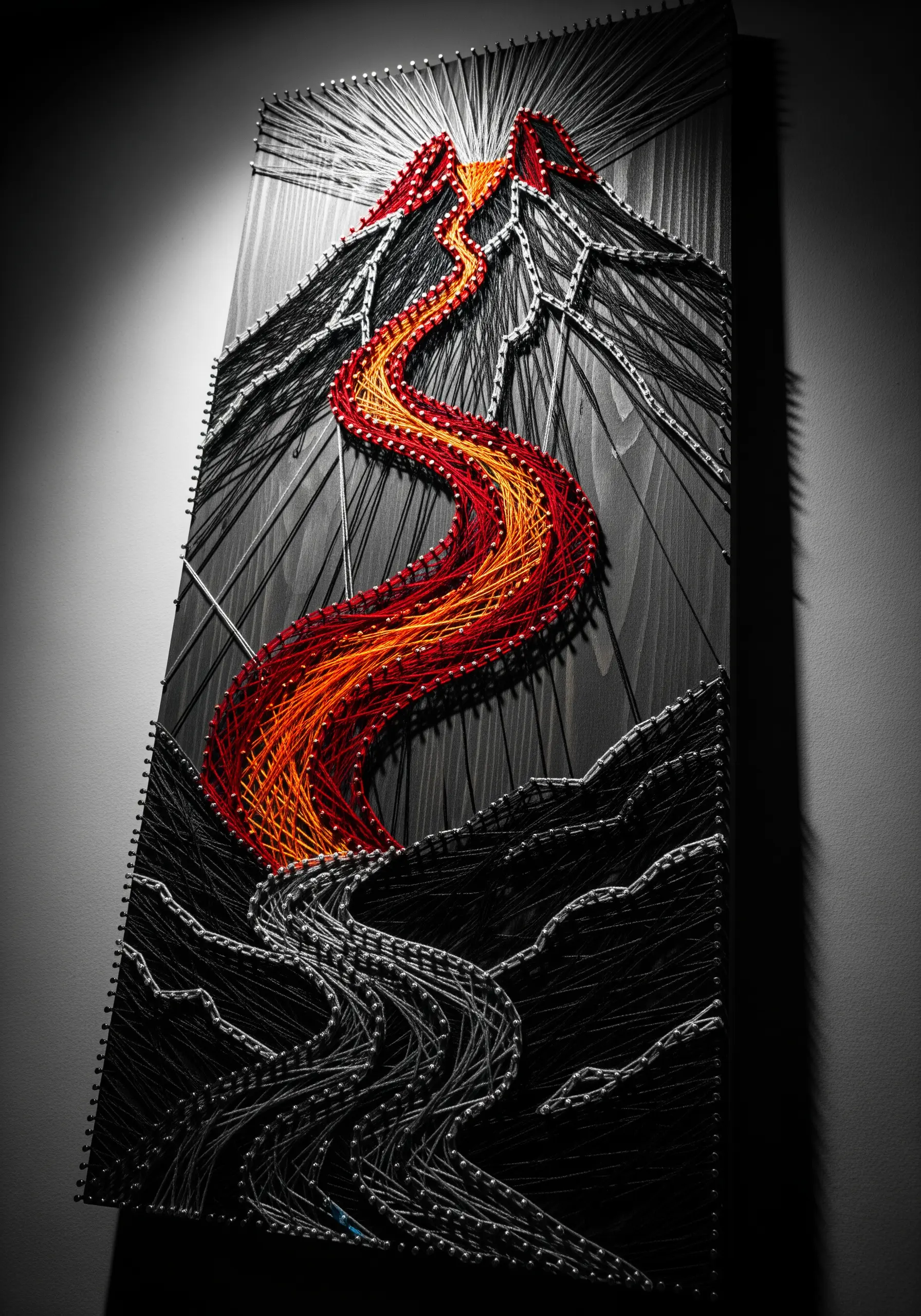
To convey the intense energy of lava, use a fiery palette of reds, oranges, and yellows.
Instead of separating the colors, wind them together along the path of the flow, allowing them to twist and blend organically.
This creates a dynamic, unpredictable effect that feels more natural than structured stripes.
The stark contrast between the vibrant lava and the dark, monochromatic mountain makes the molten river the undeniable, dramatic heart of the piece.
You can use this technique to create other abstract thread waves swirls.
13. Texturing Coastal Waves and Cliffs
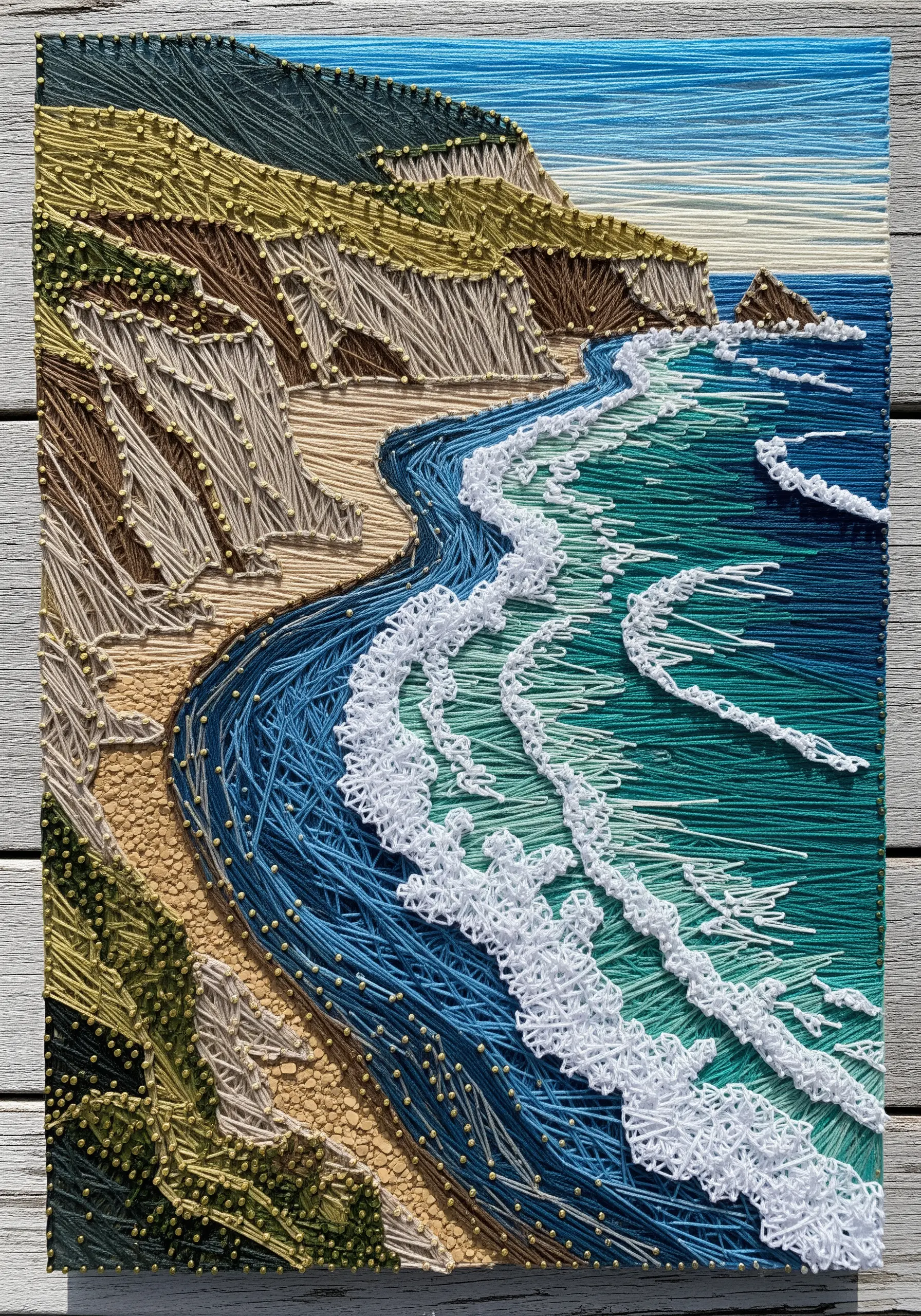
Go beyond straight lines to create the chaotic energy of the ocean.
For crashing waves and seafoam, use a thick, textured white thread or yarn and loop it loosely and irregularly around your nails.
This builds a tactile, three-dimensional effect that contrasts with the tightly wound threads of the water and sand.
For the cliffs, use varied shades of brown and beige in vertical lines to suggest natural rock striations, adding to the overall realism and texture of the scene.
This is one of the best ways to capture nature’s textures in your next embroidery project.
14. Framing a Landscape with a Concentric Sky
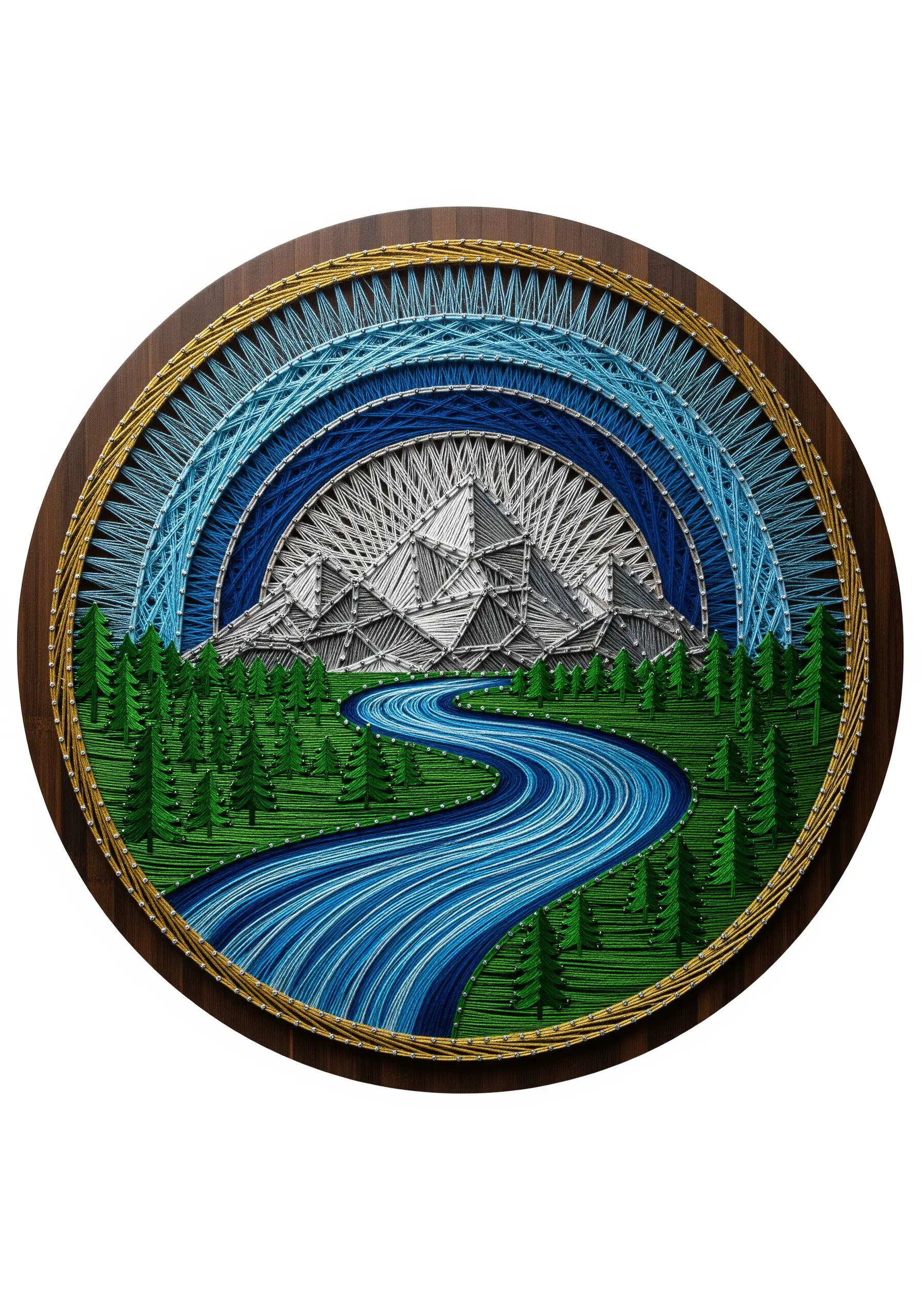
A circular frame instantly turns your artwork into a contained, porthole-style scene.
Enhance this effect by creating a sky with concentric arches of color, which draws the eye inward toward the central landscape.
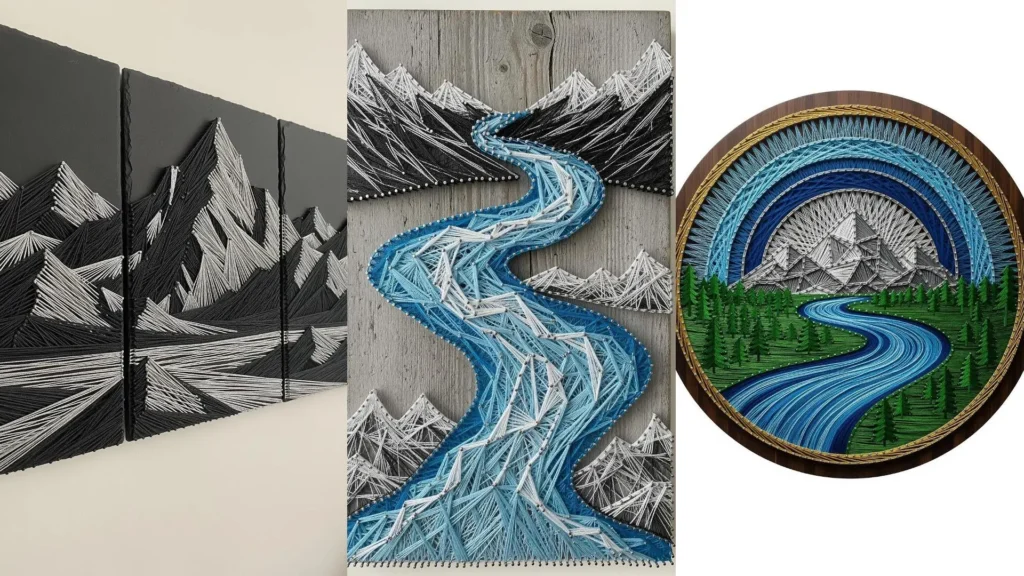
This geometric approach to the sky provides a beautiful formal contrast to the organic shapes of the mountains, trees, and river below.
Adding a wrapped thread border to the frame itself creates a final, polished touch.
These DIY framed embroidery art projects always look stunning.
15. Creating Depth with a Monochromatic Triptych
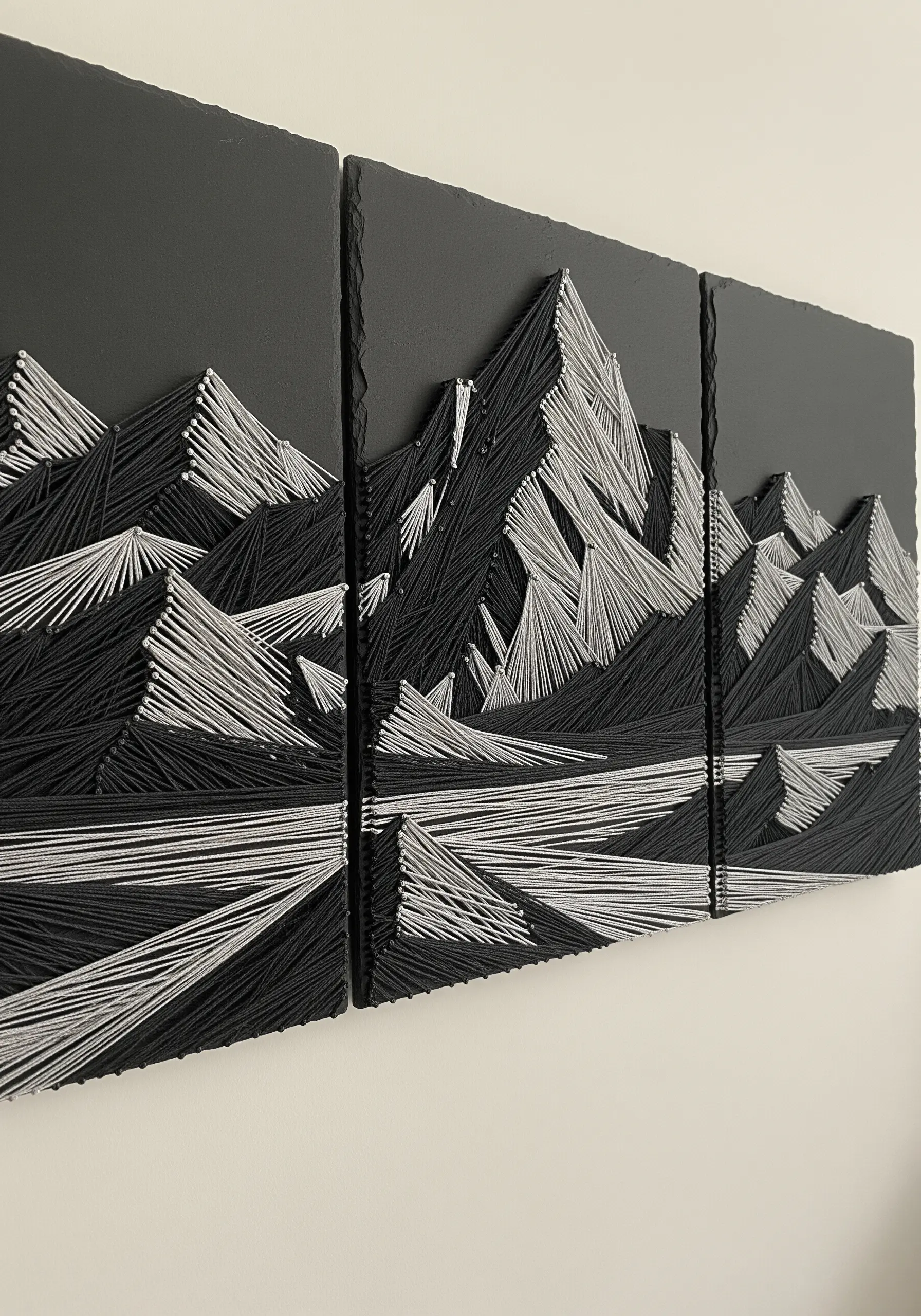
A monochromatic palette forces you to focus on light, shadow, and form.
By using only black and white thread, you can carve out dramatic mountainscapes where the direction of your thread defines the planes of the rock.
Splitting the scene across a triptych adds architectural interest and encourages the eye to move across the composition.
Use white thread for the sun-hit peaks and black for the deep shadows to create a powerful sense of dimension and drama.
16. The Essence of Landscape in a Single Line
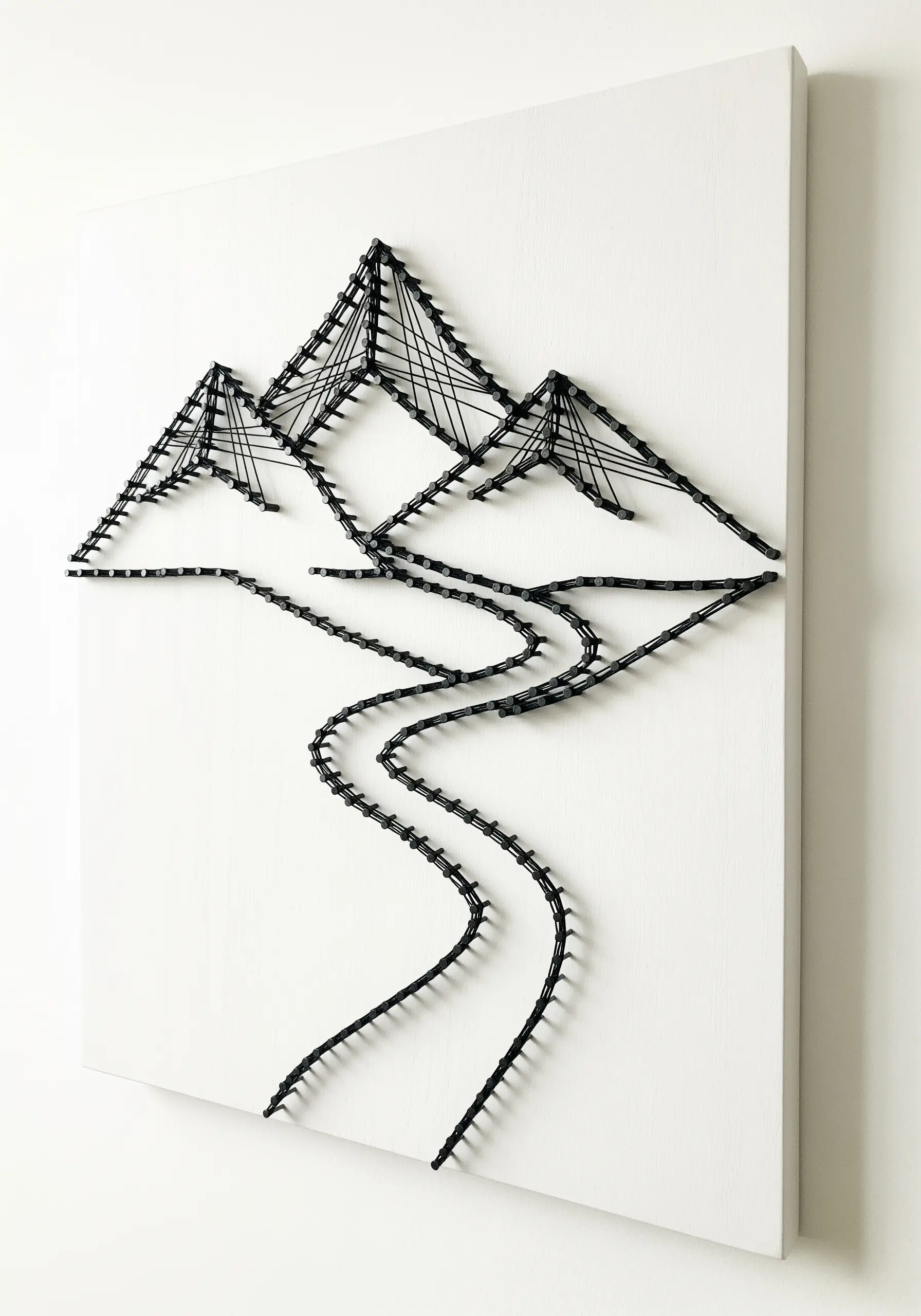
Challenge yourself to capture a scene with the fewest possible elements.
This piece uses a single thread color to create a continuous outline of mountains and a river, proving that you don’t need to fill every space to tell a story.
The zig-zag pattern between the nails provides just enough form to define the shapes while celebrating the beauty of negative space.
This is a wonderful exercise in minimalism, focusing on pure, clean lines.
17. Abstracting Nature: Ice on Water
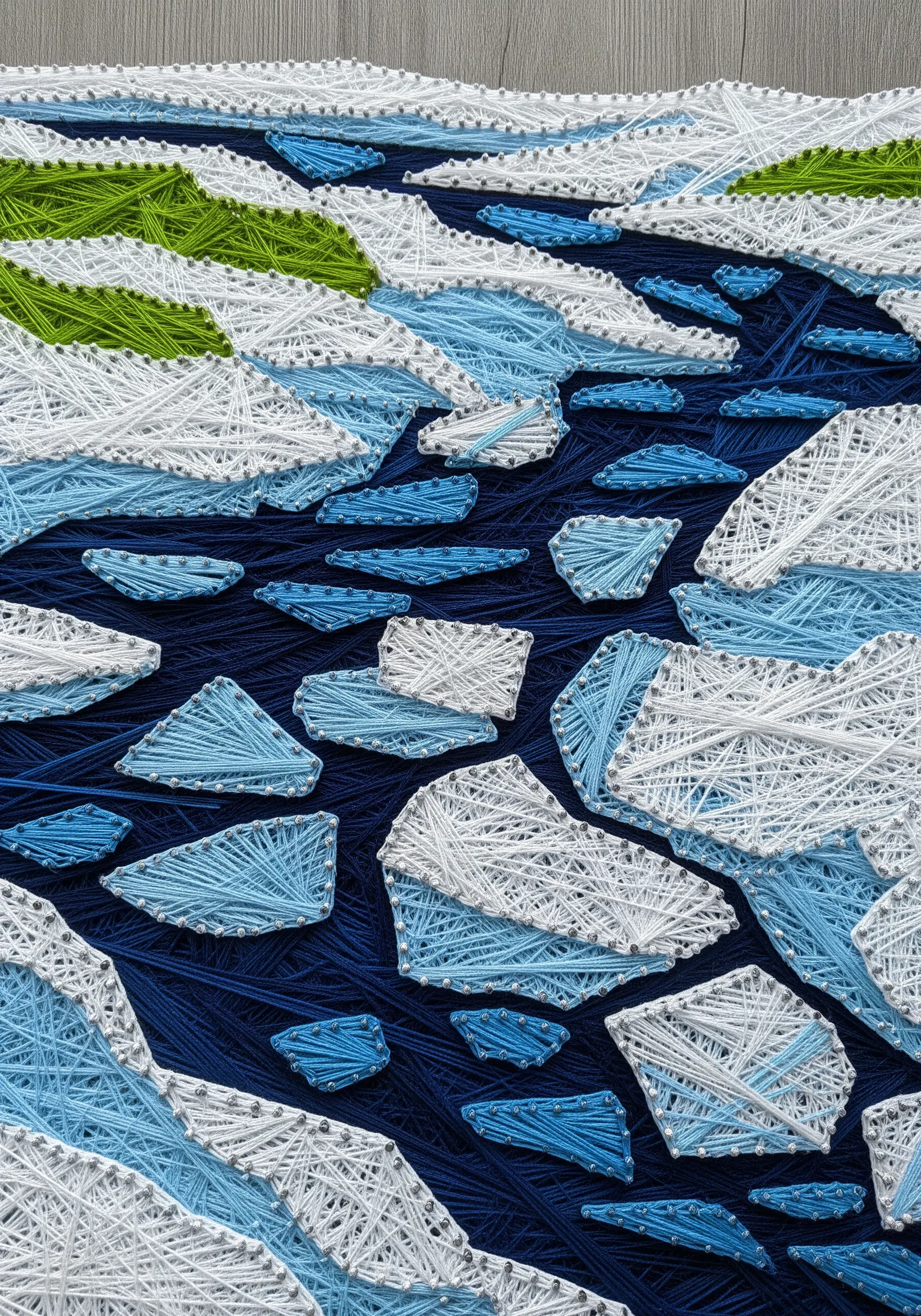
Break free from literal interpretations and focus on the shapes and textures of nature.
Represent ice floes as geometric shards, outlining each with nails and filling them with white and light blue thread.
The deep blue, unfilled background becomes the water, and the irregular placement of the ‘ice’ creates a sense of slow, deliberate movement.
This approach transforms a natural scene into a compelling abstract composition.
You can create similar abstract optical illusion stitches in your own work.
18. Sculptural String Art: A 3D Trail Marker
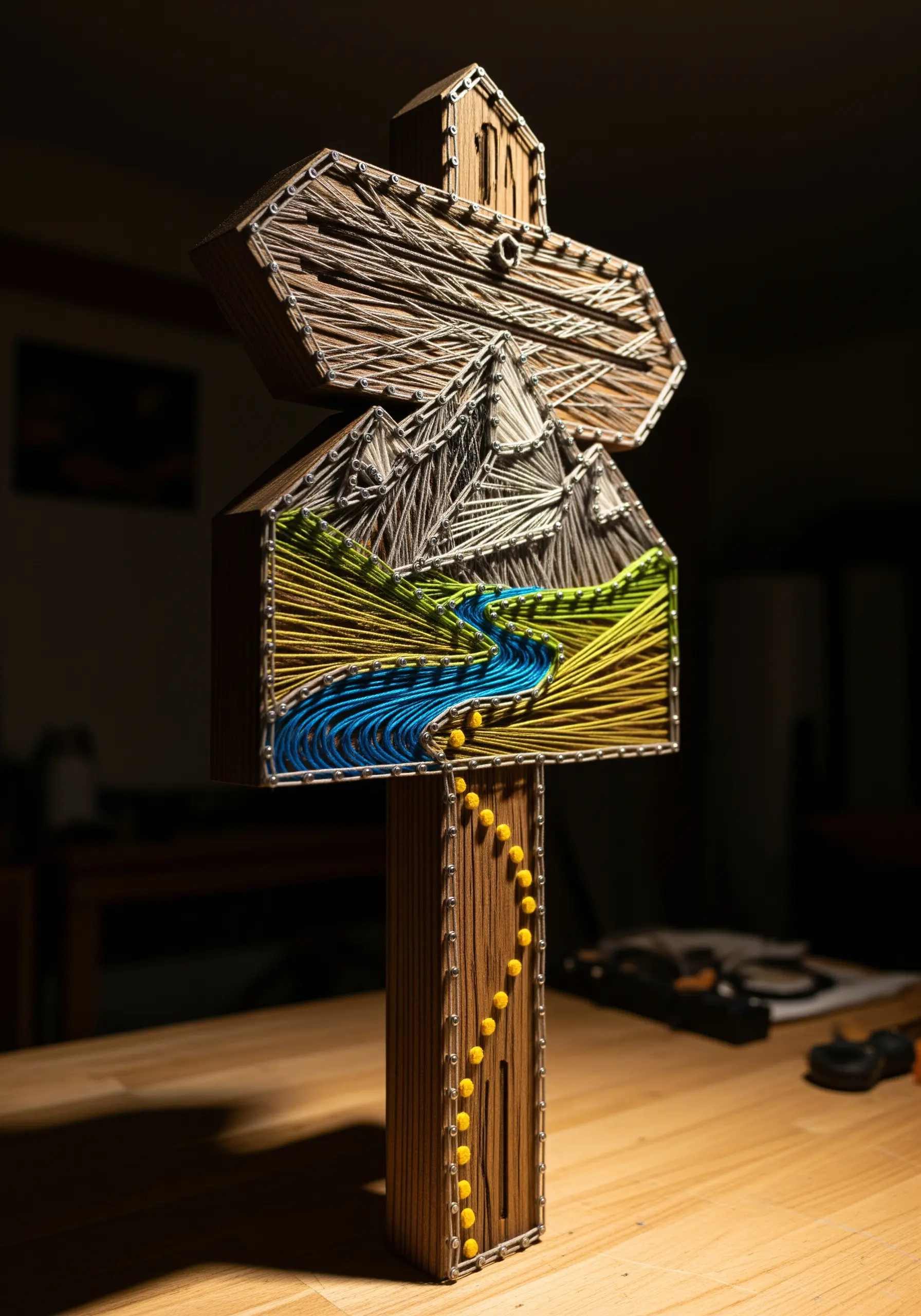
Move your string art beyond the second dimension by working on a sculptural object.
By constructing a 3D shape like this trail marker from layered wood, you create multiple surfaces for your thread work.
This transforms your piece from a wall hanging into a freestanding object with presence and depth.
It’s a fantastic way to combine woodworking with fiber art to create truly unique DIY embroidery presents.
19. Weaving the Northern Lights

The key to capturing the aurora borealis is to emphasize vertical movement.
Use long, taut strands of fluorescent thread in shades of green, blue, and purple, stretching them from a curved line of nails at the top down toward the horizon.
Allow the colors to overlap and blend, creating the ethereal, curtain-like effect of the northern lights.
A simple, dark mountain silhouette provides the perfect anchor for the spectacular sky above.
This is a great way to create magical ombre effects.
20. Crafting a Cascading Waterfall
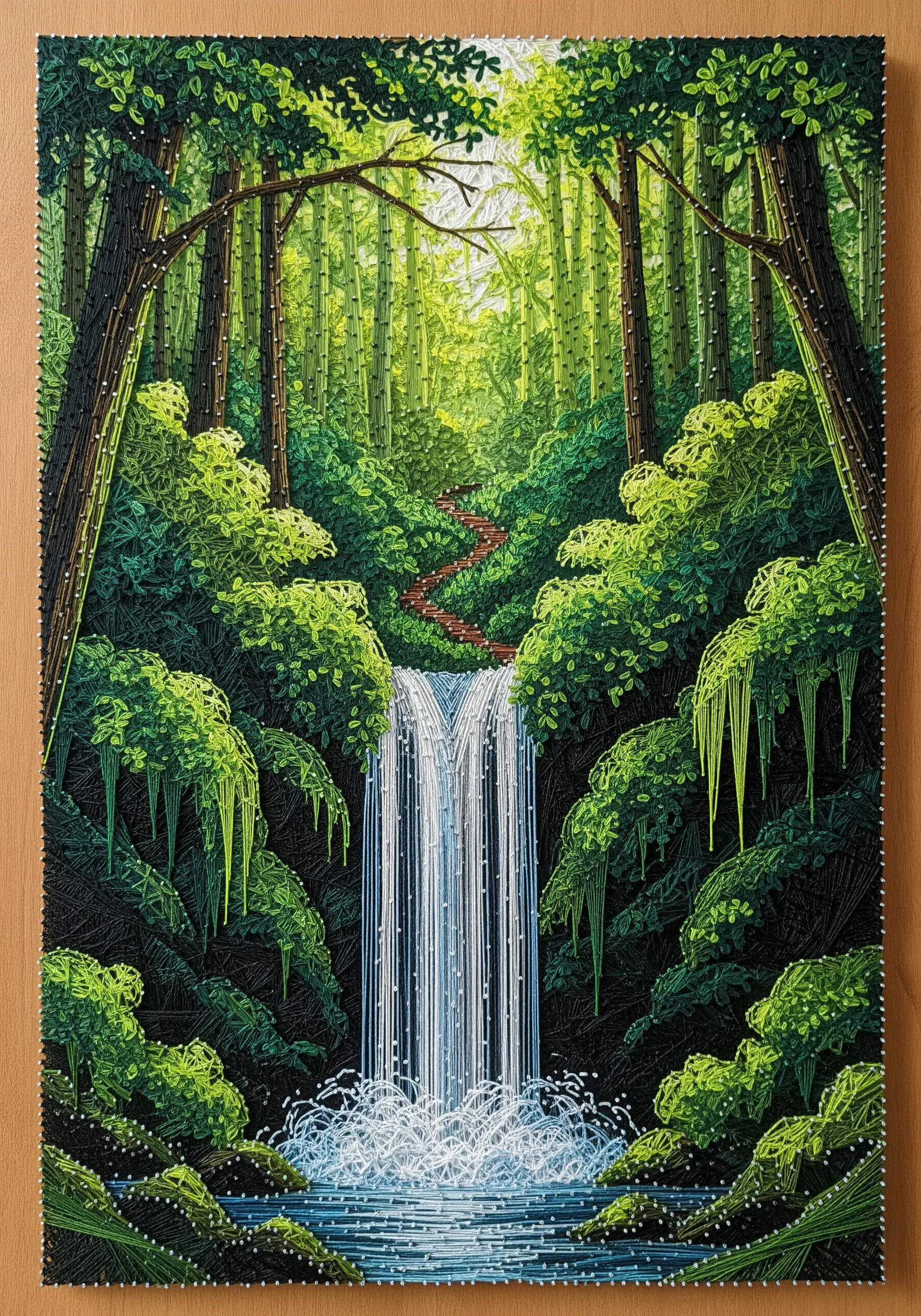
Create the impression of falling water with densely packed, vertical strands of white and pale blue thread.
The straight, controlled lines provide the perfect illusion of a powerful cascade.
For the splash and mist at the base, switch to a more chaotic, crisscrossing pattern of threads to convey energy and movement.
Surround this central feature with richly textured greens to build a lush, immersive forest environment.
This technique is perfect for realistic mushroom forest floor embroidery projects too.
21. Adding Tactile Dimension with Fiber Clouds

Introduce an element of surprise by combining sleek string art with soft, fluffy textures.
After completing your threaded mountains, create clouds by attaching cotton balls, wool roving, or small yarn pom-poms directly to the board.
This mixed-media approach adds a wonderful, tactile dimension that invites touch and makes the artwork incredibly dynamic and playful.
It breaks the flat plane of the piece, creating real-world depth and shadow.
22. Golden Aspens and a Shimmering River

Capture the unique beauty of an aspen grove by paying attention to detail.
Create the tree trunks with vertical white thread, then add the characteristic black marks with tiny, hand-stitched knots or short horizontal threads.
To make your river truly sparkle, weave a single strand of metallic silver thread alongside your blues.
This subtle addition will catch the light beautifully, mimicking the sun’s reflection on moving water and bringing the entire scene to life.
You’ll love these creative embroidery ideas inspired by tree bark and leaves.