Think of your kitchen’s backsplash not as a utility space, but as a quiet gallery wall waiting for a story. A small, beautifully stitched piece of art, nestled in a corner, can completely change the feeling of the room, adding a layer of warmth and personal history that no store-bought decor can replicate.
You don’t need a grand plan or a complicated pattern. The magic is in the details: the way a single strand of thread can define a delicate petal, how a change in stitch direction can mimic the play of light, or how a carefully chosen color palette can tie the entire room together.
Here, you’ll find ideas that go beyond just filling a hoop. You’ll learn how to use texture, color, and composition to make your embroidery feel intentional and integrated. Let’s transform that small, overlooked space into a corner of handmade beauty.
1. Ground Your Florals with Graphic Texture
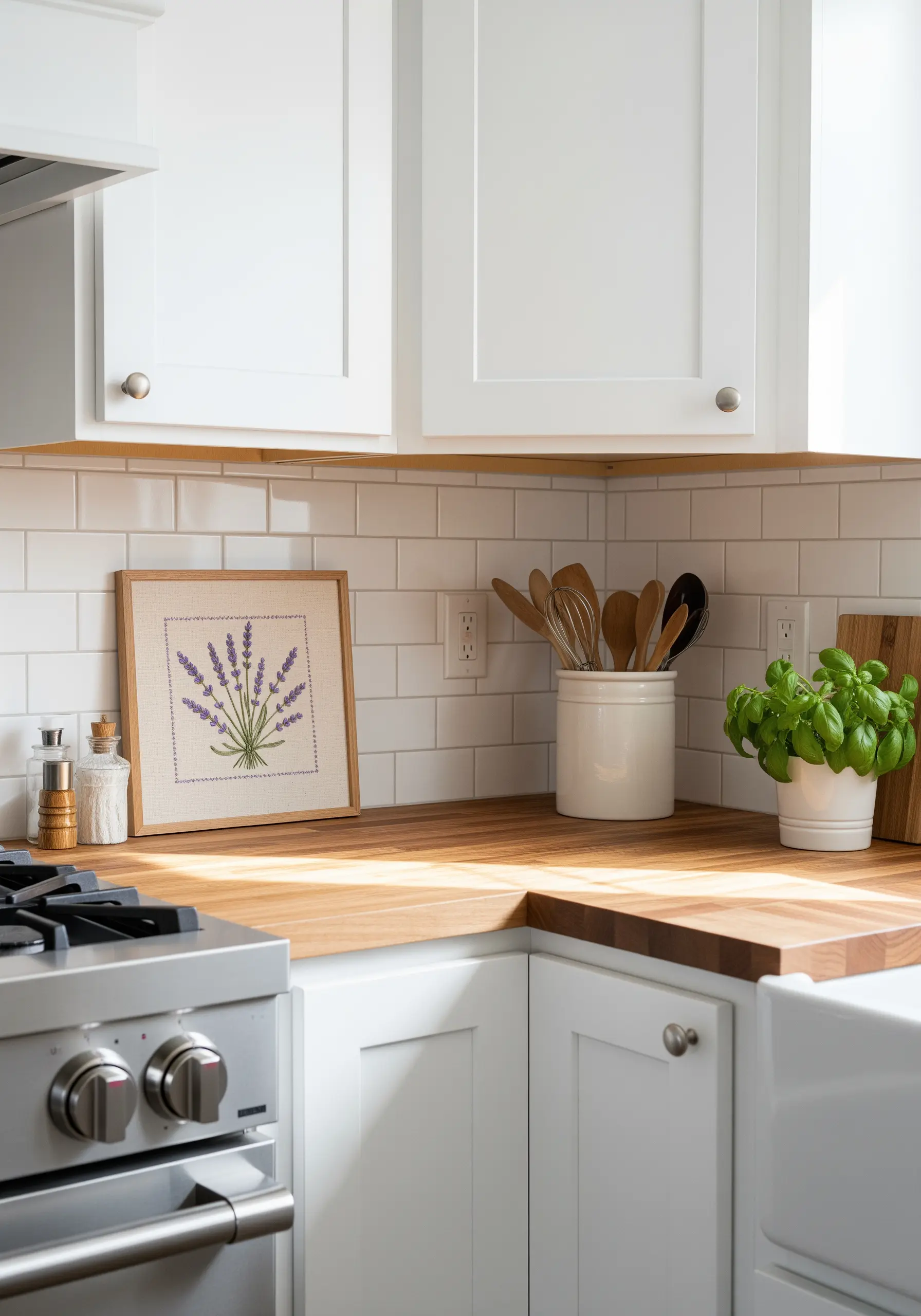
Give a classic lavender bouquet a modern update by using gridded fabric, like Aida cloth, and simple cross-stitches.
This technique creates a subtle pixelated effect that contrasts beautifully with the organic softness of the floral motif.
By framing the piece in natural wood, you echo the warmth of your countertops, creating a sense of harmony between the art and its surroundings.
The check pattern in the background adds another layer of quiet geometry, preventing the design from feeling overly sentimental.
2. Create Rhythm with a Poppy Triptych
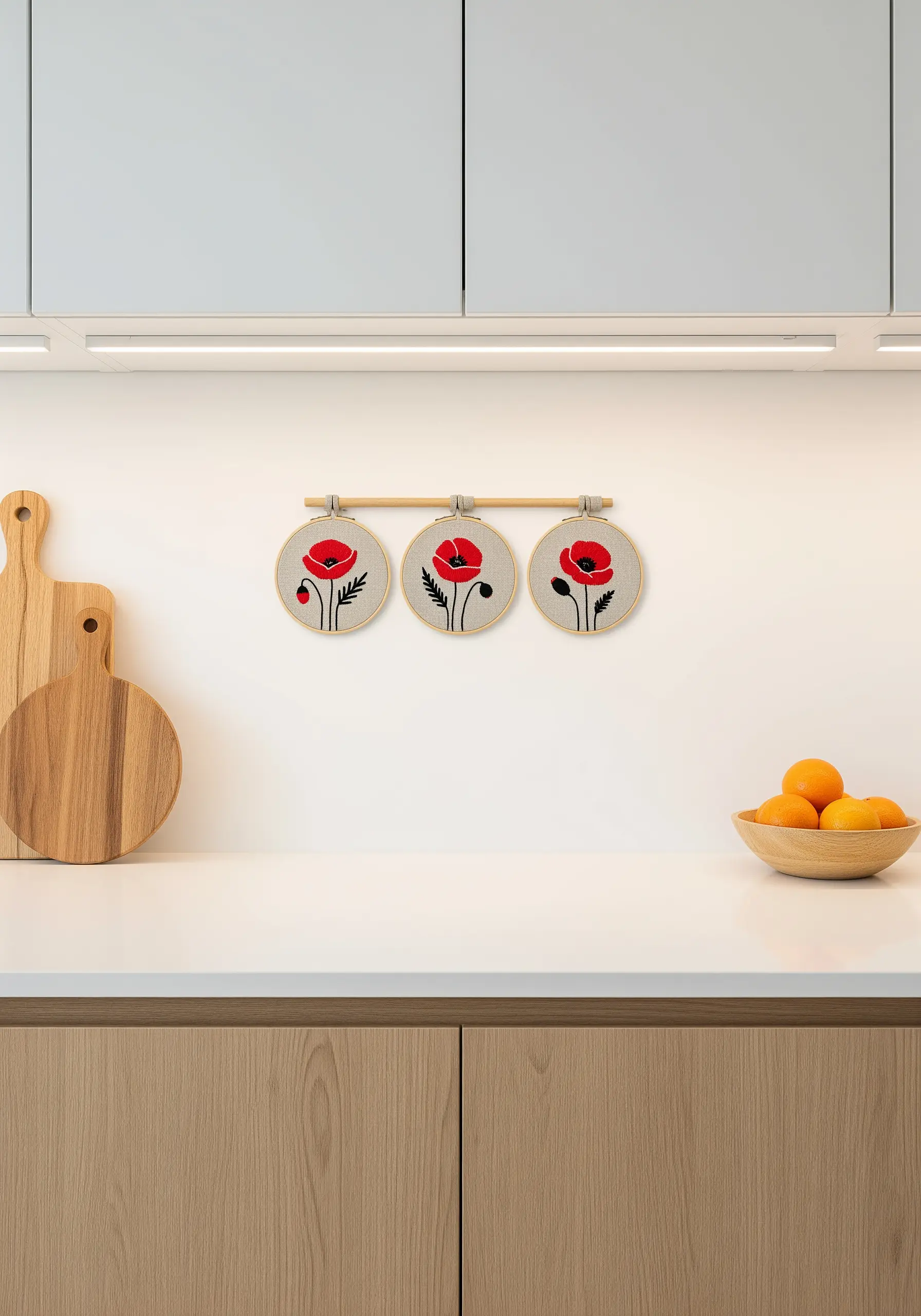
Tell a small story across three hoops by stitching variations of a single motif, like these bold poppies.
This approach creates a cohesive visual rhythm that draws the eye along the backsplash.
To keep the look modern, vary the stem curvature and flower orientation slightly in each piece while using the same color palette and fabric.
Displaying them on a simple wooden dowel unifies the minimalist small hoop designs and makes installation clean and simple.
3. Cultivate a Vertical Hoop Garden
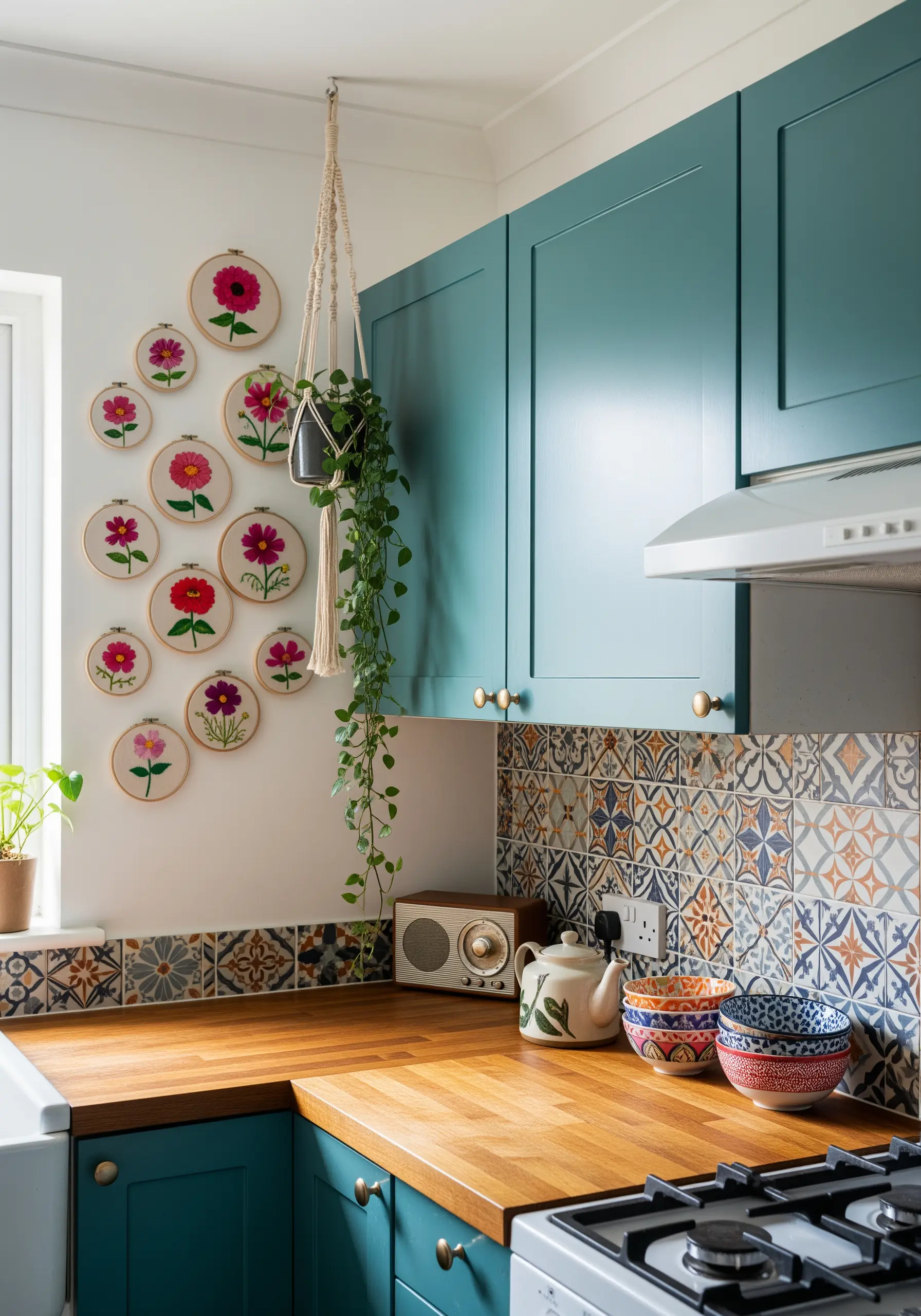
Transform an empty kitchen wall into a flourishing display with an asymmetrical gallery of floral hoops.
To achieve this organic, climbing effect, vary the hoop sizes and the complexity of the floral designs.
Maintain cohesion by sticking to a consistent color family—here, warm pinks and reds—and using the same neutral background fabric for every piece.
This method turns a collection of small hoop floral motifs into a single, impactful art installation.
4. Amplify Contrast for Dramatic Effect
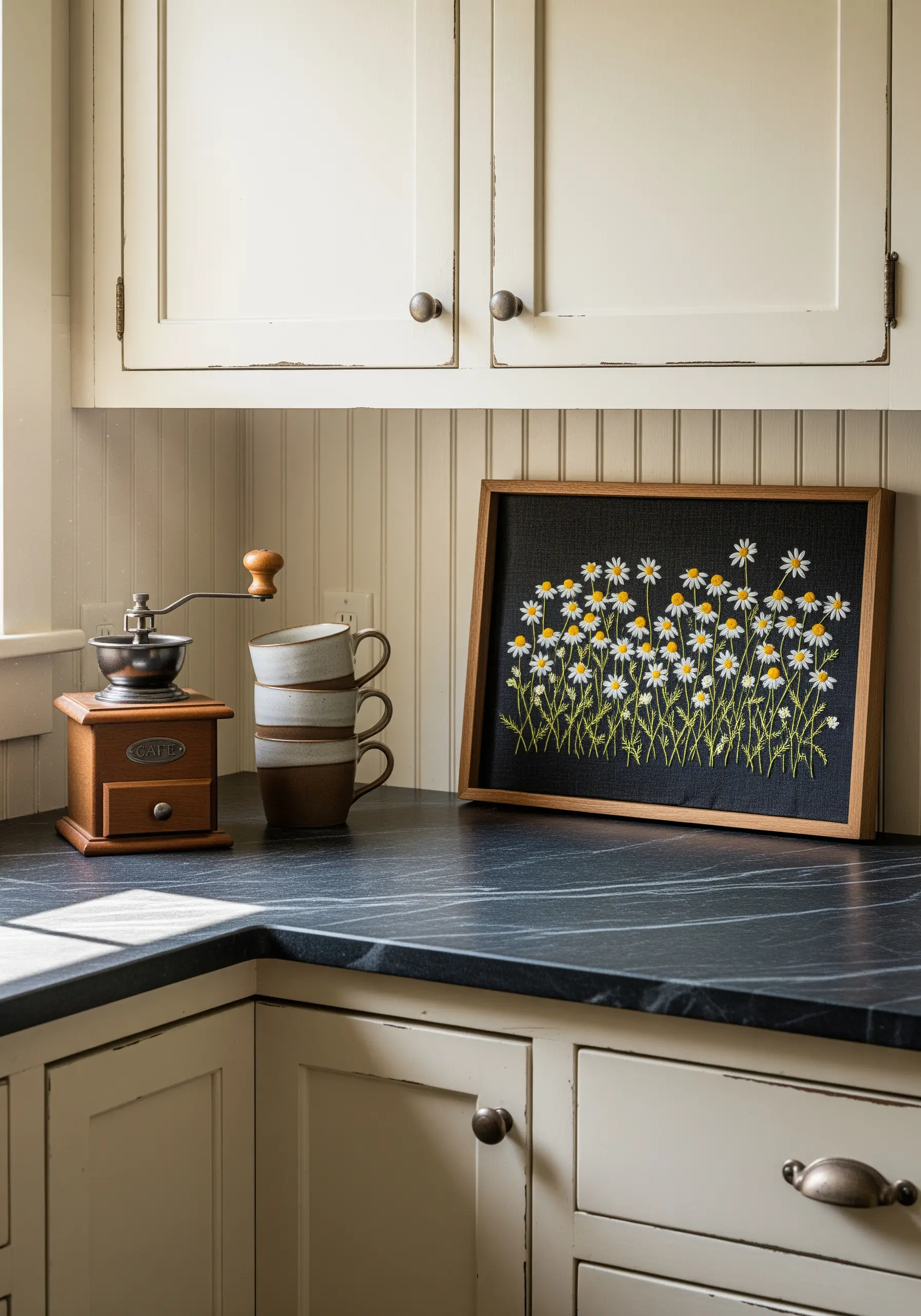
Make simple daisies unforgettable by stitching them on a dark, high-contrast fabric like black linen or cotton twill.
The stark background makes the white and yellow threads appear more luminous, creating a powerful visual pop.
Use a single strand of floss for the petals’ outlines to keep them delicate, and fill the centers with dense French knots for textural depth.
This high-impact technique gives even the simplest wildflower a sophisticated, graphic quality.
5. Design a Botanical Grid for Timeless Elegance
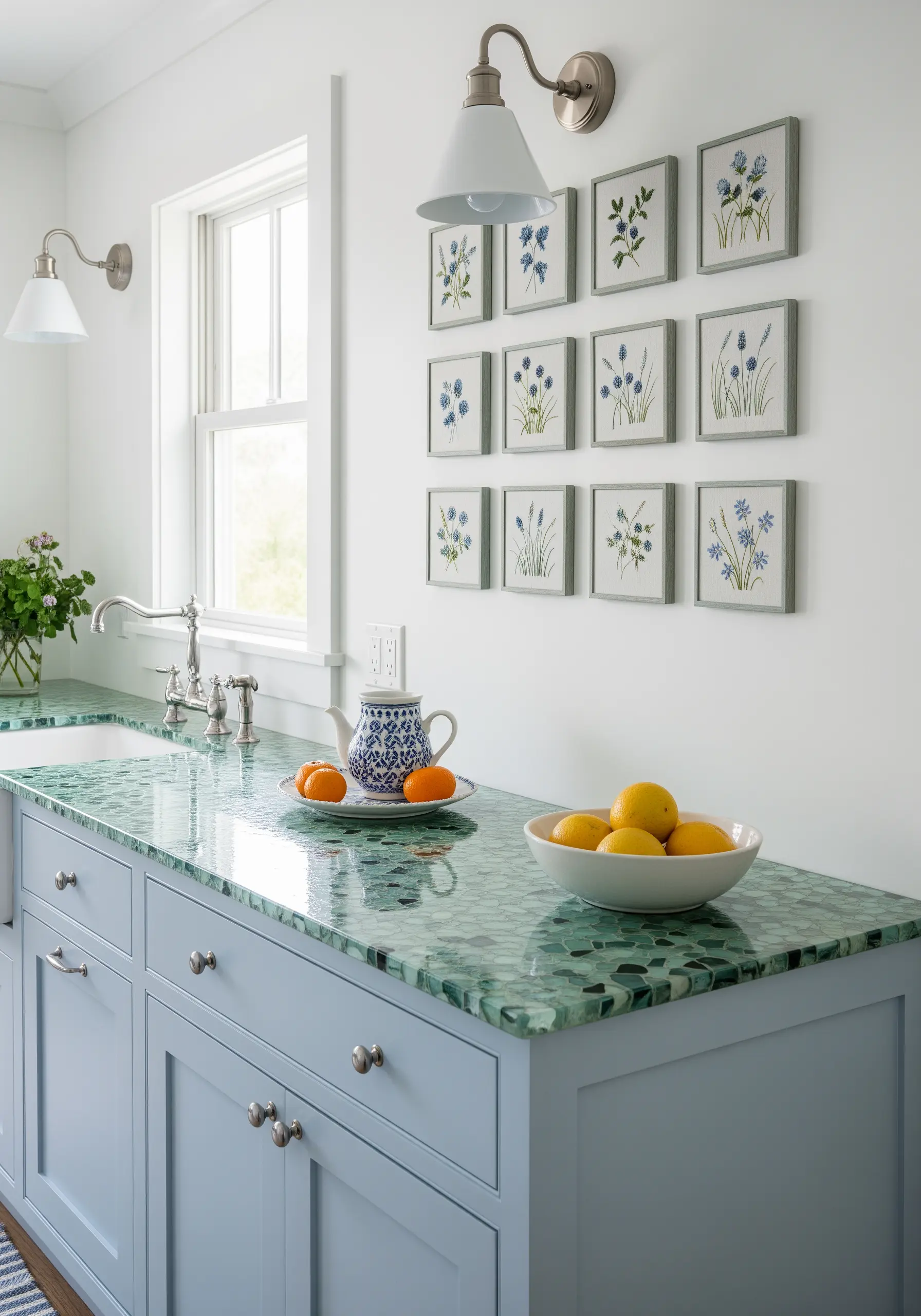
Elevate simple botanical sketches by arranging them in a formal grid, turning them into a sophisticated collection.
Choose a single color family, like these dusty blues, and stitch each specimen on identical squares of fabric.
Using matching frames for all the pieces is crucial; it unifies the collection and gives it the weight of a curated gallery wall.
This arrangement works exceptionally well for filling a larger backsplash area with delicate lavender stitch ideas and other subtle florals, creating a calm, orderly feel.
6. Embrace Geometric Simplicity with Thread
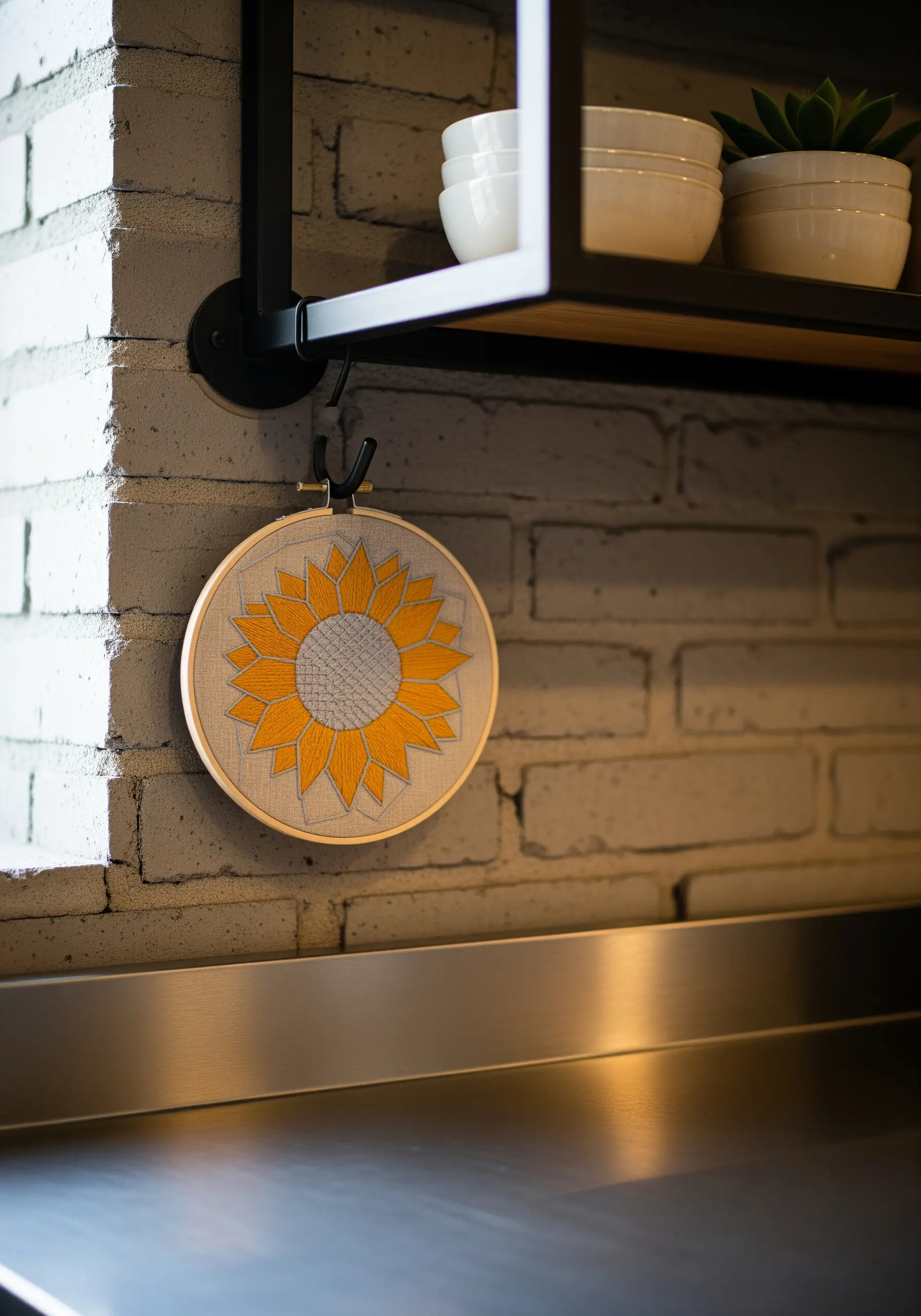
Reduce a complex flower, like a sunflower, to its essential geometric shapes for a bold, modern statement.
Instead of realistic shading, use solid blocks of satin stitch to fill in the petals and center, focusing on clean lines and uniform thread direction.
The two-tone color scheme—a sunny yellow against a cool grey—enhances the graphic nature of the design.
This minimalist approach is perfect for modern geometric thread art ideas that complement industrial or contemporary kitchen aesthetics.
7. Match Your Art to Your Kitchen’s Era
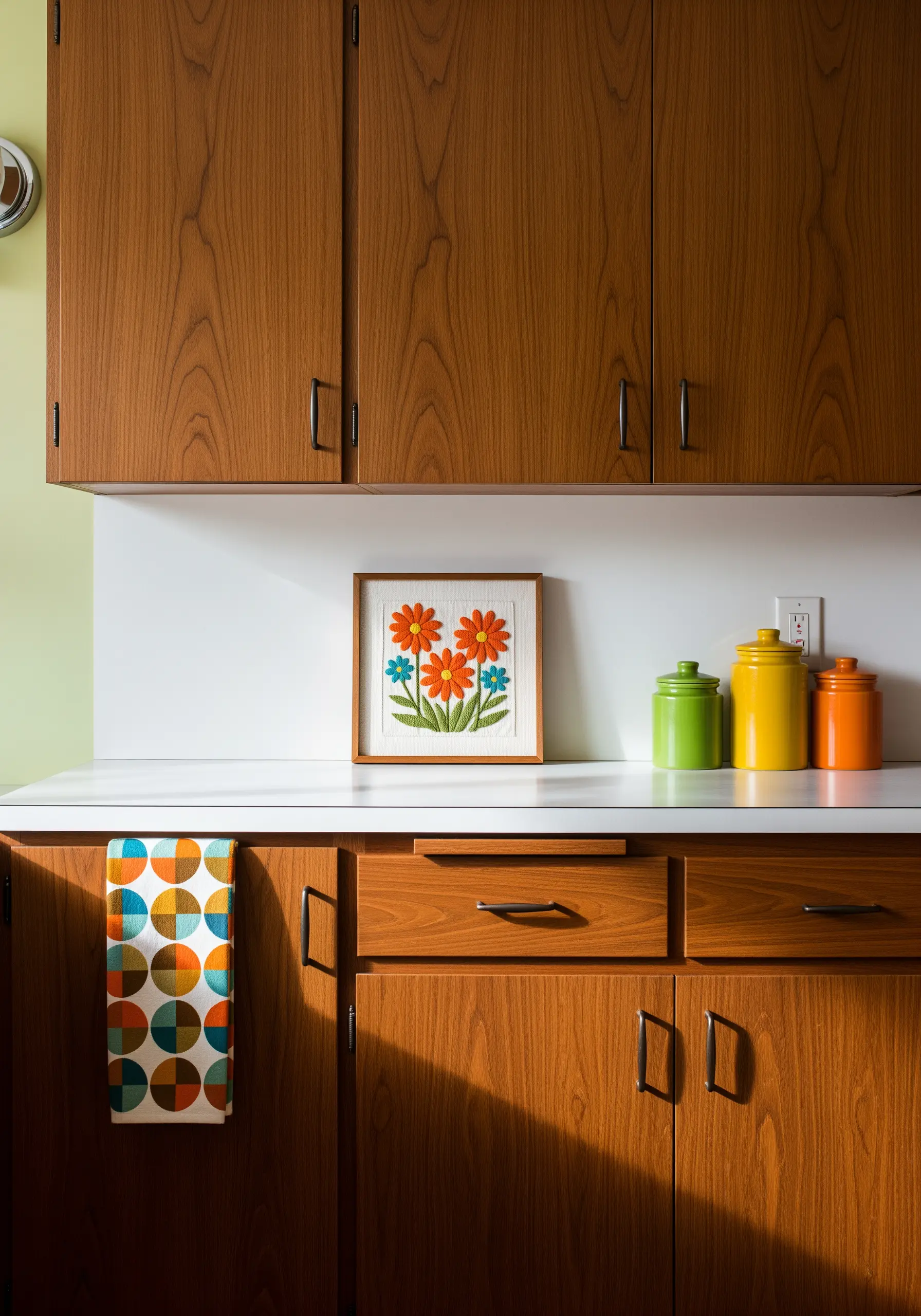
Connect your embroidery to your kitchen’s decor by borrowing from its color palette and design era.
This retro floral piece, with its vibrant orange and avocado green, feels perfectly at home among mid-century modern canisters and wood cabinetry.
Use chunky, textured stitches like the woven wheel or raised satin stitch to mimic the bold, graphic style of 70s textile art.
This thoughtful coordination makes your handmade art feel like an intentional, original part of the room’s design.
8. Add a Touch of Softness with an Oval Frame
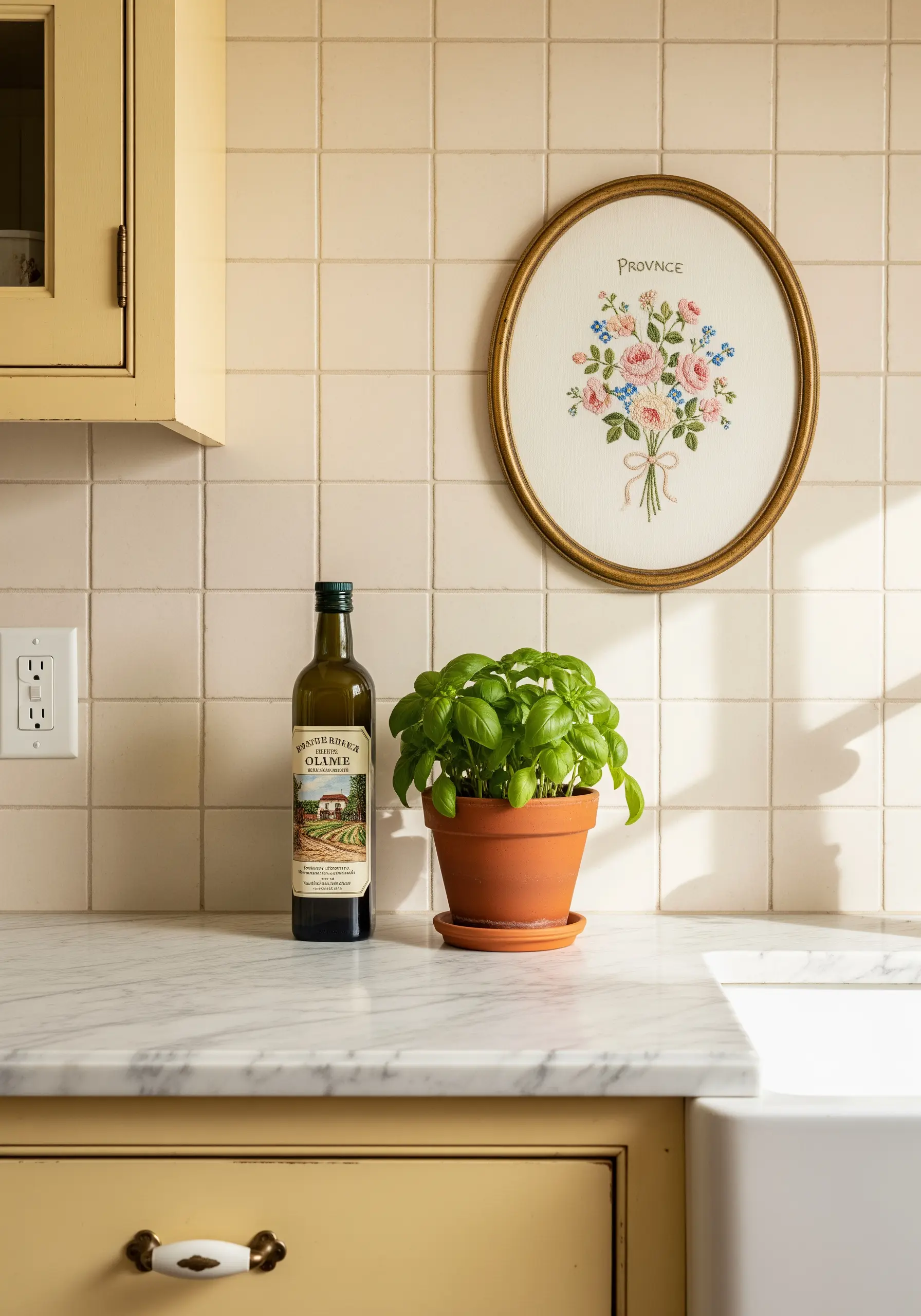
Soften the hard lines of a tiled backsplash by choosing an oval hoop or frame for your floral bouquet.
The curved silhouette provides a gentle contrast to the square tiles and cabinetry, drawing the eye and creating a graceful focal point.
Combine delicate stitches like the lazy daisy for small flowers and a simple backstitch for lettering to maintain a light, airy feel.
A metallic or warm-toned frame adds a touch of vintage elegance, perfect for a classic or French country kitchen.
9. Weave Luxury with Metallic Threads
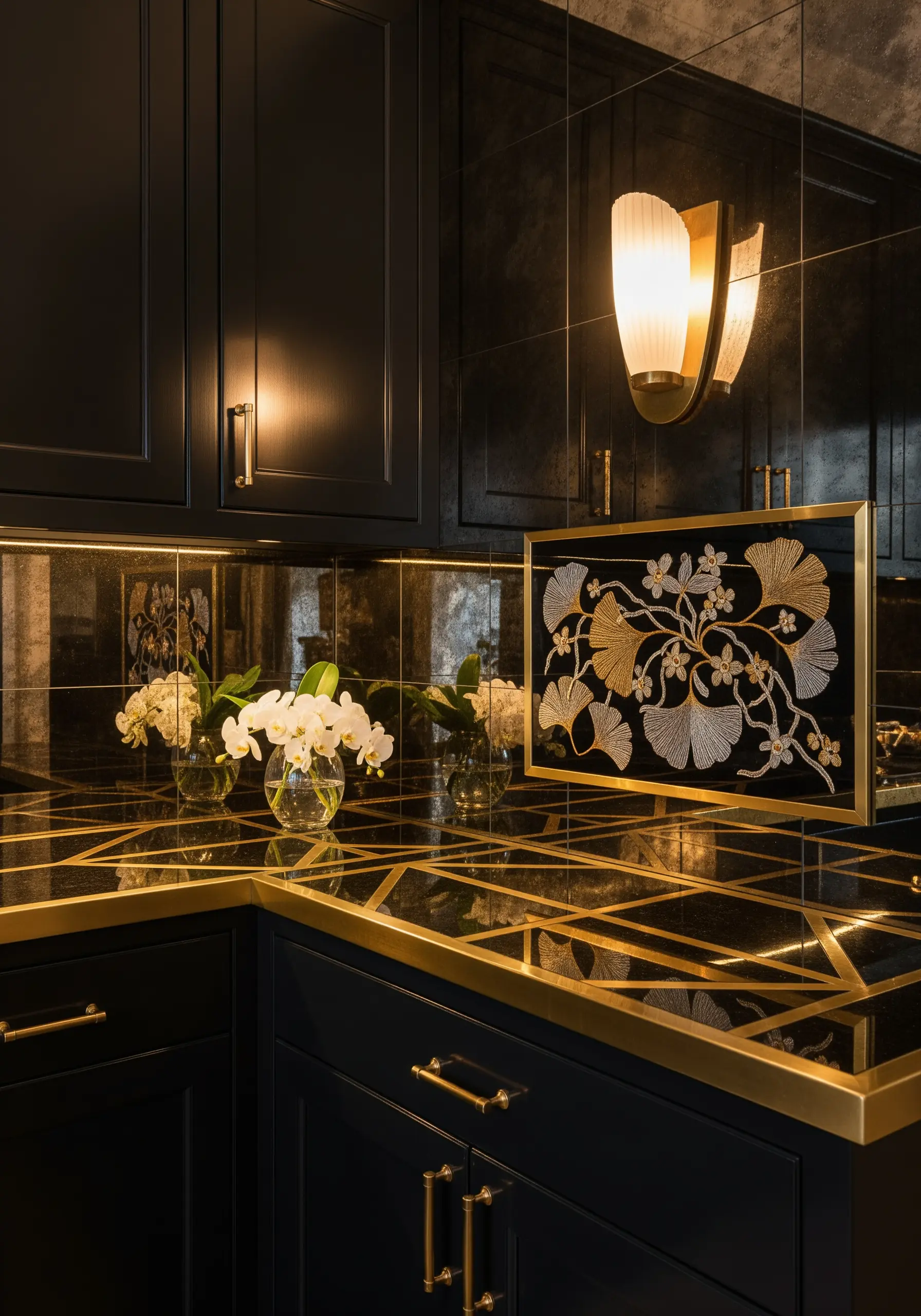
Introduce a touch of glamour into a dark, moody kitchen with the reflective quality of metallic threads.
When stitching ginkgo leaves or other delicate botanicals on black fabric, alternate between gold and silver threads to create depth and movement.
To prevent fraying, work with shorter strands of metallic floss and use a needle with a slightly larger eye to reduce friction.
The way these metallic threads catch the under-cabinet lighting adds a dynamic, luxurious element to the space.
10. Master a Bold Color Gradient
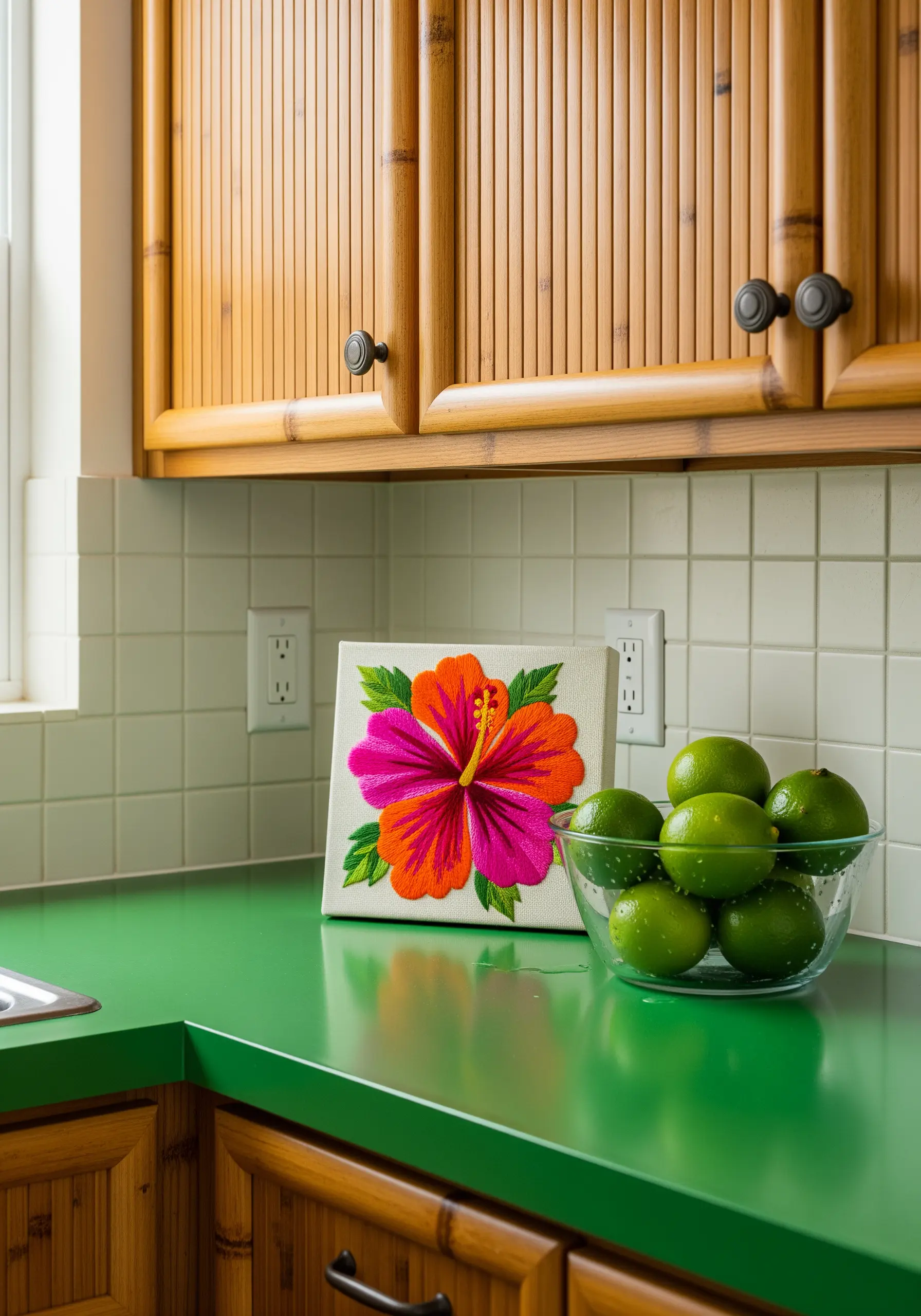
Create a stunning, vibrant hibiscus by mastering the art of the long and short stitch to blend colors seamlessly.
Work from the outer edge of the petal inward, laying down staggered stitches of your darkest shade, then gradually introducing lighter tones.
Use at least three shades of a color—like magenta, hot pink, and light pink—to achieve a smooth, paint-like transition.
Stretching the finished piece over a canvas frame instead of using a hoop gives it a clean, gallery-wrapped finish that feels contemporary and bold.
11. Cluster Hoops for a Collected Look
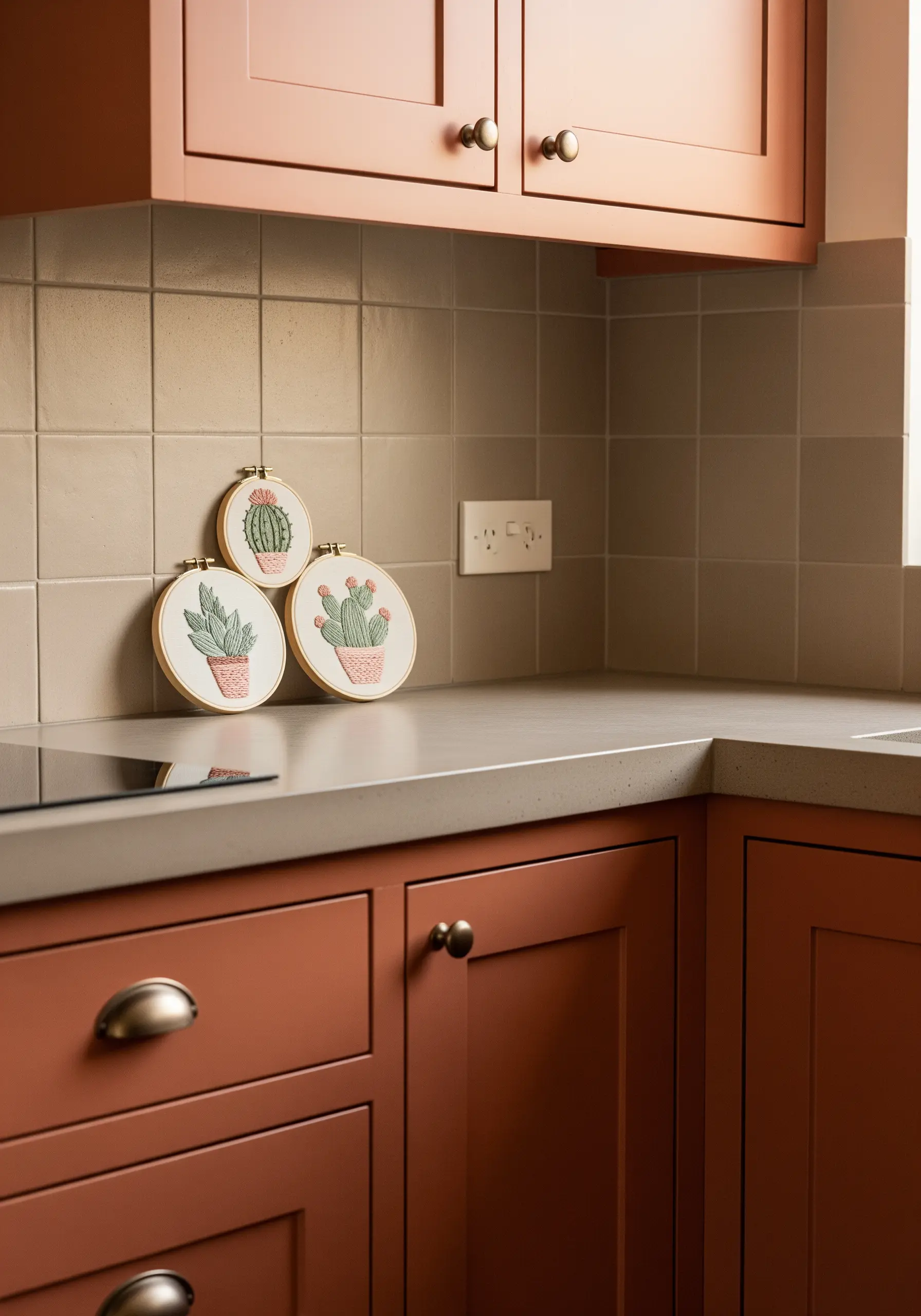
Group several small, related motifs together in a corner to create a charming, curated vignette.
By choosing a consistent theme, like these desert cacti, you ensure the collection feels cohesive rather than cluttered.
Stagger the heights and overlap the hoops slightly to create a more dynamic and visually interesting arrangement.
This technique is perfect for adding a personal touch to a rental kitchen, as it creates a big impact without requiring many nails.
12. Explore the Power of Monochrome Linework
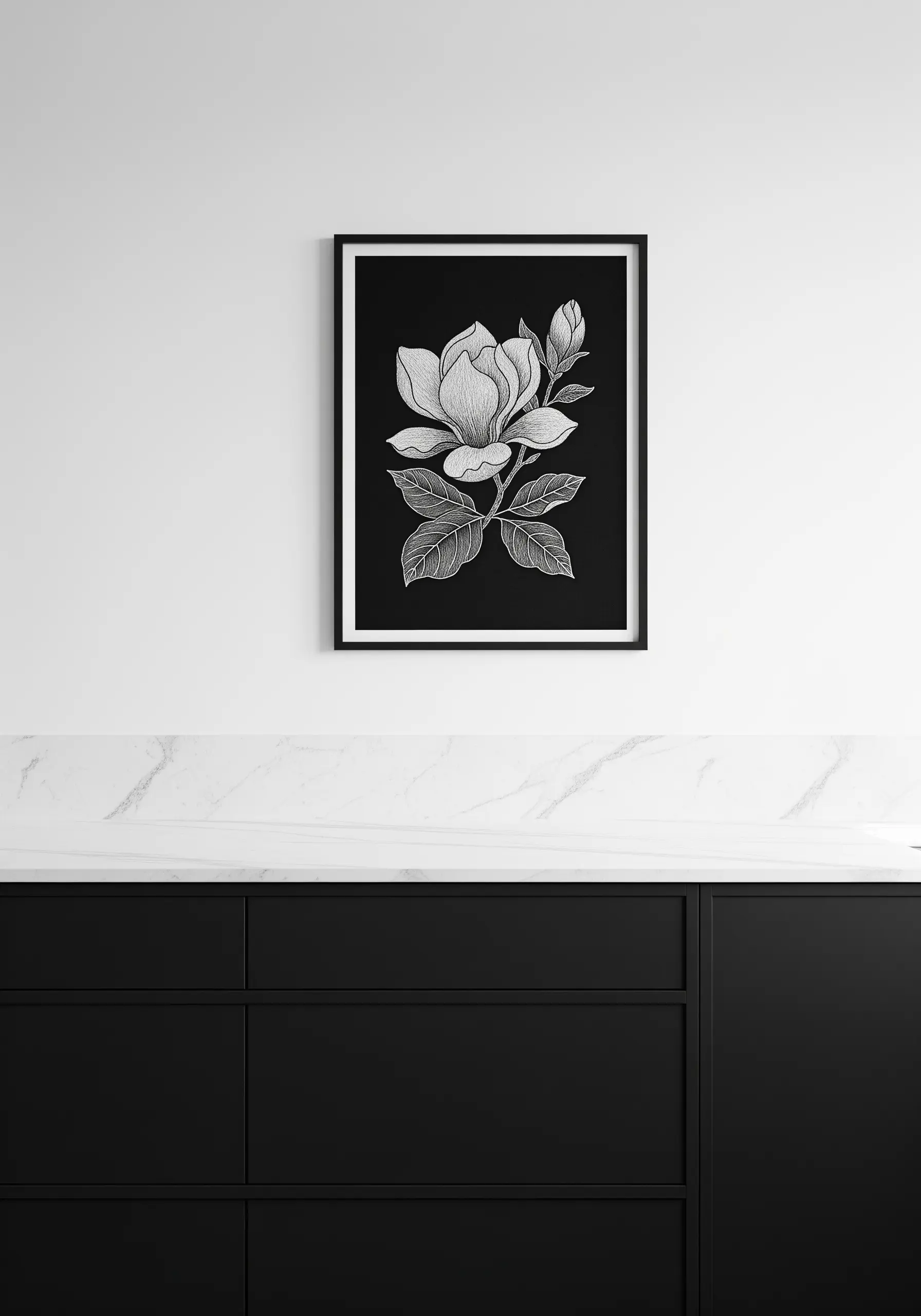
Create a sophisticated and dramatic floral portrait using only white thread on a black background.
This technique, known as blackwork or whitework, forces you to focus on line, direction, and texture to define shapes.
Use varied line weights—a thicker backstitch for outlines and a single-strand running stitch for delicate shading—to build dimension and detail.
The resulting monochrome black thread designs are timeless, elegant, and fit seamlessly into modern, minimalist interiors.
13. Use Negative Space to Create Delicacy
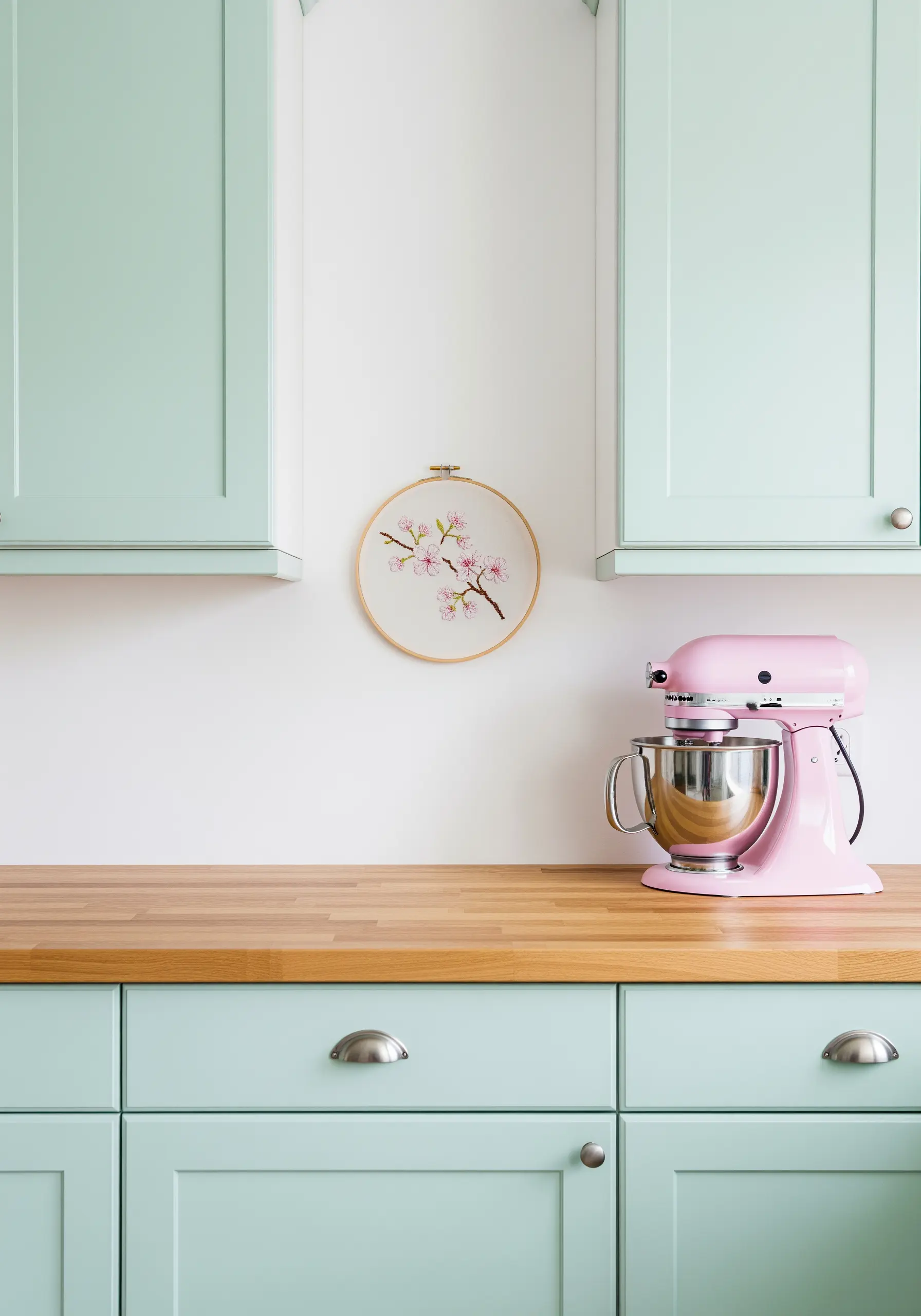
Suggest the fragility of a cherry blossom branch by allowing the unstitched fabric to be part of the design.
Rather than filling every petal with dense satin stitch, use just a few strategically placed straight stitches and French knots.
This minimalist approach lets the viewer’s eye fill in the details, creating a sense of lightness and air.
It’s a perfect example of how clean, modern floral embroidery ideas can enhance a space without overwhelming it.
14. Capture a Moody, Woodland Aesthetic
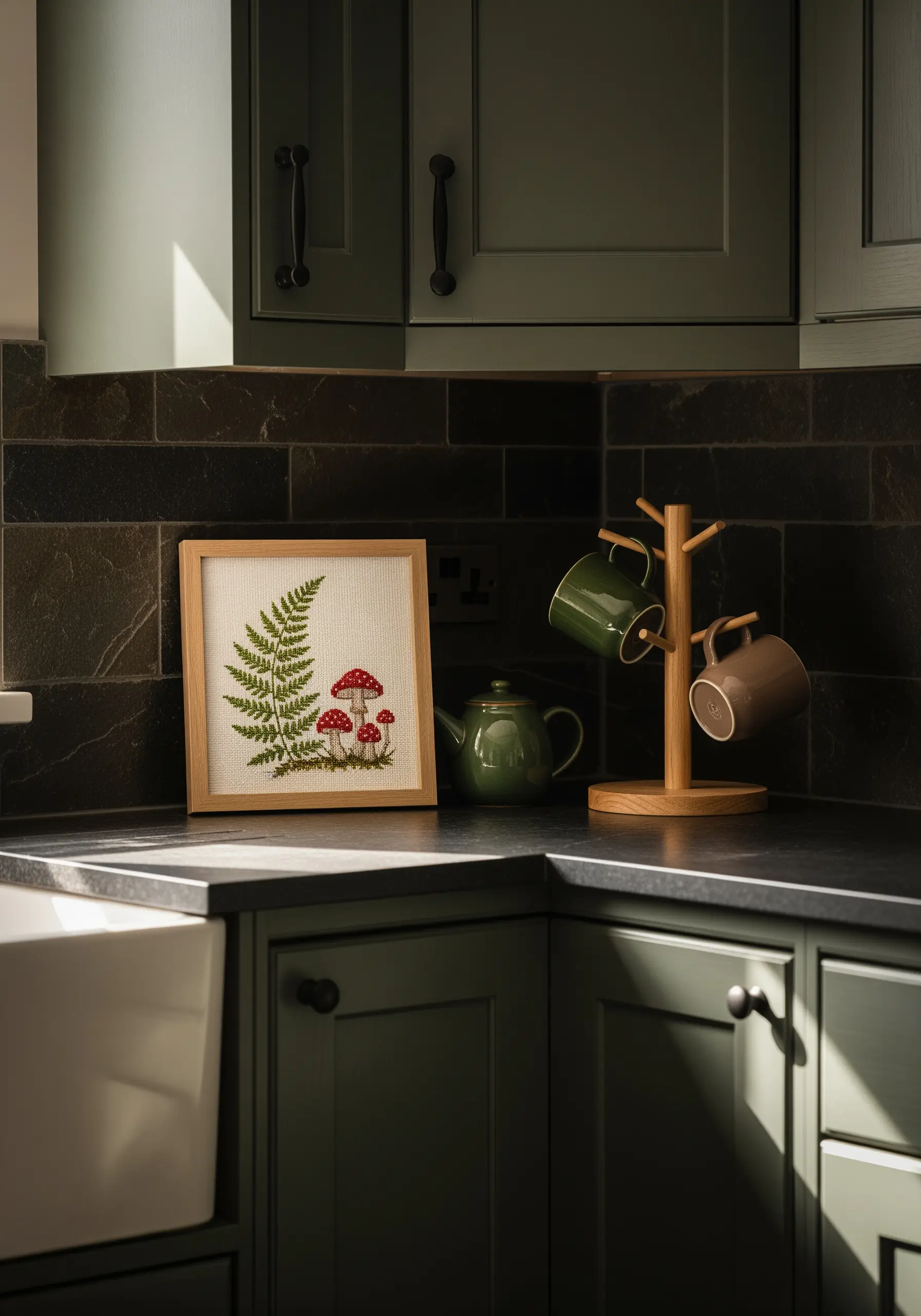
Create a cozy, forest-floor scene by pairing earthy greens with a pop of vibrant, contrasting color.
Use fishbone stitch for the fern to create a realistic, textured frond, and padded satin stitch for the mushroom caps to give them a rounded, 3D effect.
The deep green of the cabinetry and the dark slate backsplash enhance the moody, naturalistic feel of the piece.
This is a wonderful way to bring the calming essence of a woodland walk into your home.
15. Stitch a Slice of Sunshine with Citrus
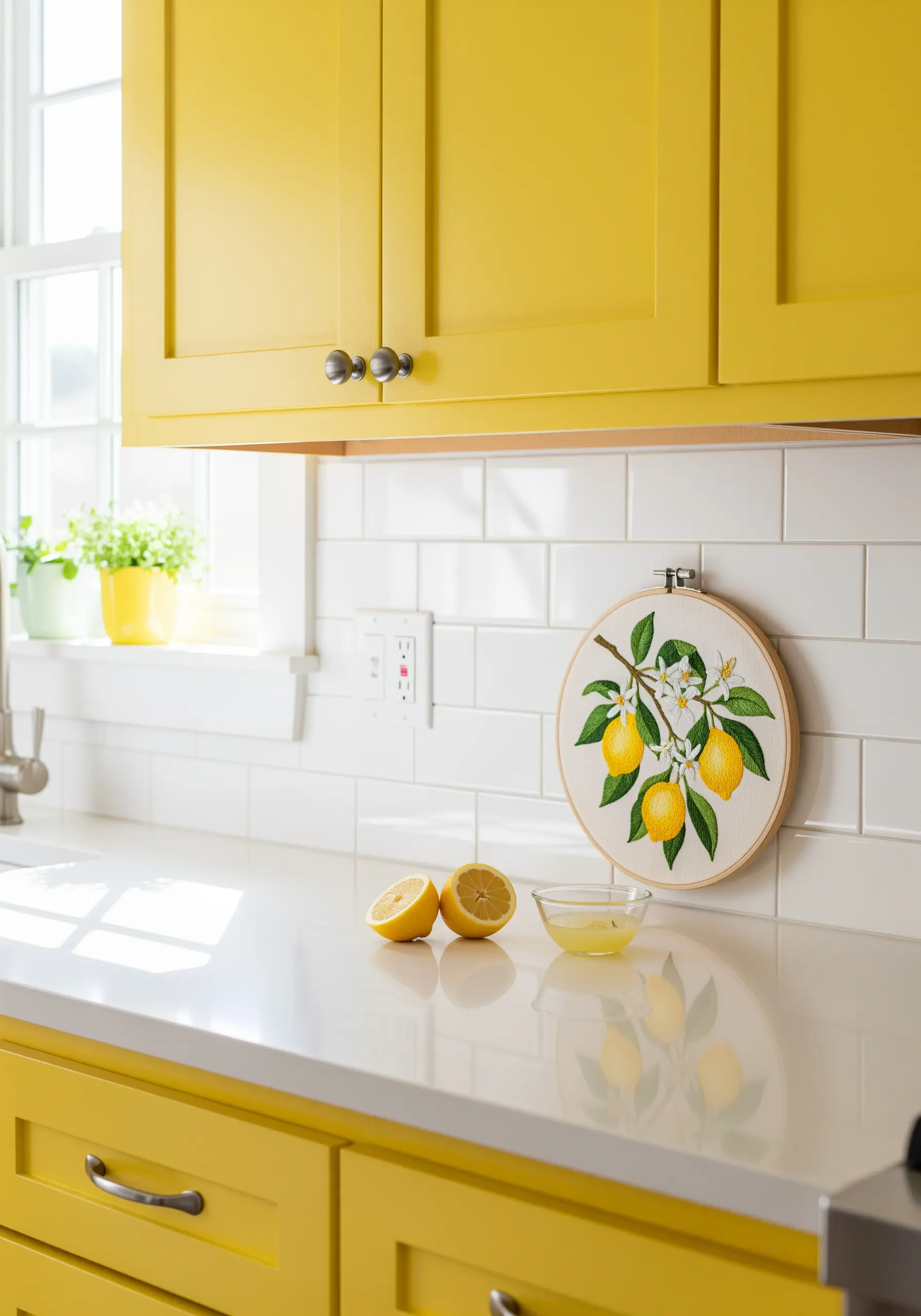
Brighten your kitchen instantly by embroidering a cheerful lemon branch, connecting your art directly to the room’s purpose.
Use a padded satin stitch for the lemons to give them a plump, rounded appearance, and a lighter touch with fishbone stitch for the leaves.
Adding a few delicate white blossoms with French knot centers adds realism and another layer of detail.
Displaying the finished hoop against a classic subway tile backsplash makes the vibrant colors truly sing.
16. Achieve Depth with Layered Wisteria
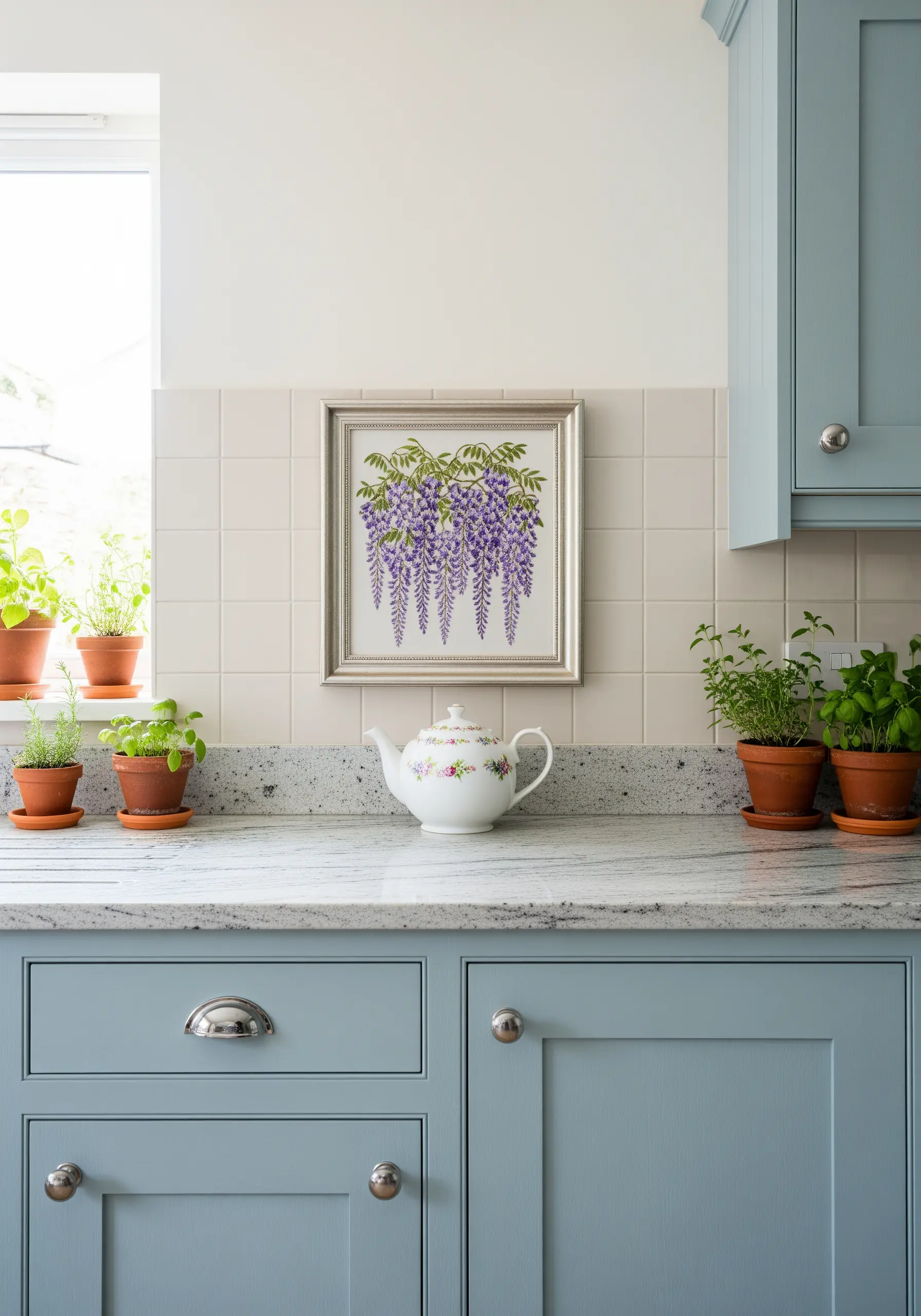
Recreate the cascading beauty of wisteria by layering your stitches and colors to build dimension.
Start with the background blossoms using a lighter shade of purple and fewer strands of floss.
Then, stitch the foreground clusters on top using a darker, bolder purple and a slightly thicker thread to make them pop.
This layering technique creates a sense of depth and lushness that makes the flowers feel incredibly lifelike.
17. Blend Stitches for a Painterly Landscape
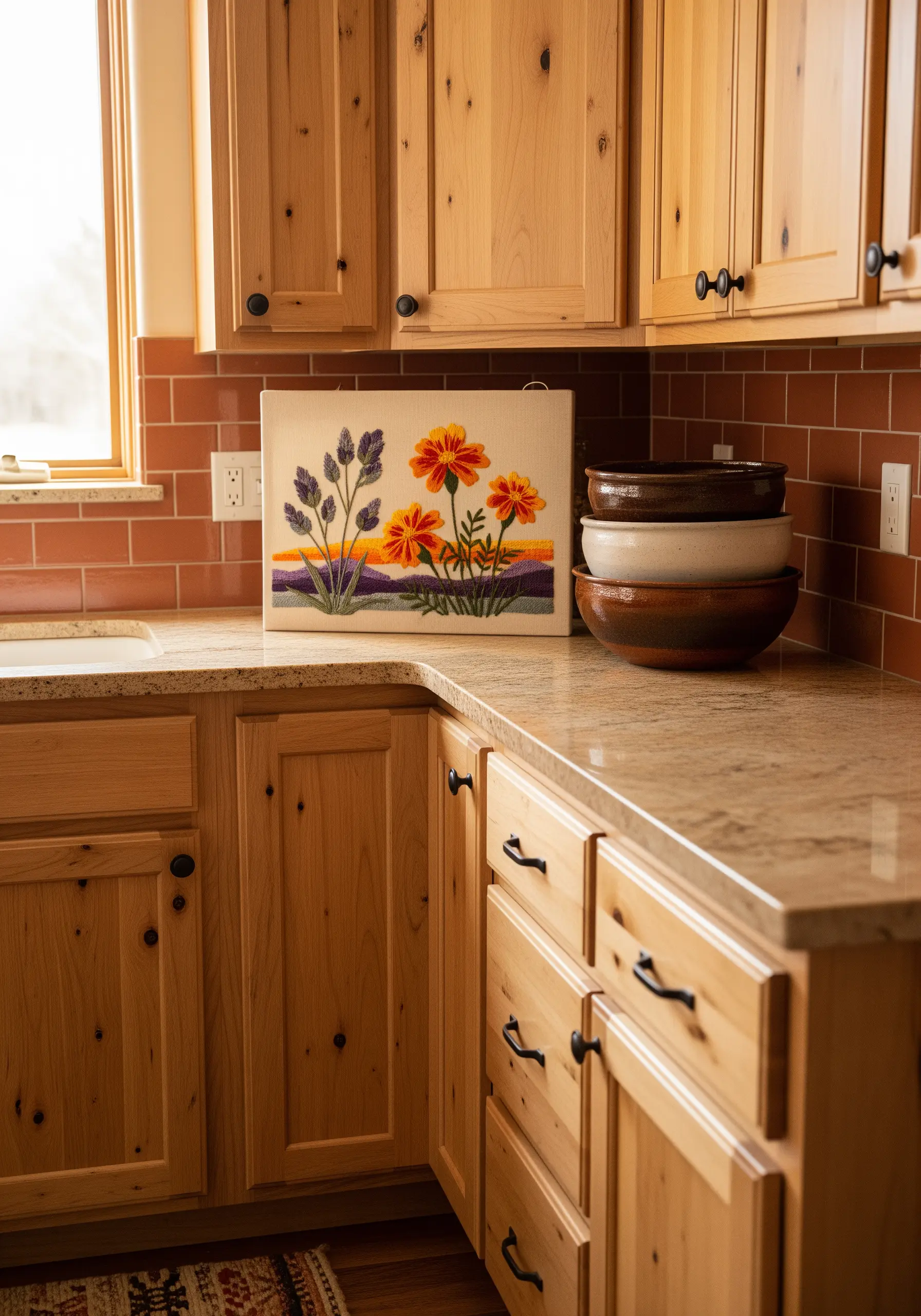
Move beyond single motifs and create a small, impressionistic landscape that captures a sense of place.
Use long and short stitch for the flowers and sky to create soft, blended color gradients, and vertical straight stitches for the distant lavender fields to suggest perspective.
The key is to let go of perfect outlines and focus on how colors and textures interact to evoke a feeling.
This approach transforms your needle and thread into a paintbrush, creating abstract thread landscapes full of mood and light.
18. Harmonize Art with High-Contrast Decor
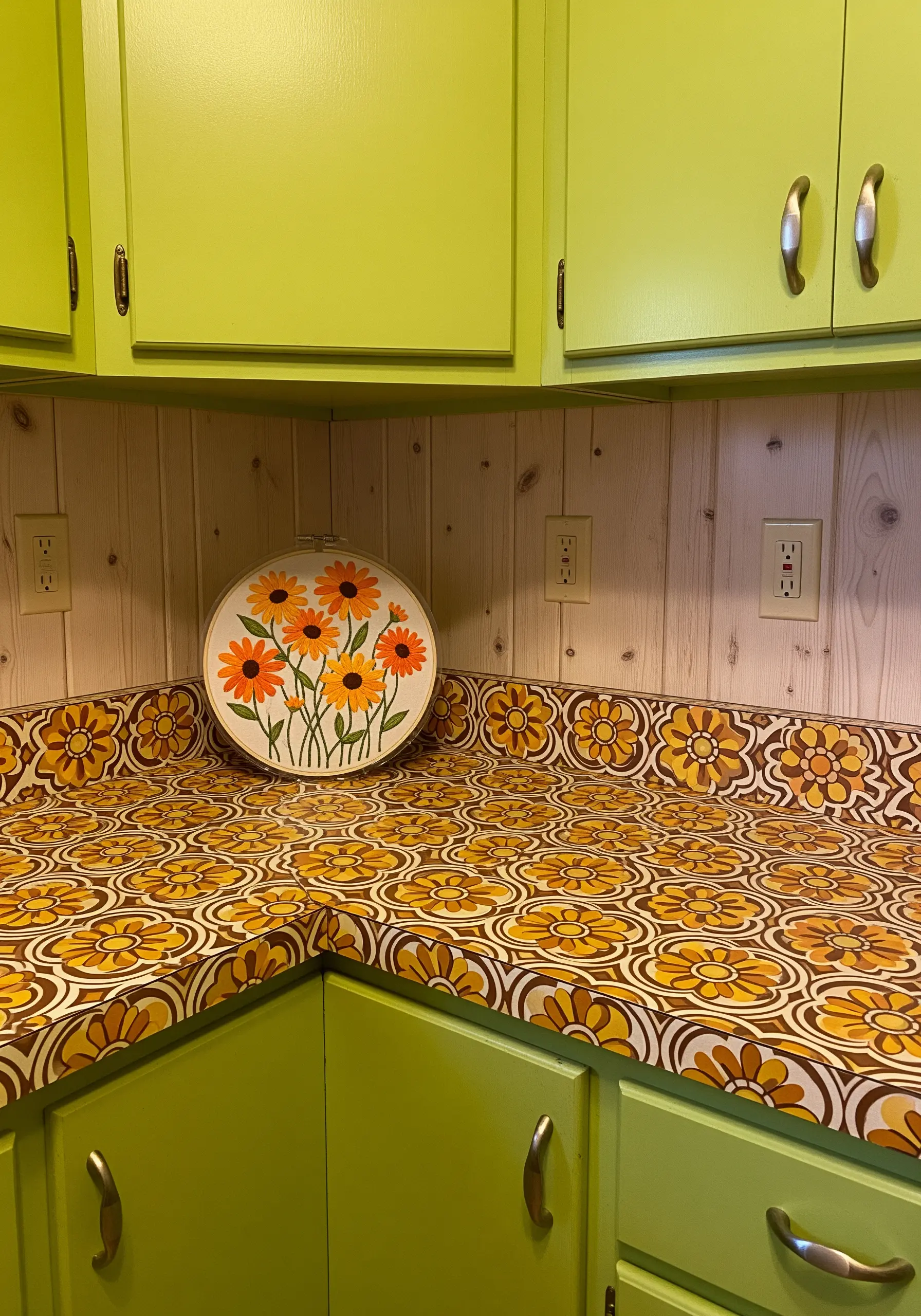
When your kitchen decor is bold and graphic, your embroidery can be too.
This retro floral hoop, with its vibrant orange and defined black outlines, directly mirrors the groovy pattern of the countertop.
By repeating colors and shapes from your surroundings, you create a powerful sense of visual unity.
The choice to leave the piece in a simple wooden hoop keeps the focus on the dynamic interplay of color and pattern.
19. Marry Indigo and Sakura for Japanese-Inspired Serenity
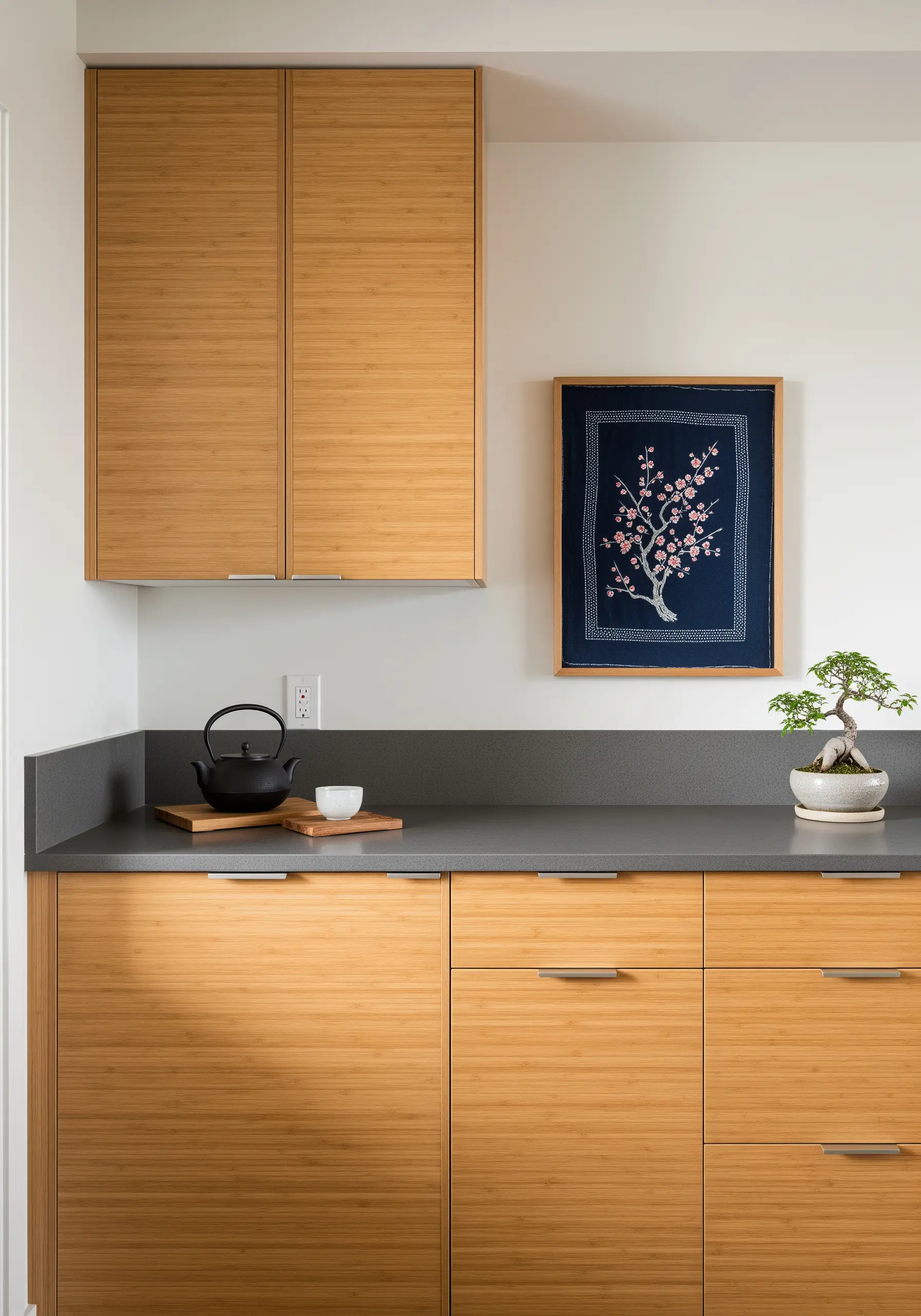
Create a piece with quiet, contemplative energy by stitching delicate cherry blossoms on a deep indigo fabric.
The contrast between the soft pink stitches and the dark, rich background is both striking and serene.
Use a simple backstitch for the branches and scattered French knots for the blossoms to keep the design minimal and elegant.
The hand-stitched sashiko-style border adds an authentic, artisanal touch that completes the Japanese aesthetic.
20. Command Attention with a Single, Luminous Bloom
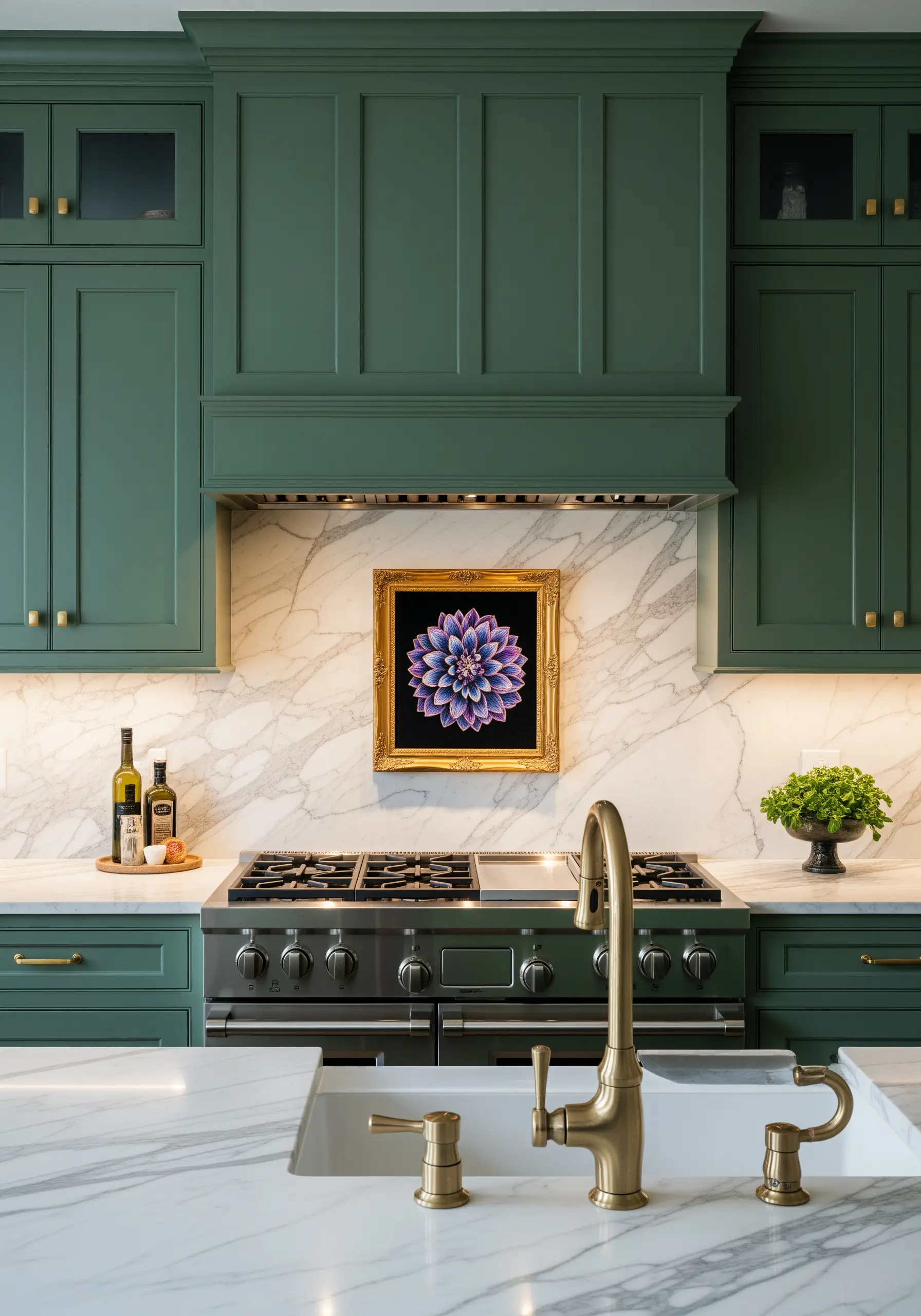
In a grand kitchen with a prominent backsplash, a single, masterfully stitched flower can make a more powerful statement than a collection of smaller pieces.
Choose a bloom with complex petal structures, like a dahlia, and use meticulous floral thread painting techniques to capture every nuance of color and light.
Stitching on black fabric amplifies the luminosity of the purple and blue threads, making the flower appear to glow from within.
An ornate gold frame elevates the piece from a craft project to a true work of art.
21. Illustrate Your Indoor Herb Garden
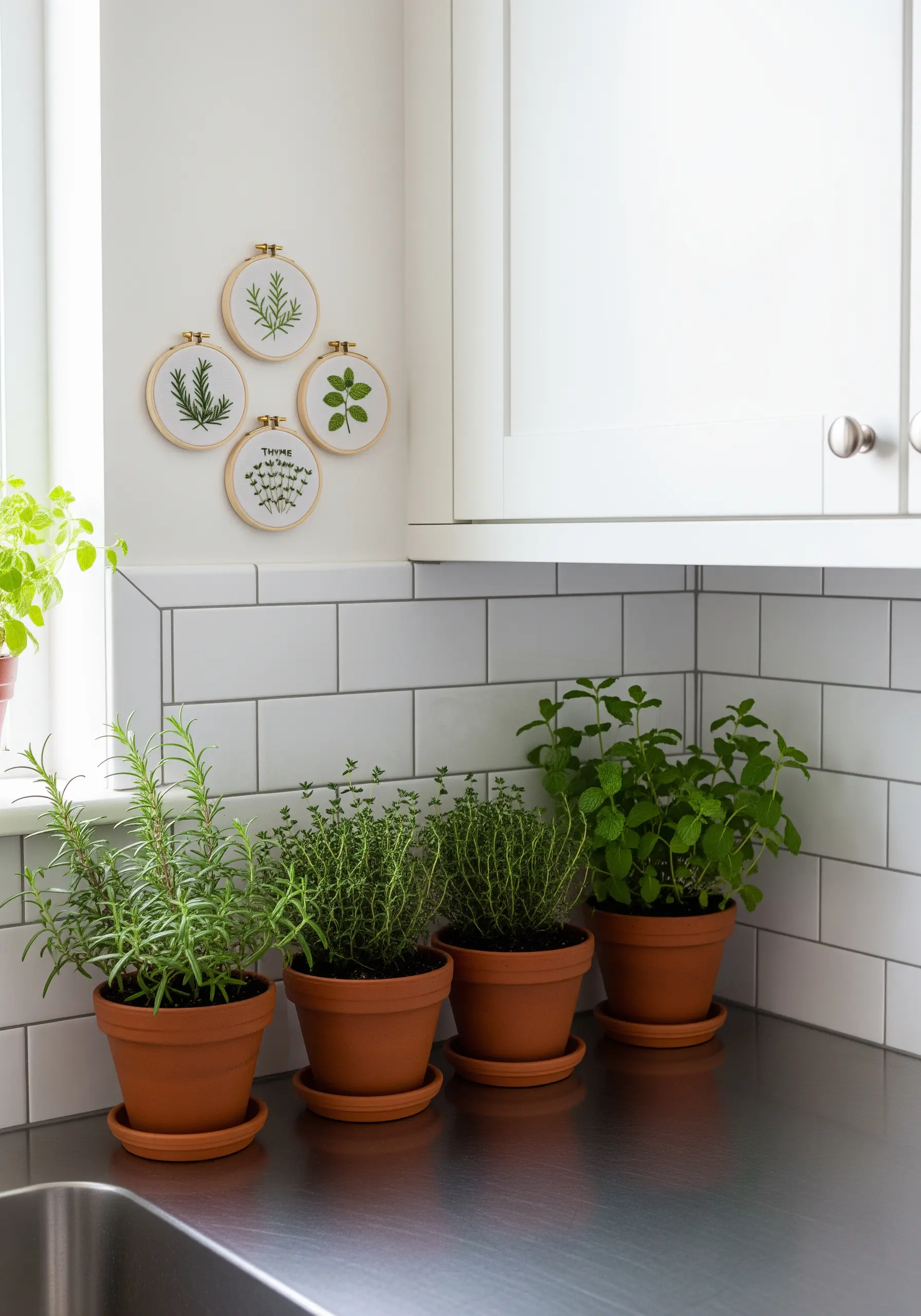
Create a charming and practical art display by stitching minimalist illustrations of your favorite kitchen herbs.
Keep the designs simple, using a basic backstitch for the stems and leaves, focusing on capturing the unique silhouette of each plant.
Adding a hand-stitched label for each herb—rosemary, thyme, mint—adds a delightful, personalized touch.
This collection of handmade mini decor pieces is not only beautiful but also celebrates the fresh ingredients at the heart of your kitchen.
22. Stitch a Meadow on a Linen Runner
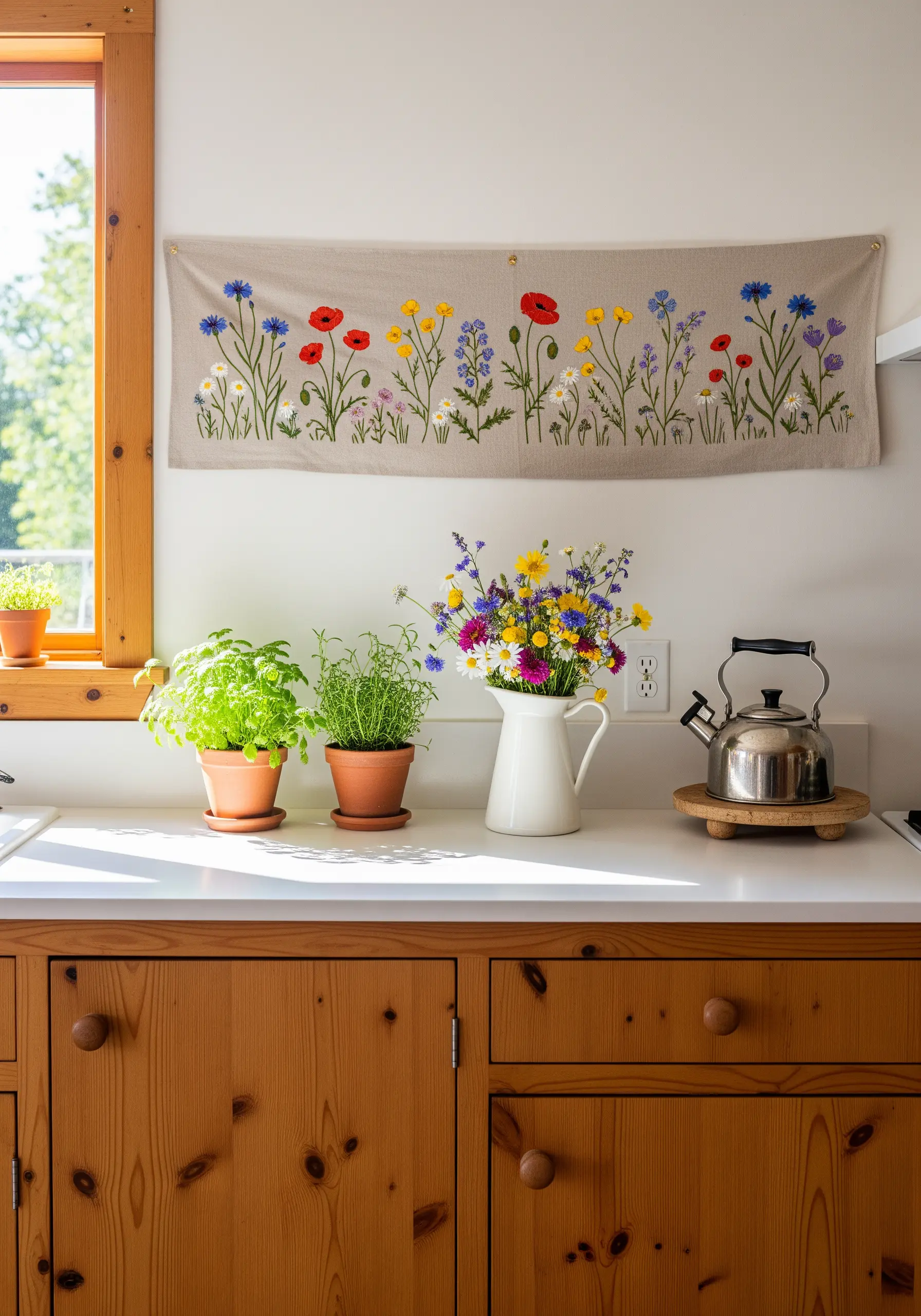
Move your embroidery beyond the hoop by creating a panoramic wildflower meadow on a long piece of fabric, like a small table runner.
This format allows you to create a flowing, naturalistic scene that can’t be contained in a circle.
Vary the height and density of the flowers to mimic the organized chaos of a real meadow, and use a mix of simple stitches—lazy daisy, straight stitch, and French knots—to keep the process enjoyable.
Hanging it from a simple dowel gives it a relaxed, tapestry-like feel.
23. Deconstruct a Rose into Modern Lines
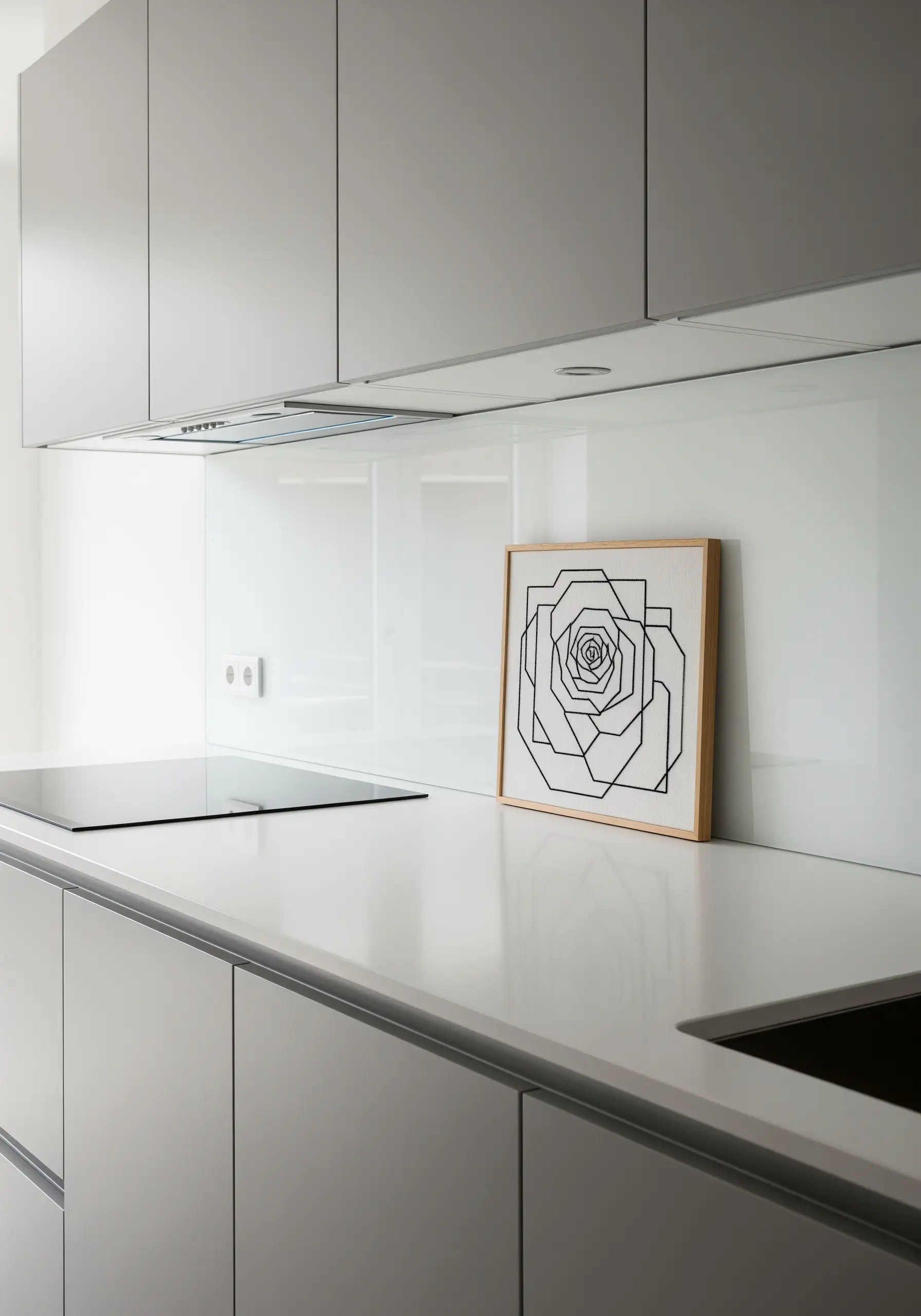
For an ultra-modern kitchen, reinterpret a classic floral with a minimalist, geometric line drawing.
Instead of capturing soft petals, focus on the concentric shapes and sharp angles of an abstracted rose.
Use a single, consistent line weight with a simple backstitch in black thread to maintain the clean, graphic quality.
This design proves that floral embroidery can be architectural and edgy, a perfect fit for a sleek, contemporary space.
24. Create an Autumnal Harvest Display
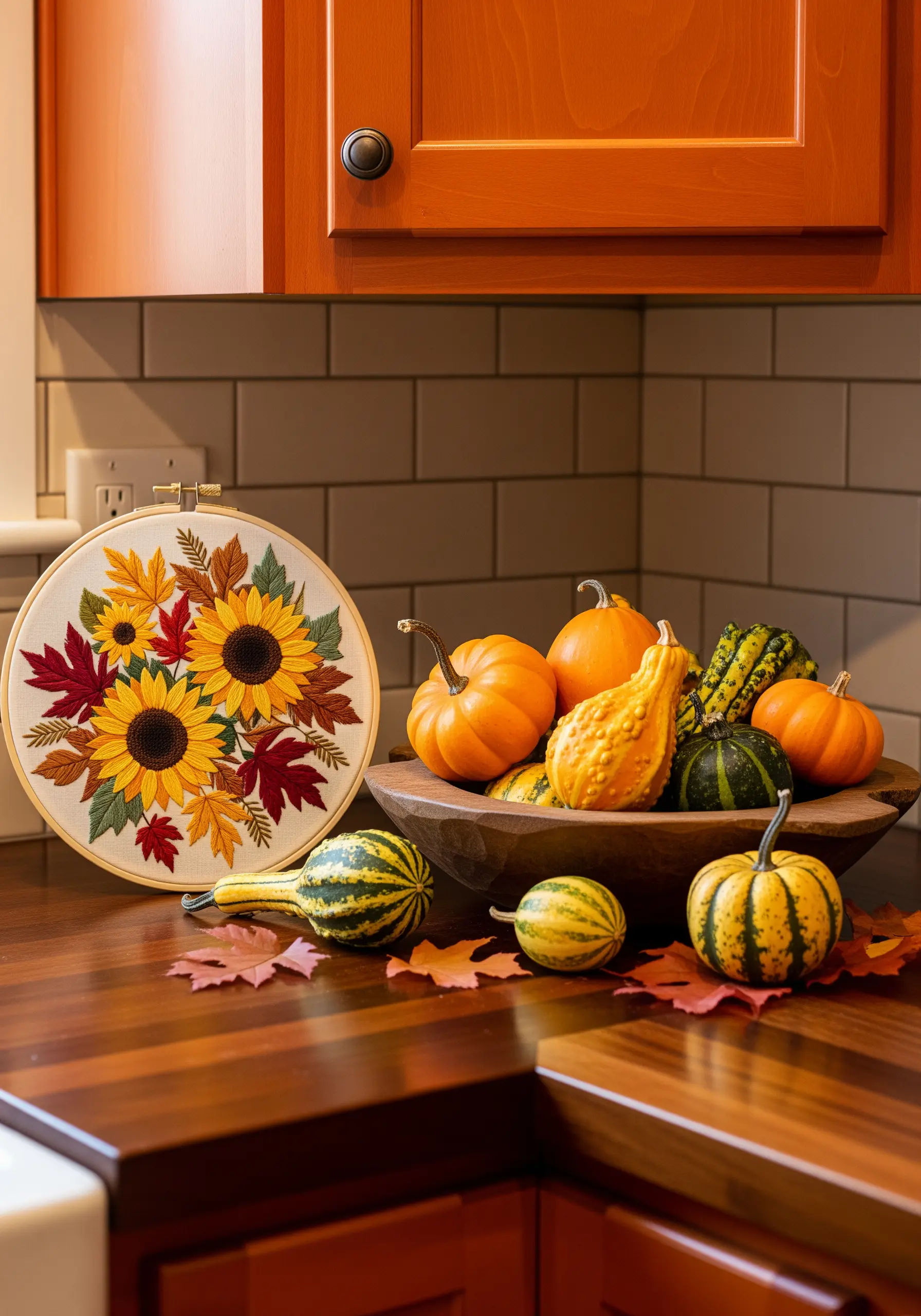
Celebrate the changing seasons by creating a hoop that reflects the rich colors of autumn.
Combine sunflowers, a classic late-summer bloom, with fall leaves in warm shades of rust, gold, and deep red.
Use a dense satin stitch to give the sunflowers a bold, substantial feel, and a more delicate fishbone stitch for the leaves to suggest their texture.
Paired with a bowl of seasonal gourds, this piece creates a warm and inviting focal point for the harvest season.
25. Capture a Moment of Whimsical Motion
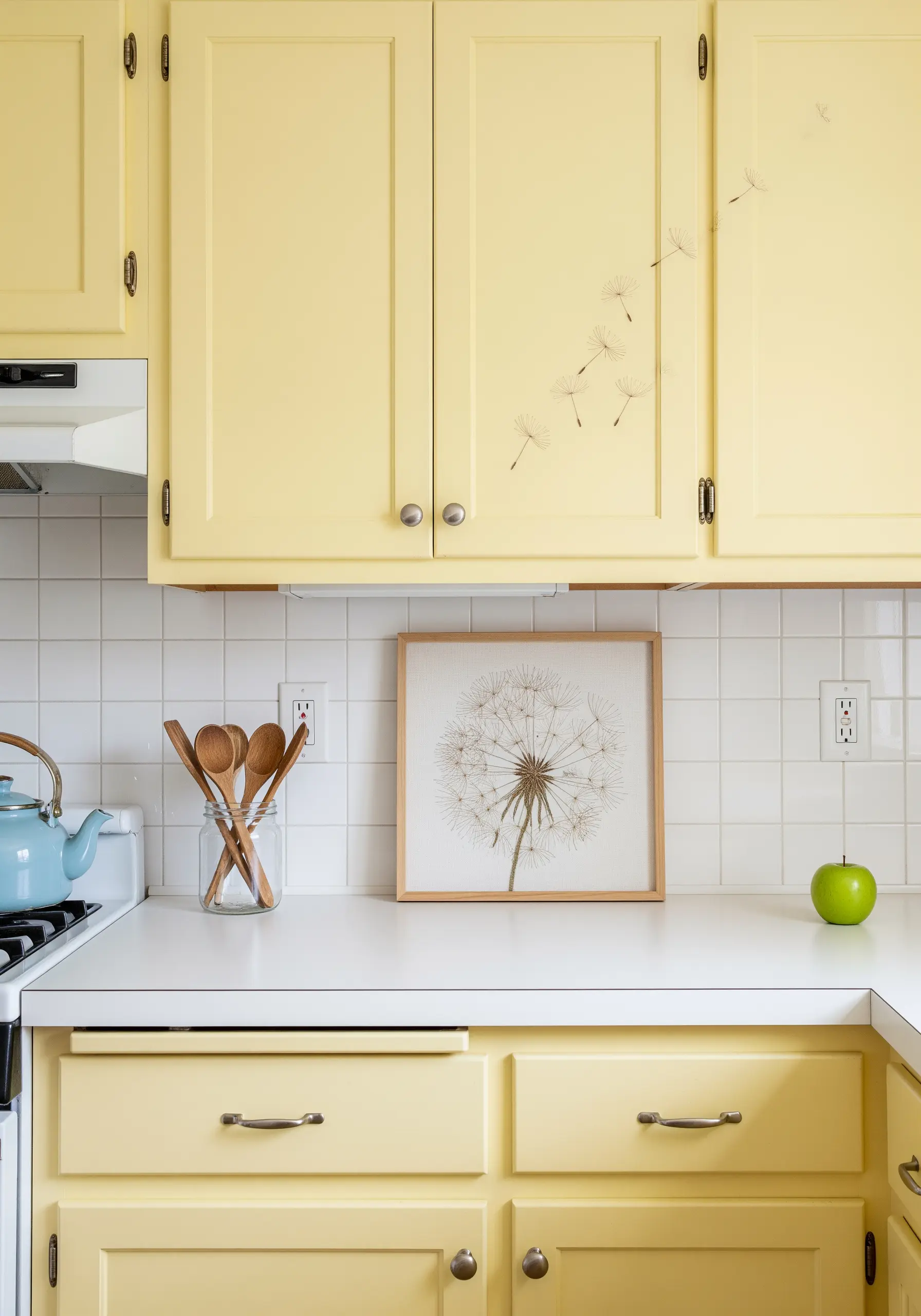
Tell a visual story that extends beyond the frame by stitching dandelion seeds blowing across your cabinet doors.
The main dandelion head, with its intricate seed structure, can be contained within a frame on the counter.
Then, use small, subtle stitches directly on the cabinet surfaces (or using removable decals made from your stitch scans) to create the illusion of seeds drifting away on a breeze.
This playful, interactive approach turns your entire kitchen corner into a canvas for whimsical embroidery patterns.
26. Frame a View with Coordinated Textiles
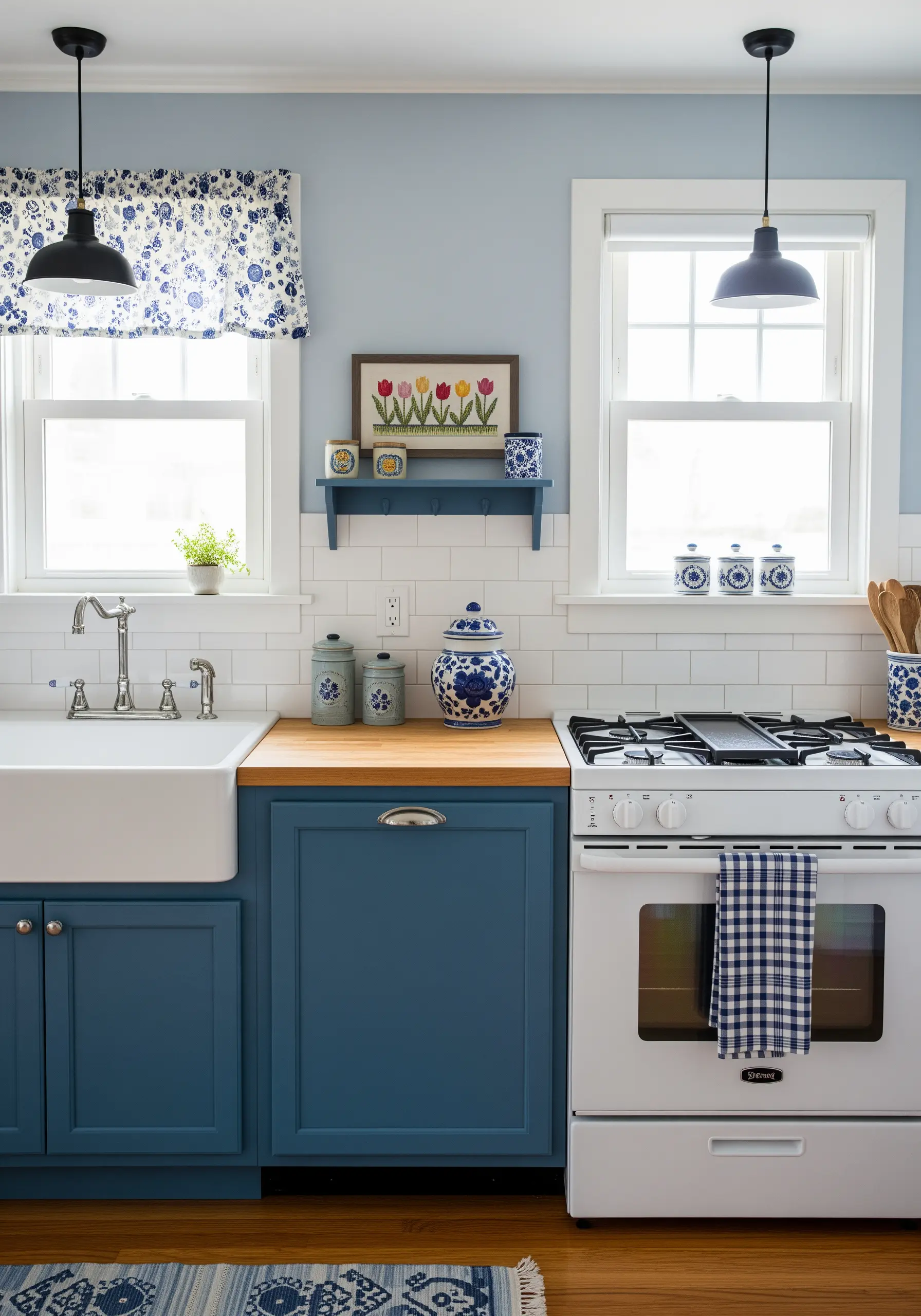
Create a beautifully cohesive kitchen nook by coordinating your embroidered art with other textiles in the room.
The simple, folk-art style tulips in the framed piece echo the colors and floral theme of the blue-and-white patterned valance.
This simple act of repetition makes the entire space feel thoughtfully designed and unified.
Even the choice of blue and white ceramic jars reinforces the color story, tying everything together perfectly.
27. Elevate Simplicity with Gold and Contrast
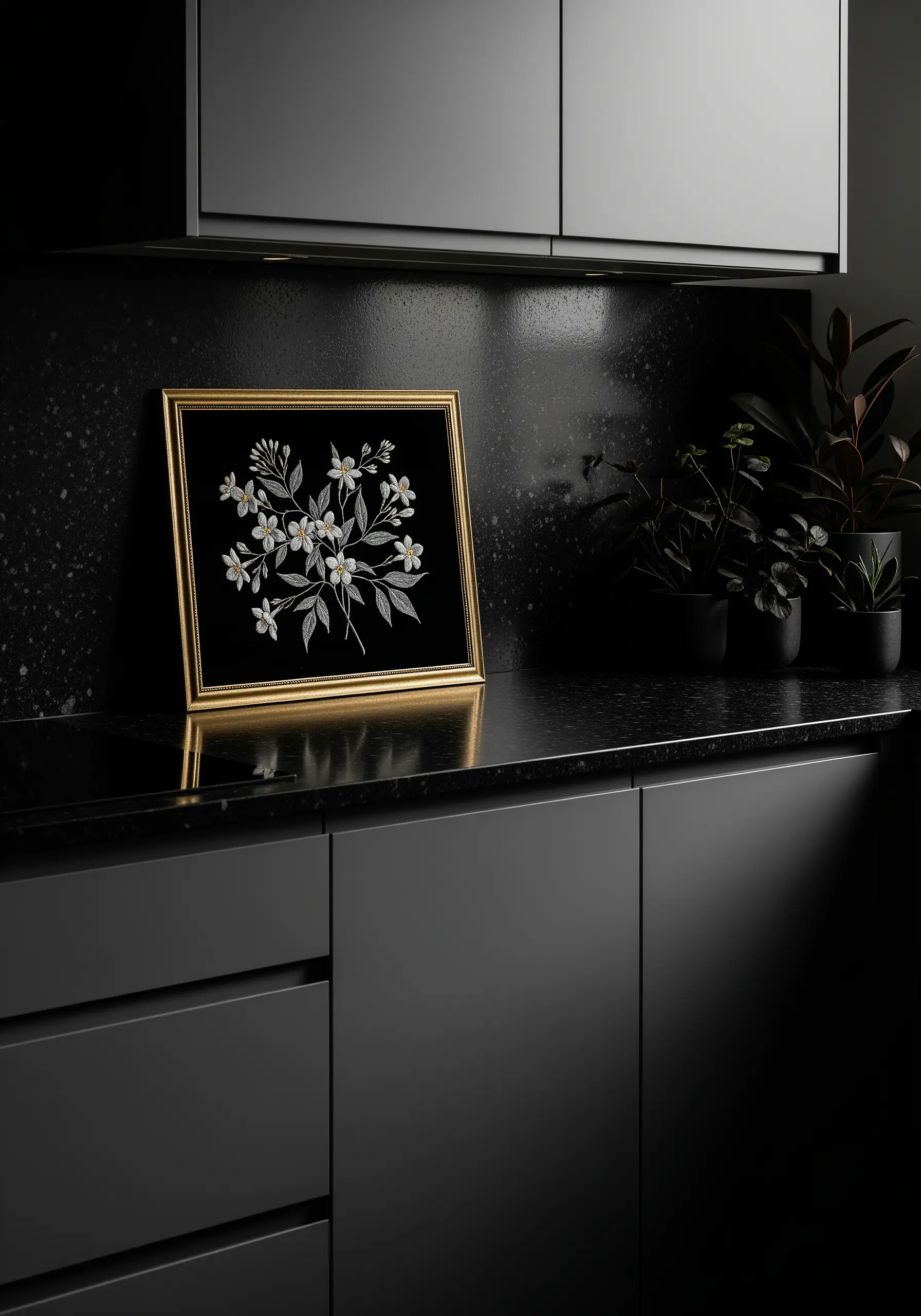
In a dark, minimalist kitchen, a touch of refined detail can create a stunning focal point.
Stitch a delicate spray of white blossoms, like jasmine or mock orange, on black fabric to maximize visual impact.
Use silver or pearlescent white thread for the leaves and stems to add subtle dimension and a hint of shimmer.
Finishing the piece in an elegant, beaded gold frame provides a final touch of luxury that contrasts beautifully with the modern, matte-black cabinetry.
28. Cascade Hoops for a Springtime Welcome
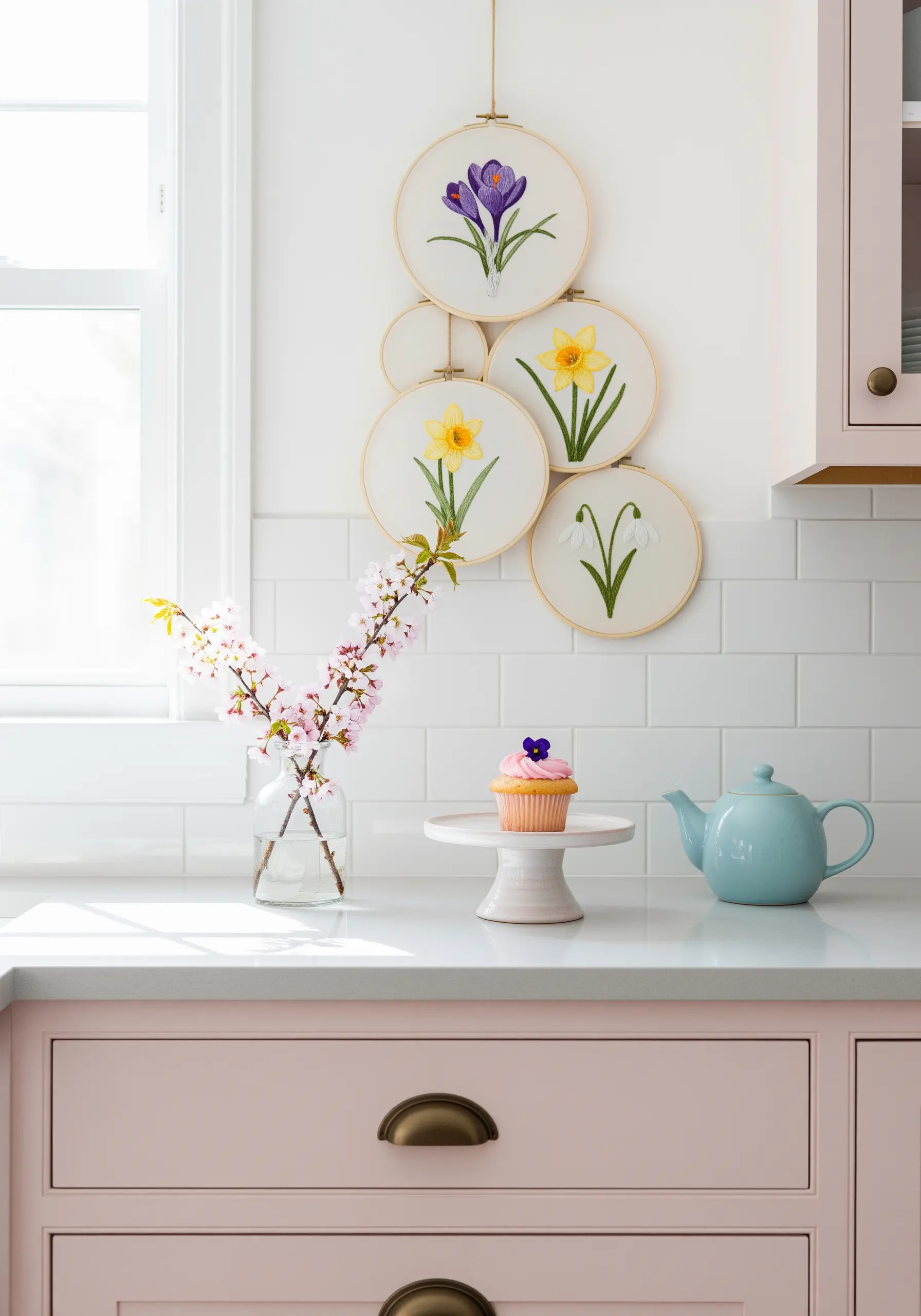
Arrange a collection of spring bulb flowers—crocus, daffodil, snowdrop—in a cascading or waterfall-style layout.
This vertical arrangement is perfect for a narrow strip of wall between a window and a cabinet, drawing the eye upwards.
To create a sense of lightness, stitch each flower on a crisp white or natural linen background and use simple, illustrative stitches.
This is a beautiful way to celebrate the arrival of spring and can be easily swapped out for a different seasonal display.
29. Celebrate Folk Art with Bold Color and Symmetry
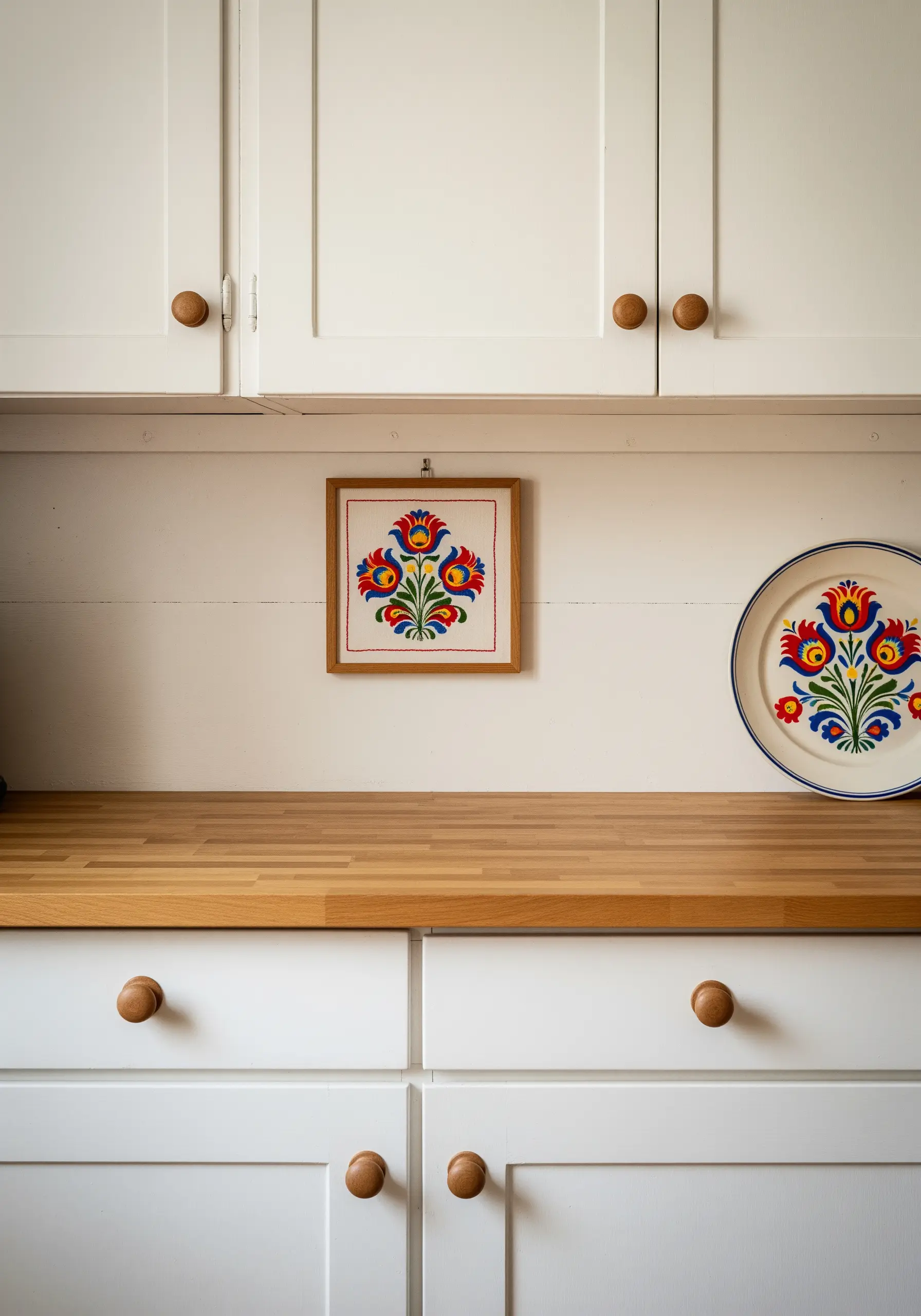
Channel the vibrant energy of Polish or Hungarian folk art with a symmetrical floral design and a bold, primary color palette.
Use thick, six-strand floss and dense satin stitches to create the characteristic solid, almost cartoon-like shapes.
The beauty of this style lies in its joyful simplicity and confident use of color—don’t be afraid to pair bright reds, blues, and yellows.
Matching the embroidered piece to a similarly decorated plate creates a wonderfully charming and cohesive display.
30. Stitch a Landscape with Thread Painting
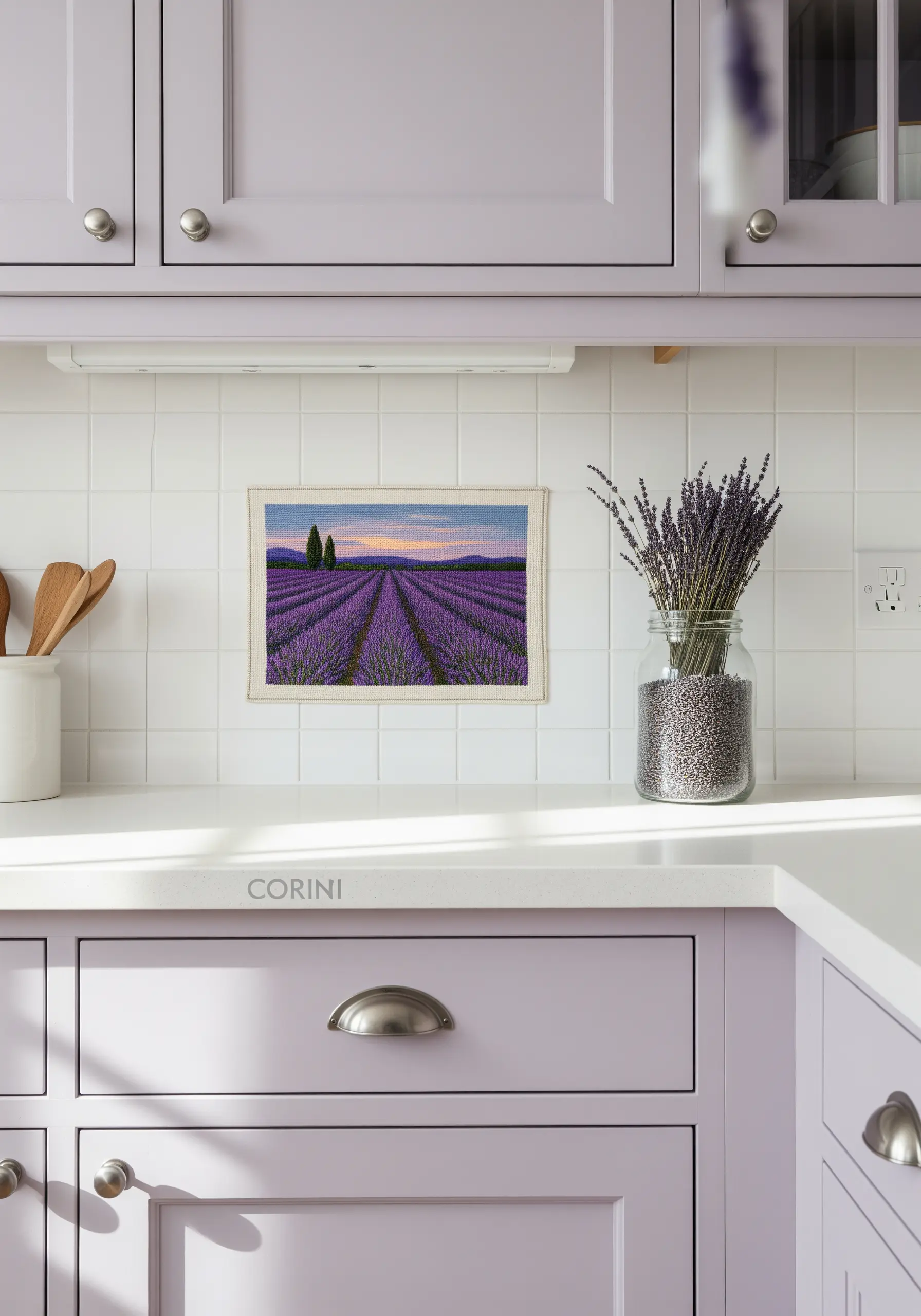
Create a breathtakingly realistic lavender field using needlepainting techniques to blend dozens of shades of purple, pink, and blue.
Work in rows of tiny, straight stitches, slightly overlapping them to mimic the texture of the distant flowers and create a soft, atmospheric effect.
The key to realism is using a wide range of thread colors to capture the subtle shifts in light and shadow.
This advanced project turns a simple backsplash into a window overlooking a serene, sun-drenched landscape.