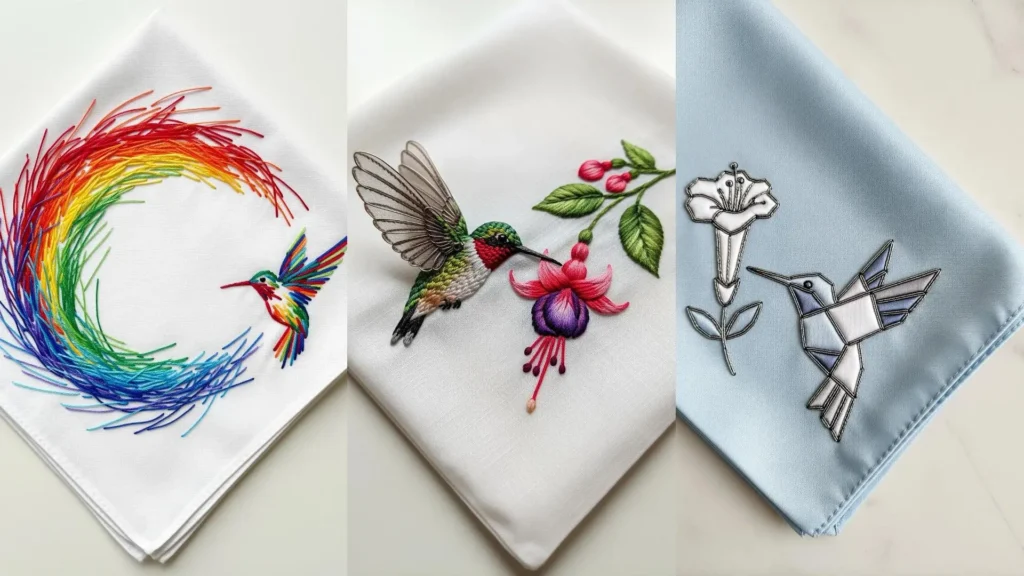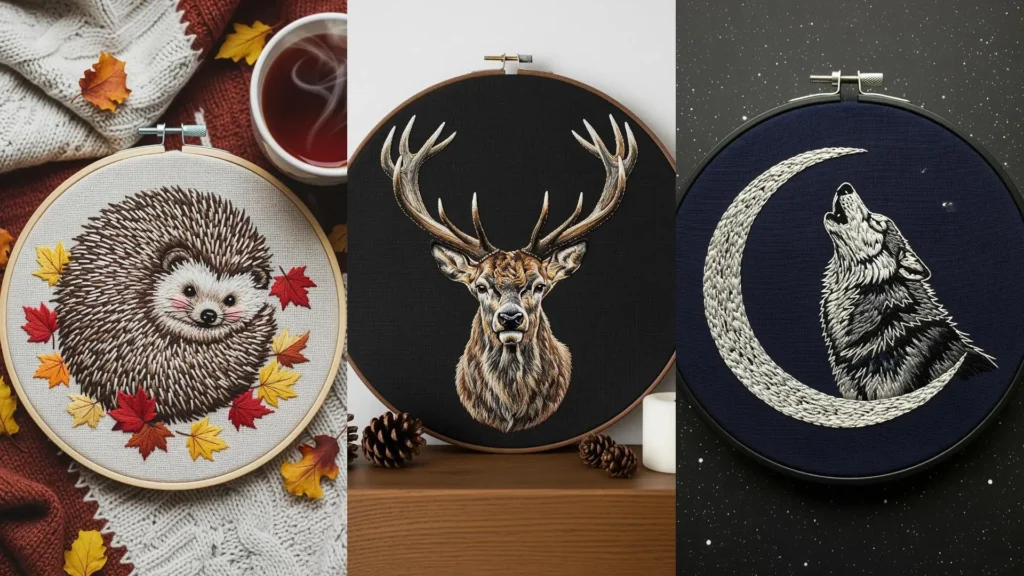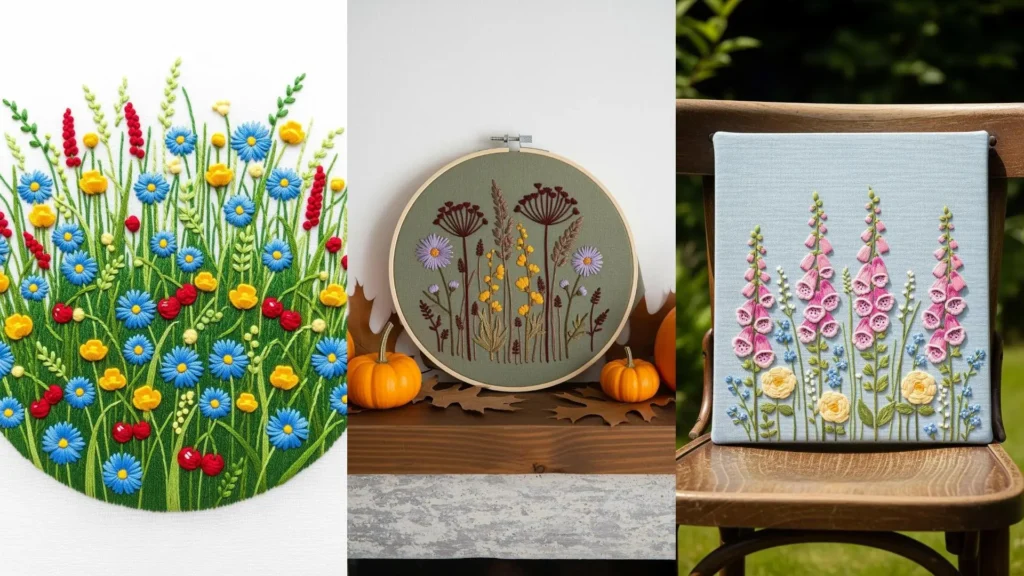
Have you ever looked at a field of wildflowers and wished you could capture not just how it looks, but how it feels? That sense of chaotic beauty, the way colors blend in the distance, and the tiny, perfect details you only see up close—that is the magic we can create with a needle and thread.
The secret isn’t about mastering hundreds of complex stitches. It’s about learning to see color and texture in a new way. It’s understanding that a muted grey-green can make a magenta pop, or that a simple French knot, repeated a hundred times, can feel as soft and real as a clover blossom.
Think of each thread palette not as a strict recipe, but as a lesson in observation. These combinations are your starting point for turning a blank hoop into a living meadow—one that feels personal, intentional, and deeply connected to the natural world you admire.
1. Muted Meadow with Layered Textures
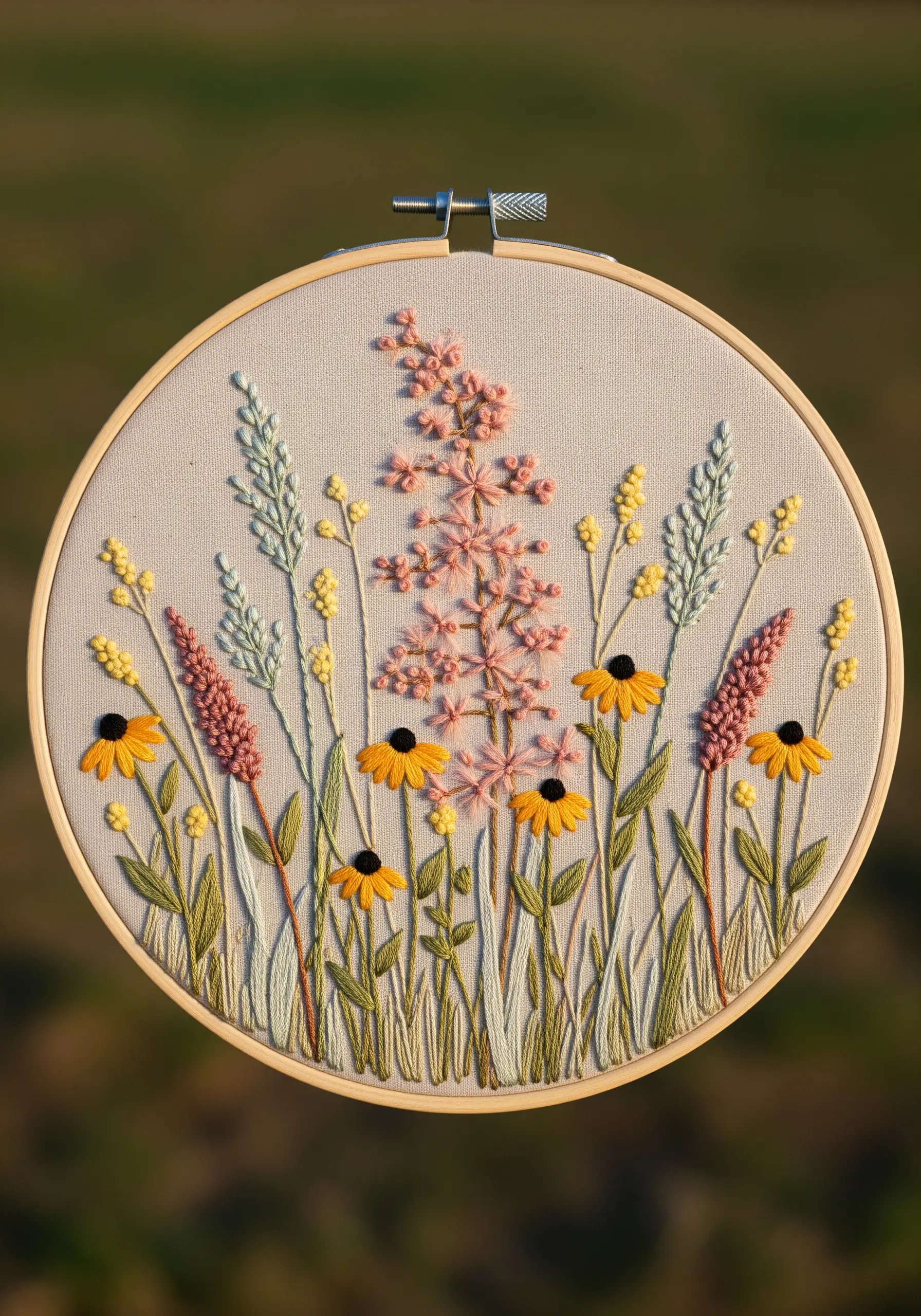
Create a sense of depth by varying your stitch textures within a soft, analogous color palette.
Use tightly packed French knots for the dusty rose flower heads, allowing them to rise slightly above the fabric surface.
For the spires of silvery-blue foliage, use a whipped backstitch to create a smooth, corded effect that contrasts with the looser knots.
This textural difference mimics how light hits different plants in a field, making your composition feel more dynamic and less flat, even with a muted color scheme.
2. High-Contrast Jewel Tones on Sage Green
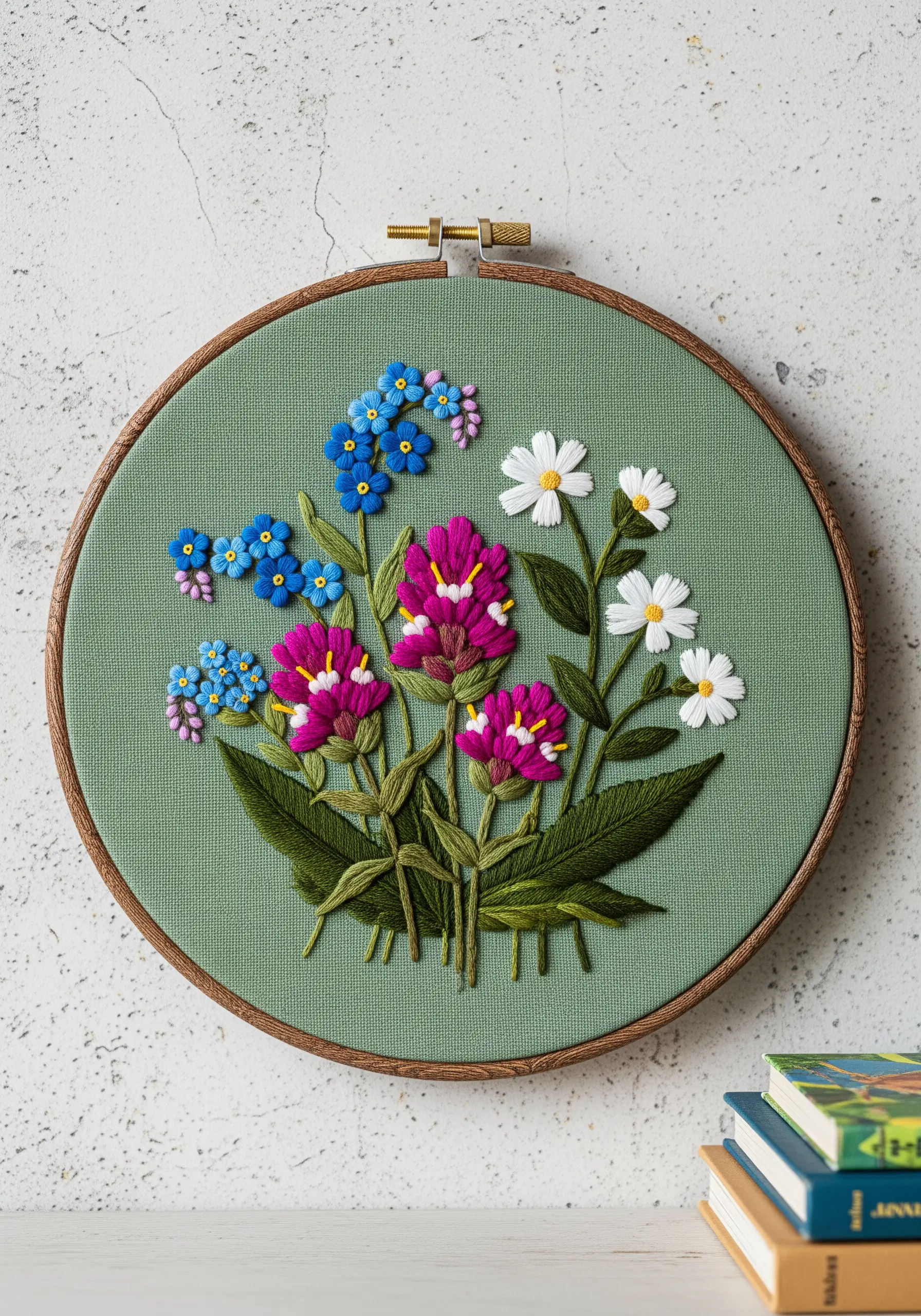
Make your colors vibrate by placing pure, high-saturation jewel tones against a calming, earthy background like sage or olive green.
Use a dense satin stitch with 3-4 strands of floss for the magenta and white petals to create bold, graphic shapes that command attention.
For the tiny blue forget-me-nots, switch to single-strand lazy daisy stitches to provide a delicate counterpoint to the larger blooms.
This technique of pairing bold color fields with intricate details ensures your composition feels both powerful and refined.
3. Sunset Poppies with Luminous Petals
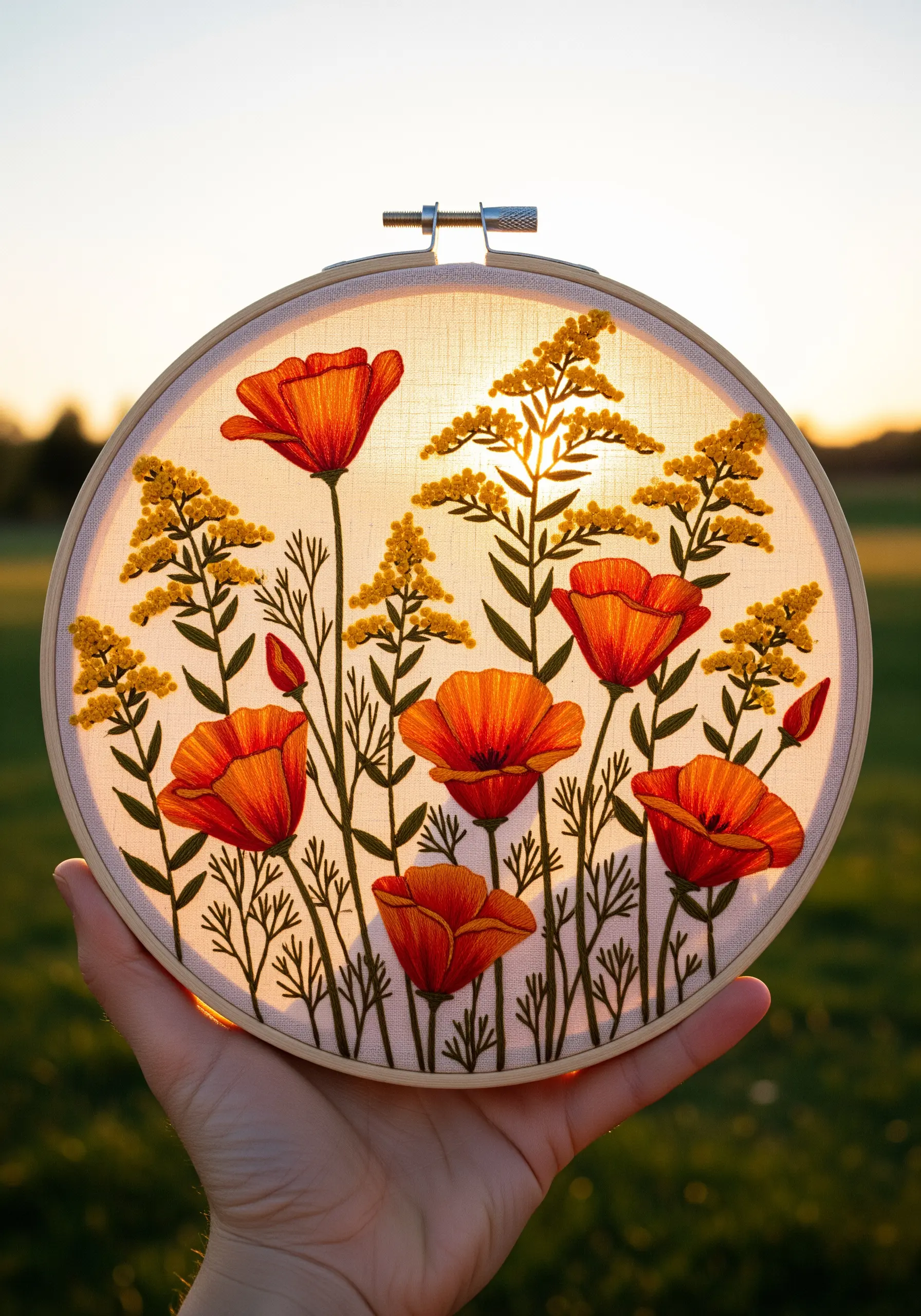
Capture the glow of a sunset by using thread painting techniques to blend warm hues within each petal.
Work your long-and-short stitches directionally, flowing from a deep red-orange at the base to a bright, golden yellow at the edge.
This gradient mimics light passing through the delicate petal, giving it a translucent, luminous quality.
Using a lightweight, slightly sheer fabric as your base will enhance this effect, allowing actual light to filter through your finished piece.
4. Dew-Kissed Details on Cool Grey
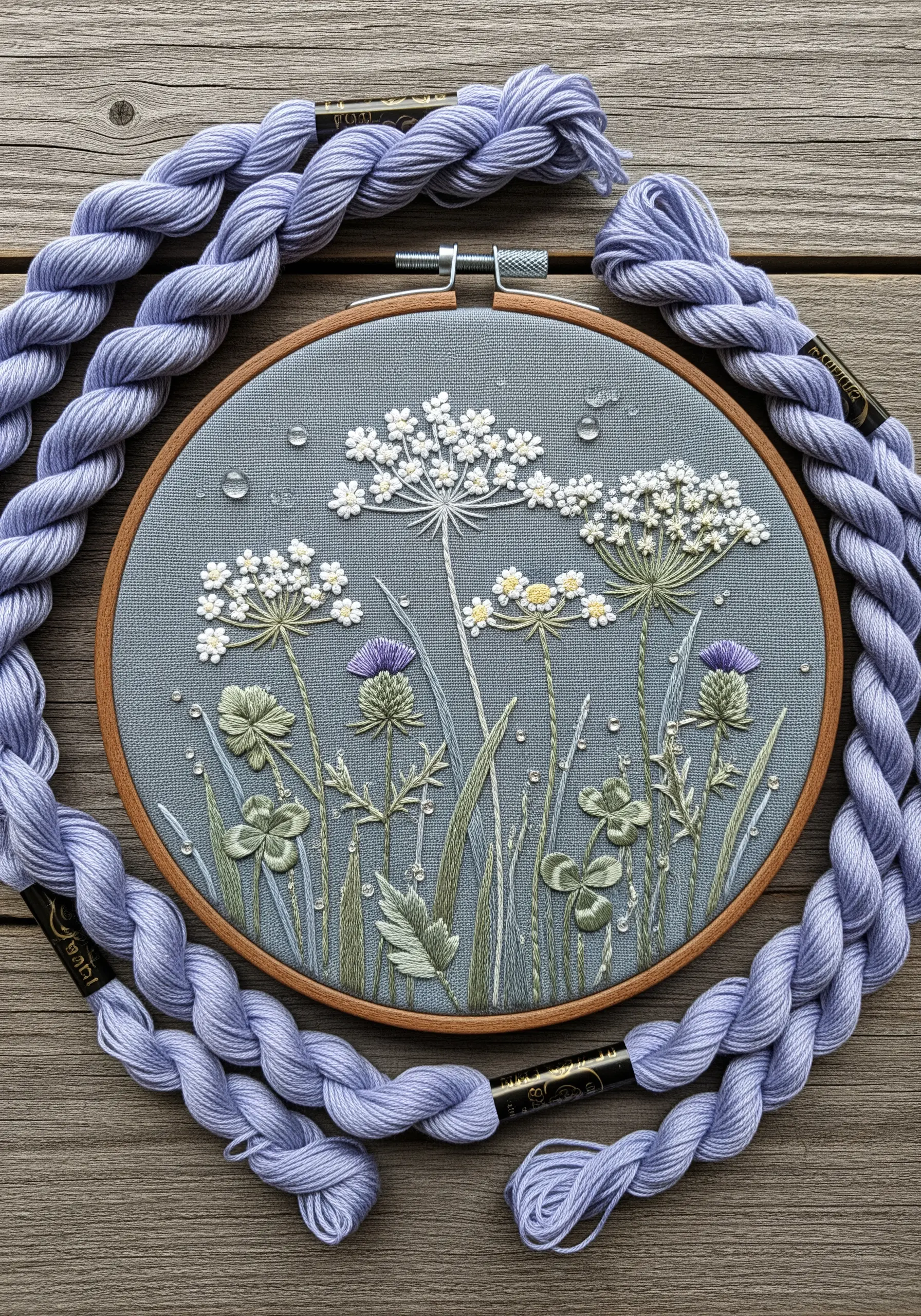
Evoke the feeling of a misty morning by working a cool-toned palette of periwinkle, sage, and white on a slate-grey linen.
For the Queen Anne’s Lace, use a cluster of tiny white French knots, adding a single yellow knot in the center of a few for a touch of realism.
Subtly elevate the piece by scattering tiny, clear seed beads across the foliage and petals after you’ve finished stitching.
These beads catch the light like water droplets, adding a delicate, magical finish that rewards a closer look.
5. A Vibrant, Densely Stitched Meadow
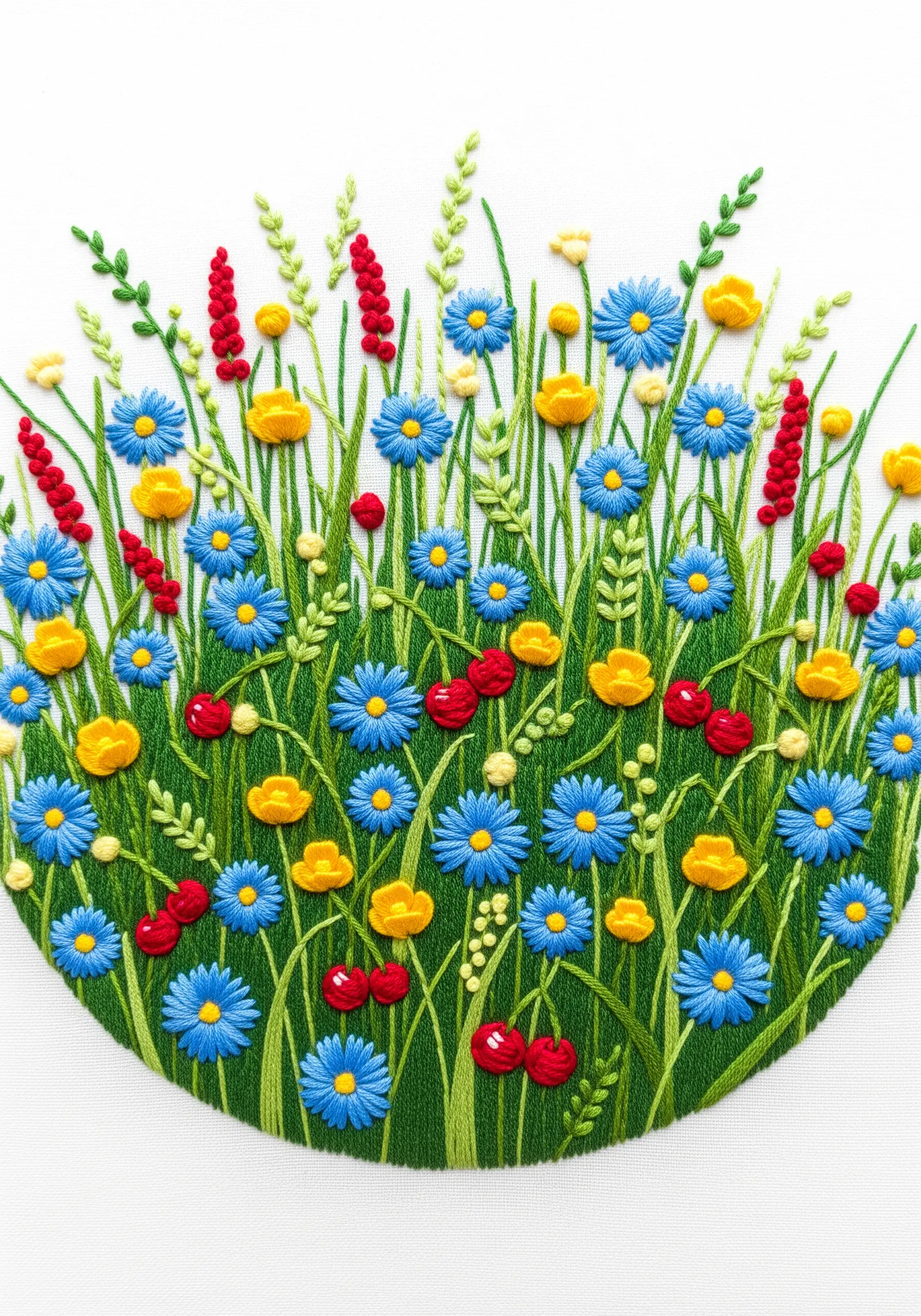
Create the impression of a dense, overflowing meadow by packing your stitches closely and varying the height of each flower.
Use a classic primary-adjacent palette—cornflower blue, buttercup yellow, and cherry red—to create a joyful, high-energy feeling.
Stitch your green stems first, using a mix of straight stitch and stem stitch, then fill in the space with flowers, overlapping them slightly to eliminate empty gaps.
The key is abundance; don’t be afraid to let the different floral elements touch and intertwine, just as they would in nature.
6. Coastal Heathland Color & Texture
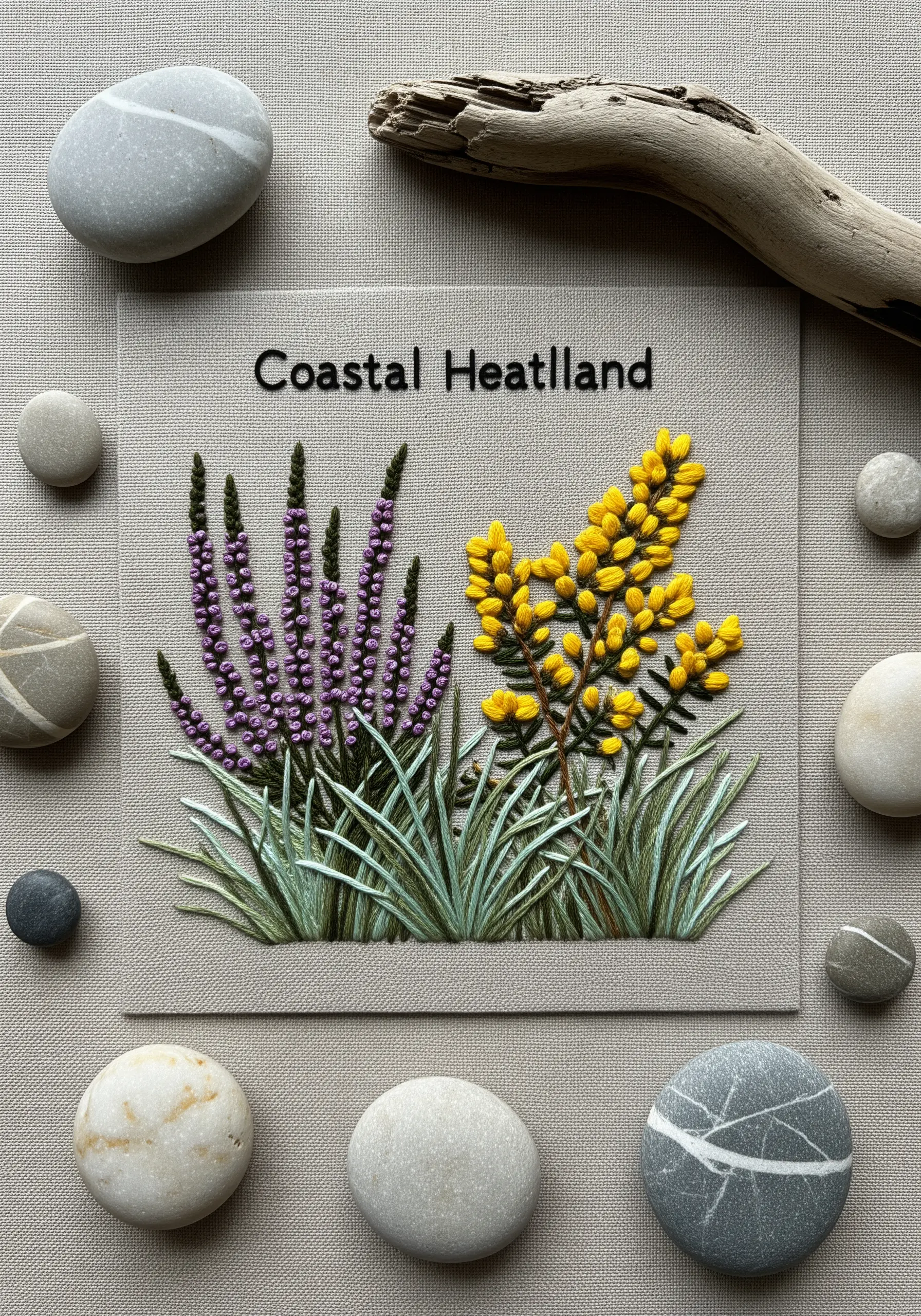
Capture the essence of a specific landscape by focusing on its unique textures and signature colors, like the purple heather and yellow gorse of a coastal heath.
For the heather, create rows of looped bullion knots or turkey work stitches to mimic its fluffy, brush-like texture.
Contrast this with smooth, compact satin stitches for the gorse flowers, making them appear solid and waxy.
This tactile conversation between soft and smooth textures makes the piece more engaging and true to its natural inspiration.
7. Woodland Contrast with Deep Forest Green
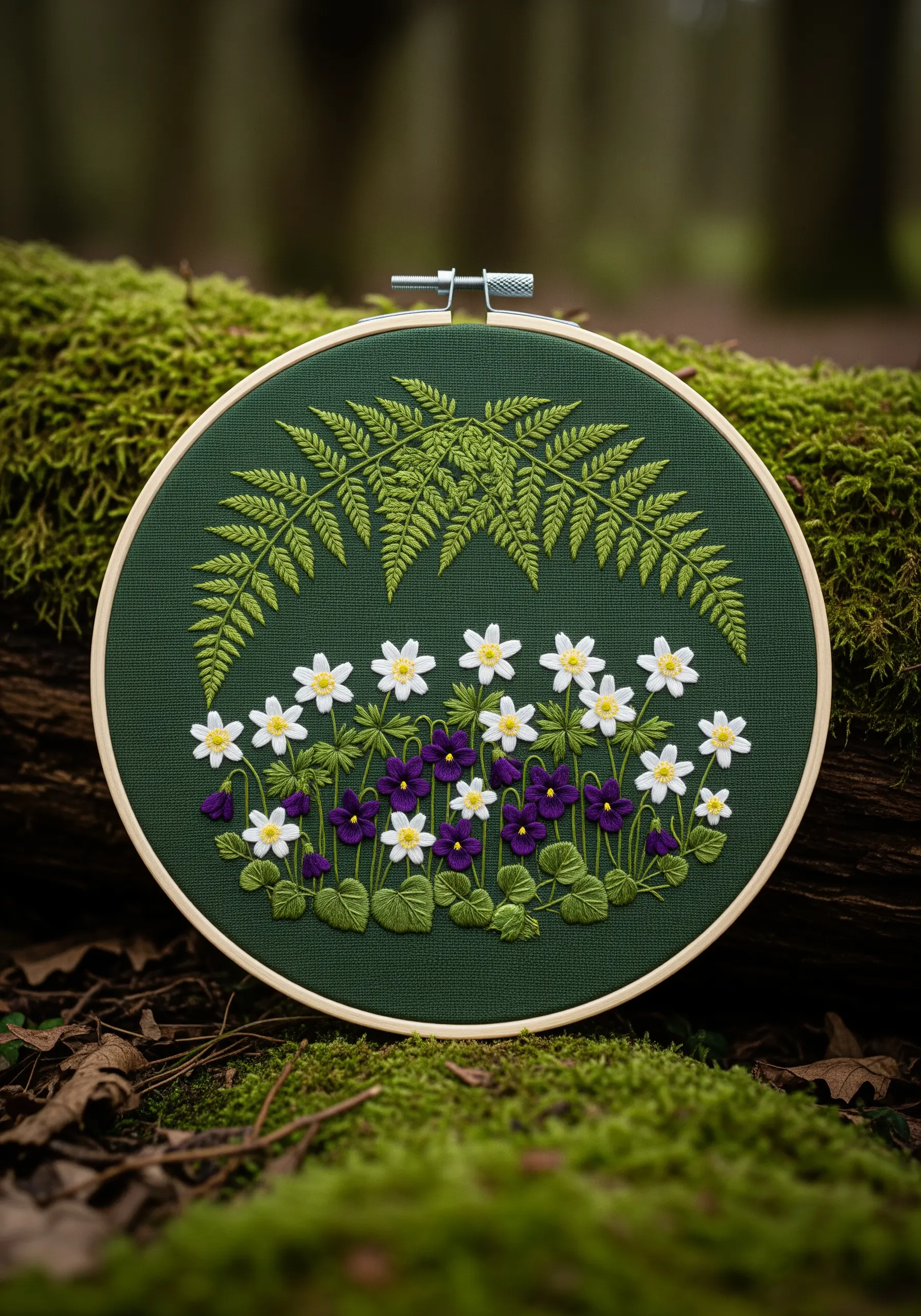
Use a deep, dark fabric to make delicate whites and purples appear more vibrant and luminous, as if spotted on a shaded forest floor.
The stark white of the anemones, stitched with simple lazy daisy petals, provides the brightest highlight in the composition.
For the overarching ferns, use fishbone stitch to create a defined central vein in each frond, adding a layer of sophisticated detail.
These fern & foliage stitch variations elevate the surrounding greenery from simple filler to a featured element.
8. Autumnal Wildflowers in Muted Tones
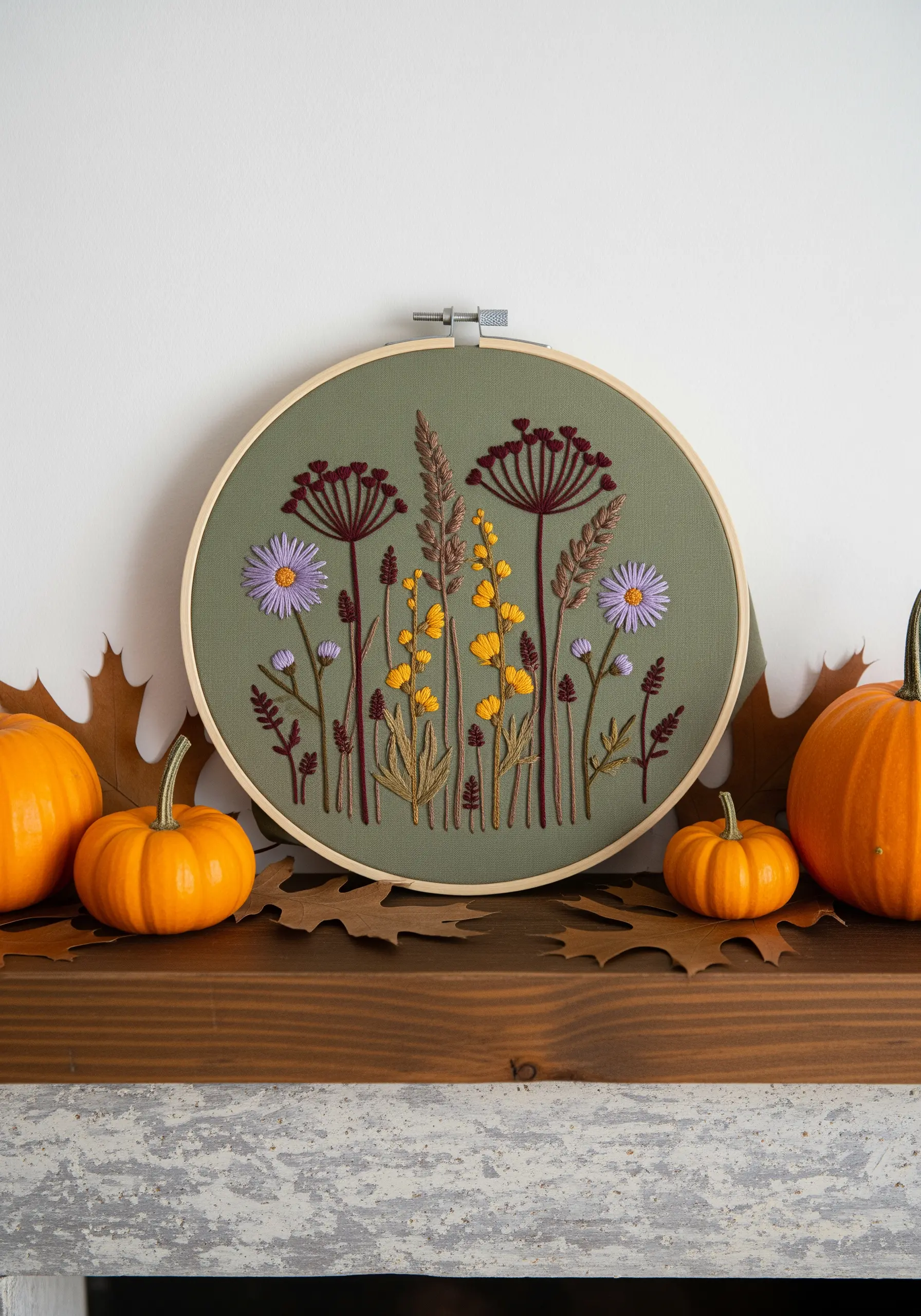
Evoke the soft, hazy light of autumn with a palette of dusty lavender, muted ochre, and deep maroon against a grey-green fabric.
Instead of filling every shape, combine solid elements with delicate outlines.
Use a satin stitch for the lavender aster petals but simply outline the Queen Anne’s Lace in a dark maroon stem stitch.
This contrast between filled and open spaces creates an elegant, airy composition that feels sophisticated and modern.
9. Lavender Field with Forced Perspective
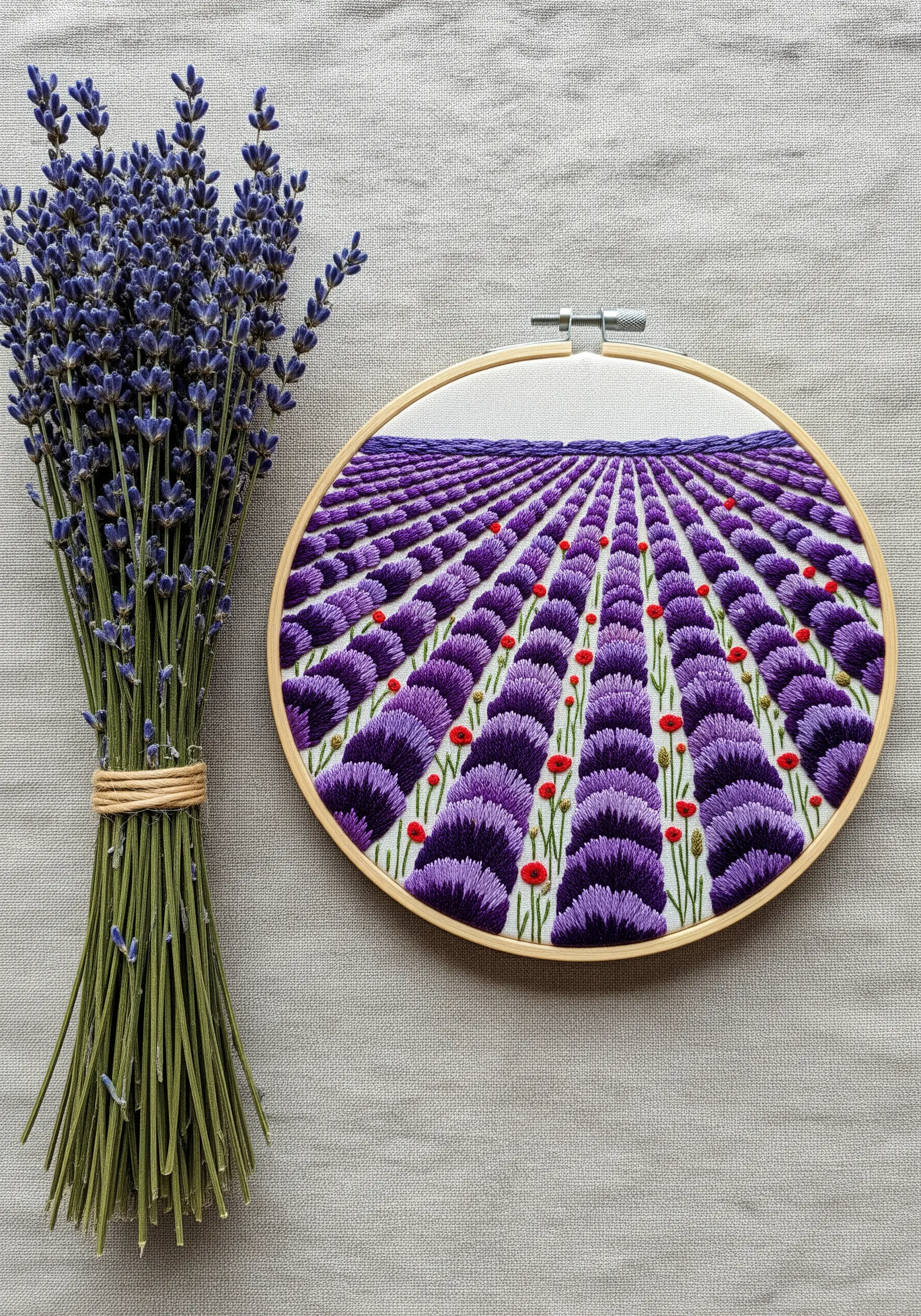
Create the illusion of a vast, receding field by systematically adjusting the scale and color of your stitches.
In the foreground, use thick bullion knots with a deep purple thread to create plump, textured lavender blossoms.
For each subsequent row moving toward the horizon, make your stitches slightly smaller and switch to a lighter shade of purple.
This methodical shift in size and color is a classic artistic trick that translates beautifully to embroidery, giving your hoop incredible depth.
10. Evening Primrose with an Ethereal Glow
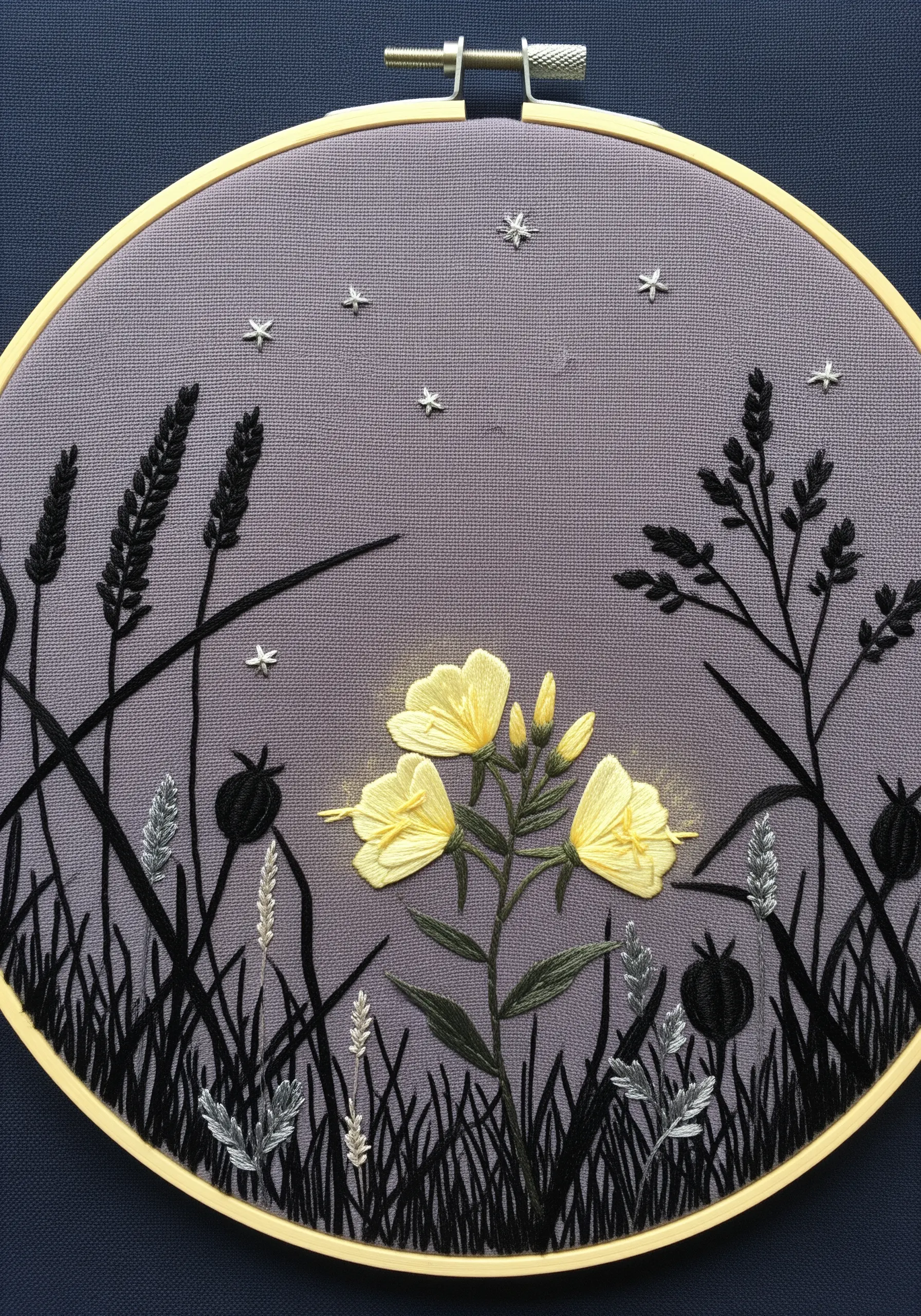
Suggest luminosity by pairing pale, glowing yellows with dark, dramatic silhouettes on a mid-tone grey fabric.
Use long-and-short stitch for the primrose petals, blending a soft yellow with an off-white at the very edges to create a highlight that looks like a soft glow.
Stitch the surrounding grasses and seed pods in solid black, which makes the yellow flowers the undeniable focal point.
For an extra touch of magic, use a single strand of silver metallic thread for the tiny stars and accent grasses.
11. Cottage Garden Palette on Stretched Canvas
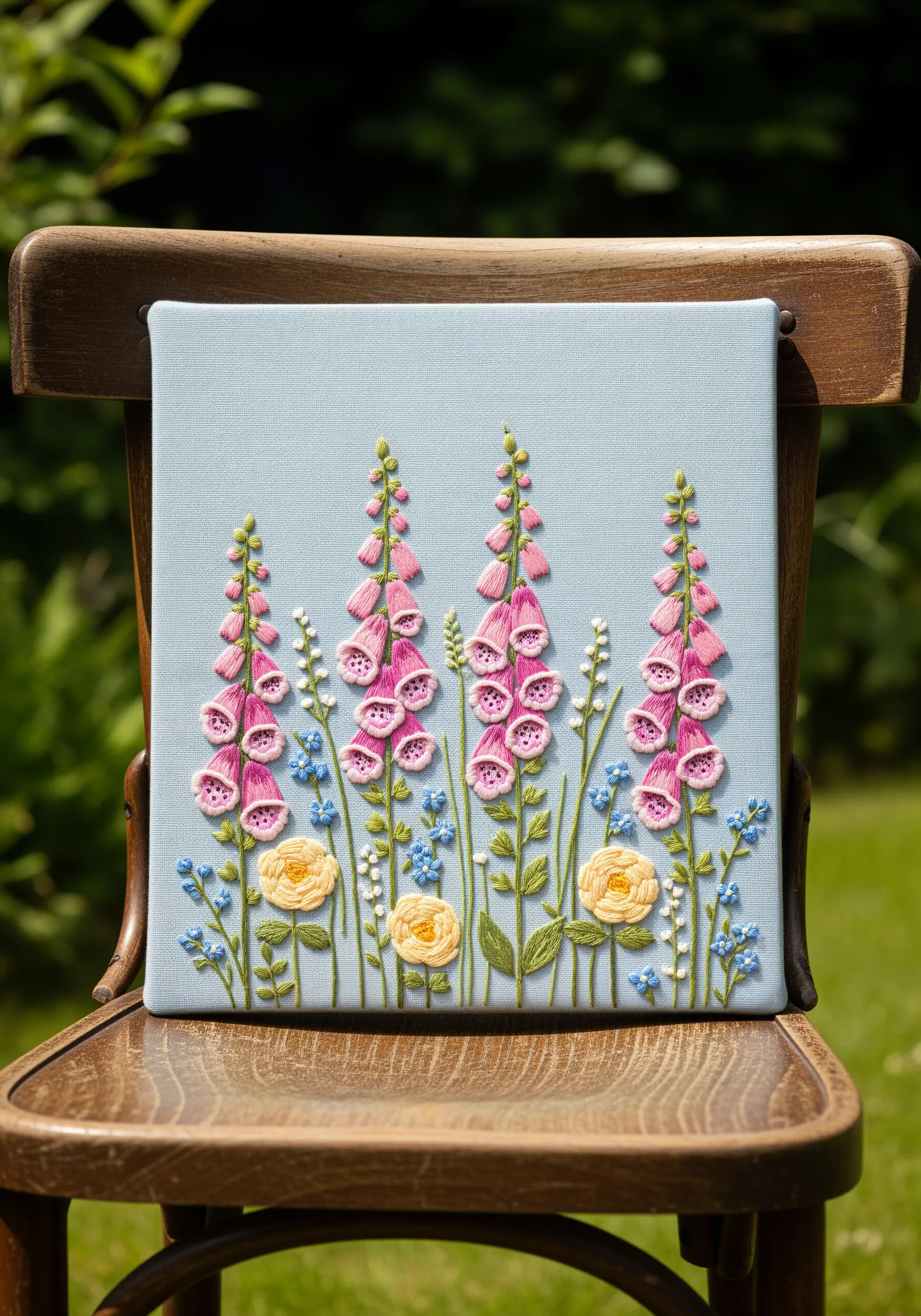
Give your foxgloves a plump, three-dimensional form by using a padded satin stitch.
First, create a small foundation of straight stitches within the shape of each bell, then cover this padding with your final satin stitches.
This raises the surface of the stitch, making the flowers look full and realistic.
Mounting the finished piece on a stretched canvas instead of a hoop provides a clean, contemporary frame that makes your cottage garden embroidery feel like a gallery-ready painting.
12. Midnight Meadow with Neon Accents
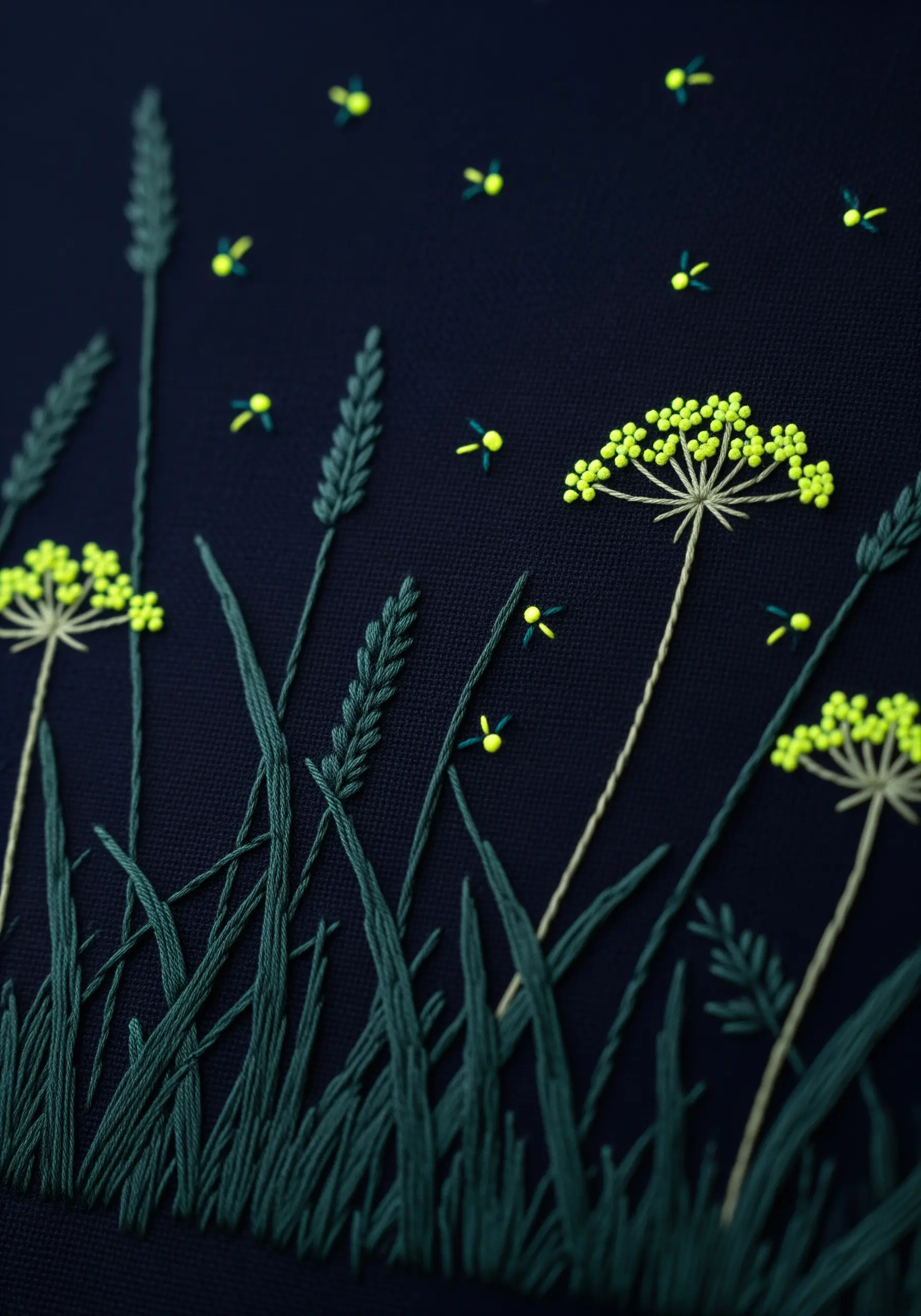
Create a magical night scene by using high-contrast neon thread on a dark navy or black fabric.
The key is simplicity: a single French knot in chartreuse or neon yellow, paired with a tiny straight stitch, is all you need to create a convincing firefly.
Use a muted dark green for the grasses so they are subtly visible but don’t compete with the bright pops of light.
This selective use of a single, vibrant accent color is a powerful tool for creating focus and atmosphere.
13. A Field of Textural Lazy Daisies
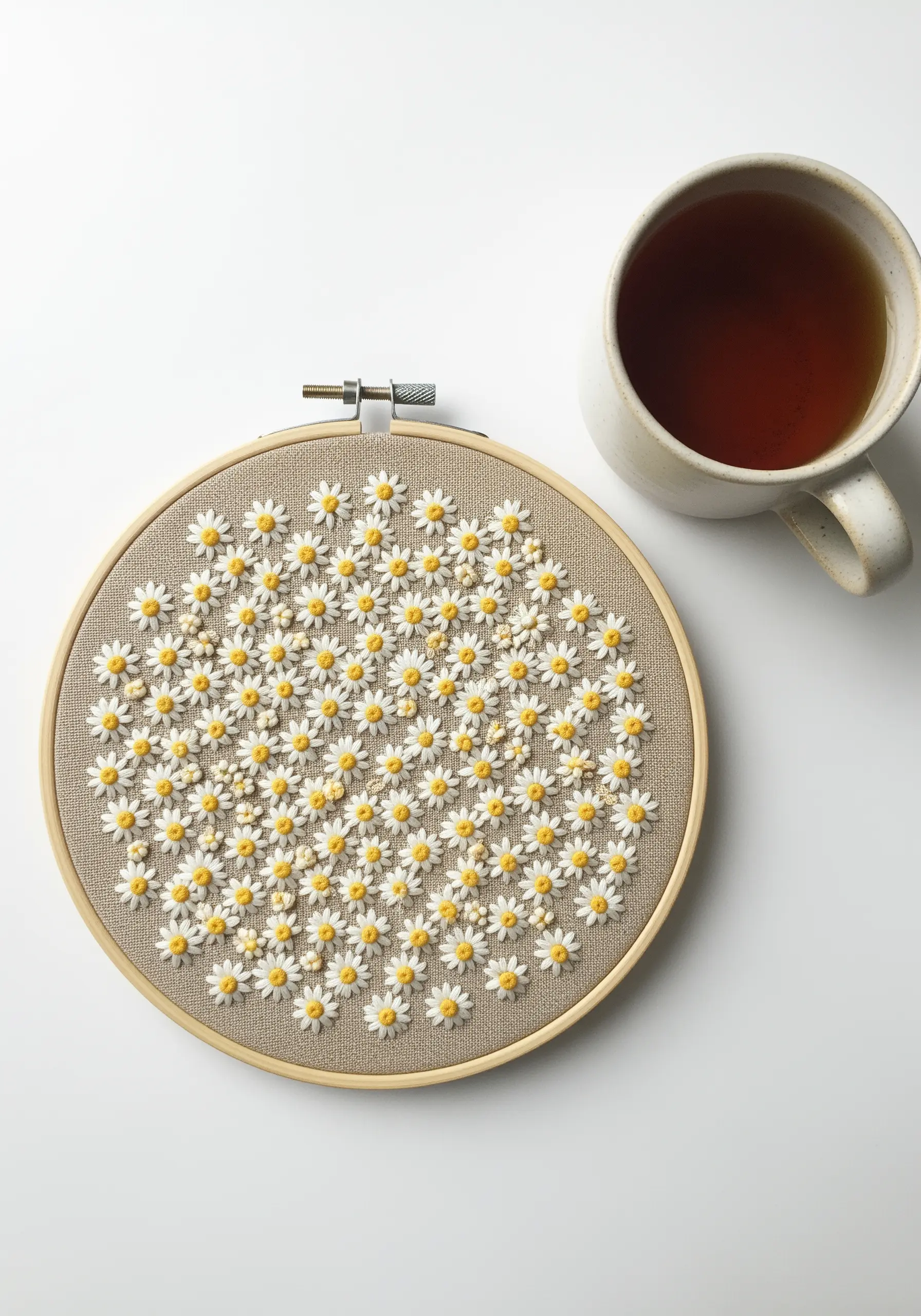
Explore how a single, simple stitch can create a complex and satisfying texture when repeated en masse.
Fill your entire hoop with tiny lazy daisy stitches for the petals and a single French knot for each center.
Work on a neutral, tightly woven fabric like linen or cotton twill; its subtle texture will complement the stitching without distracting from it.
This meditative process results in a beautifully tactile piece that celebrates the beauty of repetition.
14. A Complex Bouquet with Varied Foliage
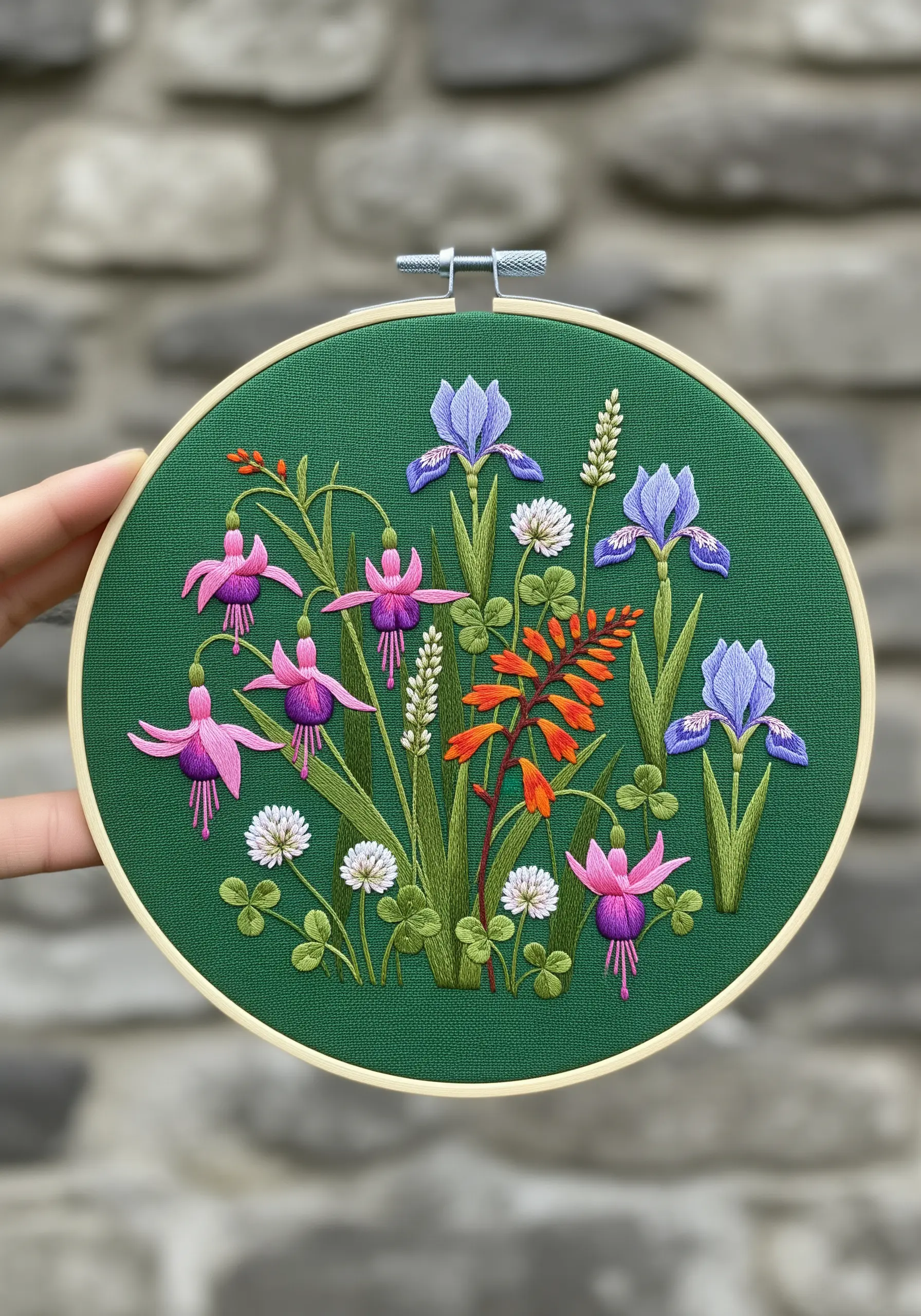
Build a botanically rich bouquet by combining distinct flower shapes with a variety of leaf and grass textures.
Pair the elegant, smooth satin stitch of the irises with the fluffy, clustered French knots of the white clover.
Incorporate different leaf shapes using fishbone stitch for wider leaves and simple straight stitches for blades of grass.
This diversity in form and texture is what makes a stitched floral arrangement look lush, realistic, and visually compelling.
15. Irises with Glimmering Seed Bead Accents
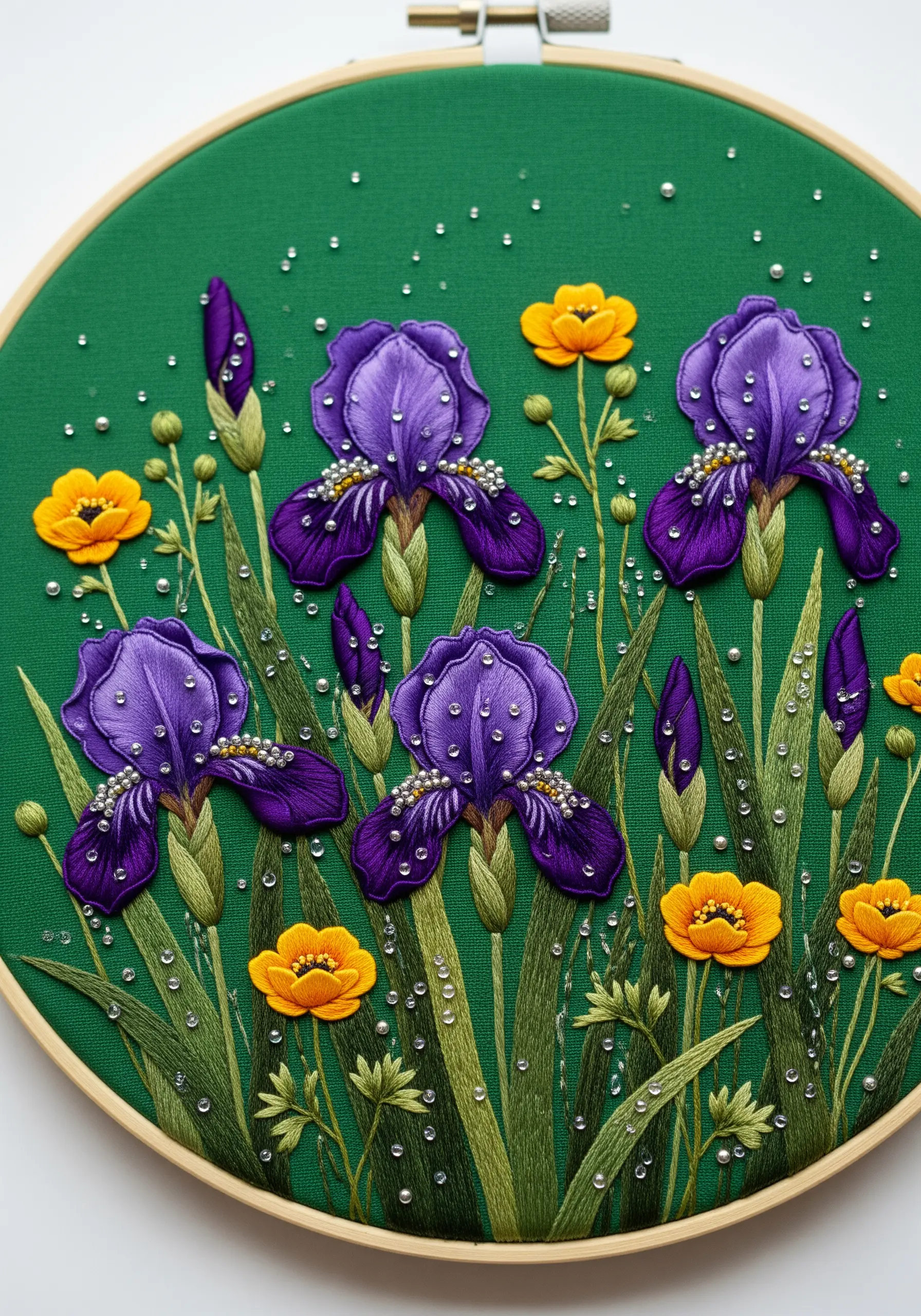
Add a touch of elegance and subtle shimmer to your work by incorporating delicate glass seed beads.
After completing your thread painting on the iris petals, use a single strand of matching thread to secure tiny silver or clear beads across the surface.
Scatter them randomly, as dew would collect, rather than in a structured pattern.
This small addition catches the light and gives the piece a precious, shimmering quality that elevates the entire design.
16. Desert Superbloom with Intense Color
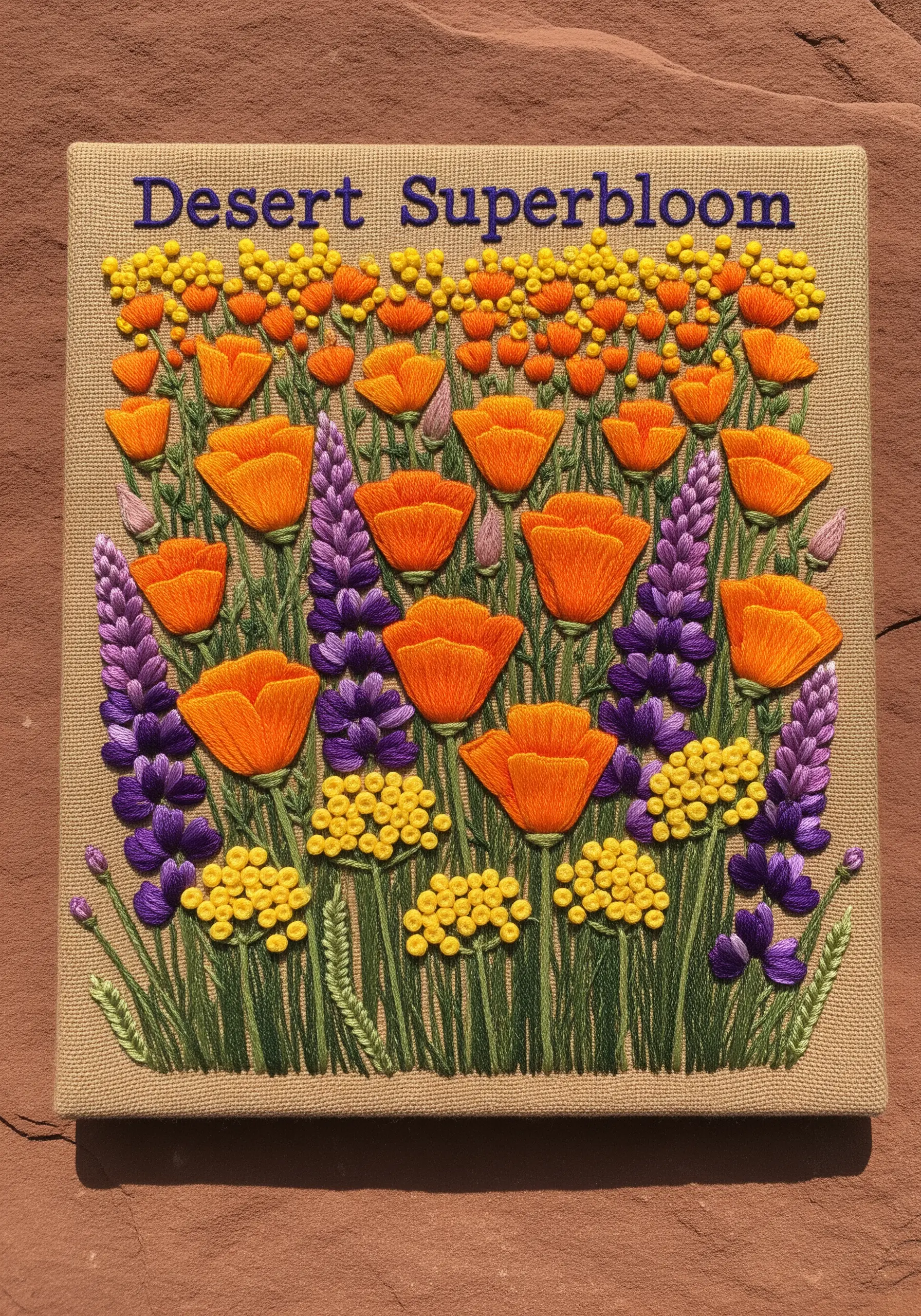
Recreate the overwhelming vibrancy of a desert superbloom by using a palette of pure, saturated colors without adding white or black.
Choose the most intense orange you can find for the poppies and the deepest violet for the lupines.
Use dense French knots for the clusters of small yellow flowers, packing them tightly to create a solid mass of color.
The sheer density and saturation of the thread on a neutral burlap or canvas background conveys the intense, sun-drenched energy of the scene.
17. Vintage Botanical with Desaturated Hues
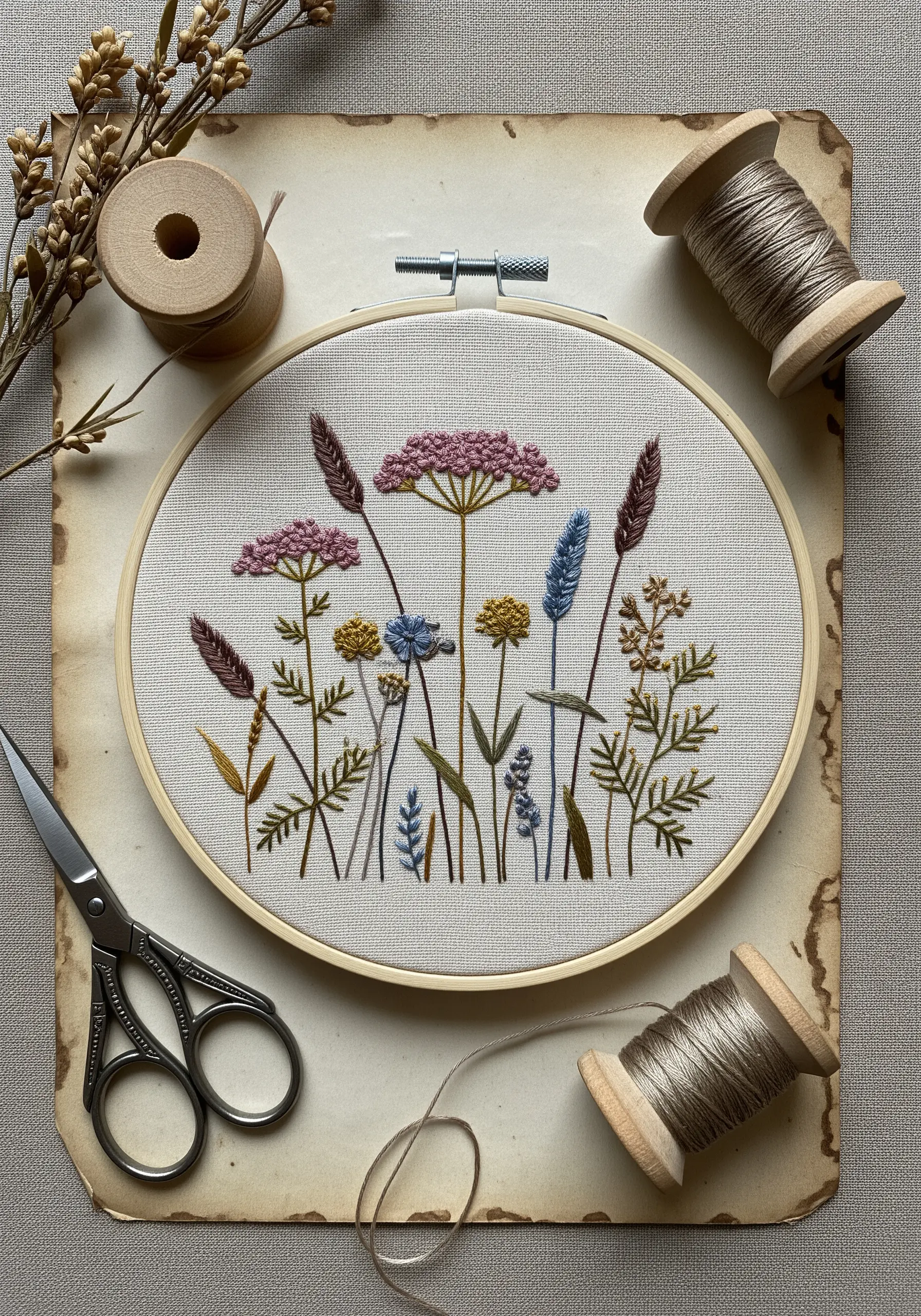
Achieve a delicate, antique illustration effect by choosing a palette of desaturated, earthy colors.
Work with dusty rose, muted cornflower blue, olive green, and brownish-greys on an off-white or tea-stained fabric.
Use a single strand of floss for most of the stems and finer details to maintain a light, airy feel.
This restrained approach to color and thread weight results in a timeless piece that feels like a treasured page from a botanist’s journal.
18. Pollinator’s Garden with Thread-Painted Wings
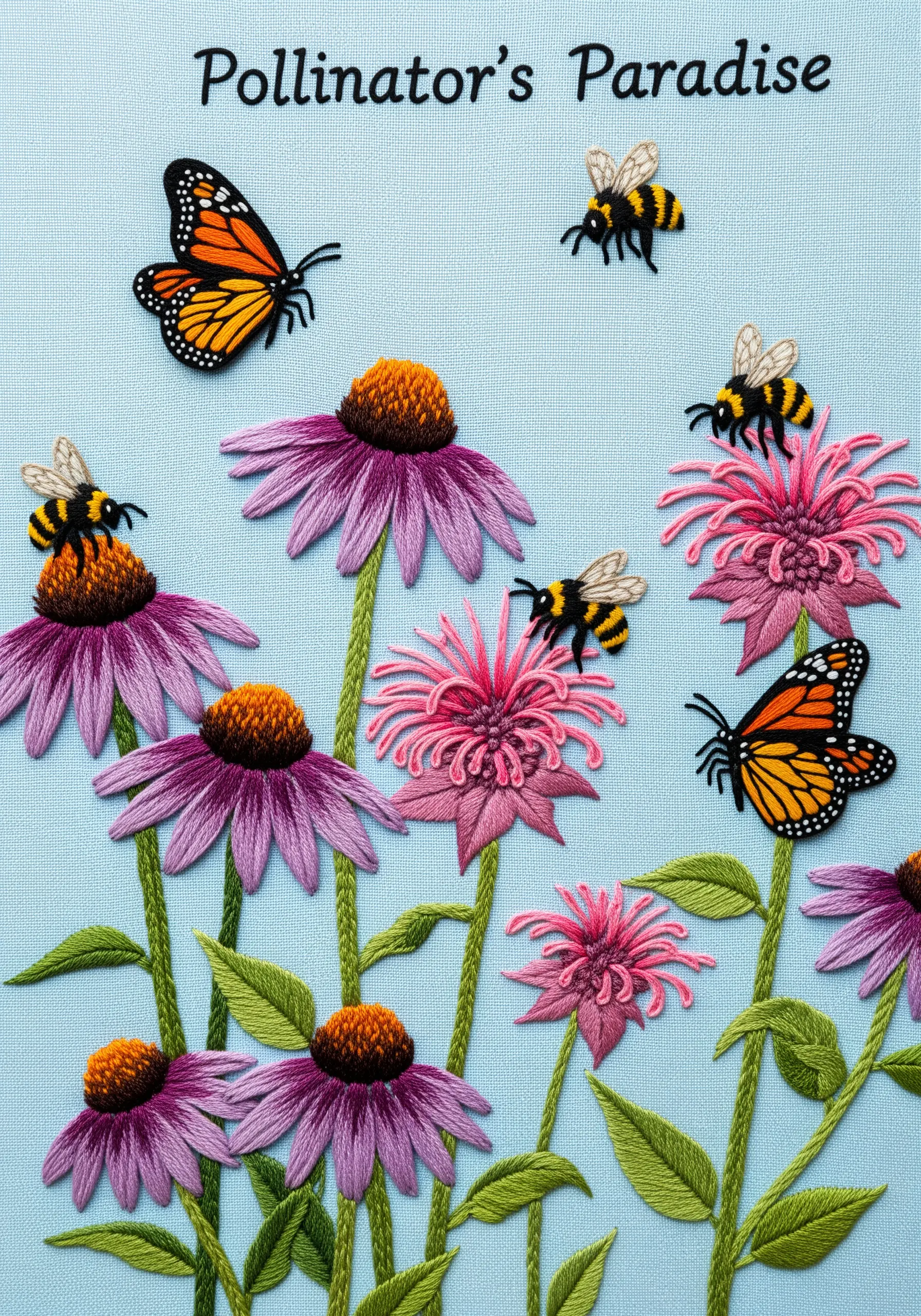
Bring your floral scene to life by adding meticulously stitched pollinators like monarch butterflies and bumblebees.
For the butterfly wings, use long-and-short stitch to blend oranges and yellows, then add the iconic black details with a tiny backstitch.
Create the fuzzy texture of a bee’s body by using a padded satin stitch or a series of overlapping single stitches.
These nature-inspired embroidery projects add a narrative layer, transforming a static portrait into a dynamic ecosystem.
19. Early Spring Flowers with Soft Wool Texture
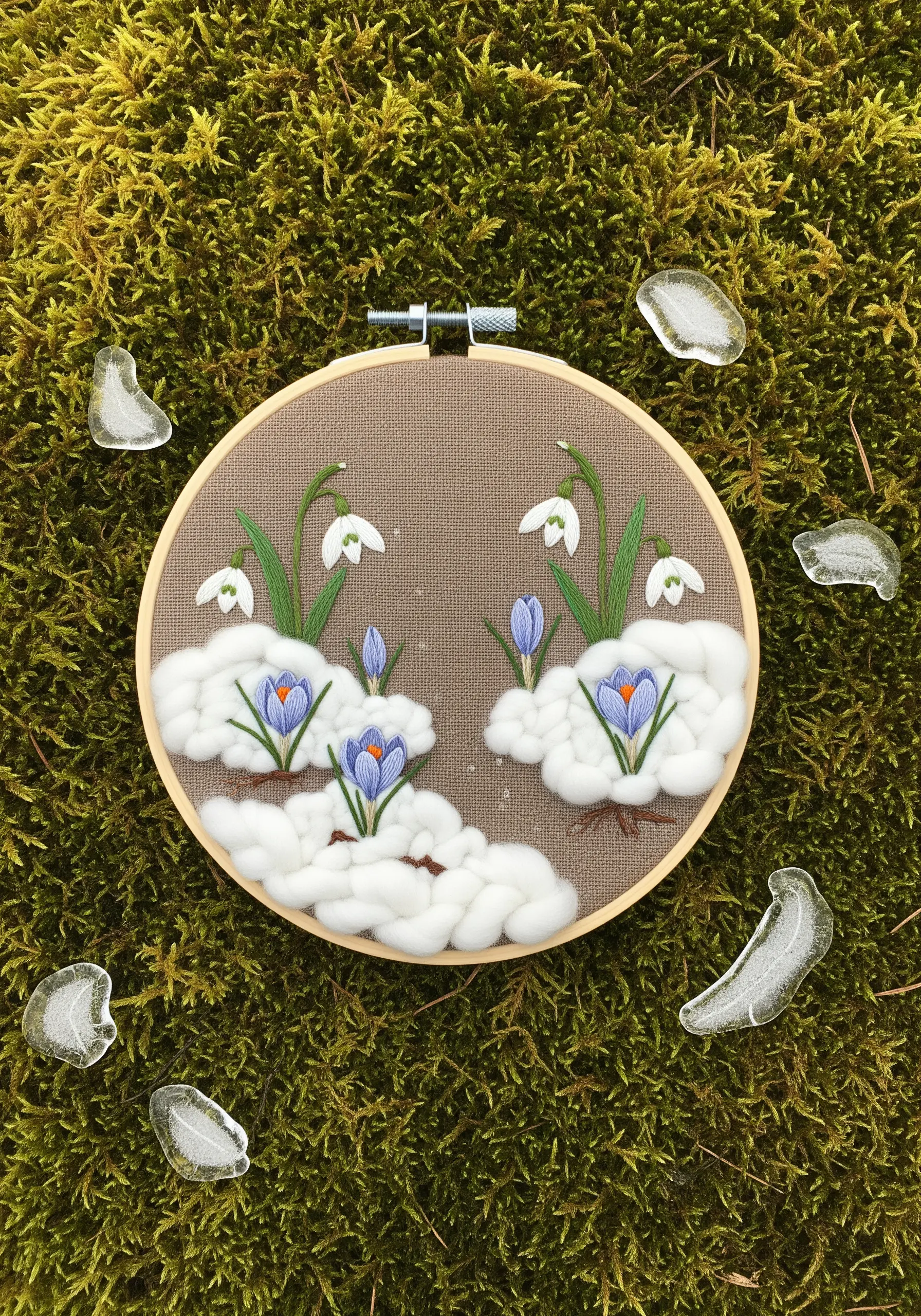
Create a powerful textural contrast by combining delicate floss embroidery with soft, chunky wool roving.
Stitch your snowdrops and crocuses with standard six-strand floss for crisp, clean details.
Then, lay down wisps of white wool roving to form the snow banks, securing it to the fabric with a few hidden couching stitches in a matching white thread.
This mixed-fiber technique adds an unexpected 3D element that makes the snow look incredibly soft and tangible.
20. Bluebonnet Field with Dense French Knots
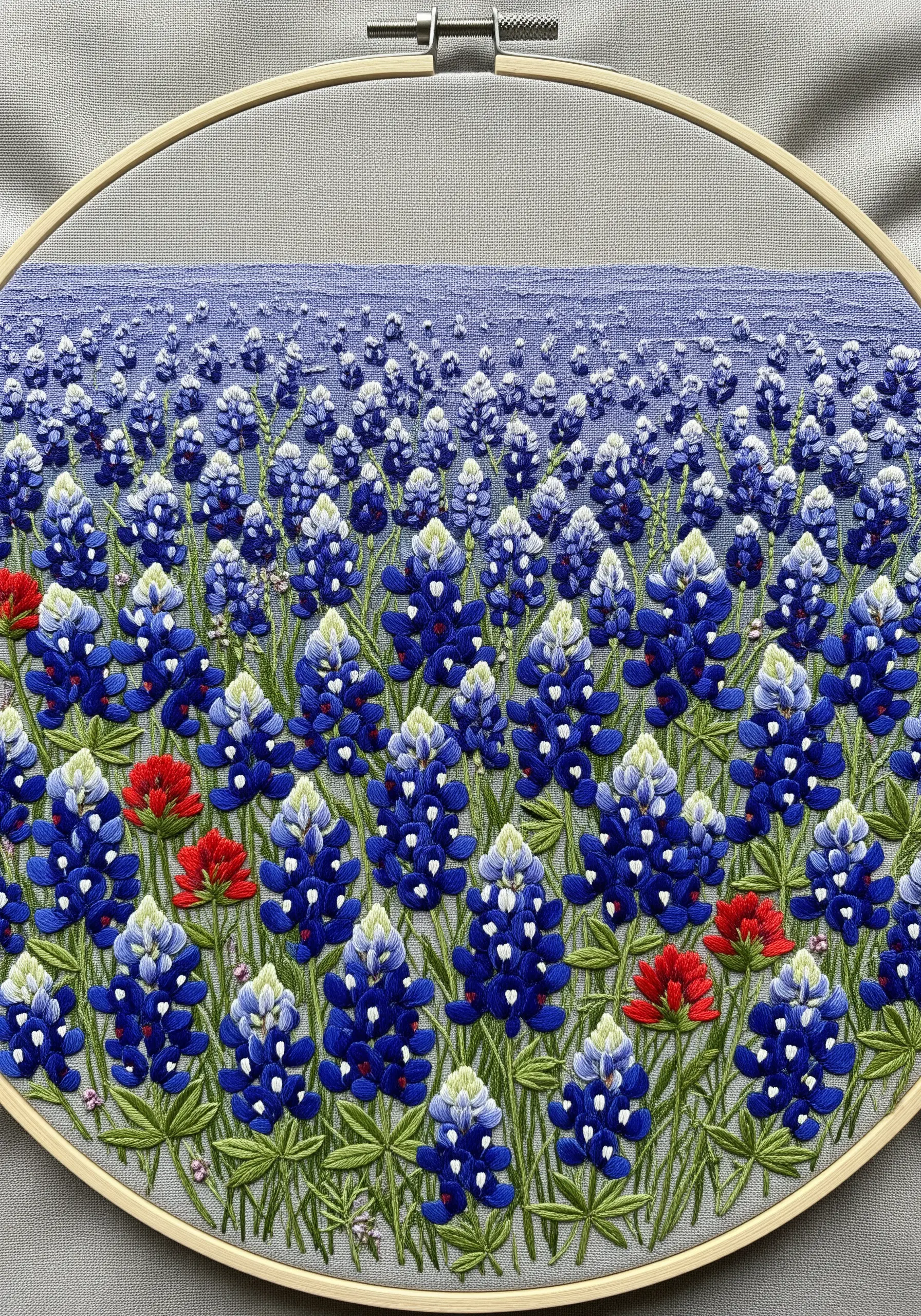
To depict a field of flowers like bluebonnets, focus on creating a mass of color and texture rather than individual perfect blooms.
Use a mix of French knots and small, straight stitches in several shades of blue and periwinkle to build up the flower spikes.
Add a single white French knot to the top of each cluster to capture their signature look.
Stitching a hazy, indistinct horizon line with a single strand of light blue thread will enhance the sense of a vast, sprawling field.
21. Hedgerow Harvest of Flowers and Berries
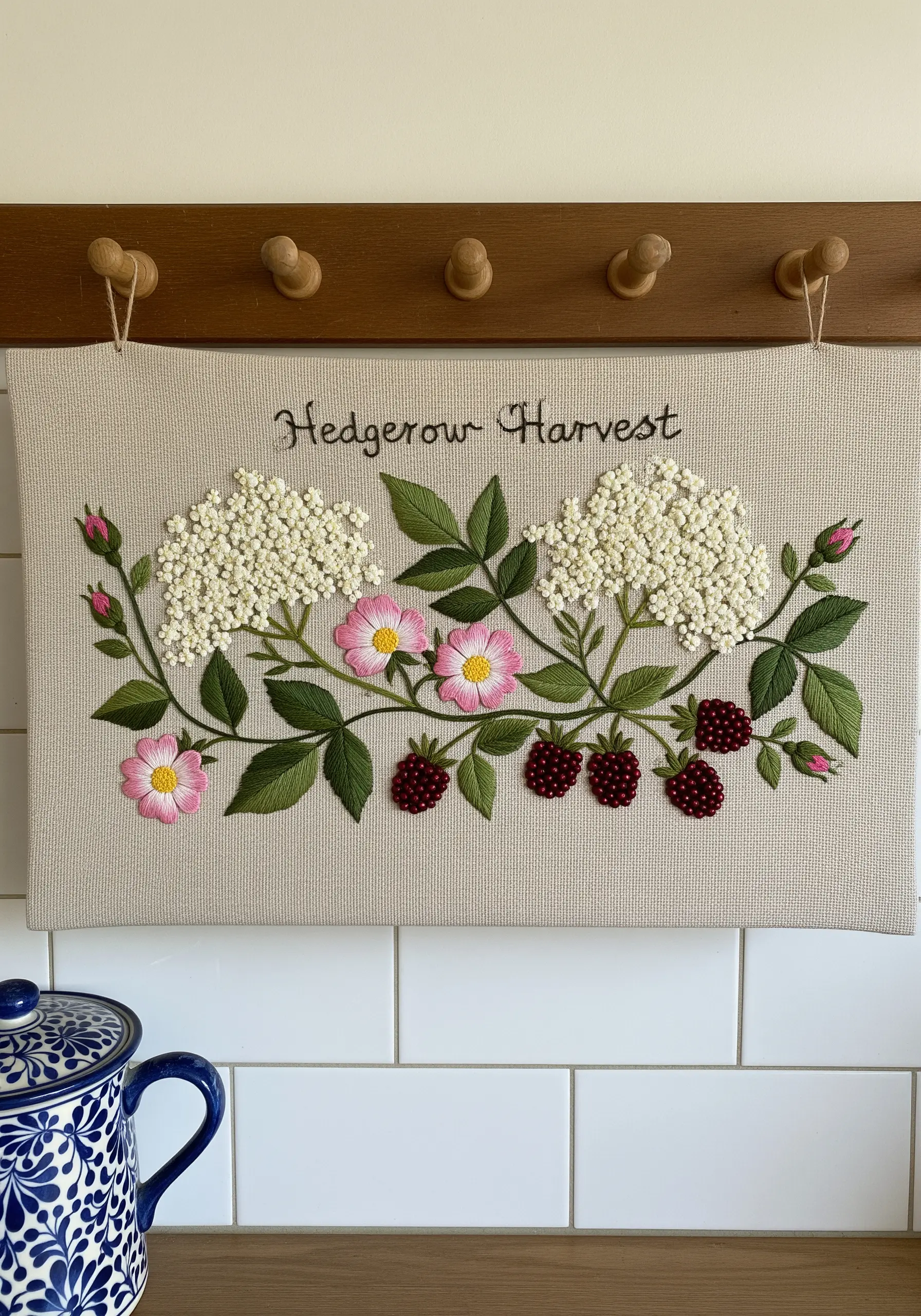
Tell the story of a season by combining elements that bloom and ripen at the same time.
Stitch the delicate pink wild roses using a woven wheel stitch for a full, layered look.
For the blackberries, create a cluster of deep purple or black bullion knots, which perfectly mimic the plump, segmented shape of the fruit.
This pairing of different stitch techniques for different botanical elements makes your composition more engaging and realistic.
22. Waterside Blooms with a Complementary Palette
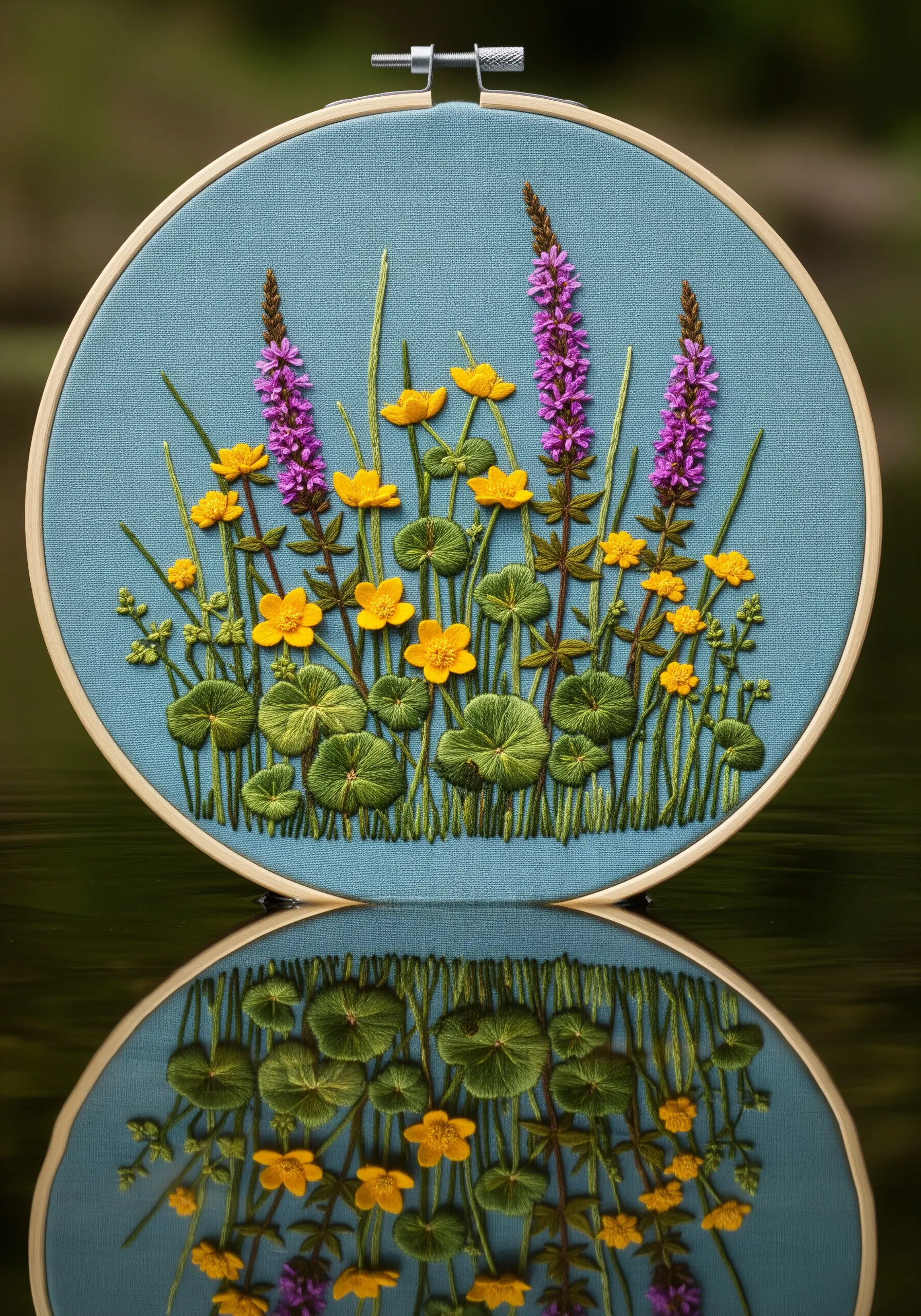
Harness the power of the color wheel by pairing complementary colors—like yellow and purple—for a palette that is naturally vibrant and balanced.
Stitch the marsh marigolds in a bright, sunny yellow satin stitch and the purple loosestrife spires with textured French knots.
Placing these opposite colors next to each other makes each appear brighter and more intense.
Mounting them on a cool blue-green fabric completes the waterside scene and helps unify the composition.
23. A Delicate and Airy Wildflower Wreath
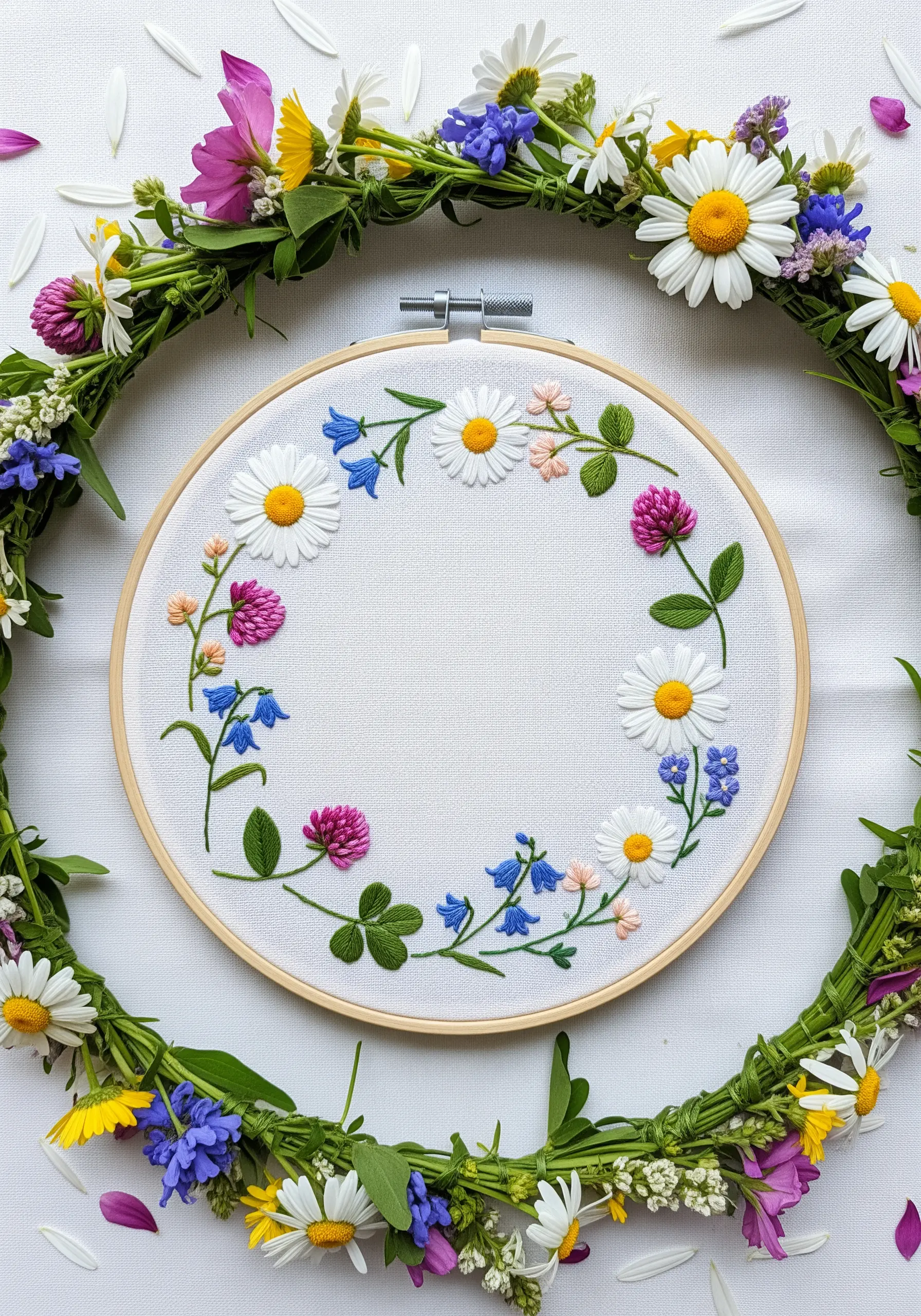
When composing a wreath, negative space is just as important as the stitched elements.
Arrange your motifs—daisies, clover, bluebells—in small, thoughtful clusters, leaving ample breathing room between them.
This approach prevents the design from feeling heavy or cluttered and draws more attention to the beauty of each individual flower.
It’s a perfect exercise in creating balanced and minimal embroidery compositions that feel light and elegant.
24. Vibrant Fireweed on a Rocky Terrain
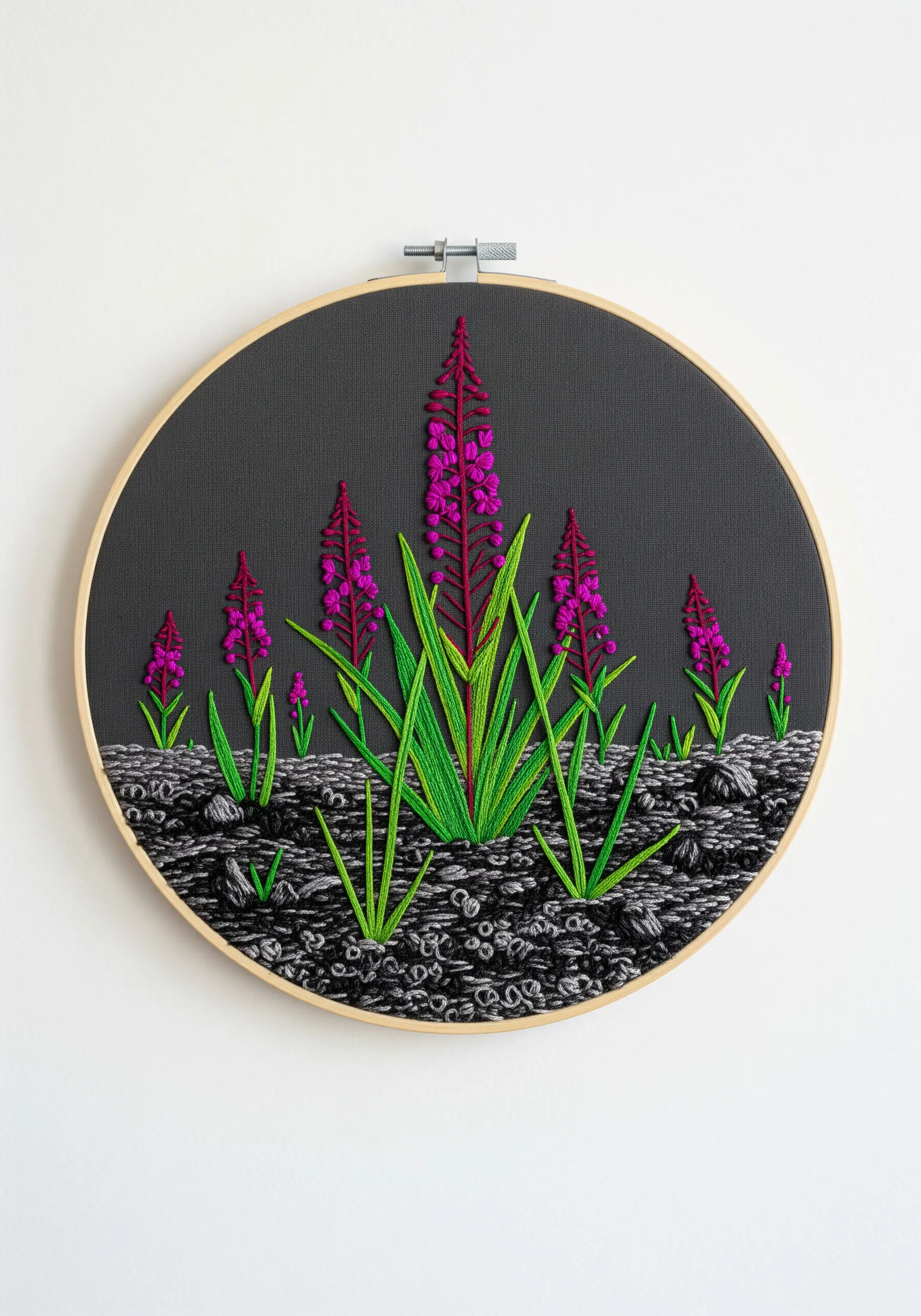
Create a dramatic and graphic composition by setting a single, intensely colored flower against a dark, textured background.
Use a vibrant magenta for the fireweed, blending two shades with long-and-short stitch to give the petals dimension.
For the ground, fill the space with a dense mix of French knots and straight stitches in shades of grey, black, and off-white to build a rocky texture.
This stark contrast in both color and texture makes the fireweed seem to erupt from the landscape with incredible energy.