There’s a quiet magic in watching a design emerge from a simple needle and thread. But sometimes, you might feel a gap between the vision in your mind and the piece in your hoop. You follow the pattern, you use the right stitches, but it’s missing… something. A certain polish, a sense of life.
That ‘something’ isn’t about learning dozens of complex new stitches or buying expensive threads. It’s about intention. It’s in choosing to use three strands of floss instead of two for more texture, in slightly varying the angle of each leaf so a vine feels more organic, or in adding a single, unexpected color to your palette that makes the entire piece sing.
These lavender-inspired projects are more than just patterns; they are invitations to refine your technique. Here, we’ll explore how small adjustments in stitch choice, color blending, and composition can elevate your work, giving it the depth, emotion, and artistry you’ve been searching for. Let’s begin.
1. Create Atmospheric Depth with Layered Knots
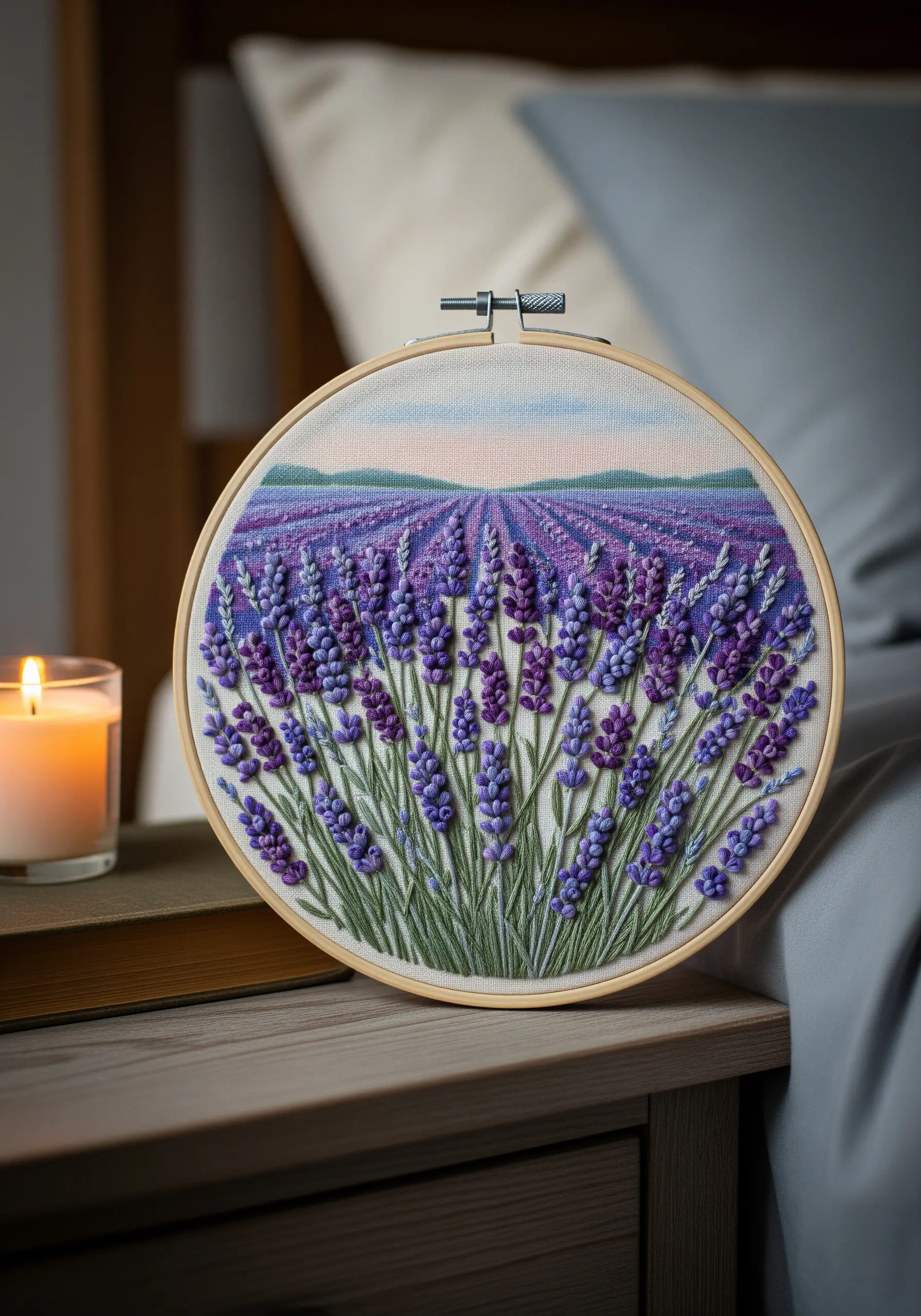
To give your lavender fields a sense of depth, concentrate texture in the foreground and simplify the background.
Use chunkier French knots with three or four strands of thread for the lavender closest to the viewer, creating a lush, tangible texture.
As you move toward the horizon, reduce to one or two strands and use simpler straight stitches or seed stitches, which will recede visually.
For the sky, you can lightly paint the fabric with watercolor or use long-and-short stitches in pale blues and whites to suggest clouds without adding bulk.
This technique mimics atmospheric perspective, making your small hoop feel like a vast, immersive landscape.
2. Master the Elegant Curve of a Botanical Wreath
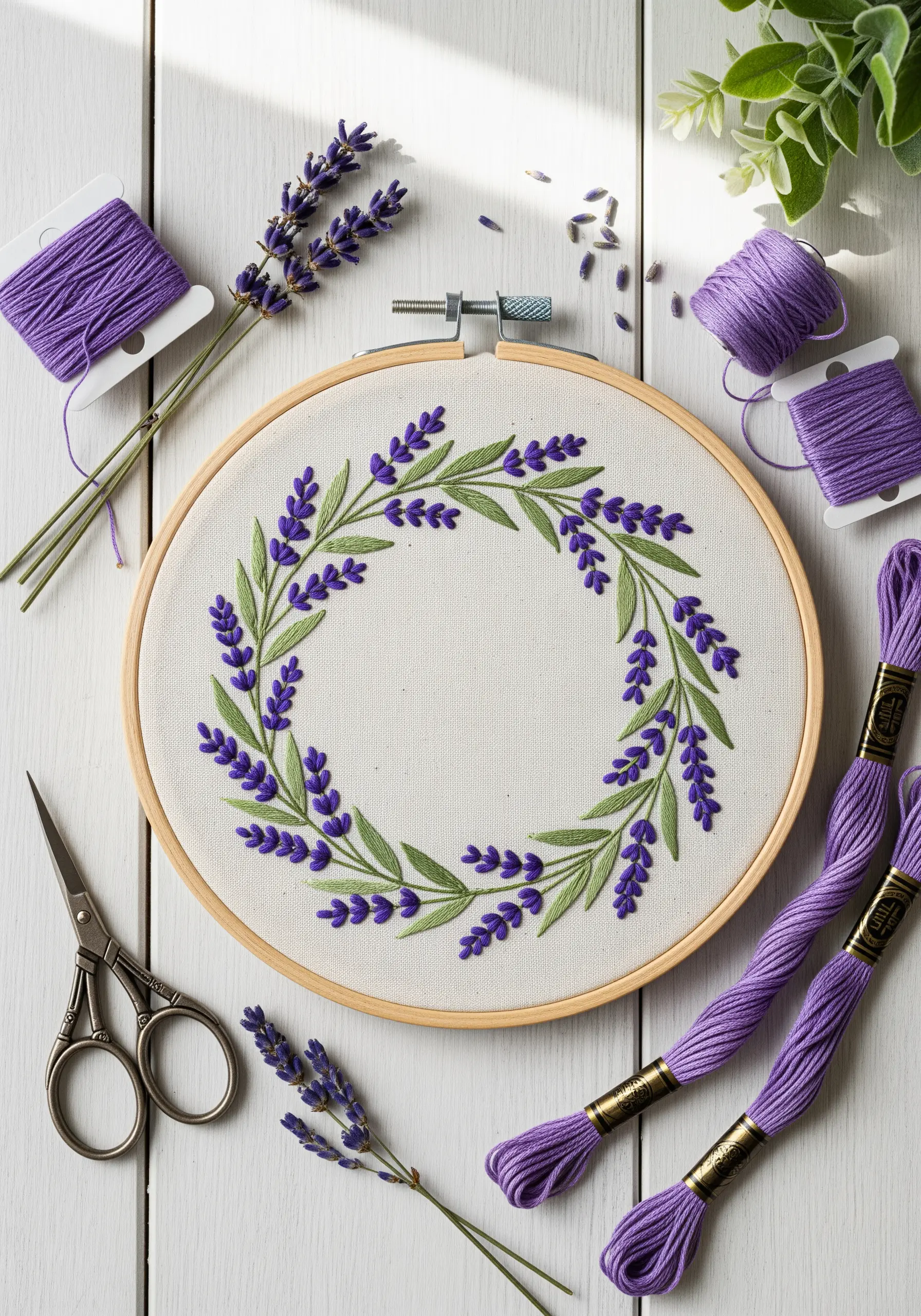
An elegant wreath depends on a smooth, continuous line that doesn’t look stiff or unnatural.
Begin by lightly tracing a perfect circle, then use a flowing stem stitch or whipped backstitch for the primary vines, allowing them to slightly overlap.
When adding the lavender sprigs, vary their angles and lengths, pointing some inward and others outward to create movement and avoid a rigid, symmetrical look.
Alternate between lazy daisy stitches for leaves and small satin stitches or French knots for the buds to build wild botanical wreath patterns that feel both balanced and alive.
3. Embrace Simplicity with a Single Stem on Sheer Fabric
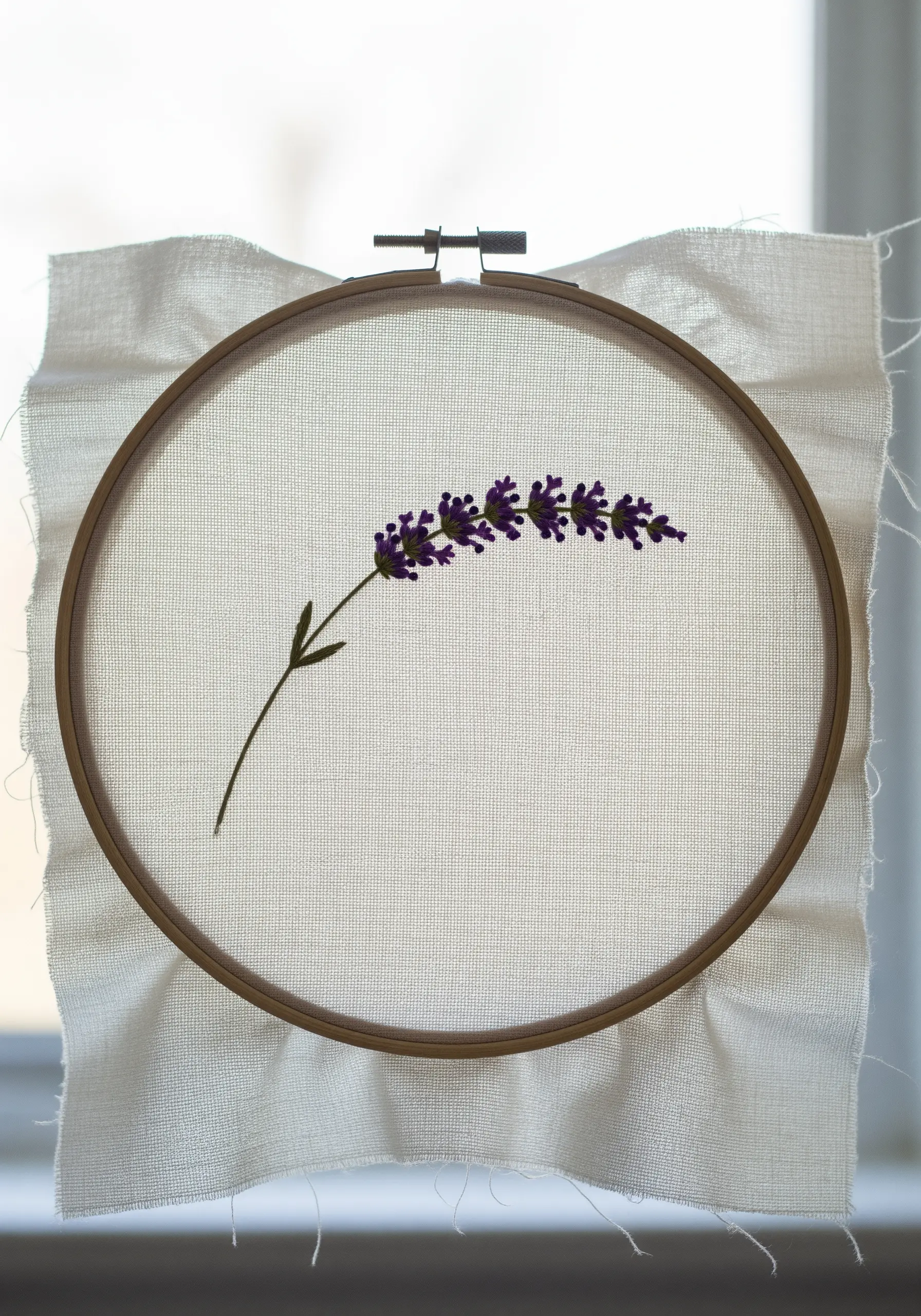
Embroidering on a transparent or semi-sheer fabric like organza or voile creates a delicate, floating effect that highlights the beauty of a single stitch.
To prevent puckering, always use a water-soluble or tear-away stabilizer on the back while you stitch, and remove it once you are finished.
Use only one or two strands of floss to keep the design light and airy, letting the negative space around the lavender stem become part of the composition.
This minimalist approach turns a simple sprig into a piece of refined art, perfect for catching window light.
4. Scale Your Vision with Thread-Painted Landscapes
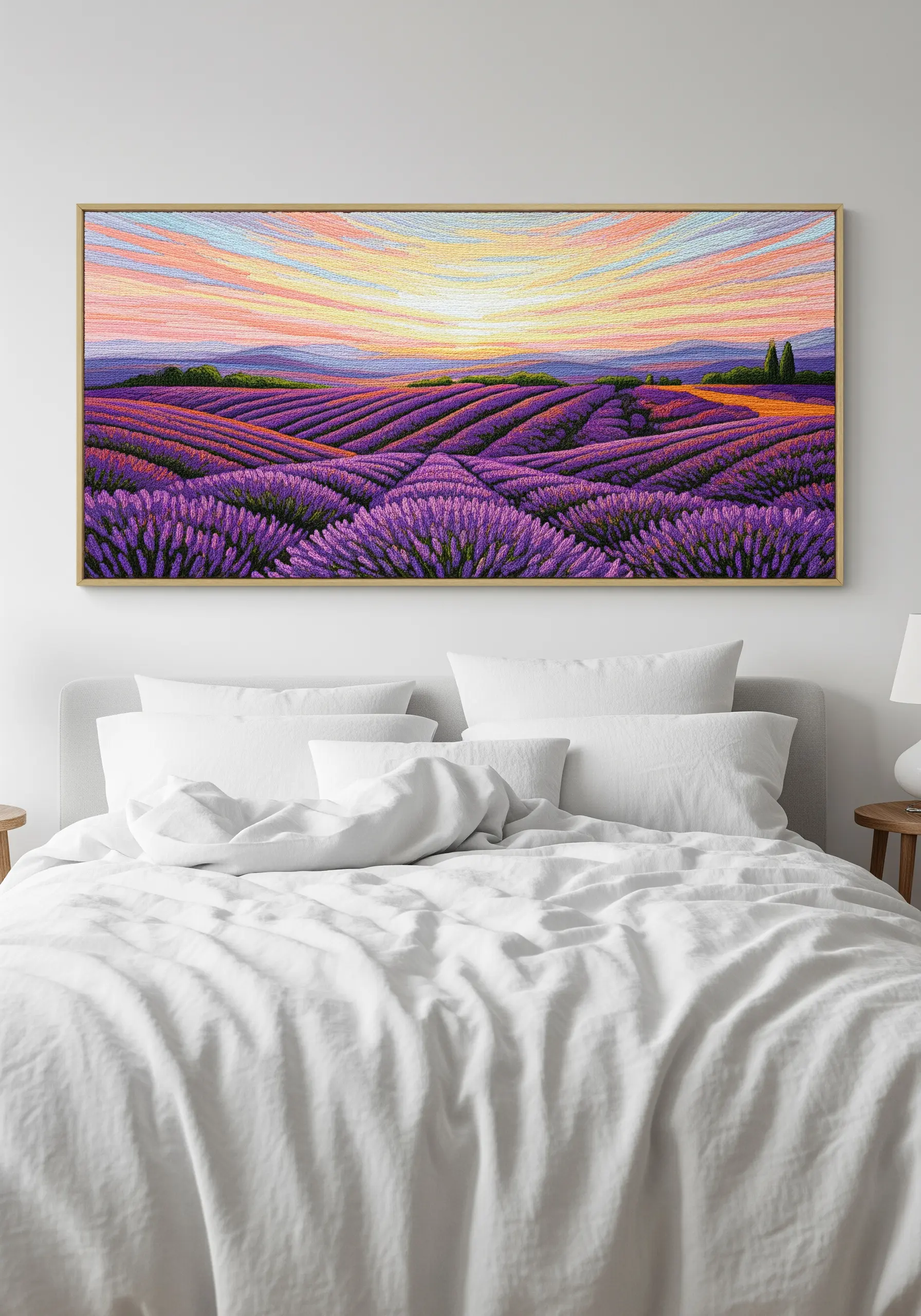
To transform a small sketch into a large-scale embroidery tapestry, think like a painter using thread as your medium.
Use directional long-and-short stitches to create broad, sweeping strokes of color in the sky, blending shades of pink, yellow, and blue to capture the glow of a sunset.
For the fields, keep your stitches consistent within each row to establish strong leading lines that create perspective.
This technique, known as thread painting, allows you to build rich, complex color gradients that turn your bedroom wall into a stunning focal point.
5. Deconstruct Nature into Abstract Forms
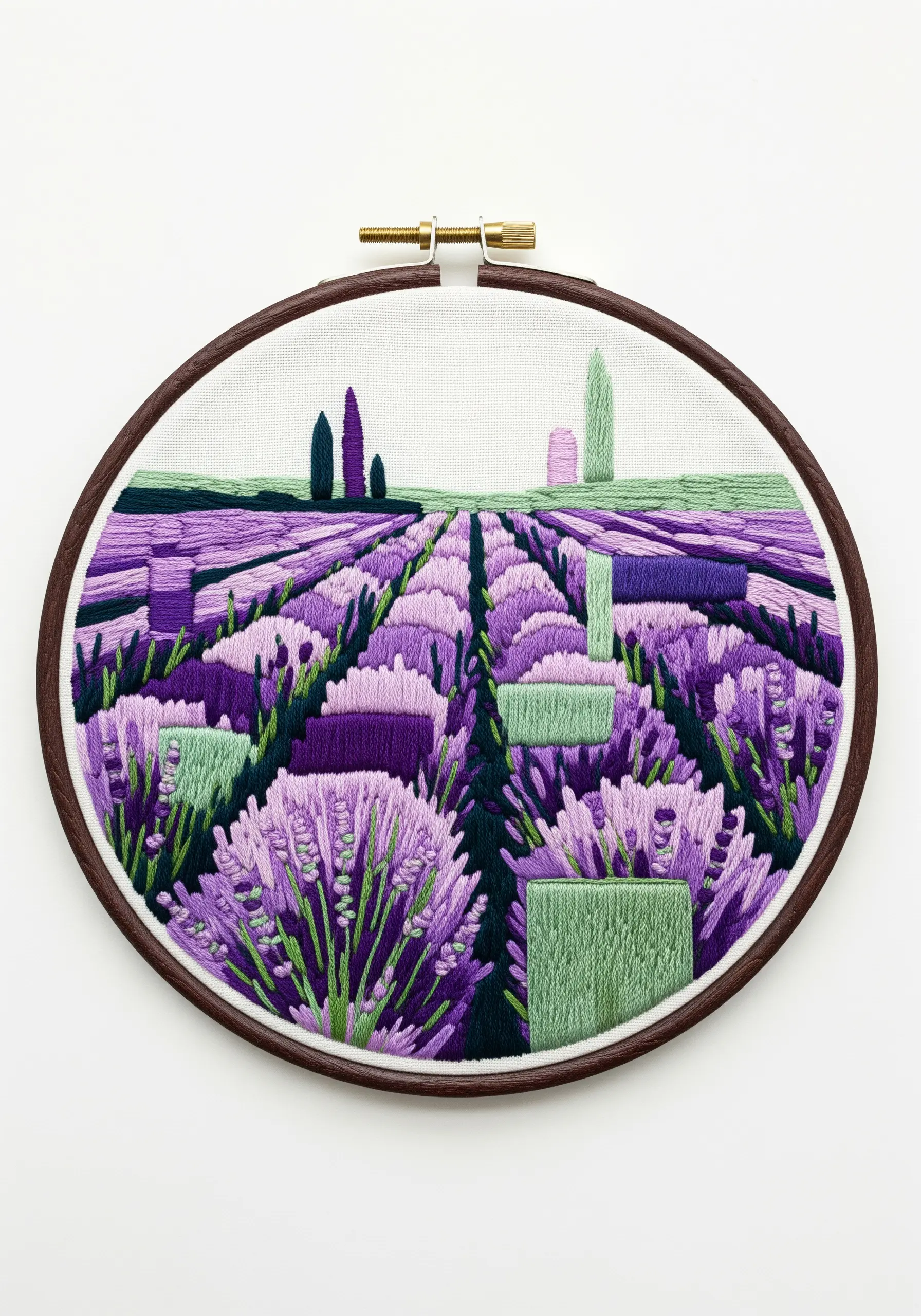
Move beyond realism by interpreting a lavender field as a collection of shapes and textures.
Represent rows of lavender with blocks of color, using dense satin stitch in varied purples to create a clean, graphic look.
Contrast these smooth, flat planes with highly textured elements, like fluffy French knots for closer bushes or straight stitches for distant trees.
This approach allows you to explore abstract embroidery patterns, focusing on color relationships and textural contrast rather than literal representation.
The result is a modern, artistic interpretation that feels both familiar and entirely new.
6. Choose Durable Stitches for Functional Home Décor
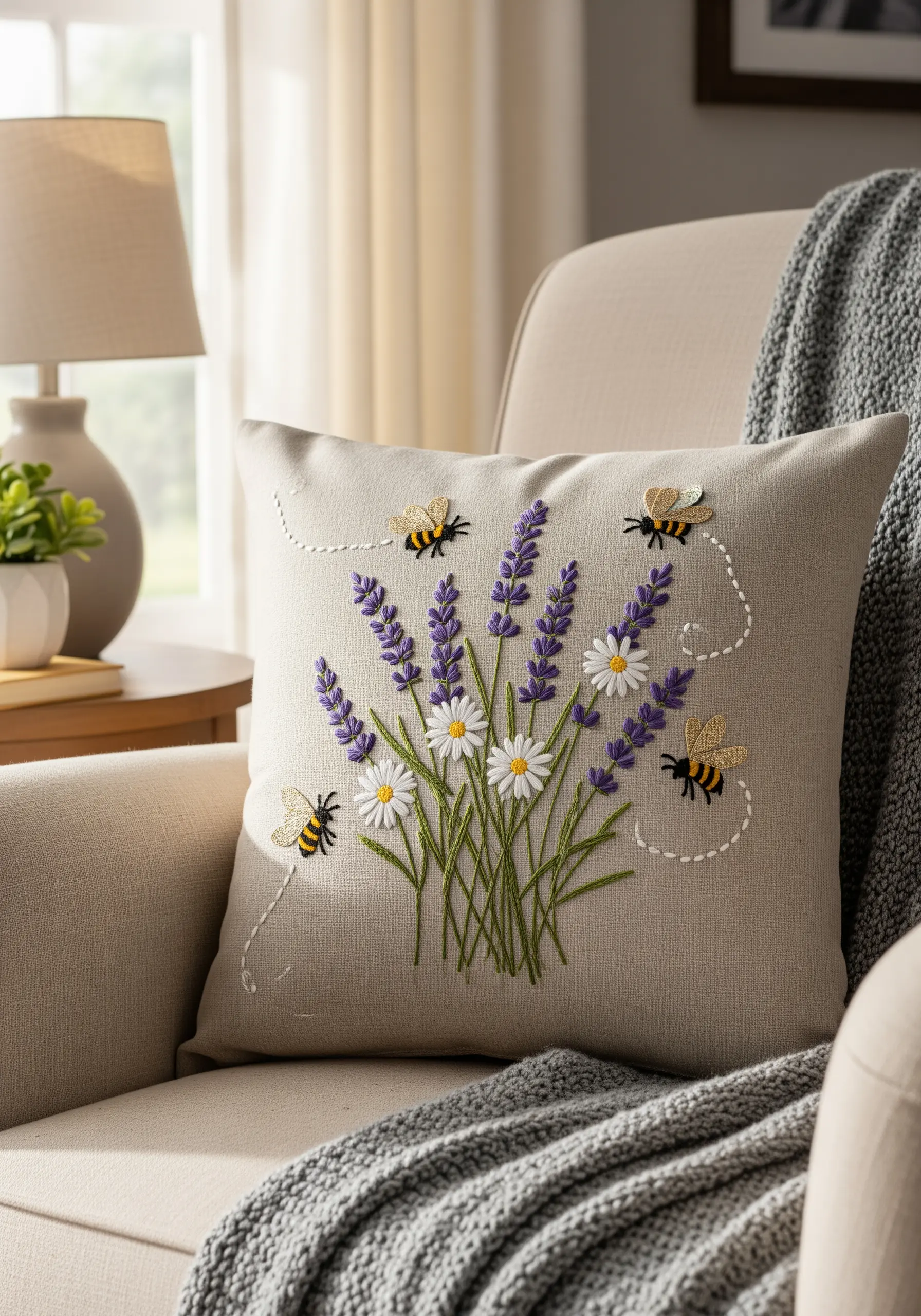
When embroidering items like pillows, choose stitches that are both beautiful and resilient to wear and tear.
Instead of loose French knots for the lavender buds, consider using short, tight satin stitches or even small beads secured with multiple passes of thread.
For the bee’s flight path, a whipped backstitch is stronger and less likely to snag than a simple running stitch.
These small adjustments ensure your embroidery cushion designs remain pristine even with daily use, blending artistry with practicality.
7. Build a Lush Bouquet with Layered Color and Texture
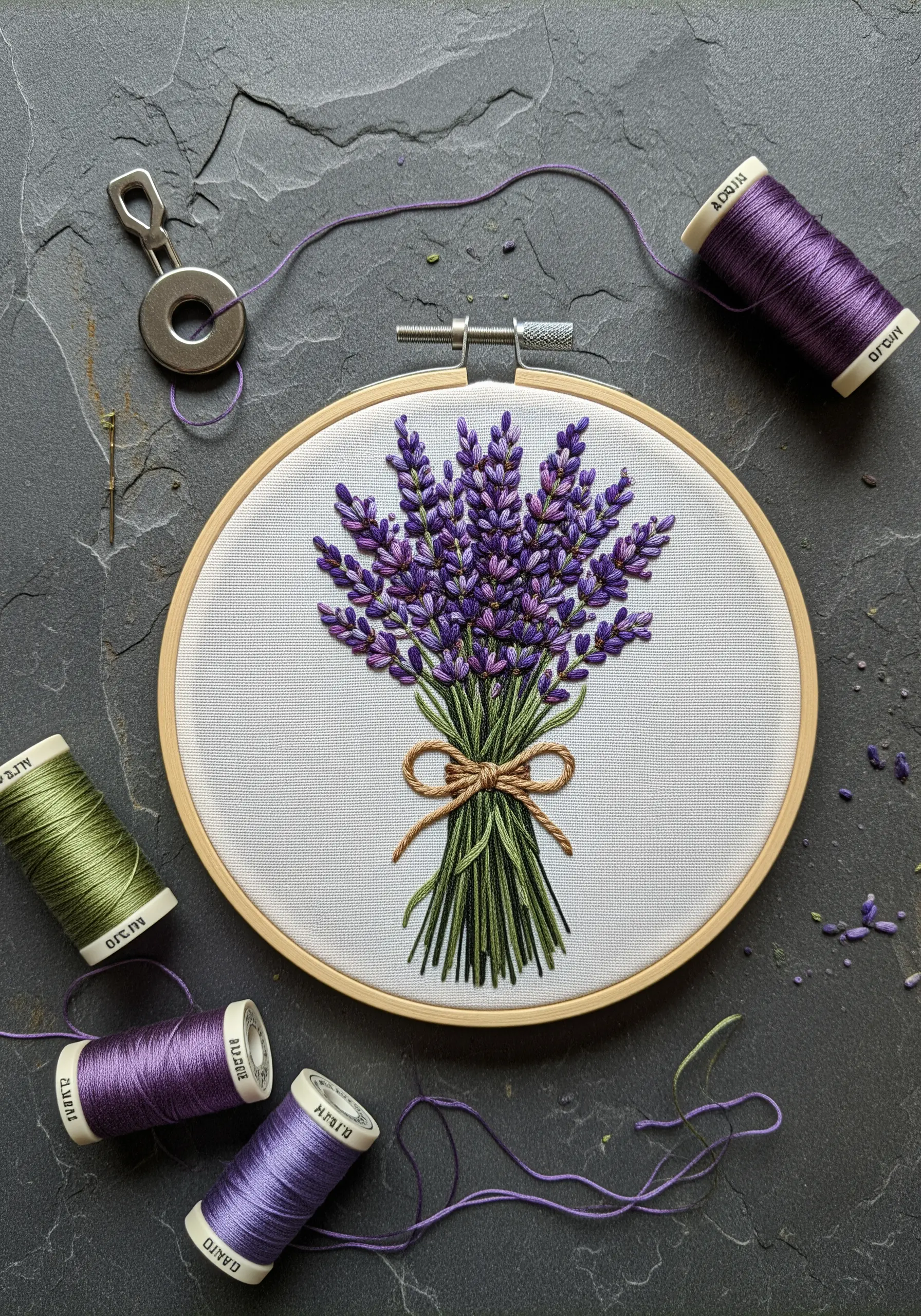
To create a dense, vibrant bouquet that doesn’t look flat, layering is your most important technique.
Start with the stems, using several shades of green in stem stitch to give them dimension.
Next, fill in the lavender buds with French knots, using at least three or four complementary shades of purple and lilac.
Place the darker shades deeper within the bouquet and add the lighter shades on top and around the edges to create highlights and a sense of fullness.
A simple jute or brown thread bow, stitched with a couching stitch, provides the perfect rustic finish.
8. Craft Elegant Bookmarks with Polished Finishing
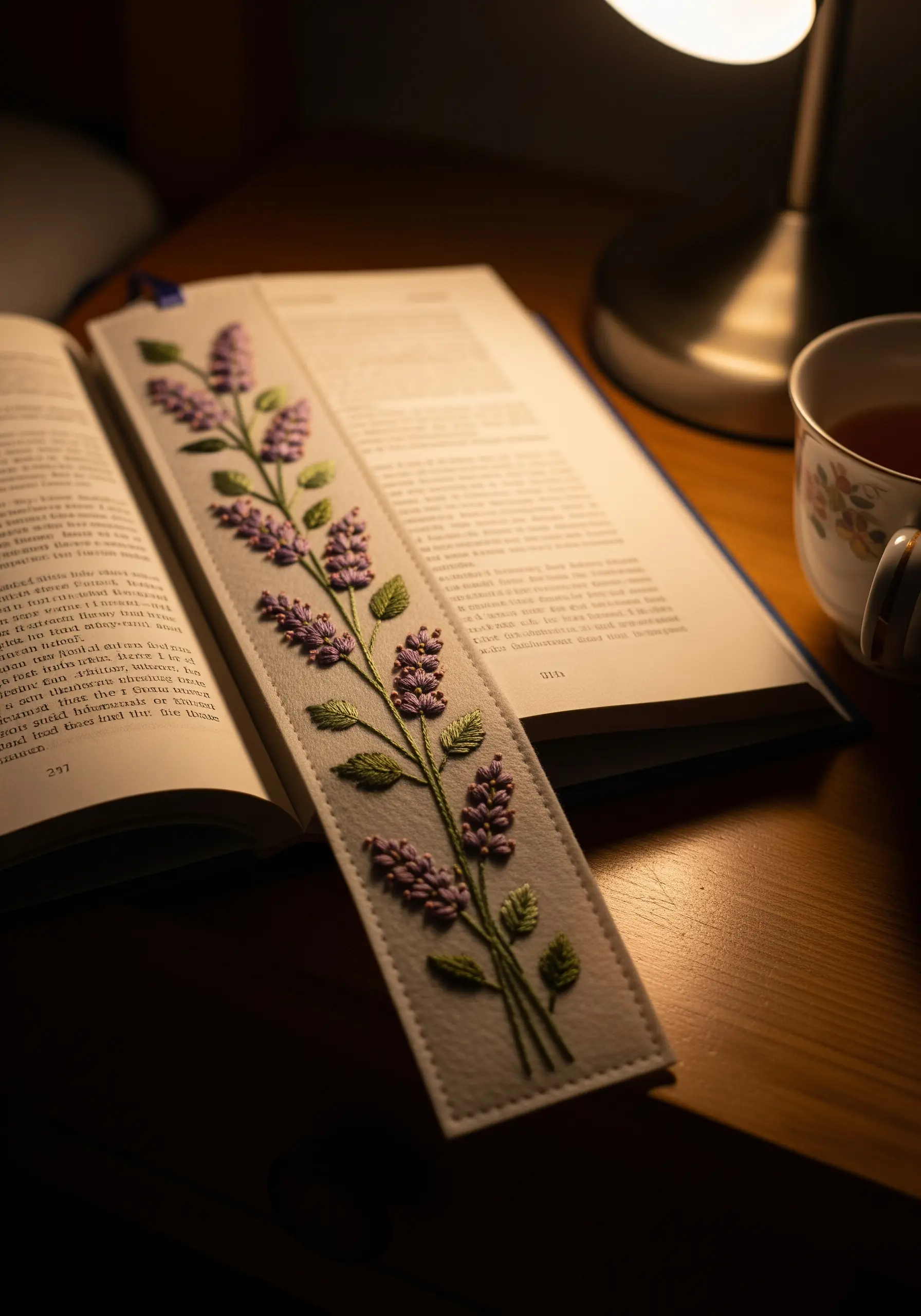
A beautiful embroidered bookmark requires a sturdy base and a clean finish to prevent fraying.
Choose a non-woven material like felt or a tightly woven cotton canvas for your embroidery surface.
After stitching your design, cut it out, leaving a small margin. Then, cut a matching piece of backing felt.
Use a blanket stitch or a tight whip stitch around the entire edge to join the two layers. This not only secures the raw edges but also adds a professional, decorative border.
9. Create Dramatic Contrast on Dark Fabric
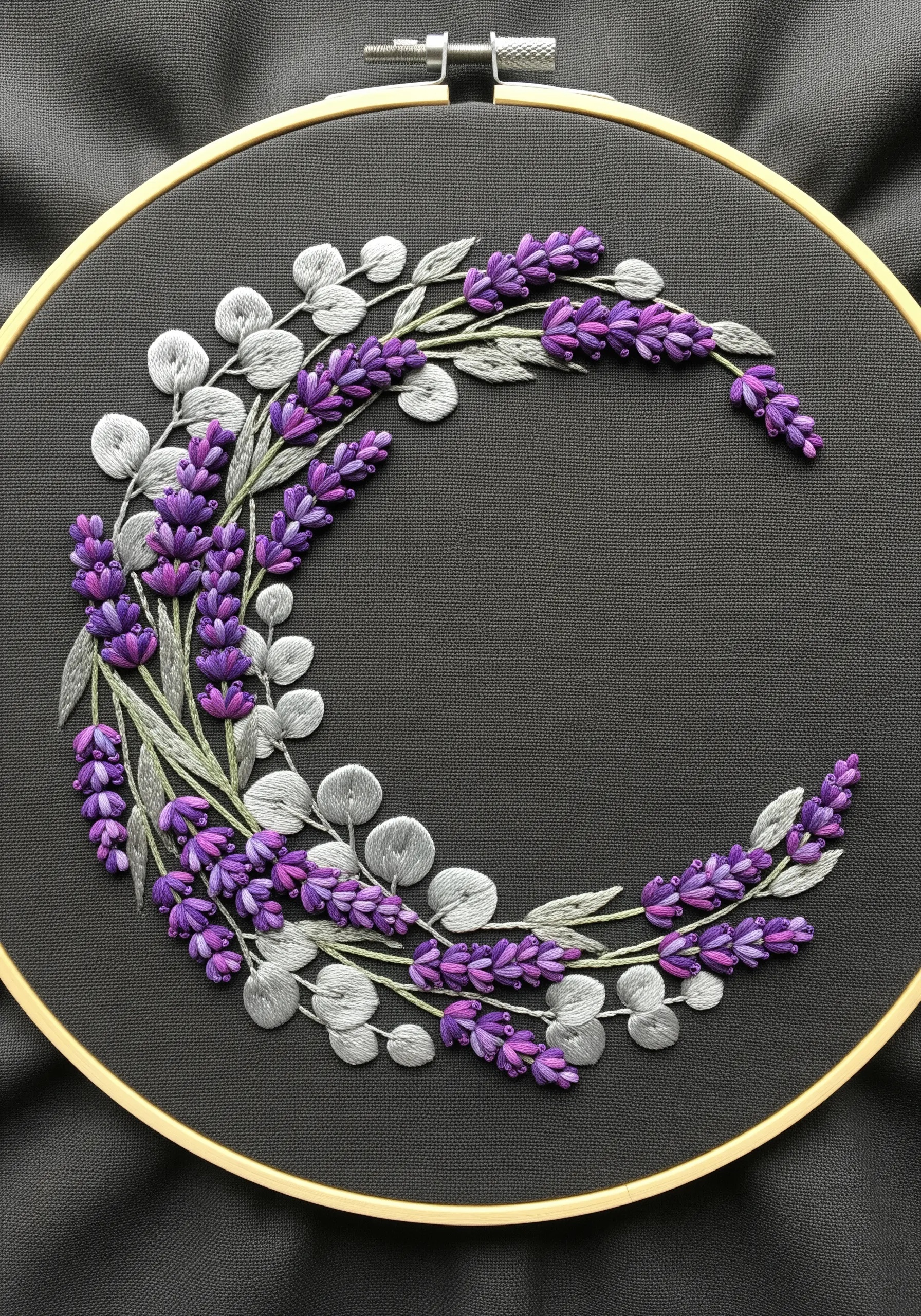
Stitching on black or charcoal gray fabric makes colors appear more vibrant and creates an immediate sense of drama.
Select high-contrast threads, like bright purples and cool, silvery grays, to make your design pop.
When transferring your pattern to dark fabric, use a white water-soluble transfer pen or chalk pencil for clear visibility.
This technique is perfect for night garden embroidery ideas, turning a simple floral crescent into a celestial, eye-catching piece.
10. Design a Cohesive Triptych for Minimalist Walls
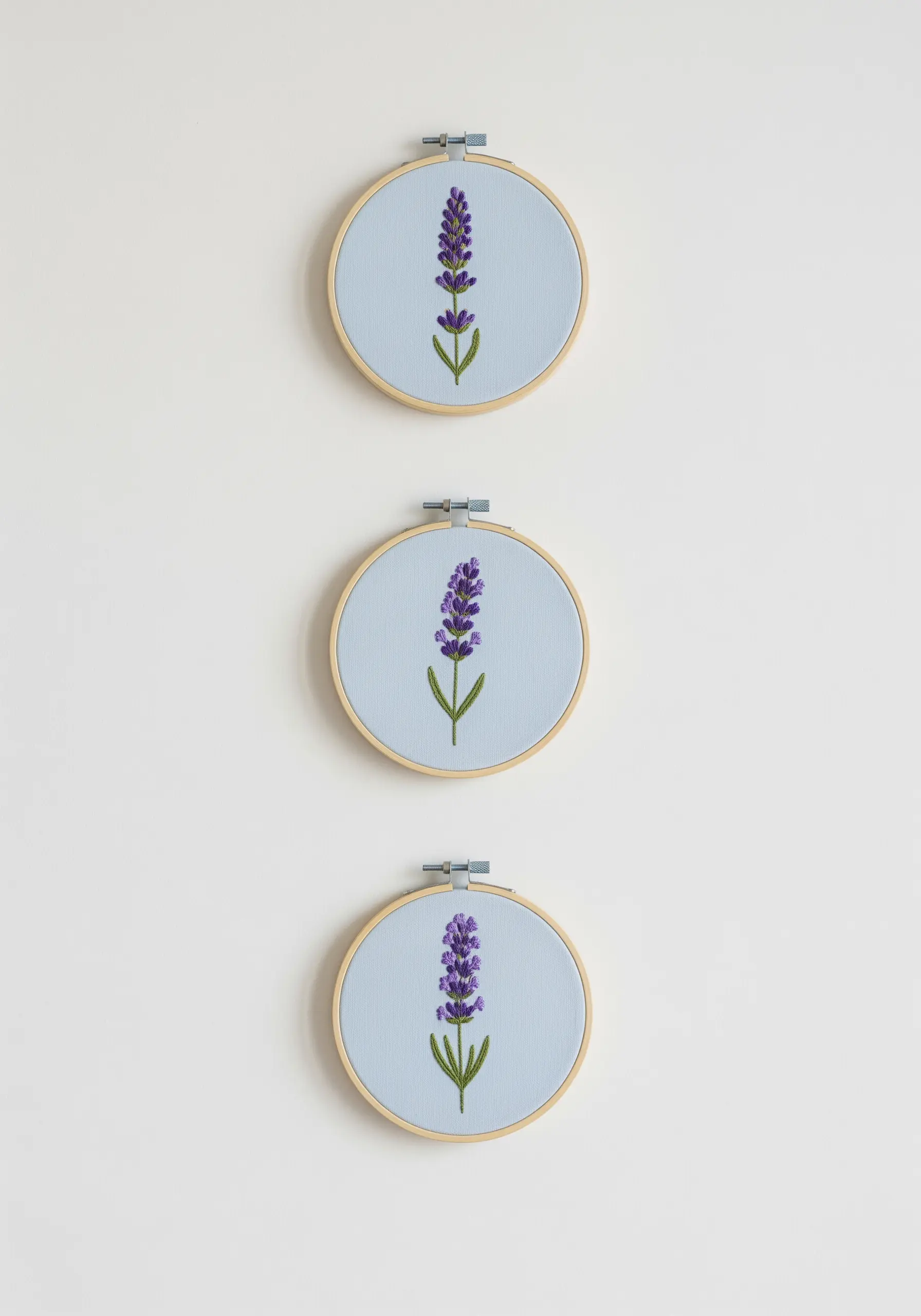
Grouping several small hoops creates a more significant visual impact than a single piece and is perfect for a clean, modern aesthetic.
To create a harmonious series, use the same size hoop and background fabric for each piece.
Stitch a simple lavender sprig in each, but slightly alter the composition—one might be taller, another might have more leaves, and the third a fuller bloom.
This subtle variation keeps the eye engaged while maintaining a unified theme, ideal for creating minimalist hoop embroidery designs.
11. Embrace Meditative Precision with Cross-Stitch
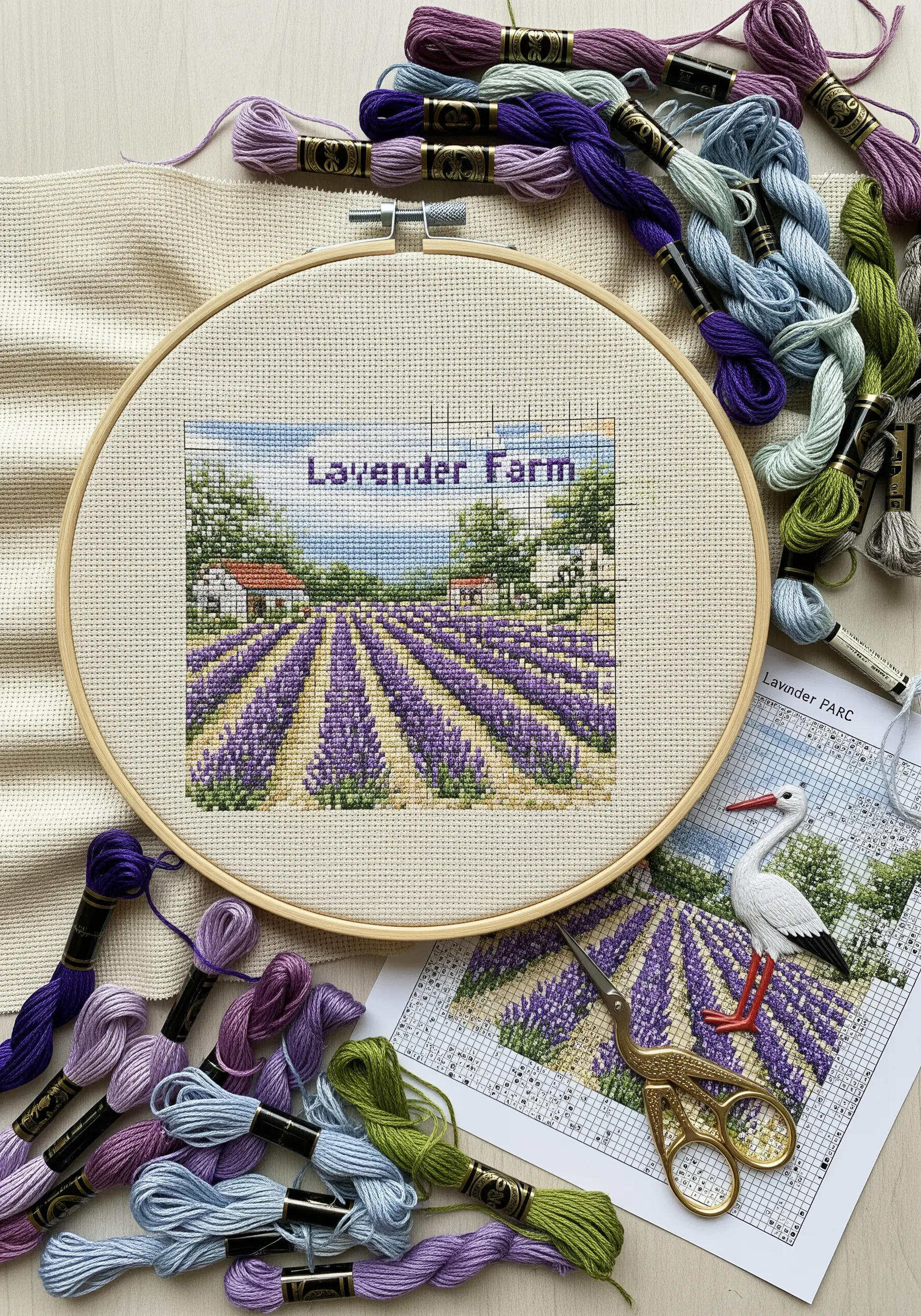
If you enjoy structure and precision, translating a lavender field into a cross-stitch pattern offers a calming, meditative experience.
Work on Aida cloth, which has a natural grid that makes counting stitches effortless and ensures every ‘X’ is uniform.
The beauty of cross-stitch lies in its pixel-like quality, where blocks of color blend from a distance to form a complete image.
It’s a wonderful way to achieve a detailed scene with a charming, slightly nostalgic feel that differs from the fluidity of thread painting.
12. Define Your Motif with Negative Space
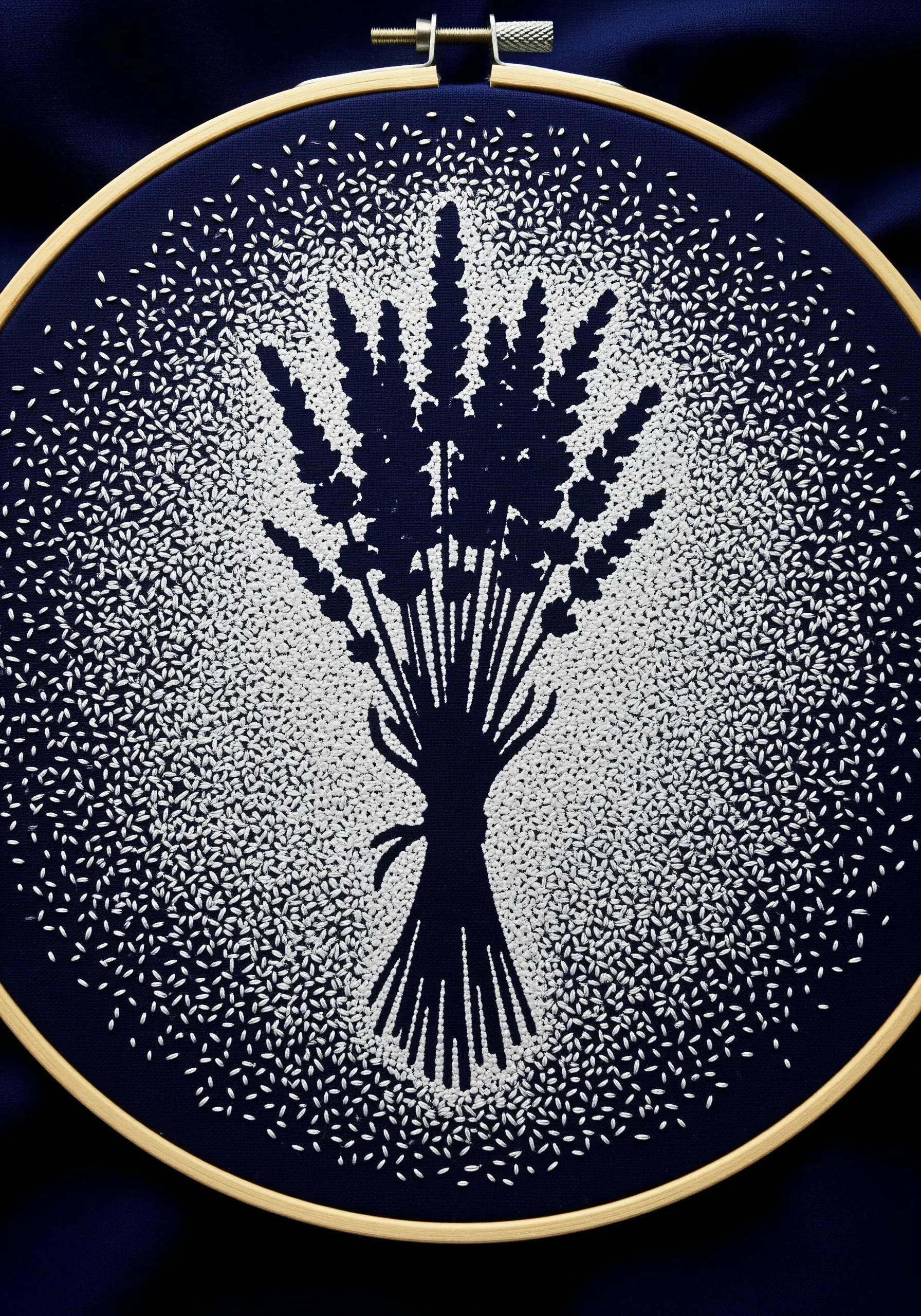
Create a powerful graphic statement by stitching the background instead of the subject itself.
Lightly trace the silhouette of your lavender bouquet onto dark fabric.
Instead of filling the bouquet, meticulously fill the entire area around it with thousands of tiny, randomly oriented seed stitches using a contrasting thread, like white or silver.
This technique inverts the traditional approach, using texture and density to carve out the clean, sharp silhouette of the lavender, proving that what you *don’t* stitch can be just as impactful.
13. Personalize Linens with a Floral Monogram
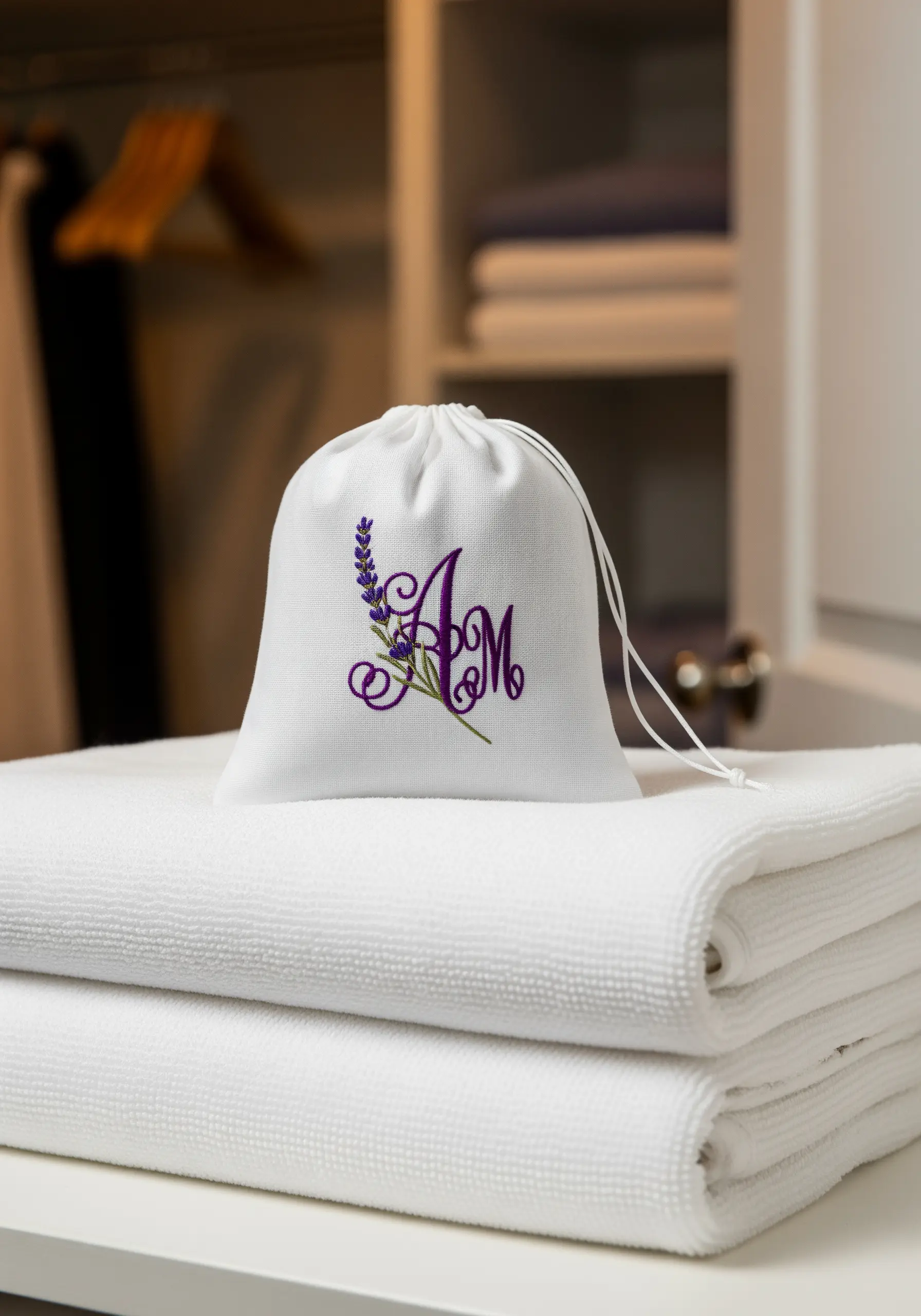
Elevate a simple monogram by intertwining it with delicate botanicals for a personal and timeless touch.
Use a padded satin stitch for the letters to give them a raised, three-dimensional quality that stands out.
Then, carefully stitch thin, elegant lavender stems that appear to grow around and through the curves of the monogram.
This fusion of typography and nature creates sophisticated botanical monogram embroidery ideas, perfect for gifting or adding a signature touch to your own linens.
14. Add Whimsical Charm with Mixed Textures
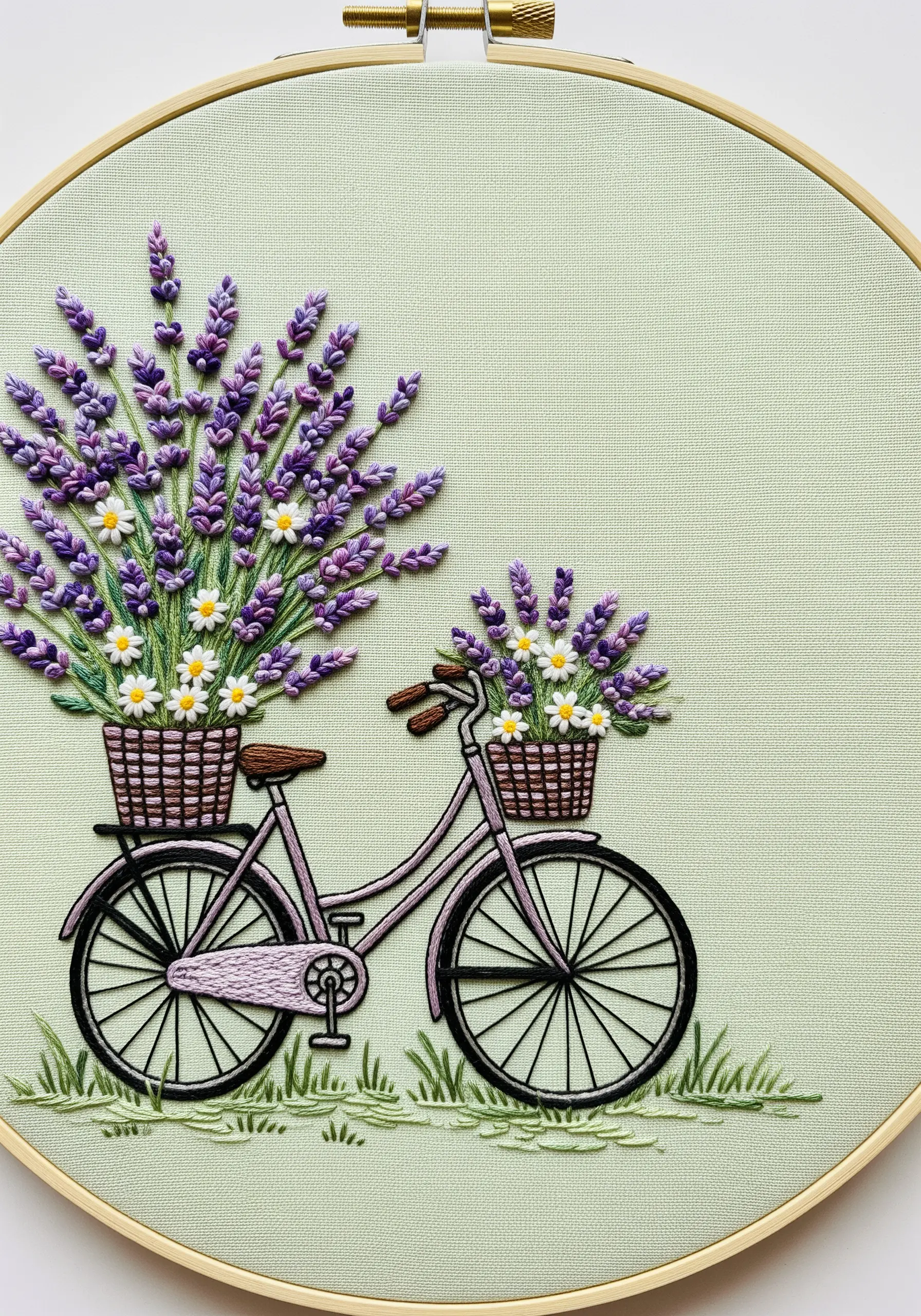
Bring a whimsical scene to life by assigning a unique texture to each element in your composition.
Use a woven wheel stitch for the center of the daisies to create small, raised rosettes, and use a basketweave stitch for the bicycle’s baskets to mimic a woven texture.
Contrast these with smooth, clean outlines for the bicycle frame using a whipped backstitch.
This thoughtful mix of stitches adds delightful tactile and visual interest, making the entire piece more engaging and dynamic.
15. Frame a Simple Motif with Geometric Lines
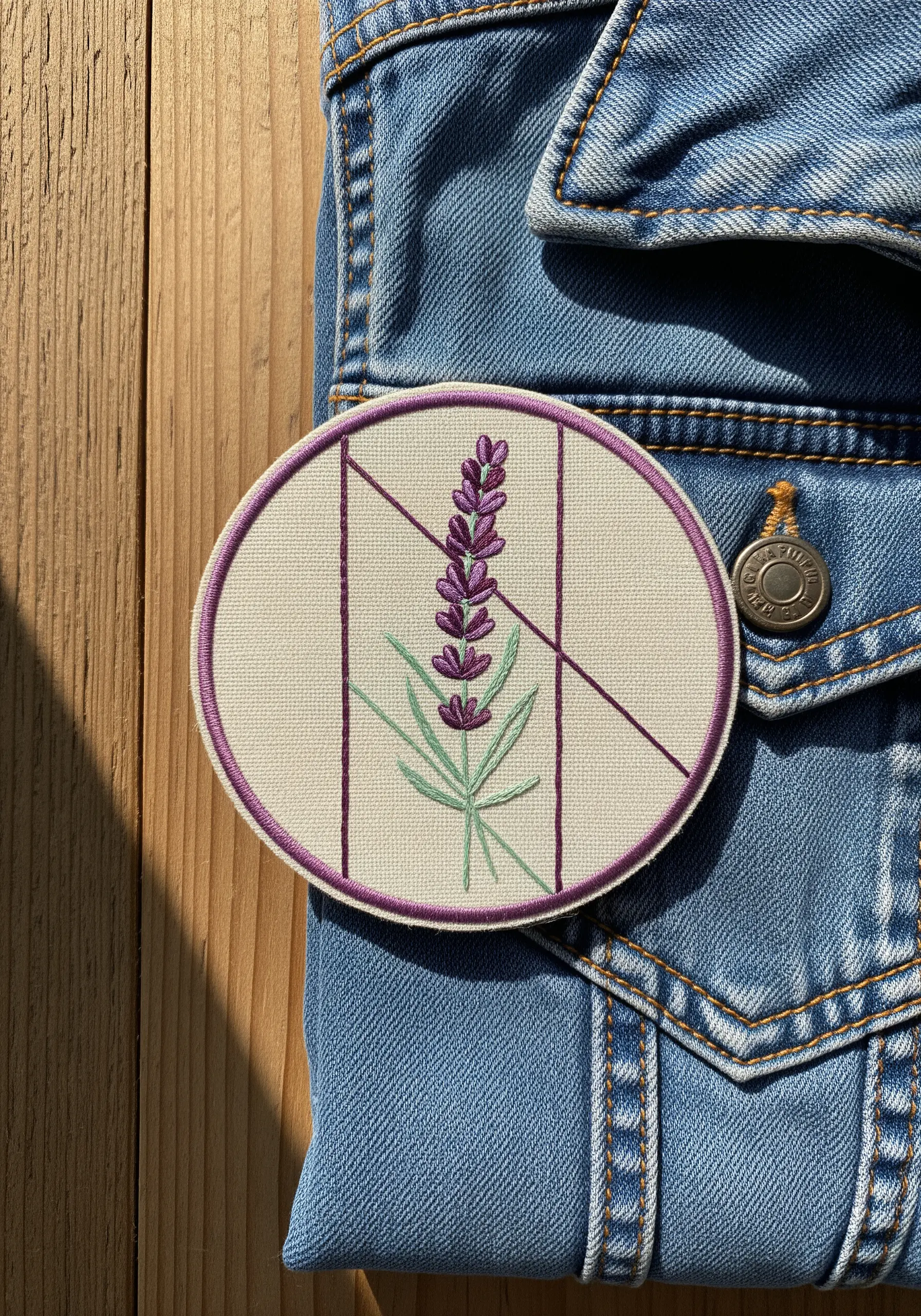
Combine the organic softness of lavender with the clean, modern structure of geometric lines to create a balanced design.
Start by stitching a single, centered lavender sprig.
Then, use a ruler and a disappearing ink pen to draw a simple geometric frame around it—a few intersecting lines or a simple square is all you need.
Stitch these lines using a bold whipped backstitch or chain stitch. This technique creates a contemporary patch or hoop art piece where nature and structure coexist beautifully.
16. Create Ethereal Layers with Sheer Overlays
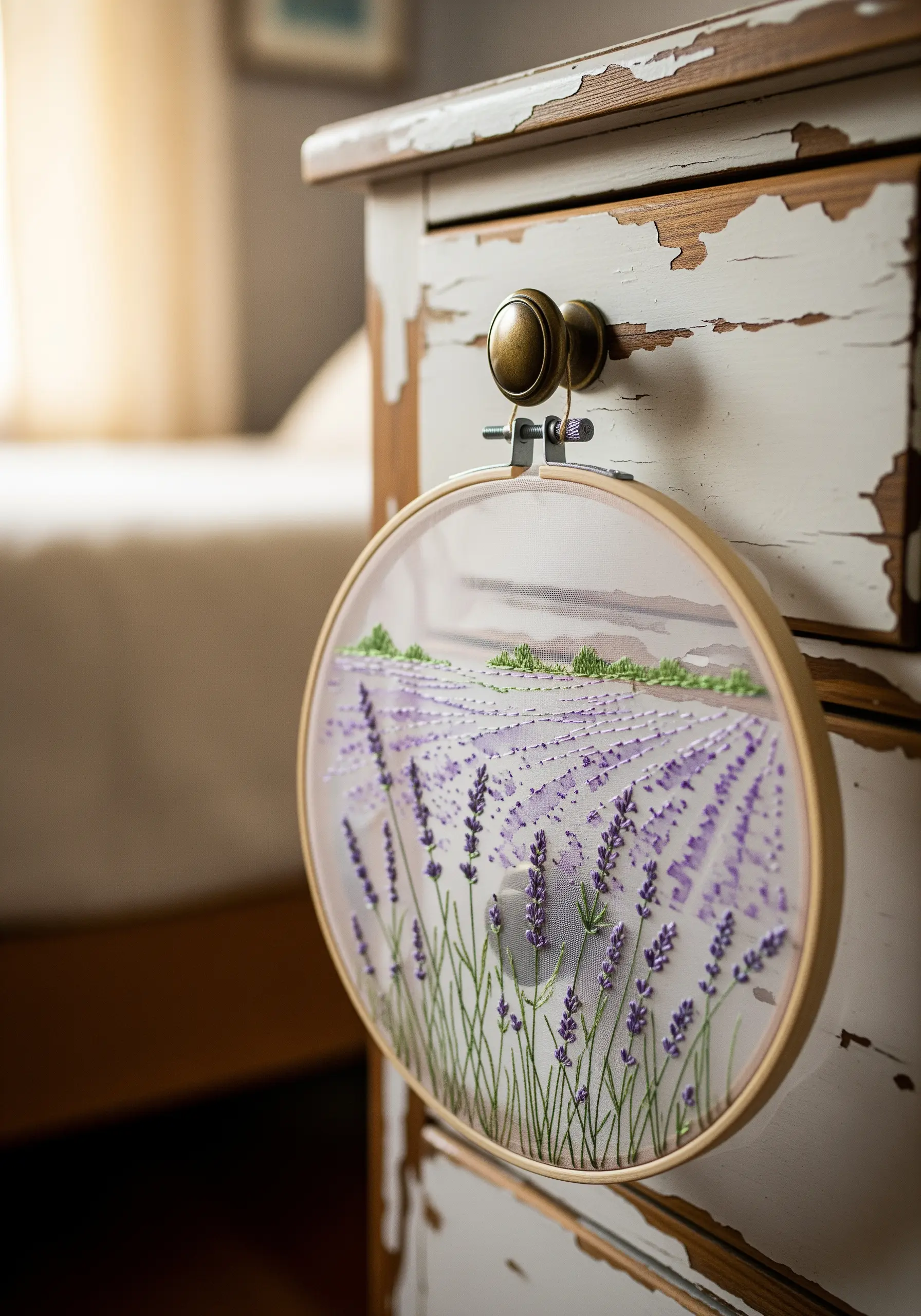
Stitching on transparent fabric like tulle or organza allows you to create dreamy, layered compositions.
Embroider your lavender field onto the sheer fabric, using fewer strands for a delicate touch.
When framing, you can either place it directly over a solid background or, for a more advanced effect, use a double hoop to create a small gap between the sheer layer and the backing fabric.
This creates a subtle shadow effect, giving your embroidery a unique, three-dimensional quality and a sense of ethereal distance.
17. Explore Graphic Botanicals with Blackwork
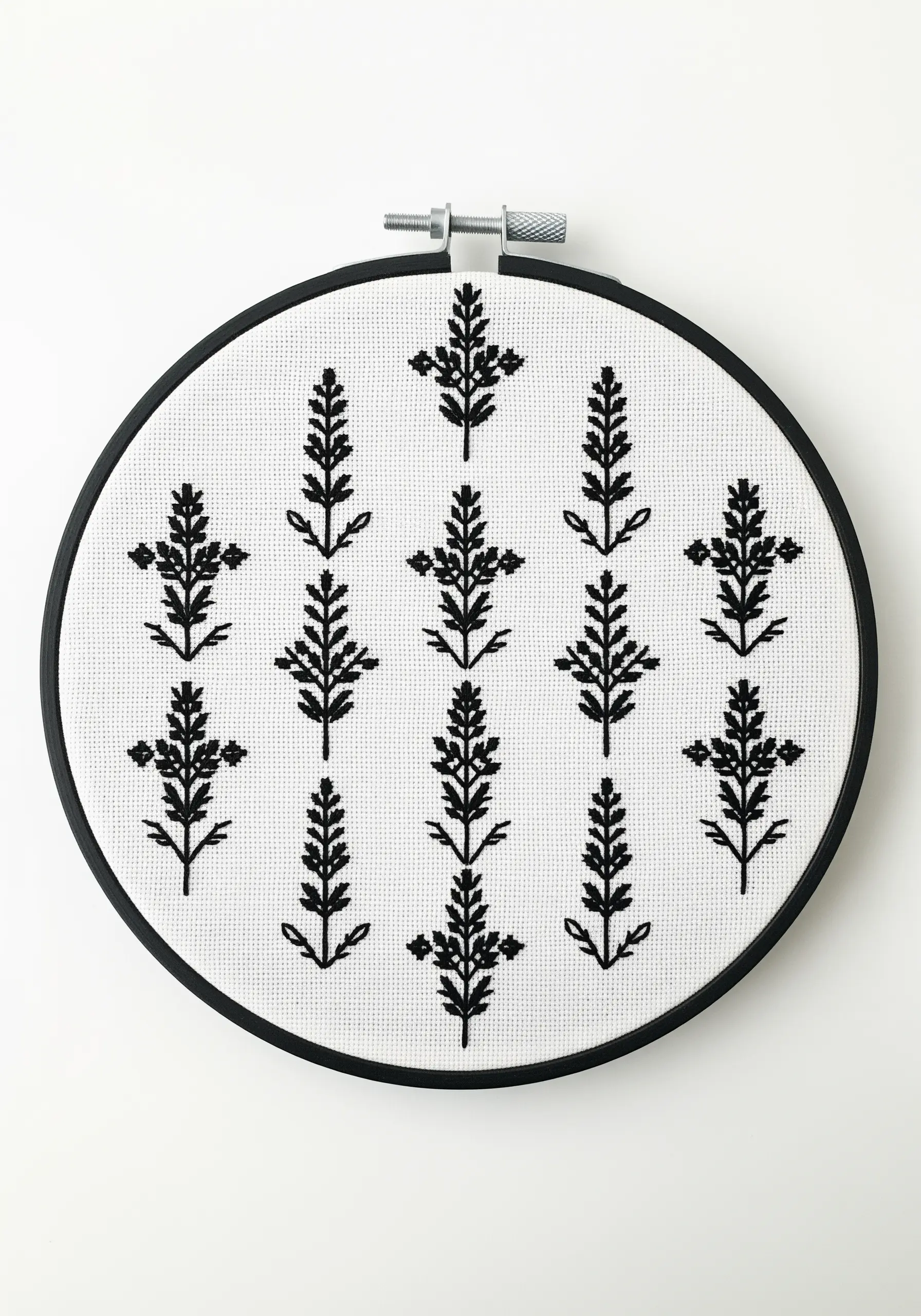
Reimagine lavender not through color, but through intricate pattern and line with blackwork embroidery.
This technique uses simple stitches like backstitch and Holbein stitch to create complex, geometric fill patterns on a grid fabric like Aida or evenweave linen.
Outline your lavender sprigs, then fill them with different blackwork patterns to create variations in texture and tone.
It’s a sophisticated and minimalist approach that transforms a familiar floral into a striking piece of graphic art.
18. Add a Touch of Luxury to Your Bed Linens
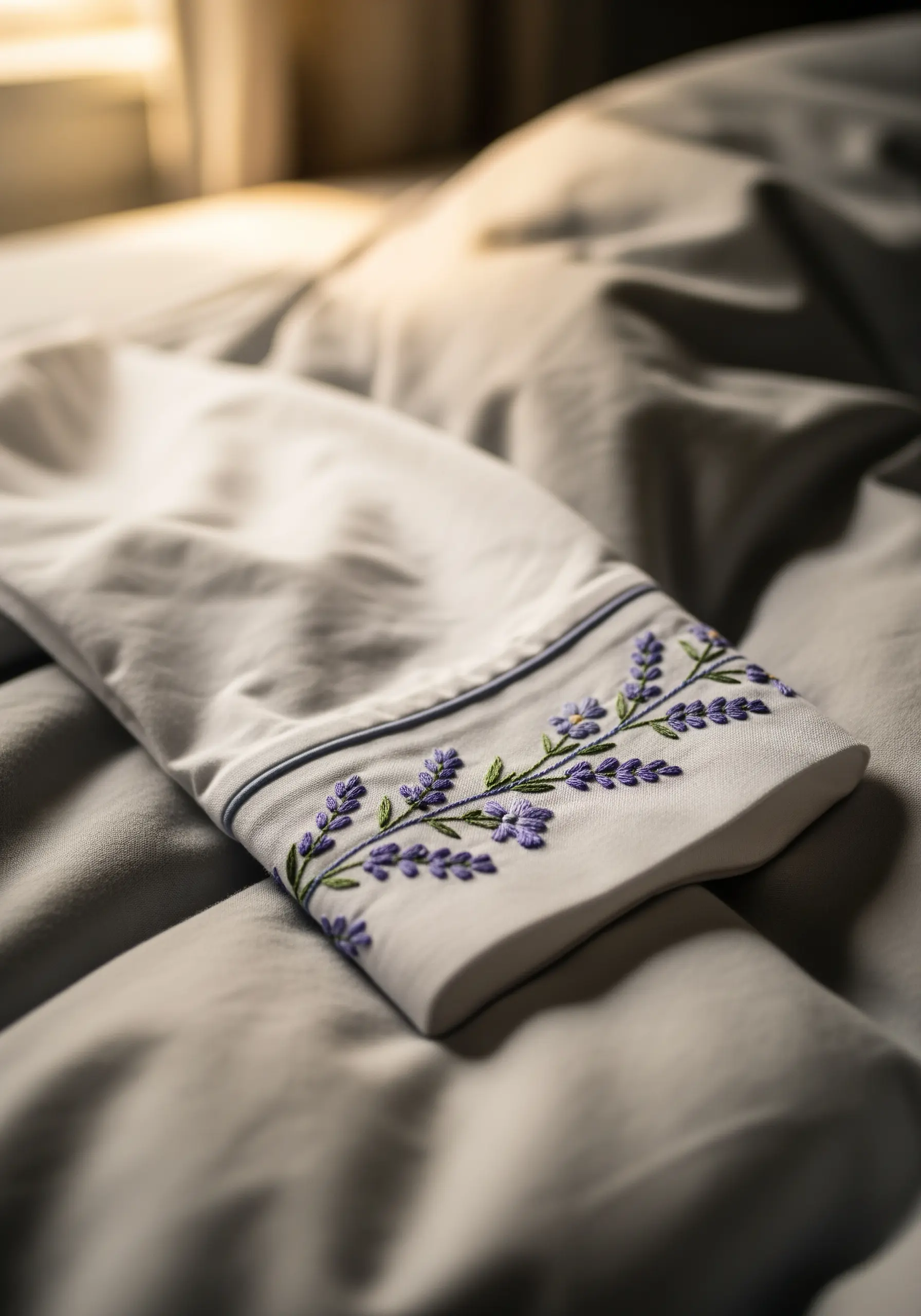
A simple embroidered border can transform standard pillowcases into something that feels custom and luxurious.
Choose high-quality, colorfast cotton floss that will withstand washing. DMC and Anchor are excellent choices.
Keep the design delicate and low-profile—a meandering vine of lavender stitched with stem stitch and tiny satin stitch buds is perfect.
By adding soft neutral embroidery borders, you introduce a personal, handcrafted detail that elevates your entire bedroom.
19. Emulate a Masterpiece with Painterly Stitches
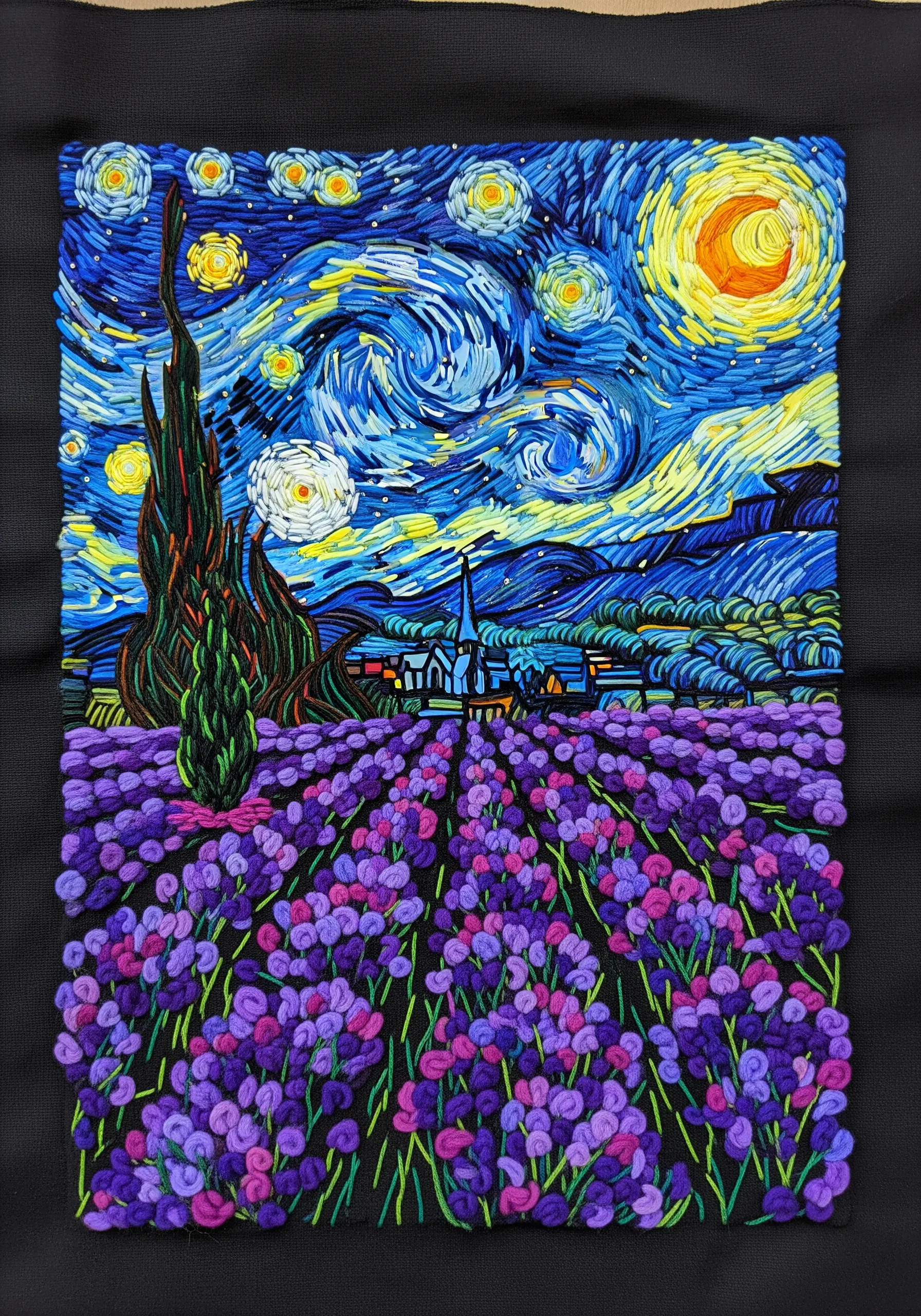
Channel the energy of Van Gogh’s ‘The Starry Night’ by using thread to mimic his iconic brushwork.
Use thick, directional straight stitches and couching with heavier threads or yarn to create the swirling movement in the sky.
For the lavender field, use dense clusters of French knots in vibrant, slightly unconventional shades of purple, magenta, and blue to capture an impressionistic feel.
This isn’t about perfect replication; it’s about translating the emotion and texture of a painting into the medium of fiber art.
20. Create a Botanical Study with Precision and Text
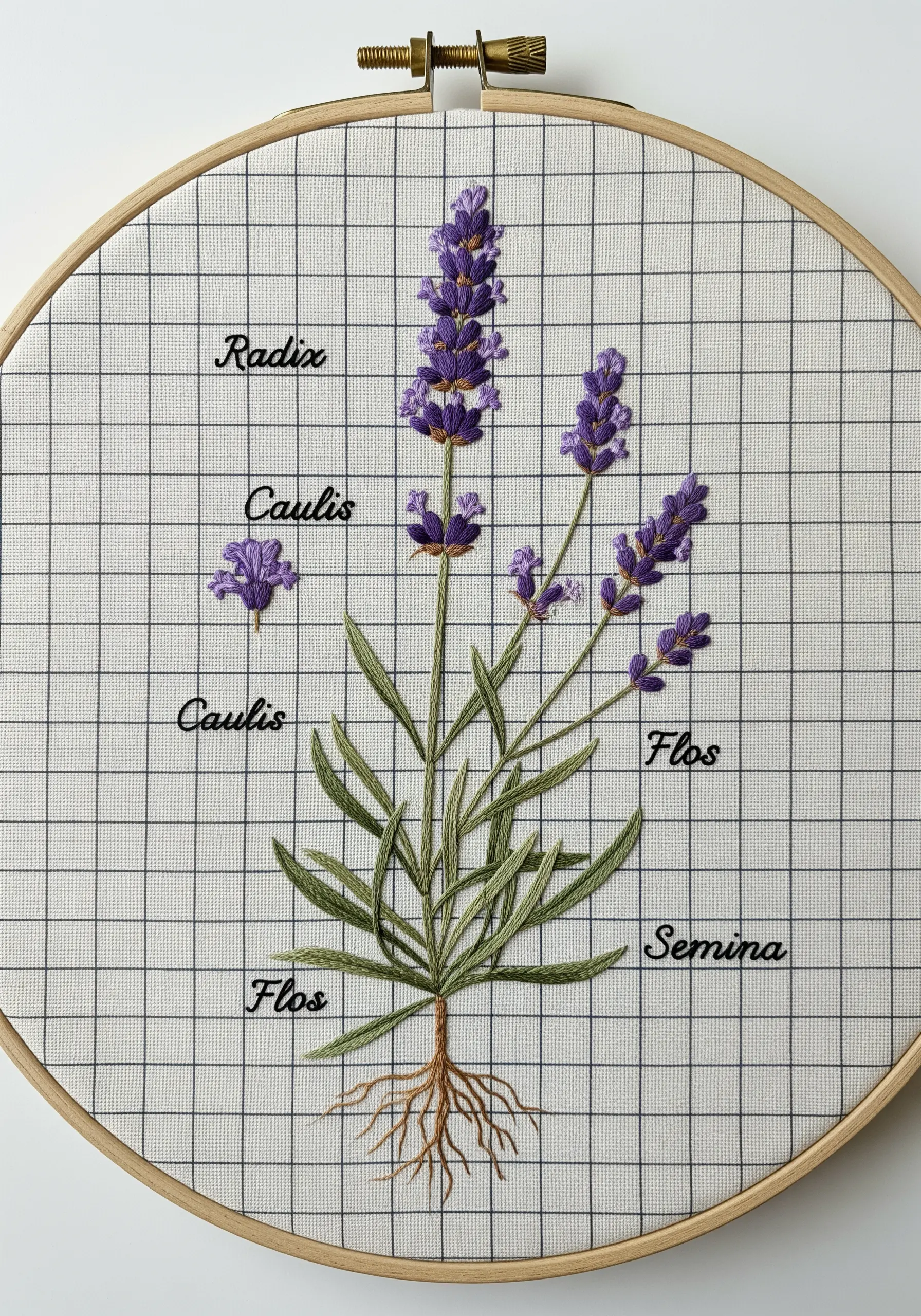
Adopt the style of a vintage botanical illustration by combining a detailed floral study with elegant, hand-stitched labels.
Use a grid-patterned fabric as your background to enhance the scientific, educational aesthetic.
Stitch the lavender with careful attention to detail, using long-and-short stitch for the petals and fishbone stitch for the leaves to show their structure.
Add delicate labels like ‘Flos’ (flower) or ‘Radix’ (root) using a tiny backstitch with a single strand of black or brown thread for a refined, intellectual finish.
21. Finish Your Hoop with a Soft Tulle Frame
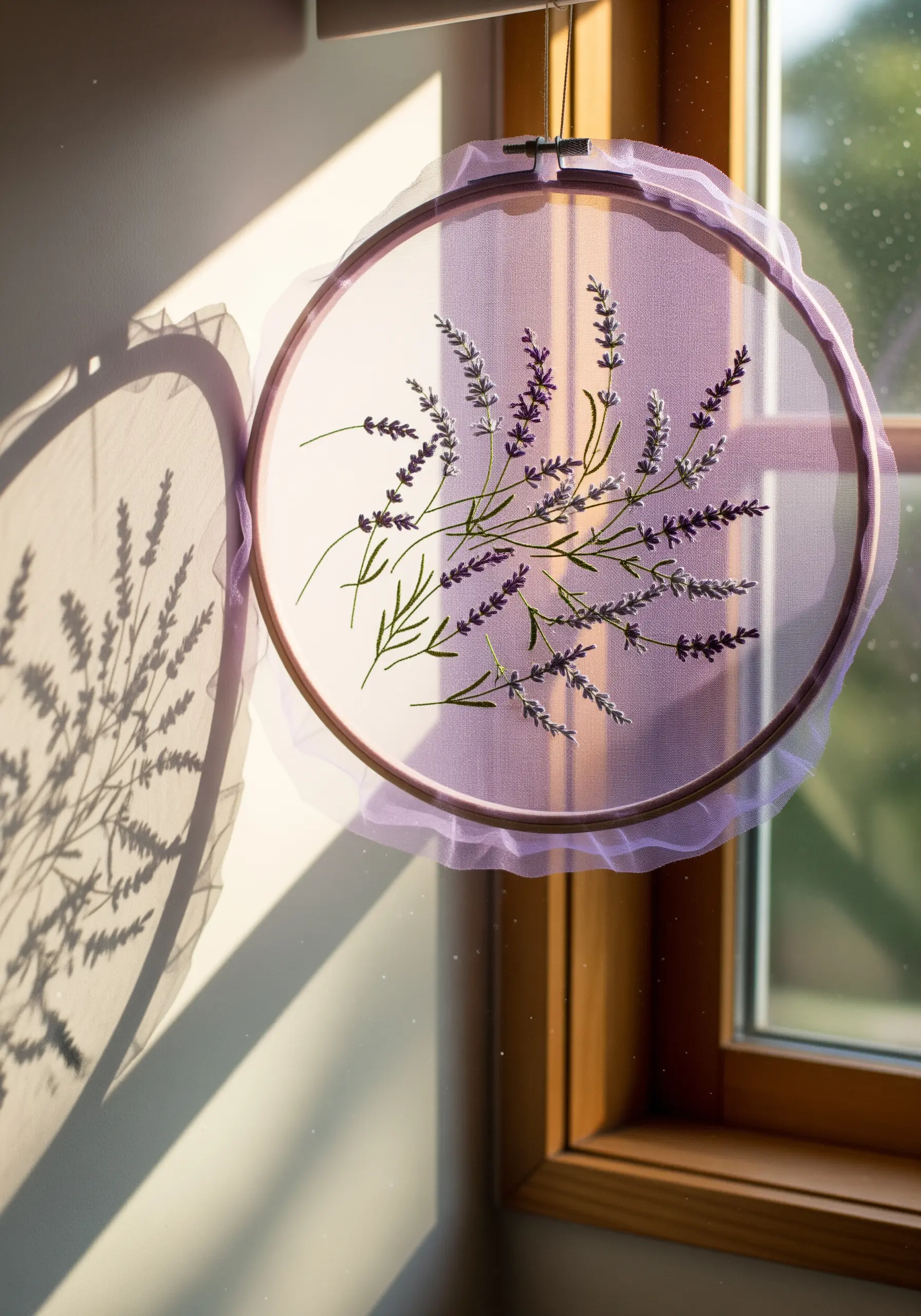
The way you finish and present your embroidery can elevate it from a simple craft to a polished piece of decor.
After stitching your design on sheer fabric, create a soft, ethereal frame by adding a ruffle of tulle around the outer edge of the hoop.
Simply gather a strip of tulle with a running stitch and glue or sew it to the back of the hoop.
This finishing touch adds a dreamy, decorative quality that complements the delicacy of the lavender and the transparency of the fabric.
22. Master the Art of Stitching on Paper
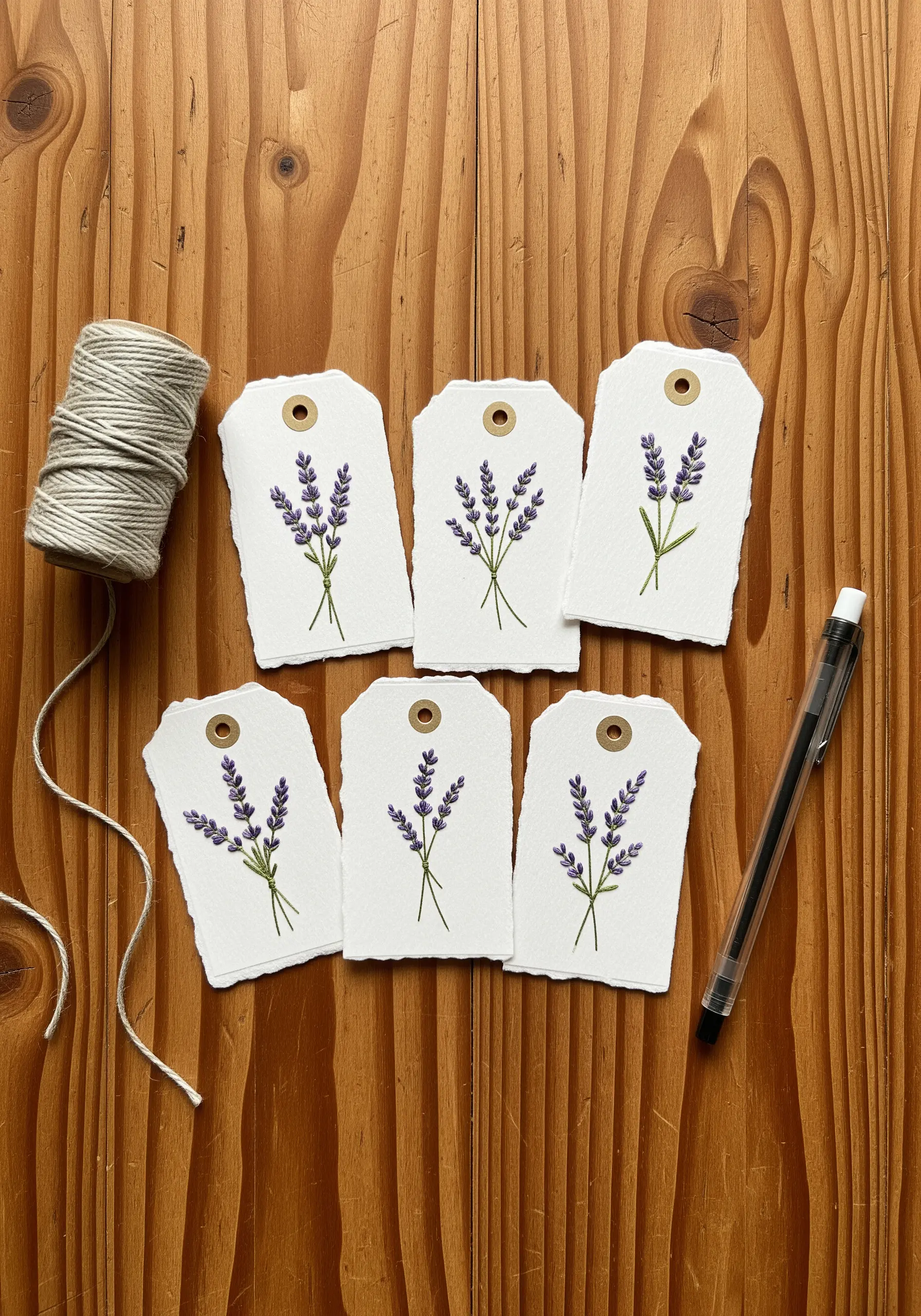
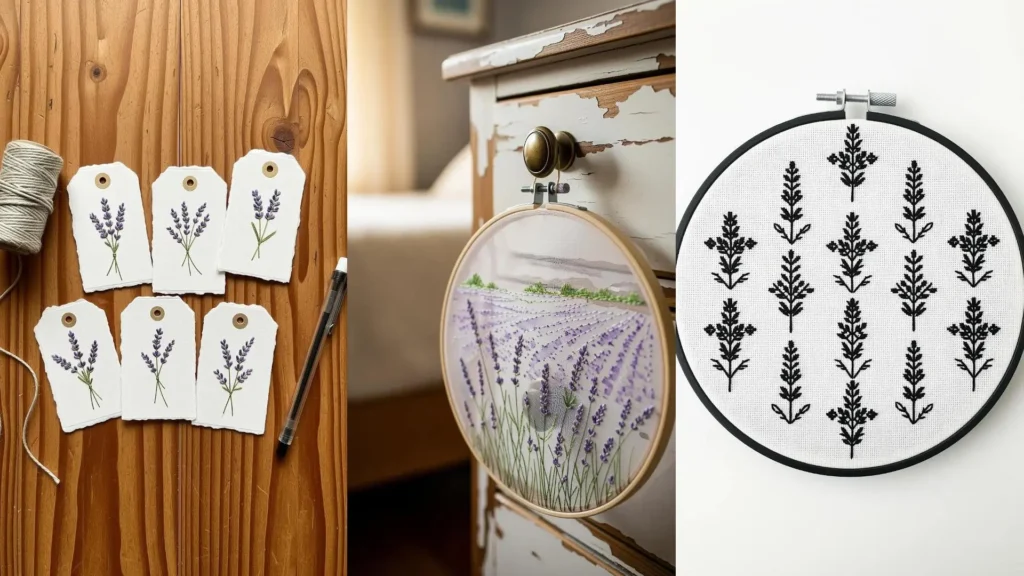
Embroidering on paper creates charming, tactile gift tags or cards, but it requires a gentle approach.
Choose a thick, high-quality watercolor or cotton rag paper that can withstand perforation.
Instead of pushing the needle through directly, first pre-punch your stitch holes along your design lines using a fine needle or a push pin.
Use only one or two strands of floss and pull your stitches taut but not tight to avoid tearing the paper. This method results in clean, beautiful paper art projects.
23. Shape Your Botanicals into a Meaningful Form
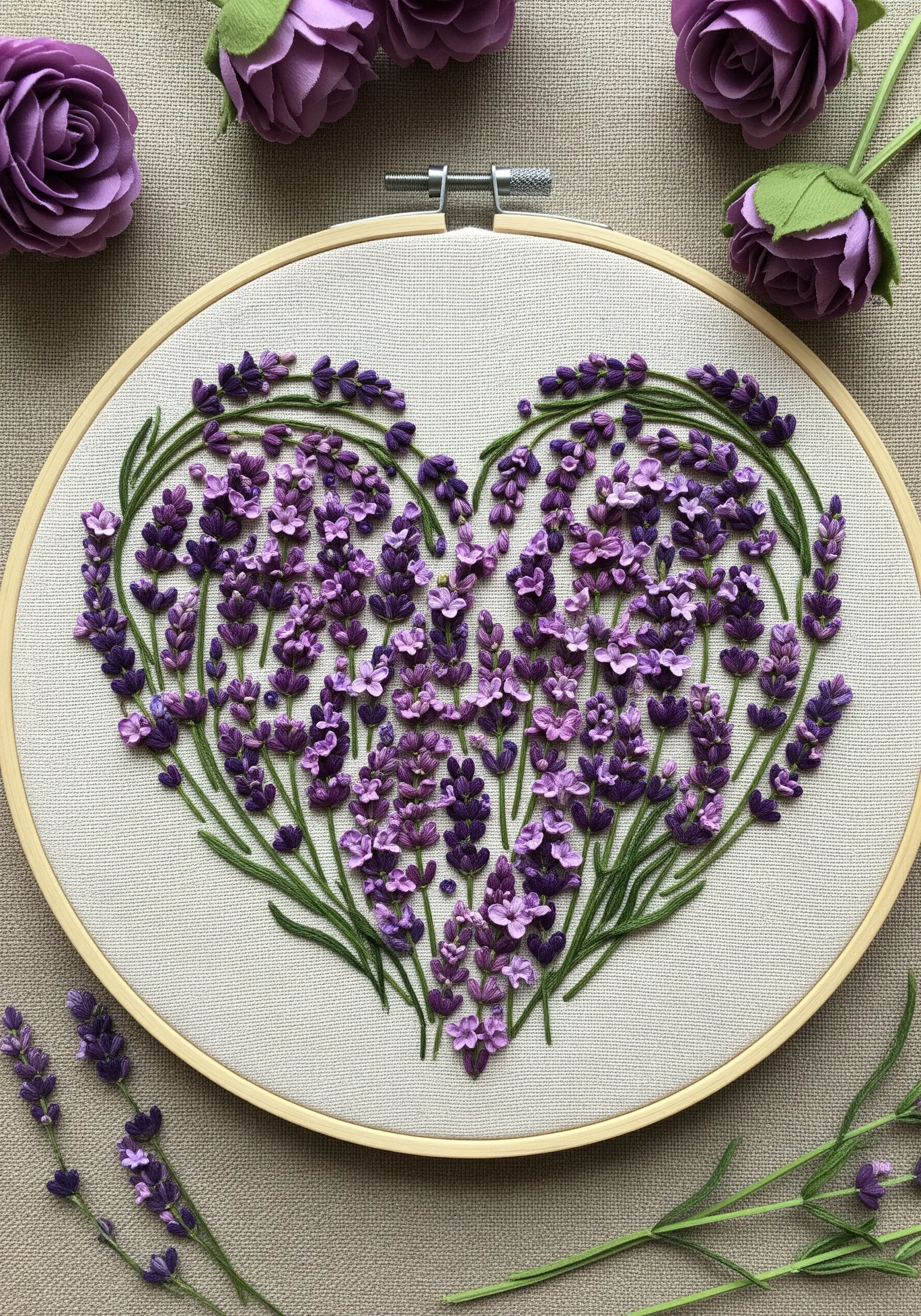
Arrange your lavender stems into a deliberate shape, like a heart, to add a layer of narrative and emotion to your piece.
Lightly draw the heart outline on your fabric. Begin stitching the outer stems first, angling them to follow the curves of the heart.
Fill the center with shorter stems and denser clusters of French knots or bullion knots for the blossoms.
Varying the height and density of the lavender within the shape will make it feel full, organic, and intentionally designed.
24. Embellish a Lampshade with Scattered Sprigs
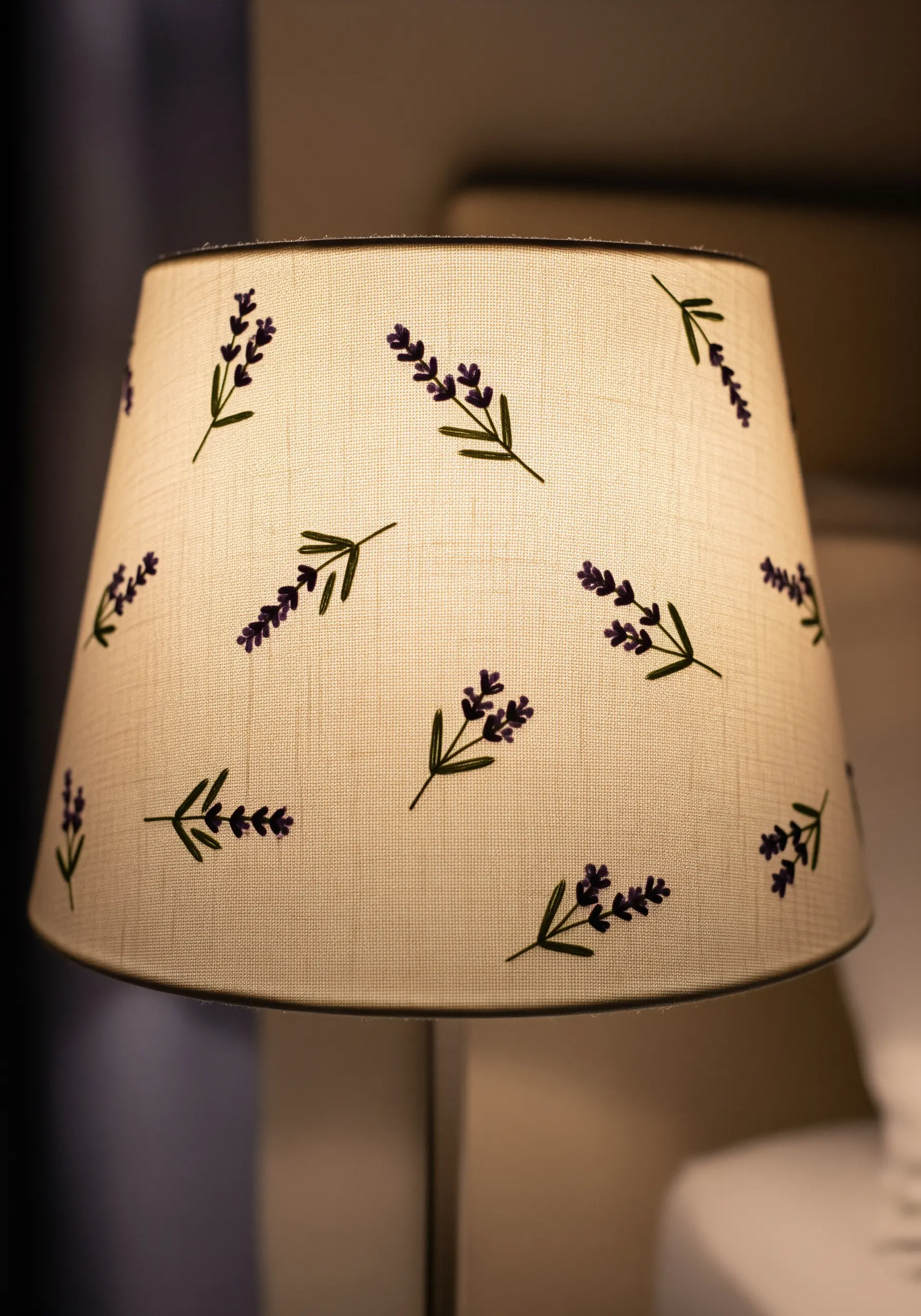
Add a subtle, custom touch to your bedroom lighting by embroidering directly onto a fabric lampshade.
A simple pattern of scattered lavender sprigs is ideal, as it allows light to filter through without being obstructed by dense stitching.
Use a curved upholstery needle to make stitching around the lampshade frame easier.
Secure your thread ends with small, flat knots and a dab of Fray Check to ensure they are tidy and won’t cast shadows when the lamp is on.
25. Blend Thread and Paint for a Watercolor Effect
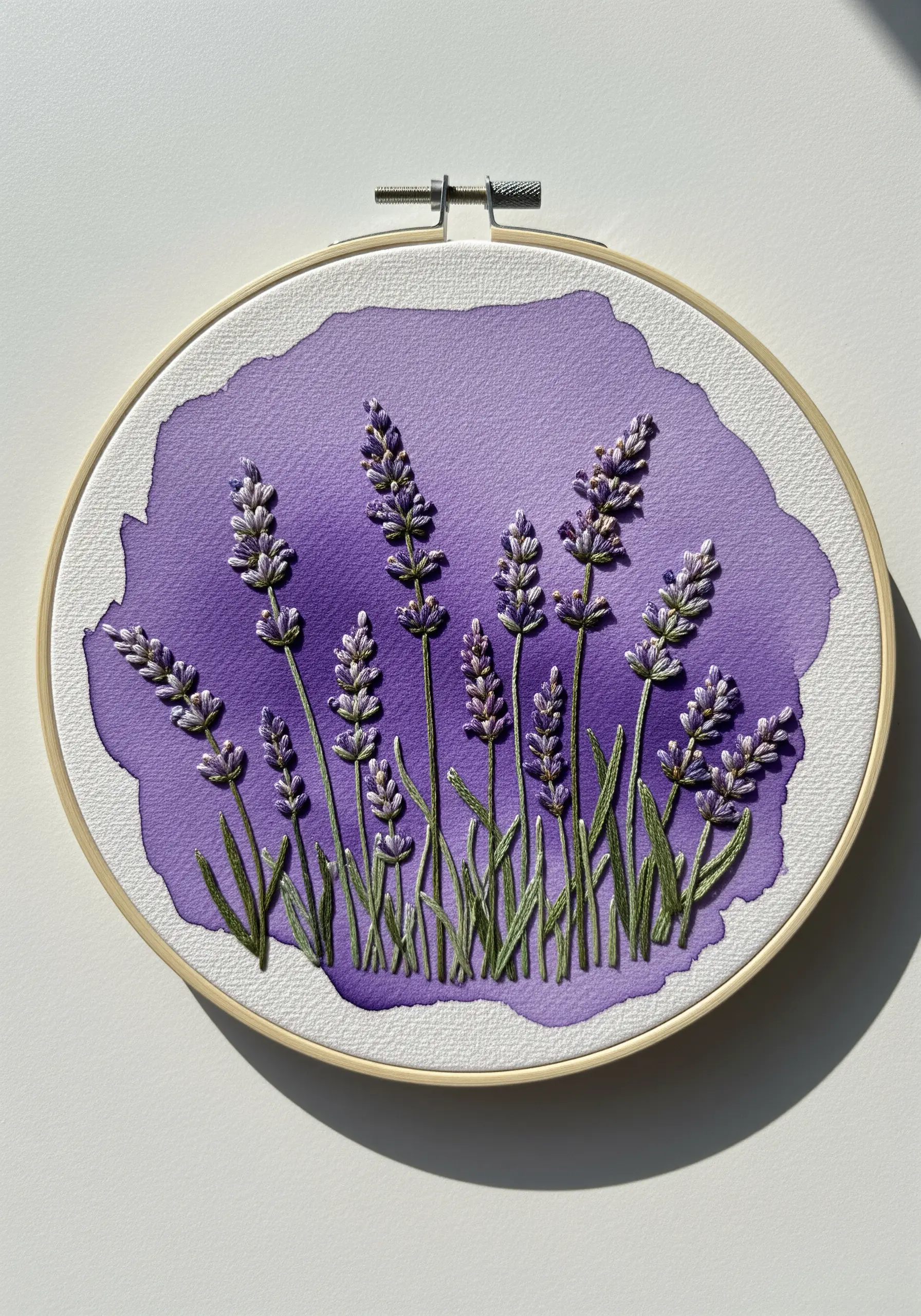
Combine the softness of watercolor with the texture of embroidery for a stunning mixed-media piece.
Begin by painting a loose, organic wash of purple watercolor onto your stretched fabric, letting the edges bleed naturally.
Allow the paint to dry completely before you begin stitching. This is a crucial step to avoid bleeding.
Embroider your lavender stems over the painted area, using the color wash as a guide. The thread adds sharp detail and texture that emerges beautifully from the soft, dreamy background.
26. Curate a Sophisticated and Unexpected Color Palette
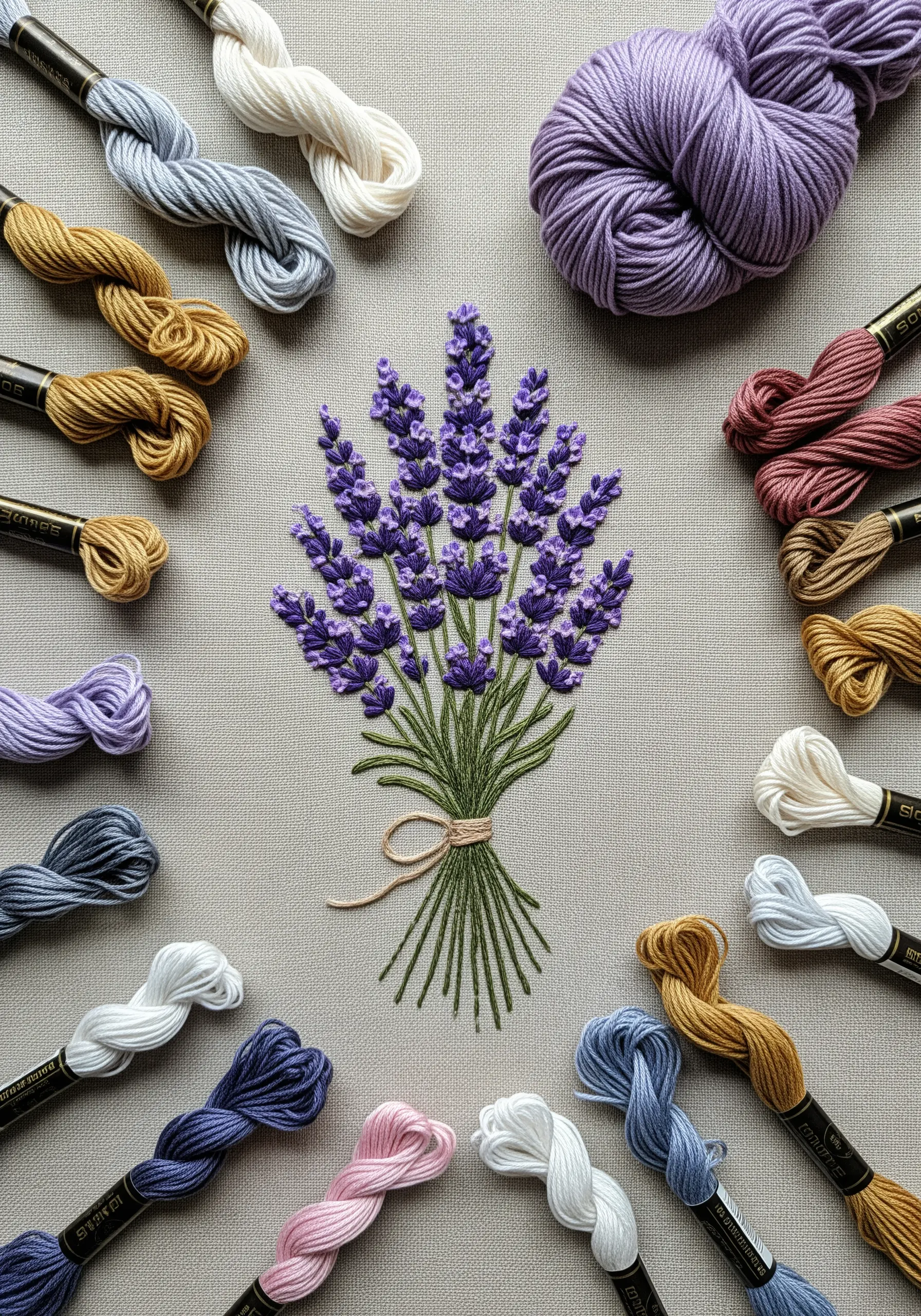
Break free from the traditional purple-and-green palette to give your lavender a more artistic and personal feel.
Experiment by introducing unconventional but complementary colors. Try stitching stems in a muted ochre or a dusty slate blue instead of green.
For the blossoms, mix your purples with shades of dusty rose, mauve, or even a pale, creamy white for highlights.
Building unique embroidery color palettes is one of the easiest ways to develop your signature style and make a classic subject feel entirely your own.
27. Create a Functional and Decorative Trinket Dish
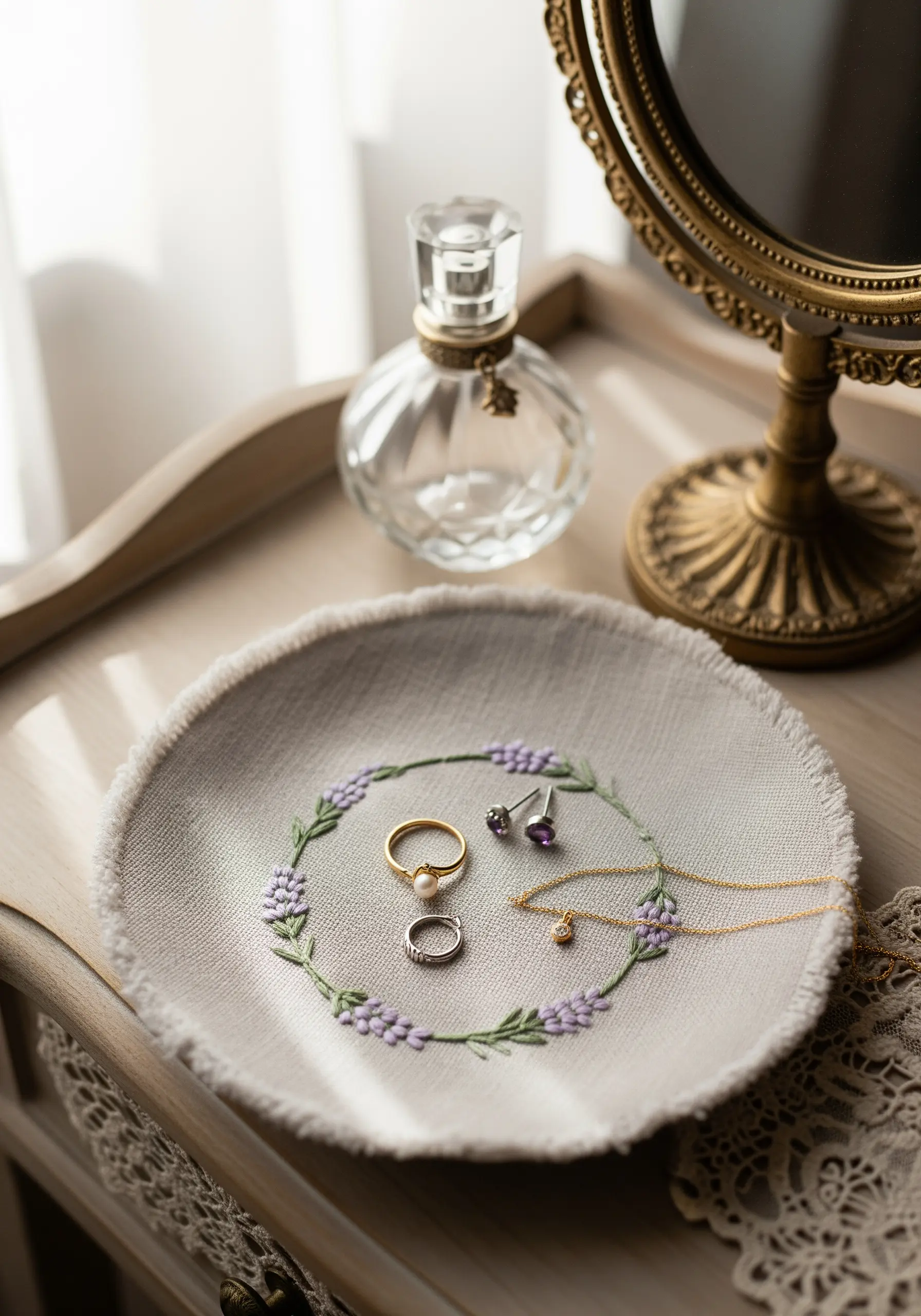
Turn a simple piece of embroidery into a charming and useful object for your nightstand.
Embroider a small, delicate lavender wreath in the center of a piece of linen or canvas.
After stitching, coat the back of the fabric with a fabric stiffener like Mod Podge Stiffy.
While it’s still damp, press the fabric into a small bowl or dish to shape it, and let it dry completely. The result is a beautiful, handcrafted dish perfect for holding jewelry.
28. Integrate Typography for an Inspirational Message
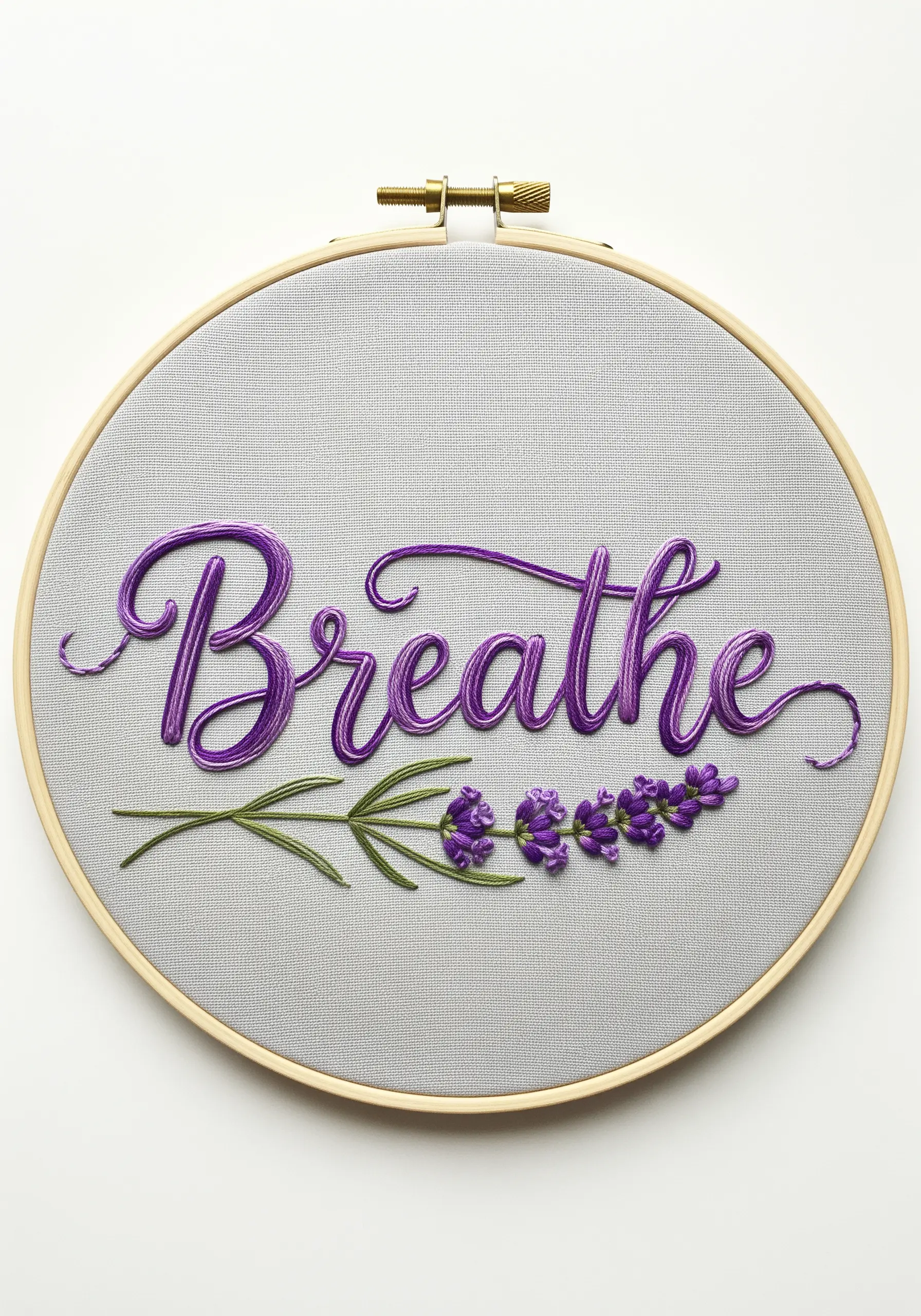
Combine a meaningful word with a botanical element to create a piece that is both beautiful and motivational.
For the lettering, use a padded satin stitch or a thick, raised chain stitch to give the word ‘Breathe’ a sense of weight and importance.
Stitch a single lavender sprig so it appears to be resting just below the text, connecting the calming visual of lavender with the message itself.
This thoughtful composition creates a daily reminder to pause and find a moment of peace.
29. Stitch a Soothing and Personalized Sleep Mask
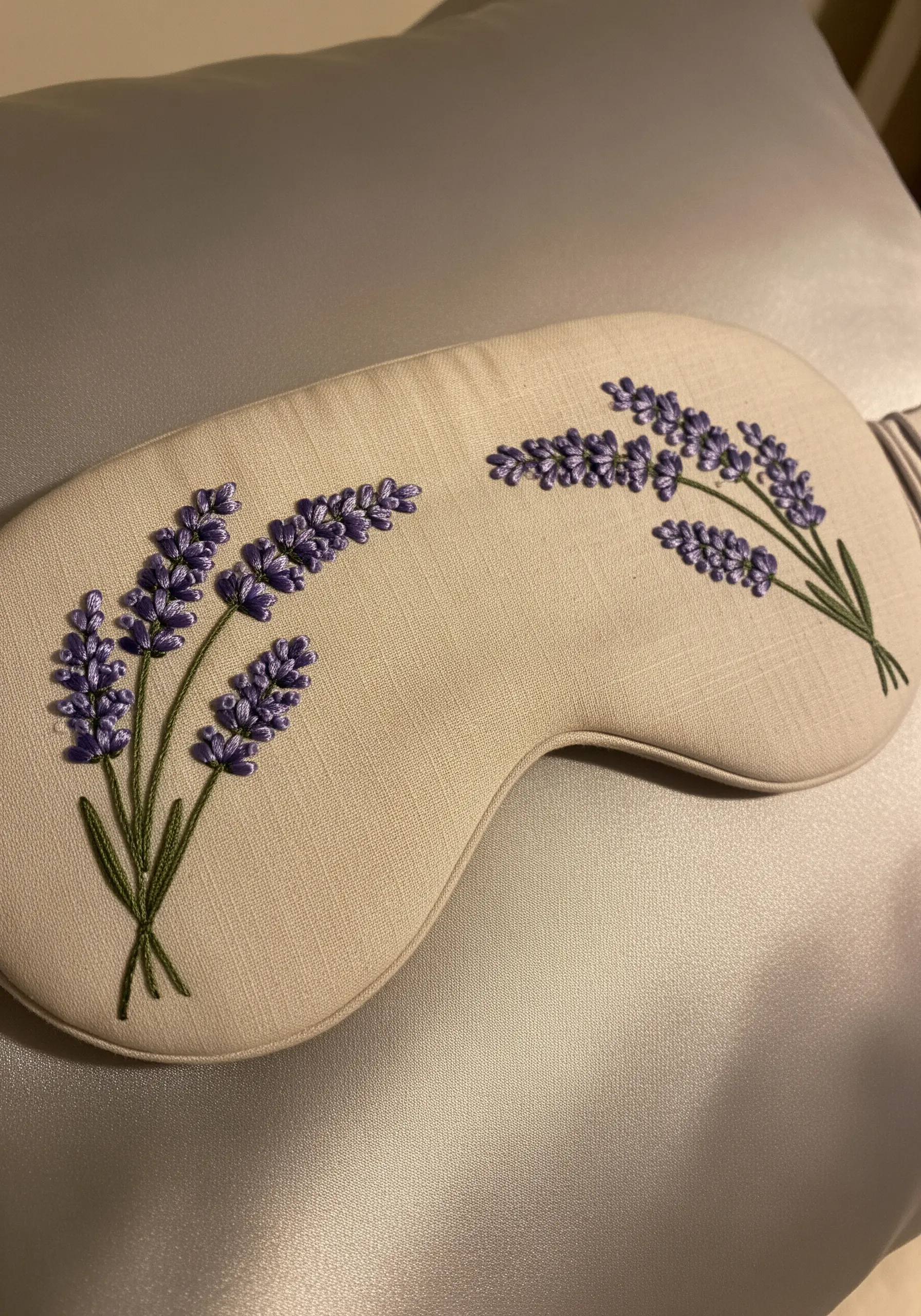
Create a functional piece of art that encourages rest with a hand-stitched sleep mask.
Choose a soft, breathable fabric like silk, satin, or high-quality cotton for the mask itself.
Keep the embroidery designs small and positioned toward the outer edges to avoid any textural discomfort over your eyes.
Ensure the inside of your stitching is as neat as possible by burying thread tails and keeping knots small and flat. It’s a beautiful and practical way to incorporate the calming essence of lavender into your sleep routine.
30. Conduct a Style Study on a Single Motif
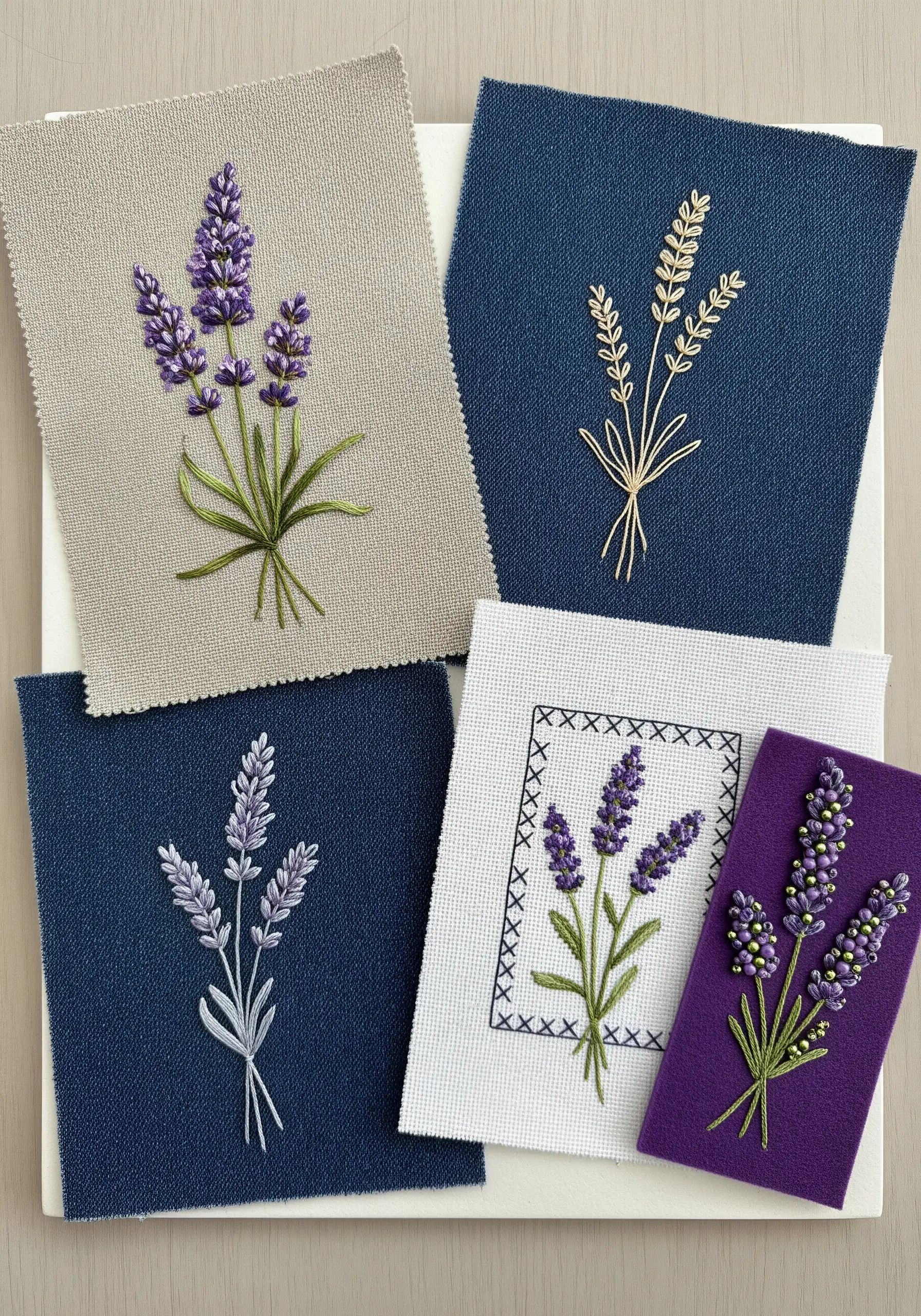
Deepen your understanding of embroidery techniques by exploring the same lavender motif in multiple styles.
On one fabric scrap, try a realistic thread-painted version. On another, a minimalist gold-thread outline. A third could be a blocky cross-stitch design, and a fourth could incorporate beads for the blossoms.
This exercise pushes you to see how different stitches, materials, and color choices can completely transform the mood and character of a simple subject.
It’s a fantastic way to discover your preferred aesthetic and expand your creative vocabulary.
31. Stitch a Moody Sky for a Dramatic Landscape
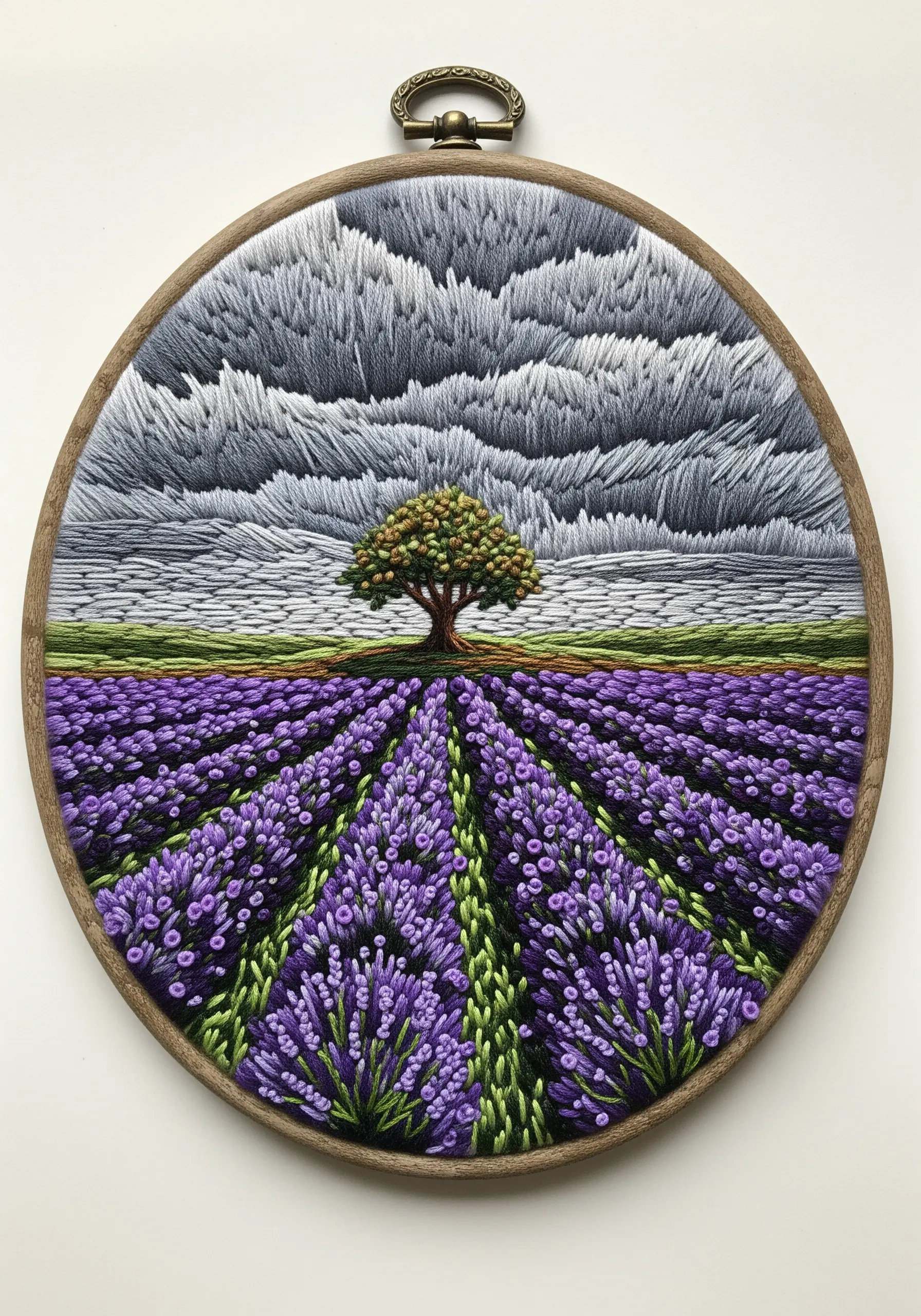
Create a powerful sense of atmosphere by focusing on a textured, stormy sky above your lavender field.
Use a dense combination of French knots, bullion stitches, and layered straight stitches in a palette of grays, charcoals, and whites.
Vary the direction and density of your stitches to create the illusion of swirling, heavy clouds.
This dramatic sky provides a stunning visual contrast to the neat, orderly rows of purple below, adding emotion and narrative depth to your landscape.
32. Add a Personal Touch to Functional Organizers
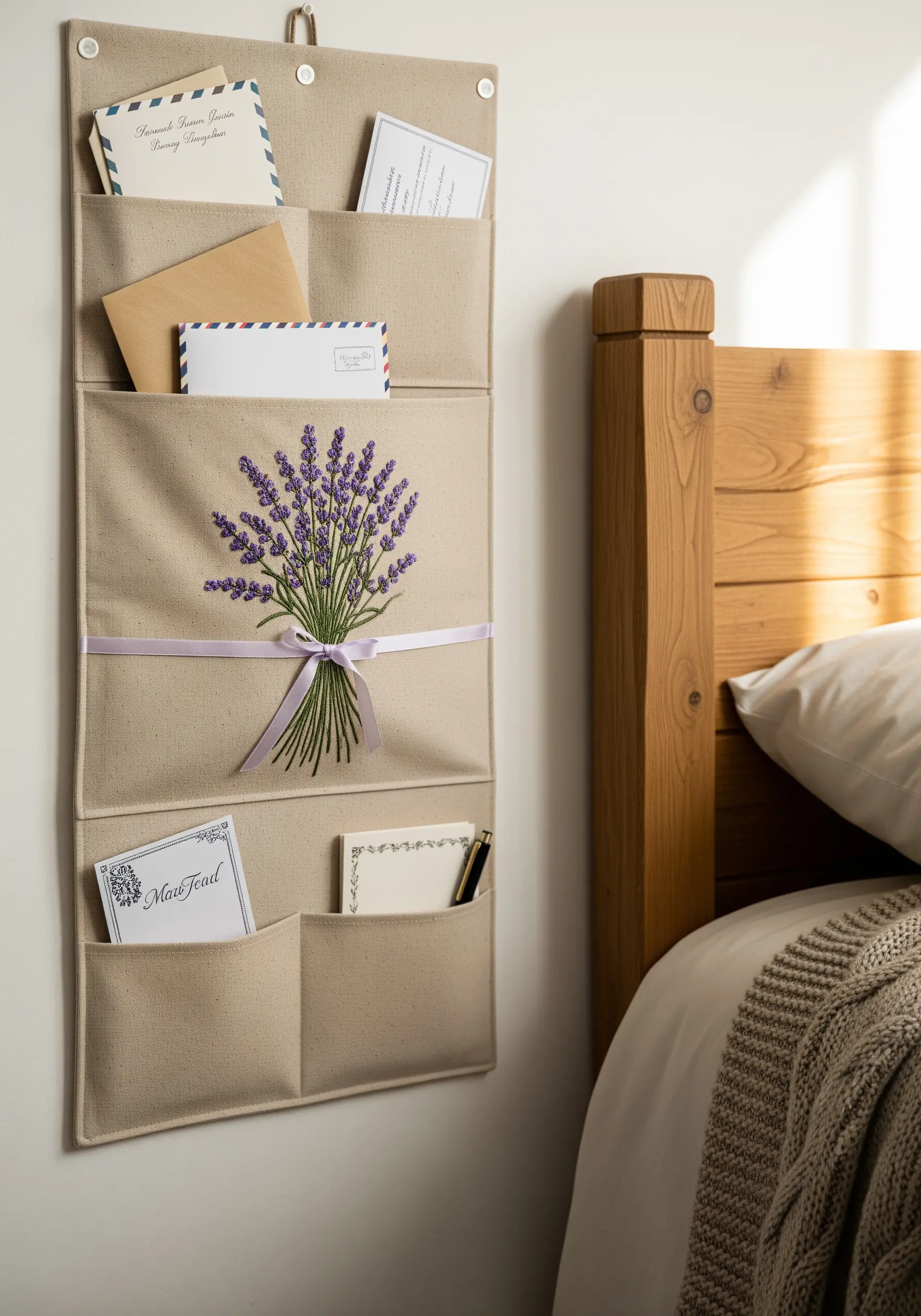
Elevate a simple, practical item like a fabric wall organizer with a touch of handcrafted beauty.
Because canvas is a heavy-duty fabric, use a sharp, strong needle and a thimble to protect your fingers. A size 22 chenille needle works well with standard six-strand floss.
Stitch a single, well-placed bouquet of lavender on the main panel before sewing the pockets on.
This thoughtful detail transforms a storage solution into a piece of decor, making it one of those handmade embroidery ideas that will transform ordinary gifts into treasured keepsakes.