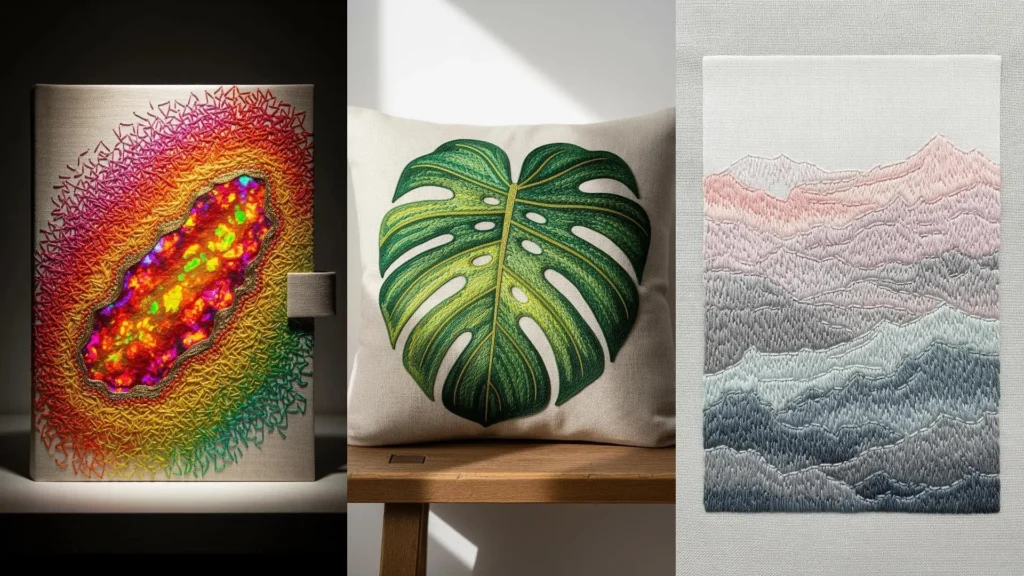
You have the threads. You have the vision. But how do you translate that into something that feels truly elevated, a piece that has presence and polish? The answer is often simpler than you think. It’s not about adding more colors; it’s about removing them.
By limiting your palette to just black and gold, you shift the focus from color to the core elements of embroidery: texture, light, and line. This powerful combination forces you to be more intentional with every single stitch. It’s a framework for sophistication, turning simple materials into luxury art.
Here, you won’t find vague suggestions. Instead, you’ll discover specific techniques designed to manipulate light with metallic thread, build sculptural forms, and create dynamic compositions. This is your guide to making thread art that doesn’t just decorate a space, but commands it.
1. The Deco Sunburst: Mastering Metallic Sheen
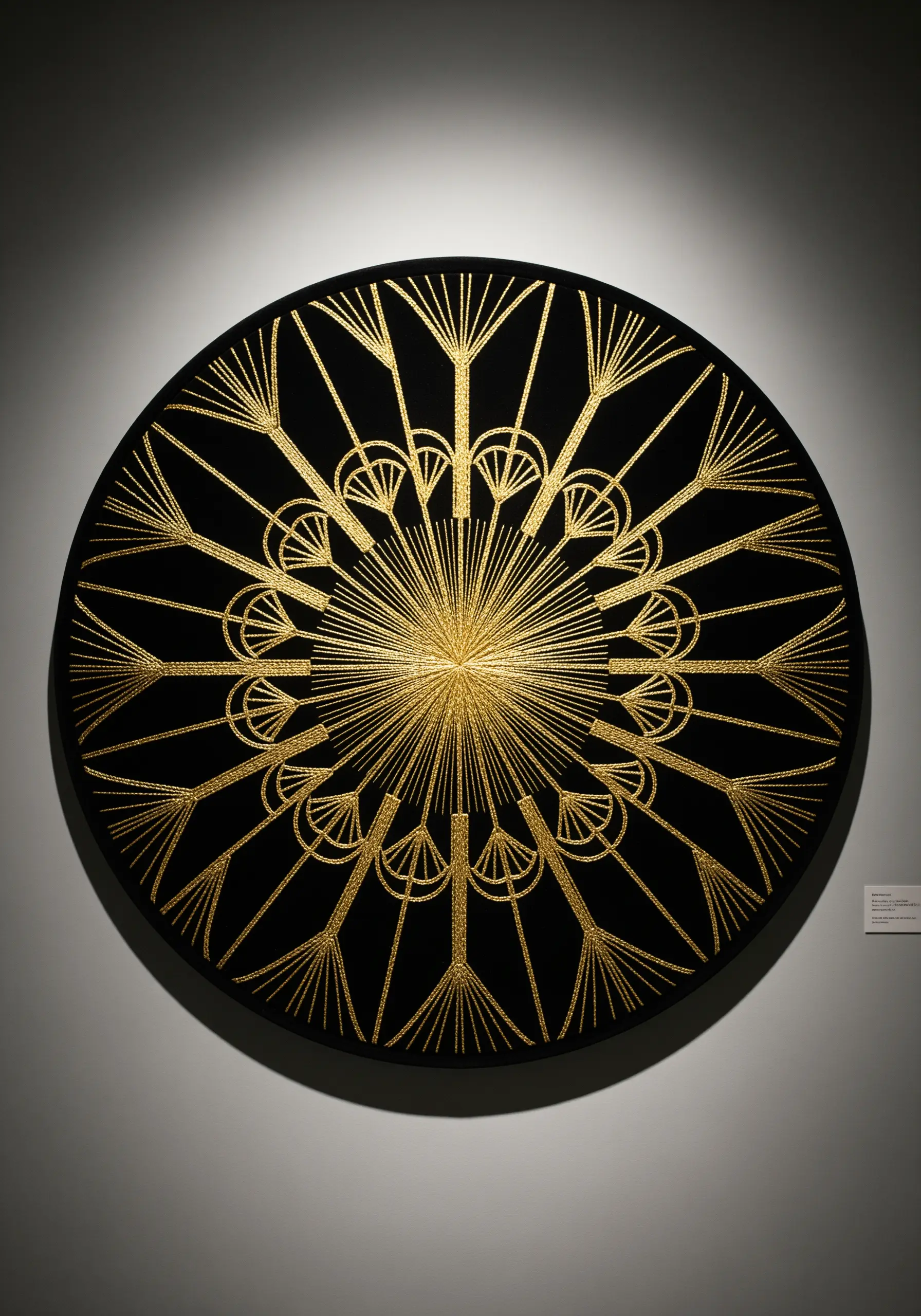
To achieve this radiant, light-catching effect, your stitch direction is everything.
Work with a high-quality metallic thread and use a laying tool or a larger needle to smooth each stitch as you place it, ensuring the fibers lie perfectly flat and reflect maximum light.
For the sharp, raised outlines, first create a foundation using a simple split stitch, then cover it with your satin stitches.
This underlying structure prevents the metallic thread from sinking into the fabric, giving your work a clean, dimensional, and professional finish.
2. Dynamic Flow: Abstract Couching for Fluid Lines
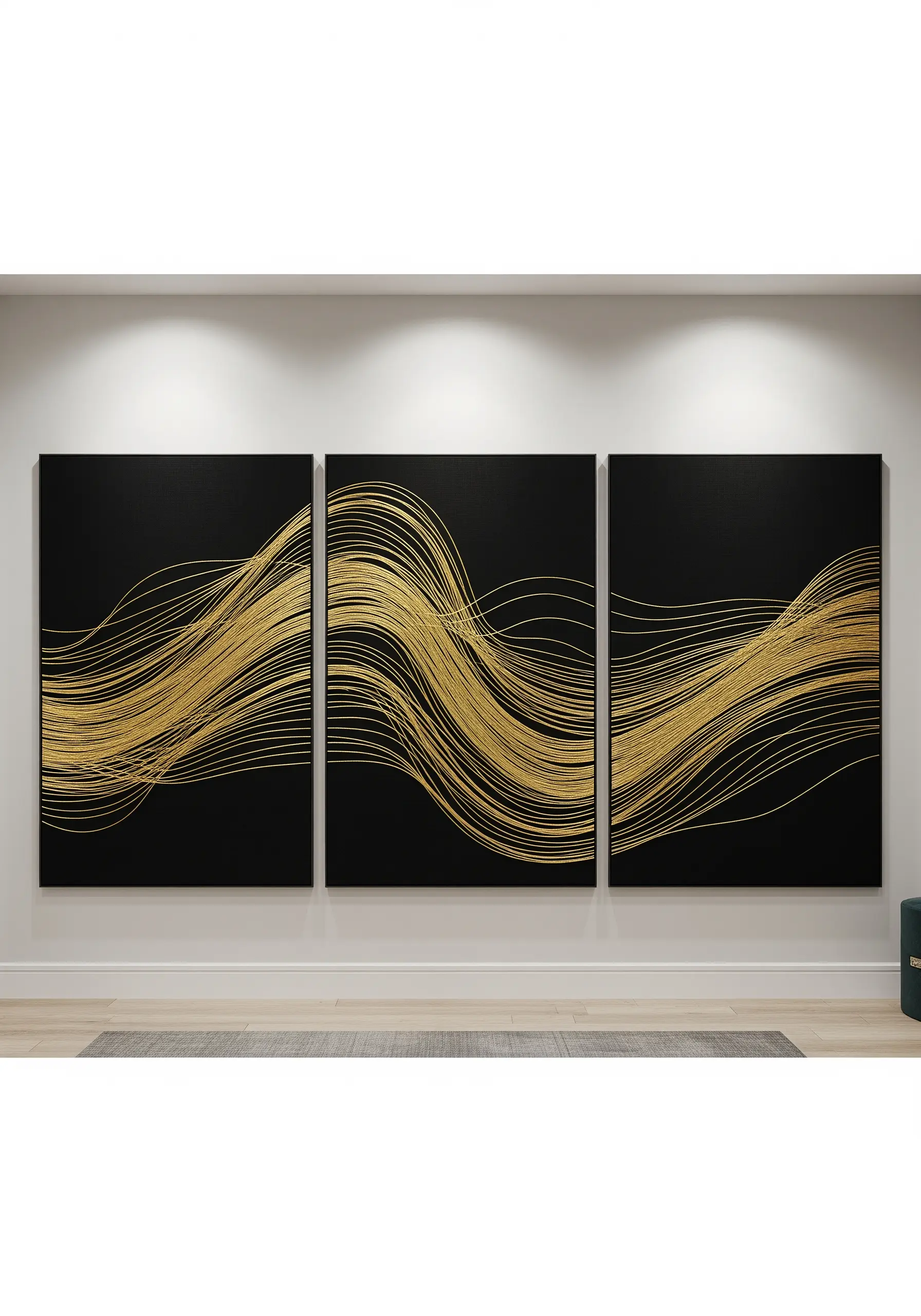
Create the illusion of sweeping, fluid movement by couching long strands of metallic thread onto a black canvas.
Instead of making millions of tiny stitches, you lay down the gold thread in graceful curves and then tack it in place with a much finer, near-invisible thread.
Vary the density of your lines—packing them tightly in some areas and letting them breathe in others—to create a sense of depth and rhythm.
Dividing a single design across three separate canvases elevates it from a simple piece to a cohesive abstract thread embroidery installation.
3. Kintsugi in Thread: Sculpting with Organic Texture
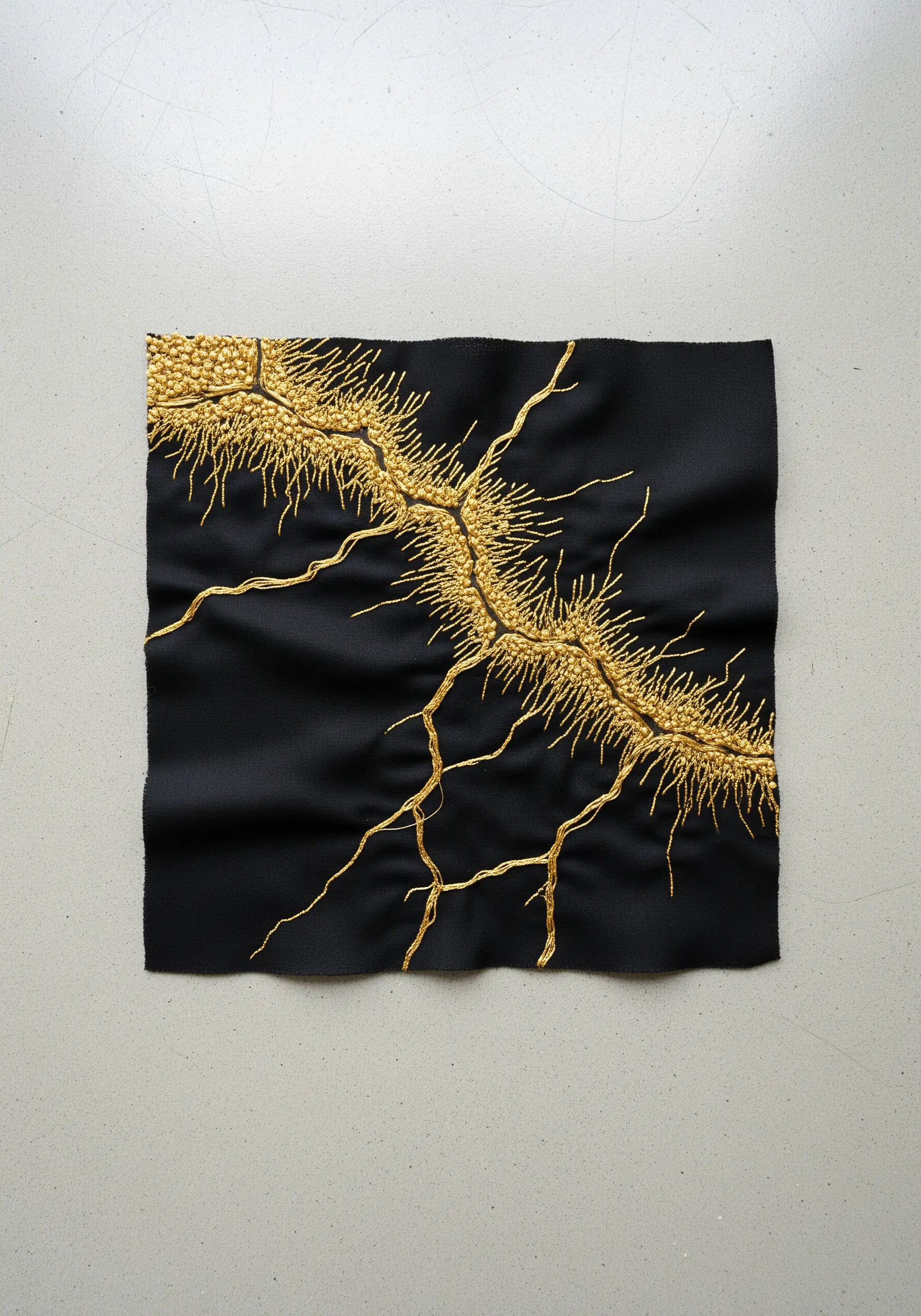
Embrace the beauty of imperfection by creating organic, root-like patterns that feel grown rather than stitched.
Use dense clusters of French knots for the core texture, varying the number of wraps around your needle (one, two, or three) to create subtle differences in size and height.
For the delicate, branching veins, transition to simple straight stitches, pulling them taut to create sharp, crack-like lines against the soft fabric.
This contrast between knotted texture and sharp lines gives the piece a powerful, natural energy, perfect for celebrating nature-inspired embroidery.
4. Architectural Thread-Wrapping: From 2D to 3D
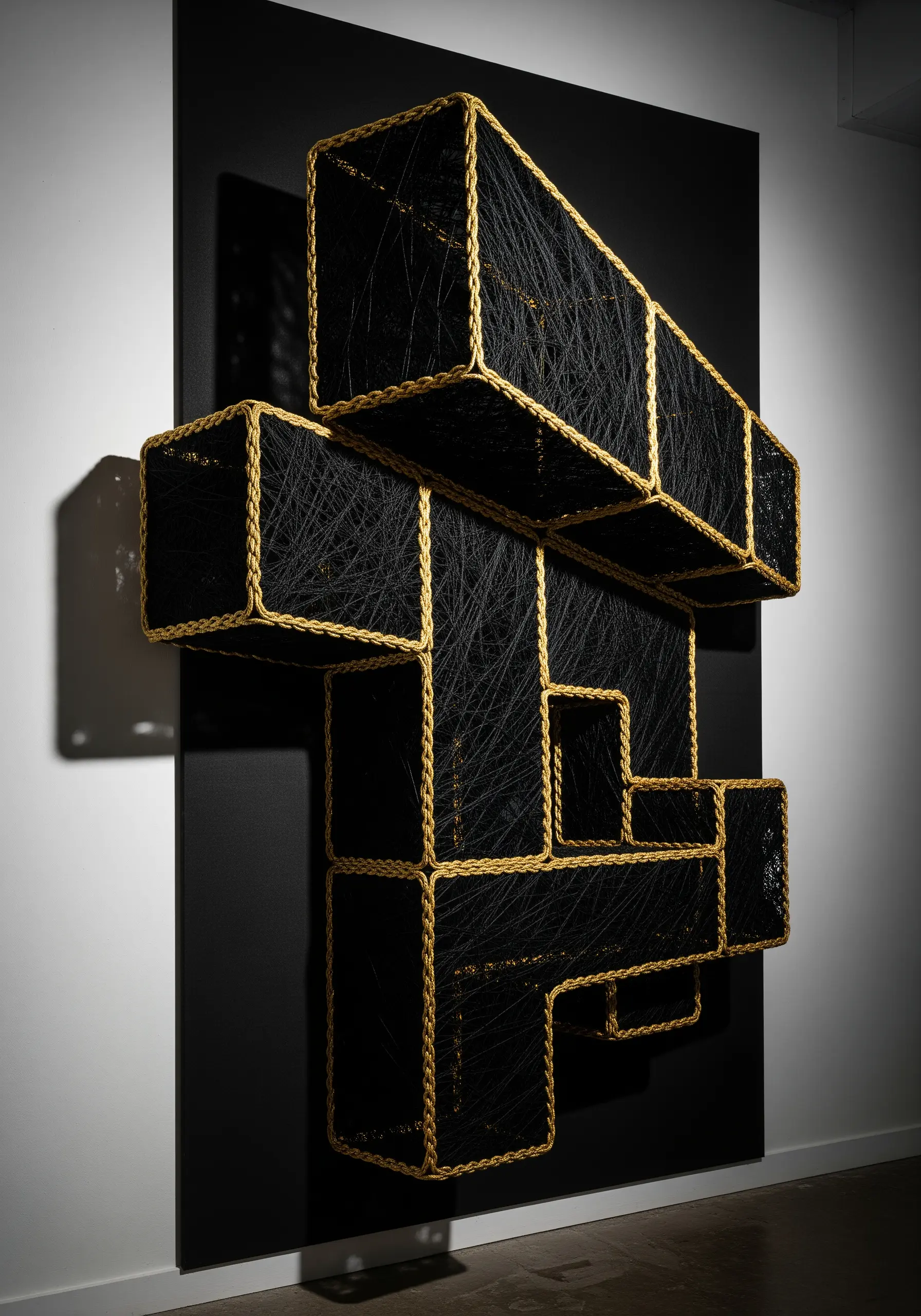
Move your thread art off the flat surface and into three-dimensional space by applying string art principles to a physical structure.
You can build a simple geometric frame from balsa wood or even sturdy cardstock.
Wrap the edges in a braided gold cord to define the form, then create tension by weaving fine black thread across the open spaces.
This technique turns thread into a structural element, creating fiber art installations that play with shadow, light, and perspective.
5. Celestial Cartography: Stitching the Cosmos
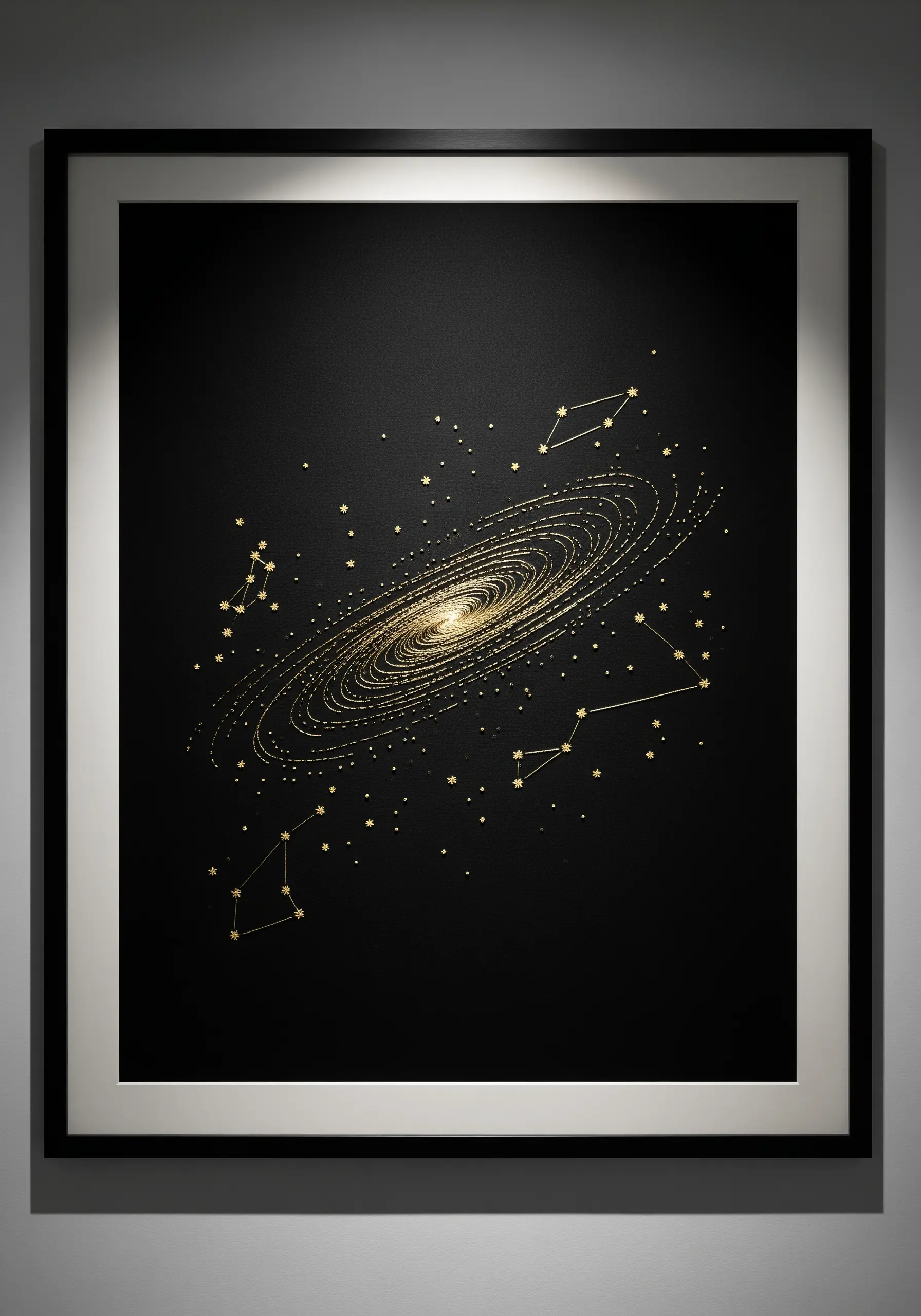
Map out your favorite constellations using the most delicate stitches for a sophisticated, minimalist effect.
Use a single strand of a smooth metallic thread and a simple backstitch for the connecting lines to keep them looking sharp and fine.
For the stars, create tiny French knots, using just one wrap for smaller stars and two for brighter ones.
The key to this design is restraint and strategic use of negative space—let the vast black fabric represent the cosmos and make every stitch count.
These minimalist embroidery designs feel both personal and universal.
6. Sculptural Lacework: Building Three-Dimensional Forms
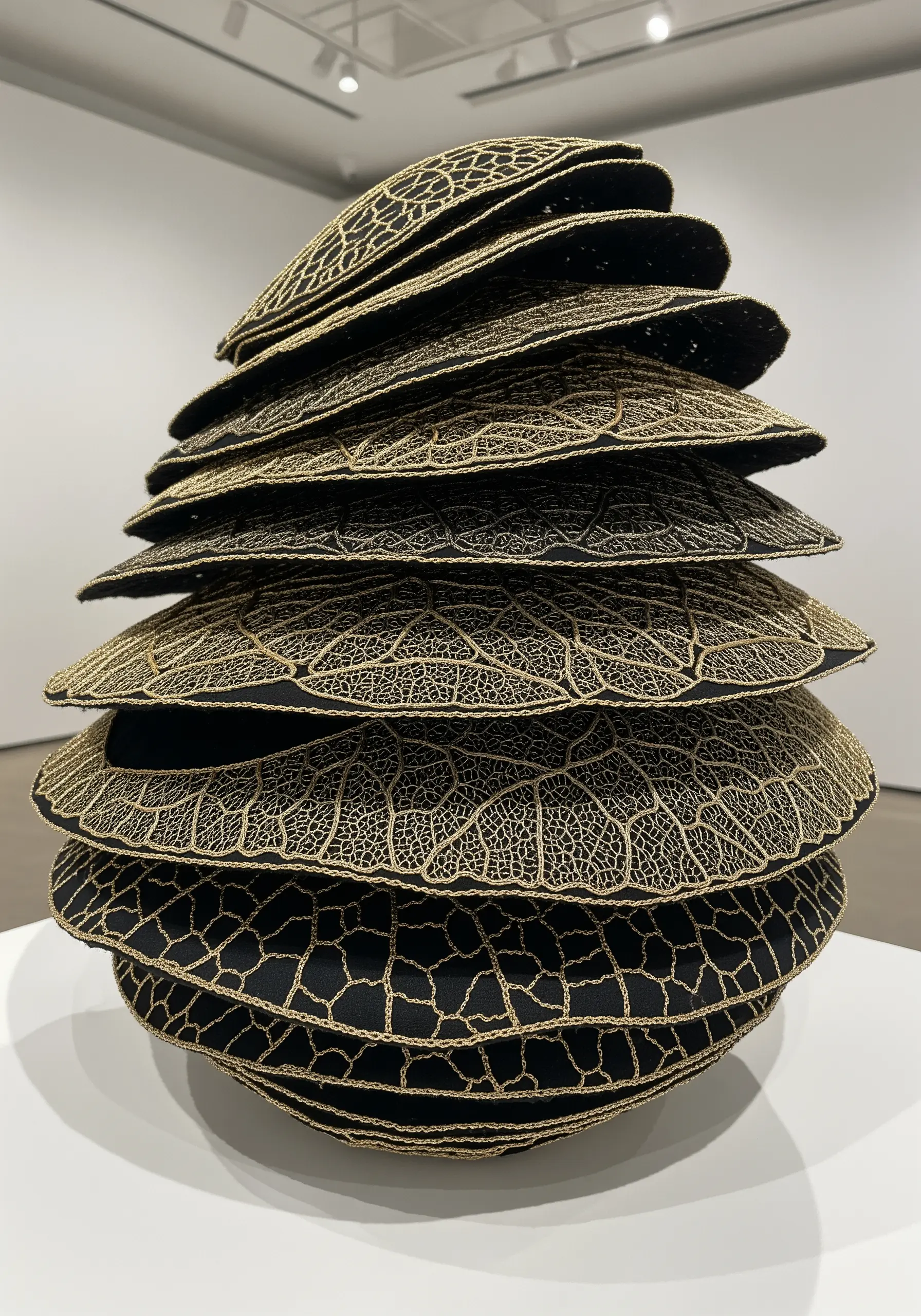
Create freestanding, lace-like structures by stitching your gold design onto a water-soluble stabilizer.
Once your stitching is complete, dissolve the stabilizer in water, leaving you with a delicate, thread-only piece of ‘fabric’.
You can then mold this lace over padded stumpwork forms or layer multiple pieces to build complex, sculptural embroidery surfaces.
This technique allows you to create incredibly detailed, airy structures that would be impossible to achieve on traditional fabric.
7. Monochrome Mandala: Light Play with Satin Stitch
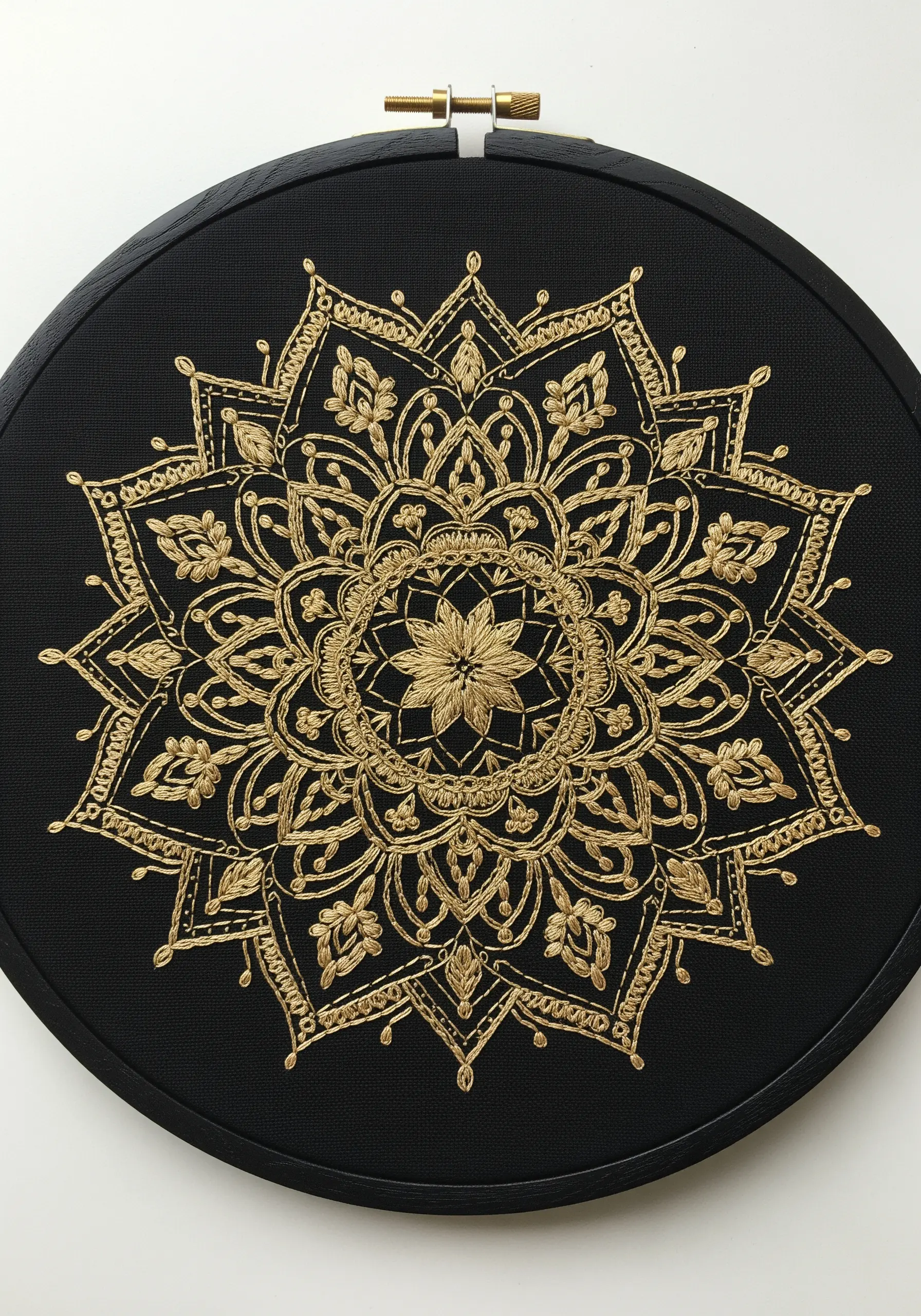
When working with a single color, texture becomes your most powerful tool.
For an intricate mandala, fill adjacent segments with satin stitches running in opposing directions (e.g., vertical next to horizontal).
Even though you’re using the same gold thread, the different angles will catch and reflect light uniquely, creating a subtle, shimmering checkerboard effect.
This technique adds depth and complexity to soft tone embroidery mandalas without overwhelming the design.
8. Geometric Portraiture: Thread Blocking for Modern Art
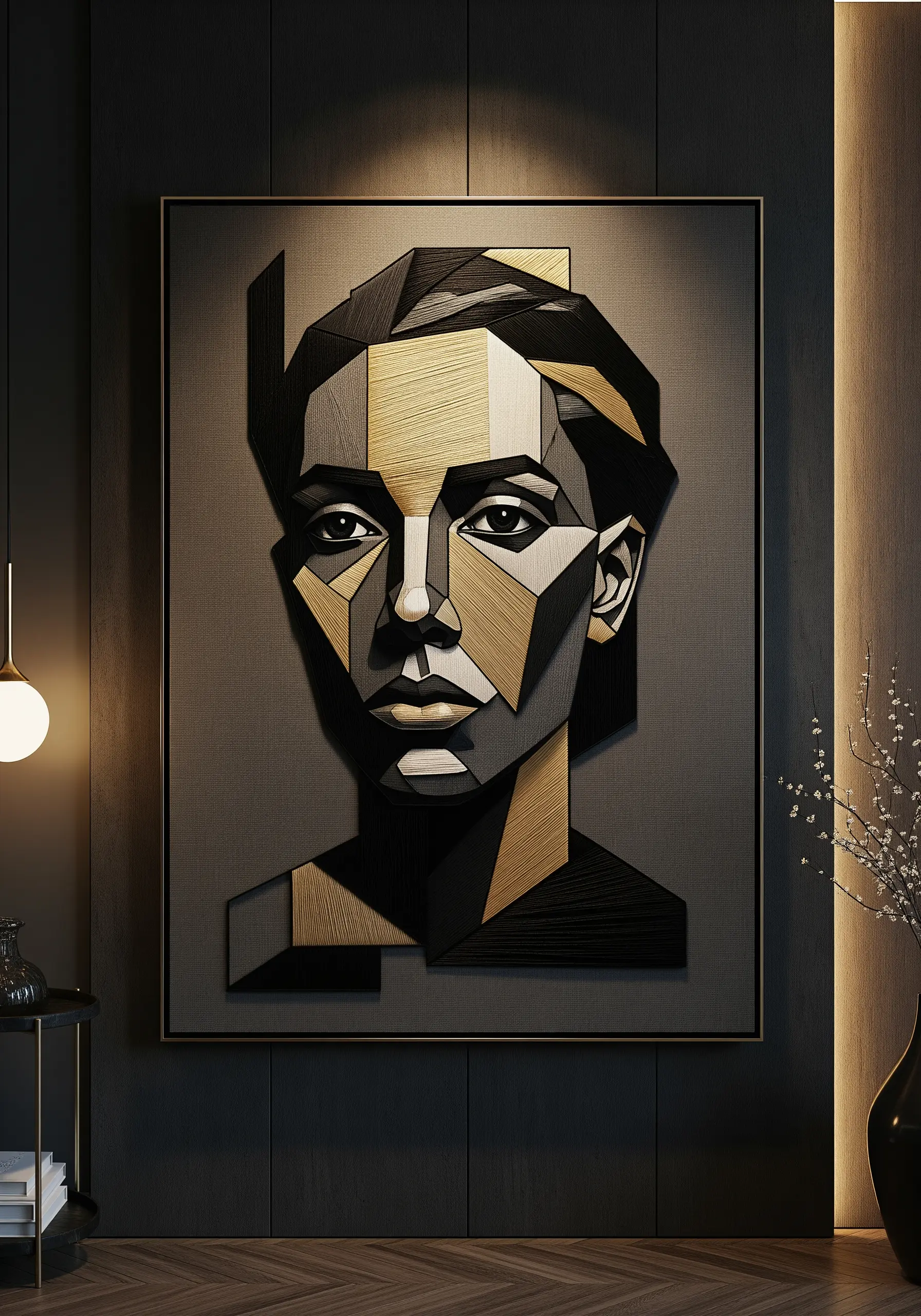
Deconstruct a portrait into a series of geometric planes, like a cubist painting, and then render it in thread.
Fill each distinct plane with dense satin stitches, making sure every stitch within a single block runs in the same direction.
Alternate between gold and black thread to represent light and shadow.
The power of this technique comes from the sharp, clean edges where the different blocks of color and texture meet, resulting in striking modern thread portraits.
9. Sonic Stitching: Embroidering a Soundwave
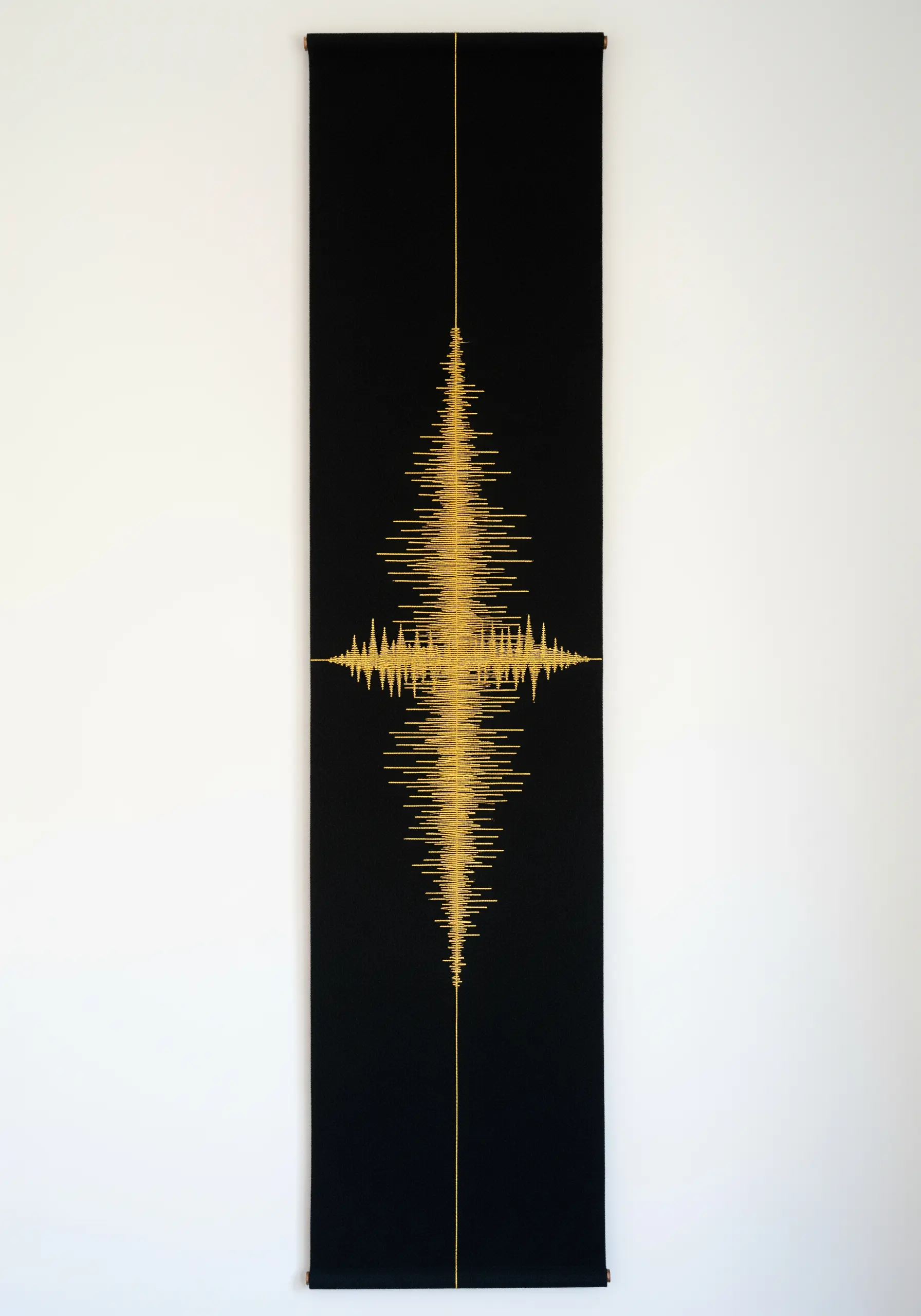
Transform a meaningful sound—a name, a laugh, a line from a song—into a tangible piece of art.
Use a free online tool to generate an image of your chosen soundwave, then transfer it to a long, narrow piece of black fabric.
Use precise, vertical straight stitches with gold thread to fill the shape, carefully varying their height to match the waveform.
The result is a deeply personal piece that visualizes a memory, making for one of the most meaningful personalized keepsakes imaginable.
10. Geometric Composition: Balancing Fill and Line
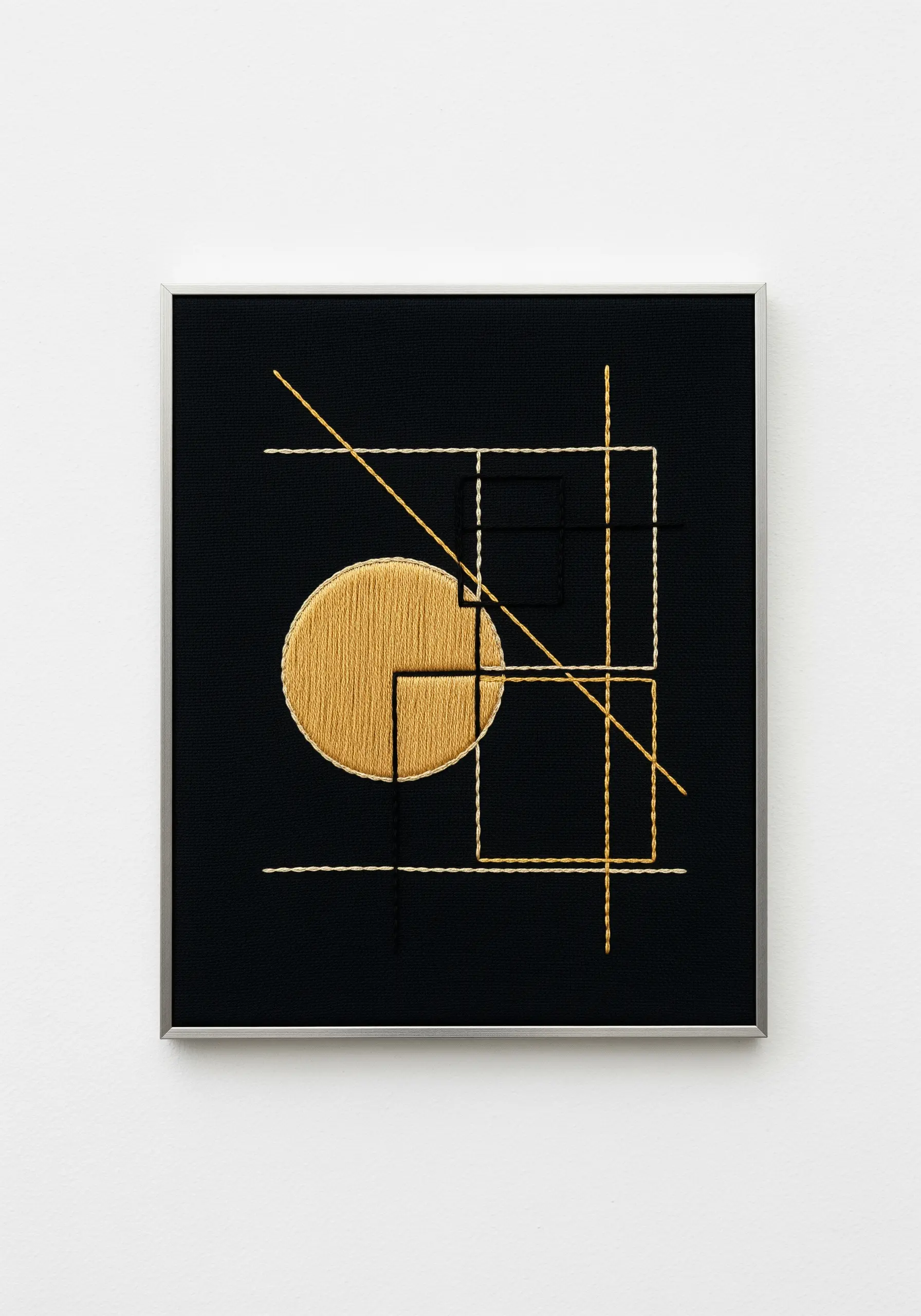
Create a sophisticated abstract piece by combining heavily textured shapes with delicate, weightless lines.
Fill a central shape, like a circle, with dense satin stitch to give it visual weight and make it the focal point.
Then, contrast that solidity by adding intersecting lines using only a single strand of thread and a simple backstitch.
This technique teaches you how to combine thread and negative space to achieve a balanced, modern composition.
11. Abstract Expressionism: The Controlled Splatter
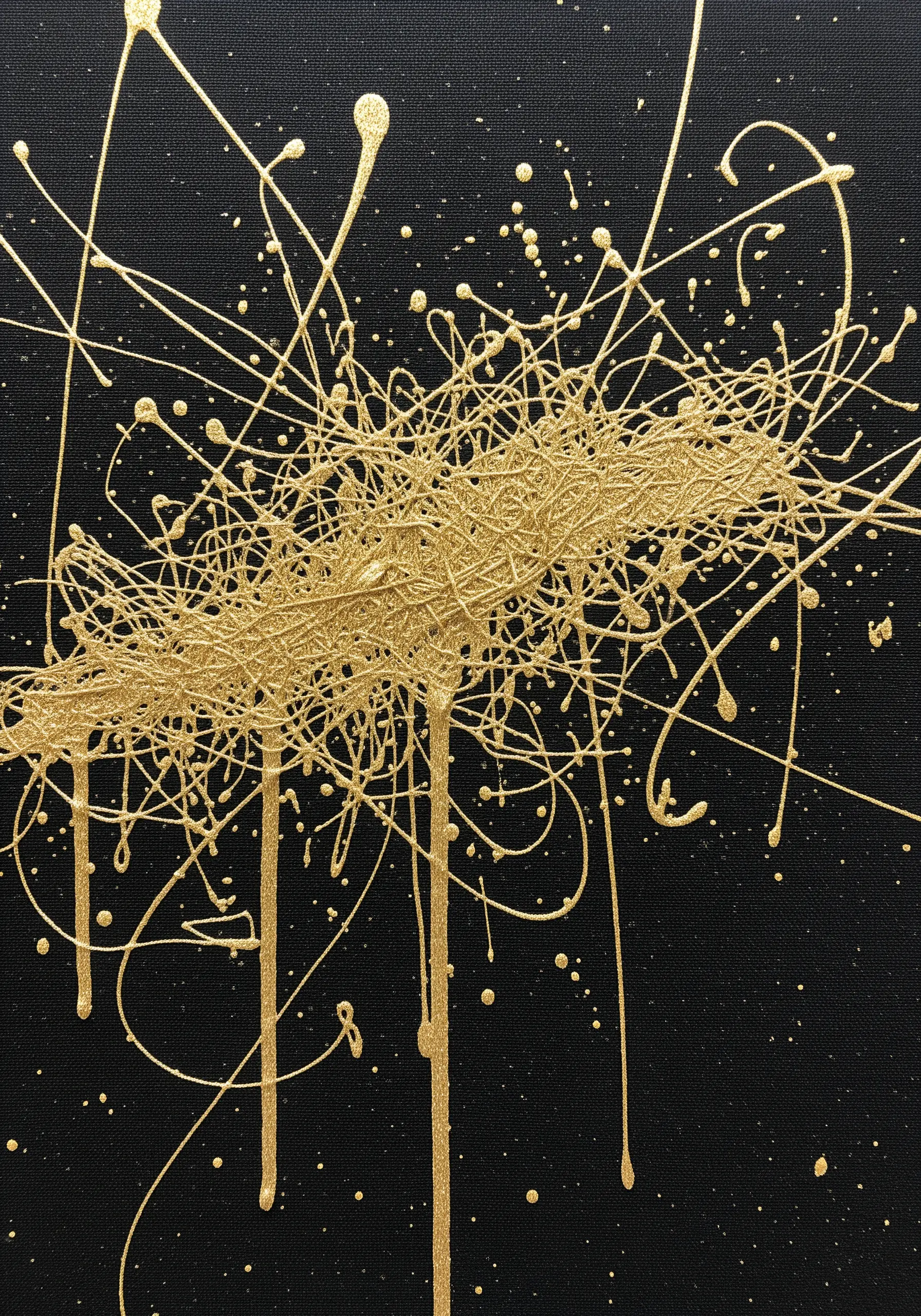
Capture the energetic freedom of a paint splatter with the deliberate placement of thread.
Arrange a textured gold cord or yarn on your fabric in a chaotic, tangled pattern, then use a fine matching thread to couch it down, securing the design.
For the smaller droplets, scatter a few well-placed French knots or bullion knots around the main form.
This method of abstract thread painting gives you the wild aesthetic of Jackson Pollock with the refined texture of embroidery.
12. Woven Light: String Art Illusions on Fabric
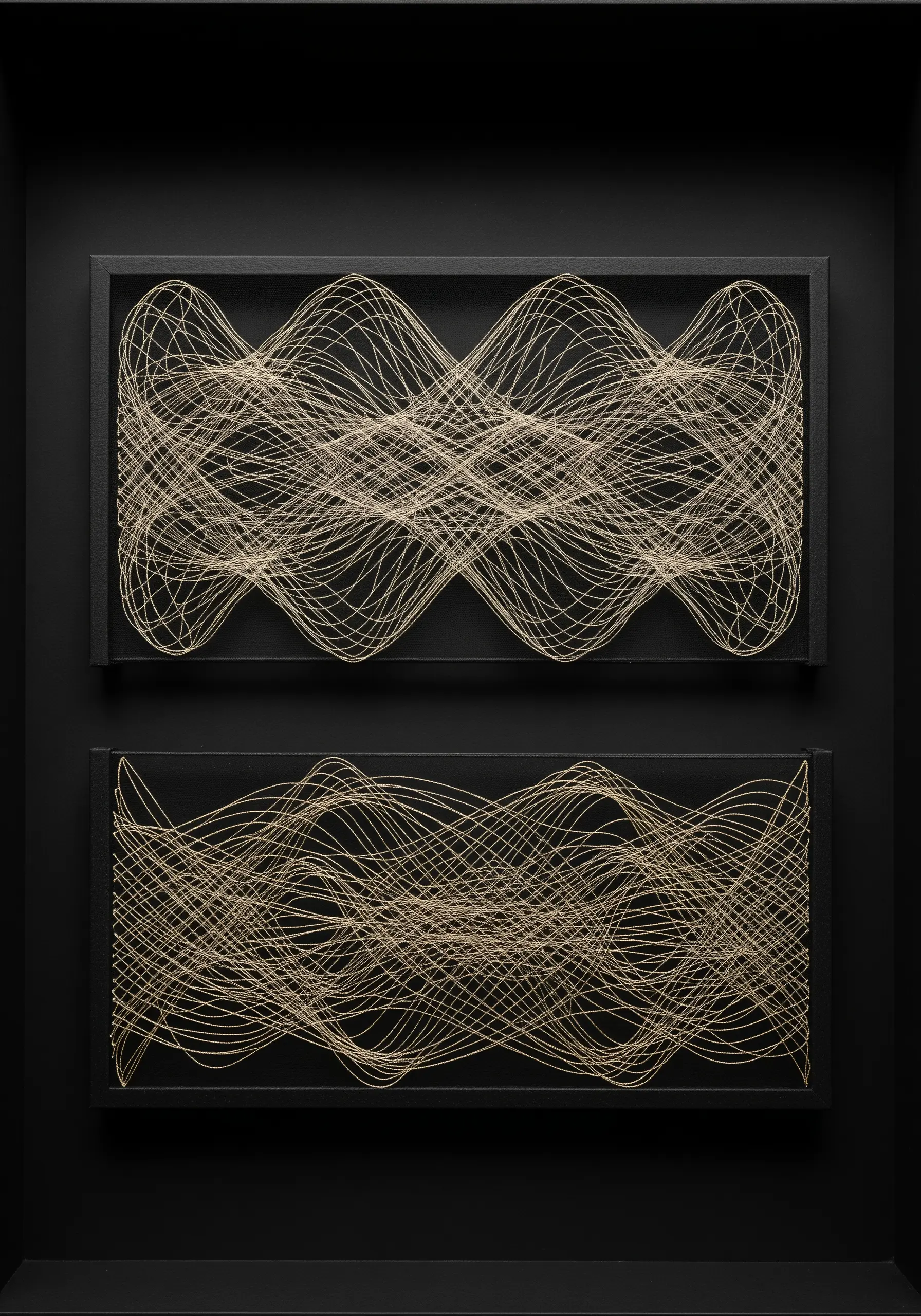
Recreate the mesmerizing look of string art without the need for wood and nails.
Begin by creating a precise grid of tiny anchor stitches on your fabric.
Then, take a single, long strand of fine metallic thread and weave it back and forth between these anchor points according to a geometric pattern.
The overlapping lines build upon each other to create hypnotic curves and waves, making these abstract thread illusion techniques a testament to precision and patience.
13. Thread Topography: Building Contoured Landscapes
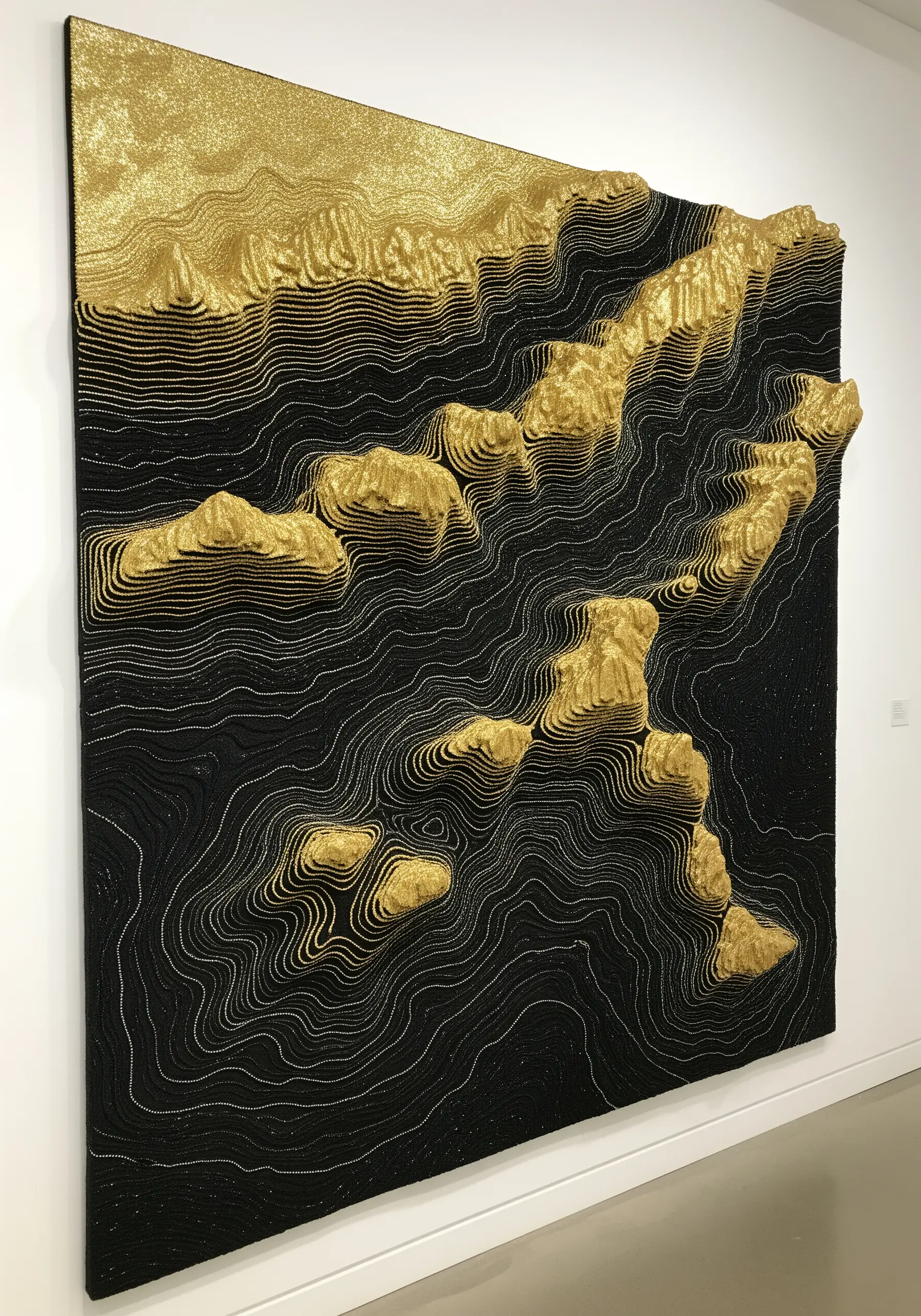
Create a three-dimensional map by layering thread to represent elevation.
Use fine black thread on the black background to stitch the contour lines of the ‘water,’ creating a subtle, tone-on-tone effect.
For the raised ‘land’ masses, stitch a thick layer of gold thread over pieces of felt padding.
This stumpwork technique gives the piece real, physical depth, turning a flat map into one of those nature-inspired texture patterns you can’t help but touch.
14. Calligraphy with Cord: The Power of Couching
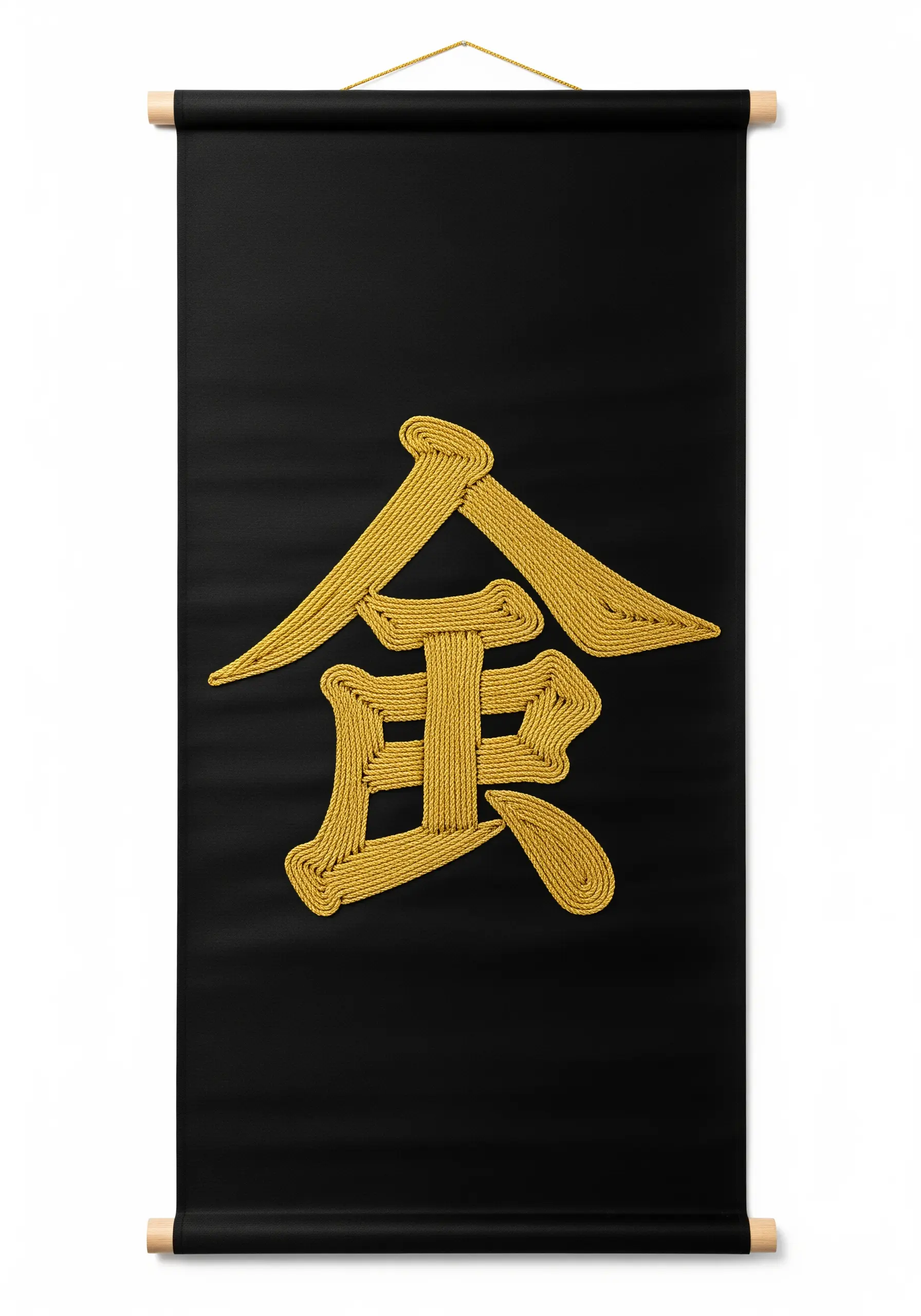
For lines that need to be bold, sculptural, and flawlessly smooth, couching is the perfect technique.
Select a thick, braided gold cord and lay it on your fabric along the lines of your chosen calligraphic symbol or letter.
Then, use a finer, matching gold thread to stitch over the cord at regular intervals, anchoring it securely to the fabric.
This approach allows you to create thick, expressive lines with a beautiful, rope-like texture that a simple stitch could never achieve, perfect for contemporary typography stitch designs.
15. Thread Pointillism: Creating Flow with Dots
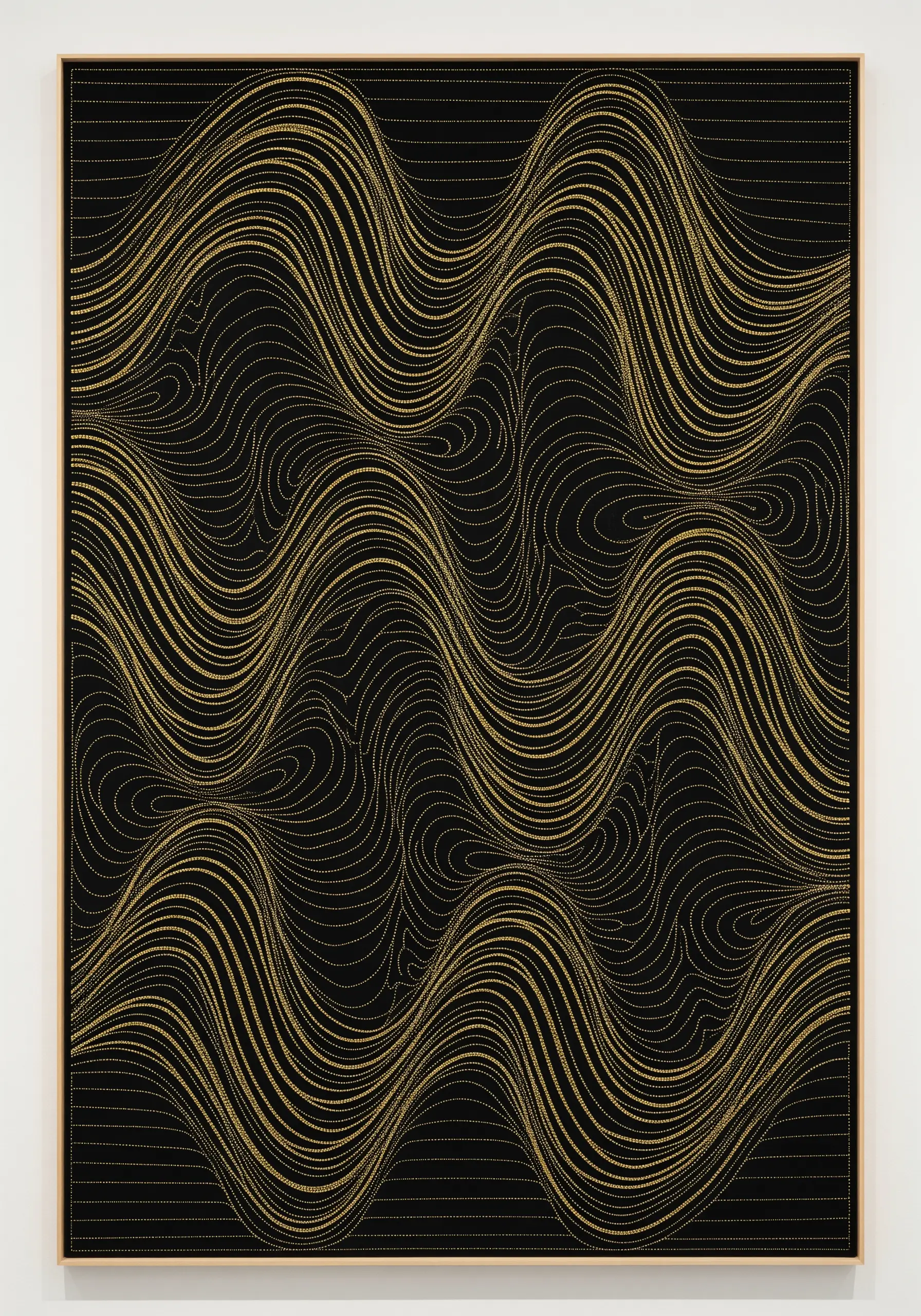
Instead of stitching solid lines, build your design from thousands of individual dots.
Use a single strand of gold thread to make tiny, uniform seed stitches or French knots.
By varying the spacing and density of these dots, you can create flowing, wave-like patterns that seem to shimmer and move.
This meditative technique creates a unique, grainy texture and a stunning optical effect, turning simple marks into dynamic abstract broken shape designs.
16. Sculptural Pointillism: Painting with French Knots
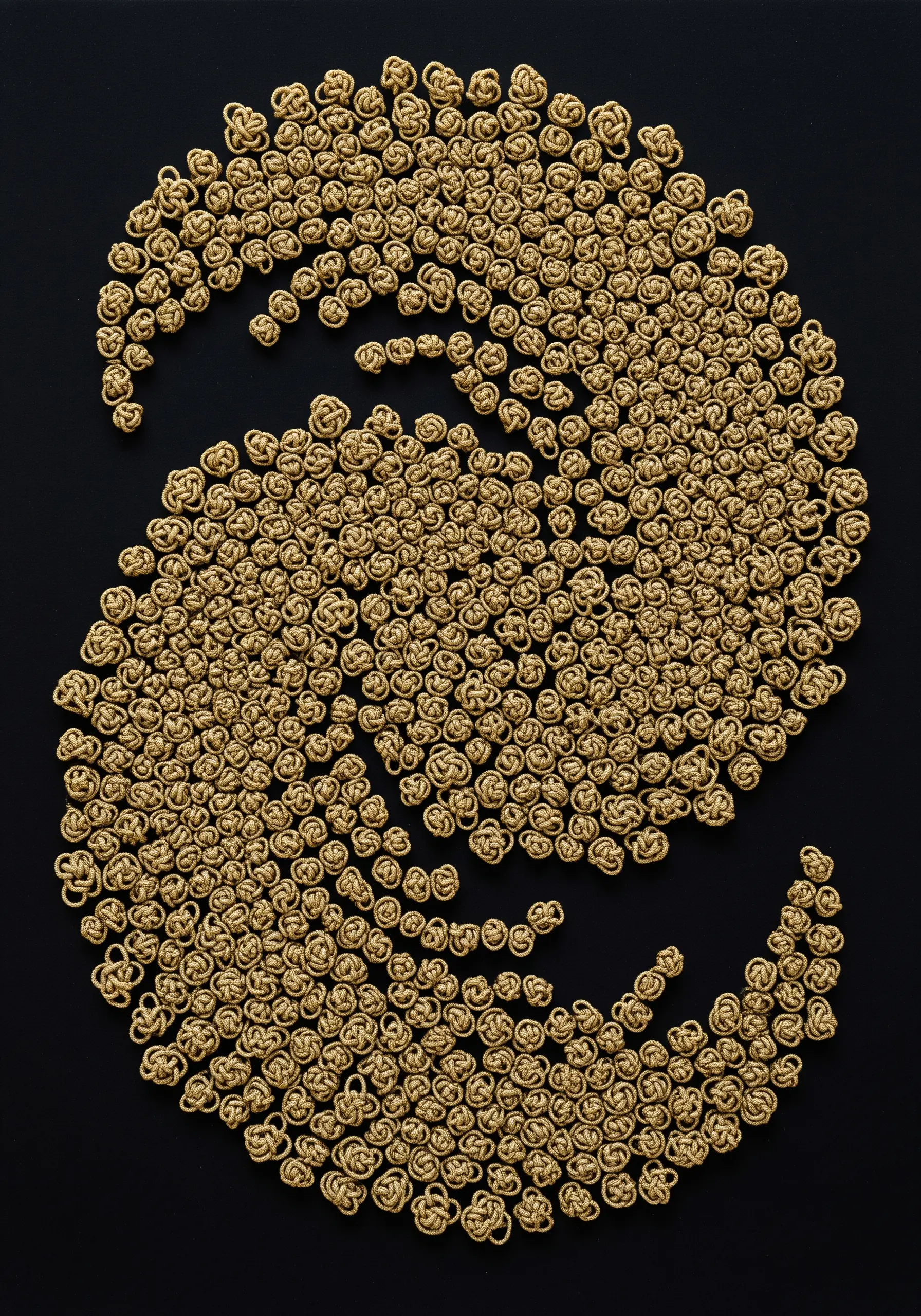
Fill an entire area with densely packed French knots to create a highly tactile, three-dimensional surface.
This technique transforms the thread from a simple line into a sculptural medium.
By packing the knots tightly together, you build a rich, bobbled texture that catches the light from every angle, giving the gold a deep, luxurious shimmer.
It’s a perfect example of how contemporary texture techniques can elevate a simple shape into a piece of art.
17. Architectural Line Work: Drawing with Thread
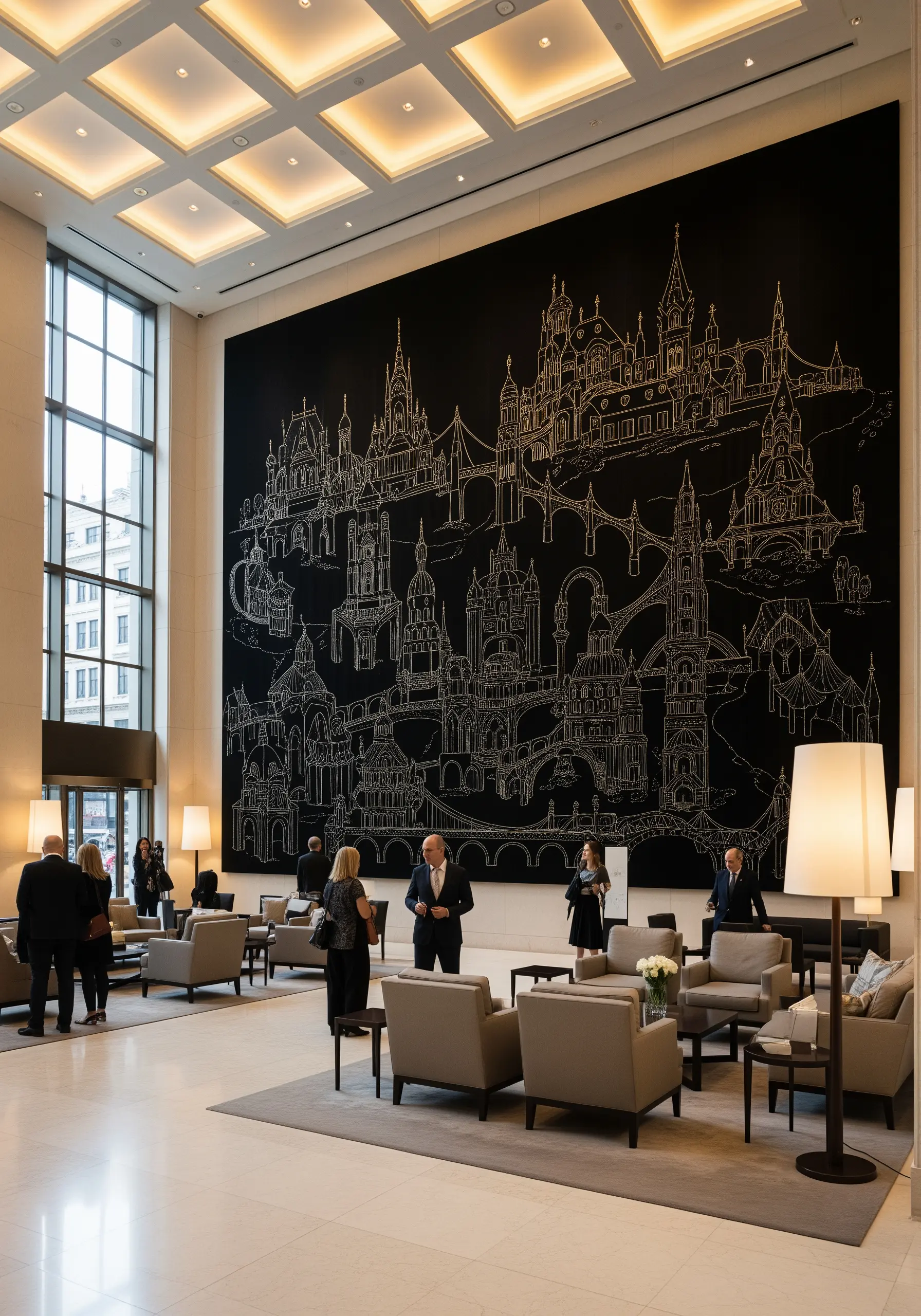
Capture the elegance of an architectural sketch by using thread as your ink.
Choose a single strand of gold thread and a simple, clean stitch like a backstitch or stem stitch.
The key here is not stitch complexity but line precision. Let the fine, crisp gold lines stand out against the deep black fabric.
This technique strips embroidery down to its essence—the drawn line—to create sophisticated minimalist line art.
18. Stitching Light and Shadow: The Illusion of Form
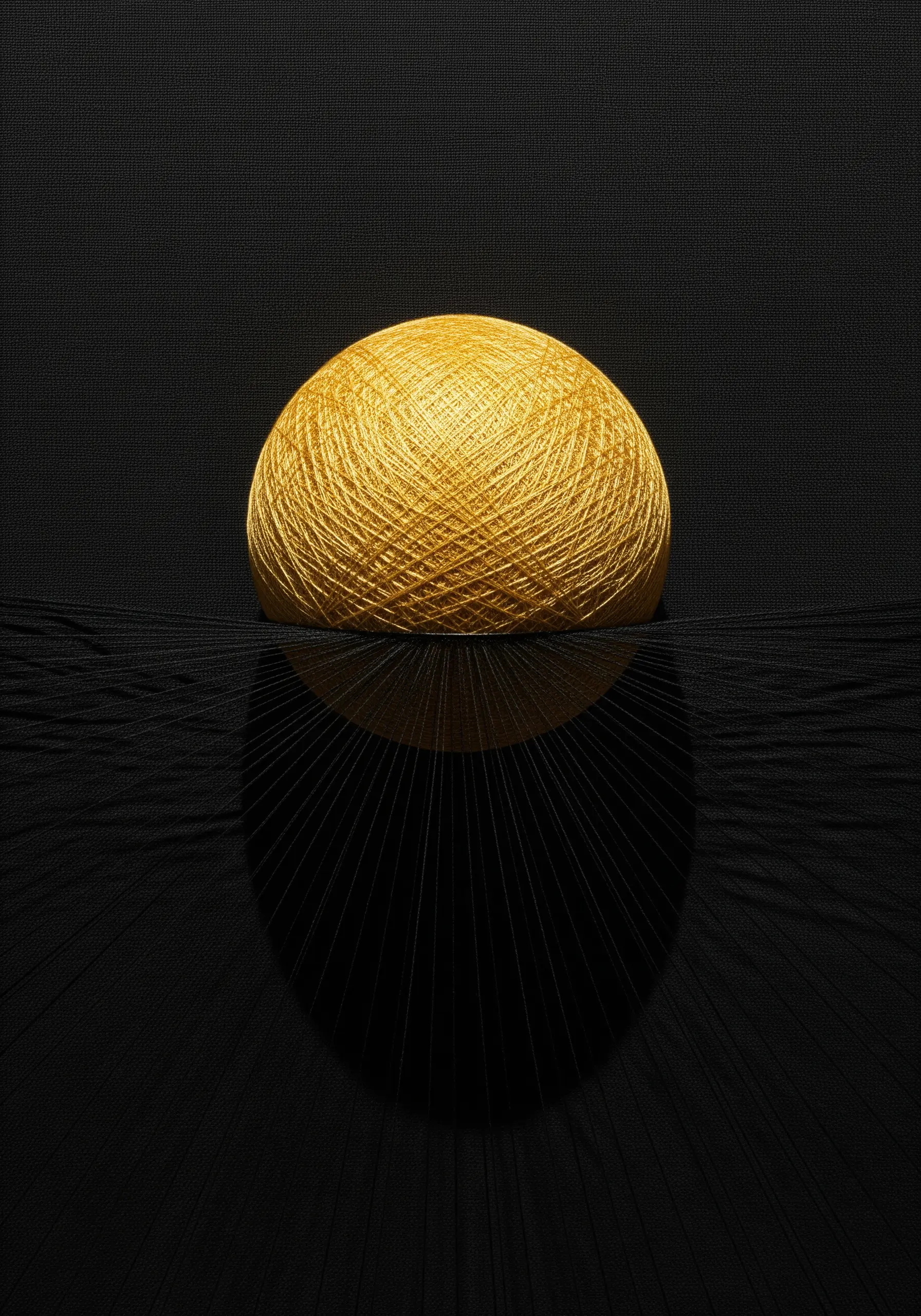
Create a stunning illusion of a three-dimensional sphere using only thread.
Stitch a perfect circle and fill it with smooth, radiating satin stitches in gold to represent a light source.
Then, using black thread on the black fabric, stitch a series of straight lines fanning out from the base of the circle.
These subtle, tone-on-tone embroidery techniques create a shadow effect that gives the golden orb a sense of weight and dimension.
19. Fractal Botanicals: Stitching Infinite Detail
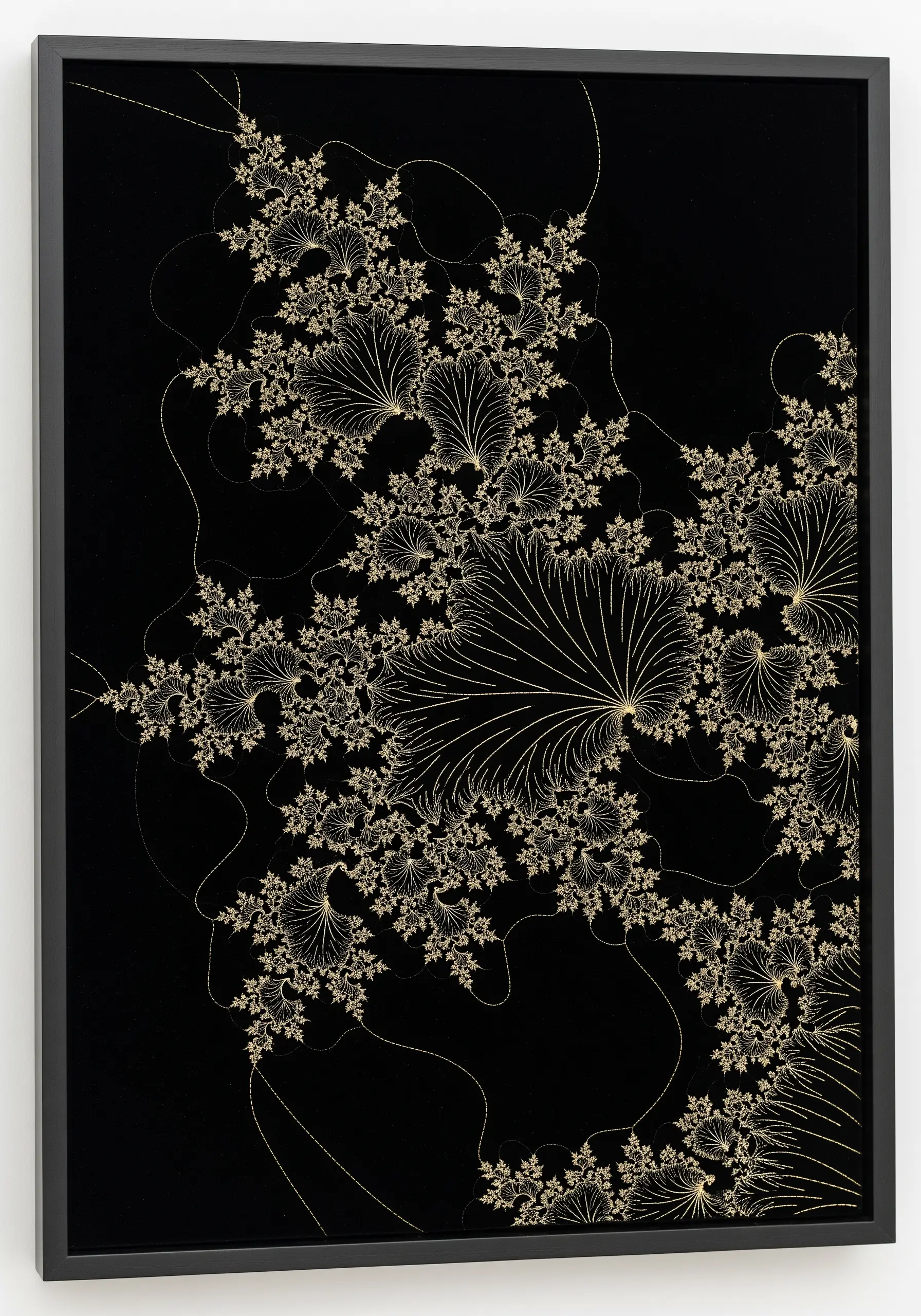
Mimic the complex, repeating patterns found in nature—like ferns, snowflakes, or coral—by using a fractal stitching approach.
Start with a simple base shape, such as a Y-branch or a fan of three straight stitches.
Repeat that same shape on a smaller and smaller scale off the ends of your initial stitches.
Using a single strand of metallic thread keeps the design looking delicate and intricate, allowing you to create stunningly realistic delicate leaf embroidery stitches.
20. Minimalist Plaid: Weaving with Straight Stitches
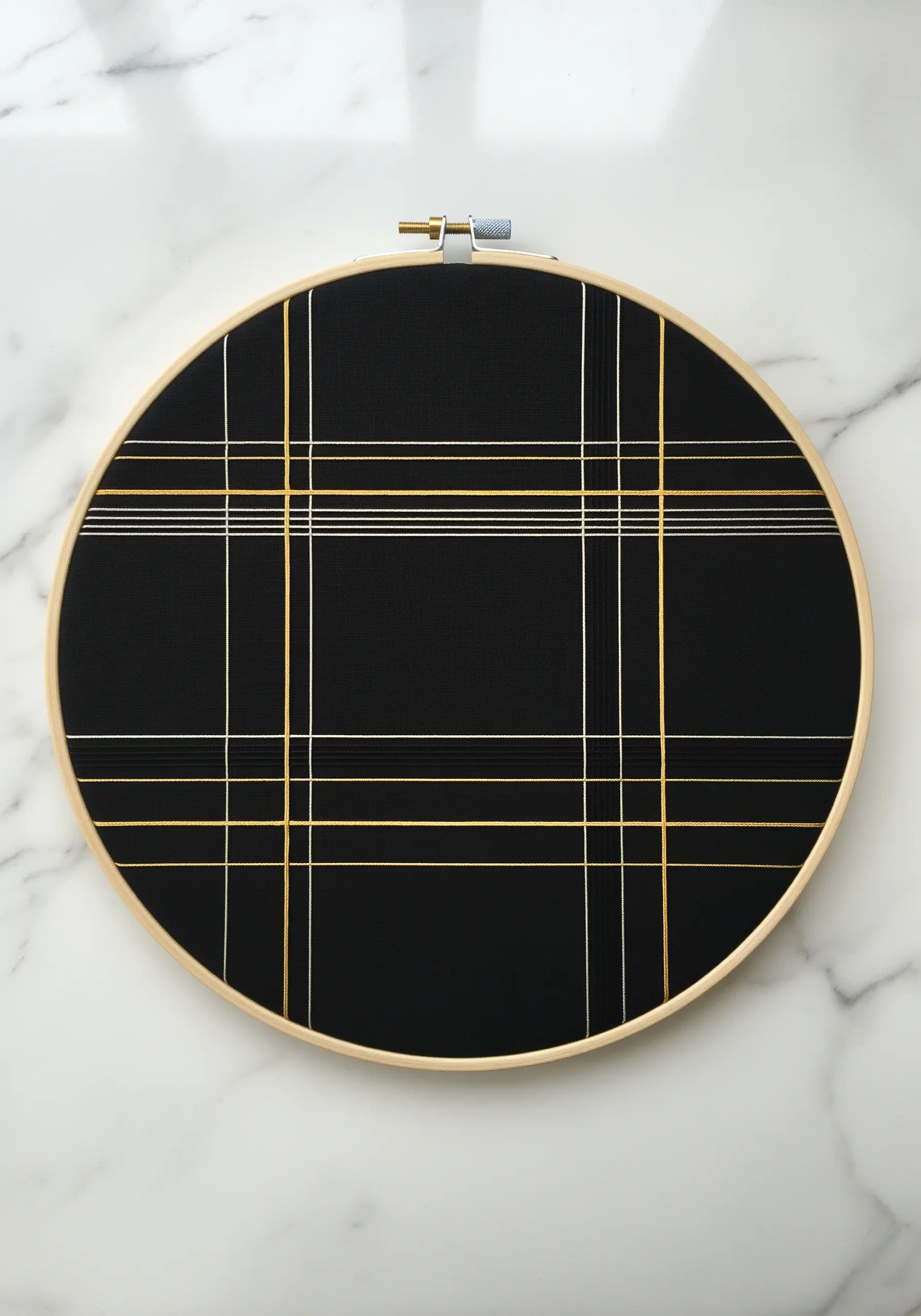
Evoke the classic, comforting feel of plaid with a clean, modern twist.
Use a ruler and a water-soluble marker to draw a precise grid on your fabric.
Stitch over the lines using a simple backstitch or even just long, single straight stitches.
Create visual interest by varying the ‘weight’ of each line—use three strands of gold for a thick stripe and a single strand of a contrasting silver or white for a thin one. These are the kinds of simple stitched patterns that feel both timeless and contemporary.
21. Liquid Gold: Raised Satin Stitch for a Molten Effect
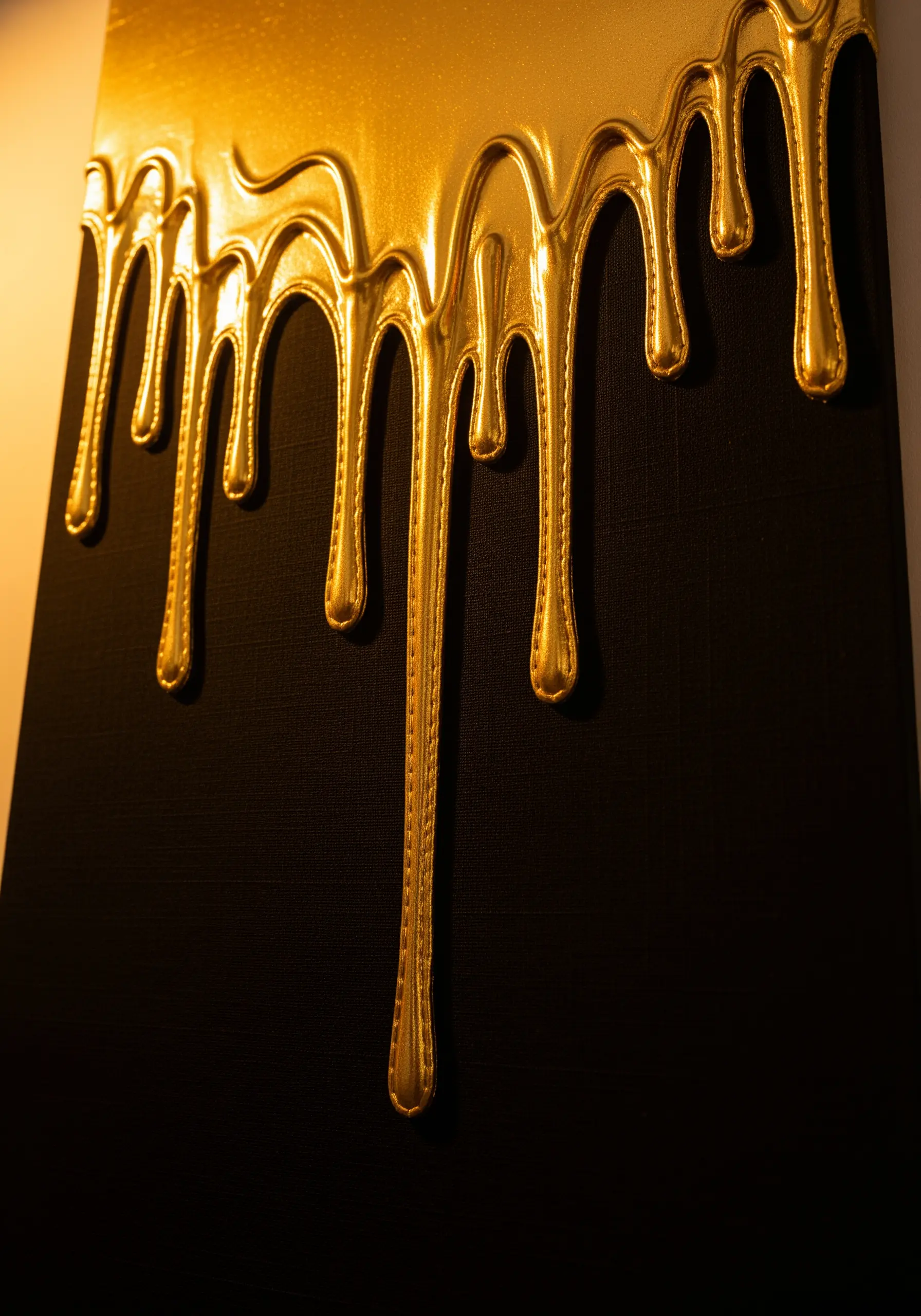
To create the thick, viscous look of dripping honey or molten gold, you need to add dimension.
Cut your drip shapes from a piece of felt, tack them onto your black canvas, and then completely cover them with vertical satin stitches.
The padding underneath raises the stitching off the surface, creating a plump, 3D effect.
Using a high-shine rayon or metallic thread will enhance the liquid look, resulting in amazing abstract thread sculpt designs.
22. Geometric Inlay: Filling Shapes with Mosaic Stitches
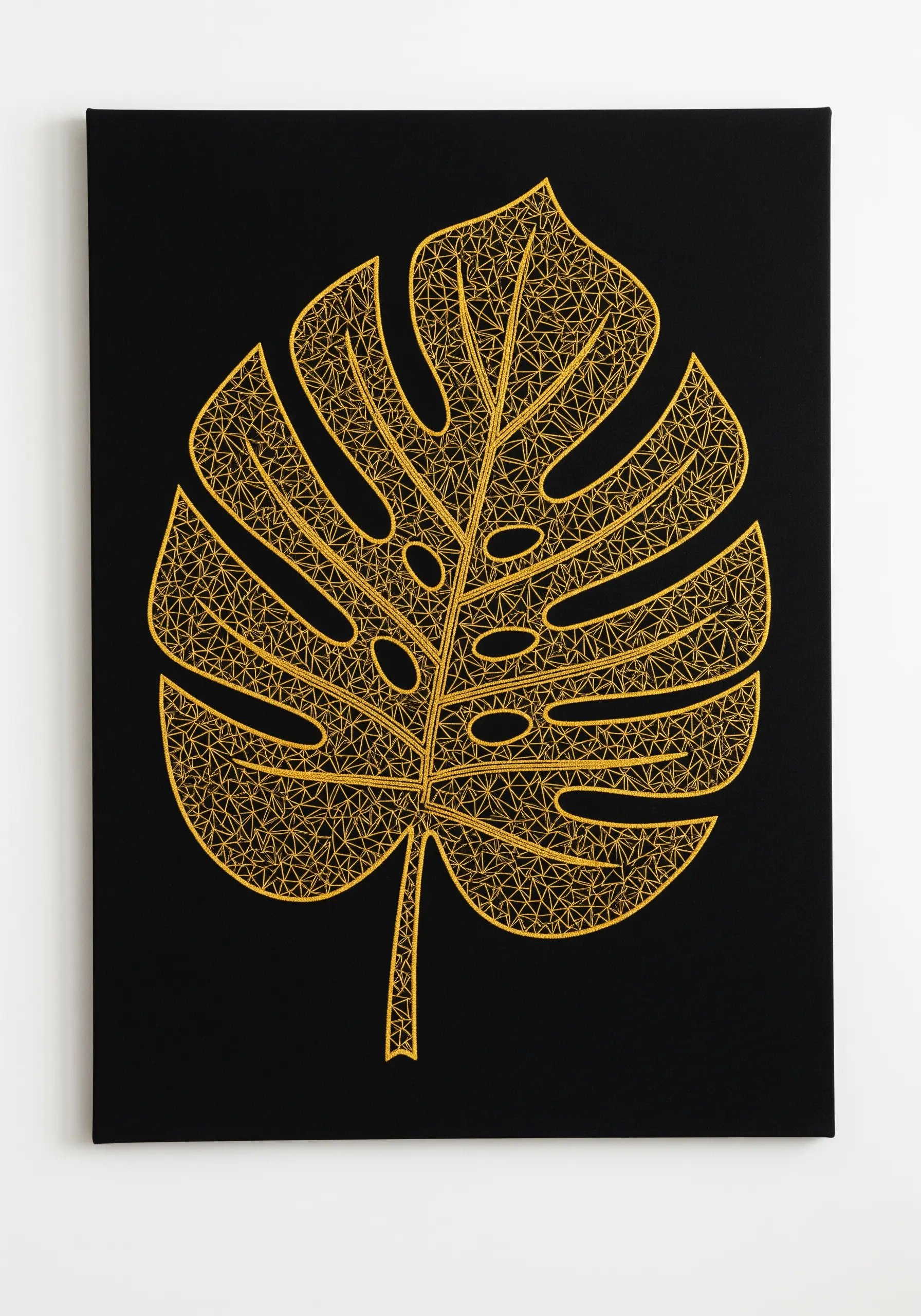
Elevate a simple silhouette by filling it with an intricate, geometric pattern.
After outlining your main shape, like this Monstera leaf, divide the interior space into a mosaic of tiny triangles and polygons.
Fill each small section with satin stitches, changing the stitch direction for every adjacent shape.
This causes the facets to catch the light differently, creating a shimmering, almost crystalline effect within the simple outline of your chosen houseplant embroidery motifs.
23. Calligraphic Contrast: Textured Negative Space
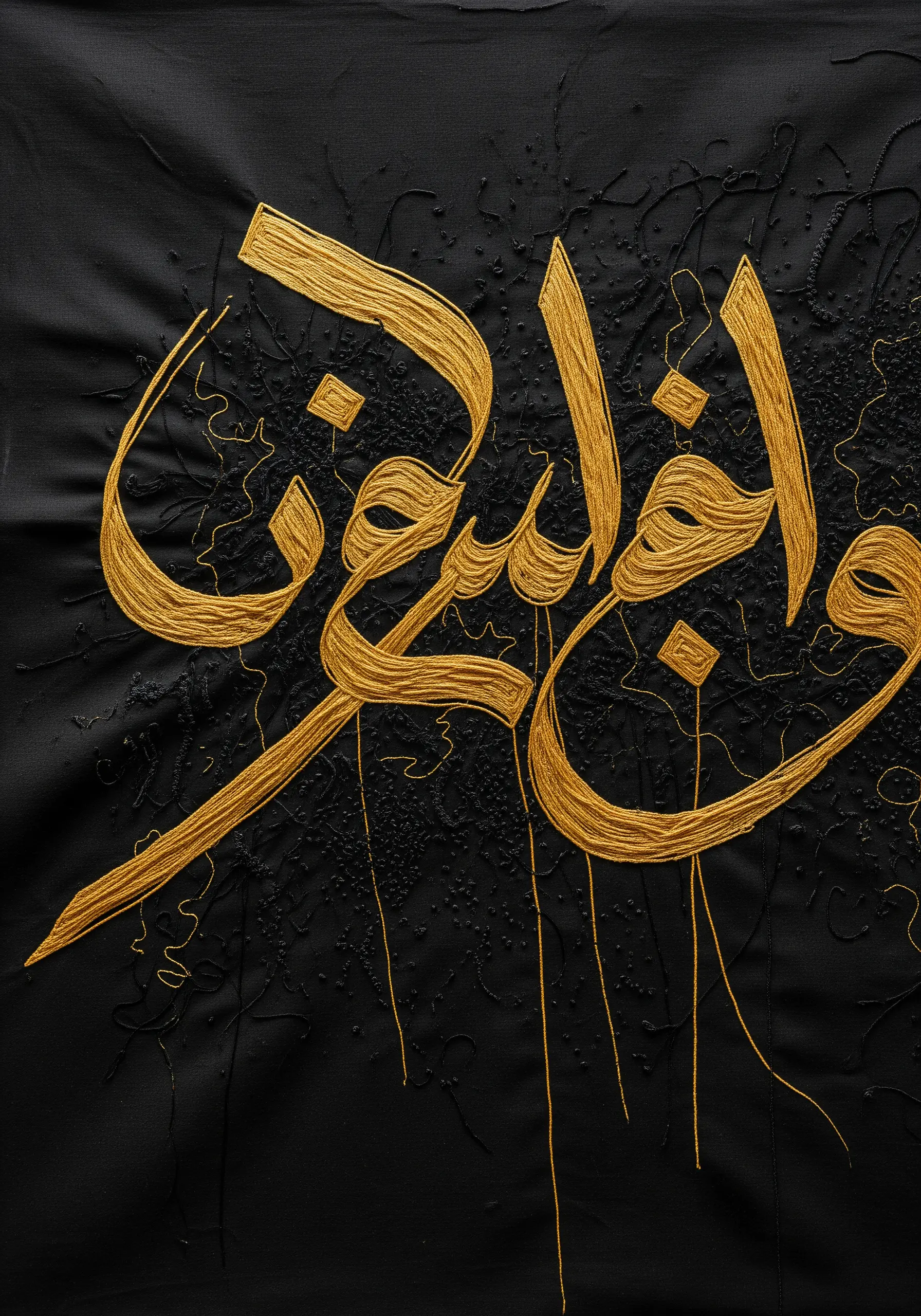
Make your gold satin stitch feel even more luxurious by adding subtle texture to the negative space around it.
After completing your main calligraphic design with smooth, wide satin stitches, go back into the black background fabric with black thread.
Add a random scattering of tiny seed stitches or French knots around your gold lettering.
This tone-on-tone texture adds a layer of depth and sophistication that makes the polished gold elements pop even more.