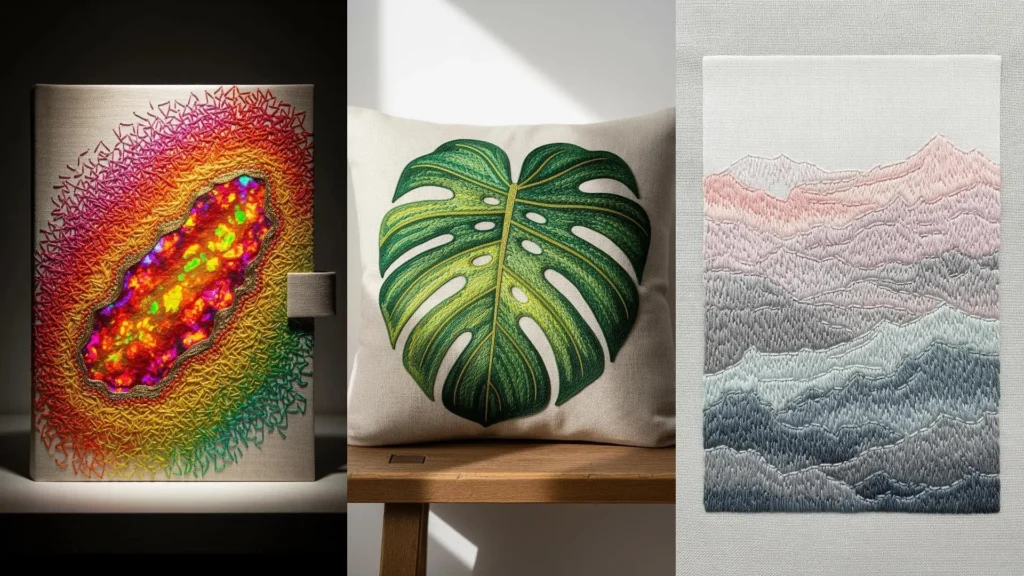
If you’re here, it’s because you feel that spark—the quiet magic that happens when a needle and thread meet fabric. But perhaps you’re also wondering how to move beyond following patterns and start creating pieces that feel truly and completely *yours*.
The secret isn’t about mastering hundreds of complex stitches. It’s about understanding how to use simple techniques with intention. It’s in choosing a thicker yarn to create a shadow, letting a thread drip off the canvas to suggest movement, or limiting your palette to let texture tell the story.
These projects are your invitation to rethink the possibilities. Here, you’ll find the clarity and confidence to transform a simple stitch into a statement, and a blank hoop into a piece of art that resonates with modern elegance and personal meaning. Let’s begin.
1. Master the Thread-Painted Gradient
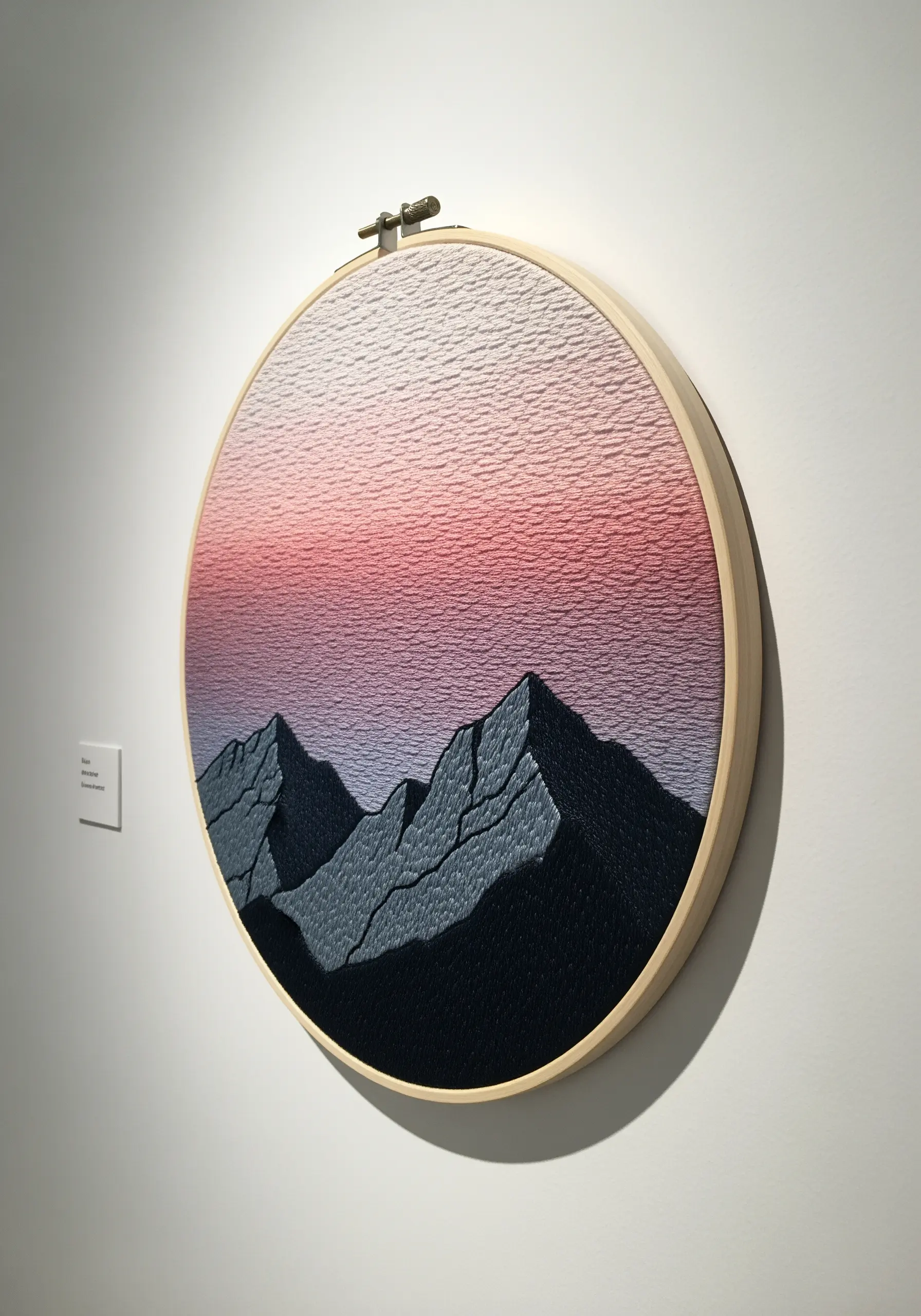
Create atmospheric depth by blending thread colors seamlessly, a technique known as thread painting.
Start with the lightest sky color at the top, using single strands of floss and long-and-short stitch.
As you move down, introduce the next shade by overlapping your stitches irregularly into the previous color band, mimicking how light fades in the sky.
This method avoids harsh lines and gives your work a soft, painterly quality that satin stitch alone cannot achieve.
For the mountains, use darker, directional satin stitches to create sharp, geometric contrast against the soft sky, making the landscape feel both vast and tangible.
Explore abstract thread landscapes for dreamy and emotion-driven hoop art to push this technique even further.
2. Build Sculptural Forms with Couching
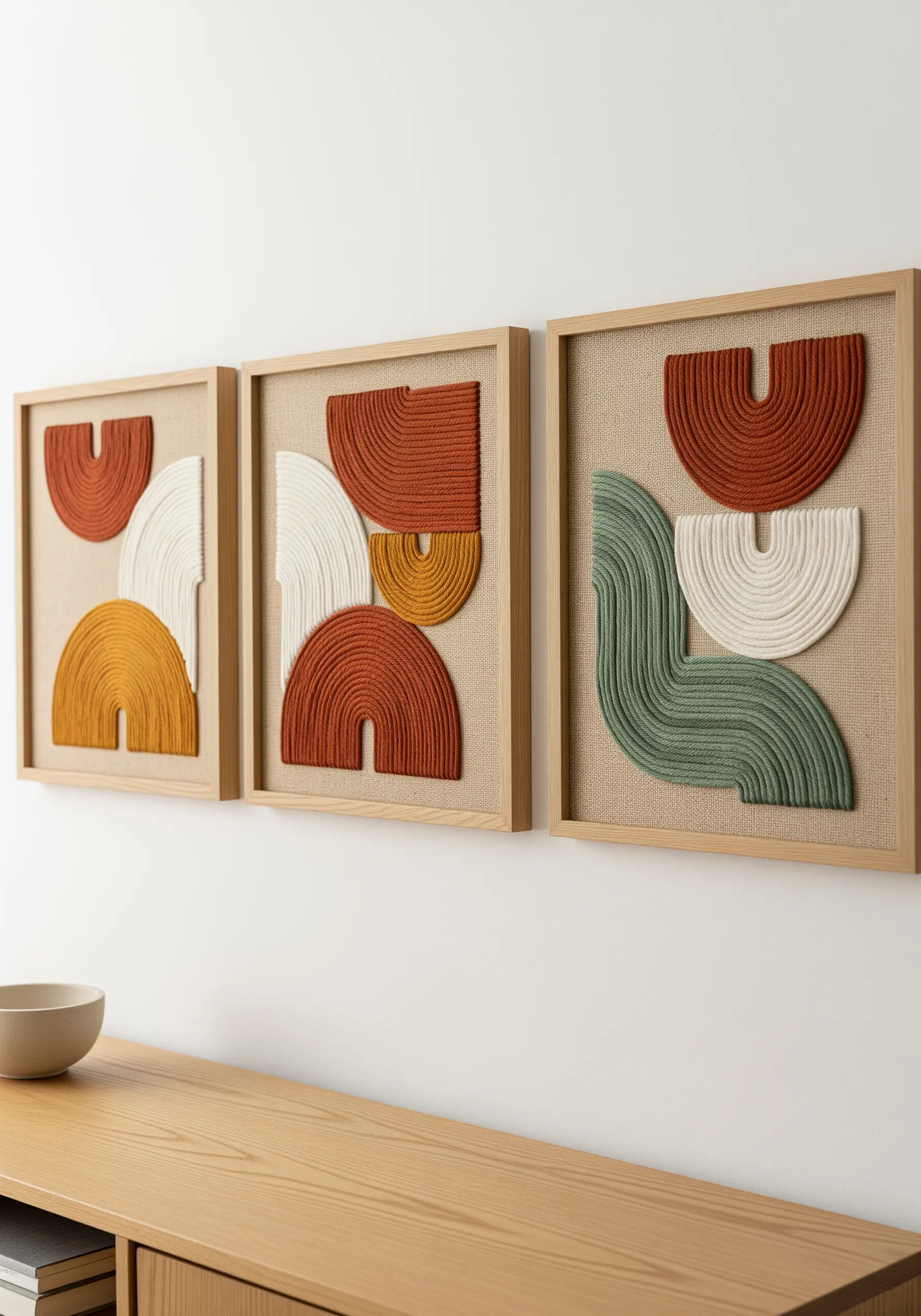
Give your abstract art a three-dimensional presence by using thick yarn or cord on the surface of your fabric.
Instead of pulling the thick fiber through the material, lay it down in your desired shape and secure it with a thinner, matching (or contrasting) embroidery floss, a technique called couching.
This preserves the yarn’s loft and texture, creating bold, raised lines that standard stitches can’t replicate.
Arrange these shapes in a triptych on a neutral linen or burlap background to create a cohesive gallery wall with significant visual impact.
This approach allows you to work with geometric abstract thread patterns for bold statement wall hoop installations without warping your fabric.
3. Illuminate Dark Fabric with Metallics
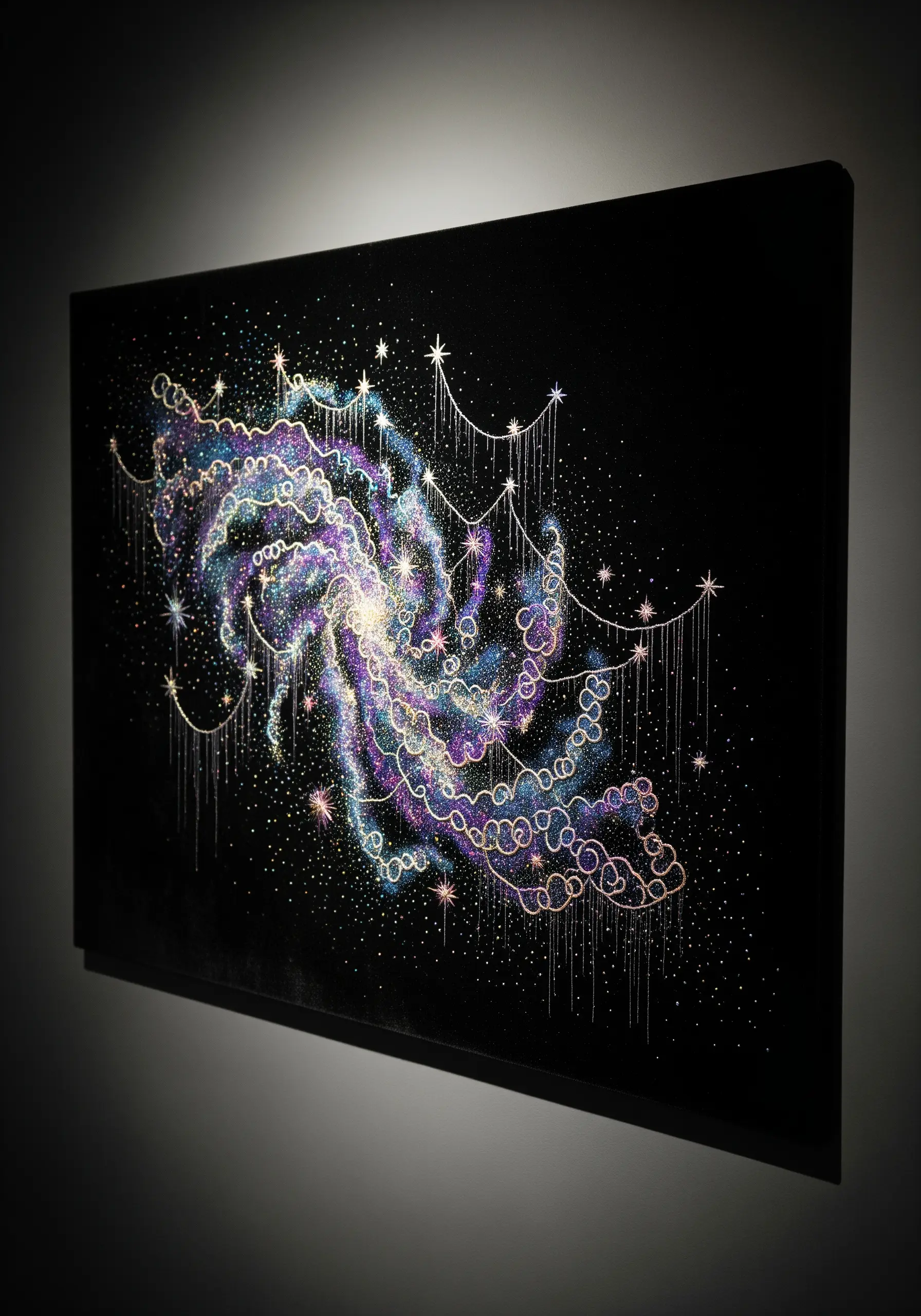
Make your designs radiate by stitching with metallic and specialty threads on a black or dark navy canvas.
To prevent snagging, use a needle with a larger eye and work with shorter lengths of thread—no more than 12 inches.
Combine shimmering floss with tiny seed stitches or French knots made with glitter thread to create a celestial, sparkling effect that mimics a galaxy.
The dark background absorbs light, making the reflective threads appear even more luminous and creating a sense of infinite depth.
These abstract metallic thread embroidery concepts that glow under light are perfect for dramatic, statement-making pieces.
4. Create Liquid Motion with Dripping Threads
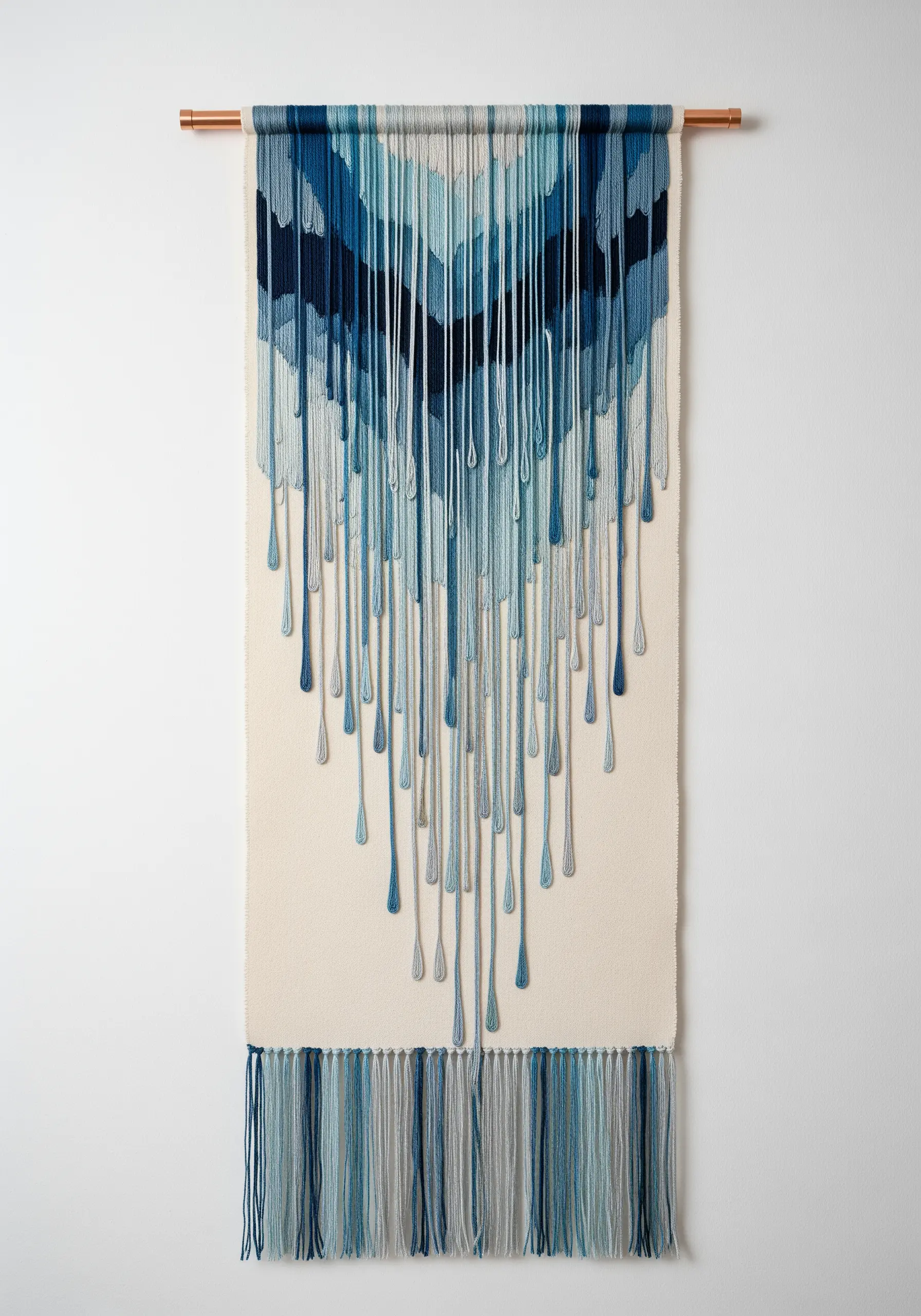
Transform your embroidery into a dynamic wall hanging by letting threads flow beyond the fabric’s edge.
After completing the stitched portion at the top, leave long tails of thread hanging loose.
To create the ‘drip’ effect, guide several strands together, thread them through a needle, and pass it back through the bottom of the same color block to form a loop.
A small dab of fabric glue at the base of each loop will secure it permanently.
This technique adds movement and turns simple threads into a piece of fluid, modern sculpture.
It’s one of the best yarn wall art techniques that transform simple threads into art.
5. Achieve Flawless Gradients with Thread Wrapping
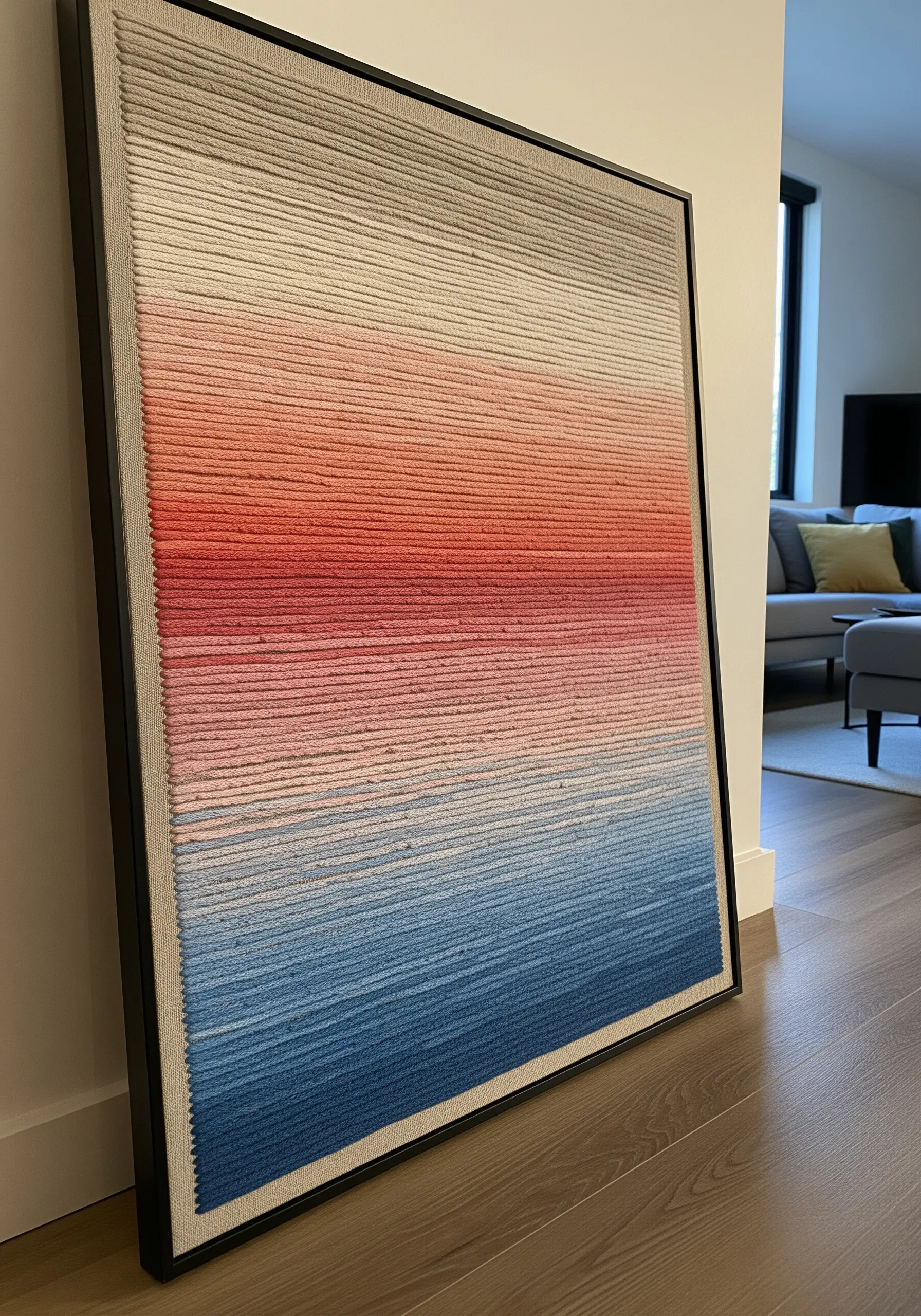
For large-scale, minimalist color fields, move beyond traditional stitching and try thread wrapping.
Instead of piercing the canvas for every stitch, stretch hundreds of parallel threads across the frame from top to bottom or side to side.
Secure the threads by wrapping them around the back of a sturdy stretcher frame, changing colors incrementally to produce a smooth, satisfying gradient.
This method creates pure, uninterrupted color and texture, perfect for modern interiors.
The final effect looks like a serene, woven painting—a perfect way to try abstract color-blend stitch ideas that make your art look almost painted.
6. Tell a Story with Negative Space
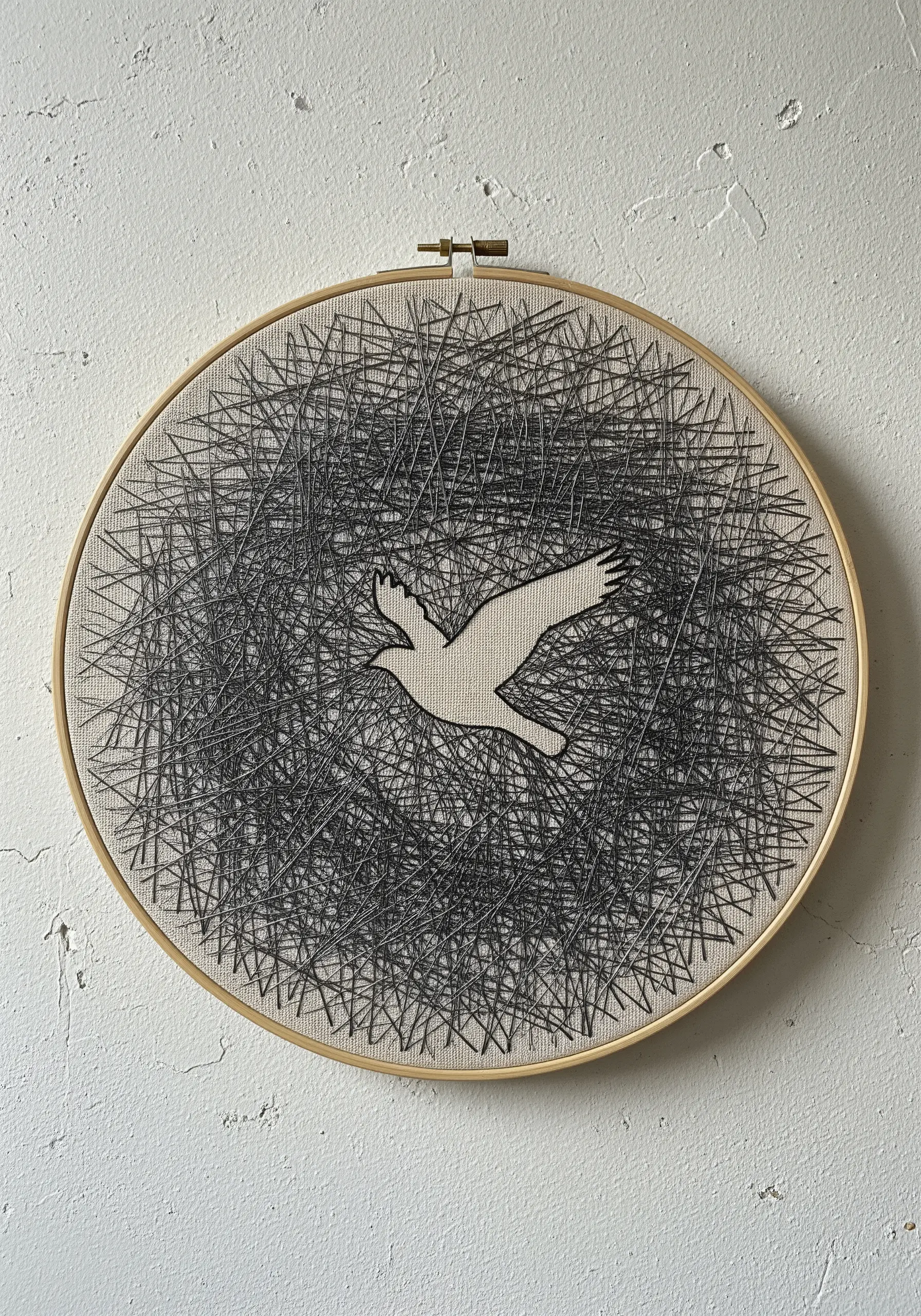
The unstitched areas of your fabric are just as powerful as the stitched ones.
Create a central motif by leaving it completely blank and filling the surrounding area with dense, chaotic stitches.
Use a single color, like charcoal grey or black, and vary the length and direction of your straight stitches to build a feeling of energy or tension.
This contrast forces the viewer’s eye to the clean silhouette of the negative space, making it the true subject of your piece.
It’s a masterful way to use abstract thread designs using negative space for a minimal, chic look.
7. Stitch on Nature’s Delicate Canvases
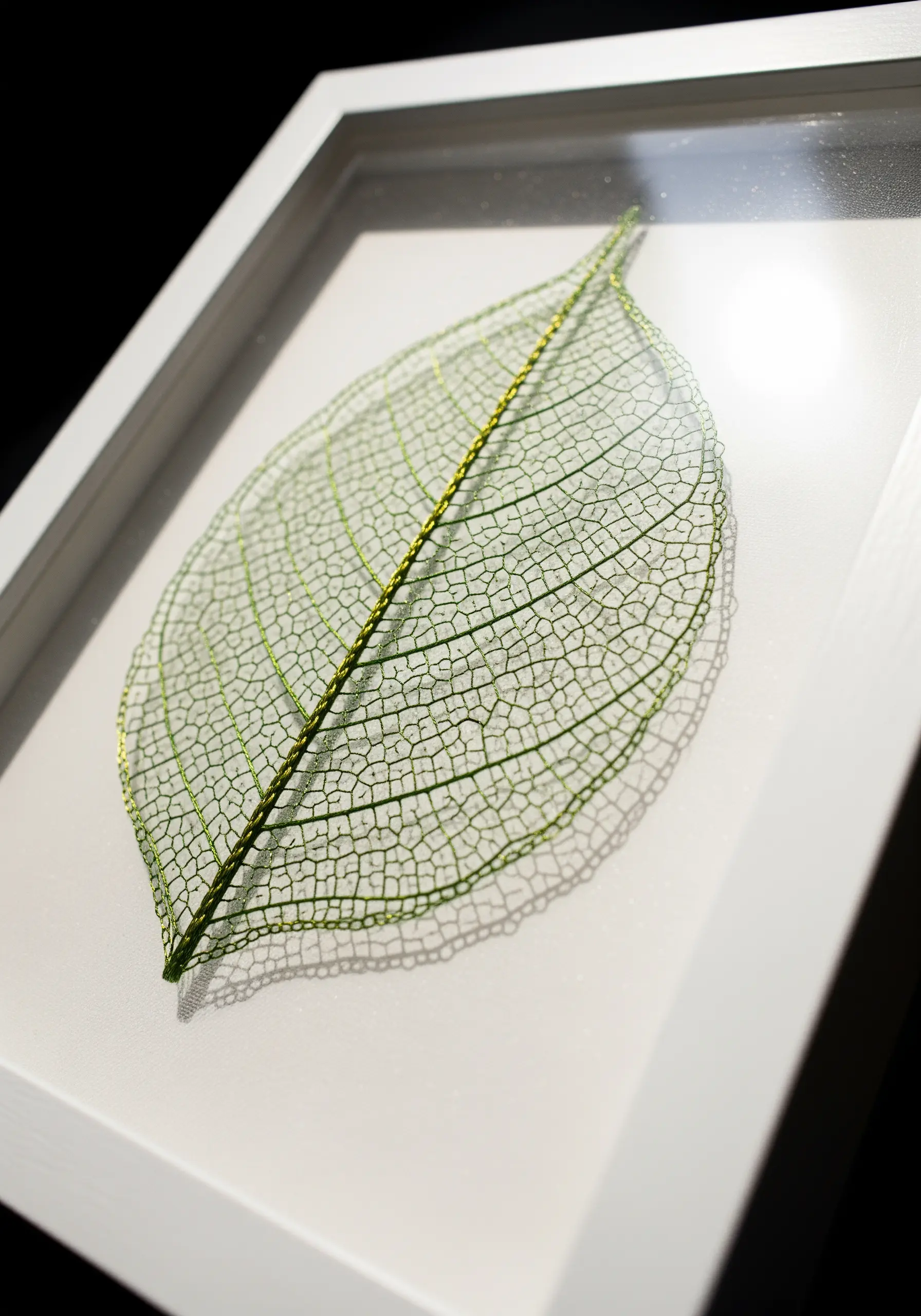
Elevate a found object by using it as your embroidery base. A dried skeleton leaf offers a fragile, intricate canvas.
To stitch on it without tearing, use a very fine beading needle and a single strand of silk or metallic thread.
Instead of pulling stitches tight, let the thread rest gently on the leaf’s veins, securing it on the back with a tiny knot or a dab of archival glue.
Reinforce the central stem with a line of couching to add structure and a touch of color.
Framing it in a shadow box protects the delicate work and enhances its museum-quality feel.
Explore these delicate leaf stitch techniques for realistic botanical embroidery shading for more inspiration.
8. Explore Organic Forms with Corded Contours
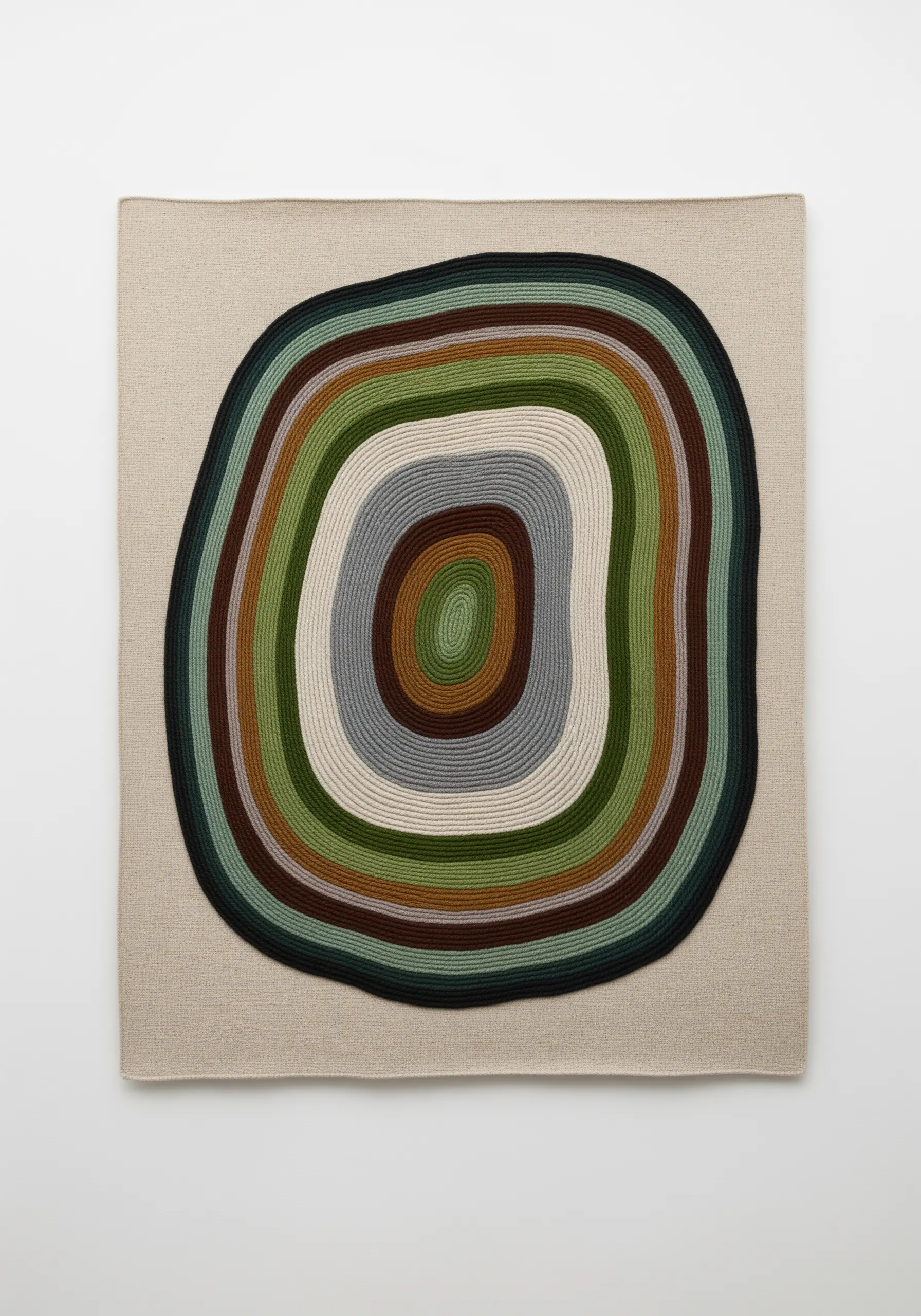
Move away from perfect circles and embrace the beauty of irregular, organic shapes.
Outline your design on canvas and use thick cotton cord or yarn, attaching it with the couching technique.
Build concentric rings of color, letting each new line respond to the imperfect shape of the one before it.
This method builds texture quickly and allows you to create large-scale pieces with a meditative, rhythmic process.
The resulting artwork has the visual weight of a carving and showcases how organic texture embroidery designs that add life to any room.
9. Create Movement with 3D Stitches
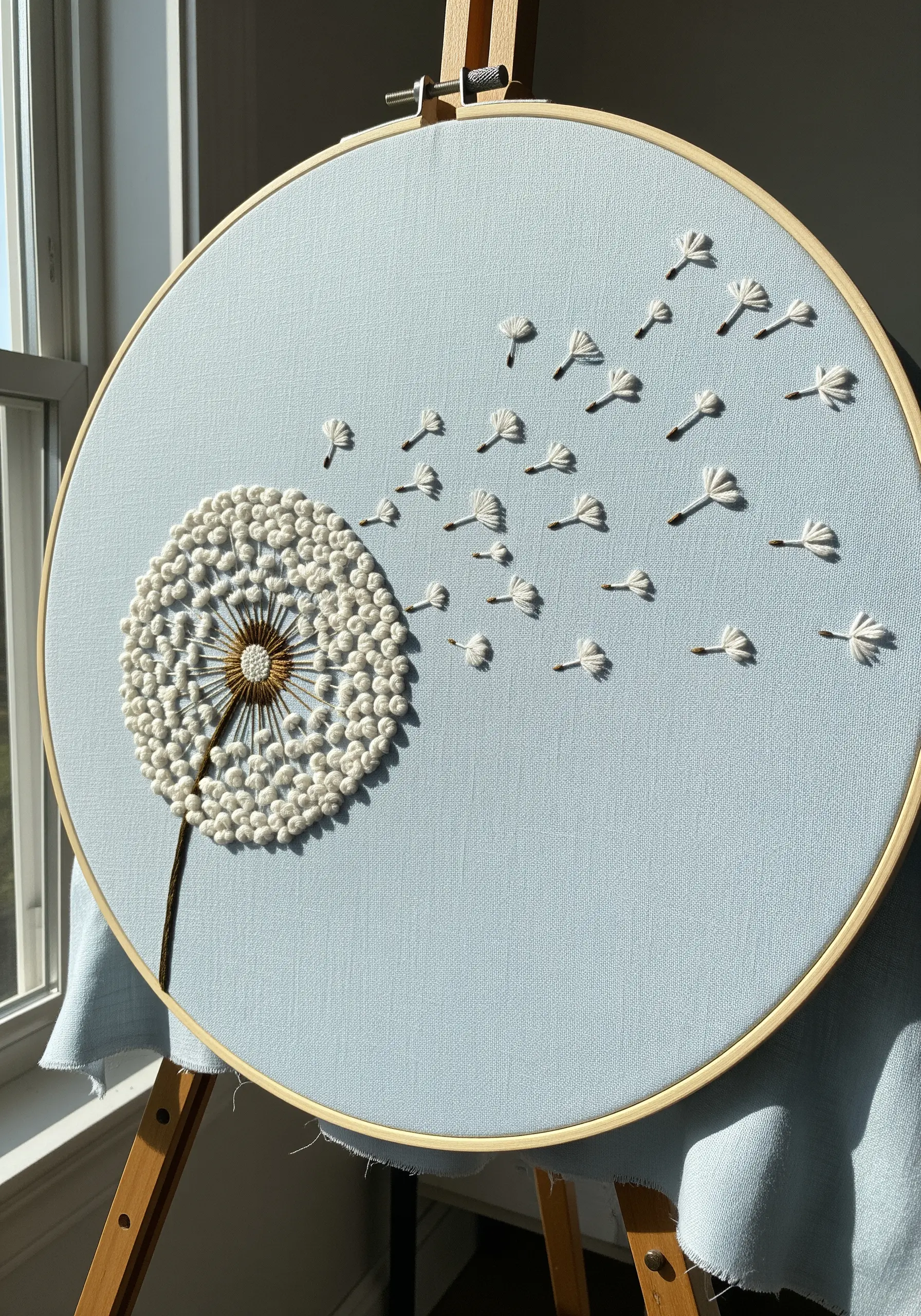
Bring a simple dandelion to life by giving it dimension and the illusion of movement.
Use tightly packed French knots for the central puff, varying the size slightly to create a rounded shape.
For the floating seeds, use a detached chain stitch (or lazy daisy stitch), keeping the stitch open and airy.
Arrange the seeds in a gentle, sweeping arc across the hoop to guide the viewer’s eye and create a sense of a light breeze.
The combination of dense texture and delicate, floating elements makes the entire piece feel dynamic.
Perfectly arranged wildflower thread palettes that make your hoop look like an actual meadow will enhance this effect.
10. Achieve Graphic Precision with Satin Stitch Blocks
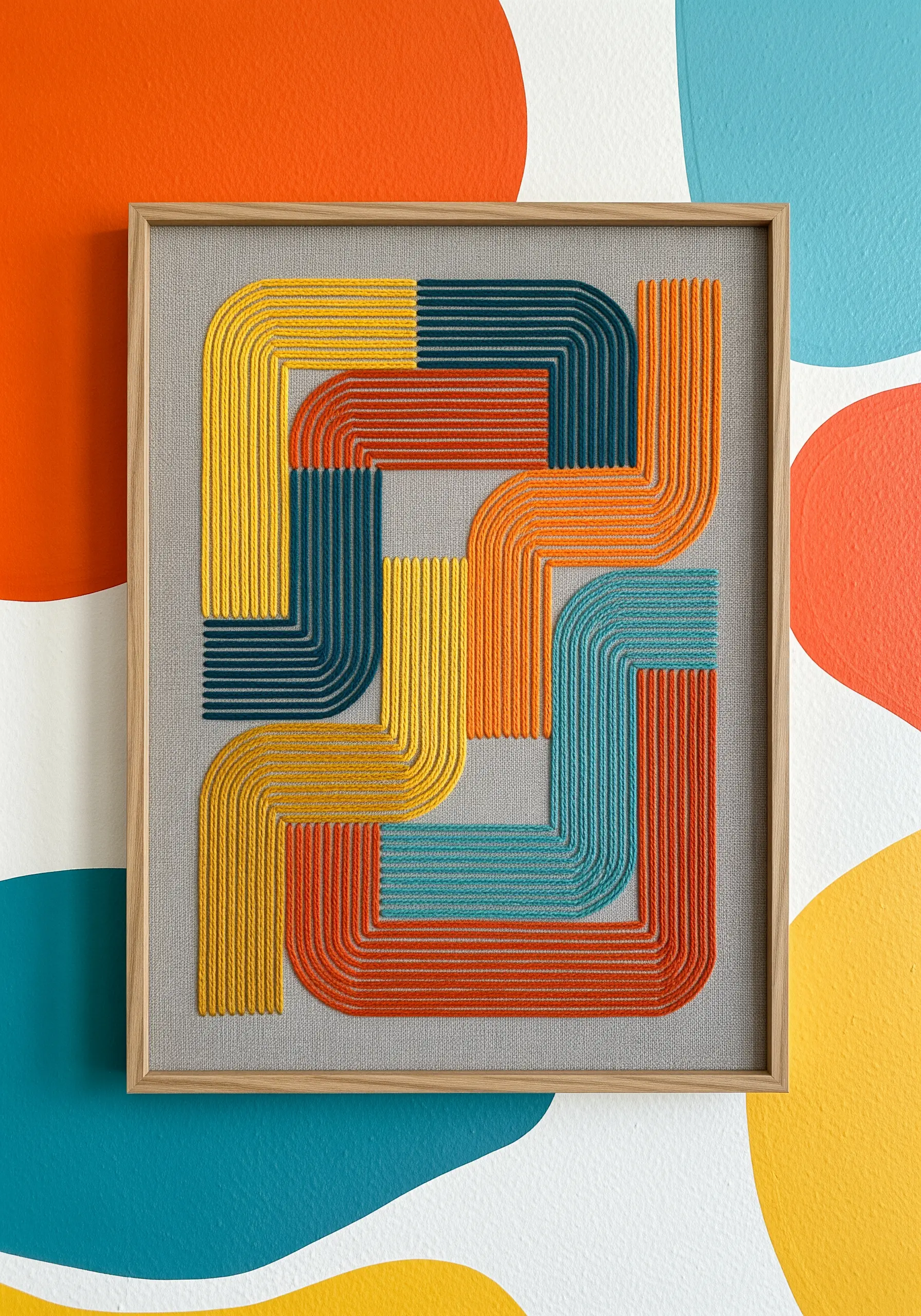
For bold, graphic designs, the uniformity of your satin stitch is everything.
To keep your lines perfectly parallel and your edges crisp, first outline each color block with a split stitch. This creates a raised edge that your satin stitches can tuck into, ensuring a clean finish.
Work in small sections, always keeping your stitches parallel to each other.
Using a high-quality, tightly woven fabric like linen or cotton canvas will prevent puckering and allow for sharp, geometric precision.
These are the foundational skills for minimalist thread art ideas for clean, aesthetic lovers.
11. Find Rhythm in Repetitive Running Stitches
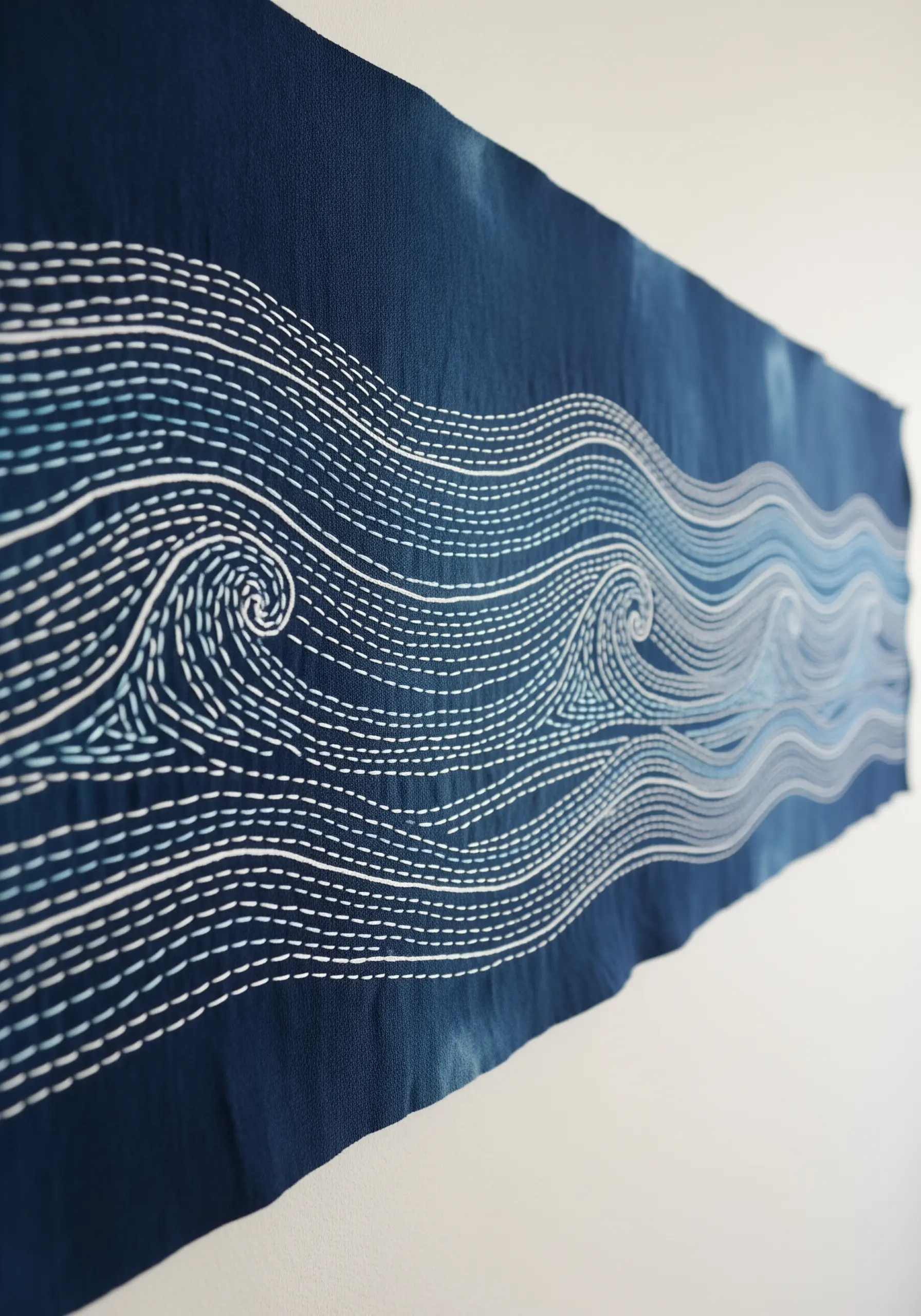
Embrace the meditative beauty of Sashiko-inspired patterns, which use simple running stitches to create complex, flowing designs.
The key to this Japanese technique is consistency in stitch length and spacing.
Use a thicker, high-contrast thread (like white perle cotton on indigo fabric) to make the pattern pop.
Instead of focusing on filling shapes with color, this style celebrates the elegance of the line itself, creating texture and movement through pure rhythm and repetition.
You can apply this to minimal ocean-inspired embroidery pieces for bathroom or coastal-themed wall decor.
12. Stitch a Personal Soundwave
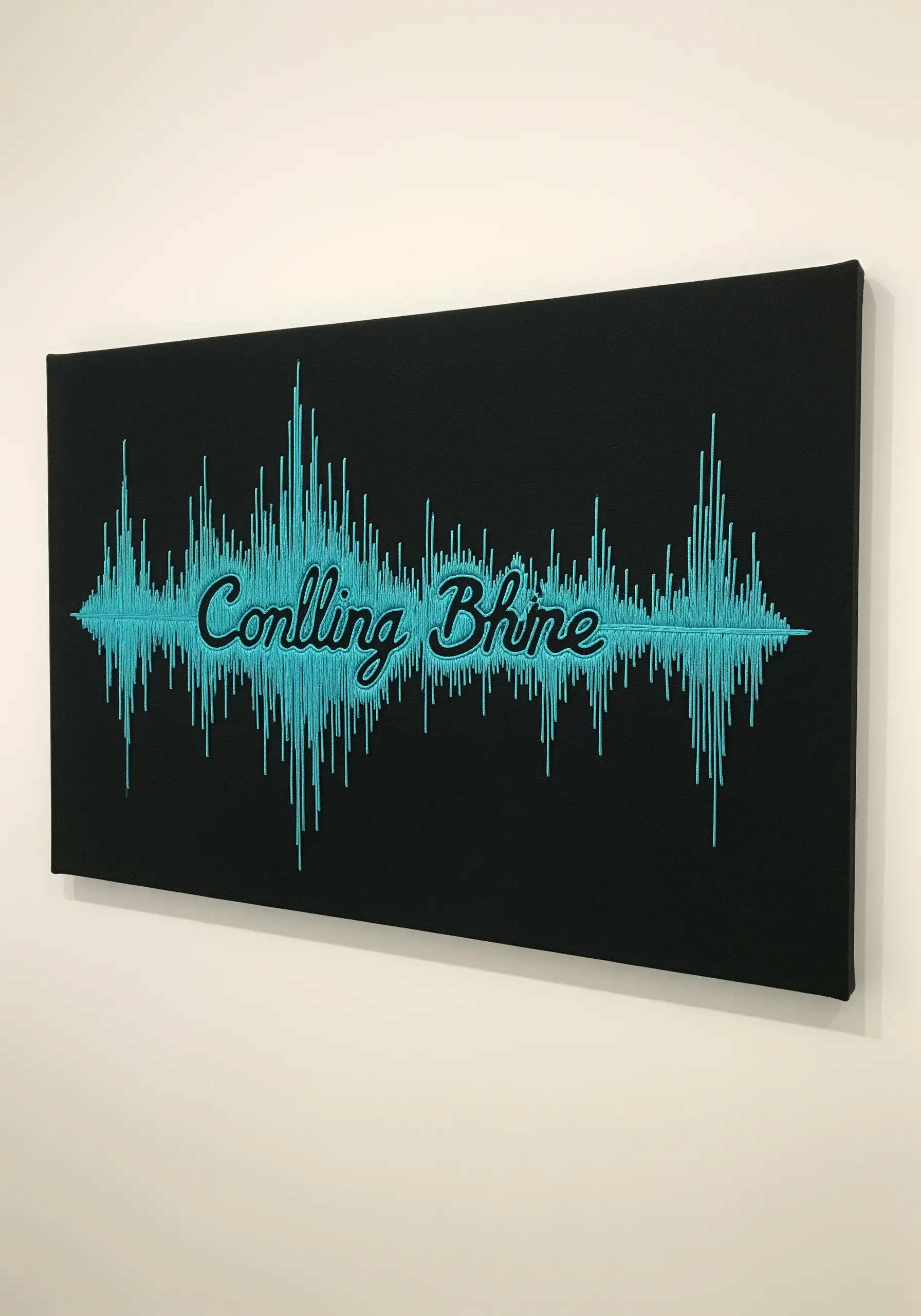
Turn a meaningful sound—a favorite song clip, a loved one’s voice—into a permanent piece of art.
Use a free online tool to generate a visual soundwave from an audio file, then transfer the pattern onto a dark canvas.
Use a bright, high-contrast color and a simple backstitch or satin stitch to fill in the waveform.
The precision of the sharp peaks and valleys is what gives this piece its impact, so take your time.
This project transforms invisible data into a tangible, deeply personal statement, perfect for modern contemporary typography stitch designs for trendy wall quotes signage.
13. Explore Texture with a Monochrome Palette
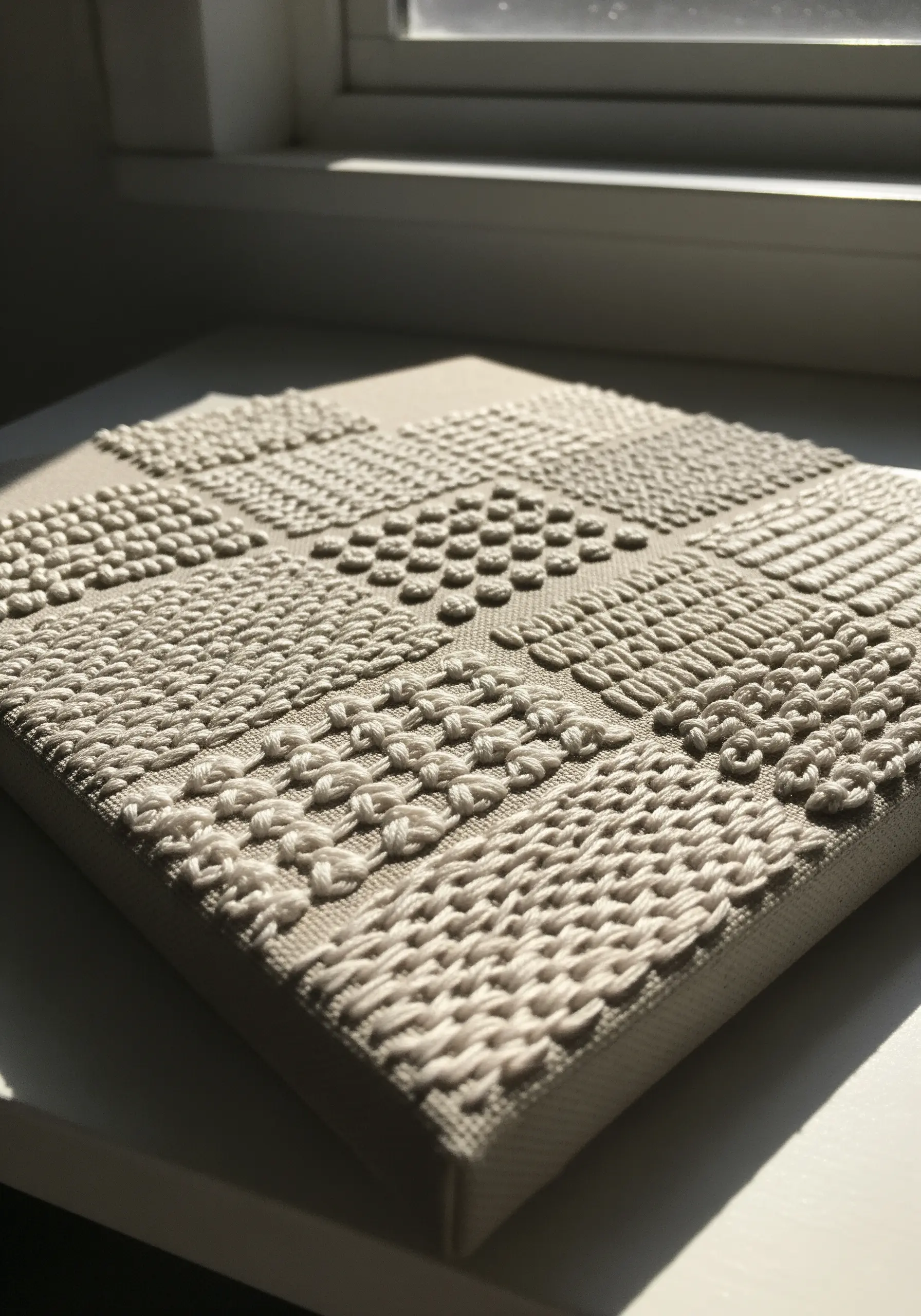
Discover the infinite possibilities of texture by removing color from the equation.
Create a sampler on a neutral canvas using only one color of thread, like ecru or soft grey.
Fill geometric blocks with a variety of highly textural stitches: French knots, bullion knots, woven wheels, and Turkey work.
By limiting your palette, you force the eye to focus on the interplay of light and shadow across the different surfaces.
This exercise proves that texture alone can be the subject of a sophisticated piece, a core principle of tone-on-tone embroidery techniques for ultra-subtle, high-end neutral finishes.
14. Curate a Thematic Hoop Gallery
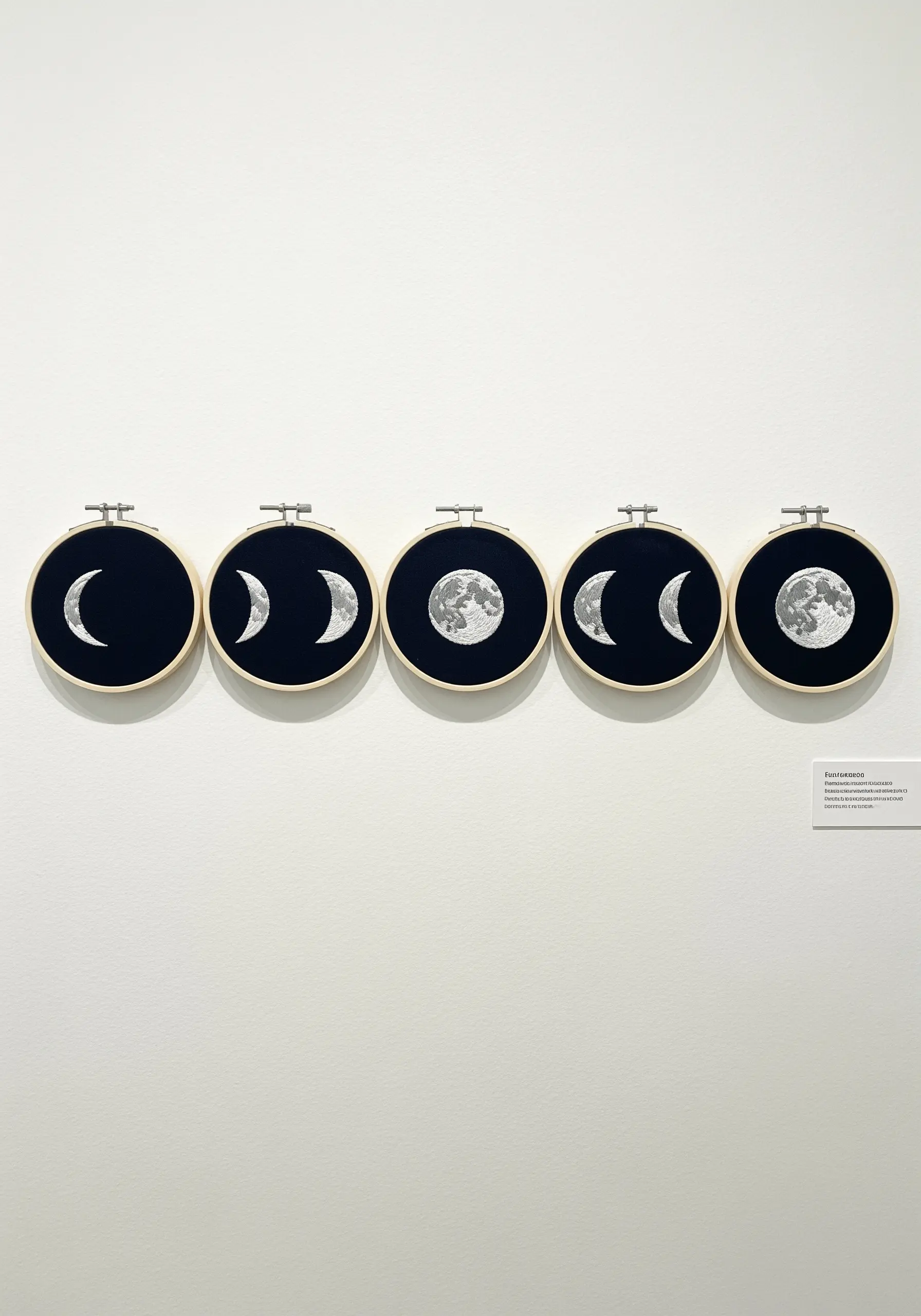
Elevate your hoops from individual projects to a cohesive, curated collection.
Choose a single theme, like the phases of the moon, and execute each element in a consistent style and color palette.
Using the same fabric (like black velvet) and hoop size for each piece creates a strong sense of unity.
When displayed together in a linear arrangement, the individual hoops become part of a larger narrative, transforming a simple wall into a thoughtful art installation.
This is how you create hooped wall collage layouts that turn simple stitches into gallery-style decor.
15. Weave Thread Through Transparent Surfaces
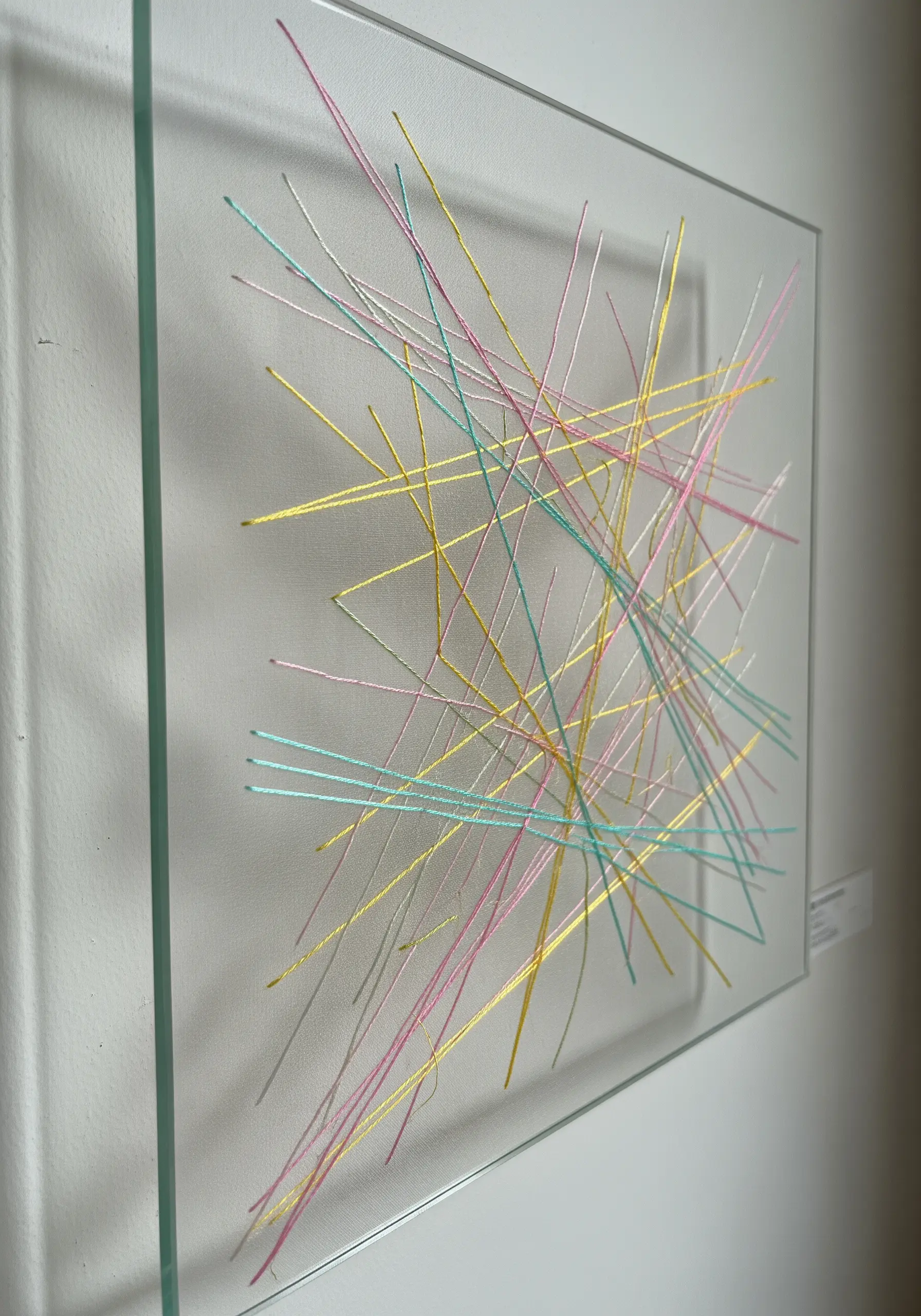
Challenge the boundaries of embroidery by swapping fabric for a sheet of acrylic or glass.
To achieve this, you’ll need to carefully drill tiny holes into the surface to serve as anchor points for your thread.
Stretch threads between the holes to create intersecting lines of color and form, much like string art.
The transparency of the base material creates a floating effect, where the thread itself becomes a suspended sculpture and its shadows add another layer of depth to the artwork.
This is one of the most compelling abstract thread illusion techniques that create depth without complex stitches.
16. Paint a Landscape with Fiber and Yarn
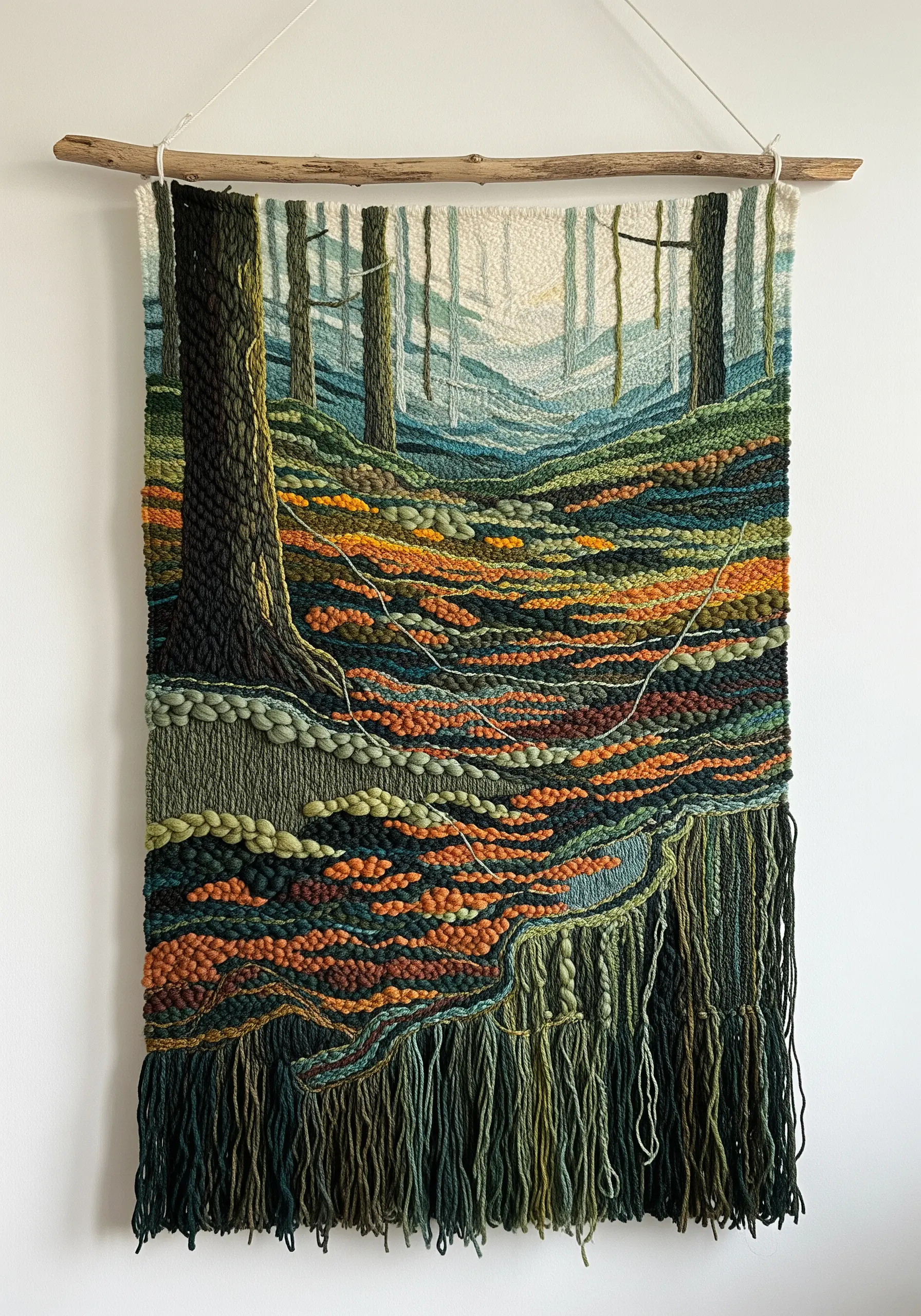
Go beyond floss to create deeply textural, immersive landscapes.
Combine traditional embroidery with weaving techniques directly on the fabric. Use chunky wool yarn and Turkey work to create a plush, mossy forest floor, and thin floss for the delicate details of distant trees.
Vary the texture and sheen of your materials—matte wool, silky cotton, nubby chenille—to build layers that trick the eye into seeing depth and distance.
This multi-fiber approach transforms your piece from a flat image into a tactile world.
You can create incredible organic texture embroidery designs that feel like a forest in your hands.
17. Master the Elegance of the Single Line
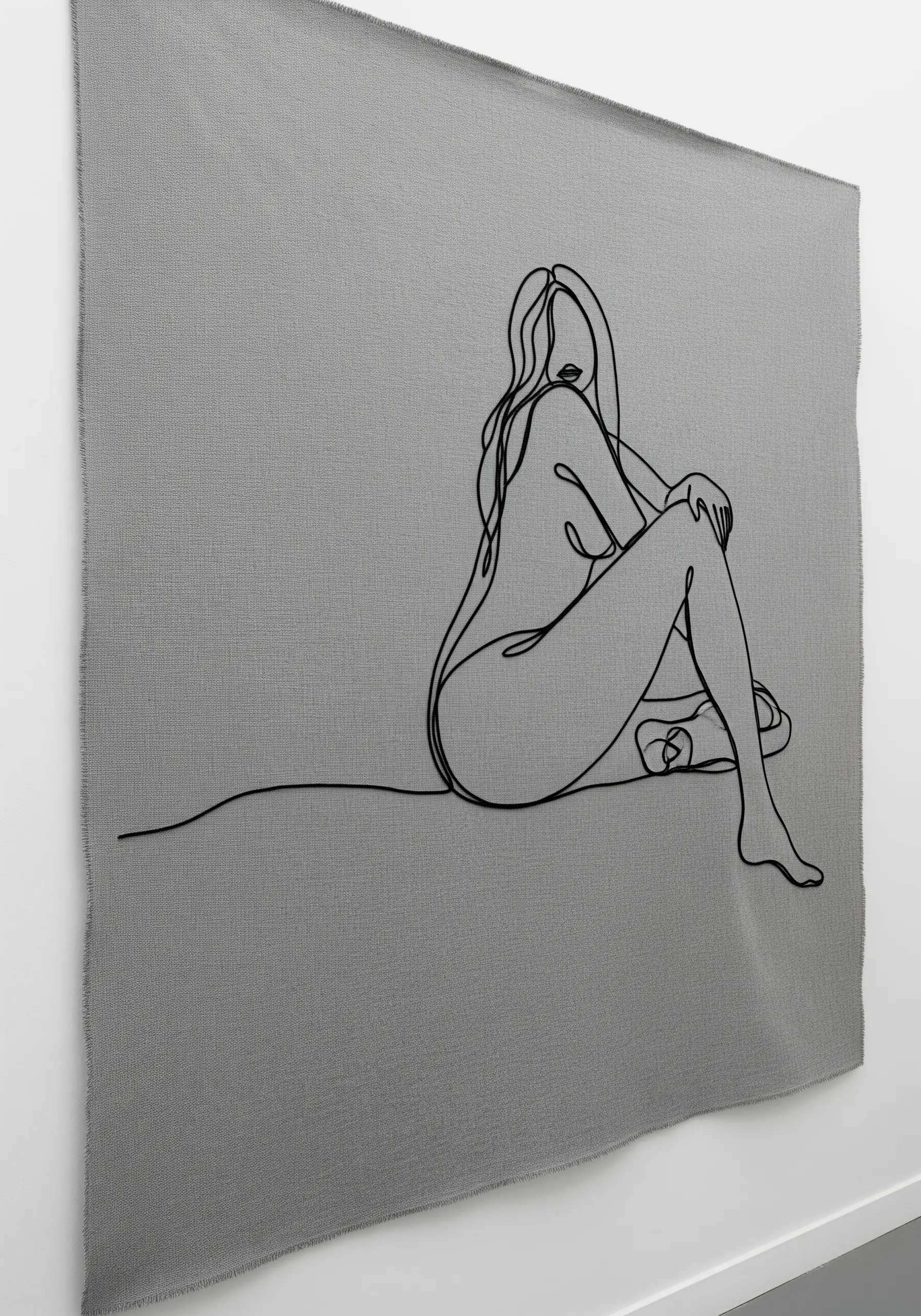
Communicate form and emotion with the utmost simplicity: a single, unbroken line.
Choose a fluid stitch like a whipped backstitch or a stem stitch to ensure your line has a smooth, consistent thickness without visible breaks.
Use a high-contrast combination, like black thread on grey linen, to give the line graphic power.
The beauty of this technique lies in its restraint. Every curve and connection matters, turning a simple contour drawing into a sophisticated statement on form and space.
It’s the essence of minimal portrait line embroidery projects to add subtle character to boho-modern homes.
18. Radiate Energy with Hoop String Art
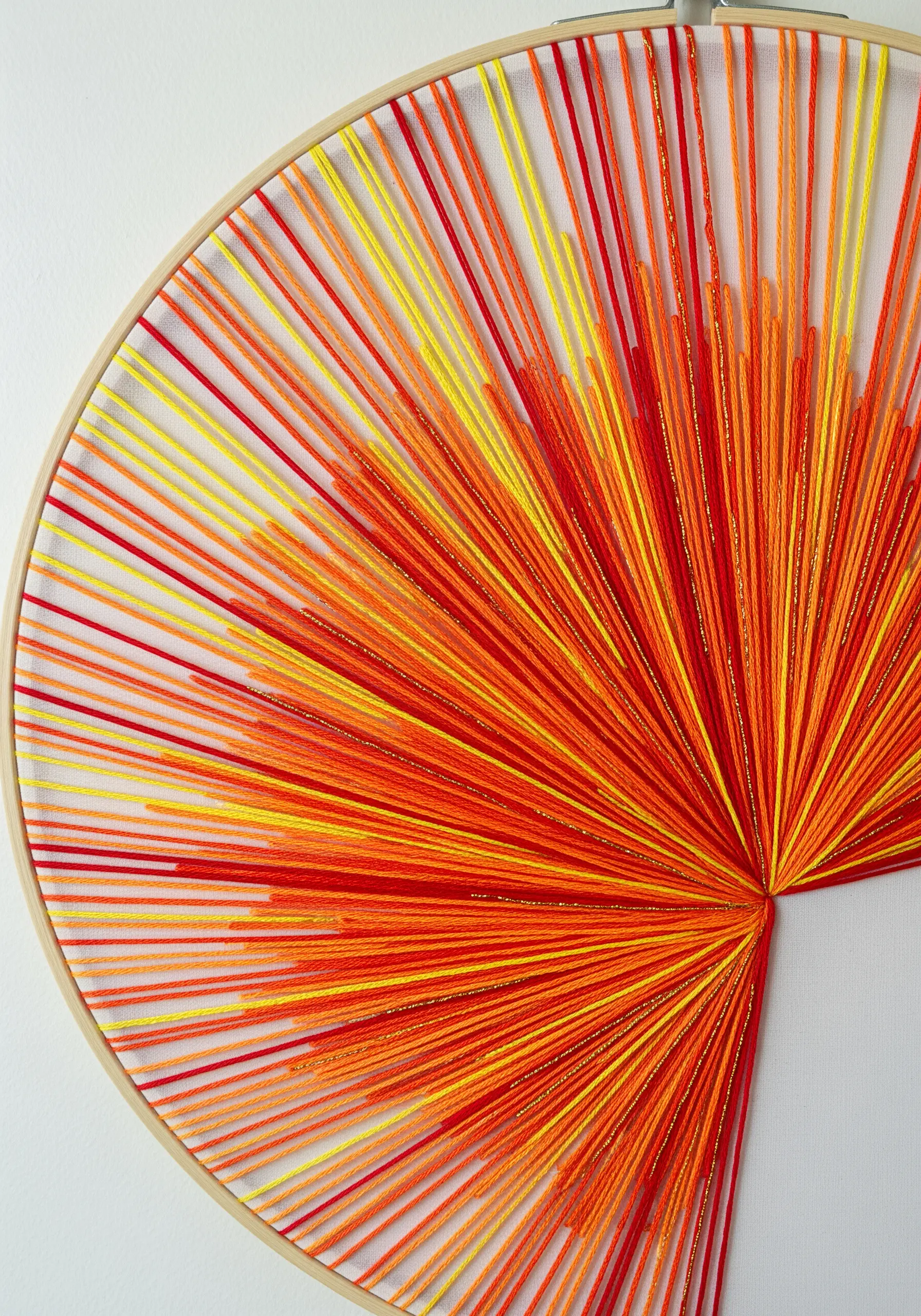
Create a burst of color and energy using a string art technique within an embroidery hoop.
Instead of stitching through the center of the fabric, you’ll anchor your threads only at the perimeter.
Wrap the thread around the inner hoop or use small pins or stitches along the edge of your stretched fabric as anchor points.
Layering different colors of thread across a central point creates a vibrant, geometric sunburst effect.
The tension of the threads is what creates the art, turning abstract thread embroidery ideas that turn simple lines into mesmerizing wall art.
19. Design with Concentric, Cellular Layers
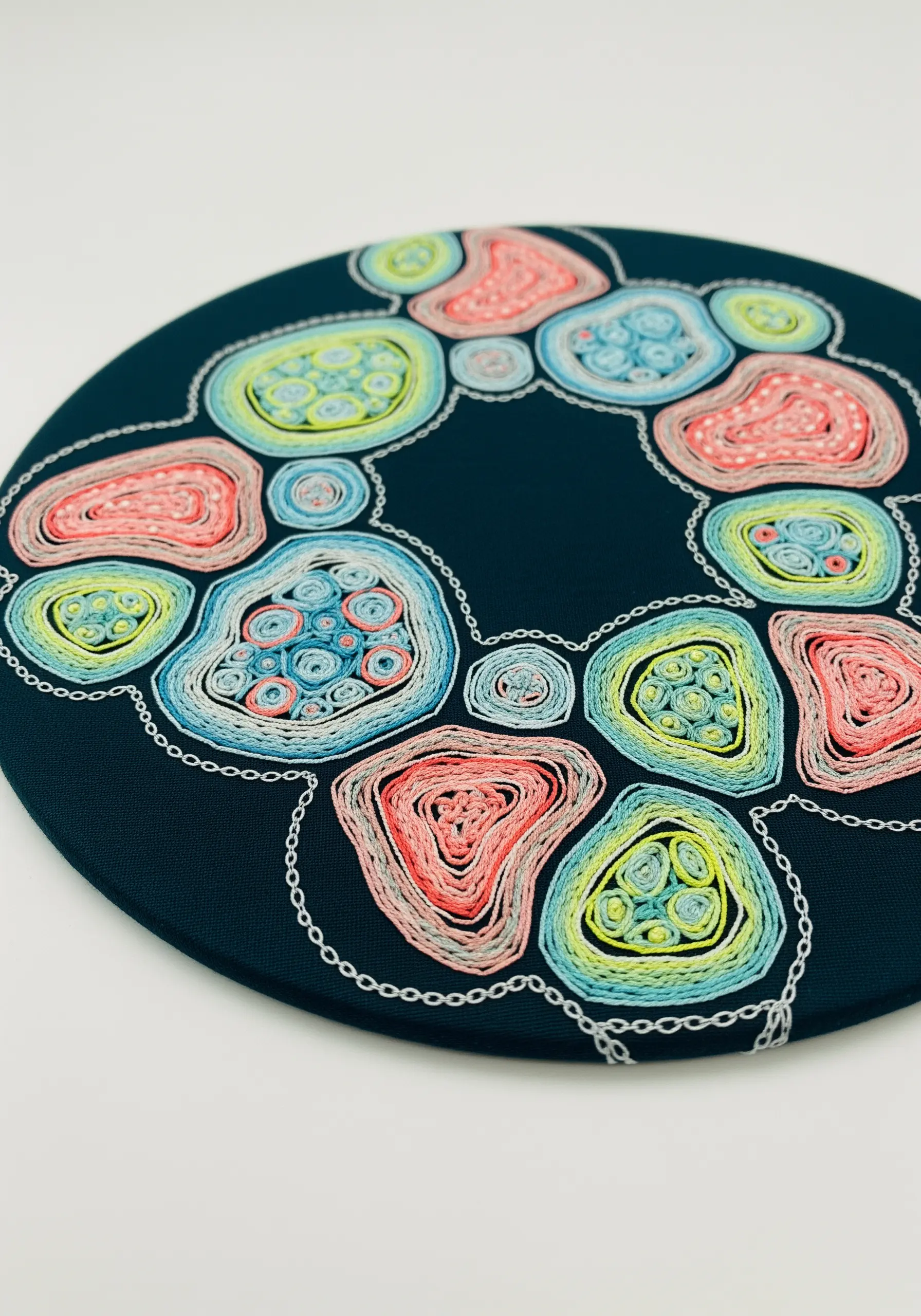
Build captivating organic patterns by layering threads in concentric circles.
Start with a small, irregular shape and outline it with a simple backstitch. Then, work your way outward, echoing that first shape with rows of new colors.
Use a whipped backstitch or couching to create smooth, rope-like lines that emphasize the layered effect.
This technique is meditative and allows for playful color combinations, resulting in a piece that feels both biological and abstract, much like cells under a microscope.
It’s a unique take on abstract thread painting styles that turn simple photographs into surreal art.