

There’s a quiet power in a single, unbroken line. In embroidery, it transforms from a simple mark into a story—one of focus, intention, and modern elegance. If you’ve been searching for a way to refresh your workspace or studio, these one-line designs offer more than just decoration; they are a meditation in stitch form.
Forget complex patterns and dozens of color changes. The beauty of this approach lies in its constraints. By limiting yourself to one continuous thread, you learn to see form, movement, and emotion in a new light. Each piece becomes an exercise in precision and flow, elevating a simple backstitch or stem stitch into a statement of refined artistry.
Use these ideas as a starting point. Let them encourage you to choose a fabric with a beautiful texture, a thread with a subtle sheen, and a design that speaks to your own creative spirit. This is your chance to create art that is not only visually striking but also deeply personal and calming to create.
1. The Poise of a Single Line Portrait
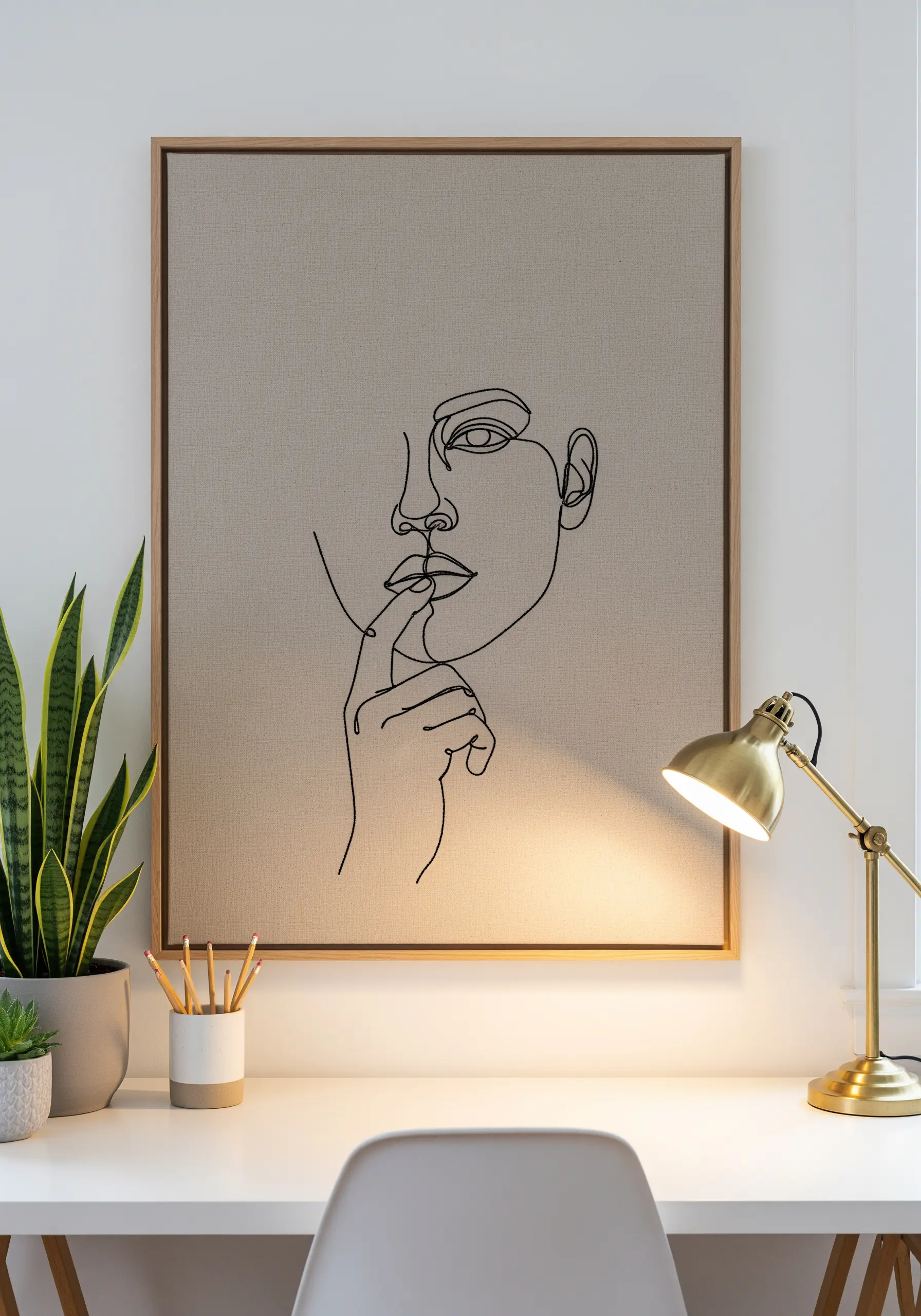
For a fluid, uninterrupted line, use a whipped backstitch.
First, create a standard backstitch outline, then wrap a second thread around it without piercing the fabric.
This technique smooths the segmented look of a basic backstitch, creating the clean illusion of a single ink stroke.
Choose a high-contrast pairing, like black floss on natural linen, to give the design graphic impact and create one of those minimal portrait line embroidery projects that feels truly intentional.
2. Curated Narratives in a Hoop Triptych
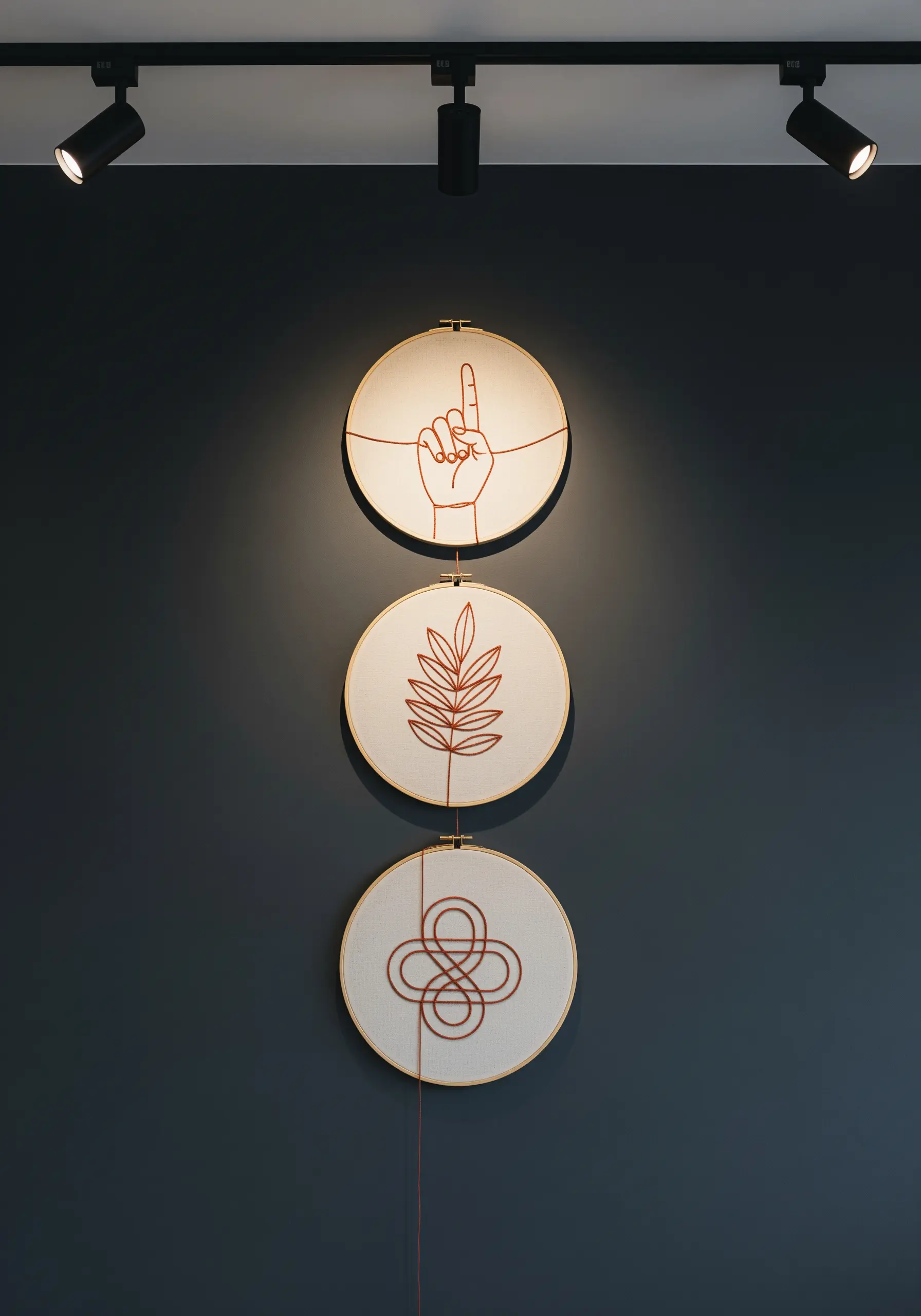
Grouping three hoops creates a powerful visual story.
Unify the series by using the same thread color and fabric for each design, allowing the individual motifs to connect conceptually.
To enhance the “one-line” concept, let a single thread physically link the hoops, draping gracefully between them as part of the installation.
This intentional detail transforms separate pieces into cohesive fun hoop art projects.
3. Gilded Peaks on a Minimalist Canvas
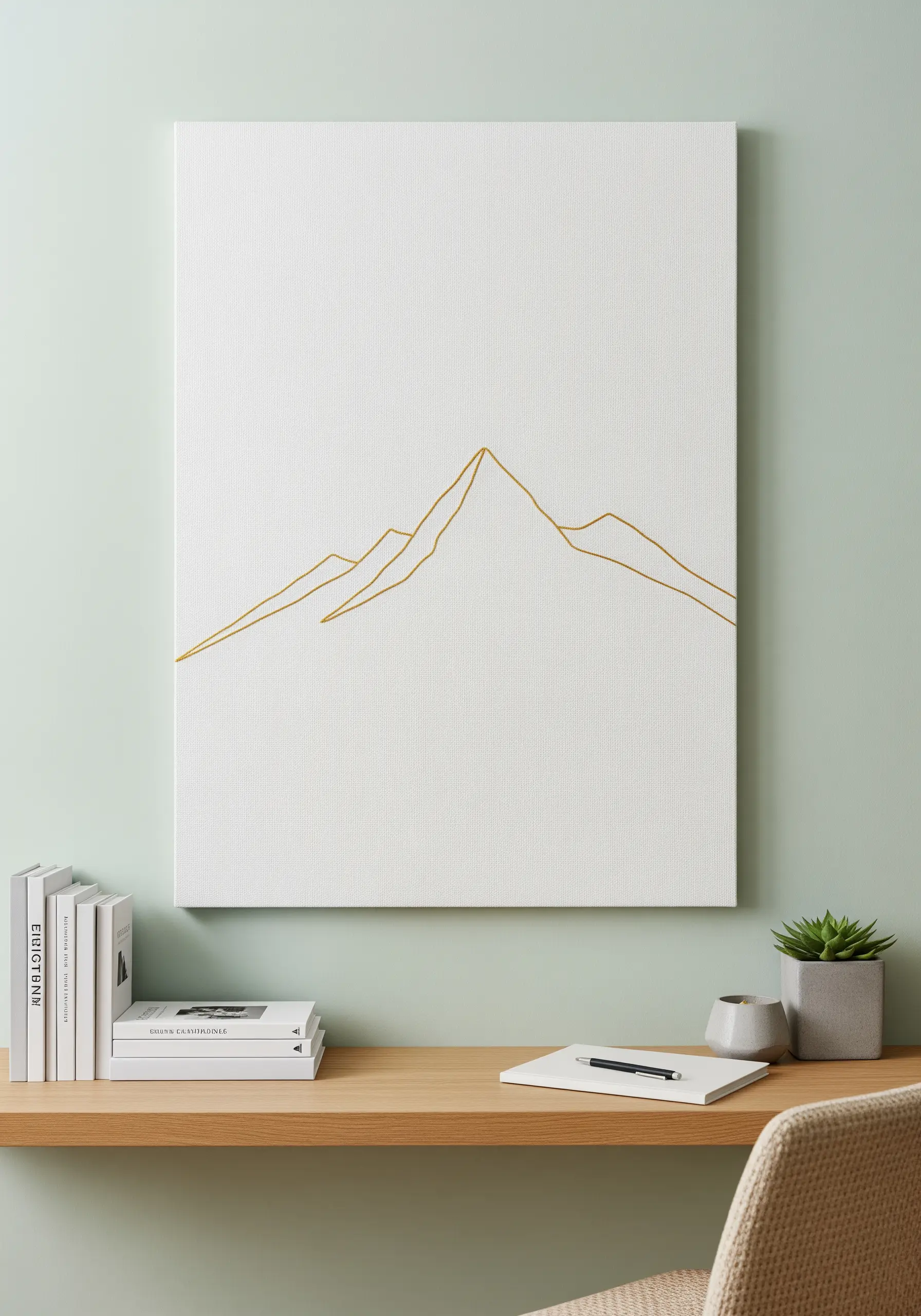
Let negative space define your composition.
A simple mountain range stitched in gold metallic thread feels both modern and luxurious against a stark white canvas.
When working with metallics, use a shorter length of thread (no more than 12 inches) and a needle with a larger eye to prevent fraying and breakage.
This small adjustment ensures your abstract metallic thread embroidery concepts remain sharp and luminous.
4. Sculptural Lines with Dimensional Cord
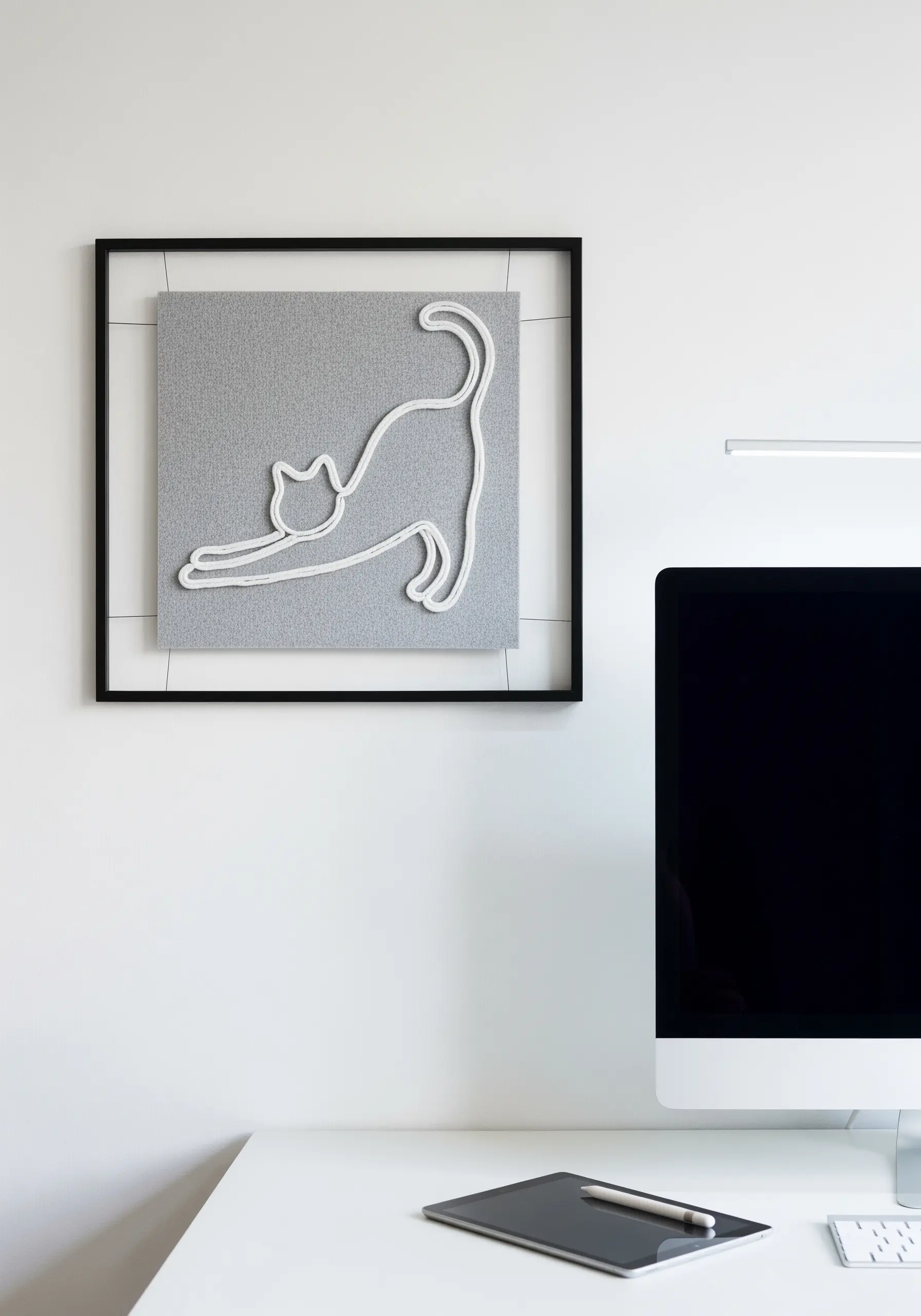
Move beyond floss and embrace thicker materials like yarn or cotton cord for a bold, three-dimensional effect.
Instead of stitching through the fabric, use a couching stitch—small, discreet tacking stitches in a matching fine thread—to anchor the cord to the surface.
This technique allows you to create raised, graphic lines that turn a simple outline into a tactile piece of art, a perfect example of modern texture layering embroidery techniques.
5. Fluid Cursive with the Stem Stitch
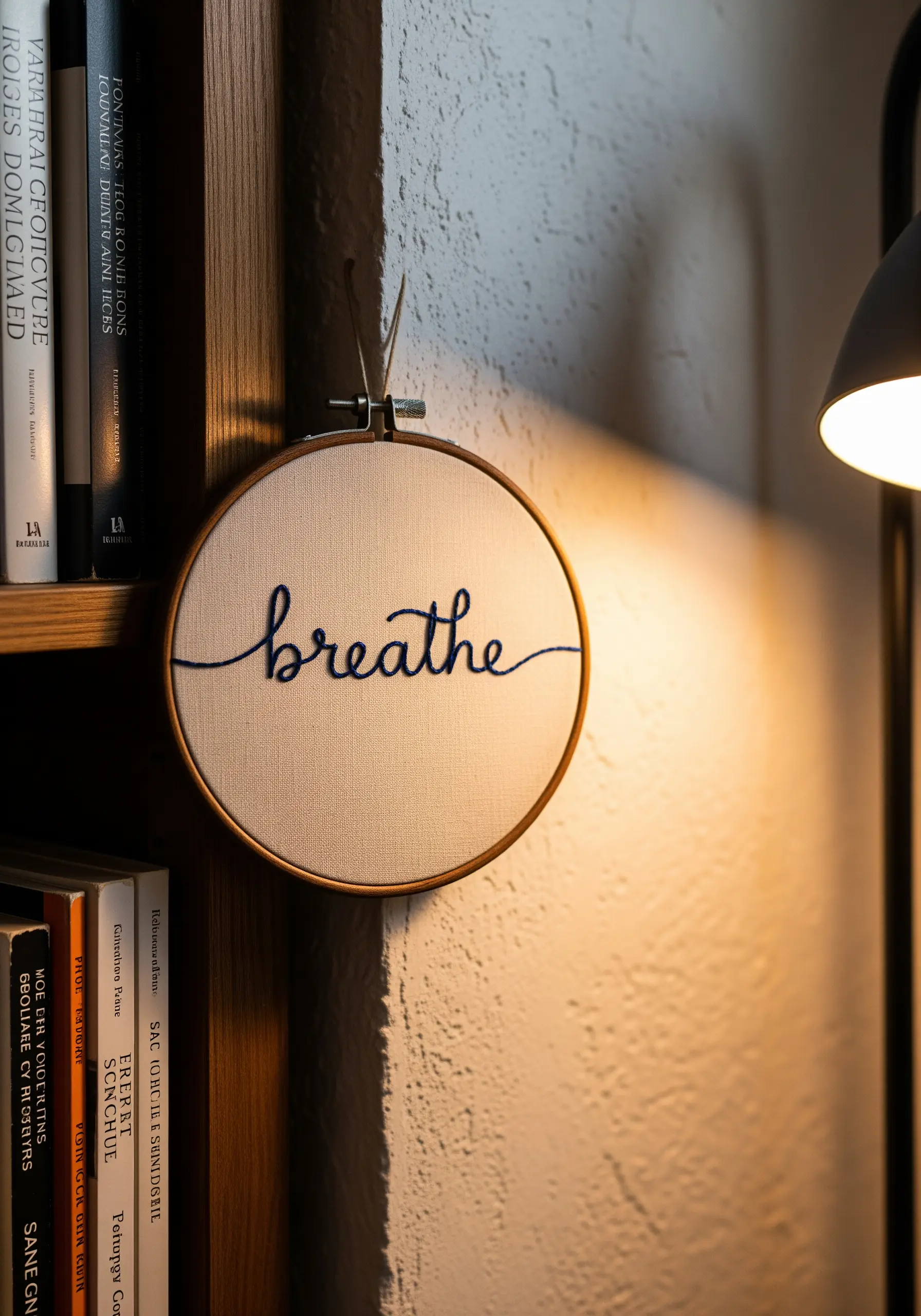
To achieve smooth, elegant script, the stem stitch is your greatest ally.
Its twisted, rope-like texture creates a continuous line that flows beautifully around curves, perfectly mimicking cursive handwriting.
Maintain consistent stitch length and angle to ensure the lettering looks uniform and polished.
A single, meaningful word becomes one of those simple line art word symbol embroidery ideas that can center a room’s energy.
6. Large-Scale Artistry with Yarn and Canvas
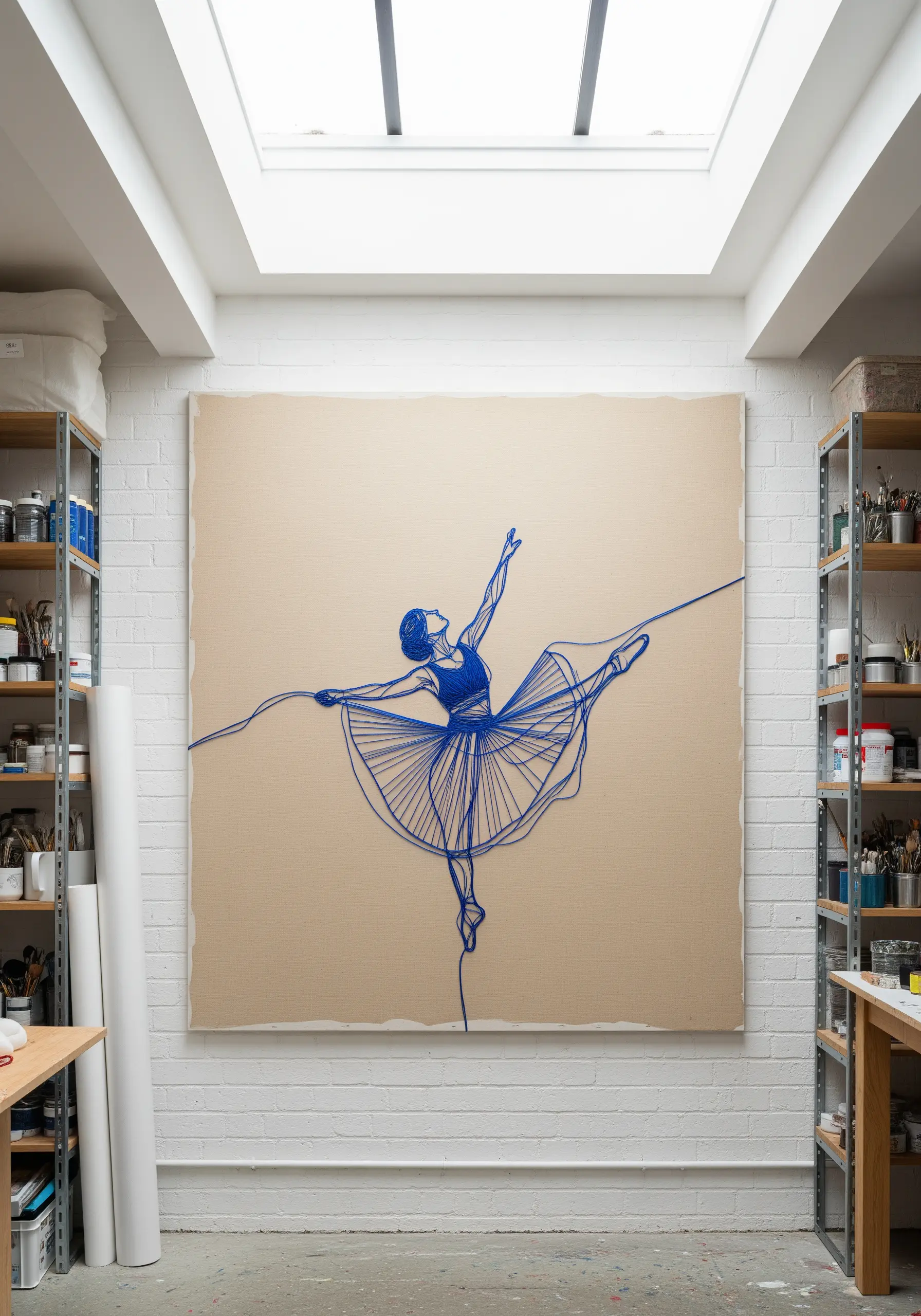
Don’t confine your embroidery to a small hoop—think bigger by working on a large, stretched canvas.
Use thick yarn or rope to create a design with significant visual weight and presence.
Plan your path carefully, using discreet pins or a faint chalk line to guide your placement before securing the yarn with couching stitches or a strong fabric adhesive.
This approach turns simple fibers into extraordinary fiber art installations.
7. The Clean Finish of a Backstitched Motif
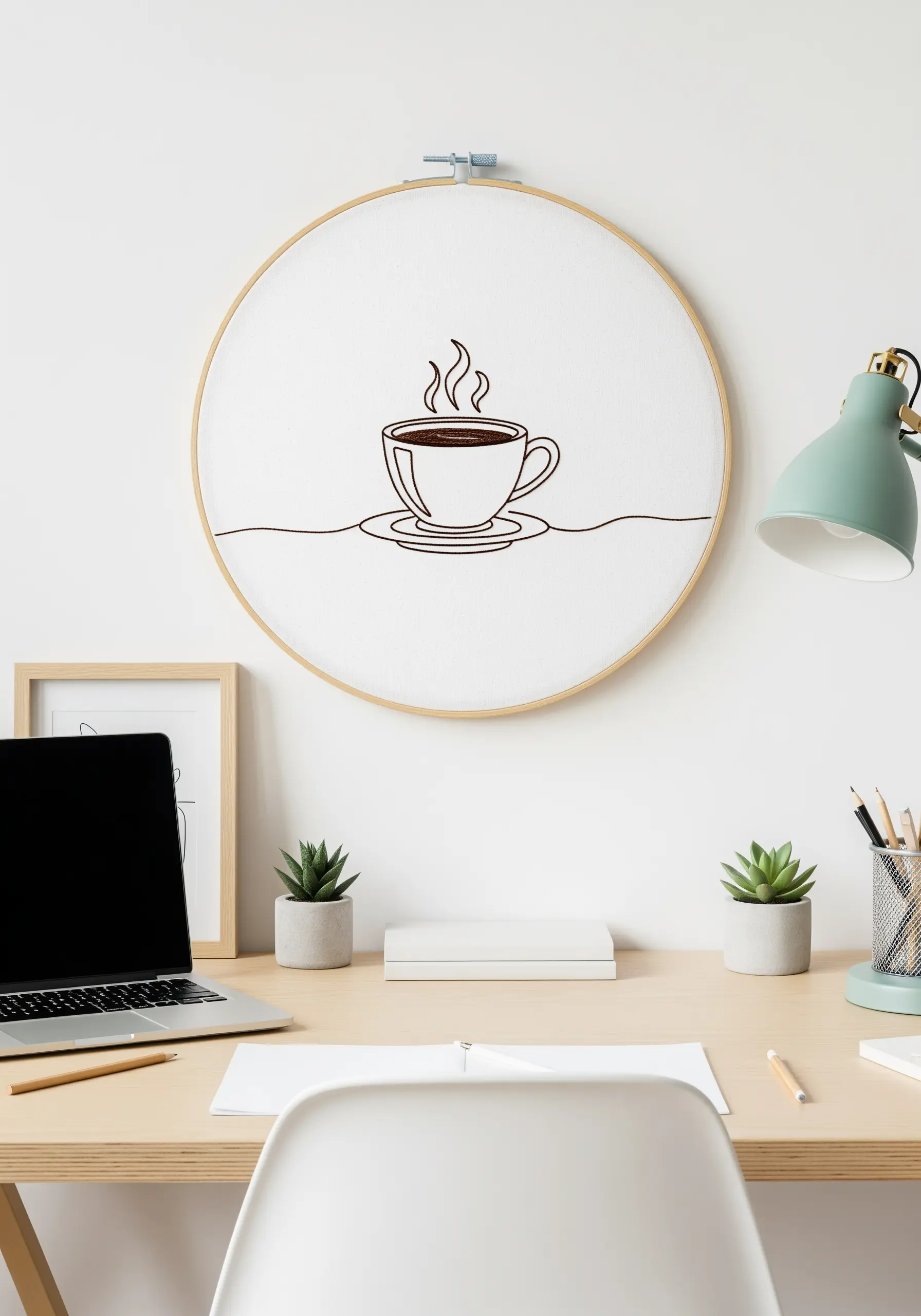
The classic backstitch is the foundation of clean, graphic line art.
For ultimate precision, focus on keeping your stitch length perfectly consistent, especially around tight curves where smaller stitches are necessary to avoid a jagged look.
Use a single strand of six-strand floss for delicate lines or all six for a bolder, more defined outline.
It’s one of the most effective minimalist small hoop designs you can master.
8. High-Contrast Energy for Abstract Designs
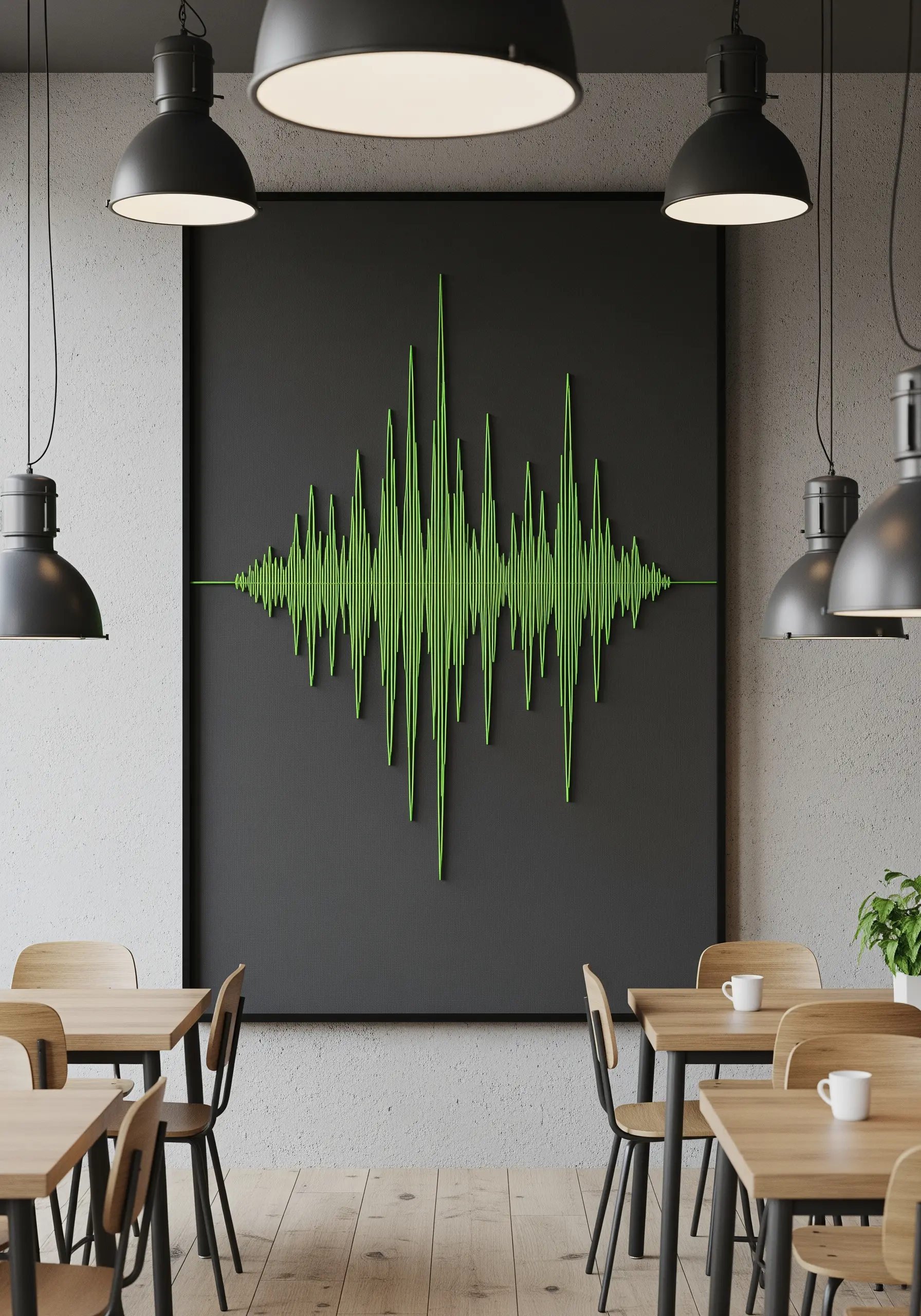
Make abstract shapes pop by maximizing the contrast between your thread and fabric.
A vibrant, electric hue like neon green against a deep charcoal or black background creates a dynamic visual energy that feels modern and bold.
When using a couched cord, the high contrast emphasizes the line’s sculptural quality, making the design appear to float above the surface.
This is how abstract thread embroidery ideas become captivating focal points.
9. Architectural Elegance in Black and White
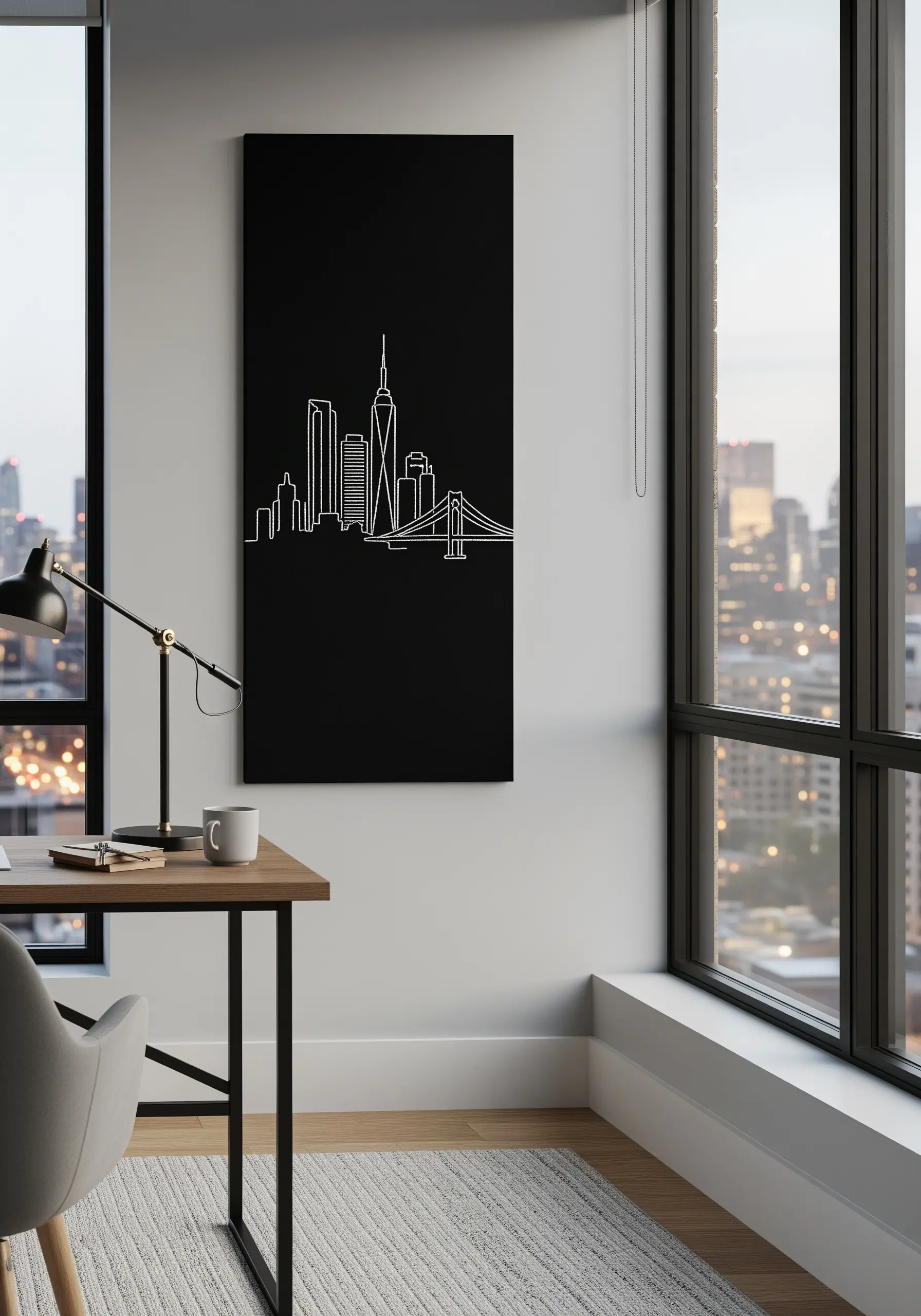
Capture the essence of a city skyline with the stark simplicity of white thread on black fabric.
The high contrast accentuates every line, making a backstitch or stem stitch look incredibly sharp and graphic.
This minimalist palette removes all distractions, focusing the viewer’s eye on the pure form and structure of the architecture.
It’s a perfect technique for monochrome embroidery wall art concepts.
10. Implying Form with Varied Line Weight
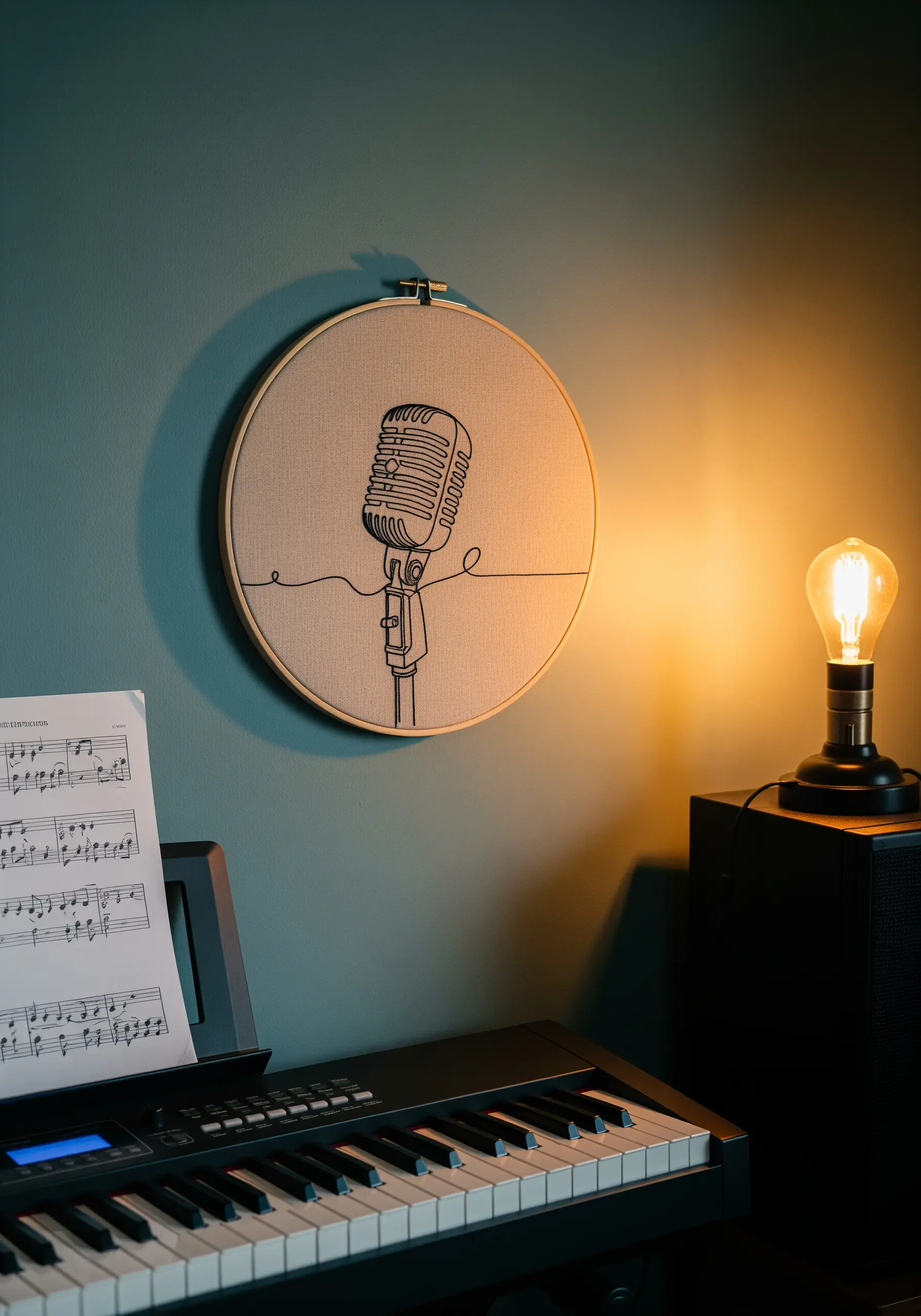
Even in a single-line design, you can suggest depth and shadow.
Use a split stitch and vary the number of floss strands you use—for instance, four strands for the main outline and two strands for subtler details or recessed areas.
This creates a subtle hierarchy of lines that guides the eye and gives a simple drawing a surprising level of dimension.
It’s a way to add character to any of your minimalist stitched art pieces.
11. The Bold Statement of Sculptural Rope
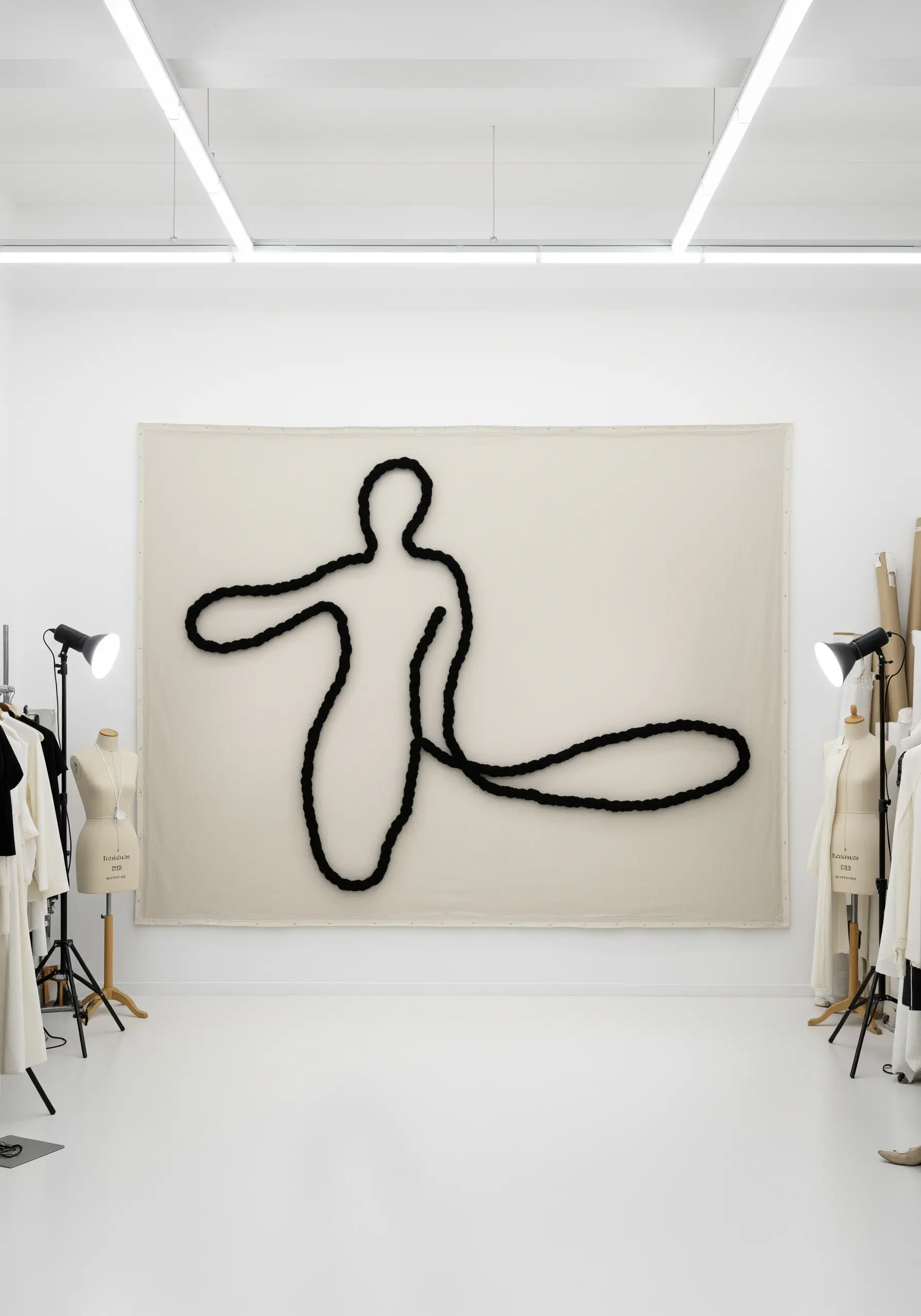
Create art that commands attention by using thick, twisted rope as your ‘thread’.
This technique moves your work from embroidery into the realm of textile sculpture.
Secure the rope to a heavy-duty canvas using a hot glue gun for initial placement, followed by strong, invisible couching stitches with fishing line or a matching upholstery thread for permanence.
These statement-size embroidered textile hangings can define a room.
12. Precision Couching for Intricate Knots
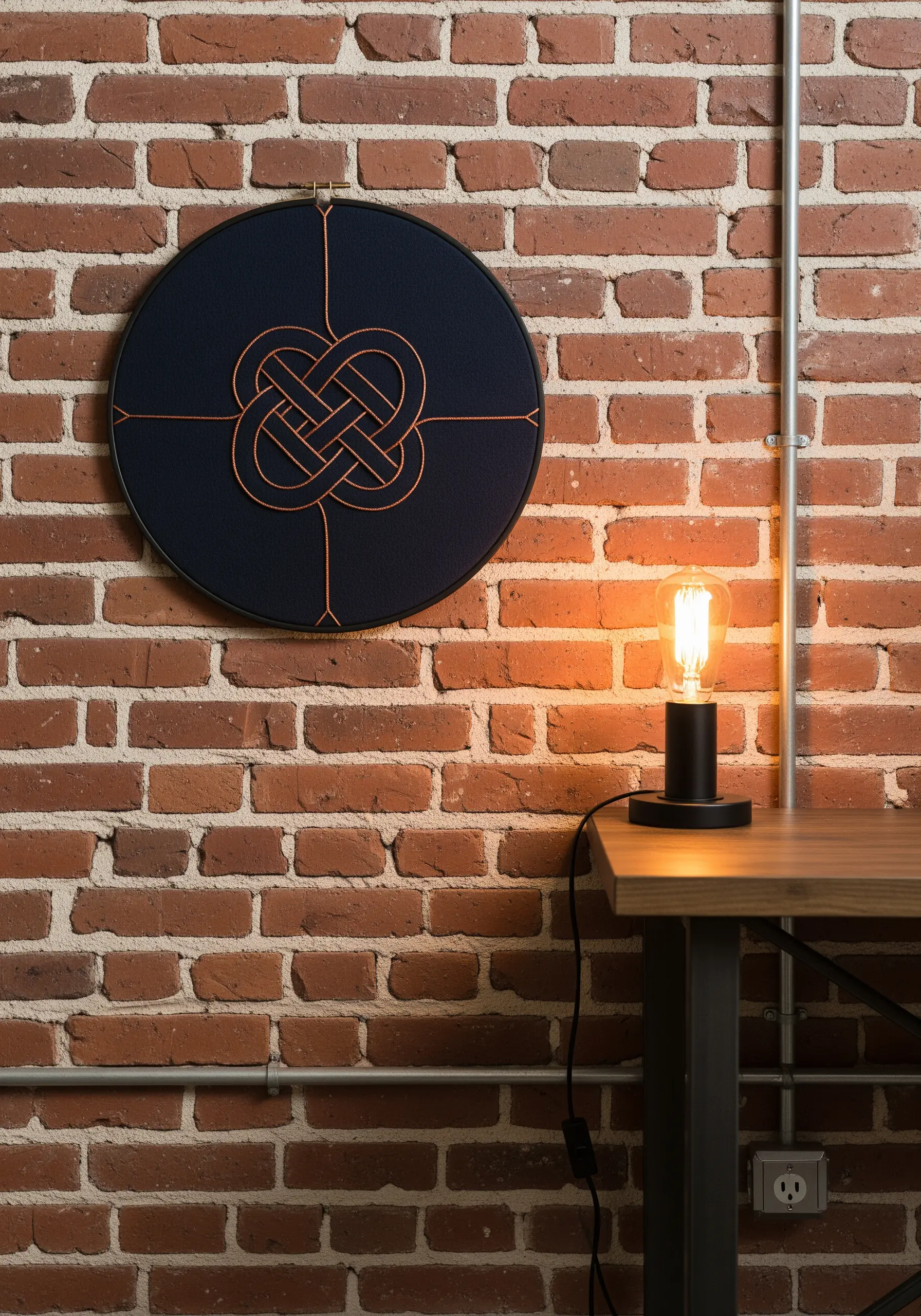
For designs with overlapping lines, such as Celtic knots, couching a single cord is more effective than stitching.
This method ensures the line remains a consistent thickness and lays flat where it crosses over itself, creating a clean and precise pattern.
Choose a fine, matte sewing thread for your tacking stitches that perfectly matches your cord color to make them disappear into the design.
This technique elevates geometric abstract thread patterns.
13. Paired Motifs for a Quiet Narrative
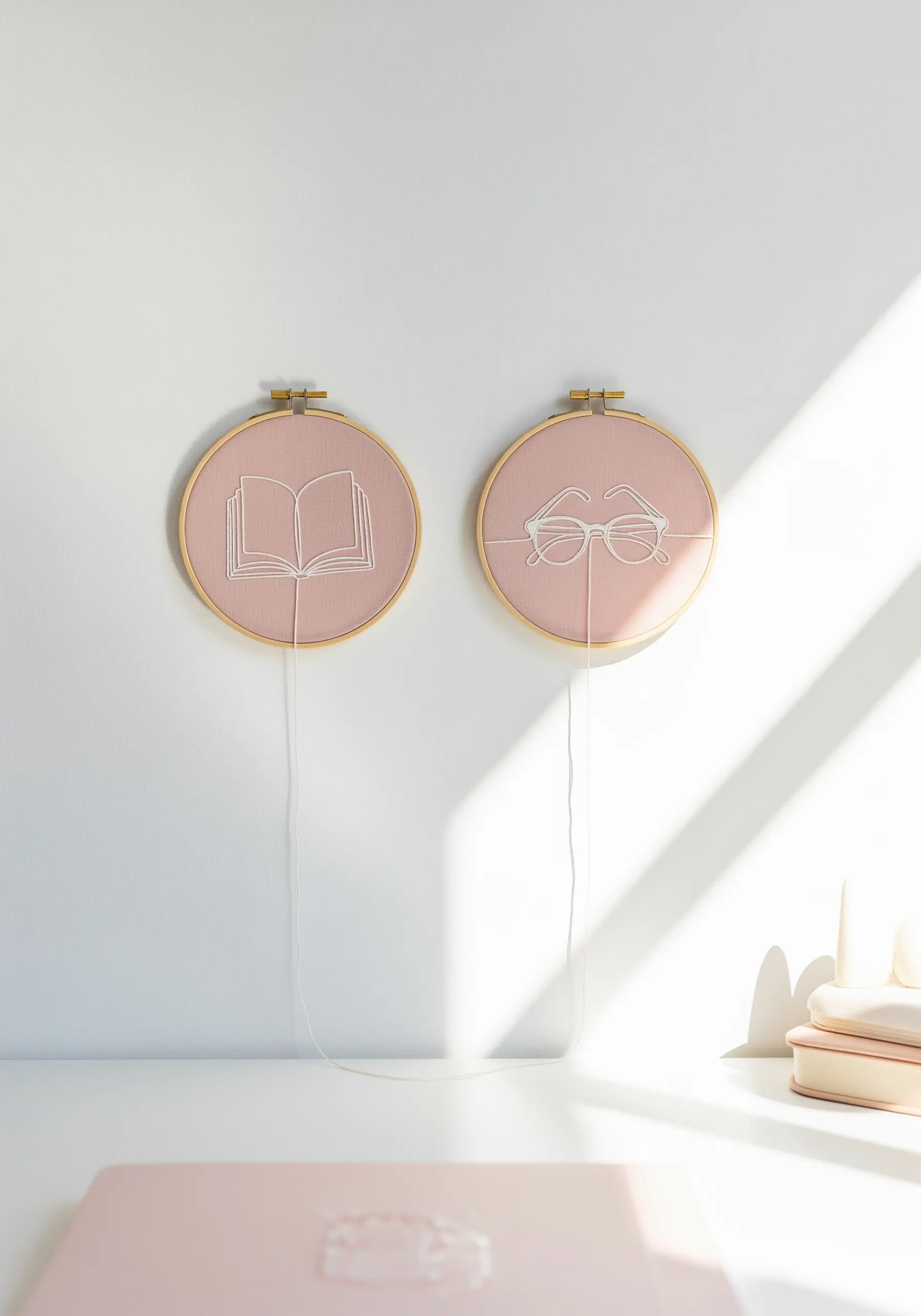
Tell a simple story by displaying two related motifs side-by-side.
Stitching an open book and a pair of glasses on matching fabric creates a narrative of quiet focus and intellectual pursuit.
Letting the ‘thread’ trail from the hoop and connect the two pieces physically reinforces their relationship, turning them into a single, thoughtful installation.
This is one of those charming DIY embroidery projects that adds personality.
14. Meditative Spirals and Consistent Tension
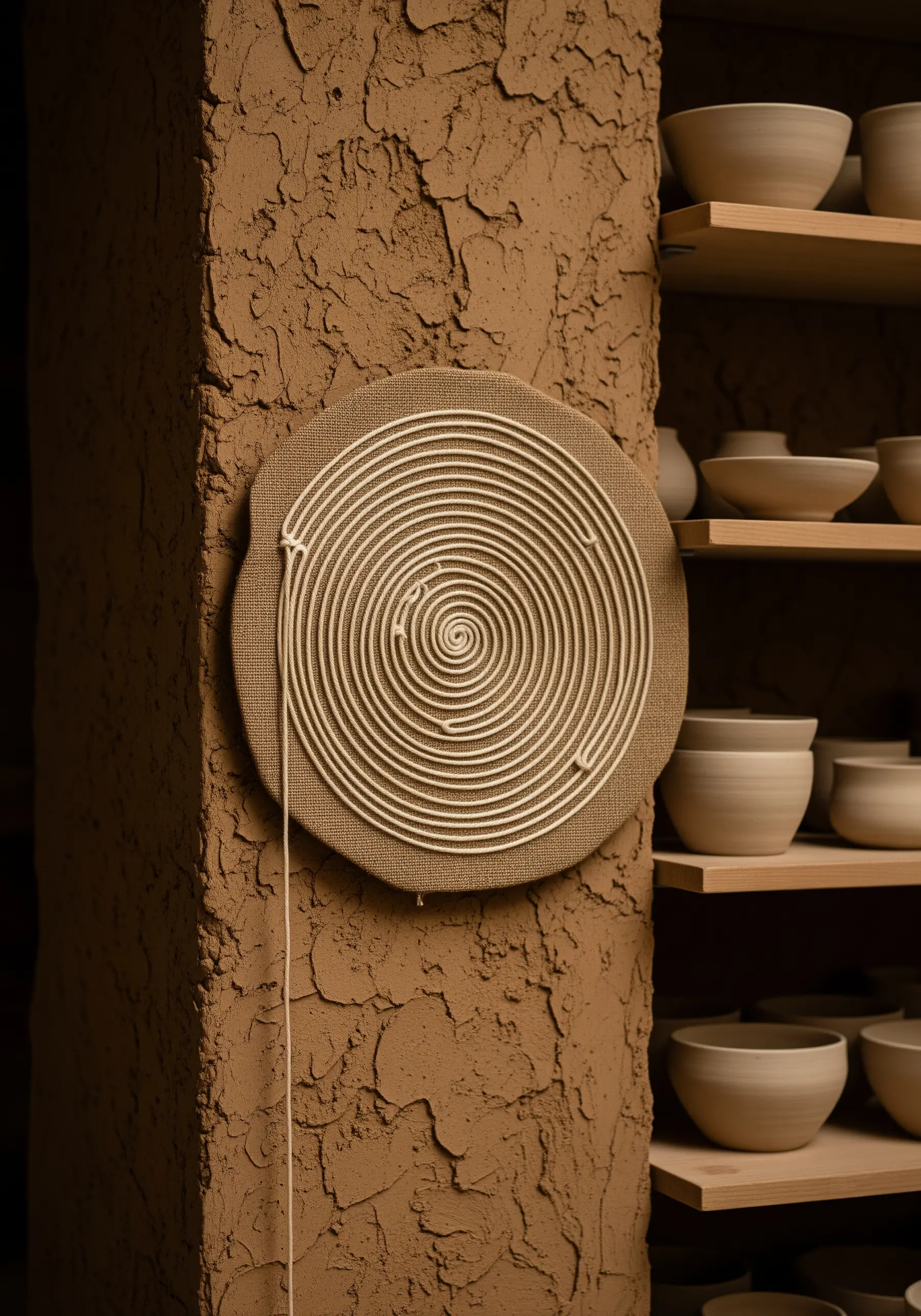
A spiral is a powerful exercise in maintaining consistent tension and spacing.
Whether you stitch it or couch a cord, the goal is a perfectly uniform line that draws the eye inward.
To achieve this, lightly draw your spiral guide onto the fabric with a water-soluble pen first.
The repetitive motion of creating the spiral can be a wonderfully meditative process, resulting in modern thread mandala ideas.
15. Distilling Complexity into a Single Line
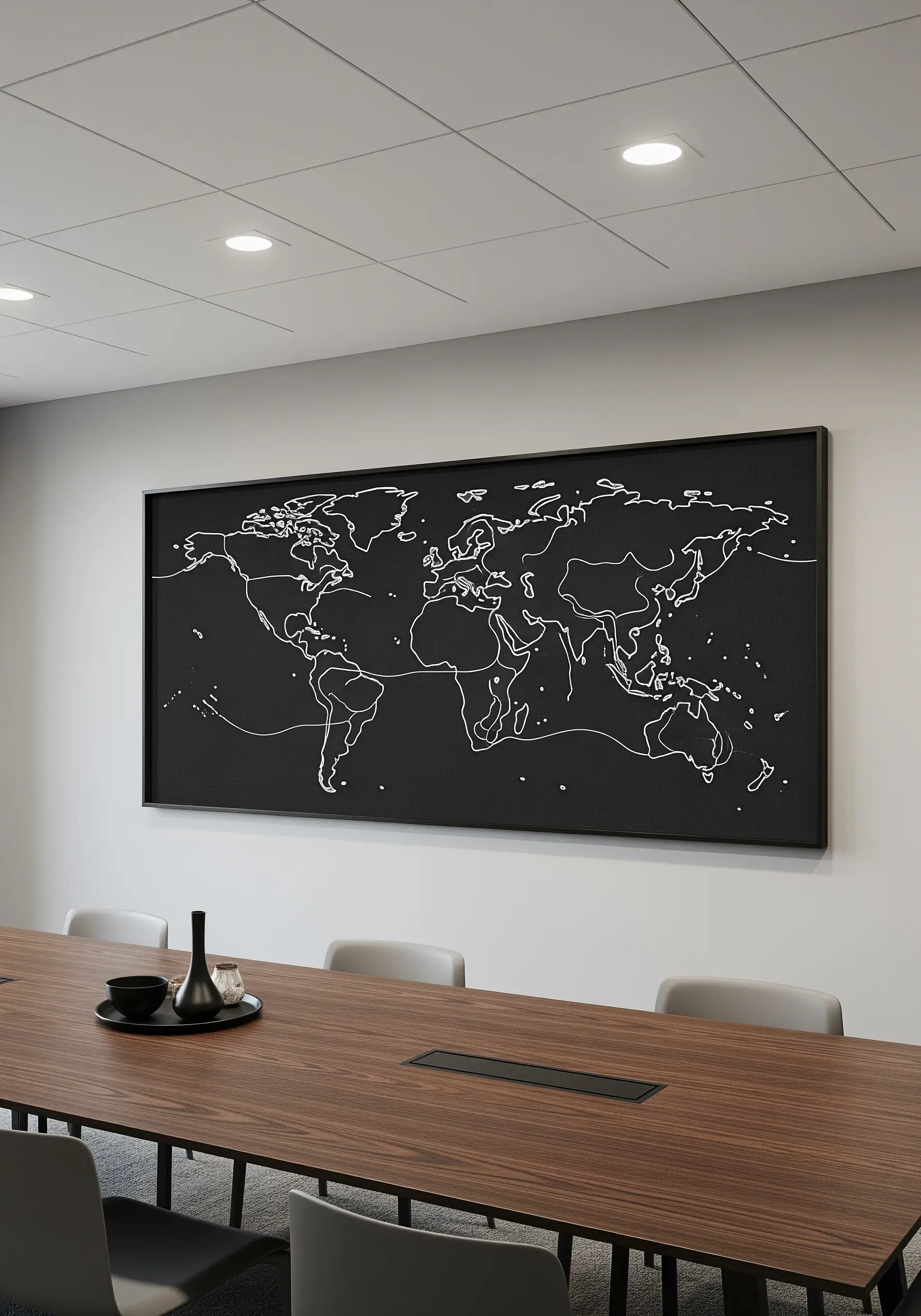
The challenge of a world map is simplifying its immense detail into a single, flowing line.
Focus on capturing the iconic and recognizable shapes of the continents, letting go of perfect geographical accuracy in favor of artistic flow.
Use a crisp backstitch with three strands of floss on a dark, textured fabric to give the lines clarity and presence in a large-scale format. It’s an ambitious but rewarding take on minimalist embroidery hoops and canvases.
16. The Perfect Loop of a Stem Stitch
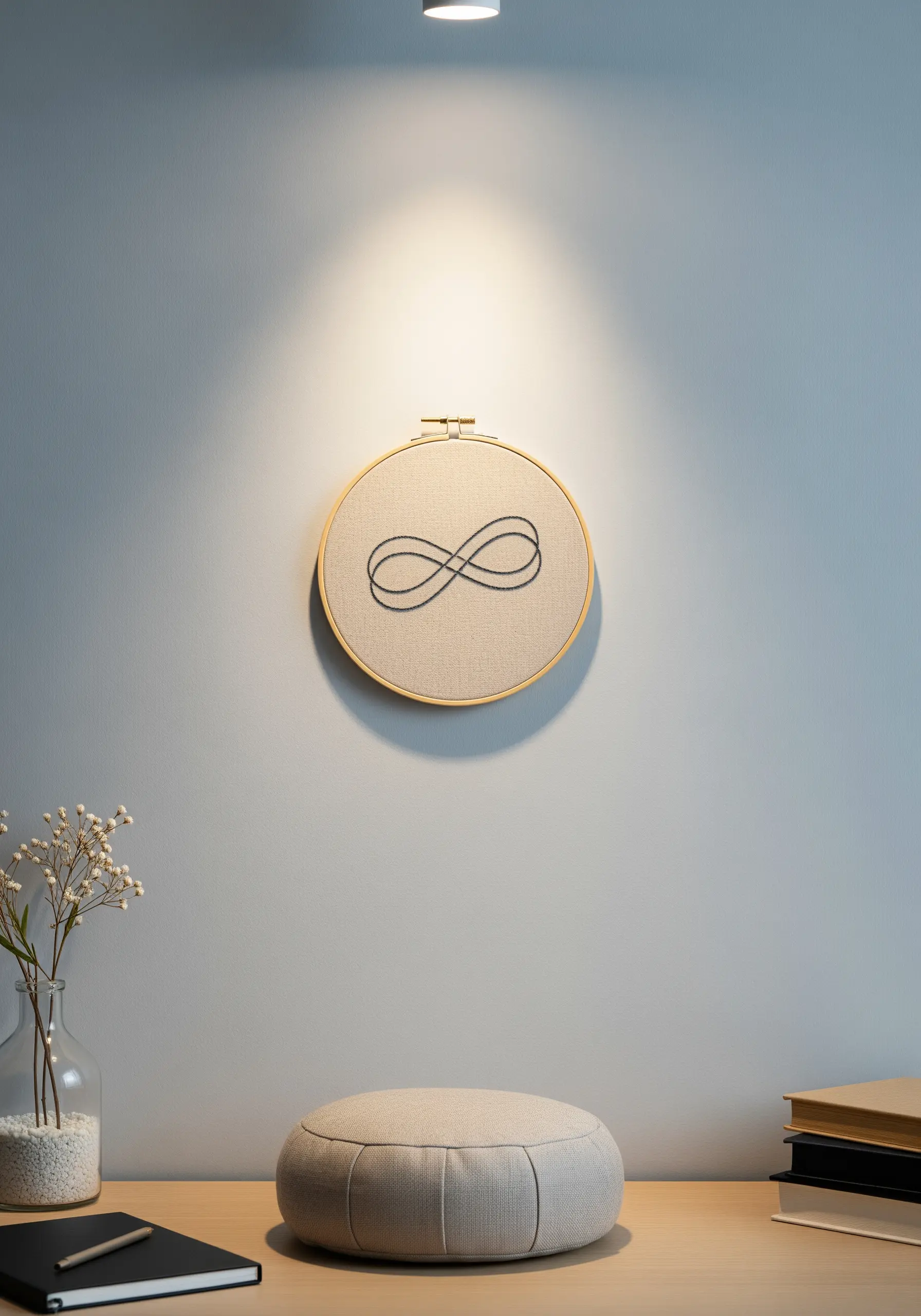
For symbolic shapes like the infinity sign, a smooth, uninterrupted line is crucial to conveying its meaning.
The stem stitch excels here, creating a slightly raised, cord-like line that has no visible breaks or corners.
As you stitch the crossover point in the center, ensure your stitches are small and precise to create a sharp, clean intersection.
These minimal embroidery wall designs bring a sense of calm.
17. Architectural Sketching with Thread
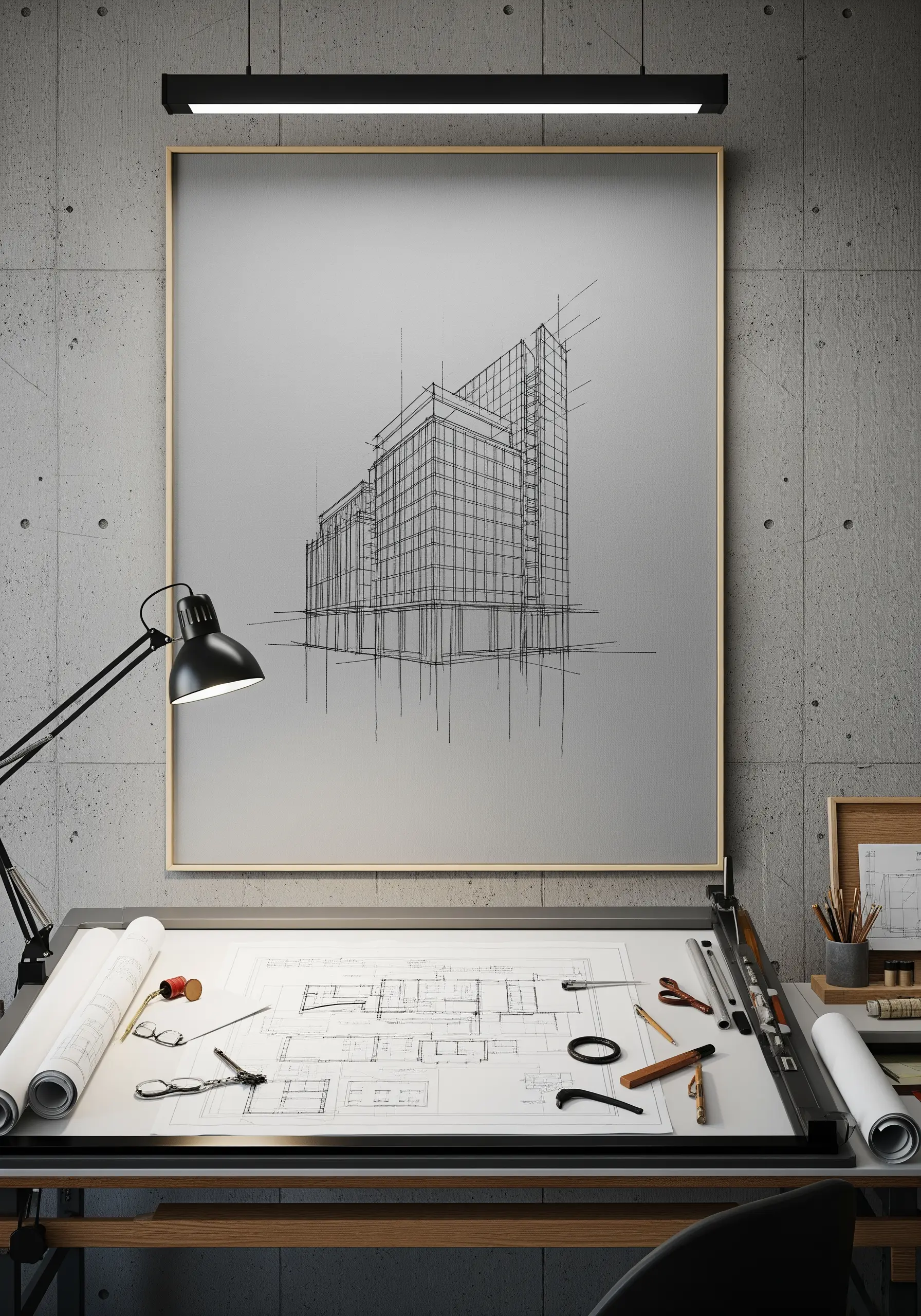
Recreate the dynamic energy of an architectural sketch by using thread to mimic ink lines.
Use a single strand of black floss for the finest, most delicate lines, and build up to three or four strands for the heavier, structural outlines.
Allow some of your stitches to be intentionally loose or extended to mimic the quick, expressive quality of a hand-drawn draft.
This technique can transform your photography into abstract thread painting styles.
18. Bold Pop Art with Chain Stitch Outlines
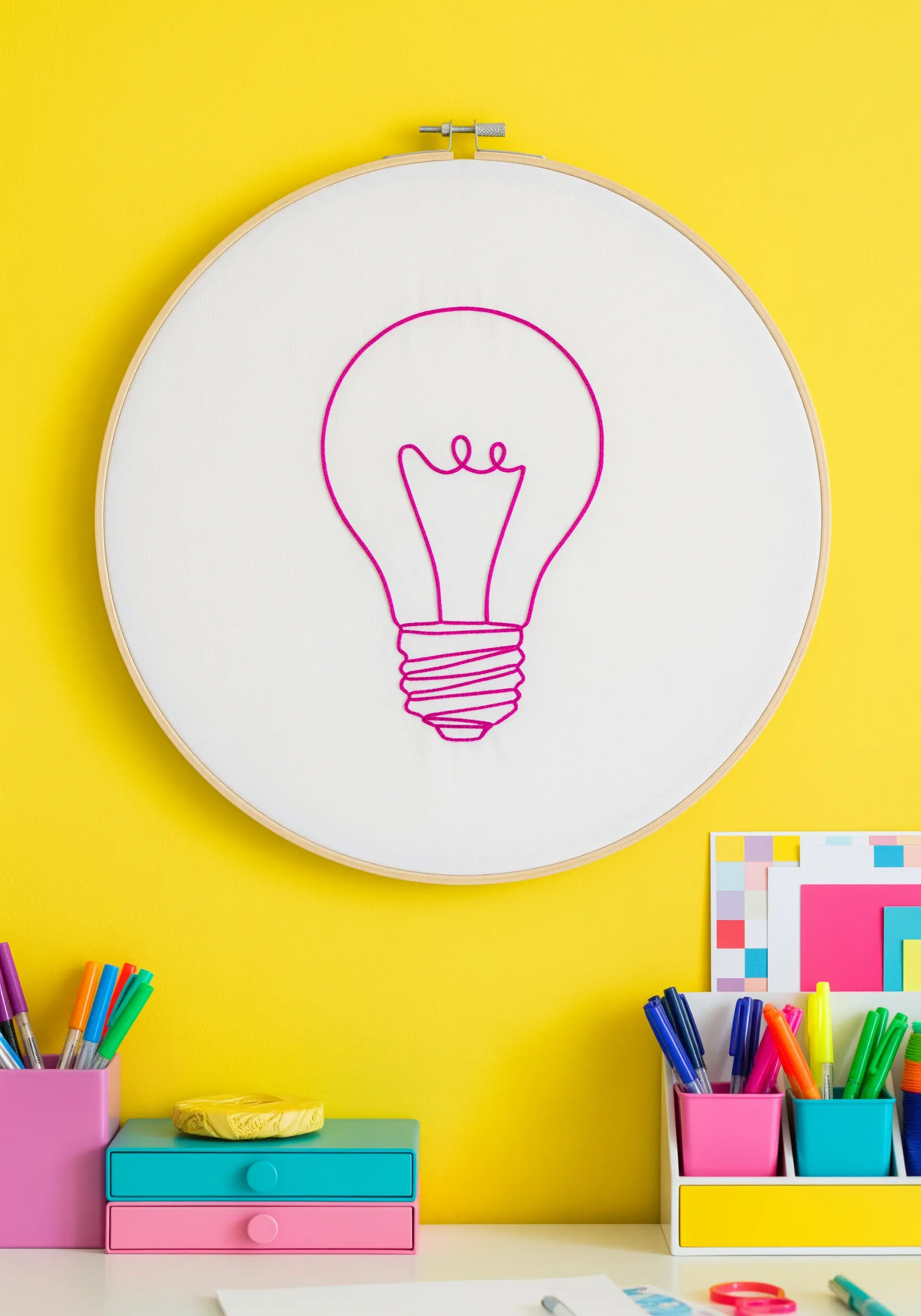
For a bold, graphic outline that really stands out, choose a chain stitch.
Its linked structure creates a thicker, more substantial line than a backstitch, which is perfect for pop-art-inspired motifs like a lightbulb.
Pair a vibrant magenta or hot pink thread with a clean white fabric for a high-energy look that feels playful and creative—a perfect addition to colorful embroidery hoops in a studio space.
19. Tone-on-Tone for Subtle Botanical Texture
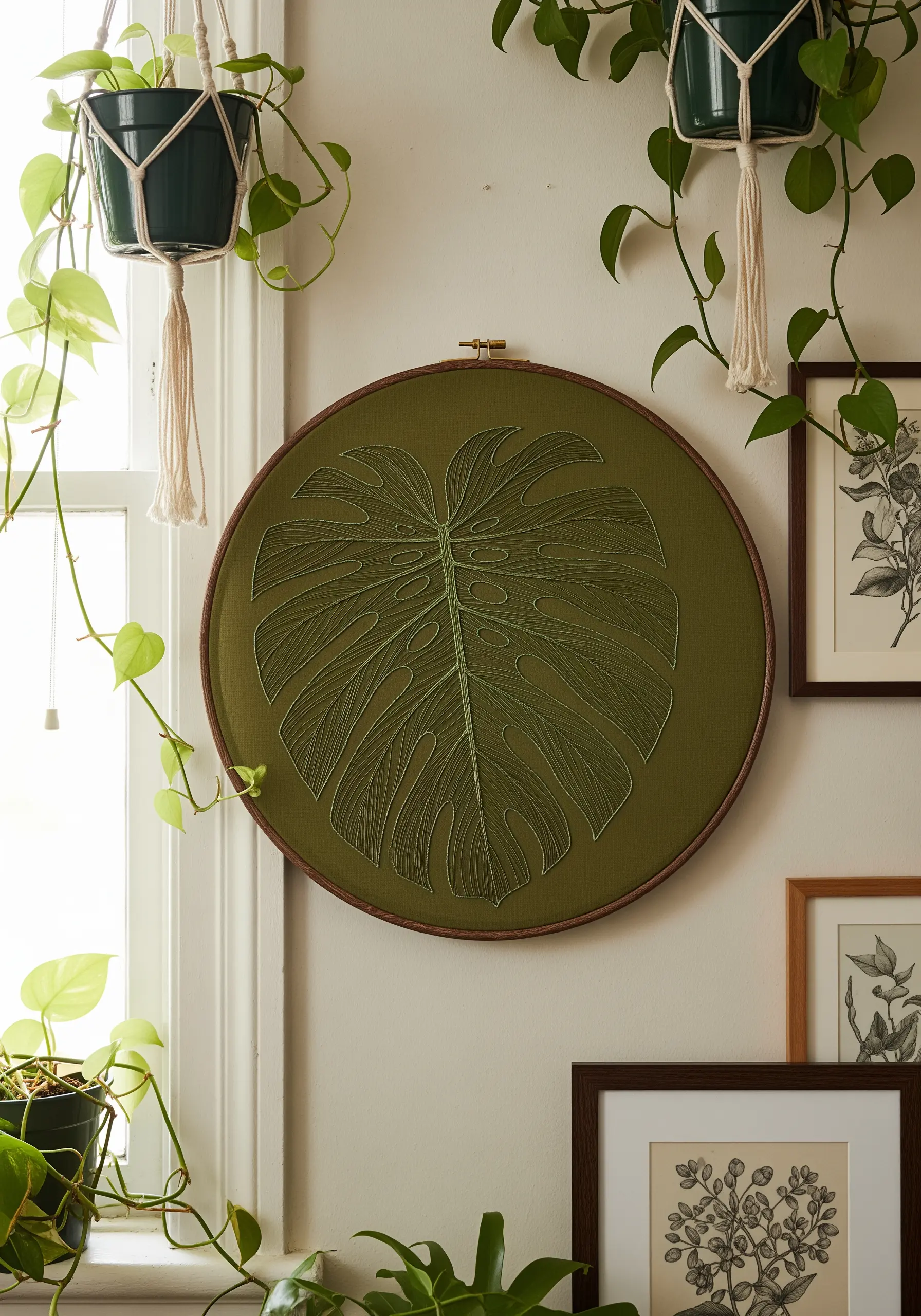
Create a sophisticated, textured piece by stitching a design in a thread color that’s only a few shades lighter or darker than your fabric.
This tone-on-tone approach emphasizes texture over color, allowing the intricate leaf vein details to catch the light in a subtle, elegant way.
It works beautifully for botanical subjects, creating a piece that feels organic and deeply integrated with the base textile.
20. Capturing Motion with a Flowing Line
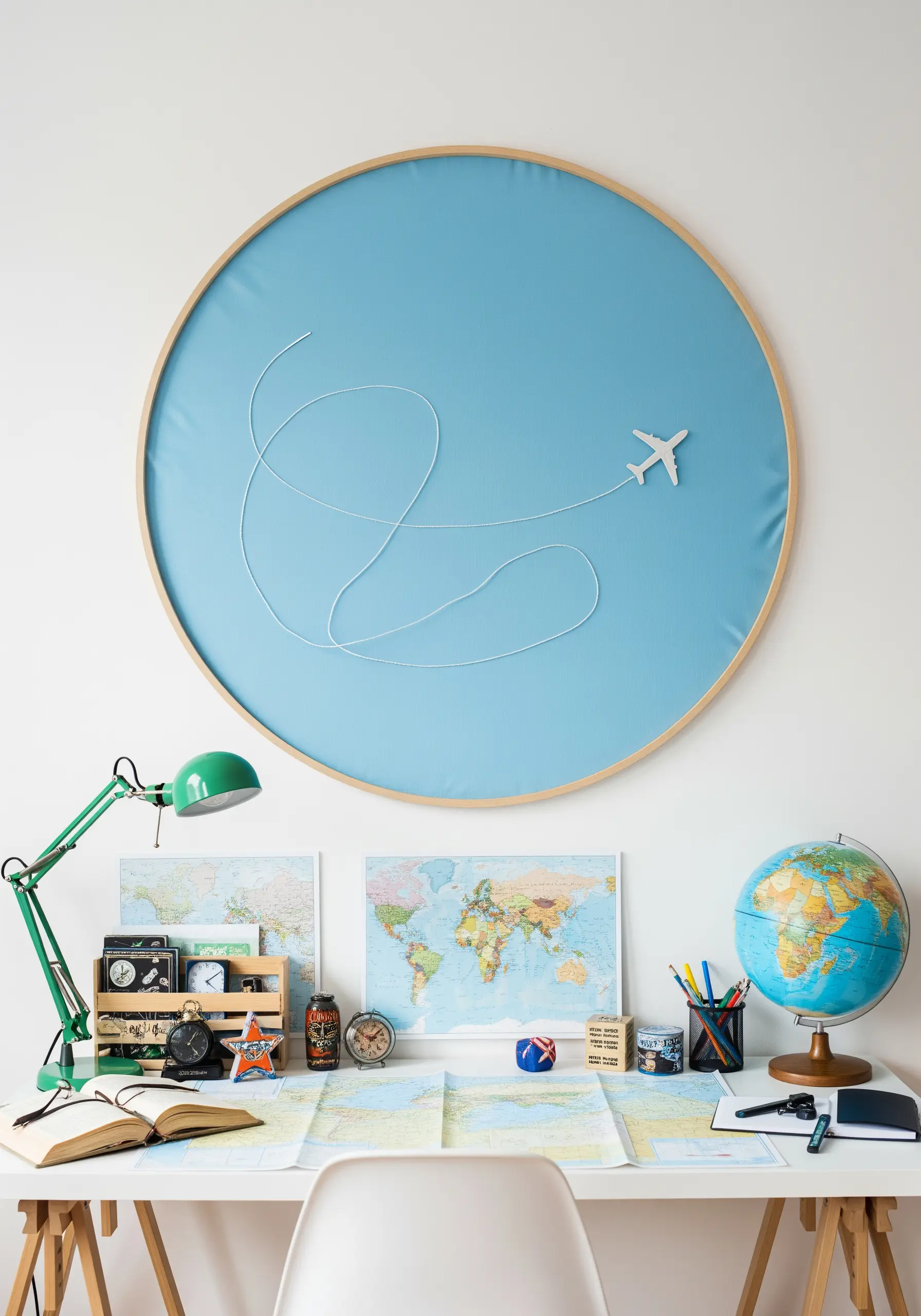
Suggest movement and freedom by letting your stitched line meander across the canvas.
For a design like an airplane’s flight path, a simple whipped backstitch creates a smooth, uninterrupted trail.
The beauty of this concept lies in its minimalism; the empty blue space becomes the sky, and the single white line tells a complete story of travel and exploration.
It’s one of those minimal travel-themed embroidery ideas that sparks wanderlust.
21. The Grace of an Unbroken Flight Path
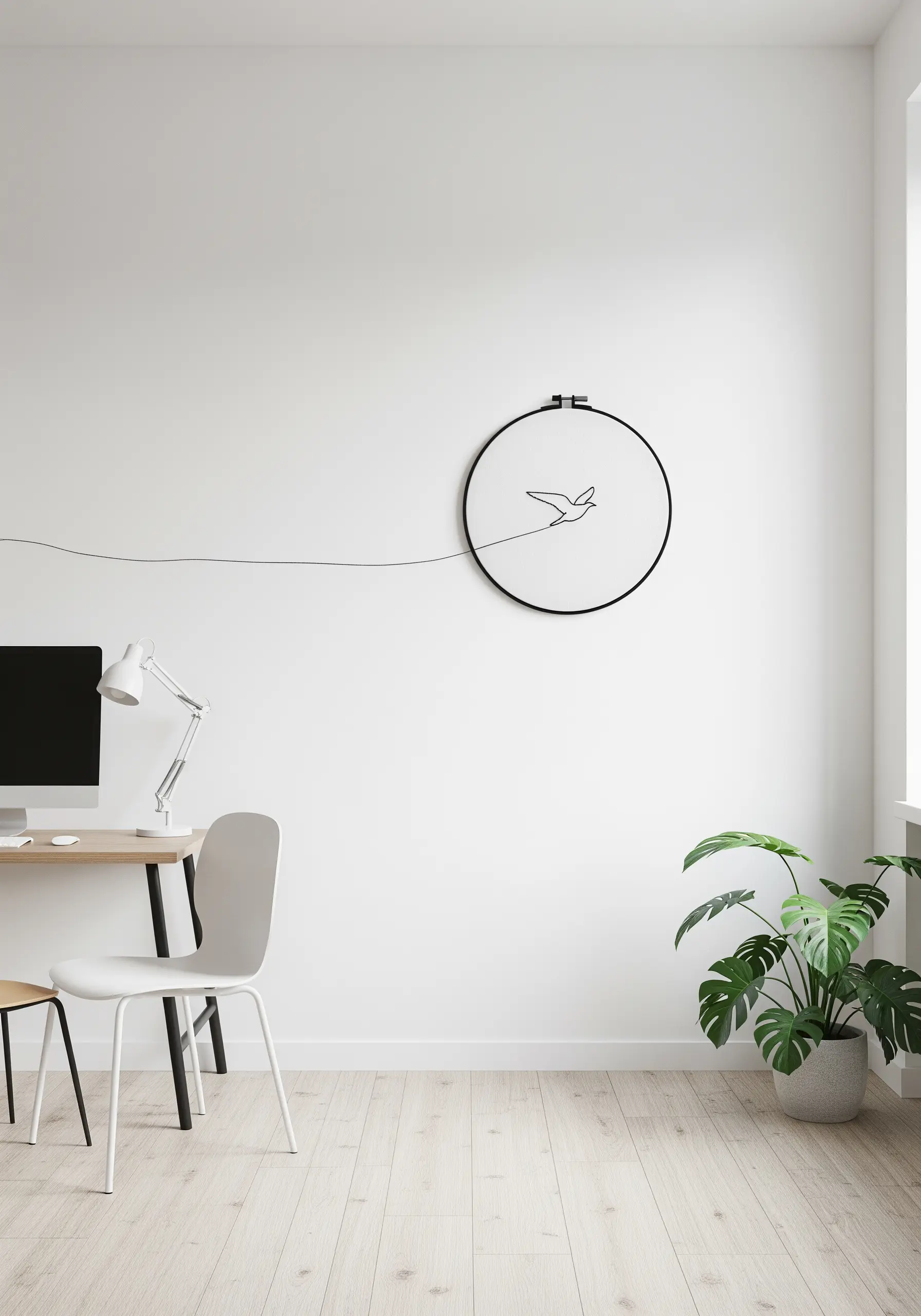
When your design is extremely minimal, the quality of your line is everything.
To create a sense of lightness and motion, as with a soaring bird, use a very fine thread—just one or two strands of floss.
Extend the thread beyond the hoop’s edge to integrate the artwork with the wall itself, suggesting the bird is flying into or out of the frame.
This detail adds a conceptual layer to minimal embroidery wall pieces.
22. Deconstructed Storytelling Across Frames
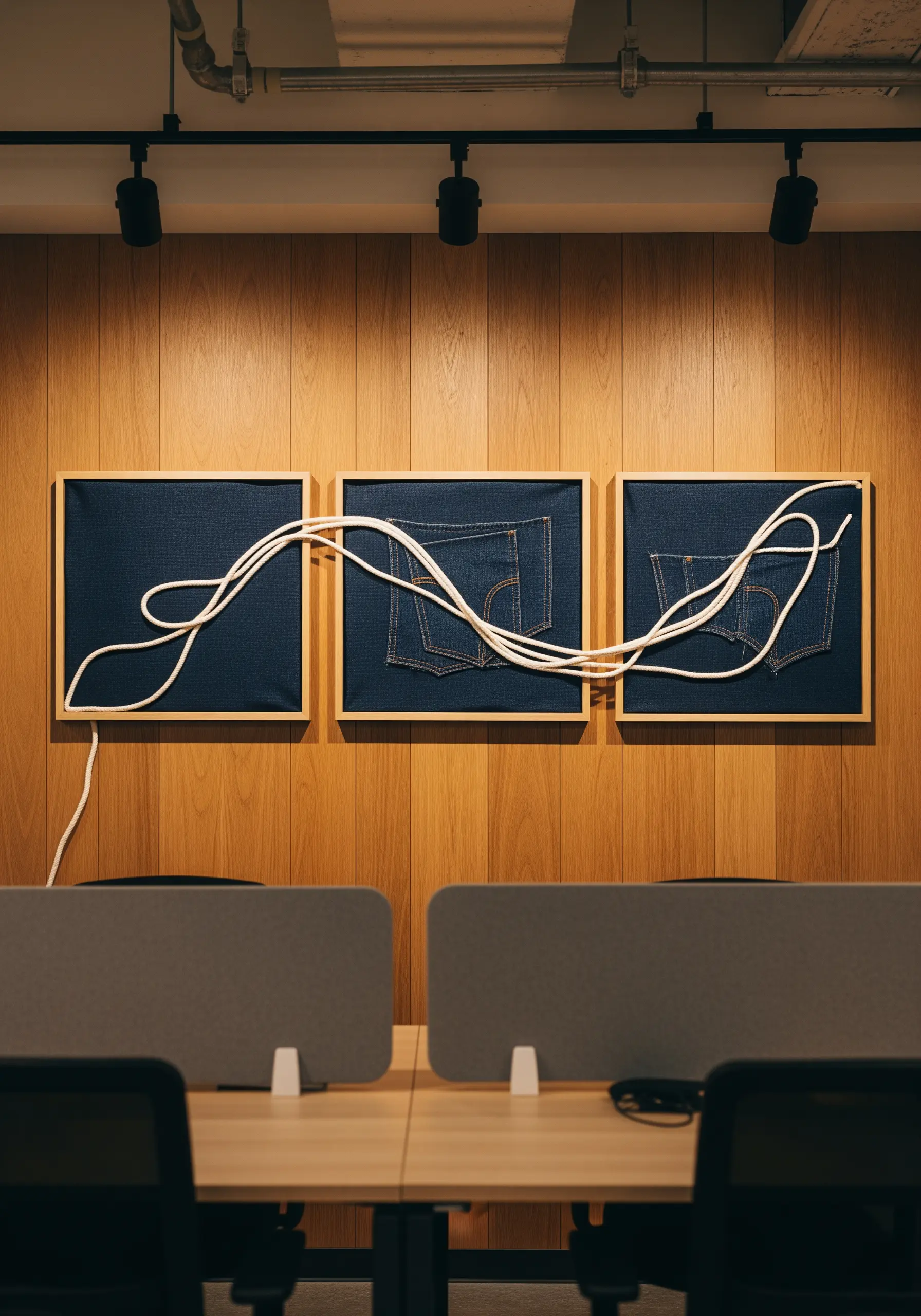
Push the boundaries of single-line art by carrying a single cord across multiple frames.
This triptych uses a thick white rope that flows from one panel to the next, connecting abstract shapes with a tangible object like a denim pocket.
This juxtaposition creates a compelling visual narrative about creation, fashion, or craft itself. It’s a prime example of mixed-media embroidery wall art techniques.
23. Classical Form Meets Modern Minimalism
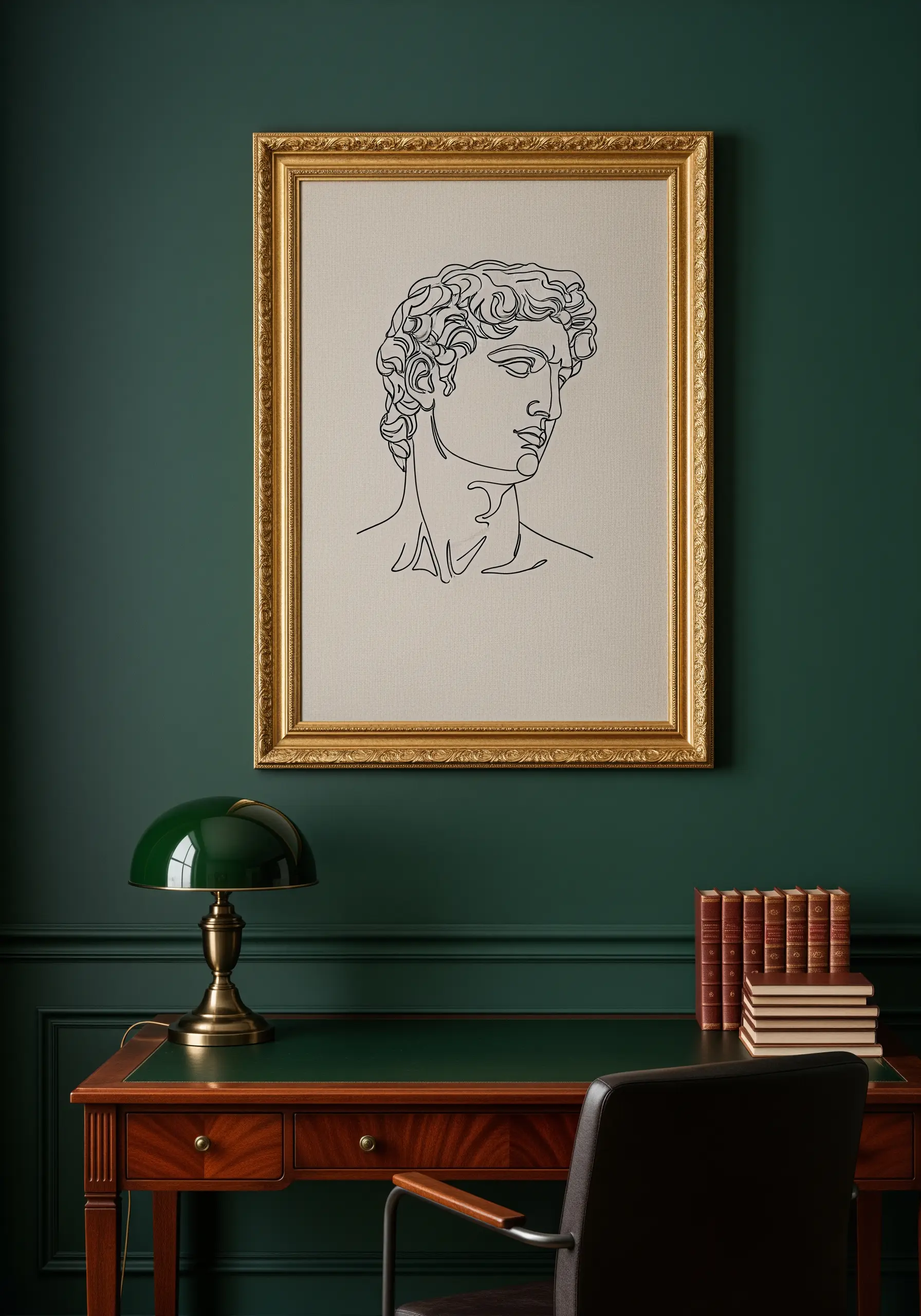
Translate the timeless elegance of classical sculpture into a clean, modern line drawing.
The key is to simplify complex forms—like the curls of hair or the curve of a neck—into their most essential and graceful lines.
Stitching with a dark thread on a light, linen-like fabric and presenting it in an ornate frame creates a beautiful tension between classical and contemporary aesthetics.
These subtle handmade pieces feel incredibly sophisticated.
24. Graphic Impact with Bold Color Choices
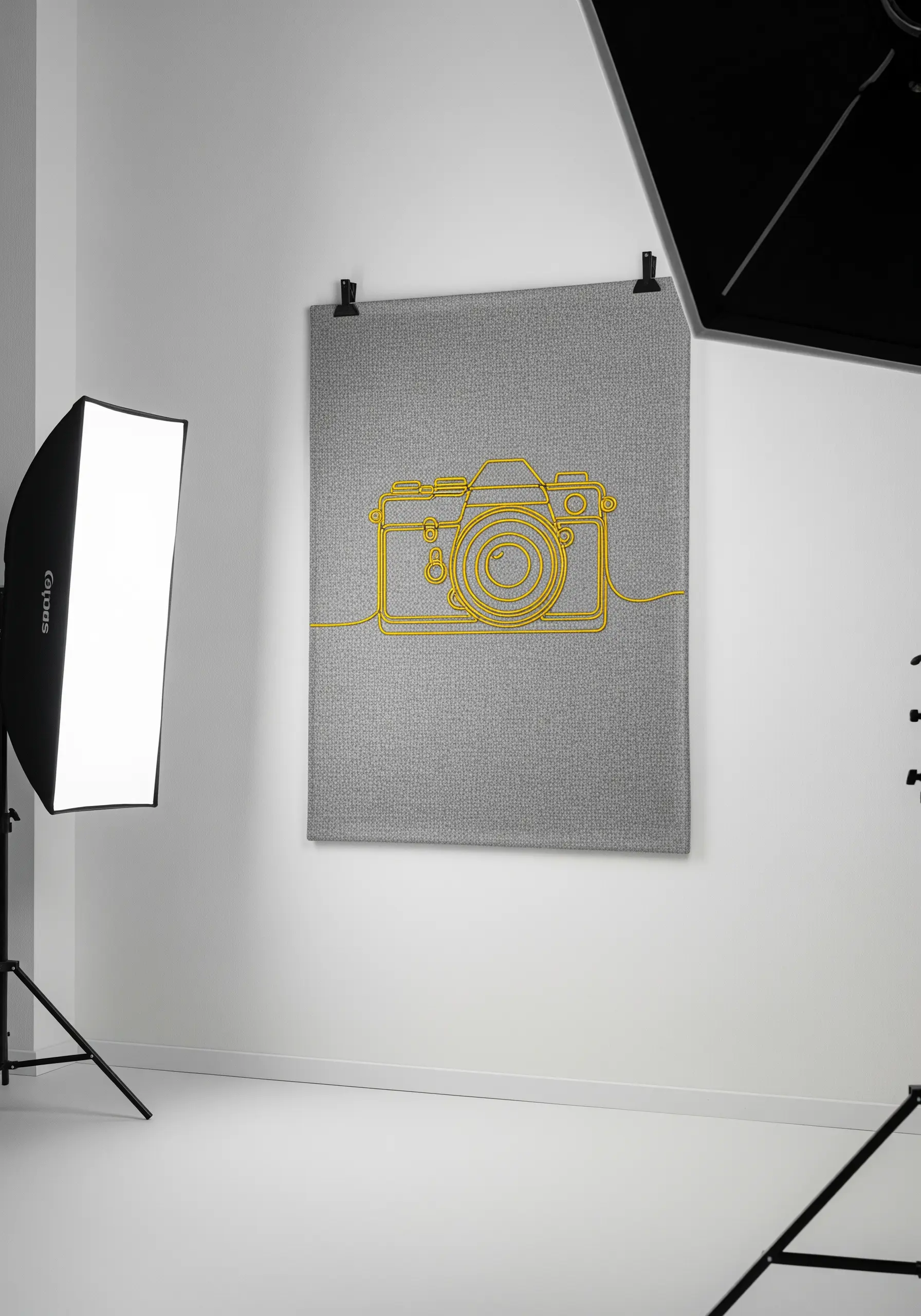
Make a familiar object feel fresh and exciting with an unexpected, high-impact color choice.
Using a bright, sunshine yellow cord against a textured grey fabric gives this vintage camera a modern, graphic novel feel.
The thickness of the cord simplifies the details, forcing you to focus on the camera’s iconic silhouette. This is how bold color-pop embroidery wall frames make a statement.
25. Building Texture with Parallel Stitches
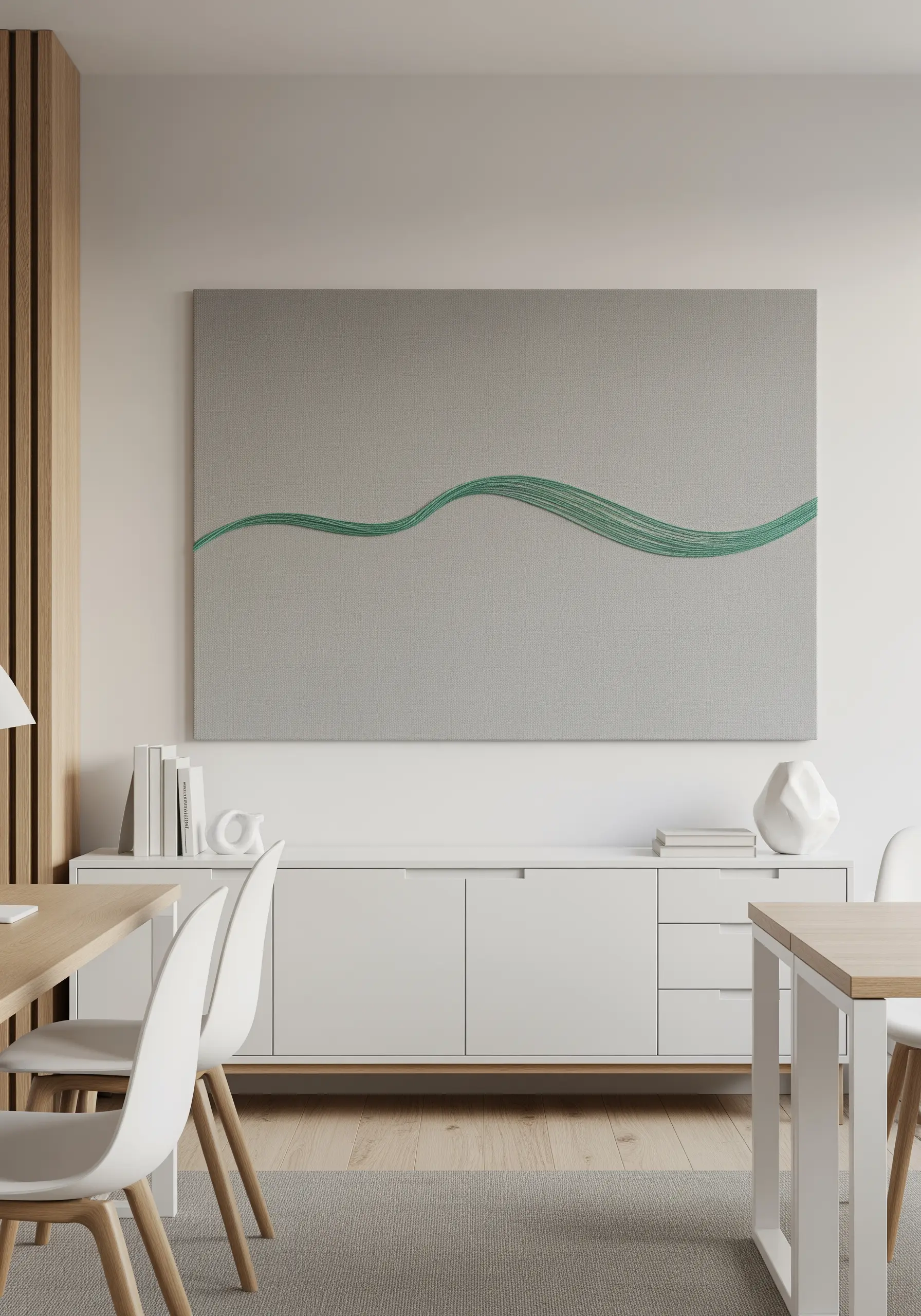
A single line can have incredible depth when it’s made of many.
Create a flowing, wave-like form by stitching dozens of parallel lines close together.
You can use a single color for a purely textural effect or introduce a subtle gradient by shifting from seafoam green to a slightly darker teal.
This technique turns a simple shape into a dynamic, abstract thread landscape.
26. Playful Silhouettes with Thick Yarn
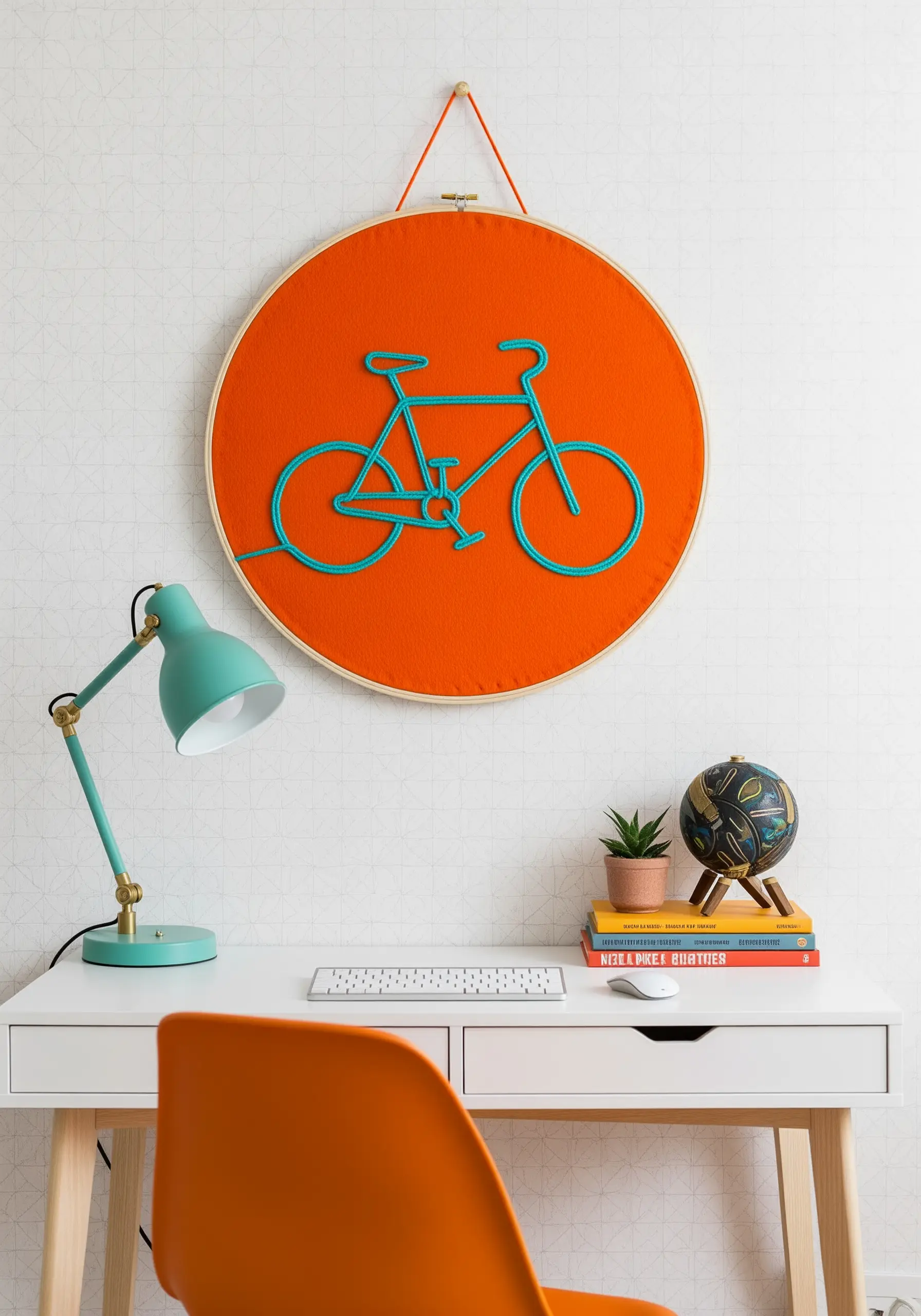
Embrace a playful, almost cartoonish aesthetic by using thick, colorful yarn for your outline.
The bulkiness of the yarn naturally softens sharp corners and simplifies the design, making it perfect for fun, recognizable shapes like a bicycle.
Couch the yarn onto a brightly colored, felt-like fabric to enhance the cheerful, high-energy mood. These yarn wall art pieces bring joy to a space.
27. Celestial Designs with Specialty Threads

Bring a touch of magic to your workspace with a stitched constellation.
Use a glow-in-the-dark or a sparkling metallic thread on a black or navy blue fabric for maximum effect.
The simplicity of the design—just a few straight lines connecting small French knots or seed stitches for stars—makes it a quick yet incredibly impactful project.
It’s an elegant way to approach futuristic stitch patterns.
28. Organic Complexity in the Tree of Life
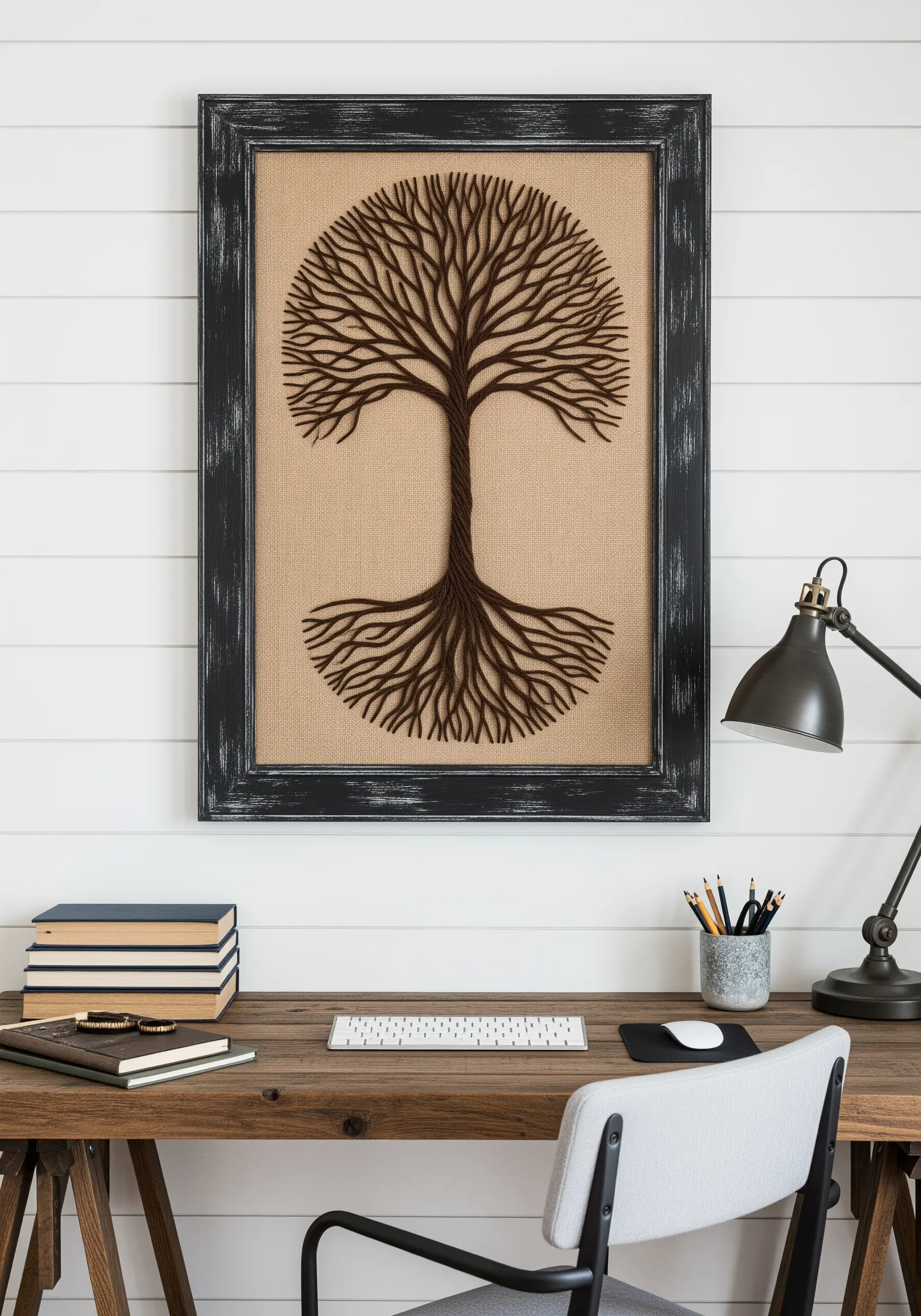
Capture the intricate, fractal-like beauty of a tree by focusing on the flow of its branches and roots.
While it looks complex, this design is built from simple, repeating lines.
Use a stem stitch in a variegated brown thread to give the branches natural-looking color variation and depth.
Stitching on burlap adds a rustic, earthy texture that complements the organic subject matter, perfect for stunning natural texture embroidery patterns.
29. The Symbolic Power of a Simple Object
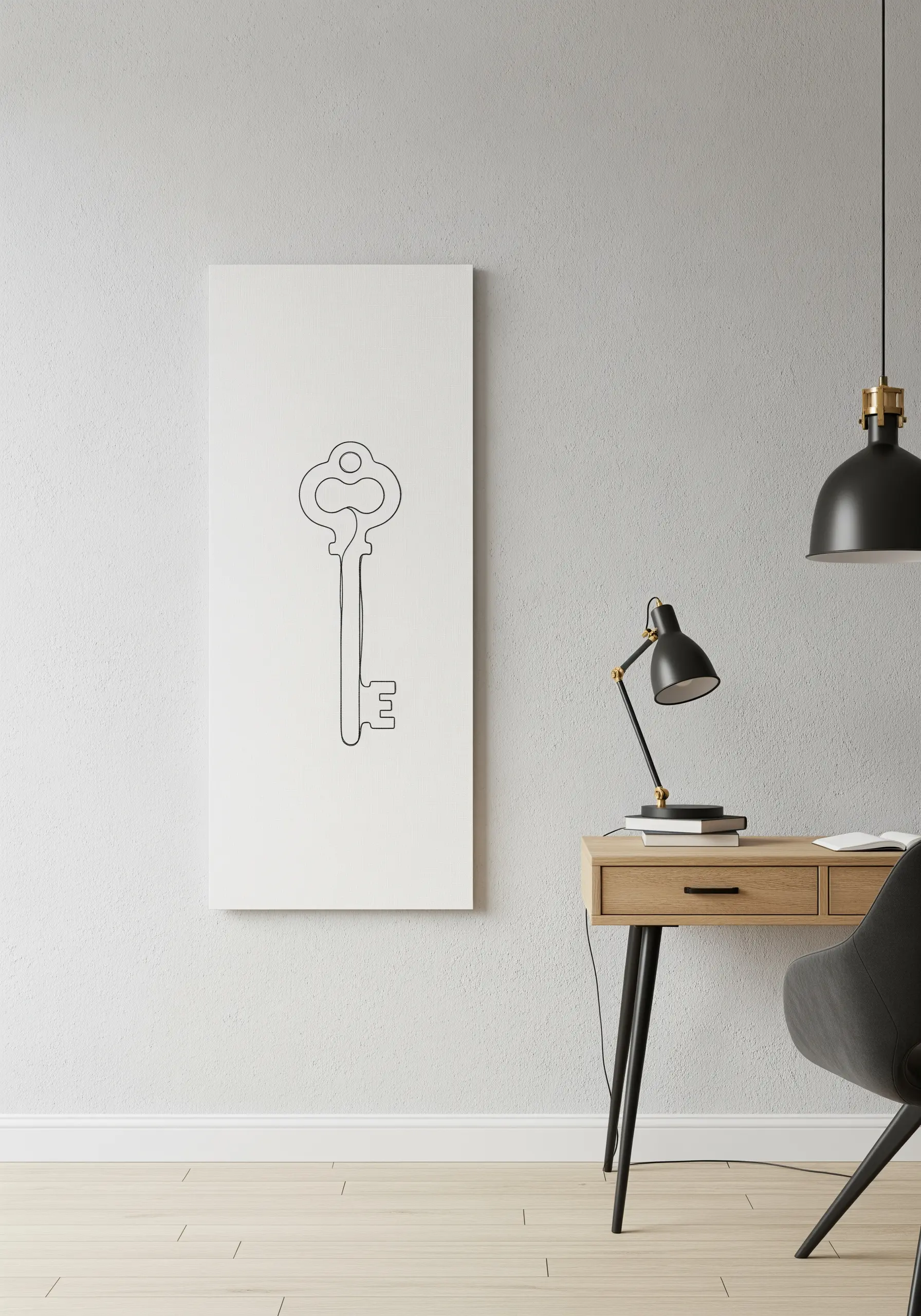
Choose a simple, universally recognized symbol to create a piece with quiet meaning.
A vintage key, rendered in a clean backstitch, can represent opportunity, knowledge, or a new beginning—a perfect sentiment for a workspace.
The beauty of such minimal embroidery patterns is their ability to convey a powerful idea with just a few carefully placed stitches.
30. Ethereal Contours on a Midnight Canvas
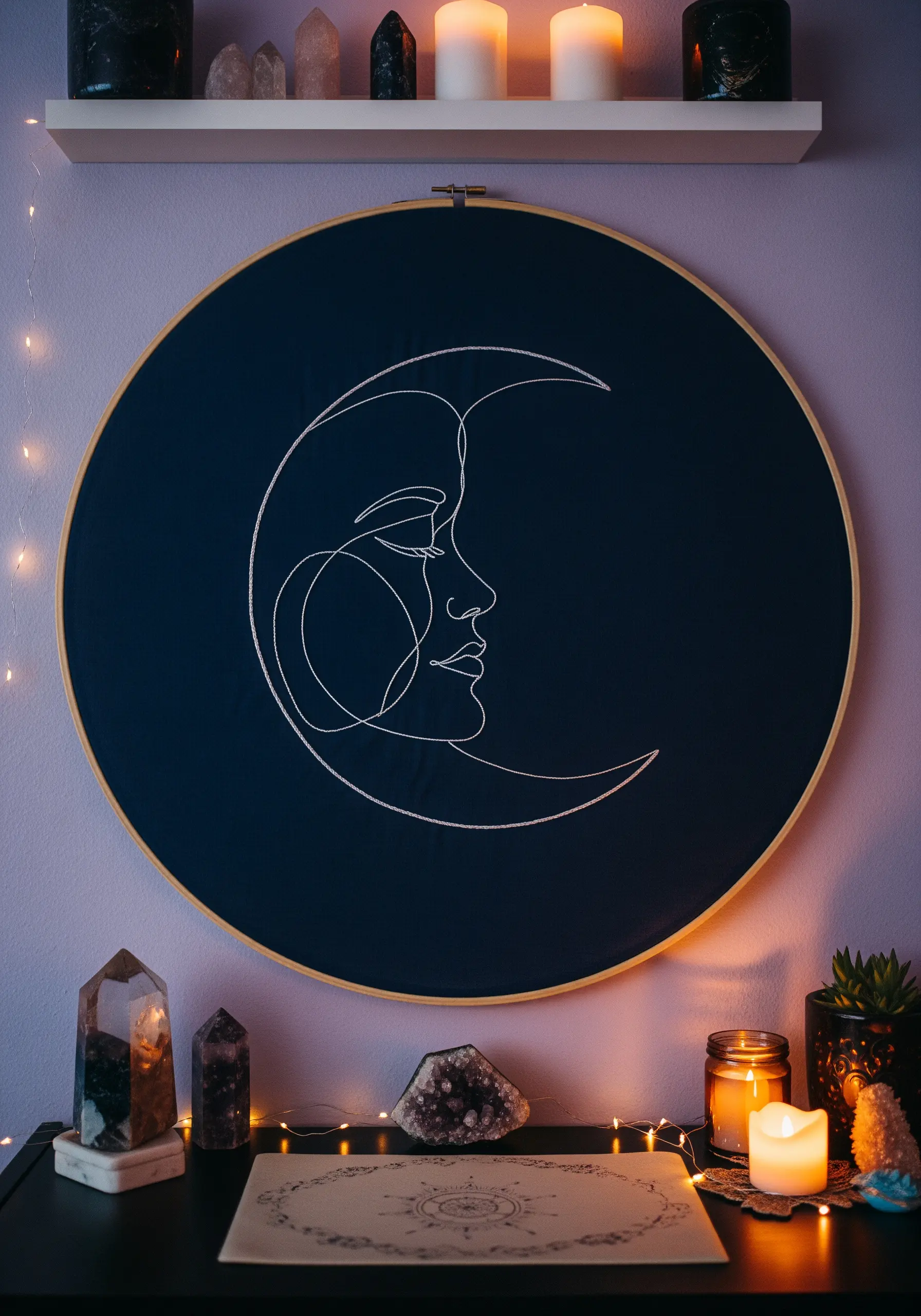
Create a dreamy, ethereal mood by using a fine, silvery-white thread on a dark navy or black fabric.
The high contrast makes the delicate line appear to glow, which is perfect for celestial or mystical subjects like a crescent moon portrait.
Use a single strand of floss and a split stitch for the smoothest possible curves, enhancing the design’s serene and otherworldly quality.
It’s a beautiful way to create moody, magical, moonlit florals and portraits.


