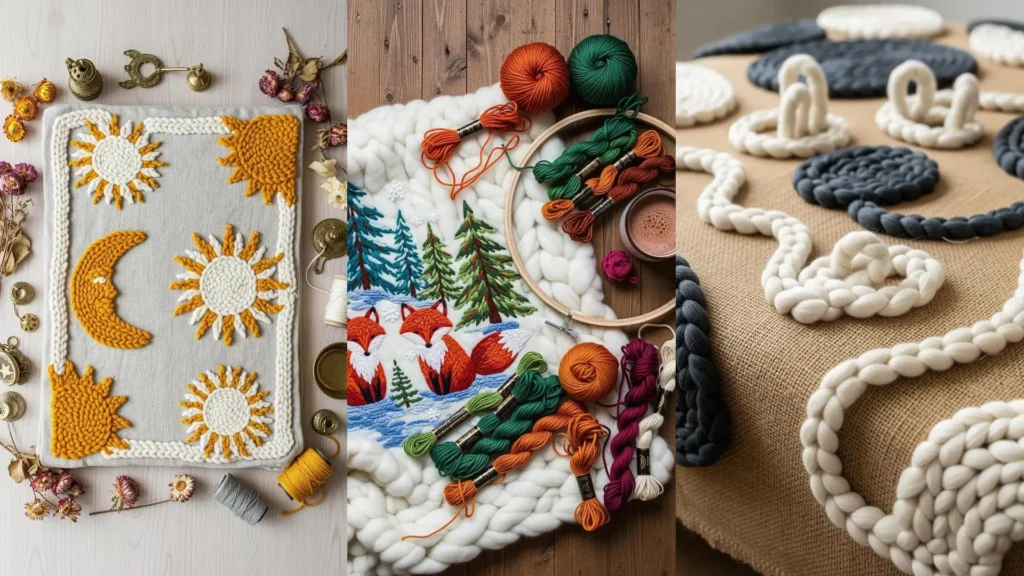
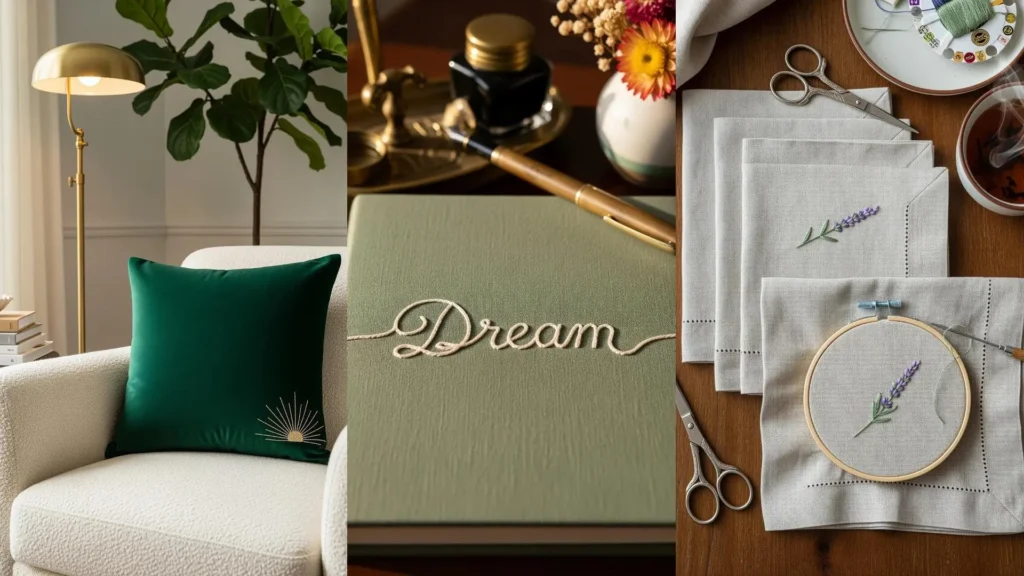
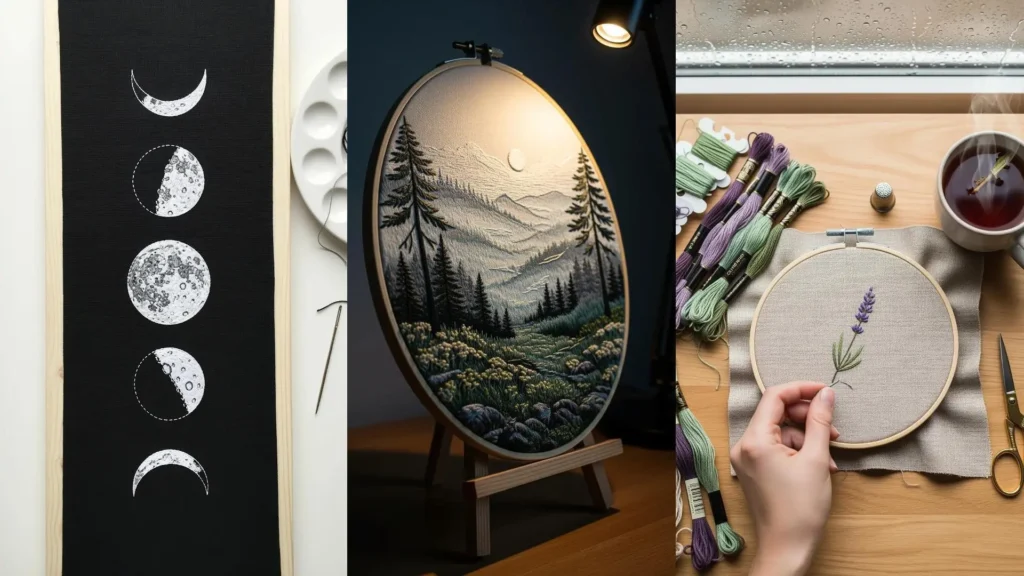
Winter invites a slower, more deliberate pace, making it the perfect season to reconnect with your embroidery. This isn’t just about keeping your hands busy; it’s an opportunity to create pieces that bring a quiet, personal warmth into your home as the days grow shorter.
Let’s move beyond simply following a pattern. Instead, I want you to start thinking about the ‘why’ behind your choices—why a padded satin stitch gives a motif life, or how a single strand of thread can create an entirely different mood than six.
Here, you’ll find ideas that focus on texture, dimension, and refined details. These are small adjustments that make a significant impact, allowing you to create serene, thoughtful pieces that feel both modern and timeless. It’s time to stitch with intention.
1. Sculptural Winter Woodland Scenes
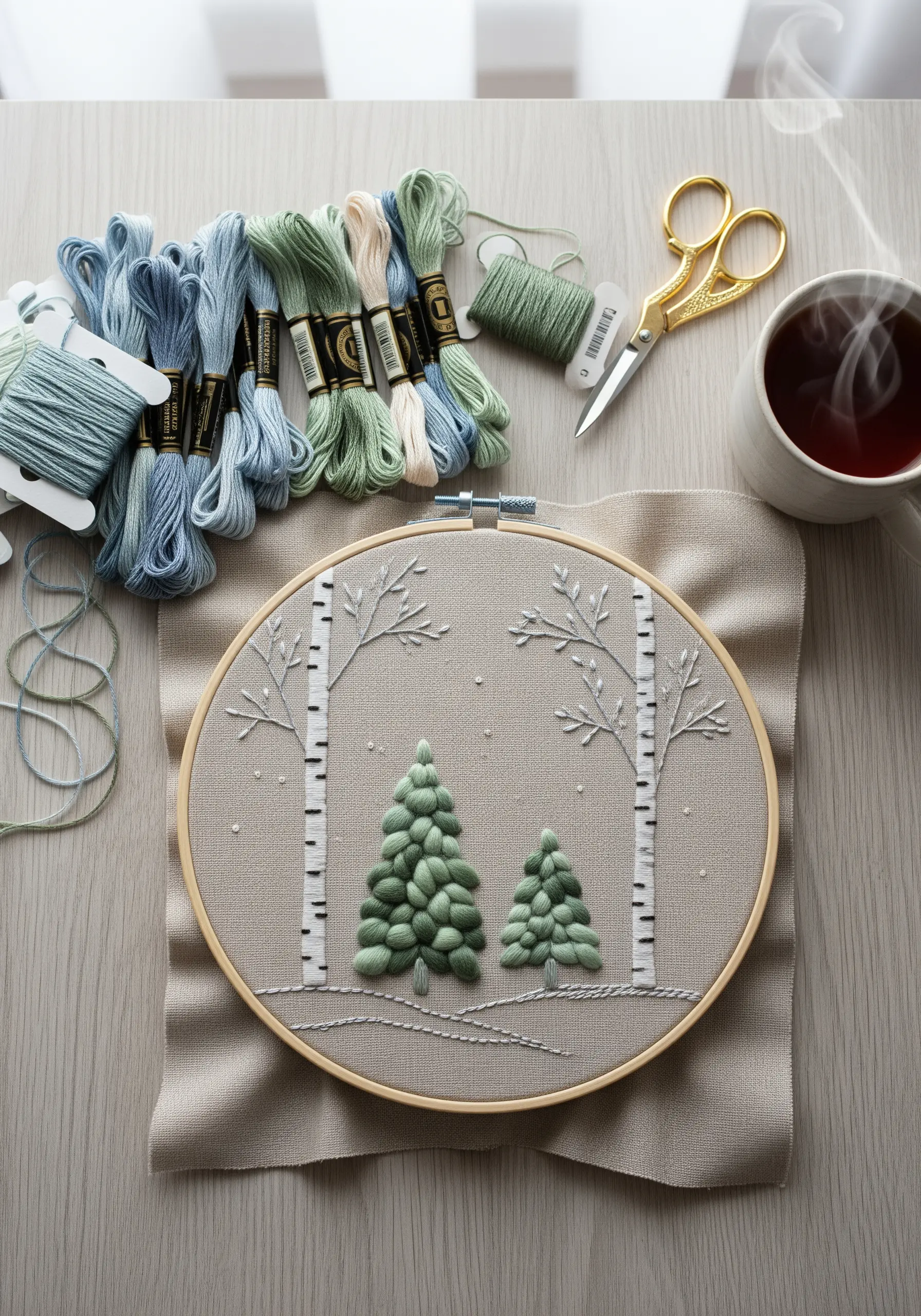
Give your embroidered pine trees a soft, three-dimensional quality by replacing satin stitch with clusters of bullion knots or woven wheel stitches.
This technique creates a plush, rounded texture that feels more organic and inviting than flat stitches.
For the birch trees, use a whipped backstitch in a soft gray to mimic the texture of the bark, and use a single strand of white floss for the delicate, frosty branches.
Tiny, scattered French knots in an off-white will give the impression of falling snow without cluttering the composition.
2. Dimensional Snowflake Pillow Motifs

Elevate a simple snowflake outline into a luxurious, tactile accent for a winter pillow.
Use a padded satin stitch for the main arms of the snowflake to give them a raised, sculptural effect against the fabric.
Incorporate fine metallic thread or seed beads at the joints and tips to catch the light, adding a subtle glimmer reminiscent of ice crystals.
This combination of texture and restrained sparkle turns a classic motif into a sophisticated piece of home decor.
3. Minimalist Felt Mountain Garland

For felt projects, your construction stitch can become a key design element.
Instead of hiding your stitches, use a contrasting color of thread and a neat blanket stitch to join the felt pieces.
This not only ensures a durable edge but also frames each shape, adding a clean, graphic quality to the finished garland.
You can also add simple running stitches across the ‘snow’ portion to create a subtle quilted texture that enhances the handmade feel.
4. Aromatic Lavender & Bee Journal Covers
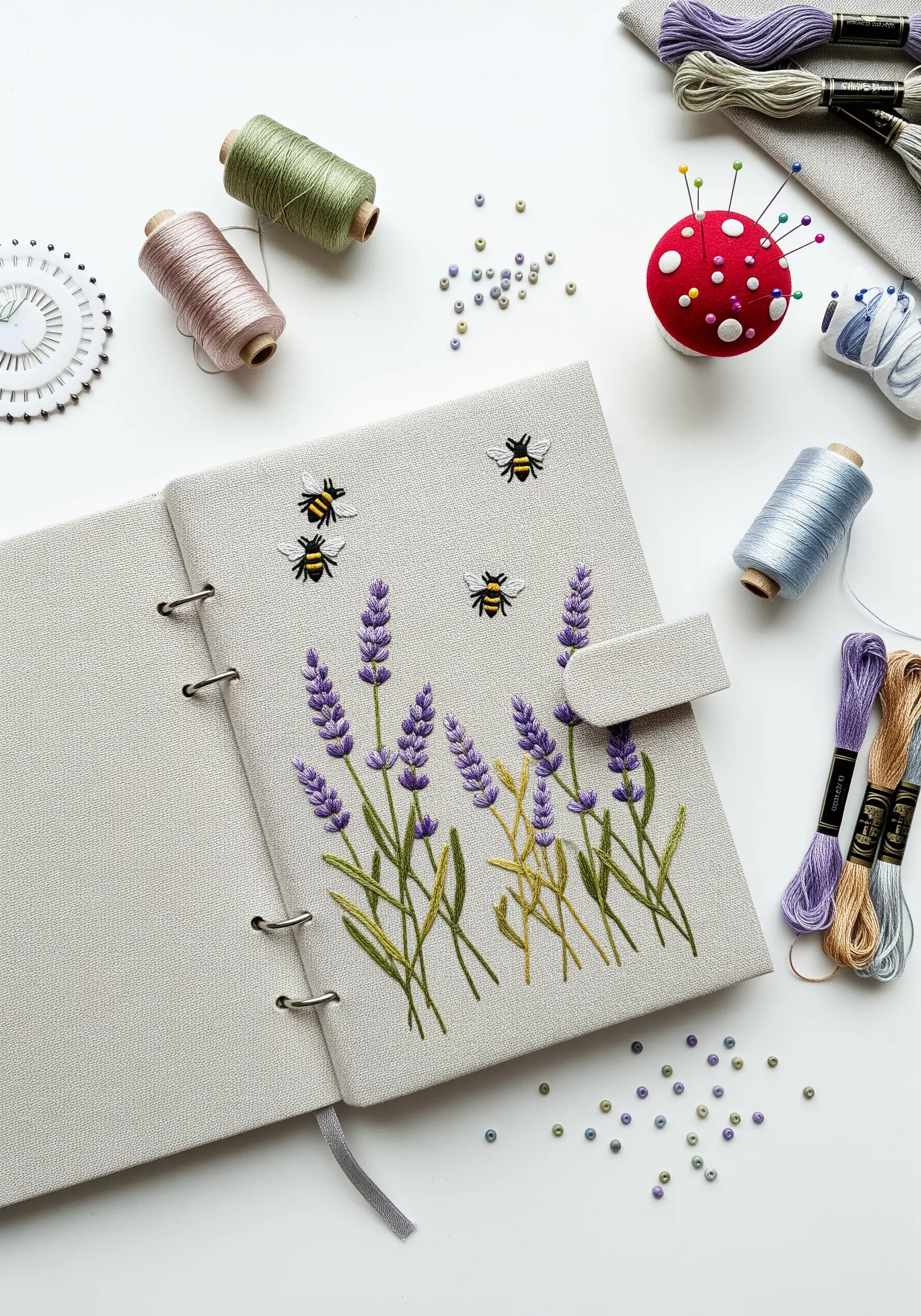
To create realistic lavender stalks, use detached chain stitches for the individual buds, clustering them tightly at the top and spacing them out toward the stem.
Work with three slightly different shades of purple floss, stitching randomly with each to create natural-looking depth and variation.
For the bees, use a few horizontal satin stitches as padding before stitching the final layer, which will make their bodies pop off the fabric surface.
These are quick stitch inspirations to beautify your notebooks and journals with a touch of nature.
5. Quilted Landscapes with Thread Texture

Achieve the intricate, stippled texture of free-motion quilting by hand using dense, randomly placed seed stitches.
Fill each color-blocked area with tiny straight stitches in a matching thread color, changing the direction of your stitches to create movement and depth.
This meditative technique adds a rich, tactile dimension to simple geometric designs, transforming a flat piece into a piece of textile art.
Experiment with neutral thread texture combinations that make the surface feel as good as it looks.
6. Bold Floral Stitches for Knitwear
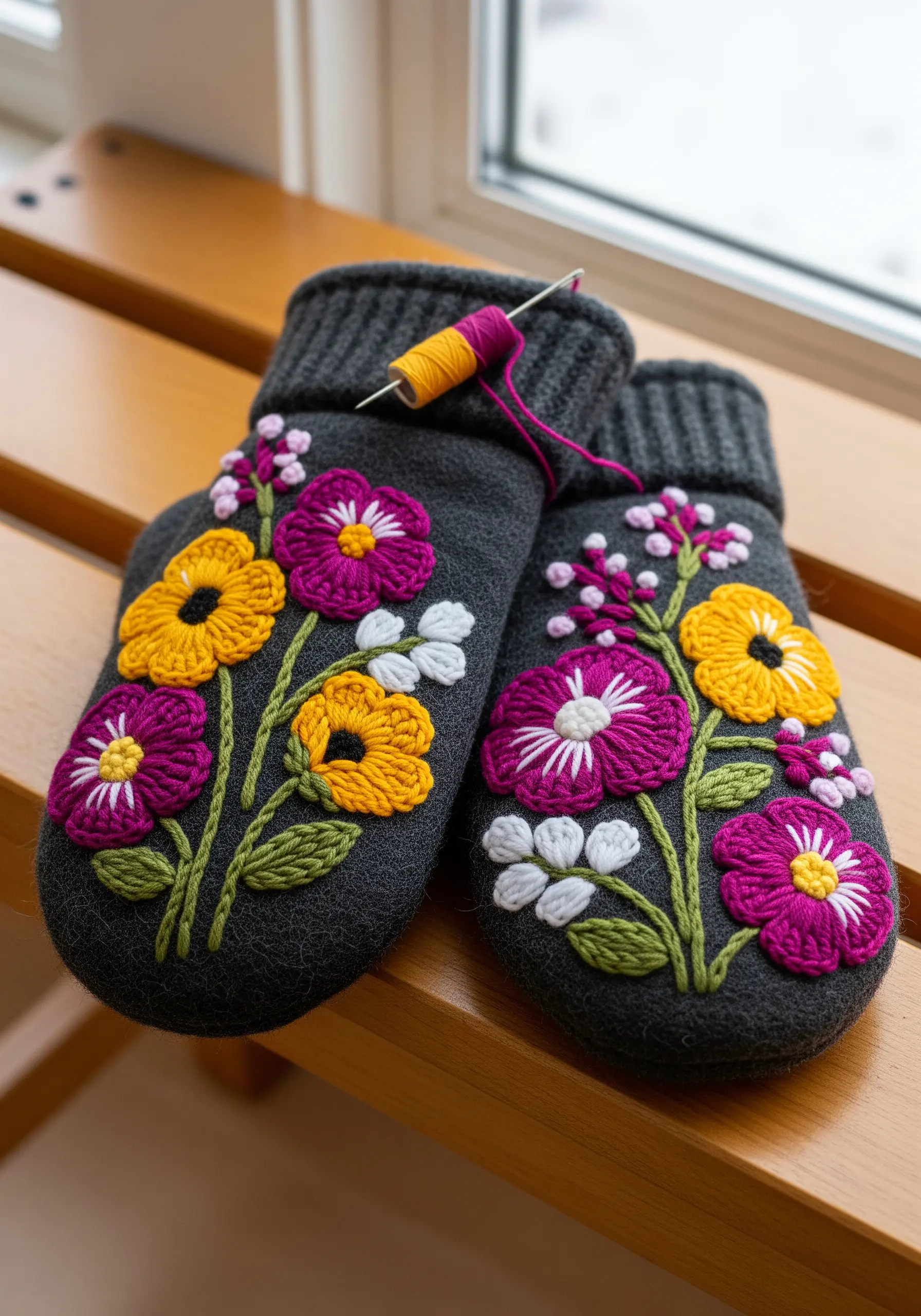
When embroidering on thick, stretchy knitwear like mittens, always use a temporary stabilizer on the inside to prevent the fabric from puckering and distorting.
Choose bold stitches that won’t get lost in the fabric’s texture, such as chain stitch outlines and chunky satin stitch fills.
Using all six strands of embroidery floss—or even a fine tapestry wool—will give your wildflower embroidery patterns the weight and presence they need to stand out beautifully.
7. Delicate Single-Stem Botanical Sachets
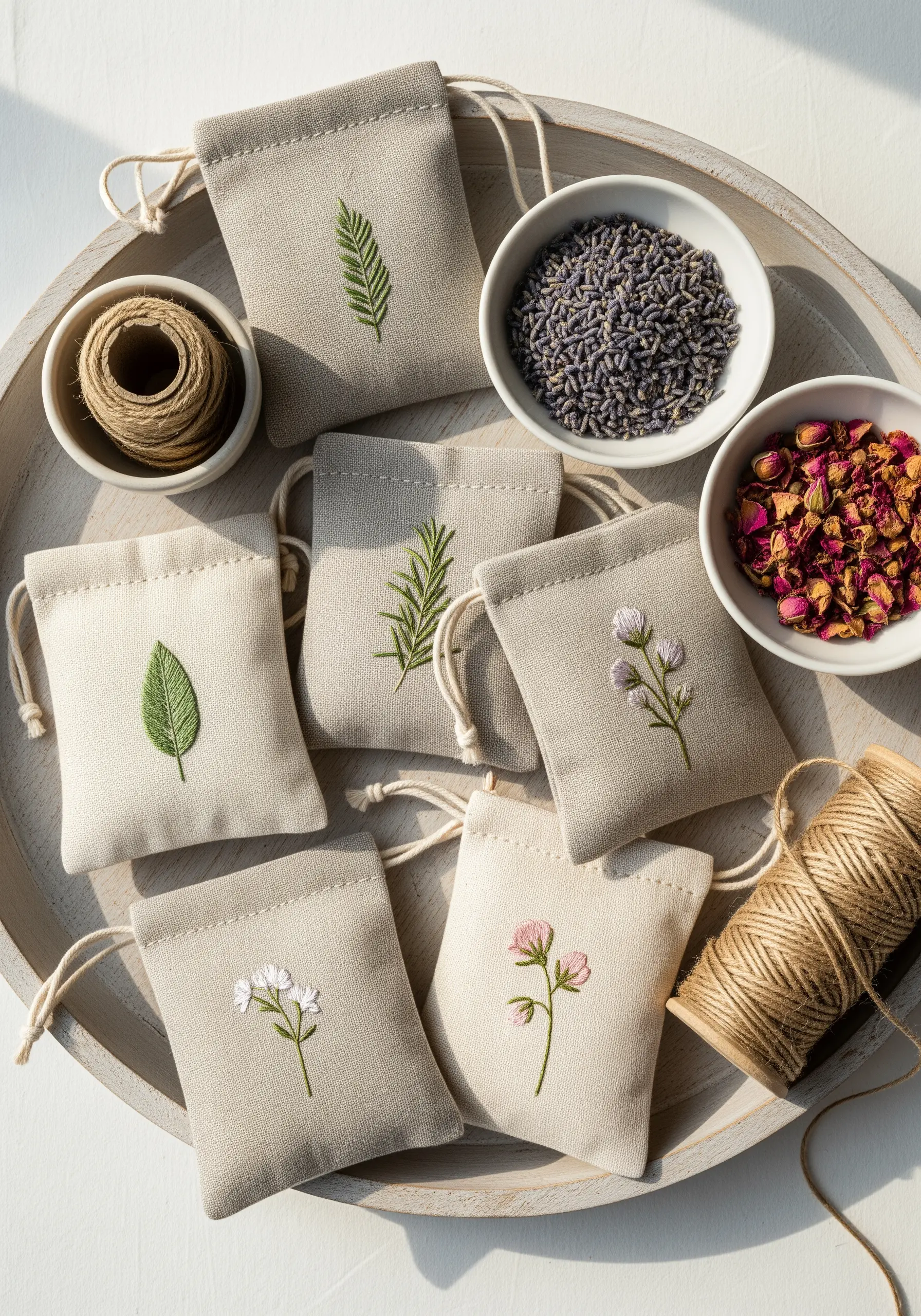
For a refined, minimalist look on linen, focus on executing a single motif flawlessly.
Use a split stitch for the plant stems; it creates a line that is smoother and more solid than a standard backstitch.
For simple leaves, the fishbone stitch is ideal because it creates a central vein and fills the leaf shape in one fluid motion, giving it a subtle, elegant dimension.
These are perfect minimalist botanical stitch designs perfect for beginners who love calm nature vibes.
8. Appliqué with Embellished Stitchwork
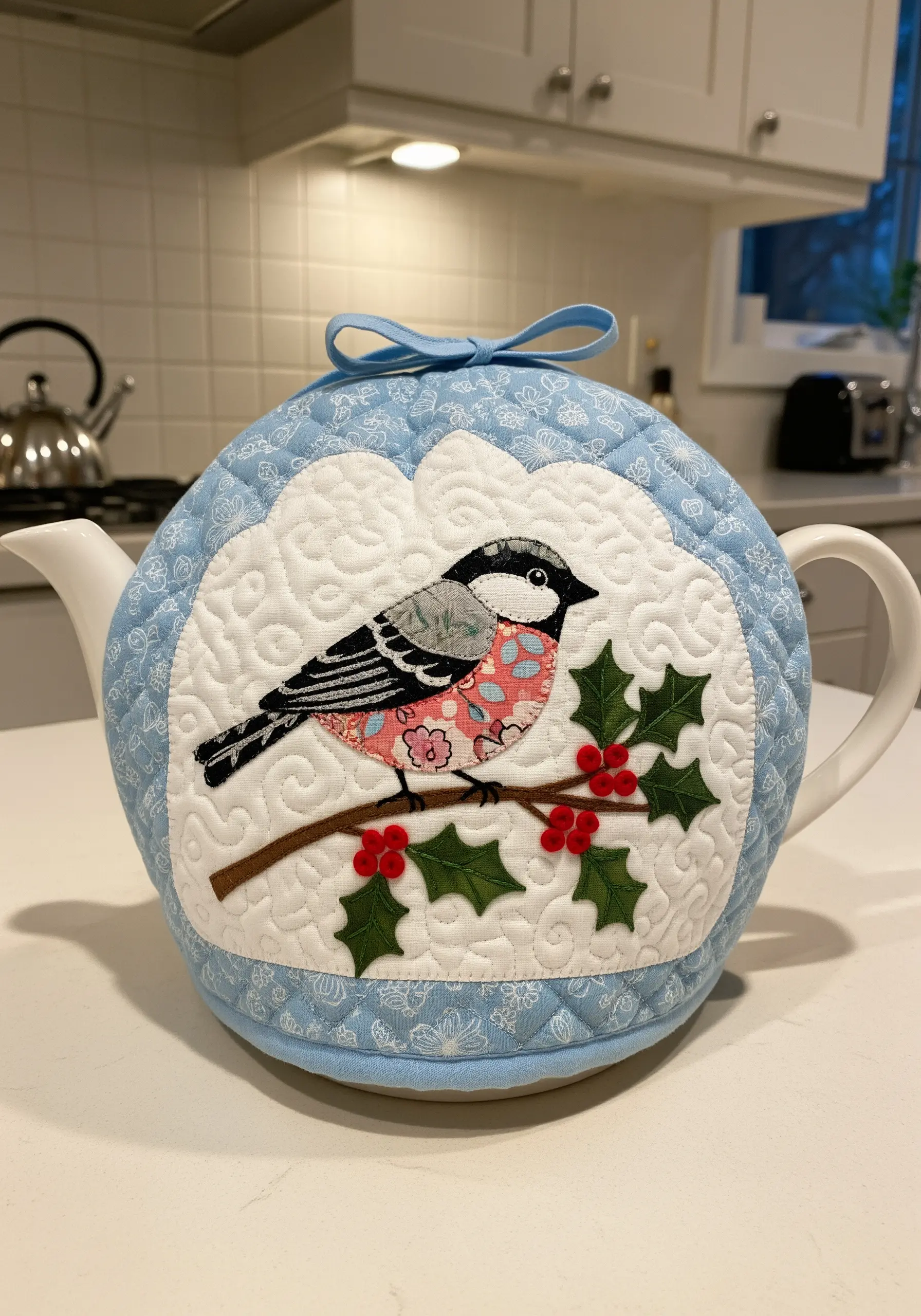
Integrate fabric appliqué seamlessly into your embroidery by using thread to add definition and texture.
Secure your fabric pieces with a neat blanket stitch around the edges, which doubles as a decorative border.
Then, bring the appliqué to life by adding stitched details on top—like backstitched wing outlines or French knot eyes—to connect the different materials into one cohesive design.
This method allows you to explore fabric collage embroidery layouts with a polished finish.
9. Decorative Darning as a Focal Point

Transform a sweater repair into an intentional design element with visible mending.
First, create a stable foundation by weaving a patch with thread directly over the hole, a technique known as darning.
Then, use this newly woven area as a canvas for decorative stitches, such as radiating straight stitches or small seed stitches, to create a beautiful, medallion-like feature.
This approach celebrates repair as an act of creativity, using abstract thread texture hacks to give old garments new life.
10. Charming Felt Woodland Ornaments
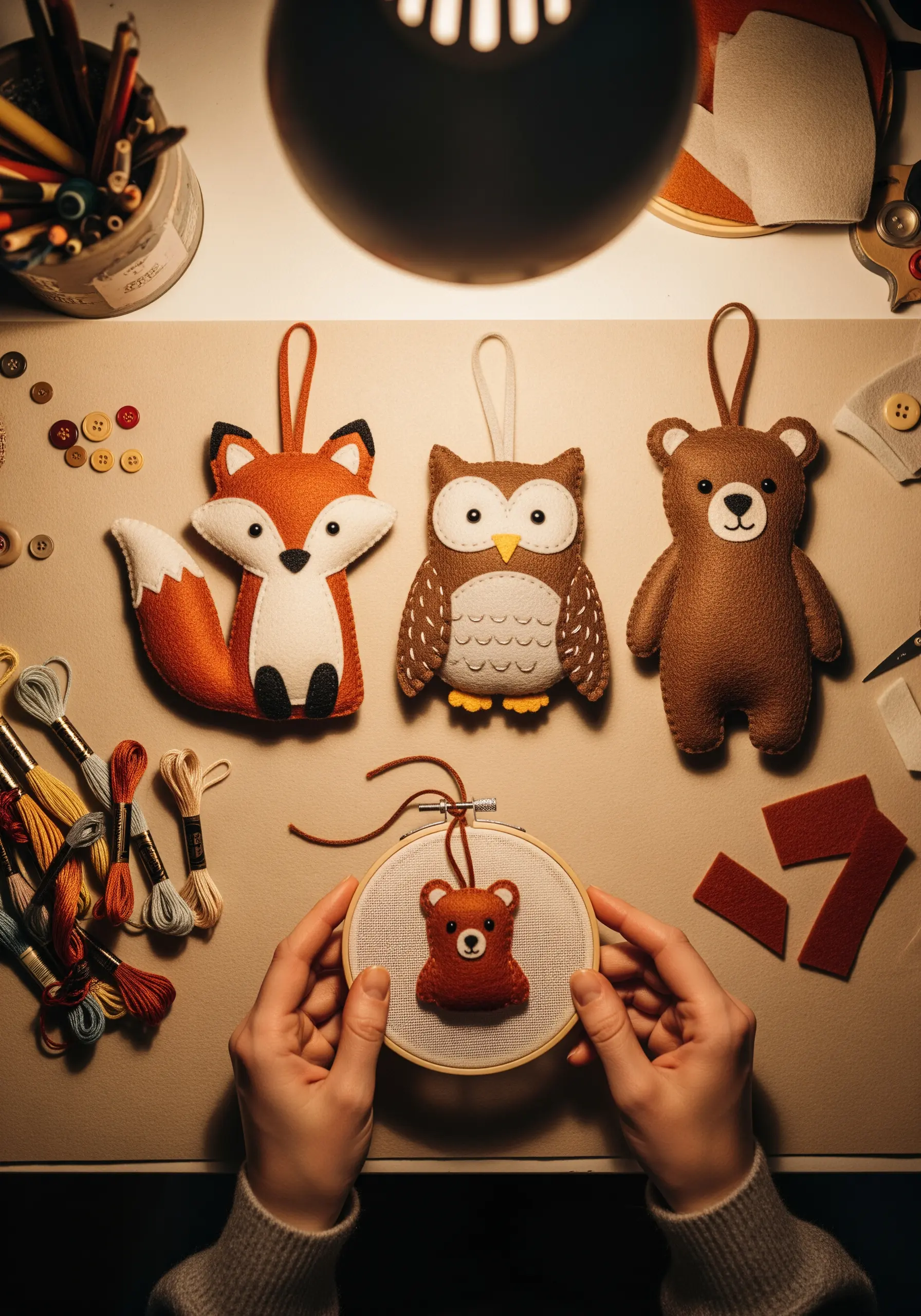
Give simple felt creatures character and charm with just a few well-placed stitches.
Use small French knots for eyes, which create more dimension than a simple straight stitch, and use a contrasting thread for a neat blanket stitch around the edge to define the silhouette.
Even the simplest additions, like a few straight stitches for whiskers or a satin-stitched nose, can bring your creations to life.
These adorable forest-animal embroidery ideas are perfect for holiday decor or nursery gifts.
11. Serene Stitched Nursery Mobiles

When crafting a mobile, the key to a calm, gentle aesthetic is in the details of your construction.
Lightly stuff each felt shape with poly-fil for a soft, pillowy dimension before stitching it closed with a tidy whip stitch.
To hang the pieces, use a single, strong strand of white cotton thread; its near-invisibility allows the soft shapes to float, creating a dreamy, peaceful effect perfect for a nursery.
This is a wonderful project to pair with other dreamy baby clothing embroidery ideas.
12. Textural Embroidered Bookmarks

To ensure your embroidered bookmarks are durable enough for regular use, back them with a layer of stiff felt or thin cardstock after stitching.
Choose stitches that offer satisfying texture, like the woven wheel for a raised, 3D daisy center, or the brick stitch to fill the bands of a rainbow with a smooth, woven appearance.
These tactile details make beautiful and functional small embroidery projects that make perfect handmade gifts for book lovers.
13. Personality Stitches for Sewn Objects

Even primarily sewn projects, like a draft stopper, can be elevated with a few thoughtful embroidery details.
Before you stitch the final seams and stuff the object, add character with simple thread work.
A few carefully placed backstitches can create a sleepy eye or a gentle smile, instantly giving your creation a unique personality that store-bought items lack.
You can even add tiny, subtle details like the tiny animal embroidery sketches you’d find in a storybook.
14. Meditative Mandala Floor Cushions
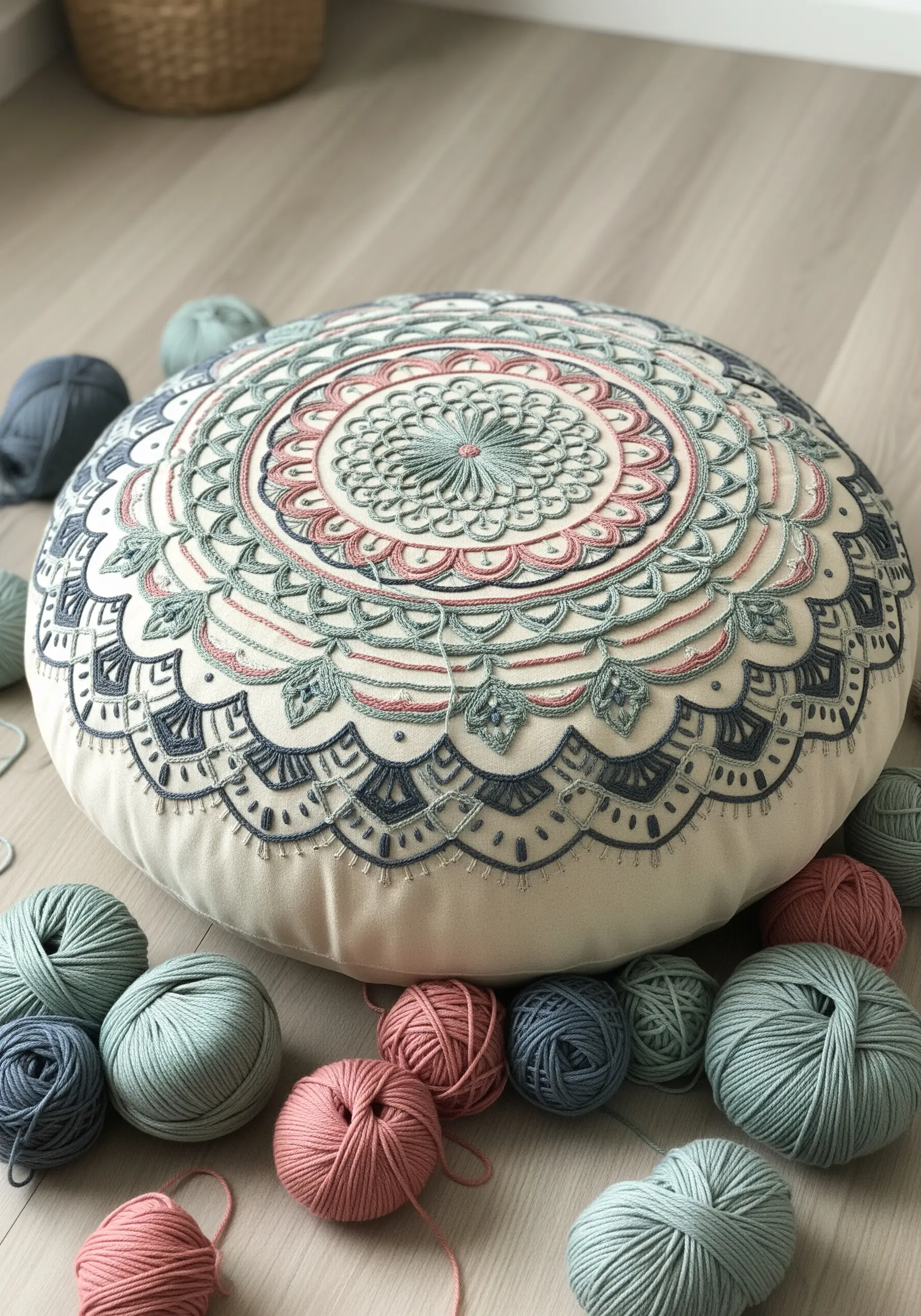
Tackling a large, intricate design like a mandala is more manageable when you approach it in sections.
For satin-stitched areas, intentionally vary the angle of your stitches in neighboring shapes; this creates a subtle play of light and shadow, adding depth to the design.
On a functional piece like a floor cushion, opt for a durable thread like pearl cotton, which provides a beautiful sheen and a raised line that won’t get lost on the heavy fabric.
This is a perfect way to create soft-tone embroidery mandalas for a relaxation space.
15. Architectural Felt House Bunting
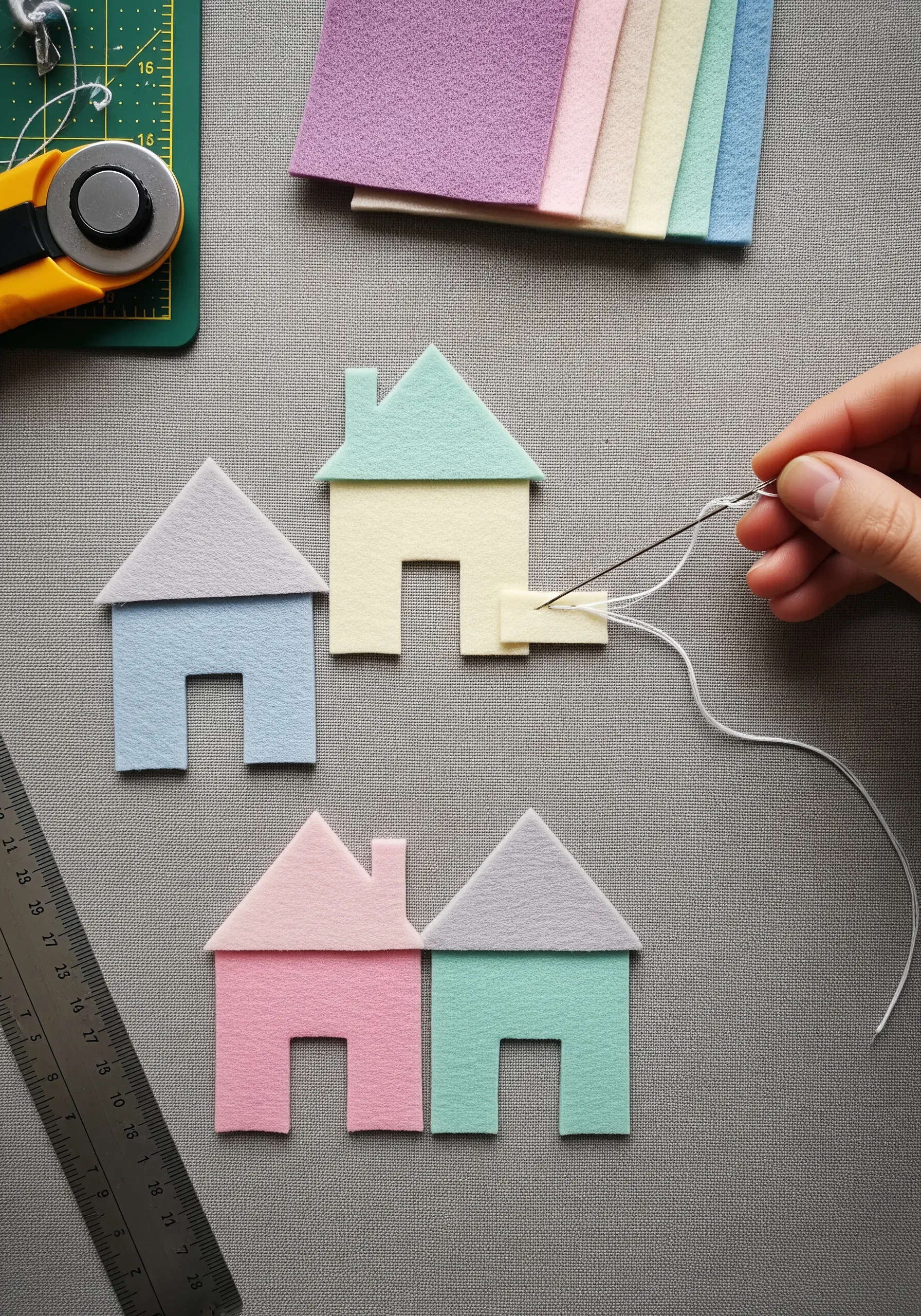
For simple, graphic felt shapes, let your assembly method double as a design detail.
Instead of trying to hide your stitches, use a contrasting thread and a clean, evenly spaced whip stitch to join the pieces.
This technique outlines the forms, adding an illustrative, architectural quality to the houses and making the construction process itself part of the charm.
This is one of the best eco-friendly embroidery decor ideas for using up small scraps.
16. Elegant Holly Vine Table Linens
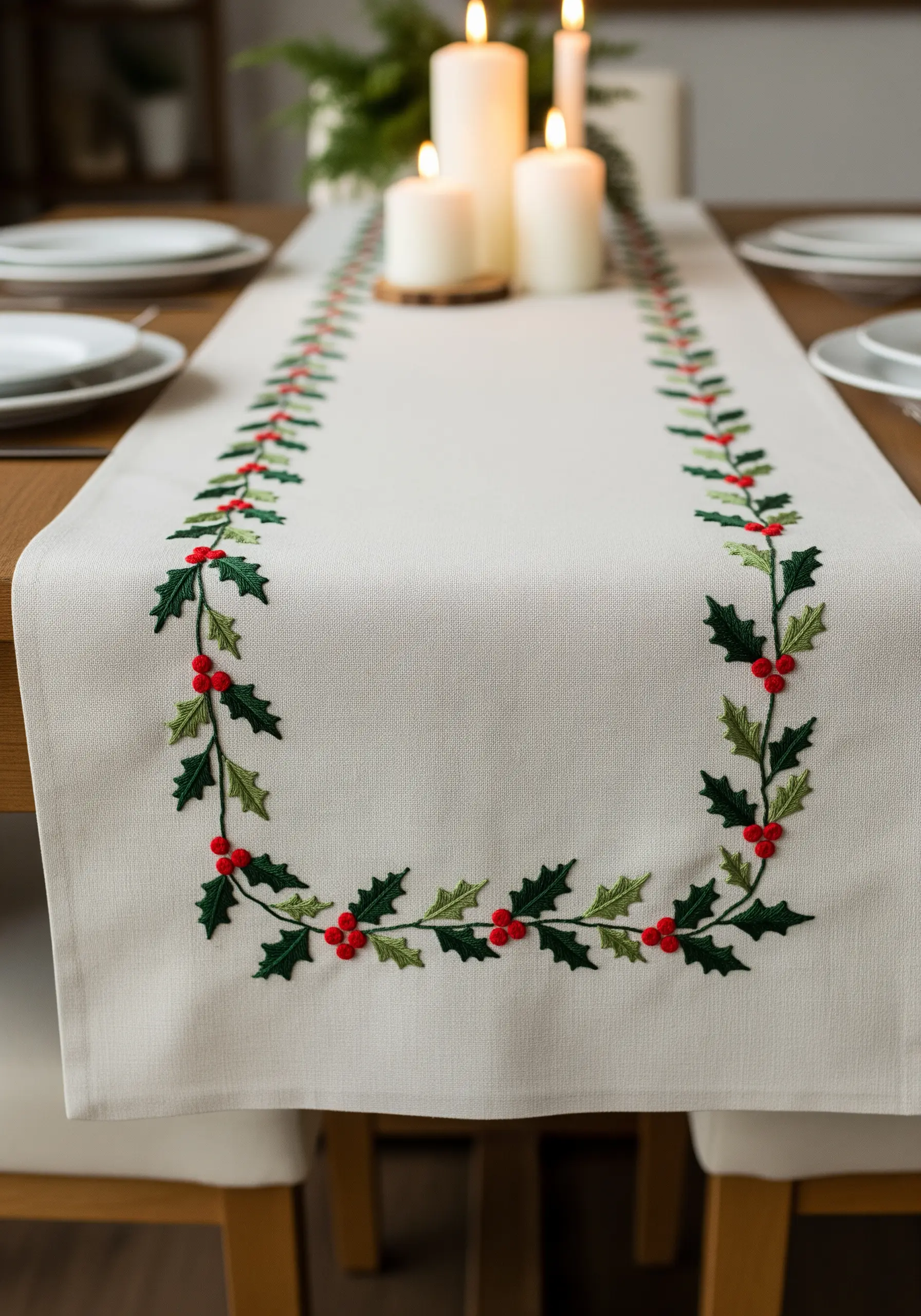
When creating a repeating border, consistency is what elevates the work from homemade to handmade.
Maintain uniform stitch length and tension throughout the design for a polished, professional rhythm.
Give the holly leaves a subtle, plump dimension by using a padded satin stitch, and create perfectly round, textured berries with French knots using three or four wraps of thread.
These are classic table linen embroidery motifs that instantly transform a plain dining table.
17. Embroidered Motifs on Keepsake Boxes
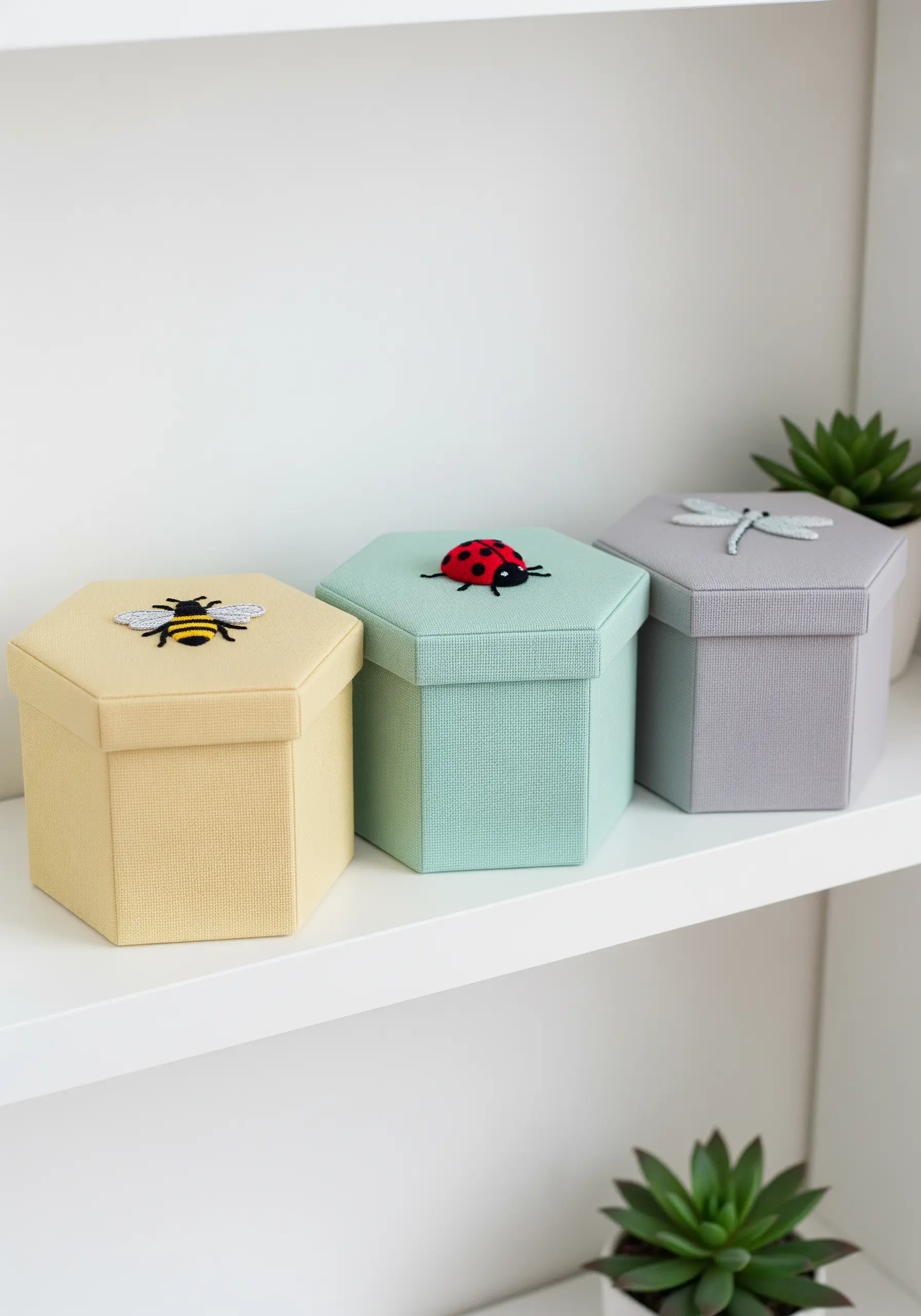
You can embroider on fabric-covered objects like boxes by using a sharp, sturdy needle and working slowly.
For insect wings that require color blending, the long-and-short stitch allows for a smooth, painterly transition between shades.
To make the body of the insect stand out, use a padded satin stitch to give it a raised, three-dimensional form against the flat lid.
These small embroidery ideas to add a personal touch to gifts make the packaging as special as the present inside.