That narrow hallway in your home holds more potential than you think. It’s not just a passage from one room to another; it’s a canvas waiting for a story. Imagine transforming that overlooked space with small, intricate worlds you’ve created with nothing more than a needle and thread.
Micro embroidery allows you to focus on detail, texture, and color in a way that feels both meditative to create and luxurious to display. Each tiny portrait or motif becomes a jewel-like accent, inviting guests to pause and look closer. It’s about making art that feels personal, intimate, and intentional.
Here, you won’t just find inspiration; you’ll discover the techniques to make it happen. From choosing the right thread to create sharp lines, to arranging your finished pieces for maximum impact, you have everything you need to turn a simple wall into a sophisticated gallery that reflects your own unique artistry.
1. The Narrative Grid: Composing with Repetition
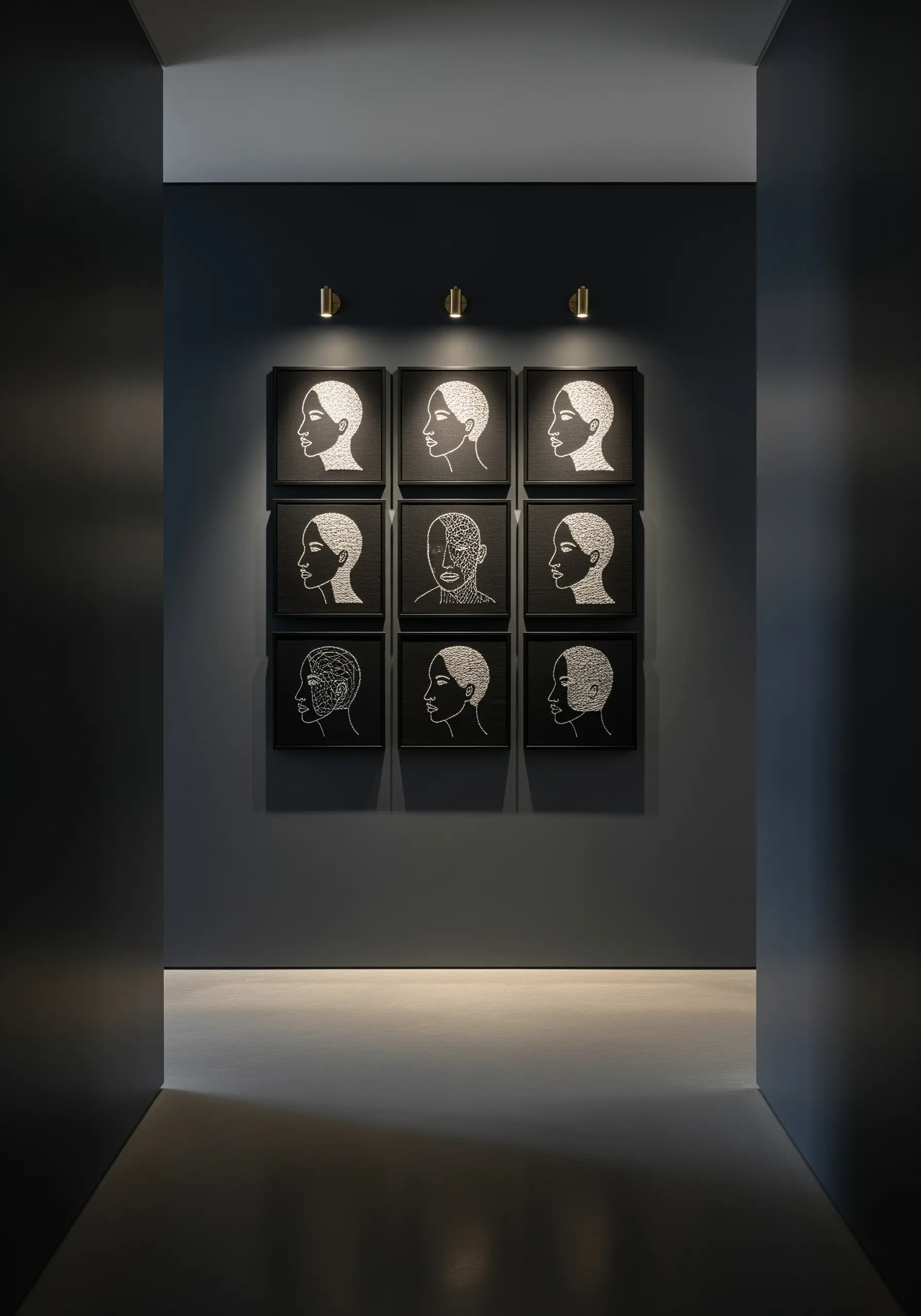
Create a powerful statement in a narrow space by arranging minimalist portraits in a precise grid.
Use a single strand of white or off-white floss on black linen to achieve sharp, graphic lines that demand attention.
To ensure uniformity, create one master template and trace it onto each fabric square before stitching, but introduce a subtle variation in the fill pattern of one piece to serve as a focal point.
This technique transforms simple line art into a cohesive, gallery-worthy installation by emphasizing rhythm and negative space.
2. The Salon Hang: Curating a Vintage Botanical Story
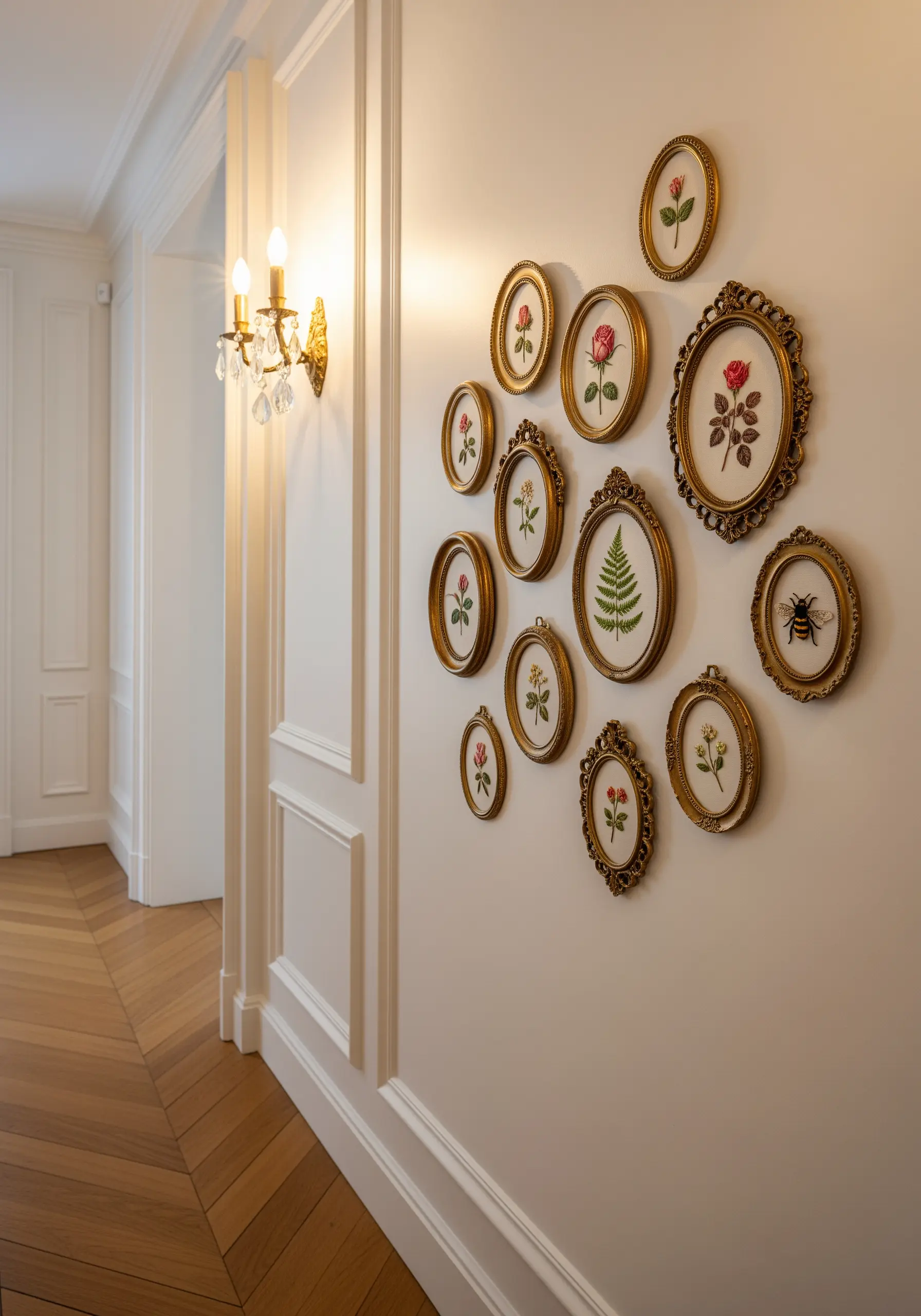
Transform a collection of small floral embroideries into a romantic, flowing installation by adopting a salon-style hang.
Group mismatched vintage-style frames—oval, round, and ornate—to create visual interest and a sense of history.
Unify the collection by sticking to a consistent theme, like single-stem botanicals, and a limited color palette against a neutral linen background.
The key is to vary the scale and orientation, allowing the eye to dance from one piece to the next, making the wall feel both grand and intimate.
3. The Modern Silhouette Series: Impact Through Simplicity
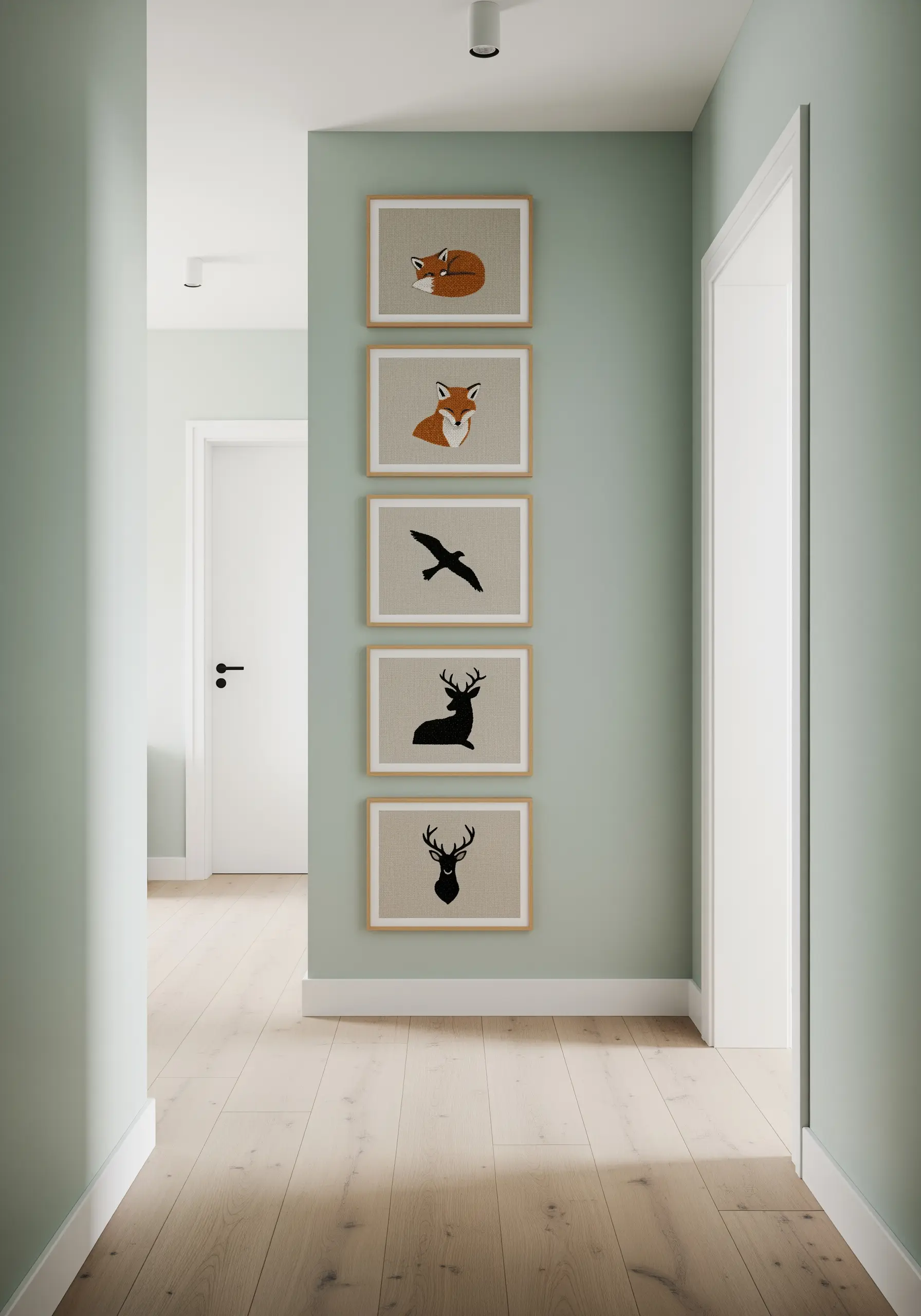
For a clean, Scandinavian-inspired look, focus on embroidering simple animal silhouettes onto neutral-toned linen.
Use a dense, flawlessly smooth satin stitch to fill each shape, ensuring your stitches all lie in the same direction for a uniform, light-reflecting surface.
To create razor-sharp edges, outline the shape first with a split stitch before filling it in; this acts as a raised border that contains your satin stitches perfectly.
Mounting them in simple, light-wood frames enhances the minimalist aesthetic, proving that powerful design doesn’t require complexity.
4. Art Deco Glamour: Beading and Metallic Accents
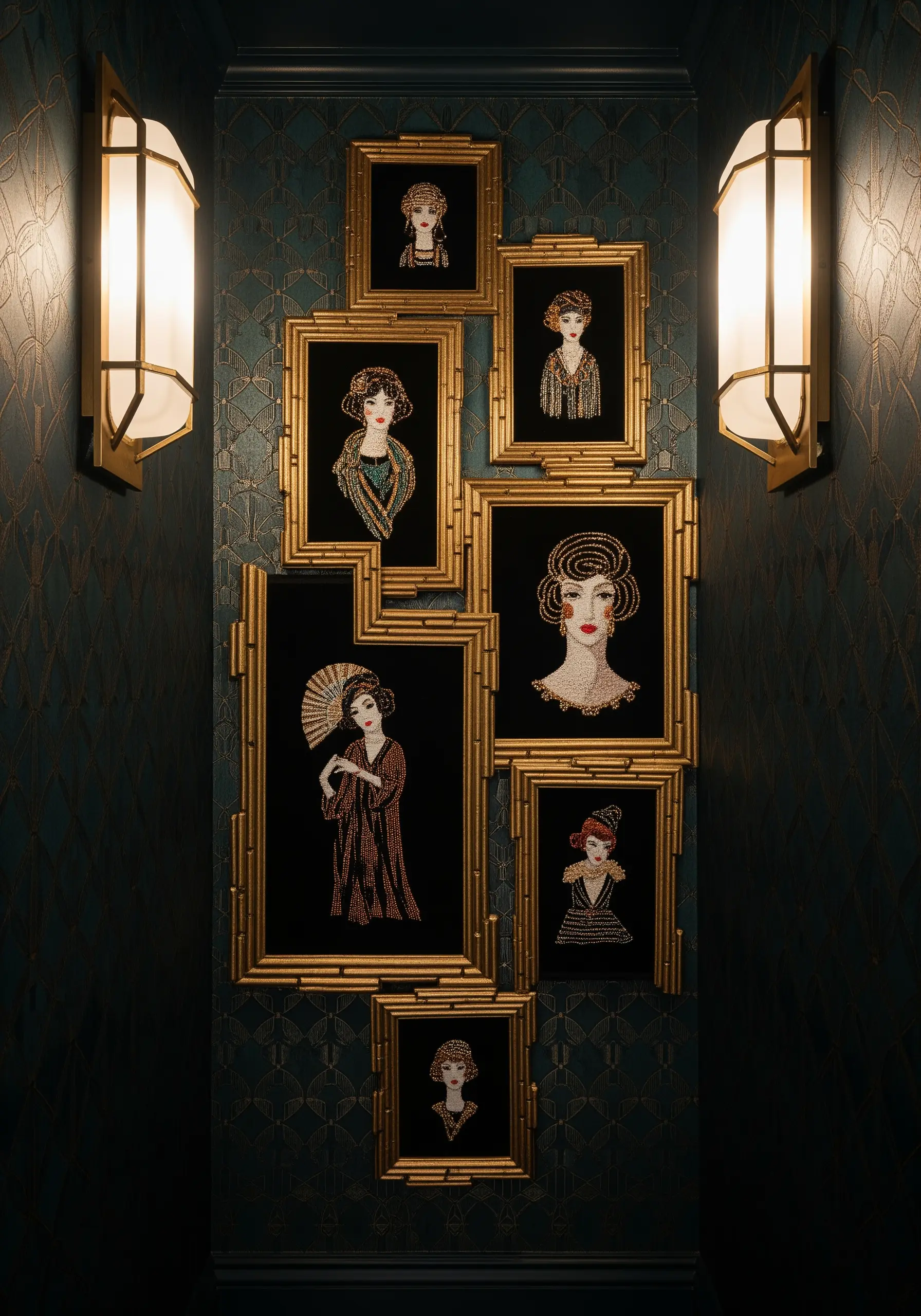
Evoke the opulence of the 1920s by incorporating beads and metallic threads into your portraits.
Use tiny seed beads or French knots to create the texture of jewels and elaborately embellished fabrics.
Outline facial features and clothing details with a single strand of gold or silver metallic thread to catch the light and add a touch of luxury.
This mixed-media approach transforms a flat portrait into a tactile, three-dimensional piece that feels decadent and timeless.
5. Sequential Storytelling: A Linear Portrait Series
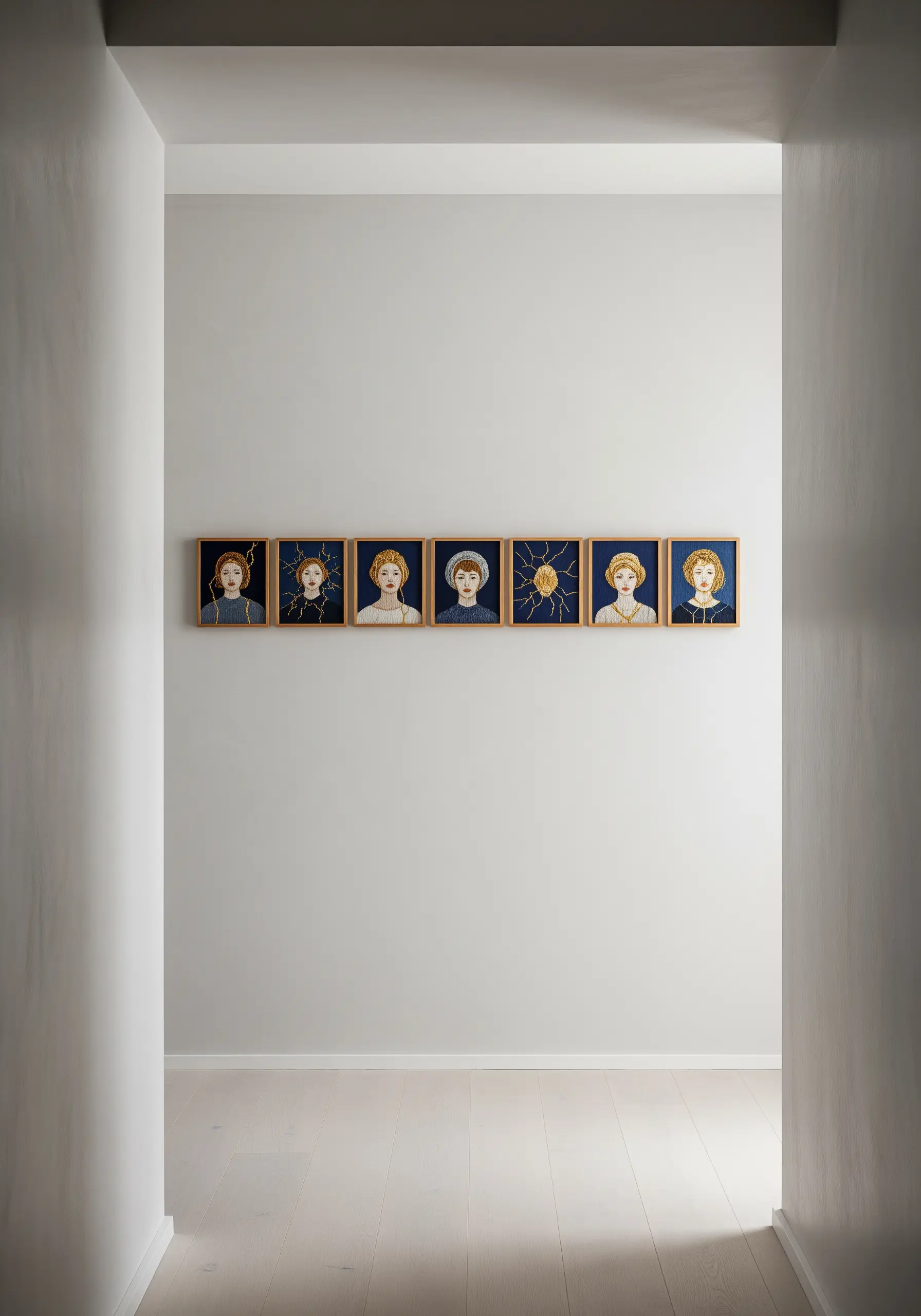
Tell a story across a series of small, uniform frames by showing subtle shifts in expression or detail from one portrait to the next.
Use a consistent color palette, like deep blues and golds, to link the pieces together visually.
Introduce a single abstract element, like a radiating sunburst, to break the pattern and create a central focal point within the sequence.
This linear arrangement is perfect for a narrow hallway, drawing the viewer along the wall as the narrative unfolds.
6. The Celestial Gallery: Layering Frames and Motifs
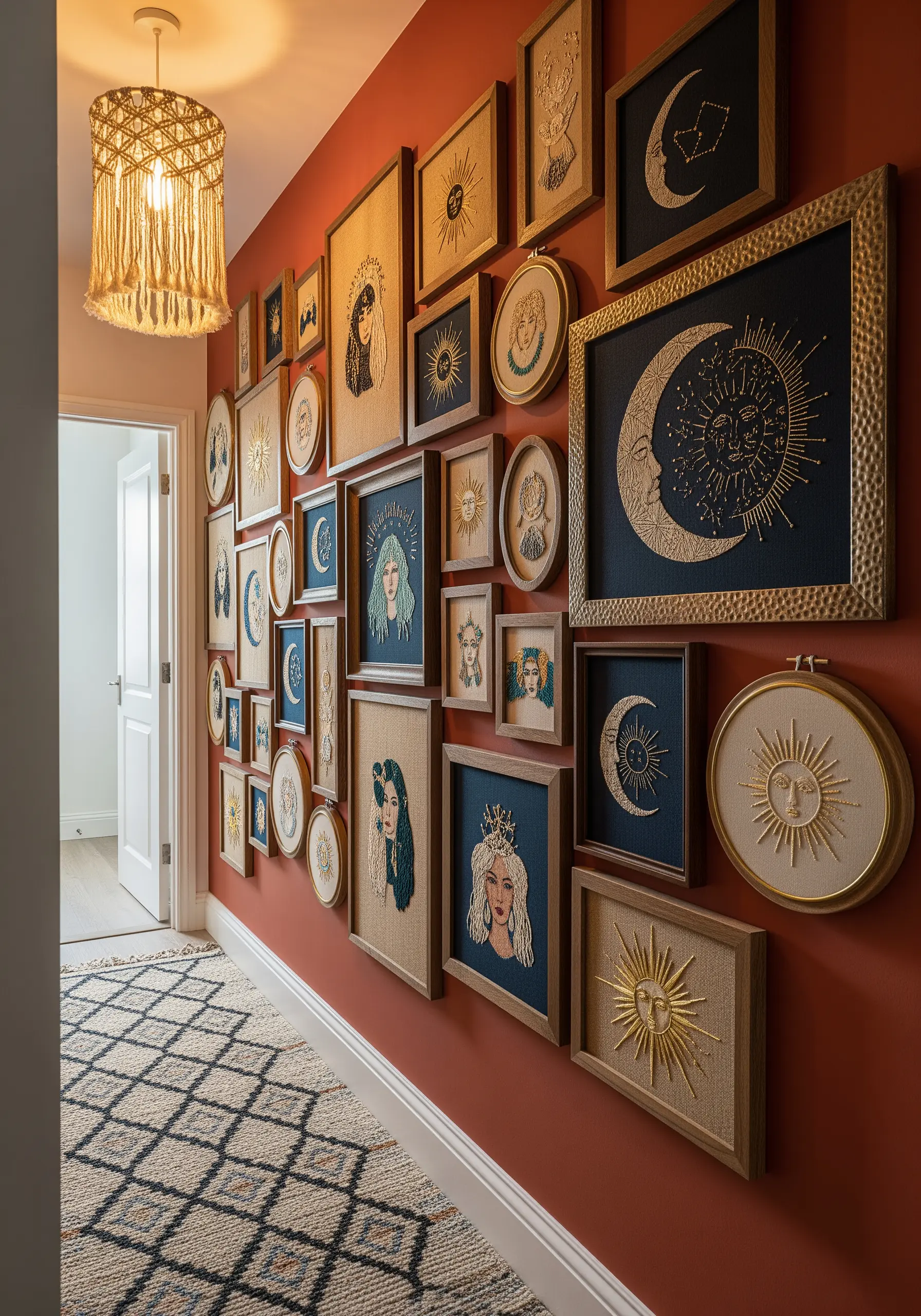
Build an eclectic and personal gallery wall by mixing portraits with celestial motifs like suns, moons, and constellations.
Play with scale by combining large statement pieces with smaller, intimate hoops and frames. This creates a dynamic rhythm that makes the collection feel curated over time.
Stick to a cohesive color story—such as navy, gold, and cream—to ensure the varied subjects and frame styles feel harmonious rather than chaotic.
This approach allows you to continuously add new handmade art pieces, letting your wall evolve with you.
7. Coastal Textures: Sculptural Seashell Studies
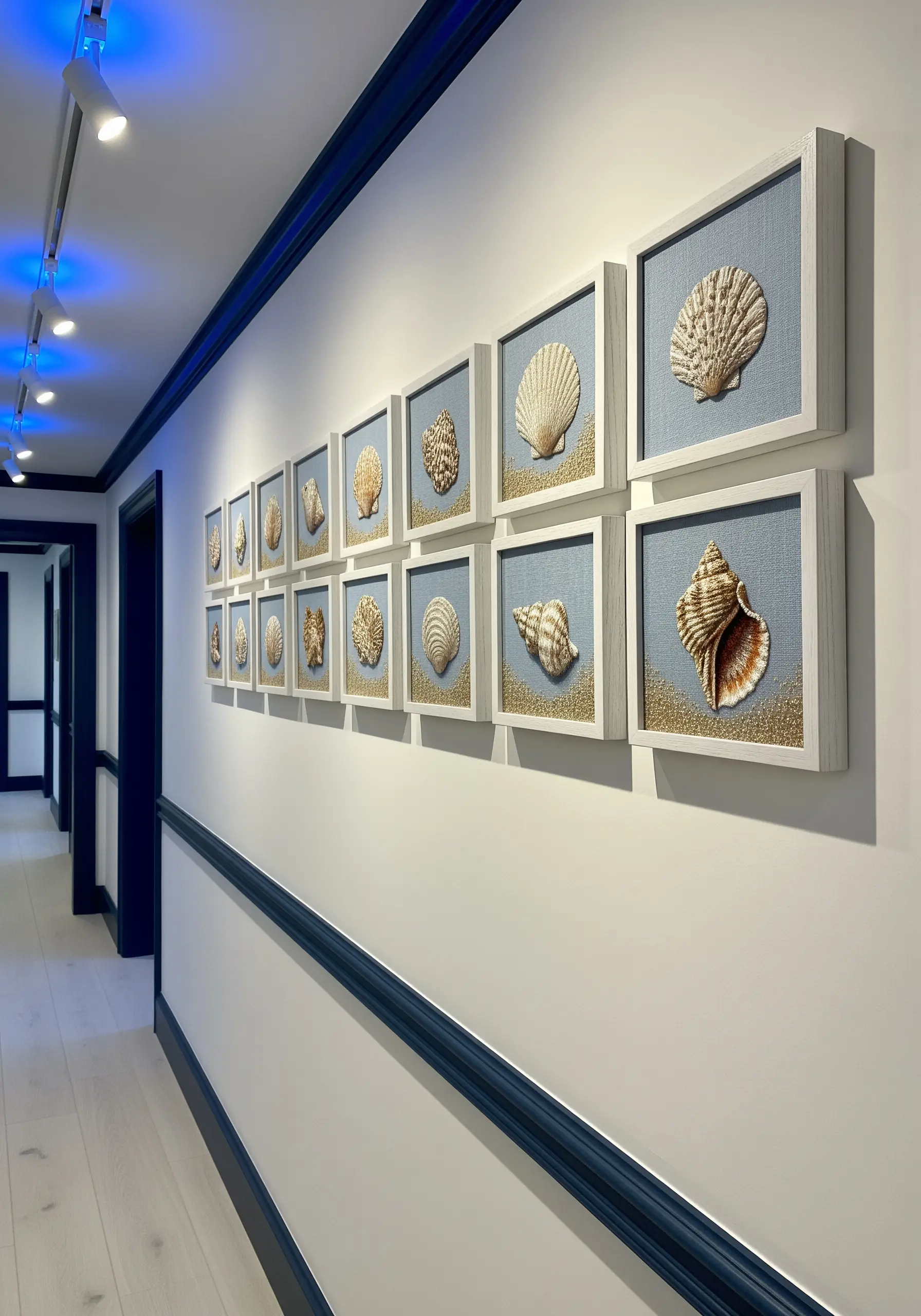
Capture the delicate details of seashells by using thread painting techniques to create dimension and realism.
Incorporate French knots and padded satin stitch to build up the raised ridges and textures of the shells, making them feel like they could be picked right off the canvas.
Add a sprinkle of fine sand or tiny seed beads at the base of each shell before framing to enhance the coastal theme and add a surprising textural element.
Arranging these studies in a clean grid against a cool blue linen creates a serene, museum-like display.
8. Bioluminescent Beauty: Abstract Coral Forms
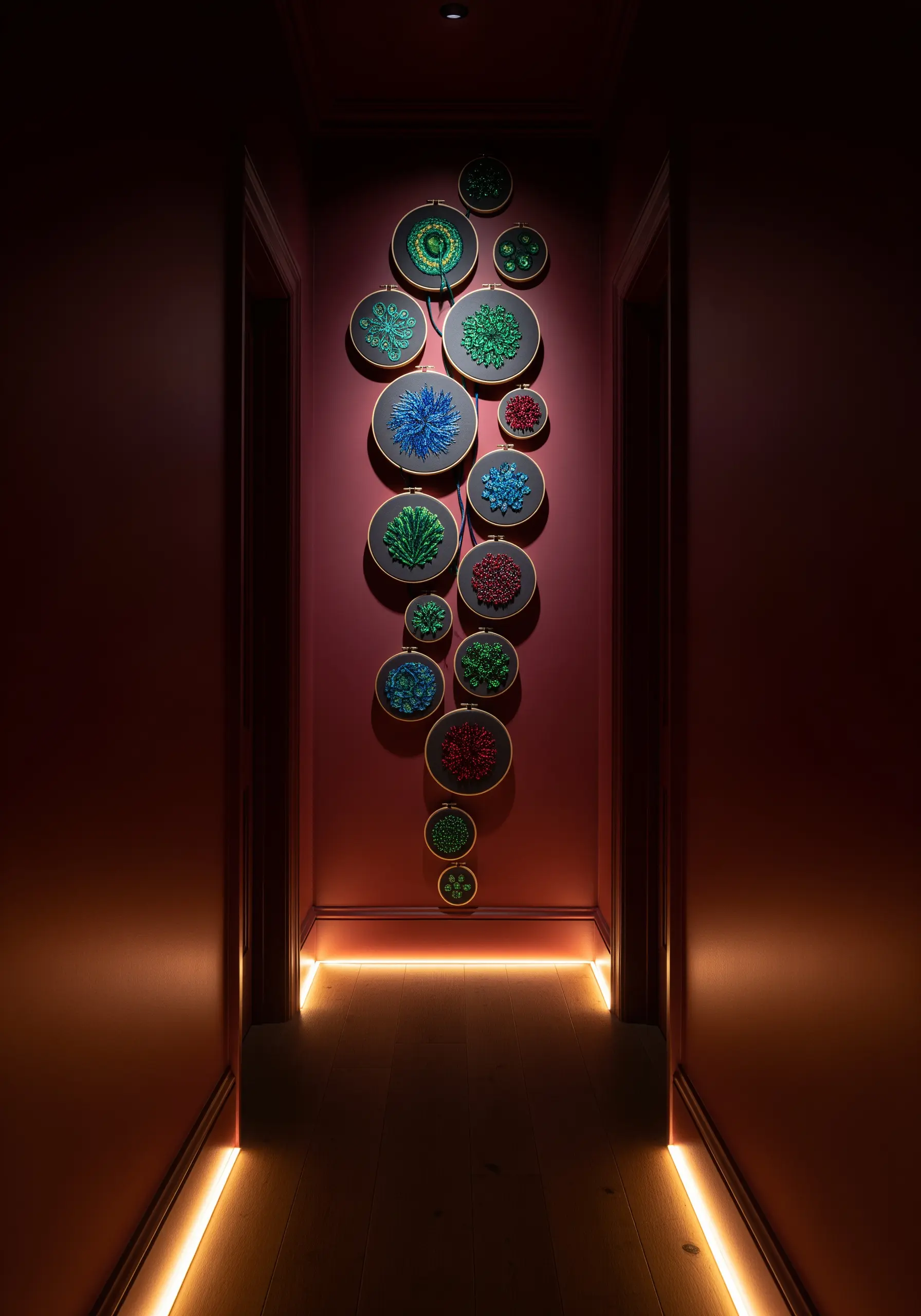
Create a dramatic, moody display by stitching abstract coral and sea-life forms in vibrant, jewel-toned threads on dark fabric.
Use dense clusters of French knots, bullion knots, and couched threads to mimic the complex, organic textures found in coral reefs.
Arrange hoops of varying sizes in a vertical, cascading cluster to draw the eye downward, making it a perfect solution for a narrow wall at the end of a hallway.
Strategic lighting from above or below will make the rich colors pop against the dark background, creating a mesmerizing, deep-sea effect.
9. The Aviary Gallery: Balancing Detail and Negative Space
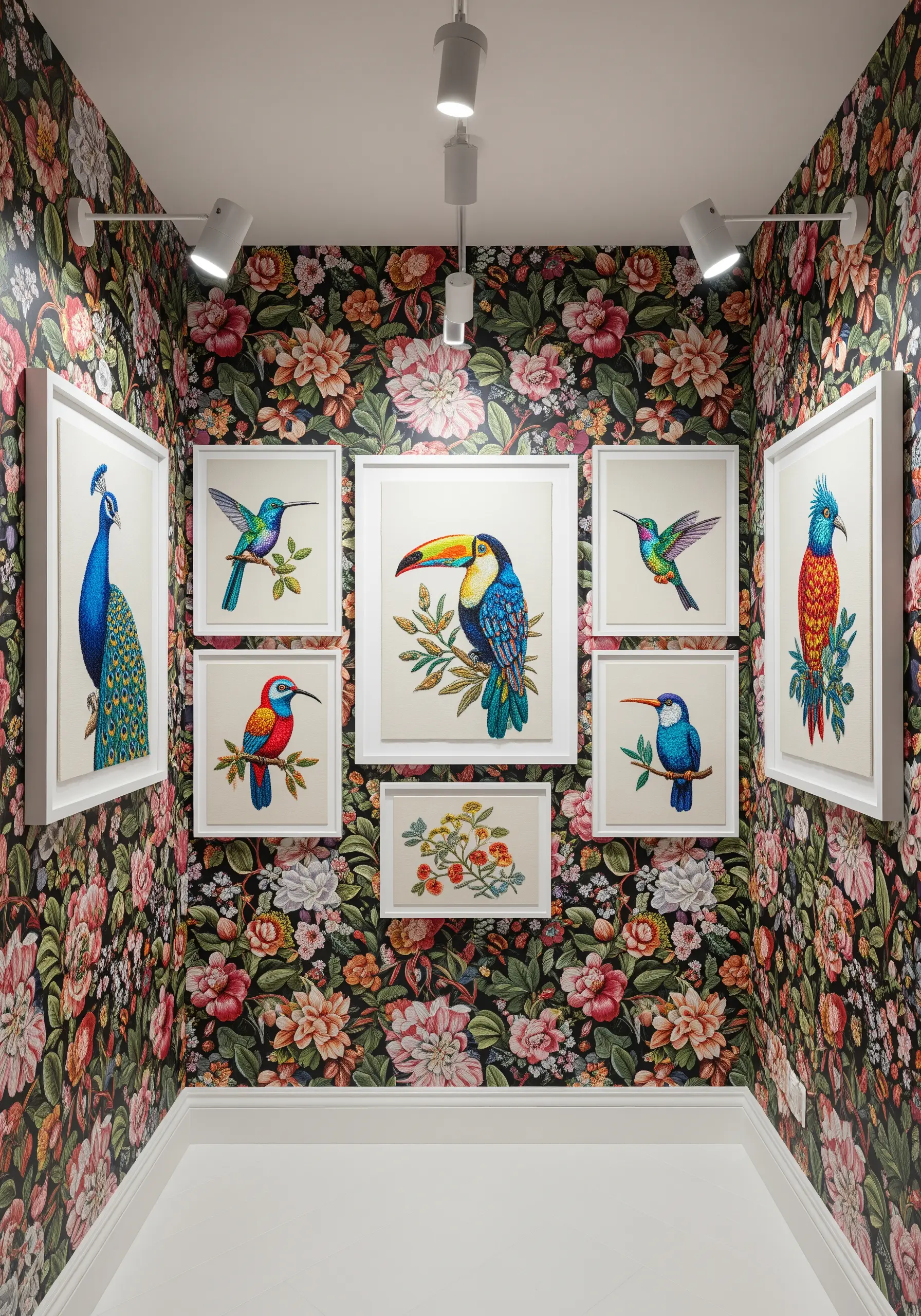
When displaying detailed bird portraits against a busy, patterned wallpaper, give each piece breathing room with clean, minimalist framing.
Use wide, white matting and simple frames to create a visual pause between the intricate stitching and the bold background.
This technique prevents the artwork and the wall from competing, allowing the vibrant colors and fine threadwork of each bird to stand out as the clear focal point.
This creates a sophisticated, immersive experience where the art and decor are in perfect dialogue.
10. Industrial Vistas: Architectural Line Work
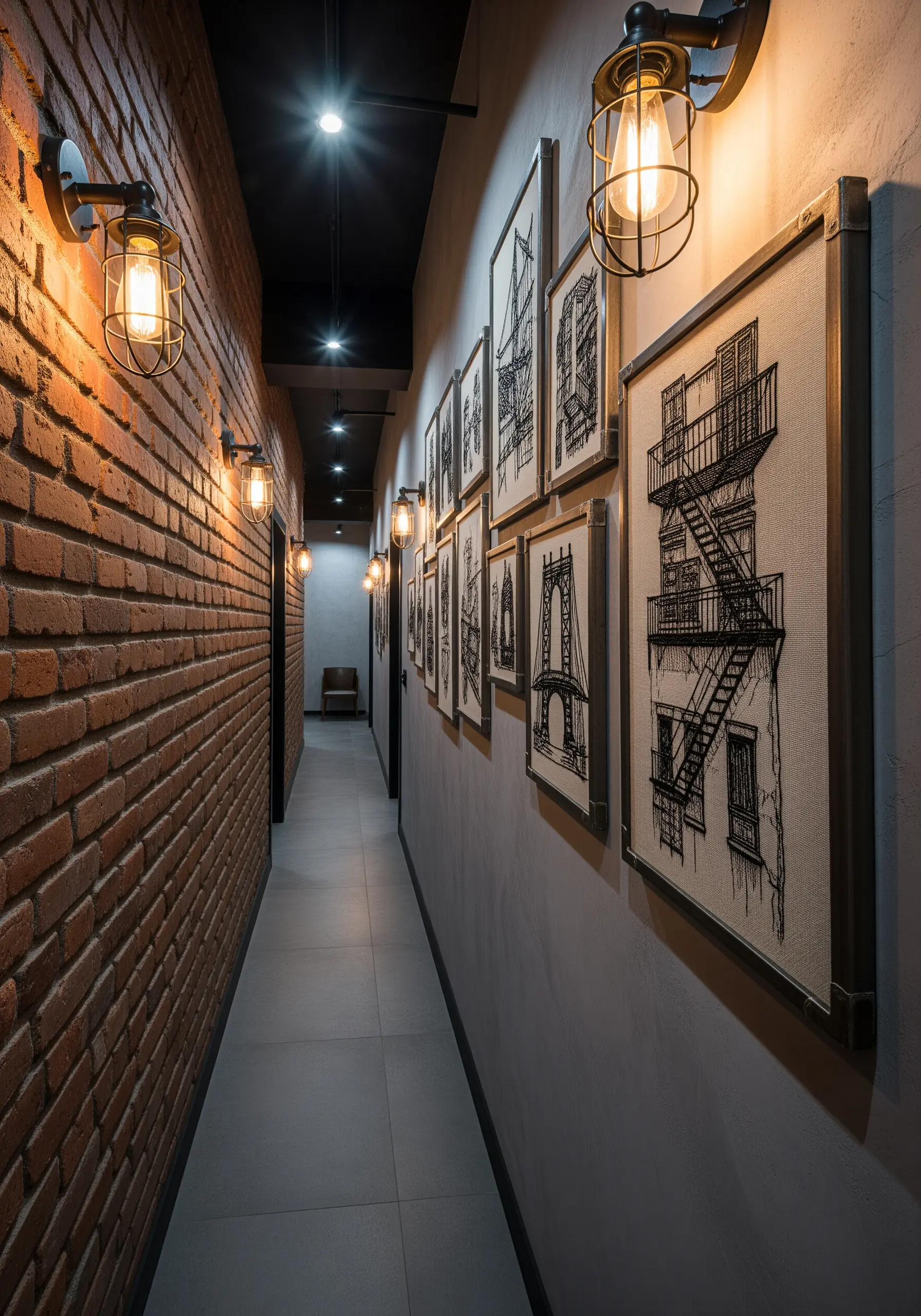
Translate the stark beauty of urban landscapes into embroidery by focusing on clean, architectural line work.
Use a single color of thread—like black on a light, textured fabric—to mimic the feel of an architectural sketch or blueprint.
Vary your stitch types to create texture: backstitch for solid lines, seed stitches for a stippled effect on concrete, and running stitches for distant details.
The contrast between the soft medium of thread and the hard subject of industrial architecture creates a compelling visual tension.
11. Monochrome Florals: The Power of Shading
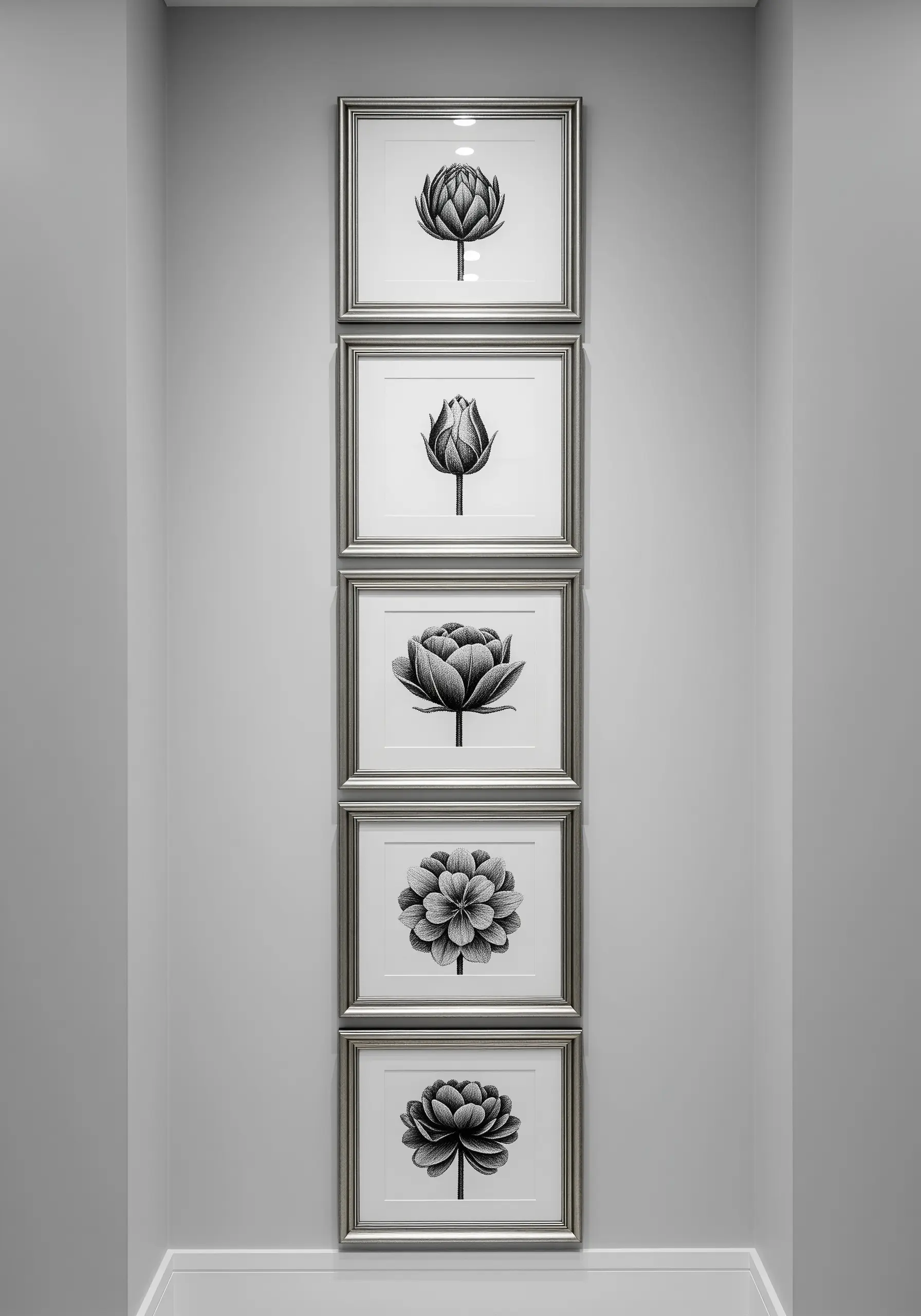
Explore the dramatic potential of a monochrome palette by creating botanical studies using only black, white, and grey threads.
Achieve depth and realism not with color, but with shading. Use long and short stitch to create smooth gradients, and vary the number of strands to control the density of the shadows.
A single strand of black can create a delicate shadow, while three or four strands will create deep, velvety darks.
This disciplined approach transforms simple floral subjects into sophisticated, high-contrast art pieces.
12. The Ancestral Hall: Repetition and Symmetry
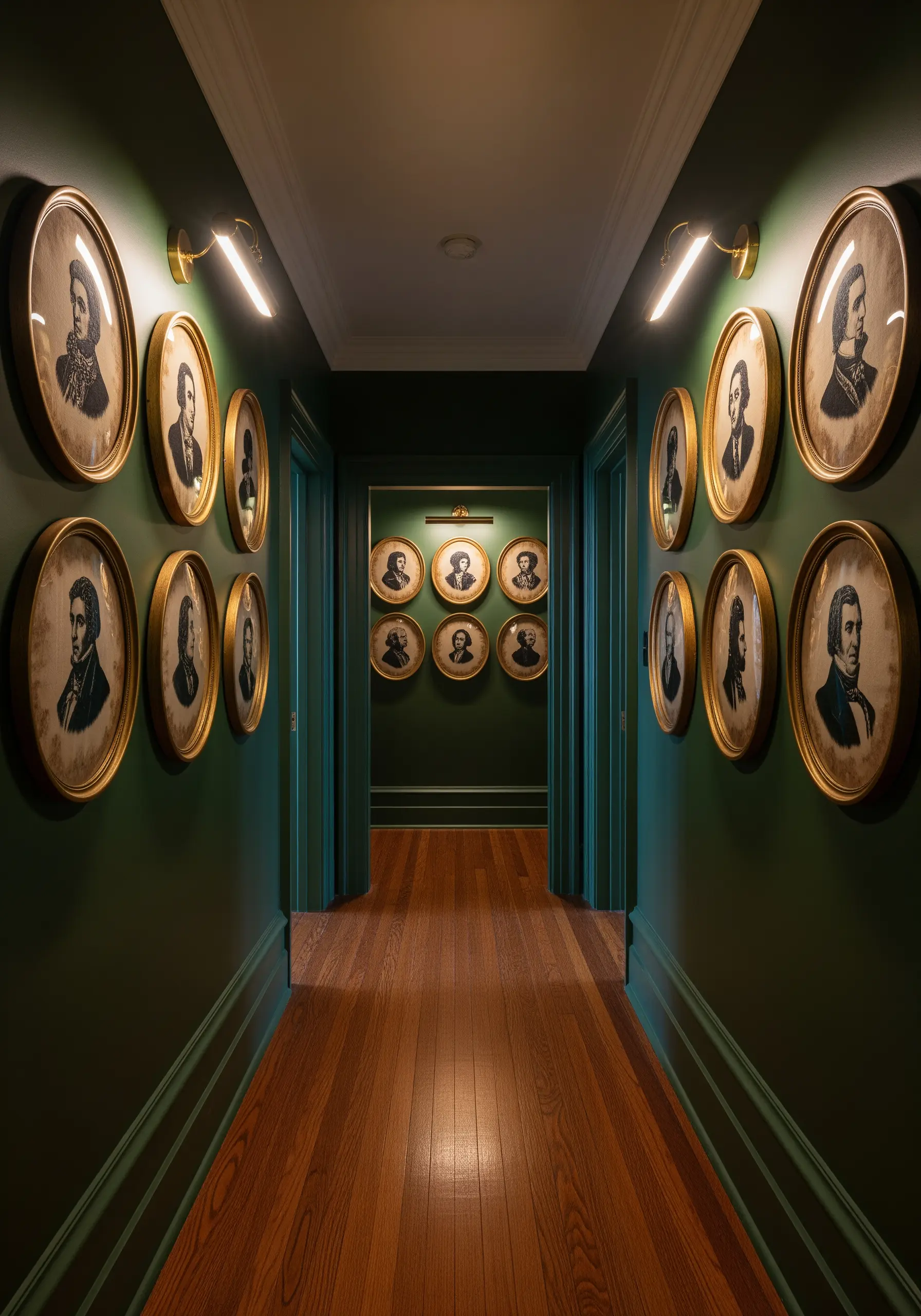
Create a formal, historic feel in a hallway by arranging classic cameo portraits in a symmetrical layout.
Stitch your portraits in a simple black-on-cream palette to evoke the look of vintage silhouettes or etchings.
Using identical oval frames and arranging them in mirrored patterns on opposite walls creates a powerful sense of order, balance, and grandeur.
This classic design strategy makes a long hallway feel intentional and rhythmically paced, drawing you through the space.
13. Neon Pop: Playful Portraits with Iridescent Frames
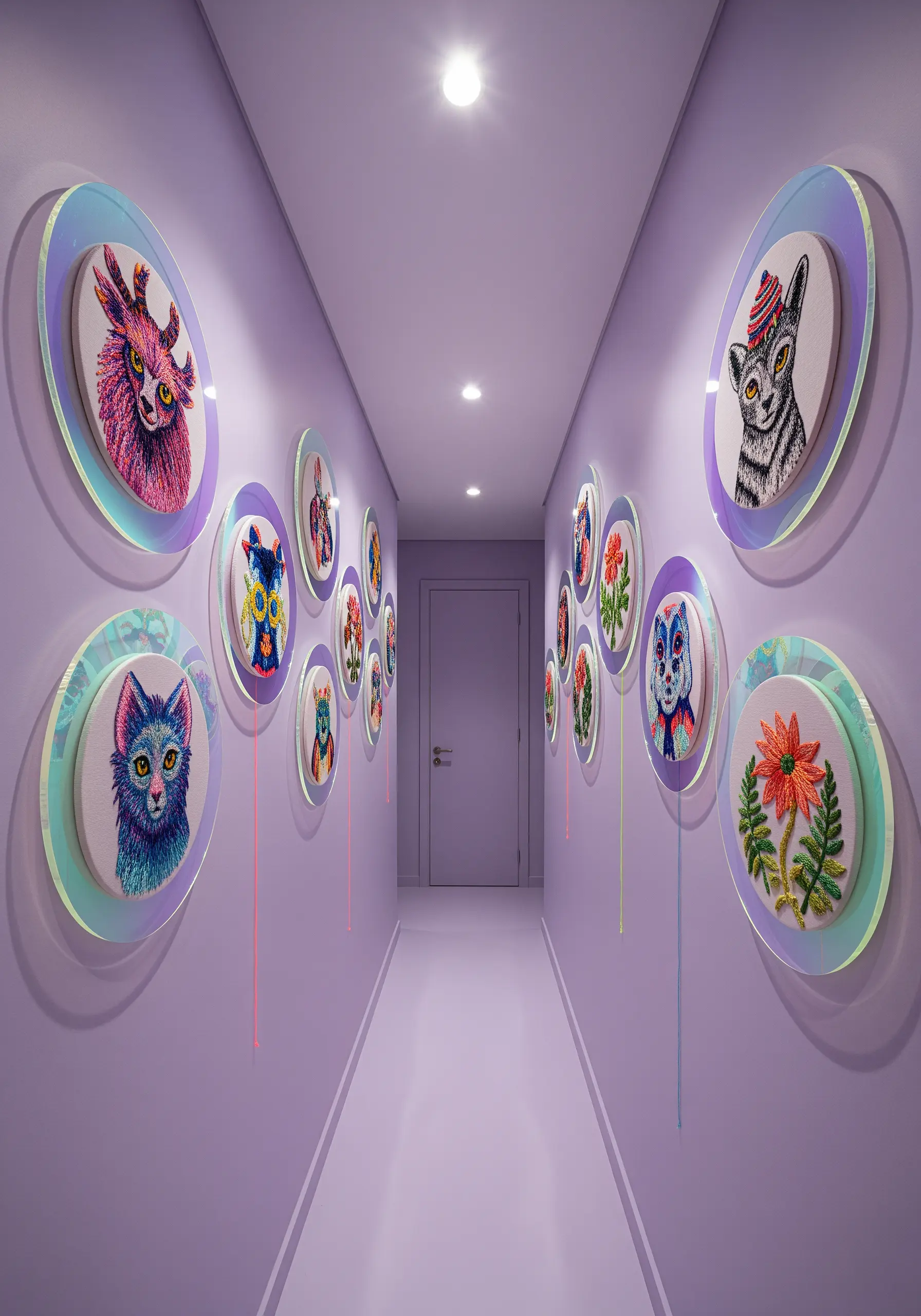
Energize a simple hallway with whimsical, brightly colored animal portraits framed with a modern twist.
Back your finished embroidery hoops with iridescent acrylic discs that extend beyond the hoop itself. This adds a layer of unexpected color and light, catching the eye as you walk past.
Use vibrant, almost-neon threads for your subjects to match the playful energy of the frames.
Let a few strands of colorful thread hang loose from the bottom of some hoops for a touch of deconstructed, carefree charm.
14. Tactile Tree Bark: A Study in Texture
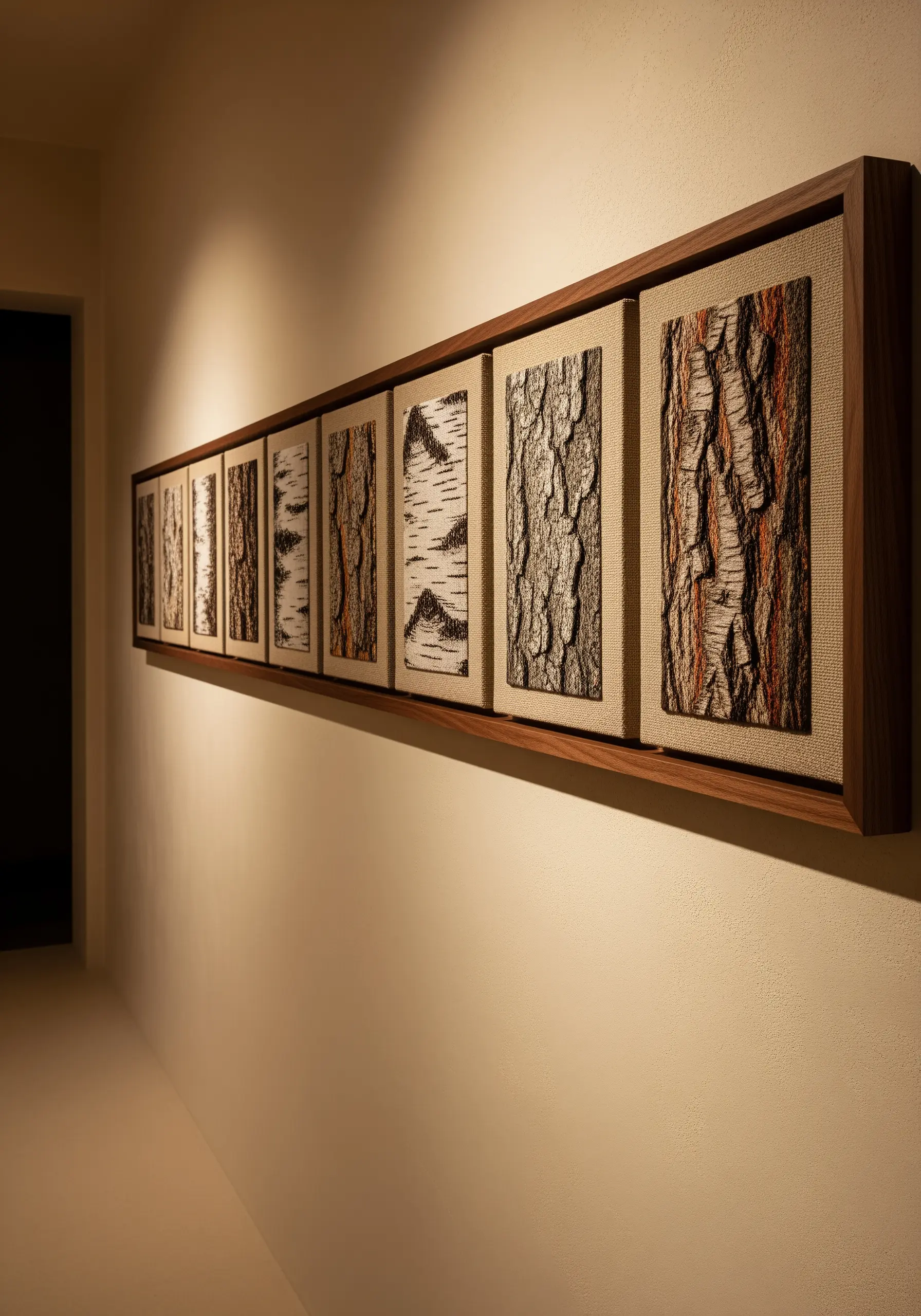
Move beyond color and focus entirely on texture by creating a series of abstract tree bark studies.
Use a combination of straight stitches, French knots, and couching with thicker yarns to build up the rough, layered surface of bark.
Work on narrow, rectangular panels of fabric and arrange them in a long, horizontal frame to create a panoramic effect.
This organic texture embroidery design invites viewers to look closer and appreciate the intricate, tactile details, making it a sophisticated and meditative collection.
15. Mirrored Glamour: Reflecting Embellished Portraits
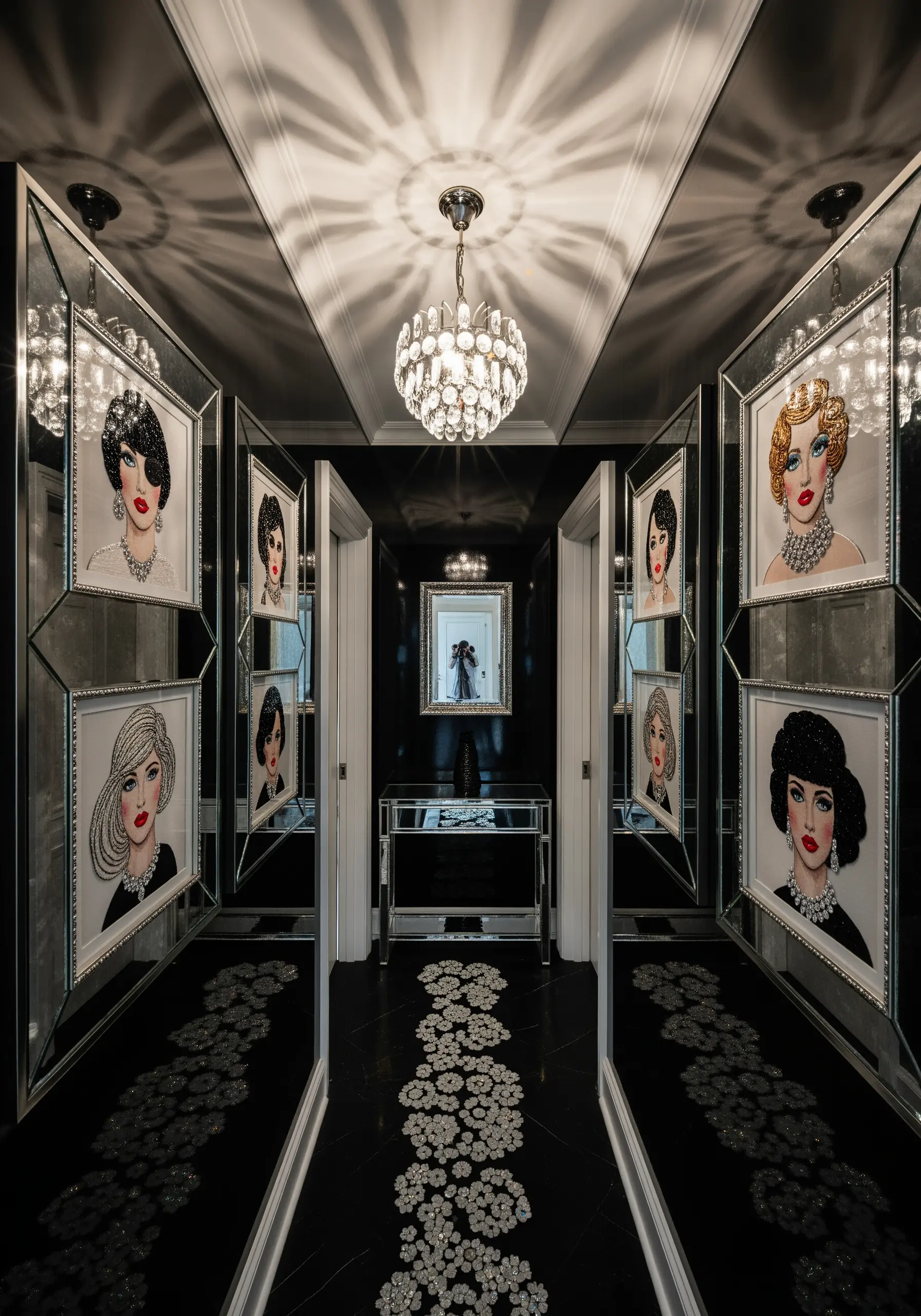
Amplify the luxury of your embroidery in a narrow space by using mirrors to create an infinity effect.
Create glamorous, beaded portraits reminiscent of old Hollywood, using Swarovski crystals or high-quality glass beads that sparkle under the light.
Instead of standard frames, mount your pieces on mirrored panels or within mirrored shadow boxes.
The reflections will make the hallway feel wider and more dramatic, while doubling the visual impact of your intricate, light-catching beadwork.
16. Zen Simplicity: Stitching Natural Elements
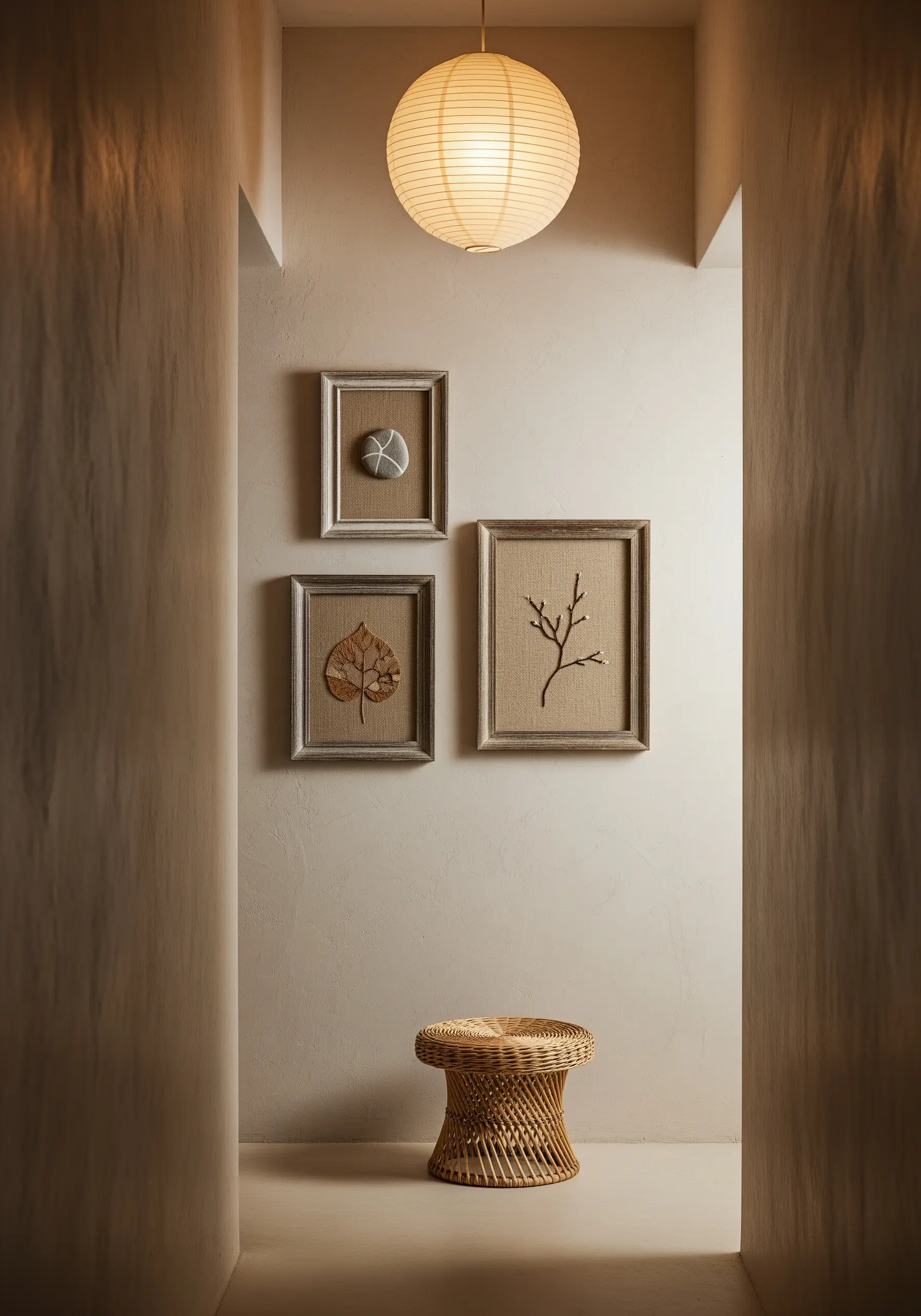
Cultivate a sense of calm and tranquility by creating a small grouping of minimalist nature-inspired pieces.
Focus on simple, organic forms: a single leaf, a smooth stone, a bare branch. Use earth-tone threads on a textured, natural fabric like burlap or linen.
For the stone, use tightly packed French knots in varying shades of grey to create a rounded, dimensional shape.
The beauty of this approach lies in its restraint, celebrating the quiet elegance of the natural world.
17. The Scholar’s Hallway: Classic Monograms and Motifs
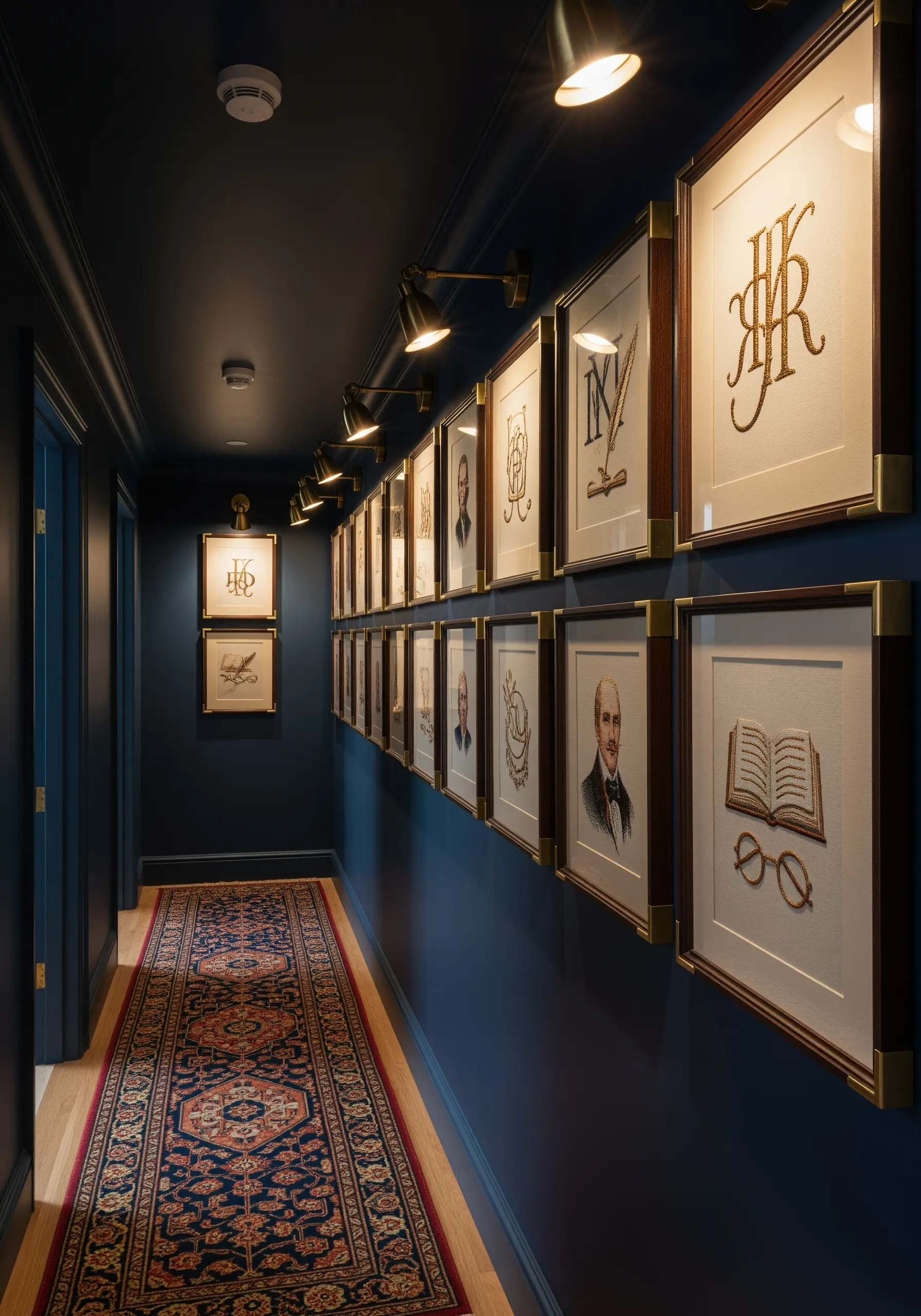
Design a sophisticated, library-inspired hallway by creating a series of embroideries featuring classic monograms, portraits, and academic symbols.
Use a single ply of gold or cream-colored thread on a neutral background for an elegant, understated look.
Vary the subject matter—alternating between intricate initials, simple portraits, and symbolic objects like books or glasses—to keep the long series engaging.
Consistent framing and meticulous track lighting transform the collection into a distinguished and personal narrative.
18. Futuristic Portraits: The Pixel-Stitch Effect
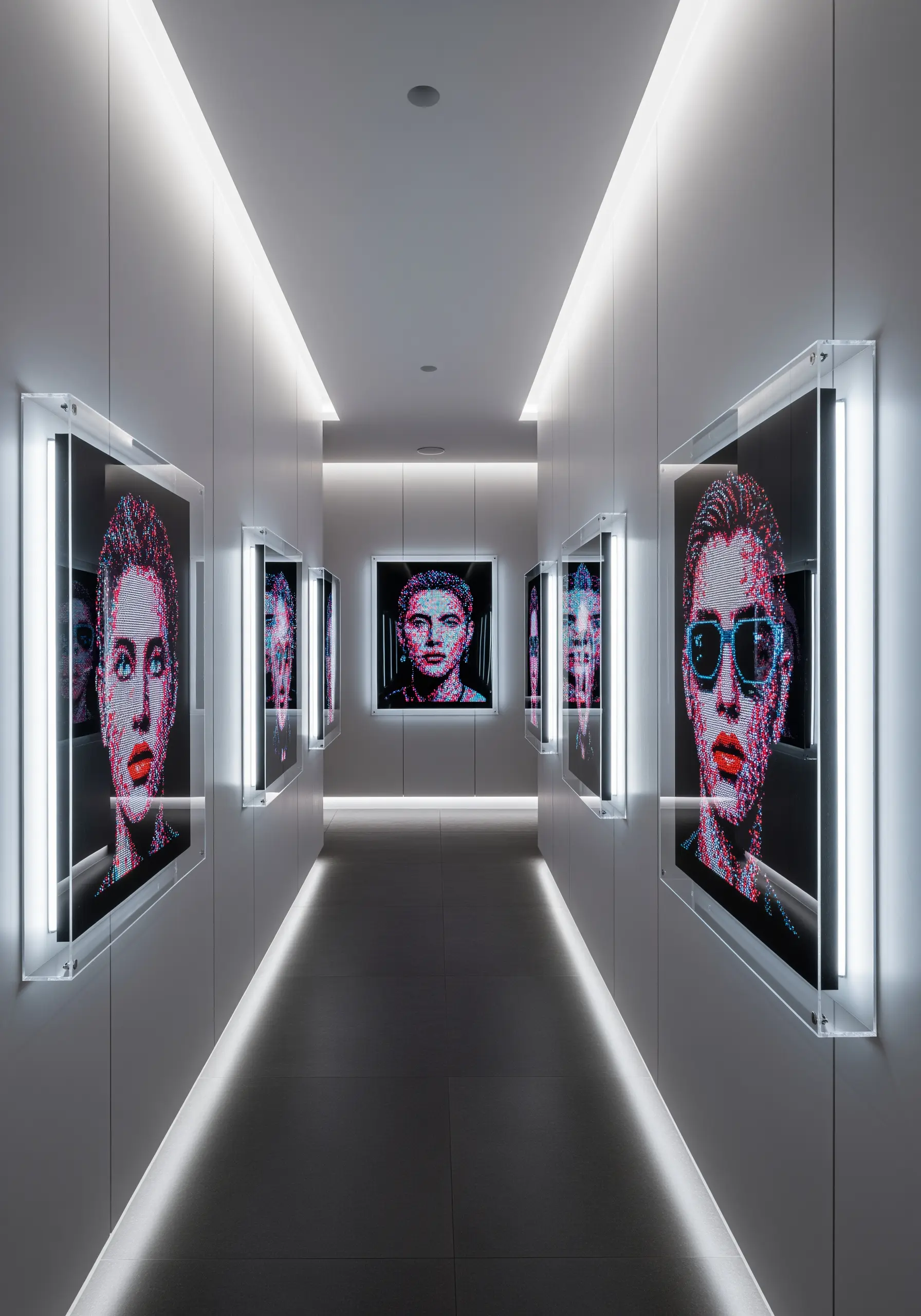
Create a cutting-edge, futuristic gallery with portraits that appear pixelated or digitized.
Achieve this effect by using dense, tiny stitches—like single-strand seed stitches or even cross-stitches—in a grid format, using vibrant, contrasting colors.
Mount the finished pieces in sleek, acrylic frames with integrated LED backlighting to enhance the digital, glowing aesthetic.
This technique blends traditional handcraft with a modern, technological feel for a truly unique and high-impact result.
19. Mid-Century Modern Charm: Stylized Character Portraits
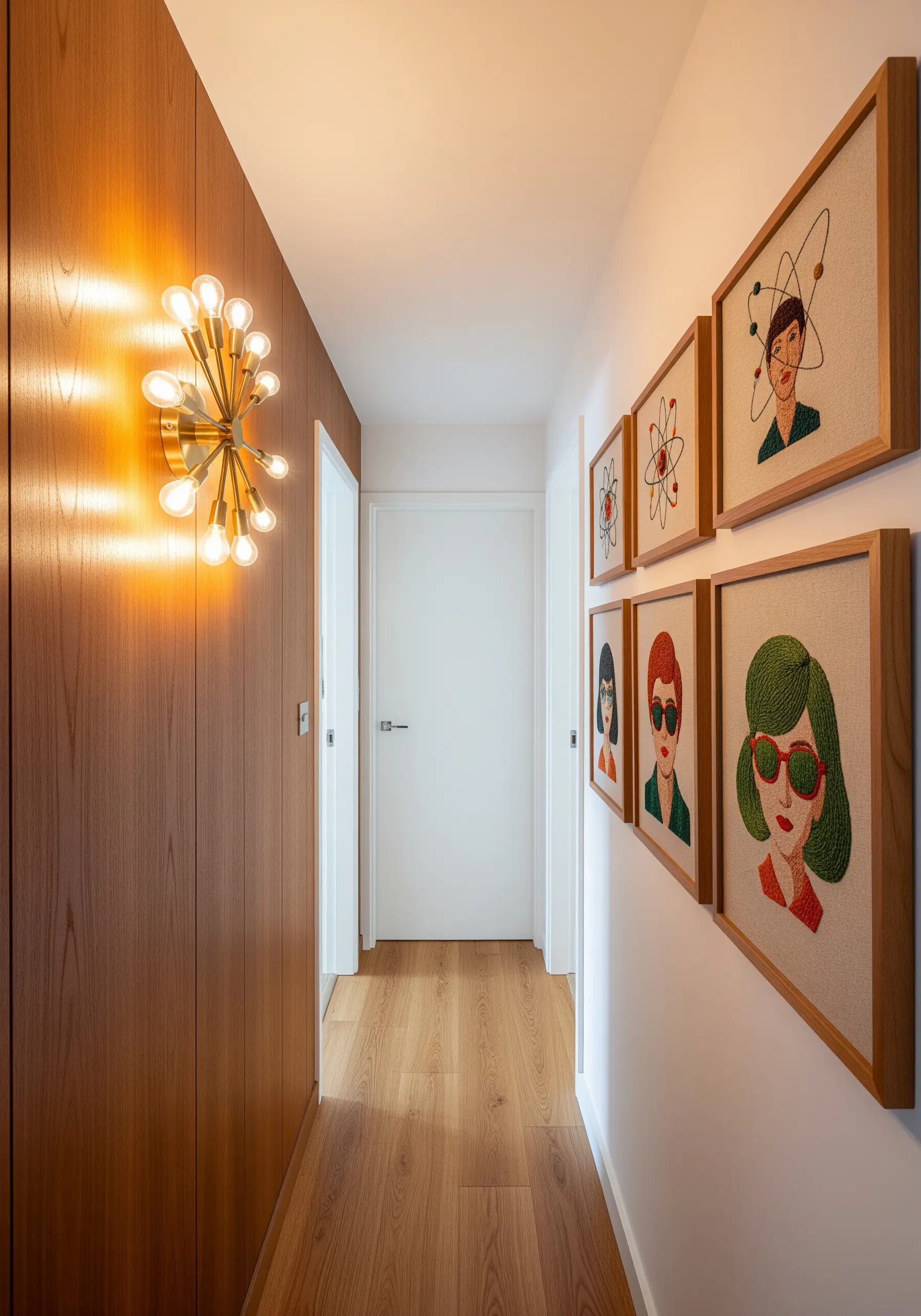
Capture the playful spirit of mid-century modern design with a series of stylized, graphic portraits.
Use a limited, retro-inspired color palette—think avocado green, burnt orange, and teal—and fill in shapes with clean satin stitch for a flat, cartoon-like effect.
Focus on bold, simple shapes for hair and clothing, and use minimal backstitch for facial features.
Framing them in simple, warm wood frames against a clean white wall completes the authentic mid-century aesthetic.
20. The Embroidered Library: A Tribute to Books
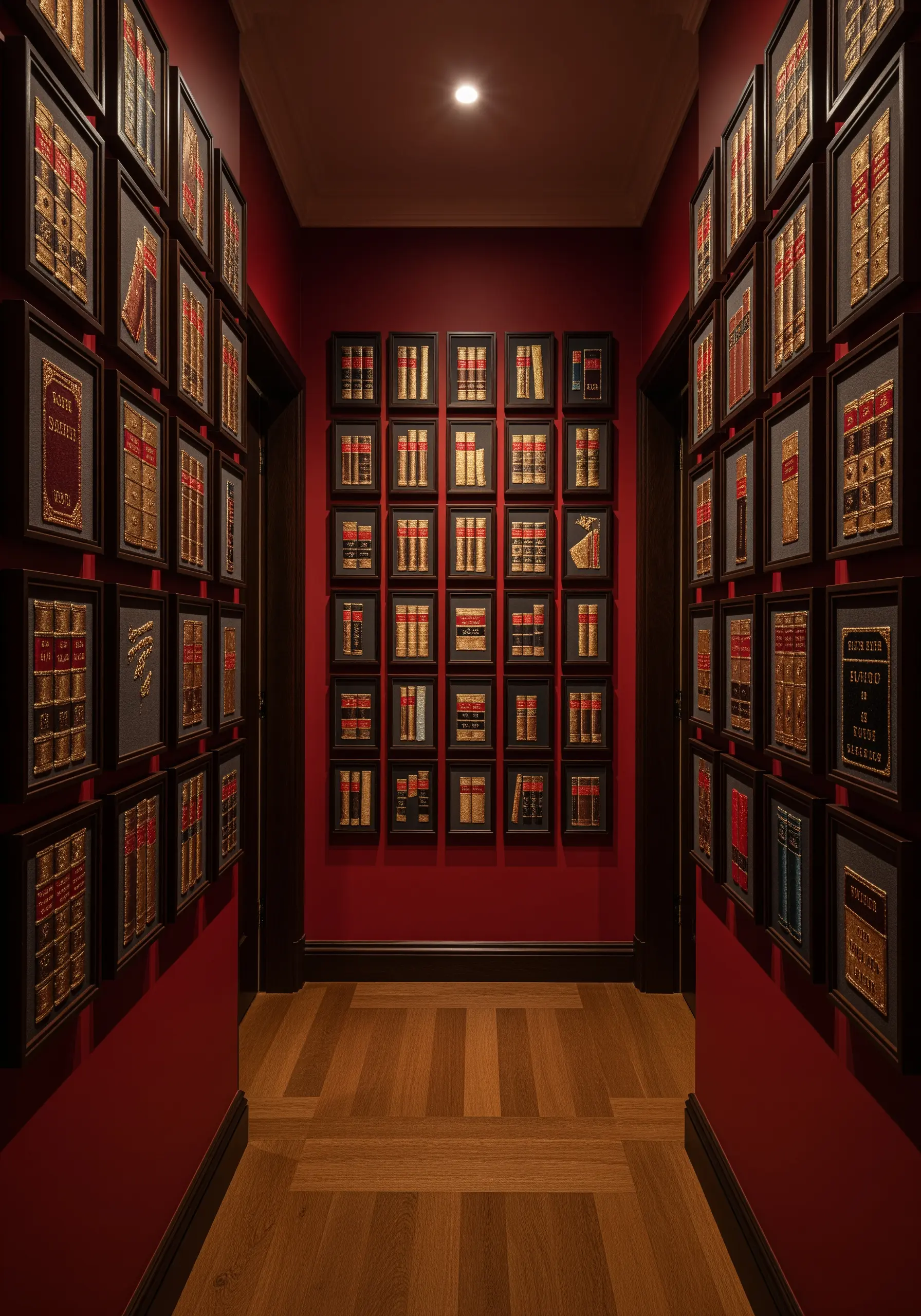
Create the illusion of a grand, floor-to-ceiling library in a narrow hallway with a meticulously arranged grid of embroidered books.
Stitch the spines of classic books, using gold metallic thread for the titles and decorative elements to mimic traditional binding.
Vary the colors and heights of the books slightly to create a realistic, well-loved library feel.
The sheer repetition and detail of this concept turn a simple passage into an immersive, literary-themed destination.
21. Botanical Vibrancy: Bold Leaves on Bright Walls
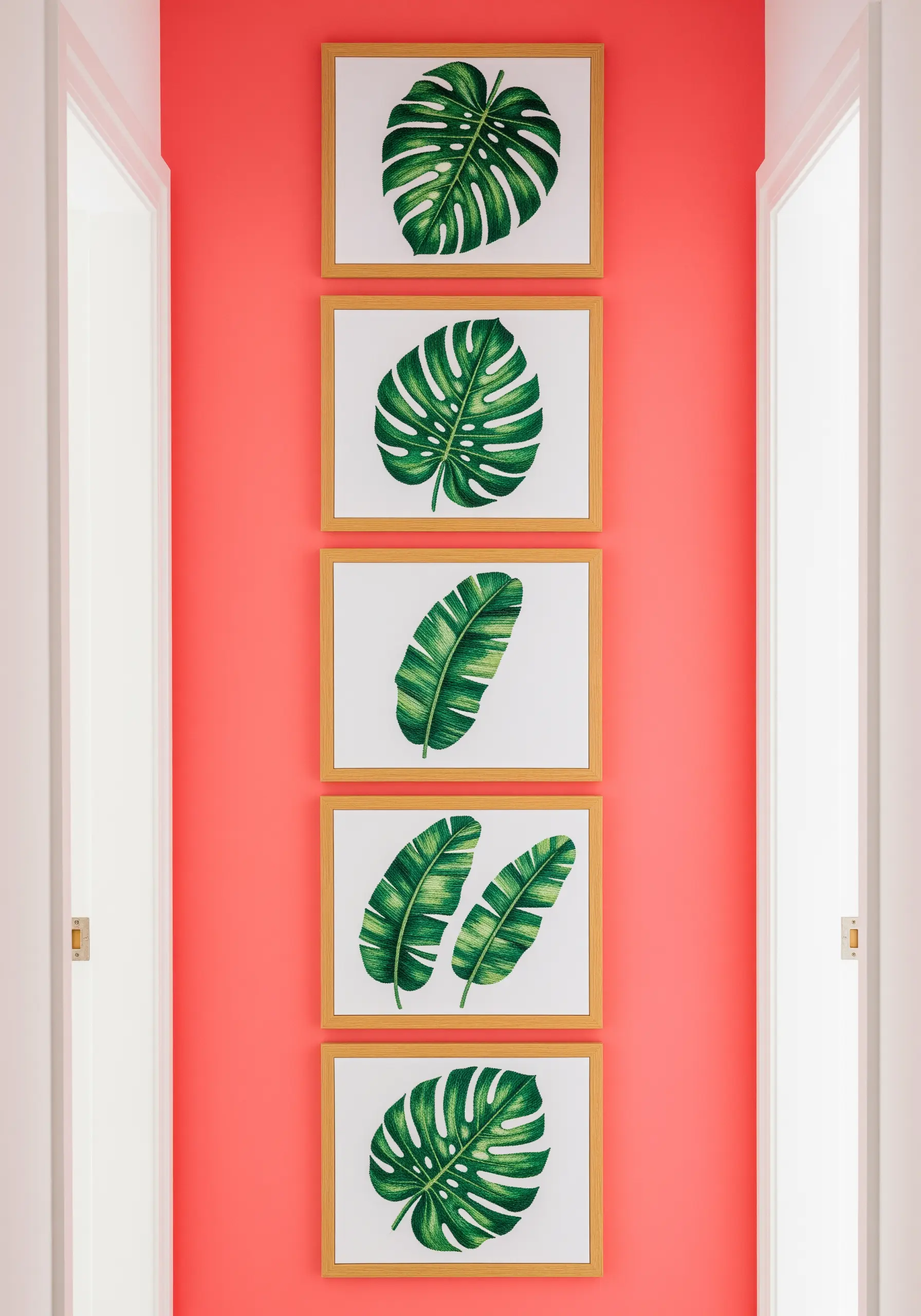
Make your botanical embroidery pop by displaying it against a brightly colored, contrasting wall.
When stitching lush leaves like Monstera or banana leaves, use thread painting with multiple shades of green to create realistic depth and highlights on the veins.
The intense coral or pink of the wall acts as a dynamic backdrop that makes the greens appear even more vibrant and alive.
This bold design choice turns a simple series of leaf embroideries into an energizing, tropical statement.
22. Haute Couture in Thread: A Fashion Illustration Gallery
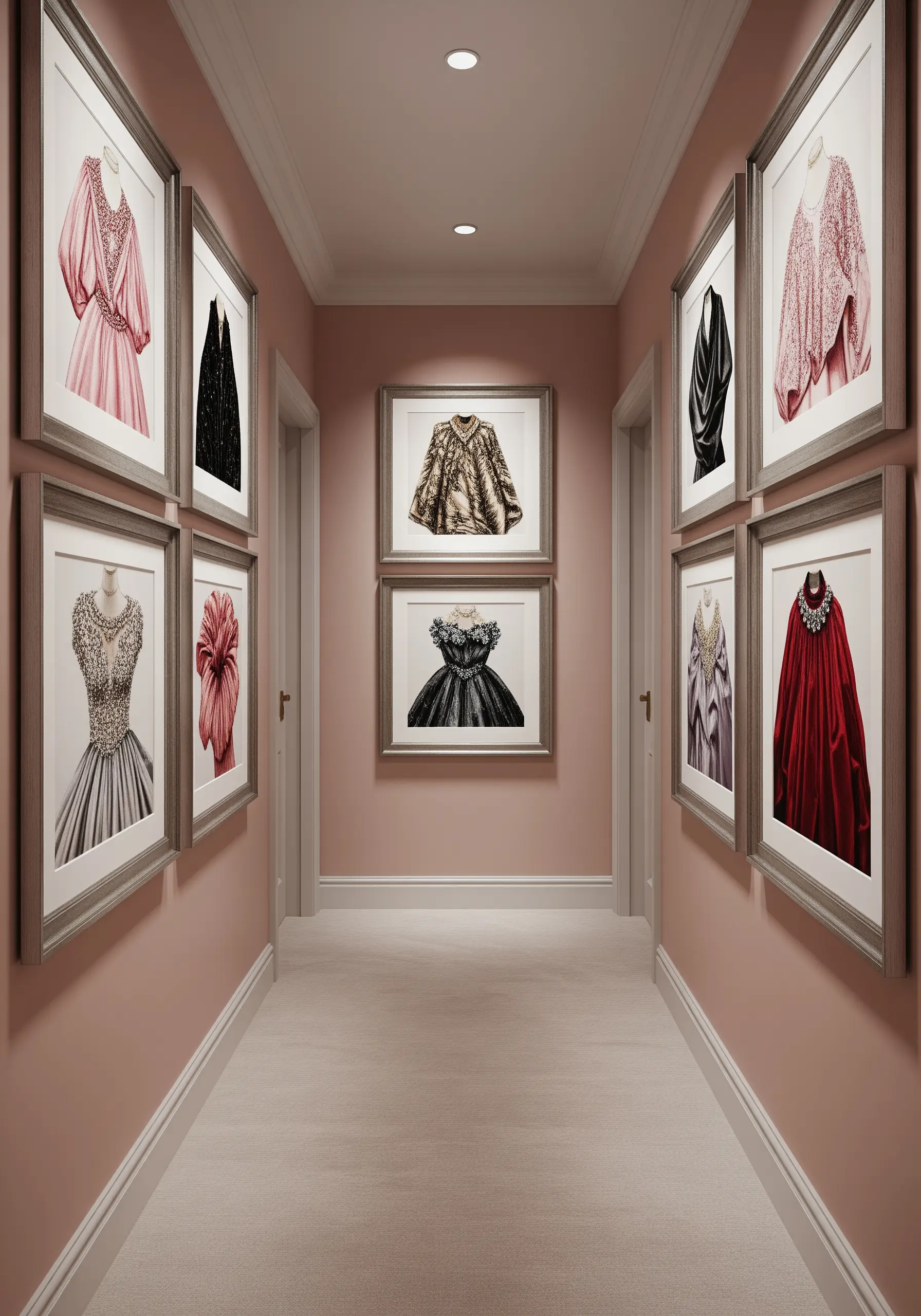
Translate the elegance of fashion illustration into thread by creating a gallery of iconic garments.
For sequined or beaded dresses, use a dense scattering of French knots with a single silver metallic thread woven through to create sparkle.
To capture the flow of silk or satin, use long, directional satin stitches that follow the drape of the fabric, letting the sheen of the floss do the work.
This sophisticated theme is perfect for a chic, personal space, celebrating the artistry of both fashion and embroidery.
23. Desert Motifs: Layering Color and Texture
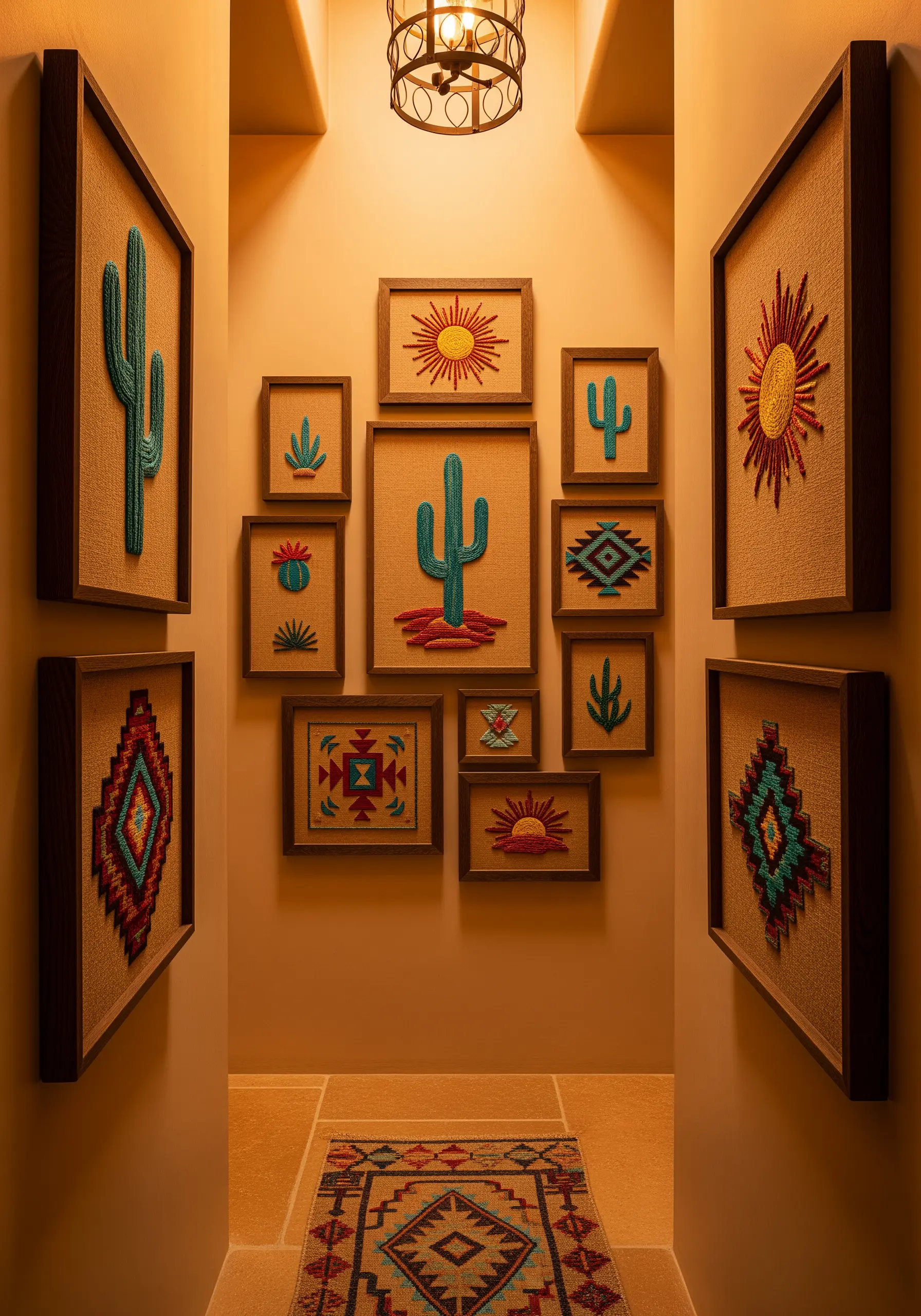
Evoke the warmth of a desert landscape with a collection of Southwestern-inspired motifs.
Use thicker threads or yarn for the main elements, like cacti and suns, and couch them onto the fabric for a bold, raised texture that stands out.
Incorporate geometric patterns using contrasting colors like turquoise, terracotta, and sand, filling the shapes with satin stitch for a clean, graphic look.
Stitching on a coarse, burlap-like fabric enhances the rustic, earthy feel of the collection.
24. Lunar Phases: A Celestial Installation
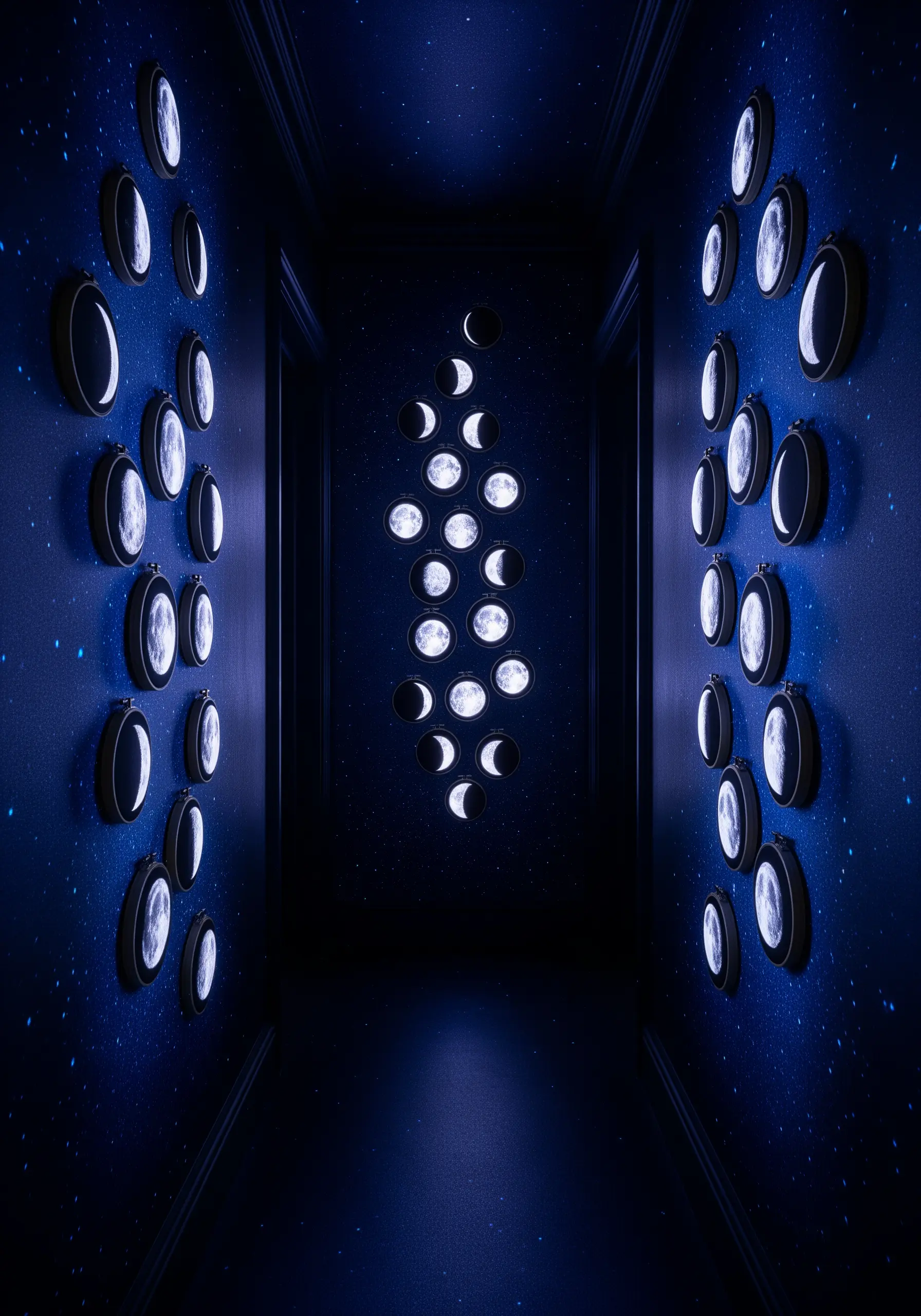
Create a breathtaking celestial installation by embroidering the phases of the moon and arranging them in a dynamic composition.
Use white and light grey threads on black fabric, employing tight satin stitches for the illuminated parts of the moon to create a smooth, glowing surface.
Arrange the hoops on a dark blue wall painted with a subtle sprinkle of white dots to mimic a starry night sky.
This immersive concept turns a simple hallway into a magical, cosmic journey.
25. Pop Art Portraits: Bold Color Blocking with Yarn
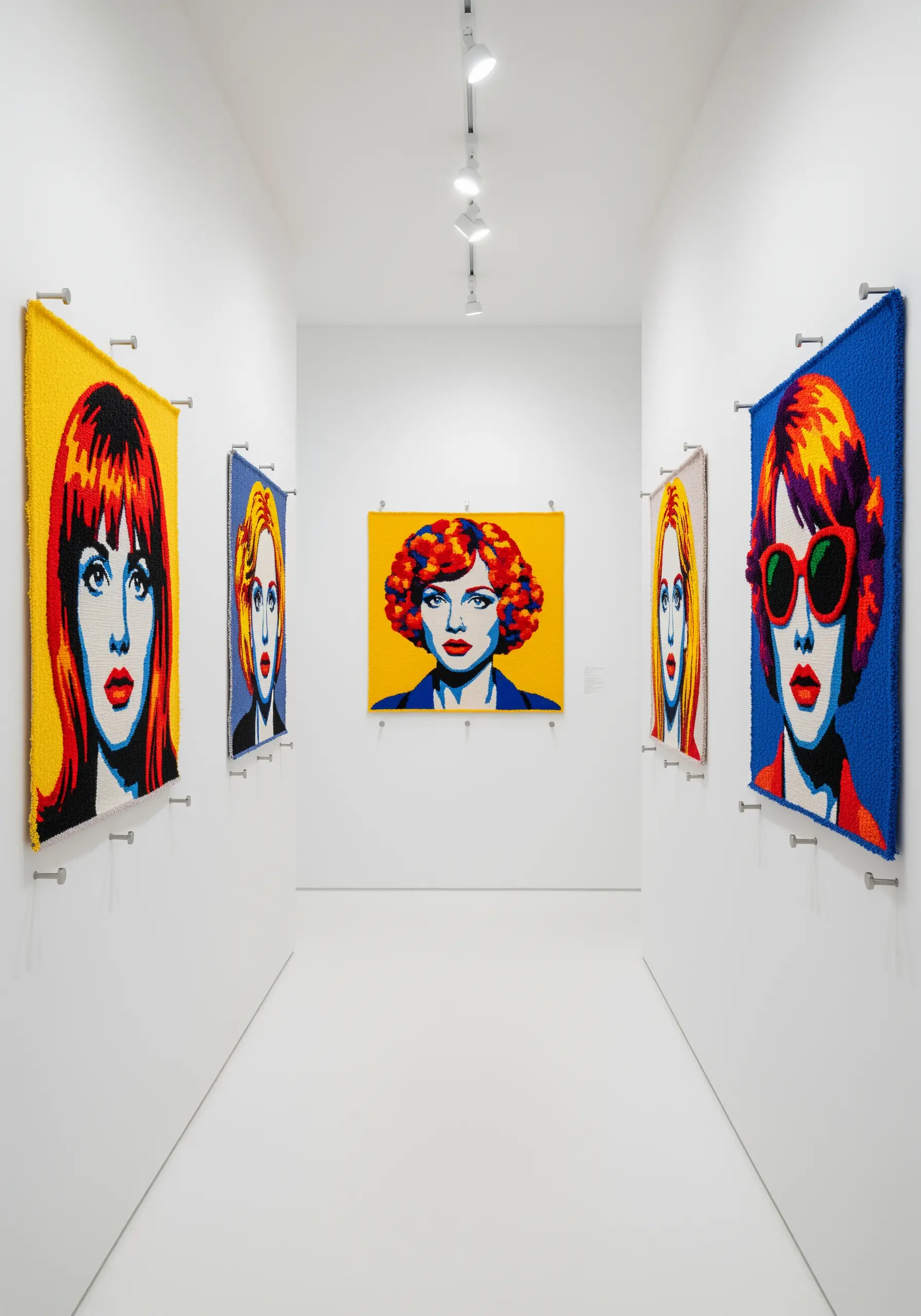
Channel the spirit of Andy Warhol by creating high-impact portraits with bold, graphic color blocking.
Instead of floss, use tapestry wool or fine yarn and fill large areas with chain stitch or punch needle techniques to achieve a dense, textured, and flat color field.
Don’t be afraid of unconventional color combinations—hot pink hair, turquoise shadows—to capture the authentic pop art aesthetic.
Mount the finished canvases without frames, using simple standoffs to let the raw, textile edges become part of the modern artwork.
26. The Cartographer’s Passage: Vintage Map Motifs
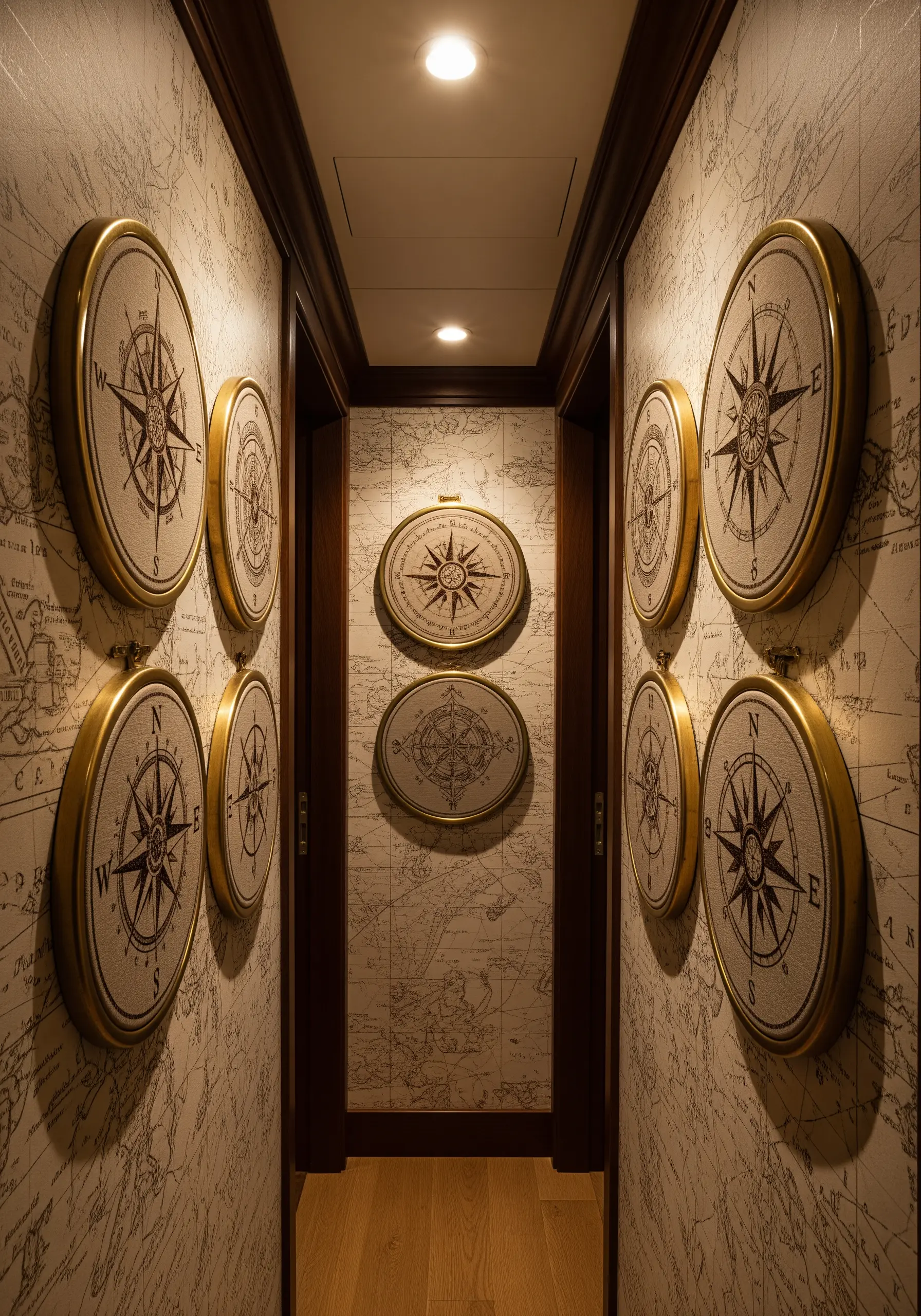
Give your hallway a sense of adventure and history with a collection of embroidered compasses and map details.
Use a fine-tipped, heat-erasable pen to transfer intricate compass designs onto your fabric. Then, use a single strand of dark brown or black thread and a sharp backstitch for crisp, precise lines.
Mount the finished pieces in round, brass-finished frames that resemble antique navigation tools.
Displaying them against a wallpaper of old world maps completes the immersive, cartographic theme.
27. The Stitch Sampler Wall: A Meditation in Texture
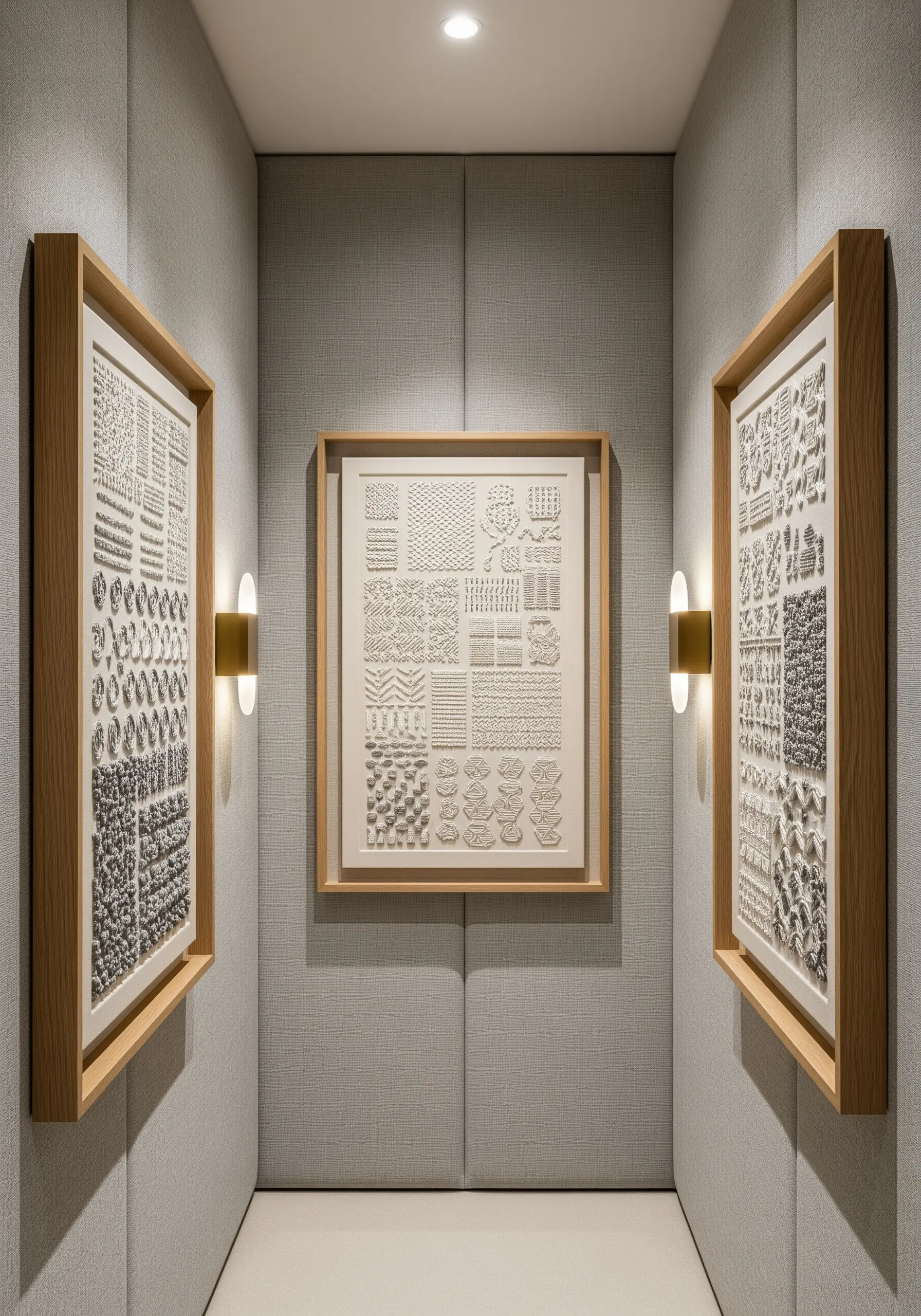
Elevate the humble stitch sampler into a sophisticated work of art by focusing on monochrome texture.
Work on a single piece of fabric or a series of panels, using only white or off-white thread on a matching background.
Fill geometric blocks with different textural stitches: French knots, bullion knots, woven wheels, padded satin stitch, and more.
The absence of color forces the viewer to focus on the intricate interplay of light and shadow across the varied surfaces, creating a piece that is both minimalist and incredibly complex.
28. The Entomologist’s Dream: A Cascade of Specimens
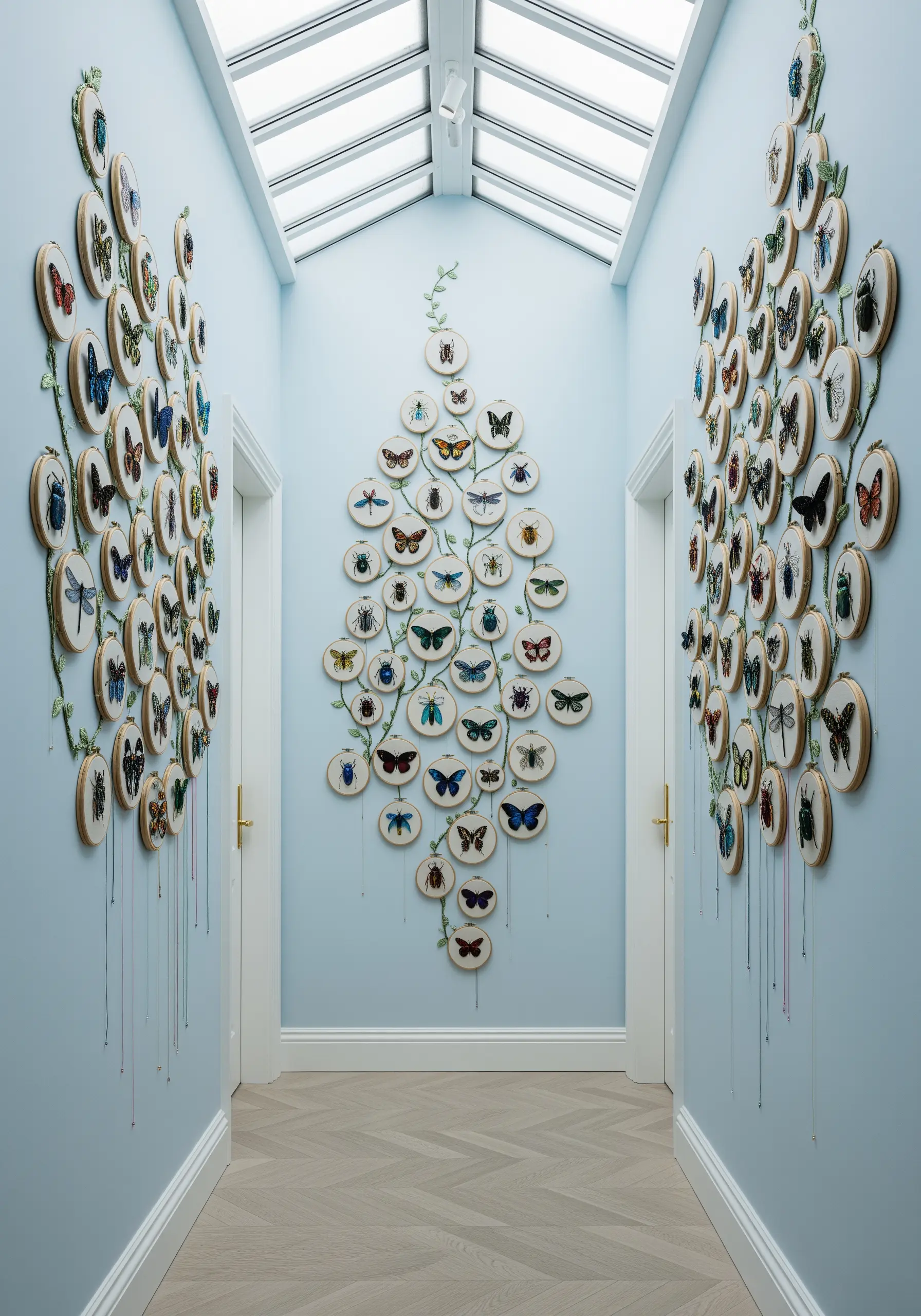
Create a stunning, dynamic installation that mimics a collection of butterflies and insects taking flight.
Embroider a variety of insects in small, individual hoops, focusing on realistic details with fine, single-thread work for antennae and legs.
Arrange the hoops in a flowing, organic shape that sweeps up the wall, connecting some with stitched green vines for a natural touch.
Letting threads trail from the bottom of the installation adds a sense of movement and whimsical imperfection, as if the collection is coming to life.
29. Art Nouveau Elegance: Curvilinear Forms
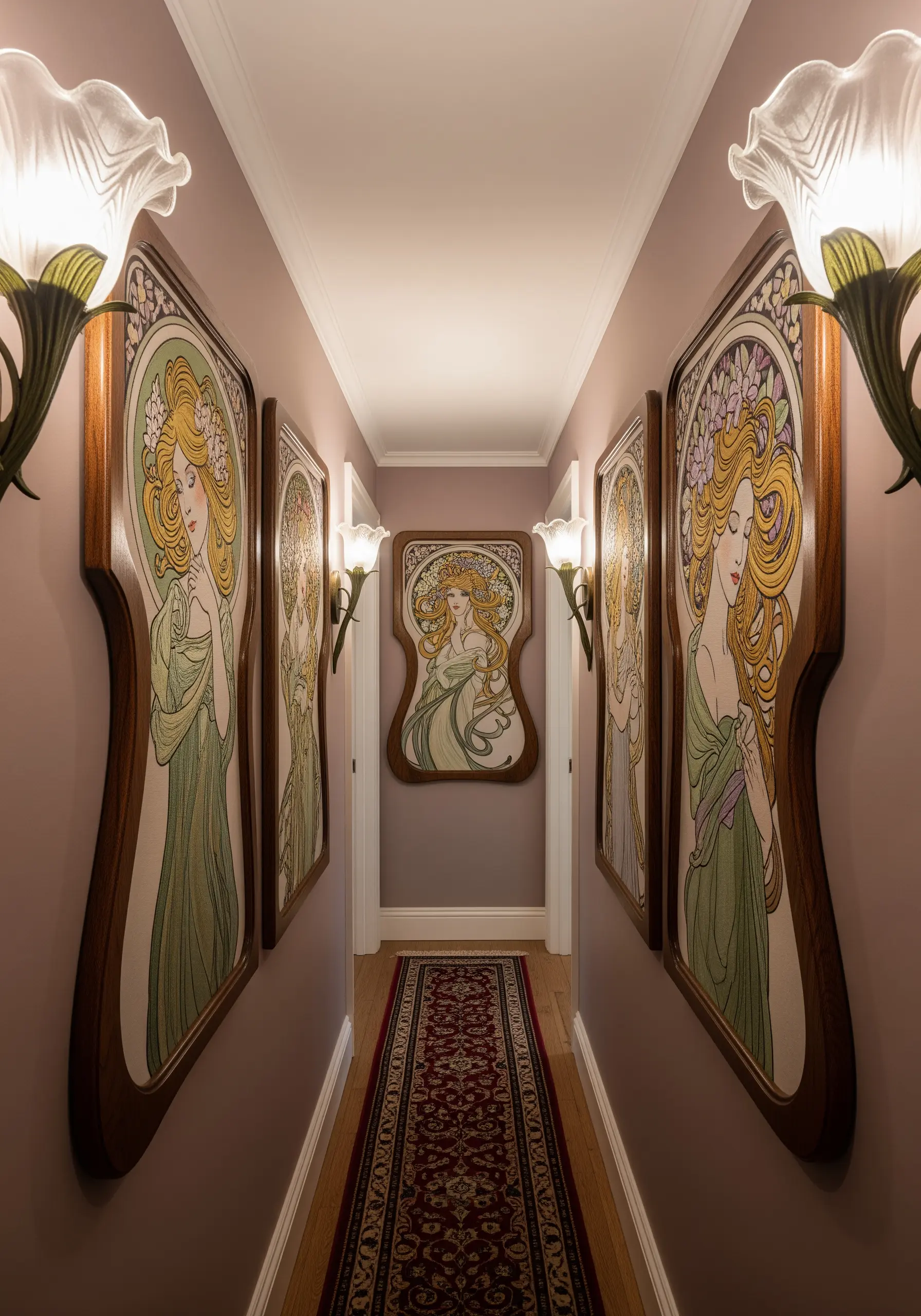
Capture the flowing, organic lines of the Art Nouveau movement with large-scale embroidered portraits.
Focus on long, elegant backstitches to create the defining outlines of hair and clothing, letting the lines curve and swirl gracefully.
Fill in areas with a soft, limited palette of sage greens, dusty pinks, and creams, using satin stitch that follows the direction of the forms.
Commission custom-shaped wooden frames that echo the curvilinear shapes within the artwork to create a fully integrated and immersive piece.