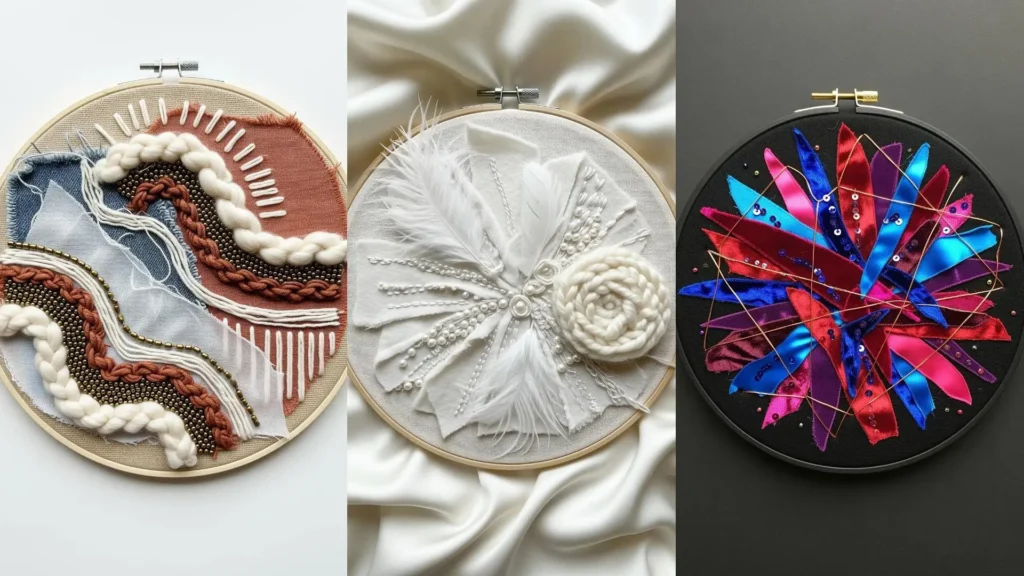
Have you ever looked at a city map, the curve of a sound wave, or the glow of a distant skyline and felt a story there? That’s the space where embroidery can become more than just a craft—it becomes a language. It’s a way to translate the abstract patterns of your world into something tangible, personal, and deeply beautiful.
You don’t need to be a master illustrator to create art that feels intentional and modern. Instead of thinking about what to draw, I want you to think about what you can map. Your daily commute, the rhythm of your favorite song, the star chart from the night you were born—these are all patterns waiting to be translated into thread.
In these examples, we’ll explore how to use stitch direction, texture, and color to give form to the invisible. You’ll learn how a simple change in thread weight can create perspective, how contrasting textures can build a landscape, and how clean lines can tell a powerful story. This is your chance to stitch something that is uniquely yours, a map of a moment, a place, or a feeling.
1. Render a Minimalist City Grid with Textural Accents
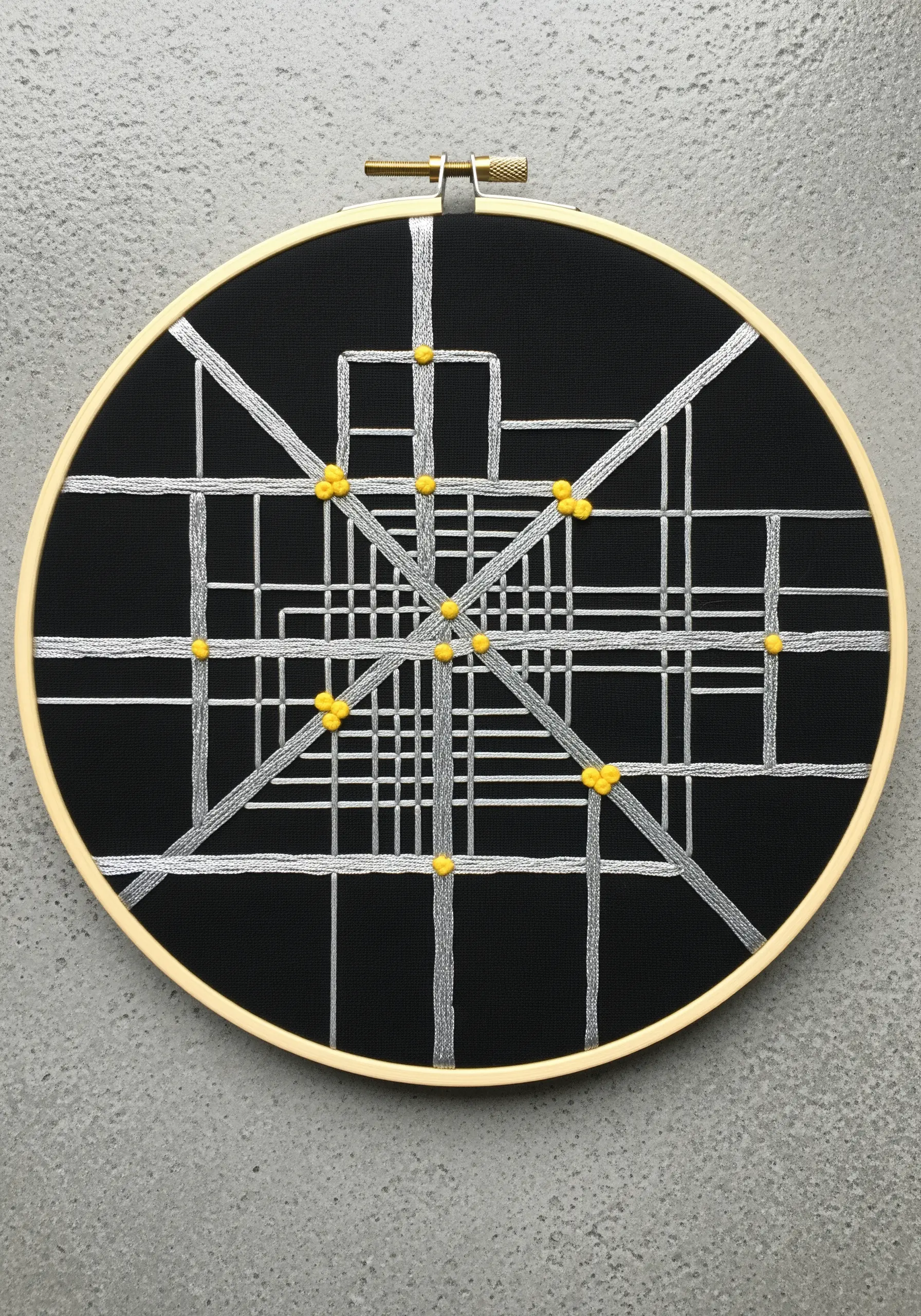
Translate an abstract city map into a high-contrast design by using a dark, tightly woven fabric like black cotton twill.
Create the main grid lines with a wide, flat satin stitch using 4-6 strands of a light gray or silver floss to ensure they stand out.
Introduce pops of color and texture with well-placed French knots at the intersections.
This technique creates a clear visual hierarchy, where the smooth lines guide the eye and the textured knots act as focal points, adding depth and interest to the minimalist composition.
2. Stitch a Transit Map with Precision and Clarity
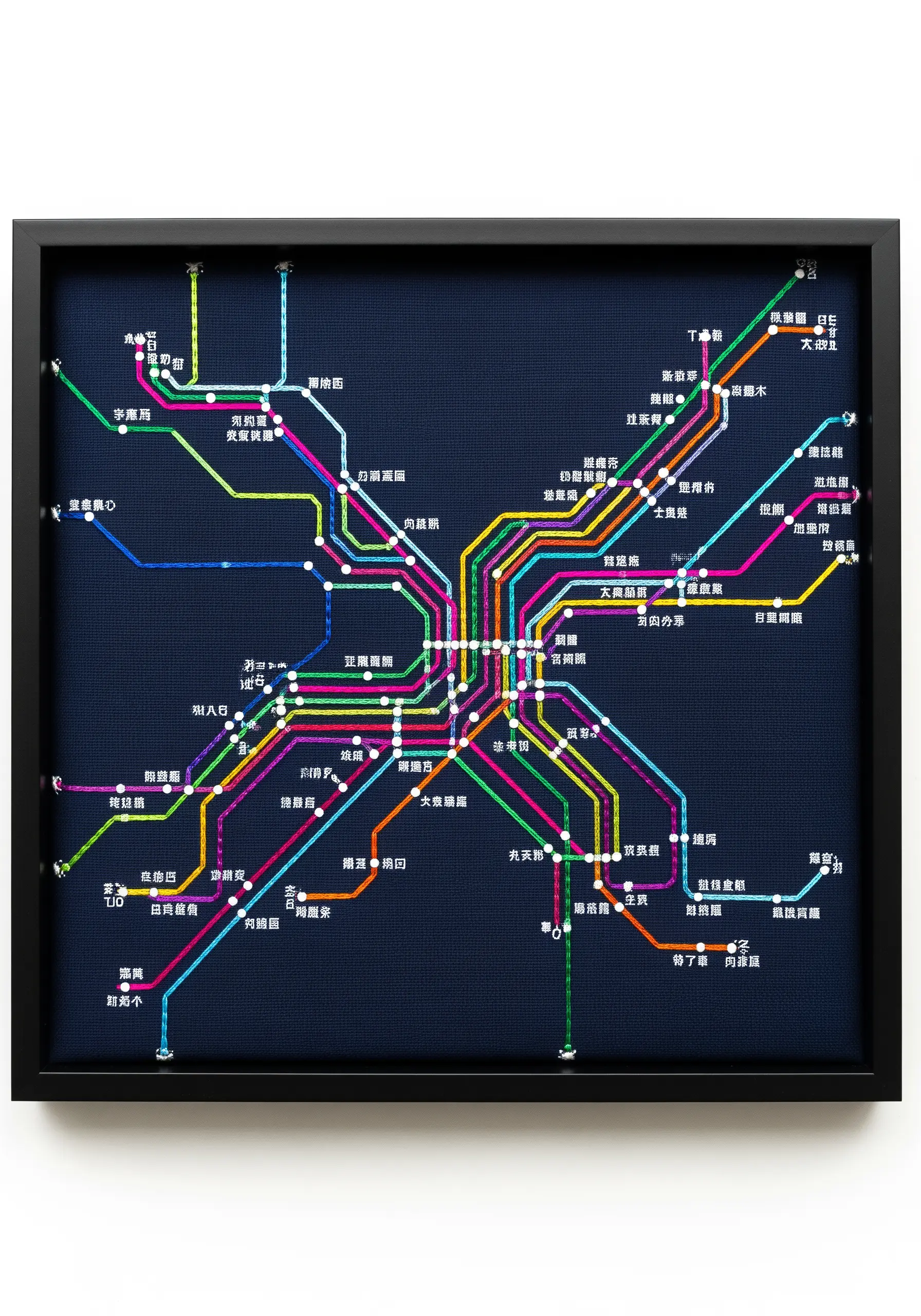
To achieve the crisp, clean lines of a subway map, use a whipped backstitch or a stem stitch.
These stitches create a solid, rope-like line that remains smooth around curves and at sharp angles, which is essential for legibility.
Select a vibrant, high-contrast color palette against a dark navy or black fabric to ensure each route is distinct.
For the station names, use a single strand of white floss and a tiny backstitch for maximum clarity, transforming a functional diagram into a piece of graphic art.
3. Capture Urban Motion with Long-Stitch Light Trails
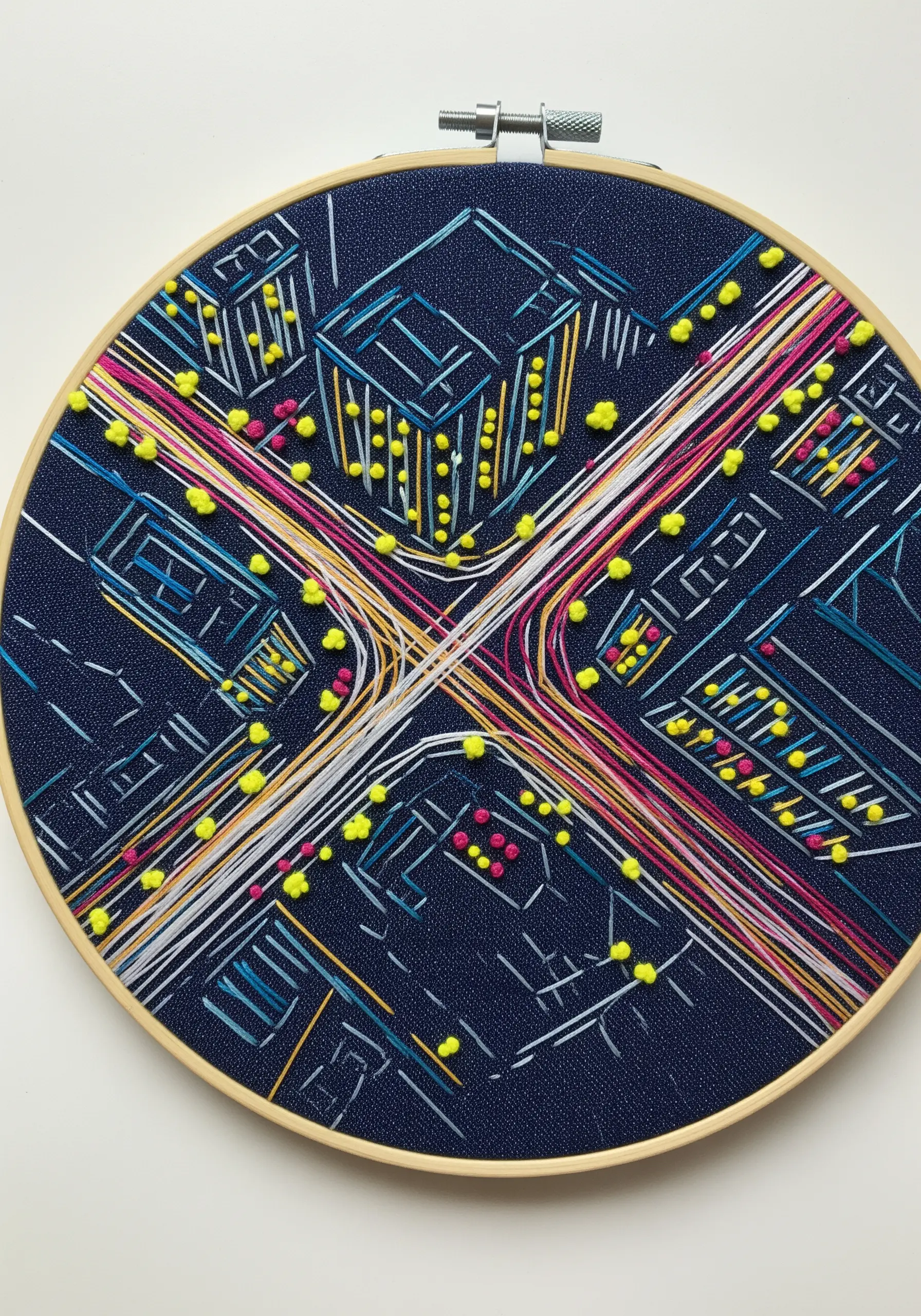
Evoke the energy of a city at night by using long, straight stitches to represent the streaks of traffic lights.
Vary the number of floss strands—using three or four for brighter headlights and just one for distant taillights—to create a convincing sense of depth and perspective.
Contrast this linear motion with clusters of bright yellow French knots for the static lights of buildings.
This juxtaposition of fluid lines and tight, textural dots makes the entire piece feel dynamic and alive.
4. Illustrate Architecture with Clean Backstitch Contours
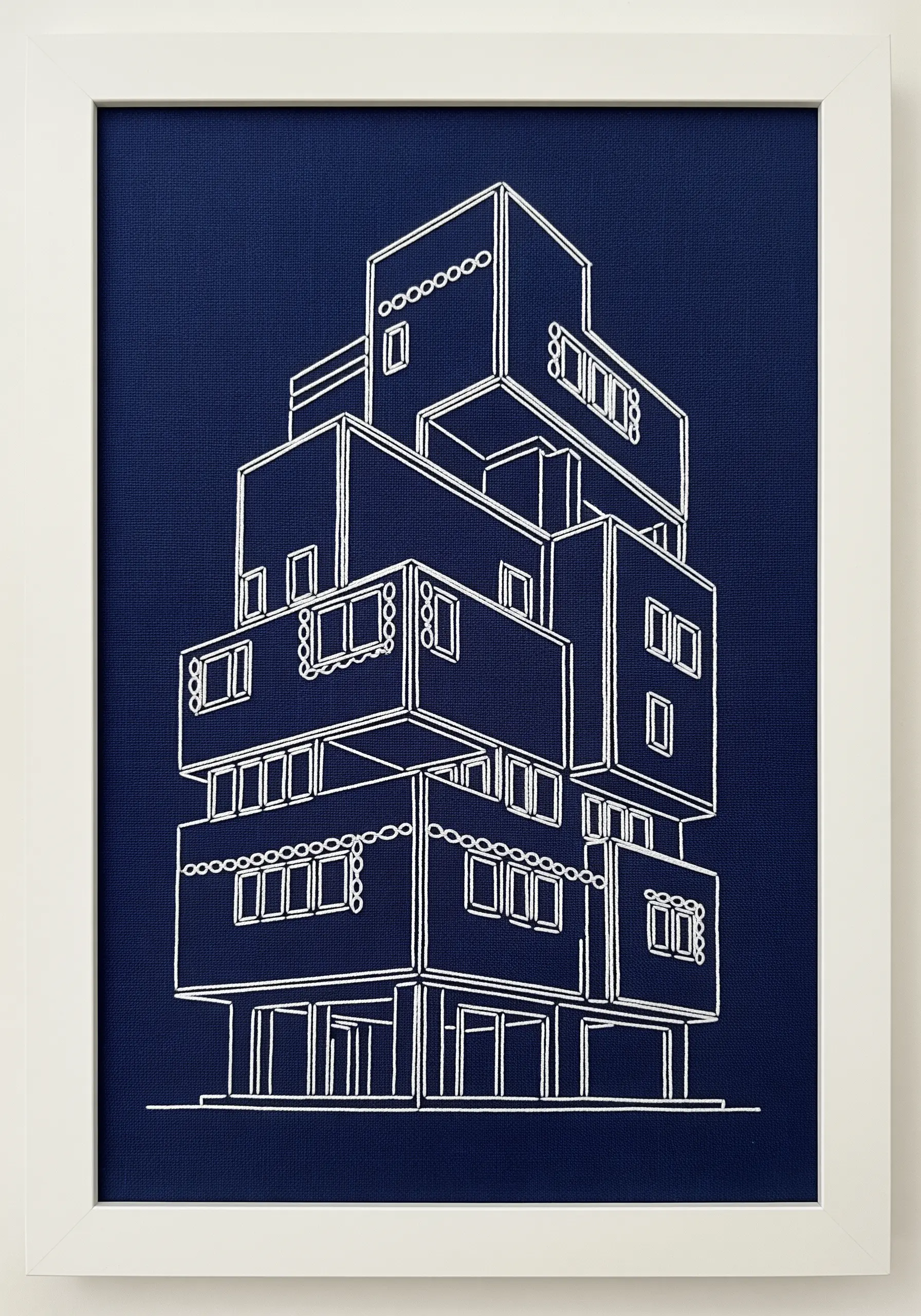
Recreate architectural blueprints by focusing on pristine, unbroken outlines.
A simple backstitch using two strands of white floss on a dark, solid-colored linen provides the perfect contrast and precision.
To ensure your geometric lines are perfectly straight and your corners sharp, lightly draw your design with a water-soluble pen first.
This technique strips a complex structure down to its essential form, making it a perfect example of minimalist embroidery wall art that feels both technical and artistic.
5. Map an Aerial Landscape with Dense French Knots
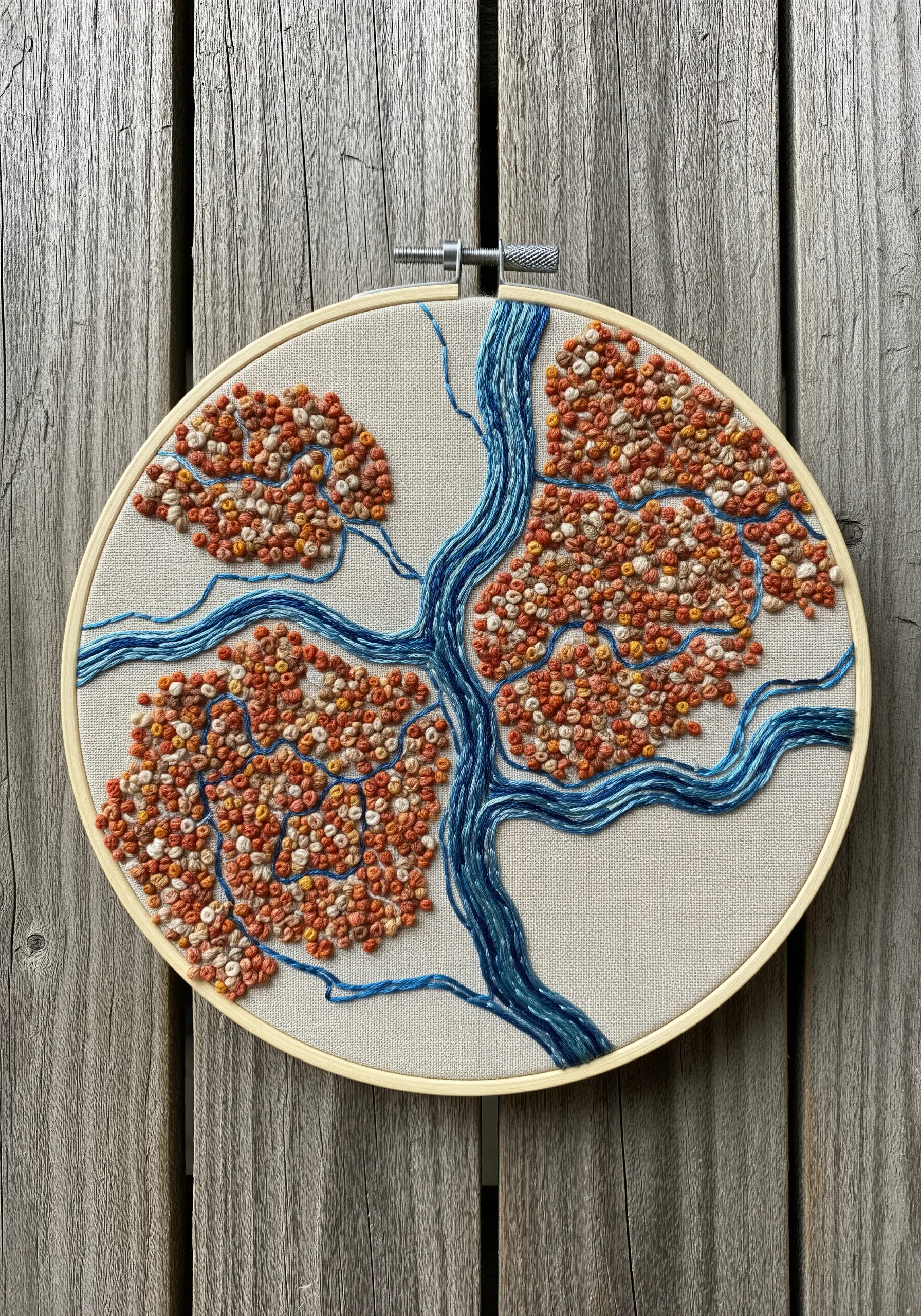
Create a tactile, topographical map by filling landmasses with dense clusters of French knots.
Use a variegated thread or a mix of three to four harmonious colors—like rust, ochre, and cream—to give the knotted sections a natural, mottled appearance.
For the river, stitch parallel lines of split stitch using a contrasting blue, which creates a smooth, flowing texture that stands apart from the bumpy land.
This contrast in texture is what gives the piece its compelling, three-dimensional quality.
6. Build a Rooftop Scene with Satin Stitch Shading
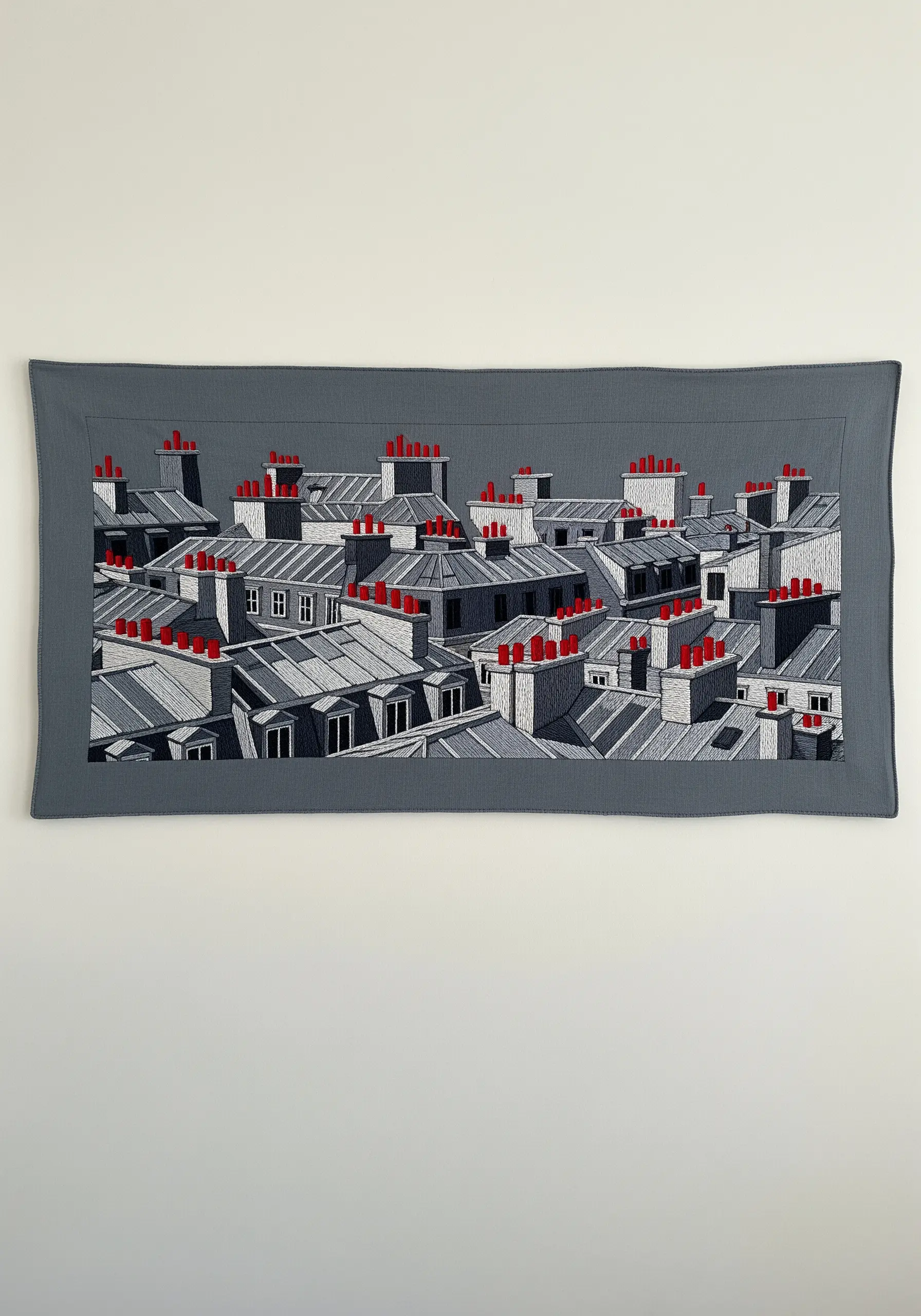
Construct a cityscape with depth by using satin stitch to fill in the planes of each roof and wall.
To create the illusion of light and shadow, use three to four shades of the same color family, such as a gradient of grays.
Assign the lightest shade to surfaces facing the imagined light source and the darkest shade to those in shadow.
A single, bold accent color—like the bright red chimneys—draws the eye and adds a focal point to the otherwise monochrome composition.
7. Design a Neon Skyline on Black Fabric
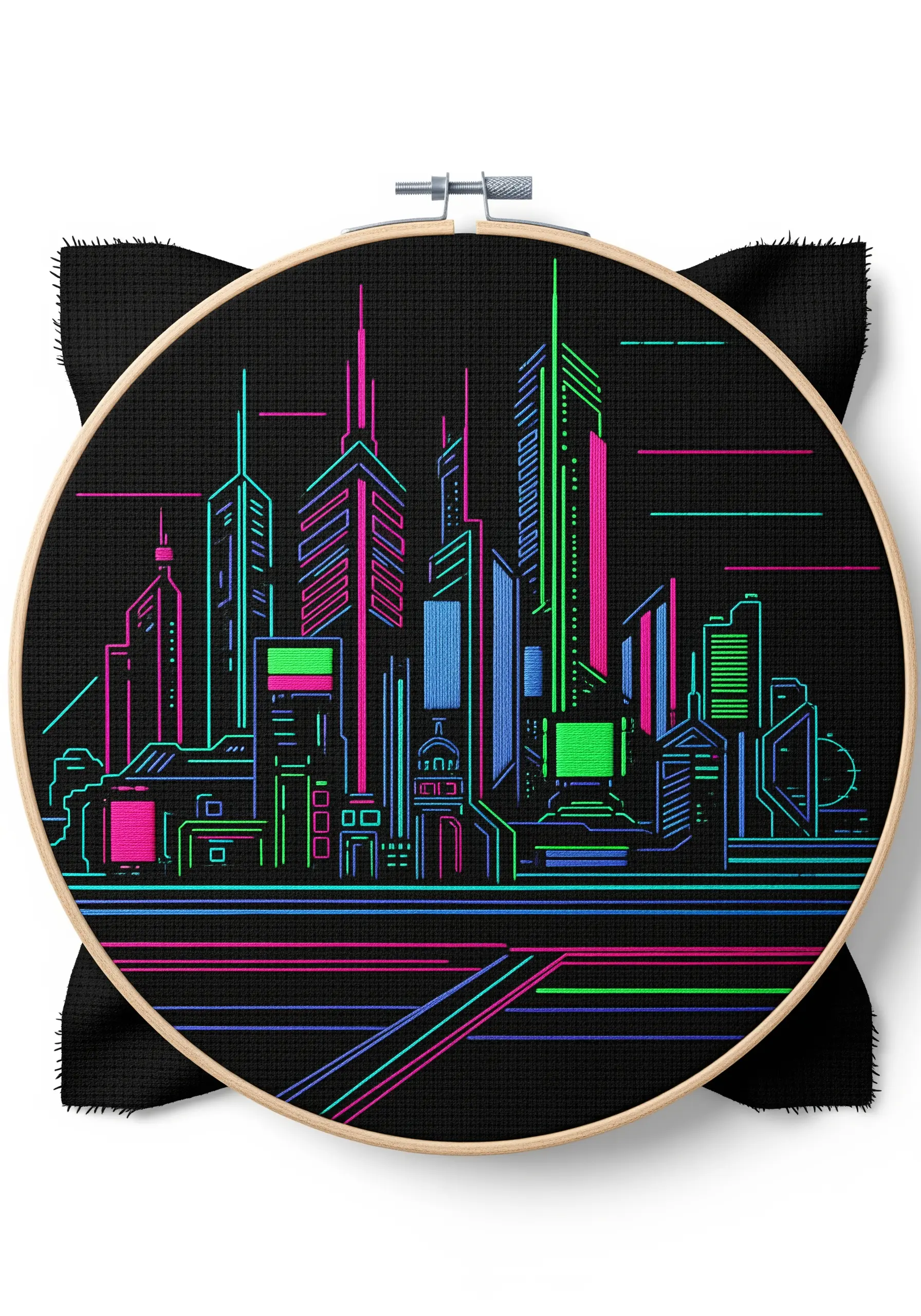
Capture the electric glow of a futuristic city by using bright, neon-colored floss against a stark black Aida or cotton fabric.
Use a simple backstitch for all outlines, keeping your stitches small and uniform to maintain the crispness of the design.
The key to the ‘glow’ effect is the high contrast between the vibrant thread and the dark background, which makes the colors appear to hum with energy.
This technique turns simple lines into modern neon thread designs that feel graphic and dynamic.
8. Create an Industrial Map with 3D Textures
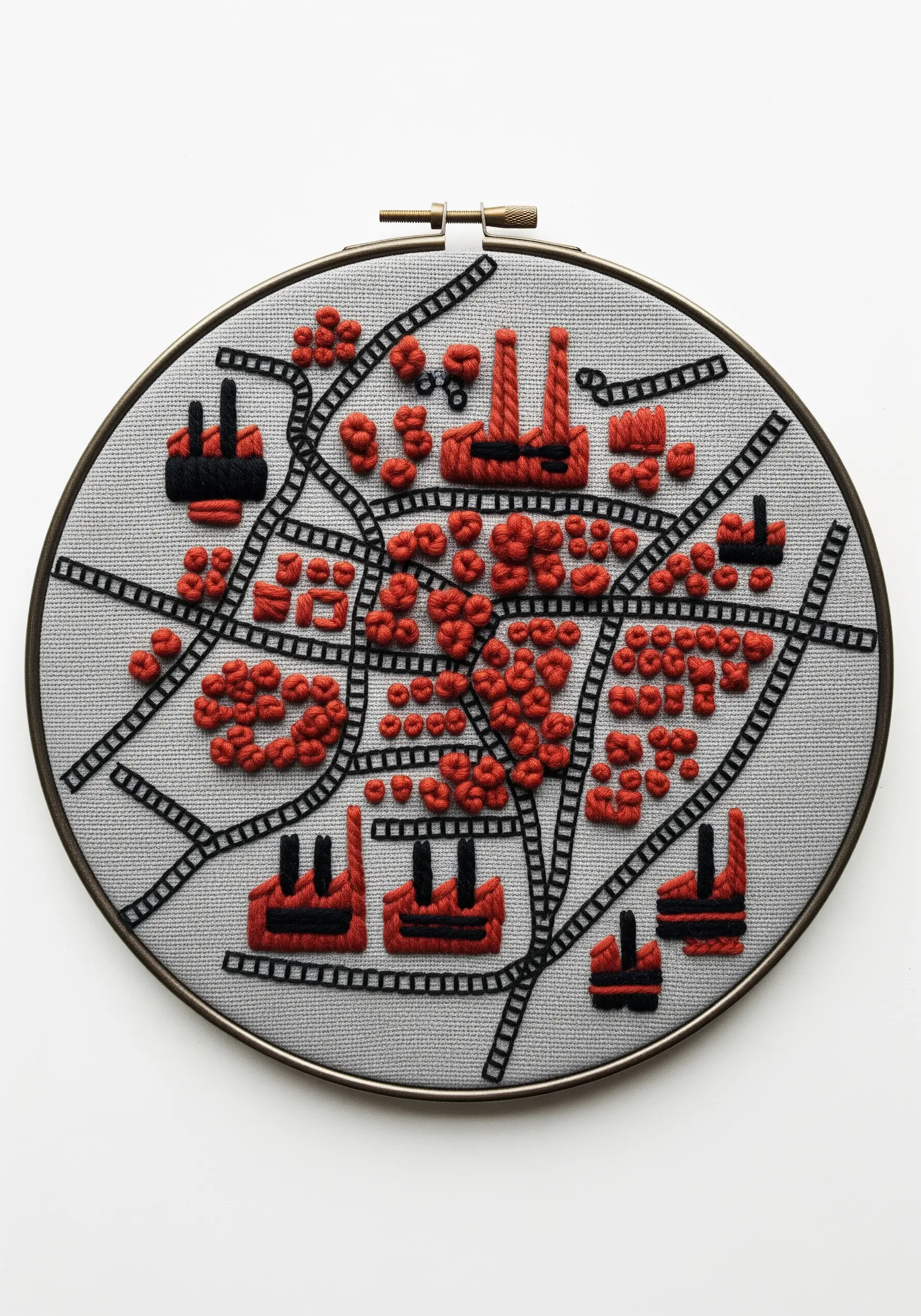
Represent an industrial zone by combining flat lines with highly textured, three-dimensional stitches.
Lay down the railway tracks with a simple backstitch or running stitch for a flat, graphic look.
For buildings and clusters of structures, use chunky French knots and padded satin stitch (by laying down a foundation of seed stitches first) to make them rise from the fabric.
This contrast between flat and raised elements creates a compelling visual and tactile map.
9. Sketch a Neighborhood with Neutral Thread and Varied Stitches
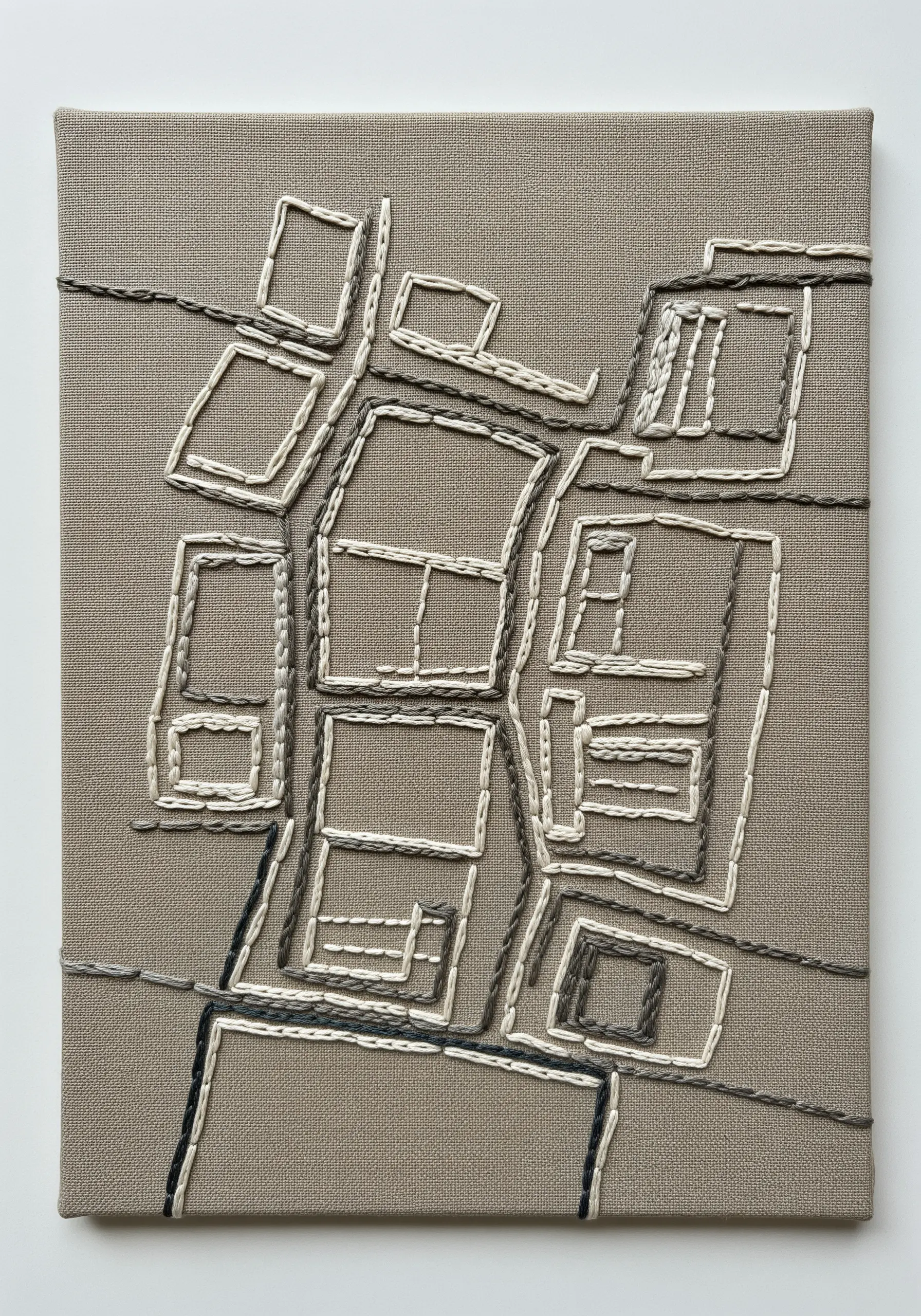
Map out a quiet, abstract neighborhood using a restrained, neutral color palette.
Outline the building blocks with a simple backstitch, but add character by varying your stitch direction and thread weight within different sections.
Fill some shapes with satin stitches, leave others as outlines, and use a thicker, whipped backstitch for main roads.
This subtle variation in texture adds depth and prevents the monochrome design from feeling flat, creating sophisticated, earth-tone DIY embroidery designs.
10. Weave Intersecting Roads with Layered Threads
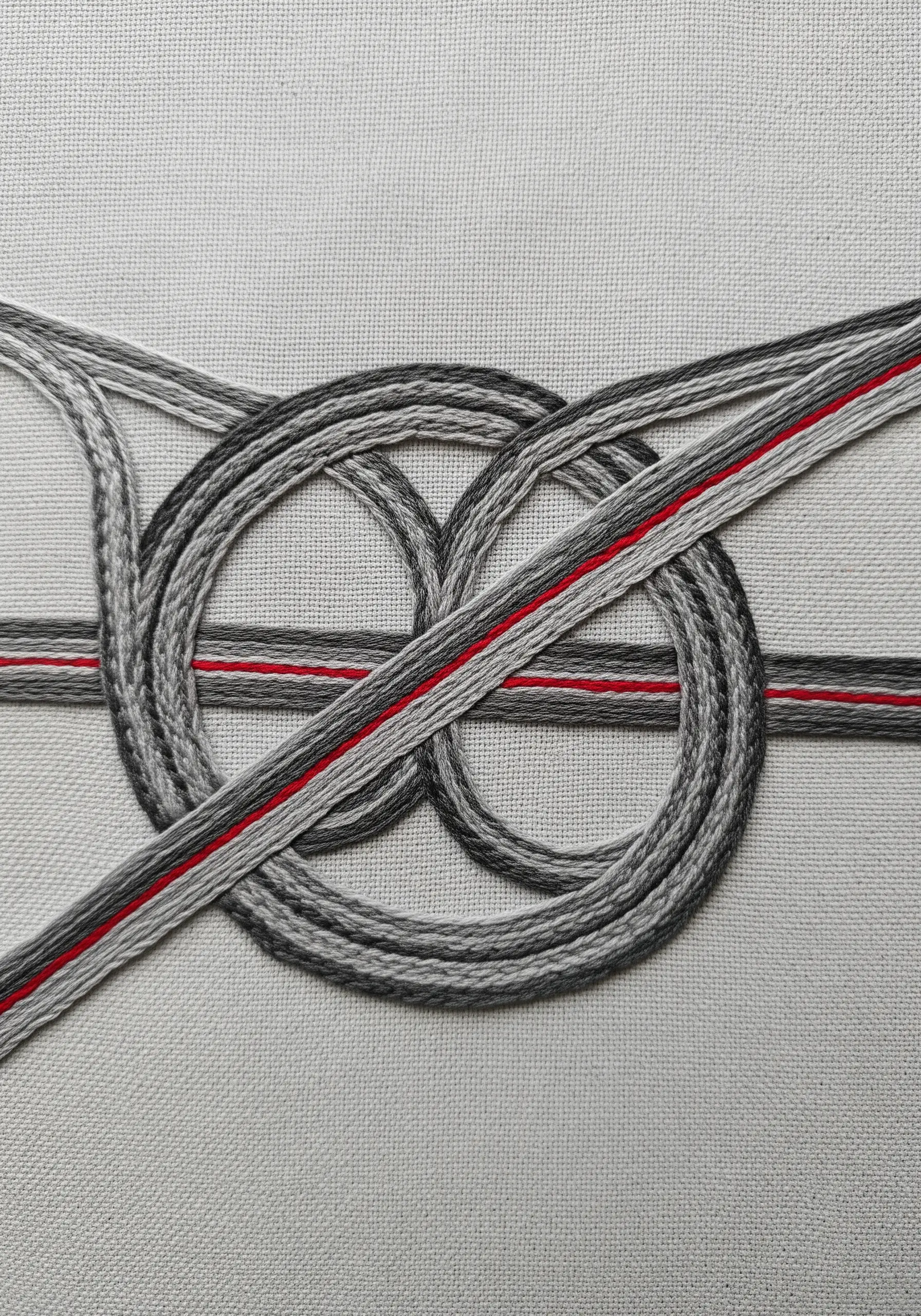
To create the illusion of overlapping highways, stitch each line separately and allow the threads to physically pass over and under one another.
Use a satin stitch with 4-6 strands for a bold, ribbon-like effect.
By stitching the lower roads first and then carefully stitching the overpass on top, you achieve a realistic sense of depth.
Incorporating a single strand of a contrasting color, like red, within one of the gray bundles adds a sharp, graphic accent that elevates the entire design.
11. Chart a Constellation with Metallics and Beads
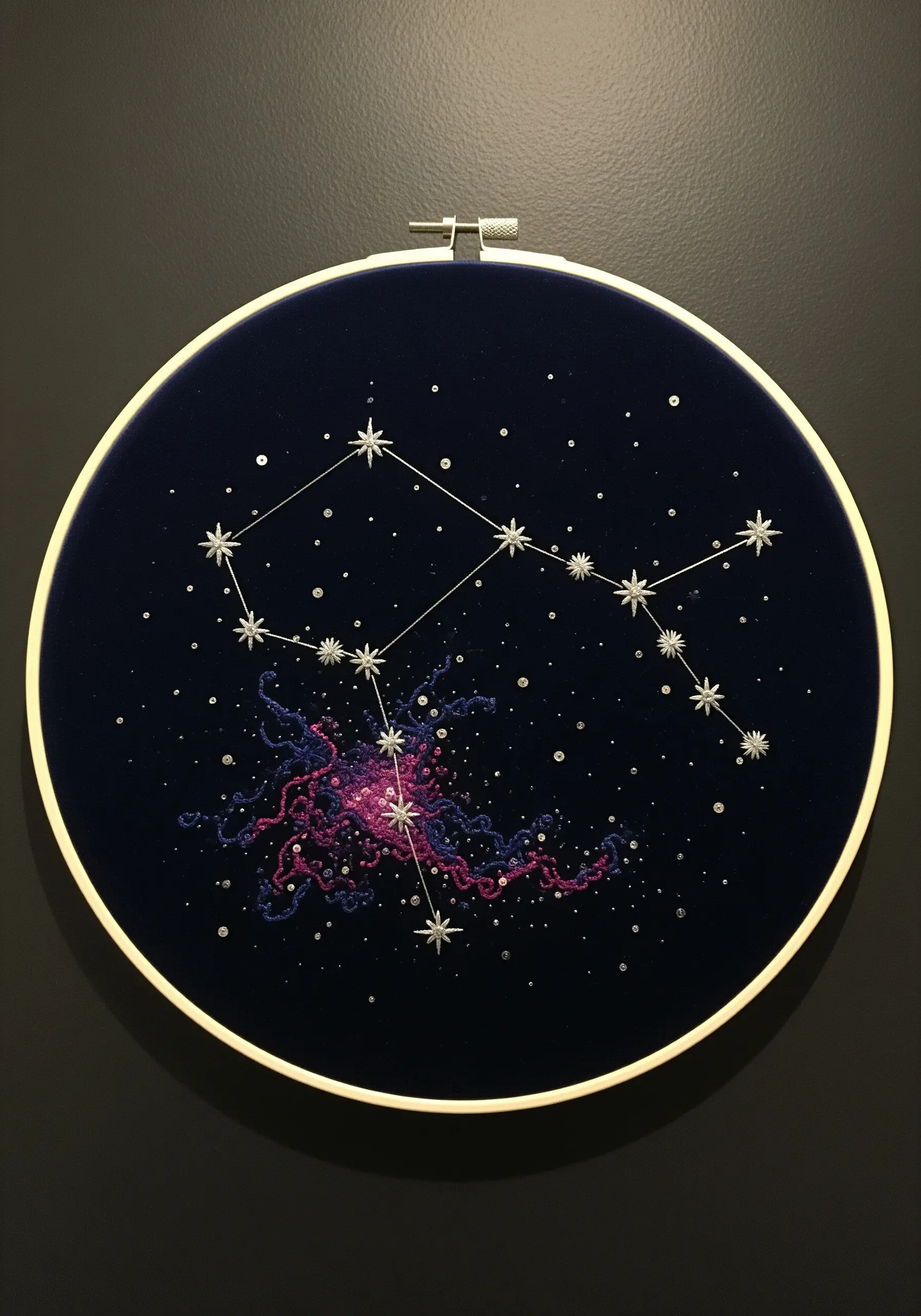
Render a celestial map by using different materials to represent stars and nebulae.
For the main stars of a constellation, use a silver metallic thread to stitch sharp, radiant star stitches.
Create the cosmic cloud or nebula using a dense cluster of French knots in vibrant, variegated pink and purple floss.
Finally, scatter tiny silver seed beads or stitch single-strand French knots across the dark velvet fabric to represent distant stars, adding layers of sparkle and depth.
12. Stitch a Sunset Gradient with Directional Seed Stitches
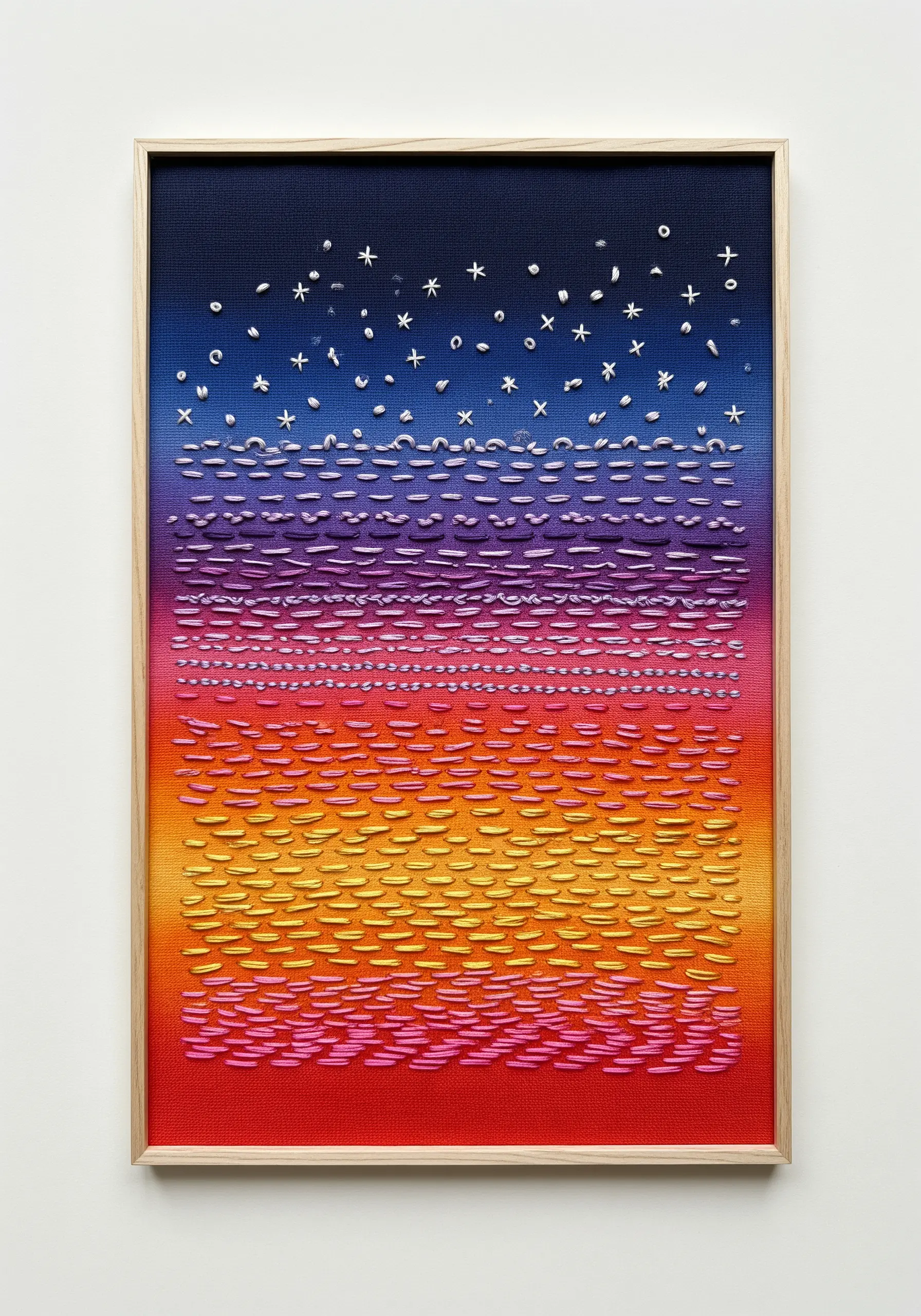
Instead of using traditional long-and-short stitch, create a soft, abstract sunset by stitching horizontal bands of color.
Fill each band with small, slightly varied seed stitches (or rice stitches) laid in the same horizontal direction.
The texture of these small stitches breaks up the light, giving the gradient a gentle, shimmering quality that mimics a hazy sky.
Using a satin floss will enhance this effect, as its high sheen beautifully reflects the light.
13. Depict the Aurora Borealis with Vertical Stitches
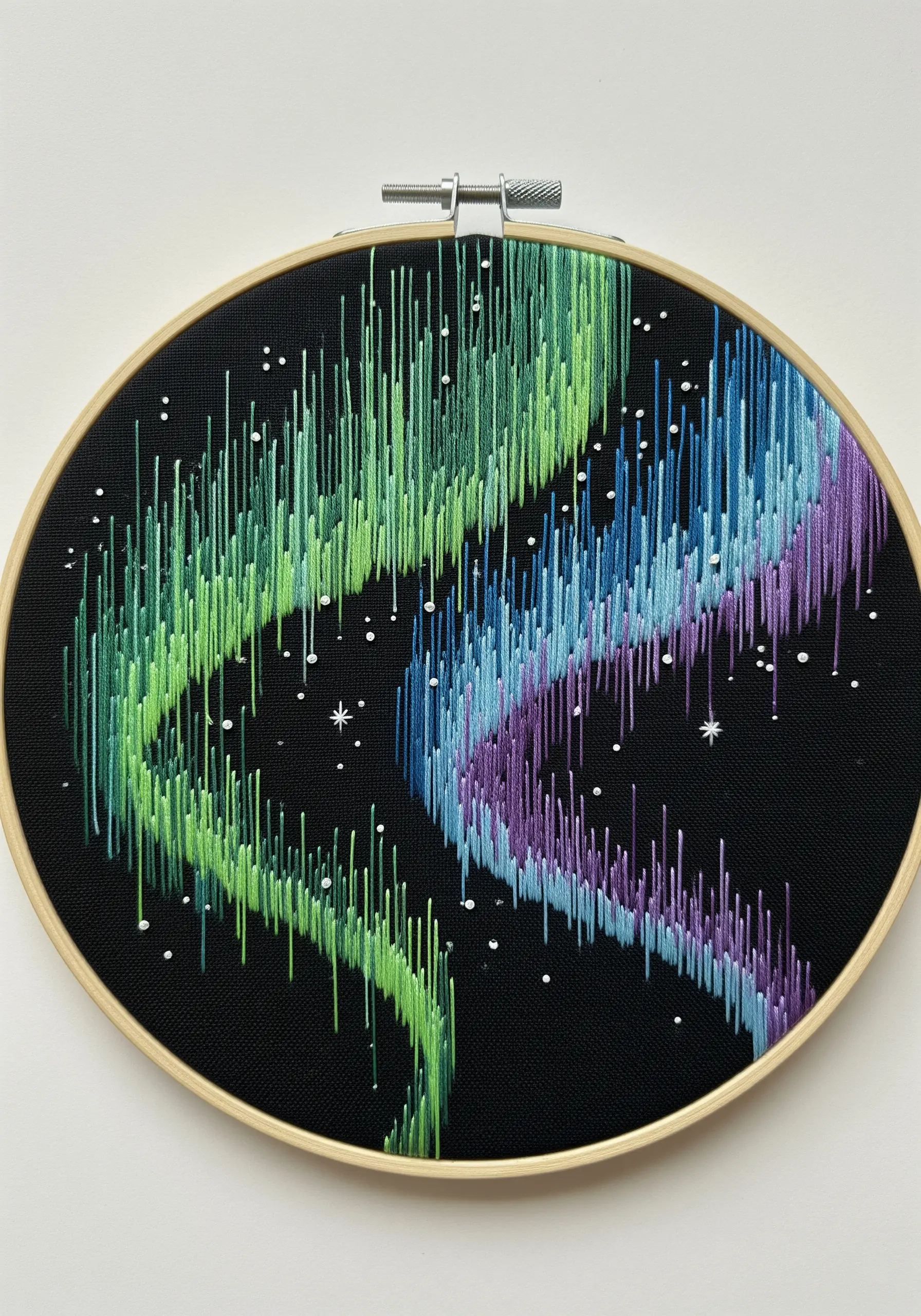
Capture the movement of the northern lights by filling the sky with long, vertical straight stitches.
Vary the length and starting point of each stitch to create a fluid, dancing effect rather than a solid block of color.
For the most realistic color blending, thread your needle with one strand from two different shades (e.g., one light green, one dark green) to create a soft, organic transition between hues.
A few scattered white French knots or star stitches will complete the illusion of a starry night sky.
14. Sculpt a Galaxy with Woven Wheel Roses
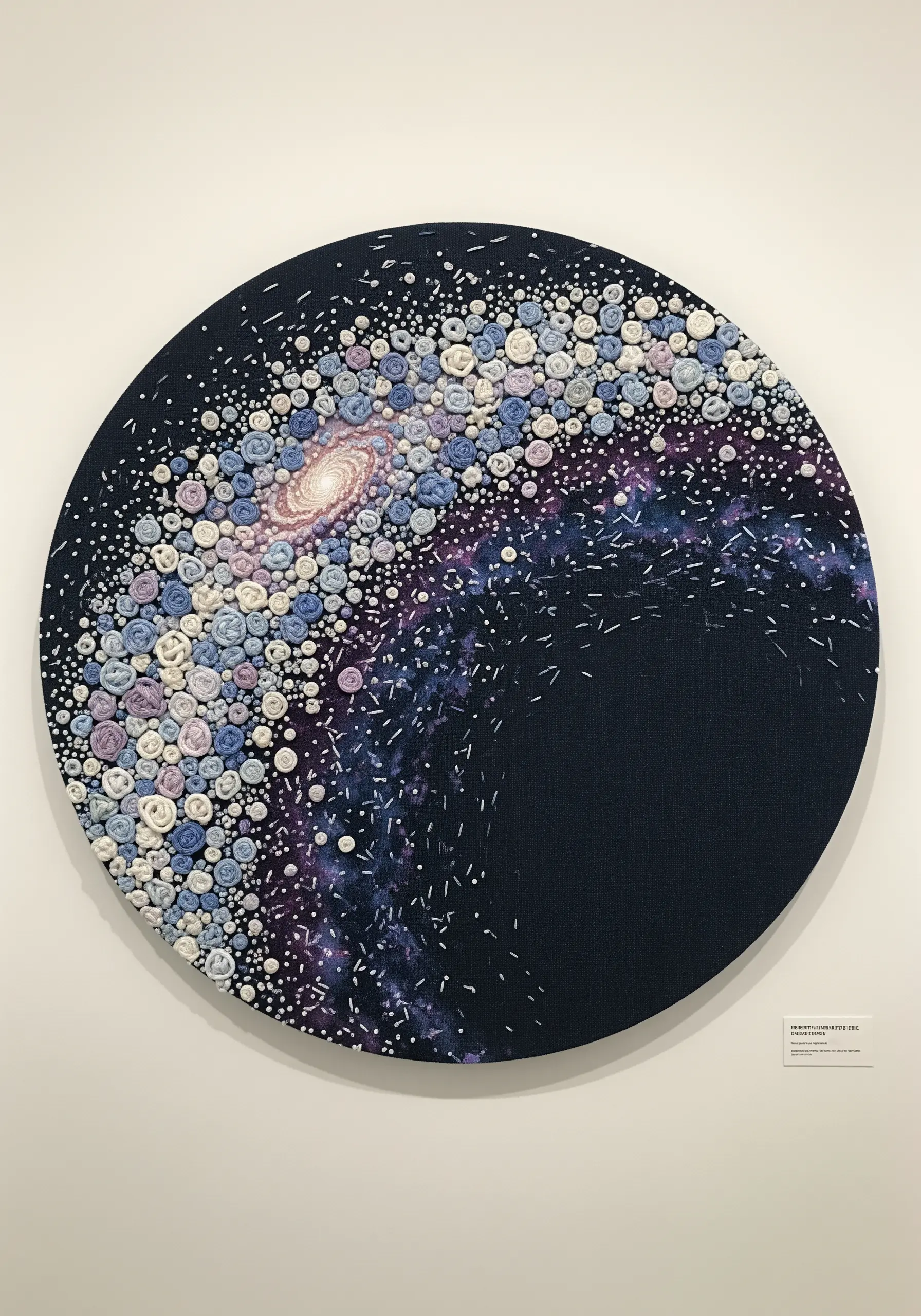
Build the dense, swirling core of a spiral galaxy using hundreds of woven wheel stitches, also known as spider web roses.
Vary the size and tightness of the stitches, clustering smaller, tighter roses at the center and using looser ones toward the edges to create a sense of depth.
Use a palette of blues, lavenders, and whites to mimic cosmic dust and stars.
For the galaxy’s arms, use sparse seed stitches and single French knots to suggest stars trailing off into deep space.
15. Illustrate Cloud Types with Textural Stitches
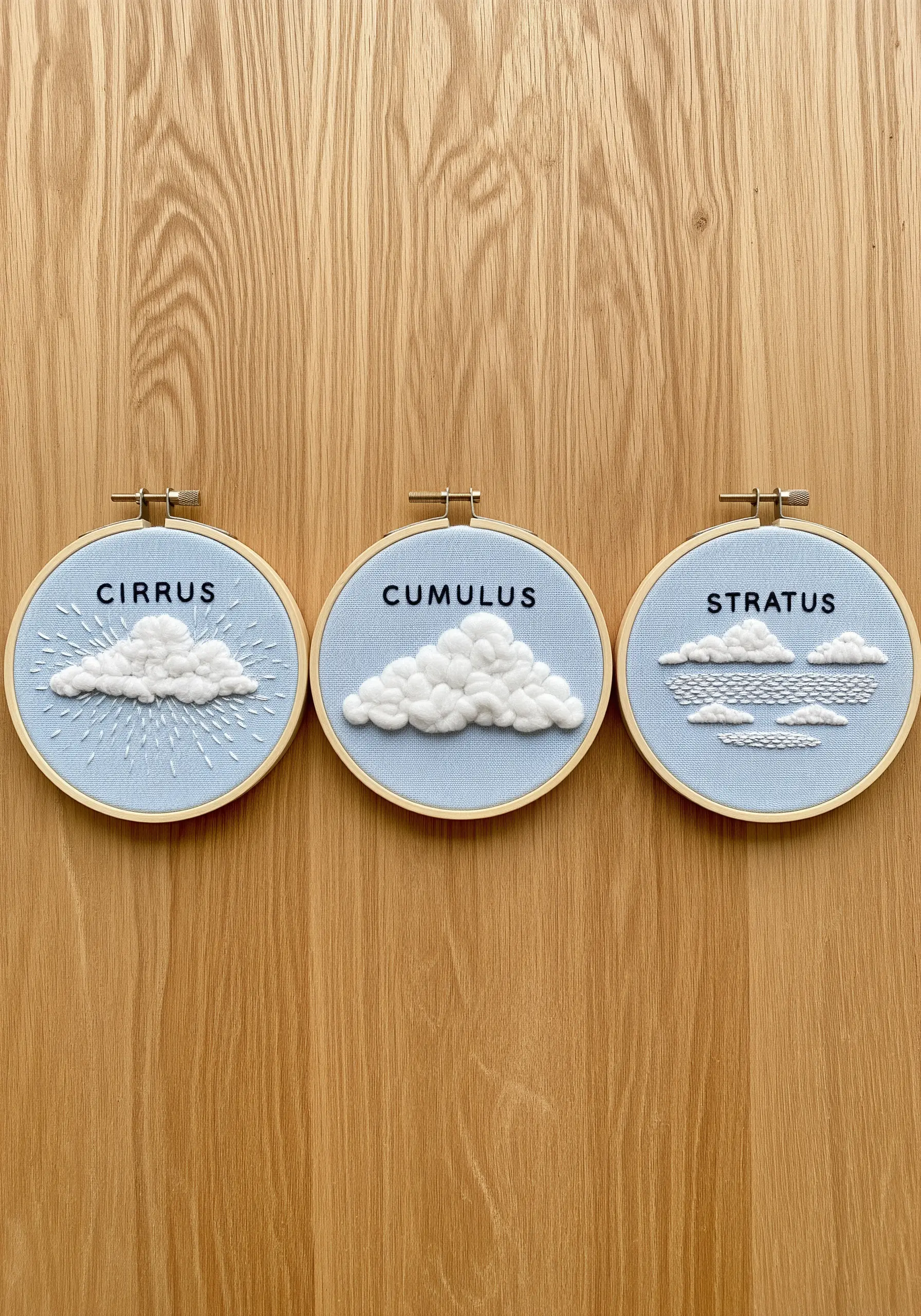
Represent different cloud formations by choosing stitches that mimic their natural texture.
For fluffy cumulus clouds, use densely packed French knots or colonial knots to create a puffy, three-dimensional form.
For wispy cirrus clouds, use long, delicate detached chain stitches (lazy daisies) pulled into thin shapes.
For flat stratus clouds, use horizontal satin stitches or cloud filling stitch. This turns a simple weather chart into a tactile study of the sky.
16. Create a Sunburst with Knots and Radiating Lines
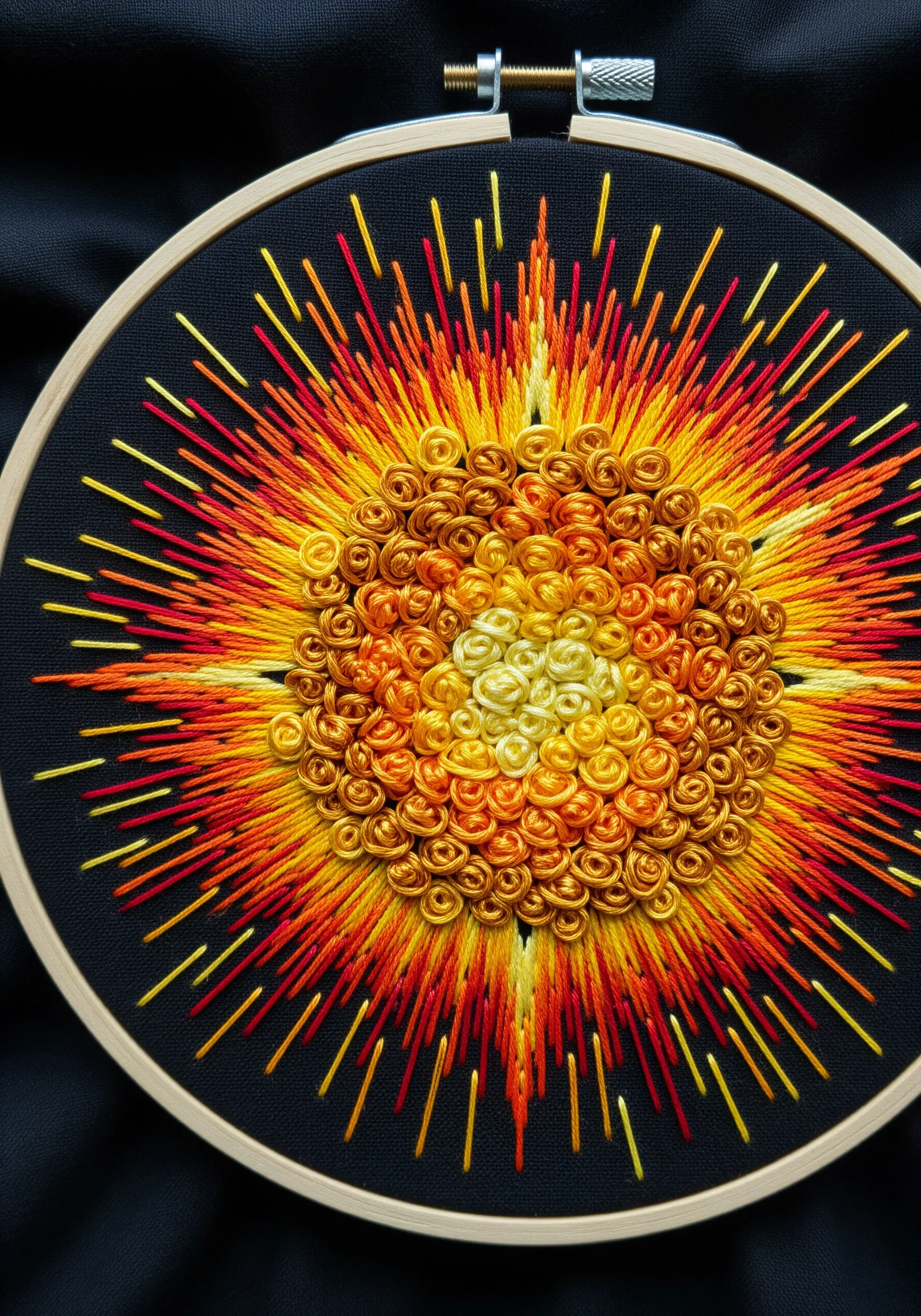
Build a fiery, explosive sun by combining a dense, knotted center with sharp, radiating straight stitches.
Start with a core of yellow and white woven wheel stitches, then surround it with rings of orange and gold French knots to create a textured, glowing mass.
From this central point, stitch long, straight lines outward in reds, oranges, and yellows.
This combination of textures—the soft, clustered core versus the sharp, linear rays—creates a powerful sense of energy and light.
17. Detail the Phases of the Moon with Satin Stitch
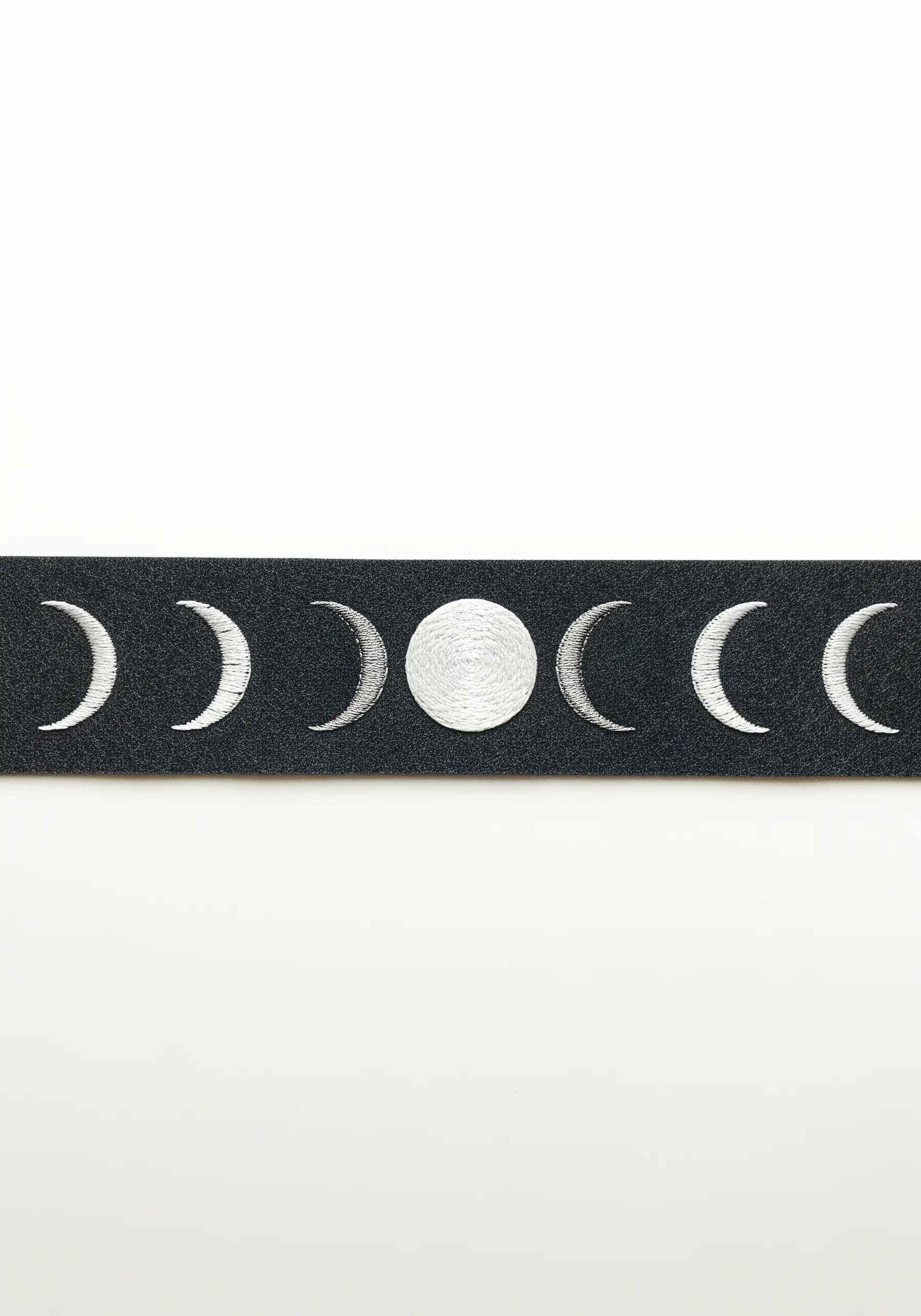
Achieve the smooth, subtle shading of the moon’s surface using a directional satin stitch.
For each phase, adjust the direction of your stitches to follow the curve of the crescent, which creates a natural-looking contour and sheen.
Use a light gray or silver thread for the illuminated parts and a slightly darker gray for the subtle shadows to add dimension.
The key to a perfect circle is to outline it with a split stitch first, which gives your satin stitches a raised, clean edge to anchor into.
18. Trace a Sound Wave with Concentric Echoes
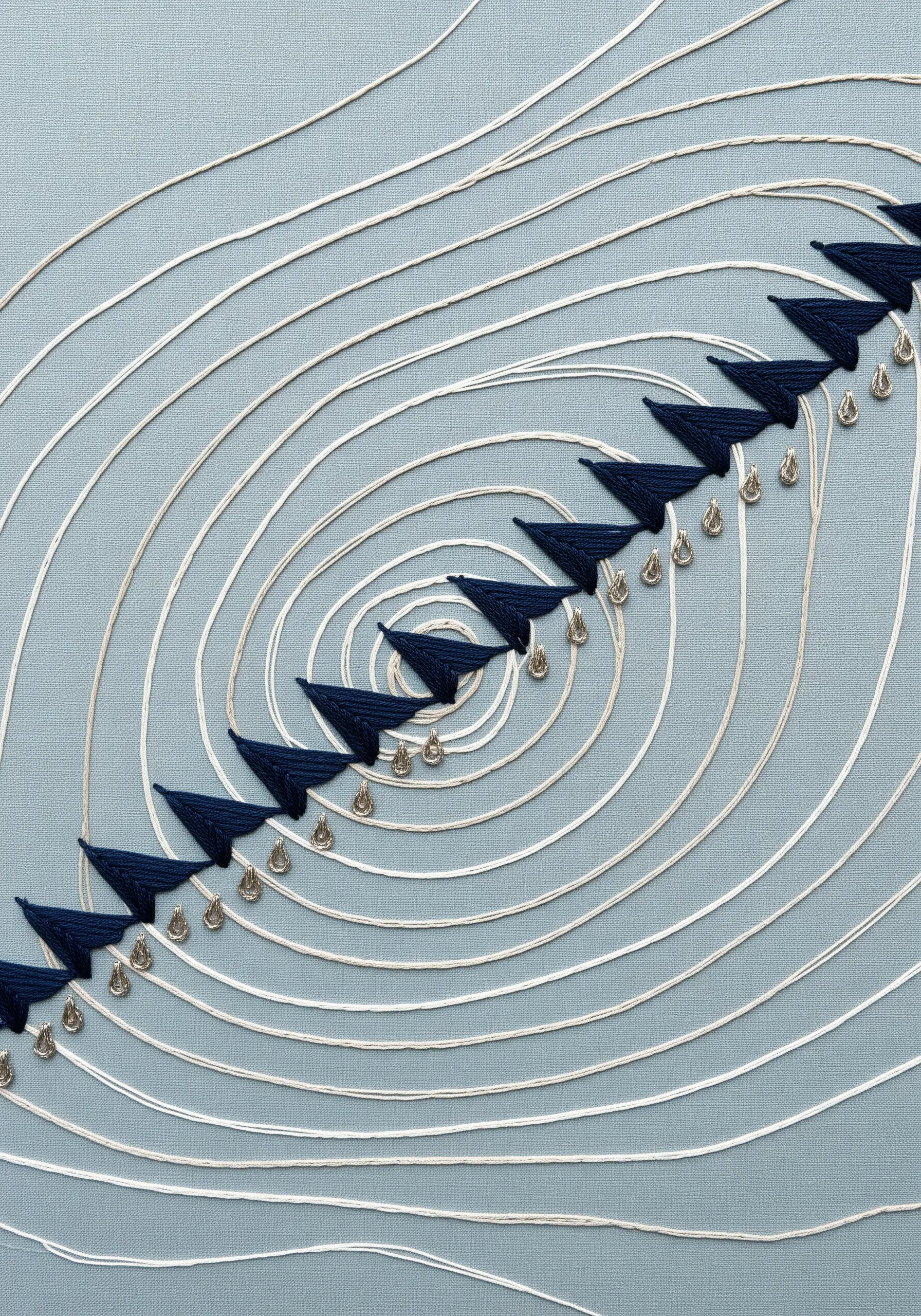
Visualize sound propagation by stitching concentric, echoing lines that expand from a central point.
Use a simple backstitch or stem stitch to maintain a consistent line weight, which is crucial for the hypnotic, repetitive effect.
Introduce a focal point by adding a contrasting element along one of the paths, like the dimensional navy blue shapes.
This composition transforms a simple spiral into a dynamic representation of sound, vibration, or movement.
19. Map the Stars with Hand-Stitched Precision
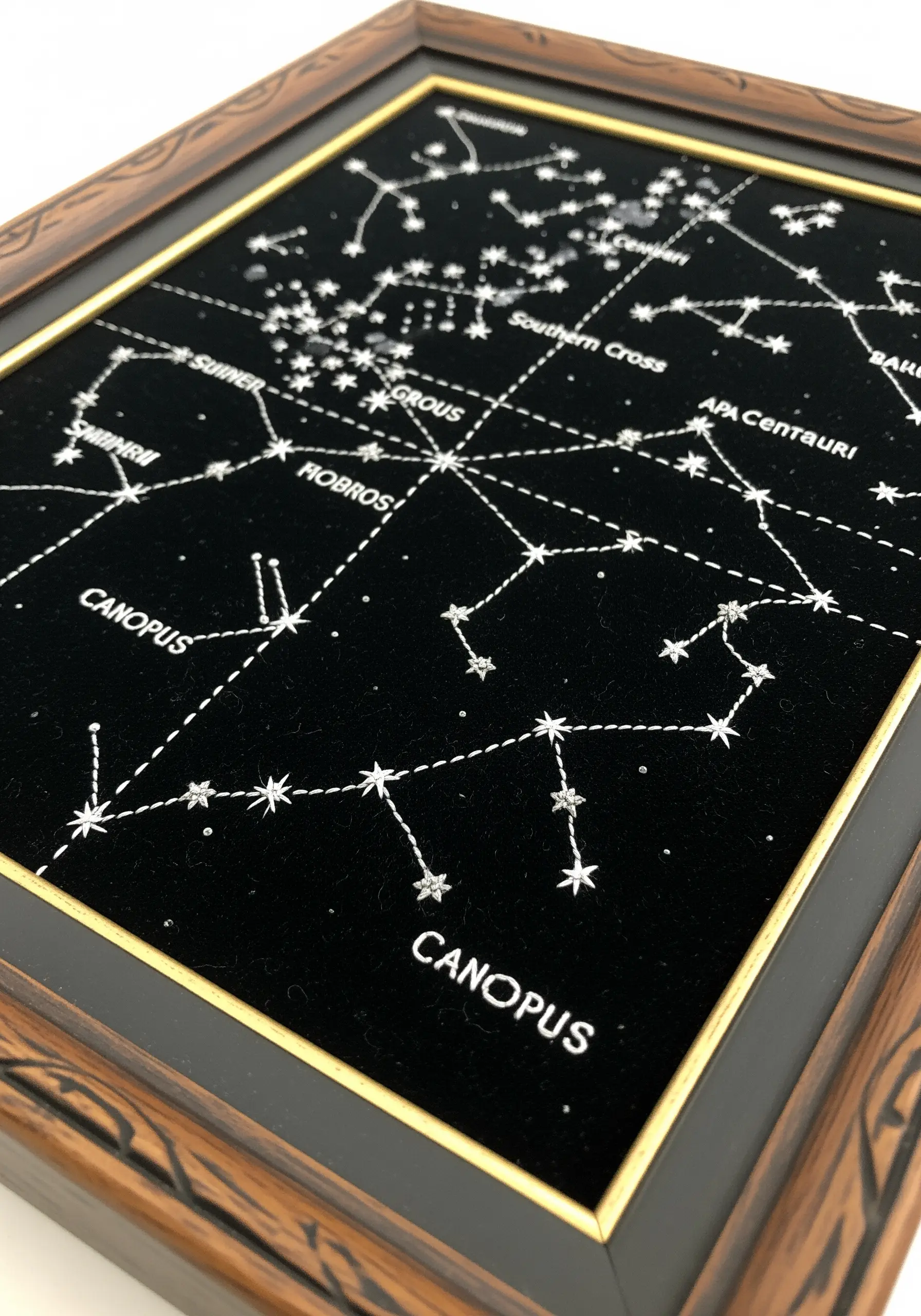
Create an elegant, vintage-inspired star chart on black velvet for a dramatic effect.
The plush texture of velvet absorbs light, making your white and metallic threads appear even brighter.
Use a simple backstitch for connecting lines and star stitches or small French knots for the stars themselves.
For lettering, a tiny, single-strand backstitch ensures every label is crisp and legible. The final result feels like a precious, hand-drawn artifact.
20. Create a Comet’s Trail with Beads and Thread
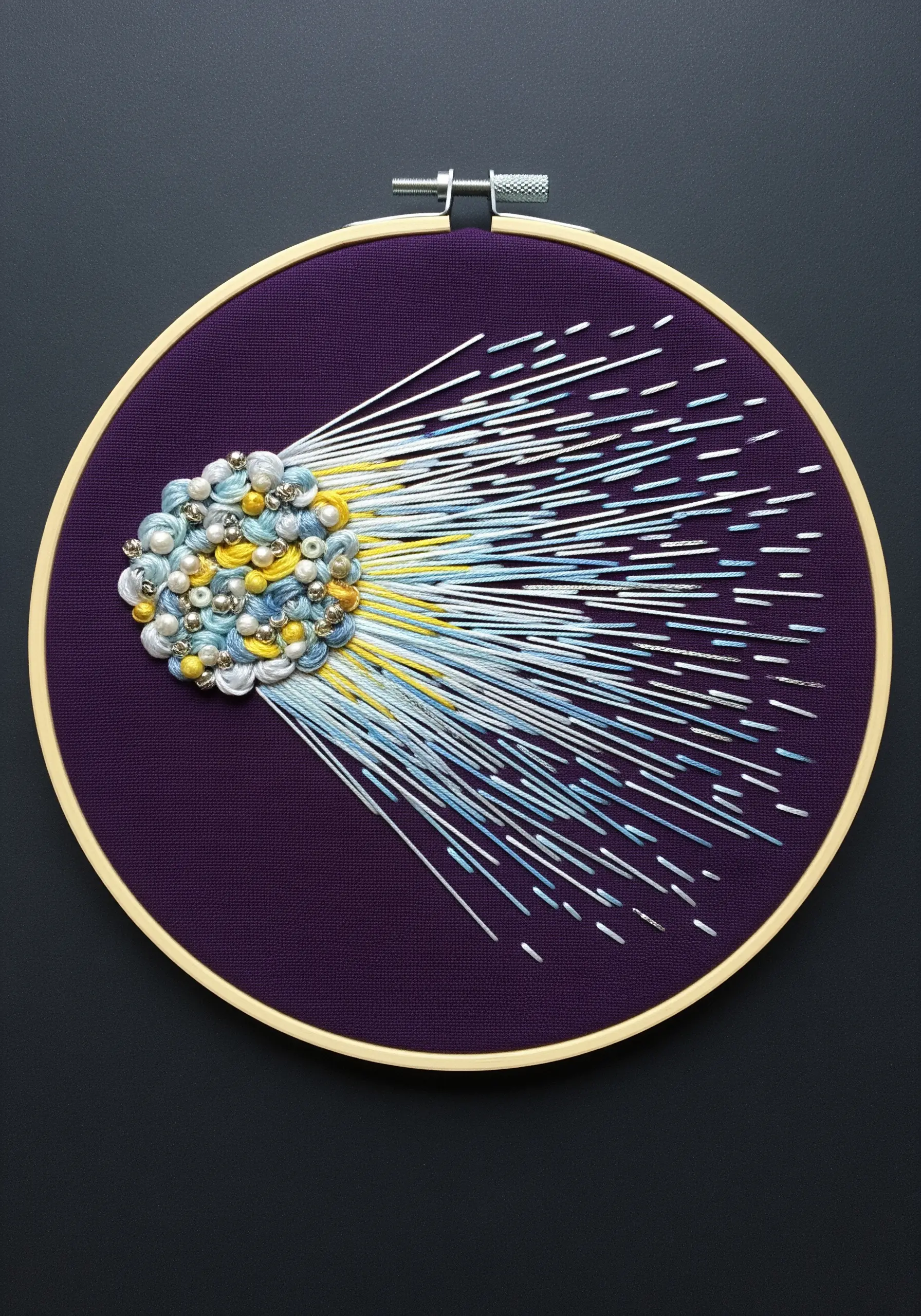
Illustrate a celestial explosion or a comet’s tail by combining traditional stitches with beadwork for intense texture and light-play.
Form the core of the object with a dense cluster of French knots, couched threads, and a mix of pearl beads and seed beads in coordinating colors.
From this core, stitch long, straight stitches that become sparser as they move outward.
This gradient from dense, beaded texture to fine, scattered lines creates a powerful illusion of explosive motion.
21. Stitch a Minimalist Heartbeat with Stem Stitch
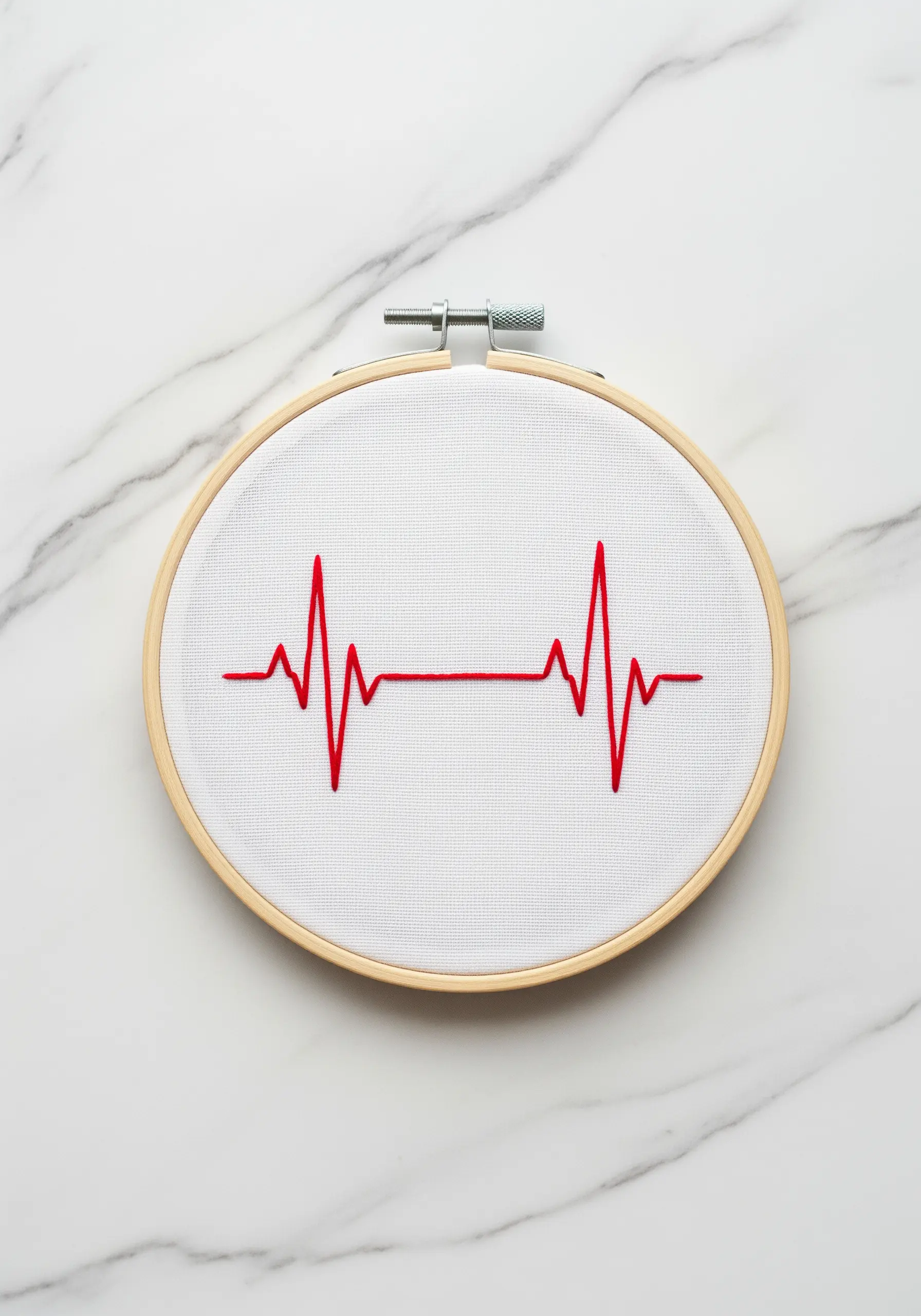
Capture the clean, graphic line of an EKG reading using a stem stitch.
This stitch creates a slightly raised, rope-like line that is perfect for defining sharp peaks and valleys without losing smoothness.
Use a bold, high-contrast color like red on a pure white fabric to emphasize the design’s clinical yet emotional nature.
Keeping the design singular and centered turns a simple line into a powerful piece of minimal embroidery.
22. Build a Sound Wave with Vertical Satin Stitch Blocks
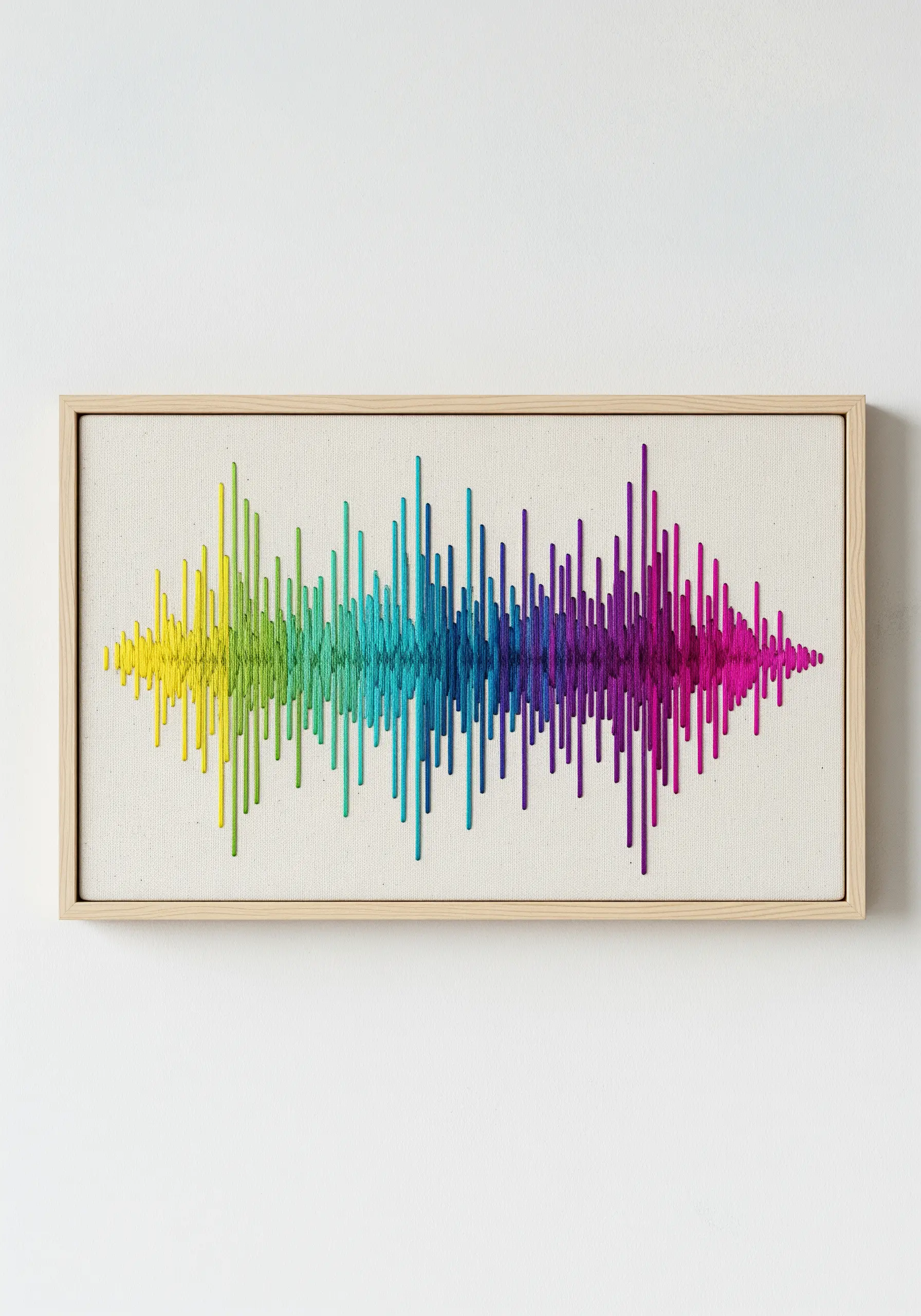
Translate an audio waveform into a vibrant, textural piece by using vertical satin stitches of varying heights.
To achieve the smooth gradient, map out your color changes beforehand, dedicating a specific hue to each section of the wave.
Using a water-soluble stabilizer printed with your pattern is essential for maintaining the precise heights and spacing.
This methodical approach transforms an invisible phenomenon into a tangible, colorful work of abstract thread collage art.
23. Visualize a Frequency with a Twisted Cord Accent
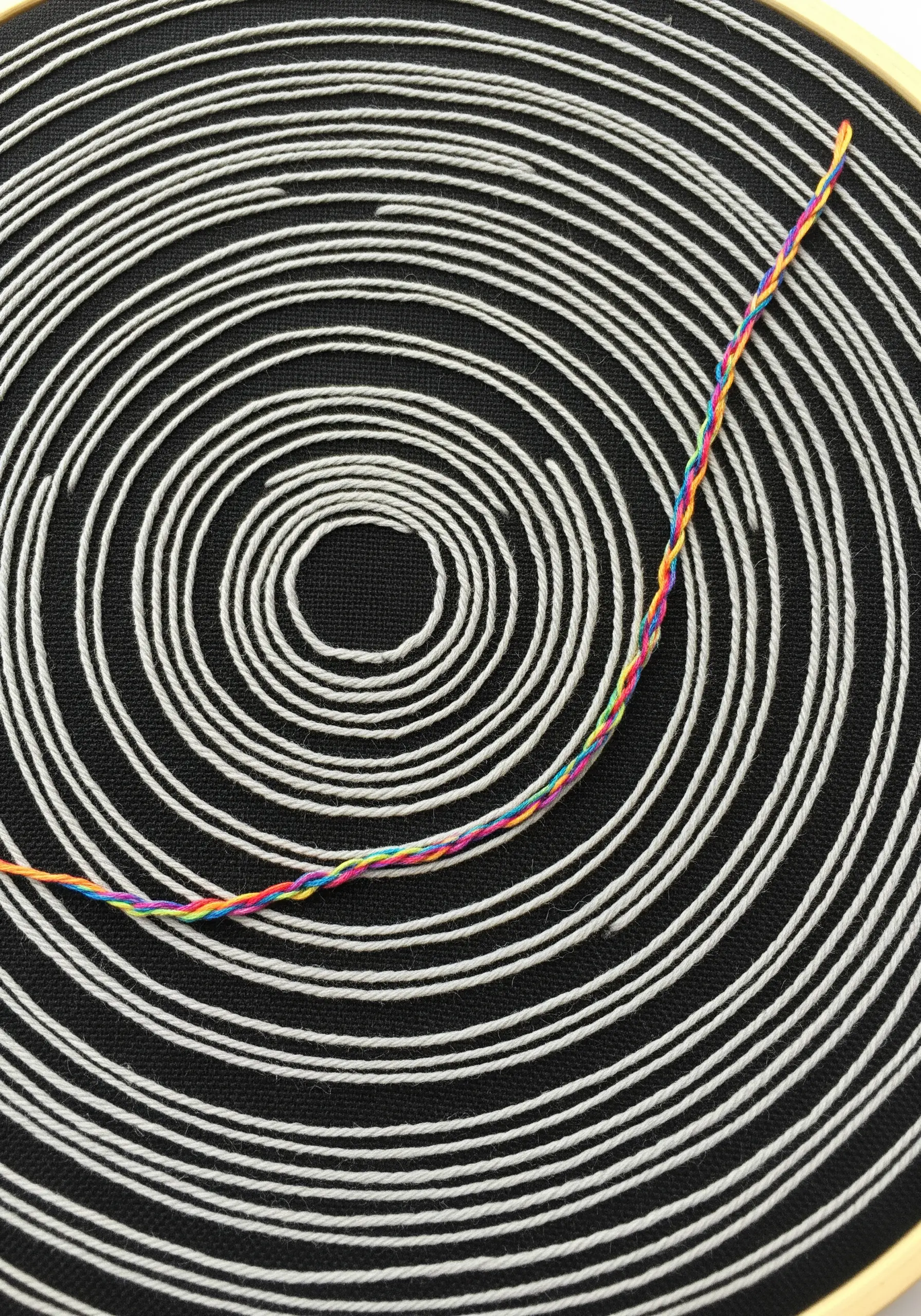
Create a mesmerizing pattern of concentric rings using a simple running stitch or backstitch in a high-contrast color.
The visual rhythm of the repeated circles draws the eye inward, creating a hypnotic effect.
To break the pattern and add a layer of narrative, introduce a single, vibrant element like a twisted cord made from multiple colors.
This cord can be couched onto the surface, creating a focal point that suggests a unique frequency or a thread of connection within the larger system.
24. Compose a Musical Piece with Abstract Stitches
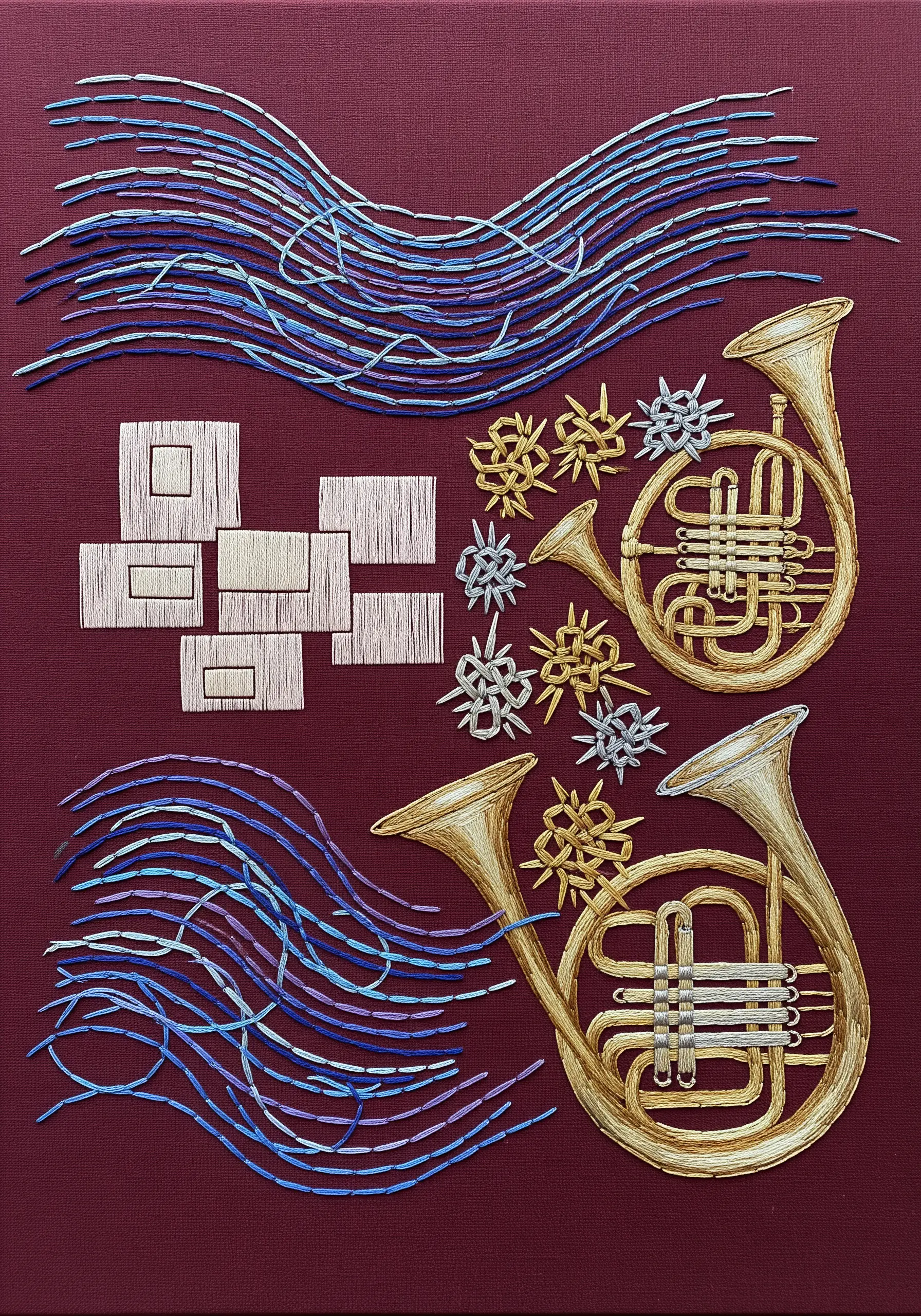
Translate the elements of a musical composition into abstract embroidered forms.
Represent flowing melodies with wavy lines of stem stitch or whipped backstitch, using blues and purples to suggest a fluid sound.
Create sharp, staccato notes or brassy fanfares with geometric satin stitch blocks or textured, star-like stitches in metallic gold floss.
This approach allows you to visualize music, assigning different stitches, colors, and textures to instruments, tempo, and dynamics.
25. Weave a Grayscale Soundscape with Mixed Fibers
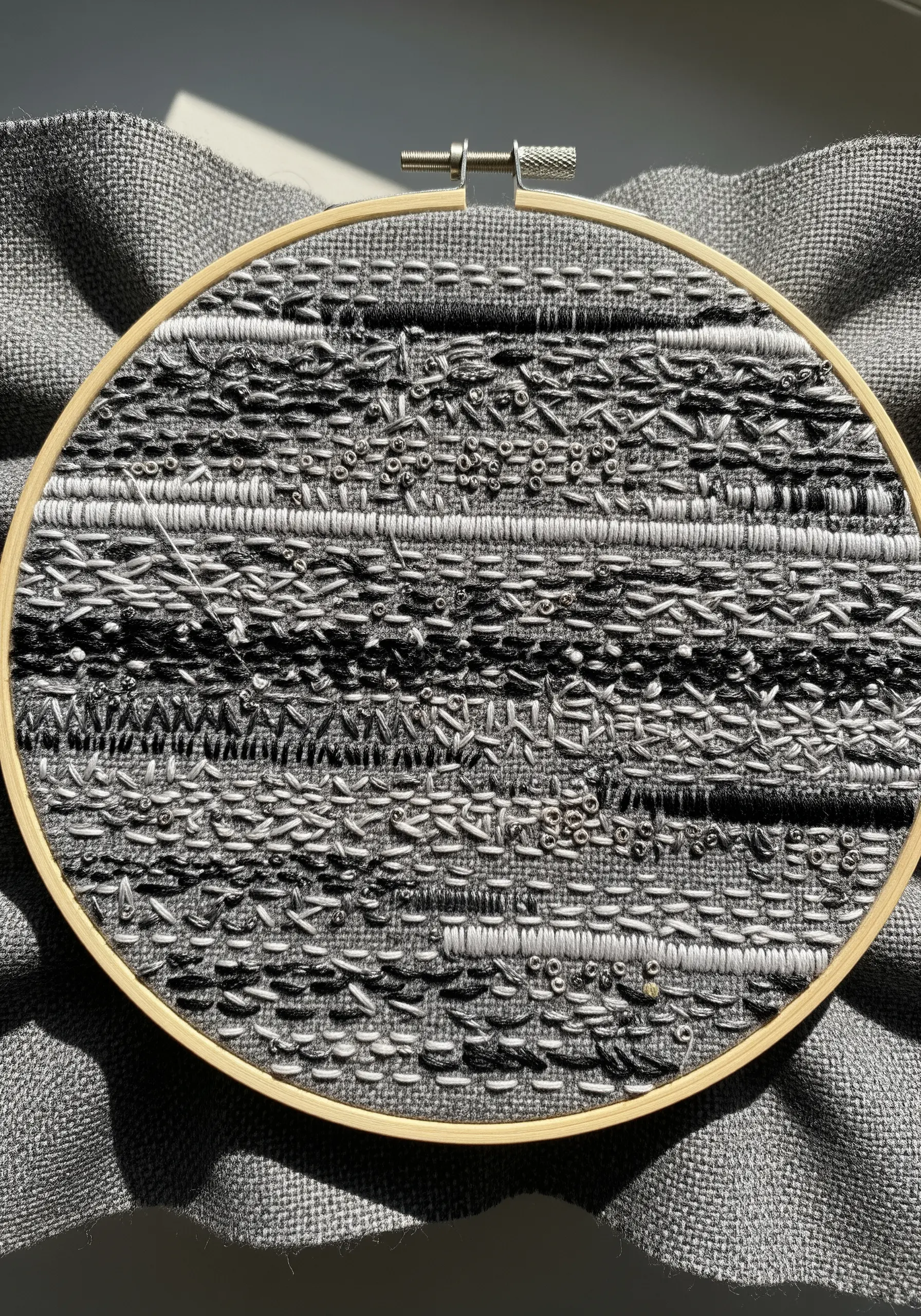
Create a rich, abstract representation of sound or static using a variety of threads and stitches in a monochrome palette.
Combine thick, woolly yarn for couching, fine single-strand cotton for seed stitches, and standard 6-strand floss for satin stitch bars and French knots.
By layering these different textures and sheens—matte wool next to shiny rayon, thick lines next to fine dots—you build a complex visual fabric that feels like an auditory experience.
This is one of the best mixed fiber art techniques for adding depth to abstract work.
26. Design a Digital Echo with Chain Stitch

Mimic the look of a digital signal or a ‘ping’ on a sonar screen using concentric circles of chain stitch.
The linked structure of the chain stitch creates a line that resembles pixels or digital segments, perfect for this technological theme.
Leave small, intentional gaps in the rings to enhance the feeling of a signal being transmitted or received.
Pairing this with simple, clean lettering completes the modern, graphic aesthetic.
27. Sculpt an Abstract Waveform with Vertical Bars
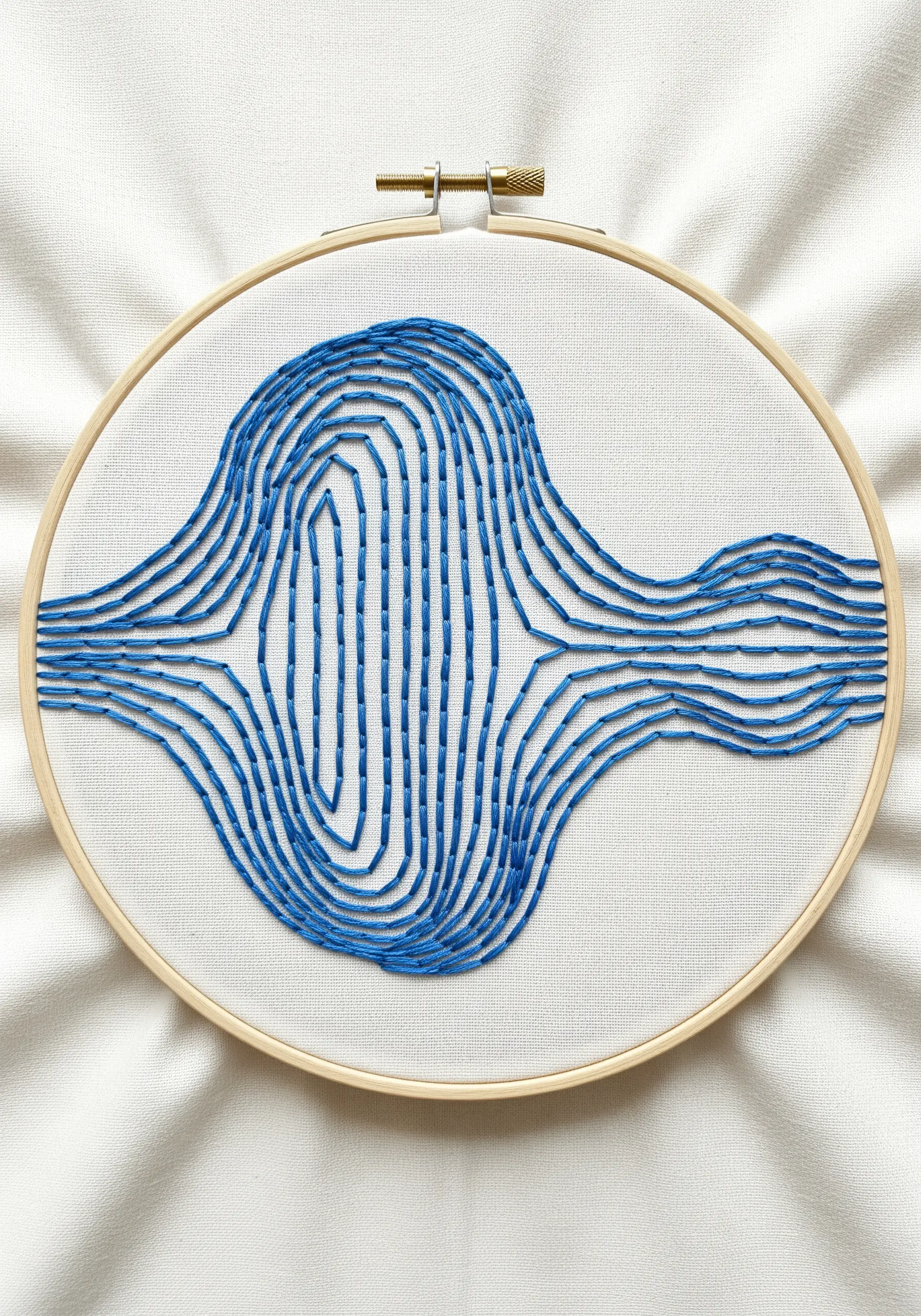
Create a fluid, three-dimensional illusion by stitching a series of connected vertical bars that follow a wave pattern.
Use a satin stitch for each bar, ensuring your stitches are tight and uniform.
The key to the clean, undulating outline is to first define the shape with a split stitch, giving your satin stitches a crisp edge to fill.
This transforms simple, straight stitches into a dynamic, flowing form that mimics the movement of sound or water.
28. Suspend a Sound Wave with Negative Space
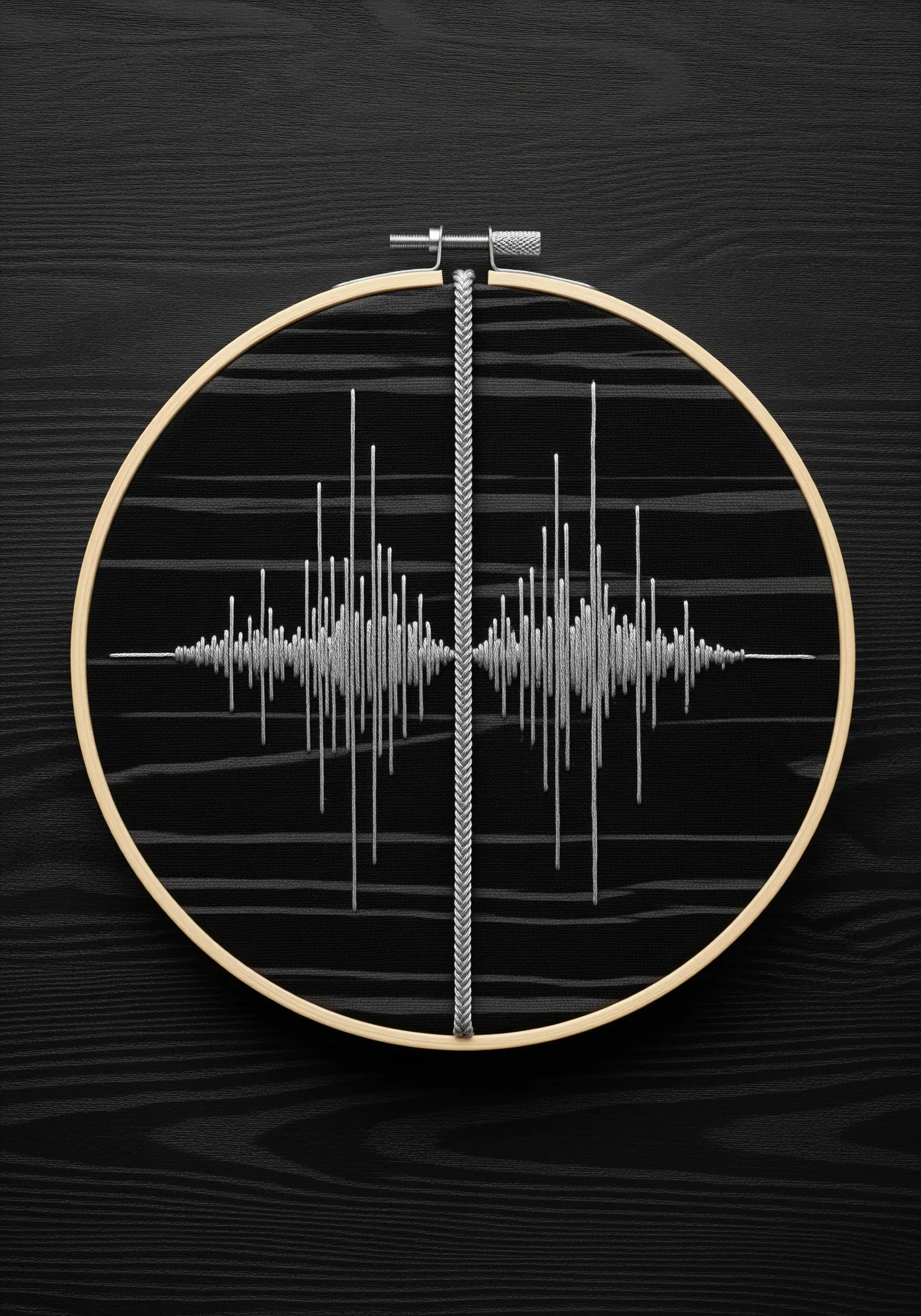
Create a dramatic, high-contrast sound wave by stitching it directly onto the hoop itself, using the empty space as your canvas.
Wrap the inner hoop ring with thread or fabric tape to provide an anchor for your stitches.
Stretch long vertical threads from the top to the bottom of the hoop, varying their length to match the waveform pattern.
This technique, known as abstract negative space, makes the thread art appear to float, creating a modern, sculptural piece.
29. Construct Geometric Motifs with Woven Textures
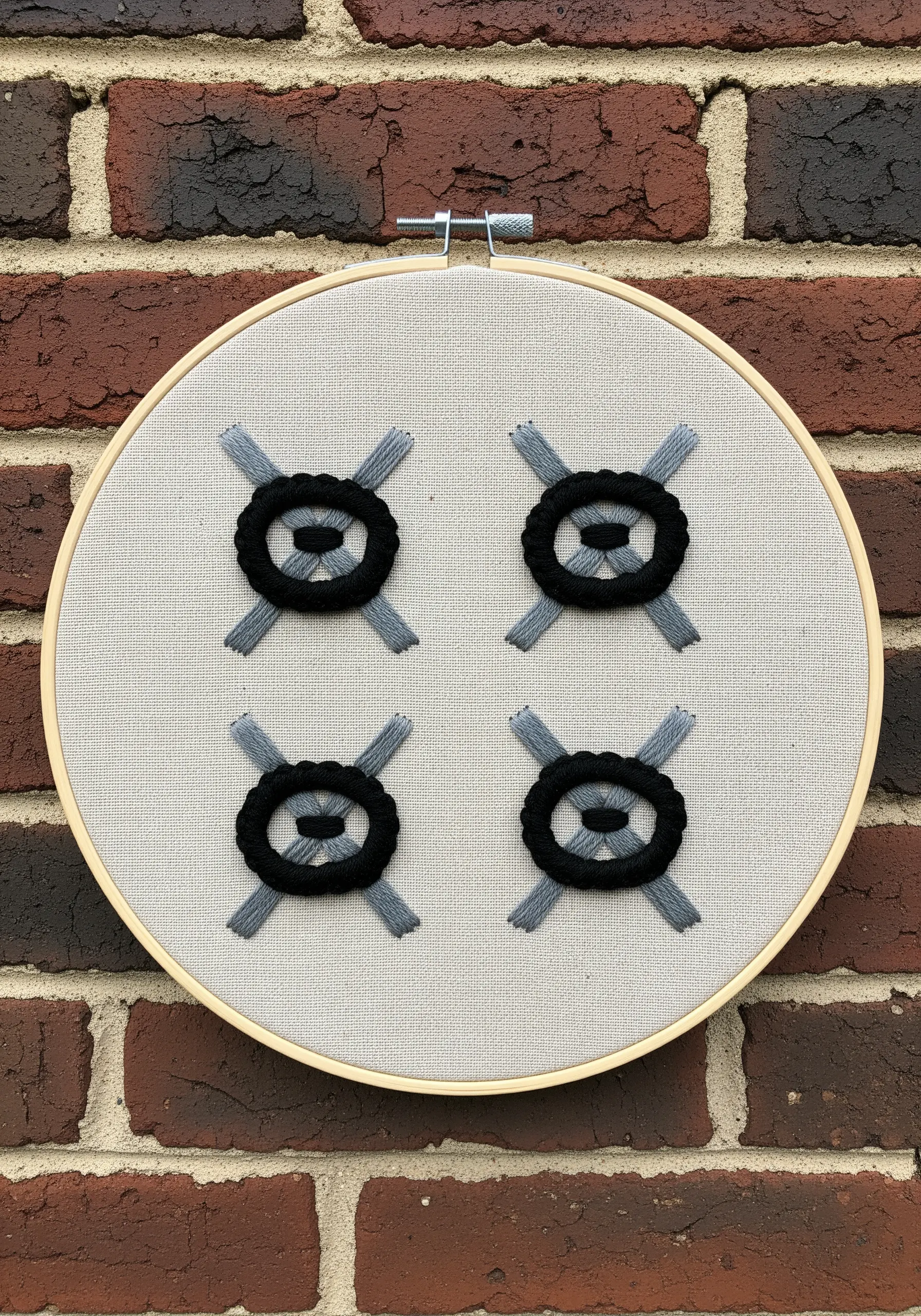
Build bold, graphic symbols by combining simple straight stitches with a weaving technique.
First, create a foundation of straight stitches—like the gray ‘X’ shapes—and then use a contrasting, thicker thread (like black pearl cotton) to weave over and under these foundation stitches.
This method, often used in woven wheel or spider web stitches, creates a dense, raised, and highly textural element that stands out dramatically from the flat fabric background.
30. Stitch Delicate Sound Waves on Sheer Fabric
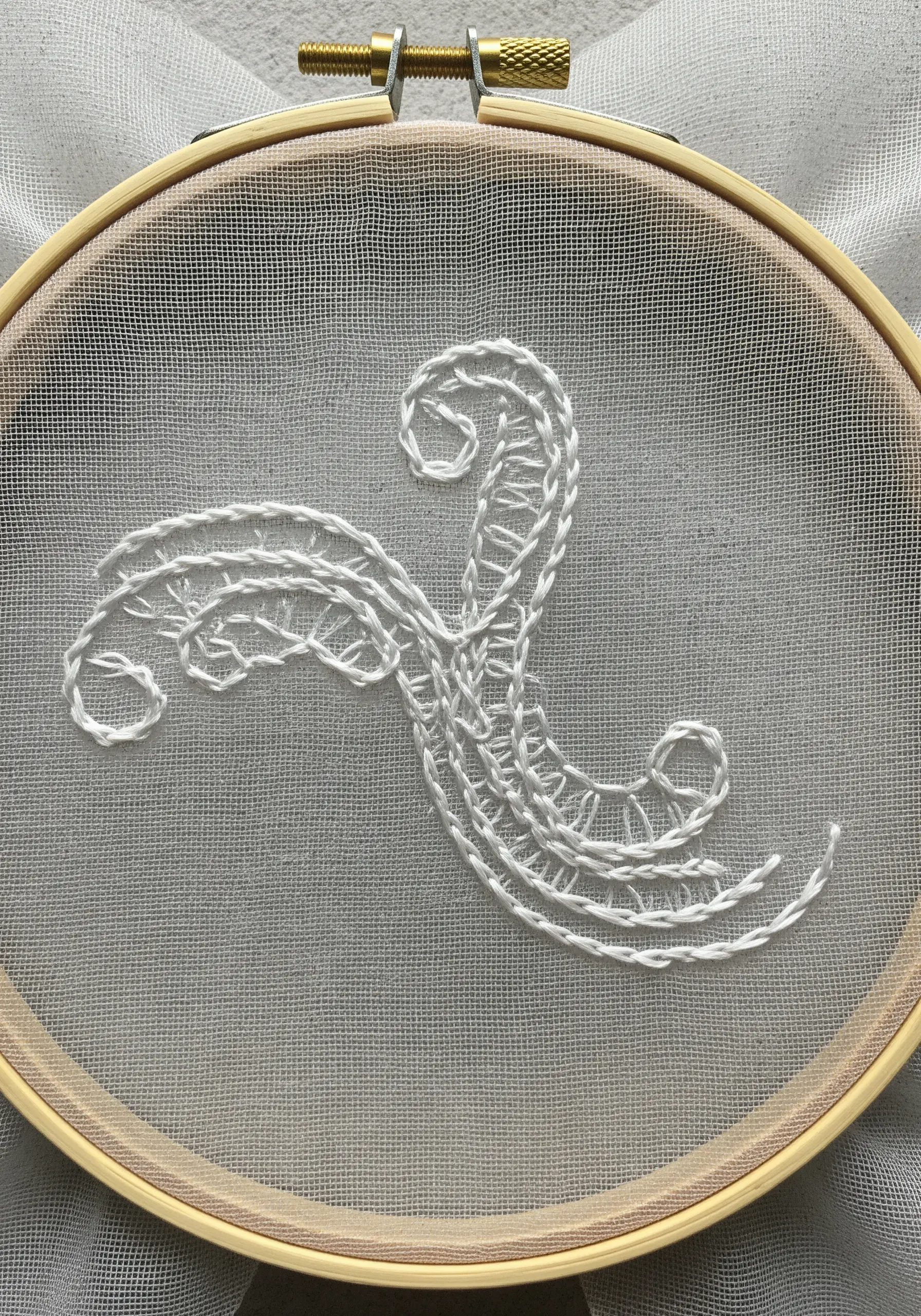
Explore the interplay of thread and light by embroidering on a delicate, semi-transparent fabric like tulle or organza.
Use a stabilizer (like a water-soluble one) to prevent the fine fabric from puckering as you stitch.
A simple backstitch or chain stitch in a contrasting white thread is all you need to create ethereal, ghost-like forms that seem to float.
This technique emphasizes the delicacy of the line itself, making it perfect for representing something as intangible as sound.