Perhaps you look at your embroidery and feel something is missing—that final touch of polish that separates a pleasant pastime from a piece of personal art. You have the skills, but you want your stitches to feel more intentional, more cohesive, more *you*.
The quiet elegance of Scandinavian design isn’t about stark minimalism; it’s about warmth, function, and finding beauty in simplicity. It’s a way of thinking that translates perfectly to thread and fabric. It invites you to slow down, to choose your stitches with purpose, and to let the texture of the thread speak for itself.
Here, you won’t find overly complex patterns. Instead, you’ll discover how a simple shift in stitch direction can create shadow, how combining thick and thin threads adds drama, and how clean lines can carry more emotion than a thousand colors. These are not just motifs; they are exercises in calm, confidence, and creating something truly beautiful for your home.
1. Create Depth with Directional Satin Stitch
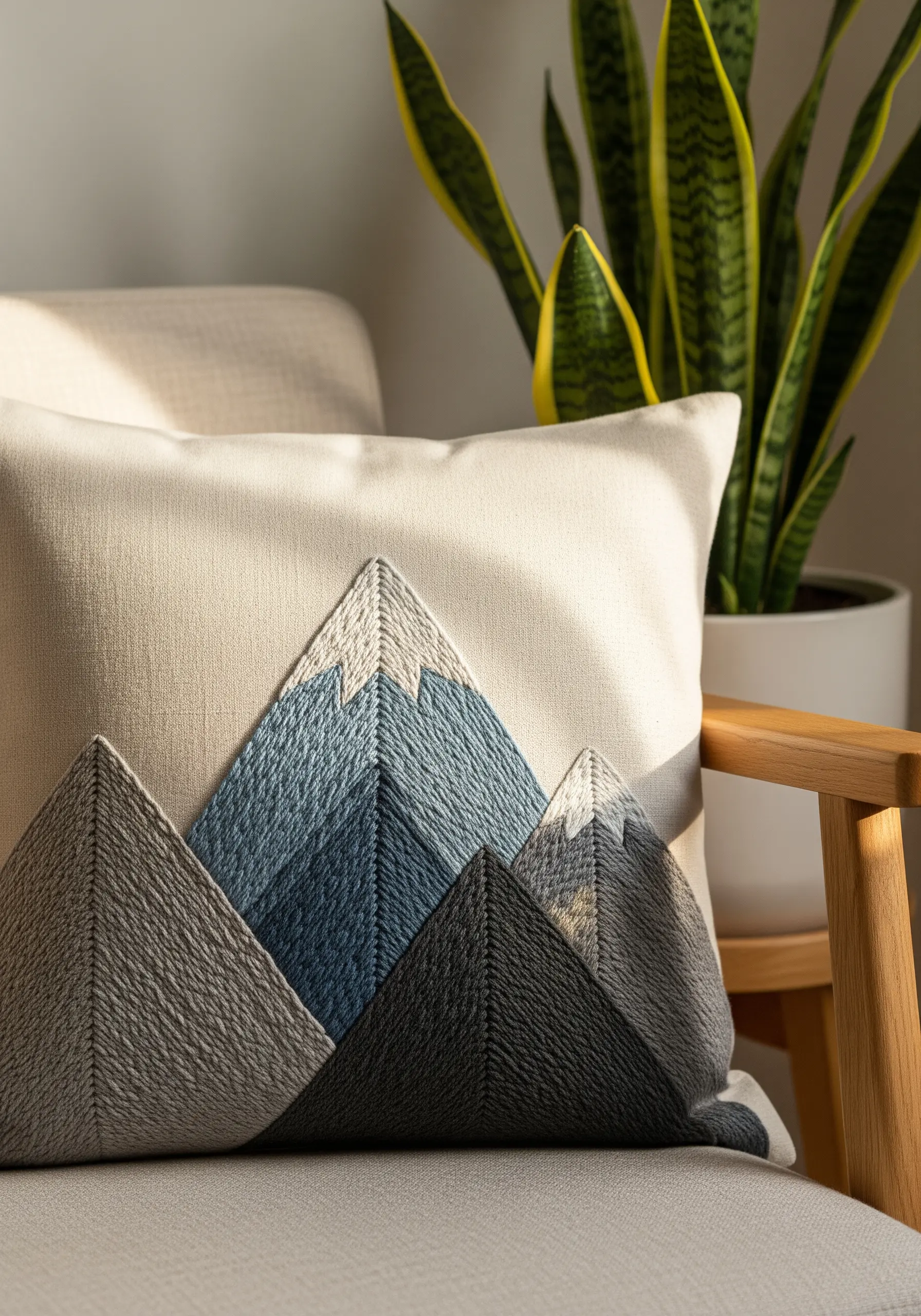
Transform a simple geometric design into a textured landscape by using directional satin stitch.
First, cut your mountain shapes from felt and appliqué them onto your cushion cover for a subtle, raised foundation.
For each facet of the mountain, angle your satin stitches consistently—for example, 45 degrees to the left for one side, 45 degrees to the right for the other.
This directional change catches the light differently, creating the illusion of shadow and dimension without changing your thread color.
Use a full six strands of floss for a dense, woven texture that feels robust and cozy.
2. Master Botanical Realism with Fishbone Stitch
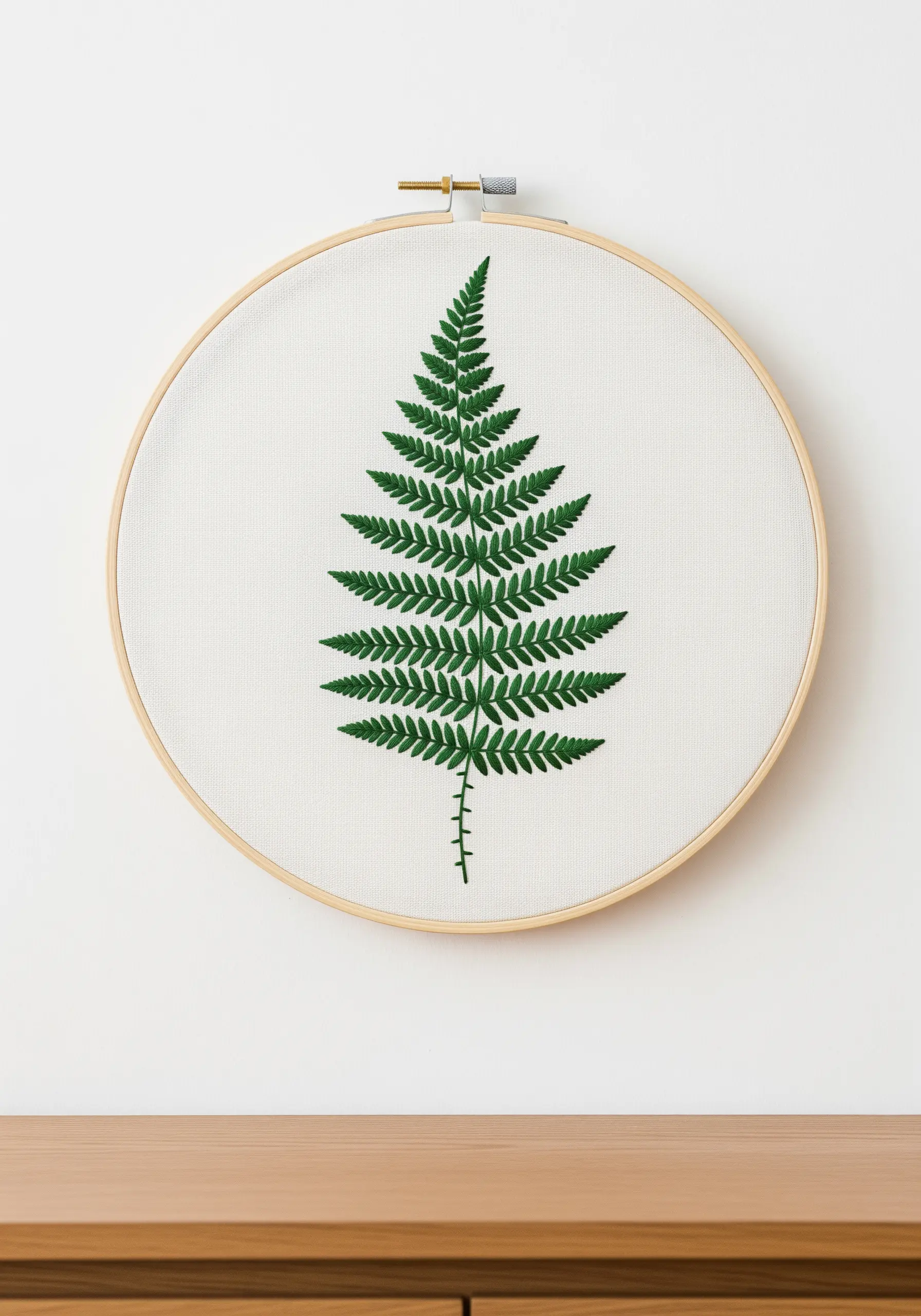
To achieve the delicate symmetry of a fern, the fishbone stitch is your most powerful tool.
Each frond is created with a series of overlapping diagonal stitches that meet at the center, forming a raised, defined spine.
Work from the tip of the leaf downwards, keeping your stitches small and tight for a clean, realistic finish.
Using just one or two strands of a deep green floss on a crisp, white linen allows the negative space to frame the motif, giving it a light, airy quality essential for chic Scandinavian home decor.
3. Go Large-Scale with Couched Yarn Line Art
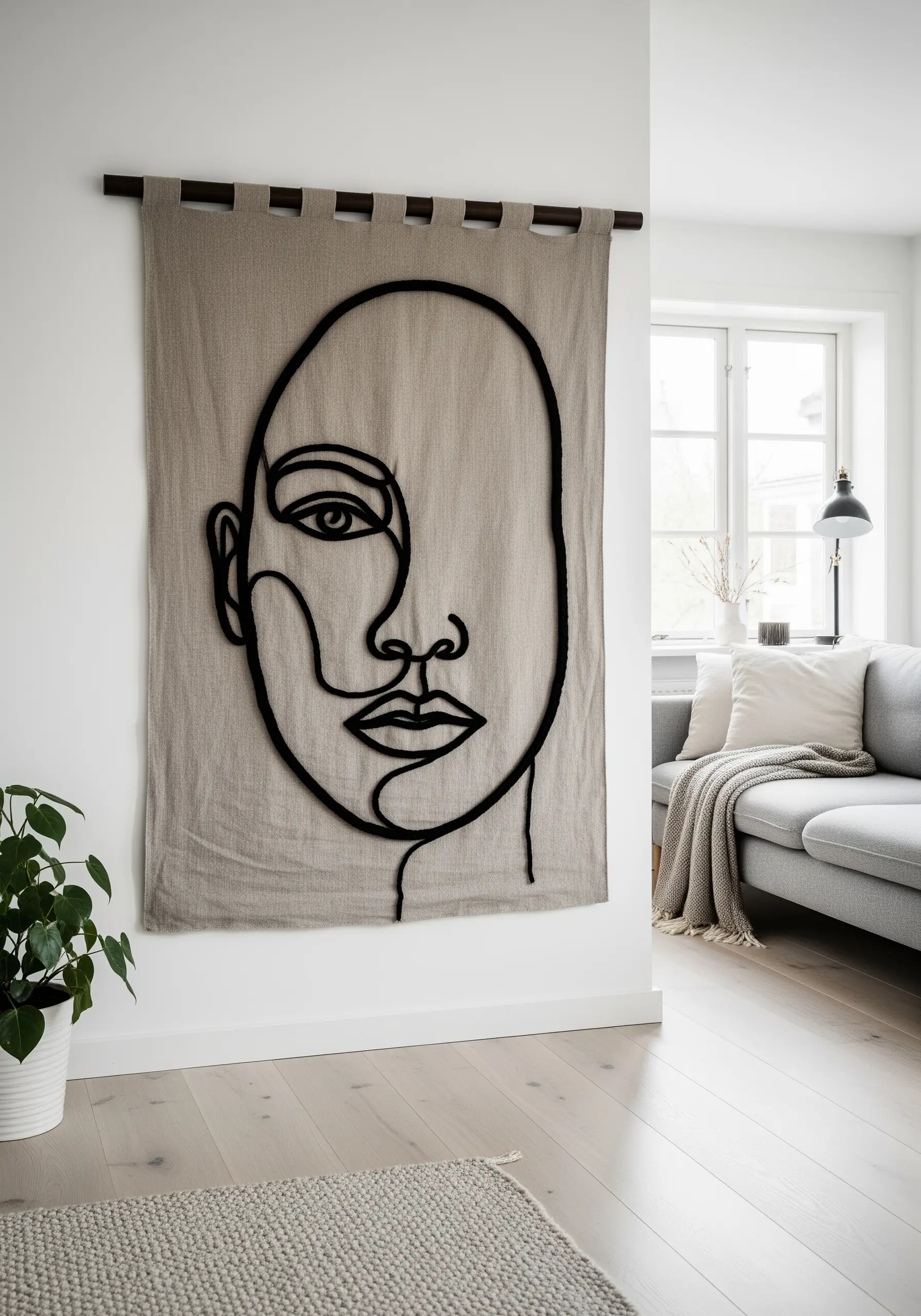
To make a dramatic statement on a wall hanging, swap fine floss for thick yarn and embrace couching.
Lay down a thick black yarn to draw your continuous-line portrait on the fabric.
Then, use a single strand of matching black embroidery floss to tack the yarn in place with small, discreet stitches every centimeter or so.
This technique allows you to create bold, graphic lines that would be impossible with traditional stitches, turning your embroidery into a piece of modern textile art.
Choose a coarse, neutral linen to complement the rustic, tactile quality of the yarn.
4. Curate a Narrative with Minimalist Motifs
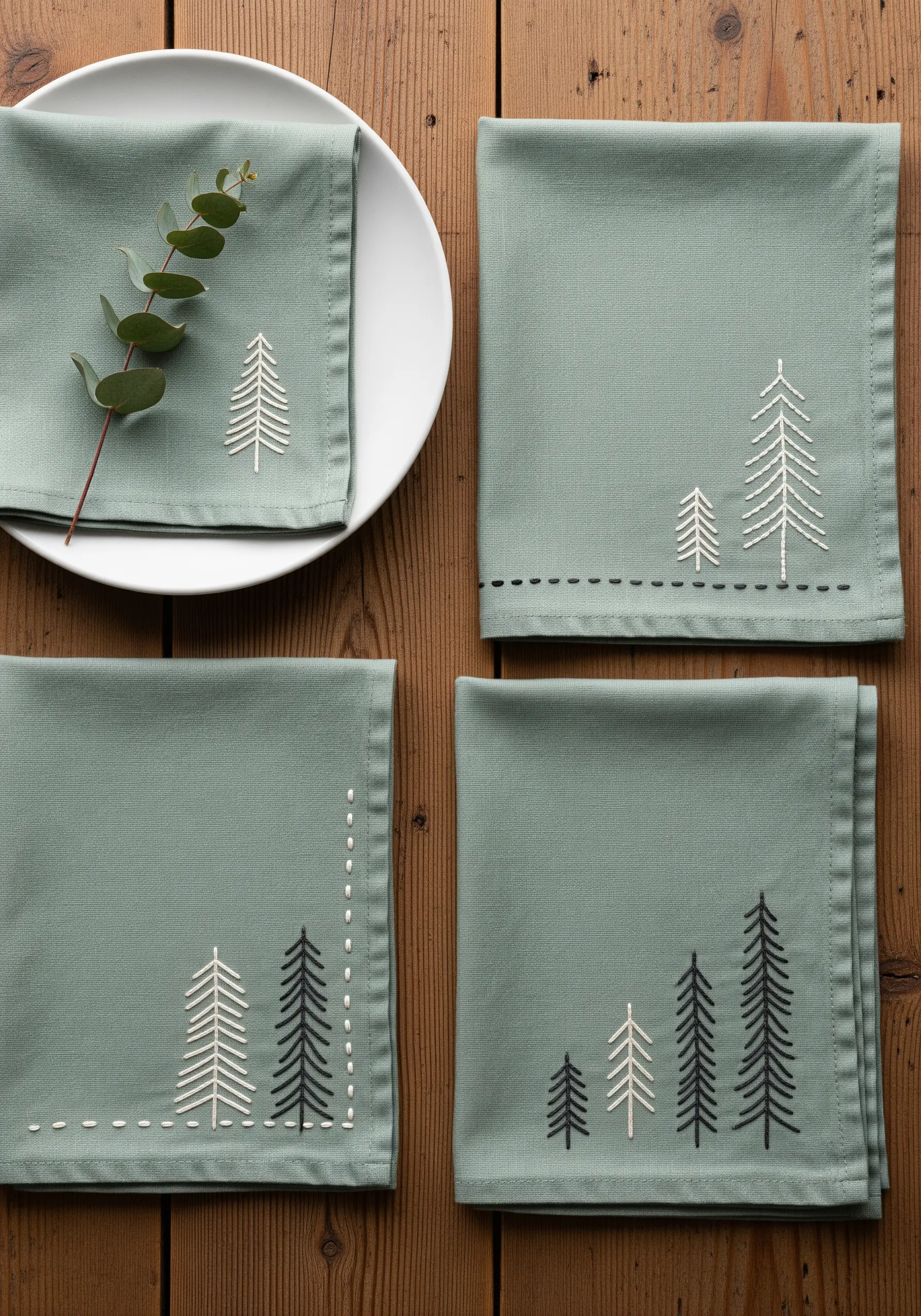
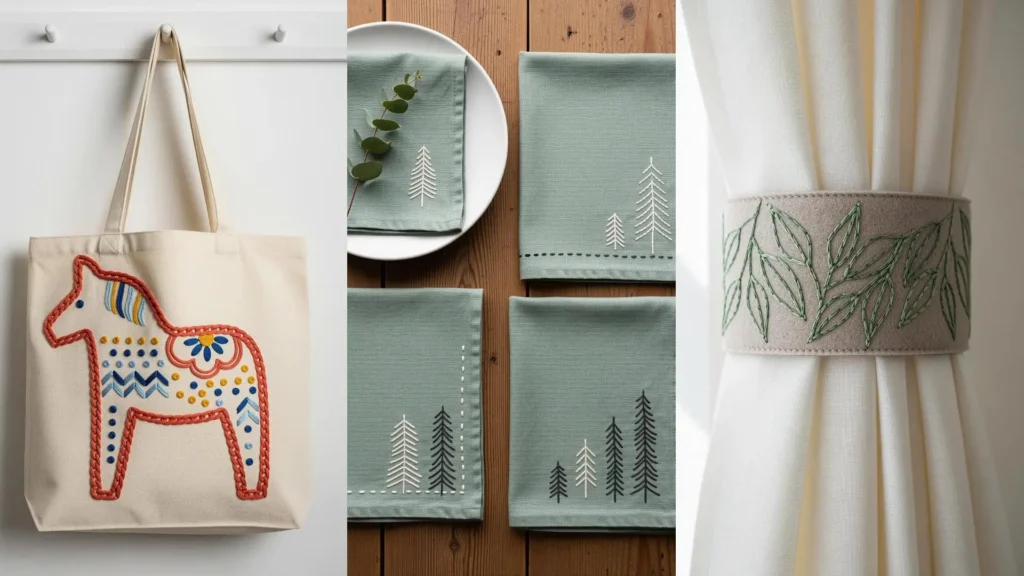
Elevate simple backstitch trees by arranging them into a subtle narrative across a set of napkins.
Instead of stitching the same design on each piece, create a small, evolving forest scene—one tree, then two, then a small cluster.
Combine outline styles, using a clean backstitch for some trees and a filled-in satin stitch for others to create visual interest.
A simple running stitch border adds a handmade touch that feels intentional and complete, making these perfect Scandinavian table linen embroidery motifs.
5. Blend Folk Art with Graphic Fills
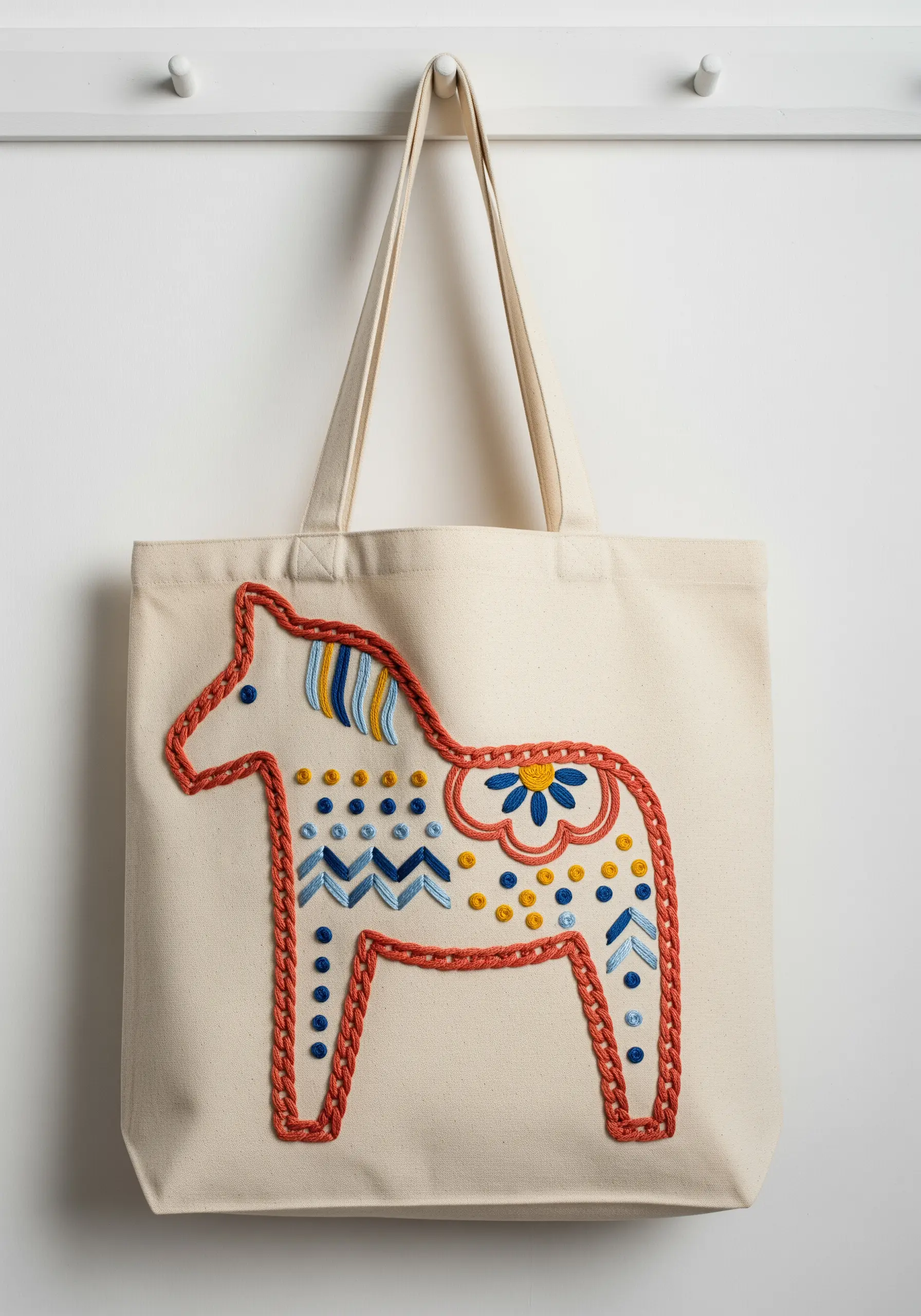
Give the traditional Dala horse a modern update by focusing on bold outlines and geometric fill patterns.
Use a heavy chain stitch for the entire outline of the horse; its braided texture gives the motif weight and definition.
Instead of traditional floral fills, use simple satin-stitch chevrons, rows of French knots, and woven wheel flowers.
This combination of folk silhouette and graphic texture turns a classic design into a contemporary statement piece, especially on blank tote bags.
6. Design for Light with Open Stitchwork
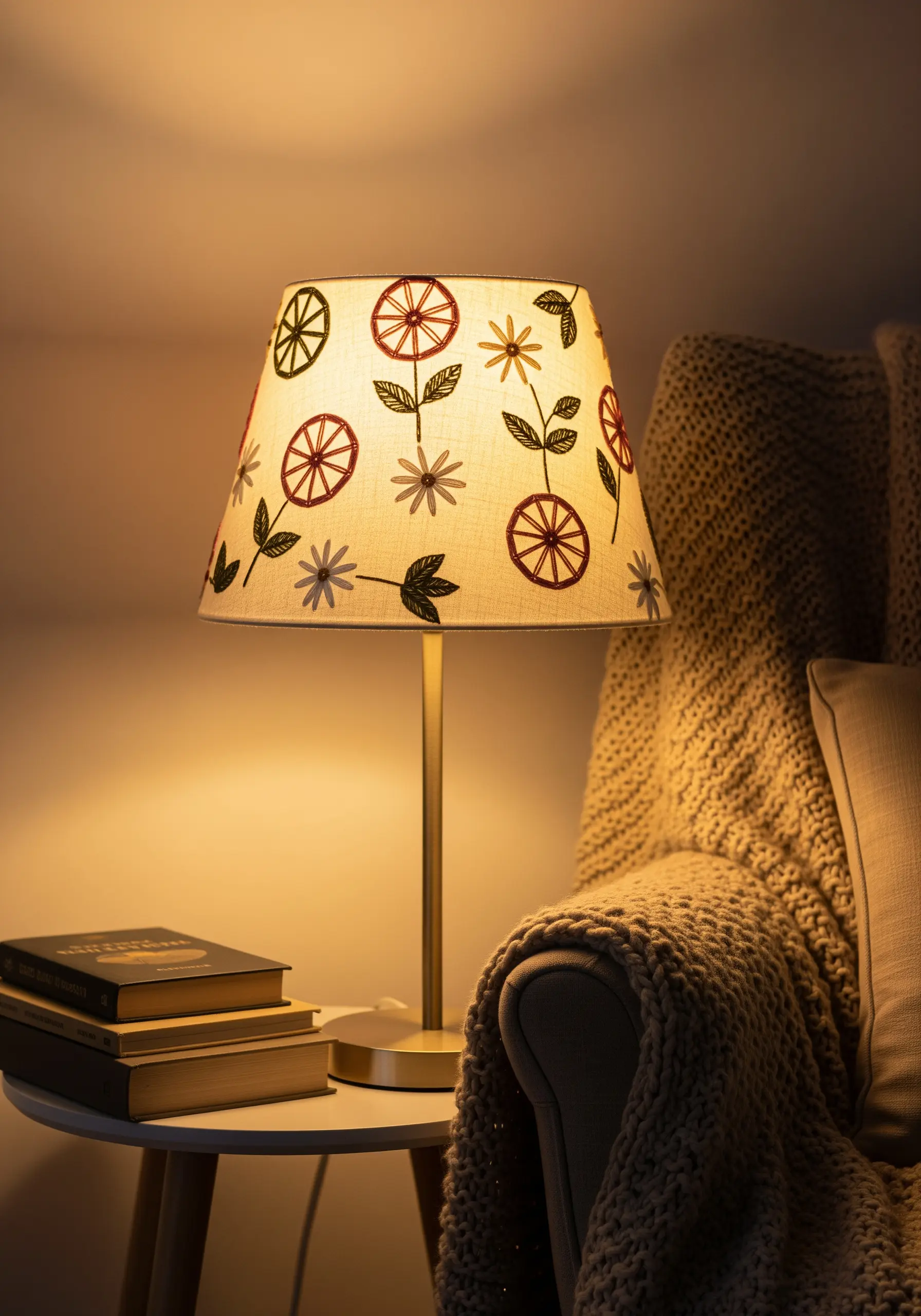
When embroidering a lampshade, your design must work with light, not against it.
Choose open, airy stitches like lazy daisies, stem stitch, and simple straight stitches to avoid creating dense, dark patches.
Sketch a scattered pattern of stylized botanicals that leaves plenty of negative space, allowing light to diffuse evenly through the fabric.
A muted color palette of moss green, ochre, and brick red on a cream linen shade will create a warm, inviting glow when the lamp is switched on.
7. Capture Delicate Motion with Radiating Stitches
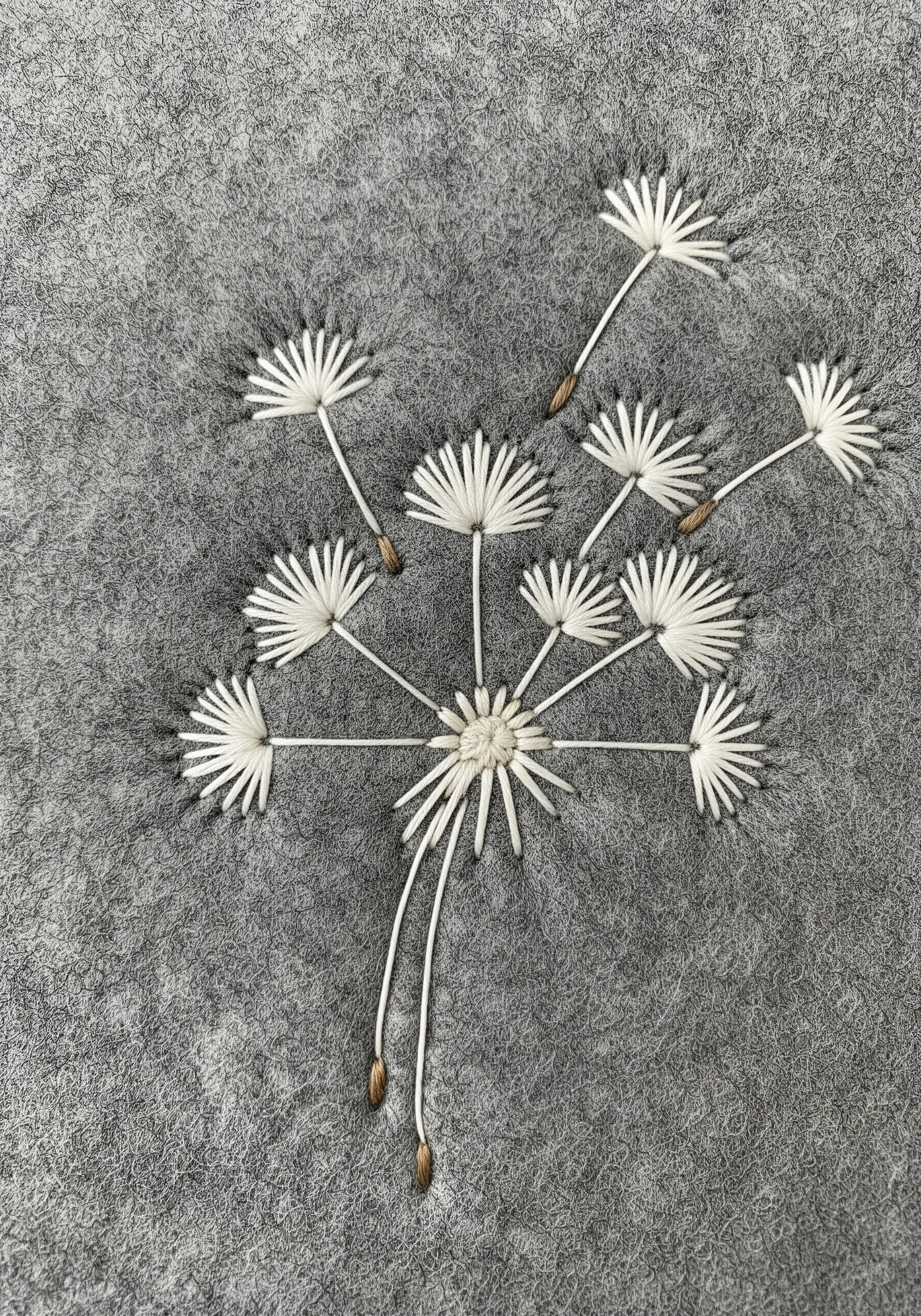
Create the weightless feel of dandelion seeds by using carefully placed straight stitches on a textured fabric like wool felt.
For each seed head, work a fan of single straight stitches out from a central point, keeping the tension loose enough to lie flat without puckering the felt.
Add a tiny seed stitch or a single French knot at the end of each stem using a contrasting brown thread for a touch of realism.
The contrast between the crisp white thread and the soft, heathered grey felt makes the motif appear to float.
8. Fill Silhouettes with Textural French Knots
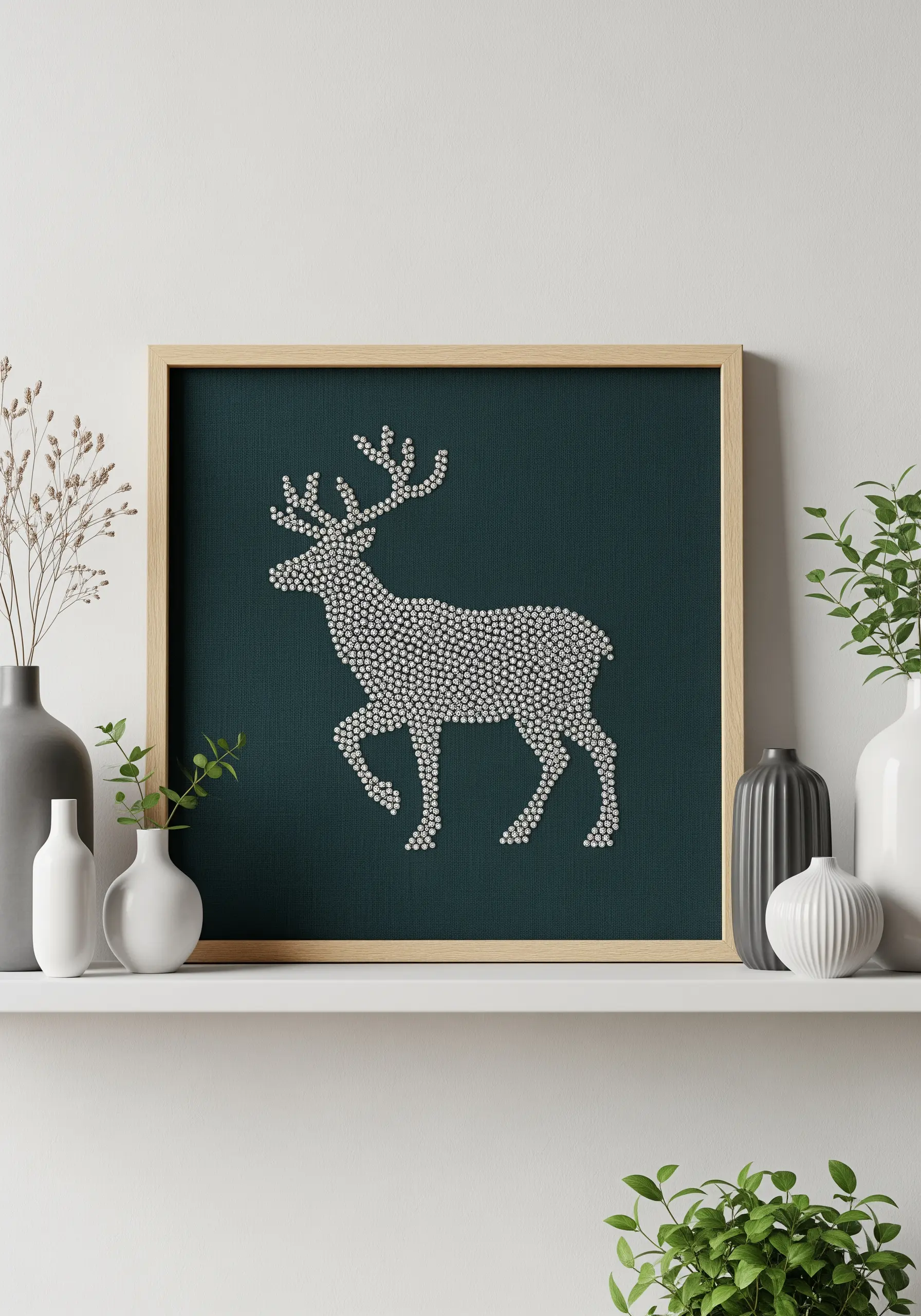
Instead of using a flat fill stitch, create a dynamic, pointillist effect by filling a shape entirely with French knots.
To achieve a uniform, cobblestone-like texture, focus on making each knot identical in size and tension—wrapping the thread twice around the needle usually creates the perfect density.
Stitch the knots closely together, working from the outline inward, to ensure there are no gaps in your silhouette.
This technique turns a simple shape into a highly tactile piece of art, making it ideal for minimal pet silhouette embroidery.
9. Add a Touch of ‘Fika’ with Clean Line Work
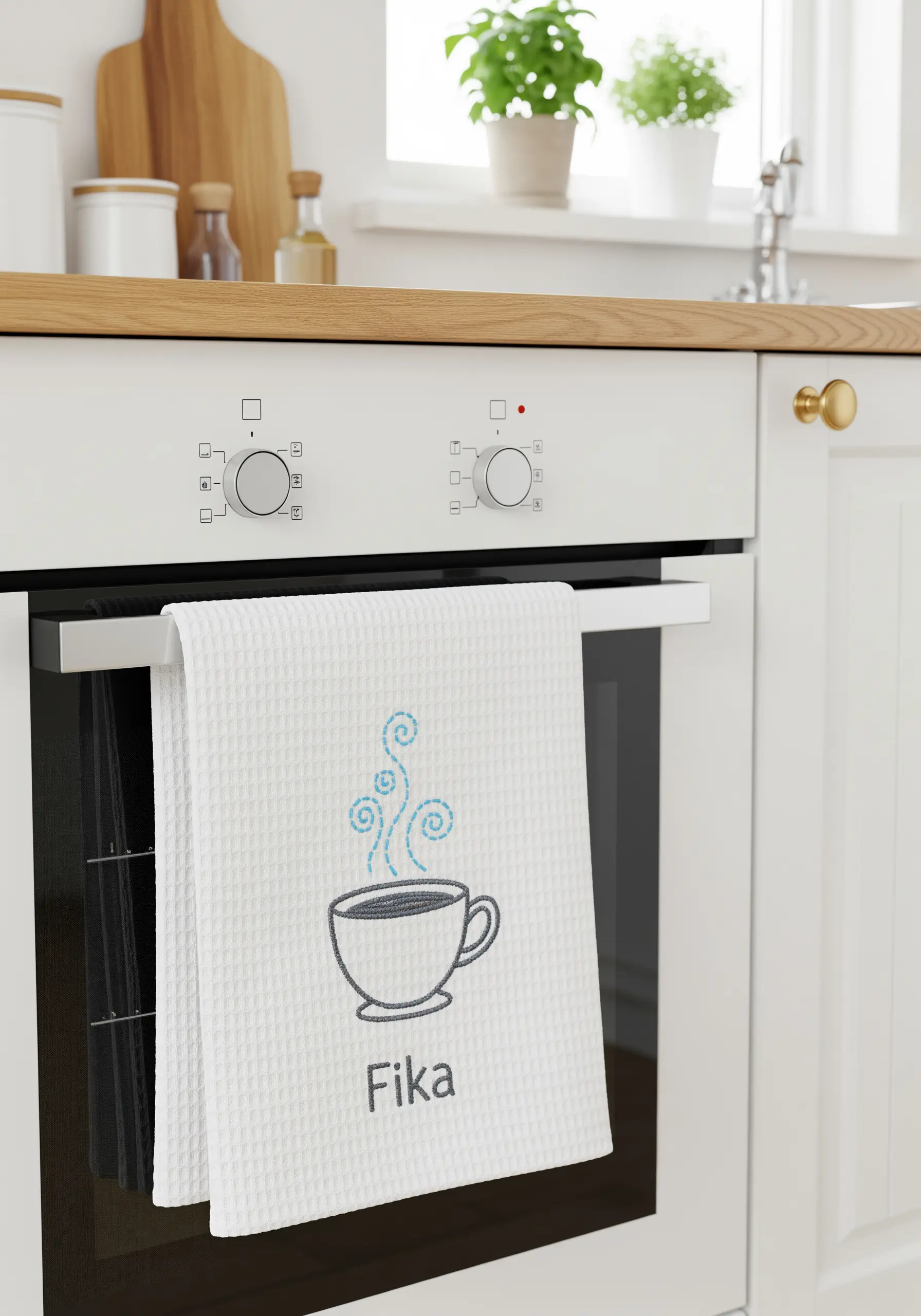
Celebrate the Swedish tradition of ‘Fika’ (a cozy coffee break) with a simple, charming motif on a kitchen towel.
Use a crisp split stitch or backstitch with three strands of floss for the cup and lettering to ensure your lines are clean and readable.
For the steam, switch to a lighter color and use a delicate, curving stem stitch to create a sense of gentle movement.
This small touch of personality transforms everyday embroidered kitchen towel designs into something warm and personal.
10. Build Intricate Geometry from Simple Stitches
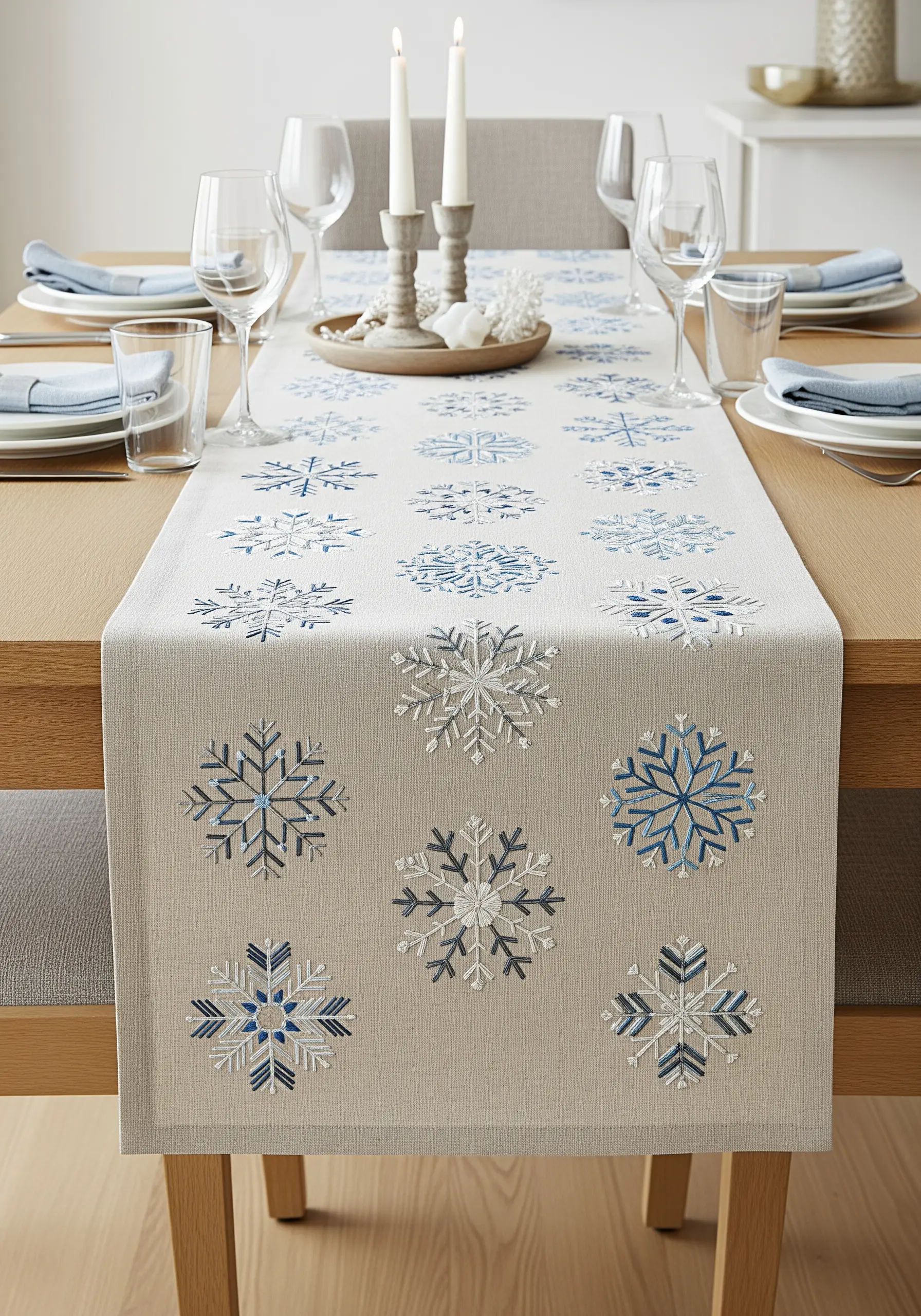
Create complex-looking snowflakes on a table runner by combining basic stitches in a grid pattern.
Use backstitch and straight stitches to form the primary arms of each snowflake, focusing on perfect symmetry.
Then, add dimension by incorporating small satin-stitched blocks or bars within the design.
By sticking to a limited palette of icy blues, greys, and white on a natural linen, you can stitch a variety of unique snowflake designs that feel cohesive and elegant, not chaotic.
11. Use Color Blocking for Graphic Animal Motifs
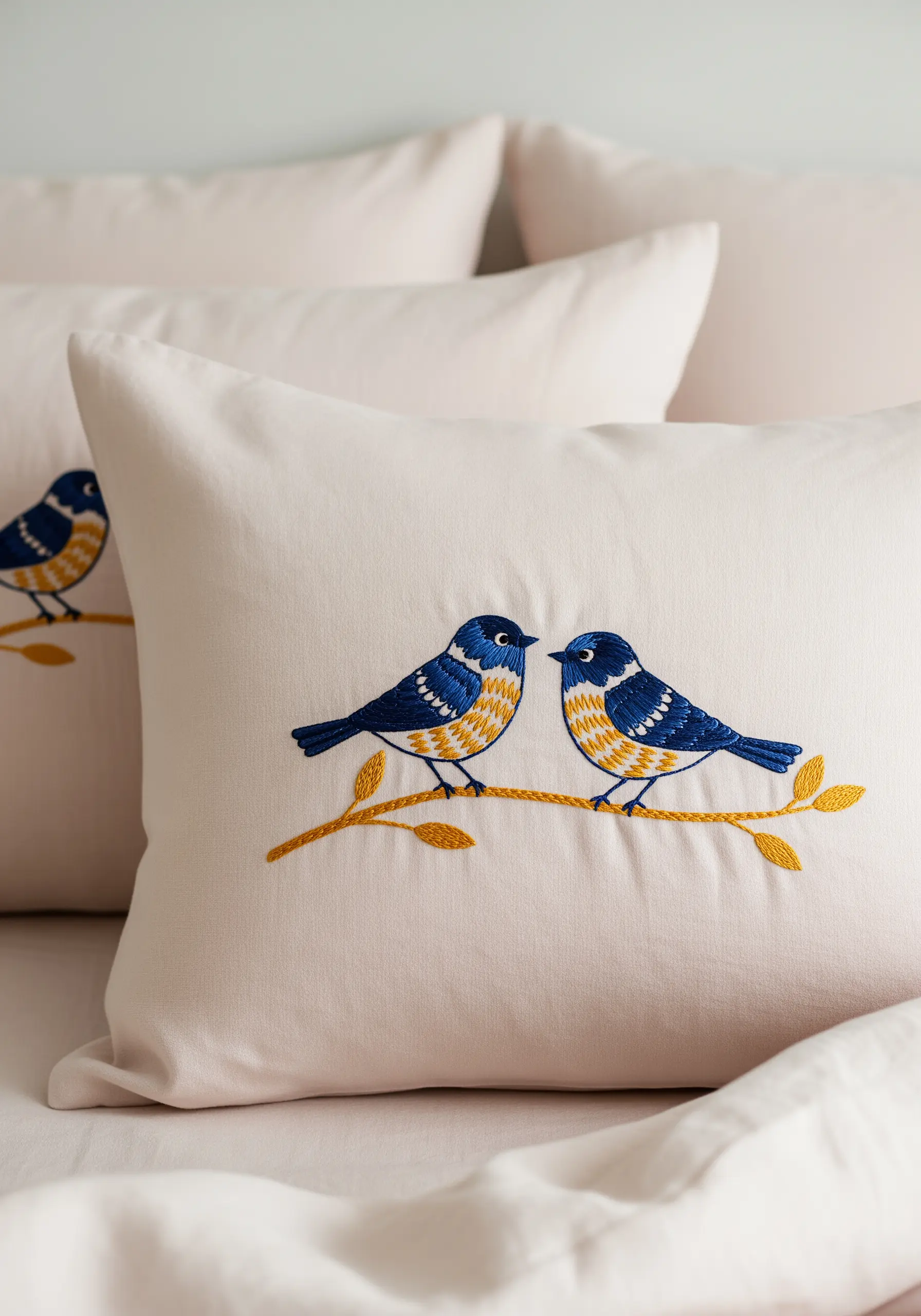
Give animal motifs a modern, graphic look by using solid blocks of color instead of realistic shading.
Outline the entire bird with a neat split stitch to create a defined container for your fills.
Fill each section—the wing, the belly, the head—with a tight, smooth satin stitch, ensuring all stitches lie in the same direction within a single block of color.
This technique creates a clean, illustrative style that feels both playful and sophisticated, perfect for nursery or bedroom décor.
12. Create Abstract Art with Mixed-Weight Threads
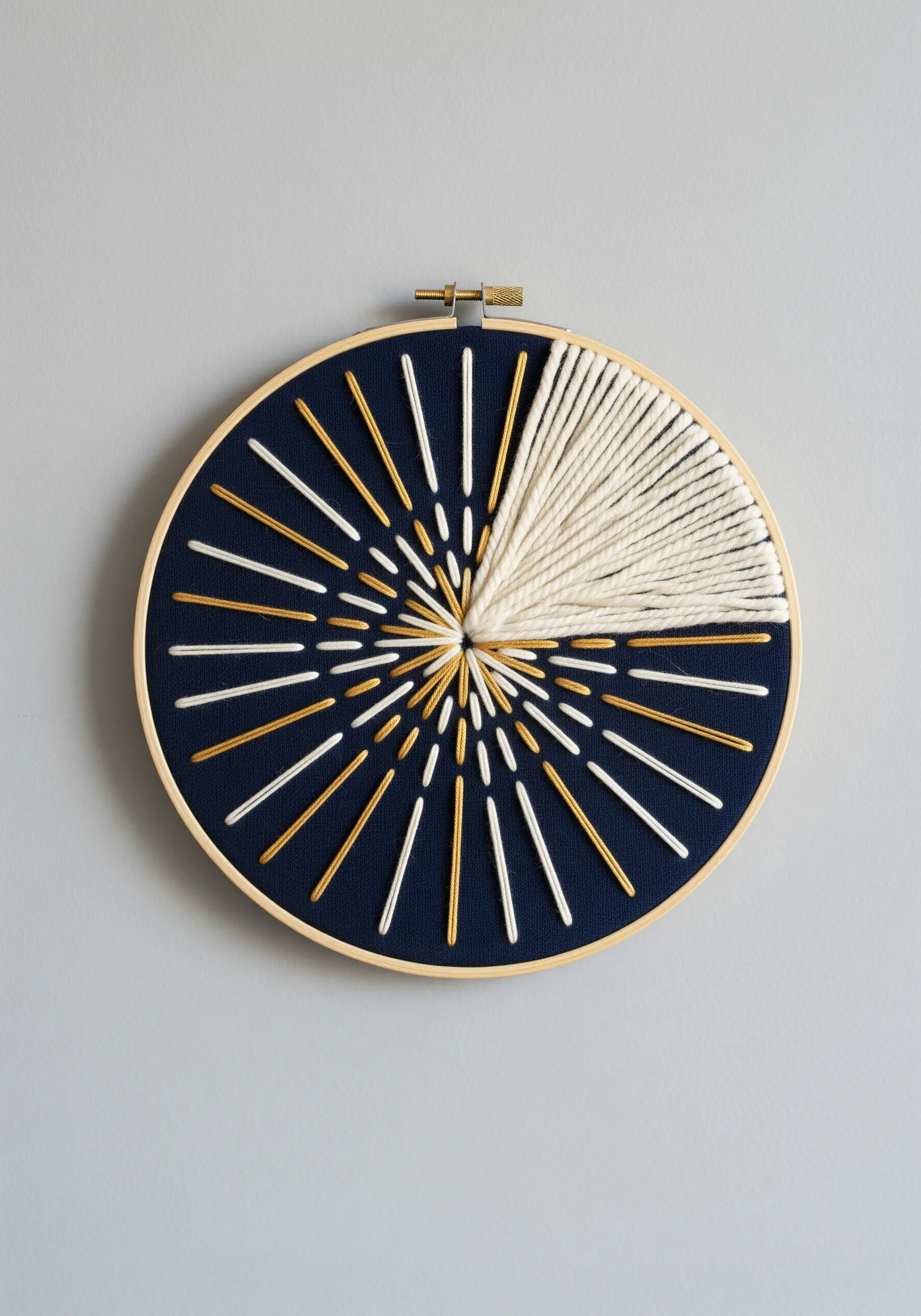
Explore texture and line by combining standard embroidery floss with thicker fibers like tapestry wool or cotton perle.
In this abstract sunburst design, use a fine metallic floss for the delicate golden rays and a thicker, creamy yarn for the solid wedge section.
The contrast in thread weight creates immediate visual and tactile interest, turning a simple hoop into one of those abstract thread line art creations.
Stitching on a dark navy fabric makes the white, gold, and silver threads appear to radiate with energy.
13. Embroider Functional Art for Everyday Use
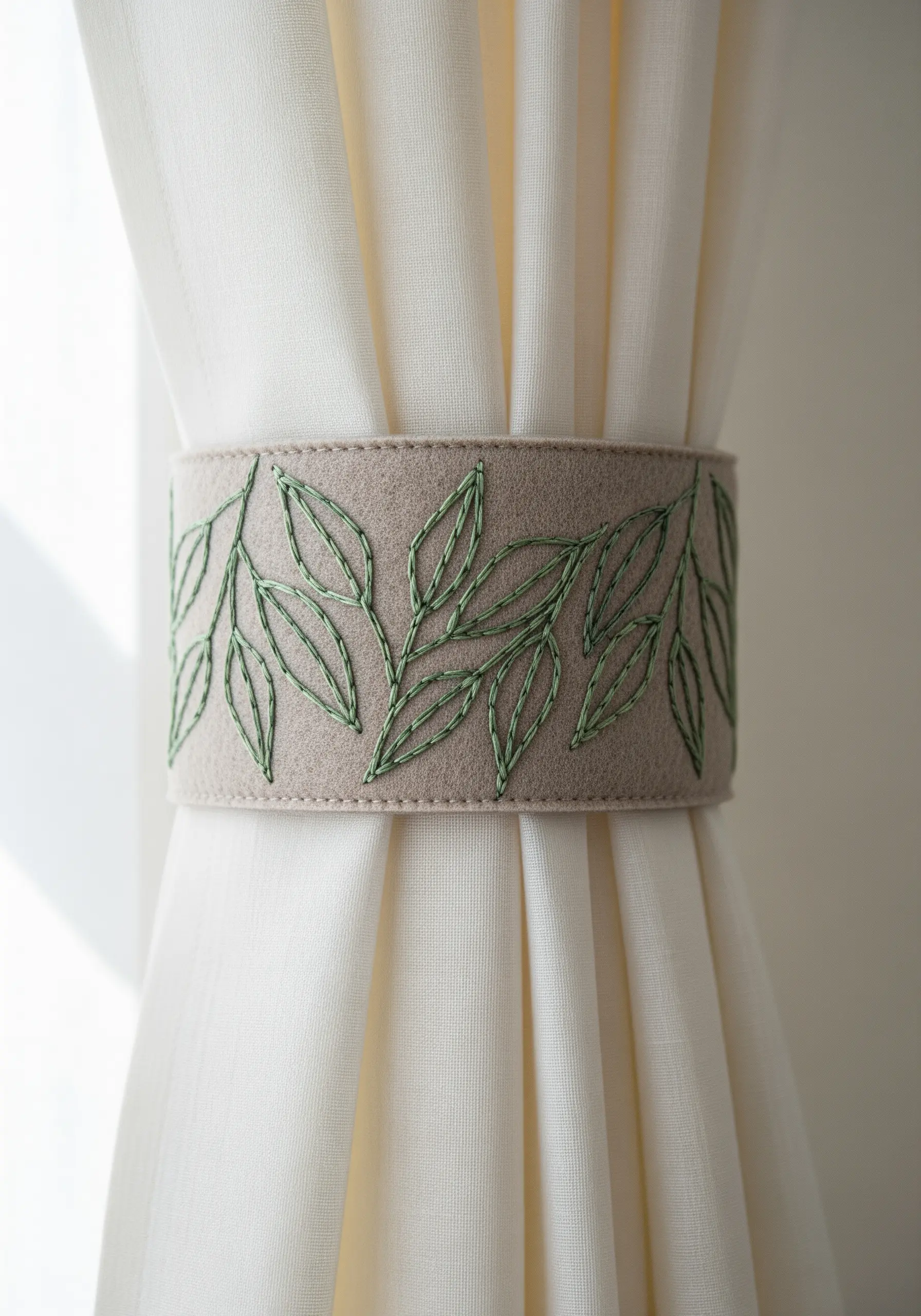
Apply your skills to create beautiful, functional objects like these botanical curtain tie-backs.
Choose a thick, sturdy base fabric like wool felt that won’t warp or stretch with use.
Use a simple backstitch for the leaf outlines and a central stem stitch for the veins; the goal is an elegant design that isn’t overly delicate.
A monochromatic color scheme—like sage green thread on a beige felt—ensures the tie-back complements your curtains rather than competing with them.
14. Juxtapose Textures for Abstract Composition
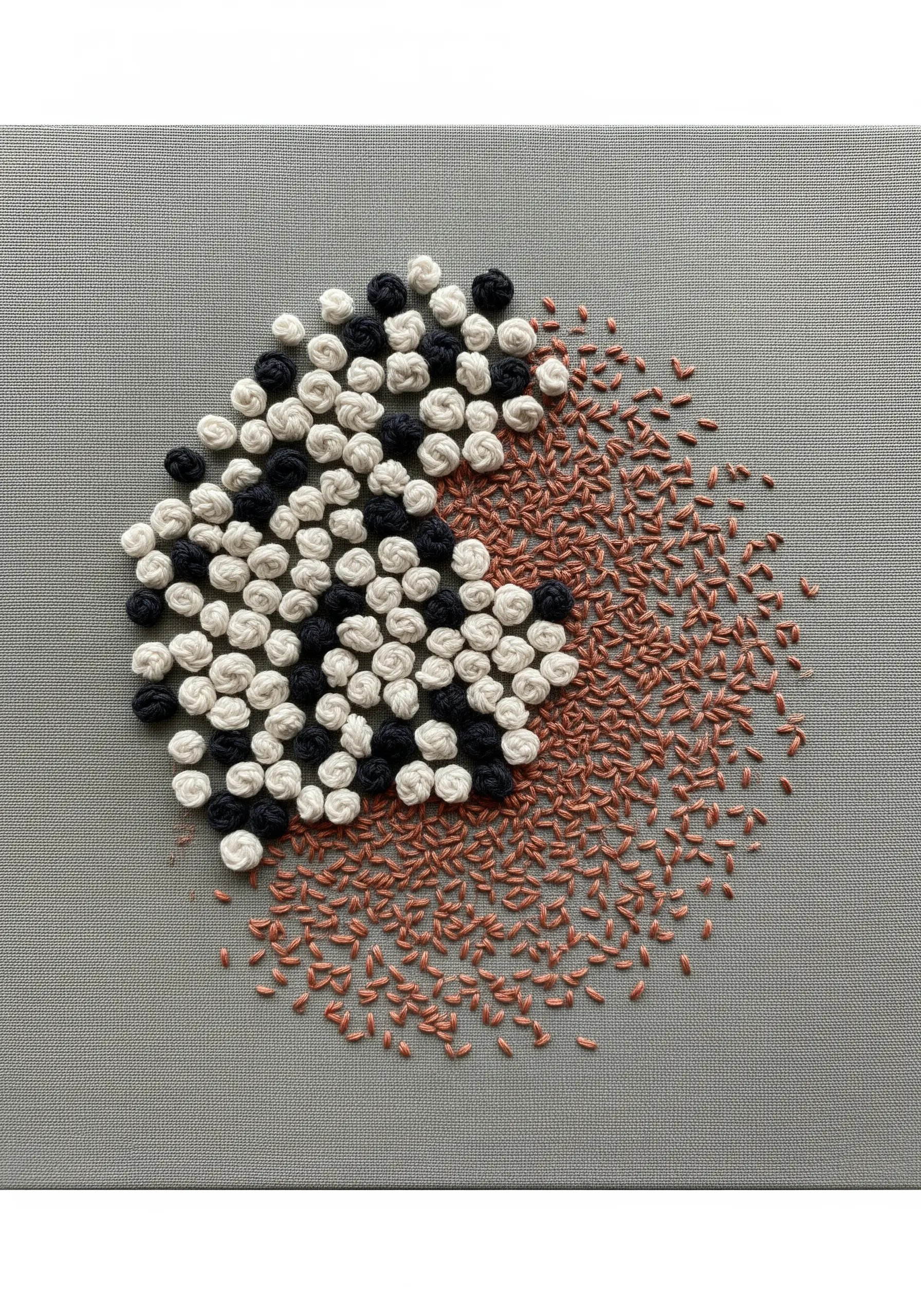
Create a compelling abstract design by contrasting a high-profile, dense stitch with one that is flat and sparse.
Here, tightly packed bullion knots in black and white form a clustered, three-dimensional shape.
This dense area is balanced by a field of scattered, flat seed stitches in a contrasting copper thread.
The interplay between the lumpy and the smooth, the monochromatic and the metallic, makes the piece dynamic. This is a powerful technique for abstract textile wall art designs.
15. Sculpt Plump Berries with Bullion Knots
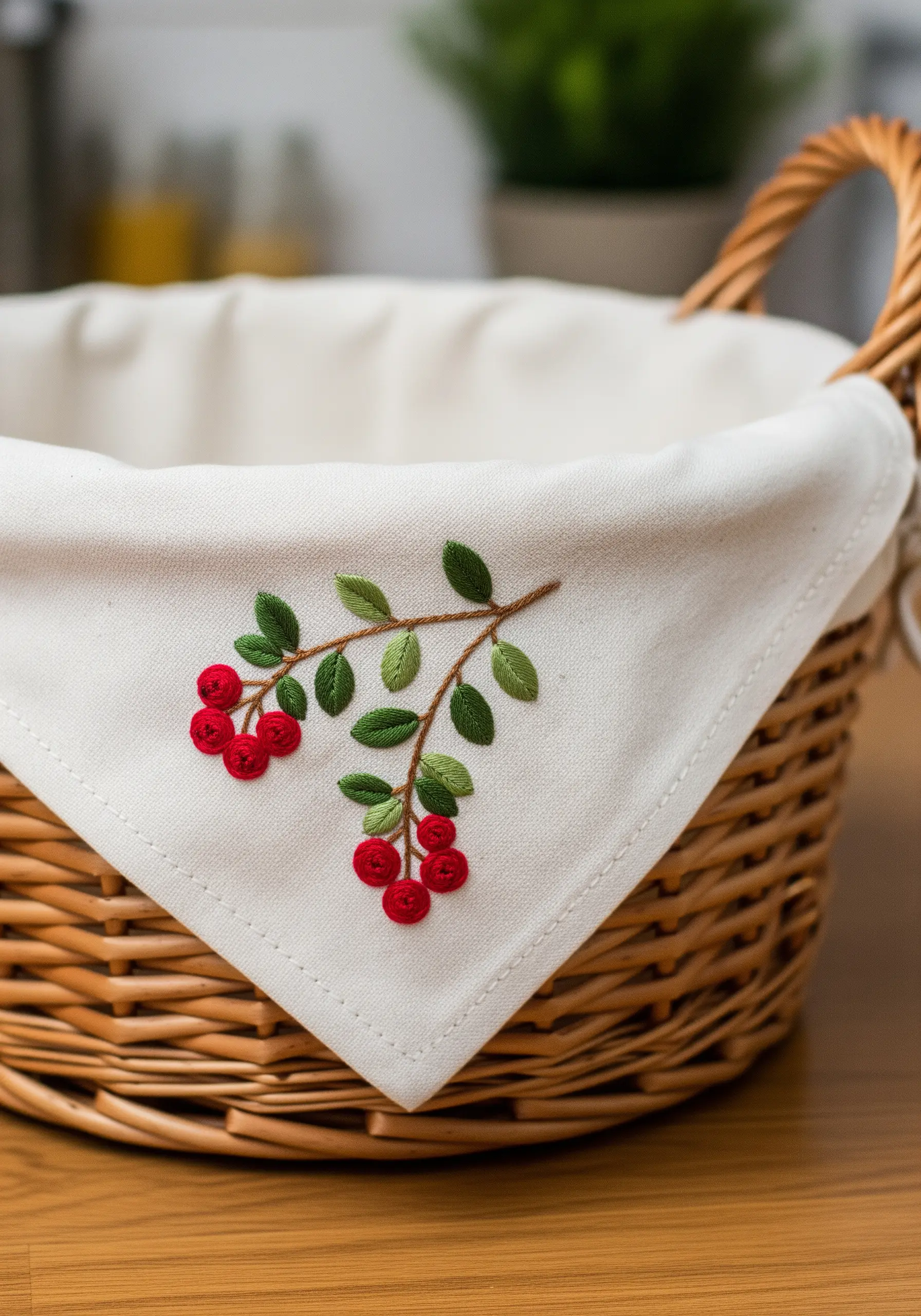
To give berries a realistic, plump appearance, move beyond the French knot and master the bullion knot.
This stitch involves wrapping the thread multiple times around the needle before pulling it through, creating a small, raised worm of thread that you can coil into a berry shape.
Pair these dimensional red berries with simple, flat satin-stitched leaves to make them the textural focal point of the branch.
This technique is perfect for adding small, high-impact details to basket liners, tea towels, or reusable produce bags.
16. Achieve Precision with Minimalist Runic Stitches
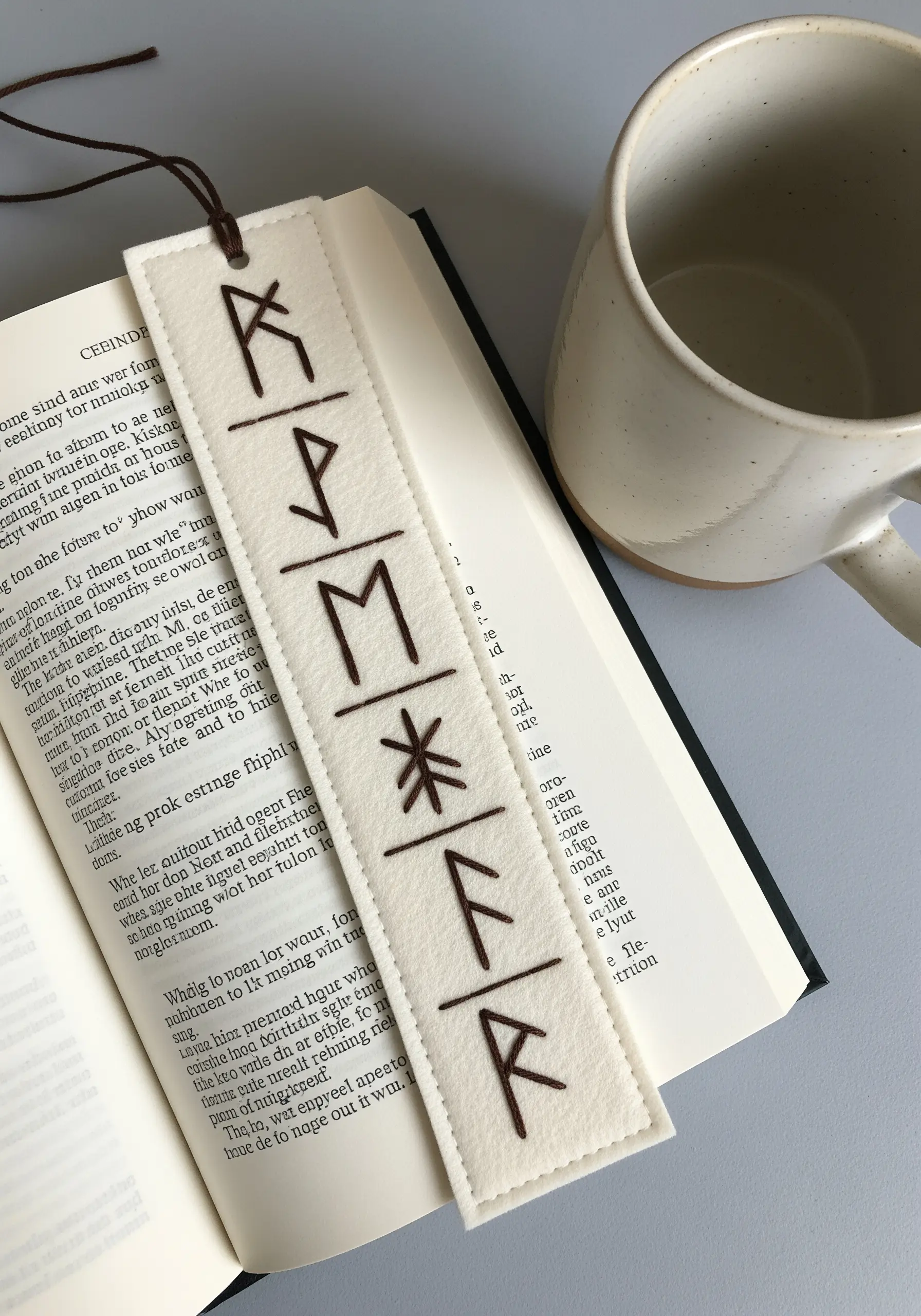
Stitching symbols or lettering requires absolute precision, especially on a clean surface like felt.
Use a simple backstitch with three strands of floss to create the stark, angular shapes of ancient runes.
To ensure perfectly straight lines and sharp corners, bring your needle up and down in exactly the same hole when changing direction.
This minimalist approach on a simple felt bookmark creates a powerful, personal item that feels both ancient and modern.
17. Animate Line Art with Textured Details
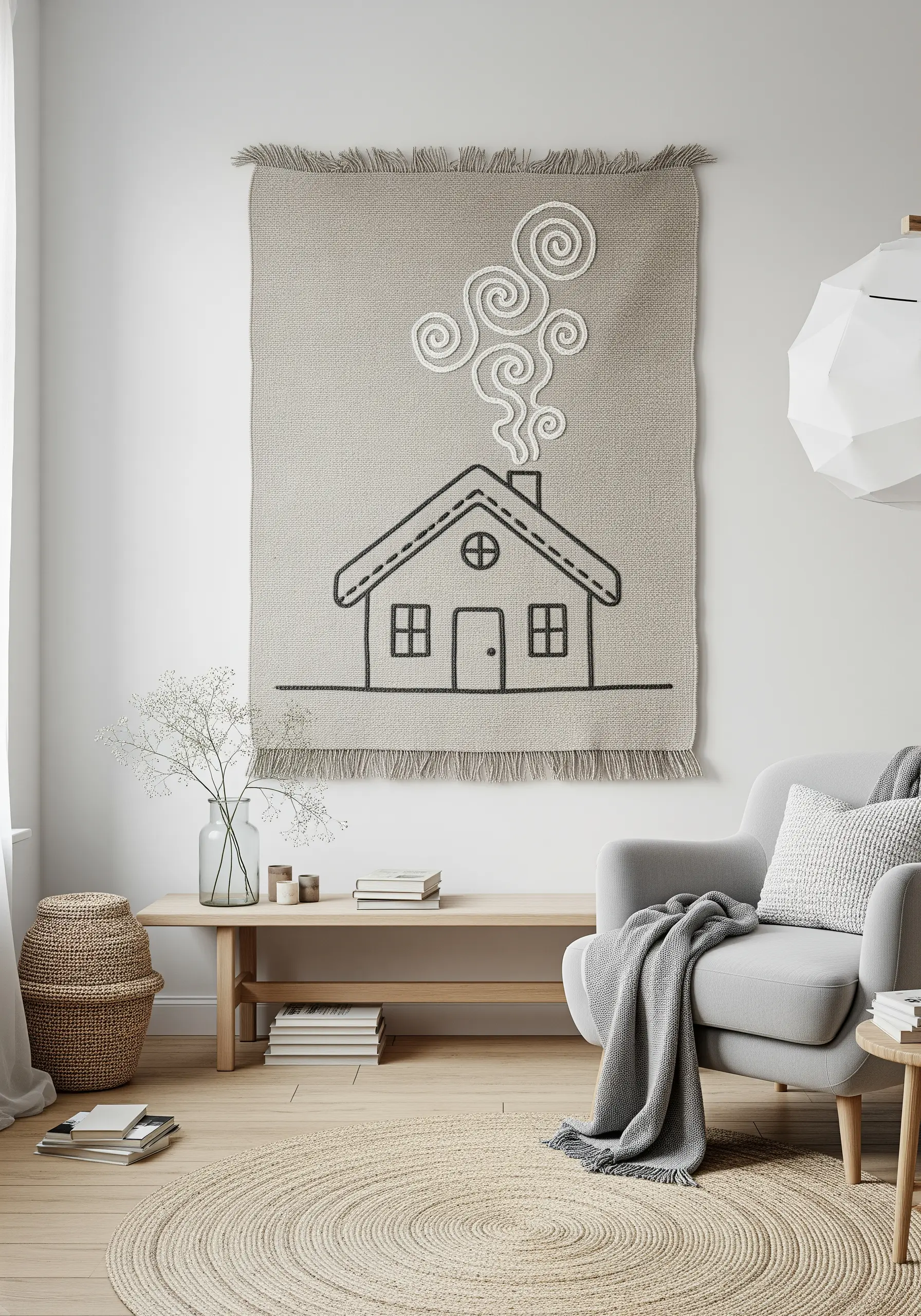
Elevate a simple line-art house by giving one element—the smoke—an unexpected burst of texture.
Use a thick black thread and a clean backstitch for the house itself to keep the lines graphic and simple.
For the smoke, switch to a soft white yarn or multiple strands of floss and create billowing clouds using clusters of French knots or woven wheel stitches.
This contrast between flat lines and dimensional texture adds a whimsical, cozy feeling, turning the piece into one of those DIY embroidery wall hangings that will wow your guests.
18. Explore a Triptych of Geometric Stitch Fills
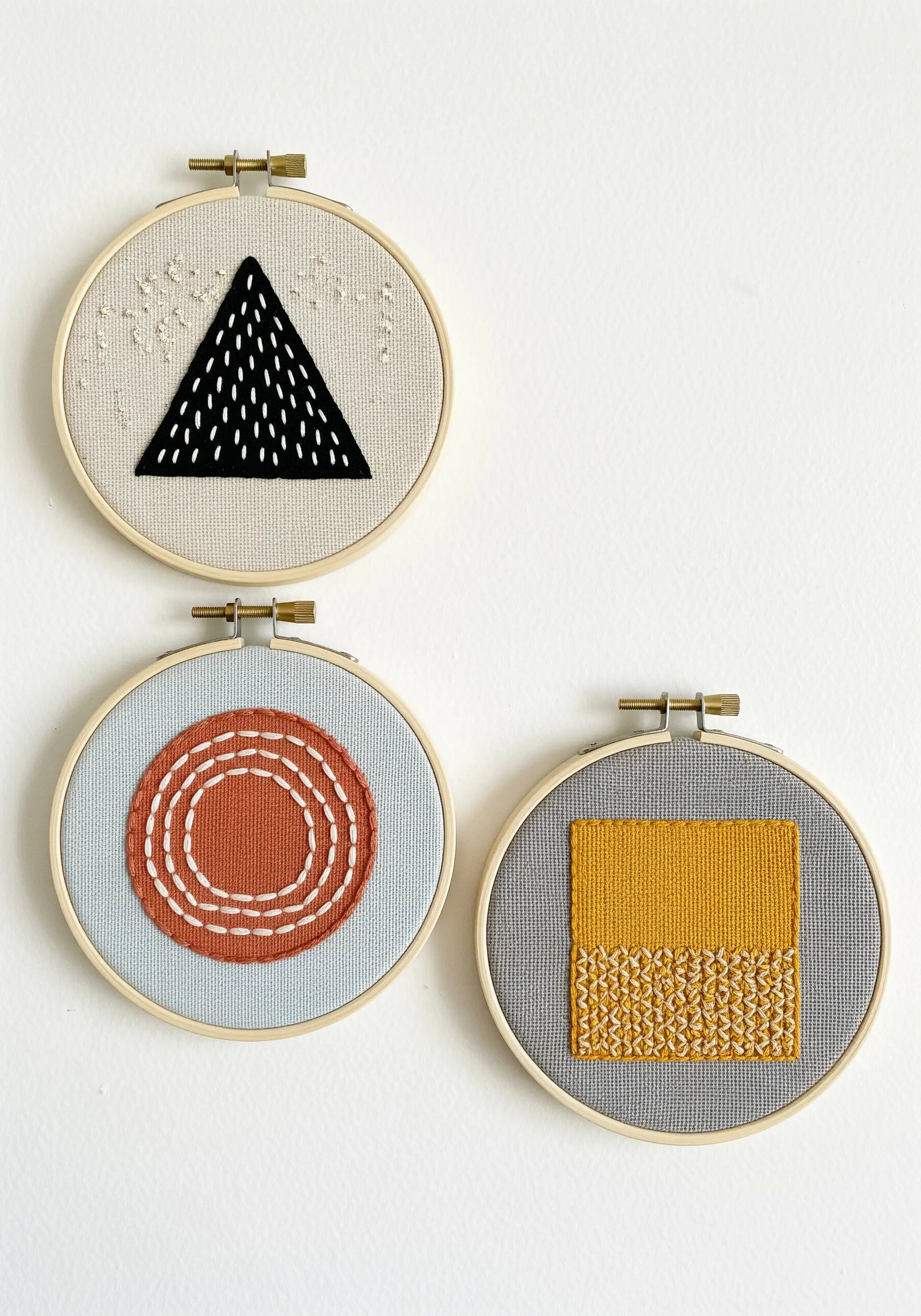
Create a cohesive set of modern minimalist textile wall art designs by treating simple shapes as a canvas for stitch exploration.
In one hoop, fill a shape with a simple woven stitch. In another, use concentric circles of running stitch. In a third, use a field of scattered seed stitches.
By using a consistent, muted color palette across the three hoops, you tie the different textures together into a unified collection.
This approach is less about creating a picture and more about celebrating the beauty of the stitches themselves.