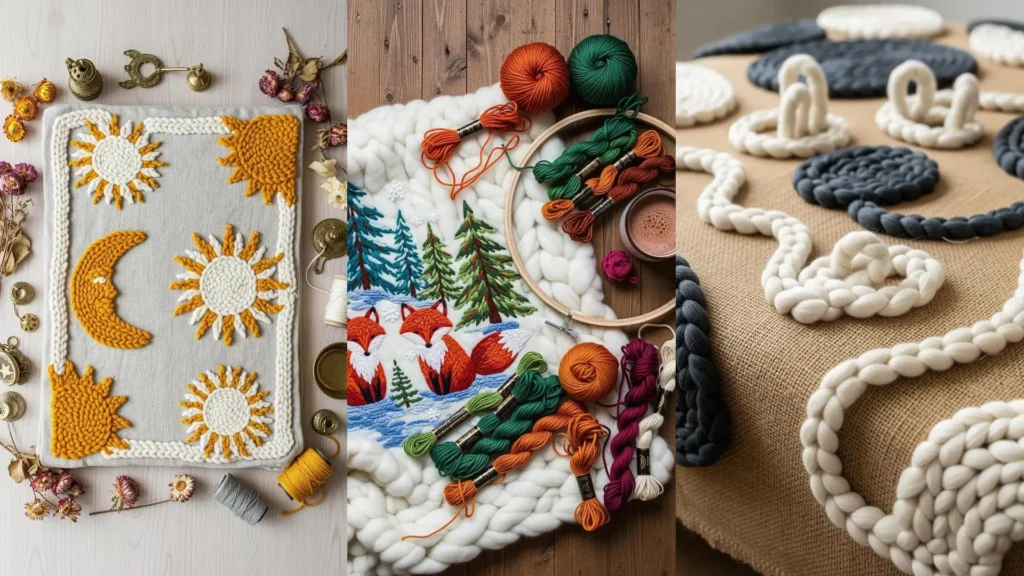
You have likely stared at a blank wall and then at your embroidery hoop, wondering how to bridge the gap between “craft project” and “art installation.” The difference rarely lies in the complexity of the stitch, but in the intention behind the design. It is about choosing the right texture for the light in your room, or breaking the frame to let your art breathe.
I want you to stop thinking of embroidery as small marks on cloth and start seeing it as textile architecture. Whether it is adding volume with wool, playing with transparency on tulle, or simply grouping hoops to tell a larger story, you have the ability to transform thread into something that commands attention.
These ideas are selected to help you push your boundaries—from simple texture upgrades to mixed-media experiments. Pick the one that challenges your current skill level just enough to make it exciting, and let’s get that needle moving.
1. extend the greenery beyond the frame
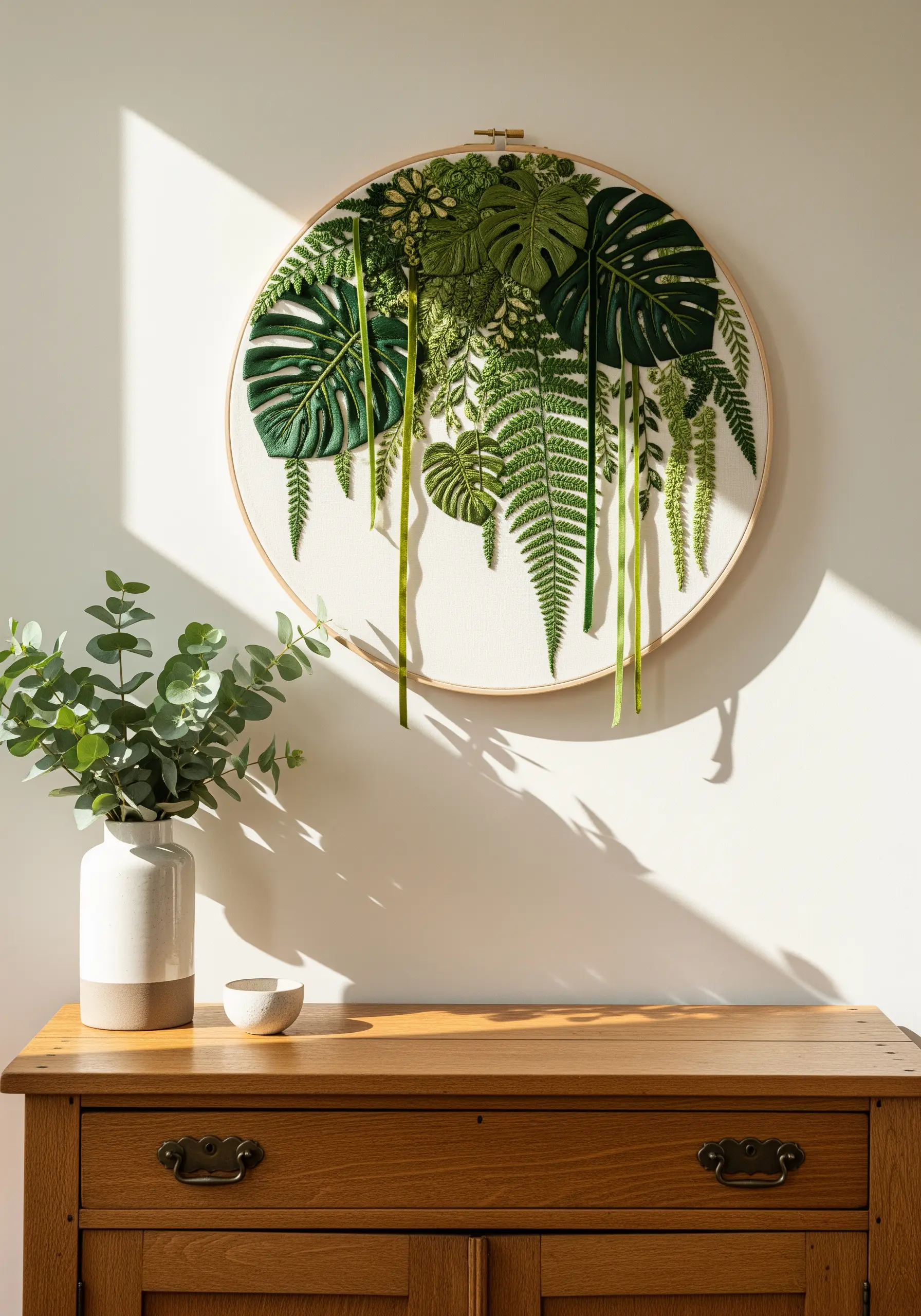
Don’t let the hoop dictate the boundaries of your botanical art; let the foliage spill over.
By attaching velvet ribbons or trailing threads that mimic vines, you create a dynamic, living quality that static stitching cannot achieve.
Focus on plant inspired embroidery hoop sets that mix high-relief satin stitch with these external hanging elements to add depth and movement to your wall.
2. sculptural loop pile textures
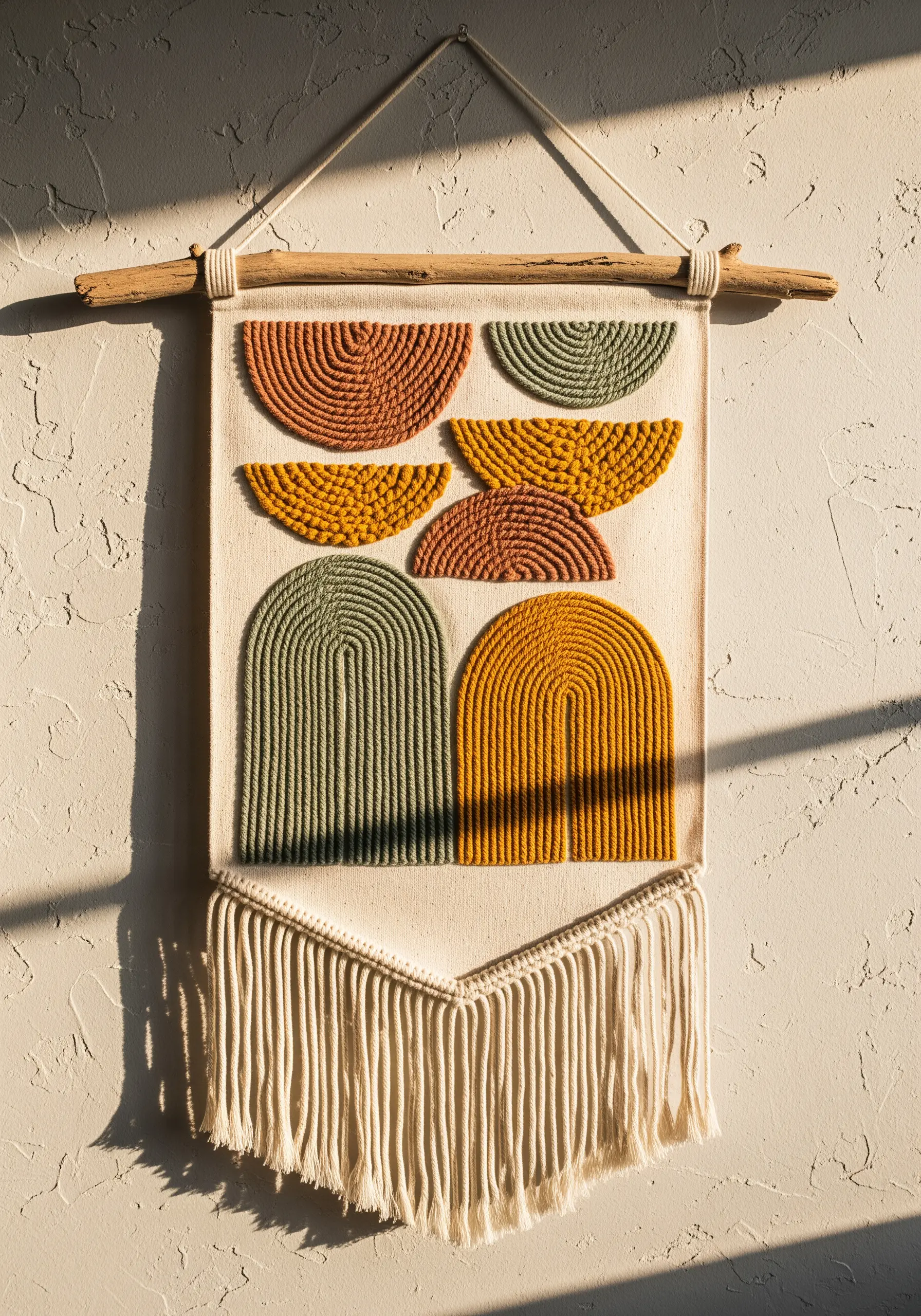
Combine the structure of weaving with the freedom of embroidery by using a loop pile technique to create raised, architectural arches.
This requires a thicker yarn rather than floss; the goal is to build textured yarn wall art techniques that catch the light and cast shadows.
Stick to an earth-tone palette to keep the focus on the tactile difference between the flat canvas and the raised loops.
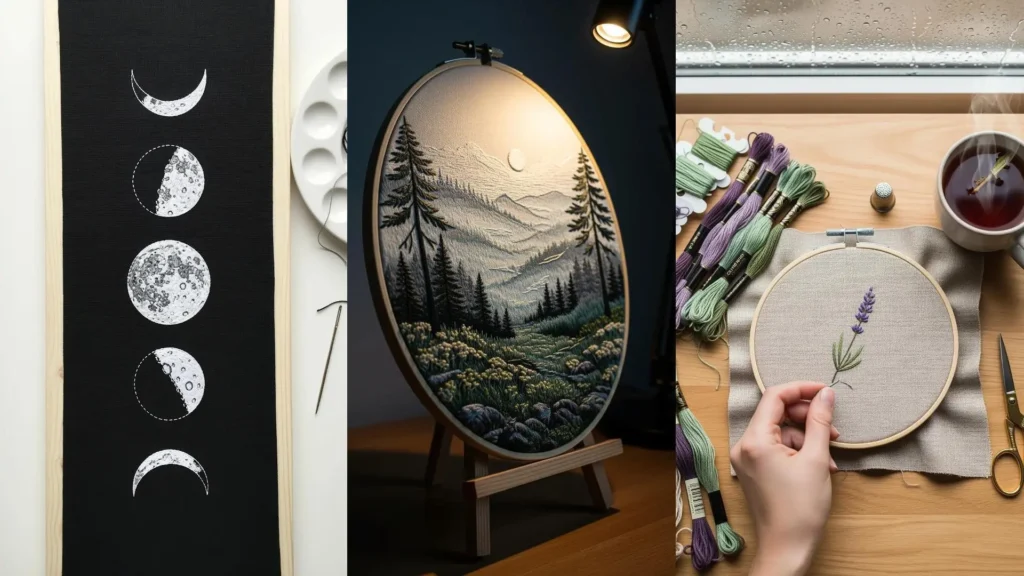
3. the panoramic triptych effect
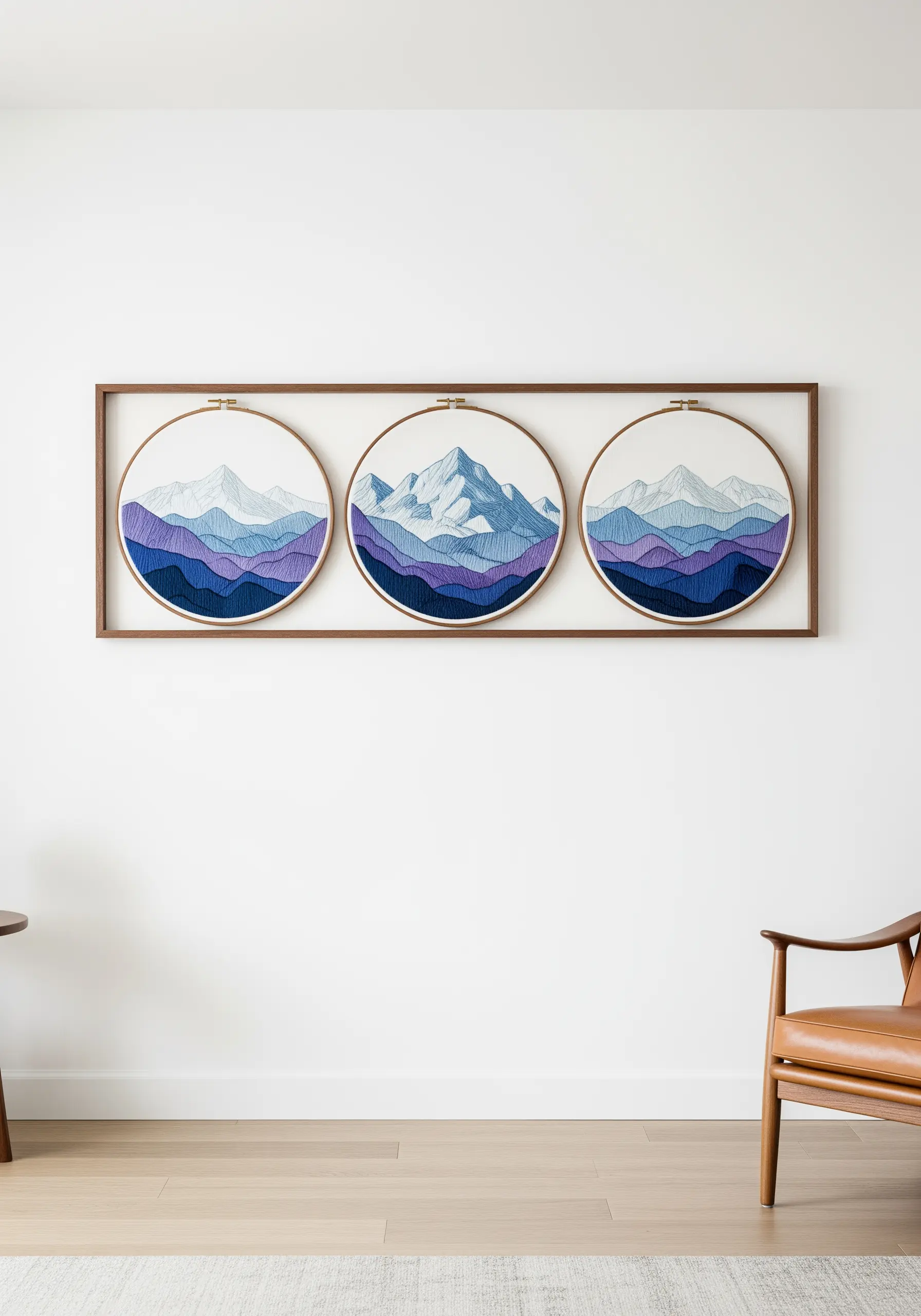
A single landscape becomes infinitely more impressive when split across three hoops, creating a window-pane effect.
The key here is alignment; sketch your horizon line across all three fabrics simultaneously before mounting them to ensure continuity.
Use thread painting to create atmospheric perspective, making these landscape embroidery wall pieces feel vast and immersive despite their small size.
4. floating botany on tulle
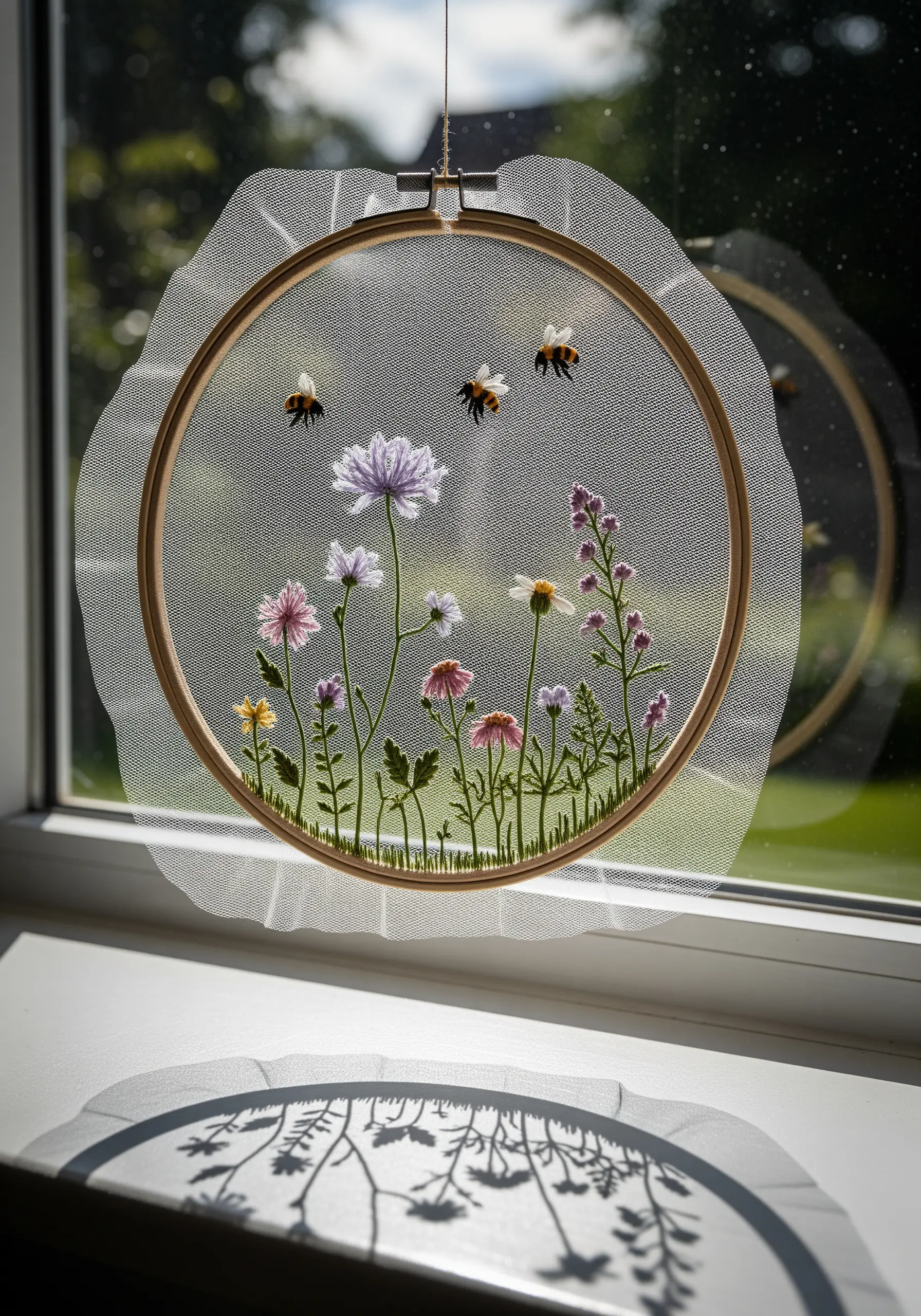
Embroidery on tulle or organza removes the visual weight of the background, making your pollinators and petals appear to hover in mid-air.
You must keep your backs exceptionally neat, as every traveling thread will be visible through the transparent mesh.
This is one of those negative space embroidery techniques that relies on light to create dimension, so hang it near a window.
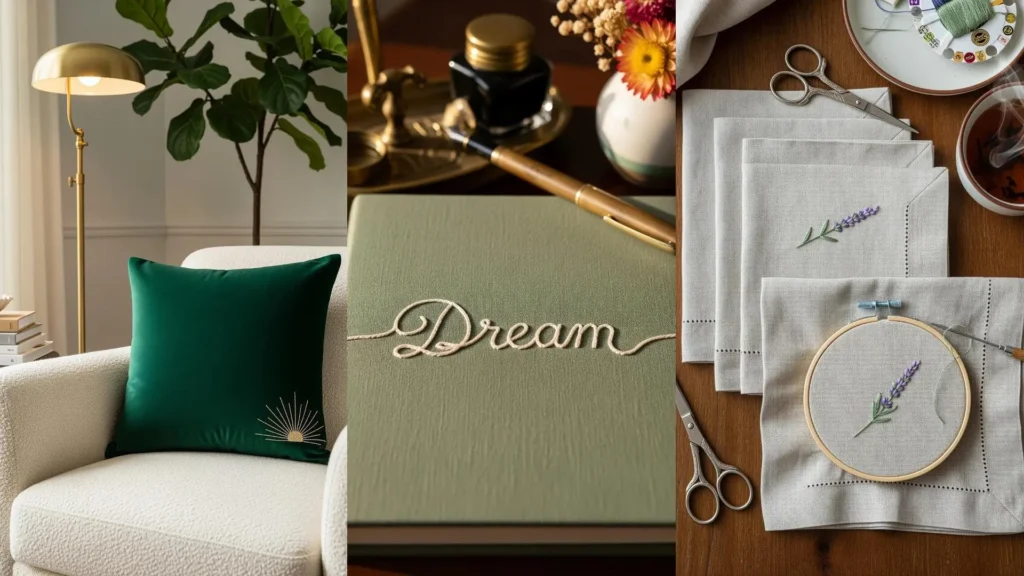
5. goldwork on deep velvet

Velvet absorbs light while metallic thread reflects it, creating the highest possible contrast for celestial motifs.
When stitching on pile fabric, use a water-soluble stabilizer to prevent your stitches from sinking and disappearing into the fuzz.
These minimal celestial embroidery wall designs benefit from gold bullion knots to mimic the cratered texture of the moon.
6. merging wool roving with fine thread

Create a tactile conversation by juxtaposing the chunky softness of wool roving weaves with the precision of delicate floral line art.
This mixed-media approach prevents the piece from looking too heavy; the white floral stitching acts as a breath of fresh air against the dense woven sections.
Experiment with mixed fiber embroidery techniques to add warmth to a bedroom without overwhelming the space with color.
7. geometric string art precision
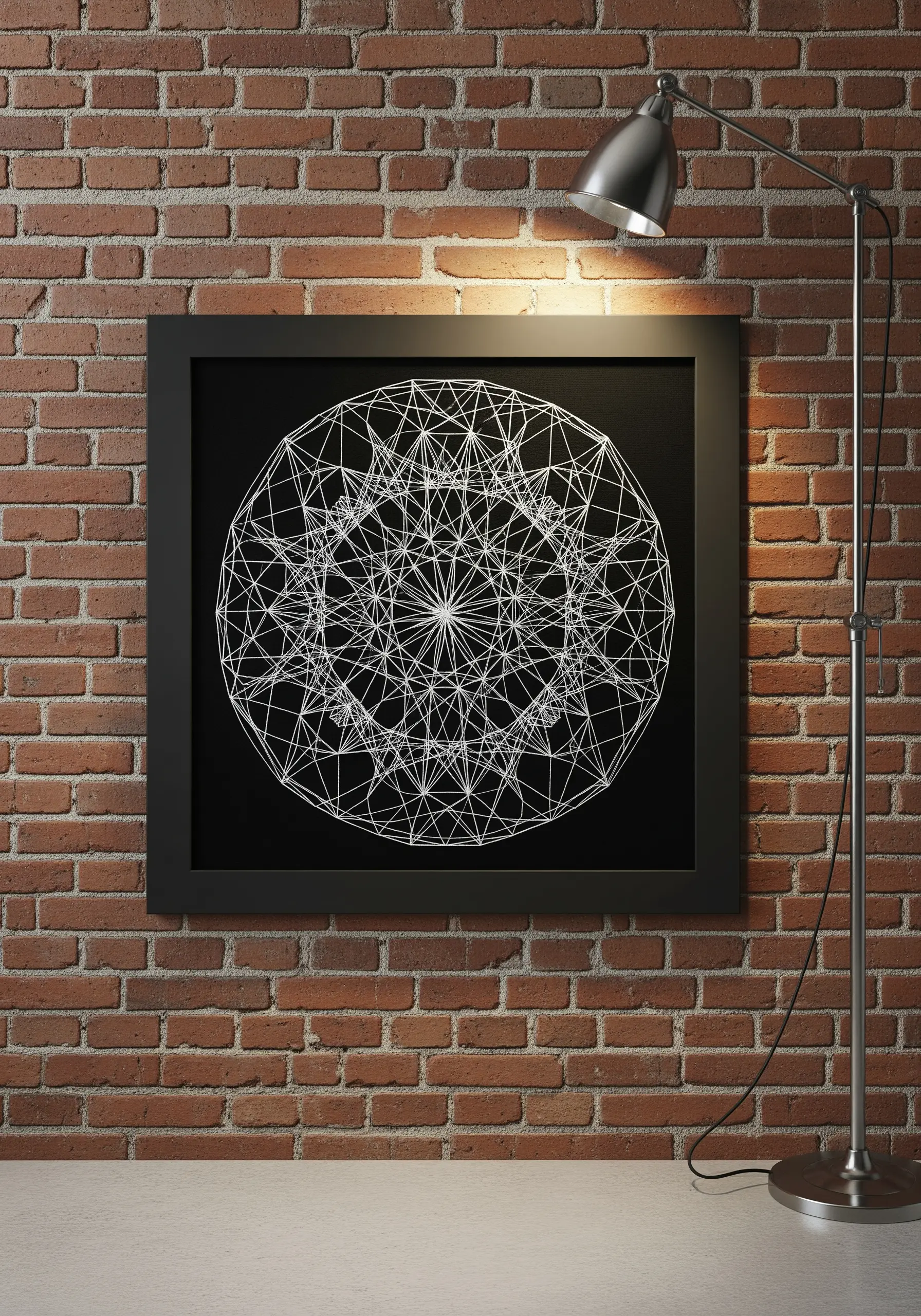
Strip away the organic and embrace the mathematical; using white thread on black fabric highlights the purity of geometry.
For straight lines this crisp, do not rely on a simple backstitch; stitch a foundation line and then whip it to create a seamless, cord-like appearance.
These geometric hoop art designs work best when framed in square mounts to emphasize their architectural nature.
8. the functional denim pocket planter
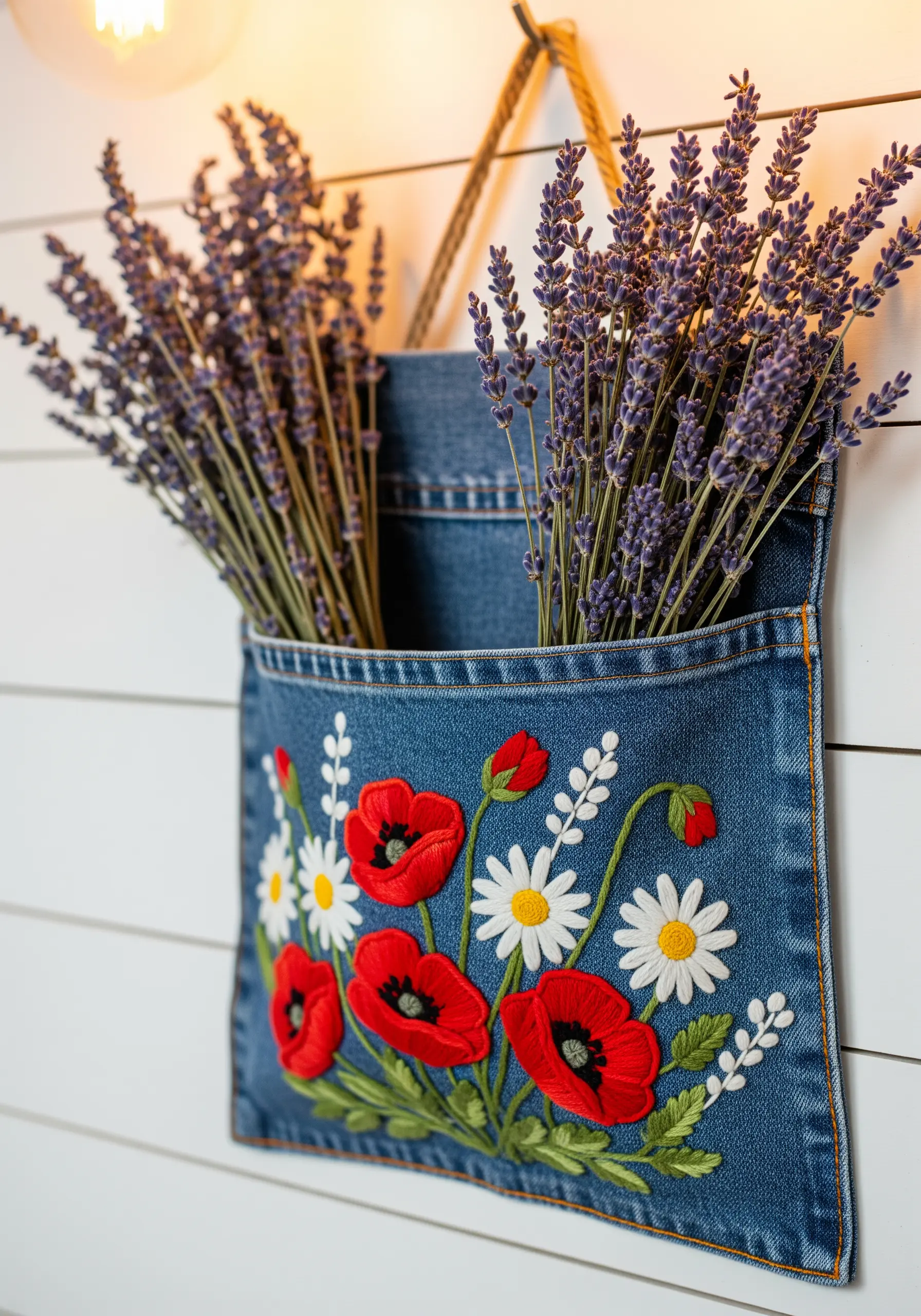
Upcycle a denim pocket not just as a canvas, but as a vessel for dried flowers, merging embroidery with physical objects.
Reinforce the pocket edges with a blanket stitch to prevent fraying and add a decorative frame to your wildflowers.
This takes embroidered flower patch ideas off your clothing and onto the wall, creating a rustic, interactive decor piece.
9. layered felt appliqué landscapes
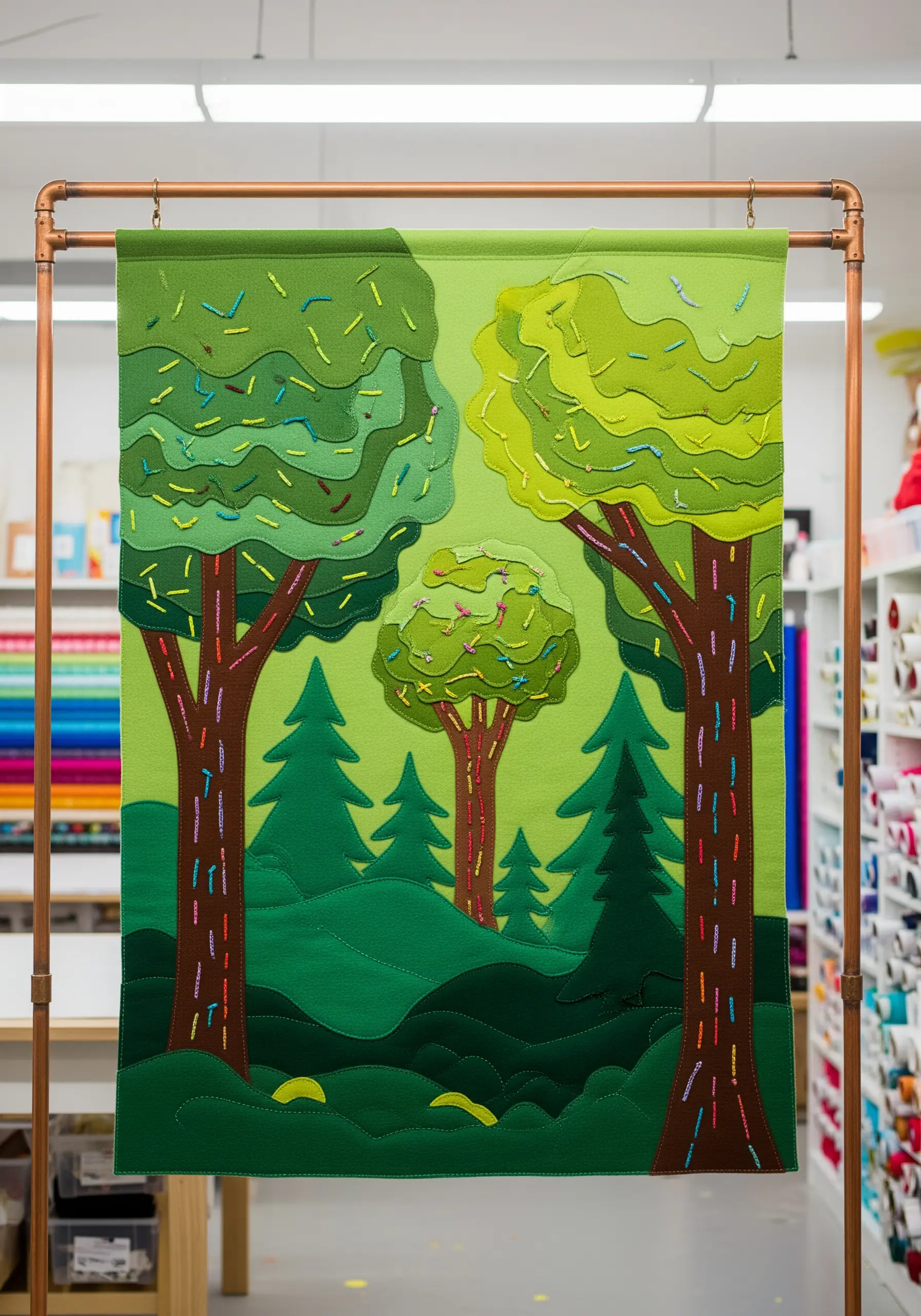
Instead of stitching every inch of color, use cut felt layers to establish your background, then use embroidery to add texture and detail.
Running stitches in variegated thread can mimic the movement of wind or rain across the felt canopy.
These stunning embroidered fabric wall panels act like soft puzzles, building depth through physical layering rather than shading.
10. sculptural beadwork embellishment
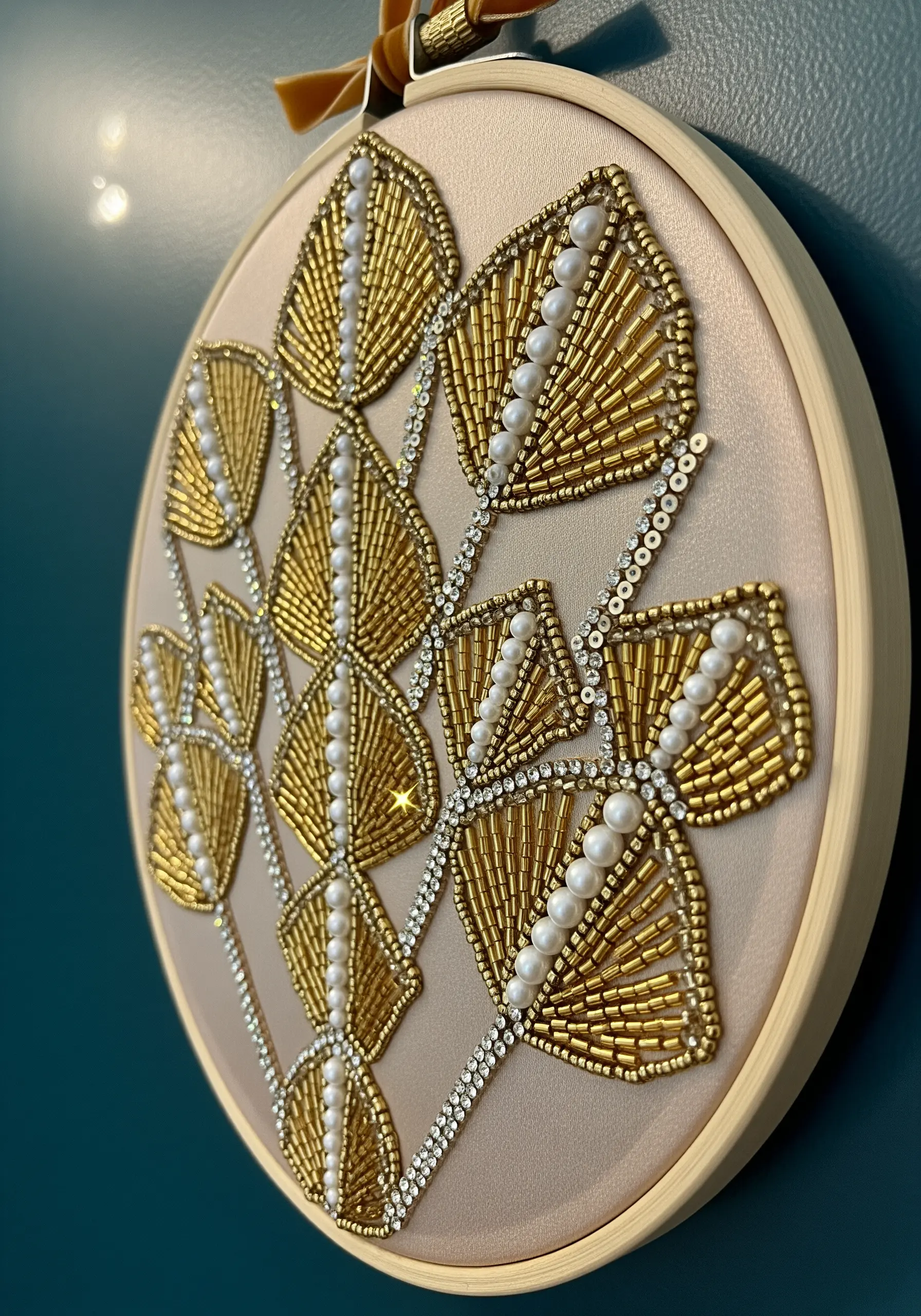
Elevate a monochrome palette by introducing beads and bugles that mimic the direction of traditional satin stitch.
Keep the fabric taut and use a beading needle to ensure the glass beads lie perfectly flat and uniform against the silk or satin base.
This approach transforms luxury metallic thread wall decor ideas into something even more jewelry-like and permanent.
11. playful typography with textural fringe
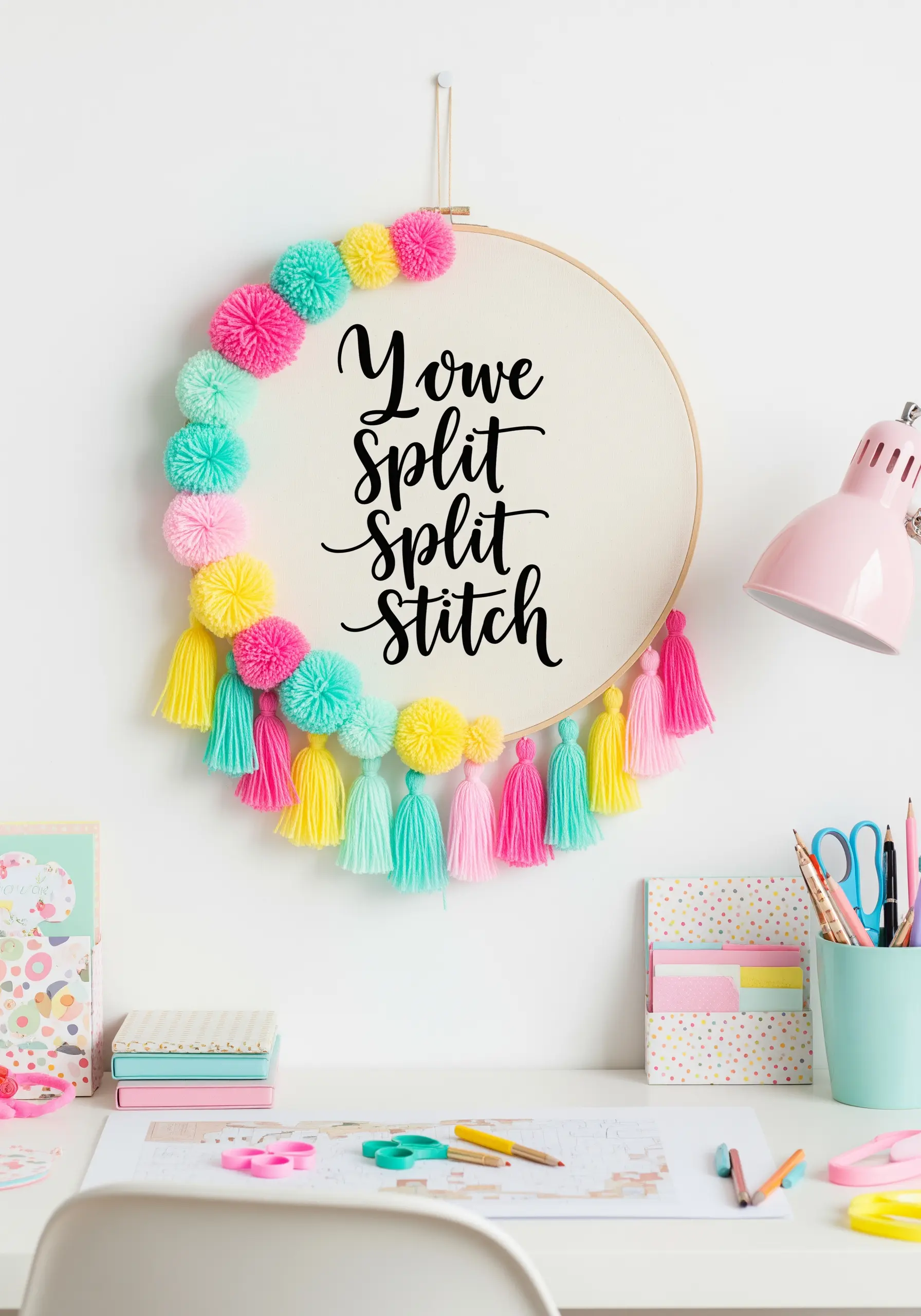
If you enjoy lettering, give it a soft, tactile finish by pairing bold calligraphy with a handmade pom-pom or tassel border.
The ‘split stitch’ mentioned in the design is ideal for text because it creates a smooth, braided line that navigates curves beautifully.
Combine thread based typography ideas with yarn crafts to make the piece feel more substantial and playful on the wall.
12. sashiko-inspired indigo tapestry
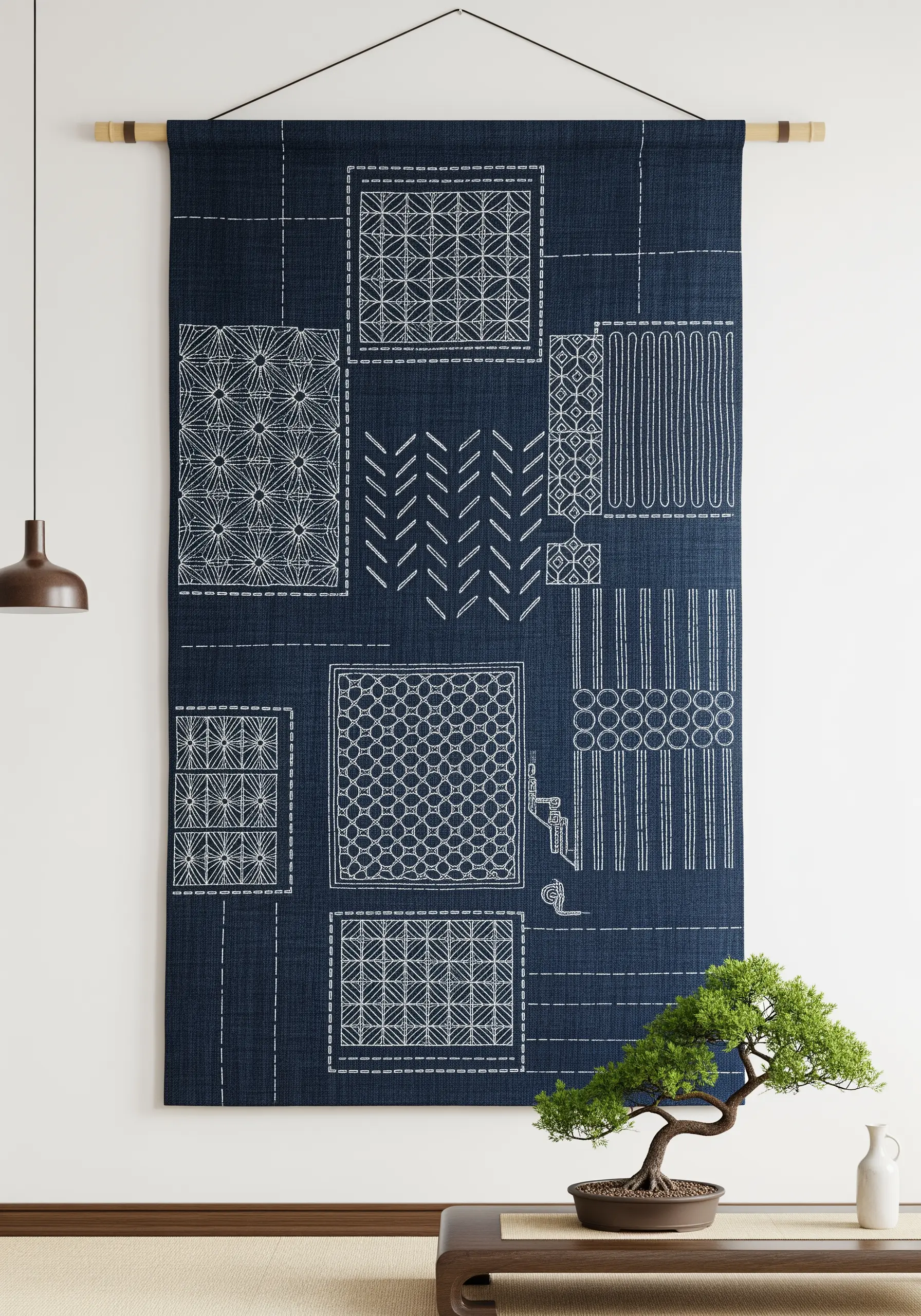
Embrace the Japanese tradition of Sashiko, where simple running stitches create complex, repeating geometric patterns.
Use a long needle and load multiple stitches at once to ensure your dash lines remain straight and rhythmic.
These traditional cultural textile wall art styles bring a sense of order and calm to a room, perfect for minimalist interiors.
13. padded satin stitch for volume
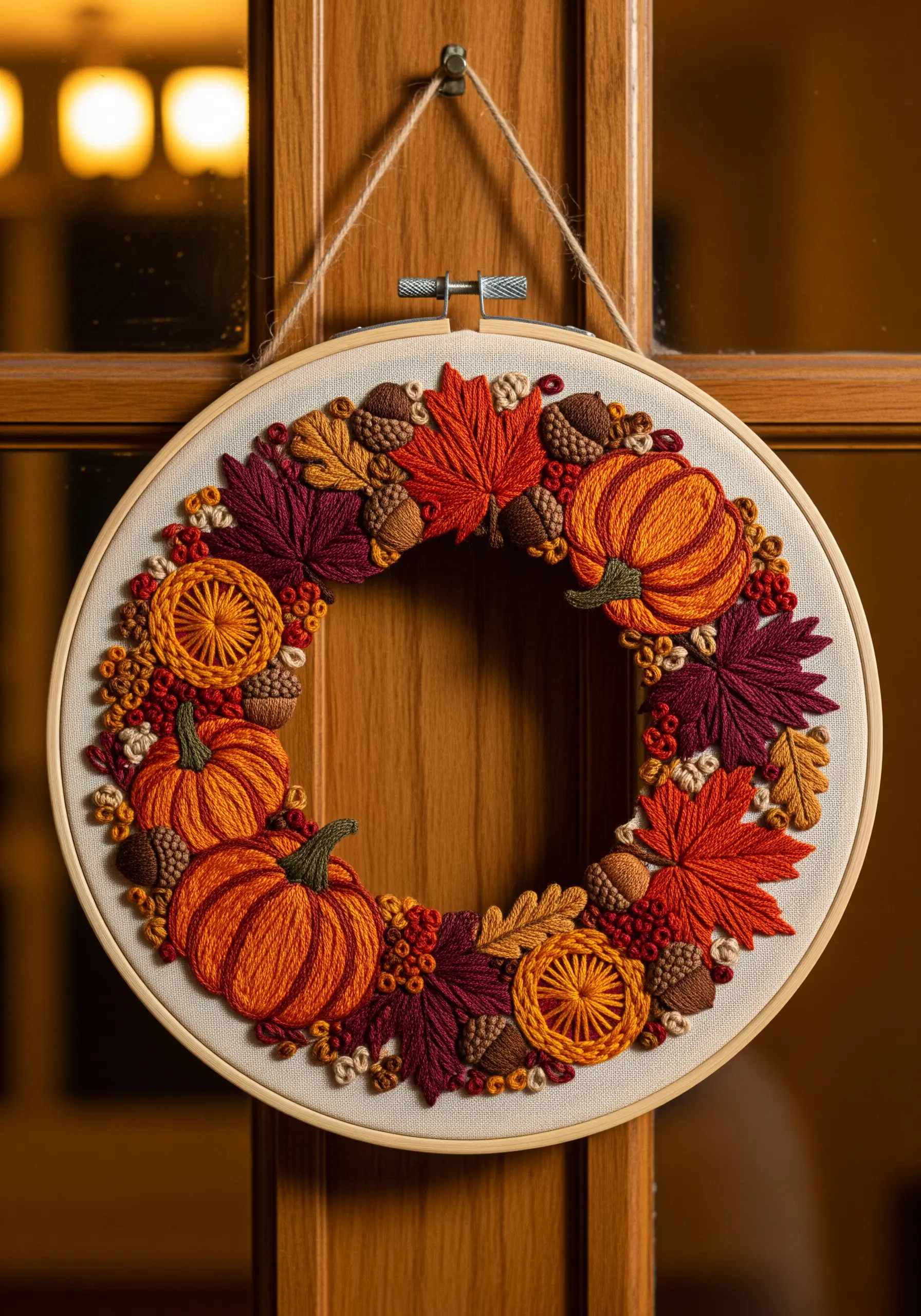
To make pumpkins and leaves pop off the fabric, stitch over a felt padding or a base of chaotic seed stitches.
This padding supports the satin stitch, giving it a rounded, 3D effect that catches the light differently than flat stitching.
These seasonal framed embroidery pieces rely on this volume to look rich and bountiful rather than flat and illustrative.
14. the curated botanical gallery wall
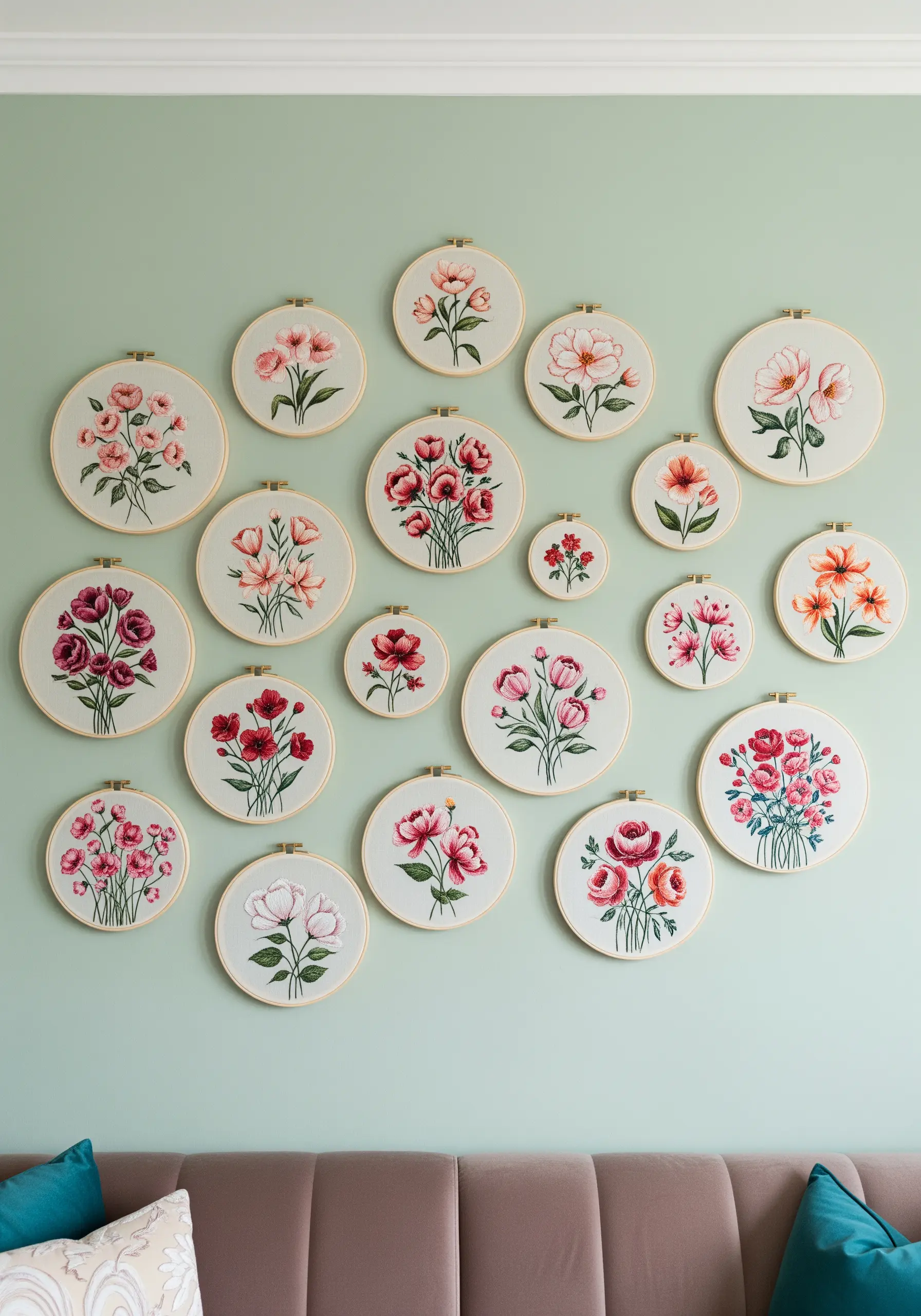
Don’t stop at one hoop; create a cohesive installation by stitching a variety of individual floral stems on matching fabric.
Treat the wall as your canvas, arranging different hoop sizes to create a flowing, organic shape.
Explore hooped wall collage layouts to understand how to balance negative space between the frames for a museum-quality look.
15. continuous line art on mesh
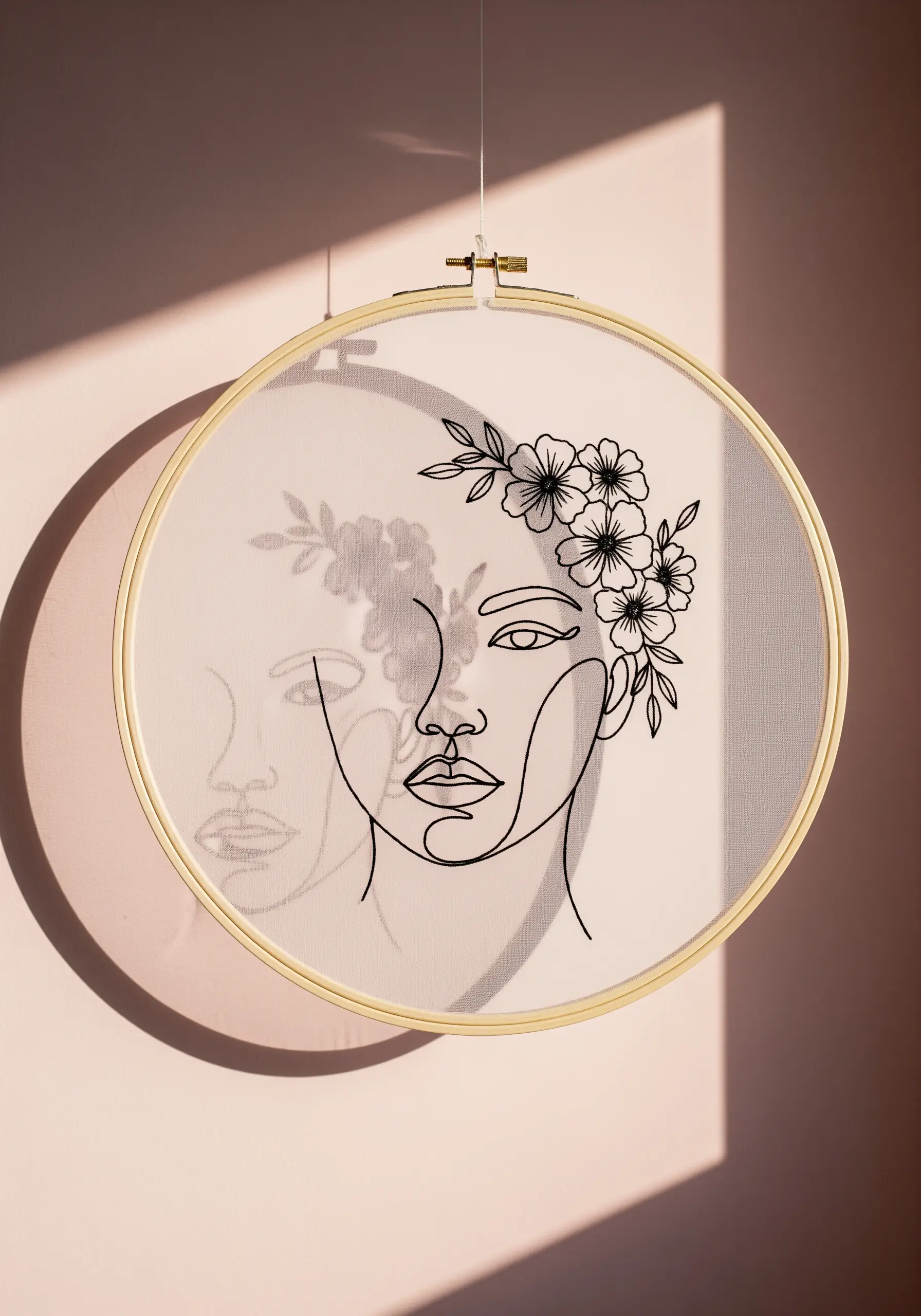
Modernize your portraits by using a single, fluid backstitch line to define a face, accentuated by dense floral details.
Working on mesh or tulle requires a light hand; do not pull your thread too tight or the grid will distort and warp the image.
These modern line art thread designs are perfect for contemporary spaces where heavy fabrics feel too traditional.
16. personalized pennant banners
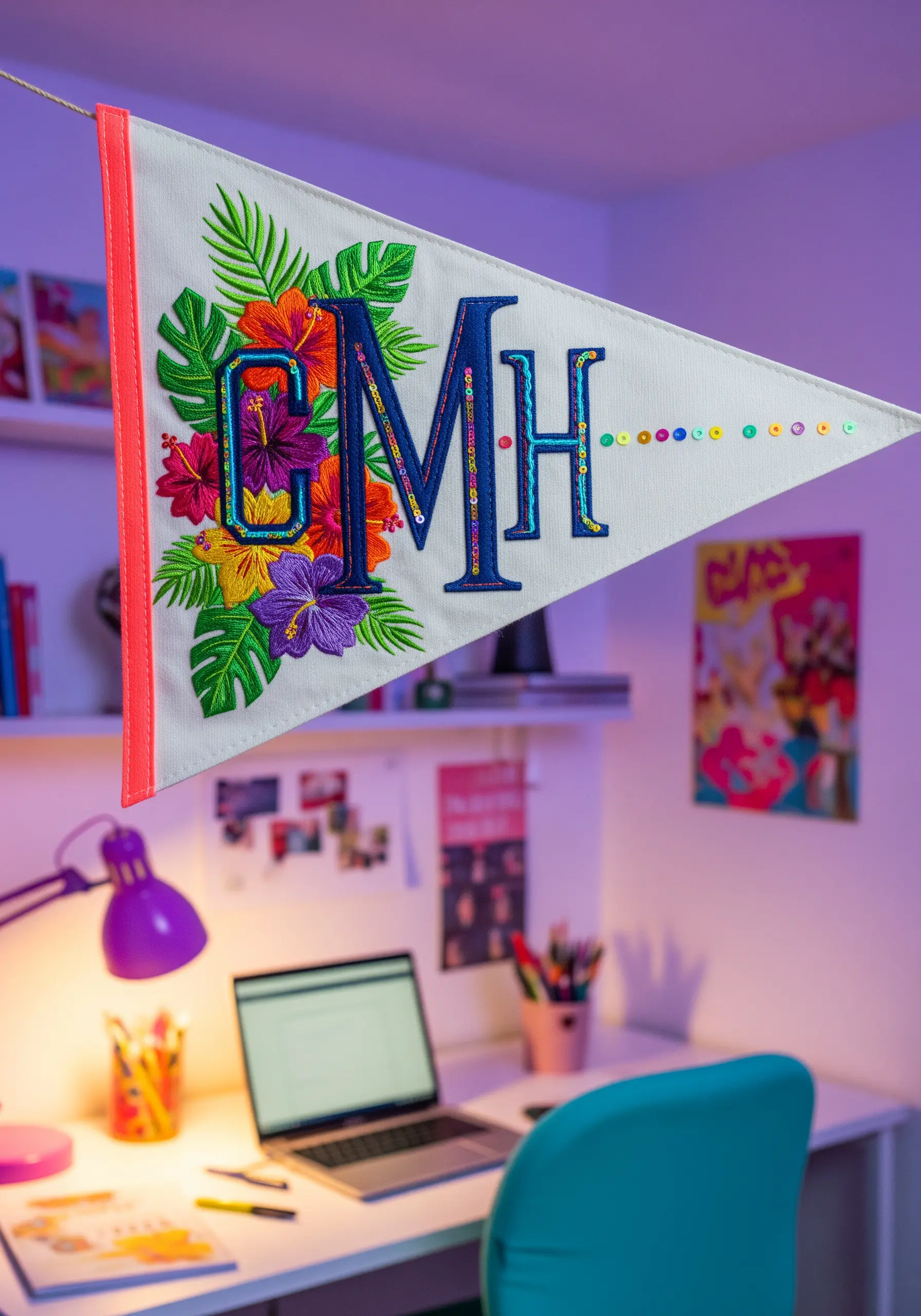
Switch up the shape of your wall art by stitching on canvas pennants, which offer a nostalgic, collegiate vibe.
Use a split stitch or heavy chain stitch for the outlines to ensure the monogram stands out from a distance.
You can adapt personalized name monogram string art designs into this format for a customized room accent that feels casual yet crafted.
17. abstract sedimentary layers
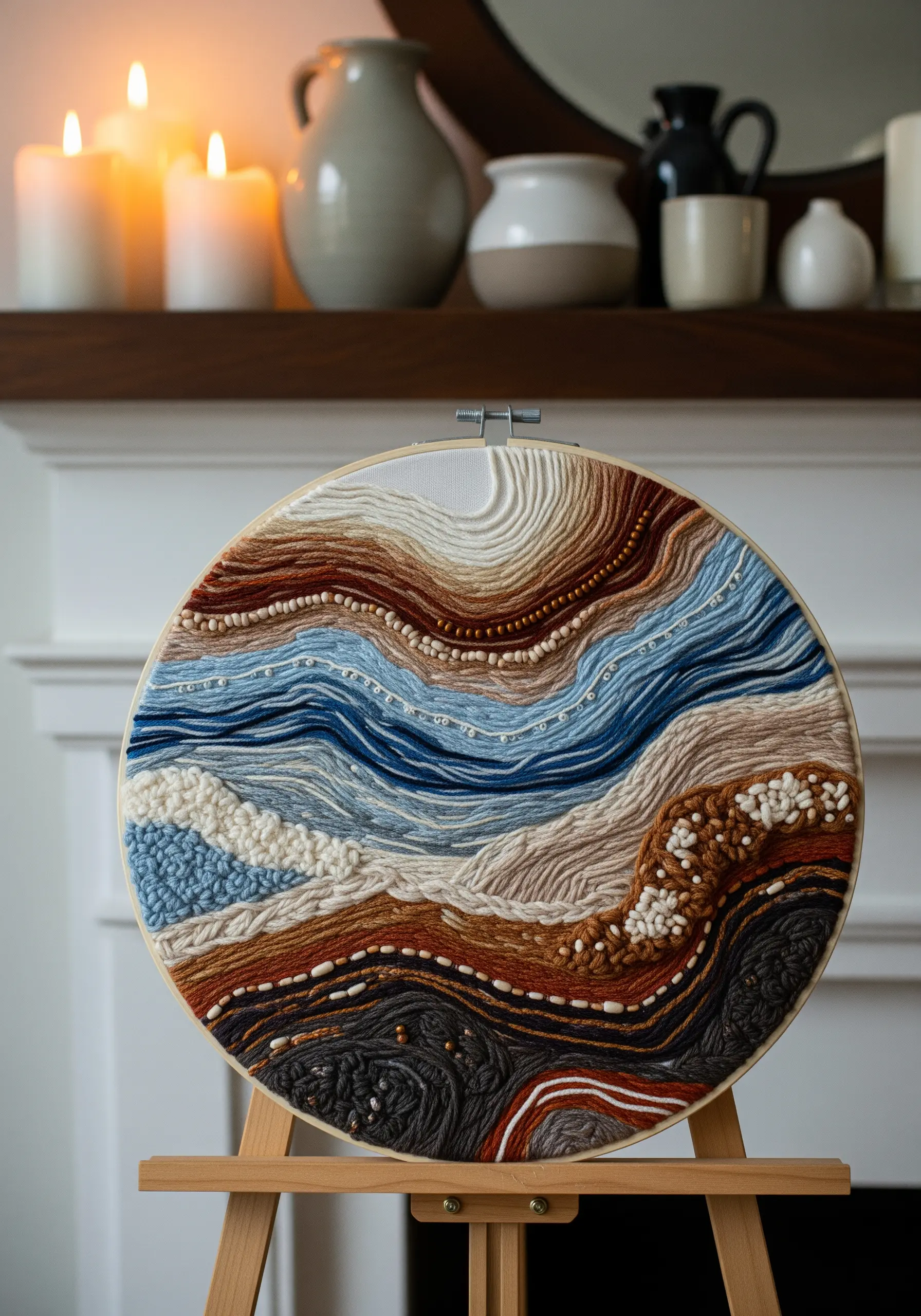
Mimic the layers of the earth by couching thick yarns and varying your stitch direction to create a flowing, geological texture.
Don’t worry about precision here; let the thickness of the thread dictate the movement of the lines.
These earth tone embroidery wall art ideas work best when you mix wool, cotton, and silk threads to vary the sheen of each layer.
18. the perfect sunset gradient
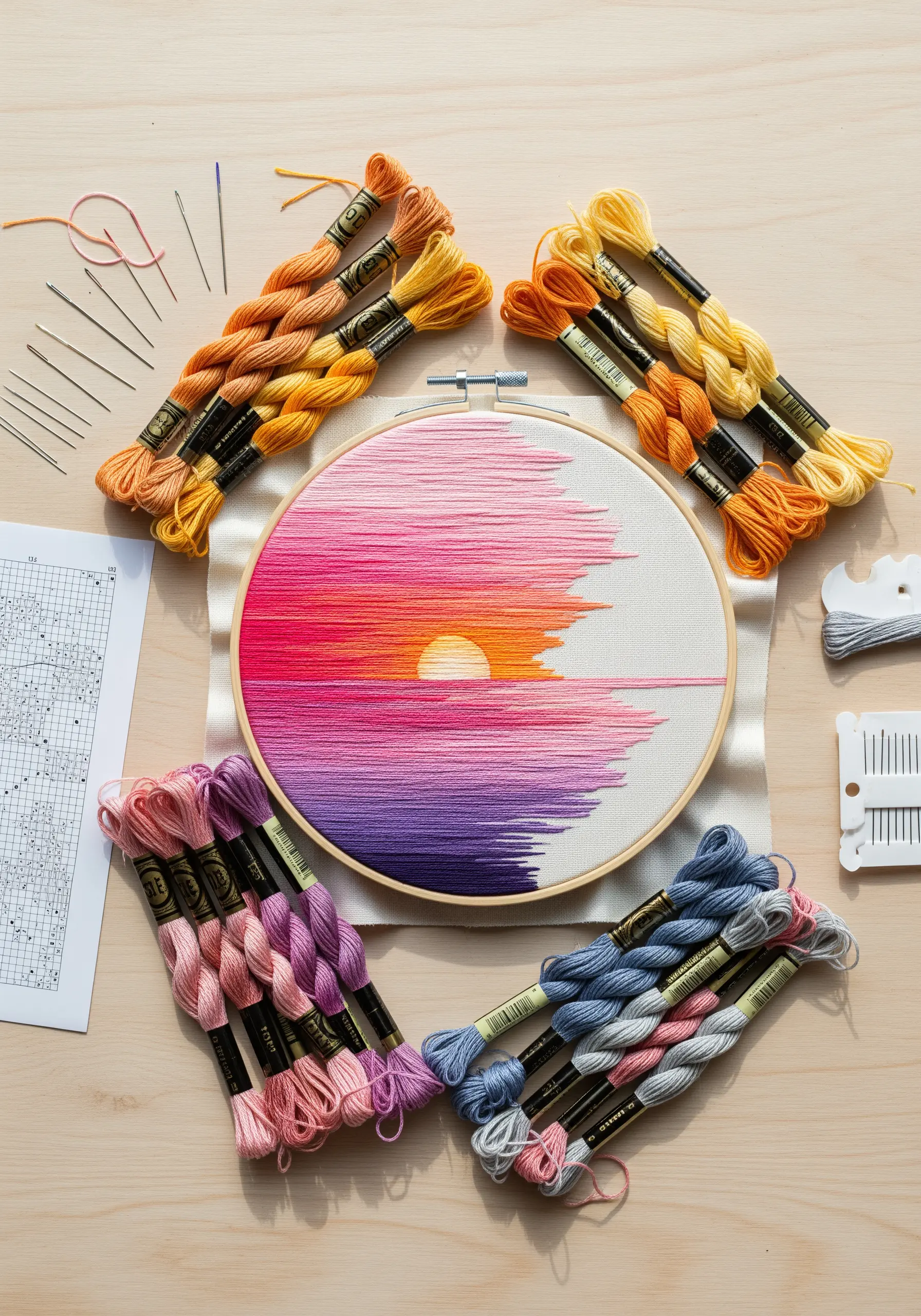
Achieving a smooth gradient requires “long and short” stitching, where you deeply stagger the transition between colors.
Limit your color palette to analogous colors (neighbors on the color wheel) to ensure the blend looks radiant rather than muddy.
Study abstract thread based gradient pieces to master how color shifting can become the main subject of your art.
19. monochromatic redwork revival
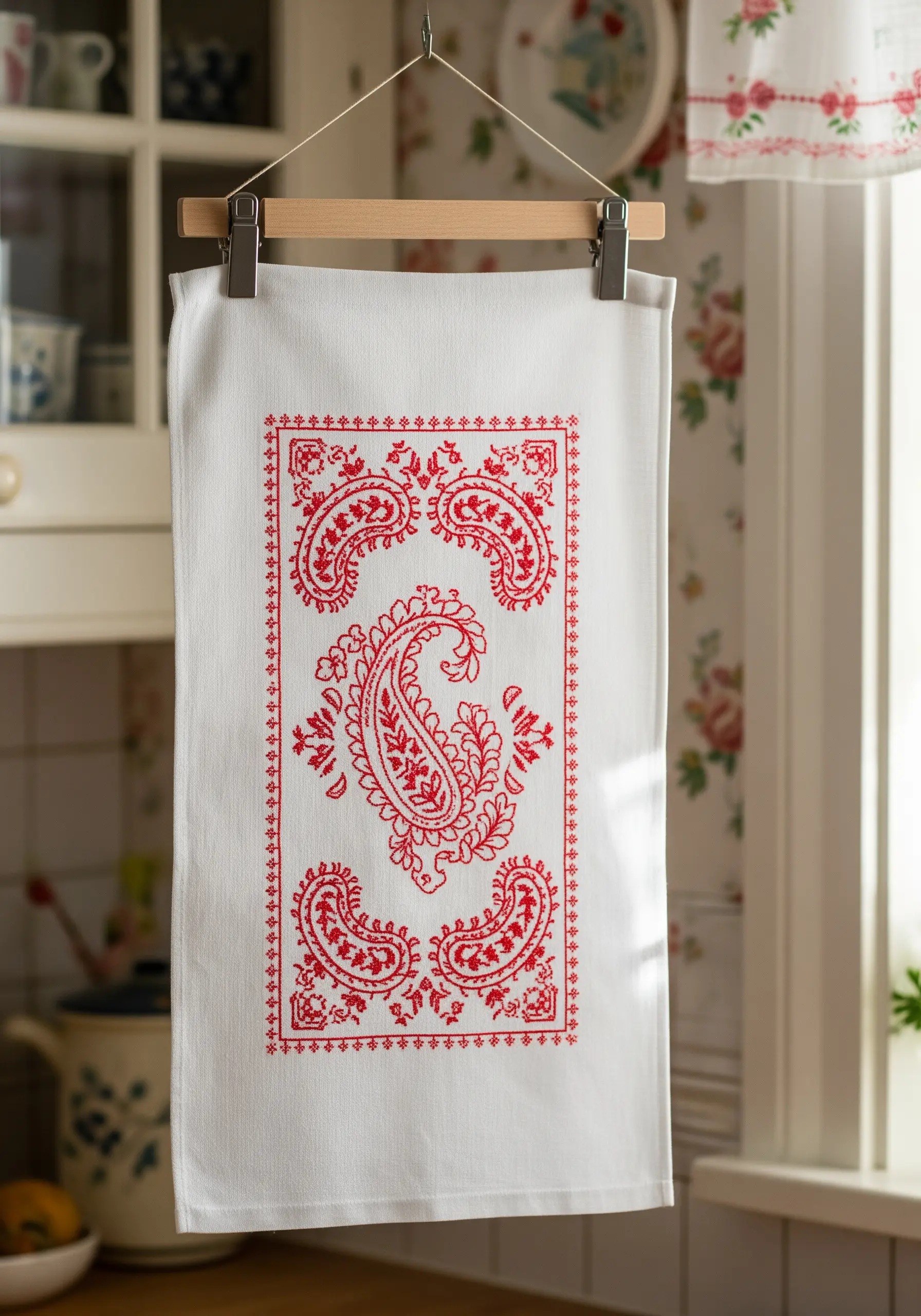
Return to the roots of folk embroidery with Redwork, using a single color to create intricate, line-based patterns like paisley.
Because there is no color variation to hide behind, your stitch length must be incredibly consistent.
These monochrome textile wall art concepts prove that you don’t need a massive thread collection to create something sophisticated.
20. large-scale punch needle abstract

For maximum wall coverage, switch to a punch needle or tufting gun to create tapestry-sized blocks of color.
This technique is faster than traditional hand embroidery and results in a soft, rug-like pile that absorbs sound in a room.
Use statement textured embroidery techniques like this when you need to fill a large blank space with warmth and modern shapes.