Perhaps you’ve found yourself staring at a finished piece, wondering why it doesn’t feel quite as polished or serene as you had imagined. The secret to truly refined embroidery, especially in the Scandinavian tradition, isn’t about learning dozens of complex stitches. It’s about choosing the right stitch for the right reason and executing it with quiet confidence.
It’s in the way a single strand of thread can create a line that feels both delicate and strong. It’s in the texture you build not with clutter, but with purpose. It’s about celebrating the fabric as much as the thread that adorns it.
Think of these 20 motifs not as strict patterns, but as invitations. They are starting points for you to explore how a simple adjustment—a different thread weight, a more consistent stitch length, a braver use of empty space—can transform your work. Let’s begin to stitch with intention, creating pieces that feel as calm and clean as they look.
1. The Solitary Pine Sprig
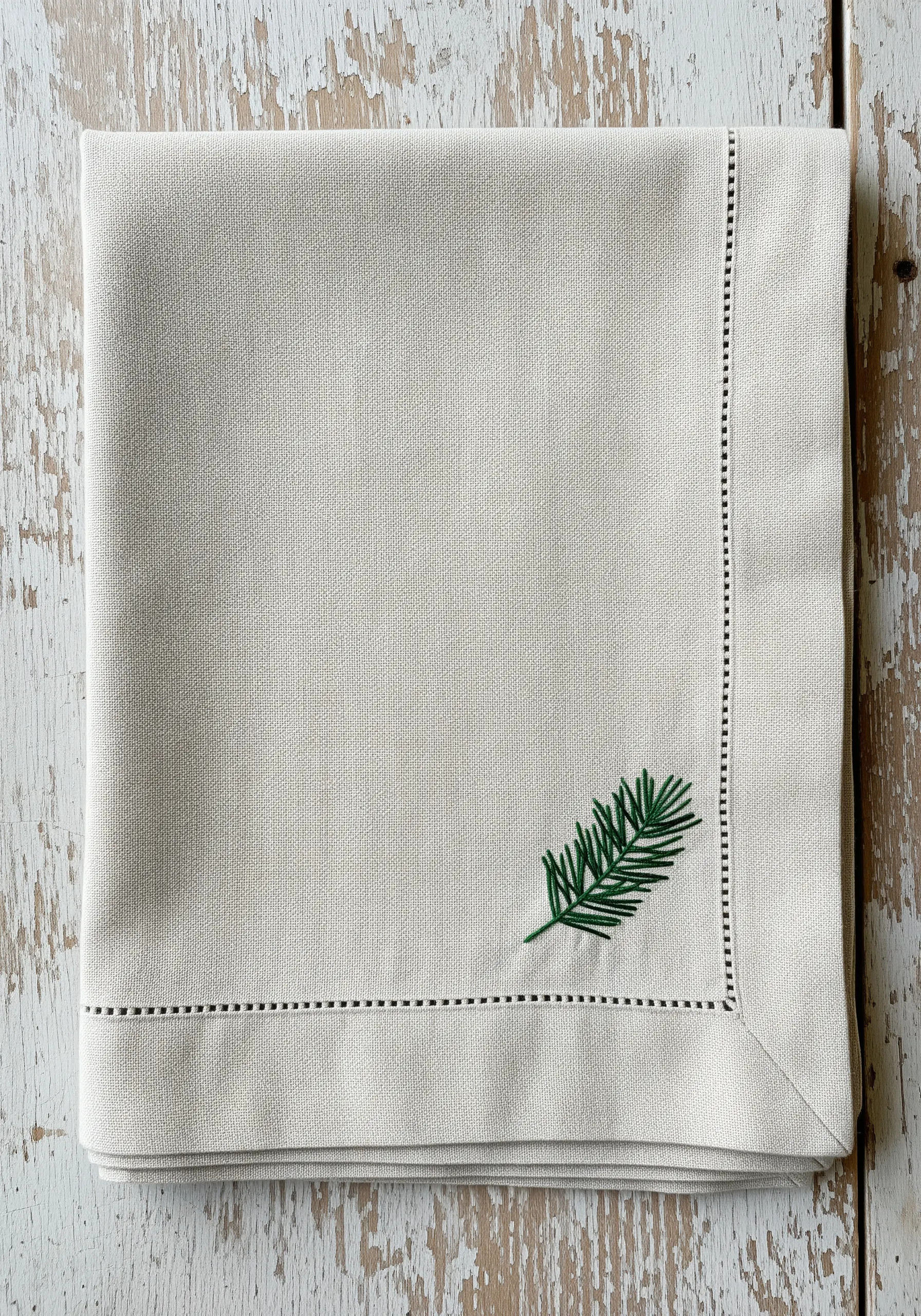
Create this organic motif by using a central stem stitch for the branch, which gives it a slightly raised, corded effect.
For the needles, use angled fly stitches, pulling each one taut to create a sharp point.
Using just two strands of a deep forest green floss on a high-quality linen or cotton napkin keeps the design crisp and understated.
This single element, placed asymmetrically, feels intentional and avoids overwhelming the quiet beauty of the fabric itself.
2. Modern Snowflake with Textural Tips
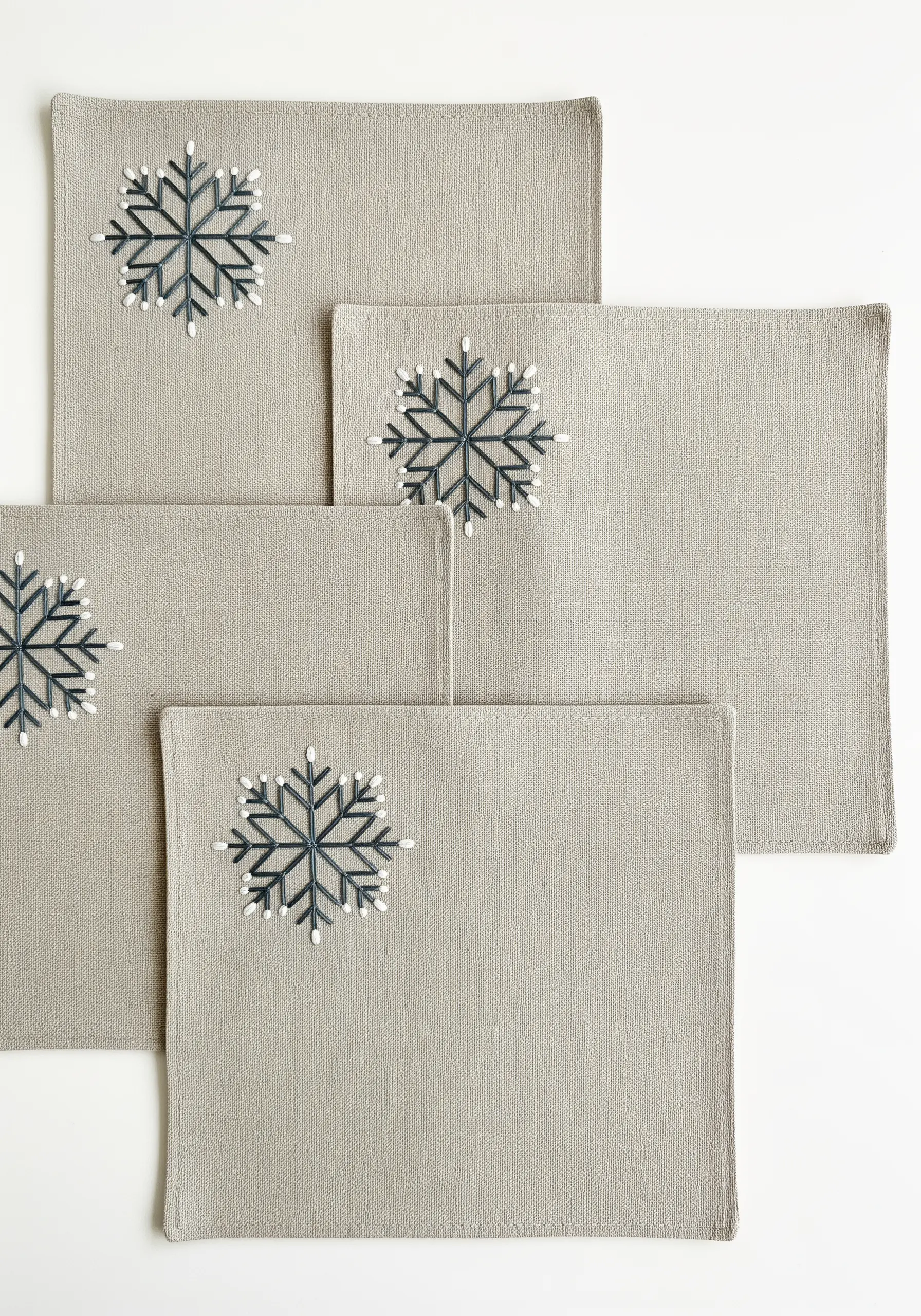
Combine clean lines with subtle texture for a sophisticated snowflake.
Use a simple backstitch or stem stitch for the main arms of the snowflake to ensure they are uniform and sharp.
For the delicate tips, add tiny French knots using a contrasting white or ecru thread.
This combination creates a visual pop and tactile interest, elevating a classic motif into a piece of modern textile art.
3. Rhythmic Waves in Whipped Stitch
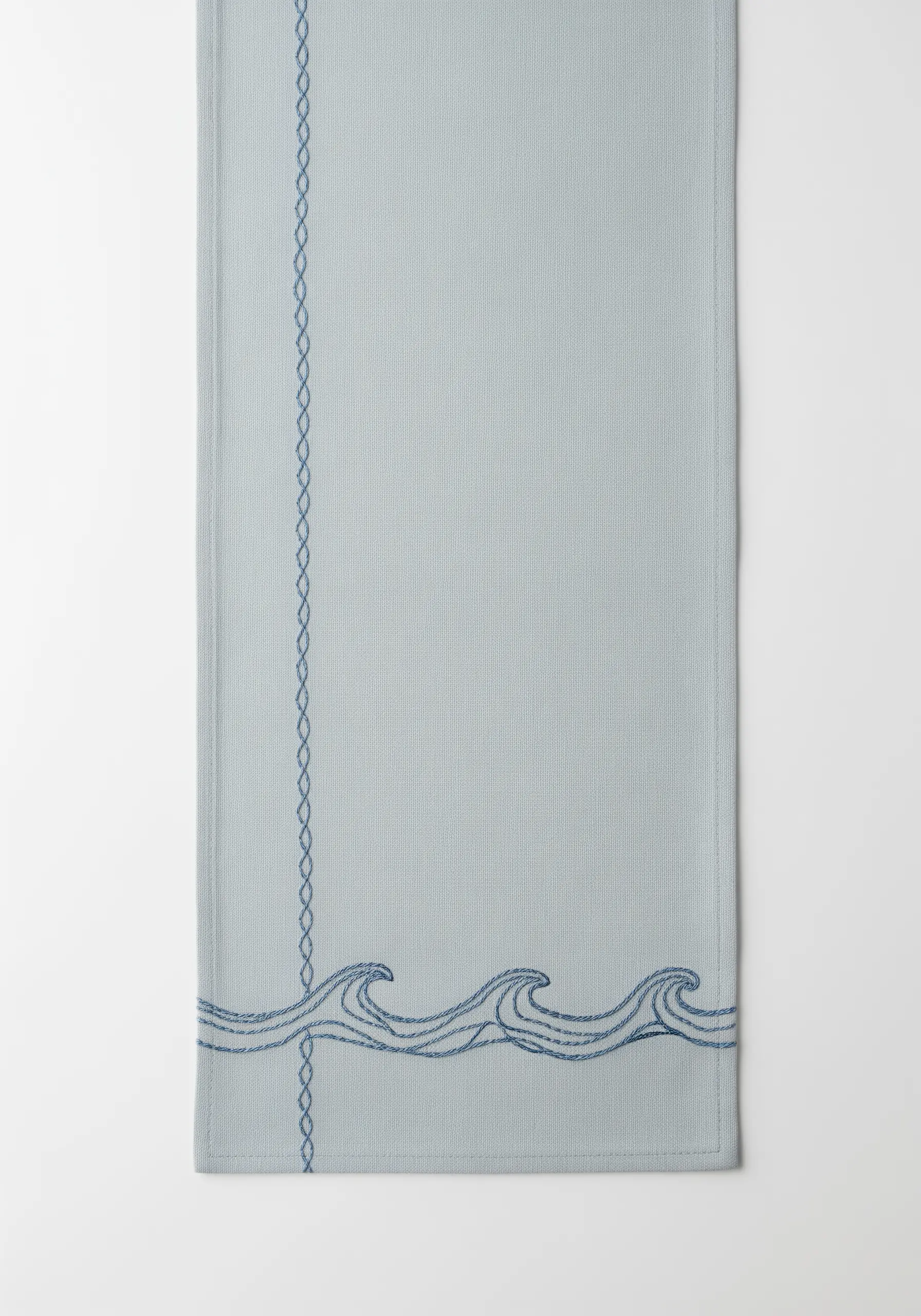
Give simple line art a three-dimensional quality by using a whipped backstitch or whipped chain stitch for these ocean waves.
First, lay down a foundation of simple backstitches, then weave a second thread through them without piercing the fabric.
This technique creates a smooth, raised, and rope-like line that stands out beautifully on tightly woven fabric.
It’s an excellent way to add substance and flow to coastal-themed table runners or placemats.
4. Architectural Mountainscape Lines
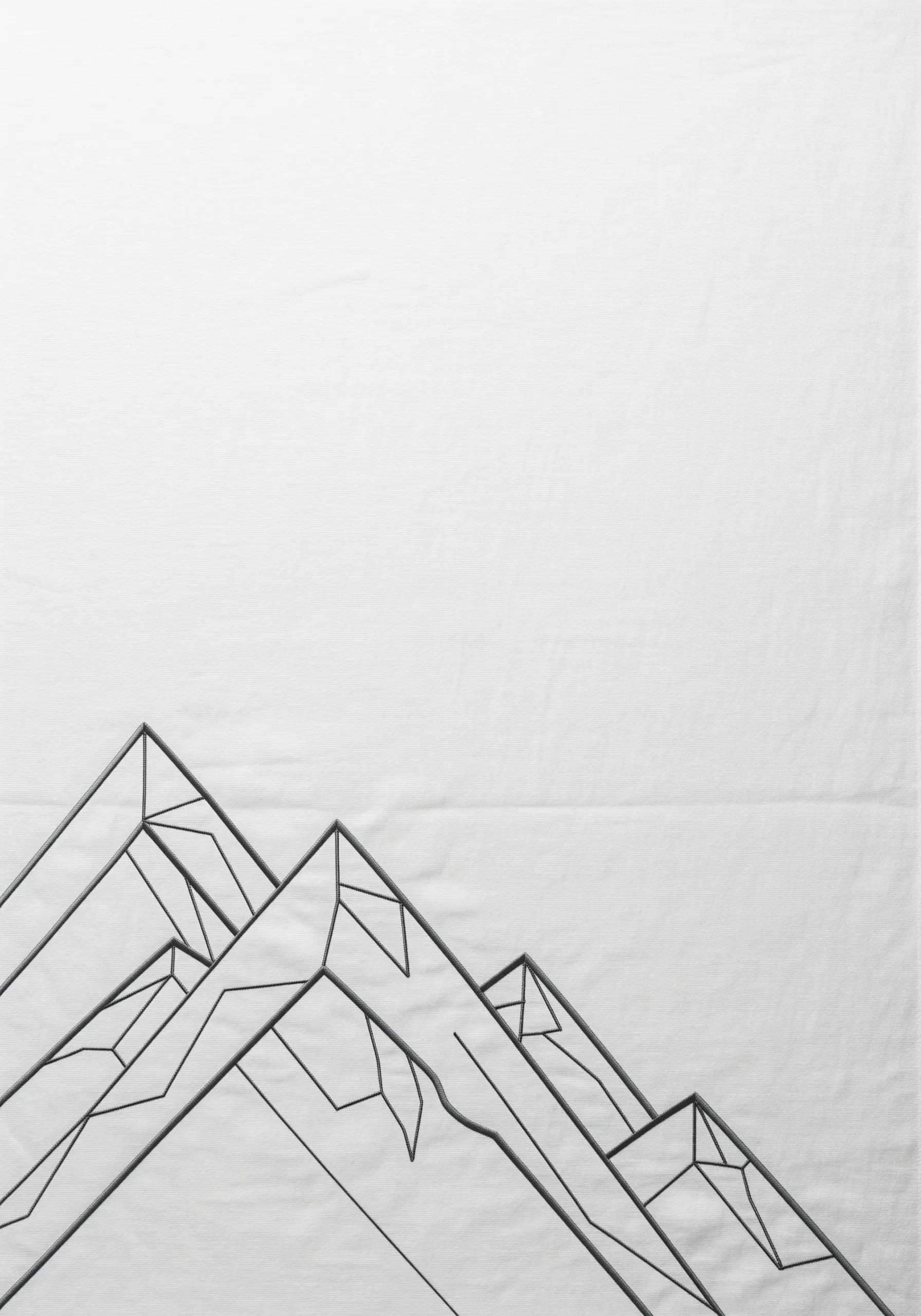
Achieve these crisp, geometric mountain peaks by using a single, consistent stitch like the split stitch.
Working with a dark grey or black floss on bright white cotton enhances the high-contrast, graphic novel feel of the design.
To ensure your lines are perfectly straight and the angles are sharp, consider using a tear-away stabilizer on the back of your fabric.
This is a perfect example of how modern line art can create a powerful statement with minimal elements.
5. Abstract Tree on Felted Wool
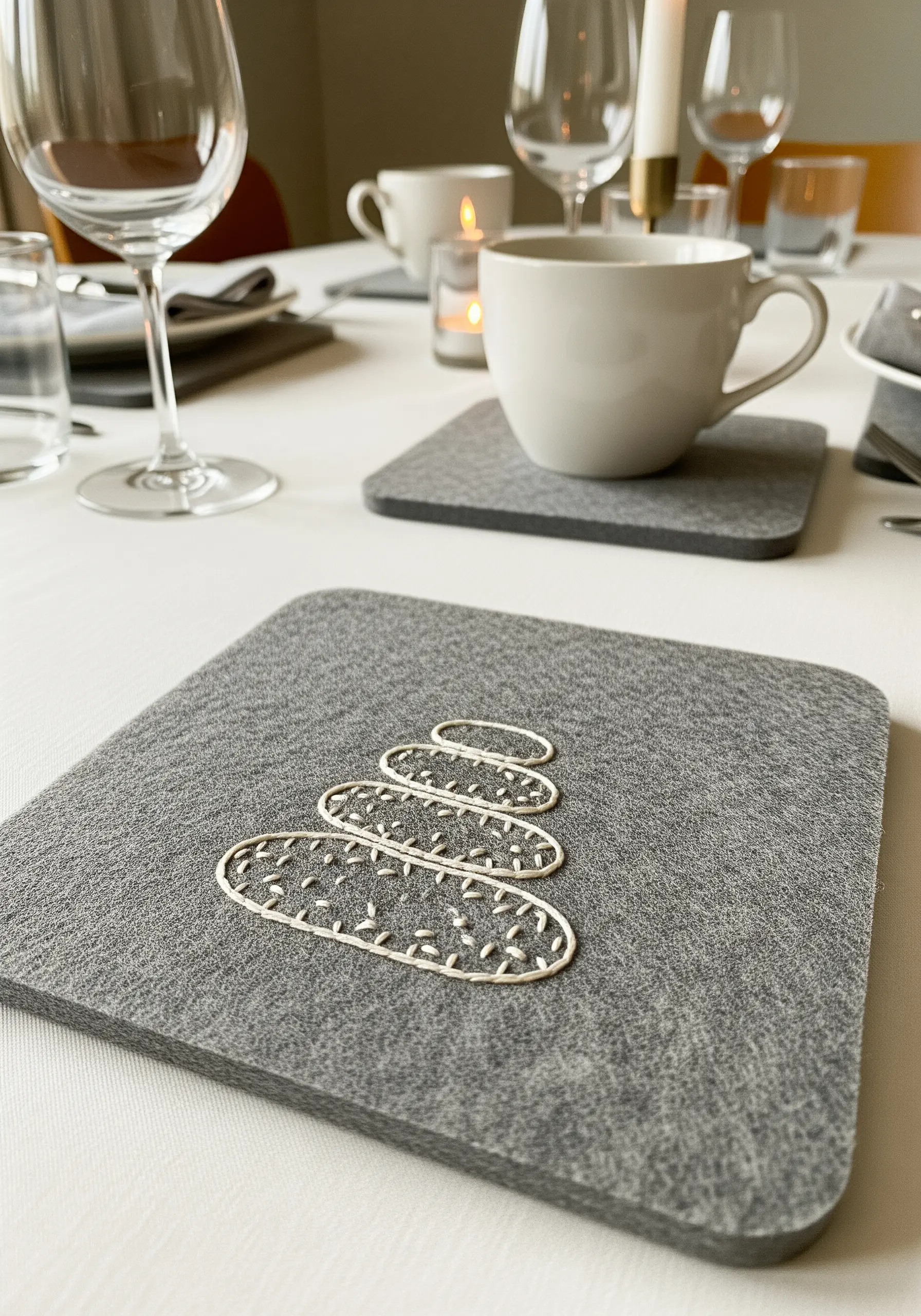
Stitching on felt offers a unique opportunity for texture and bold color contrast.
Use a perle cotton or a thicker floss (all six strands) to make the stitches stand out against the dense fabric.
Outline the abstract tree shape with a backstitch, then fill the interior with a spaced-out blanket stitch or seed stitch.
This open fill technique allows the color of the felt to show through, making the design feel light and integrated rather than heavy.
6. Whispers of a Dandelion Clock
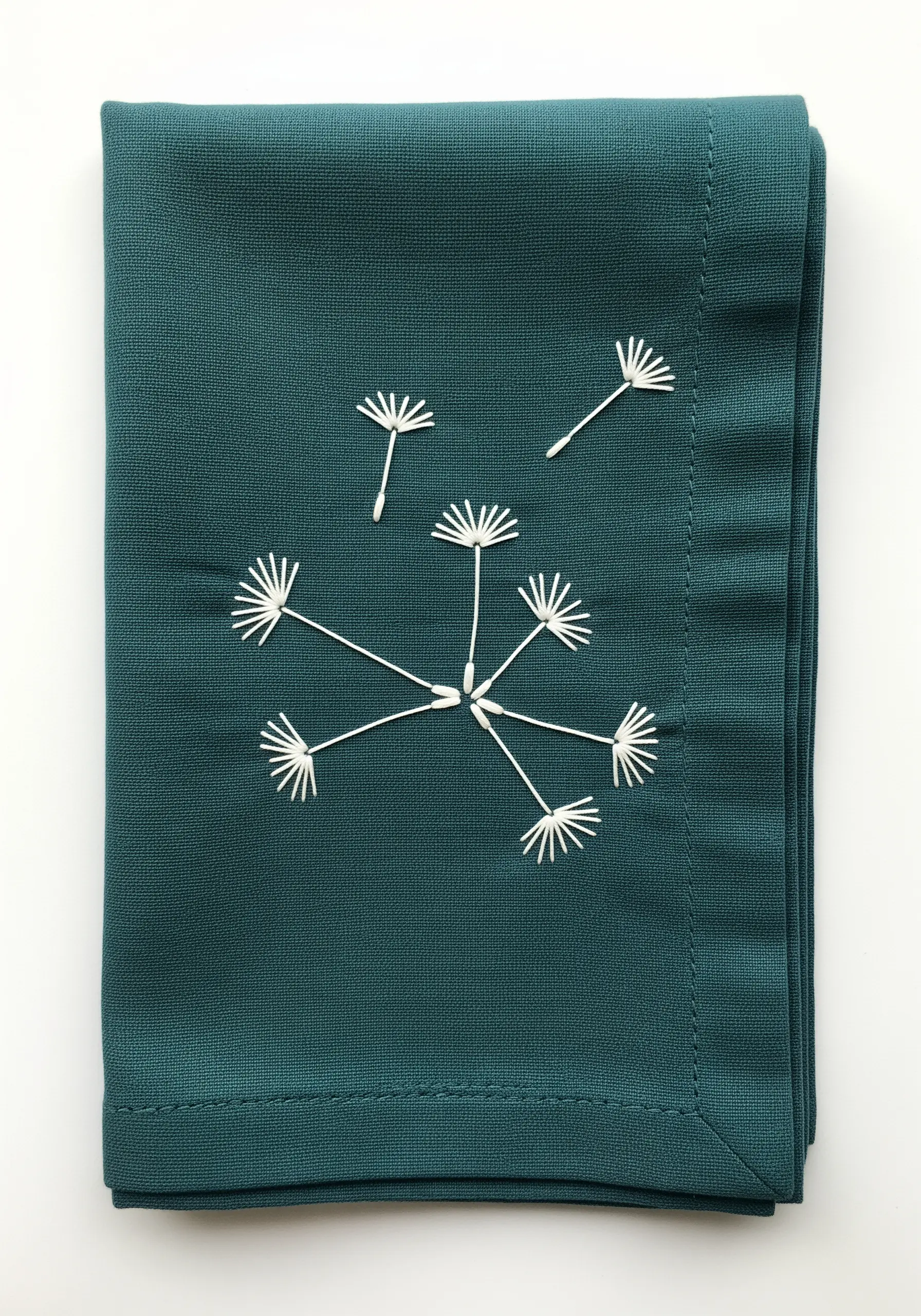
Capture the delicate, airy quality of dandelion seeds by focusing on fine stitches and negative space.
Use a single strand of white floss for the entire design to maintain its lightness.
Create each seed with a series of straight stitches radiating from a central point, keeping the tension gentle to avoid puckering the fabric.
The intentional scattering of the seeds across the dark teal fabric creates a sense of movement and quiet poetry.
7. Birch Grove with Appliqué and Stitch
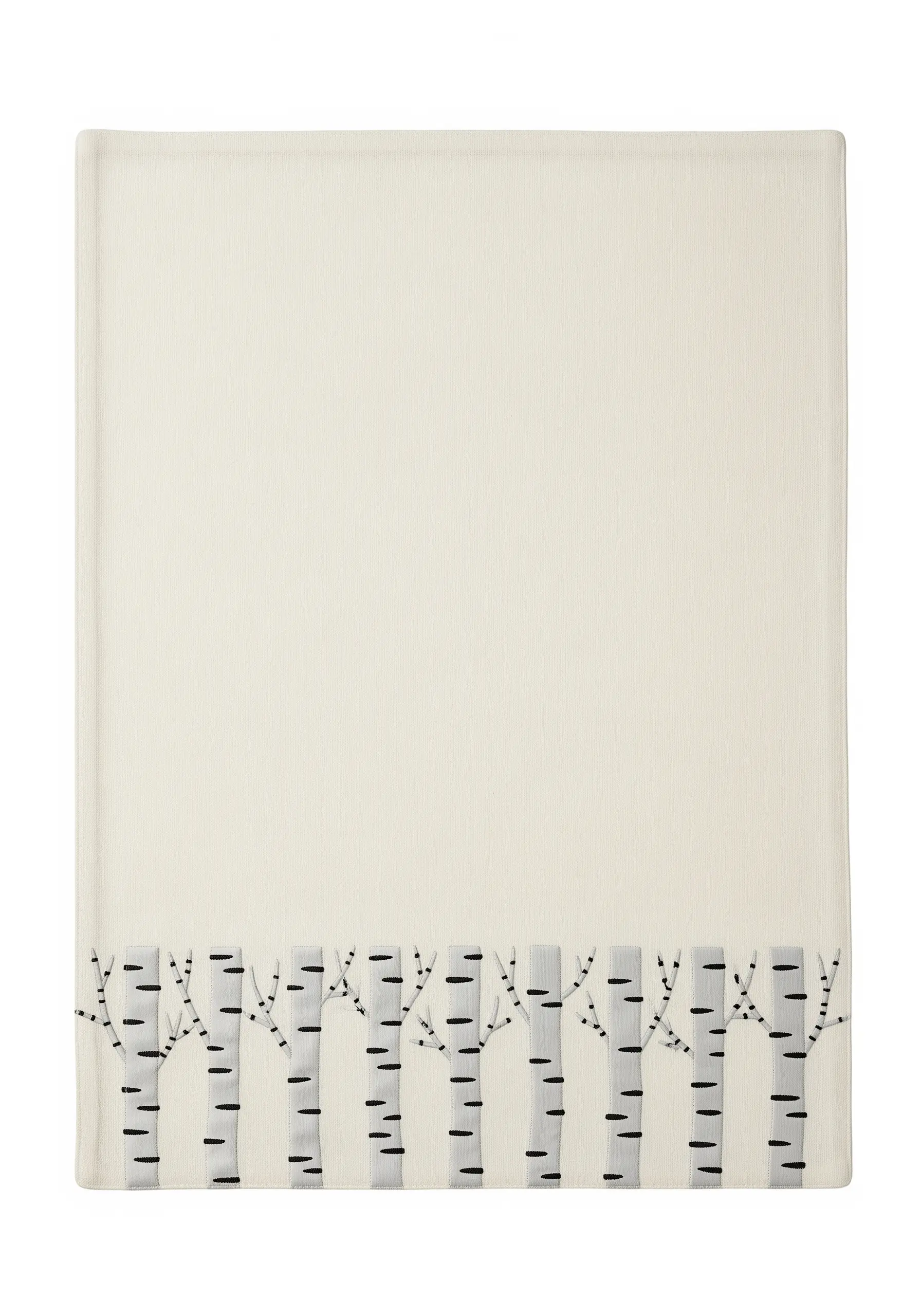
Combine fabric appliqué with simple embroidery for this striking birch tree border.
Cut thin strips of white or light grey fabric for the tree trunks and secure them with an iron-on adhesive before stitching the edges.
Add the characteristic black marks on the bark using small, horizontal straight stitches.
Finish with tiny, branching fly stitches at the top to suggest delicate twigs, a perfect example of how mixed media embroidery creates depth.
8. The Understated Fern Wreath

For a wreath that feels both classic and modern, focus on the rhythmic repetition of a single stitch.
The fern stitch is ideal for this, as it naturally creates a central stem and leafy fronds in one continuous motion.
Trace a perfect circle onto your fabric with a water-soluble pen to act as your guide, ensuring a balanced and symmetrical shape.
Stitched in a muted sage green, this design offers botanical elegance without any fuss, perfect for minimalist embroidery patterns.
9. A Minimalist Sunburst
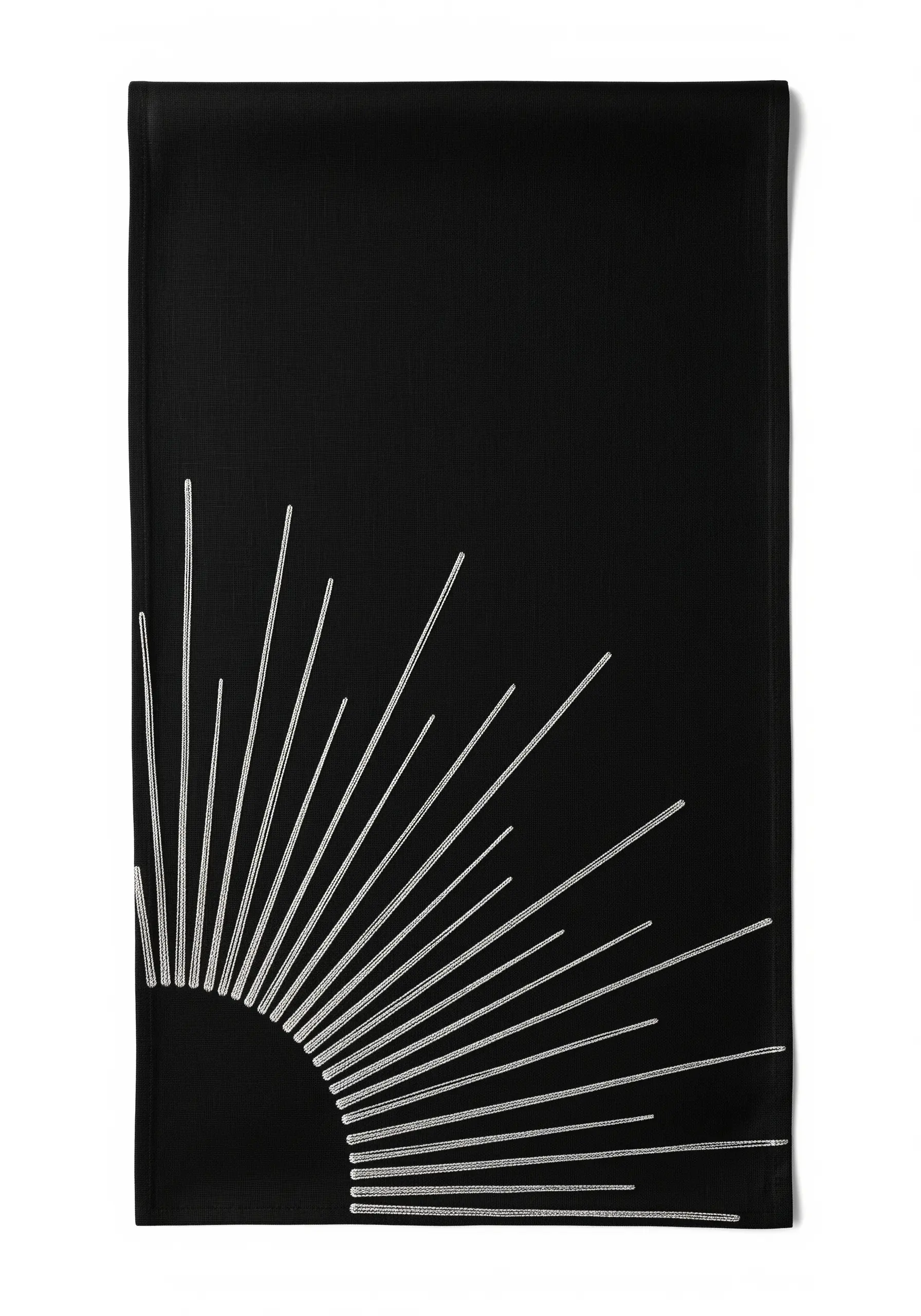
This high-impact sunburst is achieved with radiating straight stitches, where thread tension is key.
To prevent fabric distortion, work the longest central stitches first, then fill in the rays on either side, alternating from left to right.
Using a metallic or high-sheen silver thread against a black fabric background creates a dramatic, light-catching effect.
This motif works beautifully in the corner of a placemat or napkin, adding a touch of modern glamour.
10. Graphic Play with Geometric Repeats
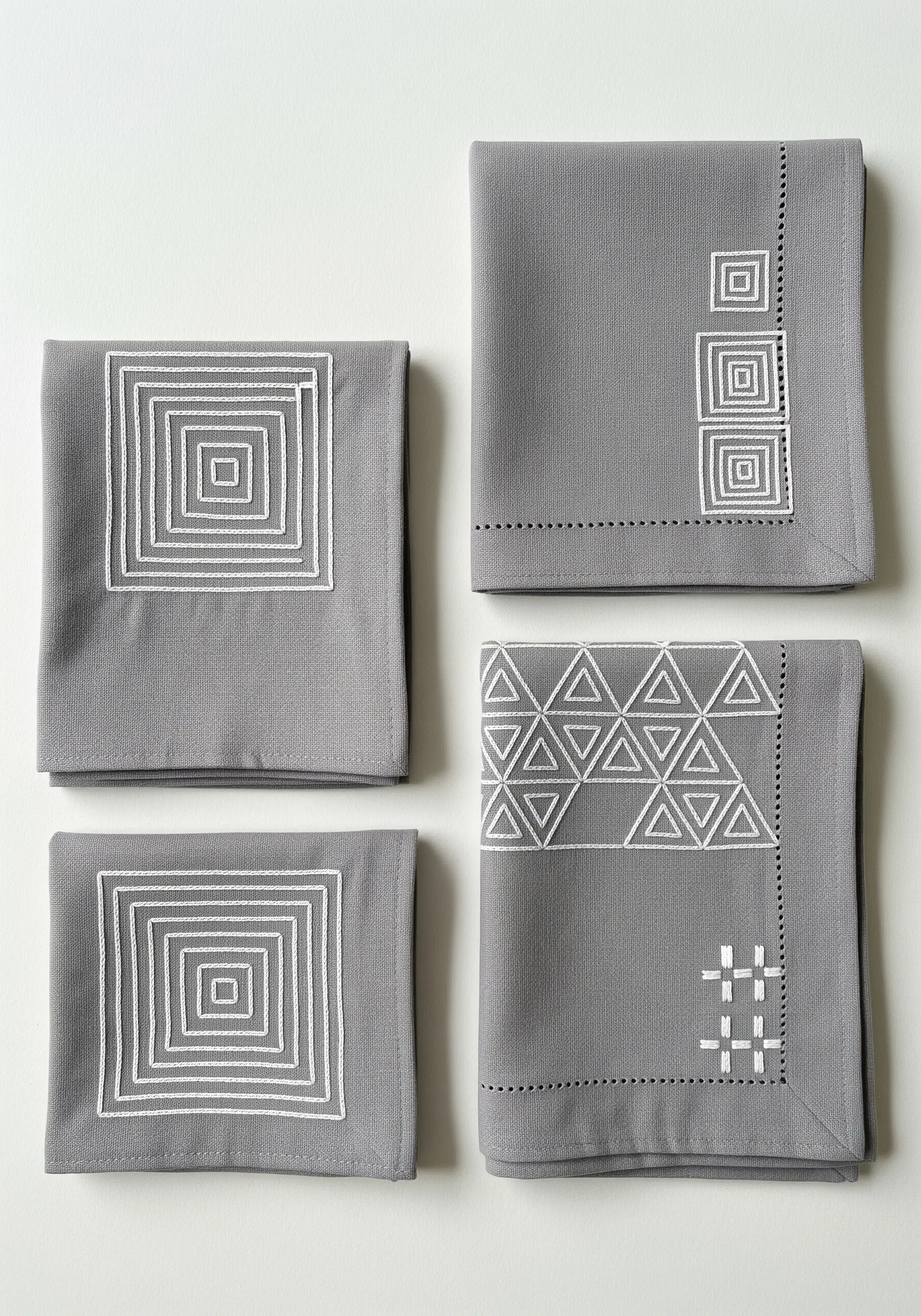
Explore the power of simple shapes by creating patterns with a basic backstitch or running stitch.
The key to a polished look is absolute consistency in your stitch length and spacing.
Use a single color thread—like this crisp white on grey—to let the patterns themselves be the focus.
You can vary the motifs on a set of napkins for a cohesive yet individualized collection that feels like curated art.
11. Scattered Winter Berries

Create a delicate, all-over pattern with tiny clusters of winter berries.
Use a single, small stem stitch for the brown twigs to give them a natural curve.
For the berries, stitch tightly packed French knots with a vibrant red floss, wrapping the thread two or three times for a plump, round shape.
The random placement across the fabric feels organic and effortless, like a gentle dusting of nature on your table linen.
12. A Tiny Village Border

Stitch a charming, architectural border using a fine, single-strand backstitch.
To achieve such delicate and precise results, transfer your design with a sharp, fine-tipped water-soluble marker.
A tone-on-tone color palette, like this silvery grey on white linen, gives the design a subtle, heirloom quality.
This style of tiny motifs adds personality without shouting for attention, defining quiet luxury.
13. Woven Band of Texture
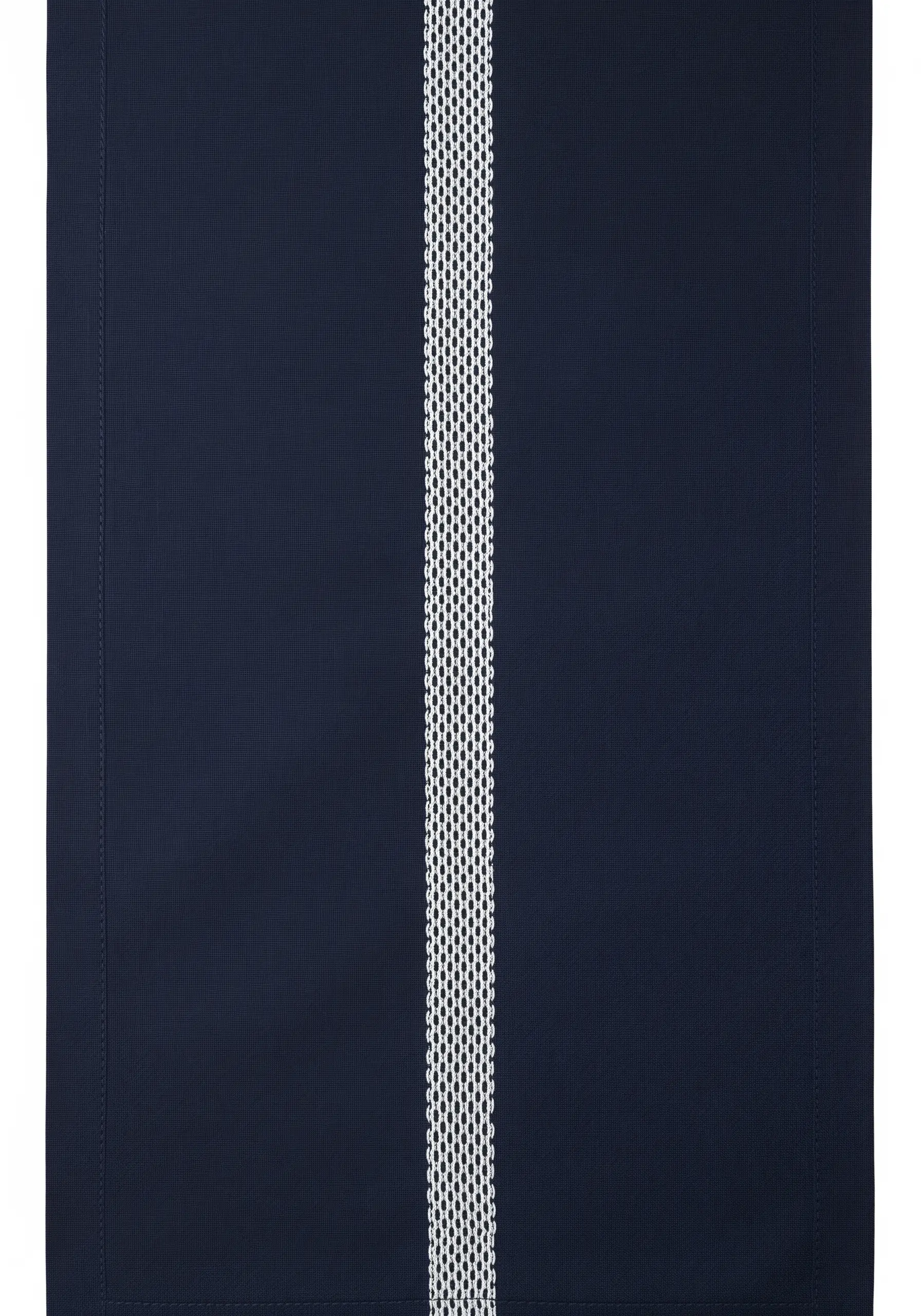
This bold vertical stripe isn’t woven—it’s created with a clever stitch that mimics texture.
Use a laid stitch or long satin stitches to create the vertical white lines, then couch them down with a contrasting thread using tiny horizontal stitches.
This technique, known as couching, allows you to create long, straight fills without the risk of snagging or puckering the base fabric.
The result is a graphic, dimensional band that adds a strong focal point to any table runner.
14. A Trio of Herring
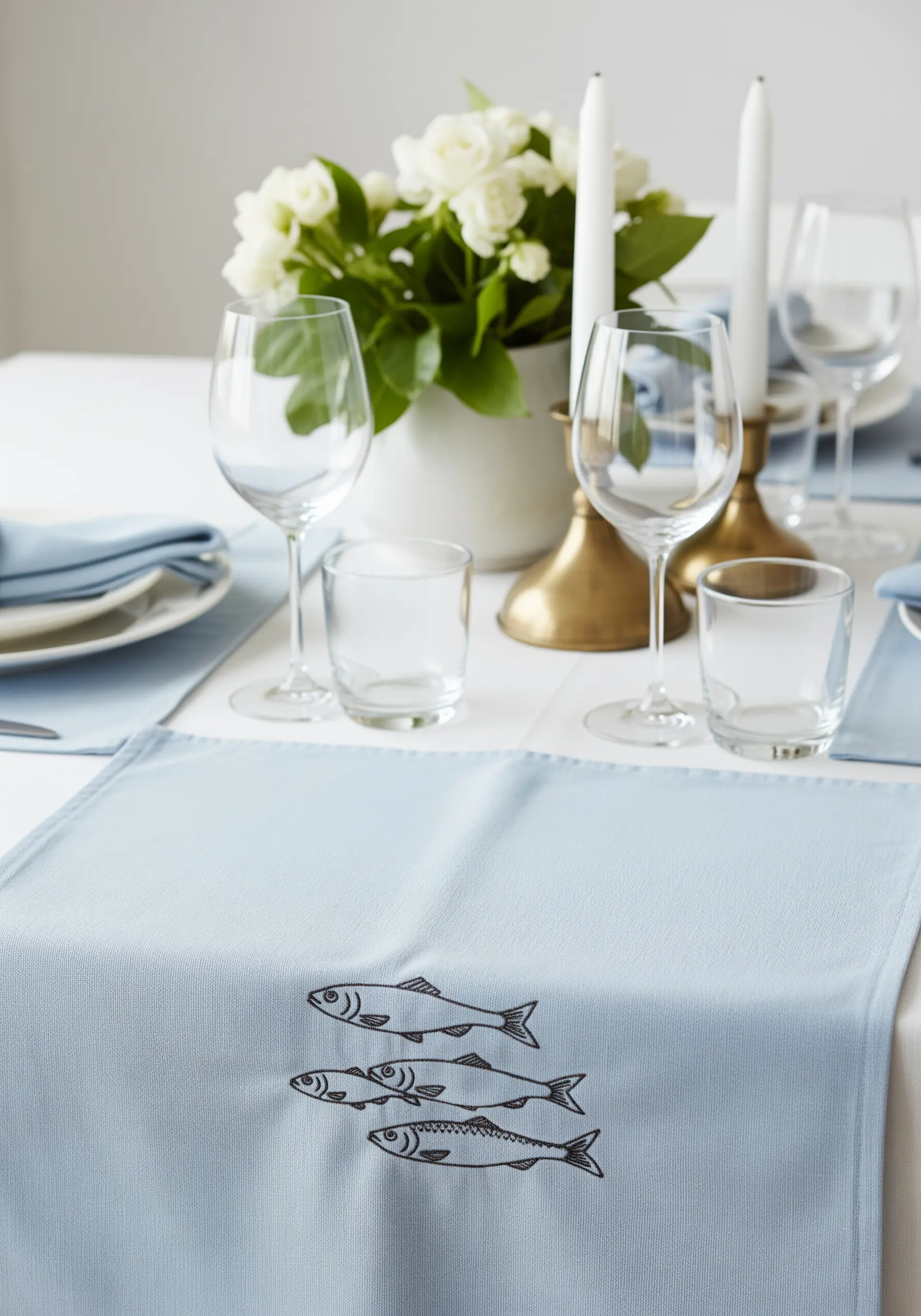
Capture the essence of Scandinavian coastal life with these simple, elegant fish motifs.
Use a crisp backstitch for the outlines, varying your thread count to create visual depth—two strands for the main body and one for the delicate fins and gills.
Grouping the motifs in an overlapping, swimming formation adds a dynamic sense of movement.
This is a perfect project to practice line control and celebrate the beauty of understated illustration on fabric.
15. The Noble Reindeer Silhouette
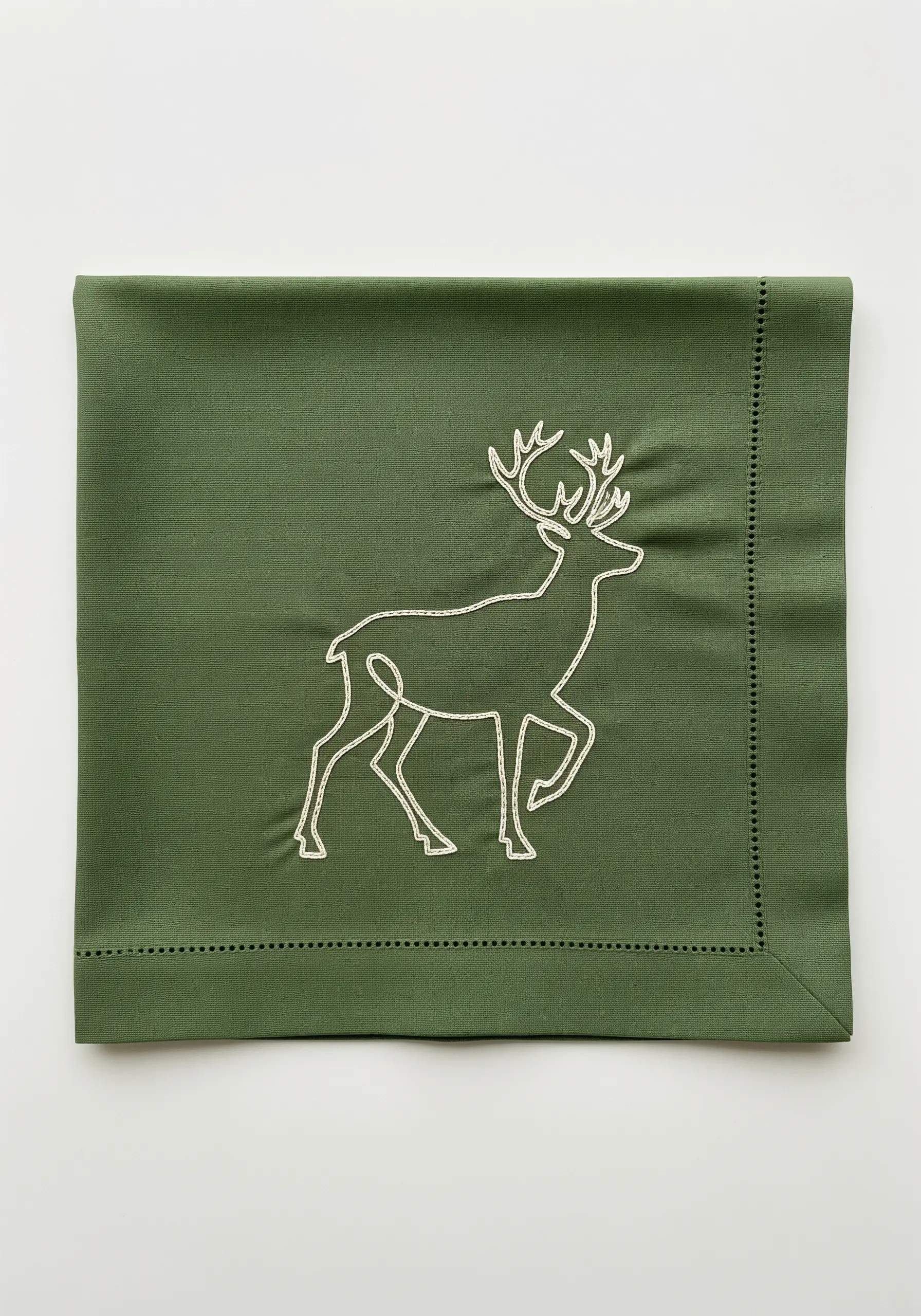
For a bold outline that feels both strong and graceful, use a whipped backstitch or a heavy chain stitch.
These stitches create a raised, solid line that makes the silhouette pop, especially when using a high-contrast thread like white on deep olive green.
Pay close attention to the curves and sharp points of the antlers; slowing down in these areas will ensure a clean, professional finish.
This technique elevates a simple outline into a statement piece of minimalist embroidery art.
16. The Meditative Spiral
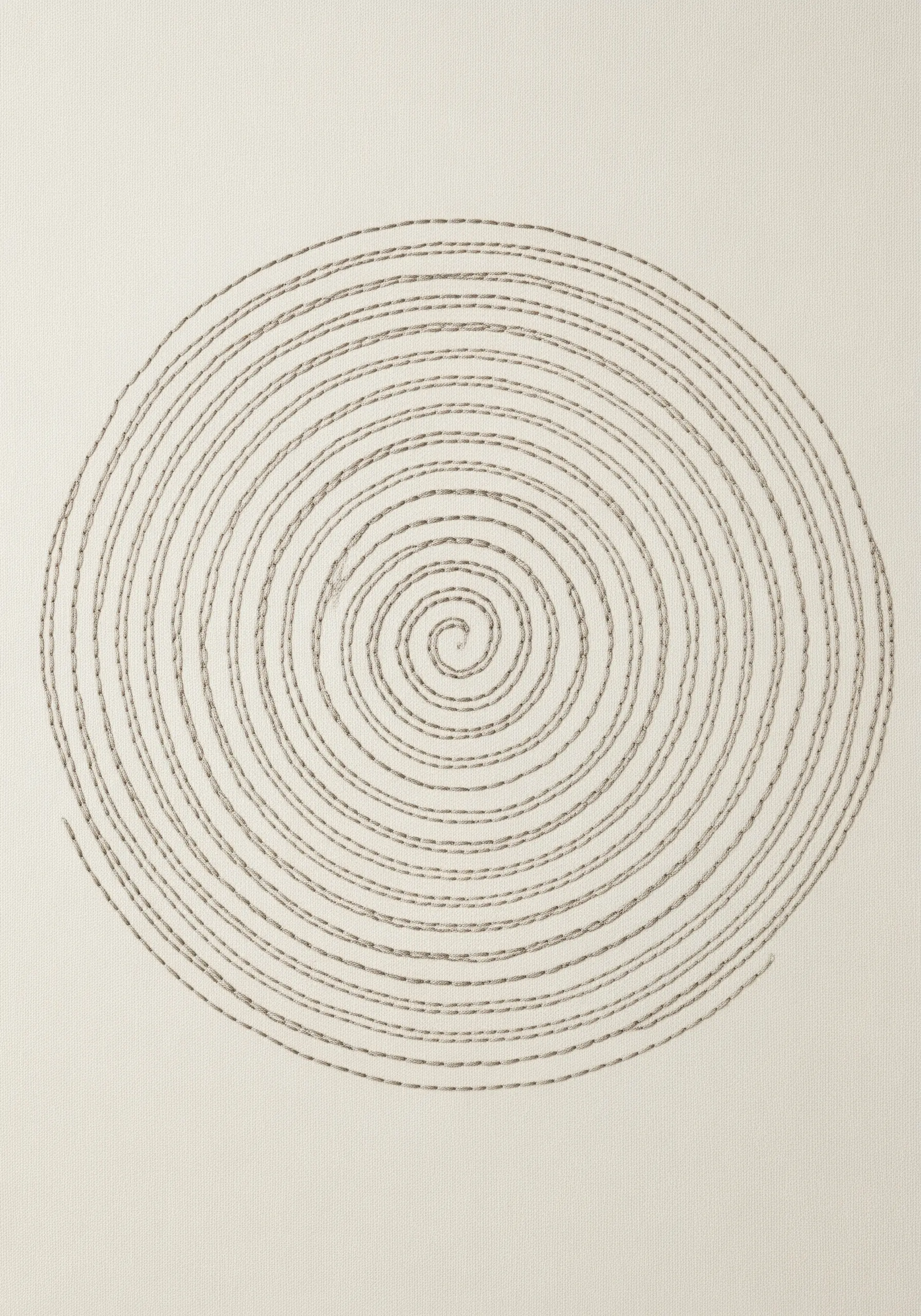
This hypnotic spiral is a simple exercise in consistency and rhythm, making it a wonderfully calming project.
Use a basic running stitch, focusing on keeping the length of your stitches and the gaps between them perfectly even.
Draw your spiral guide onto the fabric with a disappearing ink pen before you begin to avoid any wobbles.
The final effect is clean, modern, and graphic, turning a basic stitch into a captivating focal point.
17. Abstract Forest Soundwave

Create a dense, textural forest-scape using vertical satin stitches of varying heights and colors.
Work in blocks of color—black, grey, and olive green—to build layers of visual depth, mimicking a forest treeline at dusk.
Keep your stitches parallel and tightly packed to achieve a solid, graphic look.
This technique is a fantastic way to explore color blending and abstract representation in your embroidery.
18. A Constellation of Crosses
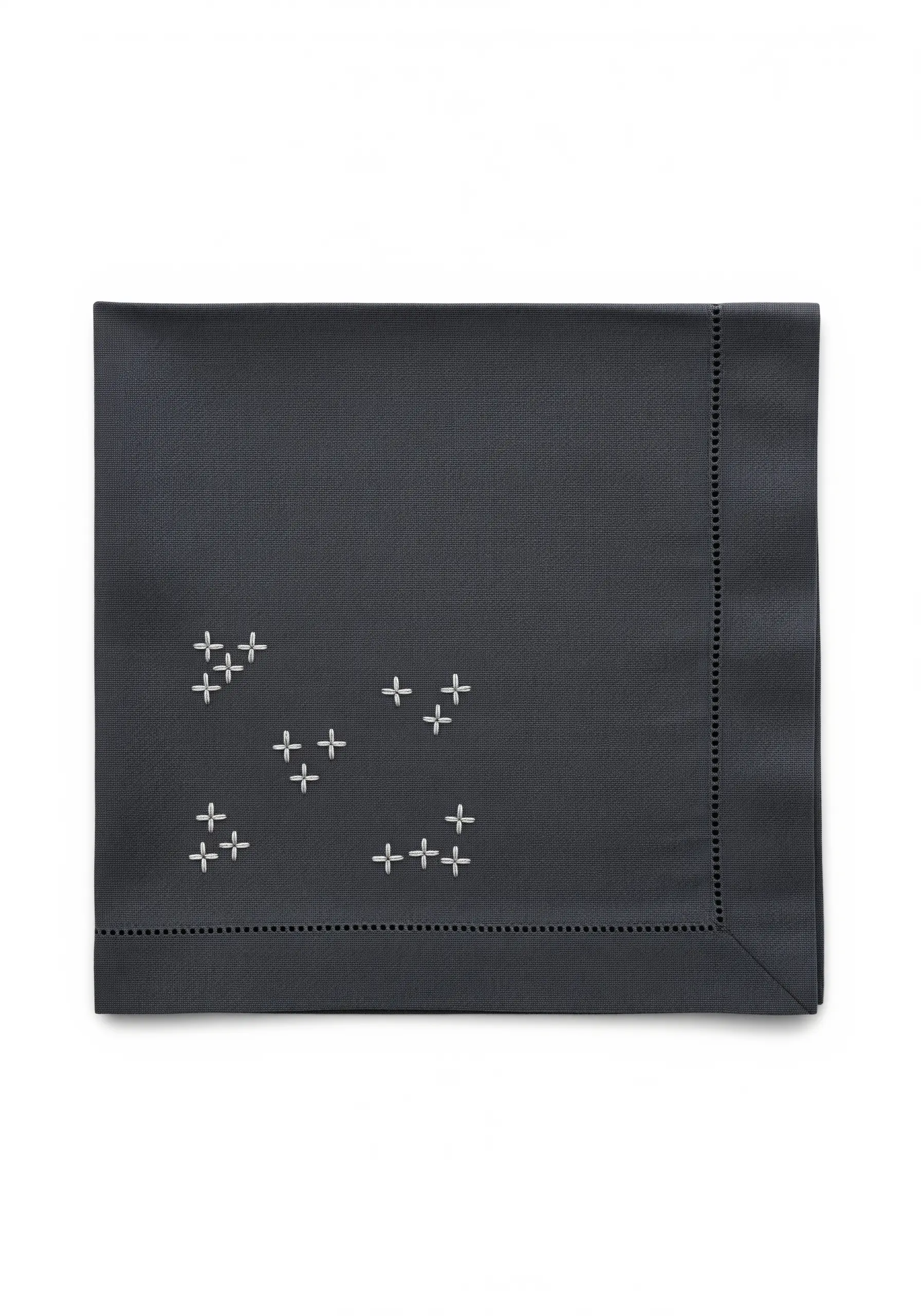
Elevate the humble cross stitch by using it as a scattered, textural element rather than for a full picture.
Arrange small clusters of crosses asymmetrically across a dark fabric to evoke stars or scattered blossoms.
For a clean finish, ensure the top leg of every single cross stitch faces the same direction.
This approach transforms a traditional technique into a modern, minimalist statement that relies on the beauty of negative space.
19. Geometric Triangle Border
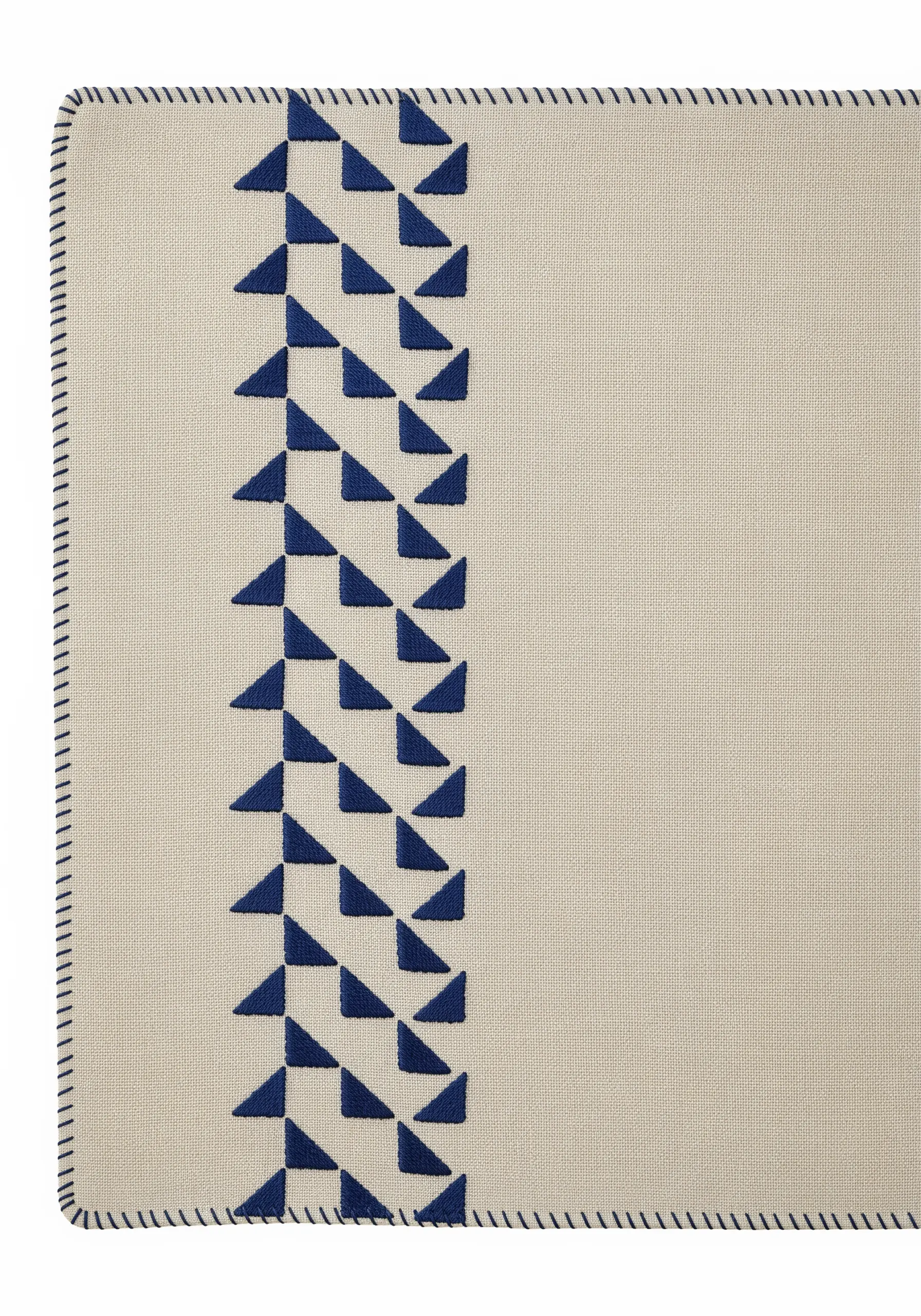
Fill geometric shapes with a perfectly executed satin stitch for a bold, clean border.
To get those razor-sharp edges, first outline each triangle with a tiny split stitch, then fill with satin stitch, using the outline as a raised guide.
Always keep your satin stitches parallel to one side of the triangle; this consistency is what makes the design look so crisp and professional.
A simple running stitch along the edges of the placemat ties the entire design together.
20. Golden Wheat Sheaf
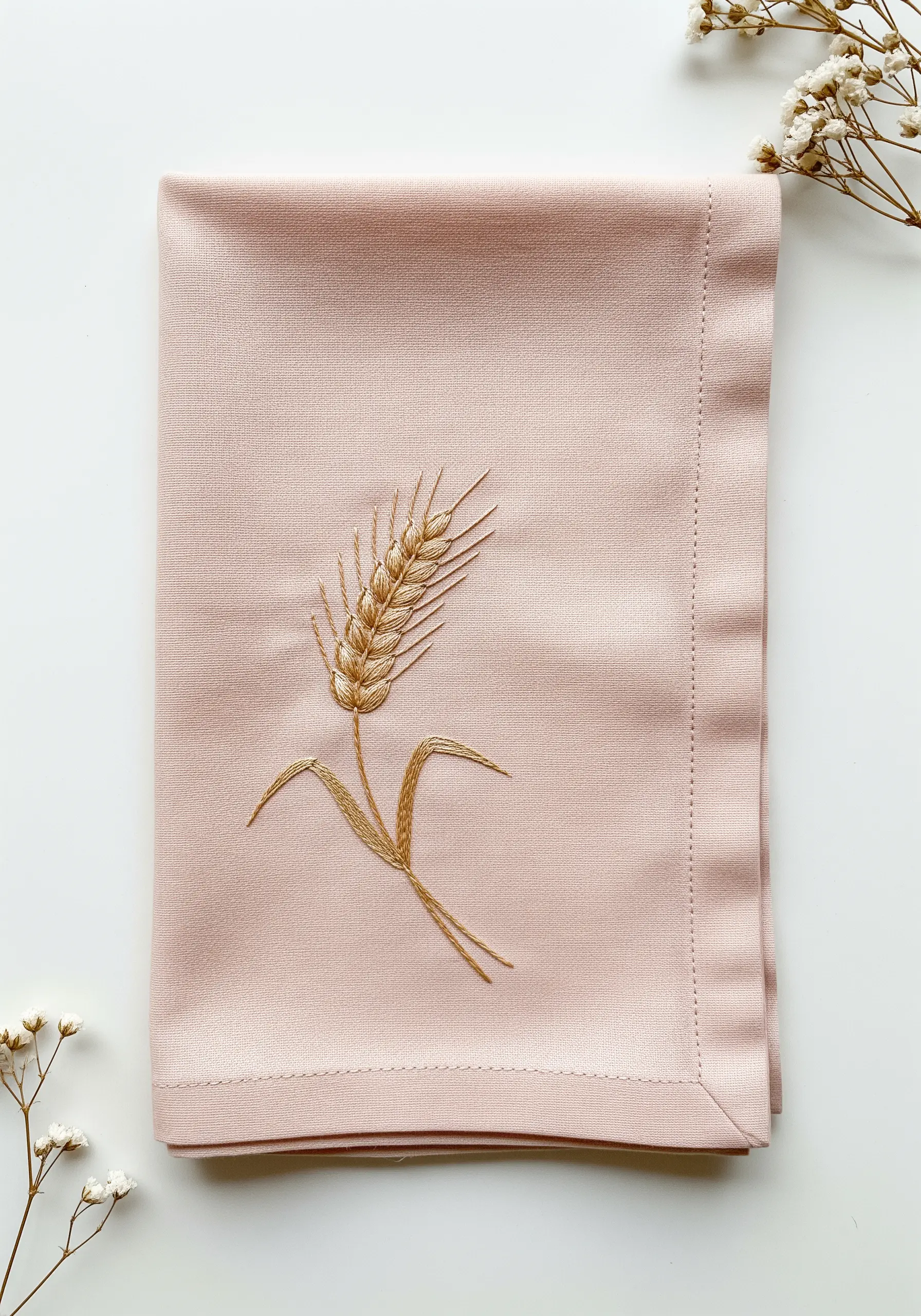
Capture the texture of a wheat stalk using a combination of thoughtful stitches.
Use a fishbone stitch for the head of the wheat, as the overlapping stitches create a beautiful, herringbone-like texture that mimics the natural grain.
A simple stem stitch works perfectly for the stalk and gracefully curved leaves.
Choosing a thread with a subtle golden sheen on a soft, muted fabric creates an effect that is both rustic and incredibly elegant.