

Your walls are more than just structures; they are canvases waiting for a story. And you, with your needle and thread, are the storyteller. But sometimes, it’s hard to know which story to tell, or how to make your stitches speak with clarity and elegance.
Let’s set aside the pressure to be perfect and instead focus on intention. You don’t need a thousand different stitches or a rainbow of threads to make an impact. Often, the most profound statements are made with a simple line, a thoughtful texture, or a composition that breathes.
In the ideas that follow, I’ll guide you through specific techniques that elevate your work from a craft project to a piece of art. We’ll explore how stitch direction can create movement, how a monochromatic palette can celebrate texture, and how simple framing can transform your embroidery into a masterpiece. You already have the skill; now, let’s refine the vision.
1. Curate a Botanical Gallery Wall
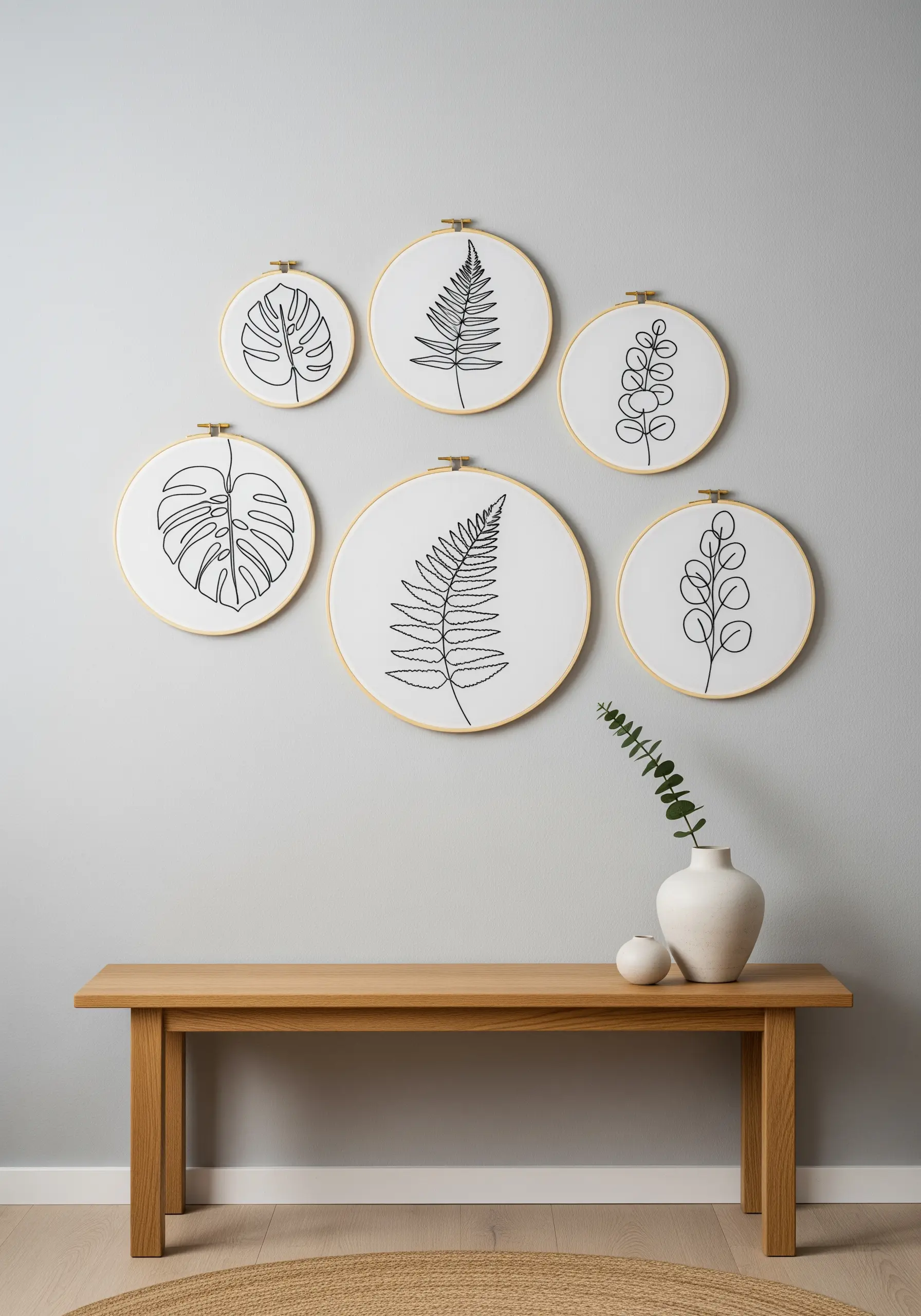
Group simple botanical outlines to create a cohesive, high-impact display.
To ensure a modern, graphic look, use a consistent line weight by stitching with two or three strands of black floss.
Select a tight-weave cotton or linen fabric in a neutral off-white; this provides a crisp canvas that allows the clean lines to stand out.
The key is thoughtful curation: choose leaf shapes that complement each other in form and scale, arranging them to create a balanced rhythm on the wall.
This transforms individual botanical line art embroidery patterns into a single, intentional art installation.
2. Paint with Thread in Abstract Forms
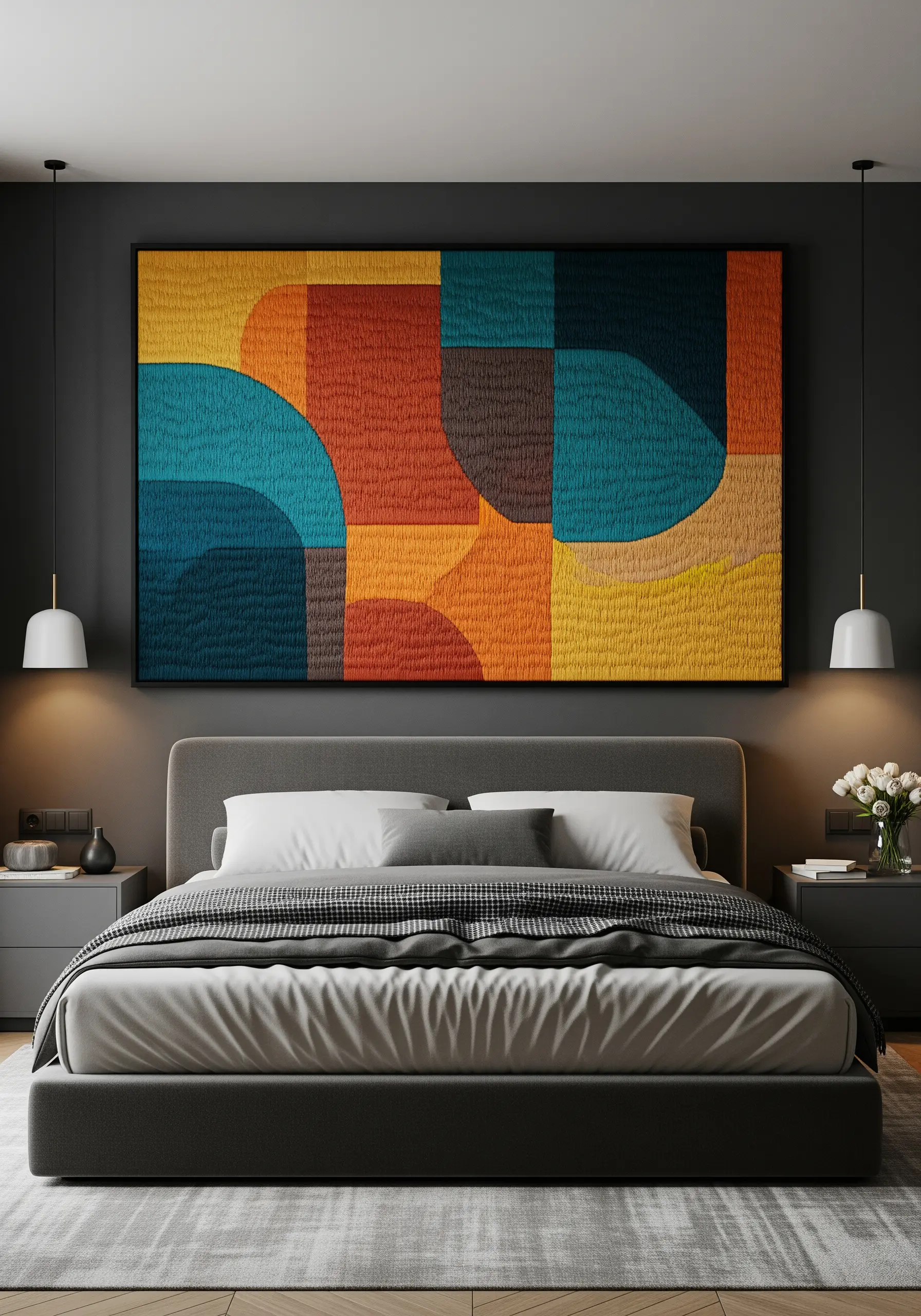
Fill large geometric shapes with dense, directional stitching to create a piece with painterly depth and texture.
Instead of a flat satin stitch, use a slightly varied long-and-short stitch or even a dense seed stitch.
The direction of your stitches is crucial; make them follow the curves or lines of each shape to create a sense of movement and dimension.
This technique turns simple color blocks into a tactile surface where light and shadow play across thousands of individual threads.
3. Embrace Rhythmic Repetition on a Runner
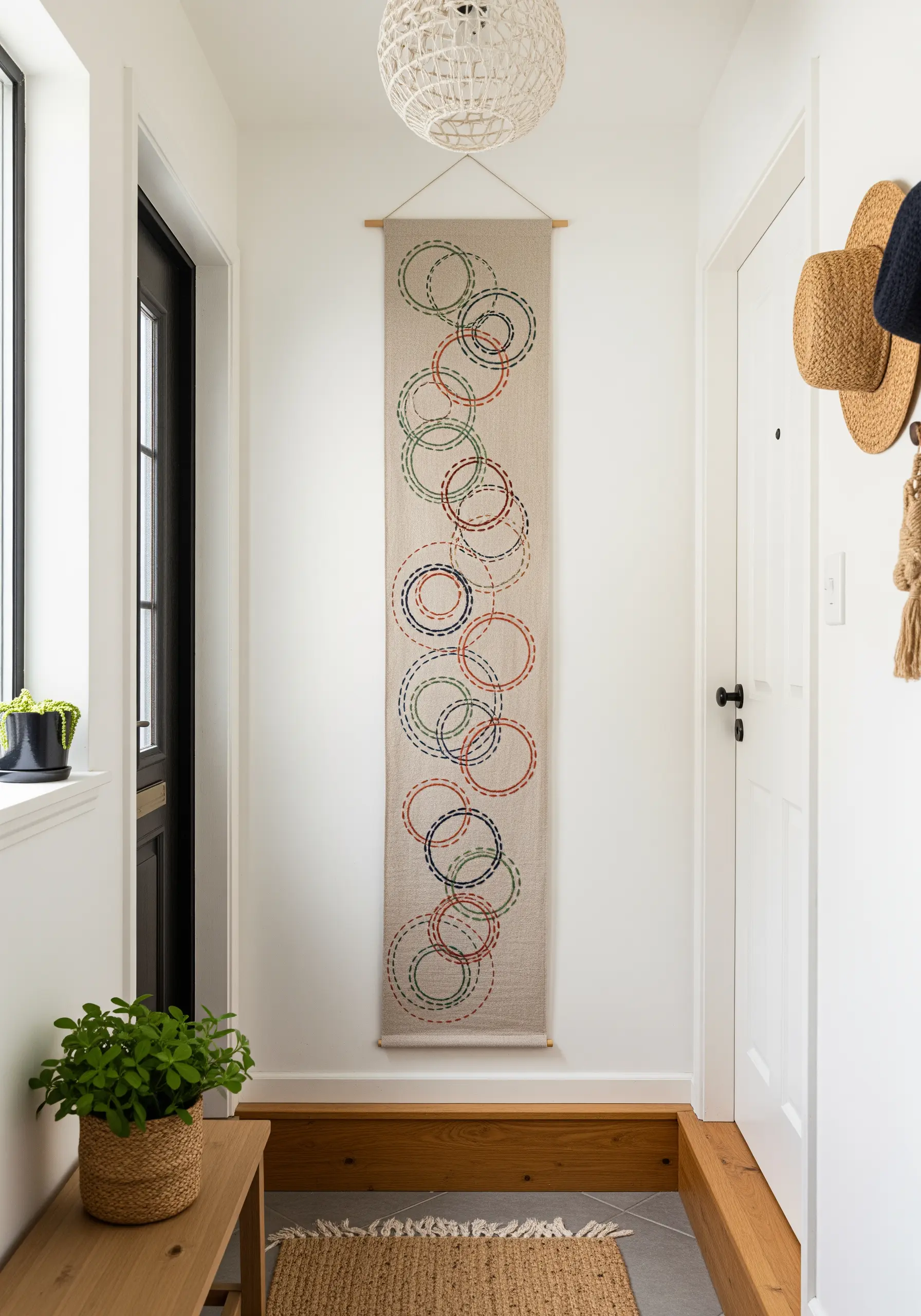
Transform a simple linen wall hanging with a pattern of repeating, overlapping motifs.
Use a simple running stitch, but vary the colors to create a playful yet sophisticated rhythm that draws the eye downward.
To keep your circles perfectly shaped, trace them with a heat-erasable pen and use a small, sharp needle to maintain precision on the curves.
The negative space is just as important as the stitches, giving the composition room to breathe and feel uncluttered.
4. Achieve Iridescence with Thread Painting
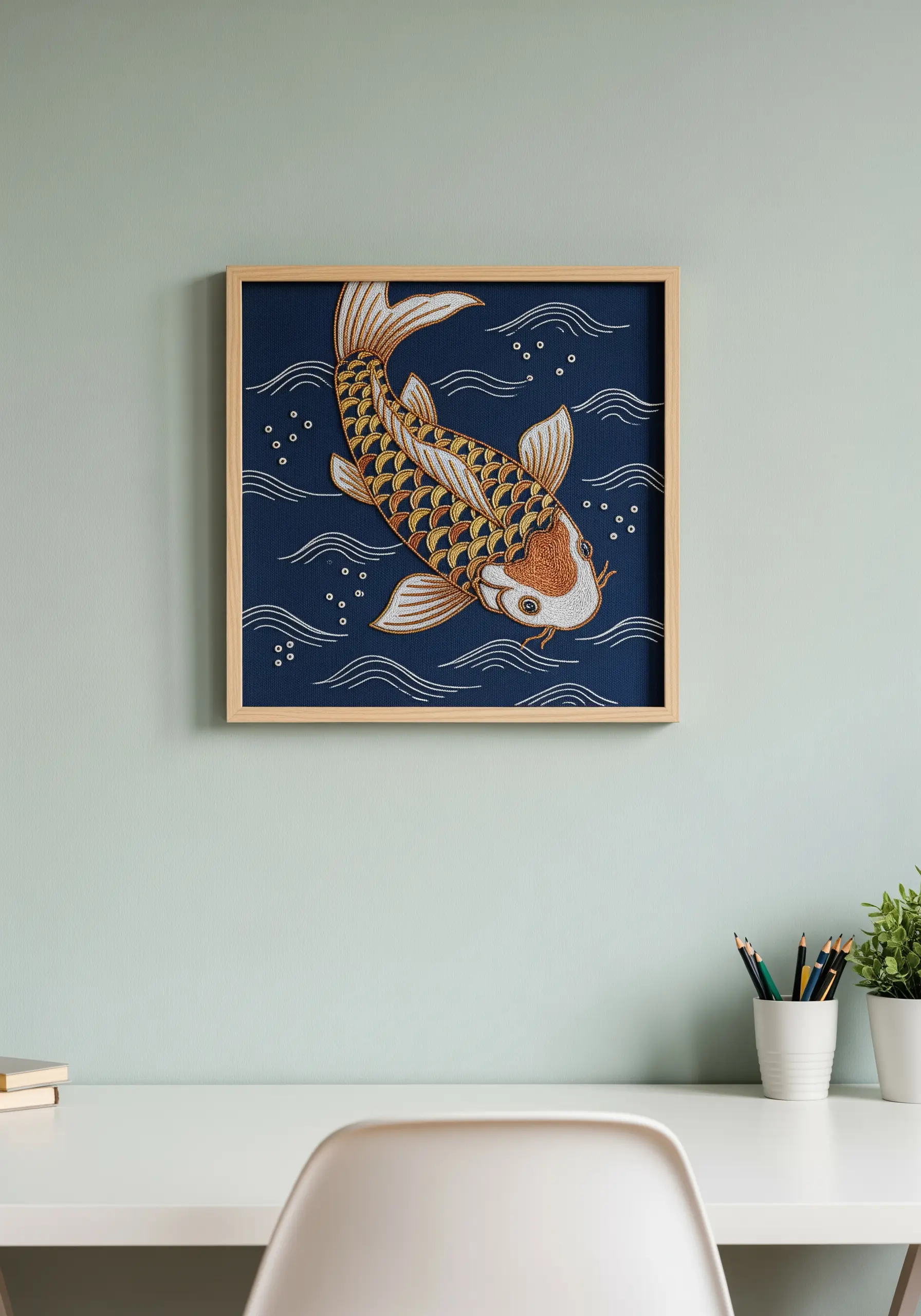
Mimic the shimmering scales of a koi fish by carefully blending multiple shades within each small section.
Use single strands of floss in a short satin stitch, angling your stitches to follow the natural curve of the scales.
Incorporate a single strand of metallic or silk thread alongside your standard cotton floss to catch the light and create a subtle, realistic sheen.
Stitching on a dark, solid background like navy blue linen makes these highlights and colors appear even more luminous.
5. Sculpt a Landscape with Chunky Yarn
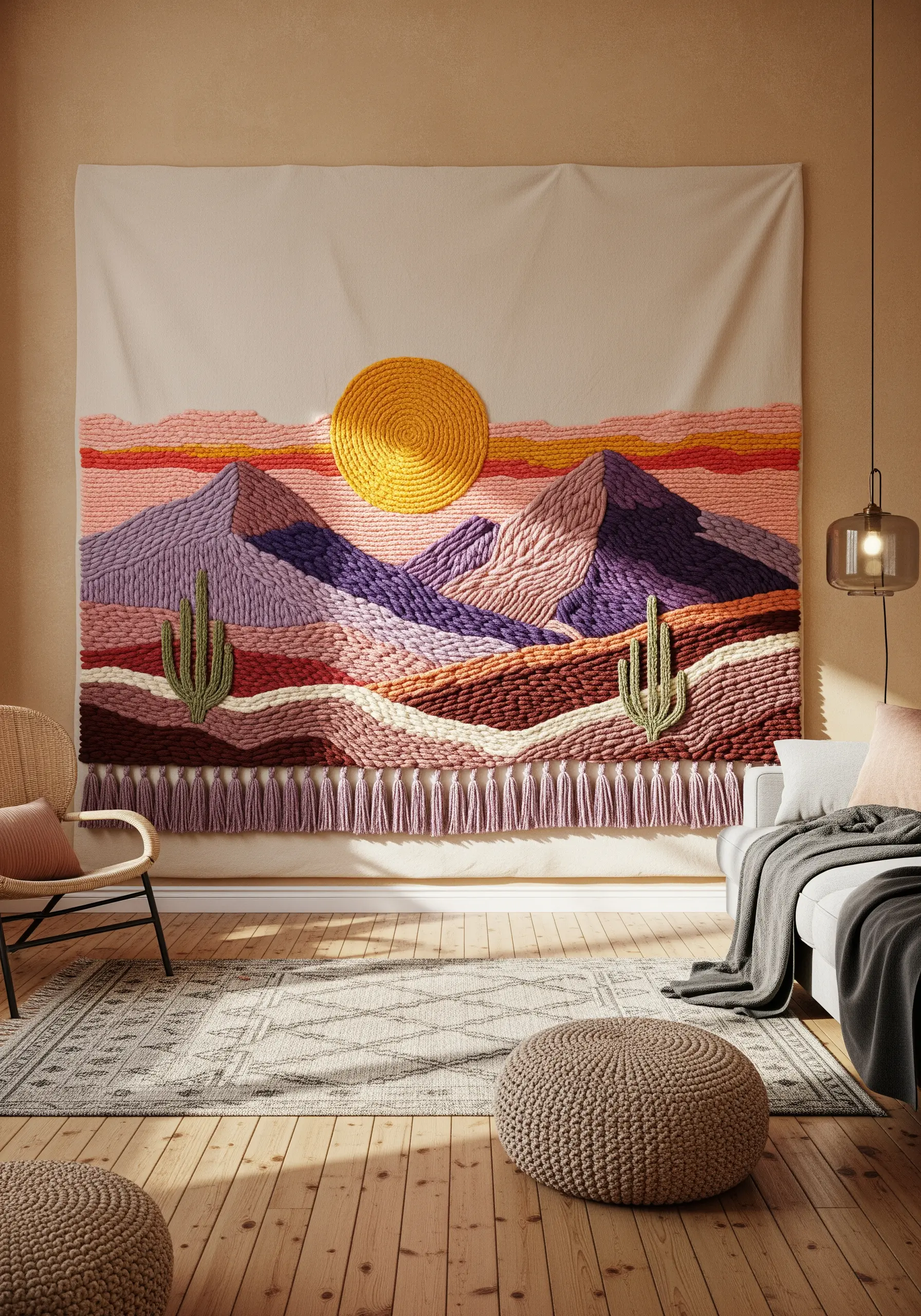
Move beyond floss to create dramatic, large-scale textile art with high-texture yarns.
Use techniques like punch needle or couching—tacking down thick yarn with a thinner, matching thread—to build up layers of texture.
Vary the thickness of your yarns and the density of your stitches to create foreground and background.
Bulky, looped stitches bring the mountains forward, while flatter sections recede, adding incredible depth to your landscape. These yarn wall art projects make a bold, tactile statement.
6. Explore Texture with Monochromatic Relief
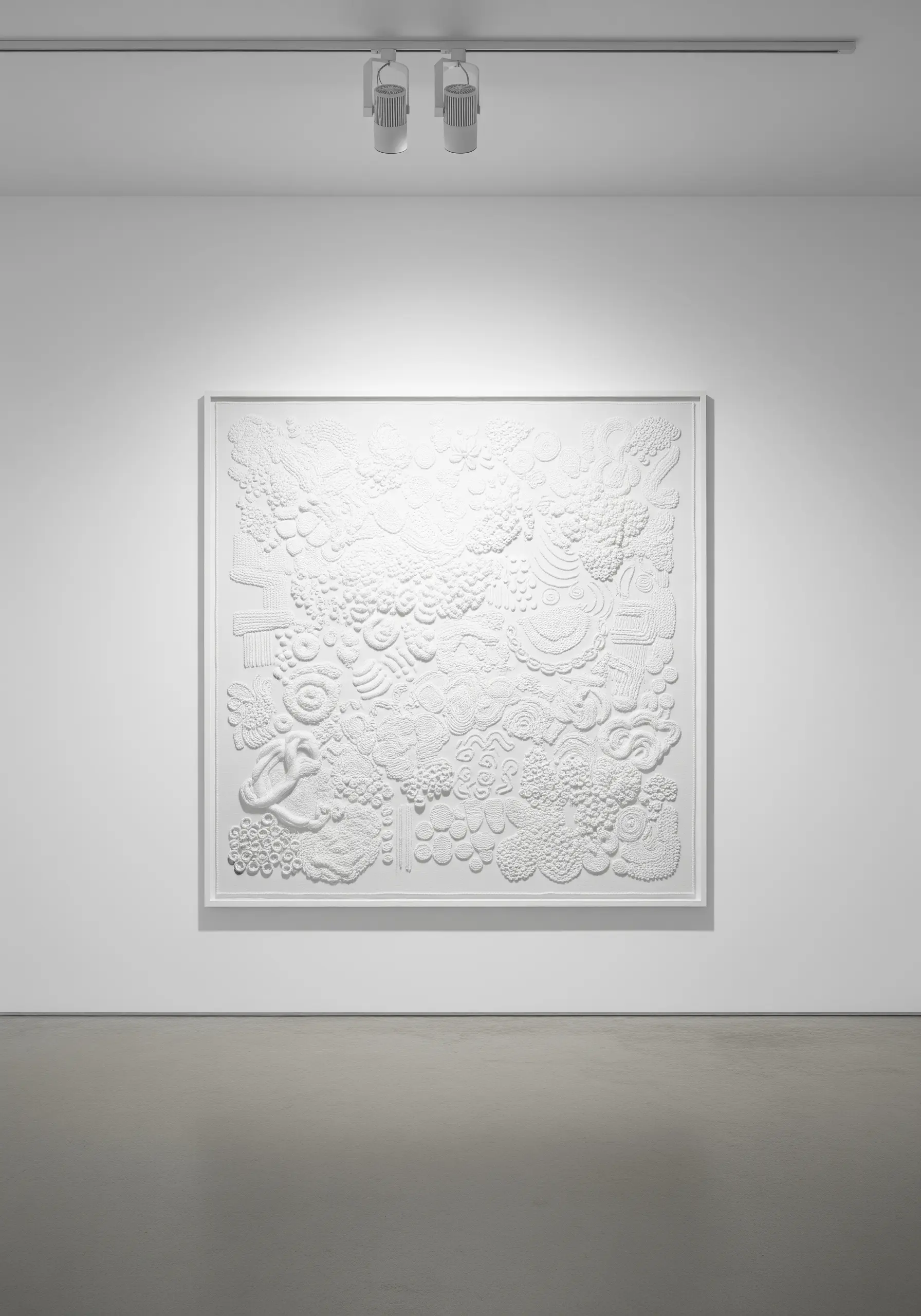
Create a sophisticated, gallery-worthy piece by focusing entirely on texture, not color.
Working white-on-white, build up a dense composition of highly textural stitches: French knots, bullion knots, padded satin stitch, and woven picot.
The lack of color forces the viewer to appreciate the interplay of light and shadow across the raised surfaces.
This method transforms simple stitches into a complex, sculptural landscape, proving that texture alone can be profoundly expressive. It’s one of the best embroidery projects inspired by textures you’d find on a nature walk.
7. Define Elegance with Metallic Threads
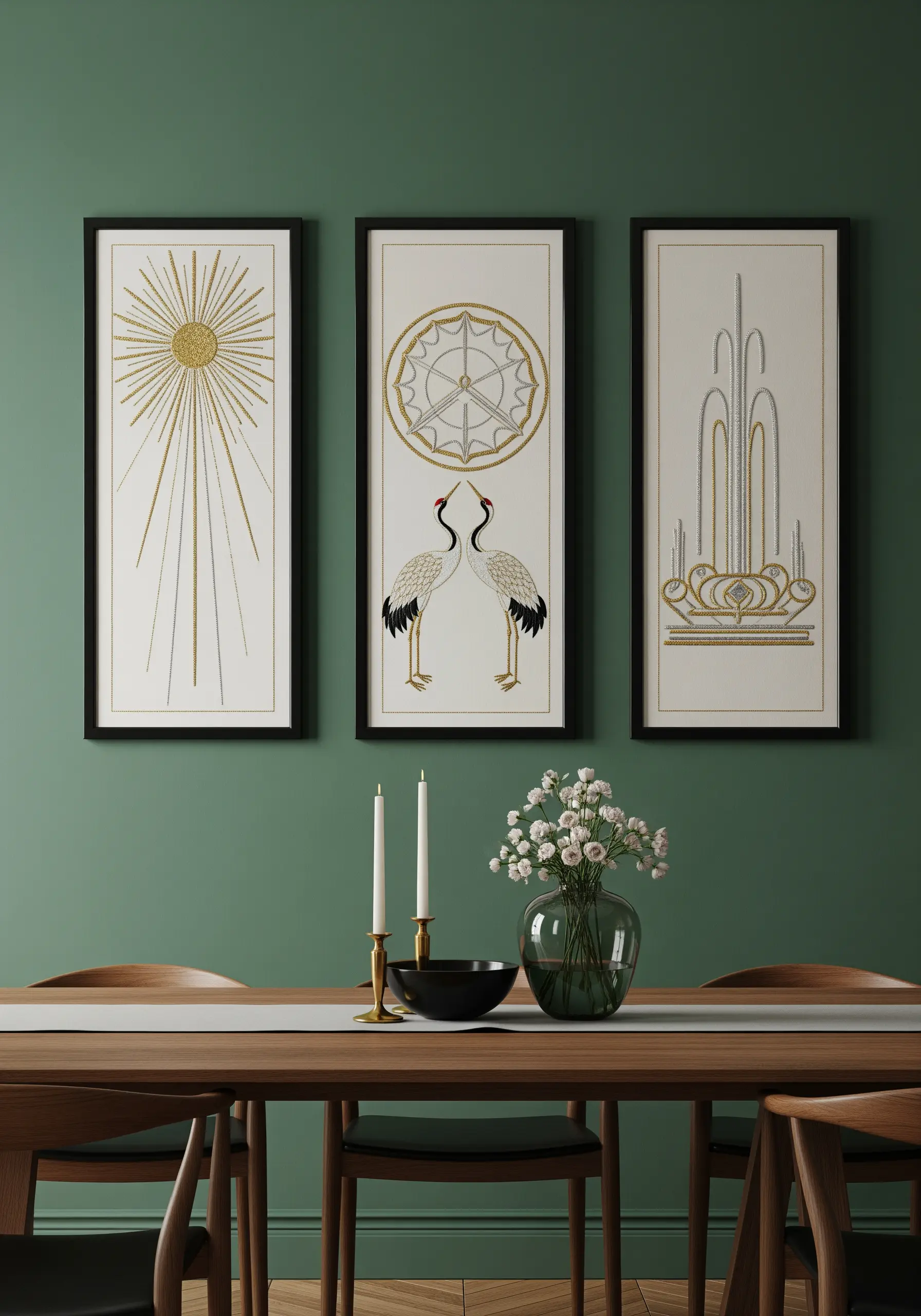
Elevate simple line art with the timeless shimmer of gold and silver metallic threads.
To prevent fraying and frustration, work with shorter lengths of metallic floss—no longer than 12 inches.
A thread conditioner like beeswax can also make stitching smoother and reduce tangling.
Arrange your designs as a triptych in sleek, modern frames to create a narrative effect that feels both classic and contemporary.
8. Isolate Simple Motifs for Graphic Impact
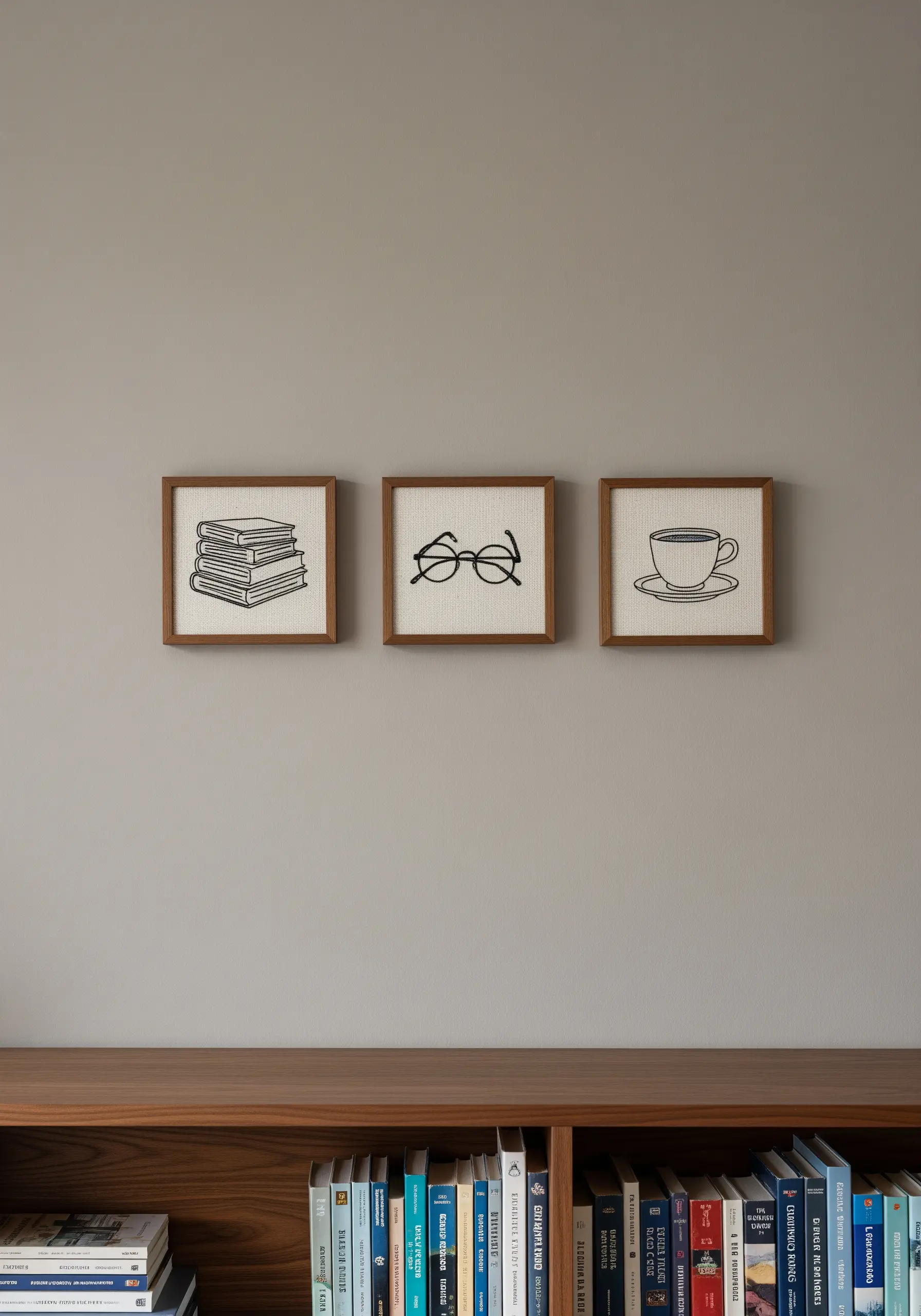
Give small, everyday icons a place of honor by stitching them individually and framing them as a set.
Use a bold black thread and a clean backstitch or stem stitch to create a strong, graphic outline that reads clearly from a distance.
Stitch on a textured fabric like linen or Aida to add subtle warmth to the minimalist design.
This approach celebrates the beauty of simplicity and transforms easy small embroidery patterns into a polished, intentional collection.
9. Master Depth with Dramatic Florals
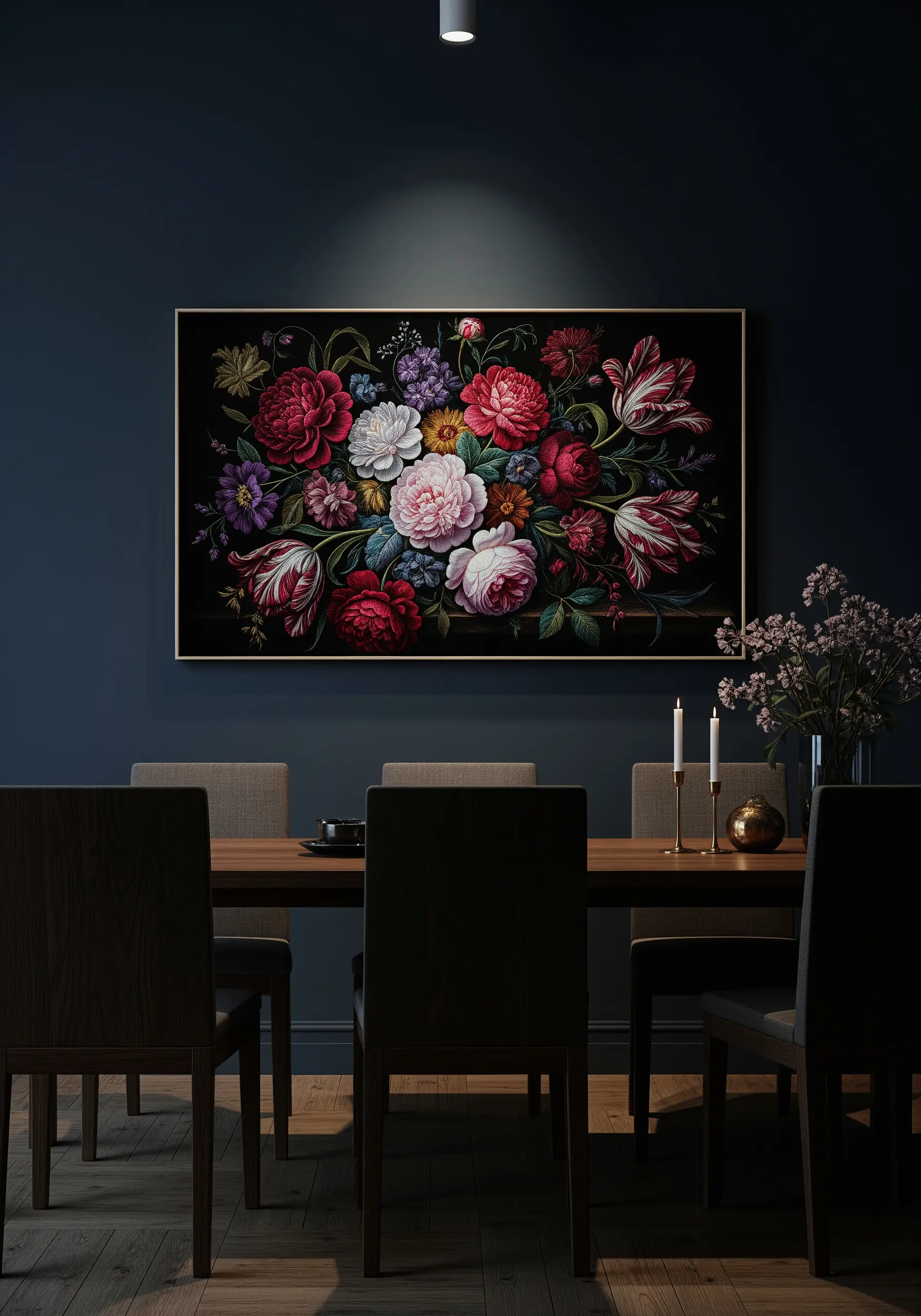
Create the illusion of a Dutch Master’s painting by using a dark background to make your colors vibrate.
Stitching on black or deep navy fabric absorbs light, making your thread colors appear richer and more saturated.
Employ thread painting (long-and-short stitch) to blend colors seamlessly, focusing on how light would hit each petal.
Add the darkest shades in the deepest recesses of the flowers to carve out dimension, creating realistic shadows under leaves for depth that looks painted.
10. Design a Serene Nursery Collection
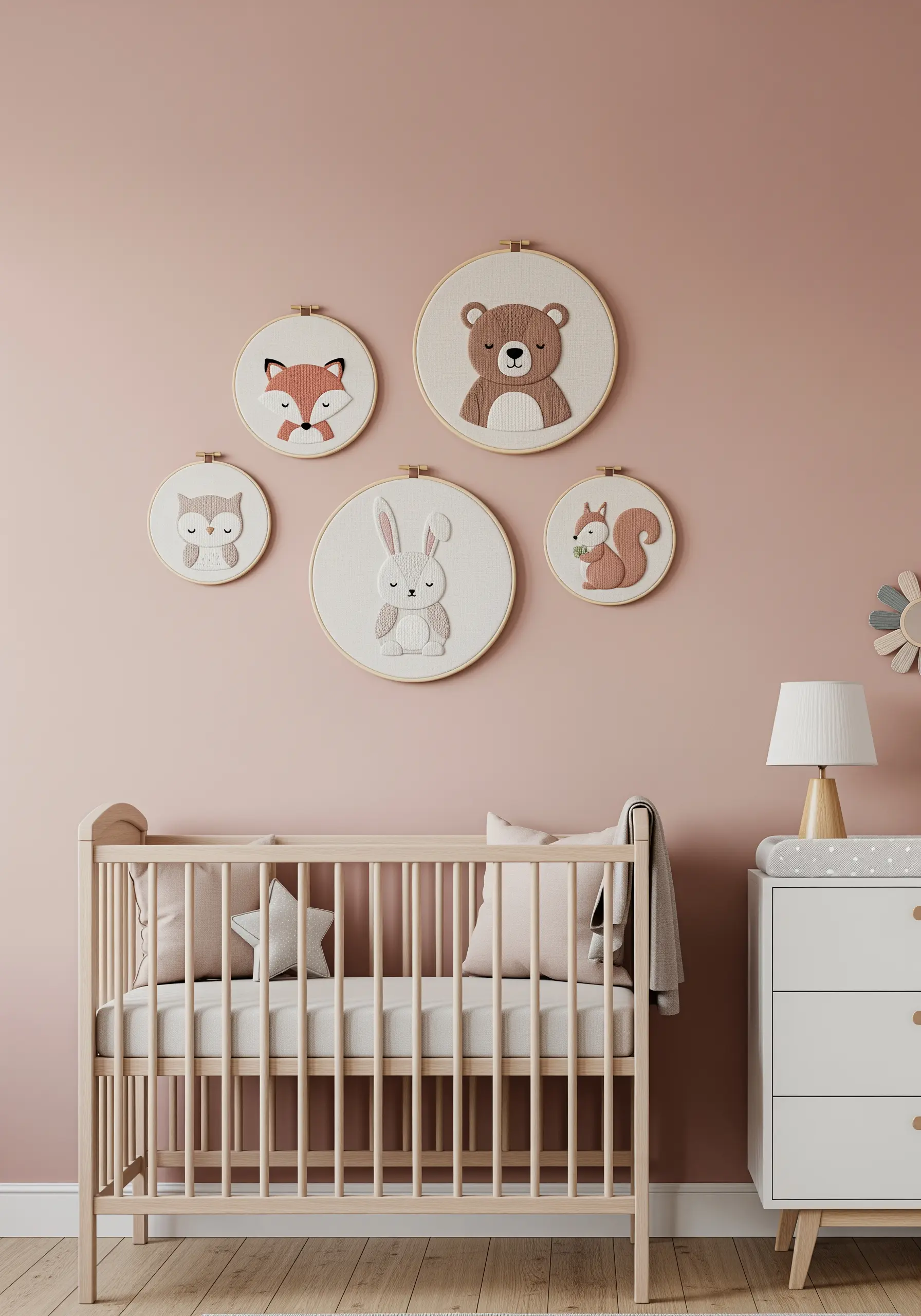
Create a gentle, calming atmosphere by stitching a series of woodland creatures in a muted, cohesive color palette.
Use a combination of satin stitch for soft, solid fills and a simple backstitch for clean outlines.
The key to the serene feel is the palette: stick to dusty pinks, soft grays, and warm beiges, using the same few colors across all the animals.
Displaying them in hoops of varying sizes adds a playful rhythm to the wall, perfect for emotional nursery decor and baby keepsakes.
11. Arrange a Modern Herbarium Grid
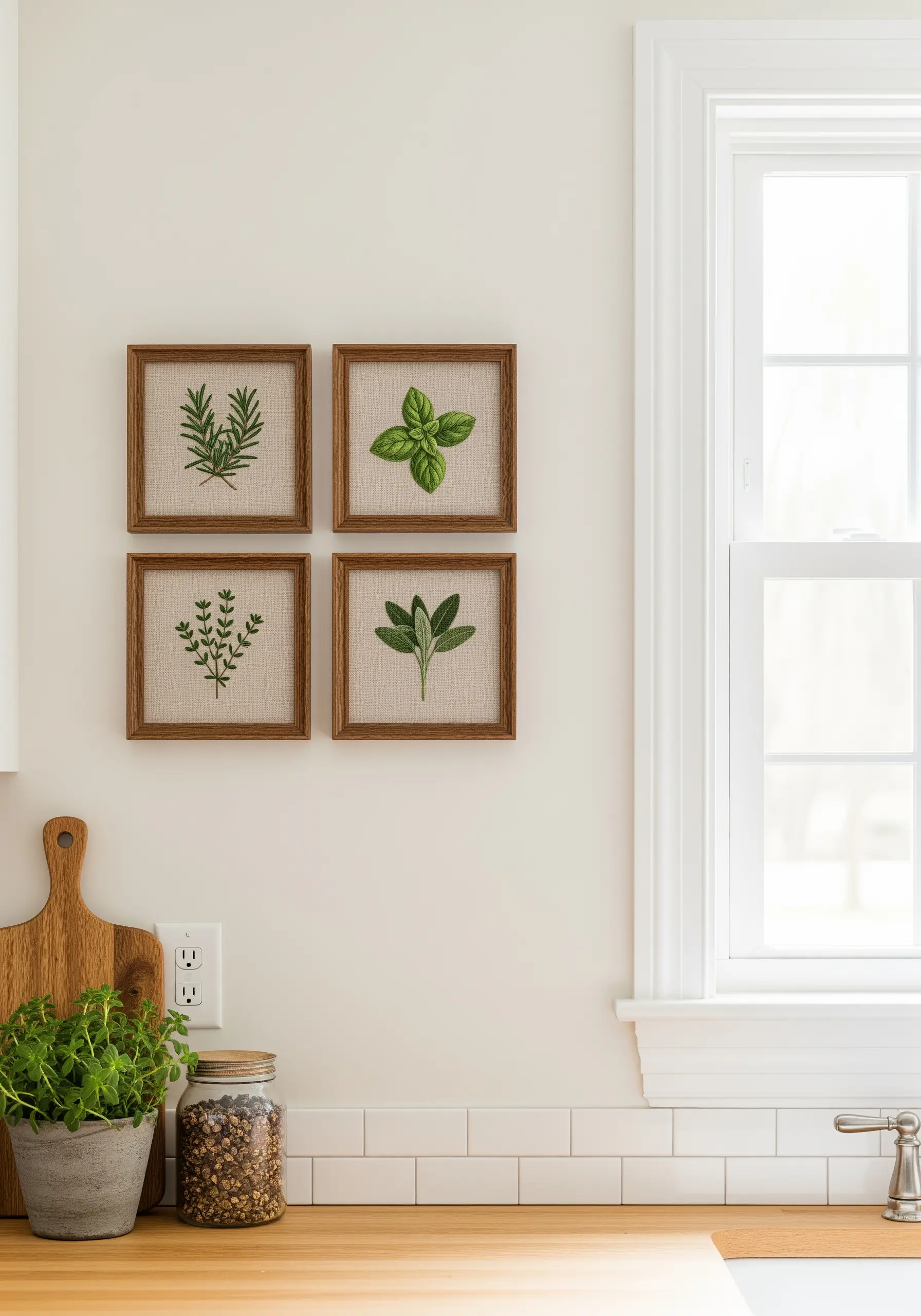
Elevate simple herb motifs by presenting them in a clean, contemporary grid.
Stitch each herb on a piece of natural linen, focusing on capturing the distinct texture of each plant—the needle-like rosemary versus the broad leaves of basil.
Use a combination of stem stitch for the stalks and satin or fishbone stitch for the leaves.
Mounting them in identical square frames creates a sophisticated, organized display that feels like a modern take on a classic botanical collection.
12. Capture a Wave’s Motion and Texture
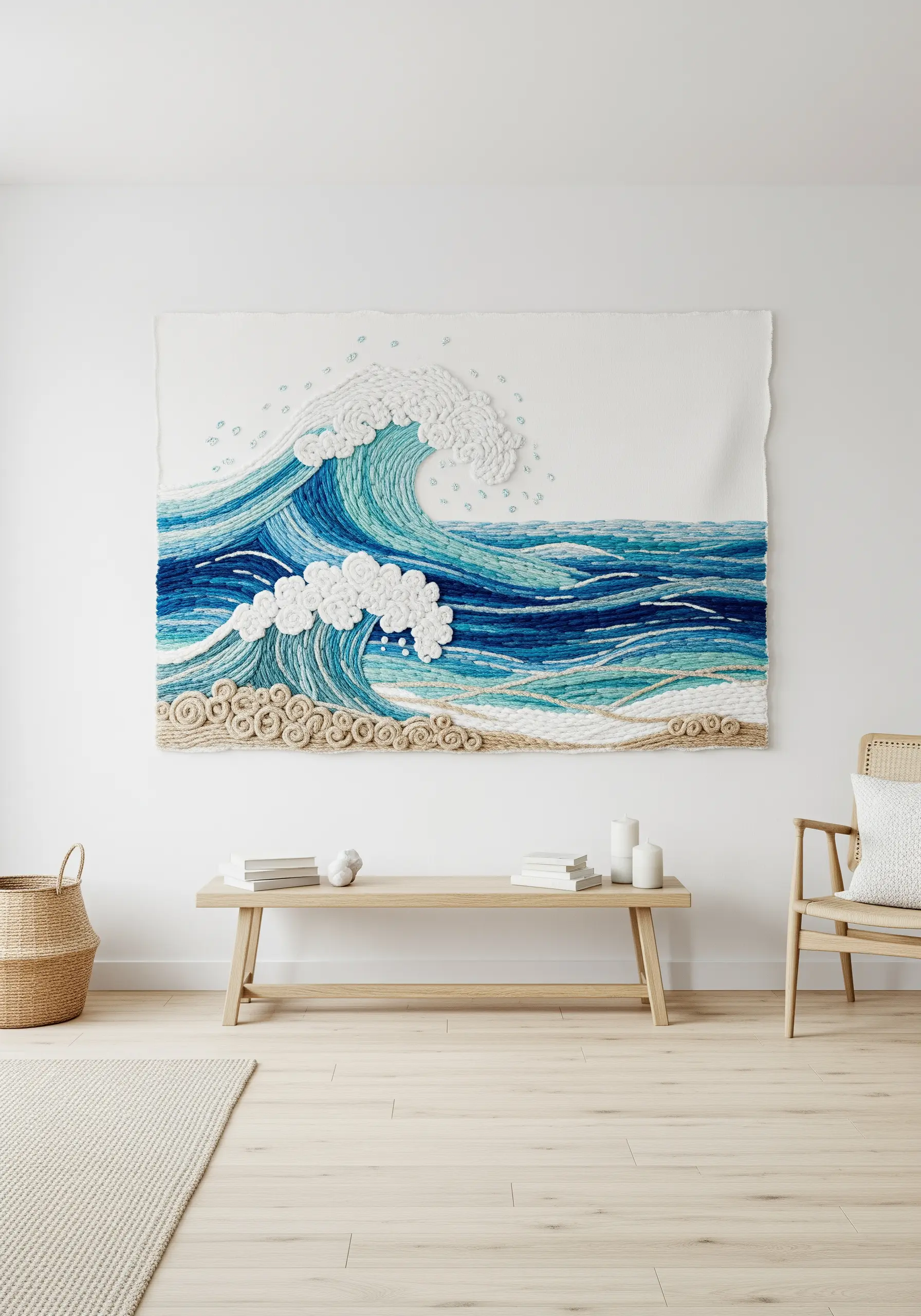
Convey the energy of the ocean by combining directional stitching with three-dimensional textures.
Use long, flowing straight stitches or split stitches for the body of the wave, ensuring they follow the water’s natural movement.
For the seafoam, build up dense clusters of French knots or use a punch needle with loopy stitches to create a frothy, tactile crest.
Couching thick, coiled rope or yarn at the base can suggest the texture of wet sand, grounding the dynamic composition.
13. Integrate Embroidery into a Gallery Wall
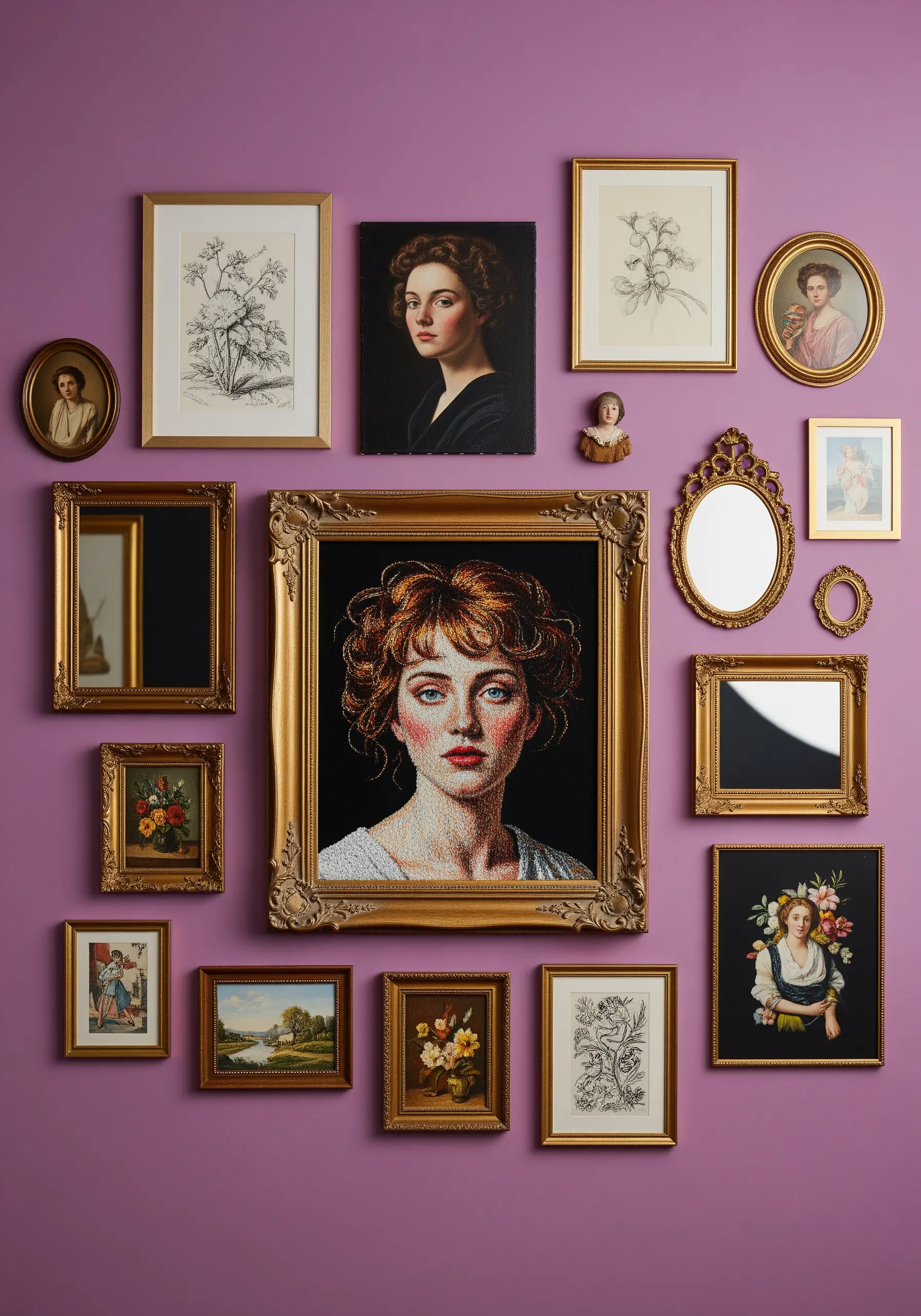
Introduce unexpected texture to a traditional gallery wall by mixing embroidered pieces with prints and paintings.
Choose or create embroidered art that complements the themes or color palettes of your other pieces.
The tactile nature of thread provides a beautiful contrast to flat prints, drawing the eye and adding a layer of warmth and handcrafted detail.
These stunning framed embroidery pieces can act as the focal point or a surprising accent in your curated collection.
14. Make a Statement with a Single Motif
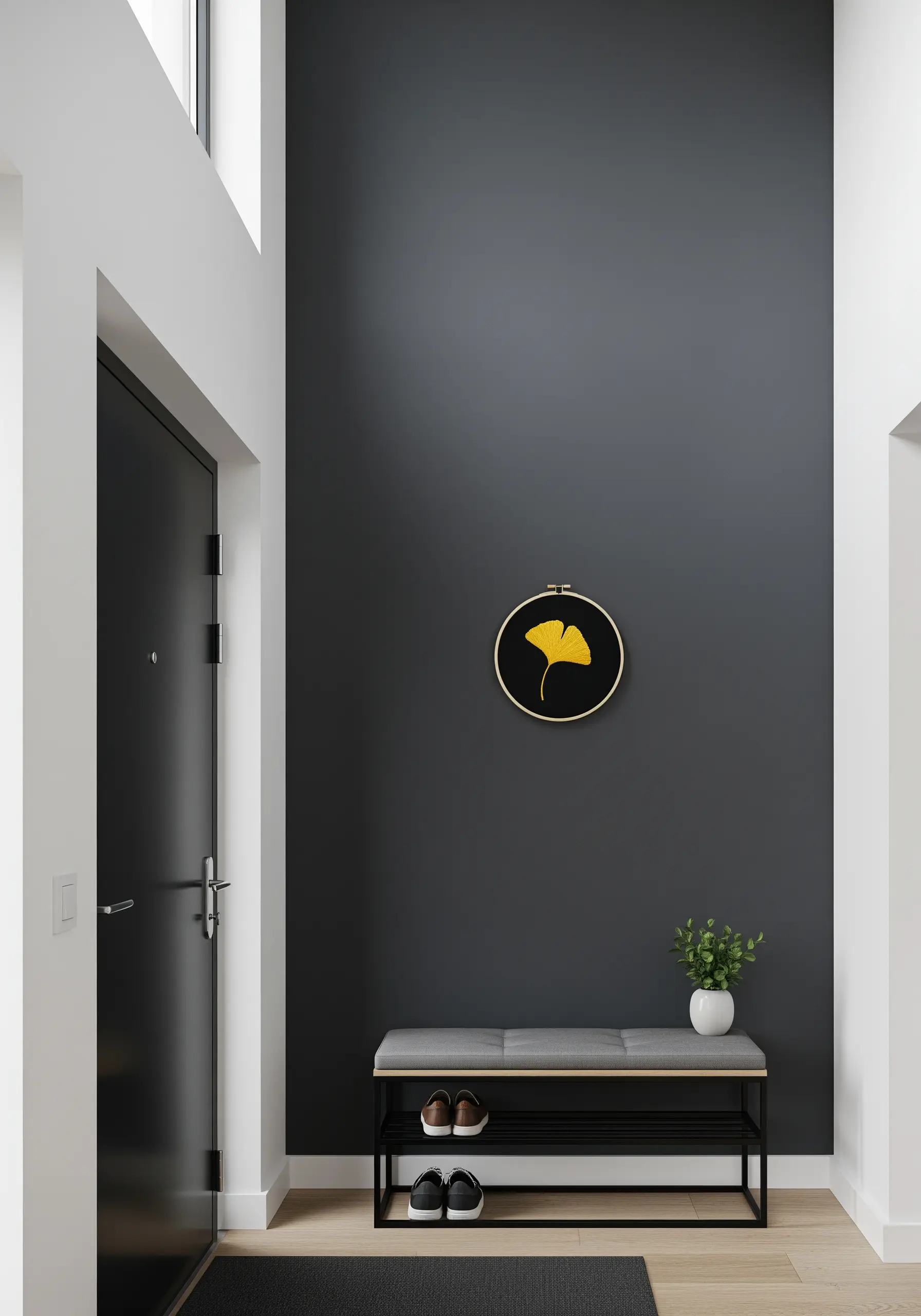
Harness the power of minimalism by showcasing a single, striking motif against a dramatic background.
Choose a simple, recognizable shape with a clean silhouette, like this ginkgo leaf.
Fill it with a perfectly smooth satin stitch in a bold, vibrant color that contrasts sharply with your wall.
This technique turns a simple embroidered element into a powerful focal point, proving that sometimes, less is significantly more.
15. Perfect the Art of Embroidered Script
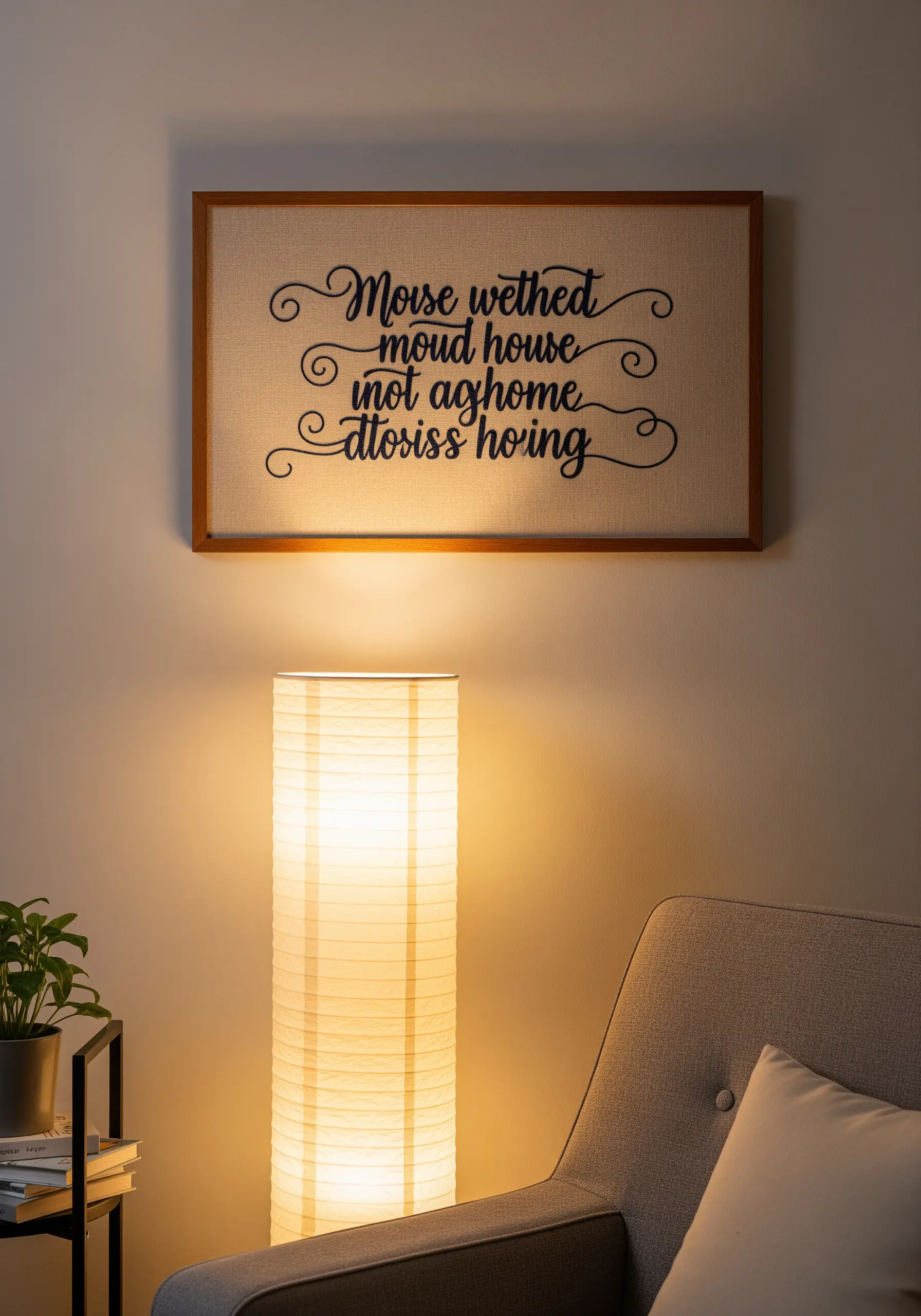
Embroider text that looks as fluid and elegant as calligraphy by using the right stitch and technique.
For smooth, continuous lines, a whipped backstitch or a stem stitch is ideal. It eliminates the broken look that a standard backstitch can create on curves.
To maintain consistency, pay close attention to your stitch length, keeping it uniform throughout the piece.
Stitching on a neutral, textured fabric like linen gives your elegant lettering a warm, rustic foundation.
16. Create Rhythm with Geometric Abstraction
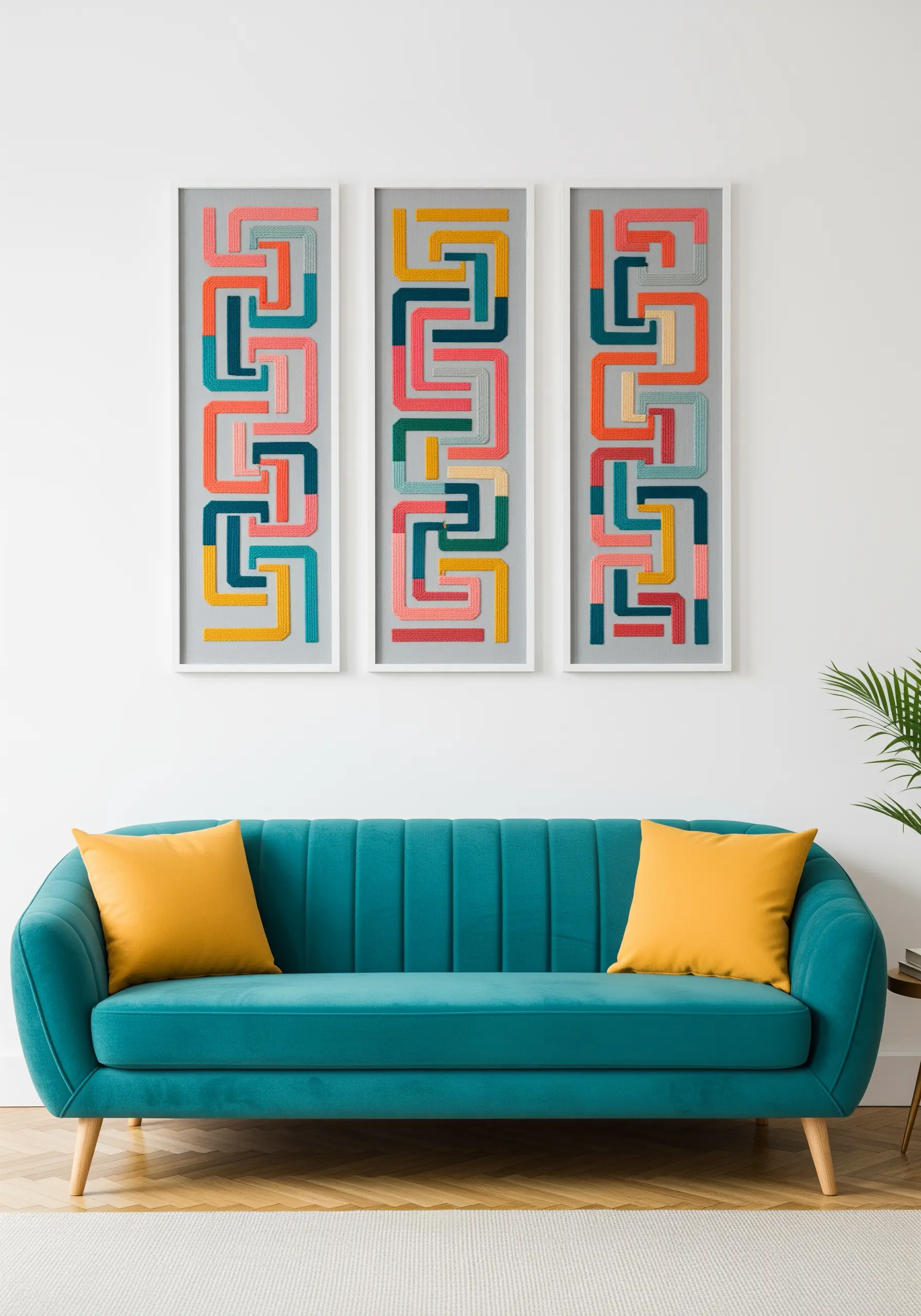
Design a dynamic triptych using interlocking geometric lines and a vibrant, balanced color palette.
Use a padded satin stitch to give the colored bands a raised, dimensional quality that makes them pop off the neutral background.
Plan your color placement carefully to create a sense of movement and visual flow across the three panels.
The separation into a triptych breaks up the complex pattern, making it more digestible and emphasizing the rhythmic interplay of color and form.
17. Build a Landscape with Layered Textures
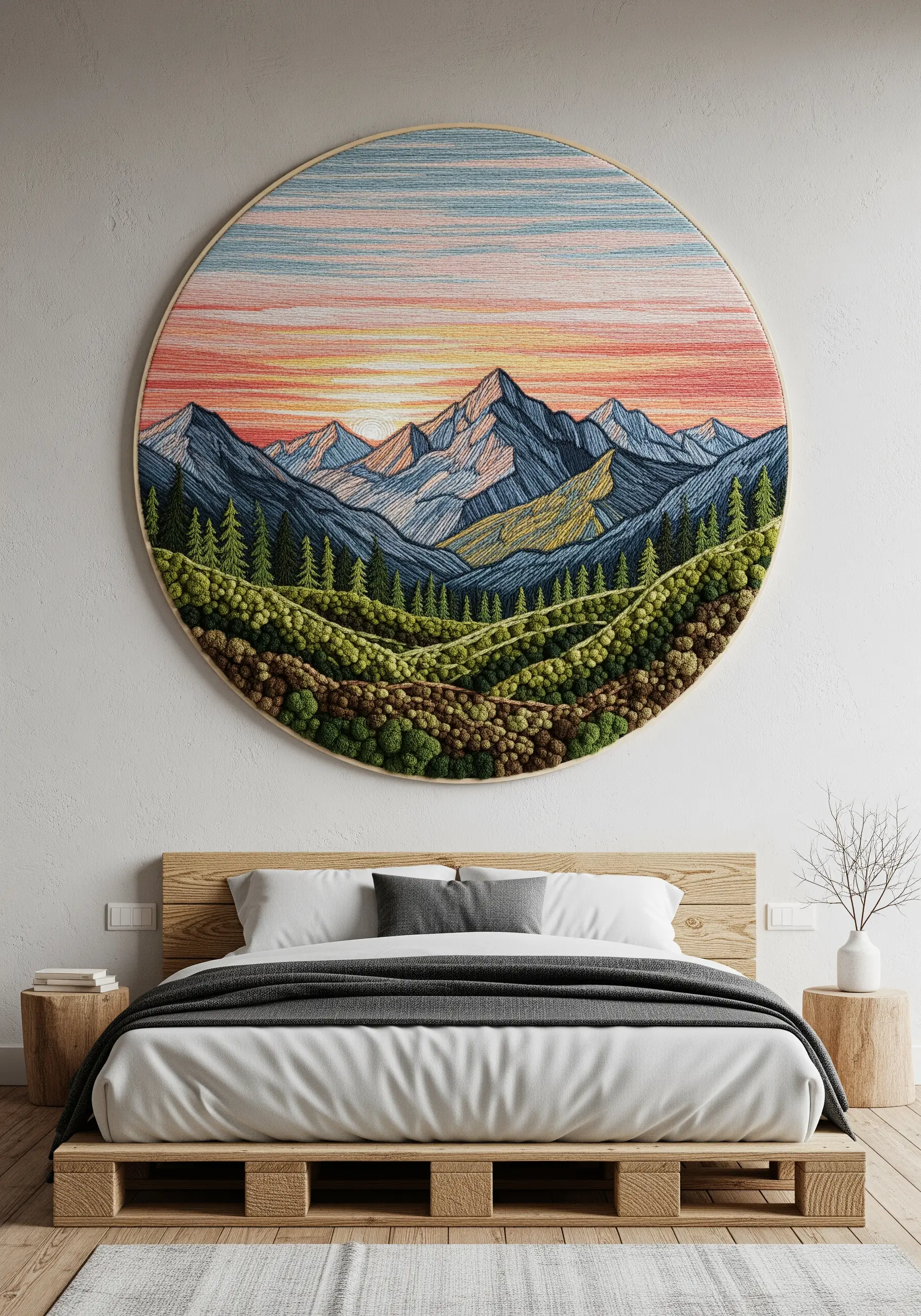
Create a sense of deep perspective in a landscape by using different stitches for each layer.
Use dense French knots or bullion stitches for the foreground to create a rich, tactile texture that feels close to the viewer.
Transition to smoother long-and-short stitches for the mid-ground mountains, and finally, use simple straight stitches for the distant sky to make it recede.
This progression from complex texture to simple lines is a classic artistic technique to build depth, making these nature-themed embroidery samplers feel immersive.
18. Map the Stars Across Your Wall
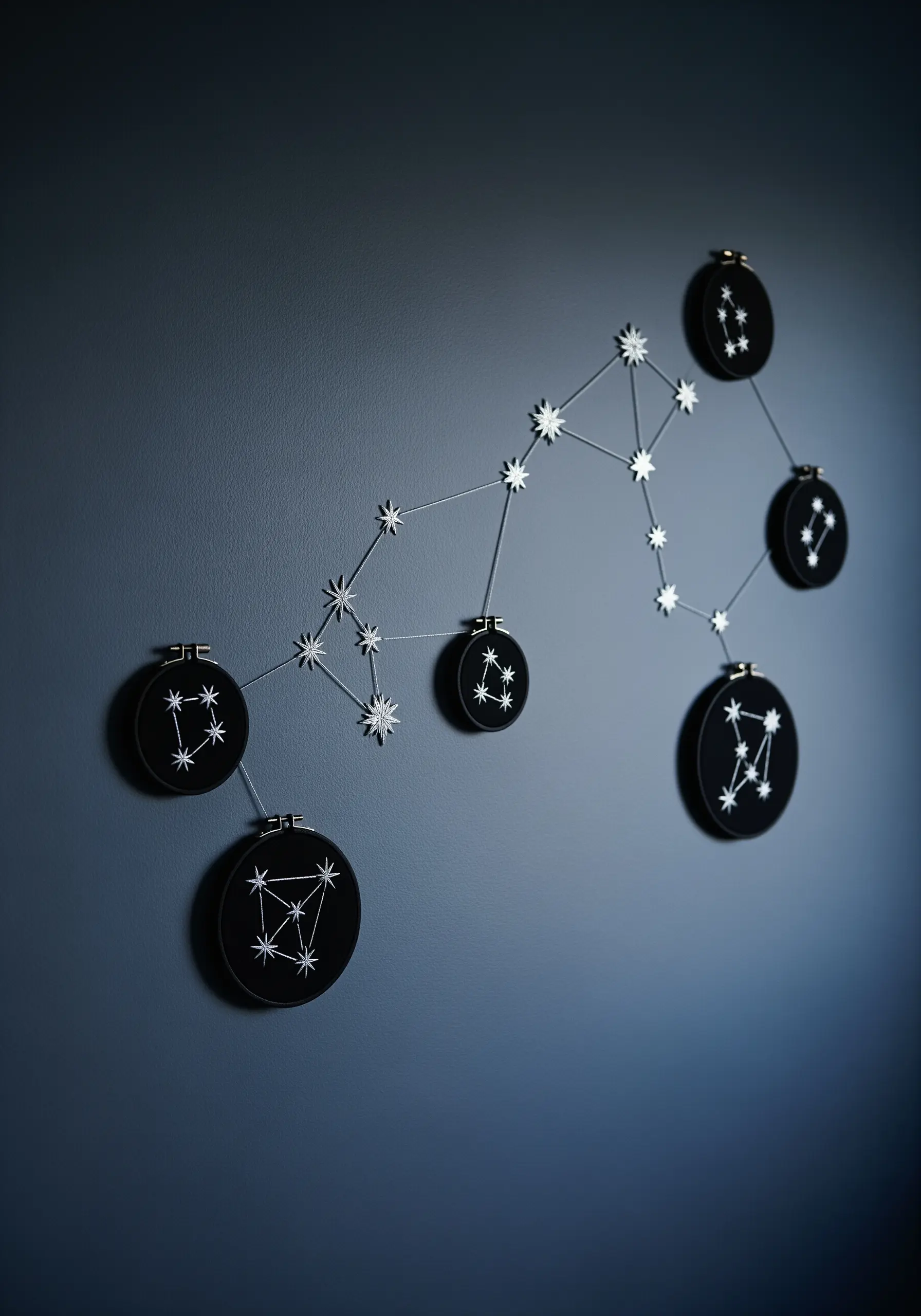
Design a constellation map that breaks the boundaries of a single hoop, turning your wall into a canvas.
Stitch individual constellations in small, black hoops using a bright white or silver metallic thread on black fabric for high contrast.
Connect the hoops on the wall with thread or fine wire to trace the larger celestial pattern.
This innovative display method transforms simple star patterns into an expansive, interactive piece of art.
19. Stitch a Wildflower Meadow on Burlap
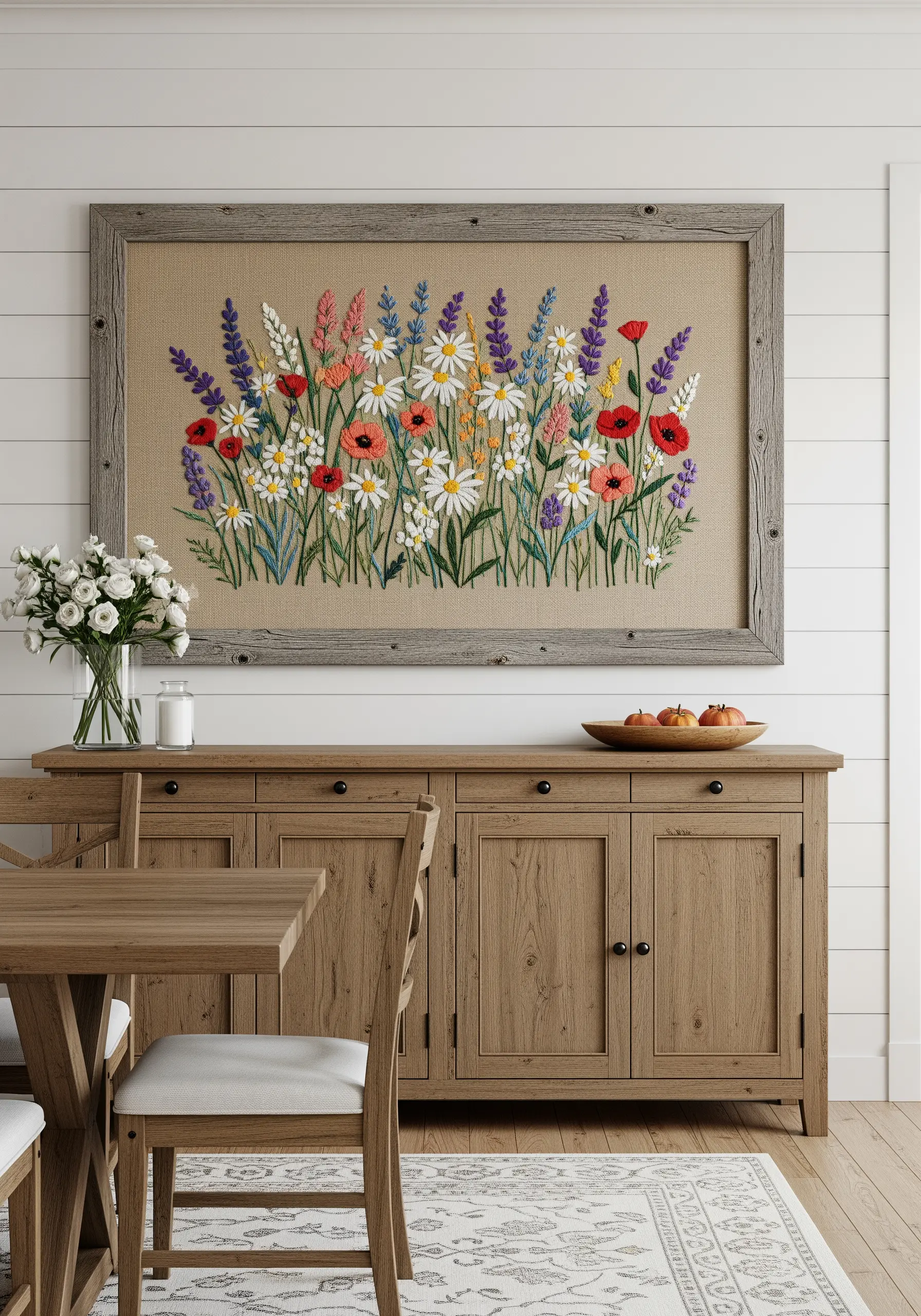
Capture the rustic charm of a wildflower field by stitching on a textured, neutral fabric like burlap or linen.
Use a variety of simple, expressive stitches: lazy daisy for petals, French knots for flower centers, and straight stitches for stems and grasses.
Don’t aim for perfect realism; instead, focus on creating a joyful jumble of color and form. The rough texture of the fabric will enhance the natural, untamed feel.
Pairing it with a reclaimed wood frame makes for one of the most charming framed embroidery ideas that pair perfectly with rustic interiors.
20. Render a Map with Topographic Lines
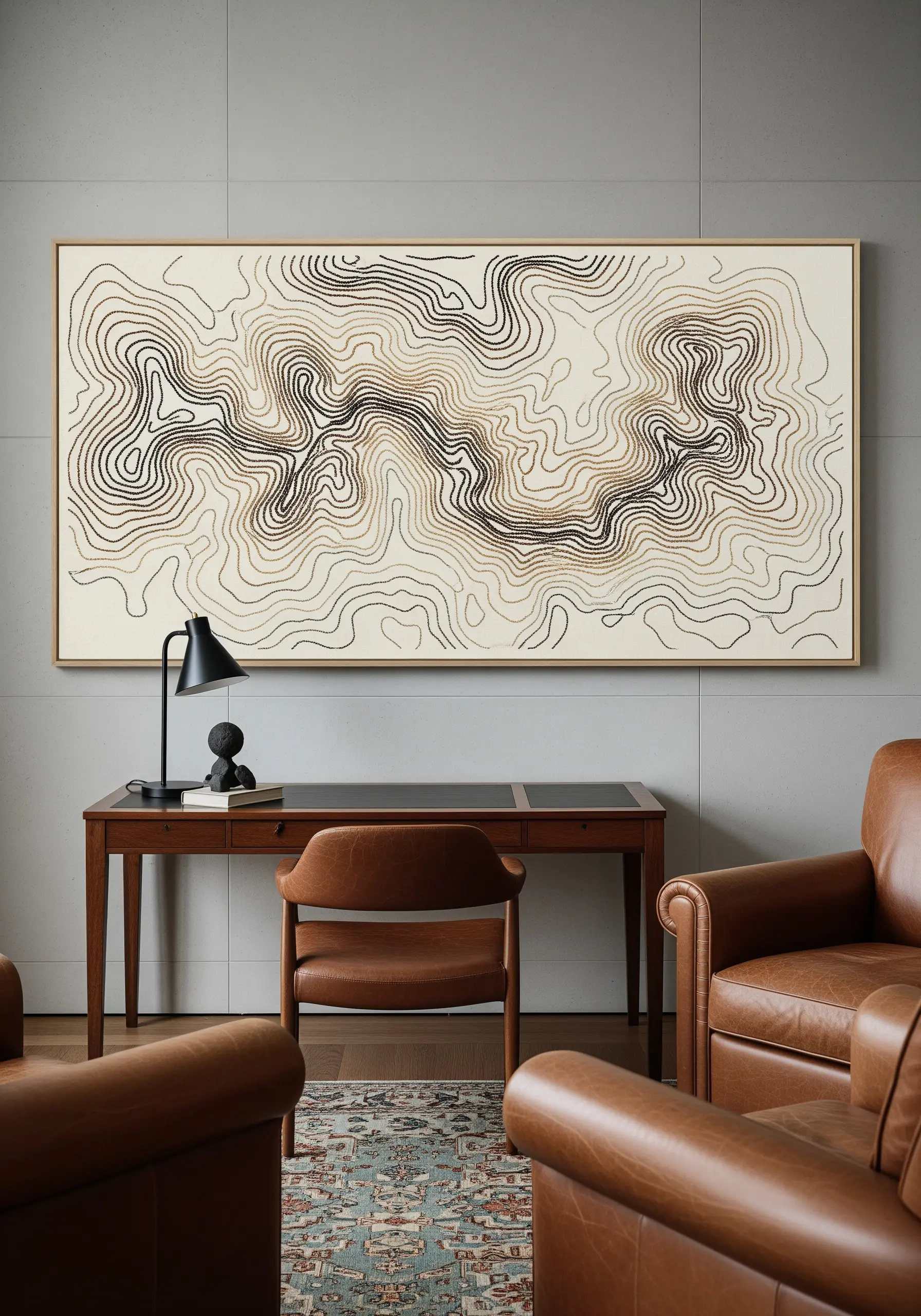
Create a sophisticated and personal piece of art by embroidering a topographic map of a meaningful location.
Use a simple backstitch or running stitch to trace the contour lines.
Select a subtle gradient of three or four related colors—like beiges, grays, or blues—to represent the changes in elevation.
This minimalist approach transforms scientific data into an abstract pattern, perfect for modern decor or as a reminder of line art travel adventure symbols.
21. Embroider on Air with Sheer Fabric
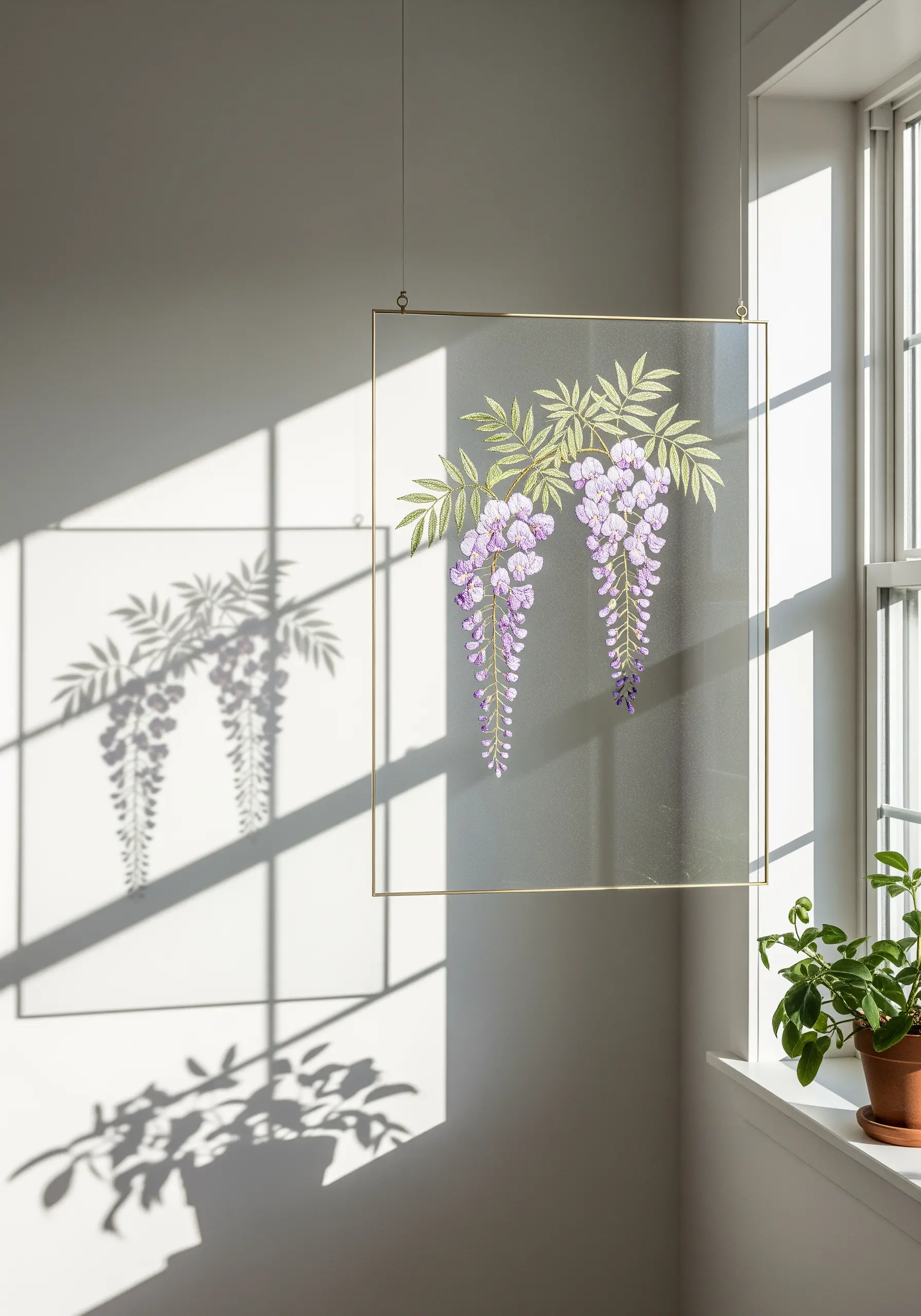
Create a delicate, floating effect by stitching your design on sheer organza or tulle and mounting it in a glass frame.
The transparent fabric disappears, making the threads seem suspended in mid-air.
This technique also creates beautiful, subtle shadows on the wall behind the piece, adding another layer of artistry.
Choose a fine thread and a delicate design, like these wisteria blossoms, to enhance the ethereal quality.
22. Capture Mid-Century Modern Aesthetics
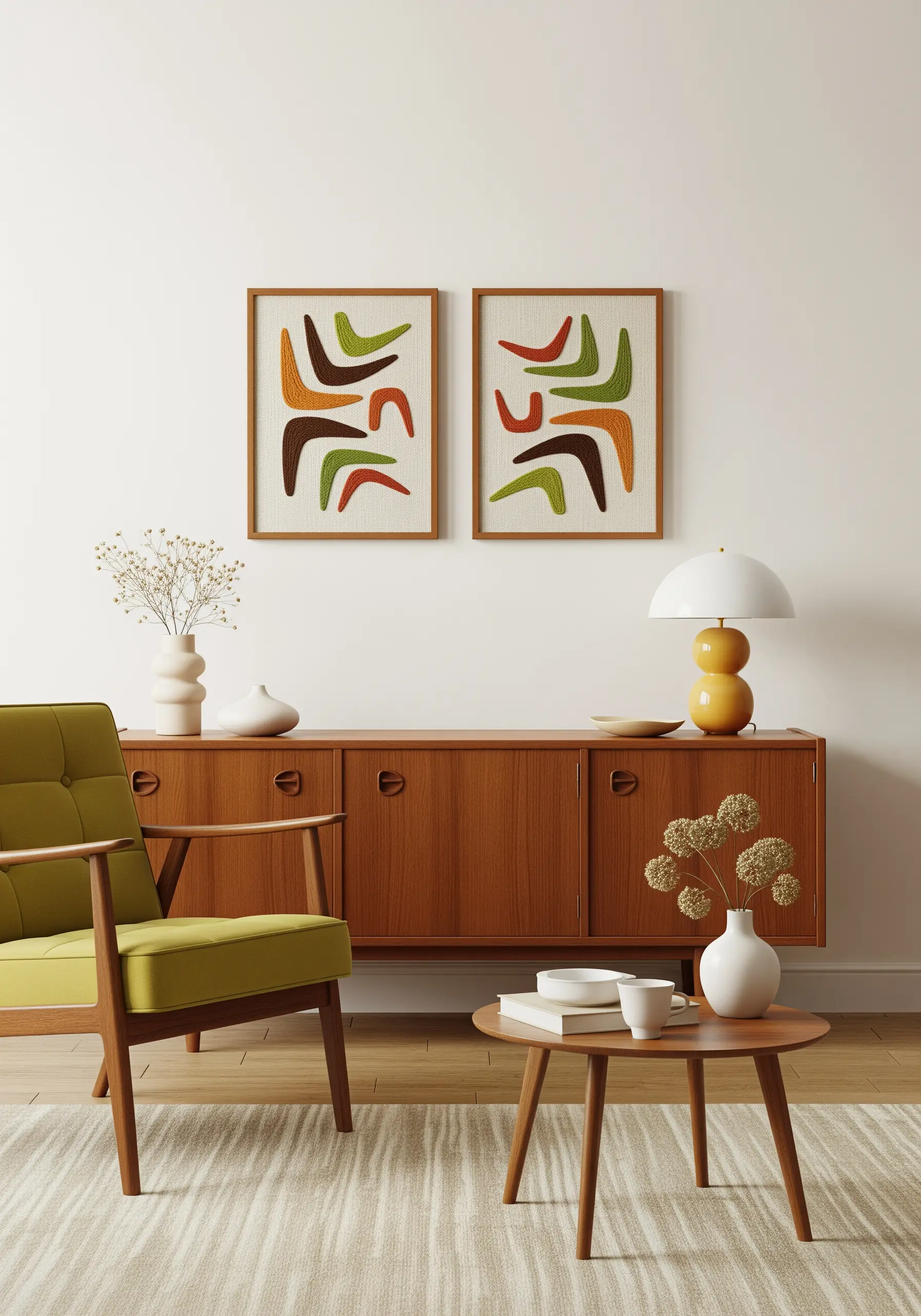
Embody the spirit of Mid-Century Modern design by stitching organic, abstract shapes in a classic retro color palette.
Use a perfectly smooth satin stitch to achieve the clean, solid fills characteristic of the era’s graphic design.
The key elements are the boomerang and amoeba-like forms paired with earthy tones like avocado green, harvest gold, and burnt orange.
Presenting them as a diptych in simple wooden frames completes the authentic, stylish look.
23. Add Luminous Detail with Beadwork
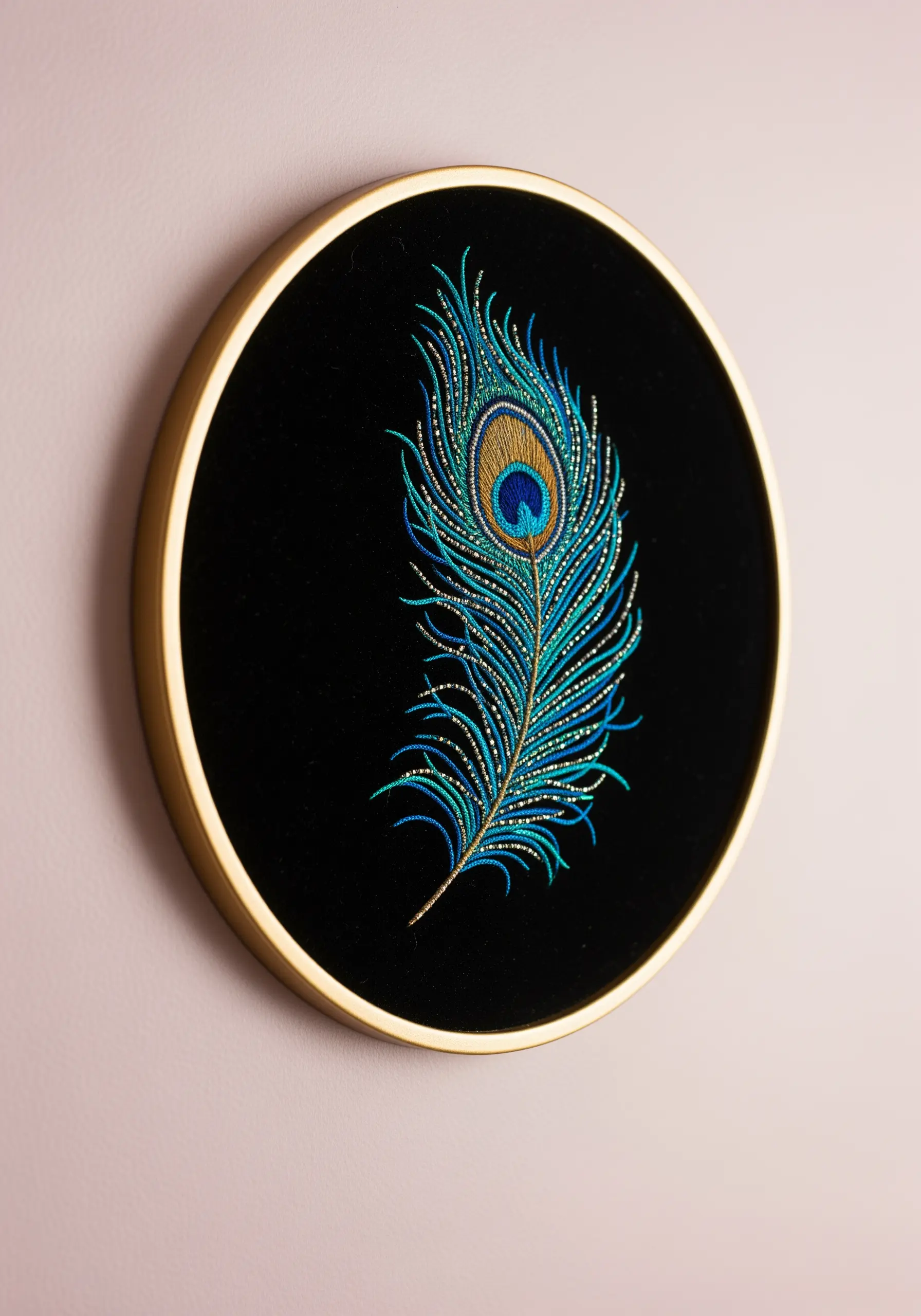
Elevate your threadwork by strategically adding beads to catch the light and create focal points.
On this peacock feather, tiny seed beads are used to highlight the iridescent ‘eye’ and are scattered along the barbs to mimic natural shimmer.
Stitch on a dark, plush fabric like black velvet; its deep pile absorbs light, making the beads and jewel-toned threads appear even more brilliant.
This technique adds a layer of luxurious texture that thread alone cannot achieve.
24. Build a Flower with 3D Stitches
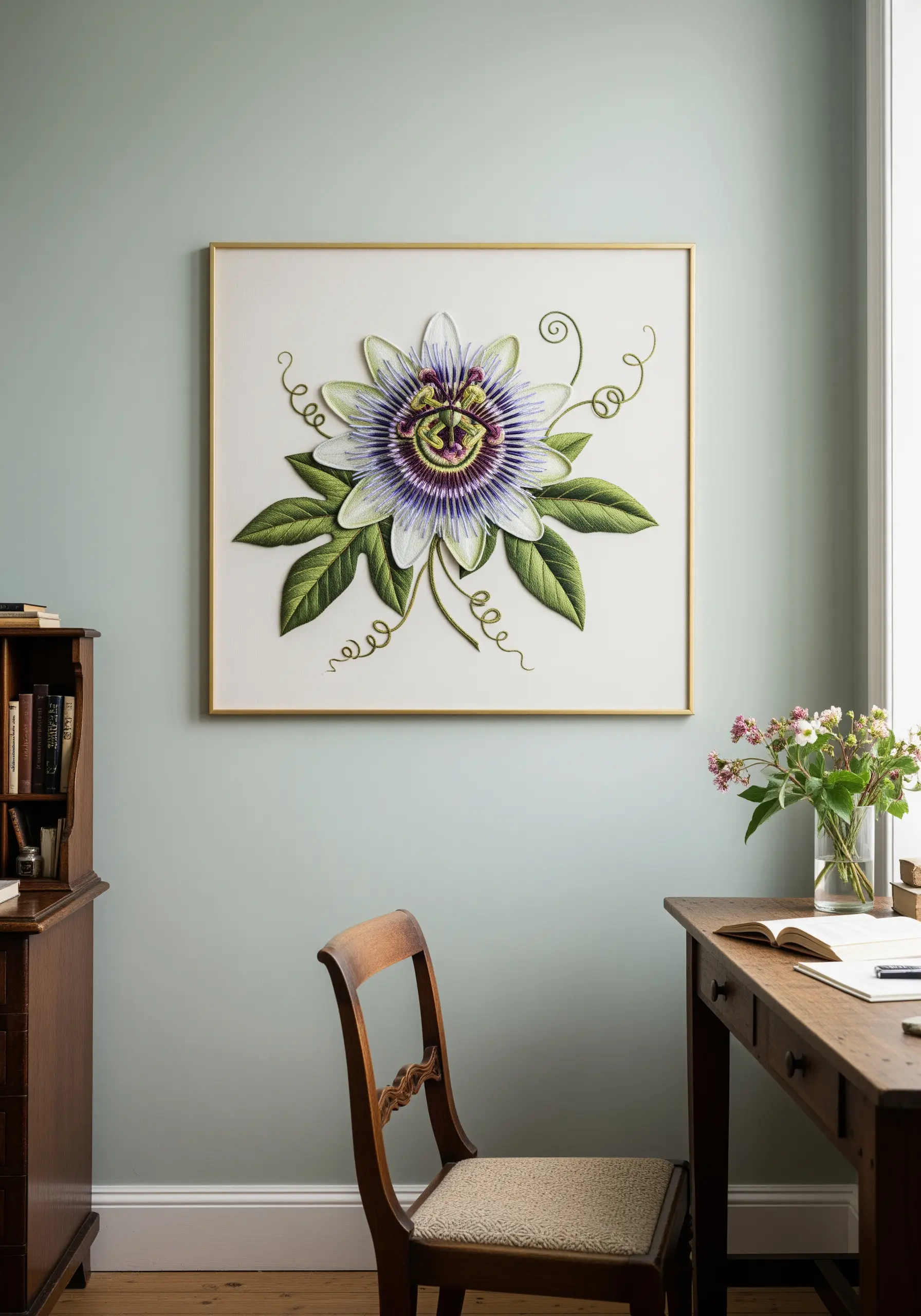
Bring a botanical illustration to life with stumpwork techniques that make elements lift off the fabric.
Create detached petals using wire-edged buttonhole stitches, which allows you to shape and bend them realistically after they’re attached.
For the intricate center of the passion flower, use a dense layering of French knots and turkey work (gimp stitch) to build up texture and dimension.
This sculptural approach transforms your embroidery from a two-dimensional image into a tactile object.
25. Imply Motion with Scattered Motifs
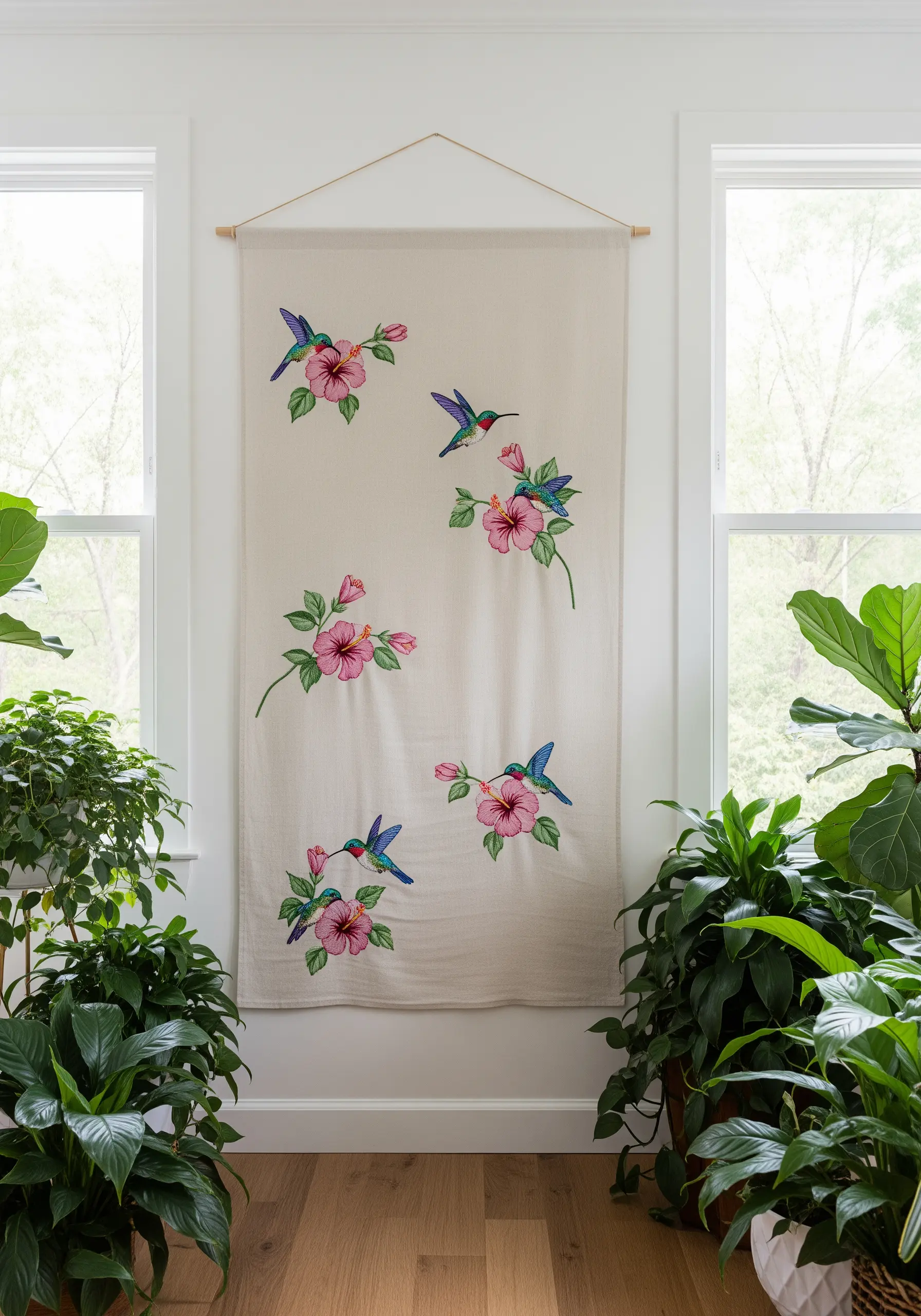
Guide the viewer’s eye and create a sense of dynamic movement by arranging your motifs in a deliberate, flowing pattern.
Instead of centering a single design, scatter several smaller hummingbirds and flowers diagonally across a long wall hanging.
This asymmetrical placement encourages the eye to move from one element to the next, implying flight and energy.
Using smooth, gradient color floral embroidery ideas on the wings and flowers enhances the feeling of life and vibrancy.
26. Define Architecture with Blackwork Patterns
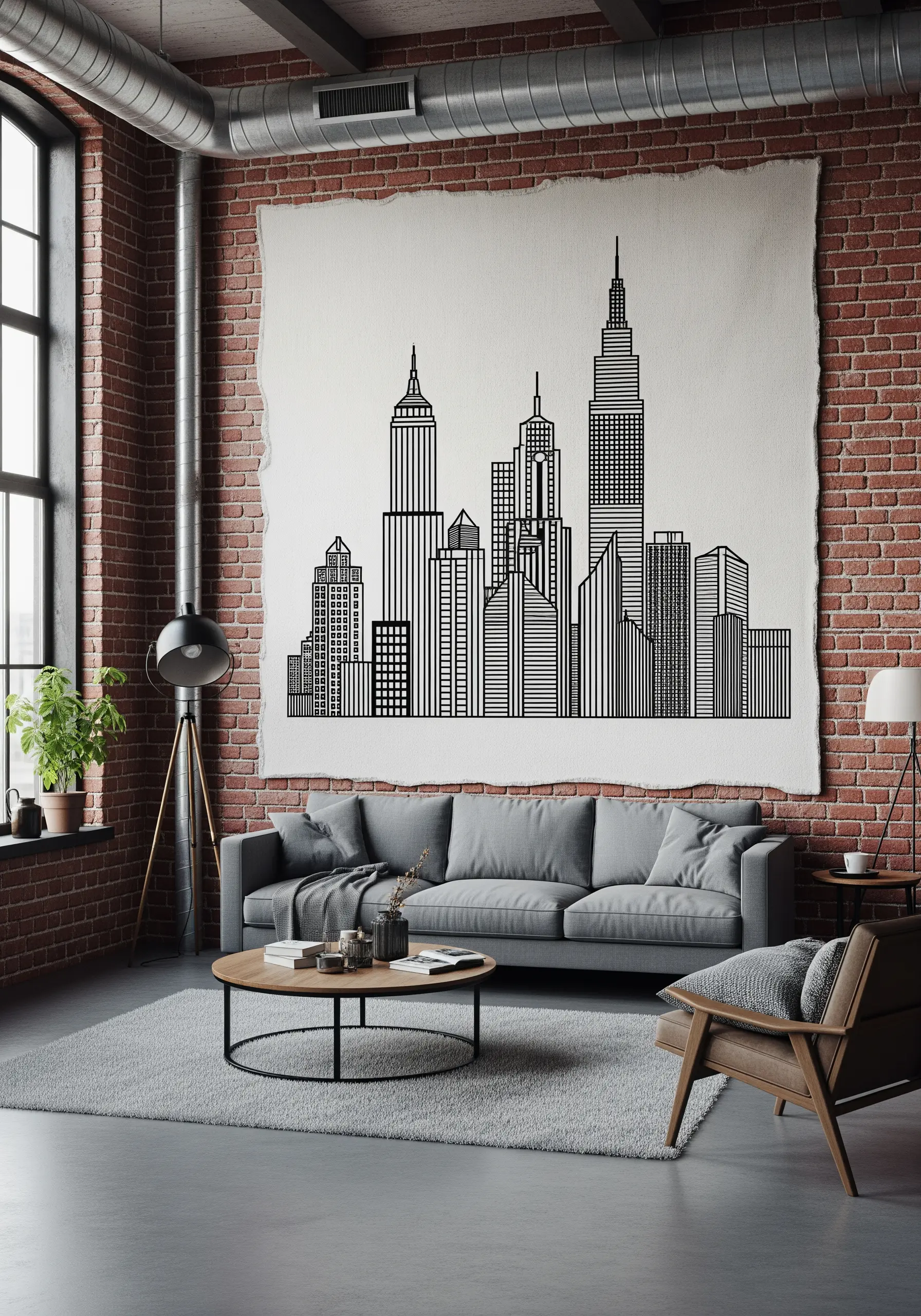
Go beyond simple outlines and fill large architectural shapes with intricate blackwork patterns.
Blackwork, which uses repeating geometric stitches, adds texture and a sense of material without using color.
Assign different patterns to different buildings or windows to create visual interest and differentiation.
Displayed on a massive, raw-edged canvas, this technique transforms a simple cityscape line drawing into a sophisticated piece of textile art perfect for an industrial space.
27. Suggest Water with Minimalist Ripples
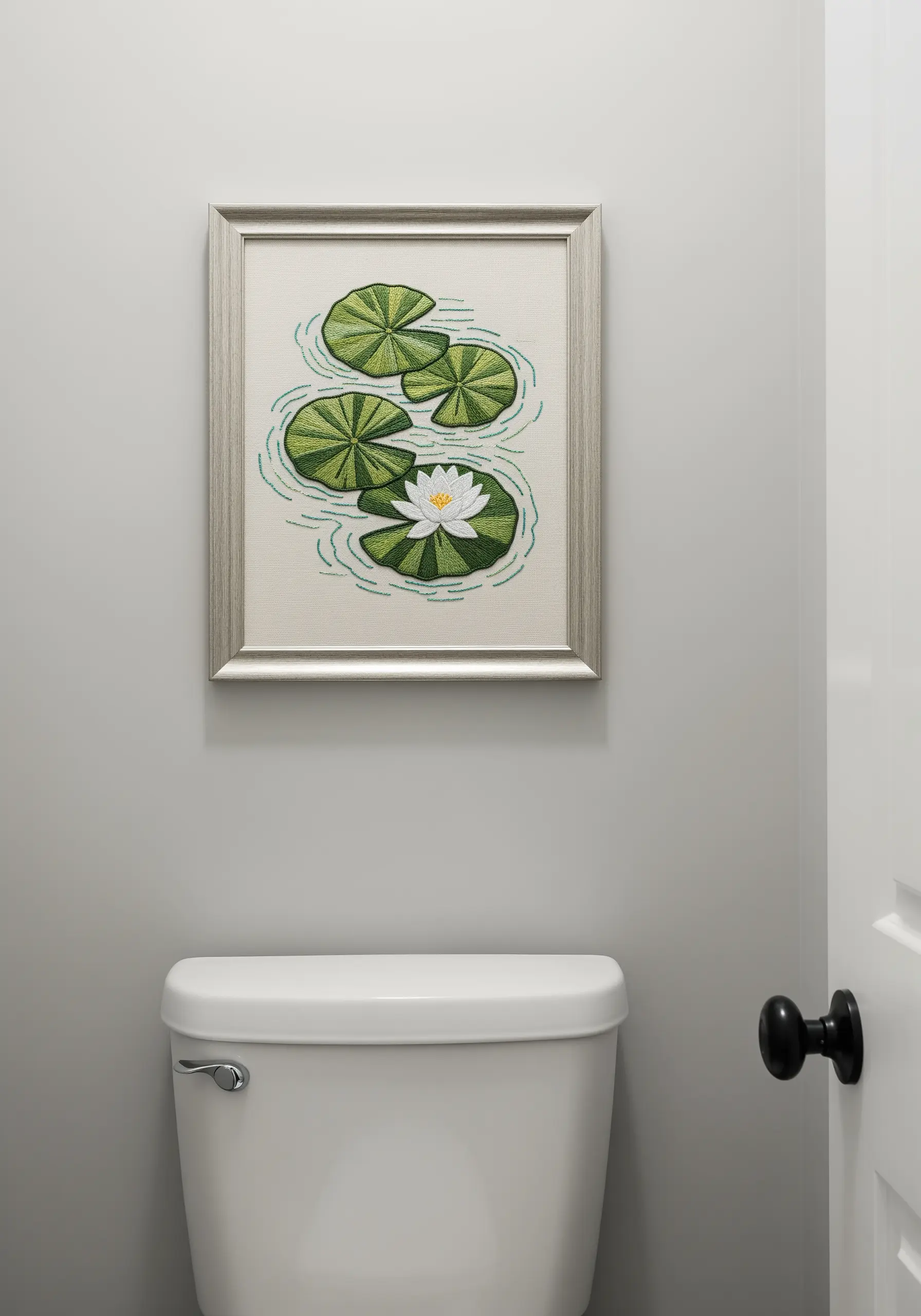
Create the illusion of water without having to fill the entire area with stitches.
First, complete your main subjects, like these satin-stitched lily pads and the water lily.
Then, use a simple, light-colored backstitch or running stitch in concentric, slightly irregular curves around them.
This minimalist approach effectively suggests ripples and movement, allowing the negative space of the fabric to become the water itself.
28. Turn a Color Gradient into Abstract Art
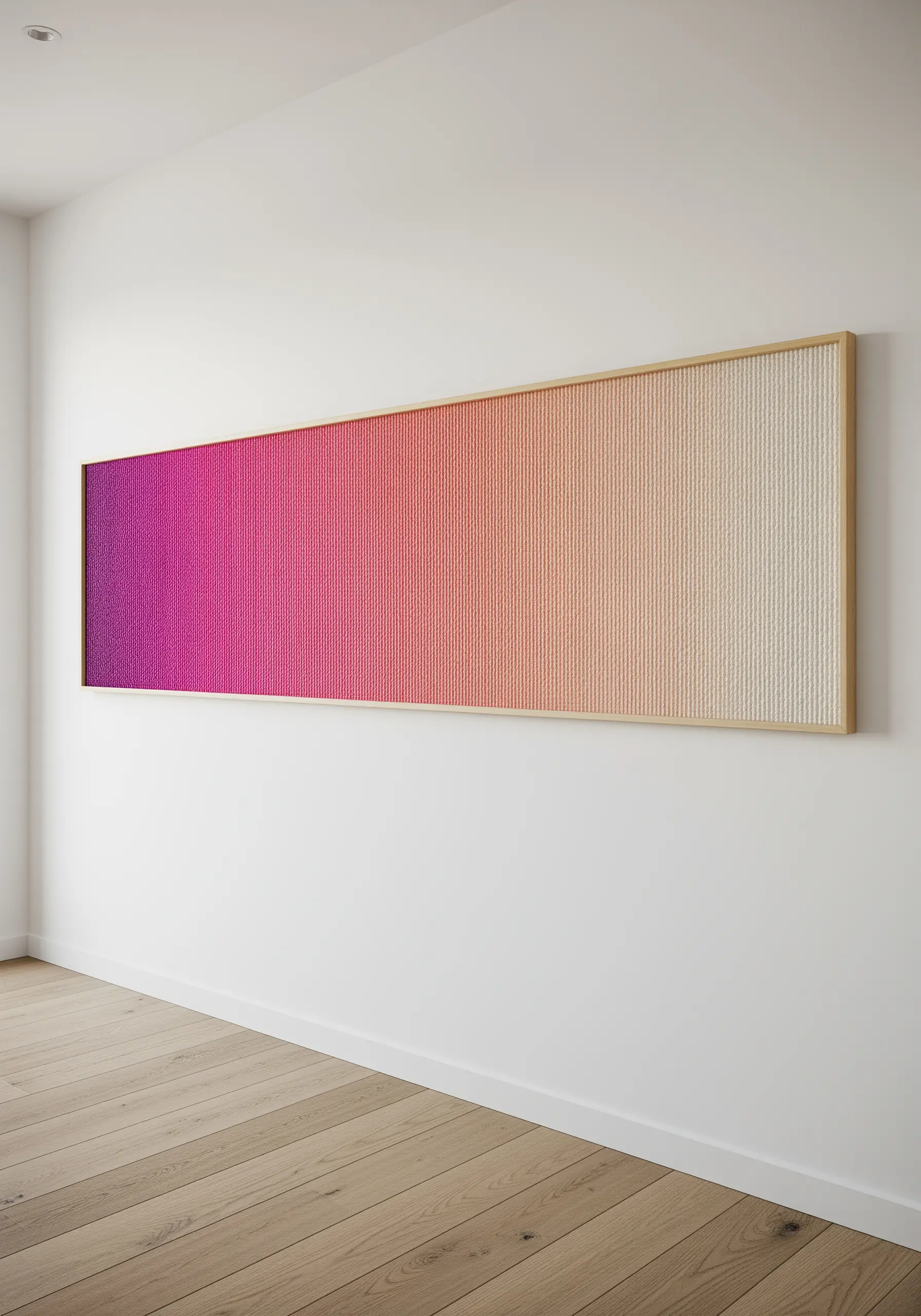
Explore the pure beauty of color by creating a large-scale, minimalist gradient piece.
Use vertical satin stitches or even tightly packed seed stitches, working in columns and methodically transitioning from one shade to the next.
The power of this piece lies in its precision and scale; the subtle shift across the spectrum is mesmerizing.
It’s a meditative stitching process that elevates contemporary rainbow blend stitches into sophisticated, minimalist art.
29. Combine Embroidery with Functional Art
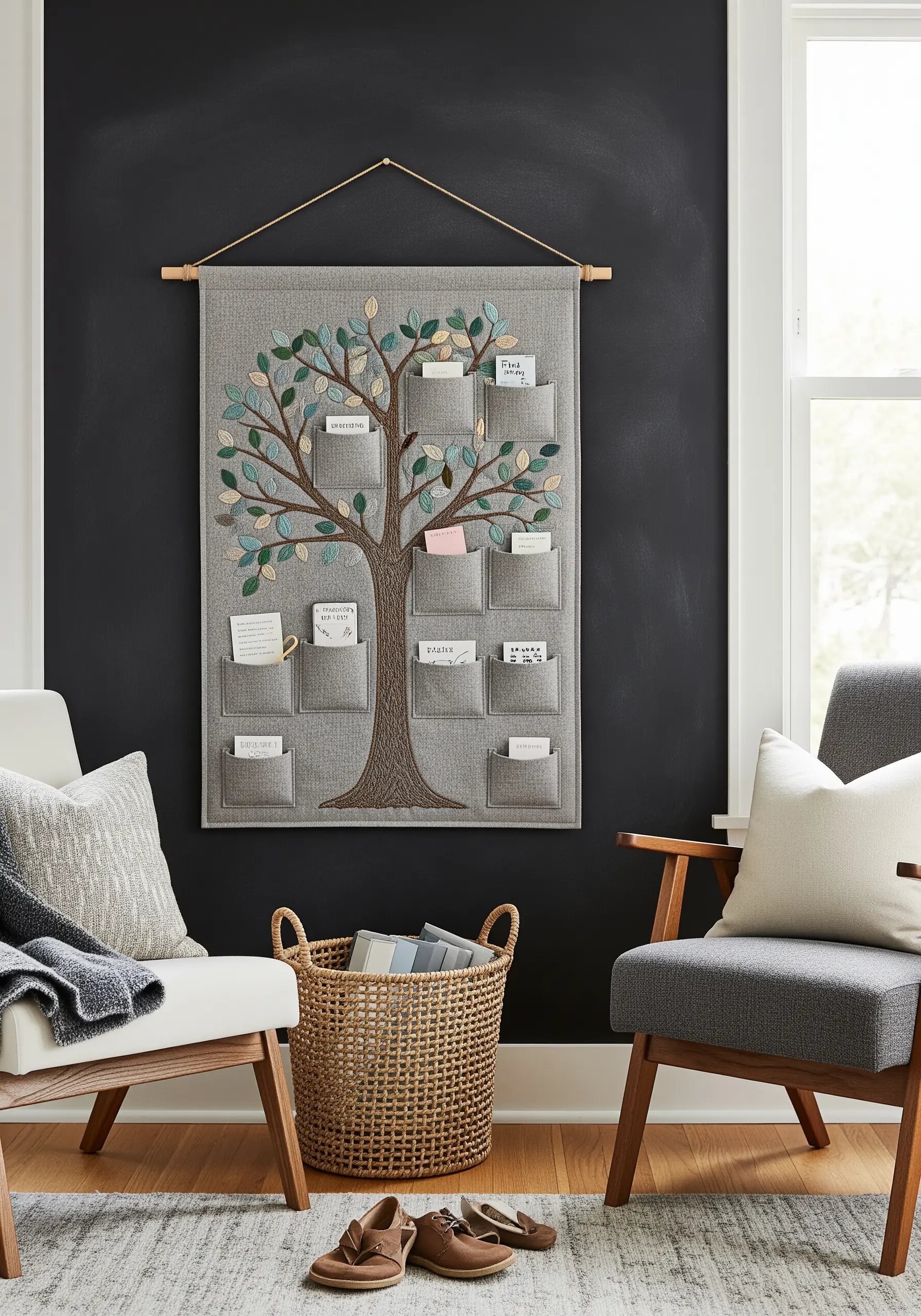
Merge your craft with purpose by creating a functional piece like this family tree mail organizer.
Use a sturdy backing fabric like canvas or felt for the base.
Embroider the tree directly onto the background using stem stitch for the trunk and branches, and simple satin stitch or appliqué for the leaves.
Then, construct and attach appliqué pockets, turning a beautiful wall hanging into a meaningful and useful heirloom for your home.


